A Trifle Overweight? Backpacking into the Grand Canyon Part I

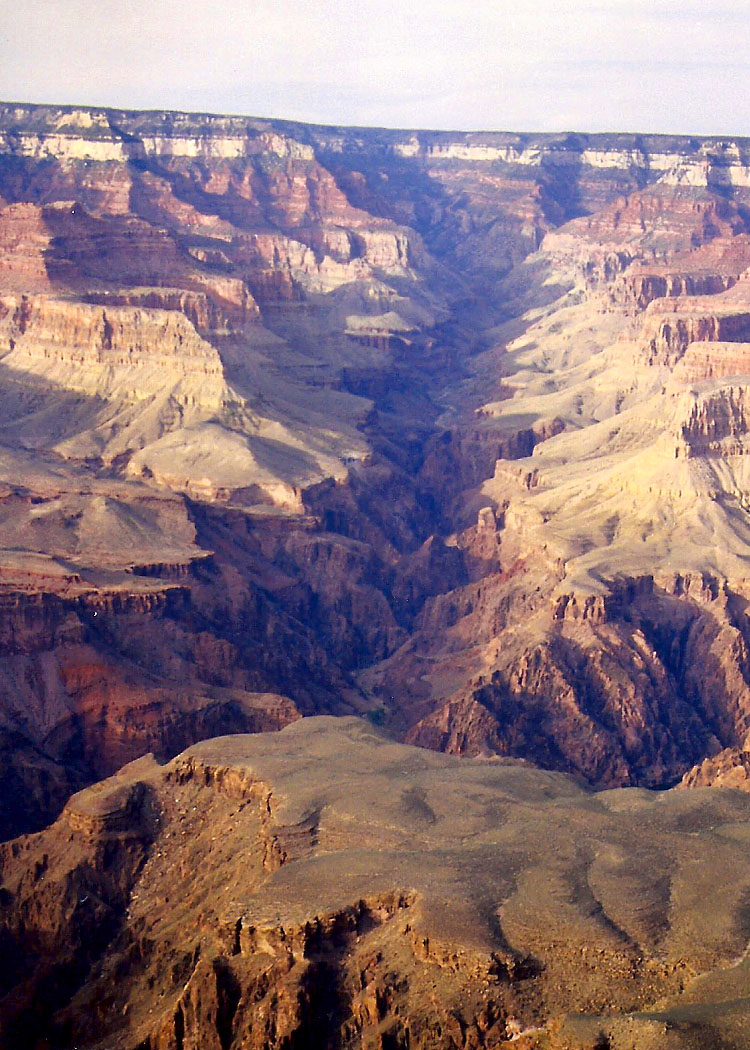
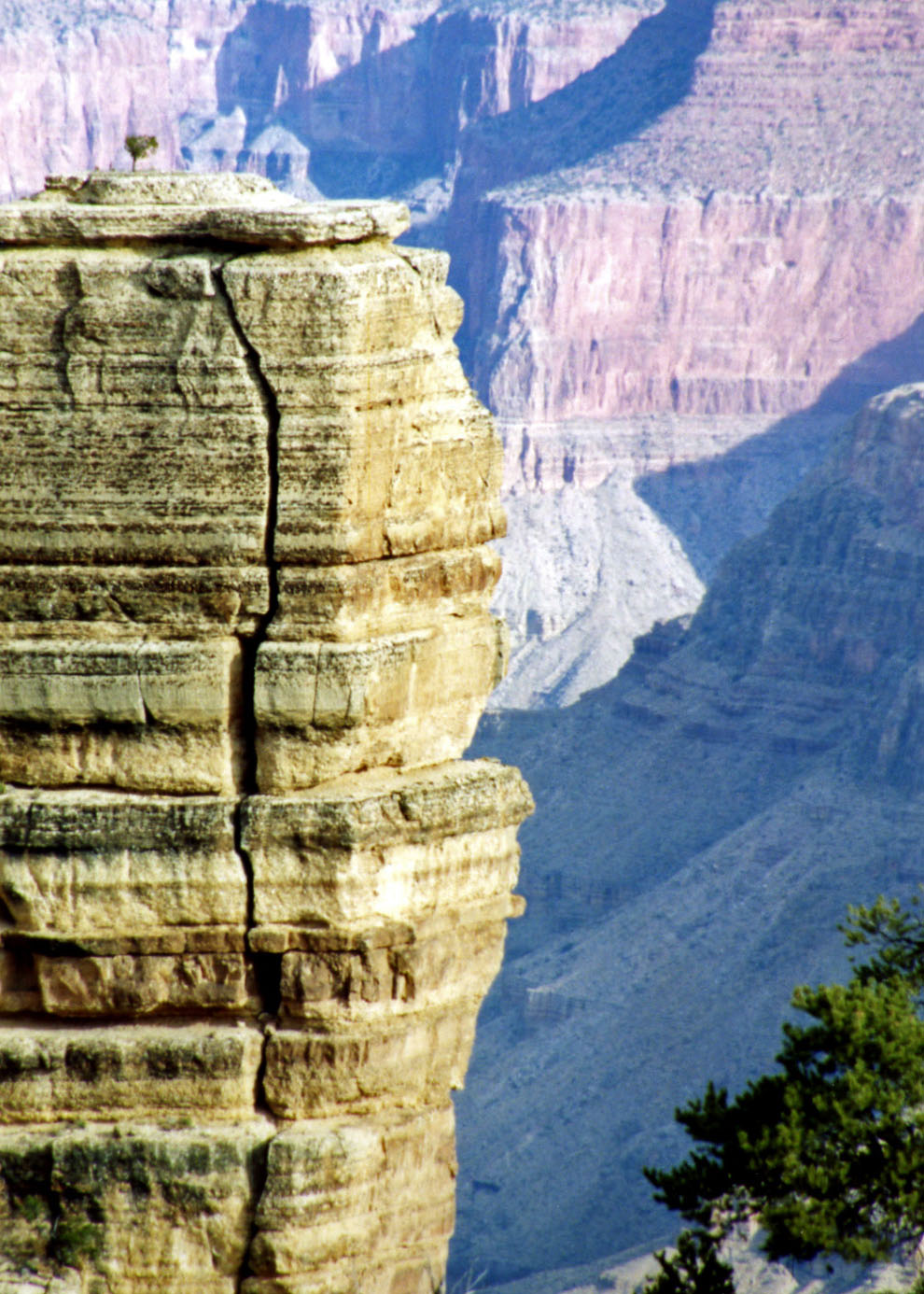
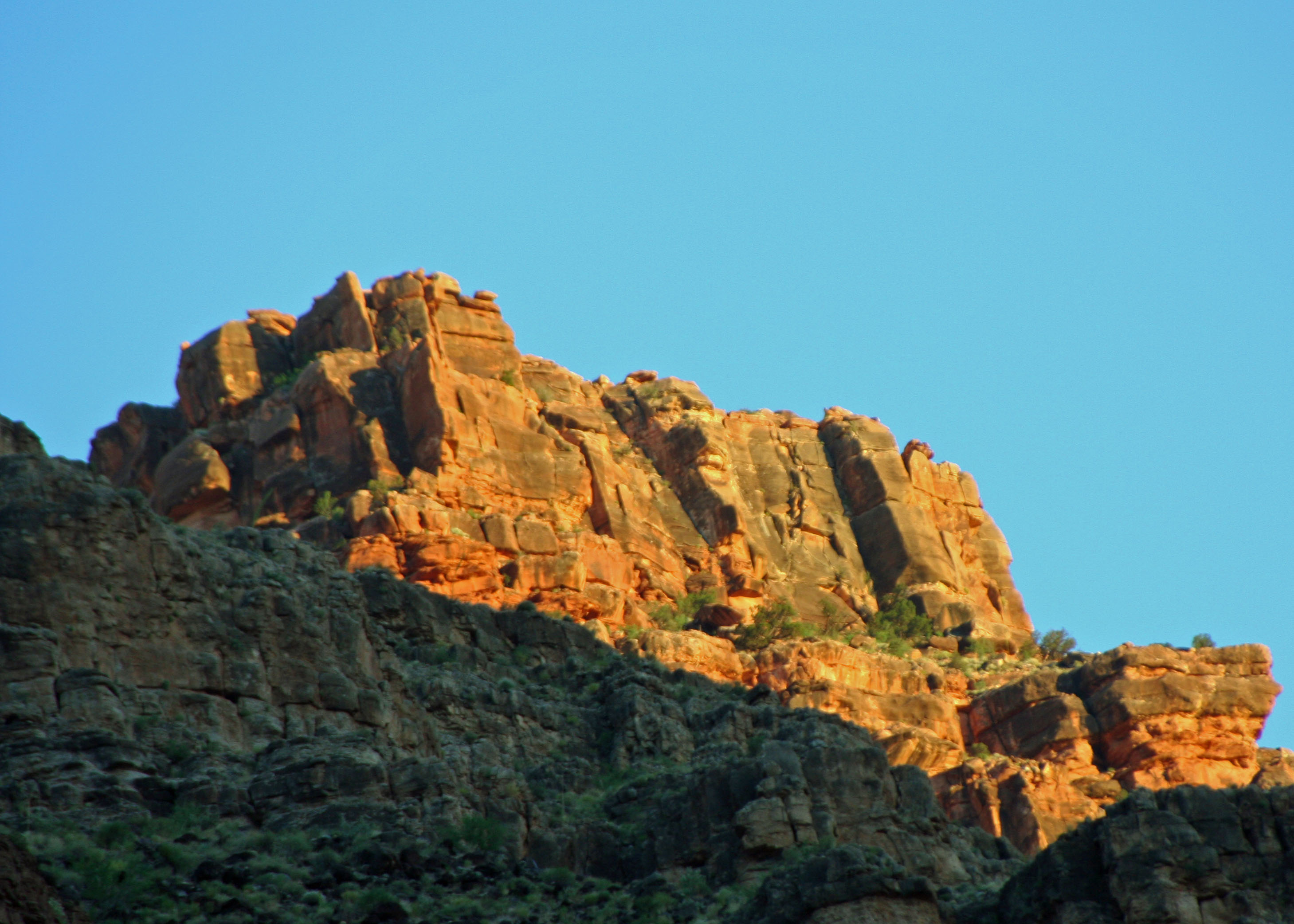
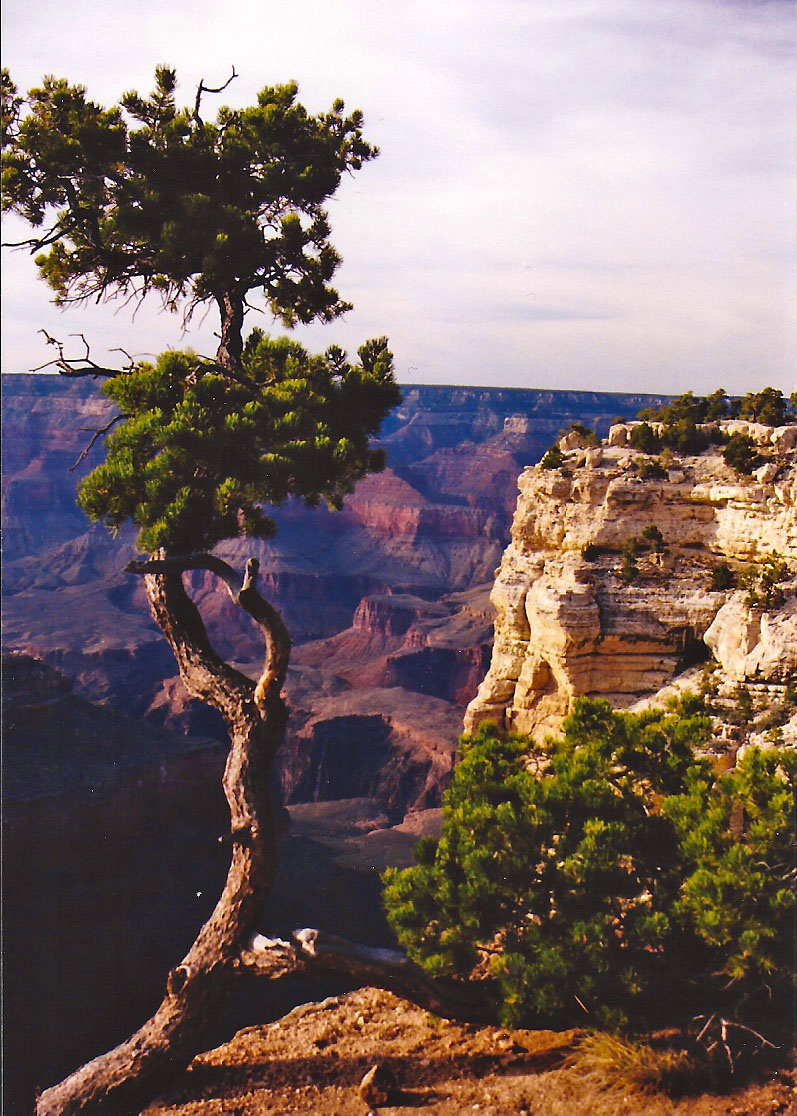
Early morning and late evening sun add an interesting contrast between light and shadow… not to mention color. When I arrived late at the Grand Canyon for my backpacking trip, I hurried over to the Rim to enjoy the sun’s last rays.

This is the second part of my series on a celebration of the Grand Canyon National Park, which will eventually focus on Peggy and my 18-day raft trip down the Colorado River. Over the next three blogs I will describe a backpack trip into the Canyon where I was… let’s say, a trifle overweight.

In 1986 when I left Alaska I decided to take six-months and backpack into some of the more remote corners of the West. I stopped by for a brief visit with friends and family in California and then headed out for my first stop: the Grand Canyon.

I followed Highway 50 east out of Sacramento, cut off at Pollock Pines and picked up the Mormon Emigrant Trail. Soon I was on Highway 88 climbing up and over Carson Pass. Newly dressed aspens, snow-covered mountains and frothy creeks reminded me that summer was still two months away.

Frothy creeks reminded me that summer was still two months away.

By evening I had driven down the east side of the Sierras and made my way into Death Valley. I was setting up my tent under a convenient Mesquite tree when the sun sank behind the Panamint Range. Coyotes howling in the distance lulled me to sleep.

Every trip I made to the Grand Canyon from California included a visit to Death Valley National Park.

By ten thirty the next morning I was in another world, investing quarters in a video poker machine at Circus Circus on the Las Vegas Strip. Luck was with me. Two hours later found me crossing over Hoover Dam with an extra hundred dollars in my wallet. It represented two weeks of backpacking food. I zipped across the desert, picked up Interstate 40 at Kingman and cut off toward the Grand Canyon at Williams.

I wasted little time checking in at Mather Campground. The Canyon was waiting. An unoccupied rock off the trail near Yavapai Point provided a convenient spot for dangling my legs over the edge. Nothing but vacant space existed beneath my hiking shoes.

My musings were interrupted when a fat Golden-Mantled Ground Squirrel poked his furry head up next to me and demanded payment for my front row seat. I recited the Park’s rule on feeding animals and told him to go eat grass. He flipped his tail at me and squeaked an obscenity as he scrambled off in search of more gullible victims.

Twilight was painting the Canyon with a purplish tinge but I could still make out the distinctive colors and shapes of the rocks. While my right-brain admired the beauty, my left-brain was busy considering eons upon eons of earth history. The dark, tortured walls of the inner canyon, now obscured by evening shadows, reached back over a billion years to the very beginnings of life on earth when our ancient ancestors had frolicked in even more ancient seas.

Erosion had given these Precambrian rocks a flat top, shaving off some 500 million years of earth’s history and creating what is known as the Great Unconformity.  Since then vast seas, Saharan size deserts, lakes and rivers had patiently supplanted one another as they marched through Paleozoic time depositing layer upon layer of the canyons walls.

My present perch was made of Kaibab limestone created by an inland sea some 250 million years ago. Dusk slipped into dark and my thoughts turned to my impending backpack trip.

I had backpacked into the Canyon several times. My objective this time was to explore the Tanner Trail on the eastern end of the South Rim road.

The next day was devoted to careful preparation. Seventeen years of backpacking in all kinds of terrain and climate had taught me that there was no such thing as being too careful. I approach compulsive when it comes to backpacking alone. Had I resupplied my first aid kit? Was my stove still working? Did I have adequate fuel? Did I have my flashlight, signaling mirror, whistle, compass and maps? Did I have enough but not too much food, water, reading material, etc. etc. etc?

Safety, comfort and even entertainment are important but weight is always an issue.

Having satisfied myself that I could survive seven to nine days in the Canyon, I headed off to the backcountry permit office. The more environmentally inclined within the Park Service are seriously into minimizing impact and promoting safety. Requiring wilderness use permits is their primary tool in achieving these goals.

I patiently waited behind six other would-be canyon explorers and had memorized the minimum impact lecture by the time my turn was up. The ranger frowned when I mentioned the Tanner Trail.

“The trail is poorly maintained, rarely used, 10-12 miles long and arduous,” she cautioned strongly.

“And that,” I replied, “is exactly what I want.”  I was especially enamored with the ‘rarely used’ part.  I had no desire to share my experience with dozens of other people, much less armies of cantankerous mules that leave lakes of fowl smelling pee on the trail. If I had to face a particularly tough physical challenge and be extra careful to avoid a tumble into the Canyon, it was a price I was happily willing to pay.

I was leaving the office when a skinny guy wearing a short-sleeved khaki shirt, blue shorts and hiking boots stopped me.

“Excuse me,” he announced, “I am with the Sierra Club and I couldn’t help but hear you are headed down the Tanner Trail. Given your condition, I would strongly advise against it. You should hike down the Bright Angel Trail. It’s a lot easier and there are lots of other people hiking it in case you get in trouble.”

Now I confess that having just emerged from nine months of hibernating in Alaska I was pasty white and pudgy. I will also allow that the guy was operating under good intentions.

But his arrogance, especially in announcing his Sierra Club membership as somehow making him a wilderness expert, irritated me. Over the years I had known and worked with lots of Sierra Club folks. I am a strong supporter of their efforts to protect the wilderness. I have even run into some who have had more wilderness experience than I. John Muir, the Sierra Club founder, is one of my all time heroes.

Had my unofficial advisor started off with something like, “I have been up and down the Tanner Trail several times, would you like some suggestions?” I would have been quite willing, even eager, to hear what he had to say. But his uneducated assumptions about my lack of knowledge absolutely turned me off. It was everything I could do to maintain a civil tone of voice as I thanked him for his advice and politely told him to screw off.

At 8:30 the next morning my pasty white pudgy body was having an animated discussion with my mind over why I hadn’t listened more carefully to the Sierra Club ‘expert’ the day before. I had started my day by splurging for breakfast at the elegant El Tovar Hotel and then driven out to Lipan Point.

I was now poised to begin my descent into the Canyon. It looked like a long way down. I gritted my teeth and banned any insidious second thoughts.

They came rushing back as I struggled to hoist my 60 plus pound pack. It was filled with seven days of food, extra water and all of my equipment. I had cursed the day before as I struggled to find room for everything. Now I was cursing I hadn’t left half of it behind.

Next up: The journey down.

The prominent landmark at the eastern end of the South Rim road at the Grand Canyon is the Desert View Watch Tower. It is near where I started my hike down into the Canyon and provided a view of where I would be traveling. It also provided a  landmark as I descended into the depths.
Visiting Grand Canyon National Park by Car, Mule and Helicopter

Grand Canyon National Park is one of the world’s greatest natural wonders.

“Golly, what a gully,” President William Howard Taft was heard to mutter when he first saw the Grand Canyon.

Teddy Roosevelt was more profound: “Leave it as it is. You cannot improve on it. The ages have been at work on it, and man can only mar it.”

Both of these thoughts are rumbling through my brain as I think about the 18 days Peggy and I are about to spend rafting 280 miles down the Colorado River.

Few people come away from the Grand Canyon untouched and we are no exception. Its vastness, beauty, and geology have pulled us back time and again, as have its natural and cultural history.

There are many ways to explore the Canyon. For the vast majority of people, some five million a year, this involves a drive up to the South Rim and a quick tour of the most popular overlooks. If that is all the time you have, it’s worth the journey, believe me.

Numerous overlooks along the South Rim provide breathtaking views into the Canyon. This a view up Bright Angel Canyon. North Rim, also worth a journey, is at the top. You can hike from South Rim to North Rim, which I have.

Sitting on the edge for an hour or two enhances the experience several times over. Hanging out on the rim for a few days while roughing it at a campground or luxuriating in one of the lodges, is even better.

I once spent a pleasant night in the El Tovar Lodge courtesy of Nancy Reagan. Snow forced her and her large entourage to cancel a visit there in November 2001. Peggy, the kids, and I were camping out in a large tent at the Park’s Mather Campground. The foot of snow on our tent and 18 degrees F temperature had provided us with more than enough “roughing it.” We gladly took advantage of Nancy’s misfortune and the discounted vacant rooms.

For those wanting for a bird’s eye view, a helicopter trip is a tempting option. After three tours of duty in Iraq flying helicopters for the Marines and being shot at, our son Tony decided to try his hand at flying tourists over the Grand Canyon. He took Peggy and me on a thrilling ride into Havasupai Canyon… to the music from Star Wars, if I recall correctly. (Tony now flies helicopters for the Coast Guard out of Kodiak, Alaska.)

Beyond these sedentary approaches to the Canyon lie more challenging adventures. Even a half hour hike down one of the more popular trails provides a trip through millions of years of history, incredible views and the heart-pounding thought that only a few feet separate you from a thousand foot tumble.

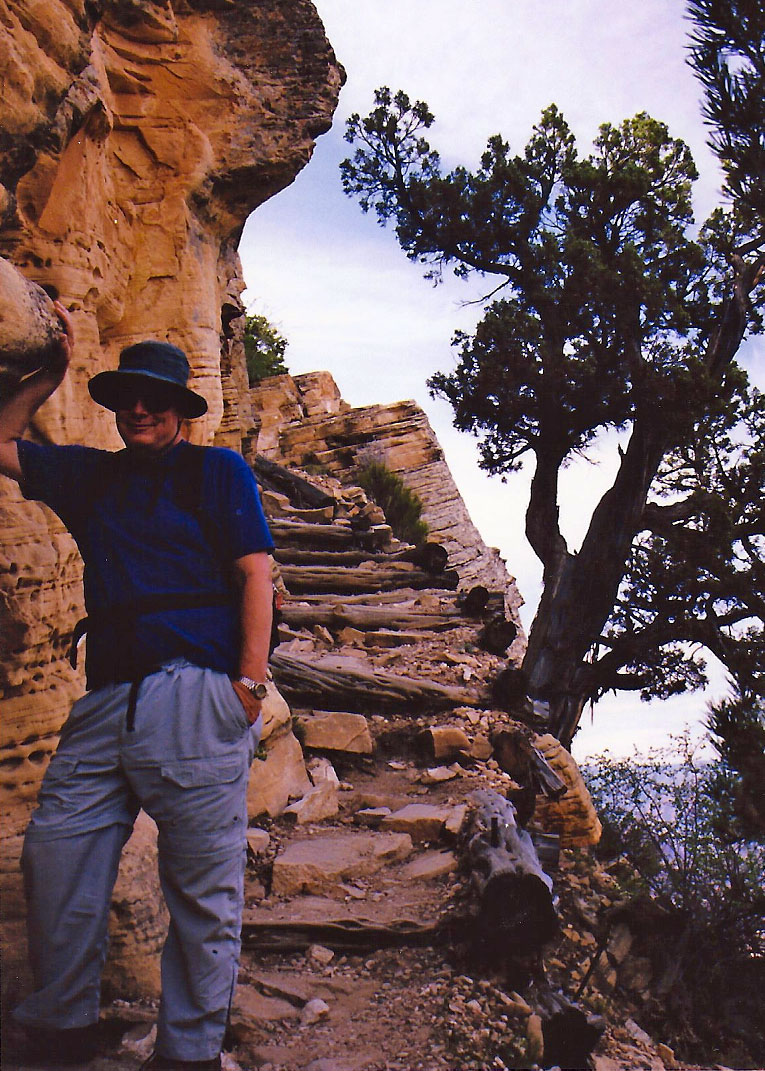
There are several trails down into the Canyon with Bright Angel and Kaibab being the most popular and the ones recommended by the Park Service. I prefer less travelled, mule free trails. But it also means the trails are less maintained.

Longer hikes and especially backpacking trips provide a perspective that only a small percentage of Canyon visitors ever have.

If you want to visit the inner canyon but fear you’re lifetime warranty will expire hiking out, check out the sure-footed mules that carry tourists in and out of the Canyon. It’s an experience your rear will remember for years. Mine did.

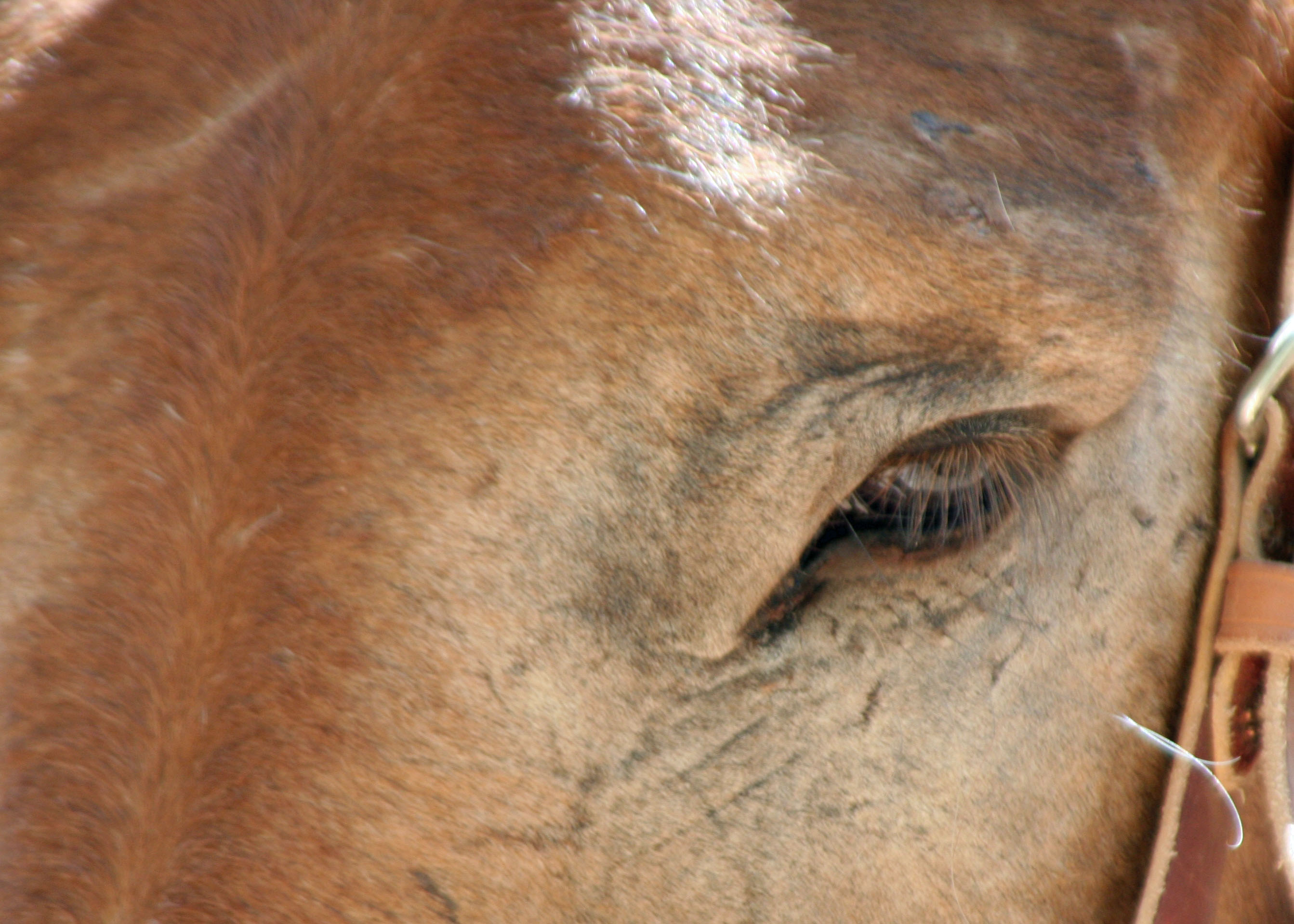
Don’t you dare climb on my back.

Charlie, that was the mule’s name, did not like me. There was a 200-pound weight limit and I was at 195. I wore light tennis shoes and clothes to the weigh-in and hit 199. I wore my backpacking shoes on the trip; it pushed me over the limit.

Charlie knew I was cheating. He immediately whipped his head around and tried to bite me. Failing that, he walked as close to the edge as he could and provided me with a front-row seat of my ultimate demise. Only my knowledge that mules don’t commit suicide kept me in the saddle.

My most challenging journeys have been six backpack trips into the Canyon, including a week alone. I will feature that particular misadventure in my next blog. But, in the mean time, here are more photos from the Rim.

I rolled my window down to photo this Mule Deer and she tried to stick her nose in my window. There are reasons for all of the signs that urge “Don’t Feed the Wildlife.”

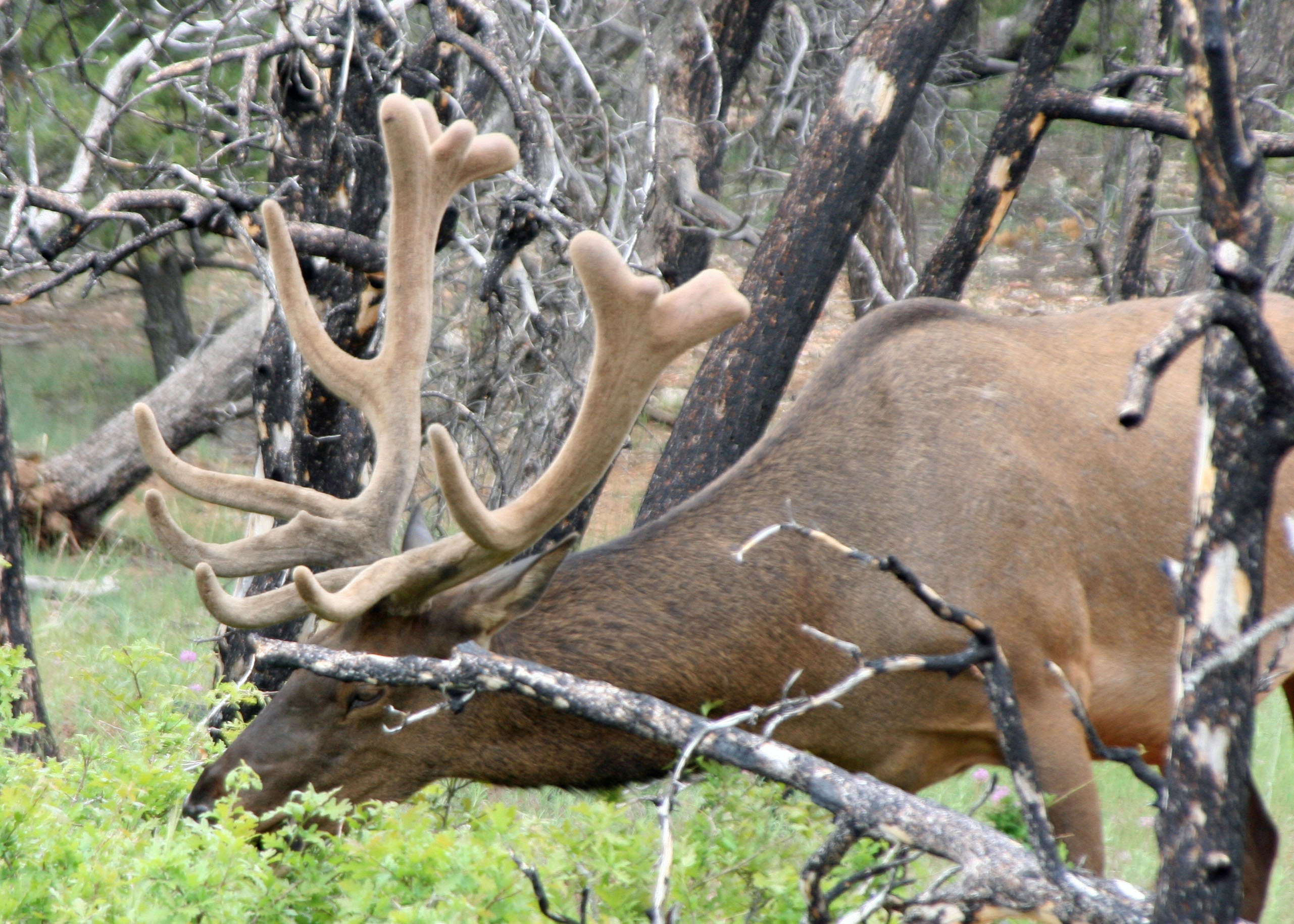
This elk was a magnificent fellow but he wouldn’t come out in the open for me.

More views to encourage a visit to the Grand Canyon.

Early morning and late afternoon sun provide the best colors. Time your visit to include both if you can.

Another view looking down that demonstrates the rich colors.

I’ll be backpacking into the heart of the Grand Canyon down the Tanner Trail in my next blog. A  Sierra Club member insisted I hike an easier, well maintained trail.

A Grand Adventure… Exploring the Grand Canyon by Raft

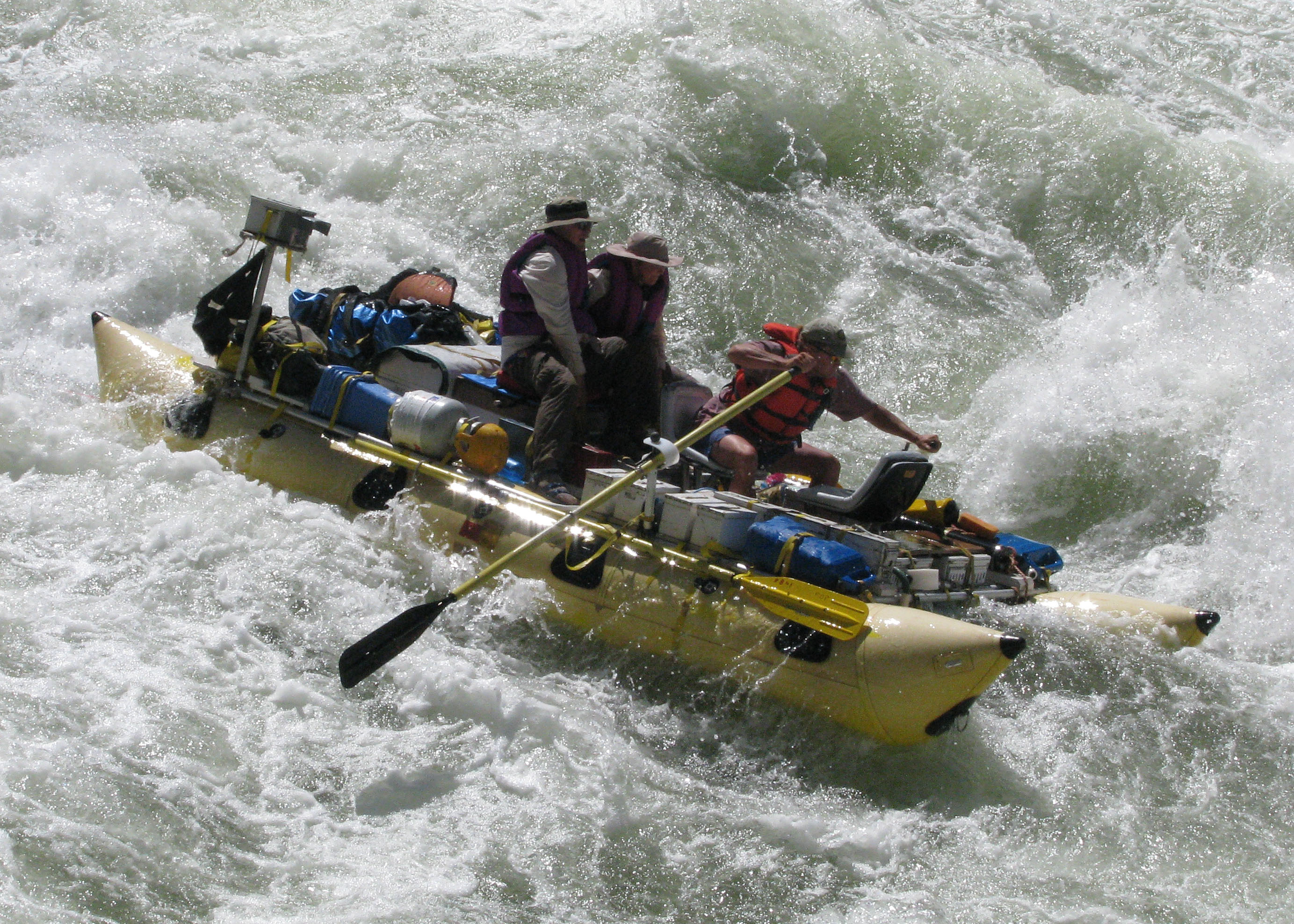
With Steve at the oars, Peggy and I enter the infamous Lava Rapids on the Colorado River, a perfect ten… that’s 10 as in rapids don’t get any more serious. A few seconds later we disappear under the water. (Photo by Don Green)

Today I begin my series on rafting the Colorado River through the Grand Canyon. Since it happened a couple of years ago, I am traveling back in time. In fact I kicked off this blog with the trip, some 181 posts ago.

I never finished the series. Other things happened: like having grandbabies born, going to Burning Man, looking for long dead people (otherwise known as ancestors), etc. So I will start with reposting my early stories so everyone can begin, so to speak, on the same page. (Grin)

This series will encompass more than my trip down the river, however. It is meant to be a celebration of the Grand Canyon, possibly the greatest natural wonder in the world. I have been back to the Canyon repeatedly in a time span that dates back over forty years.

Peggy takes a photo looking down into the Grand Canyon. Three feet forward and she will have a thousand feet to learn to fly.

I have wandered the South and North Rim, camped in all of the Rim campgrounds, and stayed at the magnificent El Tovar Hotel. Once I spent Christmas week at Bright Angel Lodge with a view overlooking the Canyon. I’ve been into the Canyon by mule, on foot and helicopter… as well as raft.

Several times I have explored the inner Canyon on weeklong backpack trips. I will feature one in this series.

Our Grand Canyon river adventure started with a phone call. Tom Lovering left an urgent message. I had to immediately stop whatever I was doing (Peggy and my three-year road trip around North America) and climb on-line to sign up for the Grand Canyon Colorado River permit lottery.

Apparently the permits are hard to obtain, somewhat harder than walking out of a casino with a million dollars.

I am immune to Tom’s last minute schemes but the charming Peggy who loves water, loves rivers, and loves sunshine immediately jumped on-line and did the necessary clicking. Early the next morning we received an Email from the National Park Service saying we had won. It took me a lot longer to persuade Tom than it did for the NPS people to inform us.

I am not, by nature, a white water man. I put running rapids right up there with dangling on rock cliffs, playing Kamikaze on ski slopes, and riding the latest death-defying roller coaster at Four Flags.  My approach to outdoor adventure is more in the nature of planned risk taking than thrill seeking. Consequently, I had only been on two real white water rafting trips.

The first was with Tom on the Mokelumne River in California in the 70s. Within five minutes he had dumped us into something known as Dead Man’s Hole. “Paddle!” he screamed. River rats love to give their favorite rapids scary names such as Satan’s Pool and Suicide Bend. They can wax eloquently for hours over the qualities of these death-dealing anomalies. Our detour “was a learning experience,” Tom explained as we emptied the water out of the raft and lungs. “Next time you’ll paddle harder.” Yeah, yeah.

My second white water trip was on the Middle Fork of the American River. This time I was travelling with Mark Dubois, his wife Sharon Negri and a friend, Bonnie Holmes.

Mark, sometimes known as the Gentle Giant, once chained himself to a rock in the bottom of the Stanislaus River to stop the Army Corps of Engineers from flooding the canyon with water. He also co-founded Friends of the River, an organization dedicated to saving the wild rivers of the west.

Our trip was rather mellow up until we came to a large rapid. Mark was having us do such things as close our eyes and lean backwards out of the raft with our hair touching the water so we could ‘listen’ to the river. He’s a spiritual type guy, one with nature. Apparently Nature had rejected me.

“Now, Curt,” he directed as we approached the rapid known as Guaranteed to Drown or some other similar name, “I want you to climb out of the raft and float down it.”

“I know, I know,” I groused as I rolled out of the raft into the icy waters. “It’s a learning experience.”

And that’s how I classify our trip down the Colorado, a learning experience. But I know it will be more. Every time I have visited the Grand Canyon over the years, I have come away with a feeling of awe and reverence. How could a trip through the Canyon’s inner core be any different?

So please join my friends and me over the next few weeks. I think you’ll enjoy the ride.

Here I am. They actually let me row. It had something to do with the lack of any nearby rapids.

This is how Jamie, one of our experienced boatmen, handled that section of the river.

Here are some of the folks that travelled with us on our 18 day trip down the Canyon. In this photo they have reversed their life preservers to look like giant diapers and are floating down the beautiful little Colorado River, one of many scenic stops along the way. They are about ten feet away from going over a waterfall.

You will meet some interesting characters on the trip, such as Steve…

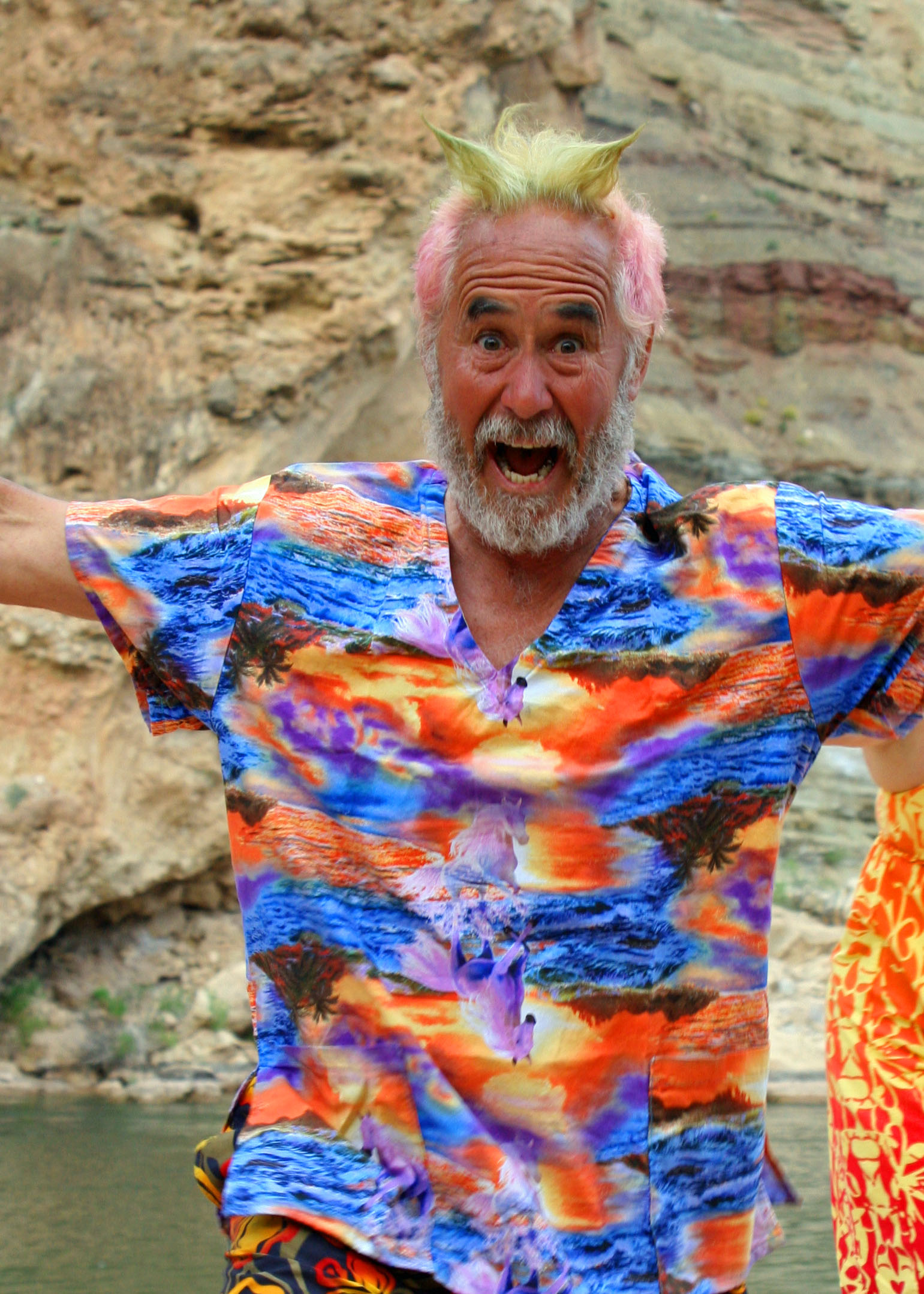
And our fearless leader Tom Lovering. Are you brave enough to spend 21 days on the river with this man?

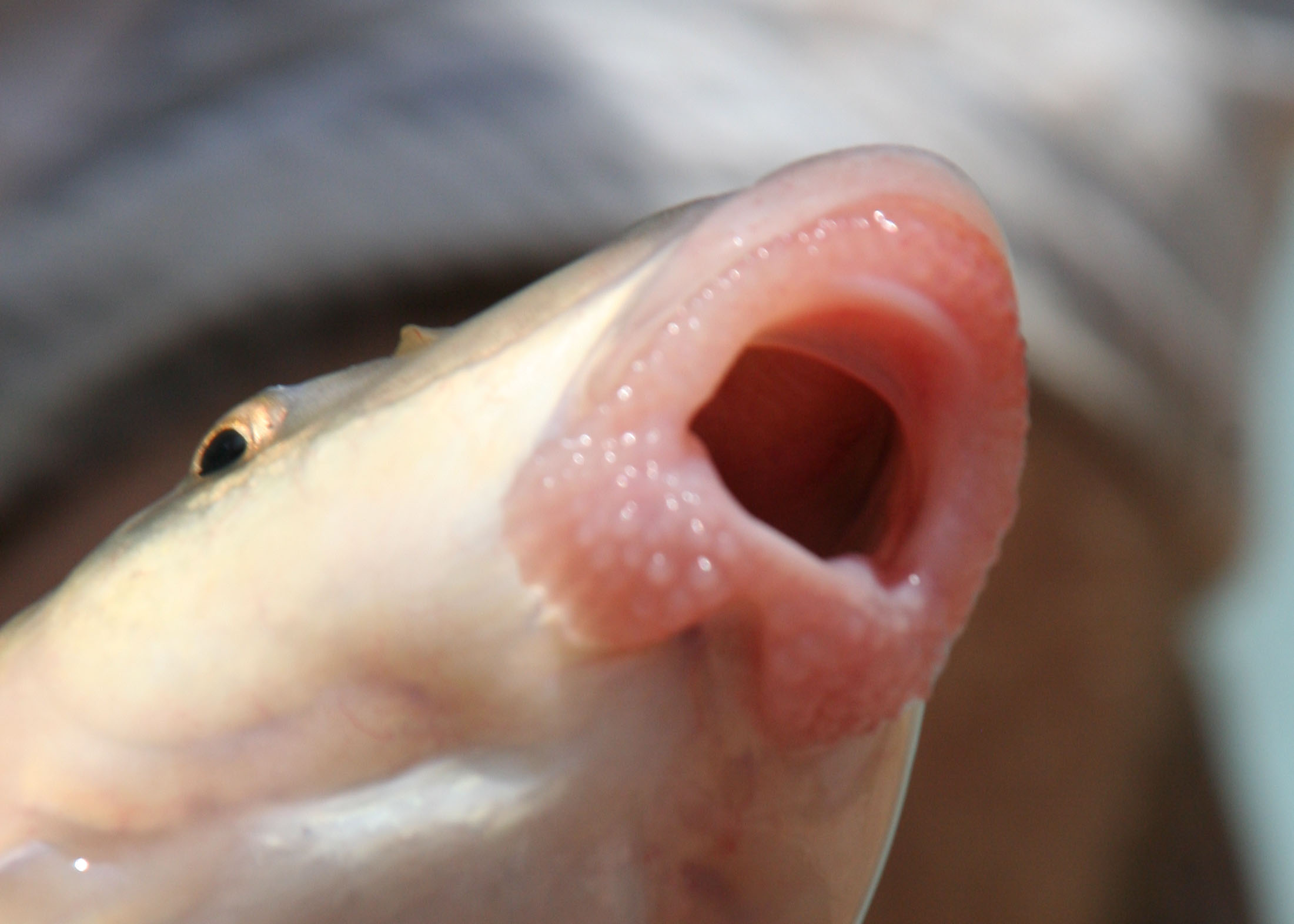
Even this Grand Canyon fish was amazed by our choice of leader.

We had 21 days on the Colorado River and 21 days of incredible scenery. Views such as…

Scenes along the River…

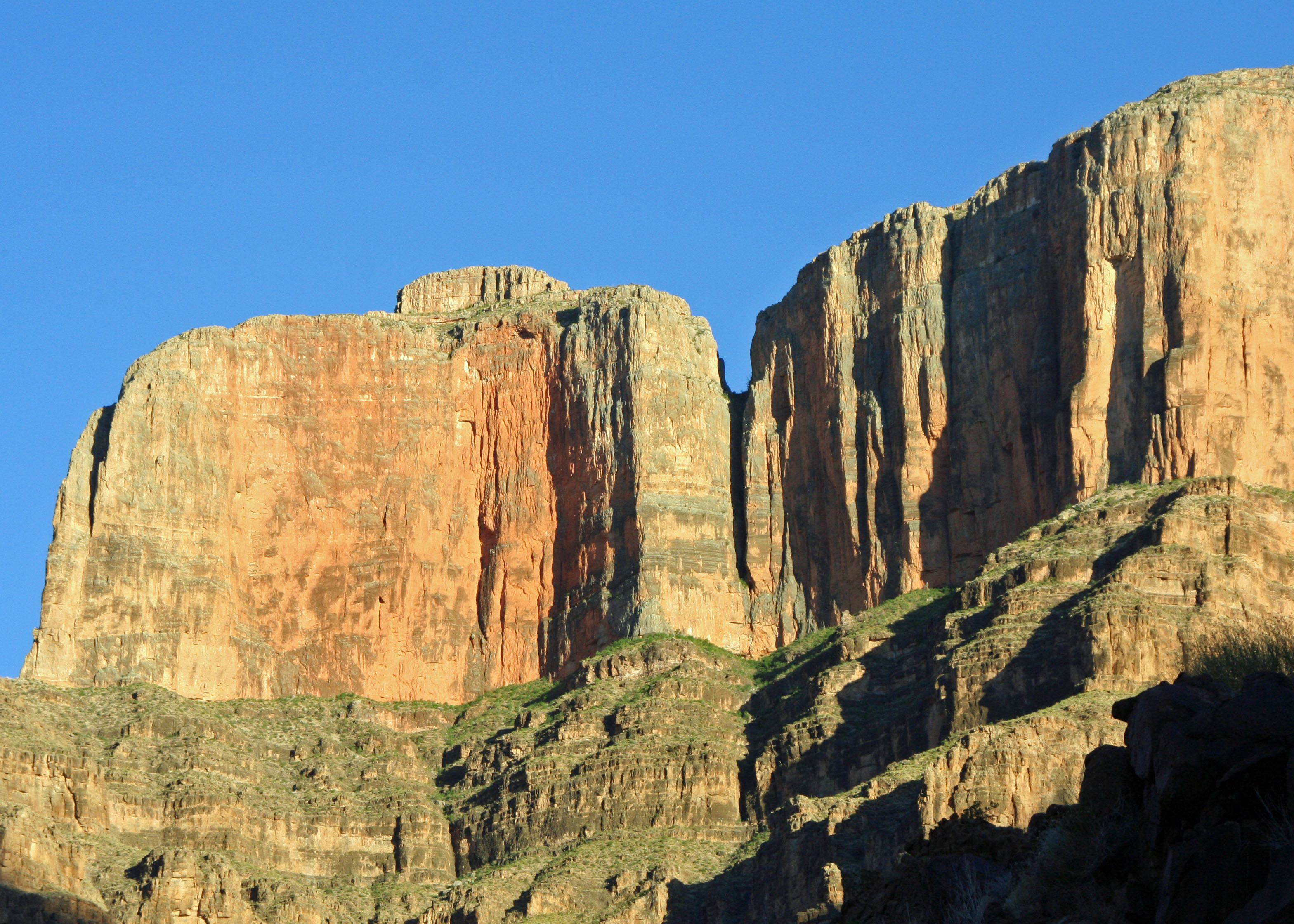
Magnificent cliffs…

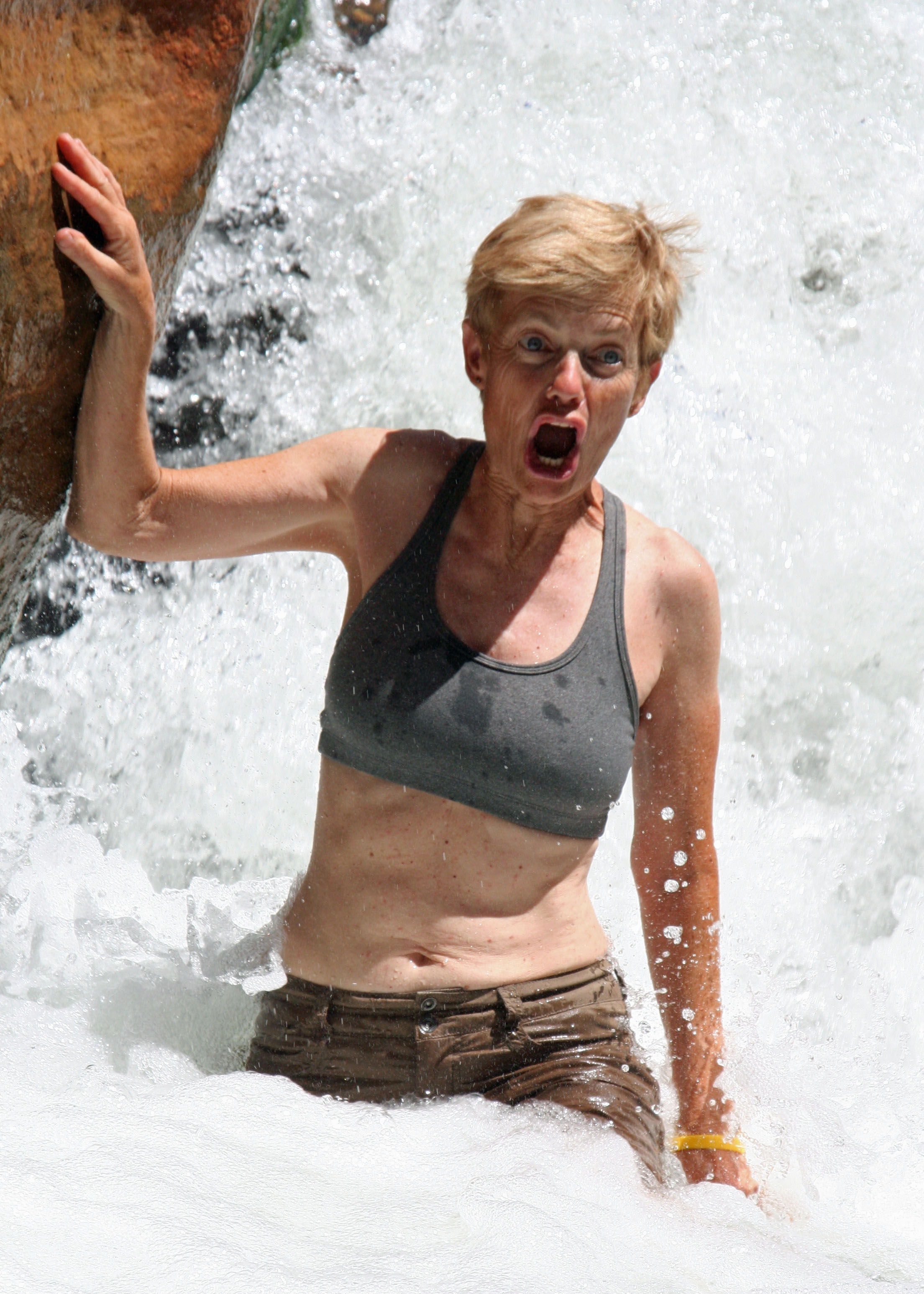
Plunging waterfalls…

And beautiful wild flowers.

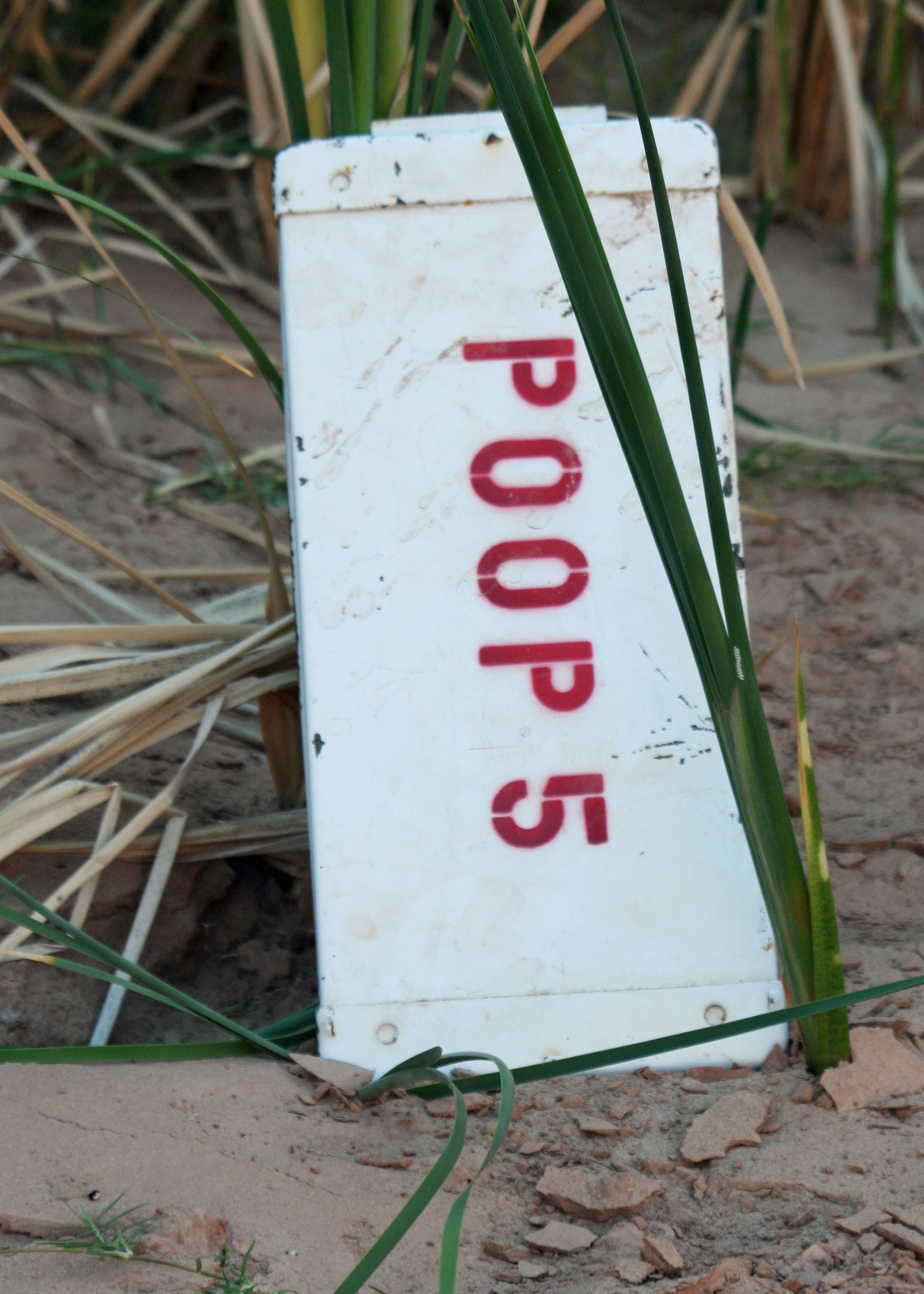
You will learn how to poop in the woods…

Dance in a line with too much wine…

Take refreshing baths…

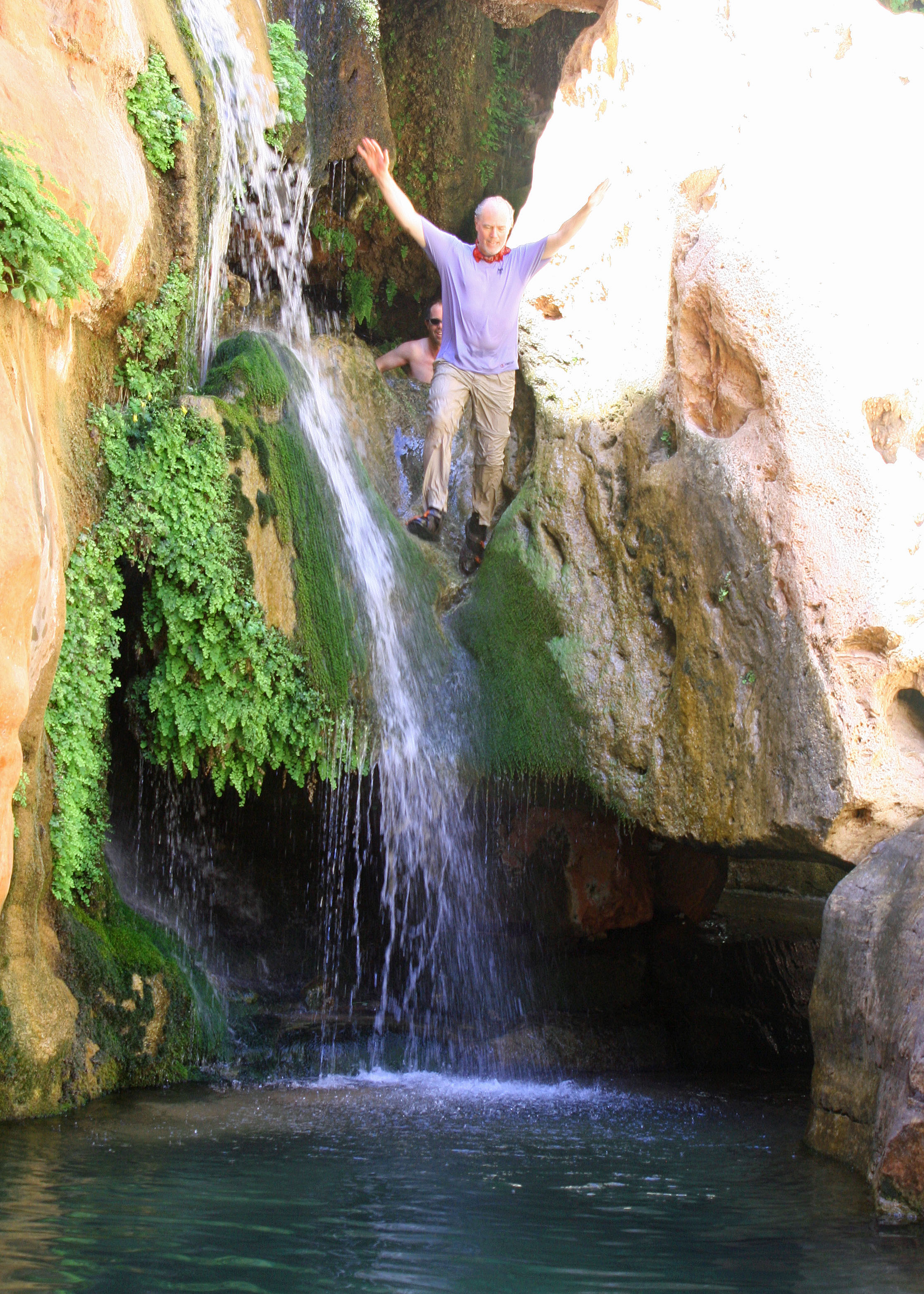
And leap from high places.

Join us.