Who’s a Pretty Bird… Florida’s 10,000 Islands and Big Cypress National Preserve

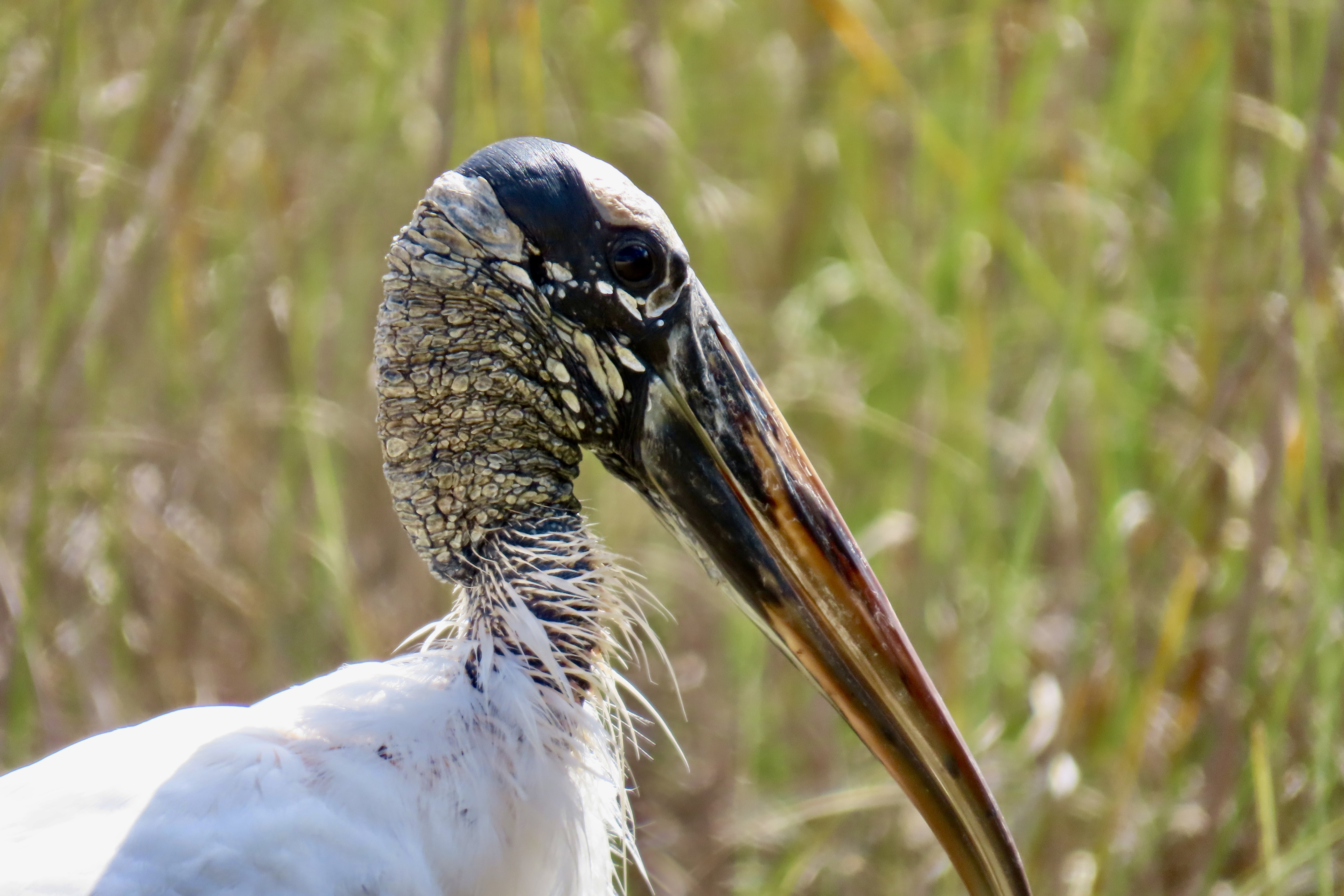
Well maybe not pretty, but we thought the neck colors of this wood stork we found standing next to the road in Big Cypress National Preserve rather striking. We asked her if she hired out for delivering babies. Her response was, “Are they tasty?”

Peggy and I visited two different areas during our recent trip to the Everglades. The first was Everglade City that I will be blogging about today. It’s a small town on the southwest Gulf Coast that has a feel of old Florida. It’s far away from the huge populations and hustle-bustle of the southeast coast where Miami reigns. We could easily walk anywhere in town and meet friendly people, including a few old timers who fit the description of quirky. Our kind of folks.

The town’s primary source of income is the tourist trade that comes to experience the natural wonders and adventures provided by the Everglades 10,000 Islands and the Big Cypress National Preserve. Local businesses offer a variety of options for exploring inside and outside of the park from airboats and swamp buggies to eco-tours and kayaks. We chose a motorboat eco-tour for the 10,000 Islands area. To start, we drove south from Everglade City for a couple of miles to Chokoloskee Island and the end of the road. Our objective was the old Smallwood Store, which does double duty as a museum and a tour center. The store provided a perspective on the first white settlers in the area. We met out tour guide/boat captain there and headed out into the 10,000 Islands with one other couple. Following are a few highlights.
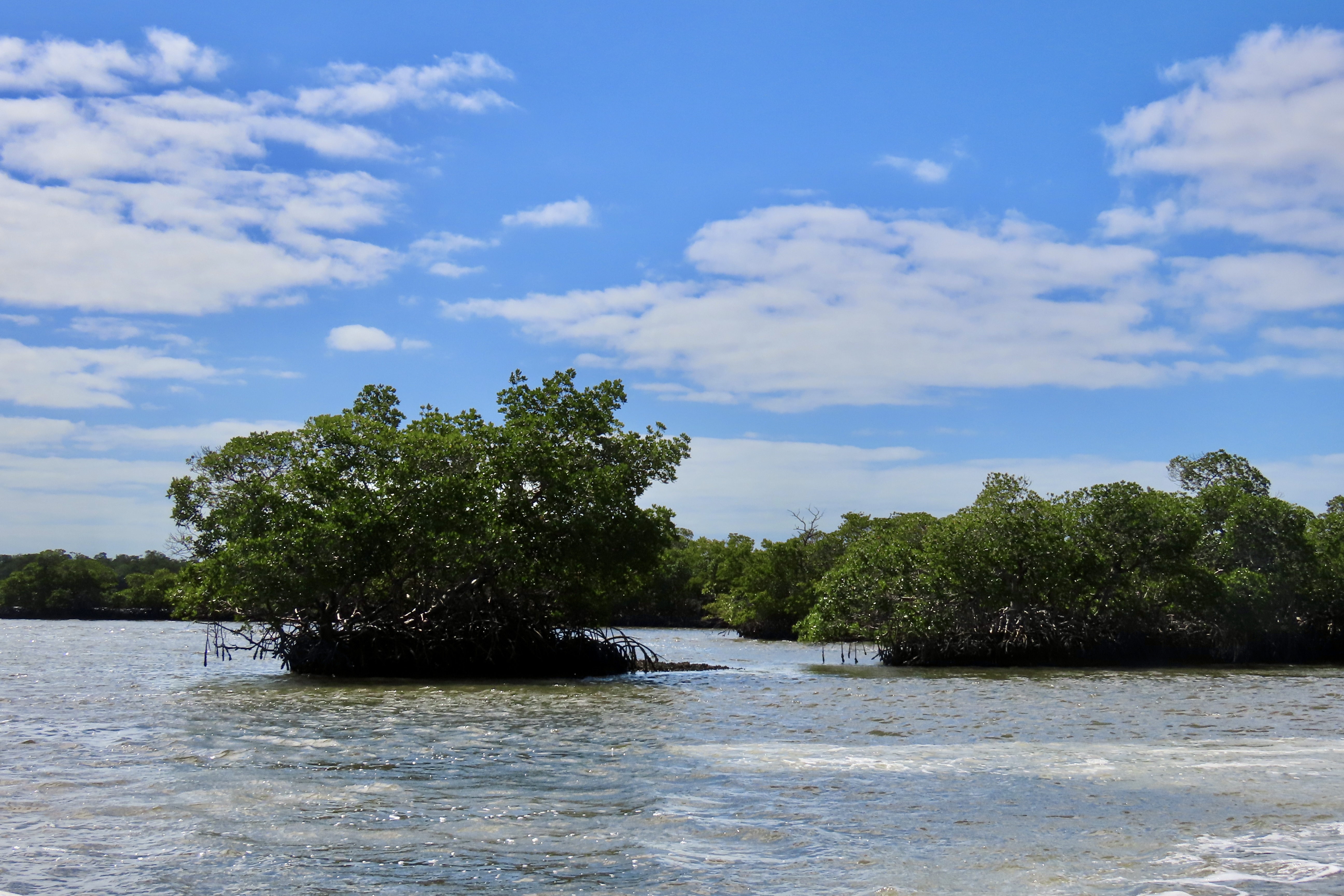
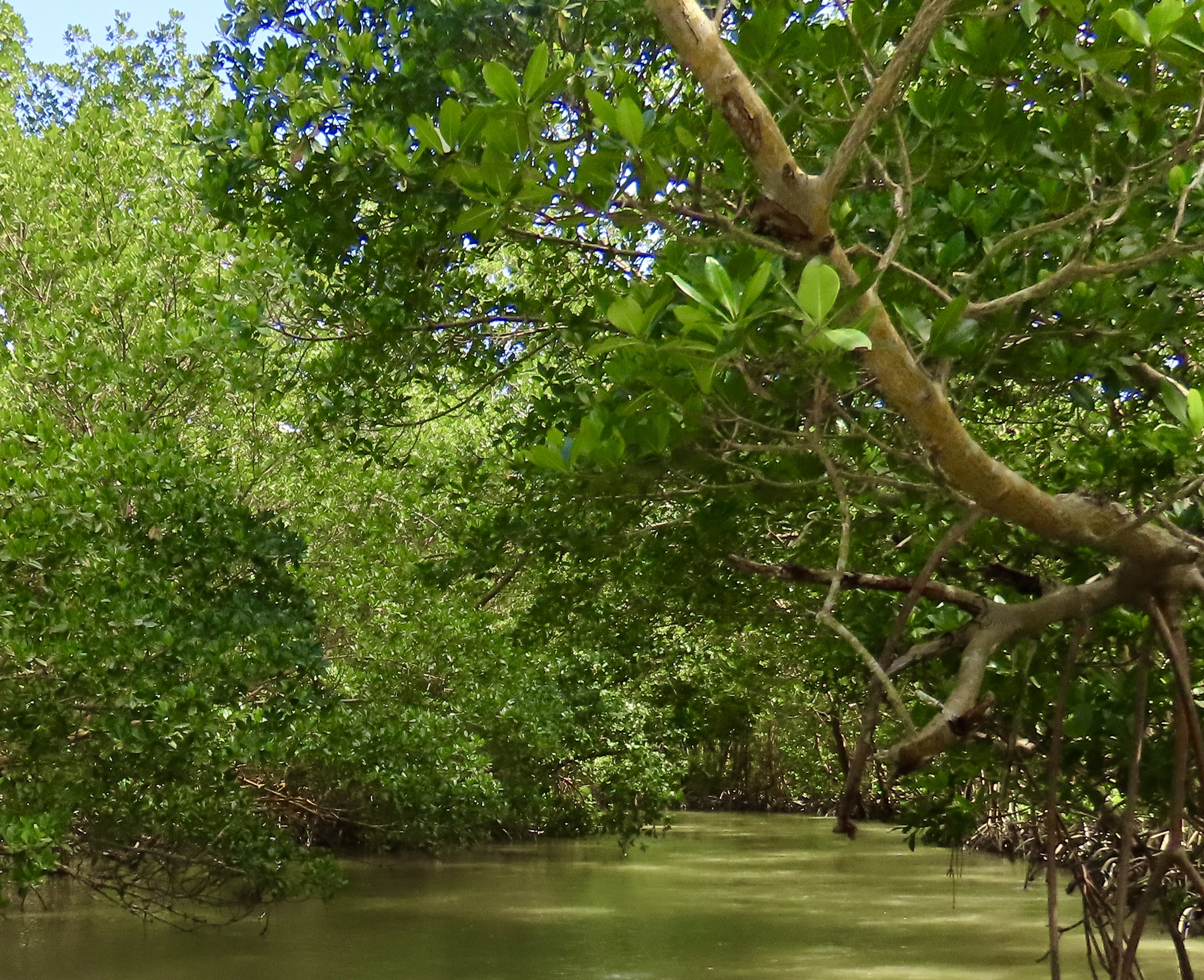
Three different species of mangroves provide the base for most of Florida’s 10,000 Islands. These trees have adaptations that allow them to take in extra oxygen and to remove salt that allows them to thrive in coastal intertidal zones. The creation of new islands is an ongoing process. 10,000 is a guesstimate at best.
Our two hour trip took us through the relatively open waterways shown above to the enclosed jungle-like canal shown here. Speed varied from zoom to put-put with occasional stops to admire the local flora and fauna.
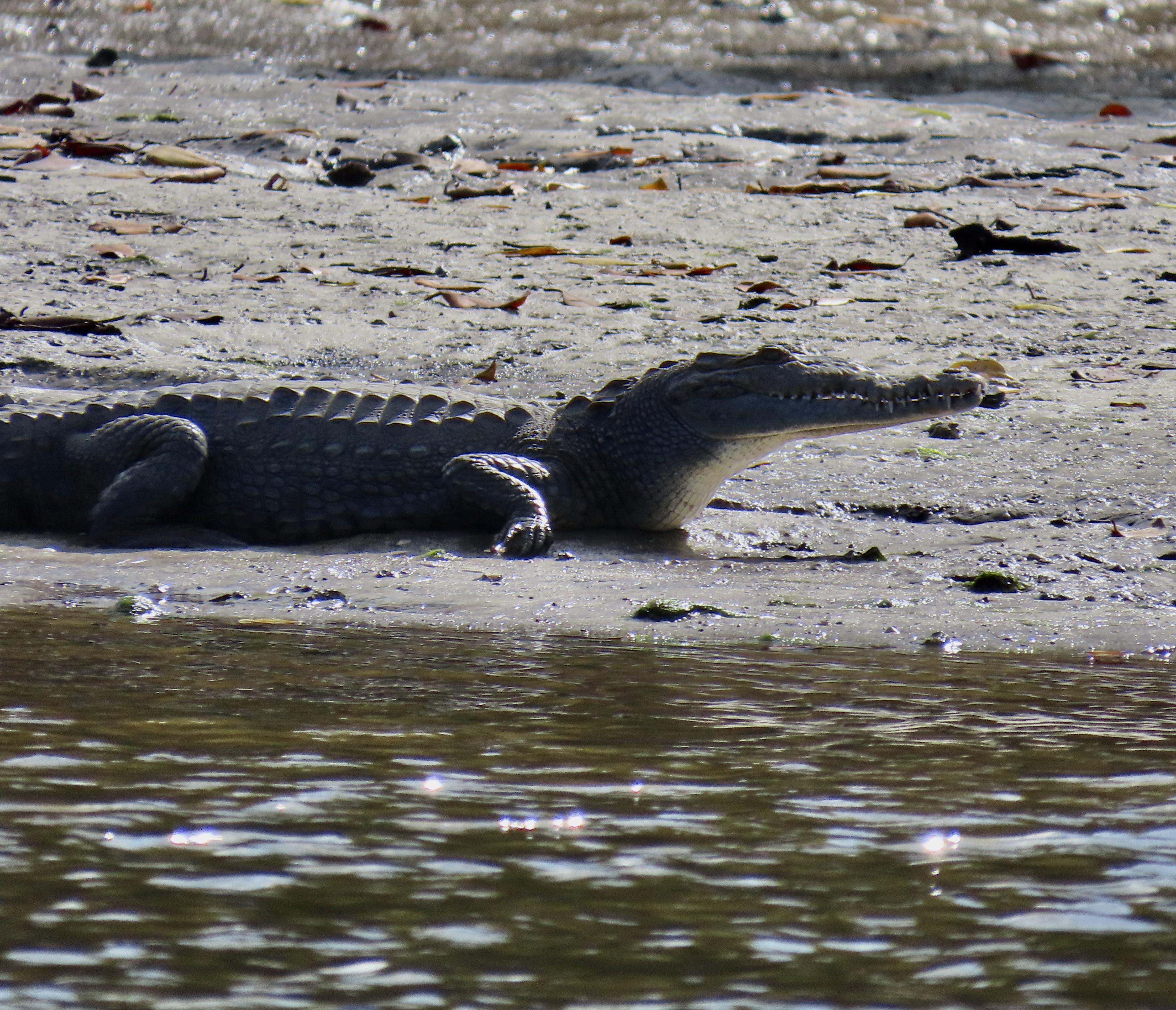
The Everglades are one of the few places on earth where crocodiles and alligators co-exist. While our small, bouncy boat wasn’t the best platform for photography, it’s easy to see that this is a crocodile from its long, thin snout and visible teeth.
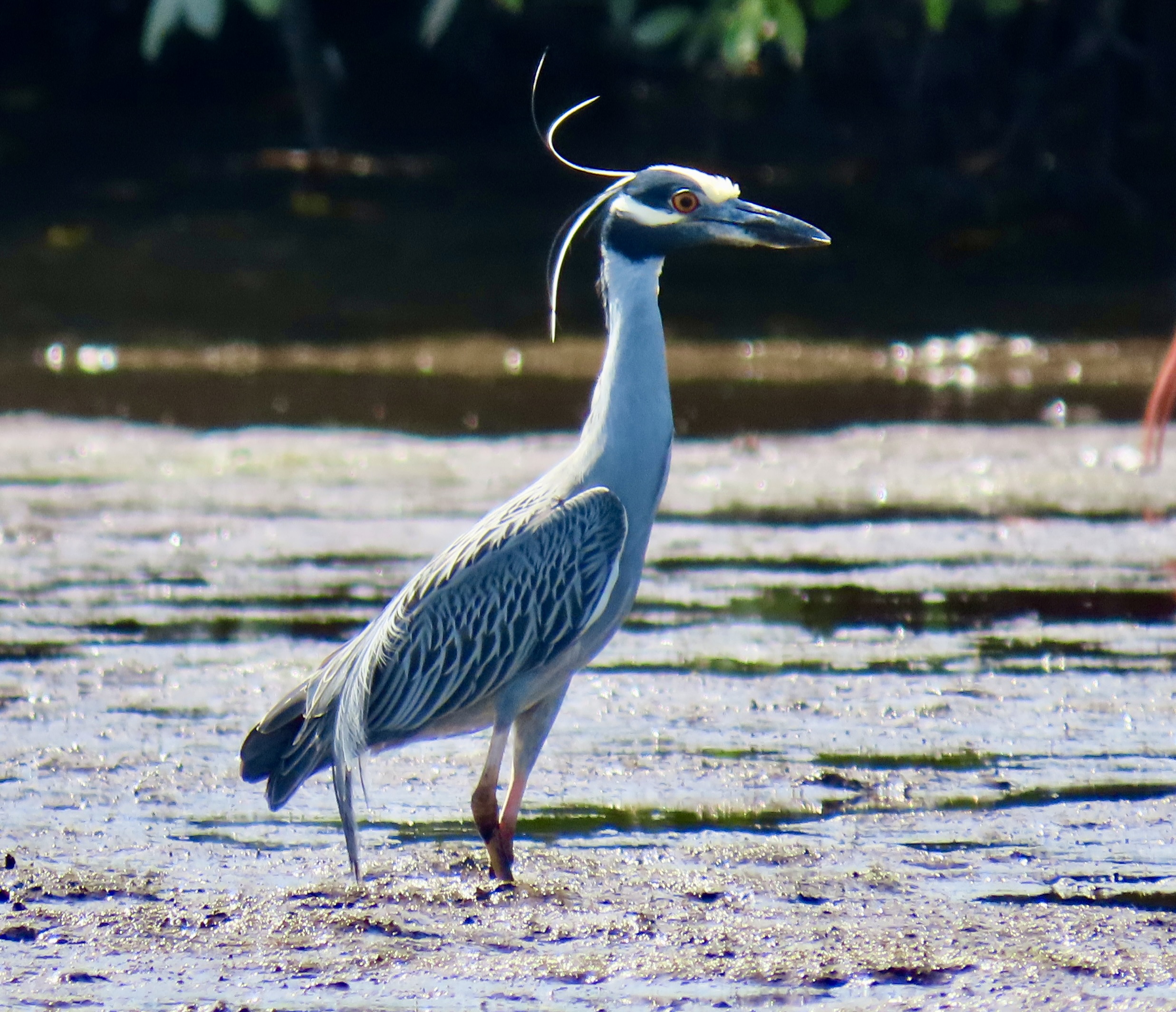
Our tour through the 10,000 Islands also produced this colorful bird with its interesting top-knot, a yellow-crowned night heron.
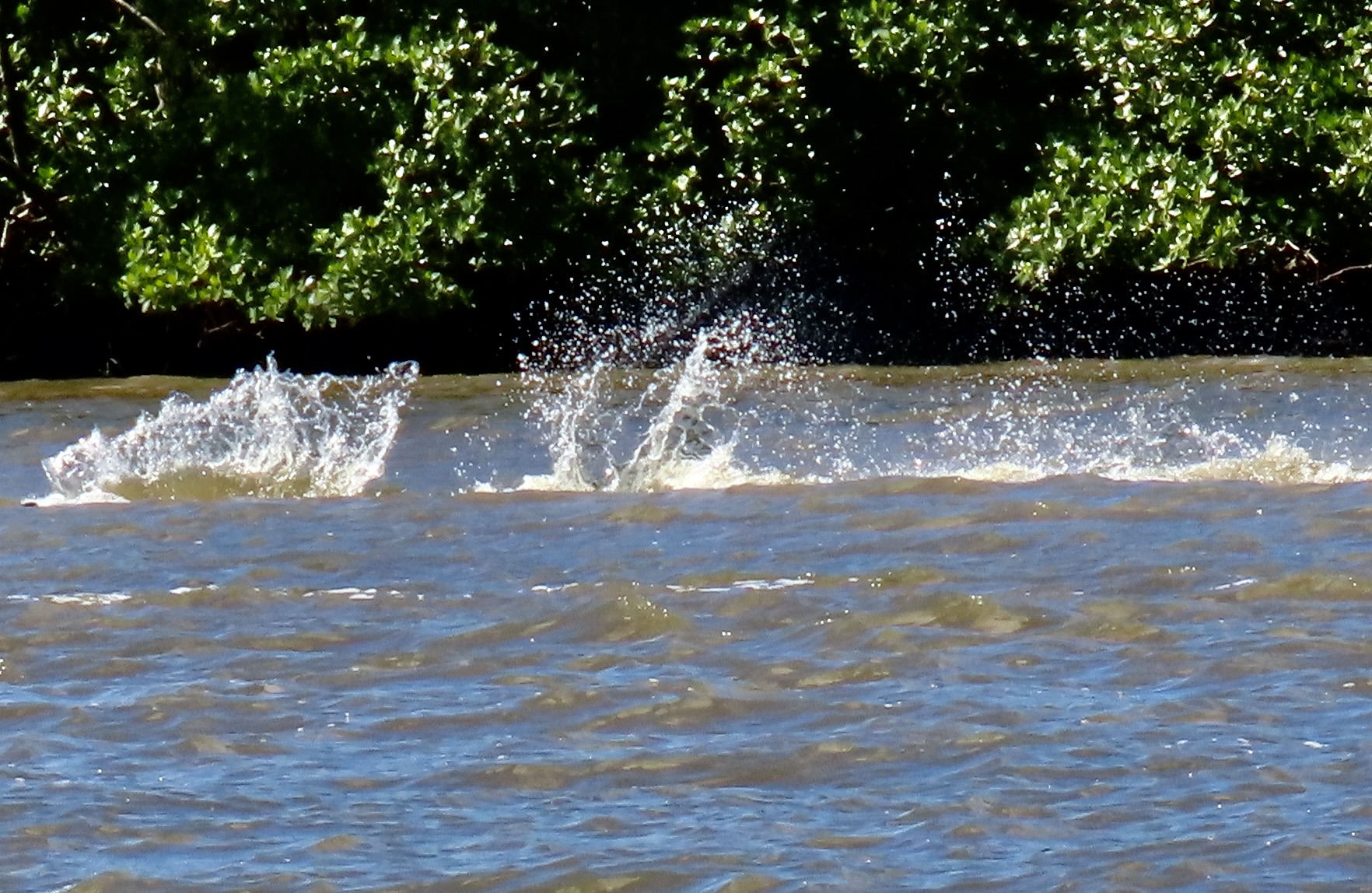
Something moving very fast left this trail through the water in a split second. Can you guess what it was?
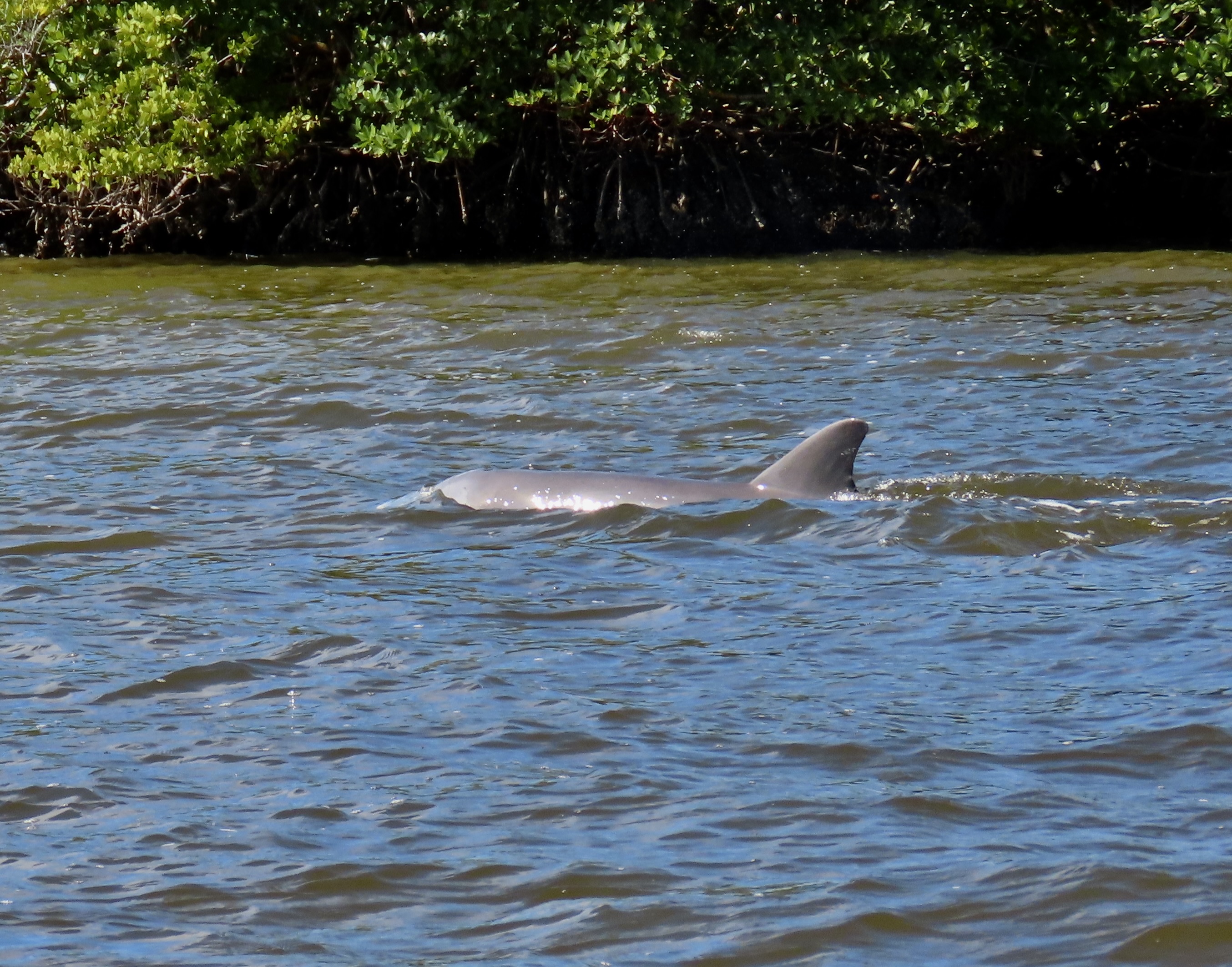
It was a dolphin. Several of them had chased fish into the shallow water and were working to catch them. I had never realized how fast they are. Apparently they are quite common in the area. One tour operater offered, “If you don’t see dolphins on our trip we will refund your tickets.”

After our tour, we stopped at a local Chokoloski Island institution, the HavAnnA Cafe for lunch. It’s a charming, roofed-over, open air restaurant with lots of greenery— and chickens. A flock came clucking through while we were eating, eager to pick up any crumbs that had escaped to the floor. “The officials won’t let me sell their eggs to our customers,” the owner complained to us. I was both surprised and pleased that the officials allowed the chickens visiting rights at all. I did see chicken on the menu, however. I ordered a Cuban Sandwich instead.

We decided to drive ourselves on a tour of the Big Cypress National Preserve, which was just north of Everglade City. The name of the road we would start on is Birdon Road. How could we resist? And it was true. The three roads we drove over— Birdon, Wagon Wheel, and the Turner River— followed streams and were packed with birds, and alligators.
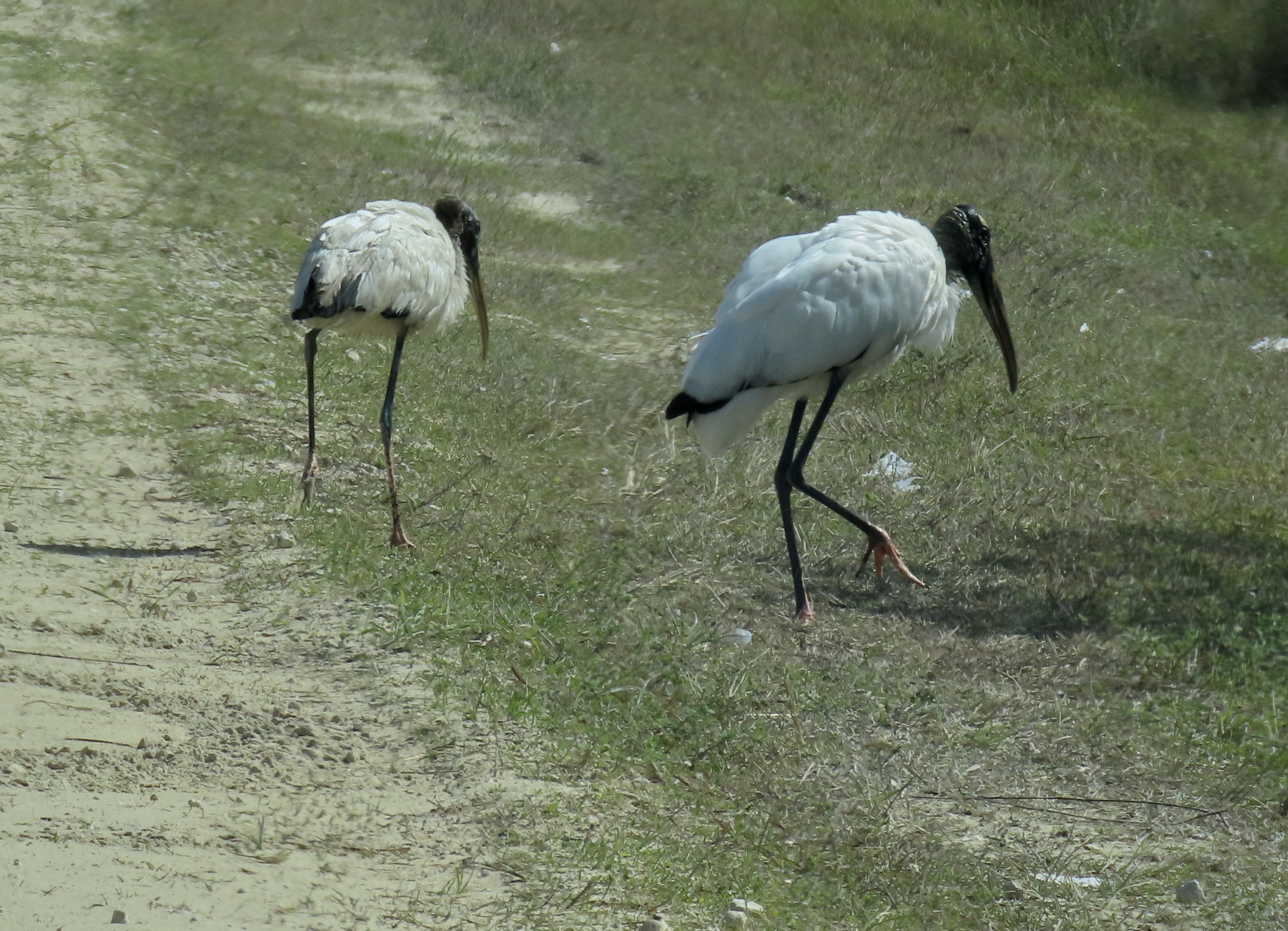
A pair of wood storks barely bothered to move off of Birdon road as we drove by.
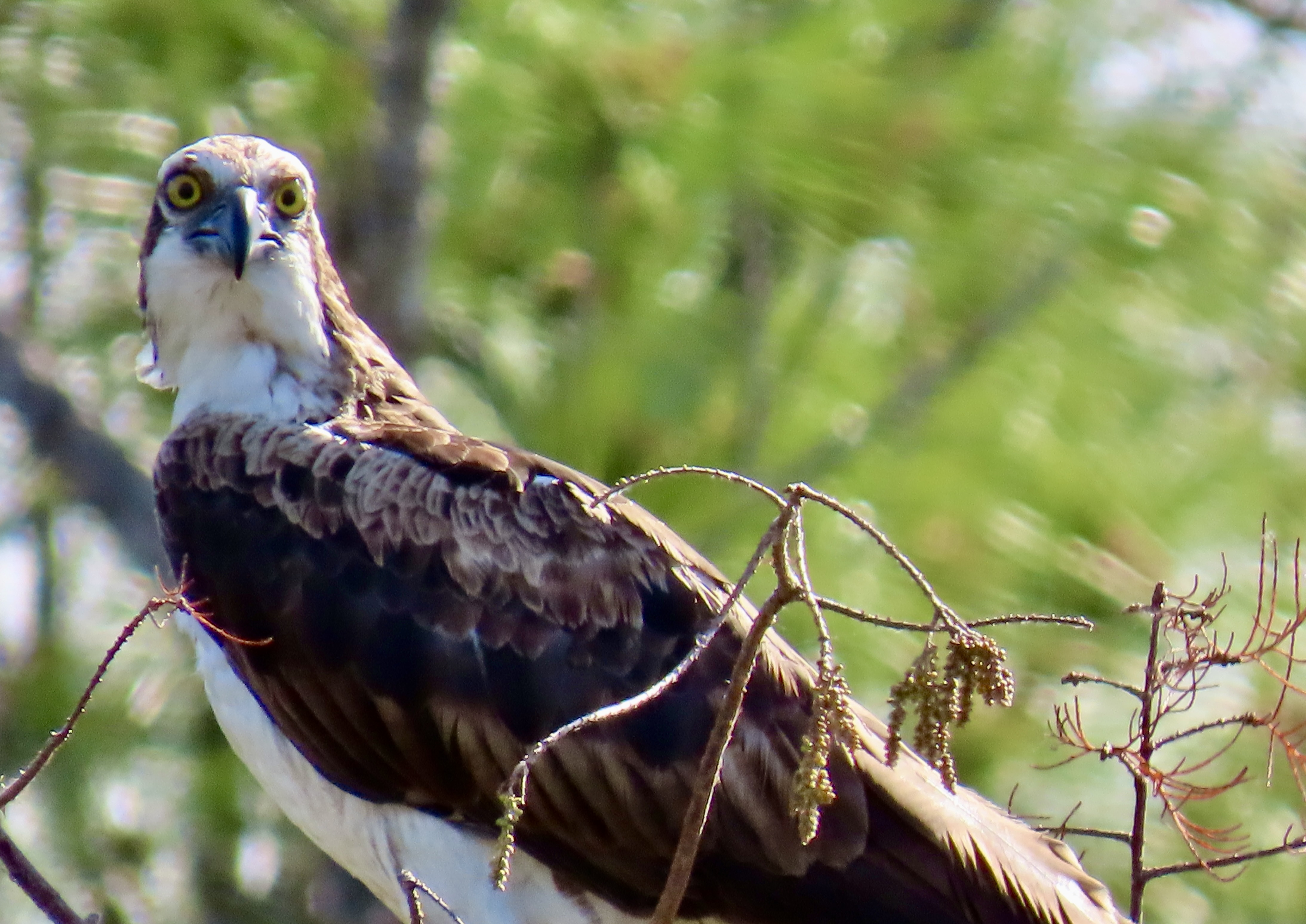
An osprey seemed surprised by our presence.
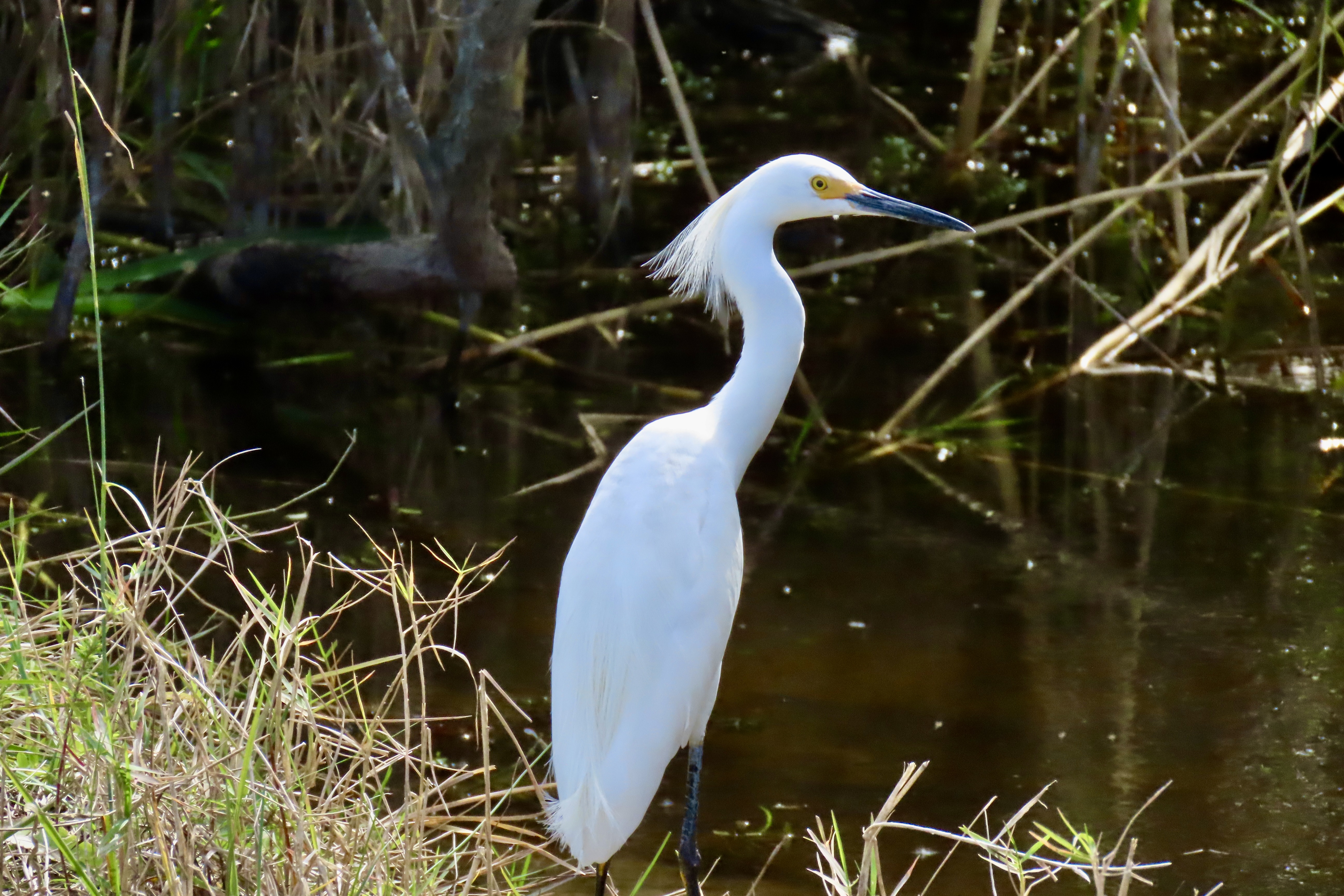
A snowy egret hovered over a stream where it was fishing.
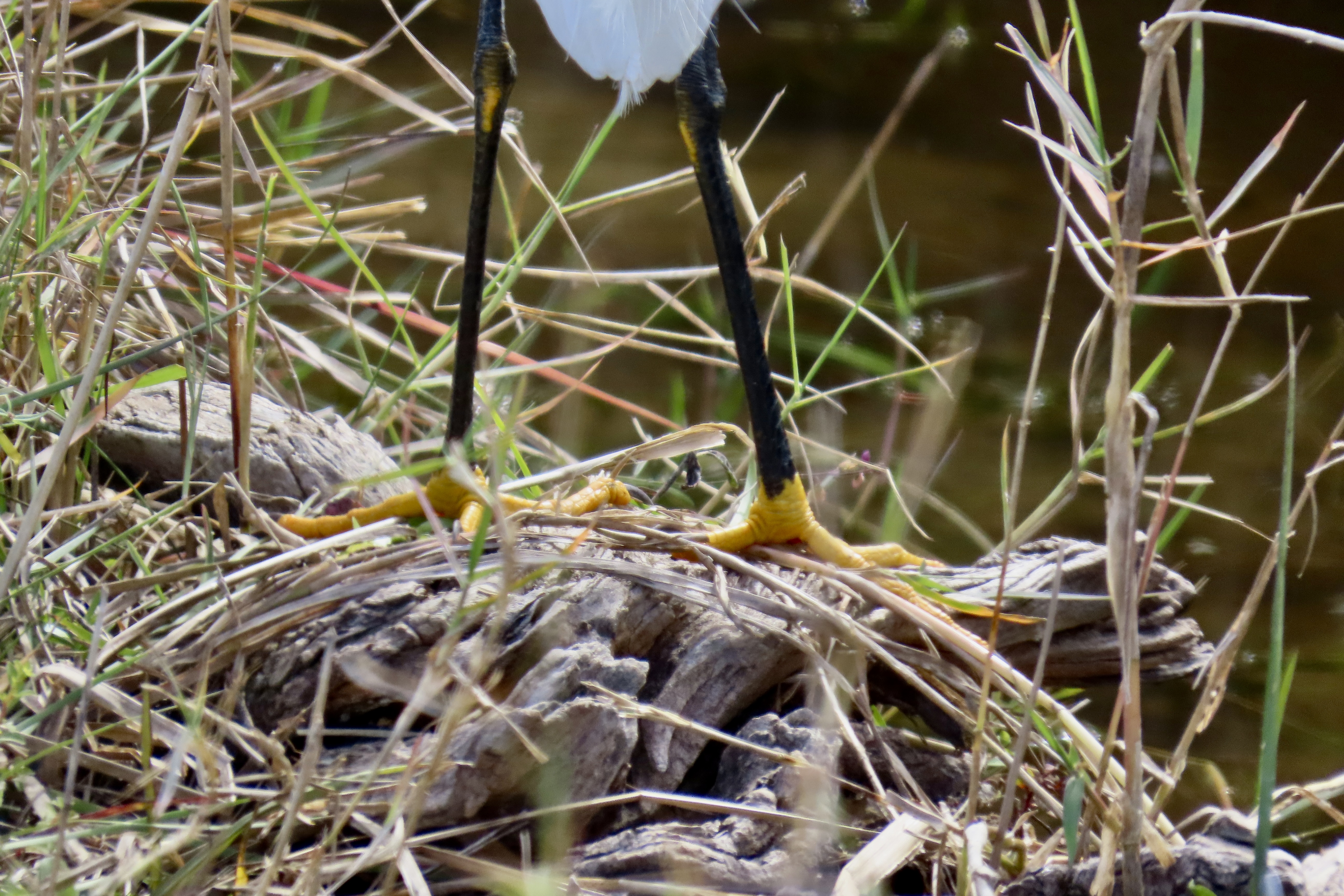
One of the defining chacteristics of a snowy egret is its yellow feet. Hard to miss!
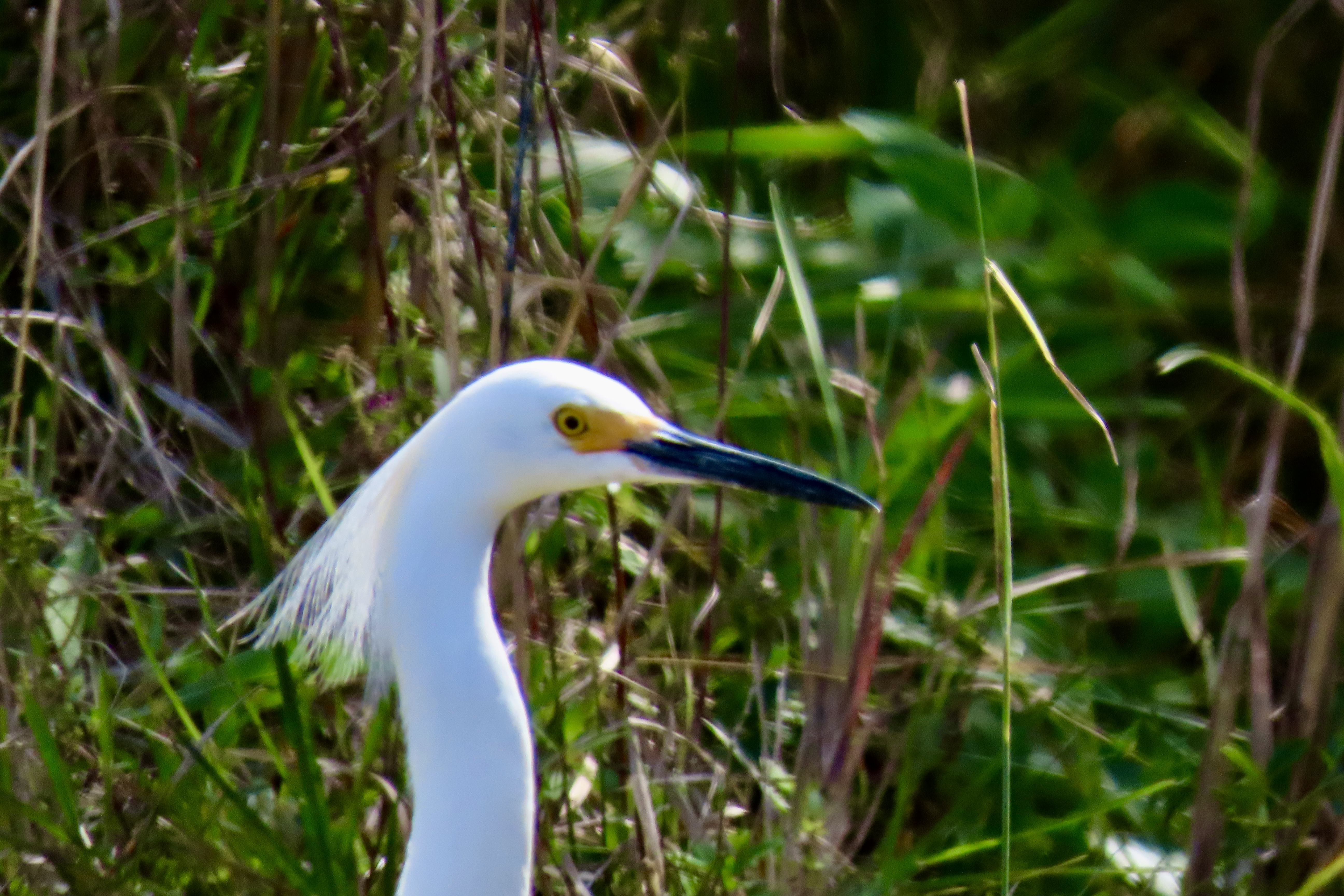
Close up.
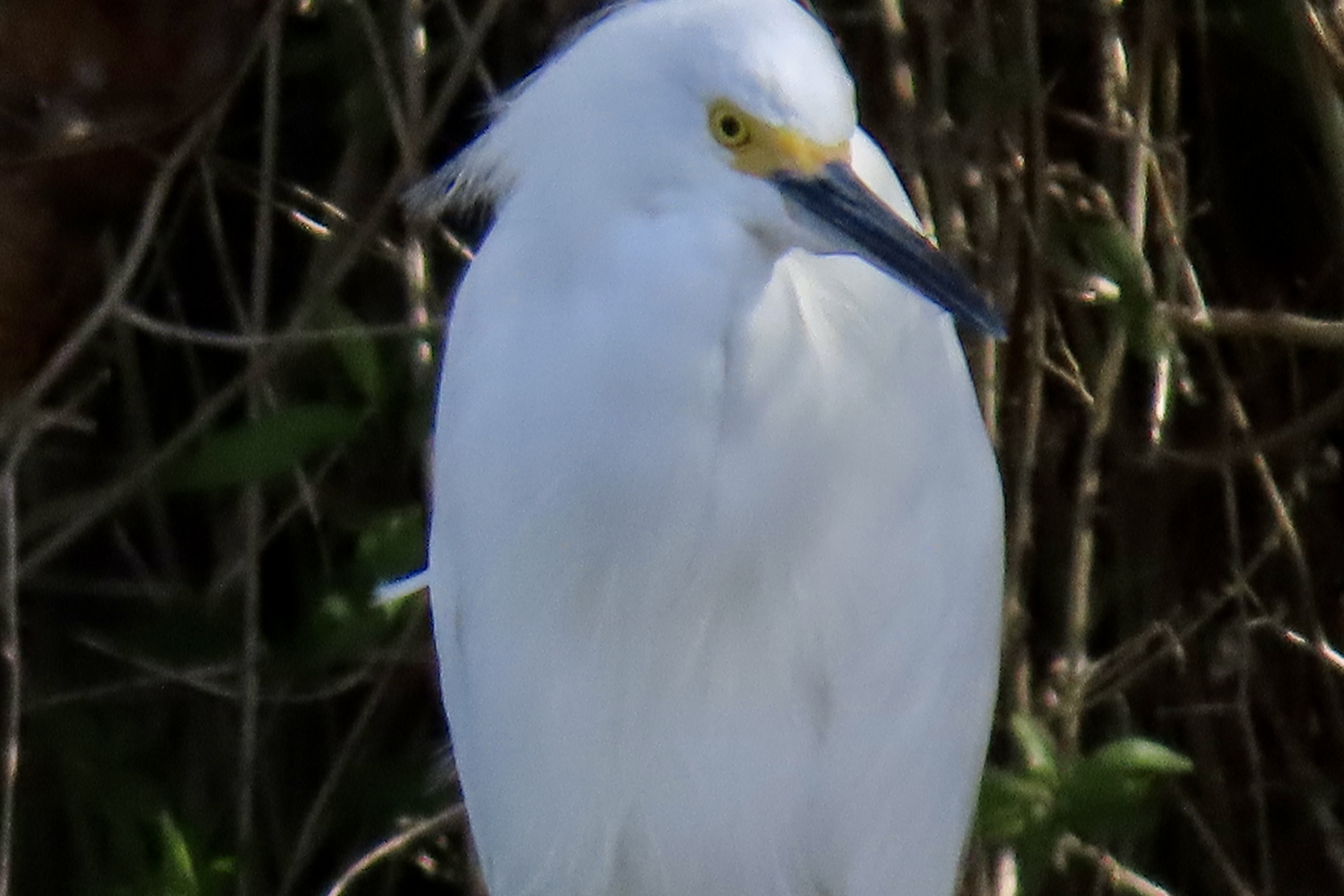
This snowy egret was perched in a tree.
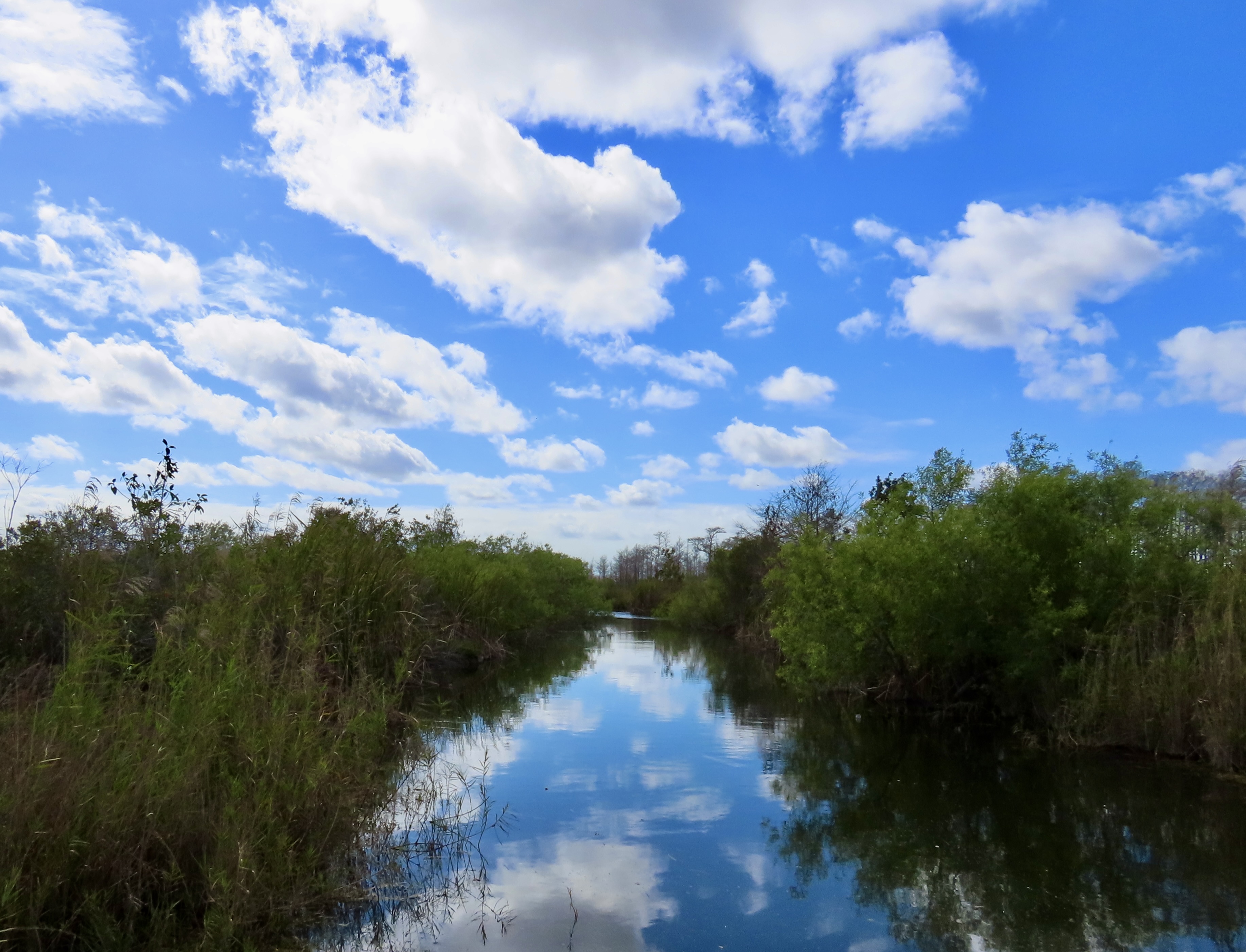
One of the streams we followed through the Preserve.
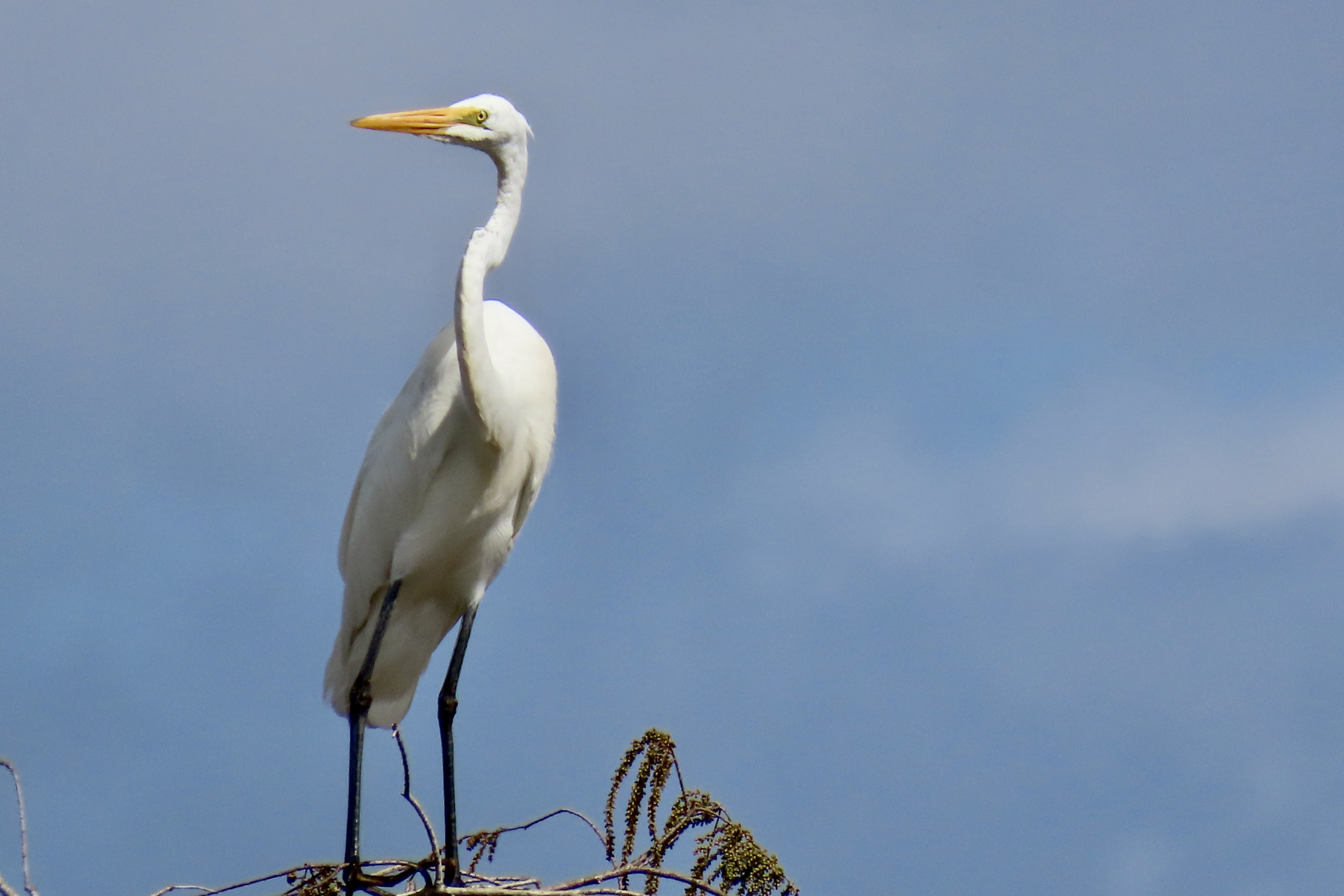
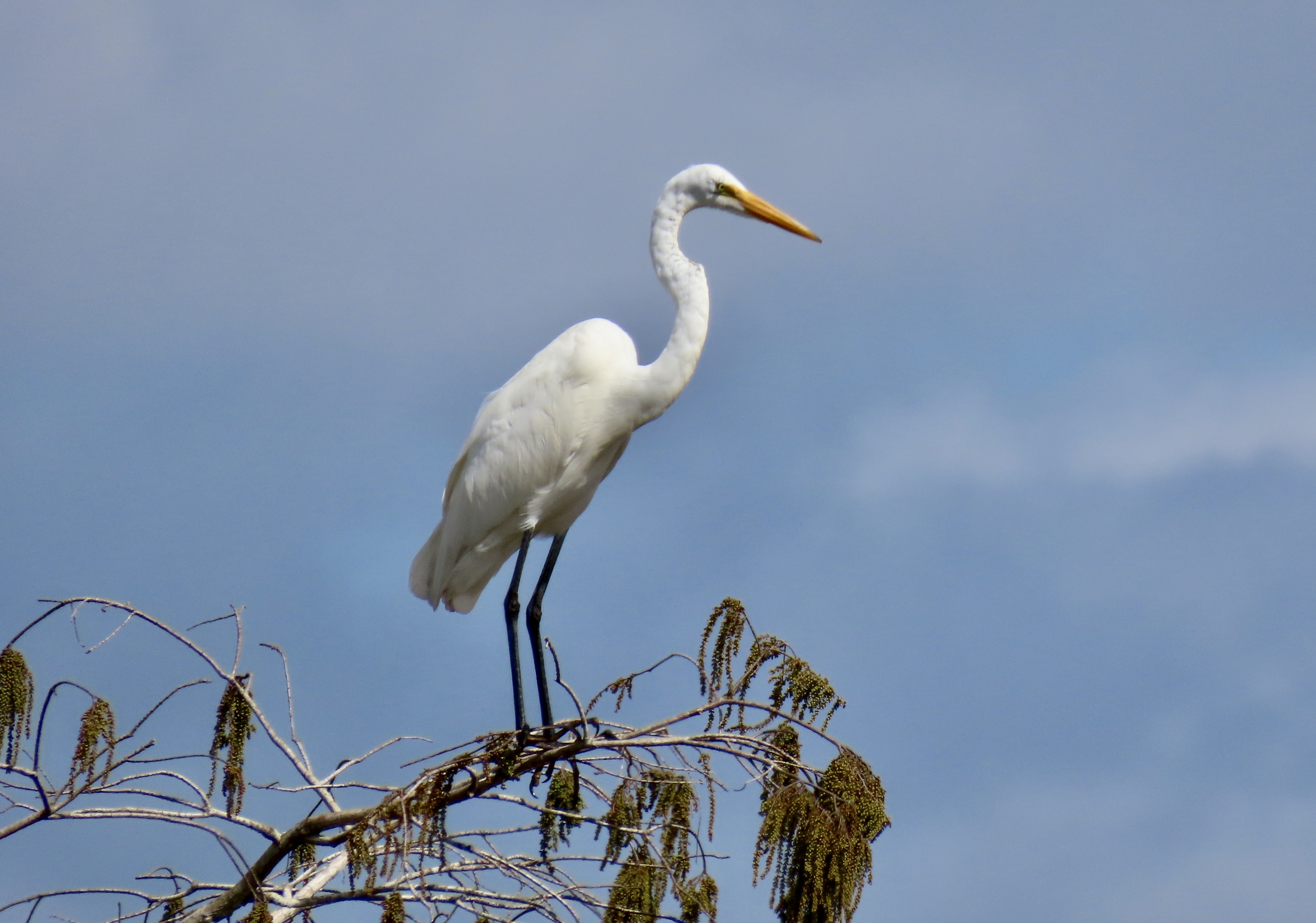
This great white egret was surveying its world from the top of a tree.
Another view.
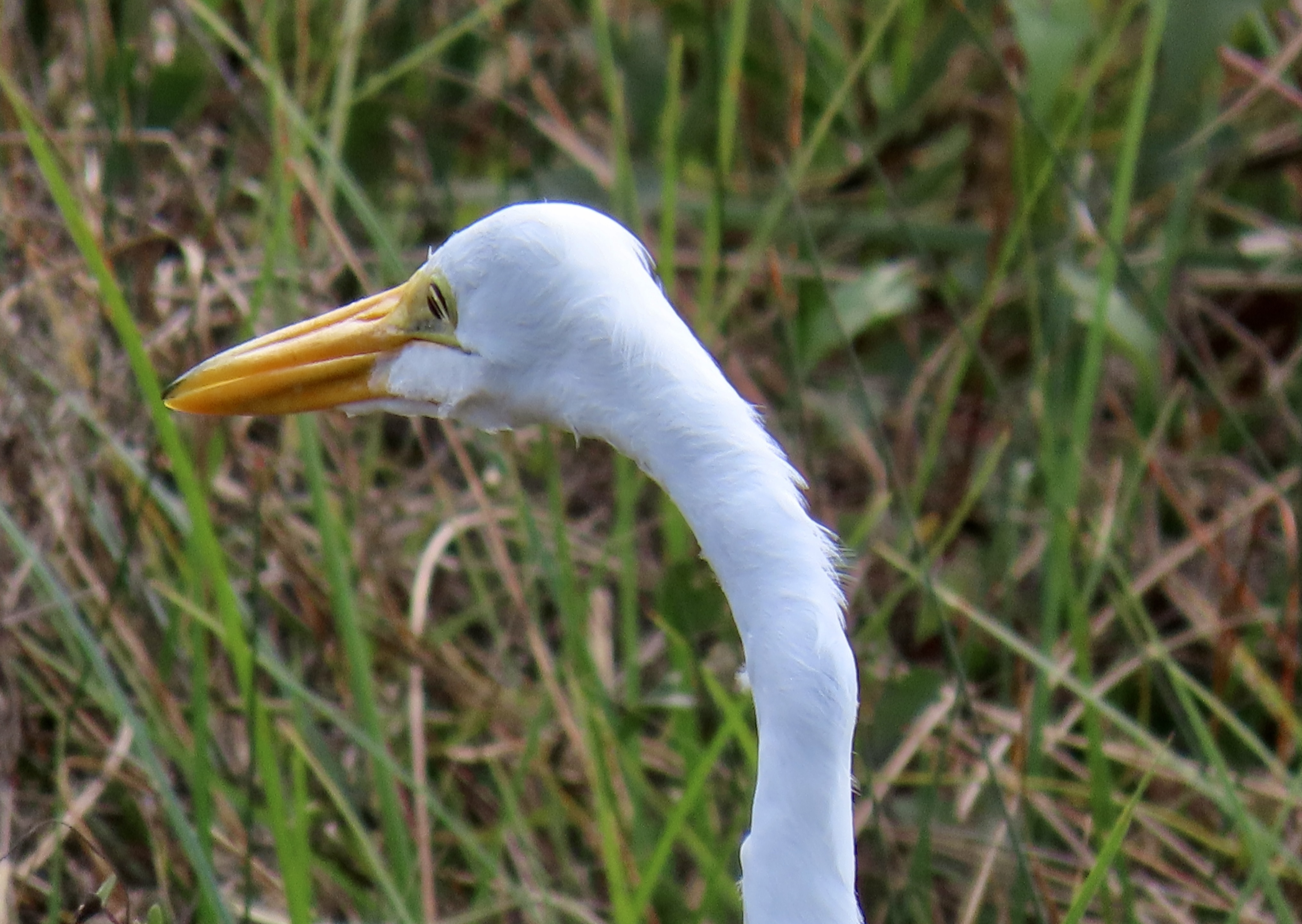
We found another one fishing by the stream and took a close up.
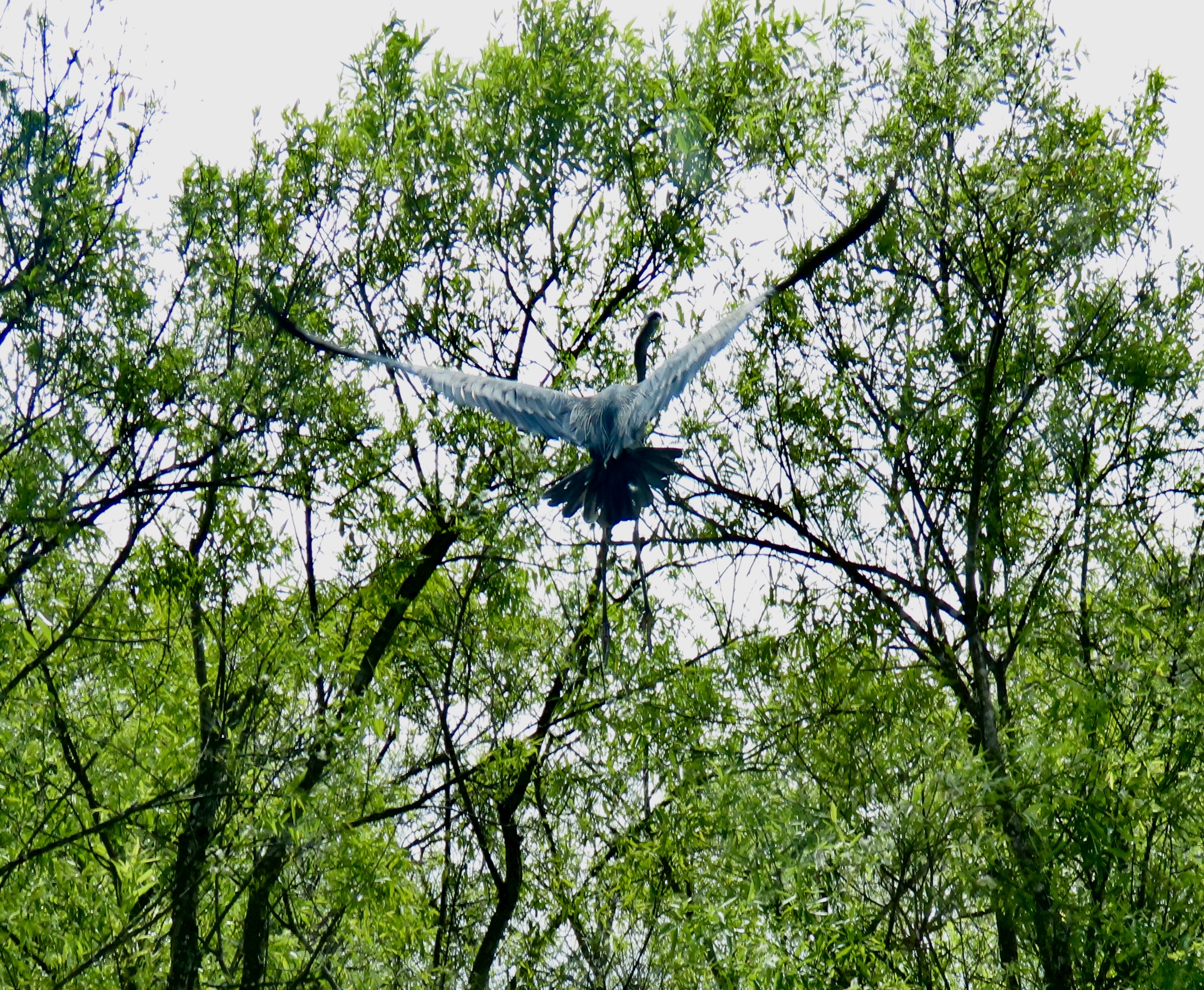
A great blue heron flew away before we could take his photo. “Be that way,” I called after it and snapped a photo in flight.
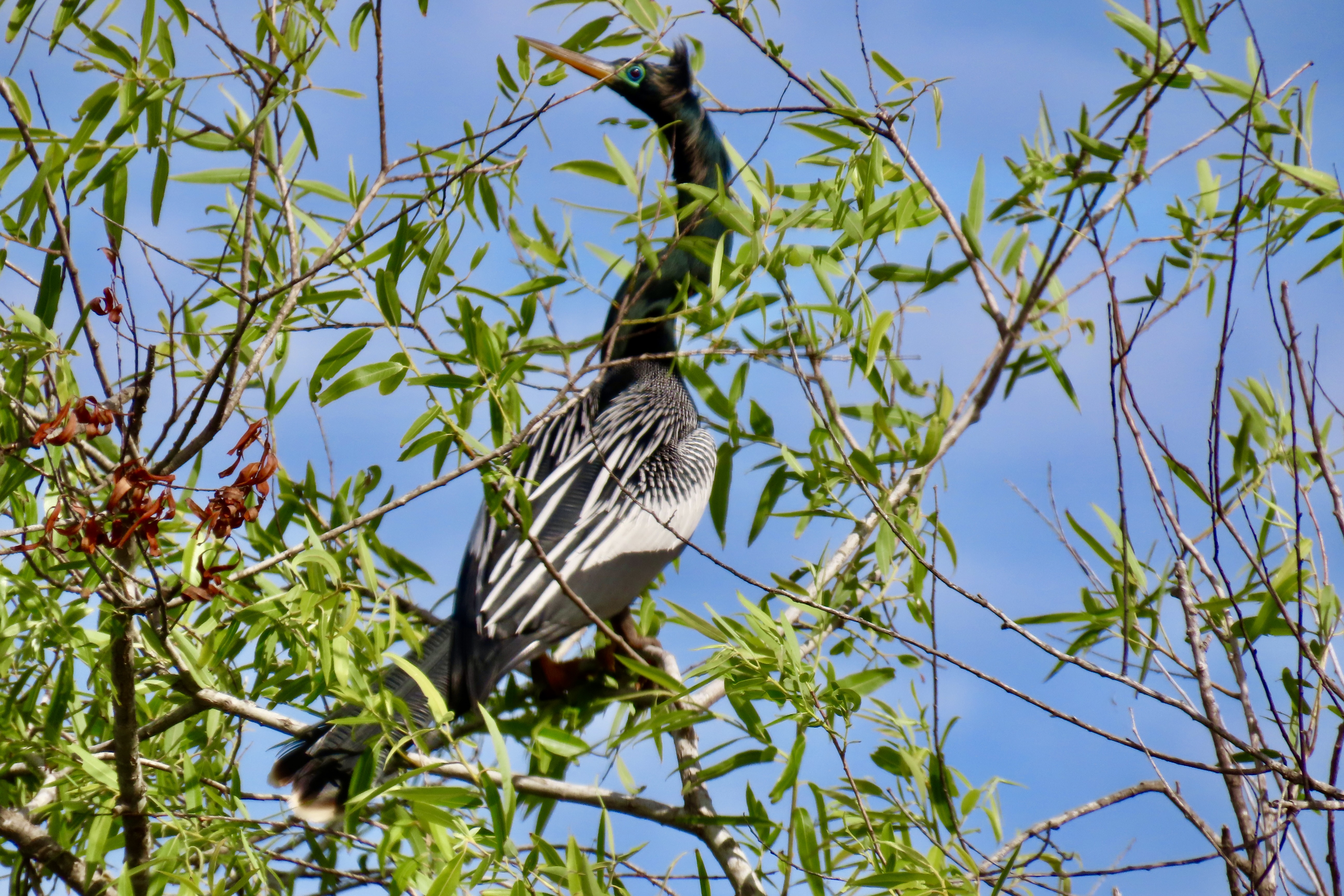
An anhinga twisted its neck so it could keep an eye on us.
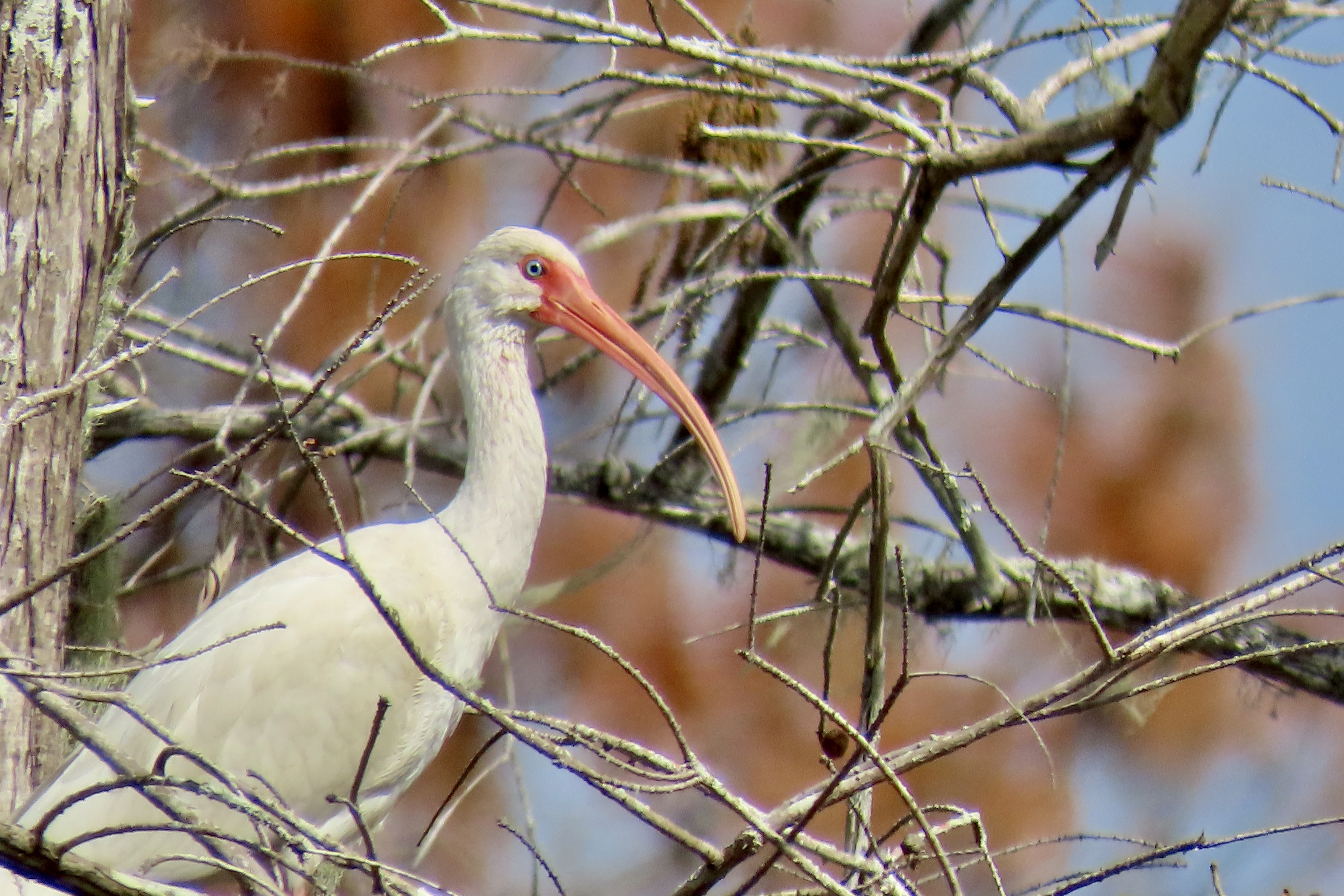
A white ibis was also curious.
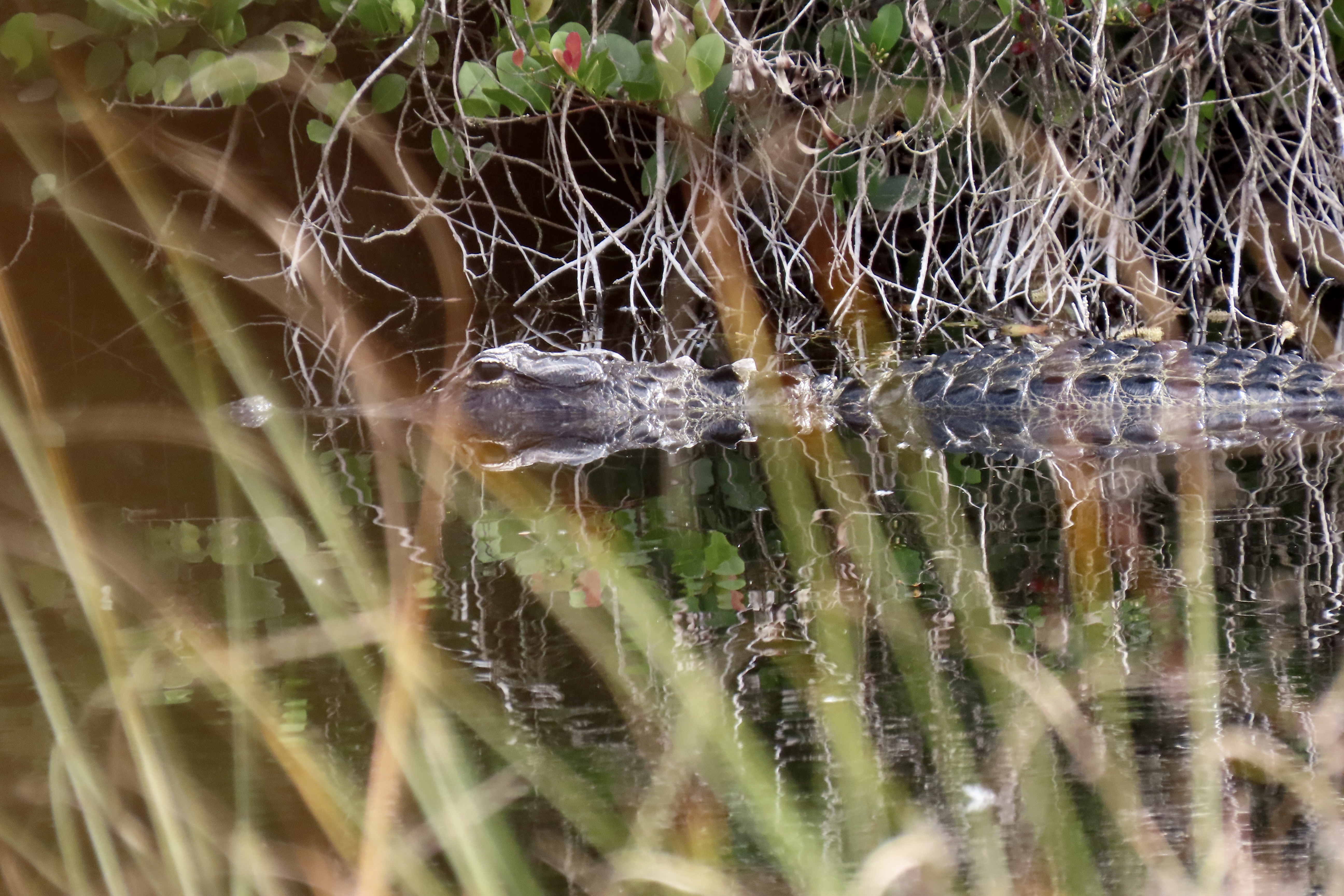
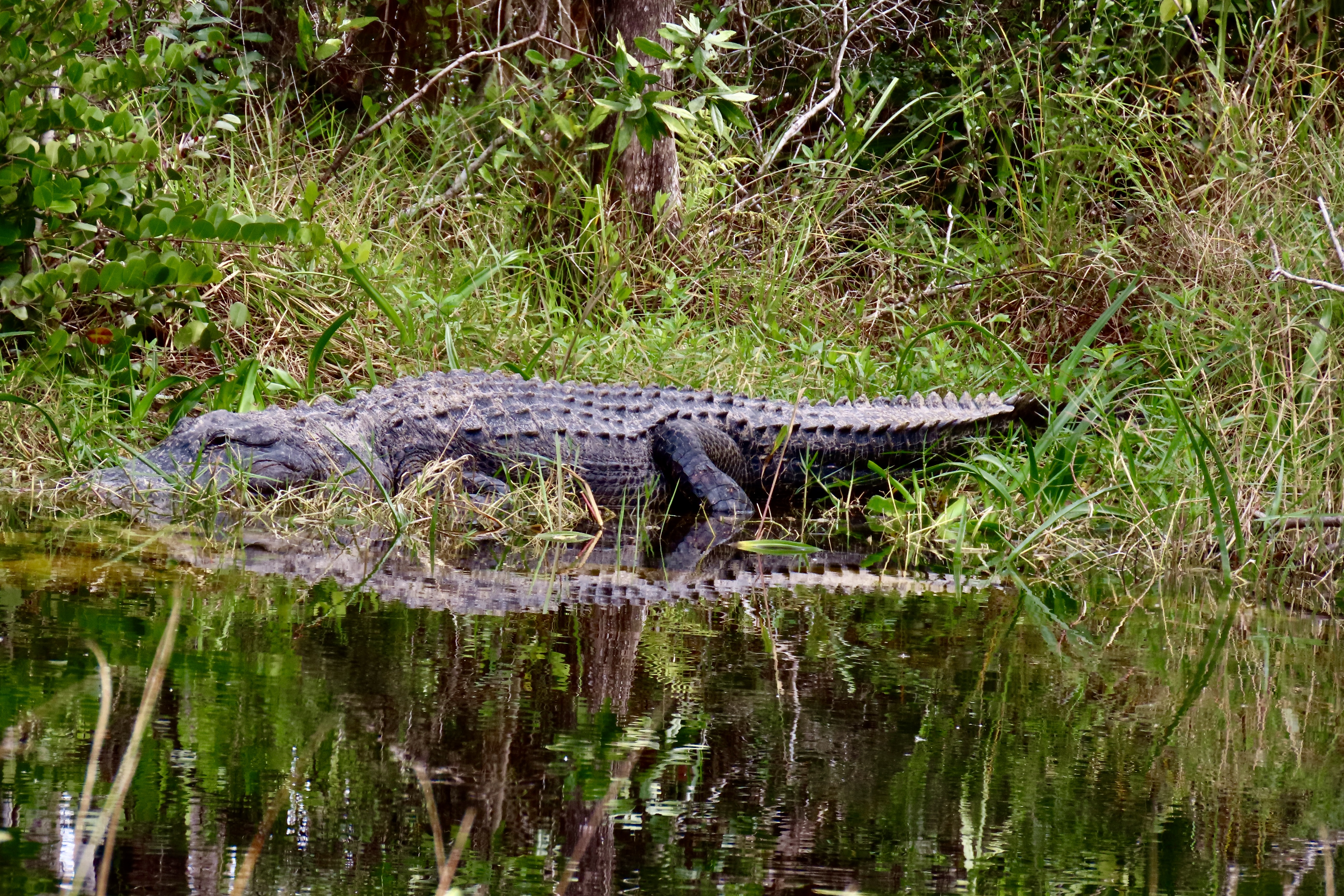
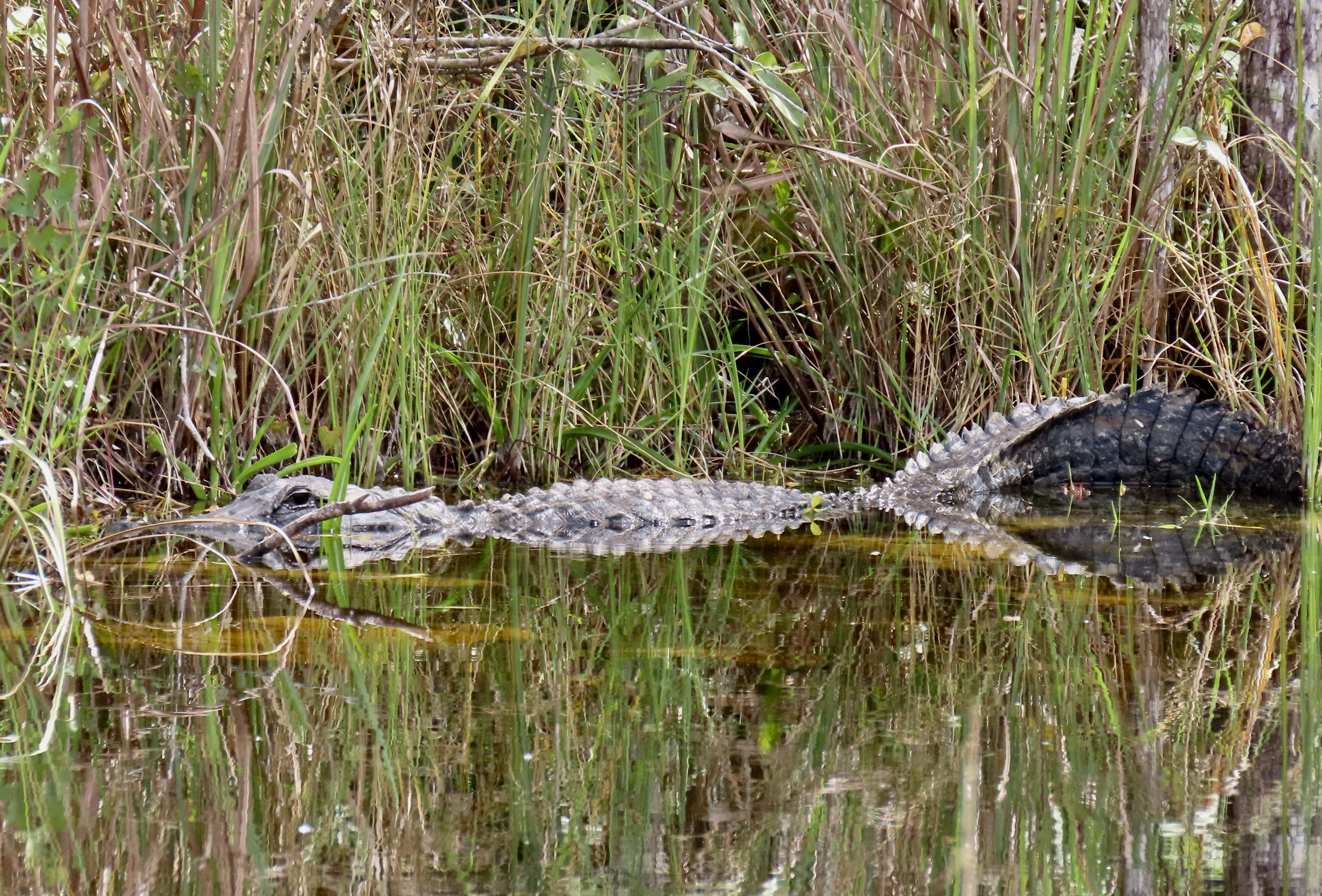
We also found alligators lurking along the stream. The clearness of the water and the time of day led to some interesting reflection shots.
…such as this.
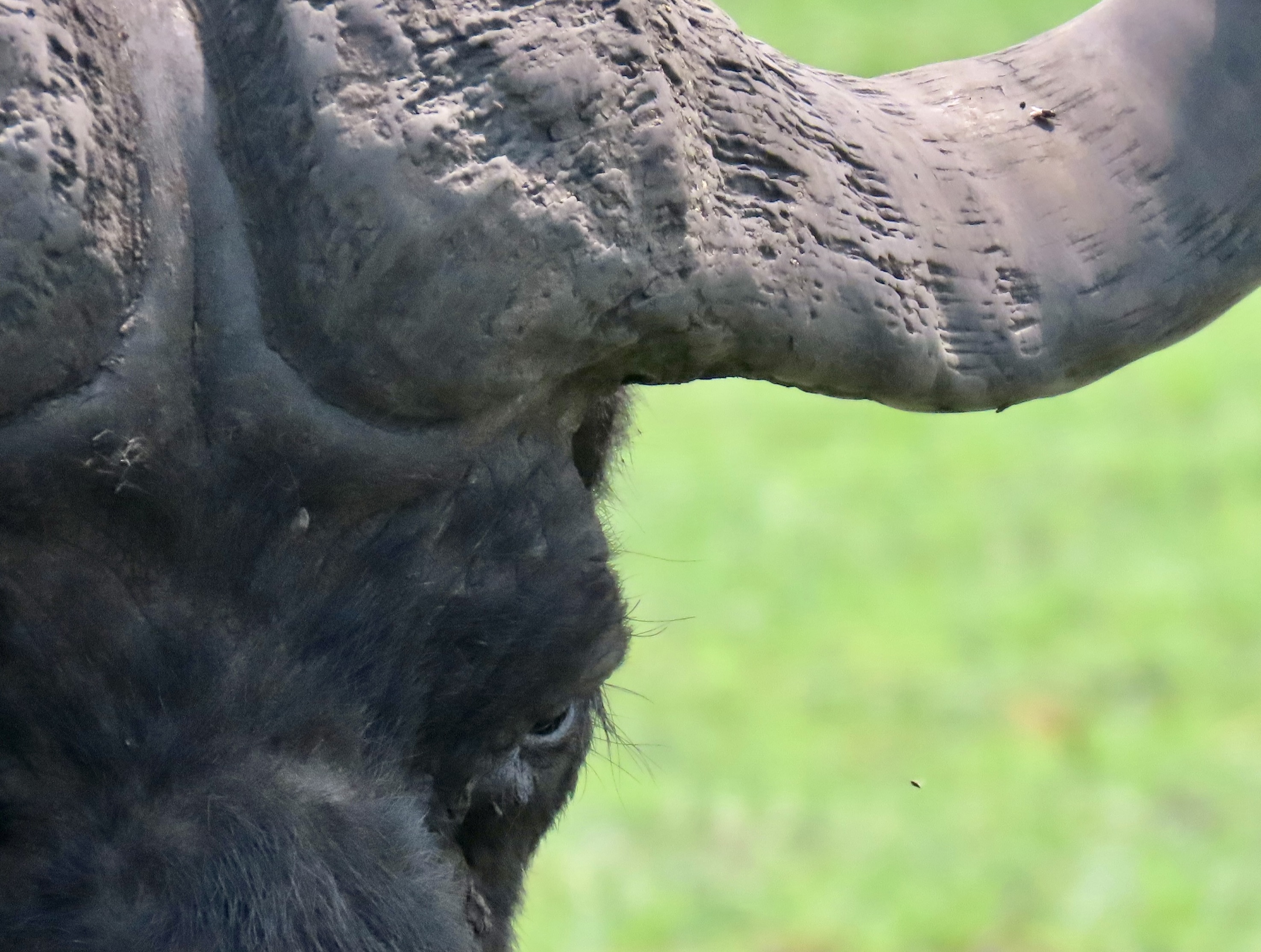
And even more so here! I’ll wrap up today’s post with this ‘two tailed’ example. At first glance, Peggy and I thought we had spotted a monster! The next blog will be on the most dangerous animal in Africa, the Cape buffalo.

Gators and Glades… The National Park Series

The ancestors of this alligator, photographed in Florida’s Everglades National Park, roamed the earth some 150 million years ago.

I’ve been following the blog Serenity Spell by FeyGirl that explores the natural world of Florida. It is well written and includes great photos, in-depth information, and a strong ecological philosophy. I highly recommend it.

FeyGirl’s posts have reminded me of my own experiences in the Everglades National Park and other Florida wetlands.

My brother Marshall, a 72-year-old homeless man with a pickup truck and a bank account, likes to hide out in remote Florida campgrounds six months out of the year and read books. Catching up with him has taken me into places where tourists rarely tread. Trust me, Marshall does not hang out at Disneyworld or Epcot Center.

Peggy’s parents, John and Helen, also lived in Central Florida for years and John, in his 70s and 80s at the time, loved to take us for hikes and point out anhinga, alligators, cottonmouths and other Florida wildlife.

Given all this, I decided to write about the Everglades this week. I’ll start with alligators, move on to a handsome vulture and end with some very impressive bird beaks.

The photographer in me loves alligators. They are big (up to 1000 pounds), like to sunbathe and don’t see any reason to run away. With over a million residing in Florida, they are also easy to find. During dry season they congregate where water is found and actually enlarge wet areas by digging out “gator holes.”

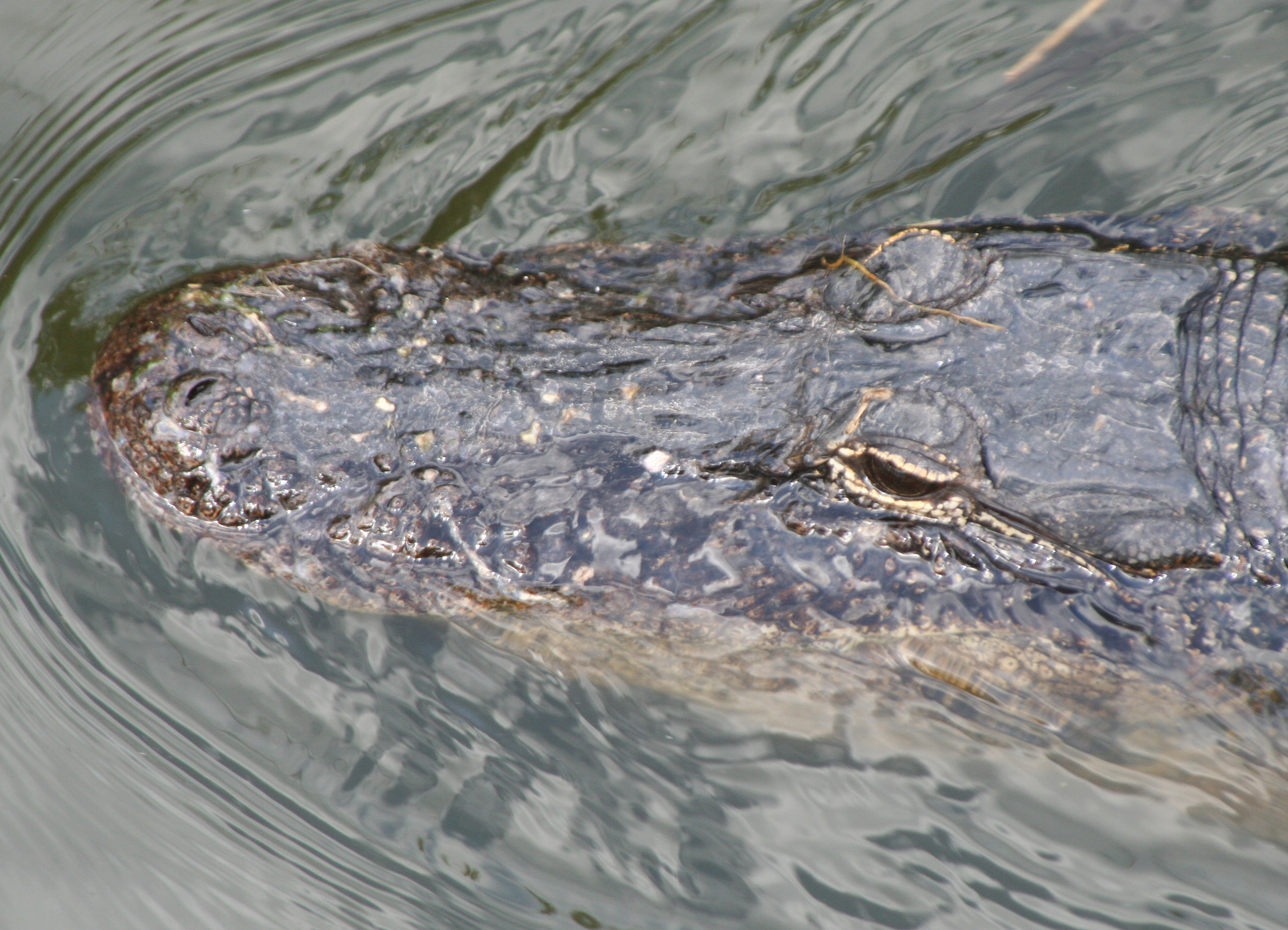
What makes them so photogenic, however, is their exotic look. It comes from having been around for 150 million years and surviving the demise of dinosaurs. I am particularly fond of photographing them as they slither through the water. It captures them at their primitive best.

I begin photographing this alligator at some distance and ended when it was a few feet away. He went about his own business and I went on about mine.

The most surprising fact for me about alligators is that the females make such good mothers. They start by building nests two-three feet high of plant debris and dirt.  They then lay 30 to 50 eggs and patiently guard the nest for 70 days until the babies hatch. The sex of the babies is determined by how warm the nest is. Cooler produces females, hotter produces males.

Mom’s job isn’t over with the hatching. She hangs out and protects her babies for another year. Lots of things including other alligators, fish, raccoons and even Great Blue Herons find baby alligators tasty. Later, when the babies grow up, they return the favor by eating the same creatures that wanted to eat them. What goes around comes around.

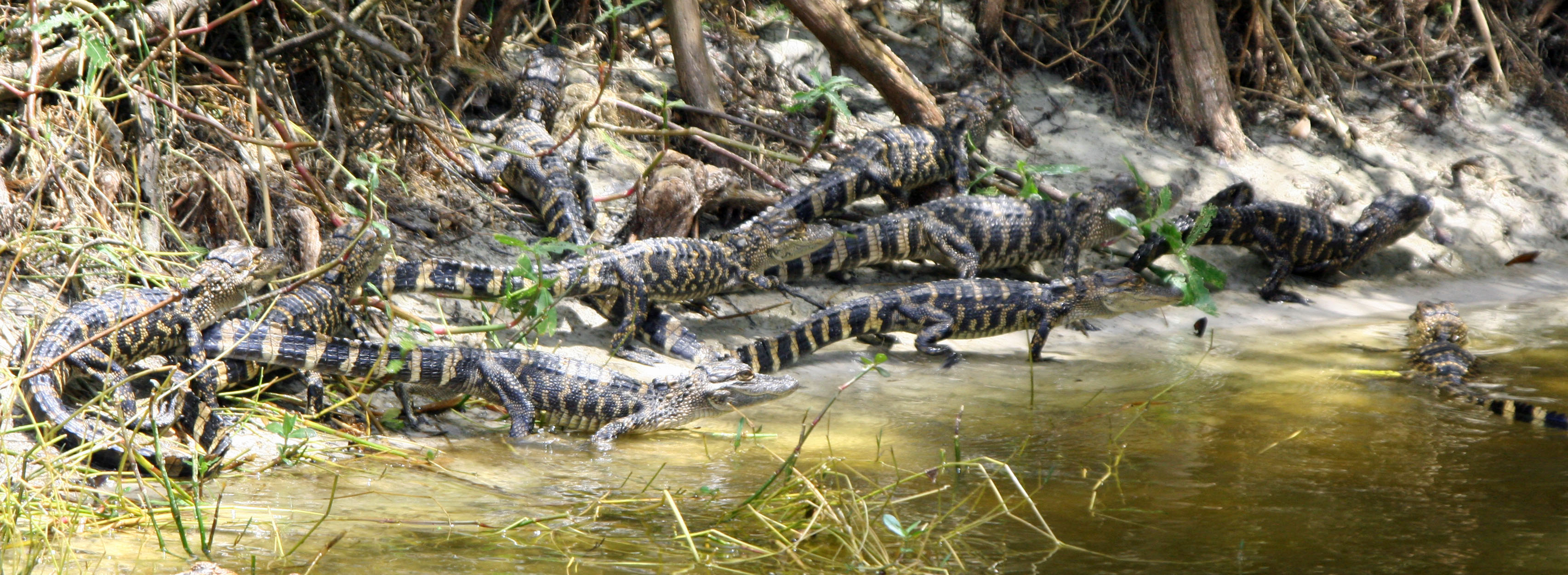
The protective coloration of these young alligators makes them difficult to see. Mom is hiding out near by on guard duty against predators.

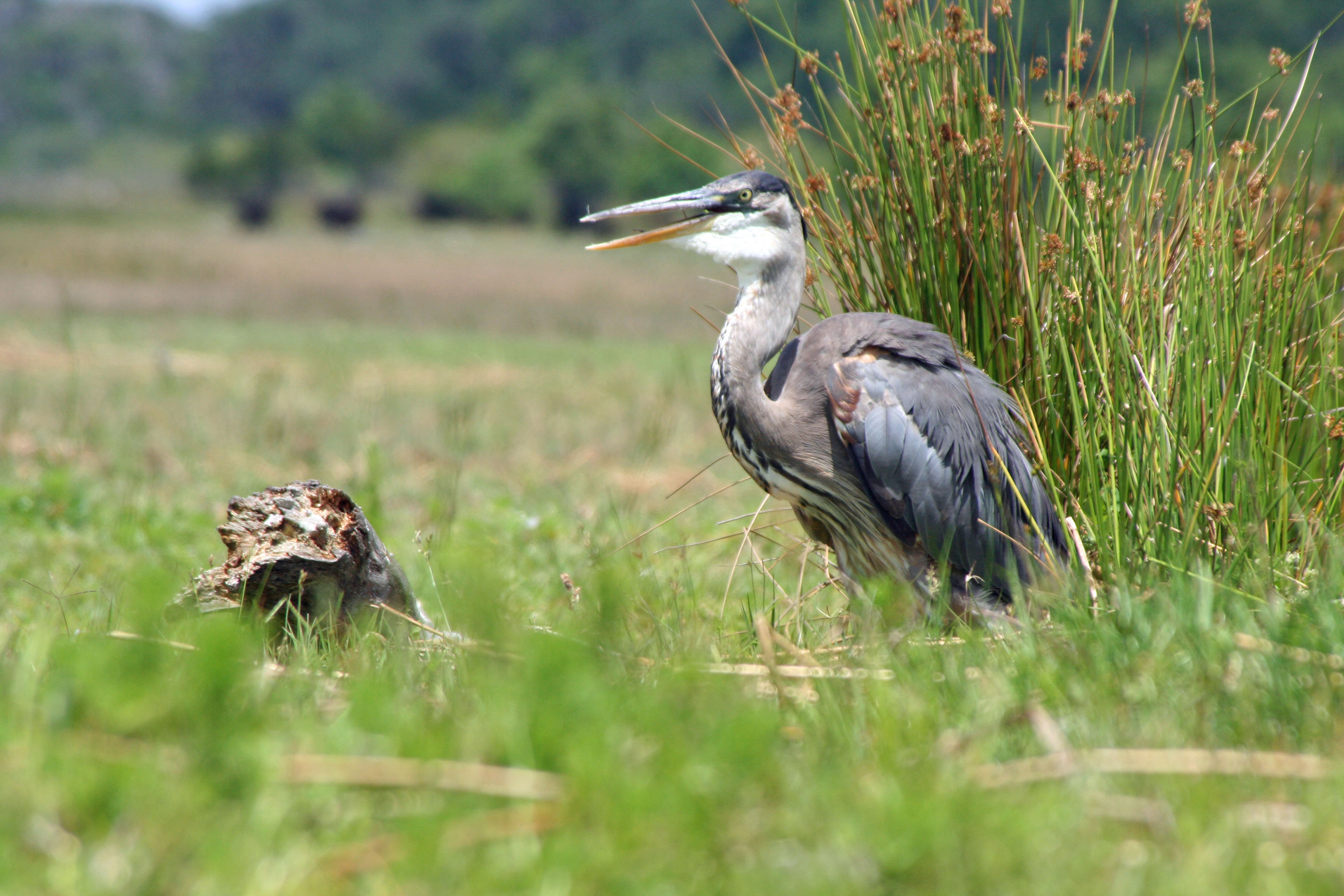
One predator that is fond of eating baby alligators is the Great Blue Heron. Peggy photographed this one about 50 yards away from where the pod of young alligators was located.

While alligators normally don’t eat people, they are dangerous. Any animal that weighs several hundred pounds, has 80 sharp teeth and a bite to die for deserves respect. Ask a dog. Their collars are frequently found in the stomachs of alligators that live in close proximity to people. Alligators rarely catch cats. The dog sees the alligator as something to bark at and chase off of the property. The cat sees the alligator as a reason for climbing a tree. It’s best to error on the side of cats.

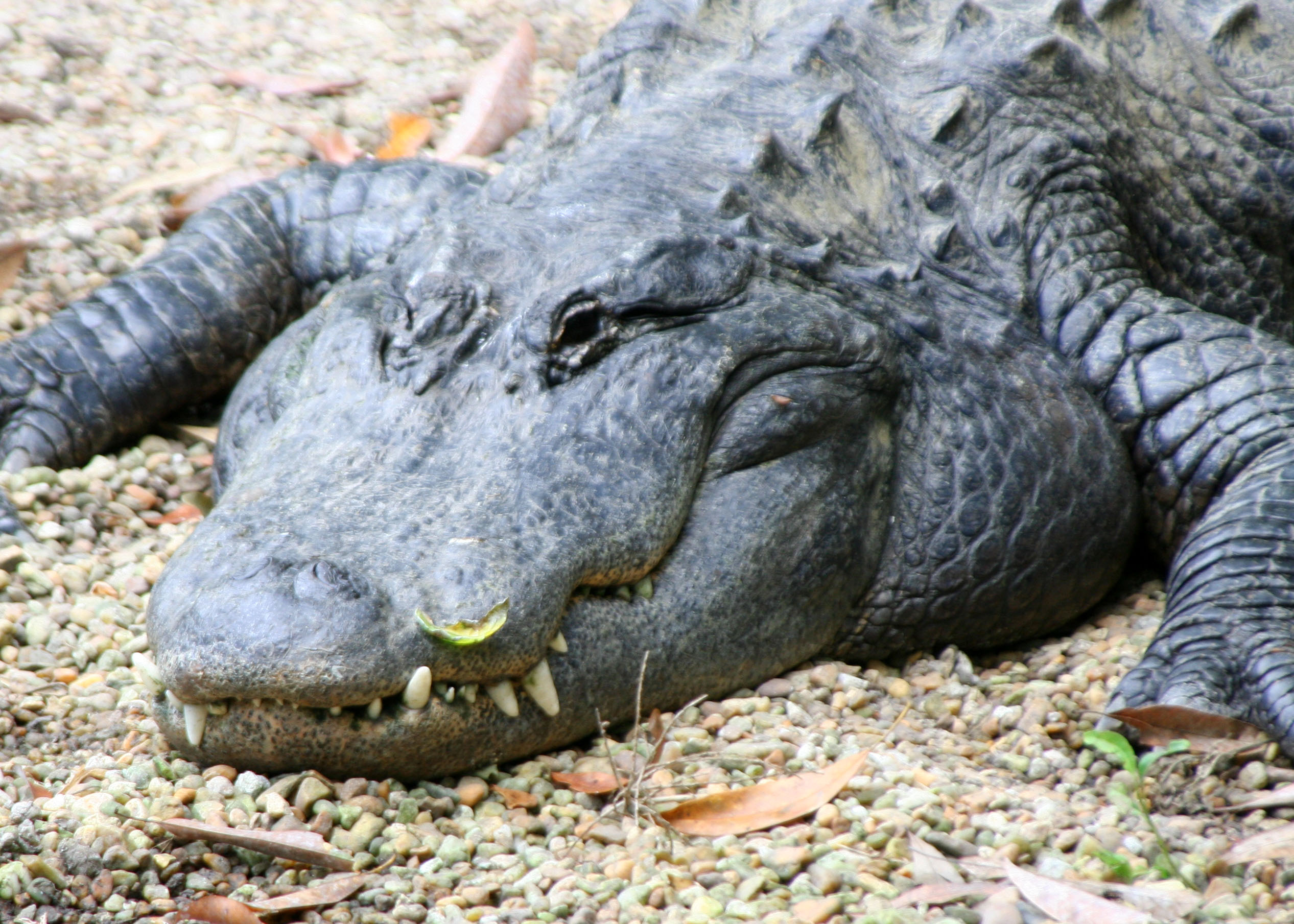
Reptiles that can weigh several hundred pounds, have mouths full of teeth, and jaws with crushing power deserve respect.

Our traveling mascot, Eeyore the Donkey, hides out in the van when we go out to photograph alligators.

As one might expect, alligators are particularly aggressive during breeding season and while protecting nests. Also, feeding alligators is both dangerous and illegal. A Florida man learned this lesson the hard way a few days ago and lost his hand.

Having put in the cautionary label, respect not fear is the key word. These ancient reptiles are fascinating to see and safe to visit as long as common sense and caution are used. The Anhinga Trail at the Royal Palm Visitor Center in Everglades National Park provides a safe, excellent introduction to alligators as well as Florida’s unique bird life. Winter is the best time to visit.

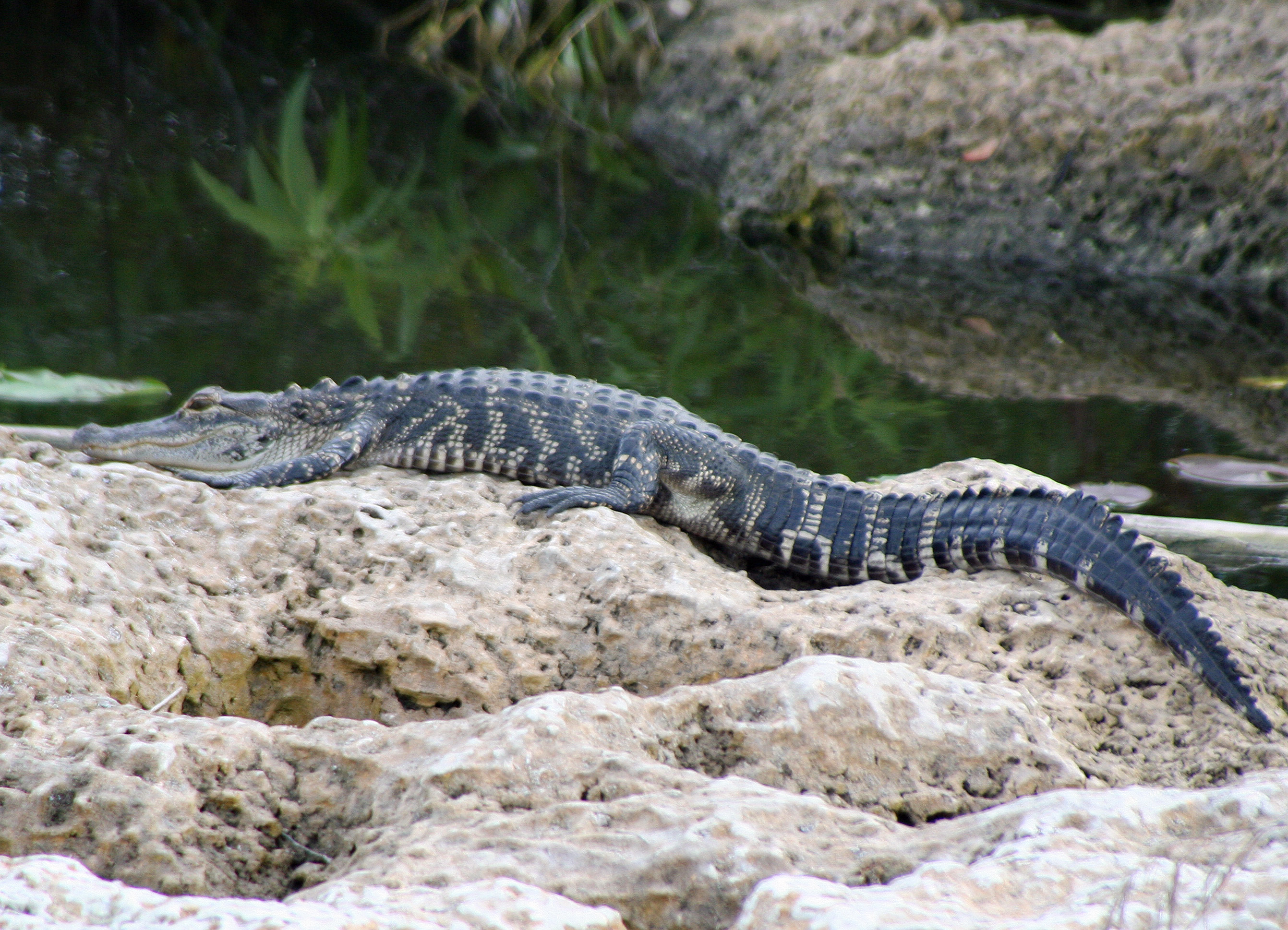
We caught this alligator doing what alligators love to do, sunbathe. I took this photo on the Anhinga Trail next to the Royal Palm Visitor Center at Everglades National Park. I love the way the gator’s body conforms to the rock.