Most people, especially if they are on a tight schedule, focus on the first 4 miles of Bryce Canyon’s 18 mile drive. It’s where all the services are. It is where the tourist buses go. It is where the Park busses run. And those four miles are spectacular— no doubt about it. There are reasons for the all of the hype. But today, Peggy and I are going to take you out the road from mile 4 to mile 18 and provide a perspective on why visitors should include it as part of their itinerary.
What’s not to love about the National Parks of America’s Southwest? Well, maybe not the extreme heat of summer and the flash floods of the monsoonal season. Beyond that, there is incredible beauty, geology, and interesting history. Peggy and I have worked to give you a sense of this beauty over the past several Friday posts if you have never visited the region, and some special memories if you have. Today, we are covering miles 4-18 of Bryce Canyon’s 18 mile road. Next Friday we will wrap up our visit to the Bryce area by covering the first four miles. Both were a treat for us, and hopefully, will be for you as well.
Then, we are going to take a break from the Southwest for a few weeks. First, I want to give you a look at our basecamp in Virginia where we will be hanging our hat, so to speak, between journeys. Second, we want to share our trip to Amsterdam and up the Rhine River this past summer, a trip that was postponed for two years because of covid. After that, we will finish off our Southwest exploration with the North Rim of the Grand Canyon and Mesa Verde, plus.
In the meantime, Peggy and I will be starting our next four month adventure in two weeks, working our way across the northern tier of states with more visits to National Parks and a possible jaunt into Canada until the weather drives us south into the Northwest and California, followed by a drive across the southern tier of states. This coming spring, we have booked a tour down the Nile River, after which we will spend a couple of months in Europe, starting with a month in the Greek Isles. At least, those are the plans…
And now: Miles 4-18.
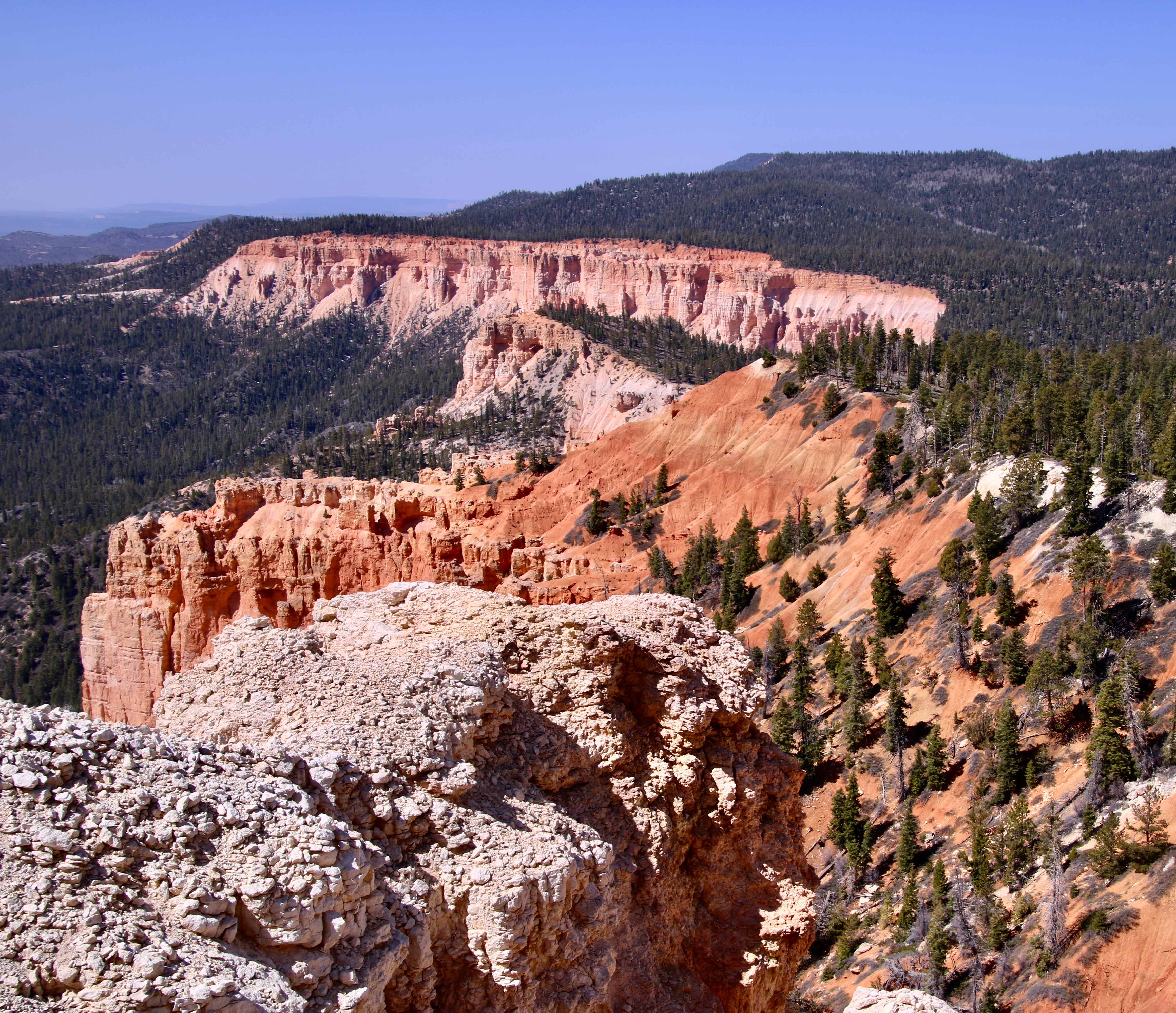
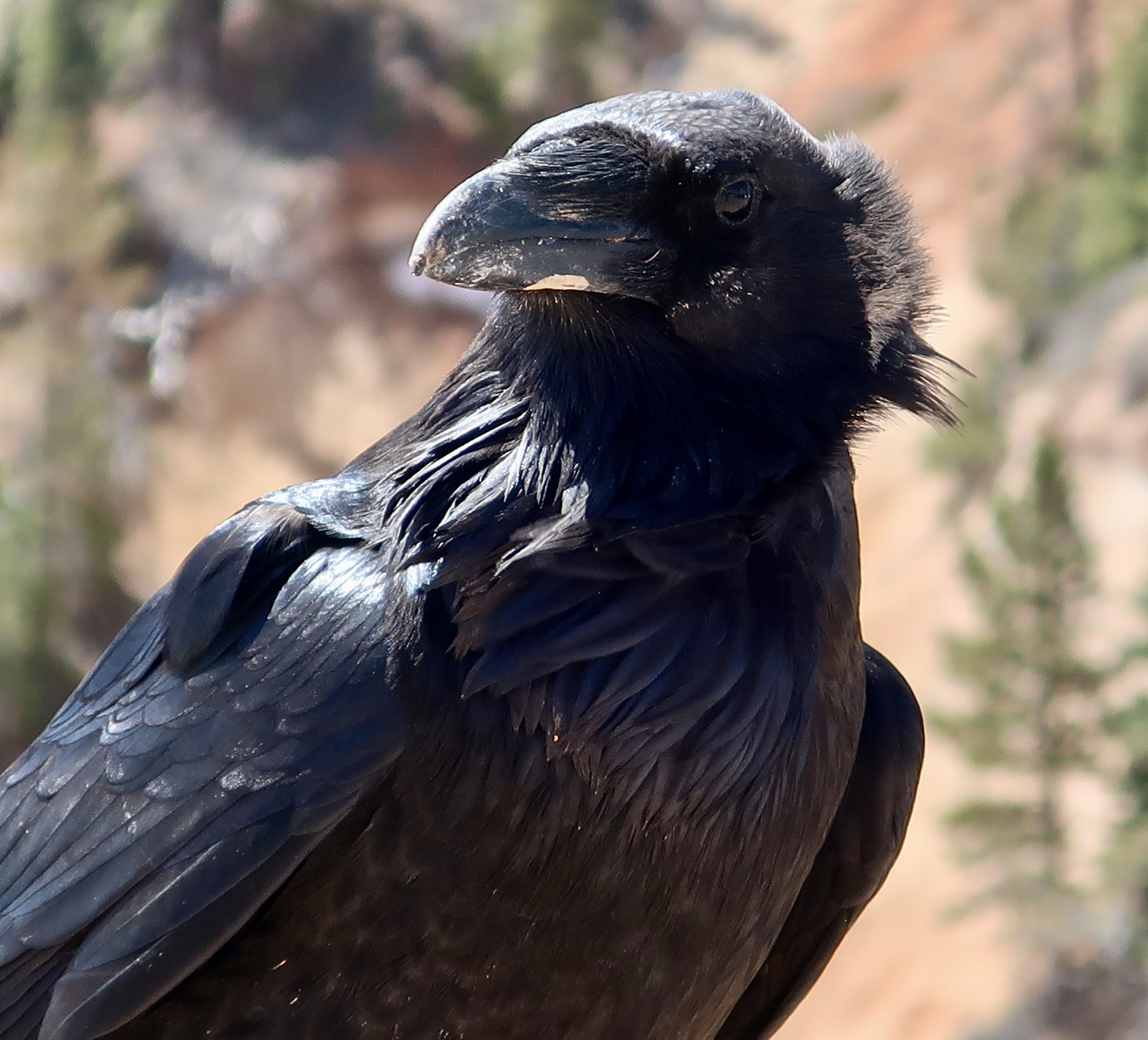
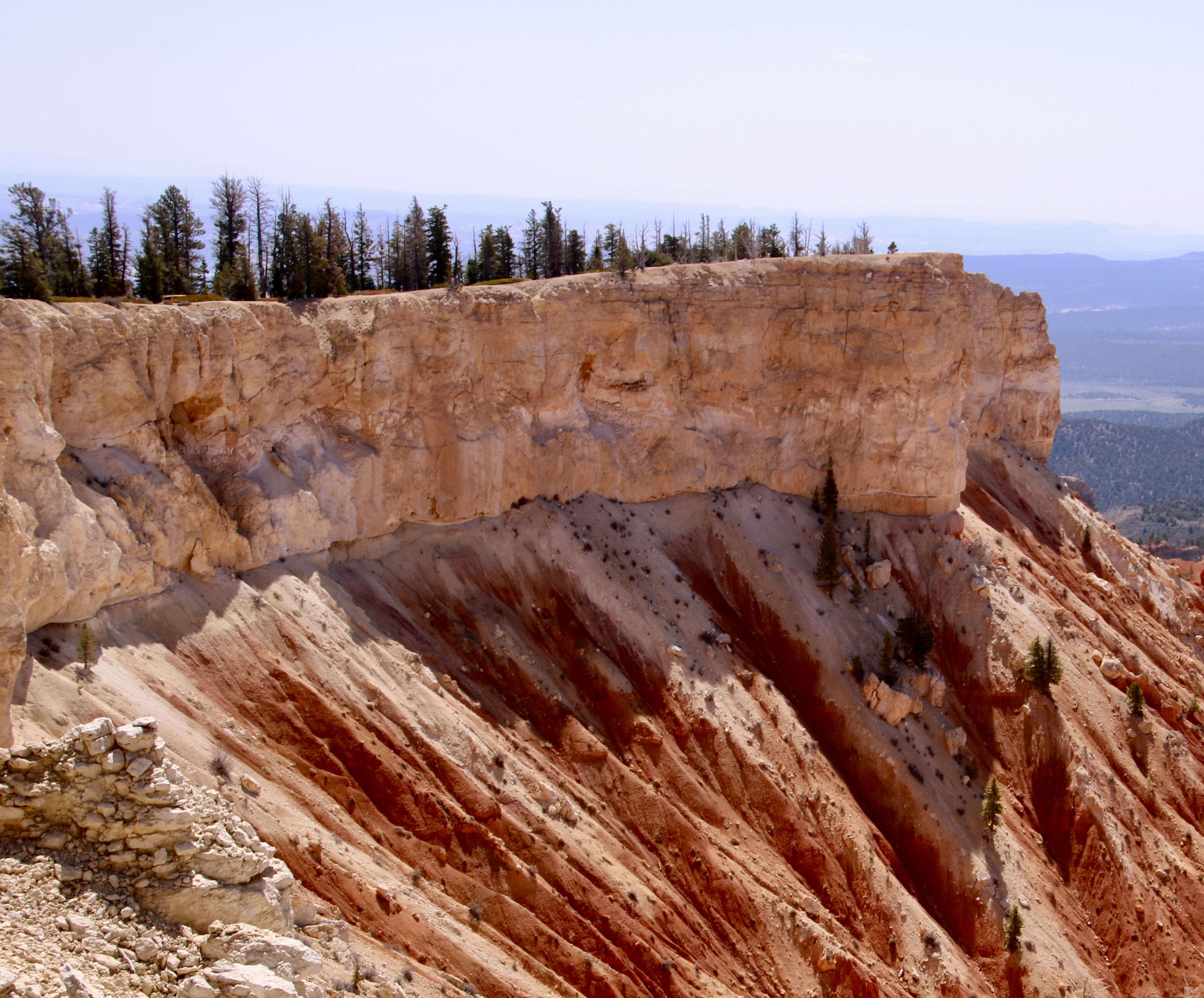
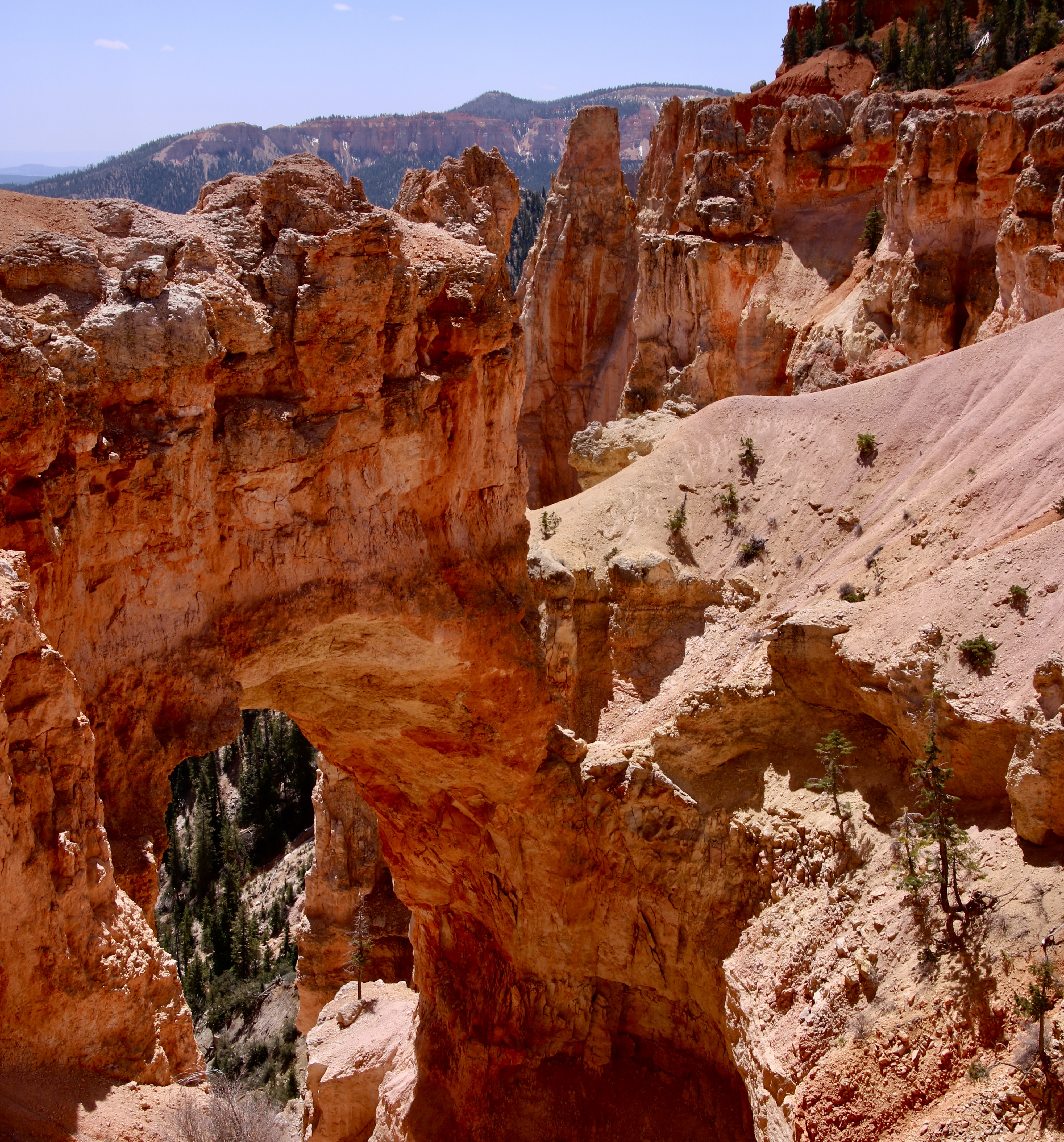
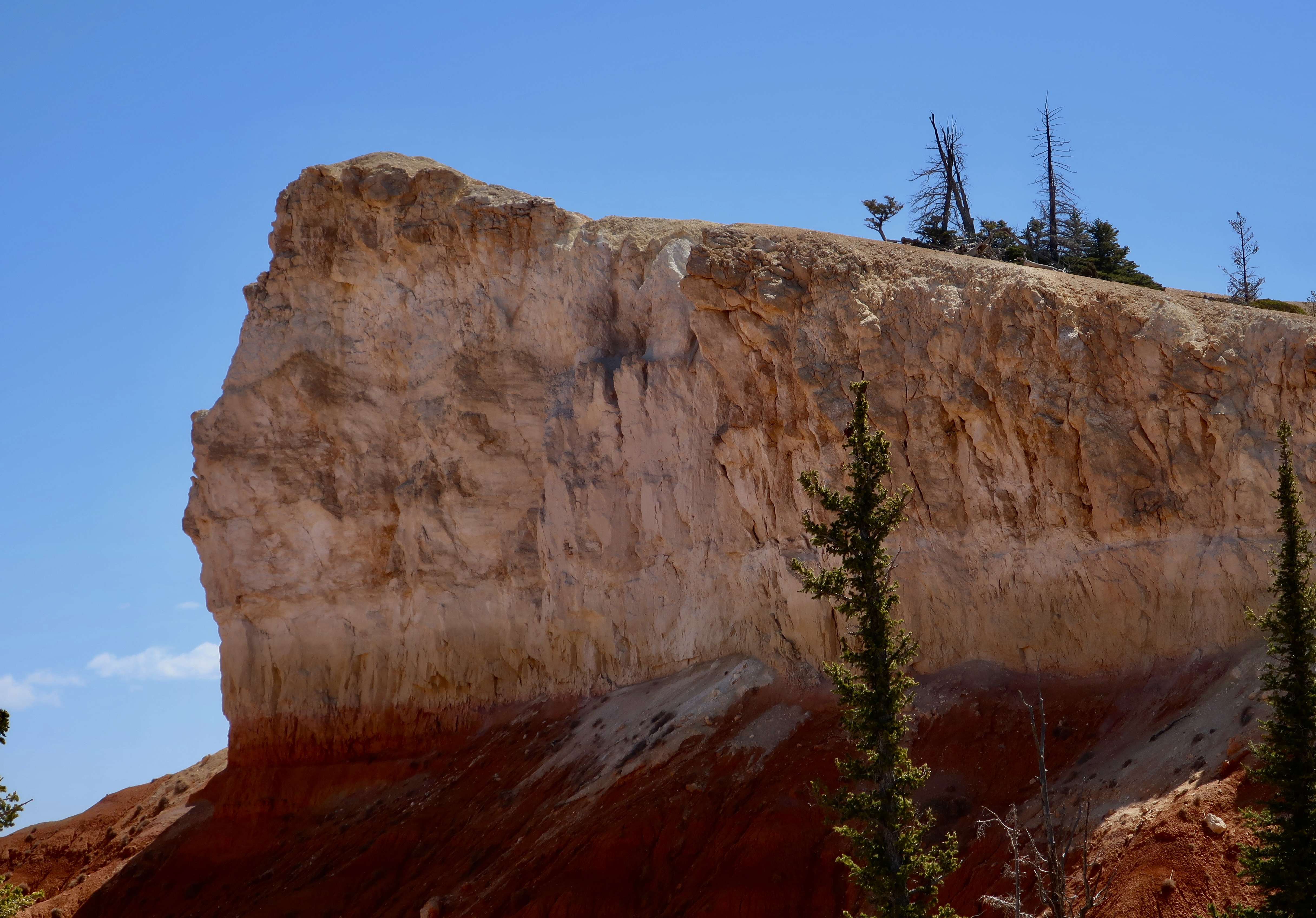
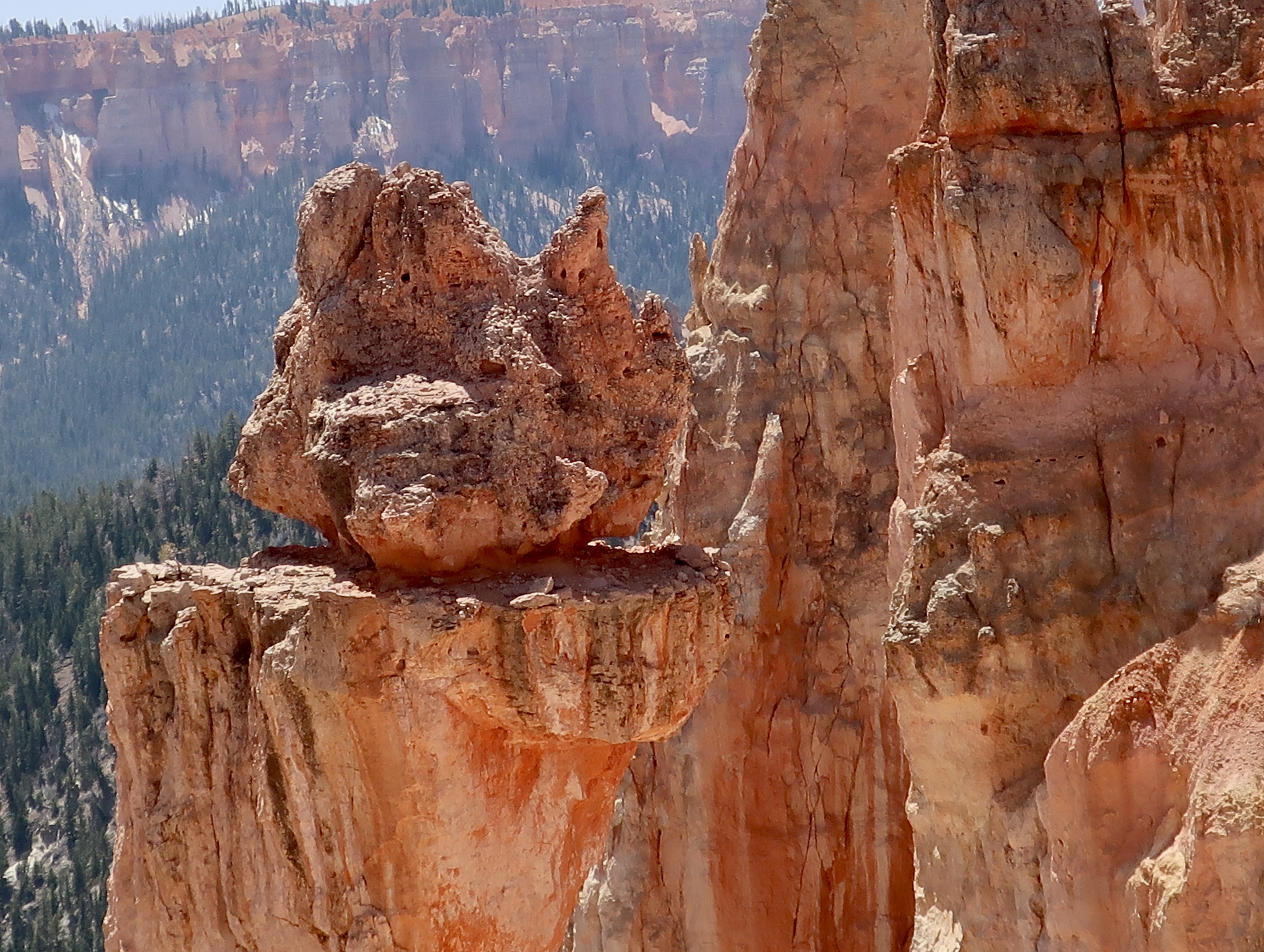
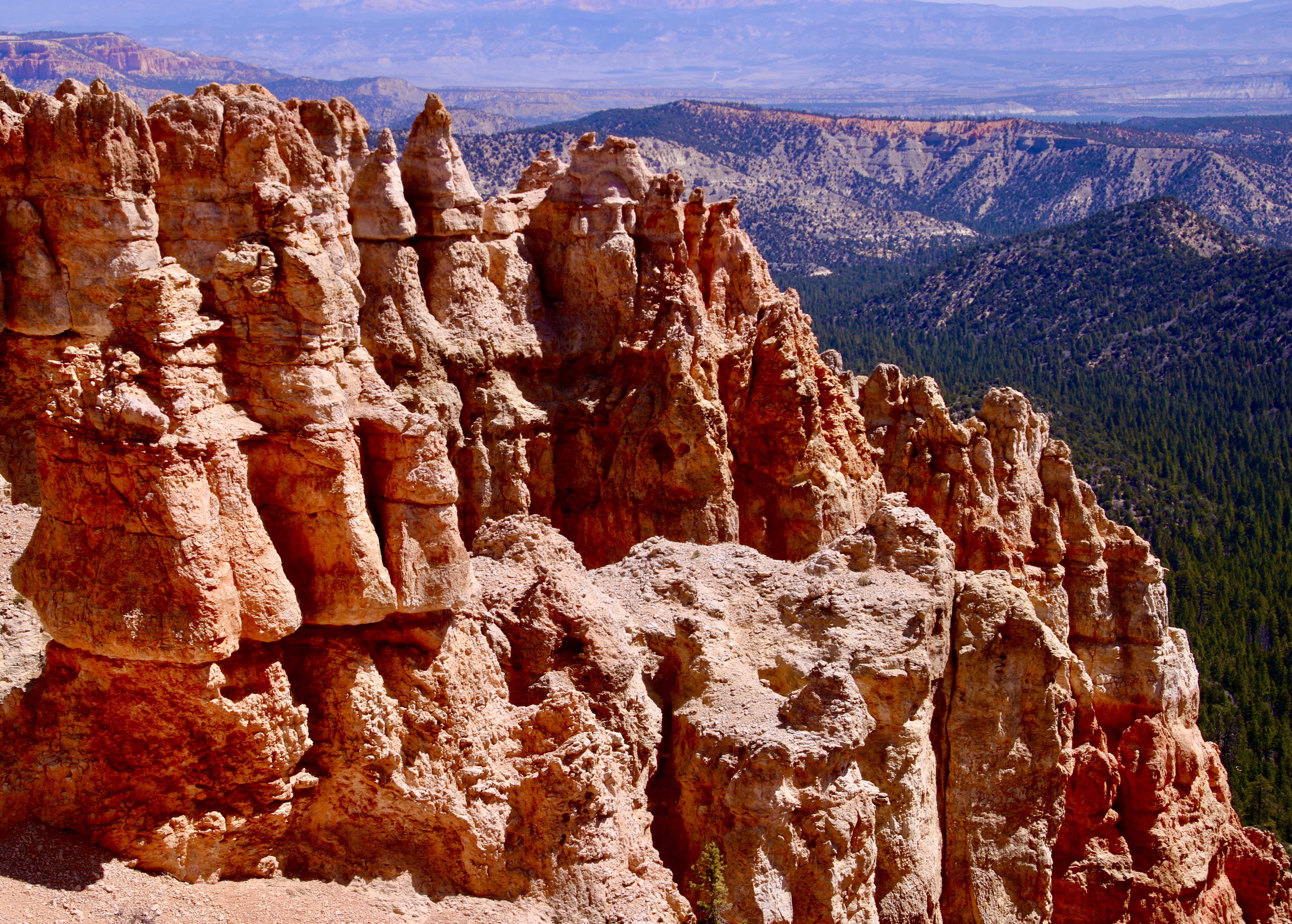
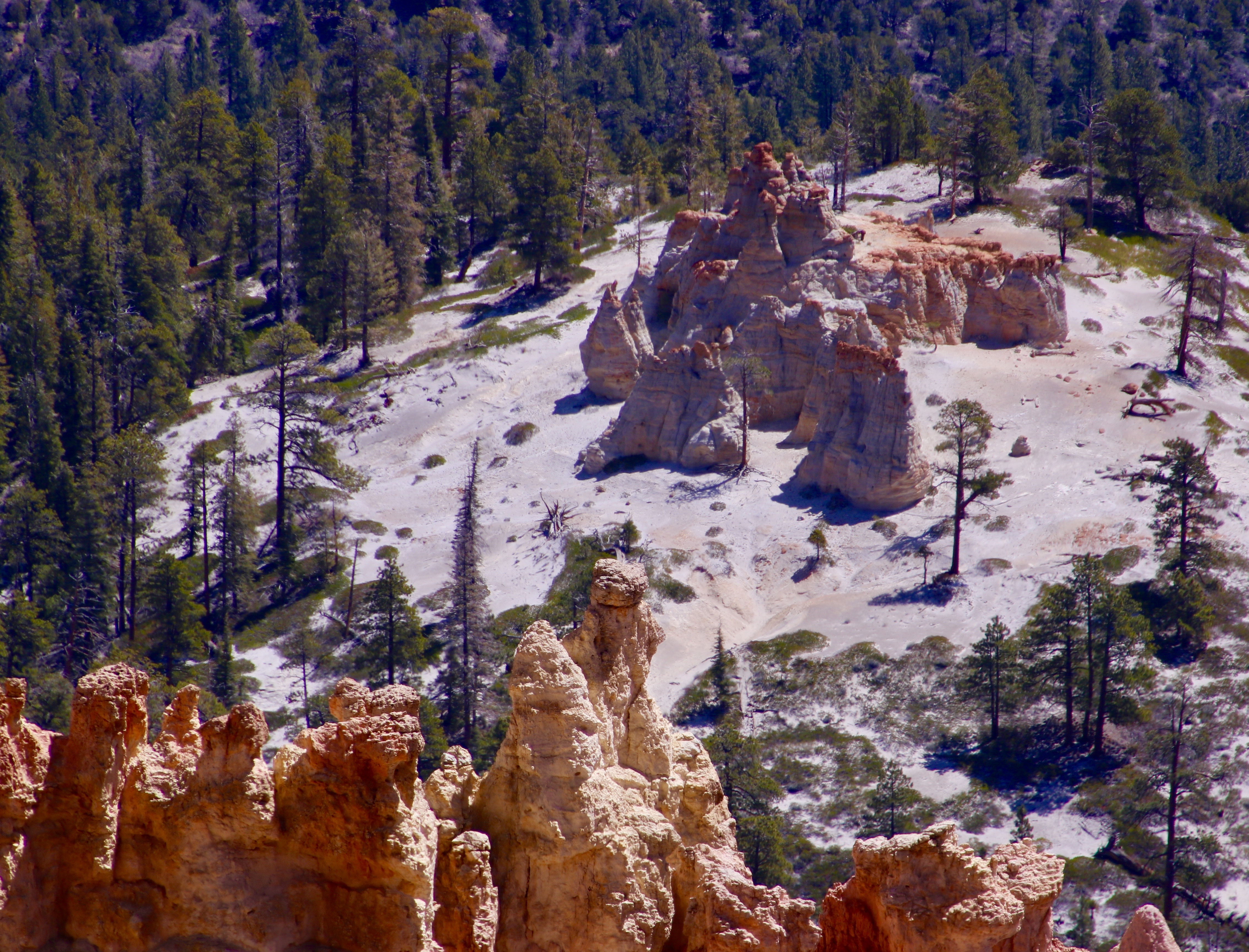
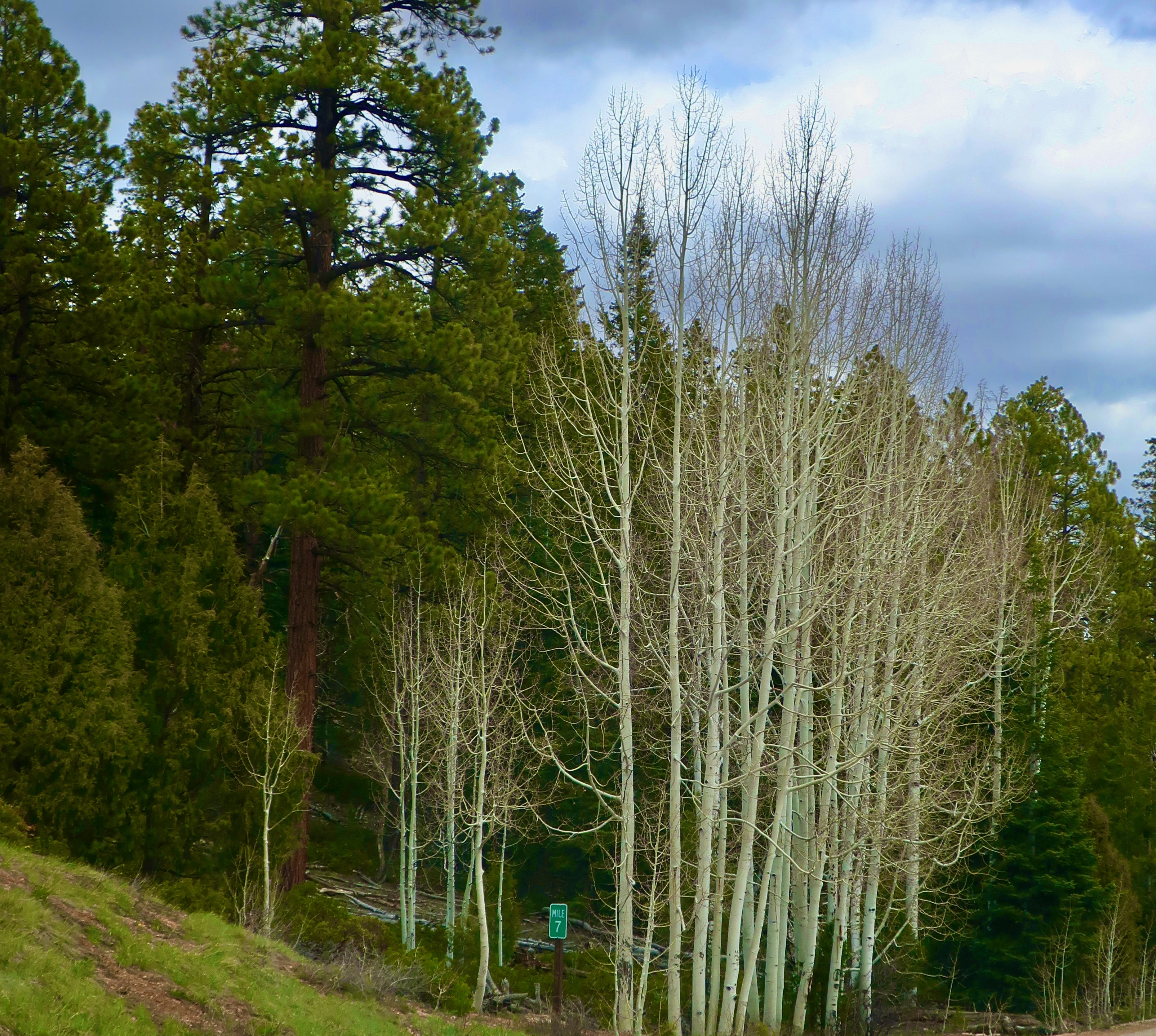
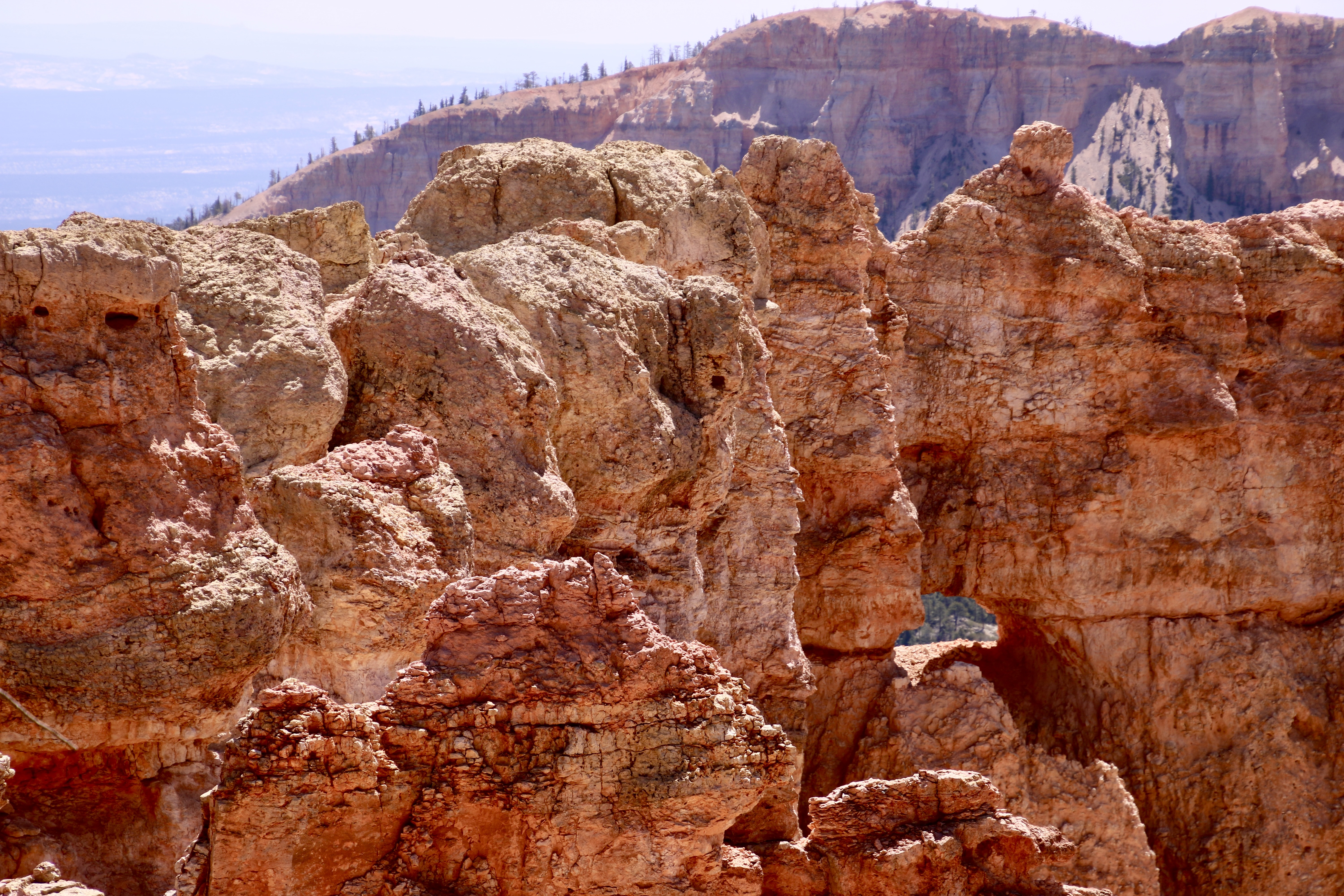
This is where the road stops at mile 18 and 9,115 feet. We will be working our way back toward mile 4, more or less, visiting overlooks along the way. There were two stops here, Rainbow Point and Yovimpa Point. Gee, I wonder where they came up with the name, Rainbow Point? (Photo by Peggy Mekemson.)We were not alone. A raven envisioned us feeding him. I told him it was against the rules.He gave me the look. A stiff breeze was ruffling the feathers on his head.Another ‘rainbow-type’ shot by Peggy.It really doesn’t matter where you are along the road, there is beauty.All of the views can be captured from different perspectives. This is a closeup of the photo I took above. (Photo by Peggy Mekemson on our iPhone.)Bryce Canyon has its own renditions of arches. This is where I met up with the raven.A different perspective of the Bryce Canyon Arch by Peggy.I felt like I was looking at the prow of an ocean liner cresting a stormy wave. (Yes, as you know, I have a vivid imagination.) This is one of those sights, like the Arch, that one doesn’t expect to find in Bryce Canyon.This, on the other hand, is expected: A hoodoo.There are hundreds, if not thousands. (Photo by Peggy Mekemson.)I caught a squat one poised on a pedestal. And Peggy caught a bunch. Lots and lots of hoodoos standing at attention and staring off into space.I love the ridges that head off into the Canyon. There will be knife-edged ones in my post next Friday.Peggy caught this magical view looking down into Bryce Canyon. It’s my favorite of the several hundred photos we took in the Park.The aspen along the road had yet to leaf out at 9000 feet when we were at Bryce Canyon in late May. Their stark white trunks and limbs made a dramatic contrast to the dark green conifers. Peggy took this photo at one of the pull-offs.A hole in the rock played peek-a-boo with us. (Photo by Peggy Mekemson.)A final view along the Bryce Canyon road between miles 4 and 18 shows the layering effect caused by different types of rock. Next Friday we’ll be featuring the most popular section of the Park between miles 1 and 4.








 Wandering through Time and Place