In our last post we emphasized the beauty of El Morro and checked out the waterhole that has drawn people to El Morro for the past thousand years. Our focus was on the Spaniards and the pioneers who left their signatures behind. Today we are going to spotlight the Ancestral Puebloans who lived on top of the monument in the 1200s and left petroglyphs on the cliff near the waterhole.
Peggy and I were admiring the petroglyphs and signatures on the walls of El Morro when a woman walked by and gushed, “Aren’t the signatures wonderful.” And then, dismissively, “You can find petroglyphs anywhere.” We didn’t disagree on the signatures. The first one had been carved into the rock by the Spaniard Don Juan de Oñate, 15 years before the Pilgrims landed at Plymouth Rock. But the petroglyphs reflect the life of a people who were living here hundreds of years before Oñate was born.
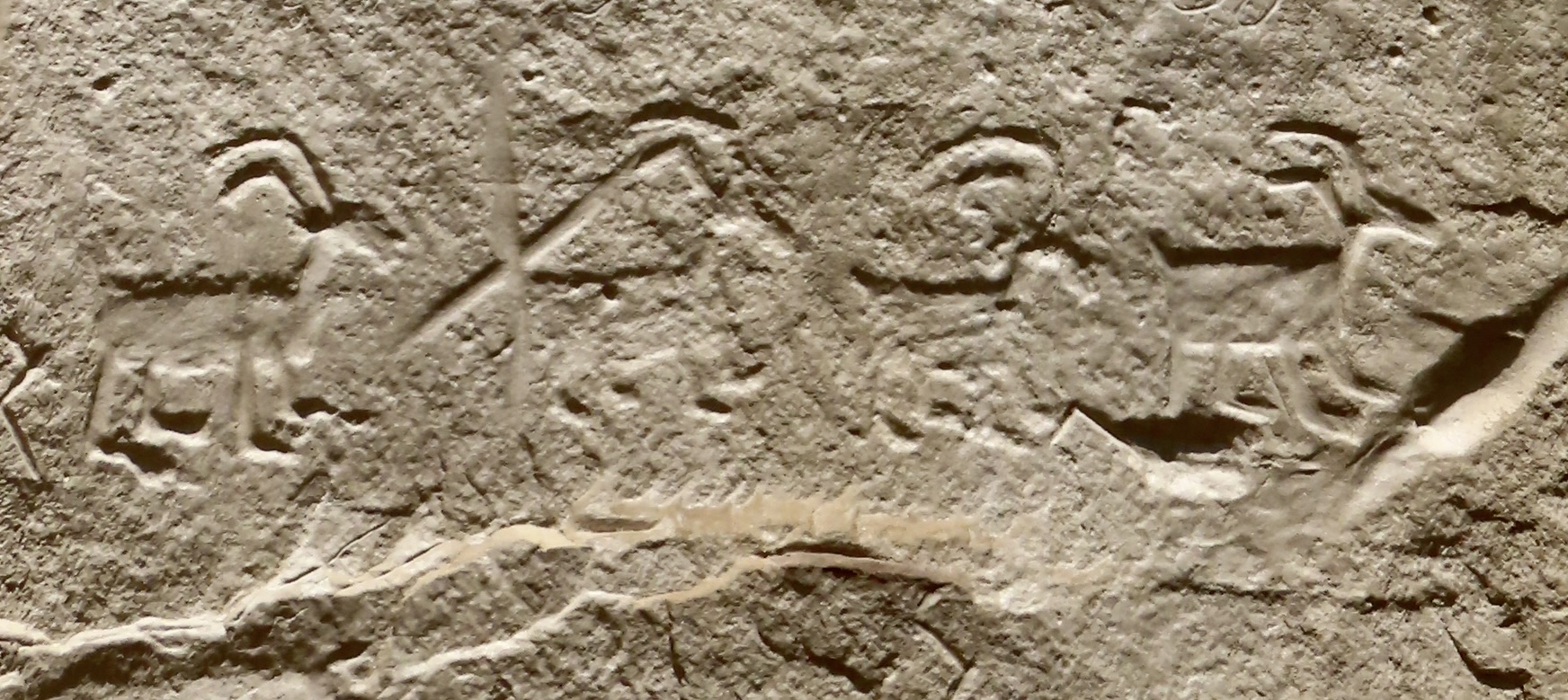
While our understanding of the petroglyphs is limited, we can appreciate the creativity and at least guess at their meanings. The four big horned sheep walking in a row on the Inscription Loop Trail are still four big horned sheep walking in a row, regardless of what else the petroglyph might mean. With insights from the beliefs, legends, and interpretations of modern pueblo people and other indigenous groups, our guessing can improve, opening a whole new world of wonder for us. They certainly have for Peggy and me.
The pueblo, signatures, and petroglyphs are part of the rich history that our public lands preserve and protect. It’s an important aspect of what our national parks and monuments do. Without this protection in El Morro, graffiti would likely cover the inscriptions and petroglyphs on the Inscription Loop Trail, while much of the Atsinna Pueblo would be dug up with zero concern for history— left in shambles as treasure hunters search for ancient artifacts to sell. Before the creation of our park system, such pillage was common. It still can be in unprotected areas.
Today we are facing an even more insidious threat: erasing our history. Apparently, the Trump Administration has decided that including what we have done wrong in history detracts from America’s greatness rather than serving to remind us that we can do better. For example, my Great Grandfather in Illinois utilized his house as a part of the Underground Railroad. It was dangerous. He was helping free slaves. In early April, a page on a national park website described the effort this way: “The Underground Railroad — the resistance to enslavement through escape and flight through the end of the Civil War — refers to the efforts of enslaved African Americans to gain their freedom by escaping bondage,” the page began. The statement was removed as well as a photo of Harriet Tubman, who was central to the effort. The Underground Railroad became part of the Civil Rights movement. There was to be no mention of slavery. After a sustained outcry and substantial media attention, slavery and Harriet Tubman were returned to being part of our history.
It continues. Two weeks ago, Interior Secretary Doug Burgum issued Secretarial Order 3431 that instructs all land management agencies, including the National Park Service, to post signs asking visitors to report any negative stories about past or living Americans by rangers or in signage— even if it is historically accurate.
Rewriting history to match the President’s concept of it and asking Americans to spy on Americans is a whole new type of scary.
And now, it’s time to return to our post on El Morro National Monument, which is part of our series emphasizing the beauty and value of our national parks, monuments, historical sites and other public lands.
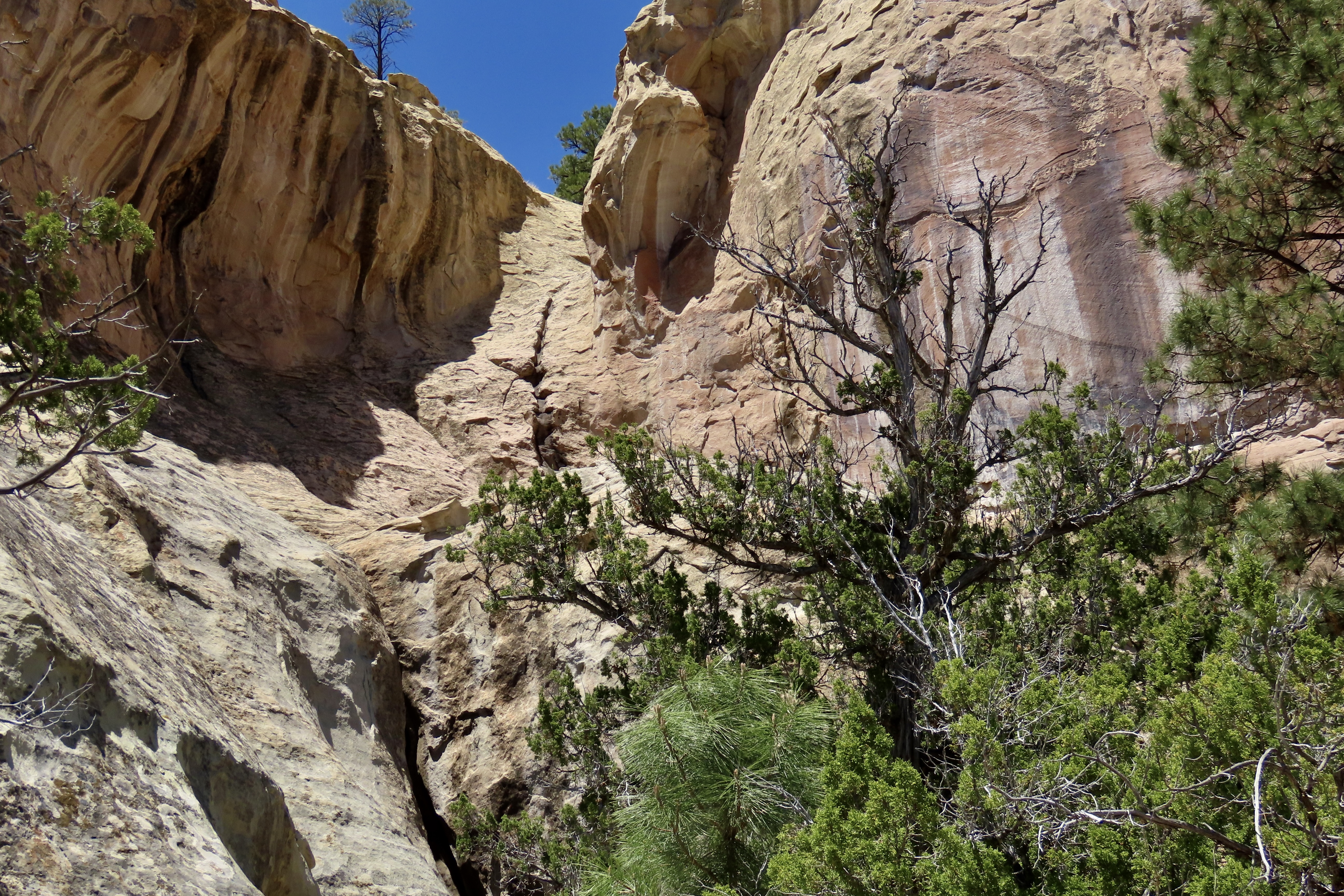
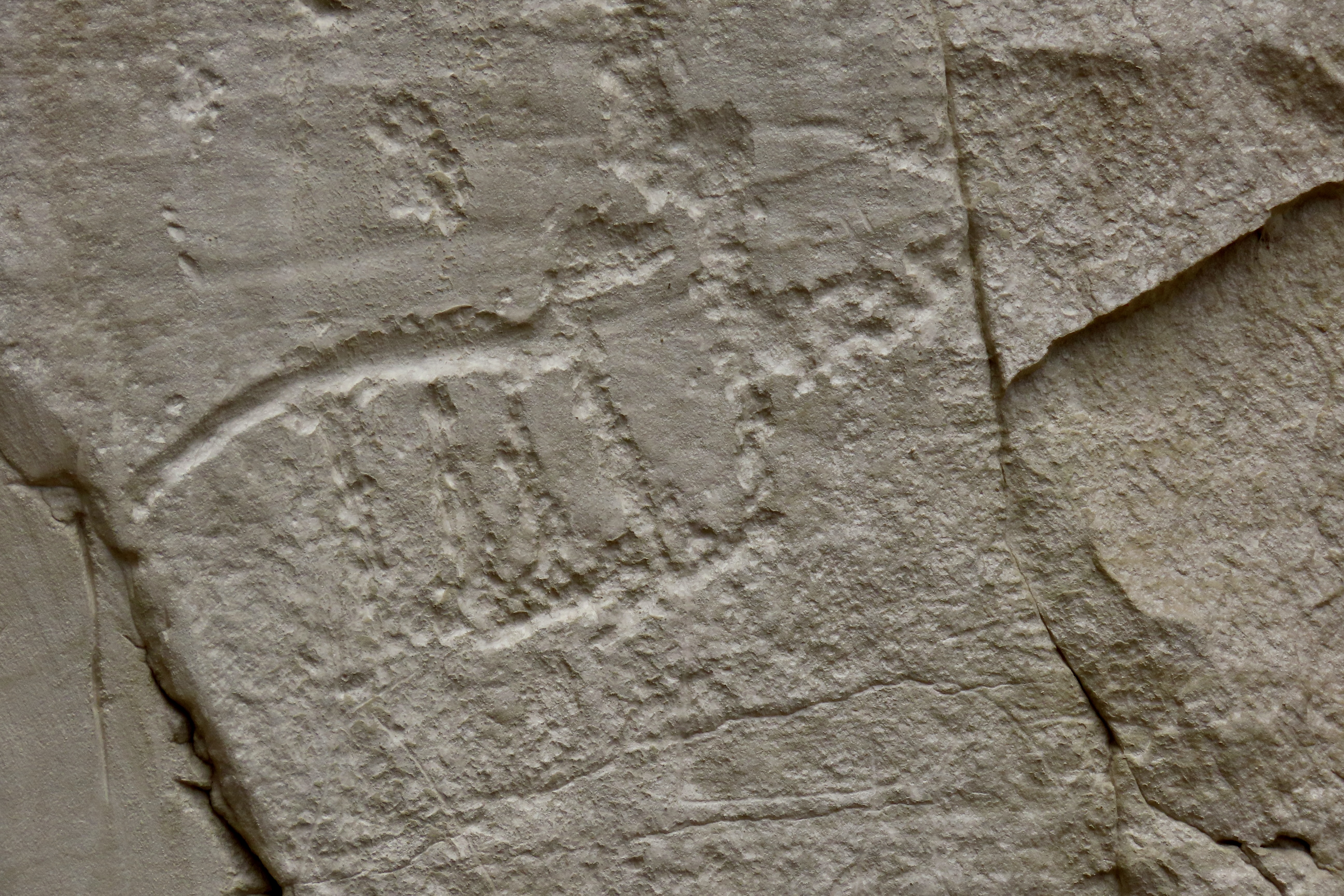
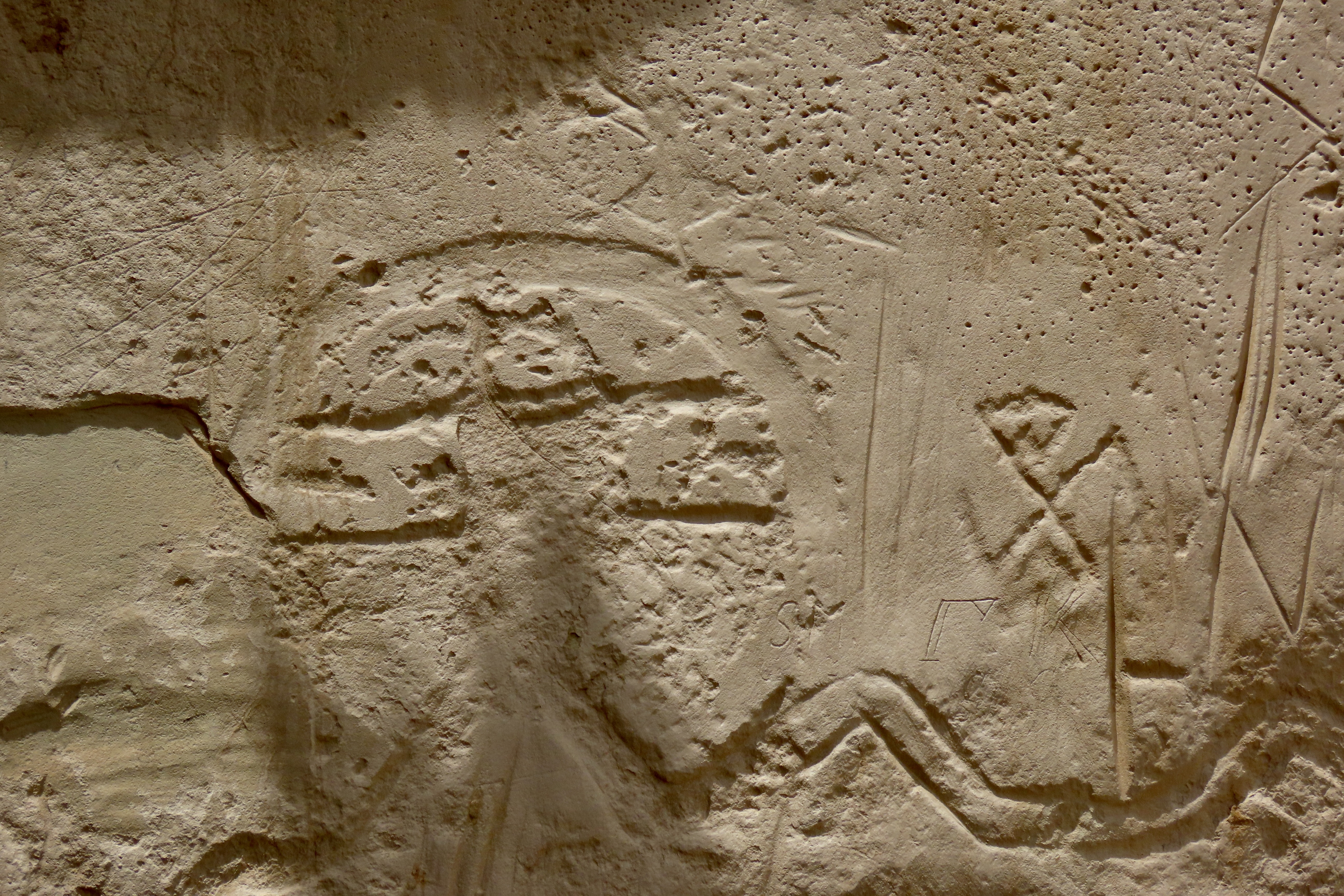
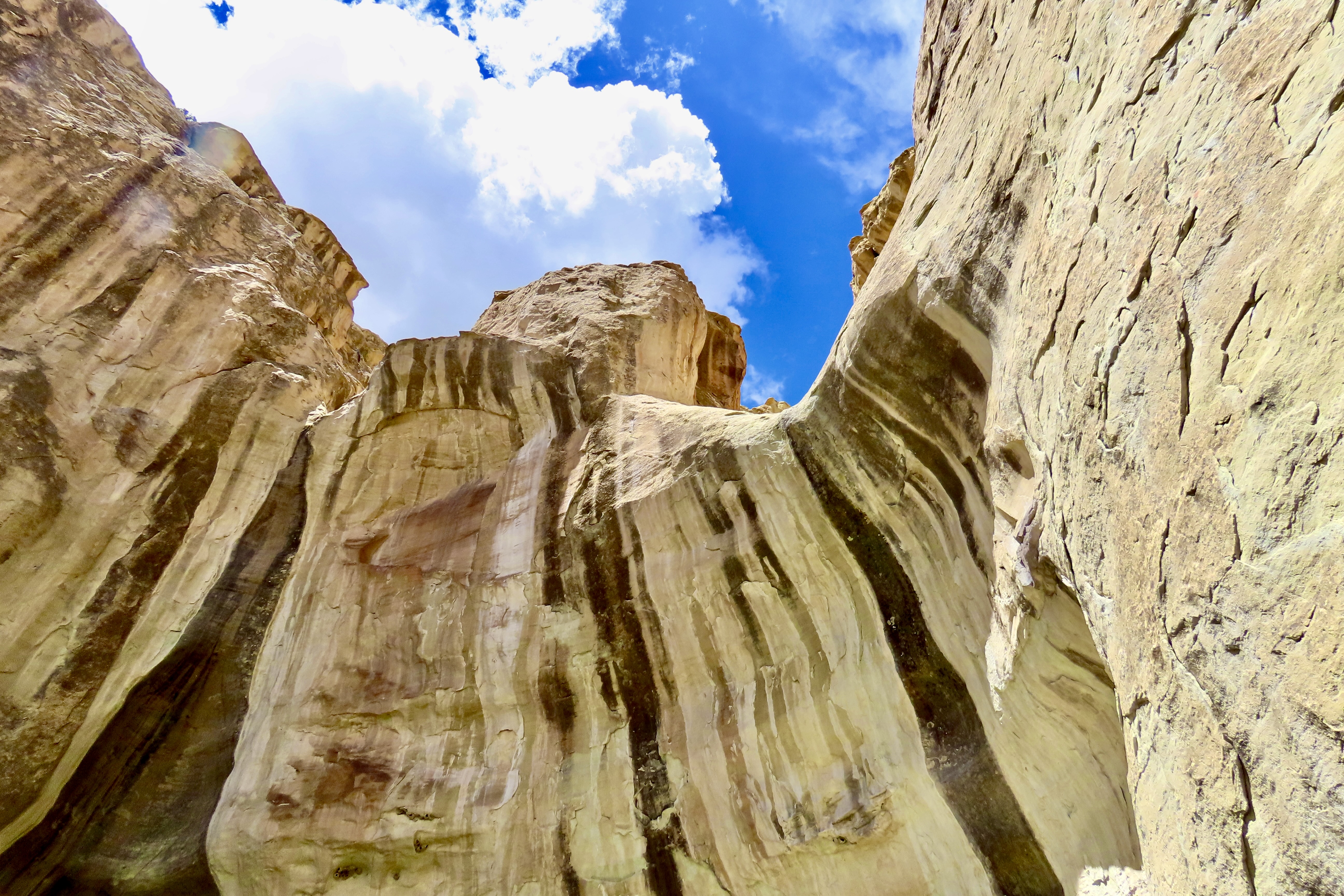
We found these holes in the rock near the waterhole. We’ve seen similar holes at a number of other pueblos. They are foot and hand holds that the Ancestral Puebloans used to reach their cliff dwellings, and, in this instance, Atsinna, the pueblo up on top of El Morro.The water hole is off to the right. The foot holes are behind the pinyon trees center left. It’s thought that the Ancestral Puebloans worked their way up the draw to the head of the canyon where they would have used a ladder or rope to climb up to the top. Note the door like structure on the left. Peggy was fascinated with it. The rangers told us it was caused by how the minerals in the sandstone split. The major splits, like those to the right and left of the ‘door,’ cut through the whole bluff and help determine where major erosion takes place.A close up of the canyon gives a better perspective on the nature of the climb. Imagine carrying water up! Not easy. My imagination (plus experience from 50 years of backpacking) would have them work across the canyon to the dark split, follow it up, work around the boulder and then use a ladder or rope on the last section. I was amused to learn that one type of ladder that Ancestral Puebloans reportedly used was cutting foot notches in a slender log…Like this one I used as a Peace Corps Volunteer in Africa (1966). Grin.El Morro National Monument protects the petroglyphs found in the park. Some of these would have been carved by the residents of the Atsinna, while others would have been left by Ancestral Puebloans living in different locations in El Morro Valley. Add to this, petroglyphs left behind by indigenous peoples living in the area before the Ancestral Puebloans, and it’s likely that the petroglyphs represent several cultures. We found 25 on this panel alone including several hands, a likely bear print, lizards, a snake, a deer and possible sandal prints. Some of the petroglyphs may represent various clan symbols. I would guess the holes were made by people using the petroglyphs for target practice.There are times when Peggy and I just have to smile at a petroglyph whether the original artist meant us to or not. This long legged coyote or dog is a case in point. Road Runner, of cartoon fame, might have been in serious trouble had Coyote had legs like this.While this may not be the case here, this petroglyph is often used to represent a woman having a baby. It isn’t surprising that such an important event is commonly found among petroglyphs.We rarely find petroglyphs in the Southwest that don’t include lizards (and snakes). No surprise.This particular series of petroglyphs contained three important symbols of Ancestral Puebloan culture. The large round petroglyph with its two lines represents the Sun Father, one of the most important deities of Zuni Culture. The squiggly line is the water serpent that helped Ancestral Puebloans find water, a critical contribution to their survival in Southwest deserts. The swastika-like symbol on the right was used in Europe, Asia and America long before it was adopted by Hitler. In the Southwest, it was used by both the Navajos and the Ancestral Puebloans with a positive message. The Zuni saw it as a whirling log that represented the six cardinal directions: North, South, East, West, Up and Down— and the guardians associated with each direction.
I joked with the park rangers when we came back to see Atsinna about using the Ancestral Puebloan route up. He laughed, “I’d recommend the stairs. There are 130 of them.” “Piece of cake,” had been my response. “Actually,” he amended, “there are 132.” “Oh no!” I whined.
Some of the steps leading up to Atsinna. I suspect that the Ancestral Puebloans would have loved them.We stopped frequently on our way up to Atsinna to admire the view over El Morro Valley.And admire the wildlife. Not our best lizard picture, but she’s special. The desert whiptail lizard reproduces by parthenogenesis, which is a rather long word that means she doesn’t need a male in her life to make babies. (Although she can do it the old fashioned way.)Eventually, we reached our goal. The climb up had been easy, given our stops to admire the scenery. The name Atsinna, which means ‘place of writing on the rock,’ was given to the pueblo by the Zuni whose home pueblo is a short 34 miles away.
One of the real treats on our visit to El Morro was to meet two Monument Rangers who are Zuni and live at the Zuni Pueblo: Calvin and Valentino. We first met them when we were hiking up to Atsinna and they were doing trail work, and again when we came back down, this time just outside of the Visitor Center, where we talked for a half hour or so. Before we could ask, Valentino explained to us he was named Valentino because he was born on Valentine’s Day. I’m sure he gets asked that question a lot. I had been picturing the dashing “Latin Lover” of the silent film days, Rudolph Valentino.
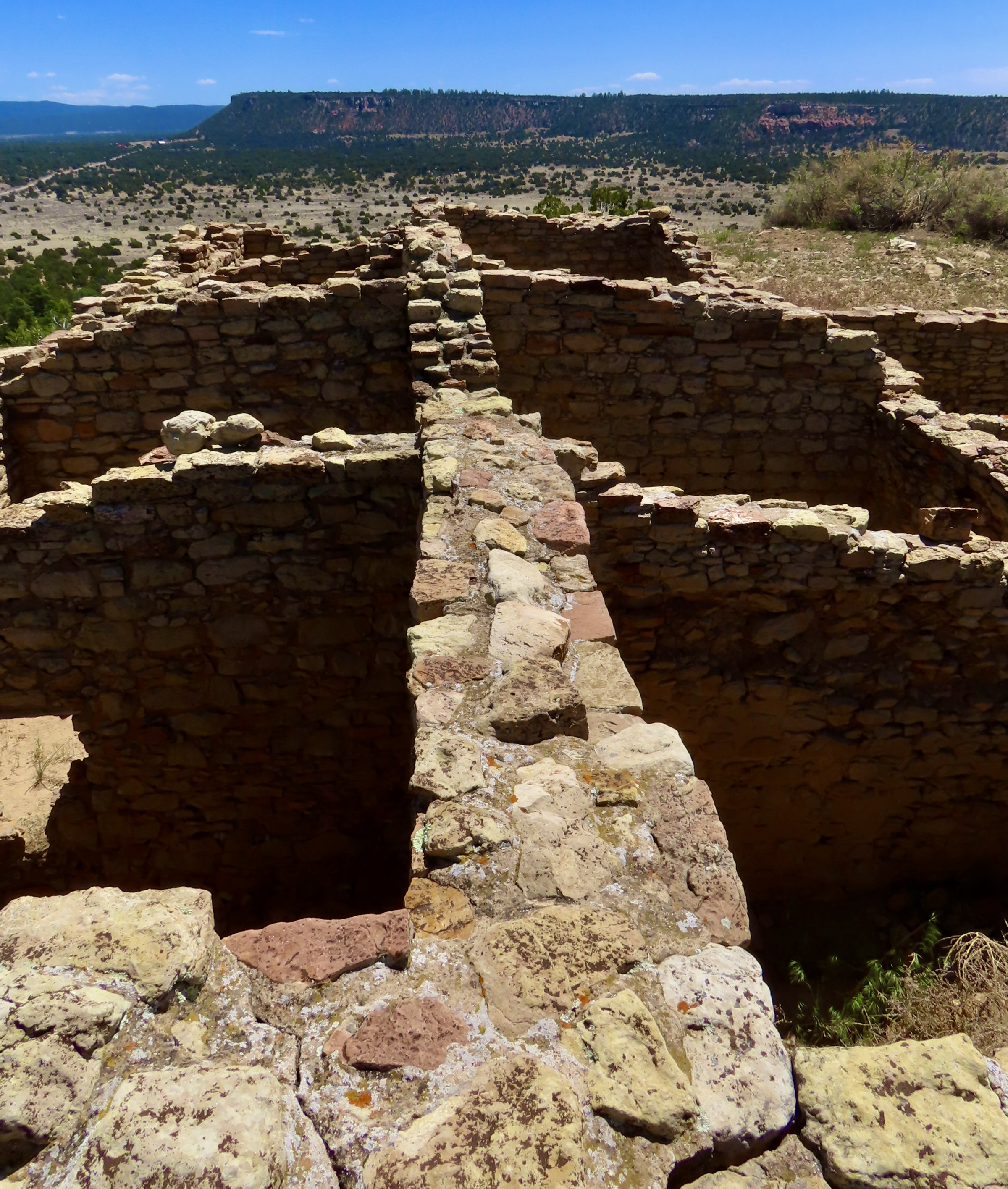
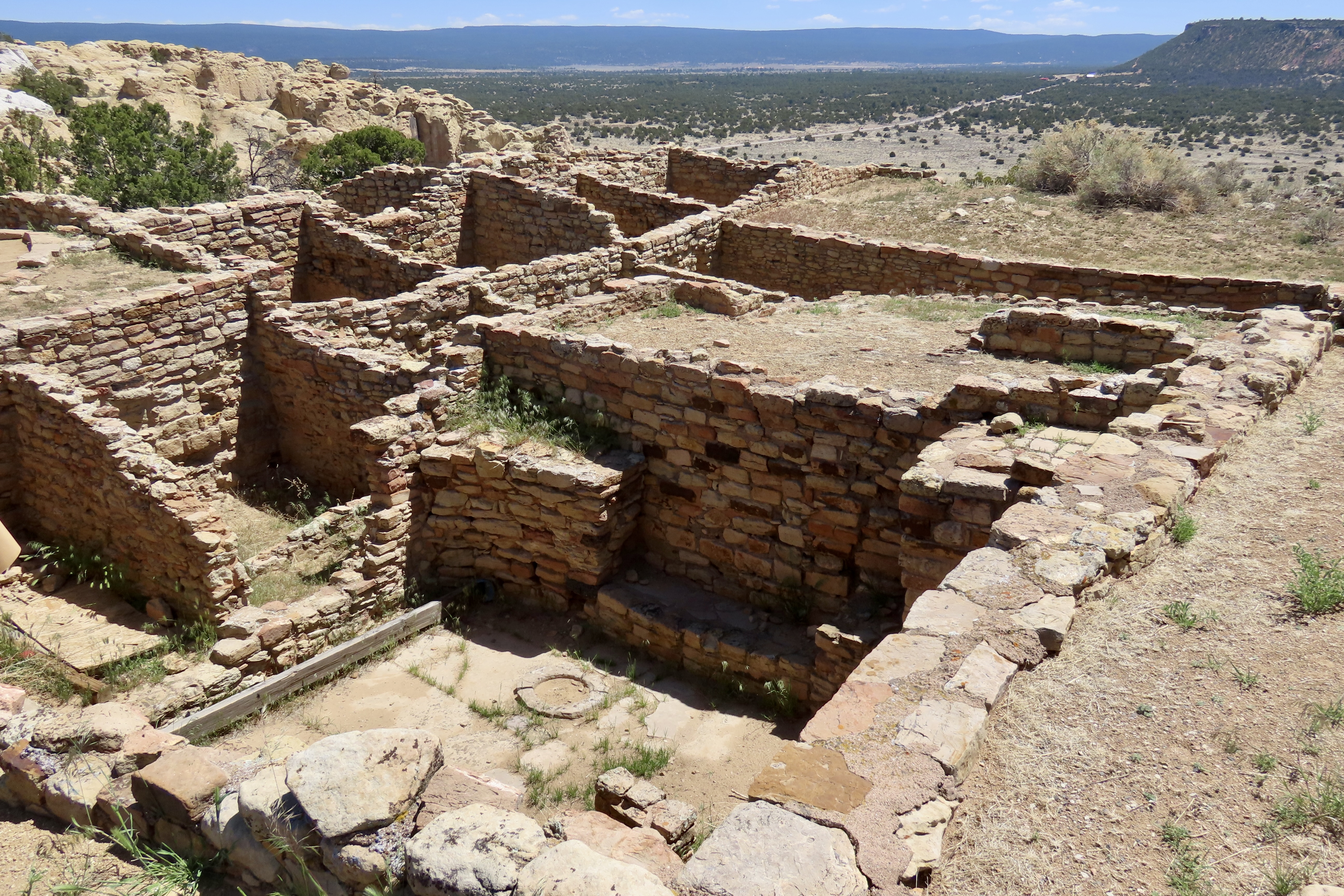
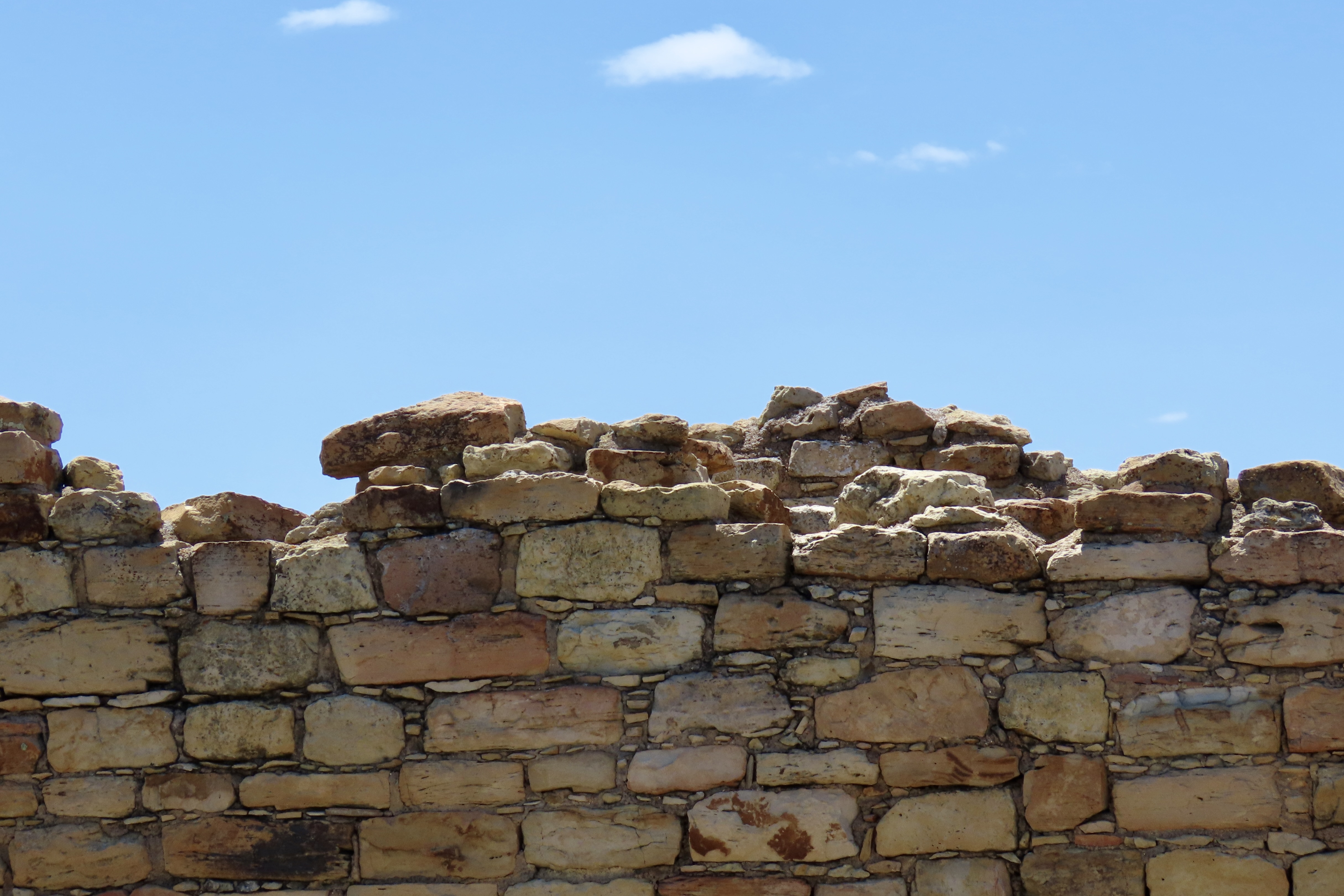
In addition to working at the Monument, both held important roles of educating children at the Zuni Pueblo on tribal history, culture and language. At 70, Valentino was a tribal elder. Our discussion ranged from the preservation and restoration of Atsinna Pueblo to the Zuni Belief system.Atsina was built around 1275 CE and occupied for a hundred years or so. It covers an area of 200’ by 300’ and accommodated between 500-600 people. There were 355 interconnected rooms that surrounded an open courtyard.This old aerial shot by the National Park Service shows the original size of the Pueblo outlined by the difference in vegetation as well as the rooms that were excavated in the 50s.Another view of the excavation. The room in the front is one of two kivas excavated at Atsinna, this square one and a larger round one.Kivas were central to Puebloan life for important religious rituals and ceremonies. They also played a role in maintaining social cohesion and supporting cultural traditions. Most were laid out in a similar fashion. Pueblo people today continue to build kivas and use them much in the same way.Preservation and restoration has become an important part of maintaining Atsinna and other Pueblos. Valentino and Calvin told us that the excavation of the 1950s had used concrete to reinforce the upper walls. The added weight had caused the walls to collapse. Walls are held together today using materials that mimic the original in texture and hardness. A view of the top as seen from the pueblo. I found the contrasting colors of the red and white sandstone both interesting and photogenic. Atsinna rests on the red Dakota sandstone deposited in a Mid-Cretaceous Sea. In turn, the Dakota sandstone rests on bleached Zuni sandstone that was laid down around 150 million years ago when a vast Saharan type desert of sand covered the area. What’s known as an unconformity of 80 million years exists between the Zuni and Dakota sandstone, i.e. 80 million years of geological history was eroded between the two! That’s enough for today! More than enough?
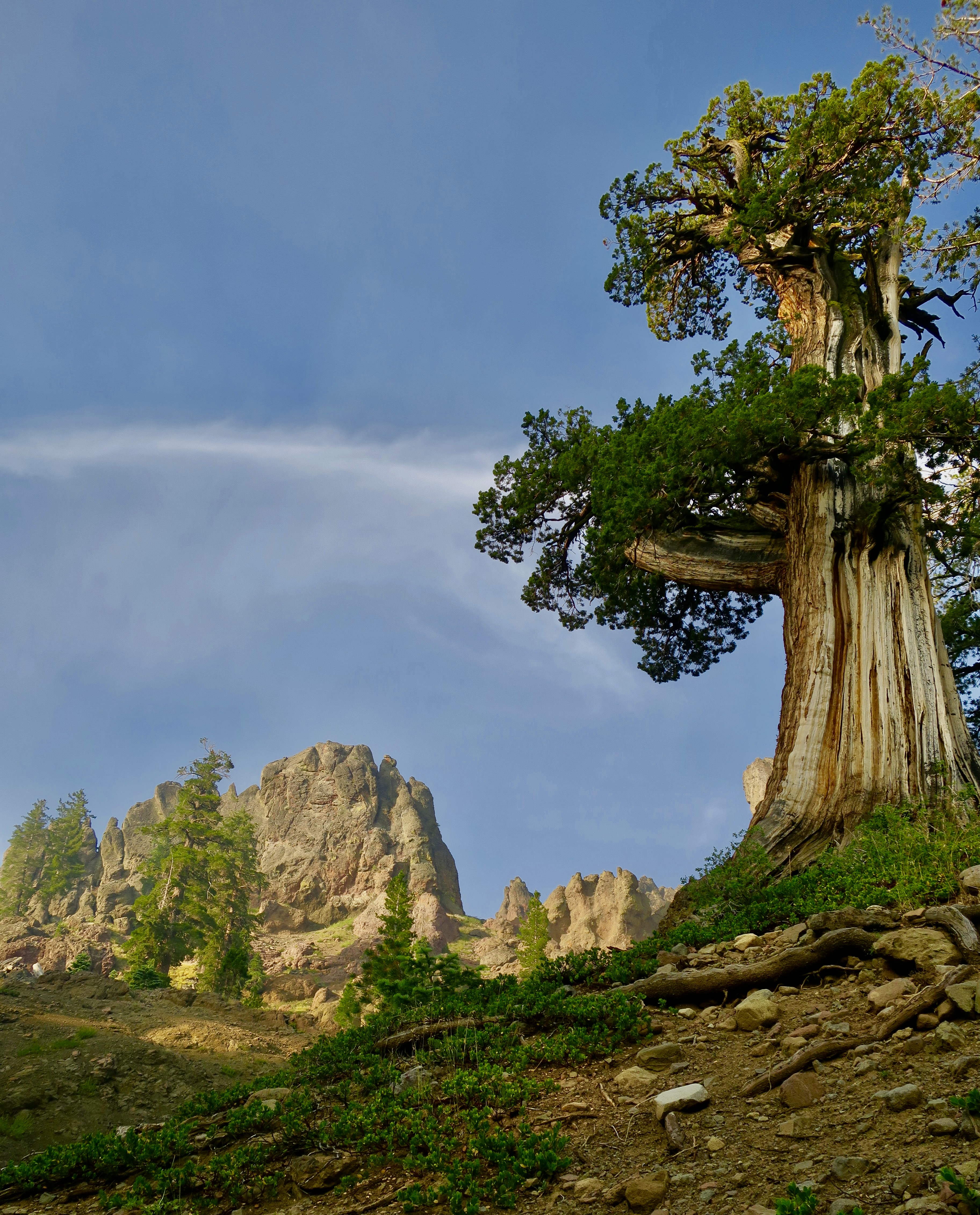
Next up I am going to explore three wilderness areas in California as part of my series: The Mokelumne, Granite Chief/Desolation, and Marble Mountains Wilderness areas. While these wilderness areas are not presently threatened by Trump Administration policies, there is no guarantee that they won’t be.
El Morro National Monument is located in western New Mexico about 40 miles south of the Route-66 town of Grants (just off I-40) in a water starved region. It’s hardly surprising that a year round waterhole located at the base of the promontory has been a welcome stop for people passing through and/or living in the area for over a thousand years. Many left their mark.
Ancestral Puebloans— whose descendants include modern day Zuni— came first. They lived on the top of El Morro in a pueblo that the Zuni have named Atsinna, and climbed down to the waterhole where they gathered water and used rocks to pound and carve petroglyphs into the relatively soft Zuni sandstone.
The Puebloans were followed by Spanish treasure hunters driven by an insatiable hunger for fabulous wealth and everlasting glory. They believed they would find it in the legendary, gold-filled Seven Cities of Cibola. (El Morro is in modern day Cibola County.)The treasure hunters were accompanied by Spanish missionaries with a different goal: Winning souls for God and King. Turns out the the cities of gold were a myth and the indigenous population didn’t understand why they couldn’t keep their own deities while accepting God’s help as well. They were even more dubious about a distant king whose motives were questionable at best.
Finally, American pioneers and soldiers passed through in the mid-1800s. The pioneers were seeking a new life from the one they had left behind in the East. They, too, were searching for treasure but theirs was to be found as farmers, ranchers, miners, loggers and merchants. The fact that indigenous populations already lived in the areas they wanted to settle was of little concern, unless, of course, the natives objected. That’s what soldiers were for.
The Spaniards and Americans, like the Puebloans, left their marks on the cliff, but this time they signed with their signatures using chisels and knives. One of the primary reasons people visit El Morro is because of the various signatures and petroglyphs. There are over two thousand. Some, like Peggy and me, also come because of the beauty and culture.
Because of the length of this post, I’ve decided to break it into Part 1 and Part 2. The first part will emphasize the area’s beauty and the early visits by Spaniard treasure hunters and American pioneers between the 15th and 18th centuries. In the second part, Peggy and I will focus on the Ancestral Puebloans from the 11th century.
Today, Peggy and I are continuing our series on national parks, monuments, and wilderness areas with an emphasis on their unique beauty, geology, flora, fauna and history that makes them so important to us today— and to our children, grandchildren and future generations. I can only repeat how vital it is at this point in history to let decision makers know how we feel about protecting and maintaining public lands. It makes a difference.
For example, the Trump Administration’s provisions for selling off public lands and building a mining road through the Gates of Arctic National Park in Alaska were both removed by Republicans from his “Big, Beautiful, Bill” last week for FY 25/26. Once gone, the public lands (that belong to all of us) would be gone forever. As for Gates of the Arctic, it is one of the world’s largest remaining roadless and trail-less wilderness areas. A road through the heart of it would change its pristine nature significantly and open up other National Parks for similar treatment.
As with each of our previous posts in this series, we will present photos that focus on the beauty and unique characteristics of the park, monument, or wilderness we are blogging about. All photos have been taken by either Peggy or me unless otherwise noted.
Now, please join us as we explore El Morro.
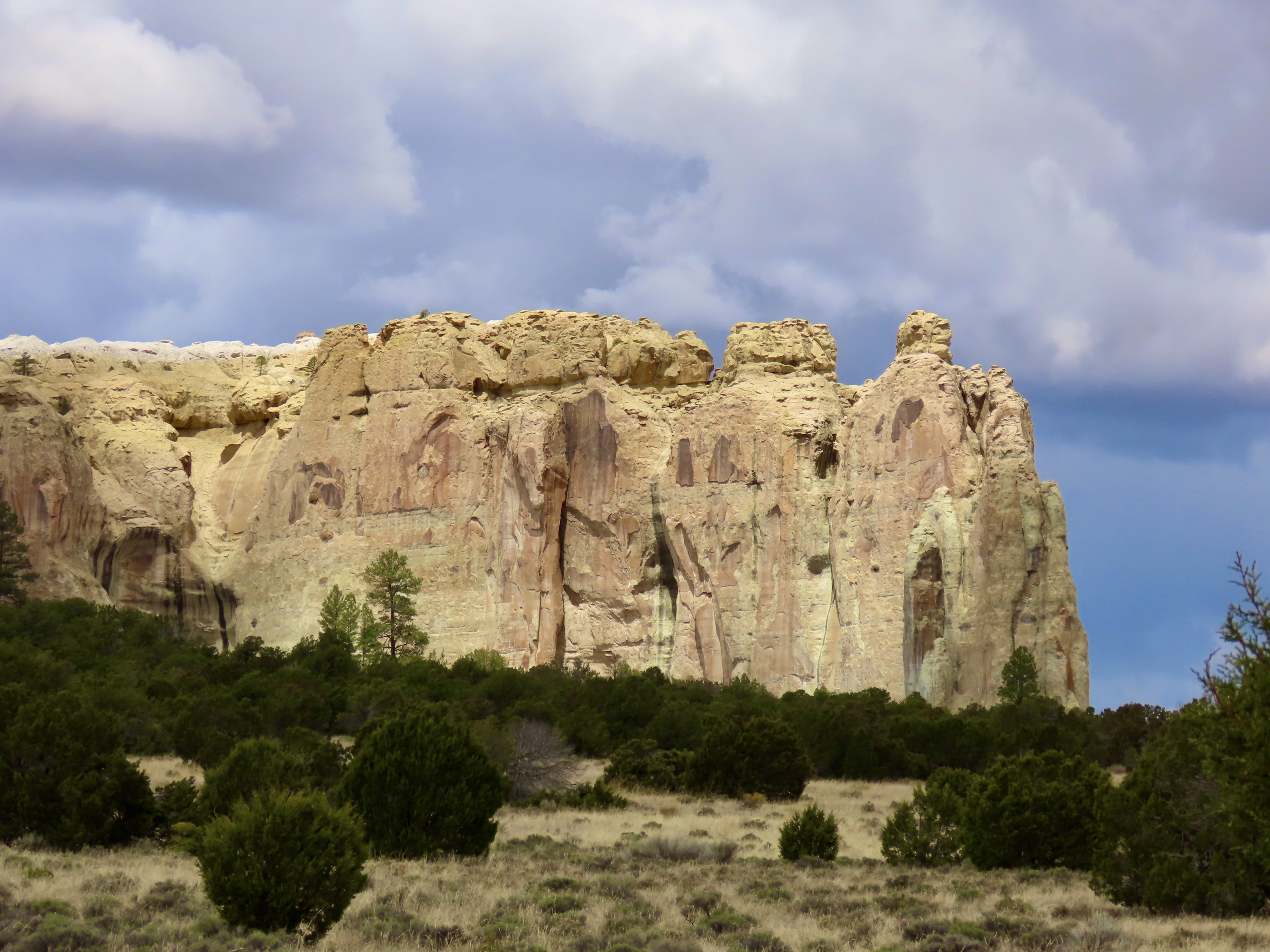
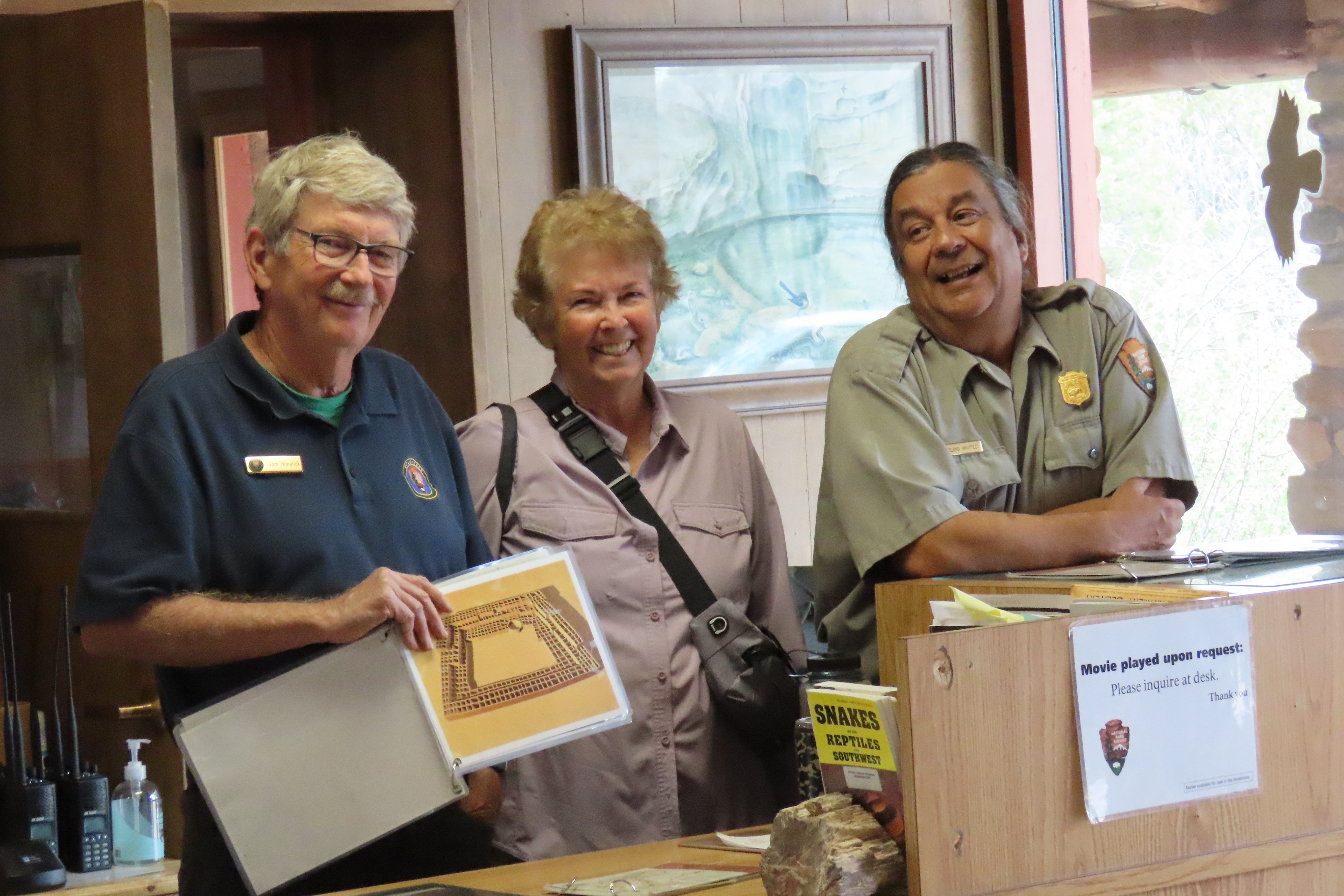
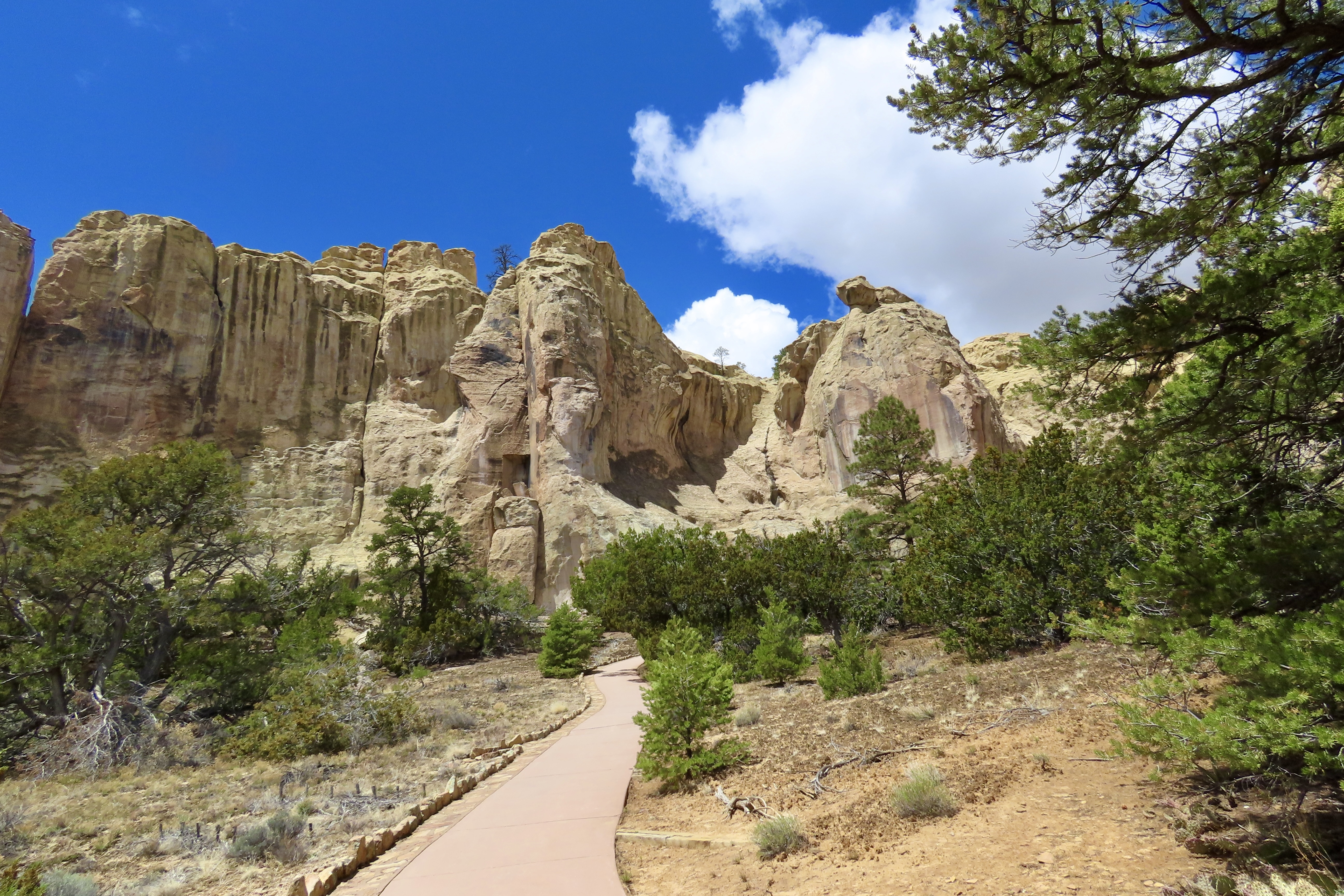
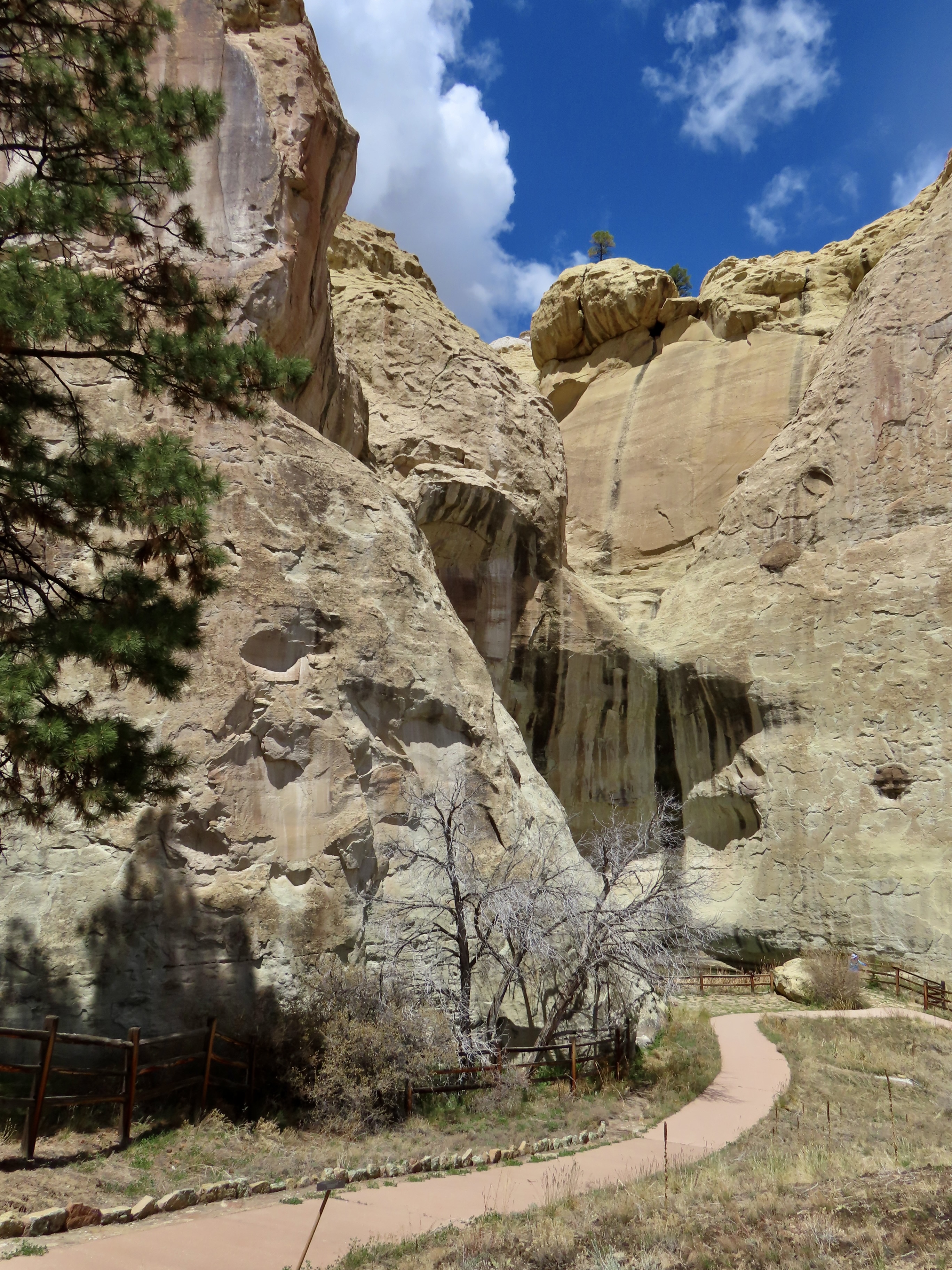
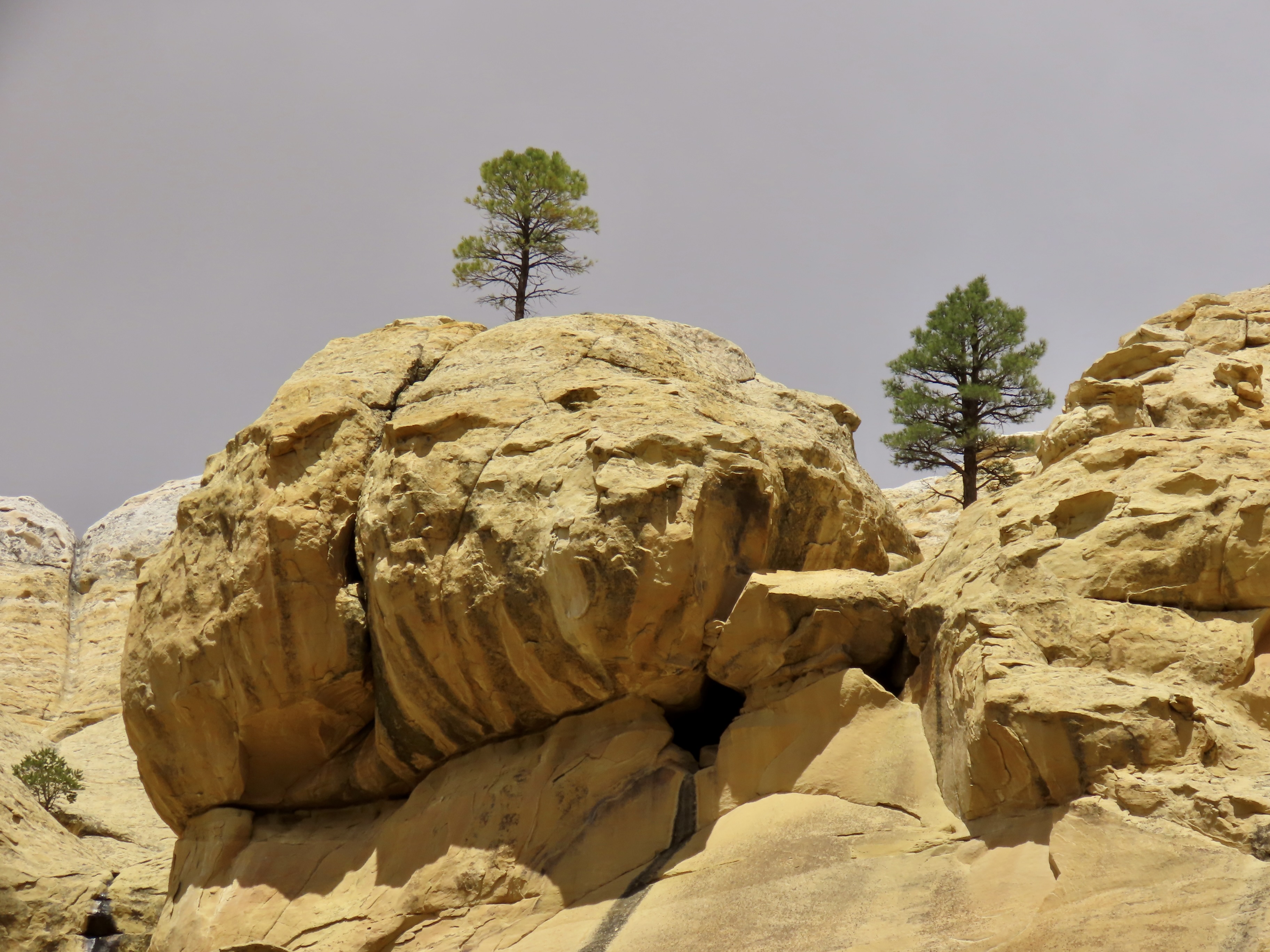
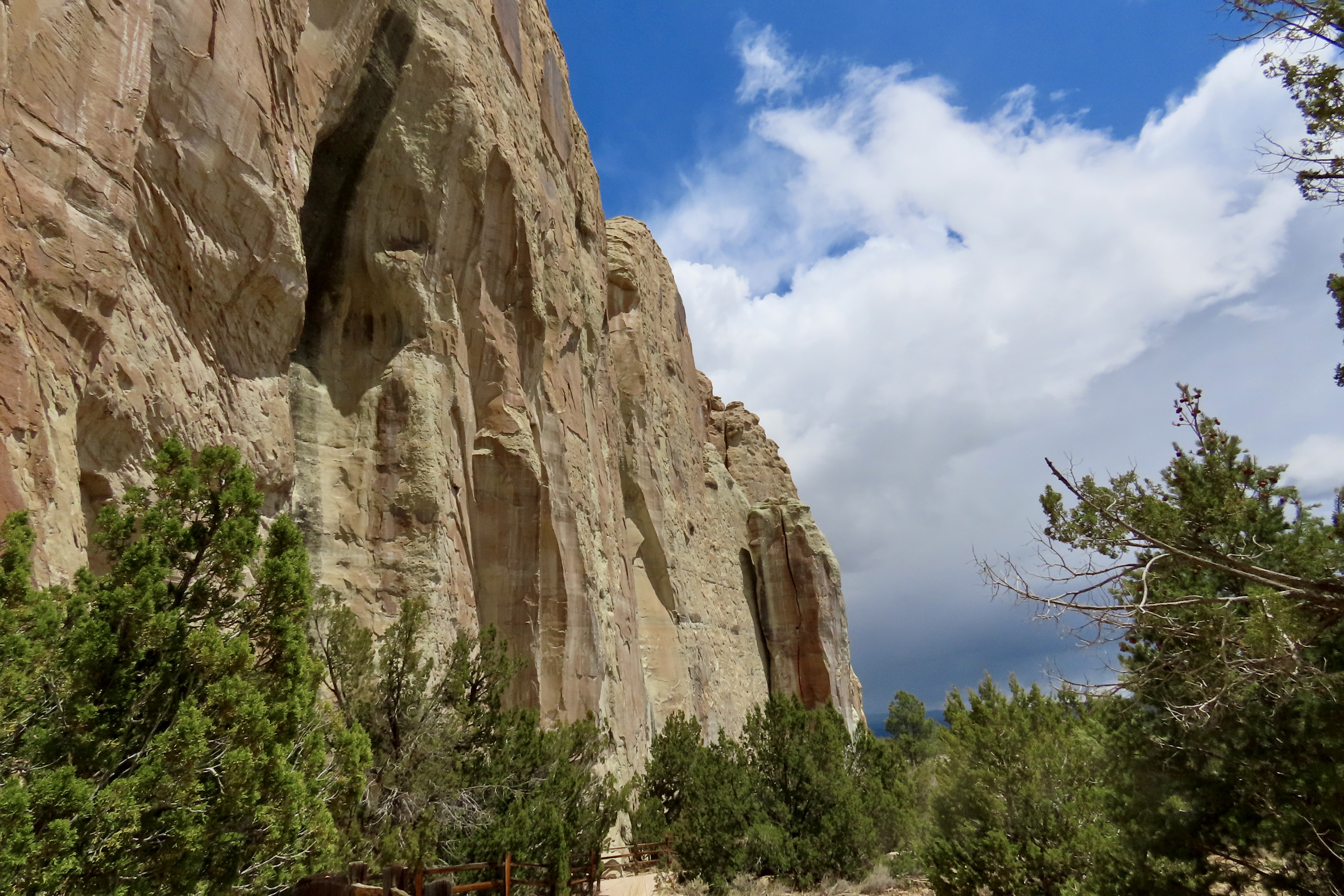
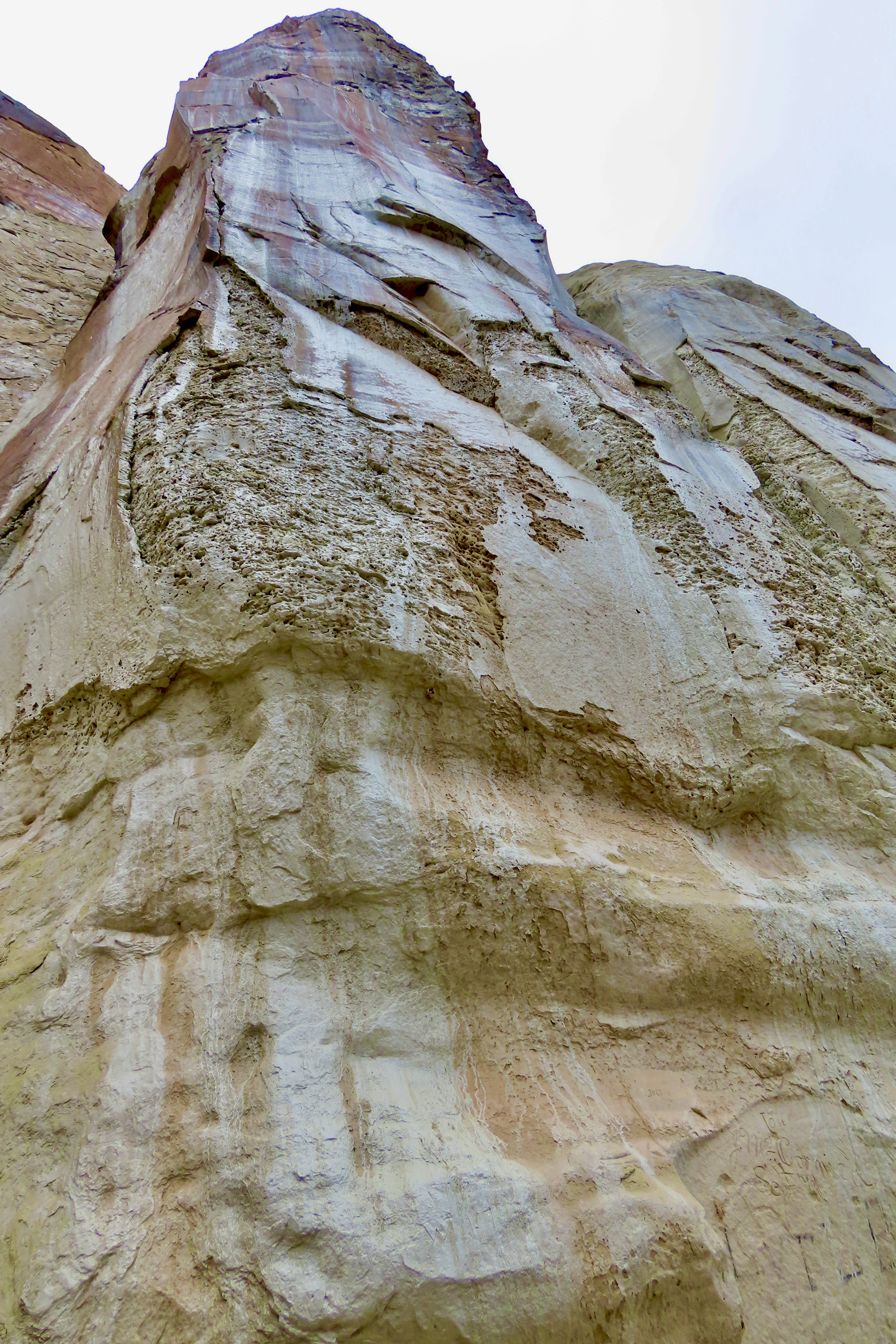
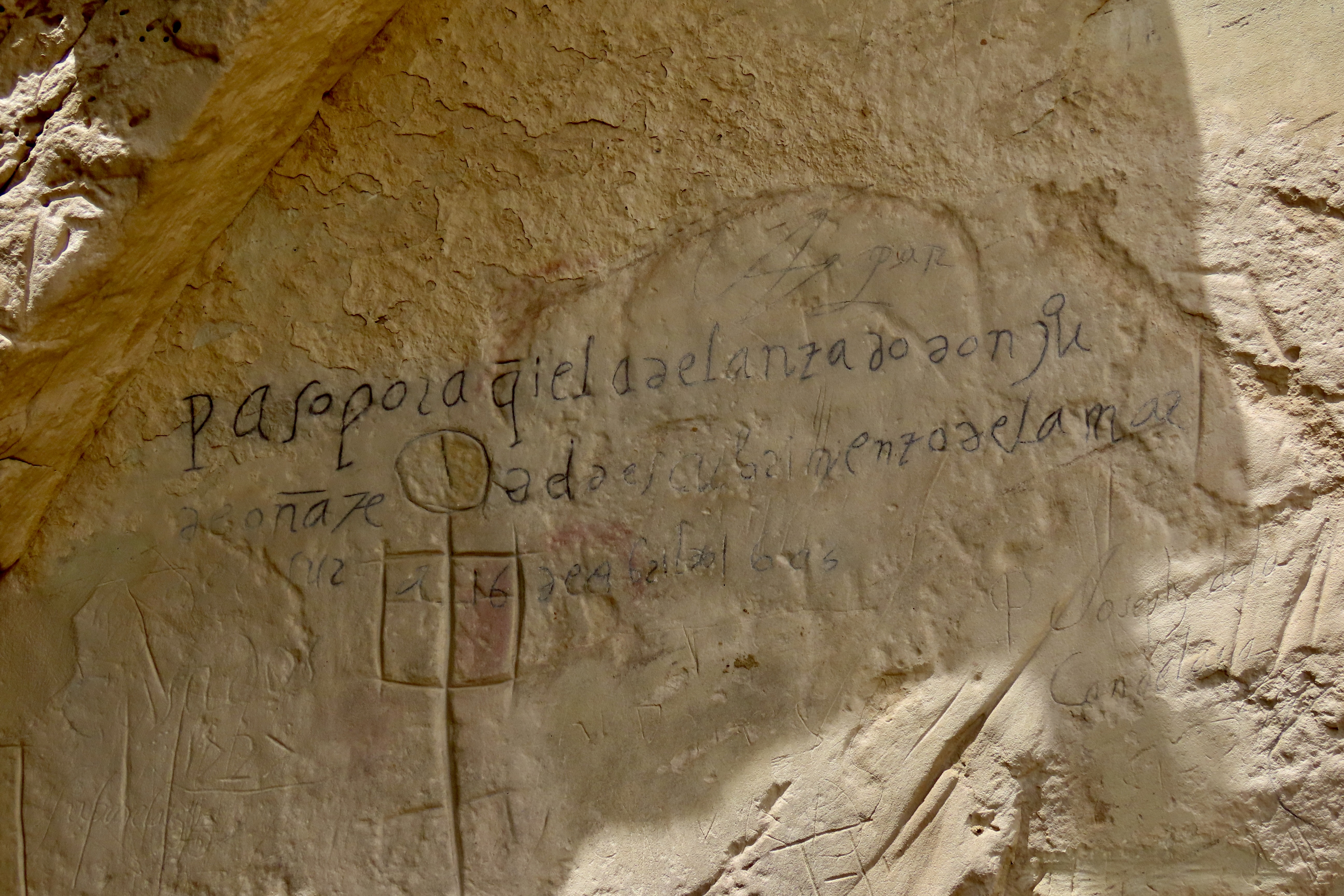
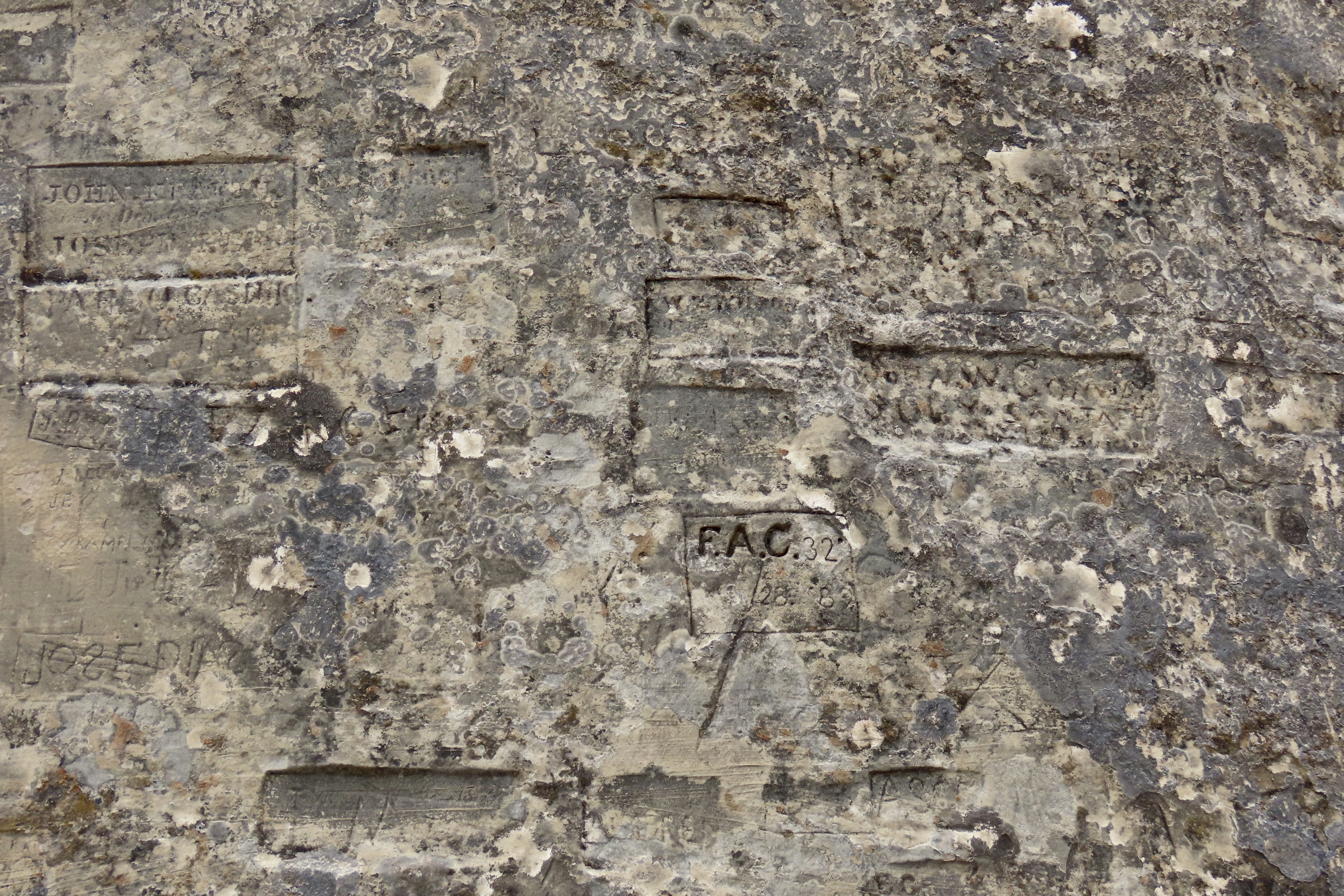
This was our view of El Morro as we approached the National Monument on Highway 53 ( the Trail of the Ancients) from Grants,New Mexico. The Spaniards gave El Morro its name, which translates as a promontory or headland. Geologically speaking, El Morro is a cuesta with a sharp, steep face on one side and a gentler slope on the other. I was interested in the white top you can see on the left (more on that later). The signatures and petroglyphs started to the left of the two Ponderosa pines where the waterhole is and extended along the base of the cliff to around the corner.Like most national park and monument visitor centers, El Morro’ was beautifully designed to fit into its environment. (Note: Peggy and I made two visits to the Monument: One to check out the petroglyphs and signatures, and two, to hike up to the top and explore the Atsinna Pueblo. That’s why our photos include cloudy and relatively clear skies.)The low profile of the building provided excellent views of the main attraction. We were eager to explore, but first we stopped at the Visitor Center…Where we were greeted by staff with welcoming smiles and a ton of information they were eager to share about the monument. Both staff and displays are vital to enhancing the national park/monument experience. The illustration is what Atsinna Pueblo on top of El Morro would like if fully excavated. Note Peggy’s new haircut. El Morro is only open five days a week. That may be because of the Trump Administration’s cuts in staff.An easy, paved trail leads from the Visitor Center over to the water hole, petroglyphs and signatures.The waterhole is at the bottom the bottom of the hill behind the fence. The cliff above the pool is about 200 feet high. A large rock with a ponderosa pine stands on top.This impressive rock monument stood to the left of the pool. We imagined an Ancestral Puebloan looking down at us.It’s hard to believe that this pool of water surrounded by cattails could play the significant role it has. But the fact that it holds up to 200,000 gallons of water and doesn’t run dry made it a treasure for everyone from the Ancestral Puebloans in the 1200s to cattlemen in the 1900s. Up until 1961, it even provided water for the monument headquarters and visitor center. At first it was thought that the water was provided by a spring. Actually it is fed by runoff from the top. The dark stains on the side (desert varnish) are left behind by minerals in the water such as manganese.I’ve always liked cattails. One of my favorite hangouts in my unsupervised youth was a small pond about 1/3 filled with cattails. When the heads reached this stage, I would break them off with a portion of their stem, shake them vigorously, and send their aerial seeds flying off in all directions!We thought looking up at the desert varnish provided an interesting perspective. I believe the section that is missing was a rockfall in 1942 that filled the waterhole and had to be cleaned out.We were quite curious about this boulder embedded in the sandstone above the spring. While the timing was off in terms of when the sandstone was created, it looked like a petrified tree stump. We were at Petrified Forest National Park last week. This was one of many petrified logs we saw.A cliff swallow’s concept of a pueblo! They make their nests above the waterhole. In addition to being a safe location, the insects that live around the waterhole provide a convenient supply of food for feeding squawking, hungry chicks.Leaving the waterhole, we hiked along the path at the base of the cliff checking out signatures along the way. (I’m saving the petroglyphs for my next post.)A close up.Looking up…I’ve selected Don Juan de Oñate to represent the many Spaniards that signed their names on the rock. He was the first. It was in 1605, 15 years before the Pilgrims landed at Plymouth Rock. Oñate was a Spanish conquistador, explorer and first Spanish governor (viceroy) of New Mexico. At some time, the signature had been written over with a black pen to make it more visible. The inscription translates “Passed by here, the adelantado Don Juan de Oñate from the discovery of the sea of the south the 16th of April of 1605.” The sea he discovered was the Gulf of California.I chose Breckinridge’s signature because he represents a fascinating footnote of American history: The US Camel Corps. In the mid 1850s a unique experiment was undertaken by the US Army to tackle problems created by the severe water shortage in crossing the Southwestern deserts. Some men were sent off to Africa to explore the possibility of using camels for transport. They came back with 33 and and 3 Arab handlers. After a period of training in Texas, a test expedition set off across the desert for LA. They passed by El Morro with Breckenridge in charge of the camels. The camels did well— much better than horses or mules. They could carry more weight, travel farther during a day, and get along without water for a significantly longer period of time. Unfortunately, the Civil War came along and the experiment was abandoned.People choose a variety of ways to display their names.Some signatures were scribbled, some quite beautiful, and some encased. Each represented a different life, a different story.The Monument has a brochure that provides information on some of the people who signed their names. RH Orton is one. He was a captain in the Federal forces during the Civil War. He may have been on his way home when he signed this. Later he would become an adjutant-general in the California National Guard. One could easily spend weeks researching the various names. I’m sure people have.
That’s it for today. Next, we will post about our trip up to the the Atsinna Pueblo and also explore the petroglyphs we found scattered among the signatures, predating them by 400 years. We will also include an interesting discussion we had with two Zuni Rangers working on the trail up to the Pueblo, Calvin and Valentino. (“I was born on Valentines Day,” Valentino told us.)Atsinna Pueblo.
Plans to protect air and water, wilderness and wildlife are in fact plans to protect man. -Stewart Udall
Most folks know what a Saguaro looks like. With its giant arms reaching up to the sky, it’s an icon of the Southwest. And this isn’t one, right? Except it is. It’s called a crested saguaro. It develops when a cactus’s growing point elongates into a line instead of a point. They can grow six feet across and look something like a brain. On this one, the first thing I saw was what appeared to be a clawed hand reaching out from the center. Weird. I like weird. But in moderation…
The Washington Post reported on Monday that it had obtained an internal email from the Trump Administration stating that it was suspending air-quality monitoring programs at all national parks across the country. I could only wonder, why? It was weird in a big way.
A record breaking 331.9 million people visited our national parks, monuments and recreation areas last year. Among them were children, elderly people and numerous others with underlying heath issues, all of whom are affected by air pollution. Air quality information is valuable to them. As a former Executive Director of American Lung Associations in California and Alaska, I can attest to how important it is. On days our air is polluted to a dangerous level, sensitive populations should limit their outdoor activities. Period. But first, they have to know there’s a problem. I couldn’t help but think ‘Let’s Make America Humane Again.’
After the Post broke the story, the Administration apparently backed down. I suspect health groups joined with organizations focused on national parks and educated the administration on the negative consequences of its action. This speaks to how important it is for the public to be informed of edicts that impact their lives and unite in letting political leaders and other decision makers know of their concerns. It makes a significant difference— and it gives us a role in determining our future.
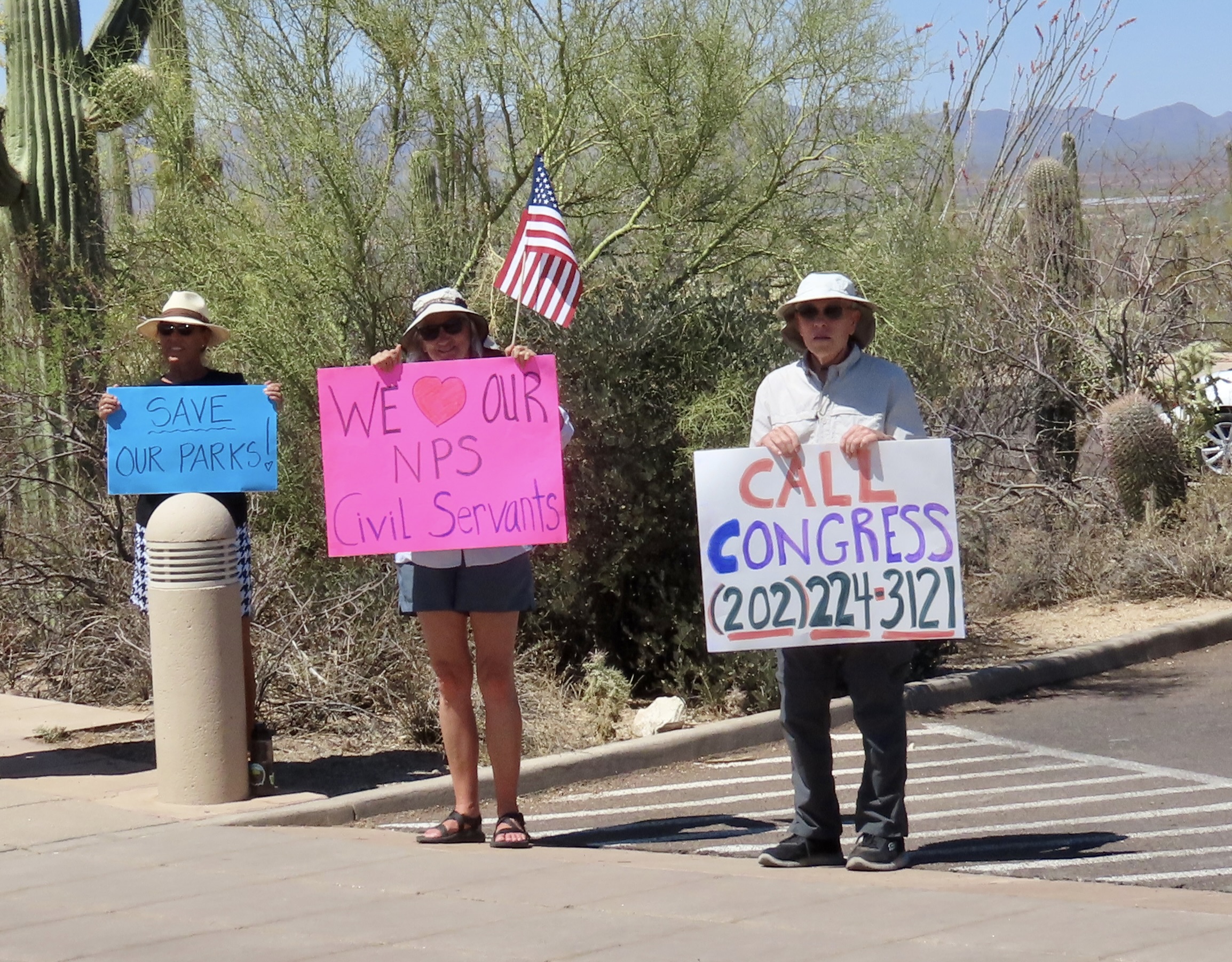
People protesting Administration decisions related to National Parks stood outside the Saguaro NP Visitor Center.
Today, Peggy and I are continuing our series on national parks, monuments, and wilderness areas with an emphasis on their unique beauty, geology, flora, fauna and history that make them so important to us and future generations. As with each of our previous posts in this series, we will present 25 photos that focus on the particular area we are blogging about. Today it is Saguaro National Park just outside of Tucson, Arizona where we were two weeks ago. All photos have been taken by either Peggy or me unless otherwise noted.
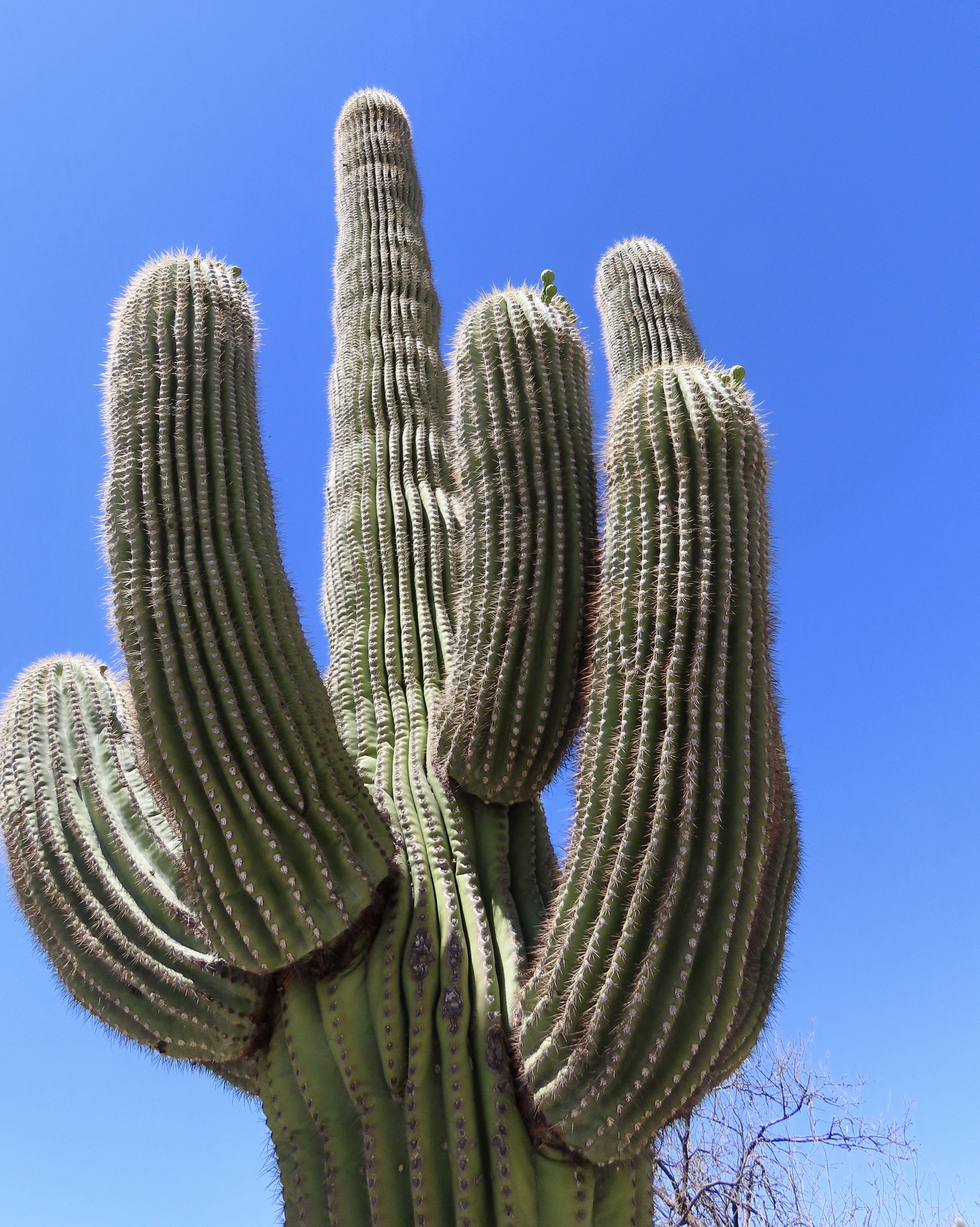
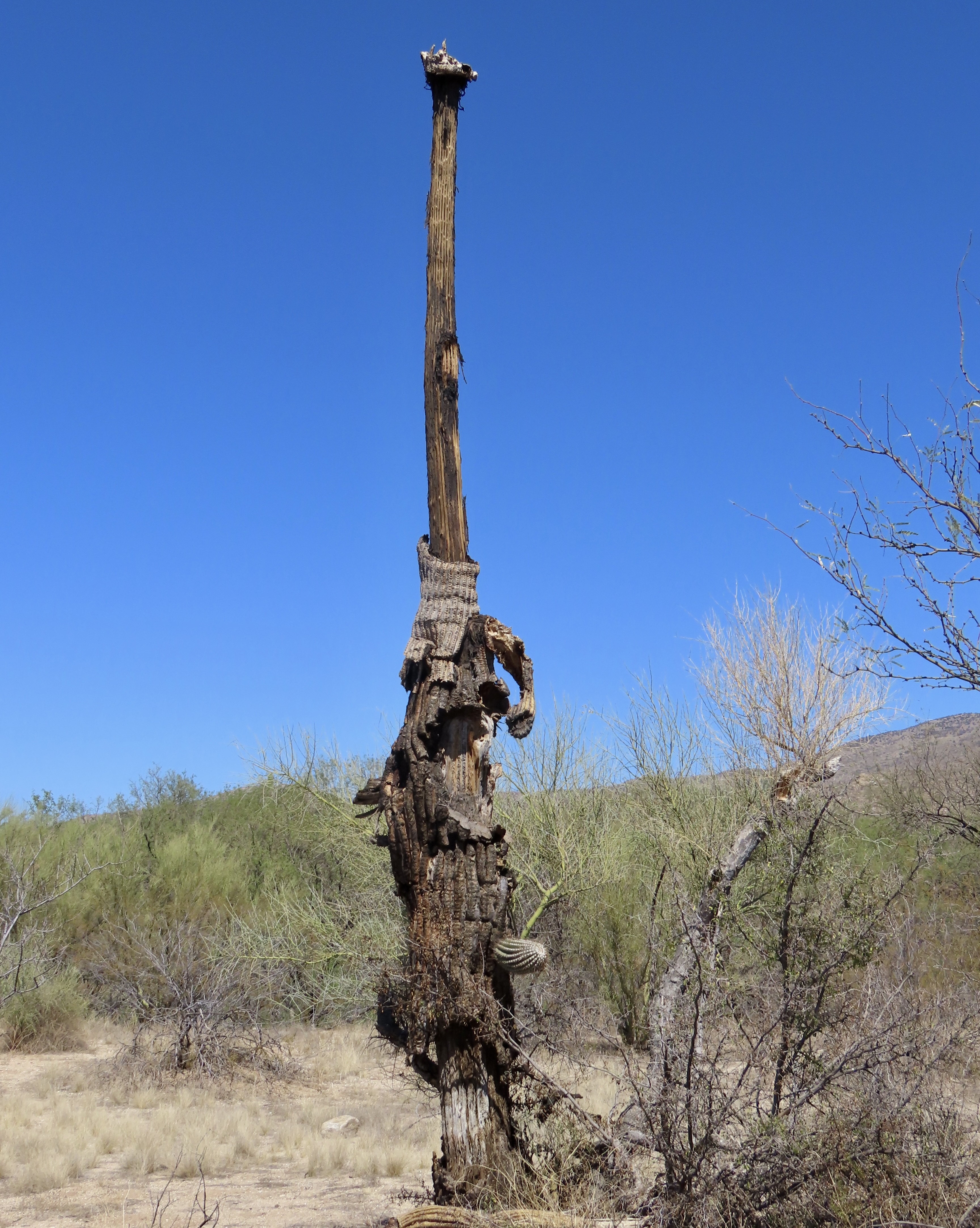
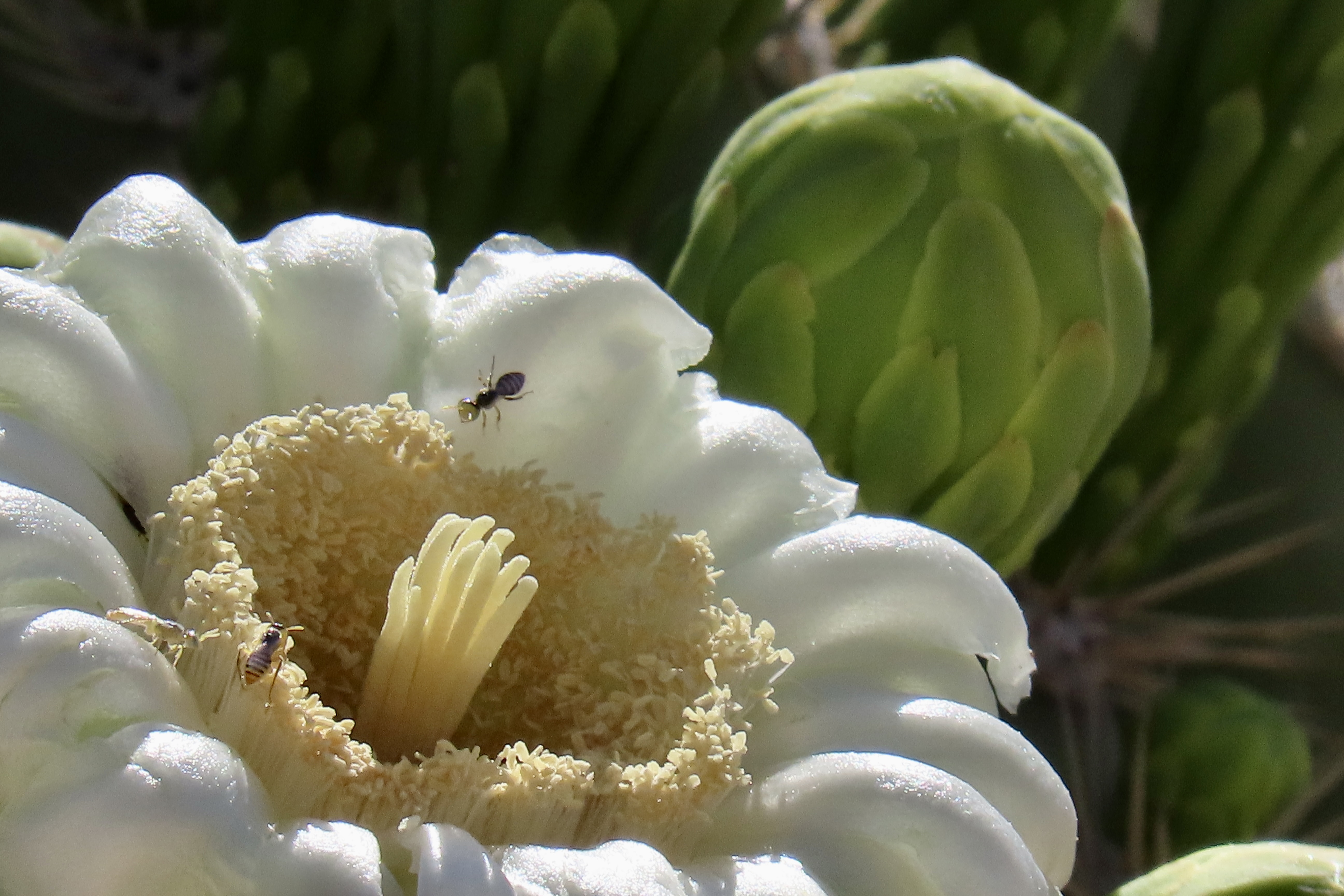
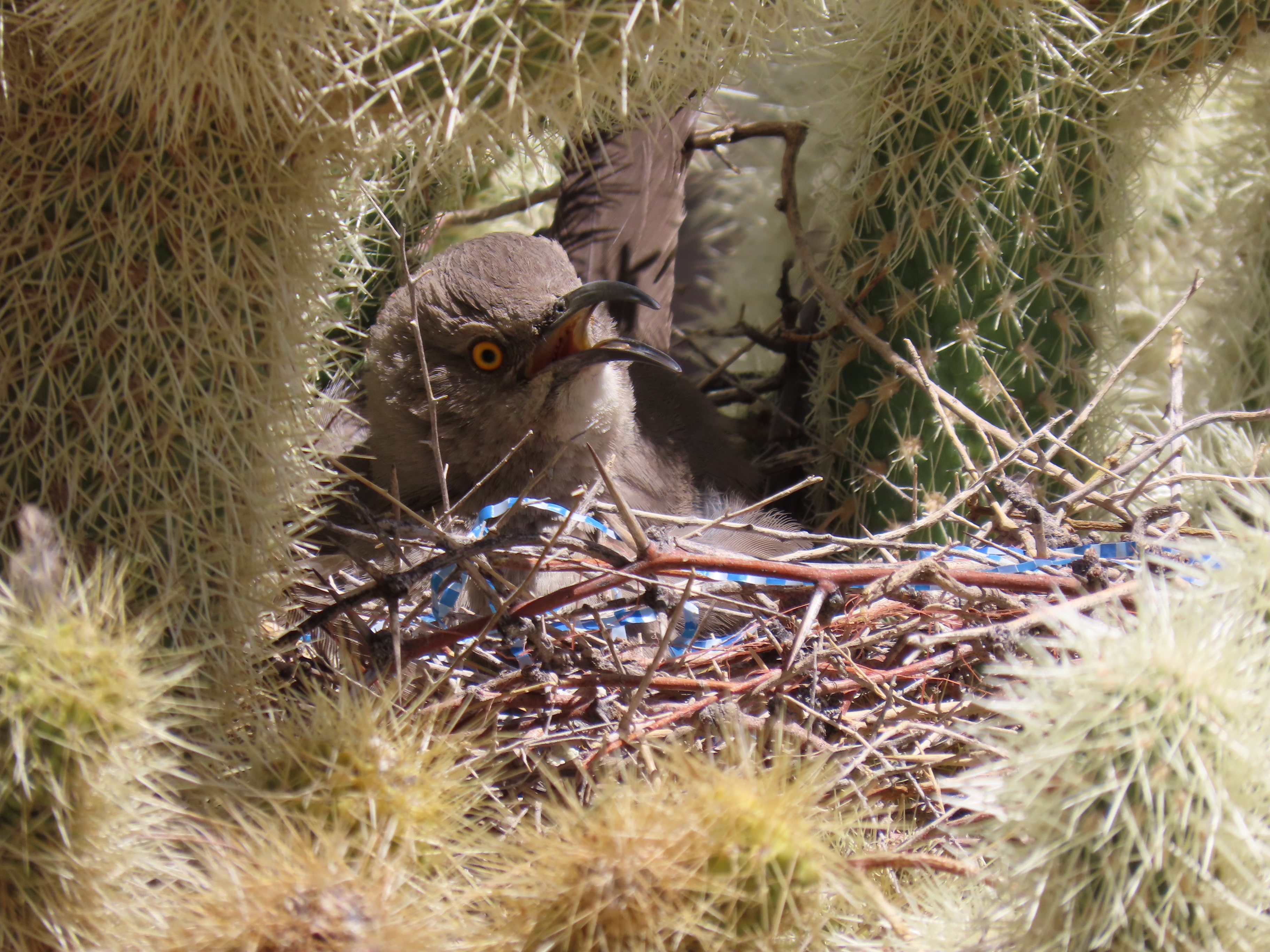
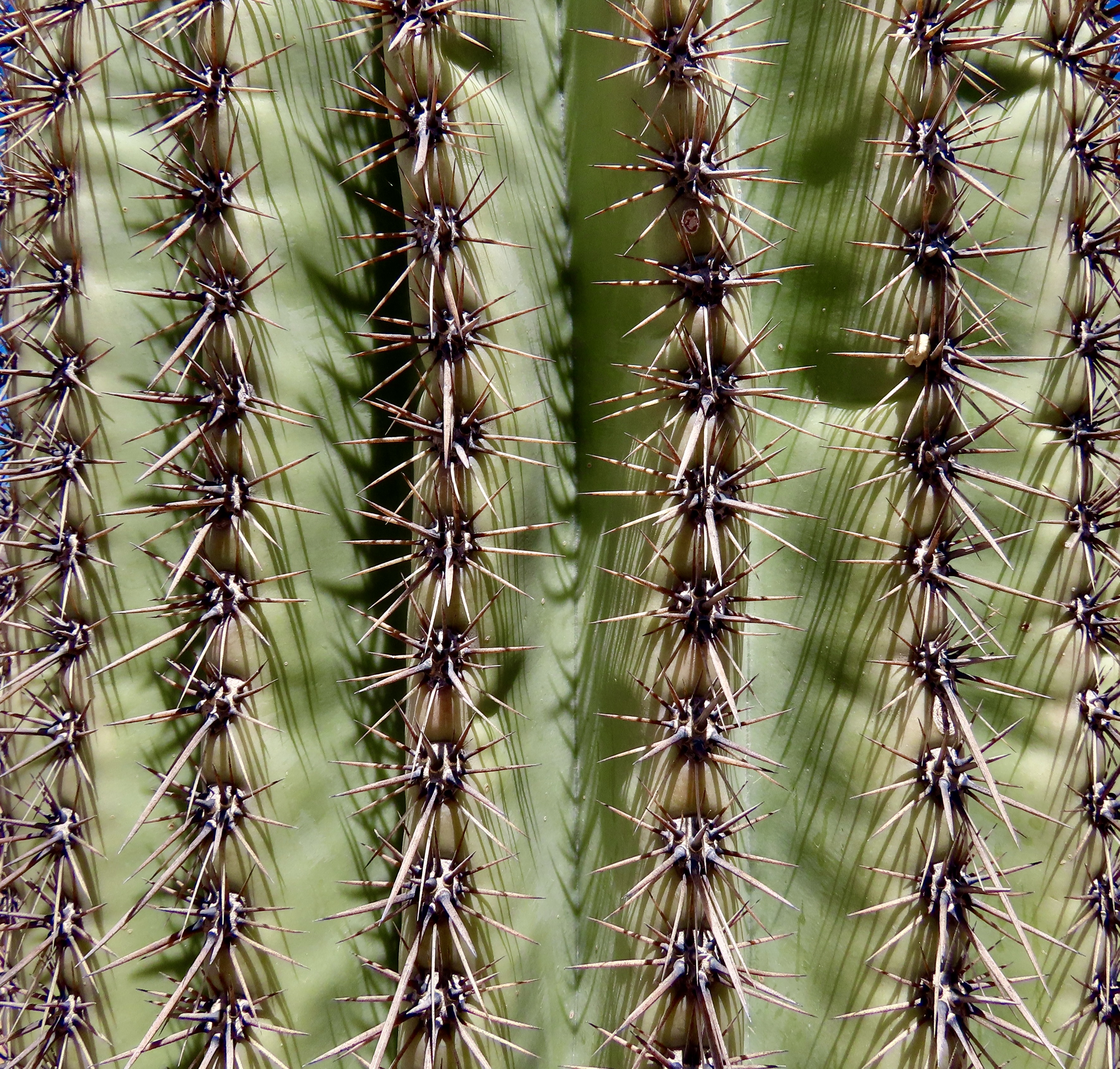
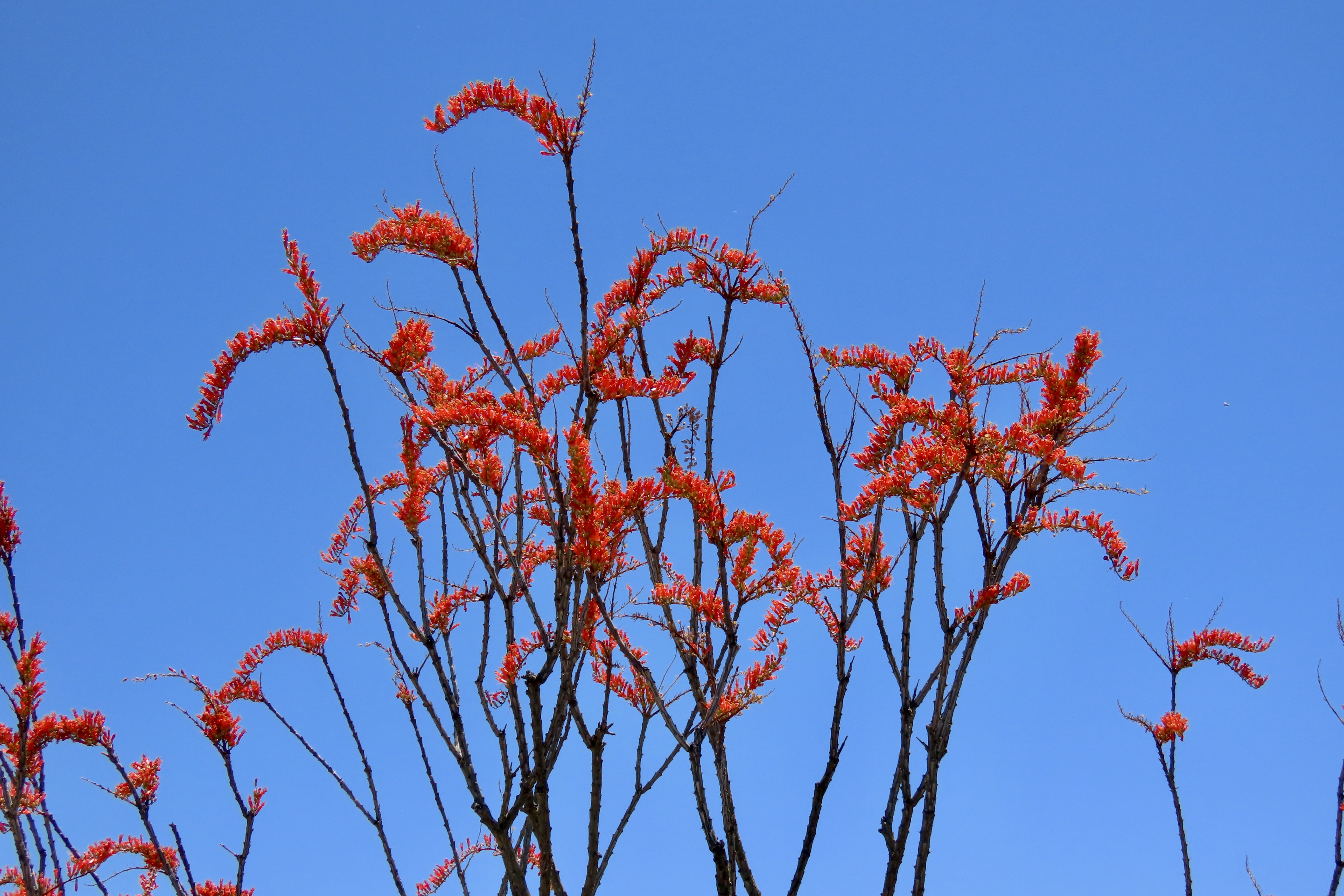
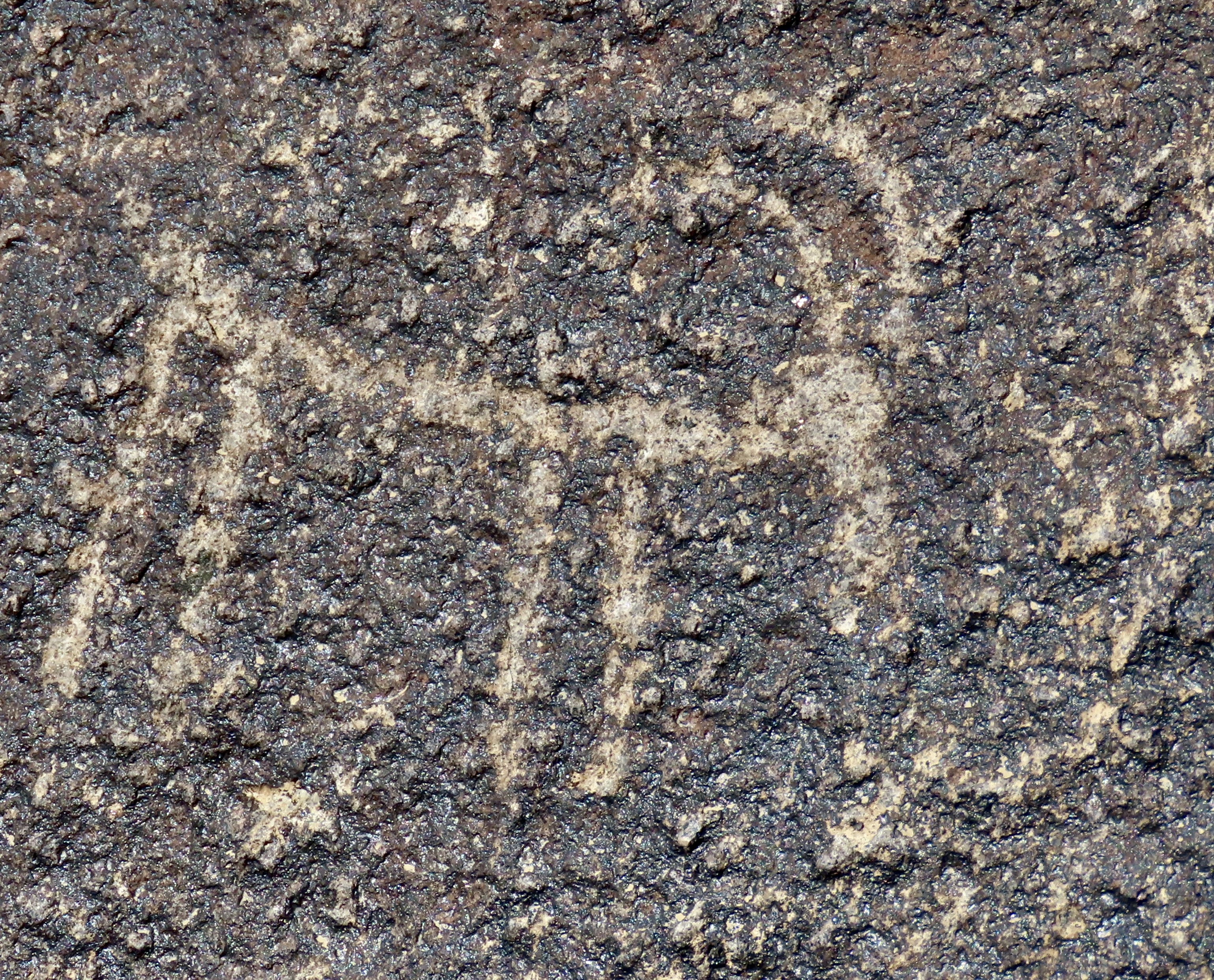
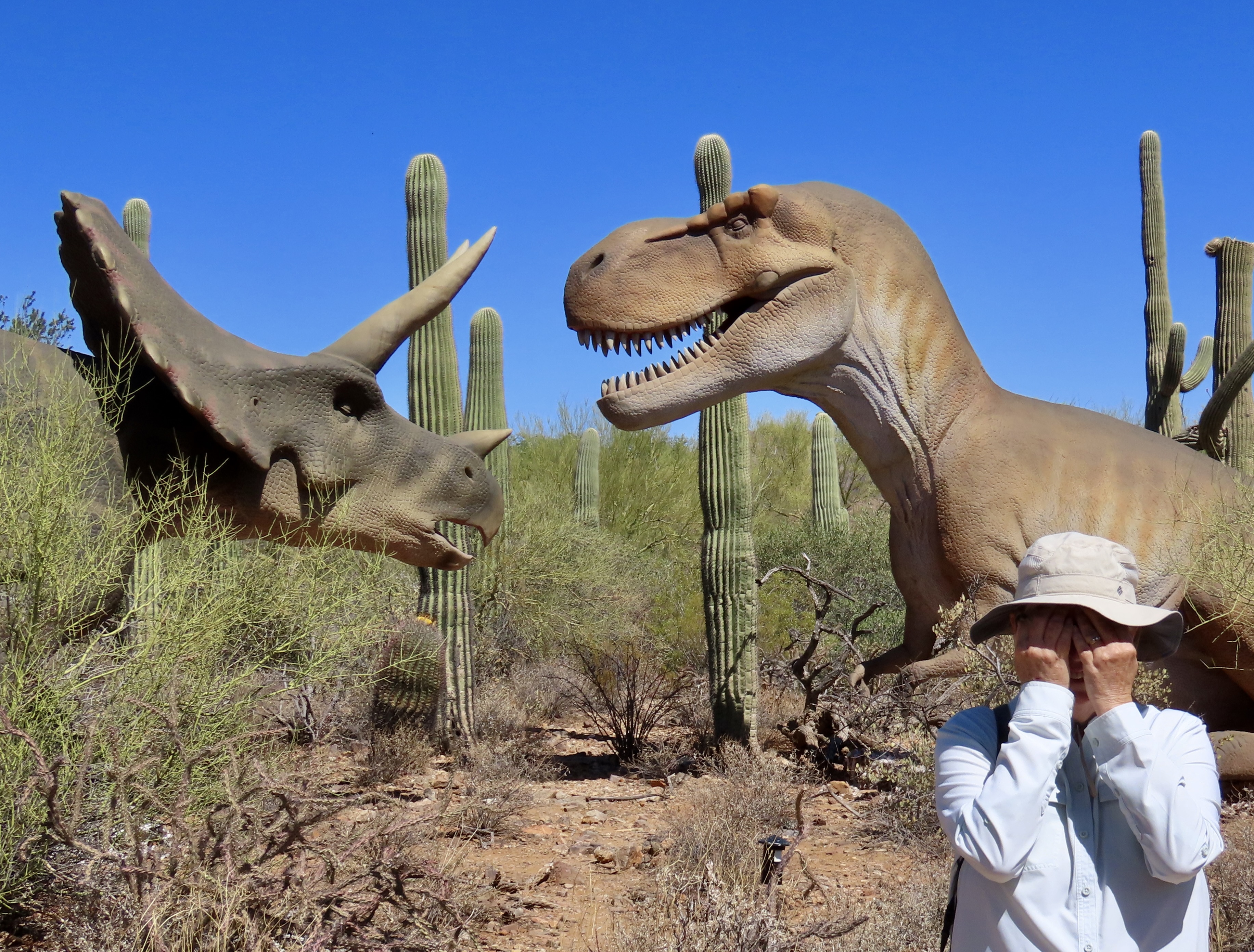
As the headline suggests, Saguaros are big. The giants can grow up to 50 feet tall with a circumference of 8 feet and a root system reaching out 100 feet from the base. This makes them the largest cactus in the US.Peggy provides perspective on the size of a large ( not giant) saguaro. Here’s your math problem for the day. Peggy is 5’7”. Approximately, how tall is the cactus?Saguaros can have up to 24 arms. A lot. I counted 18 on this one, carefully avoiding the small cactus behind that photobombed our picture.This old fellow provides a look at the structure of a saguaro, plus an element of humor. Not sure of the message. “Don’t count me out?” “You are only as old as you think you are?” We were lucky that the saguaros were just beginning to bloom. The buds looked like alien pods and the flowers were gorgeous.A wide range of insects during the day and bats at night are eager to feast on the flowers. The bats and flying insects aid in the fertilization process by carrying pollen to other saguaros.A cactus wren took advantage of the insects visiting the Saguaro for its own feast. The cactus wrens sometimes makes their homes in Saguaros, as do other birds including Gila Woodpeckers and Gilded Flickers.Home sweet home. The holes you see in these cacti are nesting sites.The cactus wren also nests in cholla cactus and may even prefer it. Can you imagine flying in and out of this mass of spines and raising your babies here? Other birds see the cholla as a good place to raise a family as well. Besides the obvious challenge, it’s a great way to discourage predators.Peggy was taking a photo of what appeared to be a nest in a cholla cactus at Roper State Park in southeastern Arizona a few weeks ago when suddenly a curved bill thrasher popped her head up and begin scolding. We speculated that what she was saying to Peggy was R-Rated.There are 35 species of Cholla. This is another one we found at the park.While I am on the thorny subject of spines, I wanted to make one last observation on the saguaro before moving on to other cacti. Each of these clusters, spaced about an inch apart, contains up to 30 spines. They can grow as long as two inches. I estimated that there would be roughly 1,700,000 thousands spines on a giant saguaro. There’s a message here: No matter how much you love saguaros, save your plant hugs for trees.Barrel cactus is another favorite of ours. We called these the “Three Amigos.”Like the saguaros, barrel cactus can be a bit weird. Peggy and I were surprised by this one with waves.We missed the blooms on the barrel cactus. What you are looking at here is the fruit. It’s edible when ripe. It is described as slightly tart. BTW: Another name for barrel cactus is fishhook cactus because of how their spines are curved. While the barrel cactus may have finished blooming, there were plenty of blooms for us to admire at Saguaro. This is an Ocotillo.A close up of the ocotillo flowers. And check out the spines here!Prickly pears were both prickly and blooming. Can you spot the honey bee in this photo with its head popping up? It’s totally covered in pollen that it will carry on its rounds to other prickly pear flowers, aiding in the pollination process.The primary small trees/shrubs of Saguaro NP were also in bloom. This is a mesquite.And here we have palo verde trees. Both the mesquite and palo verde are important to Saguaro, providing shade for their first few years of growth.As we wander through the Southwest, we are always on the look out for ancient petroglyphs. Saguaro had over 200 next to the Signal Hill Picnic site. This small stick-figure big horned sheep was among my favorites. Peggy is now in the process of seeking new ones for a second word search book on petroglyphs. Her first book— Artistic Word Searches, Unique and Magical, Discovering Petroglyphs from the Southwest— is available on Amazon. Peggy was impressed with this spiral petroglyph which is thought to represent a journey or migration.We wrapped up our visit to Saguaro National Park next door at the Arizona-Sonora Desert Museum. The museum was featuring an exhibit titled Dinos in the Desert and we found a number of these grunting and growling beasts as we wandered through the outdoor museum. Peggy couldn’t bare to watch this battle that was taking place between two jurassic giants. Or maybe they were discussing eating us. Grin. While the ‘Dino’ exhibit was very well done, it was only the beginning of what the museum has to offer. Go there if you get a chance.
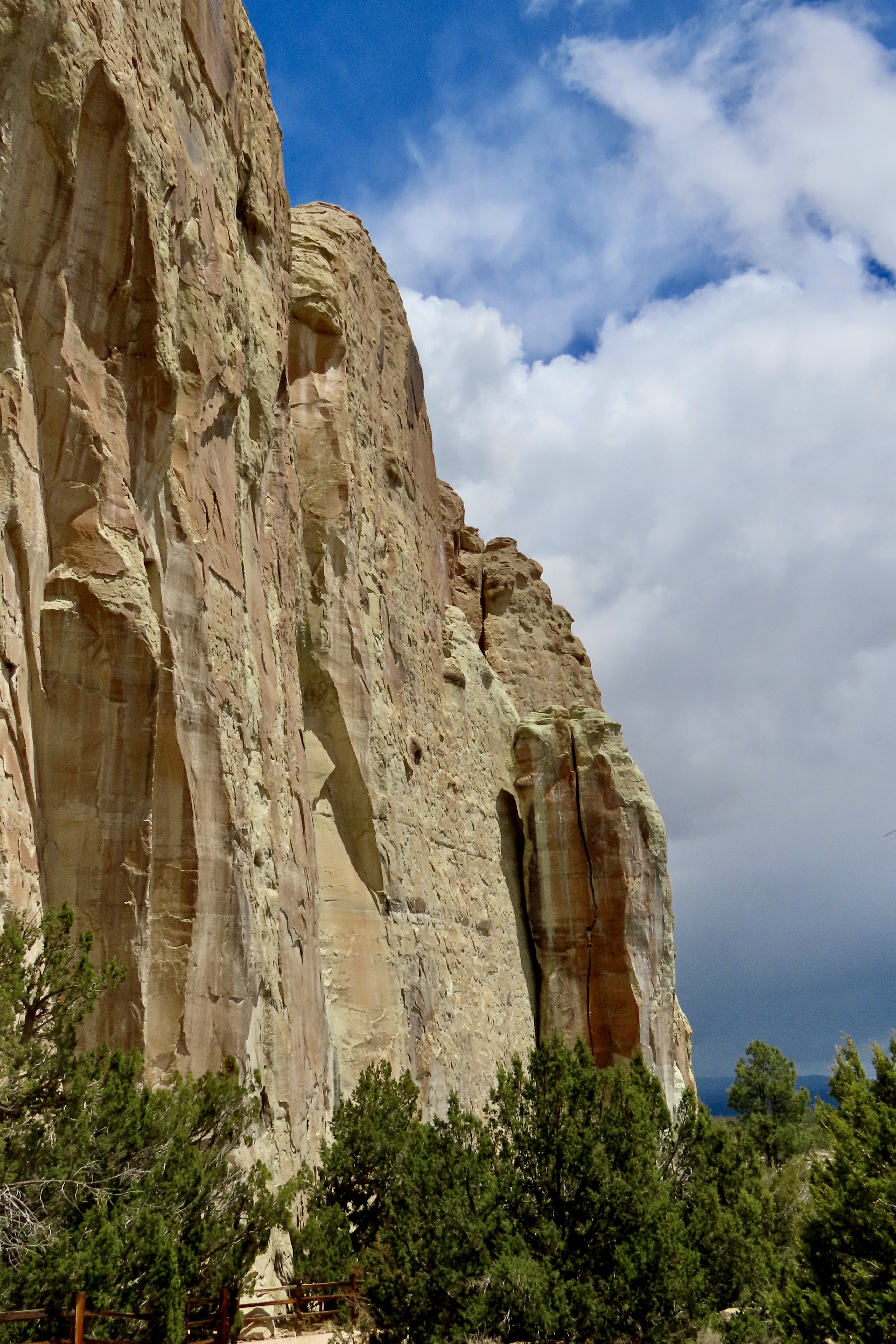
Our next post will be on the El Morro National Monument, which we just visited and are going back to.This impressive promontory is reason enough to visit El Morro National Monument, but over 2000 inscriptions on the rock make it even more special. A water hole at the base made it a stopping point for a continuing parade of people ranging from ancient peoples, to early Spanish explorers, to pioneers. The earliest Spanish signature is dated 1605, 15 years before the Pilgrims arrived at Plymouth Rock!




































 Wandering through Time and Place