El Malpais… The ‘Not so Bad Lands’ National Monument

When the Spaniard explorers came through here in the 1500s searching for the Seven Cities of Cibola and untold (unfound) treasure, they looked at the lava covered fields below and declared them El Malpais, the badlands— good for nothing. They would travel around them instead of through them. The Zuni and Acoma, whose ancestors had arrived at least 700 years before the Spaniards, considered them part of their homelands. Food, water, shelter and medicine plants were here for those who knew where to find them. Their trails crisscrossed the ‘not-so badlands.’
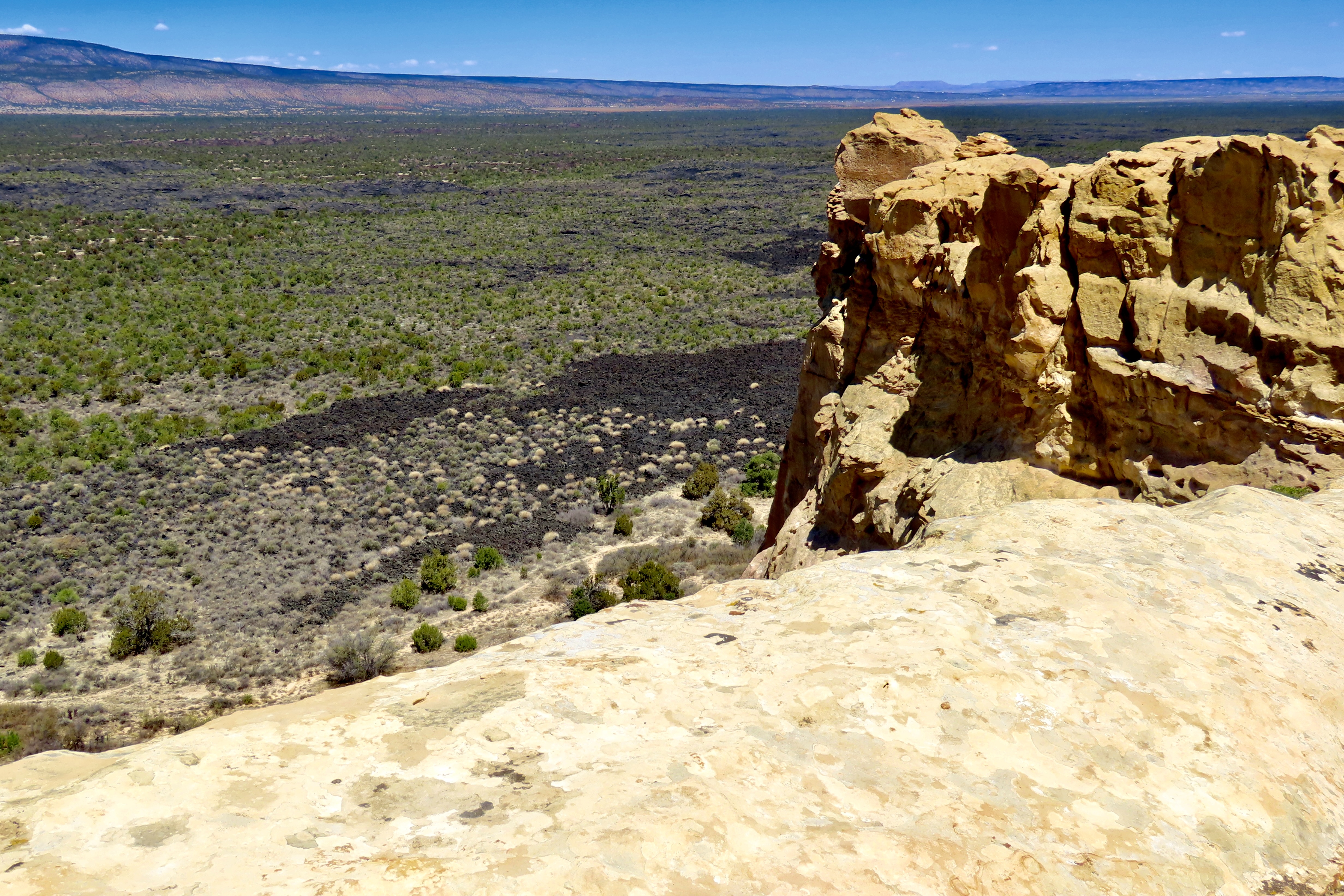
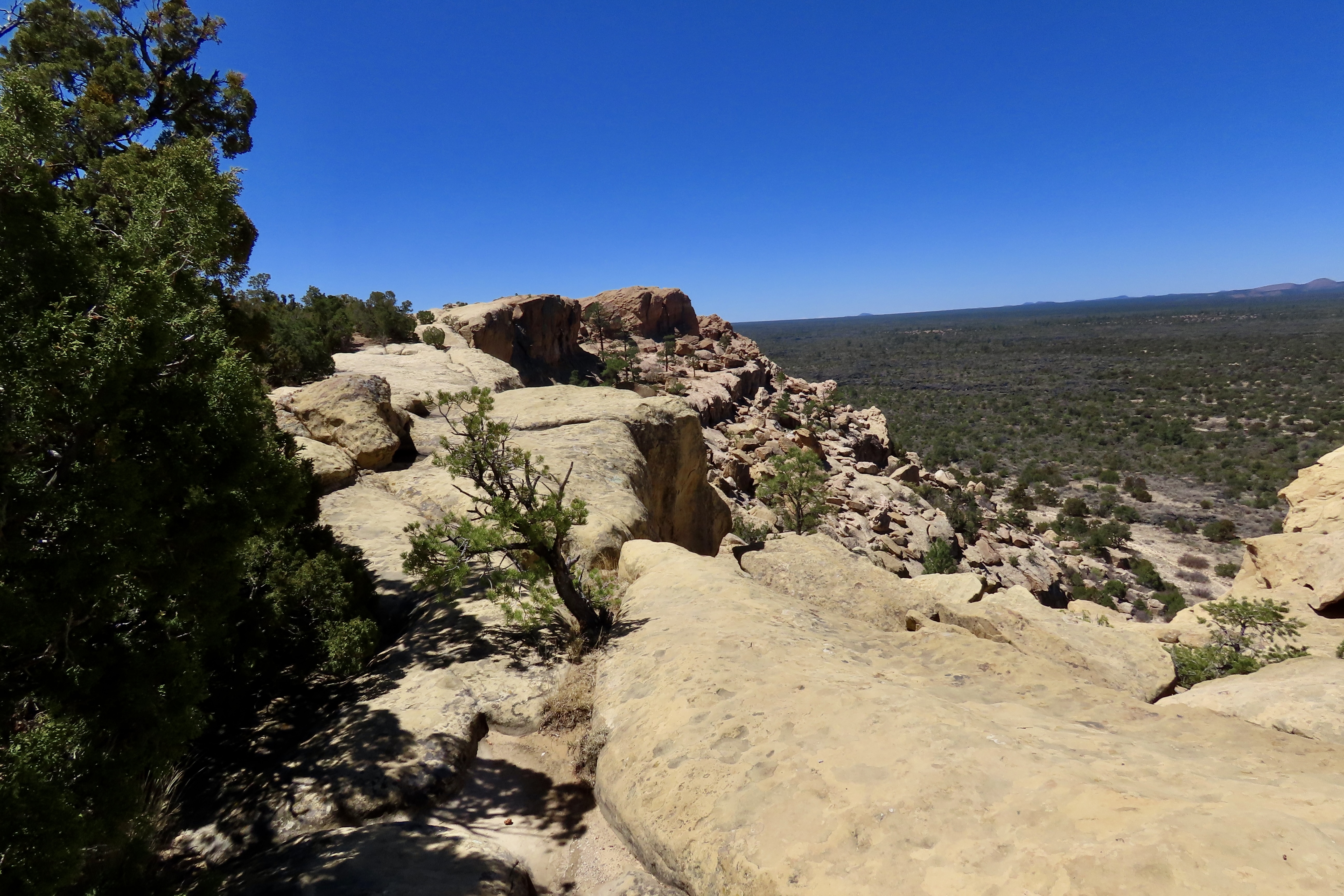
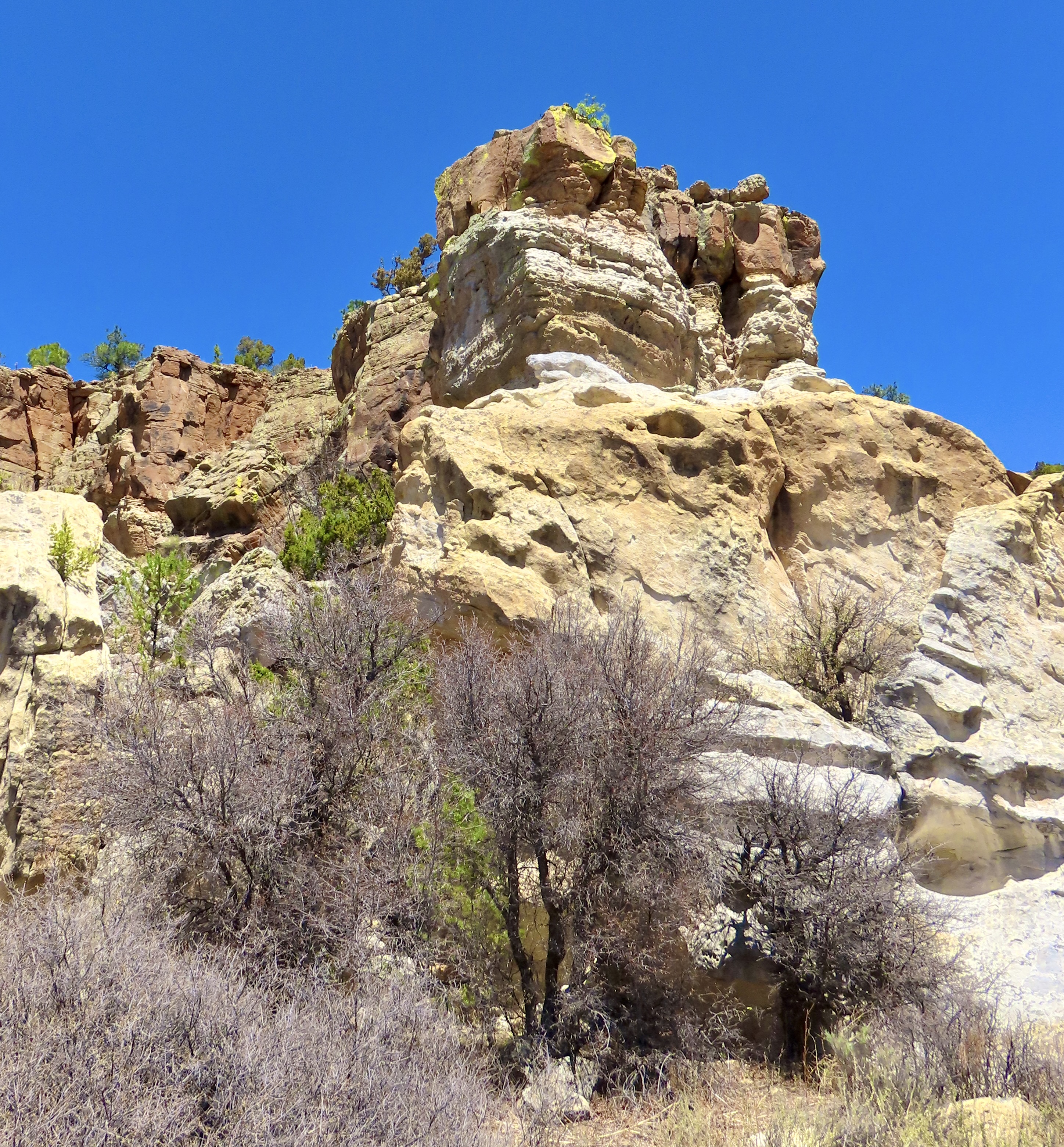
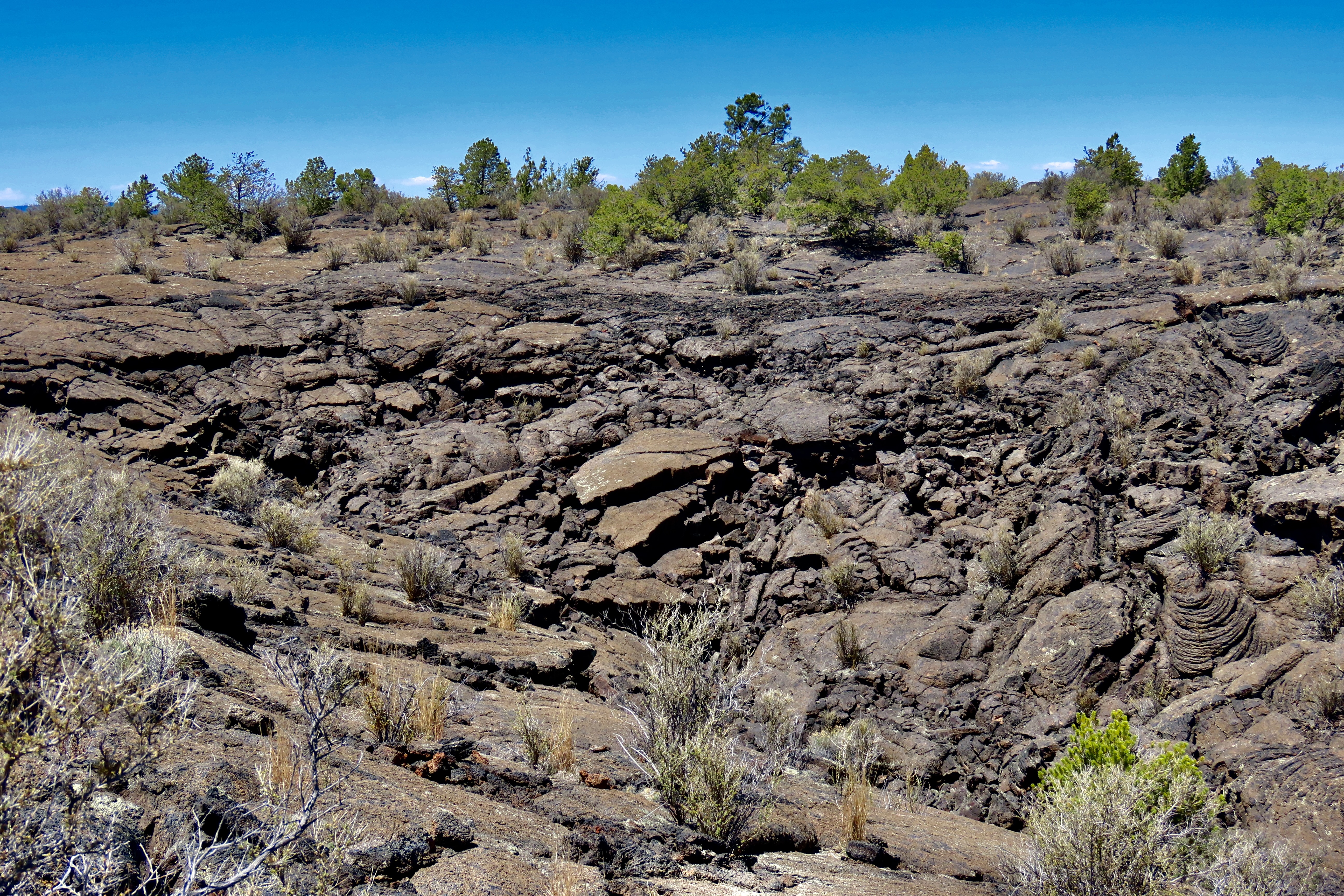
A road takes visitors out to Sandstone Bluff, shone here and above. Visitors can walk along the bluffs and look down into extensive volcanic flows of basaltic rock. While the sandstone that makes up the bluff dates back some 160 million years, the most recent lava flows are a mere 3000 years old, babies in geological time. If you go back to the first photo, the latest flow is the darkest.
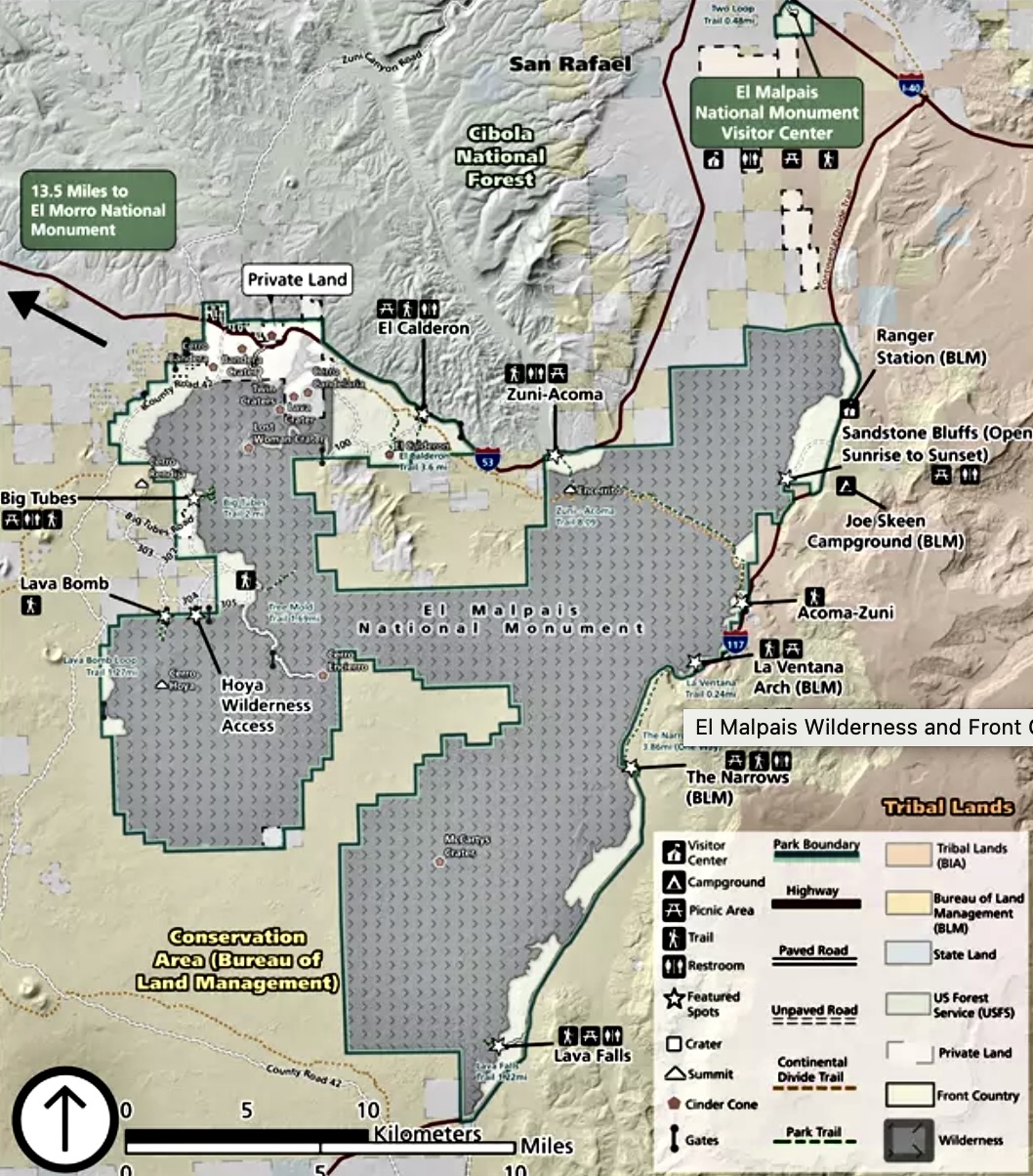
This map shows an overview or El Malpais National Monument. I-40 is at the top of the map, as is the Monument’s Visitor Center. El Morro National Monument, that I blogged about earlier, is off to the west. Most of our photos are from the Sandstone Bluffs, the Acoma-Zuni Trail, the La Ventana Arch, the Narrows and Lava Falls.
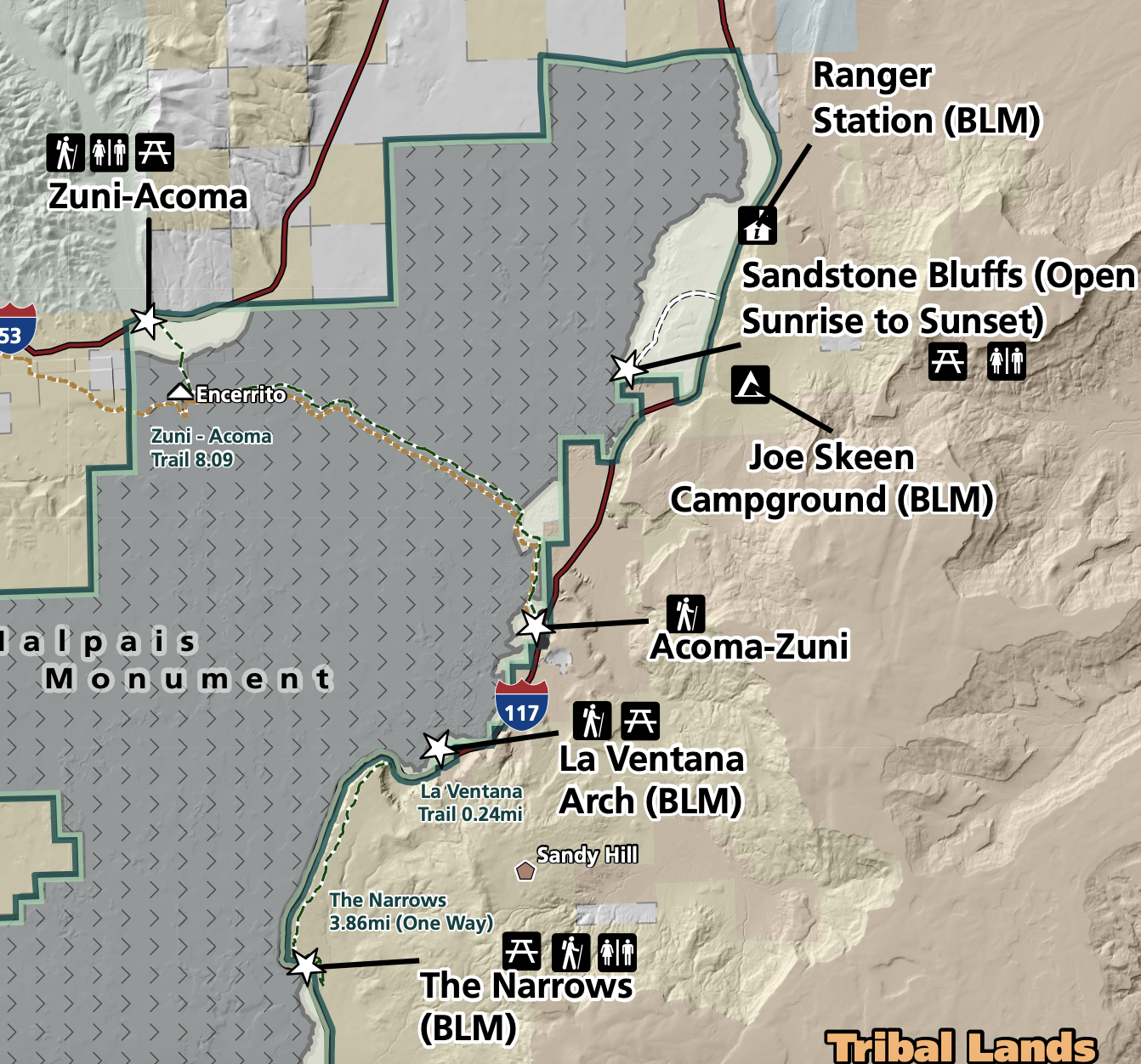
The first four locations are shown above in the close up. The four photos below are from the Sandstone Bluff area.
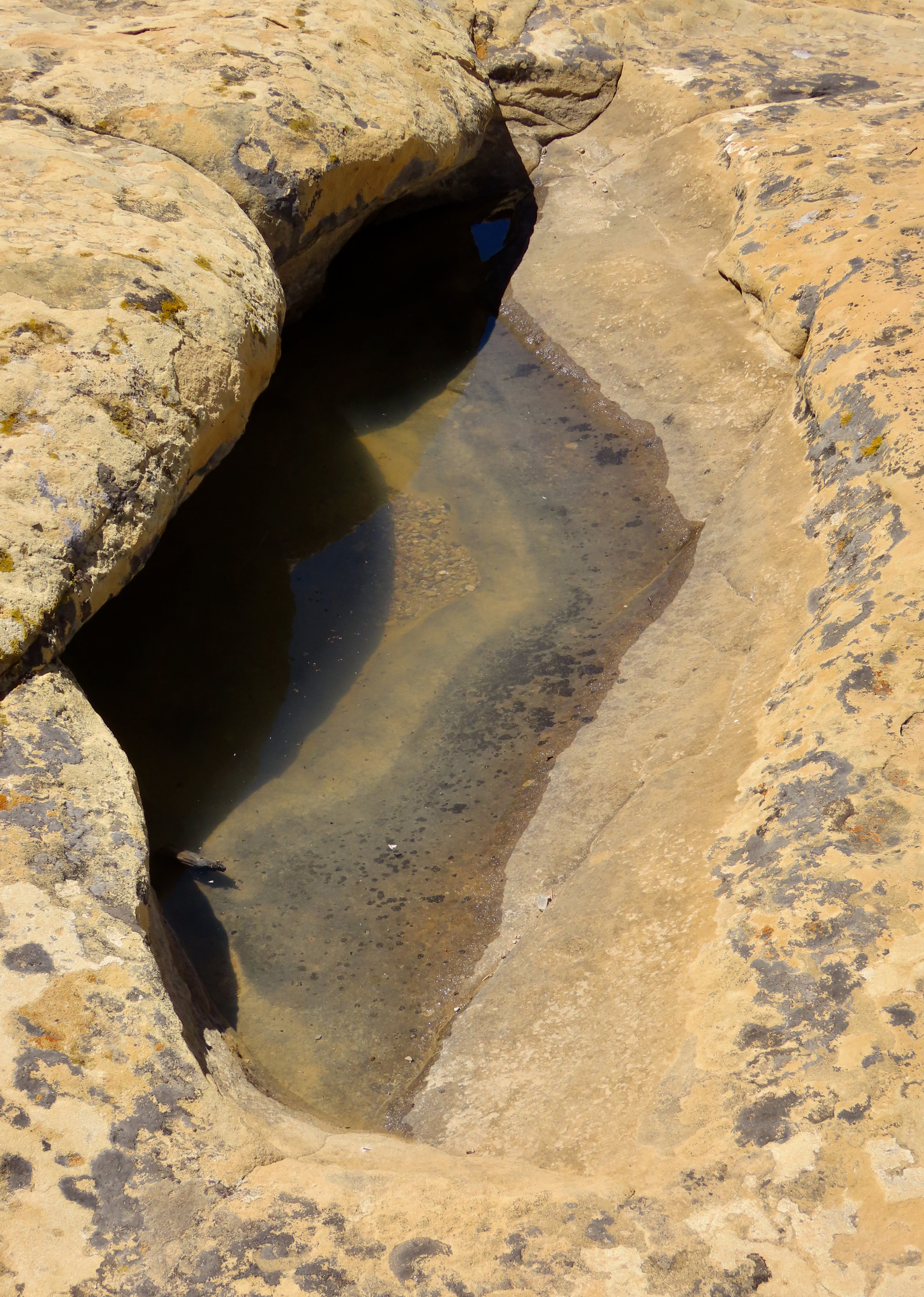
Water catchments such as this on top of Sandstone Bluff, provided a ready source of water after rainstorms for the Ancestral Puebloans, more ancient peoples, and wildlife that lived and wandered through the area. Various little water bugs took advantage of the pool when it was full. As did frogs, who laid eggs that turned into pollywogs. Looking at photo, I’m still trying to turn the stick into a skinny frog.
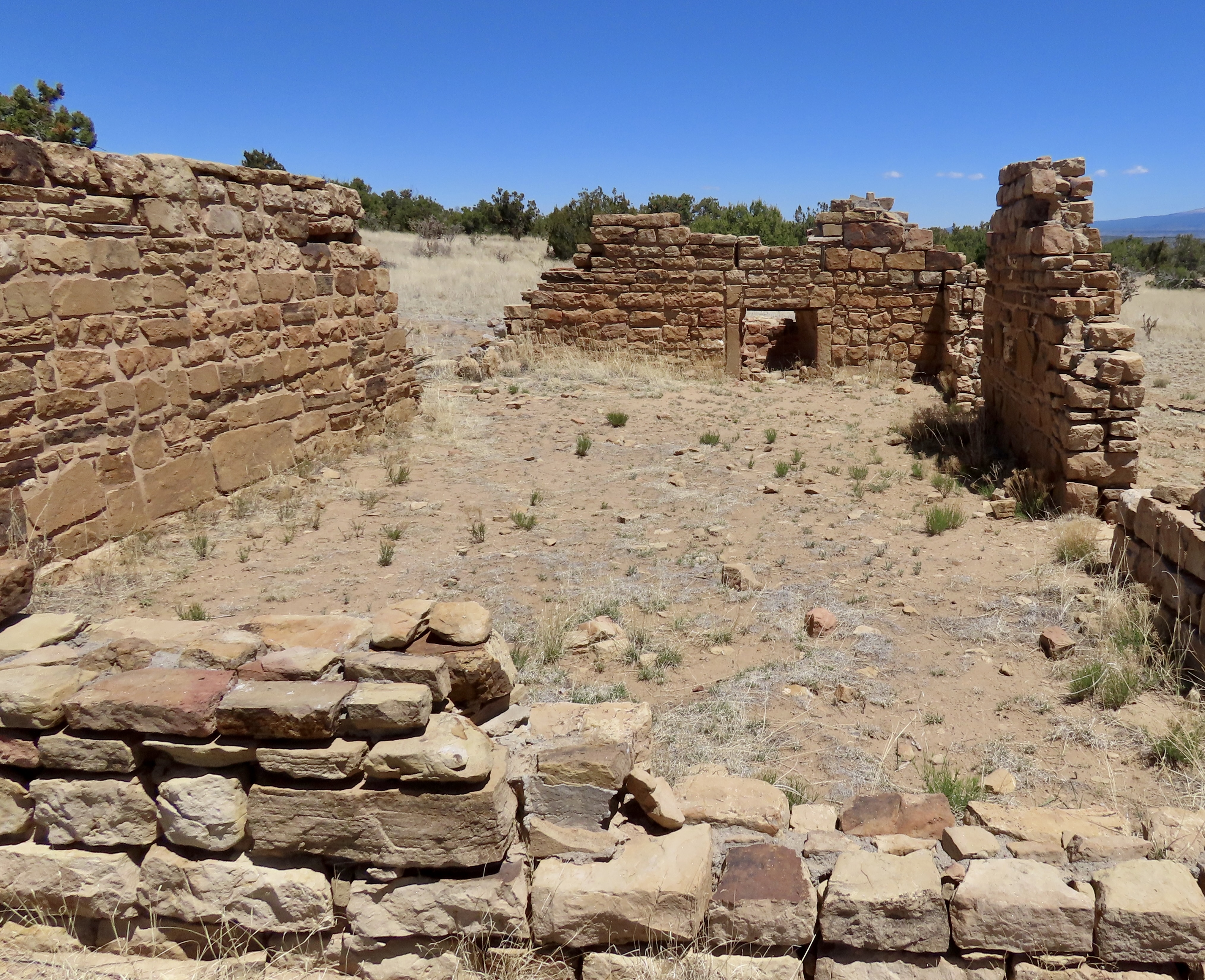
Ruins of the Garret Home are found along the road to Sandstone Bluff. The family built their homestead in 1934 on the edge of El Malpais as a way to scratch out a living and survive the Great Depression.
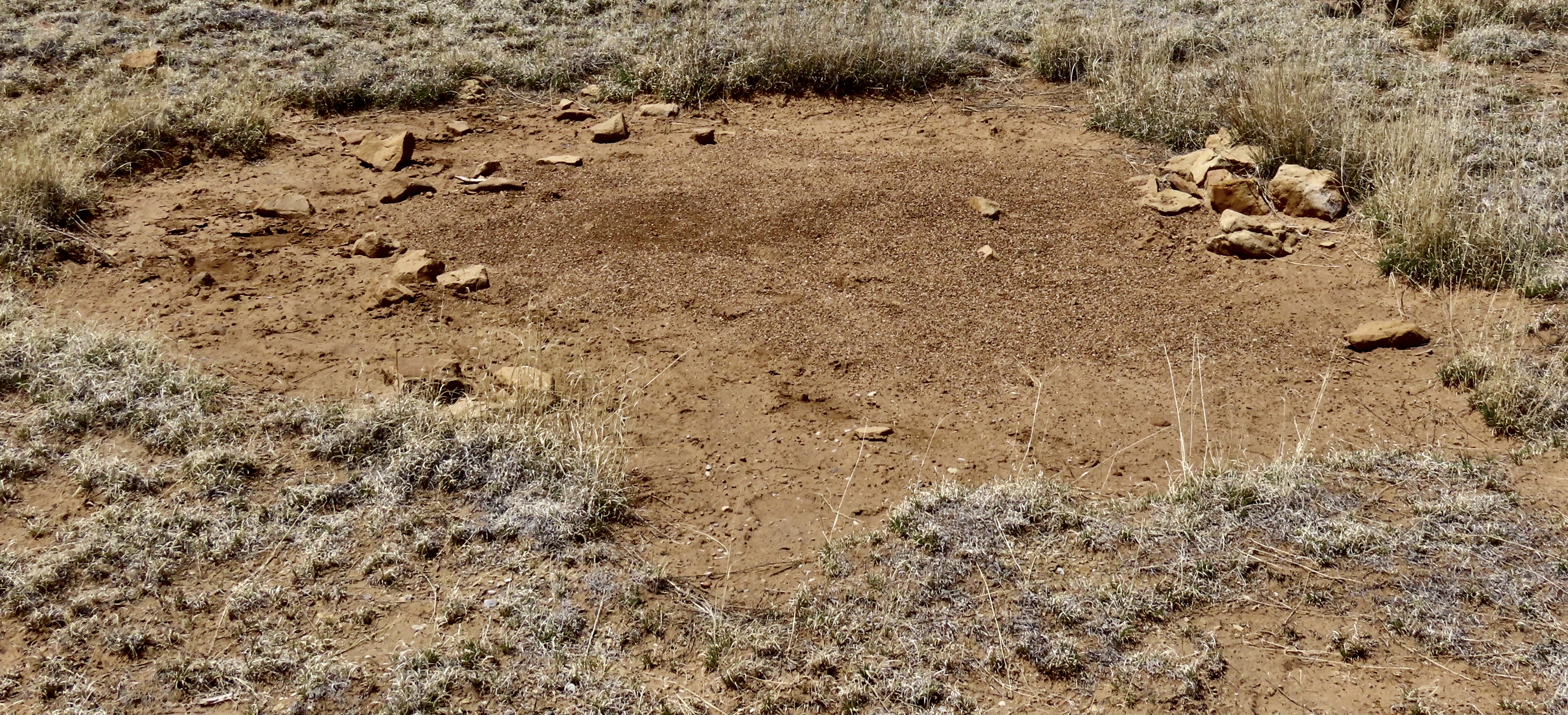
We found this barren space next to the house. It was about 6 feet across and interesting but we carefully avoided walking across. It marks the location/territory of a red ant nest. Had we walked over it, ants would have come boiling out to attack and bite us. And, believe me, their bite hurts! I know from experience. Various reasons are given for the cleared area. Among them: It makes it easier for the ants to leave and return to the nest when they are foraging, enemies, like other ants, have a harder time attacking, and the direct sun makes the nest warmer on cold days.
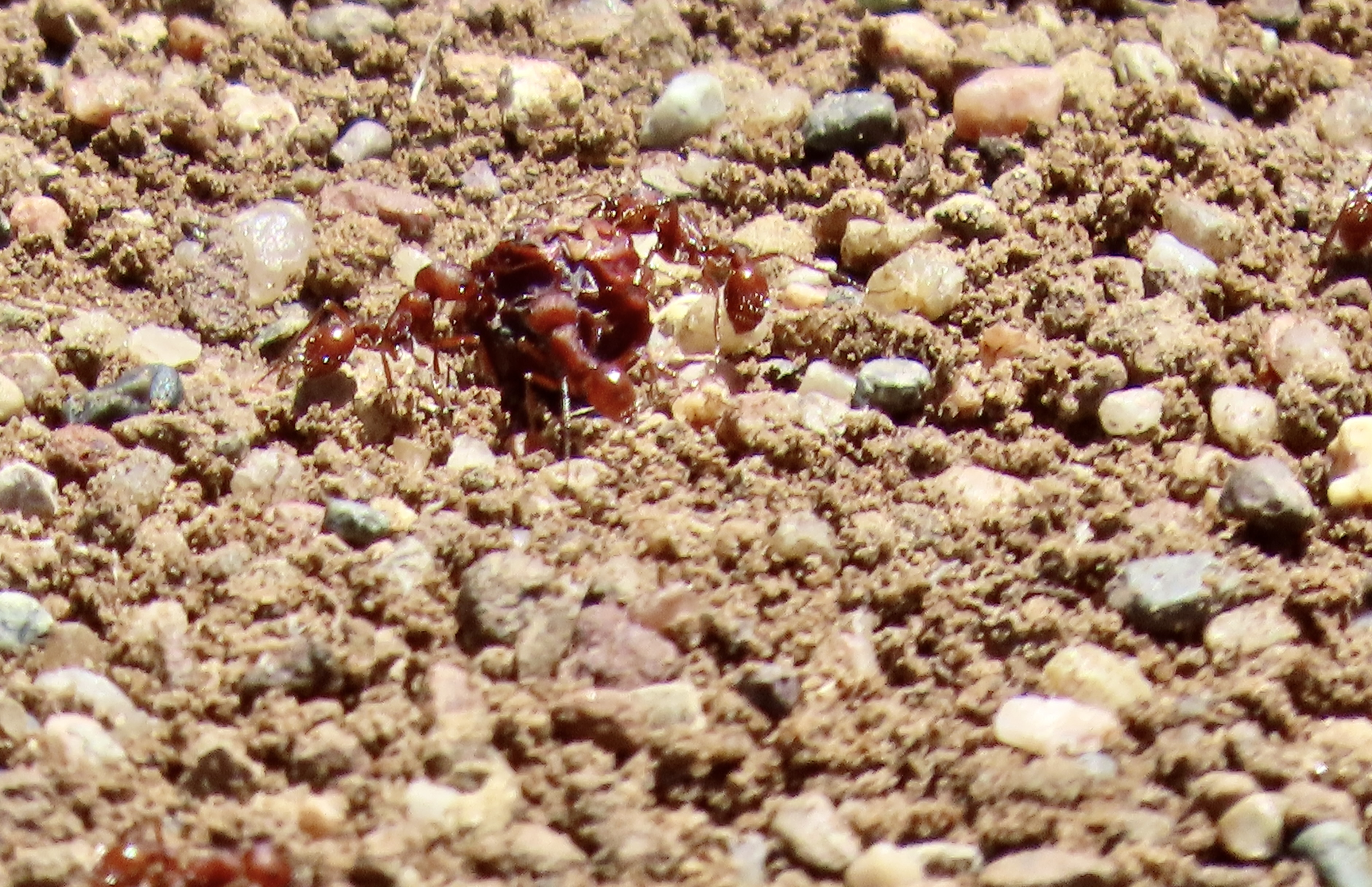
Lunch? These ants seemed to be chowing down on this bug. Or maybe they were working cooperatively to drag it to their nest.
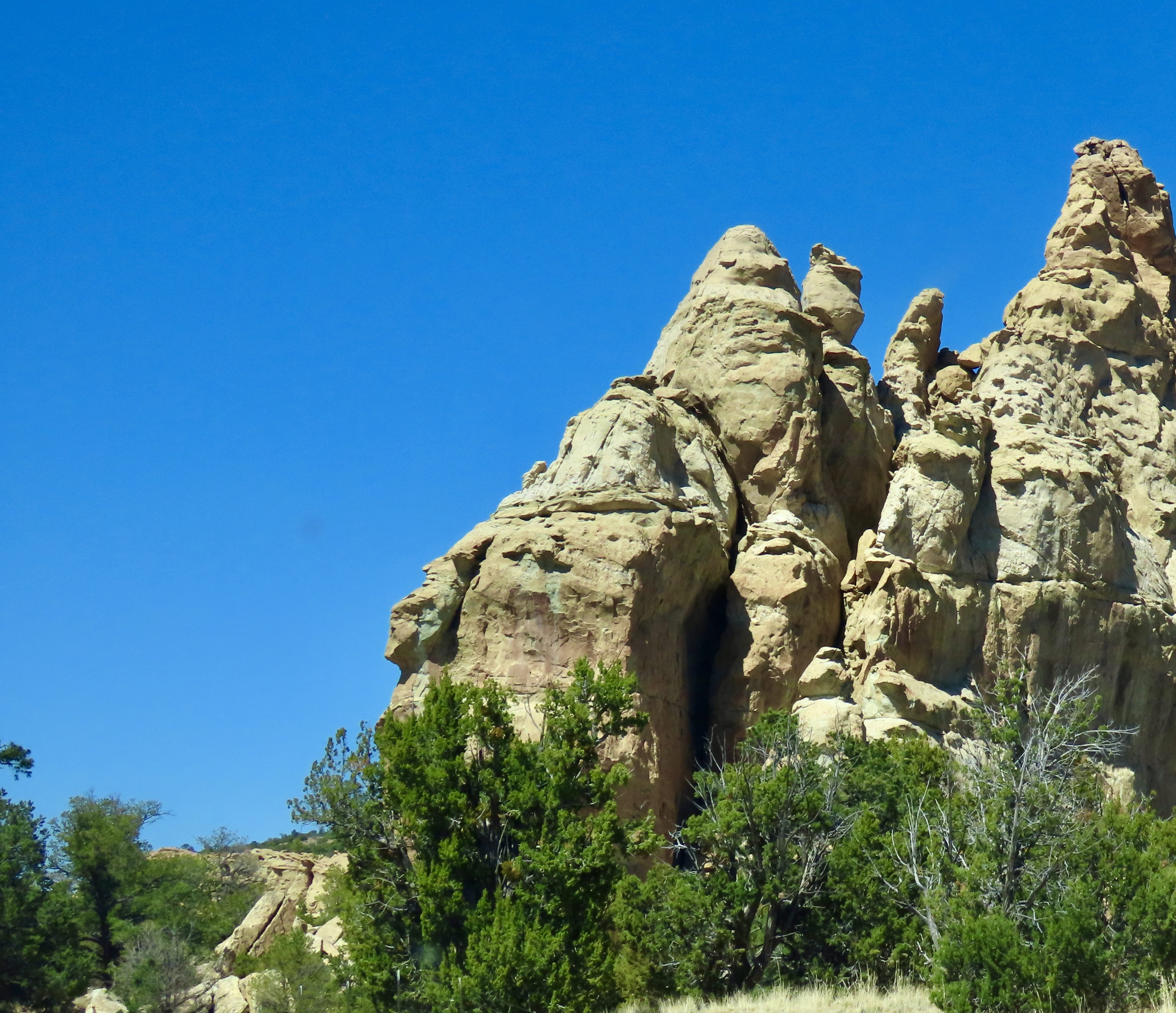
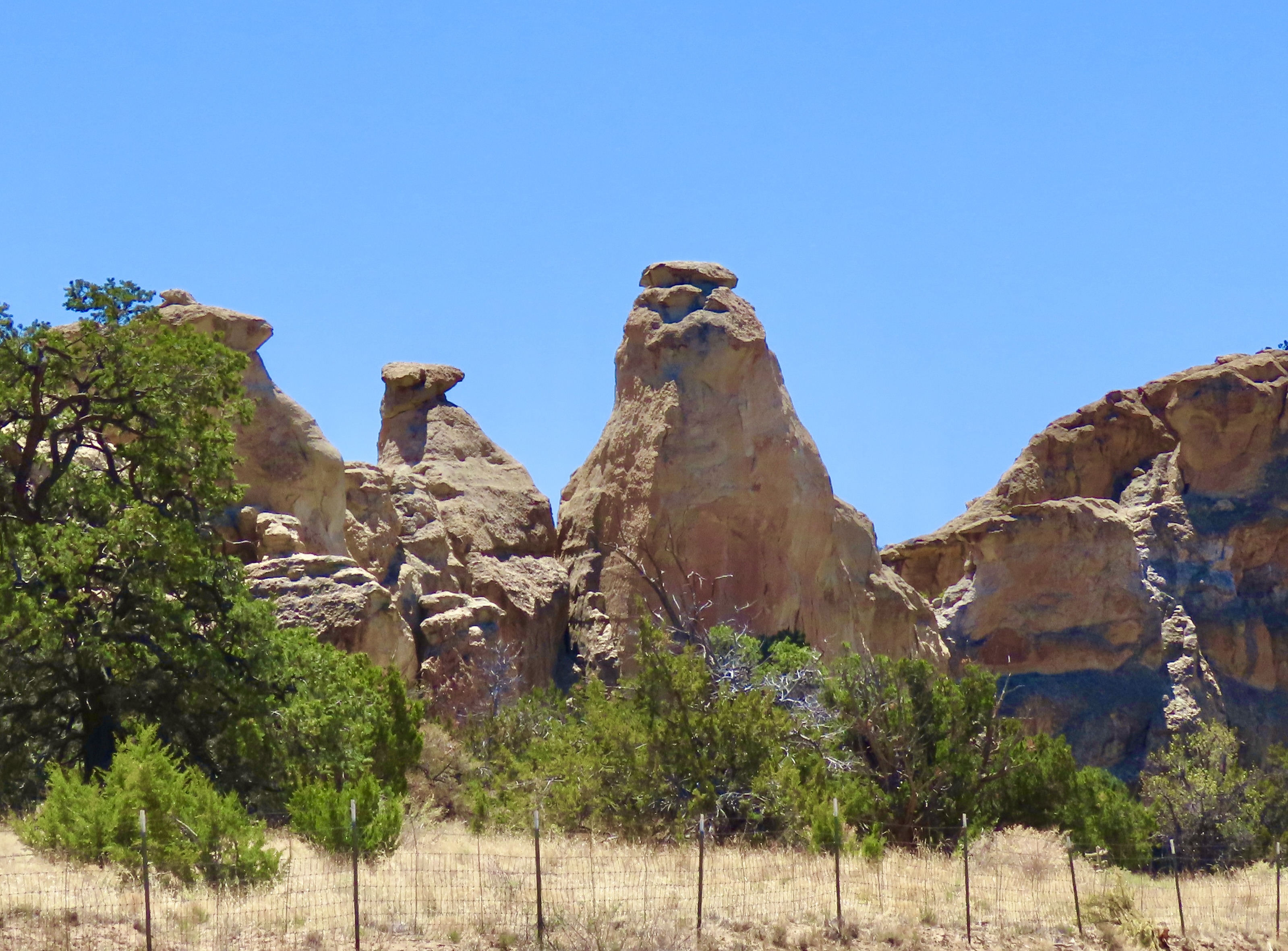
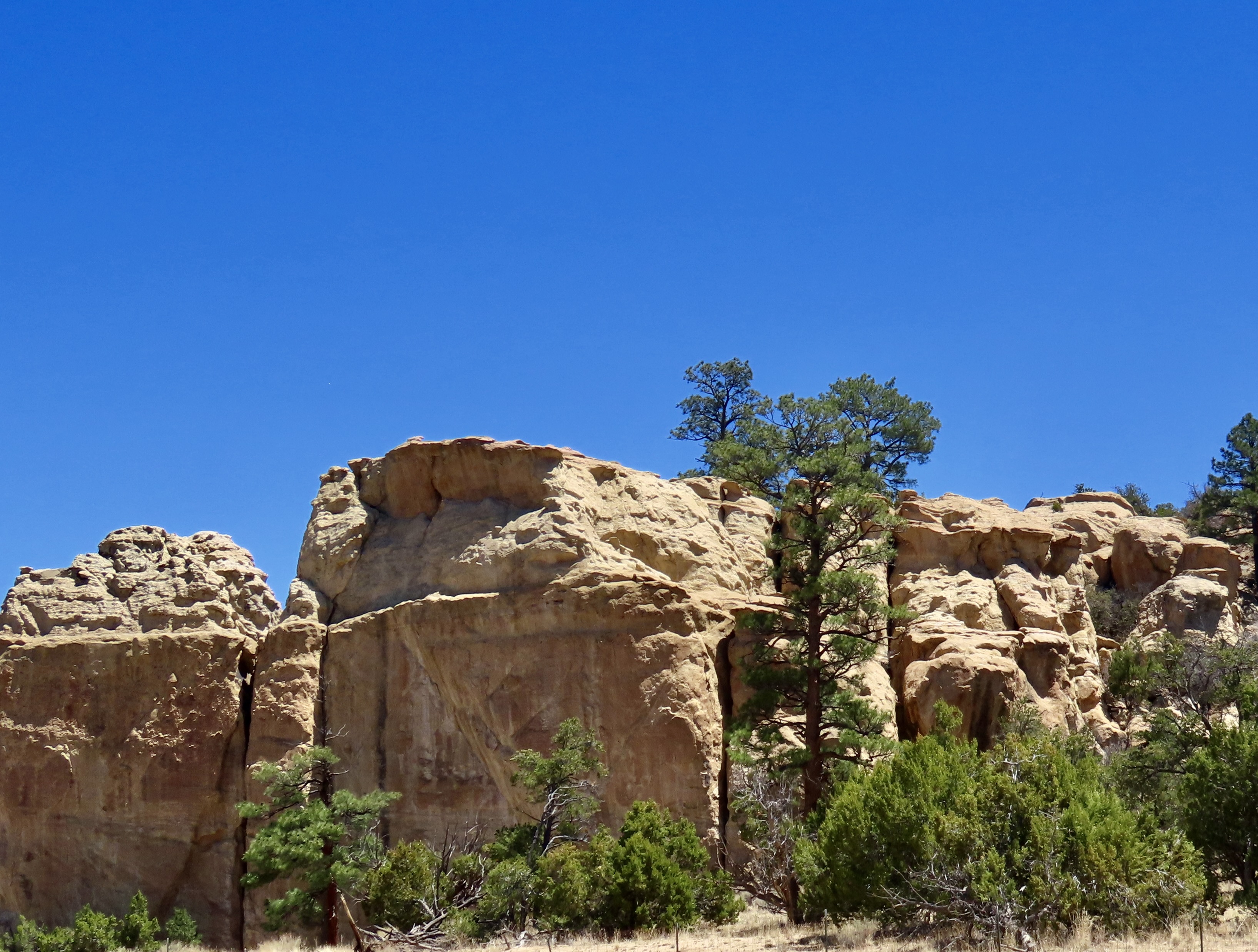
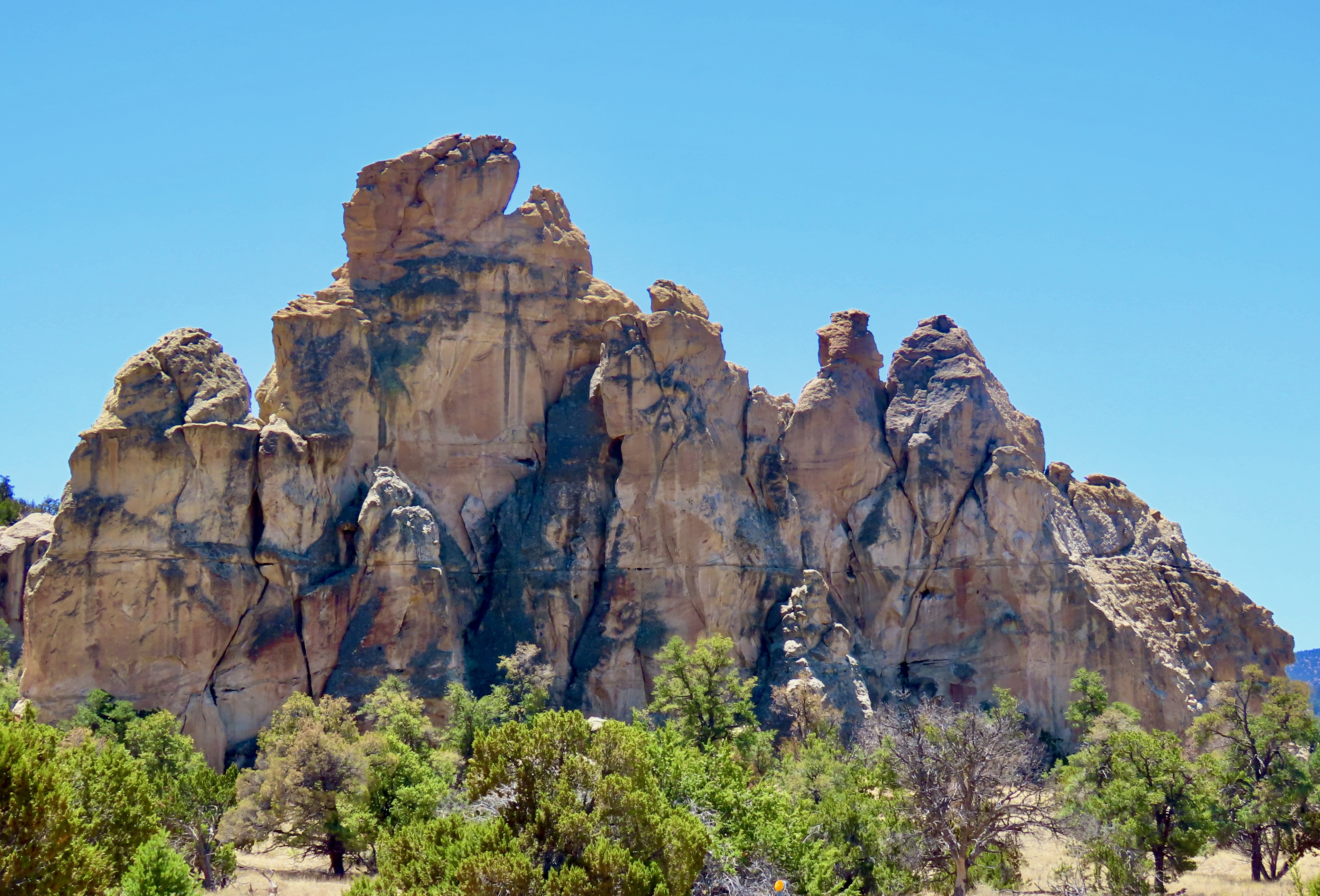
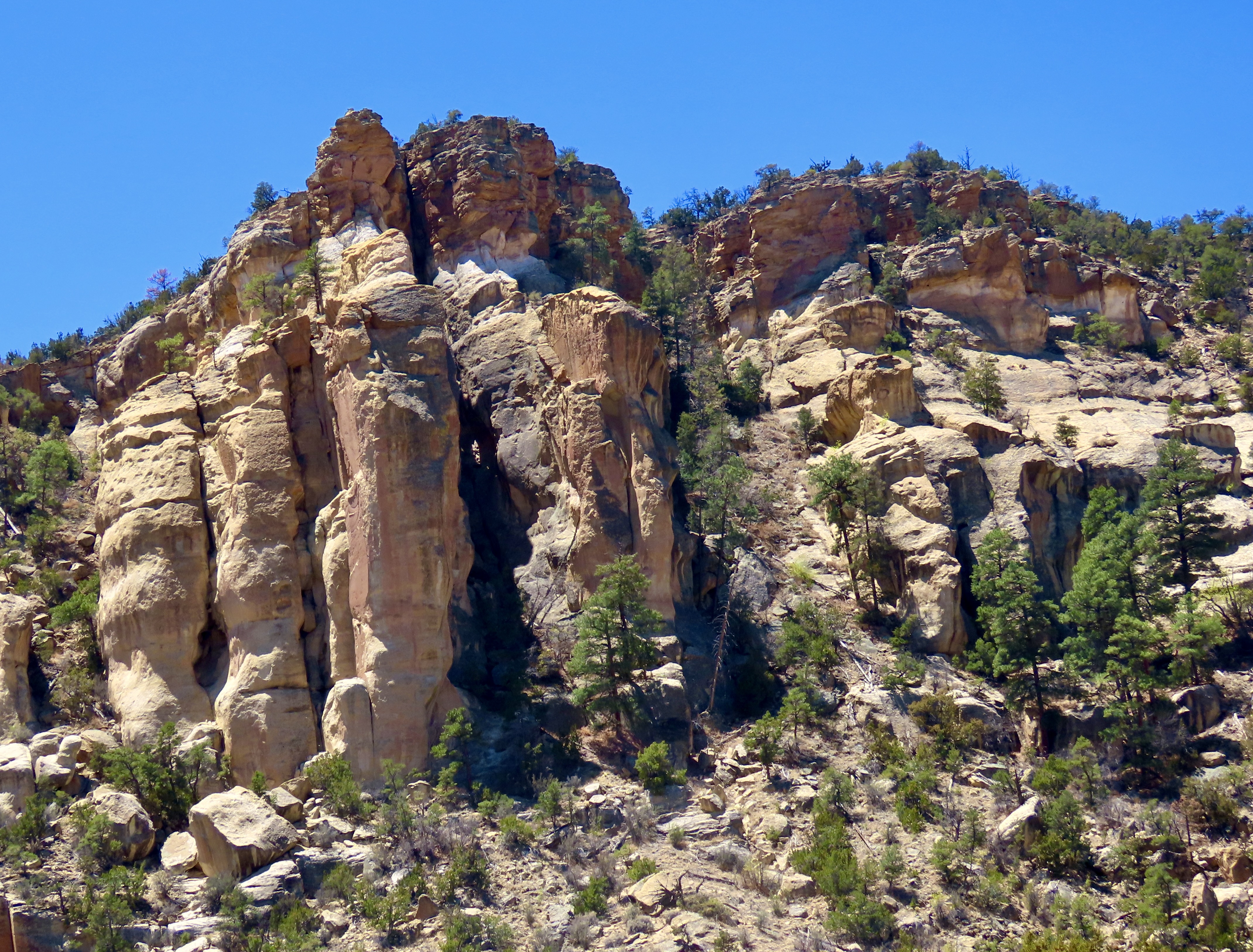
Sandstone cliffs along New Mexico 117 on the eastern side of El Malpais National Monument provided us with numerous views of impressive rock monuments.
This provides a good look at cap rocks. Being harder than the rocks immediately below them, they resist erosion more and provide for the multitude of interesting shapes one sees when traveling around the Southwest.
We liked the contrast between the tall ponderosa pine and the cliffs here.
Once again, we liked the contrast. But it was the sheer size of this monument combined with its coloration that insisted this was a photo op.
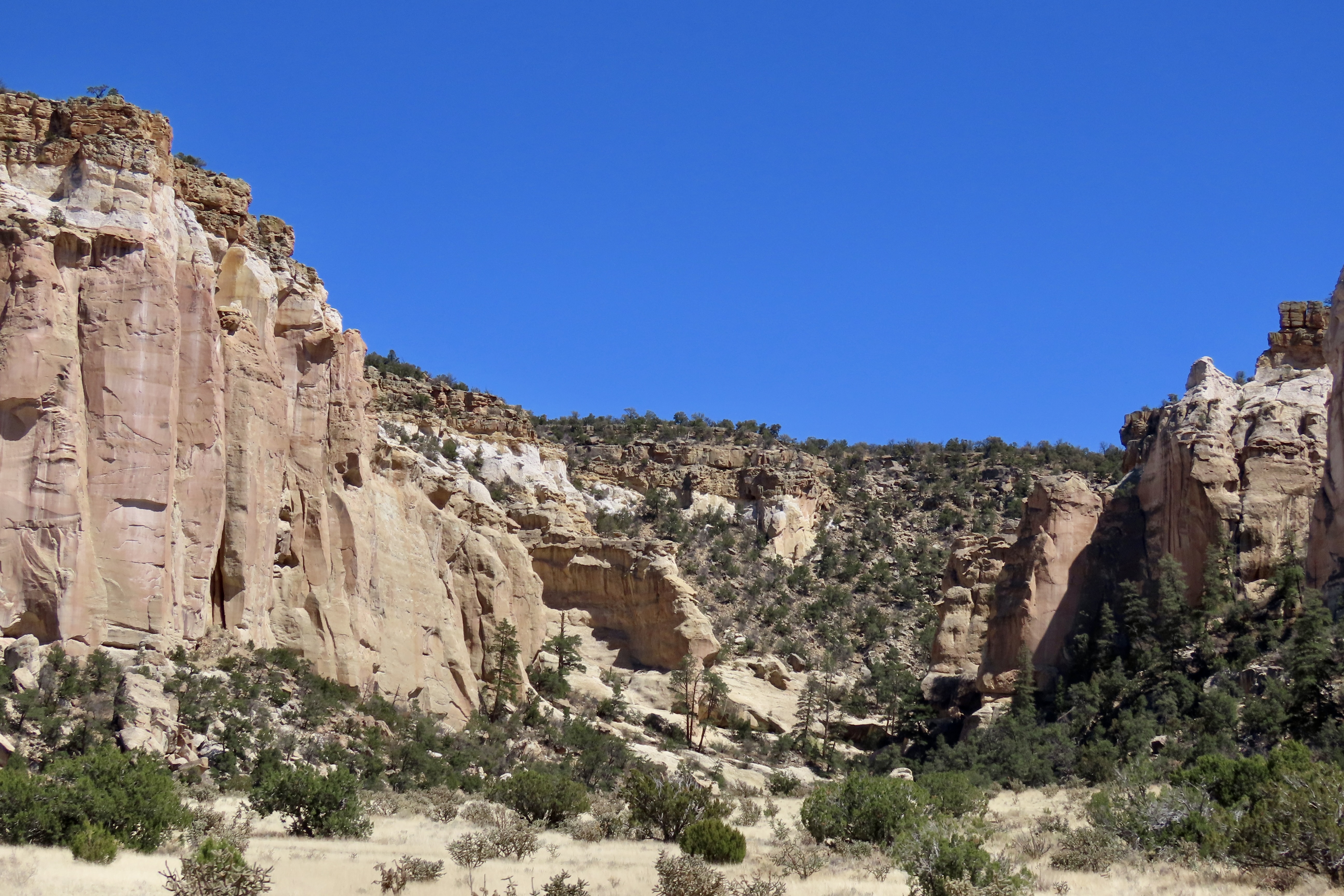
This is a ‘draw’ in Western lingo and quite likely a box canyon. Cowboys liked them because they often provided water, shelter and forage for their cattle. If it’s a box canyon, it could also serve as a makeshift corral.
Moo.
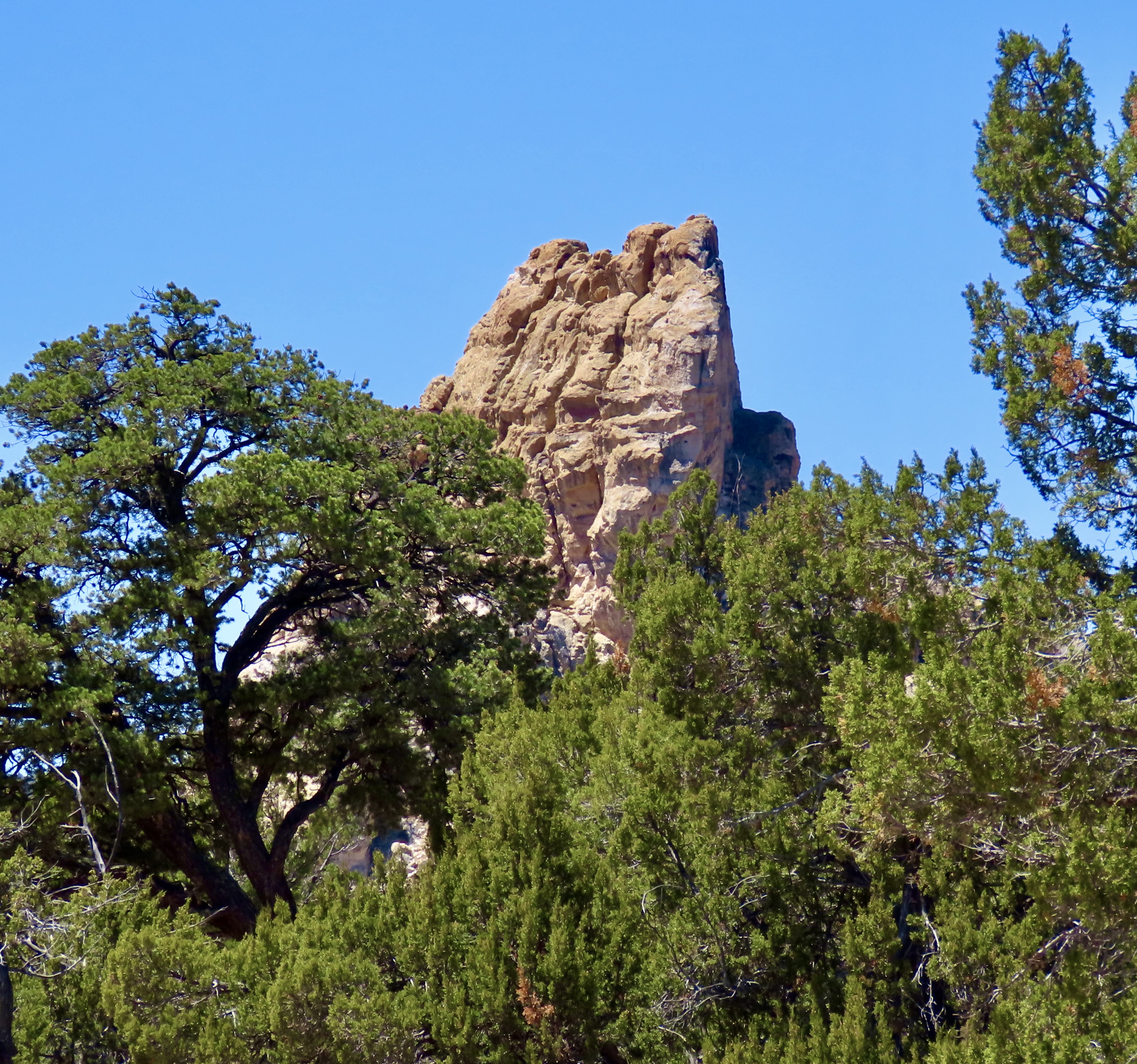
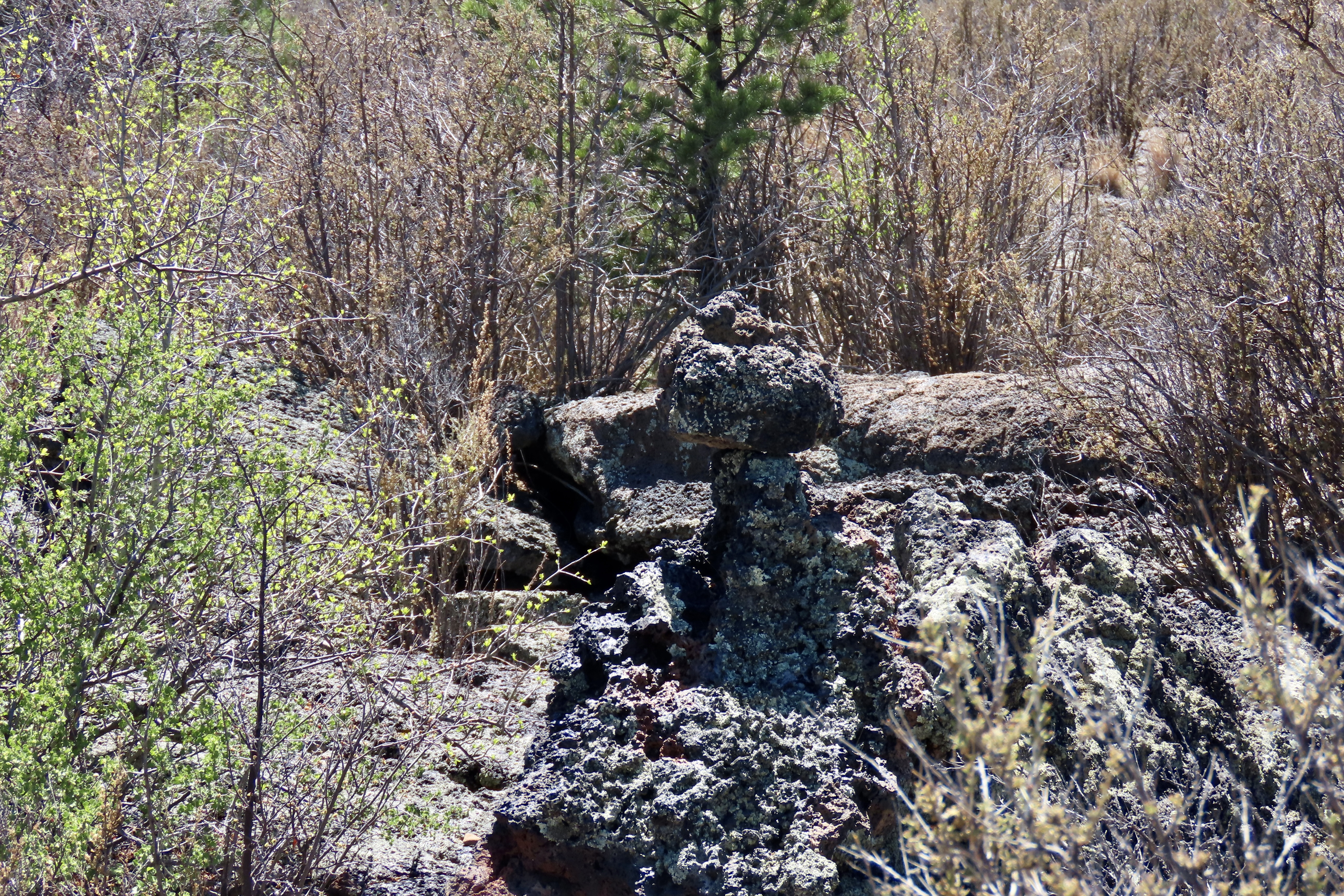
This rock, peeking out from among the trees marks the beginning of the ancient Acoma-Zuni Trail on the eastern side of El Malpais. We found it amusing that it is named the Zuni-Acoma Trail if one starts from the west. Historically, and today, the Zuni lived/live on the west side of El Malpais and the Acoma on the east. The 7 1/2 mile trail provided the main route for the two groups to travel back and forth between their pueblos. It’s been in use for at least a thousand years. Today, people backpacking the 3100 mile (4989 km) Continental Divide trail are still using it! Some of the cairns (rock markers) used by the hikers to follow the route were set in place hundreds of years ago by the Acoma and Zuni.
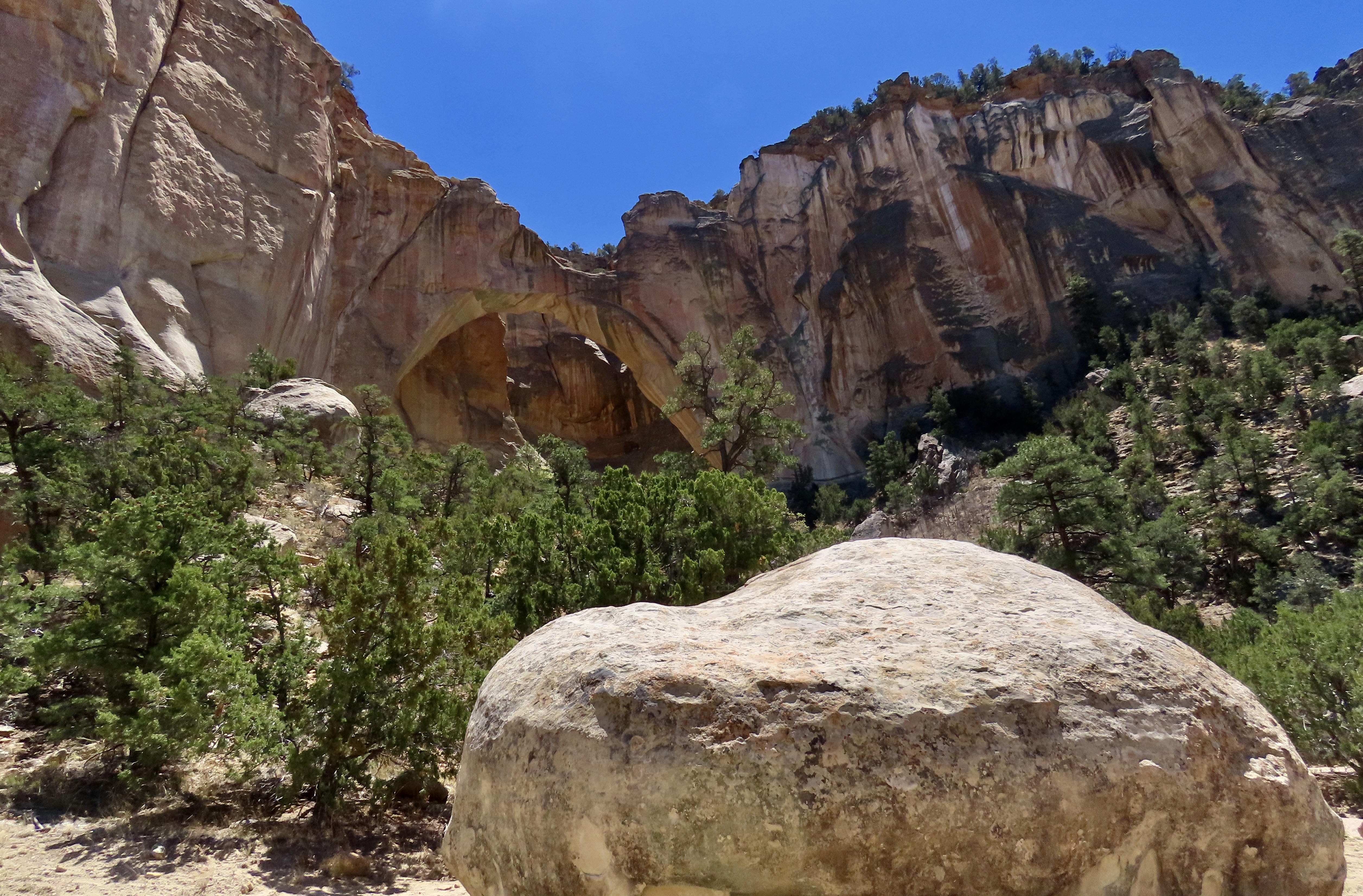
La Ventana (the window) Arch is found about halfway down New Mexico Highway 117 when driving the length of El Malpais National Monument. It’s the second largest natural arch in New Mexico and definitely worth a stop.
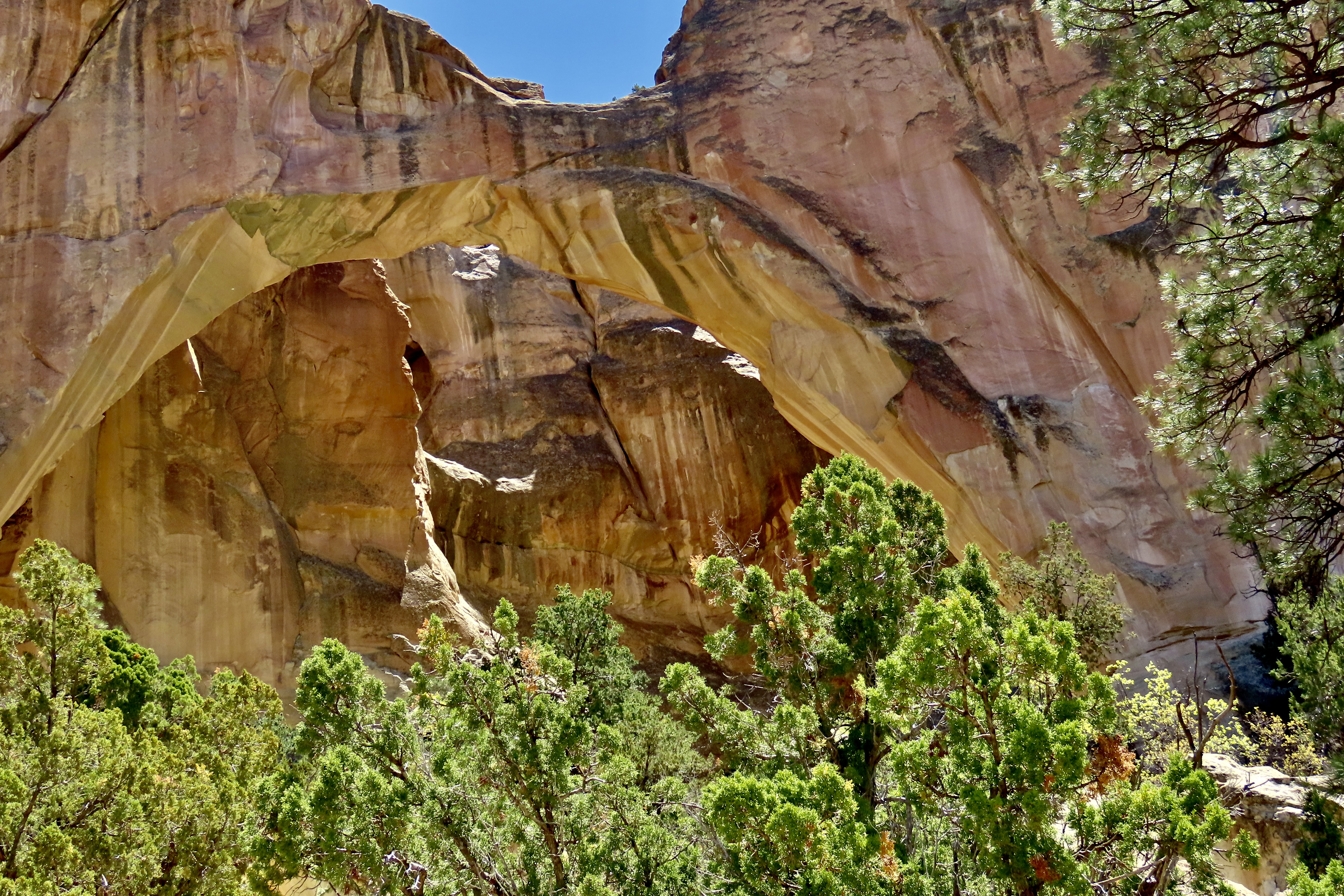
A closer view. A short trail leads up to the arch from the parking lot. Picnic tables are available for those who would like to stop for lunch. We found a group of hikers who were doing the Continental Divide Trail, eating lunch at one of the tables.
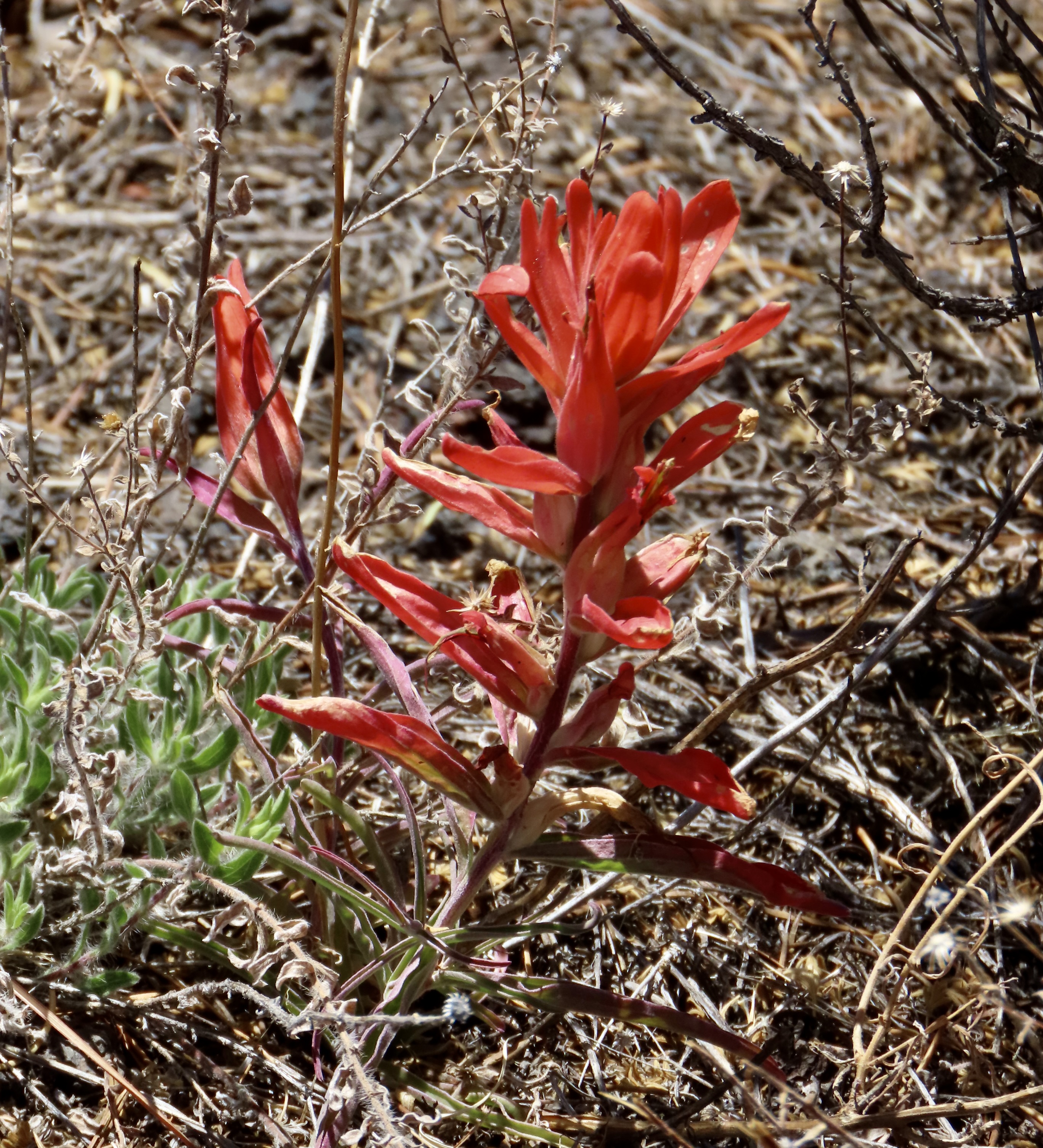
We also found: A single Indian paintbrush…
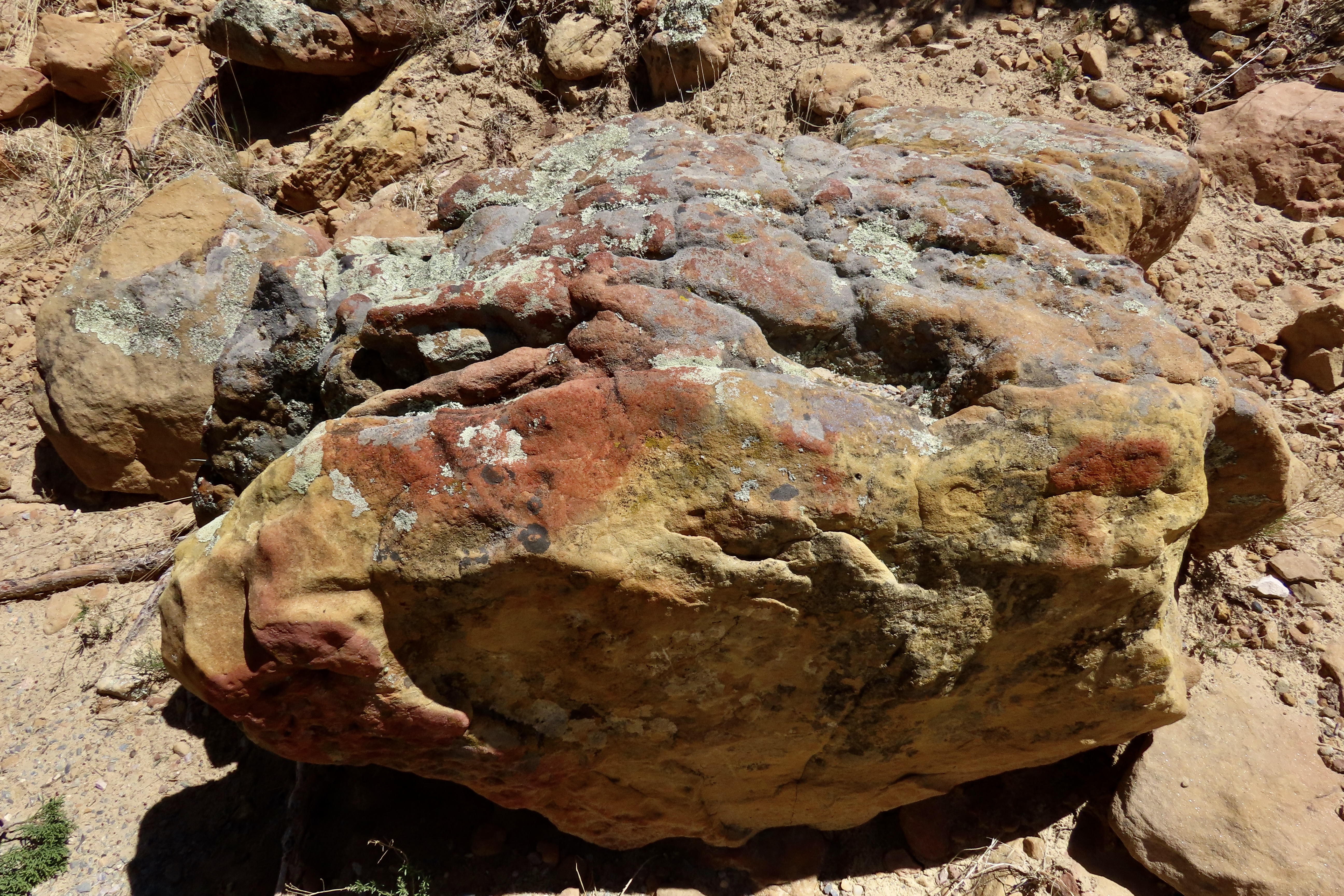
A rather colorful rock…
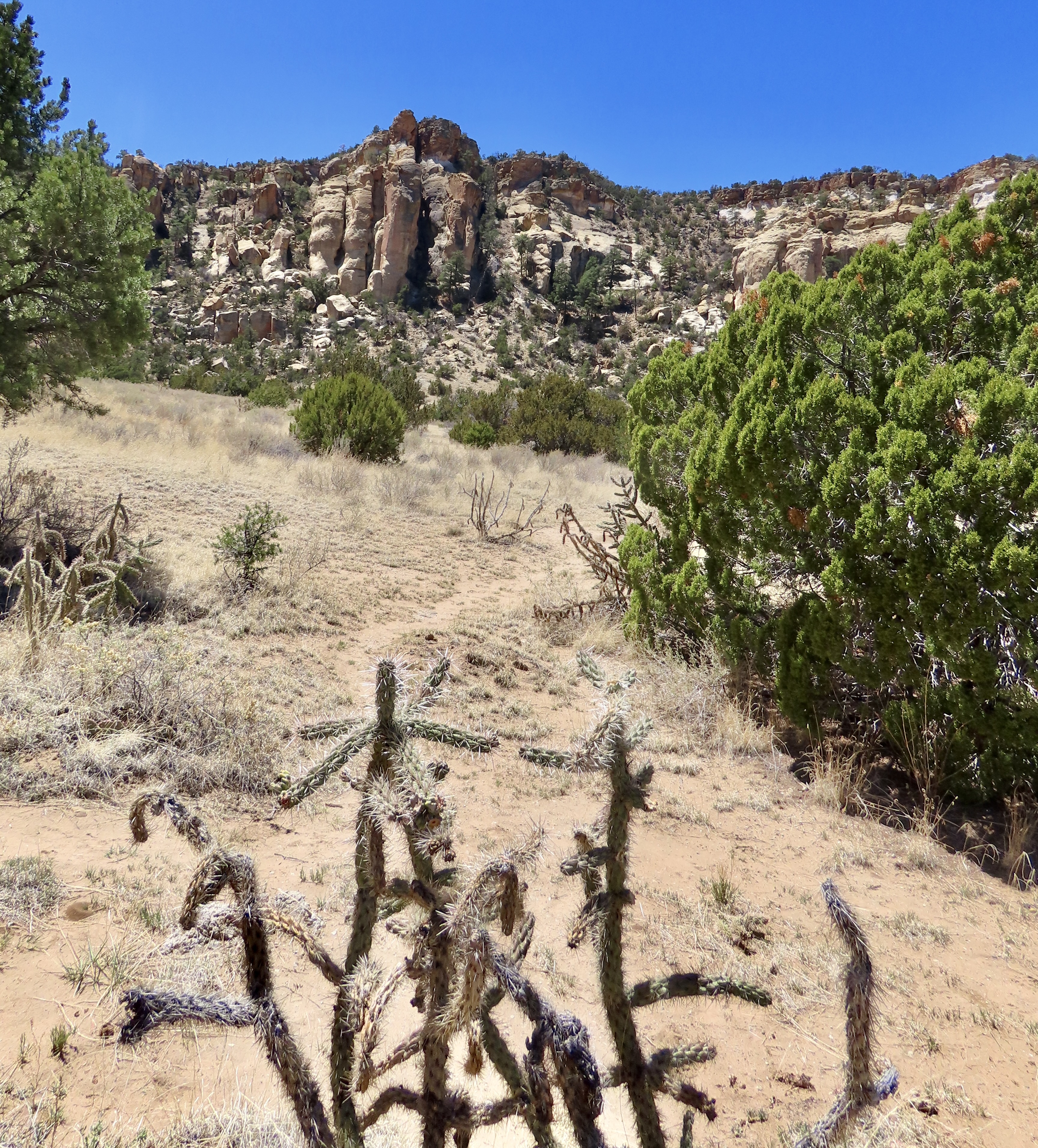
And a Cholla cactus on a trail leading up to another rock monument.
A close up.
Instead of eating lunch at La Ventana, we chose to drive down to the Narrows and eat lunch at a BLM park, where we treated to views like this. The brilliant white rock two thirds of the way up is sitting on a rock that is 60 million years older. In geological terms, it’s known as an unconformity. The intervening 60 million years of geological history were wiped out by erosion!
Peggy and I finished our visit to El Malpais National Monument by driving down to the end of the park and going for a hike along the Lava Falls Trail (noted on the first map above). We quickly learned about the importance of following the route marked out with the rock cairns. One part of the lava flow looks pretty much like every other part. Getting lost is a distinct possibility.
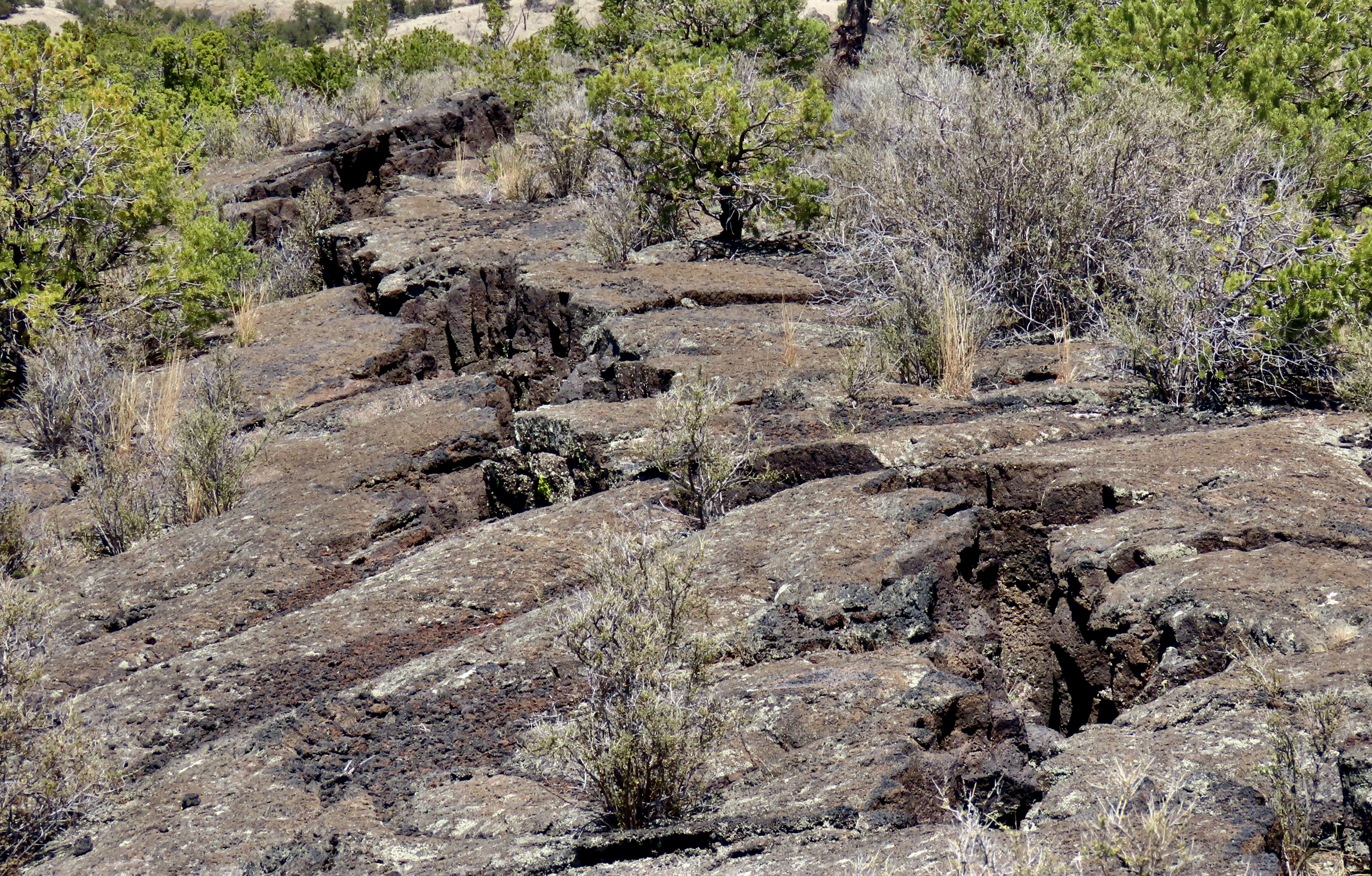
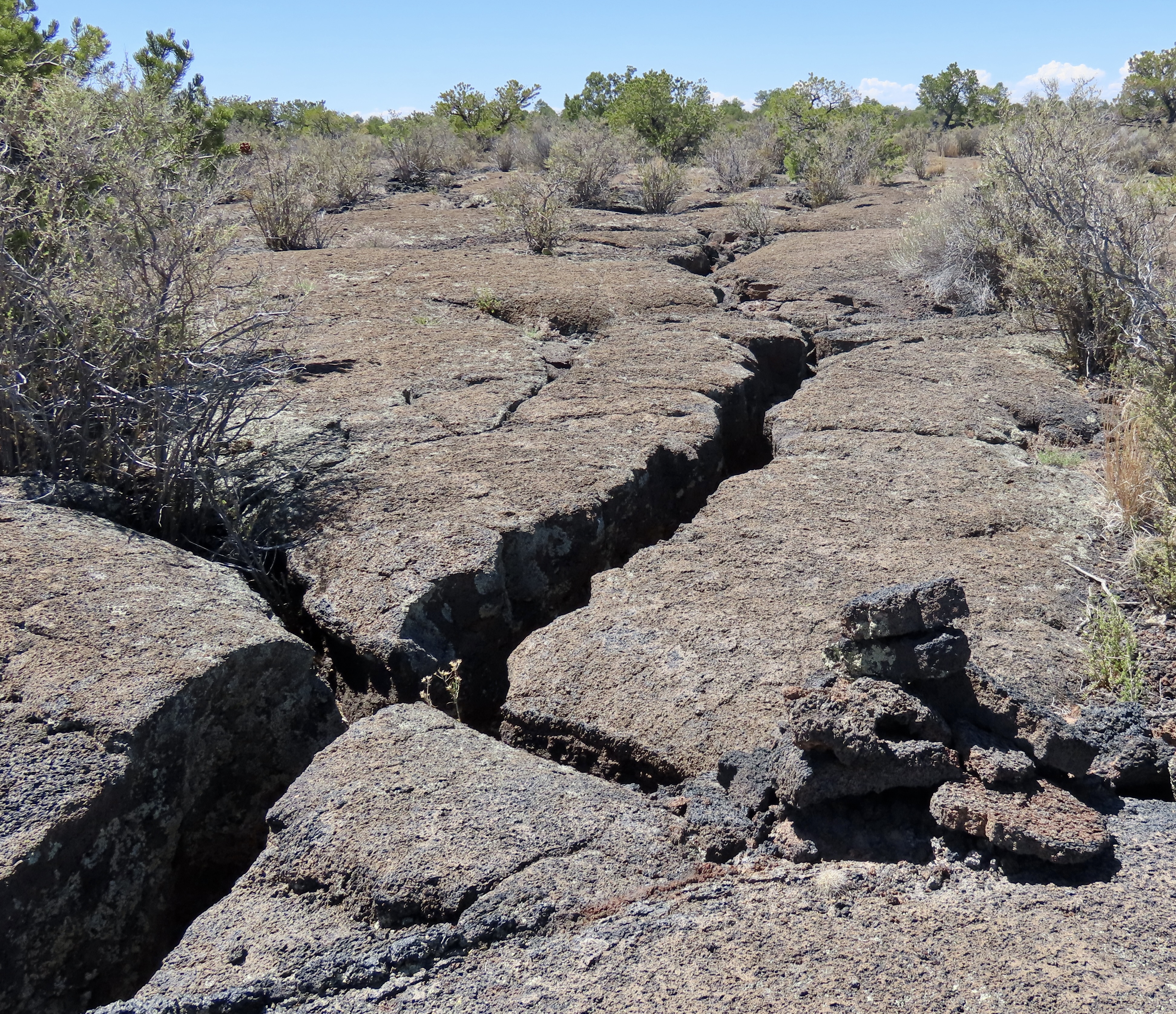
There are deep cracks in the ground.
Large collapsed sections that would be difficult to cross and possibly dangerous.
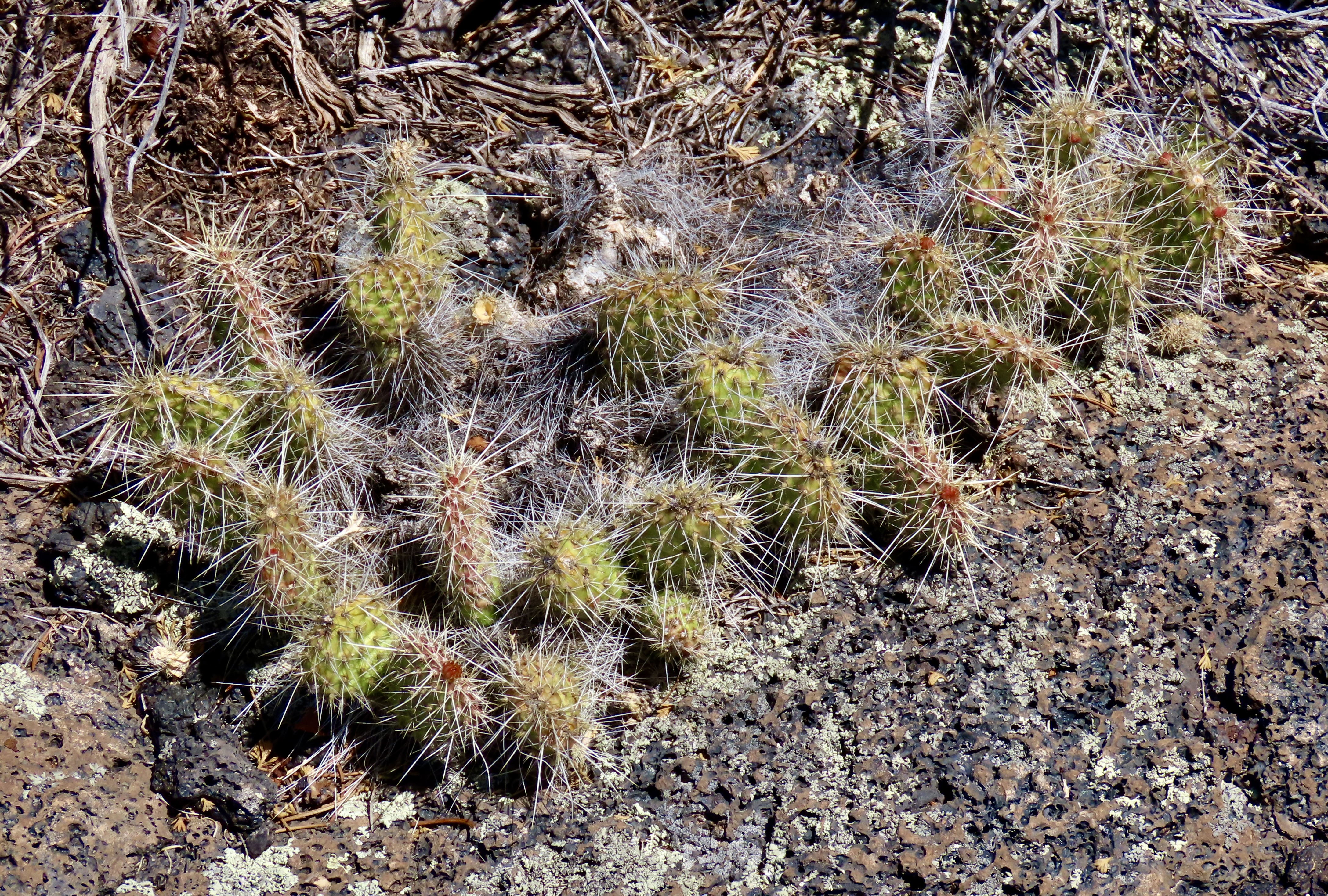
And prickly cactus to avoid.
Fortunately, the cairns are relatively easy to follow. It’s important, however, to locate the next one before you leave the one you found! Its hard to see here but it was across the crack off to the left.
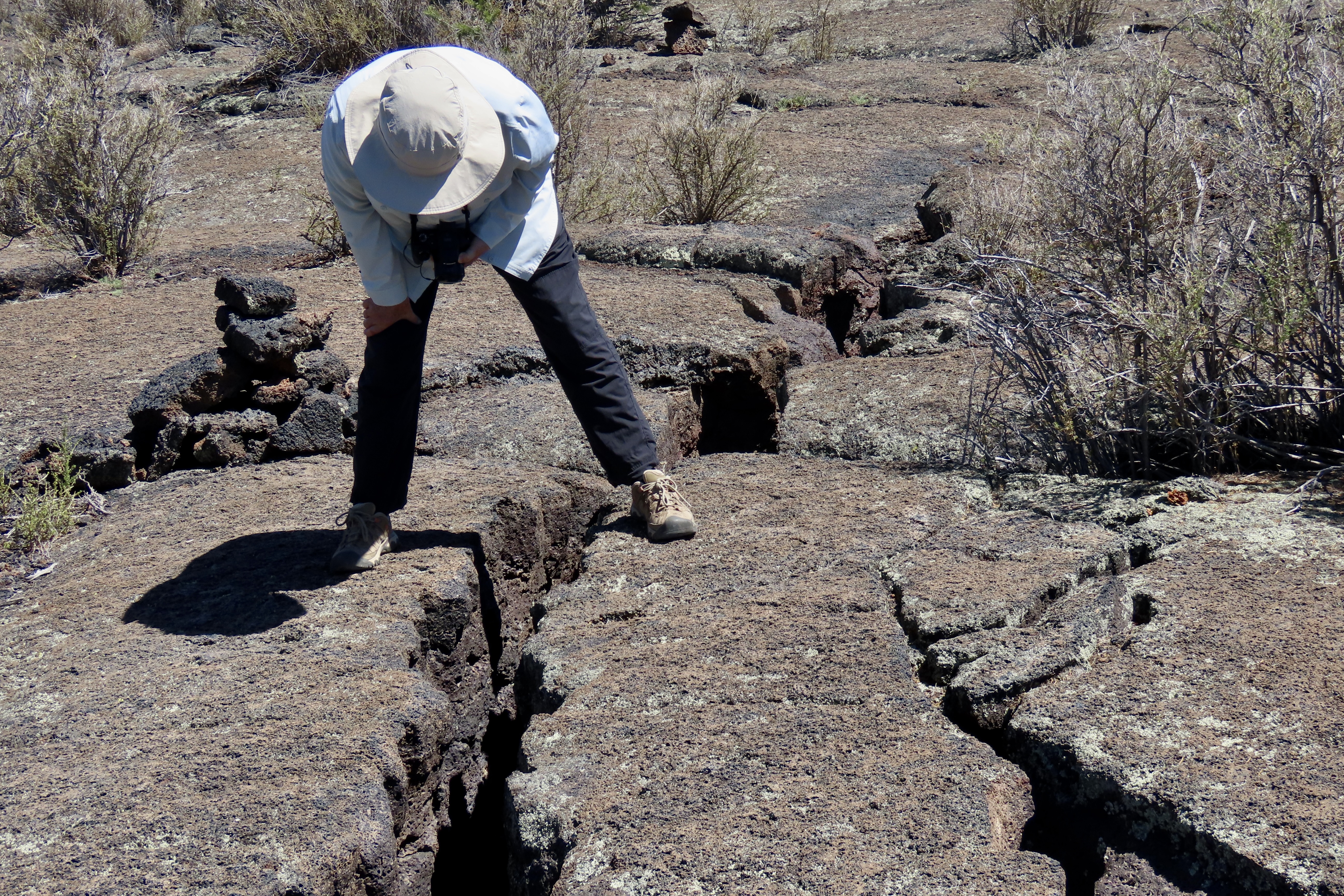
Peggy stopped to take a photo of the crack while crossing it. Of course. That’s it for today’s post. We have two left in our Southwest series. The next one will be on the campgrounds we stayed at while following sections of our trip that took us along historic Route 66. Our last post will feature some of the interesting petroglyphs we found at Lyman Lake State Park in Arizona and the Petroglyph National Monument in Albuquerque.
We stayed at a KOA campground just outside of Grants, New Mexico off of I-40 when we exploring El Morro and El Malpais National Monuments. Historic Route 66 ran through the town about a mile away. While at the campground, we were treated to this gorgeous rainbow.