Born to Wander: Part 2… Great Uncle William Gets His Head Chopped Off

Edison Marshall, my great uncle, grew up in the town of Medford, living for a while with his extended family that included my mother as a child. His writing brought him fame and fortune, including this mansion near Augusta, Georgia.

I was born to wander; I’m convinced of this. Whatever lies over the next horizon calls to me and pulls me onward. Eventually this need to roam would be a factor in my decision to join the Peace Corps. It may be genetic. I come from a long line of pioneers and adventurers. Before Mother went trolling and landed Pop, he had lived in Nebraska, Washington, Iowa, Oklahoma, Colorado and Oregon. I’ve no doubt that lacking an anchor of three kids and a wife, he would have kept on going and going, just like the Energizer Bunny. Happily so. And so it has been with most of my ancestors.

Restless urges sent members of both my mother and father’s families on their way to the New World in the 17th and 18th centuries, and kept them moving west in the 19th and 20th. Puritan Marshalls packed their bags and sailed off for the New World from England in the 1630s. The Scotch-Irish Mekemsons arrived in Pennsylvania from Ireland in the 1750s, spent the Revolutionary War years in upper Maryland, and had moved on to Kentucky by the 1790s. My dad’s family tree shows that my Great, Great, Great uncle was a companion to Daniel Boone.

The cry of gold sent both Marshalls and Mekemsons scurrying to California in the 1840s and 50s. 

George Marshall left his wife Margaret pregnant with my Great Grandfather on his trip to the goldfields. It was a good thing; no pregnant wife would have meant no me. George struck it rich, but his new found wealth didn’t make it back to Illinois. He was killed, stripped of his gold, and thrown into the Pacific Ocean on his way home, or so the legend goes. It was tough and often deadly on the frontier. Not that this cured any of my family from their wandering ways. The drive to roam far outweighed whatever the risks might be. One of my favorite family stories illustrates just how deadly frontier life could be. 

William Brown Mekemson, my great, great uncle, ended up on the wrong end of a tomahawk (or several) during the Black Hawk Indian War of 1832. A 1903 book by Frank Stevens describes the event. The Indians had attacked the night before, stealing a horse. Captain Snyder decided to pursue the Indians the next morning and caught up with them “firmly entrenched in a deep gulch, where, in a sharp hand to hand encounter, all four were killed with the loss of only one man, Private William B. Mekemson, who received two balls in the abdomen, inflicting a mortal wound.” 

Except it wasn’t immediately mortal. Mekemson was placed on a litter and transported back toward camp. Along the way he pleaded for a drink. A squad was assigned to climb down to the creek and fetch water. At that point the Indians struck again. Some 50 or so “hideously yelling, rushed poor Mekemson and chopped off his head with tomahawks…” and then rolled it down the hill. That was mortal.

The greatest wanderer among my modern-day relatives was my Grandfather’s brother, Edison Marshall, or Uncle Eddie as my mother called him. He was an accomplished writer quite popular in the 20s, 30s, 40s and 50s. His short stories even made it into the high school literature books of the day and nine of his books were converted into movies. The first to obtain silver screen status was “Strength of the Pines” in 1922 and the last was “The Vikings” starring Kirk Douglas, Tony Curtis, Ernest Borgnine and Janet Leigh in 1958. He had a long and profitable career.

I never met the man; his Augusta, Georgia mansion was a long way from our converted World War II army barracks house in Diamond Springs. But we did have a collection of his autographed books. They were swashbuckling historical novels that had his heroes such as Marco Polo wandering the world. Edison wandered along with them, doing research for the books and pursuing his passion for big game hunting.

We had a hand-me-down 1920’s Encyclopedia Britannica atlas of his where he had outlined his personal journeys in the map section. I spent hours staring at ink-drawn lines snaking off into East Africa and other exotic locales trying to imagine his adventures. (Years later I would learn that a brand new Encyclopedia Brittanica that I got as a Christmas present when I was 10, had anonymously been given to me by Edison and his wife.)

By then, I had the reading skills to handle his books but not the maturity, at least according to my parents. His books were restricted for sexual content and I was supposedly banned from reading them until I was thirteen, when I really didn’t need anything else to stir up my sexual fantasies.

Uncle Eddie was not noted for humility. “I went after fame and fortune, and I got them both,” he reported. That made his lifestyle all the more attractive to me. If he could gain fame and fortune through travel and writing, possibly I could as well. The combination of Edison’s books and his atlas gave me an early lust for travel, an appreciation of history, and a desire to someday write. So what if they didn’t come with fame and fortune.

In 1963 I had my first opportunity to wander away from home. I was accepted as a junior at the University of California in Berkeley, which, at the time, was about to become the center of a worldwide student revolution. My experience at the University, in turn, would lead to an even greater chance to travel, the Peace Corps.

So it’s off to Berkley I go next where I leave my conservative heritage behind, sit on the floor singing “We Shall Overcome” with Joan Baez, and stand on the Dean’s desk in my socks to give a speech on why students should have the right to participate in local Civil Rights demonstrations.

NEXT POSTS:

Friday’s Travel Blog: Since I am still taking photos of the ocean, I will share some photos on why I love the desert taken along Nevada’s Highway 95 between Reno and Las Vegas.

Monday’s Blog-a-Book from “It’s 4 AM and a Bear Is Standing on Top of Me”: I am kicked out of the First Grade for a year because of forgery and begin my wandering ways by heading across the alley to the jungle-like graveyard where I can let my imagination run wild.

WARNING: Reading Can Lead You into a Life of MisAdventures…

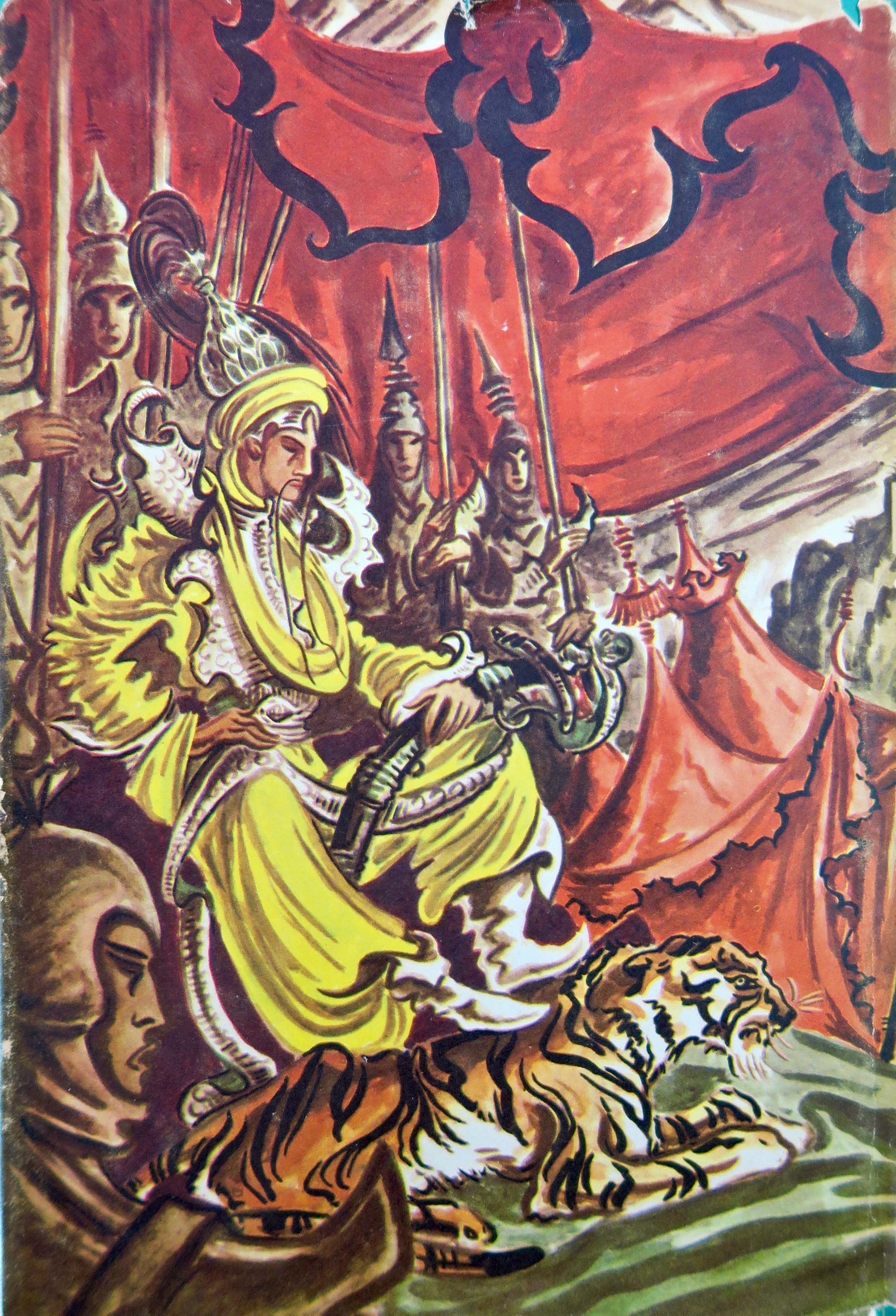
Cover to Edison Marshall's book, Caravan to Xanadu

My mother’s uncle wrote swashbuckling historical fiction that took his heroes all over the world. My early reading of his books gave me a desire for travel that has never left me.


In last Friday’s subchapter from MisAdventures, I moved from being the world’s most average student under the stern glare of Mrs. Young in the first grade to being a ‘teacher’s pet’ under Miss Jone’s more supportive environment in the second grade. 


While I wouldn’t describe Ruth Jones-Hall as being lax, she taught me that education could be fun and, more importantly, got me excited about reading. Reading became my opportunity to shine. I must have been a pain in the ass to the other little kids: waving my hands with an urgent “me, me,” reading in a loud voice, pronouncing the tough words and tearing through the dictionary to find definitions before anyone else could. My greatest triumph came in the third grade when Miss Jones had laryngitis and asked me to take over reading the noontime story. I still remember the book, Laura Wilder’s Little House on the Prairie. Unfortunately, another classmate was given equal billing and I had to share the glory. (Sharing was another one of those areas Mrs. Young had marked ‘needs massive improvement.’)

Reading was much more than an ego-booster; it unlocked a treasure chest of new worlds that expanded my universe far beyond the outskirts of Diamond Springs. I started out swinging through the trees of Africa with Tarzan of the Apes and kept going. Robin Hood took me to Sherwood Forest where I joined the fight against the evil Sheriff of Nottingham. Robinson Crusoe introduced me to sailing on the seven seas and surviving on exotic islands. I discovered dog books and horse books and cowboy books and read them all. There was no such thing as having too many books or not enough time to read.

I read so much that finding books became a challenge. At first, a combination of parents, school and friends filled the need. Friends were good for comic books. Parents provided more serious materials such as Five Little Firemen, and the school offered the usual Dick and Jane fare. As I grew older, Christmas and birthdays brought treasures like Tom Sawyer and Huckleberry Finn. But these were special events and far too infrequent to fill my voracious reading appetite. Summer created the greatest problem. When I wasn’t out wandering with the dogs, I could be found out in the back yard with my feet propped up and mind lost in the book of the day.

Fortunately, right about the time I exhausted all of my normal sources, I discovered the county library. It was located in an old house in Placerville at the bottom of the steep hill where Highway 49 deposited people from Diamond Springs and other points south. Few things excited me more than my weekly pilgrimage to its book crammed rooms. I developed a Pavlovian response to the smell of books that exists to this day.  I could have spent hours lost among the shelves and would have except for an impatient mother. My time was limited to how long it took her to consume two beers at the Round Tent Bar on Main Street. On occasion, however, when she exceeded her two-beer limit and got lost in the alcohol, I had to go fetch her from the bar when the library closed.

By the time I was 12, I had solved the problem of summer reading material by hitch-hiking the three miles to Placerville and spending as much time in the library as I wanted. My only frustration was that the three books the librarian limited me to taking out the door were not nearly enough to occupy me for a week’s worth of reading.

Growing older also gave me access to the almost nonexistent family library. Pop didn’t read much and preferred his books technical or Holy. He read like he talked, slowly with his lips moving as he pondered each word. Mother’s reading skills were greyhound fast in comparison and her tastes were more eclectic. But she liked her books short, as in Reader’s Digest Condensed Books short. We had quite a collection. The total library was housed in a small bookcase possibly two feet wide and five feet tall located in the ‘office.’

What intrigued me most was that it contained a number of autographed books written by my Grandfather’s brother, Edison Marshall, who wrote exotic historical fiction that focused on wanderers like Marco Polo. Uncle Eddie, as my mother called him, had a long history of writing that dated from the 20s up through the 50s. Nine of his books were turned into movies. The last one, The Viking, came out in 1958 and starred Kirk Douglas, Tony Curtis, Ernest Borgnine, and Janet Leigh. Orson Wells was the narrator.

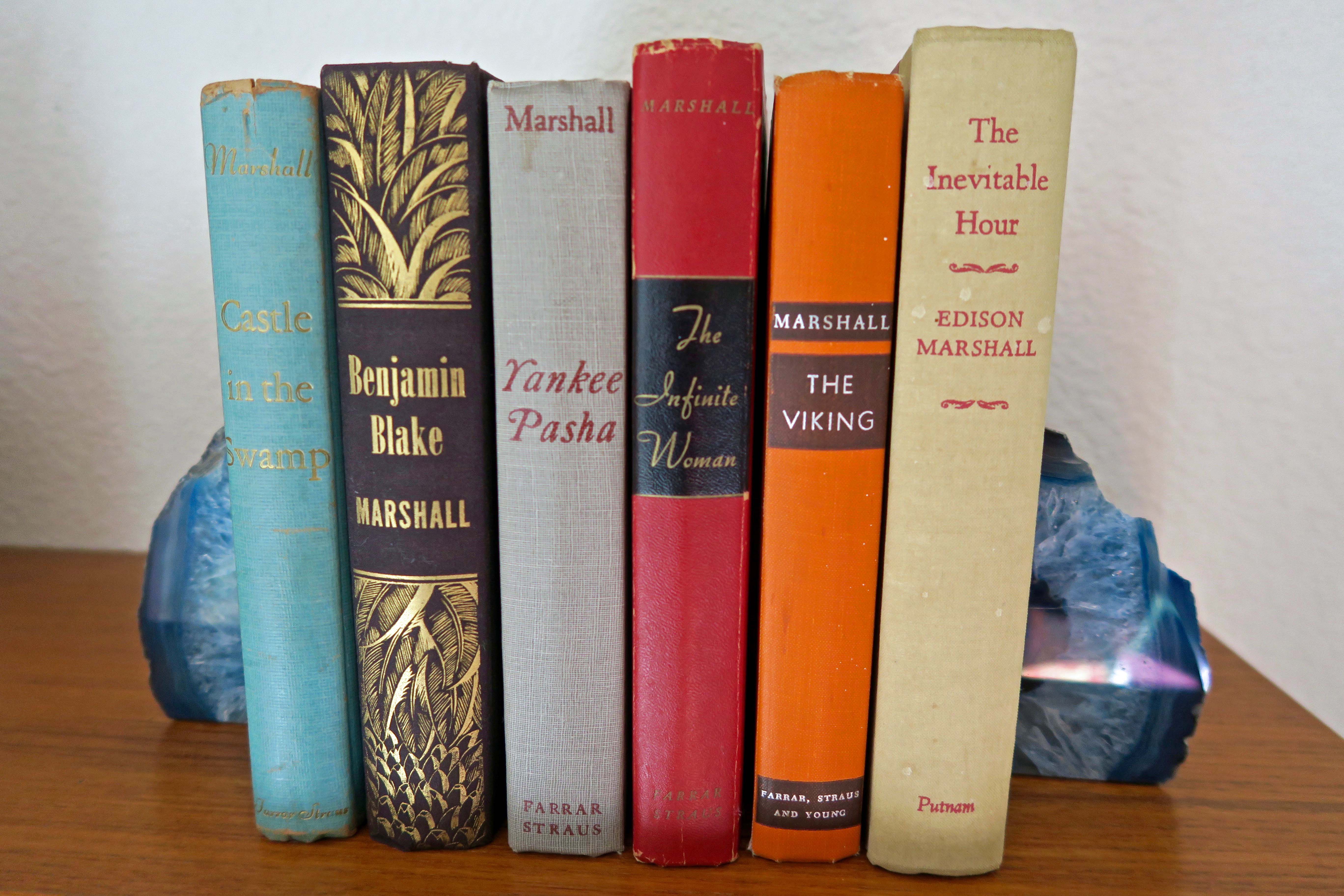
Books by Edison Marshall

While I never met Edison, who lived in far off Georgia, his books served as a mentor to me.

Back cover to Edison Marshall's Caravan to Xanadu

The back cover to “Caravan to Xanadu.” How could a young boy not be fascinated by such exotic fare?

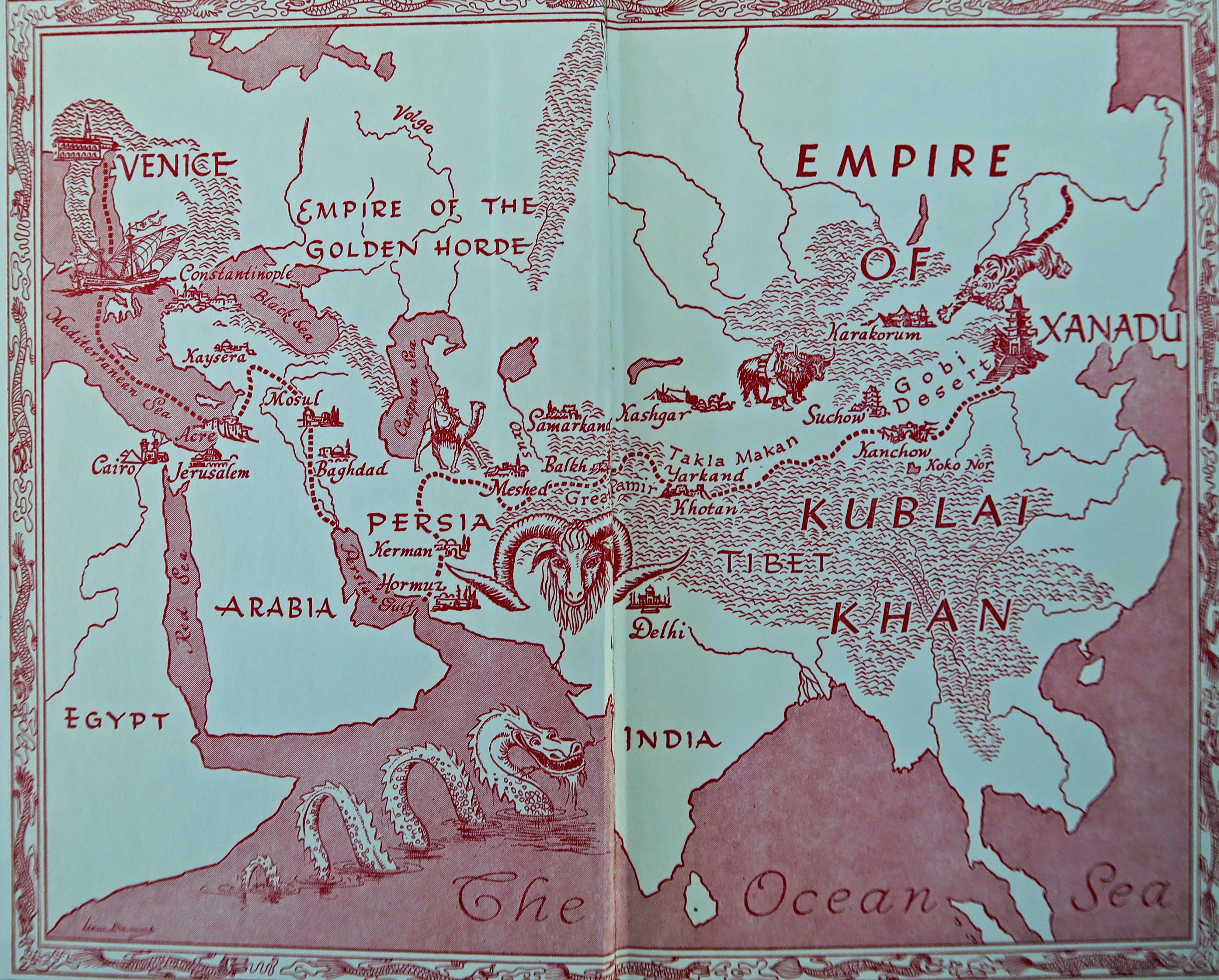
Map from Edison Marshall's book Caravan to Exanadu

Even more than the cover, I was pulled into the book by the map of Marco Polo’s journey. We had a set of encyclopedias that Edison had owned in the 1920s where he had mapped out his big game hunting trips all over the world. I would sit for hours following the routes he had inked out, including into the heart of a still unknown Africa.

Edison’s depiction of historical figures gave me a fascination for both history and travel that would never leave me. A bit of sex in his books also caught my attention. It would earn a PG 13 rating in today’s world but was considered racy at the time. Check out the woman on the cover of Caravan to Xanadu. I’m surprised he got away with exposing a breast in the 1940s. I’d fly through the pages, and then slow down, way down. His accounts were infinitely more entertaining than anything included in my elementary, high school or even college history books. It’s too bad the creators of history textbooks have to make the subject so dull. Including a bit of intrigue, adventure, humor, tragedy and sex (i.e. real life), might lead to a more educated society. Old Ben Franklin didn’t just represent the US in France during the Revolutionary War. He spent a lot of time chasing French women. Early to bed, early to rise, indeed!

Edison Marshall and his home in Augusta, Georgia

Edison grew up in the town of Medford, Oregon, living for a while with his extended family that included my mother as a child. His writing brought him fame and fortune, including this mansion near Augusta, Georgia. It was a long ways from Diamond Springs.

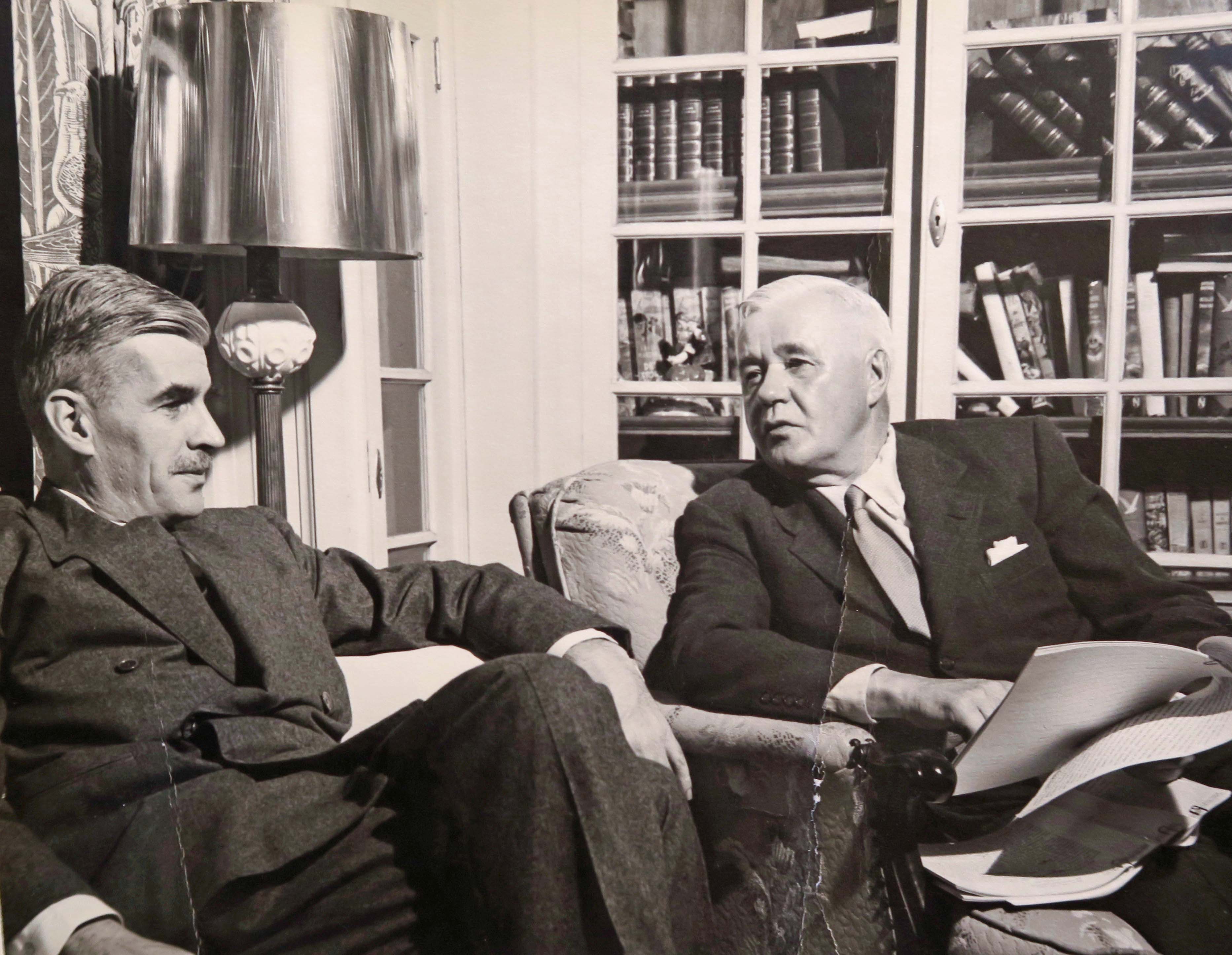
Edison Marshall and his Agent Paul Reynolds

He sent us this photo of a meeting with his agent, Paul Reynolds. Reynolds also represented authors like Alex Hailey, Irving Wallace, Howard Fast, and, surprising to me, Malcolm X.


SATURDAY AND SUNDAY’S POSTS: I’ll provide some background information on the World Traveler, Bone, since he, or possibly she, is going on the Grand Canyon trip. This includes an actual interview with the wily character.

Bone celebrates having received official Coast Guard approval on Kodiak Island, Alaska for his PFD (personal flotation device).


SaveSave

SaveSave