Chapter 34: African Safari by VW Bug: Part 2

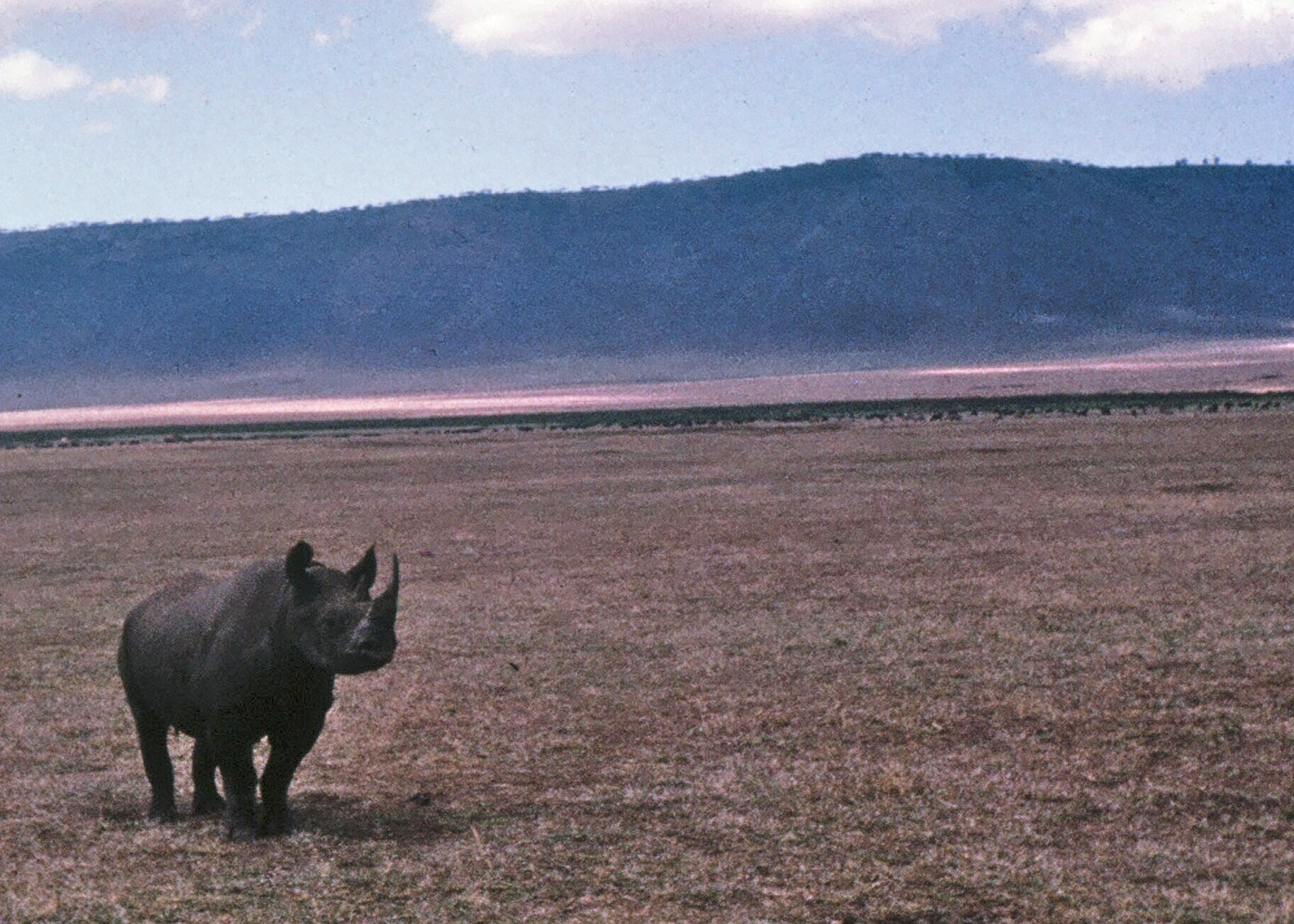
George, the Rhino, stood quietly and watched us in Ngorongoro Crater until I was precariously perched on our landrover to take his photo... The he charged.

The Rhino stood quietly and watched us in Ngorongoro Crater until I was precariously perched on the Land Rover to take his photo… Then he charged.

In my last blog I described how Peace Corps Volunteers from Liberia, West Africa ended up exploring the big game parks of East Africa. My ex-wife, Jo Ann, and I joined another Peace Corps couple, John and Chris Ogden from New York, to rent a VW Beetle and go on a self-guided 2500 mile safari through Kenya, Tanzania and Uganda.

Our greatest wildlife adventure in East Africa was to be a toss-up between Ngorongoro Crater and the Serengeti Plains, both in Tanzania. Ngorongoro is an extinct volcanic crater ten miles across that offers one of the greatest wildlife concentrations in the world. We arrived in late afternoon and chose a nearby tent camp as home.

There was a beautiful old colonial hotel overlooking the crater, but its cost exceeded our budget by a factor of ten. We consoled ourselves by going there to drink beer on its verandah and watch the sun set over the crater. The hotel’s high-paying guests missed the experience we had that night of animals grunting, growling and grazing outside their bedrooms.

Mere mortals aren’t allowed to drive into the crater. For that we needed a bona fide Land Rover and licensed guide. We paid the price and descended the thousand feet to the floor of the crater.

Our first sight was a standoff between buzzards and hyenas over the remains of a dead zebra. Next we saw the King of Beasts, lying on his back with all four feet up in the air. Nice kitty. I felt a strange compulsion to rub its belly but resisted the urge. An ostrich performed a ballet for some reason, whirling in tight circles before dashing off on an important errand.

There was no "nice kitty" about this lion. It was thinking "food."

There was no “nice kitty” about this lion. It was thinking “food.”
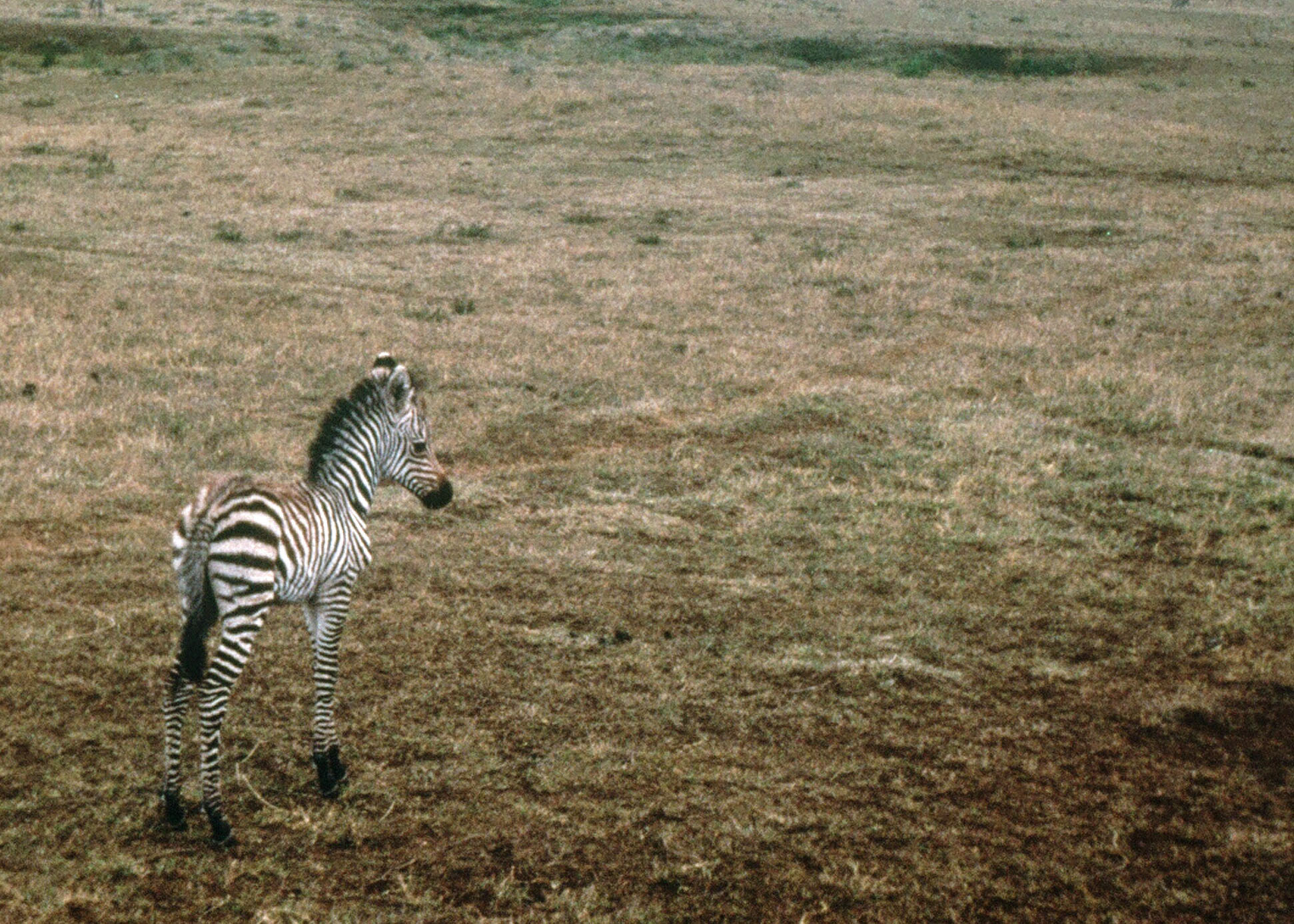
On the opposite end of the food chain from the lion, was this cute baby zebra I photographed in Ngorongoro Crater. Mom was standing nearby.

On the opposite end of the food chain from the lion, was this cute baby zebra I photographed in Ngorongoro Crater. Mom was standing nearby.

Ungainly hartebeests and wildebeests also appeared to have appointments and patiently joined up in organized lines for their journey. George, the Rhino, just stood and stared until I was precariously perched on top of the Land Rover snapping his picture. Then he charged. The driver took off and I almost didn’t. I never did learn why his name was George but I was ever so thankful I didn’t get close enough to ask.

After Ngorongoro, we dropped into one of the cradles of humanity, a rather dry and rocky Eden known as Olduvai Gorge. It was here that the Leakeys discovered the skull of Zinjanthropus, a 1.7 million year old precursor to humankind. We were lucky to engage a guide who had been with Mary Leakey when she found the skull seven years earlier in 1959. The guide took us to the discovery site and excitedly relived the experience. We were almost ready to grab shovels and begin hunting for our own ancient ancestors.

An assistant to Mary Leaky, this man was with her when she made the exciting discovery of Zinzanthropus. Here, he excitedly relives the experience with us.

An assistant to Mary Leaky, this man was with her when she made the exciting discovery of Zinjanthropus. Here, he relives the experience with us in Olduvai Gorge, Tanzania.

The Serengeti is flat; so flat you can leave the road and drive across it. That provided an opening for all sorts of mischief such as chasing giraffes, ostriches and gazelles. We spotted a cheetah perched in a tree and drove under her. She didn’t pounce. A momma warthog and four little pups, all with tails straight up in the air, provided a humorous diversion.
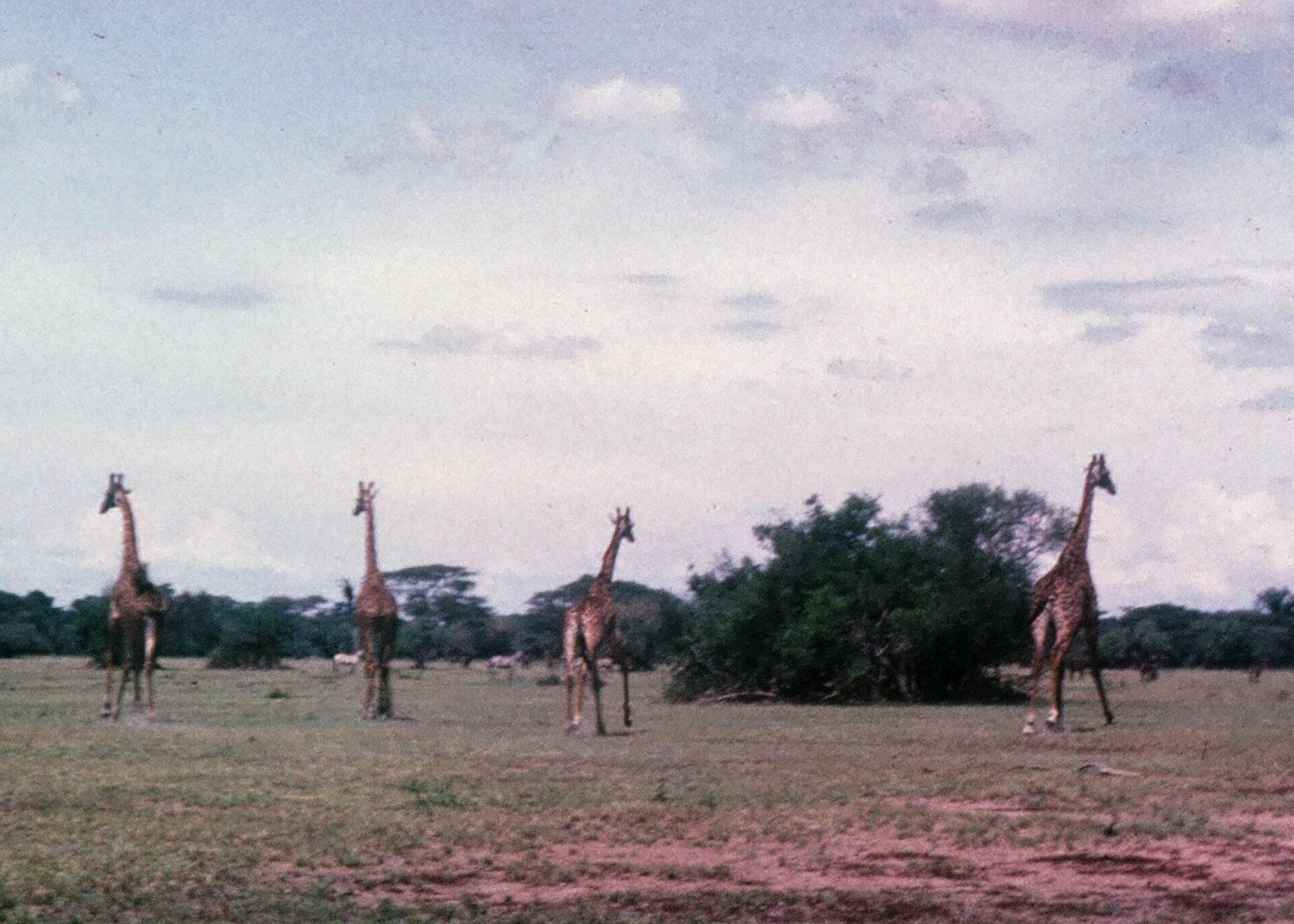
Captured on my inexpensive Kodak Instamatic camera, these giraffes were running away from our VW bug as we chased them across the Serengetti Plains of Tanzania.

Captured on my inexpensive Kodak Instamatic camera, these giraffes were running away from our VW bug as we chased them across the Serengeti Plains of Tanzania.

I discovered that tiny Dik-diks, members of the antelope clan, are truly small when I was able to sneak up within two feet of one that was sleeping. Again we had the same feeling that we had numerous times during our journey; we were in the world’s greatest zoo but we were the ones behind bars. The animals ran free.
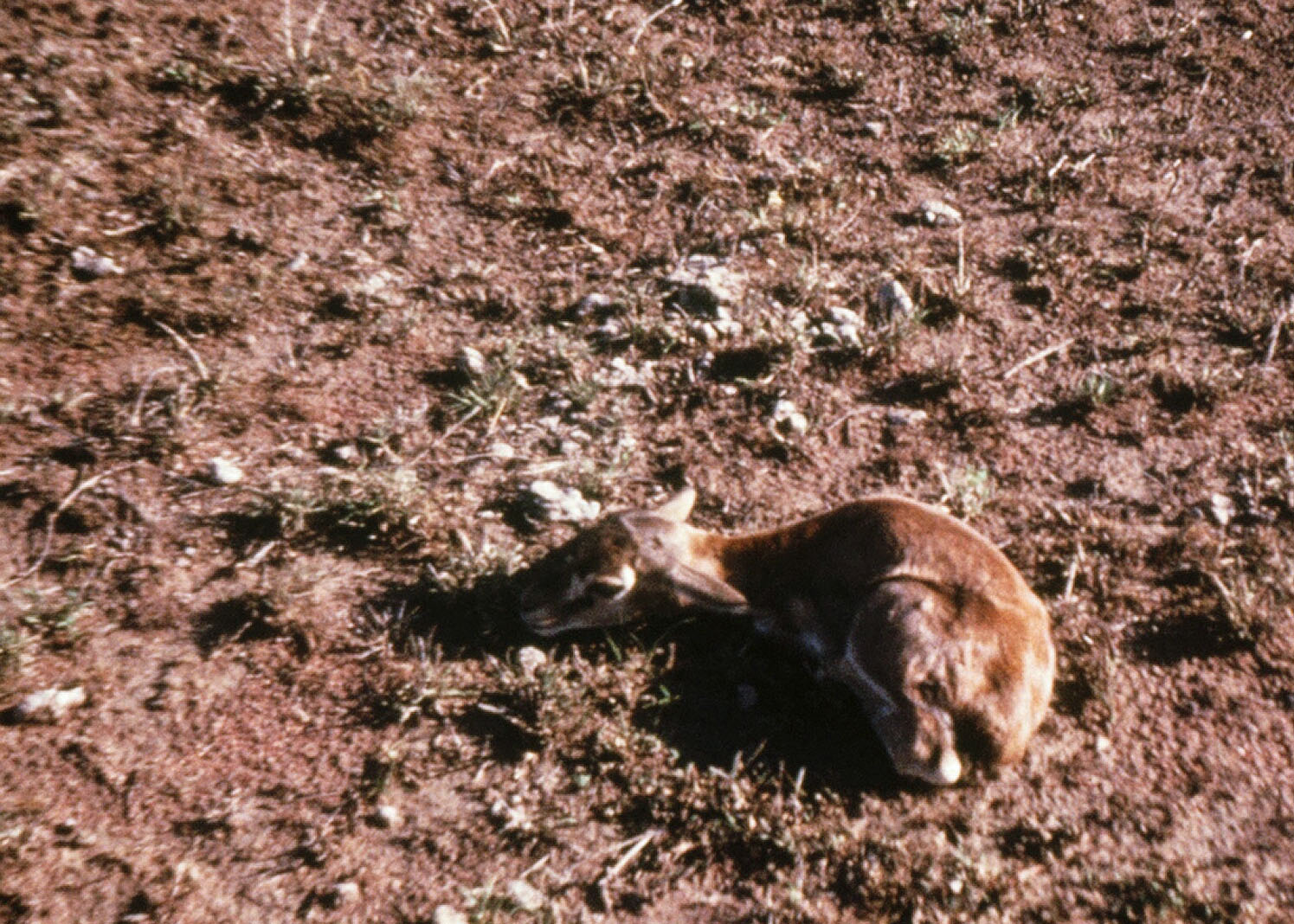
I discovered this young Dik Dik sleeping on the Serengetti Plains. It's possible its mother had told it to stay put. Shortly afterwards it jumped up and dashed away.

I discovered this young Dik-dik lying on the Serengeti Plains. It’s possible its mother had told it to stay put. Shortly afterwards it jumped up and dashed away.

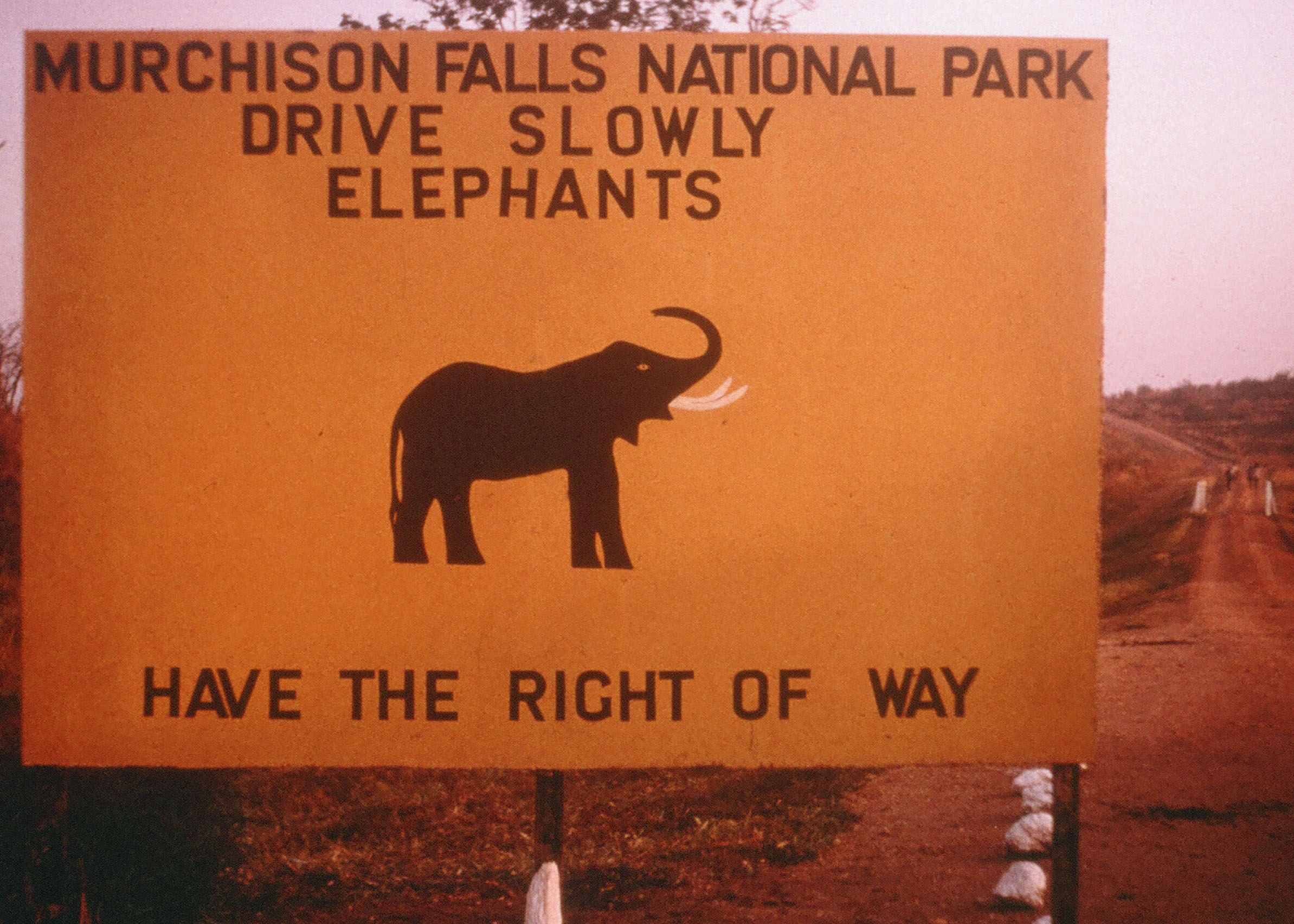
After the Serengeti, the majority of our wildlife viewing was over. We drove around Lake Victoria, crossed the Equator going north, entered Uganda in its relatively peaceful days, visited Kampala and made a beeline for the Victoria Nile. Here we chugged up river amid memories of the African Queen. Hippos dutifully wallowed in the mud, crocodiles slid down the banks and Murchison Falls rumbled. At last, it was time to return to Nairobi and turn in our faithful VW. The 2500-mile safari was over.

Jo stands in the Southern Hemisphere and I stand in the North in this photo taken by John Ogden.
Jo stands in the Southern Hemisphere and I stand in the North in this photo taken by John Ogden.

This photo provides a fitting end to my two blogs on traveling through East Africa when I was serving as a Peace Corps Volunteer in Liberia 1965-67.

This photo provides a fitting end to my two blogs on traveling through East Africa when I was serving as a Peace Corps Volunteer in Liberia 1965-67.
Chapter 33: African Safari by VW Bug… Part 1

I climbed out of our VW bug to photograph this elephant family in Manyara National Park with my Kodak Instamatic. Ah that I would have had a better camera.

I climbed out of our VW bug to photograph this elephant family in Manyara National Park with my Kodak Instamatic. Ah that I would have had a better camera.

African Water Buffalo are known for their nasty attitudes and we were facing a whole herd of nastiness. Thirty minutes before the gas pedal linkage on our Volkswagen Beetle had broken on our trip through Manyara National Park in Tanzania. We had jury-rigged a temporary fix by tying the pedal down. Stopping involved pushing the clutch in while the engine revved at full throttle. It was loud.

The herd of water buffalo crossing the road in front of us apparently didn’t like loud. Or maybe it was just my imagination. I get nervous when 2000-pound beasts with large, formidable horns are contemplating a charge. The fact that our VW Bug tipped the scales at just over 1700-pounds and all its horn could accomplish was a puny beep did not reduce my anxiety.

My travel companions were already nervous. Earlier in our exploration of the park, I had received a solid lecture for stopping and getting out to snap pictures of an elephant family. The week before a bull elephant in Manyara had caught a whiff of tourists in a VW Van and chased them down the road in an earth-pounding run. Having caught up, he rammed his tusks through the rear widow.

Fortunately, neither the elephants nor the water buffalo considered our tiny car and its inhabitants worthy opponents. Just after dark we drove the limping VW back into our lodge overlooking the Rift Valley and Manyara National Park. We had successfully accomplished another adventure in our 2500-mile safari through East Africa.

Peace Corps Volunteers in Liberia were encouraged to go on vacation during the second “summer” of their two-year tour. The majority of Group VI had chosen to charter a jet to East Africa for our month of escape. Our share of chartering the jet had seriously depleted Jo Ann and my savings, thus the self-guided VW safari. We hooked up with another married couple, John and Chris Ogden from New York, to share the adventure and expenses. Like Jo and I, John and Chris had graduated from college in 1965, married and joined the Peace Corps.

John and Chris Ogden join me in front of the Plum Hotel in Nairobi, Kenya during out 1967 adventure.

John and Chris Ogden join me in front of the Plum Hotel in Nairobi, Kenya during out 1967 adventure.

Our first stop was Nairobi, Kenya, an attractive, modern city where we could actually drink the milk. It is amazing how much meaning such a small thing can assume. I would have been happy to just hang out and enjoy the amenities except adventure called; there were lions and gazelles and rhinos, “oh my!” We rented our VW bug, crammed the four of us plus luggage in, and rolled off across Tsavo National Park on a narrow dirt road. Our eyes were glued to the windows searching for wildlife.

“There’s an elephant!” Chris shouted and we screeched to a halt. It looked impressively big from the perspective of our VW Beetle. So were its droppings. We drove around rather than through them. High-centering on elephant dung was not part of the adventure. We spotted an ostrich and then a giant porcupine. John and I jumped out of the car to check out the porcupine. He stood at least three feet tall, had six-inch quills and exuded a ‘don’t mess with me’ attitude. We called him sir. Just as dusk arrived we spotted our first zebras. John raced down the road to keep pace with them while Jo Ann and Chris squealed about juvenile behavior.

Mysterious Malindi on the Indian Ocean came next. Visiting there was like dropping into the middle of an Arabian Night’s Tale. Vasco da Gama had come through here at the close of the Fifteenth Century, picked up a local pilot to guide him onward, and left behind a stone cross. Long before Europe came crawling out of the Dark Ages and Vasco da Gama began his perilous journey, Malindi had been an important port on the busy Indian Ocean trade routes. Goods from as far away as China had made their way through its bustling markets while the words of the Prophet Muhammad echoed through its streets.

Visiting Malindi, Kenya in 1967 was like dropping into a Tale from the Arabian Nights.

Visiting Malindi, Kenya in 1967 was like dropping into a Tale from the Arabian Nights.

We camped out on the beach in huts and were introduced to sailing by John and Chris. We also tried snorkeling. A native outrigger canoe, complete with three natives, carried us out to a beautiful coral garden. A jellyfish seriously stung me for my efforts while Chris and Jo Ann received exotic shells from the natives. Unfortunately, the shells were still occupied by their rightful owners. After several days of hot tropical sun, opening our trunk became an exercise in courage. We ended up paying five dollars to have the shells cleaned. It was a small fortune for the guy that did it, but we thought it was a great bargain.

Mombasa was next on our agenda. We drove into town under giant, sculpted elephant trunks, a reminder of the role that the ivory trade had played in East Africa’s history. There was also a reminder of when tiny Portugal had been a major world power; a dark, foreboding Fort Jesus looked out to sea with the objective of protecting precious spice routes to the Indies. What impressed us the most, though, were the intricate, highly crafted wood carvings the city was famous for. Out came our wallets as we shipped off piece after piece to the U.S.

Giant elephant tusk sculptures greeted our entrance to Mombassa.

Giant elephant tusk sculptures greeted our entrance to Mombassa.

We crossed from Kenya into Tanzania and Mt. Kilimanjaro slipped by, hidden in the clouds. Several volunteers from our group had chosen to climb the mountain. (The Kilimanjaro link is for a tour group that follows my blog.) We opted for a more sedate experience and drove up its side to check out the coffee plantations. Heading on to Arusha, we dined at a hotel that Hemingway had frequented during his East Africa sojourns.

Much to the amusement of my companions, a large swarm of flies chose to buzz around my head during dinner. Even more annoying was the Tanzanian waiter who chose to point out with a very British accent that I used the wrong knife on my fish.

“That, sir, is your butter knife!” he announced in a booming voice. Hemingway probably would have challenged him to a duel.

I did have one important responsibility in Arusha, buying meerschaum pipes for Morris Carpenter, who had already returned to America. Unfortunately, I kept one when we returned to Gbarnga and made the mistake of trying it out while enjoying my porch. It would be years before I could break the addiction. Tobacco was much more dangerous than the elephants and water buffalo we encountered at Manyara National Park where we went after Arusha.

In my next blog we encounter George the Rhino on the floor on Ngorongoro Crater, chase giraffes across the Serengeti Plains, and dodge crocodiles on the Victoria Nile.