Message in a ‘Bottle,’ Drakes Beach, Sand Dollars, Tom Lovering, and Limantour: Pt. Reyes NS… The Pacific Coast Series 5

Have you ever found a message in a bottle or a tin washed up on a seashore? Or dreamed of finding one? We did last week on Drakes Beach at Pt. Reyes National Seashore.

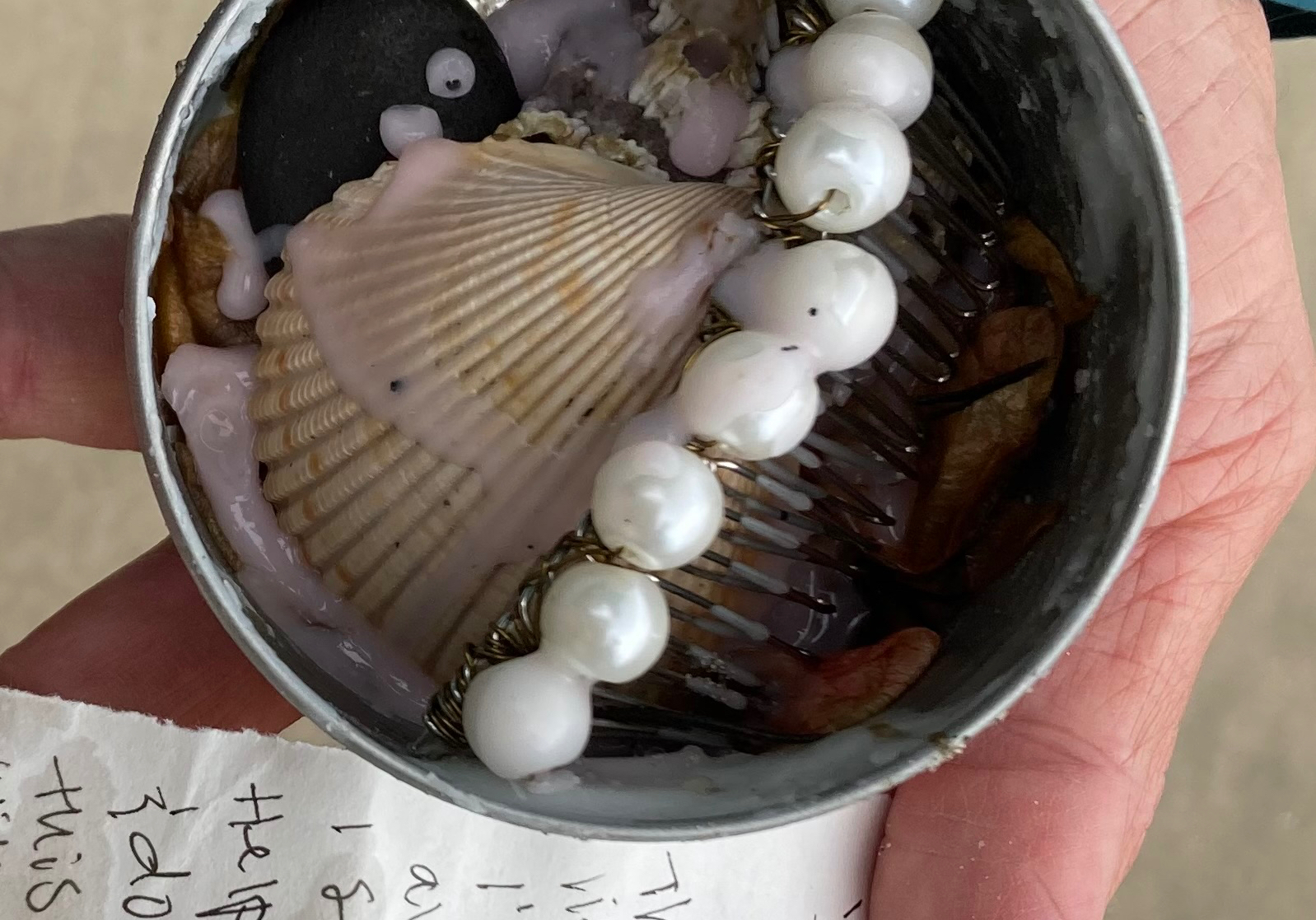
I was walking along Drakes Beach with my friend Tom Lovering when he spotted a tin with a top on it in the sand. Peggy and Tom’s partner Lita were walking behind us. “Open it up, Tom,” we urged. He was already worrying the lid. There was a treasure inside. Someone’s comb with artificial pearl beads and seashells all held in by candle wax. And a letter! It had been brought in on the day’s high tide. Had it come from afar after weeks/months/years of travel. Or had a person thrown it into the ocean that morning with hopes that it would wash out to sea? There wasn’t a clue.

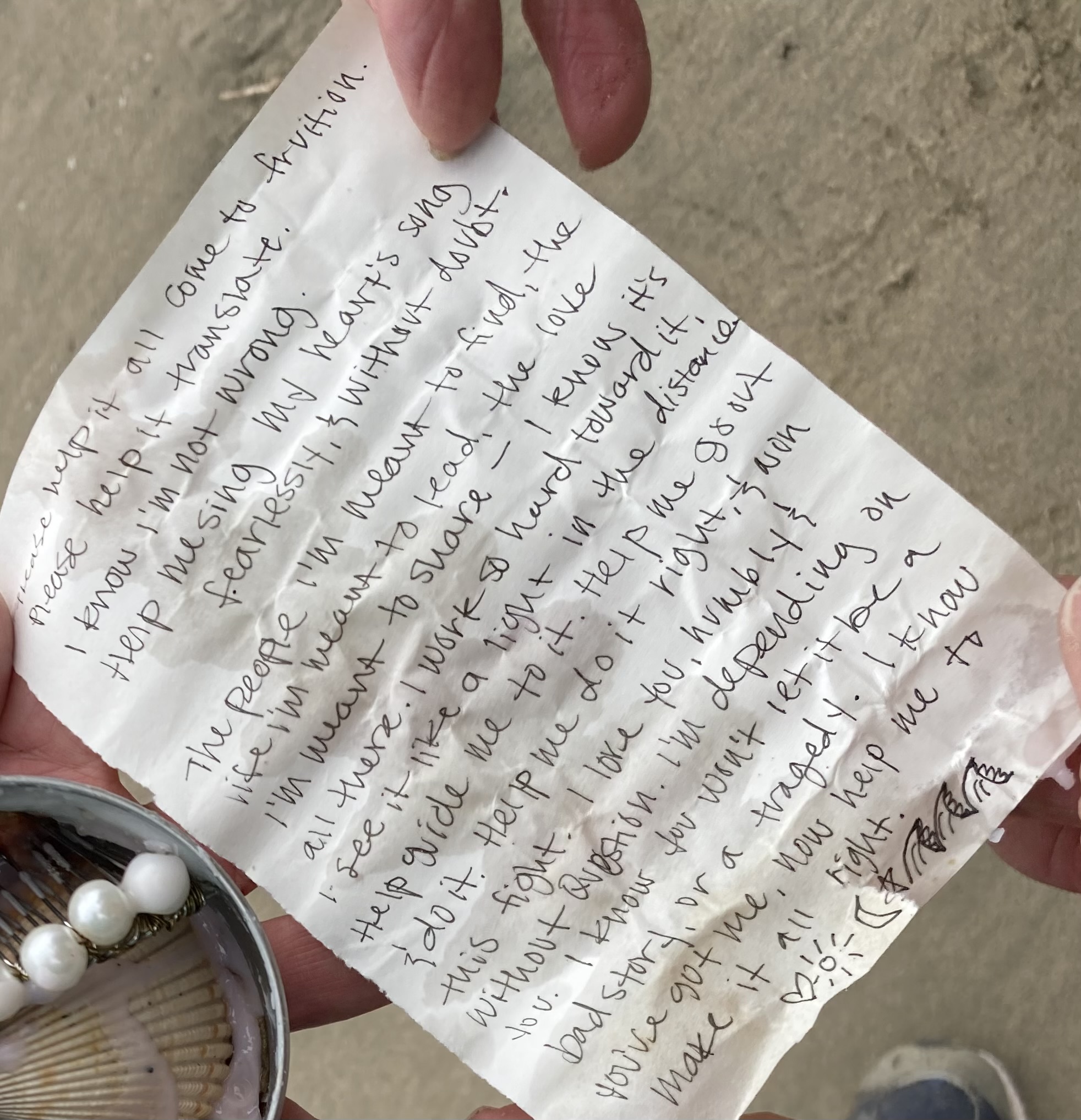
The letter. It was slightly damp and wrinkled but still easy to read. I’ve repeated the words below.

“Please help it all come to fruition. Please help it to translate. I know I am not wrong. Help me sing my heart’s song fearlessly and without doubt. The people I am meant to find, the life I am meant to live, the love I am meant to share— I know it’s all there. I work so hard toward it. I see it like a light in the distance. Help guide me to it. Help me go out and do it. Help me do it right and win this fight. I love you, humbly and without question. I’m depending on you. I know you won’t let it be a sad story, or a tragedy. Now help me to make it all right.”

One can only speculate on the sender, but I imagine a young woman (given the comb) asking for help. She is bright, and possibly troubled, but has faith and hope that her future will turn out right. Thoughts? Tom put the message back in the tin with the lid on it and left it on the beach for some other person to discover. We listened to Jim Croce’s Time in a Bottle when we got back to camp.

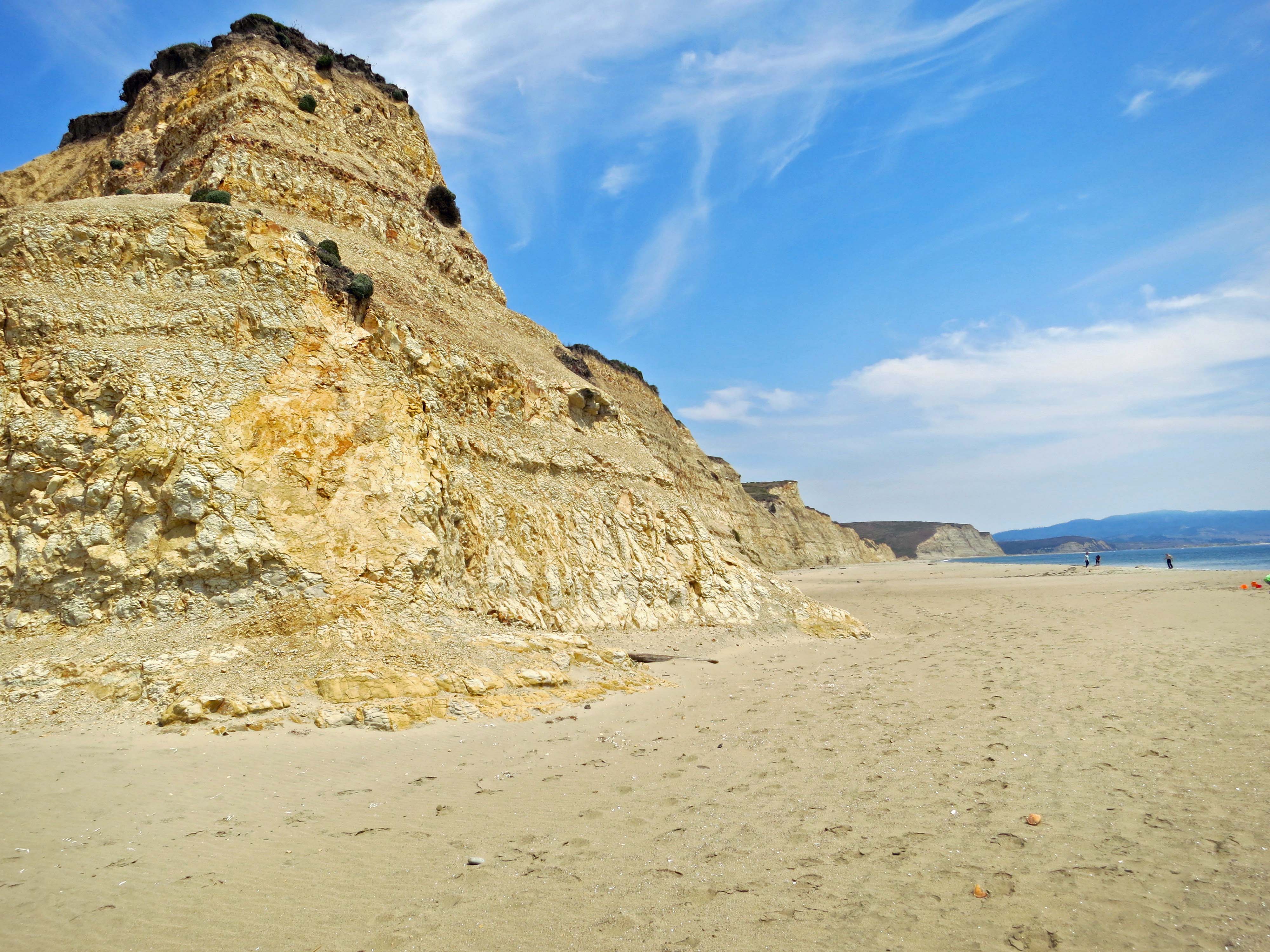
These towering cliffs are the same ones that Sir Francis Drake would have seen on his 1579 voyage around the world. They reminded him of England’s Cliffs of Dover. With his ship in serious need of repair, he had pulled into the bay. The belief that this is where he landed for repairs led to the bay being named Drakes Bay and the beach, Drakes Beach.
This is Tom. We go way back. “Fifty years” he reminded me. We met in 1974.
He had a bit more hair when this was taken in the late 70s.

He had even more in 1974 when I had walked into Alpine West, a popular outdoor gear store in Sacramento at the time. I was seeking a sponsor for the Sierra Trek, a hundred mile backpack trek across the Sierra Nevada Mountains that I had dreamed up to raise funds for the Sacramento Lung Association and future Breathe California. A hippie-looking 20-something was standing behind the counter. I walked over and asked him if I could speak to the owner or manager. “I am the owner,” Tom had told me rather stiffly. Oops! I introduced myself as the Executive Director of the Lung Association and explained what I wanted to do. “You’re crazy,” he had told me. “People may survive it but they will hate you and the Lung Association afterwards.” It wasn’t exactly what I was hoping to hear from one of Sacramento’s leading outdoor experts. But then he offered to sponsor the event… I left a little confused. If they hated the Lung Association, wouldn’t they hate Alpine West as well? We’ve been having adventures together ever since 1974. He’s been though several successful careers over the years. I’ll introduce his latest in my next post: creating a powerful, battery-operated blender. He couldn’t stop talking about it. But for now, back to Drakes Beach and another popular beach on Drakes Bay: Limantour.

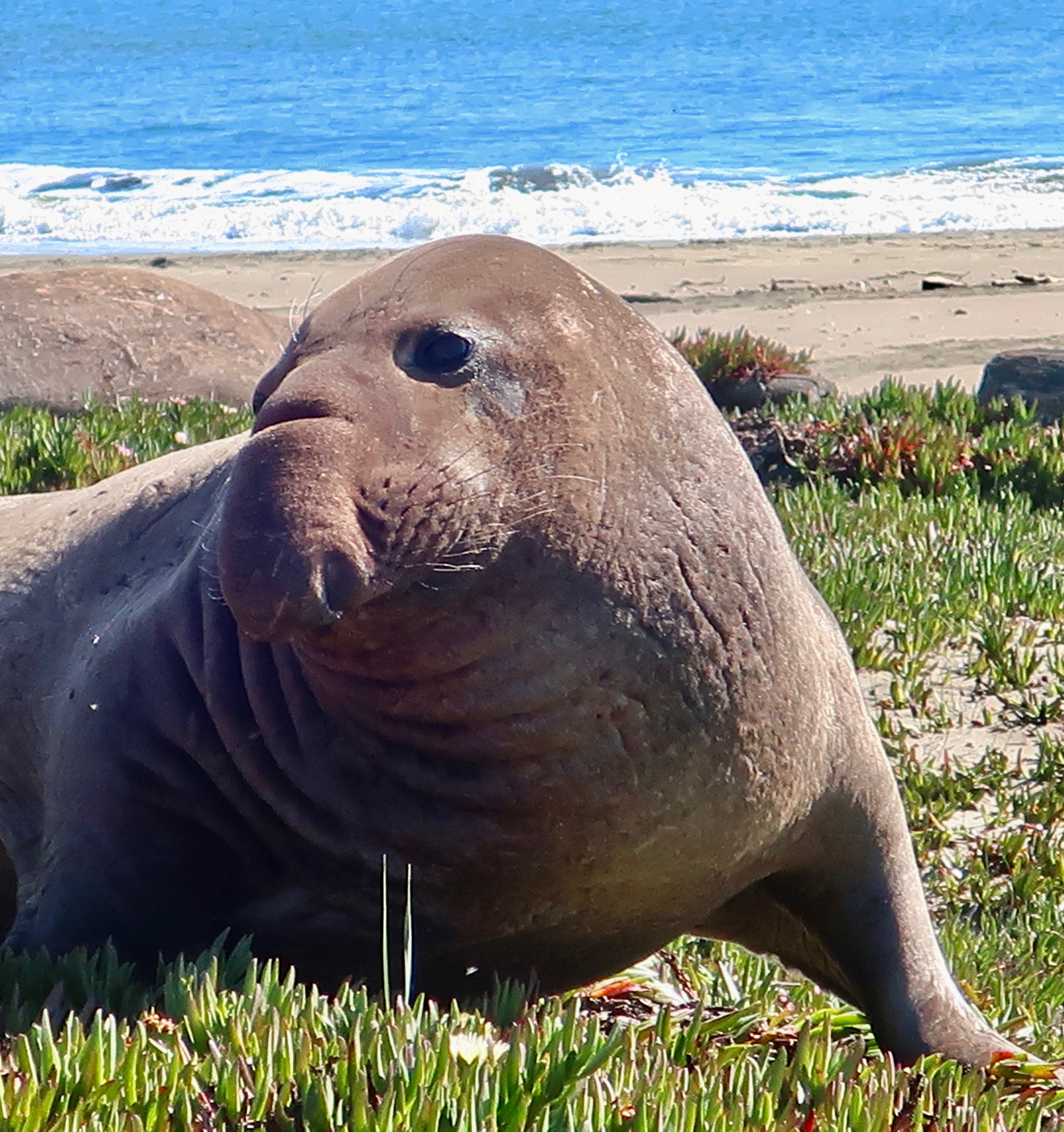
We have been to Drake’s Beach many times over the years. The last time the beach was filled with elephant seals. Not so this time. But that meant we could actually go for a walk on the beach.
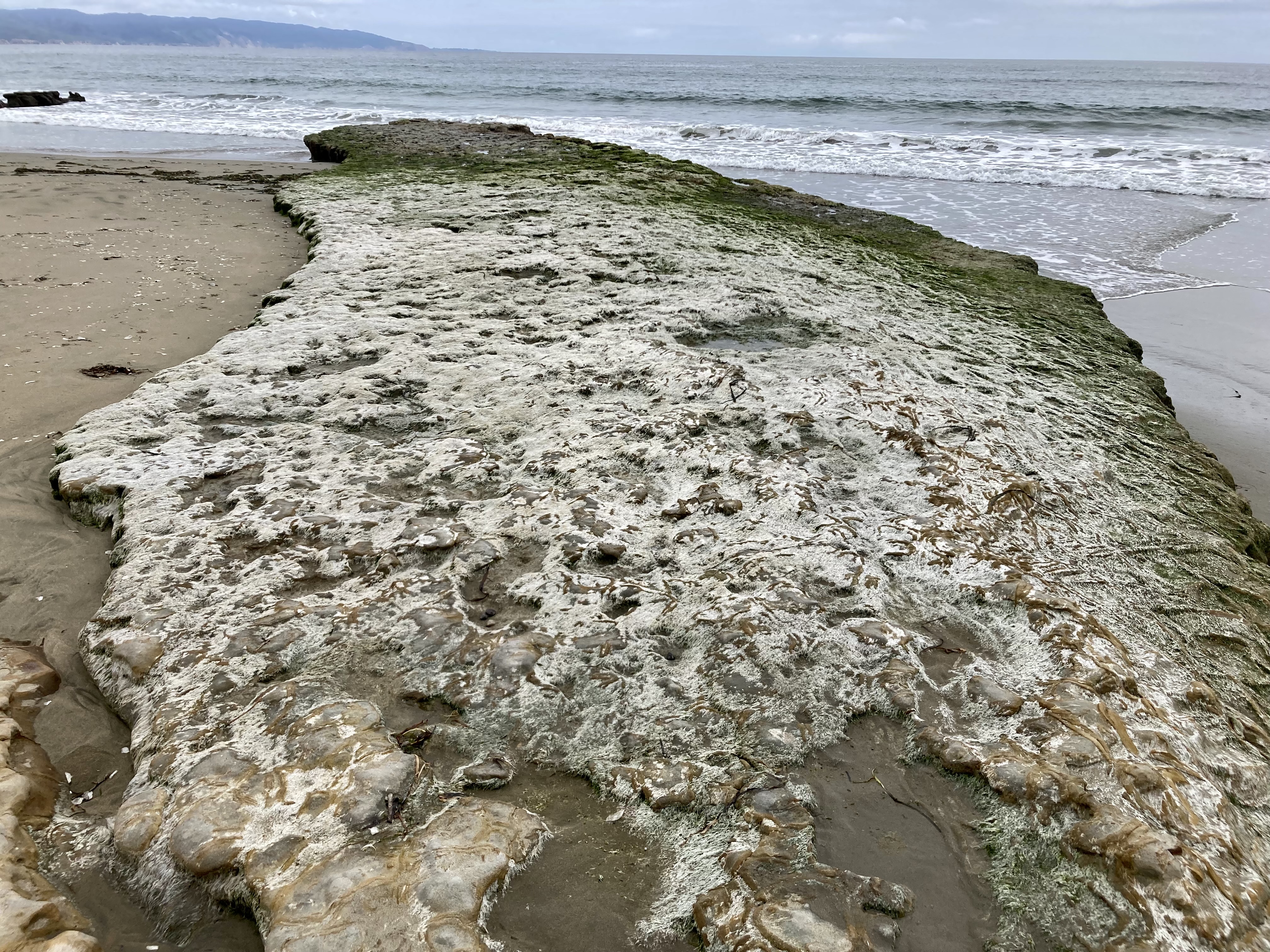
Several harder rocks had been more resistant to the ocean’s relentless waves. This one was heading out to sea.
It had a unique look…
And small depressions that caught seawater at low tide making mini-tide pools.
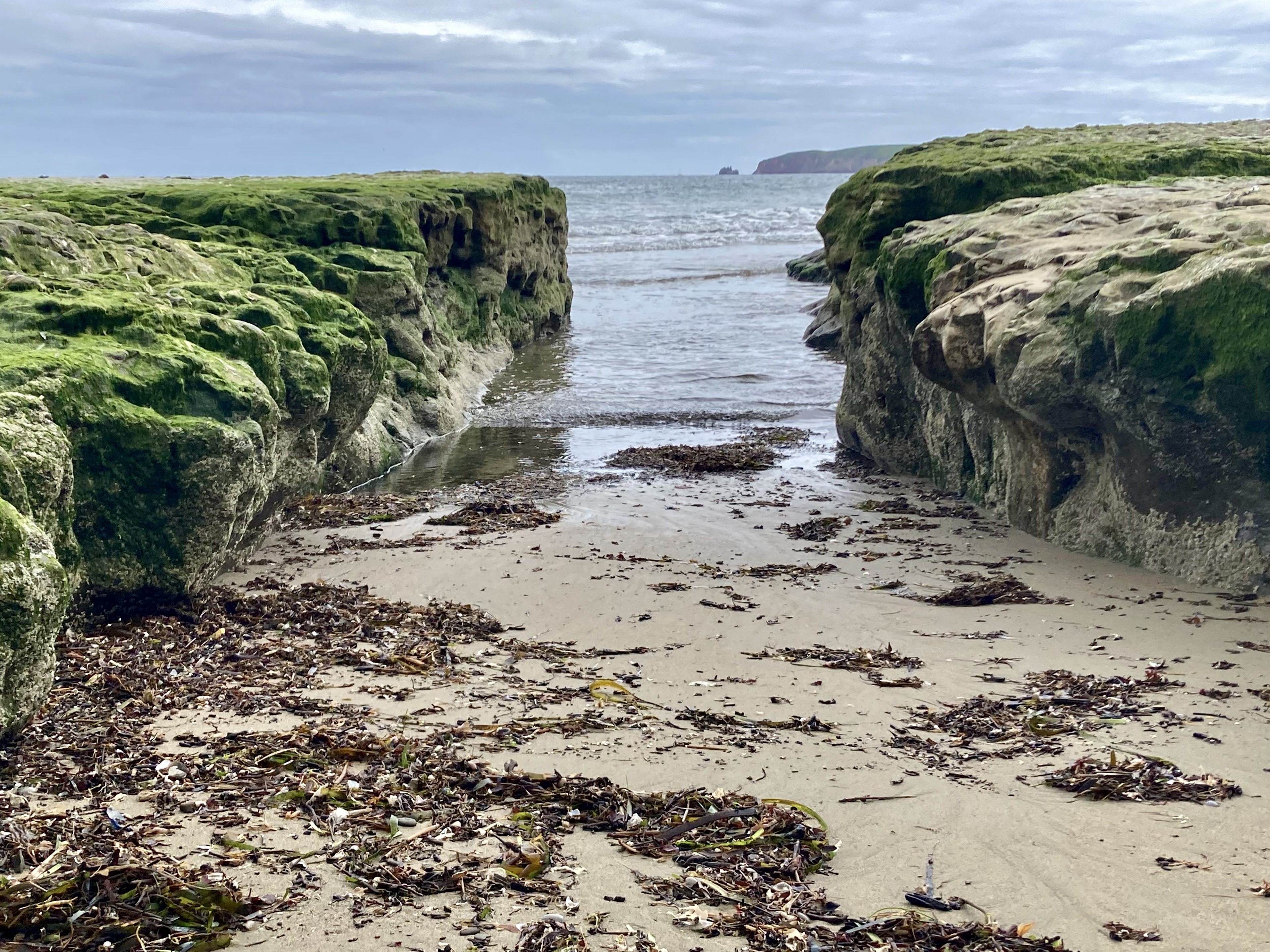
Two of the rocks provided a window to the ocean. Chimney Rock can be seen in the distance.
Peggy gathered seashells while I explored. Tom snapped our photo.
We stopped to admire a Velella (By the Sea Sailor), a type of jellyfish, that had just sailed in on high tide and was in much better shape than the ones we had seen at Point Lobos.
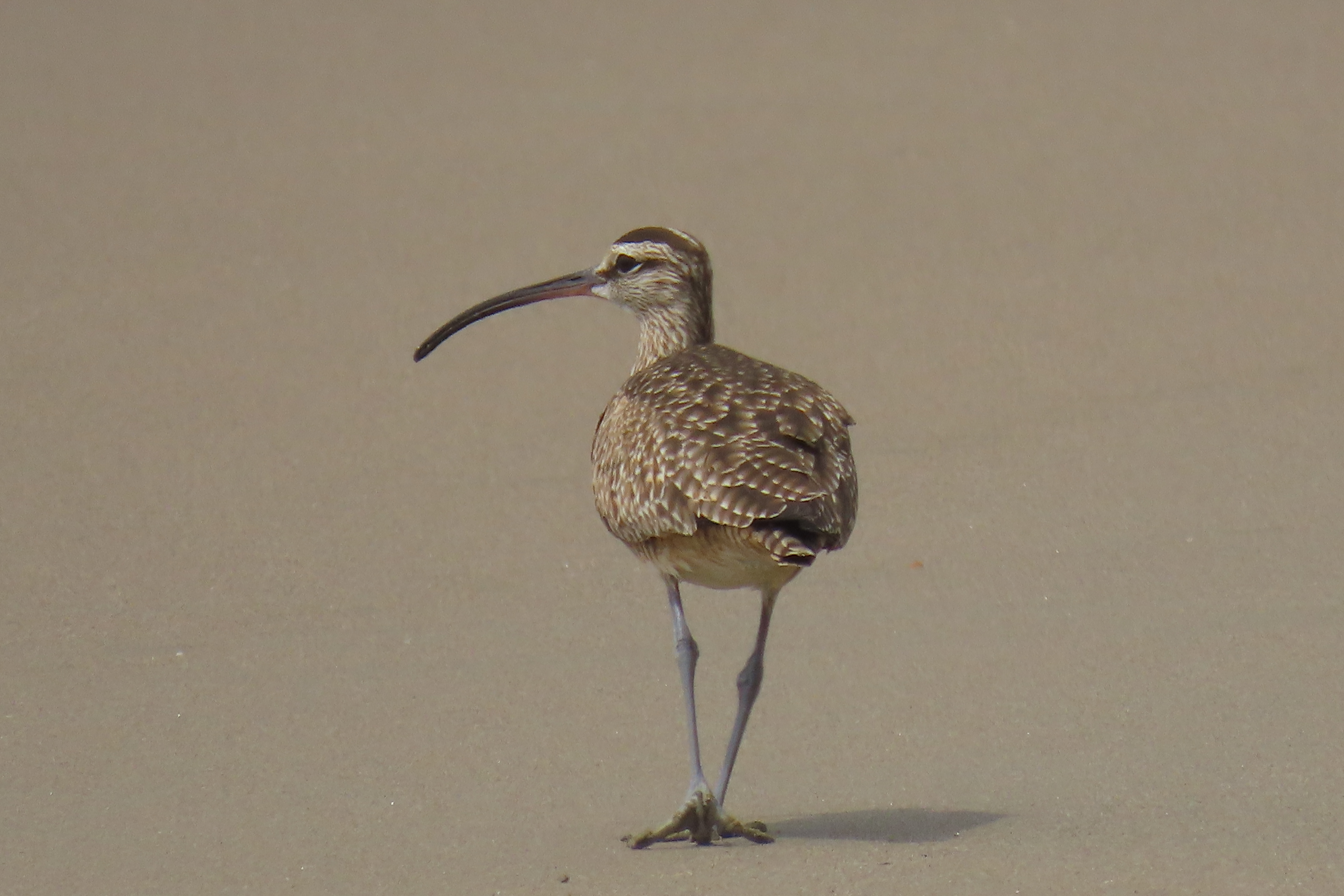
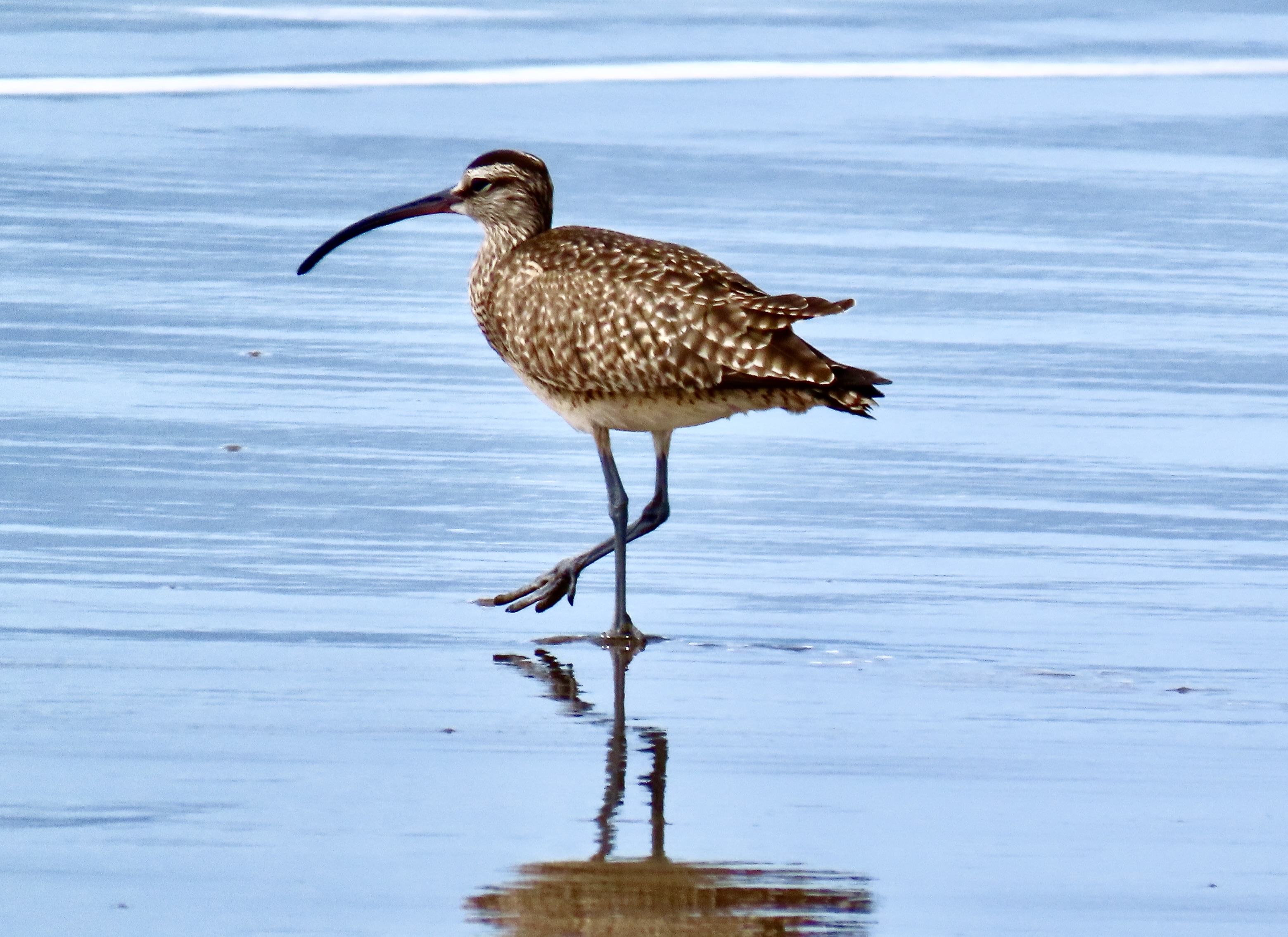
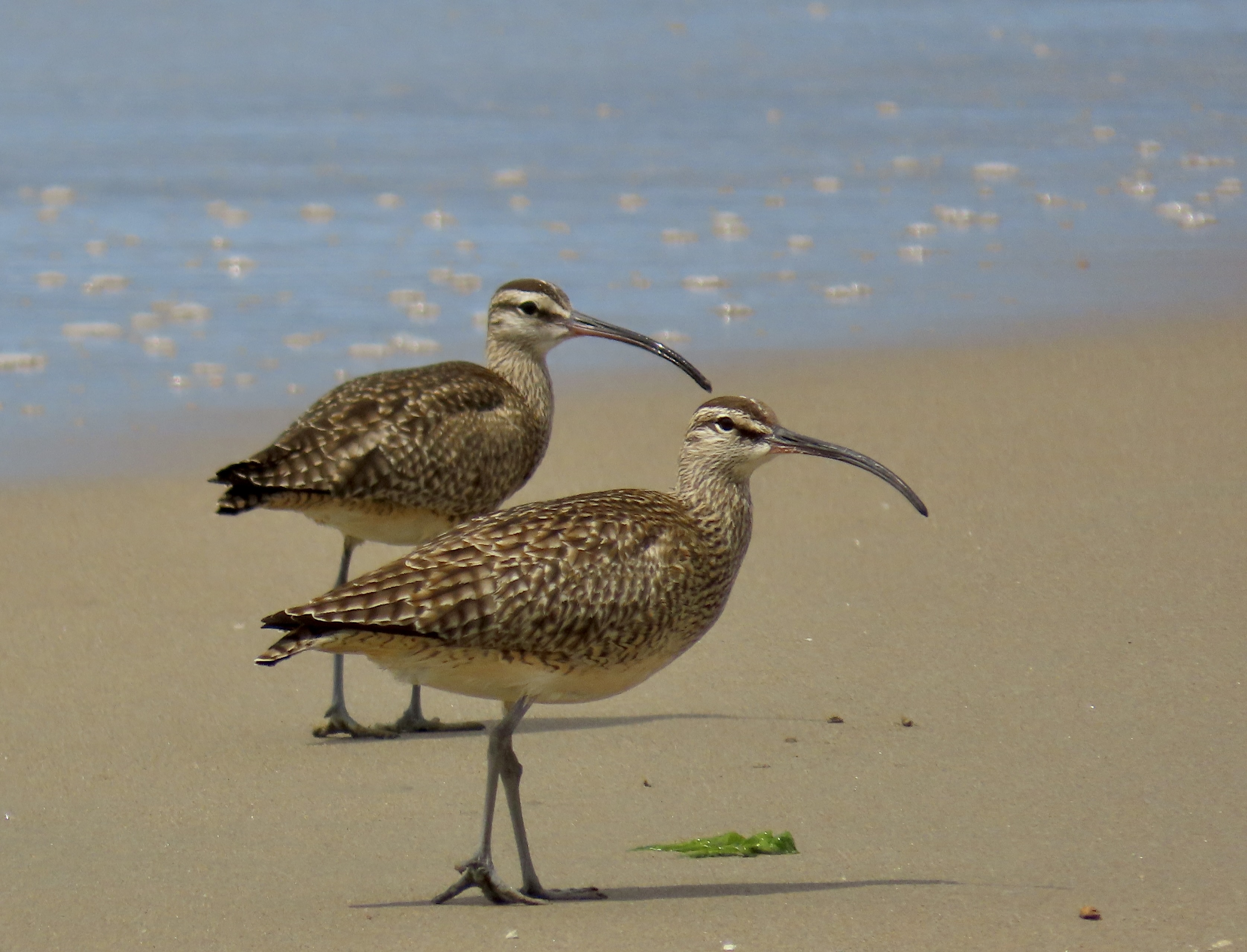
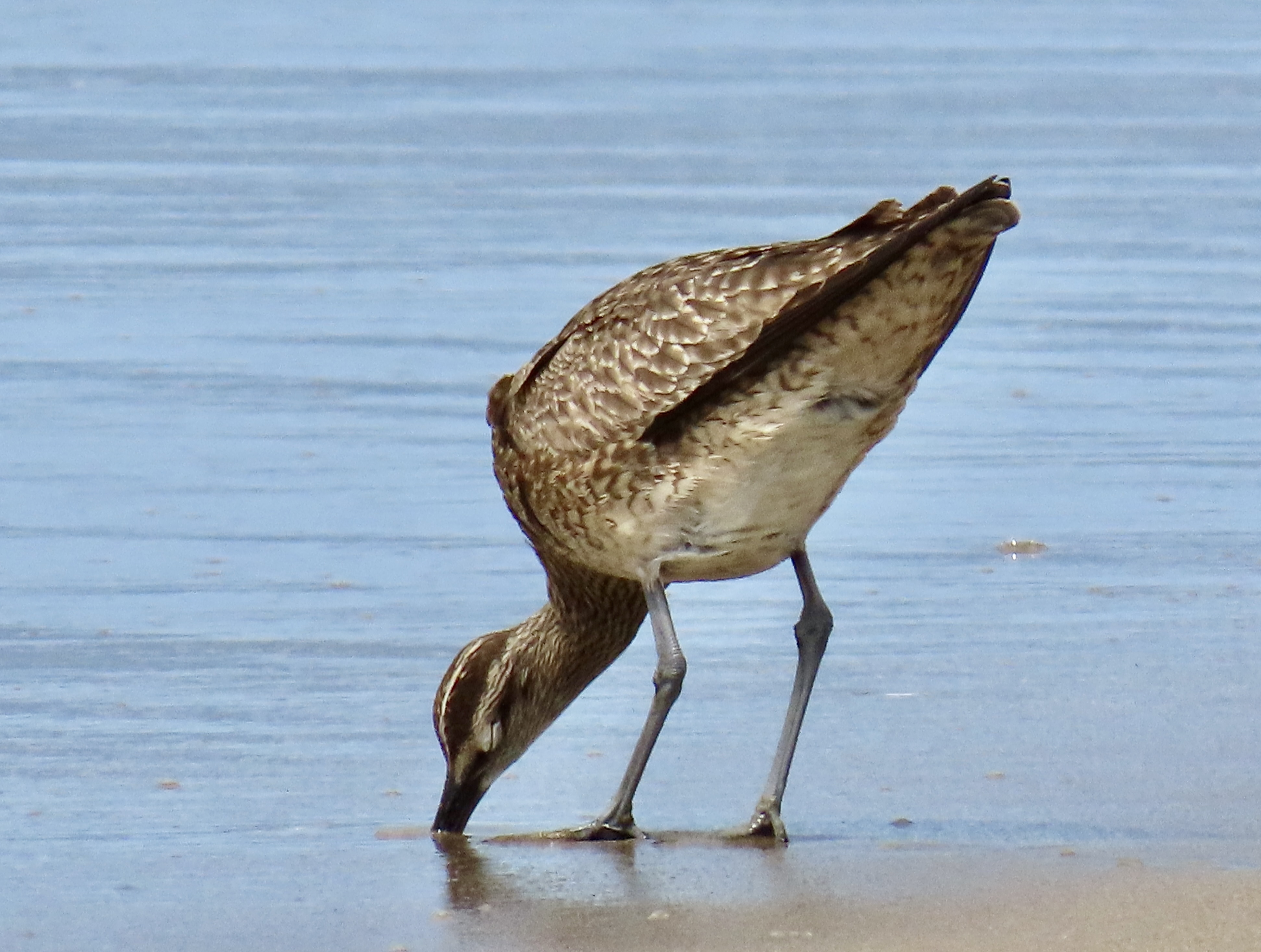
Limantour Beach and Spit is just south of Drakes Beach and also on Drakes Bay. Peggy and I explored it after Tom and Lita returned to Sacramento. Whimbrels, dunlins and brown pelicans amused us. This is a whimbrel.
We found them quite attractive.
Several of them were working the beach together.
On a stroll.
A small bubble suggests that dinner might be lurking down in the sand.
Whimbrels use their curved beaks to probe for small crabs and other sea life buried in the sand.
A little ocean water did not get in the way of finding a tasty tidbit.
A flock of dunlins and a sanderling join the whimbrels in their search for food.
Apparently, their search was successful.
Meanwhile, brown pelicans were skimming the waves further out at sea in search of fish. Amazing birds! Check the wing span.
A shot across Drakes Bay showed the cliffs above Drakes Beach.
Peggy took this shot across Drakes Bay to the Chimney Rock and the Pt. Reyes Headlands at the northern end of the Bay. The Point Reyes Lighthouse is on the opposite side of the Headlands. We will feature it in a later post.
Peggy posed for me as I took a photo south to catch the rest of the Bay. This is one long beach!
She continued her search for perfect sand dollars.
And goofed around! That’s it for the day!
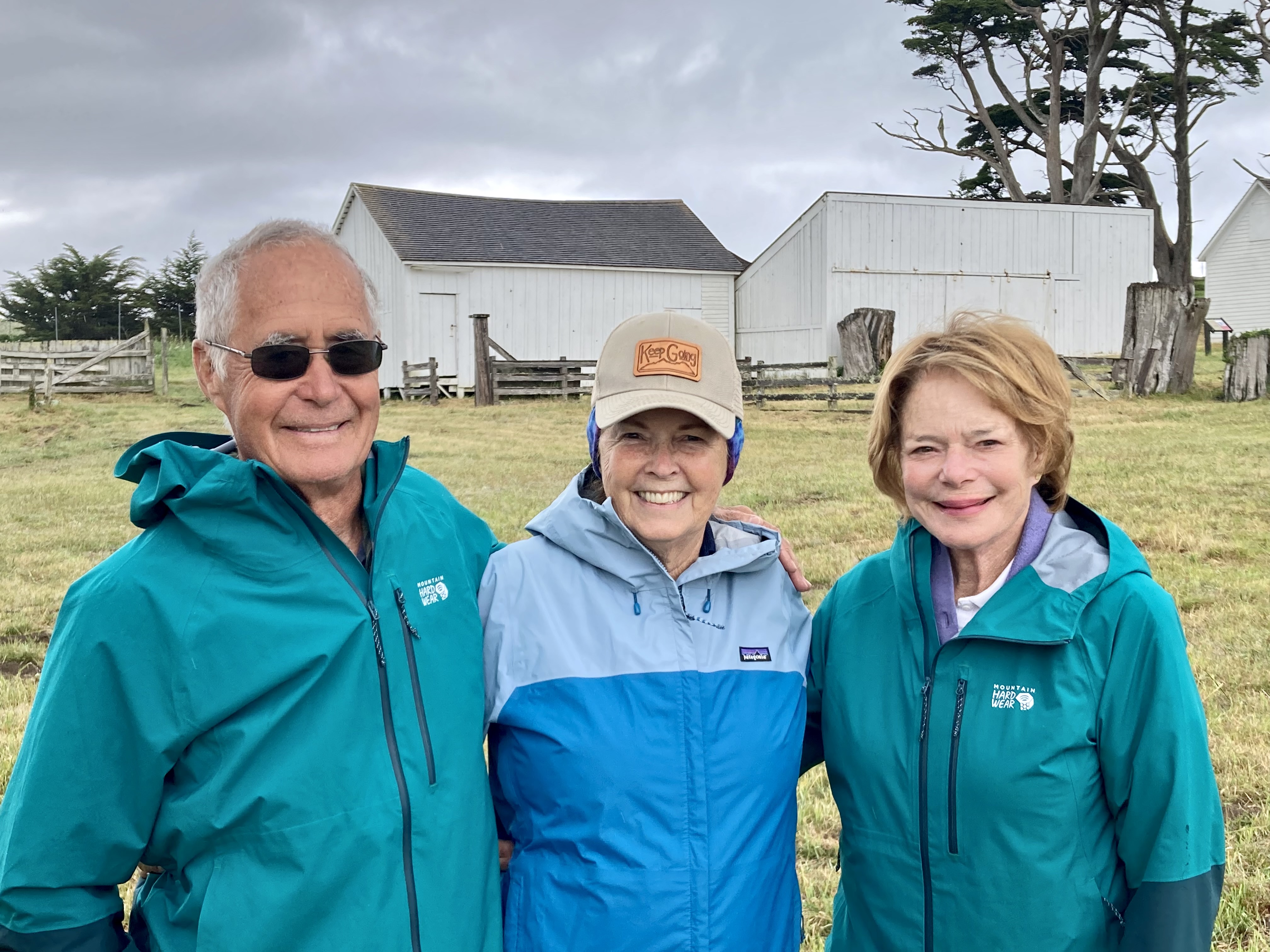
Our next post will feature the historic Pierce Point Ranch and Abbots Lagoon. Tom, Peggy and Lita stand in front of three of the outbuildings.

Olompali: Miwoks, the Grateful Dead, and a Hippie Commune… The North Coast Tour

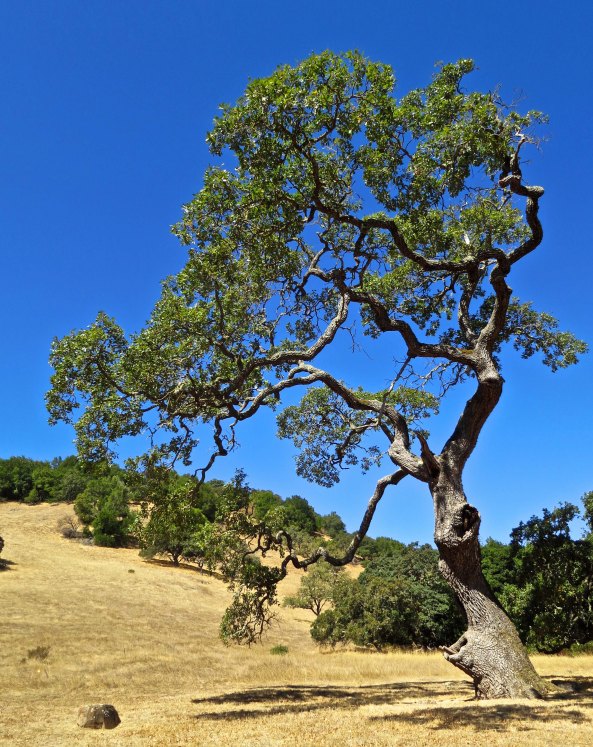
I photographed this picturesque oak tree at Olompali State Park. Later I discovered the same tree was featured on the cover of the Park's brochure. Acorns from oaks were a major source of food for the Miwok Indians.

I photographed this picturesque oak tree at Olompali State Park. Later I discovered the same tree was featured on the cover of the Park’s brochure. Acorns from oaks were a major source of food for the Miwok Indians.


When Peggy headed off to England with her sister in August to visit English gardens, I headed off to the north coast of California for a couple of weeks to see what mischief I could get into. Peggy has promised some guest blogs on her experiences. Here is the first of several blogs on mine. 

The small community of Novato lies 20 miles north of San Francisco along Highway 101. The little known California State Park of Olompali is just north of Novato. The staff at the Days Inn where I stayed didn’t even mention the park when I asked about interesting places to explore. “Go to the Marin Museum of the American Indian; explore historic Novato; check out the Marin French Cheese Company,” they told me. And I dutifully complied. My adventure started just outside my door.
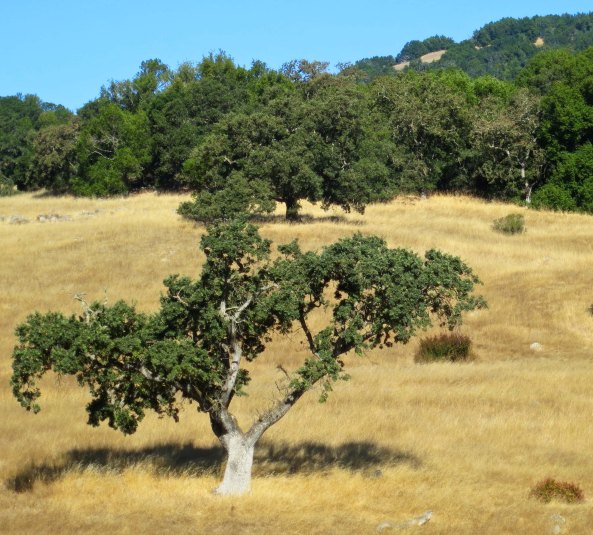
To me, the coastal ranges of California provide some of the most scenic views in the world. This was behind the Days Inn where I stayed in Novato. I love the contrast between the gold of the grass and the green of the oaks.

To me, the coastal ranges of California provide some of the most scenic views in the world. This view was behind the Days Inn where I stayed in Novato. I love the contrast between the golden brown of the grass and the dark green of the oaks.

One evening I went out and captured the same shot as the sun went down.
One evening I went out and captured the same shot as the sun went down.

It is a good thing that the Marin Cheese Factory isn't located near my home. I'd end up weighing 300 pounds. Its brie cheese is to die for.

It is a good thing that the Marin French Cheese Factory isn’t located near my home. I’d end up weighing 300 pounds. Its brie cheese is to die for.

As for Olompali, I had to find it on my own. It was a mile up the road from the motel, just past the US headquarters of Birkenstocks. It proved to be a very interesting place, indeed.

Once, the area had been home to the Miwok Indians. They had been living in the region for over 3000 years when Sir Francis Drake landed at nearby Point Reyes. Although he was something of a pirate, and would have been an illegal alien by today’s definition, Drake claimed the land for Queen Elizabeth. The Spanish arrived a few years later and claimed the land for Spain. The Miwoks weren’t invited to participate in either decision.
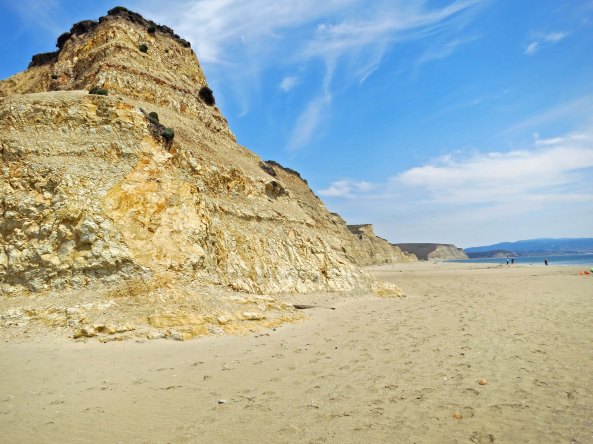
These distinctive cliffs at Drakes Bay in Point Reyes National Seashore were used to help identify where Sir Francis Drake landed in

These distinctive cliffs at Drakes Bay in Point Reyes National Seashore were used to help identify where Sir Francis Drake landed in the late 1500s. The tracks in the foreground speak to how popular this beach is in the summer. I had a difficult time capturing a photo that wasn’t packed with people.

By 1776, when Americans were fighting for independence from Great Britain, the Spaniards were busy establishing their first missions north of San Francisco, an effort that was a continuation of the work of Junipero Serra. In return for supplying ‘civilization and salvation’ to the Miwoks, the Catholic priests expected the natives to work for nothing in what can best be described as a system of slavery. Going home to visit family without permission, or even going fishing, could earn a whipping and a jail sentence. And, if ‘civilization and salvation’ weren’t enough, the Spaniards brought the European diseases with them that more or less wiped out the native population and opened the area for white settlement. It’s small wonder that California’s remaining Native American population didn’t celebrate the recent canonization of Junipero Serra with enthusiasm.

The Miwok, for the most part, were a gentle people who lived in close harmony with the land. An area of Olompali State Park has been put aside to display the native plants and housing the Miwoks used. The natives practiced house cleaning in the extreme: They burned down their houses once a year to get rid of bugs and vermin that had taken up residence.

The Miwoks built some of their homes with redwood siding, or at least redwood bark. This example of a Miwok shelter is located at Olompali.

The Miwoks built some of their homes with redwood siding, or at least redwood bark. This example of a Miwok shelter is located at Olompali.

While most of the plants on display were suffering from the drought, an attractive Bay Laurel caught my attention. A signpost reported that the Miwok had eaten the fruit raw. Nuts were dried and then pounded into flour that was used for bread. The leaves were used for spice. A tea made from the leaves was used for stomach-aches, colds and sore throats. Fresh leaves were put on the head for headaches and an infusion of the leaves was used for washing sores. Shoots growing from the tree were used as arrow shafts. Visiting the Bay Laurel, it seemed to me, would have been like making a trip to the grocery store. I found several of the plants the Miwoks made use of, such as the California Buckeye and Harvest Brodiaea, were also common to the Central Valley of California and the Sierra Nevada Mountain foothills where I lived for many years.

The drought that has California in such a tight grip, didn't seem to impact this Bay Laurel that was growing in the garden of native plants important to the Miwok.

The drought that has California in such a tight grip, didn’t seem to impact this Bay Laurel that was growing in the garden of native plants important to the Miwok.

Buckeye trees in bloom along the American River Parkway in Sacramento. Buckeyes, well leeched to remove poison, served as back up food when acorns were scare.

Buckeye trees in bloom along the American River Parkway in Sacramento. Buckeyes, well leached to remove poison, served as back up food for the Miwoks when acorns were scarce.

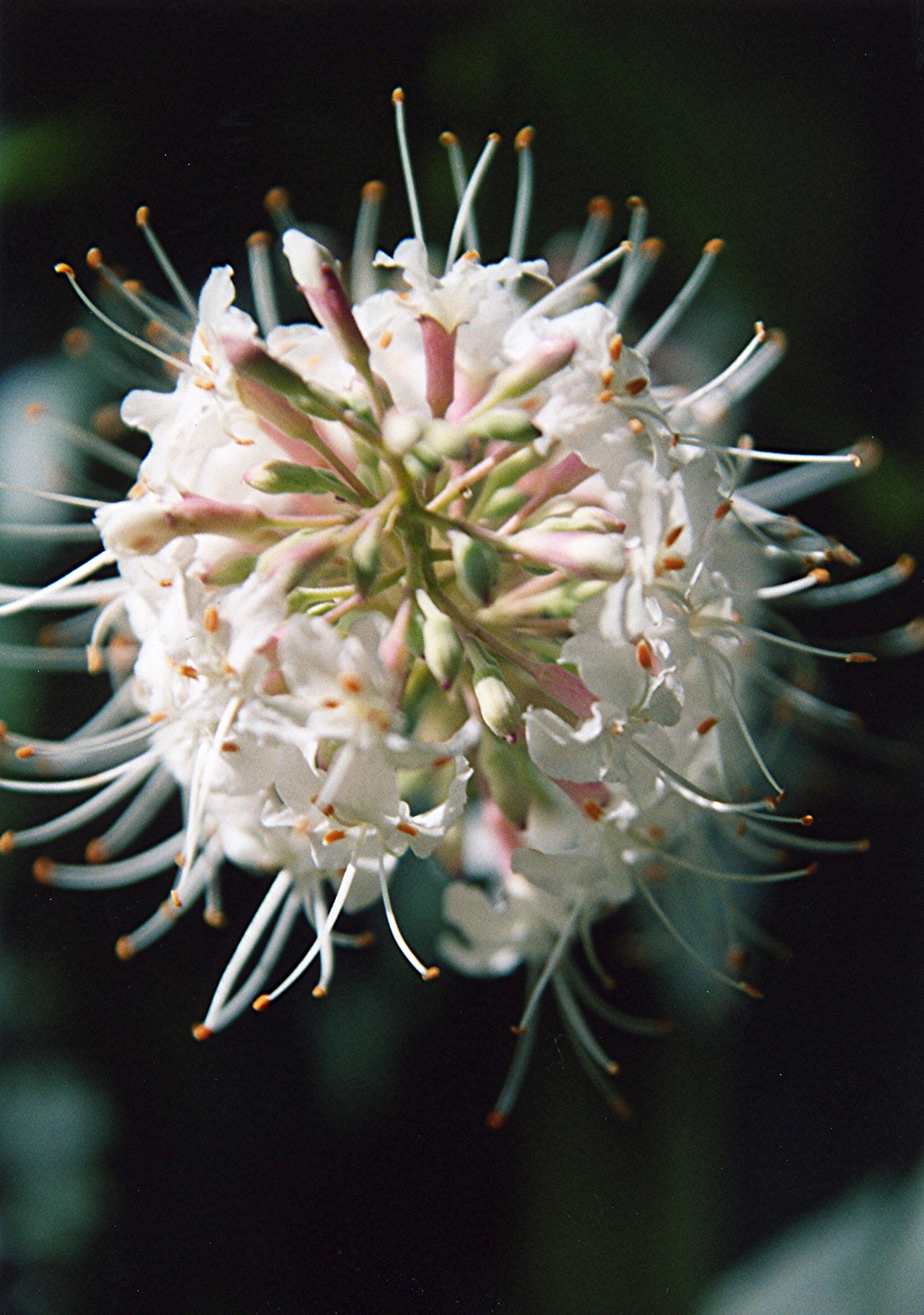
A close up I took of buckeye flowers while hiking along the American River Parkway. The fruit of the buckeye was also crushed by the Miwok and thrown into streams to knockout fish that were then gathered for food.

A close up I took of buckeye flowers while hiking along the American River Parkway. The unleached fruit of the buckeye was crushed by the Miwok and thrown into streams to poison fish that were then gathered for food.

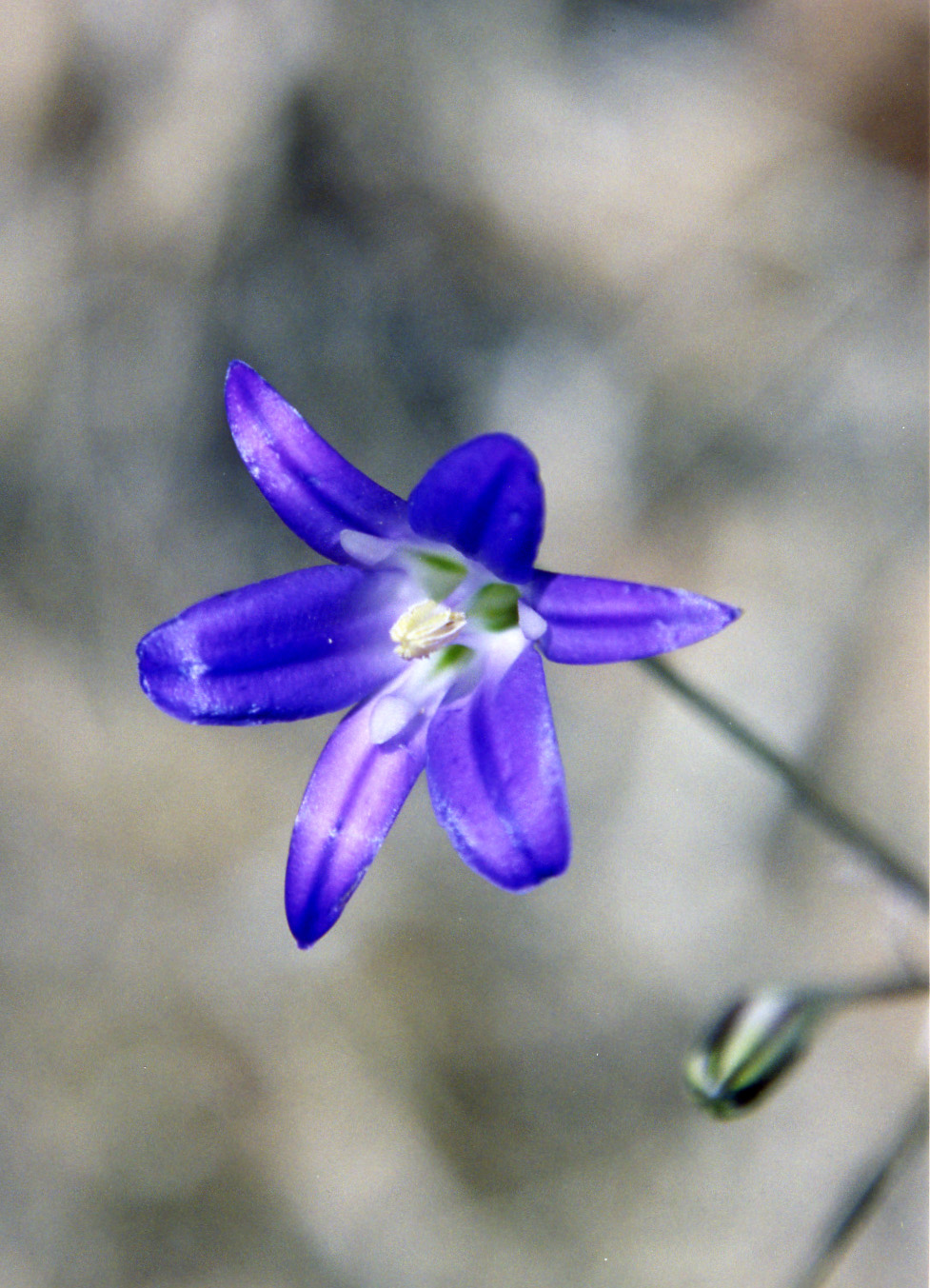
Bulbs of Harvest Brodiaea were baked, boiled or eaten raw by the Miwok. This is another photo I took along the American River Parkway.

Bulbs of Harvest Brodiaea were baked, boiled or eaten raw by the Miwok.

Wild animals, like native plants, were central to the existence of the Miwok. An informative book by Betty Goerke, Discovering Native People at Point Reyes, notes that the Miwok considered Coyote the creator of their world. As in much Native American lore, Coyote was also a trickster god, often getting into mischief. His god-like status kept him from getting eaten, however. Other animals didn’t fare as well, but even they deserved respect. “It was necessary and a common courtesy to honor an animal when it was killed,” Goerke notes. Beads were thrown into a fire to honor a dead bear. Even a small bird would receive a dance— “so it wouldn’t feel bad.” I’m not sure the dead bird appreciated the dance, given an option, but I like the sentiment behind it.
NEXT BLOG: How Olompali moved from being home territory for the Miwoks to a temporary home for the Grateful Dead and then the site of one of California’s most famous hippie communes.