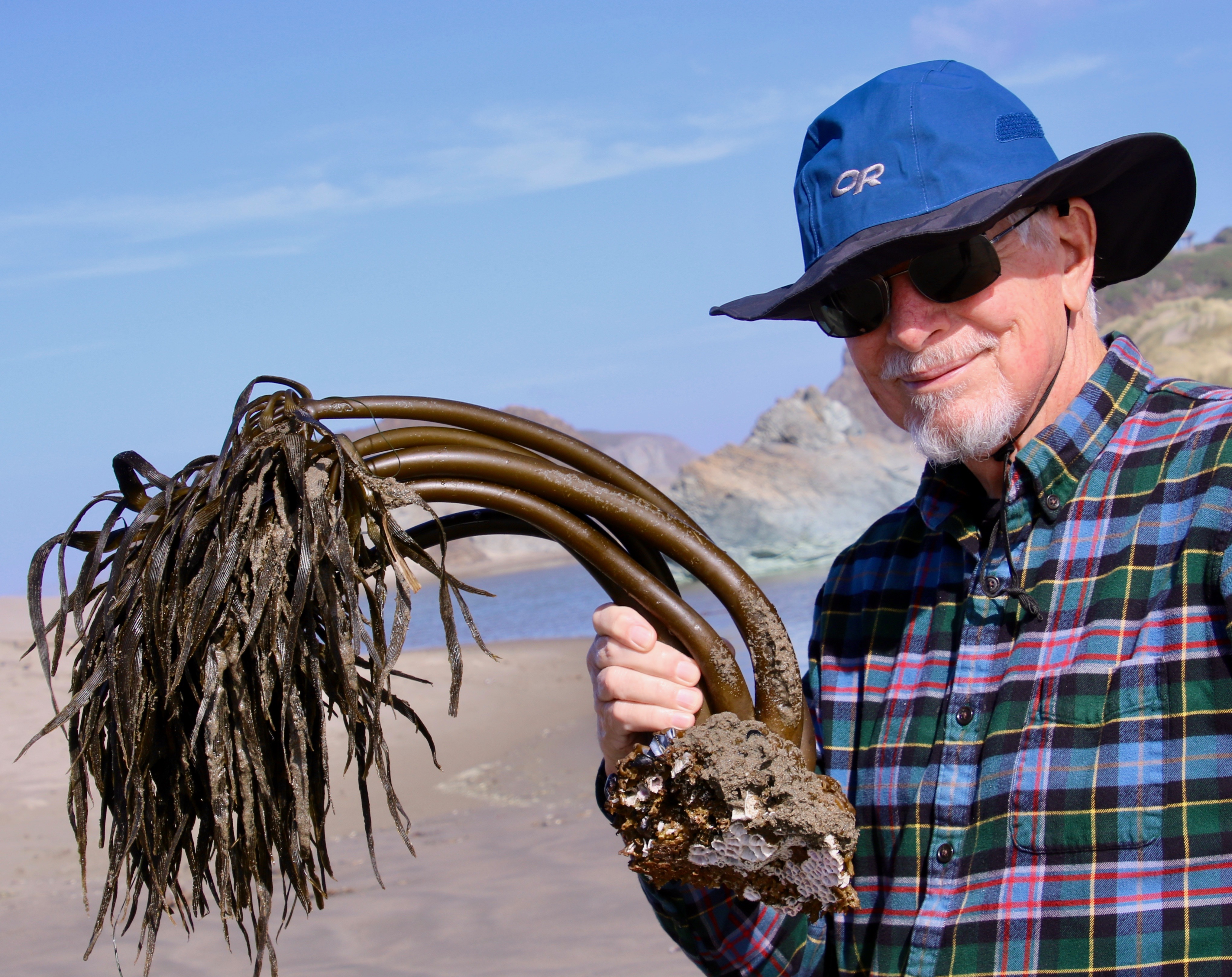
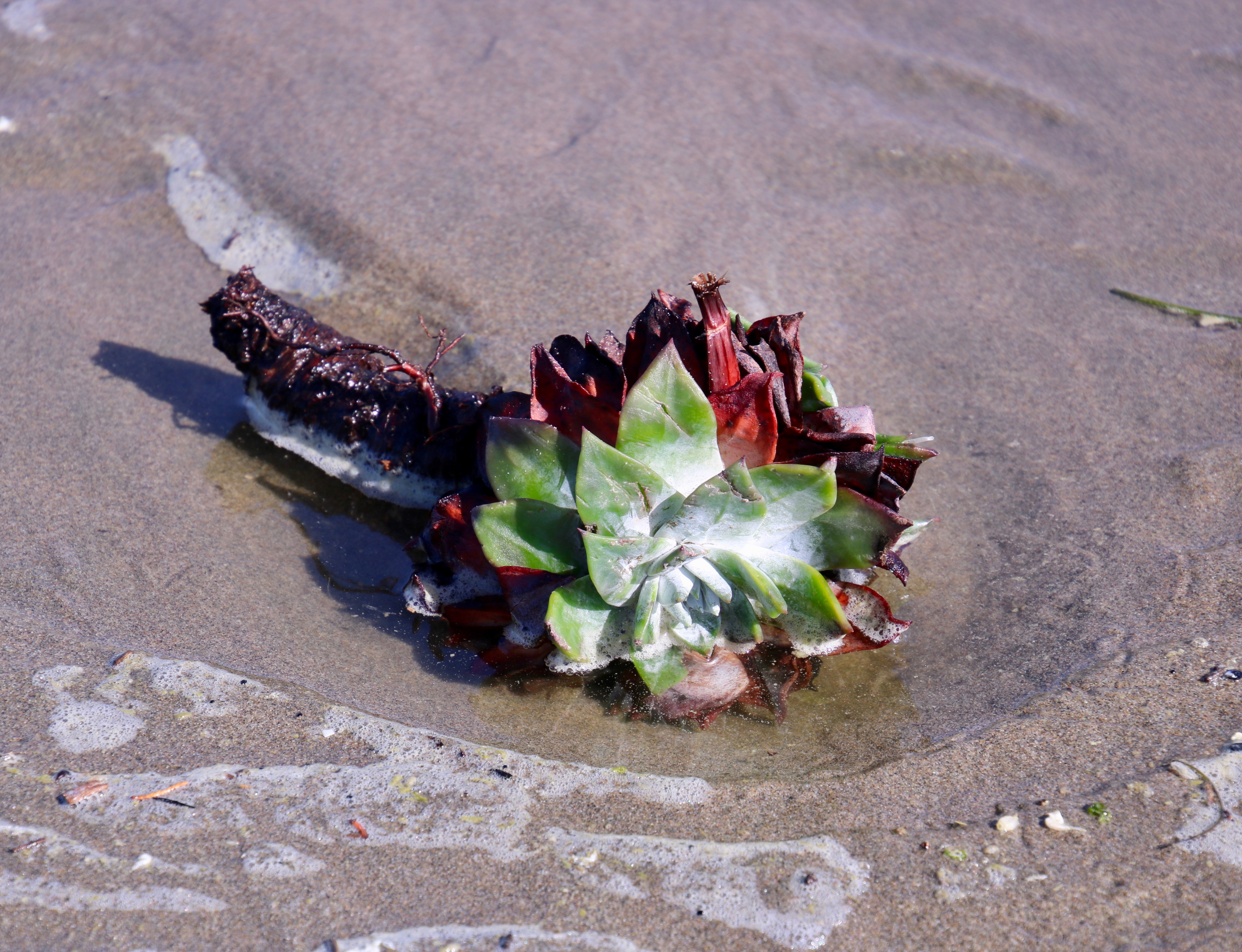
Only a guy with a little Devil in him would offer his sweetheart a bouquet of sea palms washed ashore by a turbulent ocean. She wasn’t too impressed. (Photograph by Peggy but the words are all mine.)
If place names are any judge, the Devil does get around. There are literally dozens if not hundreds of locations in the US named after him. New England seems to win the prize for the most, which is understandable since the Puritans were among its first settlers. They saw Hell in just about everything.
The Oregon Coast has more than its share of Devilish locations, however. There are 10 places along the coast alone that bear his name. Among them are the Devil’s Punch Bowl, Cauldron and Churn and various body parts including his Elbow and Backbone. I was reminded of the various cathedrals in Europe that stock up on the bones of saints to impress the holy and solicit their offerings.
Peggy and I dropped by his Kitchen on our visit last week to Bandon, Oregon. I’d been there before and speculated in a blog on how the Kitchen got its name. The answer provided by the sign-board seemed a little prosaic in comparison to my speculation. It had to do with the cold waters of the ocean bringing a rich brew of nutrients to the surface that were eaten by plankton, that were eaten by small fish, that were eaten by bigger fish, that were eaten by still bigger fish, that were eaten by seals, otters, and a whole host of seabirds, not to mention people and anything else that could sink their teeth into them.
Possibly if you were on the receiving end of this long chain of being eaten, you might think that the Devil was involved.
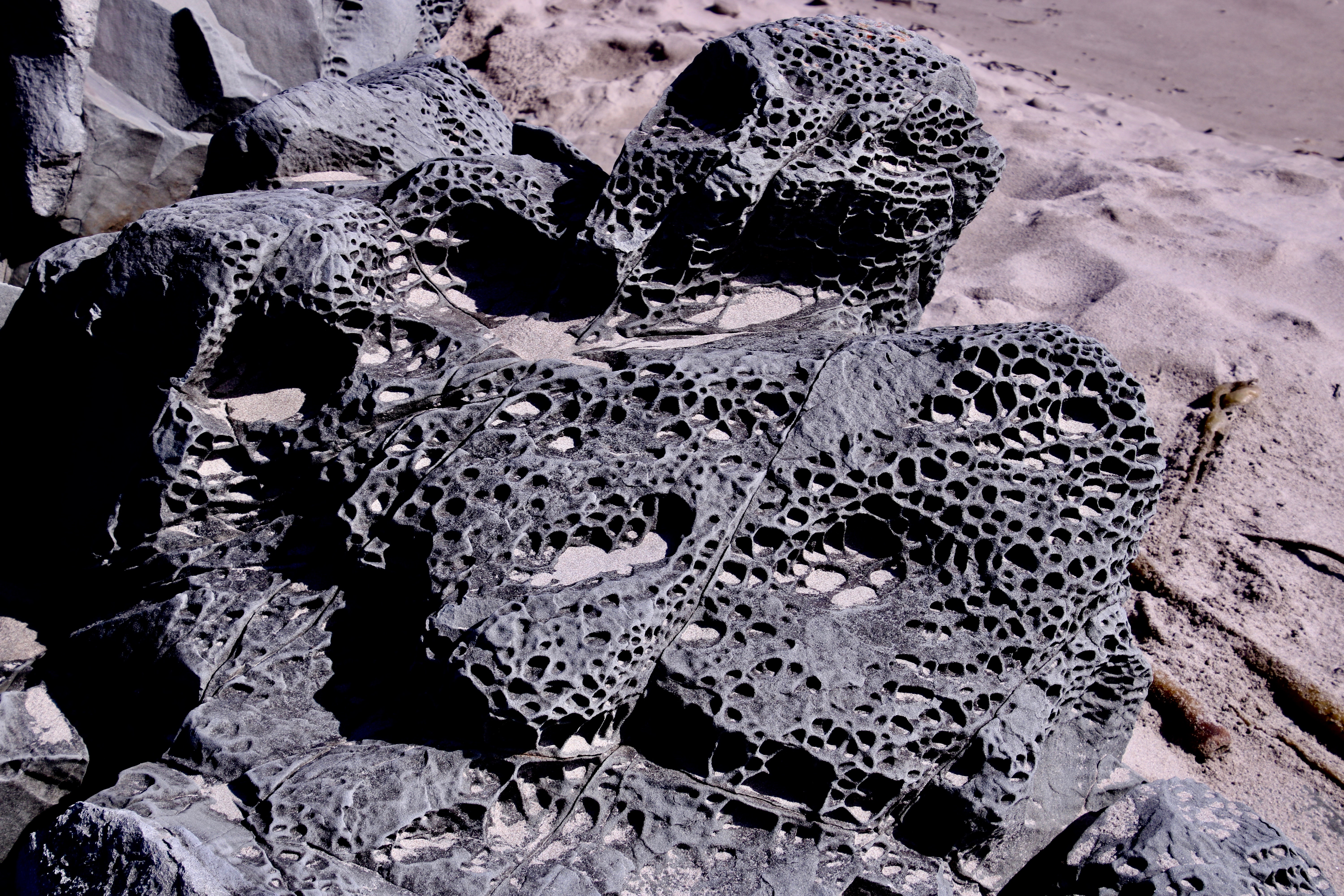
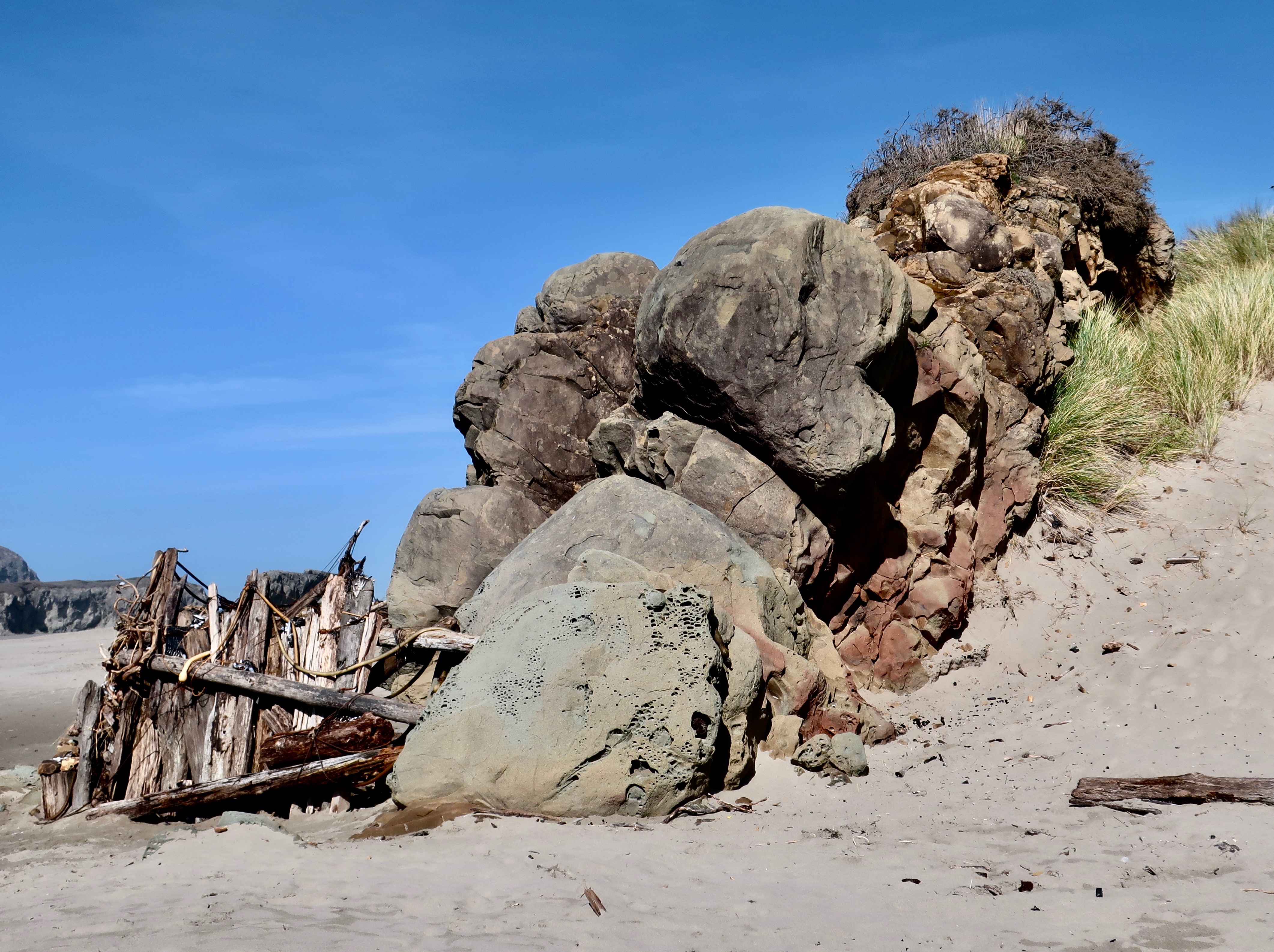
I’d still go with a Devil rock like this. Stare at it long enough after imbibing in your favorite mind altering drug and who knows what you might see. After a mere two glasses of wine I saw four sets of dead eyes staring back at me. (Photo by Peggy Mekemson.)This large crooked rock towered above the Devil rock above. That’s kelp buried in the sand to the right of it.
Mainly, Peggy and I saw a beautiful beach with some great sea stacks, crashing waves, impressive homes, driftwood, a quiet stream, and two driftwood forts that had either been built by energetic kids eager to fight pirates or adults reliving their childhood. I could see our son Tony enthusiastically joining his three sons on such a project.
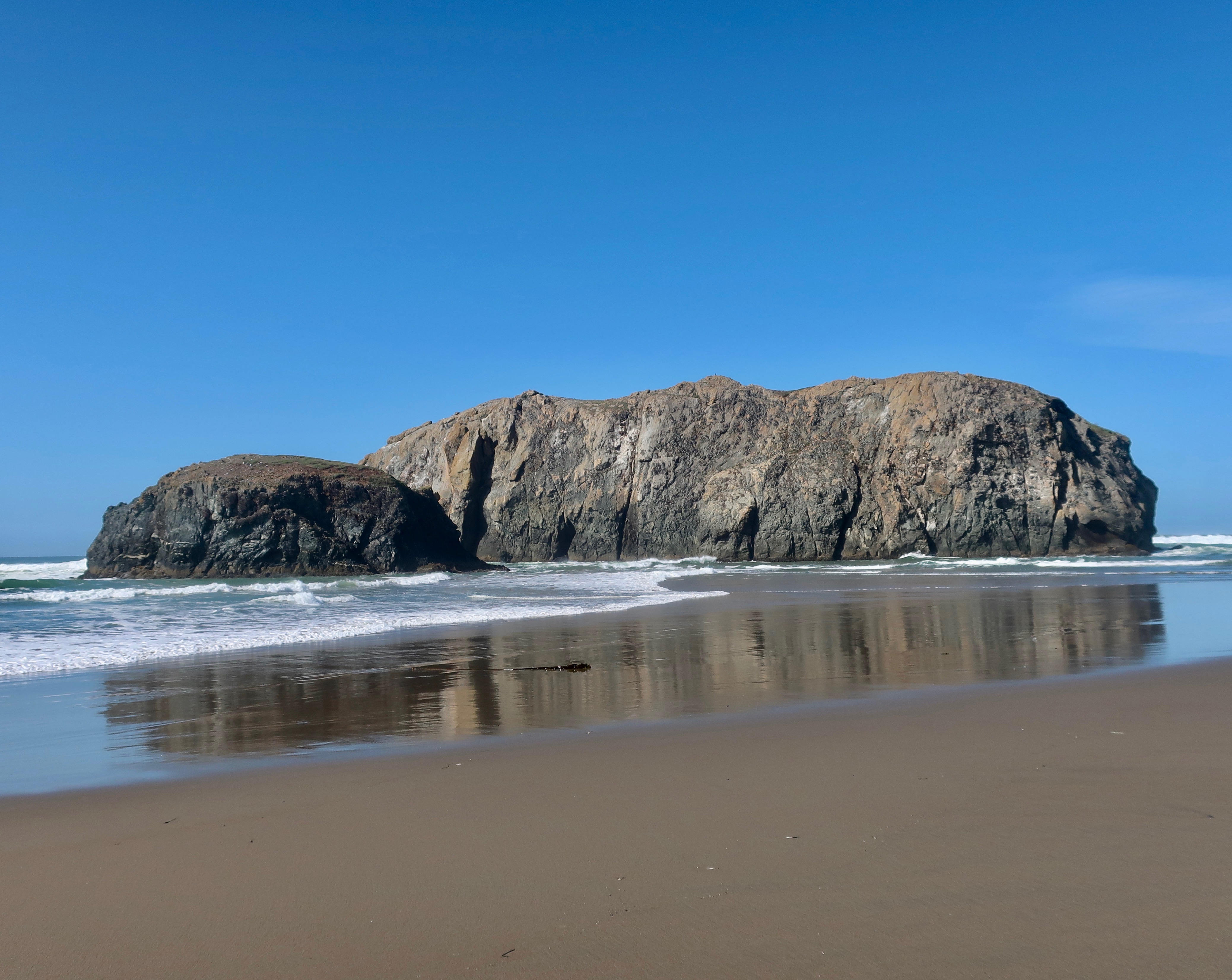
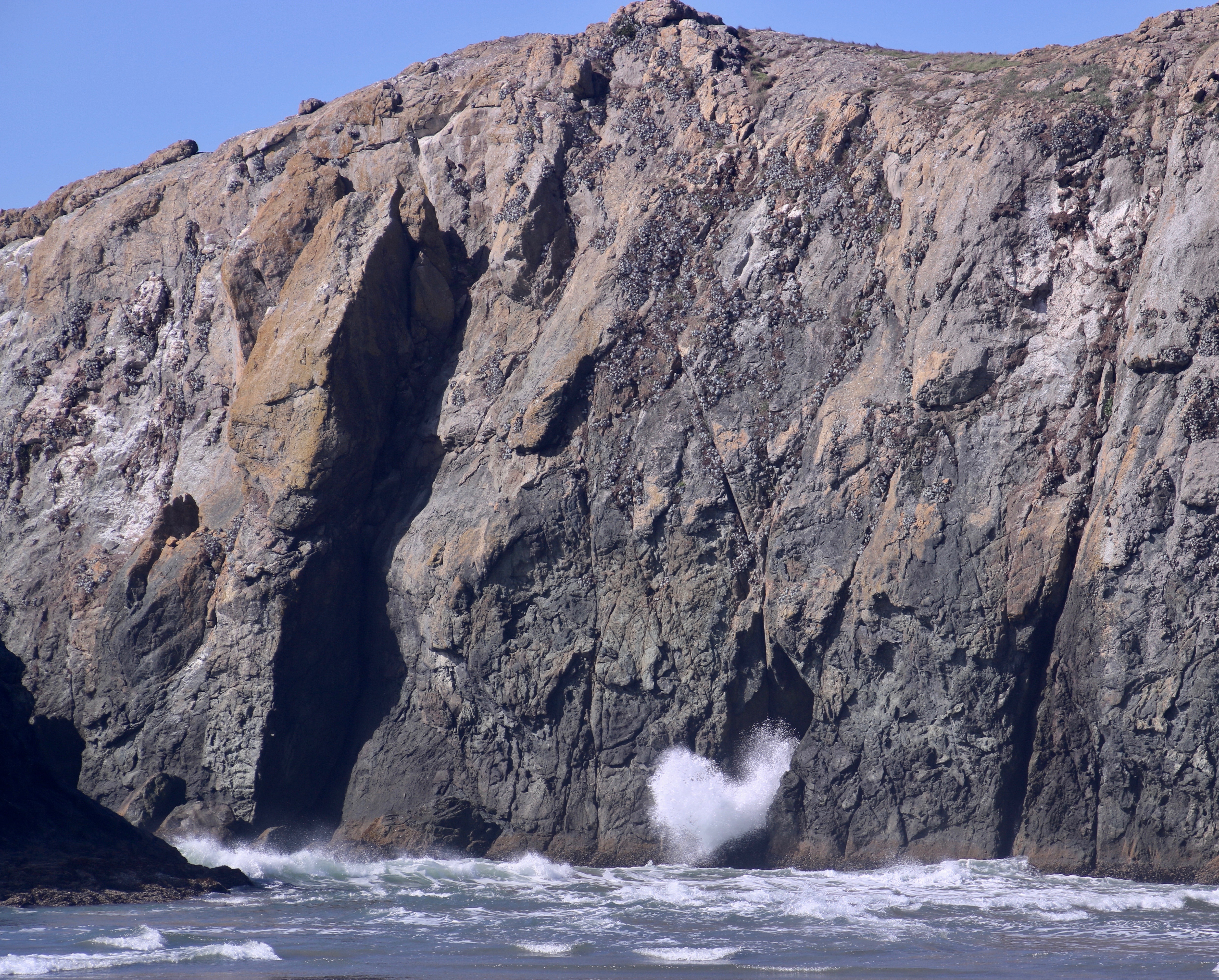
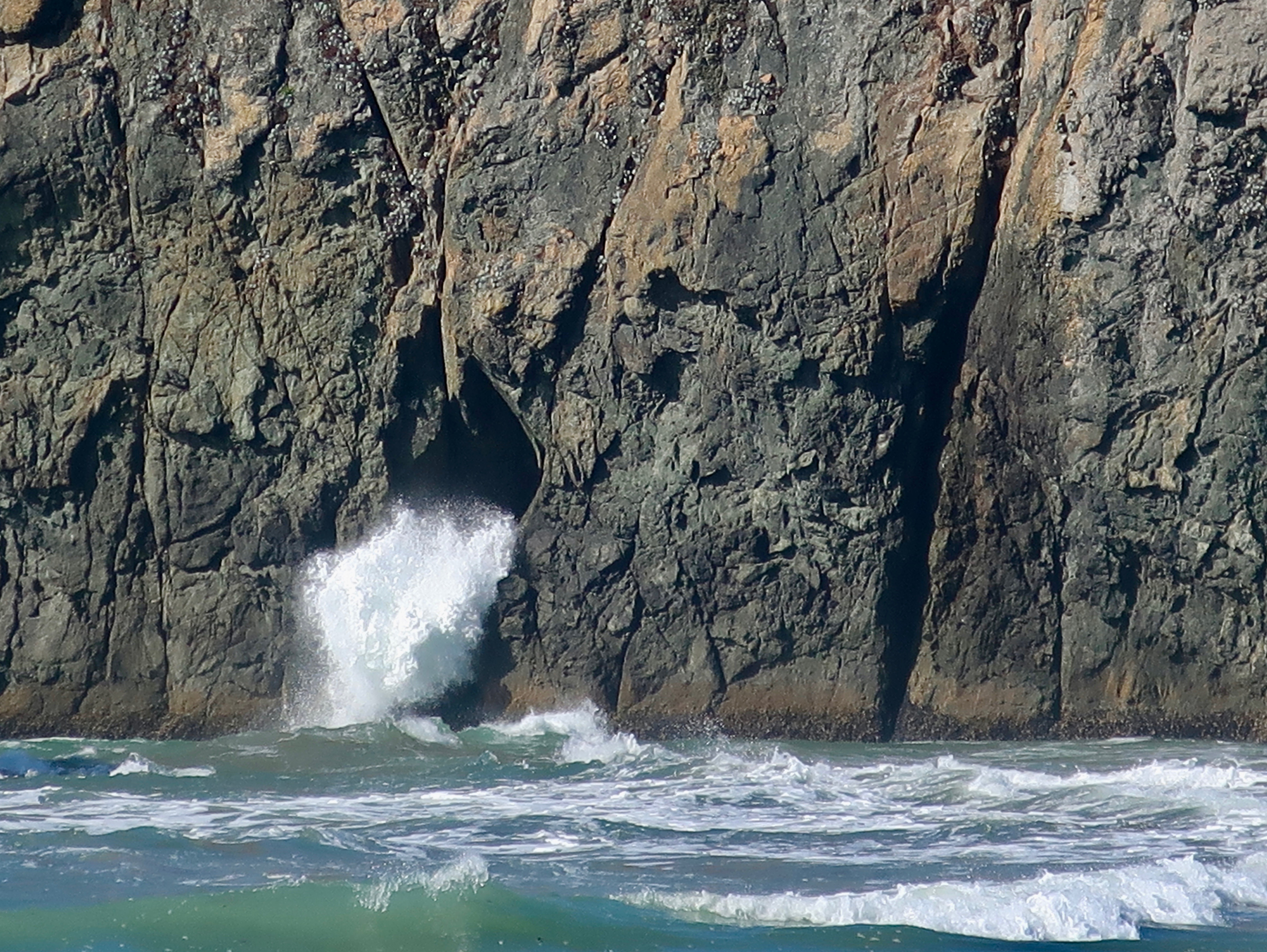
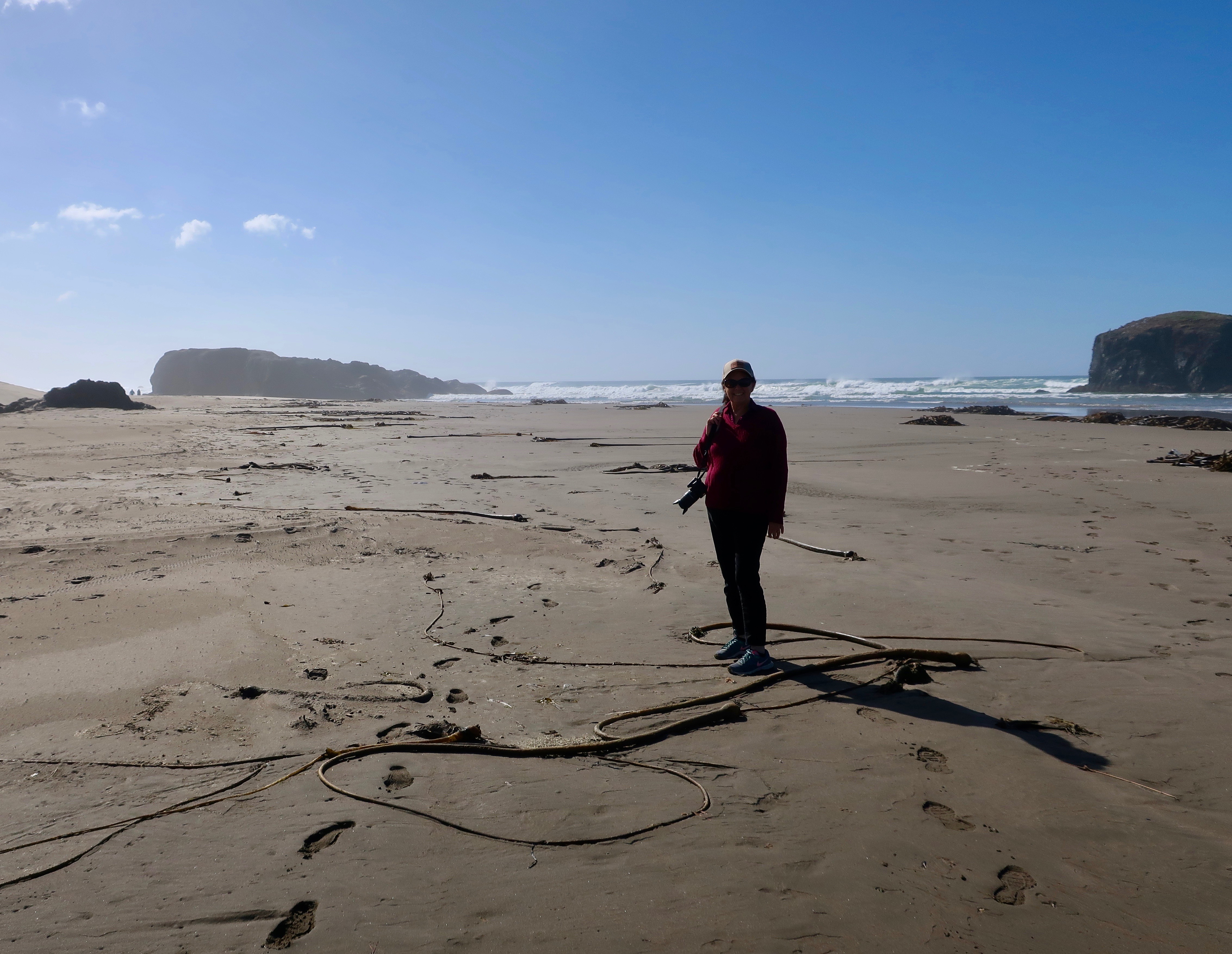
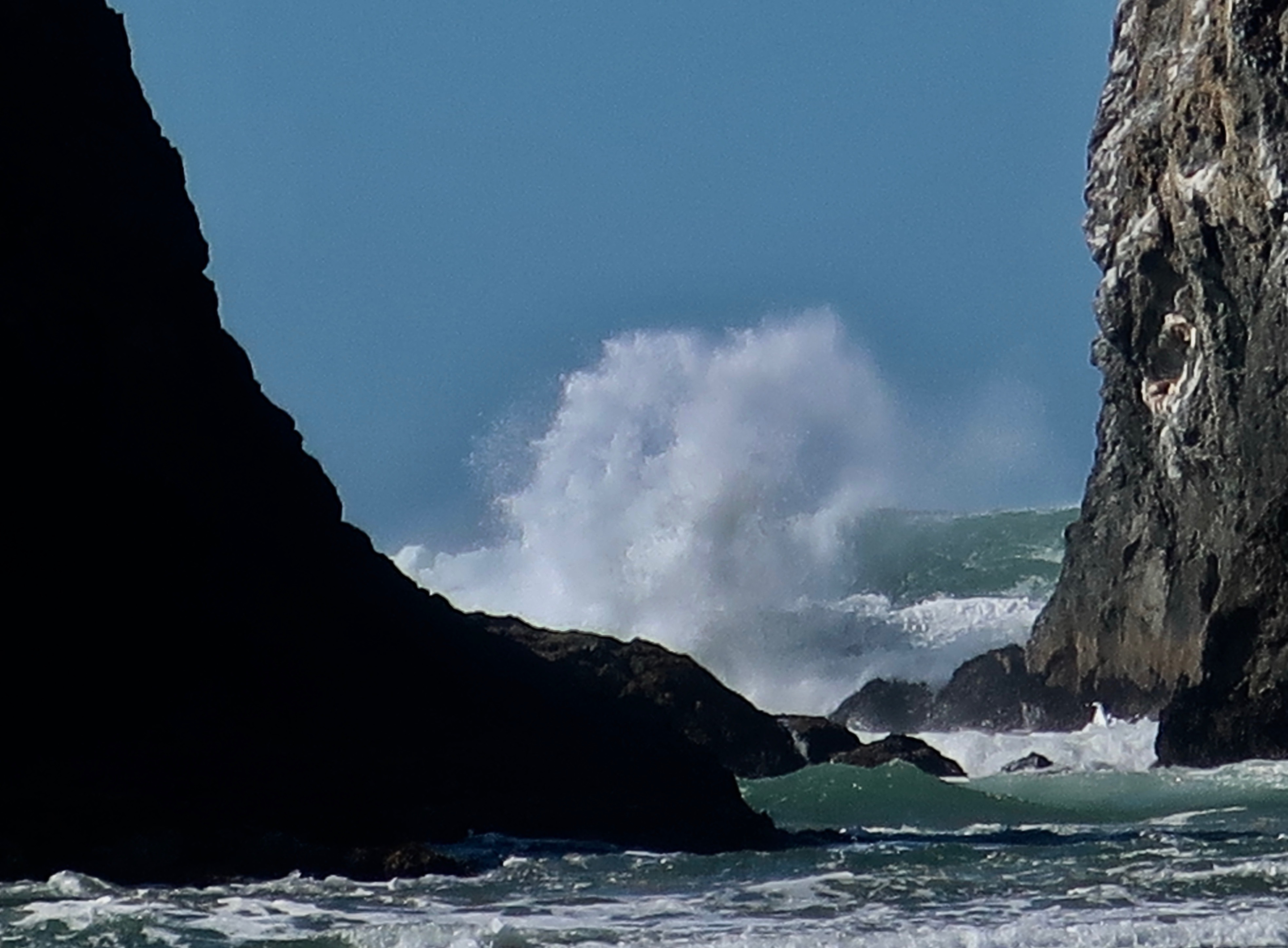
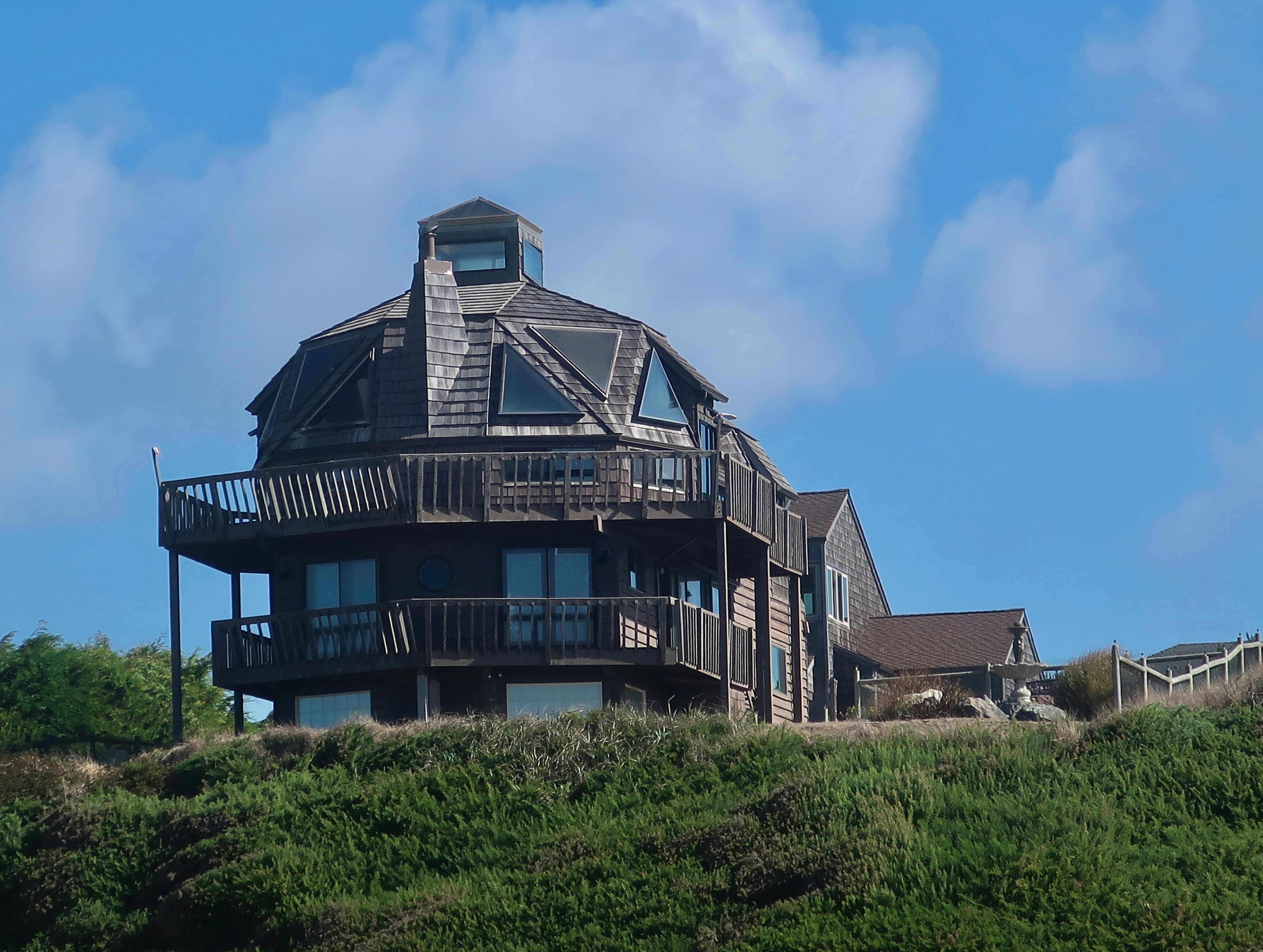
The large sea stack just off the coast from Devil’s Kitchen is known as Haystack Rock.Peggy discovered that a cave ran all the way through the massive rock and allowed the ocean to flow through. It is one of many such caves in the rocks off the coast of Bandon. (Photo by Peggy Mekemson.)I took a close up. At a really low tide, you could probably walk through to the other side.One thing, we had no problem social distancing on the beach at Devil’s Kitchen, as Peggy demonstrates. We were still carrying our masks, however.It had been storming the day before and waves were still crashing ashore.Some very impressive homes had been built on the cliffs above the beach. I figured this house could easily accommodate a large family with a dozen kids, or maybe 20. I’m a small-house type of person but with a dozen kids, I would definitely want this one!And another oneI was even more impressed by the rock in front of the house. I’d almost feel safe in case of a Tsunami. This section of the coast is threatened by a giant one as the Juan De Fuca Oceanic Plate continues it dive under the North American Continental Plate and threatens a massive earthquake. The last really big one with a rating of over 9 on the Richter scale was in 1700 and they are known to occur every 300-500 years. It could be a hundred years from now. Or tomorrow. I’d blame the Devil.This driftwood fort was not quite as fancy as the houses but a heck of a lot less expensive. A mom and three kids were playing in it. “Can I take a photo?” Peggy asked. The answer was, “Of course.” You can barely see the family. (Photo by Peggy Mekemson.)I found this driftwood fort just around the corner. It had been decorated with rocks and kelp.It was built at the base of an impressive rock.While on the subject of driftwood, I though this piece set off by ocean grass was rather attractive.
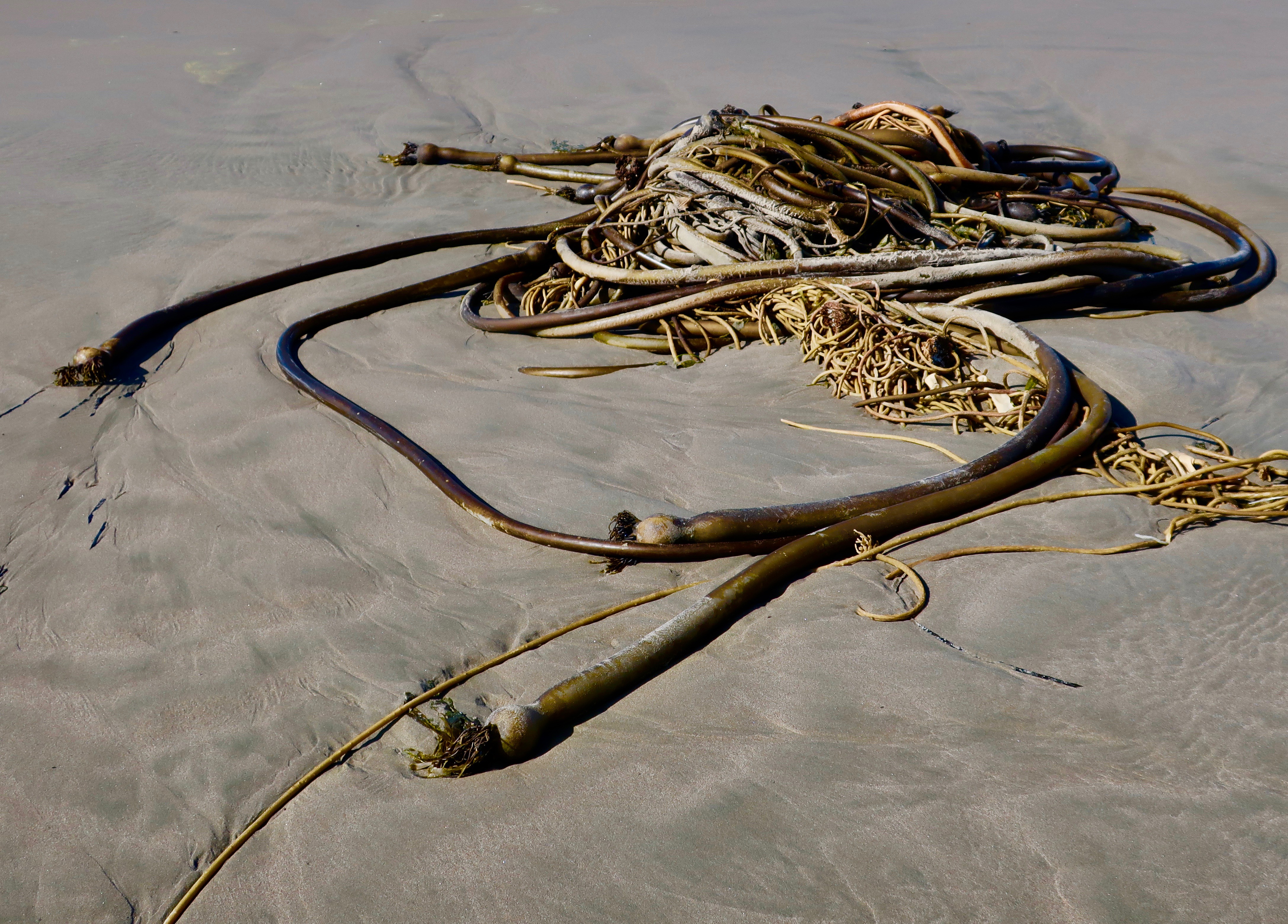
Piles of kelp and other sea treasures had been ripped away from their firm attachments to rocks by the stormy seas the day before and were left behind on the beach.
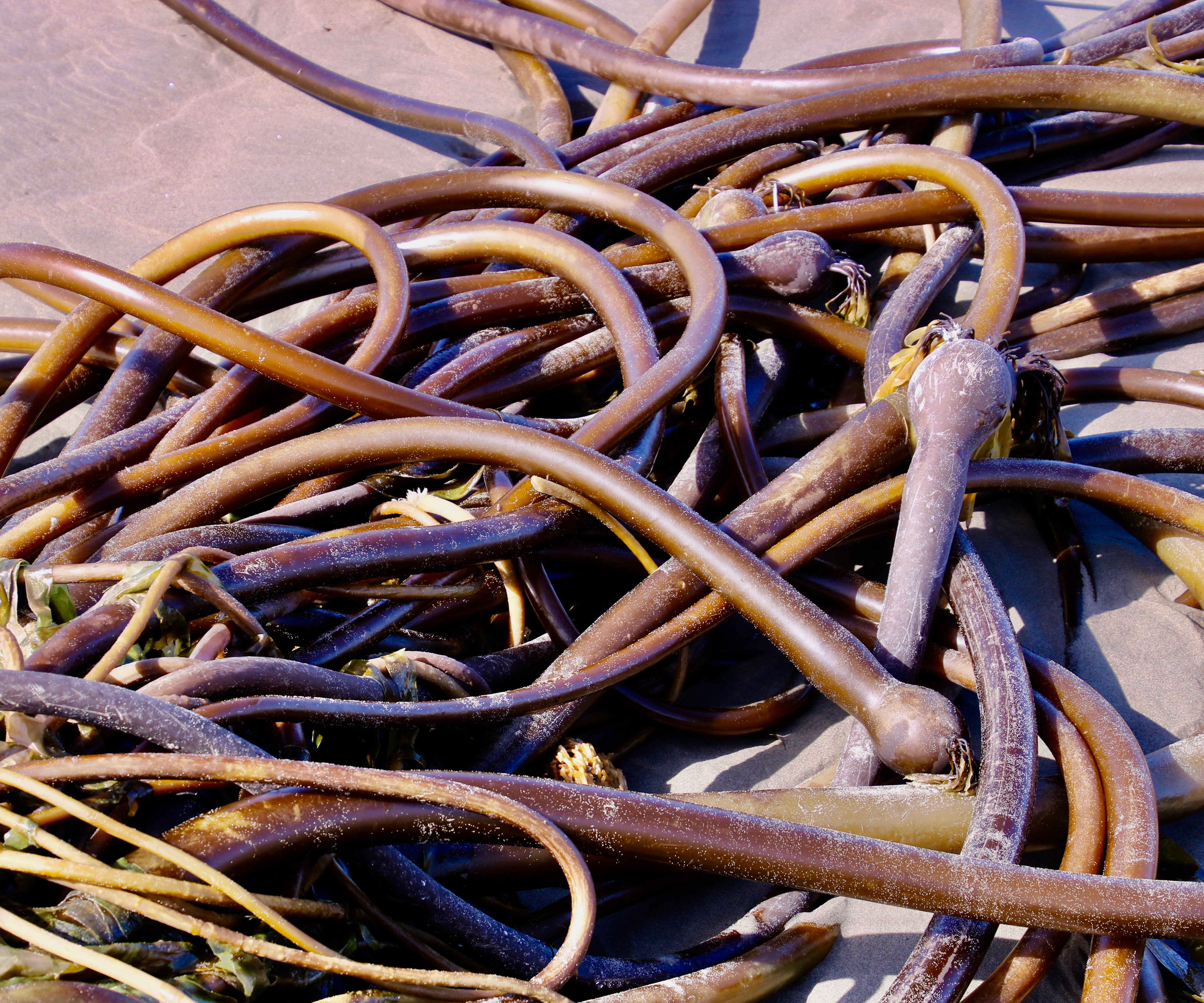
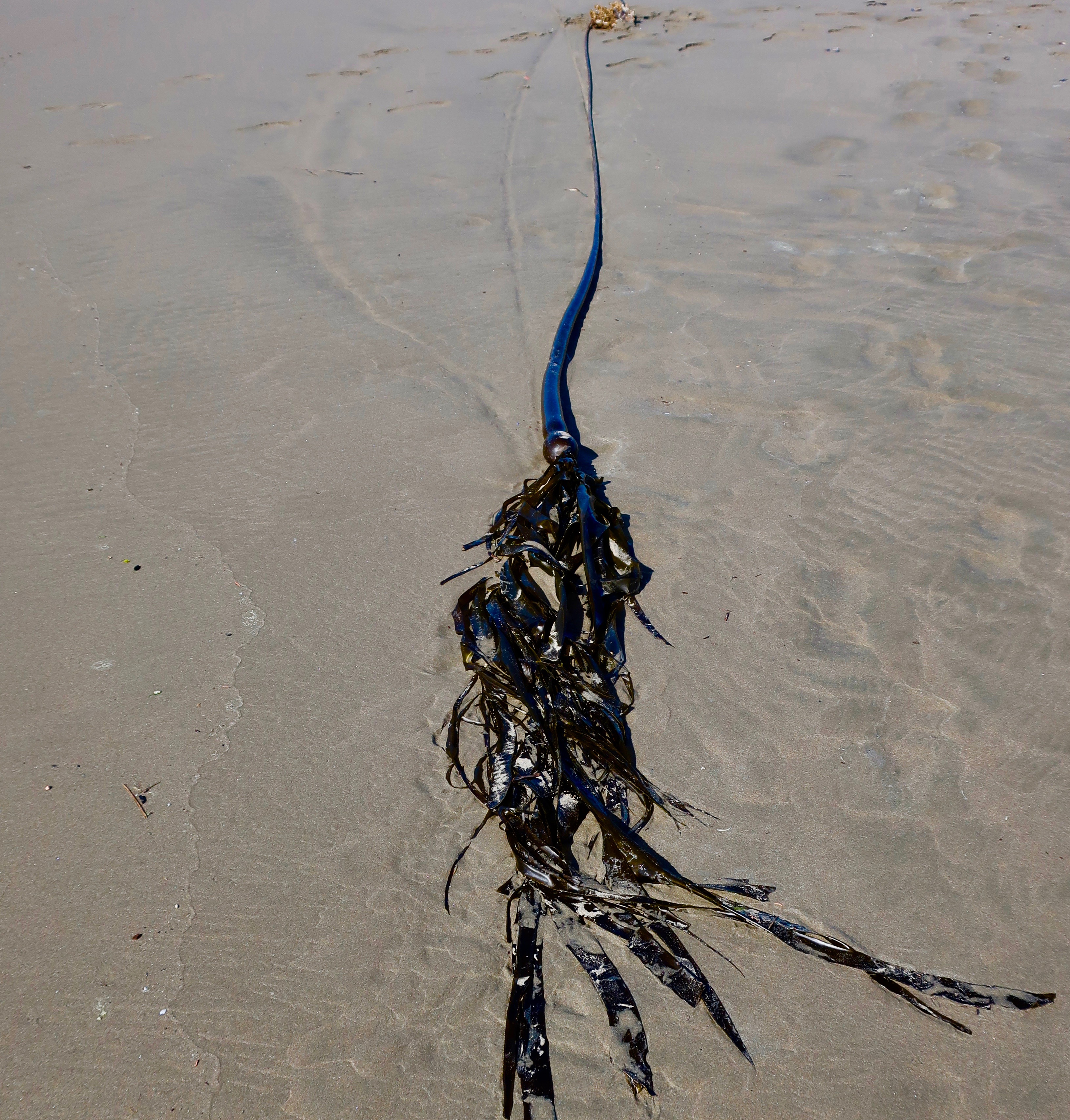
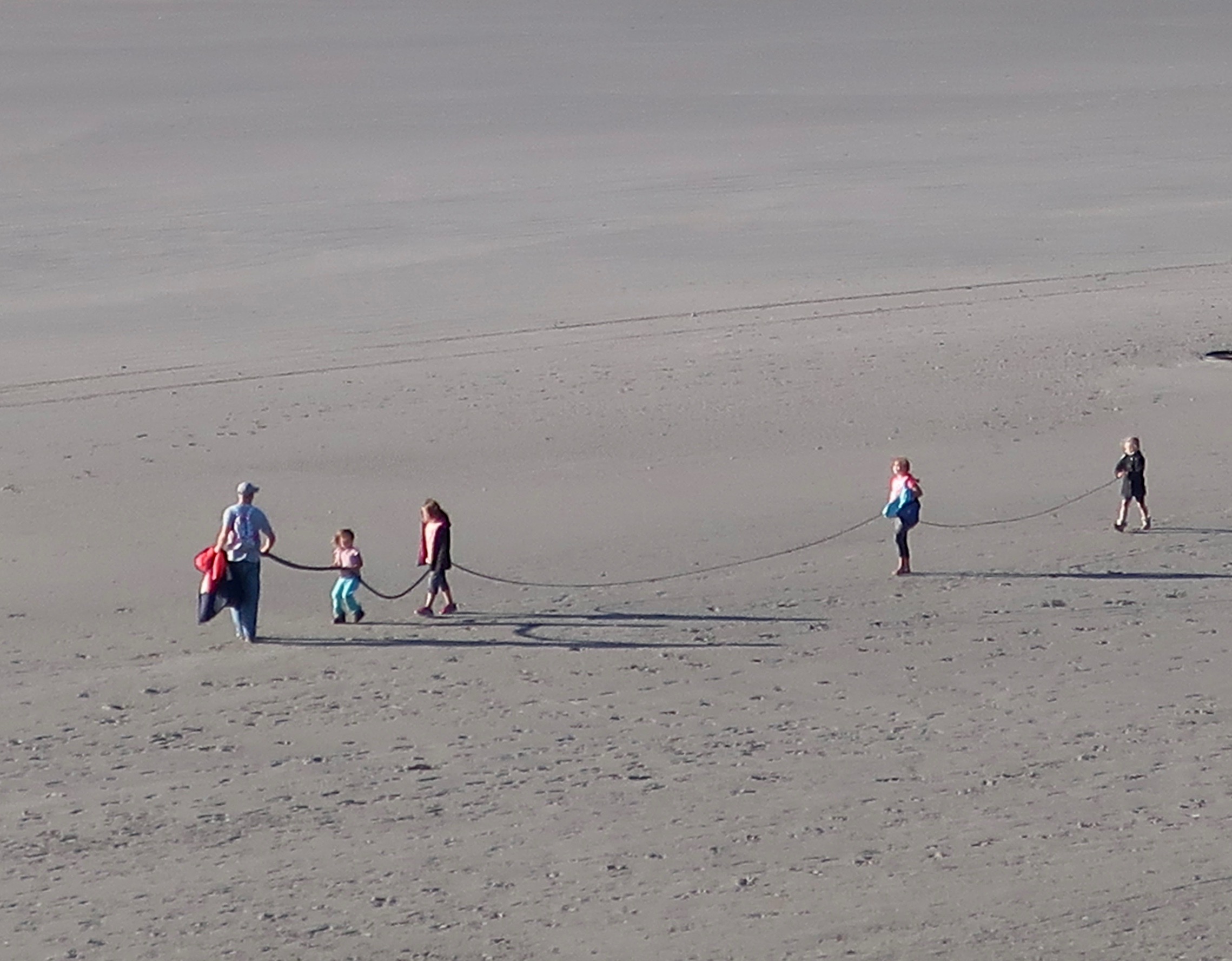
Piles of kelp like this were found strewn over the beach at Devil’s Kitchen and other beaches along the coast neat Bandon.Peggy took this close up of the kelp.This photo gives an idea of the length of the kelp plant from where it is attached to a rock on the ocean floor up to its leaves.This shot I took of a family carrying a kelp gives an even better idea!Here’s another use for kelp that I confess I have tried on occasion— using it as a whip. It is so tempting! And also a bit devilish. Get thee behind me Satan.Kelp wasn’t the only thing ripped from the rocks. Peggy was charmed by this plant and took its photo. Note the roots. All of these plants had ways of attaching themselves to rocks that resist all but the most powerful of ocean waves.Like these mussels and barnacles we found on the Devil’s Kitchen beach, for example. I think that the mussels had been harvested by seabirds.I’ll conclude today with this impressive pile of kelp backed up by the Pacific Ocean and Haystack Rock.
NEXT POST: We will be traveling up to the next beach north, Face Rock with its marvelous sea stacks.







 Wandering through Time and Place