The Sand Dunes of Death Valley… The National Park Series

The sand dunes of Death Valley National Park provide a striking contrast to the surrounding mountains.

I was in my lowest gear, out of the saddle, and moving at three miles an hour. It would have been easier to get off the bicycle and push, but I am stubborn.

Three days before I had climbed over Greenhorn Pass in the Southern Sierra Nevada Mountains during a blinding snowstorm. I wasn’t going to let the Panamint Range of Death Valley National Park defeat me

There was ample time as I struggled up the mountain to question the sanity of doing a six-month, 10,000-mile solo bike tour around North America. I’d prepared for the journey by increasing my beer ration. Of course I paid for my folly. I usually do.
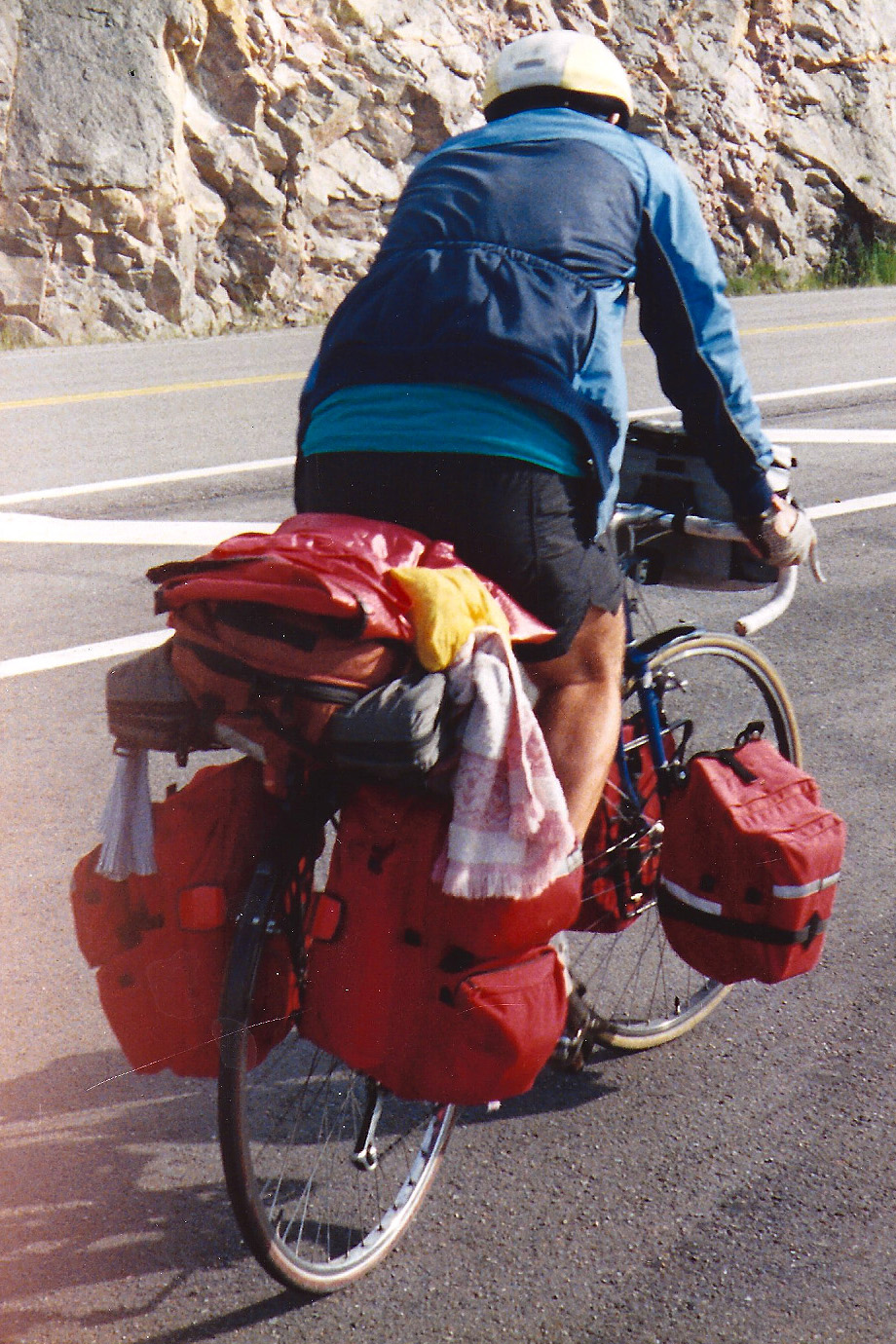
I started my 10,000 mile solo trip around North America out of Sacramento California. Every thing I would need to survive for six months on the road was packed on my bike, some 60 pounds of gear. It wasn't totally solo. The Peripatetic Bone was riding in my handle bar bag.

By the time I reached Death Valley, however, I was two weeks into the trip and my body was toughening up. I succeeded in making the nine-mile climb out of Panamint Valley to the top of the 4956 Towne Pass even though it took me three hours and burned half of my carefully acquired beer calories.

Euphoria was the result. Looking back, I count the climb as one of the top ten challenges of my 10,000-mile trek. It almost competes with dodging a tornado in Mississippi.

I rewarded myself by declaring it lunchtime. I also allowed myself to contemplate the 17 mile downhill ride into Stove Pipe Wells and what I would find at the bottom: the Sand Dunes of Death Valley.

I’ve been in and out of the Valley numerous times over the years. It’s all beautiful or at least wonderfully strange. But for me, the Sand Dunes are in a class by themselves. I am fascinated with their sinuous curves and how they contrast with the surrounding mountains. I love climbing up and down their slippery slopes in the early morning and wandering along their peaked ridges on a moonlit night.

The sinuous, flowing slopes of the sand dunes in Death Valley National Park are a thing of beauty.

The dunes are a product of wind, sand and topography, all of which Death Valley has an abundant share.  Mesquite Flat Dunes, located at Stove Pipe Wells and featured in this blog, are the easiest to reach and the most commonly visited. Being relatively close to Hollywood, they have starred in many movies, including Star Wars.

The last time Peggy and I were in Death Valley, we brought along our bikes for a more relaxed tour of the Valley floor and dune area.
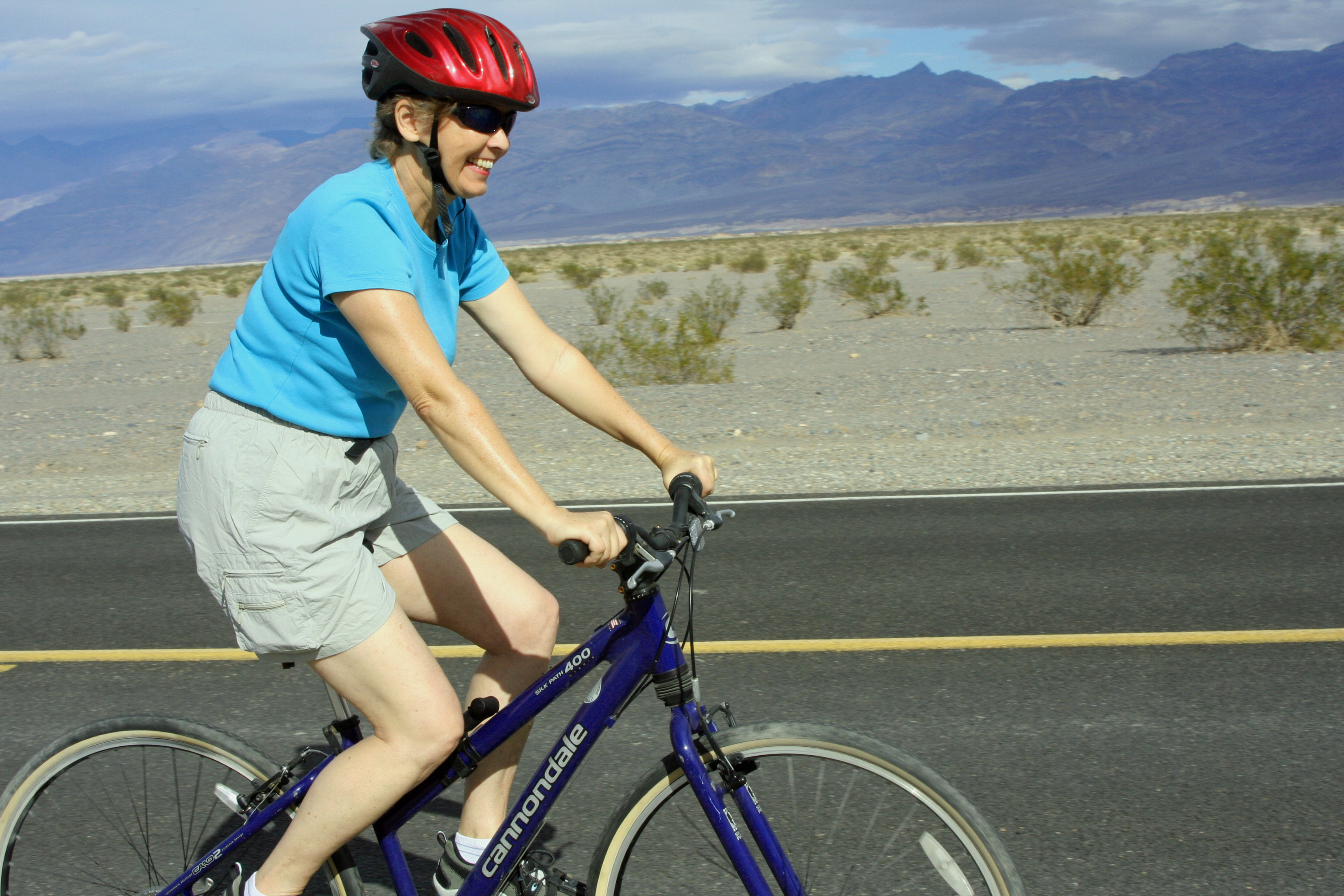
How you look when you aren't loaded down with 60 pounds of gear and climbing a mountain. Note Peggy's smile.
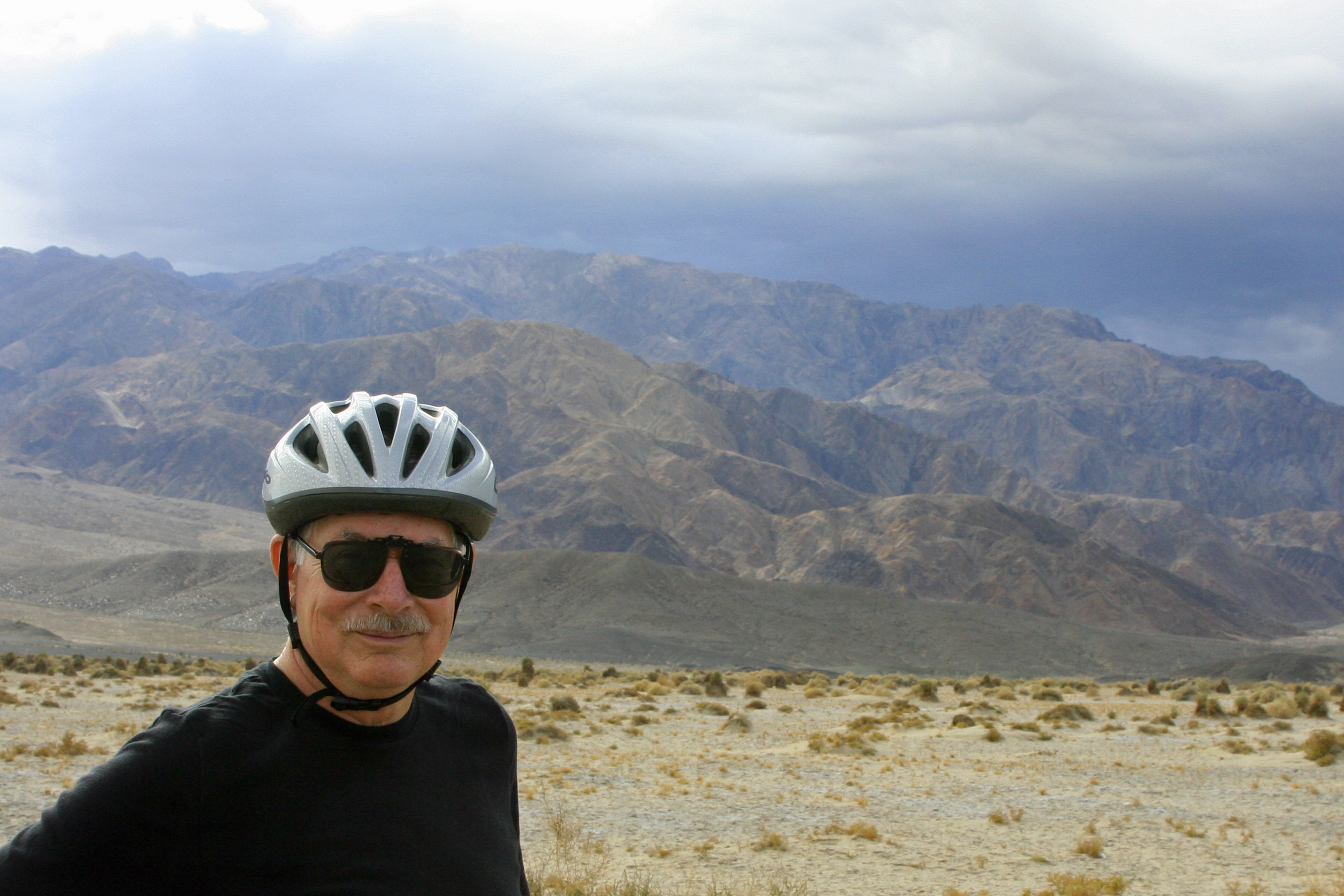
I am looking rather relaxed myself. Peggy took this photo looking across what is known as the Devil's Cornfield. The Panamint Range looms in the background.
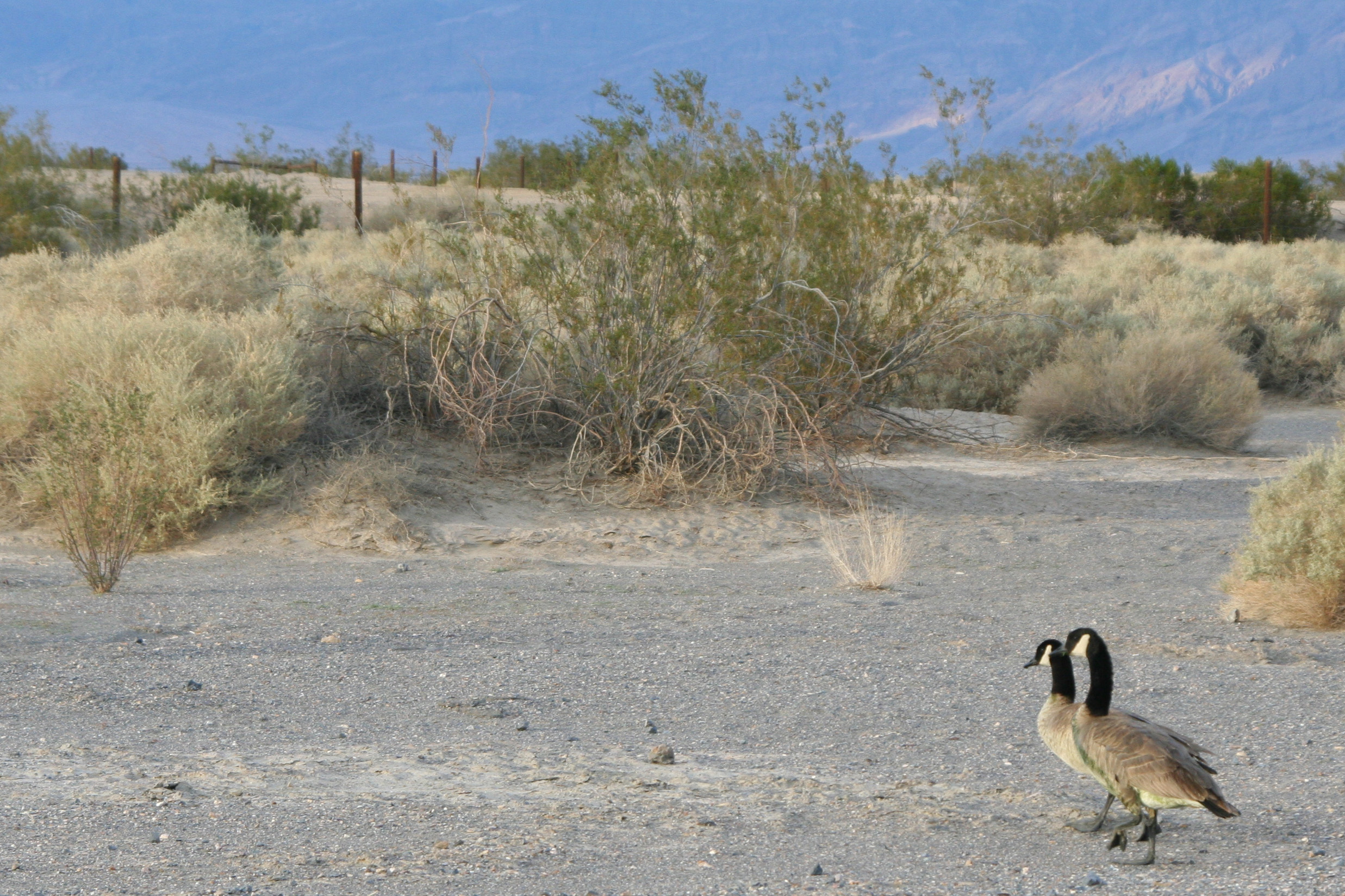
Peggy and I were on an evening stroll out to the dunes when we came across a pair of Canadian Geese. I assumed they were lost but they didn't ask for directions.

A final view of the dunes set off by a cloud filled sky.
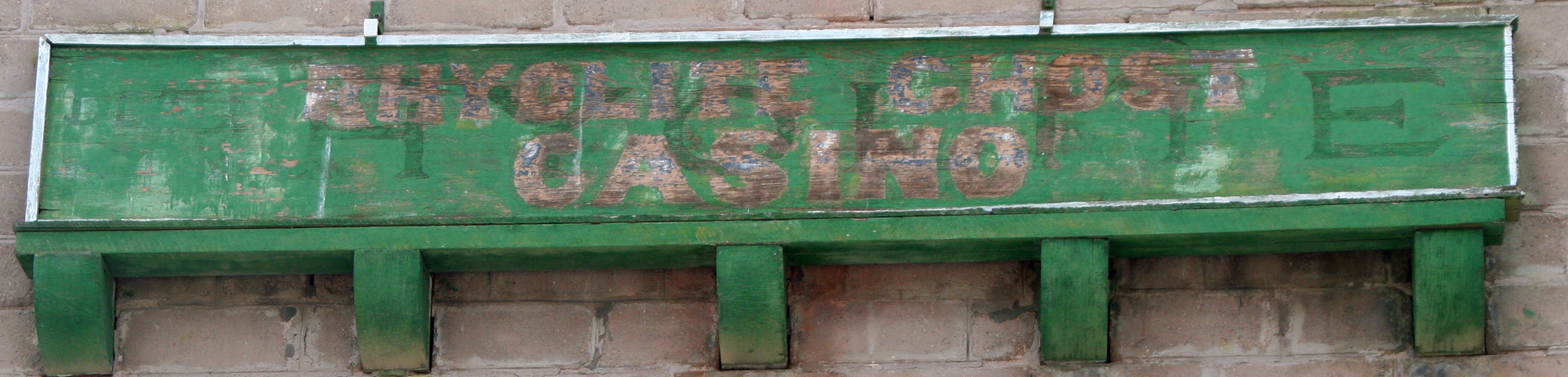
Rhyolite, Death Valley: A Ghostly Town… The National Park Series

A ghost sign for Rhyolite, Nevada. Look closely and you will see ghostly letters of the town's name imposed over the name of a long forgotten casino.

The wind was cold with the whispers of forgotten ghosts. We put on our Jackets to fight the chill; Bone found a horseshoe for good luck. We had made a detour to visit the old Ghost Town of Rhyolite on the way into Death Valley National Park from the small town of Beatty in Nevada.

The Peripatetic Bone, who was originally part of a horse just above the hoof, tries on a horseshoe for good luck.

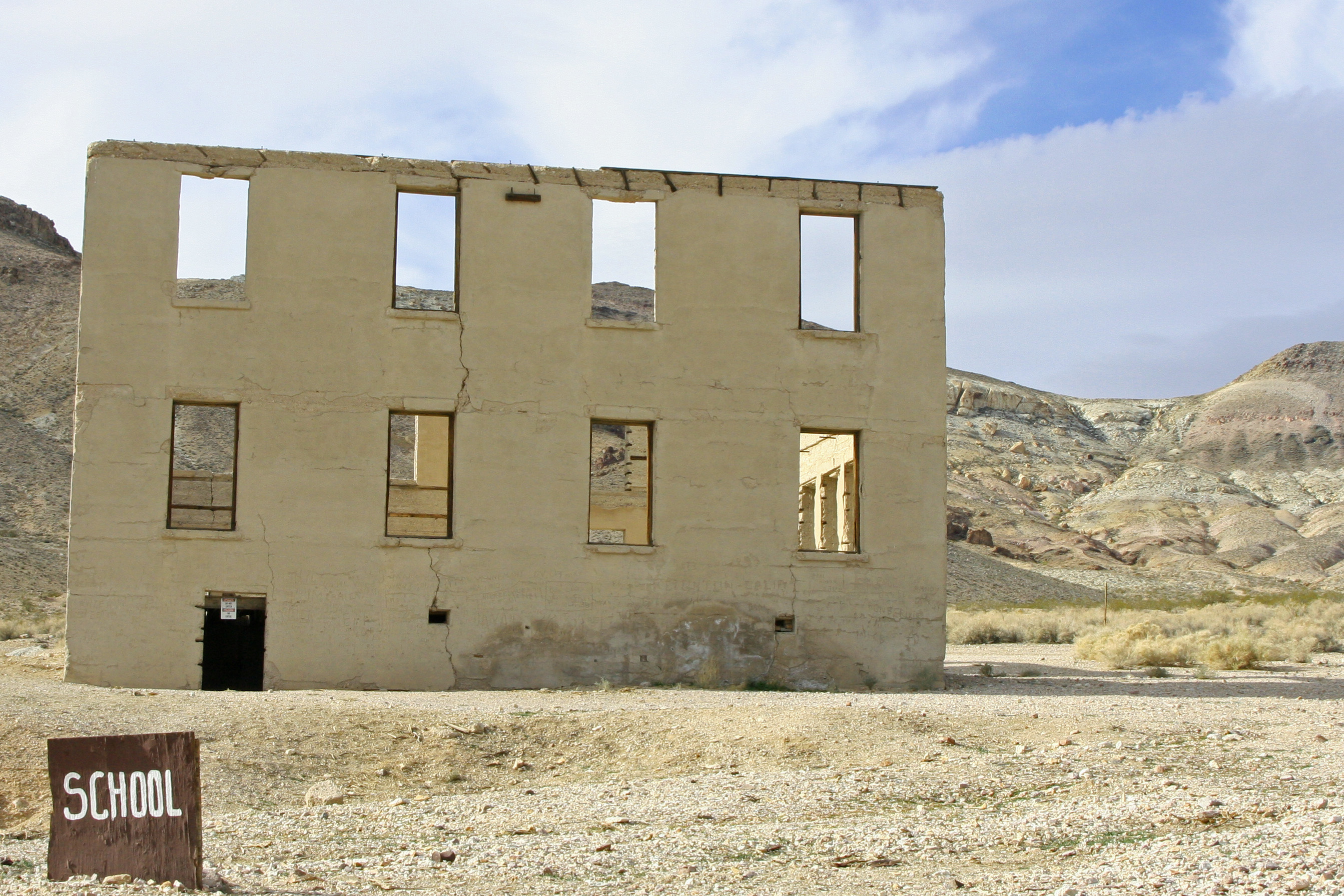
Gold was discovered in the area in 1904. A boomtown sprang out of the desolate desert. Soon there was a school, a bank and even an opera house. The sound of “batter up” could be heard on weekend days and arias on weekend nights. Women flowed in from San Francisco to accommodate the town’s red light district.

Can you hear the children playing?

The town bank.

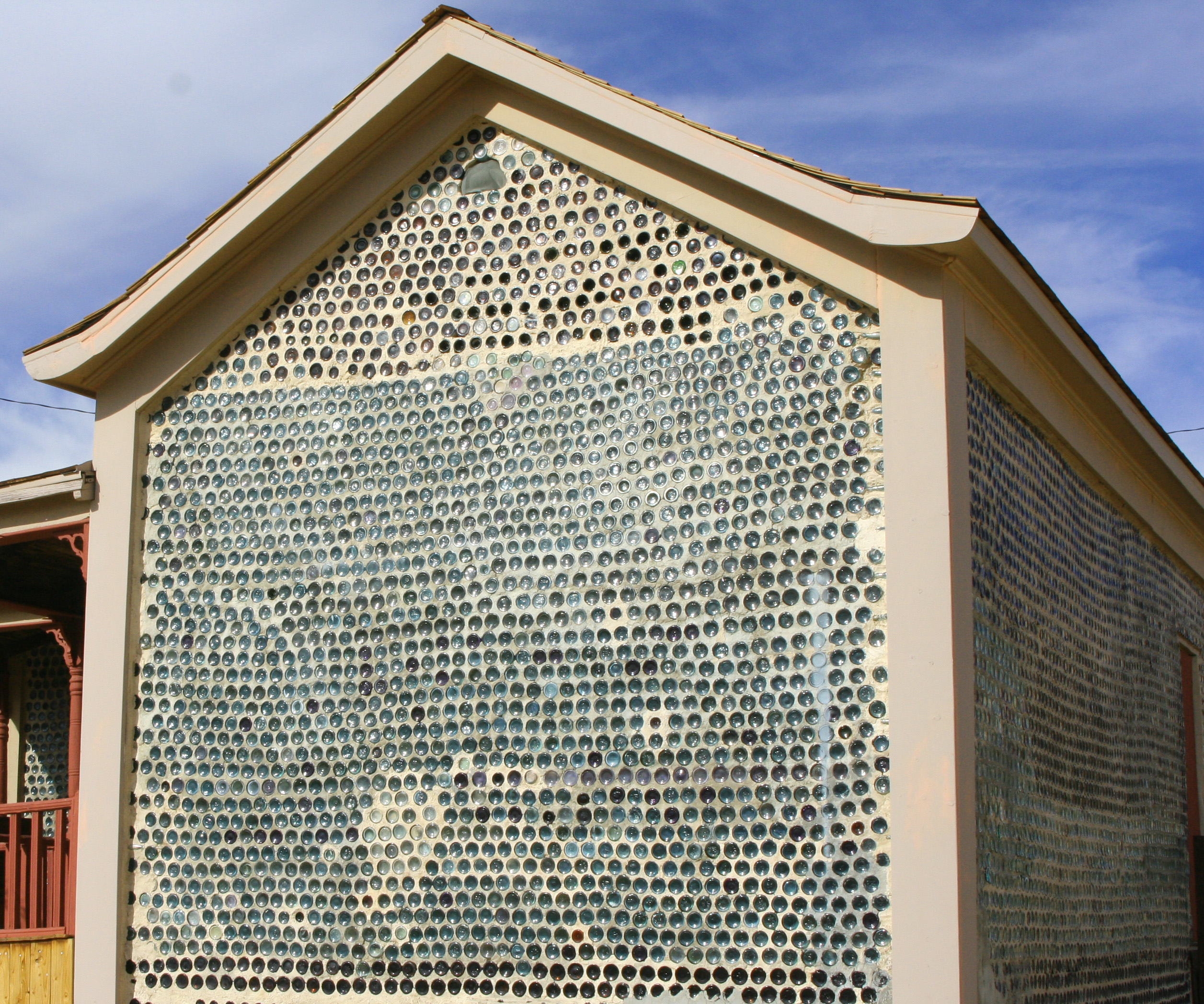
There was even an ice cream parlor and a house made from 50,000 beer and liquor bottles, which says something about the quantity of liquor consumed in town.

A house built with 50,000 bottles of beer and booze: light, insulation and a doozy of a hangover.

In 1907, electricity came to Rhyolite. It was the same year a financial crisis announced the beginning of the end for the town. Mines started to close, banks failed, and the newspaper went out of business. The lights were shut off in 1916. The boom was over.

A few skeletons of buildings and the bottle house are all that remain today. If you are in the neighborhood be sure to stop by. The ghosts will appreciate your visit. There is also a fascinating sculpture garden located next to Rhyolite that I will blog about next in my National Park/Death Valley series.

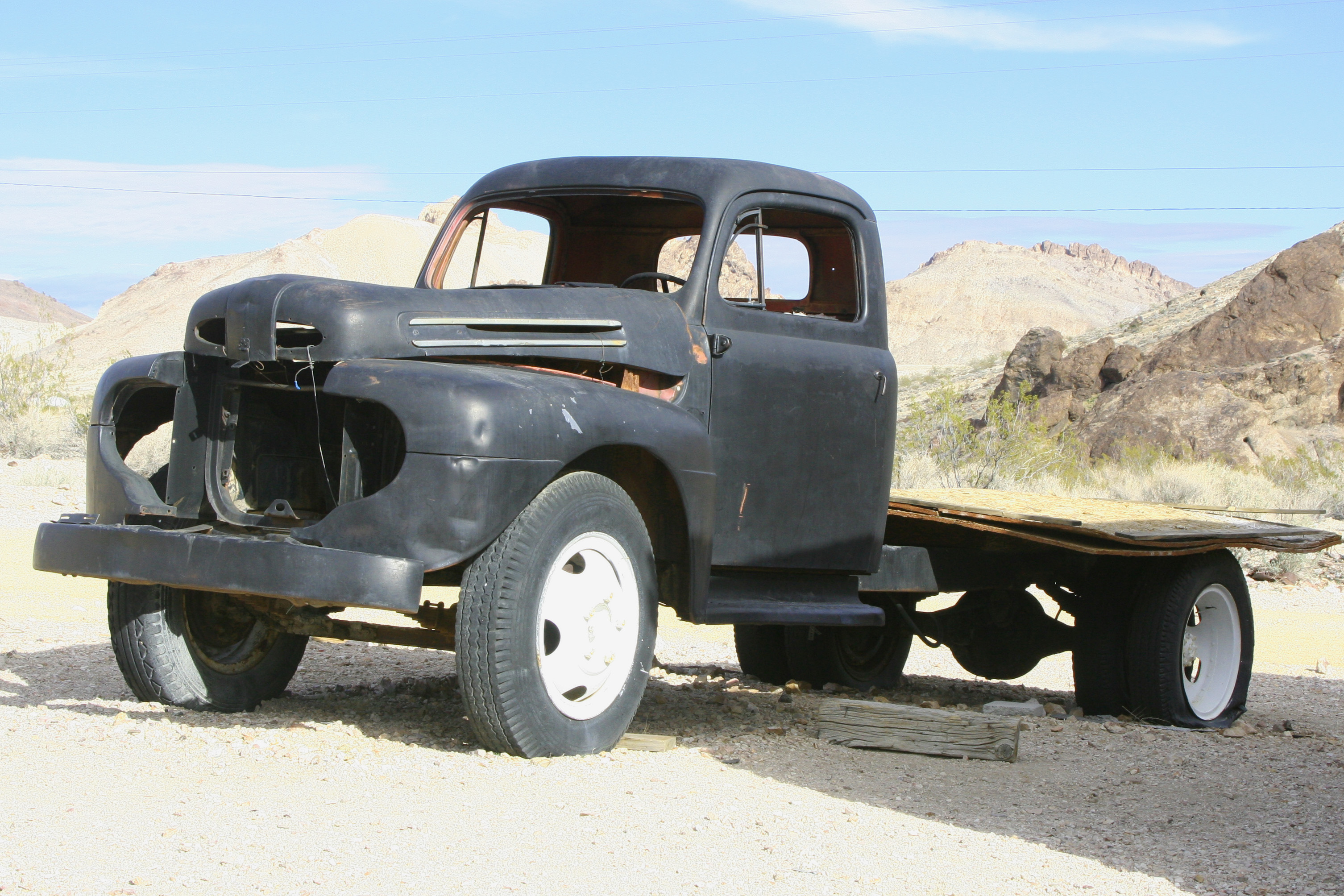
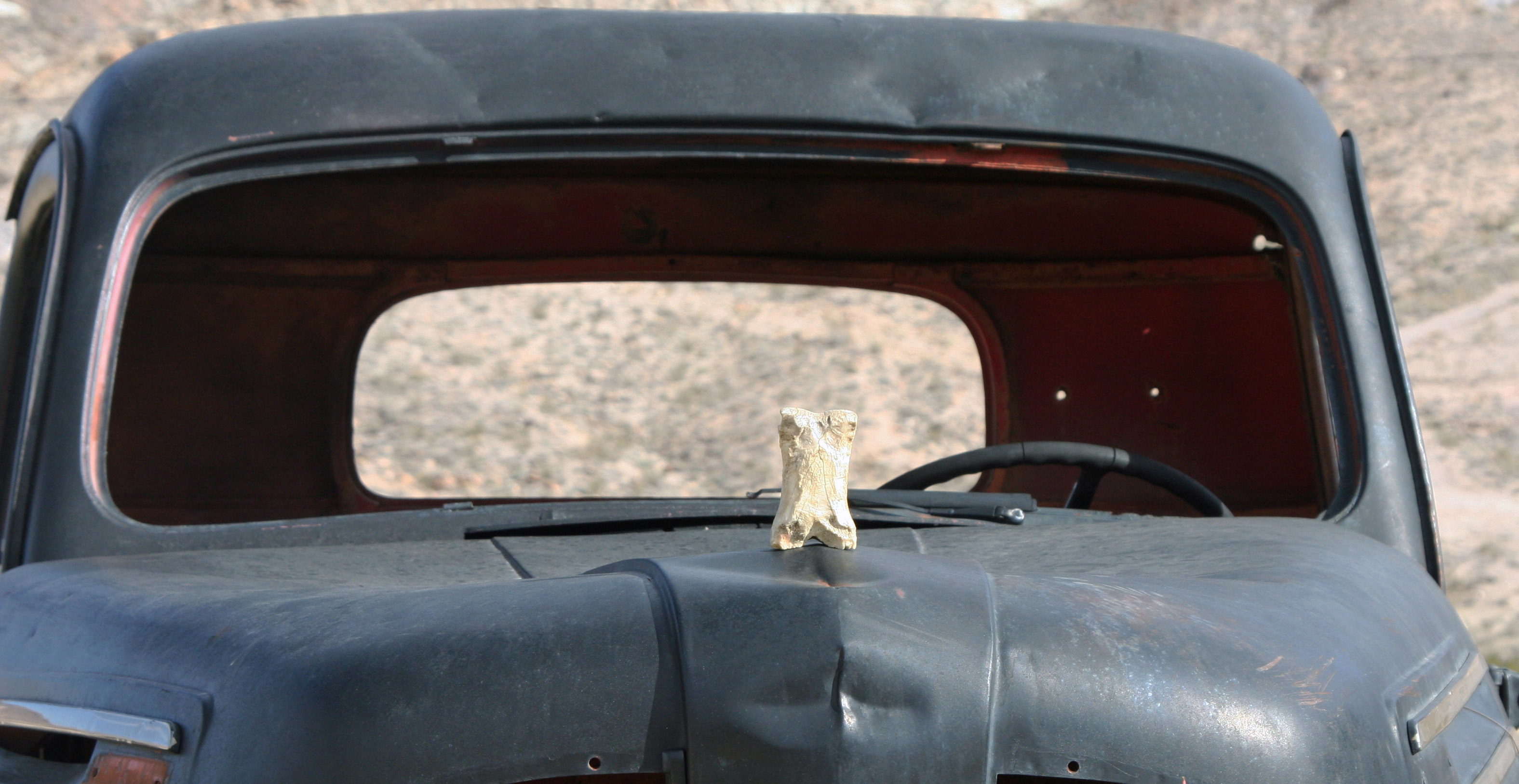
Long abandoned vehicles provide great photo opportunities but this one was missing something critical. And no, I don't mean engine...

A hood ornament.

Death Valley Scotty and Scotty’s Castle… The National Park Series

Looking down on Scotty's Castle in Death Valley National Park. This view is looking eastward up Grapevine Canyon. A spring in the Canyon provides water for the Castle and creates the oasis. Our small RV Quivera is peeking out on the far right.

Walter E. Scott was a scoundrel and a showman, a master at bilking rich people out of their money. He was born in Cynthiana, Kentucky in 1872. I may be related.

My Great, Great, Great, Great, Great Grandfather, Andrew Mekemson/Makemson is buried five miles from town. For a time, in the late 1700s and early 1800s, our whole Scotch-Irish clan lived in the area. At one point, Makemsons and Scotts in Harrison County intermarried. Possibly it was with Scott’s family.

Walter didn’t hang out in Cynthiana for long, however. In 1883, at the age of eleven, he split. Some say he ran away. He ended up working as a cowboy with his brother in Nevada.

He must have looked great on a horse. A talent scout for Buffalo Bill’s Wild West Show recruited him as a cowboy and trick rider when he was 18. For the next 12 years he toured the US and Europe along with such luminaries as Annie Oakley.

In 1902 he discovered his true calling. Walter started selling shares to an incredibly rich gold mine in Death Valley, a gold mine he never quite got around to finding. He became the star of his own Wild West act.  Reinvesting his investors’ money, he travelled from LA to New York City, stayed at the best hotels, spent lavishly, and constantly promoted his non-existent gold mine.

Reporters were attracted to him like buzzards to road kill. And why not… they were guaranteed a great story, free meal and all the booze they could consume. The legend of Death Valley Scotty was born. Rich men lined up to contribute.

In 1905 he pulled off one of his most successful self-promotions. Scotty hired a three-car Santa Fe railroad train to make a record run from Los Angeles to Chicago. The ‘Coyote Special’ made the trip in 44 hours and 54 minutes.

“We got there so fast,” Scotty reputedly said, “ we didn’t have time to sober up.”

His pot of gold was waiting. Albert Johnson lived in Chicago and was Scotty’s opposite. While Scotty was a flamboyant con man and adventurer, Albert was a quiet, highly educated and deeply religious man… not to mention very wealthy. He became excited about the gold mine. Scotty had found his meal ticket for life.

Eventually Albert visited Death Valley to see the mine. Or possibly he came out to see why there were no returns on his investment. Scotty saddled up and took him on a strenuous wild goose chase through the desert. It was risky. Albert was not a healthy man and the trip could have killed him. The opposite happened. His health improved and he came to love Death Valley.

What was even more surprising, he developed a close friendship with Scotty and that friendship was more important than the gold.  Time and again Albert returned to Death Valley. He started bringing his wife Bessie along and she also developed a love for Death Valley and Scotty. But she didn’t like sleeping on the ground.

So Albert offered to build her a castle, which he did. It was an incredible feat given the vacation home’s remote location on the northern edge of Death Valley in Grapevine Canyon. Starting in the Roaring 20s and ending in the Great Depression, it cost two million dollars and took five years to complete.

Any respectable castle requires a turret.

Scotty promptly moved in: not as a guest, not as a renter and not even as a caretaker, but as the owner. He claimed it was his castle built with money from his gold mine. Albert and Bessie went along with their friend’s deception and Besse’s home became know as Scotty’s Castle.

Albert died in the 1940s and left the property to the Gospel Foundation, a charitable organization. But he left it to the charity with a proviso: they had to take care of Scotty, which they did up until his death in 1954.

In 1970 the National Park Service bought Scotty’s Castle from the Gospel Foundation and today’s visitors to Death Valley are welcome to include this beautiful and unique property as part of their adventure. A short walk up the hill behind the castle takes visitors to Scotty’s grave and a great view of the castle.

This blog marks the start of my National Park Series. Beginning in 2000, my wife Peggy and I have visited all of the US’s National Parks. From time to time I will feature our favorites. Over the next two weeks I will be blogging on Death Valley and the surrounding region.

Another view of Scotty's Castle in Death Valley. Note the weather vane on top.

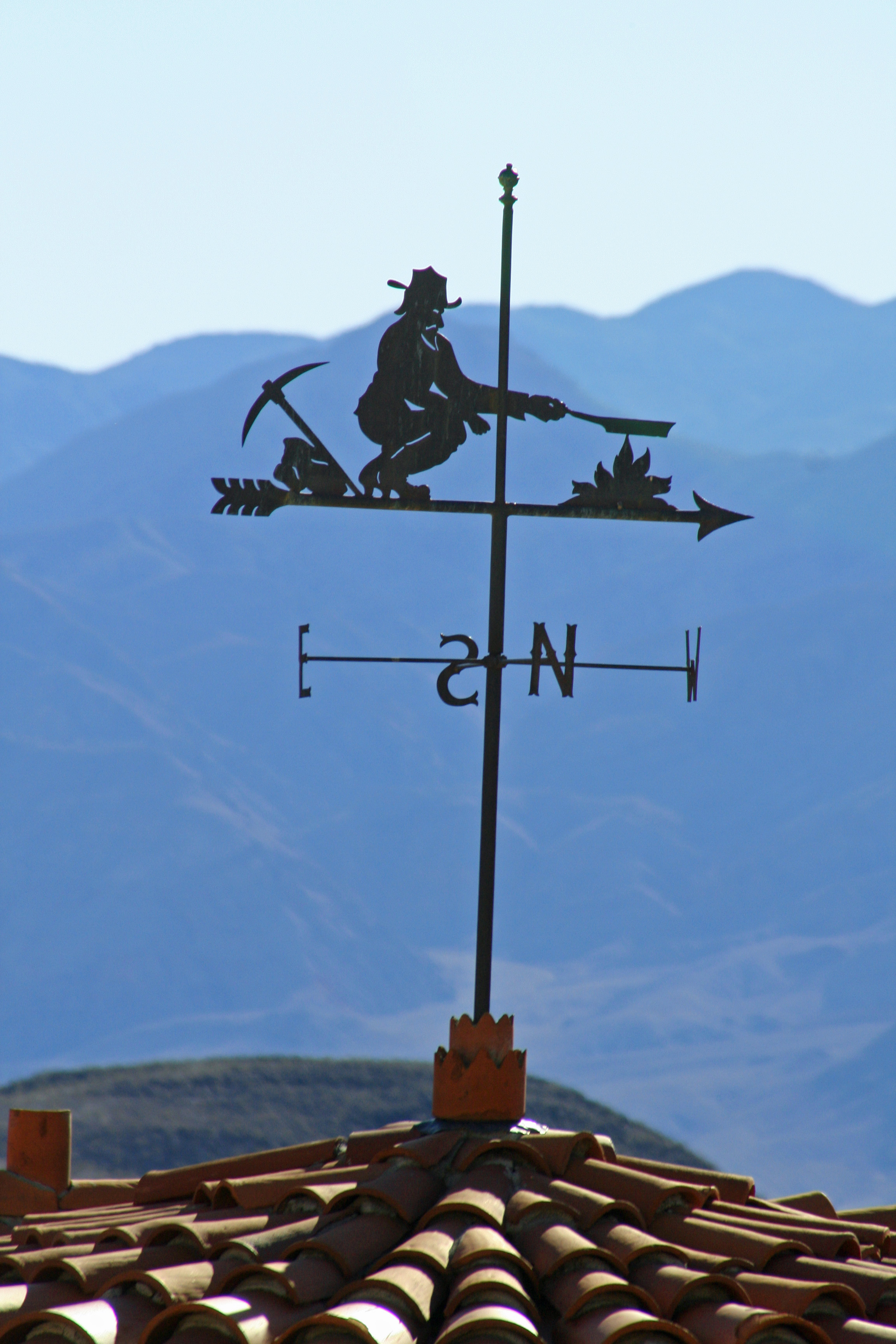
A close-up of the weather vane and my favorite photo of Scotty's Castle. To me, it symbolizes the lonely prospector of the West. All that's missing is a donkey or horse.

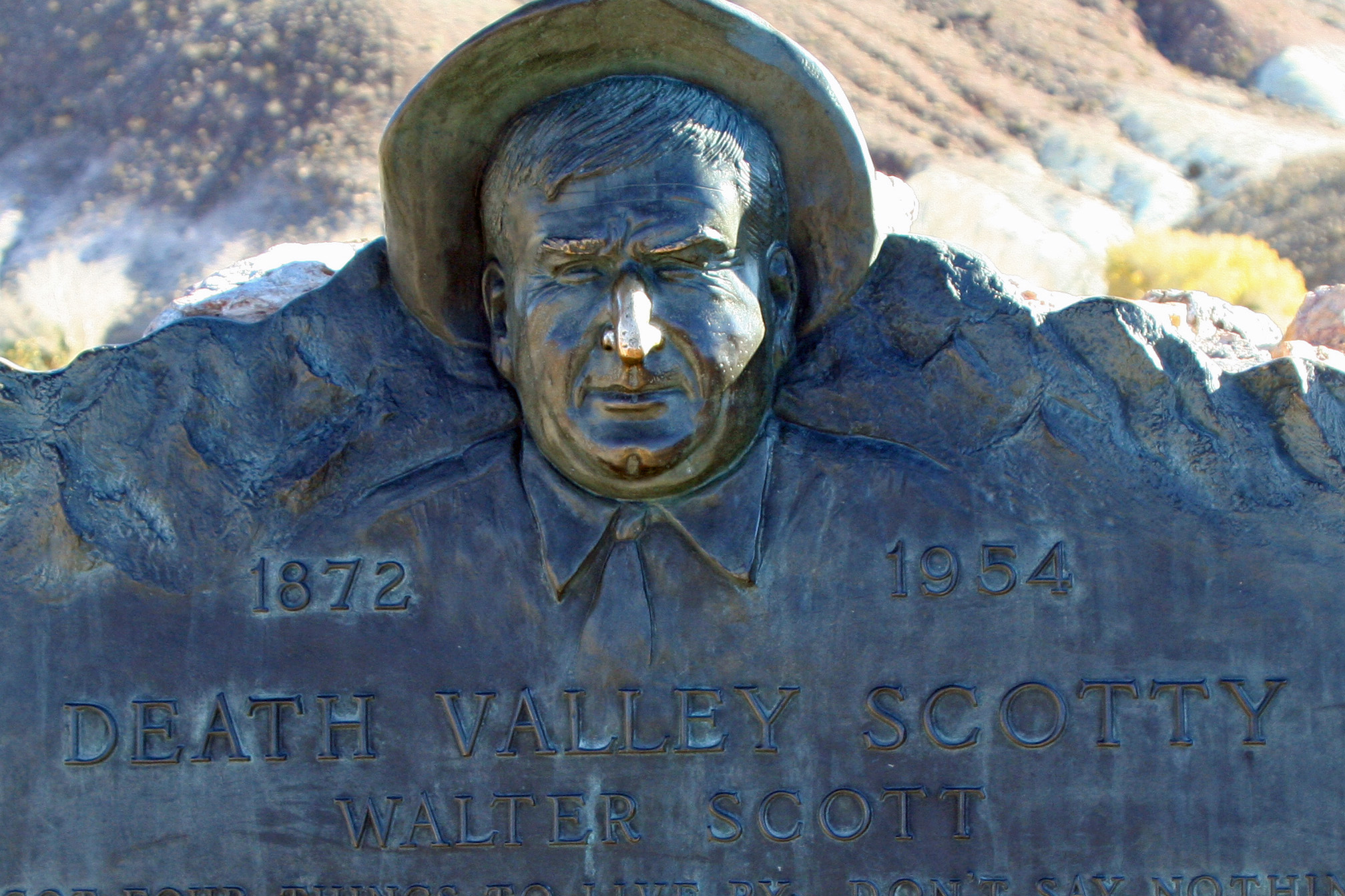
A short walk up behind Scotty's Castle will bring you to Death Valley Scotty's grave and memorial. The site also provides a great view of the Castle and surrounding desert.

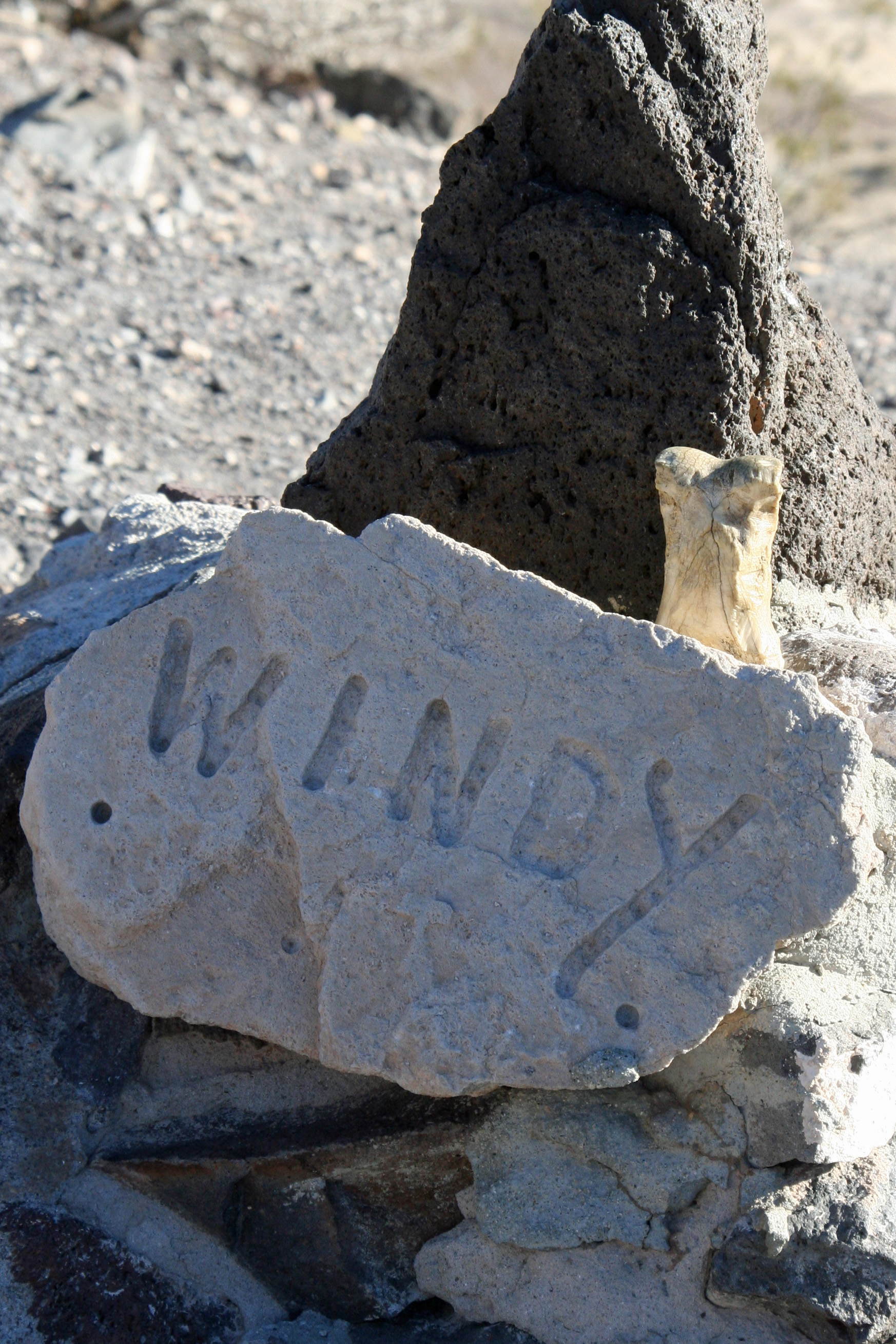
Scotty's faithful companion, Windy the Dog, is buried beside him. Bone, as in the Peripatetic Bone, stops by for a visit. Bone has been traveling the world for 36 years and has a special place in his heart for graves. No surprise there. He is more careful around live dogs.

A view of the Clock Tower at Scotty's Castle looking out toward Death Valley National Park.