Budapest by Boat and Bus… The Great River Series— Danube #8

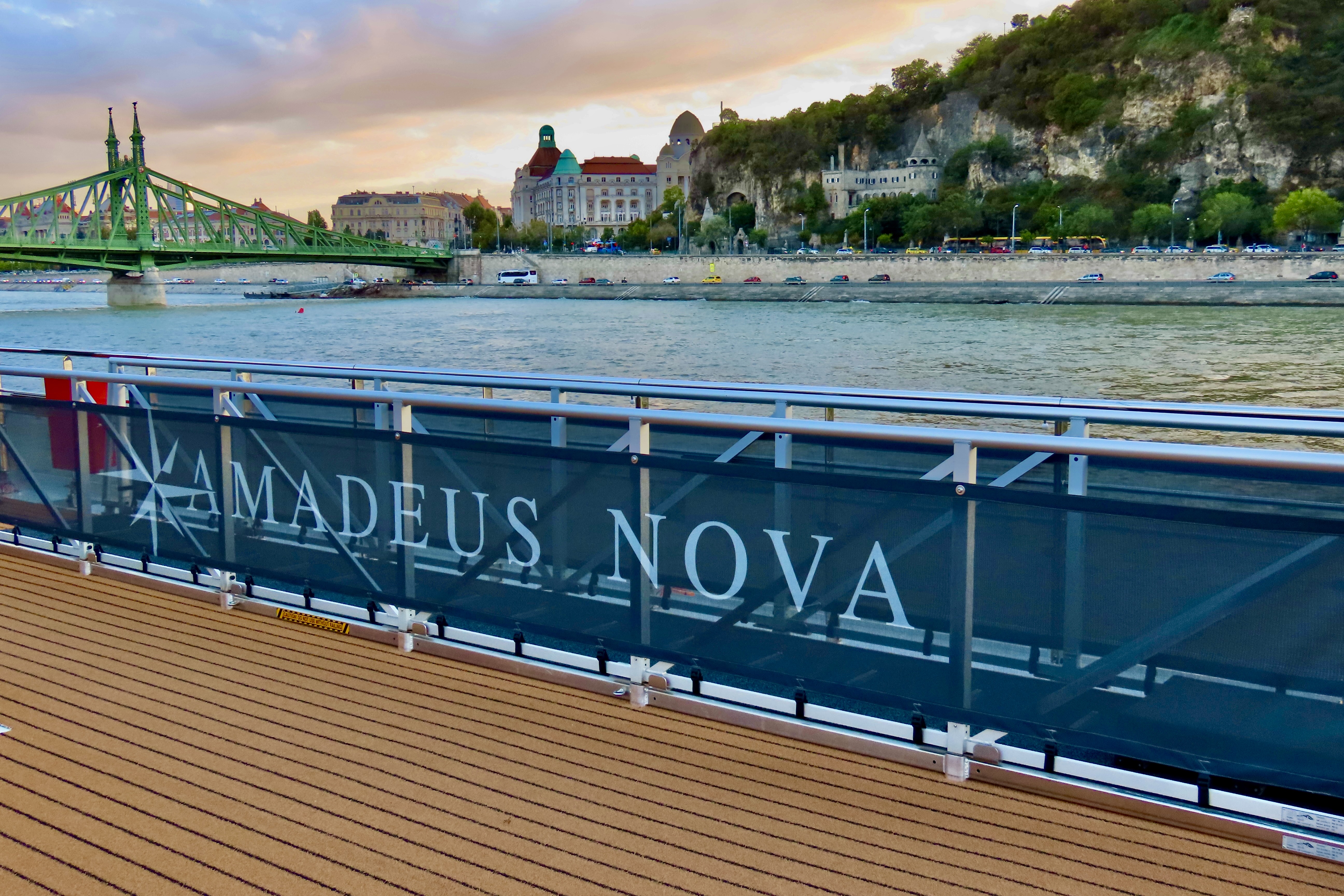
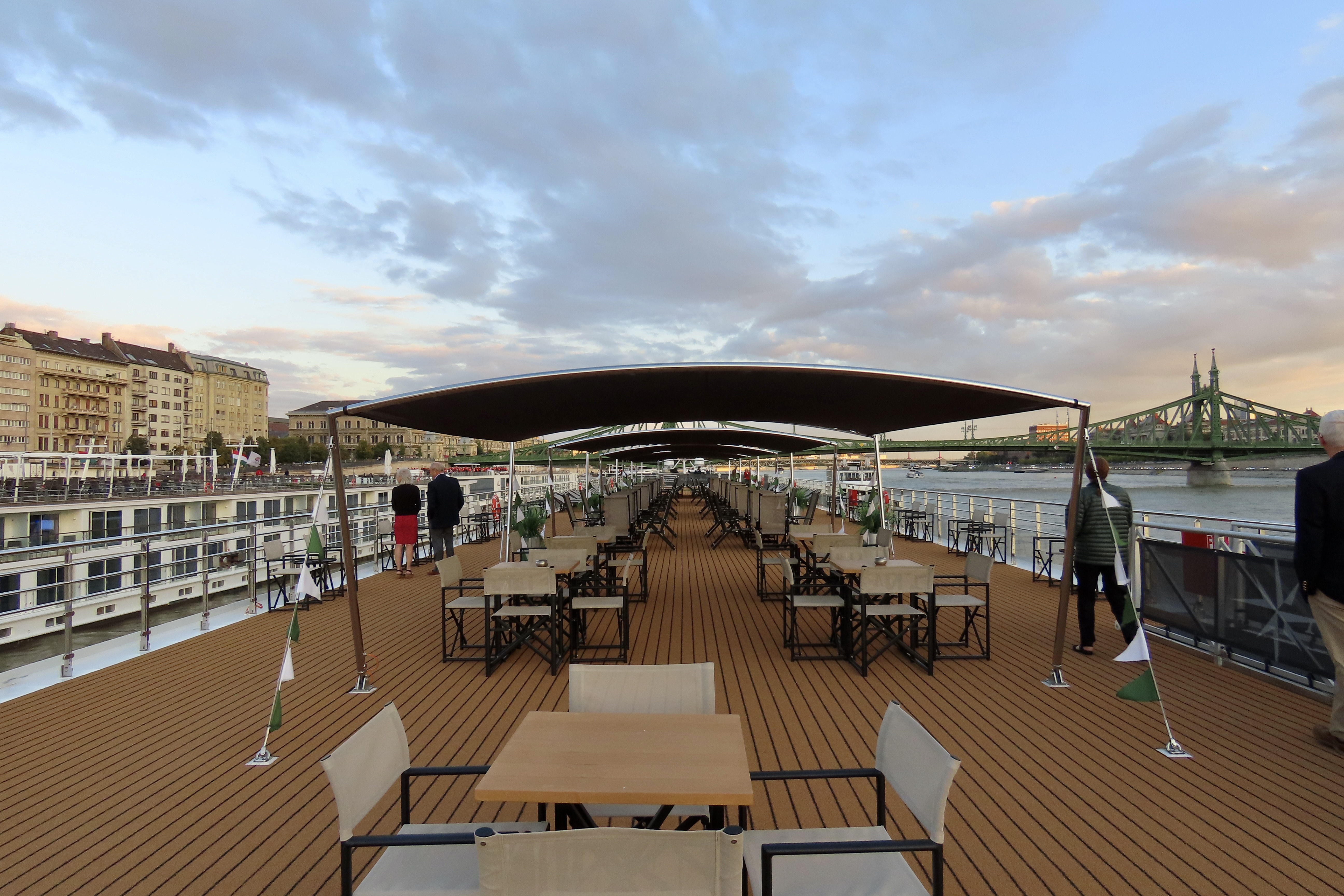
Today, Peggy and I are going to feature a variety of photos we took as we wandered through Budapest by both boat and bus. Here we are looking toward the Liberty Bridge and Budapest’s classic Gellert Hotel from the Amadeus. The bridge connects the Buda side of the Danube River with the Pest side. The hotel is presently being remodeled by the Mandarin Oriental Hotel chain with plans to reopen it in 2027 as the Mandarin Oriental Gellert Hotel. That seems a like a strange name for a historic hotel in Budapest, but no stranger than one being named the Hilton. Or something like Trump Tower.
Looking at the Gellert Hotel from the front.
The hotel is named after St. Gellert. He was passing through Budapest as an abbot from Venice in the 11th Century on his way to the Holy Land when King Stephens asked him to stay for awhile to educate his son and help convert the pagan Magyars to Christianity, which he did. At least until after Stephens died and a rebel group of Magyars decided they preferred their paganism. Gellert was shoved into a barrel, nails were driven into it, and he was rolled off the mountain and into the Danube, thus gaining instant sainthood.
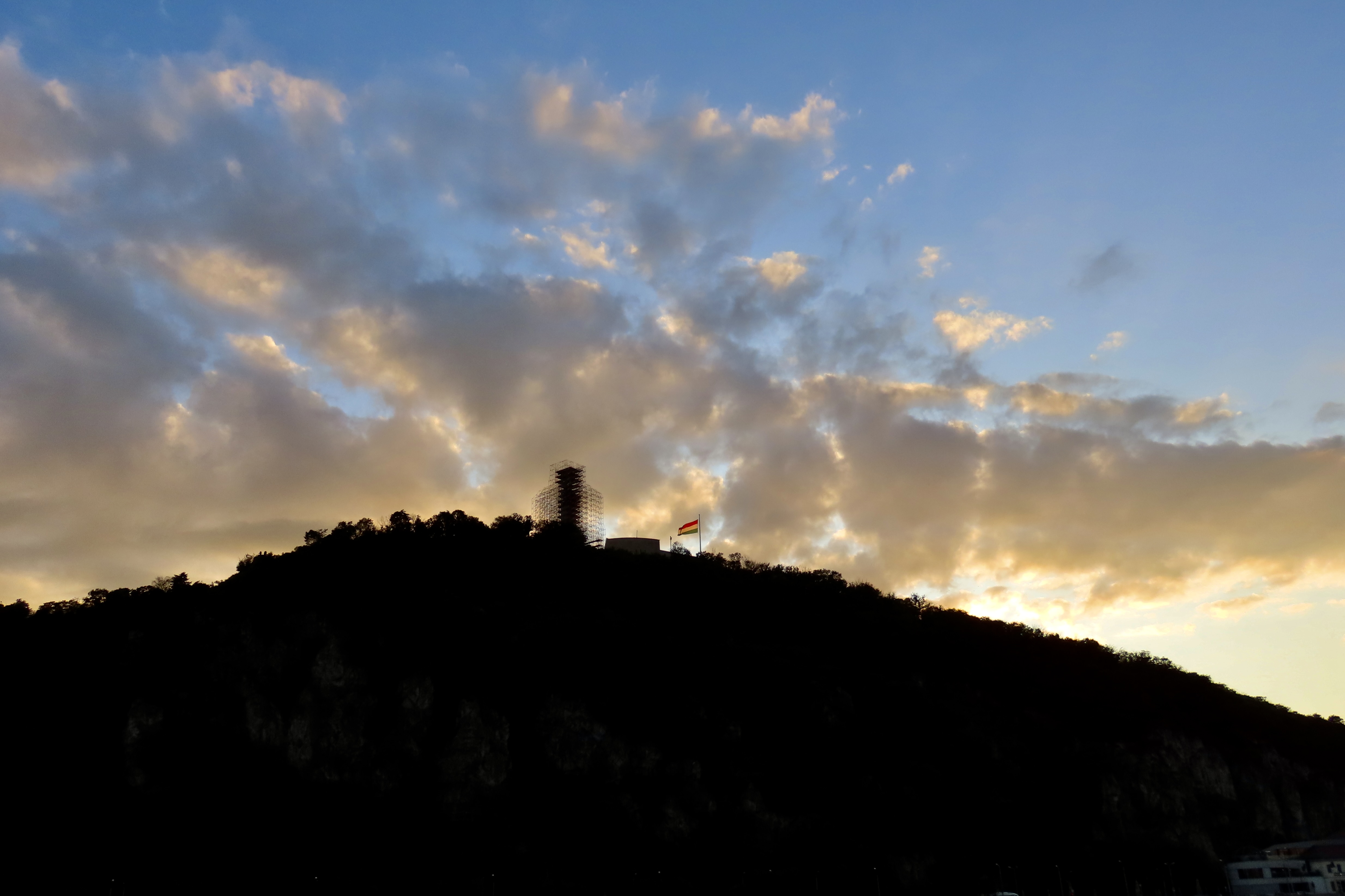
The Liberty statue, which represent freedom from Communist rule, stands on top of Gellert Hill.
The monument is presently under renovation. I thought that the scaffolding created a unique, almost artistic look. Hungary’s flag is on the right.
Another view of our boat. The cold, cloudy, fall day explains the lack of people on the sundeck.
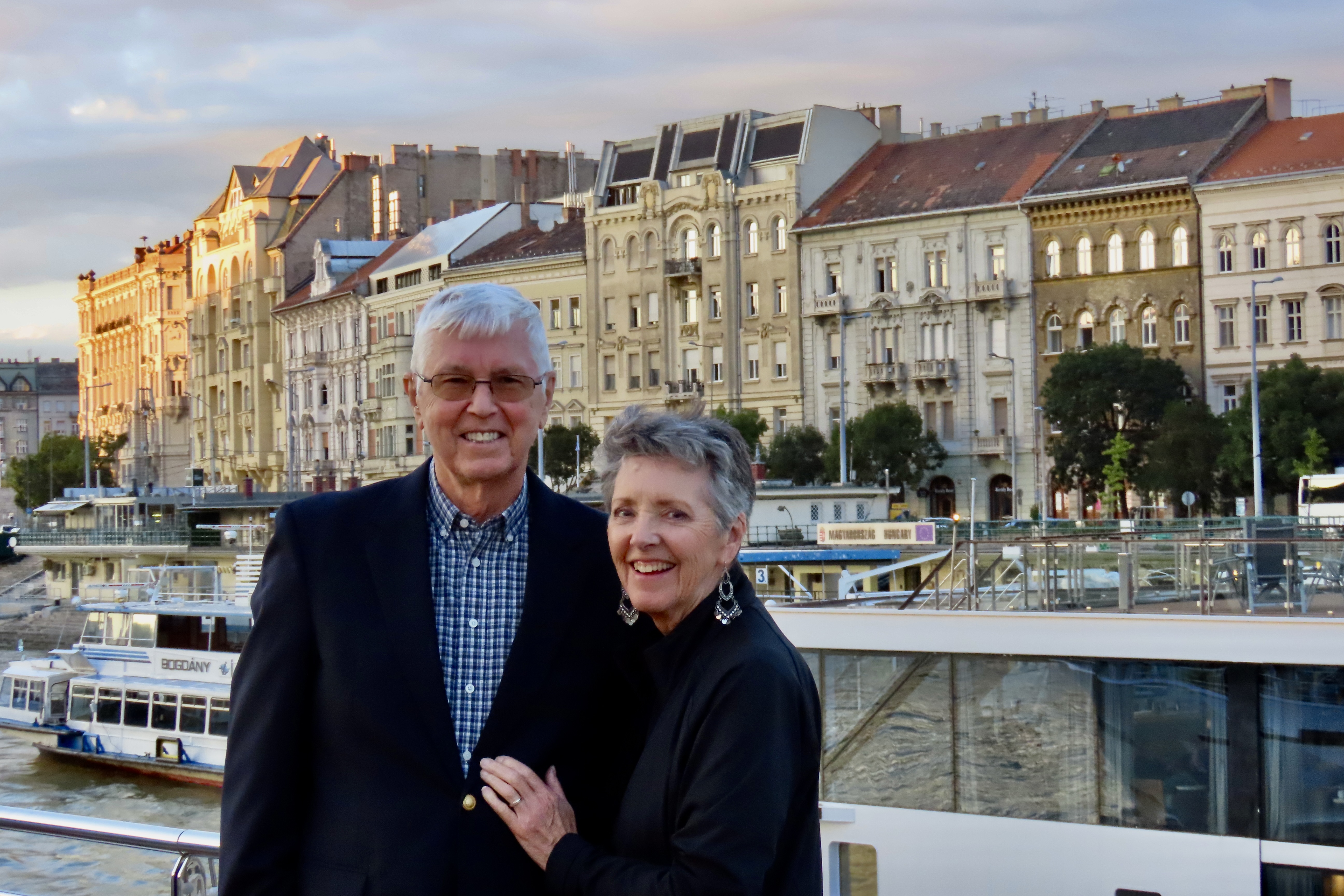
It didn’t deter Peggy’s brother John and his wife Frances from having their photo taken on the deck, however. Sunshine was teasing us by lighting up buildings in the background.
We took a photo encourage it.
We’ve already included several pictures from Fisherman’s Bastion in our previous two posts, but here are a couple more we liked. An early morning view of the Pest side of the river complete with a ferris wheel.
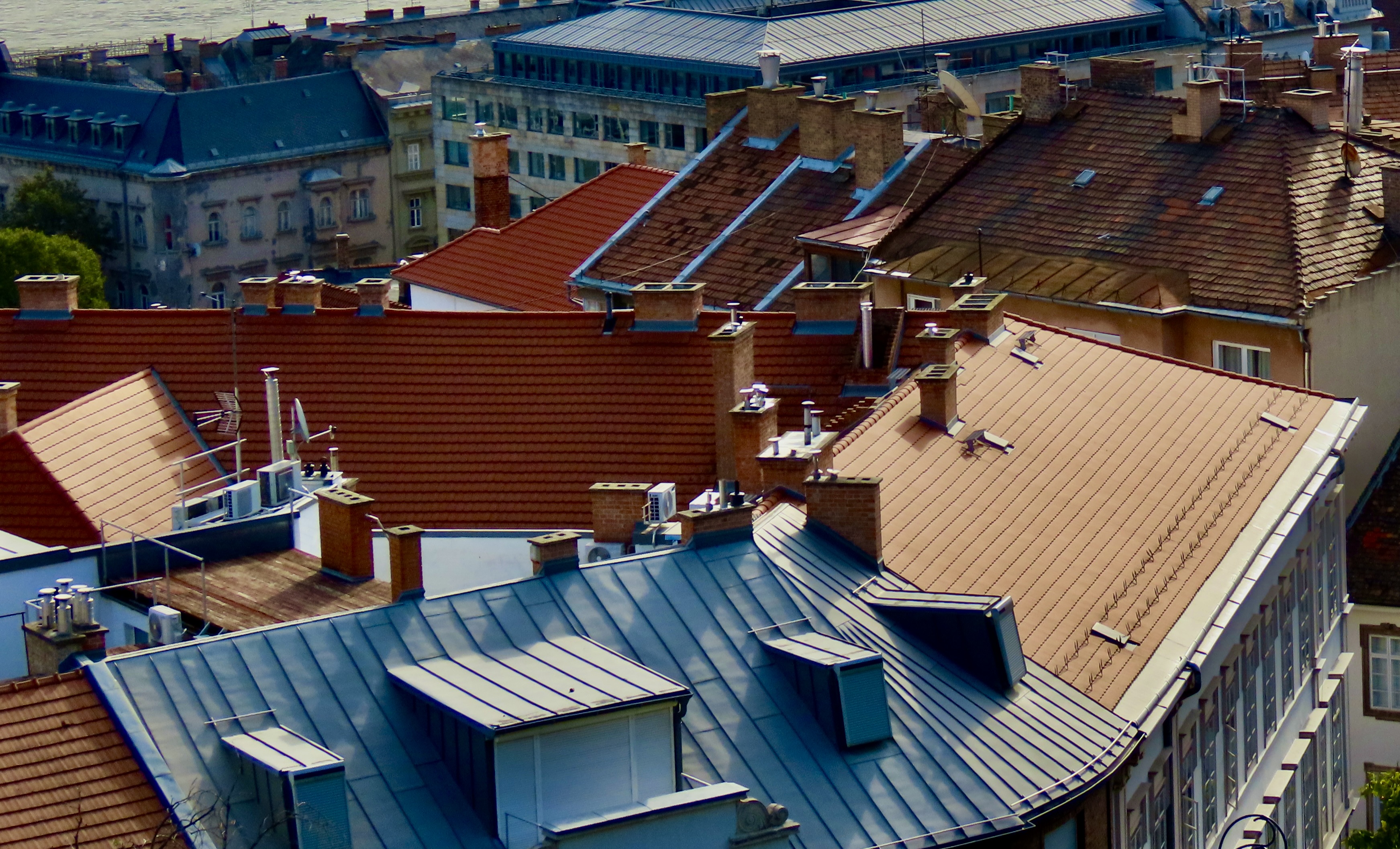
Later, the sun allowed us the catch colorful roofs beneath the Fisherman’s Bastion on the Buda side of the river.
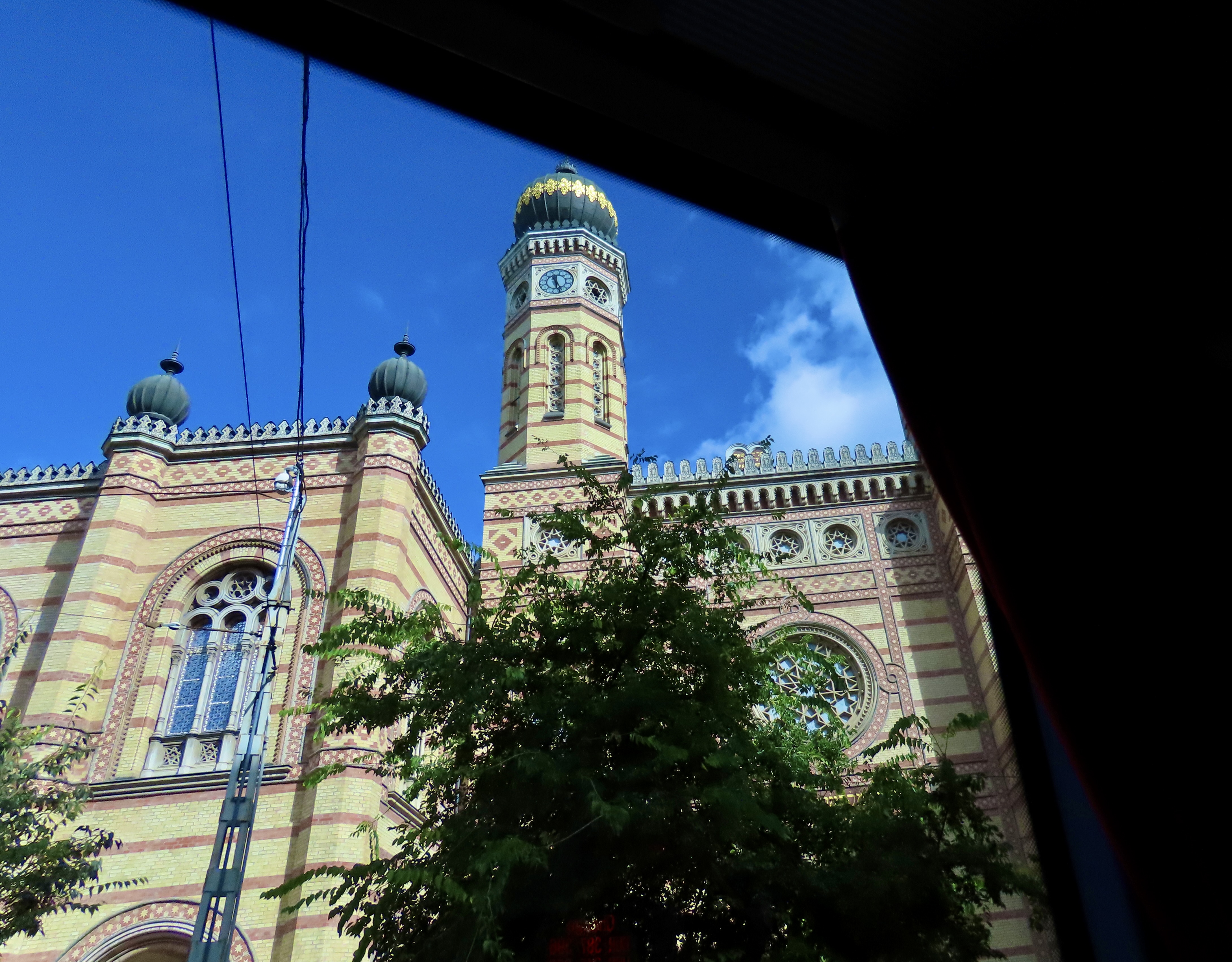
Our trip to and from Hero’s Square (featured in our last post) allowed us to see several other buildings that caught our attention. This happens to be Budapest’s Great Synagogue. As always, taking pictures from a moving bus is tricky! Trees, power lines, and even windows get in the way, not to mention odd angles. But what the heck, such obstacles just makes the photo more interesting and more real.
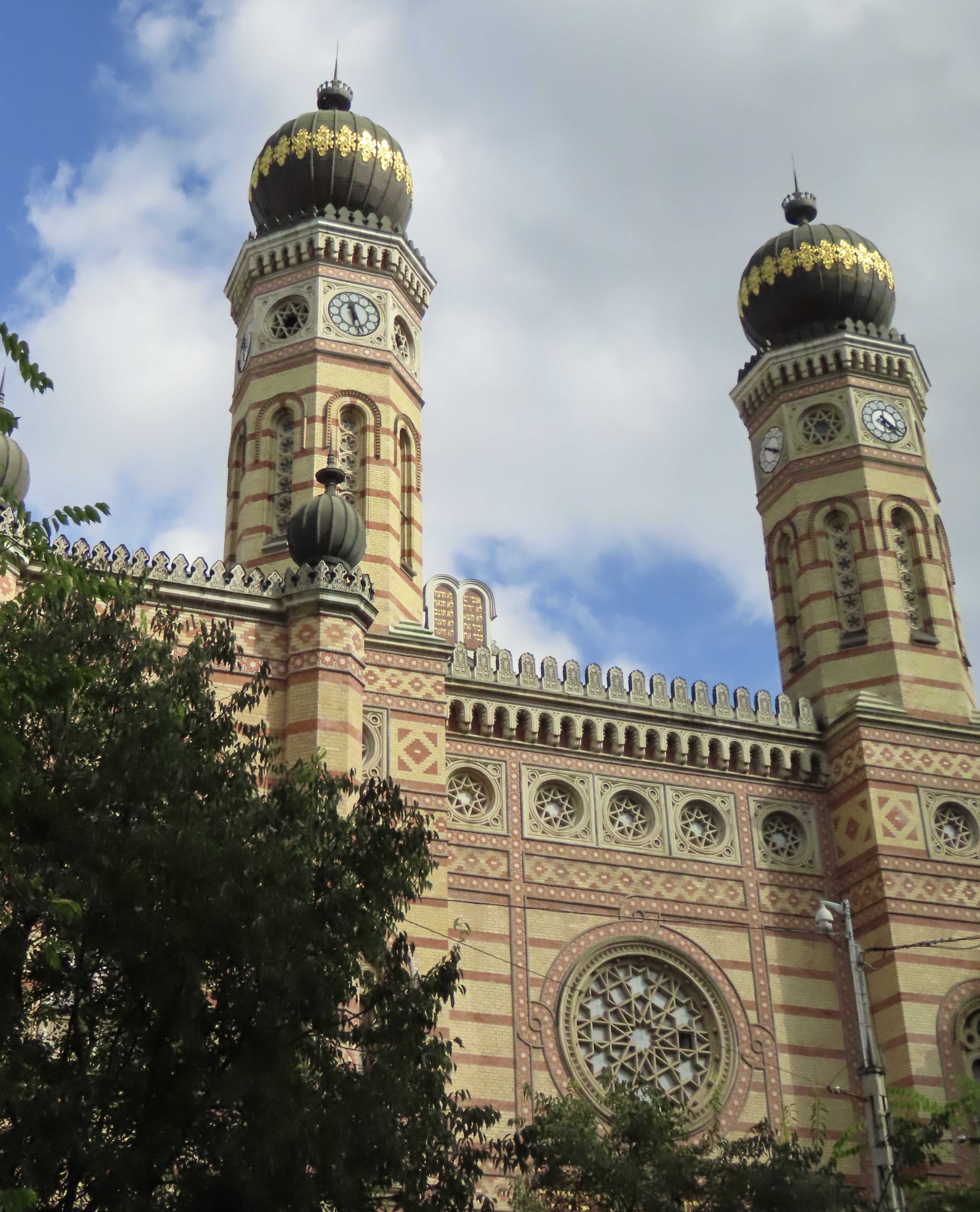
A slightly better photo. The Great Synagogue earns its name. It is the largest synagogue in Europe and has one room that can hold 3,000 people. The building suffered severe damage under Nazi and Communist rule. It was renovated in the 1990s with a $5 million contribution from the Hungarian government and a $20 million dollar gift from the Jewish Americans Tony Curtis and Estee Lauder.
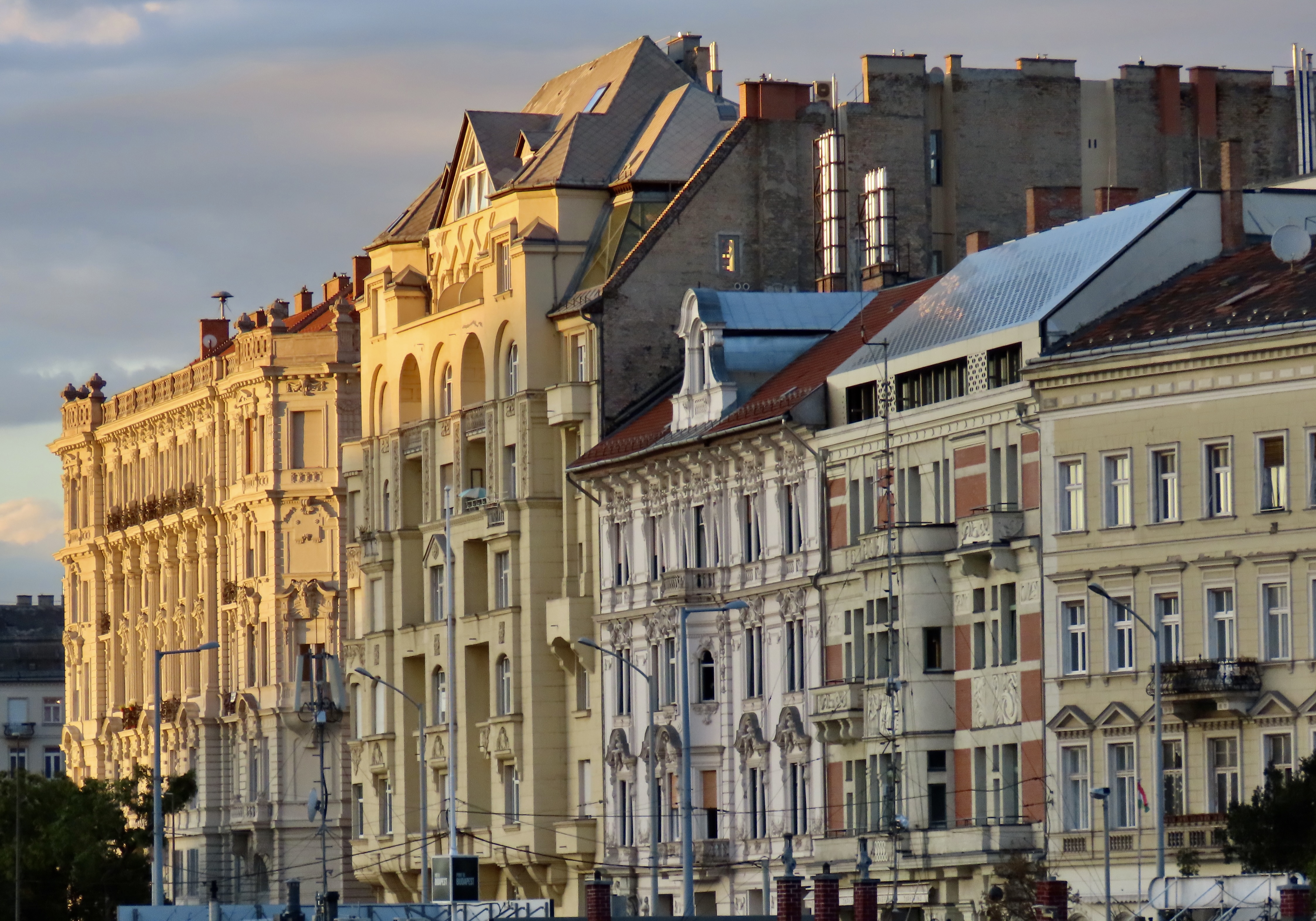
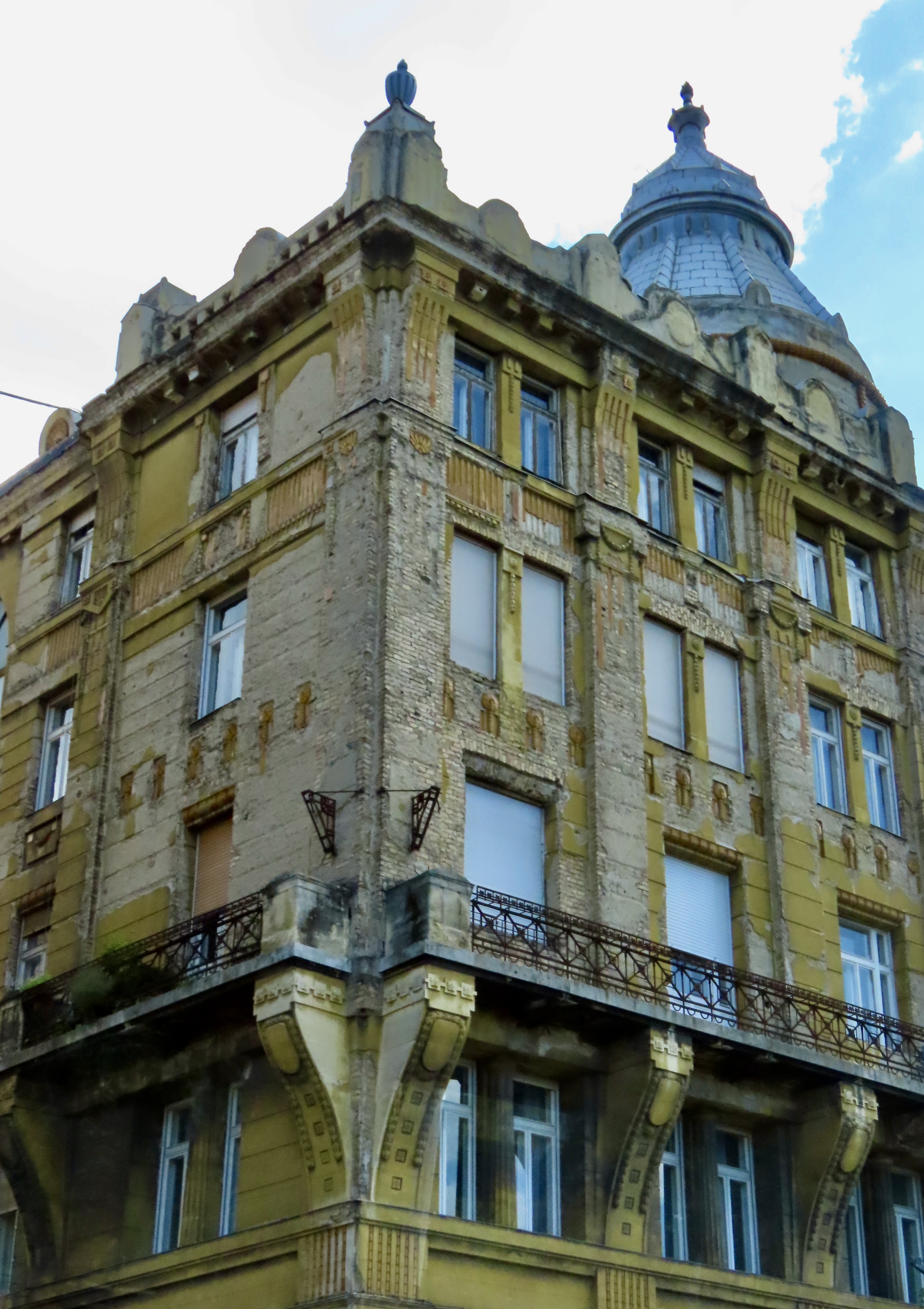
A random building photo from the bus’s window.
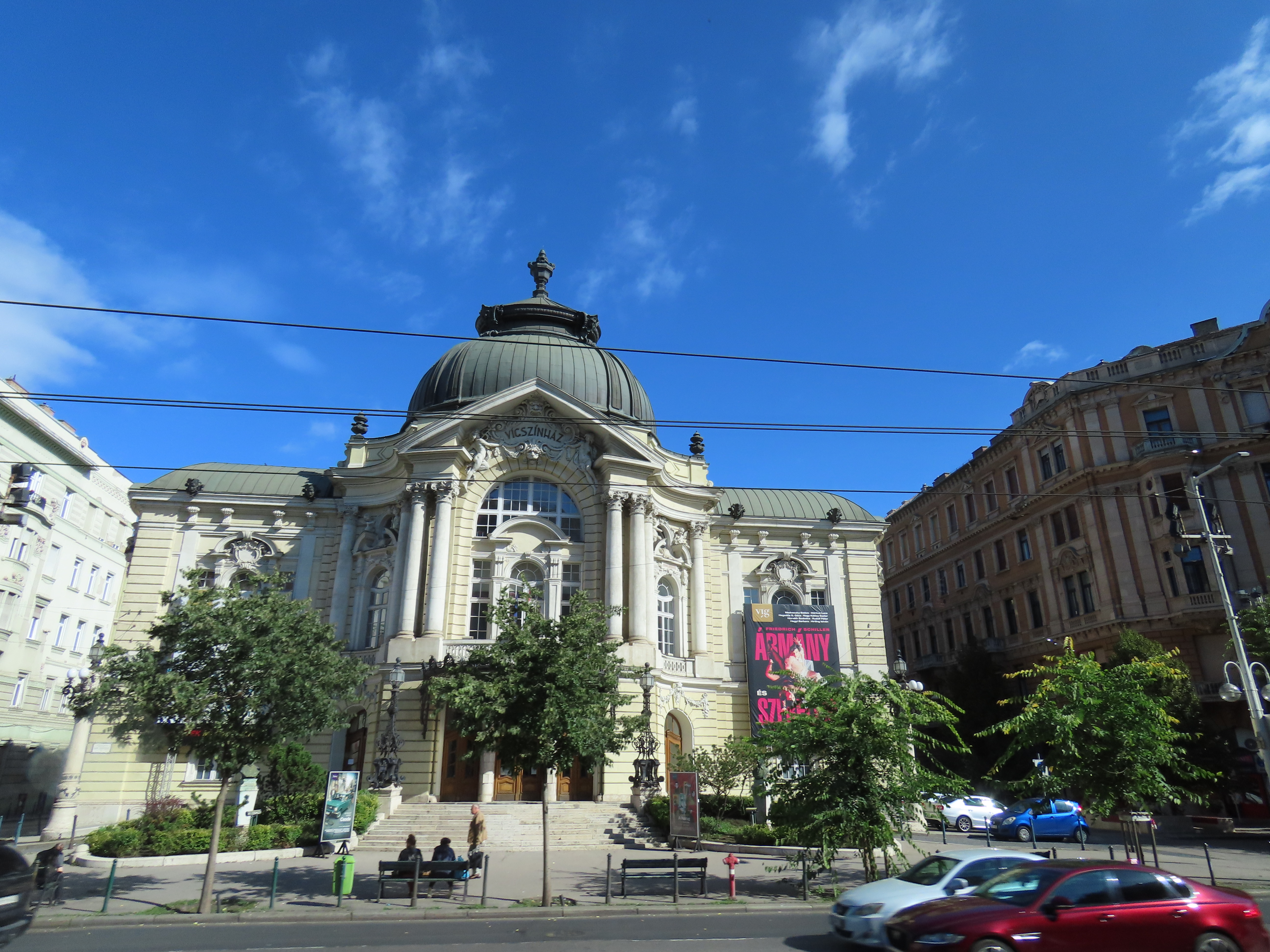
The Comedy Theater of Budapest provided another opportunity for a bus window shot. We took a lot more photos like this (there is a reason why my photo library is now at 97,919 pictures— grin), but now it’s time for us to return to the Amadeus for an evening tour of Budapest.
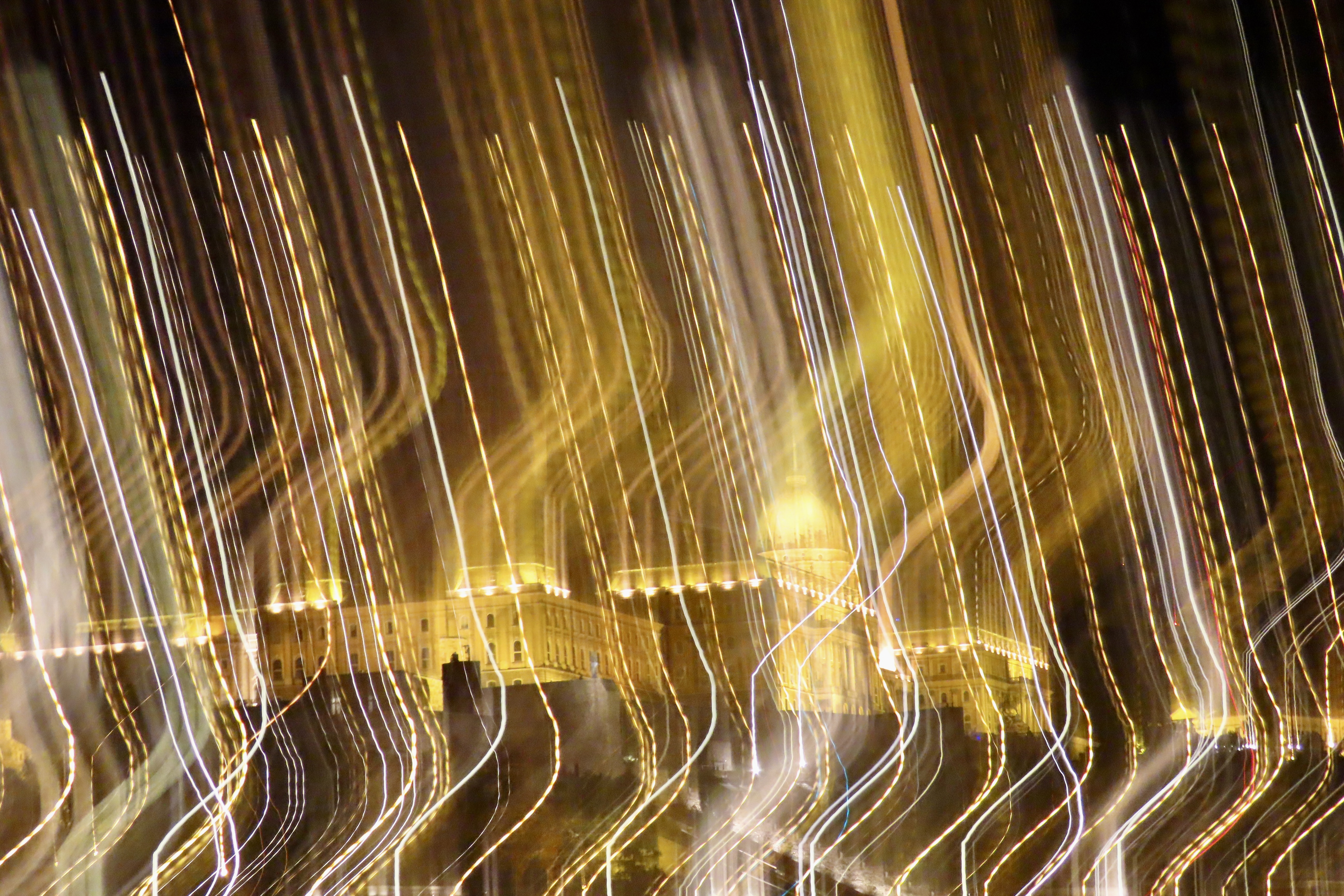
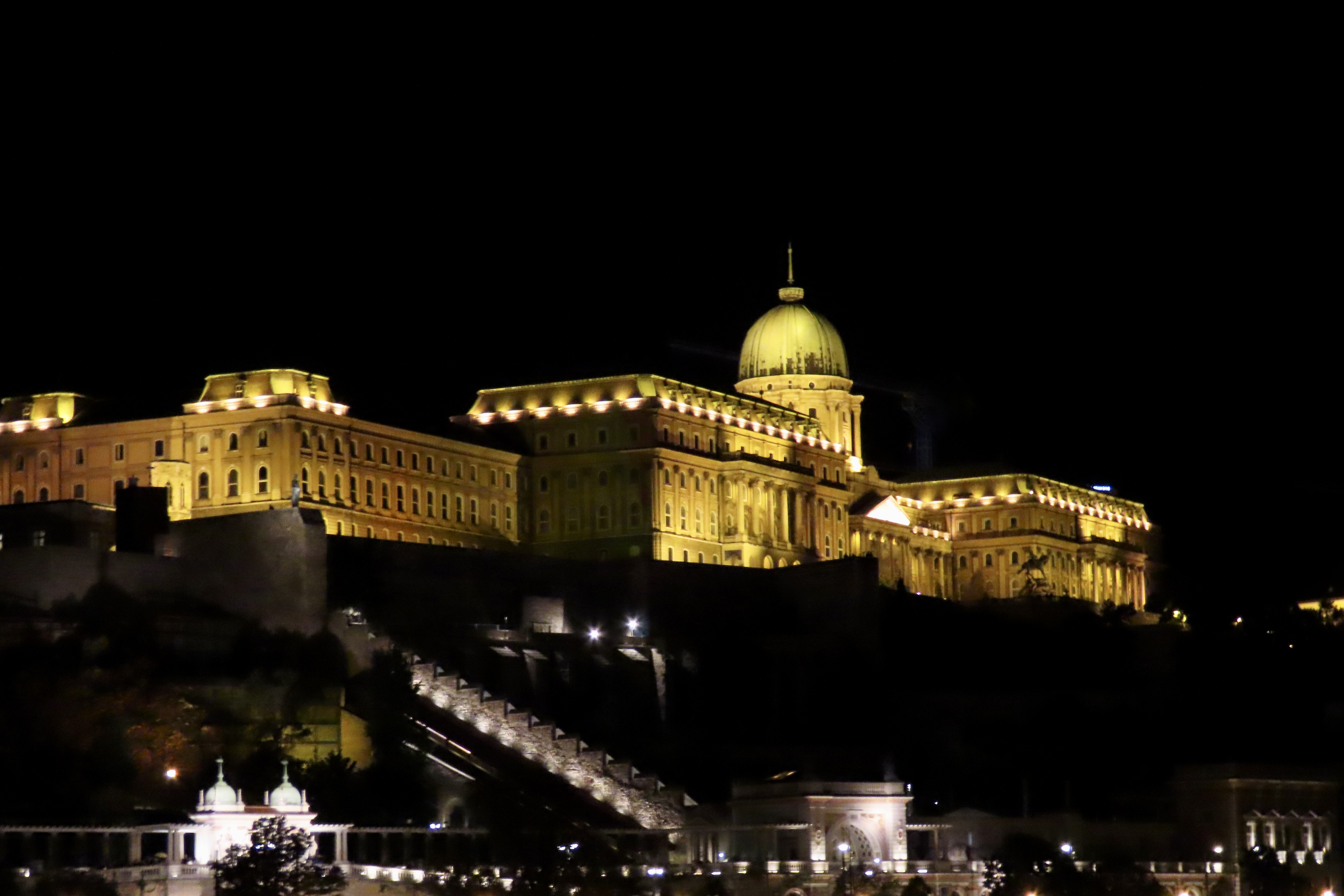
Taking photos from a moving bus is a piece of cake compared to night photography without a tripod on a moving boat. I’ll just label this one art. It’s Buda Palace.
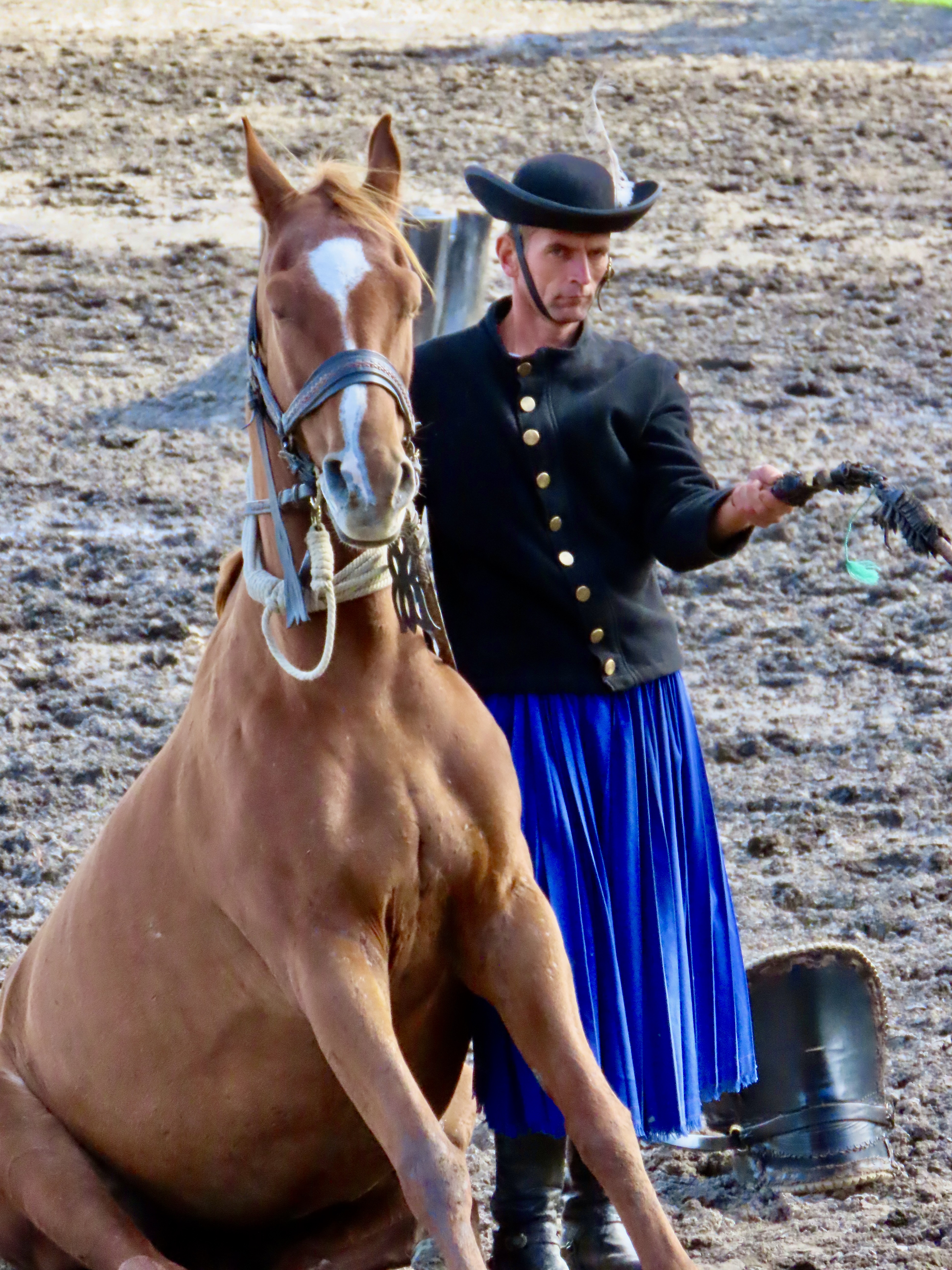
We were actually able to catch a good photo of Buda Palace so I will quit while I am ahead and use it to wrap up our three blogs on Budapest. Next up on our Danube River trip: A lesson on how to persuade a horse to sit.

Welcome to Budapest, Hungary: Matthias Church… Great River Series— Danube # 7

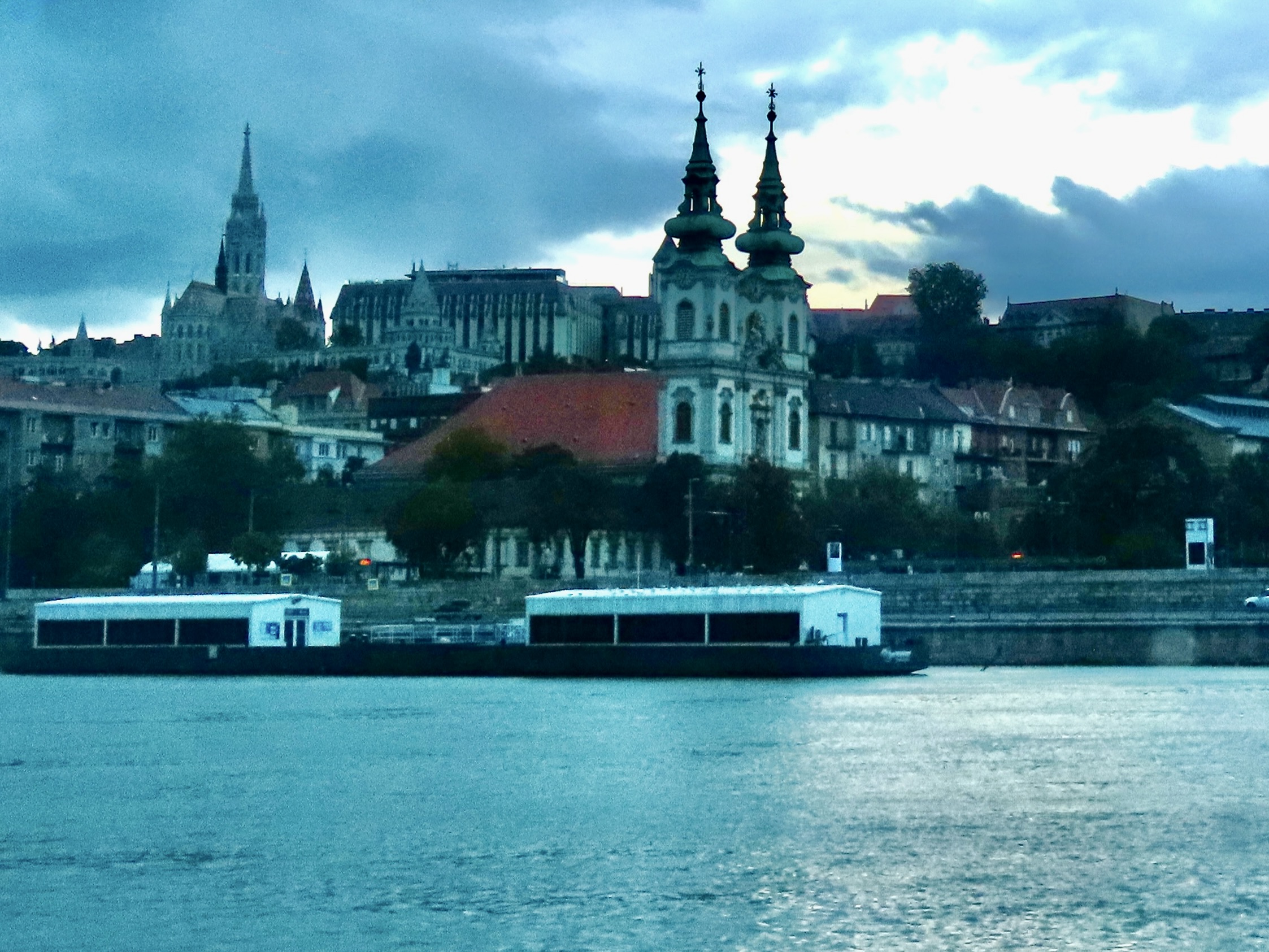
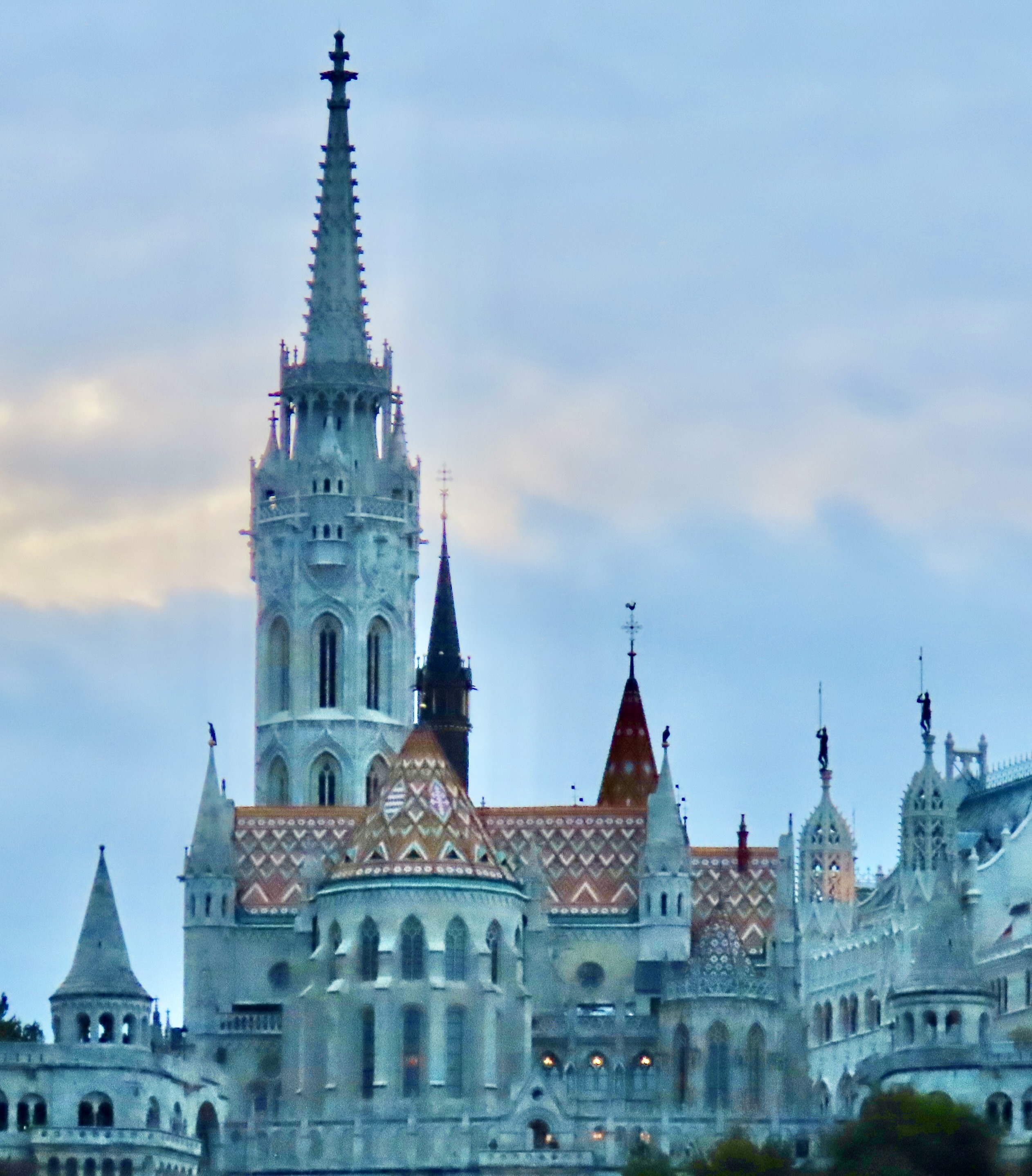
The sun wasn’t yet up when we arrived in Budapest. The captain of our riverboat had urged the evening before that we get up early so we could see the city in the early morning light. It was a good suggestion. There will be several photos in our posts on Budapest that will reflect what we saw. Here, we are looking toward Buda Castle Hill. The twin towers of St. Anne’s Church are on the right. Looking up the hill to the left is the beautiful Matthias Church that we will visit in today’s post.
Focusing in on Matthias Church a few minutes later, the sun was lighting the sky quickly. I thought the slightly fuzzy quality our cameras produced in the low light added to the beauty.
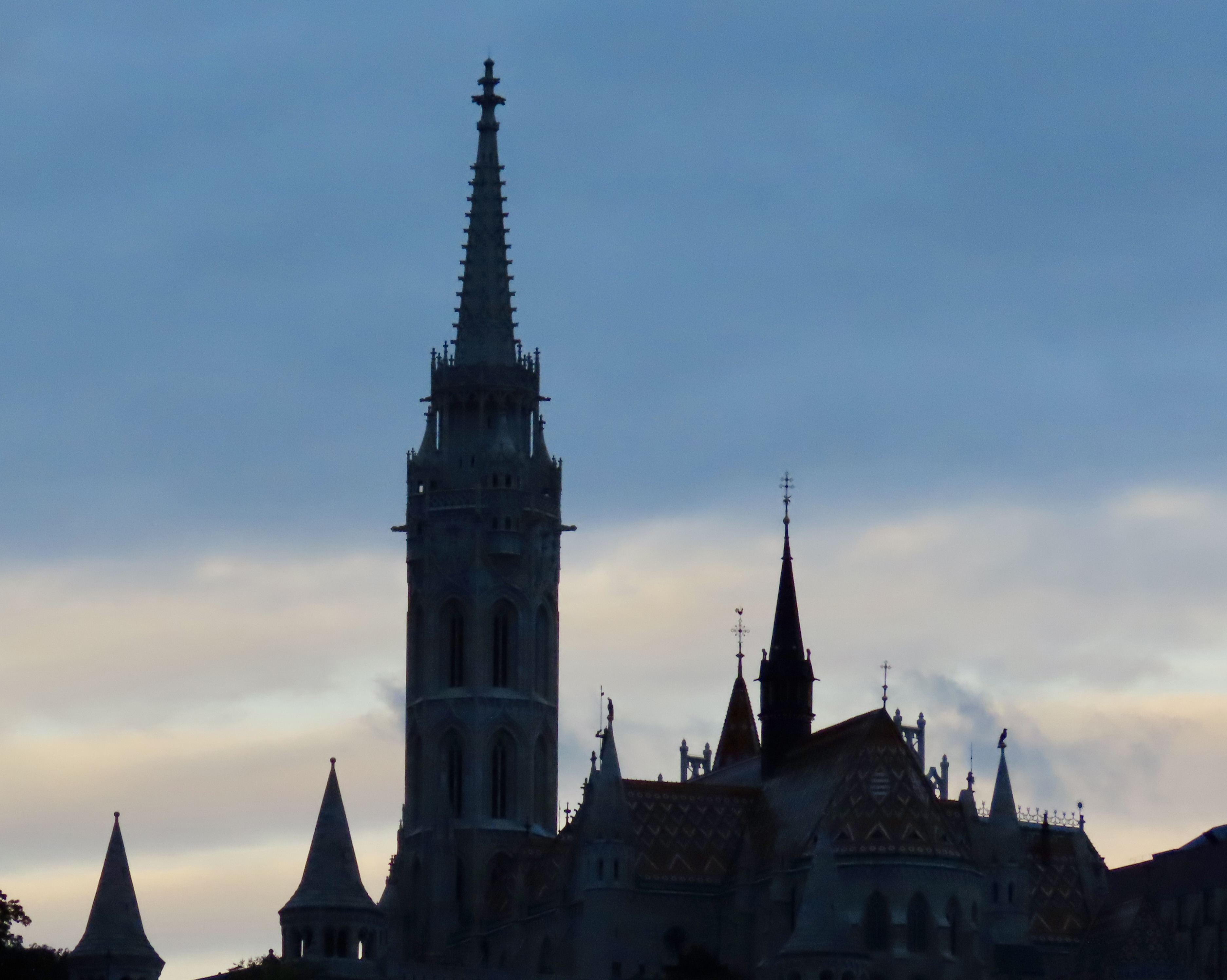
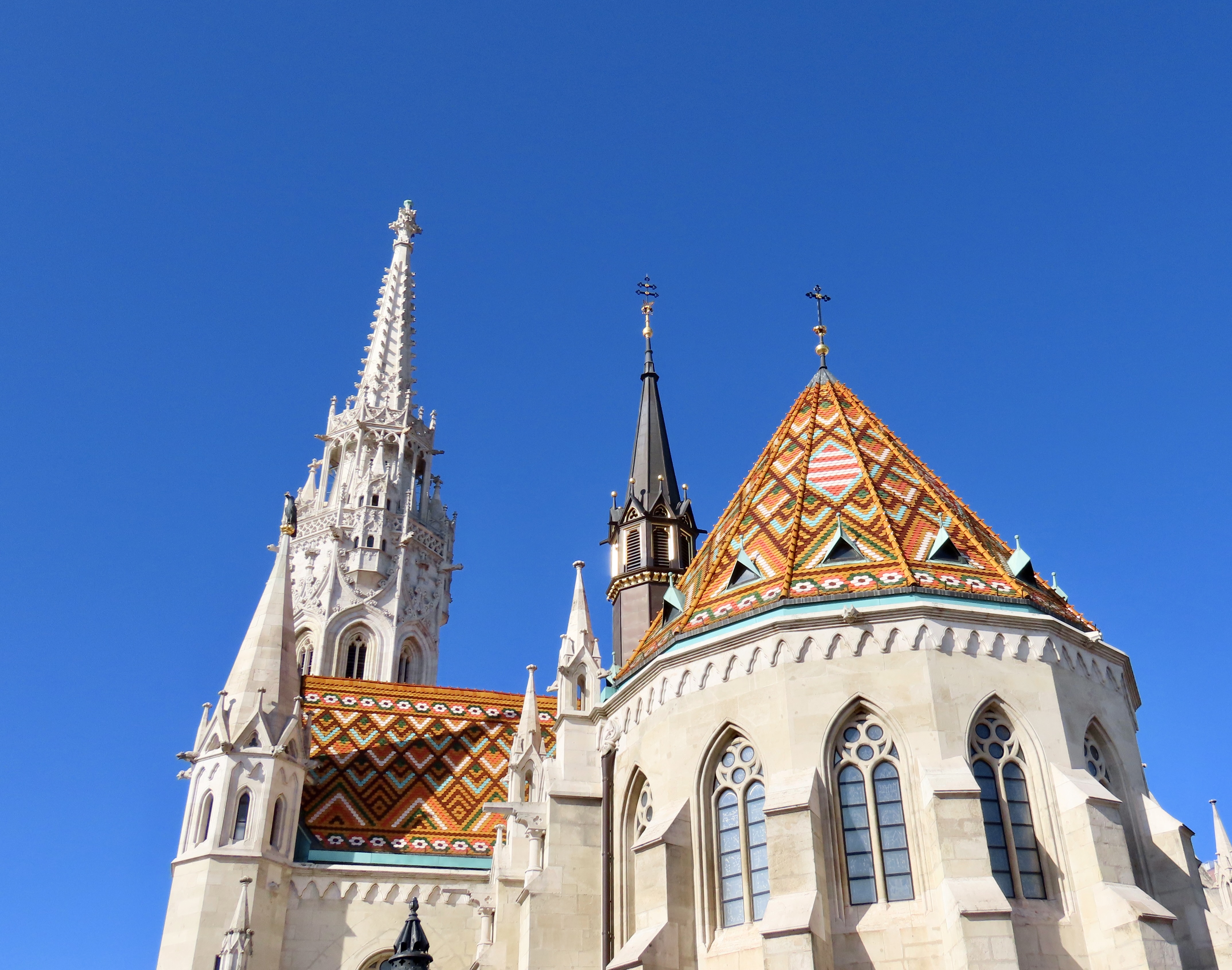
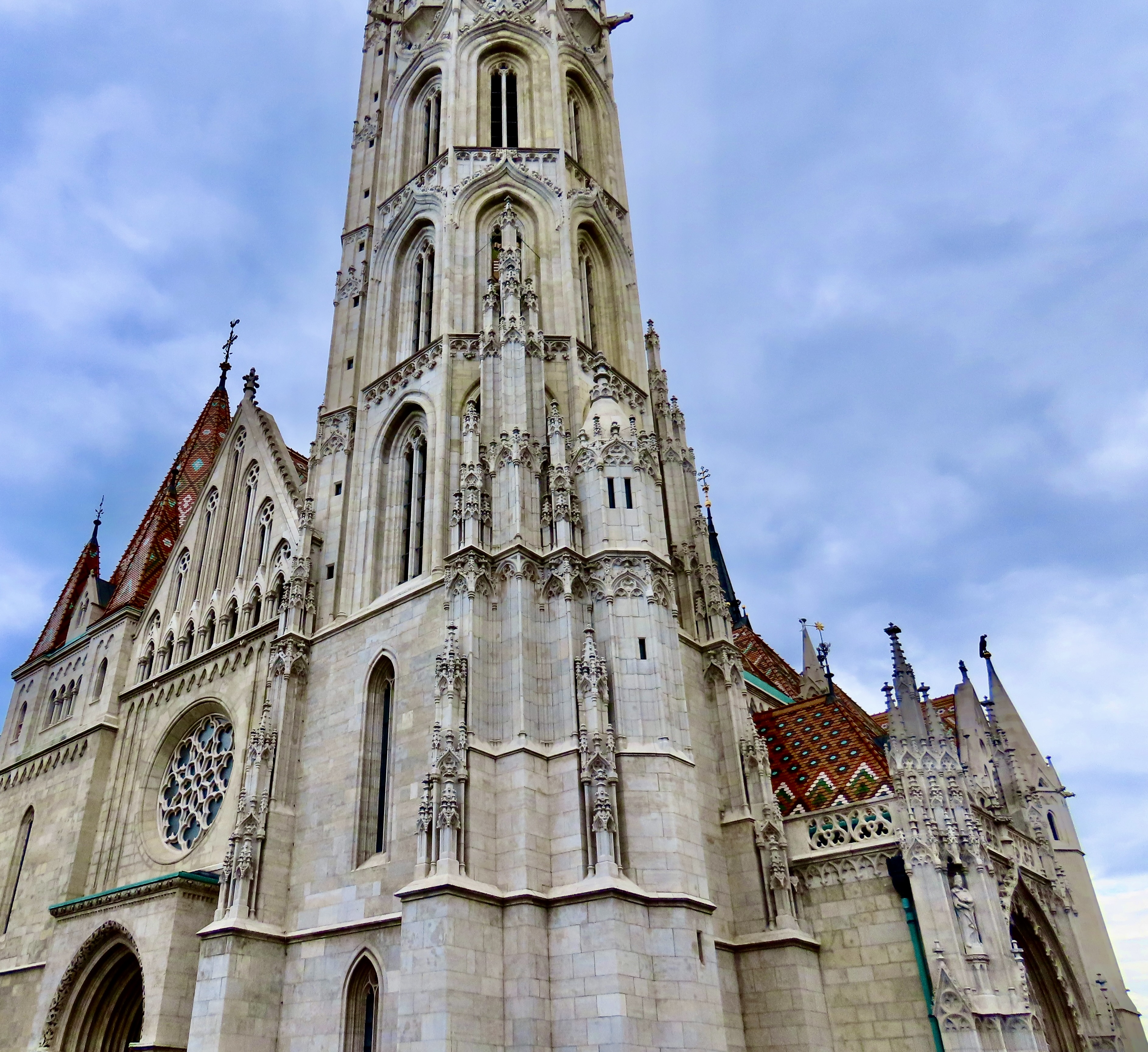
Then my camera decided to focus on the light behind the church, leaving it with a dark outline. It wasn’t what I was trying to accomplish, but I liked the result. The striking Matthias Bell Tower and a number of other towers stand out.
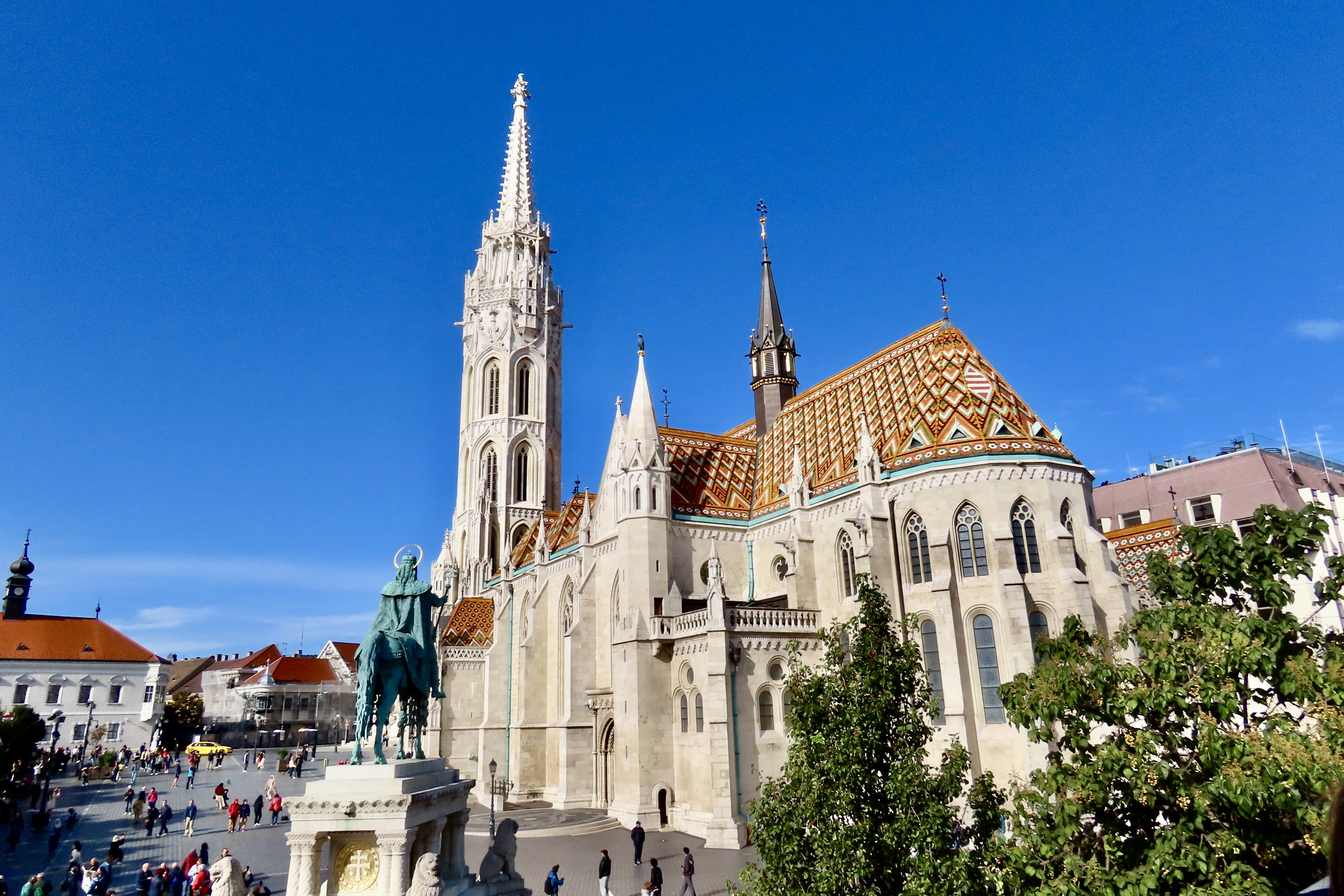
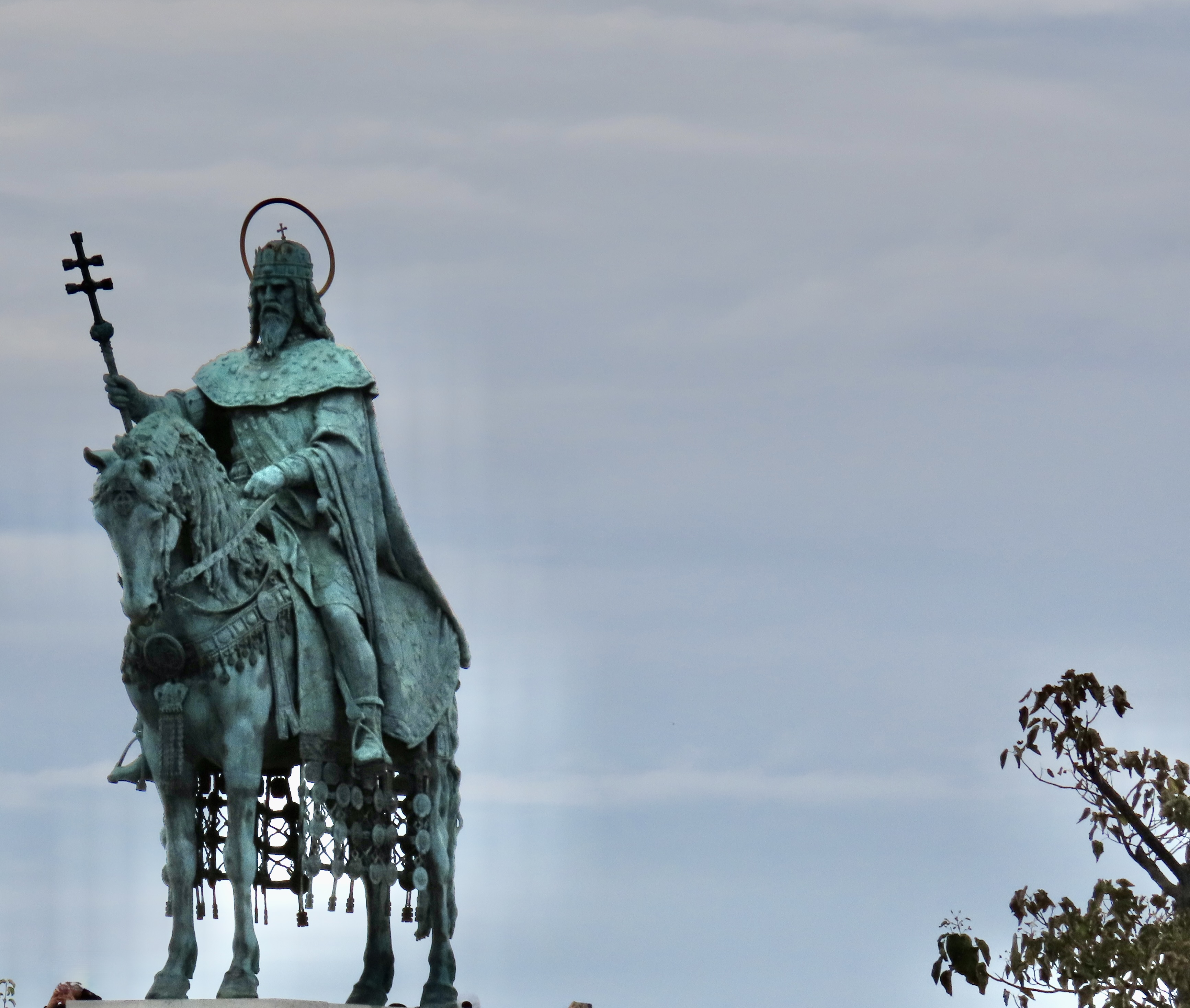
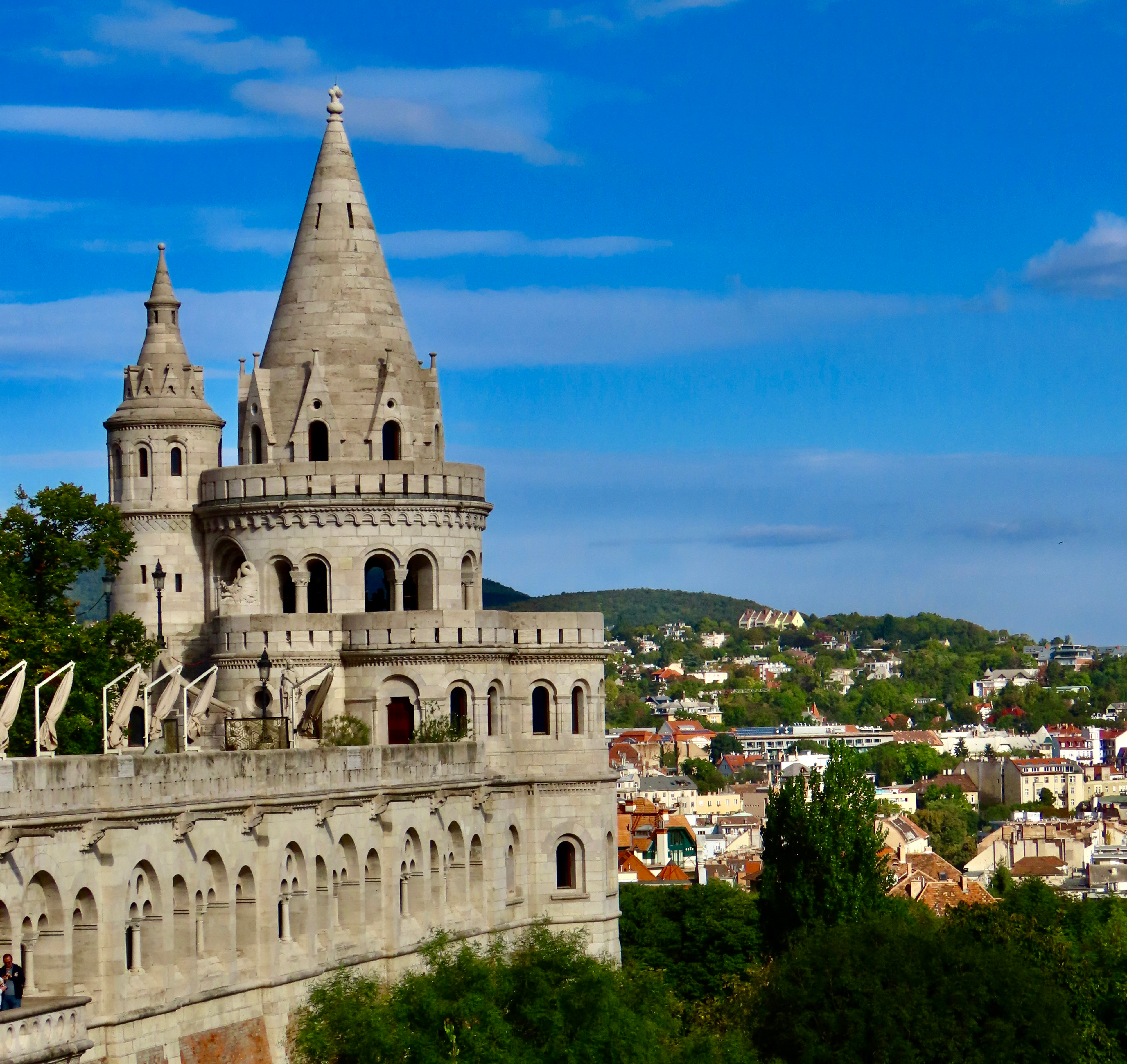
Matthias Church caught under blue skies in bright sunshine. While the style is Gothic, the brightly covered roof speaks to a late 19th Century makeover, as does the inside of the church. The green guy on his green horse is the much revered first king of Hungary, King Stephen. We took the photo from what is known as Fisherman’s Bastion, another prominent landmark of Budapest.
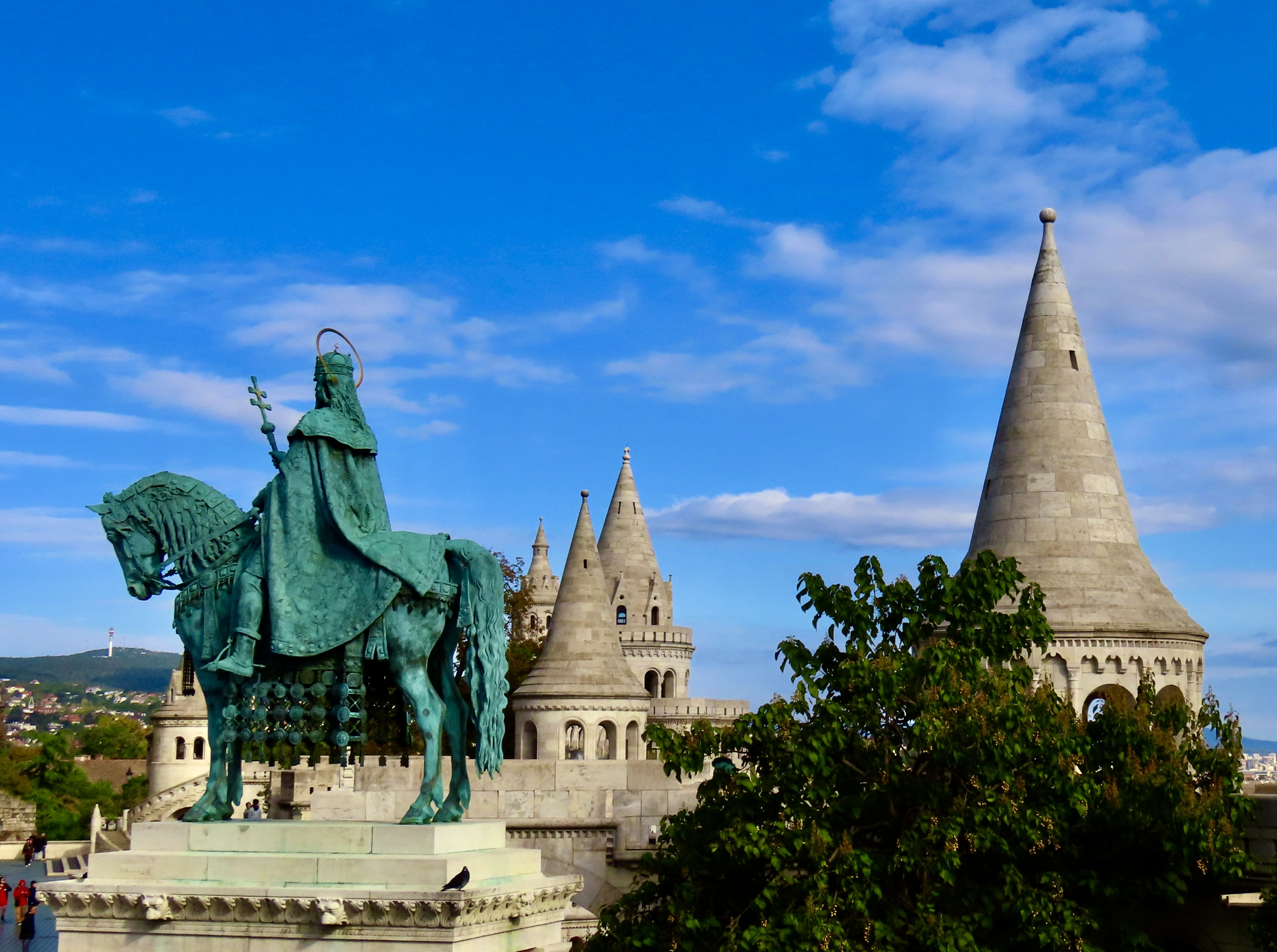
The King with his saintly halo and double cross is blessing the church. The towers are part of Fisherman’s Bastion. There are seven in total, representing the the seven chieftains of the Hungarian tribes that crossed the Carpathian Mountains and entered the Carpathian Basin in 895 CE (Common Era).
Born a pagan but baptized as a Christian, St. Stephen was coronated on Christmas Day in 1000 CE and immediately set out to Christianize Hungary. Thus, his Sainthood.

A true mark of a Catholic Saint during the Middle Ages, BTW, was that the faithful collected bits and pieces of you as relics to be worshipped. Praying over them could cure you of whatever, they thought. King Stephen donated his “naturally mummified” right hand to the cause when his tomb was opened in 1083 CE. I assume it was chopped off. He didn’t complain. It is one of Hungary’s most cherished relics. When the Ottoman Turks captured and occupied Budapest from 1541 to 1699, the hand was sent to Ragusa (Dubrovnik) for safe keeping where it was guarded by Dominican friars. They were reluctant to return it afterward. Lots of pilgrims generated revenue. They finally relented when Queen Maria Theresa promised to protect the city from a pending Russian invasion.
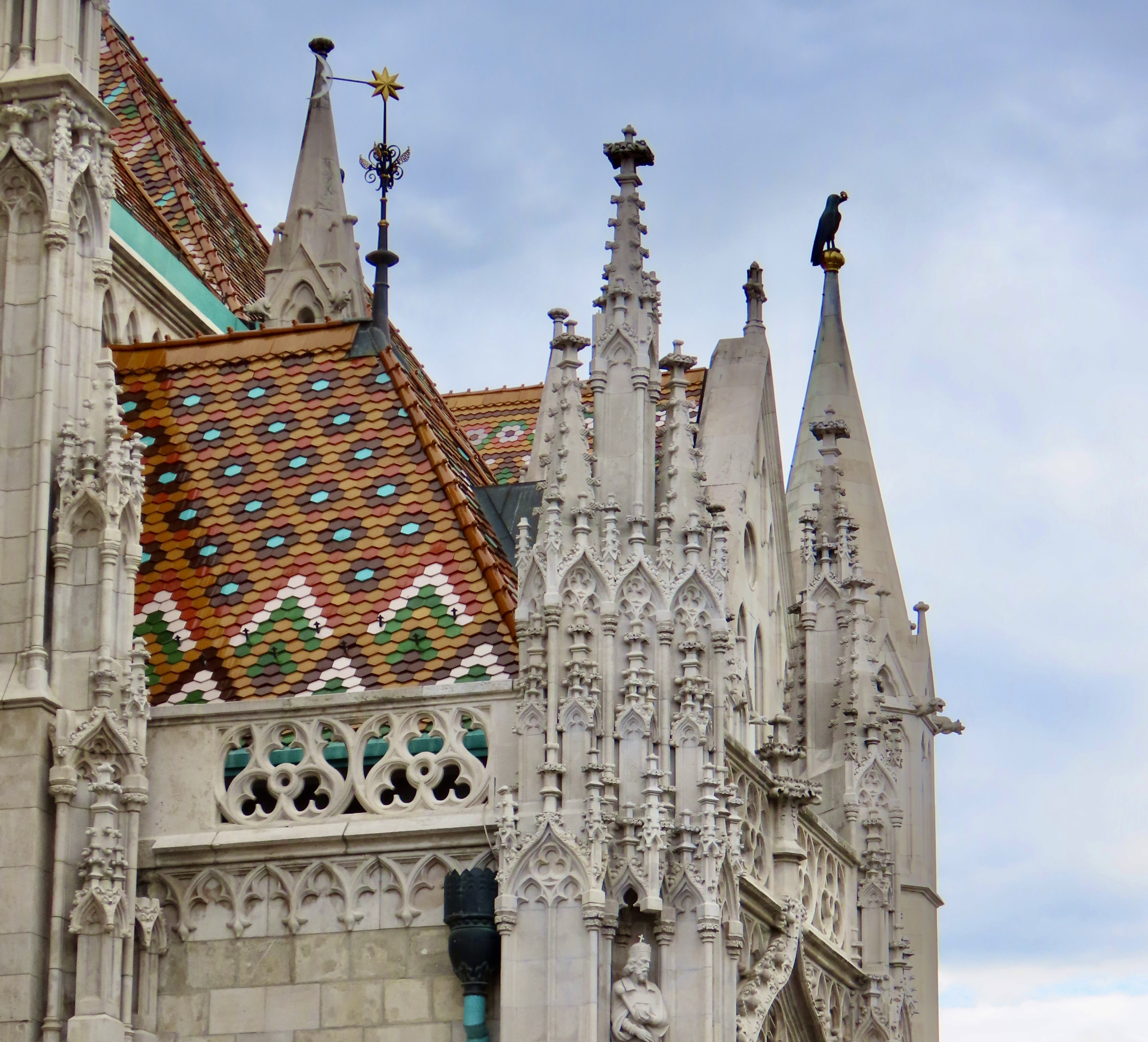
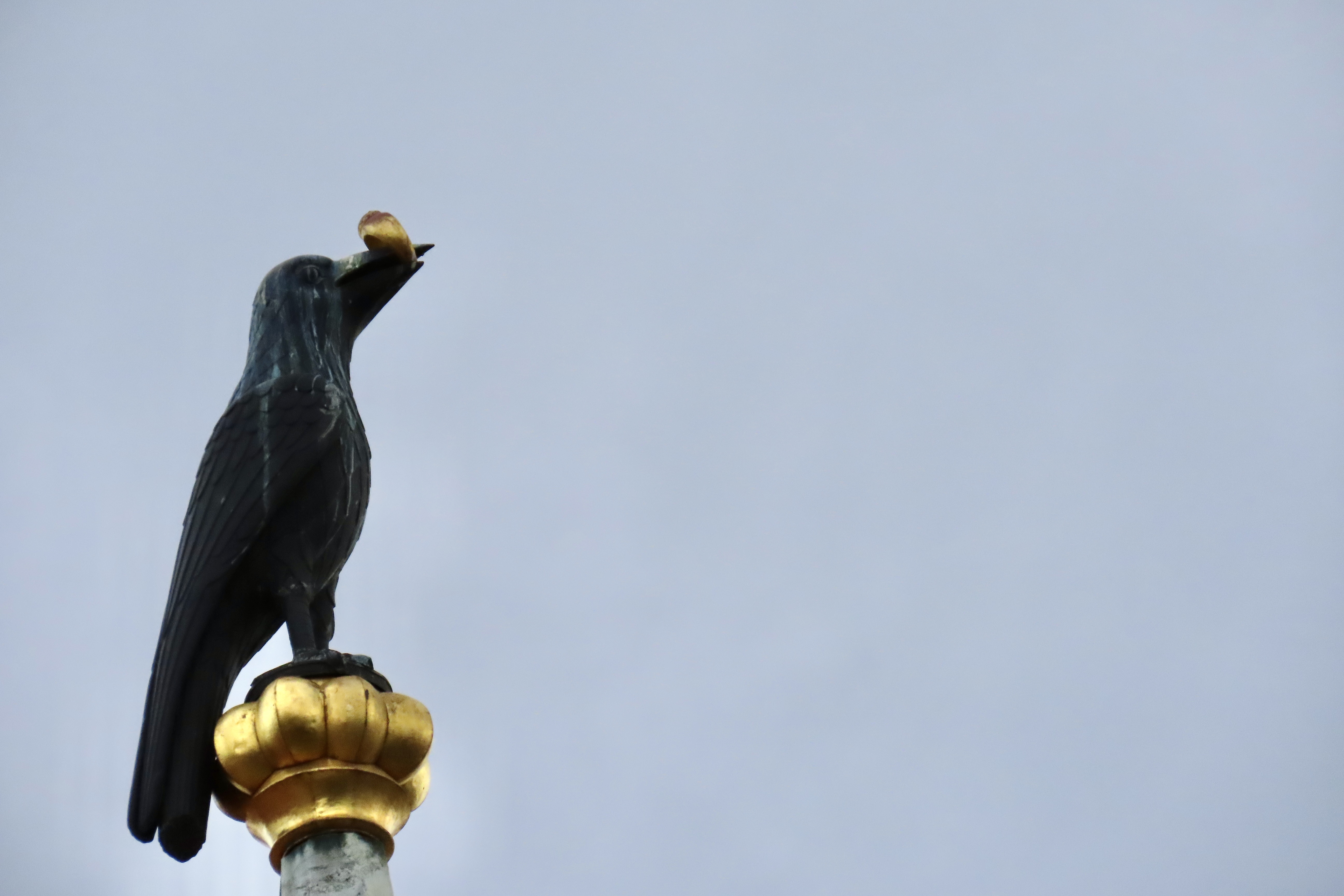
Speaking of the invasion by the Ottomans, they actually took over Matthias Church and turned it into a mosque. I was wondering if the moon and star (upper center left), which are both symbols of Islam and are often found on top of mosques, commemorated their occupation? Also, of interest, is the raven seen in the upper right center…
Legend has it that Matthias’ mother sent a raven to Prague with the ring urging her son to return home. King Matthias is another of Hungary’s loved rulers. He was said to travel around in disguise to get a feel for the life of his subjects, “doing justice to the poor, and shaming the powerful and arrogant.” He incorporated the raven into his coat of arms and put one on top of the church with a symbolic ring. He was known as the Raven King.
The church really is beautiful…
And impressive.
A final view before heading inside.
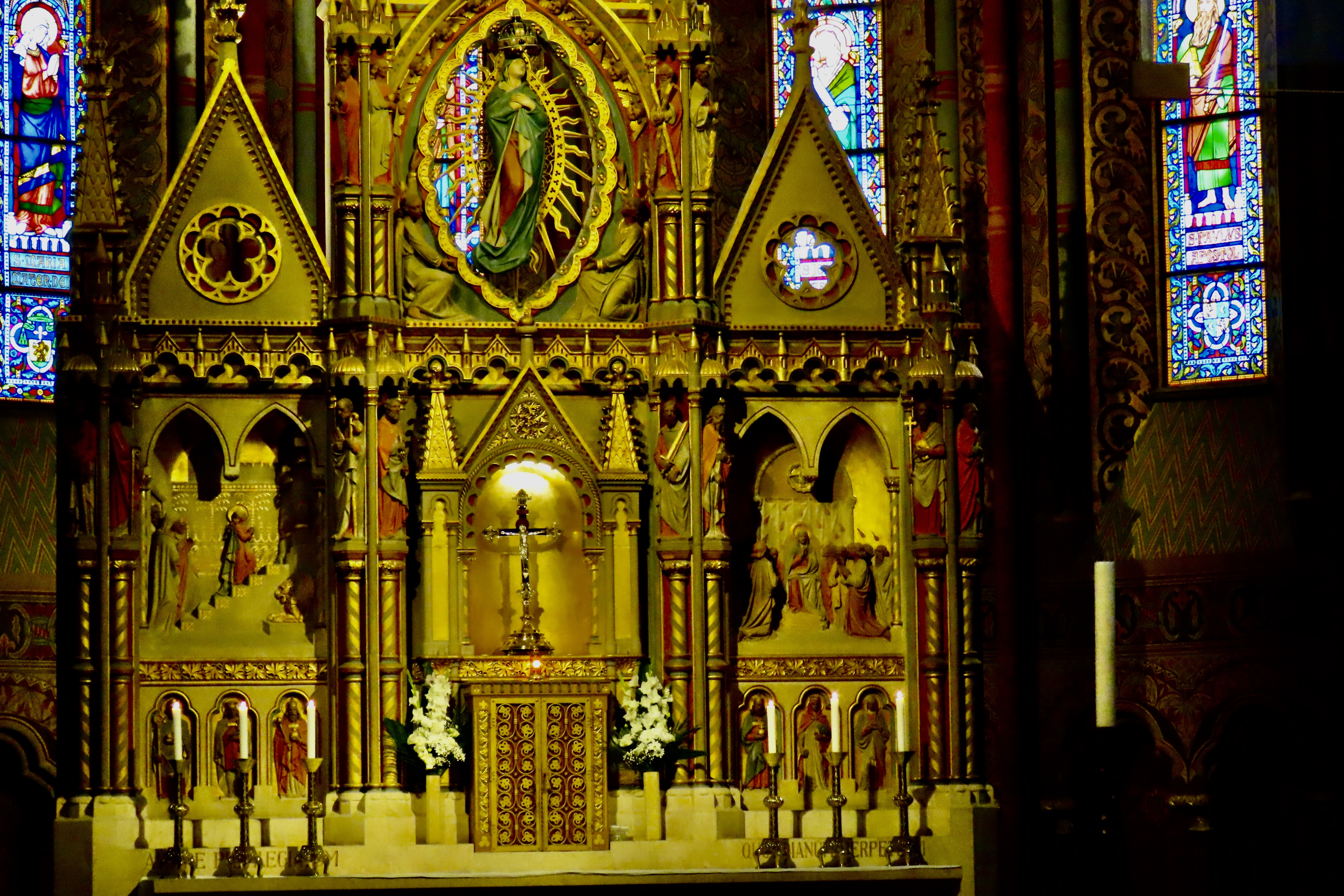
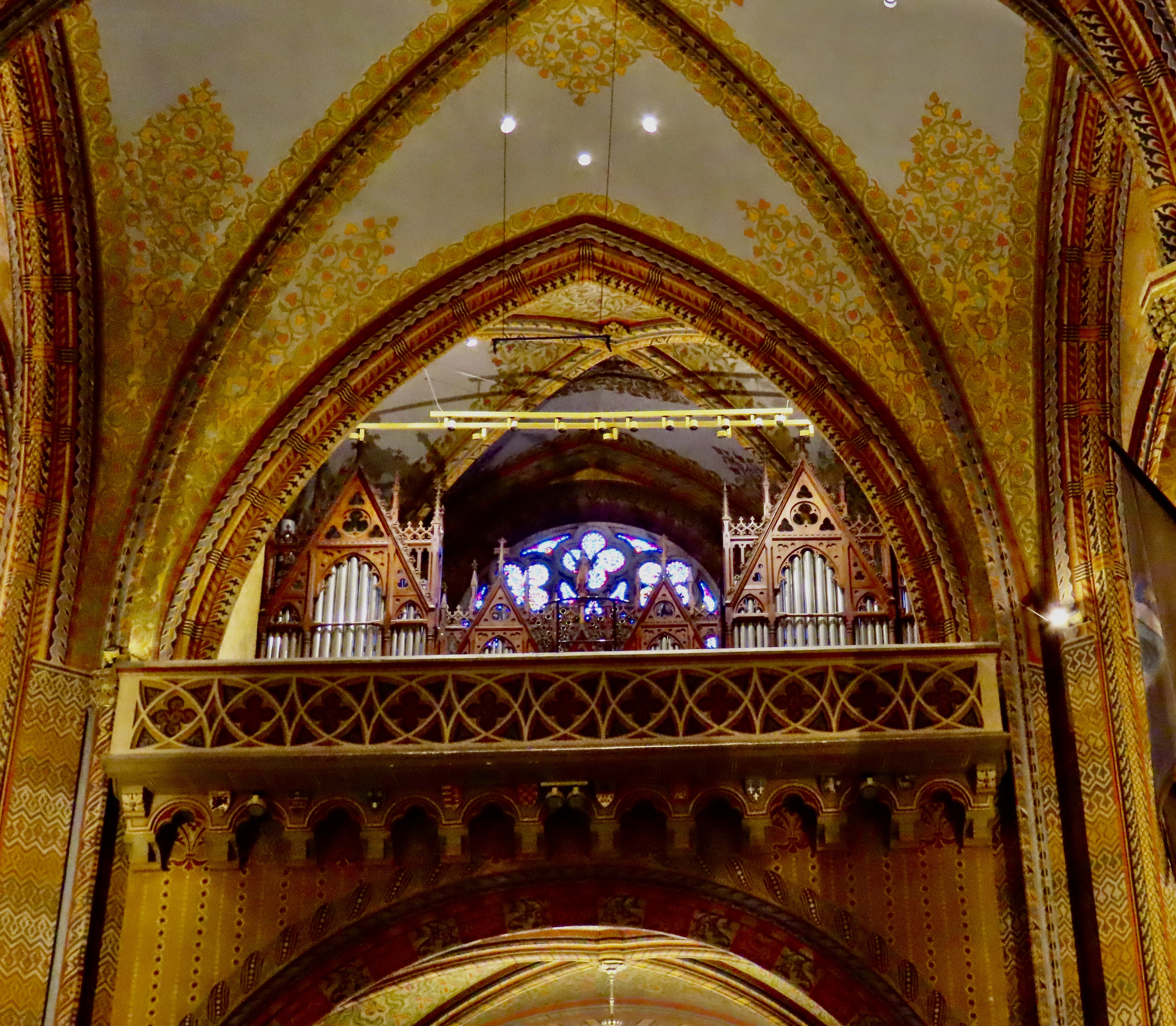
The warm brown and gold colors found on the main altar of Matthias Church are found throughout the church.
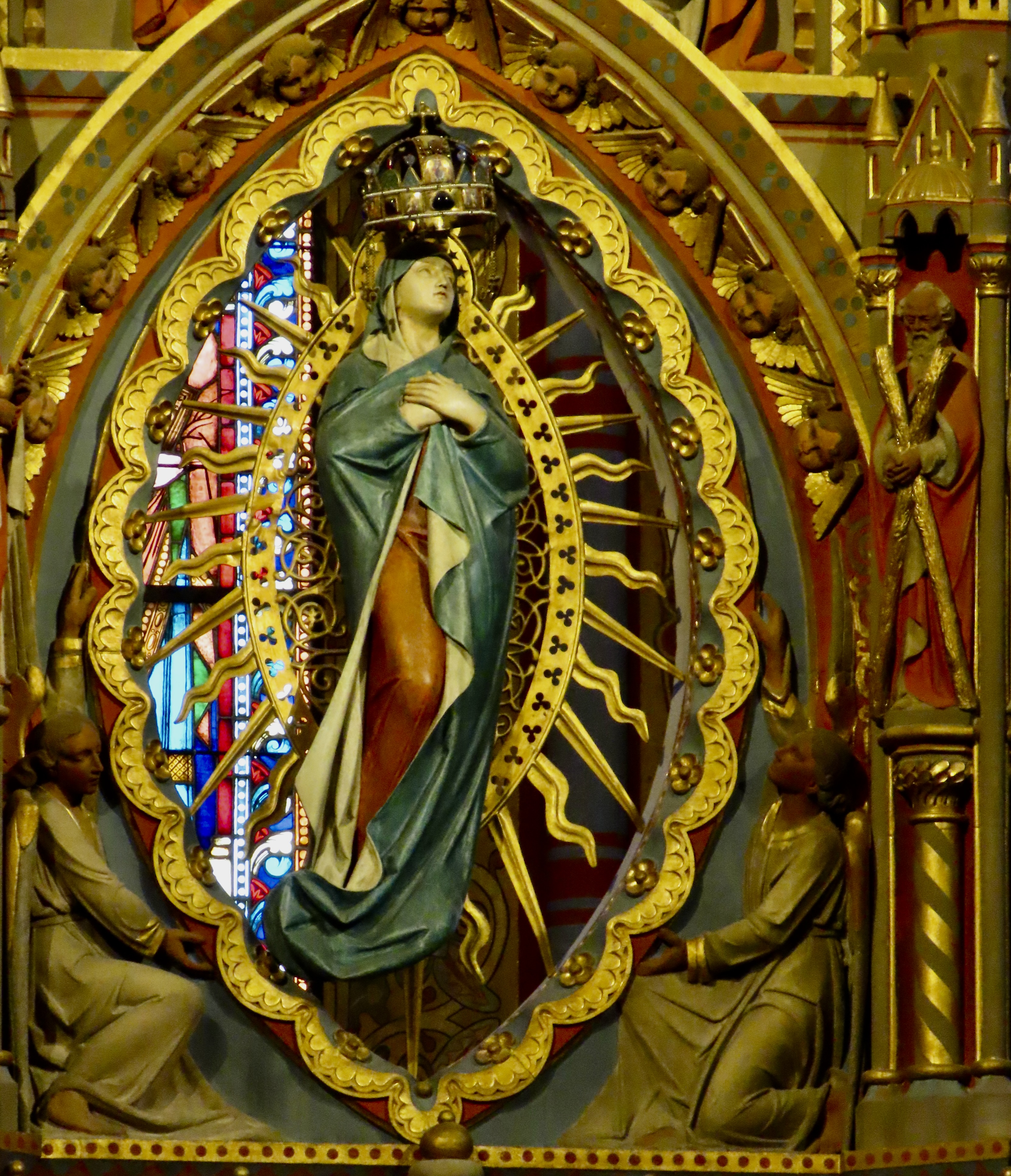
I really liked the way Mary was designed to allow light from the stained glass windows to flow around her. This attention to detail was found throughout the church.
Another example. Both unity and depth are achieved here. Also, do you see the lights hanging across the arch?
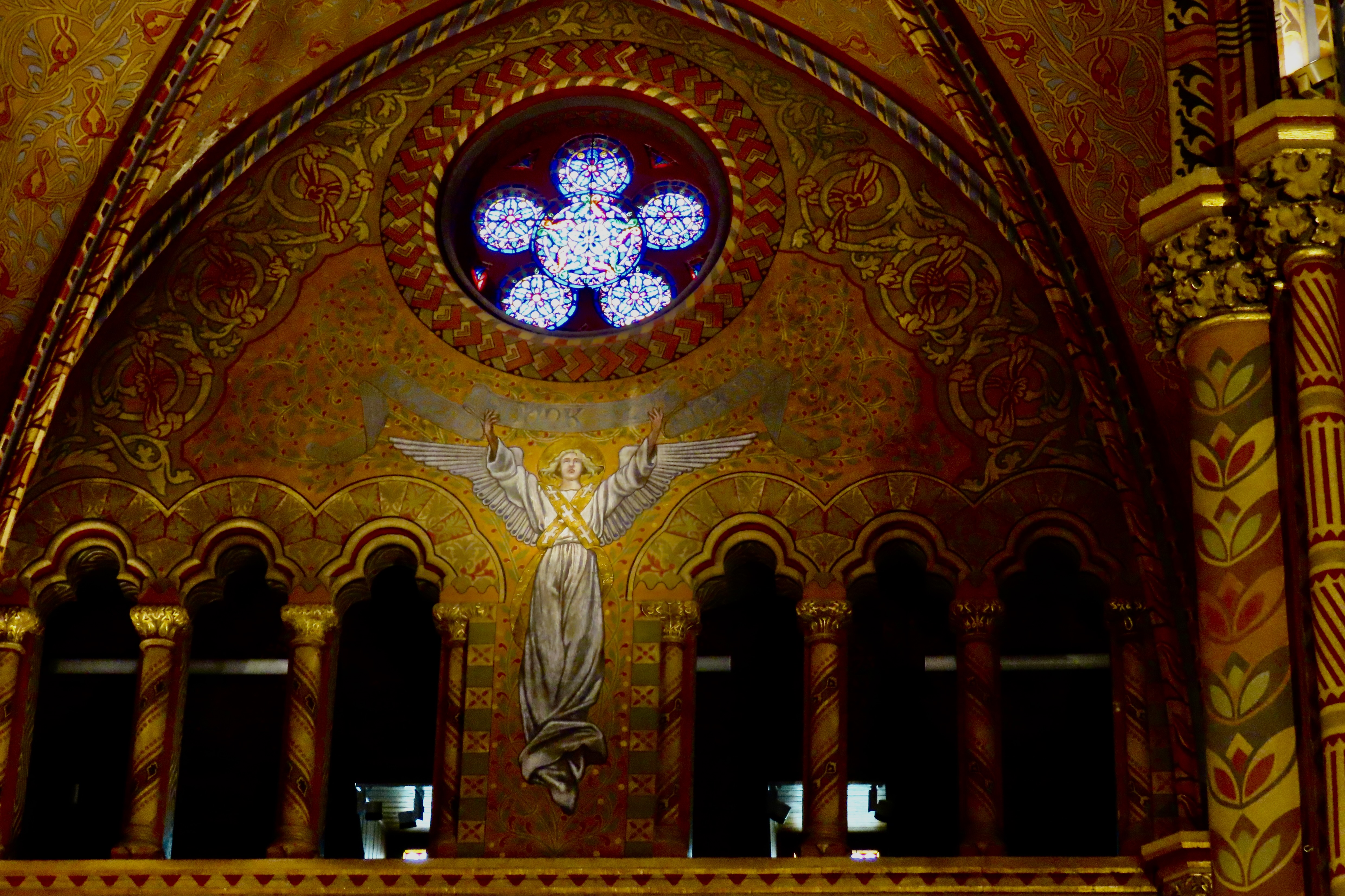
Light was used throughout the church for emphasis.
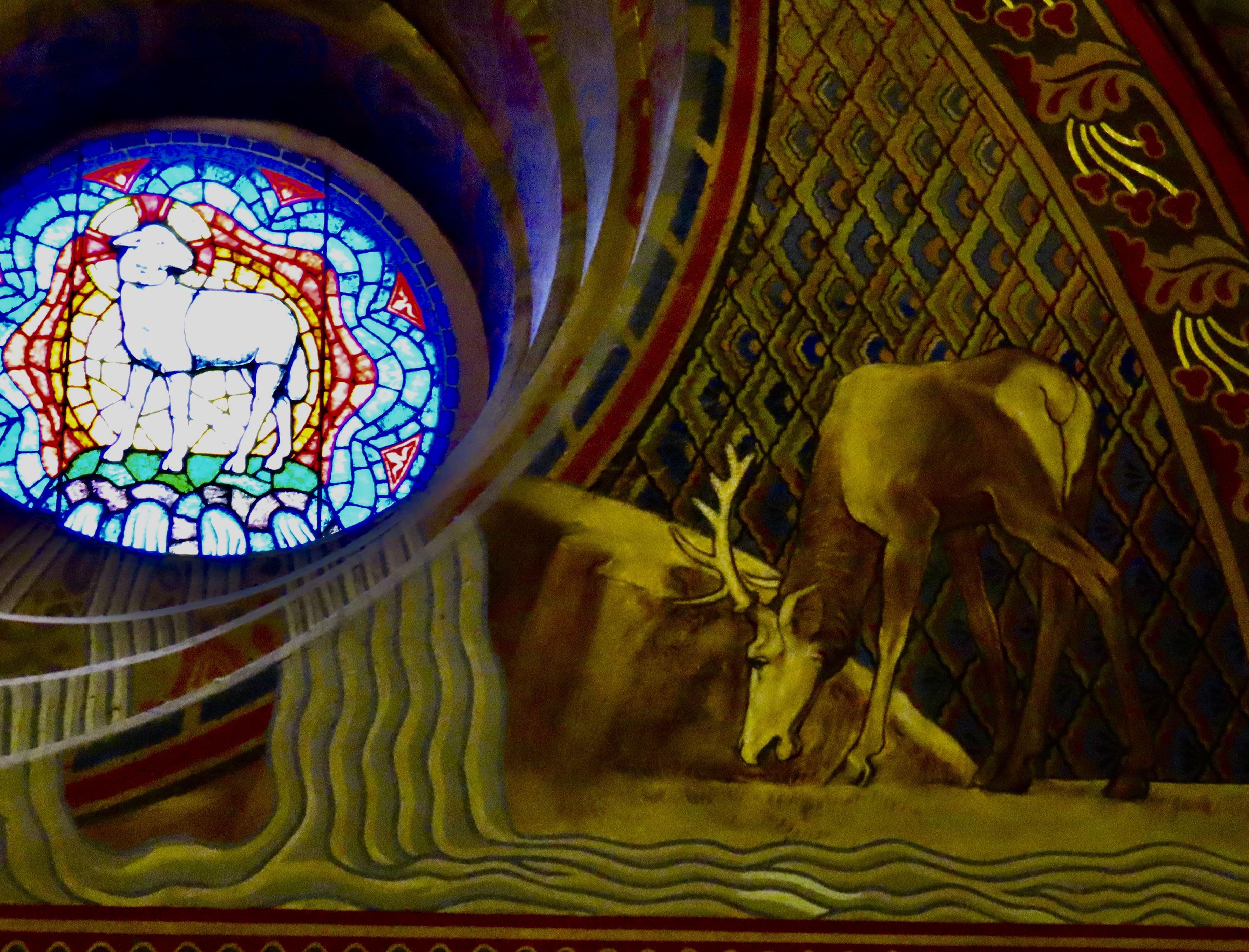
I liked this painting. It showed a stag doing what stags do— eat grass— while the ‘Lamb of God’ looks on.
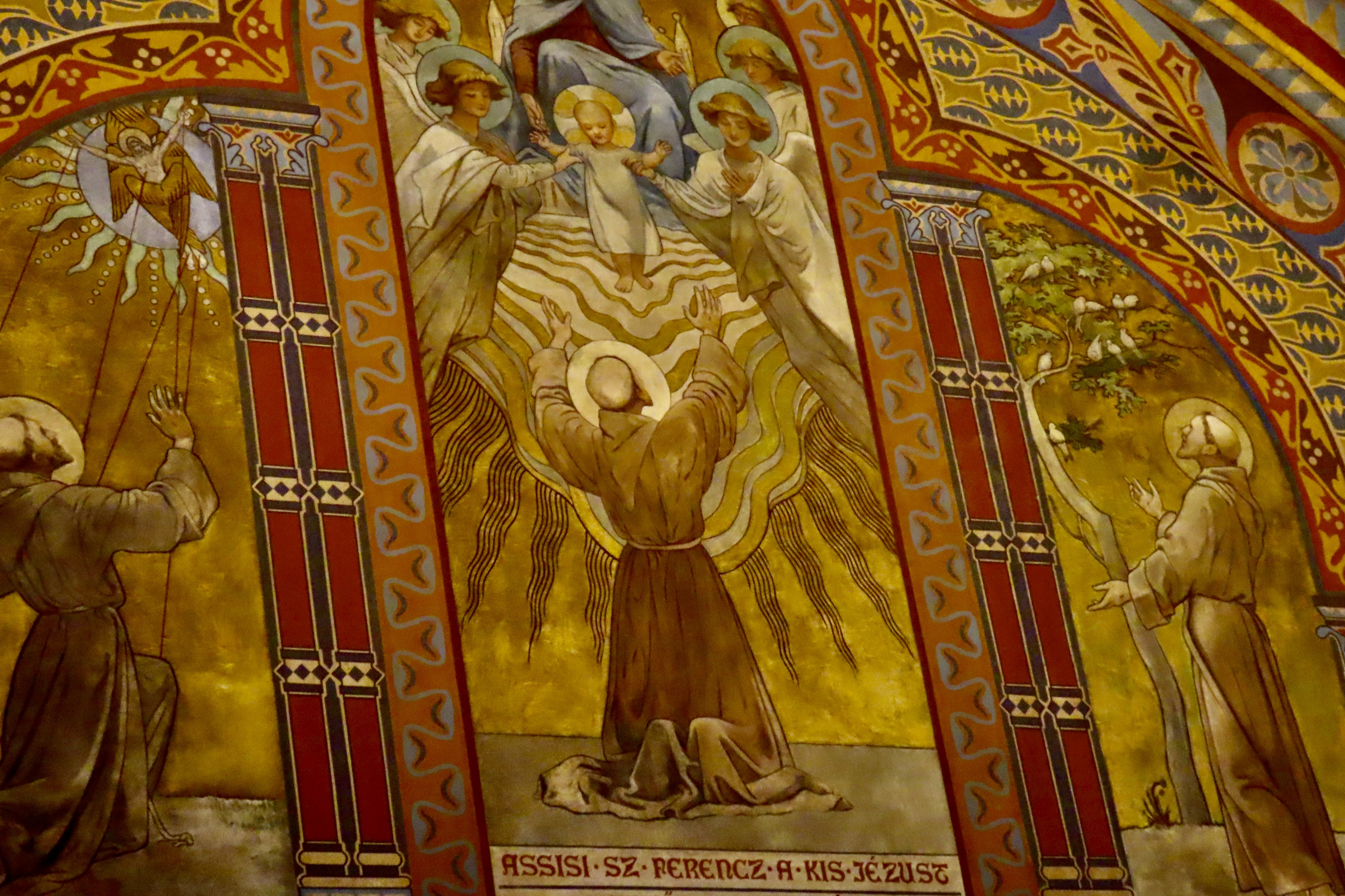
Several large paintings are incorporated into the church. This is Francis of Assisi encouraging the baby Jesus to walk to him.
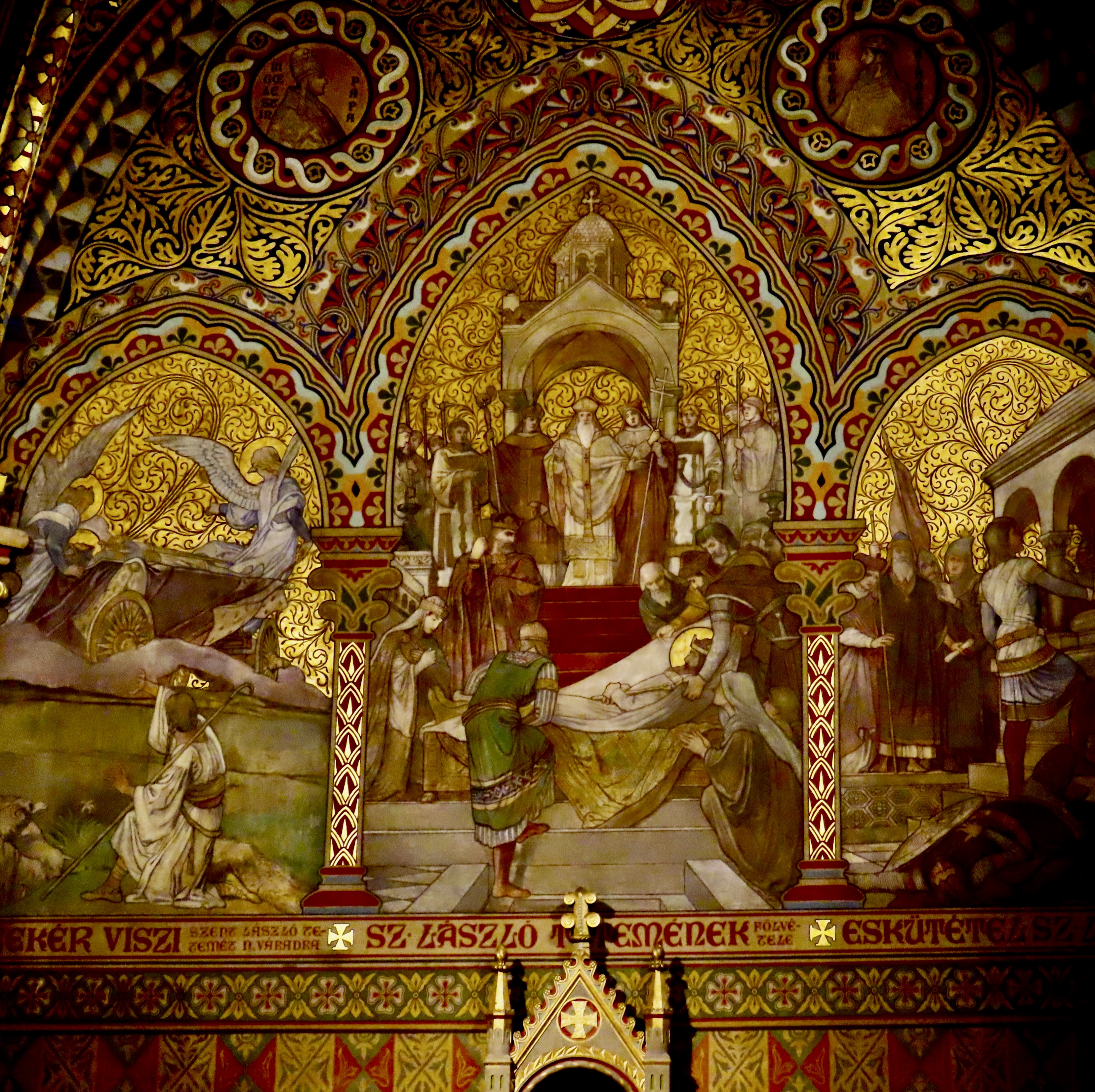
This mural depicting St./King Laszlo was even more richly painted than that of St. Francis. The bird headed people in the left corner seem rather strange.
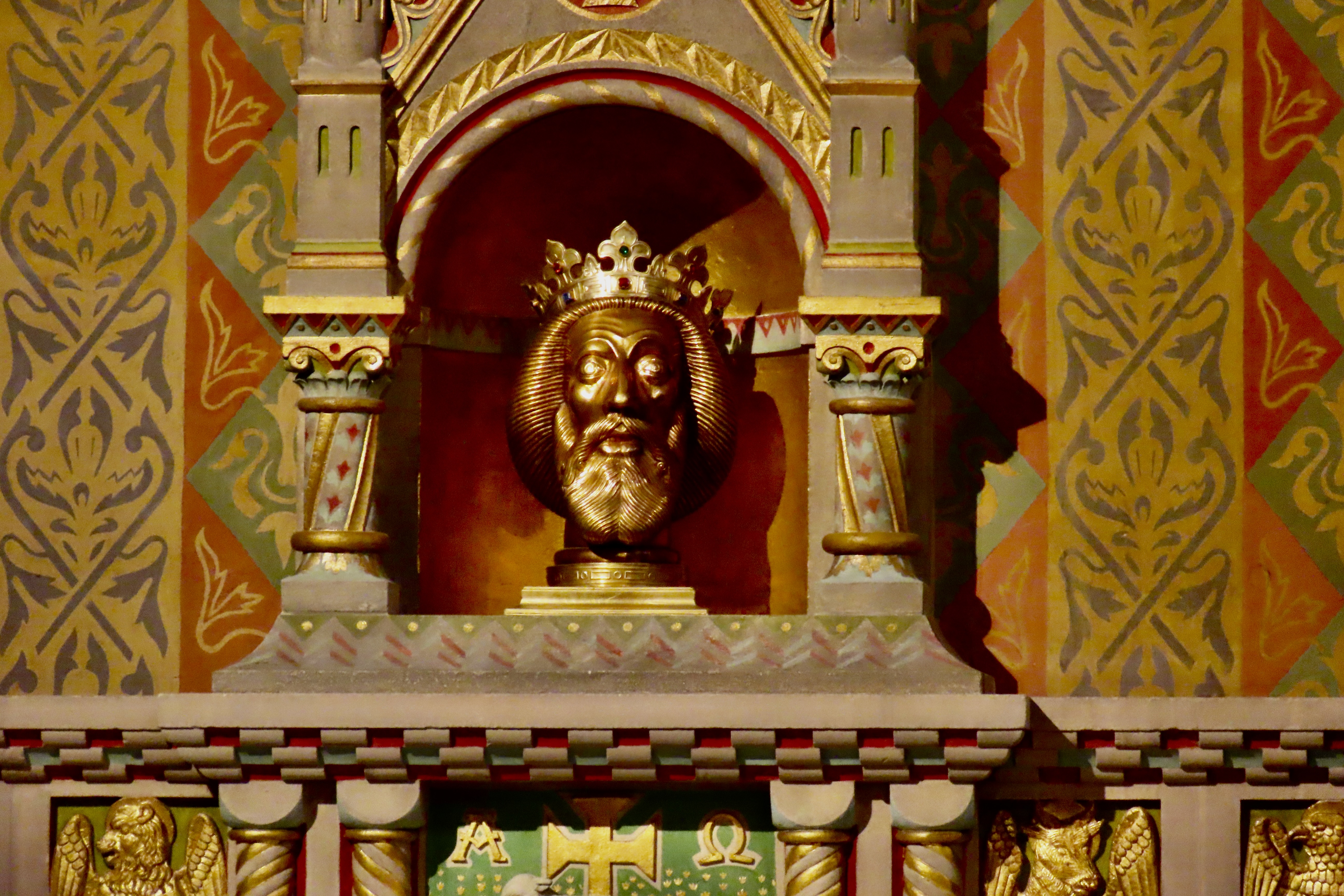
The King/Saint Laszlo with piercing, scary eyes was ensconced in an nook below the mural.
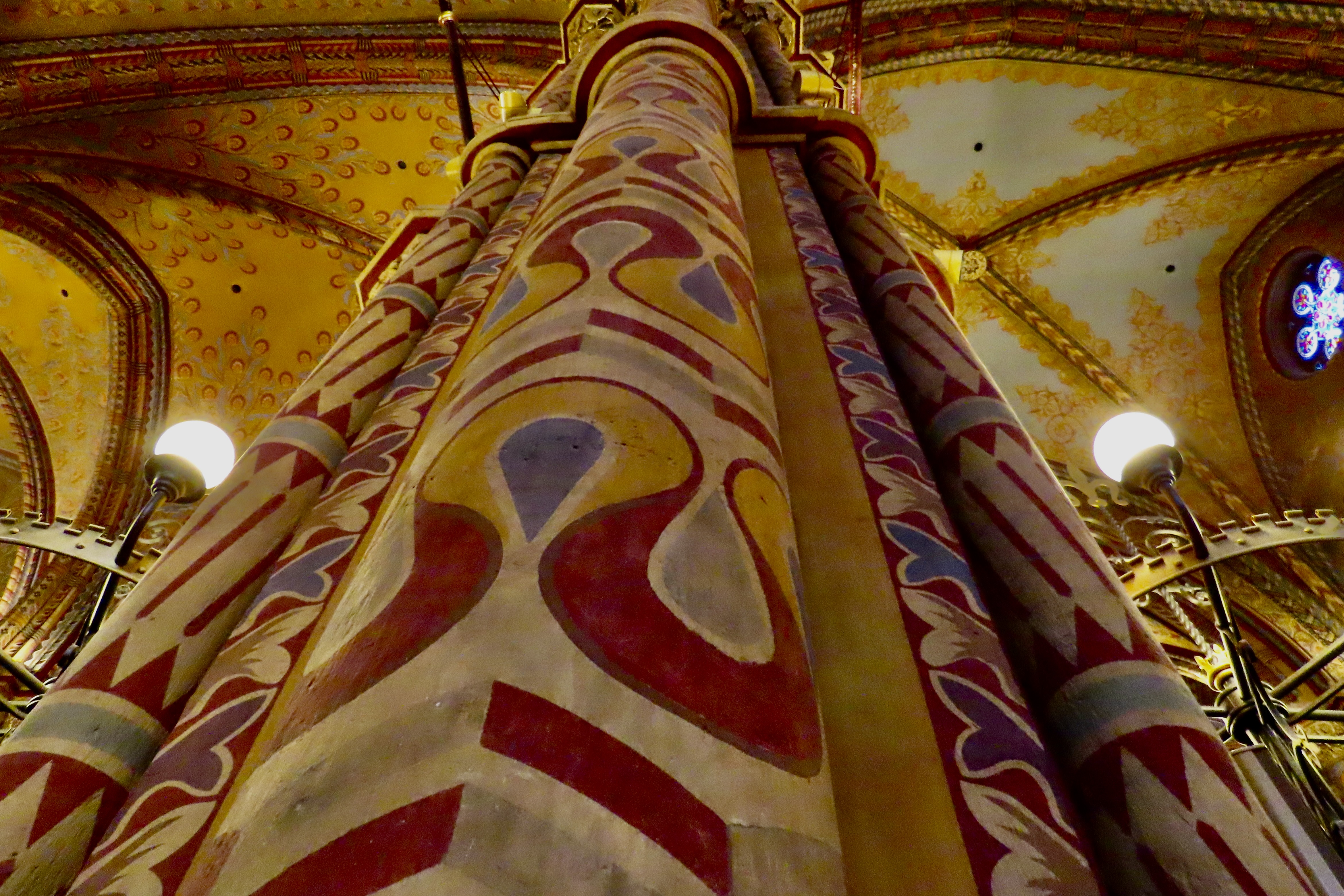
My favorite: The pillars of the church!
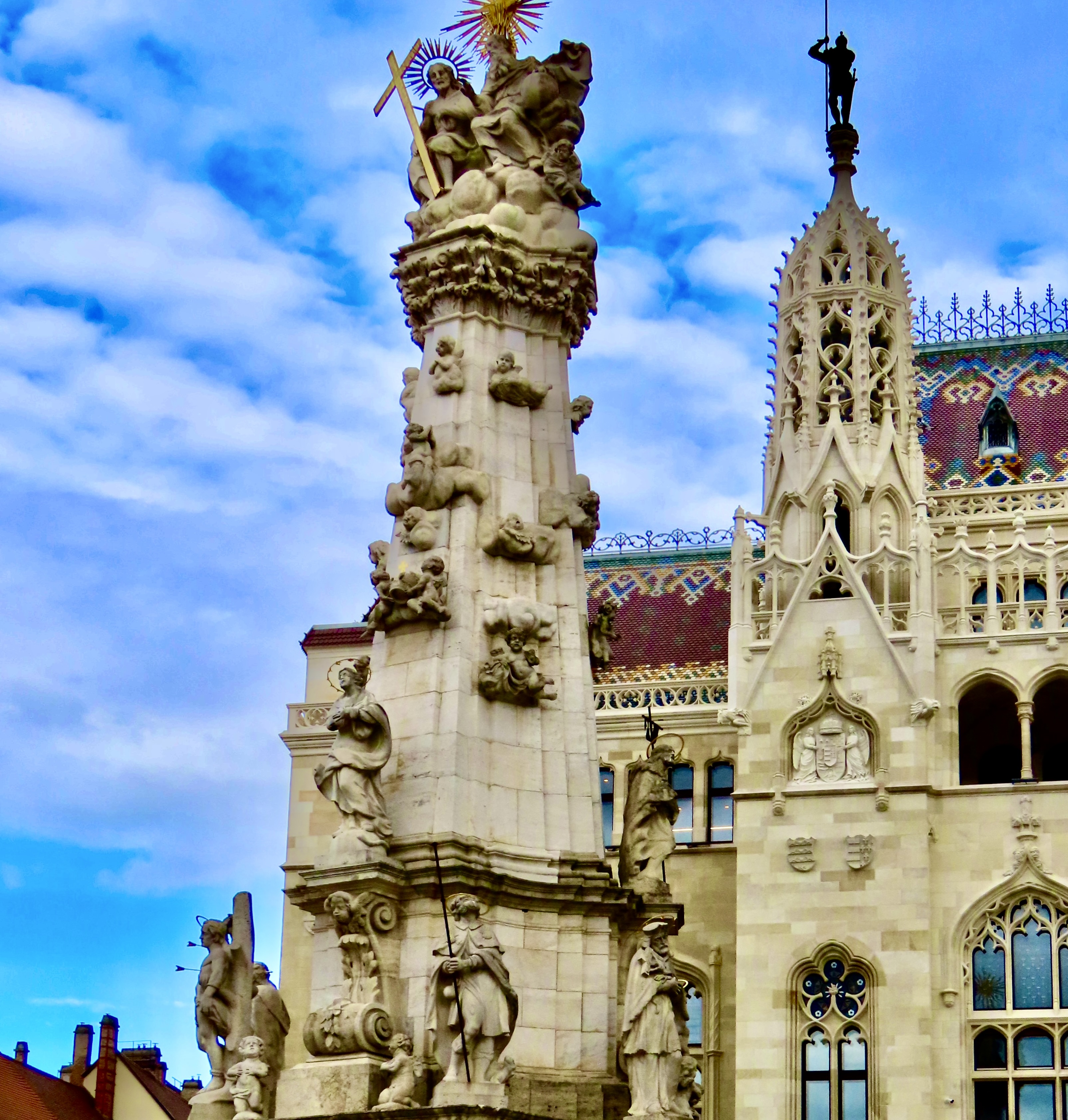
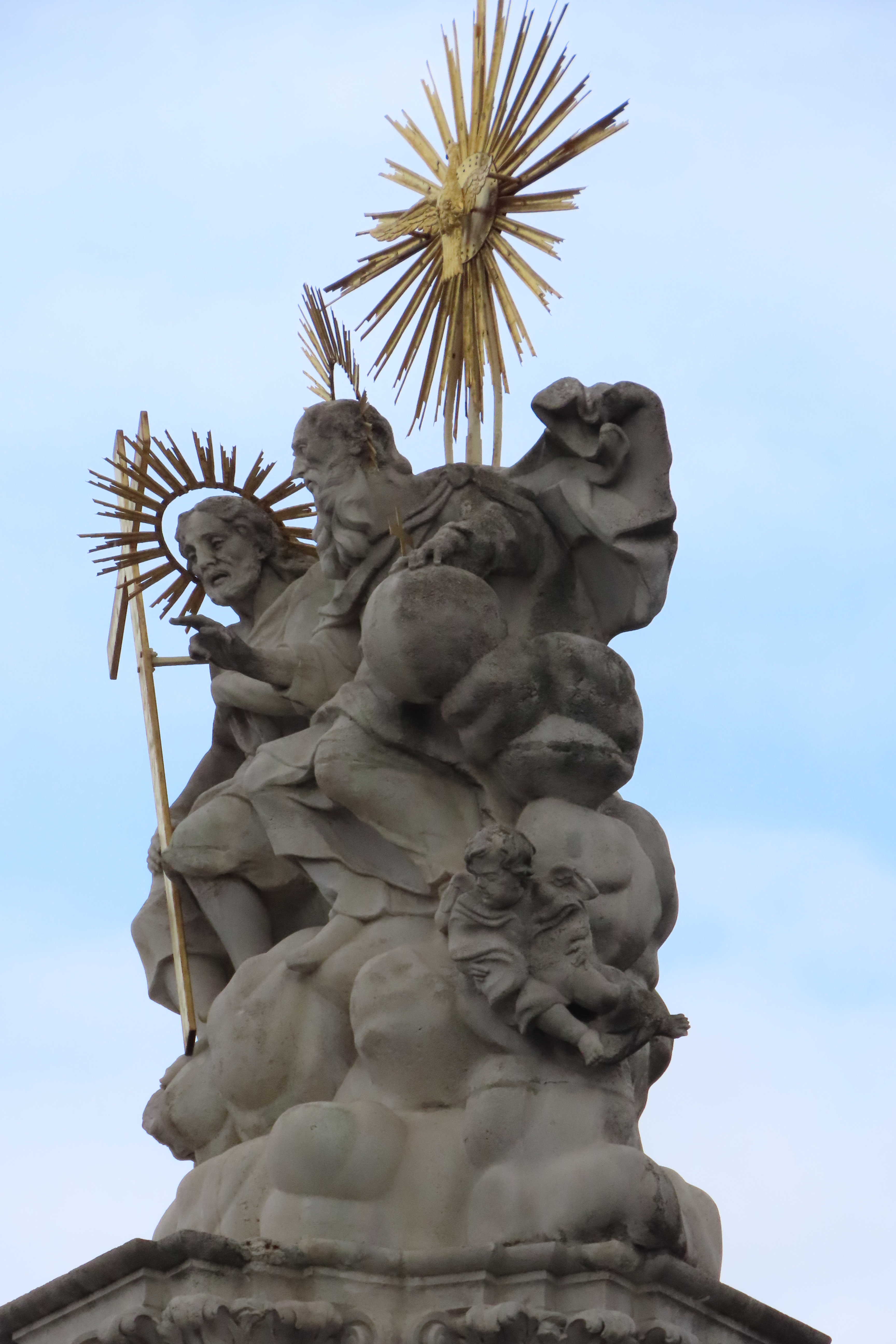
Outside the church we snapped a photo of the the Holy Trinity Statue that was built to protect the people of Buda from the Black Plagues that devastated Europe between 1691 and 1709, causing the death of up to 50% of Europe’s population. The Holy Trinity tops the column. Cherubs and angels are next, and various saints are on the bottom. Remember how we noted in Vienna that St. Sebastian was always depicted with arrows sticking out of him? Look to the left. They even sculpted the tree he was supposedly tied to.
Here’s the Holy Trinity. The Holy Ghost hovers above as a dove with light emanating from it, God with his flowing beard is next, and Jesus is carrying his cross. A fat little cherub is on the lower right because fat little cherubs apparently like to hang around the powers that be.
After our tour we were given some time to hike the walkway on Fisherman’s Bastion with its great views of Budapest.
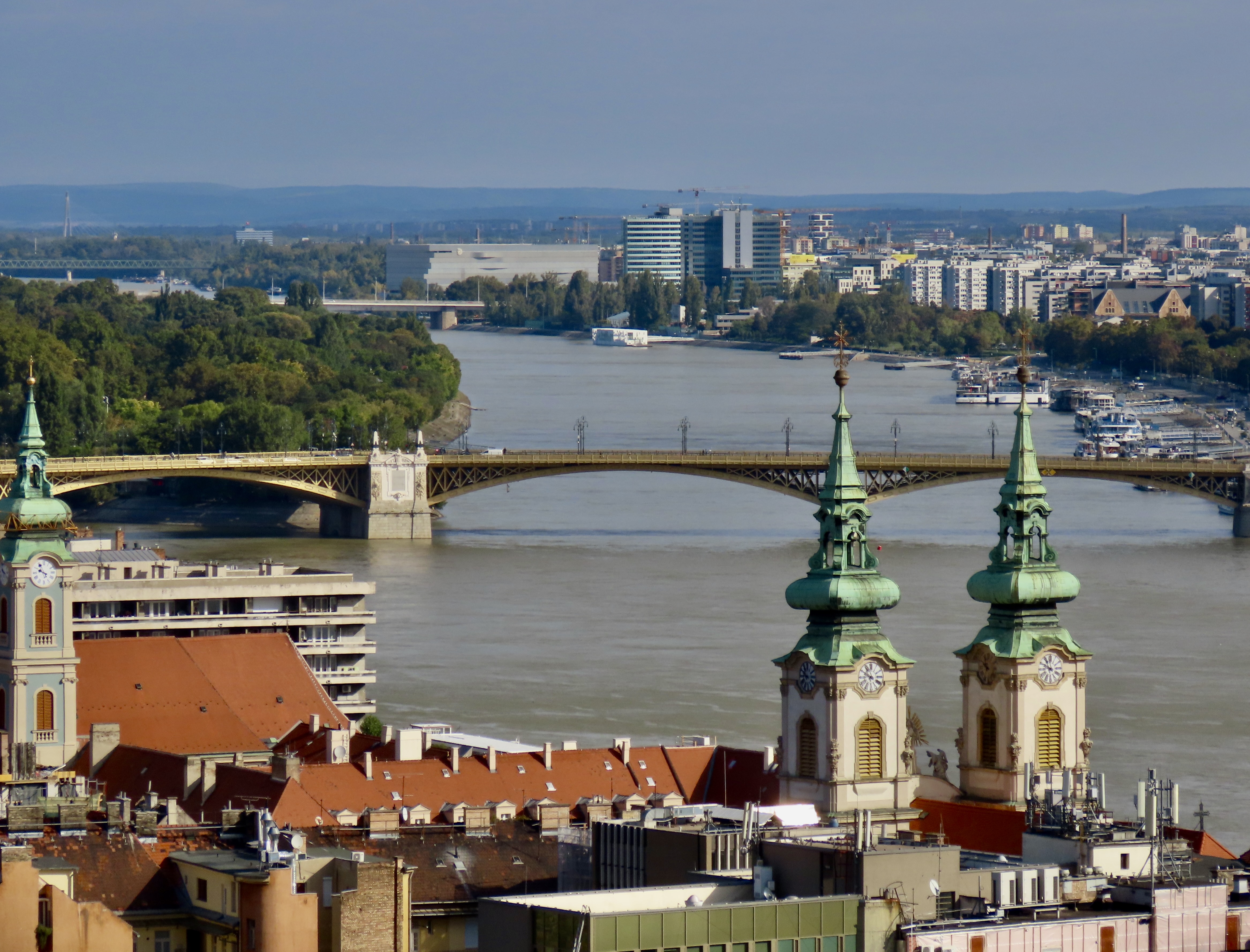
One of the views was of St. Anne’s Church with its Italian baroque tower that we had first seen from the river in today’s top photo.
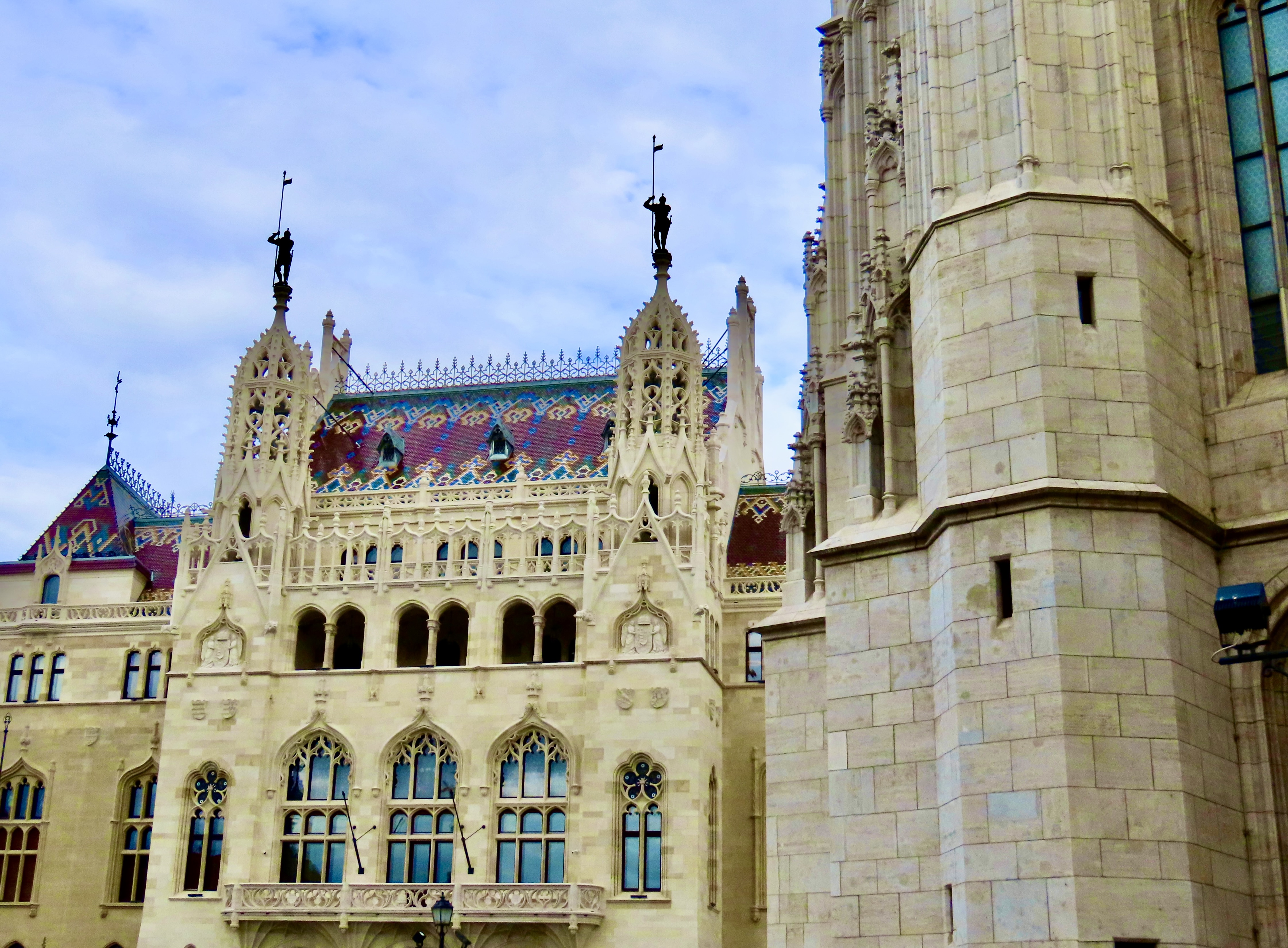
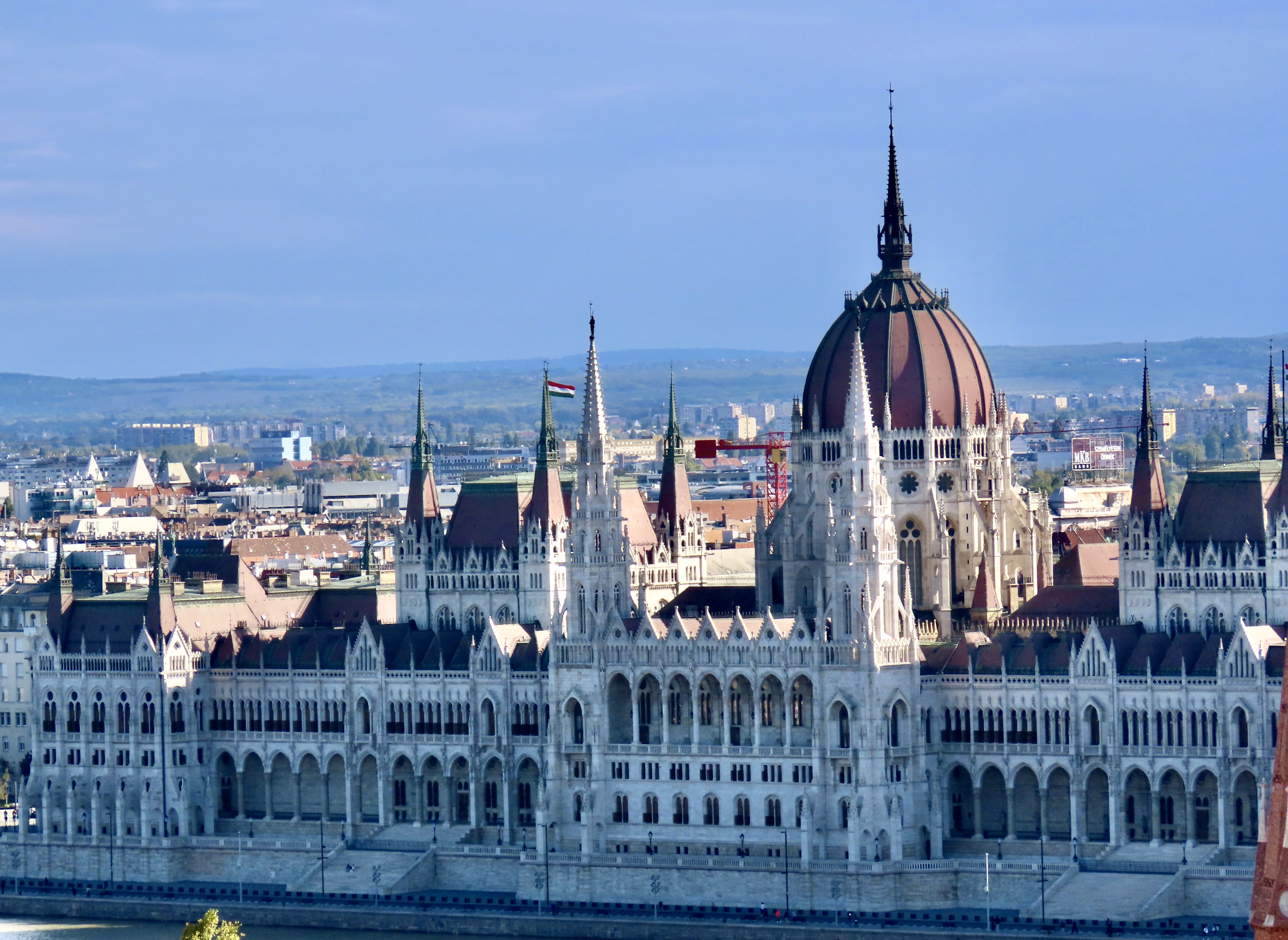
Another was of Hungary’s Parliament building which will be one of the sights featured in our next post.

That does it for now. We’ll be taking a couple of weeks off for Christmas and New Year’s but I will get a brief post up just before Christmas. Beyond that, see you in 2025. Have a great holiday!
Vienna and a Strikingly Beautiful/Strange Cathedral… Great Rivers Series: Danube #1

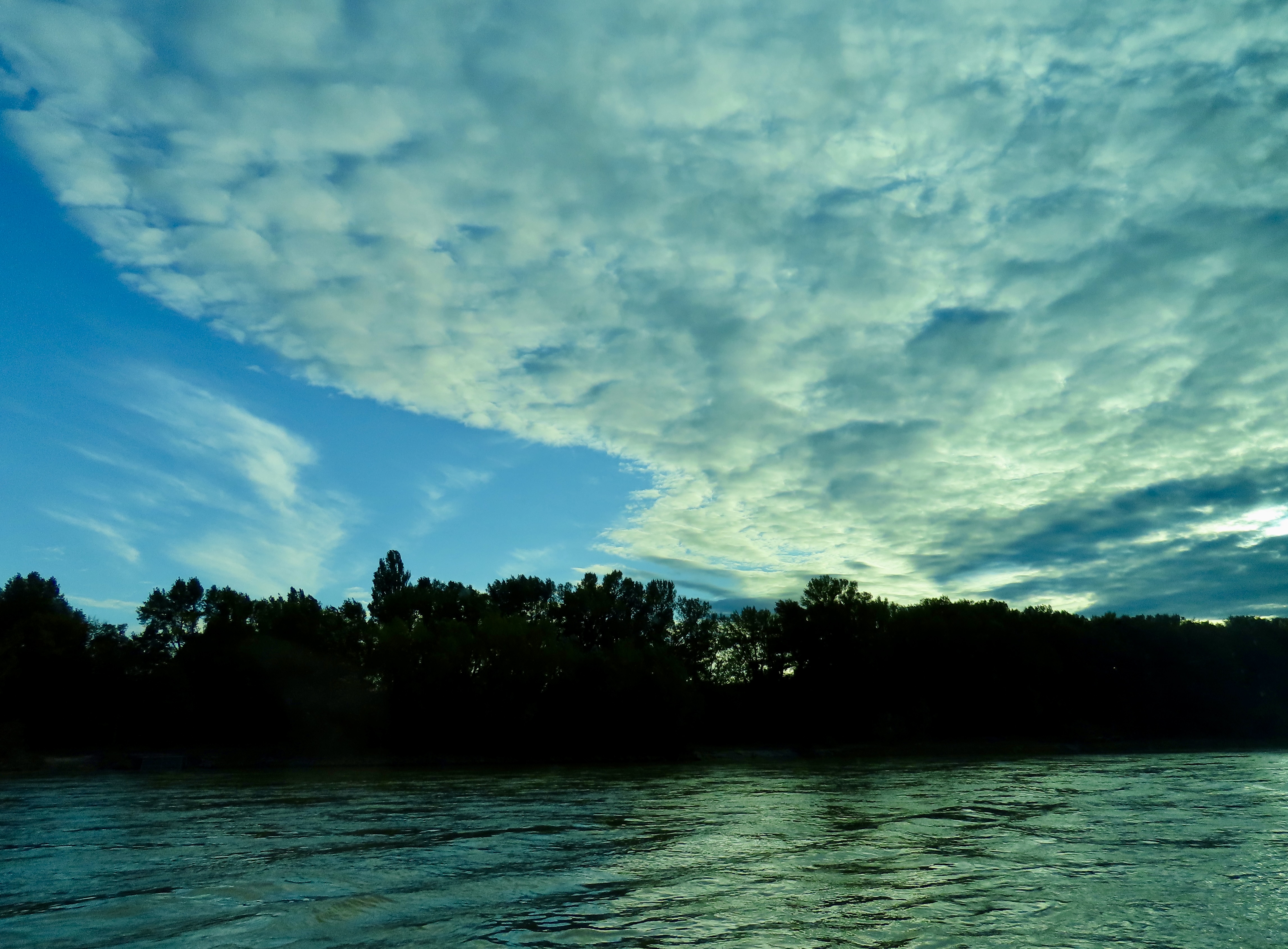
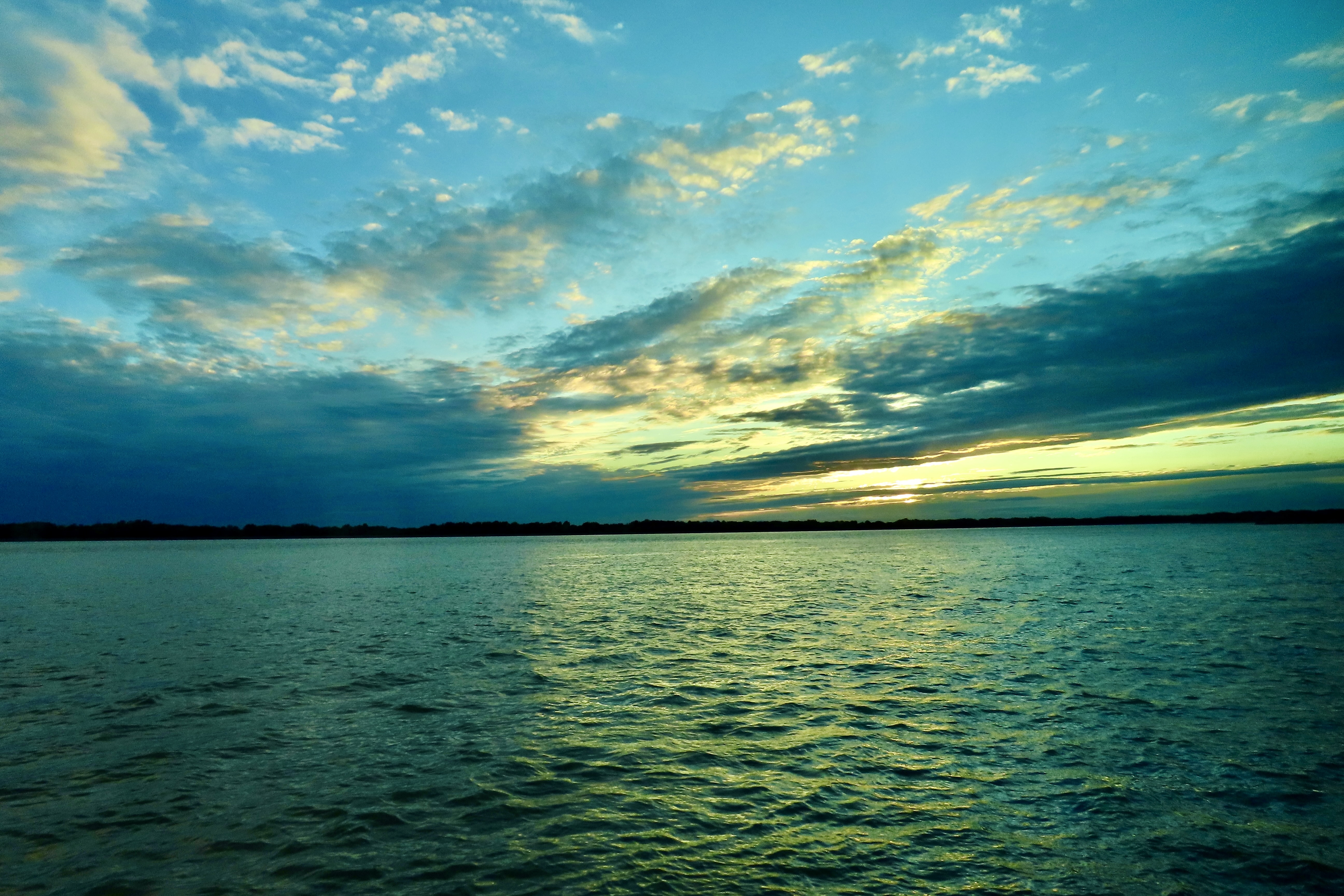
I’ve put on some mood music for today’s post: The Beautiful Blue Danube by Johann Strauss. Appropriately, it’s being played by the Vienna Philharmonic Orchestra. This is the river and its beauty. Its blue green tint is caused by the time of day and clouds. Like all rivers, it has a variety of ever changing moods.

We leave the Colorado River as it flows through the Grand Canyon today and travel 6000 miles to the second river in our Great River Series, Europe’s Danube River. Peggy and I, along with her brother John and his wife Frances, cruised down the river from Vienna to the Black Sea for nine days in late September/early October this year while adding another 7 days with a pre-tour of Vienna in the beginning and a post-tour of Transylvania at the end.

Polar opposites come to mind when comparing the two experiences. The Colorado combined the world class natural beauty of the Grand Canyon with the high adventure experience of floating through roaring rapids in small rafts. Accommodations are best described as roughing it. We slept on the ground in our two person tent, prepared our own food, and took care of bathroom chores on the groover— which was hopefully hidden from public view by bushes and rocks. Whatever bathing took place was in the ice cold river or or side streams with our clothes on— might as well wash both at once, right? Side trips normally involved climbing up the steep, possibly dangerous sides of the Grand Canyon to enjoy the beauty or leap 10 to 20 feet off cliffs into small, hopefully deep, pools of water. As for weather, think up close and personal.

The Danube has a beauty of its own but lacks the incredible scenery of the Grand Canyon. Our ‘raft’ was a brand new river boat holding around 100 people, where we ate four course meals served to us by friendly, attentive staff. (Peggy had won them over on the first day. When we entered the dining room we’d hear, “Hi Peggy,” coming from all sides.) We slept on a king-sized bed, had large windows looking out on the river, enjoyed a hot shower every night, and had a toilet that, um, actually looked and behaved like a toilet. Our side trips were usually into major Eastern European cities known for their culture and stunning architecture. It wasn’t quite ‘roughing it.’

The primary difference, however, was on focus. On the Colorado, it was the river, the surrounding natural beauty, and the adventure. On the Danube, it was on history and the cities that border the river. The Danube had once served as the boundary for Rome. In the centuries since the region, known as the Balkans, had seen continuing invasions including the Mongols out of Asia and the Ottoman Turks from Turkey.

World War I started in Bosnia when Archduke Franz Ferdinand of the Austro-Hungarian Empire was assassinated by a Serbian nationalist. World War II ended with Russian tanks and troops rolling across the area and establishing the Communist Eastern Bloc nations. Ethnic rivalry, seen most recently in the bloody Kosovo conflict, has often been intense. The word Balkanization, which refers to a country or region breaking up into smaller, frequently hostile units as the result of ethnic, religious, or political differences, is actually based on what happened in the region.

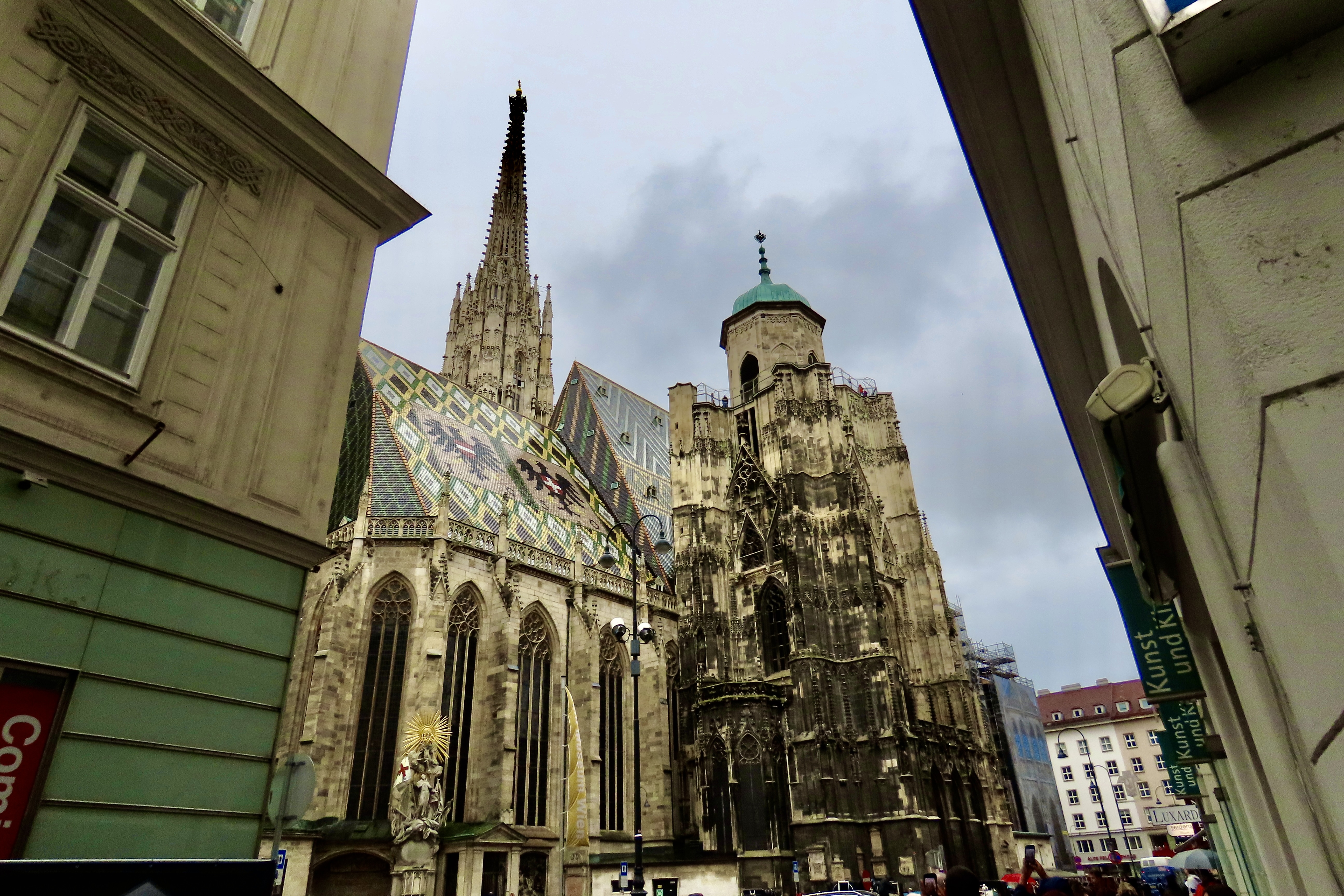
We followed the Danube River traveling for about 1200 (1930 km) of its 1700 miles (2,730 km) in a southeast direction starting in Vienna and ending at the Black Sea. I’ll start this series in the classic city of Vienna. On today’s post, I am going to feature St. Stephan’s Cathedral which dominates Vienna’s skyline and is remarkably beautiful. And strange, in a medieval sort of way.
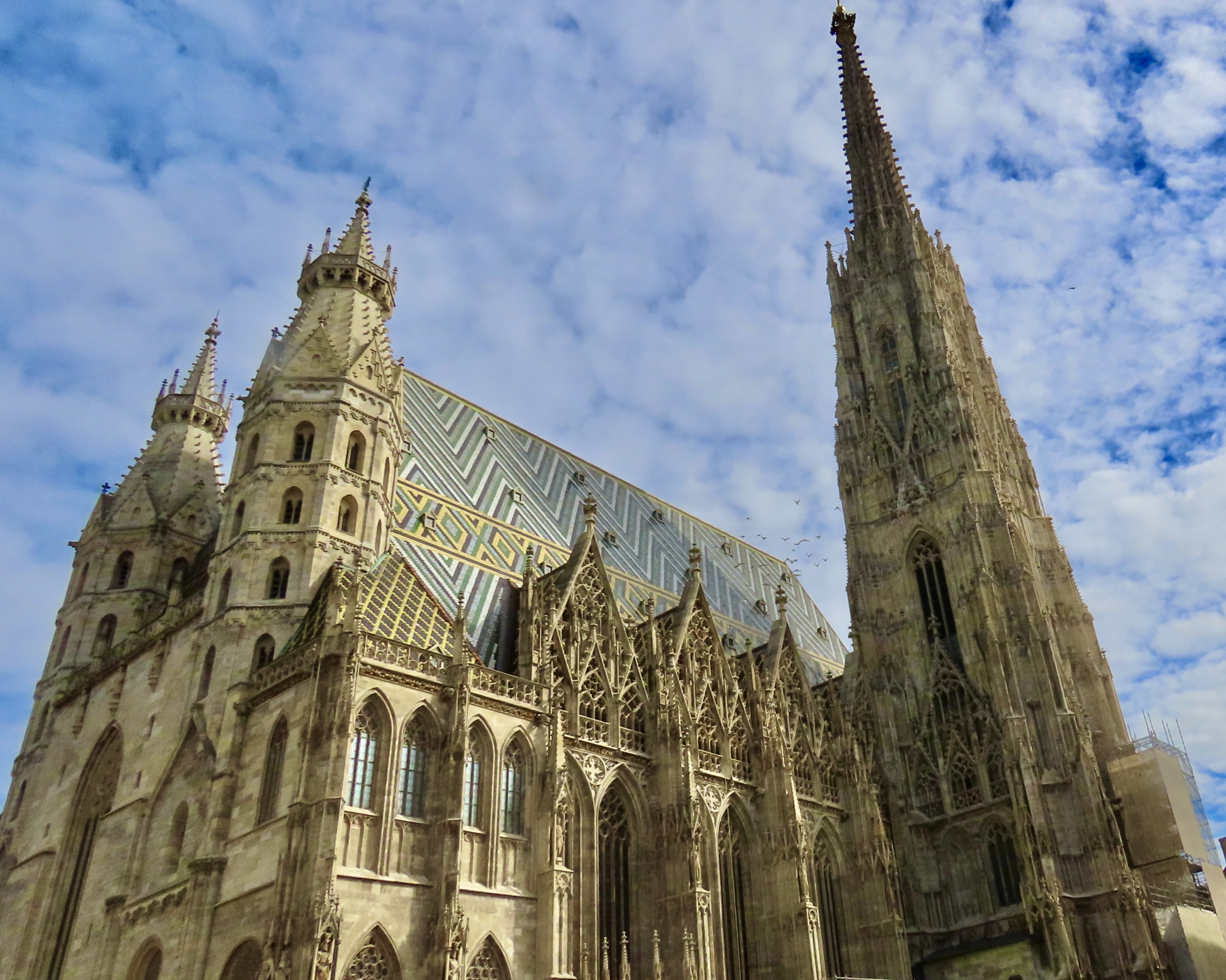
St. Stephan’s Church with its striking roof and its 446 feet (136 meters) tall south tower reaching for the sky. The roof is covered with some 230,000 glazed tiles. Note the birds flying between the tower and the roof. They had been disturbed by the ringing of the noon bell. It is said that Beethoven first realized how totally deaf he was when he saw the birds fly out of St. Stephan’s bell tower but couldn’t hear the bell ringing.
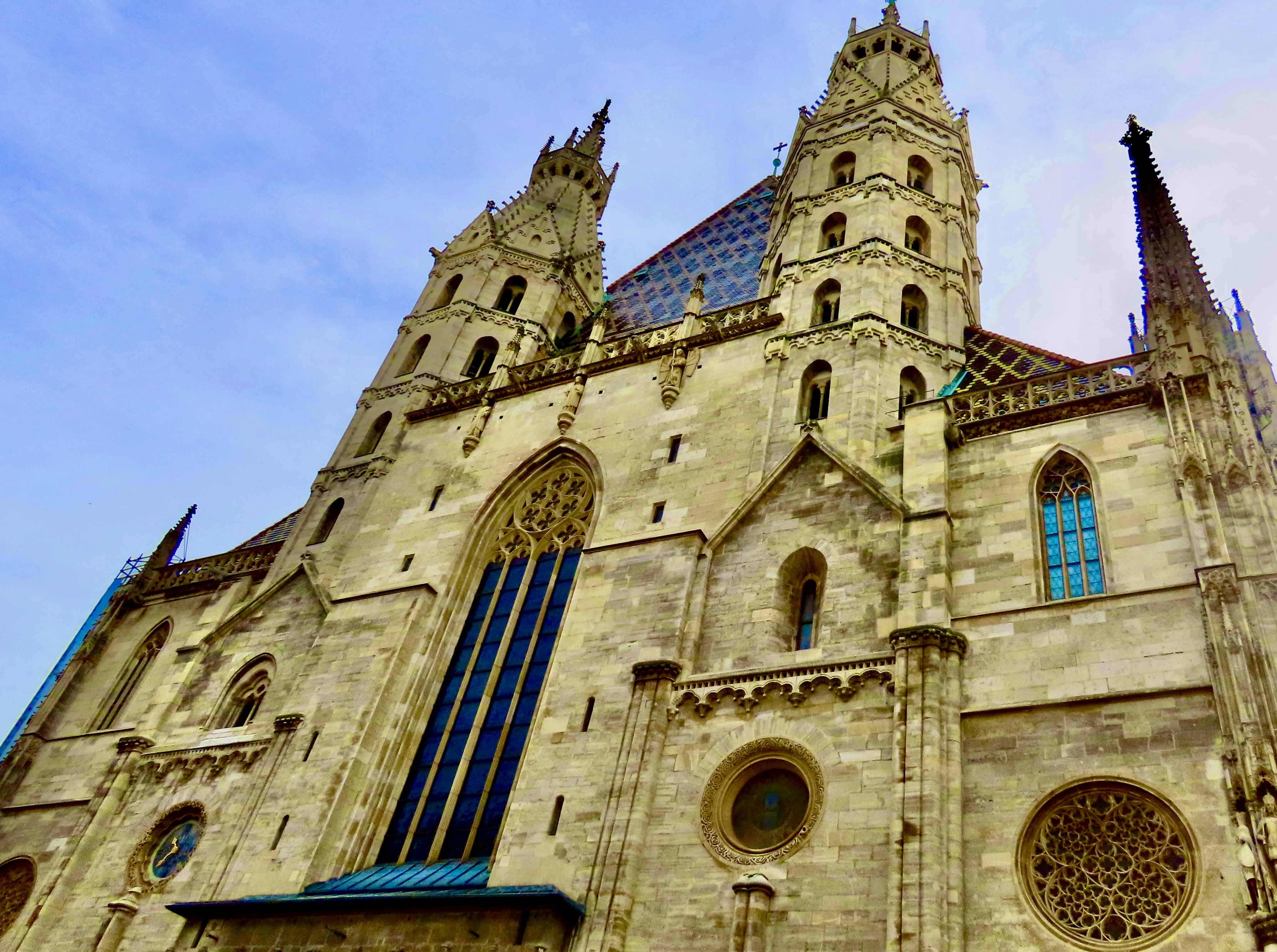
A front view of St.Stephan’s. The main entrance to the church is just below the overhang. It’s know as the Giant’s Door. The story behind the name is that the thighbone of a mammoth was found in 1443 while workers were digging the foundation for the North Tower and hung it over the door, where it apparently resided for decades. Did they see it as a unique decoration? Or maybe they thought of it as a message from God…
A view of the North Tower where the mastodon bone was found. Originally the tower was supposed to reach the height of the South Tower but the funding came to an end. It does, however house the Pummerin, or, as it is known locally, the Boomer, a 44,380 pound (20,130 kilogram) bell, which is the second largest swinging bell in Europe. The two eagles on the roof are the symbols of Austria and Vienna. Note the monument on the lower left…
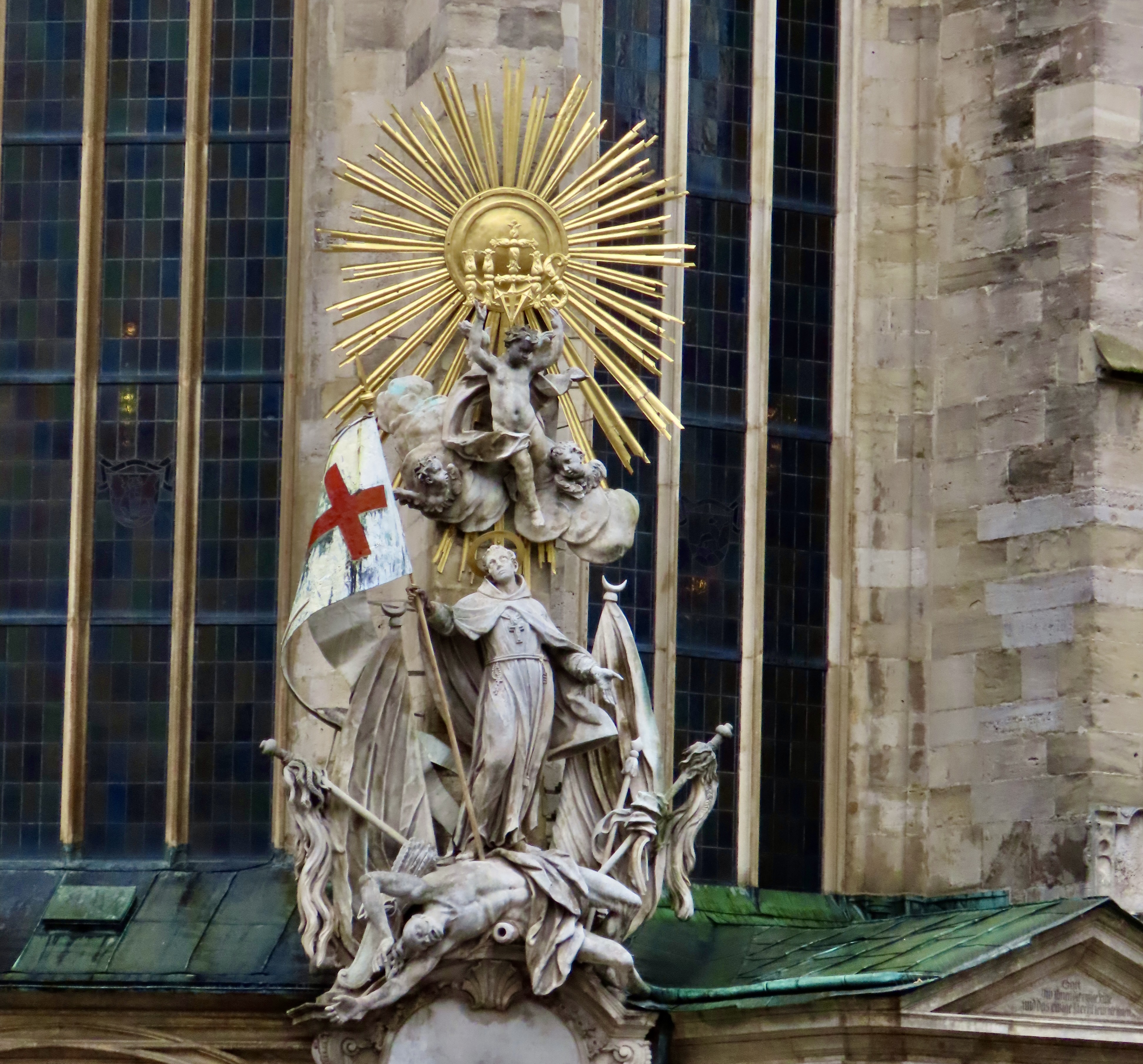
The Capistran Chancel was once the main pulpit in St. Stephan’s. It’s named after St. John of Capistrano, a Franciscan, who is said to have preached a Holy Crusade from it against the Muslim Turks in the 1450s. It shows St. Francis tramping on a defeated Turk. From what I’ve read about St. Francis, that’s fake news. St. Francis was a man of peace who risked his life to establish peace between the Christians and Turks.

Also, I wouldn’t be surprised if you are thinking swallows when you hear Capistrano. And you’d be right. The Franciscans also named their early mission south of LA, California after the Saint, San Juan Capistrano. And that’s where the swallows return to each year. There is even a song about it. One final note: The door to the church’s catacombs is next to the monument. There are the skeletal remains of over 11,000 people in the catacombs. I wonder if the mammoth’s bone is there as well? Why not.
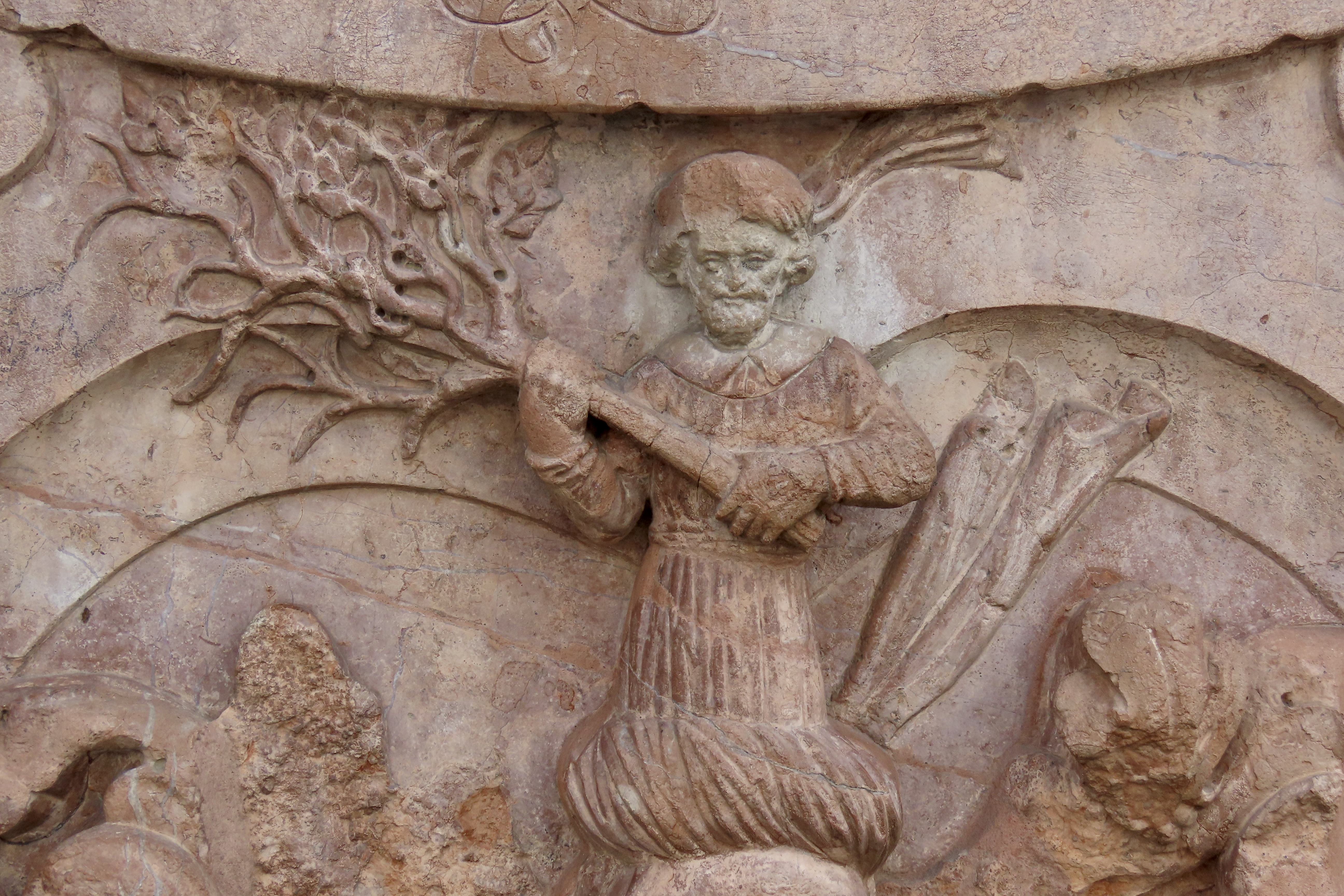
Most people think of beauty and vast size when they visit Europe’s great cathedrals. And yes, there is that. After checking out the beauty, however, I like to focus in on the details. I found this stone carving on the side of the church. Is it a bird; is it a plane (as they said about Superman)? No! It’s St. Francis, appearing as a bird carrying a tree. It’s much more like the usual portrayal of a good saint than his image of stomping Turks. He loved trees and was said to talk to animals. If you see an image of a saint from medieval times with animals, birds or trees, you can almost bet it will be St. Francis.
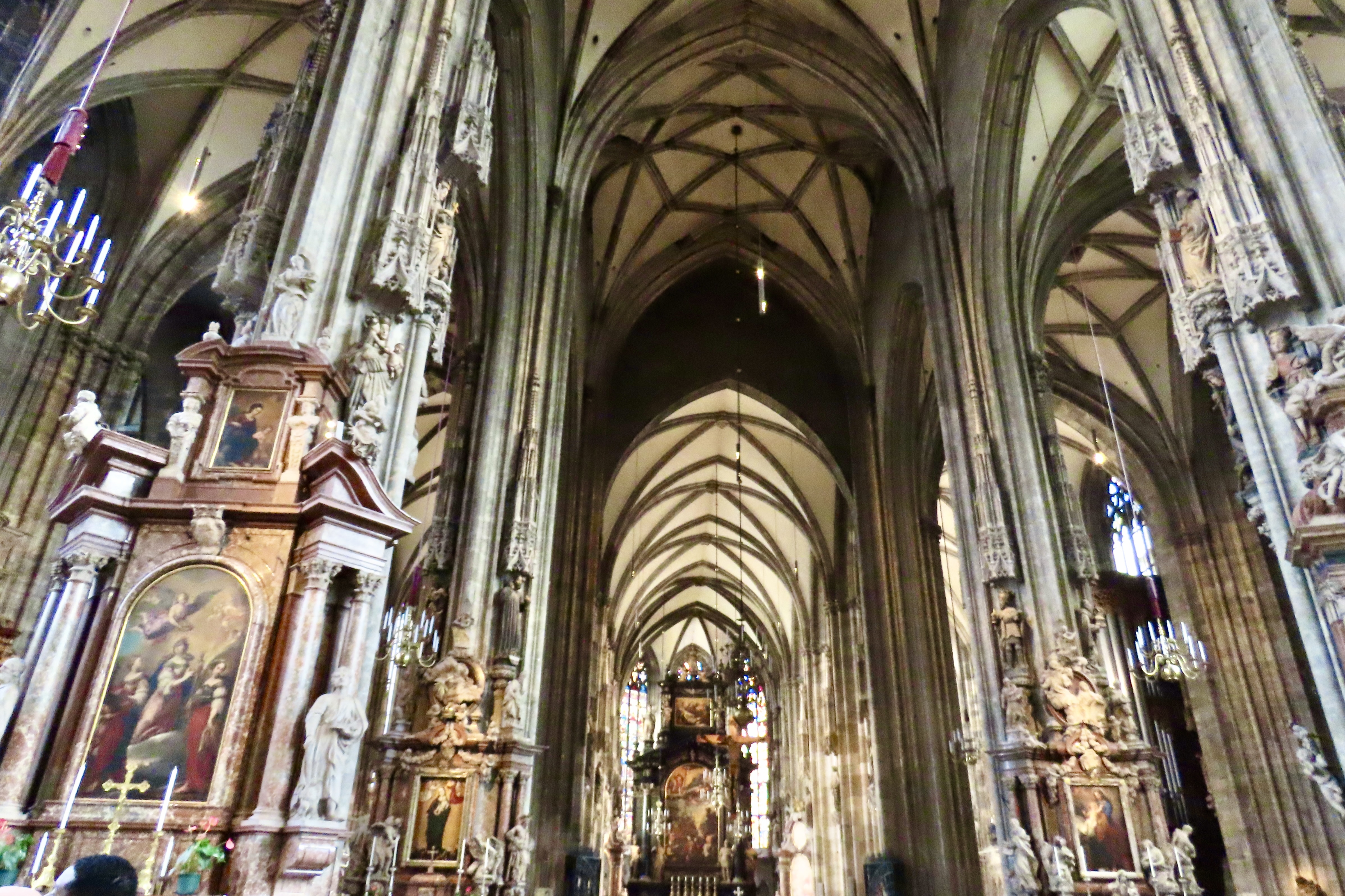
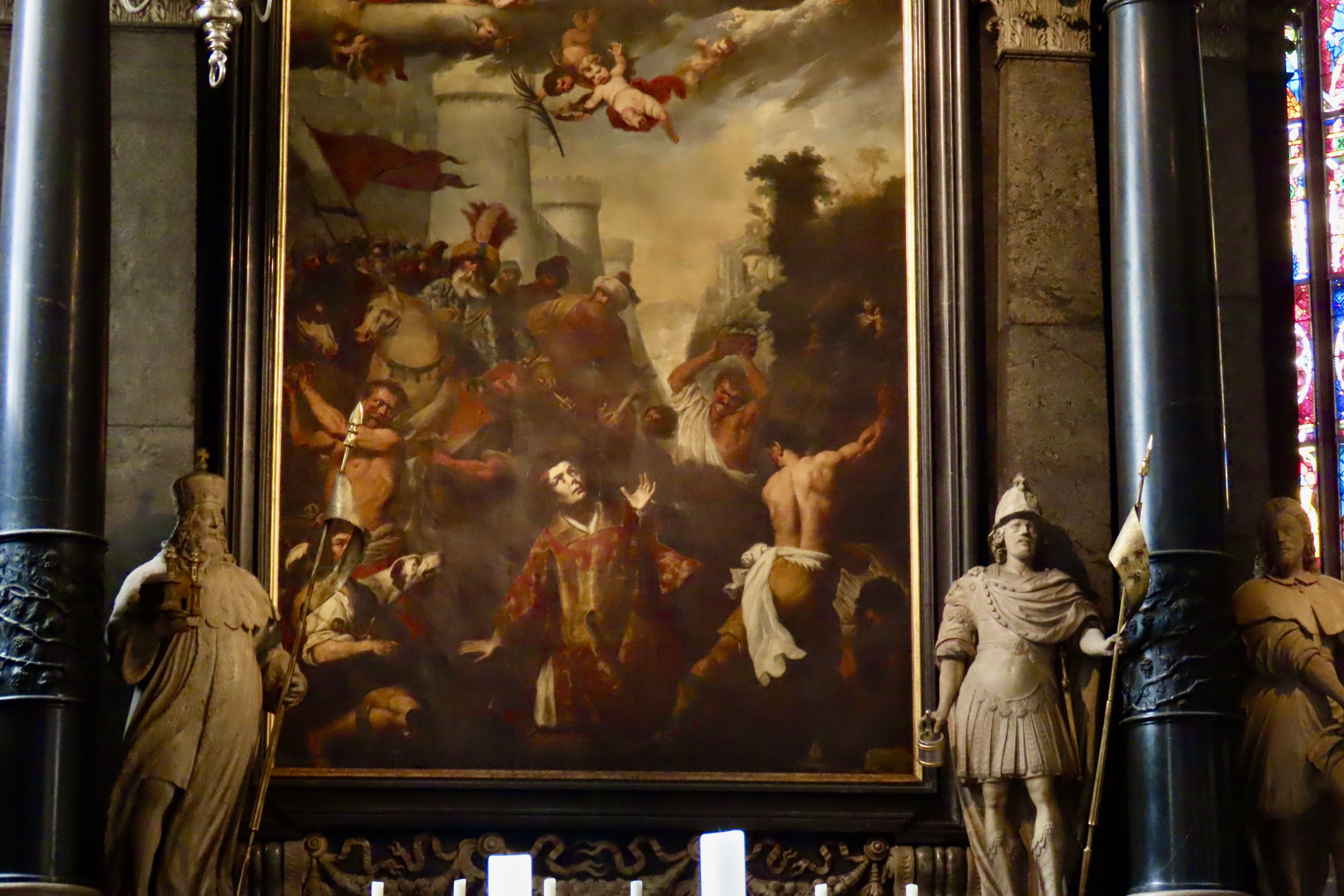
This is a photo of the inside of the Cathedral. It’s busy. I meant it to be. The number of statues and paintings of saints and important church personages was mind blowing. This is looking toward the high alter where a painting of St. Stephan is featured.
He’s being stoned. It would be hard to find a painting of the saint when he isn’t. Even Rembrandt painted one. Here’s the thing. Most people were illiterate in the Middle Ages and the church fathers wanted their parishioners to know their saints and understand the messages they carried. Like St. Francis and nature. And St. Stephan and stoning. A bit gruesome perhaps, but most martyred Christian saints are tied to their martyrdom.

There are several at St. Stephan’s including St. Sebastian with arrows sticking out, St. Barbara holding a castle tower and St. Catherine of Alexandria holding a spiked wheel. Their stories are all similar. Deep faith brings them into conflict with non-Christian authorities. They are tortured and God miraculously intervenes to save them. Finally, they are killed. Thus you have faith, suffering because of faith, the power of God to miraculously intervene, and ultimately their willingness to die because of their faith. I assume they are all pulled into heaven where they live happily ever after. A story with a happy ending…
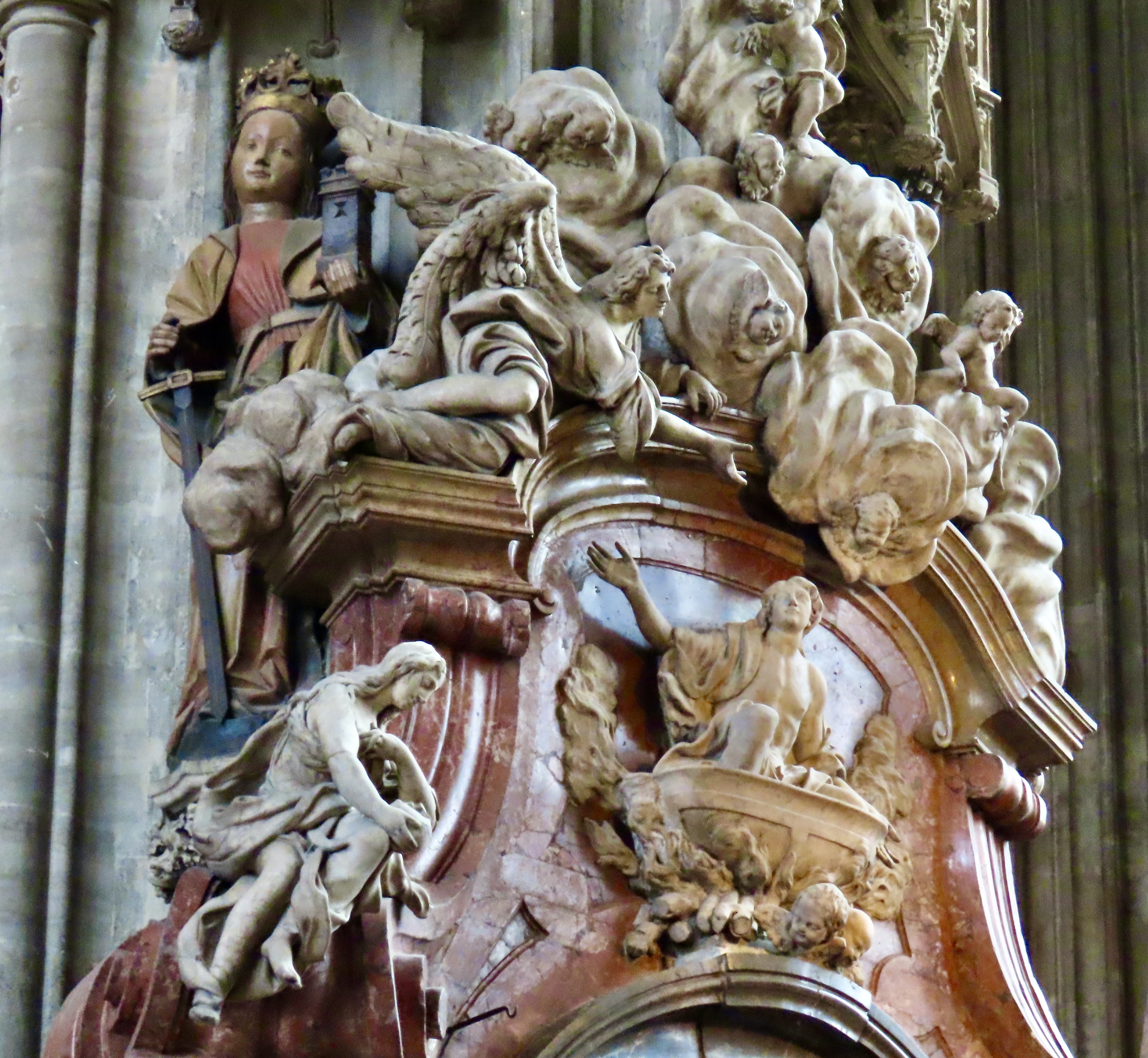
The woman standing behind at least 10 other beings, including the weird angels/people peeking out from the clouds, is St. Barbara. Her daddy kept her hidden away in a castle until he discovered she had converted to Christianity. Then he took her to the local pagan priest who submitted her to various tortures, from which she would miraculously be cured by God each night. Finally out of frustration, Daddy chopped her head off. On the way home he was struck by lightning and burned to a crisp. There’s a message here. Anyway, the castle represents where she was held, the sword with which she died and the crown her martyrdom. BTW, because of the lightning, St. Barbara became the patron saint of artillerymen and miners— things that go boom.

I, for one, if I ever have need for a saint, will stick with St. Francis of Assisi, the man of peace and nature who died of a natural disease. I like a guy who can talk to an almond tree and it suddenly breaks out in blooms.
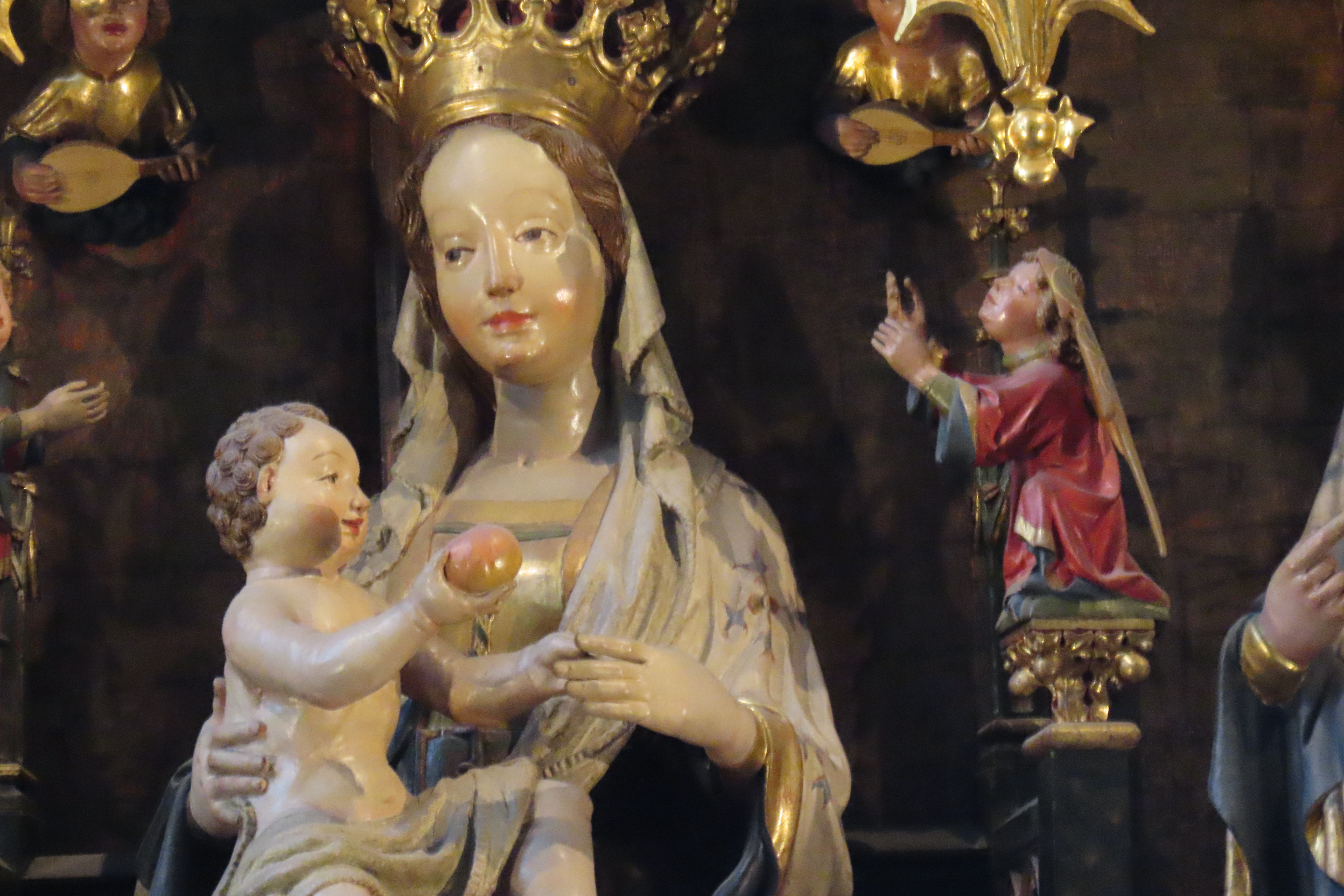
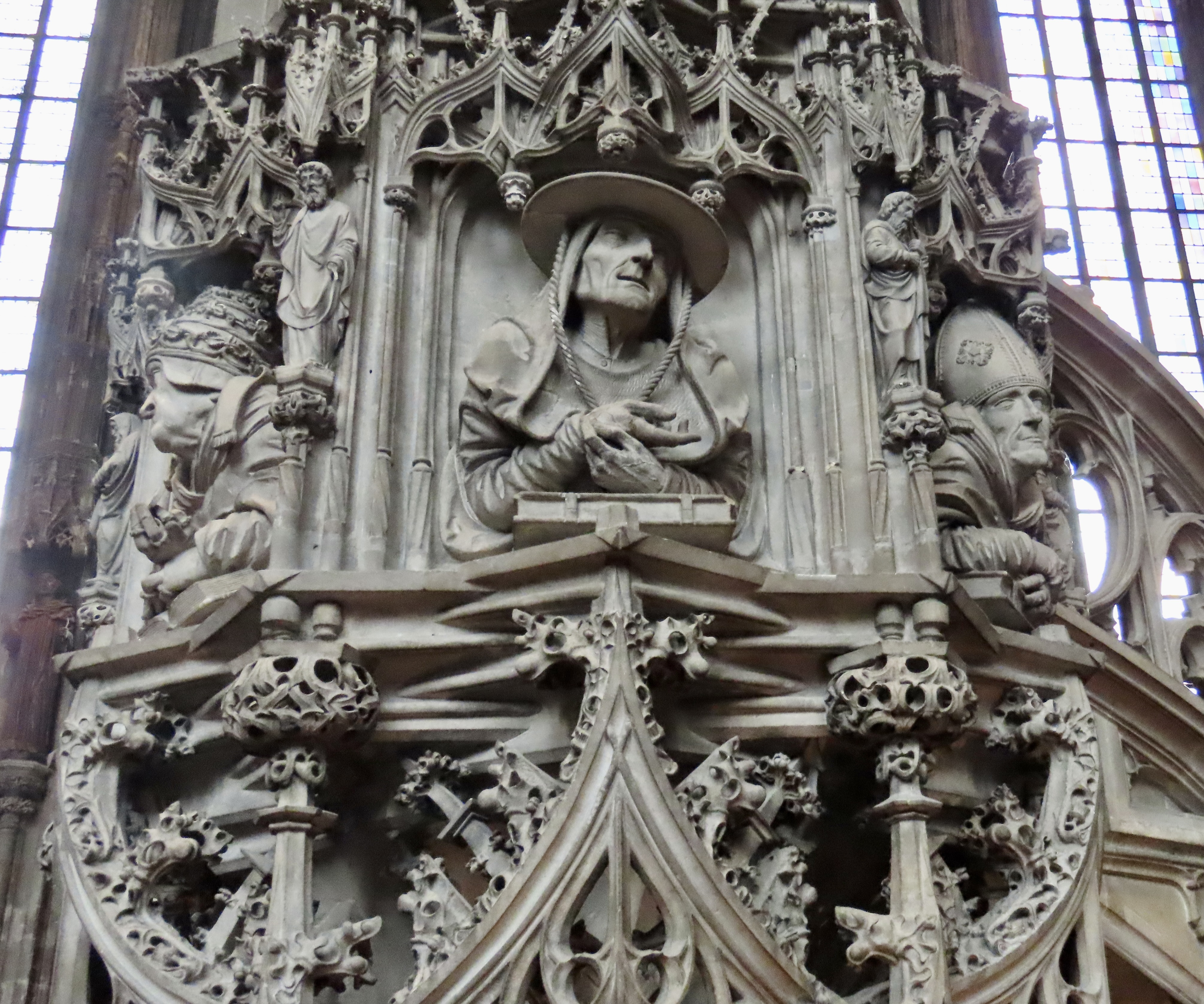
Here’s another symbol, Baby Jesus and his apple. It refers to him as the New Adam who will redeem humankind. I couldn’t help thinking, “Here Mom, your really should try this apple. Snake says it’s great.”
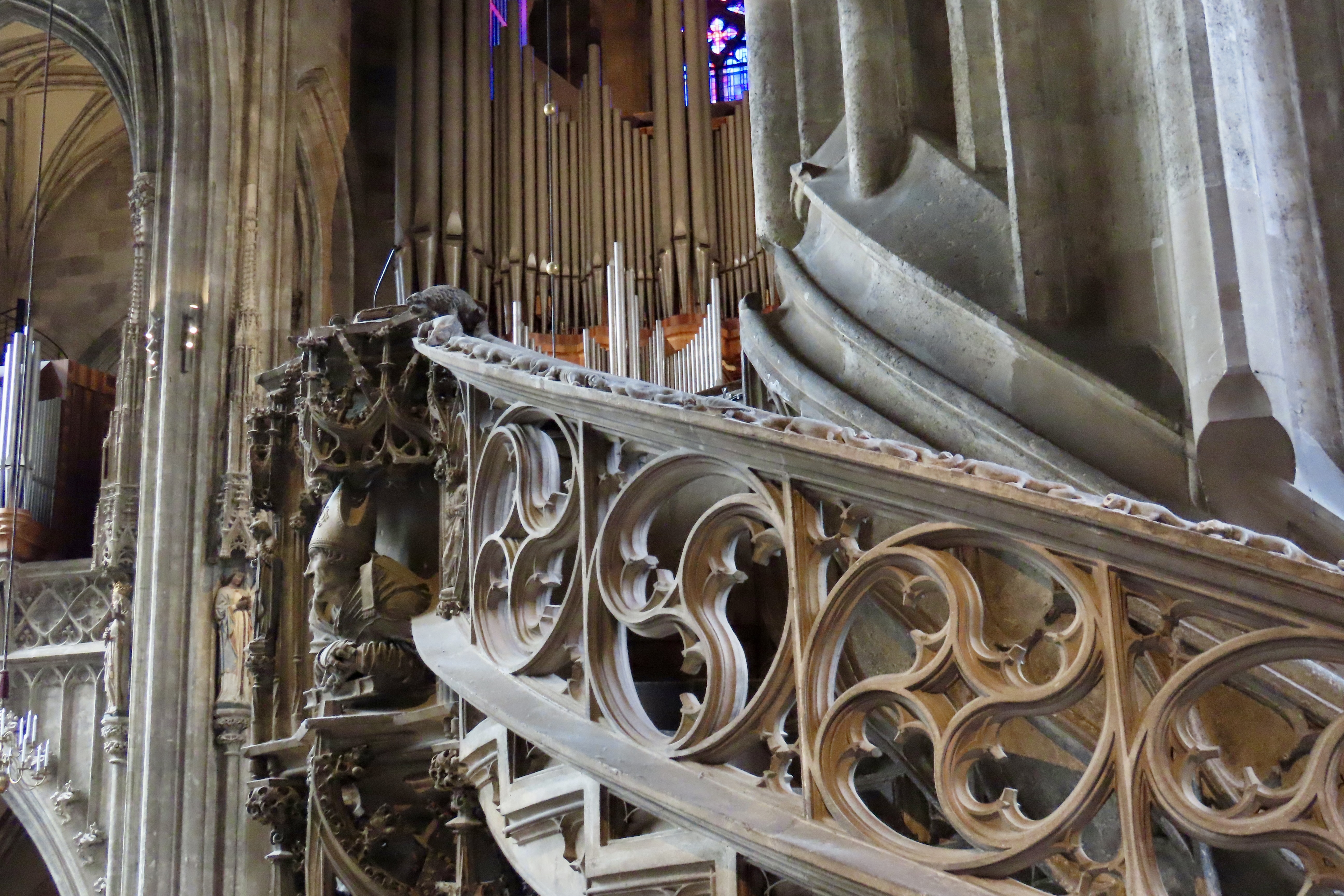
The church’s pulpit is quite impressive. it includes realistic stone sculptures of the Four Fathers of the Catholic Church: Augustine, Jerome, Ambrose, and Gregory. The pulpit is found in the central part of the church rather than in the front. In the era before microphones, this was necessary for the priest to be heard. Note the balustrade on the right…
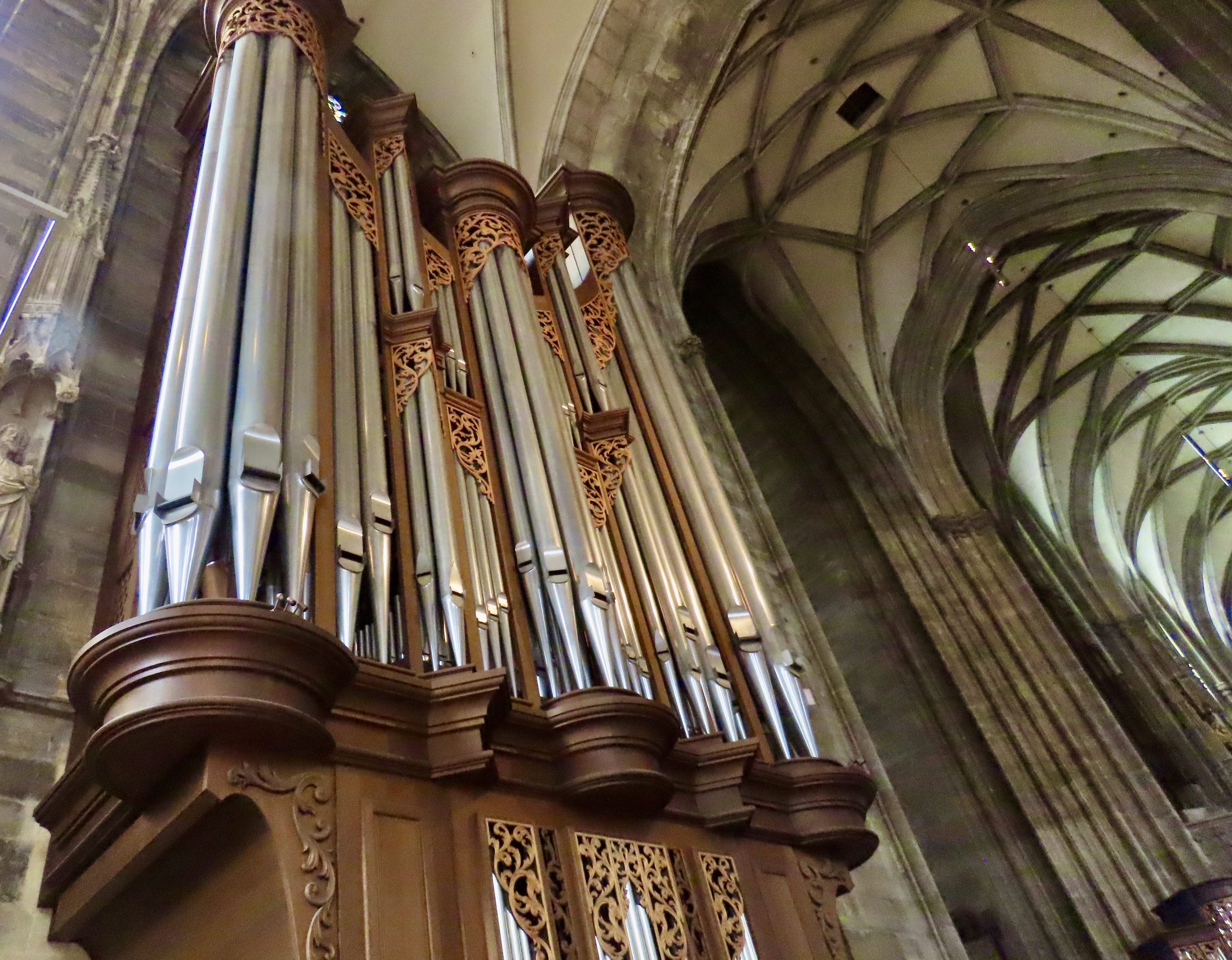
It was covered with frogs and lizards biting each other, which, according to our guide, was to remind the priest/bishop/cardinal mounting the stairs of his many sins. A stone dog stood guard at the top of the steps to protect the speaker while he gave his sermon. Even then, it appears that dogs were considered man’s best friend. Cats, associated with women, were considered evil. Hmmm. An impressive organ can be seen beyond the stairs.
Every cathedral we visited on our journey down the Danube had one. Looking at this one, I was reminded of the first massive organ I ever saw. I was on an Episcopal Church related trip in the early 60s and we stopped off at Grace Cathedral in San Francisco. At the time, Grace was one of the most progressive churches in America. It still is. My minister, Father Baskin, grinned at me and sat down at the keyboard. The sound was incredible, echoing throughout the church. He played an old ditty that I was familiar with, “The worms crawl in, the worms crawl out, the worms play pinnacle on your snout.” Father Baskin was one of the best men I have ever known. He was my kind of priest.
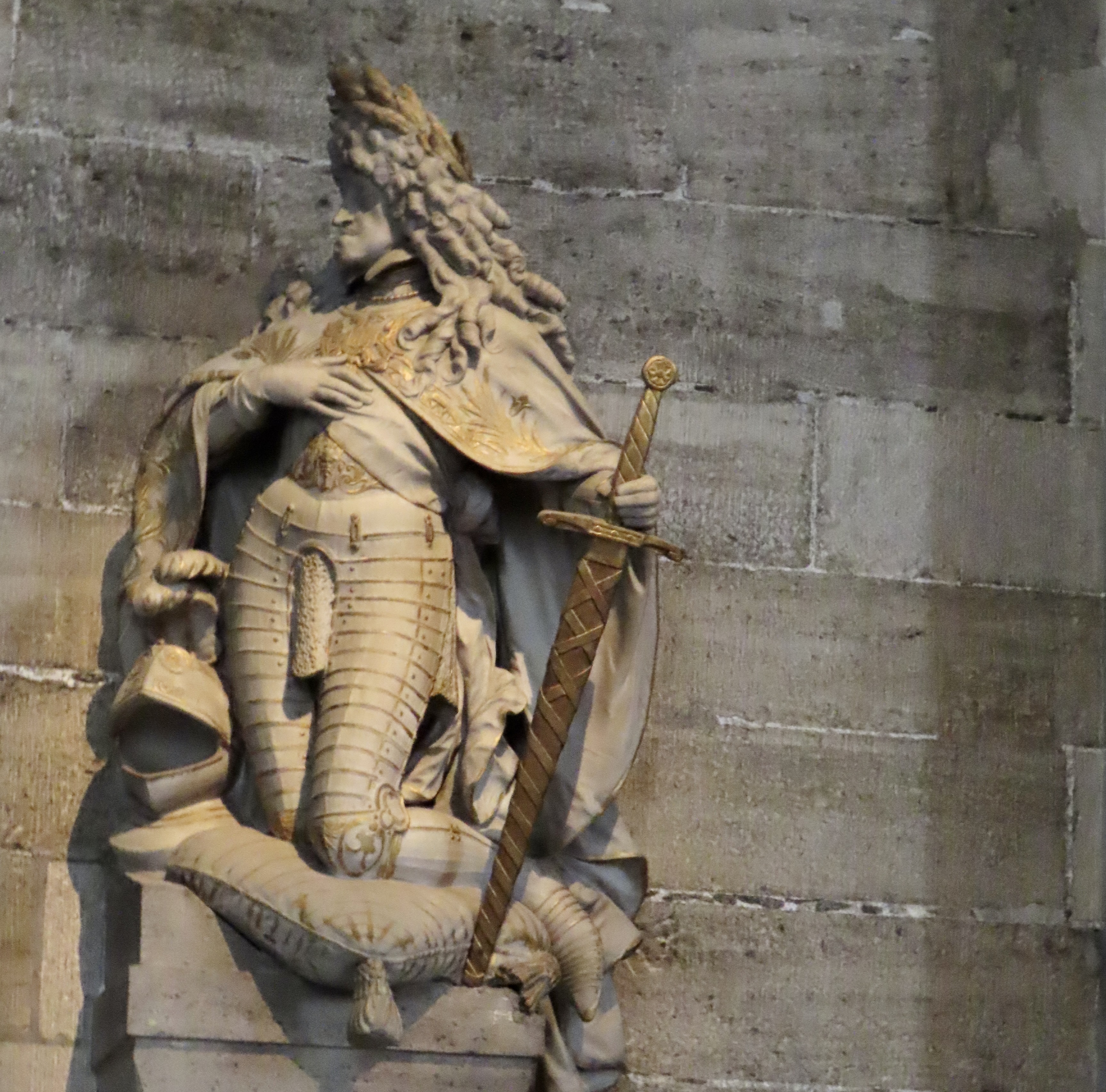
There were many other strange sights that caught my attention as I wandered around the church, including this knight with his codpiece, meant to protect his vitals during battle. They were quite the fashion statement of the time and kept getting longer and longer. And don’t you wonder how his helmet (on the left) could ever fit over his hair.
It’s time to move on, however. (Did I just hear, past time!) Next up is Vienna’s Summer Palace.

The Great River Series… Introduction

Clouds roll in threatening rain along the Danube River. Fortunately, the weather gods were kind to us. The river had flooded the week before our arrival due to heavy downpours upriver.

Today marks the beginning of our Great River series. The inspiration for it is our trip down the Danube from Vienna to the Black Sea that we just finished while traveling with Peggy’s brother John and his wife Frances. 

Along the way, we traveled through Austria, Slovakia, Hungary, Croatia, Serbia, Bulgaria and Romania, all countries that I had never visited except Croatia. (Peggy had been to Austria, as well: Way back in BC…As in before Curt.) Other than the Romanian apple that got us in trouble with US Customs and a cold I picked up and undoubtedly shared along the way, our trip in a riverboat with the GoHagan travel company was quite good. 

Knowledgeable (and often humorous) local guides led us on tours through cities, towns, churches, castles, and palaces while providing historical background that ranged from Mongol and Turkish invasions, to the Austro-Hungarian Empire, to the Russian Communist occupation following World War II. 

We watched horses prance, people dance, and consumed at least three times as much food as we usually do. An ancient village with roots going back 5-6 thousand years and the beauty of the Carpathian Mountains of Romania/Transylvania wowed us. 

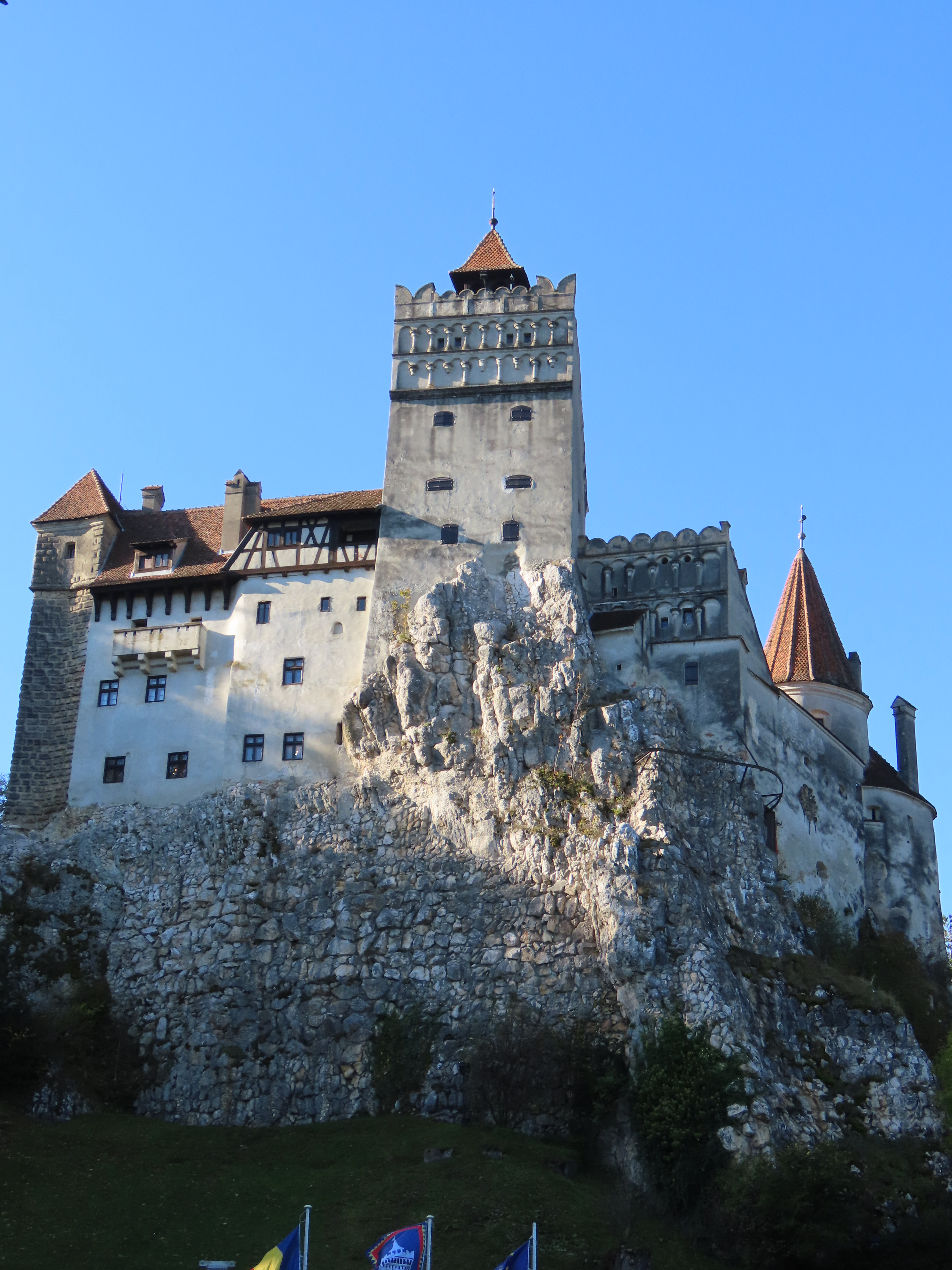
Dracula/Vlad the Impaler called the Carpathians home. While we found the Impaler’s castle fascinating, I think Peggy was more excited to discover that the Cantacuzino Castle (where we stopped for lunch) serves as the site for the Nevermore Academy of the Netflix series Wednesday, a take-off on the TV series, The Addams Family, of yore.  How much does she like the series? Well, she has binged on it. More than once. Her scream of delight when she saw a sign promoting the castle as the series’ location led everyone on the bus to turn and look at her. I felt like I was married to a smitten teenager.
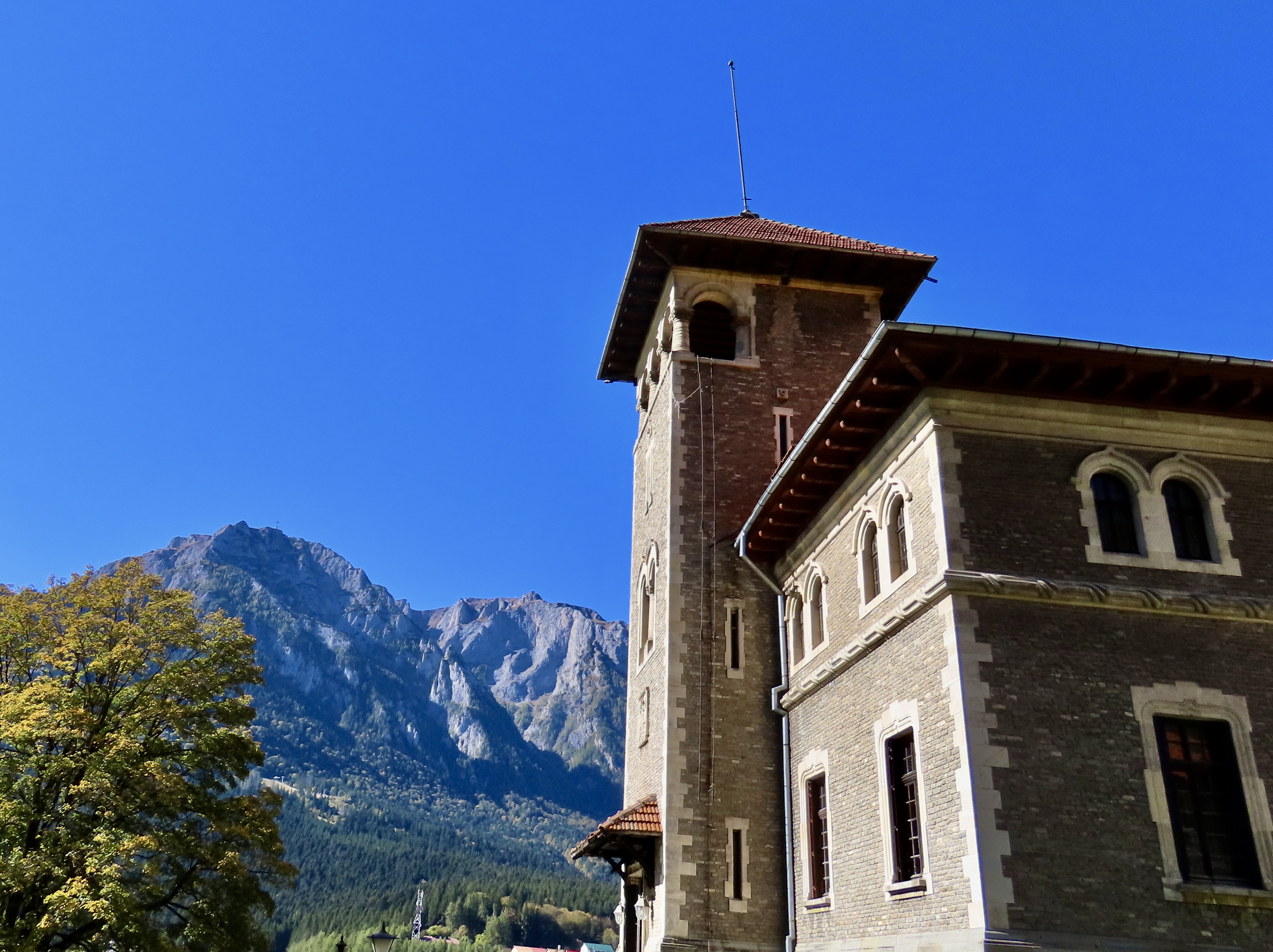
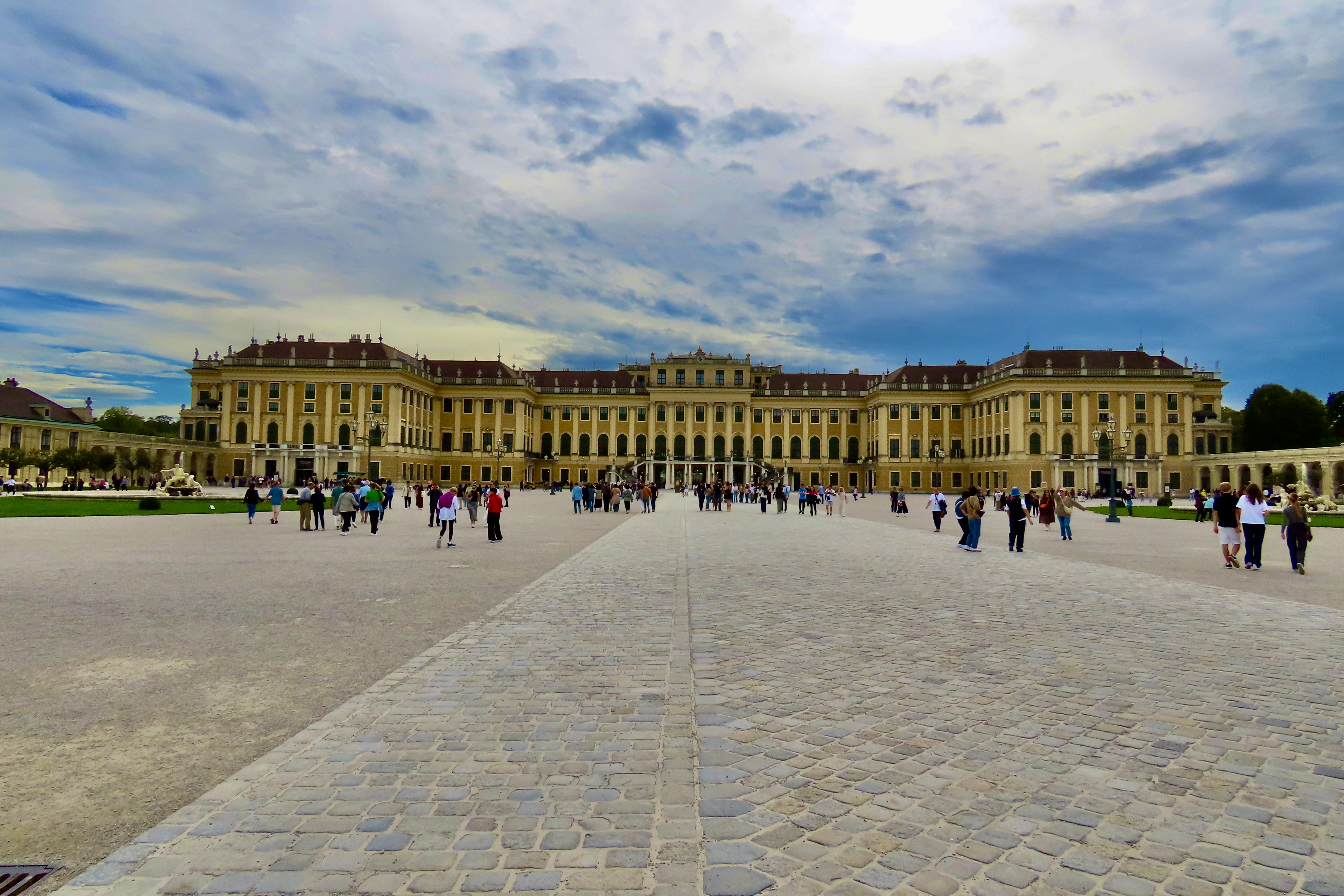
The Cantacuzino Castle that serves as the as the location for the Nevermore Academy of the Netflix series Wednesday with a view of the Carpathian Mountains of Transylvania in the background. The leaves were just beginning to turn as we made our way through Romania.
The castle of Vlad the Impaler, aka Dracula, in Transylvania.

One great river doesn’t constitute a series, however. And we’ve promised a series which brings up what our criteria are for defining a great river. There are the normal factors, i.e. length and volume, but I would also add history and in beauty. The Nile is a great example for history, while the Colorado River on its run through the Grand Canyon is one for beauty. Both are mind-blowing. 

There is one criterion that is strictly ours: We have to have floated on the river. For example, Peggy and I have crossed the Mississippi, Missouri, and Columbia Rivers numerous times from their headwaters to where they flow into the ocean. But our only personal experience has been to take photos and explore their history, with folks like Mark Twain and Lewis and Clark serving as our teachers. Peggy is known to stick a finger or toe in on occasion, however, “to test the water.”

In addition to the Danube, the series will include the Colorado, Amazon, Rhine, Nile, Zambezi, and England’s Trent and Mercy Canal— not a Great River perhaps, but Peggy and I had a blast navigating it in a 60’ long 10’ wide narrow boat, stopping at pubs along the way.
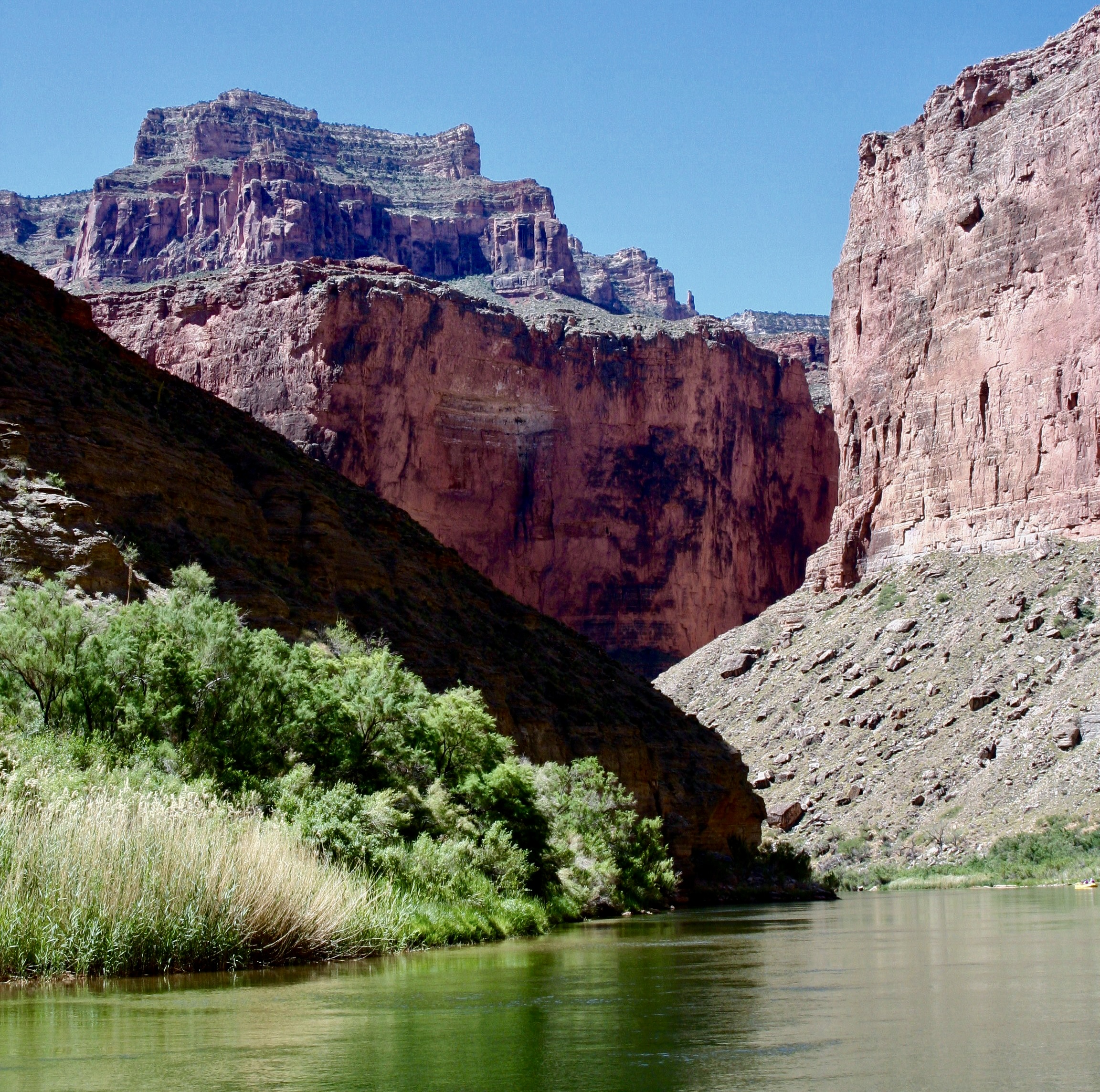
Our private 21 day trip through Grand Canyon National Park by raft was filled with beauty, adventure and fun.
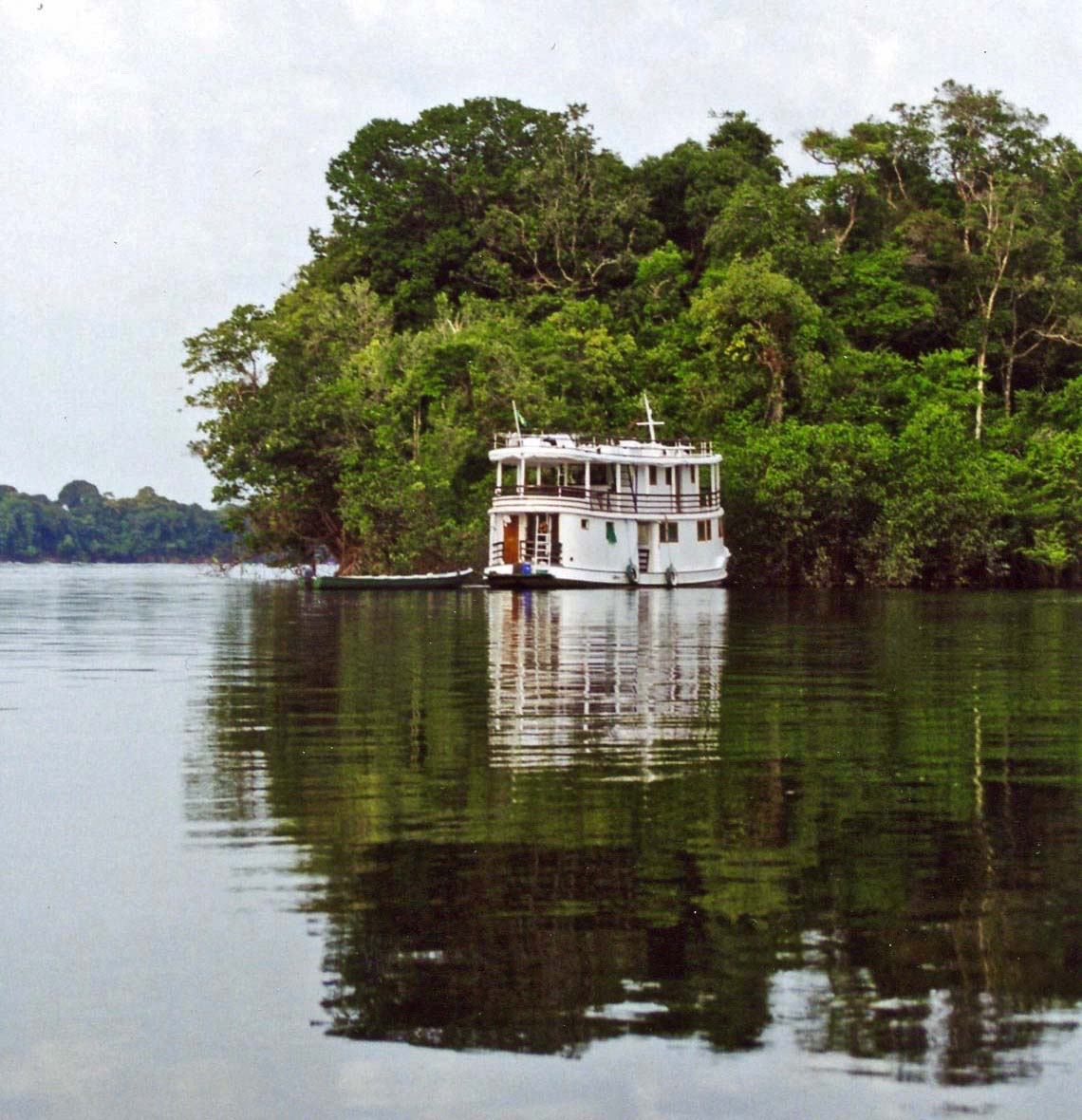
We explored the Amazon River out of Manaus, Brazil for a week on the Amazon Clipper, a small boat that we shared with four other couples plus crew. We dined on piranhas for dinner that night, the ones we had caught in the afternoon (carefully).
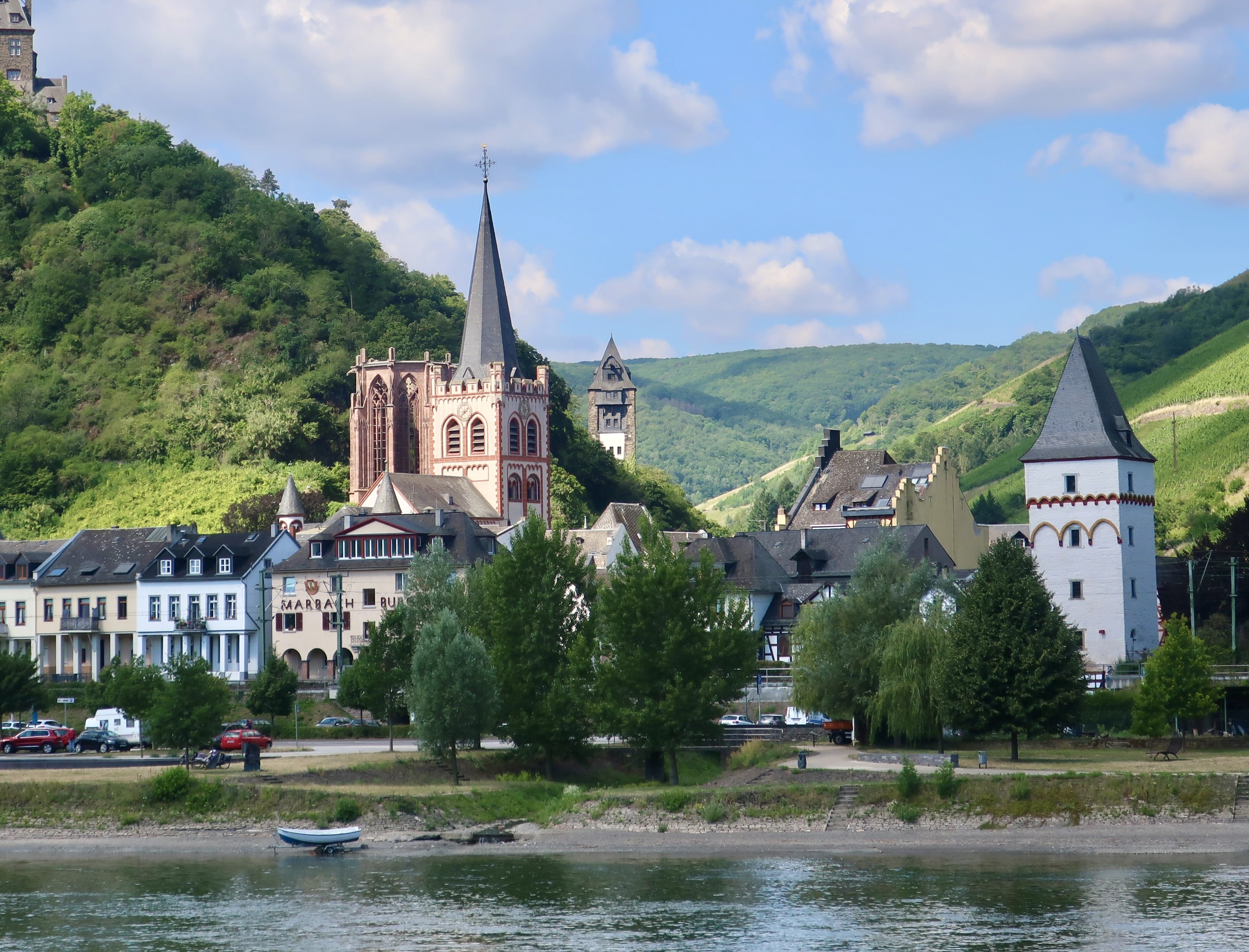
Our trip up the Rhine River had it all: Charming towns, Medieval castles, towering cathedrals, bucolic countryside and history. Plus, we took our son, daughter, spouses and grandkids with us.
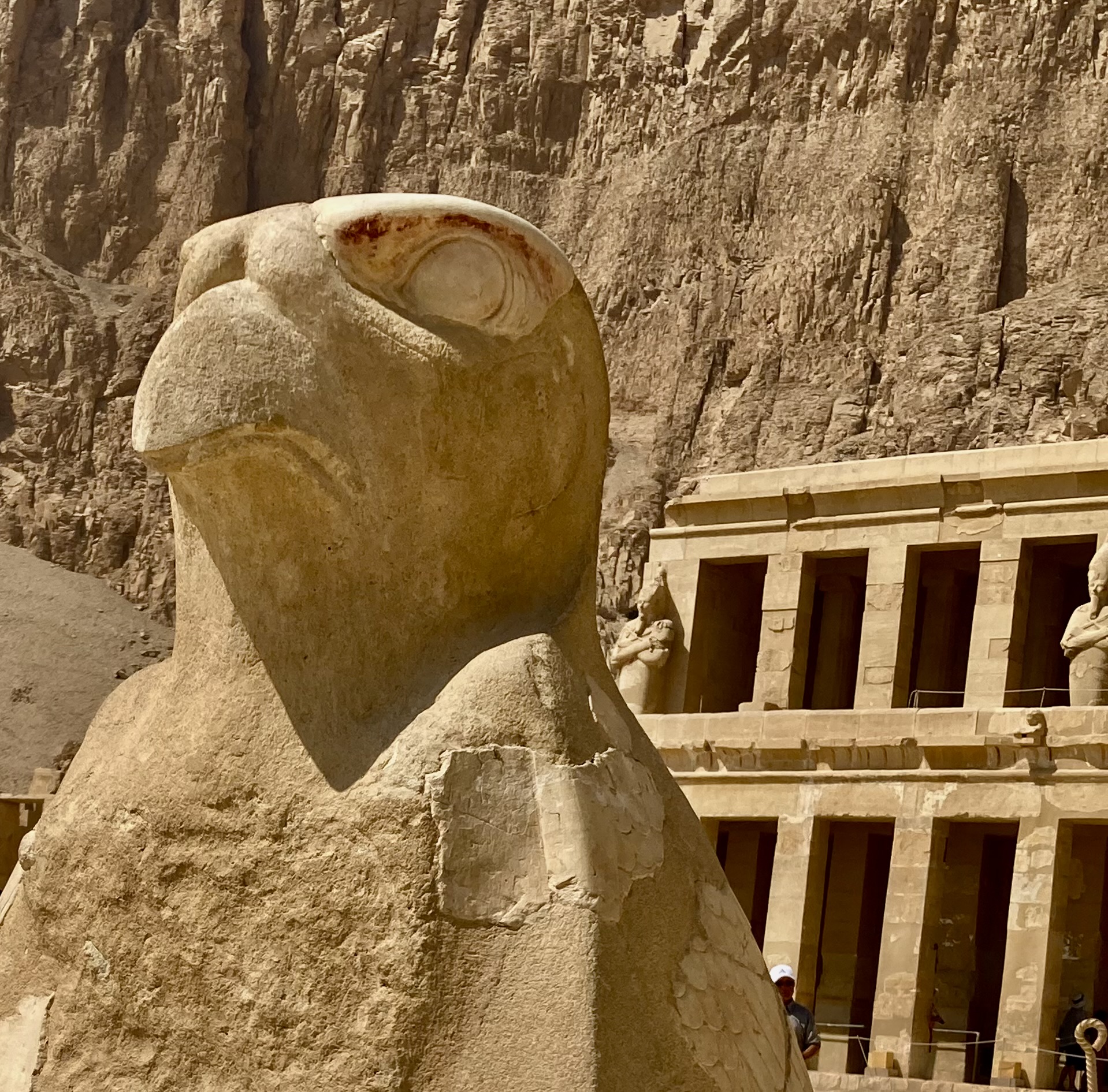
Horus, the Falcon God of ancient Egypt in the Valley of Kings. The Nile is lined with such treasures.
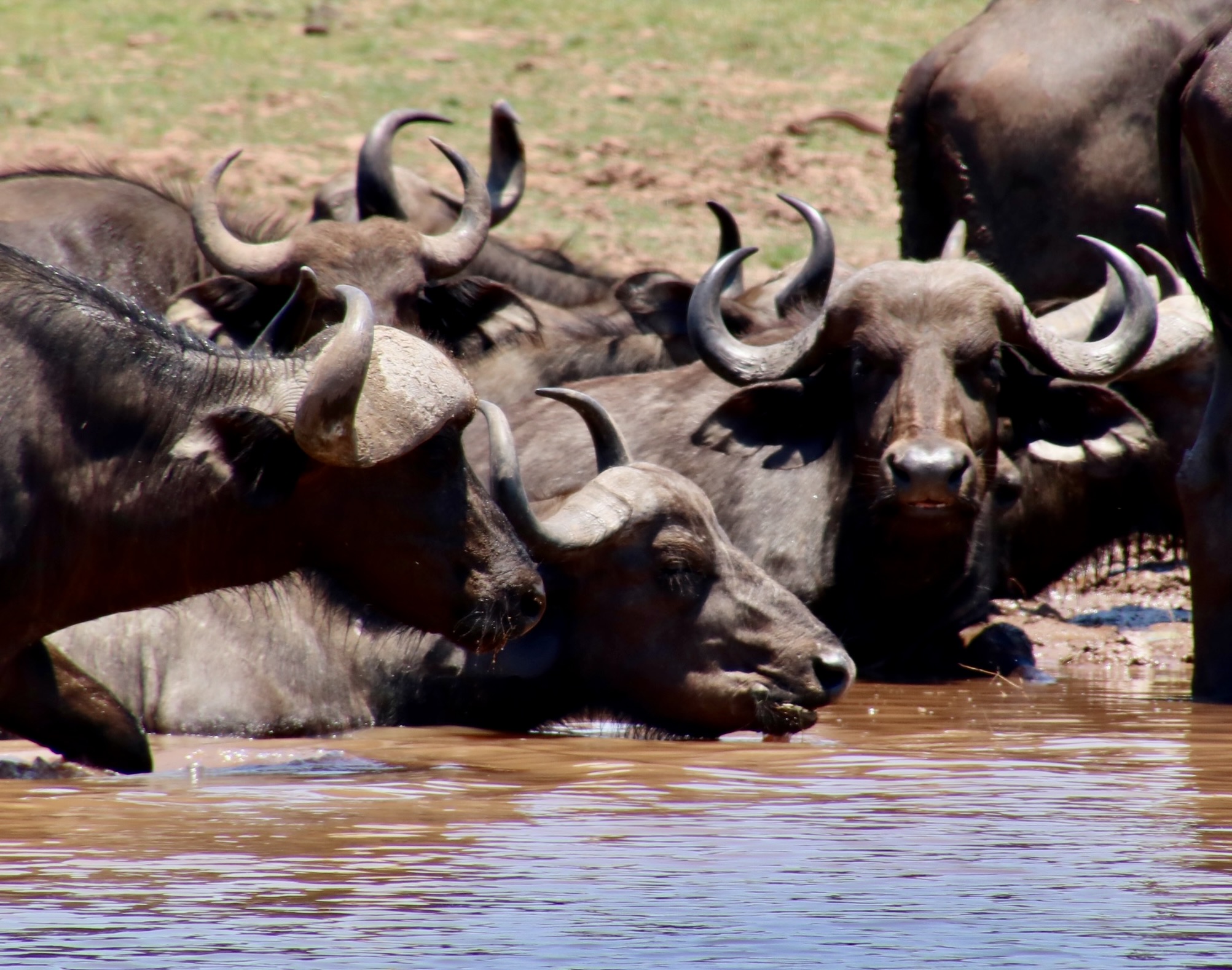
The Zambezi River of southern Africa brings its own magic ranging from water buffalo, to hippos, to crocodiles, to lions and numerous species of birds.
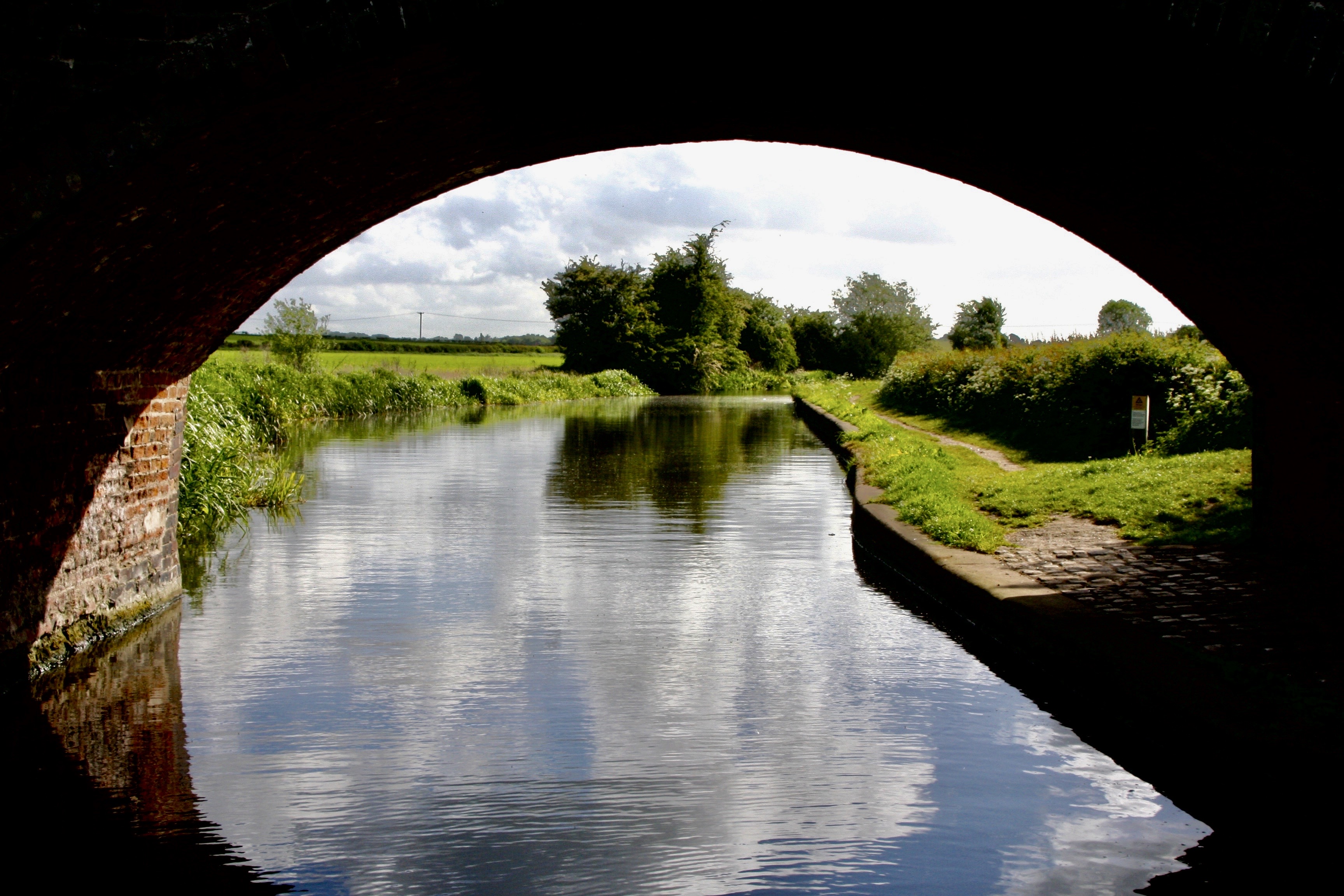
An underpass on England’s Trent and Mercy Canal. “Low bridge, everybody down.” —Erie Canal song

Since we have already blogged about these experiences (other than the Danube) in the past, I’ll simply do a summary post or two on each one that focuses on photos. The Nile may include more since there were several blogs that I ran out of time to do after the trip last year.

Next week, a quick look at the incredible beauty of the Colorado River through Grand Canyon National Park. After that, we will start on the Danube.