For Glorious Walls, Visit Dubrovnik… The Armchair Series for Dreams of Future Travel

I am continuing my armchair series today and for the next for the next three posts as I revisit the fabulous walled city of Dubrovnik on the Adriatic Coast. Many of my followers will have visited this city. For you, let the memories begin, as they are for Peggy and me. If you haven’t been there, I suggest it would be a great reward for the self-isolation you have practiced during the battle against Covid-19. Start dreaming. The pandemic will pass.

The walled city of Dubrovnik is known as the Pearl of the Adriatic. The walls around the city are listed as a World Heritage Site.
The walled city of Dubrovnik is known as the Pearl of the Adriatic. The walls around the city are listed as a World Heritage Site. The Adriatic Sea is at the top of the photo.

OK, I’m in love. This walled city of Croatia on the Adriatic Sea is gorgeous.  Once upon a time Dubrovnik was a major sea power in the Mediterranean Sea. At another time, it was the first nation in the world to provide official recognition for the fledgling United States of America fighting for independence.

As recently as 1991 it was under a devastating siege by Yugoslavian forces that laid waste to much of the city’s renowned beauty.  Today it has rebuilt most of what was destroyed.

This is one of four blogs I did on Dubrovnik in 2013 and am reposting on my Armchair Series. First up is a look at magnificent medieval wall that surrounds the city and provides visitors with outstanding views of the Adriatic Sea and surrounding country. Second I will turn inward and look down from the walls on the city and its colorful tiled roofs. Third we will visit the city from street level. Finally, I want to feature some intriguing gargoyles we found in Dubrovnik. (Have I used enough superlatives?)

Any visit to Dubrovnik should include a walk around the mile plus (6,360 feet) wall that surrounds and protects the city. Considered to be one of the great fortification systems of the Middle Ages, the walls were named a World Heritage site in 1979. Reaching a maximum height of 82 feet, the walls were never breached during the 12th through the 17th century— providing five hundred years of peace and prosperity for the residents.

A fast walker can easily do the walk in an hour or so but plan on a more leisurely 2-3 hour stroll. You’ll need the extra time for photography, or just staring in awe.

This photo of the walls was taken from Minceta Tower, the highest spot on the walls.
This photo of the walls was taken from Minceta Tower, the highest spot on the walls. (Photo by Peggy Mekemson)
This photo provides a great perspective on why enemies would have thought twice... or maybe a dozen times, before attacking Dubrovnik.
Here’s a perspective on why enemies would have thought twice— or maybe a dozen times— before attacking Dubrovnik.
If the walls weren't enough to discourage an invasion of Dubrovnik, the Fort of St. Lawrence stood on an opposite peninsula. (Photo by Peggy Mekemson)
If the walls weren’t enough to discourage an invasion of Dubrovnik, the Fort of St. Lawrence stood on the opposite peninsula. BTW, is it just my imagination (admittedly wild) or does the fort look like it is resting on the back of a turtle? (Photo by Peggy Mekemson)
Another view of the Fort of St. Lawrence in Dubrovnik. It was a stormy day as shown by the waves from the Adriatic Sea breaking on the rocks.
This photo looks up toward Minceta Tower, the highest point on the walls of Dubrovnik.
This photo looks up toward Minceta Tower, the highest point on the walls of Dubrovnik. The flag of Croatia is seen on the left.
Another perspective on the wall protecting Dubrovnik.
A cannon's perspective looking out from the walls of Dubrovnik.
A cannon’s-eye-view looking out from the walls of Dubrovnik.
I liked this photo by Peggy with its dark sky, grey wall and red roof.
A statue of St. Blaise, the Patron Saint of Dubrovnik, looks out on the Adriatic Sea under a watch tower protecting the city from harm. (Photo by Peggy Mekemson)
A statue of St. Blaise, the Patron Saint of Dubrovnik, looks out on the Adriatic Sea and protects the city from harm. (Photo by Peggy Mekemson)
A final view of Dubrovnik wall. (Photo by Peggy Mekemson)

NEXT BLOG: A journey around the walls of Dubrovnik looking down into the city.

A Bird’s Eye View of Dubrovnik… Sea Ports of the Mediterranean

One of my favorite views into Dubrovnik, this one features the Church of St. Blaise on the left with it's mandatory statue of the saint holding a model of the city.

One of my favorite views into Dubrovnik, this one features the Church of St. Blaise on the right with its statue of the saint holding a model of the city. Note the mechanical bell-ringer in the steeple on the left.

Walking the medieval walls that surround Dubrovnik provides a bird’s eye view across the roofs and down into the city. And what a view it is. Red tile roofs, narrow walkways, and imposing churches invite the visitor to pause and admire the unusual beauty of this town perched on cliffs above the Adriatic Sea.

Twenty years ago most of this beauty was destroyed as Yugoslavia lobbed shells into the city from surrounding hills. Dubrovnik held out, Croatian troops lifted the siege, and the residents proudly rebuilt their city. Today the only reminders of the siege are a few ruins that have yet to be rebuilt and bright red tiles that have yet to mellow with age.

Today’s blog is best reflected through photographs that Peggy and I took. Enjoy.

Looking down on Dubrovnik is like looking down on a sea of red. This photo is taken from Minceta Tower, the highest point on the wall. The Adriatic stretches across the top and the city's port is on the top left.

Looking down on Dubrovnik is like looking down on a sea of red. This photo is taken from Minceta Tower, the highest point on the wall. The Adriatic stretches across the top and the city’s port is on the top left.

This view of red tile roofs and cloudy skies features Dubrovnik's Cathedral on the left.

This view of red tile roofs and cloudy skies features Dubrovnik’s Cathedral on the left. (Photo by Peggy Mekemson)

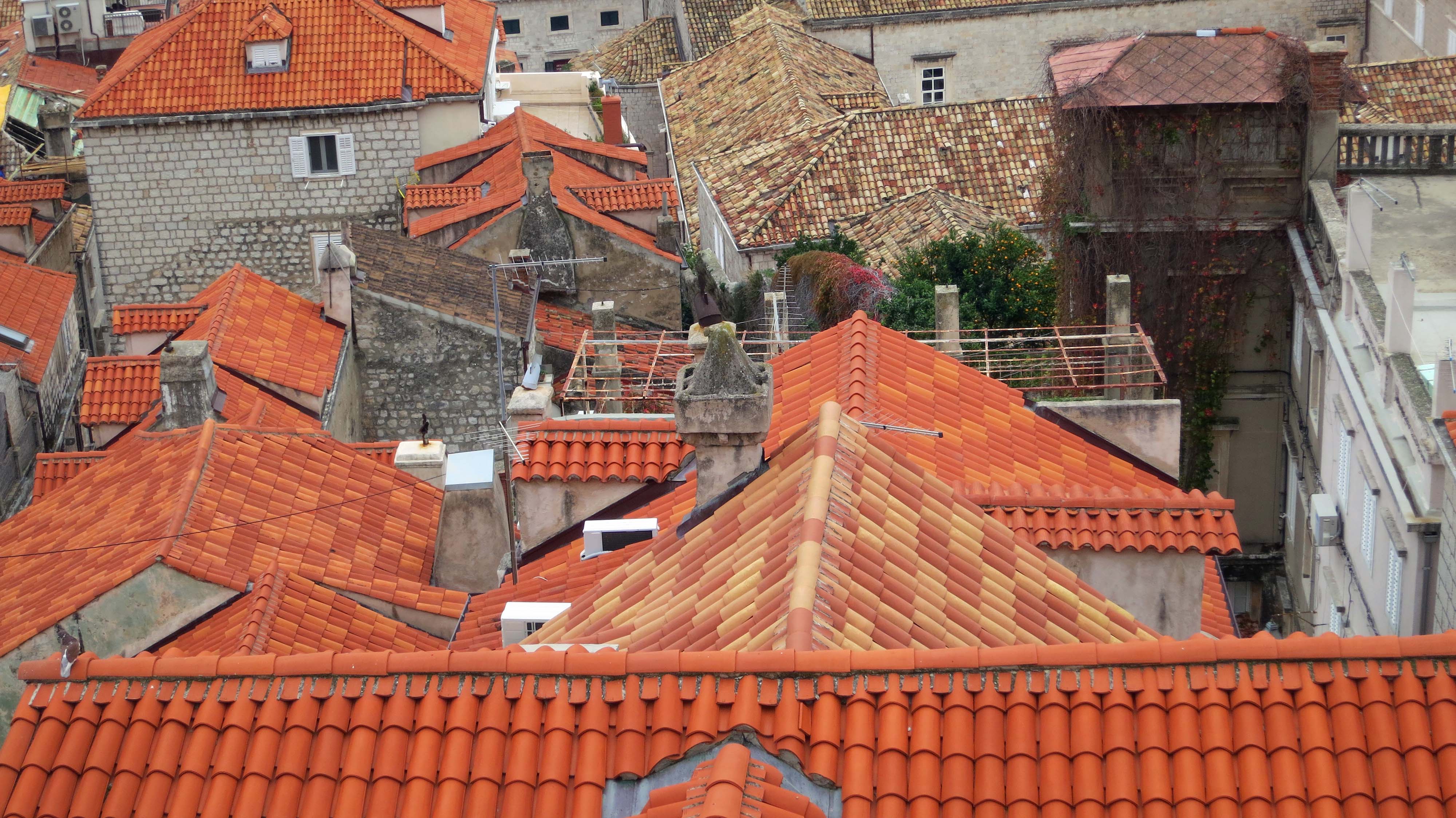
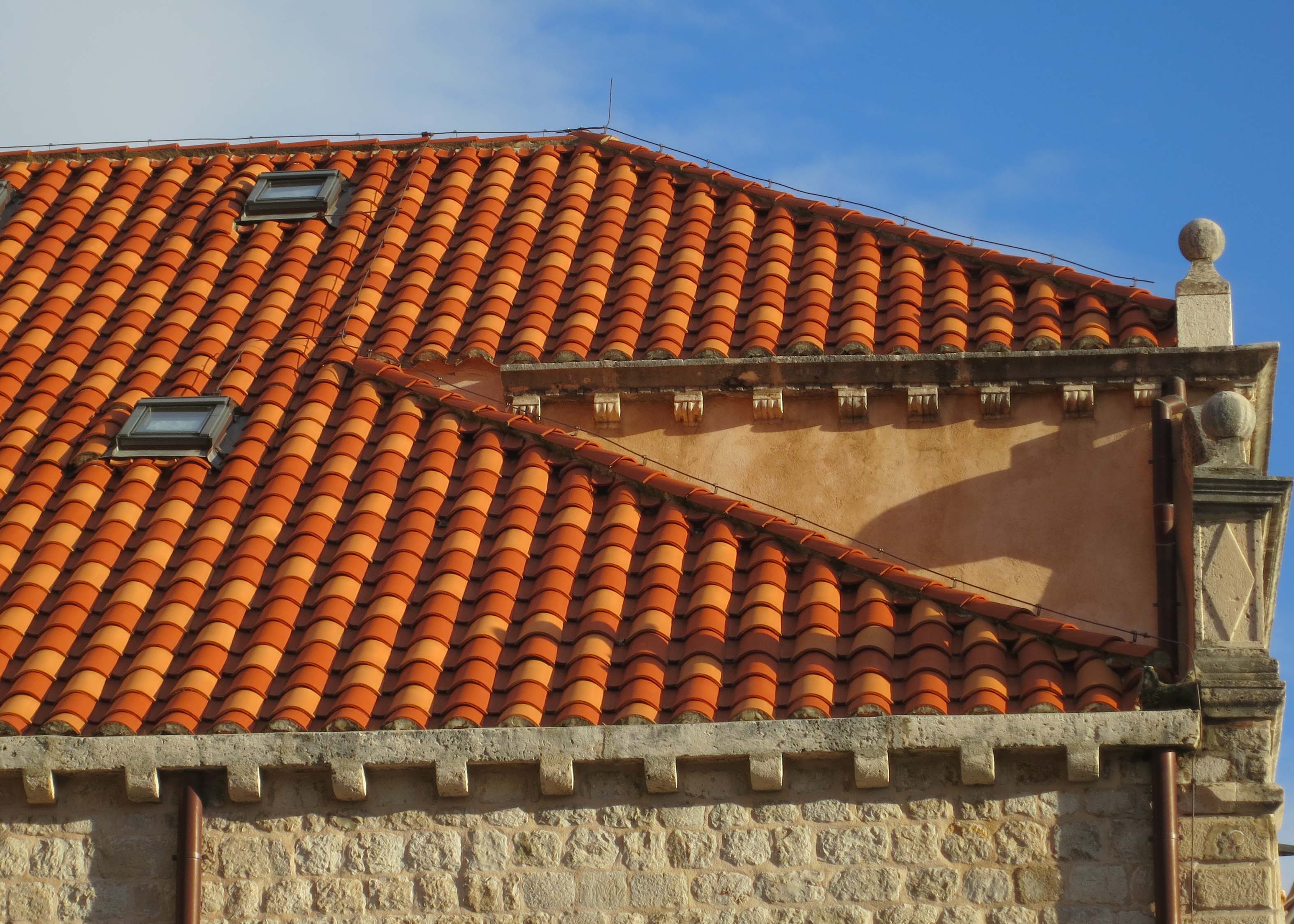
The contrast between new and older tiles is captured here. Many of the newer tiles represent repairs made after the Siege of Dubrovnik in 2000-2001. The trellis in the middle covers a garden, of which many are found through out the city nestled between buildings.

The contrast between new and older tiles is captured here. Many of the newer tiles represent repairs made after the siege of Dubrovnik in 2000-2001. The trellis in the middle covers a garden, of which many are found throughout the city nestled between buildings.

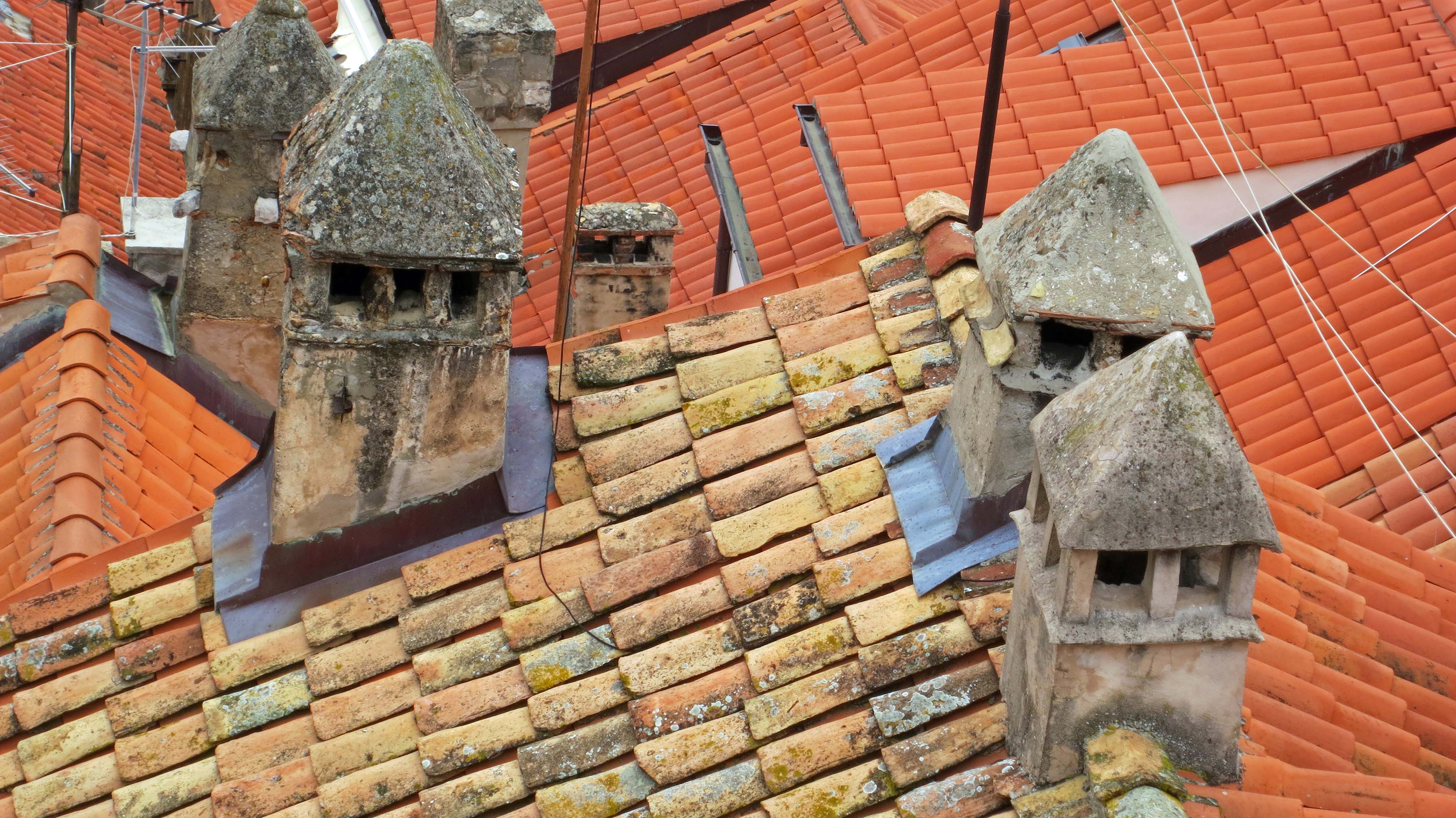
Another view of old and newer tiles in Dubrovnik. This one features chimneys.

Another view of old and newer tiles in Dubrovnik. This one features chimneys.

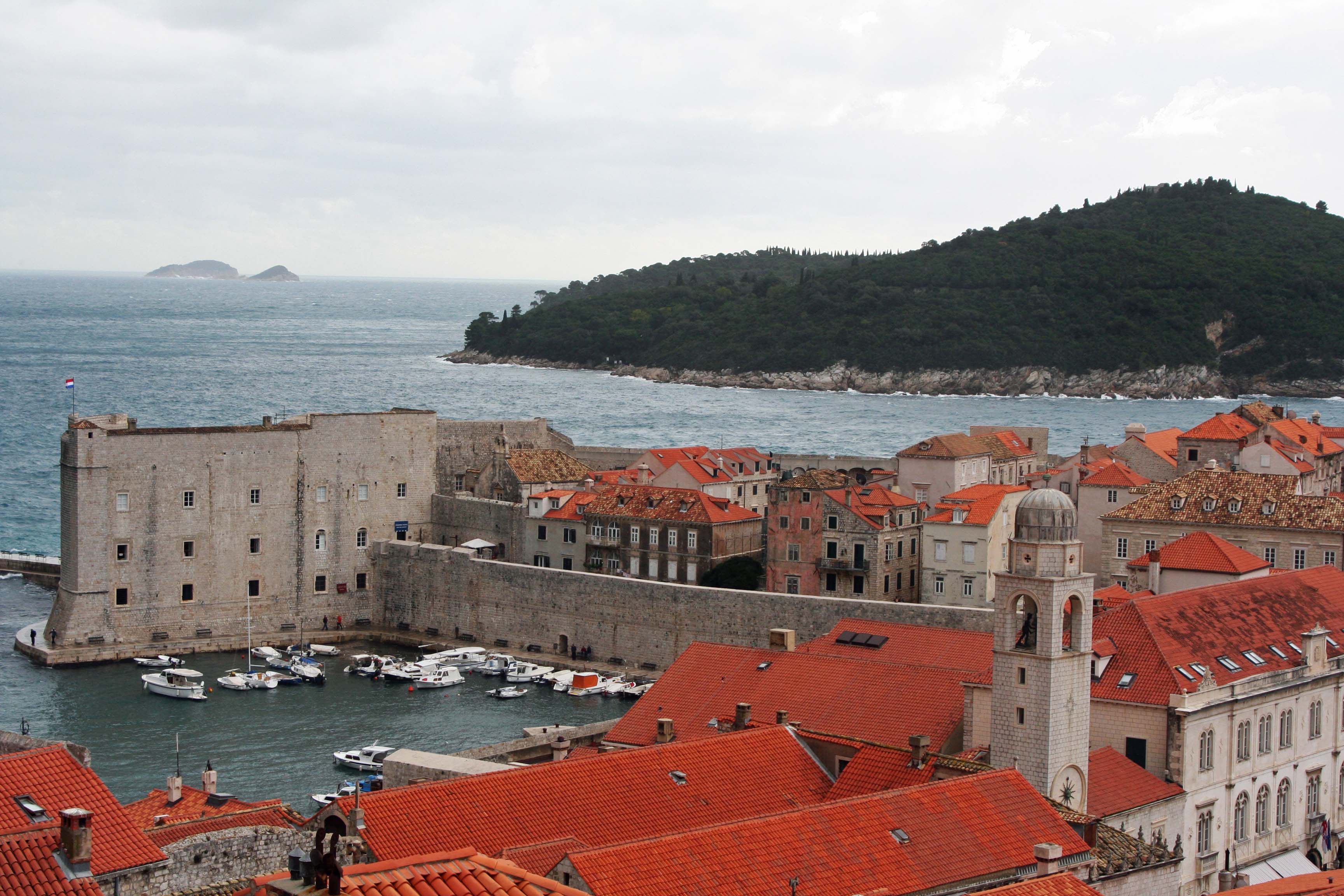
A view looking down on Dubrovnik's port and St. John's fortress that guarded the  harbor against Venetian invasion during the Middle Ages. The towns clock tower is on the right. (Photo by Peggy Mekemson)

A view looking down on Dubrovnik’s port and St. John’s fortress (now an aquarium and museum) that guarded the harbor against Venetian invasion during the Middle Ages. The town’s clock tower is on the right. Lokrum Island is at the top of the picture. (Photo by Peggy Mekemson)

Peggy's view of an abandoned building.

Peggy’s view of an abandoned building.

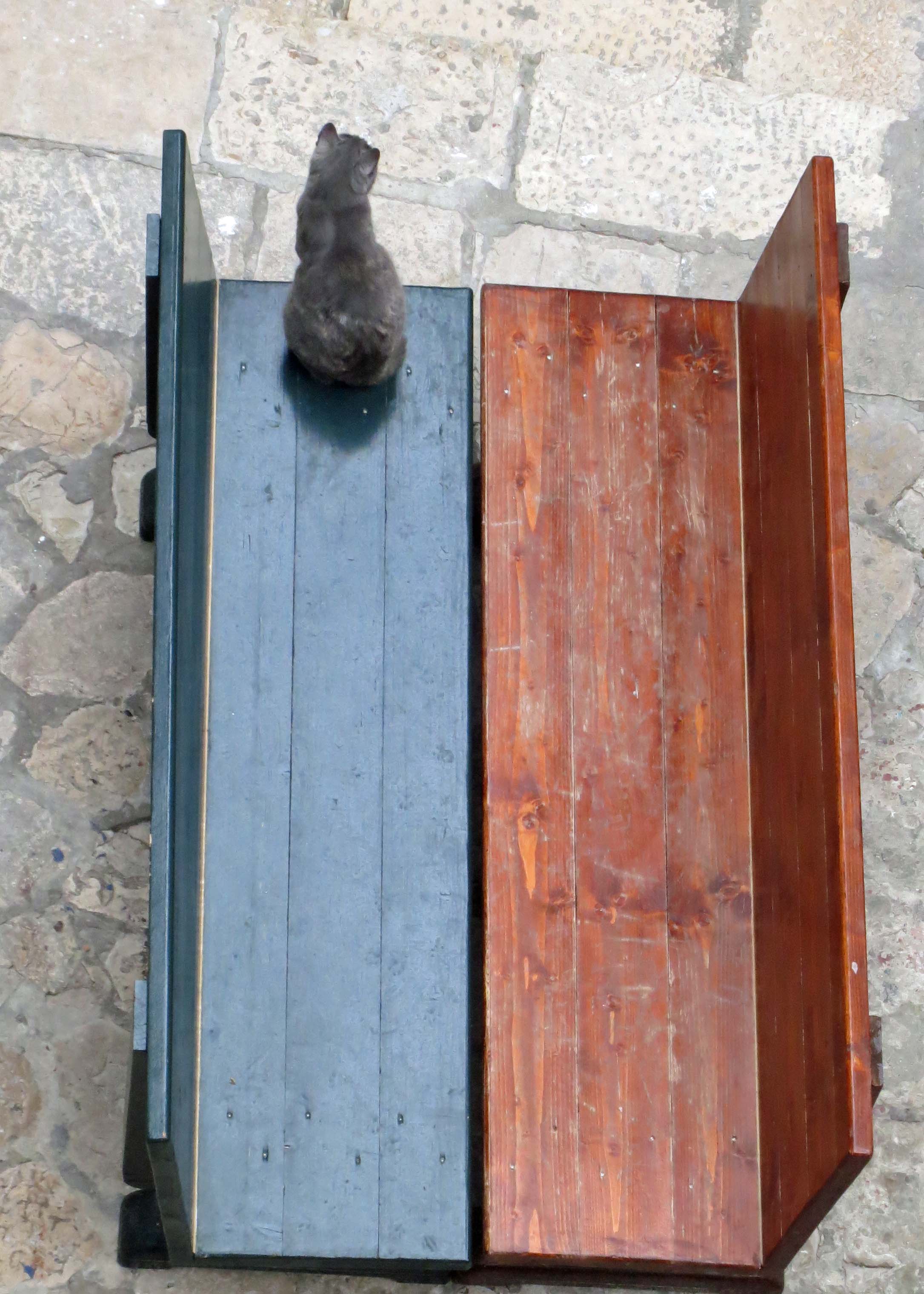
My obligatory cat photo from Dubrovnik. I loved the contrast of the two benches that had been shoved together.

My obligatory cat photo from Dubrovnik. I loved the contrast between the cat and the two benches that had been shoved together.

A view down the Stradun, Dubrovnik's main street. The Franciscan Monastery is on the left.

A long view down the Stradun (Dubrovnik’s main street) looking toward the clock tower. The Franciscan Monastery is on the left.

I like this view because it shows what Dubrovnik's red tile roofs look like in the sunlight!

I like this view because it shows what Dubrovnik’s red tile roofs look like in the sunlight!

A final view of Dubrovnik taken from the walls. This photo was shot through a window of one of the city's many guard towers.

A final view of Dubrovnik taken from the walls. This photo was shot through a window of one of the city’s many guard towers.


NEXT BLOG: Our tour of Mediterranean Ports  continues as we climb down from the walls surrounding Dubrovnik and walk through the city.