The Crazy Horse Memorial in South Dakota is a huge sculpture carved out of granite that is about 1/3 finished after 75 years of work. We visited it last fall on our three month trip around the US. All photos in this post are taken by either Peggy or me unless otherwise noted.

If you are visiting Mt. Rushmore, a trip over to the Crazy Horse Memorial is also worth doing. It’s not far— a distance of 17 miles that shouldn’t take more than 30 minutes to drive. In ways, the memorial was built as an answer to the presidential monuments. As the Lakota Chief Henry Standing Bear noted when he contacted the sculpture, Korczak Ziolkowski, “My fellow chiefs and I would like the white man to know that the red man has great heroes, too.”
Standing Bear also believed that the Black Hills were an appropriate place to build the memorial because they are a sacred area to American Indians. I first became aware of this perspective several years ago when I read the book, Black Elk Speaks. Written by the poet and writer John G. Neihardt, as told to him by the Ogalala Lakota medicine man Nicholas Black, the book captures Black Elk’s vision of the unity of humankind and the earth. The book takes the reader back in time to the vanishing culture of American Indians, but also contains a powerful message for people today. It has sold over one million copies. As Black Elk completed his story to Neihardt, he pointed to Harney Peak and identified it as where his vision took place. Harney Peak, located between Mt. Rushmore and the Crazy Horse Memorial, has now been renamed Black Elk Peak.
As for Crazy Horse, he definitely fits the definition of being one of the great heroes of American Indians and is recognized alongside other well-known leaders such as Geronimo, Red Cloud, Tecumseh, Sitting Bull and Cochise. Born in 1842 near present day Rapid City, his father was also an Oglala Lakota medicine man. His mother was a Brule Lakota and the sister of Spotted Tail, a noted war chief who later became a statesman traveling to Washington several times on behalf of the Lakota.
Crazy Horse was raised at a time when white treasure hunters had discovered gold in the Black Hills and were invading the area, breaking treaties that had ceded the land to the Lakota/Sioux. It was also a time when the once abundant buffalo herds were being methodically wiped out and the various tribes being forced on to reservations, threatening both their freedom and way of life. Not surprisingly, the Indians fought back, and Crazy Horse played a key role in this resistance, eventually leading up to and including the Battle of Little Bighorn.
As a young man, he went on a vision quest where he had a dream of a rider in a storm with long flowing hair who instructed him that he was not to wear a war bonnet or take scalps in battle. As the storm faded, a red backed hawk flew over the head of the rider. His father interpreted the dream to mean that Crazy Horse would be a great leader in battle, which turned out to be true. He died in a scuffle when he was being led to a stockade and a soldier bayoneted him on September 5th, 1877.


When Chief Standing Bear contacted the sculptor Korczak Ziolkowski in the early 1940s on behalf of the Lakota chiefs, Ziolkowski agreed to take on the project. He moved to the Black Hills in 1947 to locate an appropriate place for the monument and kicked off the carving in 1948. It is still on-going today, 75 years later. Ziolkowski continued the work until he died in 1982 when the project was taken over by his wife, Ruth. When she passed on, her children and grandchildren continued building the monument. Today the effort is overseen by the Crazy Horse Memorial Foundation. As of now, only the face has been completed and stands at 87 feet tall. His outstretched arm, which is presently being worked on, is 263 feet long. His finger will be 29 feet long. The horse will stand 219 feet high, the mane 62 feet high, and the ears 54 feet long.
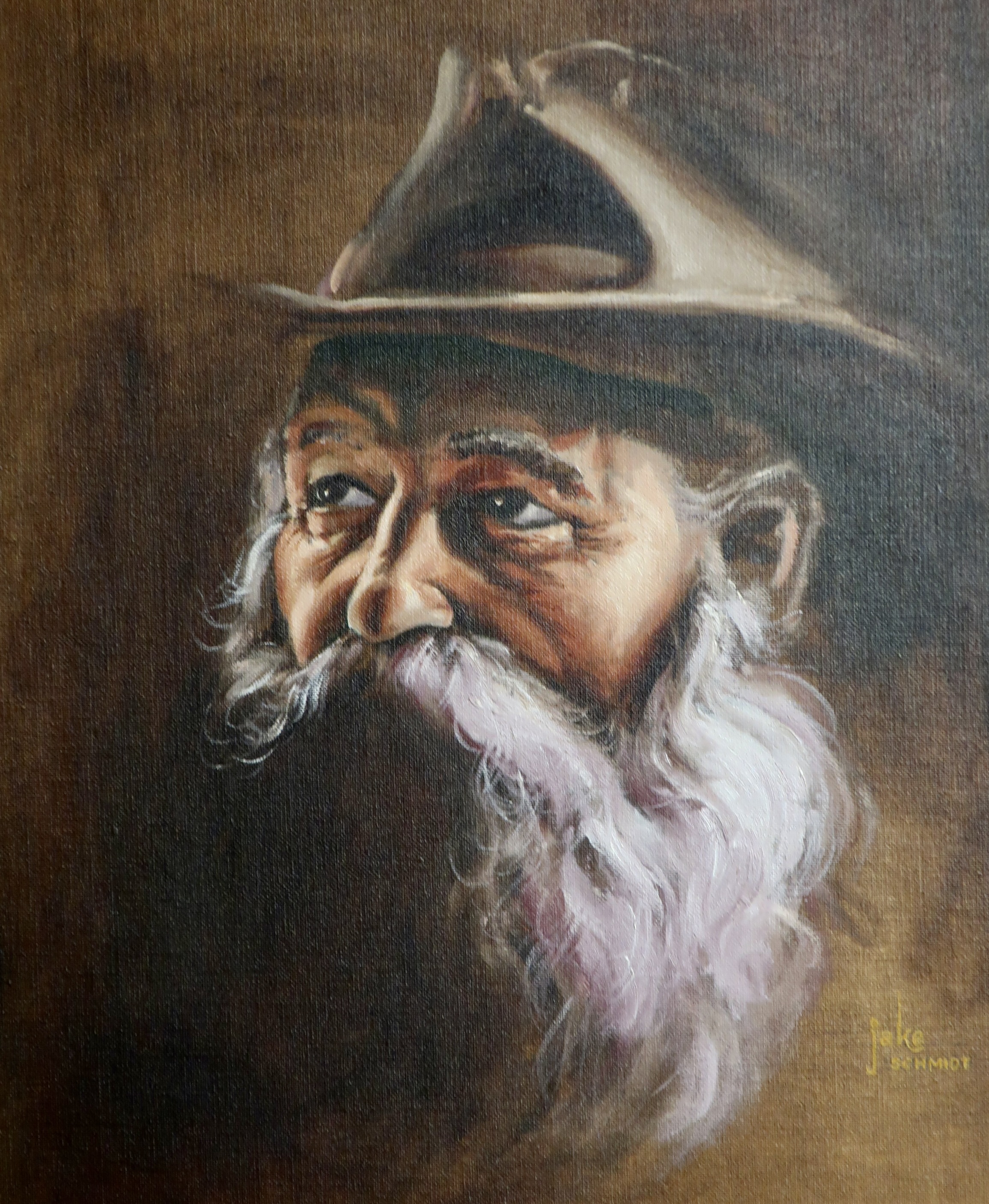
Feelings among the Lakota are mixed. Many see it as the memorial it was meant to be, celebrating Crazy Horse and American Indians. Some, however, believe it does not recognize Crazy Horse’s humility and is as much, or more, a memorial to Ziolkowski and his family. Whatever the conclusion, it has kept the Ziolkowski family gainfully employed down through the decades and generations.


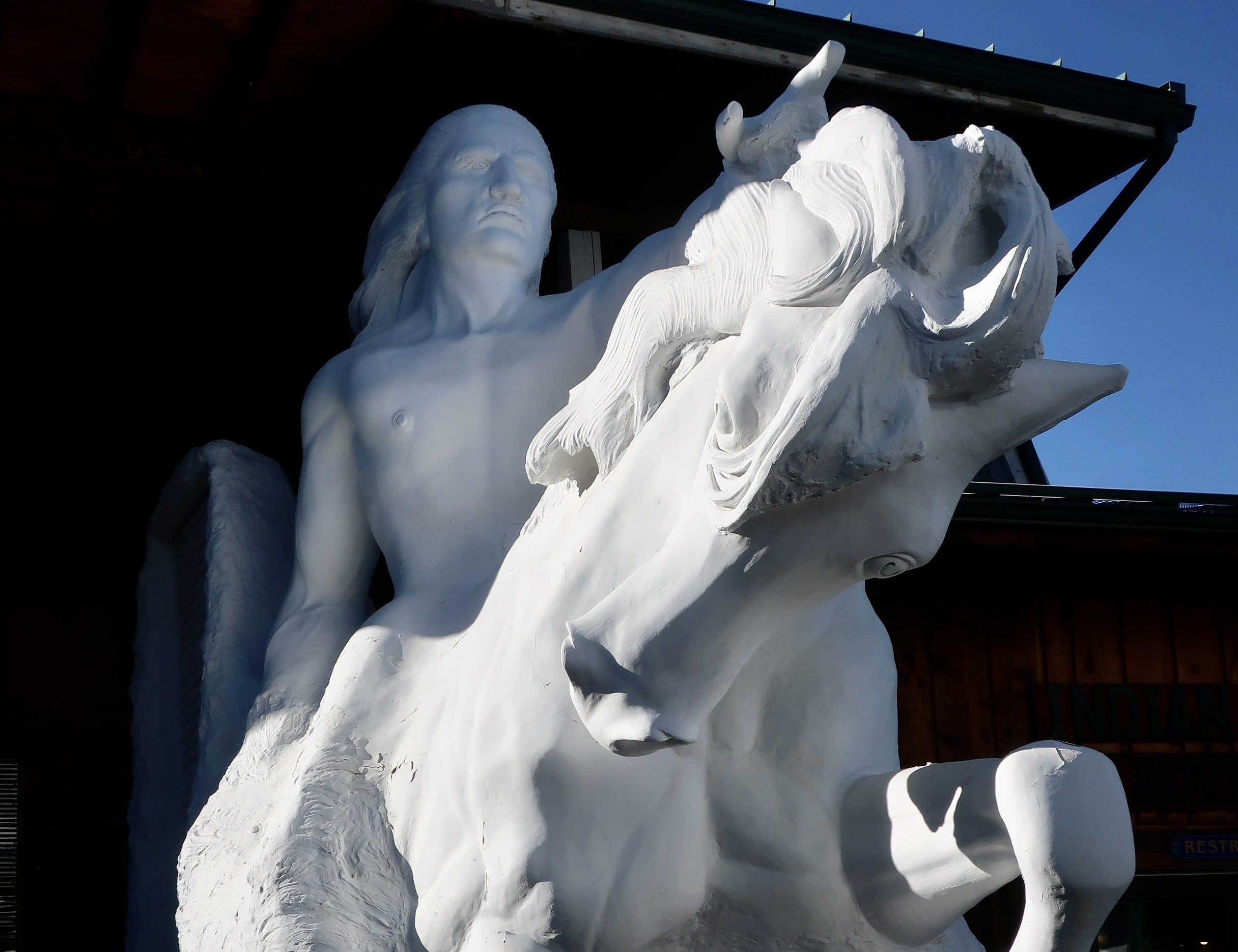
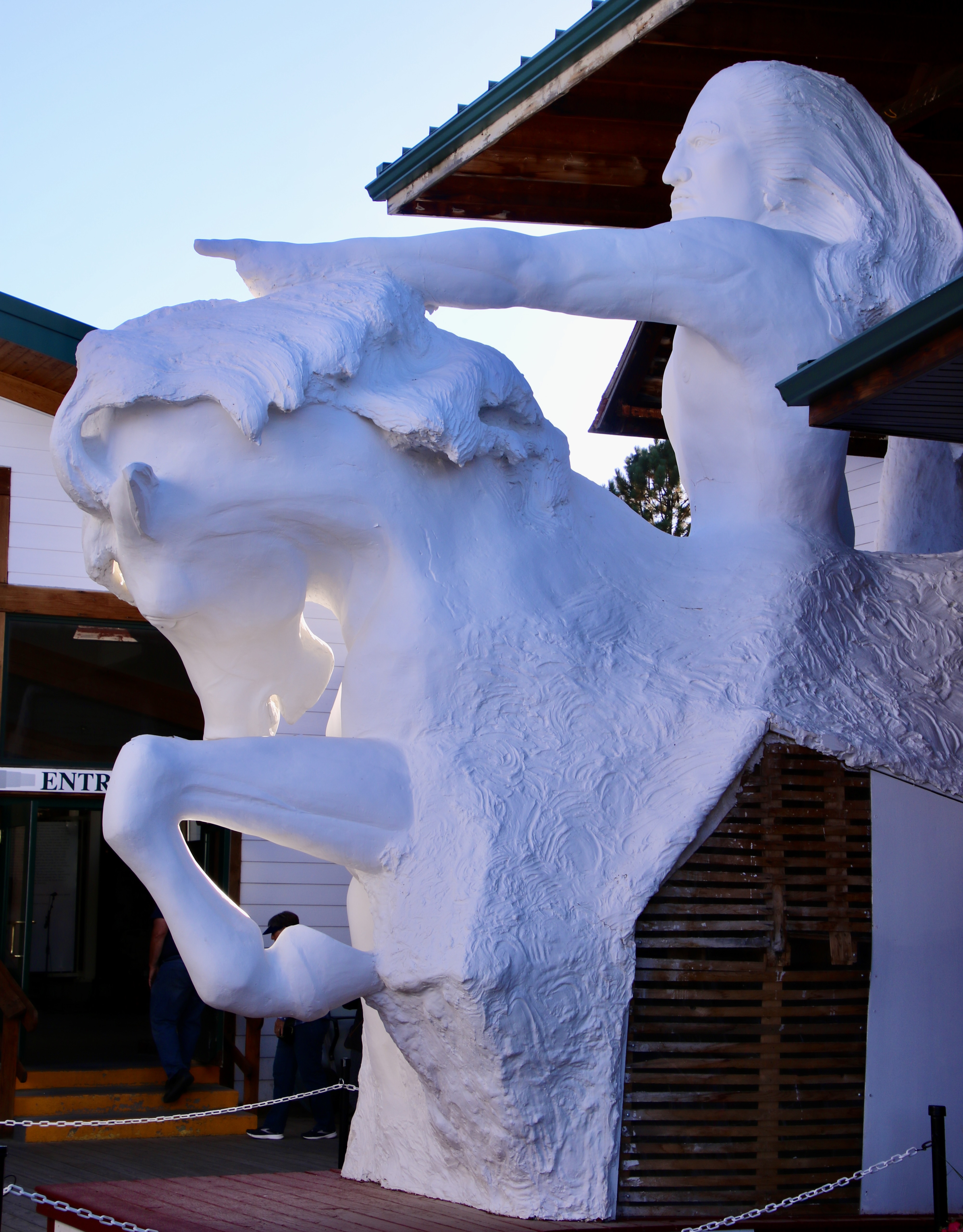
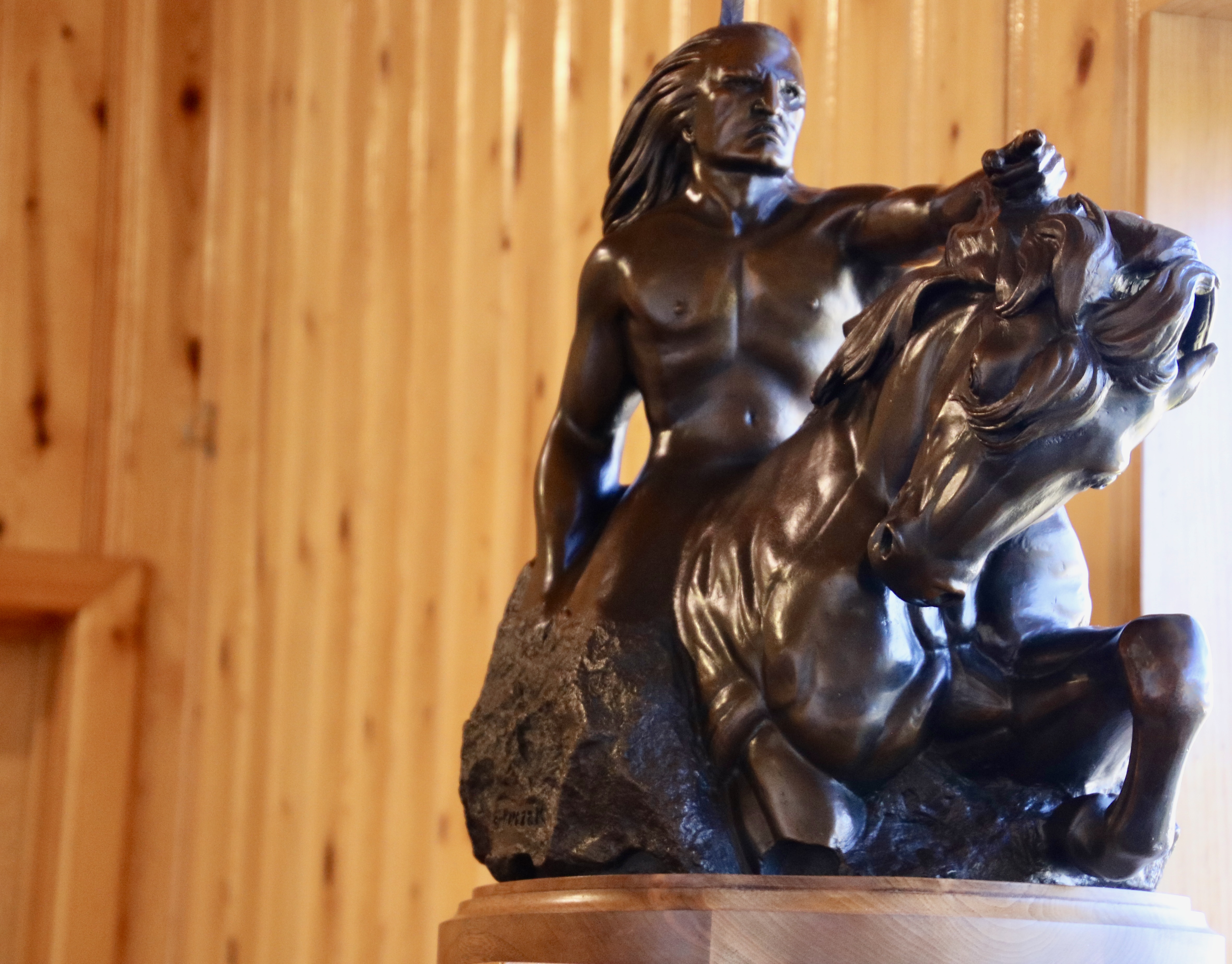


Next Monday it’s back to Egypt and the pyramids, sphinx and camels of Giza.
 Wandering through Time and Place