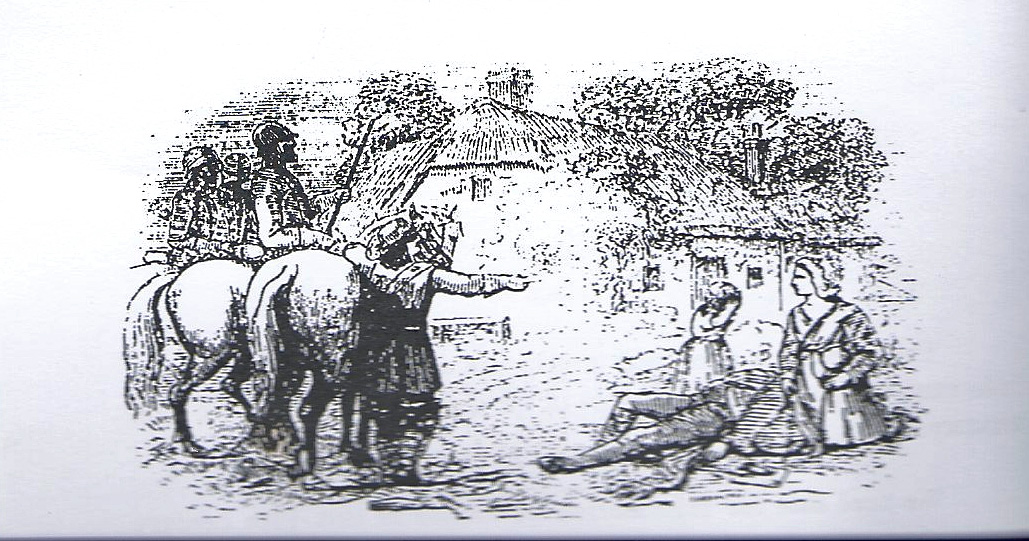
An early sketch of John Brown the Martyr of Priesthill Scotland being shot down by Bloody Clavers.
THE LONELY GRAVE
I first heard of John Brown the Martyr of Priesthill in the late 60s.
My dad arrived home from a reunion with a family tree that traced a branch of our family back to the martyr. Given the staunch Presbyterian leanings of the ancestral Mekemsons, it was an important connection.
My Great, Great, Great Grand Father, James Mekemson, married Mary Brown Laughhead Findlay. (Mary had already seen two husbands die.) John Brown was five generations up the line.
The story of John Brown’s murder verges on legend. He was, as the saying goes, a Covenanter’s Covenanter, a very devout man. Reverend Alexander Peden, one of the top leaders of the Covenanter Movement, described him as “a clear shining light, the greatest Christian I ever conversed with.” High praise indeed; the type you reserve for a man who is killed for your cause.
They say that Brown would have been a great preacher, except he stuttered. Leading Covenanters visited his home and secret church services were held there. Important meetings took place.
Alexander Peden stayed at his house the night before Brown earned his martyrdom and warned of dark times. Peden was something of a prophet when it came to predicting dire events. This time he was right.
Brown was out gathering peat with his nephew the next morning when soldiers led by John Graham of Claverhouse appeared out of the mist and captured him. The date was May 2, 1685.
Claverhouse, or Bloody Clavers as the early Presbyterians identified him, was the King’s go-to man when it came to eliminating Covenanters. He was not noted for his compassion.
He took Brown back to his home and demanded that he swear an oath to the King in front of his wife and children. Brown started praying instead. The legend states that Claverhouse ordered his soldiers to kill Brown but they refused. So he took out his own pistol and shot him in the head in front of his family.
The story then goes on to describe how Brown’s wife, Isabel Weir, went about the yard collecting pieces of her husband’s brain. (I don’t mean to treat this lightly, but somehow I can’t help thinking about a TV episode of Bones.)
The family eventually escaped to Ireland and then moved on to North America where it settled in Paxtang, Pennsylvania.
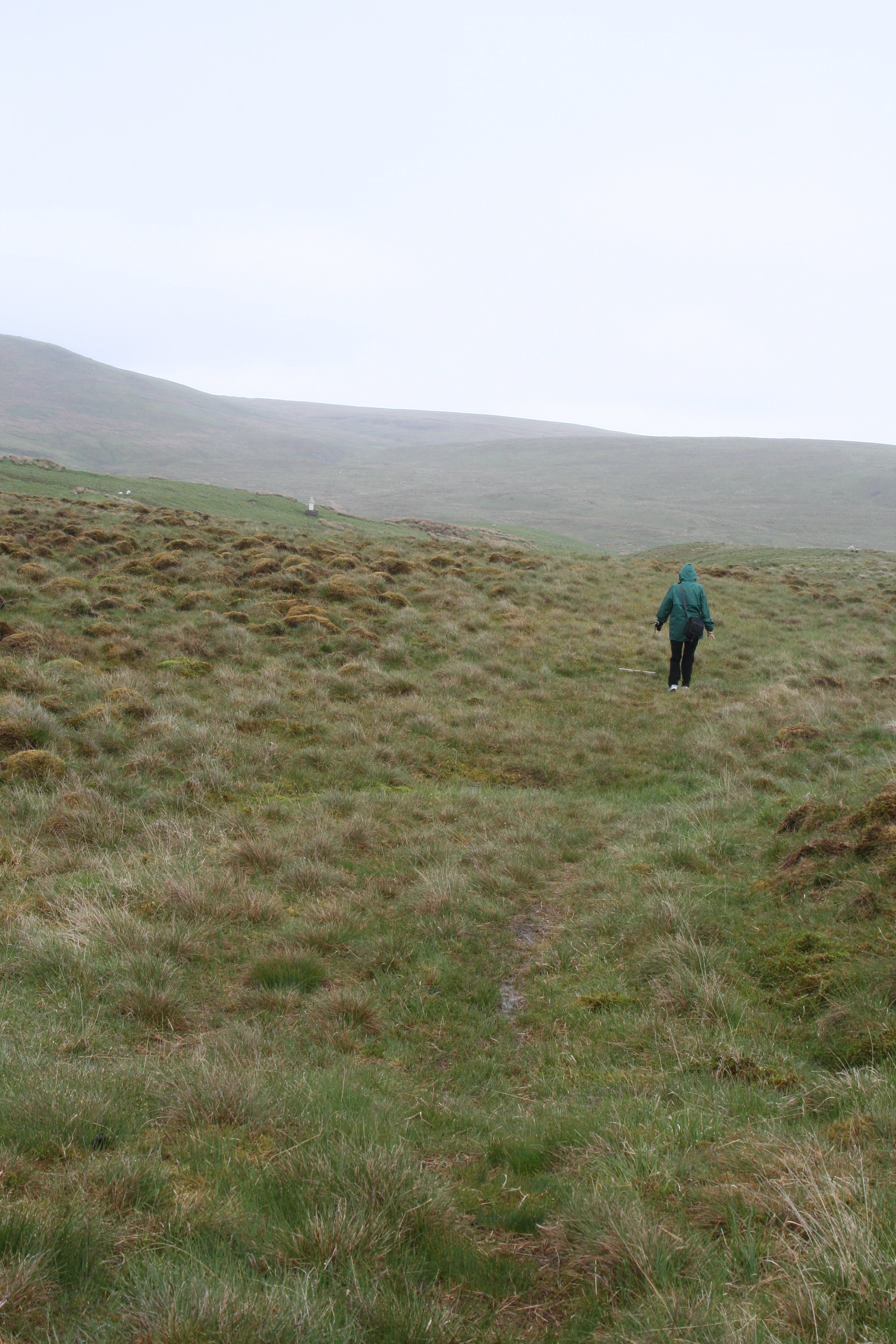
This shot of Peggy captures the isolation of John Brown's Grave, the white speck on the upper left of the photo.
John Brown’s appearance on our family chart in 1969 immediately caught my attention. Not too many families can claim a certified martyr. When I became serious about genealogy three years ago, I determined I would go to Scotland and find his grave.
Our arrival at the Priesthill Farm with its disappearing woman meant that we were near. A faded sign pointed off to the right. The fine print suggested we would find the grave in a mile. We went wandering out across the grass-covered hills, following a muddy path that was minimally marked.
We were beginning to despair about out chosen route when we crested a hill and spotted the lonely grave in the distance with only sheep for company. We hiked down the slope, jumped a small creek, and arrived. After paying proper homage to the martyr we climbed above the grave to where he had lived. Only a few stones marked the site. Peggy photographed me standing in his house, near where he had been shot down on that misty morning in 1685.
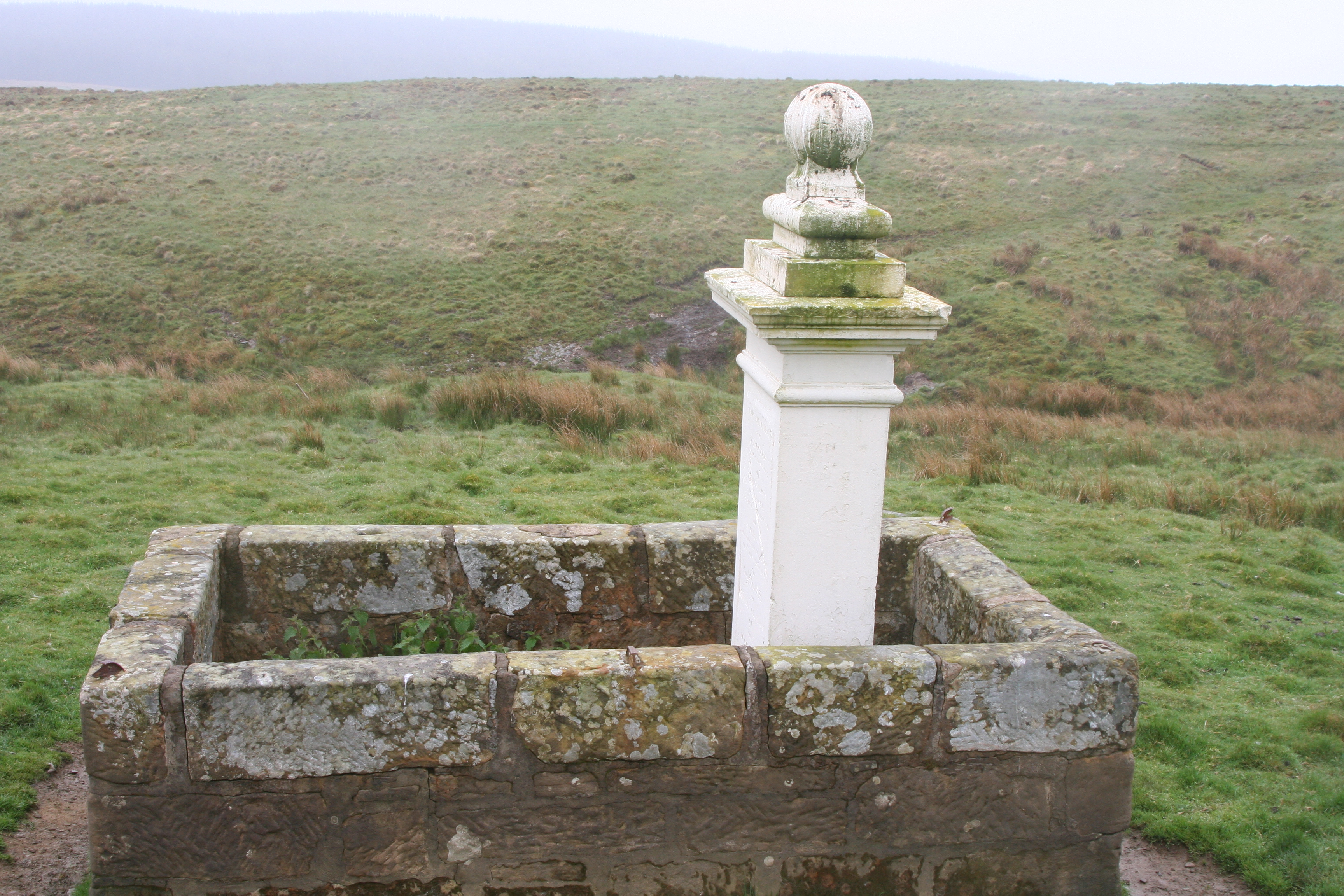
Looking down on John Brown's Grave.
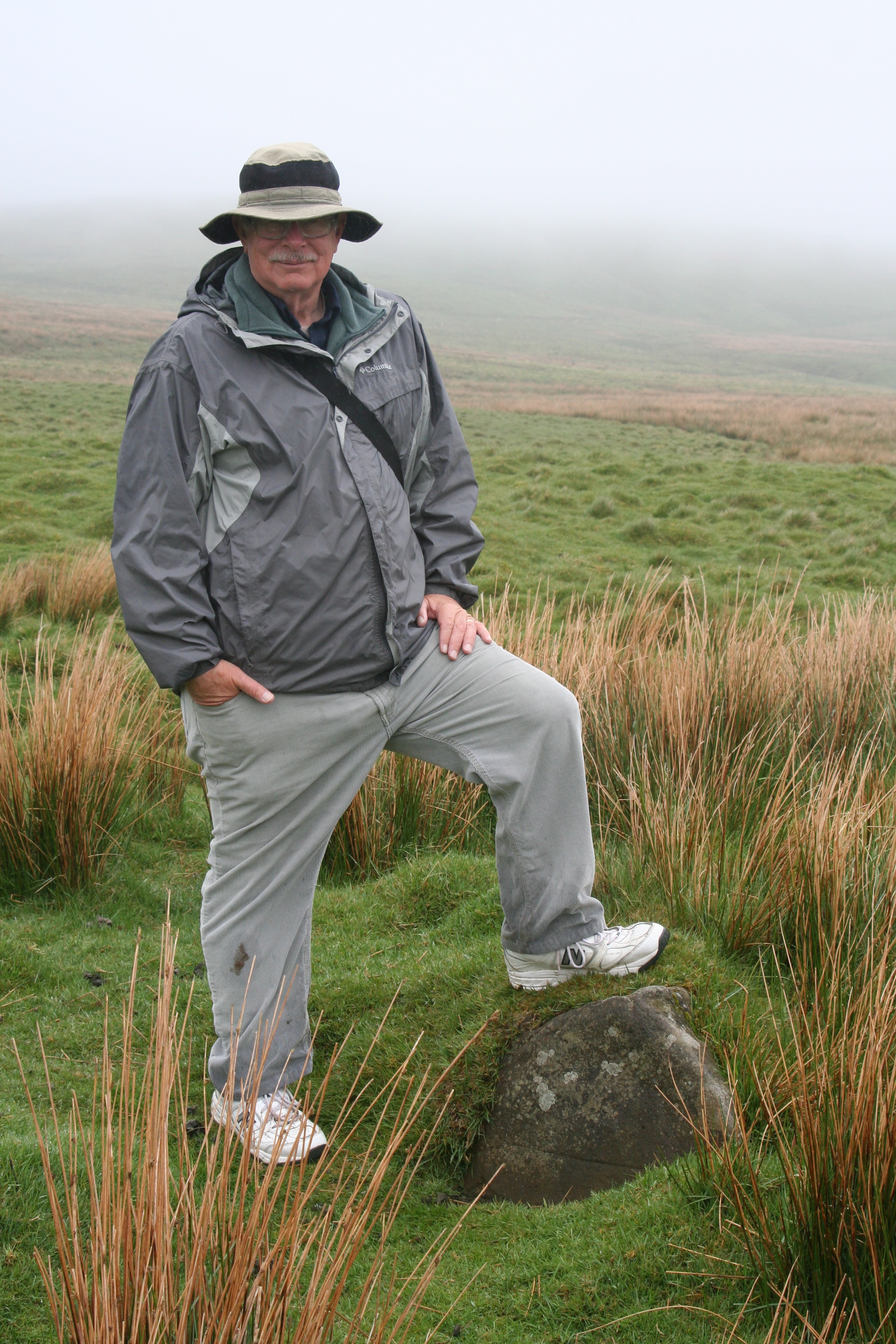
I am standing on a rock that may have been part of John Brown's home, only feet away from where he would have been shot.
Our ‘pilgrimage’ completed, we left Muirkirk and drove east to Dumfries where I visited the local genealogical center. The next day we returned our car to Edinburgh and took the train to London. Our visit to England and Scotland was over. Between our visit to Chatsworth, adventure on the narrow boat canal, exploration of Edinburgh, tour of southwestern Scotland and search for ancestors, we had a full three weeks. We we had enjoyed the Midlands of England, we fell in love with Scotland. We’ll be back.
Next Blog: Back to the wild west… There’s a beaver standing on my tent.
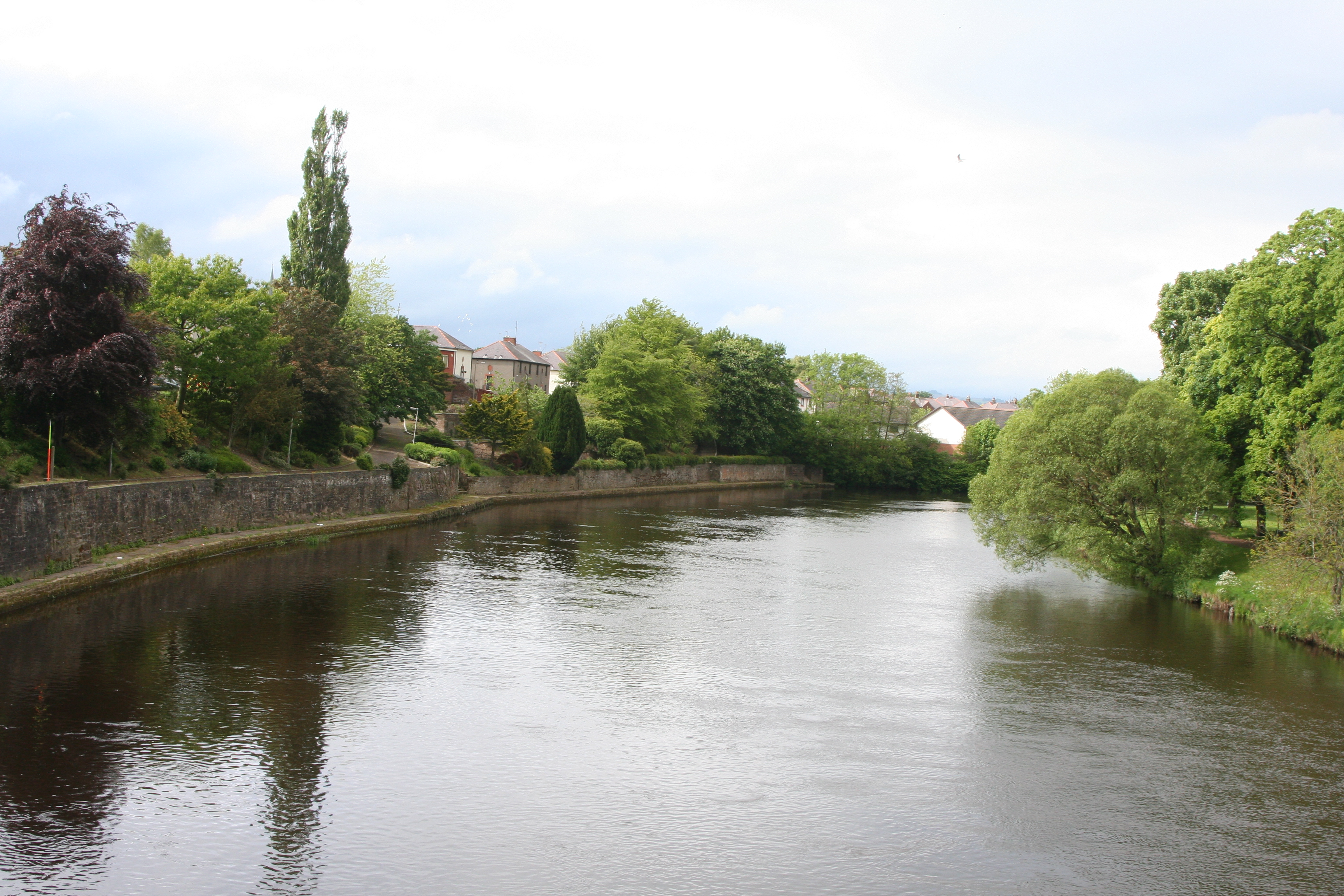
The River Nith flowing through the heart of Dumfries.
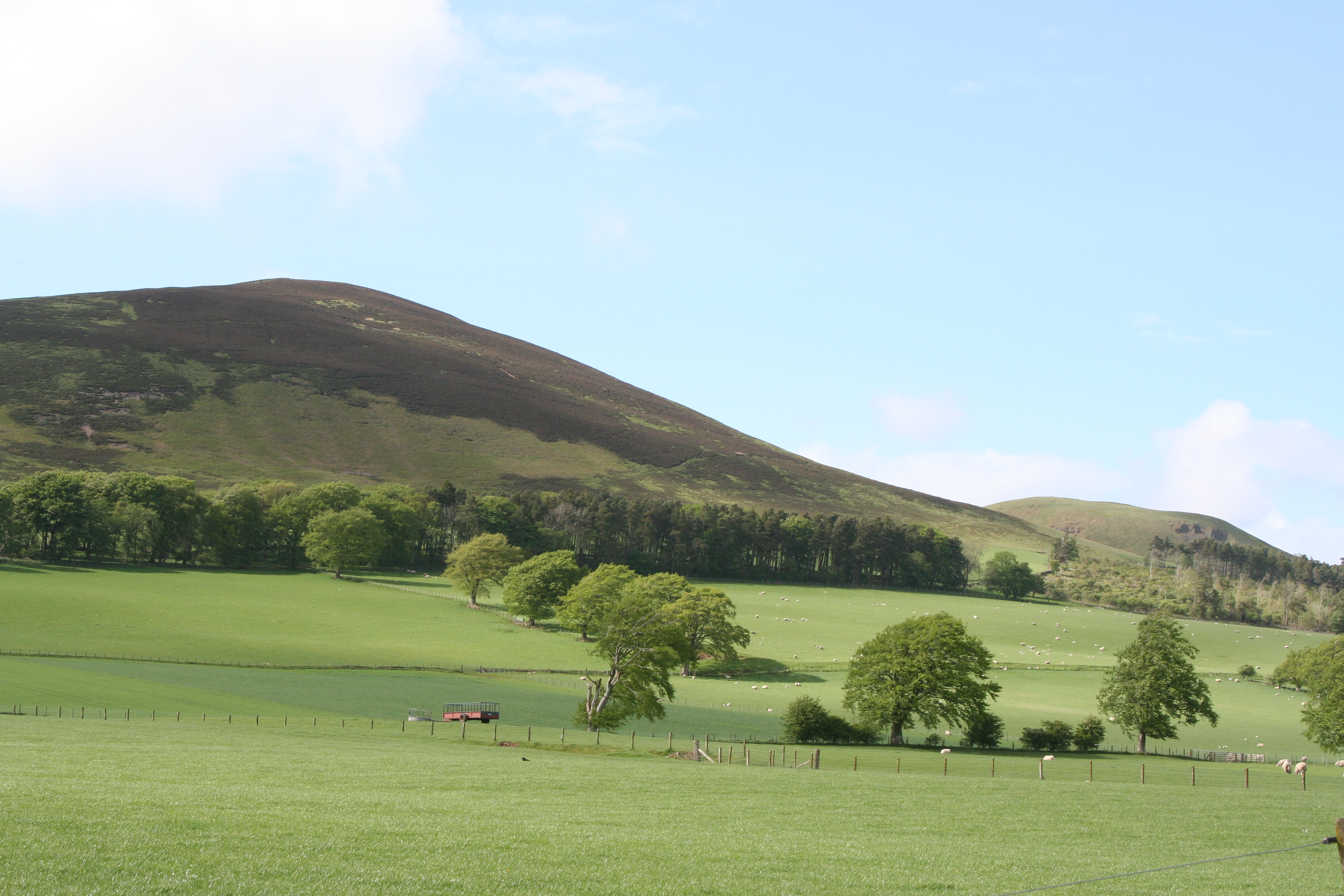
A final view of southwestern Scotland.
 Wandering through Time and Place