Chisos Mountains… Big Bend Is More than Desert, Much More… The National Park Series #11

Photos by Curtis and Peggy Mekemson
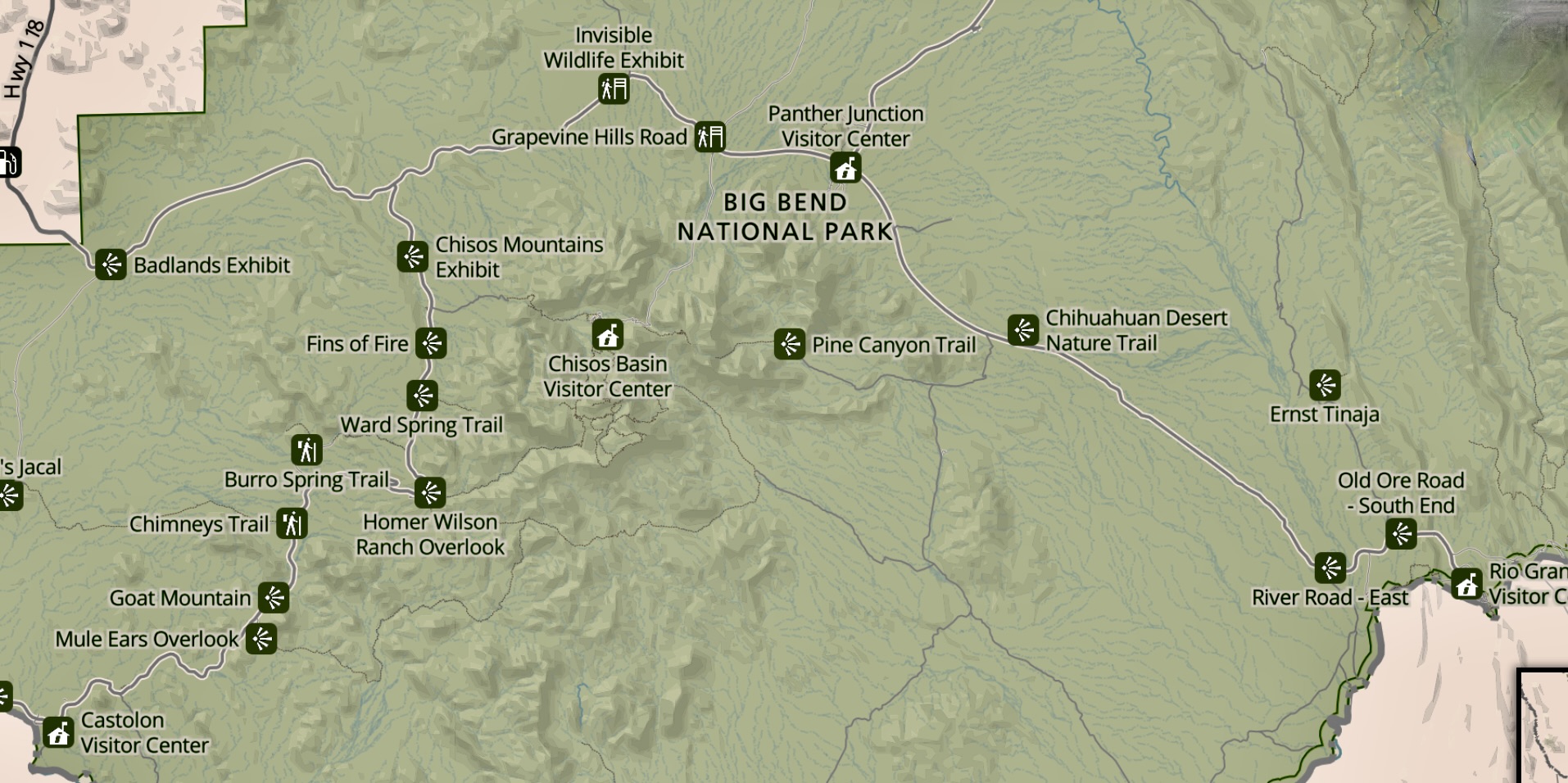
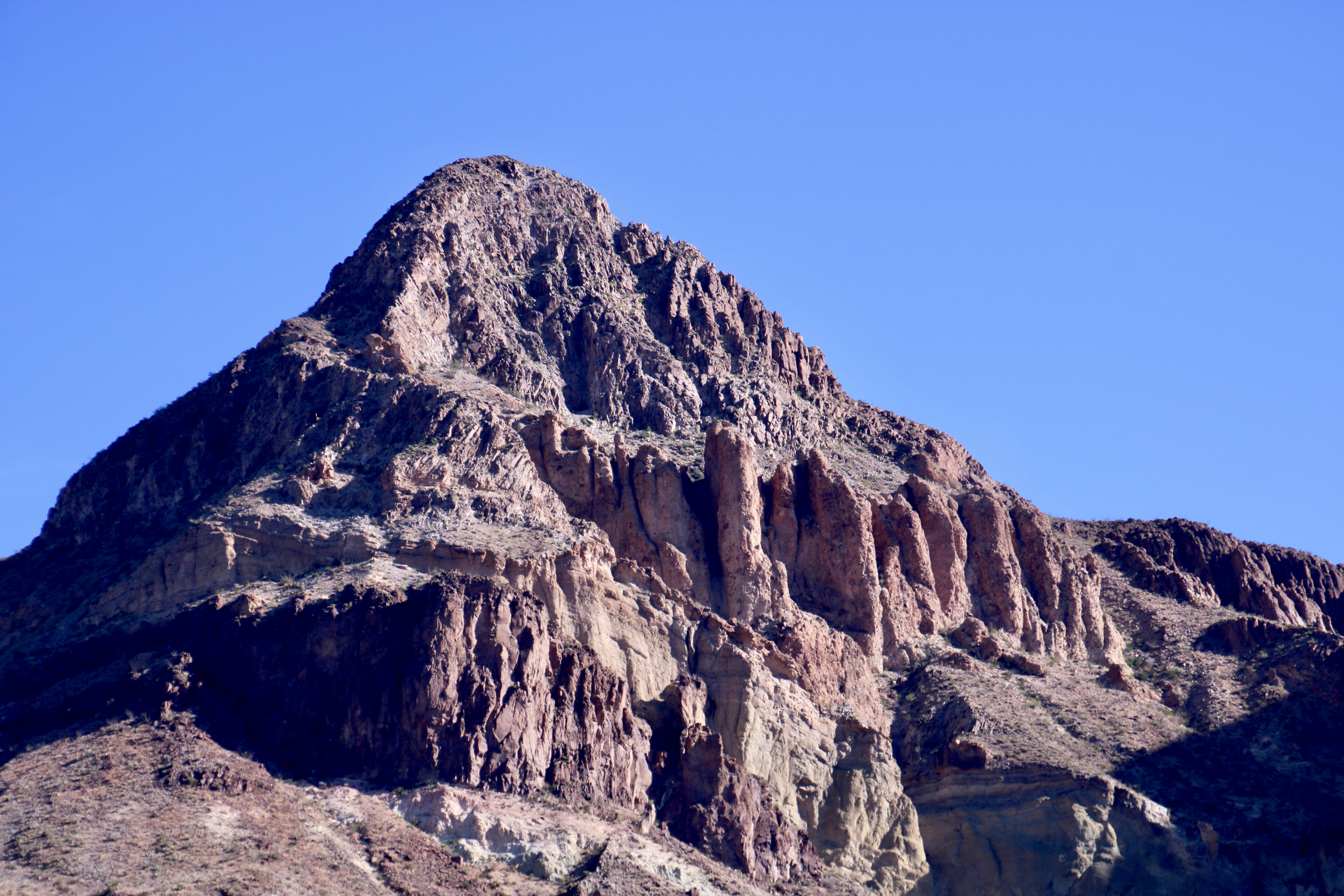
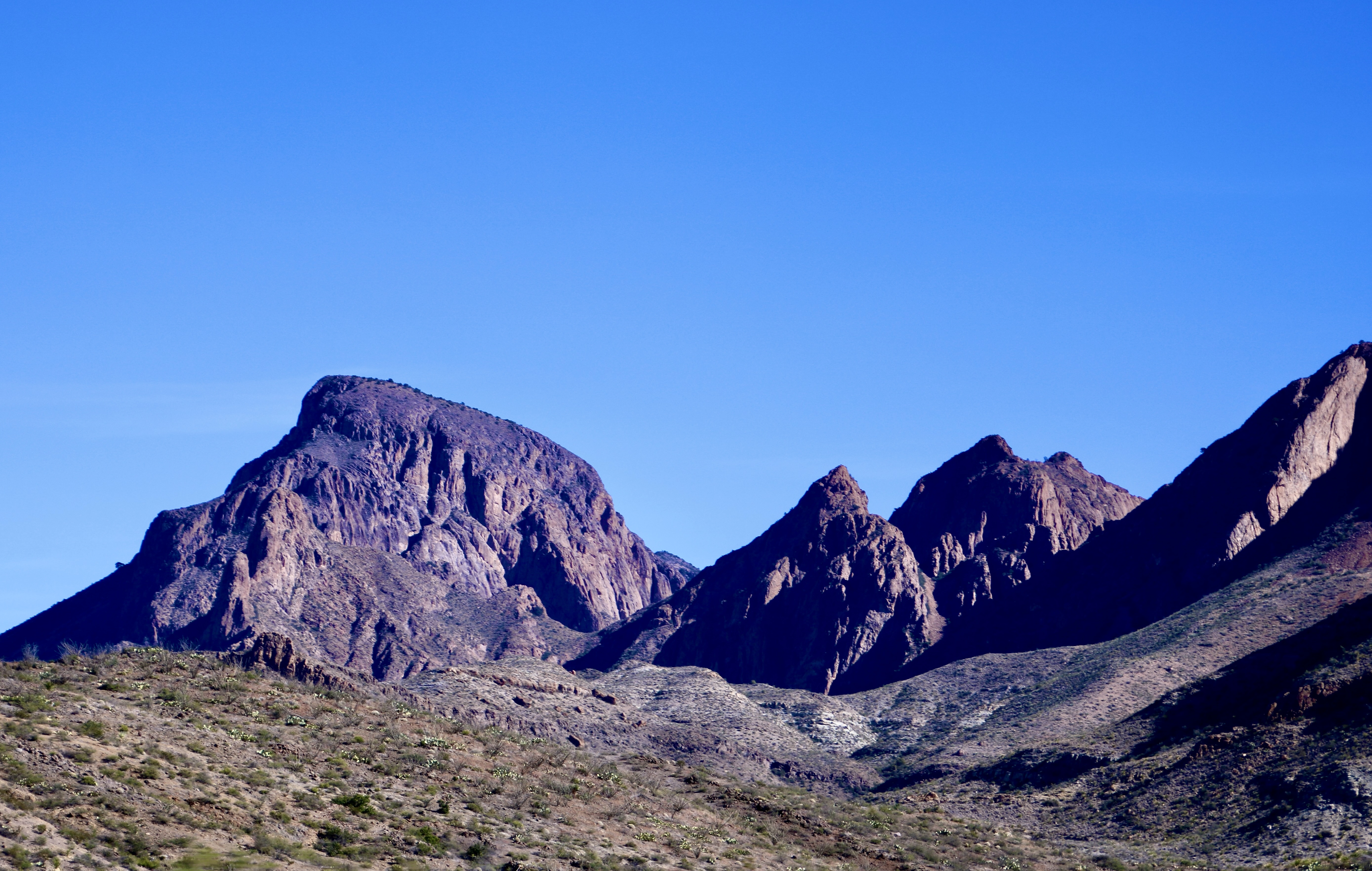
The Chisos Mountains of Big Bend were born 45 to 30 million years ago when the region experienced several episodes of volcanism followed by periods of quiet. We found the mountainous region to be quite beautiful. Our drive from our campsite at Rio Grande Village to our campsite at Castolon took us around much of the mountain range as shown in the National Park map below.
Our drive from our campground at Rio Grand Village on the right to our campground in Castolon on the left took us around a significant portion of the Chisos Mountains. Most of our photos of the mountain were taken when we retraced our drive up from Castolon to visit the Chisos Basin. We did, however take photos from the Chihuahuan Desert Nature Trail on our way to Castolon. This is a Big Bend National Park map.
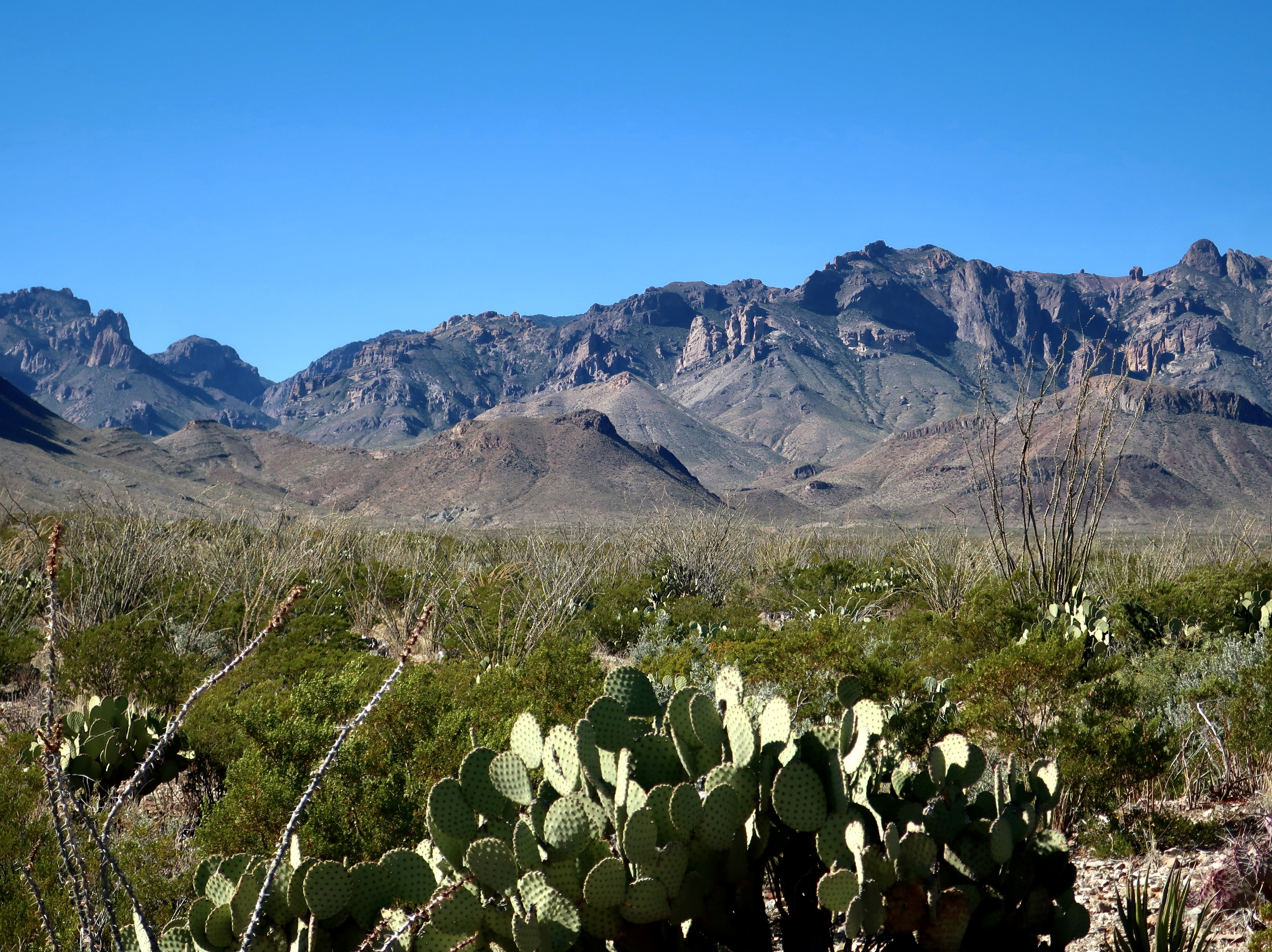
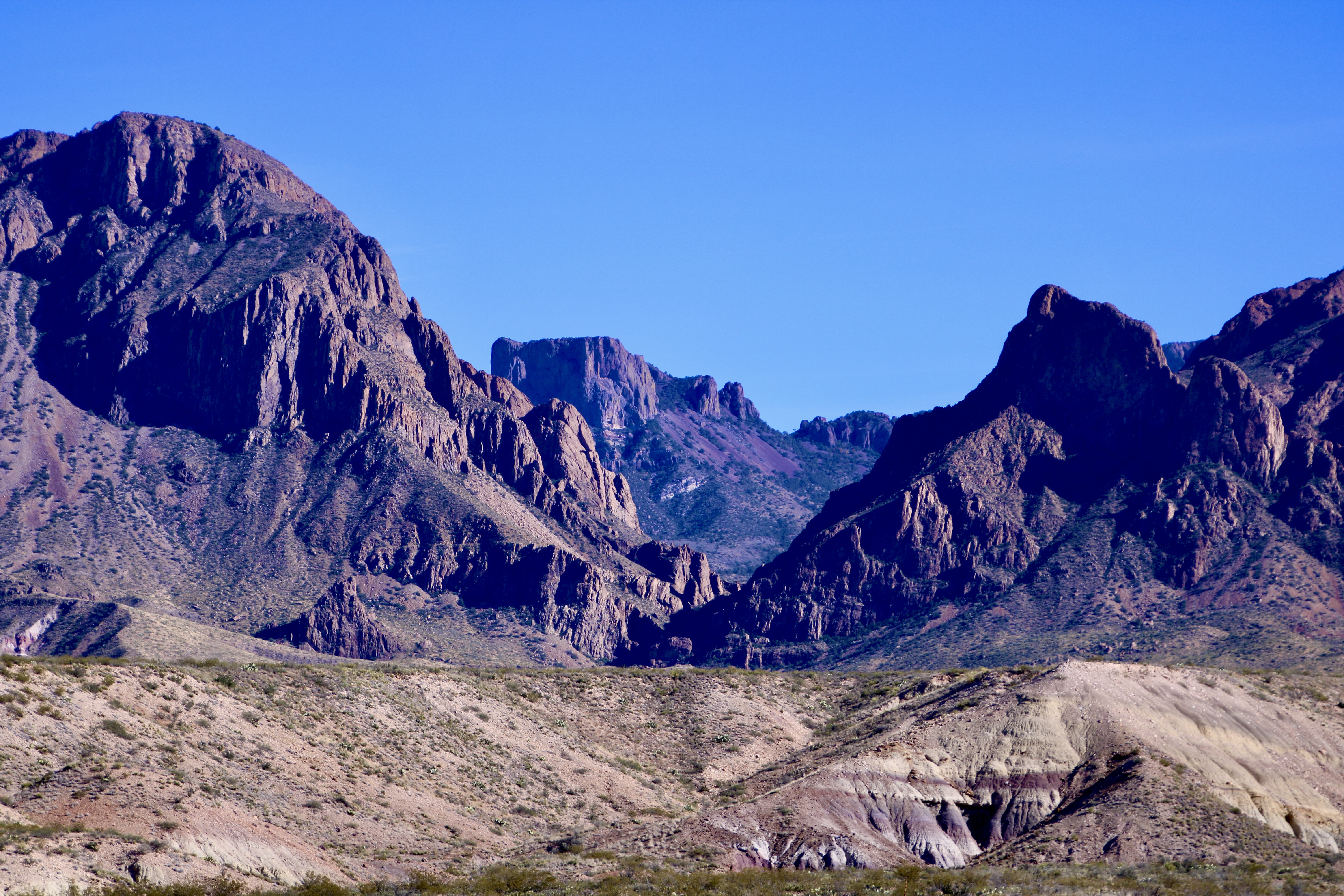
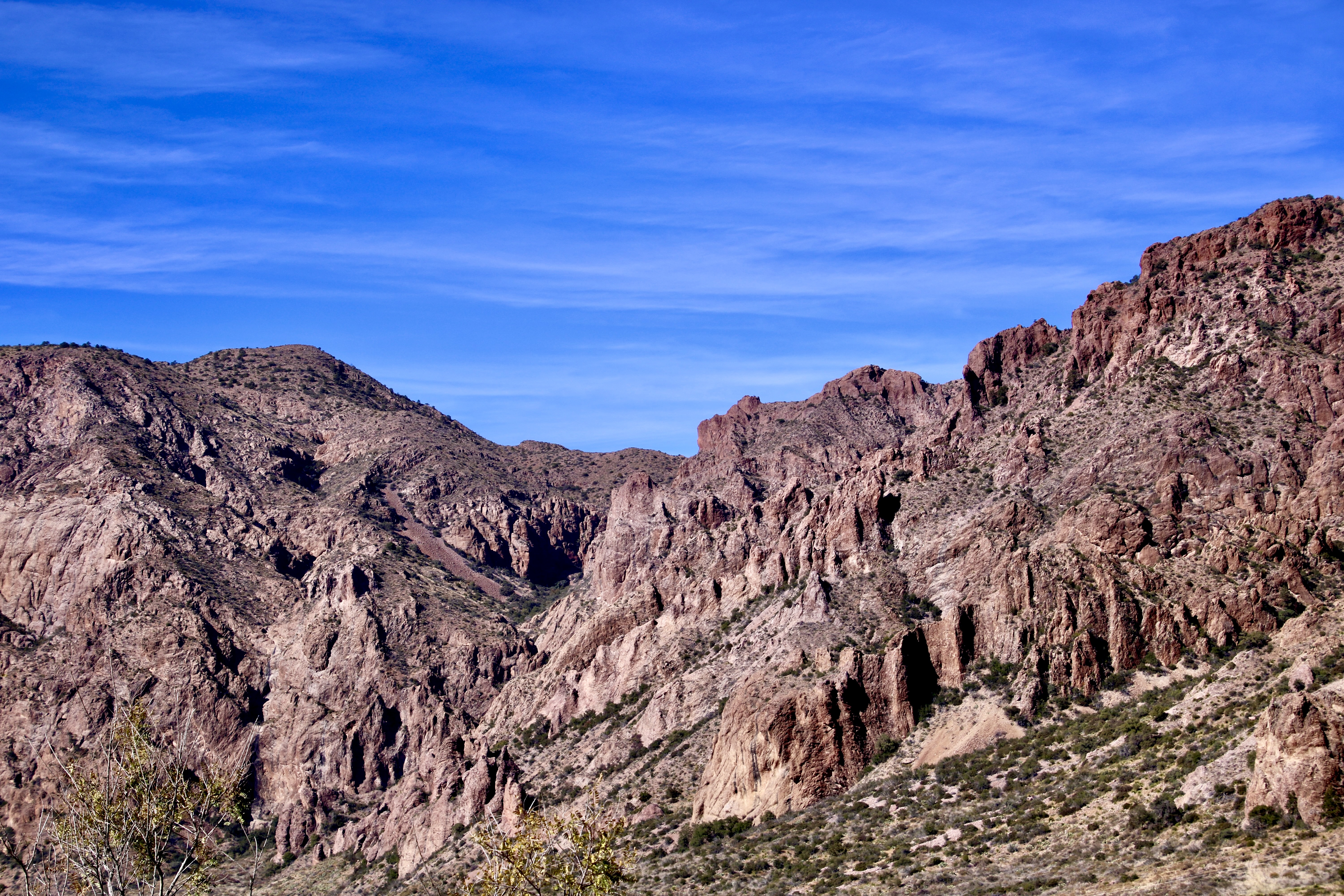
The Chihuahuan Desert Nature Trail provided several views of the eastern side of the Chisos Mountains.
I believe this is a view into Pine Canyon.
Any view of the ‘Old West’ is enhanced by an old-fashioned windmill (not the gigantic modern types). We found this along the nature trail looking out at the mountains.
Farther up the road, after we had cut off onto the Ross Maxwell Scenic Drive, the Chisos Mountains Exhibit gave us a northwestern view of the mountains. Emory Peak, the slight knob on the left, is the highest point in the park at 7,825′ (2385 m).
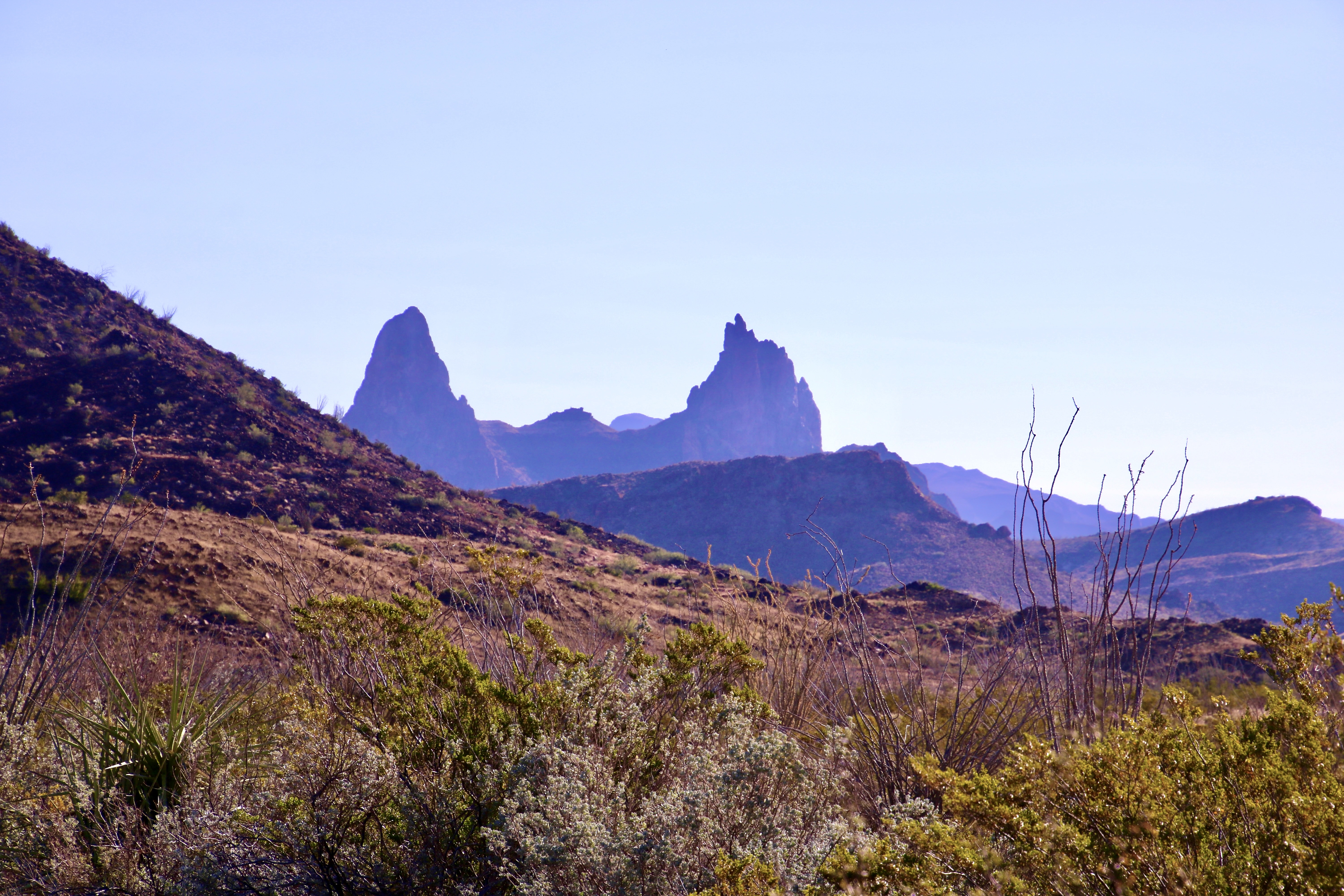
Once situated in Castolon, Peggy and I decided to make a more leisurely trip up the Scenic Highway along the Chisos Mountain to the Chisos Basin. Our first view along the way was one of Big Bend’s most photographed sites: The Mule Ears. They look a bit devilish to me.
Another perspective. Do they actually look like mule ears? Close…
I took this photo at Phantom Ranch in the Grand Canyon.
Photos of Big Bend NP by Curt and Peggy Mekemson.
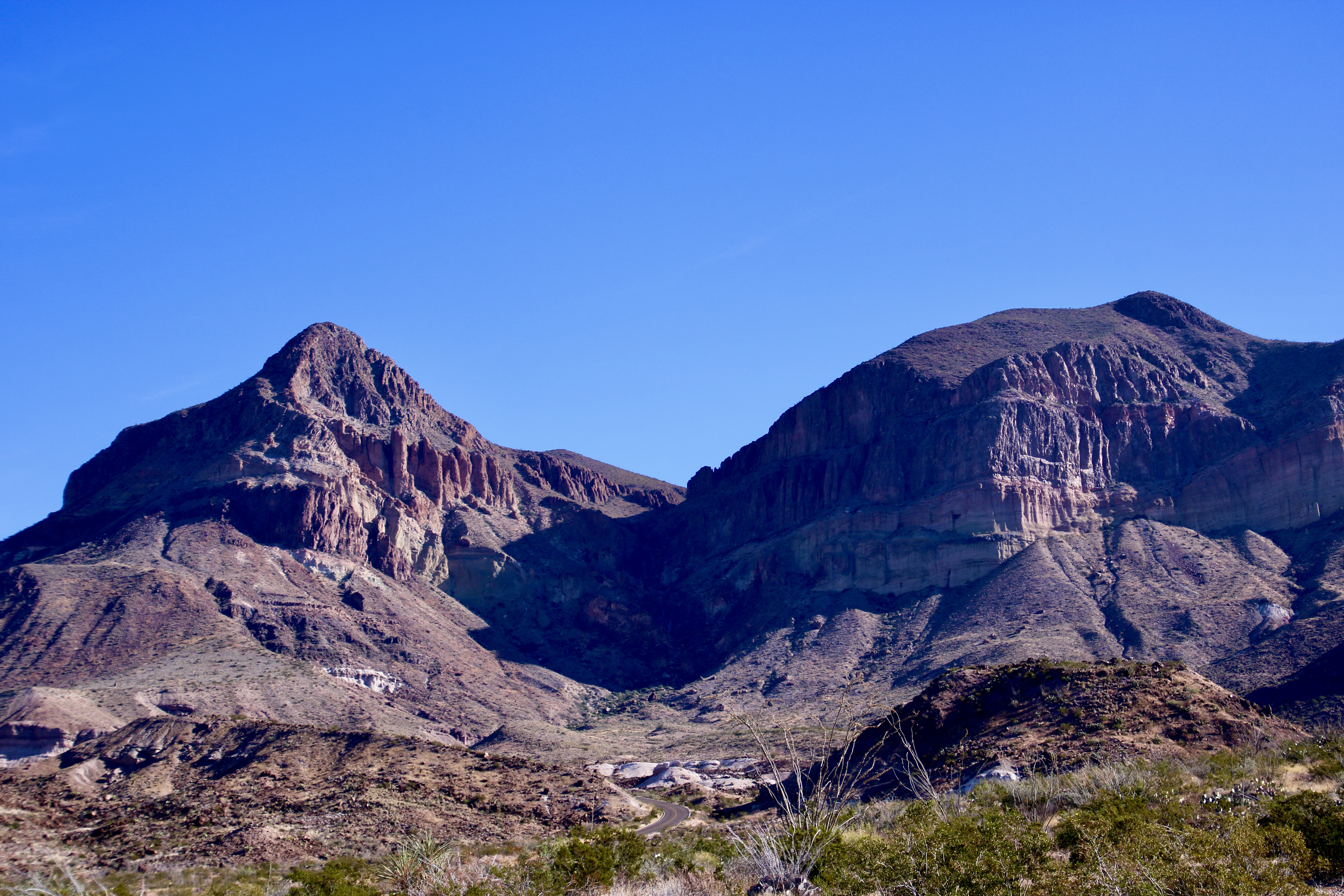
Next up on our list of things to see was Goat Mountain. It’s the peak on the left.
Photos of Big Bend's Goat Mountain by Curt and Peggy Mekemson.
Closer…
Closest! Actually, Goat Mountain was misnamed. What the early pioneers were actually looking at were big horned sheep.But, hey, an ungulate is an ungulate, right? Can you spot the sheep? Just kidding.
Remember the old ditty, ‘the bear went over the mountain to see what he could see,’? I’m like the old bear. Always curious. Goat Mountain is the peak on the end.
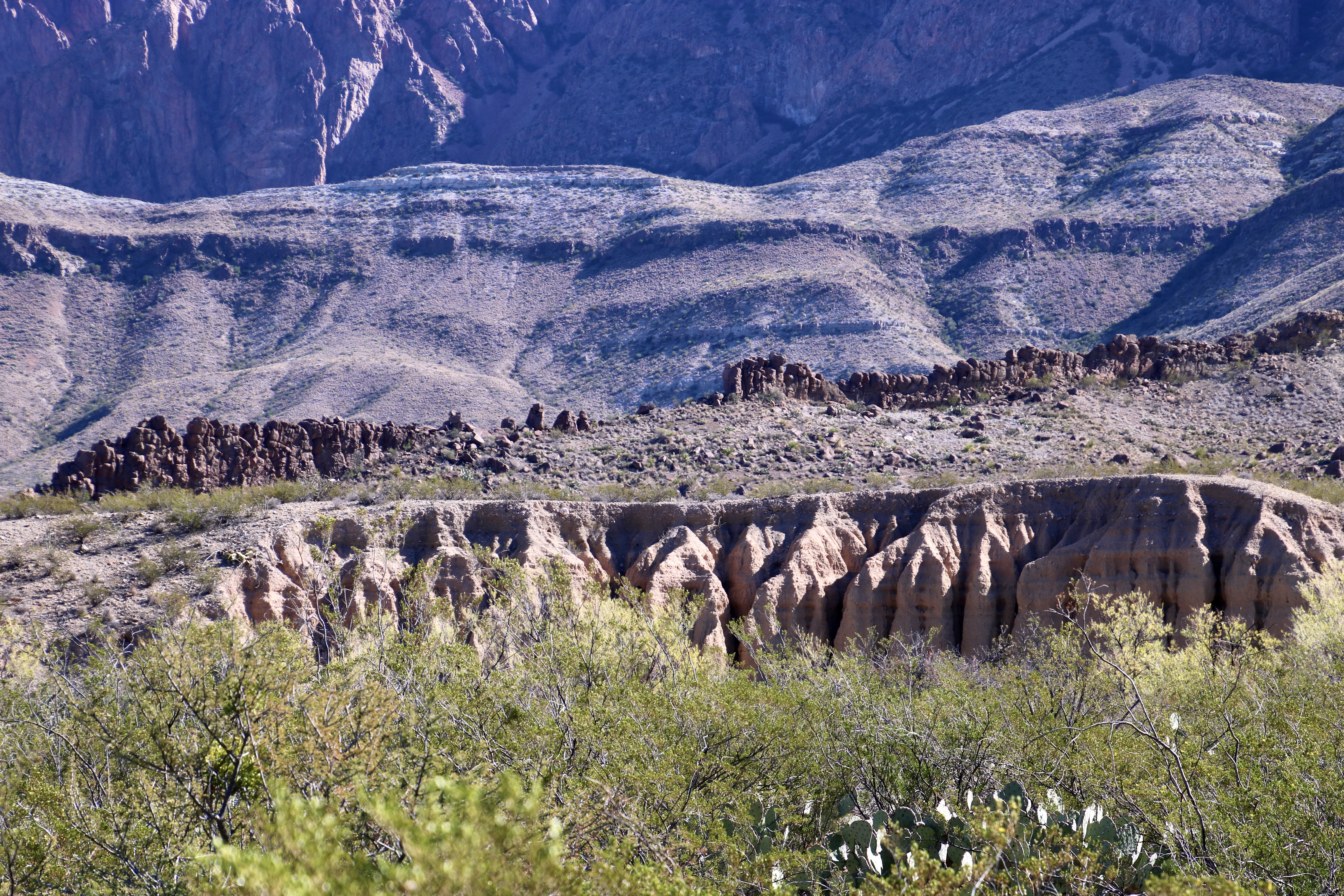
Getting close to the turn off to the Chisos Basin, this was our view. Note the red ridges in the foreground.
The red ridges are the Fins of Fire shown on the map. They are volcanic dikes formed when lava forces its way into crevices in rocks as it works its way to the surface and solidifies. Erosion has exposed the red dikes here.
Close up of the dikes.
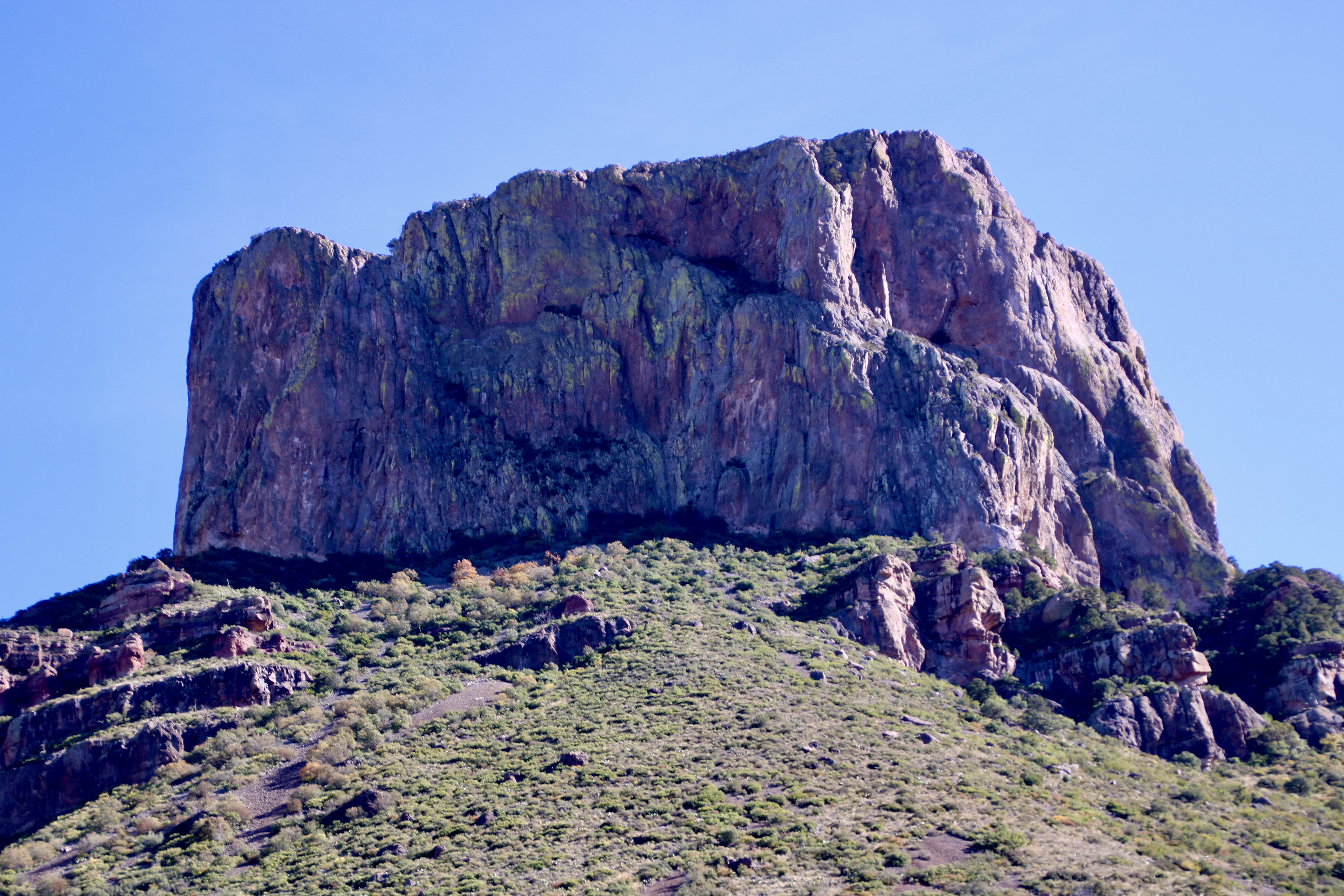
Now it’s time to work our way into the Chisos Basin. A window view of where we are going. The large flat rock is Casa Grande.
A grand house indeed! But it’s only one of the many views we found in the basin.
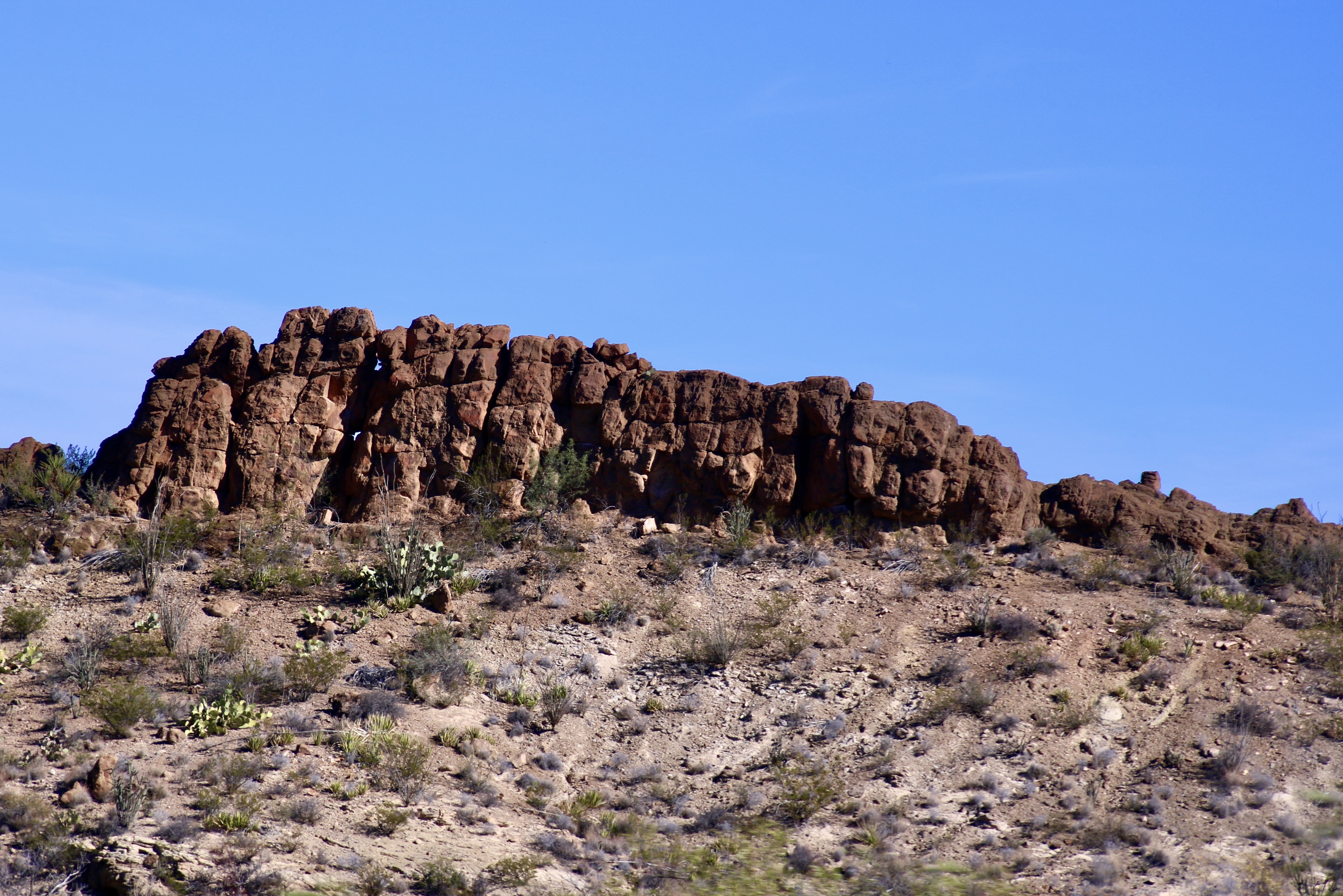
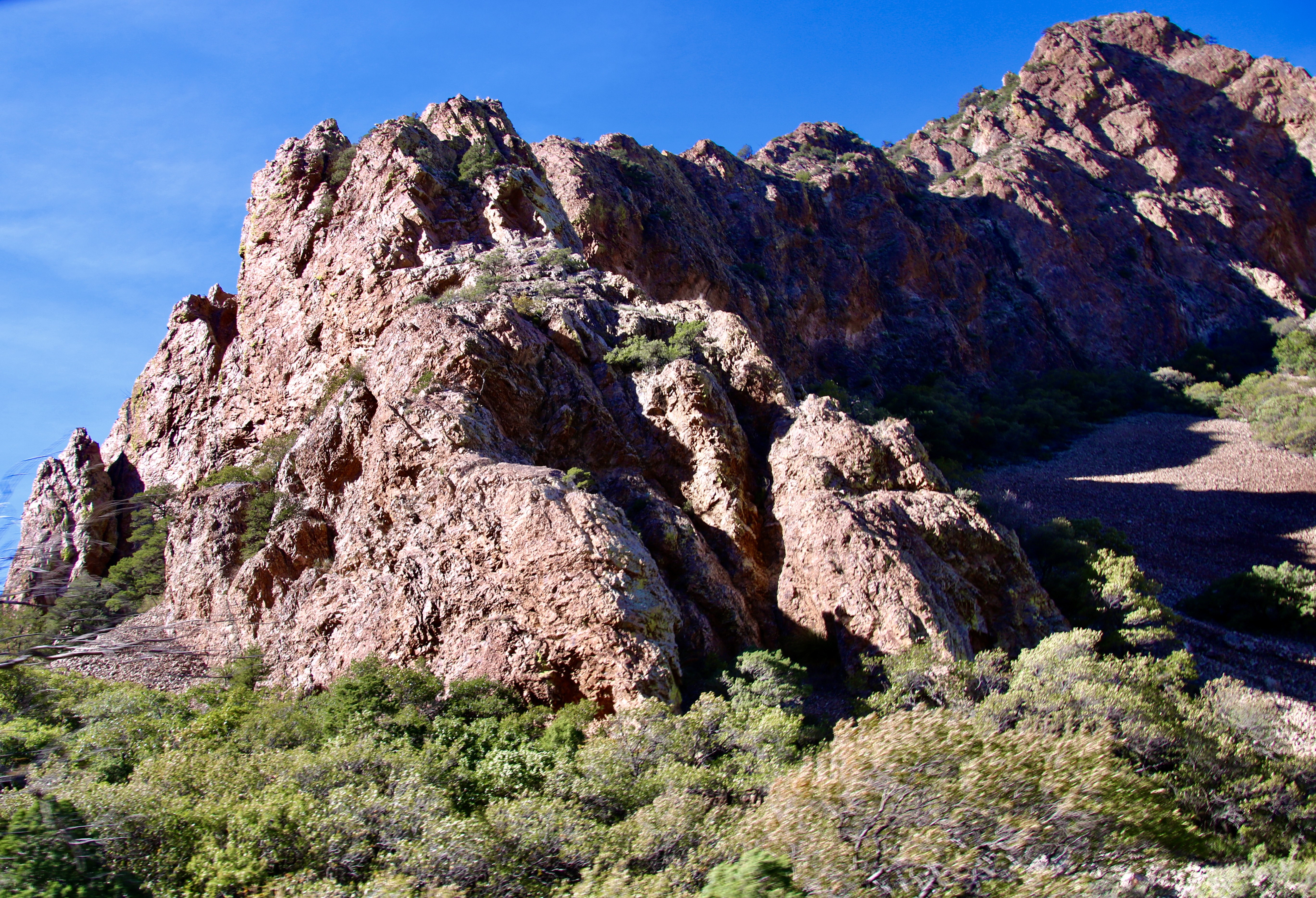
They range from rocks with character like these…
To rocks I found particularly beautiful. Like this.
And this. Note the trees and bushes. We are no longer in the desert!
Variety in the basin…
Is truly…
The spice of life.
This is Emory Peak, the highest point in the Chisos Mountains.
And this is a view back out into the Chihuahuan Desert, where we will return in our next post. See the slight notch on the horizon…
It’s this: The Santa Elena Canyon. Located in the Castolon area, it is one of the places we will be exploring.