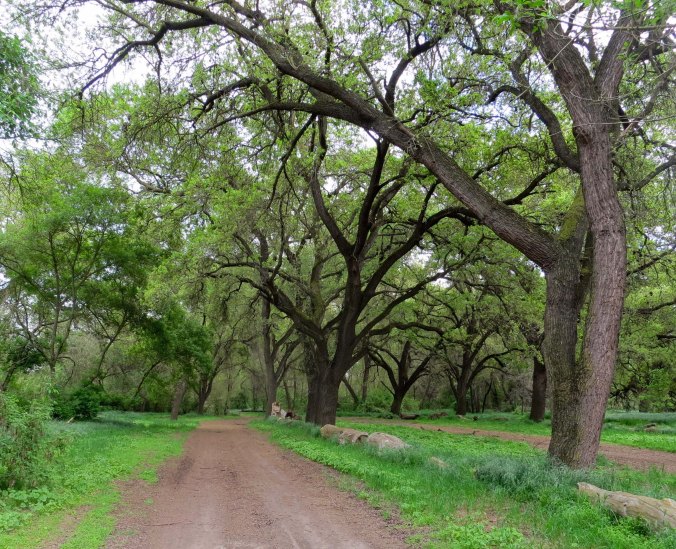
I camped out for the first time on my bike journey at McConnell State Recreation Area on the Merced River.
There’s this thing about my body: it’s tough. Bouncing back from the second day of my bike trip is a good example. Once my body and its fat cells learned there were no options, they resigned themselves to hitting the road. It helped that I would be cycling over flat land. Make that flat, flat, flat.
I attribute my body’s toughness to working hard as a kid. This isn’t an Old Fartism; I didn’t walk five miles to school through a blinding snowstorm and five feet of snow. I lived a block away from school and we were lucky if we had five inches of snow once every five years. But starting at 14, I worked in the fruit orchards around Diamond, and it was hard, grueling labor that I somehow found fun. Both my body and mind learned that hard work didn’t kill me— and that there is a certain satisfaction from meeting hard physical challenges. It was a lesson that served me well in my years of backpacking and bicycling.
Leaving Escalon, I had some 250 miles of the Central Valley of California ahead of me— five days to get in shape before tackling the Sierra Nevada Mountains.
The Central Valley is one of the richest farm lands in the US, and, indeed, the world. I saw a lot of walnut trees, fruit trees and grapes. If you are a farmer, this is exciting stuff. If not, well the first three hours of cycling through grape orchards might be interesting. After that, it is good to have other things to occupy your mind, like dogs for example. They are always good for a few seconds of heart-thumping entertainment. Loose dogs are the bane of bicyclists. Here’s what I had to say in my journal.
3/15/89: It was a long day through raisin land. I must have had 20 dogs ranging in size from Chihuahua to Doberman decide they wanted a piece of me. I varied my tactics depending on the size of the dog. I slowed down for little ones, cycling just fast enough to keep ahead of them while telling them what good dogs they were. I would speed up for mid-sized dogs and get away. The big ones were the problem. First I would try a sharp, “No! Bad Dog!” If that didn’t work, I would calculate my chance of escaping. Having a down hill helped. If all else failed, I would get off my bike and have a discussion with the dog. Bending down and picking up a rock was a language that most of them understood. One particularly large brute didn’t get the message. I yanked off my air pump and prepared for confrontation. All that stood between us was my bike. He issued a deep, hungry growl while I waved my pump around ninja style. Only a whistle and then demand from his master saved the day. Reluctantly, very reluctantly, he returned to his house.
One road, Conejo, was by far the worst. I think that there must have been a requirement that each house have at least one large dog, that it be loose, and that it have a strong belief that cyclists were wild game to be chased down and eaten.

Conejo Road featured this market as well as big dogs. The graffiti is a modern addition.
My journey from Escalon led me down the west side of the Central Valley following Santa Fe Drive, a road with railroad tracks on one side and farms on the other. Traffic ranged from being busy with big trucks to isolated with a few tractors and pickup trucks. One 18-wheeler brushed by my bike and sent me scurrying off the road, causing my first flat. That was the bad part of the day, followed by some very bad words.
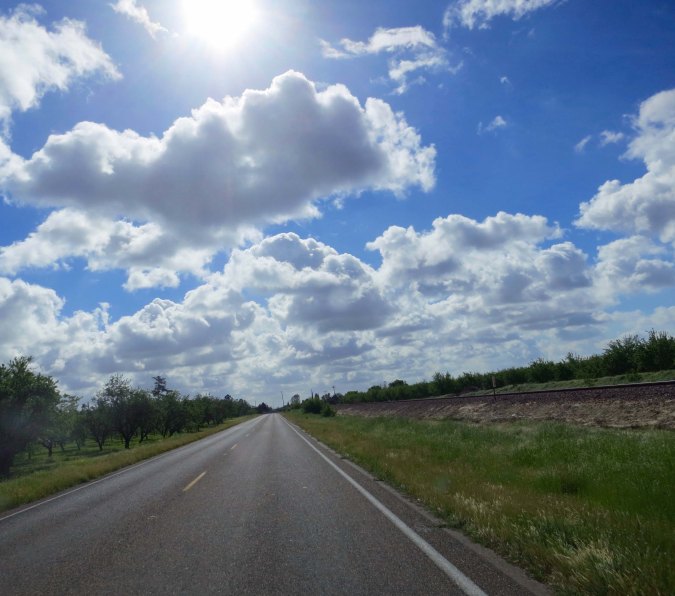
Cycling down Santa Fe Drive featured long, straight stretches, fruit trees and a train track.

Train tracks meant trains, which I always considered an excuse to get off my bike and wave at as they passed.
The good part was ending up that night at McConnell State Recreation area on the banks of the Merced River. Stately cottonwoods and other trees provided shade while a variety of birds provided music. It was my first camping out on the trip. When I unloaded my tent, Bone fell out. Apparently, he had been napping. A friend had slipped him into my pack. That night, I wrote letters by candlelight.
(Wi-Fi, Facebook, blogs, texting and cell phones and other forms of modern communication were not yet available in 1989. Except for pay phones, letters were the only way I had to communicate during my six-months of travel.)
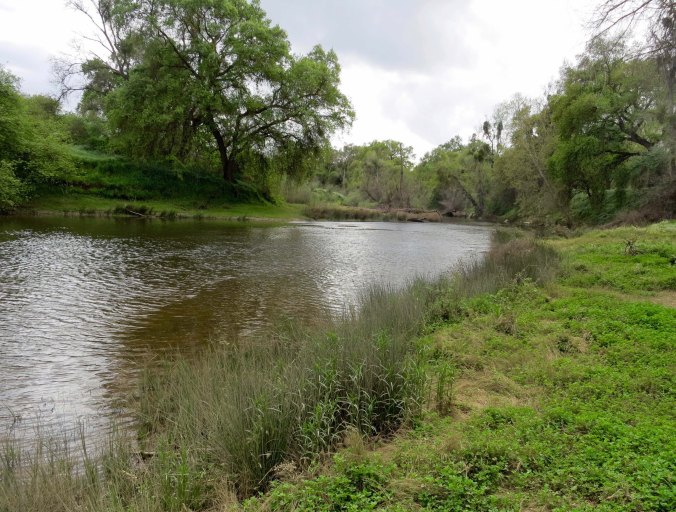
The Merced River as it flows through McConnell State Park. When Peggy and I camped there a few weeks ago, a sign warned swimmers that there were leeches in the water. We didn’t go swimming.
After the park, I continued my journey down Santa Fe Drive, passing Castle Air Force Base and its impressive museum (A blog special). Next came dodging traffic in Merced followed by more lonely miles on Santa Fe Drive. I spent the night in Chowchilla and then crossed Highway 99 and made my way around Fresno and down to the town of Corcoran.
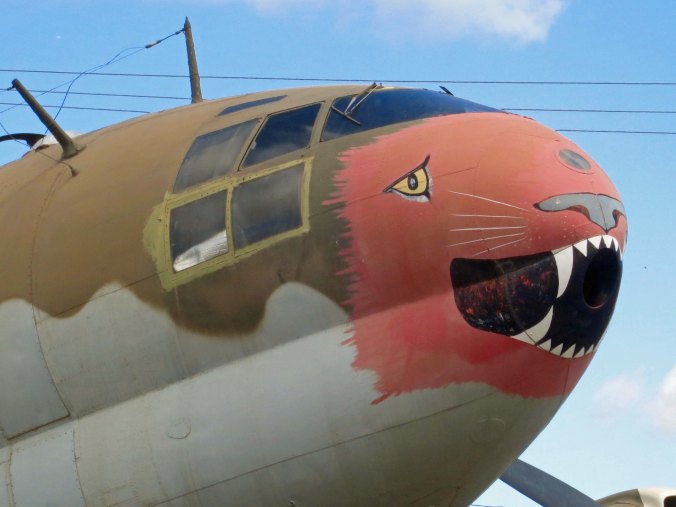
Castle Air Force Museum features over 60 airplanes dating back to World War II and up to the present. (I am going to give it a special blog.)
In the tiny community of Raisin City, I stopped at a grocery store and discussed cycling with its Indian owner. He told me his job in India as a young man had been to carry water on his bike with 20 gallons (167 pounds) on each side. It made my carrying 50 pounds of gear seem like child’s play.
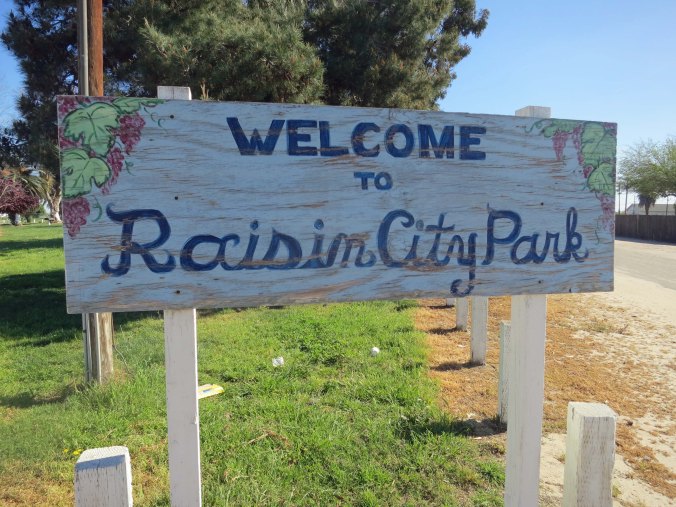
Raisin City reflected the poverty faced by many farm workers in the Central Valley… a poverty not shared by the majority of farmers.

Much of the history of California has been marked by battles over who gets water. California’s drought has brought this battle to the forefront once again. Farmers consider more dams to be the answer to their problems.
When I rode into Corcoran, the big news was that Charles Manson was being transferred to the state prison there on that day. He had been held in Folsom Prison from 1972-76 near Sacramento where I lived. At the time, one of his followers, Squeaky Fromme, had come to town to be near him. In her spare time, she worked a plot of ground at the Terra Firma Community Garden. The garden had been created by the Ecology Information Center where I had been Executive Director. Squeaky took a liking to my friend Steve Crowle who was the Exec at the time. (He had intense dark eyes, like Manson.)
On the morning of September 5, 1975, Squeaky laid off cultivating her garden, put on a red dress, and walked down to Capitol Park where she made history by pointing her pistol at President Gerald Ford. Shortly afterwards, the FBI showed up on Steve’s doorstep. Fortunately, he hadn’t had a clue who she was when she had been working at the garden.
I am going to conclude this blog with a bit of a rant. I promise to get back to the fun of cycling in my next blog. Here’s the rant: my bike trip down through the Central Valley took me by a number of cattle feedlots where thousands of cattle were penned up in small enclosures. The smell and sight of these lots is enough to turn your stomach, but that isn’t my point. My point is our inhumane treatment of animals. Let me put this bluntly, how would you like to stand around in your poop all day? There has to be a better way to raise cattle, even if it means we pay more for beef.

A feedlot steer checked us out. His feet told the story of his incarceration.

This photo tells another story about the tragedy of feedlots.

Maybe I am adding a human interpretation, but I can’t help but believe that these cattle standing out in their fields are much happier than the cattle locked up in feed lots.
Next Blog: I will slip in a special on Castle Air Force Base Museum.
 Wandering through Time and Place