Cerro Castellan, Tuff Canyon and Santa Elena: Beauty and Drama at Big Bend… National Park Series #12

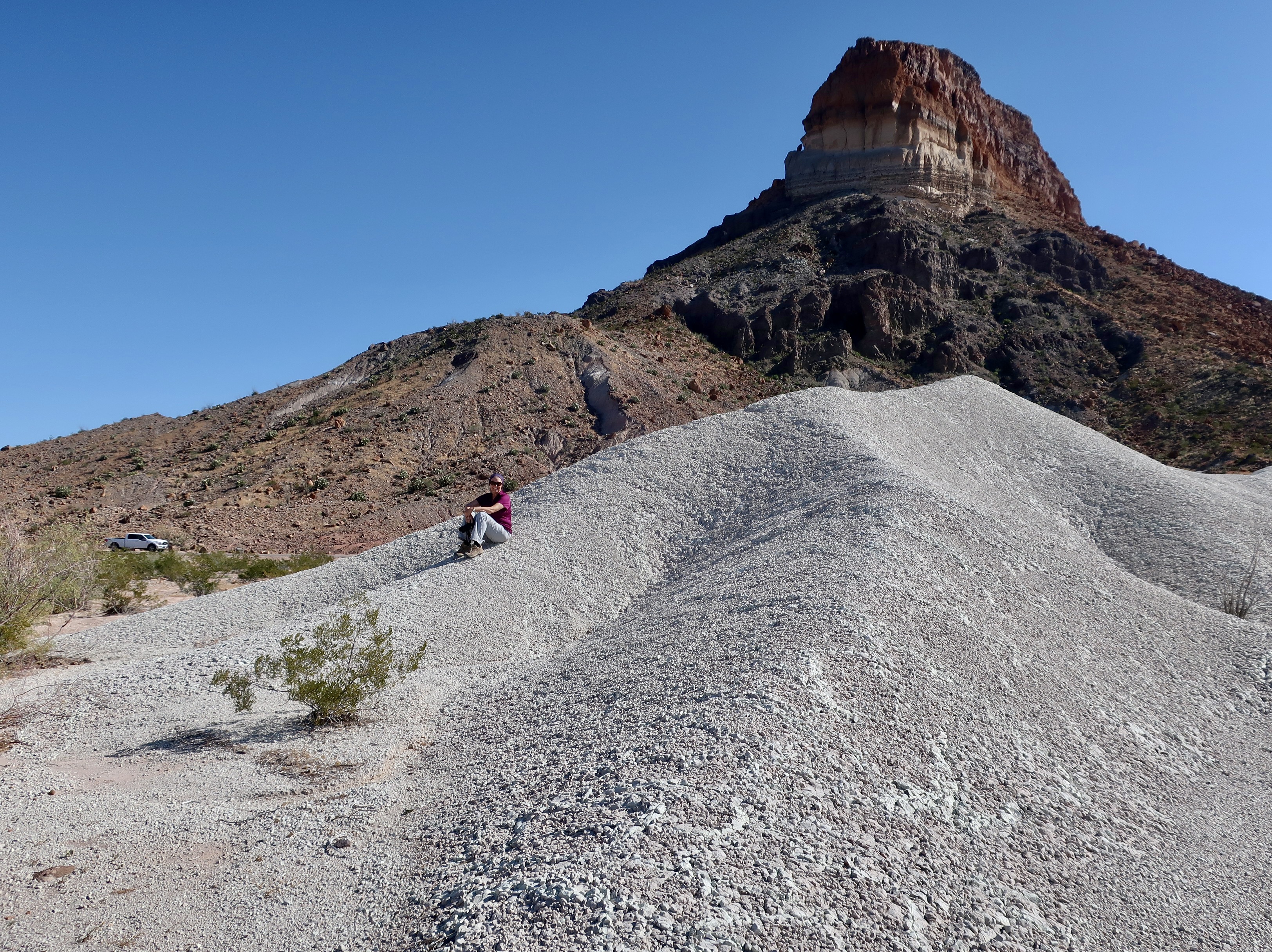
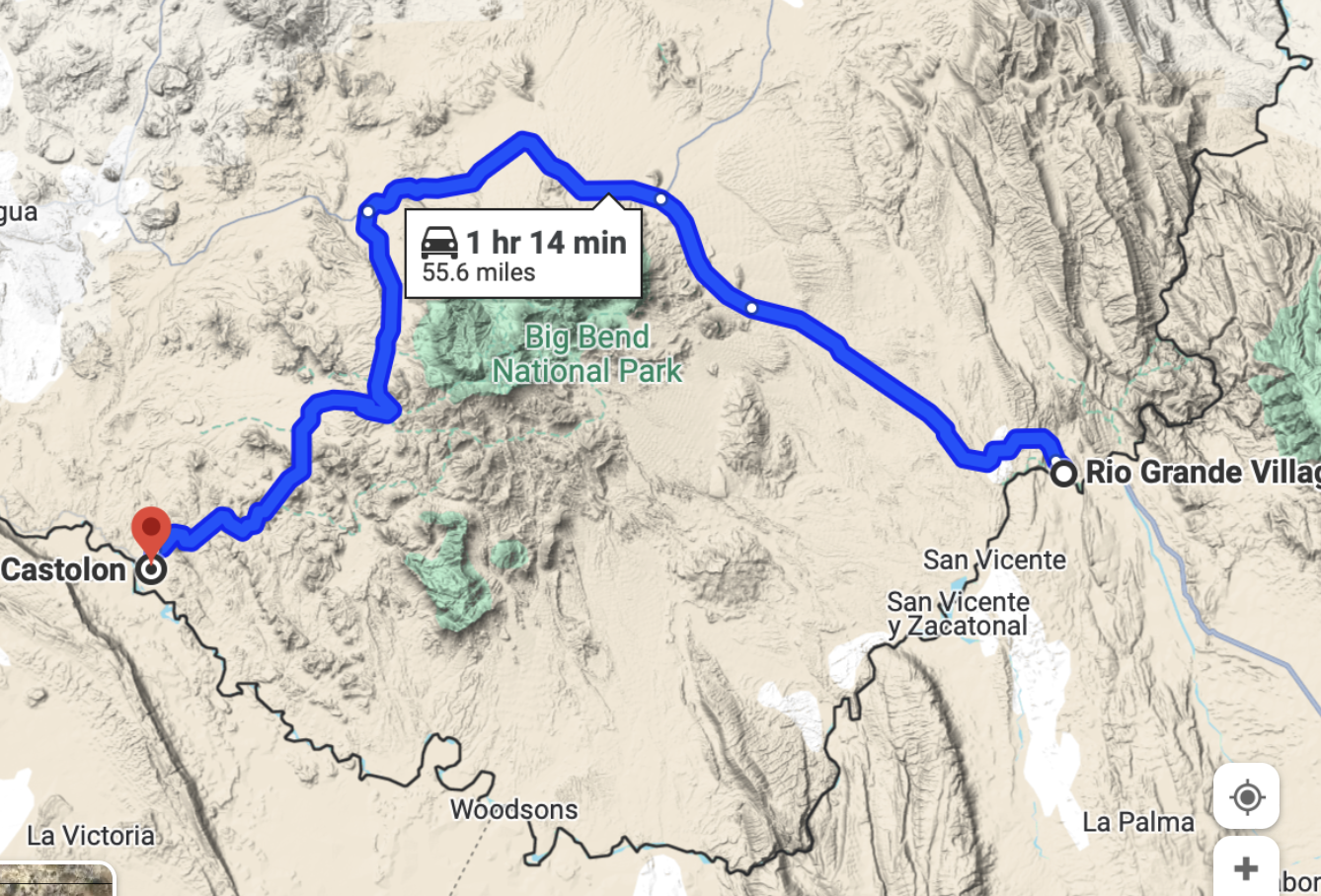
Our 55 mile drive from Rio Grande Village to our campground in Castolon through the Chihuahuan Desert and around the Chisos Mountains of Big Bend took us from the east side of the park to the west side. One of our first views on nearing Castalon was the Cerro Castellan peak. It’s impossible to miss. Peggy and our F-150 white pickup, Iorek, provide perspective. Peggy is sitting on tuff, which is consolidated volcanic ash. It isn’t as soft as it looks. Peggy told me that she had a tuff butt.
We like Google maps when we are looking for an overview of our day’s drive. This shows our route from the Rio Grande Village to Castolon and provides an estimated drive time— assuming one isn’t pulling off every few minutes to admire the views. There is another reason why I like this map: It provides a clear view of why Big Bend is called Big Bend. The black line traces the flow of the Rio Grande as it makes its big bend.
This National Park map shows the area around Castolon and shows the sites we will be including in today’s post: Cerro Castellan, Tuff Canyon, the Dorgan House and Santa Elena Canyon. The Visitor Center, closed in summer instead of winter, provides a clear hint about the region’s weather. You don’t want to face the heat of summer at Big Bend. Fall, winter and spring are normally mild.
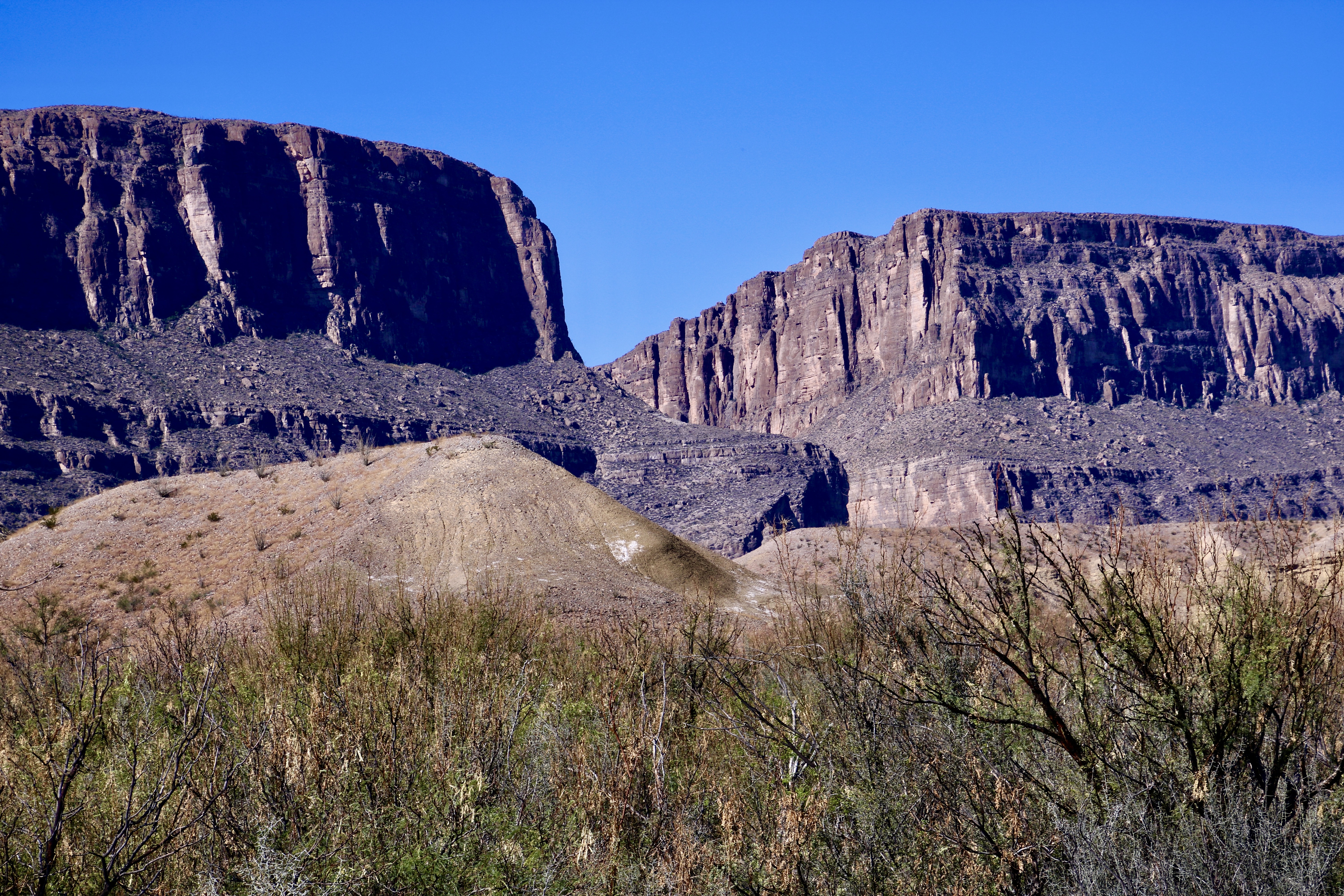
The story of Cerro Castellan is like so many other peaks found in Texas and throughout the Southwest. A rock highly resistant to erosion overlays other rocks that erode more easily. In this case, the top rock is from a dense lava flow that covered the area. Most of the rocks under it are also volcanic, just less resistant such as volcanic tuff, the buff colored rock. The dark rock at the base is basalt from earlier lava flows.
We were treated to numerous views of Cerro Castellan. This one was from our camp. Not bad, eh.
The opposite side provided a totally different perspective.
More of a side view here. I believe the greenery is mainly creosote bush .
A final side view of Cerro Castellan.
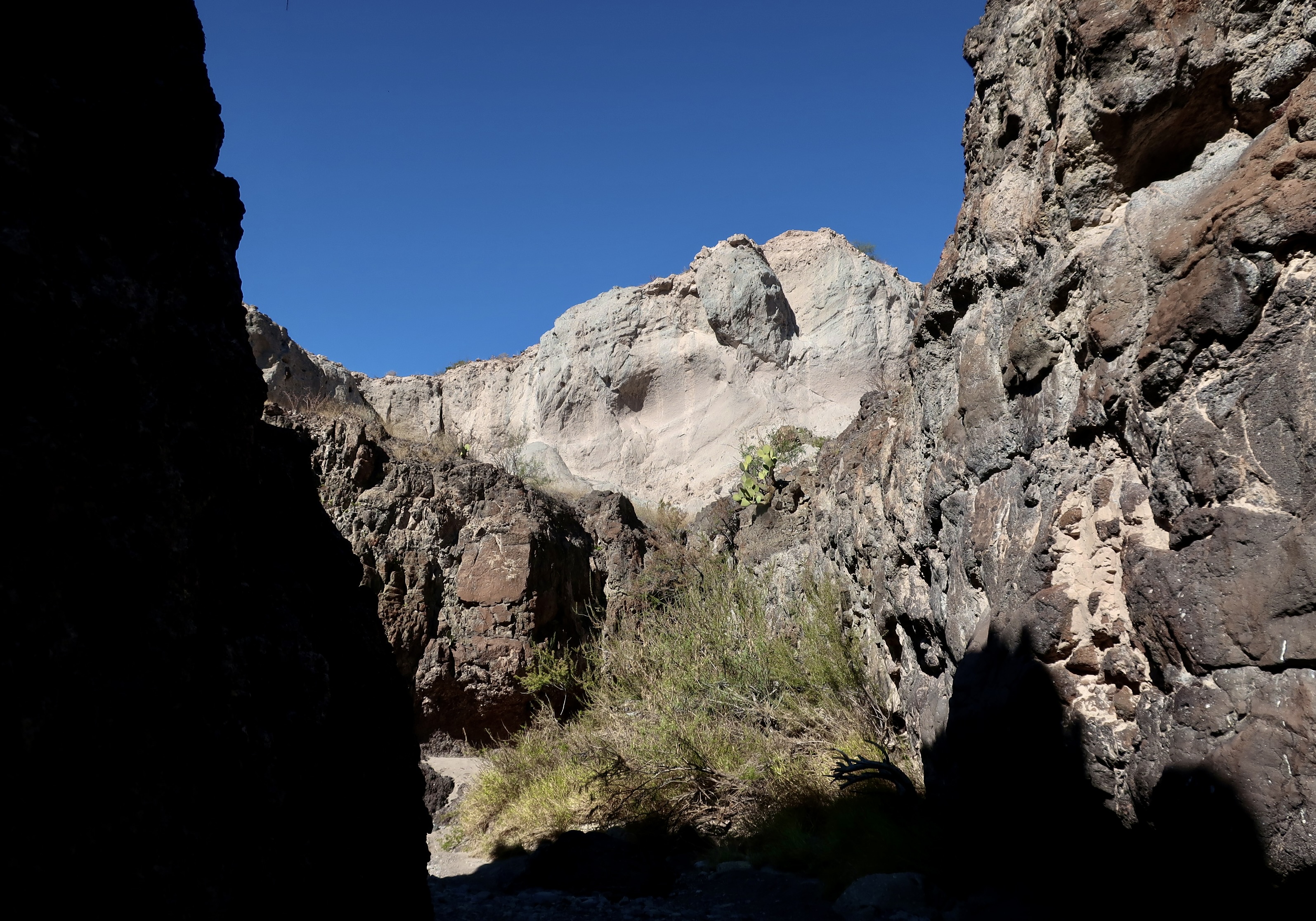
There are overlooks where visitors can look down into Tuff Canyon, or with a short hike, you can climb down into the canyon and walk along it, which is what Peggy and I did.
30 million years ago, a nearby violent volcanic eruption sent ash and rocks shooting into the air. Heat and pressure when they landed turned the ash into the tuff seen along the canyon walls.
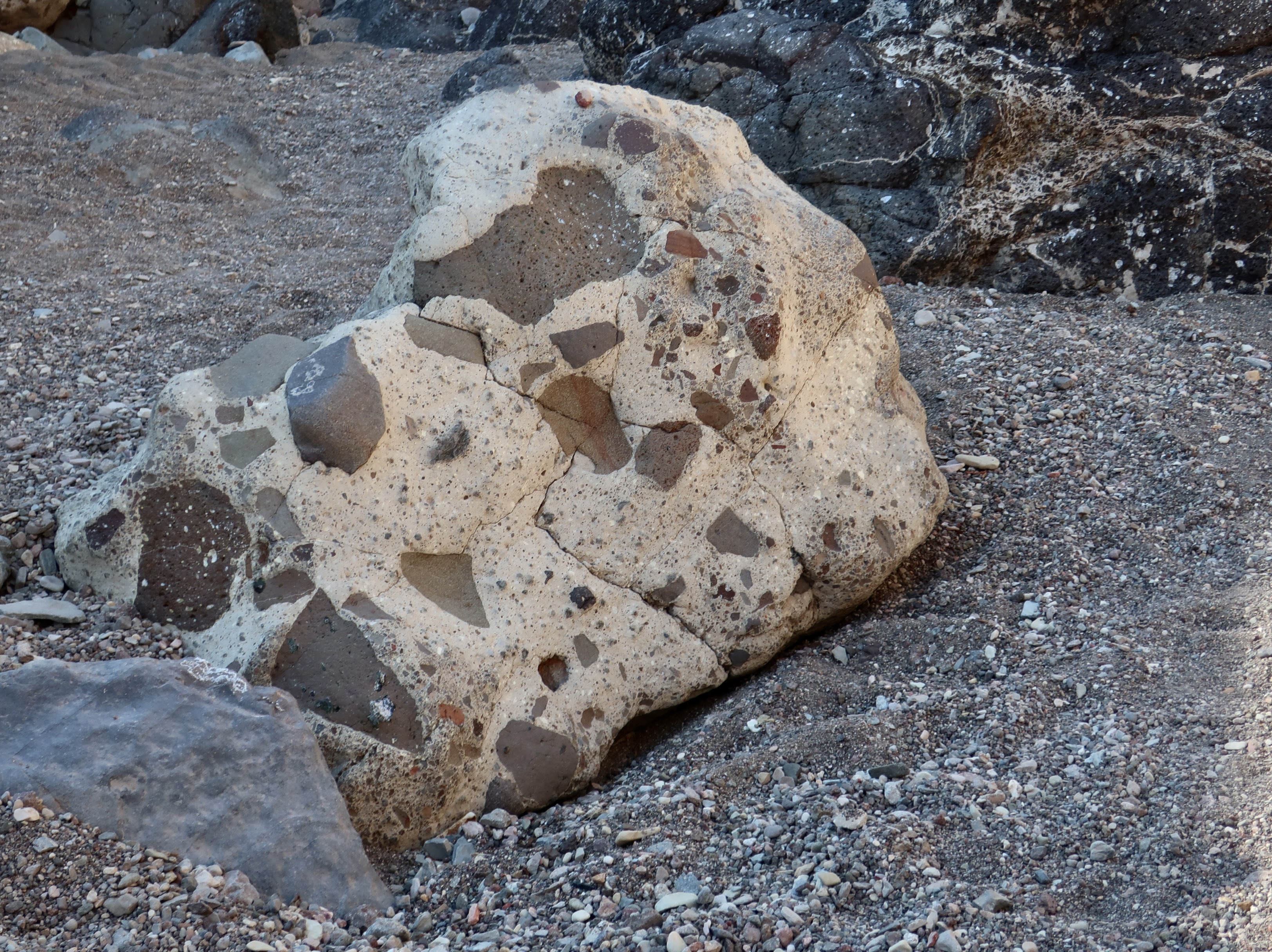
We were curious about how these river bed rocks got into the erosion created holes. The only thing we could think of was a flooding stream working its way down the canyon.
These were rocks that would have been thrown out by the eruption and embedded in the tuff.
I liked this photo I caught of Peggy from what I recall was a shallow ‘cave’ in the tuff.
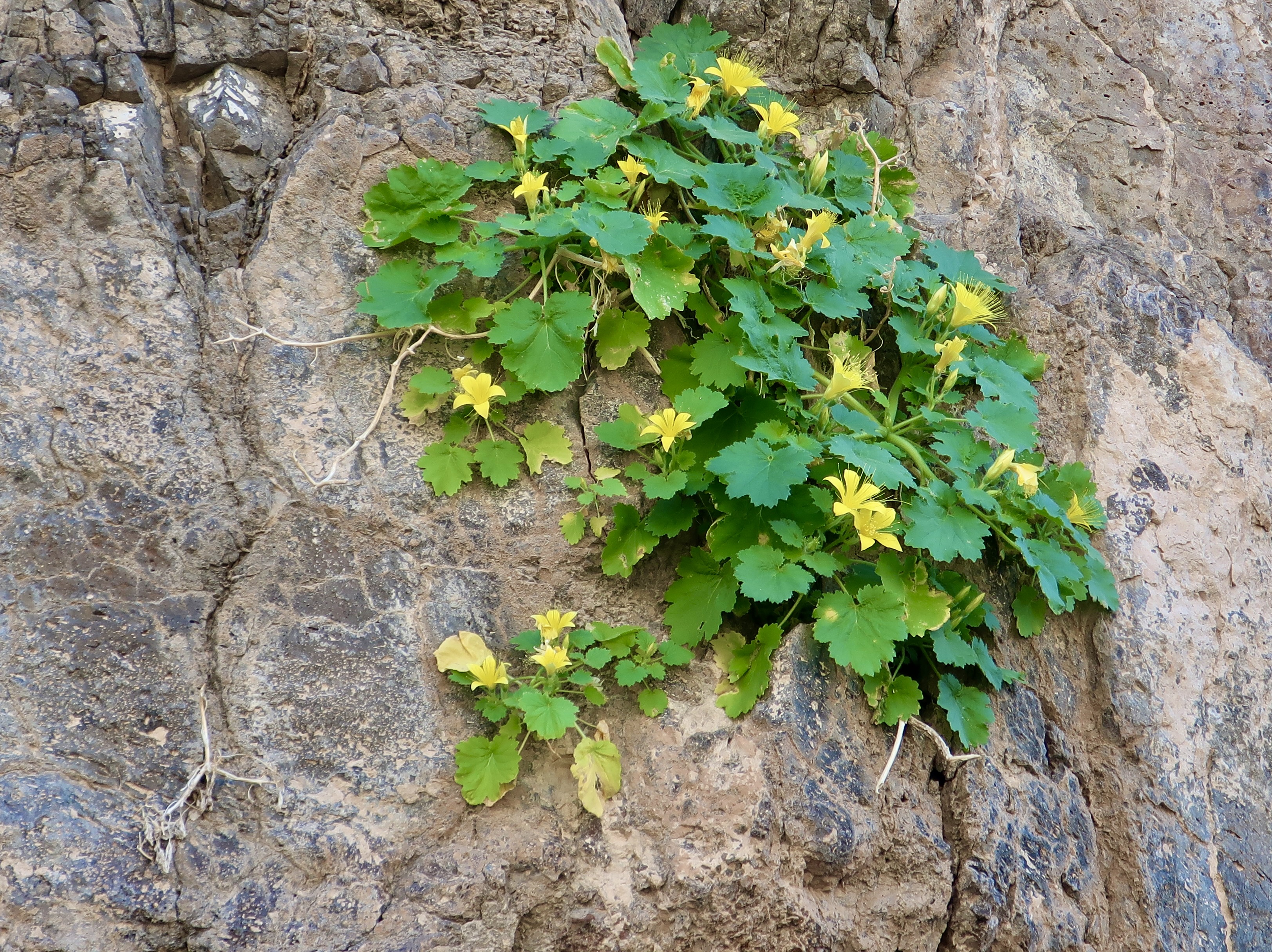
Flowers growing out of crevices in the tuff wall. Life will find a way!
Tuff cliffs towering over dark volcanic basalt.
The end of the trail leading up the canyon.
An ocotillo plant looked down on us from the rim.
The Ocotillo, with a mouthful scientific name of Fouquieria splendens, is an interesting desert plant that usually looks like a dead, naked bush with wicked thorns, i.e. not something that you would want to mess with. The stems actually have chlorophyll and are capable of photosynthesis and sustaining the plant thorough dry times. Come rain, however, the plant becomes covered in leaves and really goes to work in food production. It also develops brilliant red flowers. Thus the ‘splendens’ in the scientific name.
And finally we stopped to admire this mesquite tree on the way out.
On our way to Santa Elena, we stopped for a walk up to the Dorgan House. There are several sites around Castolon that feature historical sites from the last 100 years or so. Dorgan was an architect involved in the local farming community. The remains of his house included this unique fireplace made from petrified wood. It was fun checking out the various rocks.
I was particularly impressed with this rock. I saw an eye, a pig-like nose and a great set of choppers. I have the perfect location for it at home. But I didn’t take it. That’s a no-no in a National Park. If you should show up and find it missing, however, remember…
I was framed.
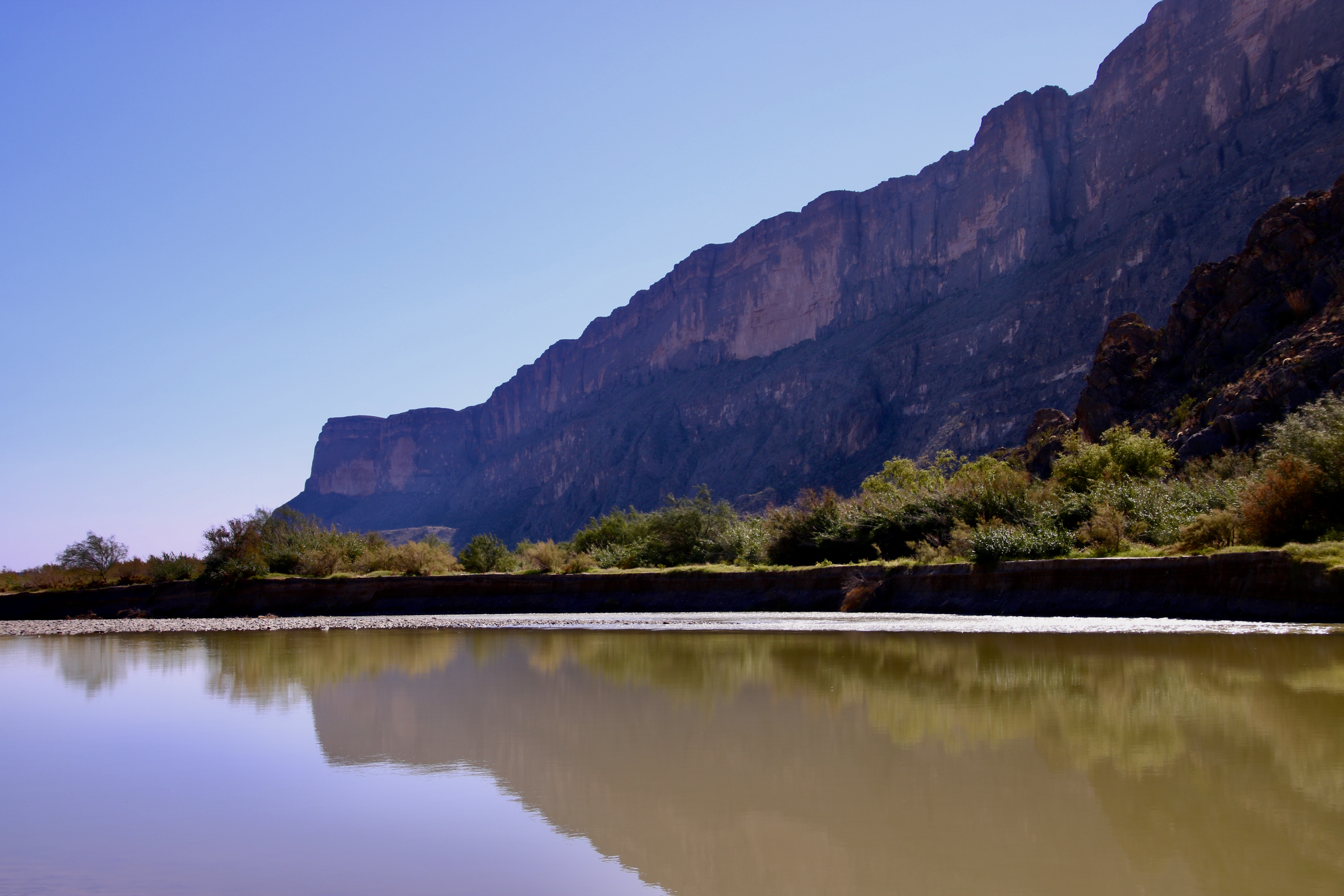
The Rio Grande River flows out of these limestone cliffs where it has cut the Santa Elena Canyon some 1,500 feet (450 m) deep at Santa Elena.
The canyon travels back some 8 miles from its mouth (shown here). Visitors can sign up for a raft trip down the river, or even run it on their own assuming they have a degree of white water expertise. Or, when river is low and slow, like it is here, you can paddle up it for 3-4 miles and then paddle back out.
Or, visitors can wade across the creek on the right and hike a brief distance into the canyon.
A view of the Rio Grande as it flows on its way after leaving the canyon.
We were visited by a herd of peccaries (known locally as javelinas) one evening when we were at the Castolon Campground. These mammals are found as far south as Argentina. He did not like the fact I was following him around snapping photos…
You might say it was a hair raising experience.
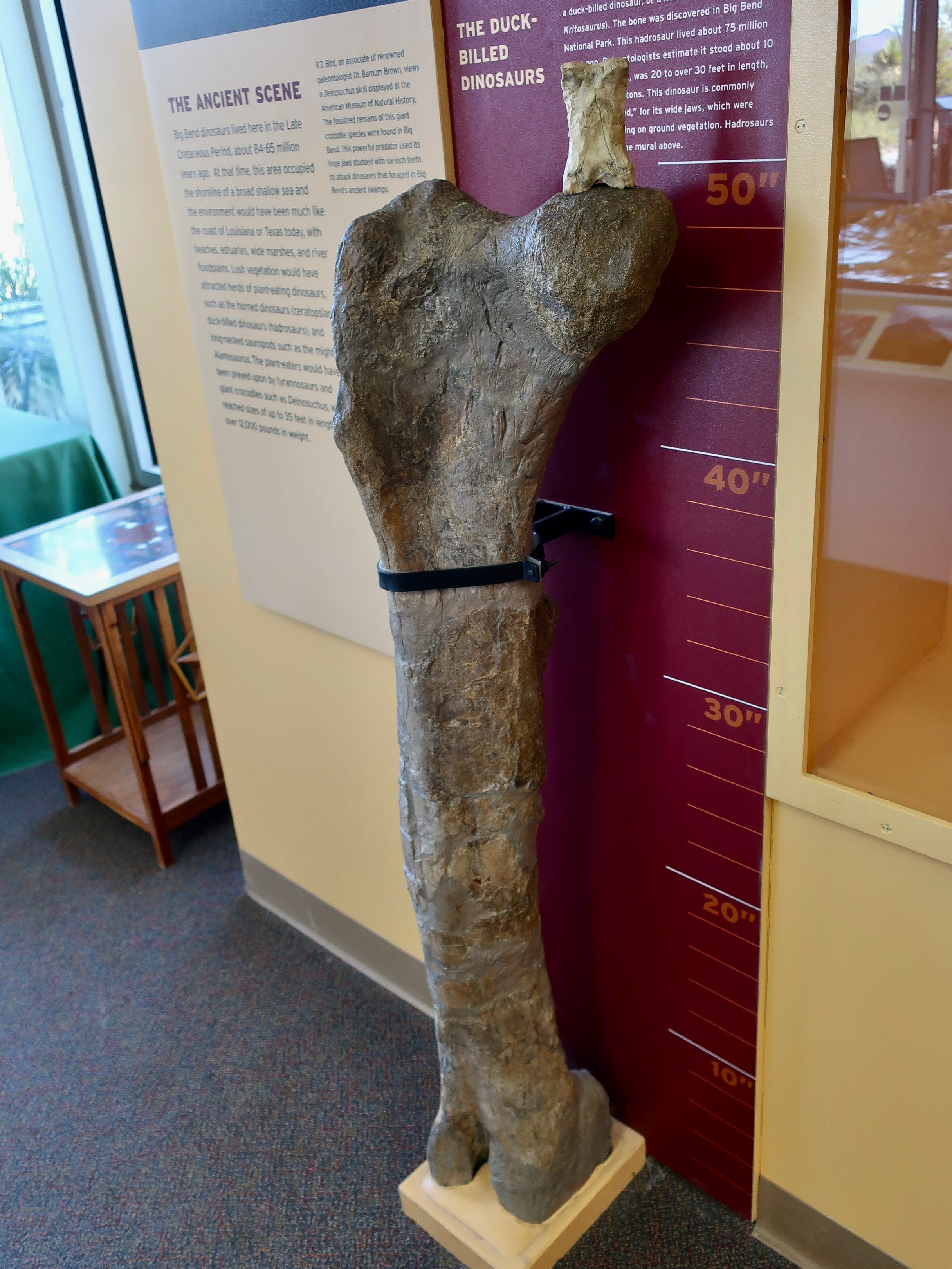
On our way out we stopped by the Panther Junction Visitor Center to check out its display on duck billed dinosaurs that roamed the area. Bone provided perspective on a leg bone. Coming from the leg of a horse just above the hoof, he could relate. Plus he is a great fan of old bones. That’s it for today and for Big Bend National Park. Next up is Theodore Roosevelt National Park in North Dakota where the buffalo still wallow…