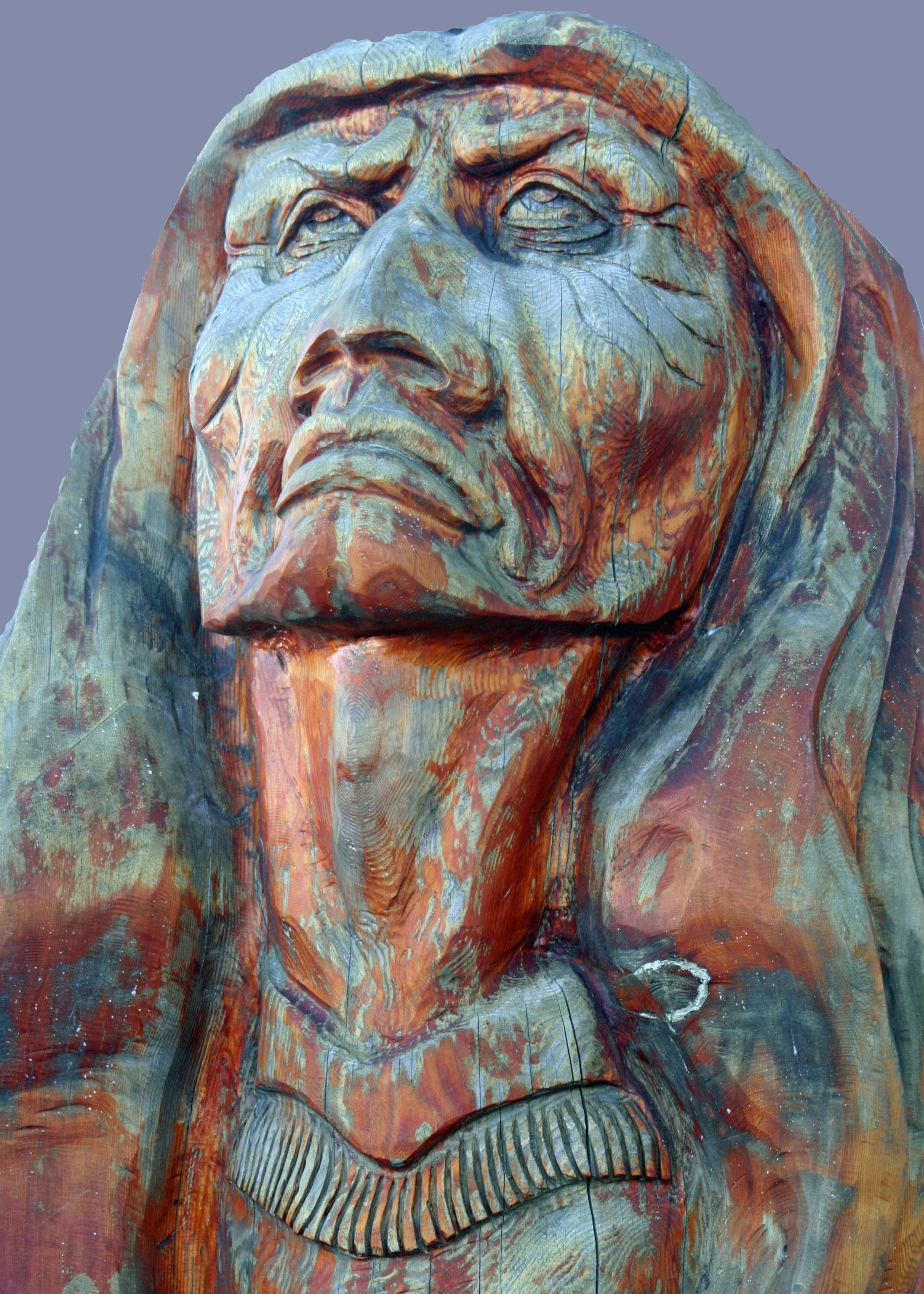
Once again, we were impressed with the First Nation art of British Columbia. I photographed this carved face of a First Nation man in Campbell River BC on Vancouver Island.
We stopped the car and dashed for the restroom. Our day had started with a 16-ounce cup of Serious Coffee and we had serious business to attend to. (Serious Coffee is Vancouver Island’s Starbuck equivalent, plus. We were impressed.)
16 ounces of serious coffee called for a serious stop on the road to Campbell River, Vancouver Island BC.
It was only after we reemerged into the world that we noticed the gorgeous view our much-needed stop provided. We were on a road trip following Highway 19 A from Parksville on our way north to Campbell River along the East Coast of Vancouver Island BC. Our eyes (and cameras) were drawn to the towering coastal mountains of mainland British Columbia, which were set off by the dazzling blue of the Georgia Strait.
One glacier carved mountain was particularly dramatic. Its side had been sheered off by ice and reminded me of the Sierra Nevada Mountains in California where I have roamed for 40 years. Possibly one of my Canadian readers can provide a name for the mountain.

The dramatic coastal mountains of British Columbia as see from Vancouver Island across the Georgia Strait on Highway 19 A. The sheer face of the glacially carved mountain captured our interest.
Campbell River has adopted the name ‘Salmon Capital of the World.’ Sports fishermen, including Bob Hope and Bing Crosby, have been making pilgrimages to the area for decades.
We didn’t see any salmon but we did enjoy more First Nation art and visit the very impressive Museum at Campbell River (http://www.crmuseum.ca/).
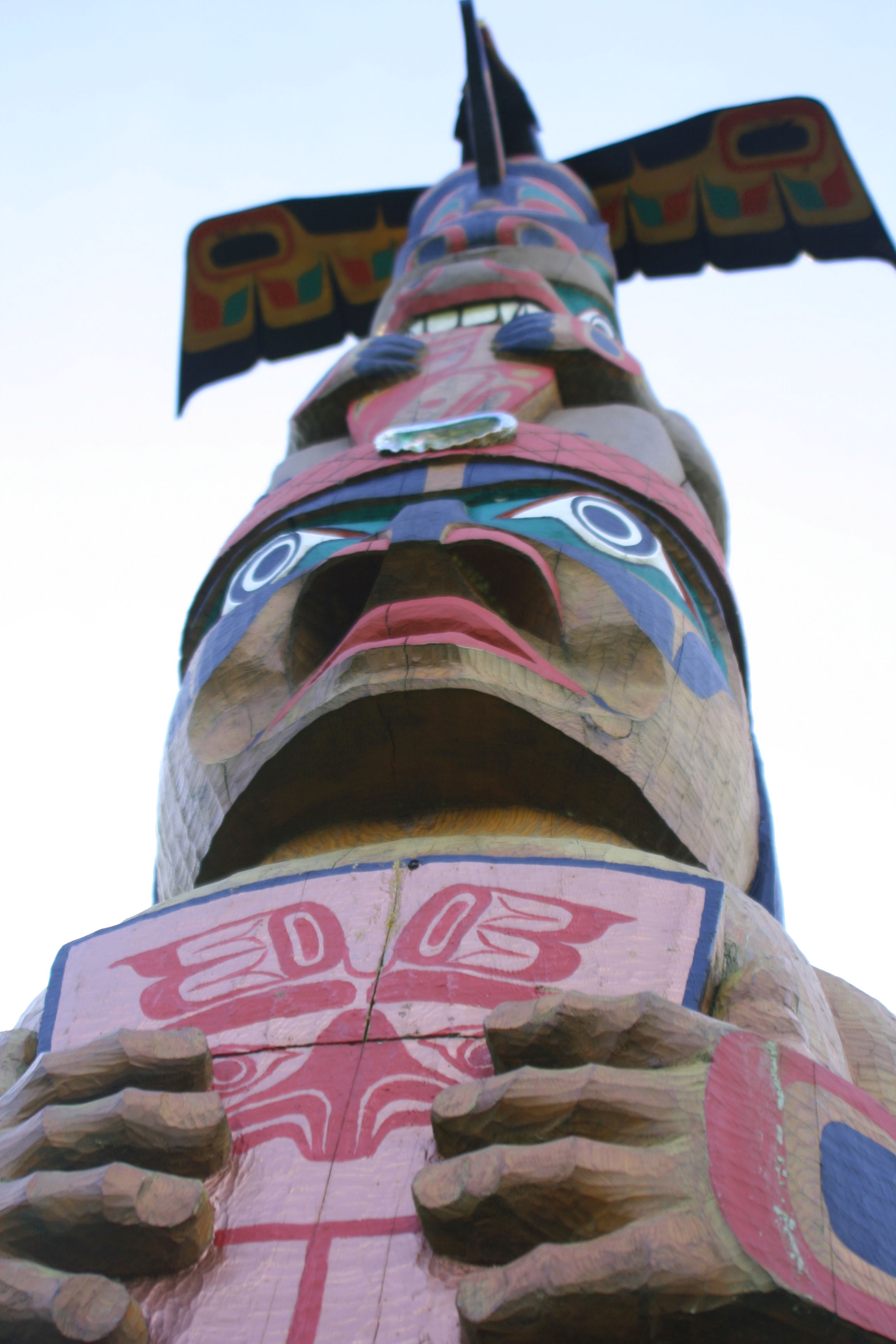
This First Nation totem pole gazes out toward the water in Campbell River BC.
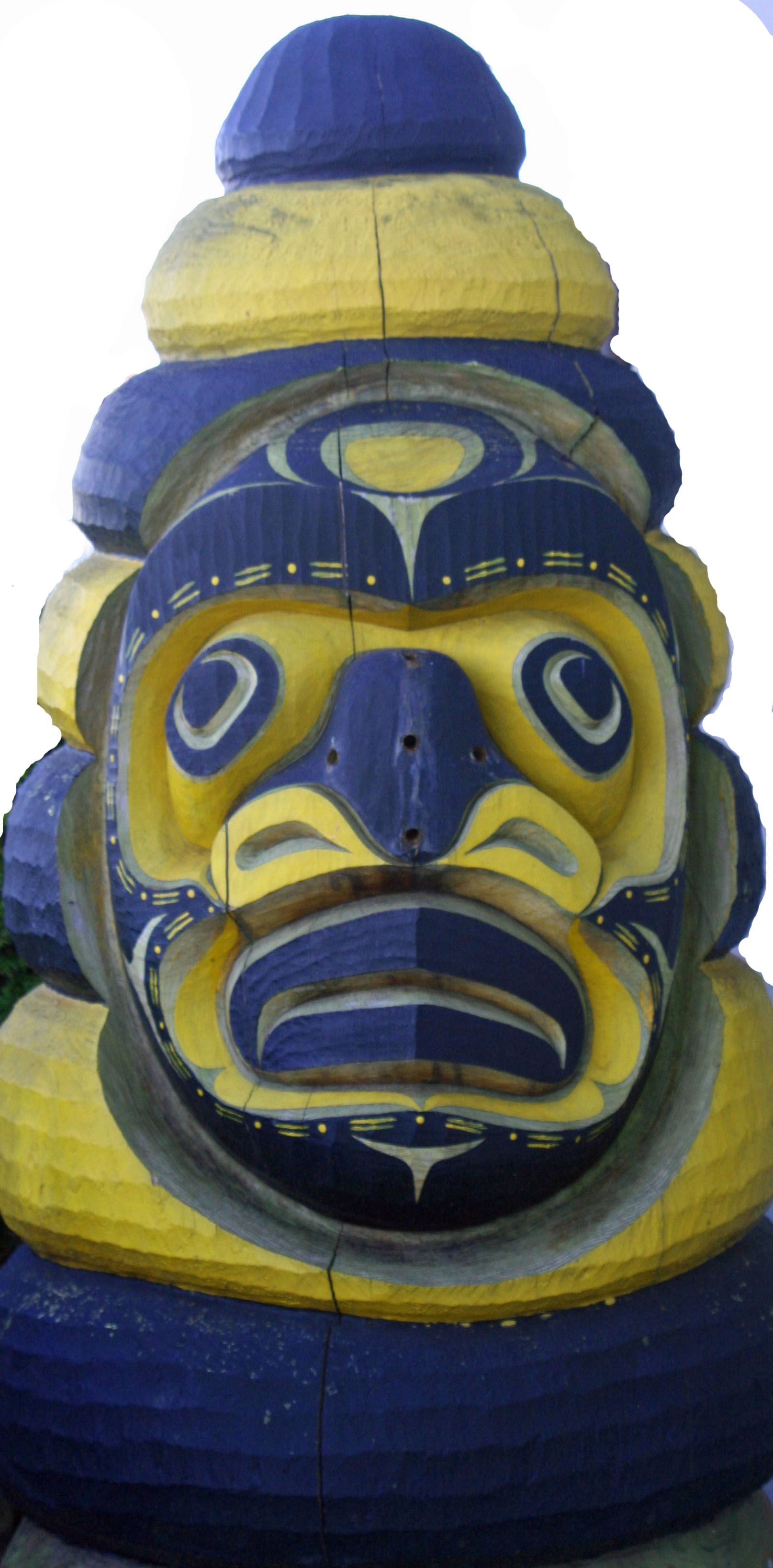
I found this carving amusing. Not sure the First Nation folks would agree but Ringling Brothers came to my mind.
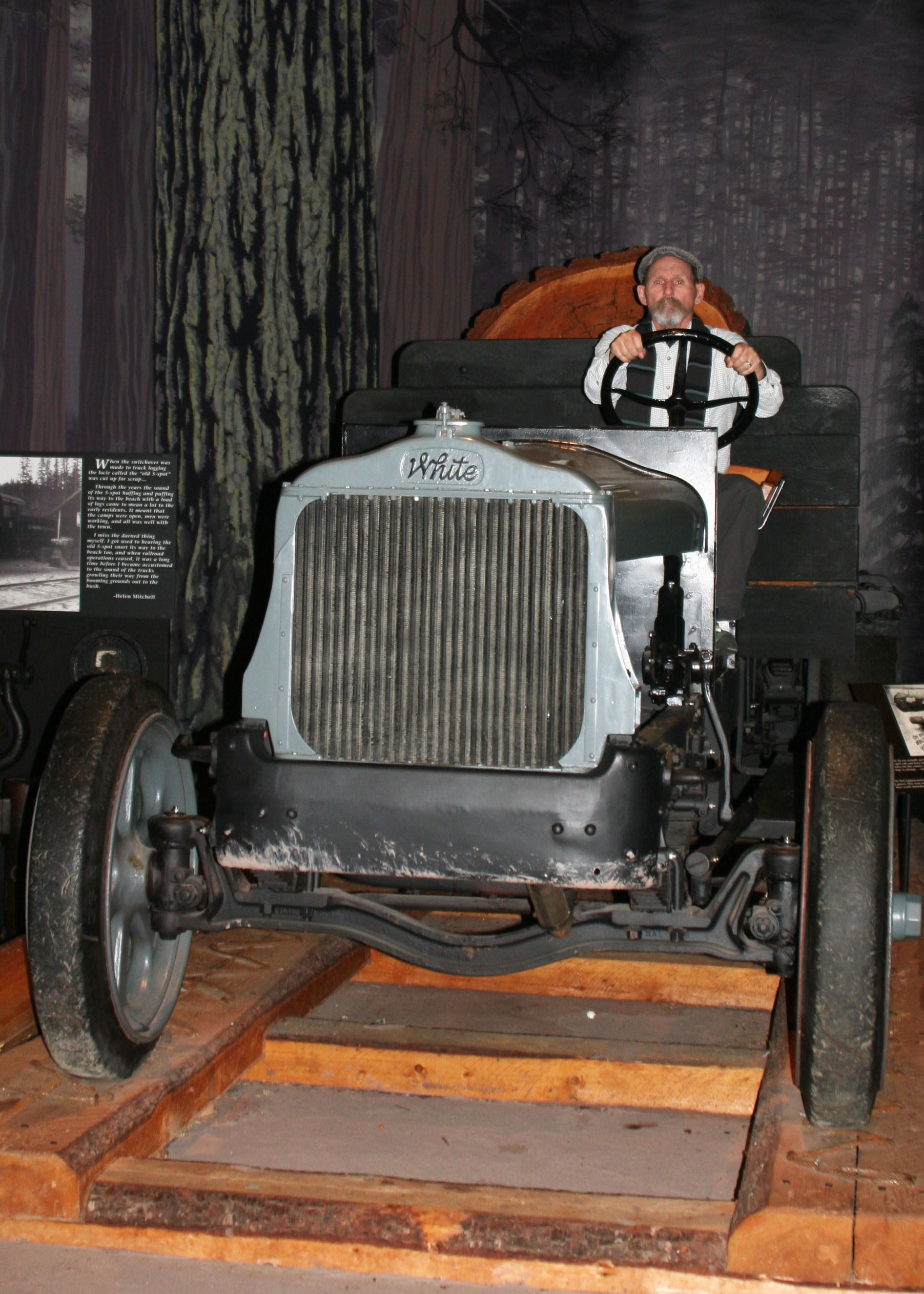
Ken Lake poses on an old logging truck in the Museum at Campbell River. The museum features native masks and local history including logging and sports fishing. It is well worth a visit.
 Wandering through Time and Place