



Good morning and Happy New Year everyone. Here’s hoping you had a great holiday with family and friends. Peggy and I enjoyed our family time and consumed far too many calories. Now it’s back to work, so to speak. There are blogs to write, trips to plan, and left over holiday goodies to eat. Peggy just tempted me with one of our daughter’s brownies. My resistance was zero. I followed it with a second.
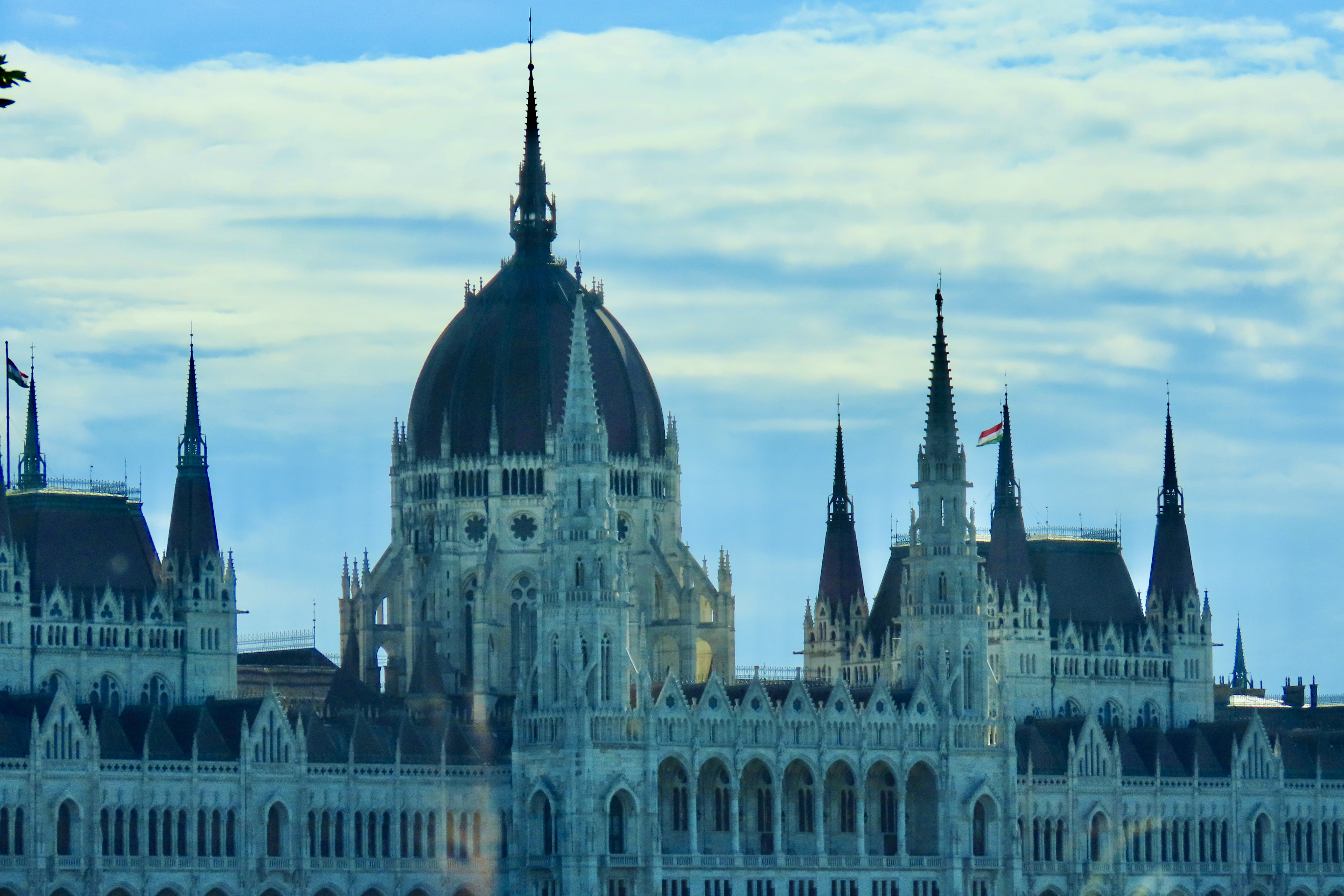
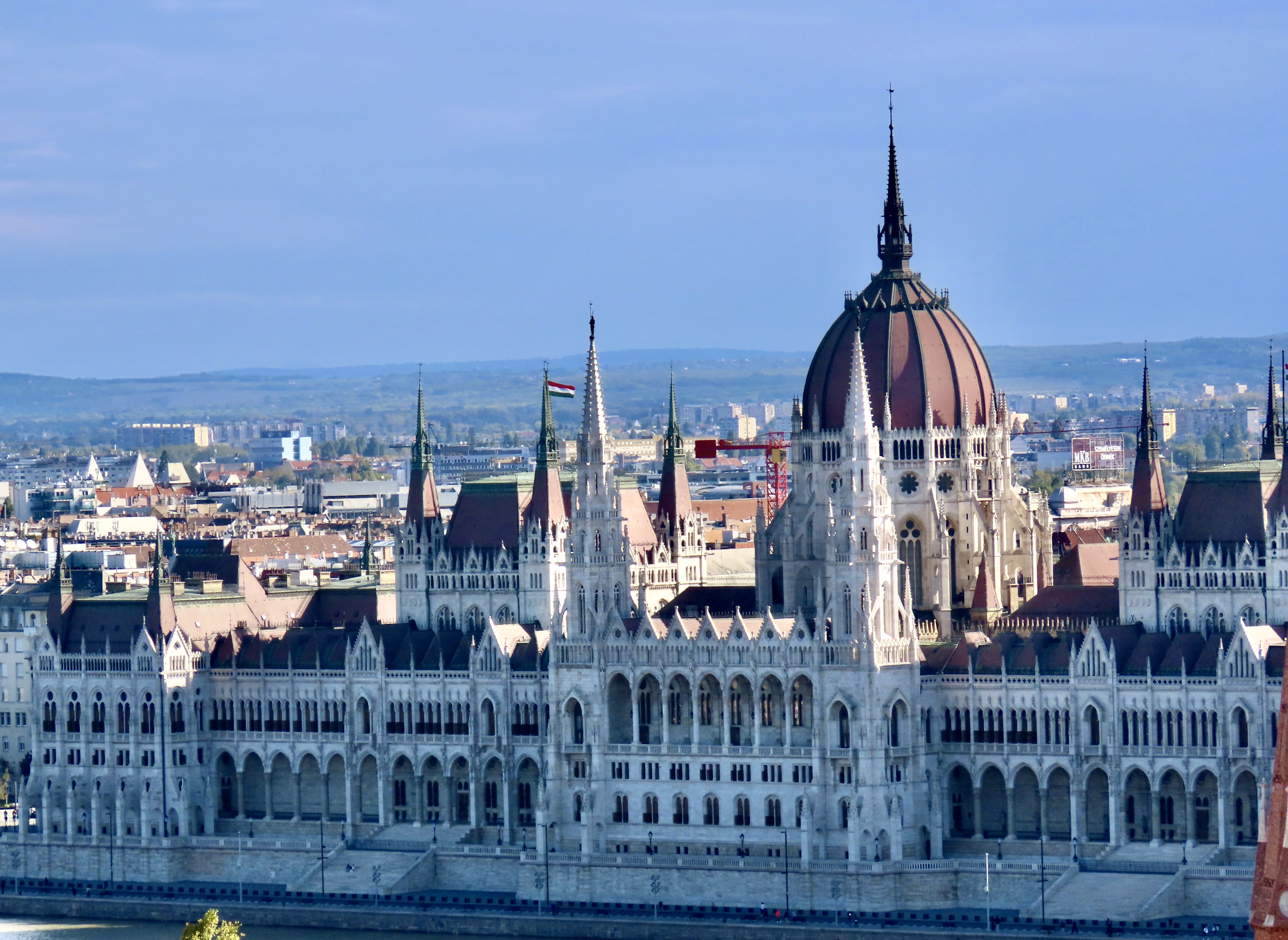
I’m starting today with where I left off before Christmas. The photo above is of the Hungary/Budapest Parliament Building, which happens to be one of the most popular destinations for visitors to Budapest. For good reason. It’s one of the most beautiful buildings in the city. This photo was taken when we arrived in Budapest and were still on the Danube. The early morning light was responsible for its fuzzy, ethereal, greenish-blue look.

An early morning view from the Danube River of our arrival in the Budapest. Shortly after docking, we journeyed up to Matthias Church where we had great views from the Fisherman’s Bastion overlooking the Parliament Building.
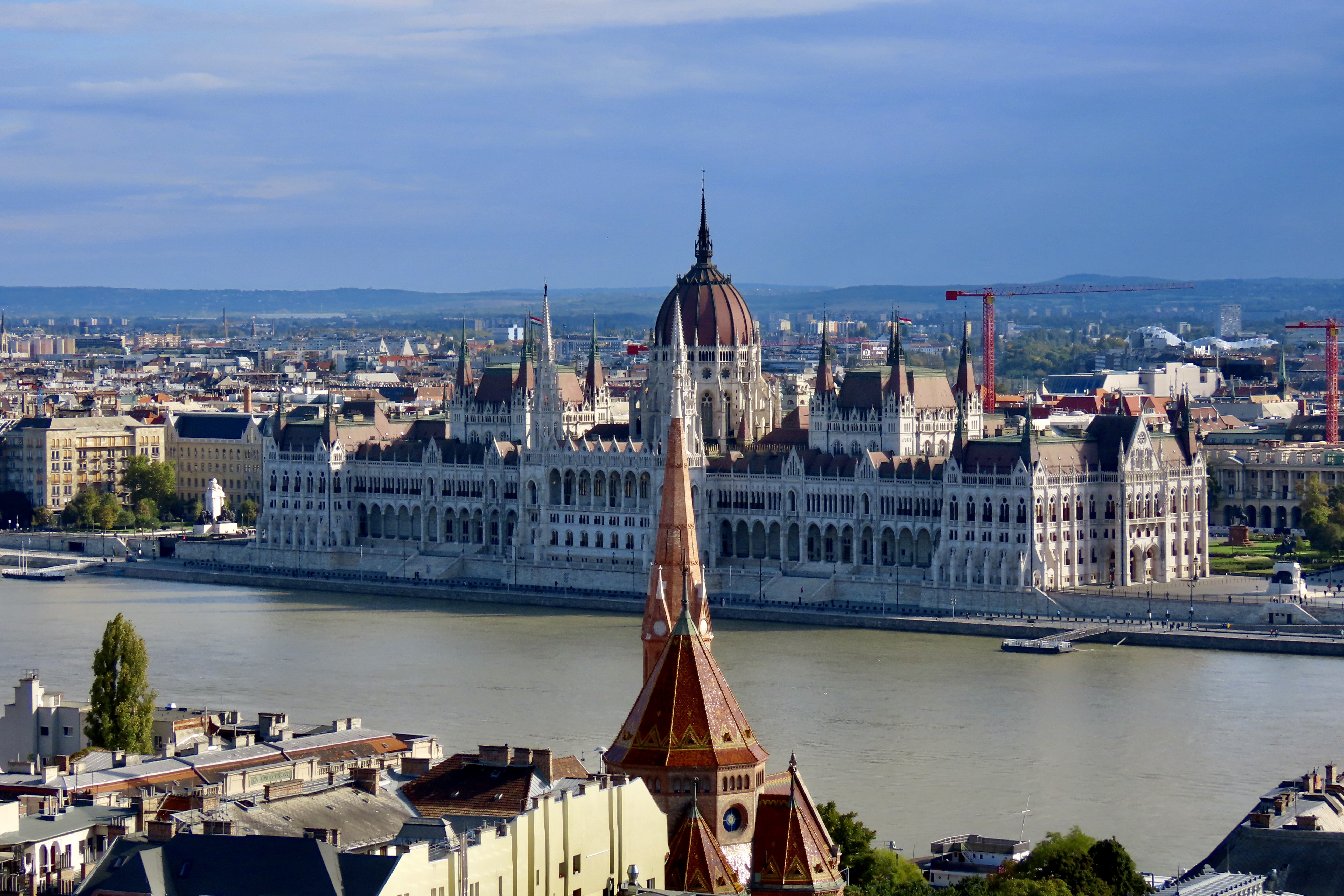
By the time we finished visiting Matthias’s Church, the sun was beginning to light up the Parliament Building. Unfortunately, a church steeple was busy photo bombing us, making it impossible to get a clear shot of the whole building.
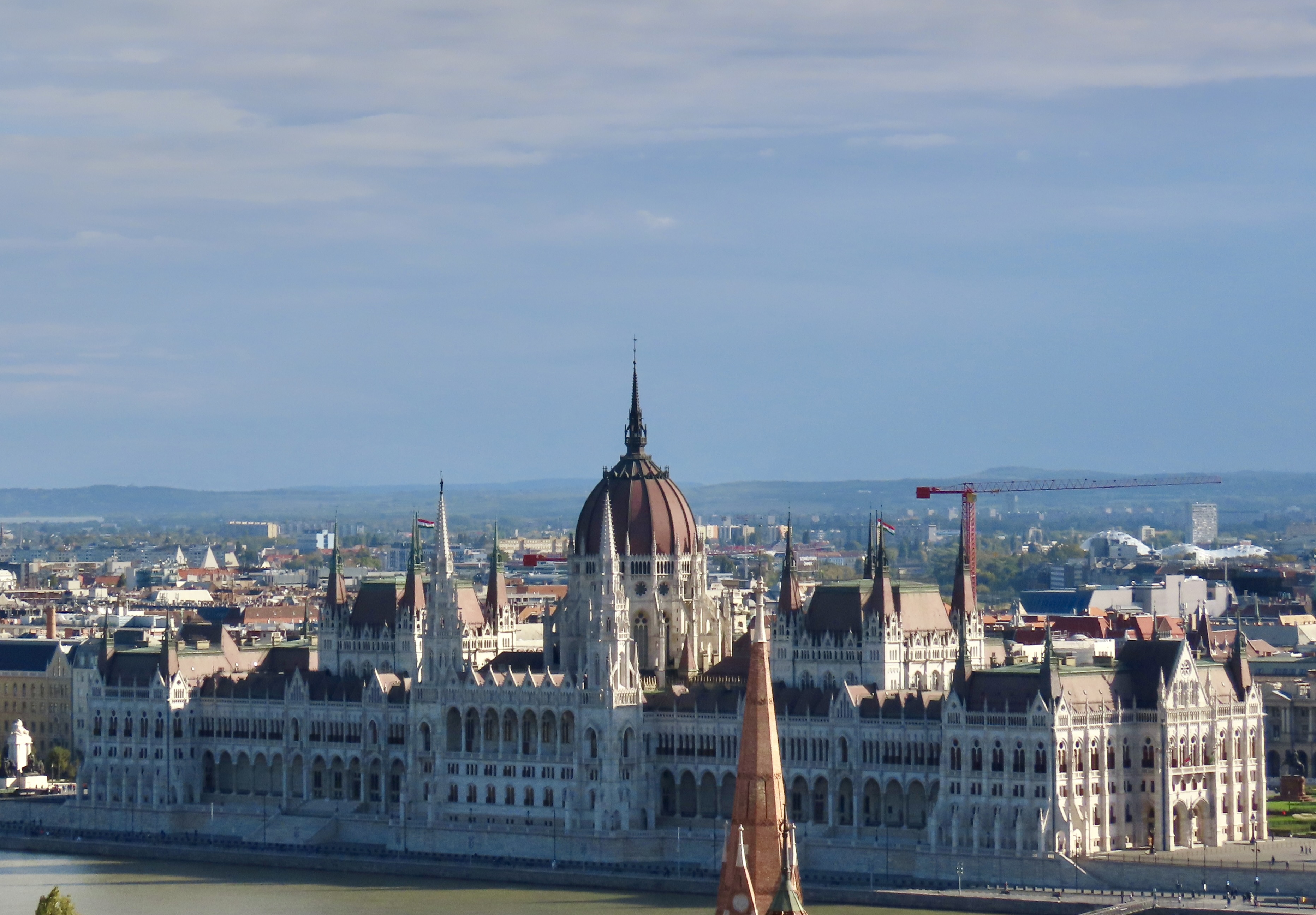
We were able to minimize the steeple but our best solution was to photograph the building by sections.
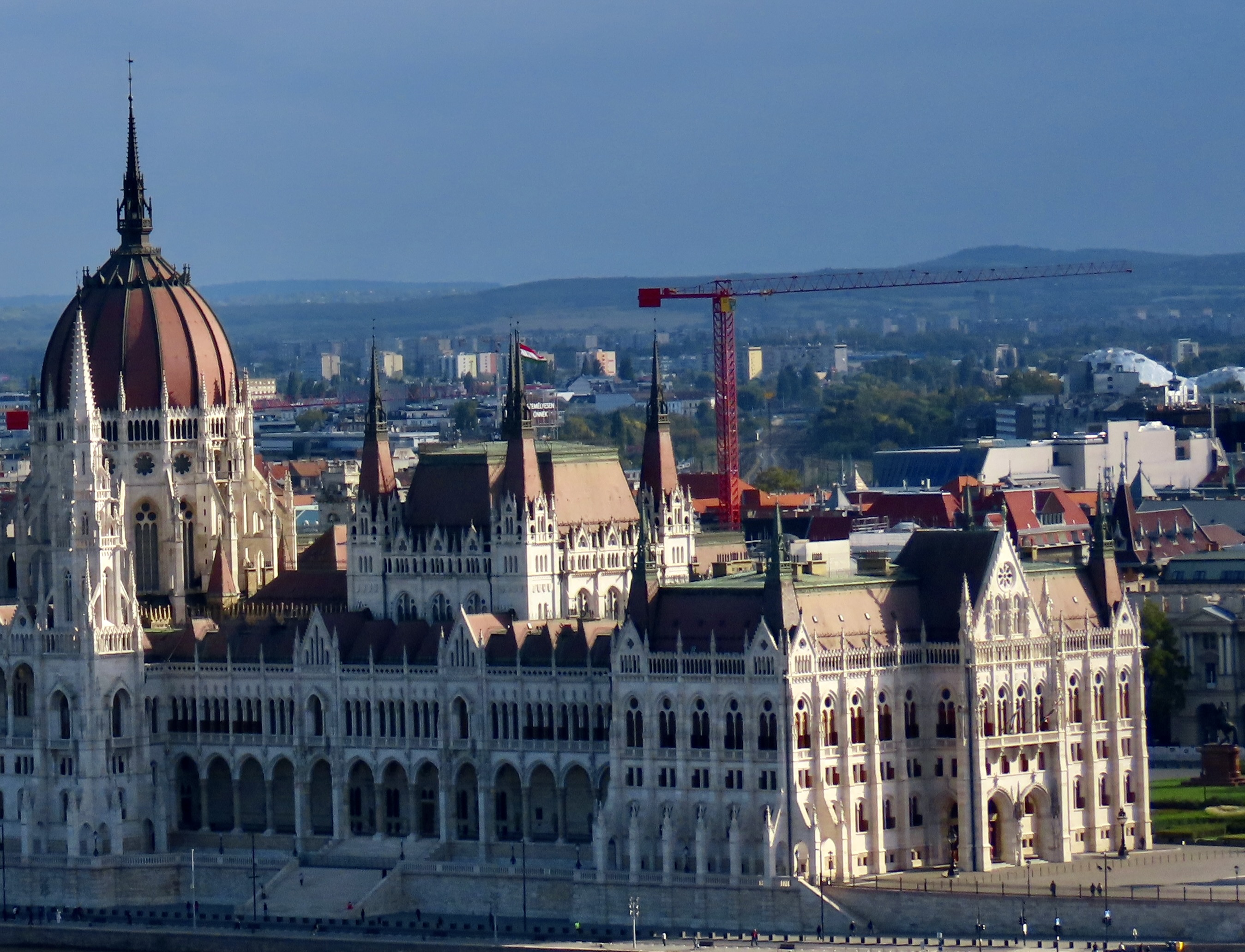
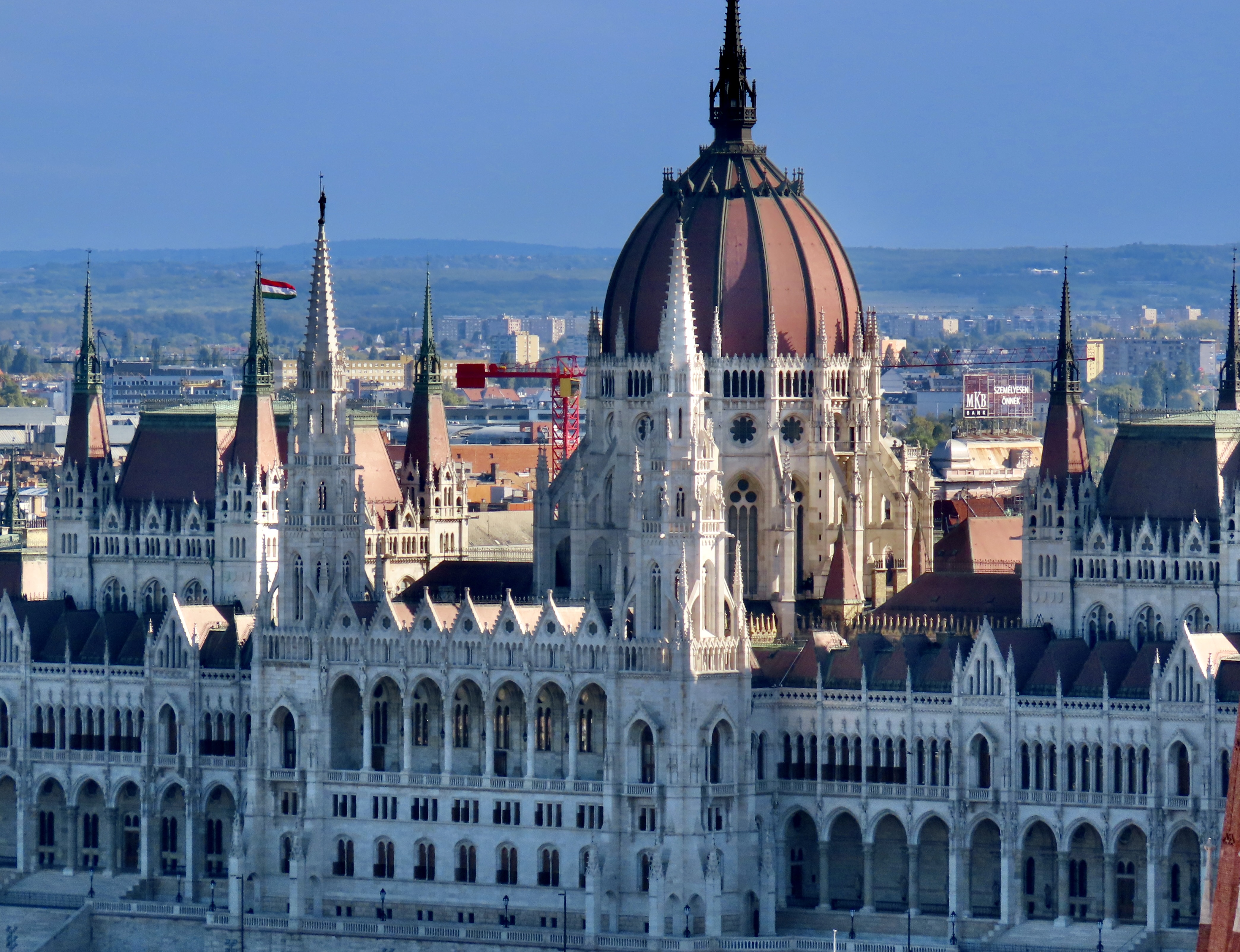
The Parliament Building was inaugurated in 1896 in recognition of of the nation’s 1,000th anniversary and the 1873 uniting of three cities: Buda, Pest, and Obuda. Forty million bricks went into its construction, or so they say. Whatever, it was a lot of bricks. Approximately half of the building is used for today’s Hungarian unicameral legislature, while the other half is used for a variety of purposes including offices, conferences, ceremonies— and tours. If you feel the building bears a strong resemblance to Britain’s Westminster Place, you’d be right. Hungary wanted to emphasize its close relationship to Western Europe and England at the time.
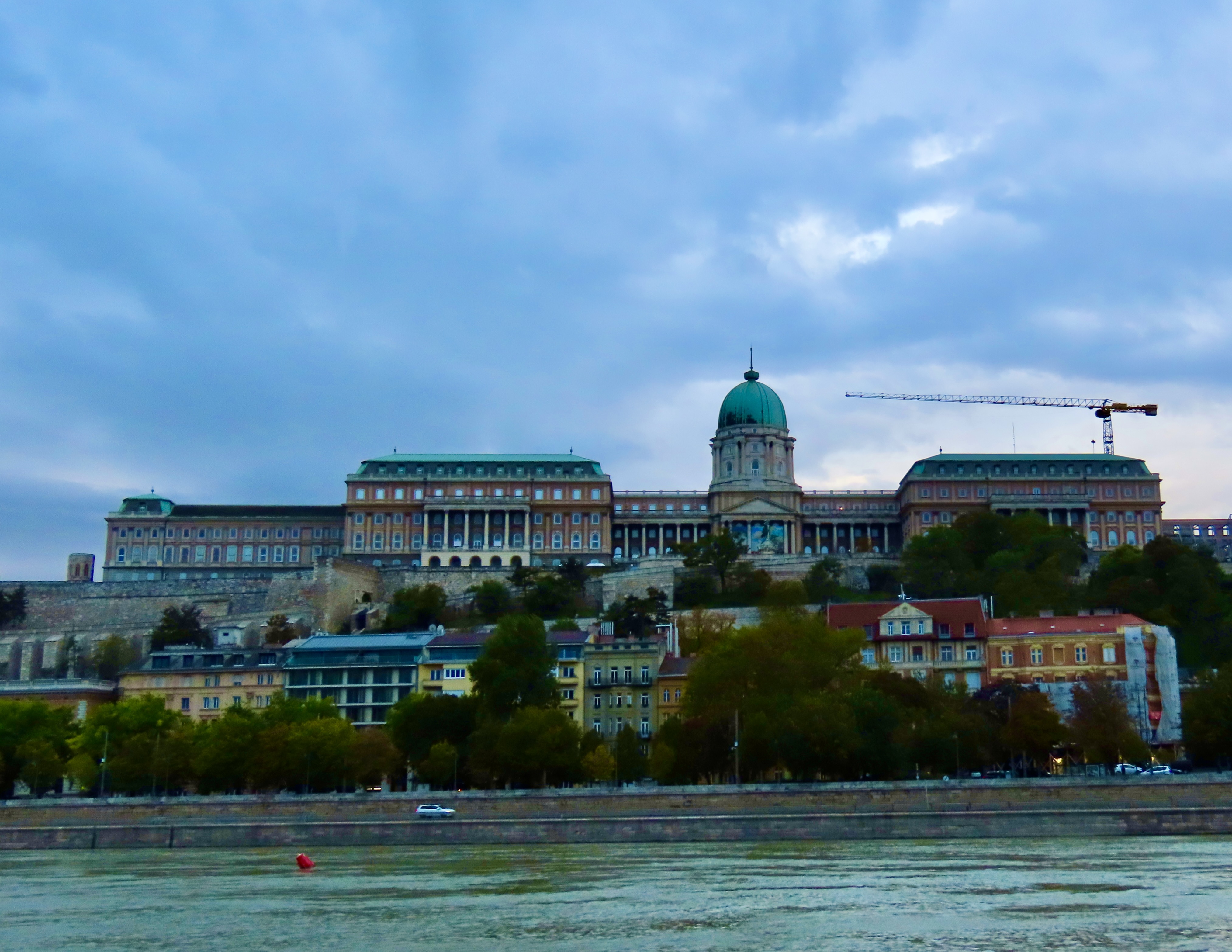
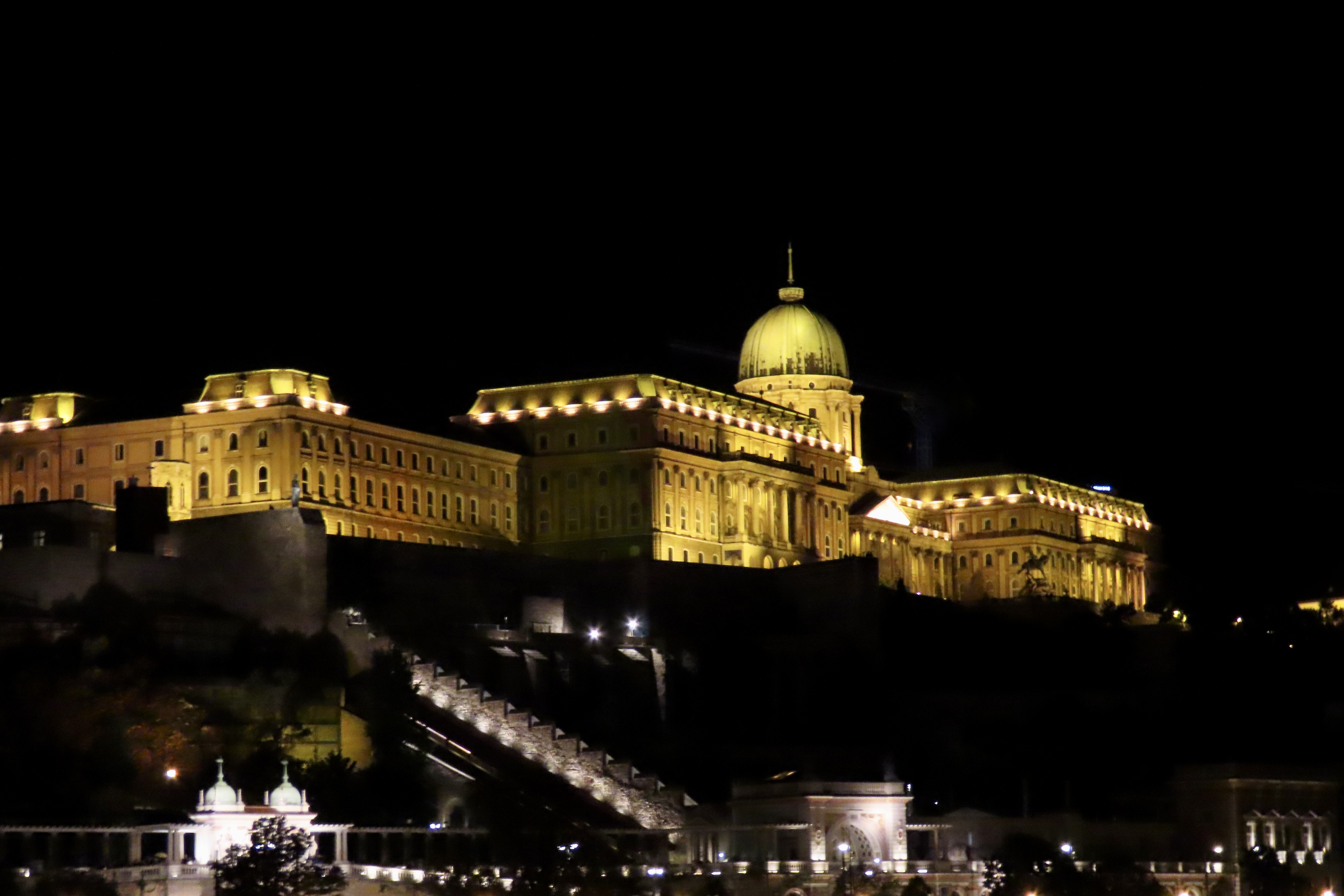
Buda Palace, once the home of kings, provided another early morning view from the Danube River. Originally dating back to 1265 and later destroyed, much of what you see above was built in the mid 1700s. That, in turn was severely damaged during WW II and then rebuilt during the Communist era. The buildings in front add a nice dash of color.
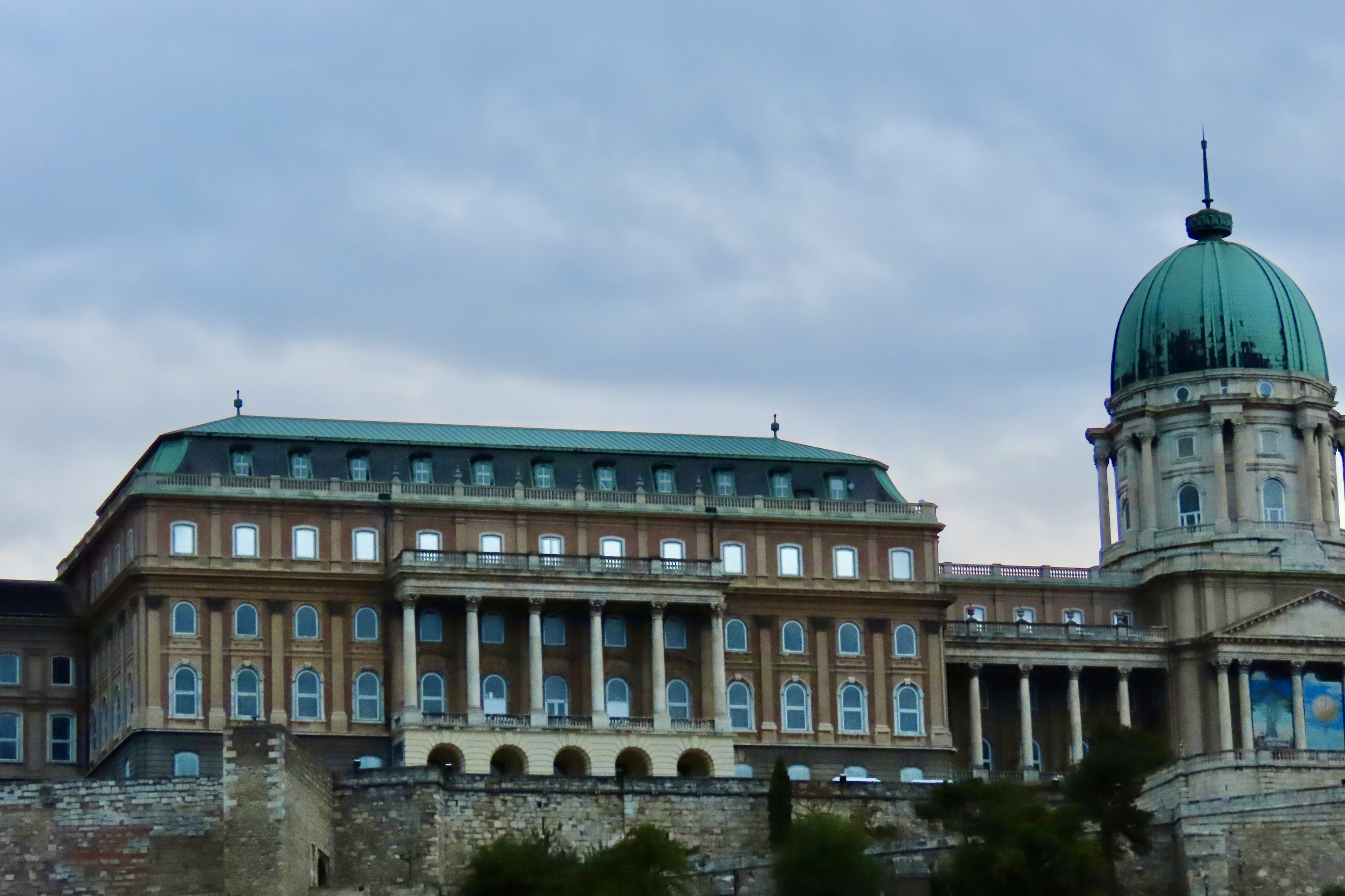
A closer look.
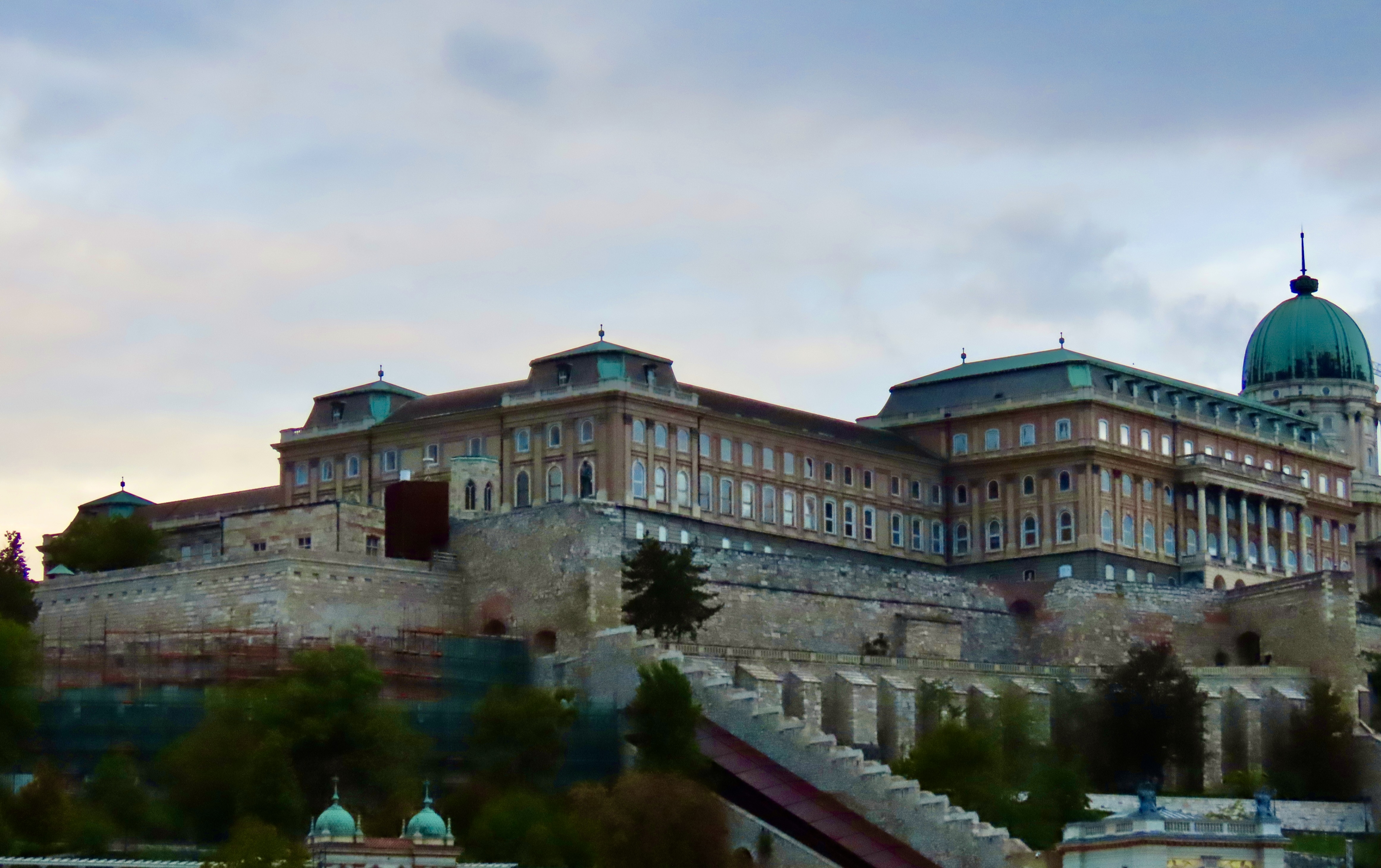
Our favorite view of the palace. Like Matthias Church and the Fisherman’s Bastion, Buda Palace is located on Castle Hill.
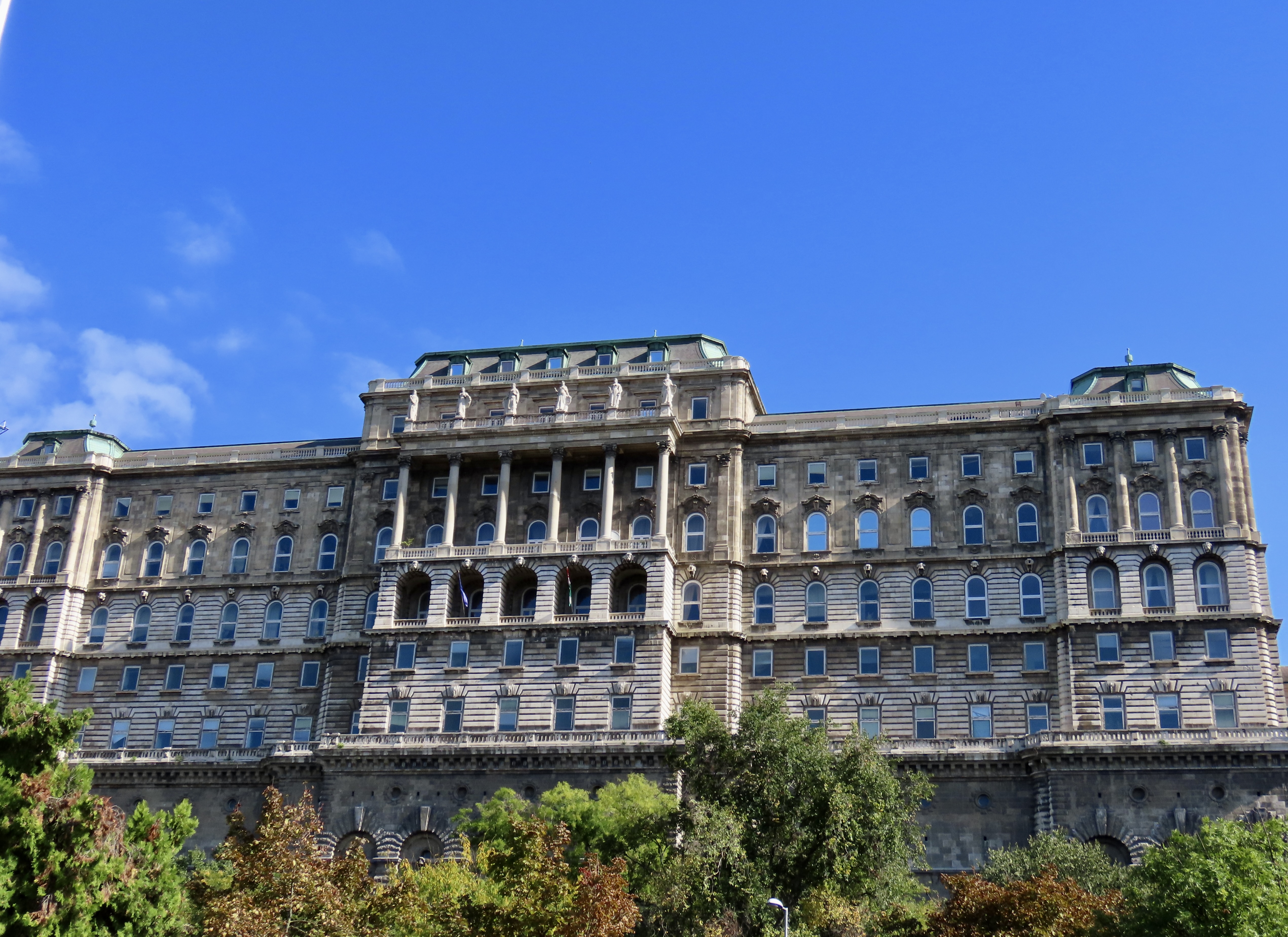
Our drive into Pest from Matthias Church provided a final view of the Palace. Shortly after this, we were crossing one of the bridges across the Danube and on our way to Hero’s Square, which, in addition to providing recognition for a number of Hungary’s heroes, also features an art museum and a castle.
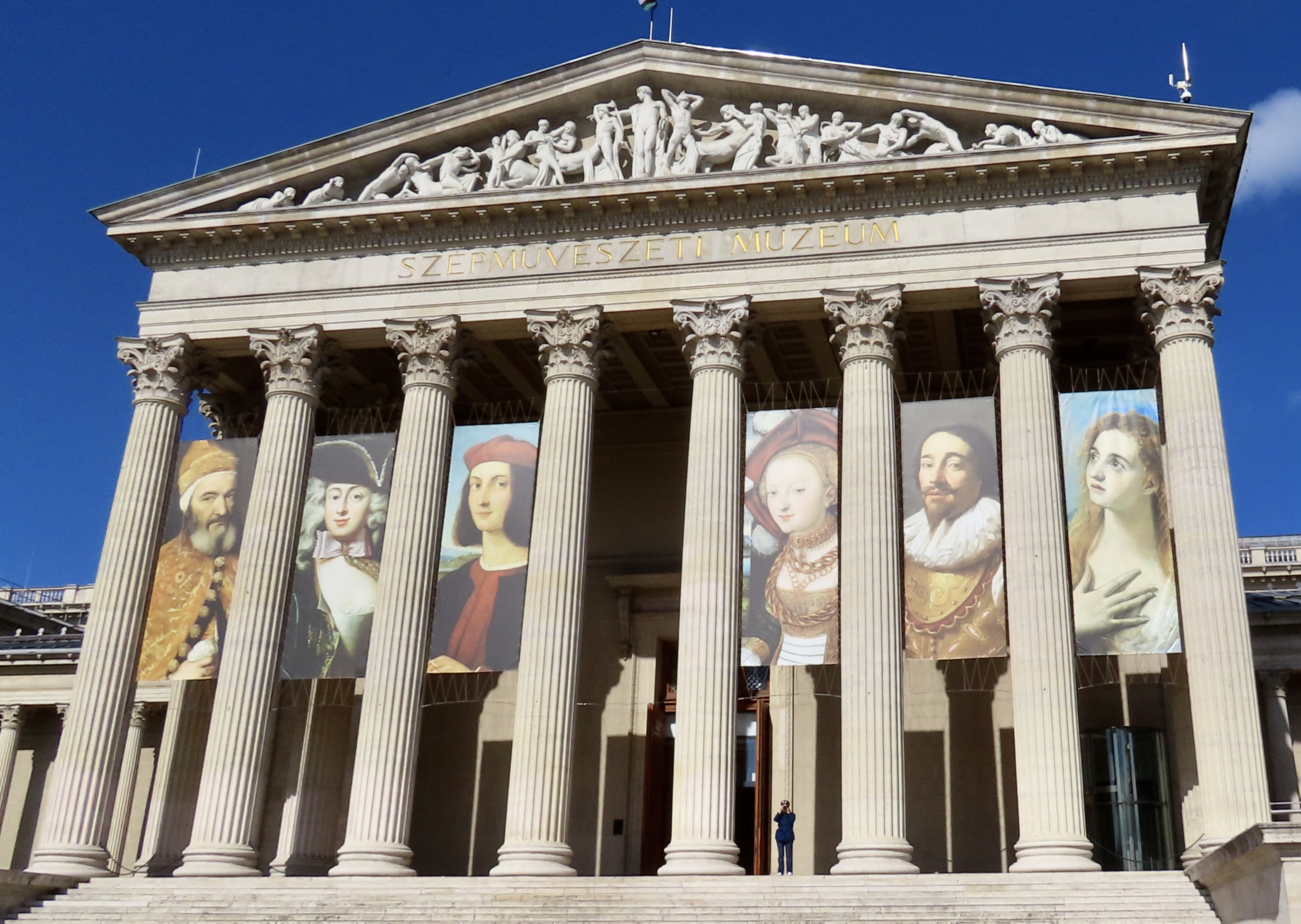
Our first view was the Palace of Art. We didn’t have to guess which building it was. Unfortunately, there wasn’t time to explore it. One of the disadvantages of most organized tours is that there is rarely time for any more that a cursory exploration of what you are seeing.
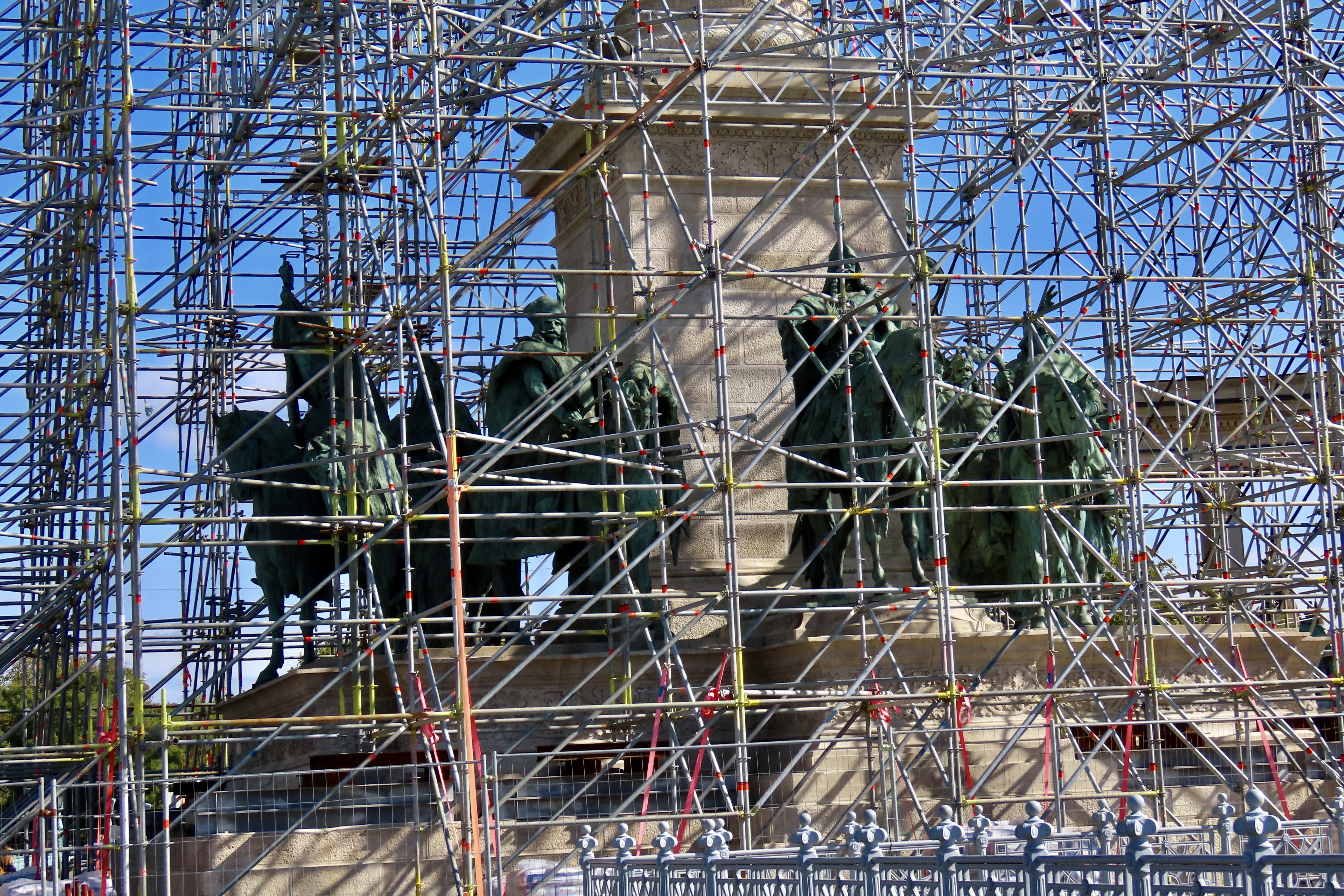
On the other hand, many of the things we see don’t require a lot of time. For example, this monument representing the seven Magyar chieftains who led the Hungarian people into the Carpathian Basin in 896 was hidden behind scaffolding.
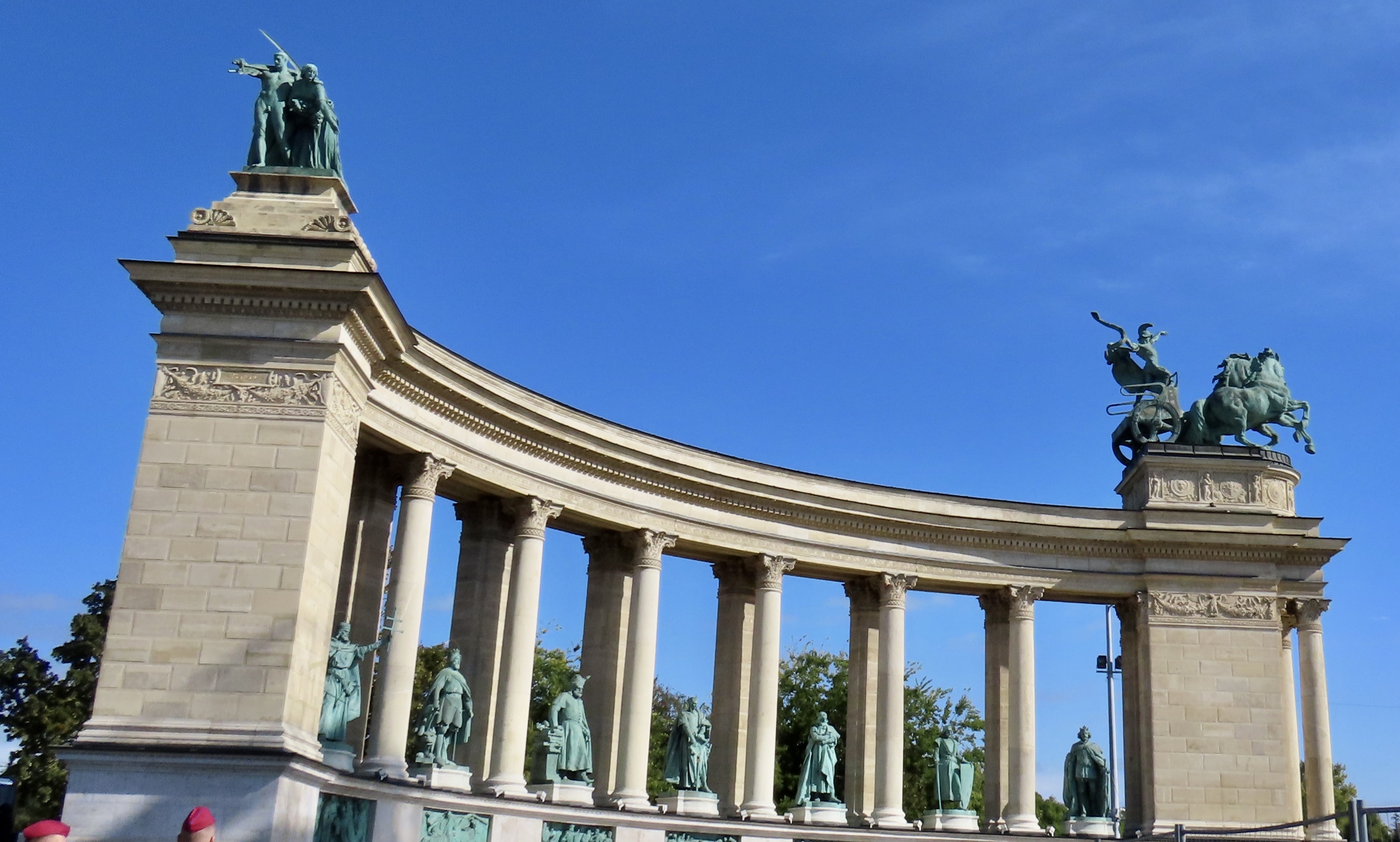
I found the two matching colonnades behind the Magyar Chieftains to be of more interest. The figures on top represented important aspects of Hungarian life and virtues. The bottom statues were of important historical figures.

Here, the man with the scythe and the woman sowing seeds represented labor and wealth. As to why a man would choose to go out into a field of grain and whip around a large, sharp object while being totally naked is a total mystery to me.
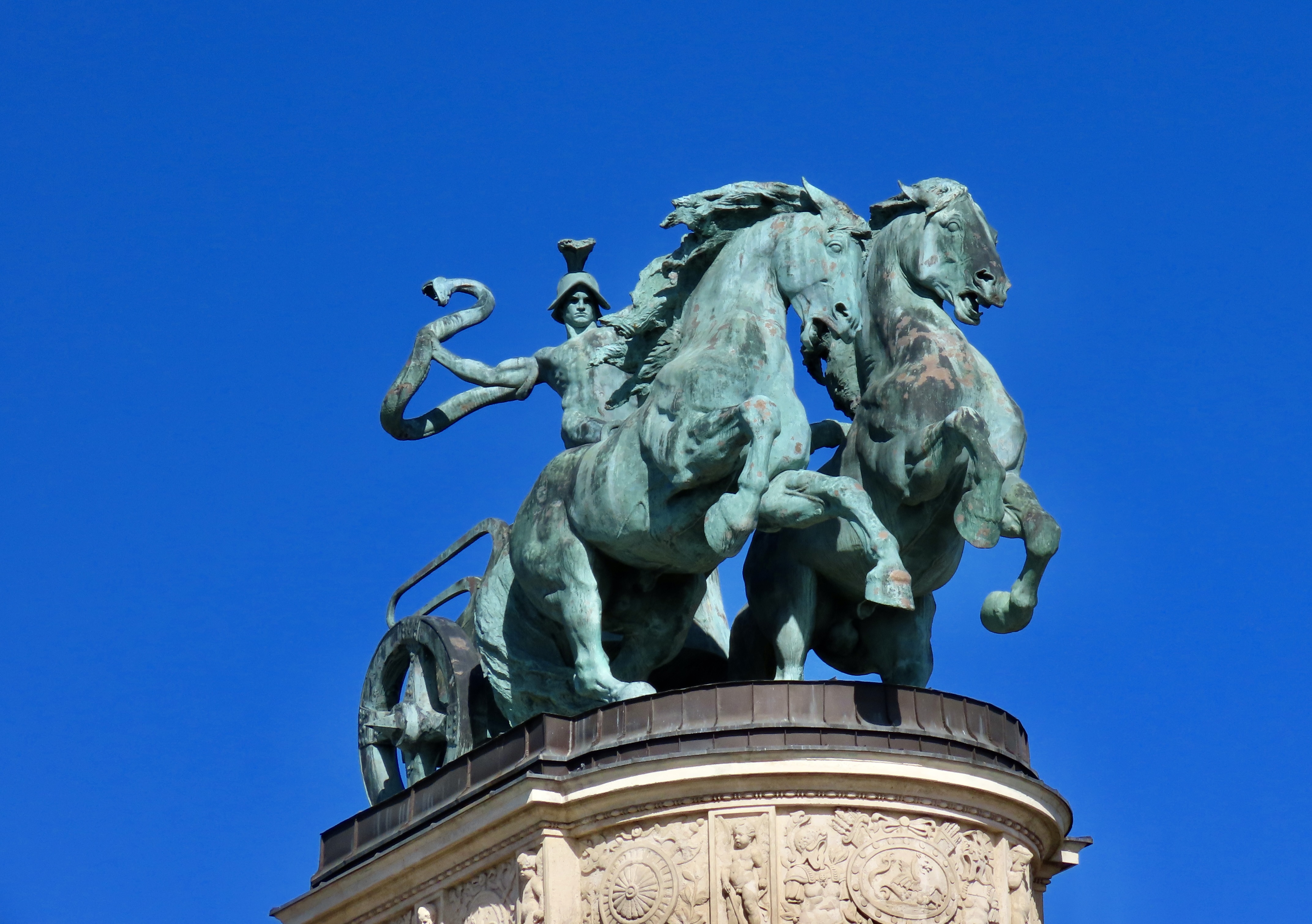
That this represents war makes more sense. But wait! His whip is a large snake. Various coats of arm and the ever present naked cherubs are on the pedestal.
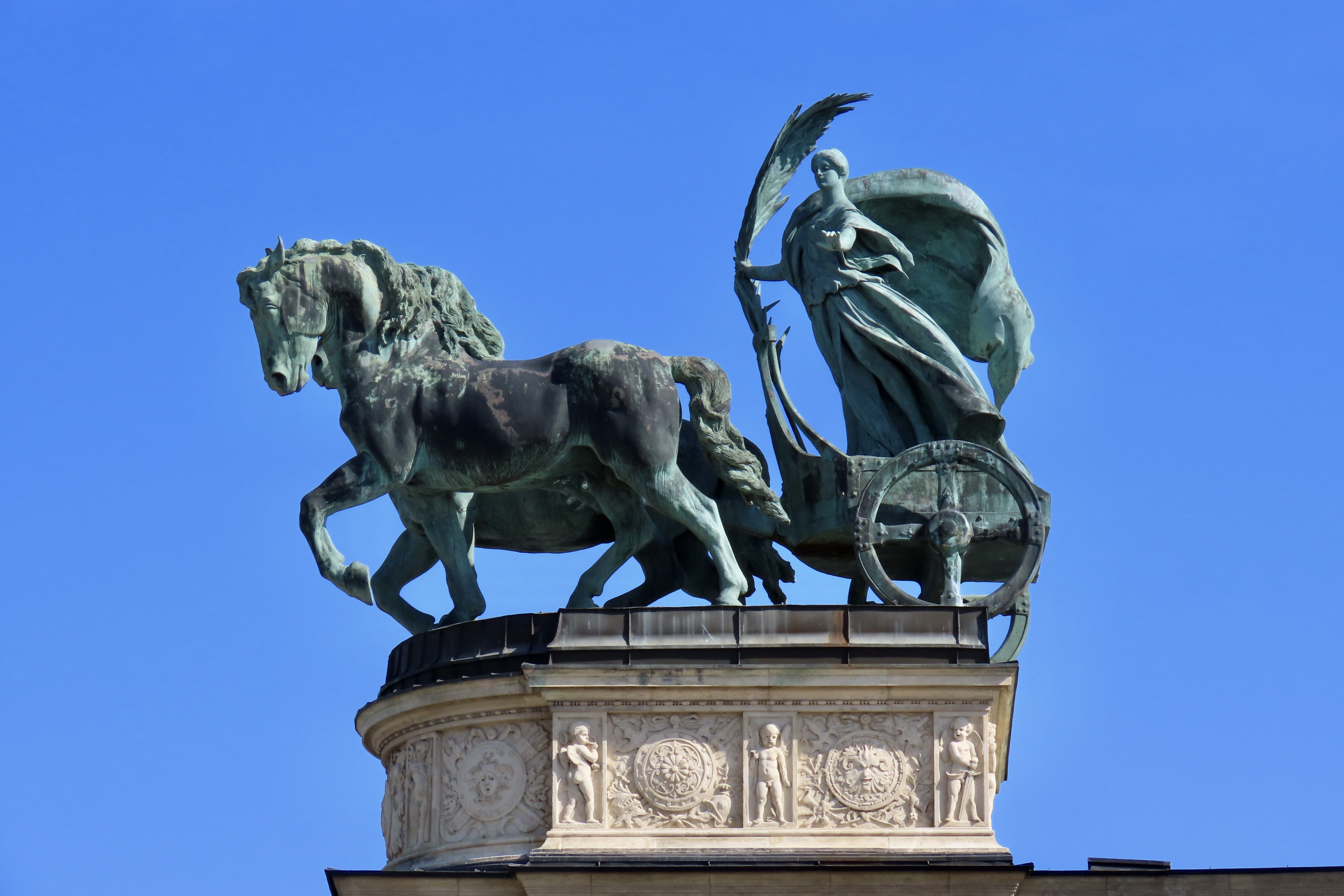
Facing war on the opposite colonnade is Peace with a palm frond and a billowing robe. We missed Wisdom and Glory. Darn.
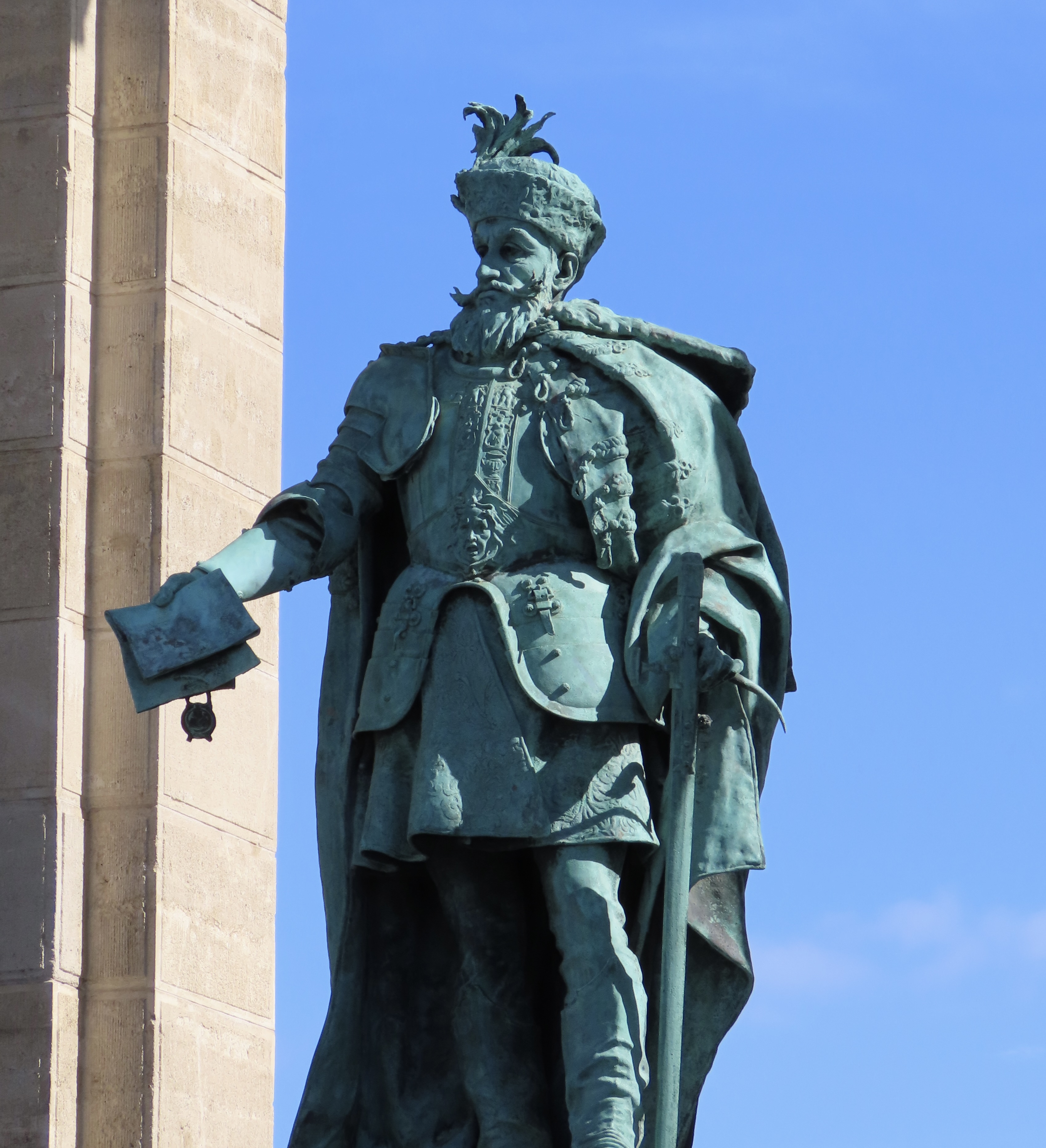
There were too many statues of Hungarian nobility and heroes to include in this post so I chose Gabriel Bethlem to represent them. He’s up there because he concluded an important treaty with Bohemia for Hungary. I didn’t choose him for that, however. I chose him for his mustache and hat.
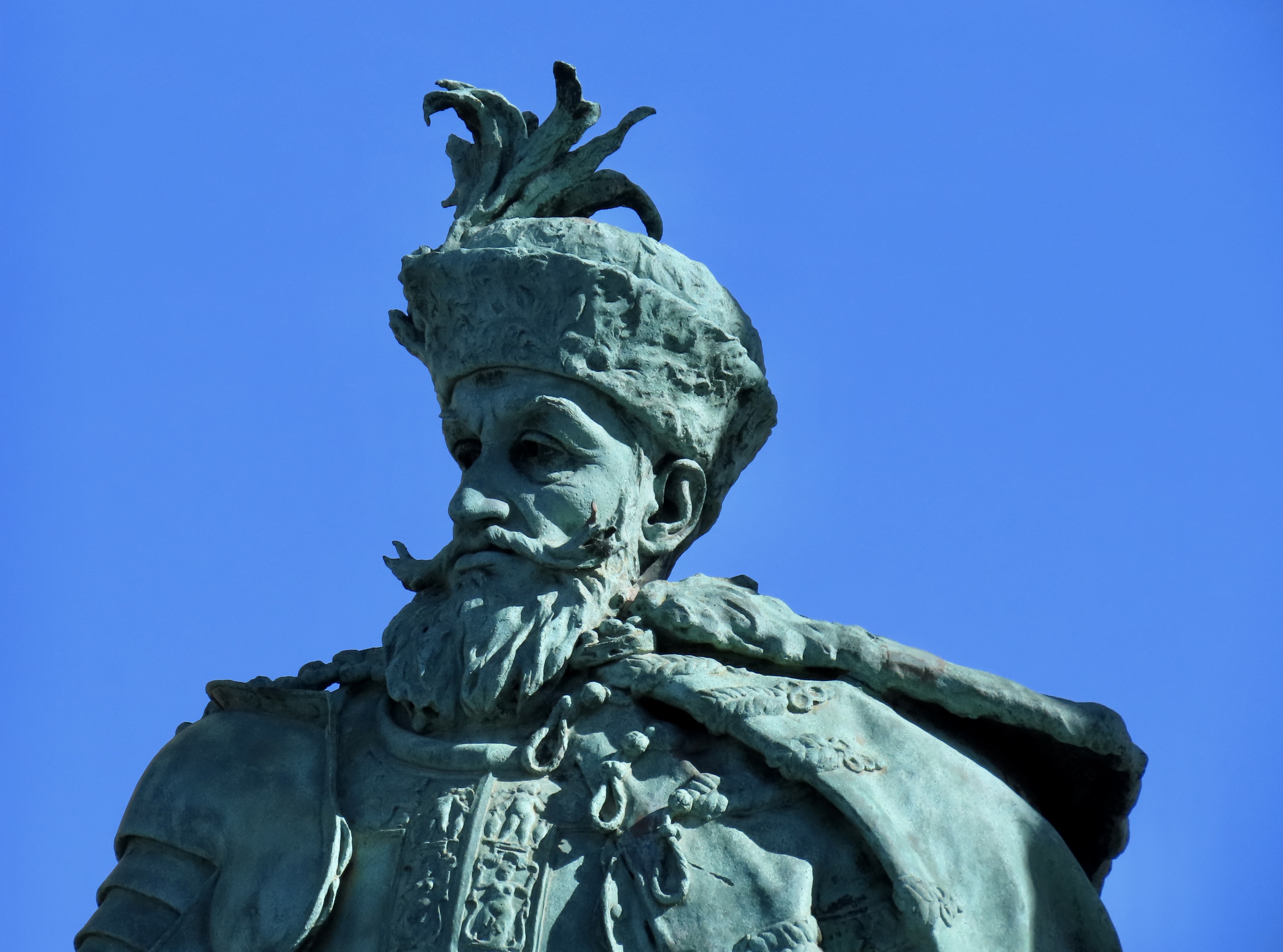
I couldn’t resist.
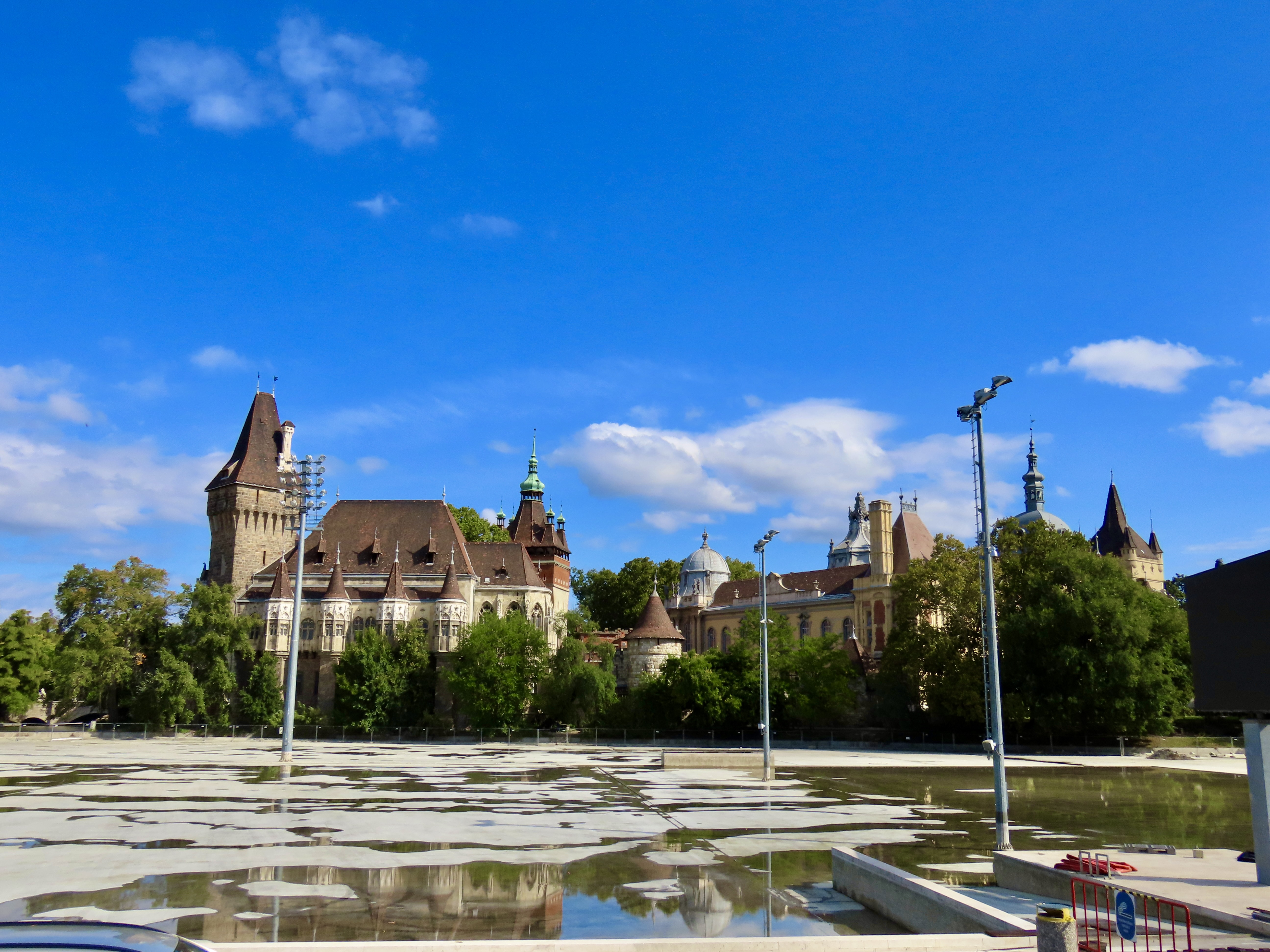
Vajdahunyad Castle is located in the City Park of Budapest just behind Heroes’ Square. It certainly looks like one of the historical castles we’ve featured from time to time in our posts. But looks can be deceiving, right? Originally it was made of cardboard and wood as part of the 1896 Millennium Celebration of the foundation of Hungary. It was so popular however, the stick and cardboard castle was torn down and replaced with real stones. It was designed to feature elements of several prominent castles from the region and illustrates Romanesque, Gothic, Renaissance, and Baroque styles.
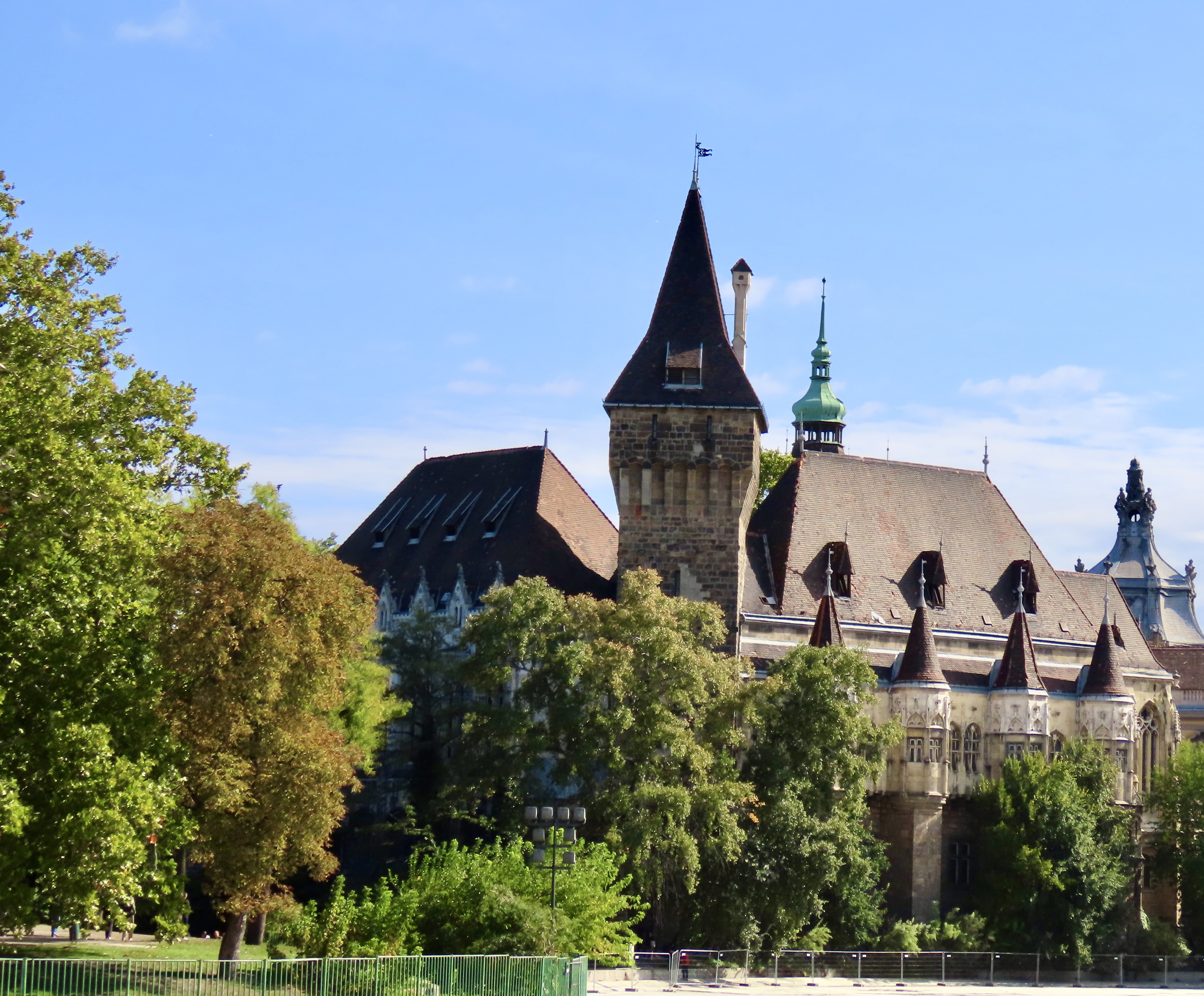
Two more views. This one…
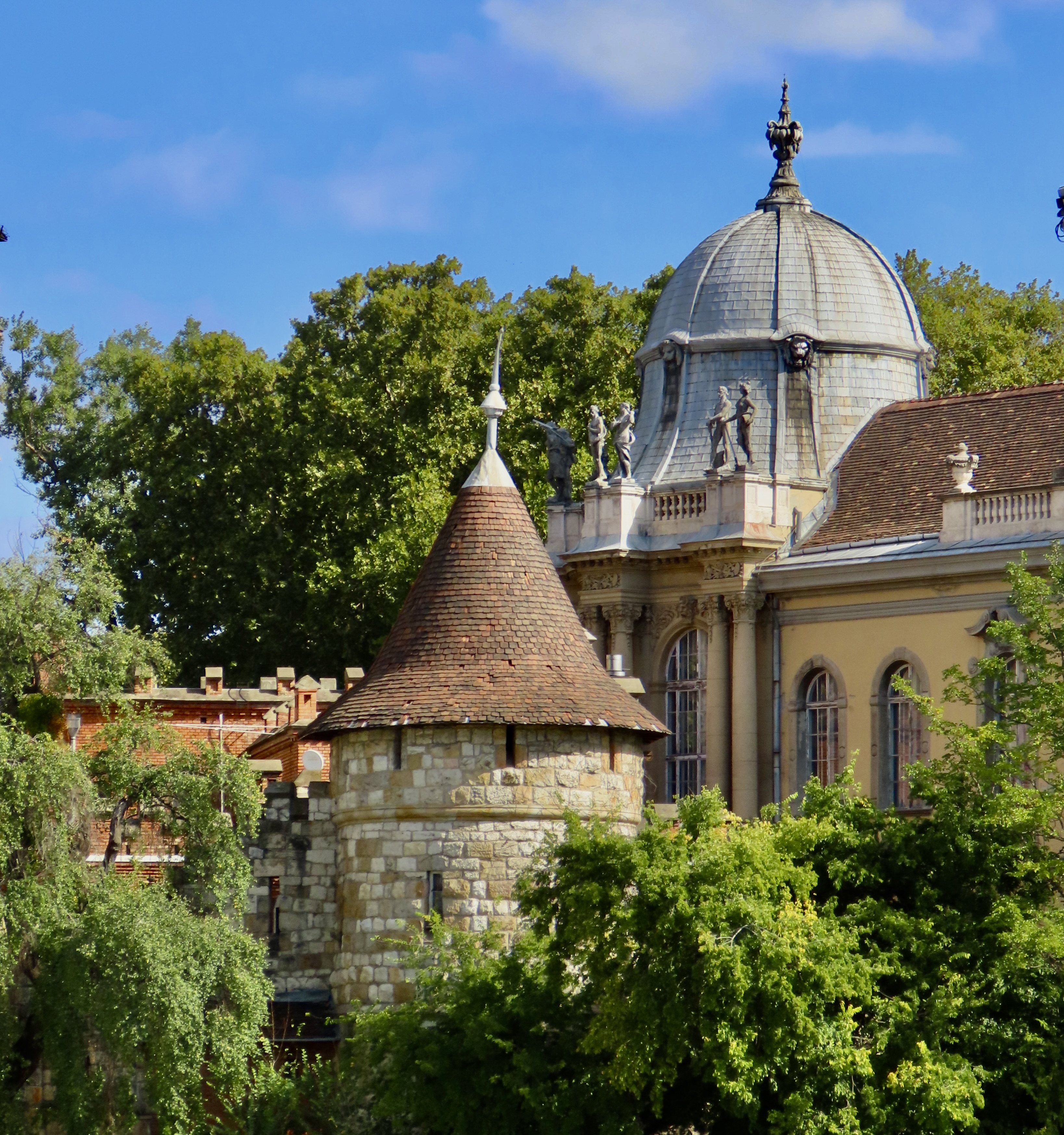
And this, which concludes today’s post. Next we will be featuring miscellaneous photographs we took while exploring Budapest by bus and river boat.
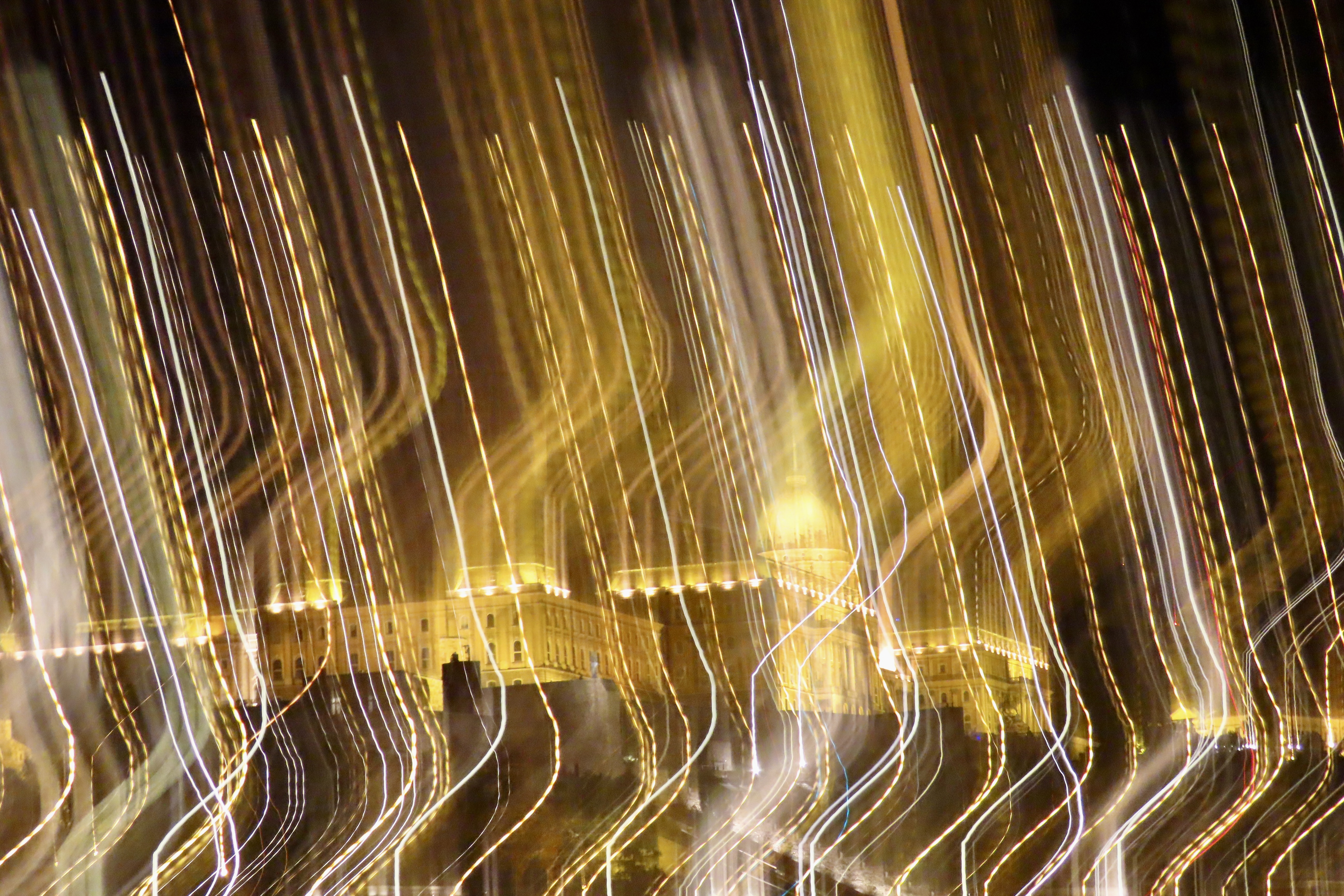
A night shot of Buda Palace taken while on an evening cruise.
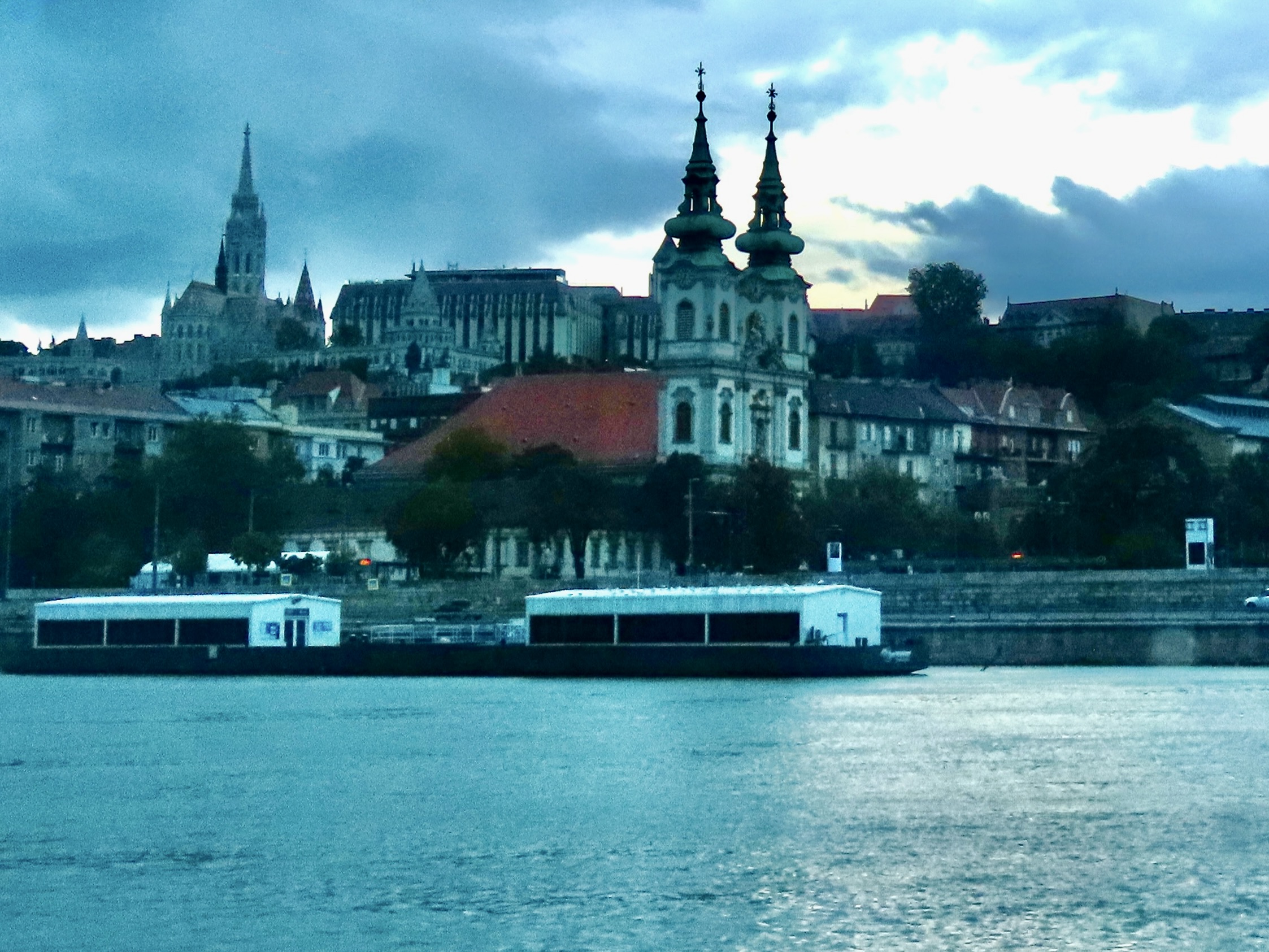
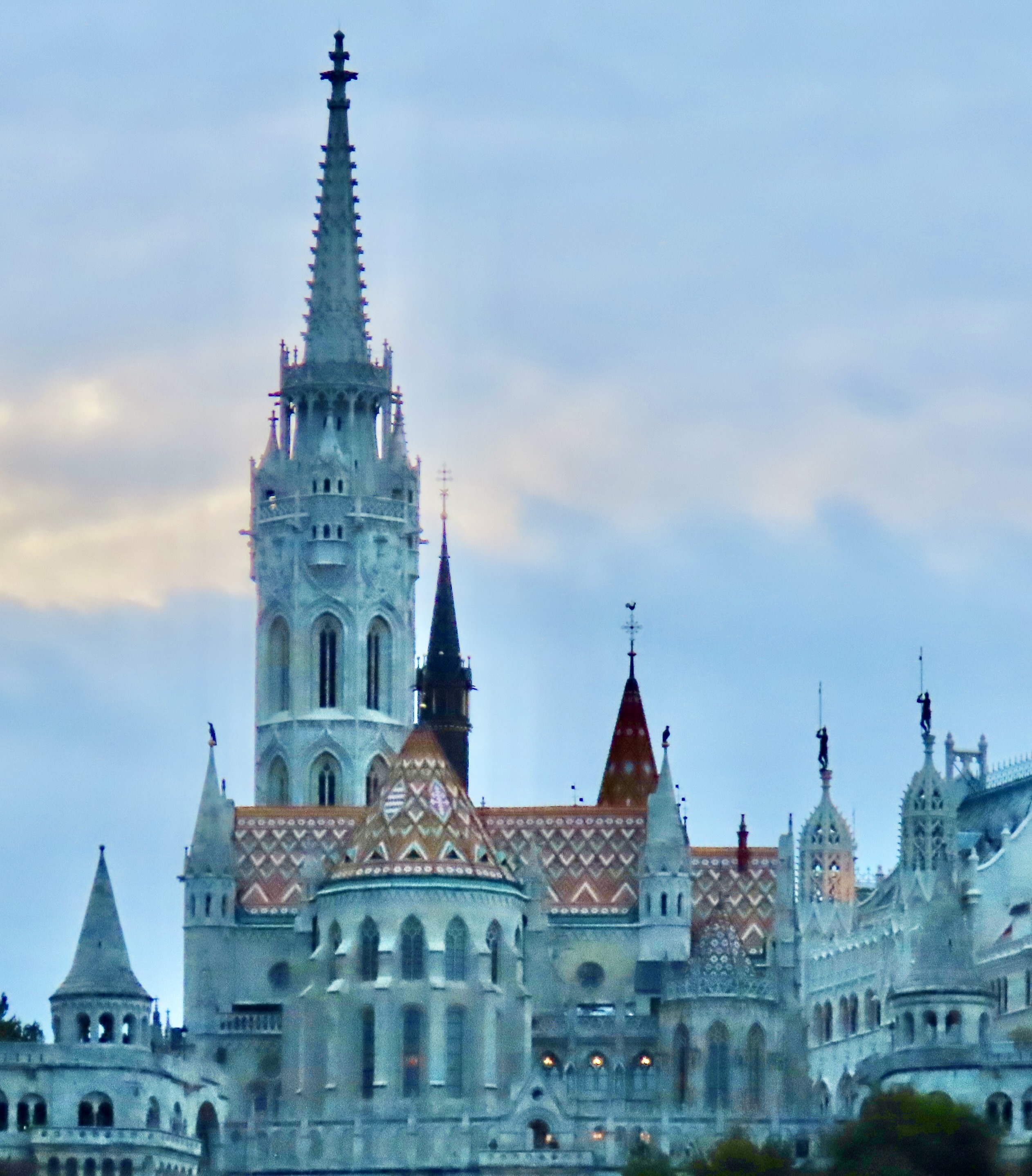
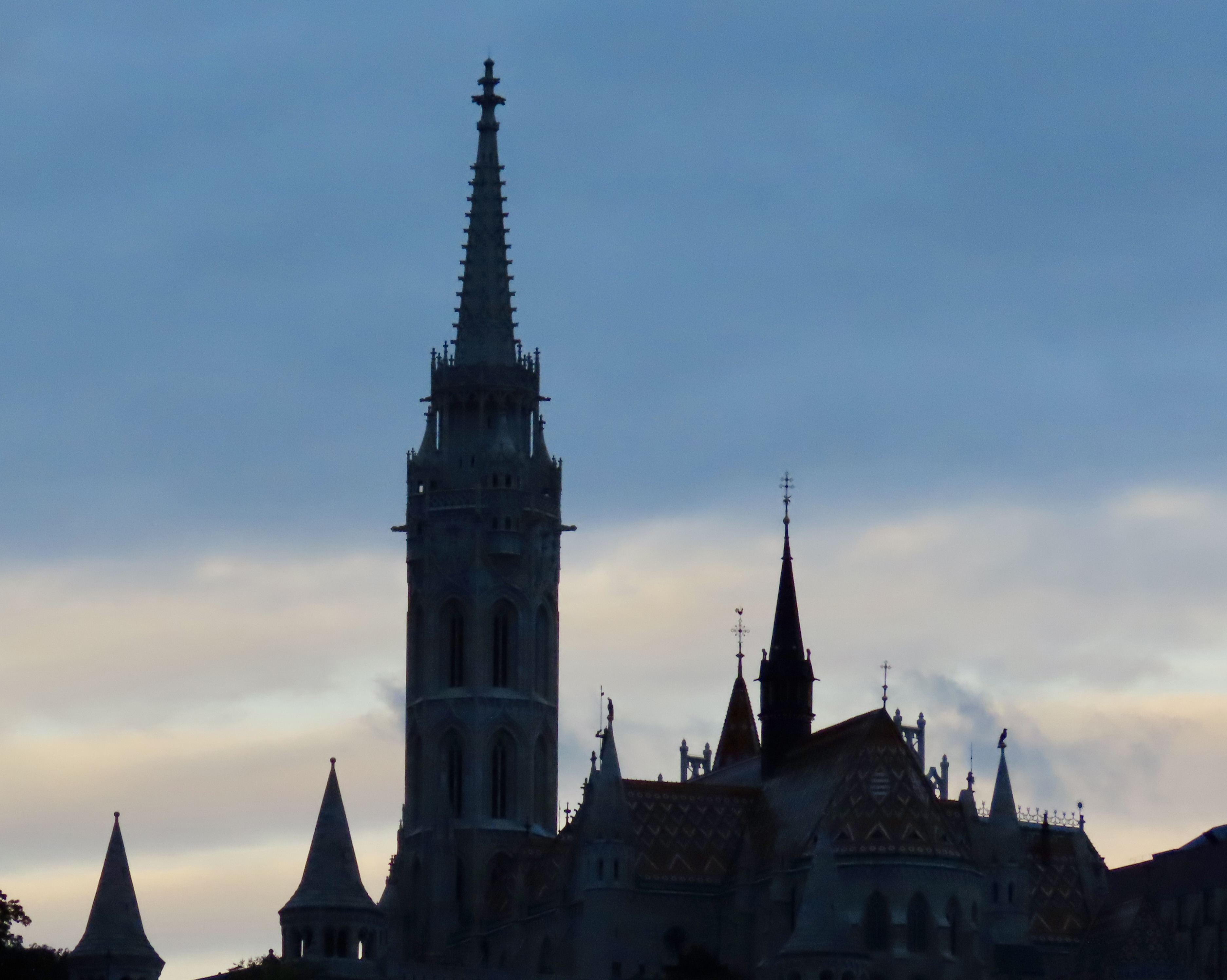
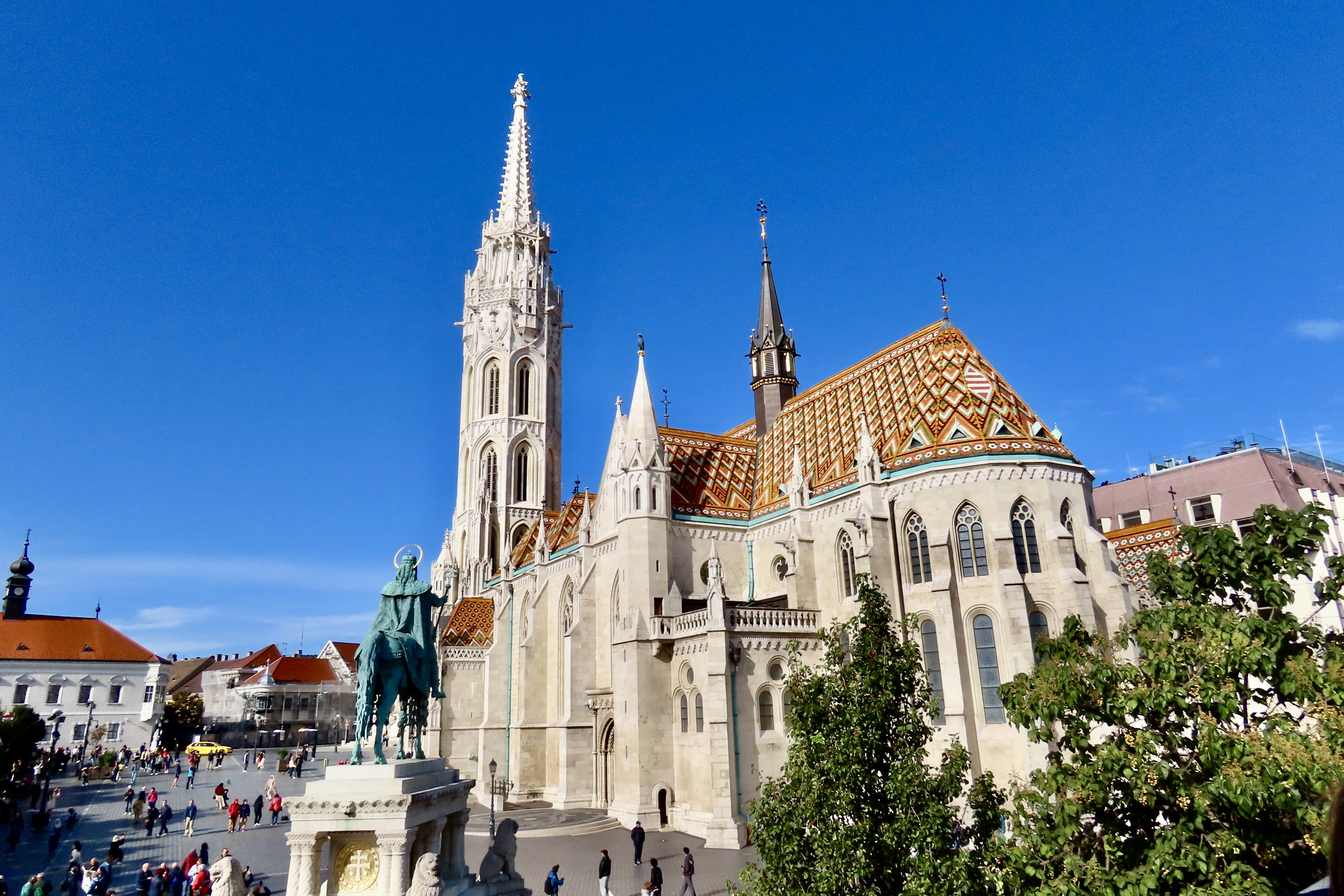
That does it for now. We’ll be taking a couple of weeks off for Christmas and New Year’s but I will get a brief post up just before Christmas. Beyond that, see you in 2025. Have a great holiday!
 Wandering through Time and Place