
Having written about the beautiful bridges found on the Oregon Coast and built in the 1930s, I now turn to a modern bridge with equal but different beauty built in 2004: The Sundial Bridge across the Sacramento River in Redding, California.
It seems like I have been driving through Redding, California forever— traveling back and forth between Southern Oregon and Northern California, heading into the beautiful Trinity Alps on backpacking adventures, and once, even starting a seven-day canoe trek down the Sacramento River from the town. I often stop for food or gas, but I have never considered Redding a destination.
That has changed.
In March, Peggy and I met our friends Ken and Leslie there to begin a week of wandering. We didn’t have anywhere we needed to be, so we decided to spend a day exploring the town and area, which Ken knows well. Our explorations led us to Turtle Bay Park and the incredibly beautiful Sundial Bridge. In addition to its architectural beauty, the bridge happens to be exactly what its name suggests, a sundial. In fact it is one of the largest sundials in the world.
The bridge, completed in 2004, spans the Sacramento River with a 700-foot deck that is made up of 200 tons of granite and glass. Graceful cables connect the deck with the bridge’s 217-foot tall sundial/pylon and provide suspension. The renowned Spanish architect, Santiago Calatrava, designed the bridge. Known for his work on bridges in Europe and numerous other structures around the world, the project was his first freestanding bridge in the United States.
Walkers, bicyclists, runners and one very large group of children on a school field trip were crossing the bridge when we arrived. Peggy, Leslie, Ken and I joined the crowd. I took out my camera and went to work while the others waited patiently. I think you will agree with me on just how spectacular the bridge is.

4300 feet of cable connect the deck with a 217 foot pylon, the sundial, and create a freestanding bridge. The deck is composed of glass and granite.
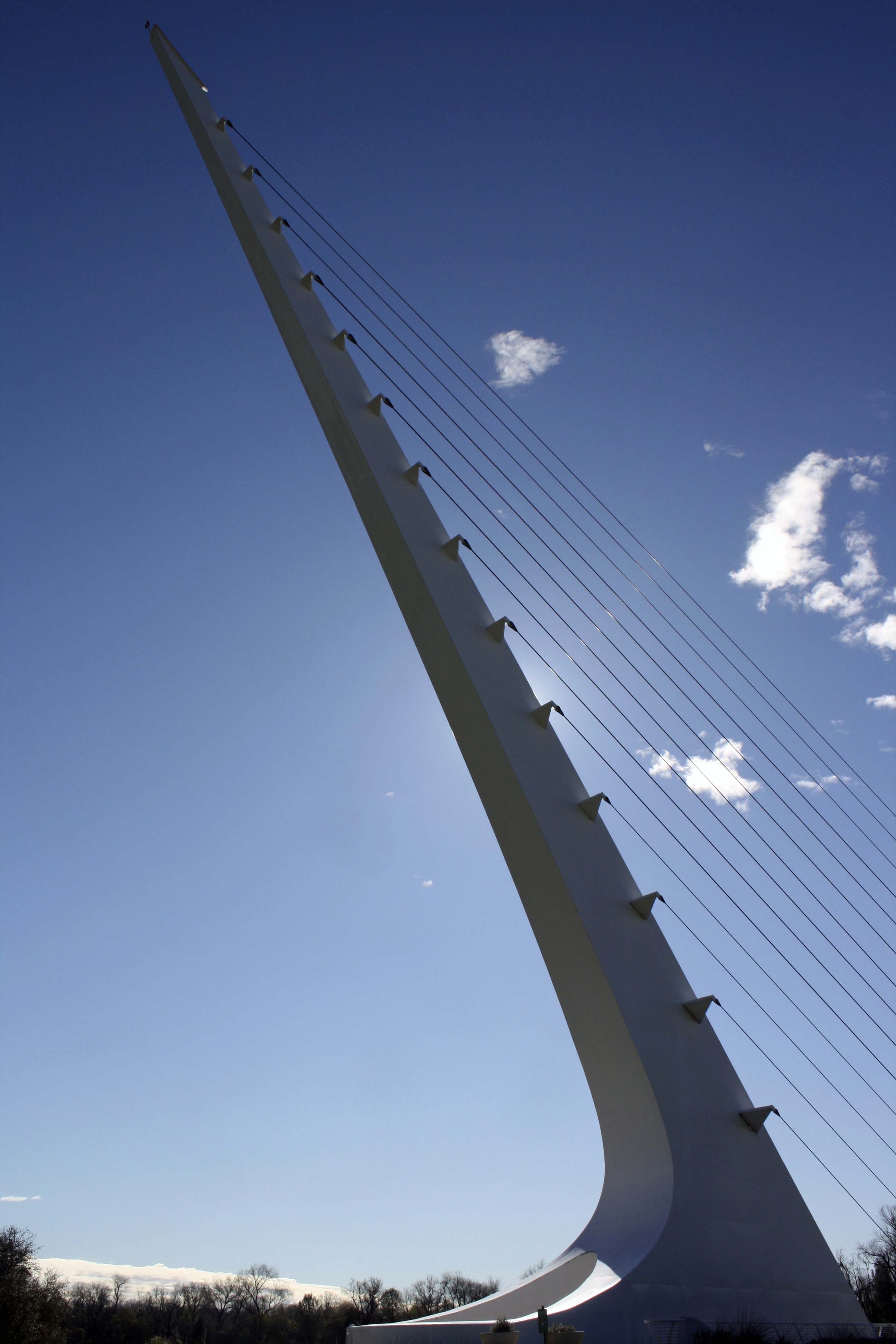
I was particularly struck by the elegance of the pylon that forms the sundial and took several photos from different angles.
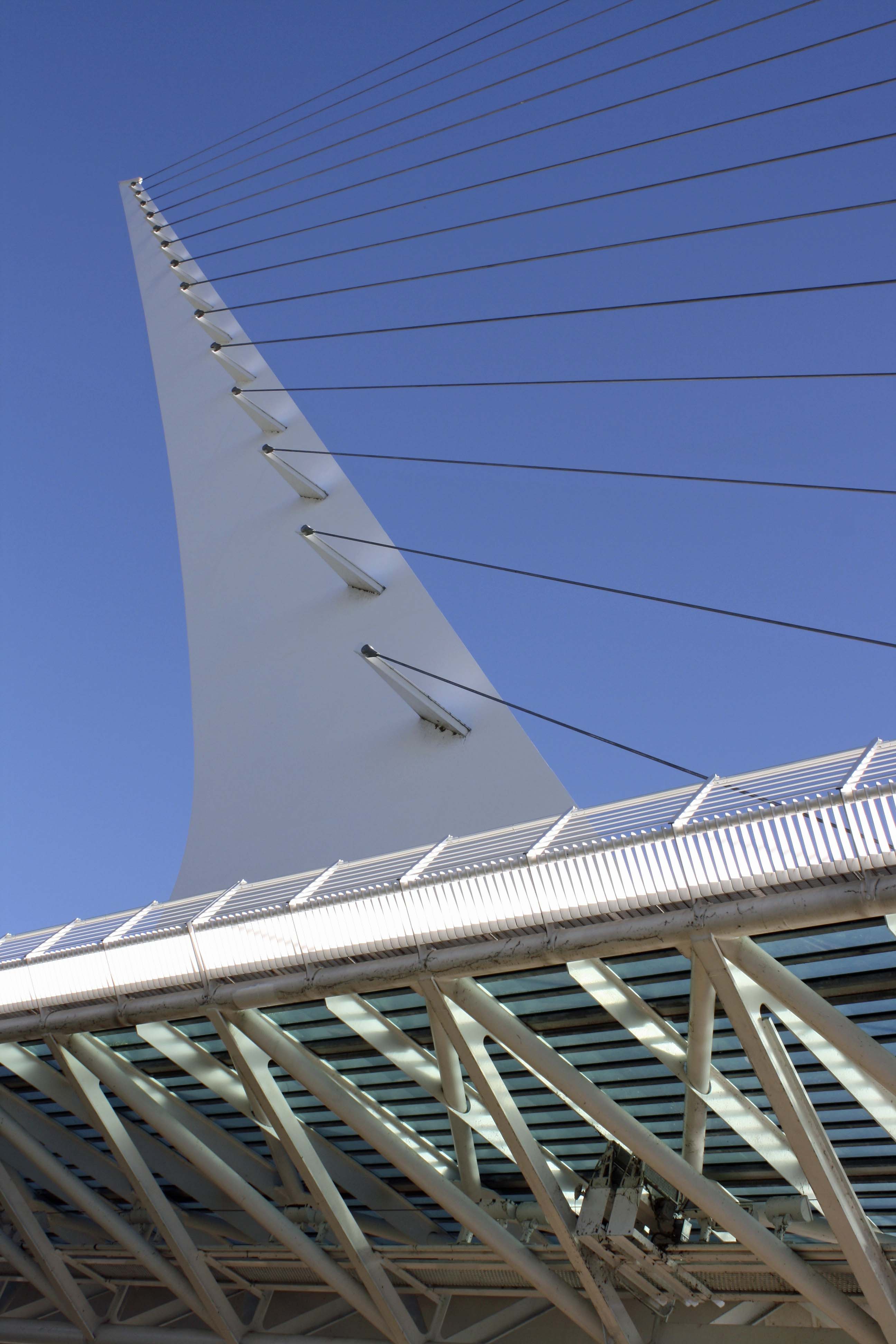
I shot this photo of the pylon from under the bridge. It also captured the glass used in the deck.
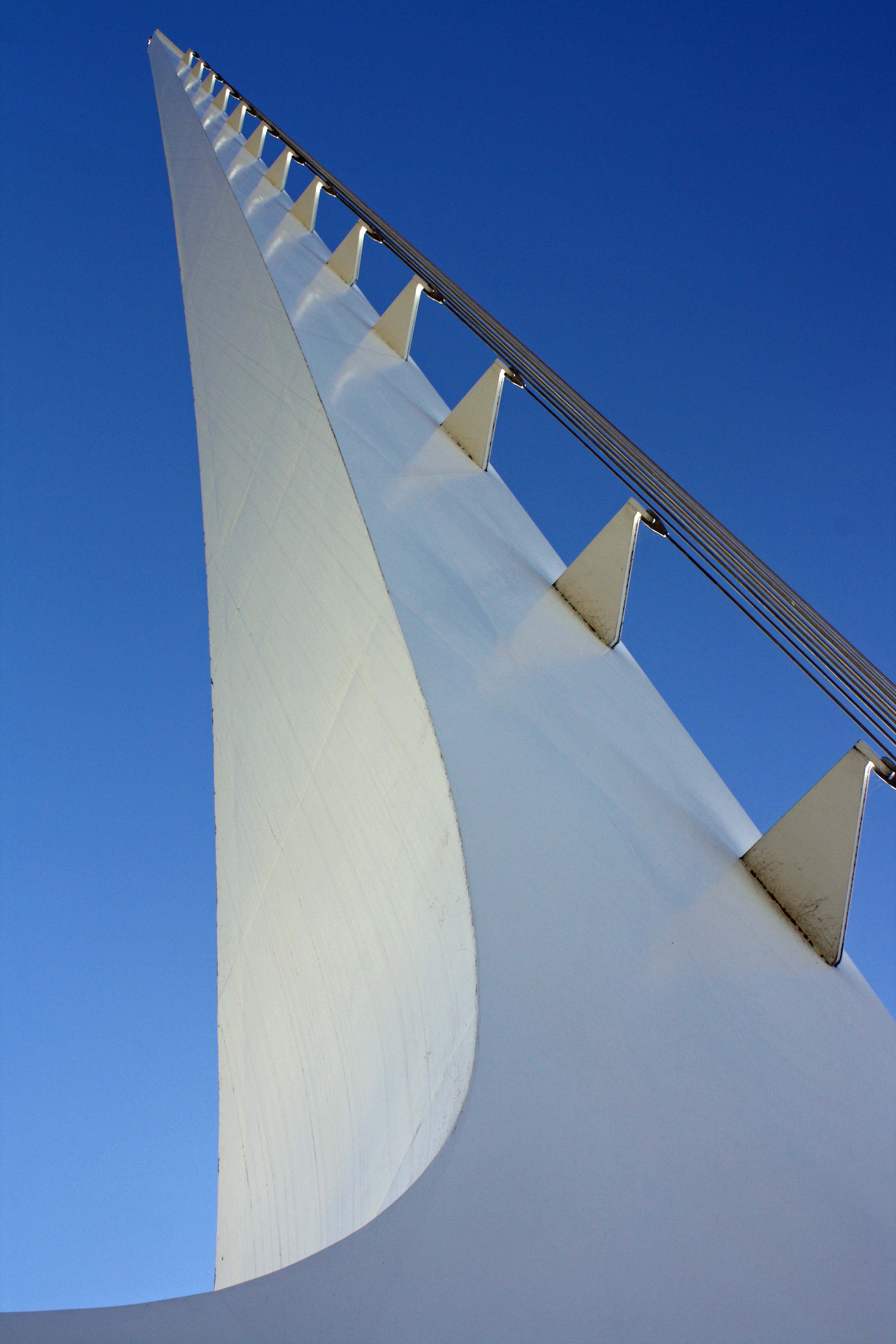
From the base looking up.

Another perspective.

A view of the Sacramento River from the bridge. Coastal Ranges can be seen in the distance.

The Sacramento River is the main source of water for the Northern Sacramento Valley, one of the richest farmlands in the world. The river eventually flows into San Francisco Bay and out into the Pacific Ocean. The region is now suffering from a severe drought.
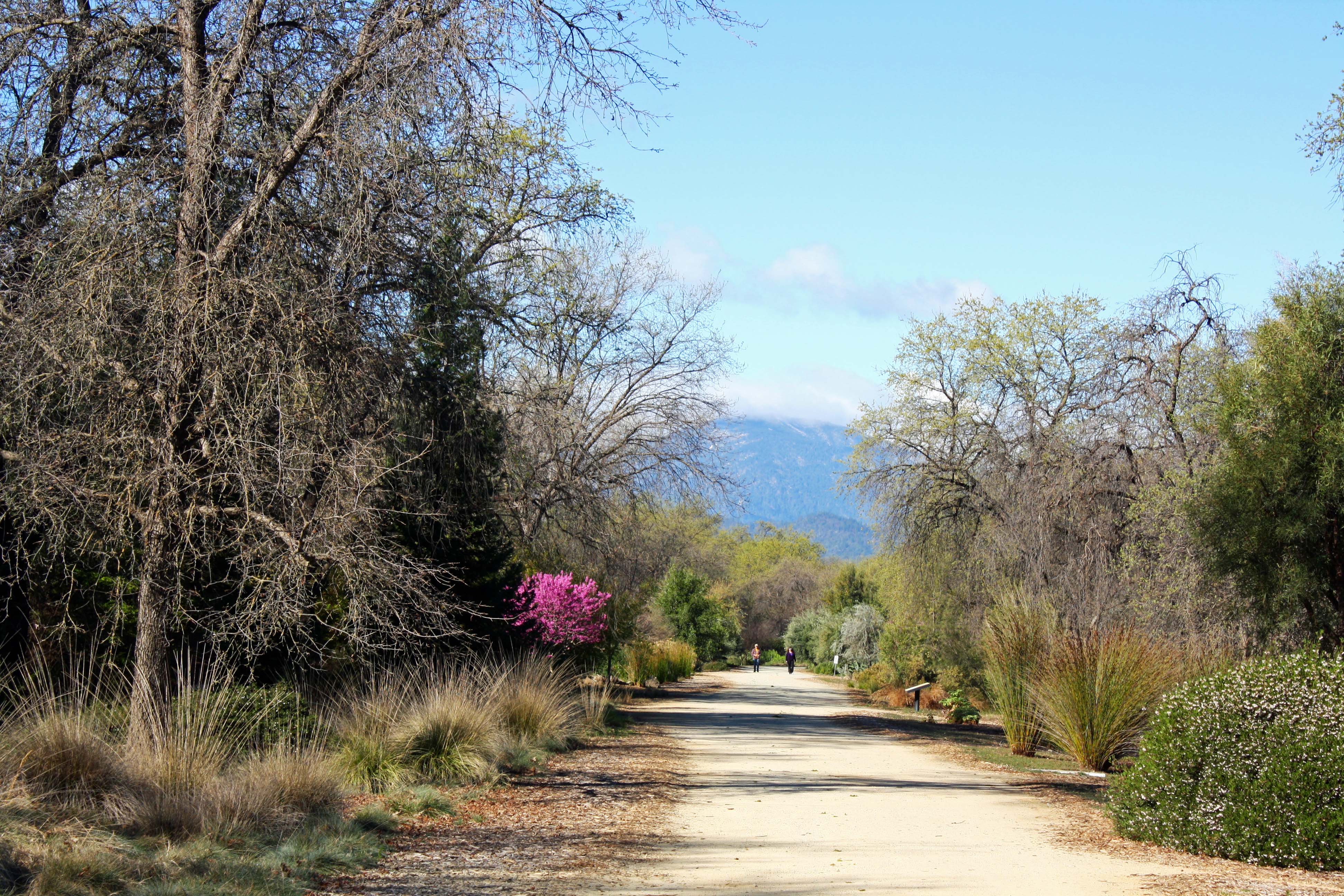
One of the reasons for the bridge is to connect the town of Redding with an extensive series of hiking and biking trails on the opposite side of the river, starting with a trail through the McConnell Arboretum. Redbud can be seen on the left.
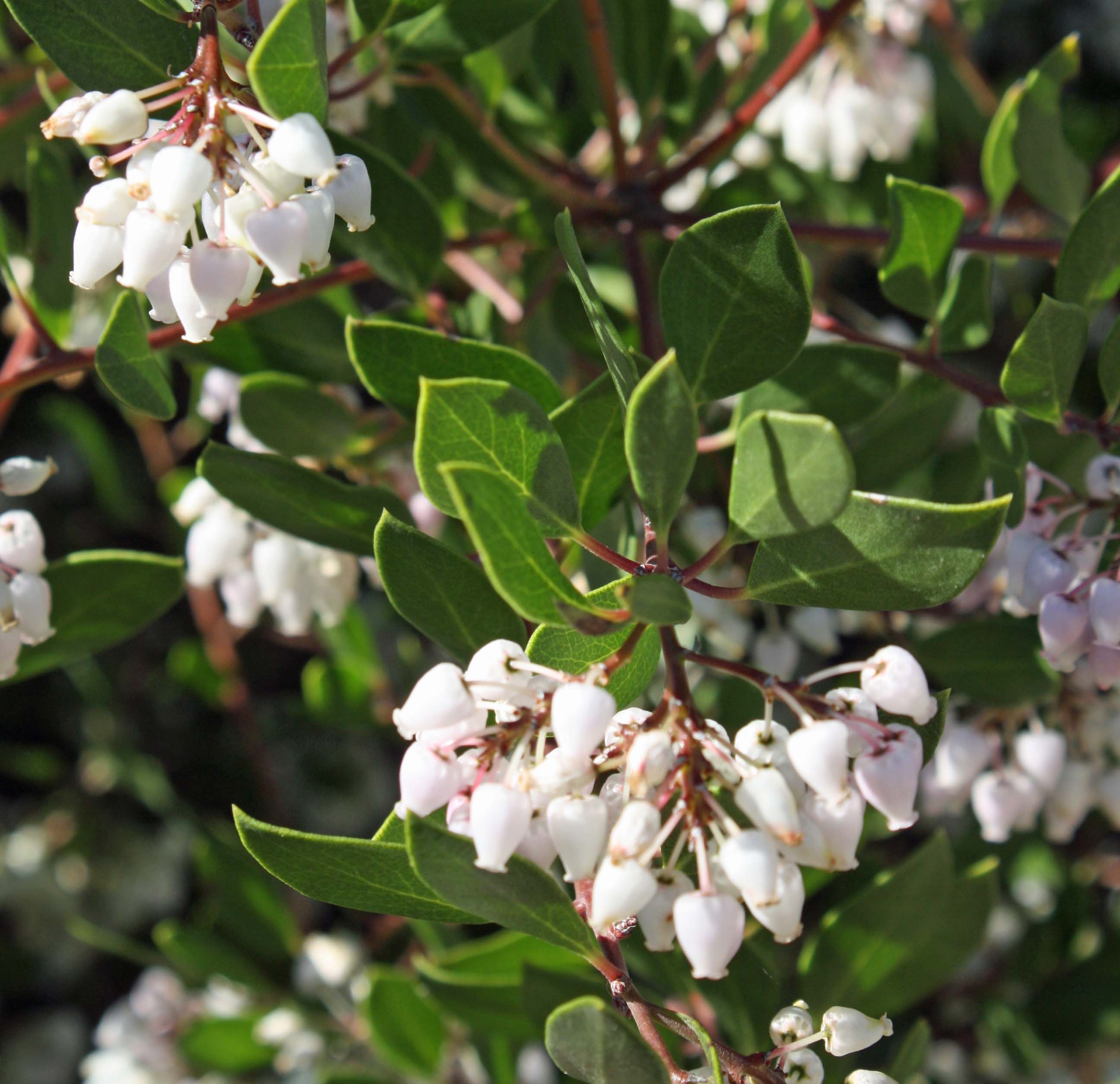
Manzanita was also in bloom with its sweet-smelling flowers. This shrub grows on our property in southern Oregon.
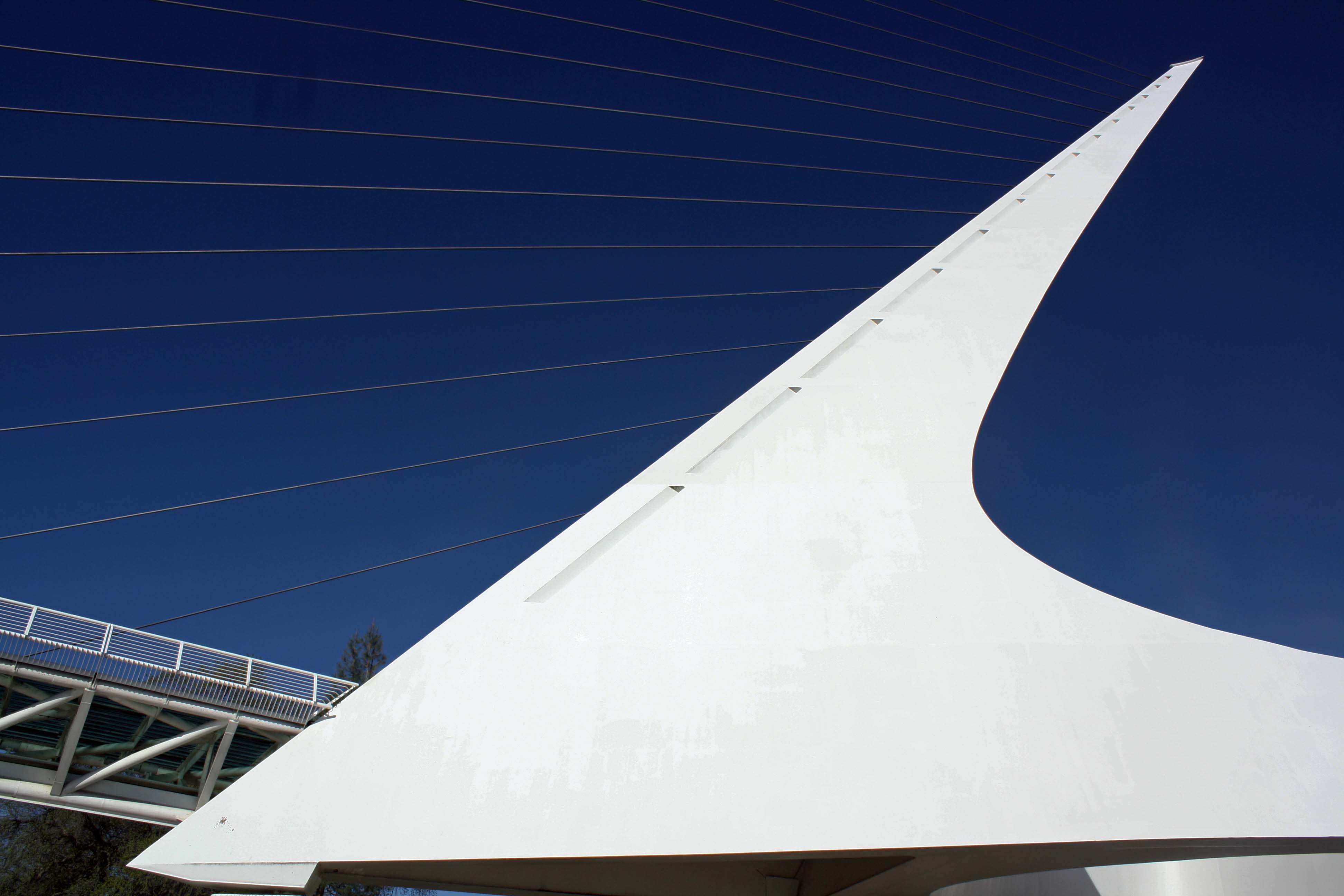
A final view of the pylon that captures its ‘sundial’ look. NEXT BLOG: Since we were in the area, we went for a hike along the Sacramento River. I’ll feature photos.
 Wandering through Time and Place