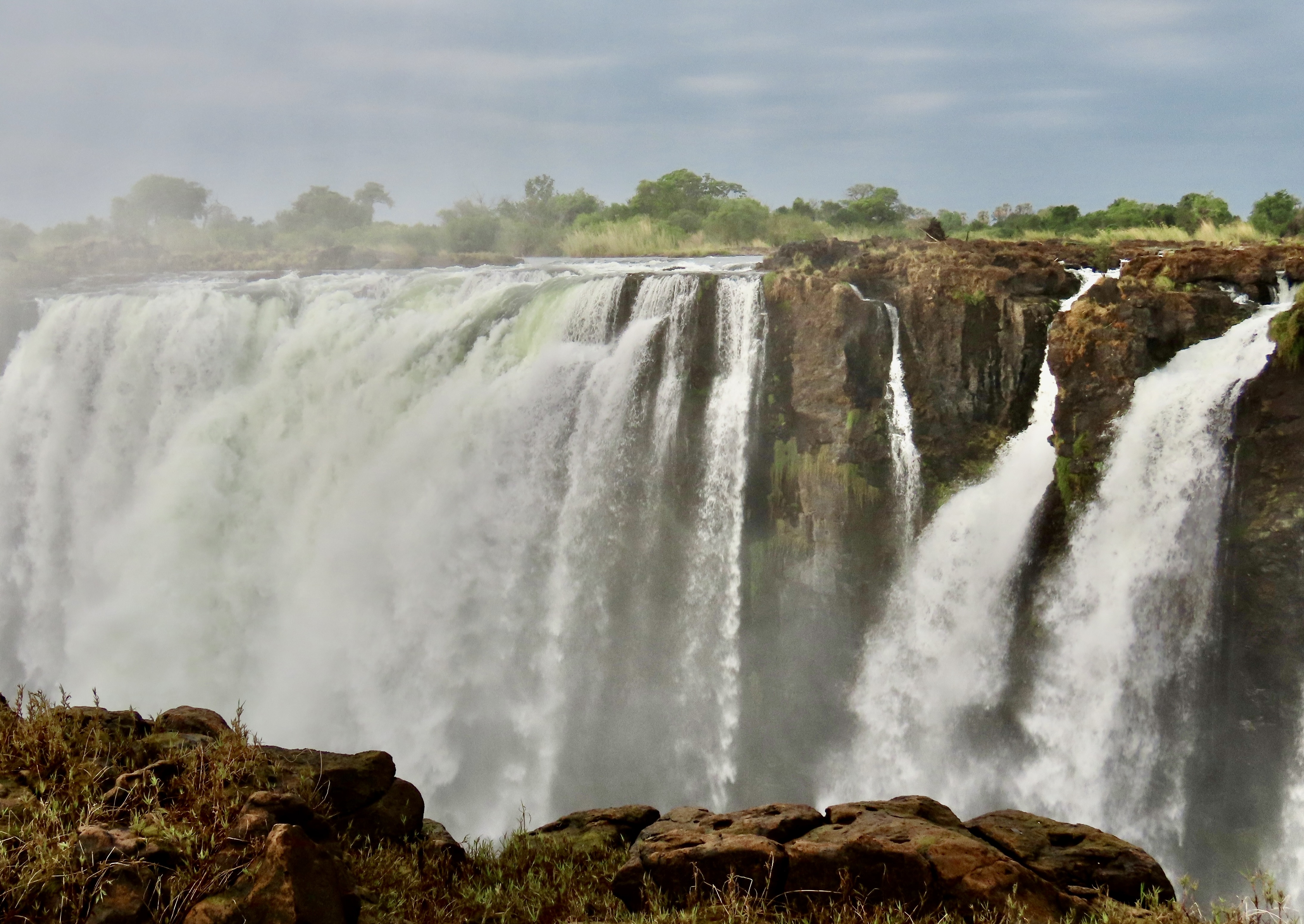
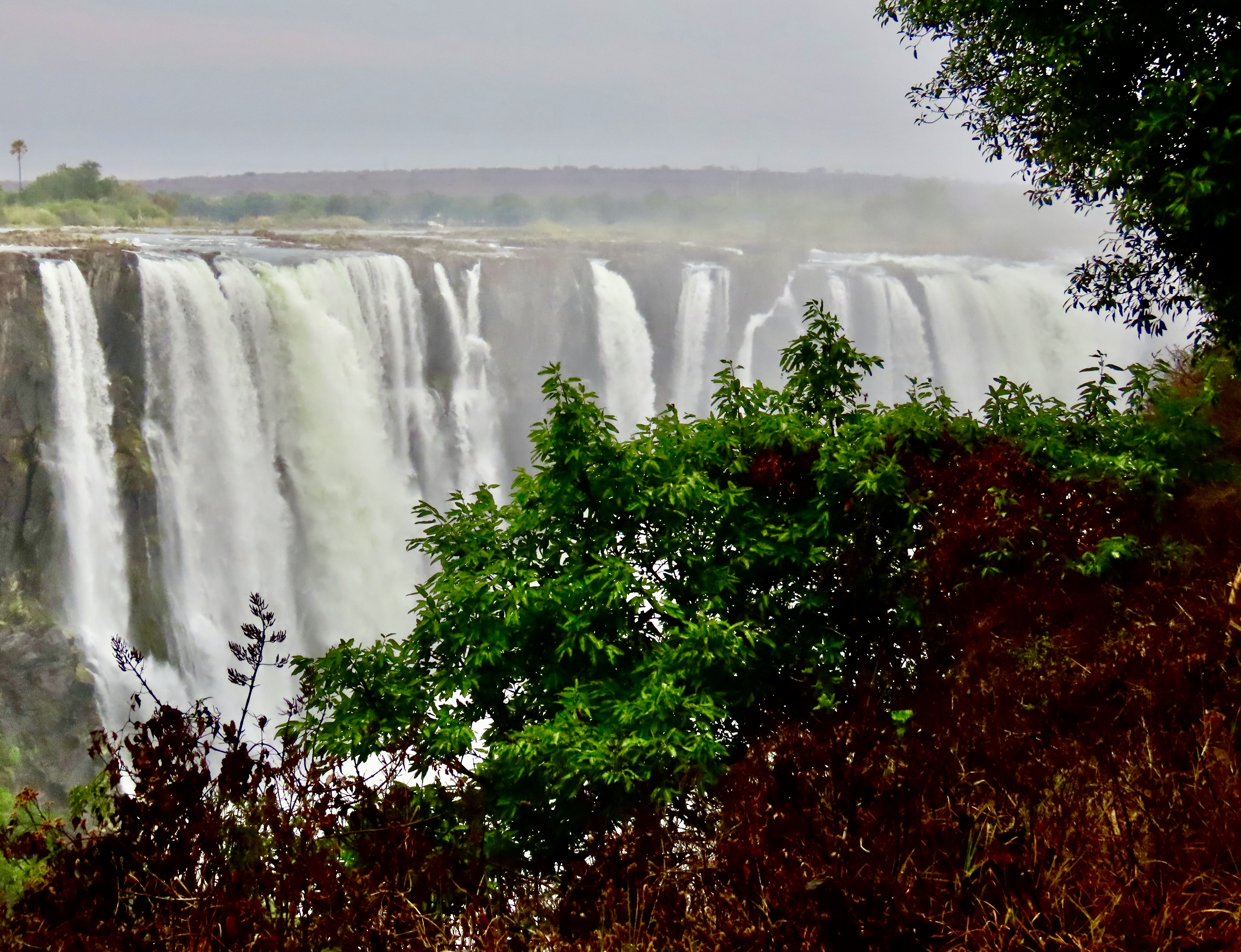
When David Livingston, the seasoned Scottish missionary and explorer, first came upon these roaring falls, one of the largest in the world, he was so impressed he named it after Queen Victoria, England’s long reigning monarch. To the natives of the region, however, the falls were Mosi-oa-Tunya, or “Thundering Smoke.”
I tried, I really did. This was supposed to be my last post on our African Safari. But when I looked through the last thousand photos of scenery, people, and a catch-all-miscellaneous that I considered blog worthy, I just couldn’t do it. Eventually, I got the thousand down to 82. I’ve divided them into three posts. Today I will focus on Victoria Falls and the surrounding area. The second post will wrap-up Chobe National Park, Hwange National Park and Lake Kariba. The last post will feature South Africa.
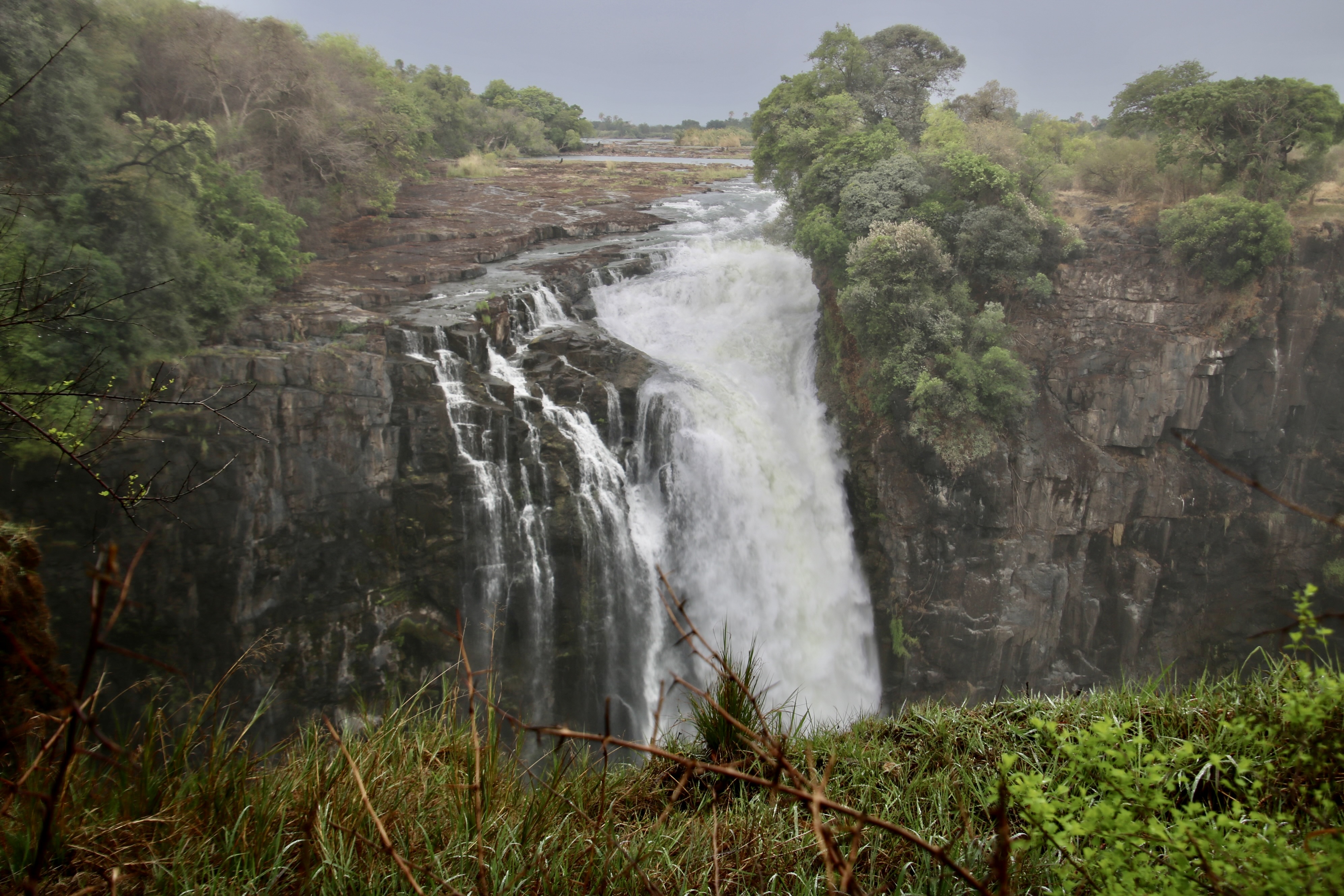
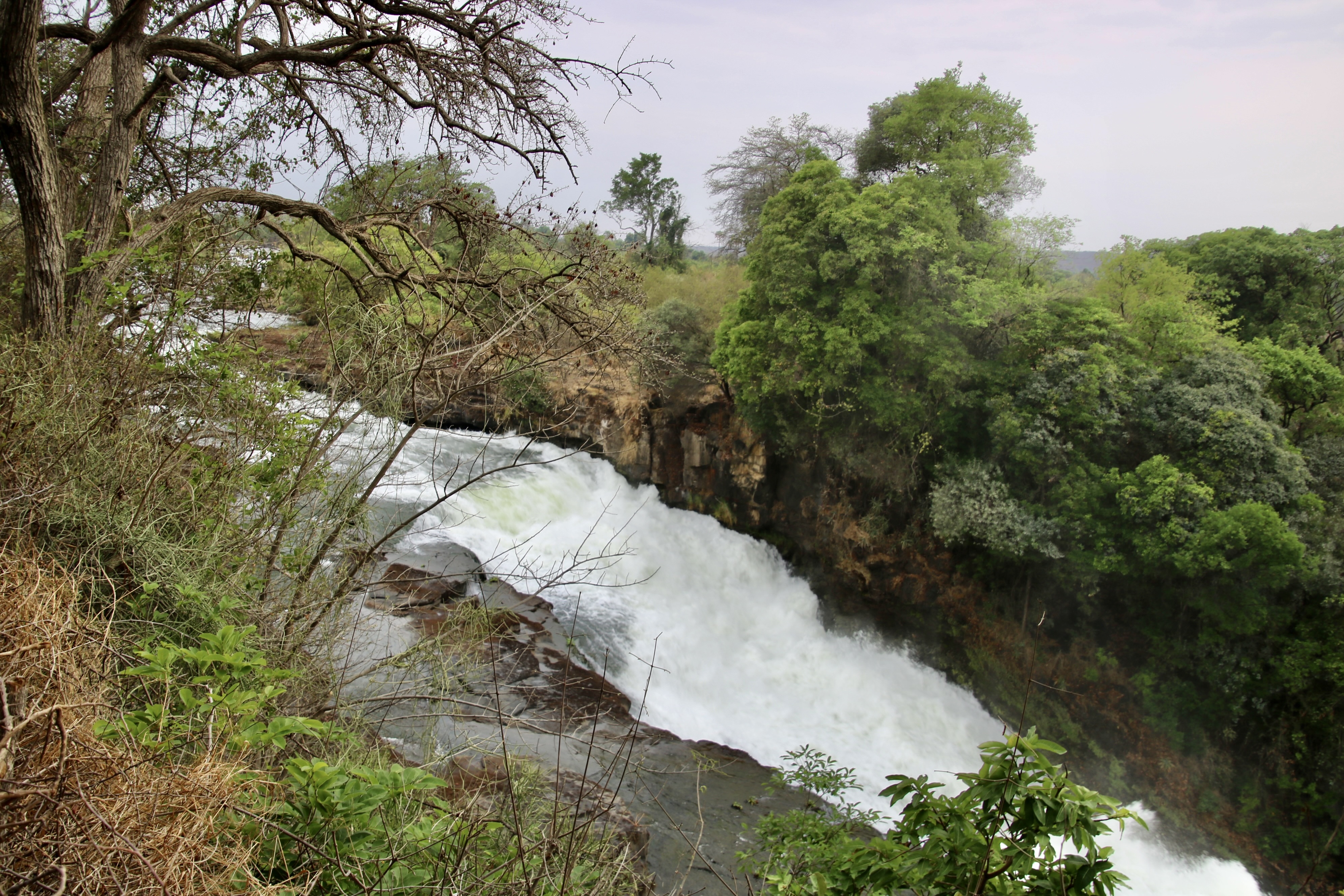
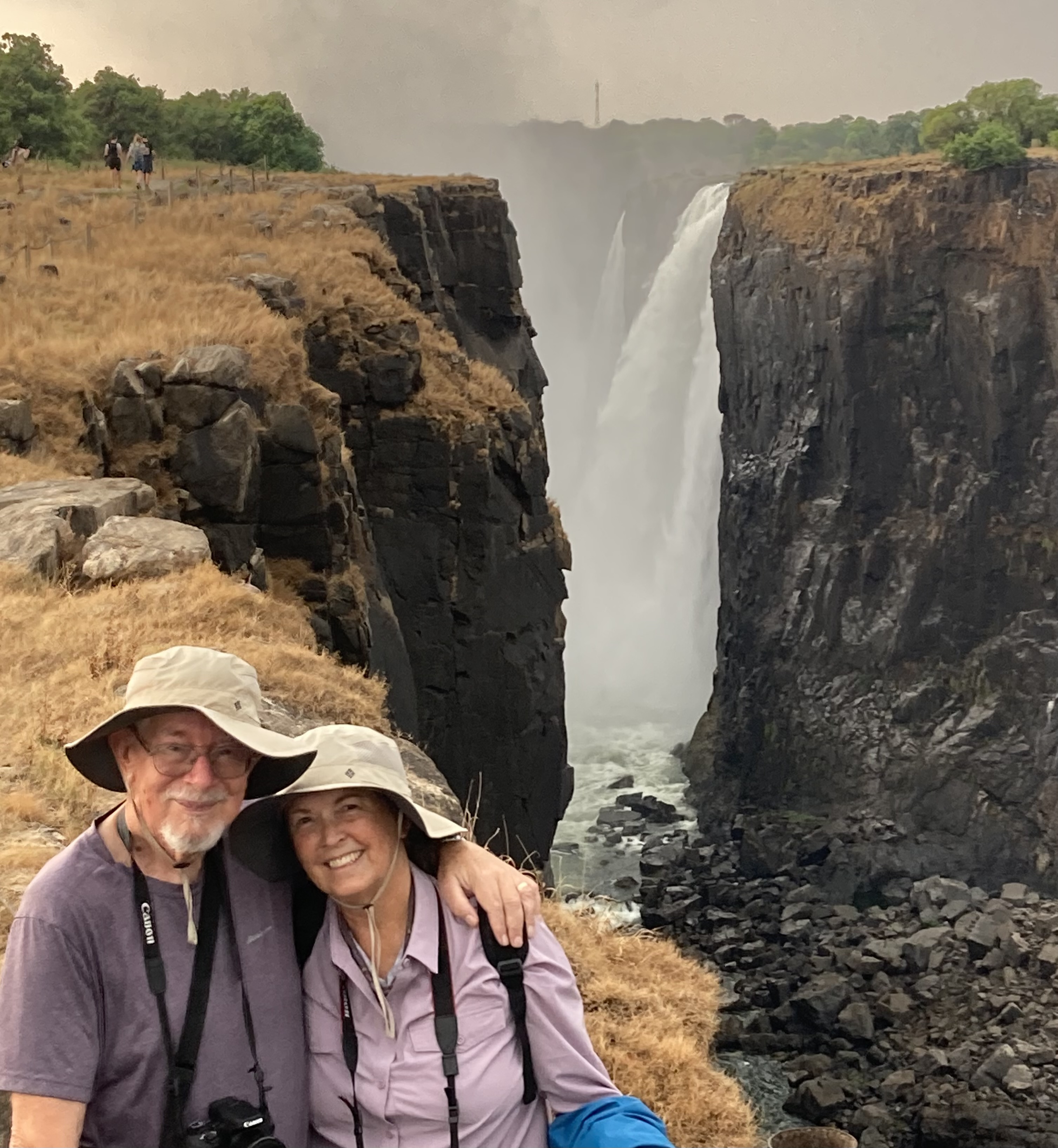
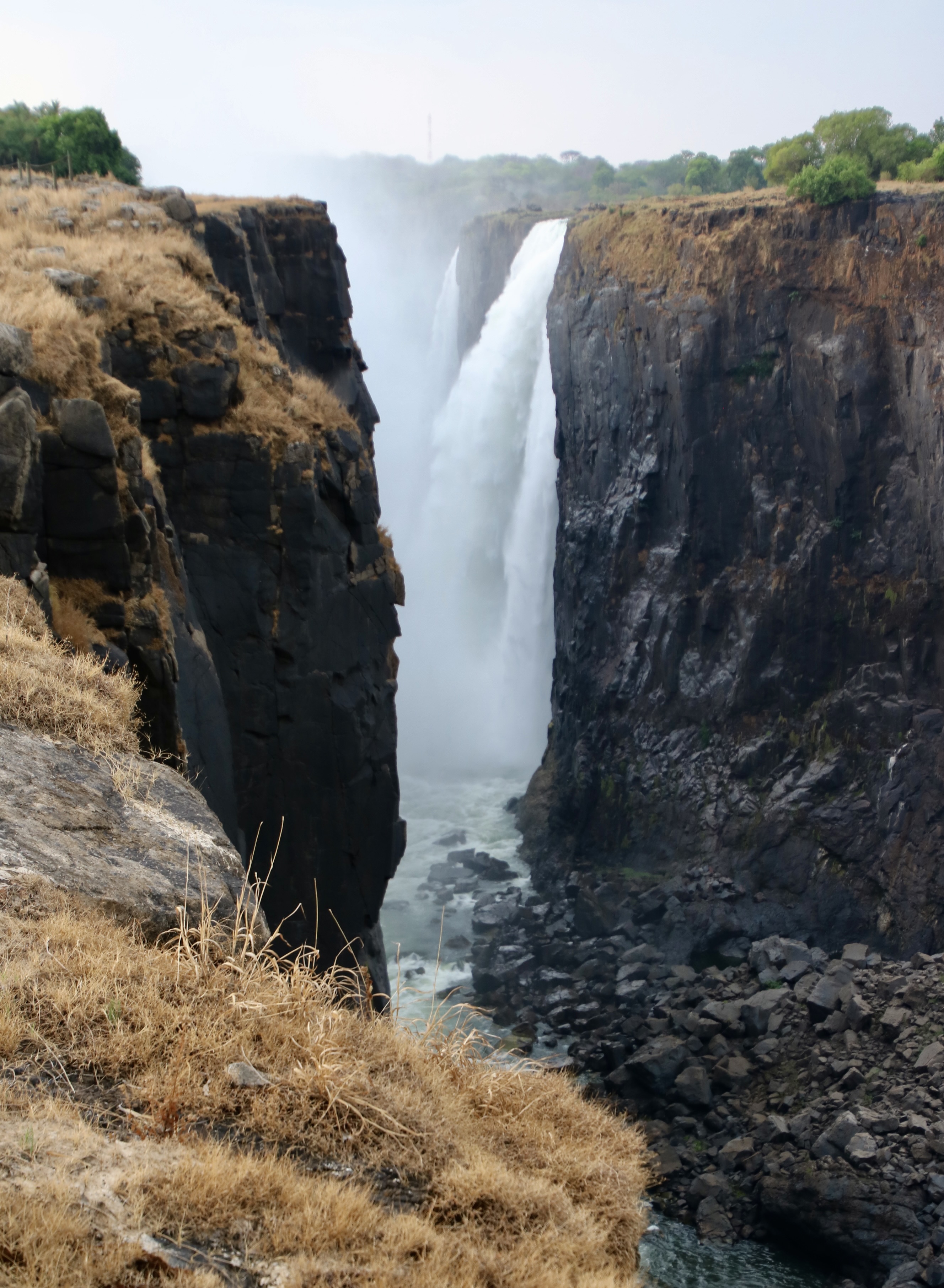
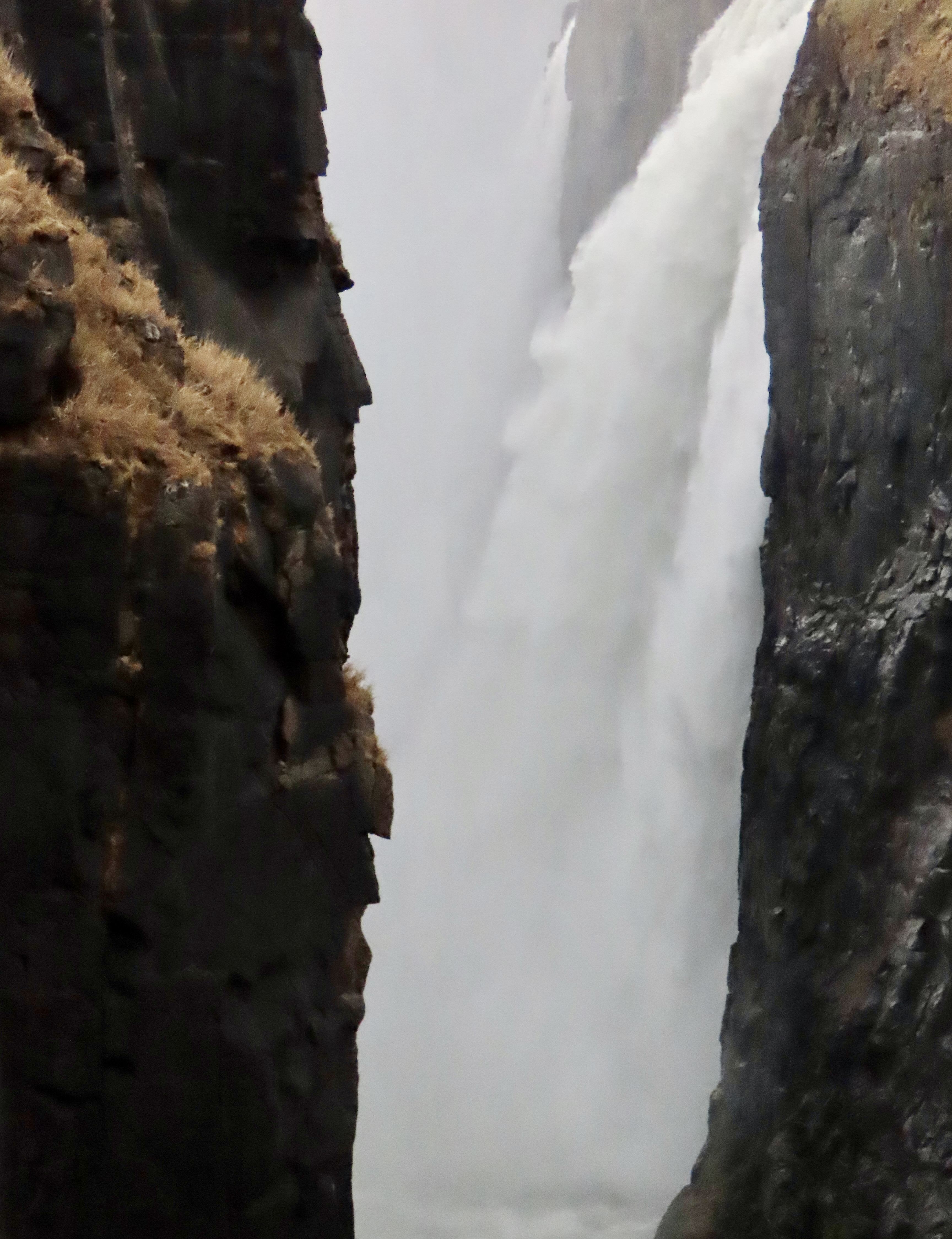
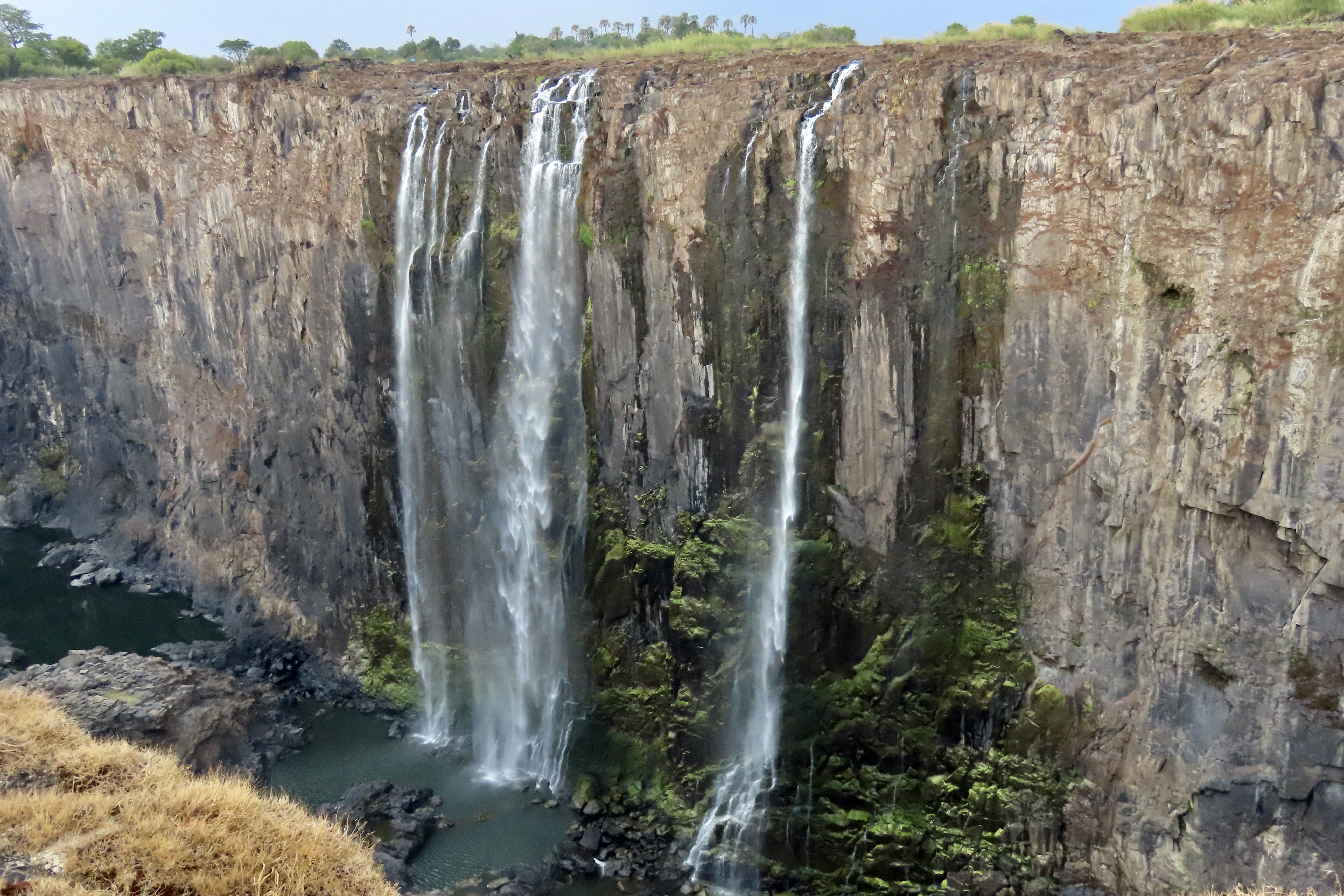
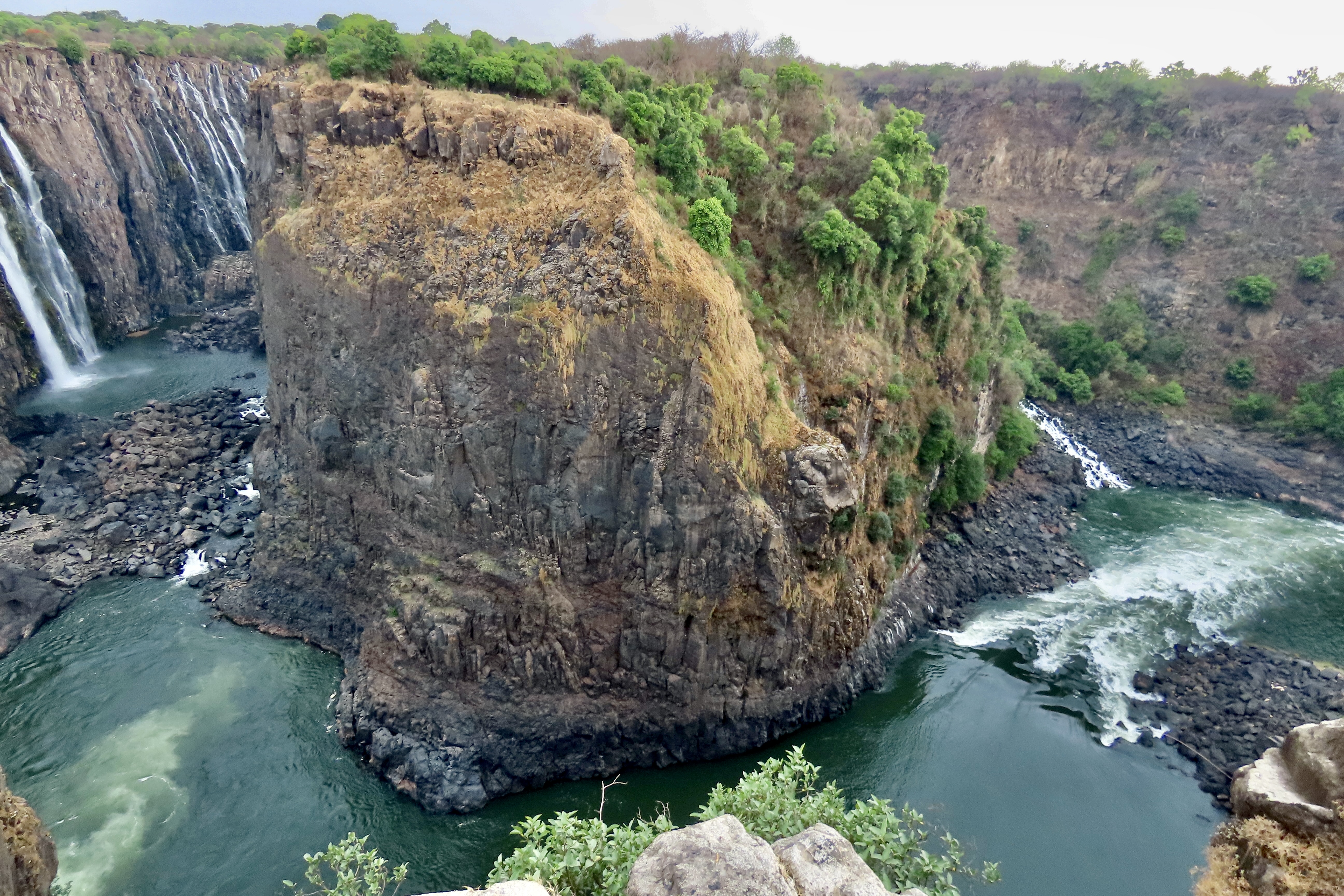
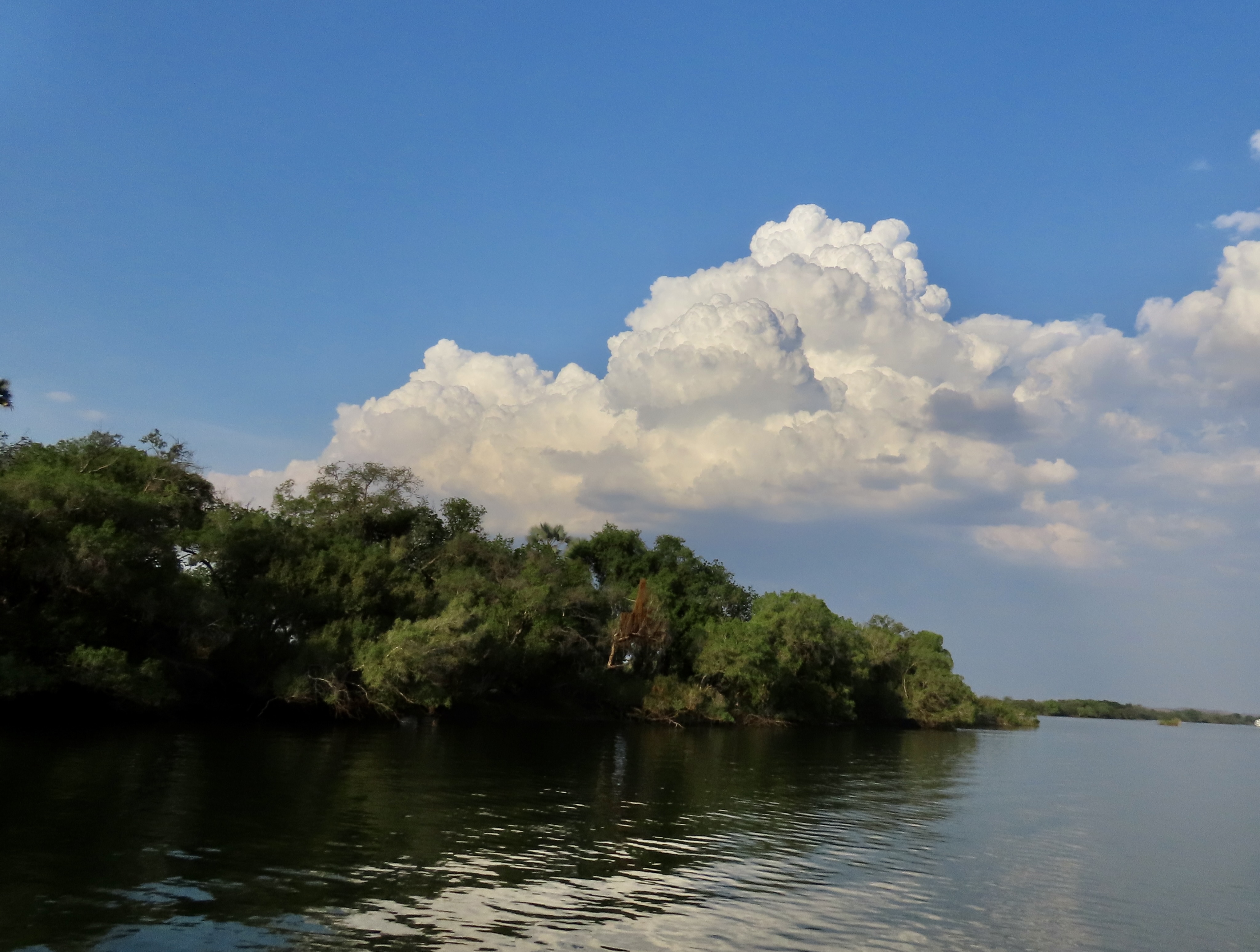
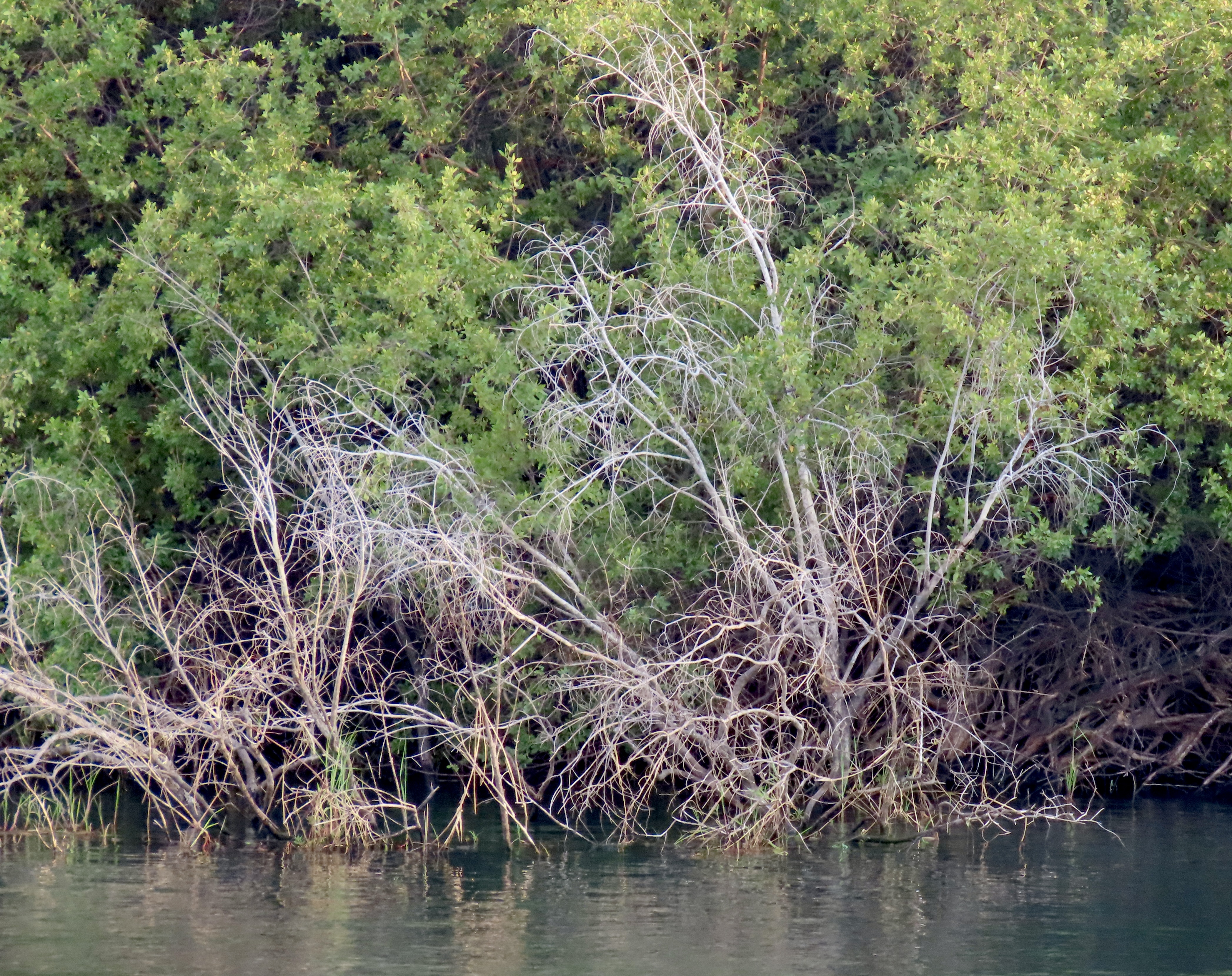
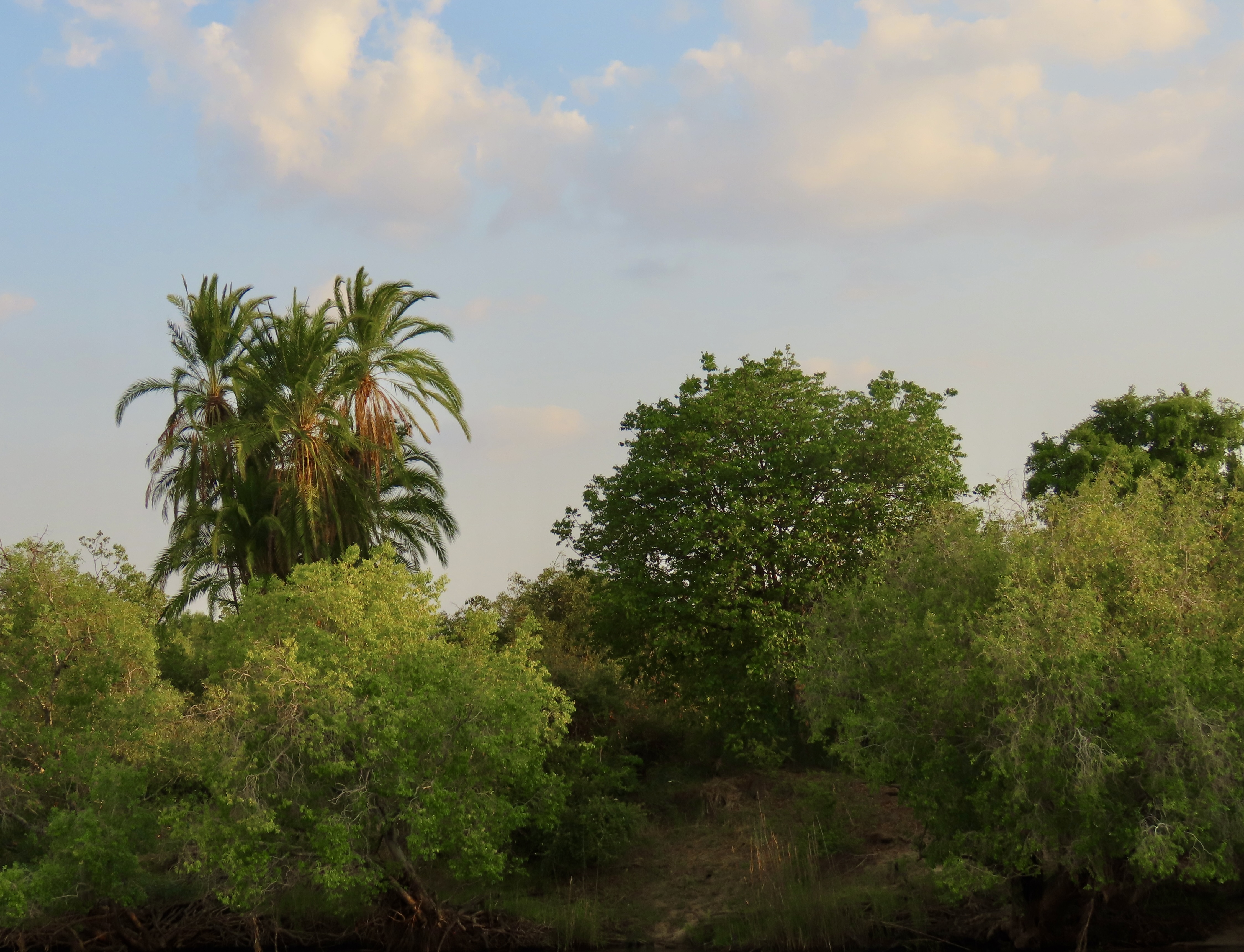
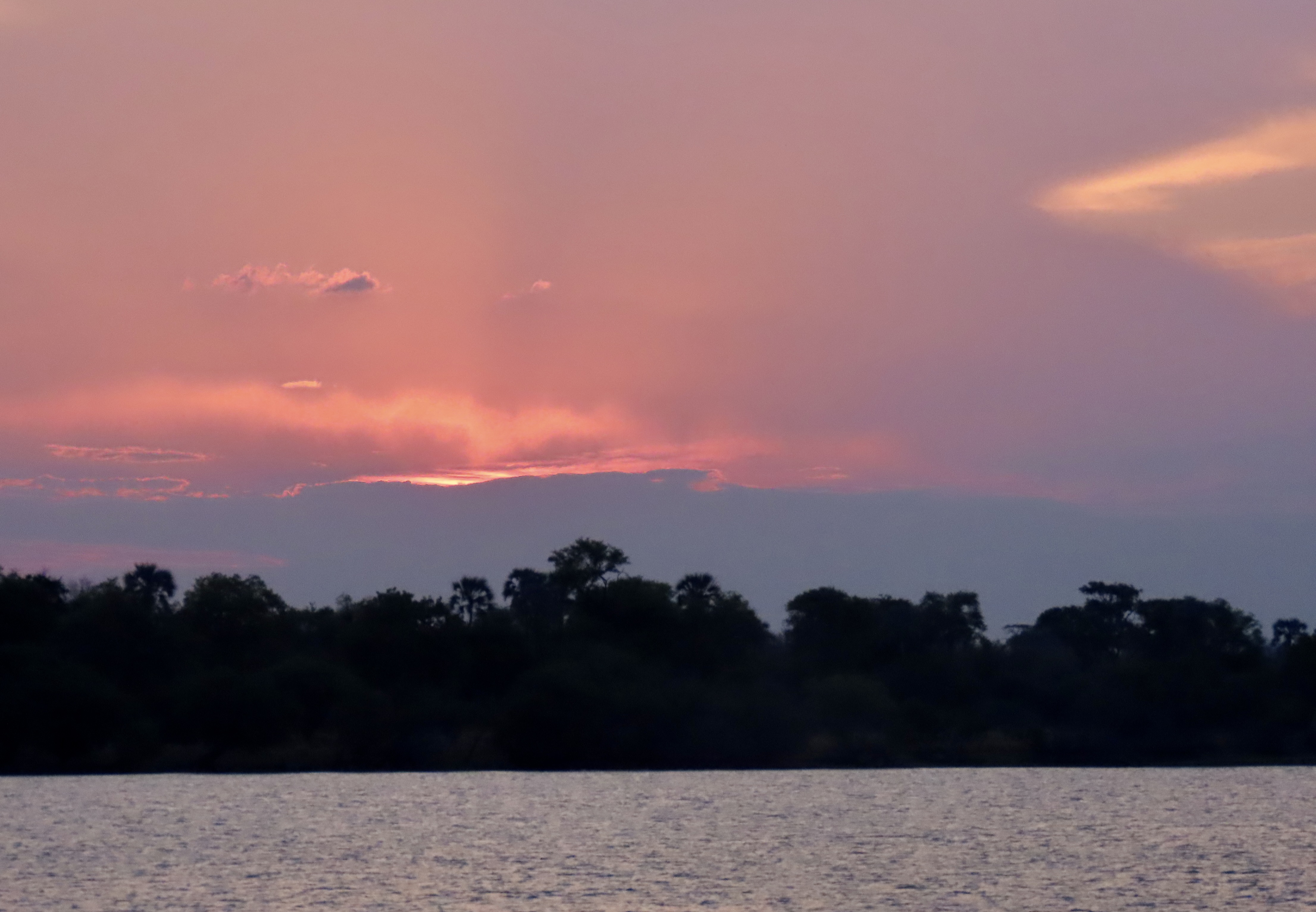
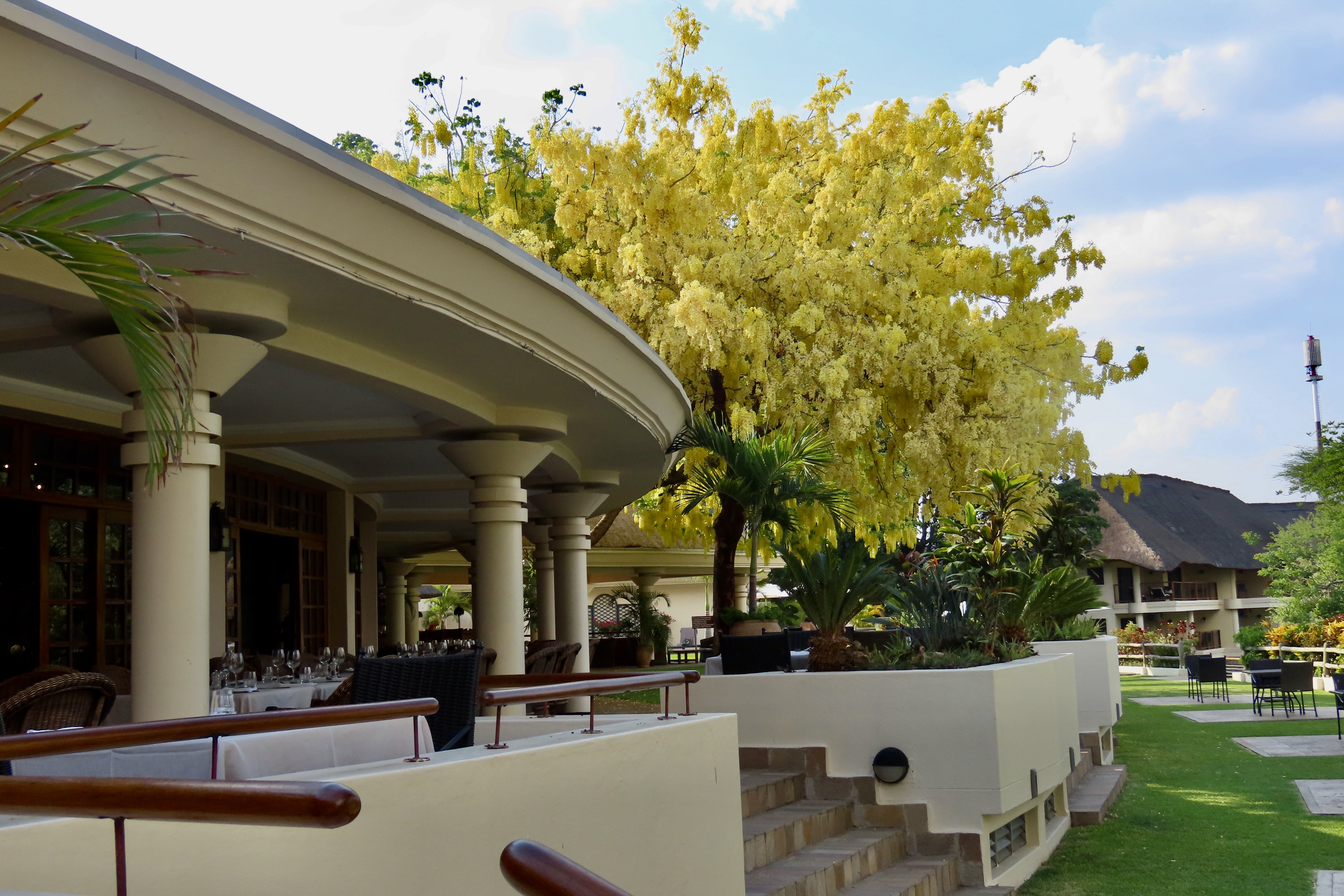
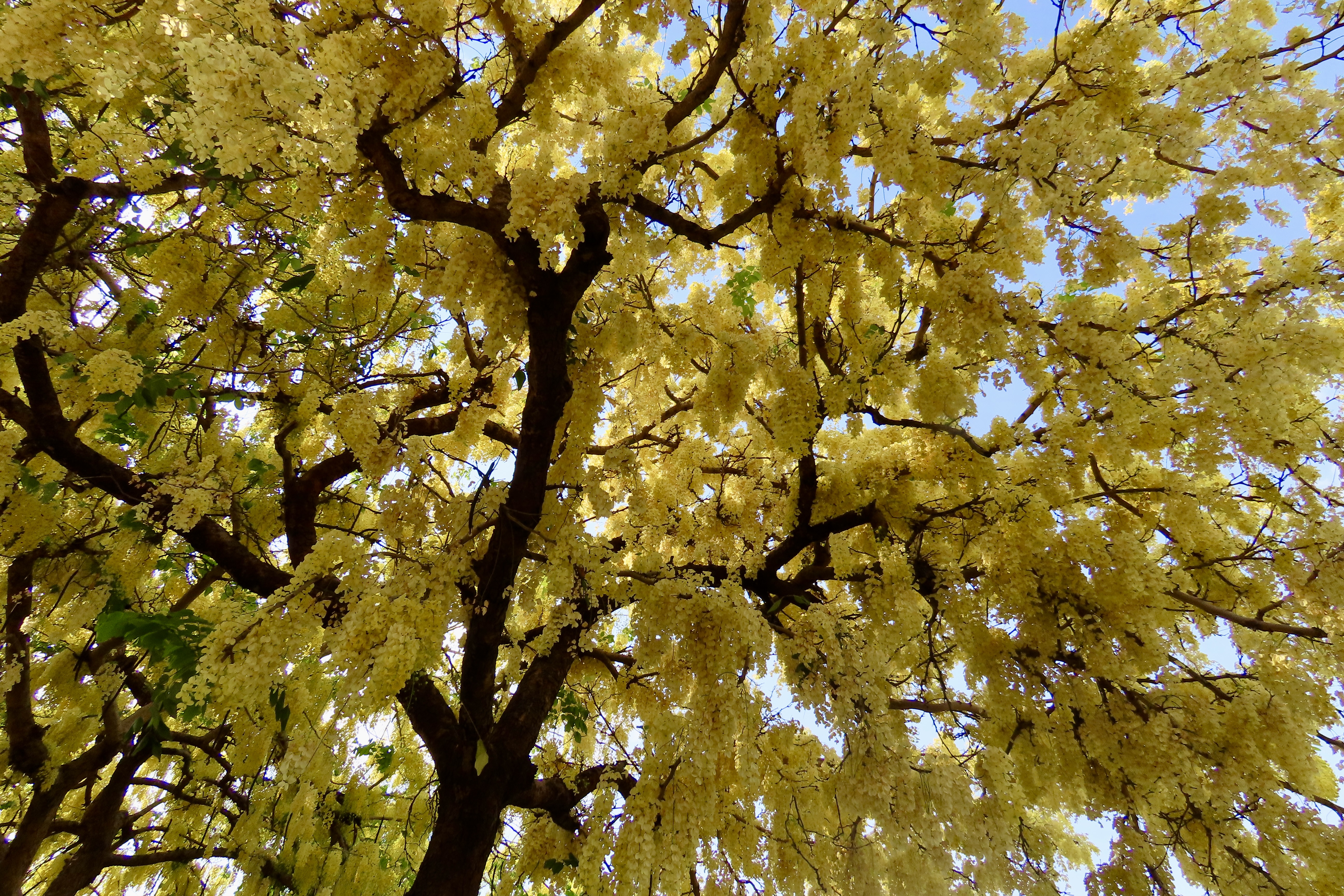
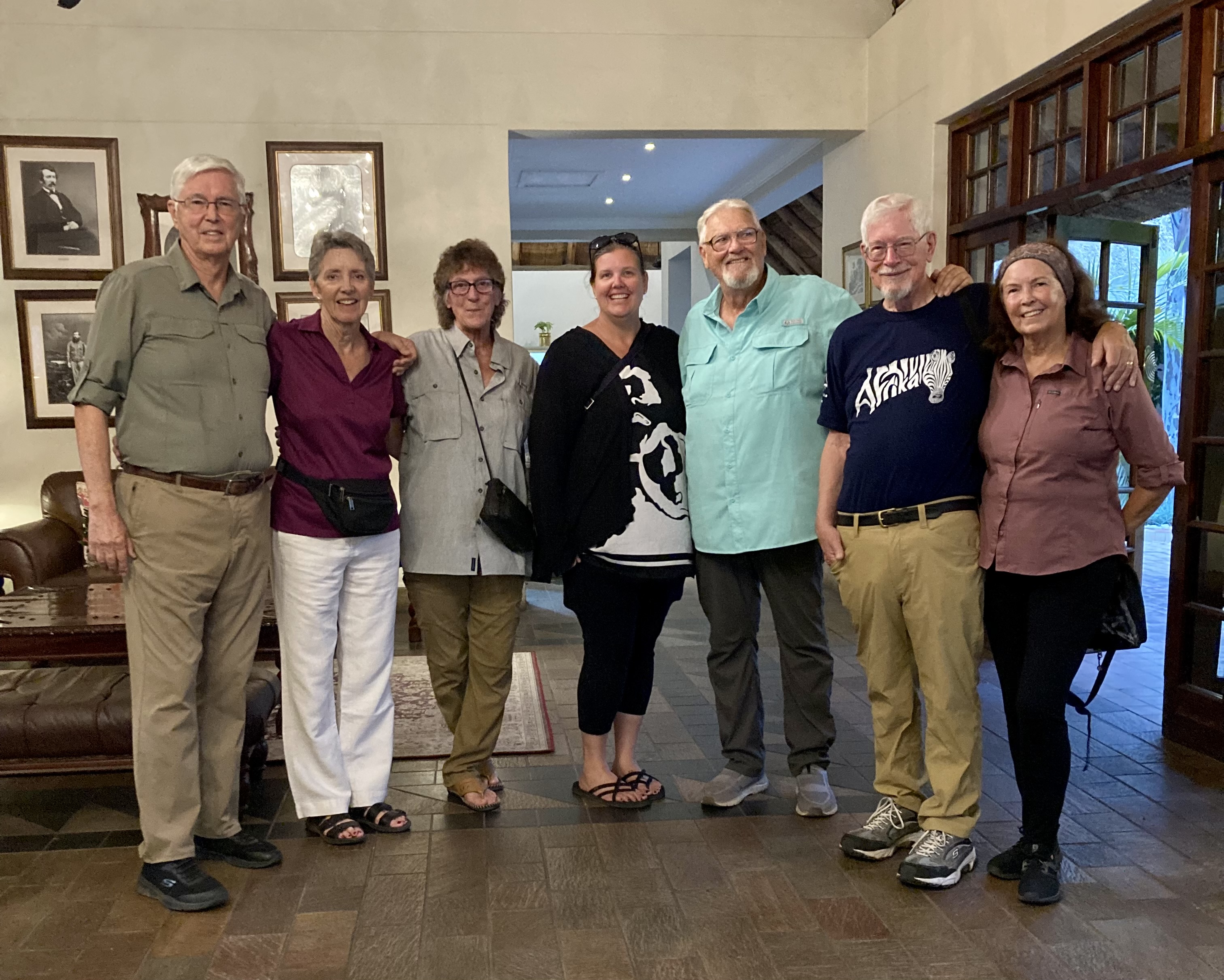
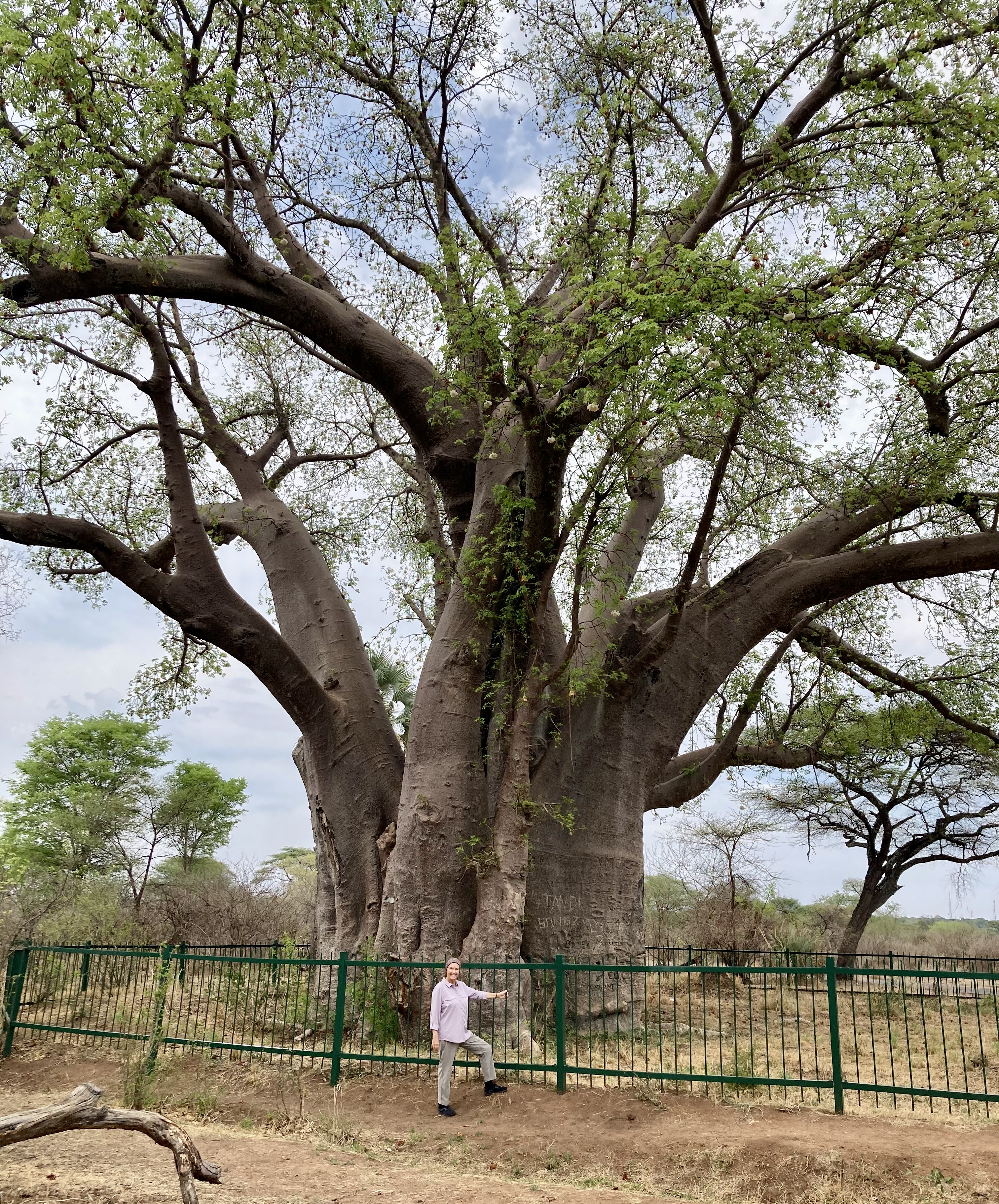
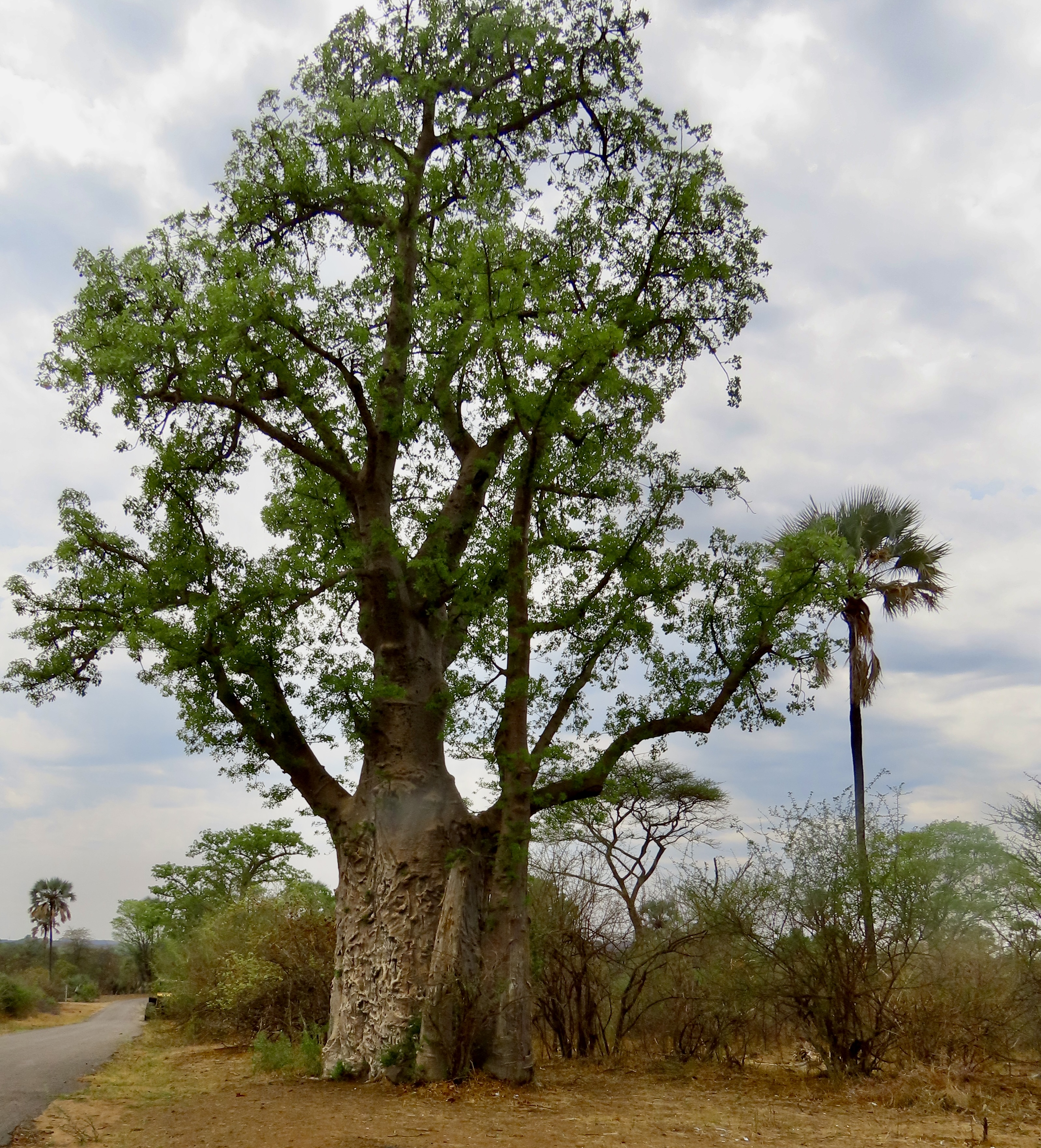
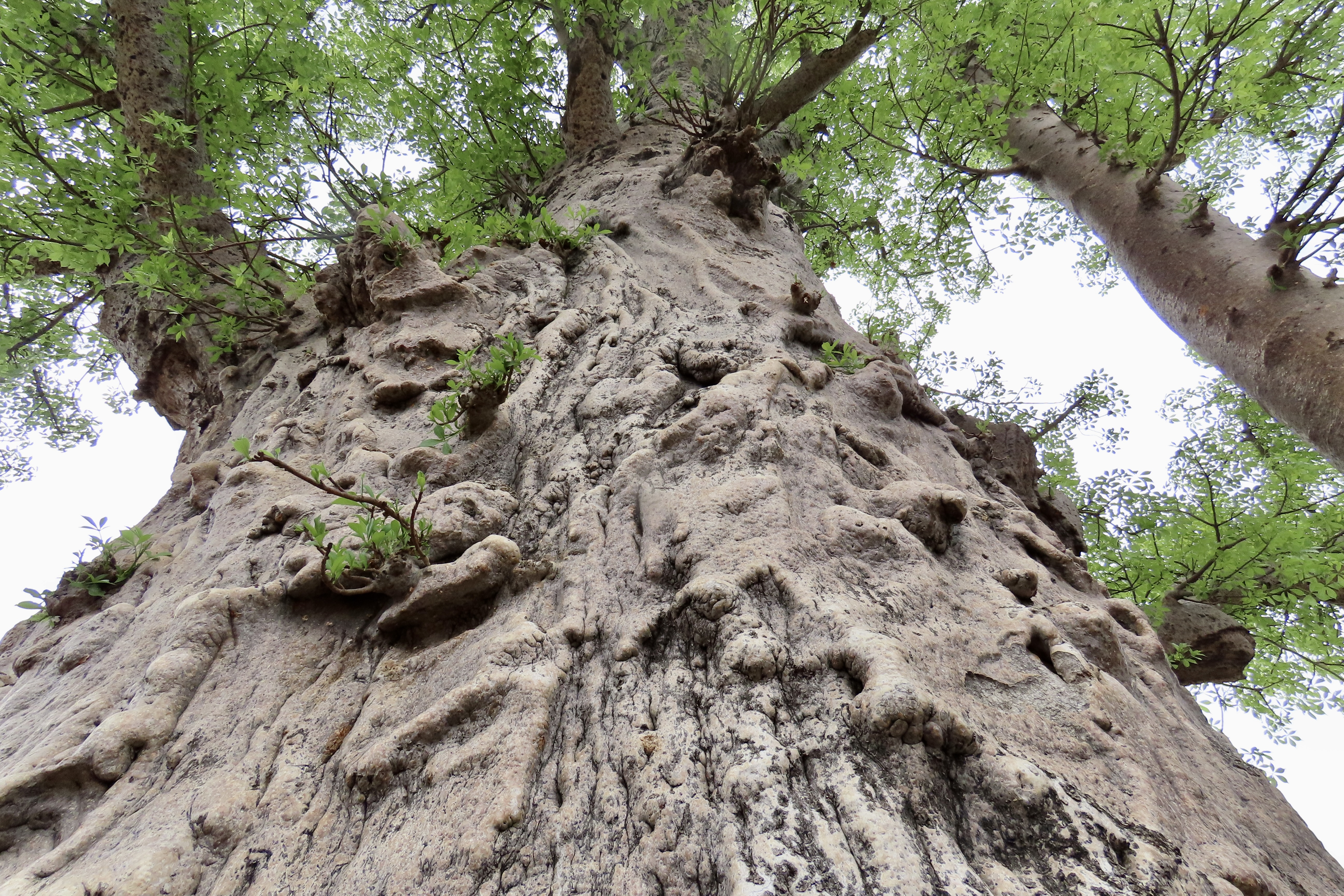
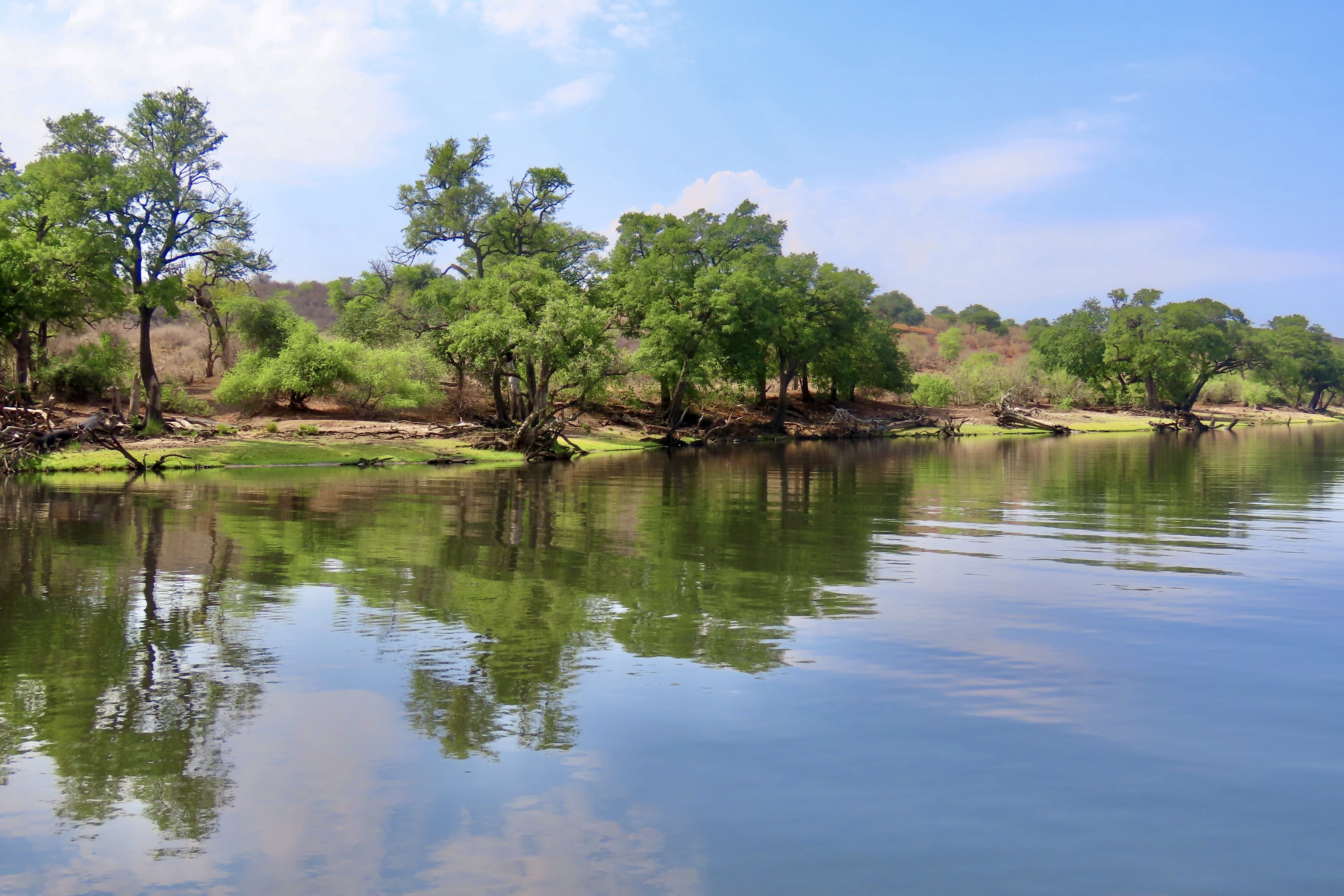
We arrived at Victoria Falls at the end of dry season when the water flow was close to its lowest. Imagine what this looks like at the height of rainy season! Based on its combined width, 5,604 ft (1,708 meters) and height, 354 feet (108 meters), Victoria Falls is considered the largest waterfall in the world. In April, when the river flow is at its peak, the spray sometimes reaches a height of over 2600 feet (800 meters) and can be seen from 30 miles (50k) away.A trail leads along the Zambezi River showing the main falls and several others such as this one that are part of the complex.Same falls, different view.Peggy absolutely loves falls. Whenever we are near one, we detour from our selected route. She was one one happy camper.Another view from where we were sitting. During rainy season, this view would be wiped out by the spray.And a close up. Can you hear the roar?Walking along the trail, we came on these jewels.The Zambezi River continues to cut a canyon. Eventually, this may be an island. For now, the river flows out, around this promontory, and on.We went on a dinner cruise on the Zambezi River above the falls. Clouds were threatening a beginning to the rainy season. You have already seen crocodiles, hippos, and various birds from this cruise on earlier posts.Peggy and I really liked the contrast created by this dead tree and the greenery behind it.Another view of the trees along the Zambezi.Our evening cruise also brought us a spectacular, ethereal sunset. It was one of many we experienced while we were in Africa. We will be featuring more of them in our final two posts.A view of the hotel we stayed at in Victoria Falls. This is the hotel where I was visited by the mongoose.The trees surrounding the hotel were bursting in color.We traveled with a great group of people on our safari through Botswana and Zambia. These are three of the friends we made along with Peggy’s brother John and his wife Frances joining us for a final photo in our Victoria Falls hotel. On our way to the airport to fly to South Africa, our guide, Samatha, took us to see this huge baobab tree on the outskirts of Victoria Falls. Peggy provides perspective on its size. This tree is estimated to be around 1200 years old. Its circumference is 73 feet and height 78 feet. A tree this size can hold over 120,000 liters of water, over 31,000 gallons.Another large baobab tree stood next to the giant.I took a photo from the base of the tree up. The scarification is likely caused by elephants that love to feed on its bark. That’s it for today. Our next post will feature final scenes from Chobe National Park, Hwange National Park and Lake Kariba.View along the Chobe River in Chobe National Park, Botswana.
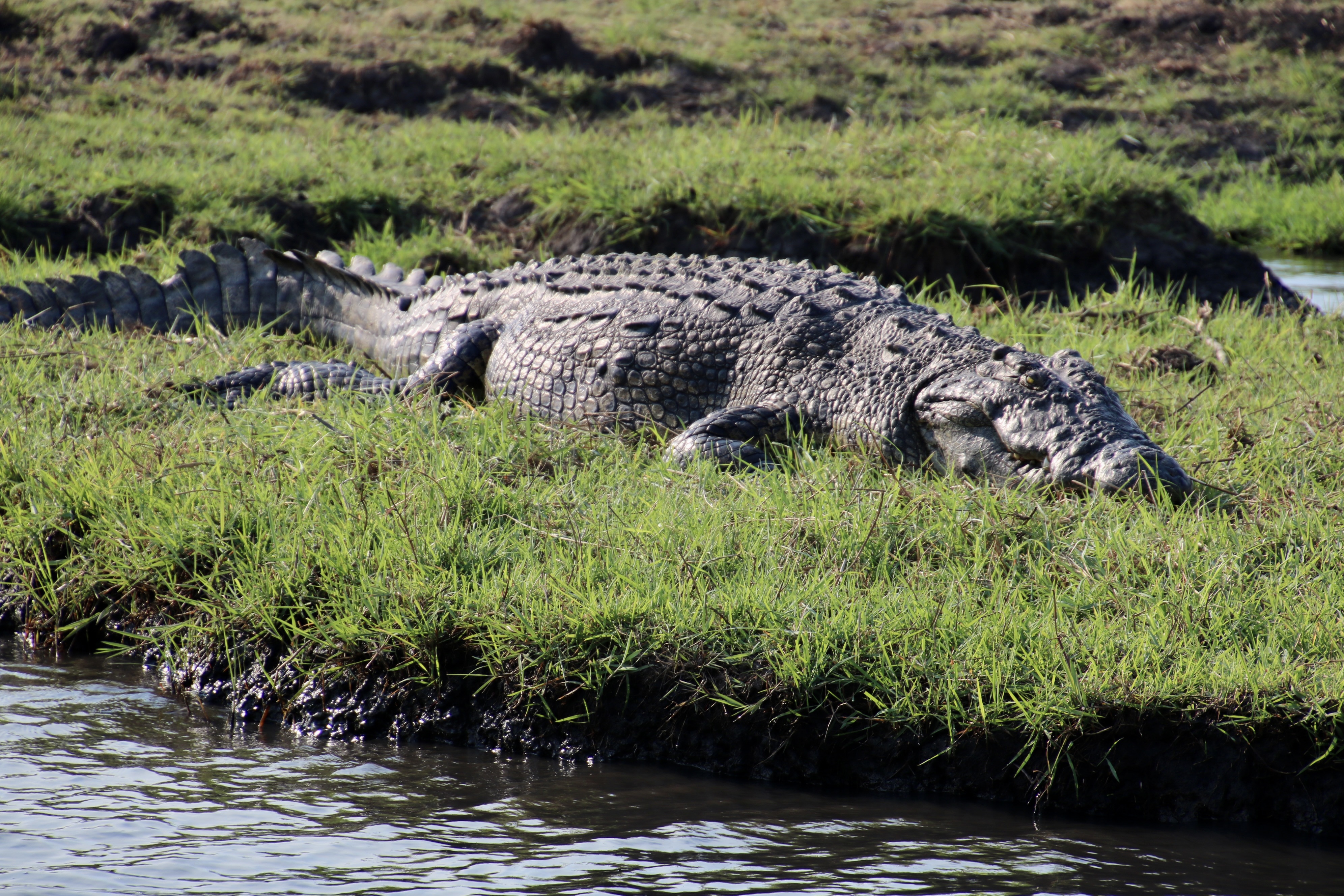
It would have been glad to have one of us for dinner. Crocodiles eat hundreds of people in Africa every year. But we were safely ensconced on our boat. This was the first of several crocodiles we would see on our African safari through Botswana and Zimbabwe, including a monster.
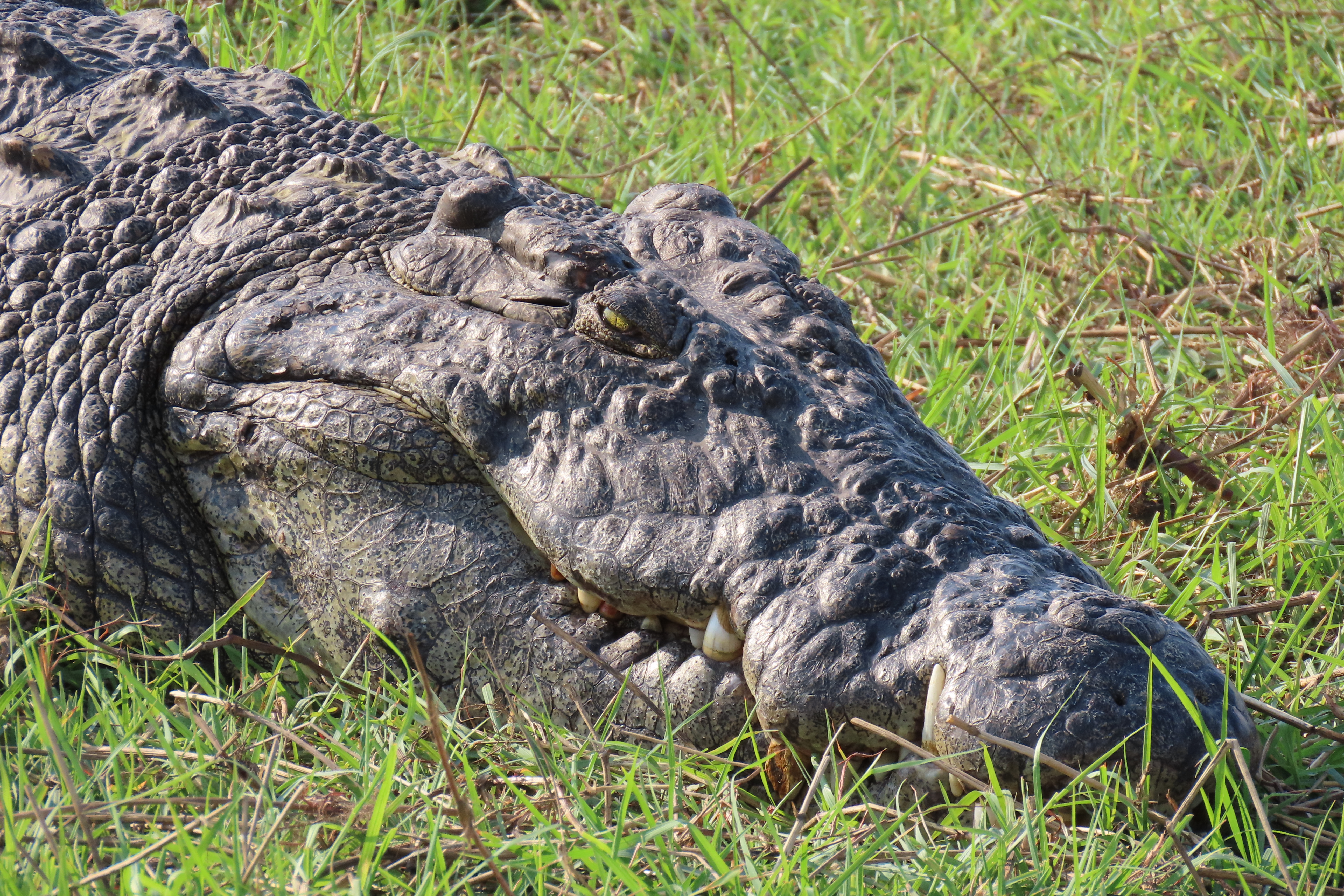
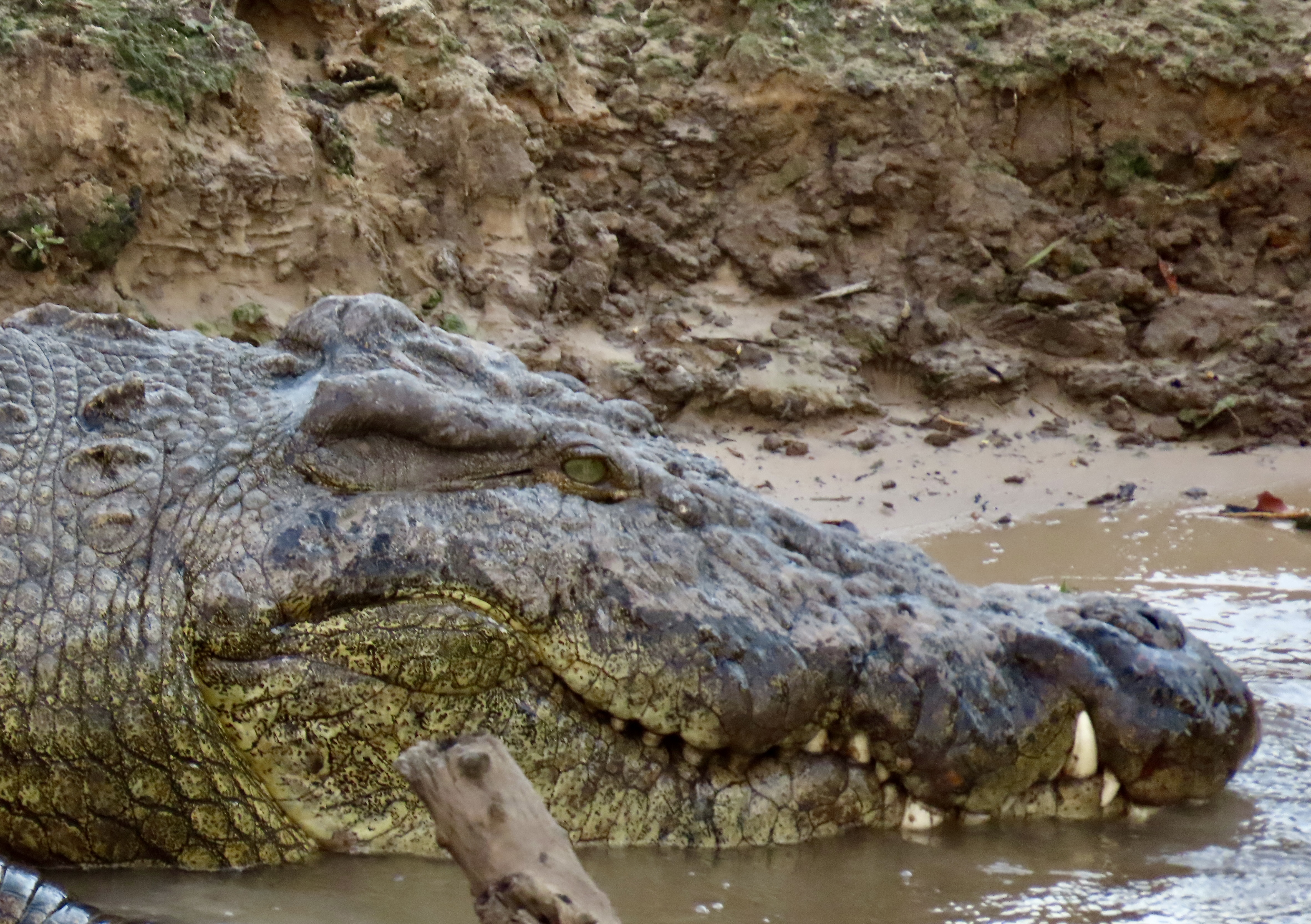
Nile Crocodiles are fascinating, fierce predators. You don’t want to mess with them. We were able to see them lying on the shores of rivers, lakes and ponds, slipping through the water, and even fighting. There is nothing endangered about them; they are quite common throughout sub-Saharan Africa. Large males can reach a length of 14 feet and weigh up to 1700 pounds. Females up to 12 feet and 550 pounds.
By the way, have you ever used or heard the expression ‘shedding crocodile tears?’ It means you are being insincere. The derivative? Crocodiles shed tears when they are eating whatever they have captured for dinner.
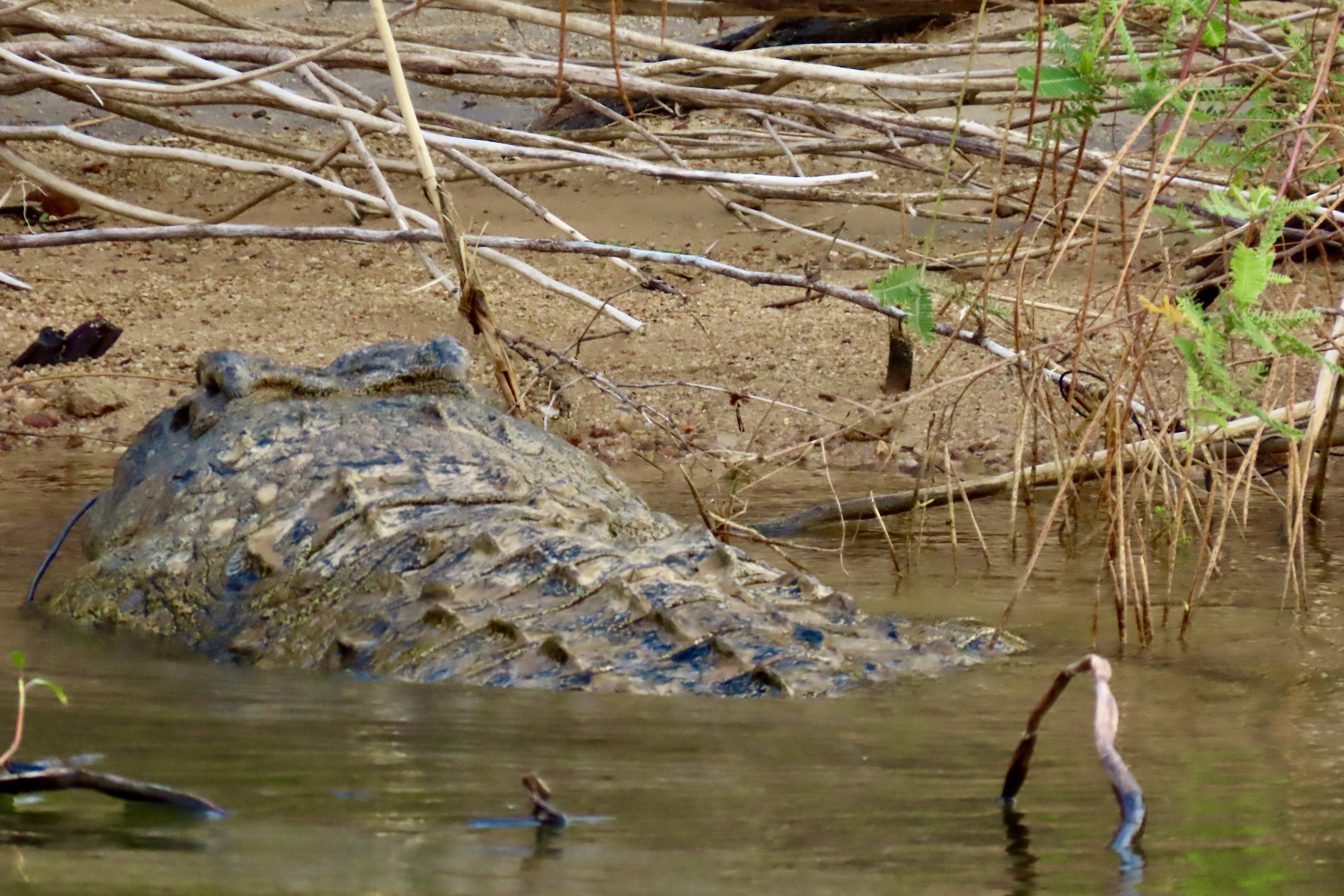
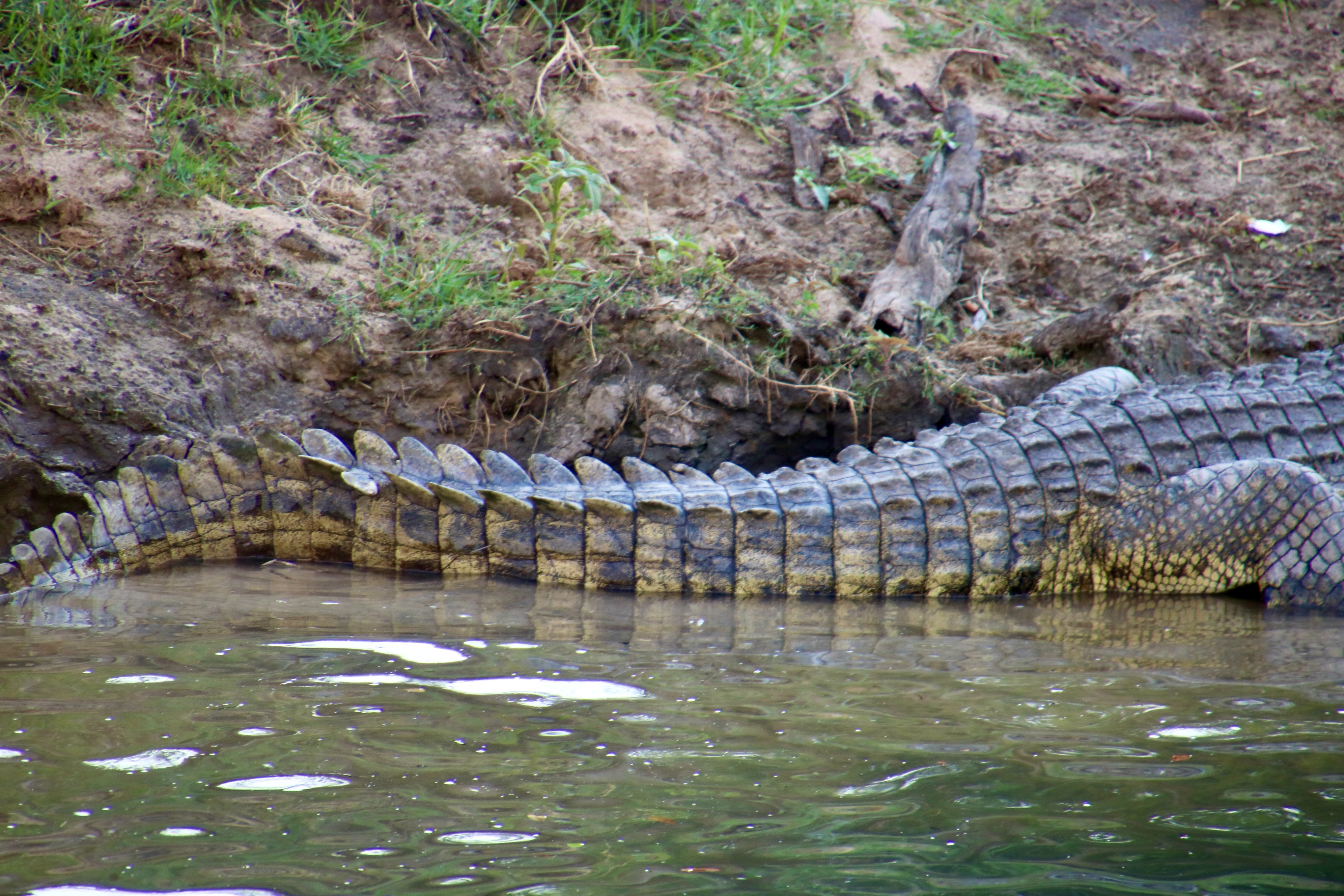
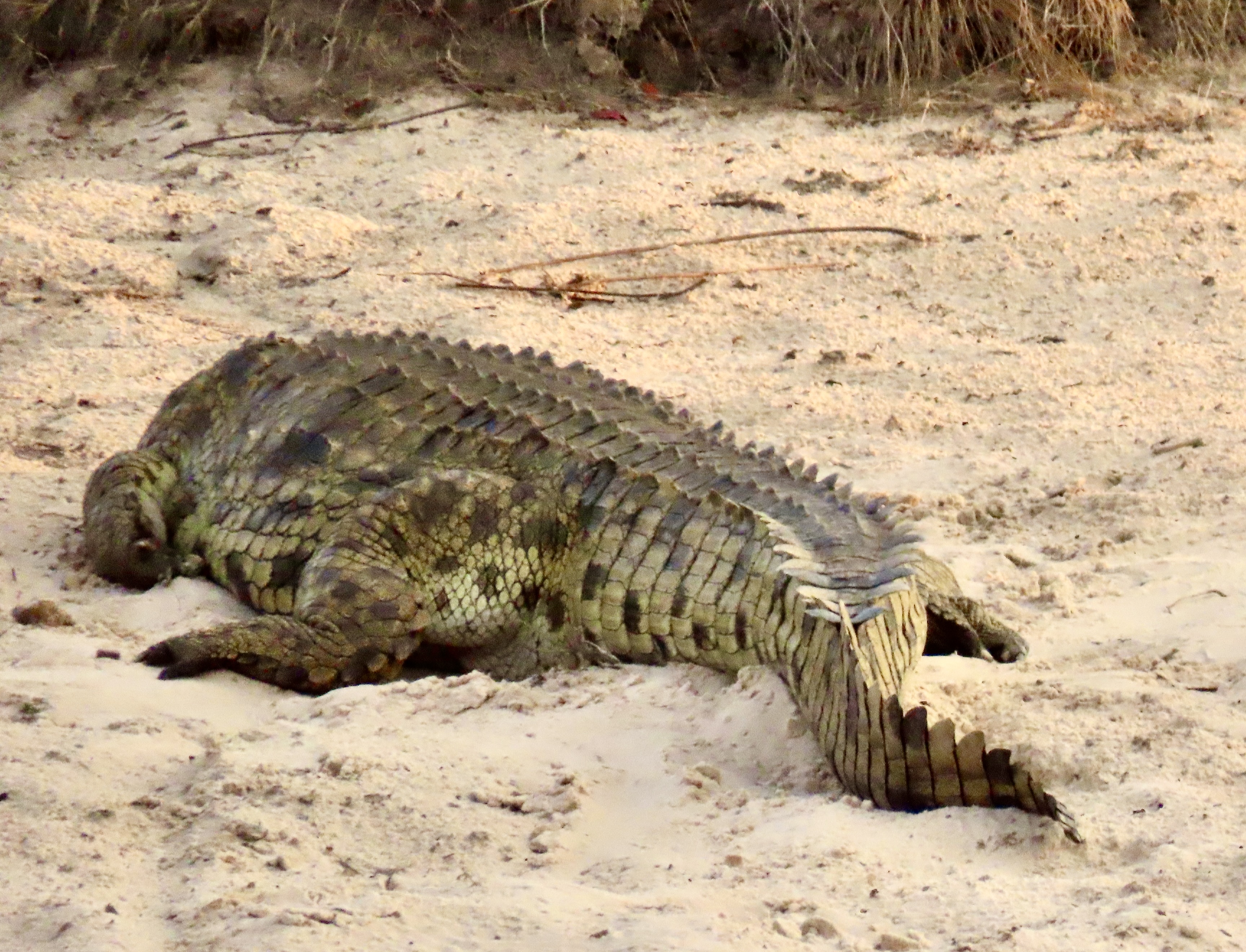
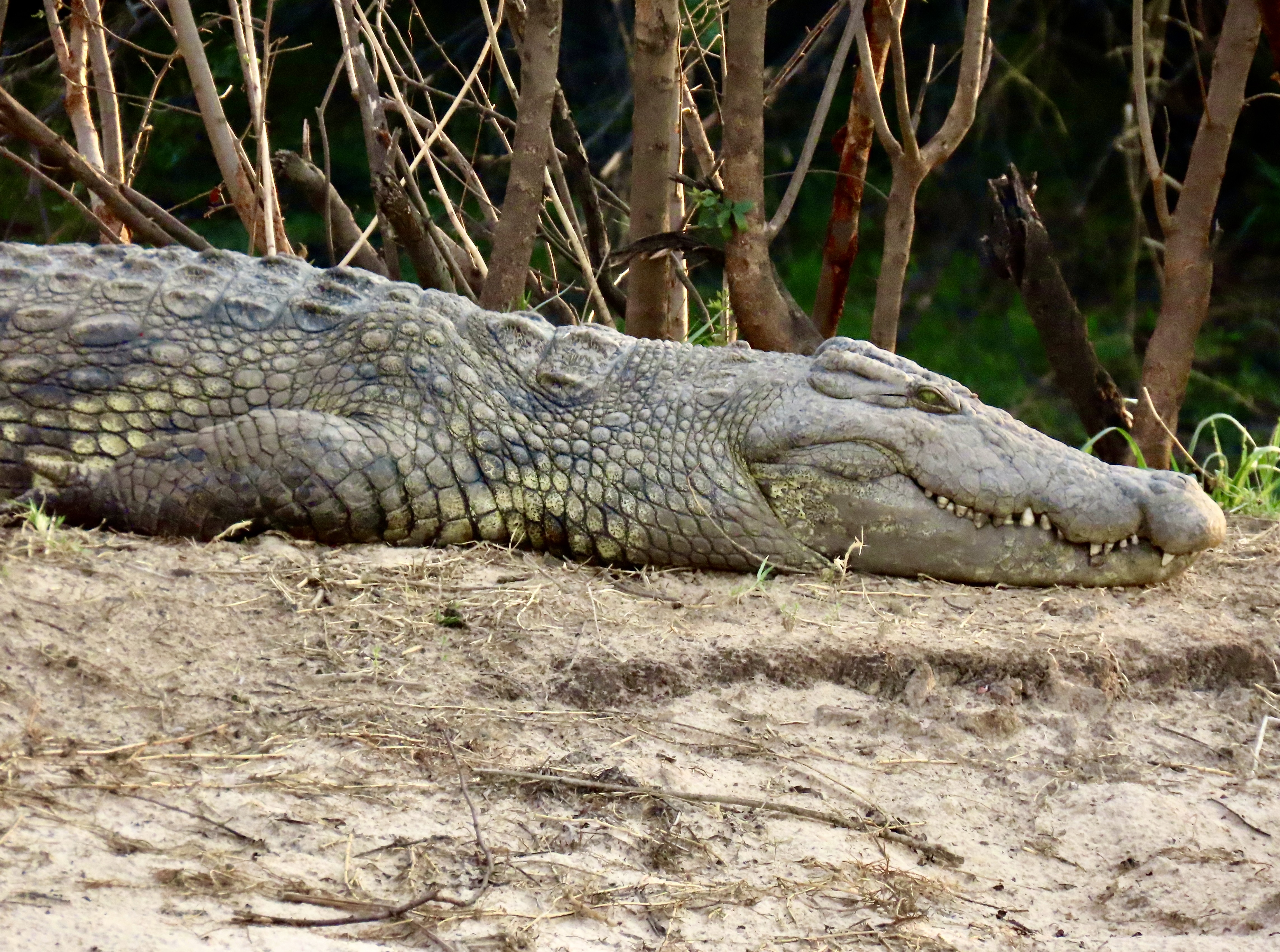
This is the crocodile I featured above, enjoying the sun on the banks of the Chobe River. A dead Cape buffalo that it may have been helping devour was behind it. (Not in the photo.)Not quite what I would classify as a toothy grin. Here’s an interesting fact. Crocodiles can go through 4000 teeth in a lifetime. They are able to replace each of their 80 teeth up to 50 times.This youngster from Chobe National Park that I featured before shows just how many teeth a crocodile has in its mouth. The purpose wasn’t to show us its teeth, however, its mouth was open to help it cool down. It’s called mouth gaping.We found this monster in Lake Kariba in Zimbabwe. It was probably guarding a clutch of 25-80 eggs. The female digs a hole in the sand and buries the eggs where they will incubate for 80-90 days. She can actually hear them peep when they are ready to hatch. She then digs them up and rolls them around in her mouth to help them hatch. The male may help in this process. They then carry them down to the water where they continue to guard them, ferociously, if necessary.Swimming in Lake Kariba is highly discouraged. A possible confrontation was about to take place here in the lake. Males are very territorial. I thought the water level perspective on the two crocodiles was interesting.We were at a small watering hole in Hwange National Park admiring giraffes when the water in the pond suddenly erupted. It was impossible to tell what was making all of the ruckus.And then it became obvious. Two crocodiles were biting it out! “One of the crocodiles took down a Kudu earlier today,” our guide explained to us. “It is protecting its kill.”We saw a number of crocodiles on an evening trip up the Zambezi River near Victoria Falls, including this one. Peggy thought it was quite colorful. And toothy. Another interesting fact about crocodiles is they have very weak jaw muscles for opening their mouths. You could hold this fellow’s mouth closed with one hand. Closing is something else. A crocodile has one of the strongest bites of any creature in the world and is capable of exerting up to 5000 pounds of pressure per square inch! I’m thinking that this is something one might want to consider when deciding to experiment with holding its mouth closed.The colorful tail of the crocodile above. A crocodile uses its tail to propel itself through the water at up to 22 miles per hour. The feet serve as rudders.Another tail shot of a different crocodile on the Zambezi River.We thought this was a fun shot of a crocodile sleeping on the banks of the river.I’ll conclude with this final head shot. You won’t want to miss Monday’s post on the ostriches and penguins of South Africa.
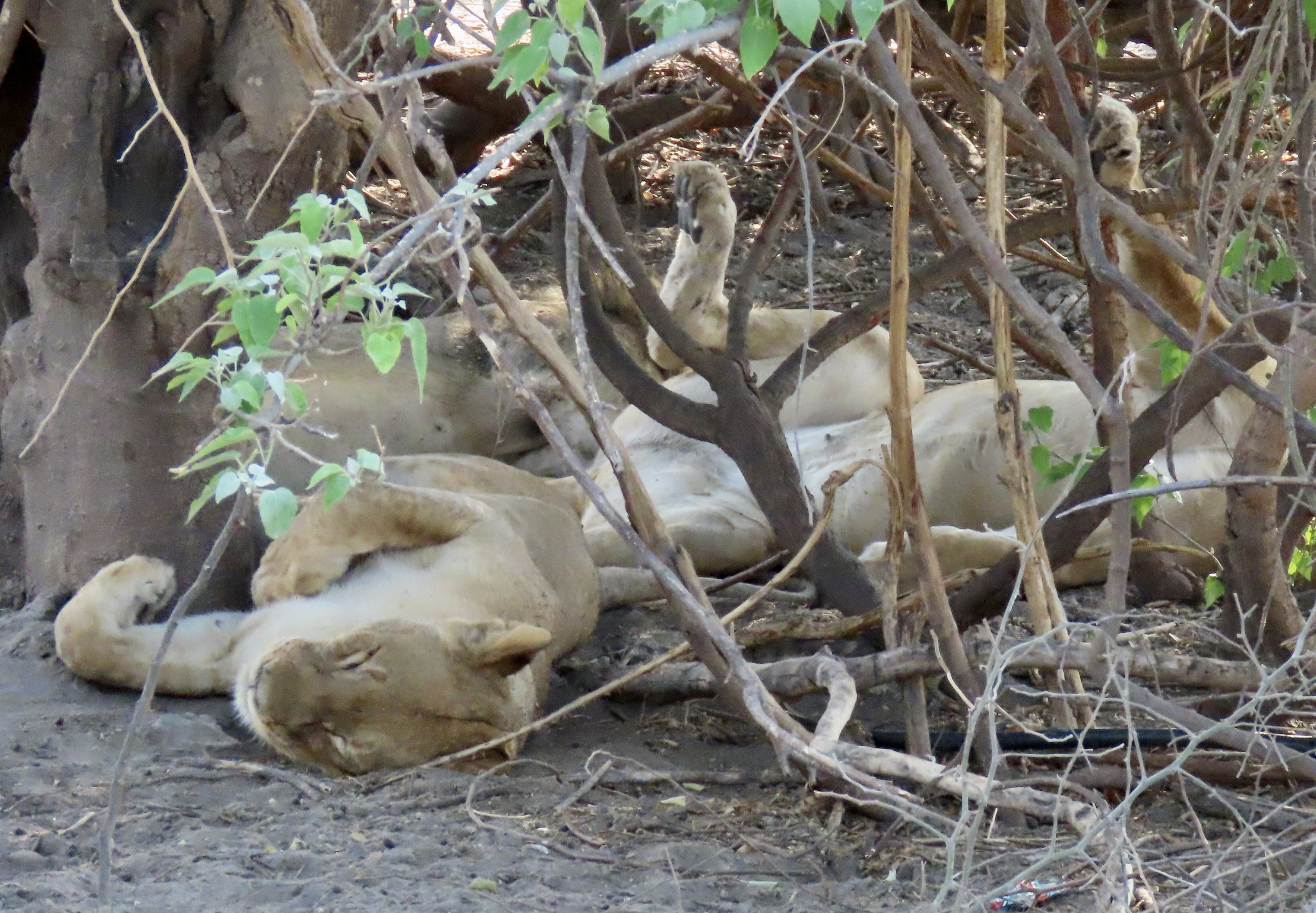
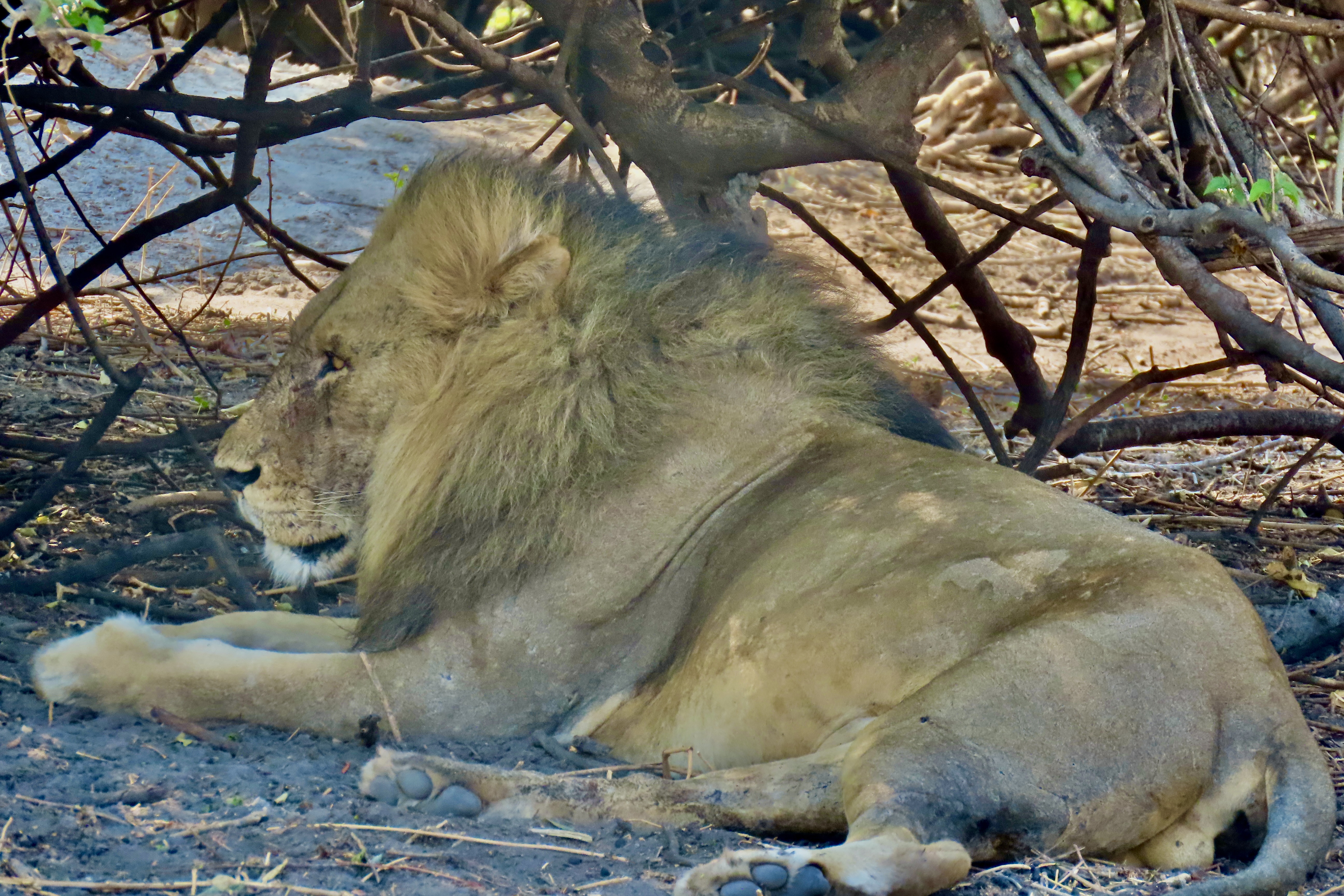
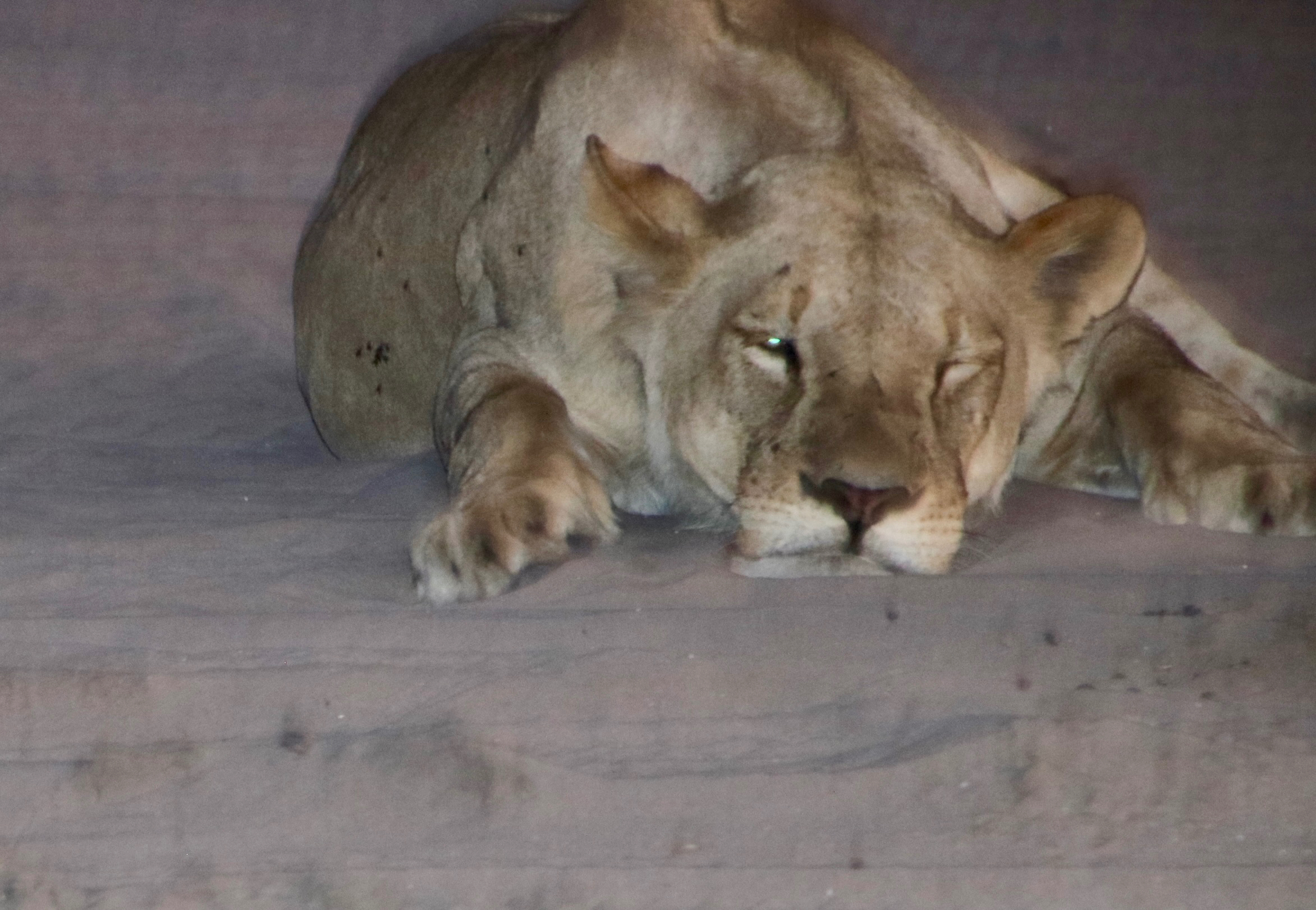
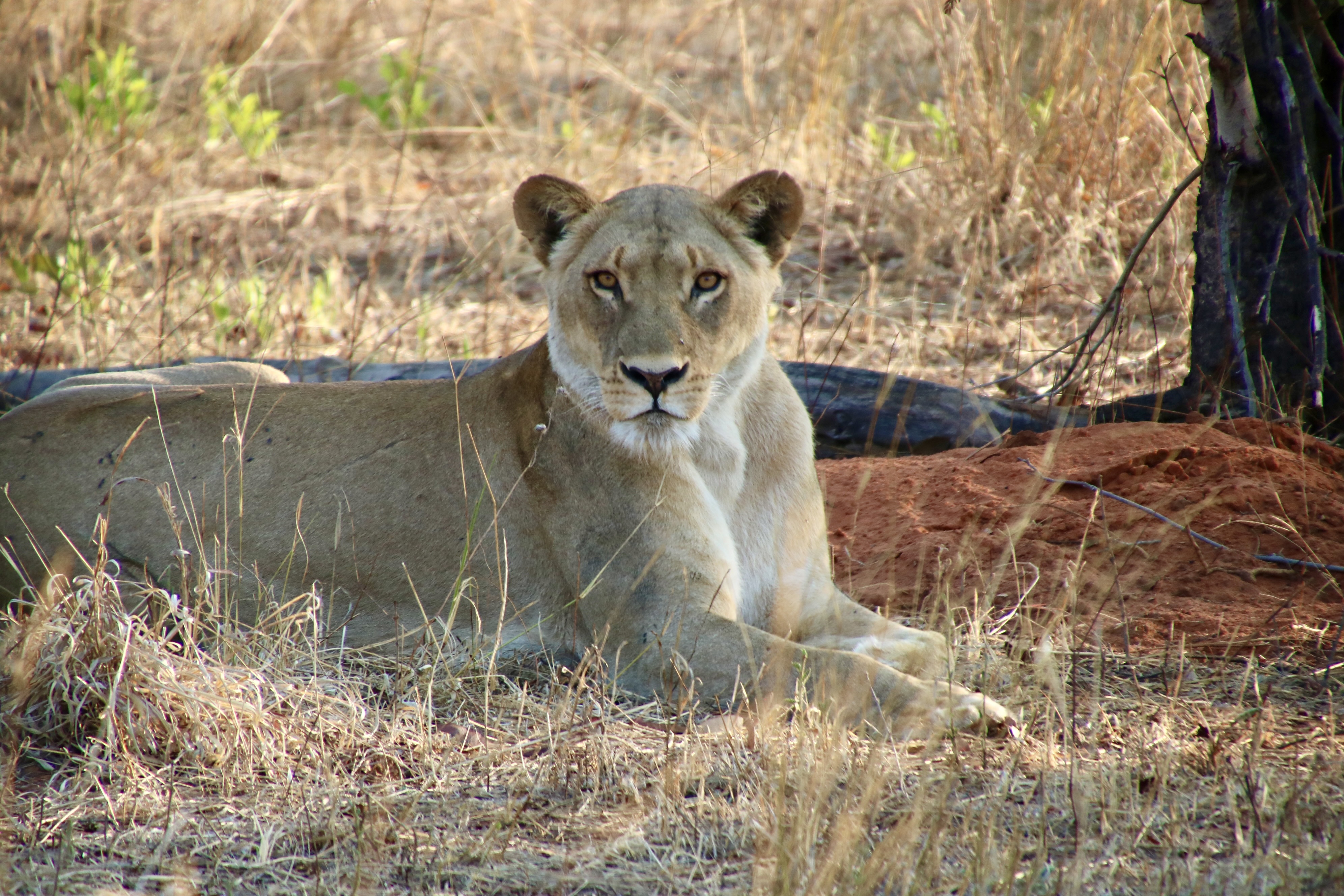
Nap time. Just like the cats that hang out in our homes, lions like to sleep: A lot, up to 20 hours a day. We came upon these females snoozing away in their amusing poses in Chobe National Park, Botswana. The whole pride was scattered out underneath the trees, including a large male.
My first interest in lions was brought about by a song whose opening lyrics are included in my heading. I was 10 and my 17 year-old sister had fallen in love with a navy man whose deployment had taken him off to the coast of Africa. I must have heard the song 50 times, or at least enough to burn it forever into my memory banks. I was a little young to fact-check Nancy, but that was okay, I loved the song. Actually lions do most of their hunting at night or during storms when their prey are more vulnerable. Also, not many live in the jungle. They prefer the more open savanna lands of eastern and southern Africa.
This was one of the males that was responsible for protecting the pride. We often hear how lionesses do most of the hunting and ‘bring home the bacon’ (warthog), to the king of the jungle. This is true, but one look at this male persuaded us that his life as protector was far from easy. Check out the large scar running down his side! He earned his food.The sun was going down when we came on the pride sleeping in the sand, obviously taking advantage of its warmth. There were at least 10 lions enjoying the last rays.There were two males with the pride. This one seemed to be saying, “Mind if I join you?” Note the female’s swishing tail. More cat language.Apparently the answer was yes.The setting sun lit up the lions’ eyes. Peggy and I were thinking, “These are kitties we do not want to disturb.”
Would you?
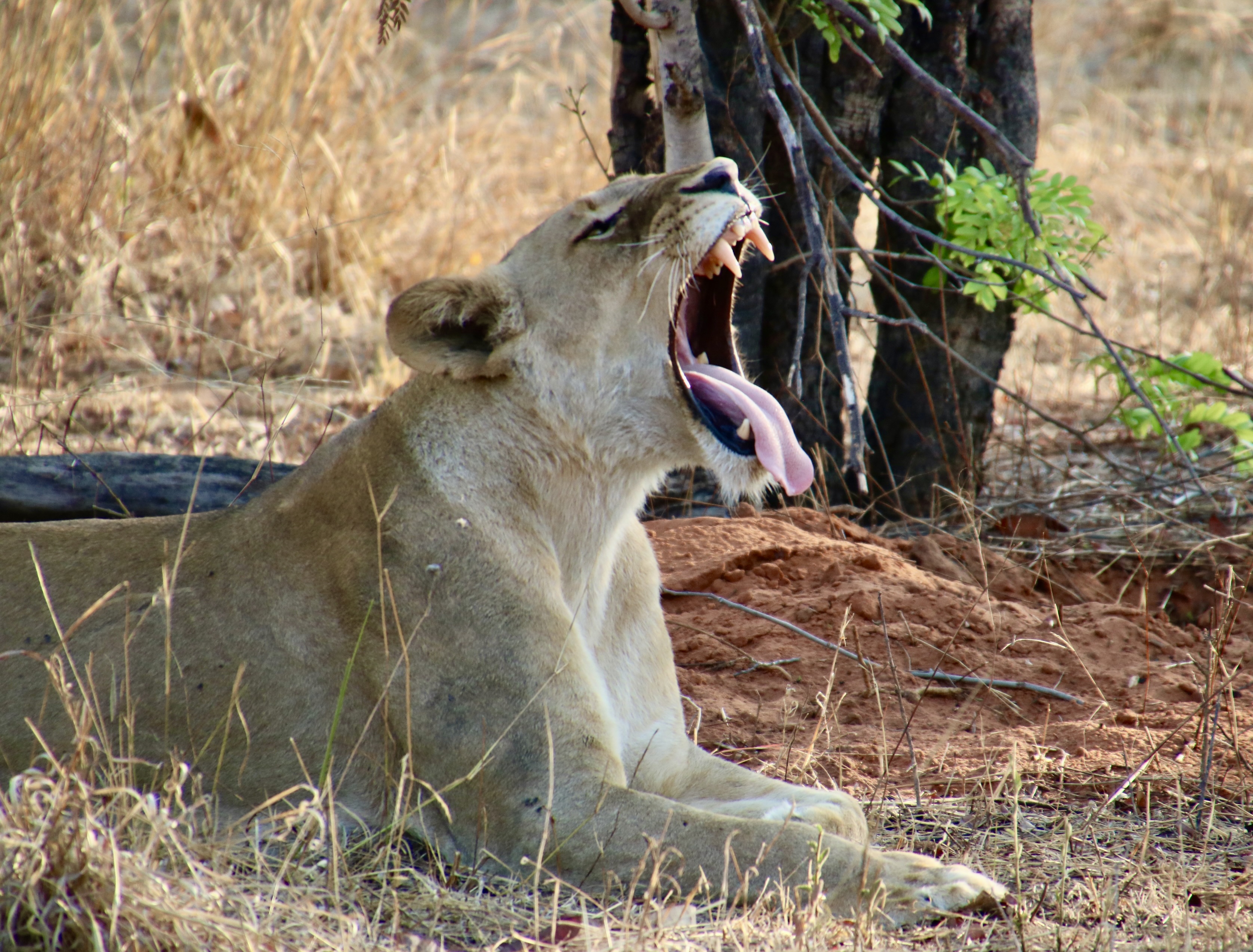
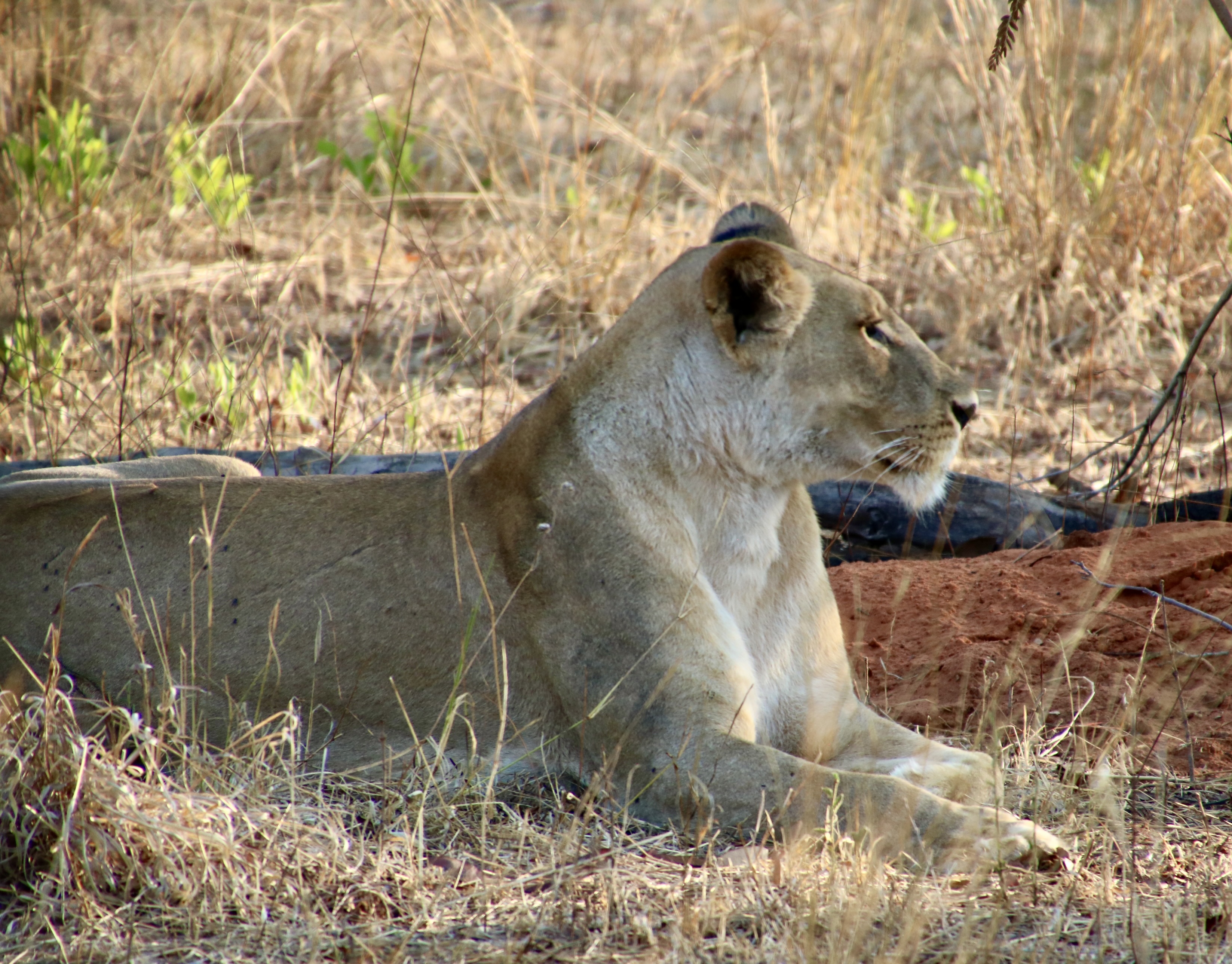
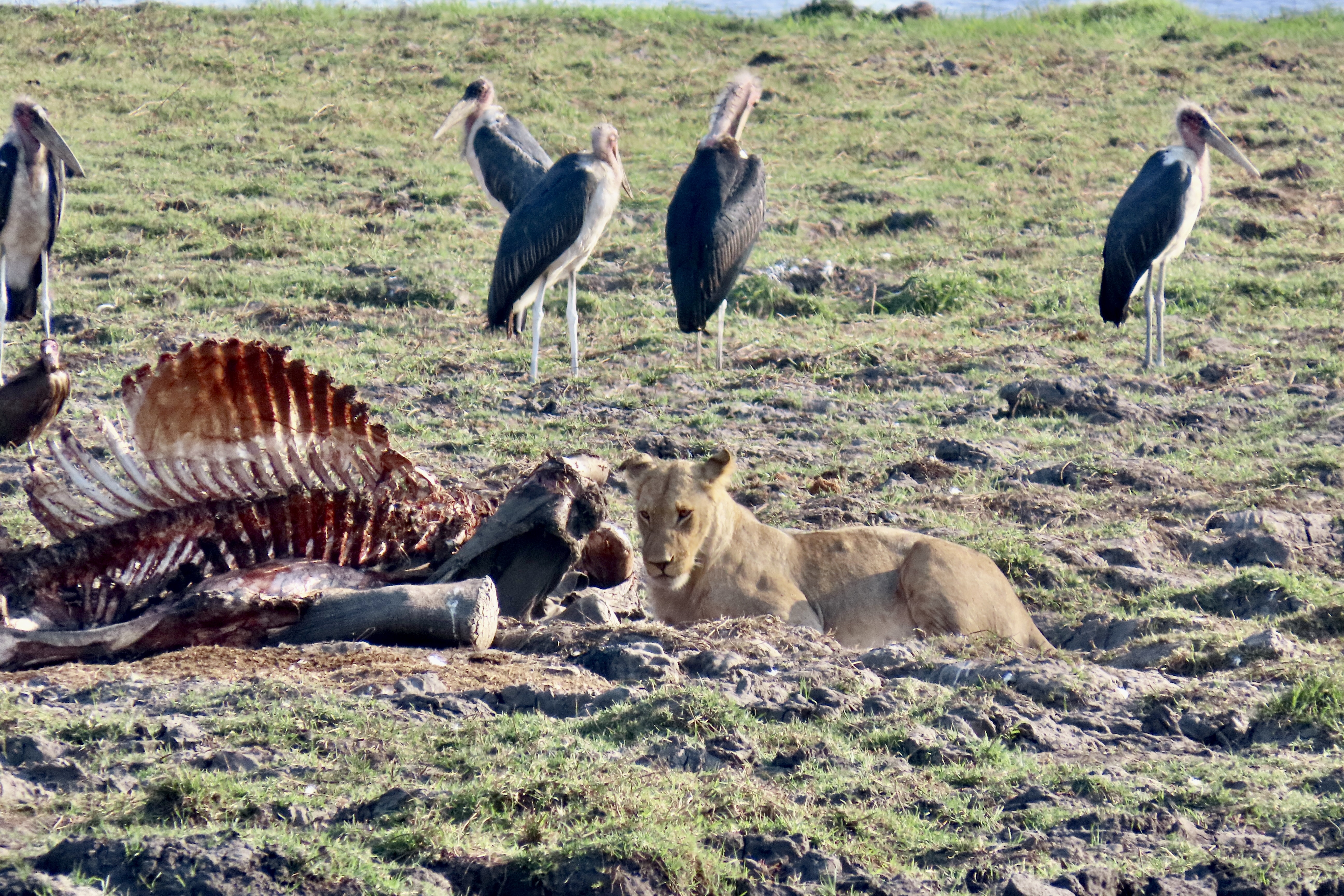
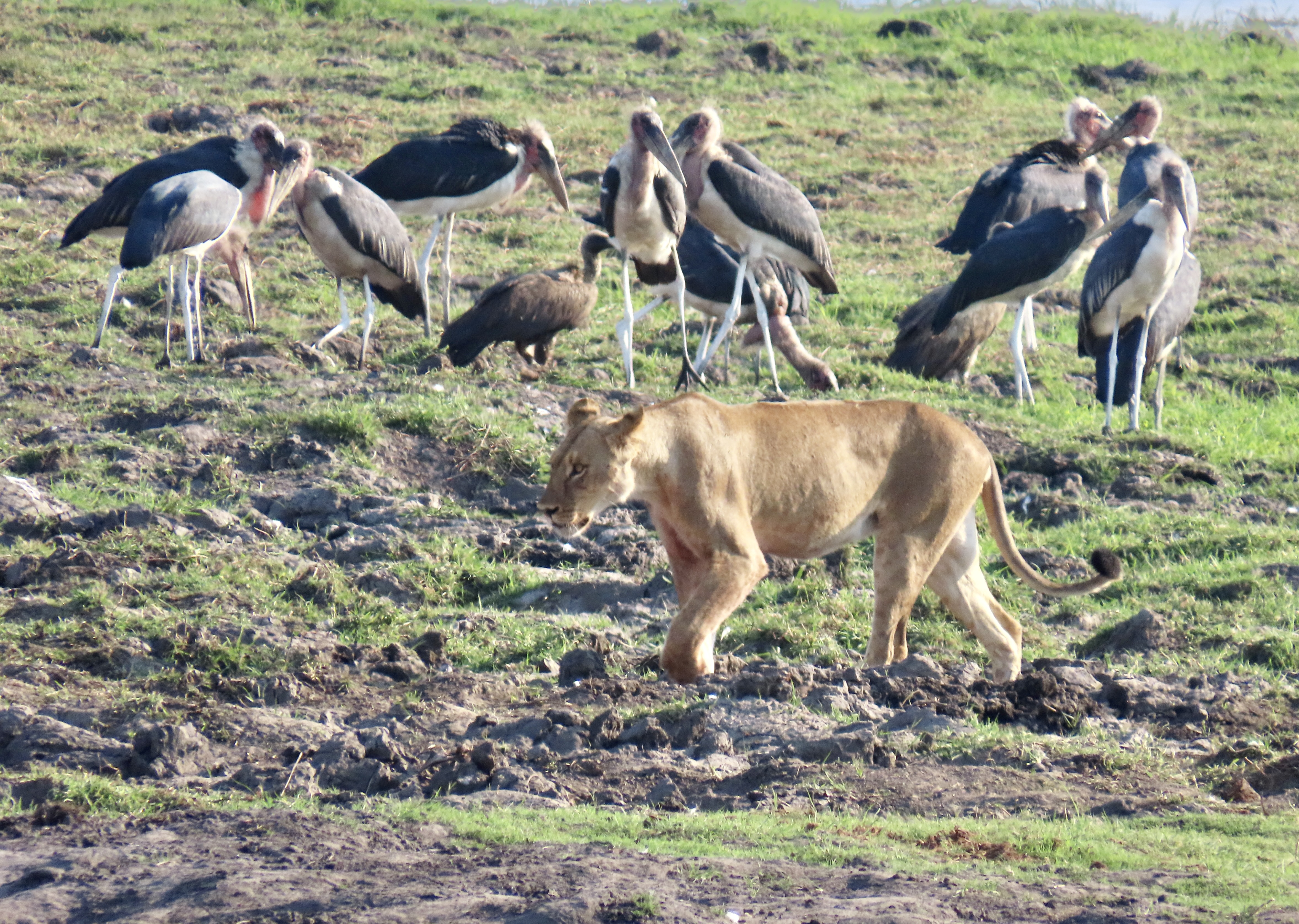
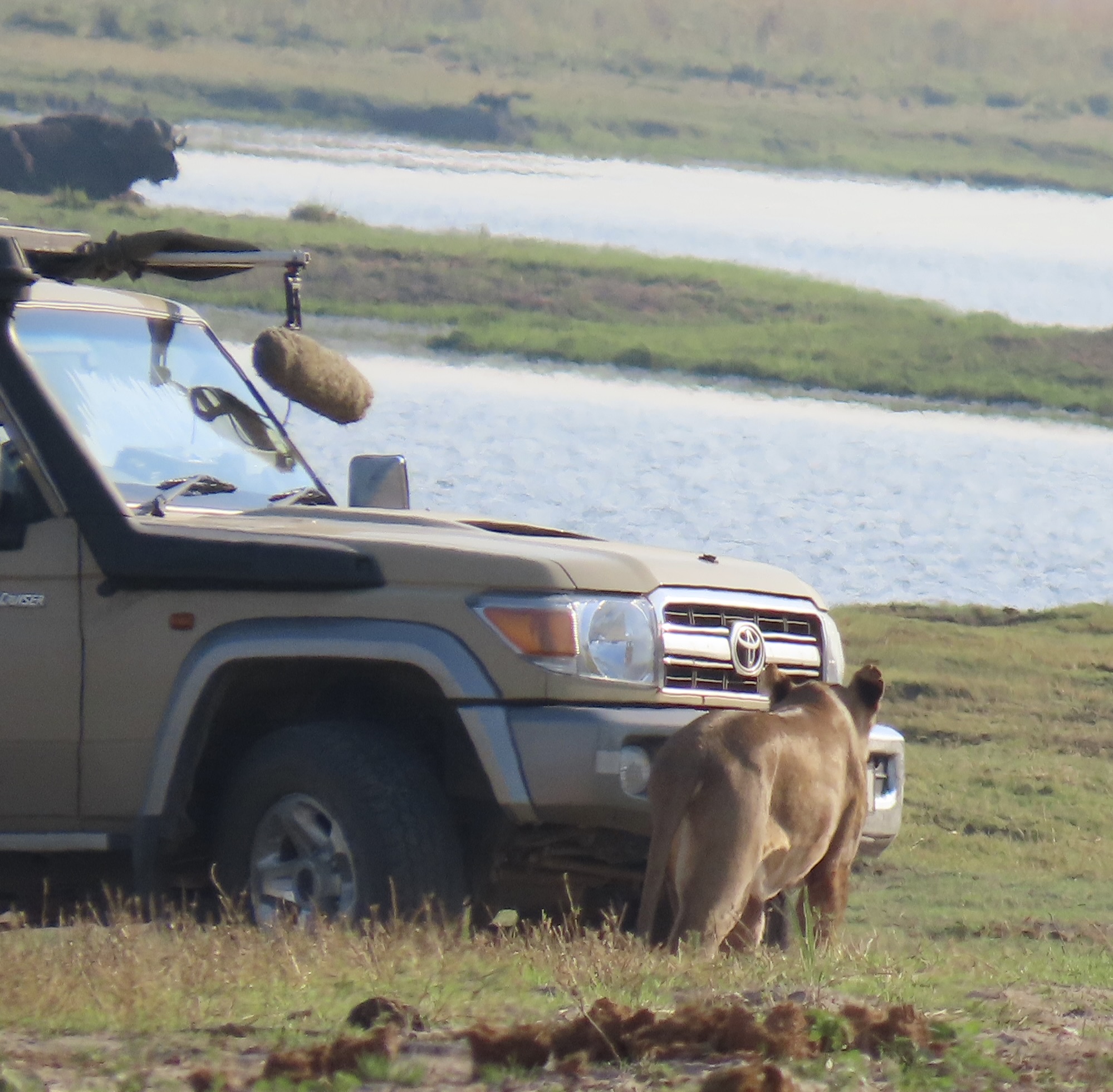
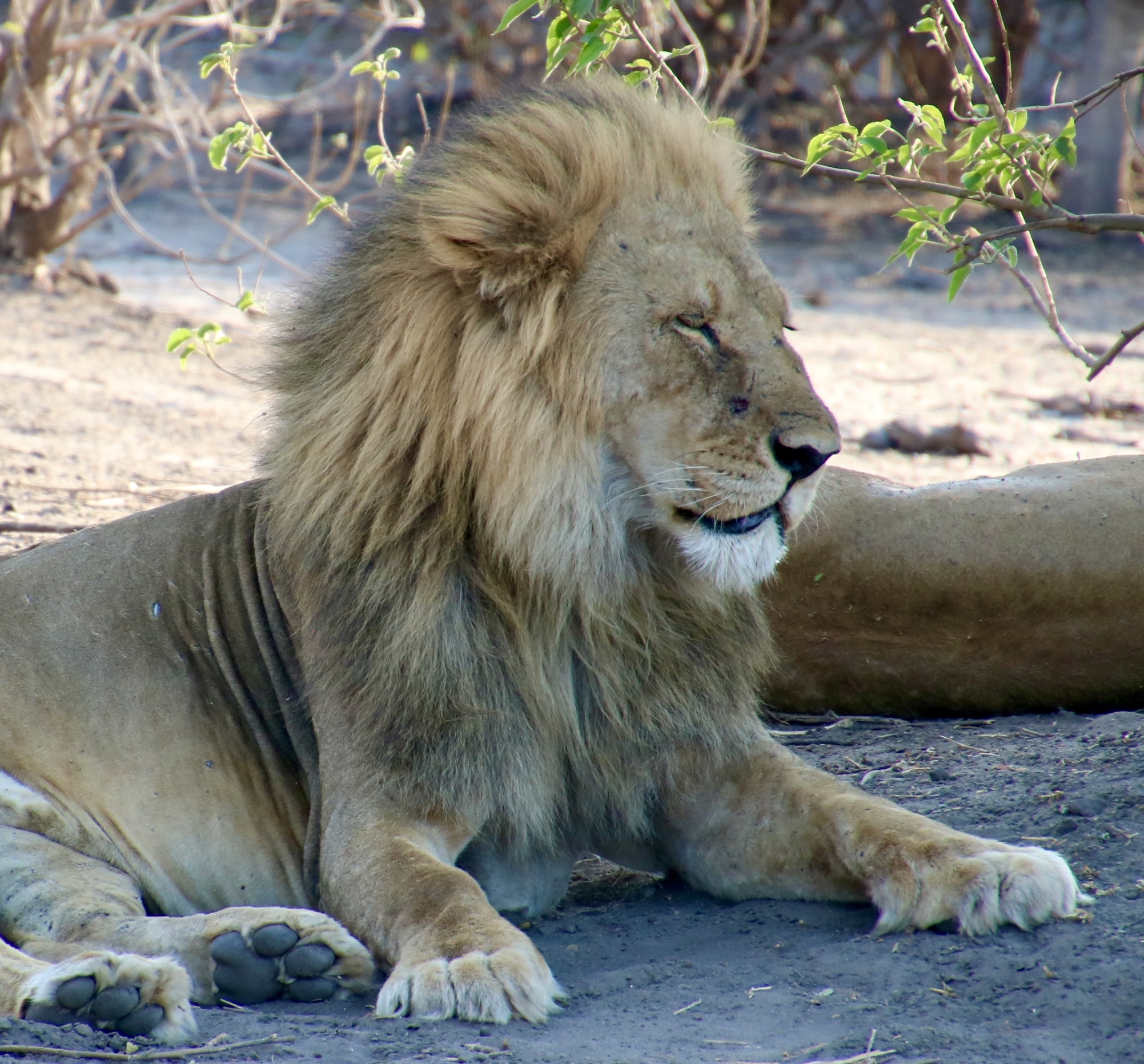
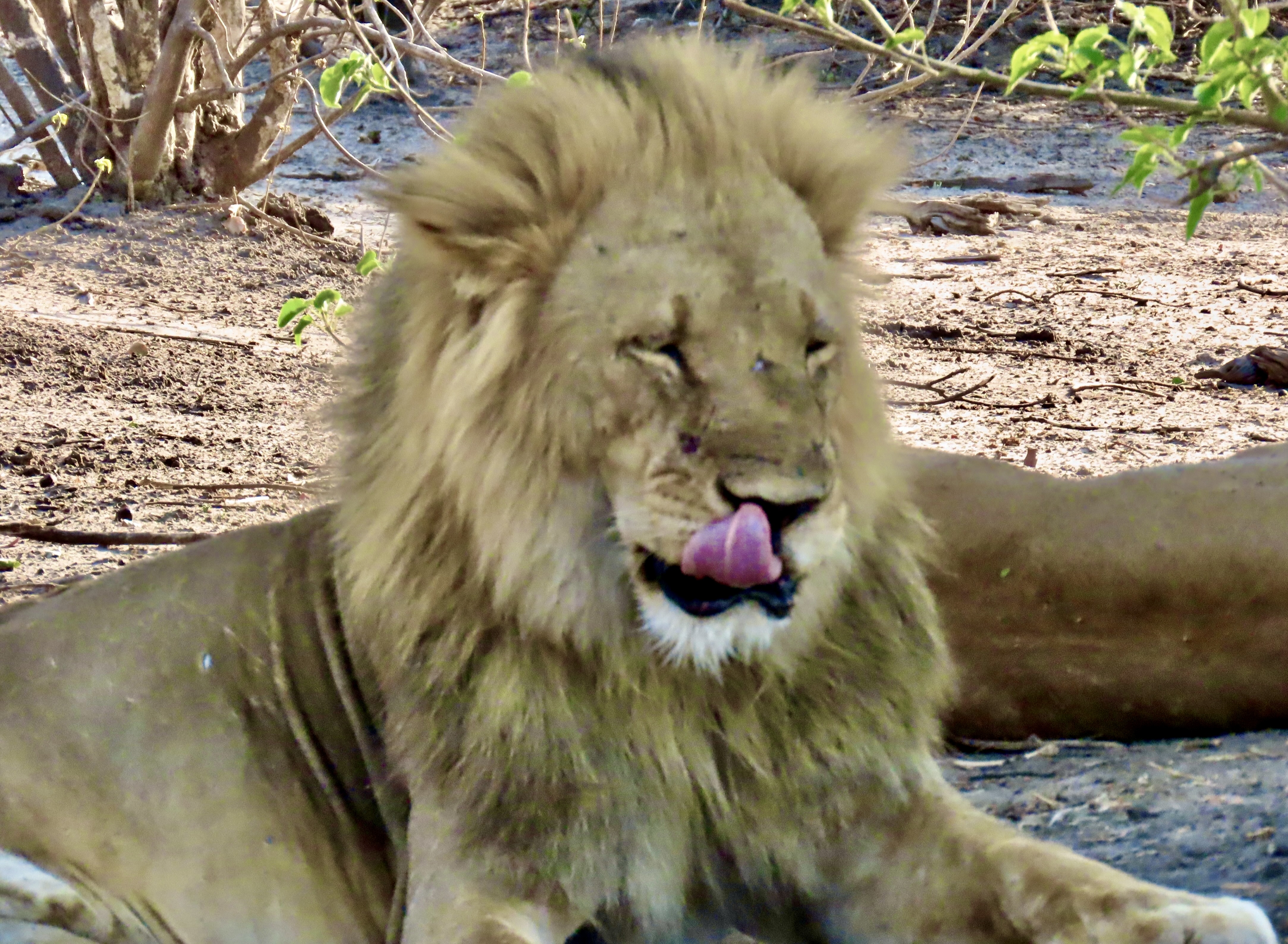
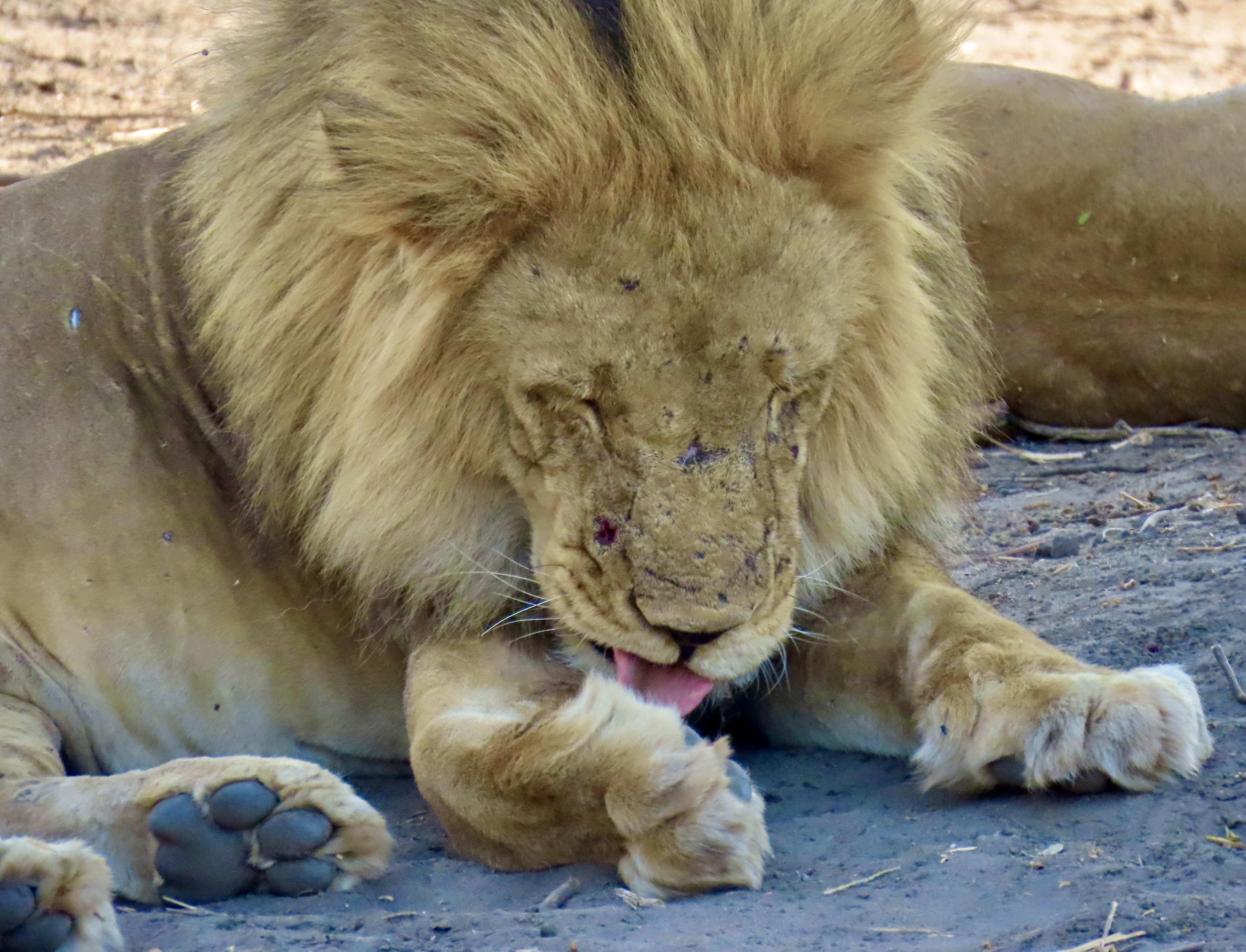
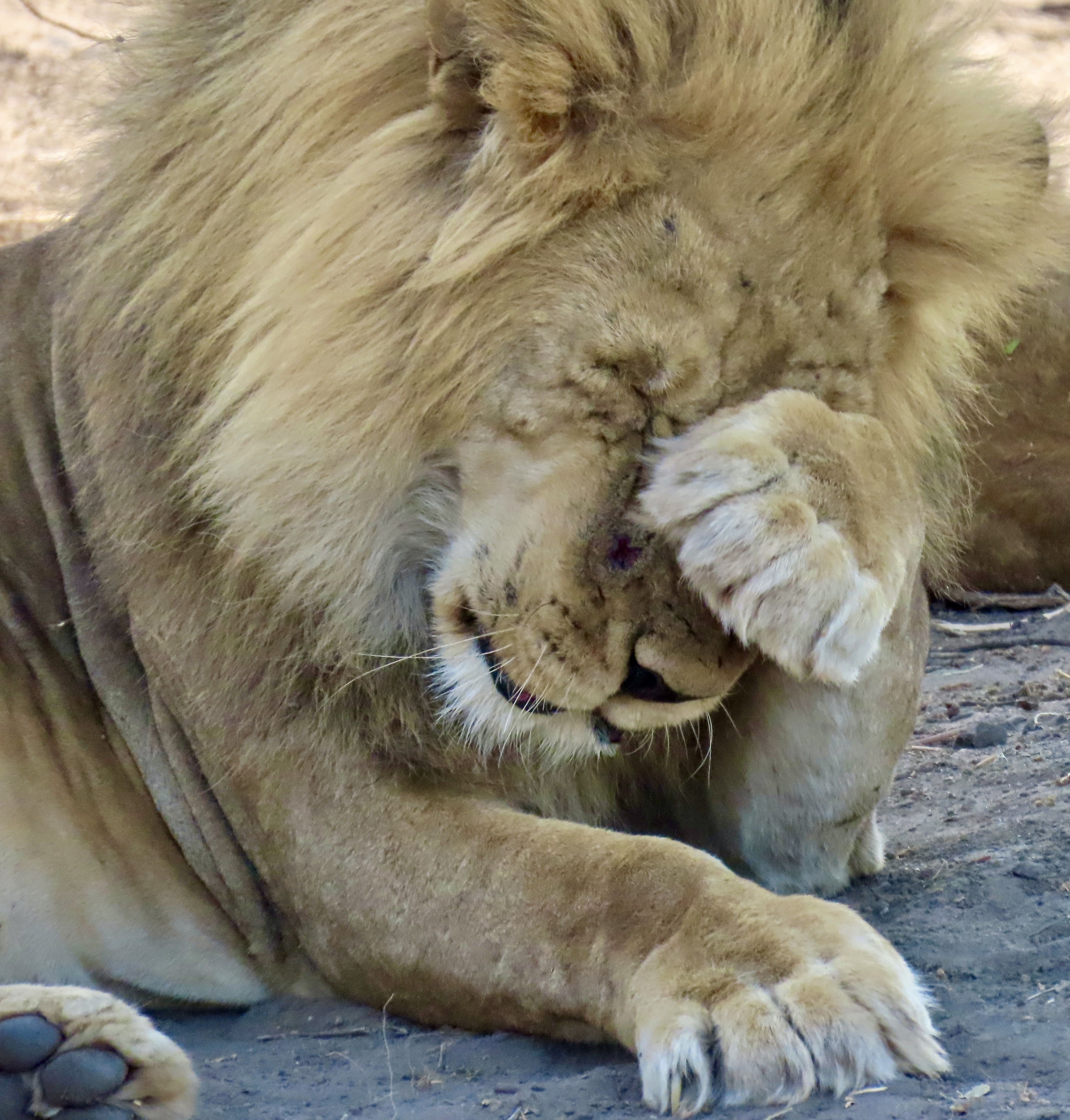
Female lions are excellent hunters. This photo suggests one of the reasons why. In addition to impressive teeth, they can run up to 50 miles per hour and weigh upwards to 350 pounds. We had just watched this lioness hunting. Her yawn suggested that perhaps it was nap time.Shortly after we took this photo, she made a brief dash after something we couldn’t see and she didn’t catch.Settling down (before the yawn), she was still on high alert.Checking in various directions…Which included eyeing us!We came across a lion that was working its way through a young elephant in Chobe. Malibu storks waited patiently for the lion to leave.Another lion invited herself to the meal…Check out the ears on the lion that had been enjoying its meal. If you have a cat, you know that means “I don’t think so.” A lightning fast paw may follow.So she stalked off past another safari vehicle that had also stopped to watch the action. Is that a hungry look she is focusing on the occupants?Which brings us to this magnificent fellow that I have already introduced in another post. He was about to give himself a bath. Note the size of his paws.Like any cat, it started with his tongue!First, he had to get his washcloth wet, i.e. lick his paws.He was quite thorough. And washed each side of his face. I thought this could have been titled: “Oh no, not another blog about me!” A close up…And then he washed the other side…Finally, he was ready for his portrait.
While we are on the post featuring big cats, I have one more:
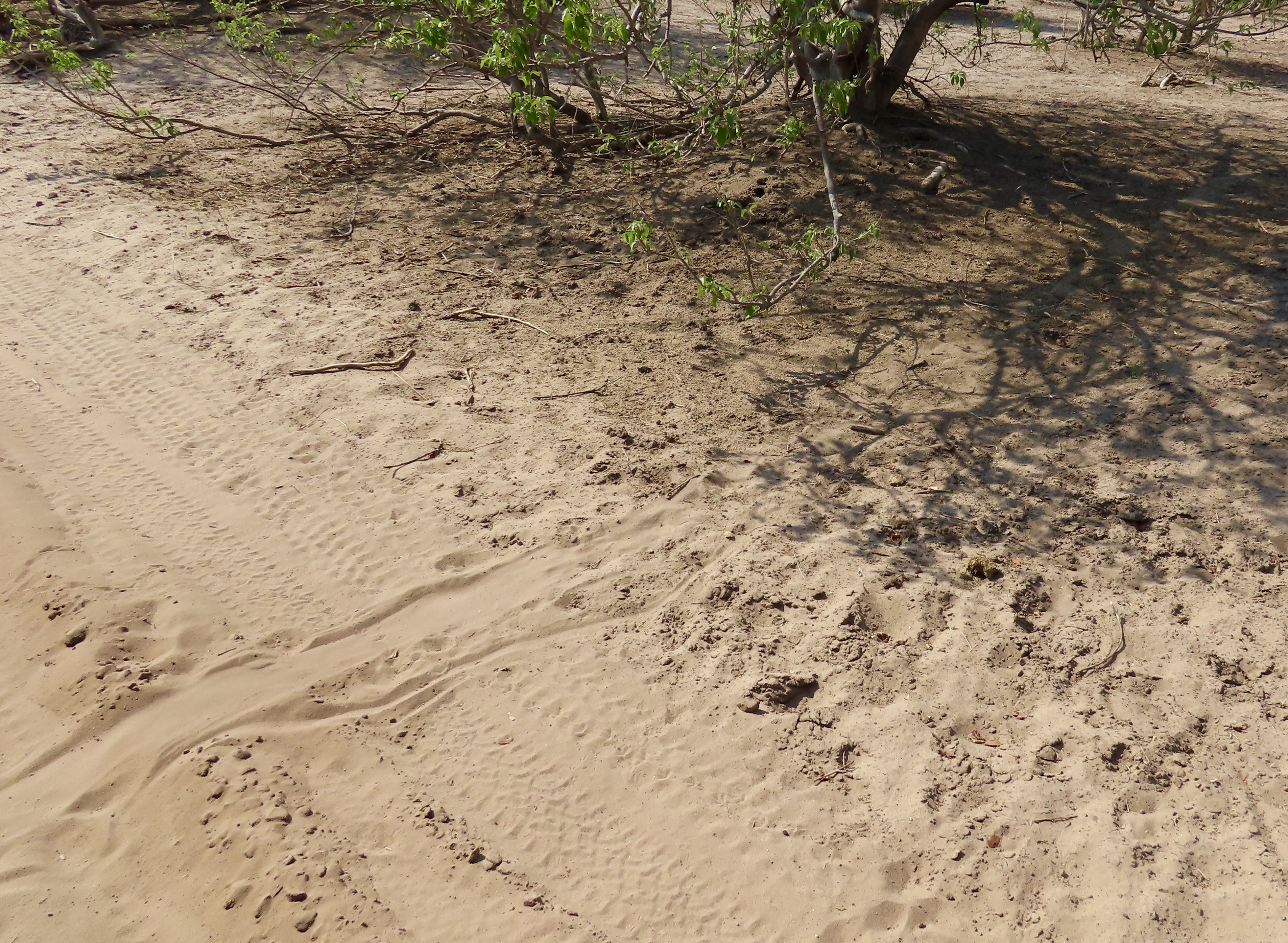
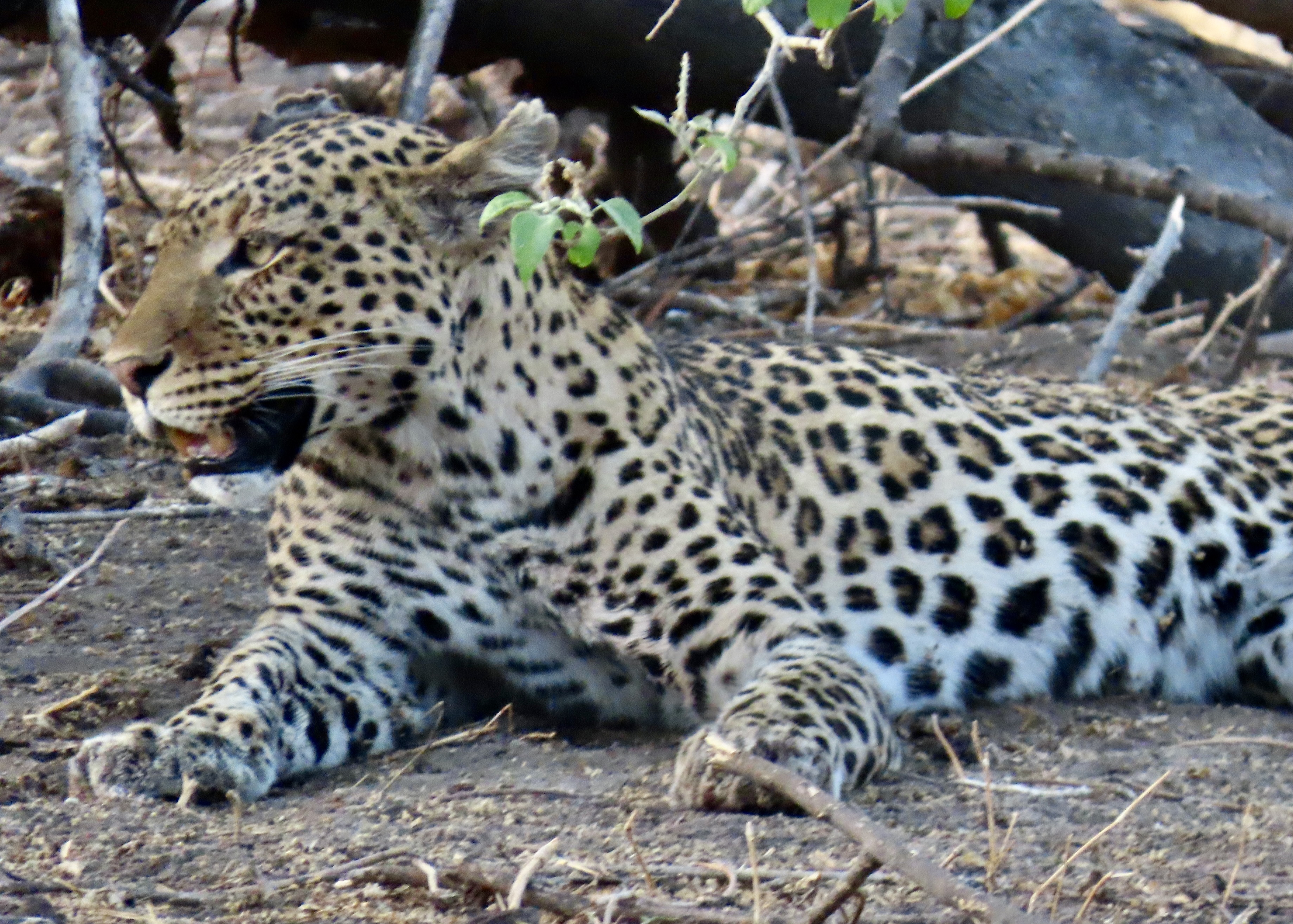
We were driving down one of the roads through Chobe National Park when we came across these interesting tracks. Our guide explained that a leopard had killed an antelope (probably an impala) and dragged it across the road. The fact that there were no tire tracks over the trail suggested it was very recent. We stared into the bush to see if we could spot the leopard and its meal. No luck. In fact, we would be lucky to see a leopard on our trip at all, the guide noted.The next evening as we were heading out of the park, he got a call and told us he had a treat, not explaining what. It turned out that a leopard had been spotted. We found it quite striking.It didn’t seem particularly bothered by our presence, but it did roll over and face away from us…A final shot. Next post: The striking fish eagle and a visitor from our trip up the Nile a year ago, the Egyptian goose.
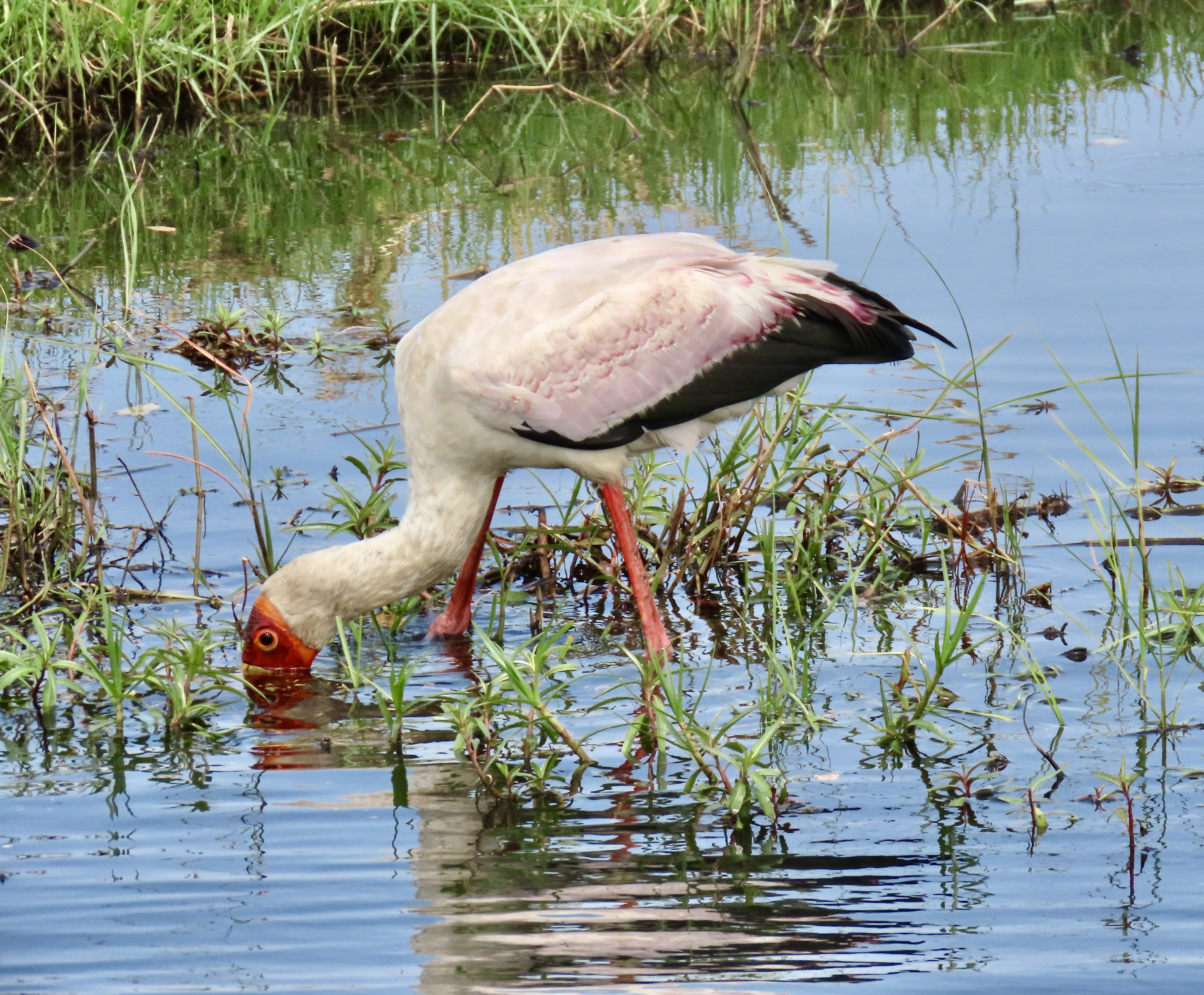
We were boating up the Chobe River in Botswana when the captain pulled over to the shore so we could watch this yellow billed stork on a fishing expedition.
Peggy and I joined her brother John and his wife Frances on an African safari to see elephants and lions, and giraffes, and hippos, and crocodiles, and zebras, and baboons, and… the list goes on. And we did, in glorious profusion. What we weren’t expecting was the bird life. A serious birder would be in heaven. In fact, there are specific African bird safaris one can sign up for. While our passion doesn’t run that deep, we do enjoy bird watching and always have. Time and again on our trip, we found ourselves stopping to admire their beauty, character and antics in Botswana, Zimbabwe, and South Africa. We have the photos to prove it.
Altogether, we photographed over 20 species. You will be meeting up with many of them in my bird posts, including ostriches and penguins, but today, we are going on a fishing expedition with a yellow billed stork and an African Darter we met along the Chobe River in Chobe National Park, Botswana.
The yellow billed stork stands around three feet tall. It prefers fishing in shallow water where it shoves its large bill into the water and then stirs the water plants and mud with one of its feet to herd dinner toward its waiting bill. Small fish, frogs, and water insects are all welcome. It’s an open bill policy. It fishes by feel. When a suitable meal hits its bill, the stork captures it with a lightning fast reflex snap. But I’ll let the stork tell you the story.
Hi, my name is Big Bill. Today I am taking you on a fishing expedition where I am going to catch a monster. This is one of my favorite fishing holes. All sorts of delectable treats like to hide out in the grass. I’m drooling in anticipation.My fishing technique involves me dunking my bill into a likely spot. I’m using my left leg for balance while stirring the pot, so to speak, with my right foot to herd tasty morsels toward it. One never knows what might be hiding in the grass. I call it pot luck.Here’s a head on view of me, up to my eyeballs in work. The waves you see are from my stirring efforts.And here’s a rear view shot that I did not approve. Curt and Peggy will be held accountable. What are you looking at…Wait! Something just hit my bill! A monster!I caught it! Woohoo! Woohoo!
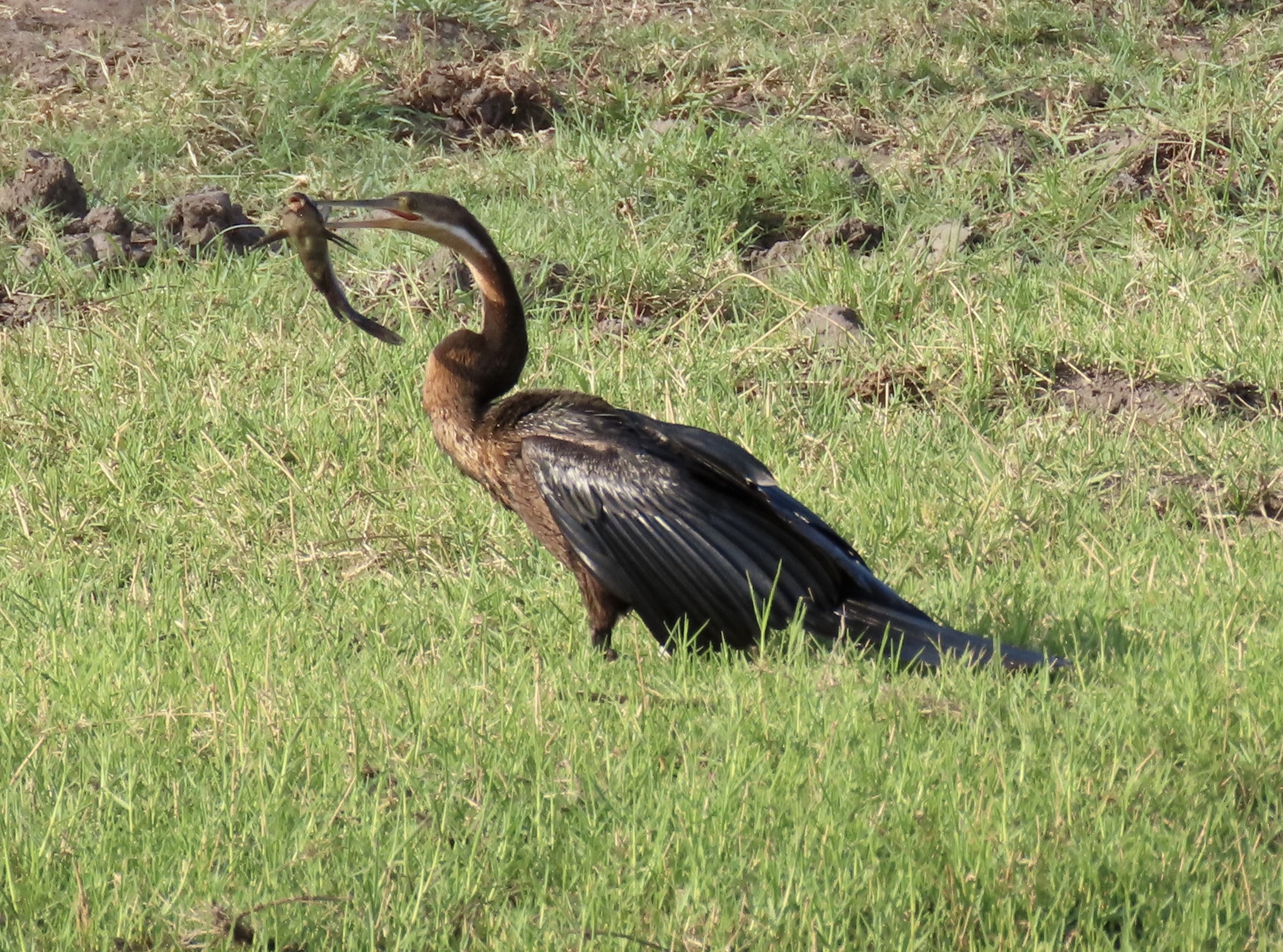
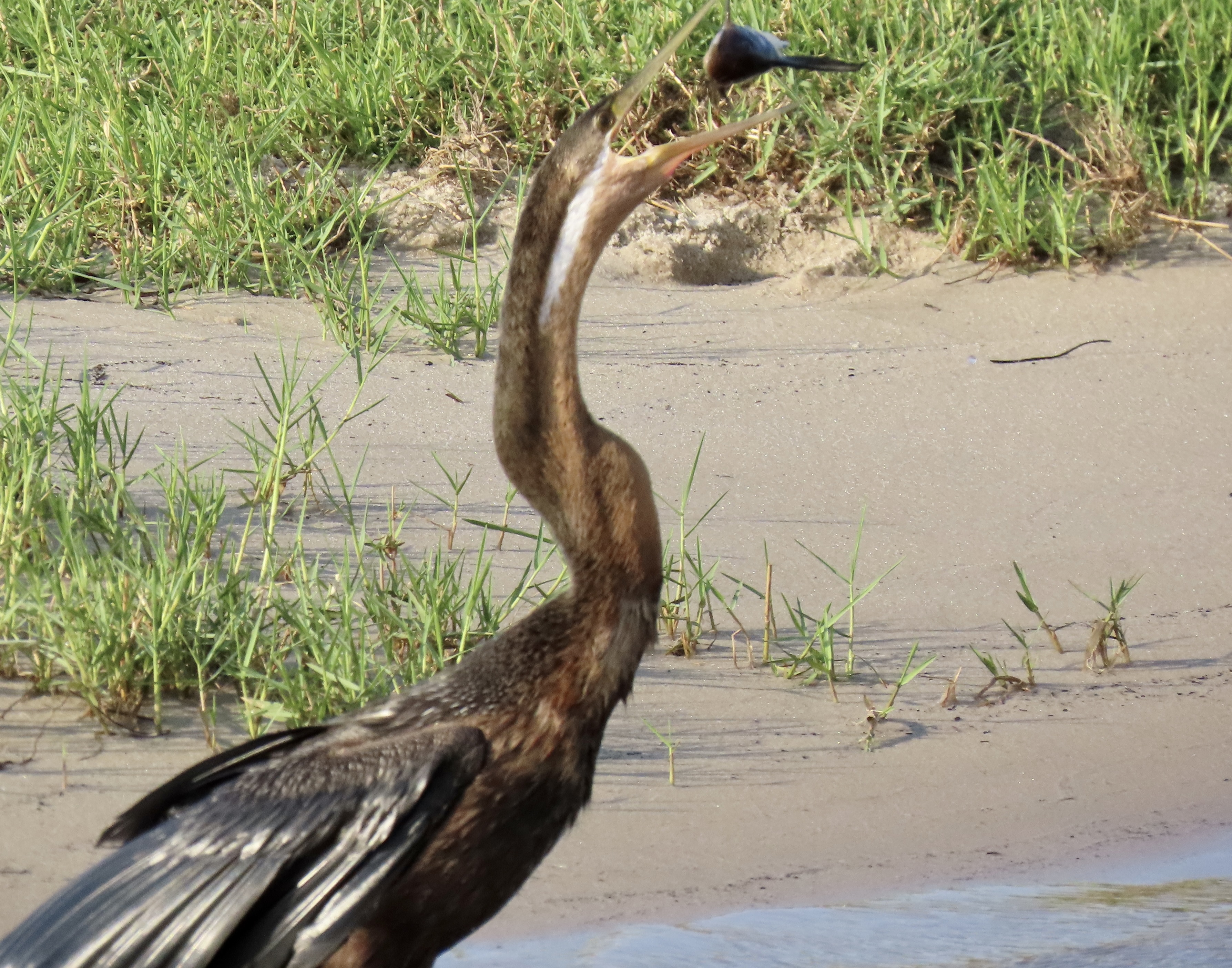
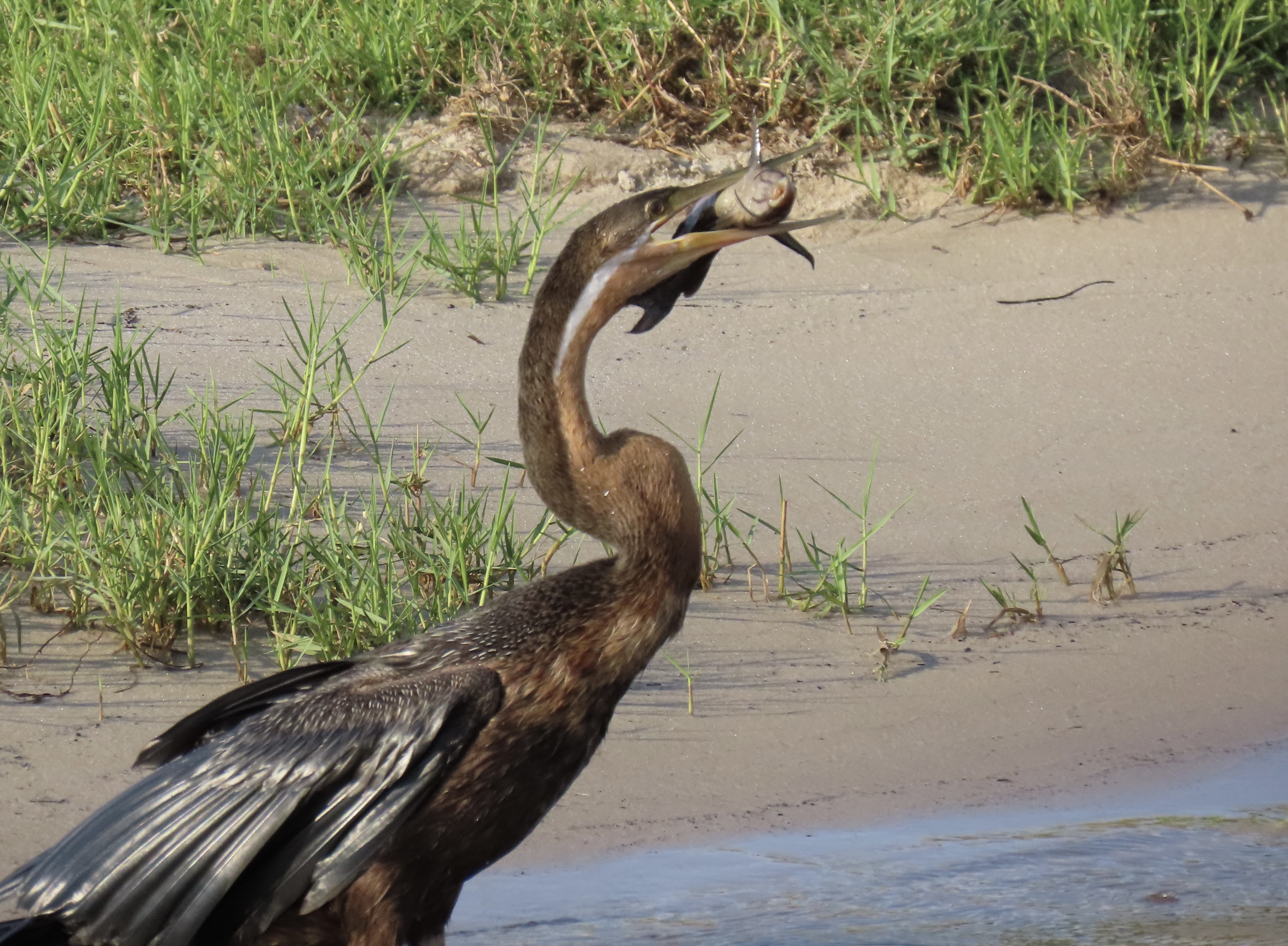
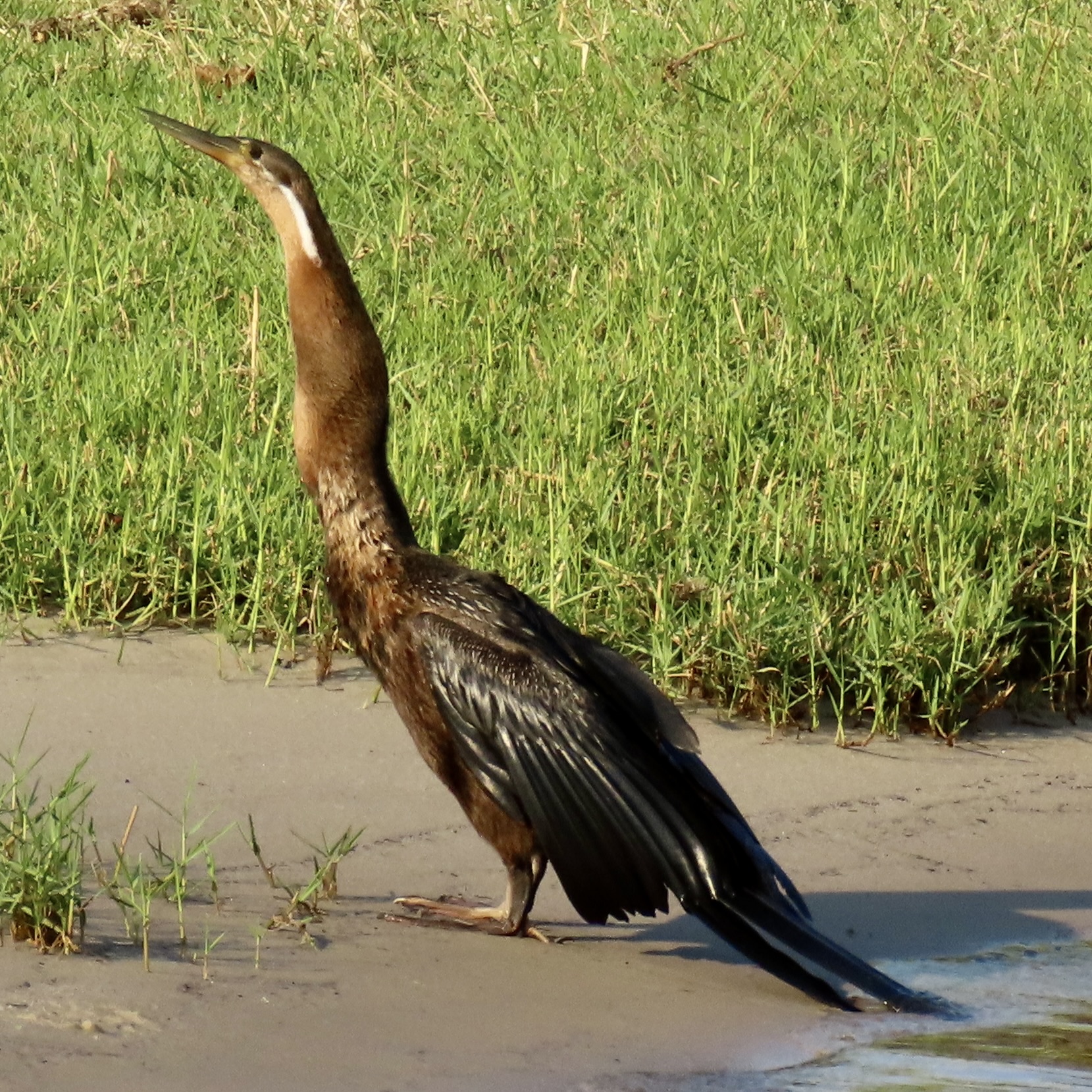
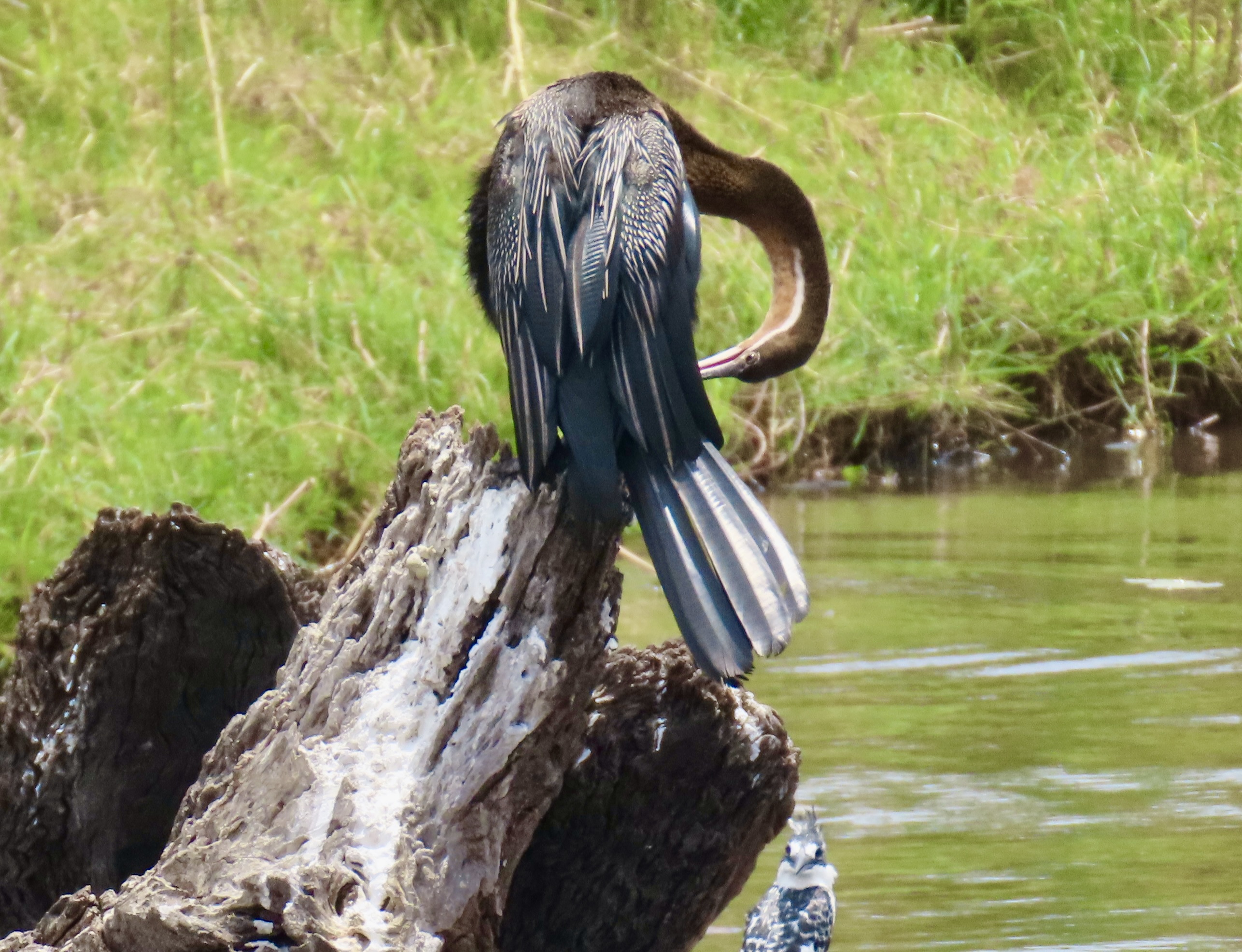
And now on to the African Darter or anhinga, also known as a snake bird. These birds are closely related to cormorants. The 36 species of cormorants and four of anhingas make up the family Phalacrocoracidae. The African Darter swims through the water in search of its prey, often with only its head showing. When it finds a fish, it literally spears it. ‘Darter’ refers to how fast. The alternative name, snake bird, derives from its sinuous neck. Now, in its own words:
Hello, I’m Handsome, or, if you prefer, Pretty. Either way, I am much better looking than Big Bill. You might think I am posing for you. Well maybe, I am preening. But mainly I am drying off my wings. Unlike most water birds, we, and our cousin cormorants, don’t have oil in our feathers to repel the water.This is me with a freshly speared fish. Catching it was easy…It’s swallowing it that creates the challenge.It has to go down head first. Check out the wicked fins on this catfish. If I swallow it tail first, they get caught in my throat. Then it’s not just bye-bye fish, it’s bye-bye Handsome as well. That’s not a good ending.I have to position the fish just right. So I take it back to the water and spear it again. Some fun. I wonder how many holes I can poke in it?This seems about right.Upsy-Daisy. Whoops, I mean upsy-fishy. Now don’t blink…Did you catch that? Did you catch my great flip? I’m very good at flipping.Hmmm. I don’t think I’ll be swallowing this.Maybe if I use the sand this time. More holes. Think of it as tenderizing. Note my big feet! I’m surprised they didn’t name me Big-foot as opposed to Snake-bird. Oh, you say Bigfoot is already taken.Wow, I think I’ve got it! Thereby hangs a tail. Heh. heh.Down the hatch!Gulp.Ah, happy tummy, happy bird. Now I can go back to preening and being beautiful. (Don’t pay any attention to that skeptical pied kingfisher on the lower right. He’s just jealous.)
That’s it for today. Hope you enjoyed our talking birds. On Friday, we will be reaching for the sky and featuring giraffes.























 Wandering through Time and Place