
While I had graduated from my would-be juvenile delinquent days, I was able to pull off a couple of capers without my brother’s influence. The first involved living up to Bertha Bray’s expectations.
For some unfathomable reason, Bob’s parents bought him a Wham-O Slingshot. I mean, how in the world can you expect a kid to be good when he starts playing with his Wham-O? The fact that I owned a Wham-O as well almost guaranteed trouble.
Bob and I agreed to meet for a clandestine hunting expedition. It had to be clandestine because I was still on Bertha Bray’s ‘do not invite’ list. Things were going great until we came upon the old abandoned hobo’s shack that was next to the Southern Pacific railroad track about a quarter of a mile from Bob’s home. Typical of such structures, it had been created out of anything that was available for free: old metal roofing, miscellaneous boards, an occasional nail, a thrown away mattress, etc.
Bob and I looked at each other and had a simultaneous thought. Out came the ammo for the Wham-Os: A shiny new marble for Bob and several BBs for me. We took careful aim, counted down, and let fly, using the derelict old building for target practice.
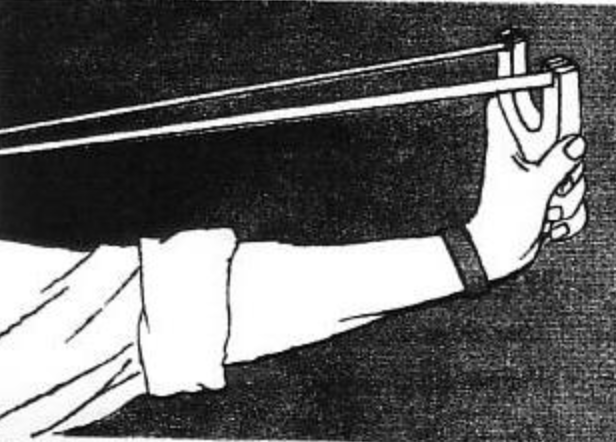
To this day, Bob claims he saw his marble harmlessly strike the building while my BBs were smashing a window to smithereens. I of course saw Bob’s marble hit the window dead on while my BBs weren’t even close. The current occupant of the not abandoned home, who was washing dishes behind a willow bush in a small stream, saw something entirely different: two little boys smashing his pride and joy.
He let out a bellow and came charging up the trail. As he should have. Once again, the Mekemson Gang, along with its newest recruit, was on the run. The good news is that we escaped. The bad news was that the hobo recognized Bob. He went straight to his house. Mrs. Bray’s worst fears had been realized. (For the 50thAnniversary of our Wham-O Adventure, Bob sent me a slingshot. Bertha probably rolled over in her grave. Or maybe she chuckled.)
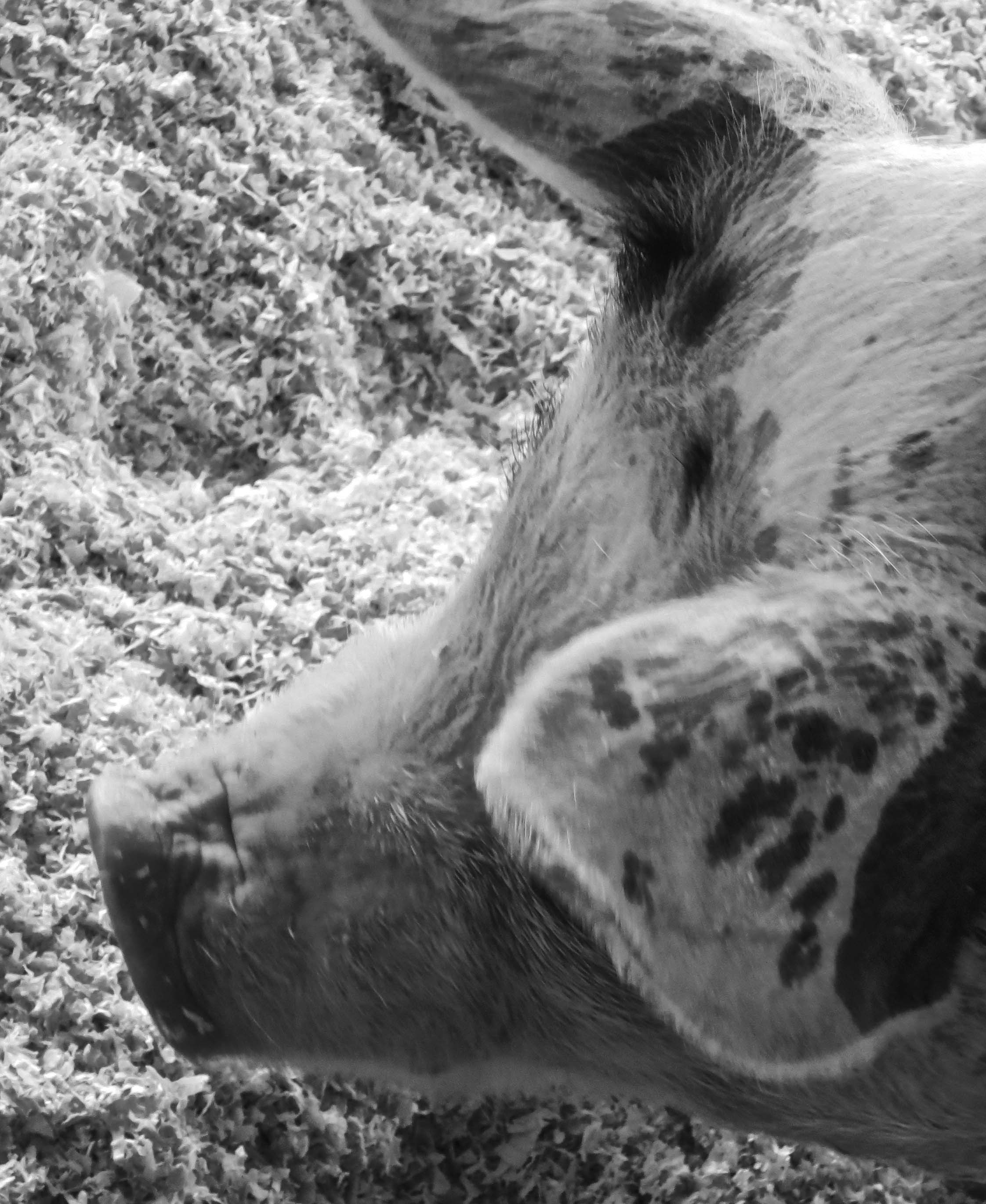
Tony Pavy’s prize pig was another case where Marshall was totally innocent. Tony had a large pond with bullfrogs, a hundred or so acres of scrubland, and a wooded hillside that housed a number of gray squirrels and blackberry vines loaded with the sweet, juicy fruit. His attitude was similar to that of Jimmy Pagonni: Children were not to be heard or seen on his property.
As with Pagonni, we didn’t allow Pavy to keep us from our appointed rounds. We would slip in at night to harvest his bullfrogs and during the day to harvest blackberries or bring down a squirrel. Tony had a very effective way of getting rid of us. In a very loud voice he would yell, “Mama, get my gun!” and we would streak out of there.
A couple of friends and I were hunting for the squirrels on his hillside when the unfortunate incident with the pig took place. But before I tell the story, I need to digress and provide some background information.
Growing up in Diamond Springs in the 50s meant having a gun and shooting things. At least it did if you were a boy. We graduated from BB guns and 22s to deer rifles and shotguns. Obtaining your first rifle was an experience similar in importance to obtaining your driver’s license, except you could get one a lot earlier. Before we were allowed to hunt, however, certain rules were pounded into our heads. We had to take a course sponsored by the National Rifle Association. These were the years when the NRA’s primary concern was about hunting and hunter safety, not promoting the use of automatic weapons.
I learned from the NRA instructor that it is important to know what you were shooting. This might seem obvious, but flat-landers out of Sacramento often had trouble making the distinction between a cow and a deer. Of a much more serious nature, every so often one would mistake another hunter for a deer. Wear red hats and bright clothes, we were taught. There were other things we weren’t supposed to shoot as well. People’s houses for example. Robins were also high on the list. They ate their weight daily in bugs. It was okay to shoot ‘vermin’ such as ground squirrels, jackrabbits, coyotes and the scrub jays that pecked away at pears. In fact there was a bounty on jays, $.25 per head. Marshall used it as a money-maker.
My usual preference was for watching wildlife, not killing it. I made an exception for gray squirrels. The thrill of the hunt combined with my appetite for a delicious squirrel and dumpling stew my mother whipped up overcame any reservations I had. All of which brings me back to the pig.
Gray squirrels have about the same appreciation for being shot that you or I might. To avoid this unhappy circumstance, they take off leaping through the trees. The one we had marked for dinner was jumping from limb to limb in a live oak tree on the hill above Pavy’s with all three of us shooting at it when we heard a bellow from the barnyard.
“Mama, get my gun! They shot my pig! They shot my pig! Hurry, Mama!”
I don’t know how fast Mama moved but we flew. By the time Ernie Carlson, the County Sheriff, and a Diamond Springs resident, caught up with us we were far away from Pavy’s and about as innocent as newborn piglets.
“Excuse me, boys,” the Sheriff remarked when he pulled over in his car and rolled down his window, “I don’t suppose you know anything about Tony Pavy’s pig being shot.”
“No, sir,” we replied respectfully in unison. We had rehearsed. Besides, we were technically correct. We hadn’t shot Pavy’s pig; we hadn’t even shot the squirrel. It was a ricocheting bullet that did in the pig.
Ernie looked at us dubiously.
“Pavy told me there were three kids about your age,” the Sheriff said as he continued to build pressure, hoping that one of us would break.
“We’ve been out in back of Ot Jone’s Pond,” I argued indignantly. And we had been. So what if we had arrived there out of breath.
“Well, you kids behave yourselves,” the Sheriff said with an ominous I know you’re lying tone.
We breathed a joint sigh of relief as he rolled up his window and drove off. Once more we had avoided a fate we probably deserved. I suspect now that Ernie was not one hundred percent dedicated to finding the alleged pig murderers. Tony was not universally loved in the community for several reasons, of which threatening to shoot kids was one.
For example: My father did some electrical work for him for free. As he was leaving, Tony asked, “Would you like one of my geese for dinner?”
“Sure,” Pop had replied, assuming Pavy was offering it as thanks for his four hours of work.
“Good,” Tony had replied, “that will be five dollars.” Pop was more than a little irritated. He had a hearty laugh years later when I told him about our adventure with the pig. I wisely avoided telling him at the time, however. His perspective on our miscreant behavior softened substantially with distance and age.
Friday’s Post: One of my classmates in grade school insults me by saying “Your Mother Chases Fire Trucks.” So what if it was true.








 Wandering through Time and Place