A Very Scary Night in Winslow… The 10,000 Mile Bike Trek

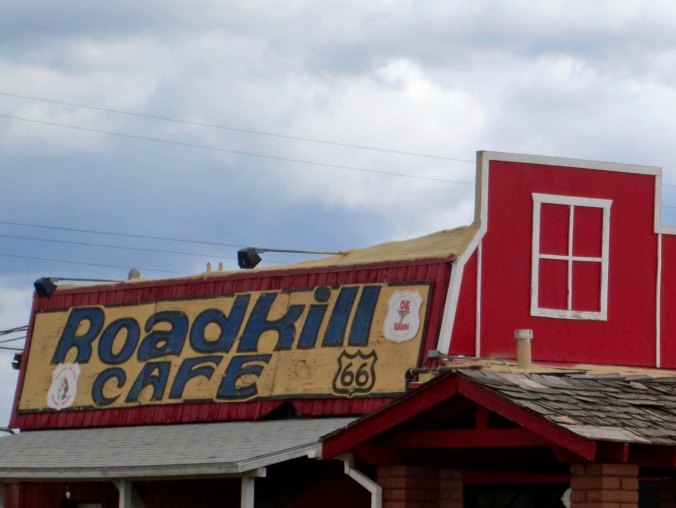
This cafe in Seligman, Arizona on Route 66 has a special significance for bicyclists whose view of road kill is often up close.

This cafe in Seligman, Arizona on Route 66 has a special significance for bicyclists whose view of road kill is often up close.

I recognized there were inherent risks when I decided to undertake my bike trip. I would be traveling for 10,000 miles on 1¼ inch tires through all types of terrain and weather conditions. The roads would range from smooth and modern, to filled with pot holes, to dirt. Some came with wide shoulders to ride on, others with none. Everything from 18-wheelers to drunk drivers would be passing me, and some frighteningly close. I would be traveling over some of the most remote roads in North America. And, I would be by myself. (I might also note here that it was the era before cell phones.)

I accepted these risks willingly; it is the nature of adventures. Besides, I was an experienced bicyclist and camper, carried appropriate clothing and equipment, and didn’t take unnecessary chances. I am not a thrill seeker. When I camped out beside the road, for example, I hid. When the weather was particularly severe, I headed for shelter. On steep downhills, I didn’t say, “Wow, let’s see how fast I can go!”  (Okay, there were a few times.) There was ample challenge in what I was doing; I didn’t need to wave my finger at fate.

Most days reminded me of my mortality in some way or the other. A truck would brush by me; I’d pick up a flat in a tight situation, a drenching rain would hit when I was miles from nowhere, a big dog would decide I’d make a nice dinner. But these went with the territory and didn’t particularly worry me. Anybody who does a bit of cycling has experienced them. Occasionally, however, something would get my heart beating like a rock drummer on steroids. One such event took place in Winslow, Arizona. But I wasn’t ‘standing on a corner,’ in Winslow as in the Eagle’s song “Taking It Easy”; I was happily zonked out in bed. The story is coming up at the end of this post. First, I had to get there.

As I rejoined Route 66 from my camp at the Grand Canyon Caverns, dark clouds threatened on the horizon. There were showers about, and I was hoping to dodge them. Although deserts don’t get a lot of rain (the definition is under 10 inches a year), when it rains, it can pour— so to speak, and there is nothing to absorb the water. This is a bad time to be camped out in a gully. Or be bicycling, as far as that goes. Thunder and lightning frequently accompany the storms and you and your metal lighting-rod bike may be the tallest thing around. Fortunately, the storms hit elsewhere and the most exciting thing I did on my morning ride into Seligman was watch the long freight trains of the Santa Fe Railroad cross the desert.
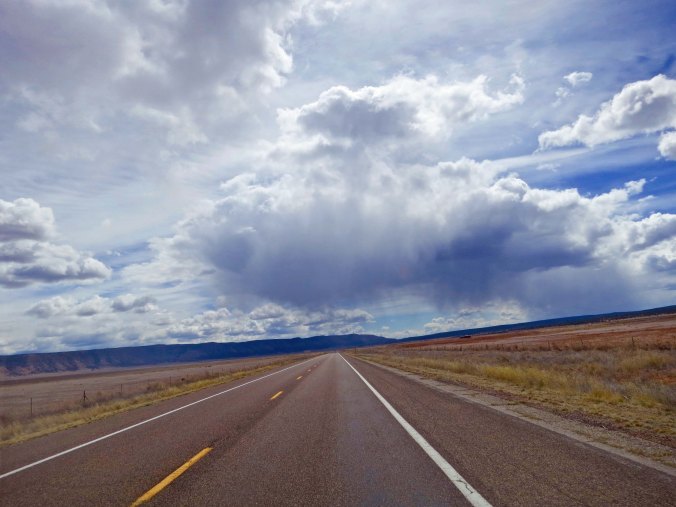
You have a lot more time to worry about storms in the desert! You can see them from a long ways off.
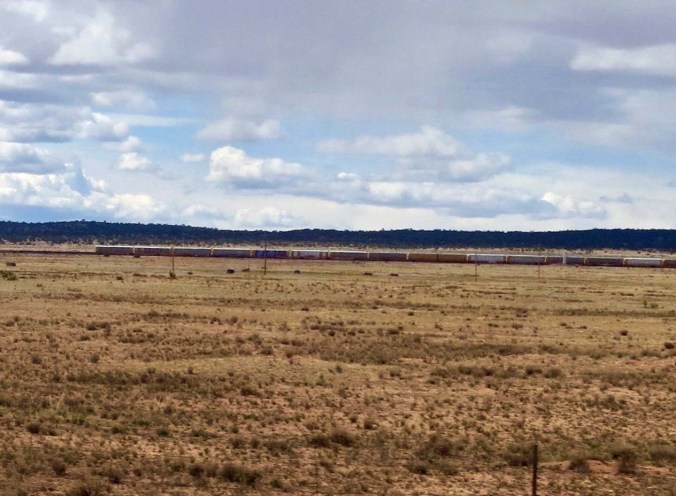
You have a lot more time to worry about storms in the desert! You can see them from a long ways off.

Trains provided me with a from of companionship on my journey, or at least a distraction. I usually climbed off my bike and watched them pass.

Trains provided me with a form of companionship on my journey, or at least a distraction. I usually climbed off my bike and watched them pass.

Breakfast provided an opportunity to look around the small town. I am pretty sure there is not another community on Route 66 that is so dedicated to making money off the fact. It was in 1989 and it still is today. Consider the photos that Peggy and I recently took when we drove through the town retracing my bike trip:
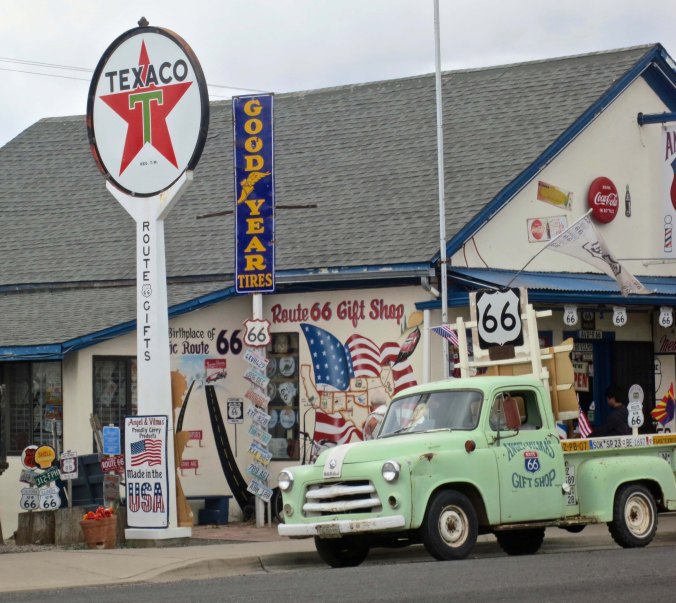
I don't think this store could have worked in more Route 66 signs. How many can you count?
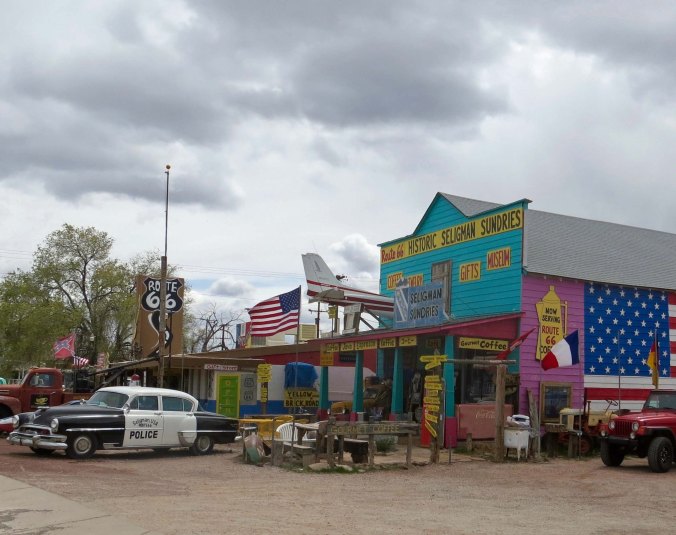
I don’t think this store could have worked in more Route 66 signs. How many can you count?

Here's another example of Seligman merchants struggling to make a profit off of their Route 66 heritage.
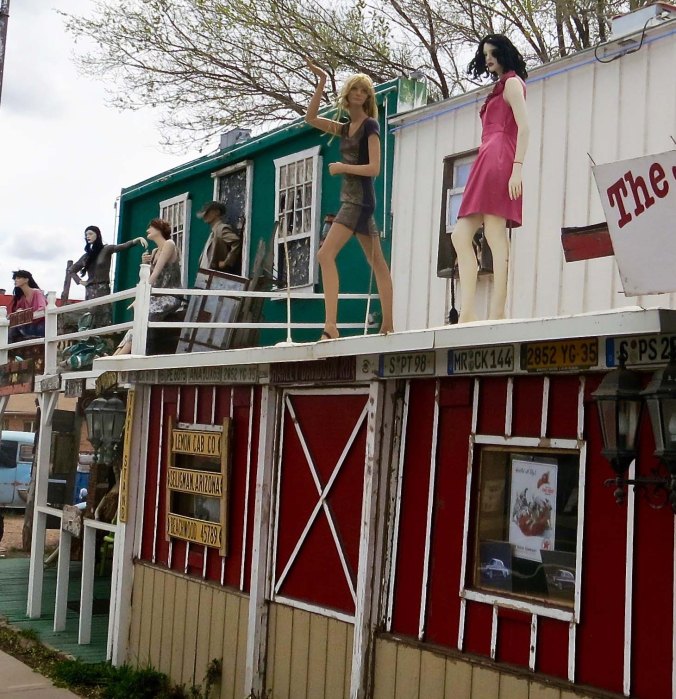
Here’s another example of Seligman merchants struggling to make a profit off of their Route 66 heritage.

This bar featured what I can only assume were supposed to be ladies of the evening.
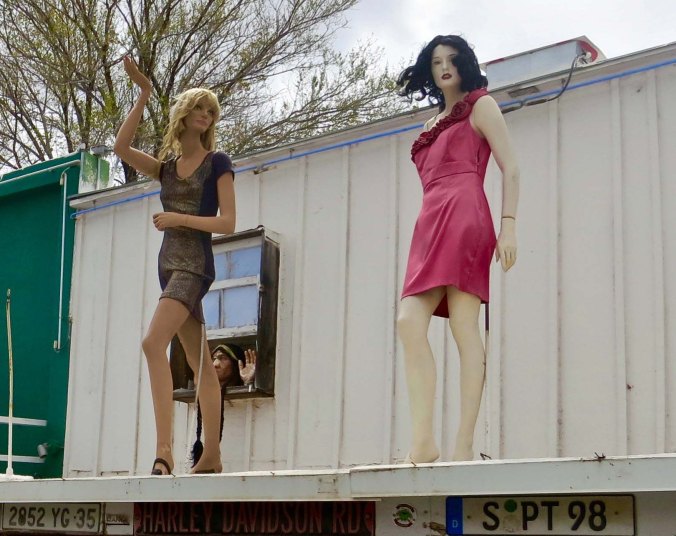
This bar featured what I can only assume were supposed to be ladies of the evening.

I understood the girls but what was with the Lord of the Rings type character staring out the window?

I understood the girls but what was with the Lord of the Rings type character staring out the window? And what did he have in mind doing with his hand?

Historic Route 66 travelled on for another 20 or so miles before dropping me on to Interstate 40. If you were around in 1989, you may have heard my sigh. I left one of America’s bluest highways to one of its busiest, chock full of big rigs travelling as fast as the speed limits allowed— and faster.  Fortunately, there was a decent shoulder. Five miles of freeway travel brought me to Ash Fork, another town that once served Route 66 travelers. Unlike, Seligman, Ash Fork has another claim to fame: The Flagstone Capital of the USA. If all of the rocks piled around the town are any indication, it is probably true. I spent the night. The next morning found me out on the freeway again. It was my only route to Winslow.
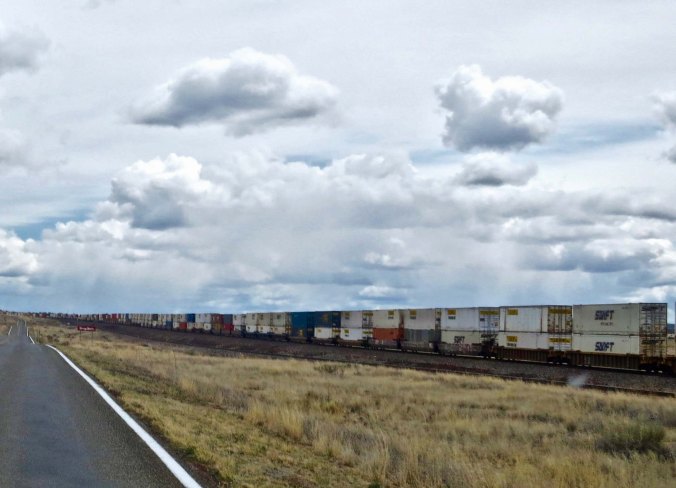
The railroad tracks came closer to the road just outside of Seligman. This happens to be one of the busiest freight lines in America. When I traveled through it was the Santa Fe Railroad of Aitchison, Topeka and Santa Fe fame. Now it is part of the Burlington North Santa Fe Railroad one by Warren Buffet.

The railroad tracks came closer to the road just outside of Seligman. This happens to be one of the busiest freight lines in America. When I traveled through it was the Santa Fe Railroad of Atchison, Topeka and Santa Fe fame. Now it is part of the Burlington North Santa Fe Railroad owned by Warren Buffet.
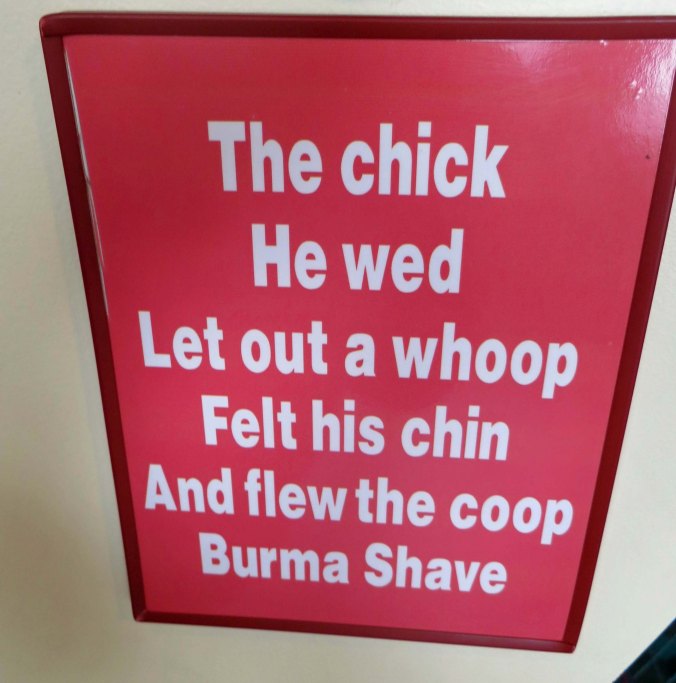
Do you remember the days of the Burma Shave signs posted along the highways of America. This would have been five different signs stretched out over a mile or so. The chick he wed— Let out a whoop— Felt his chin— And Flew the coop— Burma Shave. New signs with similar humor are now posted along Route 66 in Arizona promoting humor.

Do you remember the days of the Burma Shave signs posted along the highways of America? This would have been five different signs stretched out over a mile or so. The chick he wed— Let out a whoop— Felt his chin— And Flew the coop— Burma Shave. New signs with similar humor are now posted along Route 66 in Arizona promoting safety.
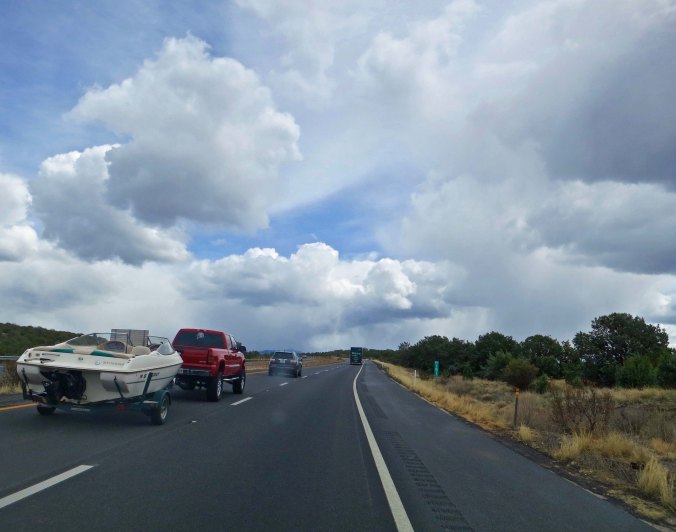
So much for my peaceful road. Route 66 dumped me on to Interstate 40.
So much for my peaceful road. Route 66 dumped me on to Interstate 40.

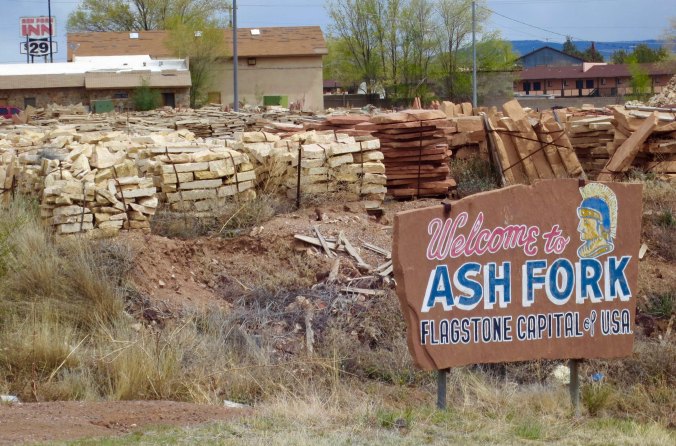
Fortunately it wasn't far. I came to Ash Fork just up the road, which is quite proud of its association with flagstone.

Fortunately it wasn’t far. I came to Ash Fork just up the road, which is quite proud of its association with flagstone. The small campground where I stayed was located somewhere on the other side of the rocks. There was also my kind of motel off to the right.
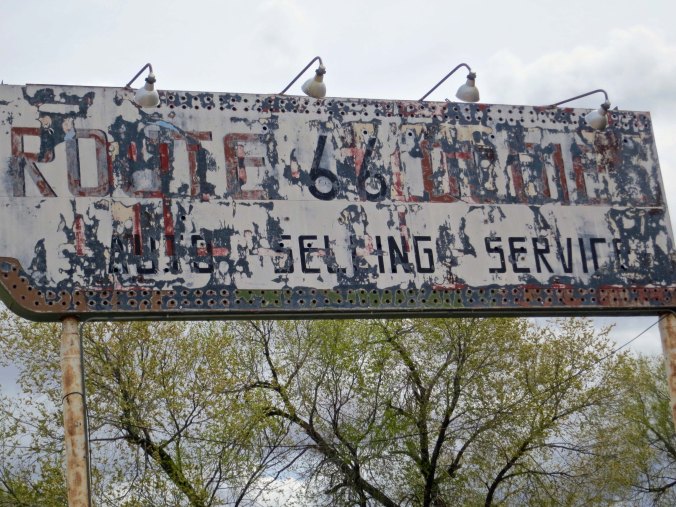
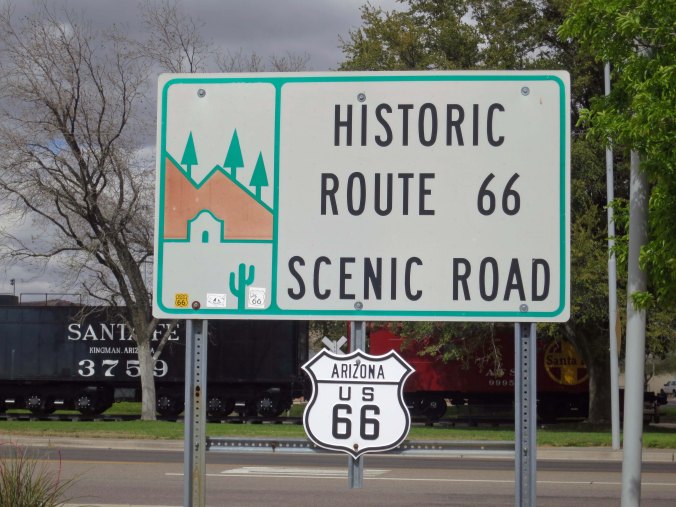
Ash Fork is also an historic Route 66 town as indicated by this sign.

Ash Fork is also an historic Route 66 town as indicated by this sign.

Climbing was the order of the day, all the way to Flagstaff, one of my favorite Arizona towns. Nestled in the pines beneath the towering San Francisco Mountains, it features decent restaurants, coffee, bookstores, and campgrounds… everything I needed to keep me rolling down the road. I’ve stopped there many times, both on my way east and west and on my way north and south to the Grand Canyon and Sedona. I enjoyed myself so much that evening, I didn’t get out until two the next day. Fortunately, the 50 plus miles to Winslow on I-40 were mainly downhill or flat so I arrived before dark. My only disappointment was that I didn’t have time to stop off and see the huge meteor crater along the route. (Peggy and I stopped to check it out. It’s impressive.)
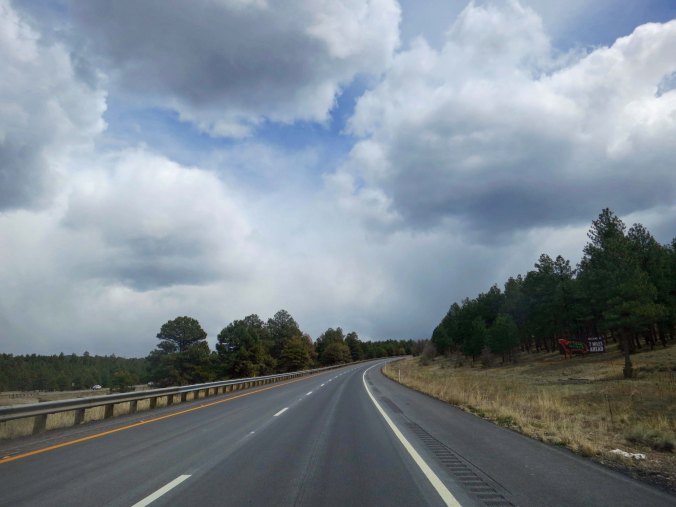
It was a steady climb out of Ash Fork to Flagstaff. But it had its rewards. I came on the first pine trees I had seen since I left Greenhorn Pass. I was so excited that I got off my bike and did a dance. Then I had to pee. You know how that goes...

It was a steady climb out of Ash Fork to Flagstaff. But it had its rewards. I came on the first pine trees I had seen since I left Greenhorn Pass. I was so excited that I got off my bike and did a dance. Then I had to pee. You know how that goes…
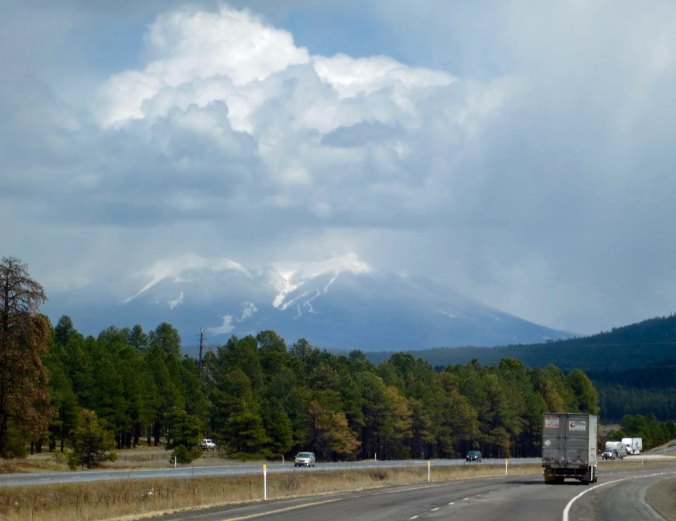
A storm rages over the San Francisco Mountains. Hopi legend has it that their Kachina gods wander the mountains during storms. Apparently they don't like to be disturbed. Nasty things can happen to the unweary human.

A storm rages over the San Francisco Mountains. Hopi legend has it that their Kachina gods wander the mountains during storms. Apparently they don’t like to be disturbed. Nasty things can happen to the unwary human. I camped up there once and was quite careful.
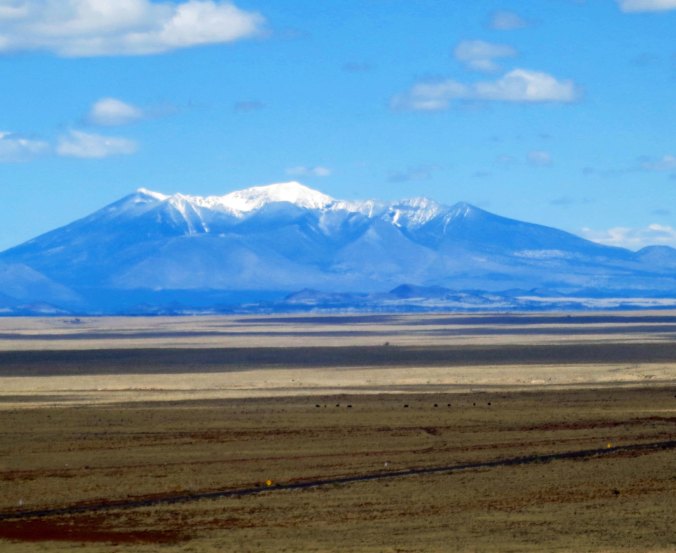
Another view of the San Francisco Mountains— this time from the east. Flagstaff nestles at their base.
Another view of the San Francisco Mountains— this time from the east. Flagstaff nestles at their base.

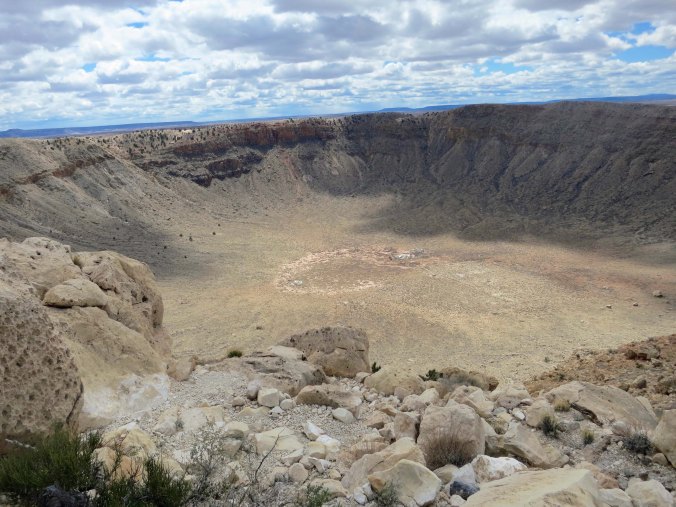
I missed seeing the Arizona meteor Crater on my bike trip so Peggy and I stopped by there a few weeks ago as I retrace my route. It is a very impressive hole in the ground.
I missed seeing the Arizona meteor Crater on my bike trip so Peggy and I stopped by there a few weeks ago as I retrace my route. It is a very impressive hole in the ground.

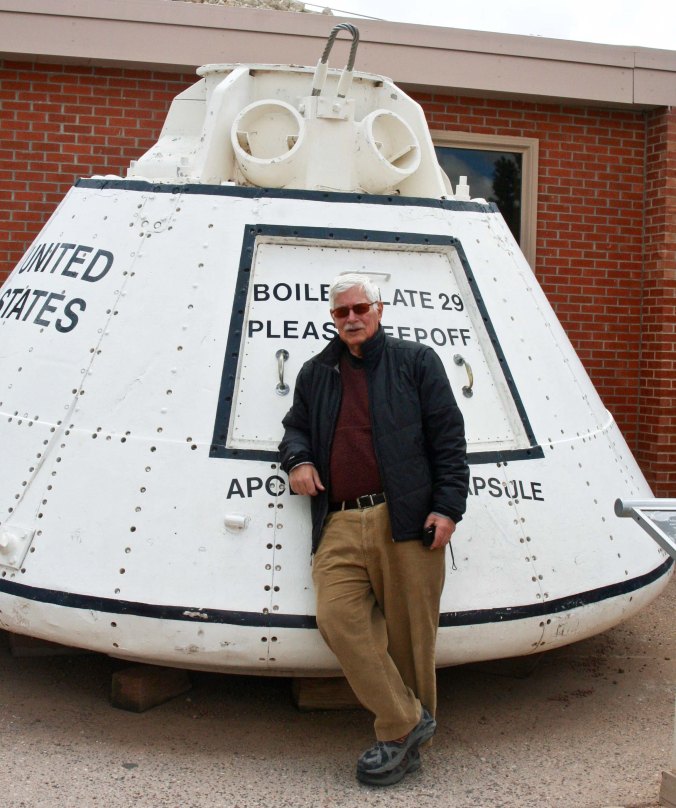
Because of its similarity to craters on the moon, the Arizona Crater was used of early astronaut traIning.

Because of its similarity to craters on the moon, the Arizona Crater was used of early astronaut traIning. And no, I wasn’t ‘on’ the boiler plate. (Photo by Peggy Mekemson.)

But now to Winslow and my story. Since it was late, I didn’t have a lot of time to search for lodging and I did what I rarely do… stopped at a motel with a huge sign proclaiming it was “American Owned.” It’s not that an American owned the motel that bothered me; it’s the prejudice that it likely reflected. Anyway, a very, very old lady was behind the desk. She stared at me and demanded to know what I wanted. (My showing up on a bicycle made me very suspicious, I’m sure.) “A room?” I hazarded a guess. “It’s $20 up front.” The emphasis was on ‘up front.’ The price was right and I handed over the cash. She seemed surprised but checked me in, a process that went on and on. Finally, she showed me the key. “There is a five-dollar deposit,” she announced, holding onto the key. I was becoming a bit ouchy but turned over the money.

Twenty-dollars was too much for the room. It was small, poorly lit, and came with a television that may have worked when “I Love Lucy” was a hit. It smelled like 50-years of tobacco smoke. The bed seemed hardly made, if at all. I wondered what kind of vermin it might contain. I checked. I also decided that my bike would be much safer inside. Exhaustion alone drove me to bed and asleep.

It was around one a.m. when I awoke with a start as I heard a key being inserted into the door and the door knob begin to turn. I sat up so fast I left my brains behind. A dark form was looming in the doorway. It screamed. I screamed back, primeval.

“What in the fuck are you doing in my bed?” he yelled!

“What in the fuck are you doing in my room?” I yelled right back.

“I am getting the manager,” he shouted in parting. I breathed a sigh of relief— too soon, as it turned out. The manager must have heard the ruckus because he was there faster than I could put on my pants, foaming at the mouth.

“What are you doing in this room,” he demanded. “I am calling the police.”

“An old woman checked me in and gave me a key,” I jumped in to deflect a 911 call.

“Oh,” he responded, deflated. “Mother.” As if that explained it all. “Her sight is gone and her memory is worse. I left her here when I had to run to the grocery store.”

That was it for an apology, but I was allowed to stay in the room and the police weren’t called.  Small compensation, to say the least. No offer was made to return my money. It was a while before I fell back asleep and I was out early. New adventures were waiting.
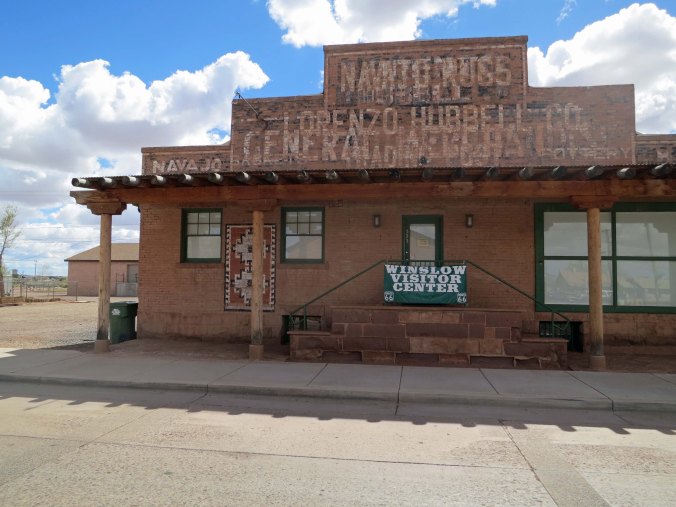
The Winslow visitor center. Once again, the connection with Route 66 is emphasized. This was once a store that sold Navajo blankets and jewelry. Many such stores were located along historic Route 66 in Arizona and New Mexico.
The Winslow Visitor Center. Once again, the connection with Route 66 is emphasized. This was once a store that sold Navajo blankets and jewelry. Many such stores were located along historic Route 66 in Arizona and New Mexico.

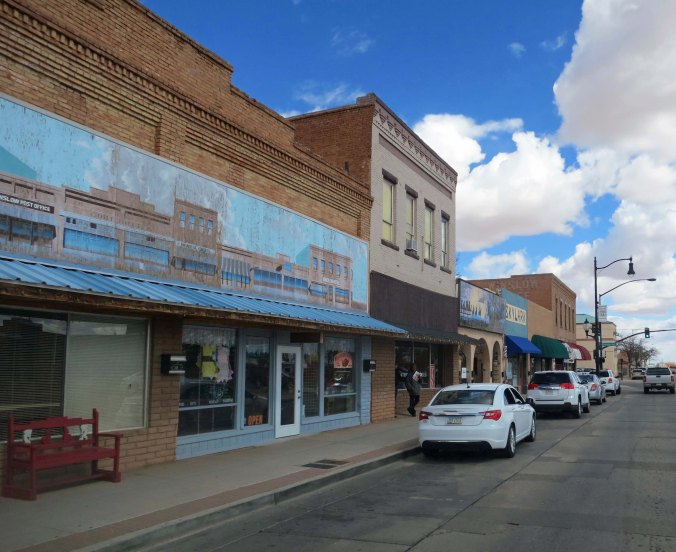
Downtown Winslow as it looks today, pretty much as it looked in 1989 and 1949.

Downtown Winslow as it looks today, pretty much as it looked in 1989 and 1949.

NEXT BLOG: On to the edge of the Rocky Mountains.
Route 66: A Journey Back in Time… The 10,000 Mile Bike Trek

While historic Route 66 travels through six states and numerous climate zones, I always think of it as being in the desert, a prejudice I developed from reading my grandfather's Arizona Highways as a child.

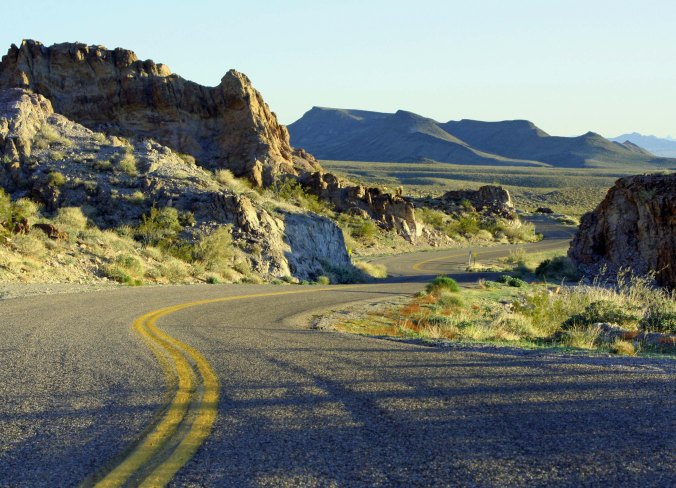
While historic Route 66 travels through eight states and numerous climate zones, I always think of it as being in the desert, a prejudice I developed from reading my Grandfather’s “Arizona Highways” as a child. This photo I took a couple of years ago near Oatman, Arizona would have been the same 60 years ago.


Nostalgia: Pleasure and sadness that is caused by remembering something from the past and wishing that you could experience it again. — Merriam-Webster Dictionary

Route 66 represents nostalgia in mythic proportions. It harkens back to an earlier era— back before the hustle and bustle of modern-day freeways, back before the advent of McDs, BKs, and numerous other fast food restaurants, and back before cell phones insisted that we keep in contact with anyone and everyone all the time, even when on the open road.

It is a blue highway incarnate, and, as I am sure you have figured out, I am a blue highway kind of guy.  When I was planning my bike trip, I designed it to follow some of the loneliest, bluest roads in the US and Canada. Of course there were compromises, Las Vegas being a glaring example. And there were times when my only option was to climb onto a freeway. As I followed busy Boulder Highway up and out of Las Vegas, however, it was Route 66 and North America’s other historic byways that I was dreaming of.

I worked my way up to Railroad Pass, which marks the dividing line between Las Vegas/Henderson and Boulder City. It had been a long haul out of Vegas so breakfast at the Railroad Casino seemed in order. The casino has been there forever and lacks the glamor of its Las Vegas cousins. It even came with an old-fashioned café. I ordered one of my favorites: sausage, two eggs over medium, hash browns, whole wheat toast and coffee. It cost four bucks. I left with a happy tummy and a smile on my face, retrieved my bike from the post it was locked to, and headed for Hoover Dam, keeping an eye out for the Desert Big Horned Sheep that hang out in the mountains above the highway.

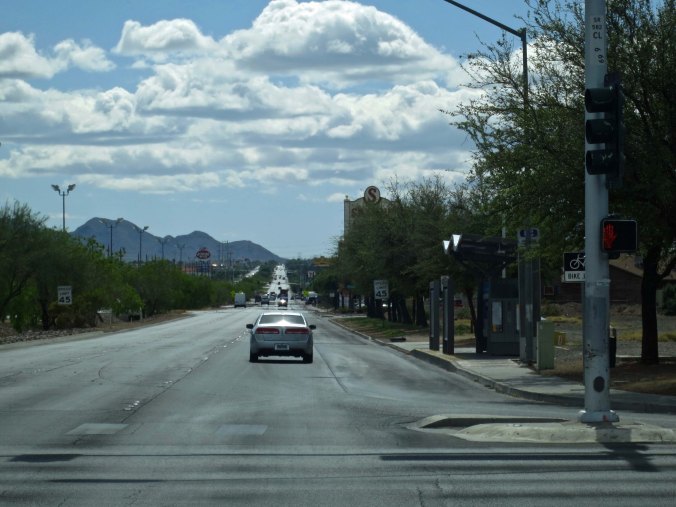
Boulder Highway as it looks today... not much different than it looked in 1989.

Boulder Highway as it looks today… not much different from it looked in 1989.

“Watch the road, Curt!” I admonished me. Do you talk to yourself? I always have. Riding on a bike for six months by myself made me much more fluent, or maybe the word is verbose.

There is a fun story about the Big Horn Sheep in the area that I related in an earlier blog but is worth repeating here. A small park is located just off the road that bypasses Boulder City to Hoover Dam. The bright green grass beckons to the sheep up on the mountainside during Nevada’s hot, dry summers and down they come. I’ve stopped by a couple of times to photograph them. An acquaintance of my friend Ken Lake lives across the road from the park and related this tale.

The path the sheep follow down to the park passes right by a house that has a shiny, aluminum garage door. One day the herd ram noticed another large ram in the door— staring back at him, challenging him. Here was competition for his lovely ewes! This wasn’t to be allowed, of course, so he reared up and charged the door full tilt, crashing into it with his mighty horns. But the other ram was still standing, albeit a bit beat up. So he charged again and then again. The door was trashed. Apparently the owner had a hard time persuading his insurance agent how the damage was caused.

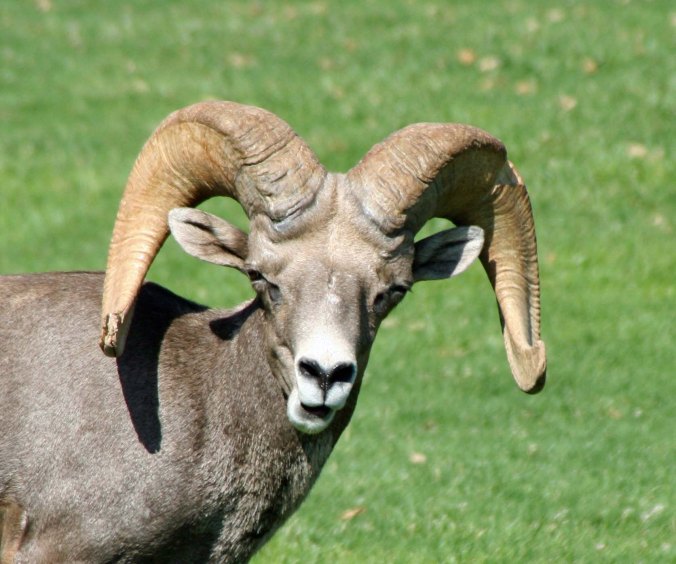
The herd ram determining whether my taking his photo was something he should be objecting to.

The herd ram determining whether my taking his photo was something he should be objecting to.

Peggy and I have a similar problem at our home in Oregon. The big tom turkeys that live in the forest like to parade their harems through our yard. The largest of the toms has discovered the turkey that lives in the bumper of our Toyota Tacoma pickup. He is not happy. I’ve seem him stand in front of the bumper for thirty minutes at a time, fluffing out his feathers, sticking out his neck in a loud gobble, and pecking the bumper. The other turkey fluffs his feathers, sticks out his neck and pecks right back. All of this would just be humorous except the big tom goes looking for the other turkey. He flies up, lands in the pickup bed… and poops. Admittedly, turkey poop isn’t as traumatic as having your garage door trashed, but it is copious and messy. The tom and I have had several discussions about my love of roast turkey.

I was yet unaware of the Big Horn Sheep and a long way off from owning a wilderness retreat in Oregon when I cycled by the park on my bike trip. I made my way down to Lake Mead and crossed over Hoover Dam. Looking out over the lake and the distant drop on the far side from a bicycle was quite an experience. If I were to cross the dam today on my bike, TSA would stop me at its check point and make me empty out my panniers to determine whether I was a mad bomber. Why else would someone bike across the dam— and up the other side?

The climb out was hot and steep, filled with hairpin turns, autos and large RVs. I sweated all of them, so to speak. Reaching the top, I was faced with another challenge, miles and miles of sizzling, desolate desert with minimal facilities. My kind of country.

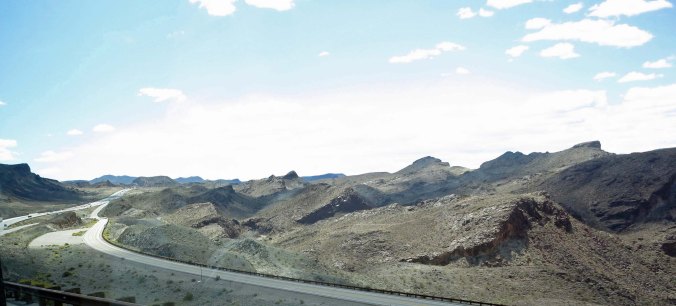
A high four multi-lane bridge has replaced crossing over Hoover Dam when traveling between Nevada and Arizona. This shot looks down on the old highway I was following after climbing out of the canyon.

A high, multi-lane bridge has replaced crossing over Hoover Dam when traveling between Nevada and Arizona. This shot looks down on the old highway I was following after climbing out of the canyon.

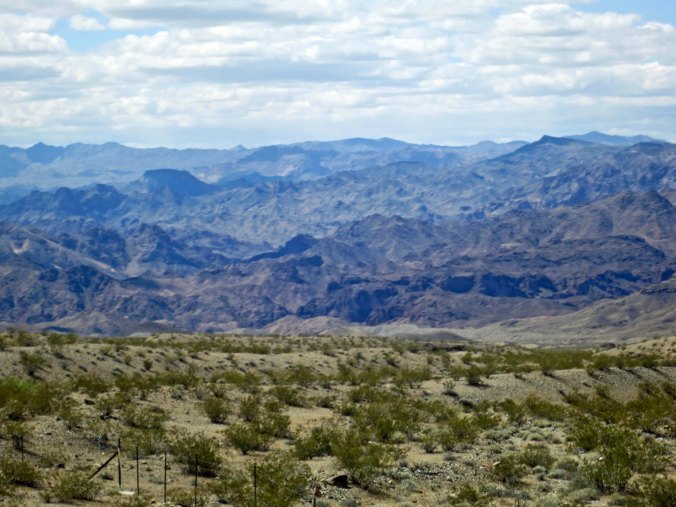
A bit farther up the road looking south. Dante would have found this site suitable for his concept of hell.

A bit farther up the road looking south. This photo could have served as an illustration for Dante’s Inferno.

I biked on, catching far off views of the Colorado River and then picking out a distant mountain to bike toward. As I reached my goal, the sun began to set, and warm breezes turned slightly cool. It was time to search for a home. Unfortunately, a sturdy fence blocked easy access to the desert. I wasn’t particularly interested in being caught climbing over. There are a lot of guns in Nevada. A kindly dirt road came to my rescue. I took advantage of a break in traffic and zipped down it and into a dry gulch, the perfect hiding place— as long as it didn’t rain and the local rattlesnake was elsewhere. I fired up my backpacking stove, made a cup of coffee, added a dash of 151 proof rum, and downed a granola bar. Life was good. Coyote music lulled me to sleep.

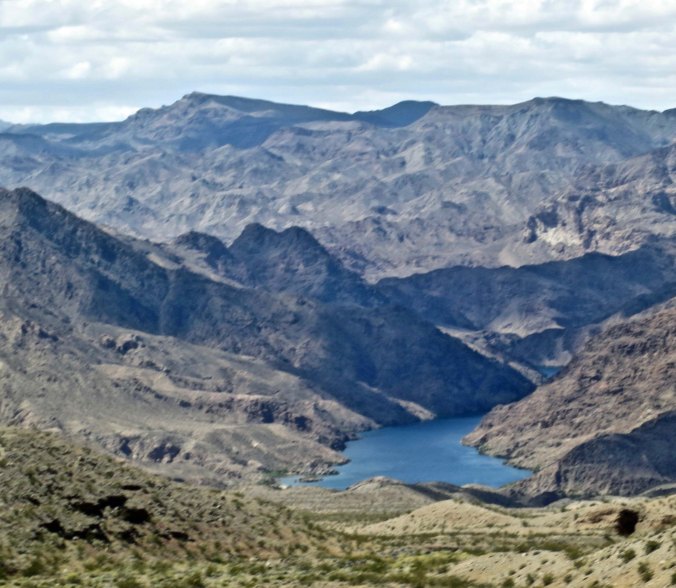
Looking down on the Colorado River from a viewpoint on the Las Vegas-Kingman road.

Looking down on the Colorado River from a viewpoint on the Las Vegas-Kingman road.

I used this mountain as a marker to determine my progress.

I used this distinctive mountain as a marker to determine my progress.

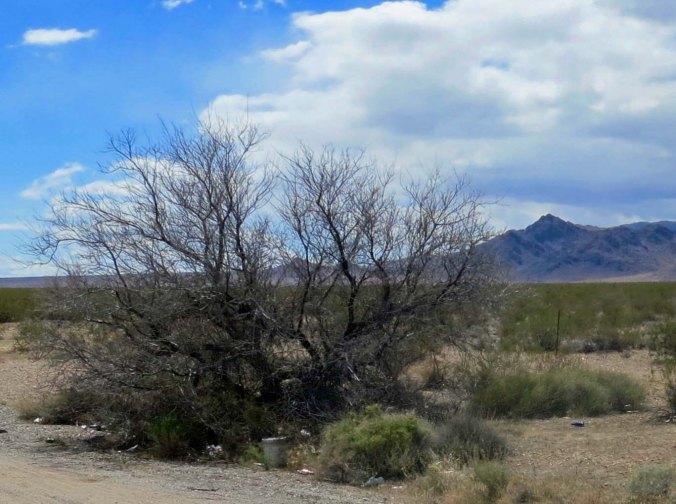
Looking out toward my home for the night.

Looking out toward my home for the night. Not bad, eh? Or is it that 151 proof rum improves how everything looks?

I was up early in the morning and out before the traffic. Fifty-miles later I was in Kingman, Arizona, a town bursting with pride about its Route 66 heritage, and hoping to harvest a bundle of tourist dollars because of it. I grabbed a room in a beat up old motel that claimed Route 66 vintage and prices. Following a much-needed shower, I headed out to follow the road through the town and absorb some of its ambience.

Kingman, Arizona is quite proud of its connection to Route 66. Two different museums in town feature Route 66 themes.

Kingman, Arizona is quite proud of its connection to Route 66. Two different museums in town feature Route 66 themes.

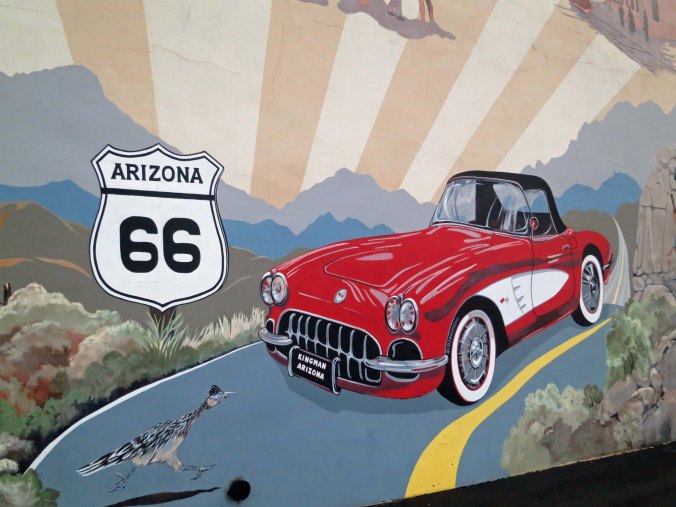
A number of murals depict a romanticized view of travel on the highway.

A number of murals depict a romanticized view of travel on the highway.

When I talk about the inexpensive motels I found along my bike route, this is what Peggy assumes they looked like.

When I talk about the inexpensive motels I found along my bike route, this is what Peggy assumes they looked like.

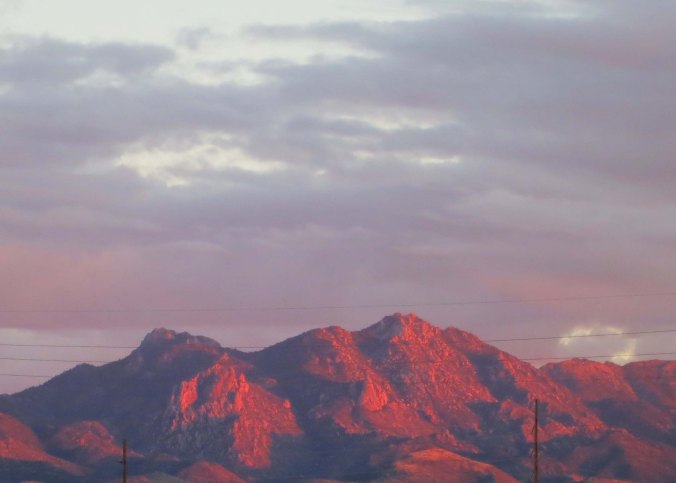
A beautiful desert sunset as seen from Route 66 in Kingman.

A desert sunset as seen from Route 66 in Kingman.

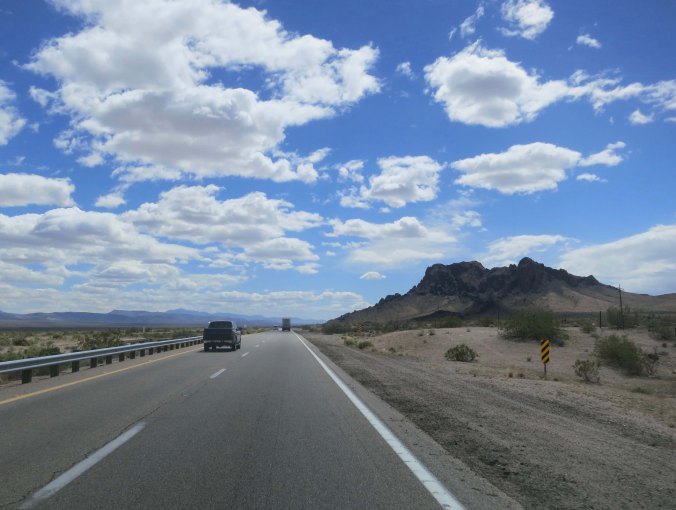
The next day found me absorbing much more as I left the town behind and made my way east on what was once one of America’s main cross-country routes. Today it is a quiet road. The majority of the people traveling east and west are zipping by on Interstate 40, rushing toward whatever destination/destiny awaits them.

When I think of Route 66, I think desert. When I was a small boy, I was enthralled by my grandfather’s subscription to “Arizona Highways.” It often featured Route 66, and it featured deserts. My first acquaintance with the highway was when I was driving west from Atlanta in 1968 and followed portions of it through Arizona, including the one I was biking on.

My route for the day took me on a gentle climb up through arid lands with views of mesas along the way. Occasional creeks were teaming with life that was seeking the desert’s most treasured commodity, water. I passed by ramshackle old buildings that had seen their heyday in the 40s and 50s. I waved at the few cars that passed me, either locals going about their business, or romantics like me, seeking a taste of a bygone era. A train whistle receding into the distance fit right in. I ended my day at the Grand Canyon Caverns, a tourist attraction of the early Route 66 that still pulls in visitors today.

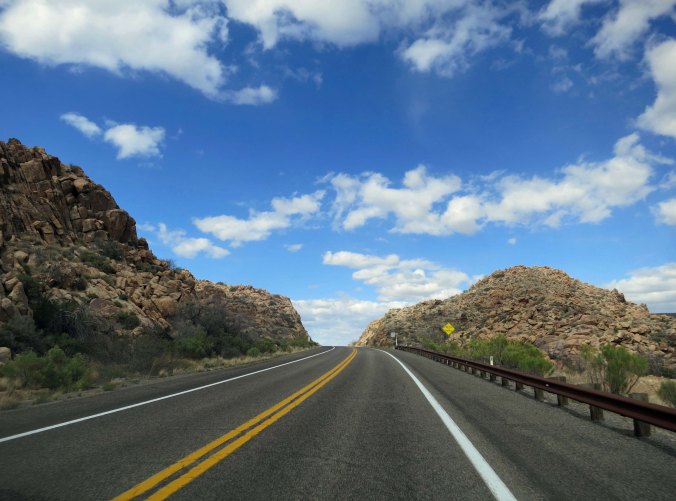
Route 66 above Kingman.

Route 66 above Kingman.

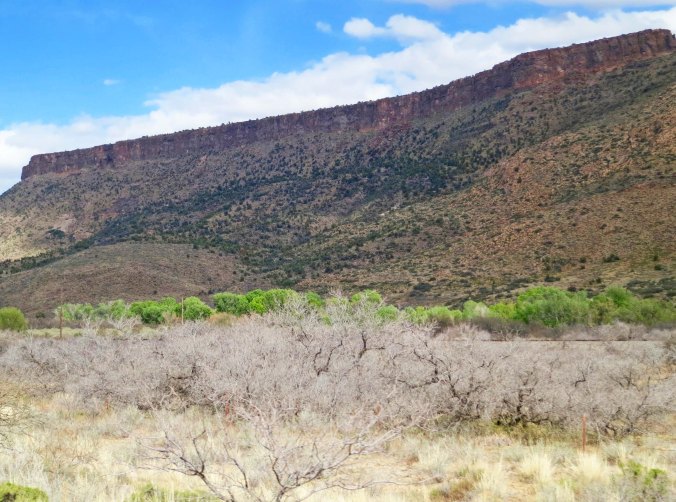
A mesa above the highway. Traveling over the mets and beyond will bring you to the Grand Canyon.

A mesa above the highway. Traveling over the mesa and beyond will bring you to the Grand Canyon.

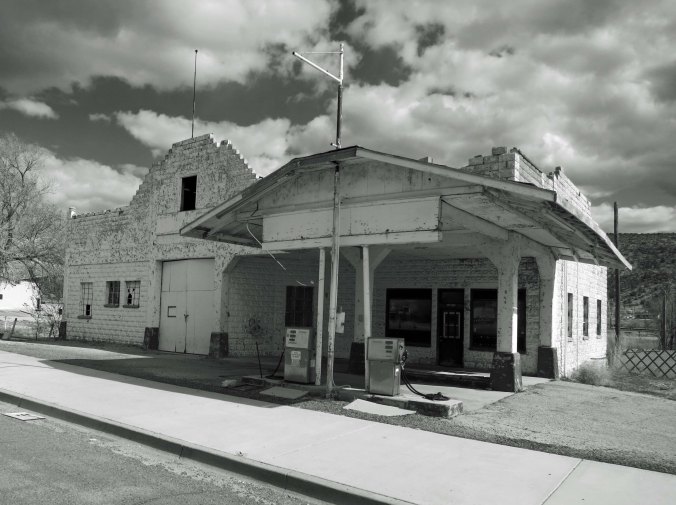
An old building that served as a gas station and garage during the heyday of Route 66. The gas pumps had been updated, but even they were no longer in use. I rendered the photo in black and white to represent the era.

An old building that served as a gas station and garage during the heyday of Route 66. The gas pumps had been updated, but even they were no longer in use. I rendered the photo in black and white to represent the era.

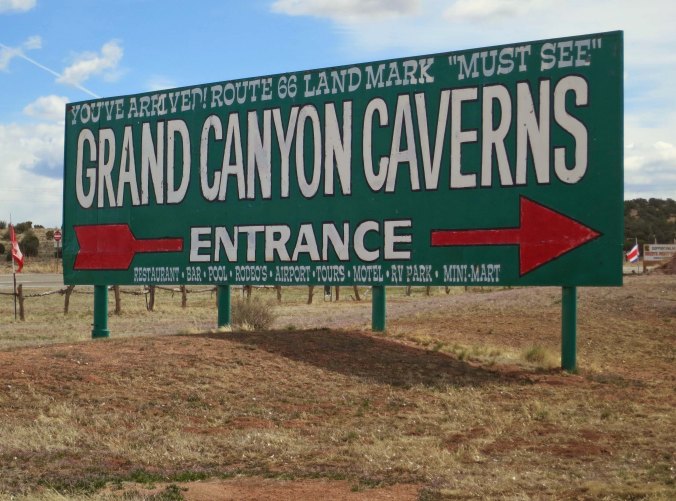
My campground for the evening with a typical Route 66 sign.

My campground for the evening with a typical Route 66 sign.

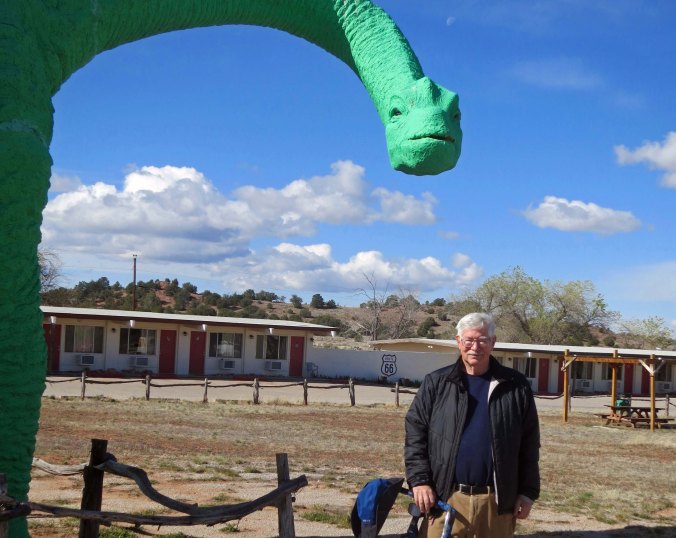
The campground/motel and caverns also featured dinosaurs. (Photo by Peggy Mekemson.)

The campground/motel and caverns also featured dinosaurs. (Photo by Peggy Mekemson.)

The restaurant featured Betty Boop.

The restaurant featured Betty Boop.

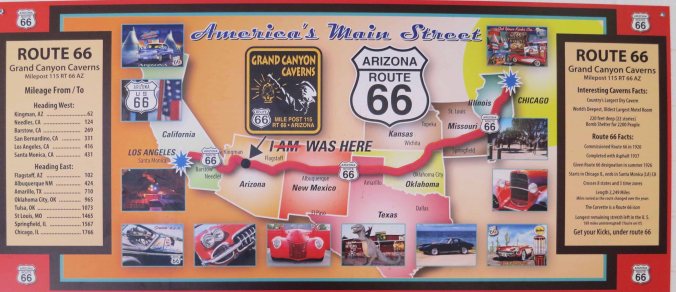
And this map showing historic Route 66.

And this map showing historic Route 66. The arrow points to the Grand Canyon Caverns.

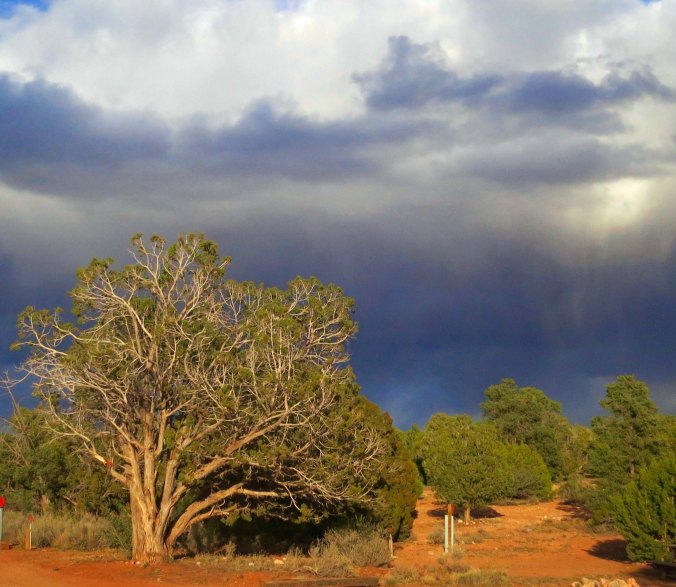
Sunshine lights up dark clouds that were promising rain at the campground.

Sunshine on the juniper trees provides an interesting contrast to the dark clouds that were promising rain at the campground.

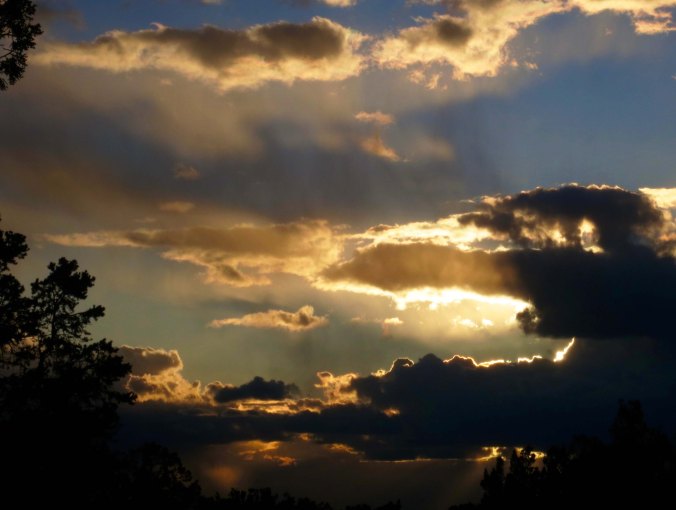
Sunset at the Grand Canyons Cavern Campground.

I’ll conclude this post with sunset at the Grand Canyons Cavern Campground.

Note: If you are new to this series, my wife Peggy and I are retracing my 1989 bike route, this time in our van. Most of the photos come from our present trip.

NEXT BLOG: I will feature the rest of my bike trip across Arizona, including a very scary one a.m. invasion of a motel room I was sleeping in.