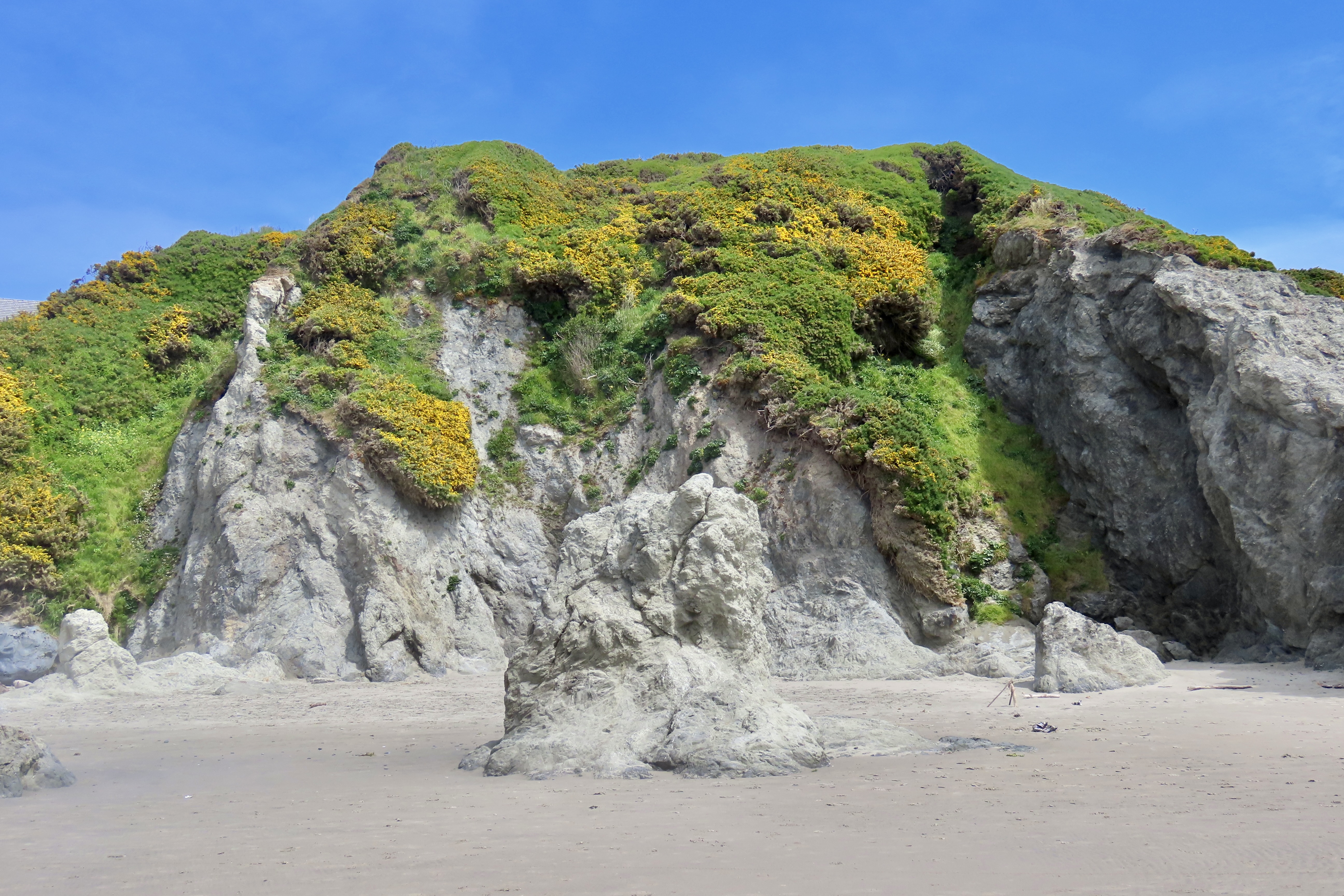
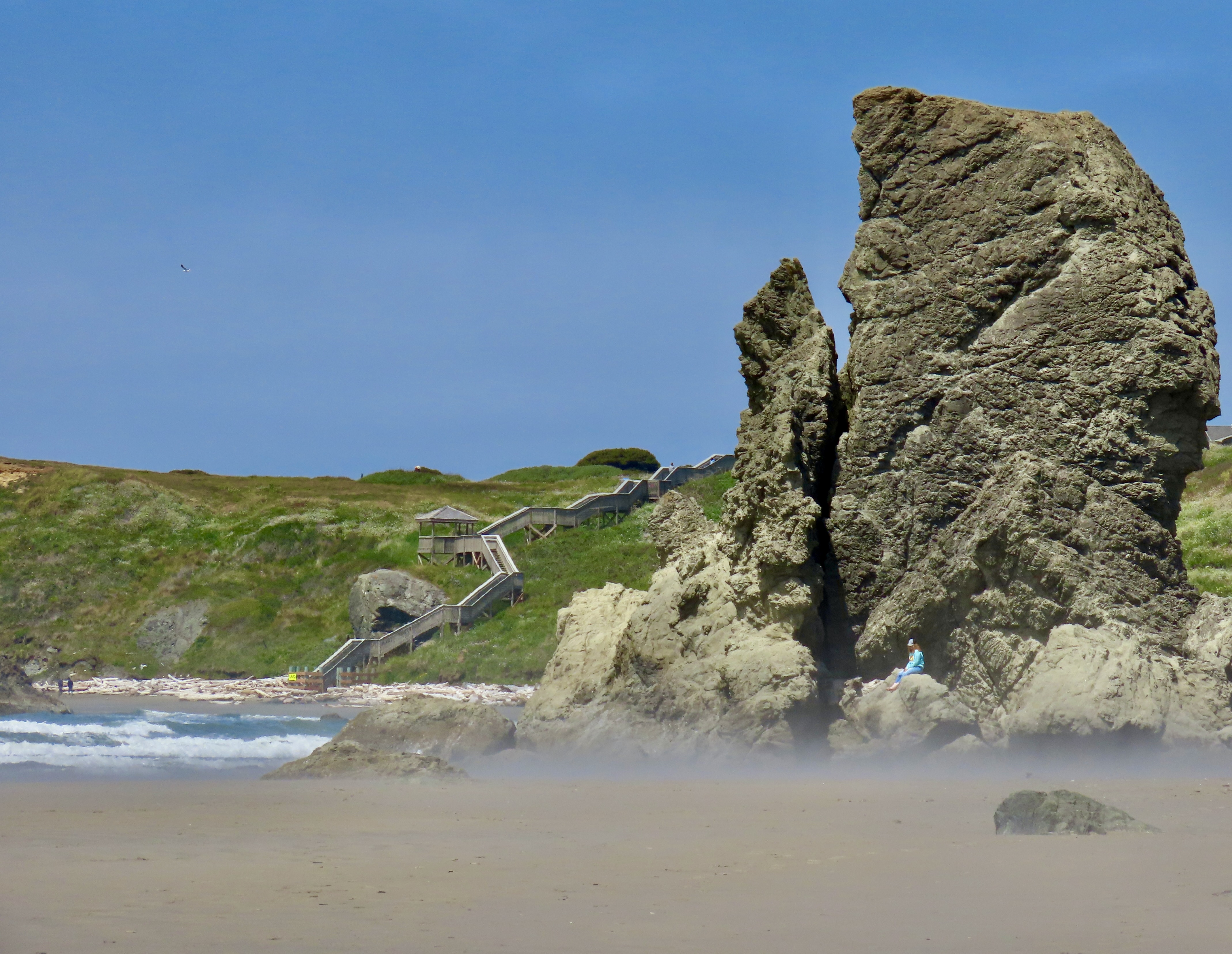
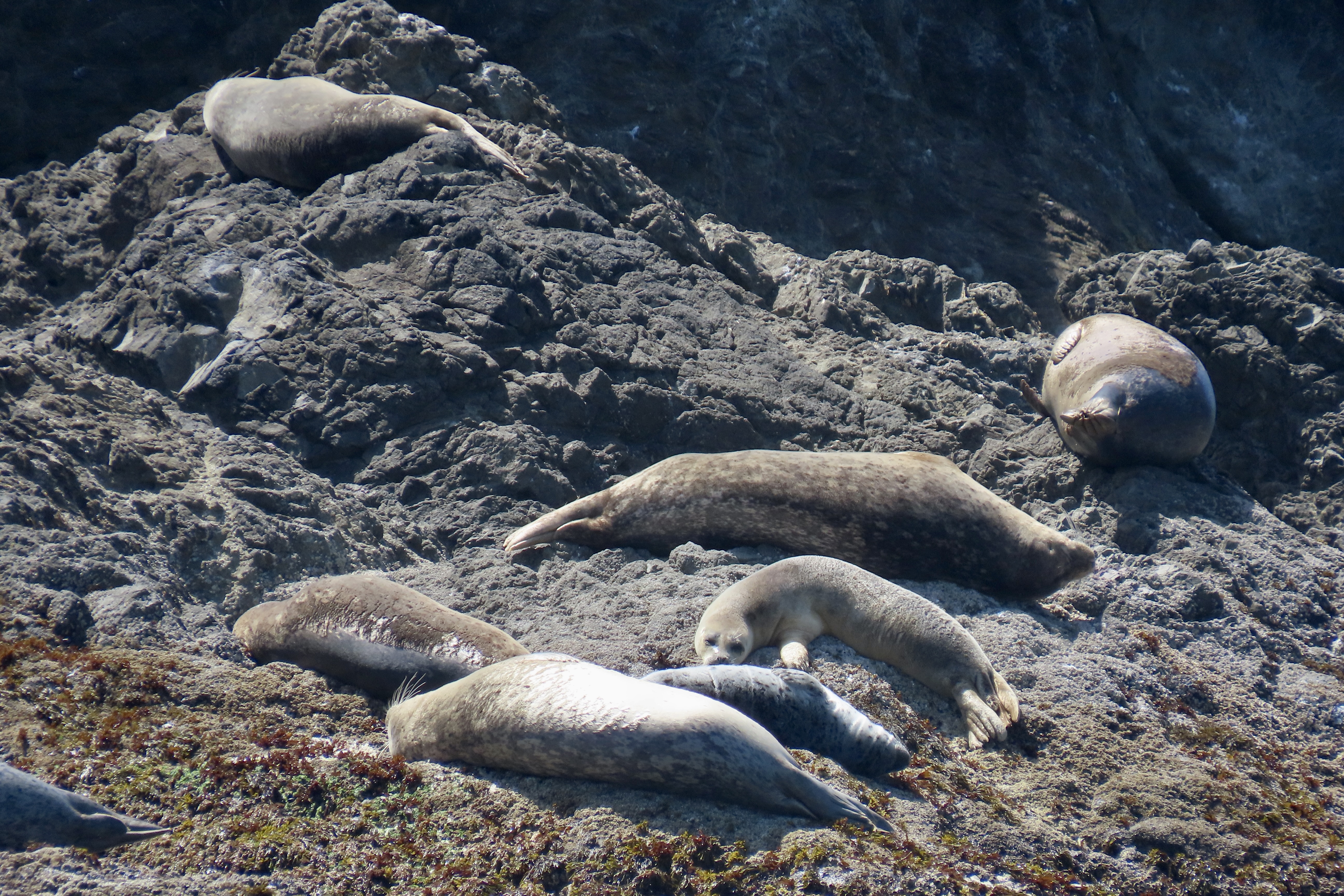
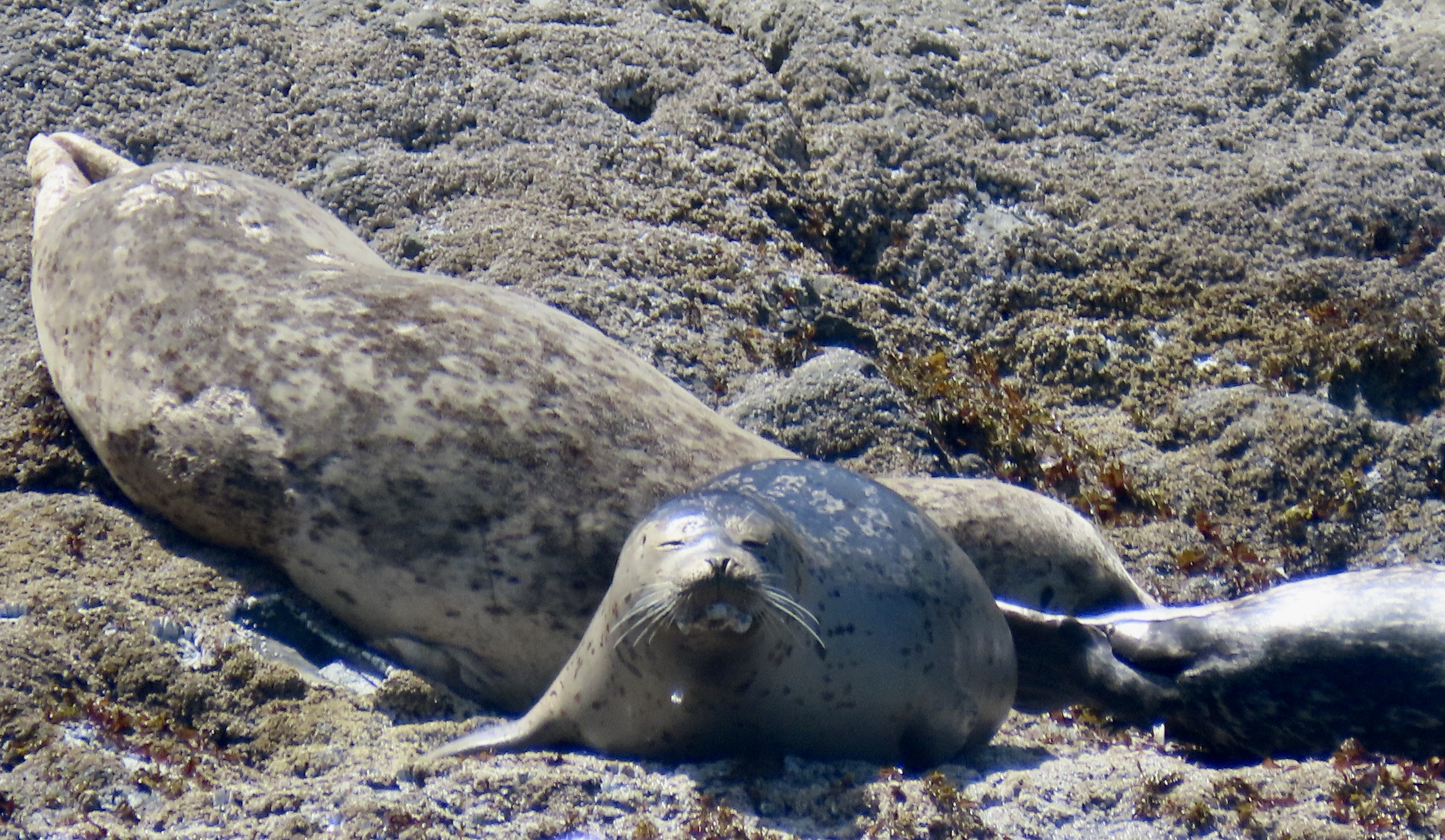
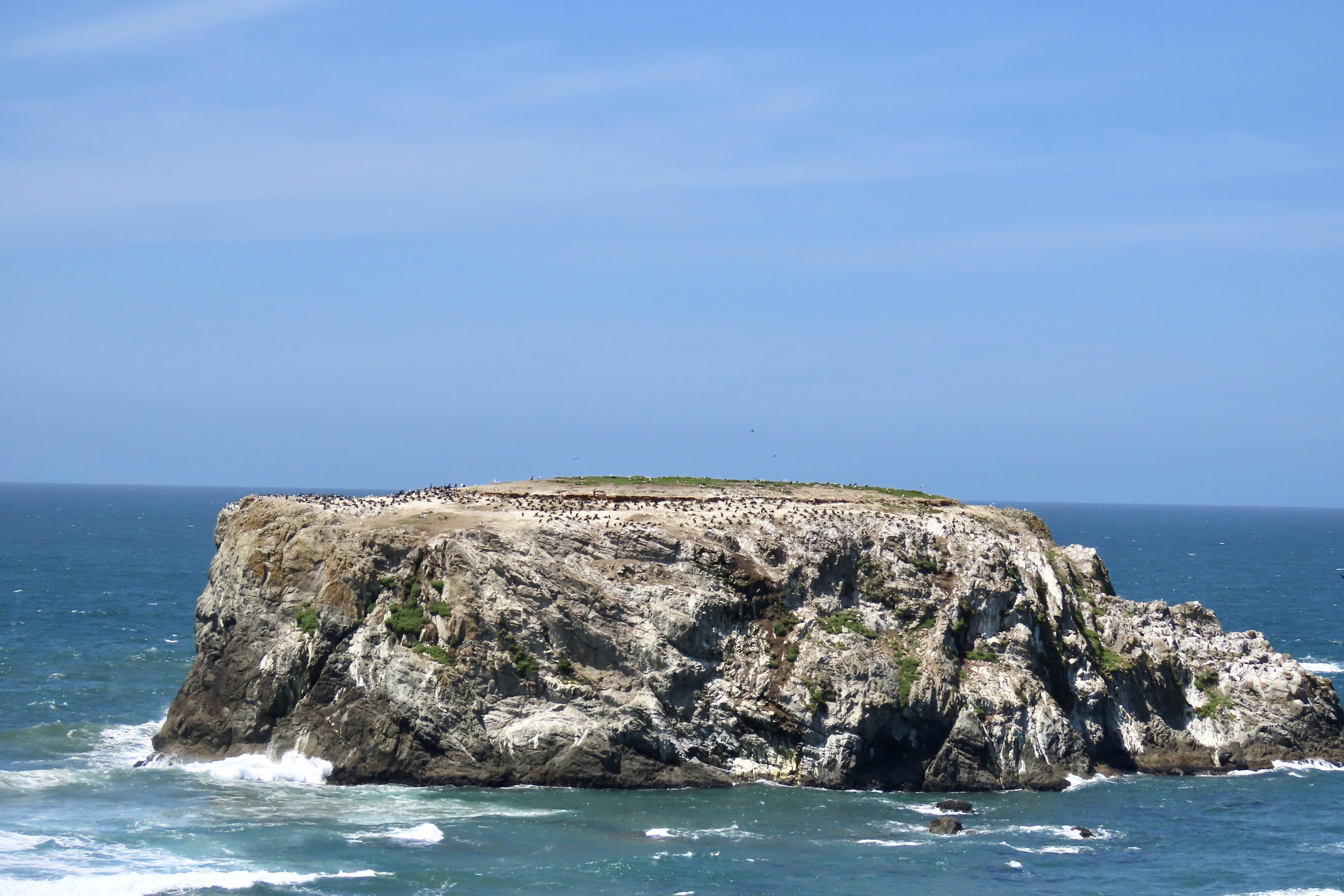
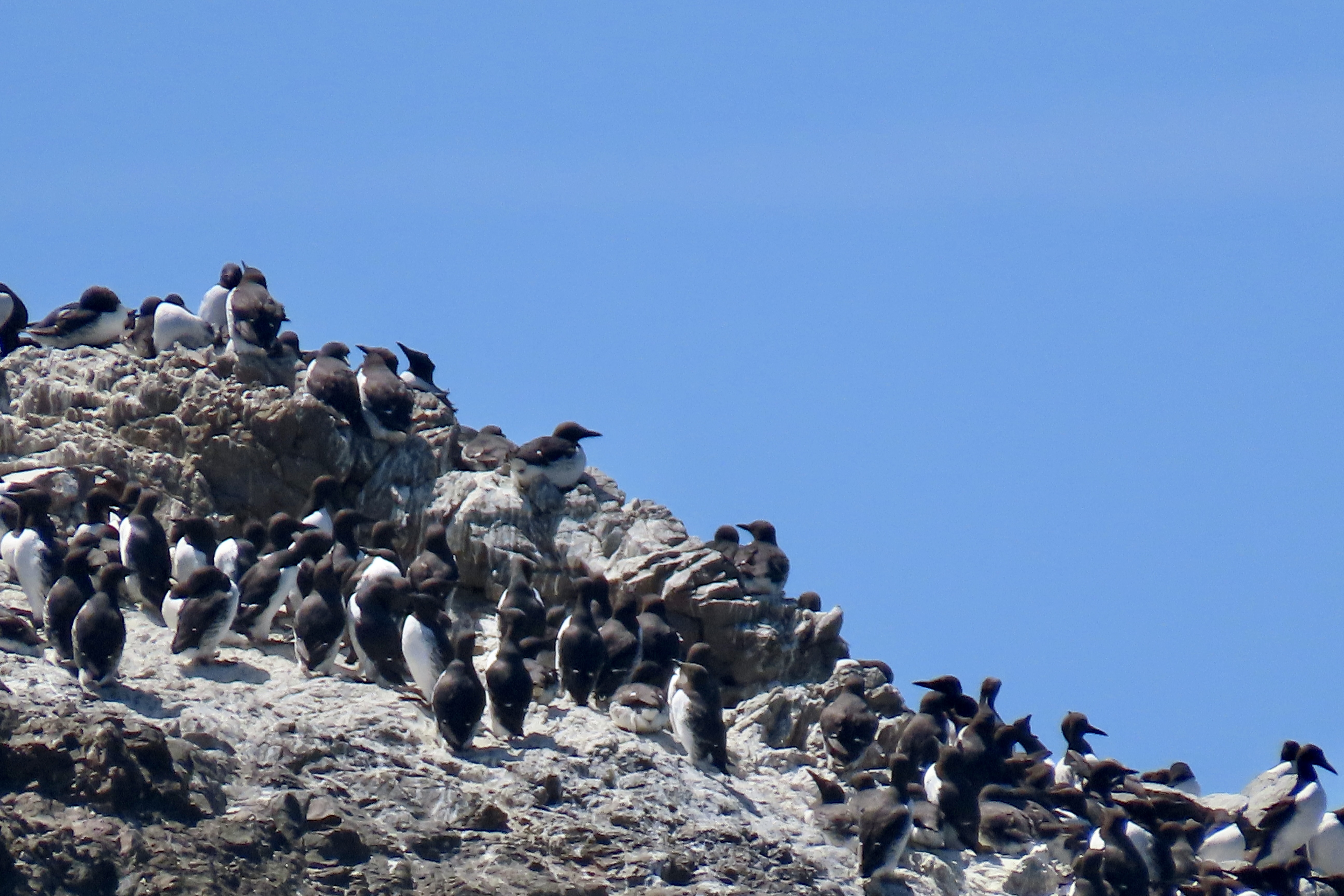
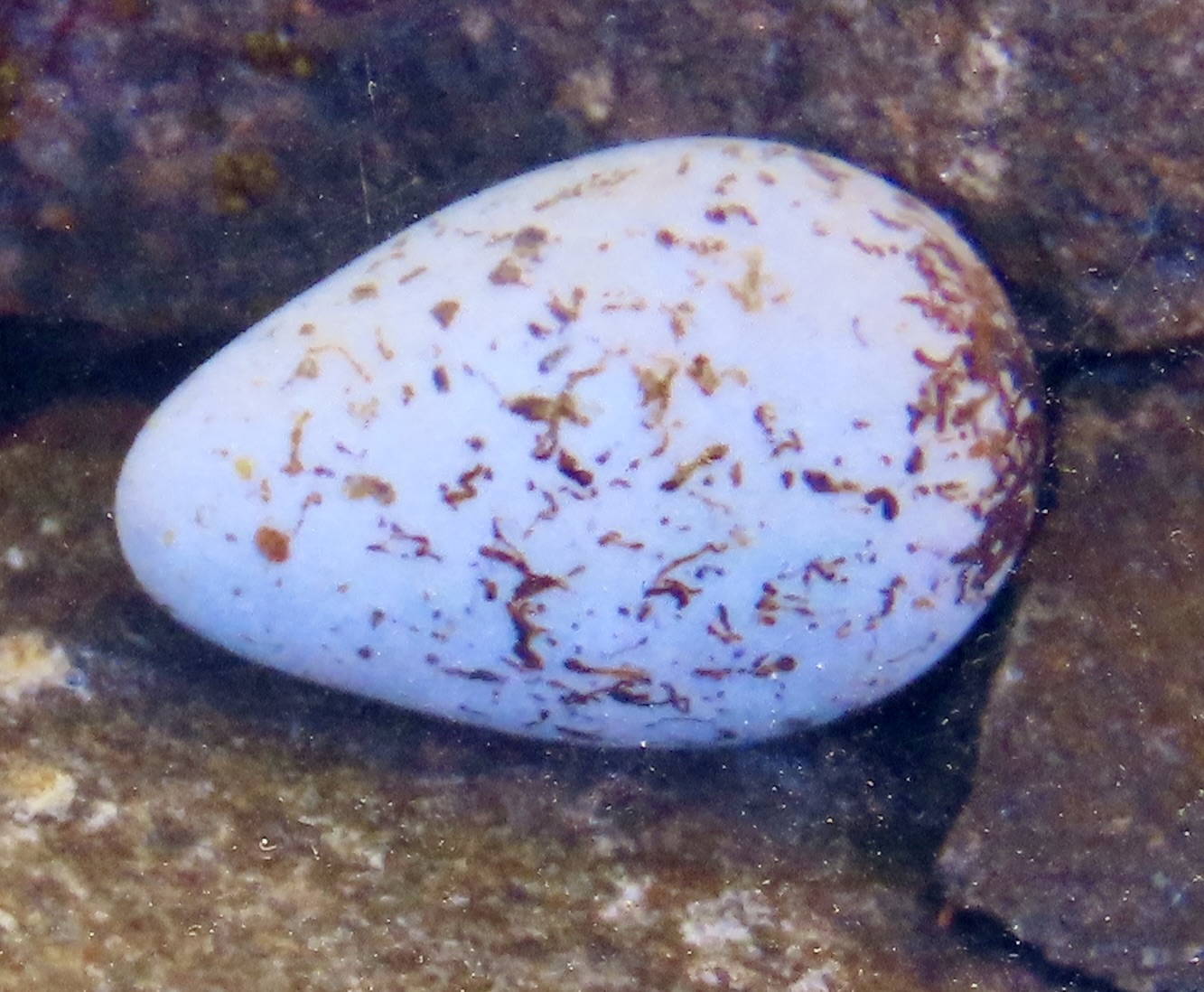
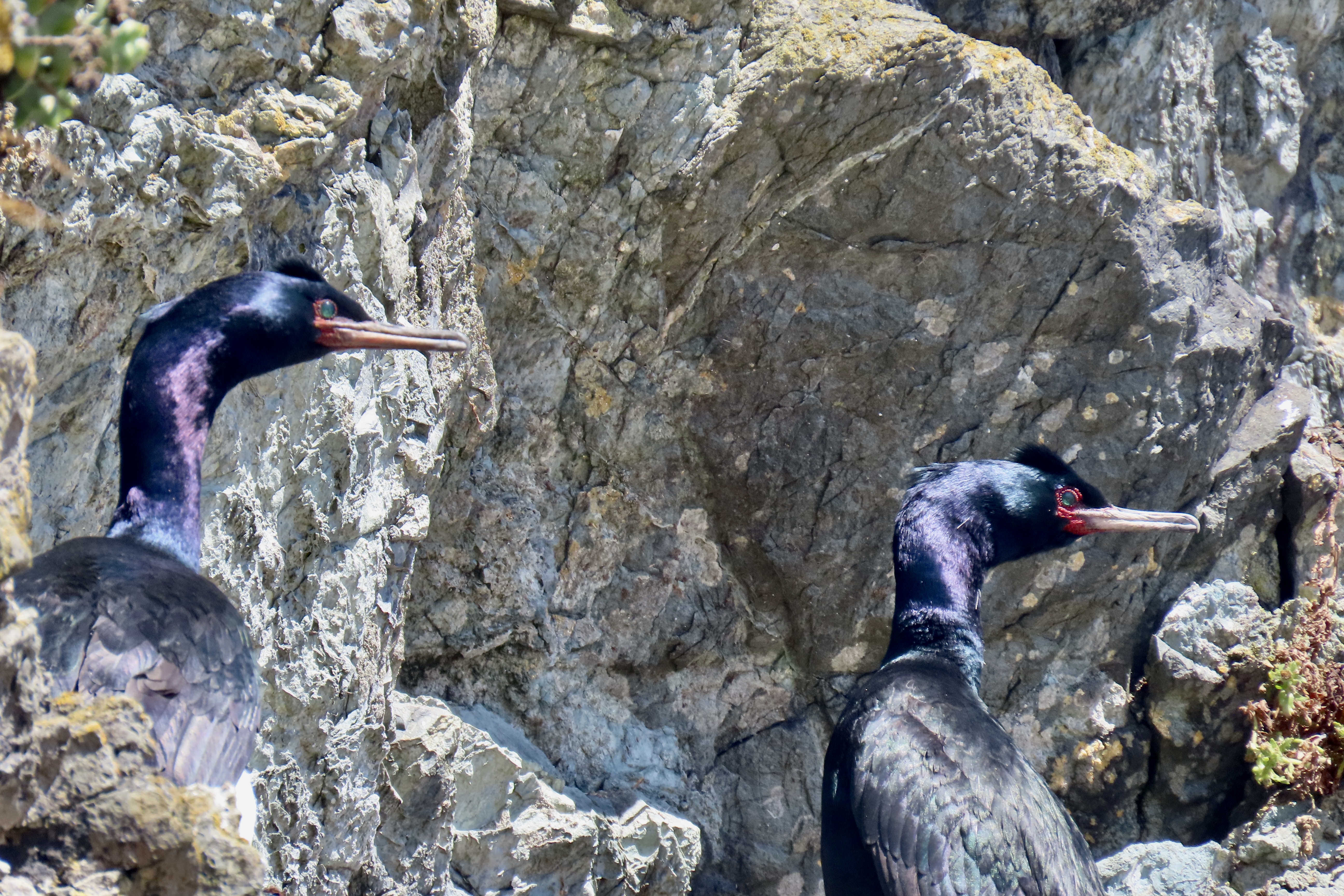
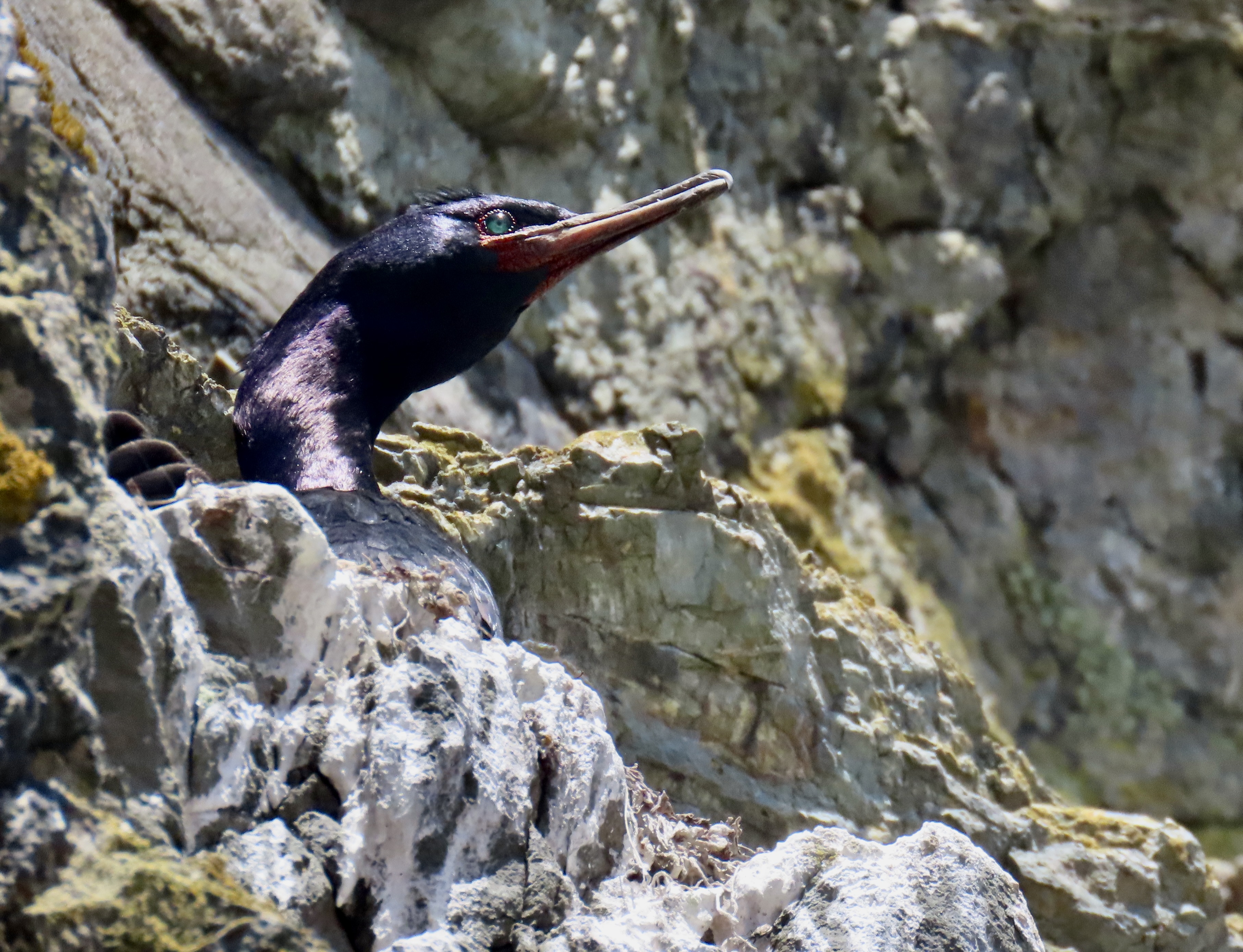
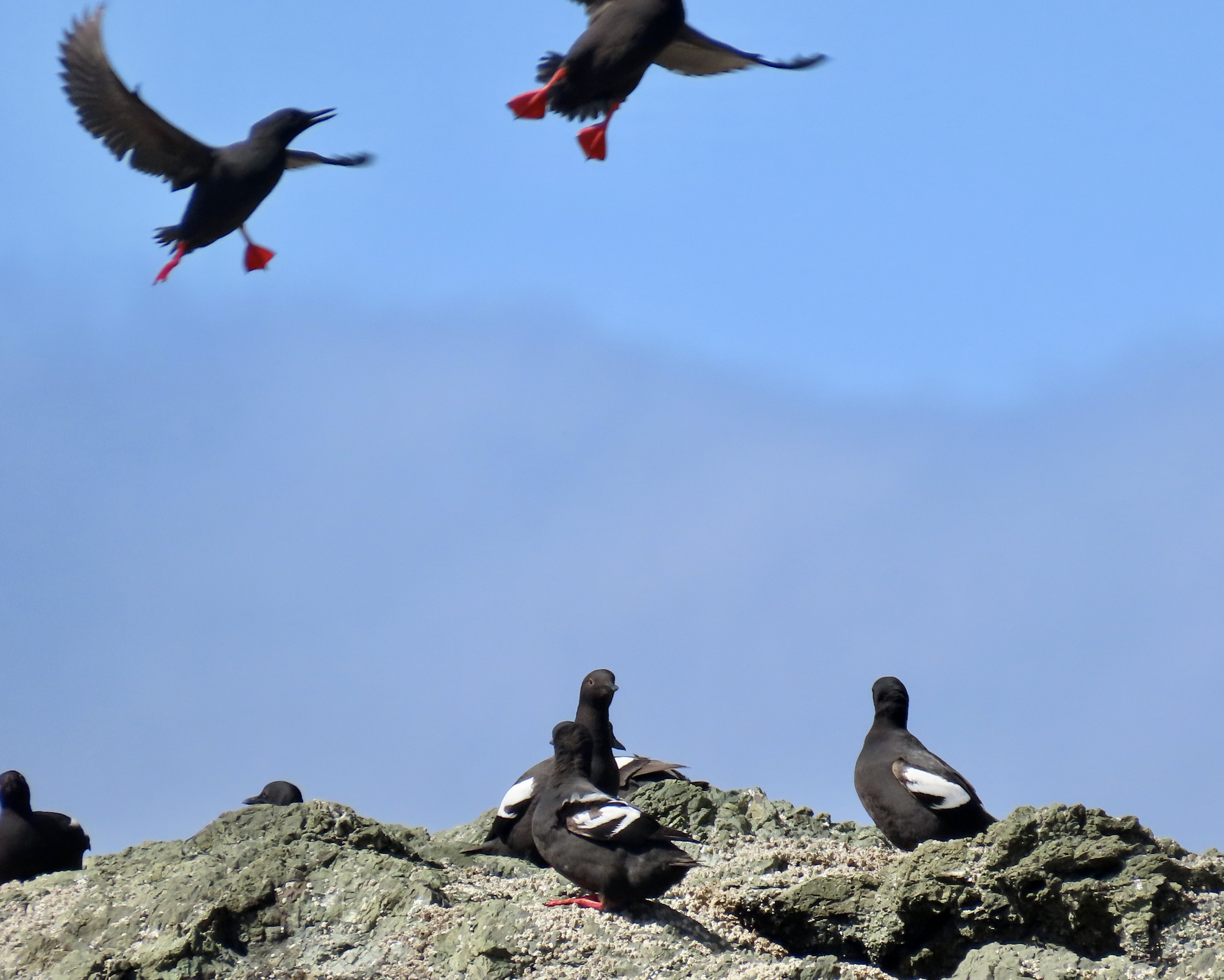
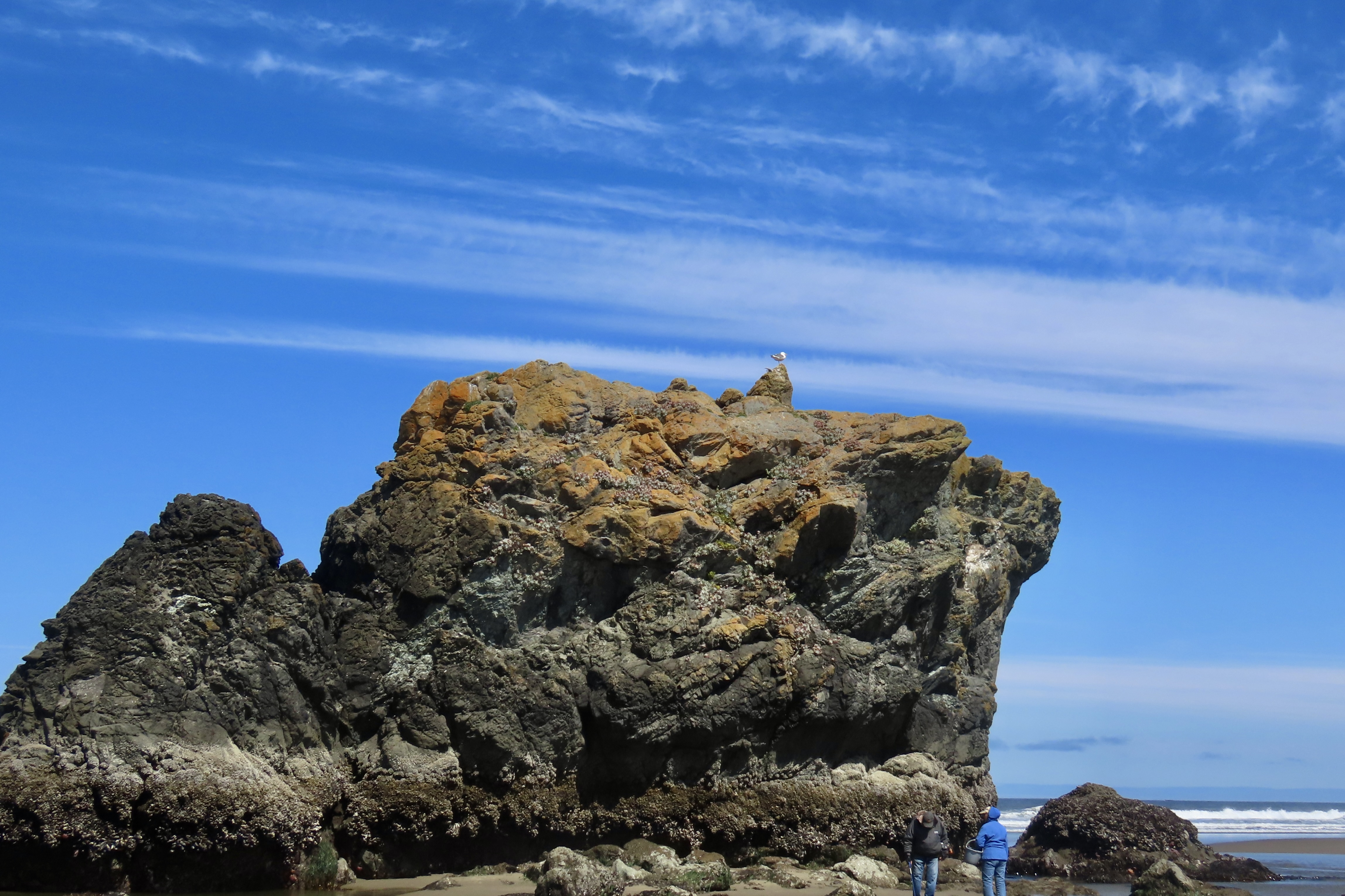
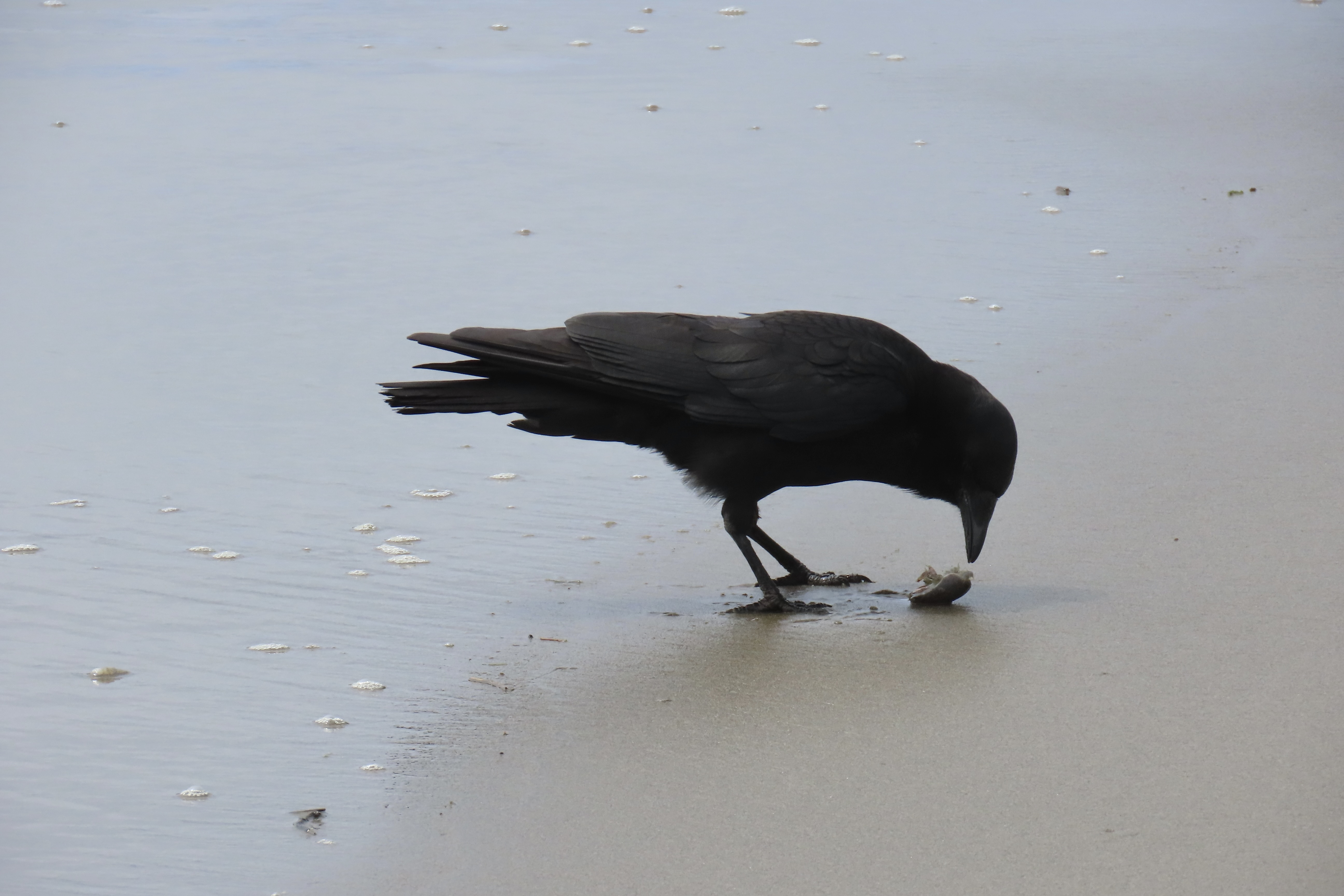
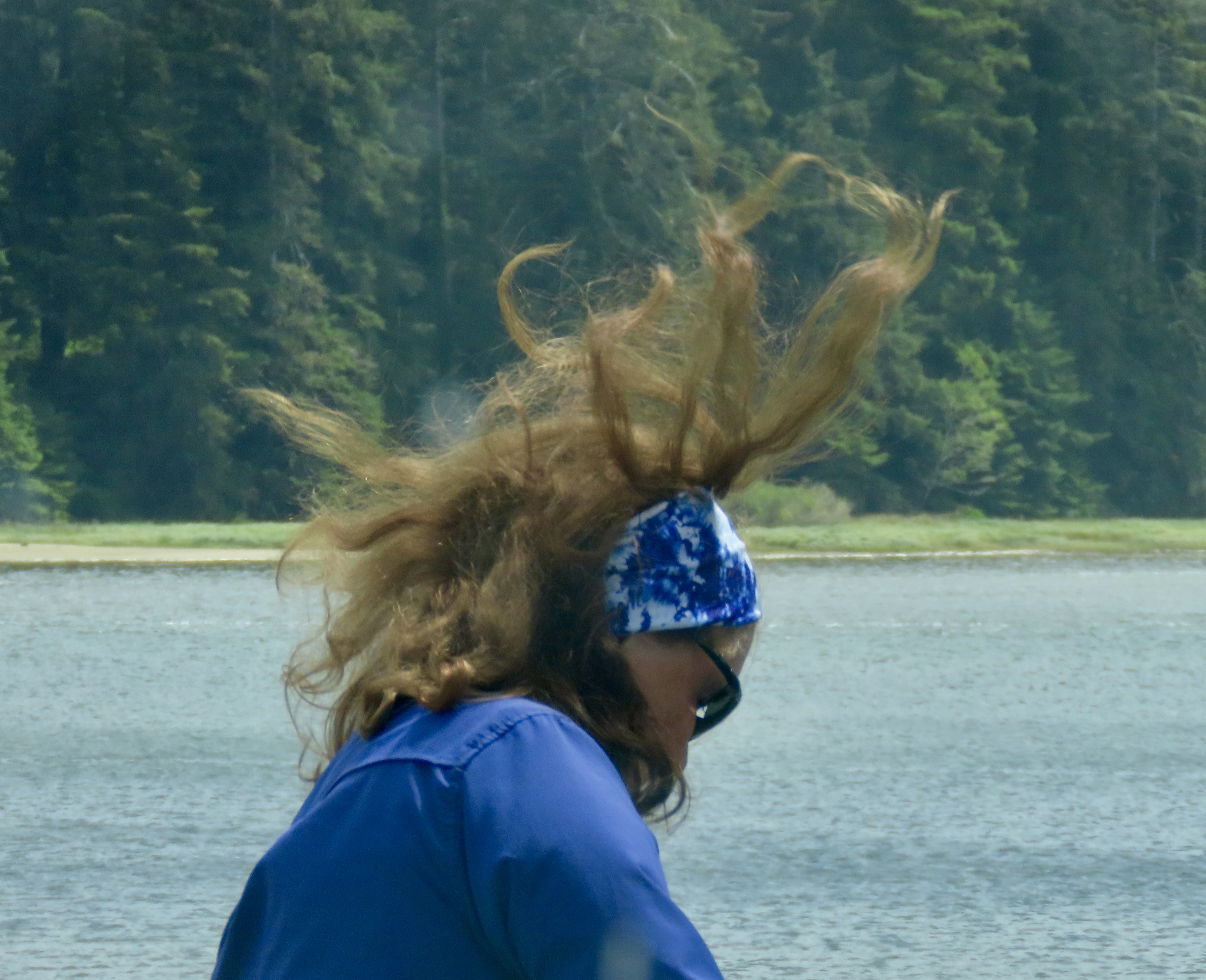
There is more to the unusual beauty of Bandon By The Sea than sea stacks. This photo is from one of the beach walks we took while we were visiting 3 weeks ago is an example.Graceful wooden walkways down to the beach add to the beauty. A fine mist was working its way inland.There were two sets of stairs down to the beach, this one that started near the Face Rock parking lot and the one above that was located to the north . The driftwood next to the stairs here had been tossed up by winter storms over time.Down on the beach the waves had carried in a large tree; its roots are shown here.We found this blog-worthy piece of driftwood on our walk into Devil’s Kitchen when we were heading out to explore the tide pools.This rattlesnake grass gets its name from the seed pods that resemble the rattles on a rattlesnake.I liked the contrast here of the dried grass and green shrubs caught in the evening sunset.Peggy enjoyed the flower gardens that grew on the sea stacks.And, of course, Bandon had its share of seals lollygagging on the rocks off its shore.As we have seen on our trip up the coast, offshore sea stacks/islands play host to myriads of nesting sea birds. This island, like most of them along the coast, is a marine sanctuary. Most of the dots are Brandt cormorants…But murres were also nesting on the rock in their usual numbers. When they are packed together, each murre occupies around six square inches to raise its chick. I read that the parents come back to their same six inches year after year.An information board along the walkway above the beach included a photo of one of the Murre’s oddly shaped, colorful eggs. Each egg has a different pattern that its parents can recognize. When the chick reaches 3-4 weeks of age (even before it can fly), it’s time to say goodbye to its tiny space. Dad flies down to the ocean and calls to the chick while mom hangs out above. (I wonder if she gives her baby the boot.) Anyway, baby takes the leap and flutters down to dad, who then takes it out to the ocean to feed it fish until it can fly and hunt for its own fish.When we were exploring tide pools at Devil’s Kitchen in Bandon, Peggy noticed a pair of pelagic cormorants nesting in the rocks above us. Unlike the Brandt cormorants shown above, they seem happy hanging out on their own.Whether they were curious about us or nervous, they watched us closely. Note their crests.We also spotted the first pigeon guillemots we had seen on our trip.Check out those red feet! When the male courts the female, it walks in circles around her showing them off. “Oh, what bright shiny red big feet you have,” is the hoped for response.I was trying to catch a photo of an oyster catcher when a wave hit the rock. This was the result.This was the sea stack where we checked out tide pools and saw the pelagic cormorants, pigeon guillemots and the oyster catcher. Note the California gull way up on top. Peg and I noticed that there would often be one perched on the highest point of the sea stacks.On the way back to our truck a crow feasted on a giant sand flea.Here’s what it looks like. When I was a kid we used to visit my grandparents down on the central coast of California. My grandfather loved surf fishing and would put my brother Marshall and me to work capturing these guys. Fish go crazy for them. When a wave retreats you look for small holes with bubbles coming out and dig! As I recall, our grandfather gave us a nickel for each one of the delicacies….. a fortune!I’ll wrap up our Bandon posts with a photo of a fishing boat that was docked at the marina. Next up, our “backyard”, on the Siuslaw River in Florence, Oregon. Question: Who wins the windblown look?
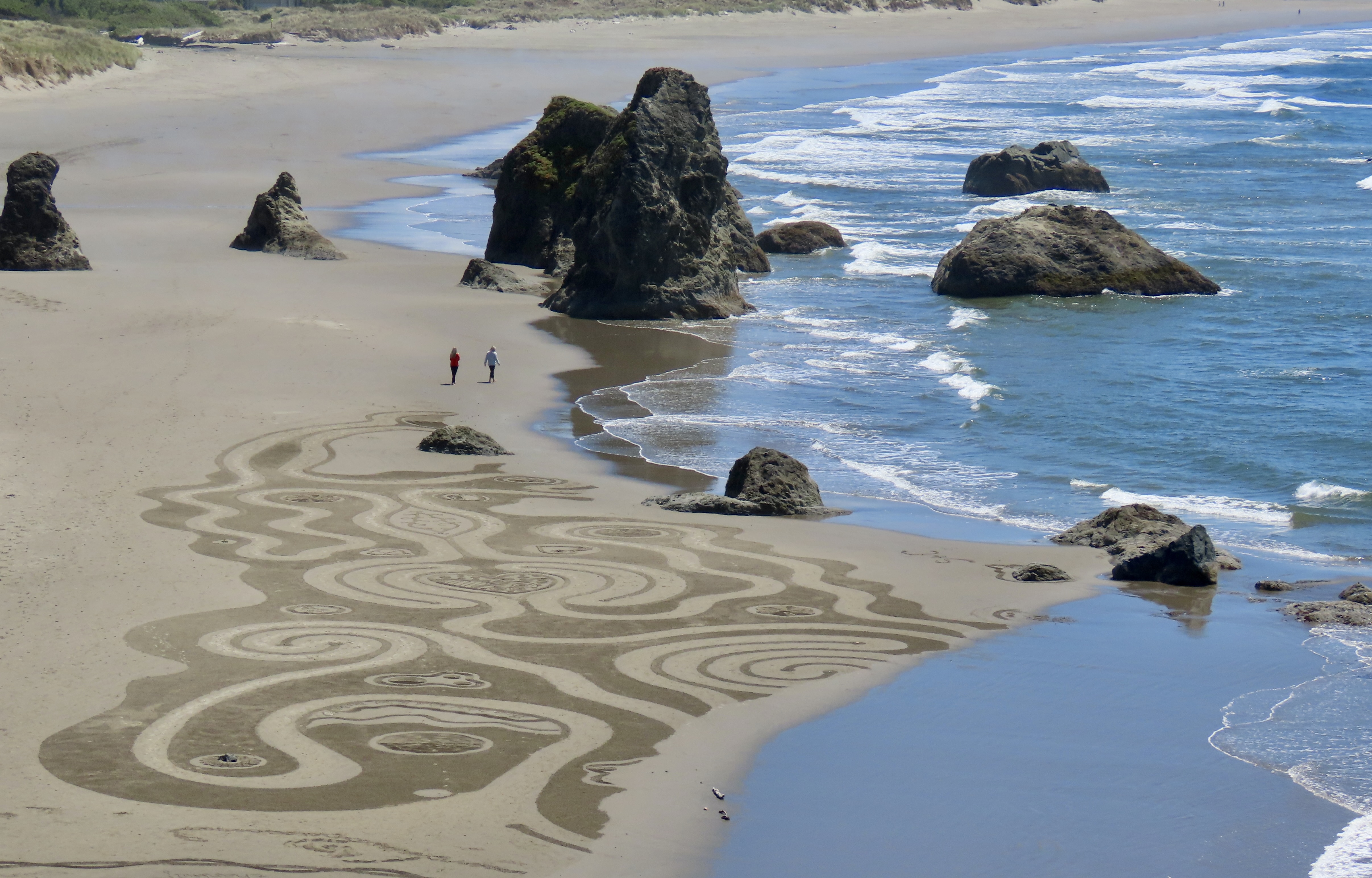
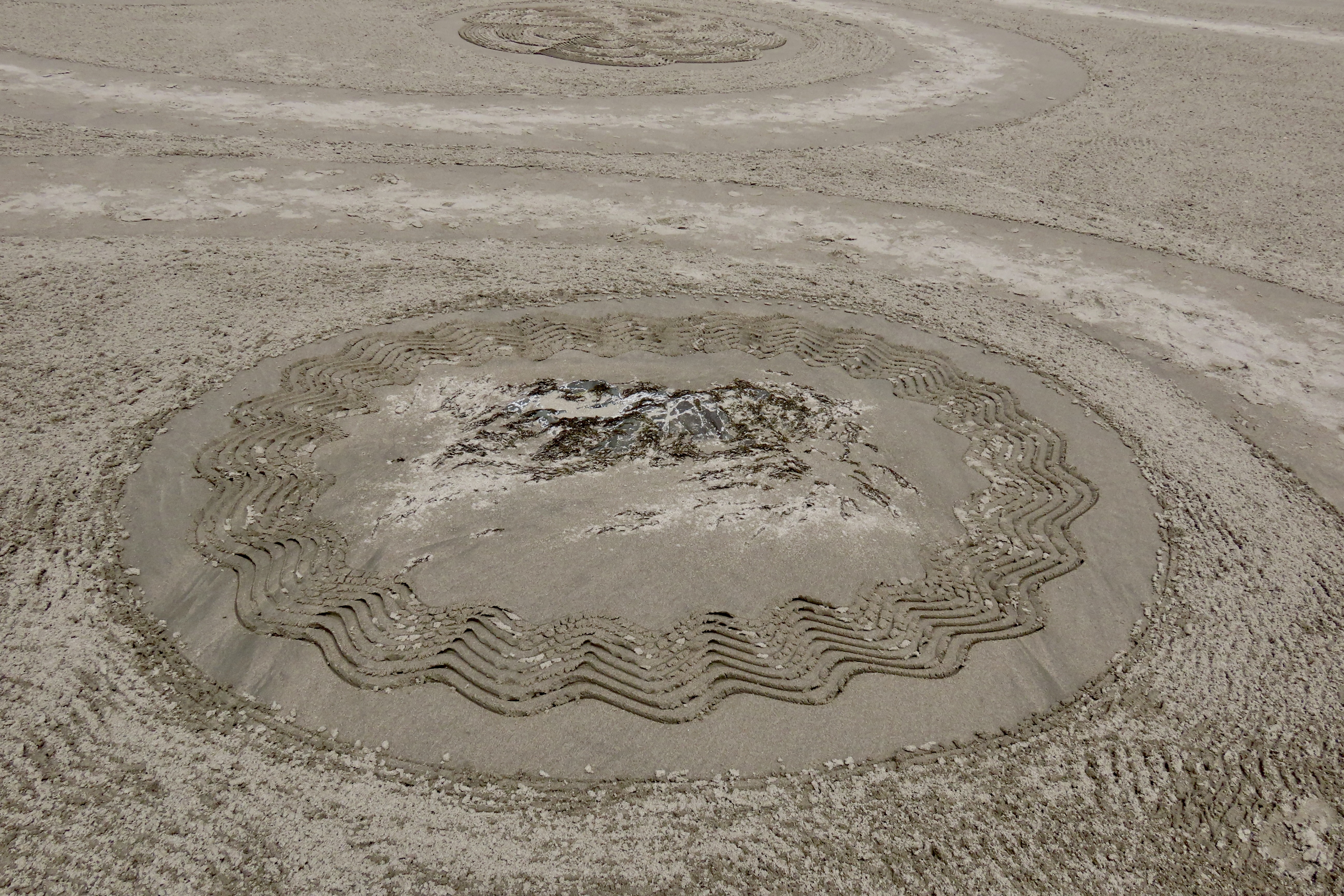
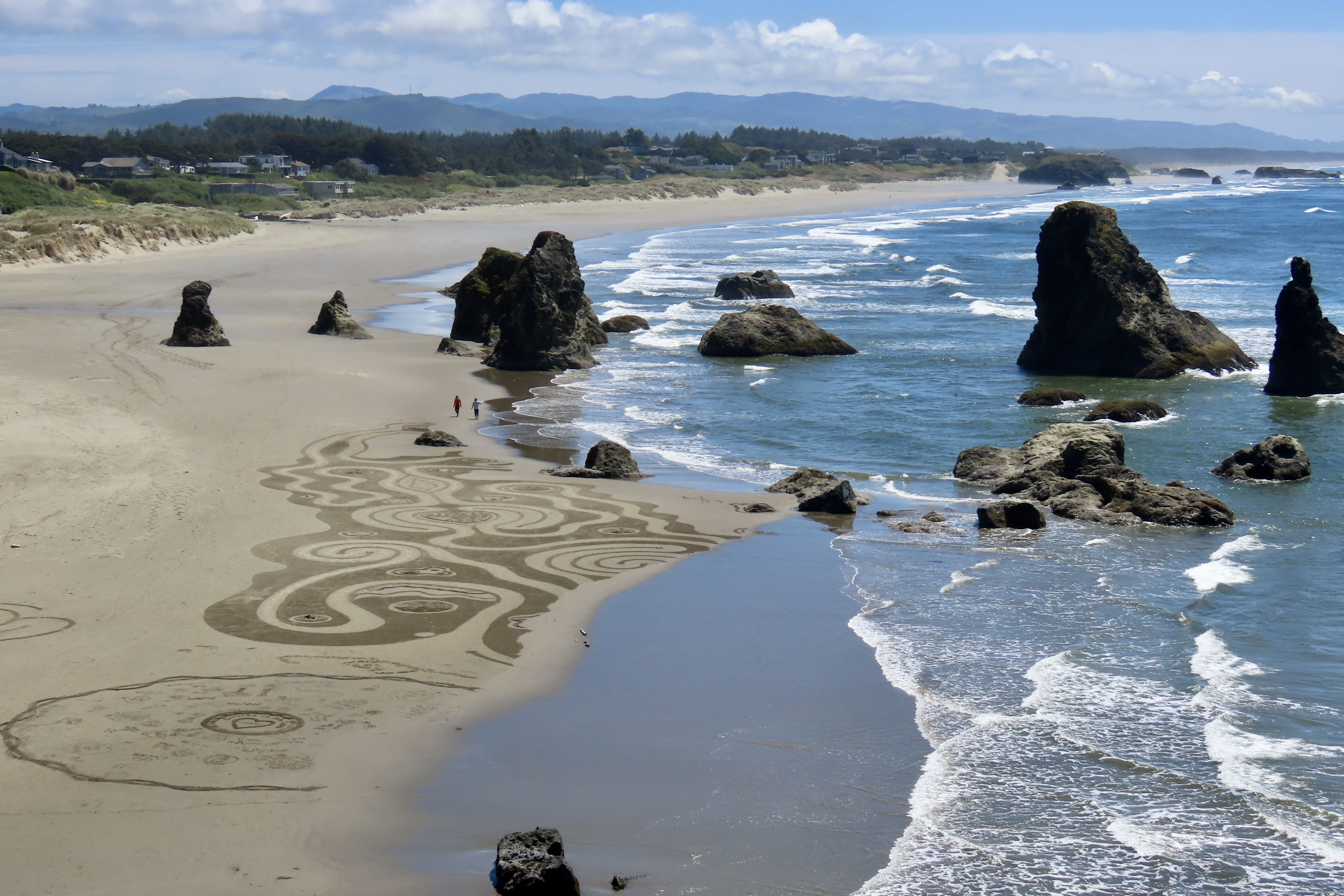
The tide was rolling in, erasing an elaborate labyrinth in the sand when we arrived at Face Rock Overlook in Bandon. Had we arrived earlier we could have walked from one end of the art work to the other.
It’s really hard to choose a favorite small town along the Pacific Coast from Central California to Olympic National Park in Washington. The competition is ferocious. Of the ones we have stayed at or visited on this trip, our favorites so far are Point Reyes Station, Mendocino, and Bandon. We could happily live in any of them. Each of these towns are easily walkable, have unique personalities, and feature incredible seashore scenery and wildlife. I might add that both Point Reyes Station and Mendocino have top of the line independent bookstores, a factor that Peggy and I always consider. While Bandon has a small bookstore with a good selection for its size, it is the town’s dedication to public art that stands out. We will be featuring four different aspects today.
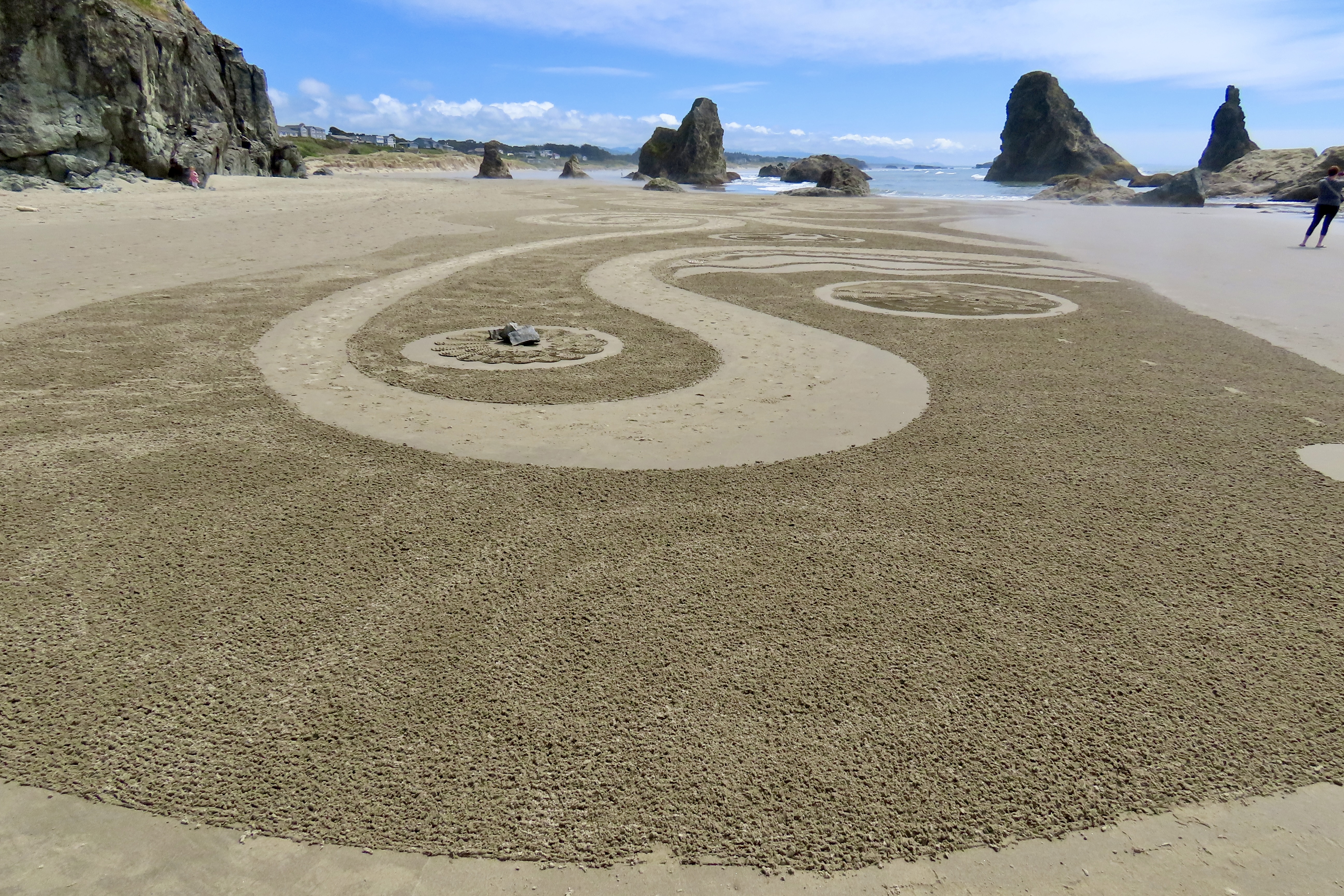
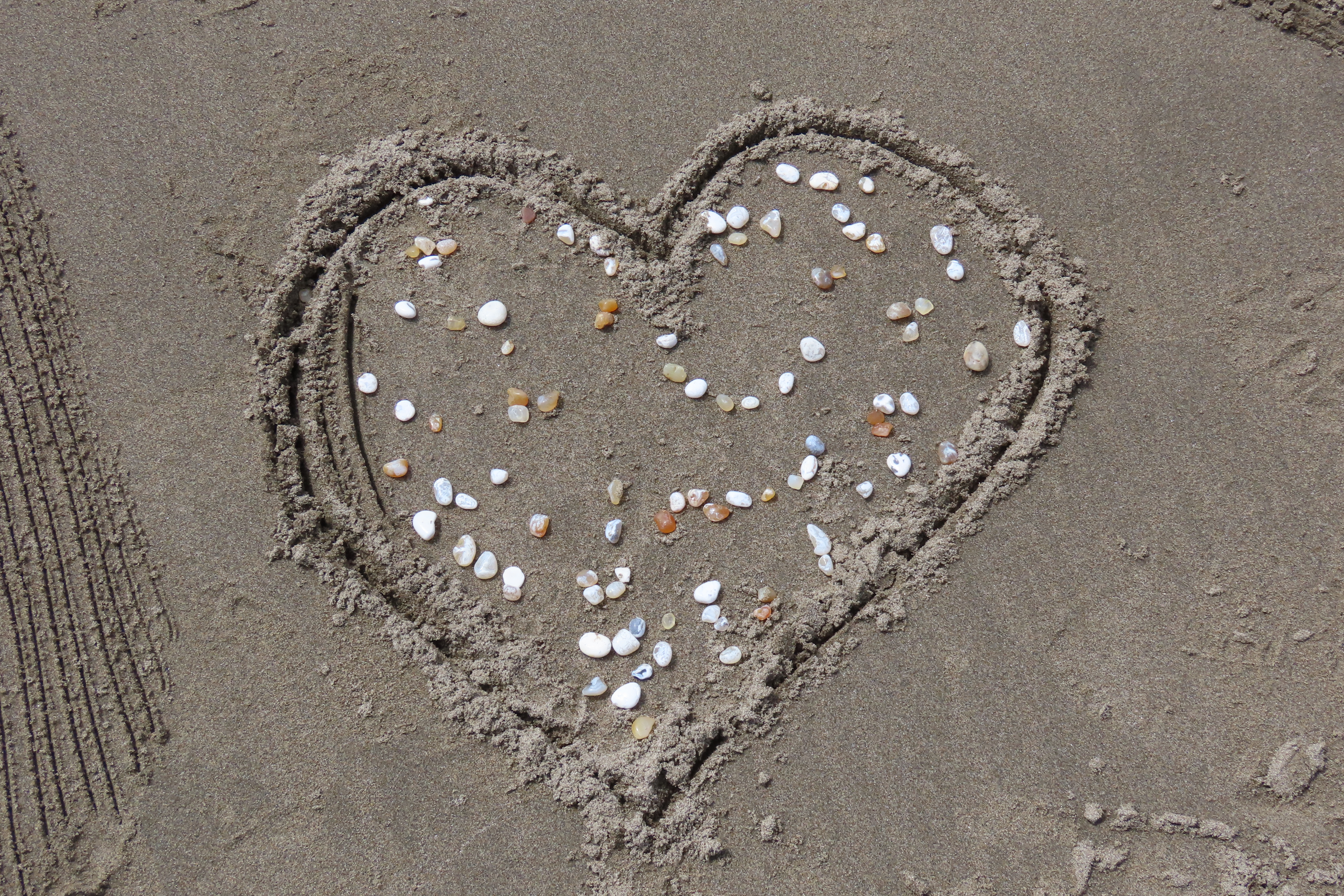
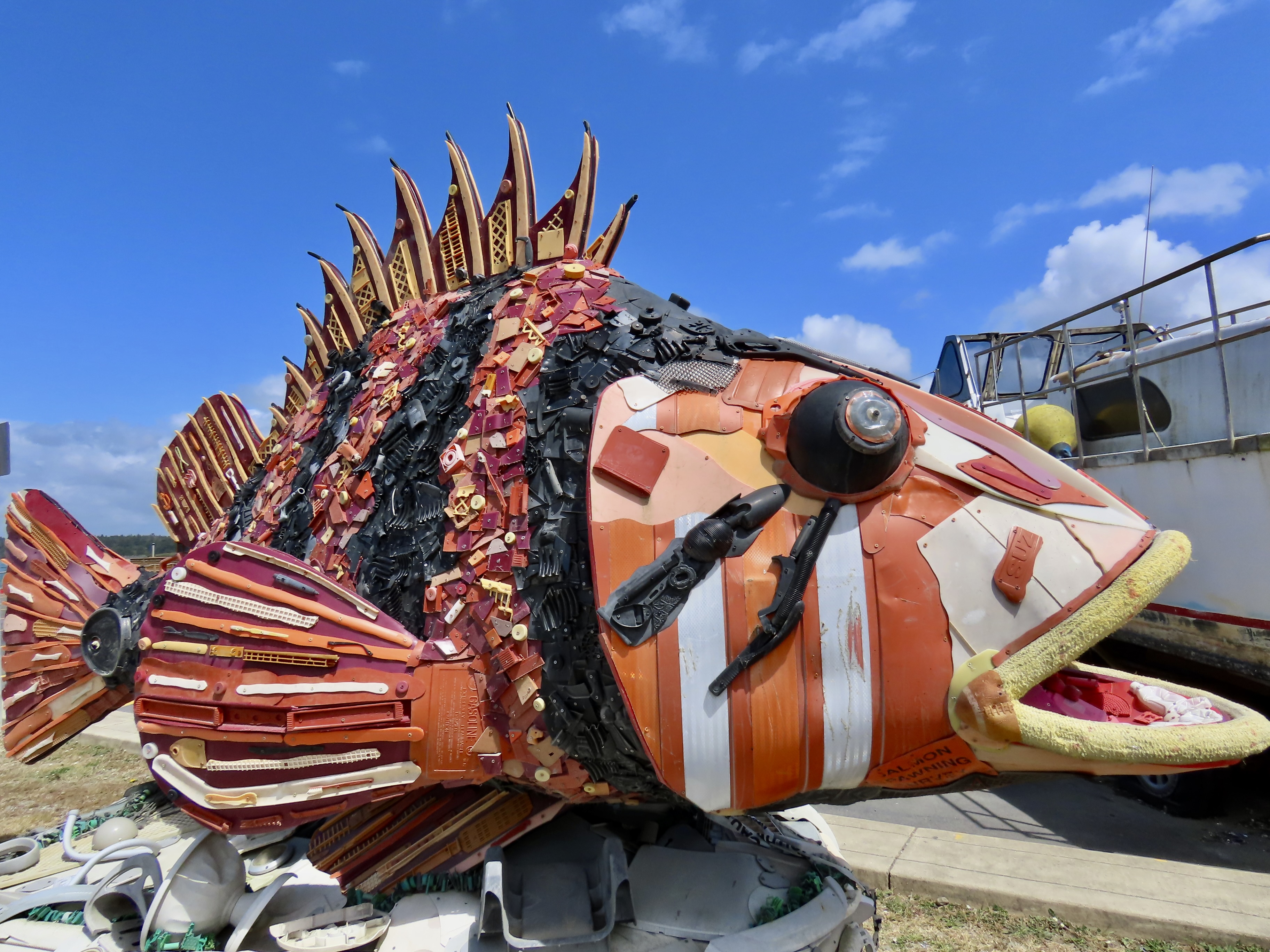
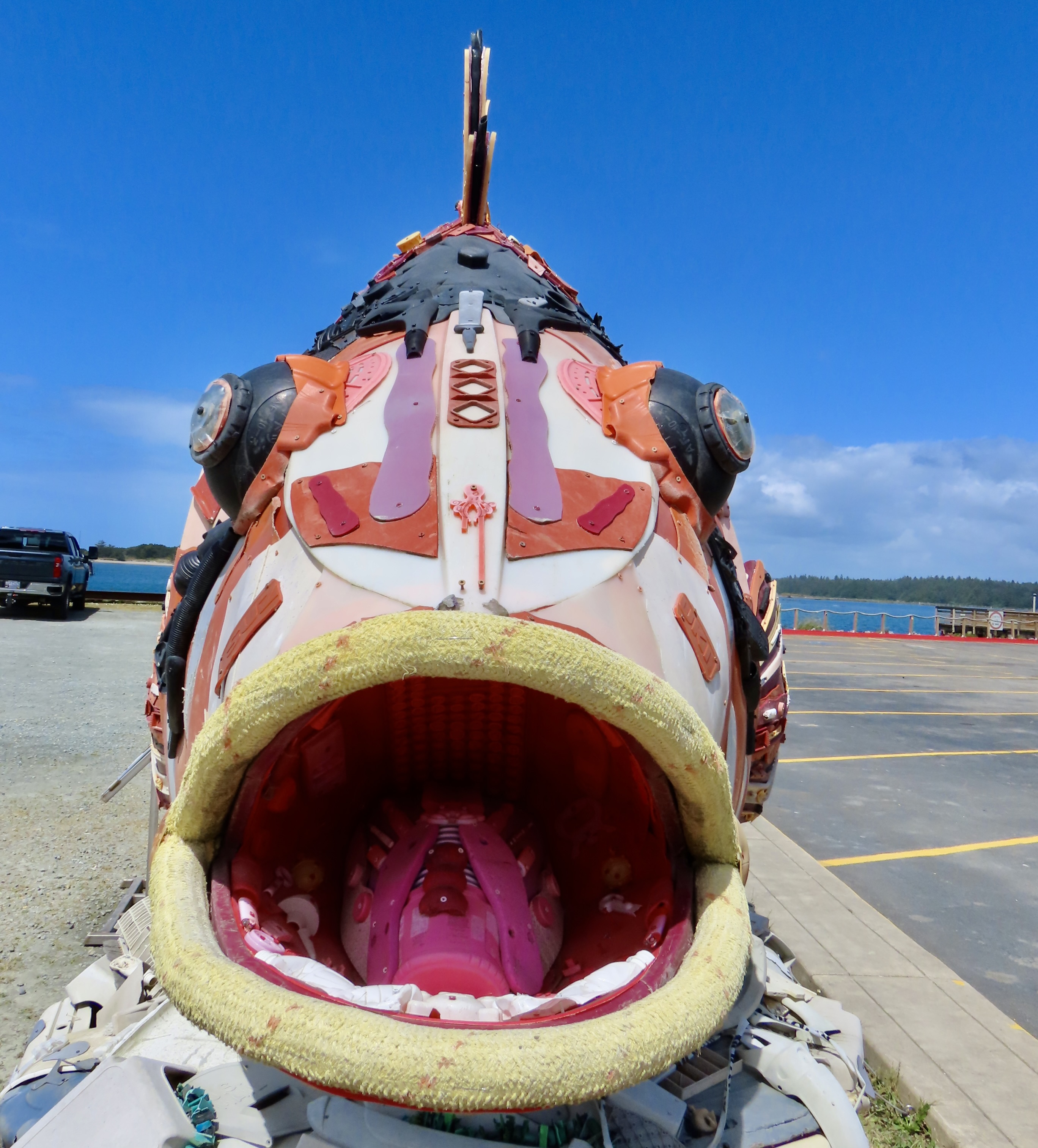
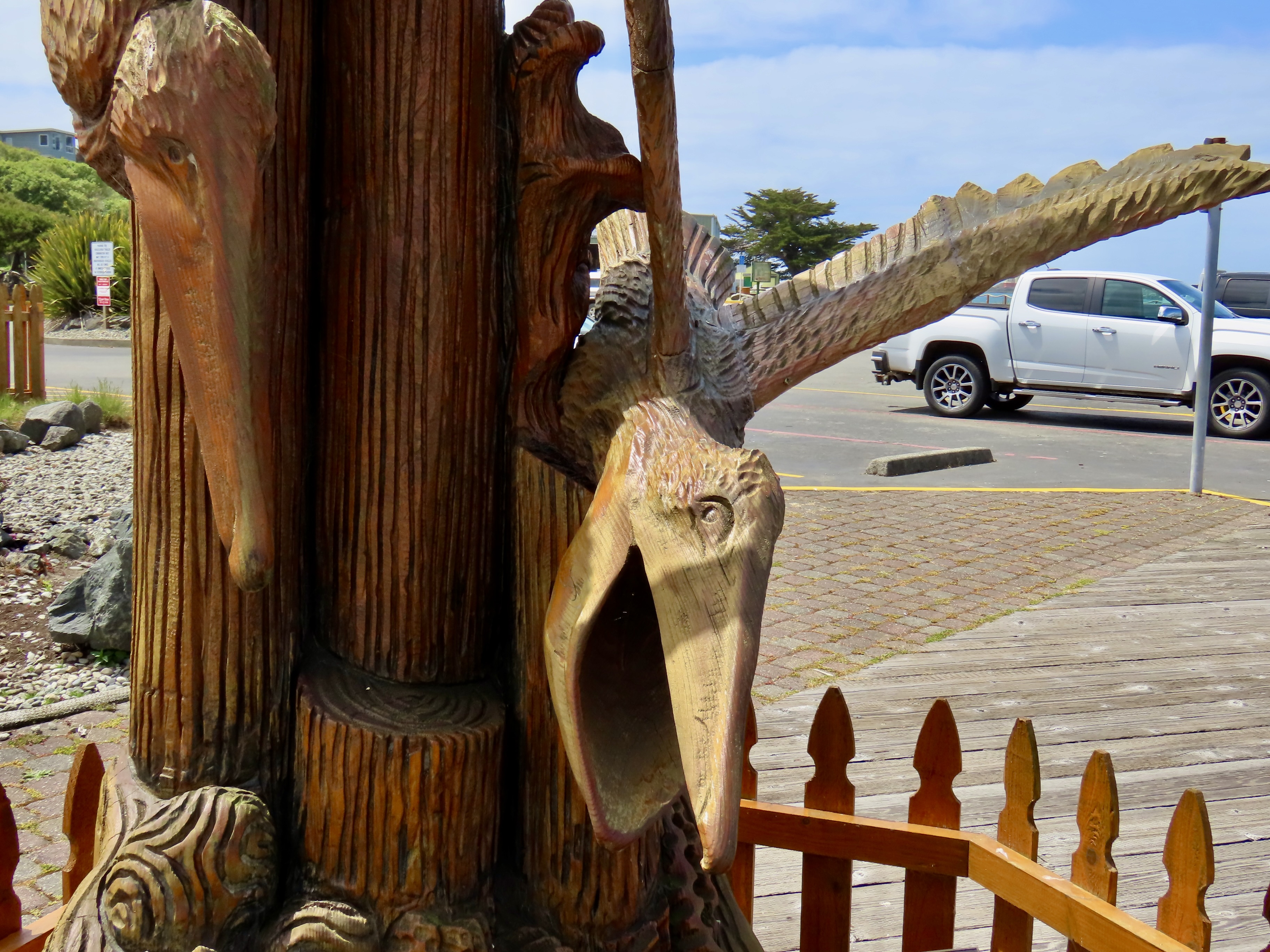
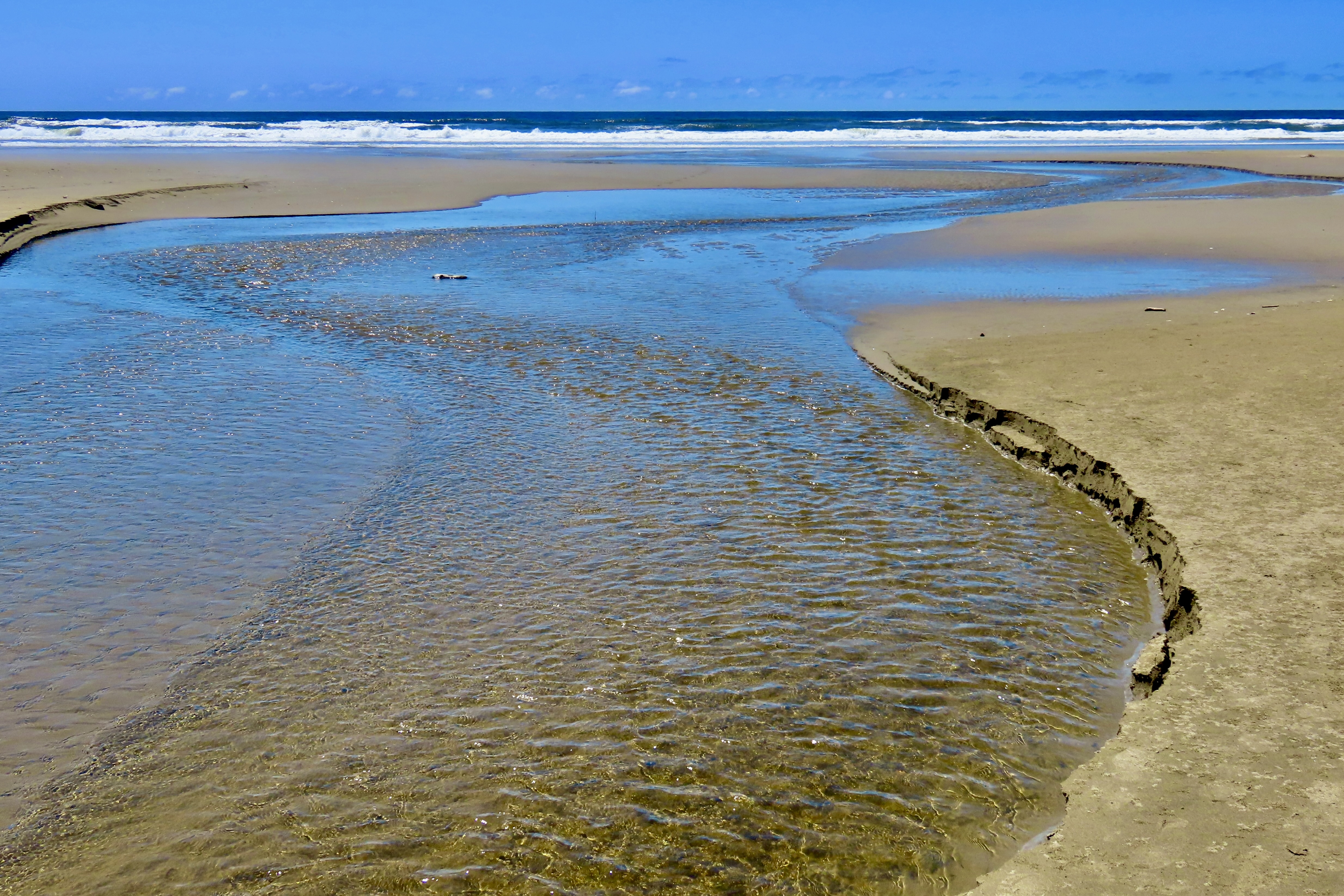
Denny Dyke began creating his sand sculptures on the sand near Face Rock over 10 years ago. Peggy and I remember seeing one during one of our first visits to Bandon after we moved to Oregon. Now his project has been adopted and supported by the whole community of Bandon.No two designs are ever the same. This year’s theme is love.We watched as a woman added a heart and filled it with colorful small pebbles.Natural rock forms are worked into the designs.Here the design, now being washed away by the tide, had been worked around what I called the Lion’s Head.Peggy, who can never resist a labyrinth, was walking what had been left of it by the tide. Walks are actually scheduled on days when the labyrinths are created between the time they are finished and before the tide washes them away. The website for Circles in the Sand lists the dates and times and suggests that the walk takes about 20 minutes.A final view looking south along the shore. In ways, creating art to be washed away by the tides reminds me of Burning Man where beautiful works of art are created and then burned.While not part of labyrinth, we thought that this whale that Peggy and I found on the beach made of driftwood and small rocks deserved to be included.I featured this tufted puffin in my last post. It was created from trash gathered along the beaches of Oregon by the organization Washed Ashore. The stated purpose of the organization is: “To build and exhibit aesthetically powerful art to educate a global audience about plastic pollution in the ocean and waterways and to spark positive changes in consumer habits.” It has done an amazing job.A close up of the puffin’s head. Washed Ashore sculptures created in Bandon can now be found in locations across the US and around the world, each with its powerful message about trash thrown into the ocean.While we found the puffin along the trail that follows the coast near Face Rock, this fish by Washed Ashore was located down at Bandon’s Marina right next to the town.A frontal view of the fish…And a look into its mouth.Bandon’s Marina also featured several impressive carved wood sculptures such as this octopus…A whale…Pelicans…Fish…A crab…And a seahorse…We also liked this rock snail.While we were visiting, volunteers were busily hanging art for Bandon’s 21st Annual Boardwalk Art Show. Anyone from kids to professional artists was invited to submit a painting. Liking weird (I won’t blame Peggy here) I selected four appropriately strange paintings for today’s post.If you have had much experience with seagulls, it isn’t hard to imagine them pulling a stunt like this. Our next post will wrap-up Bandon with a focus on scenery, seals and sea birds.A creek meanders out to the Pacific Ocean at Devil’s Kitchen, Bandon, Oregon.



















 Wandering through Time and Place