A Far Out Excuse for Escaping to the Woods… The Sierra Trek Series: Part 1

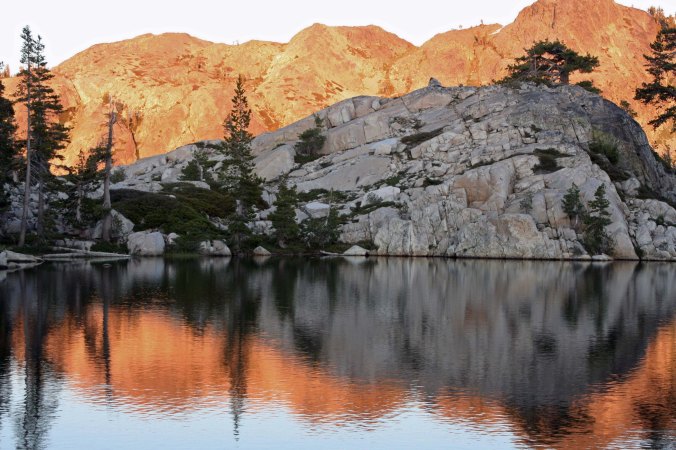
The Black Buttes of the Sierra Nevada Mountains are lit up by the evening sun.

Inspired by the beauty of the Five Lakes Basin found north of Interstate 80 in the Sierra Nevada Mountains of California, I started a lifetime of backpacking in 1969.


At Five Lakes Basin’s/ Biggest little lake /after all day scrambling on the peaks/ a naked bug /with a white body and brown hair/ dives in the water/ Splash! — Gary Snyder

As I think about backpacking 500 miles this summer, my mind wanders back in time to the first major backpacking trip I ever made: a nine-day, 100 mile trek across the Sierra Nevada Mountain Range. The trip in itself would have been a bit crazy considering my lack of experience. But I ended up leading 60 people aged 11 to 70, most with less experience than I had. It was a new definition of insanity. I was lucky the participants didn’t leave me hanging in a tree somewhere along the trail. It came close.

It’s a good story, one that I’ve been planning to tell for a long time. My Wednesday blog will be devoted to it over the next couple of months. So grab whatever you like to drink, sit back, and join me on the first Sierra Trek.


During the early summer of 1974 my life took a dramatic shift. My first wife Jo Ann, friend Steve Crowle, and I used a long summer weekend to go backpacking into one of my all-time favorite backcountry destinations, the Five Lakes Basin north of Interstate 80 in the Sierra Nevada Mountains. It’s a beautiful area with towering granite cliffs and jewel-like lakes that had been carved out by glaciers some 20,000 years ago. It’s also a favorite area of the Pulitzer Prize winning poet, Gary Snyder, whose haiku poem on the area is featured at the top of this post.

Gary Snyders Haiku poem "Old Pond" was based on the Five Lakes Basin.

The Black Buttes looming above the Five Lakes are where the poet Gary Snyder went ‘scrambling.’

My first backpacking trip ever had taken me into the region in 1969 and I had returned again and again, sometime with Jo, sometimes with friends, and occasionally by myself. On one of the latter trips, I had taken my Basset Hound Socrates and camped out on a small lake that is somewhat hidden from the other lakes. I’ve blogged about the Socrates trip. Here’s what I wrote:
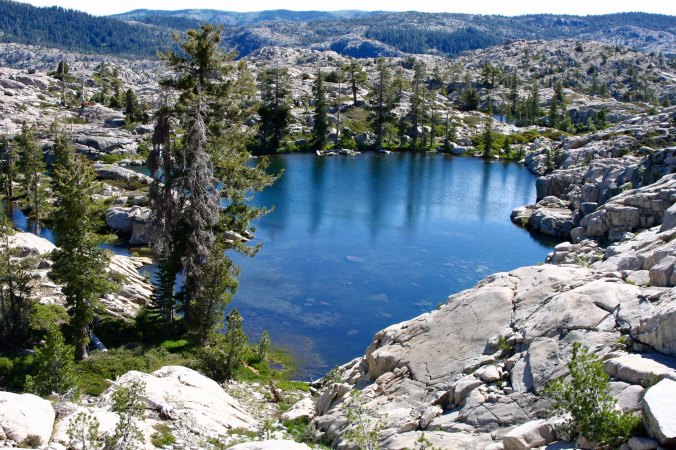
One of the five Lakes in the Five Lakes Basin north of Interstate 80 in the Sierra Nevada Mountains.

This is the lake where Socrates and I camped and where the Sierra Trek was born. This photo also shows how granite dominates the Sierra Nevada Mountains.

Sharing the lake with Soc was close to being totally alone. His concept of a quality wilderness experience was disappearing into the woods and seeing how many holes he could dig. He never seemed to catch anything, so I am not sure of his motivation. I’d get up in the morning and cover his handiwork. I almost felt like I needed to file an environmental impact report. He always limped home on sore feet.

On this particular journey, I packed the Carlos Castaneda book that features things that go bump in the night. Don Juan takes Carlos out into the middle of the Sonoran Desert on a pitch-black night and abandons him. Not long afterwards, the monsters come hunting. It wasn’t the best book for a solo night in the woods. As I read into the evening, I found myself paying more attention than usual to wilderness sounds.

I ingested a little medicinal herb to lighten things up. It was the 70s, after all. Bad idea; instant paranoia set in. Soon I could hear the wind stalking me through the treetops. An old snag turned into a ghoul. Off in the distance something big and ugly was digging and snorting. Socrates, I hoped.

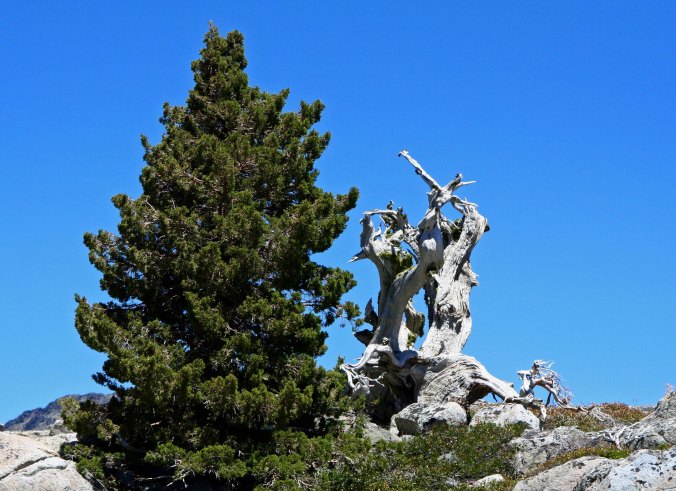
This tree turned into the ghoul as the sun set and night approached.

This Jeffrey Pine turned into the ghoul as the sun set and night approached.

Ghost tree in the Five Lakes Basin of the Sierra Nevada Mountains.

A close up of the dead ghoul tree.

“Here Soc,” I called. “Come here boy.”

The digging continued and grew more desperate.

“Come here!” I yelled. Still no response but now I could hear large claws scratching at granite.

“Does someone want a Milk Bone?” I added in a quiet, conversational voice.

The digging stopped. ‘Someone’ started coming through the brush toward me. Whatever it was, it was apparently interested in Milk Bones. Soc’s head, long body and wagging tail made their way into the firelight. He might love digging, but he loved food more. There was the reason why our low-slung pooch weighed 70 pounds.

“Good boy,” I said while digging out a Milk Bone. I knew I was buying companionship but it seemed like a good idea on this strange, dark night. Meanwhile, Socrates had started to drool in expectation. Soon he was shaking his head and shooting dog slobber off in a dozen directions. I ducked to avoid being slimed.

Unfortunately, my supply of Milk Bones was limited. I tied Soc up to assure his faithfulness. It was time for bed. I put the fire out and was greeted by a moonless, dark night. But hey, who needed the moon when I had my faithful companion and a million stars. I invited Socrates to snuggle up on my sleeping bag and laid my head down on the coat I was using for a pillow.

CRUNCH, CRUNCH, CRUNCH!

“Damn! What’s that?” I sat up straight and grabbed for my flashlight. Socrates joined in by barking at my sleeping bag.

“No, Soc, out there,” I urged and pointed the flashlight off into the woods. Soc glanced up at me with a curious ‘what are you talking about’ look and started barking at my pillow.

“Look Socrates,” I pleaded, “just pretend there is a garbage man out in the woods.”

Soc had never met a garbage man he could resist barking at and I wanted his teeth pointed in the right direction.  What Soc did with my advice was make three dog circles and plop down on my bag. I gave up and reluctantly laid my head back down on my pillow.

CRUNCH, CRUNCH, CRUNCH!

I sat straight up again. Soc growled at me for disturbing his rest and started barking at my sleeping bag again.

“Fine watch dog you are,” I growled right back at him while straining my ears for the smallest of sounds. When Soc shut up, I was rewarded with a faint ‘crunch, crunch, crunch.’ It was coming from under the sleeping bag. I had a proverbial monster under my bed! Gradually it dawned on me that what I was hearing was a gopher tunneling his way through the ground, innocently on his way to some succulent root. I put my head down on my pillow. Sure enough, the ‘crunch’ became a ‘CRUNCH.’

The ground and the mystic weed were magnifying the sound. Soc had been right all along. I was lucky that he only barked at my sleeping bag and hadn’t started digging.

Don Juan would have appreciated how I had been tricked. Reality isn’t always what it seems.

Jo Ann, Steve and I had ended up camping on the same lake. Steve had replaced me as Executive Director of Sacramento’s Ecology Information Center when I had become Assistant Director of the American Lung Association of Sacramento. In addition to his boundless energy and intelligence, he was more than a little on the wild side. He had hobbies like jumping off high bridges into shallow water and experimenting with various mind-altering drugs. But mainly he loved life and had a vast appetite for new experiences.

One such experience was backpacking. We were lazing around our campfire on the last night bemoaning the fact that we had to return to civilization and jobs the next day.

“God, wouldn’t it be great if we could make money doing this,” Steve sighed.

Suddenly my mind took one of its intuitive leaps where the lights come on, the bells go off and four and twenty blackbirds sing the Hallelujah Chorus.

“We can, Steve!” I managed to get out as my thoughts played hopscotch. “Look, as Executive Director one of my main responsibilities is fund-raising.” (That spring, I had become Executive Director of the Lung Association.)

I was painfully aware my money-raising responsibilities. TB/Lung Associations had spent 70 happy years sending out Christmas Seals and waiting for the money to roll in. While the Golden Goose wasn’t dead, it was ailing. We had conquered TB and selling lungs wasn’t nearly as easy. Easter Seals had kids, the Heart Association the most appealing organ in the body, and the Cancer Society the scariest word in the dictionary. We had emphysema, bronchitis, asthma, the remnants of TB and diseases with unpronounceable names such as coccidioidomycosis. Adding injury to insult, dozens of non-profit organizations had added seals to their fund-raising arsenals. Competition for bucks to do-good was tough and the well was running dry.

“What if,” I pondered out loud, “we ran a backpack trip through the mountains as a type of multi-day walk-a-thon with people raising money for each mile they hiked?” I liked walk-a-thons. They involved people in healthy activities as well as raising money. They gave something back to the participants.

Steve’s attention jumped from low watt to high intensity. “When? Where? For how many miles and days? How can I be involved?” The questions tumbled out.

“I don’t know, I don’t know and I don’t know,” I responded, laughing at his enthusiasm although mine was hardly less. “But,” I added, throwing out some crazy figures, “what if we made it for nine days and 100 miles?”

That quieted us down. Neither of us had ever backpacked for nine days straight, much less 100 miles. A long trip for me had been six days and 30 miles. I threw out the nine days because it included a full week with both weekends and the 100 miles because it sounded impressive.

“Why not,” Steve had finally said with more than a little awe in his voice as a new national fund-raising program was born. It was a program that would occupy much of my time over the next 30 years, involve thousands of people, and raise substantial funds for the American Lung Association. But all of that was in the future; Steve and I just wanted an excuse to go backpacking.

Here are a few photos from the Five Lakes Basin:

Beautiful flowers such as this Mariposa Lilly...

In the summer, the Basin is filled with beautiful flowers such as this Mariposa Lilly…

Penstemon...

Penstemon…

And a butter cup.

And Cinquefoil.

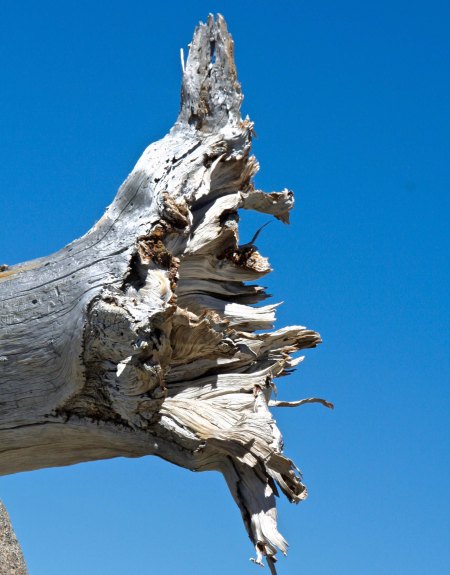
Snag in the Five Lakes Basin .

Both live and dead trees decorate the landscape.
It was in the Five Lakes Basin

This impressive stump was located about 50 yards from camp.
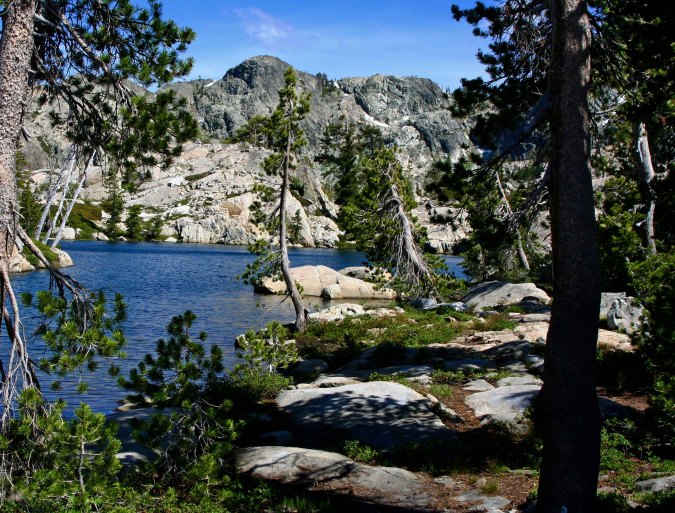
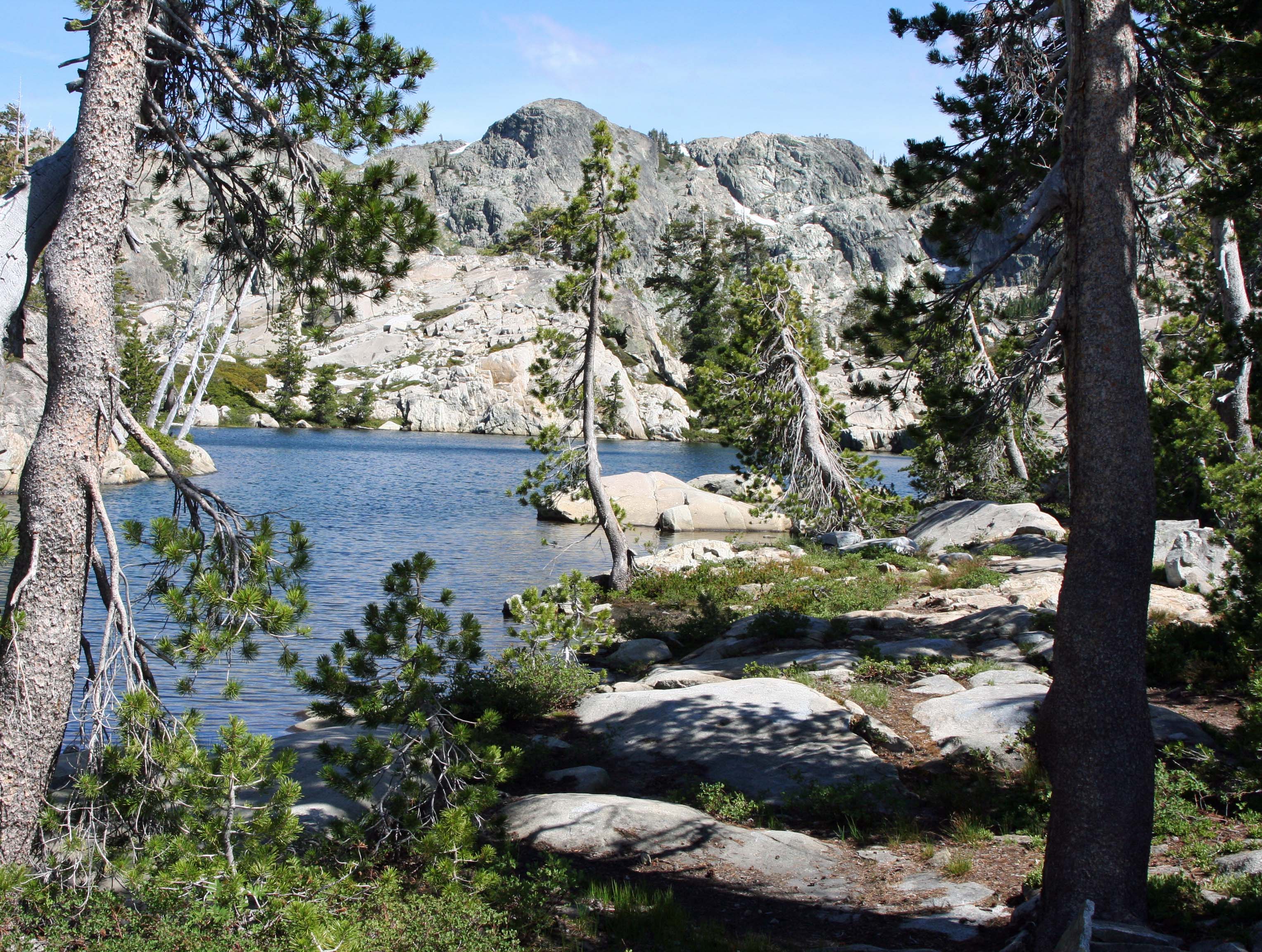
In addition to their beauty, the lakes make great swimming holes and provide opportunities to add trout to dinner.

In addition to their beauty, the lakes make great swimming holes and provide opportunities to add trout to dinner. This was a view from my campsite.

Fun lakes and interesting reflections...

They are also good for reflection shots!

And interesting reflections.

This reflection of this tree was so clear it could have been real.

This reflection of this Lodgepole Pine was so clear it could have been real.

The sunset on the Black Buttes and, finally...

Another sunset photo of the Black Buttes and, finally…

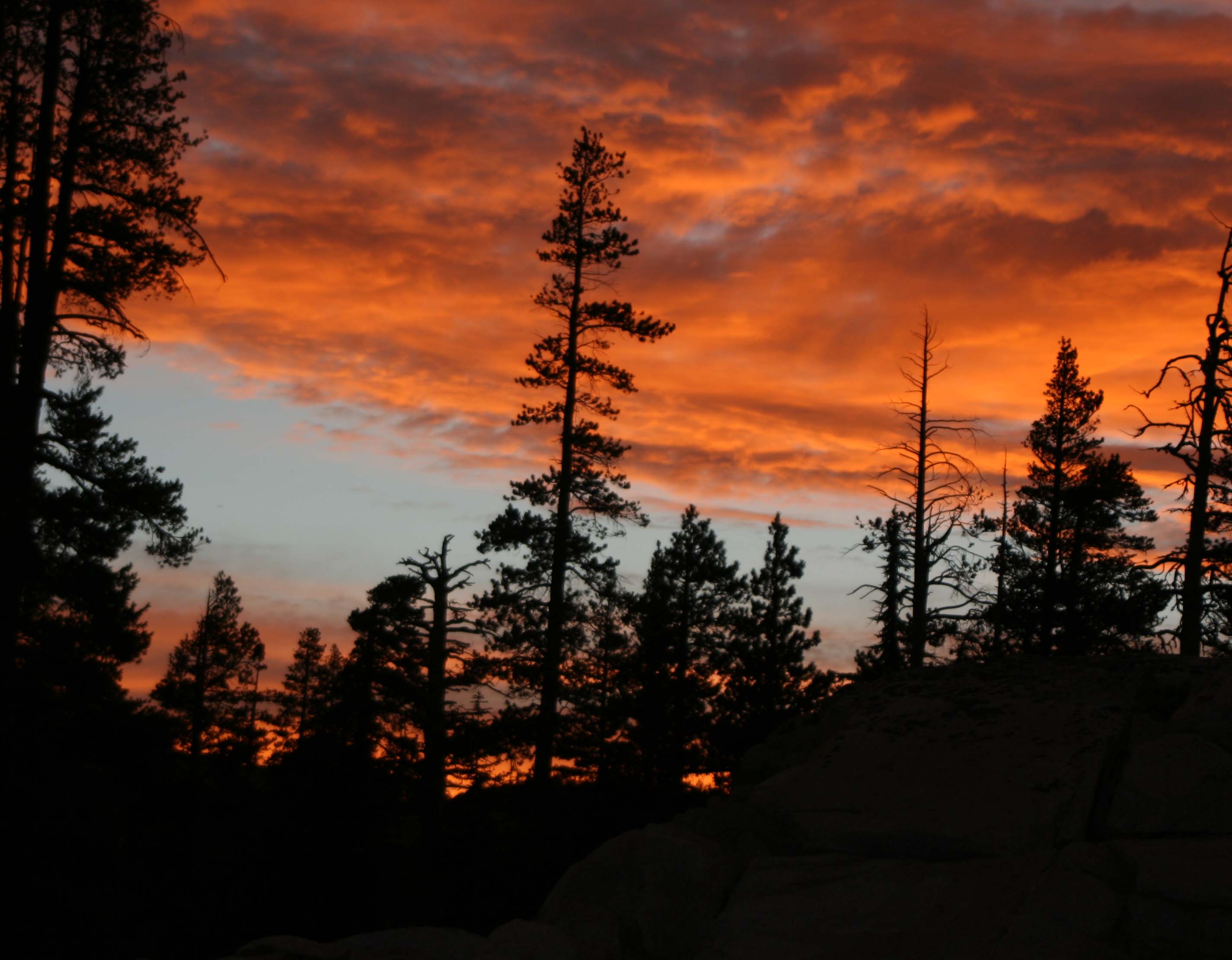
A dramatic sunset.

A dramatic sunset.

FRIDAY’S BLOG: A photographic essay on the Glass Forge in Grants Pass, Oregon and its beautiful glass creations.

MONDAY’S BLOG: We will return to the Oregon Coast and visit the scenic Sunset Bay.

WEDNESDAY’S BLOG: Part 2 of my Sierra Trek series. I have to persuade a reluctant Board of Directors (“You want to do what?”), decide on a name, hire Steve, and determine our route.

Dog Stew, A Rattlesnake Bite and Hypothermia… Reblog

This is the fifth and final of a series of Blogs on how the Peripatetic Bone was found in the Sierra Nevada Mountains. I will respond to comments when I return from Burning Man.

It was a pleasant hike down to Carson Pass on Highway 88 and relatively dry since we were on a south-facing slope.

Kit Carson came through here in February of 1844 along with John C. Fremont. It wasn’t pleasant then. The snow was deep and food was limited. They ended up dining off of their horses, mules and the camp dog. The dog apparently went quite well with pea soup. Later, the trail they discovered would become a major entry point for the 49ers and run through the foothill town of Diamond Springs where I was raised.

There was nary a bar, restaurant or gas station near the Pass so we hiked on another three miles to Lake Winnemucca. Rain was threatening and I set up my tube tent, a large sheet of plastic shaped into a round tunnel. It wasn’t particularly sturdy, but it was light and dry.

Tom, on the other hand, was carrying a luxurious three-season tent. He stacked the women in head to toe and ended up smelling April’s feet all night.

The next day was all downhill: down to Fourth of July Lake, down to Summit City Canyon, and down Summit City Creek to Camp Irene on the Mokelumne River. After dropping 4000 feet in 14 miles I found myself bone tired again. Camp Irene provided an attractive campsite but turned out to be rattlesnake country.

I had discovered the perfect toilet spot, dug my cat hole and was baring my behind when one buzzed at me. It’s amazing how fast you can pull up your pants. I was lucky the snake didn’t bite me on the butt.

I grabbed a stick and chased him away with a couple of sharp prods for good measure. He was lucky I was something of a nature boy. Otherwise he would have been smashed. The next time I did any serious bathroom duty was when I was parked on a flush toilet at Lake Alpine.

Backpacking out of Camp Irene is a challenge. The 4000 feet we dropped the day before in 14 miles we were now expected to re-climb in five. Low clouds filled the canyon. It wasn’t raining but it was cold and damp. Somewhere in the mist a male grouse made its familiar ‘whump, whump, whump’ sound, working to attract a female companion. I empathized. Dripping wet Buck Bush grabbed at our legs.

To stay warm and dry we broke out our rain gear. Lynn moved from being cold and miserable to shivering and not caring. She was on the edge of hypothermia, a very dangerous state. The body loses its ability to maintain warmth and the rational mind ceases to function. Coordination spirals downward. It is very easy to die.

Tom and I acted quickly. I fired up my Svea and Tom had Lynn stand over it wearing her cagoule, a dress like poncho. We positioned the stove carefully. While this wasn’t a solution to hypothermia one found in survival guides, it worked. (The recommended solution is to break out your sleeping bag and crawl in naked with the victim.) Within minutes, Lynn was ready to tackle the rest of the mountain.

Hypothermia can strike fast but it can also be quickly cured… assuming of course you catch it in time. Tom was next.

“Curt,” he called plaintively from off in the brush where he had gone to pee. I rushed over and begin laughing. He had managed the first half of his chore but couldn’t zip his pants up. His mind was working fine but his coordination had gone south. He was all thumbs. I called Lynn over to help as I returned to the trail chuckling. There are some chores a trek leader doesn’t need to handle.

We hiked the rest of the way into Alpine Lake without undo difficulty. Since our ride wasn’t coming until the next day, we rented a one-room cabin to share. Rain poured down outside as we relived our adventures and made up tall tales way into the night. Our journey was winding down, but it wasn’t over.

I was shaking the dirt out of my pack at home when the bone fell out. Apparently I had been carrying it all the way from Winnemucca Lake. “Darn Lovering,” I thought to myself, “I am going to get even.” I decided to keep the bone. There would be an opportunity on a future trip to slip it back into Tom’s pack. I would have revenge!

And that’s it, the story of Bone’s discovery. It started like so many things in our lives often do, as a non-event. Bone didn’t come up as a subject during our night in the cabin. Naked jumping ladies, lost trails, swollen rivers, gorgeous country, rattle snakes, the physical challenge, hypothermia and even the upside-down map were the stories of legend, not a small, insignificant bone that came from who knows what.

But time has the power to rewrite history. When Tom opened his suitcase in Japan at the beginning of a two-year exploration of Asia, Africa and Europe, he found a surprise, Bone. I had my revenge. When I moved to Alaska and was unpacking my boxes, who should fall out but Bone. The tales go on and on…

Bone Is Found, but Not Before the Naked Ladies Jump… Reblog

This is the fifth and final of a series of Blogs on how the Peripatetic Bone was found in the Sierra Nevada Mountains. I will respond to comments when I return from Burning Man.

I was up early the next morning and eager to hit the trail. My body was starting to adjust and feel good. More importantly, the resort at Echo Lake was calling. A quick breakfast and we were off.

I took the lead with Tom following and Terry trailing. Soon we had climbed out of Lake Aloha, passed Margery Lake and worked our way across Haypress Meadows where cattlemen once harvested grass for winter feed.

As we began our descent into Echo Lake, I left my companions and the Desolation Wilderness behind. The vision of cold beer and a hamburger drove me on. Short shorts may have been a factor as well. Lynn and April were supposed to rejoin us at the Echo Lake Resort.

There was a decision to make when I reached Echo Lake. I could continue to follow the Tahoe-Yosemite Trail around the upper and lower lakes or I could call the Lodge from a phone located at the end of Upper Lake. It would send a boat taxi to pick me up for five bucks. The trail was hot, dusty and filled with day hikers and I was ready to take a break from backpacking; I made the phone call.

A half hour later, the throbbing of the motorboat’s engine caught my attention as the boat worked its way up the lake. Soon it arrived, coughing slightly. The boat slowed and bumped into the pier. My ‘taxi driver’ was a 16-year old plus teenager who had managed to snag a great summer job.

“Hop on,” he told me. An elderly couple was along for the ride. I nodded at them. I was halfway between the boat and the pier when I heard a commotion.

“Over here, Curt,” a familiar voice shouted. I looked up. A few yards away alders hid another pier. Two very attractive and very naked women were jumping up and down to get my attention.

They succeeded.

It was April and Lynn. They had come over on an earlier boat and were working in a little sunbathing while waiting for us. The young boatman and the old man were all eyes. The elderly woman looked thoroughly irritated and glared at all of us, especially her husband.

“Uh, I think I’ll stay here,” I told my driver.

“Can I stay too?” he asked and grinned at me. The elderly man wisely stayed silent.

I joined the girls as the boat coughed its way back toward the resort. Tom showed up soon afterwards. We were waiting for Terry when the ranger showed up.

“There has been a complaint about naked women jumping up and down over here,” he told us.

“Boy, I wish I would have seen them,” Tom responded. I am not sure the ranger bought our story but he wandered off in search of other criminals.

The same boatman picked us up and told me that the first thing the elderly woman did when she got back was to complain loud and long about the perverted people across the lake. She even cornered a ranger. My new young friend speculated that the ranger came looking for us as an excuse to escape. “Or maybe he wanted to see the naked ladies,” I noted.

We made it to the resort ourselves and celebrated our brief return to civilization with a cold beer (or three). My system complained about the third as we hiked on across Highway 50 and up to Benwood Meadow where we stopped for the night, some 34 miles from Meeks Bay.

Our fourth day started out as a typical backpack day; we climbed. It was gentle at first and then became more serious. Once again snow-covered large segments of the trail. We spread out and searched for tree blazes. I scrambled over a particularly steep section and found myself in a high meadow.

Something half buried in a field of young corn lilies caught my eye. A few days earlier it would have been covered with snow. Curiosity led me to detour through the still soggy ground. Mud sucked at my boots.  My treasure turned out to be a disappointing, short, squat bone. Gnaw marks suggested it had been part of someone’s feast. I was about to toss it when a devious thought popped into my mind.

“Trash,” I hollered at Tom and held up the bone. We had a game where if one person found a piece of trash, the other person had to carry it. But first you had to catch the other person.

Tom sprinted down the trail with me in pursuit. Unfortunately, we had made it over the mountain and our route ranged from flat to downhill. Tom was very fast. We had traveled two miles and were almost to Showers Lake before he stopped, concerned about leaving our companions behind. Very reluctantly, he took the bone and stuffed it in his pack.

“How can you classify a bone as trash,” he whined. I figured Tom would toss his new travelling companion as soon as I was out of sight.

Next: Dog stew, a rattlesnake bite and hypothermia.

A Pounding Heart and a Sprained Ankle… Reblog

This is the second of a series of Blogs on how the Peripatetic Bone was found in the Sierra Nevada Mountains. I will respond to comments when I return from Burning Man.

I awoke with a Mountain Jay screeching at me from the safety of his perch in a Lodgepole Pine. A faint light announced the morning, but the sun still hid behind the mountains on the east side of Lake Tahoe. It was frosty cold and I burrowed into my bag, pretending for a few more moments that I didn’t have to get up. Nature drove me out.

I could ignore the faint light, I could ignore the Jay and I could even ignore the stirrings of my companions but I couldn’t ignore my insistent bladder. Among muttered good mornings I wandered off into the woods and peed on a willow near where I had seen a coyote the evening before. I was marking my territory.

Back in camp Tom had his stove going. Lynn smiled at me. She, too, was a tall, good-looking woman. Terry had yet to emerge from her cocoon and April had replaced me out in the woods.

I heard a kersplash in Stony Ridge Lake and turned to watch as ripples spread out and announced a trout had snatched its buggy breakfast. Briefly I regretted that I had left my fishing pole at home. The sun was now bathing the peaks above us in gentle light; ever so slowly it worked its way down the mountain.

Instant coffee, instant oatmeal and a handful of dried fruit made up breakfast. All too soon it was time to pack my gear and urge my still stiff muscles up the trail.

The troops were in high spirits. The sheer beauty of Desolation Wilderness demanded it. Our backpacking day would take us up to Phipps Pass, down in to the Velma Lakes, across to the Rubicon River, up Rockbound Valley, over Mosquito Pass and end at Lake Aloha, some 13 miles from Stony Ridge Lake. We took a few minutes to make sure our camp was clean.

Almost immediately we began to climb. Flashes of blue lupine, multi-colored columbine and cheerful monkey flowers eased our way along the switch back trail. My pace of travel provided ample opportunity for appreciation. I caught a brief smell of mint at one point and wild onion at another.

We passed by two more small lakes and began our ascent of Phipps Pass. By this point I had moved in to granny gear and could hear my heart pounding in its cage, wanting to escape. Each step was a test of will. I kept moving. I had long since learned that the difficulty of starting outweighed the benefits of stopping. One step at a time I reached the top. A spectacular view rewarded my effort.

Peaks still buried under snow stretched off into the distance. The Sierra is a baby mountain range, the child of plate tectonics. Once, ancient seas covered the area. Volcanic activities left behind vast pools of subterranean granite. Crashing continental and oceanic plates lifted the granite into spectacular fault-block mountains, steep on the east and gentler on the west. The Ice Age brought glaciers that carved peaks, scooped out basins and left behind rocky moraines.

We stopped to catch our breath and enjoy the view.  Soon we would begin our descent toward the Velma Lakes but first we worked our way around Phipps Peak. A series of lakes came into view. Tom and I immediately began to debate which was which.

“And you expect us to depend on your trail finding skills?” Lynn asked. Tom whipped out his topographic map.

“See,” he said decidedly, allowing a note of triumph to enter his voice. While we were the best of friends, this didn’t eliminate an element of alpha male competition between us. He, after all, was the owner of an outdoor-wilderness store, and I, after all, was the leader of wilderness treks. I glanced at his map and an impish grin filled my face.

“Your map is upside down, Tom.” Oops.

We did agree that my decision to detour from the Tahoe-Yosemite Trail and go through Rockbound Valley was a good one. Heavy snow still covered the northern and eastern side of the mountains. It was unlikely to melt by the time of the Trek.

The Trekkers would have enough challenge backpacking 13 miles on their second day out. They didn’t need to slog through five miles of snow while muttering unprintable thoughts about me.

We started our descent into the Velmas carefully. It is hard not to think, “Oh boy, down hill!” after a hard climb. But going down is much tougher on your body than climbing. Stepping down is a form of free fall. Velocity and weight are focused on the joints of your legs and feet. Adding a 40-50 pound pack increases the problem.

It is easy to twist a knee or sprain an ankle, especially at the beginning of the season. And that was what happened. By the time we reached Middle Velma, April was limping.

“I stepped on a loose rock and slipped,” she explained in obvious pain.

While April soaked her foot in the cold lake water and broke out an Ace Bandage, Tom and I mulled over whether to go on or hike out. We arrived at a compromise. Lynn would hike out with April to Emerald Bay and the two of them would stay at a motel. They would rejoin Tom, Terry and me at Echo Lake some 18 miles down the trail.

Next: Raging rivers, kamikaze mosquitoes and marriage on a mountain

The Story of How Bone Was Found… Reblog

While Peggy and I are at Burning Man, I am reposting the story of how Bone was found. This is the first of the series. I will respond to comments when I return from Burning Man.

Backpacking in the Desolation Wilderness… Or, How to Forget You Are Being Divorced

It was the summer of 1977 and my wife JoAnn was divorcing me. Apparently I lacked in stability or at least in the desire to pursue the Great American Dream. She was right of course. I had absolutely zero desire to tie myself to an eight-hour a day job and a large house in the suburbs. None of this made the divorce easy. I was prepared to spend my life as a happily married man.

To keep my mind occupied, I was working on the route for the Fourth Annual Sierra Trek, a challenging nine-day 100-mile backpack trip in the Sierra Nevada Mountains that I had created as a pledge-based fund-raiser for the American Lung Association in Sacramento.

“So what’s your problem?” my friend Tom Lovering asked over a beer at the Fox and Goose Restaurant. He’d been-there-done-that with divorce and dated a number of women since. Tom owned Alpine West, an outdoor/wilderness store in Sacramento, and sponsored the Sierra Trek.

I had persuaded him to go backpacking with me for six days to preview part of the new route. Our plan was to start near Meek’s Bay, Lake Tahoe and work our way southward 70 miles following the Tahoe-Yosemite Trail.
Tom had invited his girlfriend, Lynn, and Lynn was bringing along her friend Terry. Terry was nice, not my type.

“I have a friend named April who wants to go backpacking,” Tom offered. “Why don’t I invite her to go as well? Maybe you two will hit if off.”

The implication was that this would help me get over my wife.  Actually, I had already met the woman who was going to help me recover but I humored Tom.

A friend drove the five of us up to Meeks Bay. April was gorgeous and Tom was right. I followed her long legs and short shorts up the trail. My gloomy focus on the Soon-to-Be-Ex faded like a teenager’s blue jeans.

Hot feet and screaming fat cells were even more potent in forcing me to live, or at least suffer, in the moment. As usual I’d done nothing to physically prepare for the first backpack trip of the year and I was paying the price.

We climbed a thousand feet and traveled six miles to reach our first night’s destination at Stony Ridge Lake. I crashed while Tom broke out some exotic concoction of potent alcohol.

After consuming enough of his ‘medicine’ to persuade my fat cells they had found Nirvana, I fired up my trusty Svea stove and started cooking our freeze-dried dinner. It wasn’t hard. Boil water, throw in noodles, add a packet of mystery ingredients, stir for ten minutes and pray that whatever you have created is edible. That night it didn’t matter.

Afterwards, we headed for our beds. The next day would be long. I slid into my down filled mummy bag and looked up at what seemed like a million stars. There were no city lights or pollution to block my view and the moon had yet to appear.

I traced an imaginary line from the Big Dipper and found the North Star. It seemed far too faint for its illustrious history. A shooting star briefly captured my attention. Thoughts of divorce, short shorts, the next day’s route, a rock digging into my butt, and sore feet jostled around in my mind for attention.

Sleep finally crept into the bag and captured me.

Next: A pounding heart and a sprained ankle.

Into the Red Butte Wilderness… Backpacking at 71

Old Growth Cedar in Red Buttes Wilderness of Northern California and Southern Oregon.

There is much to be impressed with in the Red Buttes Wilderness, including magnificent old growth trees such as this cedar.

I know a bit about backpacking (mild understatement). A few years back, in 1974 to be exact, I was working as the Executive Director of the American Lung Association in Sacramento. The organization needed a new source of funding; I needed an excuse to play in the woods. So I combined the two. I proposed to my Board of Directors that I lead a nine-day, hundred mile backpack trip across the Sierra Nevada Mountain Range with the participants raising money to fight lung disease.

So what if my longest backpack trip ever had been 30 miles.

“You are crazy,” the board said. “You are crazy,” my friend in the backpacking industry said. It was like I had inherited a parrot.

And they were right. The only point they missed was just how crazy. Sixty-one people aged 11-71 showed up– many who had never worn a backpack in their lives. One immediately claimed she was a witch and would be over to bite me in the middle of the night. And how was I to know that my co-leader had participated in burning down a bank in Santa Barbara, or that my go-to guy in emergencies was a Columbian drug runner, or that the big fellow who got me through the toughest days was an explosive experts on the lam from the IRS. You can’t make these things up, folks! But this is a story for later this summer. It’s one you won’t want to miss.

Lets just say by the time I walked into the foothill town of Auburn, California nine days later on deeply blistered feet in 104-degree weather, I had persuaded myself that the money raised from Christmas Seals was more than adequate to support our organization, forever.

But then a strange thing happened. These people who I had almost killed and who had come close to killing me, started coming up one by one and demanding to know where we were going next year. I heard things ranging from, “This was the greatest experience in my life” to “I have lots of ideas for fundraising.” It took them several months to persuade me…

But persuade me they did. I would go on to add bike treks in Sacramento and eventually take the program nationwide where I became the national trek consultant for the American Lung Association. Millions of dollars were raised to prevent lung disease and thousands of people were introduced to long distant backpacking and bicycling as a result. More importantly, from my perspective, I got to play in the woods. For 30 years, I spent a part of each summer leading wilderness expeditions. And when I wasn’t leading treks, I was off backpacking by myself or with friends.

Founder of the American Lung Association Trek Program, Curtis Mekemson.

A much younger me gracing the front of the American Lung Association’s National Bulletin in my role as founder of ALA’s Trek Program.

Sadly, my last backpacking trip was seven years ago. Life happens, right? Peggy and I bought a small RV and decided to wander North America for three years; our kids started producing grand babies; we bought our property in Oregon and travelled to Europe and Alaska. I took up blogging and decided to write a book.

It was all good, but I missed backpacking– a lot. And there’s this thing. Our home looks out on the beautiful Red Buttes of the Siskiyou Mountains of Southern Oregon and Northern California. The mountains spoke to me, over and over and over. Finally I could no longer ignore their call. Peggy and I decided to hit the trail. So last week, we did.

Red Butte mountains of the Siskiyou Range.

The Red Butte Mountains as they appear from our house in spring through the lens of our camera. How could we not set out to explore them?

We planned a short trip: three days and 14 miles. It was to be something of a test to see how well we would do. After all, we had aged seven years. At 71, I couldn’t expect my body to behave the same way it had at 21, or 31, or 41, or 51, or 61. And even Peggy, a young woman of 64, was nervous.

I immediately pulled out maps and begin planning a route. I was like a little kid on Christmas morning (or Peggy at the chocolate store in Central Point). Had I been a dog, I would have been wagging my tail like my basset hound, Socrates, used to at the sight of a hotdog.

This forest service map shows the location of the Red Buttes Wilderness. The X marks the approximate location of our home.

This forest service map shows the location of the Red Buttes Wilderness. The X marks the approximate location of our home.

I planned out our route on a US Forest Service Topo Map. We followed the Butte Creek Trail to Azalea Lake.

I planned out our route on a US Forest Service Topo Map. We followed the Butte Creek Trail to Azalea Lake. I wrote in the small, circled numbers which I will refer back to.

A close up of the map shows the beginning of our hike. "T" marks the trailhead where we parked the truck. Topo lines reflect the steepness of the trail. The closer together, the steeper!

A close up of the map shows the beginning of our hike. “T” marks the trailhead where we parked the truck. Topo lines reflect the steepness of the trail. The closer together, the steeper! We started by hiking down into the canyon following the well switch backed trail. Down in the beginning, meant up in the ending. (grin)

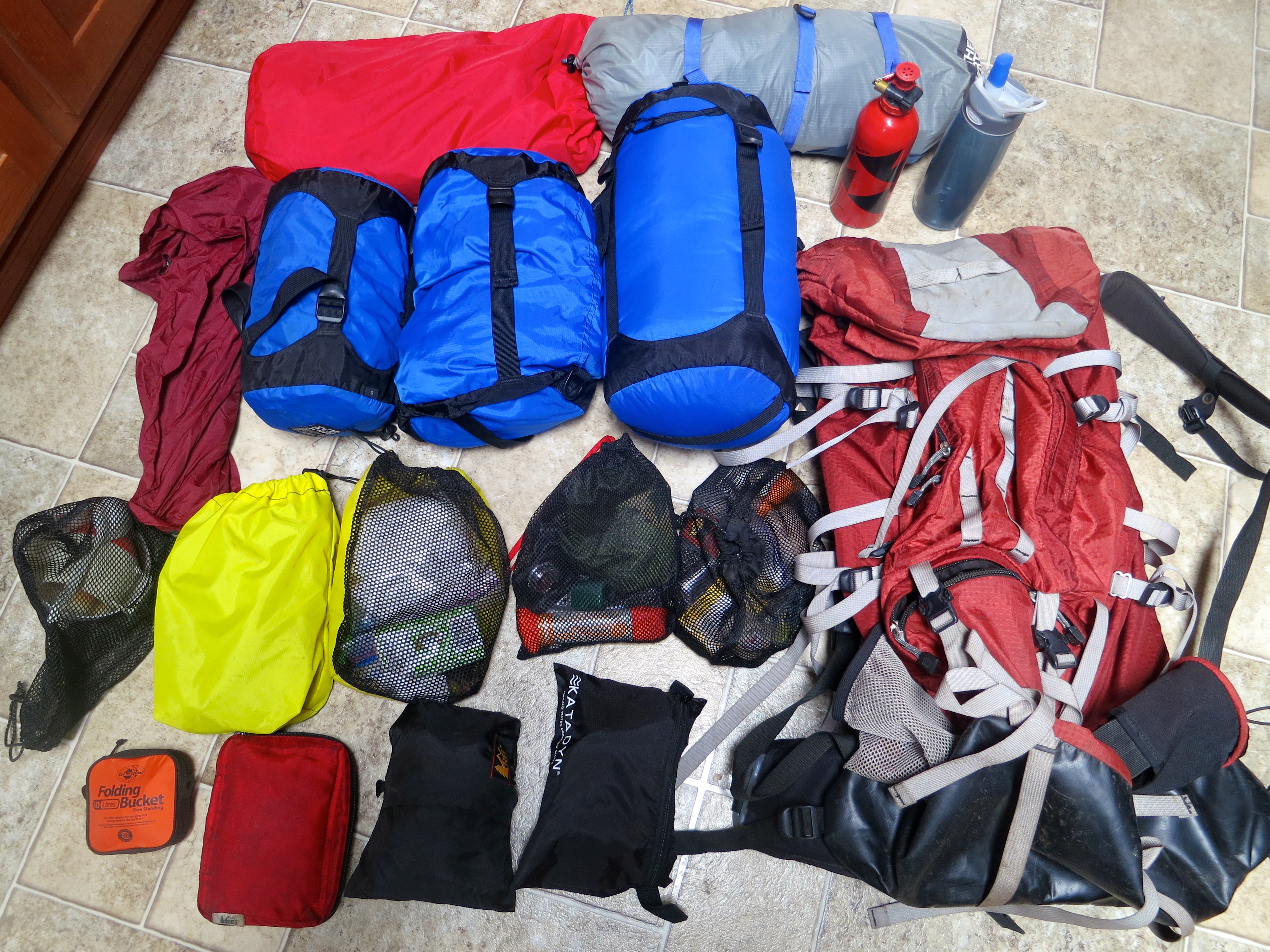
Next came the gear. It was hiding out on shelves, in drawers, and long ago packed boxes. Would my MSR white gas stove still cook? Would the Katadyn Filter still pump safe water? And possibly even more important, would our Therm-A-Rest air mattresses still be filled with air in the morning? When you are disappearing into the backcountry, you can’t be too careful.

Here's my gear and backpack. The larger bags are tent, sleeping bag and pad, food, and clothes. Smaller bags are organized according to function: kitchen, bathroom, first aid, etc.

Here’s my gear and backpack. The larger bags are tent, sleeping bag and pad, food, and clothes. Smaller bags are organized according to function: kitchen, bathroom, first aid, etc. Total weight with food, fuel and water: 35 pounds.

Go light is the mantra of anyone who carries his house on his back. Fortunately, the backpacking industry is constantly developing lighter equipment, such as this fully functional folding bucket.

Go light is the mantra of anyone who carries his house on his back. Fortunately, the backpacking industry is constantly developing lighter equipment, such as this fully functional folding bucket.

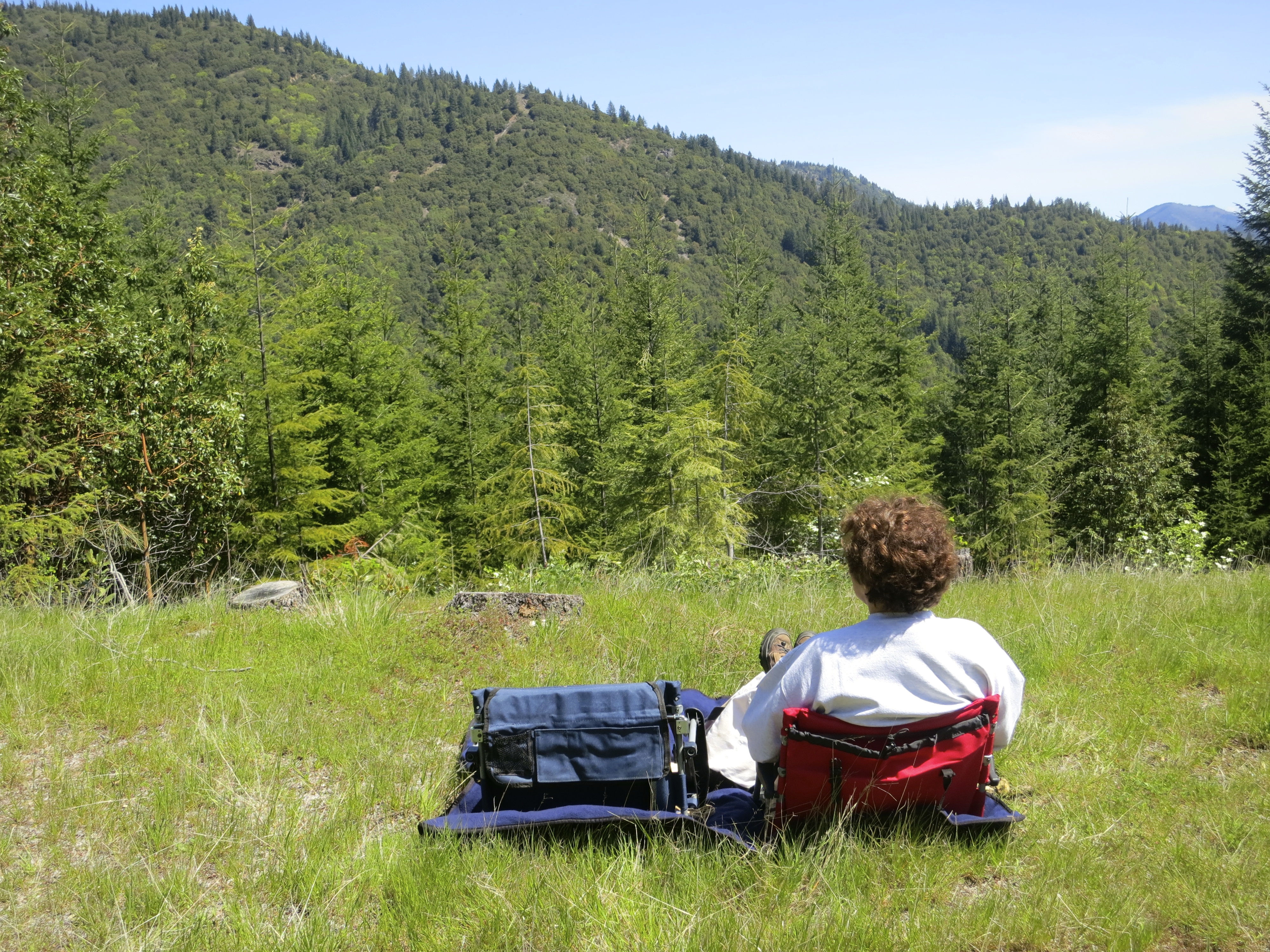
There was the inevitable last-minute trip to REI. And Peggy and I even drove up to check out the trailhead on Mother’s Day. (Now, before all of you moms get excited, she got breakfast in bed first and we took a picnic lunch that we ate on a grassy knoll with a grand view. Peggy even managed to spot a hungry mountain lion disappearing into the forest. Maybe it was coming to join us for lunch. What more could a mom ask for?)

Peggy enjoying her Mother's Day Picnic. We saw the mountain lion a couple of hundred yards down the road on our way out.

Peggy enjoying her Mother’s Day Picnic. We saw the mountain lion a couple of hundred yards down the road on our way out.

And how was the trip? Forget for the moment that it was cold and rained much of the time. Forget that we were dead tired and went to bed at 7:00 PM. Forget that the trail came close to disappearing in the brush and we spent a fair amount of energy crawling over and around downed trees that blocked the trail. And forget about the noise we heard in the middle of the night that sounded like Bigfoot pounding on a tree trunk with a large limb. And why should you forget? I just got out my thesaurus. The trip was wonderful, beautiful, invigorating, marvelous, educational, and stunning. We laughed our way through the whole adventure.

I’ll let our photos tell the story.

Butte Creek trail in the Red Butte Wilderness.

After following switch backs down the dry mountain side, we came upon the verdant canyon of the Butte Fork of the Applegate River with its almost rainforest feel. (This and the following three photos are located near #1 on the map.)

Butte Creek trail in the Red Buttes Wilderness.

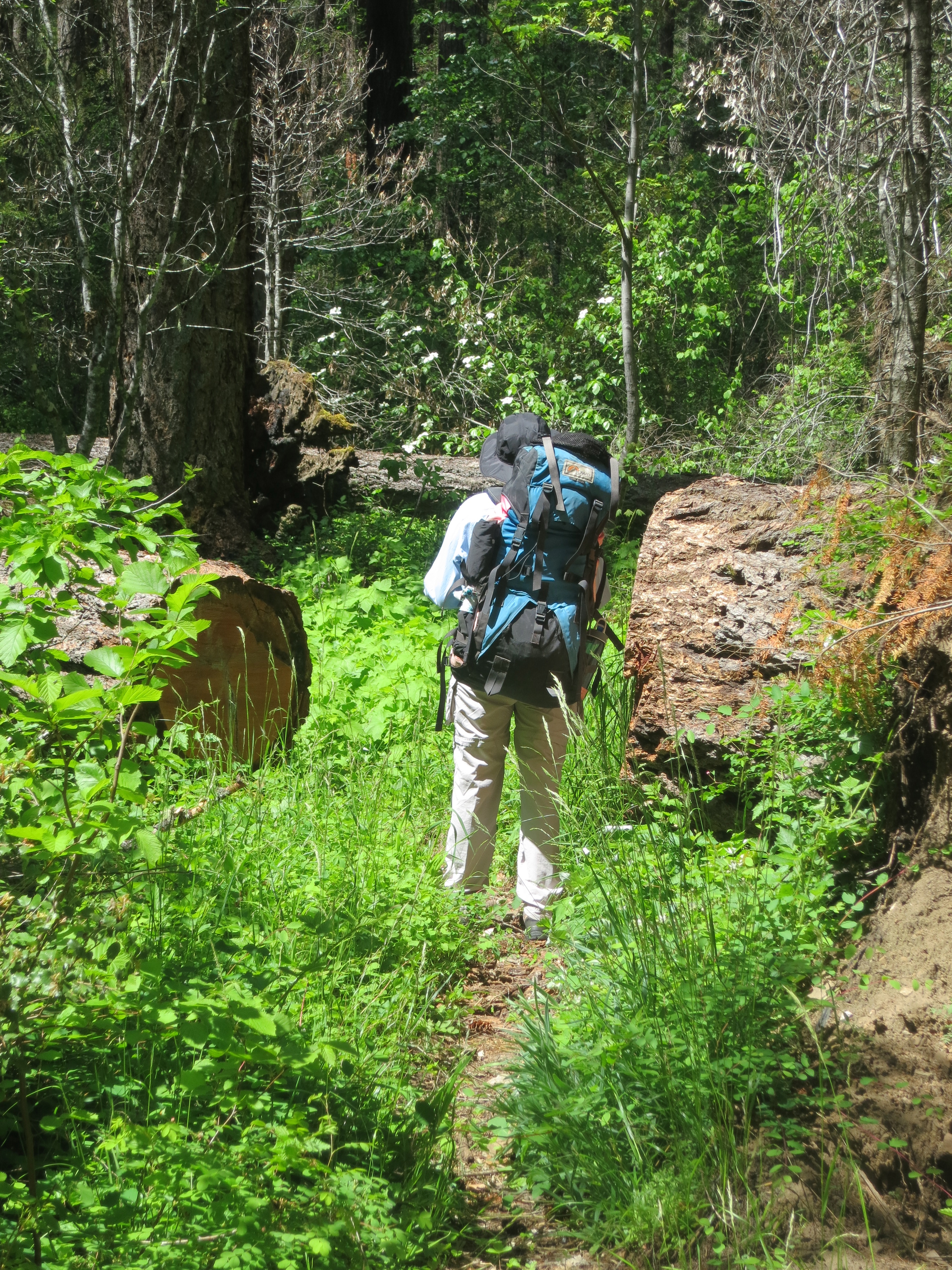
In 2012 the Ft. Goff fire had swept through the area. While the forest was relatively unharmed, some large trees had fallen across the trail and since been cleared to make way for hikers.

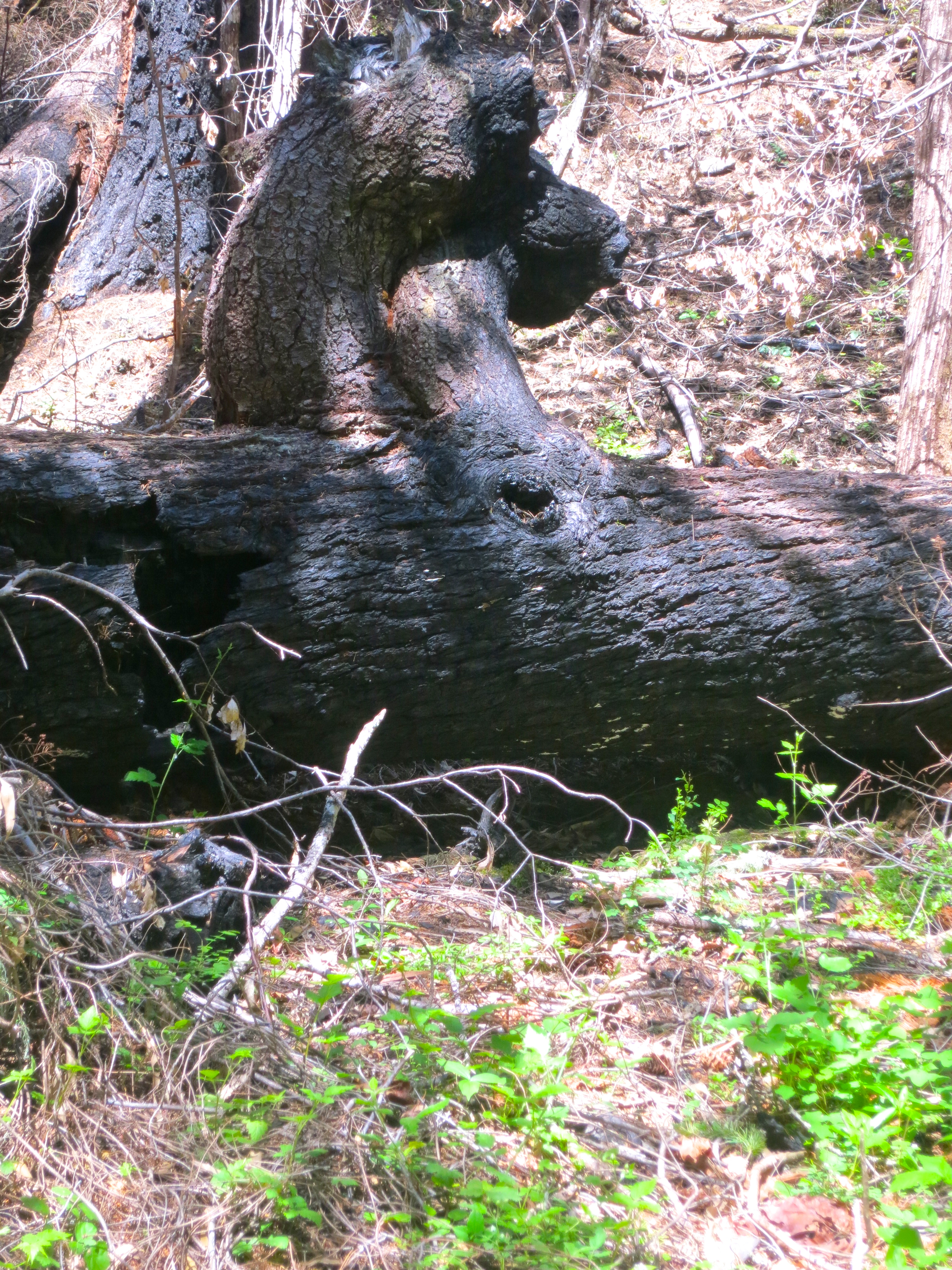
Smokey the Bear tree in the Red Buttes Wilderness.

We loved this tree poking its limb up in the middle of the fire area. Peggy at first saw a unicorn but I saw Smokey the Bear… reminding people to be careful with fire.

Horsetail fern growing in the Red Butte Wilderness.

We found this horse-tail fern growing in the canyon. Pioneers reputedly used this plant for scrubbing out pans.

CCC Cabin in the Red Buttes Wilderness area of Northern California and Southern Oregon.

An old cabin made out of red cedar shakes was built by the Civilian Conservation Corps in the 30s and then used by the forest service for storing fire fighting tools. (Located at #2 on the map.)

Roof of cedar shake cabin in Red Butte Wilderness area.

The hand-hewn cedar shake roof.

Chinquapin forest in Red Butte Wilderness.

Not far above the cabin, we came across a chinquapin forest. I had seen chinquapin bushes but never trees.

Chinquapin nuts, encased in these spine covered shells, are apparently quite tasty.

Chinquapin nuts, encased in these spine covered outer shells, are apparently quite tasty.

Flowering dogwood in the Red Butte Wilderness.

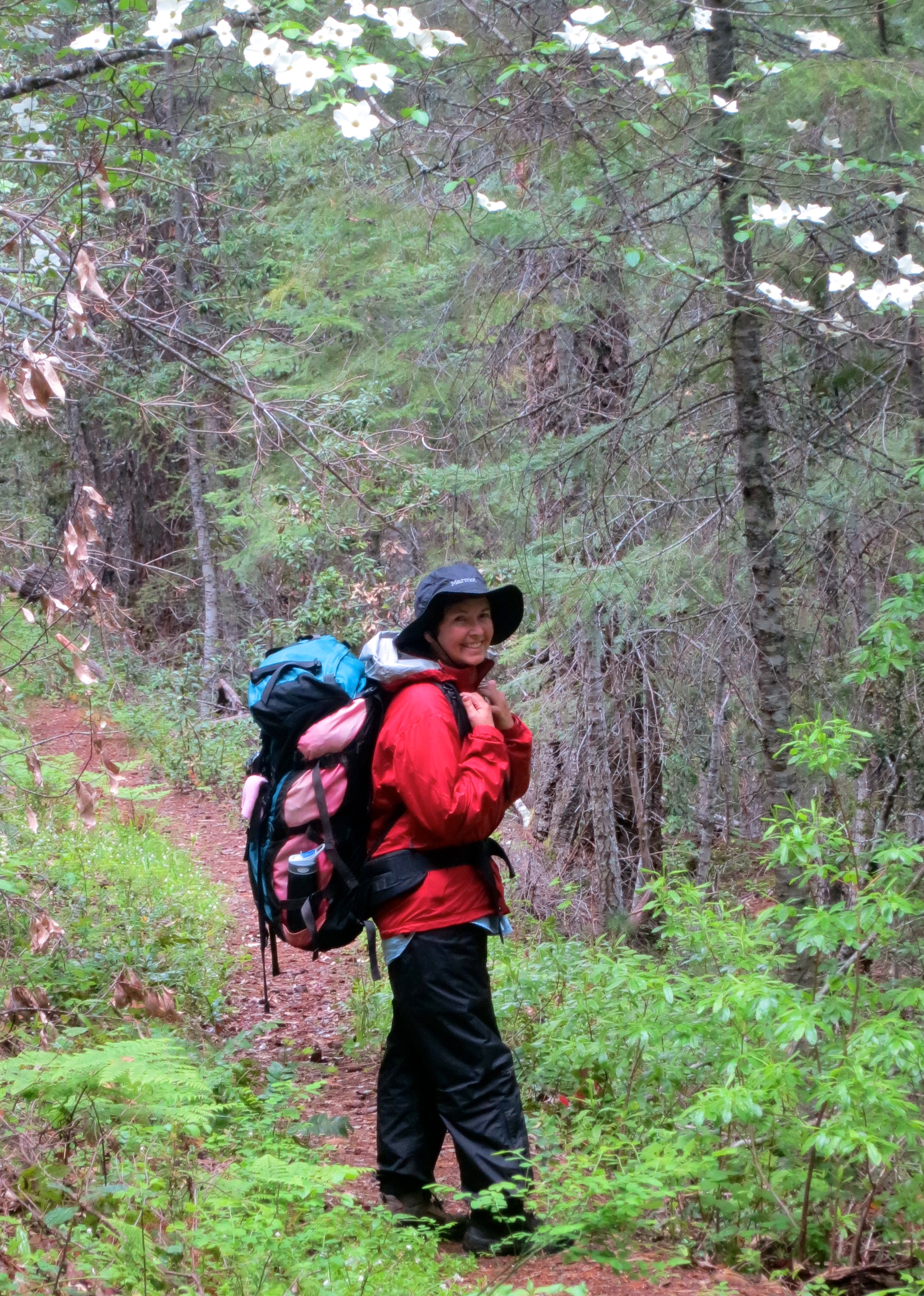
The trail at this elevation also featured beautiful flowering dogwood.

Peggy Mekemson hikes along the Butte Fork Trail through the Red Buttes Wilderness of Northern California.

Here, Peggy poses under a bower of it. I was going to point out that her pack weighed 32.5 pounds. She quickly corrected me. It was 32.8 pounds.

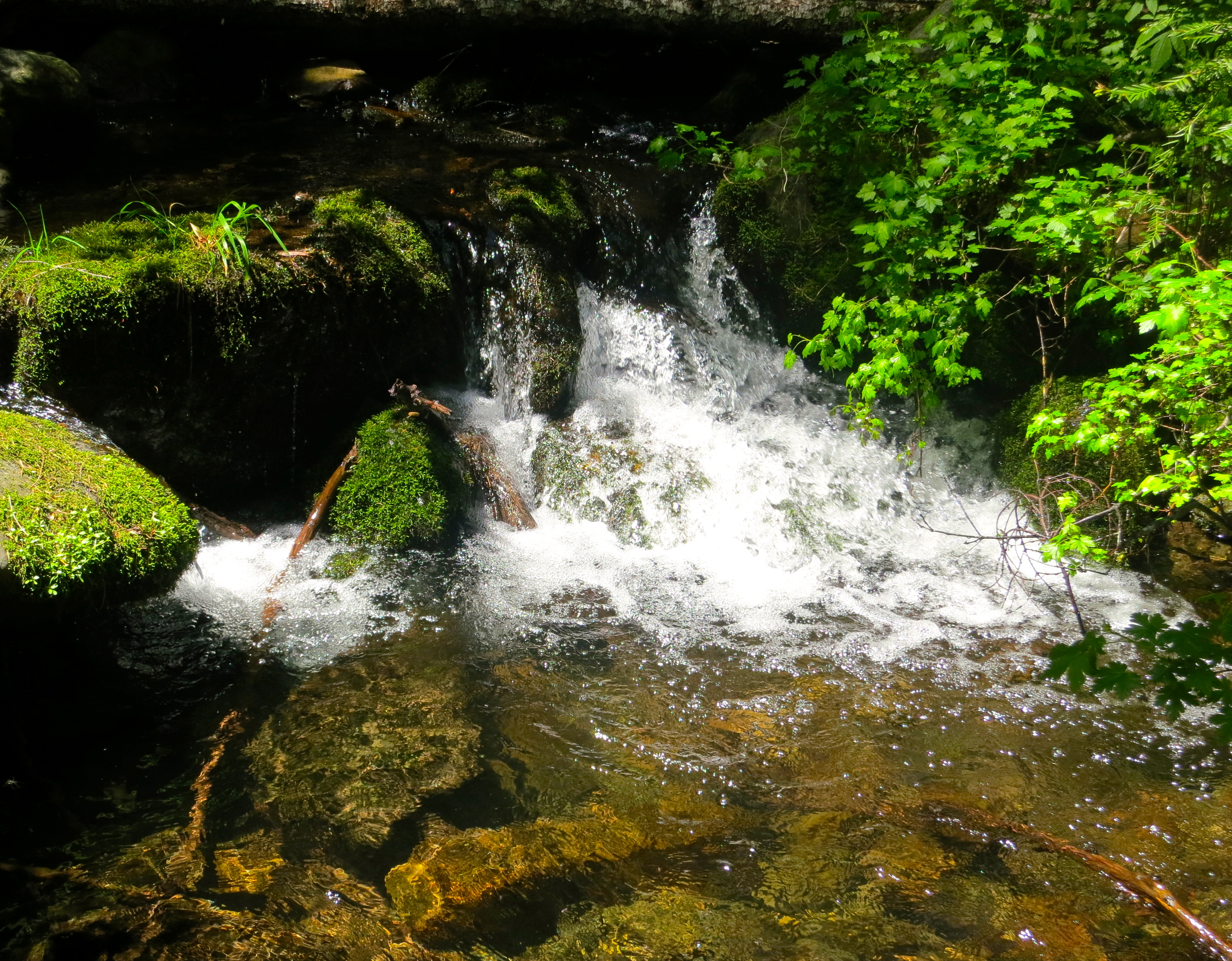
Small creek in Red Butte Wilderness area.

We had been hiking across dry slopes for quite some time. It was getting late, we were tired, and I was beginning to feel a bit of a grump coming on when we heard this creek. “I hear camp,” I told Peggy. (#3 on the map)

Camping out in the Red Buttes Wilderness.

There was barely room for our small North Face tent. But it was home. (Shortly after this photo it started raining.)

Old growth forest in the Red Buttes Wilderness.

This was our view looking up from our campsite. The Red Butte Wilderness includes some of the most impressive old growth forest I have ever seen including pine, fir and cedar trees.

Massive sugar pine tree in the Red Buttes Wilderness.

Peggy caught me standing next to one of the massive sugar pines. (Photo By Peggy Mekemson.)

Gravesite in Red Butte Wilderness.

This beautiful mound of rocks is found on my map at # 4. It’s a grave for three people buried here by family members after their plane crashed on July 28, 1945.

Burial site of airplane crash victims in Red Butte Wilderness.

The grave marker shows that Sylvan Gosliner, Ruby May Gosliner and Alma Virgie Pratt are buried here. Remnants of the plane can still be found in the canyon below.
Tree torn apart for bugs in Red Butte Wilderness.

Someone had a grand time ripping this rotting tree apart for it bugs. Was it a bear? Or how about Bigfoot? We found a large pile of scat (poop) nearby.

Cedar Grove in the Red Buttes Wilderness.

Cedar Grove is aptly named for its magnificent cedars. (Found at #5 on the map.)

Corn Lilies in red Butte Wilderness.

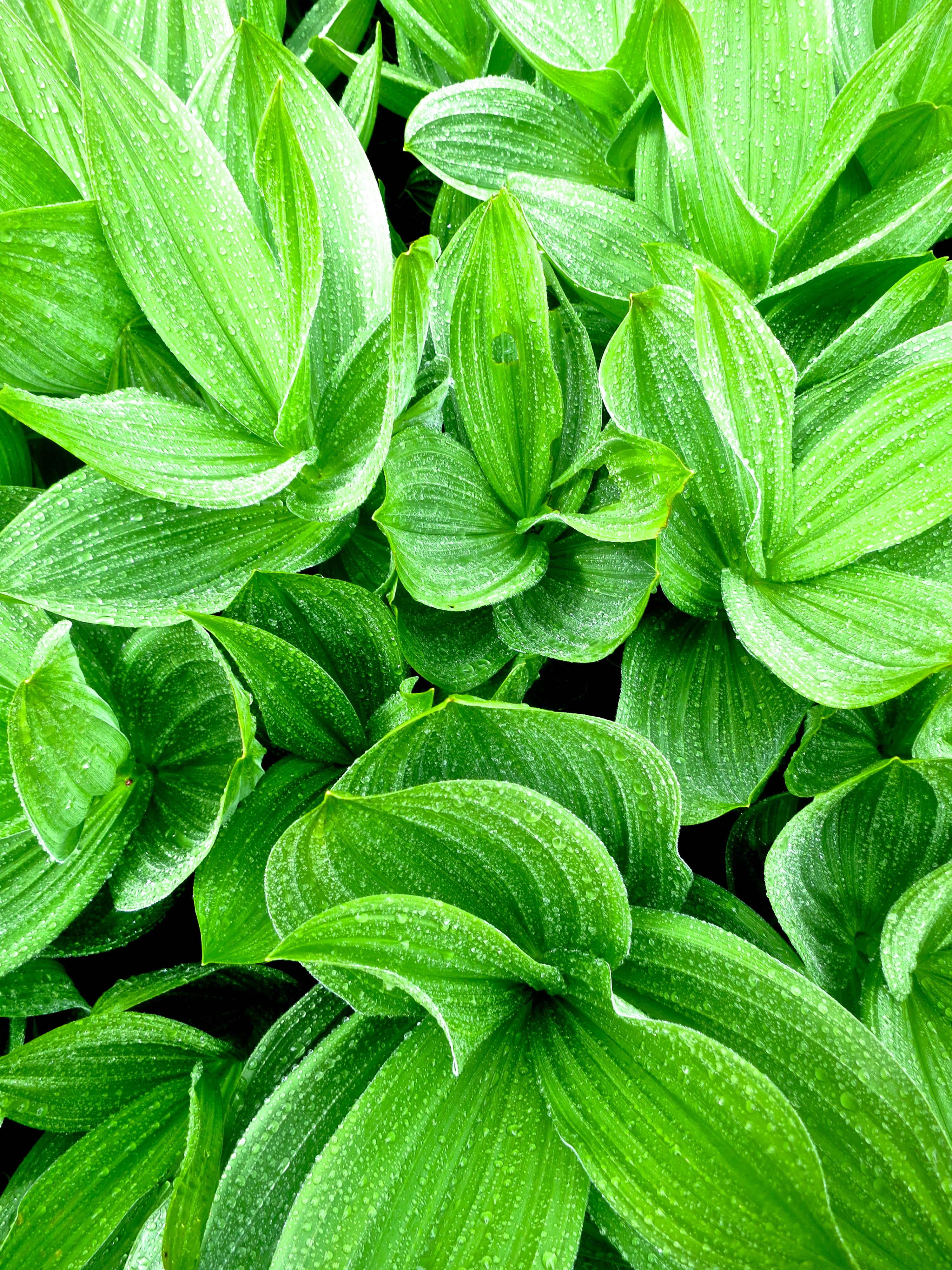
We also found corn lilies growing nearby in a meadow where the Goff Trail joins the Butte Fork Trail.

Trillium growing in Red Buttes Wilderness.

As we did this trillium.

Tree blaze carved into a cedar tree in the Red Buttes Wilderness.

Ever hear the phrase, “Where in the blazes are we?” Foresters, cowboys and other outdoors people used to mark their trails by cutting out this symbol in a tree, which is known as a blaze. I’ve followed them through forests from Maine to Alaska, often over trails that have long since grown over.

Curt Mekemson backpacking in the Red Butte Wilderness.

It was a tad wet in the cedars, as this photo by Peggy demonstrates.  The bottle on the left is filled with wine, BTW. It helps assure that Peggy will follow me up the mountain. (grin)

Peggy Mekemson stands on trail in Red Buttes Wilderness.

The trail between the cedars and Lake Azalea almost disappeared on one occasion. Peggy is standing on it.

Azalea Lake in Red Buttes Wilderness.

We finally reached Azalea Lake. Have I mentioned it was wet out?

Curtis Mekemson camping in the Red Buttes Wilderness.

We found a drier, more protected camp farther away from the lake and settled in. I’ve carried the coffee cup backpacking for 45 years. Once it spent the winter buried under 20 feet of snow. (Photo by Peggy Mekemson.)

Azalea Lake in the Red Buttes Wilderness.

The sun rewarded our trip the next morning by providing a lovely view of Lake Azalea. It was time to pack up and head back for civilization.

Curtis and Peggy Mekemson in Red Buttes Wilderness.

Selfie of two happy campers at trails end who have seen some beautiful country and proven to themselves that they can still put on backpacks and disappear into the wilderness.


Things that Go Bump In the Night… Backpacking with Socrates in the Sierra’s

Socrates was not actually built for backpacking but he loved it. His grand daddy, so his papers claimed, had been the the American-Canadian champion for his class.

Socrates was not actually built for backpacking but he loved it. His grand daddy, so his papers claimed, had been the American-Canadian grand champion for his class. Check out his digging paws!

I’ve been following a fun blog called Animal Couriers where these folks travel around Europe delivering pets to people. They were just in Greece and that reminded me of a Basset Hound I once owned named Socrates. Or maybe he owned me. It was hard to tell at times. Anyway, Greece plus dog brought Socrates to mind.

About the time Socrates came into my life, I took up backpacking. Naturally I decided that Soc should go backpacking with me– you know, a guy and his dog. So off we went to my all-time favorite spot in the Sierra Nevada Mountains of California, a small lake basin that had been carved out by glaciers north of the I–80 Freeway half way between Sacramento and Reno.

The Five Lakes Basin north of Interstate 80 in the northern Sierra's of California.

This is one of five lakes snuggled down in a small glacier carved basin north of Interstate 80 in the northern Sierra-Nevada Mountains of California. This is the first area I ever backpacked and I have returned dozens of times over the years. The Black Buttes, which can be seen from I-80, are in the background.

Sharing the lake with Soc was close to being totally alone. His concept of a quality wilderness experience was disappearing into the woods and seeing how many holes he could dig. He never seemed to catch anything so I am not sure of his motivation. I’d get up in the morning and cover his handiwork. I almost felt like I needed to file an environmental impact report. Socrates would end up limping back to the car with sore feet.

On this particular journey, I packed the Carlos Castaneda book that features things that go bump in the night. Don Juan takes Carlos out into the middle of the Sonoran Desert on a pitch-black night and abandons him. Not long afterwards, the monsters come hunting. It wasn’t the best book for a solo night in the woods. As I read into the evening, I found myself paying more attention than usual to wilderness sounds.

I ingested a little medicinal herb to lighten things up. It was the 70s, after all. Bad idea; instant paranoia set in. Soon I could hear the wind stalking me through the treetops. An old snag turned into a ghoul. Off in the distance something big and ugly was digging and snorting. Socrates, I hoped.

This long dead pine turned into a ghoul in my imagination.

This long dead pine turned into a ghoul in my imagination. The mountains in the background are the Sierra Buttes.

“Here Soc,” I called. “Come here boy.”

The digging continued and grew more desperate.

“Come here!” I yelled. Still no response but now I could hear large claws scratching at granite.

“Does someone want a Milk Bone?” I added in a quiet, conversational voice.

The digging stopped. ‘Someone’ started coming through the brush toward me. Whatever it was, it was apparently interested in Milk Bones. Soc’s head, long body and wagging tail made their way into the firelight. He might love digging, but he loved food more. There was the reason why our low-slung pooch weighed 70 pounds.

“Good boy,” I said while digging out a Milk Bone. I knew I was buying companionship but it seemed like a good idea on this strange, dark night. Meanwhile, Socrates had started to drool in expectation. Soon he was shaking his head and shooting dog slobber off in a dozen directions. I ducked to avoid being slimed.

Unfortunately, my supply of Milk Bones was limited. I tied Soc up to assure his faithfulness. It was time for bed. I put the fire out and was greeted by a moonless, dark night. But hey, who needed the moon when I had my faithful companion and a million stars. I invited Socrates to snuggle up on my sleeping bag and laid my head down on the coat I was using for a pillow.

CRUNCH, CRUNCH, CRUNCH!

“Gads what’s that!” (A translation of what was actually said.)  I sat up straight and grabbed for my flashlight. Socrates joined in by barking at my sleeping bag.

“No, Soc, out there,” I urged and pointed the flashlight off into the woods. Soc glanced up at me with a curious ‘what are you talking about’ look and started barking at my pillow.

“Look Socrates,” I pleaded, “just pretend there is a garbage man out in the woods.” Soc had never met a garbage man he could resist barking at and I wanted his teeth pointed in the right direction.  What Soc did with my advice was make three dog circles and plop down on my bag. I gave up and reluctantly laid my head back down on my pillow.

CRUNCH, CRUNCH, CRUNCH!

I sat straight up again. Soc growled at me for disturbing his rest and started barking at my sleeping bag again.

“Fine watch dog you are,” I growled right back at him while straining my ears for the smallest of sounds. When Soc shut up, I was rewarded with a faint ‘crunch, crunch, crunch.’ It was coming from under the sleeping bag. I had a proverbial monster under my bed! Gradually it dawned on me that what I was hearing was a gopher tunneling his way through the ground, innocently on his way to some succulent root. I put my head down on my pillow. Sure enough, the ‘crunch’ became a ‘CRUNCH.’ The ground and the mystic weed were magnifying the sound. Soc had been right all along. I was lucky that he only barked at my sleeping bag and hadn’t started digging.

Don Juan would have appreciated how I had been tricked. Reality isn’t always what it seems. Following are a few photos I have taken of the Basin over the years. It’s an easy place to love.

Five Lakes Basin north of I-5 between Sacramento and Reno in Northern Sierra's.

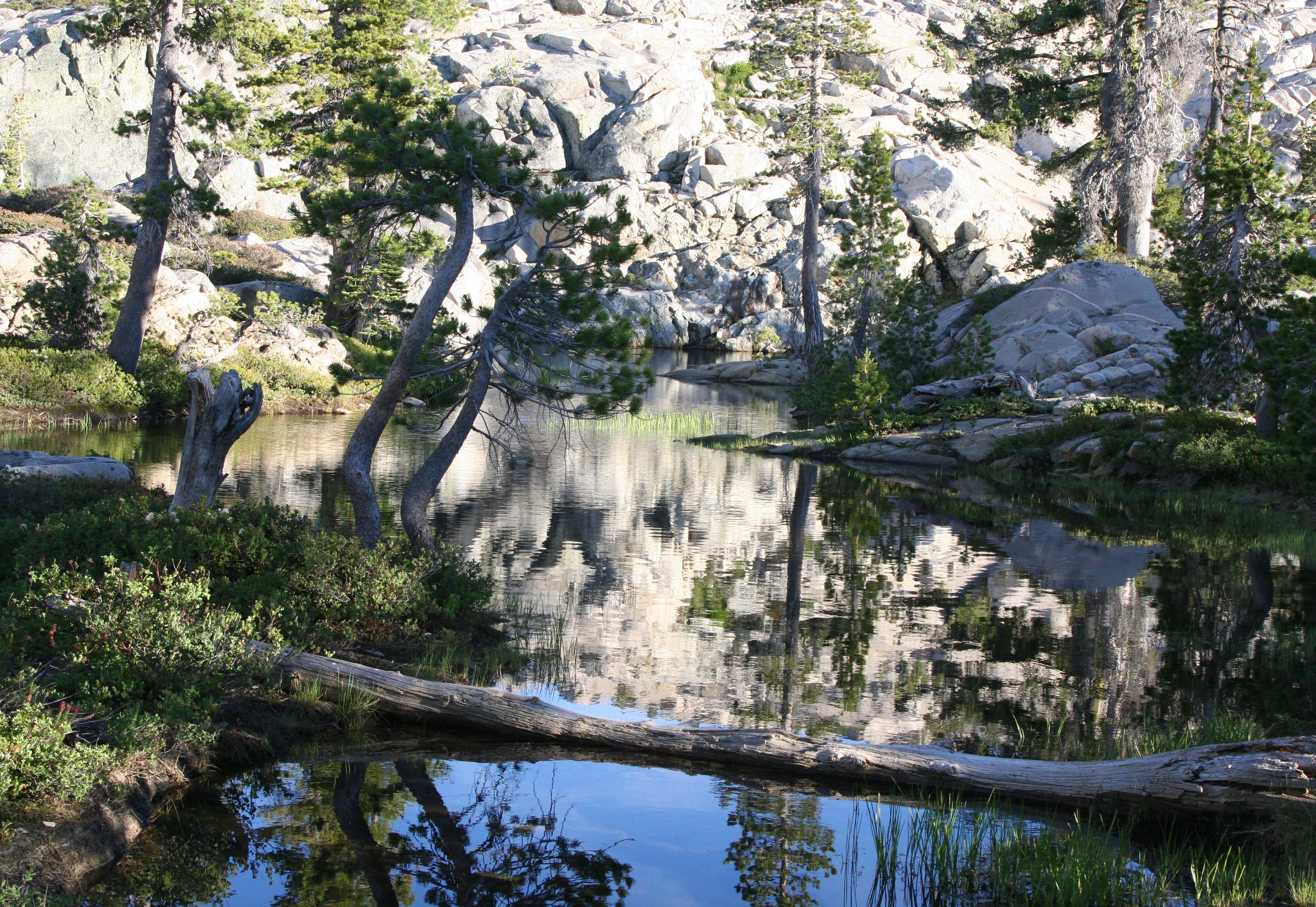
The five lakes are small and intimate. This photo is from my campsite.

Five Lakes Basin in Northern Sierra mountains.

I camp out on a small peninsula. This reflection shot is also taken from my camp but looking in the opposite direction.

Juniper snag in Northern Sierra Nevada Mountains of California.

Junipers thrive in adverse conditions. And they make great snags.

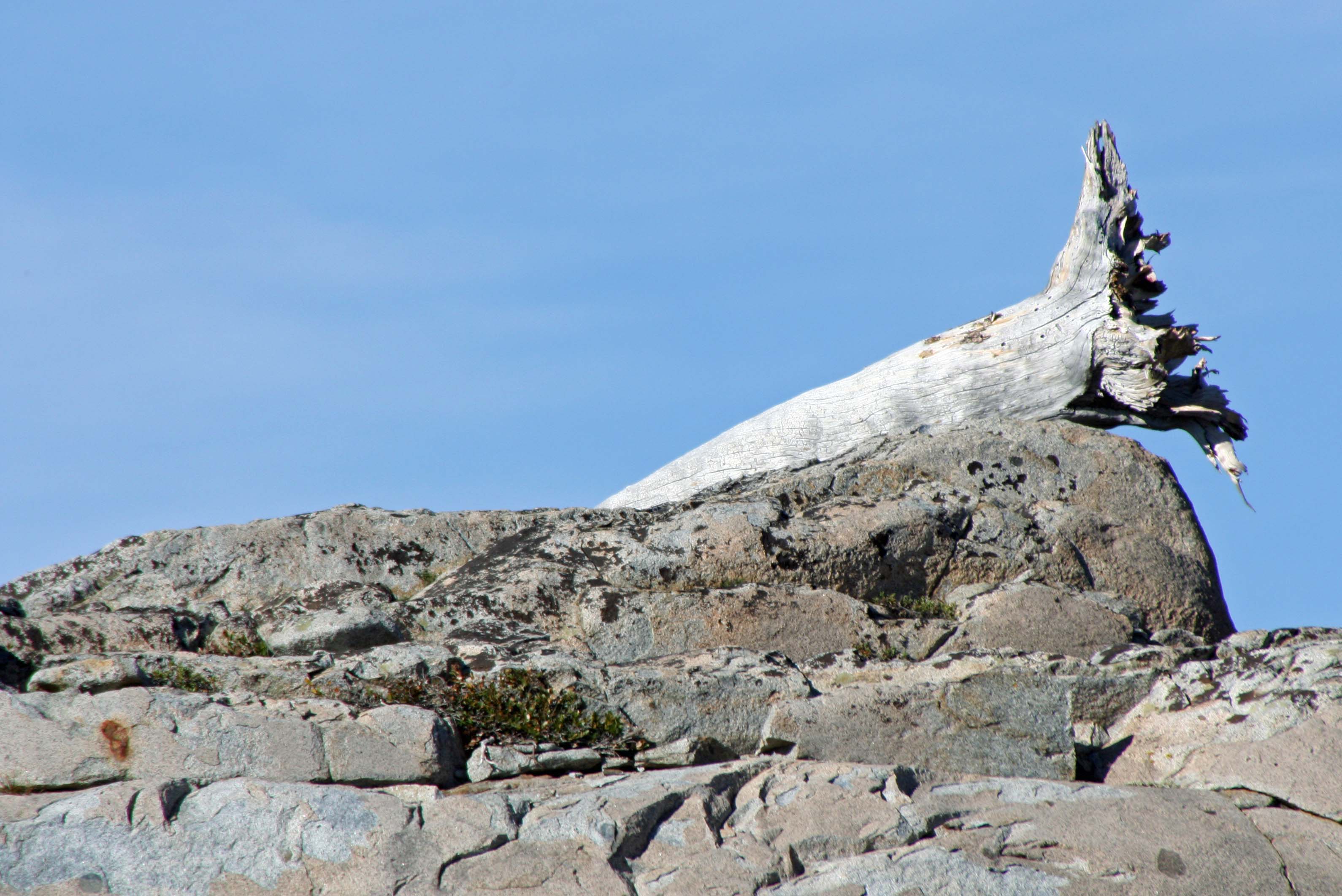
I also liked this snag form what was probably a sugar pine tree. Granite rock forms the base of the Sierra's. Socrates considered the rock as freeways.

I also liked this snag from what was probably a sugar pine tree. Granite rock forms the base of the Sierra’s. Socrates considered the rock as freeways.

Mariposa Lilies are a common flower of the Sierra Nevada Mountains. Both Native Americans and early pioneers considered their bulbs as food.

Mariposa Lilies are a common flower of the Sierra Nevada Mountains. Both Native Americans and early pioneers considered their bulbs as food.

One of the first things I did when I met Peggy was introduce her to backpacking. (I took her on a 60 mile backpack trip.) Here she sits beside a small waterfall in the Five Lakes Basin.

One of the first things I did when I met Peggy was introduce her to backpacking. (I took her on a 60 mile backpack trip.) Here she sits beside a small waterfall in the Five Lakes Basin.

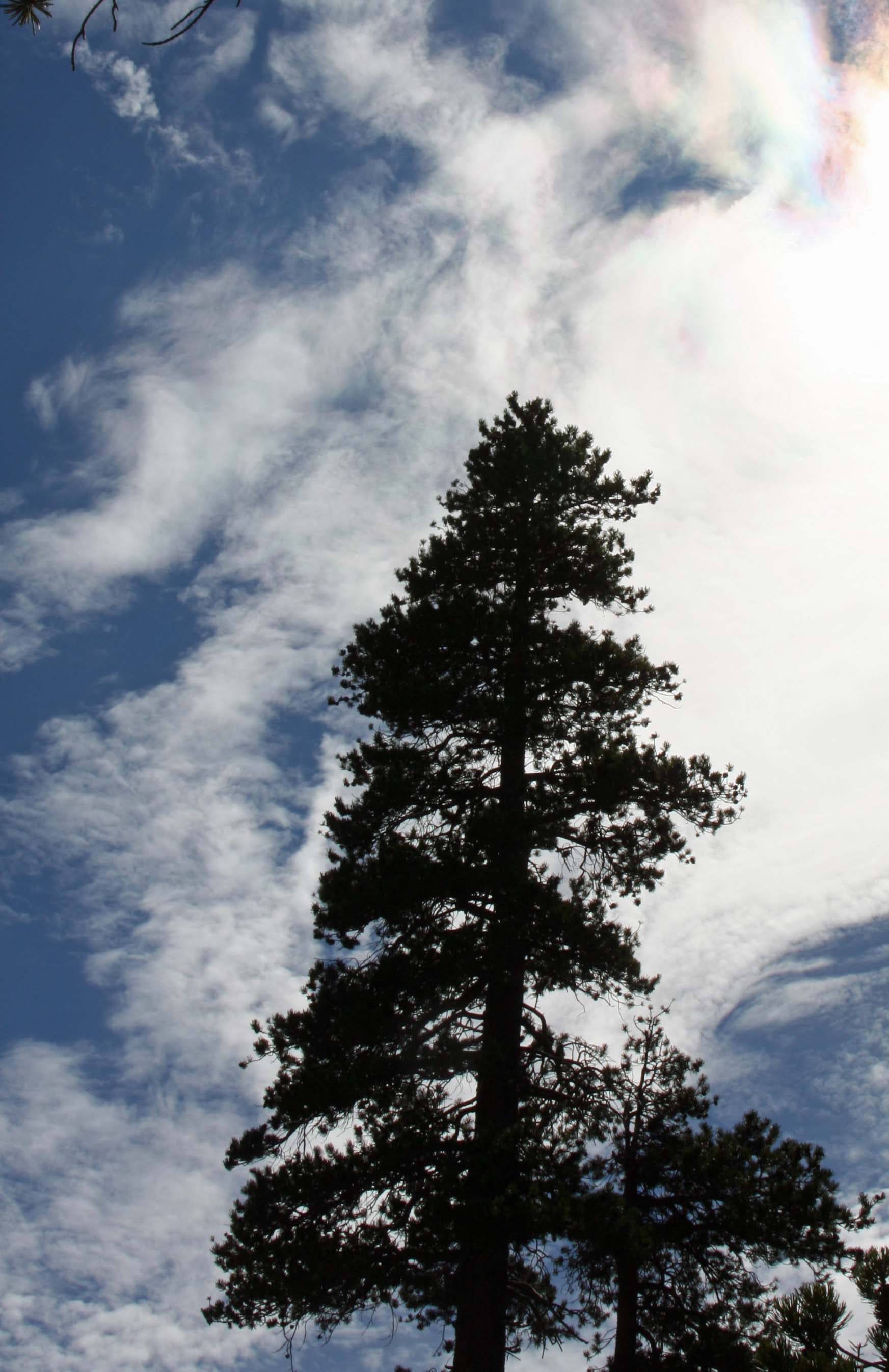
I liked this pine tree silhouette against the fluffy clouds.

I liked this pine tree silhouette against the fluffy clouds.

Sunset in the Northern Sierra Nevada Mountains.

A golden sunset lights up the Black Buttes.

Sunset north of I-80 in the Sierra Nevada Mountains of California

This dramatic sunset in the Five Lakes Basin was created by sun being filtered through smoke from a forest fire before lighting up the evening clouds.

NEXT BLOG: We return to Europe and Portugal.

A Rabid Wolf Wandered through Camp: The Wind River Mountains of Wyoming

The Wind River Mountains of Wyoming are a premier destination site for backpackers. A number of years ago I took six months off to backpack various locations in the western United States and added the area to my itinerary.

Mountain men were there first.

Place names such as Sublette County, Fremont Lake and the Bridger Wilderness recall these larger than life characters who were kept busy between the 1820s and 60s pursuing beavers, exploring the west, keeping their scalps, serving as guides, working as frontier entrepreneurs, and, in the case of John C. Fremont, running for President.

Many were also great storytellers and participated enthusiastically in the creation of their own legends.

One of the most popular locations for weaving tall tales was the Annual Fur Rendezvous that brought the various trappers together with suppliers out of St. Louis.

Six of the Rendezvous were held near the small town of Daniel, which is located on the Upper Green River 11 miles from Pineville. I stopped by and tried to imagine what the river valley would be like filled with over 1000 trappers, Indians, suppliers, missionaries, and wayward journalists.

The Mountain Men pursued their dangerous and often lonely profession during the winter when the fur pelts were at their best. The two to three-week Rendezvous in the summer was an opportunity to sell their furs, catch up with friends, gossip and resupply for another winter. It was also an excuse to party.

‘Whiskey,’ pure alcohol watered down and then flavored with tobacco, was passed around in a cooking kettle. Horse racing and shooting contests soon deteriorated to drunken debauchery. Old journals report the results.

One new guy was baptized by having a kettle of the alcohol poured over his head and lit on fire. A rabid wolf wandered through the camp and bit people at will. Several trappers were witnessed playing poker on a dead man’s body

A contract between William Ashley, the creator of the Rocky Mountain Rendezvous, and the trading firm of Jedediah Smith, David Jackson and William Sublette listed some 50 different items to be delivered to the Mountain Men.

Many of these items such as gunpowder, lead, beaver traps, and butcher knives related to their work. There were also cooking kettles, flour, sugar, allspice, dried fruit, coffee, grey cloth, and washing soap for every day living. Some items such as beads, ribbons, rings, bracelets and calico were probably trade goods for the Indians

As one might expect, ‘fourth proof rum’ (80 % pure), regular tobacco and the more high quality Smith River Tobacco were included for long, lonely nights. Slaves were producing the Smith River Tobacco in Virginia at the time.

Reviewing what the Mountain Men carried with them into the mountains led me to look at my own backpacking list. It appears life is more complicated today. My list contains over 60 items and I rarely travel for more than seven to ten days without checking back into civilization!

But then again, the Mountain Men apparently didn’t worry about such niceties as toilet paper and toothpaste, not to mention maps and reading material. They also shot much of what they ate.

Wednesday’s Blog: “There’s a Beaver Standing on My Tent.” I have my own mountain man experience.

Exploring the Grand Canyon by Car, Mule, Foot, Helicopter and Boat

The Grand Canyon provides a vast panorama of ever changing color and seemingly endless space.

“Golly, what a gully,” President William Howard Taft was heard to mutter when he first saw the Grand Canyon.

Teddy Roosevelt was more profound: “Leave it as it is. You cannot improve on it. The ages have been at work on it, and man can only mar it.”

Each point along the Grand Canyon rim provides a unique and rewarding view.

Both of these thoughts are rumbling through my brain as I think about the 18 days Peggy and I are about to spend rafting 280 miles down the Colorado River.

Few people come away from the Grand Canyon untouched and we are no exception.Its vastness, beauty, and geology have pulled us back time and again, as have its natural and cultural history.

There are many ways to explore the Canyon. For the vast majority of people, some 5 million a year, this involves a drive up to the South Rim and a quick tour of the most popular overlooks.

Sitting on the edge for an hour or two enhances the experience several times over. Hanging out on the rim for a few days while roughing it at a campground or luxuriating in one of the lodges, is even better.

For those wanting for a bird’s eye view, a helicopter trip is a tempting option. (National Park rules limit the obtrusiveness that helicopters and airplanes flying in the Canyon would otherwise create. Specific routes and altitudes are mandated.)

Beyond these more sedentary approaches to the Canyon lies adventure. Even a half hour hike down one of the more popular trails provides a trip through millions of years of history, incredible views and the heart-pounding thought that only a few feet separate you from a thousand foot tumble.

Longer hikes and especially backpacking trips provide a perspective that only a small percentage of Canyon visitors ever have.

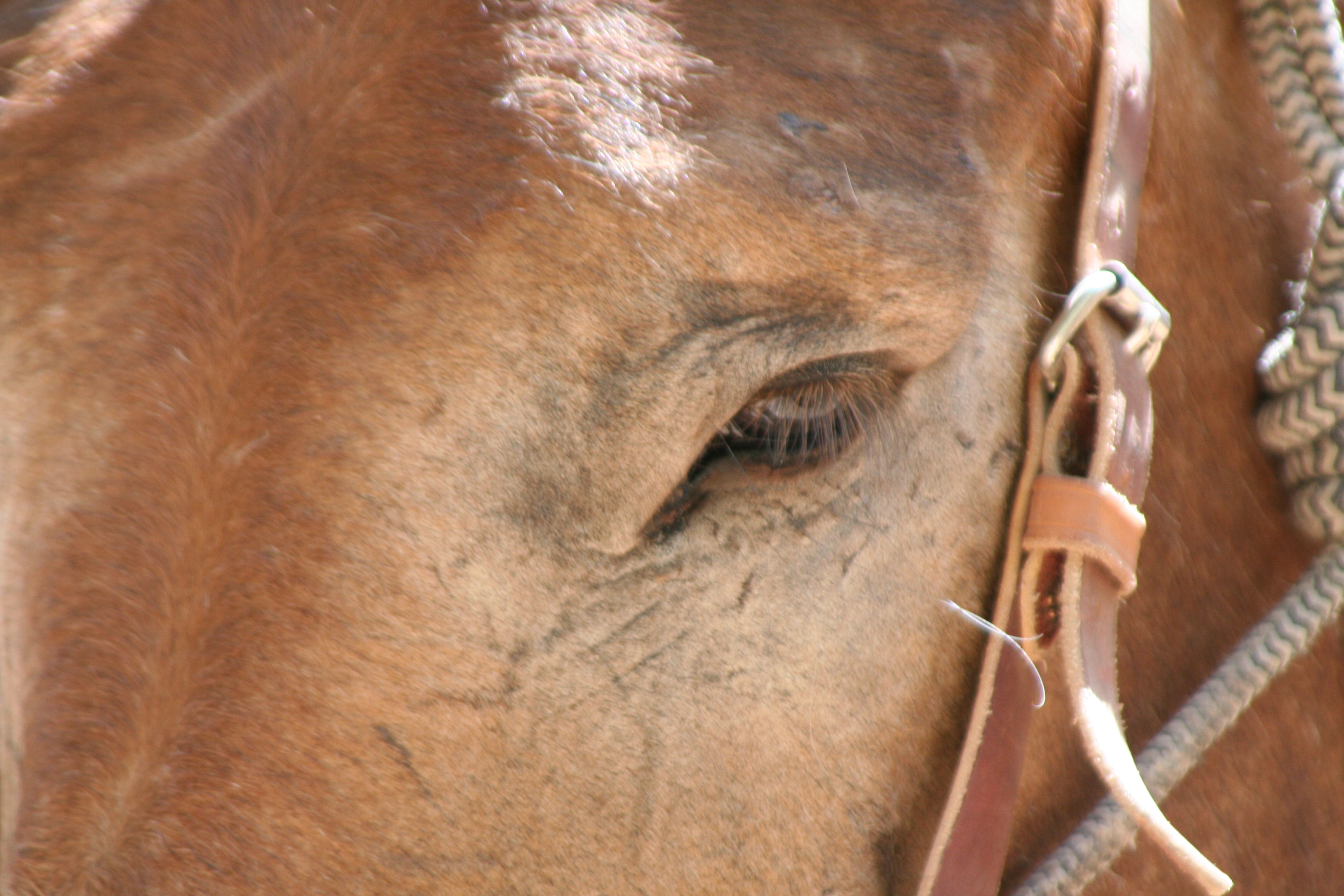
"Don't even think about climbing on my back," this Grand Canyon mule seems to say.

If you want to visit the inner canyon but fear you’re lifetime warranty will expire hiking out, check out the sure-footed mules that carry tourists in and out of the Canyon. It’s an outing your rear will remember for years.

At some point or the other in my life, starting with a Rim drive in 1968, I have experienced all of these approaches to visiting the Grand Canyon including trips by mule and helicopter. (Our son Tony provided the latter while he was working for Papillon.)

My most challenging journeys have been six backpack trips into the Canyon, including a week alone. Read about the latter misadventure in “The Tale of a Tail” under Stories on the sidebar.

I view our 18 day raft trip down the river as an exclamation point to my explorations of the inner canyon.  Even here there are options. For example, commercial companies offer trips on large, motorized pontoon boats. These tours are quicker and definitely less work… but my sense is they lack the same level of intimacy and adventure as a private trip.