
Our backpack trip though the PCT section R of the Siskiyou Mountains took us through our backyard…the Red Buttes.
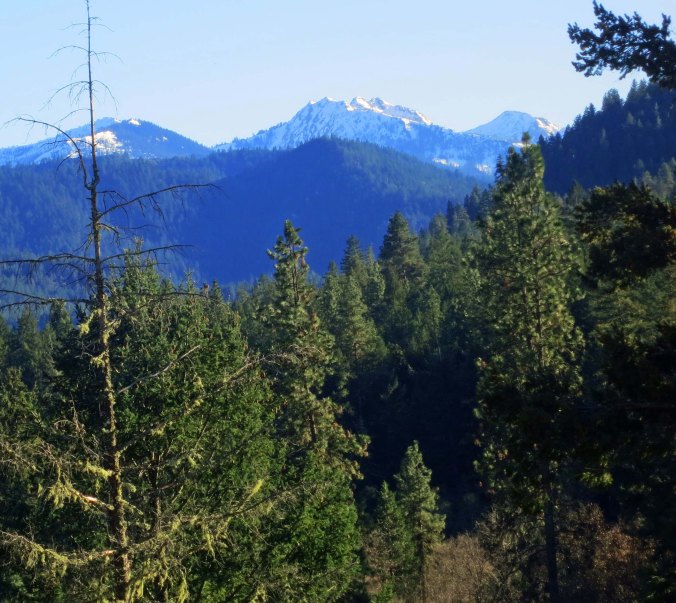
The other side of the Red Buttes Mountains as they appear from our patio during the winter.
I’m happily settled in the small community of Etna while Peggy and our nephew Jay shuttle his car down to the town of Dunsmuir, which is 100 miles down the PCT and our next resupply point. He is joining me as I hike through the Russian Wilderness and the Trinity Alps. Jay is a budding cameraman and director out of LA who focuses on documentaries and independent films. He last joined me on a backpacking trek when he was 16 and I was 60! “Follow your bliss. Do what you love to do,” I had urged. And he has. I am looking forward to seeing this section of the trail through his cameraman’s eyes and will share some of his photos.
I’ve now completed my first two segments of the PCT, which included hiking through the Siskiyou and Marble Mountains. Today’s blog will take us back to finish up hiking through the Siskiyous, quite literally our backyard, and down into the small, very independent-minded town of Seiad. Again, given my time limitations, I will do this post mainly as a photo essay.
Life slows down when you enter the wilderness and the every-day world fades away. The beauty of the woodlands and mountains, the sheer physical challenge of the journey, and the brief encounters with the cast of characters hiking the PCT become our everyday reality. I go for days without thinking of ‘The Donald’ or what he might be up to. Instead, the almost mystical Mt. Shasta provides us with tantalizing glimpses, endless flower gardens cling to the steep paths we climb, butterflies flutter among the flowers and then shoot into the air in mating rituals that predate humankind. What’s happening in Korea doesn’t seem to be nearly as important as where the next watering hole is. Even the flatness of our tent site seems to take priority.

What’s around the next corner or over the next mountain always pulls us on. This is Sheep Camp, which I featured in my last post. The lush green grass seen here appealed to both sheep herders and cattlemen for summer grazing. It also appealed to us! This was the view from our campsite.
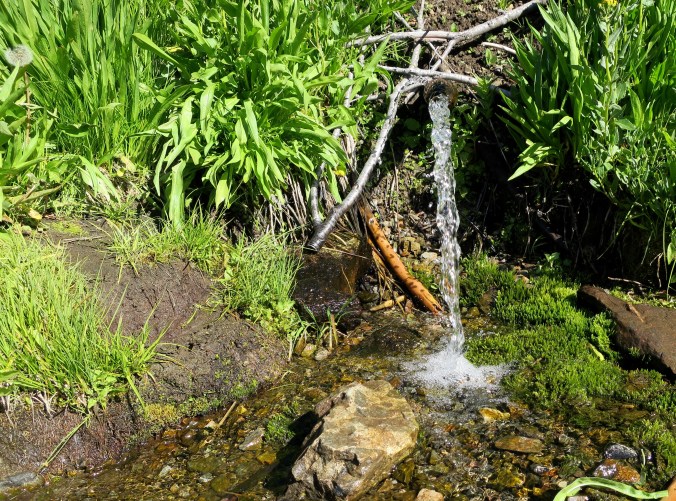
Water can be plentiful or precious in the mountains, and a spring attracts both animals and people. Through hikers on the PCT pay close attention to where the next water may be found. It may be just around the corner or 15 miles up the trail. A pipe delivered water directly from the spring to thirsty hikers at Sheep Camp. And it was cold and delicious!
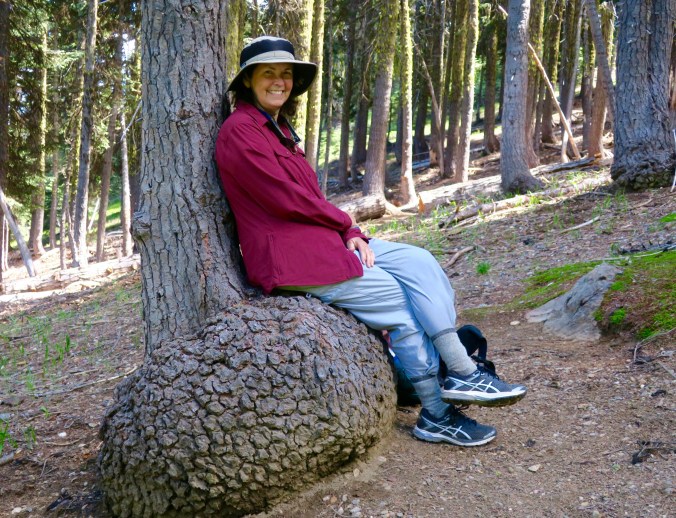
Peggy found this natural chair along the trail, perfect for the weary hiker. Her grin says it all.
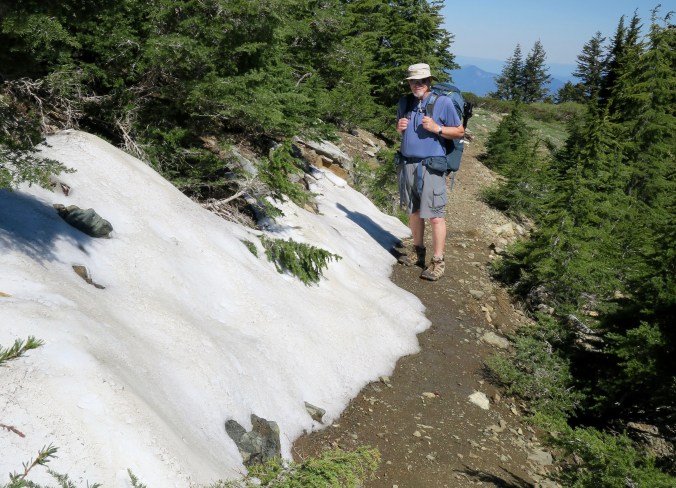
Like lack of water, snow conditions are always a major consideration of people who hike the PCT. Many of the hikers we met had skipped the southern Sierras because of heavy snow over the passes and would return to them after reaching Canada. In fact, through-hikers jump around a lot depending on conditions. I planned my trip so snow wouldn’t be an issue. The concern here was the snowball that I knew would soon be flying my way. Peggy simply can’t resist. It was guaranteed as soon as I turned my back. That’s my “Don’t do it, Peggy.” Ha!
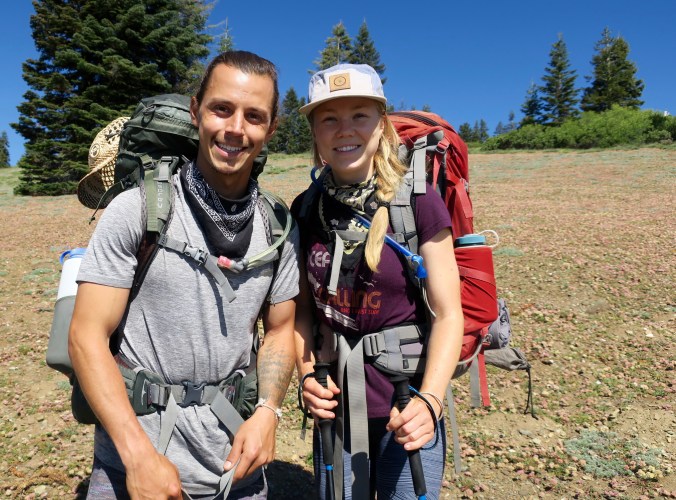
Only a small portion of the people hiking the PCT go from Mexico to Canada. May people hike sections. Molly and Brandon were hiking from Castle Crags to Crater Lake. Others may be out for just a day hike like many of the people we saw around Mt. Ashland.
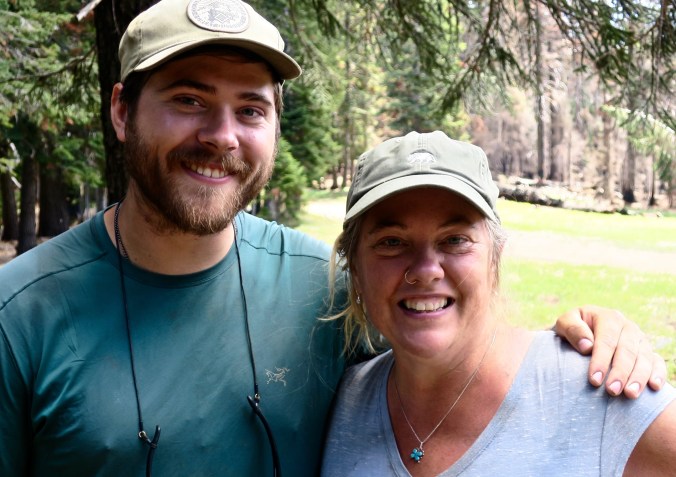
Ezra and Janie were a mother and son team (the second mother/son team we saw that day) who were hiking from Seiad to Ashland, I believe. Jane owns a clay sculpture shop in the historic mining town of Jerome, Arizona. Ezra is going to college in Portland. “We try to get out on a backpacking trip together every summer,” Ezra told us.

If there is one sign guaranteed to get the heart of every through-hiker beating fast, this is it.

Here’s why. If you are hiking to or from the Mexican border where the PCT starts, it is 1,706 miles away.

Like Sheep Camp, Donomore Meadows was another area that appealed to early ranchers and miners. Just before we reached this meadow, Peggy and I had stopped to check out a lightning damaged tree and a fawn jumped out of the grass where its mother had hidden it. It bounded off with a squawk that sounded very much like “Mom!” Deer usually do a great job of hiding their newborns. The color of the fawns, their absolute stillness, and an almost total lack of smell helps guard them from hungry predators. Just like human moms, babies can come early, however! We came down our driveway a couple of days before starting our trip and a doe had dropped a pair of twins in the road. One was spry enough to stand up on wobbly legs, but the other still couldn’t move!

The Offenbacher Cabin, built by stockmen in the 1930s, still stands today in Donomore Meadow. Descendants of the family have turned the cabin into something of a haven for through-hikers. Water, chairs, and even a bed greet trekkers.

I found this unusual fungus growing near the cabin…

And Peggy stopped to admire this tree.
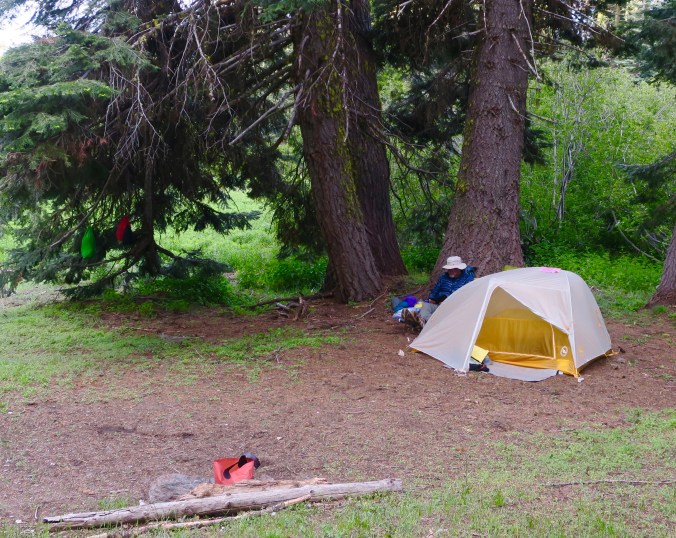
Our camp at Bearground Springs brought an unusual surprise. And it wasn’t a bear. We could hear them coming from a long ways off… with bells. BTW, I have my Kindle along and am reading “The Snow Leopard” by Peter Mathieson.

The bells came into our camp and stopped. Peggy, who had to go out and ‘serve nature’ took this photo. Nine cows had come to visit! It sounded like a hundred and it appeared that they were going to hang out with us for the night. There would not have been much sleep. I growled like a bear from inside the tent and the cows remembered an urgent appointment they had over the mountain. We could hear their bells rapidly fade into the distance. Each bell, BTW, makes a different sound and the cowboys are able to recognize the cow by the bell.
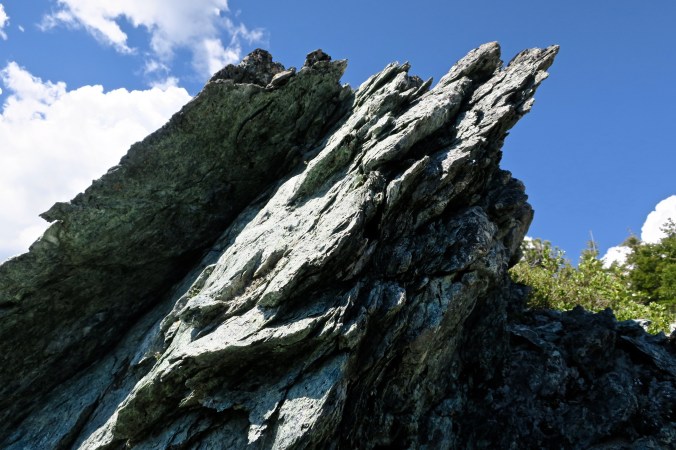
Rocks also captured our attention and schist, a metamorphic rock, was common along this section of the trail. Quartz, which Peggy loves, is often found with schist. In fact, Peggy likes to pick quartz up to take home for her rock garden. There was no picking up quartz to go in our backpacks this time, however!

It was ‘look but don’t touch.’

Always on the lookout for strange or interesting things along the trail, I found this rock and couldn’t resist a photo. Quite a set of choppers, eh?

I also find interesting wood sculptures irresistible.
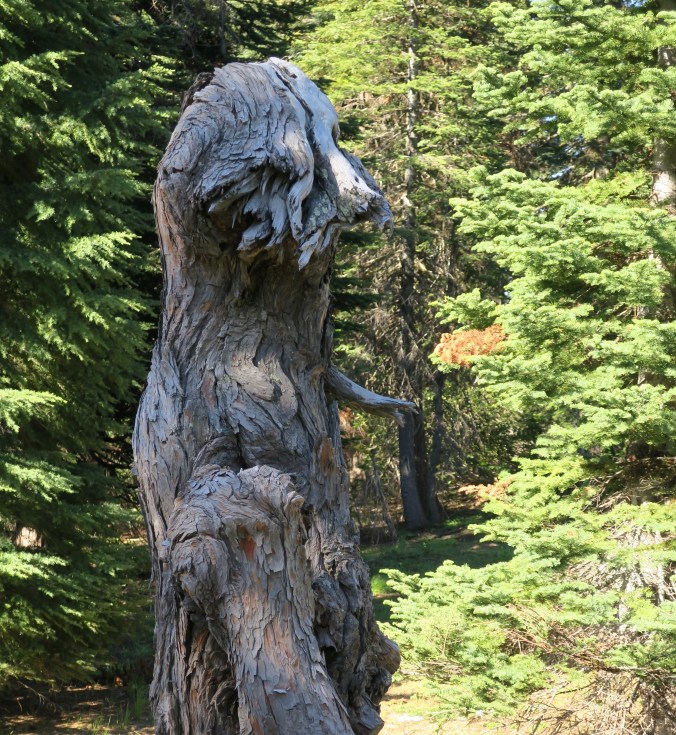
This tree stump looked a bit like a river otter from one perspective…
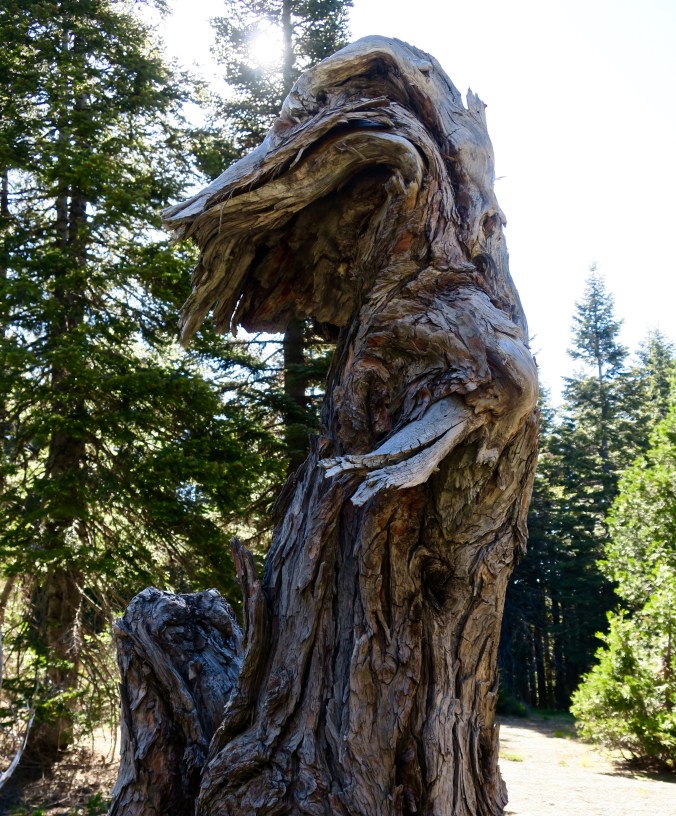
And quite reptilian from the other side.

“There’s water down here,” we heard a voice pipe up. It was a welcome announcement. We’d been many miles without any. Turns out, it was Strawman, who we had met a week earlier and given a ride when we were scouting out the Etna area where I am today. We had a happy reunion. Such meetings are typical encounters along the PCT. Strawman, we had learned, navigates from a PCT App on his phone, as many, maybe most, trekkers do. I’m old fashioned and prefer a map.
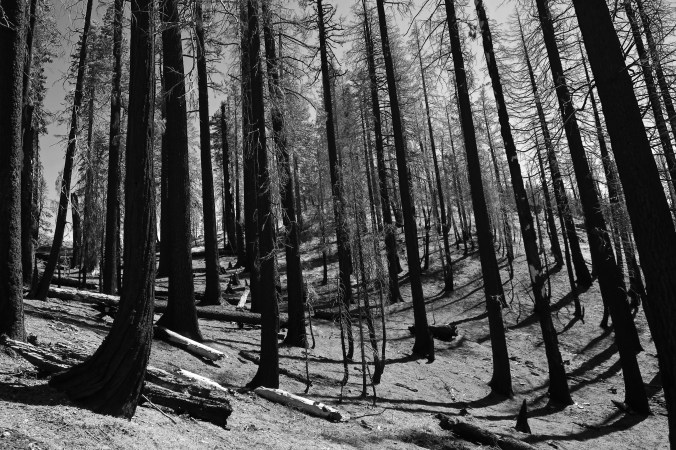
Not too far from Beardog Springs where we met up with Strawdog and camped the night, we began to hike through areas that had been ravaged by forest fires. This was the same series of fires that had forced Peggy and me to evacuate our home last fall. (I’ve rendered it in black and white.) A through-hiker commented to us how ugly it was— I think it was Road Runner who hikes 40 miles a day. Peggy replied she found it interesting and got a strange look. But forest fires are a part of the natural process. A combination of us doing everything to prevent forest fires for the last 70 years and drought/global warming has created the situation where the whole west seems to be burning. (More on this in later blogs.)

Knob cone pines, like this one, actually require fire to free the seeds from the cone so they can germinate.
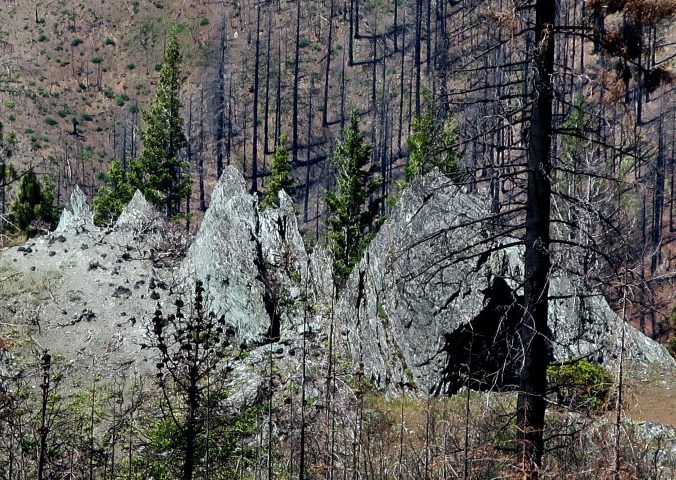
We found these strange looking schist stones in the burn area that looked something like tombs in a fantasy movie. All that was missing was a winged demon…
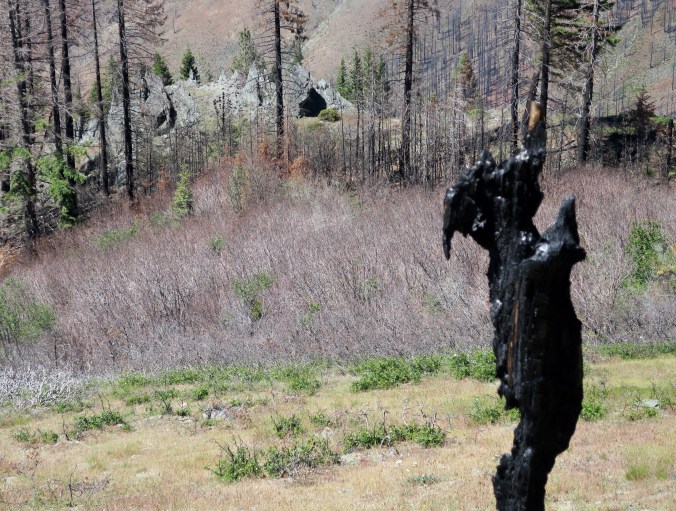
Which the fire had provided! Note the glowing eye.

Peggy and I felt right at home on Cook and Green Pass. We had hiked up here last year from the road above our home.
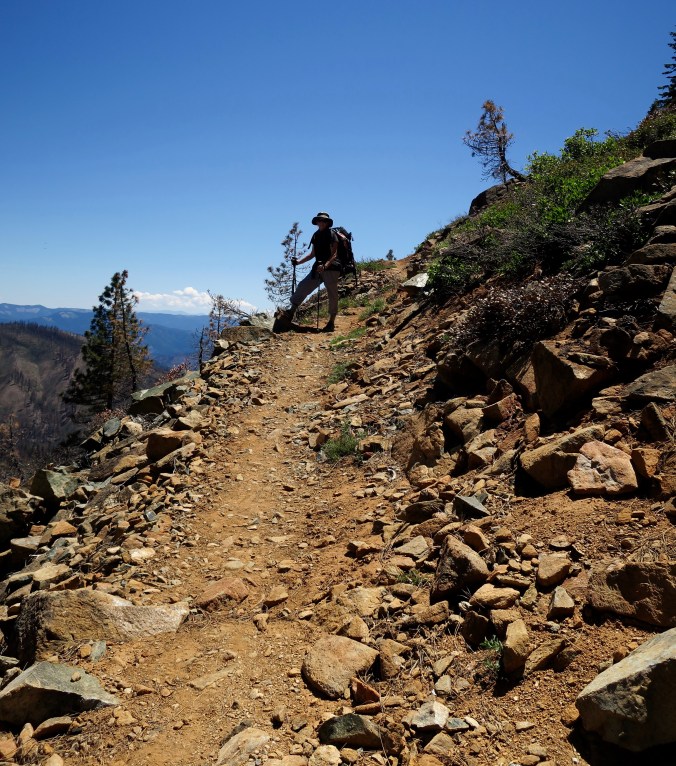
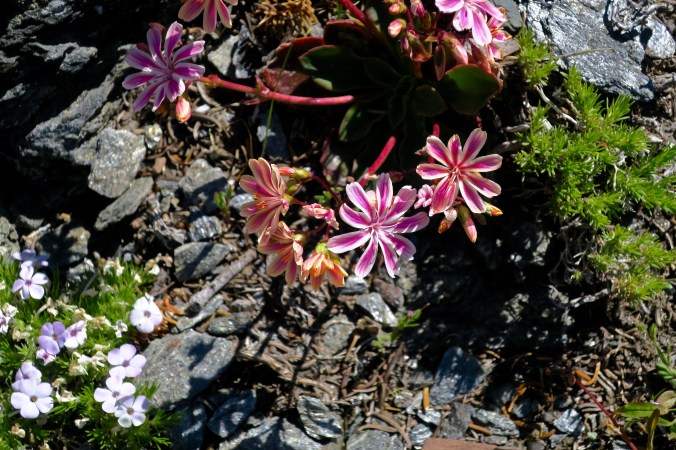
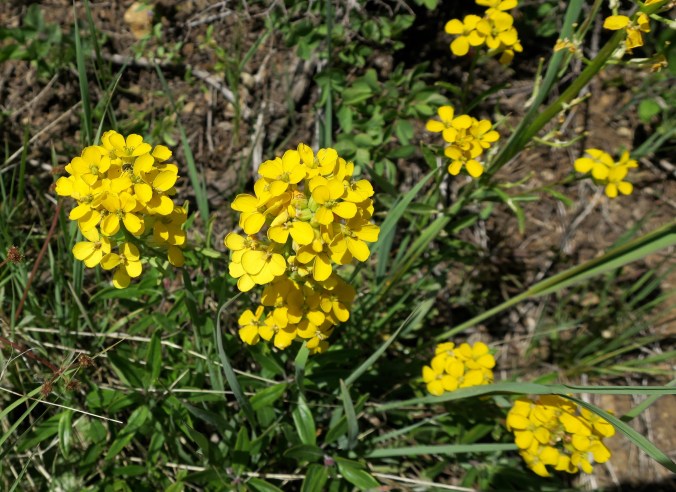
The trail from Cook and Green Pass that goes around the Red Buttes Wilderness goes up a bit. Peggy went through 99 bottles of beer on the wall, and then 99 bottle of rum, and then 99 bottle of wine, which was beginning to sound a bit like 99 bottles of whine. 🙂 The hot afternoon sun didn’t help. Flowers did, however. We had found them all along the trail from Mt. Ashland to Seiad. Here are a few of the many:



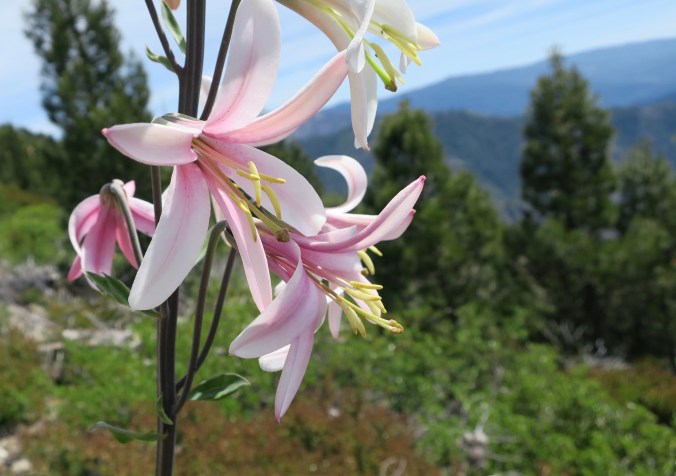
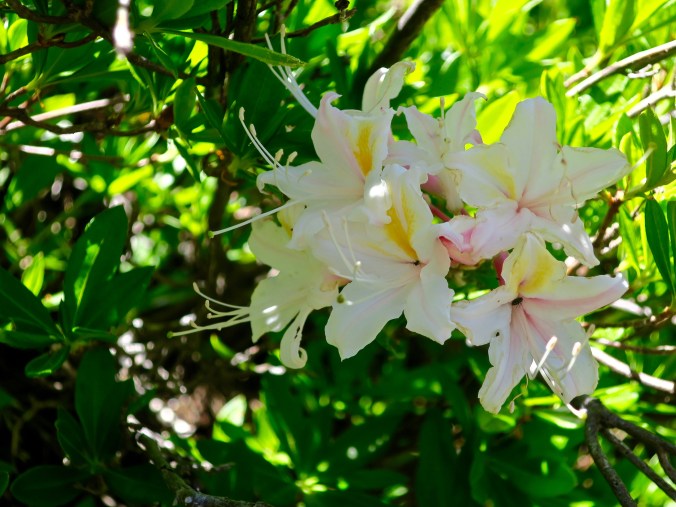

We also learned what makes the Red Buttes Red. These reddish rocks when broken open…
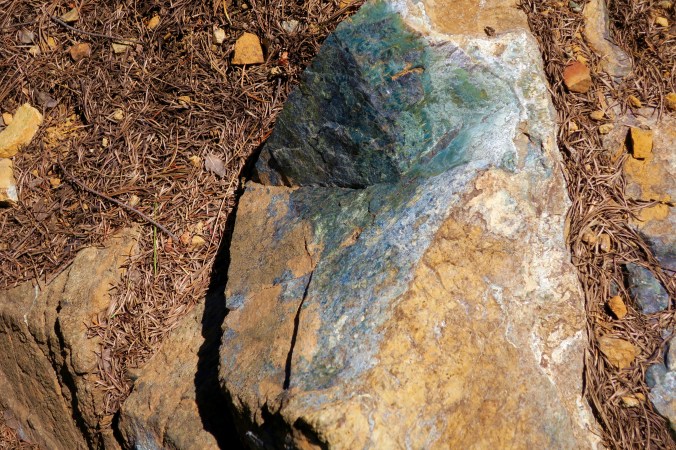
Are filled with the blue/black mineral Olivine that happens to be rich in iron. The red is rust!

We camped that night at Kangaroo Springs, which is just below Kangaroo Mountain. For my friends in Australia, I don’t know how the mountain got its name.

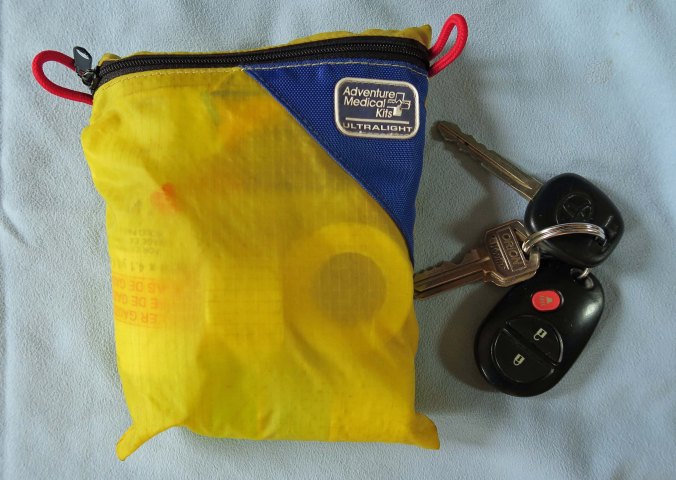
Here I am with my first aid kit of drugs looking like maybe I’ve had a few too many. Actually, I am contemplating the 4,000 foot drop we have to hike into Seiad Valley. Are my 75-year-old knees, ankles and hips ready for the descent? They are screaming “no.” (They ended up doing fine.)

Looking down at the steep, narrow, rocky, occasionally overgrown trail. You can see the switchbacks on the left.
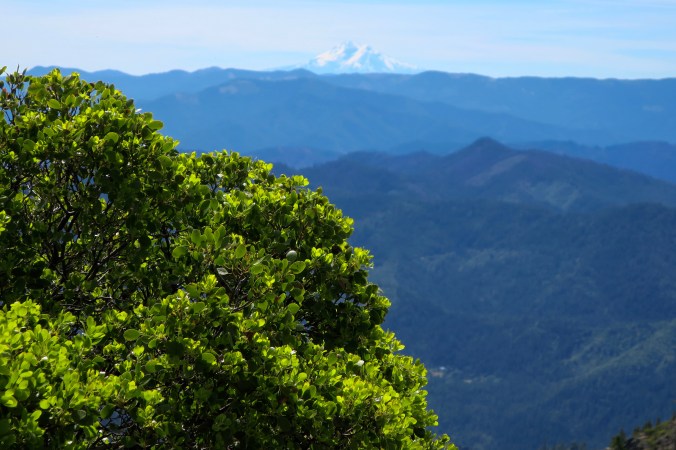
Some stunning views helped. Once again, Shasta can be seen in the distance.

We met Crazy 71 Plus who is now 72. He insisted on pulling his pants up for the photo. Crazy, who is from Hong Kong, got his name last year when he hiked the first half of the PCT. He has returned to hike the second half. Part of what he is doing is raising funds for charities in China.

“We need to take a selfie,” he directed. So we did. “Your face is in the wrong place,” he chided. I told him I liked the photo. I think he was disappointed to learn that I was older.

Once again, our water was getting low when we reached Fern Springs near the bottom of the trail. The water tasted great, but not nearly as good…

As the cold beer we bought first thing when we reached the Seiad store!

We stayed at the Mid Valley RV which welcomes PCT Trekkers allowing them to stay over night and use the facilities for $15.
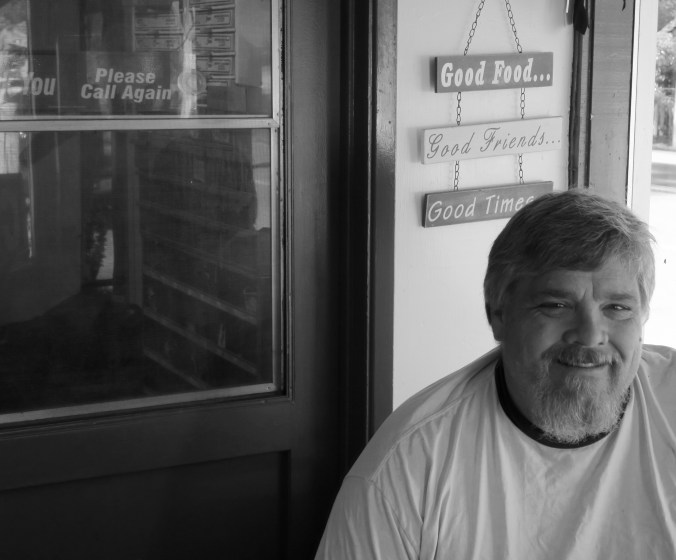
The owner, Bruce, does everything he can to make hikers feel at home.
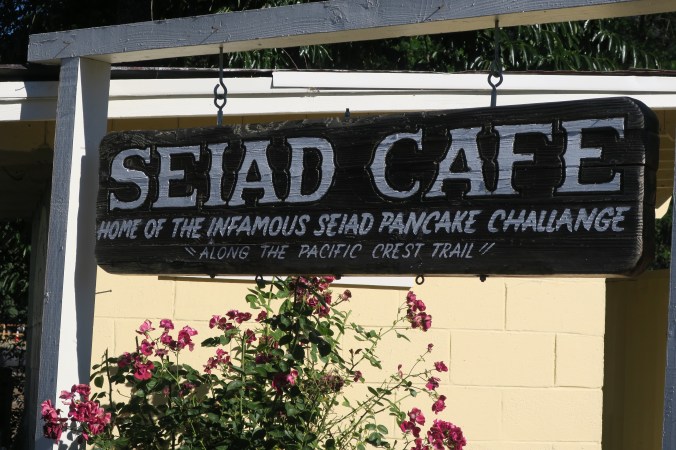
As does the Seiad Cafe that has a pancake challenge. They make five big ones for $15. If you can eat them all, they’re free. The owner told me that several hundred trekkers have tried in the past ten years, but only four succeeded.
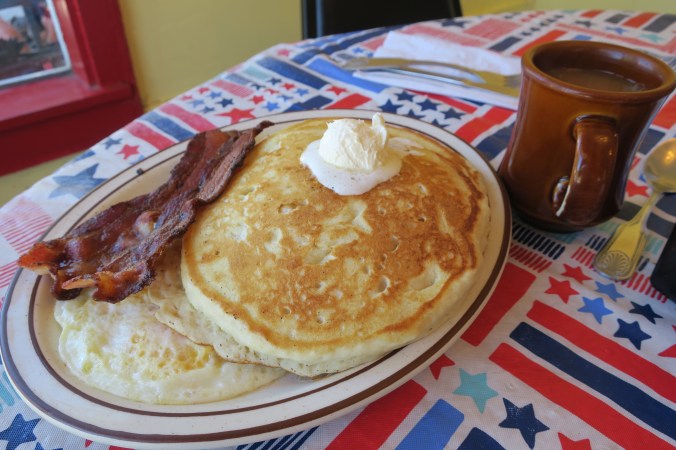
Peggy ordered two of their regular size and could only eat one. The owner told me the challenge pancakes were five times as large!
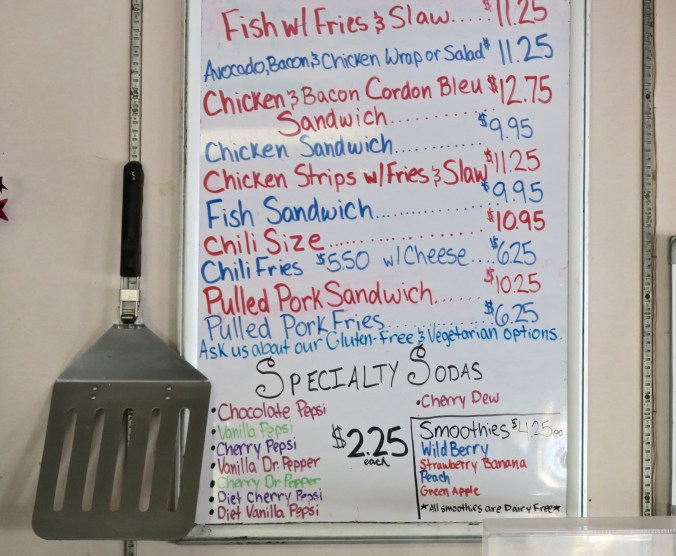
Here’s the spatula used to turn the pancakes.

We met this Jack-a-lope at the store next door where we bought our beer.
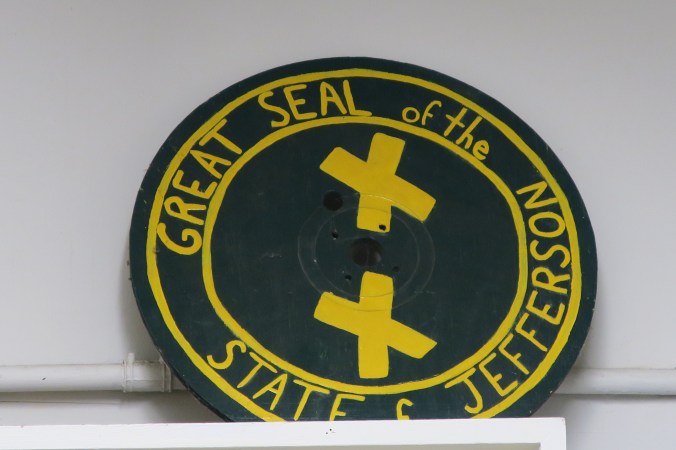
The residents of Seiad are an independent bunch who would dearly love to break off from California and create a separate state. This is the seal. The two x’s apparently mean California double crossed them by not letting them break off after they had voted to do so prior to WWII.
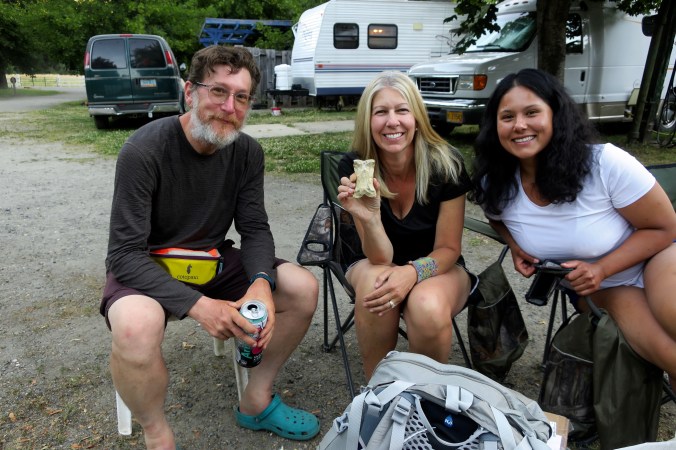
A number of trekkers were staying at the RV campground. We sat around and chatted. Bone, who has been traveling the world since 1977 and is accompanying me on my 1000 mile trek, insisted on coming out and visiting. Mr. O is on the left, Jeanine is in the middle and Julie is on the right.





 Wandering through Time and Place