
I watched as this mosque was built in Gbarnga, Liberia in 1966 and then showed up for the opening ceremony– the only non-African present. I was sitting up front with the dignitaries when Do Your Part the Dog came whipping through the door and made a beeline for me, almost causing a riot.
(I’ve been working hard on a book about my Peace Corps adventures in West Africa. It is actually getting close to being published as an Ebook– with close meaning some time in the next three months (grin). I’ve posted a number of my draft chapters on this blog over the past year. They are listed under Africa Peace Corps Tales in the sidebar. Today I will post a draft featuring part of the book’s introduction. It is designed to give readers a taste of what is included in the book.)
The soldier pounding on our door with the butt of his rifle in the middle of an African night made me seriously question my decision to join the Peace Corps. When he demanded that I go off with him into the dark, my questioning became epic. People had been beaten and even killed under such circumstances. I told him to screw off. The sergeant was not pleased.
My decision to become a Peace Corps Volunteer was one of the best decisions in my life, however. The way I was raised and educated, even my DNA, had pointed me in the direction of volunteering and striking off for parts unknown. But there was more.
I am very much a “child of the 60s.” Civil Rights, the Vietnam War, and student activism dramatically effected how I viewed the world. Being a student at UC Berkeley during the Free Speech Movement in 1965 intensified my involvement in these issues. Looking back, I can see how the Berkeley experience, my ‘wandering’ genes, and the influence of family, friends and teachers combined to encourage my decision to join the Peace Corps.
In 2007 I was working on my memoirs. I had retired from my career as an environmentalist and public health advocate, needed a new challenge, and loved to write. Conventional wisdom and a thousand books on writing dictated I should write about what I knew best. Having finished the first draft, I bravely decided to share the manuscript with the book club my wife Peggy and I had belonged to for 17 years, the BSBC out of Sacramento, California. We had a fun night and the book club was kind. It can be feisty.
At the end of the evening, John Robbins, an iconoclastic professor and physician with the University of California Medical School at Davis, suggested that I pull out the section I had written about my Peace Corps experience and turn it into a book on its own. His suggestion led me to consider the idea. The Fiftieth Anniversary of the Peace Corps in 2011 clinched the deal.
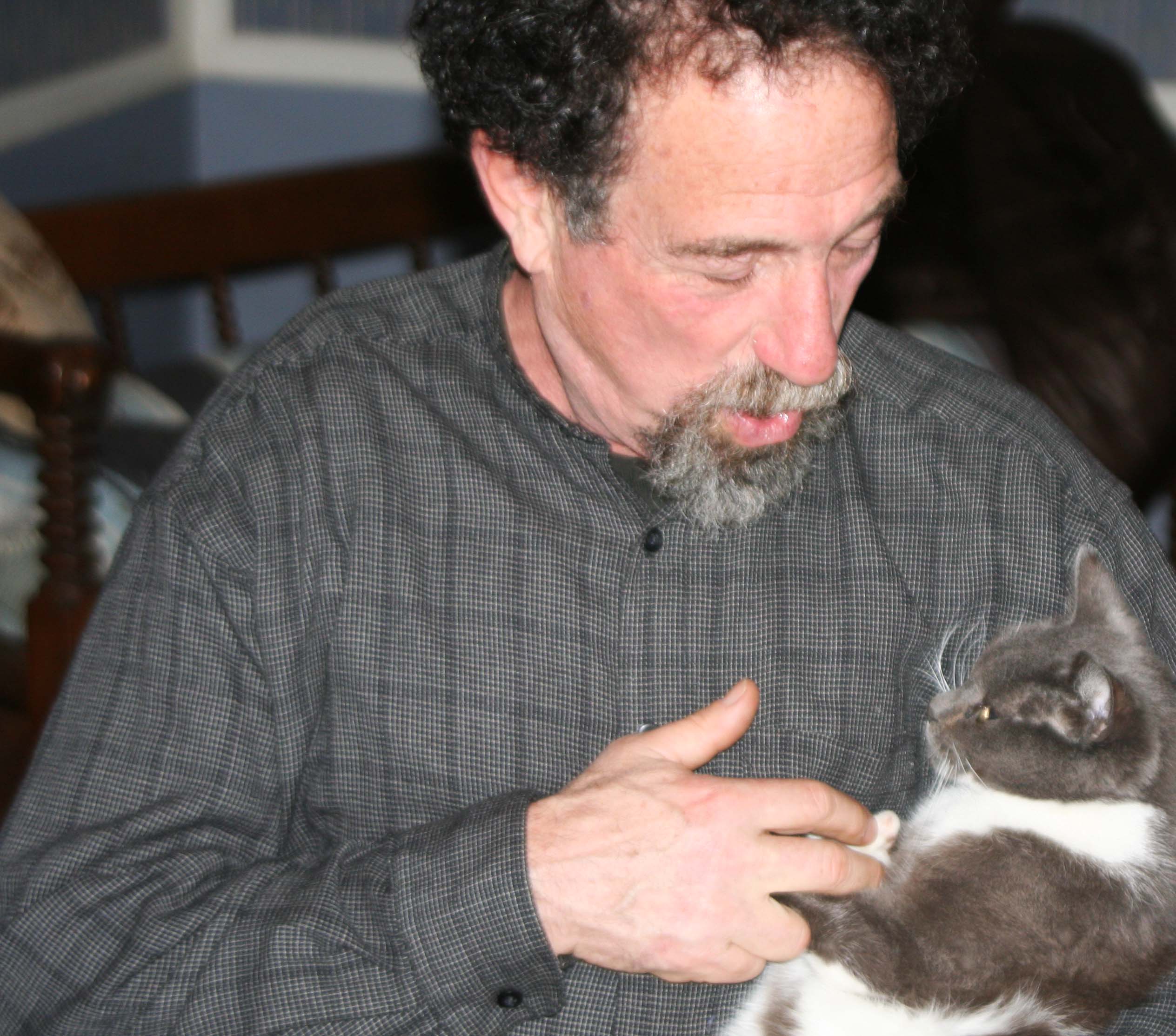
John Robbins has a discussion with his cat at his home in Sacramento, California.
John Kennedy created the Peace Corps in 1961 as one of his first acts as President of the United States. His reasons were both idealistic and pragmatic. Yes, he wanted to help third world countries combat the terrible poverty, disease, hunger, illiteracy and conflict they faced, but he was also interested in winning hearts and minds for the West. The mindset of Kennedy, and most other leaders of his generation, was that we were in the midst of a worldwide conflict between capitalism and communism, totalitarianism and democracy, and Christianity and Atheism. The Cold War was raging and much of this war was being fought in third world countries.
While few Peace Corps Volunteers would list “making friends for America” as their reason for joining the organization, it more or less comes with the territory of being from the United States and working intensely in another country to help people improve their lives. In this sense, the Peace Corps is one of the most effective foreign aid programs ever created by the US. It is certainly one of the least expensive– especially when the work Volunteers do overseas and the skills and commitment they bring back home are considered. A recent Peace Corps budget justification noted that the total cost of running the Peace Corps for the past 50 years could be covered with what the US spends on the military every six days.
My assignment was to serve as a teacher in Liberia, West Africa. The country has a unique history dating back to the early 19th Century when freed slaves from America were shipped back to Africa. Within 30 years, the freed slaves, or Americo Liberians as they came to be known, had established themselves as the rulers of Africa’s first black republic. When I arrived in 1965, their descendants still controlled the political, military, justice, education and economic systems of Liberia– i.e. almost everything. William Shadrach Tubman, President of the country since 1944, had invited Peace Corps into Liberia to help tribal Liberians, who made up 95% of the population, prepare for a larger role in the nation’s future. Not all Americo-Liberians agreed with this goal– as I would learn.
“The Bush Devil Ate Sam” is a the story of adventures that I, along my ex-wife, Jo Ann, had in Africa, but it also includes, background on my decision to join the Peace Corps and some thoughts on the tragic history of Liberia since the 60s.
I begin with a brief look at the influence of my family’s restless nature and discover that I was right to be worried about the soldier knocking on our door: wandering can be hazardous to your health. William Mekemson has his head chopped of by tomahawks during the Blackhawk War and George Marshall, my mother’s great grandfather, is killed for his gold after striking it rich during California’s gold rush.
Following in the footsteps of my ancestors, I wander off to UC Berkeley where police occupy the campus, liberally use nightsticks, and drag students down stairs. A roommate tells the FBI I am a Red, a Communist– and I not even pink. But this is a time when innuendo is more important than facts and J. Edgar Hoover believes there is a Russian agent hiding behind every tree on campus. I figure my chances of making it into the Peace Corps are ruined. Sargent Shriver, the first director of the Peace Corps, likes people who challenge the status quo, however, and I soon find myself in the Sierra Nevada Mountains decapitating a chicken as part of my training.
In Liberia I am thrown into a second grade class of 7-22 year olds where children who barely speak English are taught reading out of aging California textbooks featuring middle-class white kids and Spot, a pet that resembles dinner. Peace Corps encourages me to write a Liberian second grade reader using Liberian children and African folk tales, which I do. Americo-Liberians in the Department of Education determine the book is subversive. It’s torpedoed and I am told to never mention the project.
The high school principal recruits me to teach social studies to 10th, 11th and 12th graders and Jo Ann to teach French and English. Somewhat to my surprise, I discover I enjoy teaching and may even be good at it. Things run smoothly until the Liberian government determines that the student government I create to teach my students about democracy is a direct challenge to the country’s one party state. I am told to pack my bags. My students are told they will be arrested.

Our tenth and eleventh grade classes and Jo Ann at Gboveh High School in Gbarnga, Liberia (1967)
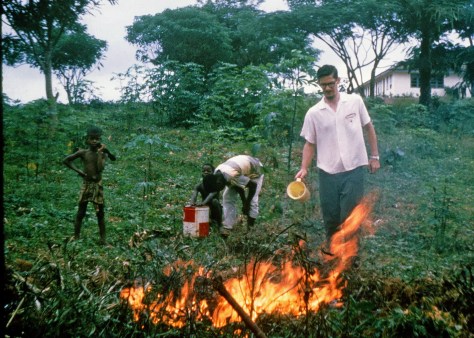
On the home front I repulse an invasion of army ants, breed rhinoceros beetles, and watch Jo Ann make mincemeat out of a Green Mamba, one of the world’s more deadly snakes. A menagerie of animals adopt us and provide both companionship and comic relief. They also create mischief. Rasputin the Cat collaborates with the Cockle Doodle Rooster to wake us at five every morning. Do Your Part the Good Dog crashes a solemn ceremony I am at attending at a mosque and causes a riot while Boy the Bad Dog develops a penchant for eating guinea fowl that belong to the Superintendent (governor) of Bong County. It’s the latter that brings the soldiers to our house in the middle of the night. Apparently, the illegal consumption of would-be chickens is a more serious crime than writing a subversive second grade reader or teaching high school kids they can be part of the government.
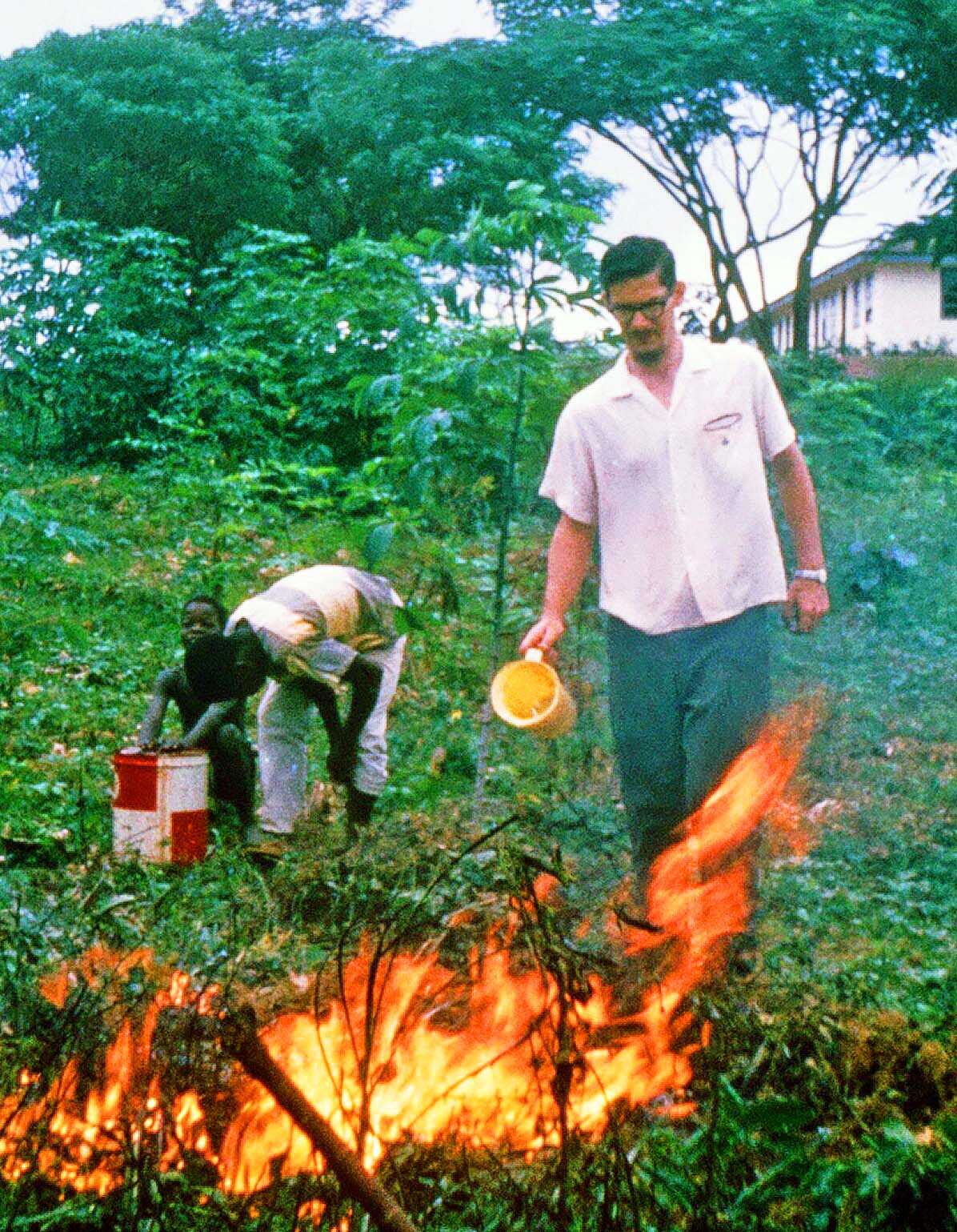
The army ants invaded our home. Here I burn out their nest in an effort to persuade them to move elsewhere.
I learn that the scarification marks marching up the chest on Sam, the young man who works for us, were ‘made’ by the Kpelle Bush Devil’s teeth, which leads to an interest in tribal culture. I discover the Lightning Man can make lightning strike people, sit in on a trial where justice is determined by a red-hot machete, and find myself involved in a situation where Juju, the dark magic of West Africa, is being used on one of my students.
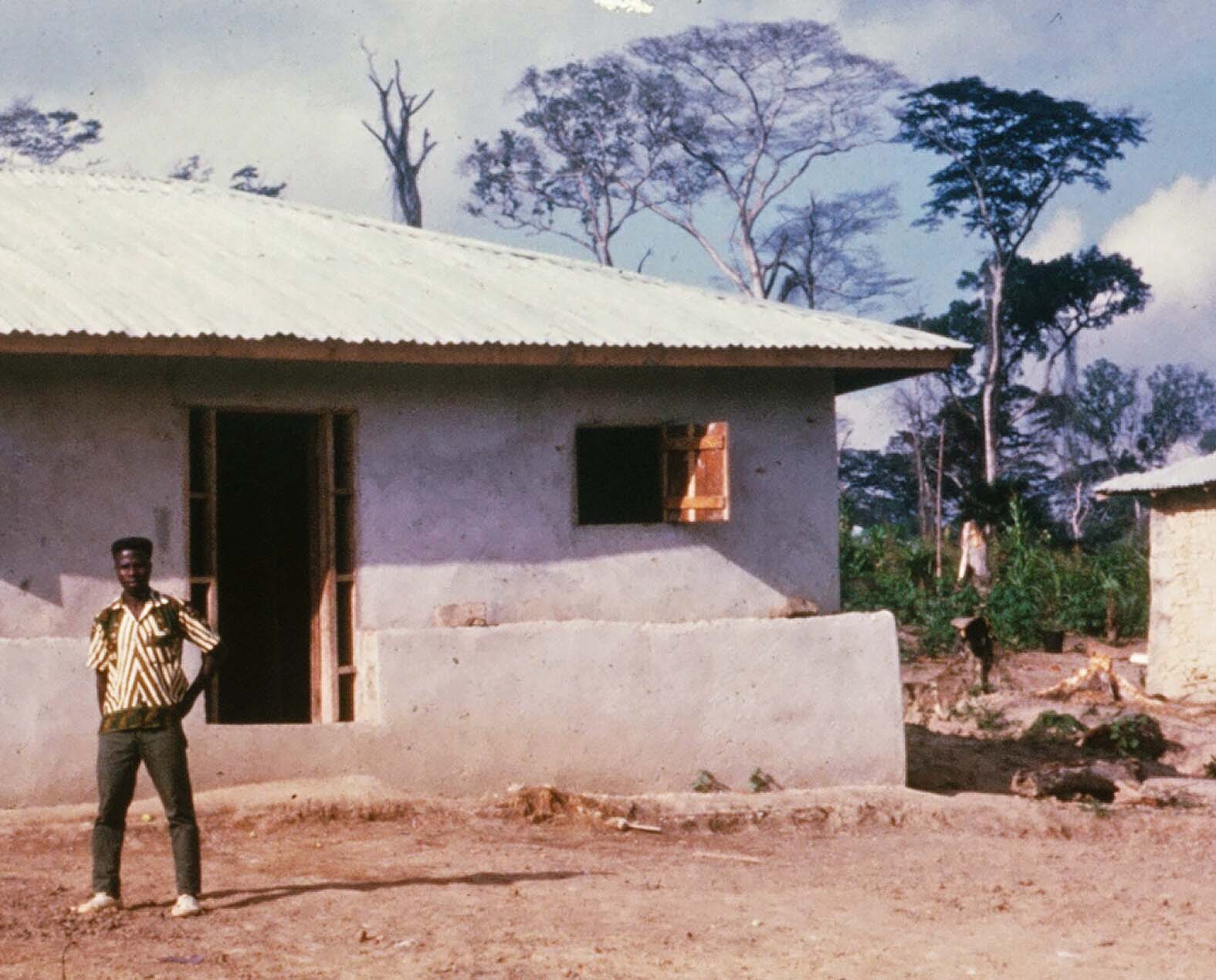
Mamadee Wattee, shown here, appeared at our house on a dark, stormy night to tell us that juju, dark magic, was being used to make him sick.
A year and a half into our service, we are numbered among the veteran Peace Volunteers of Liberia, the people to go to for sage advice. Jo and I take a month off to tour the big game parks of East Africa in a rented VW Bug, my students receive top national honors in social studies, and we turn down a request from Peace Corps’ to spend our last six months touring Liberia and training teachers. Instead we spend our time with the students who have earned our allegiance and the animals that have won our hearts.

I snapped this photo of a baby zebra with a Kodak Instamatic camera on our trip through East Africa.
One of my final encounters is disturbing. A representative from the US Embassy in Monrovia requests that I meet with him at our house in Gbarnga. He wants my views on the future of Liberia. My experience with the paranoid reactions of the government leads me to suggest that the future is bleak unless drastic changes are made in how Liberia is governed. Unfortunately, as I share in the Epilogue, much of what I feared in 1967 comes to pass. Only today is Liberia recovering from the tragic results.
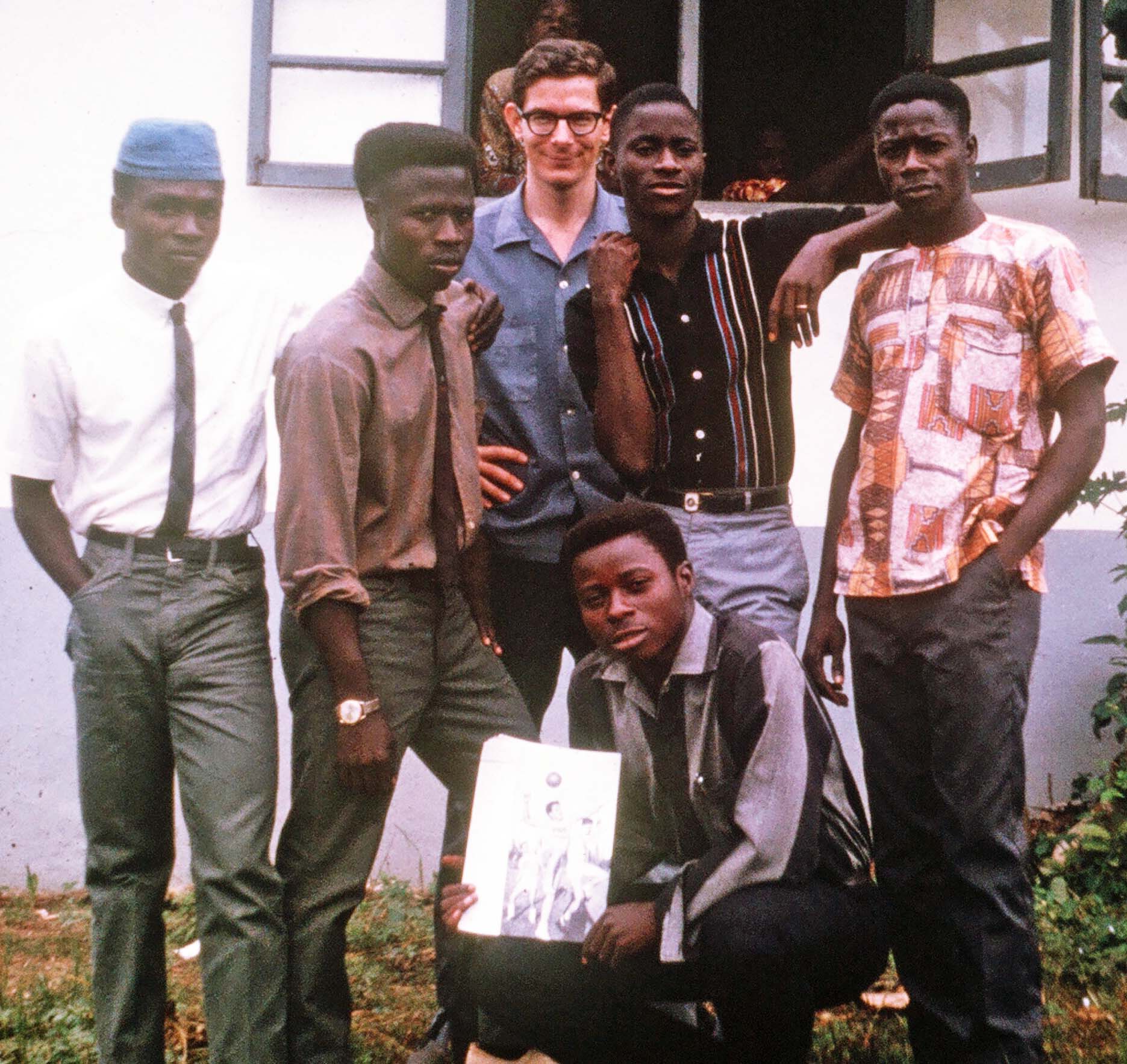
A photograph of my twelfth grade class along with me standing in front of Gboveh High School. (1967)
NEXT BLOG: I join the spirit of the season by re-blogging hair-raising stories of the ghosts that lived in the graveyard next to the house I grew up in.

 Wandering through Time and Place