A Soap Opera Myth and the Sculptures of the Archeological Museum of Naples

A closeup of the Farnese Bull sculpture at the Archeological Museum of Naples.

A closeup of the Farnese Bull sculpture at the Archeological Museum of Naples.

Dirce, the wife of King Lycus of Thebes, had been bad. She hated her niece Antiope who had succumbed to the charms of Zeus, ran away in embarrassment, and gave birth to the twins Amphion and Zethus. (When you couldn’t explain who the father was in early Greek mythology, you always blamed a god.)

Lycus went after Antiope and brought her back to Thebes, abandoning the twin boys along the way. Lycus then gave Antiope to his wife who treated the young woman cruelly. Meanwhile the twins were raised by shepherds, grew up, discovered who their mom was, and found out about Dirce’s bad behavior. This brings us to the Farnese Bull sculpture above where Amphion and Zethus are tying Dirce to the bull’s horns for punishment.

And here you thought soap operas have twisted plot lines. Believe me when I say there is much more to the story.

Several other sculptures found in the Archeological Museum of Naples also reflect early Greek myths and Roman interpretations. Atlas holds up the sky, a brooding Hercules shows off the skin of the Nemean Lion he was required to kill as the first of his 12 Labors, and Achilles carries the body of the young Troilus, a Prince of Troy he killed.

Atlas holds up the sky as a punishment form Zeus. This early sculpture would help define our concept of Atlas.

Atlas holds up the sky as a punishment from Zeus. This early sculpture would help define our concept of Atlas. The symbols on the globe are signs of the Zodiac.

Hercules shows off the pelt of the Nemean Lion he was required to kill as the first of his 12 Labors.

Hercules shows off the pelt of the Nemean Lion he was required to kill as the first of his 12 Labors.

Achilles shoulders the body of the dead boy Troilus he had killed in relation to the Trojan War.

Achilles shoulders the body of the dead boy Troilus he had killed in relation to the Trojan War.

Beyond these mythological sculptures, several others caught my attention including the bronzes found in Herculaneum, a humorous dog, a rather infamous satyr and goat, a powerful bas-relief and the River God Tiberinus.

This is a bronze statue that was recovered from the house of Julius Caesar's uncle in Herculaneum.

This is a bronze statue that was recovered from the house of Julius Caesar’s uncle in Herculaneum, which had been buried by the Mt. Vesuvius eruption in 79 AD.

Proof that the Romans had a sense of humor.

Proof that the Romans had a sense of humor.

I found this bas-relief quite powerful but I will leave the interpretation up to you. For example, what about the spear intruding from the neck of the ghostly toga?

I found this bas-relief quite powerful but I will leave the interpretation up to you. For example, what about the spear extruding from the neck of the ghostly toga?

Satyr and goat have a tete-a-tete plus in this infamous sculpture found at the Archeological Museum of Naples.

Satyr and goat have a tete-a-tete plus in this infamous sculpture found at the Archeological Museum of Naples. (Photo by Peggy Mekemson)

Since we will be traveling to Rome next on Traveling Through Time and Space, I thought I would conclude with the God of the Tiber River. Tiberinius.

Since we will be traveling to Rome next on Traveling Through Time and Space, I thought I would conclude with the God of the Tiber River, Tiberinus. That’s quite some cornucopia. I was also amused by his arm rest.
The Glory of the Ancient World… Pompeii and the Archeological Museum of Naples

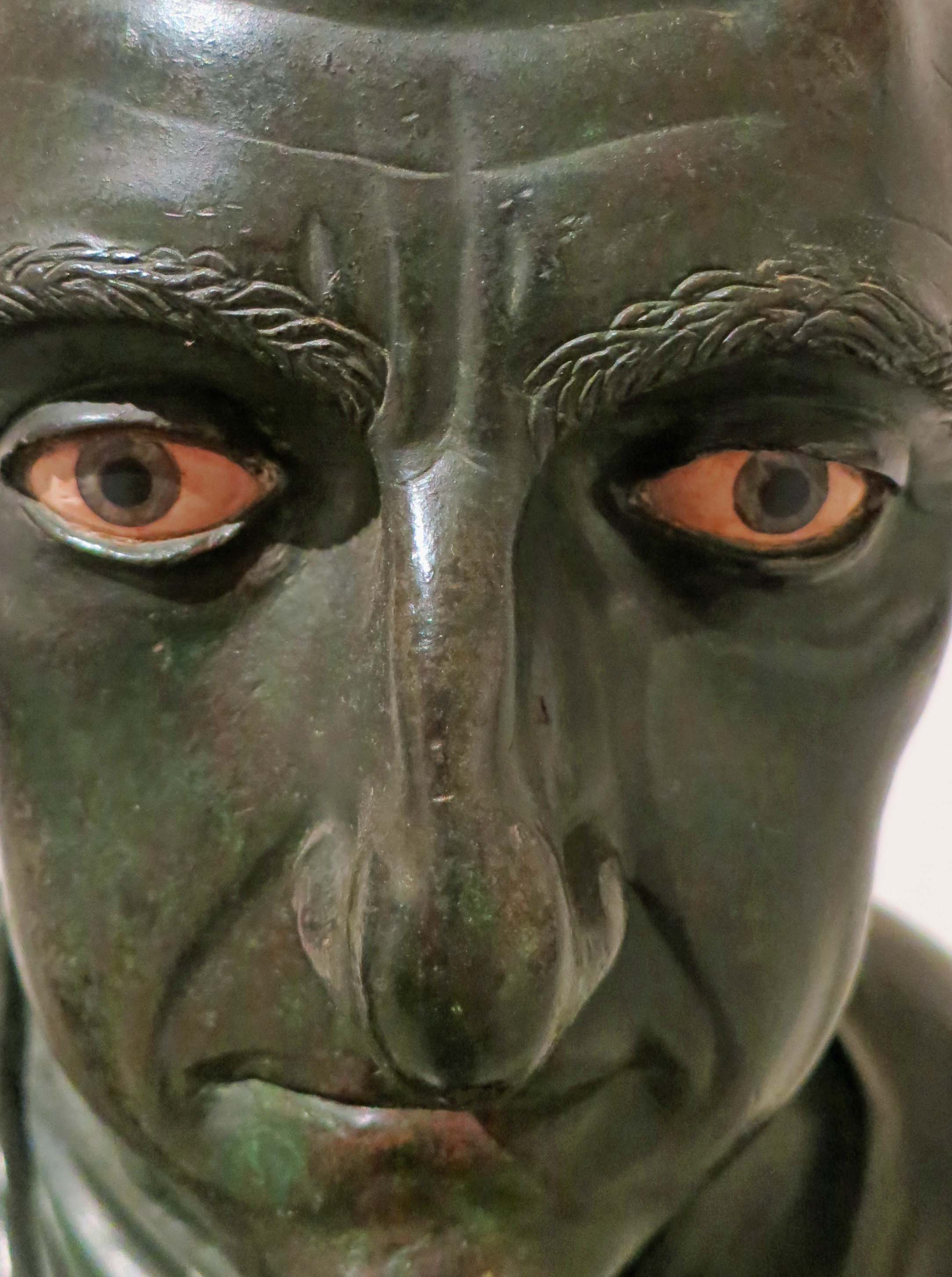
It is impossible not to feel the intensity of this face which tops a bronze statue recovered from the Herculaneum home of julius Caesar's father-in-law.

It is impossible not to feel the power of this face with its intense blue eyes. Several bronze statues like this one were recovered from the Herculaneum home of Julius Caesar’s father-in-law.

It would be a thousand years and the Renaissance before the Western World would once again see great art like that created by the Greek and Roman civilizations. And there are few places where this art has been better preserved than in Pompeii and its sister city of Herculaneum, both buried by the eruption of Mt. Vesuvius in 79 AD.

The Archeological Museum of Naples is a must see for anyone interested in art.

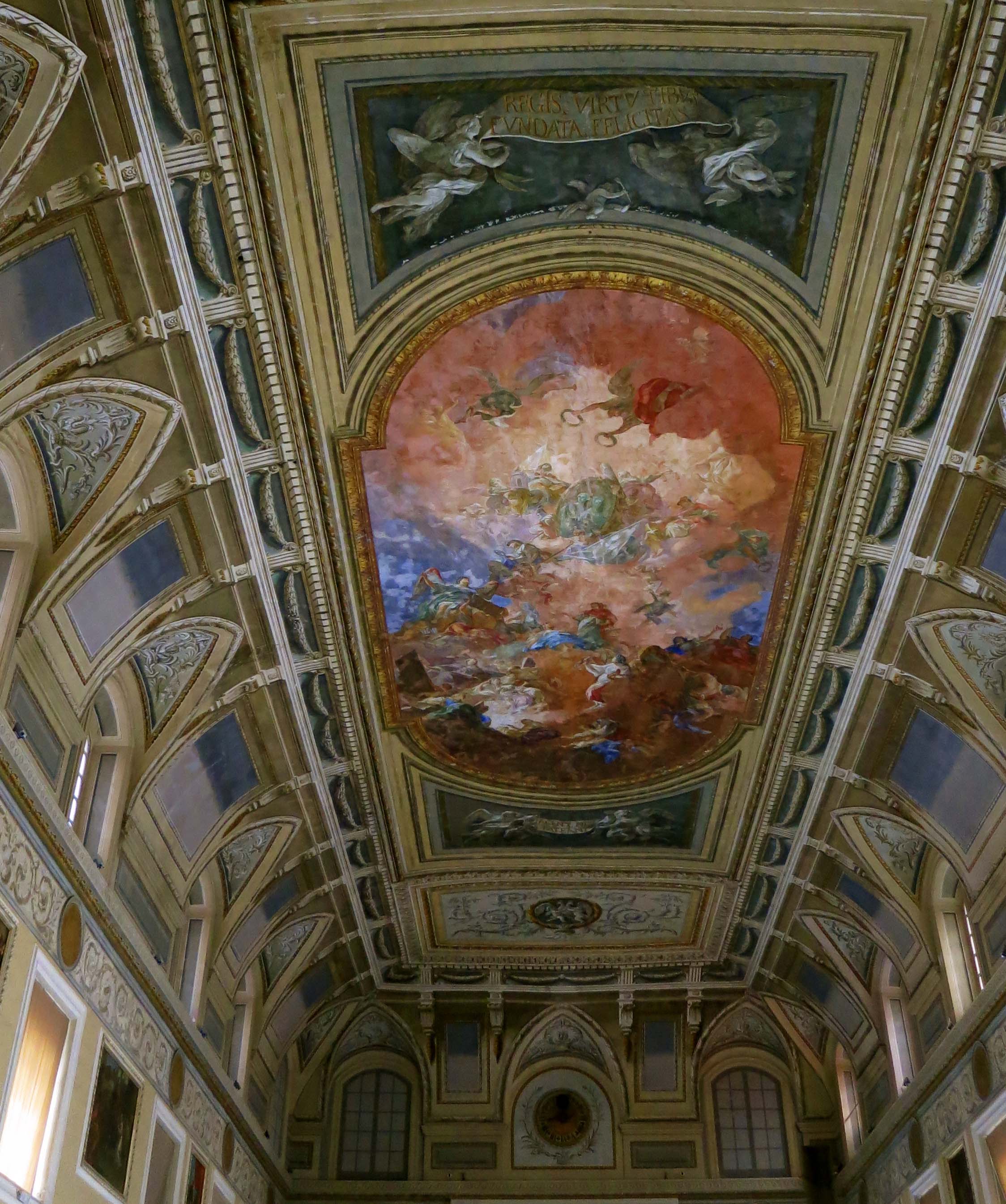
The Archeological Museum of Naples is a must see for anyone interested in the history of art. The building, itself, is worth a visit.

Peggy and I, along with our travelling companions, visited the Archeological Museum of Naples after our tour of Pompeii. Many of the art treasures taken from Pompeii and Herculaneum, as well as other locations in ancient Rome, are on display at the museum. Some of these pieces, like the Farnese Bull, (unearthed in Rome 1546 AD) served as inspiration for Renaissance artists such as Michelangelo.

The Farnese Bull is the tallest ancient marble statue ever found. Michelangelo helped restore it by adding the dog. Photoshop and I added the blue background to better display the piece.

The Farnese Bull, where Dirce is punished by being tied under a bull, is the tallest marble statue ever found from the ancient world. Michelangelo helped restore it by adding the dog. Photoshop and I added the blue background. (It was a lot of work but I figured what the heck… if Michelangelo could go to all of that effort…) (grin)

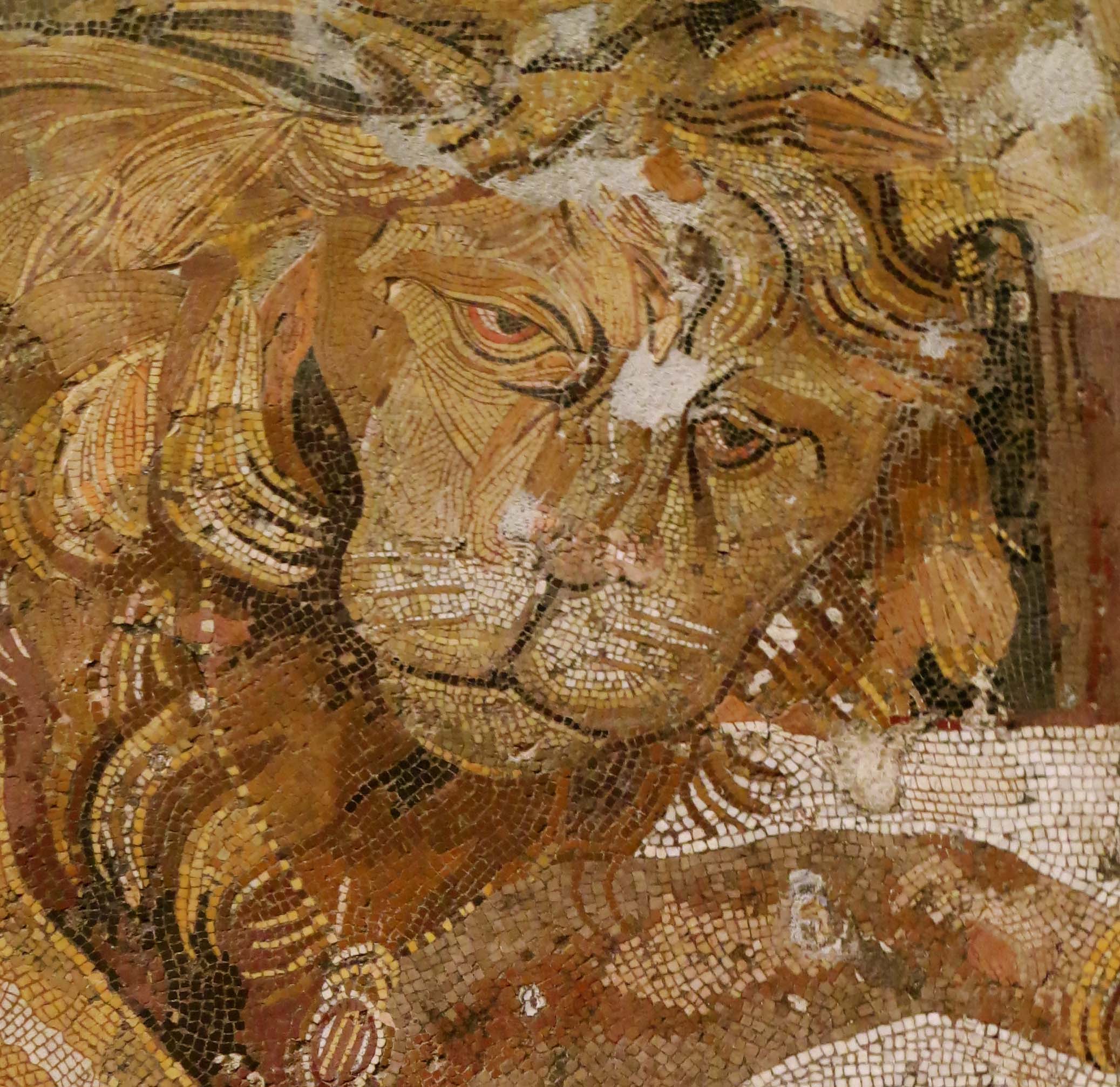
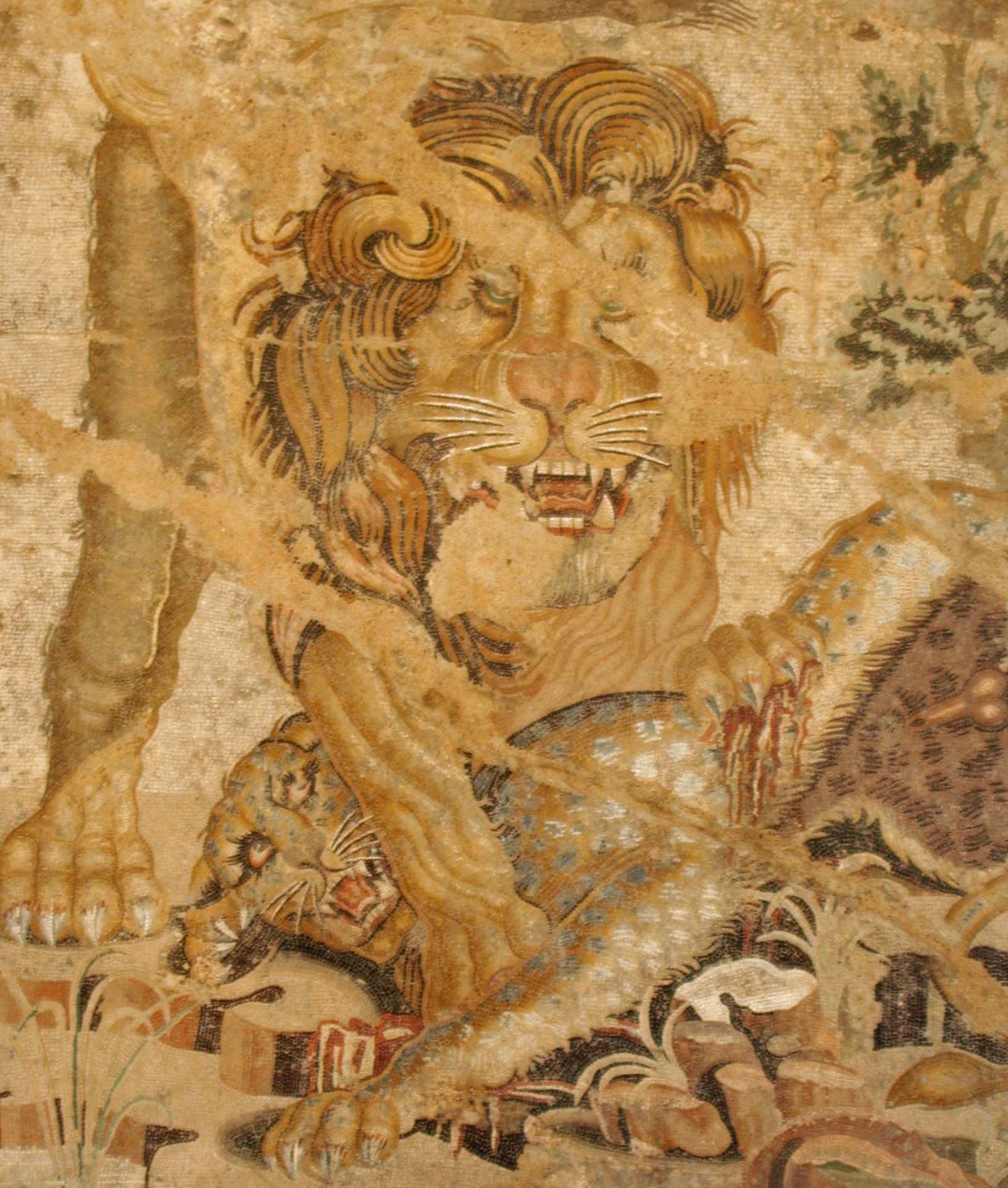
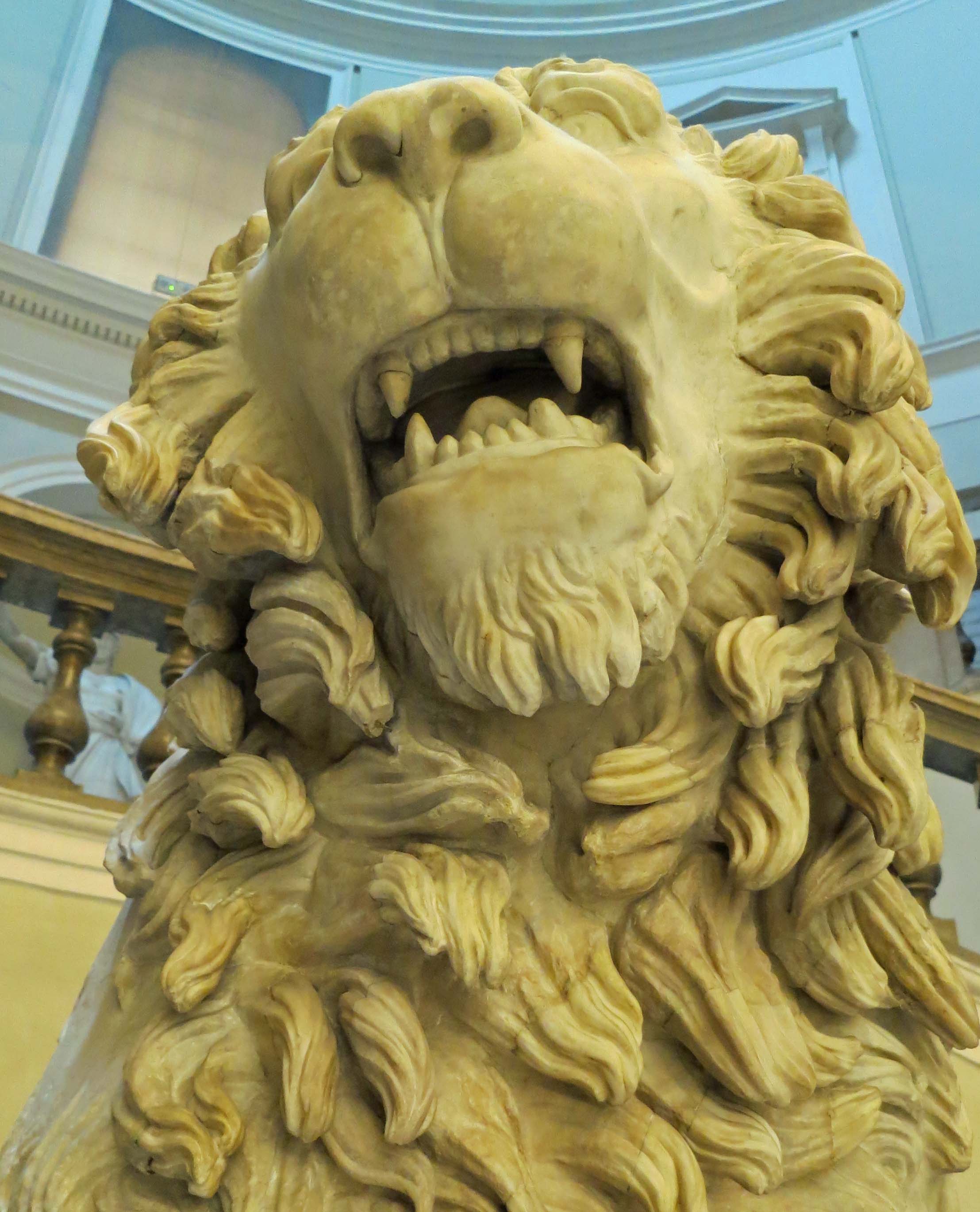
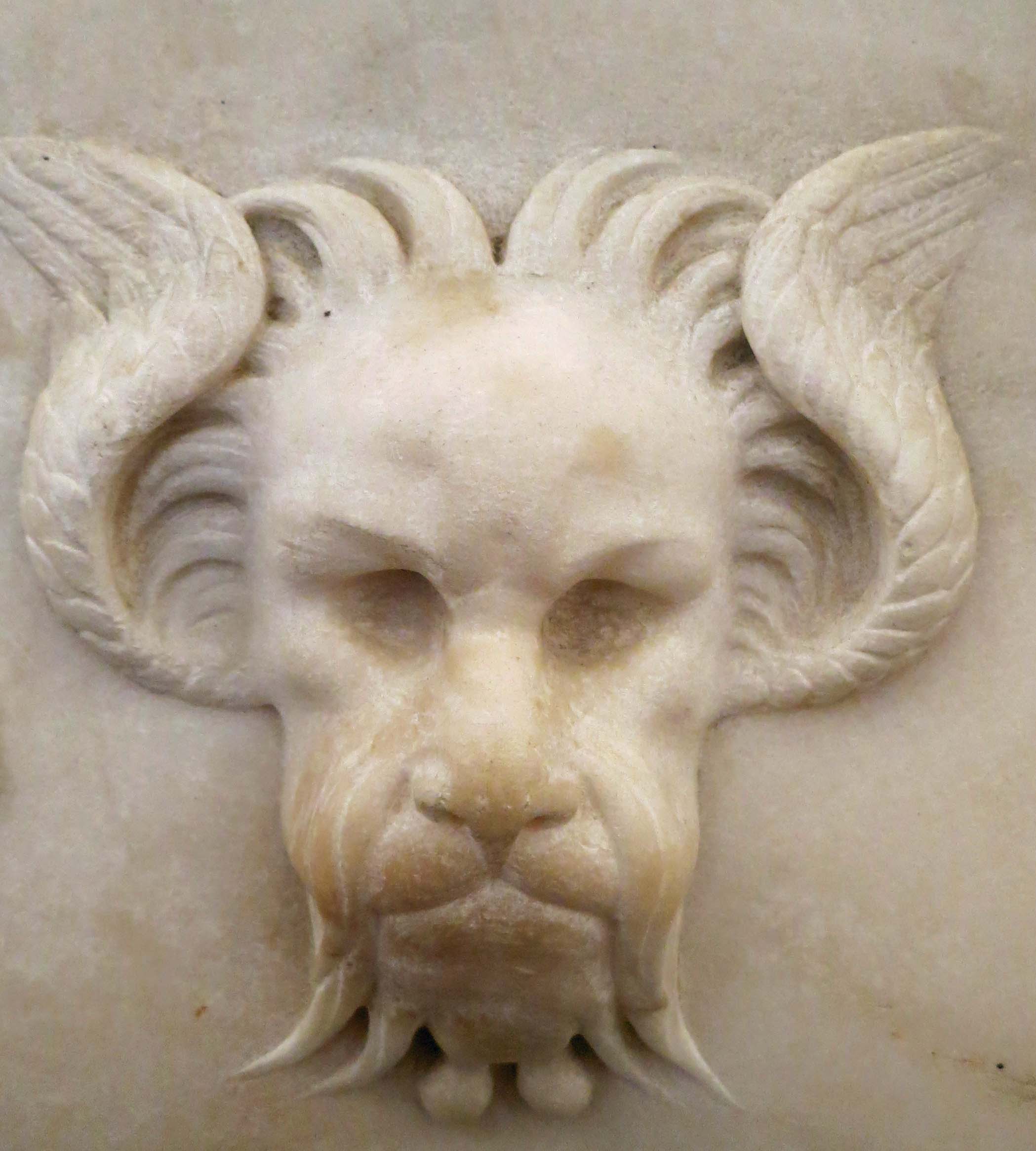
While sculptures made of marble and bronze have a long life span, paintings and, to a degree, mosaics are much more fragile. It was in the preservation of these latter two art forms that we owe a special vote of thanks to Pompeii and Mt. Vesuvius. The following four lions are good examples of the mosaics, paintings and sculptures found at the Archeological Museum.

Mosaic lion from Archeological Museum of Naples.

Isn’t this a wonderful mosaic lion… complete with necklace? He almost looks friendly, and definitely wise. Or maybe he just has a hangover.

This painted lion at the Archeological Museum from a mural doesn't look nearly as friendly.

This painted lion with his wild hairdo and conquered leopard, doesn’t look nearly as friendly. (Photo by Peggy Mekemson)

This big guy representing sculpture, definitely looks like someone you would not want to meet on a dark night.

This big guy representing sculpture, definitely looks like someone you would not want to meet on a dark night.

I am not sure that this head with wings is a lion but I had to fit him in somewhere. I felt there was a slight resemblance to the Cowardly Lion in the Wizzard of Oz.

I am not sure that this bas-relief sculpture is a lion but I had to fit him in somewhere. I felt there was a slight resemblance to Bert Lahr as the Cowardly Lion in the Wizard of Oz.

Following are more examples of the types of painted murals and mosaics found in Pompeii and Herculaneum.

Pompeii mosaic

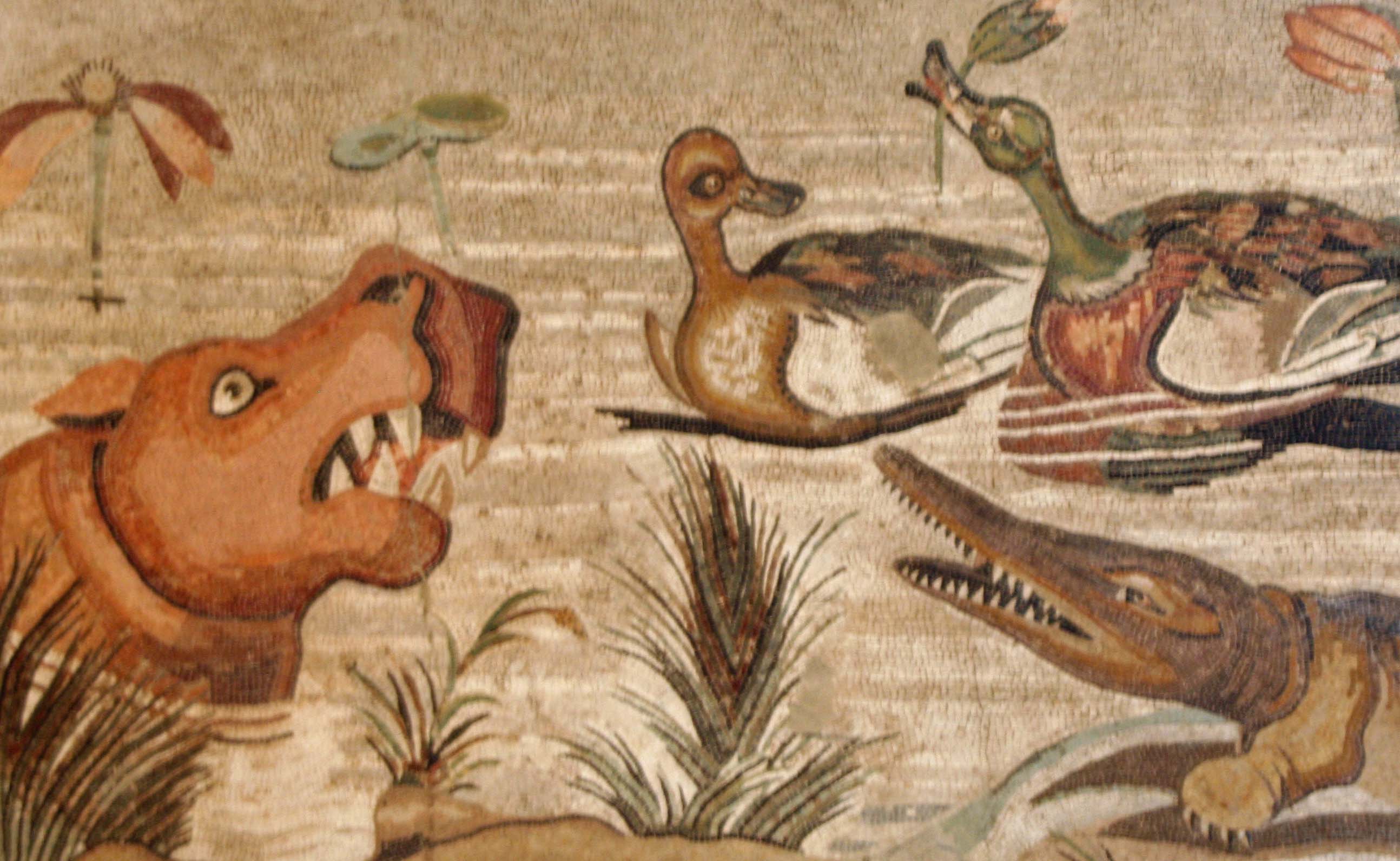
This great hippo with canine teeth, the smiling crocodile, and what may be a Mallard offering food to his lady-love was one of my favorite mosaics at Naples’s Archeological Museum. (Photo by Peggy Mekemson)

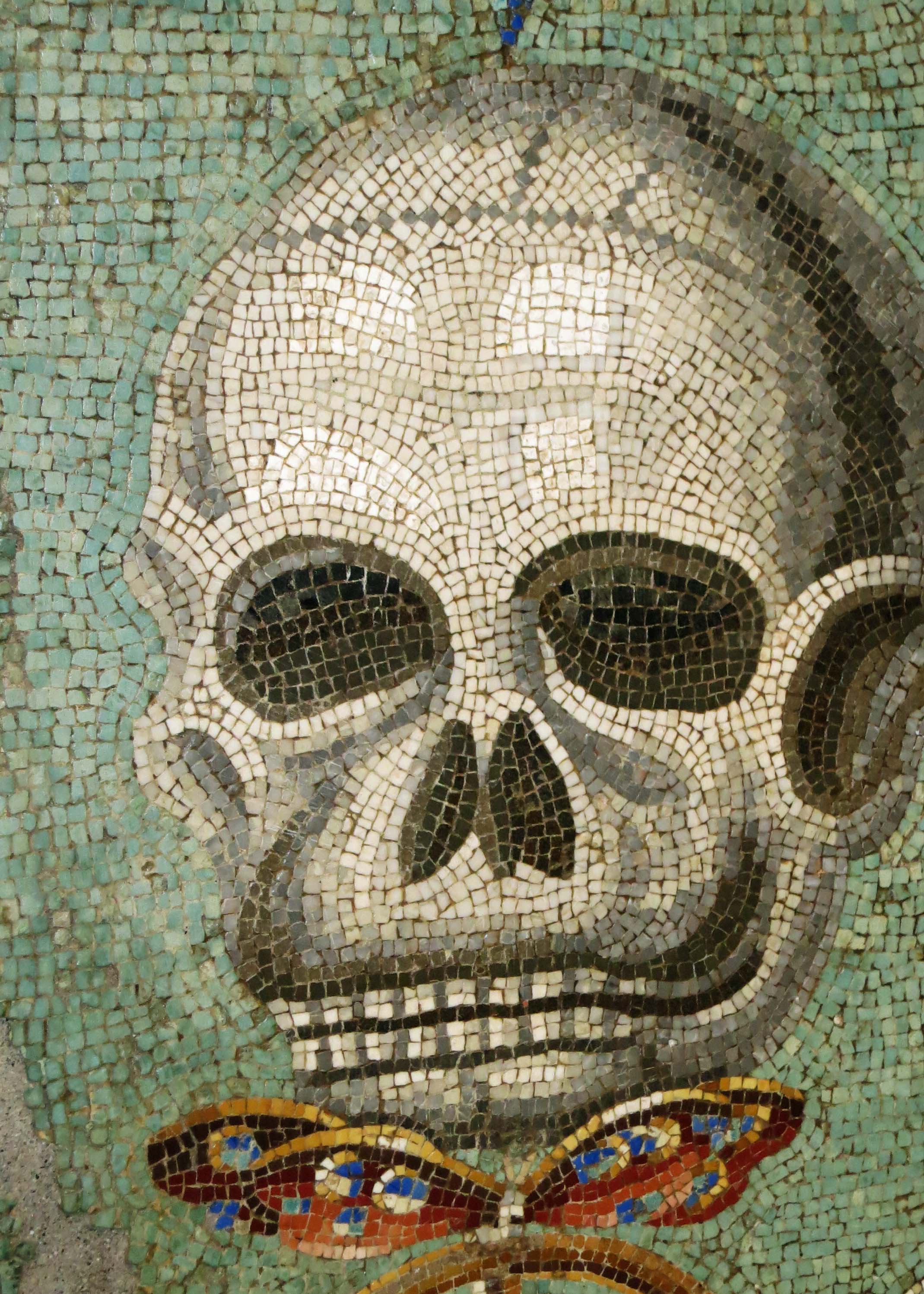
Mosaic skull at the Archeological Museum of Naples

Mosaic worked well for this Pompeii skull with his butterfly collar.

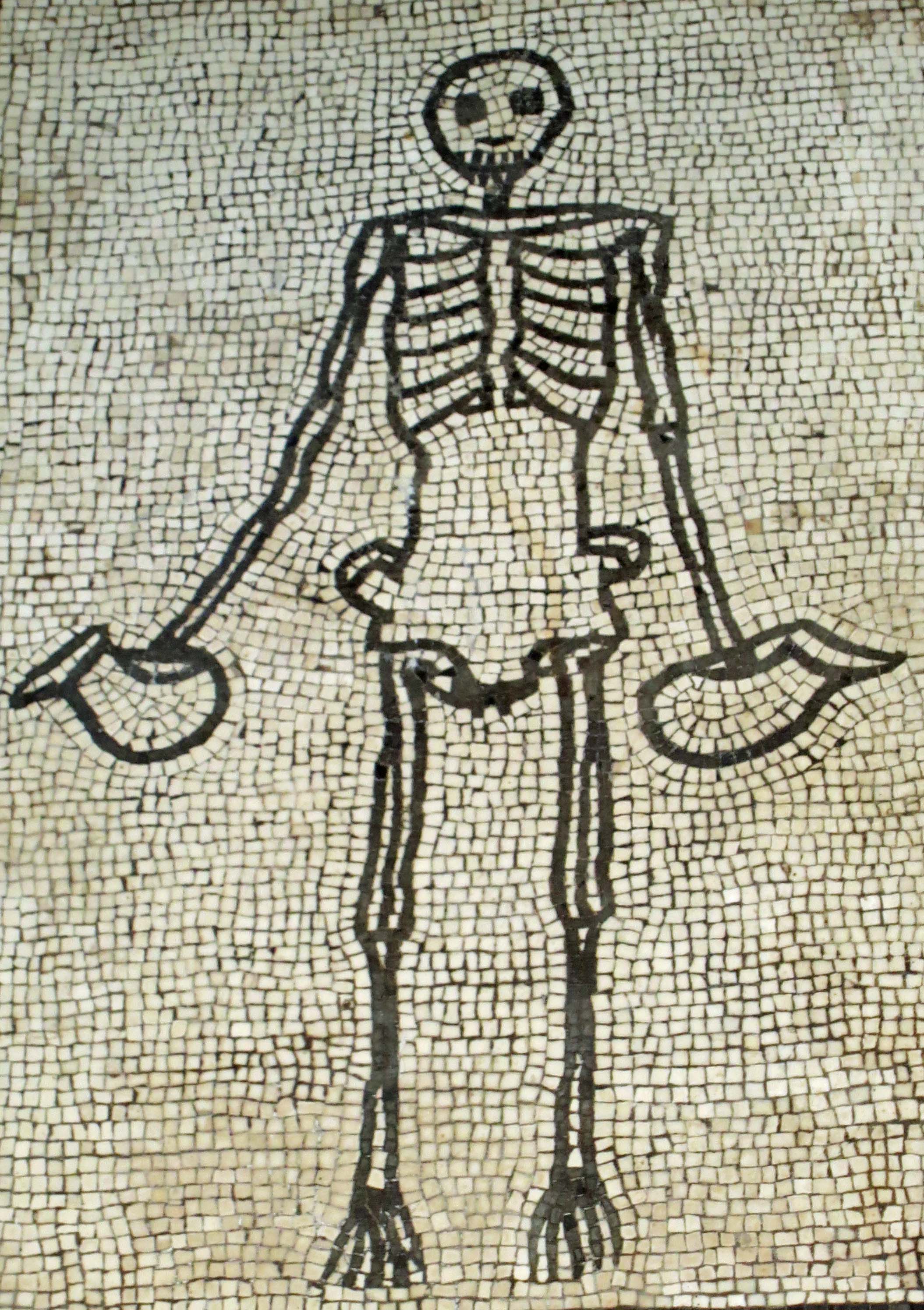
And who wouldn't want this Lady skeleton outside to greet trick-or-treeters on Halloween? I figured it was a lady from the hips.

And who wouldn’t want this smiling lady skeleton outside to greet trick-or-treaters on Halloween? I figured it was a lady from the hips.

Pompeii mural

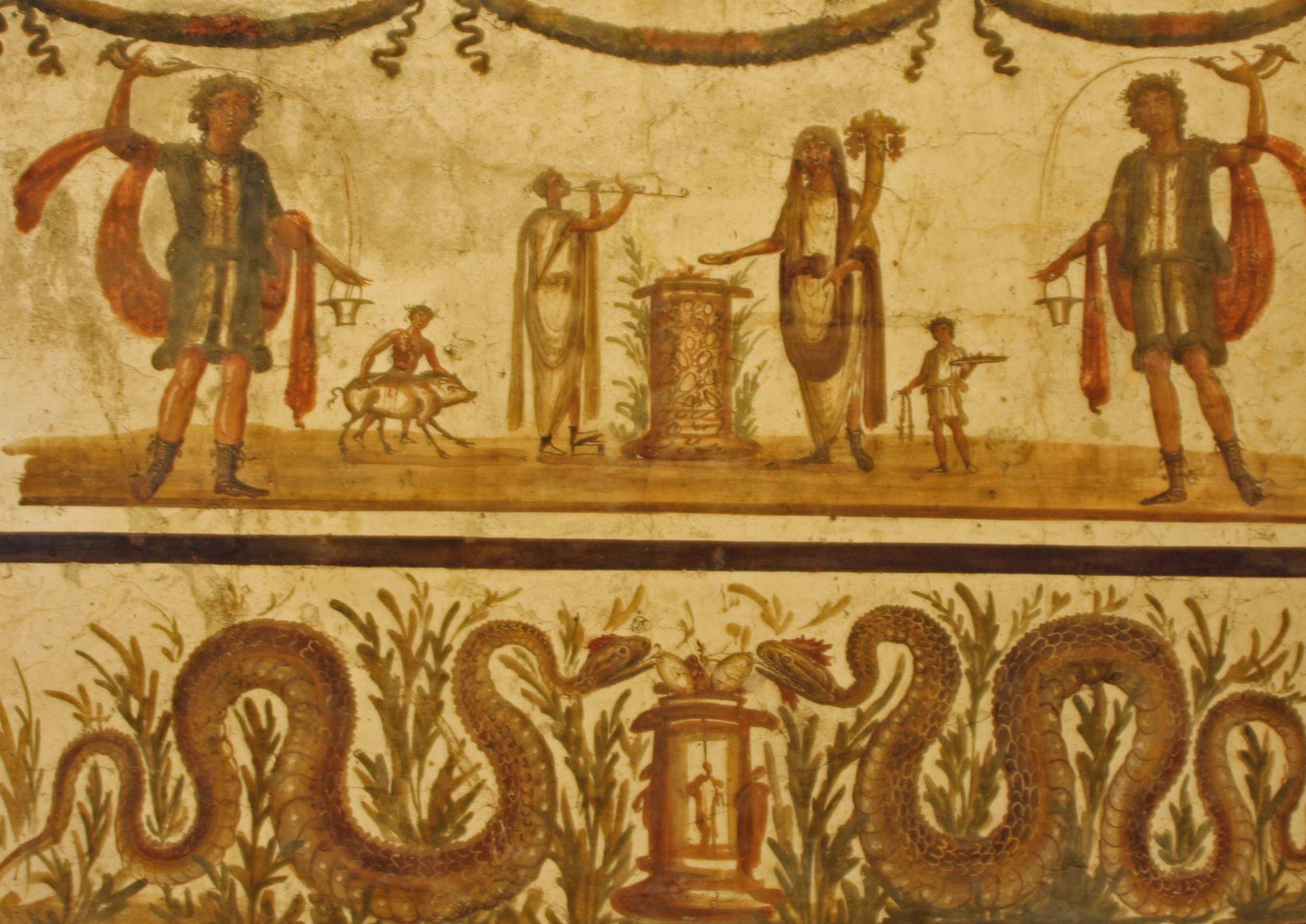
Check out the wine pouring technique of these two sons of Mercury. They were often found in murals in homes and had the responsibility of helping protect the inhabitants. The snakes were also common on murals as bringers of abundance.. (Photo by Peggy Mekemson)

Pompeii painting

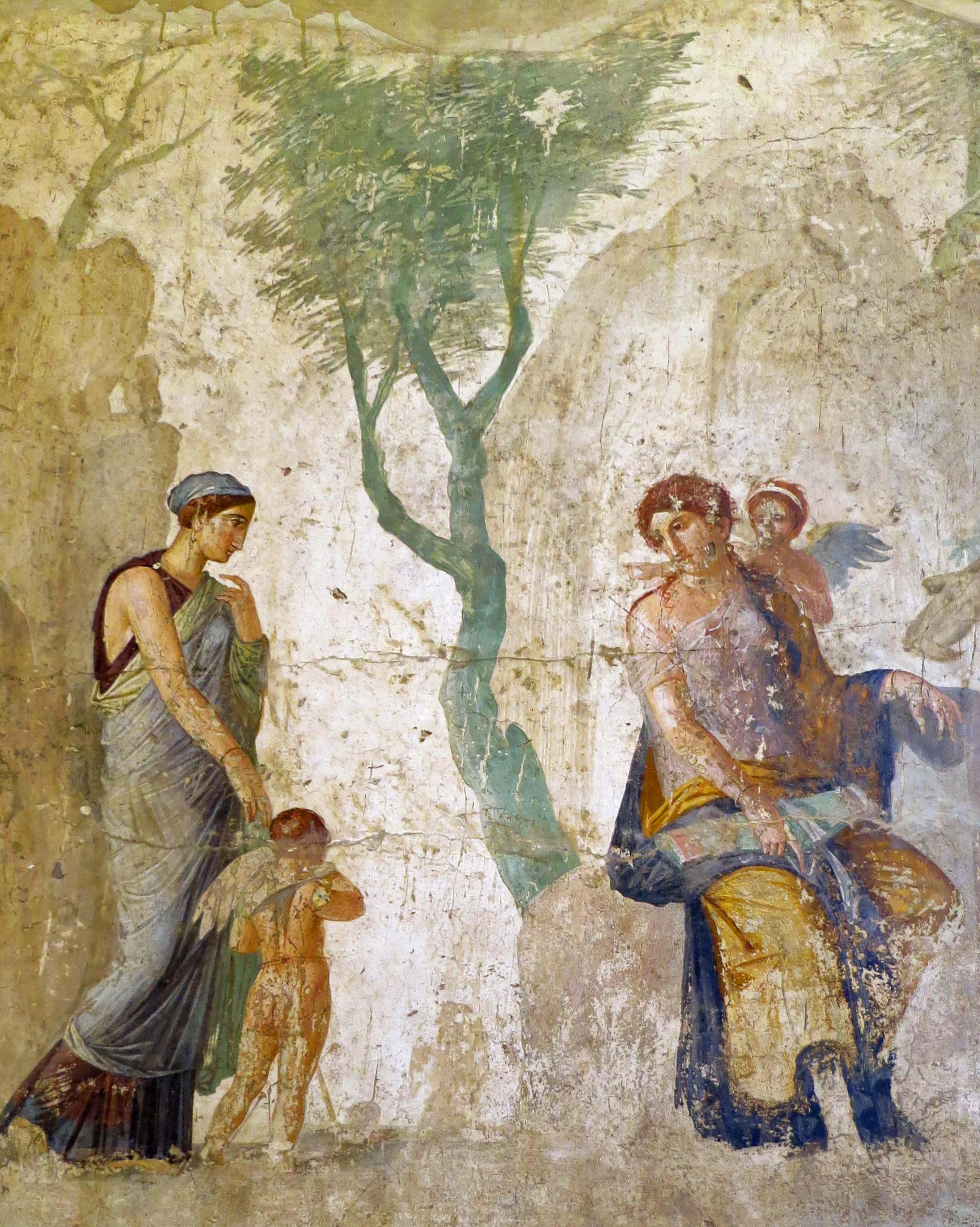
Paintings as sophisticated as this one would not be found again until the Renaissance, over a thousand years later.

I will explore several of the great sculptures found in the Archeological Museum of Naples in my next blog. Here Peggy admires a very big bust.

I will feature several more of the great sculptures found in the Archeological Museum of Naples in my next blog. Here Peggy admires a very big bust of a man missing his brain.

R-Rated Pompeii… Seaports of the Mediterranean

The Lupanare or main brothel of Pompeii. Girls would stand in the window and call to the men below.

The Lupanare or main brothel of Pompeii. Women would stand in the window and bark at the men below.

Today’s blog is R-rated with a :). It’s for mature audiences with a sense of humor. Seriously.

I’ll start by noting that the citizens of Pompeii had a slightly different take on morality than we do; um, make that a major take. Erotic art was found everywhere in the city during archeological excavations. Think ubiquitous. It was also quite explicit.

When King Frances of Naples visited a Pompeii exhibition at the National Museum with his family in 1819, he was so embarrassed by the erotic art that he locked it away in a secret cabinet. Ever since, the collection has had a history of on-again, off-again exposure.

Early bra sizing.

Early bra sizing.

Today, it’s on again. Sort of. When you visit the Archeological Museum in Naples, Pompeii’s erotic art is stored in the Gabinetto Segreto, Secret Room. You may have to make an appointment to get in… not because the subject matter is XXX, (which it is) but because the exhibit is the most visited site in the museum.

Similarly, in Pompeii, the Lupanare is included on every tour group’s must-see list.  Our guide warned us that visiting the brothel was an adult activity. She also told us we weren’t allowed to linger. Our tour was to be a quickie, so to speak. We had five minutes. Other groups were waiting.

The brothel was called the Lupanare because its working ladies were called lupe or she wolves. They were called lupe because they were not allowed to solicit in the normal way. It wasn’t “Hey, sailor, looking for a good time?” It was more like “woof, woof, woooooo.”

Once inside, guests were treated to a series of paintings that graphically portrayed the various services available… and costs. Sailors weren’t noted for being literate. Each woman  a small cubicle with a stone bed.

Each of the ten rooms in the Lupanare had a stone bed and pillow. I call this Lupe's Den.

Each of the rooms in the Lupanare had a stone bed and pillow. I call this Lupe’s Den. Hopefully, a mattress was included.

Graffiti was found on the walls. Those who could write were invited to evaluate their experience. It was basic. “Sollemnes, you S**** well!” one proclaimed. Apparently, she received a four-star rating.

In Naples we followed up with a visit to the Secret Room. I found the exhibition much more humorous than erotic. I mean, how can you take a flying penis with bells on seriously?

It's hard to take this guy with wings and bells on seriously.

Stepping out for the night?  A friend said, “OK, I get the wings, but what’s with the bells?” I told him I found them quite chiming.

Batter up? Or maybe I should label this 17, 18 and 19.

Batter up? Or maybe I should label this contestants 17, 18 and 19 doing the Macarena. And the winner is…

I'll close with a final view of the Lupanare. It had 10 rooms, altogether. Five upstairs and five down. The upstairs rooms were larger and had private entrances.

I’ll close with a final view of the Lupanare. It had 10 rooms, altogether. Five upstairs and five down. The upstairs rooms were larger and had private entrances.

NEXT BLOG: Back to a G-rated look at Pompeii.