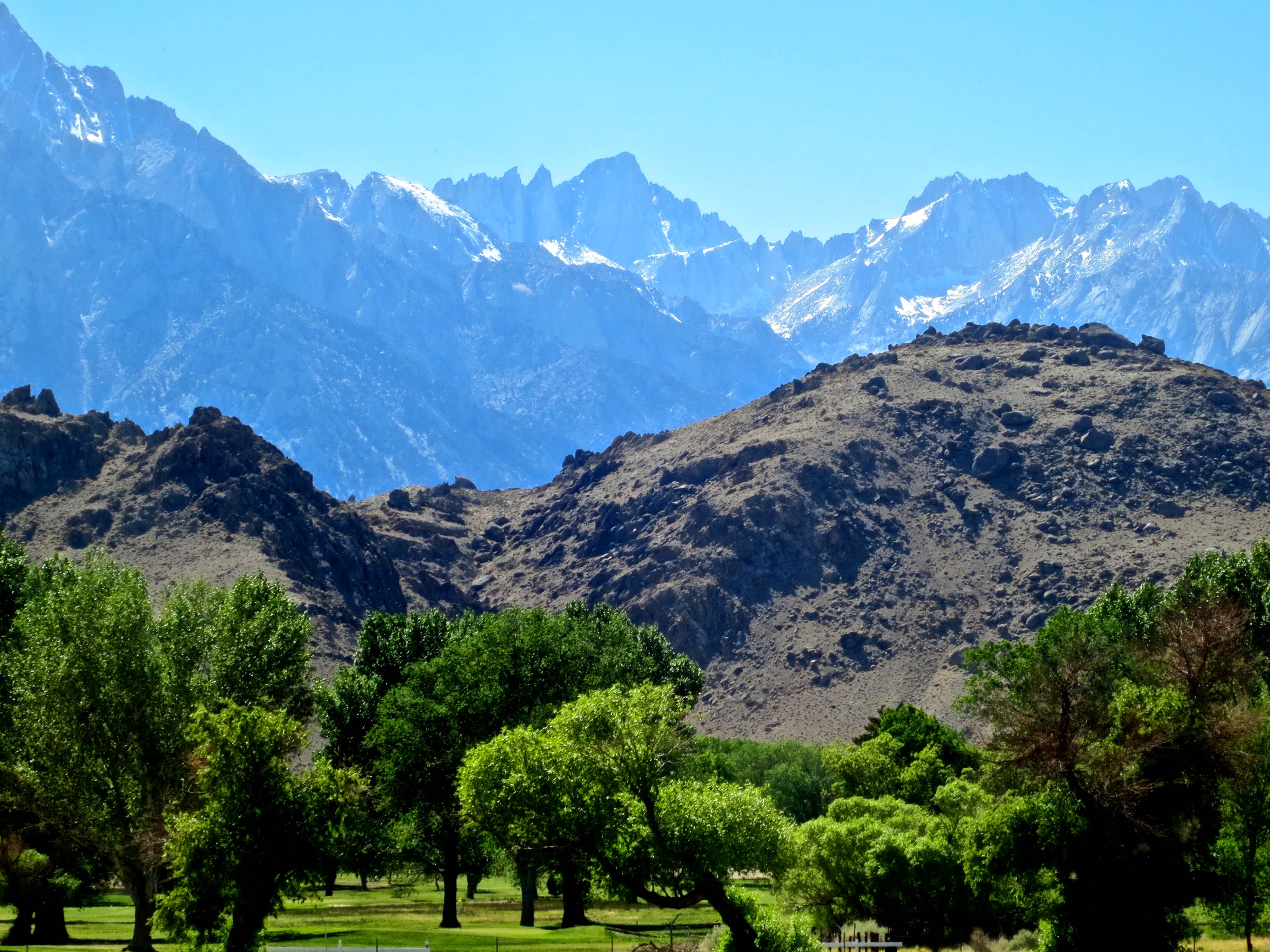
Highway 395 is one of America’s most scenic drives. This view looking up at Mt. Whitney, center top, is one of the reasons why.
Highway 395, with its panoramic views of the eastern Sierra Nevada Mountains, is one of the most scenic highways in the United States. I will admit to a degree of prejudice, however. John Muir called the High Sierras the Range of Light. I think of them as ‘home.’ I have backpacked up and down the range numerous times. The mountains call to me in a way that no city or town does.
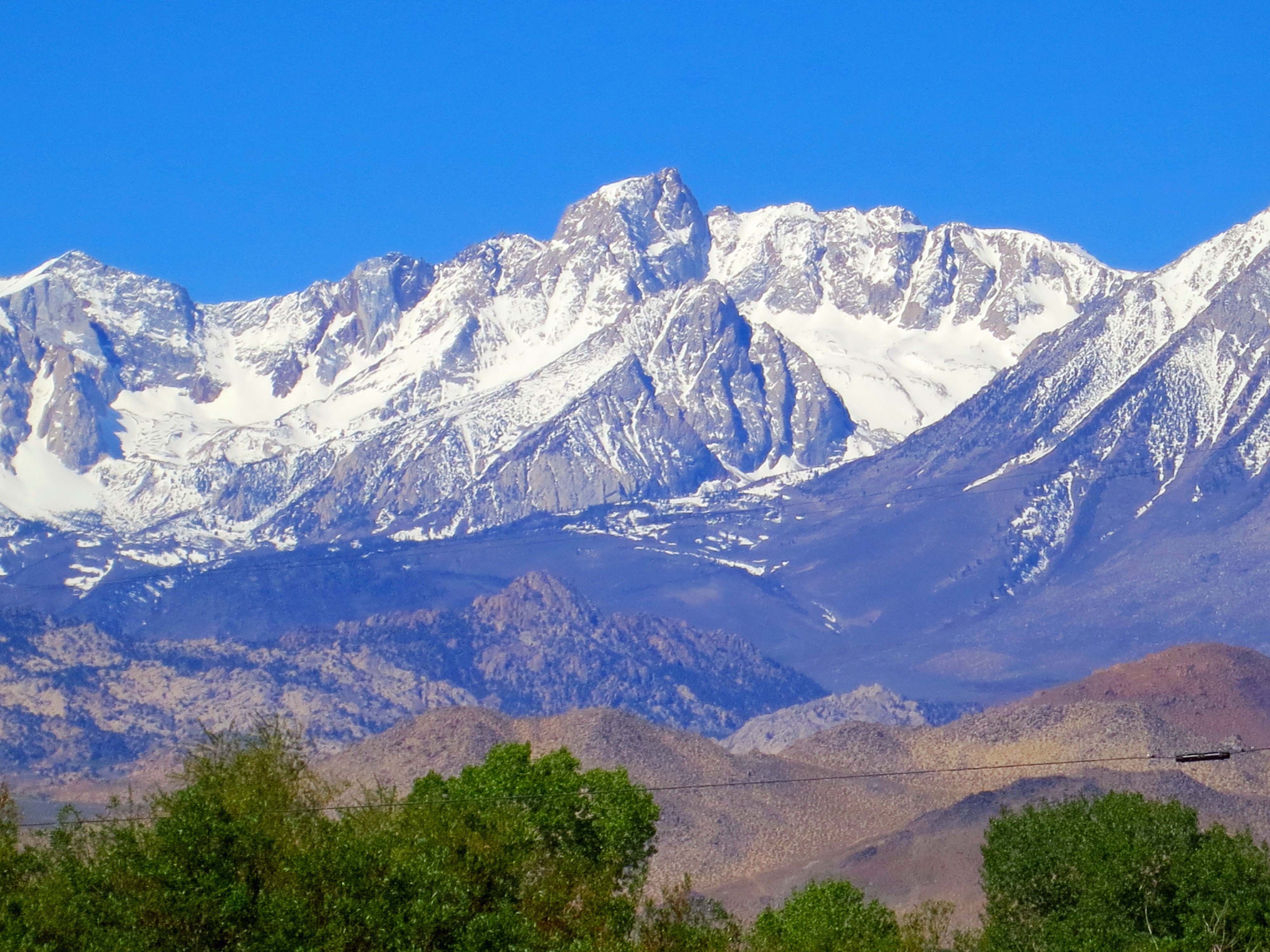
Driving up California’s Highway 395 provides an ever-changing perspective of the eastern Sierra Nevada Mountains.
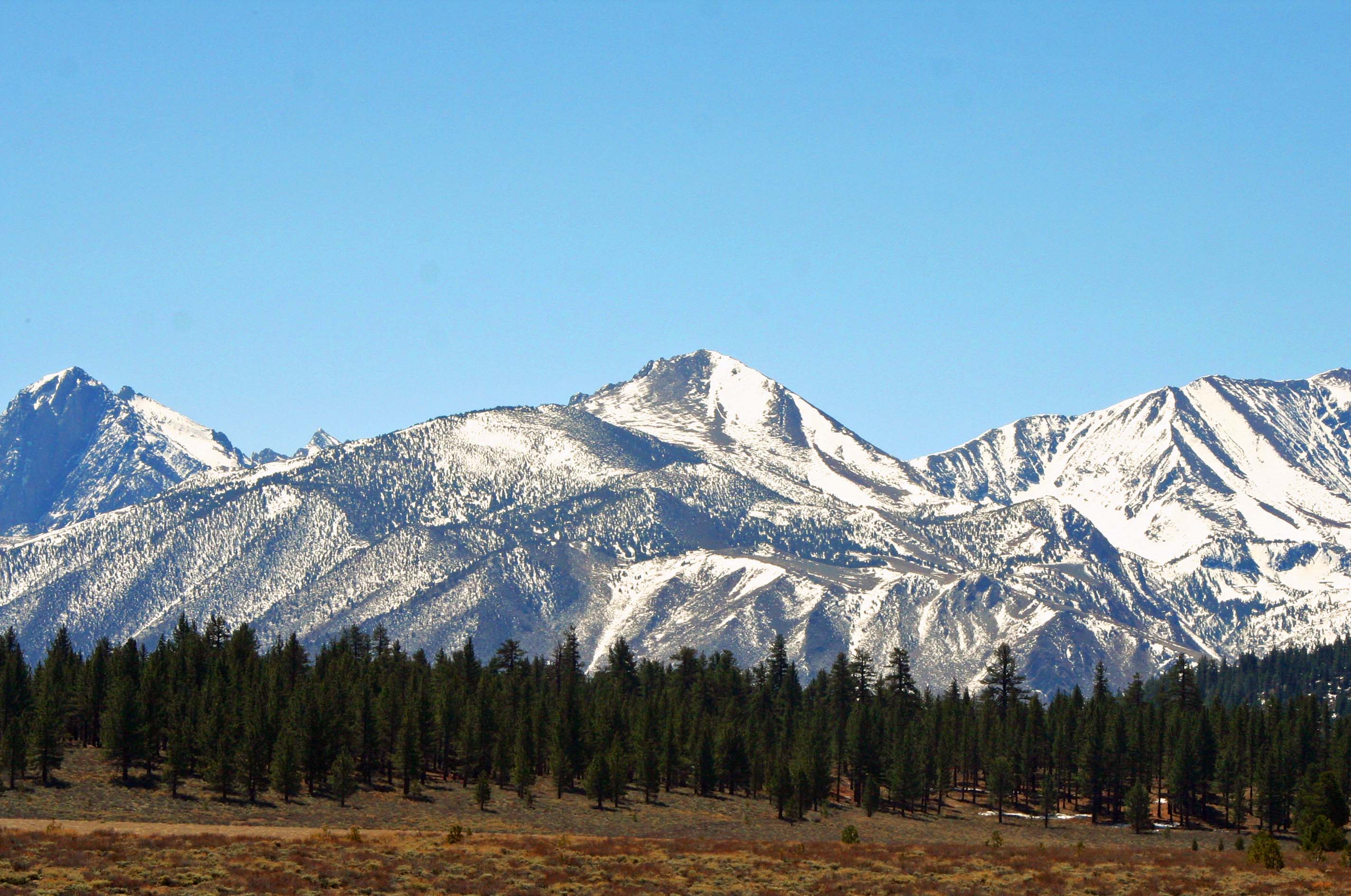
Another view of the Sierra Nevada Mountains along highway 395. This seems to fit Muir’s Range of Light description. (Photo by Peggy Mekemson.)
I celebrated my 60th birthday by backpacking over 300 miles down the spine of the Sierras, I started at Squaw Valley, which is north-west of Lake Tahoe, and ended by climbing up Mt. Whitney. It was my sixth trip up Whitney. I figured it would be a fitting way to kick off my sixth decade.
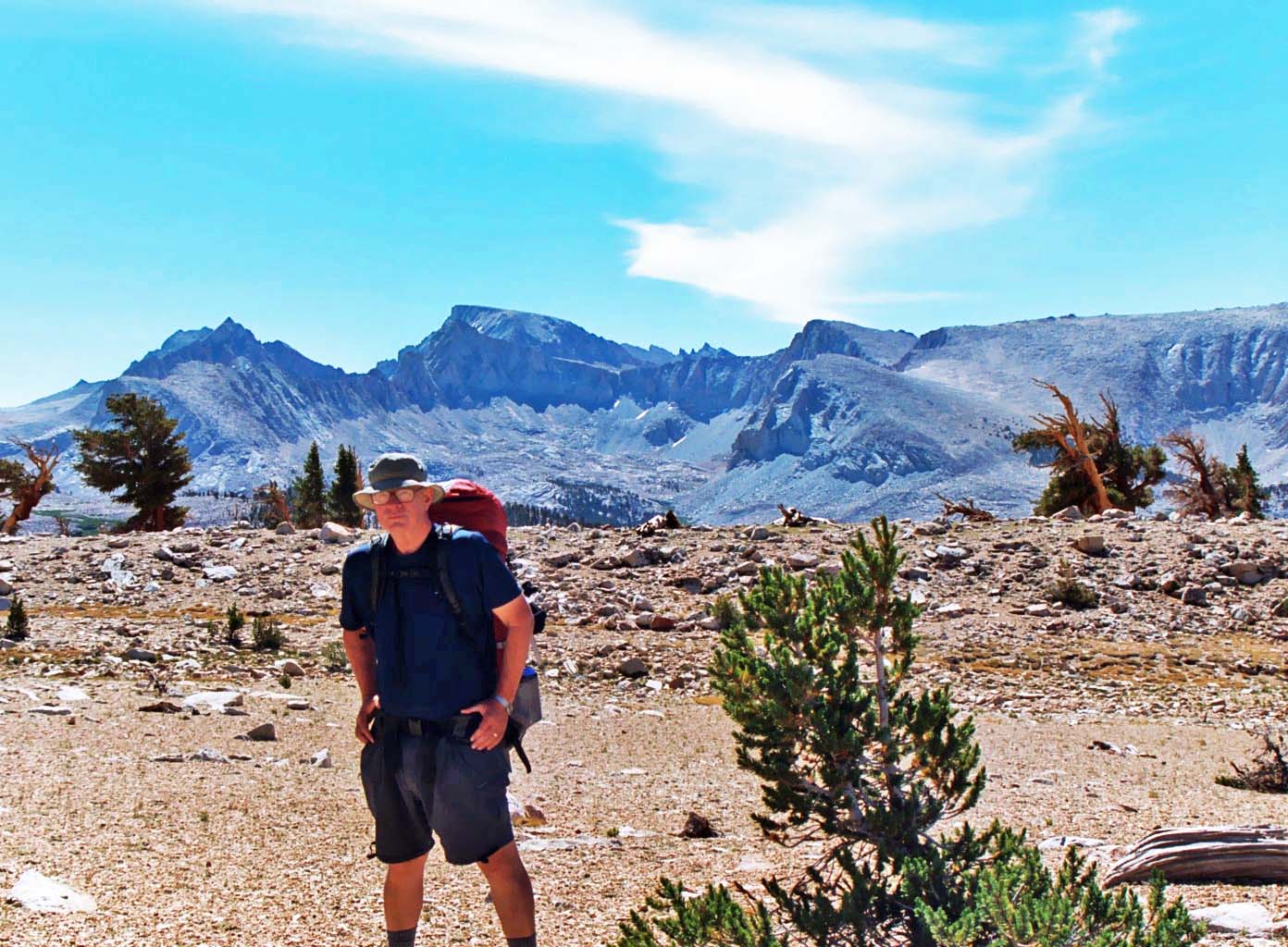
Wrapping up five weeks of backpacking, my final climb looms in the distance. The curved mountain just to the right of my head is Whitney. I will be sitting on top the next day. The Sierras are fault block mountains, climbing gradually on their western slope and dropping off rapidly in the east. (Photo by Jay Dallen.)
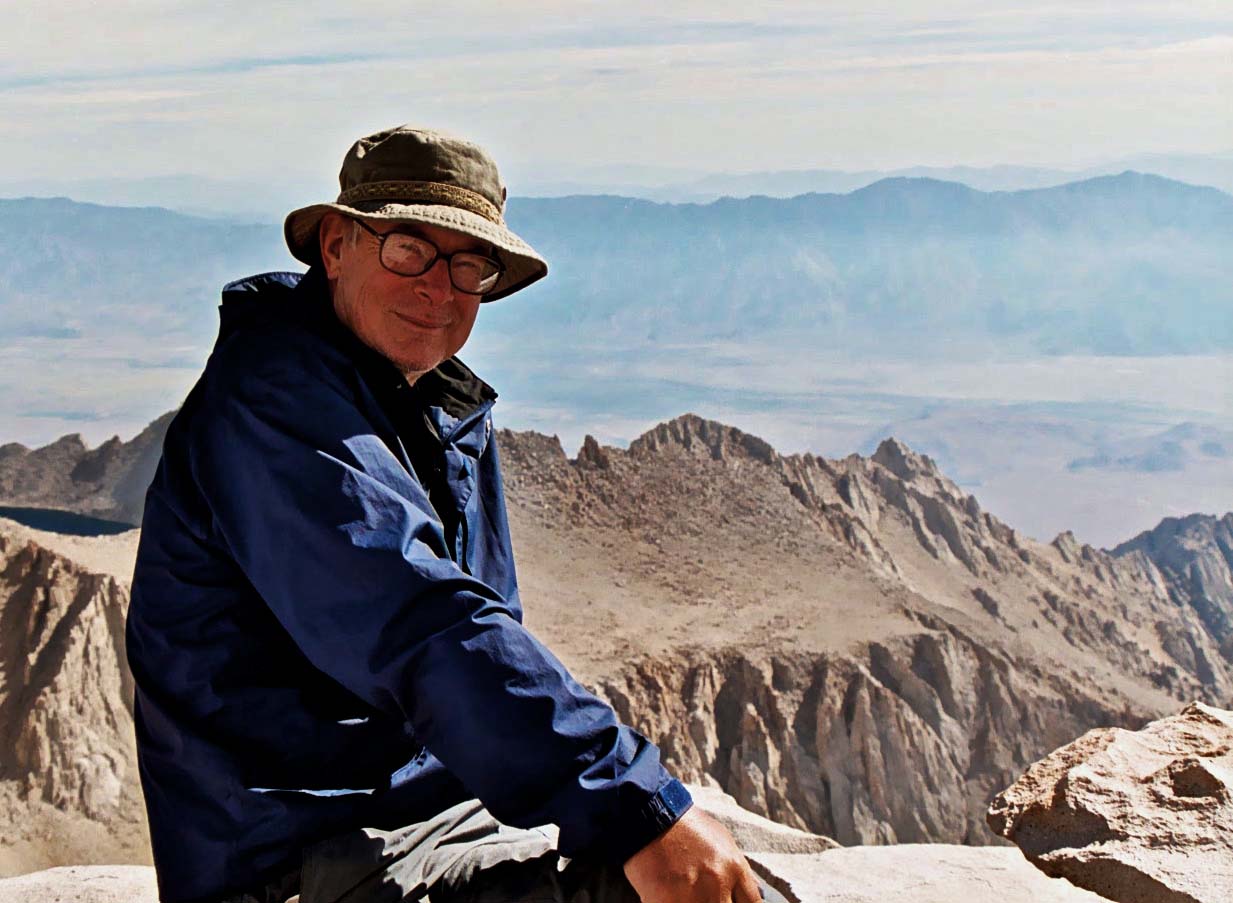
And here I am on top, complete with a large grin. The Owens Valley and Highway 395 lie some 10,000 feet below. (Photo by Jay Dallen.)
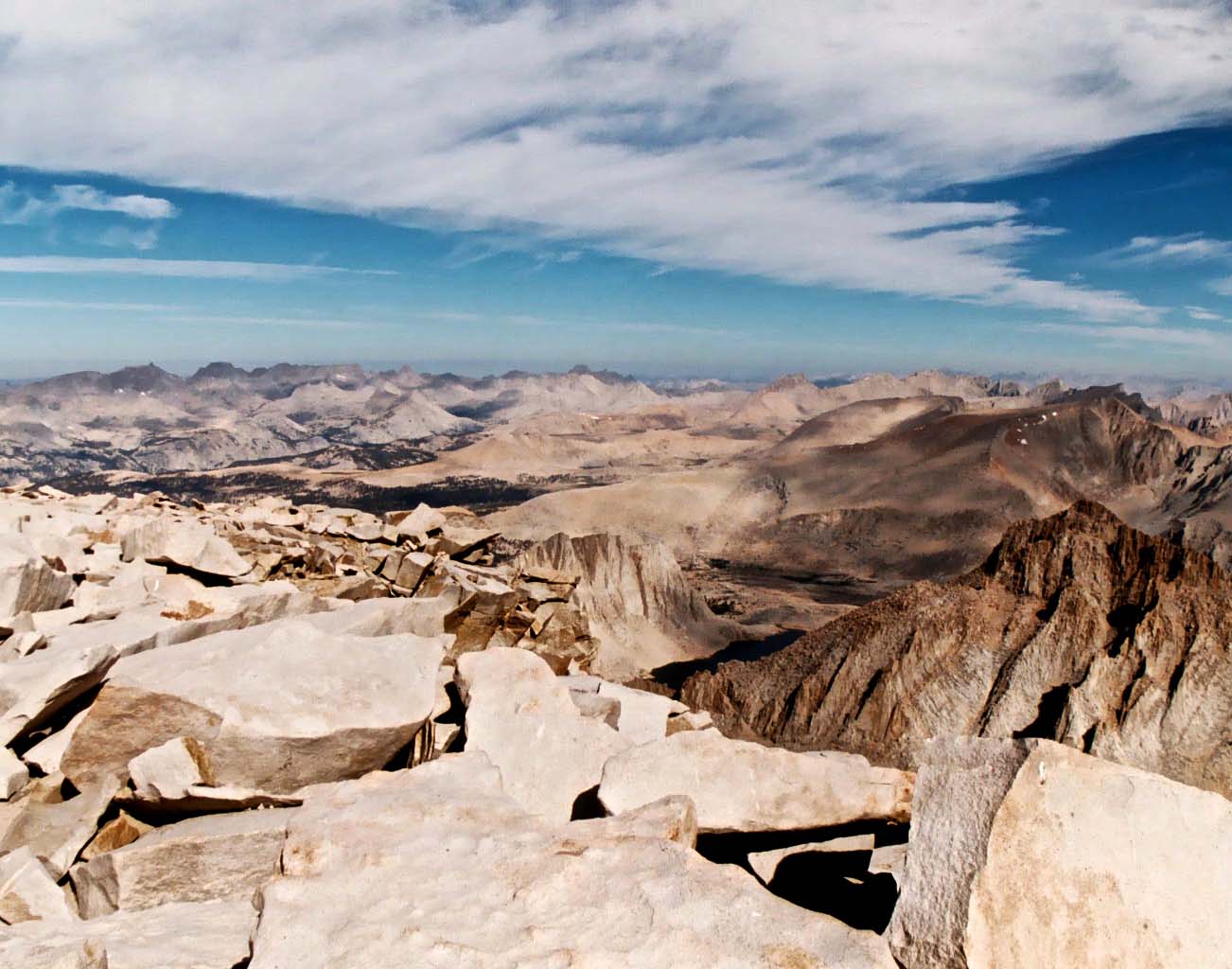
Looking north from Mt. Whitney up the crest of the Sierra Nevada Mountains where I had just backpacked following the Pacific Crest and John Muir Trails.
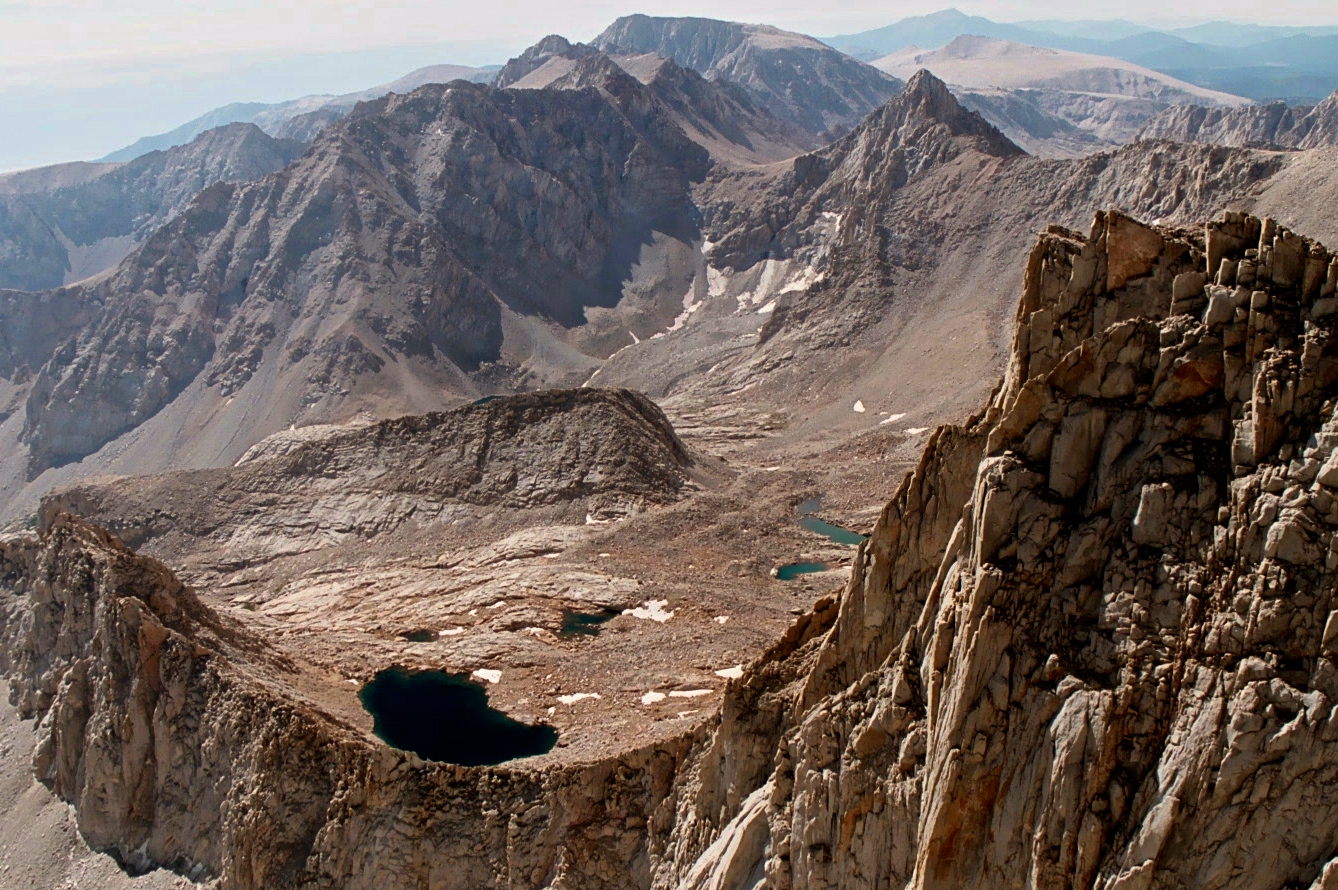
Another view from the top of Mt. Whitney.
The mountain’s claim to fame is being the highest mountain in the contiguous United States. It stands at 14,505 feet (4,421 meters). My friends in Alaska are quick to point out that Mt. McKinley/Denali is 20,322 feet. Mt. Shasta, where I began this particular series, is 14, 180 feet. And finally, for comparison, Mt. Everest, the world’s highest mountain, tops out at 29,029 feet (8,848 meters).

Mt. Shasta.
Once the snow has melted, climbing Whitney does not require any technical climbing skills. A good trail leads to the top. According to the plaque on top, it is the highest trail in the United States. It was started in 1928 and completed in 1930. The plaque used to (and still may) claim that the mountain is 14, 496.811 feet high, which would seem pretty darn accurate, especially given the .811 feet. Apparently modern measuring techniques have added a few feet. Not that it matters, unless you happen to be the person climbing those last nine feet.
Getting to the top requires stamina, lots of it. The eastern route up the mountain starts at Whitney Portal and climbs 6000 feet. That’s a bunch of up, and the higher you climb, the thinner the air becomes. Most people slow way down near the top as their bodies fight to get enough oxygen.
I’ve always started from the west since I am either ending or in the middle of a backpack trip. There are two advantages. Most important, I’ve already spent several days hiking at higher elevations. My body has both toughened up and adjusted to thinner air. Second, by starting at Guitar Lake, the climb is only 4,000 feet. Still that’s 4000 feet up and 6,000 feet down on a 15-mile day carrying a 40-pound pack— hardly a walk in the park. (Grin)
The reason for climbing the mountain, beyond being able to say you have, is the spectacular scenery. I wouldn’t recommend the trip for anyone with acrophobia (fear of heights), however, given that all of the views involve looking down several thousand feet.
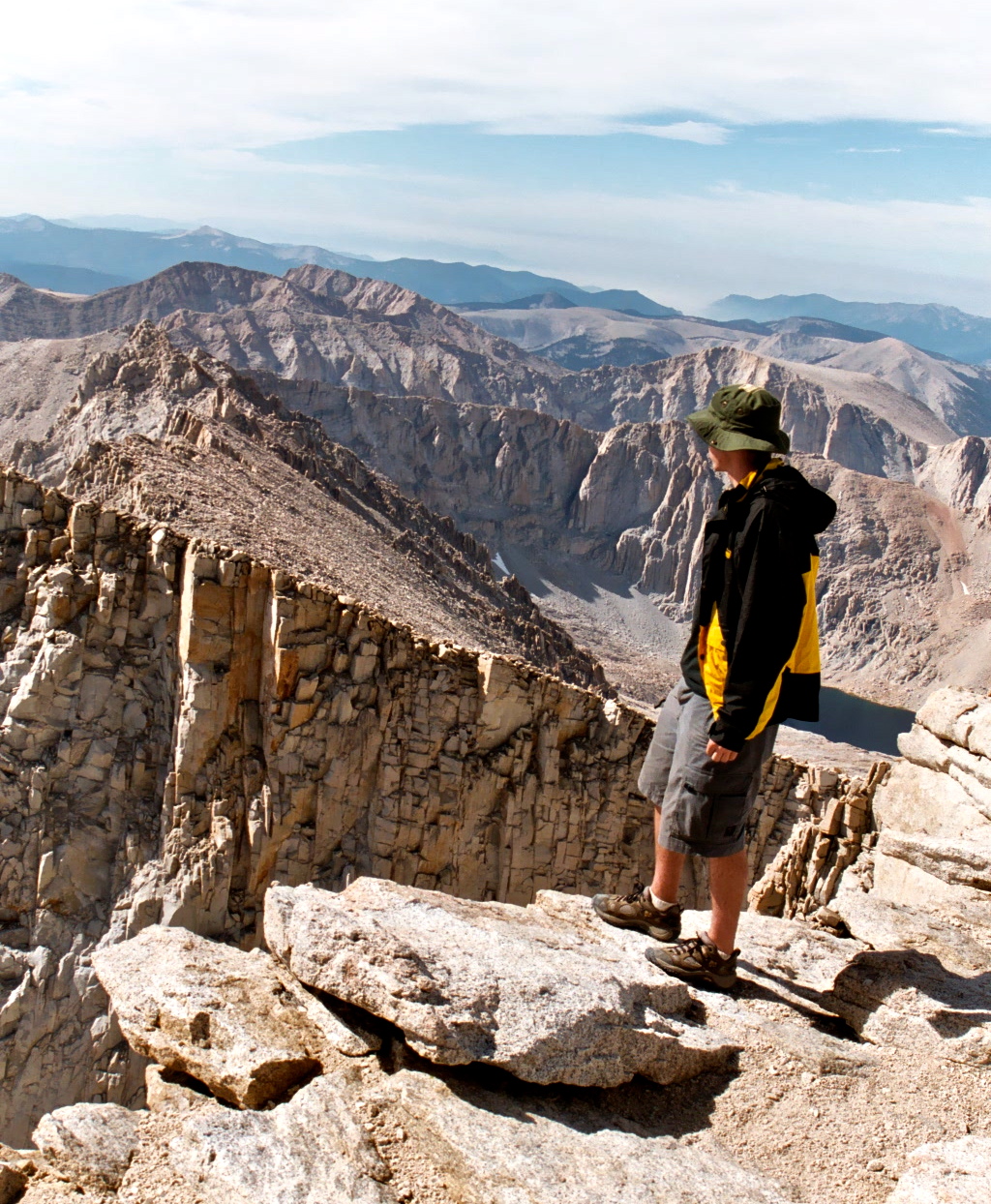
My nephew, Jay Dallen, stands on the edge of a thousand foot precipice and looks down. He obviously does not suffer from acrophobia. Different people joined me on each of my five-week segments. Jay was 16 at the time.
The Alabama Hills, featured in the photo below, are located just outside of Lone Pine at the base of Mt. Whitney. Over 300 movies, mainly Westerns, have been filmed in the area. Almost every major Hollywood cowboy from the 1920s up to the present have made movies there. (Photo by Peggy Mekemson.)
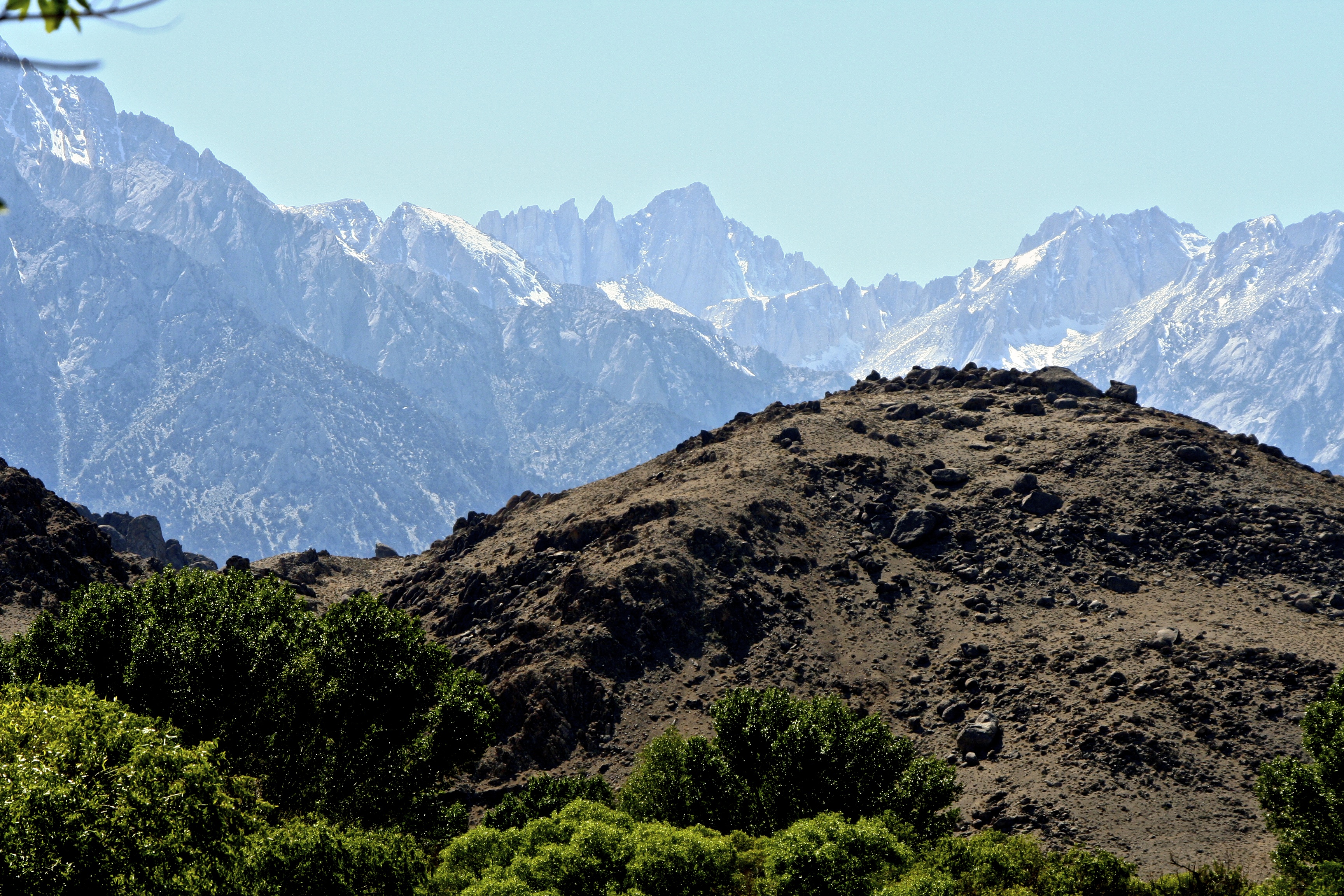
A final view of Mt. Whitney. This one features the Alabama Hills, the site of many Western movies featuring everyone from Tom Mix, Hop-along Cassidy and Roy Rogers to John Wayne and Johnny Depp. (Photo by Peggy Mekemson.)
 Wandering through Time and Place