The first elephant we saw was when we were traveling by bus from Victoria Falls to Chobe National Park. It was a magnificent animal with the largest ears we would see on our whole trip. I thought it might charge. The odds are it was simply cooling down its body, or curious. I learned it might have been warning us, however. When an elephant looks at you, raises its ears, and makes a short charge in your direction, the message is clear: Back off! The raised ears are to make the elephant look bigger than it is! An even worse scenario (other than the heart attack you could suffer in the first one), is when the elephant lays back its ears tight against its body, raises its trunk, and starts to charge. Good luck. Running isn’t much of an option unless can run faster than 25 miles per hour. The fastest human in the world might just stand a chance. Standing behind a very large tree could be more helpful. Peggy did that once when a giant bull elk charged her in Yellowstone where she was working as a college student. And she’s still here.
I have big ears. They are 3 1/2 inches long. African elephants have provided a new perspective. Theirs can be six feet long and five feet wide. “The better to hear with,” you might note. And elephants do have good hearing with a range from 14 to 16,000 hz. (Humans range from 20 to 20,000 hz in comparison.) The lower range is known as subsonic. Elephants can actually make subsonic sounds with their trunks that humans can’t hear but elephants can— up to miles away! The large flaps also serve to direct sound toward the inner ear. Think of cupping your hands behind your ears. It helps to say “eh.”
Of equal importance, an elephants ears play a big role in helping it to keep cool. The fancy name for this is thermoregulation, the process that allows your body to maintain its core temperature. For example, a message from your skin goes to your brain saying it’s hot. Your brain sends a message back to your skin: Sweat. Unlike us, elephants don’t have sweat glands except around their feet. They cope with Africa’s hot tropical sun using other methods. We’ve already discussed mud baths. Wrinkly skin is another.
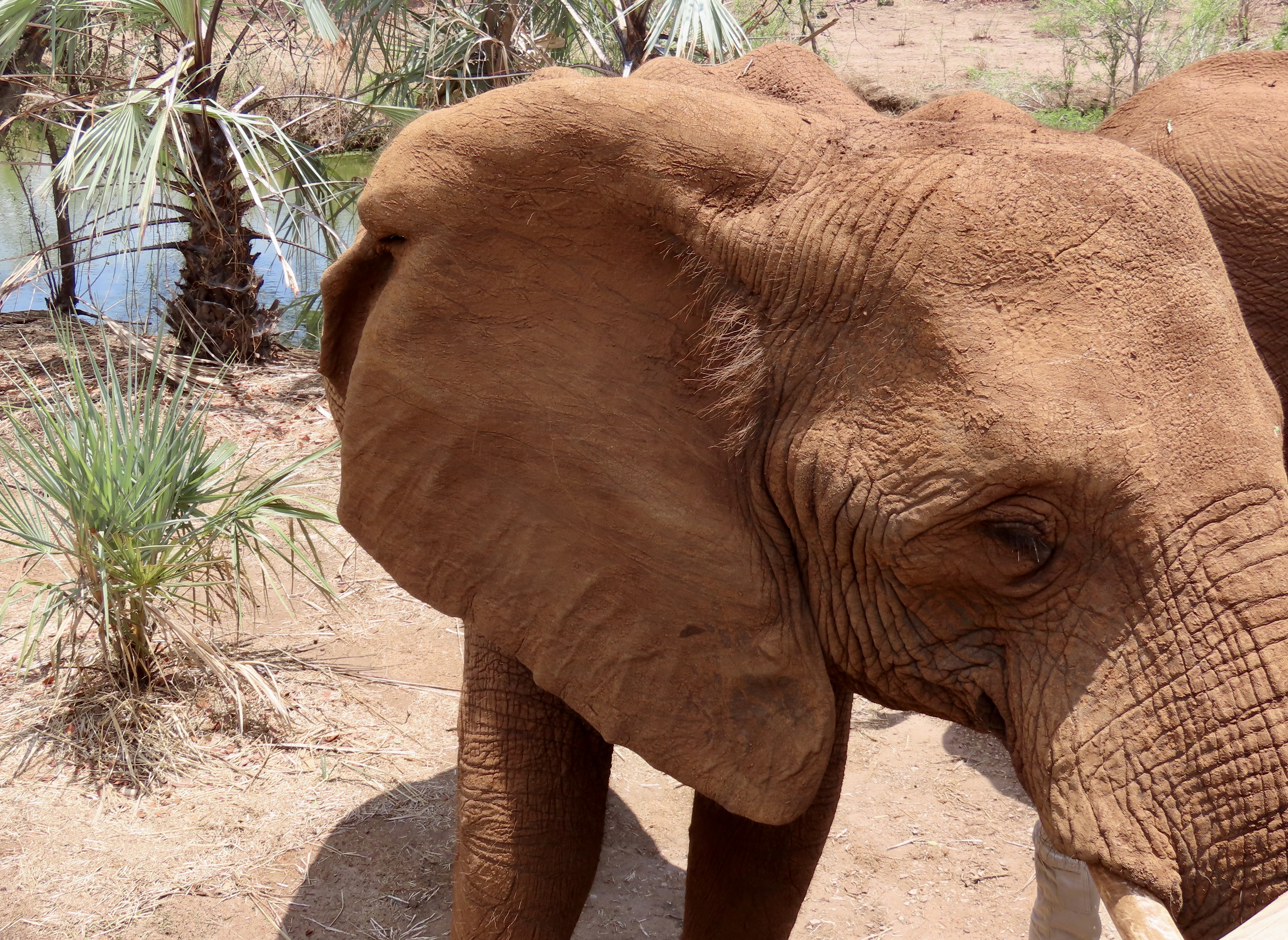
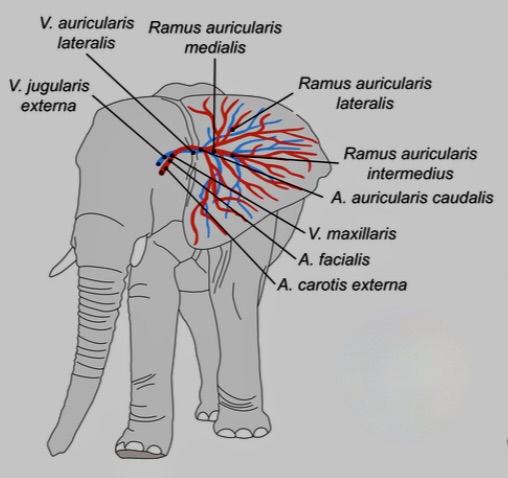
One look at this elephant and you might think it’s older than Methuselah given its wrinkles. Actually, even the youngsters have wrinkles. The cracked skin enables elephants to hold up to 5-10 times more moisture on their skin when they take water or mud baths than they would with smooth skin. As this moisture evaporates, it helps to cool the elephant. A close up of an elephant’s wrinkled skin. Note the hairs. There aren’t many, but scientists believe the thick, bristly hairs serve to transfer heat from the body into the atmosphere, especially if there is a breeze. The impact is apparently much greater than one might imagine.Ears are different. There are no lack of hairs there. (This youngster might also win a wrinkle contest.) While hair growing out of an older man’s ears serves little purpose other than ugly, elephants find them quite beneficial. In addition to keeping bugs and mud out, they also transfer heat and add to the cooling process that takes place in an elephant’s ears. Check out the blood vessels and veins in the elephant’s ear above. It’s packed with them. They are close to the surface and covered by a thin layer of skin. The system allows excess heat to escape from the blood vessels into the air and help to reduce the elephant’s core temperature. It is estimated that an elephant passes the blood in its body through its ears every 20 minutes. This illustration from ScienceGate provides another perspective.
Elephants enhance this process in various ways. Providing air to move the heat away and cool the ear is the most important. Elephants are known to stand in the wind with their ears out. The most common approach, however, is to flap their ears. In addition to providing a breeze for the ears, the flapping also fans the body and blows insects away. (I wish I could flap mine.) Watching a group of elephants crossing the savanna while flapping their ears is so common it’s iconic. Other methods include getting out of the sun and taking mud/water baths.
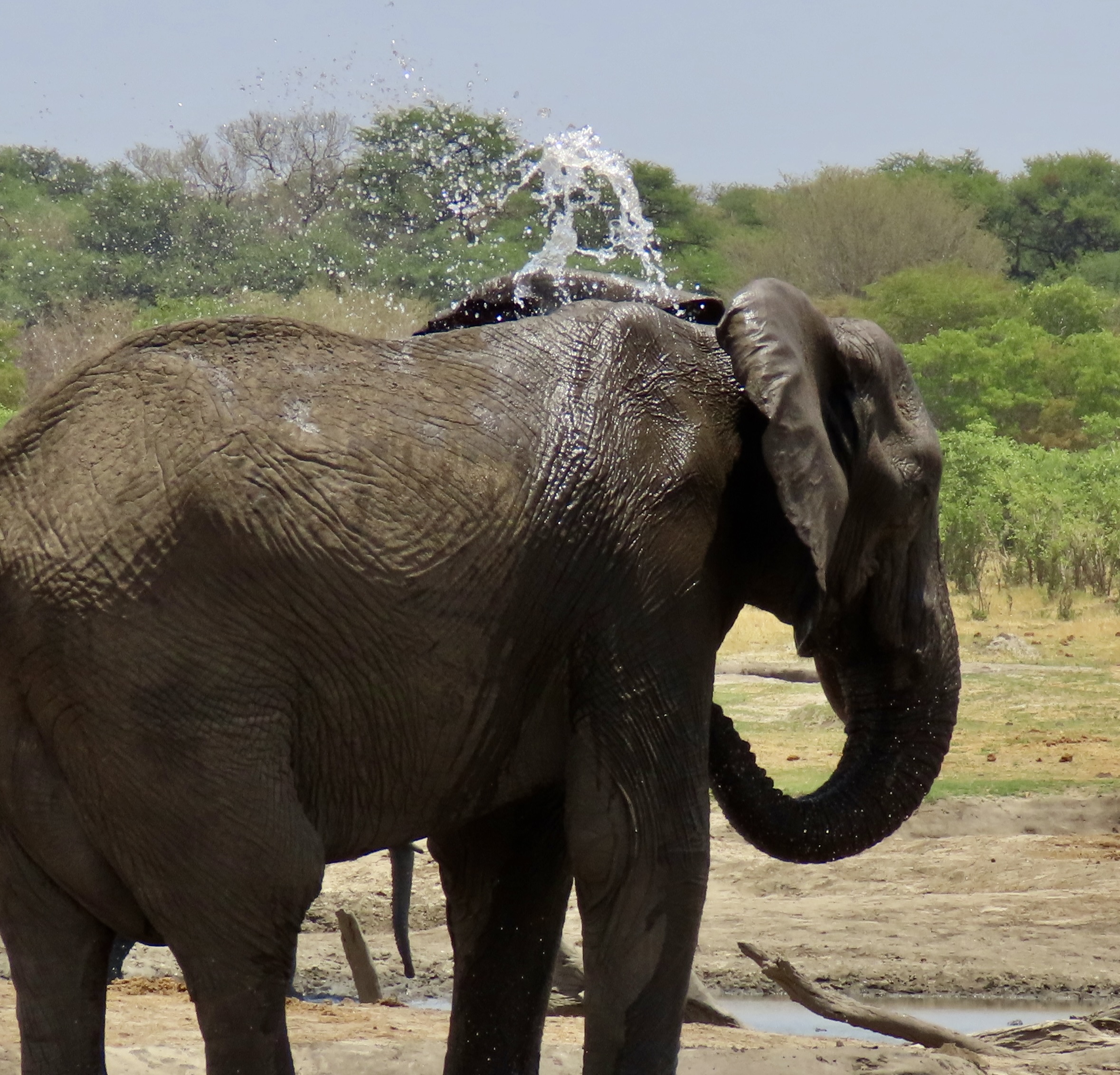
Returning to our elephant that was bathing and cooling down at a water hole in Hwange National Park in my last post, he paid special attention to spraying down his ears. Given the exposed blood vessels in his ears, it’s easy to understand why this might be an important part of his cooling down effort.
This caused me to think about another aspect of elephant behavior related to their ears. When the elephants came out of the mud bath I featured in my December 4 blog, they gave a vigorous shake to their ears. I thought at the time it was like, “Woohoo!” Thinking back, I wonder if they weren’t shaking the mud off of their ears. Given that the mud in general helps to keep them cool, protect them from sunburn, and frustrate biting bugs, why? My conclusion (for which I couldn’t find back up data) was that the mud coats their ears and reduces the ability of their blood vessels to transfer the heat to the air.
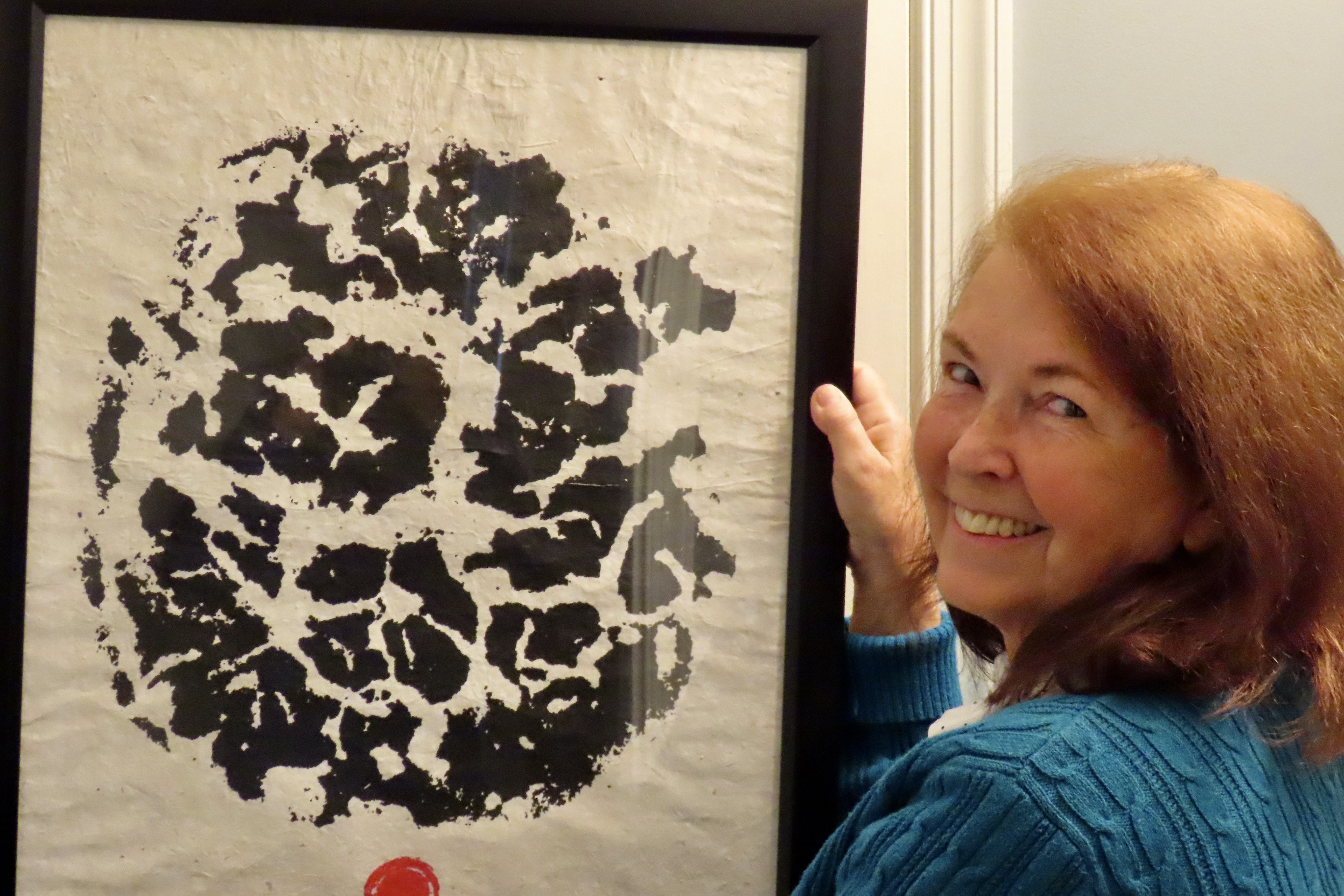
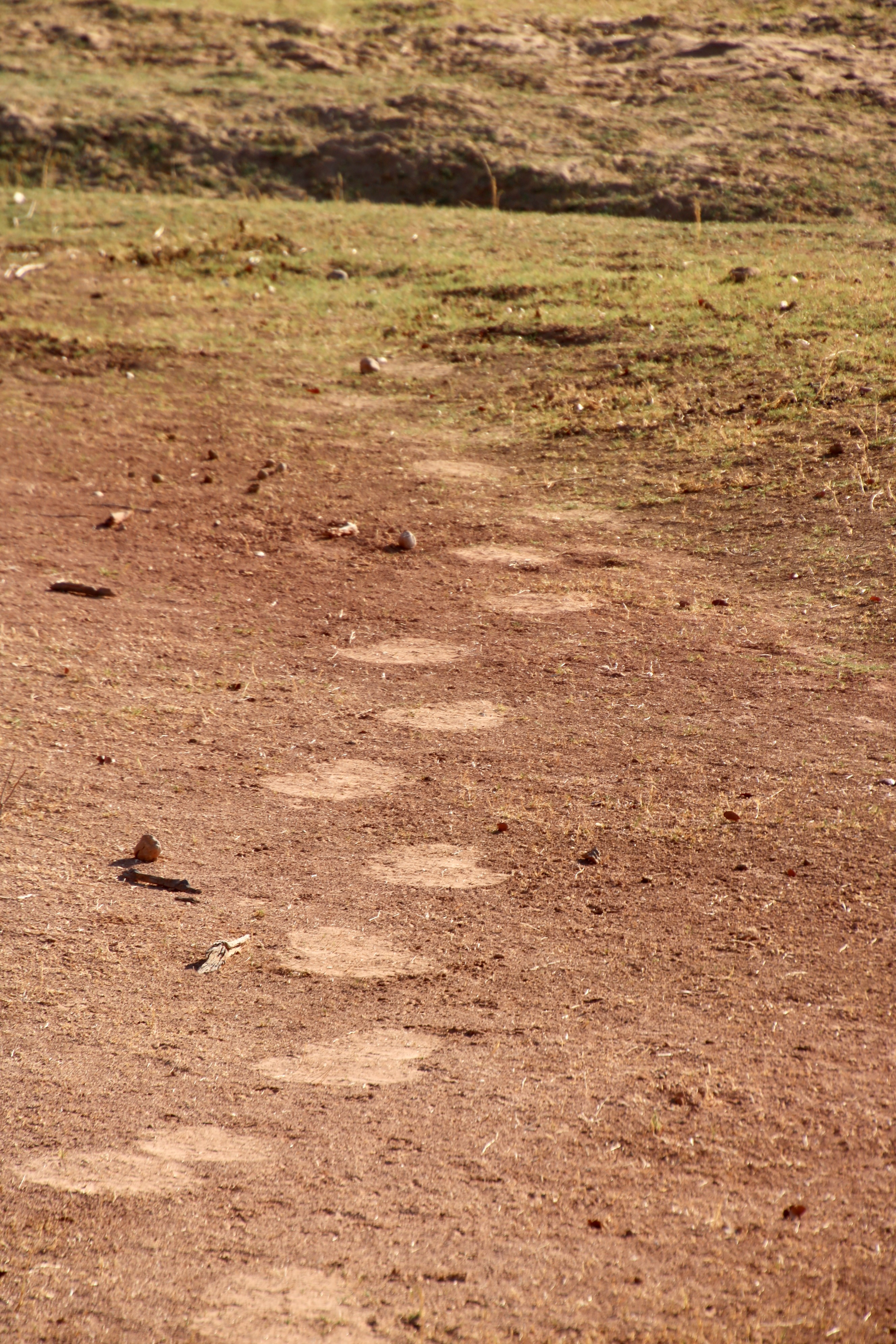
These elephants gave their ears a vigorous shake when they came out of the mud bath. Were they having a Woohoo moment, shaking the mud off, or doing something else?And now it’s time to turn to elephant’s feet. They’re big too, which shouldn’t come as any surprise considering they belong to animals weighing between 2 and 7 tons, the world’s largest land animals. This is an actual footprint of one that Peggy is holding up. It was made by Jumbo, the biggest elephant at the Wild Horizons Elephant Sanctuary, by pressing his inked foot down on paper. We bought the print and carried it home with us. The paper is rather unique in itself. It’s made out of recycled paper and elephant poop. To provide another perspective, this is my size 15 shoe next to a fresh elephant print. We came across it when we were on a safari walk with Terry Anders, who, along with his wife, Sheona, is the owner of the Iganyana Tent Camp located on the edge of Hwange National Park. Terry explained to us that its size indicated it was a large bull elephant. He also told us that each elephants footprint is unique like a fingerprint. Eventually the ridges wear down through extensive walking over varied terrain, providing an indication of the elephant’s age. Here’s what an elephant’s foot looks like close up. Like us, an elephant has five toes on each foot, but not all of the toes have toenails. It actually walks on its toes. A thick pad of gristle extends backward, working something like a shock absorber. The bottom line: This foot was made for walking, and walking it will do— up to 30 miles a day. And, if you irritate the elephant, it may walk all over you. (My apologies to Nancy Sinatra.)This is an elephant’s toe bone that Terry showed us when we were out on our safari walk.Tracking an elephant after a rainstorm would not be a problem!Elephants tend to follow the same routes to reach food and water, creating well worn paths.
Given the years I have spent wandering in the wilderness, I’ve always been interested in animal tracks. And that certainly applies to elephants. But what interests me the most about elephant feet is how they ‘hear’ with them via seismic communication. Caitlin O’Connell-Rodwel, a Stanford researcher, has been returning to the same elephant watering hole in Namibia for over 25 years figuring out how they do it. Her work has demonstrated that African elephants exchange information by emitting low-frequency sounds through their trunks that travel dozens of miles through the ground. She believes this communication is the key in understanding the dynamics of elephant groups. “Announcements” can include warnings, mating calls and navigation instructions, e.g. “Don’t be alarmed sweetie, but I would really like to make it with you under the acacia tree next to the pond.” In a more passive sense, elephants can also keep track of each other through the sound of each other’s foot steps.
They “listen” with their feet in two ways. One is through touch. Just like us, elephants have receptors in their skin known as Pacinian corpuscles that are hardwired to the brain. On an elephant these are located around the edge of their feet. When an elephant is picking up sounds/vibrations, it presses its feet onto the ground, expanding their surface by as much as 20%. Signals are then sent to the brain for processing. While this isn’t hearing exactly, the message gets through. A second method called bone conduction is closer to real hearing. The elephant jabs its big toes into the ground and the vibrations are carried up through its body via bones to the inner ear where they are heard like sound vibrations coming through the air.
And finally, we reach the tail end of this post. Grin. Tails on elephants serve just like tails on cattle: They swish them around a lot and keep the bugs away. But there is more. Almost everyone has seen photos of a baby elephant holding on to its mom’s tail. It serves the same purpose as moms and dads holding their younger children’s hands. It guides them and helps keep them out of trouble. Unfortunately, we didn’t see it on our trip. The mom also uses her tail to keep track of her baby when it isn’t holding her tail by feeling it with her tail. It’s a lot easier than turning around to check on junior. Finally, holding its tail up can signal that the elephant is fearful, highly playful or intensely excited. “Over here, Big Boy.”
At first, I had planned to do one blog on elephants, then it was two. Now it is three. They are just too fascinating, at least for me. Next time I’ll get more into family life, eyes, teeth, bones, and even poop— a single elephant can produce up to one ton in a week!
Come on in, the water’s fine. How fast can you swim? I can manage 5 miles per mile galloping along the bottom and 19 miles per hour on land.
It took me a while to get back to Africa after my Peace Corps assignment there from 1965-67. When my feet first touched African soil at Roberts Field in Liberia, Peace Corps was a baby of four and I barely qualified as a young adult at 22. That was 58 years ago. I always wanted to go back, but there was a lifetime of other things that needed to be seen and done…
A very young me as a Peace Corps Volunteer in Gbarnga, Liberia in 1967 with the senior class. I taught African History, World History and World Geography at Gboveh High School. My students took top national honors in Social Studies that year.
Peggy and I made up for our lack of African travel this year. In February we flew off to Egypt and boated up the Nile to celebrate my 80th birthday. It was an incredible experience, packed with ancient history and magnificent structures stretching back over 5000 years.
Peggy and I doing the tourist thing after we had just re-entered the world of the living from our trip deep under the pyramid of Khafre at Giza.
Now, we have just returned from a journey to the southern part of the African continent that included national parks in Botswana and Zimbabwe, Lake Kariba, Victoria Falls and Cape Town. It was equal to, if not more impressive than our Egypt adventure. Imagine a herd of several dozen wild elephants joining us for dinner by drinking out of a swimming pool located next to our dining table.
Elephants kept arriving to drink out of the swimming pool which was located about 20 feet away from our dining table at Iganyana Tented Camp in Hwange National Park, Zimbabwe. One group would finish and another would arrive to take its place. This went on for at least an hour. I was kept busy with our iPhone taking photos. Best dinner show we have ever had!
Our recent trip started with a call from Peggy’s brother, John Dallen. Eleven years ago we took a delightful repositioning cruise with him, his wife Frances and friends Lee and Kathy Saaga, exploring the Mediterranean before sailing across the Atlantic back home. Since then, John has called several times with offers to join Frances and him in exploring the world. There were some great trips. But, as John likes to note, our travel styles differ substantially. If he is going to be out for six months, each day is carefully planned and reservations made, normally at four and five star hotels. If Peggy and I travel for six months, we have a vague idea of where we are going and make reservations a day in advance, if then. We once travelled for a year without making one. Our normal mode of travel is with a van or small travel trailer— or, putting our backpacks on and disappearing into the wilderness.
Frances, John, Peggy, Kathy and Lee in Santorini, one of the many places we visited in the Mediterranean.
This time, John made us an offer we couldn’t refuse. “Would you like to go on an African safari with us?” It took us five seconds to say yes. There would be hippos and lions and elephants to see, not to mention leopards, wart hogs, baboons and numerous other animals and birds. I will be featuring the places we visited and the wildlife we saw in our next several posts.
Today’s photos will give you a taste of what to expect. Peggy was traveling with her usual camera, a Canon EOS Rebel with a 20 to 300 mm Tamron lens. For Africa, I upgraded from my pocket Canon Power Shot to a different version, a Canon Power Shot SX 70 HS. Due to the miracle of modern technology it comes with a 21 to 1365 35mm equivalent lens and weighs just over a pound. It made it possible for us to capture photos like the hippo above.
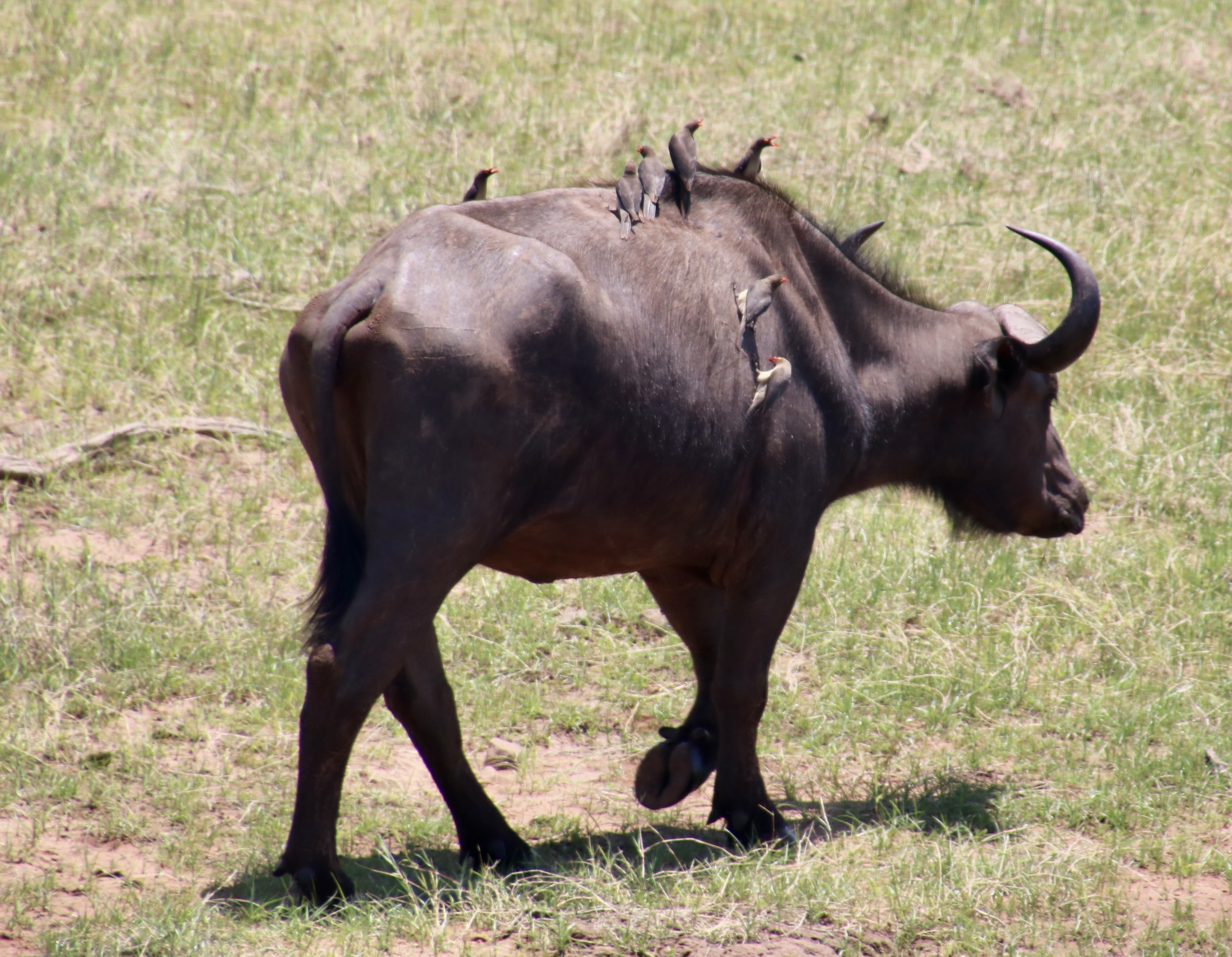
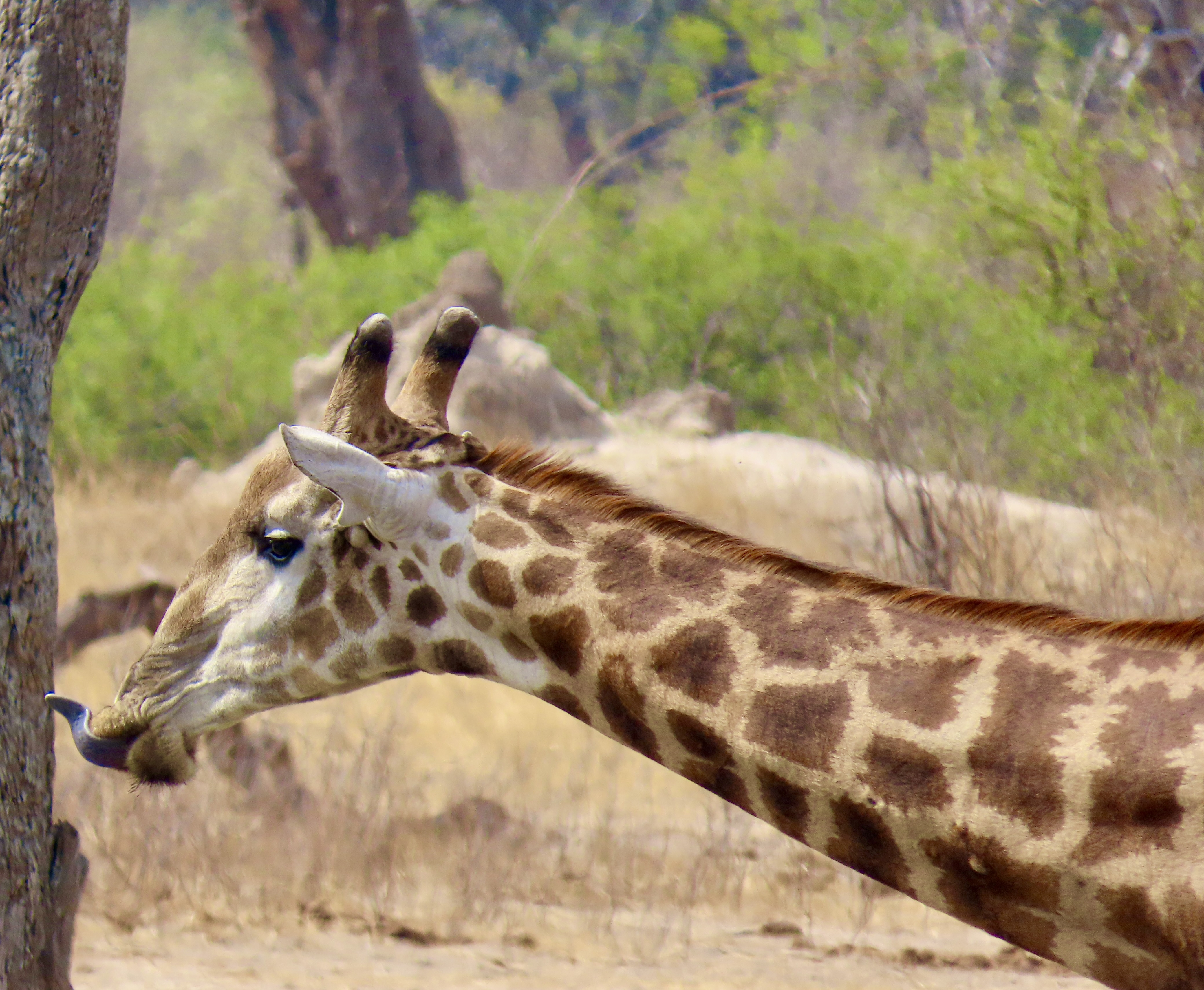
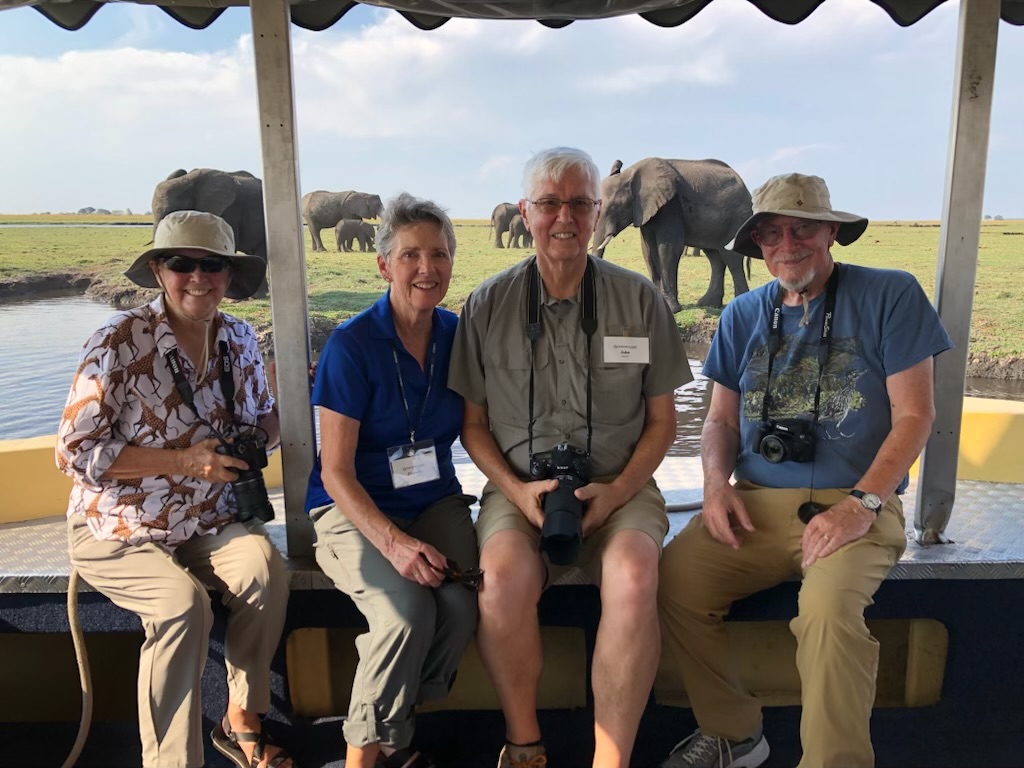
The King of Beasts, proves his cat like nature by washing his face with a paw bath…While the Queen of Beasts just looks regal.It’s a croc! Is that a smile? Maybe he is dreaming of an impala dinner. “Wait for me Mom. I’m hurrying as fast as I can!” This baby elephant in Chobe National Park, Botswana was playing catchup. Gulp. Ostriches graze with their heads down and then raise it up to swallow. Obviously this guy had quite a gullet full. We came on him a couple of miles from the Cape of Good Hope, South Africa. The local bus? Given this photo, it may be hard to believe that the Cape Buffalo is the most dangerous animal in Africa. The birds aren’t getting a free ride, however. They are picking bugs off, which is much appreciated by both the birds and the buffalo.Would you believe my grey blue tongue is about 19 inches long?Have you seen any road or lion kill? I’m not particular about where it is or how long it has been there. We found this cute little fellow on Table Mountain above Cape Town, South Africa. I’m betting you probably don’t know its closest relatives. We sure didn’t. They are the elephant and the manatee. I’ll conclude today with this photo of Peggy, Frances, John and me on the Chobe River with an elephant backdrop. My next post will feature these elephants and many more we met along the way! John, BTW, has a travel blog you might want to check out at: dallen.posthaven.com. He calls his blog “Are We There Yet?”










 Wandering through Time and Place