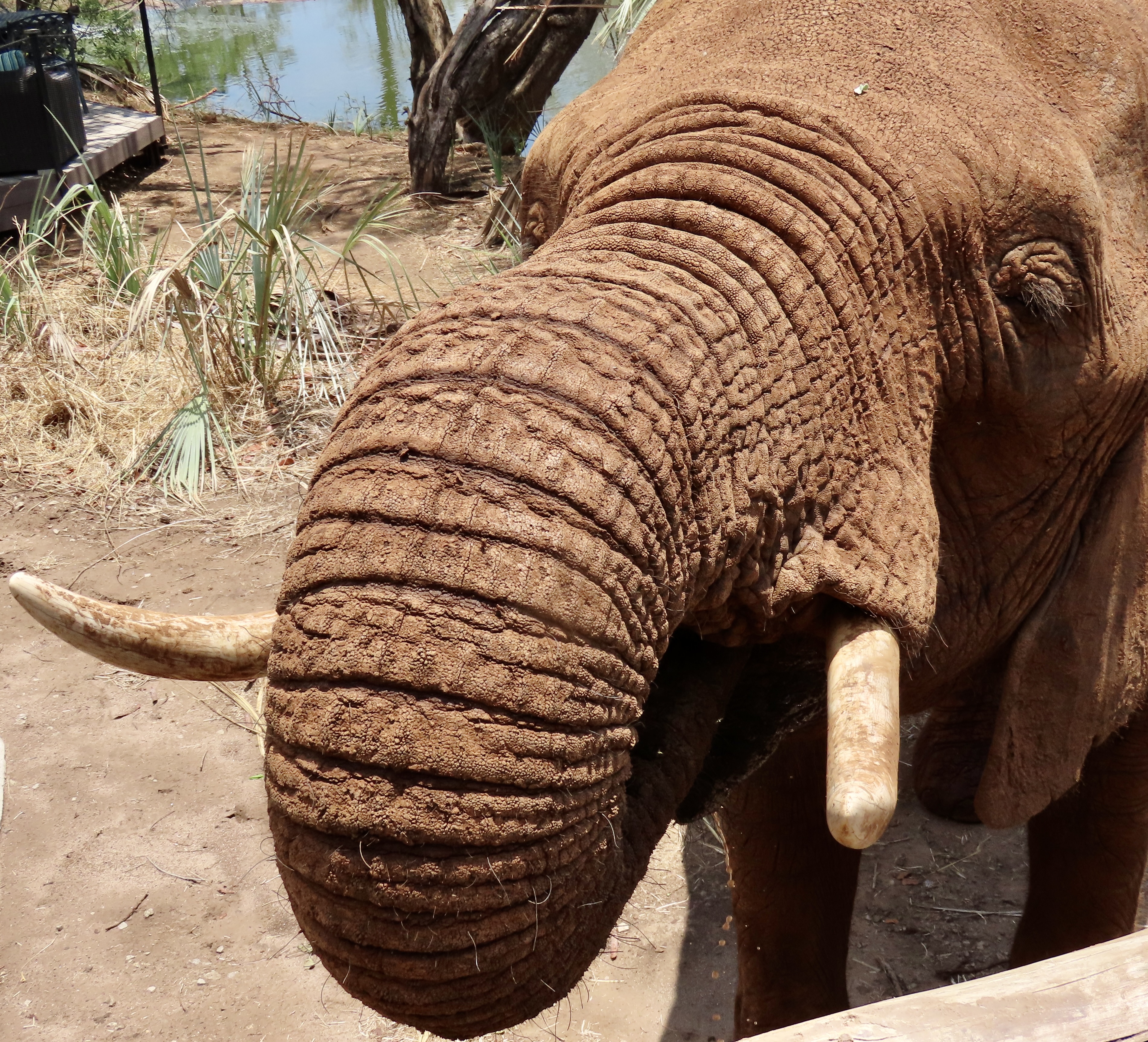
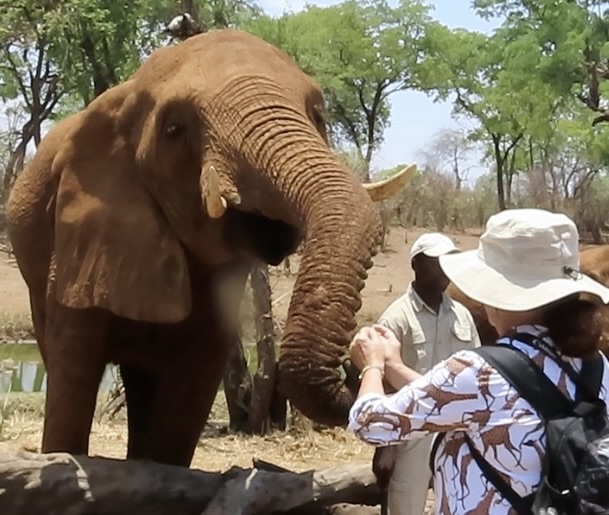
Elephants are fascinating creatures, no doubt about it, and one of the most fascinating things about an elephant is its trunk— which is the subject of today’s post. This one was waiting for Peggy to toss food into its mouth at the Wild Horizons Elephant Sanctuary and Orphanage just outside of Victoria Falls, Zambia. The elephants weren’t wild exactly, but definitely fun, interesting, and educational.
Peggy and I, along with our traveling companions, her brother John and his wife Frances, spent a lot of time watching and photographing elephants on our recent safari to Botswana, Zambia, and South Africa. Most of the time, they were doing something with their trunks. These marvelous appendages are used in breathing, smelling, eating, drinking, bathing and communication. Today’s post will focus on the trunk. My next post will consider other interesting facts about elephants, including their tails.
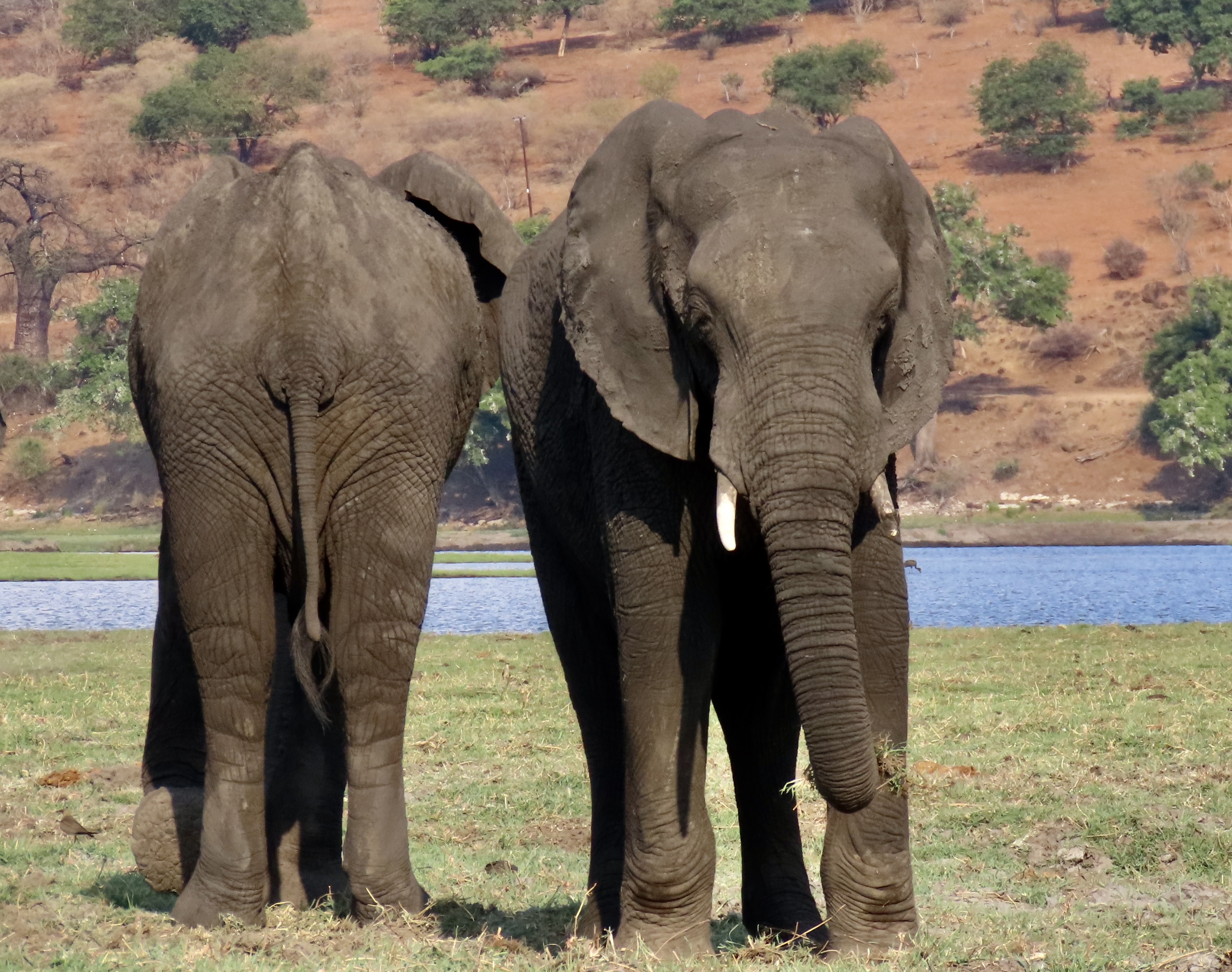
You know how hard it is to get a wild elephant to pose? Grin. We were more than satisfied to watch and photograph them wandering around doing elephant things. These two were focused on eating next to the Chobe River. But they also provided an excellent illustration for my next two posts that are going to be focused on looking at elephants from trunk to tail. It would have helped had they switched positions, but they didn’t listen to my suggestion. The elephant on the left is using her foot to kick the grass and free it from its roots. The one on the right is about to shake the dirt out of the grass she has gathered.
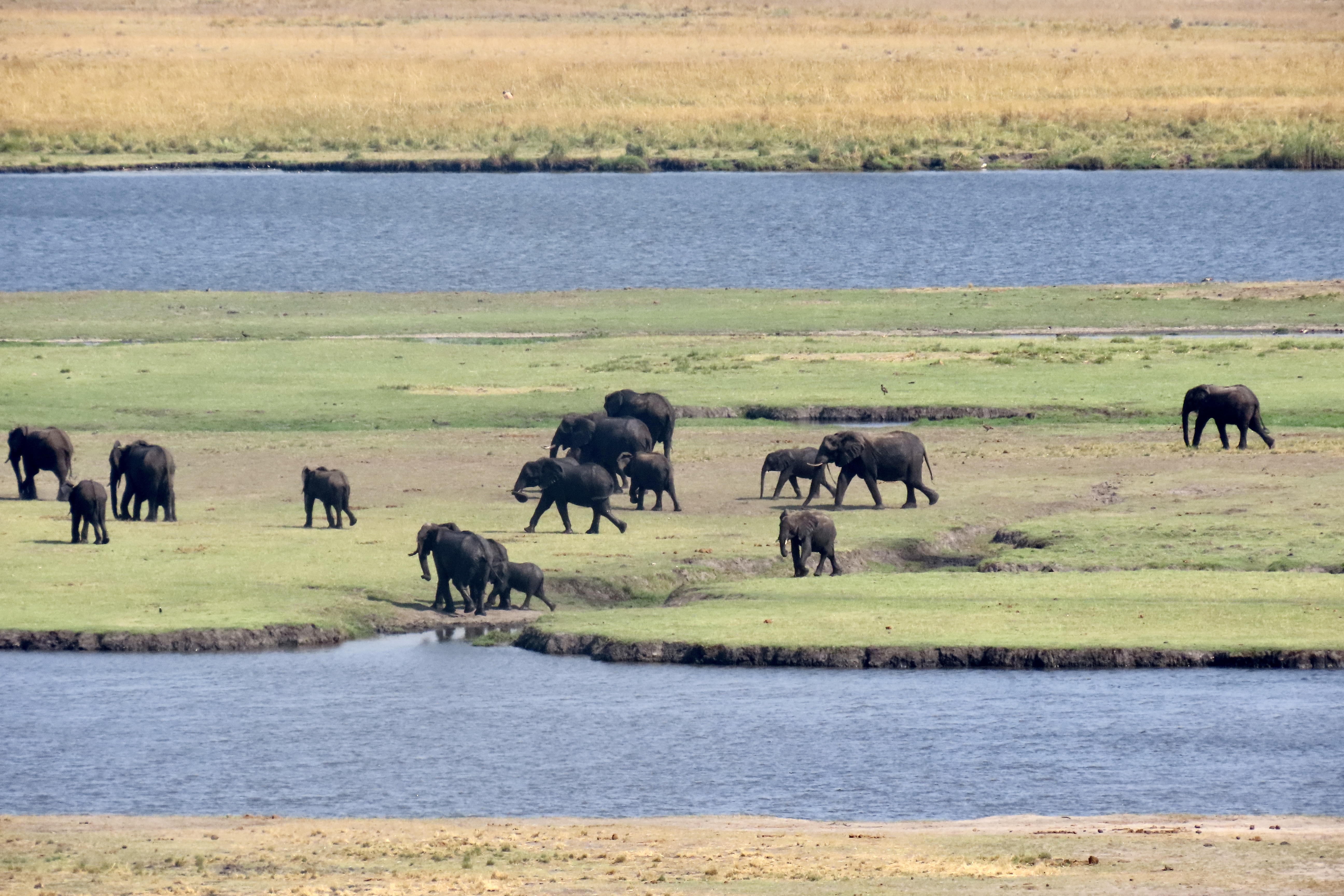
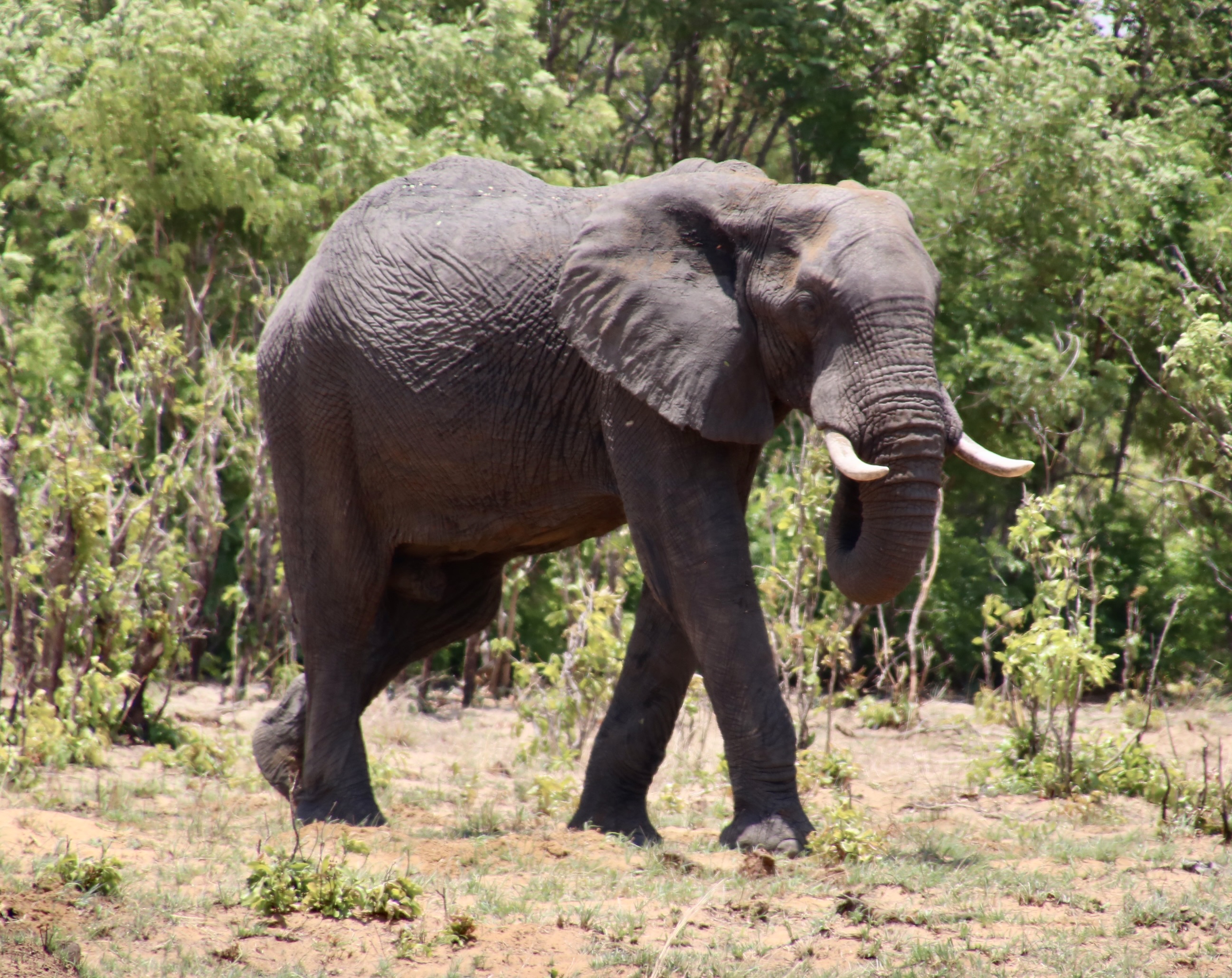
Our opportunity to watch and photograph elephants took place in four different locations. The first was Chobe National Park in Botswana. One of the Park’s claims to fame is that it supports the largest herd of free-ranging elephants in the Africa. Since we were at the end of the dry season, many of these elephants were located next to the Chobe River where they could get water and food. Viewing them was easy, particularly from boats. (Ours was docked at our safari lodge on the edge of the river.) Chobe is an excellent area to see wildlife. The only downside is that this means you will be sharing your experience with lots of other people.
There was no challenge finding elephants along the Chobe River in October at the end of dry season. With the coming rains, they will spread out across the park.
Hwange National Park and Matusadona National Park in Zimbabwe were the other two areas we watched wild elephants in their natural setting. Both parks had far fewer people on safari and were far less crowded. Slightly different, but excellent for meeting elephants up close, the Wild Horizons Sanctuary and Orphanage for Elephants just outside of Victoria Falls allowed us to interact with these giants of southern Africa’s velds. All of the elephant photos in this post and the next one were taken by Peggy and me in these four locations. I’ll start with the Sanctuary since we were able to get close ups of the trunks.
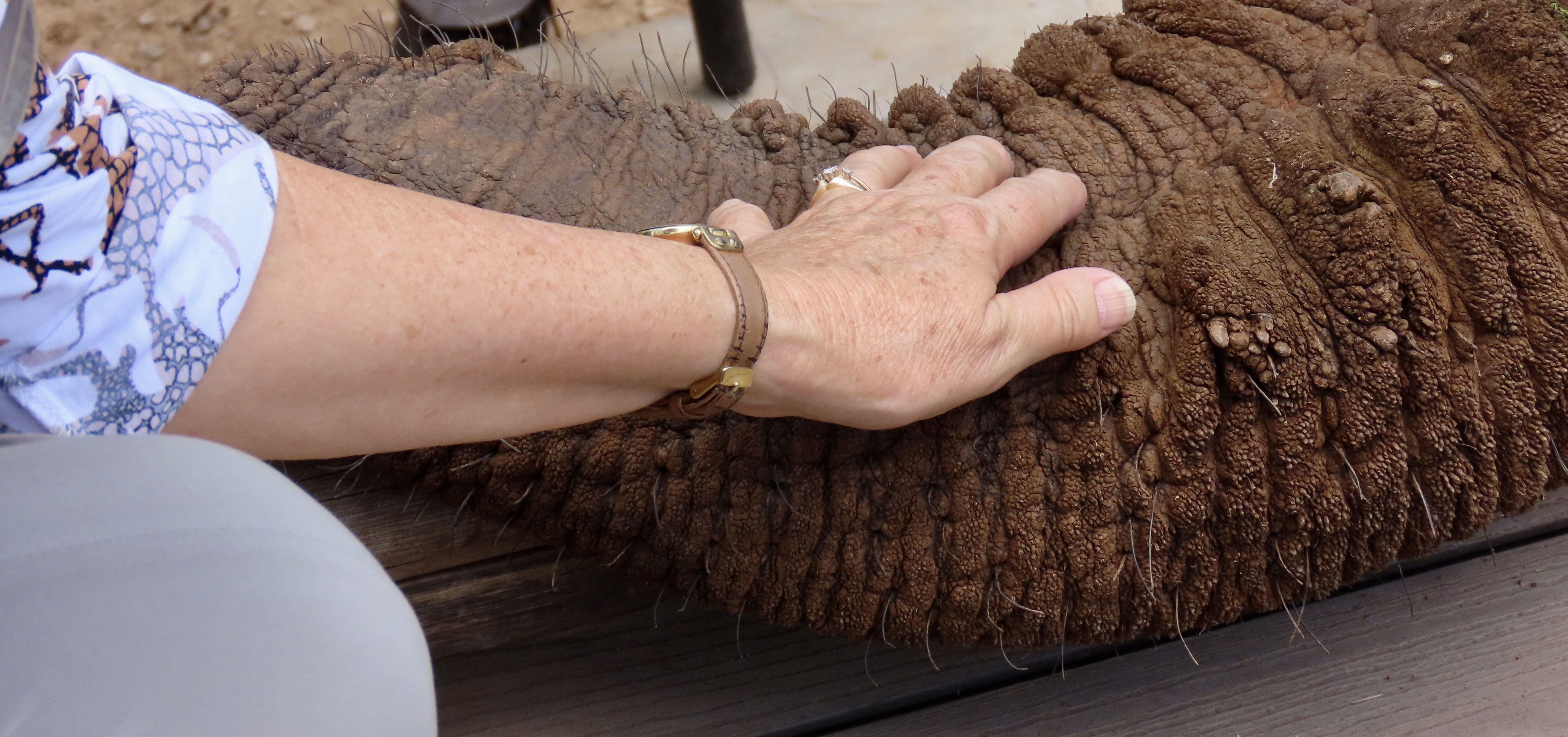
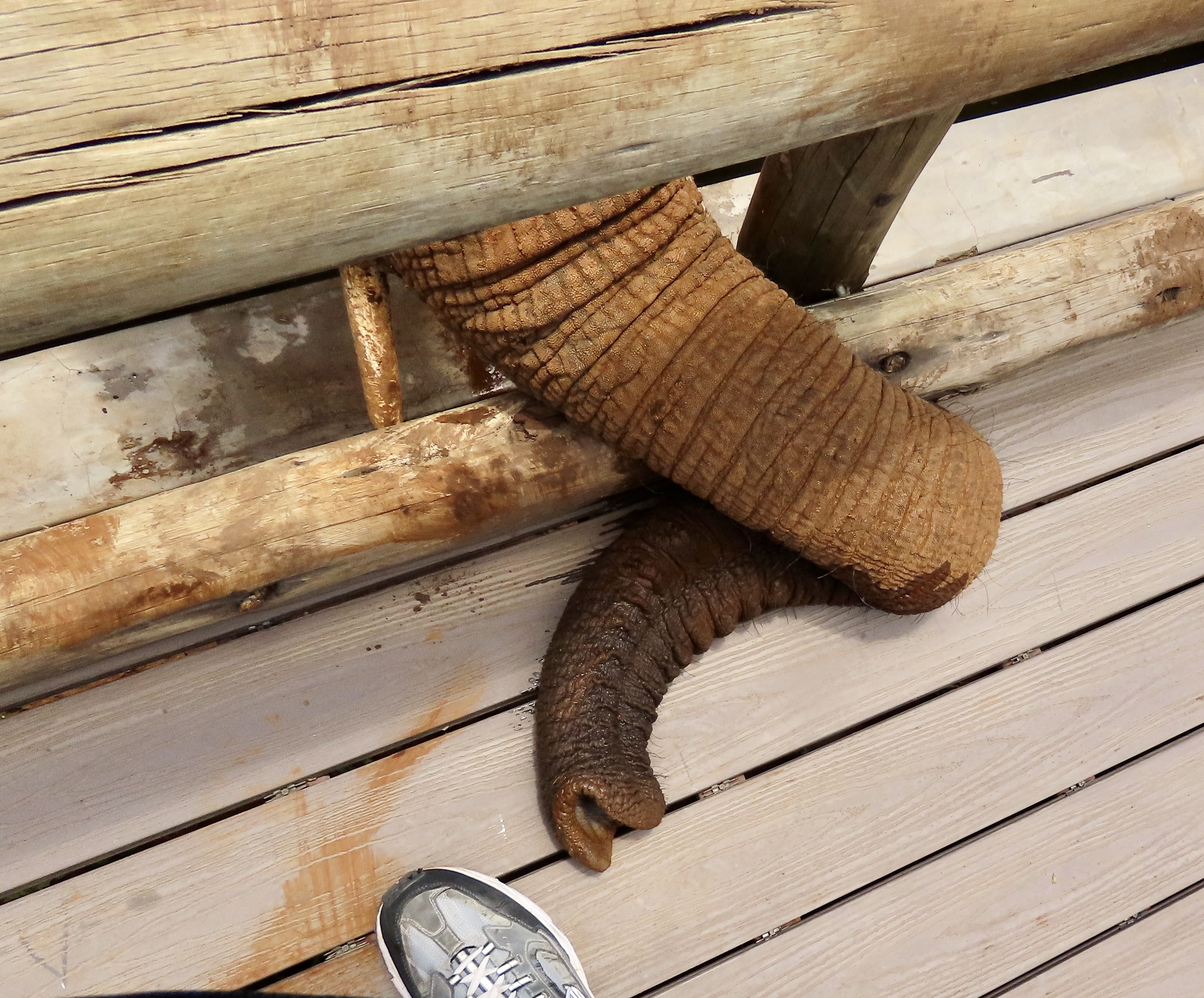
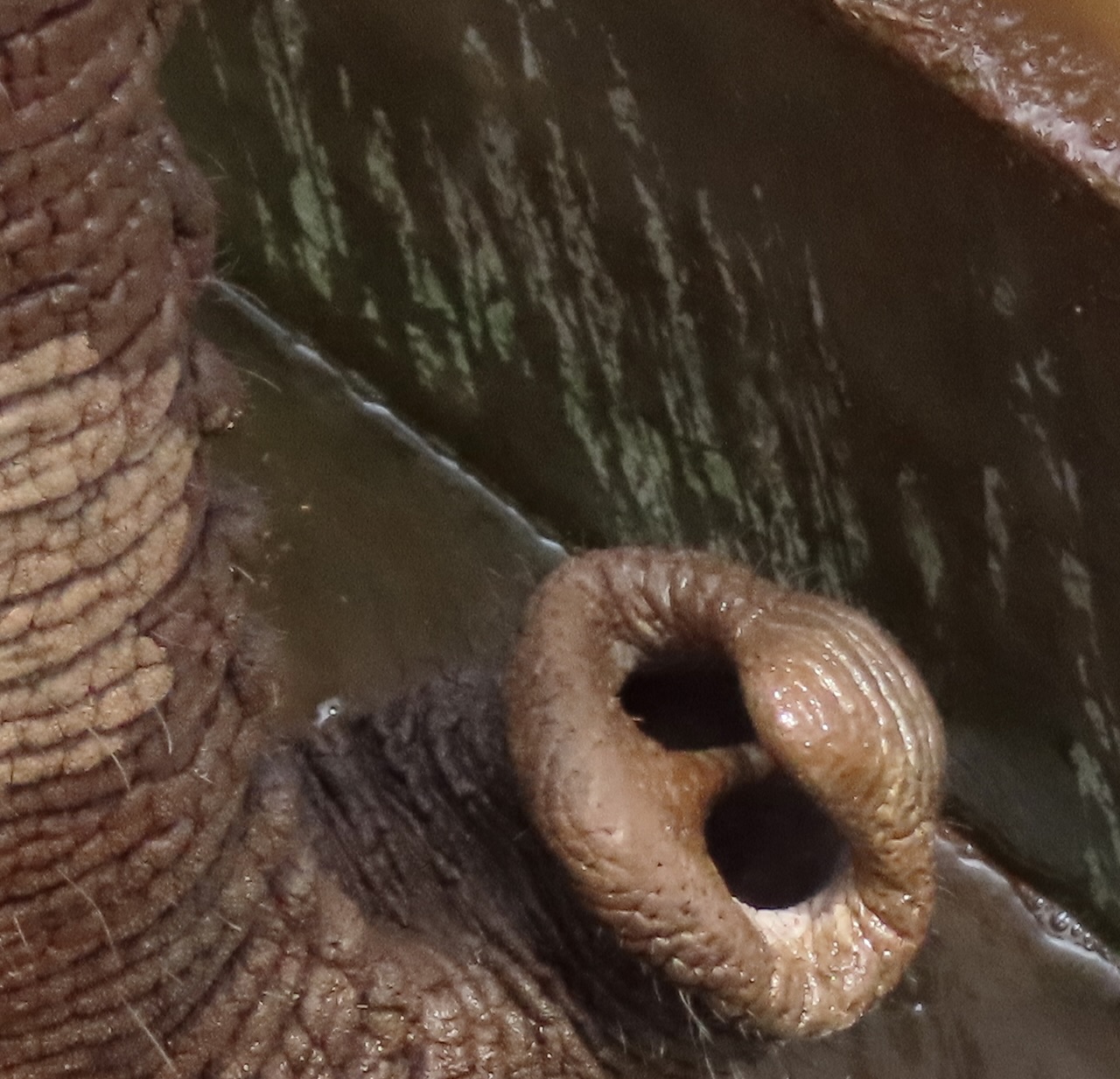
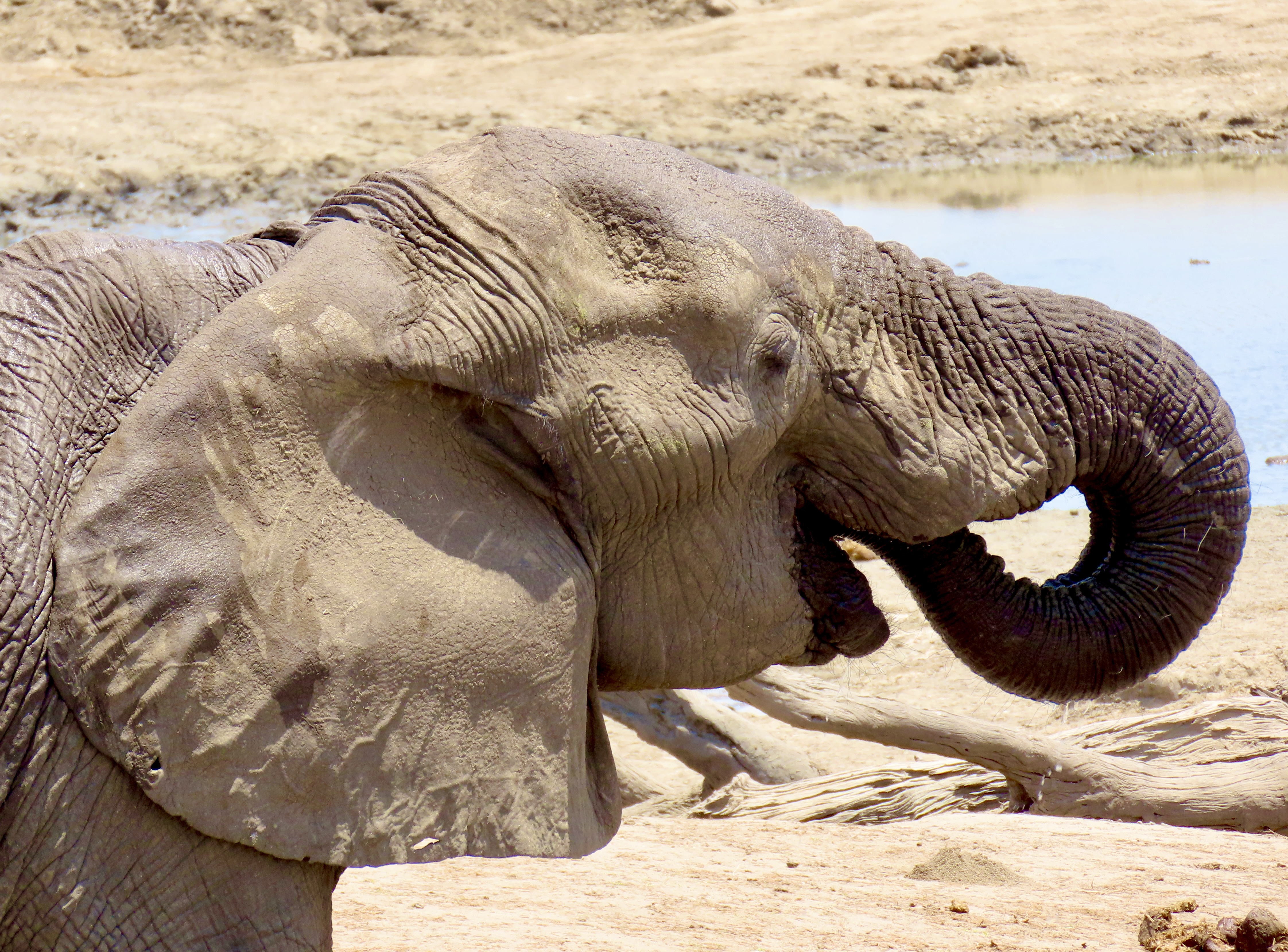
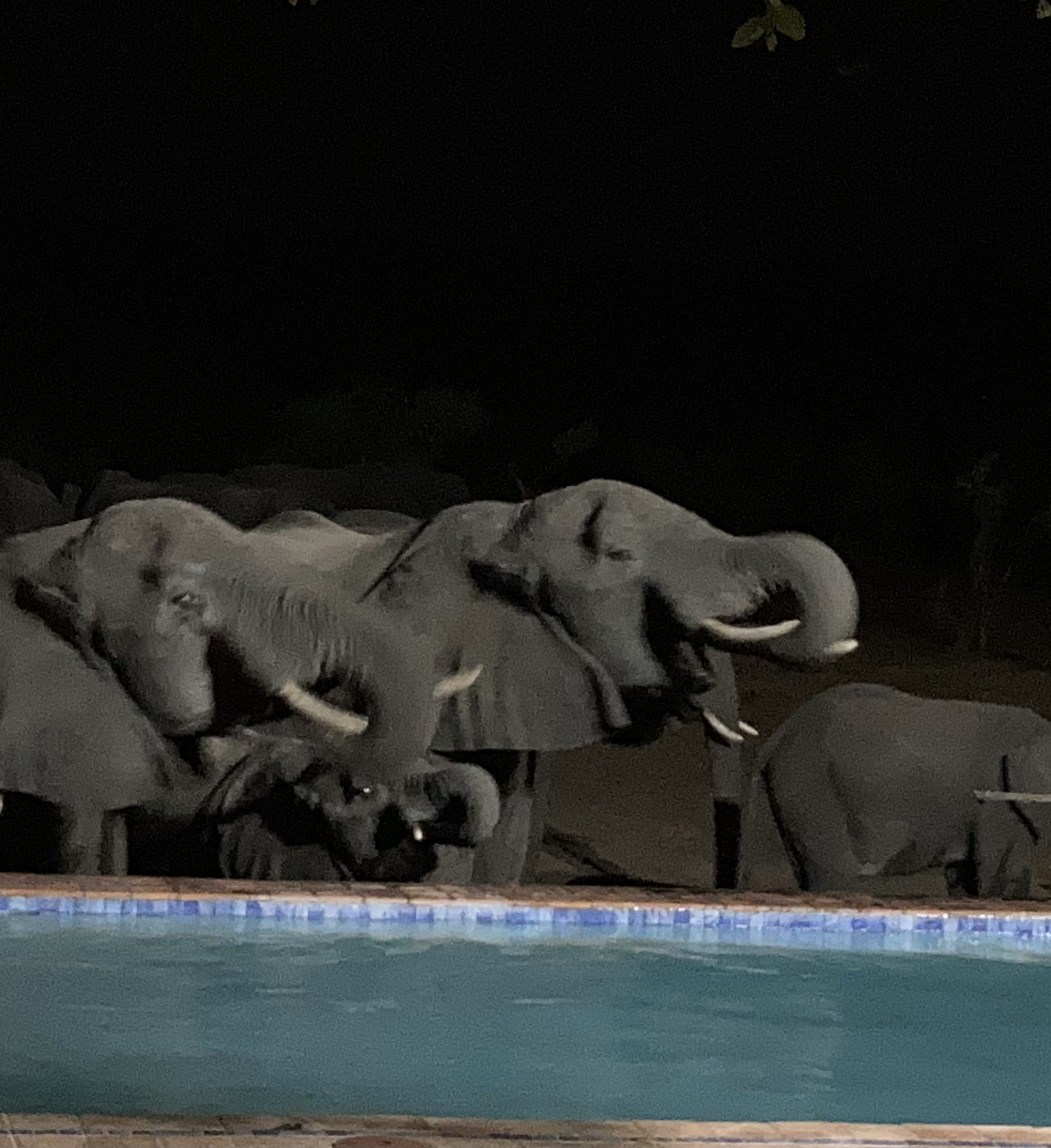
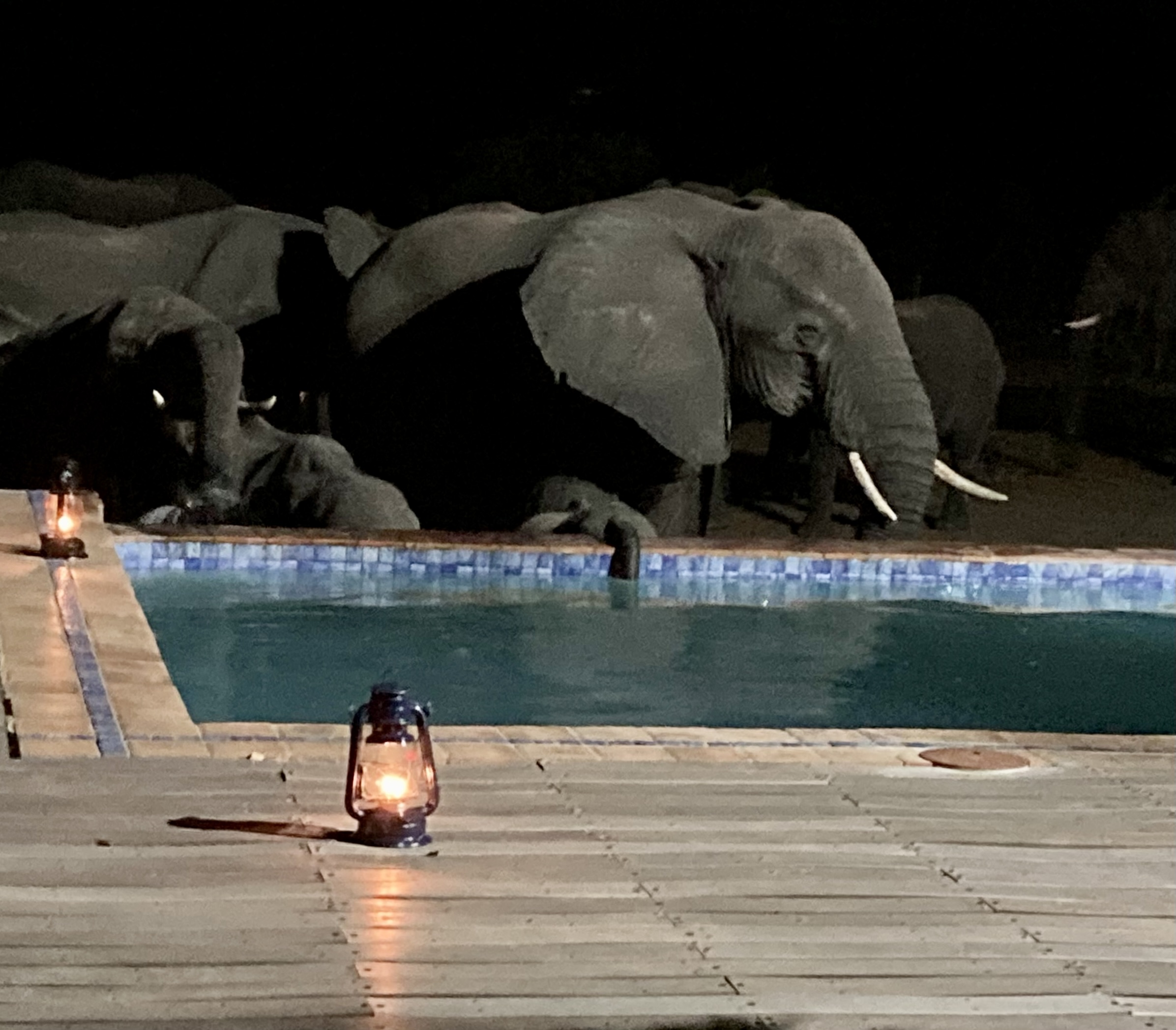
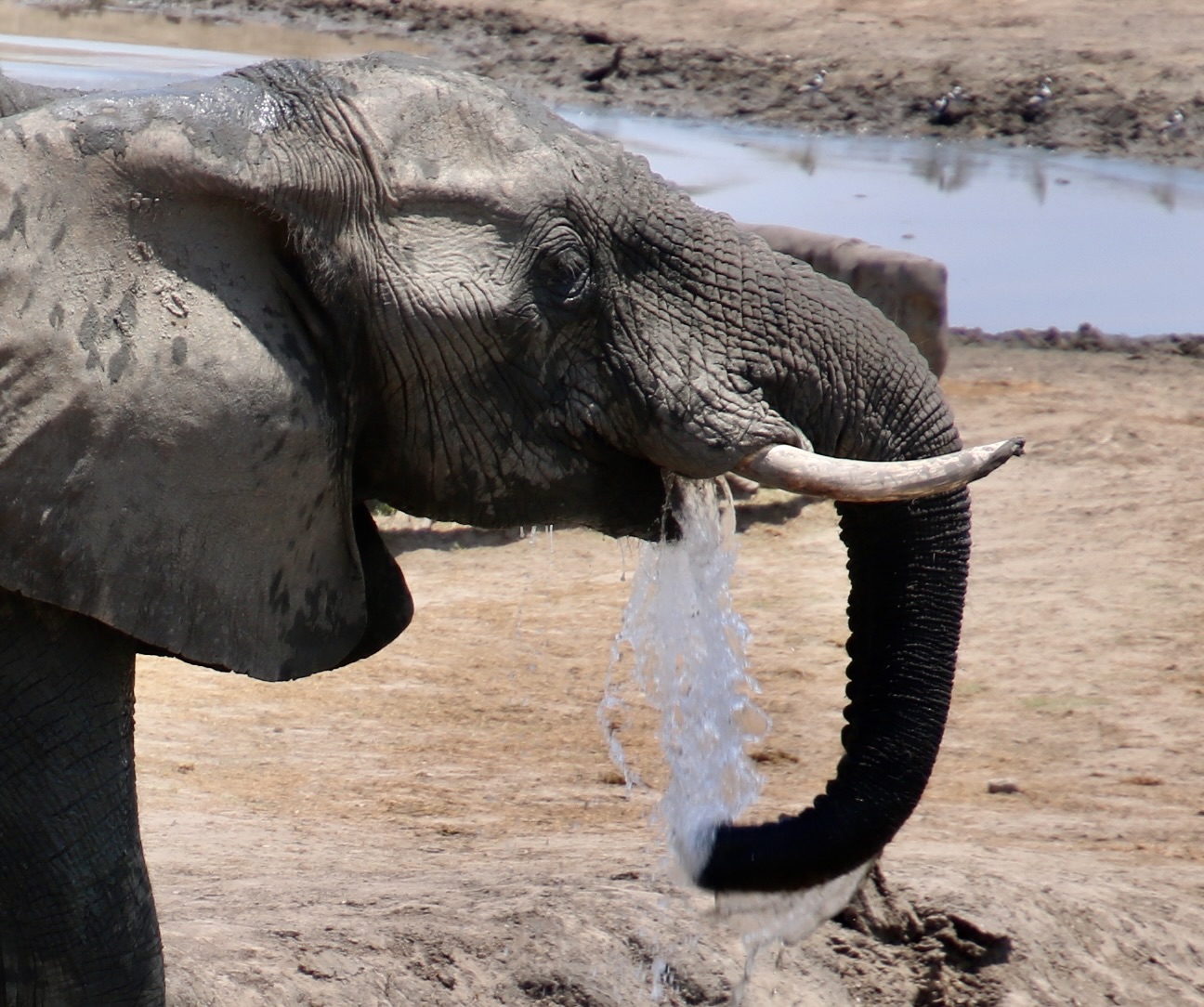
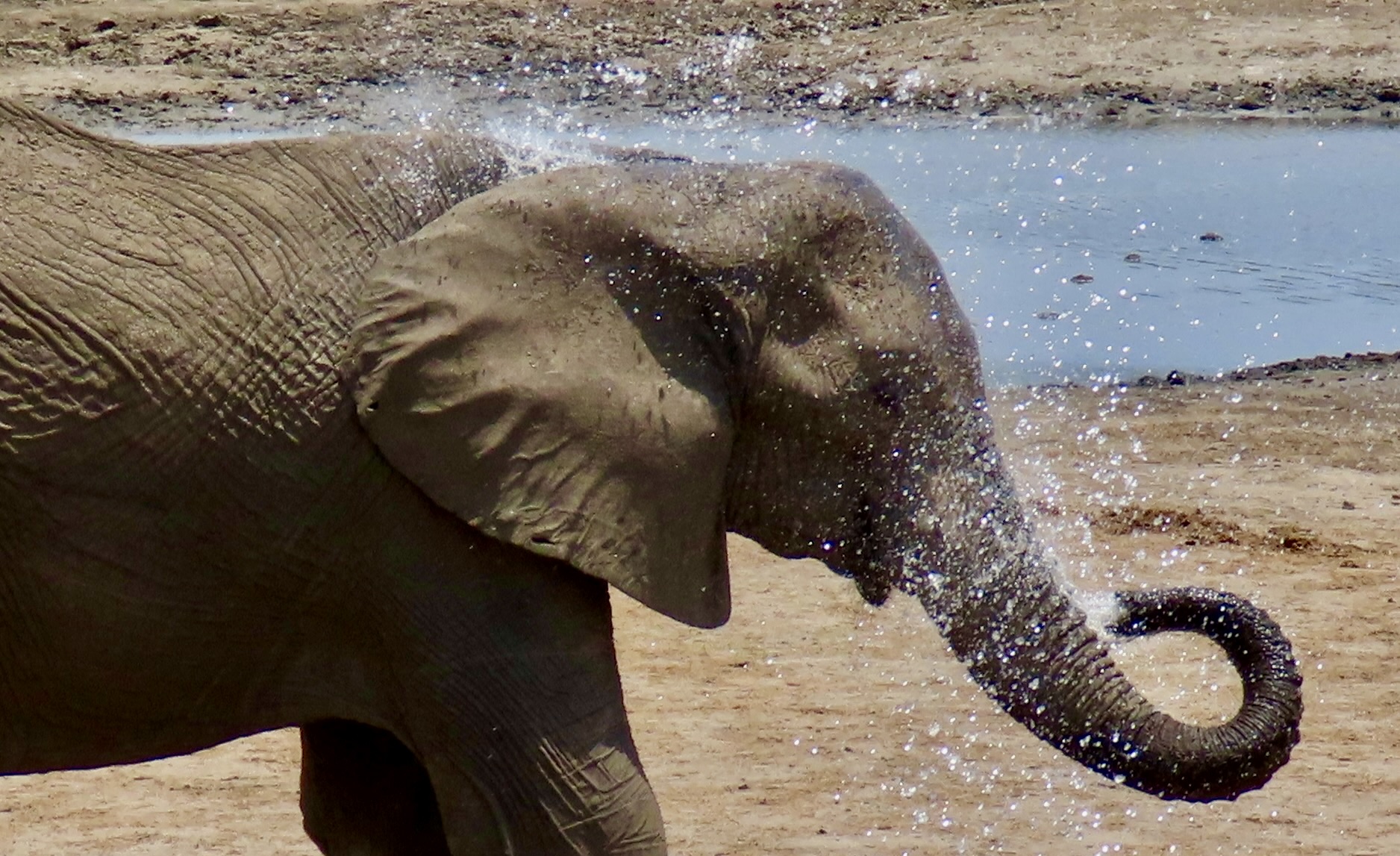
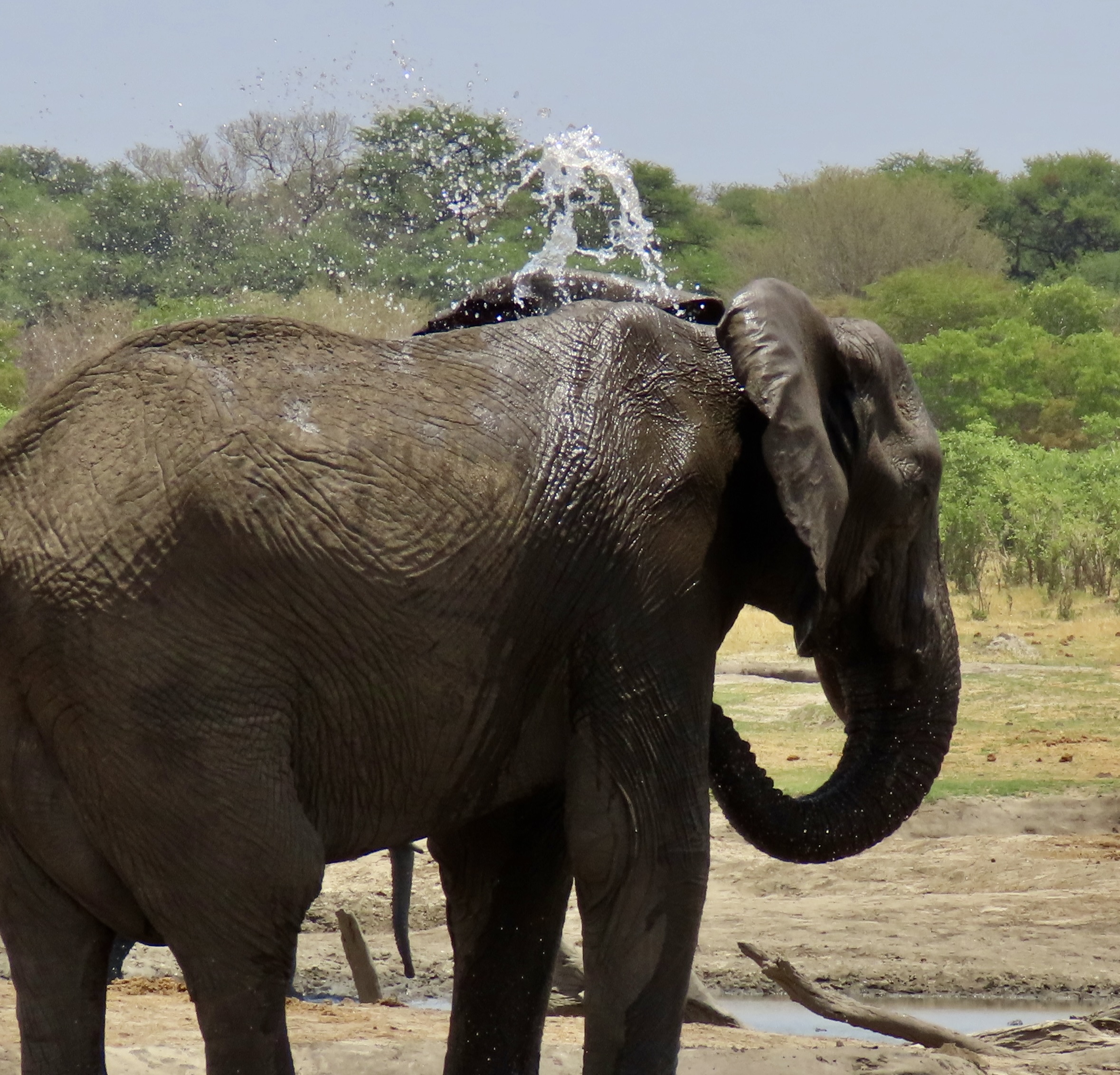
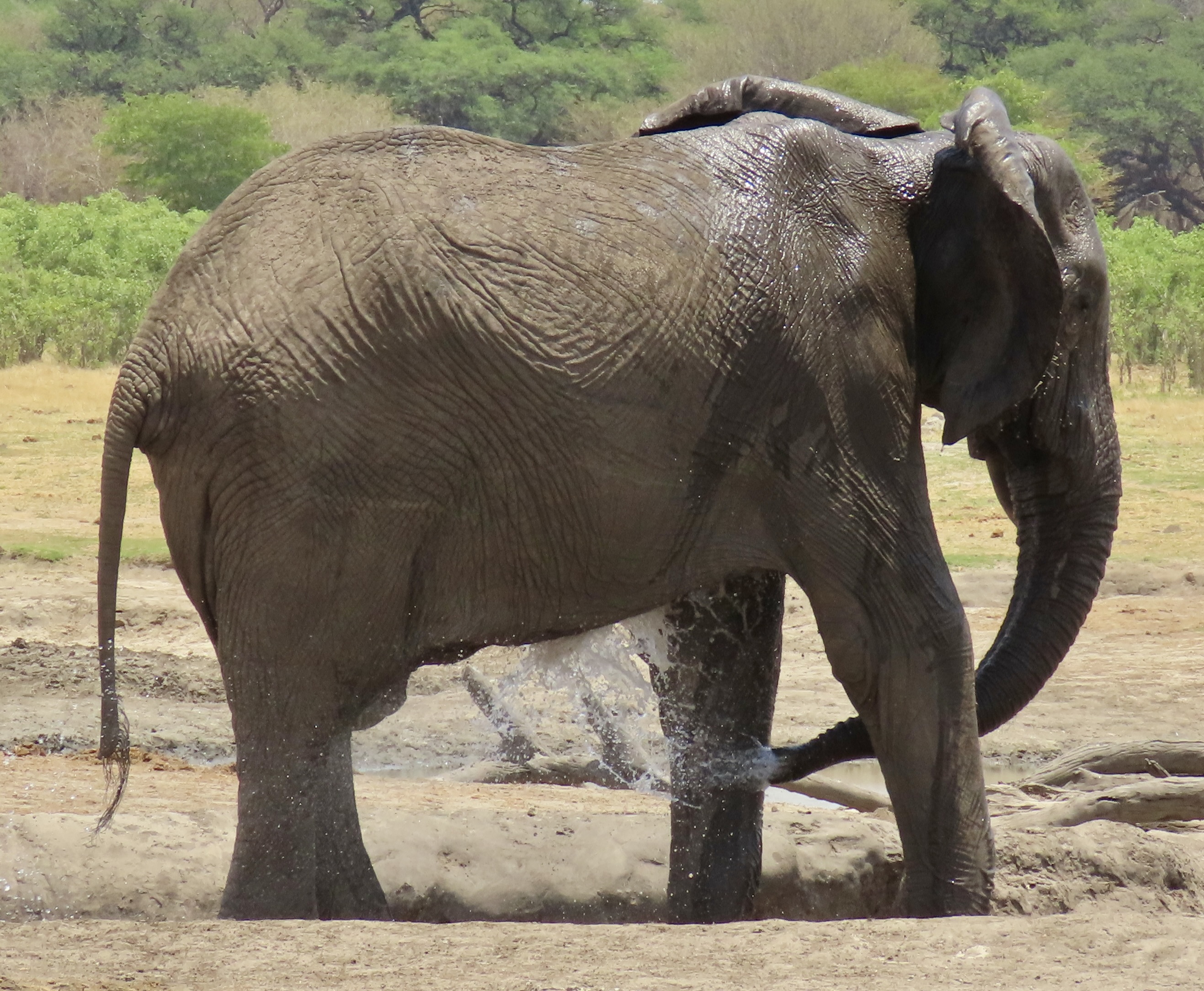
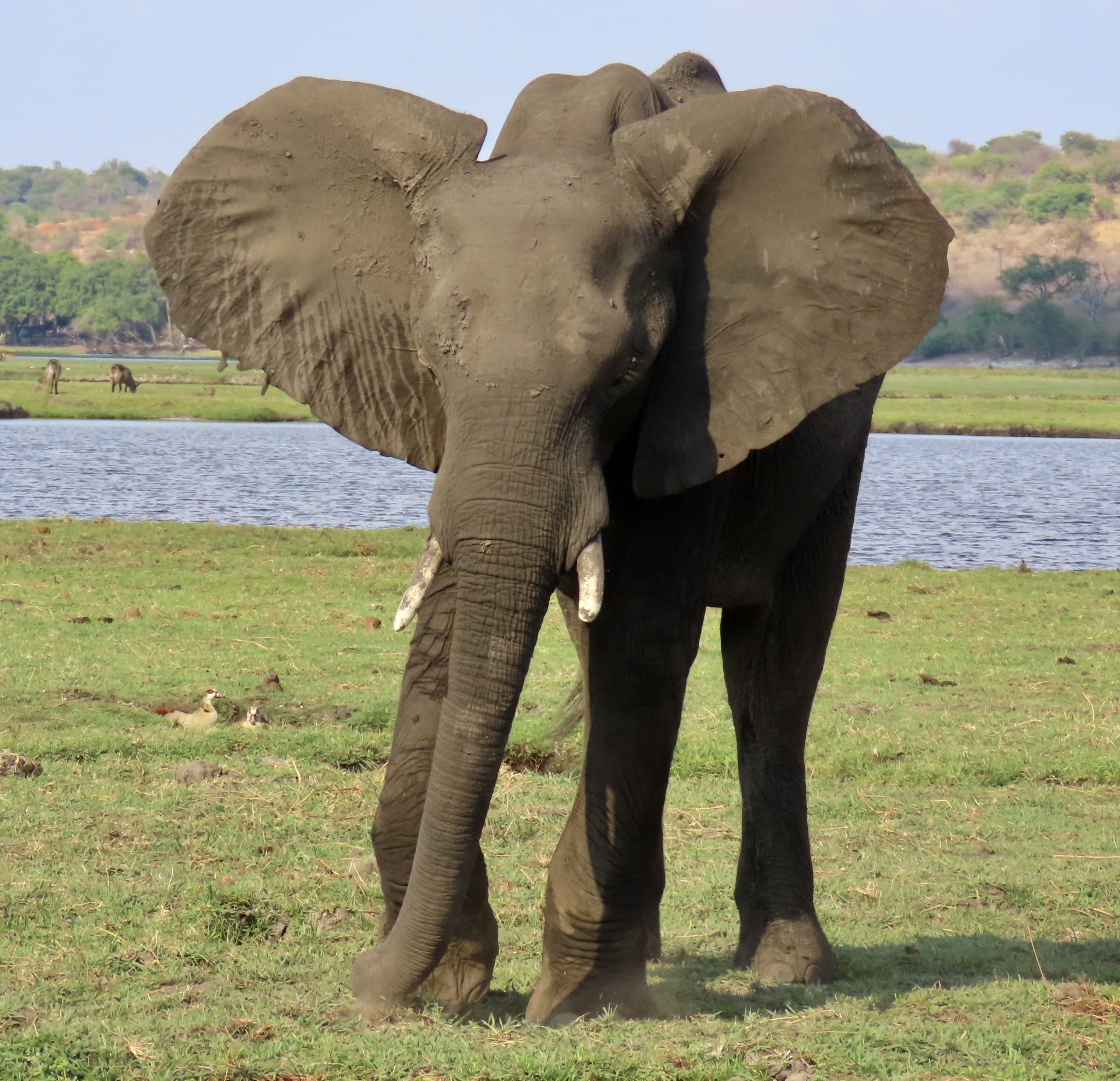
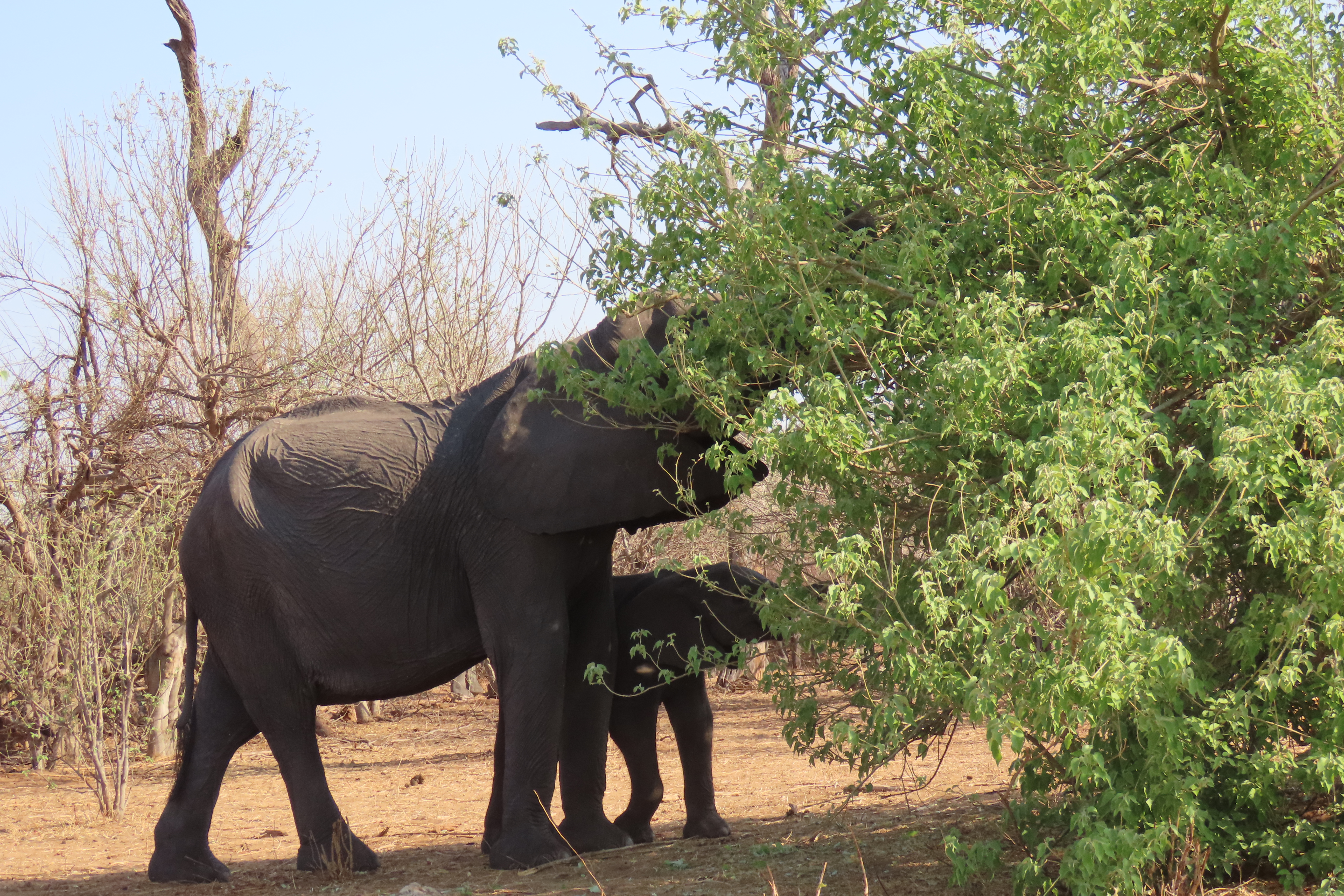
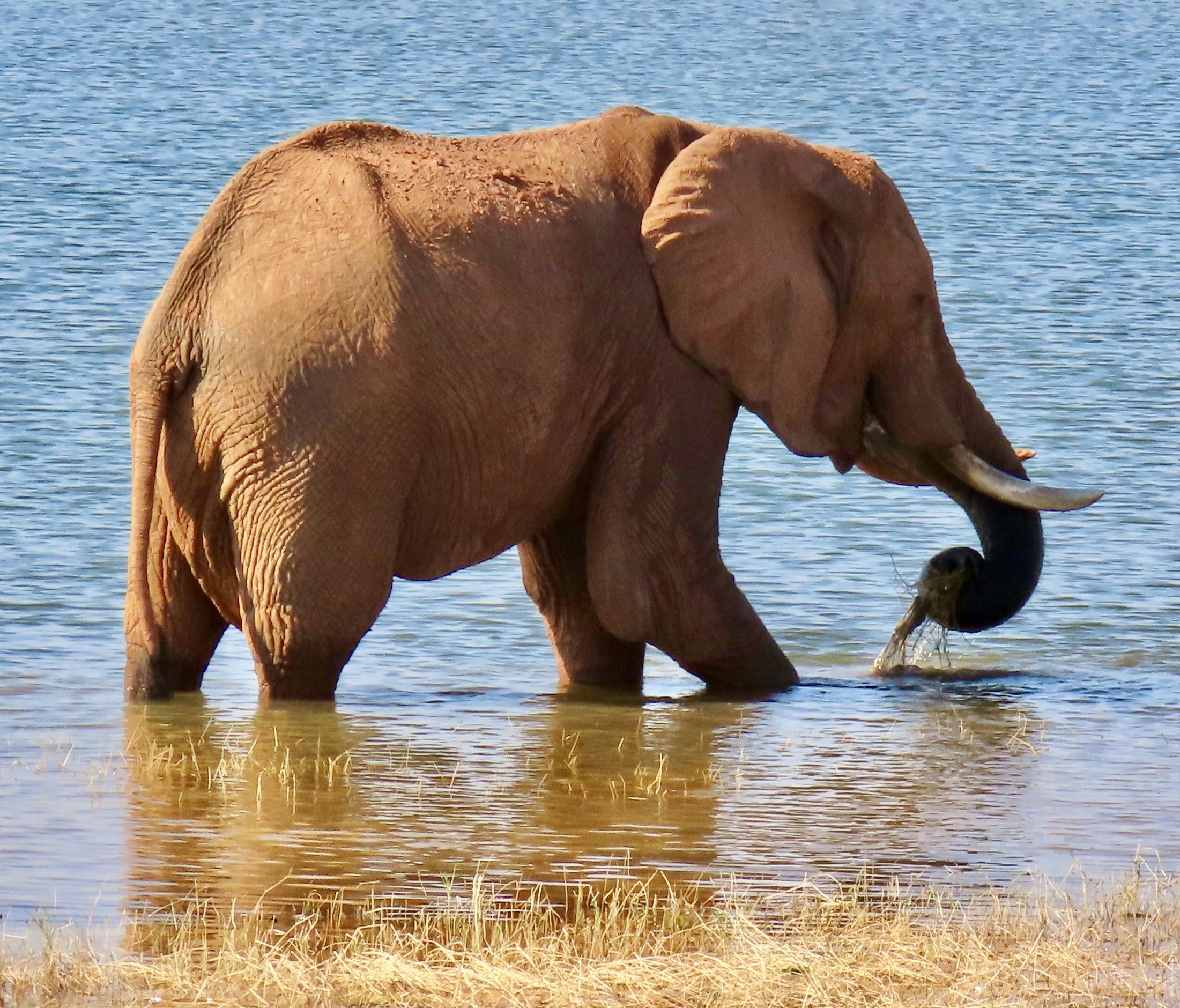
What’s impressive here is the large size of the trunk. The largest can reach up to seven feet. It’s easy to imagine why elephants need a large head and strong neck muscles to carry and use their trunks. While it may not be obvious, the trunk is an extension of the elephant’s upper lip and nose. While the elephant’s trunk is attached to head bones, there are no bones in the trunk. Instead there are lots of muscles. This arrangement is called a muscular hydrostat. Another example is our tongue. The muscles are impressive. There are 17 major muscle groups, 8 on each side and 1 up the middle. But in turn, these muscles are made up of sheathed groups of fibers known as fascicles. The latest estimate is there are around 90,000. When you see claims of an elephants trunk having 50-100,000 muscles, fascicles are what they are referring to. The major muscles and fascicles are what allow for the great flexibility and strength of an elephant’s trunk. The elephant can move it up, down, left and right, and even twist it in every direction, but it does have a dominant side. (Think left handed/right handed.)They can also lengthen, shorten and stiffen their trunks. Peggy is petting an elephant’s trunk near the tip at the Sanctuary. She described the skin as “hard and the hairs wire-like and sharp.” One would think that such an arrangement would lack in sensitivity. Quite the opposite. The trunk is packed with sensory cells and the wire-like hairs are particularly sensitive to touch and are known as sensory hairs.I looked down at the Sanctuary to see this elephant had slipped its trunk through the small fence that separated us and was checking out my shoe. I hope it got a good sniff— in addition to demonstrating the flexibility of its trunk.The tip of the trunk is particularly sensitive. The protrusions on the upper and lower lip work as fingers, enabling the elephant to pick things up. As one report noted, they can pick up a potato chip without crushing it. (Whether one should feed an elephant a potato chip is a different issue.) Now, it’s time to head back to the National Parks and watch the elephants at work using their trunks. Elephants don’t drink with their trunks. That would be like us drinking with our noses! But they do suck water into their trunk and squirt it into their mouth, like this thirsty fellow is doing. BTW: the trunk of a large elephant can hold up to two gallons of water.These guys were also drinking. This time out of a swimming pool at the Iganyana Tent Camp on the edge of Hwange National Park. They made their nocturnal visit while we were eating dinner next to the pool. (These ‘action’ photos were taken with our cell phone in the semi-dark, which accounts for the fuzzy look. I think it only enhances the drama of having 50 or so wild elephants provide dinner entertainment, however.)I thought the swimming pool watering hole deserved another photo because of the baby elephant in the middle trying to get its trunk into the water. It looked like mom ended up spraying some water into the little guy’s mouth.Speaking of shooting water into a mouth, this strange photo seems to show an elephant doing just that for itself. Or was it spitting the water out and sucking it in with its trunk? This is the same elephant I featured two photos above drinking in the normal way. Having finished its drink, the elephant gave itself a shower.Cooling down may have been the objective instead of bathing…So, are we talking hygiene or air conditioning?This is not an angry elephant about to charge. It’s rooting up grass with its foot to eat in Chobe National Park while flapping its ears to keep cool. Once the grass is loose, it will use its trunk to shake out the dirt and transfer the food to its mouth. Elephants eat a lot. Full grown elephants require up to 300 pounds of food a day.Stripping leaves from trees is another way elephants use their trunks to gather their food as mom and baby are doing here from this shrub.This elephant has learned it can pull up grass with its trunk on the edge of Lake Kariba In Matusadona National Park, Zimbabwe.One thing that we noticed in Hwange National Park was that the elephants were also using their trunks to grab grass and eat while they were walking.
In addition to eating, drinking, bathing and smelling, elephants also use their trunks to communicate in a variety of ways. One is a gentle touch to provide comfort to a fellow elephant or baby. They will even put the tip of their trunk in another elephant’s mouth. They also force air through their trunks to produce a variety of sounds. One is as a loud trumpet to express displeasure. They did that a couple of times when they were crowded together drinking out of the swimming pool. It certainly caught our attention.
I’ll conclude this post with Peggy placing food in an an elephant’s trunk at Wild Horizons Elephant Sanctuary. Next up, a look at an elephant’s family life, head, ears, tusks, feet, skin and tail. Plus a visit to an elephant graveyard.


 Wandering through Time and Place