A 10,000 Mile Bike Trek Begins with the First Pedal… Maybe

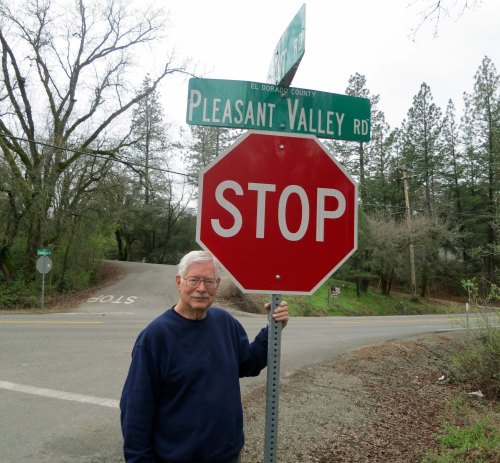
This would have been my first official stop sign on my bike trek. My first grade teacher, Mrs. Young, had lived across the road. She kicked me out for a year when she learned my mother had forged my birth certificate to get me out of the house.

The  first official stop sign on my bike trek. My first grade teacher, Mrs. Young, had lived across the road. She kicked me out for the year when she figured out my mother had forged my birth certificate. The cut off for first grade had been March 1st. I was born on the 3rd. It was a poor forgery. I was happy to return home. My mother, not so much.

“So, you are going out beyond the clouds this morning.” –Pop

I had planned to leave on my birthday, March 3. I liked the symbolism. But it was raining, and I had a few things left to do— like buy my bike. It wasn’t a big thing; I had owned several over the years. My first had been a one speed bike with coaster brakes and handle bars that would have made a laidback Hell’s Angel jealous. It was well-used. Some kid would have been proud to call it new back before World War II. My parents paid five bucks for it. The bike provided me with the freedom to zip around my home town and the surrounding countryside for several years until impending teenagehood suggested it wasn’t cool.

My Trek 520 cost a lot more. It was designed for touring. According to the company: “If you’re a committed touring cyclist looking for the utmost in comfort and durability to carry you to familiar destinations and unexplored vistas, 520 is your ride.” The ad went on to claim that the bike was “ultra-stable even when fully loaded.” Well, I was definitely headed for ‘unexplored vistas’ and ‘fully loaded’ for my trip meant close to 60 pounds of bike gear, camping equipment and books— plus Curt. It was a lot to ask of a bike.

A funny aside on Trek Bikes. The company once threatened to sue the American Lung Association for using the name “Bike Treks,” which was silly, to say the least. When I pointed out that I had trademarked the name two years before the company was created as The Sierra Trek, it became a question of who should be suing whom. The issue was quickly and quietly dropped.

I decided to begin and end my trip in Diamond Springs where I was raised, a small community 30 miles east of Sacramento on Highway 49. Here’s the opening paragraph in my bike journal:

3/10/89

The journey starts today, where so much of who I am started. That’s why I am here. That, and because my father is here and I wanted to spend some time with him.

As I wrote, Pop was out in the kitchen of his trailer meticulously preparing eggs and grumping because he hadn’t prepared everything the night before. At 84, he liked to have things just right. In fact, he had always wanted things to be done just right, maddenly so. Maybe it had come from his training as an electrician where he had once done something wrong and come in contact with a live, 11,000-volt high power line. Those type of lessons stick with you.
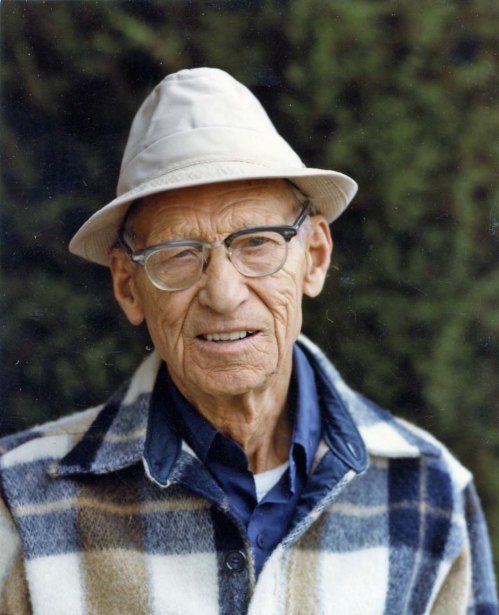
Pop in his 80s

Pop in his 80s

I’d been visiting and sleeping on his couch for the past three days. It had been a good visit, as we relived his youth, and mine. He’d been born back at the end of the horse and buggy age and the beginning of the horseless carriage era. He’d seen a lot, but his favorite times were still when he was growing up in Iowa. I had heard the story many, many times. It was a well warn groove in his brain, to be remembered when everything else was forgotten. He was functioning well for his age, however, even though he had suffered a minor stroke. I treasured our time together.

Finally, after breakfast, I loaded my four panniers and a day pack I would be carrying. Pop came out to wish me a safe journey and take photos. He always carried a camera and was quite disgusted I didn’t. It was one of three complaints I heard regularly. The other two were that I wasn’t happily married and making little Mekemsons (lots of them), and that I had strayed from my Christian upbringing. Of the three, I am still convinced that he believed not taking photos was my greatest sin.

A solid hug sent me coasting down the hill from his trailer in the Diamond Manor Mobile Home Park, a bit teary eyed. I couldn’t be sure he would be around when I returned. My first pedal rotation at the bottom of the hill stopped halfway. “Damn,” I thought, climbing off my bike and almost falling over. I was ever so glad that no one had been present to watch. The problem was immediately apparent. I’d put my panniers on backwards, not a great start. I righted the wrong and began again— the first pedal of 10,000 miles.

Thomas Wolfe said, “You can’t go home again.” He was right, of course. The 46-year old Curtis of 1989 was a world apart from the 6-year old Curtis of 1949. And both were different from the Curtis of today.  And yet you never totally escape from the home of your youth, and in ways, it always remains your ‘home.’ My first short day of bicycling was packed with memories. I’ll let photos tell the story. Pop would be tickled that Peggy and I are redriving the route— and even more pleased that we are carrying cameras.
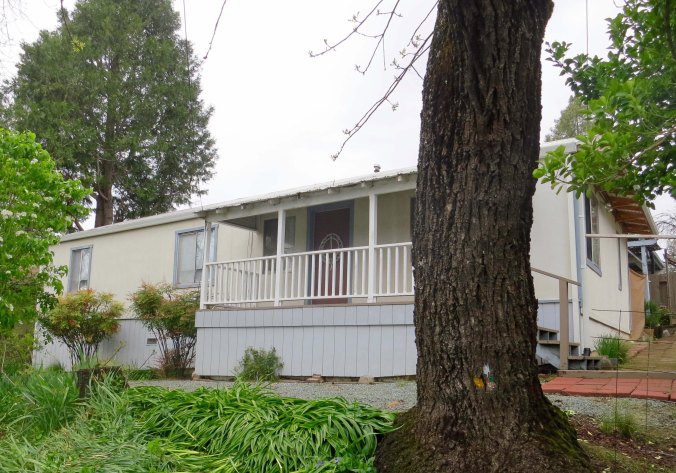
I am rather amazed that the house I was raised in still stands, given that it's parts had been prebuilt foe a World War II army barracks. My room was on the far left.

I am rather amazed that the house I was raised in still stands, given that it was an early version of a manufactured home, prebuilt for a World War II army barracks. My room was on the far left.
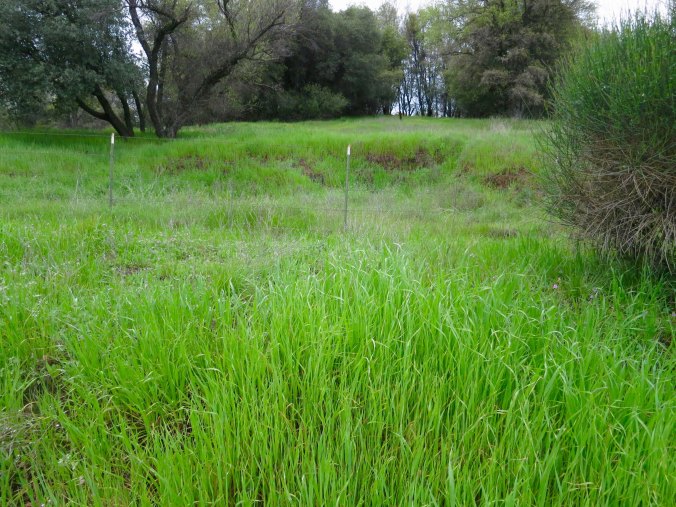
Every few feet of bicycling brought back a memory. This sunken ground was once a cave that included the crystal clear springs that gave Diamond its name.

Every few feet of bicycling brought back a memory. This sunken ground off of Main Street was a cave when I grew up. It  included the crystal clear spring that gave Diamond its name. It had once provided water for Native Americans and later was a watering hole for 49ers passing through town. When a group of miners found a 25 pound gold nugget nearby, they decided to hang around and the town was founded.
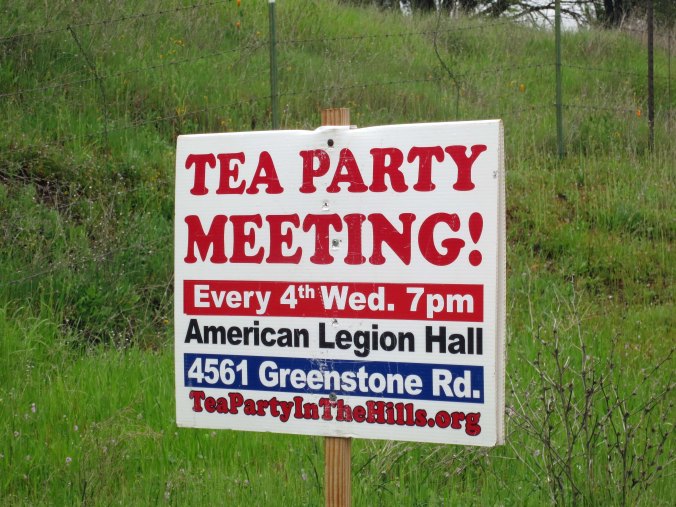
Now it hosted a Tea Party sign. Thinking Tea party led me to think of Alice in Wonderland and I wondered if that was where the name had come from. The Mad Hatter tea party seemed to fit a lot of politics.

Now it hosted a Tea Party sign. Thinking tea party led me to wonder if the Boston Tea Party or the Mad Hatters Tea Party in Alice and Wonderland provided the inspiration for the name. A crazy hatter who had inhaled too many mercury fumes and a March Hare who ineffectively threw tea cups willy-nilly at anyone and everyone seems to be a great model for much of today’s politics.
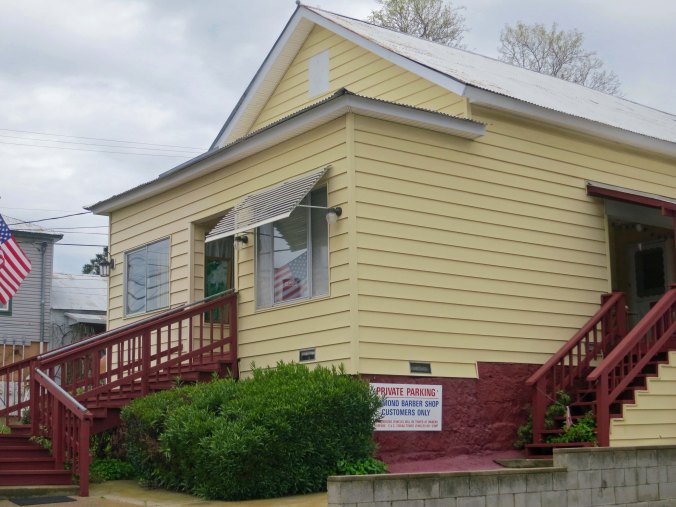
As I made my way down main street, I came to this barber shop. I'd had my hair cut there in the 40s and 50s! Even further back in time, it had served as a one room school house.
As I made my way down main street, I came to this barber shop. I’d had my hair cut there in the 40s and 50s! Even further back in time, it had served as a one room school house.

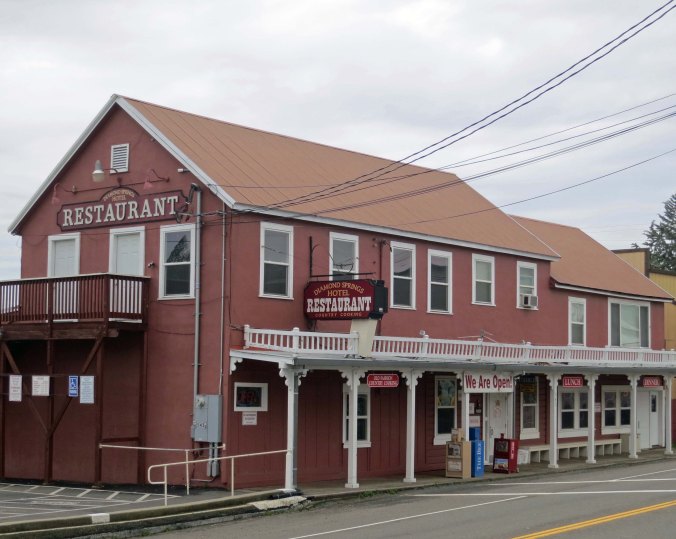
The old Diamond Hotel is just across the road from the barber shop. It still serves good food. Now days, like many old establishments along historic Highway 49, it claims to be haunted. Ghosts are good for business.
The old Diamond Hotel is just across the road from the barber shop. It had served good food when I was growing up and still does. Now days, like many old establishments along historic Highway 49, it claims to be haunted. Ghosts are good for business.

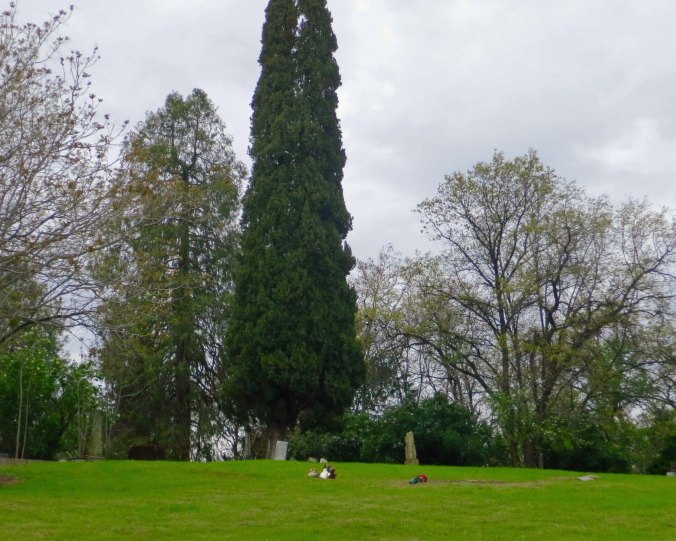
The Graveyard: I could write a book about it. It was just across the alley outside our back yard and dominated many of my early memories. In the day time it was an elaborate play pen. At night it became the dreaded home of dead people and ghosts.

The Graveyard: I could write a book about it. It was just across the alley outside our back yard and dominated many of my early memories. In the day time it was an elaborate play pen. At night it became the dreaded home of dead people and ghosts.

Heavenly trees on the edge of a graveyard in Diamond Springs, CA

It was a wild place covered with Heavenly Trees like these that served to hide the tombstones when we were young. They still lurk on the edge of the Graveyard, waiting to reclaim it. I prefer the wild look to the manicured look.
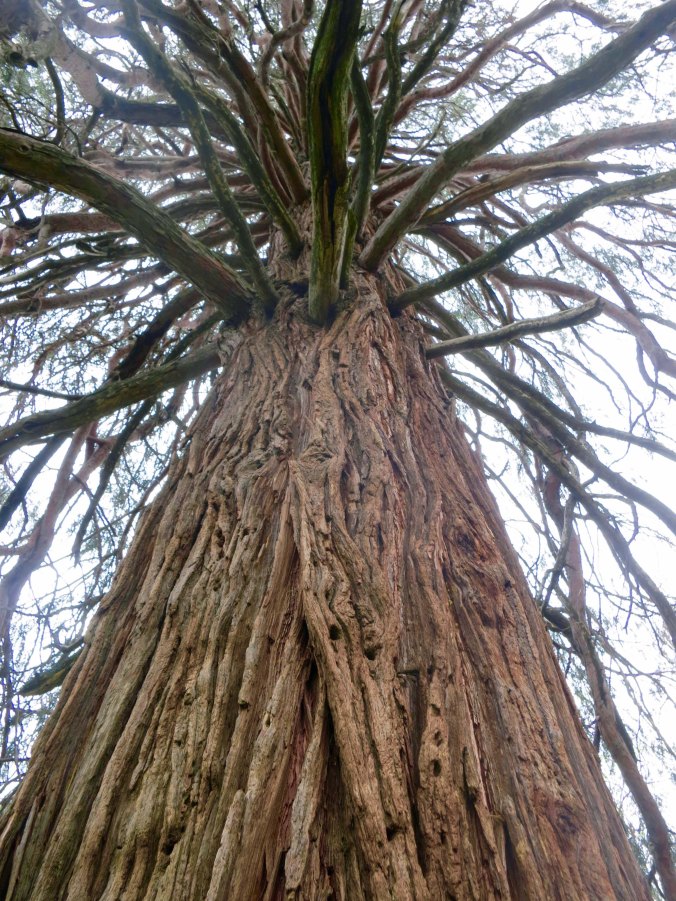
This old Incense Cedar dominated the Graveyard. It was probably planted in the 1850s. it's lower limbs held a tree fort that Pop had built for my brother and me.

This old Incense Cedar dominated the Graveyard. It was probably planted in the 1850s. it’s lower limbs held a tree fort that Pop had built for my brother and me. He built it when he caught us trying to build a fort 60 feet up in the tree. Our big sport was racing each other to the top.

Flowers burst out all over the graveyard in spring, and provided many a bouquet for Mother, picked dutifully by me. This lilac bush was still blooming away.

Flowers burst out all over the graveyard in spring, and provided many a bouquet for Mother, picked dutifully by yours truly. This lilac bush is still blooming away.
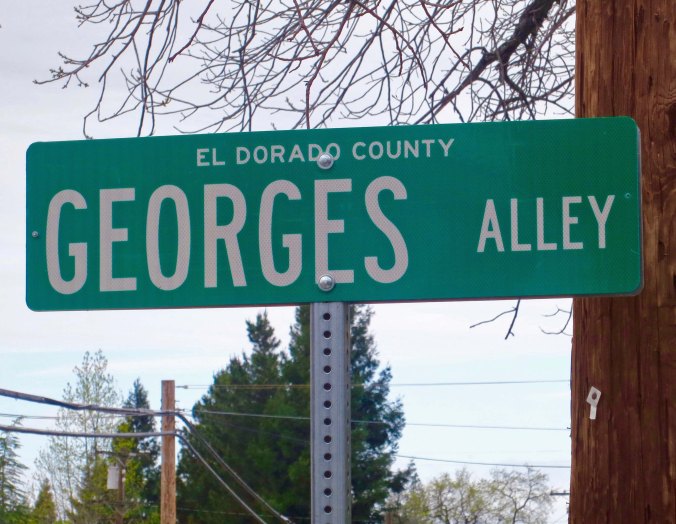
Our alley didn't have a name at first. Then the County decided to name it Graveyard Alley. Mother gave Marshall and me our orders. "Make the sign disappear. Don't tell your father." We did. The County put up another sign. It disappeared. Finally, the County decided to namer it Georges Alley after the first man who lived on the alley. We liked him. The sign stayed.

Our alley didn’t have a name at first. Then the County decided to name it Graveyard Alley. Mother gave Marshall and me our orders. “I won’t live on Graveyard Alley. Make the sign disappear. Don’t tell your father.” We did. The County put up another sign. It disappeared. Finally, the County decided to name it Georges Alley after the man who built it. We liked George. The sign stayed.
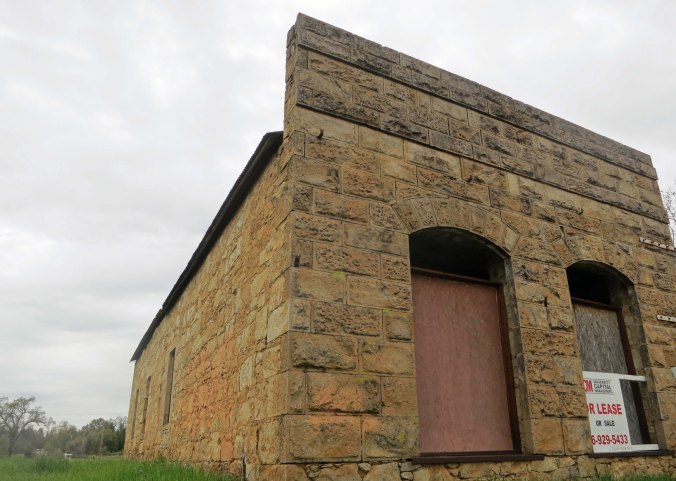
This beautiful old gold rush era building is about a 100 yards away from our house.

This beautiful old gold rush era building is about a 100 yards away from our house. The school was a block beyond it.
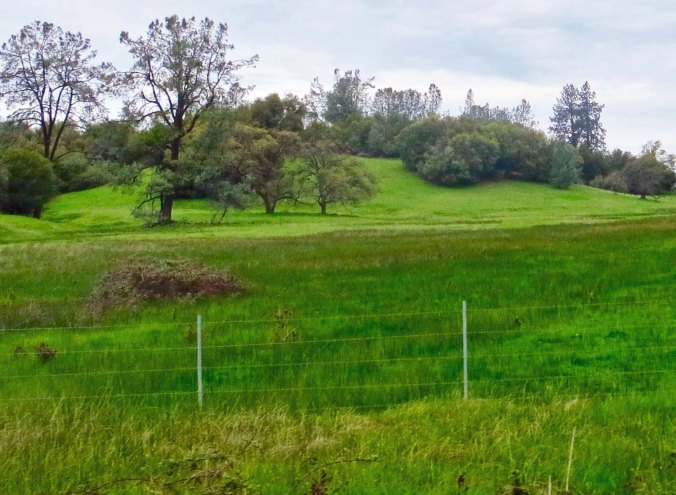
Tony Pavy lived just outside of Diamond on the road to El Dorado. As I cycled past it, I was reminded of the time he threatened to shoot me with a shotgun.

Tony Pavy lived just outside of Diamond on the road to El Dorado. As I cycled past it, I was reminded of the time he threatened to shoot me with a shotgun. We’d been hunting squirrels near his property when a bullet ricocheted and took out his pig. “Get my gun, Mama. They shot my pig!” he had screamed. We figured he wasn’t in much of a mood for an explanation and hightailed it. When the sheriff caught up with us later we had a good alibi.
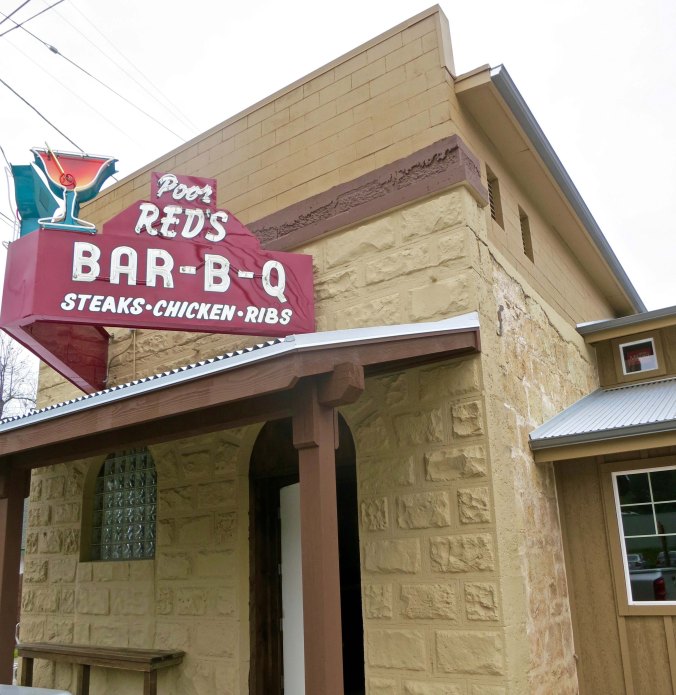
Poor Red is long since dead but his Bar-B-Q restaurant lives on in Eldorado, an historic eatery from the 1940s well-known throughout Northern California.

Poor Red is long since dead but his Bar-B-Q restaurant lives on, an historic eatery from the 1940s well-known throughout Northern California. I consumed many a rib and Golden Cadillac there. I forget the ingredients of Golden Cadillacs but I do remember they tasted wonderful and after two, you didn’t care what was in them. Reds is in the small town of El Dorado, two miles outside of Diamond. I had turned left on my bike there and began making my way south.
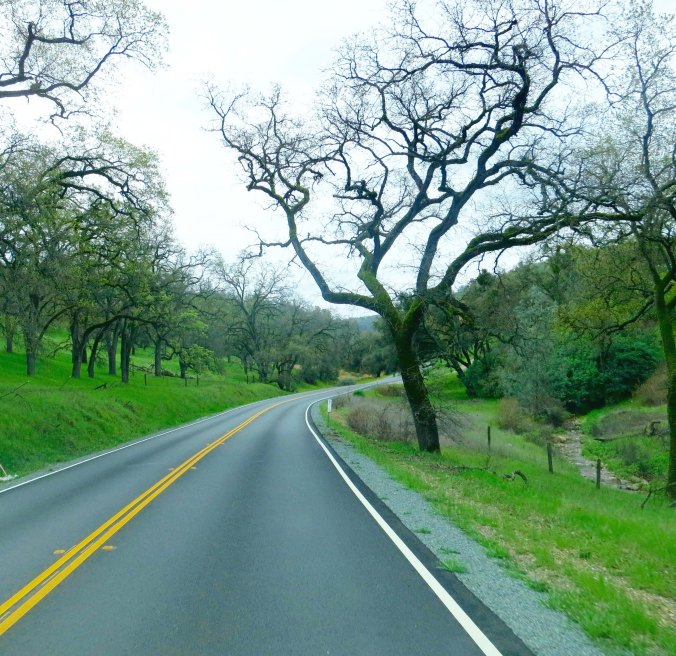
The foothills of California are beautiful in the springtime. Shortly after this Highway 49 began its steep, curvy descent to the Consumes.

The foothills of California are beautiful in the springtime. Shortly after this, Highway 49 begins its steep, curvy descent to the Consumes River. It was my first downhill.
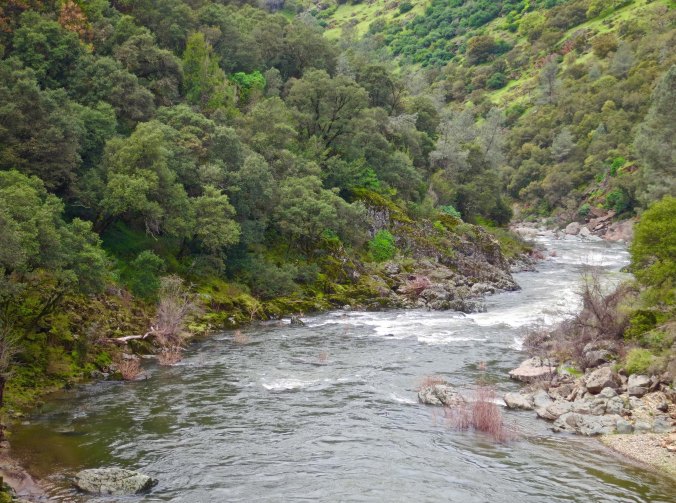
I once organized a student strike so we could have a ditch day as seniors. I wasn't expelled and we got the day. We held our party on the Consumnes River a couple of miles upstream from this photo. I had stopped for lunch at a small greasy spoon restaurant along the river on my bike and was kept company by a cat and a drunk. "You are fucking crazy," he had told me when he learned of my journey.

I once organized a student strike so we could have a ditch day as seniors. I wasn’t expelled and we got the day. We held our party on the Consumnes River a couple of miles upstream from this photo. I had stopped for lunch at a small greasy spoon restaurant along the river on my bike trip and was kept company by a cat and a drunk. “You are fucking crazy,” the drunk had told me when he learned of my journey. Maybe.
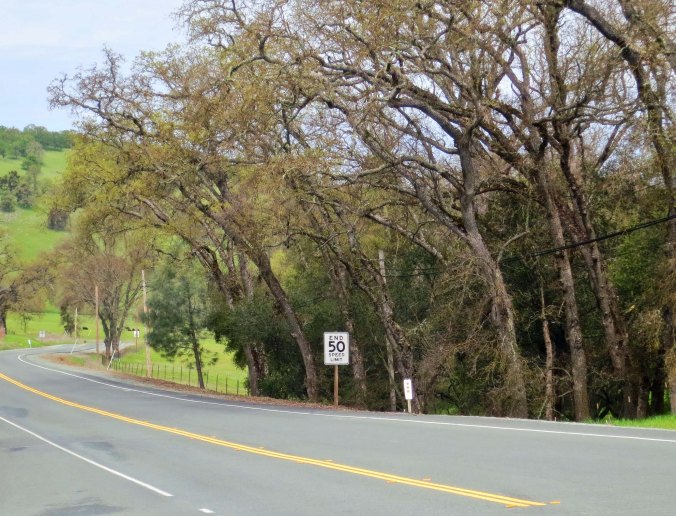
This is an historic spot. I was on my first ever official date. Mom, boyfriend, and Paula had taken me with them to dinner in Sutter Creek. On the way back, boyfriend and Mom had climbed in the back and insisted I drive home. "But I just got my learner's permit last week," I pointed out. I was just beginning to gain confidence when I ran over the skunk here.

This is an historic spot dead skunk spot. I was on my first ever official date. Mom, boyfriend, and Paula had taken me with them to dinner in Sutter Creek. On the way back, boyfriend and Mom had climbed in the back and insisted I drive home. “But I just got my learner’s permit last week,” I pointed out. Didn’t matter. I was just beginning to gain confidence when I ran over the skunk.

I made it 18.3 days on day one and stopped at Old Dry Well Motel and Cafe in Dry Creek. My plan for the next day was to make it 30 miles! The world had other plans for me.

I made it 18.3 miles on day one and stopped at Old Well Motel and Cafe in Dry Creek. Old stories report that outlaws once buried thousands of dollars here. My plan for the next day was to make it 30 miles! The world had other plans…
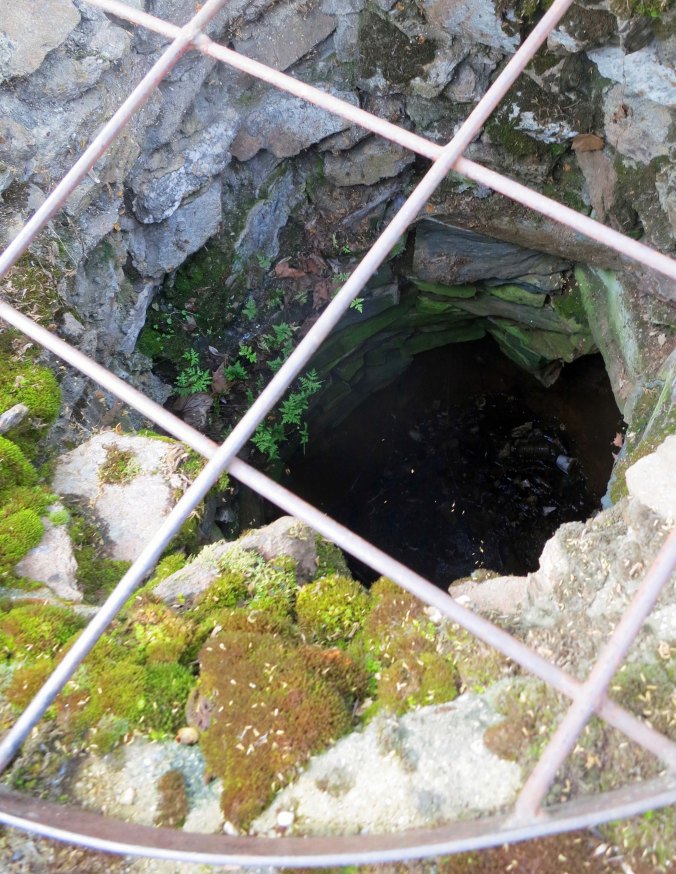
A photo of the well.

A photo of the well. Another relic from the Gold Rush.
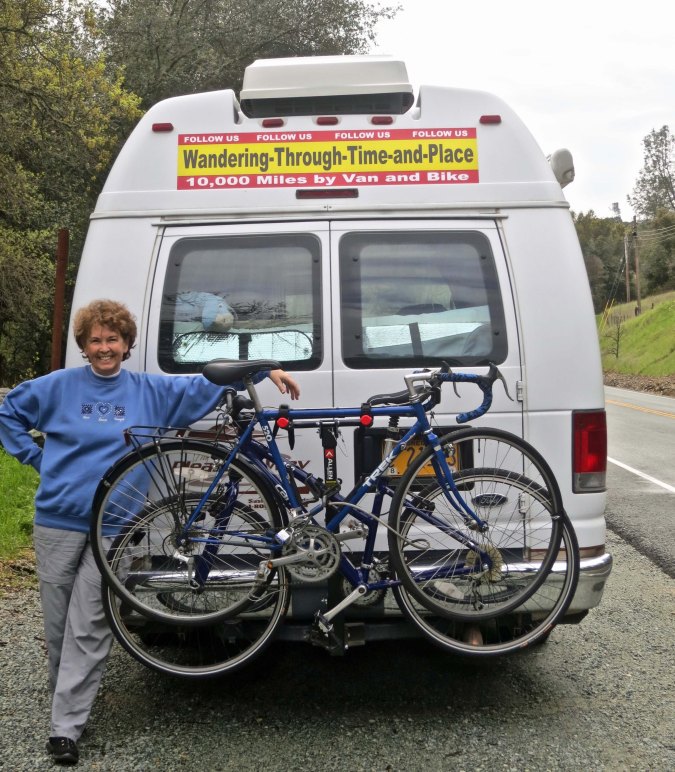
Peggy has volunteered to drive the whole trip so I can take photos and write notes. What a woman! Eeyore, another of our travel companions peers out the back window.

Peggy has volunteered to drive the whole trip so I can take photos and write notes. What a woman! Eeyore, another of our travel companions, peers out the back window. The world famous traveling Bone is seated up front.

NEXT BLOG: I will introduce Bone. You probably already know Eeyore.
 

Is Insanity a Requirement for Bicycling 10,000 miles?

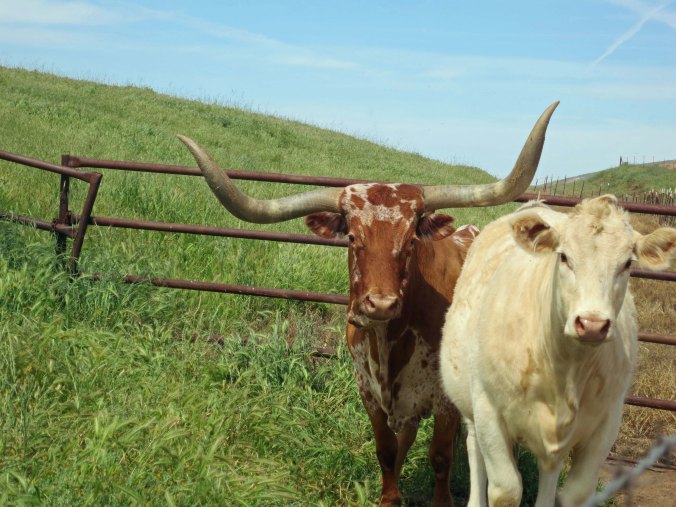
You can get lonely when you are out on the road. I'd moo at cattle along the way for entertainment. They always turned to look, and would often moo back.

You can get lonely when you are out on the road by yourself. I’d moo at cattle along the way for entertainment. They always turned to look, and would often moo back.

Bilbo’s advice: “It’s a dangerous business, Frodo, going out your door. You step onto the road, and if you don’t keep your feet, there’s no knowing where you might be swept off to.”

I was out of the saddle, climbing the steepest hill in Nova Scotia, and grumpy. A couple of friends from California had joined me on a bicycle trip around the province. They were sailing up the mountain and having a merry conversation while I could barely grunt. They were both college track coaches and strong, women athletes. But they hadn’t just bicycled across the US; in fact, they had hardly bicycled at all. What they had that I didn’t were gear clusters on their bikes that made mine look like a one speed. Eventually I made it to the top of the mountain and was greeted by two Cheshire Cat grins and a giggle. On the side of the road a bicyclist had painted a bicycle with the word “WHY?” stenciled next to it.  Having been left in the dust, I could only wonder…

Not many people decide to leave home and go on a six month, solo bike trek. In fact, not many people have the option or, I might add, the desire. But I didn’t have a wife, I didn’t have any children, and I had a solid job offer if I chose to return. I was ready for adventure.

This doesn’t mean that folks were urging me out the door. Three or four women were hoping I would stick around and change my marital status. (This was pre-Peggy.) The legislative advocate for the California Lung Association wanted me hang around and work on the implementation legislation for the tobacco tax initiative we had just passed. My sister Nancy was quite concerned about all of the terrible things that might happen to me out on the road. (My bother, Marshall, thought I should carry a pistol.) Etc.

There were good reasons for staying. They just weren’t as strong as my reasons for leaving. Here are three that I had noted in my journal way back then:

  1. The physical journey— I wanted the experience of travelling, seeing new things, and meeting new people. I love to wander. Going anywhere, anytime, excites me. I think it is genetic. I could have been an early explorer. I would be living in the outdoors, a plus for me, and seeing the US and Canada in a way that few people do. And finally, the trip would be good for me from a health perspective. I was 46 years old and in serious need of a tune up.
  2. An internal journey back in time— I wanted to know more about what drove me. I don’t handle stress well. It drives me bonkers. All too often it had led to depression and could become debilitating to the point where escape was the only solution. I’d run off to the woods to lick my wounds. Even doing things I was good at and enjoyed in time came to resemble a cage I was trapped in. By learning more about what drove me, possibly I could learn to be more in the driver’s seat.
  3. A quest— I am not particularly religious, but I do have a spiritual side. I pictured myself meditating for long stretches as I pedaled for thousands of miles along North America’s highways and byways. Who knows where it would lead me? I carried books like the Tao Te Ching and Bhagavad Gita for inspiration. A friend had even given me a copy of the New Testament.

A Bit on Preparation:

I joked in my last blog about preparing for my trip by increasing my beer consumption from one to two cans a night. There was a bit of truth to that. I did little (nothing) to prepare physically for the adventure. Unfortunately, I had learned from a long history of backpacking expeditions that I could get away with it. (For example: my backpacking trip into the Grand Canyon.) Once my body figures out there are no other options, it reluctantly gets in shape, whining the whole time.

I am a bit more anal about equipment. I would be bicycling for thousands of miles by myself, sometimes in remote regions with the nearest bike shop a hundred (or more) miles away. Even small towns are far apart in America’s great desert regions of the Southwest and up in the vast forest lands of northern Quebec. So I needed a good bike, and I needed to carry enough tools and parts to make repairs along the way. (At least until I could find a bike shop.) My friends in the bicycling business provided good recommendations. As for living outdoors, my backpacking experience made me something of an expert on what was needed to survive in almost any condition nature might throw at me. (The tornado was an exception.)

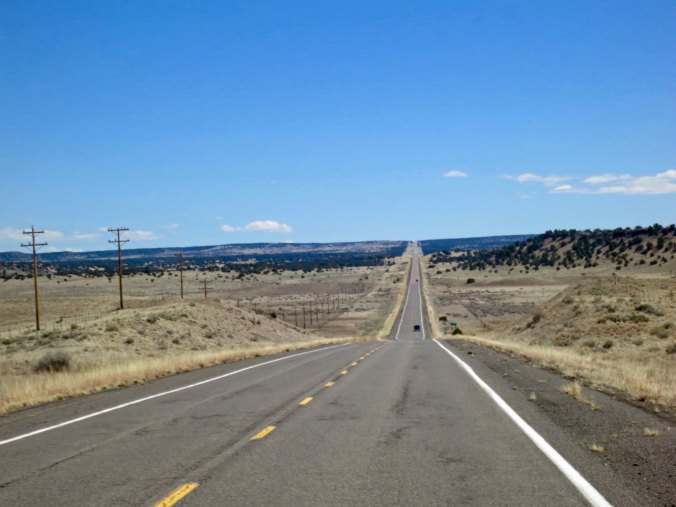
Do you have any idea how many remote, lonely roads there are in America and Canada. I found many of them on my bicycle. They did have a way of going on and on...

Do you have any idea how many remote, lonely roads there are in America and Canada? I found many of them on my bicycle. This one in Arizona went on and on.

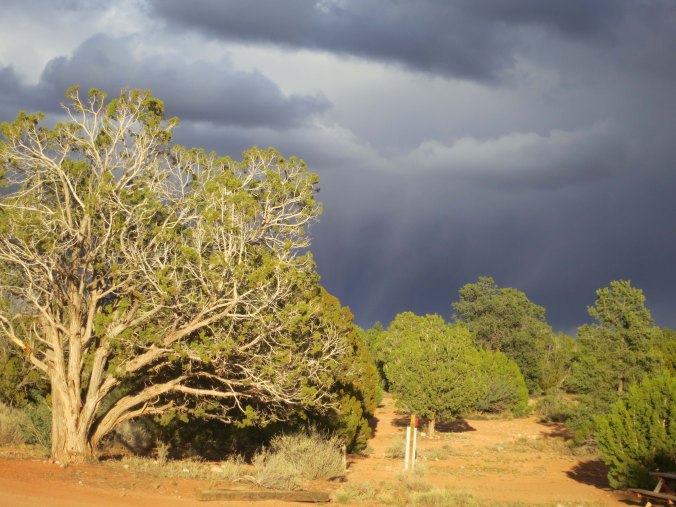
Threatening skies along Route 66

Threatening skies suggest that traveling the interesting and historic Route 66 was about to get more interesting.

Was this rustic accommodation a chance for shelter?

Was this rustic accommodation a chance for shelter? In an emergency, almost anything served as ‘a port in the storm.’ I would end up hiding out from a tornado in a brick outhouse in Mississippi.

I spent hours studying maps and planning my route. It was a blast. Most people who travel a lot (including many who read this blog) will likely agree with me that planning is half the fun. My goals included avoiding cities, staying off of major highways, and visiting remote areas whenever possible. I was not interested in following someone else’s recommended bike route.  I prepared copies of my proposed route for friends and family but added a cautionary note: “This route is tentative. I may find myself out there making changes for any number of reasons.” The original length of the journey was 11, 309 miles. I made my first change at 28.6 miles.

And finally, a note on bicycling. There are bicyclists and there are “bicyclists.” Bicyclists are passionate about the sport. Whether they race, tour, or commute by bike, they talk the talk and wear the clothes. They love their bikes. They have a certain lean look. Most (but not all) think of bicycling as a communal sport. I’ve done a lot in bicycling. I commuted by bike for several years, organized Sacramento’s first conference on bike commuting, and was responsible for creating the American Lung Association’s bike trek program. I even led and rode on a number of 500-mile bike treks. But, at heart, I am a “bicyclist.” My bike is simply a means of getting from point a to point b, hopefully without any mechanical problems. Still, for those passionate bicyclists who want to follow me on my journey, I will confess that I talked with my bike, Blue, as I crossed the country. Maybe there is hope.

Serious bicyclists  wear bright clothes. They want to be seen. I bicycled through Death Valley on my trip. I found this jersey there a couple of weeks ago.

Serious bicyclists wear bright clothes. They want to be seen. I bicycled through Death Valley on my trip. I found this jersey there a couple of weeks ago.

I’ll close with a couple more photos to emphasize why a bit of insanity is valuable for long distance bike trips.

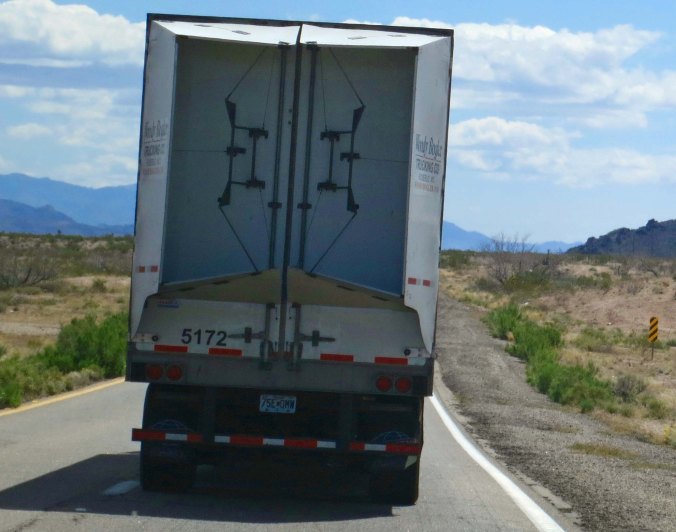
Big rigs traveling 60 miles per hour on narrow roads with no shoulders tended to elevate my heart rate, especially when they chose to come up behind me and honk their horns. (Most were quite courteous.)

Big rigs traveling 70 miles per hour on narrow roads with no shoulders tended to elevate my heart rate, especially when they chose to come up behind me and honk their horns. (Most were quite courteous.)

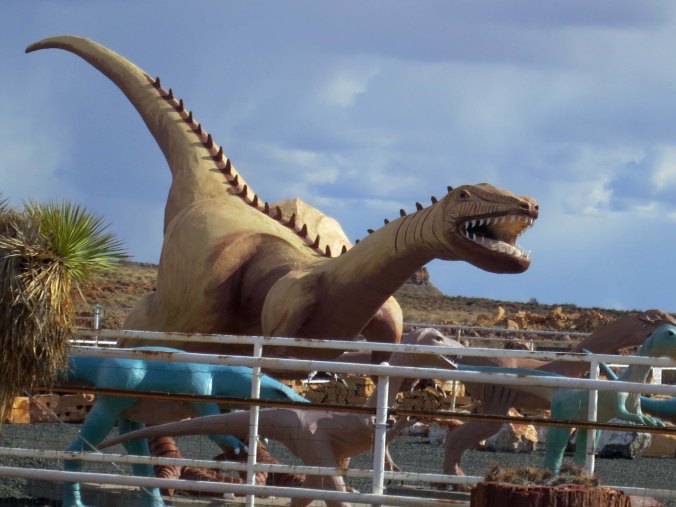
I ran into dogs that were about as big as this dinosaur and wanted to eat me.

I ran into dogs that were about as big as this dinosaur and wanted to eat me.

NEXT BLOG: Join me in Diamond Springs, Northern California as I climb on my bike, coast down my first hill, and discover I can’t pedal because I have put my panniers (bike bags) are on backwards.

A Ten Thousand Mile Bike Trip… Let the Journey Begin

28 years ago, after wrapping up my part in increasing California's tobacco tax, I decided to go on a 10,000 mile bike trip around North America. Peggy and I are now redrawing the route.

28 years ago, after wrapping up my part in increasing California’s tobacco tax, I decided to go on a 10,000 mile bike trip around North America. Peggy and I are now driving the route. Peggy first met me when I stepped off my bike in Sacramento. She said I looked svelte and seemed to appreciate my tight bicycling clothes. Having been by myself for six months, I immediately fell in love.

It had been an exciting night at the Proposition 99 Campaign Headquarters in Sacramento. The tobacco industry had just spent $25 million ($56 million in today’s dollars) trying to defeat our efforts to increase California’s tax on tobacco, which, up to that point, was more than it had spent on any single political campaign in its history. The industry regarded our efforts as the most serious threat it had ever faced, not because we were increasing the tax, but because we were proposing to spend a significant amount of money on prevention. It had hired some of the best political operatives in the nation, including Ronald Reagan’s former media director— and, it had run the kind of campaign you might expect from an industry that had made billions off of successfully marketing a deadly, highly addictive drug to children.

The prevention part of the equation had been my idea. If we succeeded, we would embark on one of the most extensive prevention program ever, anywhere in the world. The industry was right to be worried. And we were right to be nervous. As the full force of the industry’s campaign had come to fruition in the last week before the election, we had seen our once comfortable lead drop to .05%.

But the night was ours. Heroic efforts by our friends in the health and environmental communities, including my future sister-in-law, Jane Hagedorn, made the difference. Early returns showed us leading. Later returns showed that we had won. I gave a talk on the power of a small group to take on one of the world’s most powerful industries and win. I then led the group in a series of cheers as the TV camera’s rolled. I ended my night by consuming more alcohol than a health advocate should. Jane drove me home.

California’s health community went on to prove that prevention works. The state moved from having the second highest incidence of tobacco use in the nation to the second lowest. Five years ago the California Department of Health estimated that over one million lives and $70 billion in health care costs had been saved to date.

The Proposition 99 battle was won in 1988, over a quarter of century ago. Ancient history now— except it relates to the story I will be telling on this blog for the next 2-3 months. The campaign wrapped up an important chapter of my life, and it left me with a question: what would I do next? I decided to buy a bike and go on a solo, six-month, 10,000-mile bike ride around the US and Canada. It was a completely reasonable decision, right… kind of like taking on the tobacco industry. So I went out and did it.

And this brings us to the present. I earned a huge number of husband brownie points last year— billions of them. I spent lots of time with kids and grandkids, supported Peggy’s various efforts to improve our community, and did many manly chores around our property. The wife was impressed. She made a mistake. “Next year is yours, Curt,” she announced. “What would you like to do?” It was like a blank check. I got a wild look in my eye and (before she could reconsider), tossed out, “Take our van and follow the route of my North American bike tour… for starters.”

That’s the reason Peggy and I are sitting in a Big O Tire store now in Roswell, New Mexico while Quivera, our van, has some work done. I am sure a UFO is circling above us, the same UFO that caused us to have a blow-out last night.

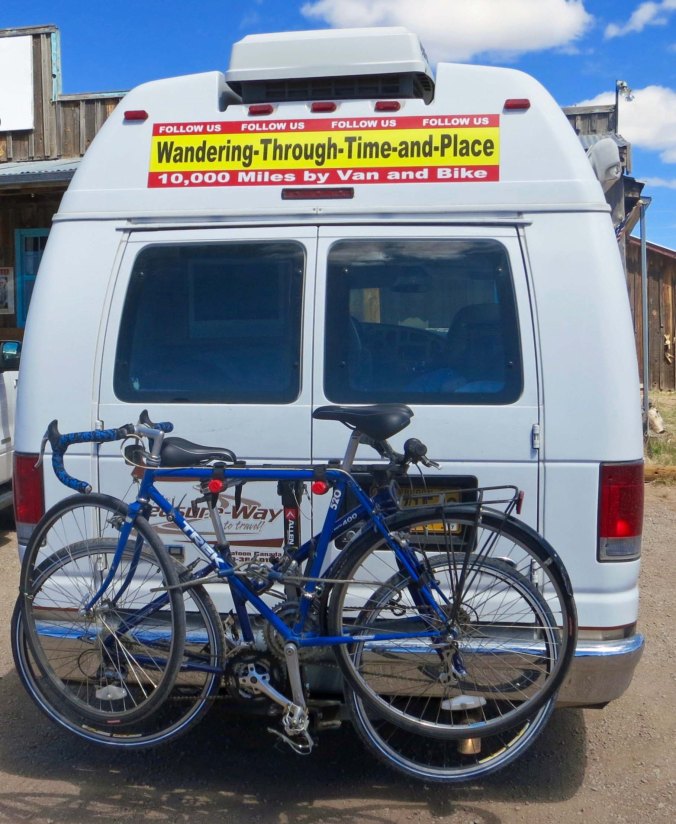
Quivera, the Van. We put a sing on Quivera to encourage people to follow my blog. The blue bike on the outside is the bike I rode around North America.

Quivera, the Van. We put a sign on Quivera to encourage people to follow my blog. The blue Trek bike (creatively named Blue) is the bike I rode around North America.

We were quite amused by the sink in the Big O Tire restroom.

We were quite amused by the sink in the Big O Tire restroom.

Even the toilet paper dispenser followed the theme.

Even the toilet paper dispenser followed the theme.

The staff at Big O was great. Putting new shocks on Quivera was a massive challenge. She is not mechanic-friendly. The mechanic on the left worked diligently. The front desk man helped us maintain our sense of humor. "Twenty more minutes" he told us several times.

The Roswell staff at Big O was great. Putting new shocks on Quivera was a massive challenge. She is not mechanic-friendly and objects to people working on her undercarriage. The mechanic on the left was one of three who worked diligently on her. (He is trying hard to smile.) The front desk manager helped us maintain our sense of humor. “Twenty more minutes” he told us numerous times.

Starting with my next blog, I will take you back to the beginning of my bike trek in Diamond Springs, California. I’ll talk more about my reasons for the trip and I will outline the extensive preparation it takes for such an adventure: I increased my nightly consumption of beer from one to two cans.

The blog will cover both my original journey and our present journey by van. For example, here’s what we have done in the past couple of days:

  • Visited a small town museum in Springerville, Arizona that included a Rembrandt among its treasures that could probably buy the town, or maybe the whole county.
  • Stopped off in Pie Town on the crest of the Rockies that is nationally famed for the pies it sells. The owner, who once gave me a free piece of pie, came out to have her photo taken with Peggy, me, Quivera and our bikes. (Crossing the Rockies was my first 100-mile day on the bike trip.)
  • Magically showed up at the annual open house for the Very Large Array of radio antenna/telescopes that have been featured in movies like Contact and Independence Day. Scientists from around the world compete for time on the radio telescopes. We were given a tour by a scientist who is looking back in time to the very beginning of the universe.
  • Contemplated the devastation created by nuclear bombs as we viewed the Trinity site where the first atom bomb ever was exploded.
  • Paid homage to Smokey the Bear by visiting his gravesite and singing his song. (Do you know it?)
  • Walked the streets of Lincoln where Billy the Kid fought in the Lincoln County range wars of the early West.
  • Kept a sharp eye out for UFOs as we drove in to Roswell.

And that’s just two days. My challenge will not be in finding things to write about! This is a back roads journey through America and Canada, a Blue Highways Adventure. I’ll give more details on my next blog, but to get you started, here is a rough map of the journey I made by bike and we are now making by van. Please join us.

This is the route I followed through the US and Canada. I began and ended my trip in Northern California.

This is the route I followed through the US and Canada. I began and ended my trip in Northern California.

From Anchorage, Alaska to Fairbanks by Rail… A Perfect 10

One of many views we had of Mt. Denali as we rode the Alaska Railroad from Anchorage to Fairbanks.

One of many views we had of Mt. Denali as we rode the Alaska Railroad from Anchorage to Fairbanks.

The conductor told us we were a 10, or I should say he told us we were among the 10% of people who travel by rail from Anchorage to Fairbanks and get to see Mt. Denali. Normally it is covered in clouds, or maybe you get a teasing glimpse. Having lived in Alaska for three years, I know how special it is to see the mountain.

Once, I was camped out at Wonder Lake, which is way out at the end of Denali Highway. I’d been backpacking in Denali National Park dodging grizzlies and had a small backpacking tent that I had pointed in the direction of the cloud-hidden mountain. I woke up early with the sun (in summertime Alaska, that’s really early). A huge mountain had appeared out of the clouds. “Wow! I said to my friend. You have to see this.” And then a larger mountain appeared behind it. As we sat there in awe, the clouds parted and a third, even larger mountain appeared, a massive mountain, Mt. Denali. At 20,310 feet, is the tallest mountain in North America.

Denali has only recently reclaimed the name it was known as for centuries by the Athabaskan natives of the region. It means big mountain, or the tall one. In 1896, an Alaskan gold miner named it Mt. McKinley in honor of the man he hoped would become president. McKinley won and the name stuck. Alaskans have been lobbying for years, quite rightly I would argue, to return the name to Denali. Their efforts had been continually blocked by a small contingent of politicians from Ohio, McKinley’s home state. On August 28, 2015, President Obama renamed the mountain Denali on the basis of a recommendation by the Alaska Geographical Society. I suspect the Ohio politicians are trying to impeach the President because of his action.

The sky was clear on our whole 350 mile trip from Anchorage to Fairbanks and we had several views of the Mountain. The engineer would stop the train each time we saw it. In fact, the engineer stopped the train several times to point out other things of interest as well, like moose for example. There’s a reason why the trip took 12 hours! Alaska is a state of great natural beauty, and we were privileged to see much of it on our trip. Following are a few of the many photos that Peggy and I (along with grandsons) took along the way. Enjoy.

I used this photo earlier on another post but you are getting to see it again because I like it so much and feel it is symbolic of our trip.

I used this photo earlier on another post but you are getting to see it again because I like it so much and feel it is symbolic of our trip with the train, mountains, rivers and trees.

Another photo of the train. I liked the perspective, and the trees.

Another photo of the train. I liked the perspective, and the trees.

My nose was glued to the window for the whole trip. (Except of course to eat and pay attention to the family.) Many of the views, like this one, were right beside the track.

My nose was glued to the window for the whole trip. (Except of course to eat and pay attention to the family.) Many of the views, like this one, were right beside the track.

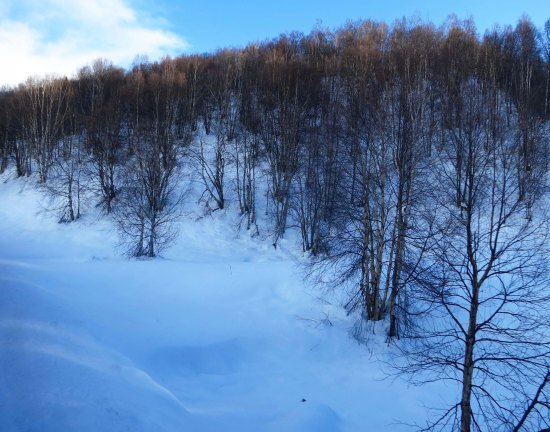
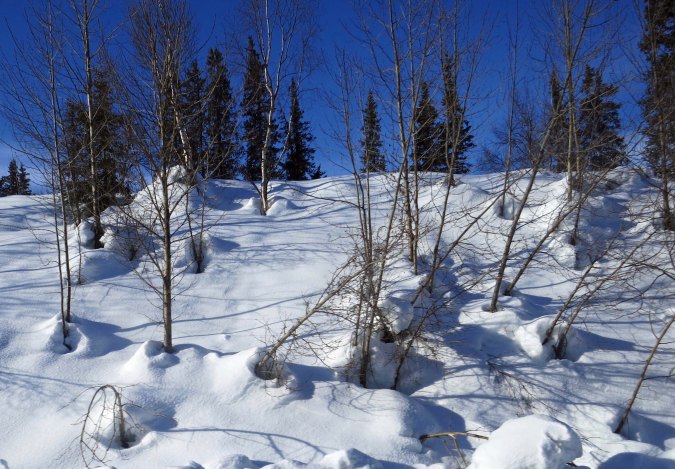
Snow, trees and shadows provided interesting compositions.

Snow, trees and shadows provided interesting compositions.

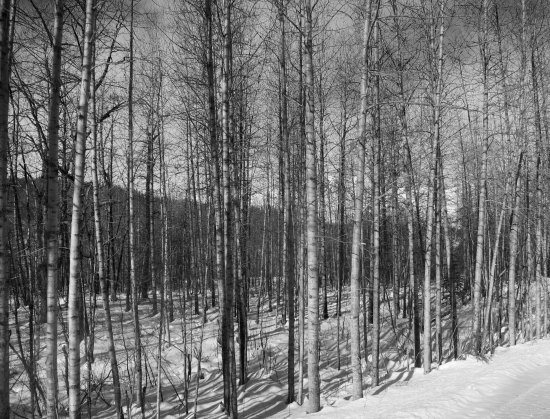
I thought these birch trees deserved a black and white look.

I thought these birch trees deserved a black and white look.

Numerous rivers dot the Alaska landscape we found several along the tracks.

Numerous rivers dot the Alaskan landscape. We found several beauties along the tracks.

Another example.

Another example.

Homesteaders living along the railroad give a new meaning to 'off the grid.' Most live several miles apart and all depend on the railroad to provide access to the outside world. The conductor/guide told us they stood along the tracks and flagged the train down when they needed a ride out.

Homesteaders living along the railroad give a new meaning to ‘off the grid.’ Most live several miles apart and all depend on the railroad to provide access to the outside world. The conductor/guide told us the homesteaders stood along the tracks and flagged the train down when they needed a ride out.

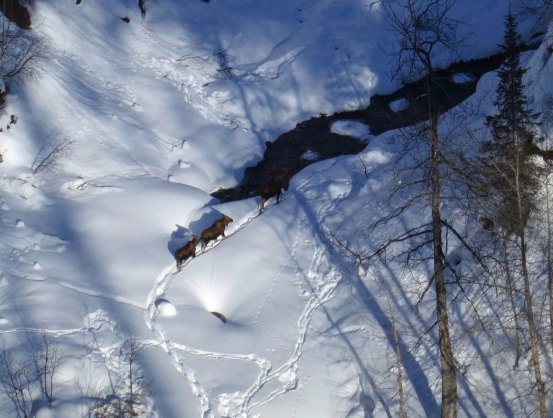
While bears hibernate during the winter, moose operate year around, this open, ice covered river provided a moose highway as indicated by the trails.

While bears hibernate during the winter, moose operate year around. This open, ice-covered river provided a moose highway as indicated by the trails.

We were there long enough to see them moving along at the upper end of the small lake.

The engineer had stopped the train on the bridge over Hurricane Canyon when we spotted this family of moose following a trail.

I liked the shadows they cast in the bright sunlight.

I liked the shadows they cast in the bright sunlight.

Looking the other way across Hurricane Canyon provided this magnificent view of the canyon and the Alaska Range.

Looking the other way across Hurricane Canyon provided this view of the canyon and the distant Alaska Range. (Click on this for a larger view.)

Much of our time was spent admiring magnificent mountains. A different kind of animal made the tracks in this photo, people on snowmobiles, a primary form of transportation in backcountry Alaska.

Much of our time was spent admiring magnificent mountains. A different kind of animal made the tracks in this photo, people on snowmobiles, which are a primary mode of transportation in backcountry Alaska. I think these guys was playing.

More impressive mountains...

More impressive mountains…

Mountain Scene on Alaska Railroad between Anchorage and Fairbanks.

And more.

And a final view of Mt. Denali in the distance.

And a final view of Mt. Denali in the distance.

Our son Tony and his family talked us into the railroad trip and other great adventures we had on this visit to Alaska. We owe the family big. In this photo, Tony and Cammie's son Cooper has decided my head is a good place for a snooze. (I took this as a selfie.)

Our son Tony and his family talked us into the railroad trip and other great adventures we had on this visit to Alaska. We owe the family big time. In this photo, Tony and Cammie’s son Cooper has decided my head is a good place for a snooze. (I took this photo as a selfie.)

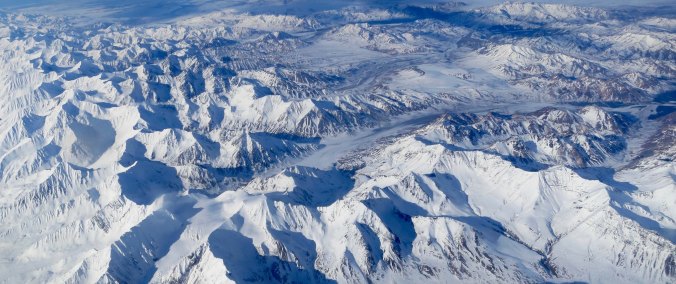
I usually don't have much luck with photos taken out of airlines but I feel this photo of the Alaska Range taken on our Alaska Airways trip back to Anchorage from Fairbanks is an exception.

I usually don’t have much luck with photos taken out of airlines but I feel this one of the Alaska Range I took on our Alaska Airways trip back to Anchorage from Fairbanks is an exception. It seems worthy of concluding my series on Alaska. (Click on this for a larger view.)

NEXT BLOG: A new adventure! Peggy and I hit the road in our 22 foot van retracing the route I followed on my 10,000 solo bike trek I took around the US and Canada in 1989.


Sled Dogs Are Among the World’s Best Athletes… Alaska

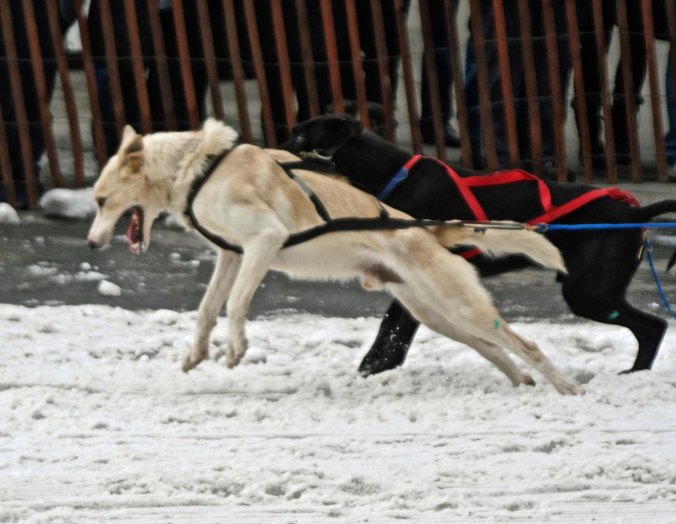
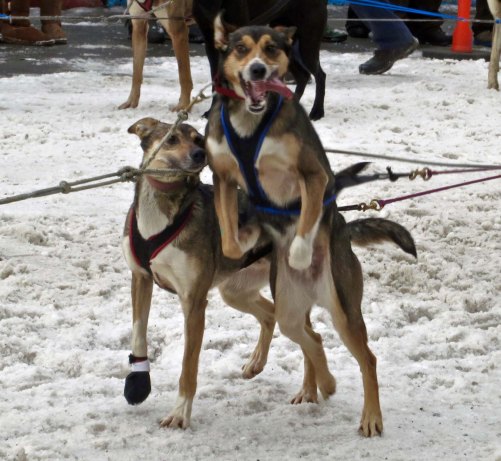
A sled dog strains against its harness as it leaps to take off in the annual Fur Rendezvous championship sled dog races.

A sled dog strains against its harness as it leaps to take off in the annual Fur Rendezvous championship sled dog races. He was jumping the gun, so to speak, and still held in place. (Photo by Peggy Mekemson.)

Note: I’ve been away from the Internet for several days. I haven’t been up in the cold north of Alaska, however. I’ve been hanging out in Death Valley, California, warming up. Peggy and I returned from our adventure up near the Arctic Circle and immediately jumped into another.

A number of years ago, as many of you know, I went on a  10,000 mile solo bicycle journey around North America. Over the next two months, Peggy and I will be retracing the route in our van. I rode through Death Valley on the trek, which is why I am here. I’ll start blogging about my adventure soon, but first I have two posts left from Alaska. Today’s is on sled dogs; the next will be on our railroad trip from Anchorage to Fairbanks. 

“On King, On you huskies!”

I was eight years old when I climbed on my first sled and went dashing across the wilds of the Yukon in hot pursuit of bad guys with Sargent Preston, his team of loyal huskies, and his faithful dog King. So what if I was sitting by the family radio. So what if my dash through the snow was totally in my imagination. Sargent Preston and King were as real to me as the Lone Ranger and Silver. My brother Marshall and I never missed an episode.
With this background, it is hardly surprising that I was fascinated with sled dogs when I first moved to Alaska in 1983. I watched with interest as the mushers and their teams raced through Anchorage in preparation for the Iditarod. I jumped at the opportunity to recruit Libby Riddles to be a spokesperson for the non-profit I ran immediately after she became the first woman to win the race. “I am doing a spread for Vogue,” Libby told me. “Pick me up at the airport when I get back and we can run around and do media together.” It was a great coup for the organization but even a greater coup for me. We talked sled dogs nonstop.

I missed the Iditarod in my recent visit to Alaska. Our timing was off by a day. But I did get to watch the world-class sled dog races that were part of Fur Rendezvous. What struck me most about the dogs was how eager they were to run. There was no, “Do we have to?” It was “Let us go. Now!” They couldn’t wait for the start command. I was fascinated by how powerful the dogs are. To keep them in place, each sled was attached to a snowmobile, several people were assigned to hold the sled, and dog handlers stood beside each of the dogs. At the start command, everyone simply let go. Off they went, every muscle straining to pull the sled.
Championship sled dog races are held each year in conjunction with the Anchorage Fur Rendezvous. This year snow had to be brought into the city and put down on the streets.

Championship sled dog races are held each year in conjunction with the Anchorage Fur Rendezvous. This year snow had to be brought into the city and put down on the streets.

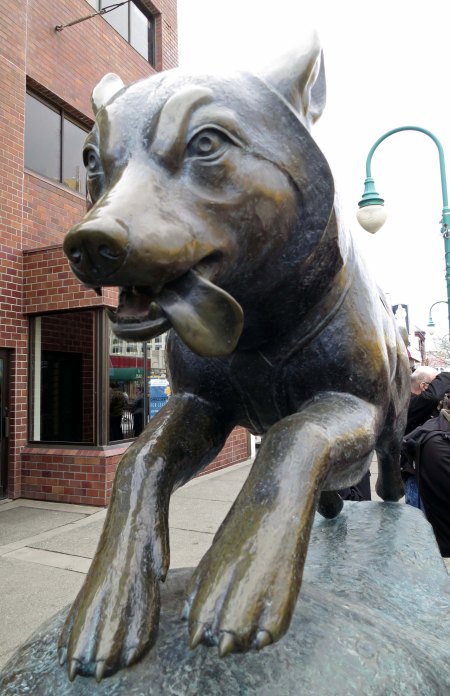
Sled dogs are highly honored in Alaska as this statue on 4th Street attests.

Sled dogs are highly honored in Alaska as this statue on 4th Street attests.

Naturally, our grandsons wanted their photo taken with the sled dog.

Naturally, our grandsons wanted their photo taken with the sled dog.

When we arrived, mushers were busily harnessing their dogs. 4th Street was lined with vehicles like these.
When we arrived, mushers were busily harnessing their dogs. 4th Street was lined with vehicles like this.
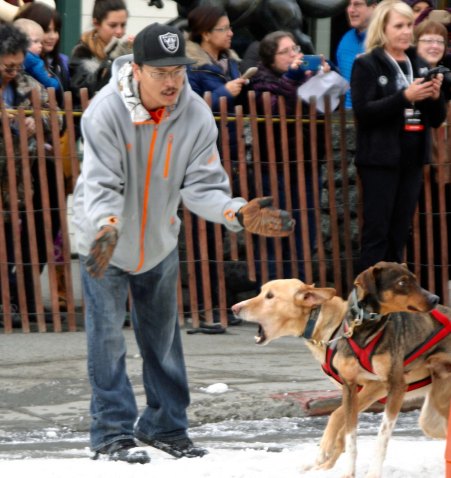
As I mentioned above, sled dogs love to run and compete as much as the finest of Olympic athletes. This dog is saying, "I'm ready, Let's go!"

As I mentioned above, sled dogs love to run and compete as much as the finest of Olympic athletes. This dog is saying, “I’m ready, Let’s go!”

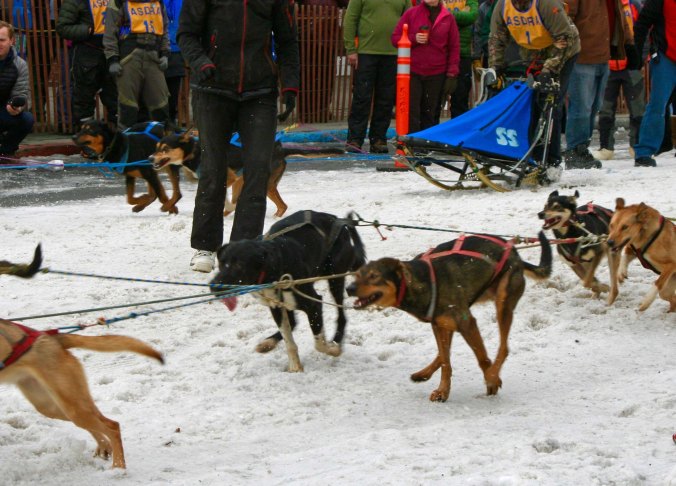
These people were assigned the responsibility of holding the dogs back until the start of the race. It is a great indication of the strength of the dogs. (Photo by Peggy Mekemson.)

These people were assigned the responsibility of holding the dogs back until the start of the race. It is a great indication of the strength of the dogs. (Photo by Peggy Mekemson.)

Dog handlers are assigned to keep the dogs in place until it is time to run. The far dog seems to be barking, "Now!" While the near one says, "Are they ready?"

Dog handlers are assigned to keep the dogs in place until it is time to run. The far dog seems to be barking, “Now!” While the near one says, “Can I go, Boss?” (Photo by Peggy Mekemson.)

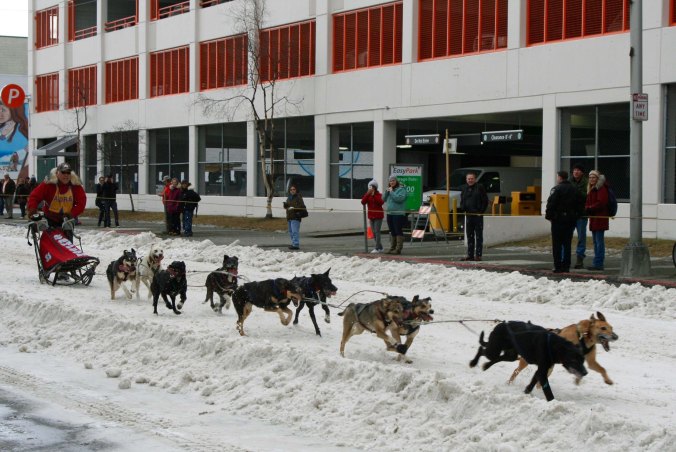
And they are off!

And they are off! (Photo by Peggy Mekemson.)

Racing sleds are engineered of speed...

Racing sleds are engineered for speed with every ounce of weight considered.

While more traditional sleds are built to haul loads, or, in this case, our Daughter-in-law Cammie and Grandson Chris at Chena Hot Soprings.

While more traditional sleds are built to haul loads, or, in this case, our daughter-in-law Cammie and grandson Chris at Chena Hot Springs.

Peggy caught the dogs racing for the finish line.

Peggy caught the dogs racing for the finish line.

These animals are superb athletes and can sprint up to 20 miles per hour. Even more amazing, is the ability of the Iditarod dogs to run a thousand miles in little more than a week. Few animals can match their capacity to work, compete, or eat. It takes 10-12 thousand calories per day to fuel the dogs on their dash to Nome.

Dogs are raised from puppies to be sled dogs and develop a close bond with their mushers. Before they learn the discipline of being a sled dog, they learn that it is play. It’s a lesson they remember their whole lives. As they grow older they are tried out on different team positions. The most important is the lead dog. He or she responds to the commands of the musher and keeps the dogs in line. An occasional nip may be required. Lead dogs also help keep the musher out of trouble. “Um, there is a moose up ahead you might want to worry about.” Moose think of sled dogs as wolves and wolves are enemies. You don’t want a thousand pounds of angry moose charging your team.

Next in line are swing dogs who help assure that the team follows the lead dog. Behind them come the strong team dogs who are responsible for providing power to pull the sled and maintain speed. Finally, the wheel dogs are next to the sled and are responsible for turning it.  The dogs work together closely, along with the musher, as a finely tuned crew.

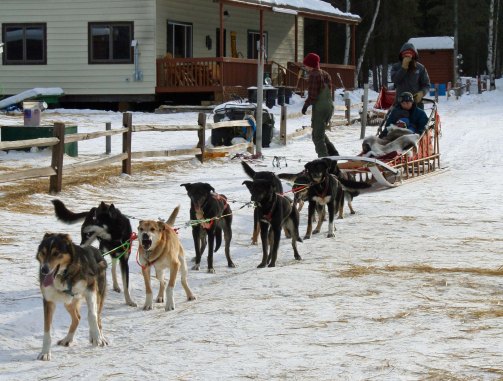
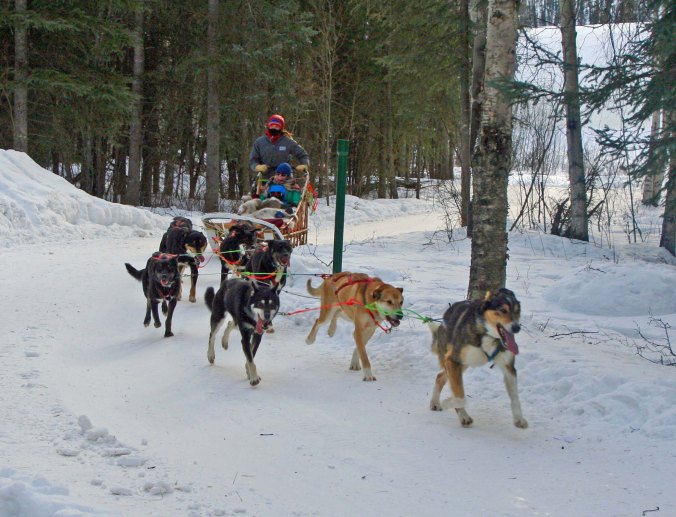
These dogs in Chena Hot Springs were prepared to provide our son Tony and grandsons cooper and Connor with a ride. The fist dog is the lead dog, the next are swing dogs, the following four are team dogs and the last two are wheel dogs.

These dogs in Chena Hot Springs were prepared to provide our son Tony and grandsons Cooper and Connor with a ride. The first dog is the lead dog, the next two are swing dogs, the following four are team dogs and the last two are wheel dogs.

In 1983 when I ventured into the far north, three breeds of dogs were considered sled dogs: Alaskan Huskies, Siberian Huskies and Malamutes. These dogs had been hauling sleds through the tundra for hundreds, if not thousands of years. While theses breeds are still a central component of any sled dog breed, short-haired German Pointers and even a little greyhound have been interbred with the huskies to create sprinters for shorter races. The new dogs are known as Eurohounds. Most of the dogs at the Fur Rendezvous seemed to fit the description.

Today's racing sled dogs look quite different from the sled dogs of 30 years ago. These are Eurohounds, a mixture of traditional Alaska Huskies and German Short Haired Pointers.

Today’s racing sled dogs look quite different from the sled dogs of 30 years ago. These are Eurohounds, a mixture of traditional Alaska Huskies and German Short Haired Pointers. (Photo by Peggy Mekemson.)

A more traditional Husky. I took this photo at Chena Hot Springs.

A more traditional Husky. I took this photo at Chena Hot Springs.

We finished our Alaska sled dog experience at Chena Hot Springs where we visited a kennel and the grandkids (along with the required parents) went for sled dog rides.

Dog kennels at Chena Hot Springs. Libby Riddles told me that mushers normally owned a number of dogs. Imagine feeding this lot! And cleaning up their poop.

Dog kennels at Chena Hot Springs. Libby Riddles told me that mushers normally owned a number of dogs. Imagine feeding this lot! And cleaning up their poop.

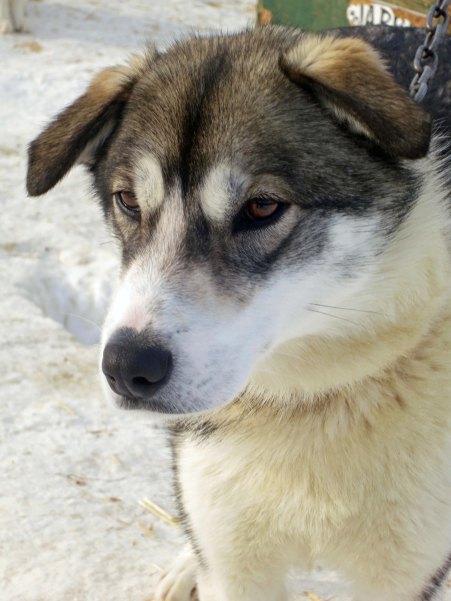
Luke Skywalker was happy to greet the grandkids. All of the dogs came with imaginative names.

Luke Skywalker was happy to greet the grandkids. All of the dogs came with imaginative names.

Sled dogs are raised from puppies, such as this cut fellow at Chena.

Sled dogs are raised from puppies, such as this cute fellow at Chena.

A final shot of the sled dogs at Chena Hot Springs as they round a corner carrying Tony, Connor and Cooper. (Photo by Peggy Mekemson.)

A final shot of the sled dogs at Chena Hot Springs as they round a corner carrying Tony, Connor and Cooper. (Photo by Peggy Mekemson.)

So, is this the future sled dog champion of the world? No, I think it might be a Toy Pomeranian. A woman walked by with it on a leash. When I asked if I could take the pups photo, she picked it up, handed it to me, and snapped our photo. Next blog: the great train trip from Anchorage to Fairbanks.

So, is this the future sled dog champion of the world? No, I think it might be a Toy Pomeranian. A woman walked by with it on a leash. When I asked if I could take the pups photo, she picked it up, handed it to me, and snapped our picture. NEXT BLOG: The great train trip from Anchorage to Fairbanks.

Alaska’s Fur Rendezvous: From Outhouse Races to Sled Dogs

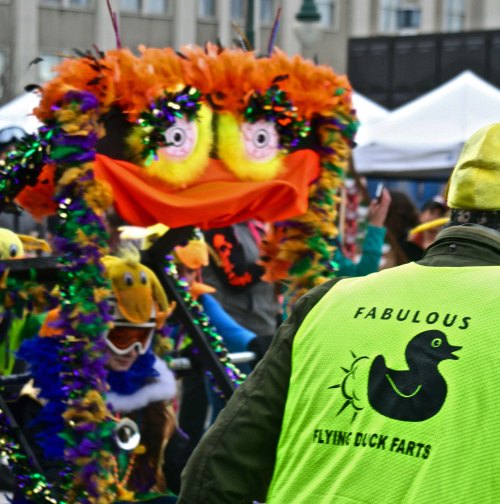
The strange looking creature here is a decorated outhouse that belongs to

The Fabulous Flying Duck Farts prepare their duck-billed entry for the Fur Rendezvous Outhouse Race in Anchorage Alaska. (Photo by Peggy Mekemson.)

The word Fur Rendezvous immediately brings to mind early American history, fur trading, and mountain men. One of the most renown/notorious of the rendezvous took place in the Green River region of Wyoming in the 1830s. After a long, lonely winter of trapping beavers and other fur-bearing mammals, the mountain men would gather on the Green River to meet with traders out of St. Louis who would purchase their winter harvest. There was lots of drinking, gambling, and snuggling up with accommodating women (for a fee)— which is pretty much what you might expect from barely civilized men who had spent the winter isolated in tiny cabins.  I’ve visited the region and backpacked through the mountains where beavers were trapped. You can read about this adventure at: A Rabid Wolf Walked through Camp.

Alaska was a Johnny-come-lately to the fur rendezvous business, deciding to create its event in 1935. Alaska was still a raw frontier at the time, however. It wouldn’t have been much different from the Rocky Mountains a hundred years earlier. It was a wild place, and the people who chose to live there were a bit on the wild side. I would have fit right in.

The Fur Rendezvous in Anchorage, or Rondy as they call it today, has lost much of its mountain man edge. But it is still an excuse to party. And it had become a major tourist attraction. When I was there with Peggy, our son Tony and his family a few weeks ago, we attended four of its many events: sled dog races, a snow carving contest, the Rondy Parade, and the annual outhouse race.  I’ve already written about the snow carving. My next blog will be on sled dogs. Today is all about porta potties and parades.

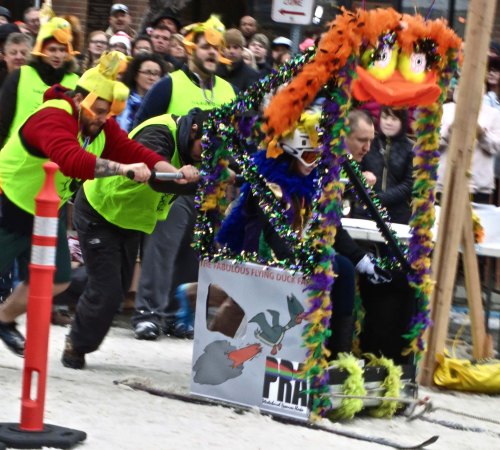
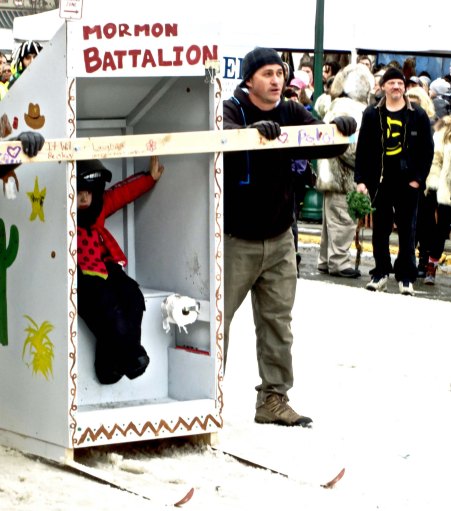
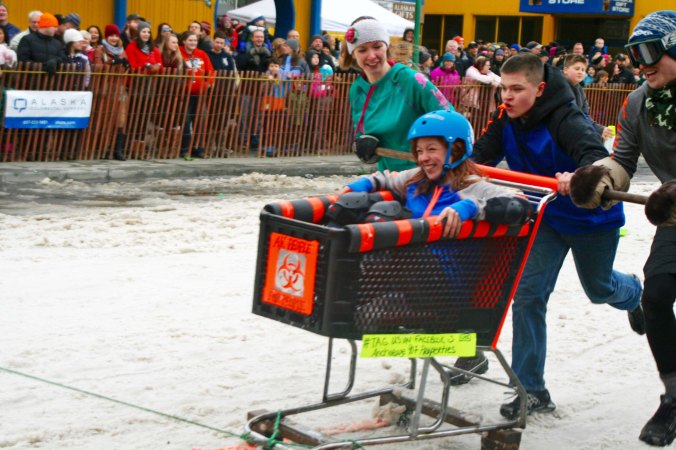
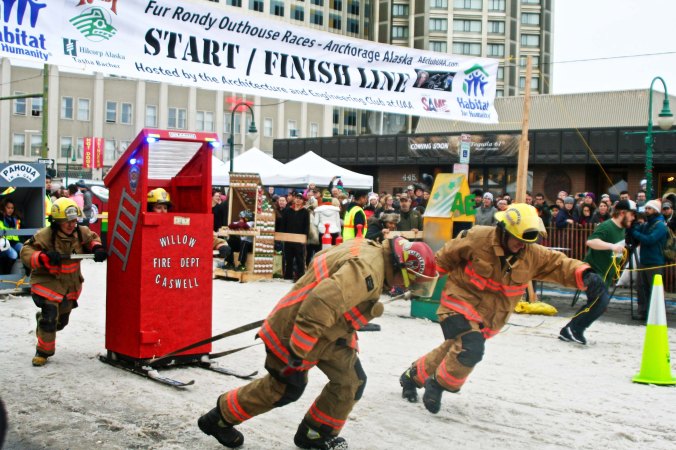
What’s not to like about an outhouse race, especially when one of the main contestants was the Fabulous Flying Duck Farts. Among its competitors were the Willow Fire Department, the Mormon Brigade, the AE club from the University of Alaska, and others. There was even a young woman being pushed in a shopping cart. Not even my fertile imagination could figure out how she fit in, but she was having fun. Both the Fabulous Flying Duck Farts and the AE club are involved in charitable activities. The jet propelled Duck Farts ended up winning, so I checked them out on Facebook. Here’s what they have to say about their organization:

“The Fabulous Flying Duck Farts are a forever funny fabulous formation flying flock of fast, furious, and friendly foul-fowl; a fine festival feature famous for flatulent fueled flight, frequent fierce flapping, faithfully finishing first, and frolicking feathery fun.”

That seems to sum it up.

And they are off!

And they are off! The Ducks’ jet propelled launch is shown on the side of the outhouse. Each entry required that a person be sitting on the “pot.”

The Mormon Battalion lacked the pizazz of the Flying Ducks. The child inside seems a little dubious about his role.

The Mormon Battalion lacked the pizzaz of the Flying Ducks. The child inside seems a little dubious about his job. The Battalion definitely earned points for its ragged roll of TP, however. (Photo by Peggy Mekemson.)

These folks were having fun but any resemblance to a real outhouse is totally coincidental.

These folks were having fun but any resemblance to a real outhouse is totally coincidental. (Photo by Peggy Mekemson.)

Judging from the look, I'd say that the Willow Fire Department provided serious competition.

Judging from the look, I’d say that the Willow Fire Department provided serious competition. As the start and finish sign notes, the Architecture and Engineering club from the University of Alaska hosted the event. AE uses funds it raises to support Habitat for Humanity. (Photo by Peggy Mekemson.)

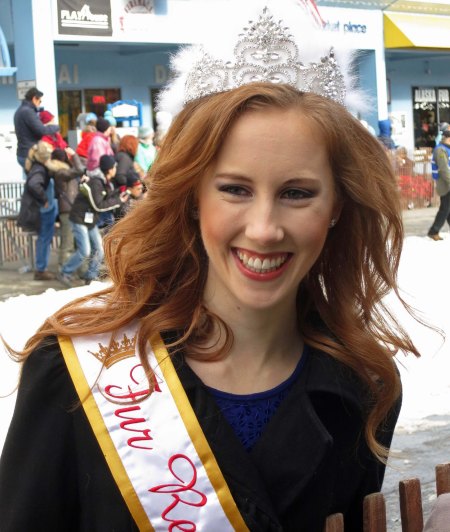
The Rondy Parade had it all, starting with princesses, lots of princesses. There were also kids, dogs, old cars, older tractors, horses, a reindeer, white bread, M&M’s, Hells Angels, and a very large colon. The only thing missing was a band. I’ve never seen a major parade without a band. In fact, the only parade I’ve ever seen without a band was the Buncom Day parade near where we live in Oregon. It goes one block, turns around and repeats itself. And even it had first graders blowing kazoos. Still, the Rondy Parade entertained us well.

The Rondy Parade must have featured 15 or so princesses and queens. At least it seemed like it. The parade announcer joked all you need is a tiara.

The Rondy Parade must have featured 15 or so princesses and queens. At least it seemed like it. The parade announcer joked all you need is a tiara. This young woman stopped by for a visit.

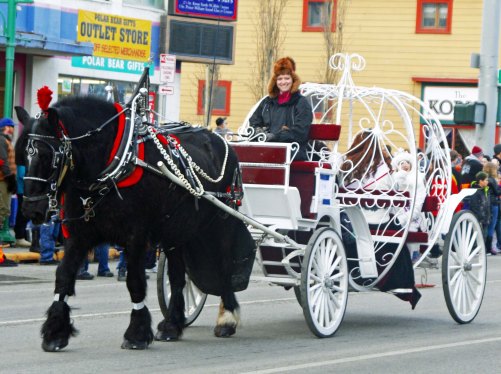
This 'pumpkin-like' float pulled by a handsome black horse was one of several conveyances that transported princesses.

This ‘pumpkin-like’ float pulled by a handsome black horse was one of several conveyances that transported princesses. (Photo by Peggy Mekemson.)

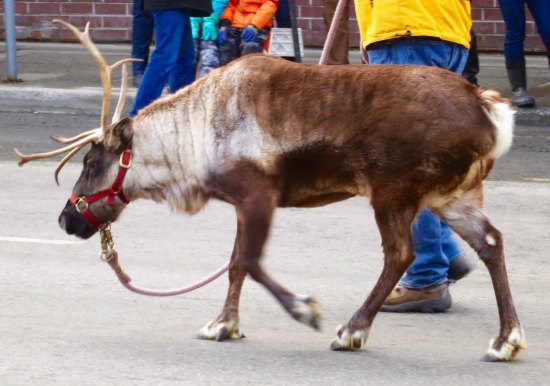
Star the Reindeer lives on a lot in downtown Anchorage. I think there is a requirement that he participate in all Anchorage parades.

Star the Reindeer lives on a lot in downtown Anchorage. I think there is a requirement that he participate in all Anchorage parades.

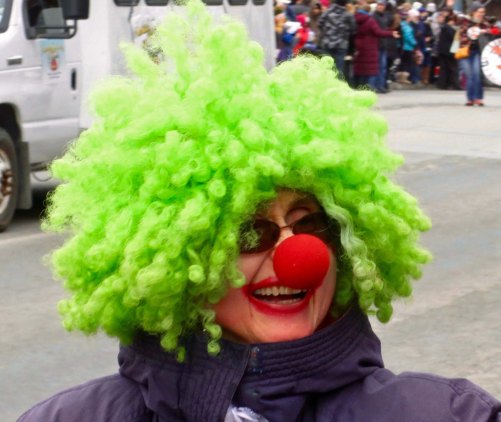
Naturally, a good parade deserves at least one clown. I suspect more that one child had nightmares that night.

Naturally, a good parade deserves at least one clown. I suspect more that several children had clown nightmares that night.

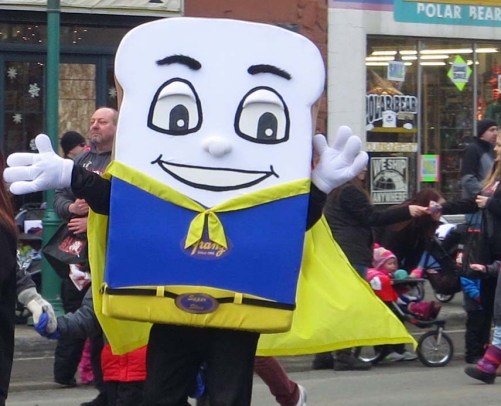
Remember the white bread of your youth?

The white bread wasn’t nearly as scary unless you thought about its food value.

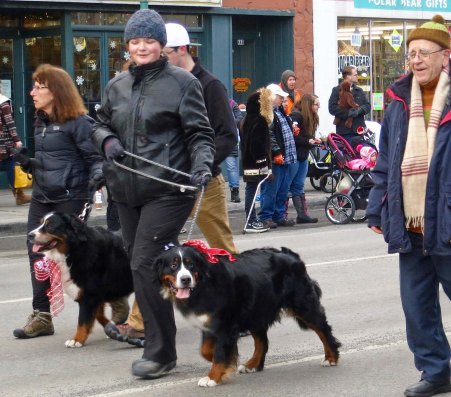
Bernese Mountain Dogs were out in force at the parade.

Bernese Mountain Dogs were out in force at the parade.

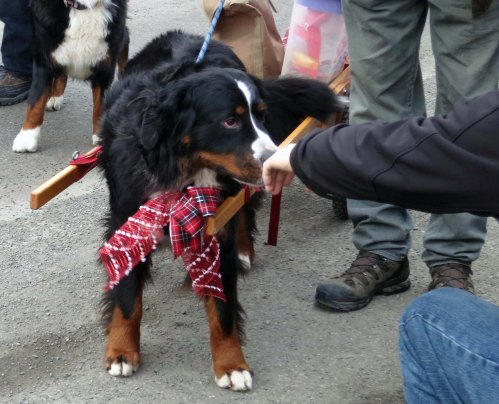
This Bernese Mountain Dog stopped by for a sniff.

One pup pulling a cart stopped by for a sniff.

I think these M&Ms had a Methodist Flavor.

I think these M&Ms represented the local Methodists.

This Hell's Angel participant brought a slightly different flavor to the parade.

In contrast, here is a Hell’s Angel participant.

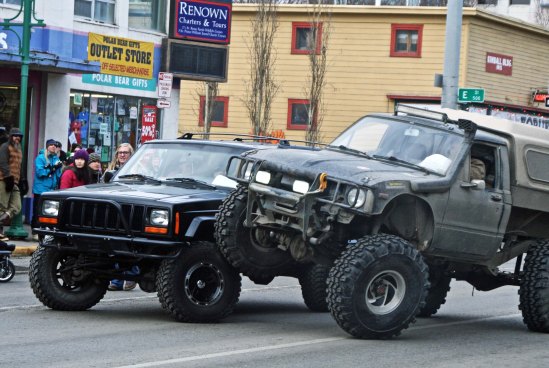
Apparently, this is the latest in macho tricks by four wheel vehicles.

Apparently, this is the latest in macho tricks by four-wheel vehicles. It brings a whole new connotation to ‘mounting a tire.’

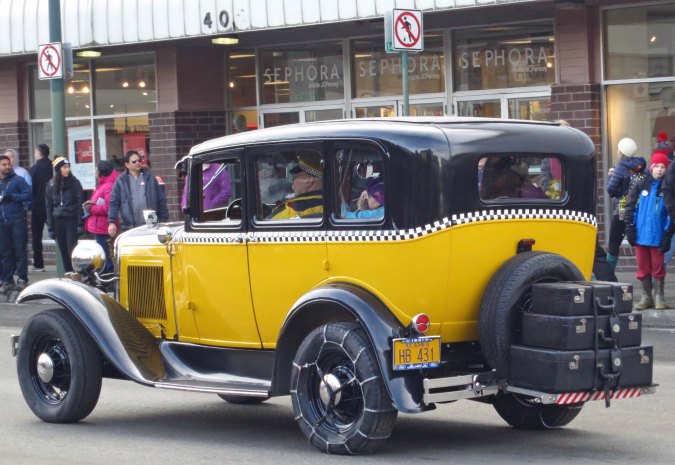
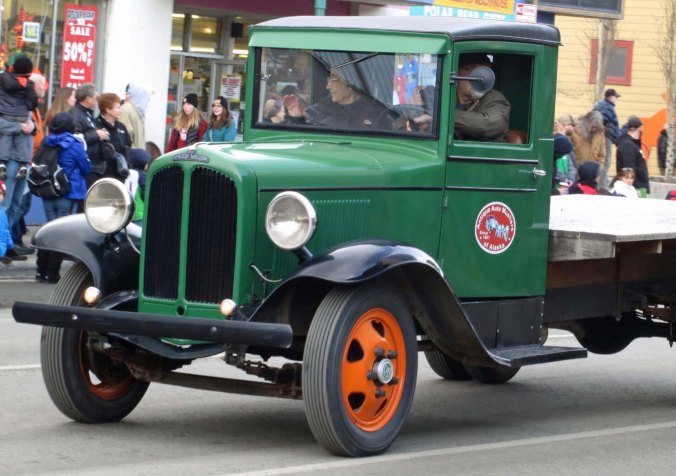
There were a number of old cars in the parade...

There were a number of old cars in the parade. The chains were hardly required on Anchorage’s globally warmed streets.

There were old trucks...

There were old trucks…

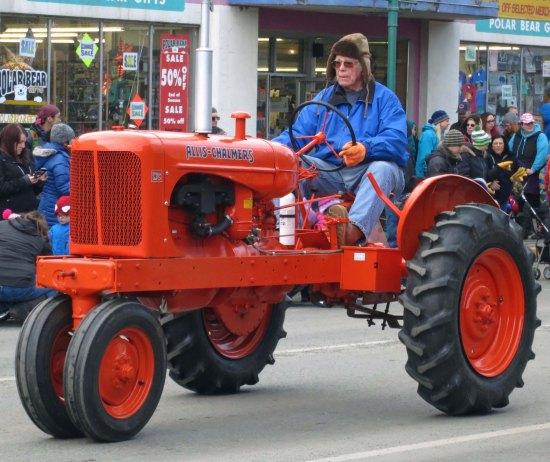
Old tractor featured in 2016 Fur Rondy Parade in Anchorage, AK.

And old tractors.

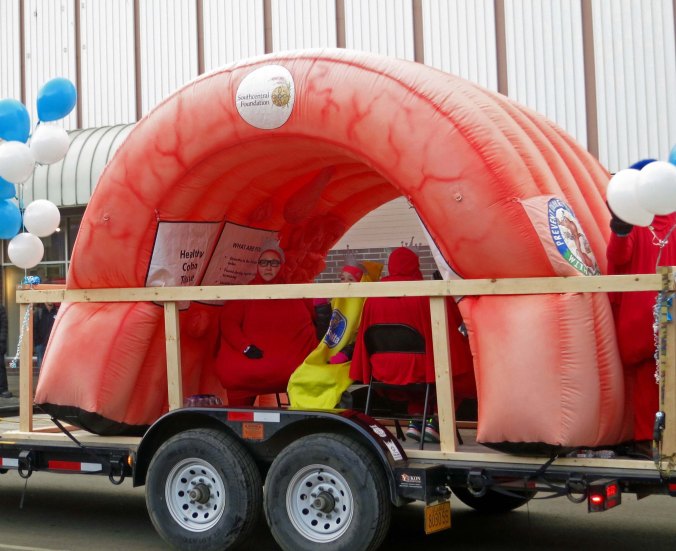
I recognize that this large colon had an important message. But I can't help myself; it was strange. And what in the heck were the folks dressed up inside supposed to be? There is no way I would dress up and be a whatever in a colon. I'll leave you with this image for my post.

And one very large colon. I recognize that it had an important message. But I can’t help myself; it was just strange. And here’s a probing question: what in the heck were the folks dressed up inside supposed to be? There is no way I would dress up and be a whatever in a colon. I’ll leave you with this last image for today. Don’t forget your checkup. NEXT BLOG: Sled dogs.

More Alaska Ice and Snow Art! Anchorage, Fairbanks and Chena Hot Springs

Alaska snow sculpture at Fur Rendezvous 2016

While the sun had obviously impacted this snow sculpture of a native Alaskan, I felt it carried a certain power. It reminded me of the fate of so many Native Americans, fading away while continuing to struggle for existence, possibly even regaining some of their lost heritage.

Alaskans believe in global warming. “It’s only snowed here twice this winter,” my friend Nancy Babb Stone groused when Peggy and I joined her and her husband Bart for dinner at their home in Anchorage. Many years earlier Nancy and I had taken a small, sleepy non-profit and turned it into a major player on health and environmental issues in Alaska. It was great to see her again. We spent a fair amount of time reminiscing.

The winter, or lack thereof, was cutting seriously into Nancy and Bart’s winter sports activities they told us. It was also melting the snow at the Fur Rendezvous’ snow carving contest. Peggy and I, along with our son Tony and his family, had been there twice to check out the sculptures. I was afraid if we looked away for a few minutes they might dissolve into large puddles of water. Even in their semi-melted forms the snow sculptures were fun, however. I was particularly attracted to the snow monsters.

City destroying snow sculpture monster at 2016 Fur Rendezvous snow carving contest.

This city destroying nightmare reminded me of a Japanese radiation-enhanced movie monster from the 1960s.

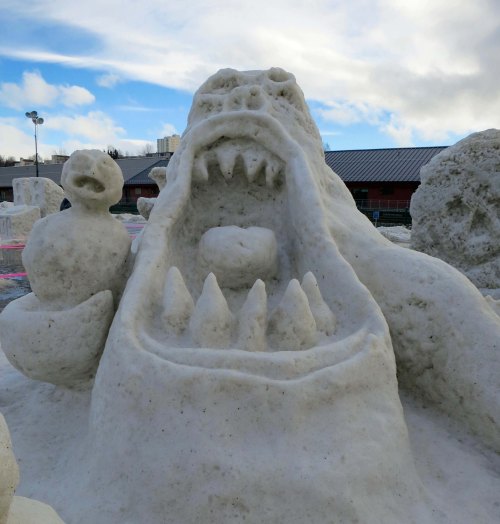
Calvin and Hobbes snow monster at 2016 Fur Rendezvous in Anchorage, Alaska

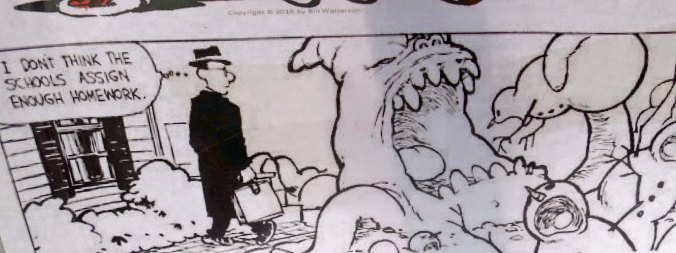
I looked at this huge mouth ready to consume a screaming snowman and something clicked in the back of my mind.  I had seen this monster before…

4 Calvin 1

This cartoon at the side of the sculpture confirmed my suspicion. Calvin of Calvin and Hobbes was a master at creating snow monsters.

Thankfully, it was colder at the World Ice Art Championships in Fairbanks. As I mentioned in my posts on the competition, the ice park also included a kids’ play area and the pond where the ice for carving is located. The carvers have nicknamed the pristine blue ice that comes out of the pond, Arctic Diamond.

It wasn’t the purity of the ice that captured the attention of our 3, 5, and 7-year old grandsons, however. It was the fact that the park was full of ice slides, things to crawl on, over and into, and fun ice sculptures. The kids couldn’t get enough. They were given special permission to stay up late. We shut down the park. “Would you like us to leave lights on for you?” a park attendant asked at 10:30 p.m.— and was serious. I really couldn’t imagine that happening anywhere other than Alaska.

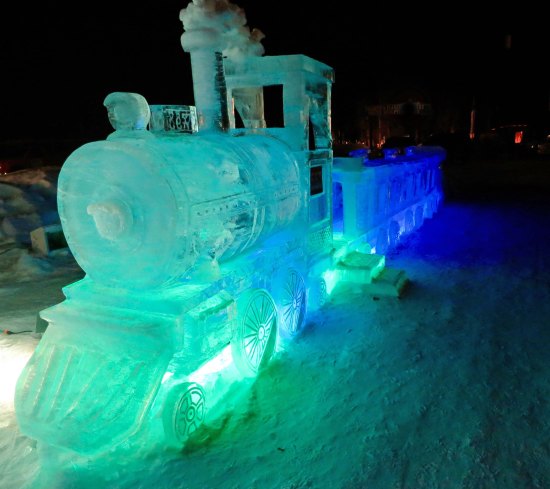
Ice steam engine at the Kid's Ice Park in Fairbanks, Alaska 2016.

A favorite of mine at the ice park. Note the ice smoke! The boys were exploring the rail cars.

Ice sculptures, such as this train carved out of ice, are lit up at night at the Fairbanks Ice Park.

The train lit up at night.

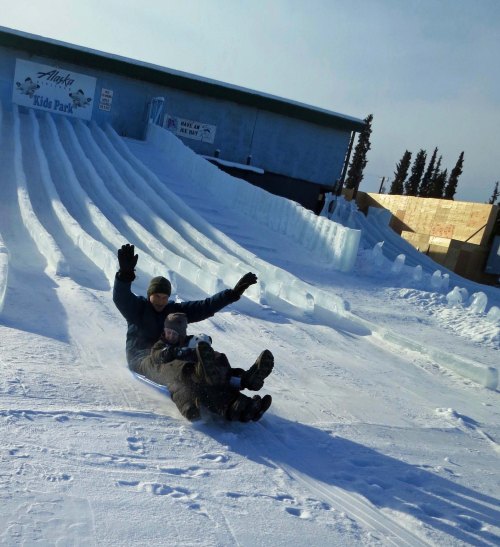
Tony and sons come barreling off one of the slick ice slides on a plastic sled peggy bought for the purpose. Yahoo!

Tony, Connor, and Cooper come barreling off a slick ice slide on a plastic sled Peggy bought for the purpose. Yahoo! The kids survived the day and night; the sled didn’t.

Granson Chris and I tackle another slide at night, without the sled.

Grandson Chris and I tackle another slide, this time at night and without the sled. (Photo by Peggy Mekemson.)

The slides could be quite bumpy and Peggy had just slid over a large one. Ouch! Our daughter-in-law Cammie had loaned her the "marshmallow" jacket.

The slides could be quite bumpy and Peggy had just slid over a large one. Ouch! Our daughter-in-law Cammie had loaned her the fluffy but warm “marshmallow” jacket that made her look a bit like a sumo wrestler.

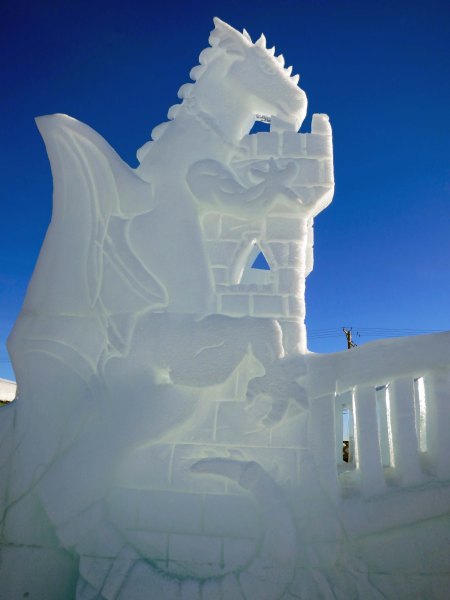
Another slide was connected with this dragon assaulting a castle.

Another slide was connected with this dragon assaulting a castle.

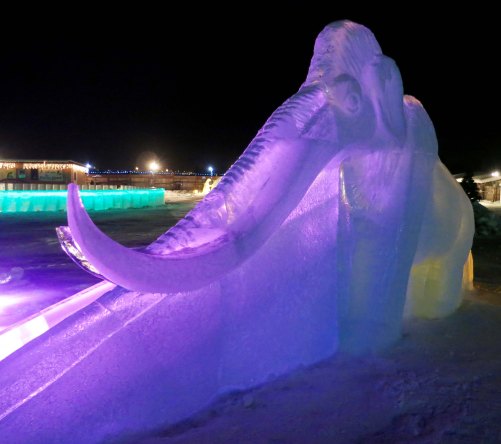
This mammoth lit up at night fronted for another slide.

And this wooly mammoth as well.

I really liked this snake dragon...

I really liked this snake dragon…

And this whale.

And this whale.

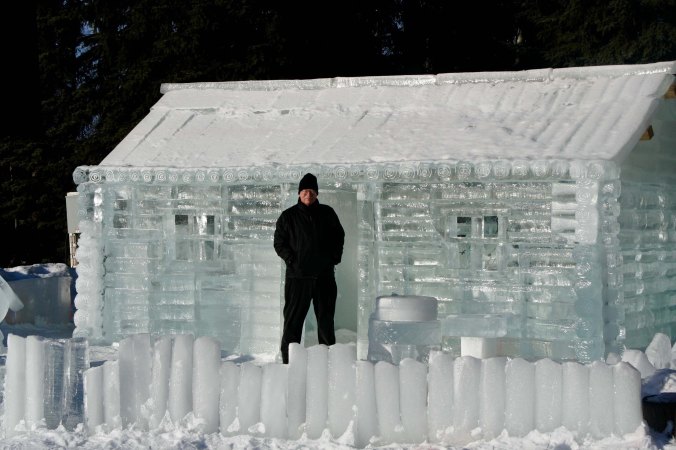
Peggy and I have always wanted a log cabin. But this one may be a little cold.

Peggy and I have always wanted a log cabin. But this one may be a little cold! (Photo by Peggy Mekemson.)

Our furthest north adventure was at Chena Hot Springs, about an hour from Fairbanks. We spent two nights there, and, I wish to report, it was ‘put on all your spare clothes’ cold, dropping to a minus 10˙ F at night.  Our adventures in ice carving continued at the Aurora Ice Museum, home to Steve Brice, 15-time world ice carving champion, and his wife Heather Brice, six-time world ice carving champion. Both had participated in the Fairbanks competition.

The road to Chena Hot Springs. I kept looking for moose. There were plenty of tracks but I didn't spot one.

The road to Chena Hot Springs. I kept looking for moose. There were plenty of tracks but I didn’t spot one.

Dinner and service at the rustic Chena Hot Springs Lodge were excellent. Here the family wishes me a Happy Birthday.

Dinner and service at the rustic Chena Hot Springs Lodge were excellent. Here the family wishes me a happy birthday. “Are you really that old, Grandpa!?”

Our exploration of ice art continued at the Aurora Ice Museum at Chena.

Our exploration of ice art continued at the Aurora Ice Museum.

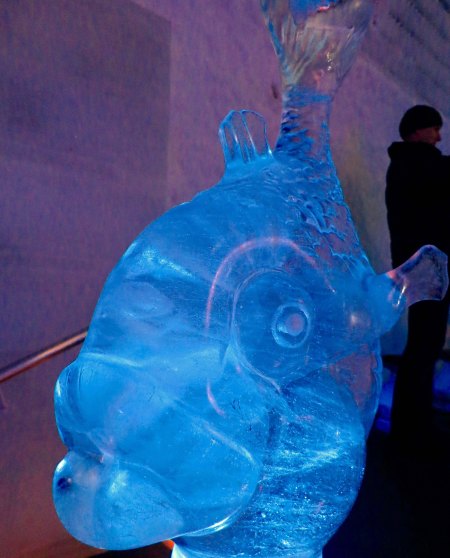
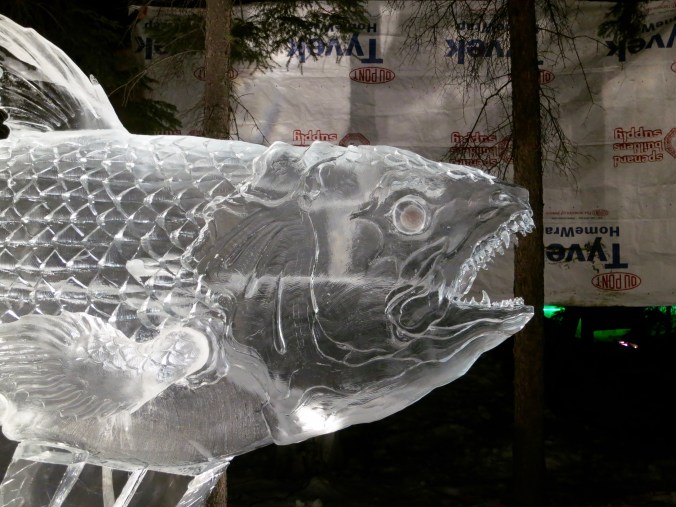
This fish with its huge lips was amusing.

This carved ice fish with its huge lips was amusing. Pucker up.

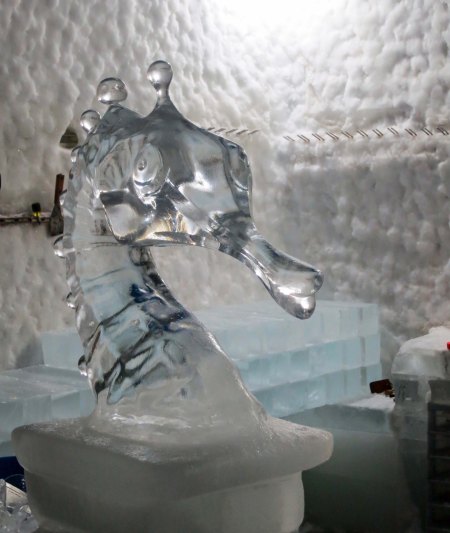
I thought this carved ice head of a seahorse was rather elegant.

I thought this carved ice head of a seahorse was rather elegant.

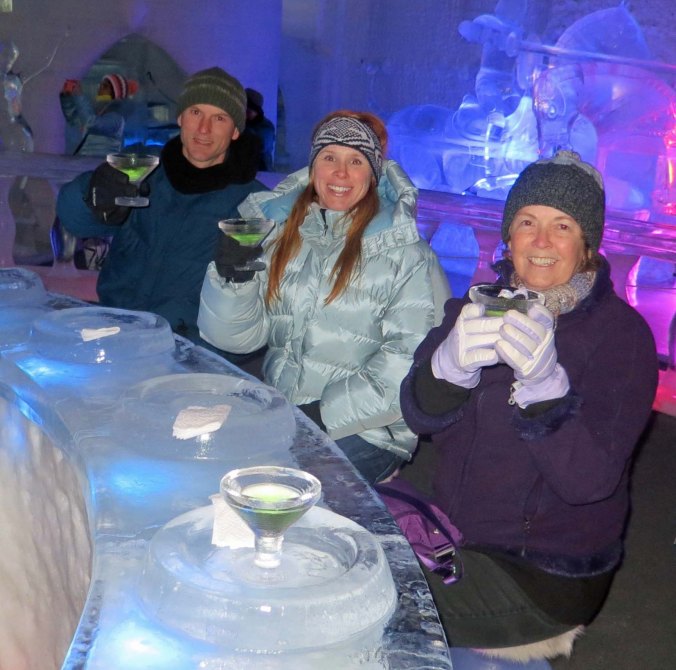
Here we are toasting out of carved ice glasses at a bar made out of ice, while sitting on ice chairs. We had hoped to be toasting Tony's appointment as a commander at the US Naval Academy in Connecticut. He did receive the appointment, but not until after we had returned to Oregon.

Here we are toasting out of carved ice glasses at a bar made out of ice, while sitting on ice chairs (fortunately fur covered). We had hoped to be toasting Tony’s appointment as Company Officer for cadets interested in aviation at the US Naval Academy in Connecticut. He did receive the appointment, but not until after we had returned to Oregon.

Chena had great food and friendly people, but the lodging left a little to be desired, especially for the $200 a night price tag. I’d go with second-hand shabby as a description of our room, which they never got around to cleaning at the end of our first day. I could have lived with this except for the lack of sound-proofing.

Whenever anyone came in or went out the door banged. If they lived upstairs, the banging was followed by a mini-earthquake clomp, clomp, clomp. Again, it would have been tolerable had it stopped, say around ten. But on our second night, it went on and on— until one a.m. The lovely Peggy slept through it. I got out my sound maker and turned it on high. No luck: slam clomp, clomp, clomp! I put the sound maker three inches away from my ear: slam, clomp, clomp, clomp! I put a pillow over my head: slam, clomp, clomp, clomp! every 15 minutes, like clock work. I begin to contemplate doing things that a peace-loving guy like me doesn’t do. I begin to hallucinate. Our hotel was drug central for Alaska and people were carefully scheduled to pick up their illegal stash every 15 minutes to avoid running into each other.

The next day a friend suggested another possibility. It was a cross-cultural lesson. Chena Hot Springs occasionally provides views of the Aurora Borealis. Asians, and particularly Japanese, so I was told, believe that a child conceived under the Northern Lights will have great gifts. Our hotel was pretty much packed with people traveling from Asia. What if every 15 minutes or so, one of the husbands would go outside and check to see if the sky was dancing while his wife waited patiently for the great moment? Had I known that, I would have sat in my doorway and wished the guys good luck!

NEXT BLOG: Queens, dogs, and a very large colon in the Fur Rendezvous Parade— and an exciting Outhouse Race.

The Word Ice Art Championships… On the Road to the Olympics

"Ancient Fish" at the 2016 World Ice Art Championships in Fairbanks, Alaska

The detail in the “Ancient Fish” or coelacanths, earned it top billing on my post today.

Aaron Costic had a dream. He wanted to become a chef. His skills at ice carving were so impressive, however, his instructor encouraged him to participate in ice sculpture competitions. His skills brought him to the World Ice Art Championships in Fairbanks and then on to winning a gold medal in the Winter Olympics at Torino, Italy in 2006. This year he and his team-mate carved “Concentration” in Fairbanks, the sculpture I featured in my first blog on the competition.

Participation in the Winter Olympics speaks to the popularity of ice carving. It isn’t considered a sport at the Olympics but is seen as a Cultural Olympiad event.  The first competition was at the Calgary Winter Games in 1988. On years when the Winter Olympics are held, the World Ice Art Championships in Fairbanks is considered a qualifying event.

Many of the best ice carvers in the world come to Fairbanks. The art I have included in this series certainly speaks to the talent of the carvers. It was exciting to be at the competition. I only wish I could have been there to see the sculptures lit up with colored lights. Even more, I wish I could have been in Fairbanks for the multi-block competition. Ice Alaska – Facebook includes photos of both if you are interested.

Today I am going to wrap up my photos of the 2016 World Ice Art Championships. In my next blog I will look at the Children’s Ice Park in Fairbanks, the Aurora Ice Carving Museum in Chena Hot Springs, and the snow carving contest connected to the Fur Rendezvous in Anchorage. In other words, I am not quite done with ice art!

"Don't Leave Me Now" Ice Sculpture at the 2016 Ice Art Championships in Fairbanks, Alaska.

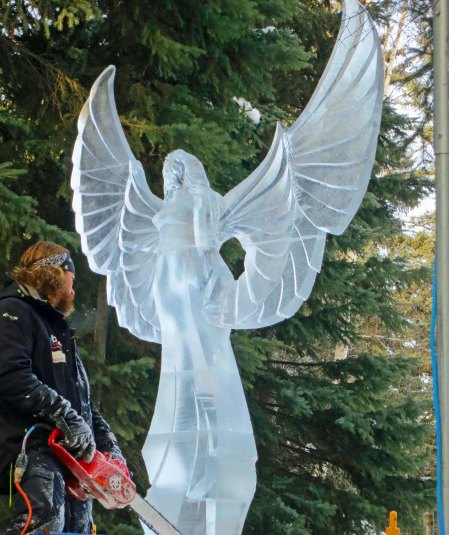
Ice Carvers from Thailand (Is there ice in Thailand?) put the finishing touches on their graceful sculpture titled “Don’t Leave Me Now.”

"Don't leave me now" ice sculpture at the 2016 World Ice Art Championships in Fairbanks, Alaska

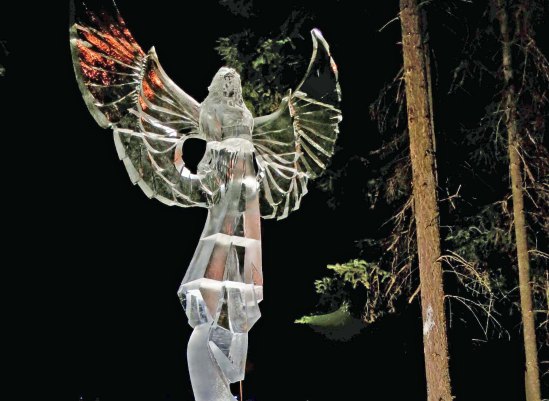
“Don’t Leave Me Now” lit up by white lights on the night of the ice sculpture judging.

"First Breath" ice carving sculpture at the 2016 World Ice Art Championships in Fairbanks, Alaska.

This beautiful sculpture reflecting the sky was called First Breath. It would have been an icy one.

"First Breath" ice carving sculpture at 2016 World Ice Art Championships in Fairbanks, Alaska.

“First Breath” ice sculpture lit up at night.

"6 H" ice carving sculpture at 2016 World Ice Art Championships in Fairbanks, Alaska.

Dean De Marais uses his chainsaw to put finishing touches on the ice sculpture known as H^2.

"H^2" ice carving sculpture at the 2016 World Ice Art Championships in Fairbanks, Alaska.

H^2 prepares for takeoff at night. Or maybe it is landing.

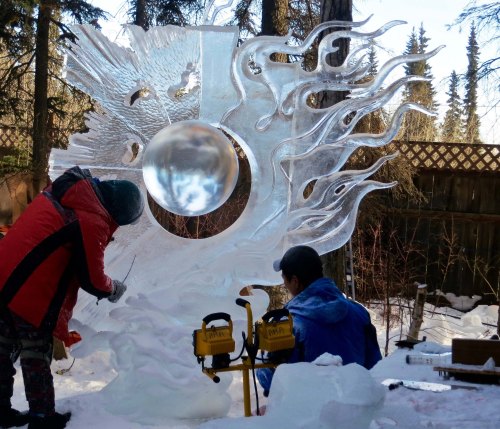
"Son of Sun" ice carving sculpture at 2016 World Ice Art Championships in Fairbanks, Alaska

“Son of Sun” was created by carvers from China.

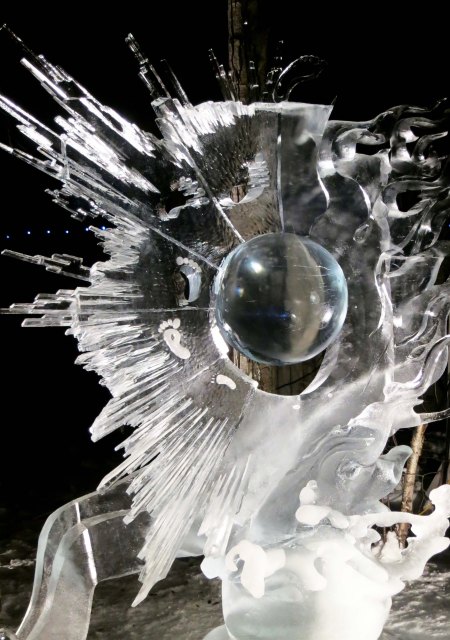
"Son of Sun" ice carving sculpture at 2016 World Ice Art Championships.

“Son of Sun” at night

King Fisher ice carving sculpture at 2016 Ice Art Championships in Fairbanks, Alaska.

A fisherman displays his prime catch in “Kingfisher.”

The model that "Kingfisher" was based on.

The model that “Kingfisher” was based on.

"Snapped" ice carving sculpture at 2016 World Ice Art Championships in Fairbanks, Alaska.

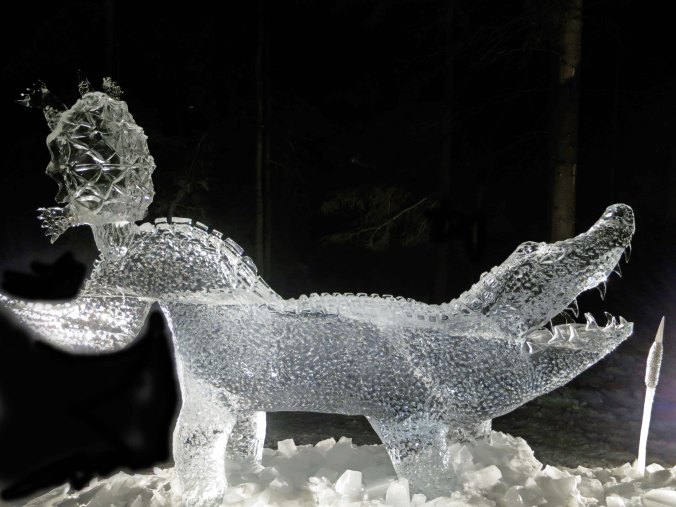
There was quite a set of chompers on this fellow titled “Snapped.” I’d give him a wide berth. But there was another reason for his wide open jaws besides hunger…

"Snapped" ice carving sculpture at night at the 2016 World Ice Art Championships in Fairbanks, Alaska

A snapping turtle had him by the tail!

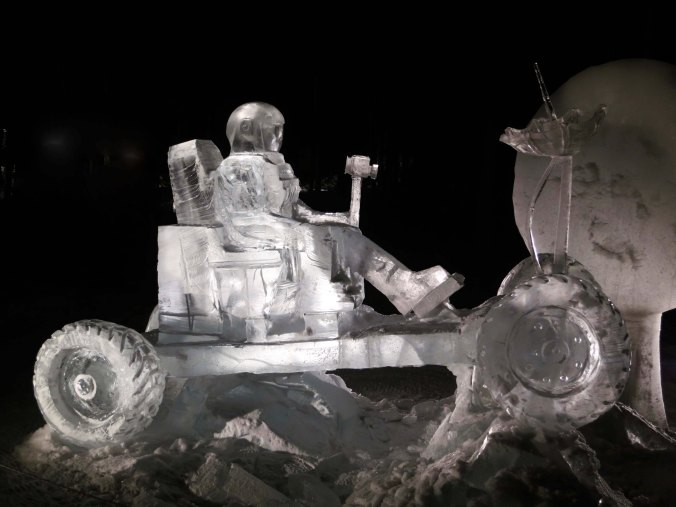
" Mission on Mars" ice carving sculpture at the 2016 World Ice Art Championships in Fairbanks, Alaska.

A futuristic “Mission on Mars.”

"Destinee" ice carving sculpture at the 2016 World Ice Art Championships in Fairbanks, Alaska.

Two carvers from France created “Destinee.”

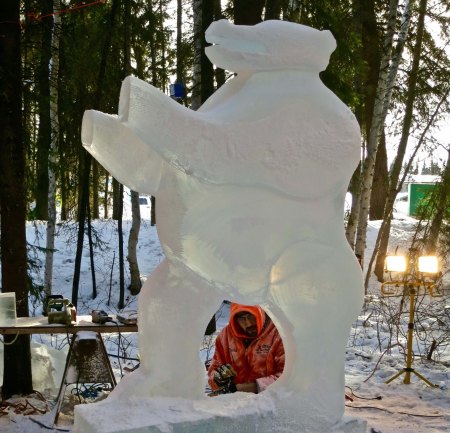
Renewed Embodiment ice carving sculpture at the 2016 World Ice Art Championships in Fair banks, Alaska.

A carver adds a touch of color to this huge bear titled “Renewed Embodiment.”

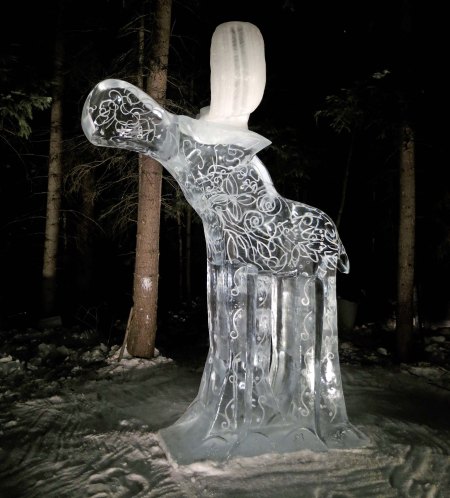
" Star Gazing" moose ice carving sculpture at the 2016 World Ice Carving Championships in Fairbanks, Alaska.

Where there are huge bears, there are likely to be moose. His title: “Stargazing.”

"Hard to Handle" ice carving sculpture at the 2016 World Ice Art Championships in Fairbanks, Alaska.

The title to this sculpture, “Hard to Handle,” seems something of an understatement.

This boy seems to have hooked into a whopper! It is my last photo for the 2016 World Ice Art Championships in Fairbanks.

This boy seems to have hooked into a whopper! It is my last photo for the 2016 World Ice Art Championships in Fairbanks.

The 2016 World Ice Art Championships in Fairbanks, Alaska… Part II: The Artists

Anne Marie Tabardo takes a break from carving "Alice" at the 2016 World Ice Art Championships in Fairbanks.

Anne Marie Tabardo takes a break from carving “Alice” at the 2016 World Ice Art Championships in Fairbanks.

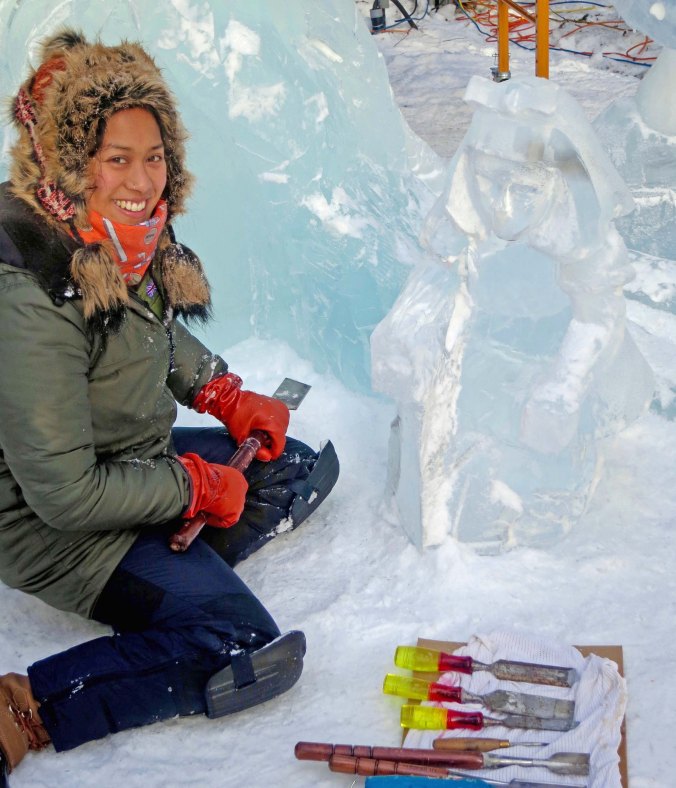
Anne Marie Tabardo looked up from carving Alice with a smile that was guaranteed to melt an icy heart, or cold art for that matter.  A collection of ice carving chisels rested on the ground next to her. A seriously long one was poised in her hand. It was obvious that she was having fun with her sculpture. A tall tree of ice towered over her and the diminutive Alice, who was apparently ready to dive into the rabbit hole. Off to the right were what looked suspiciously like fly agaric: magic mushrooms. I suspect they are quite common in the land of hookah smoking caterpillars. I wondered if the judges would give Anne an A for authenticity, or even recognize the mushrooms.

Alice ice sculpture at the 2016 World Ice Art Championships in Fairbanks, Alaska.

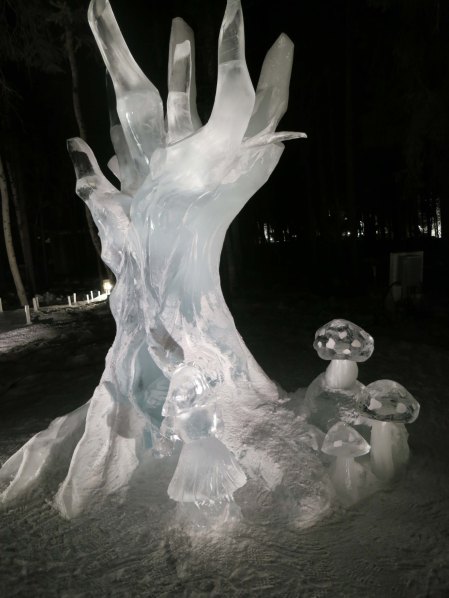
Alice, the tree, and magic mushrooms. Had the mushrooms been real and available, some people may have spotted a white rabbit with a pocket watch as well.

Ice Art Sculpture "Alice" at the 2016 World Ice Art Championships in Fairbanks, Alaska

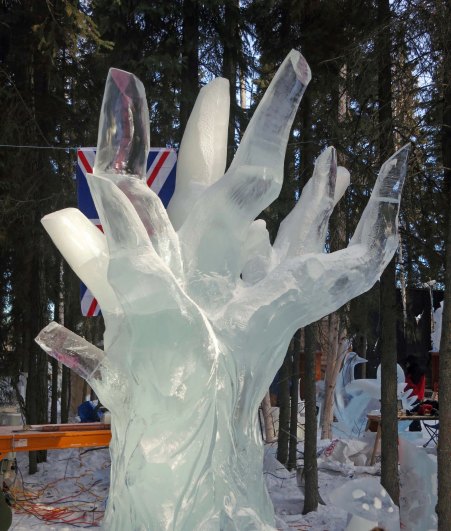
Tree limbs looking like fingers added to the Wonderland feel of the sculpture.

Anne hails from the United Kingdom where these same hallucinogenic fungi were recently found on the grounds of Buckingham Palace. An official was quick to assure everyone that the mushrooms from the garden would not be used in the kitchen. The Queen would not be prancing around the palace.

Prior to becoming involved in ice art, Anne worked at Madame Tussaud’s and The British Museum creating replicas of famous people. She has a degree in fine arts from the National Art School in Sydney and at the City and Guilds of London Art School. Her father, Juan, who runs a florist shop in Sydney, Australia, flew in to Fairbanks to help with the sculpture.

Ice Alaska, the organization supporting the ice art competition in Fairbanks, includes brief bios on most of the carvers. Some, like Anne, are art school graduates. Others came by their profession by less direct routes. For example, Chris Foltz, one of the carvers of Soul Catcher, is executive chef at the Oregon Coast Culinary Institute. Ice sculptures are often on display at fancy group dinners such as those found on cruise ship. In these cases, ice carving skills are a plus for chefs. Both of the artists for Spark come from culinary backgrounds. Tajana Rauker from Croatia studied culinary arts in Krk, Croatia. Her partner in carving Spark, Ted Wakar, is an executive chef at Ford Motor Company.

Day time view of ice sculpture "Soul Catcher" at the 2016 World Ice Art Championships in Fairbanks, Alaska

The ice art sculpture “Soul Collector” was still being worked on. A tarp had been put up to protect it from the sun.

Ice art sculpture "Soul Collector" lit up at night at the 2016 World Ice Art Championshipsin Fairbanks, Alaska.

“Soul Collector” at night.

Close up of ice sculpture "Soul Collector" at the 2016 World Ice Art Championships.

A night-time close up.

"The Spark" ice sculpture at the 2016 World Ice Art Championships

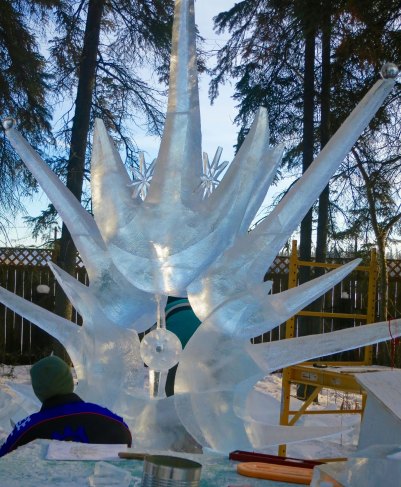
This sculpture, “The Spark,” was carved by two people with culinary training.

The Spark ice art sculpture at the 2016 World Ice Art Championships at Fairbanks, Alaska

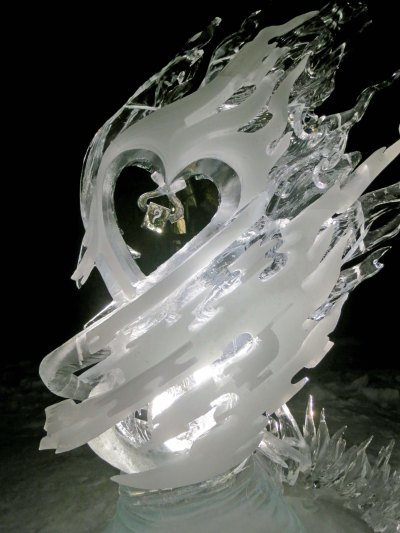
“The Spark” at night with an ice block “?” held by ‘ice tongs’ in the heart. Translate: Is this the One?

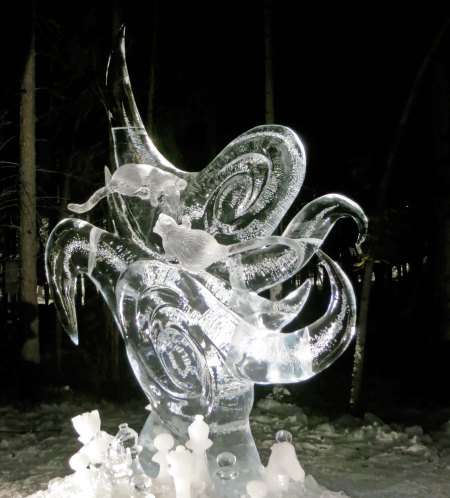
Ice carving artists are often involved with related art activities such as wood carving. Ben Firth, who along with his brother Barnabas, was responsible for carving Conflict, also carves antlers, sculpts in bronze, and works in pencil and watercolors. His art is sold out of the family’s art studio in Anchor Point, Alaska. Ivan Loktyukhin, is another multi-talented artist, who has won numerous prizes for his wood carving and metal sculptures as well as ice art. Ivan holds a degree in Architectural Design from the Russian Pacific National University. Along with Vadim Polin, Ivan was responsible for creating Yahoo!

"Nature of Conflict" ice art sculpture at 2016 World Ice Art Championships held in Fairbanks, Alaska.

A close up of the “Nature of Conflict” ice sculpture during the day.

"Nature of Conflict" ice art sculpture at the 2016 World Ice Art Championships.

And at night. A chess game was in progress at the bottom.

Ice Sculpture "Yahoo" at the 2016 World Ice Art Championships in Fairbanks, Alaska.

“Yahoo!” seemed to be an appropriate title for this unfinished ice sculpture of a woman riding her ostrich. (I showed her missing legs in my last blog.)

Yahoo! ice carving sculpture at the 2016 World Ice Art Championships in Fairbanks, Alaska..

And here she is at night, going all out with legs attached!

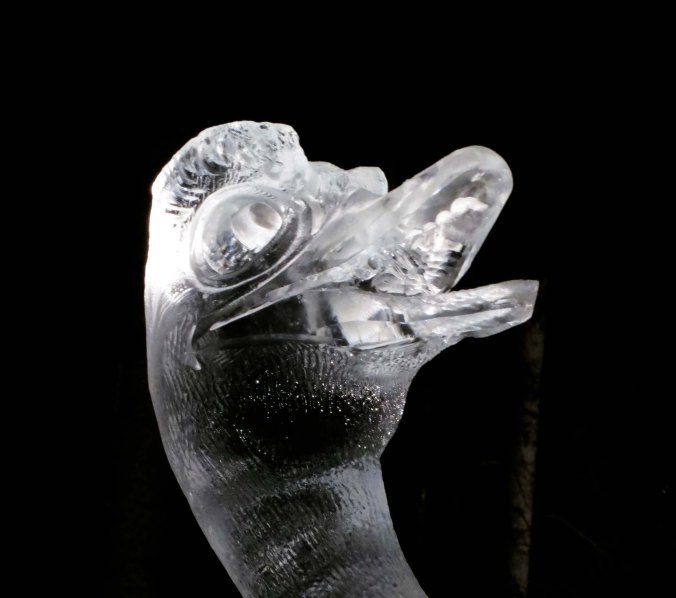
Head of ostrich included in the ice art sculpture "Yahoo!" show at the 2016 World Ice Art Championships.

I couldn’t resist this close up of the ostrich’s head.

Another artist who caught my attention was Lkhagvadorj Dorjsuren (AKA George) who was the first person from Mongolia to carve ice. He won his first contest in Finland where no one spoke his language. One of his dreams is to start a competition in Mongolia that would draw tourists. Sign me up! He and his partner Enkh-Erdene Ganbataar, (aka Eggi) created the rather humorously named sculpture AAAHH BaaMMM Beee Beeem. (Yeah, I don’t have a clue, either.) George, working with Altankhuu Khishigdalai, also helped create The Beginning of Time.

"AAAHH BaaMMM Beee Beeem" ice art sculpture at 2016 World Ice Art Championships in Fairbanks, Alaska.

AAAHH BaaMMM Beee Beeem during the day…

A"AAHH BaaMMM Beee Beeem" ice sculpture during the night of judging at the 2016 World Ice Art Championships.

And at night.

"The Beginning of Time" ice art sculpture ice art sculpture at the 2016 World Ice Art Championships

George and Altankhuu from Mongolia working on “The Beginning of Time.”

The Beginning of Time ice carving sculpture at the 2016 World Ice Art Championships in Fairbanks, Alaska.

“The Beginning of Time” shown at night, my last photo for this post.

I have only been able to cover a few of the participating artists. If you are interested in learning more about these artists or others involved check out the Ice-Alaska website. NEXT BLOG: I will finish up my blogs on the world ice art competition.

The Spectacular 2016 World Ice Art Championships … The Alaska Series

2016 Word Ice Art Championships in Fairbanks.

Title: Concentration. This ice sculpture won first prize for realistic portrayal at the 2016 World Ice Art Championships in Fairbanks, Alaska.

I’ve been teasing you this past week with re-blogs from a trip Peggy and I made to Alaska three years ago. Today marks the start of a short series on the trip we just completed. Welcome aboard!

We joined our son Tony, his wife Cammie, and three of our grandkids: 7-year old Connor, 5-year old Chris, and 3-year old Cooper. (That was a trip within itself— grin.) Tony flies helicopter rescue missions for the Coast Guard out of Kodiak, Alaska. If you ever watched the Weather Channel series, Coast Guard Alaska, you have an idea of the type of work he does.

2 Tony and family

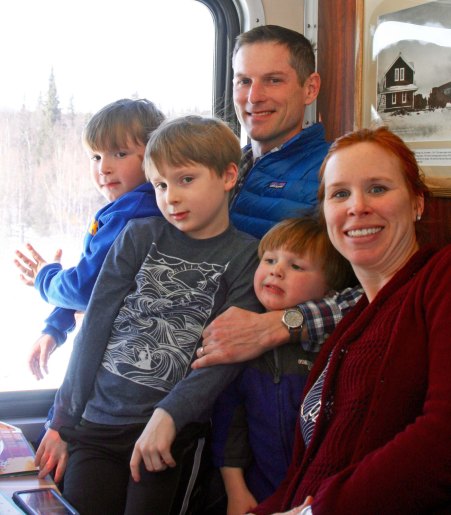
Our son Tony, his wife Cammie, and our grandchildren Cris, Connor, and Cooper (left to right). We are on the Alaska Railroad here. (Photo by Peggy Mekemson.)

We began our adventure at the Anchorage Fur Rendezvous where the sled dog races caught my attention. I have never seen dogs so eager to run. Even my old Basset Hound Socrates woofing in slow pursuit of a fast rabbit failed to show such enthusiasm. (I used to tell Soc that the only chance he had of catching a rabbit was if it were rolling around on the ground laughing so hard it couldn’t get up.)

3 Luke Skywalker

I am going to do a post on sled dogs but I thought I would start today by introducing you to Luke Skywalker, a sled dog we met at Chena Hot Springs outside of Fairbanks. Jabba the Hut was located in the next doghouse.

We also watched firemen, college students and a group of Mormons get in the spirit of racing— but instead of hauling sleds, they were hauling outhouses. And yes, someone had to sit on the pot. An Alaskan style parade we viewed had so many princesses that the announcer joked that anyone with a tiara could join. Peggy and Cammie practiced their princess waves.

Practicing princess waves at the 2016 Fur Rendezvous

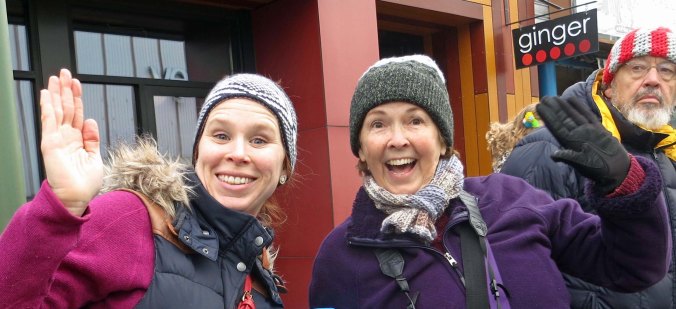
Cammie and Peggy practice their princess waves. All they were missing were tiaras. A grumpy Alaskan apparently wasn’t amused.

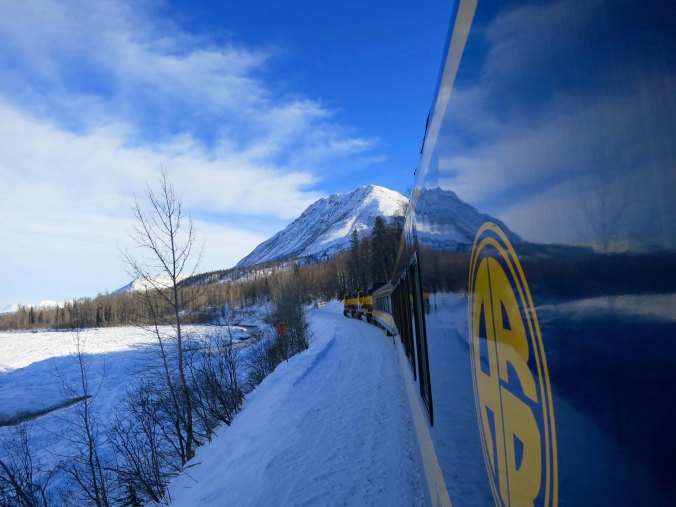
Our 12-hour trip from Anchorage to Fairbanks on the Alaska Railroad was a highlight. We had a beautiful day with views of Mt. Denali, moose, and a pair of wolves. The route has to be one of the most scenic train trips in the world and the engineer stopped frequently to allow passengers an opportunity to enjoy the view. (Thus the 12 hours.)

Alaska Railroad on the way to Fairbanks.

Our trip by train took us from Anchorage to Fairbanks through very scenic country. The journey will have its own post.

Equally impressive, but in a different way, were the 2016 Word Ice Art Championships in Fairbanks.

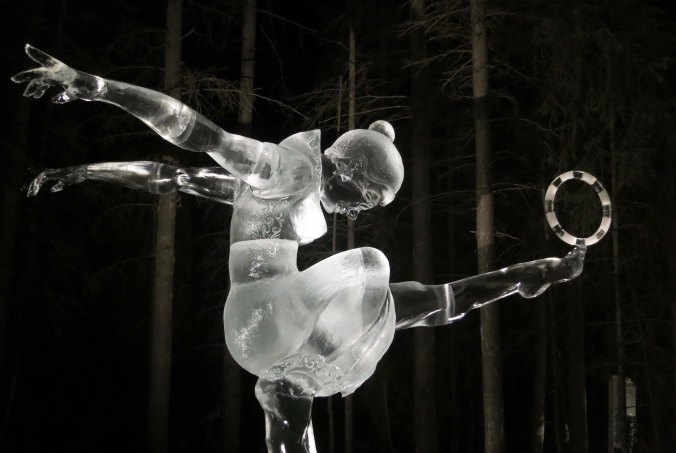
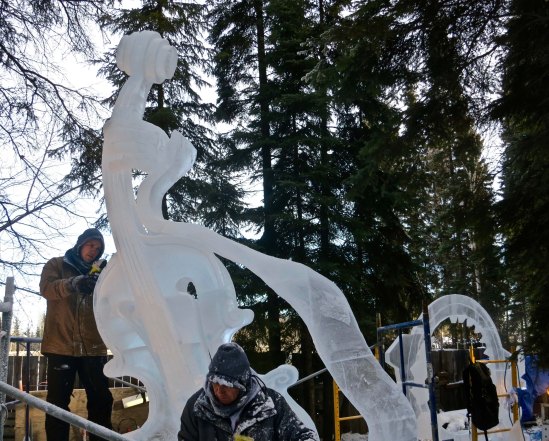
I am going to start with the ice carving competition simply because it was so spectacular. We really had no idea what to expect. There are both single block and multi block contests. What we saw was the single block contest with the blocks cut out of a local lake. Each block measured 3 by 8 by 5 feet and weighed approximately five tons. Teams of two people were given 60 hours to complete their masterpieces. A variety of tools were used in the process ranging from specialized chain saws to chisels. Most sculptures started with several parts (legs for example), all of which were ‘glued’ together using an icy slush. It isn’t unusual for an art piece to fall apart. Imagine that after 60 hours of work! I heard one artist comment to another, “You owe me a dollar. It’s still standing.”

2016 Word Ice Art Championships in Fairbanks.

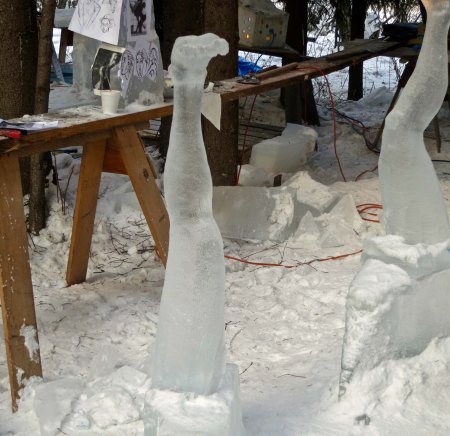
A pair of very cold legs wait to be attached to an equally icy body of a naked woman riding an ostrich. Sketches on the upper left provide the artists with directions for their sculpture.

We made two trips out to the Fairbank’s Ice Park. (There is a lot going on there besides the contest. A dozen or so ice slides kept the boys and Peggy busy. Even Grandpa was brow-beaten into two bumpy rides, one on his butt and one on his belly.) On our first trip to the park, we watched the competitors as they scrambled to complete their work. That night we returned to view the finished works of art when the actual judging was taking place. While the sculptures are normally lit up by colored lights, only white light is allowed during judging. As I made my way through the exhibition, I could understand why. Given the number of truly impressive ice sculptures, I am going to do two or three posts on the competition. Let me know your favorites.

The sculpture, Concentration, at the 2016 Word Ice Art Championships in Fairbanks.

We were able to visit the park while the artists were finishing up their work. This photo of “Concentration” provides a perspective on the size of the sculptures.

A full view of the sculpture Concentration at the 2016 Word Ice Art Championships in Fairbanks.

A full view of “Concentration” at night on the night of the judging.

A close up of the sculpture "Concentration" at the 2016 Word Ice Art Championships in Fairbanks.

And a closeup to provide an idea about the detail the artists work into their pieces— right down to the dimple on the knee.

The sculpture "

I thought this sculpture titled “A Beautiful Noise” was fun during the day.

2016 Word Ice Art Championships in Fairbanks.

Here it is at night.

"Still I Rise" sculpture at the 2016 Word Ice Art Championships in Fairbanks.

“Still I Rise” has his feet worked on. Hands and chains have yet to be added. I thought the green against the pure white provided a great contrast.

Night photo of sculpture "Still I Rise" at the 2016 Word Ice Art Championships in Fairbanks.

Chains broken, “Still I Rise” is freed to soar off into the heavens.

The "Jellyfish Hunter" is carved at the 2016 Word Ice Art Championships in Fairbanks.

The “Jellyfish Hunter” receives its final touches before judging. Note the size of the scaffolding.

The "Jellyfish Hunter" lit up at night at the 2016 Word Ice Art Championships in Fairbanks.

Lit up at night, the “Jellyfish Hunter” has caught its jellyfish.

A close up of the Jelly Fish Hunter at the 2016 Word Ice Art Championships in Fairbanks.

A close up of the Jellyfish Hunter— a magnificent creature indeed.

The "Stuck Up" sculpture at the 2016 Word Ice Art Championships in Fairbanks.

“Stuck up,” a fun title for a fun sculpture captured here during the day lit up by the sun.

The sculpture "Stuck Up" by night at the 2016 Word Ice Art Championships in Fairbanks.

“Stuck Up” by night.

The "North Wind and Sun" sculpture at the 2016 Word Ice Art Championships in Fairbanks.

“The North Wind and Sun” almost silver reflecting the cold north sun. Temperatures were in the teens, however, balmy for Fairbanks in the winter. (I’ve been there at -35 degrees below zero Fahrenheit. Occasionally the thermometer reaches a minus 50.)

"The North Wind and Sun" sculpture at the 2016 Word Ice Art Championships in Fairbanks.

A final view of the North Wind for this post.  My next blog will include many more of these beautiful ice sculptures.