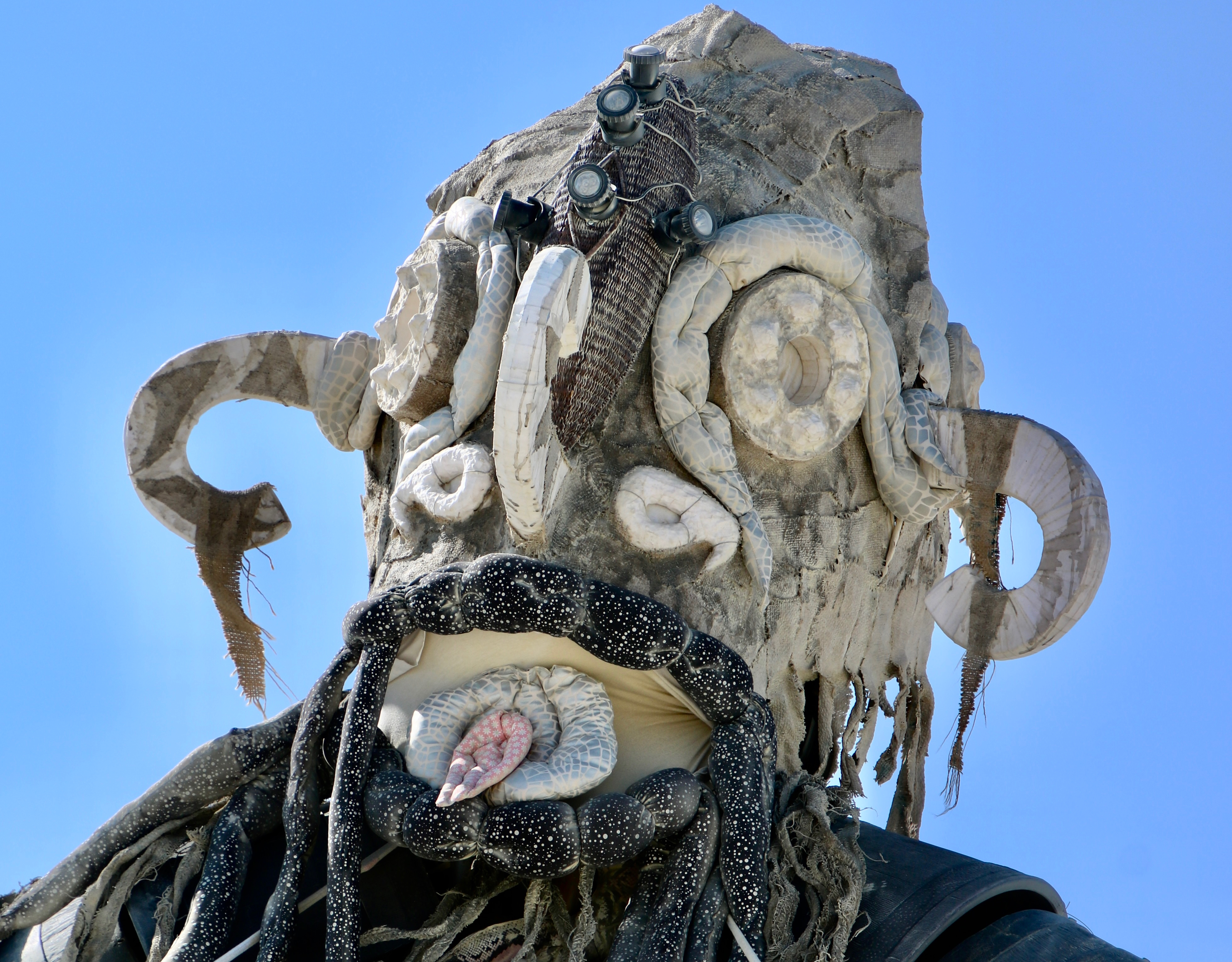
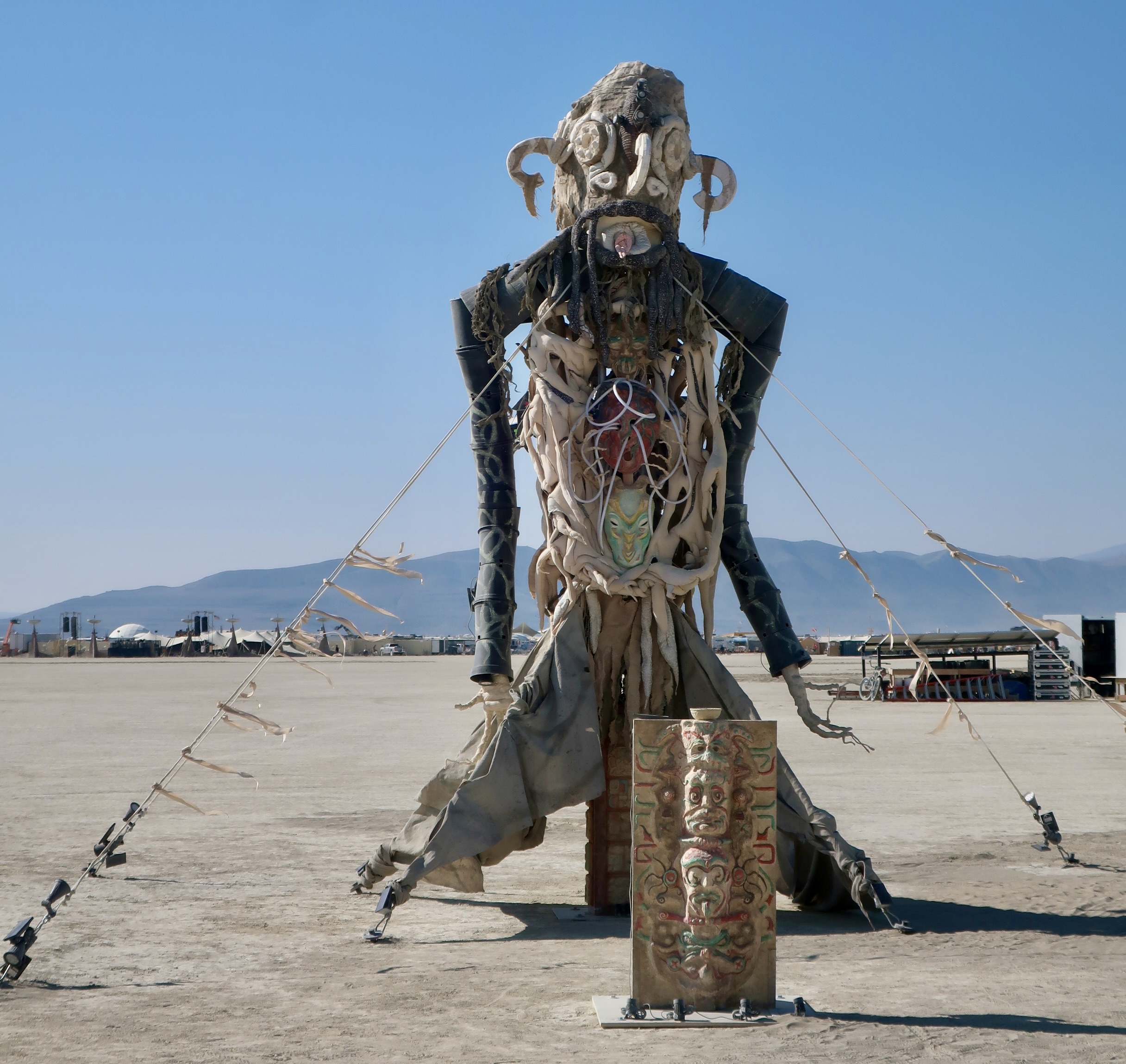
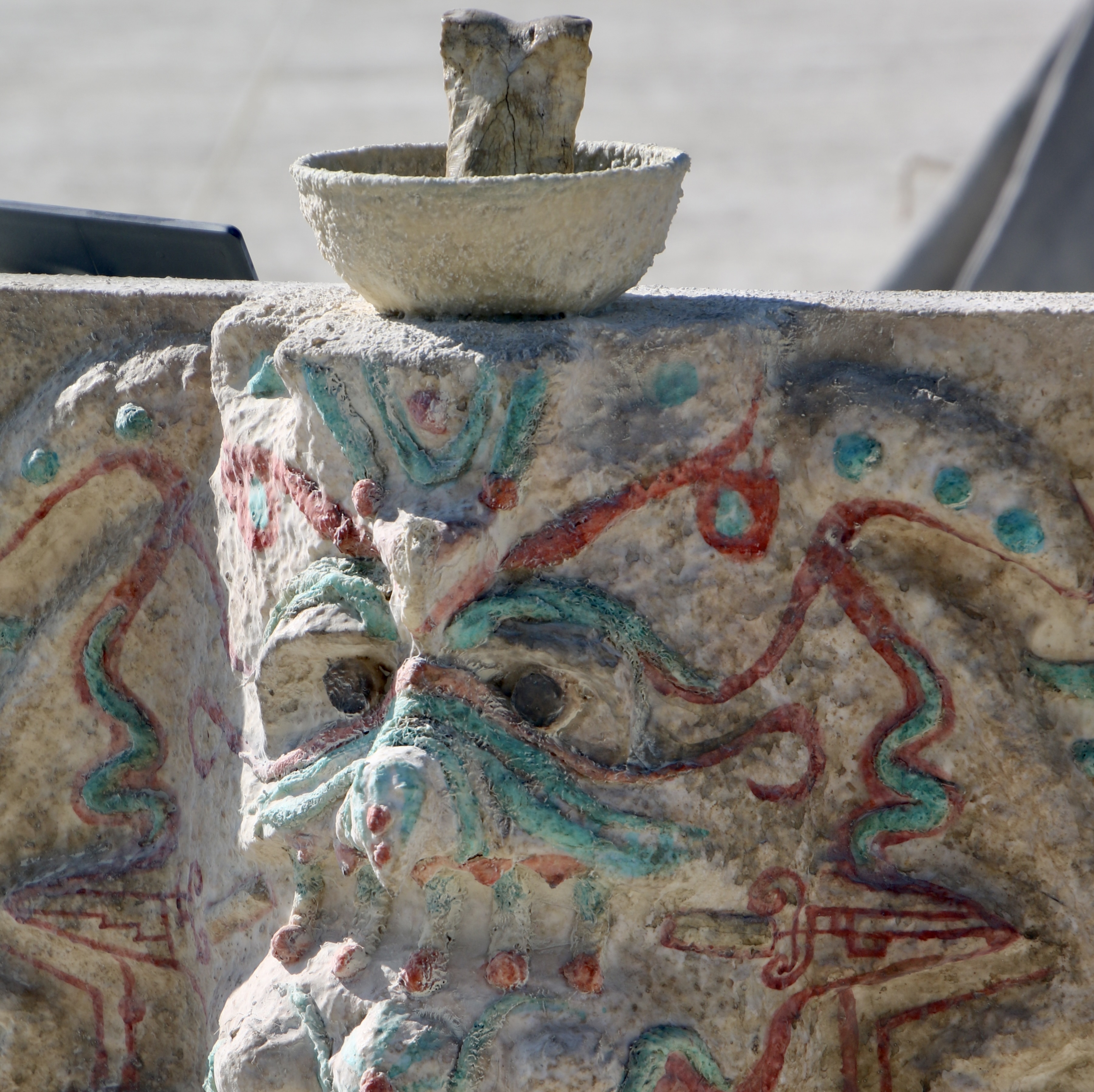
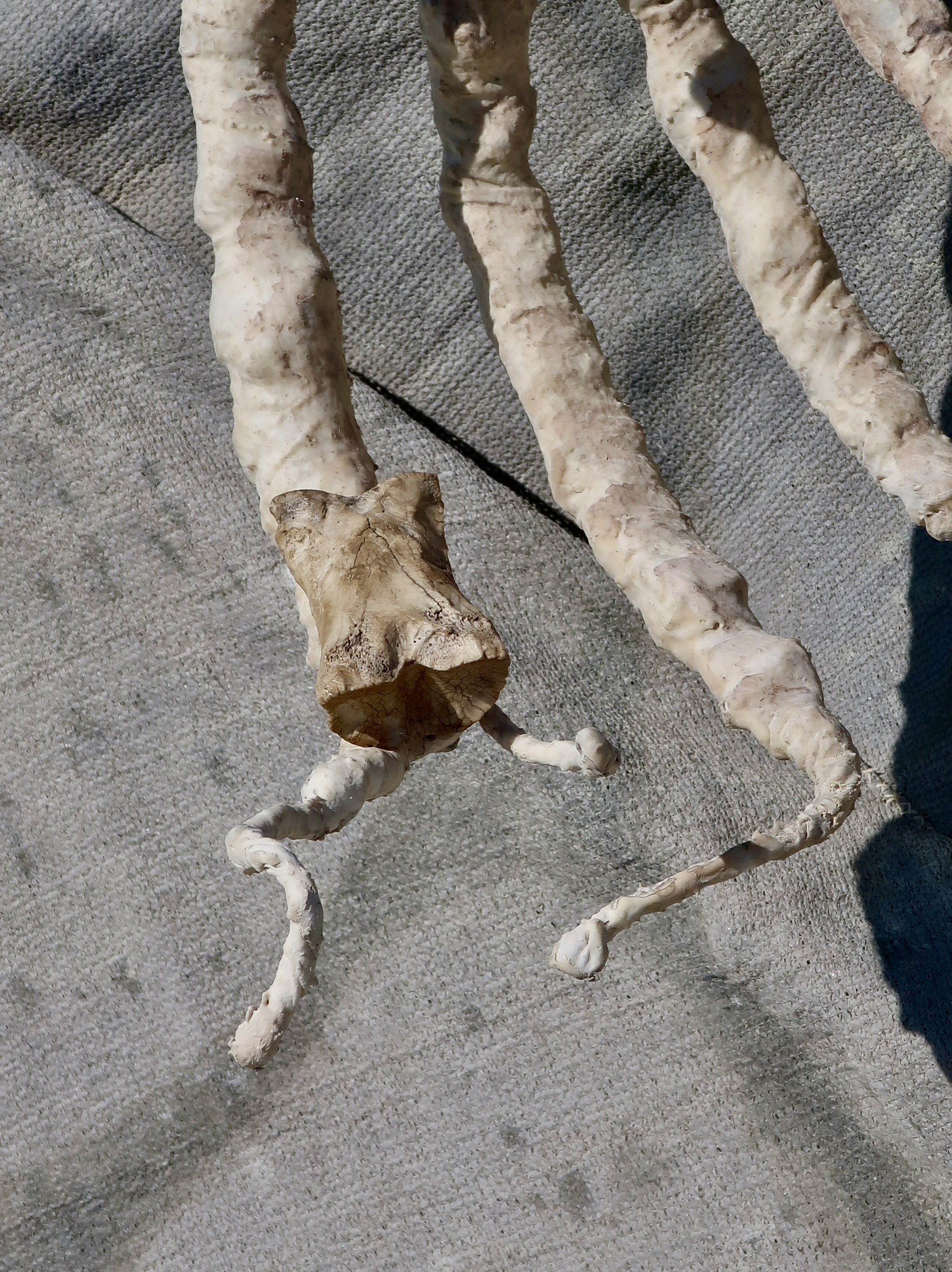

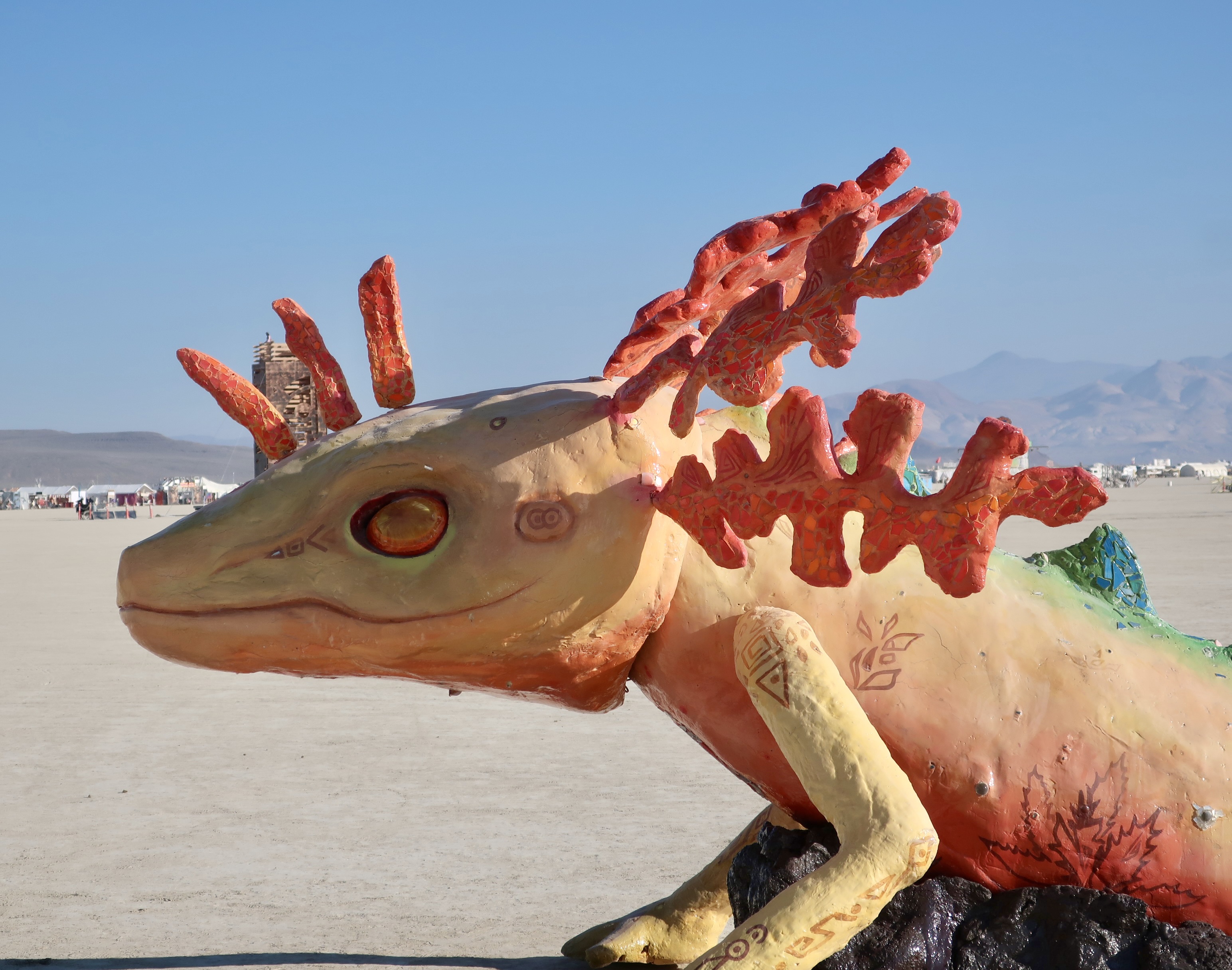
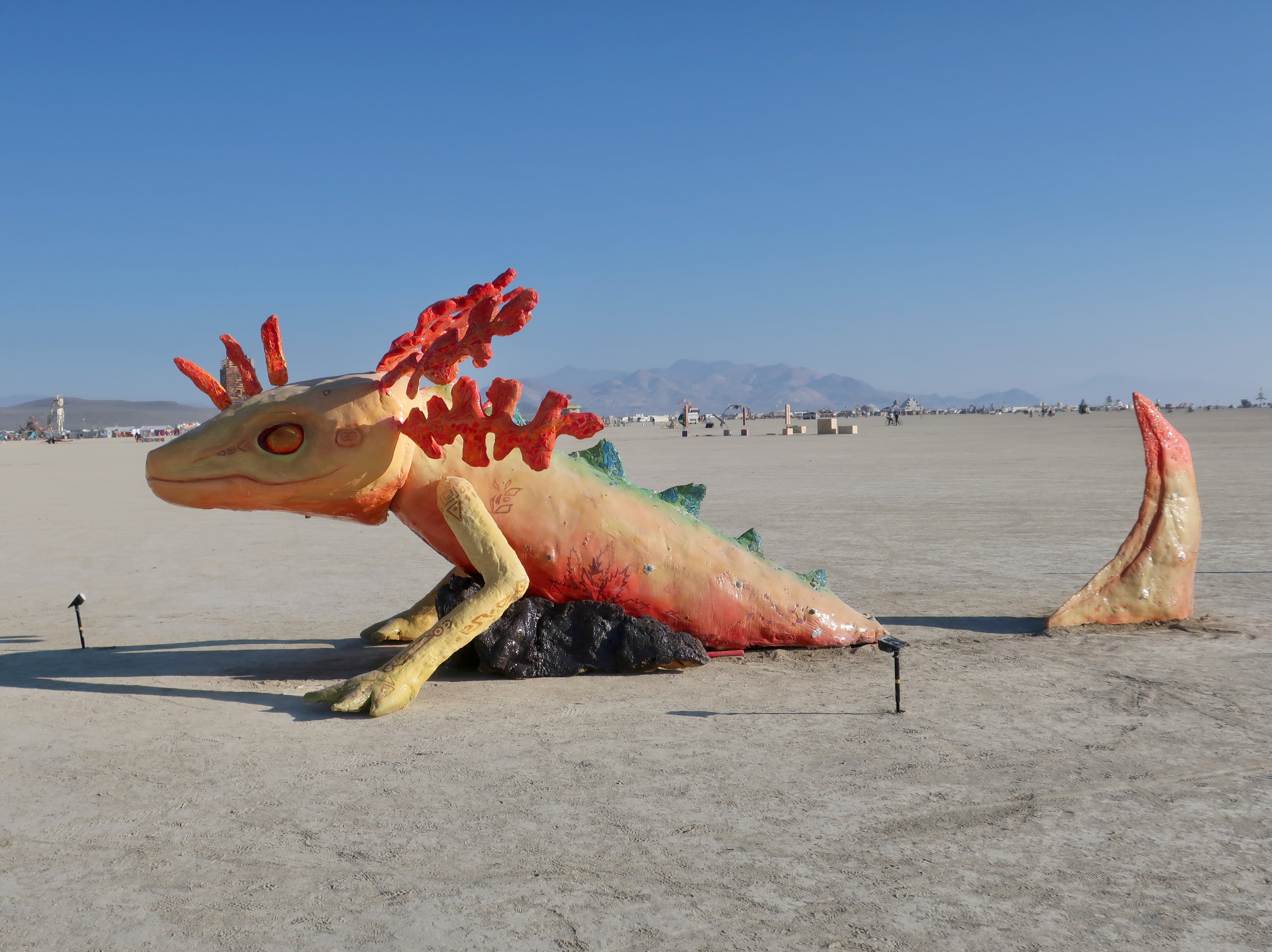

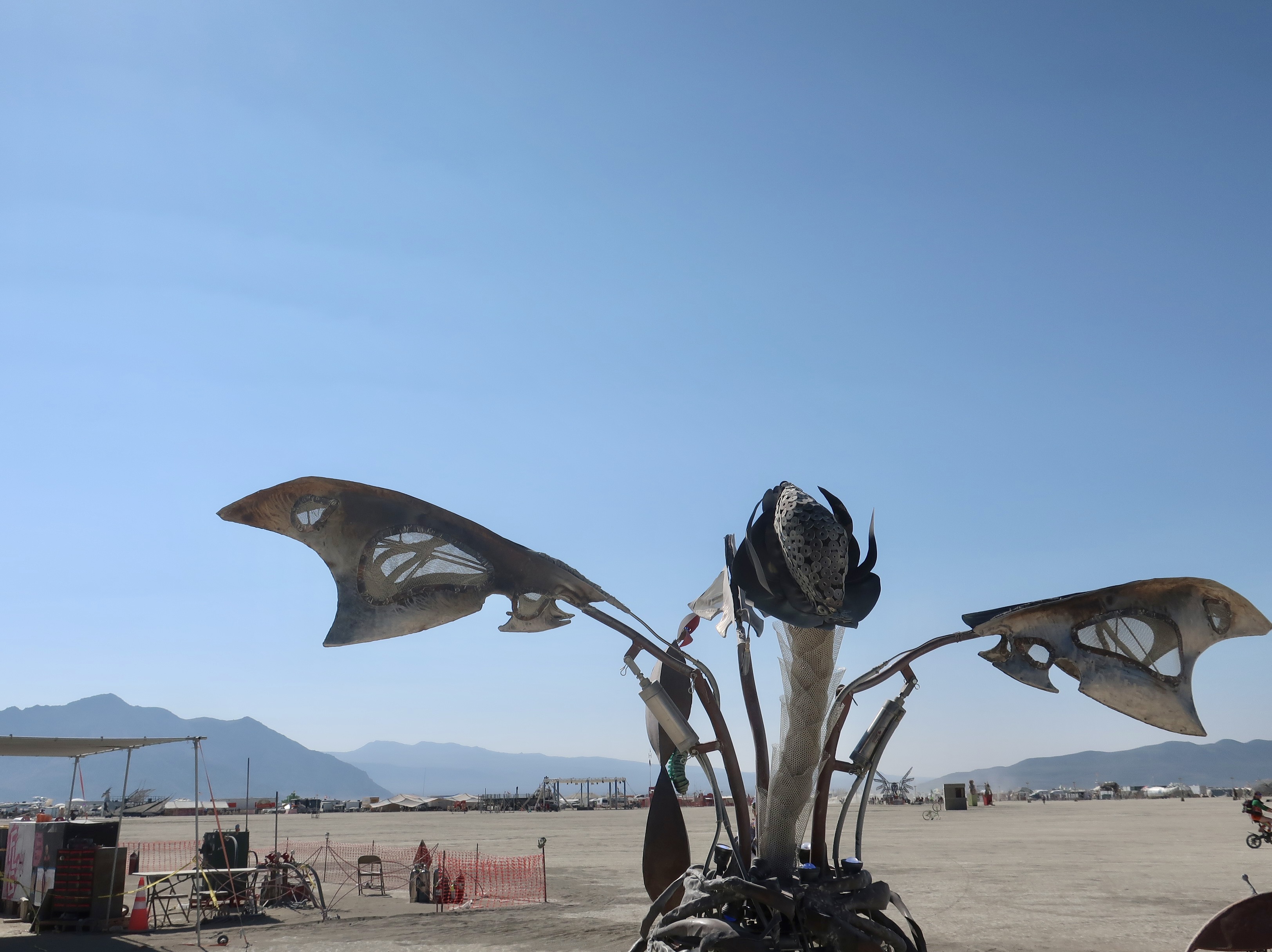
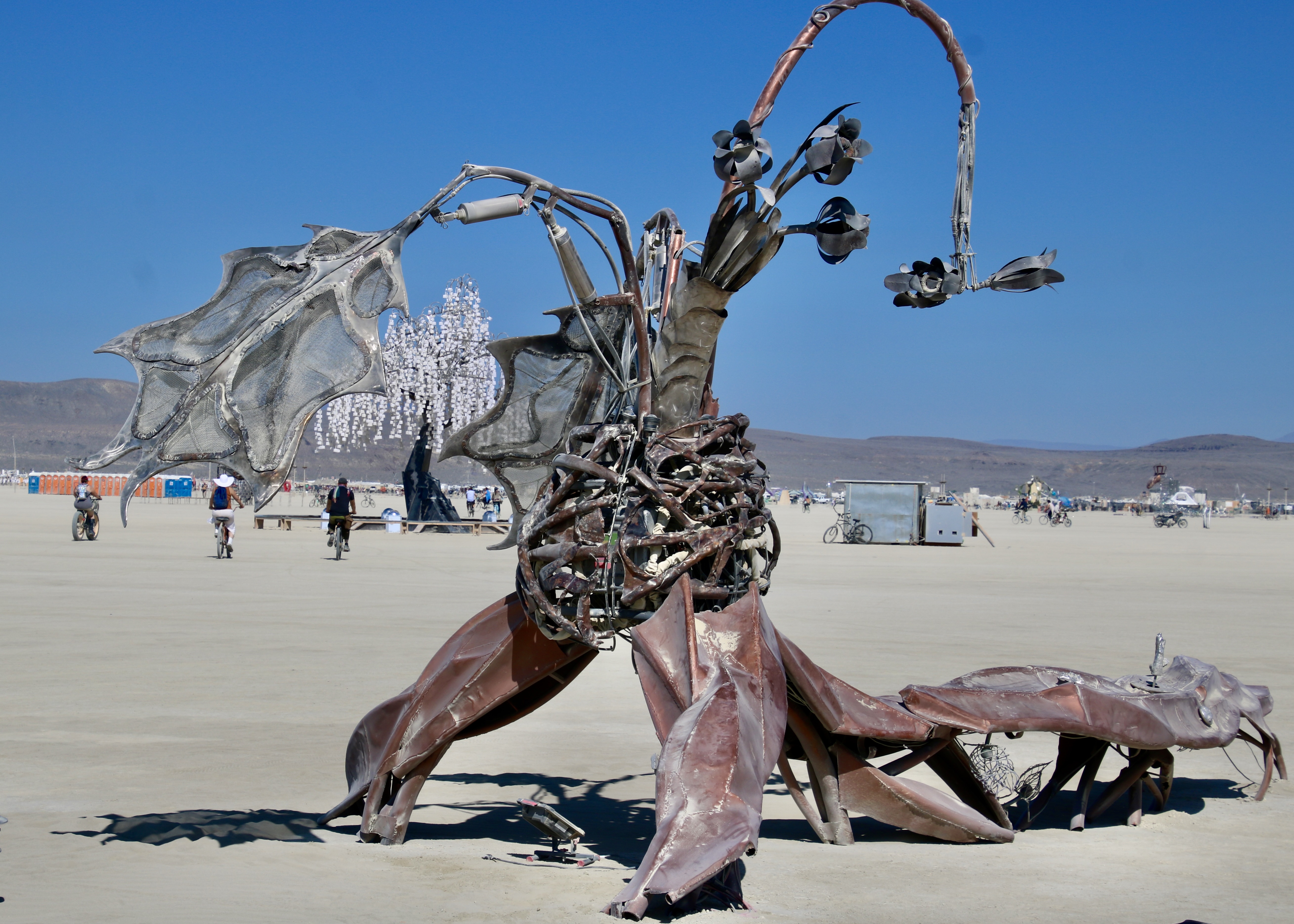
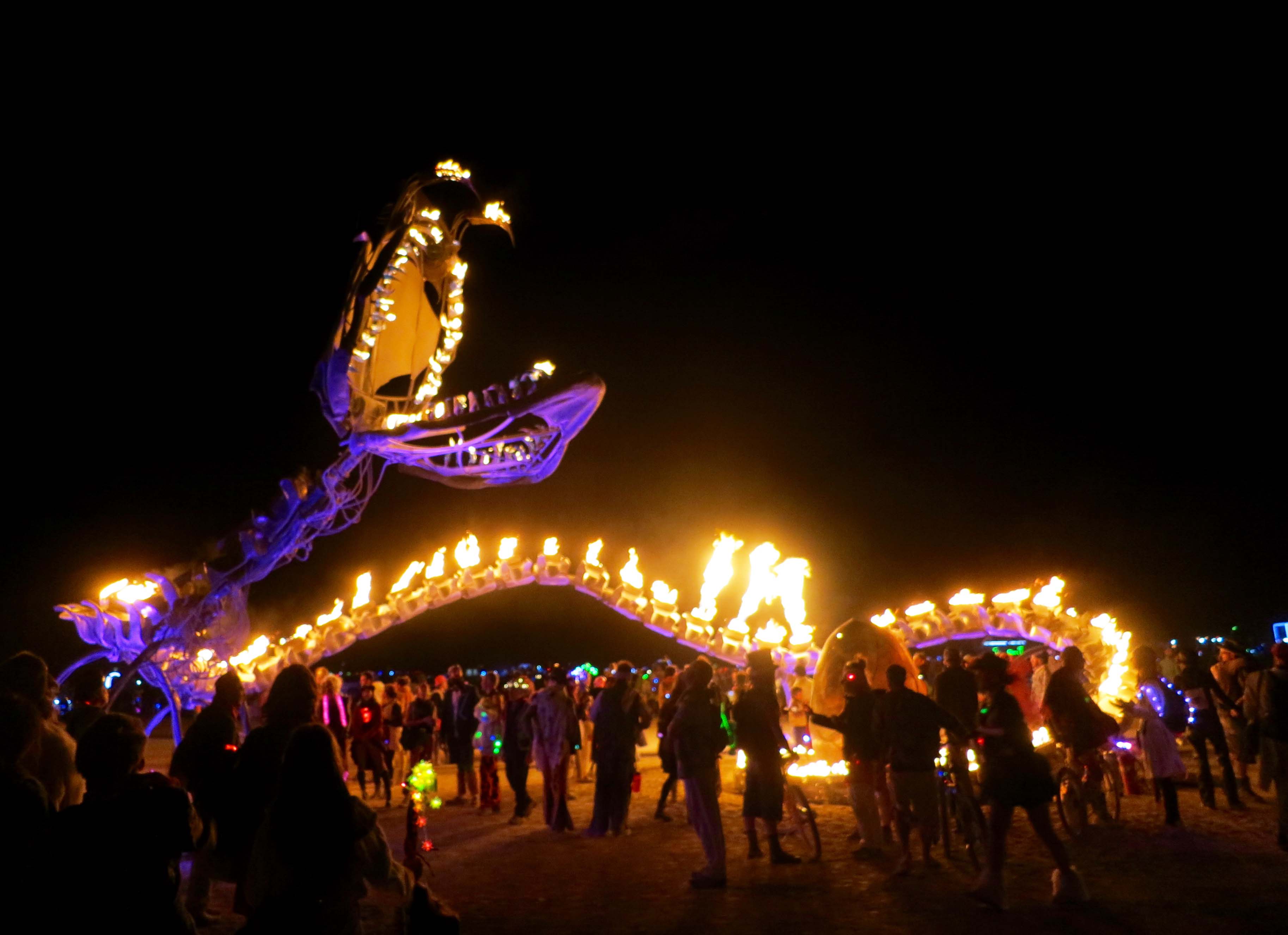
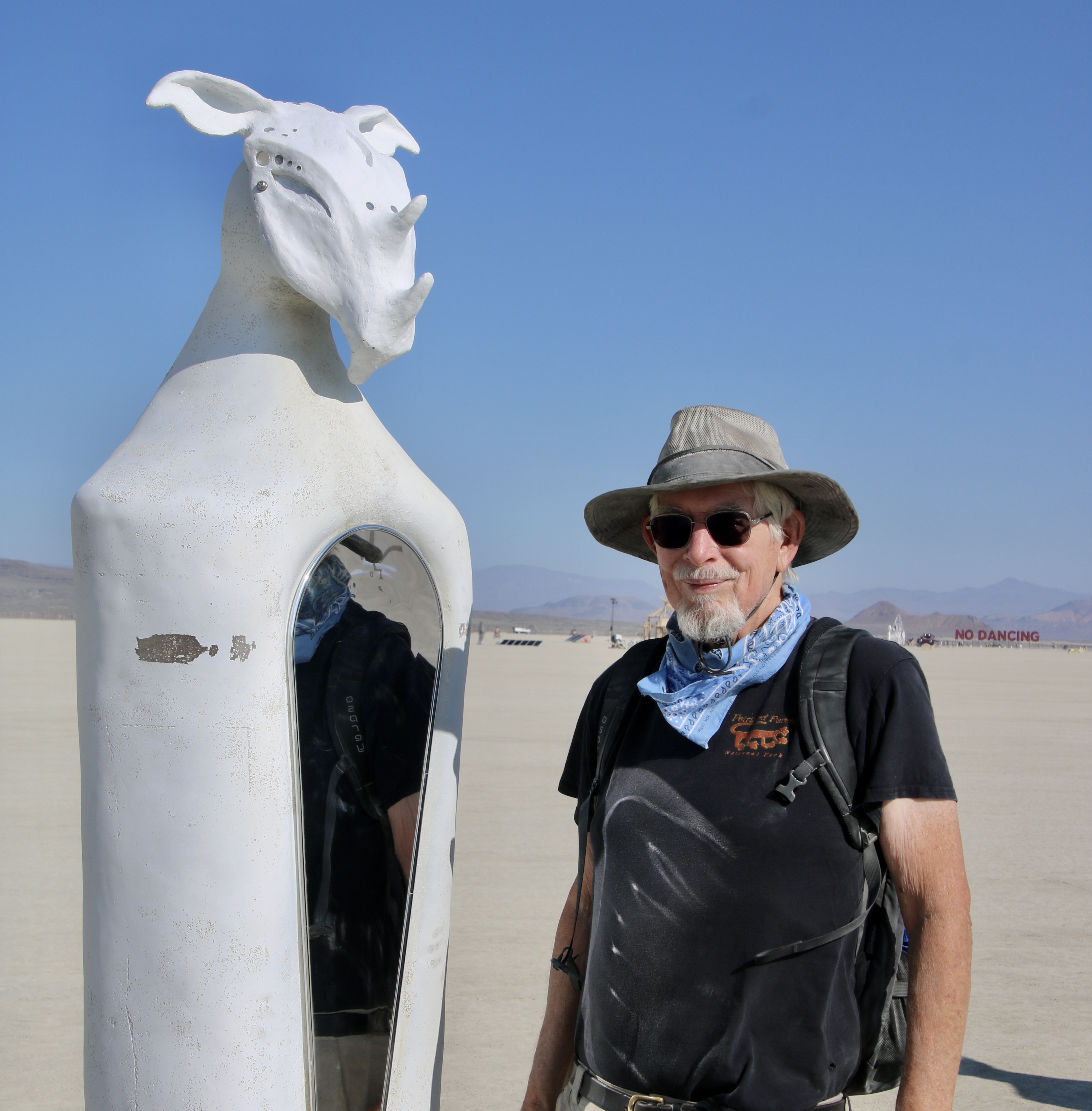
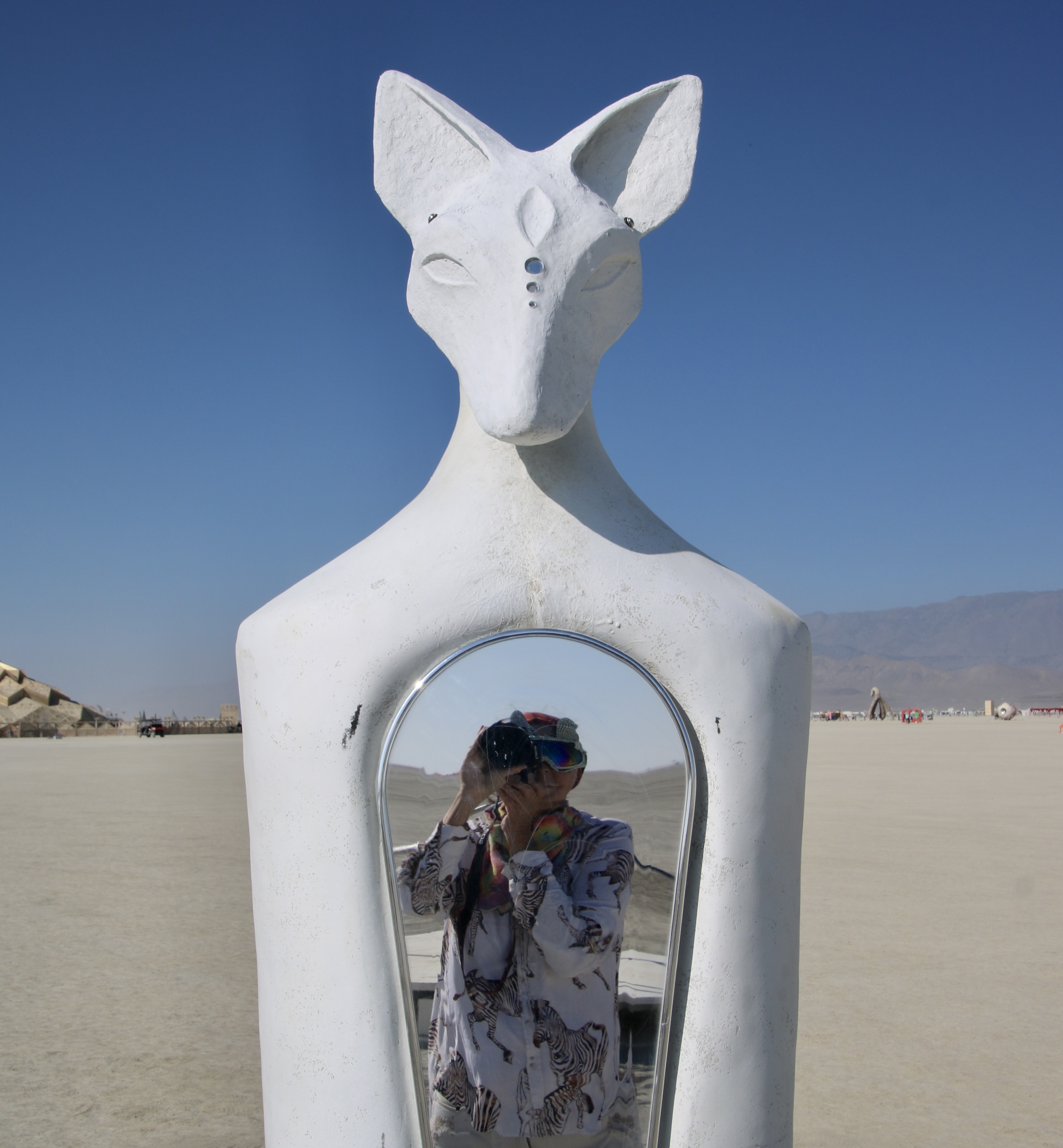
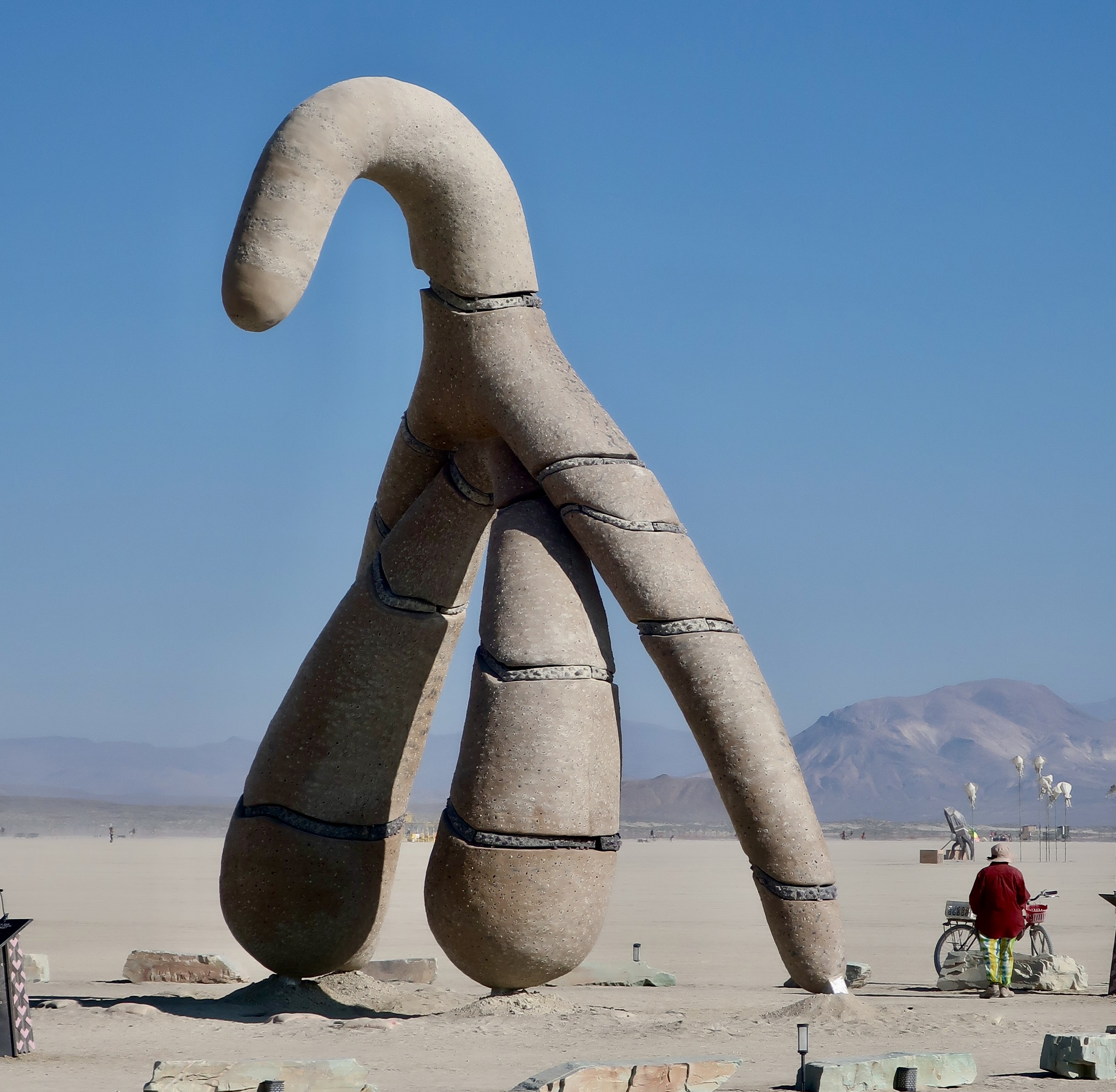
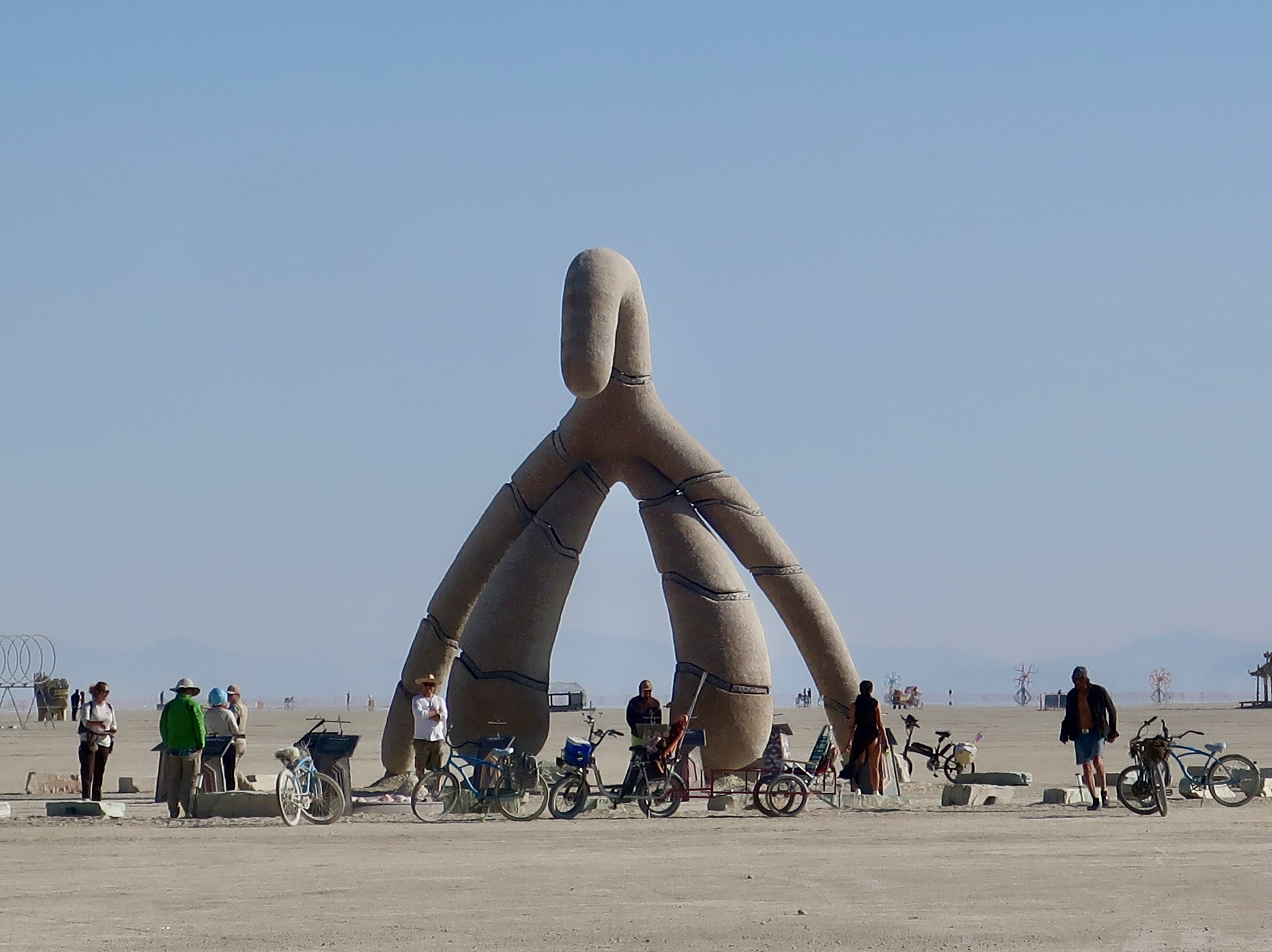
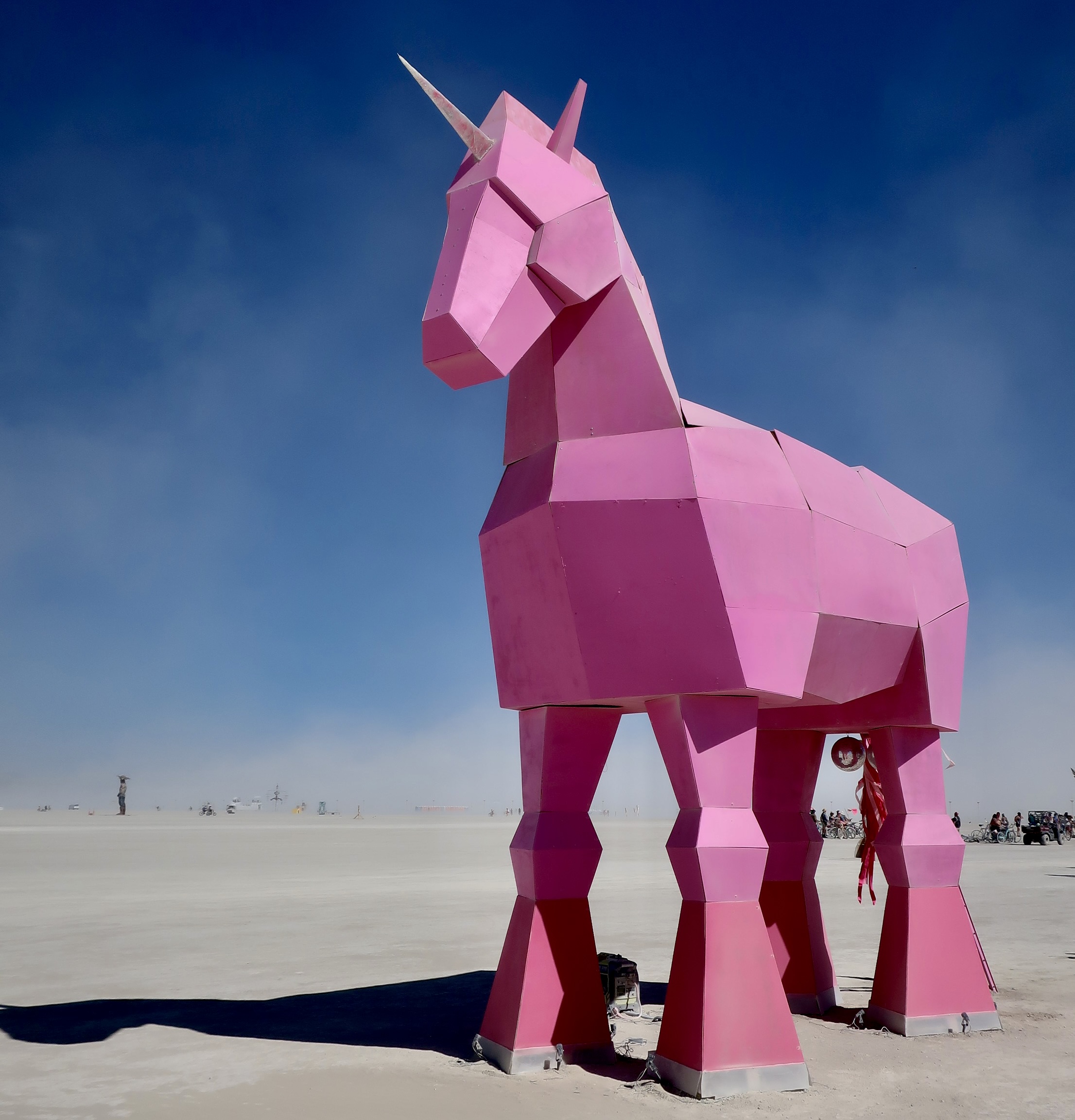
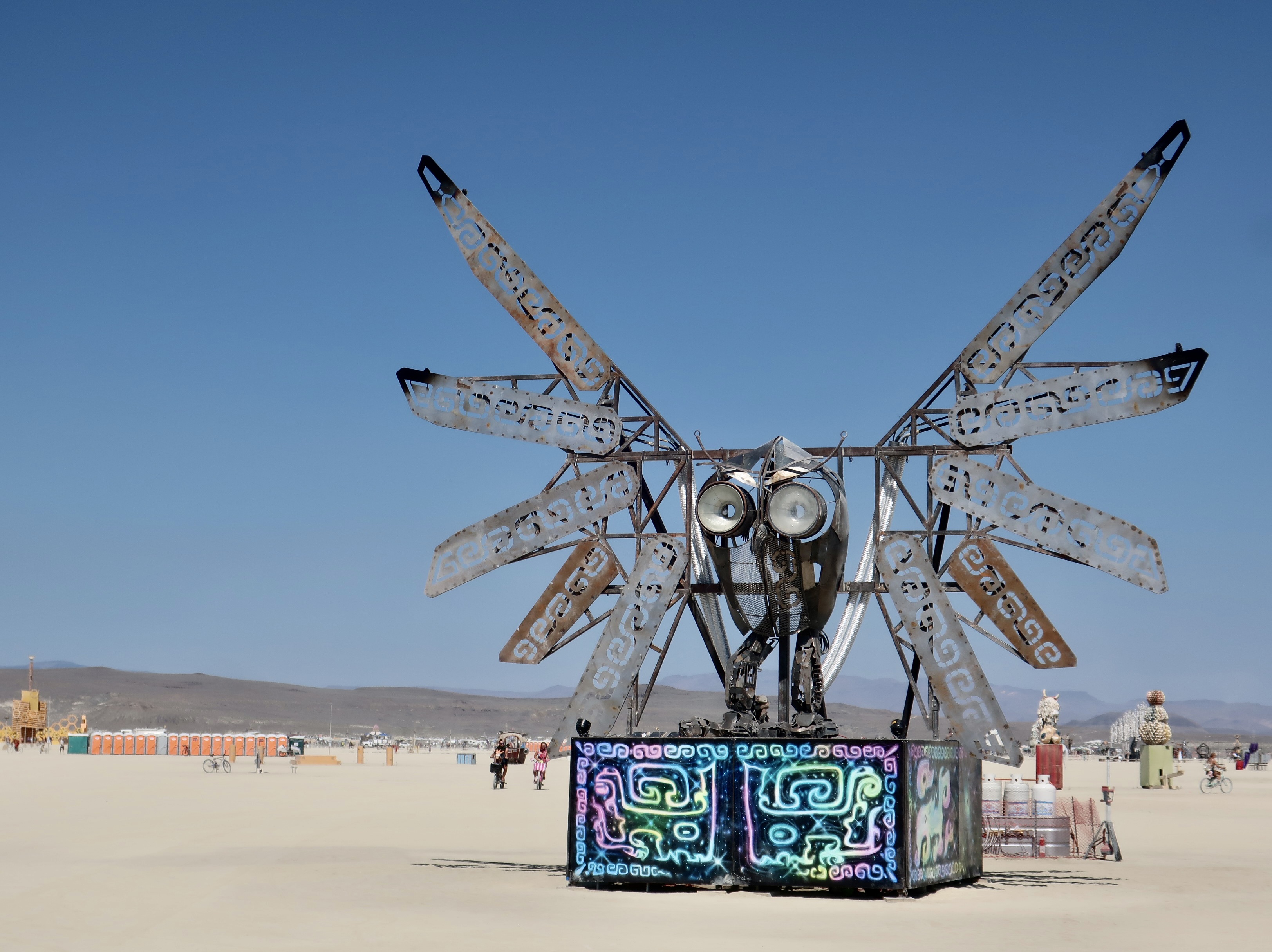
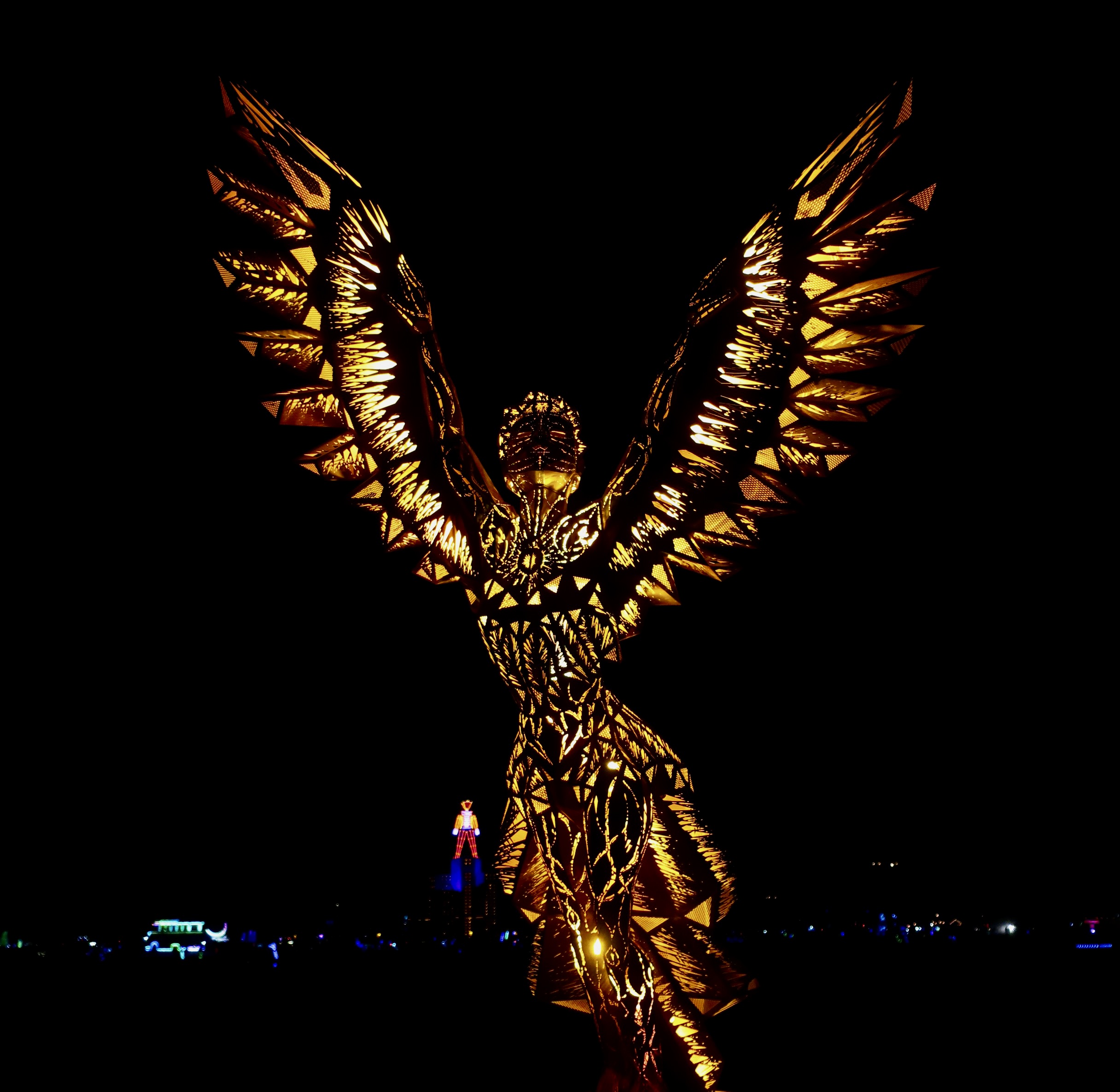
“Burning Man is unique in the world. Hard to describe how incredible it is for those who have never been. Best art on Earth.” –Elon Musk
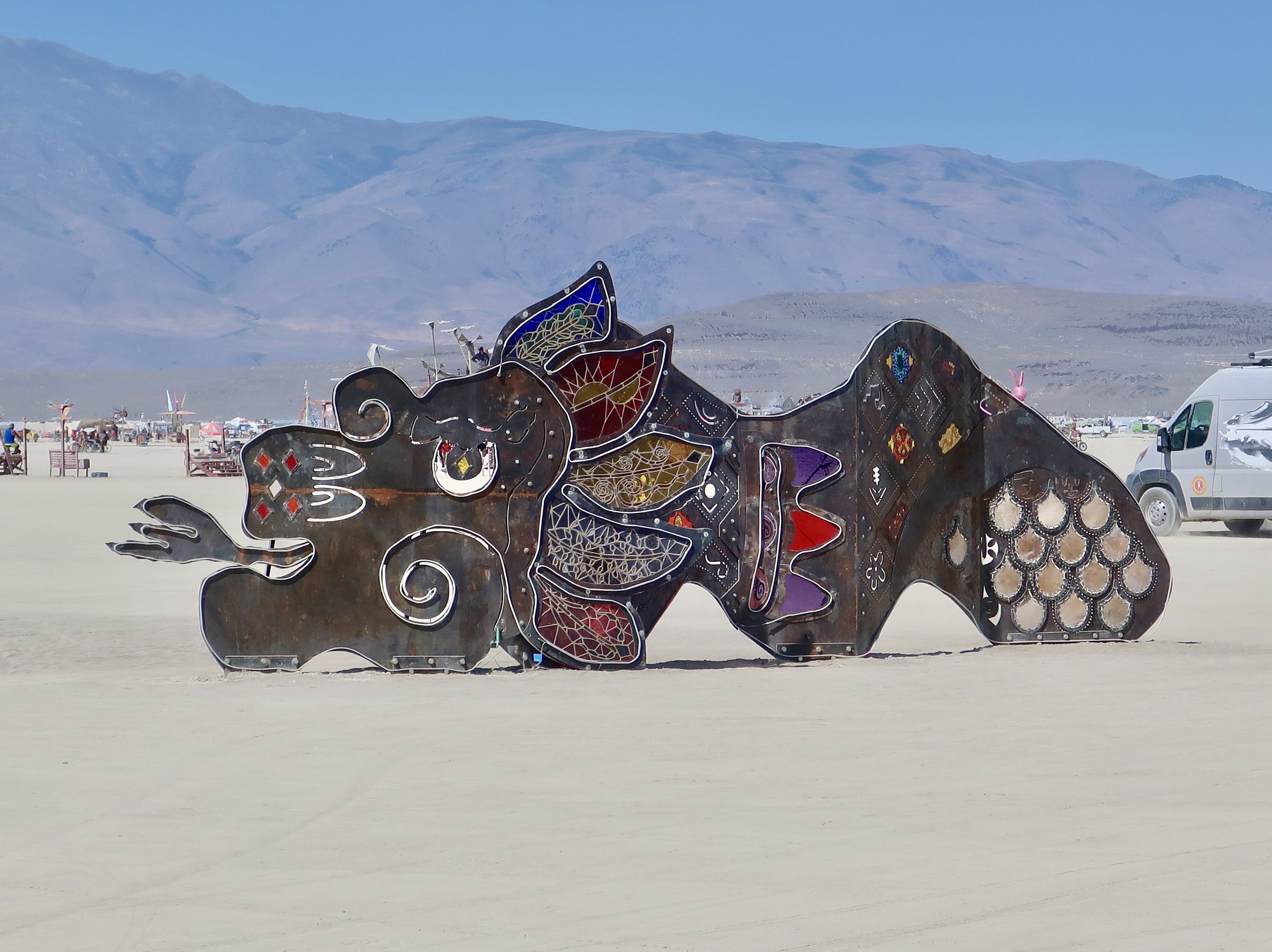
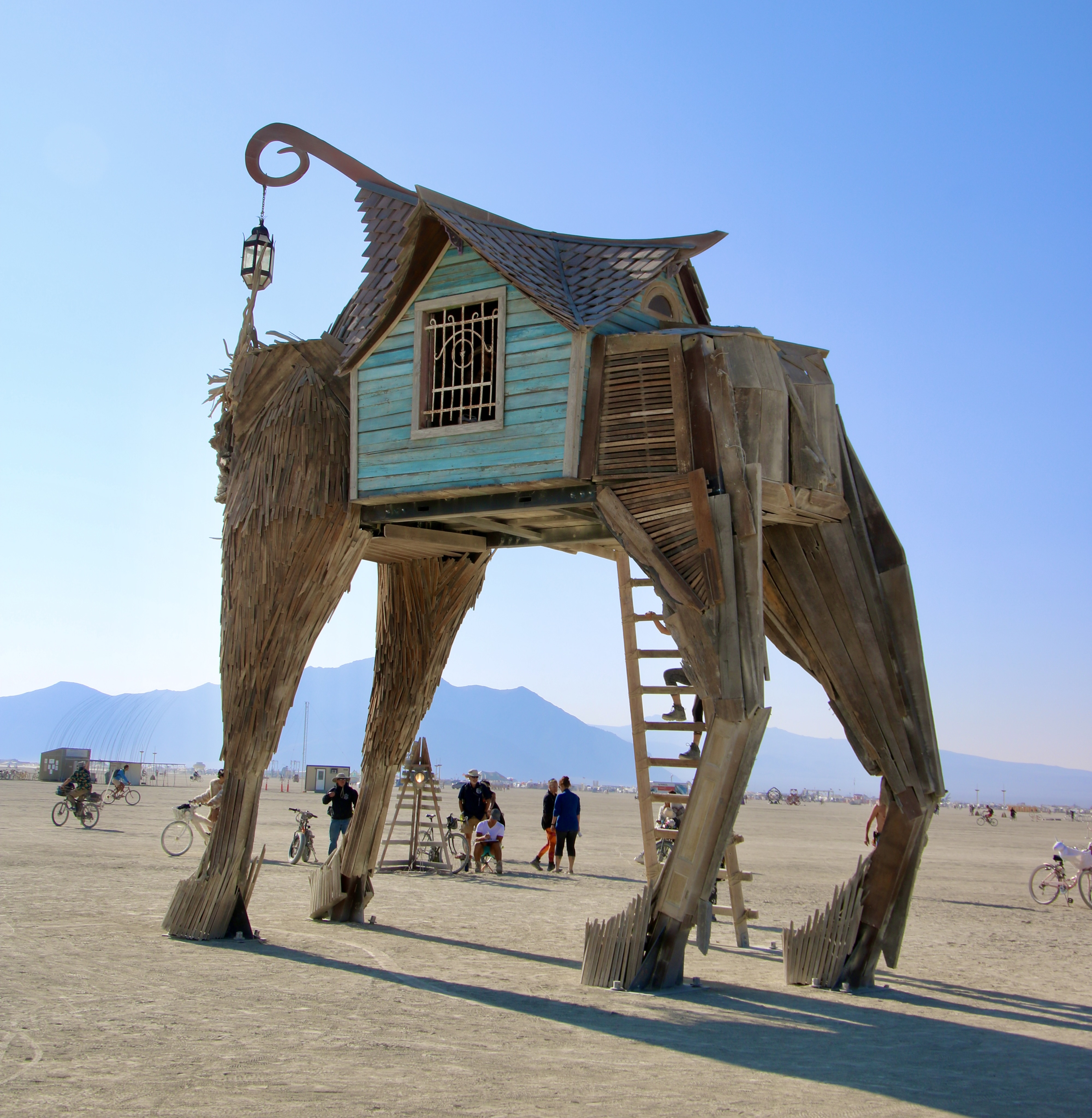
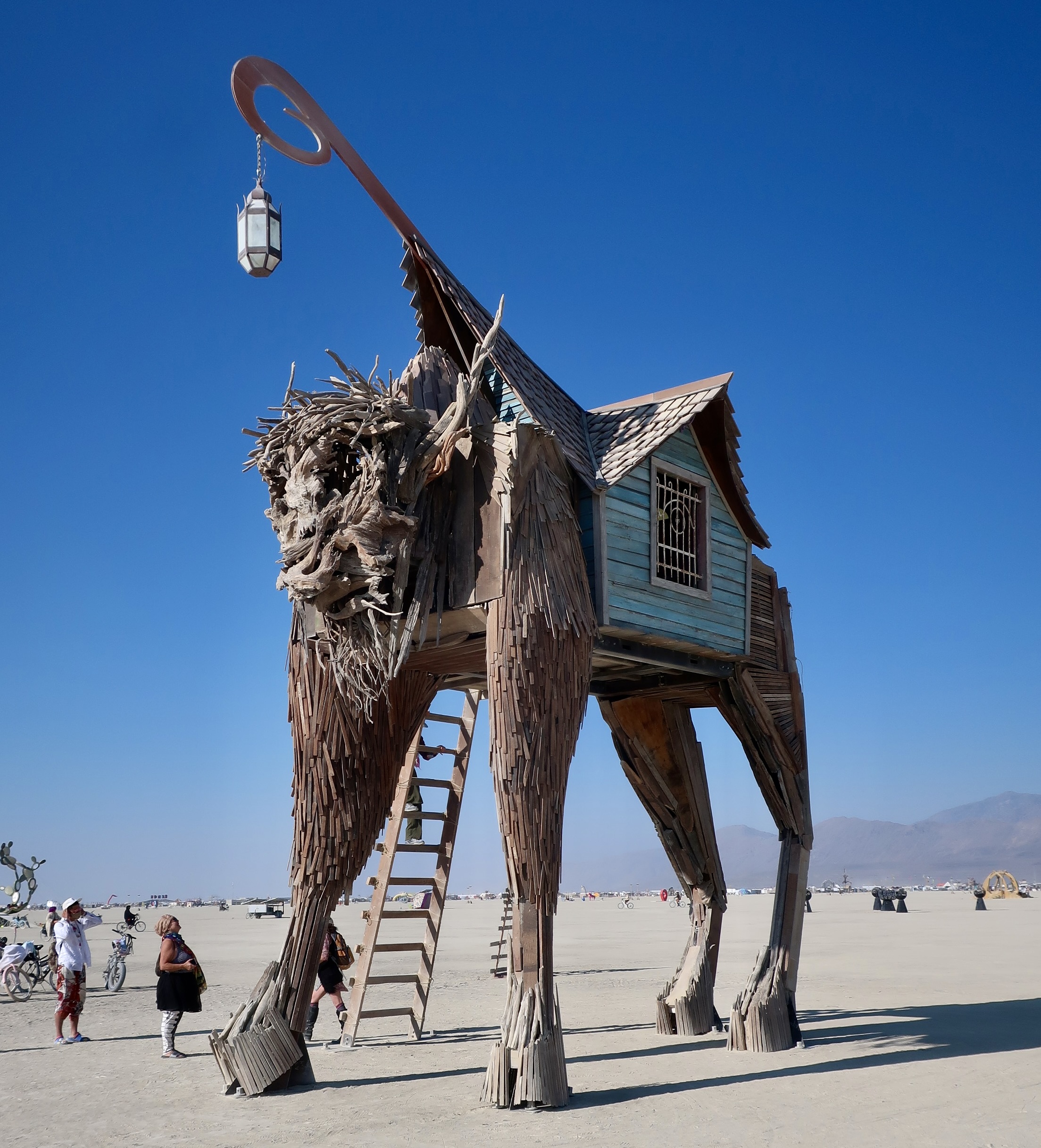
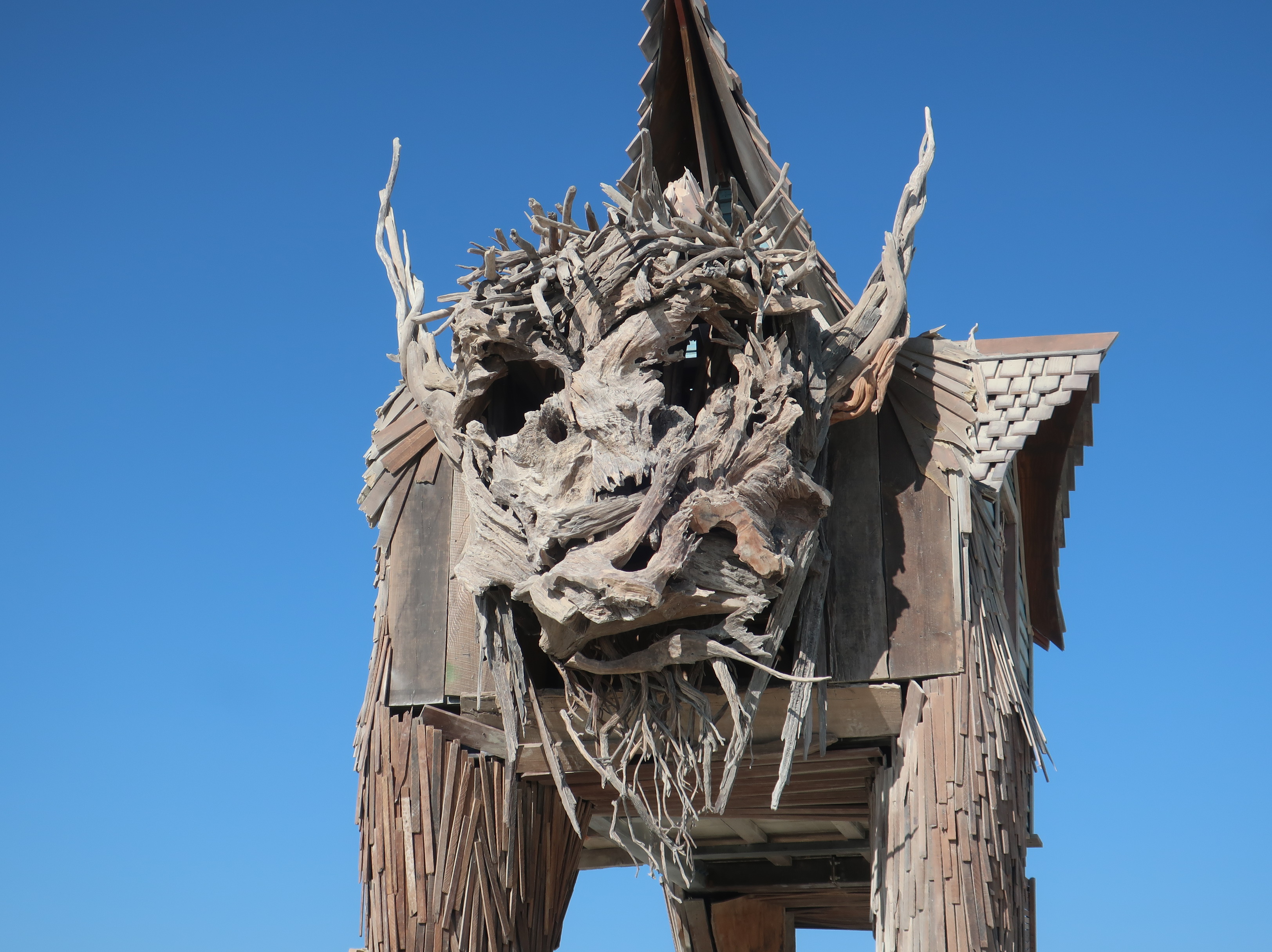
Elon Musk came to Burning Man this year along with a number of other luminaries. I don’t agree with him on a number of things, but I do admire his creativity and willingness to think big. We were more than happy to use Starlink on our remote property in Oregon. And I think that his description of Burning Man is relatively accurate. I’ve been arguing for years that it features some of the world’s best art being produced now. My first venture out to the event in Nevada’s Black Desert was in 2004. I’ve been back 12 times since and Peggy has been with me 9 of those times. Art is the primary reason we return.
Our time to explore the Playa and Black Rock City was limited this year. We came in on Monday afternoon, a day after Burning Man opened, and saw everything shut down on Friday because of the rain. We were left with just over 3 days to hike and bike our way through the art. Peggy and I photographed over 50 pieces that I will share with you over our next 5-6 posts. Sadly, that left a lot of art we didn’t see. My apology to the artists.

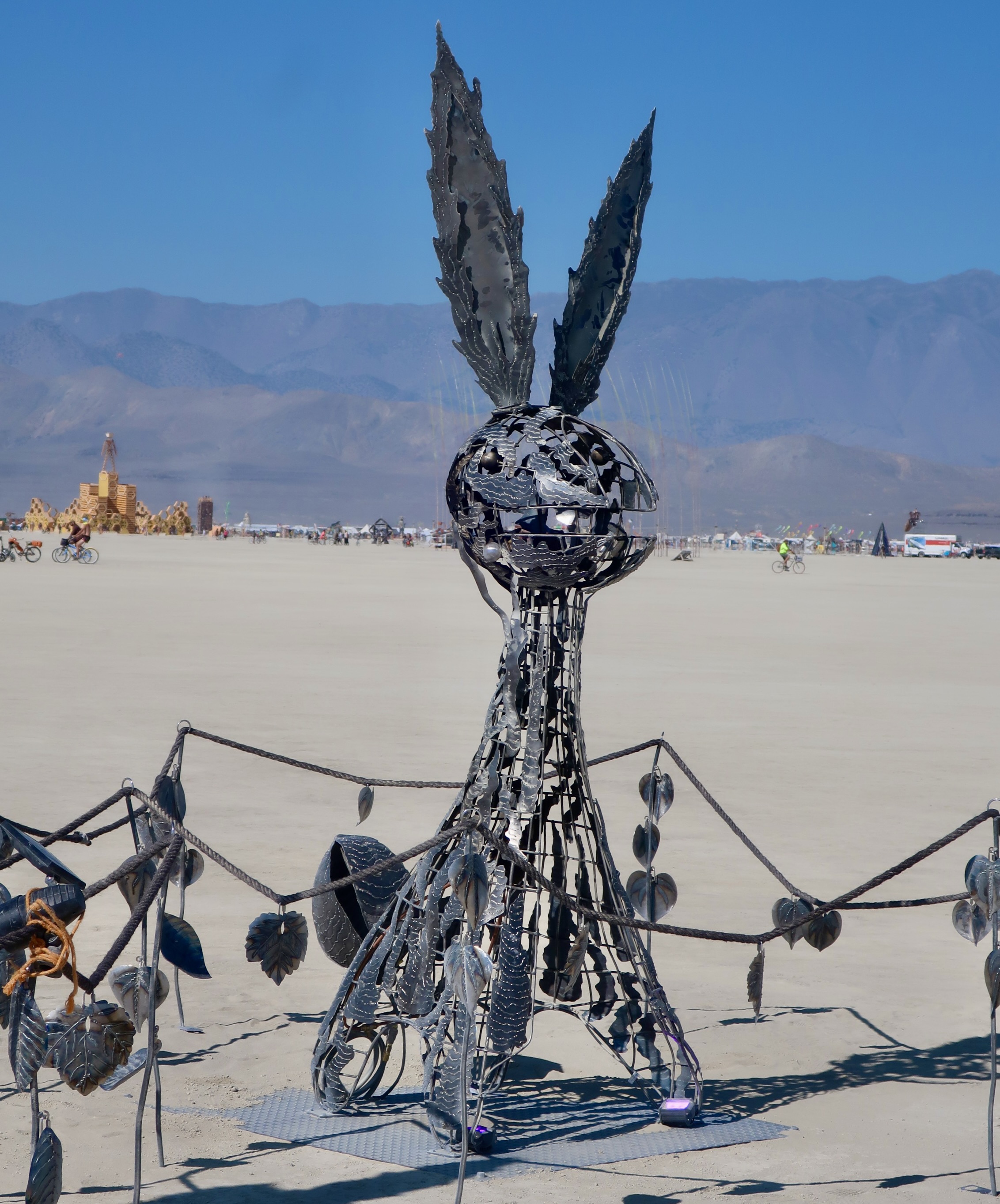
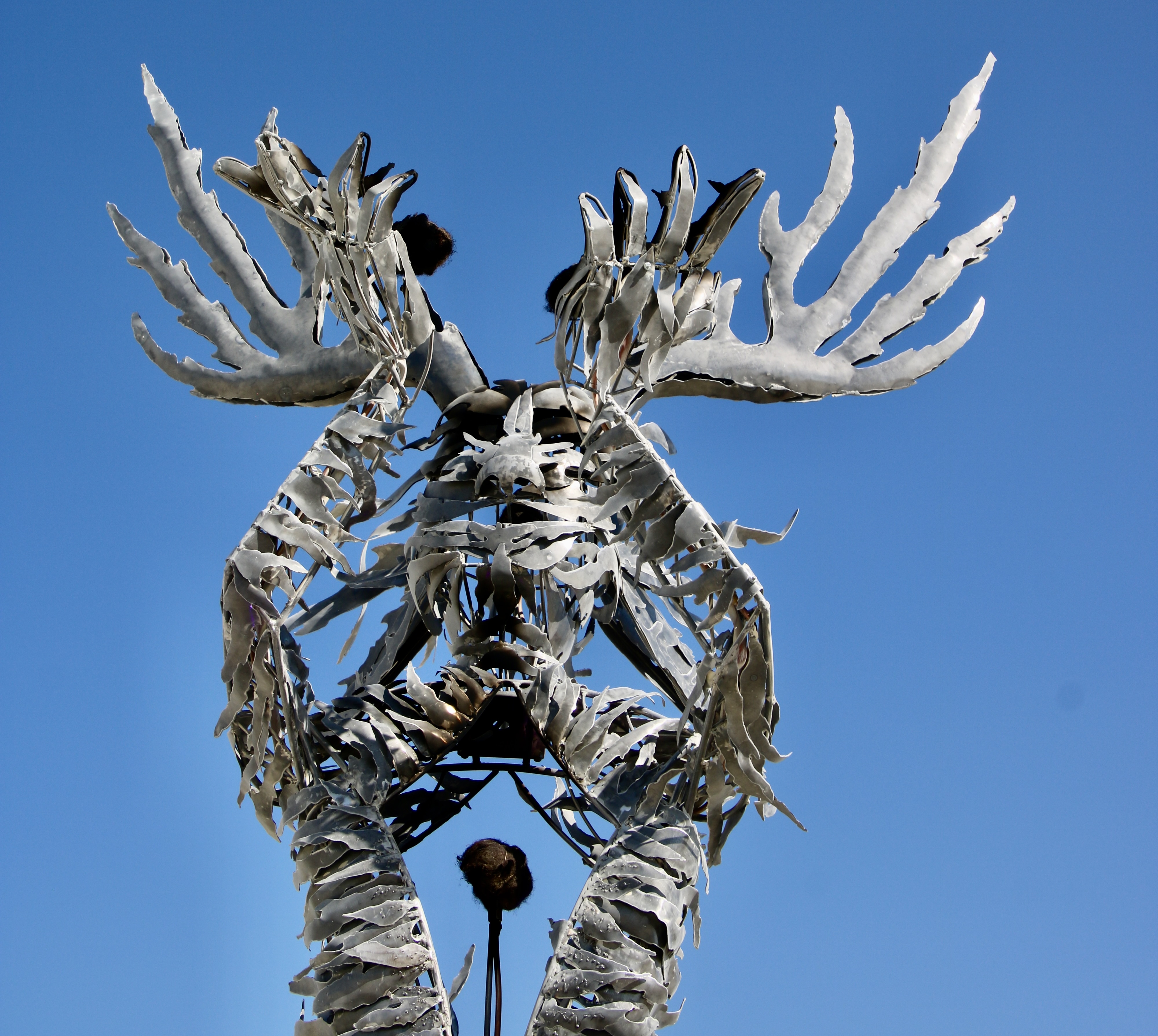
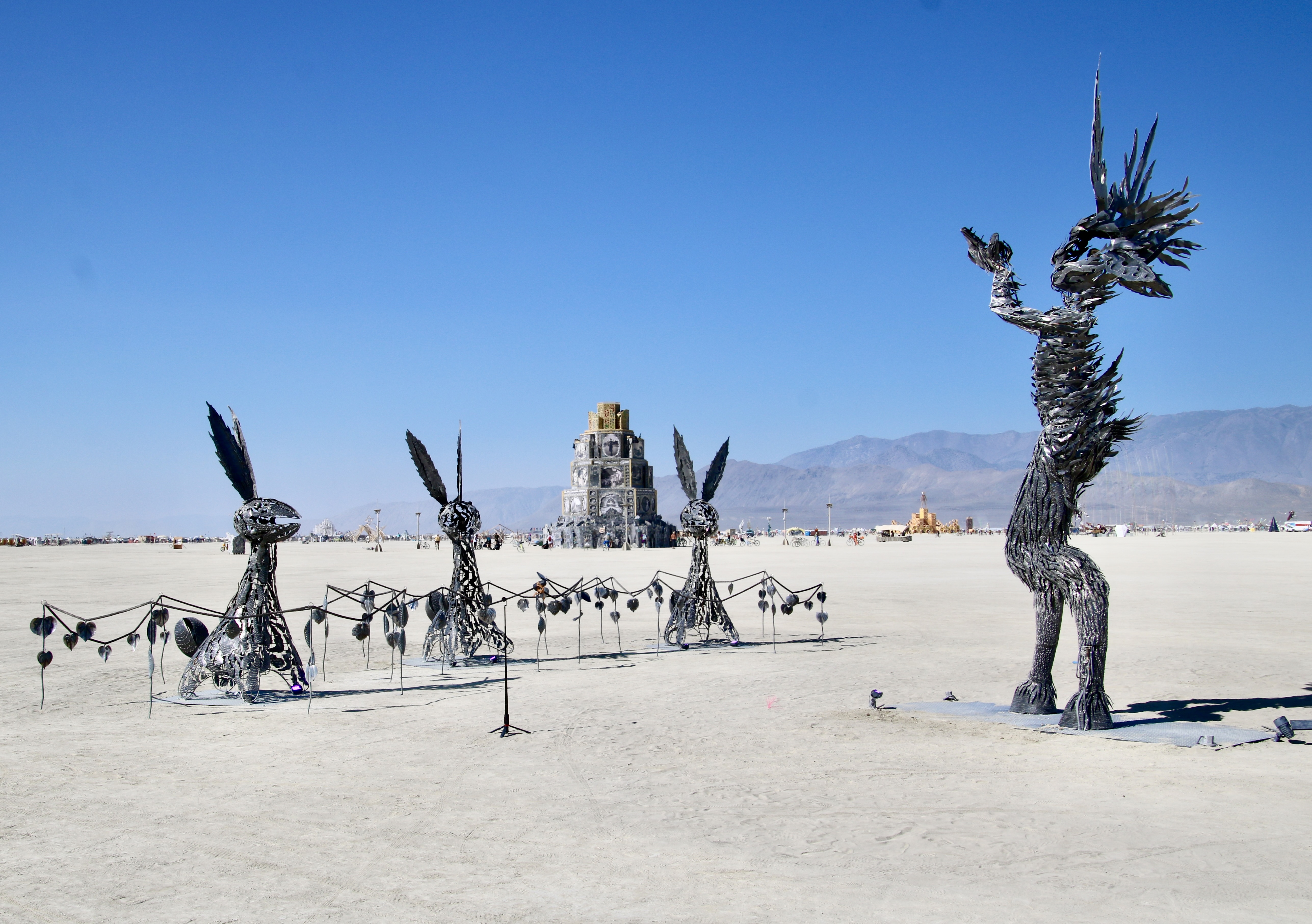
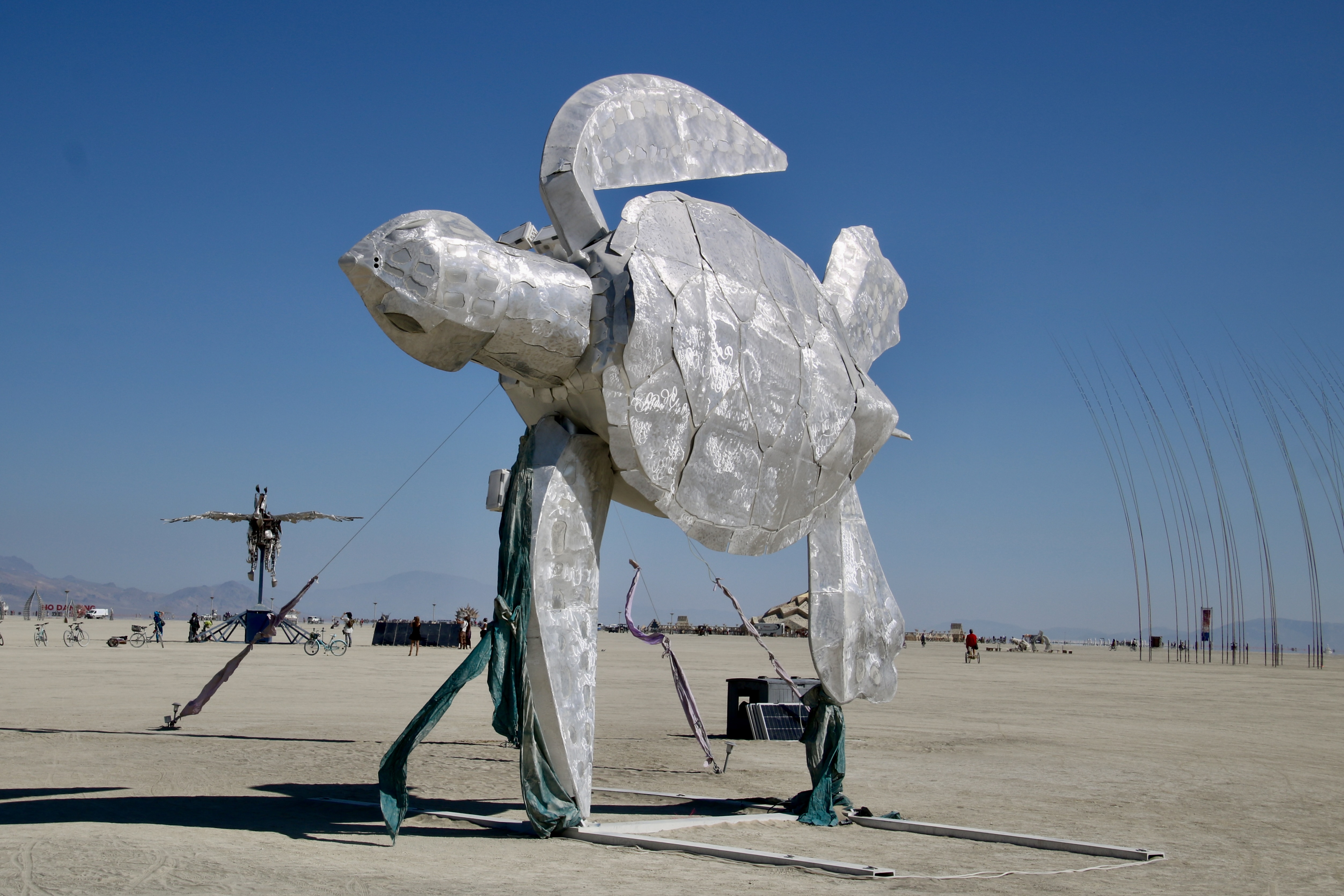
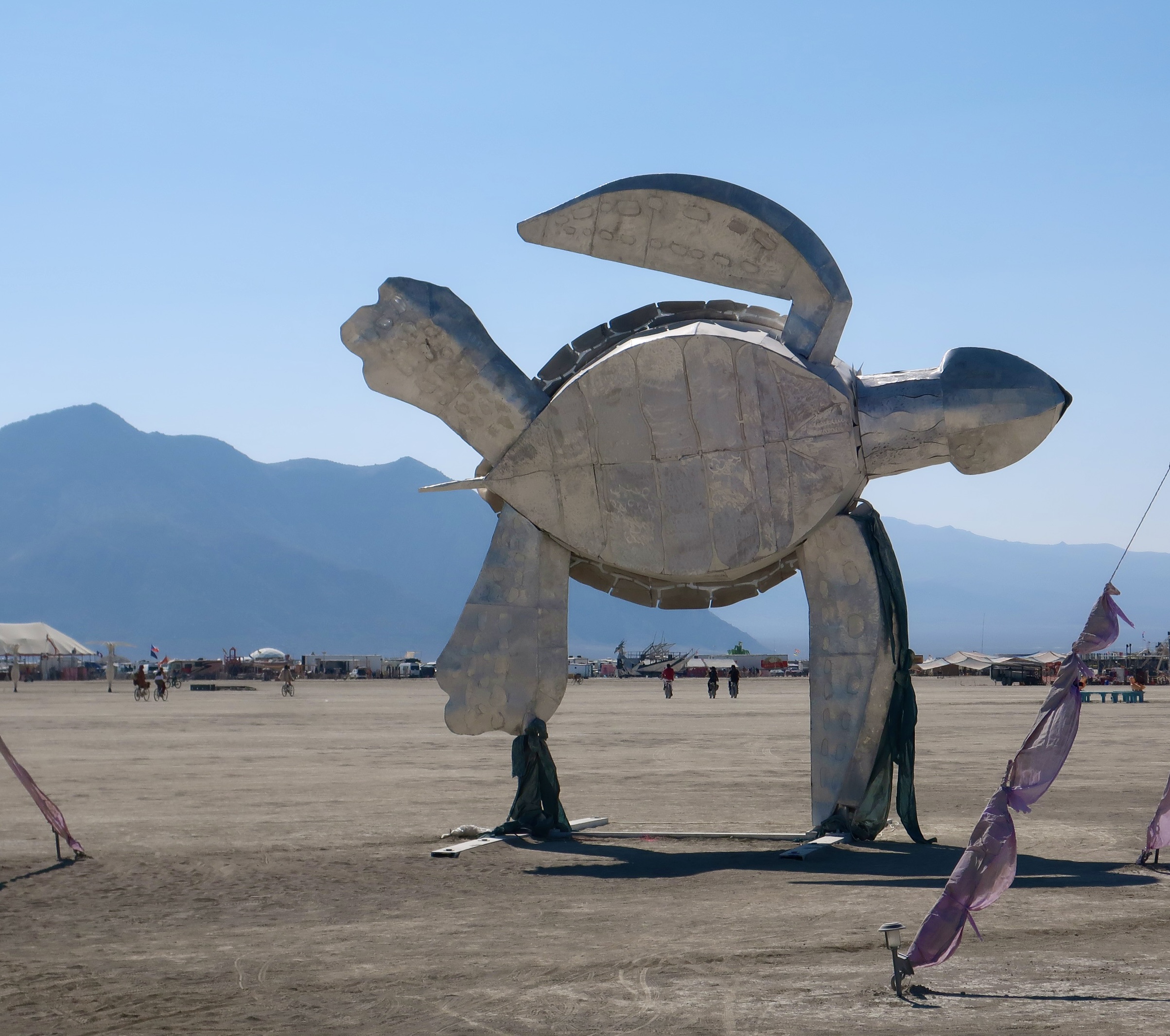
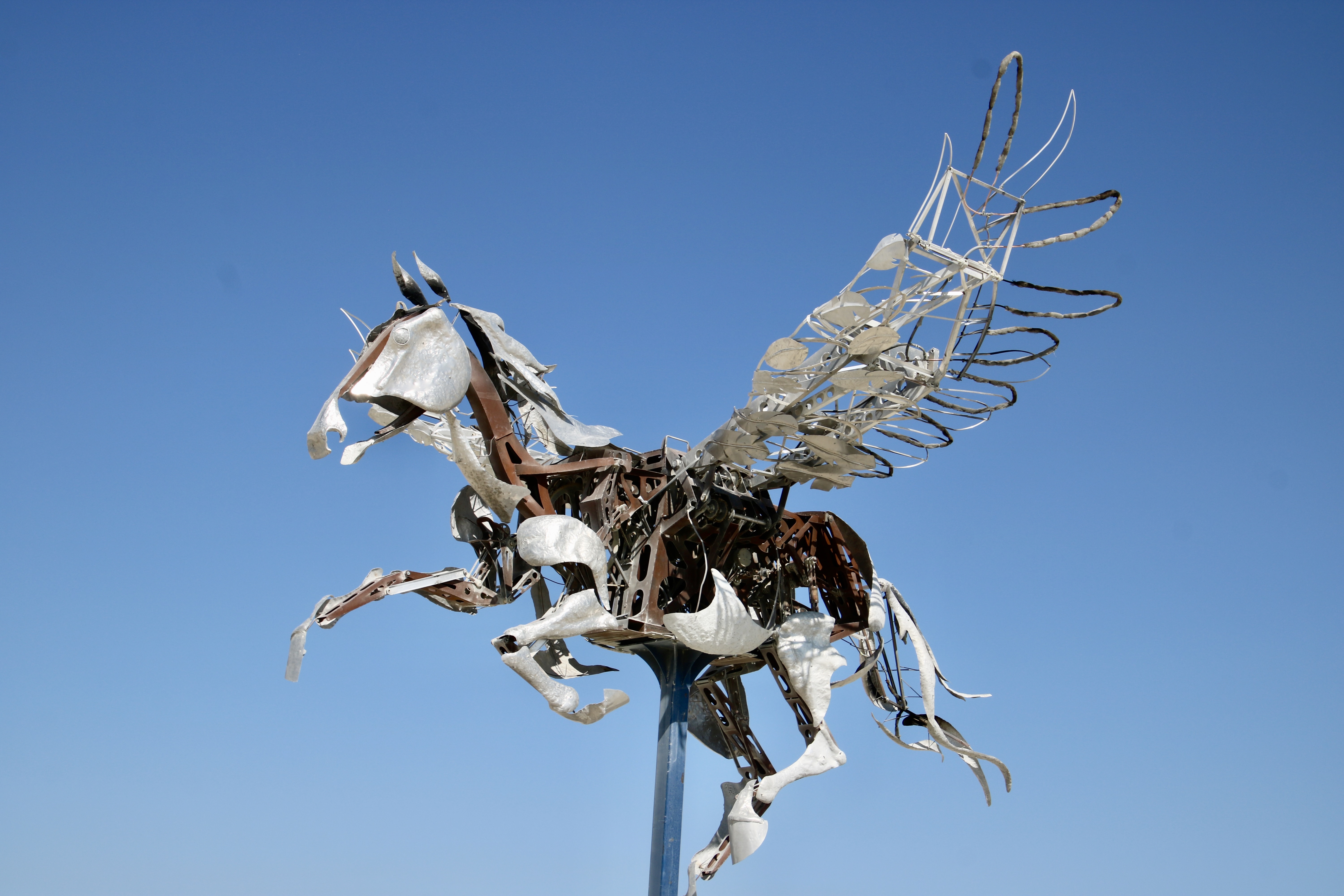
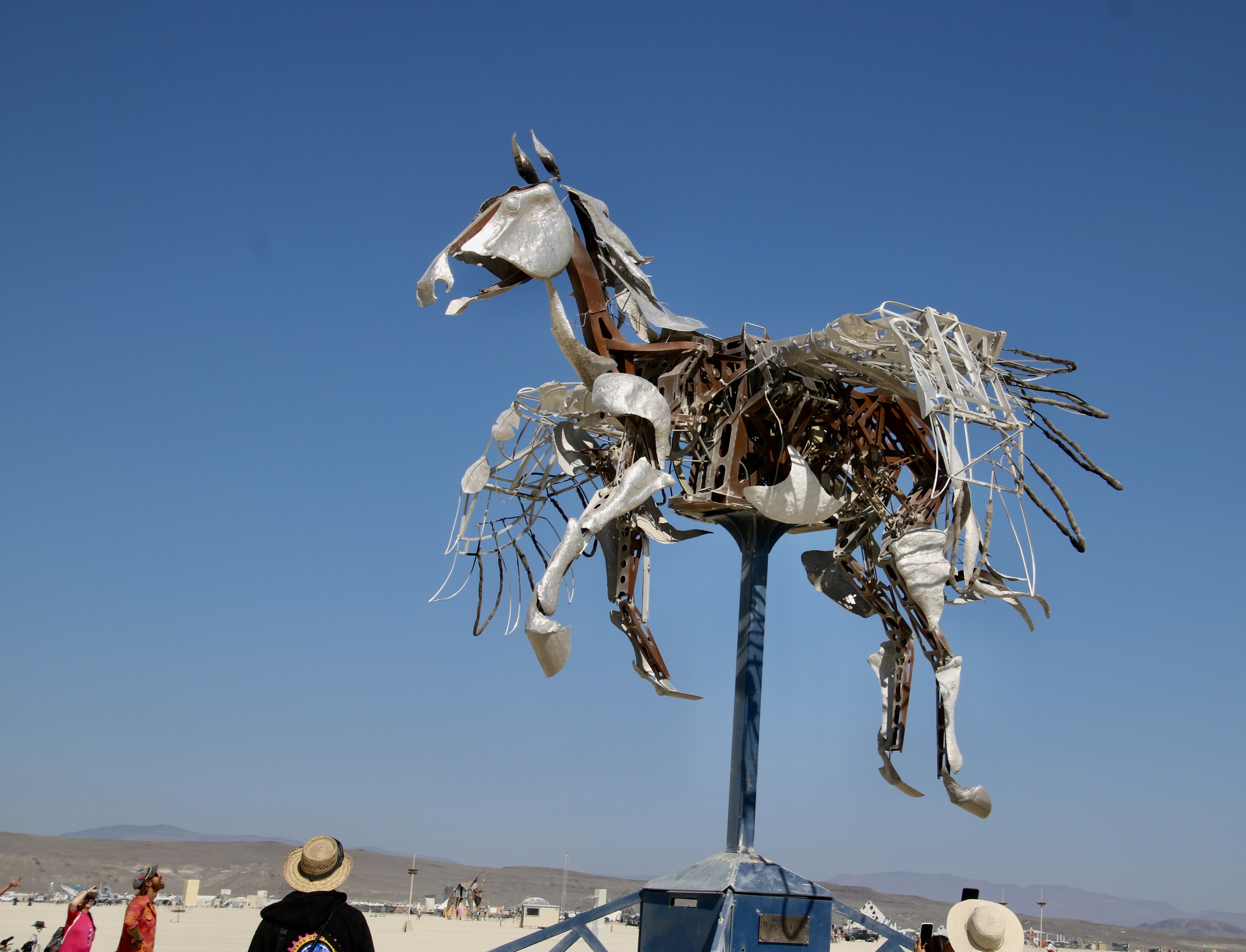
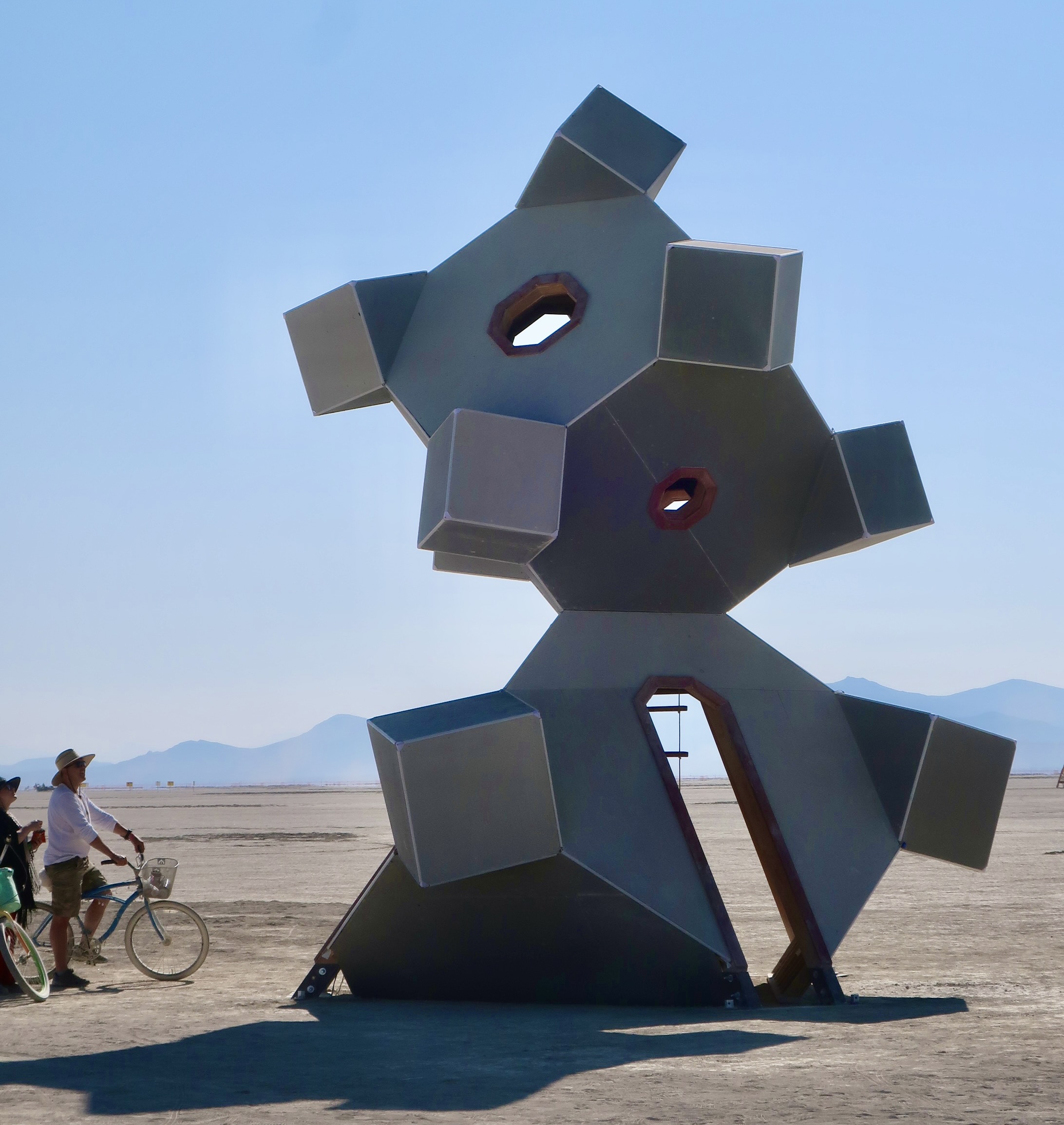
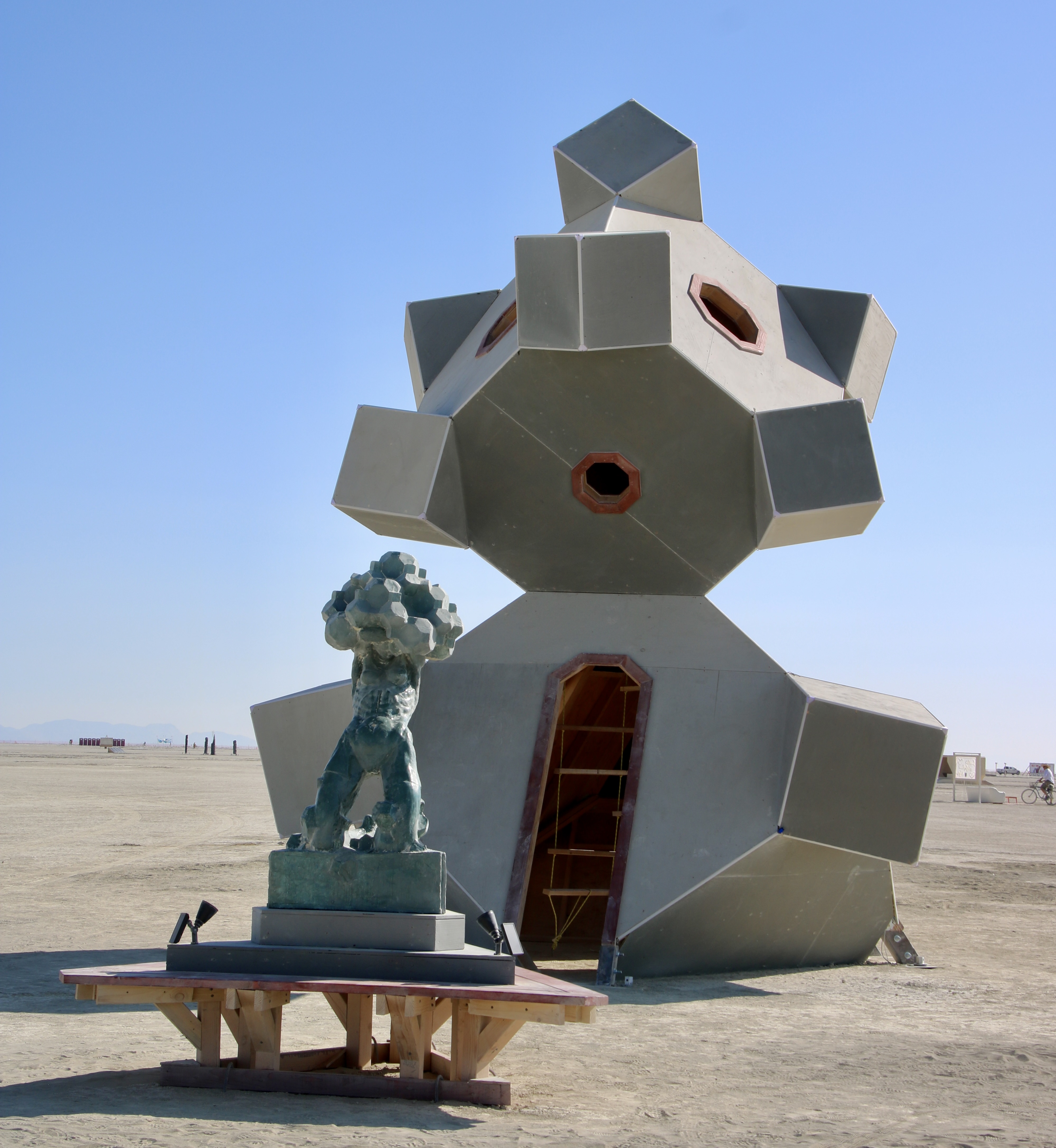
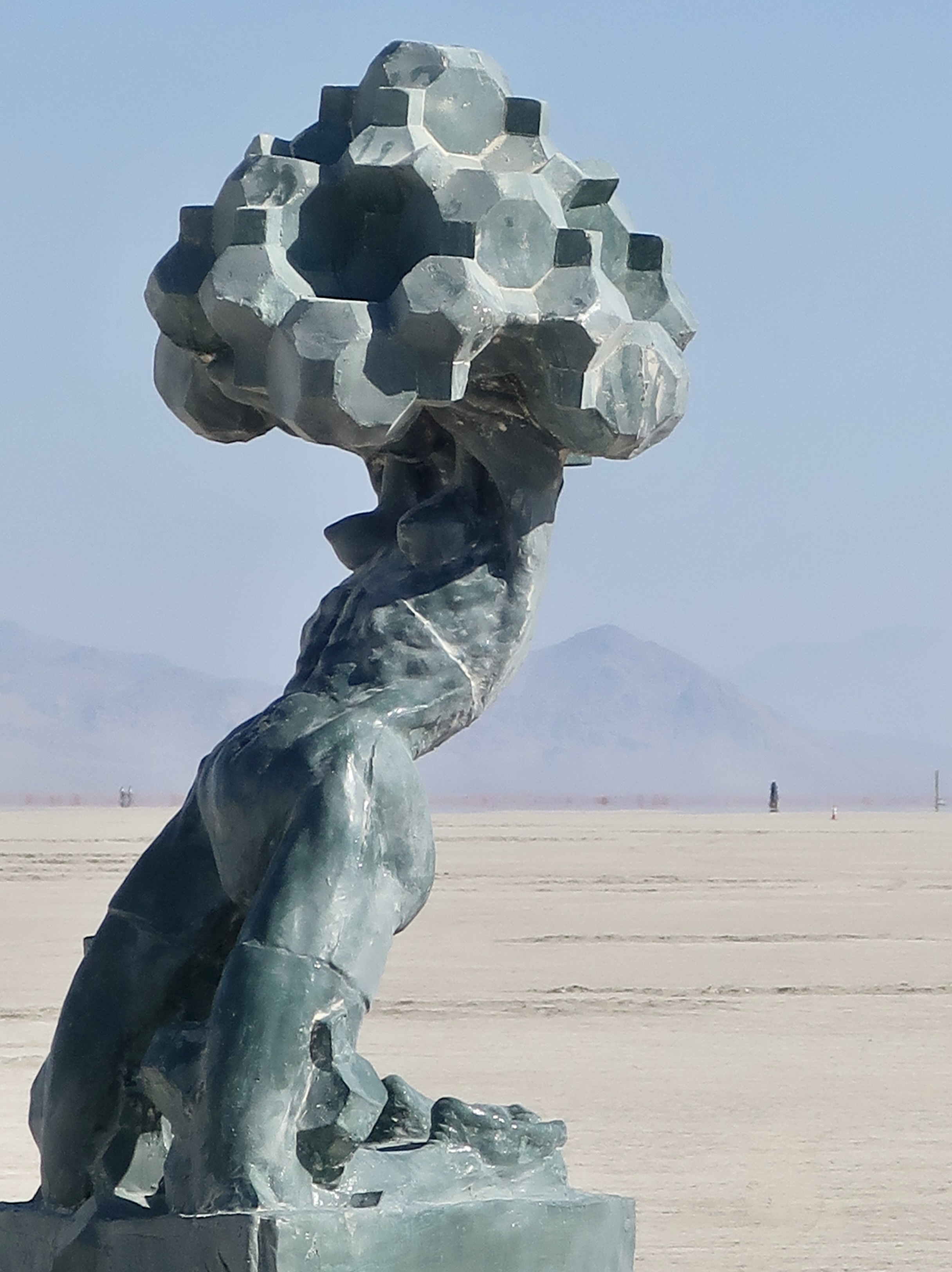
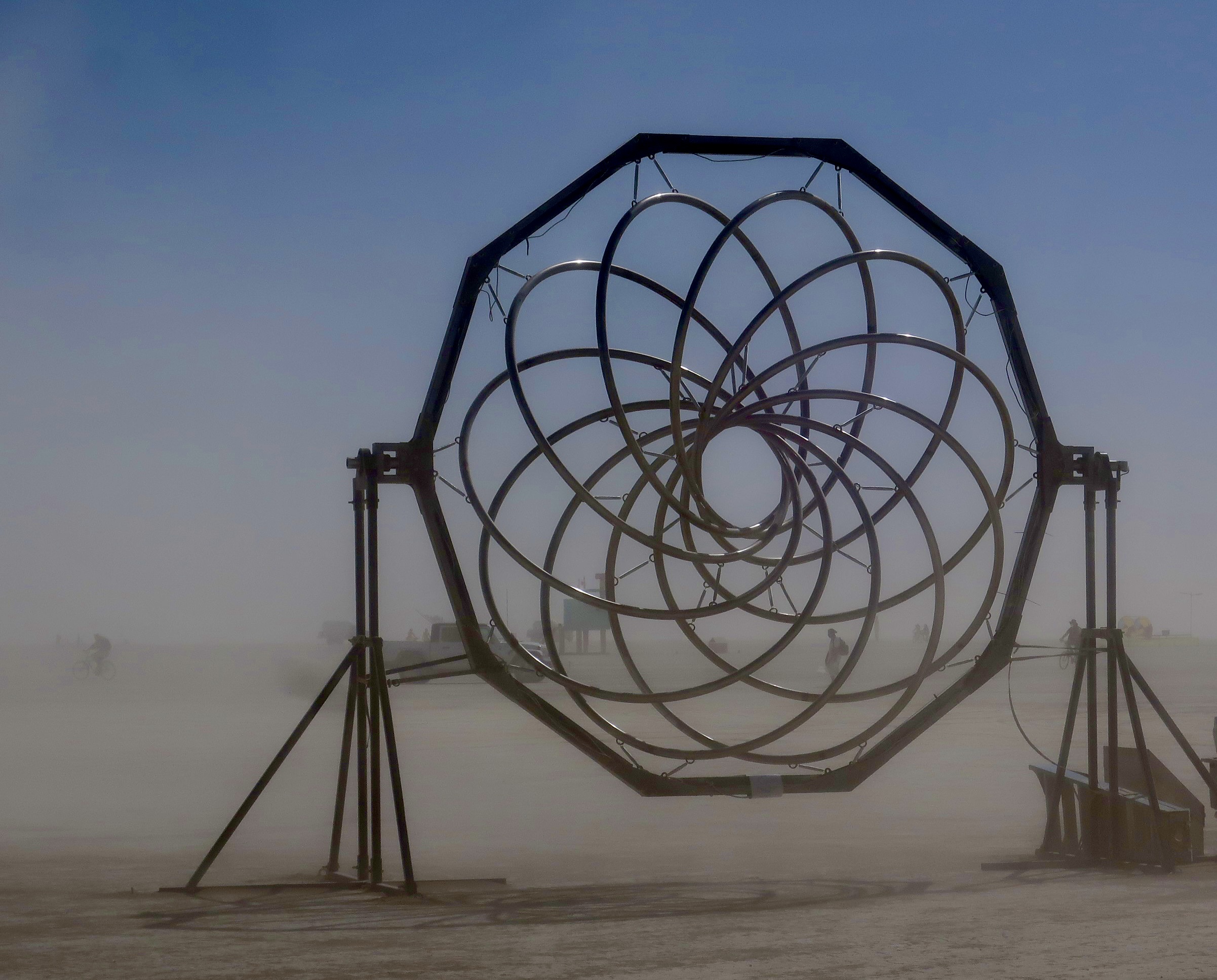
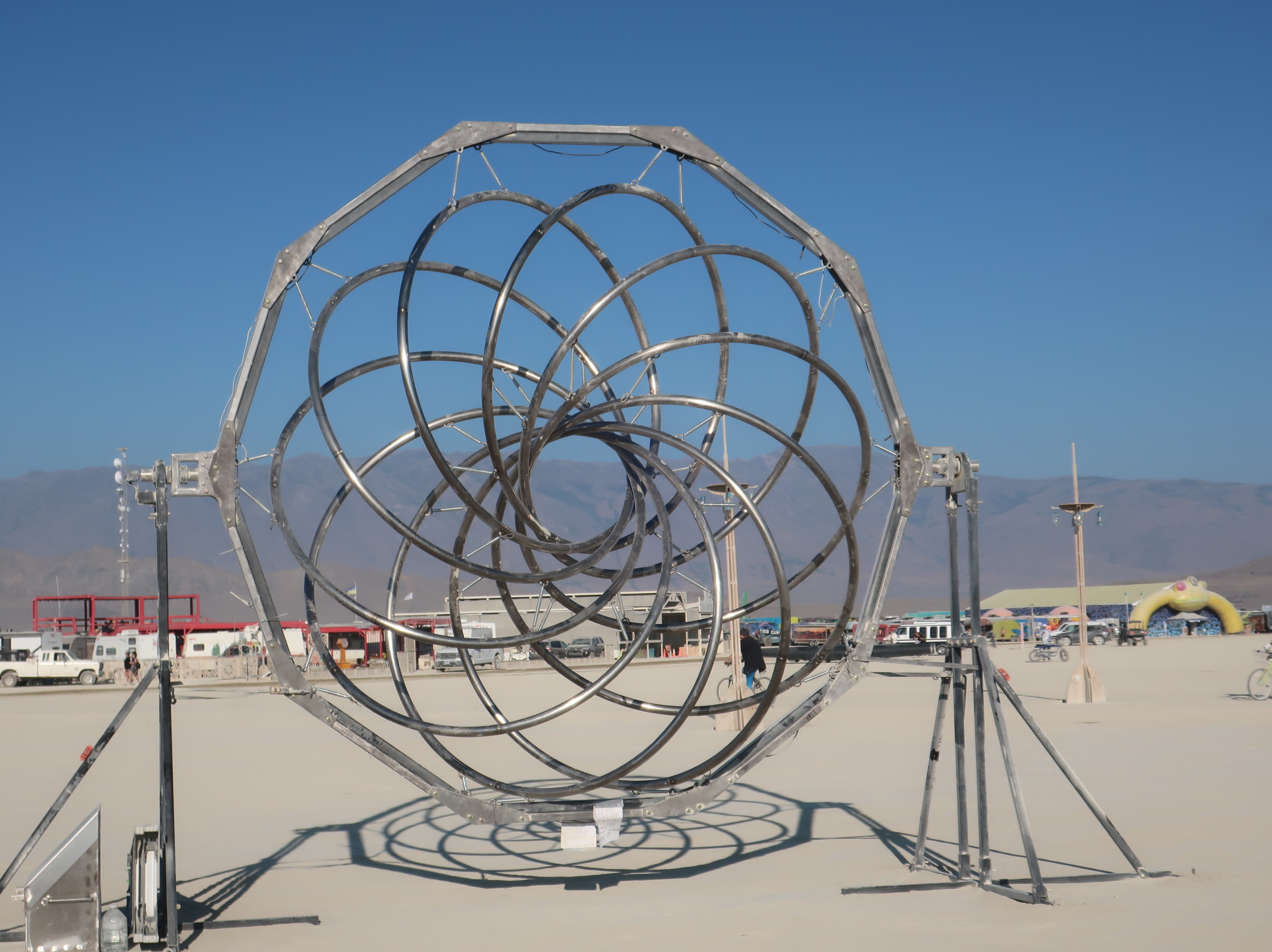
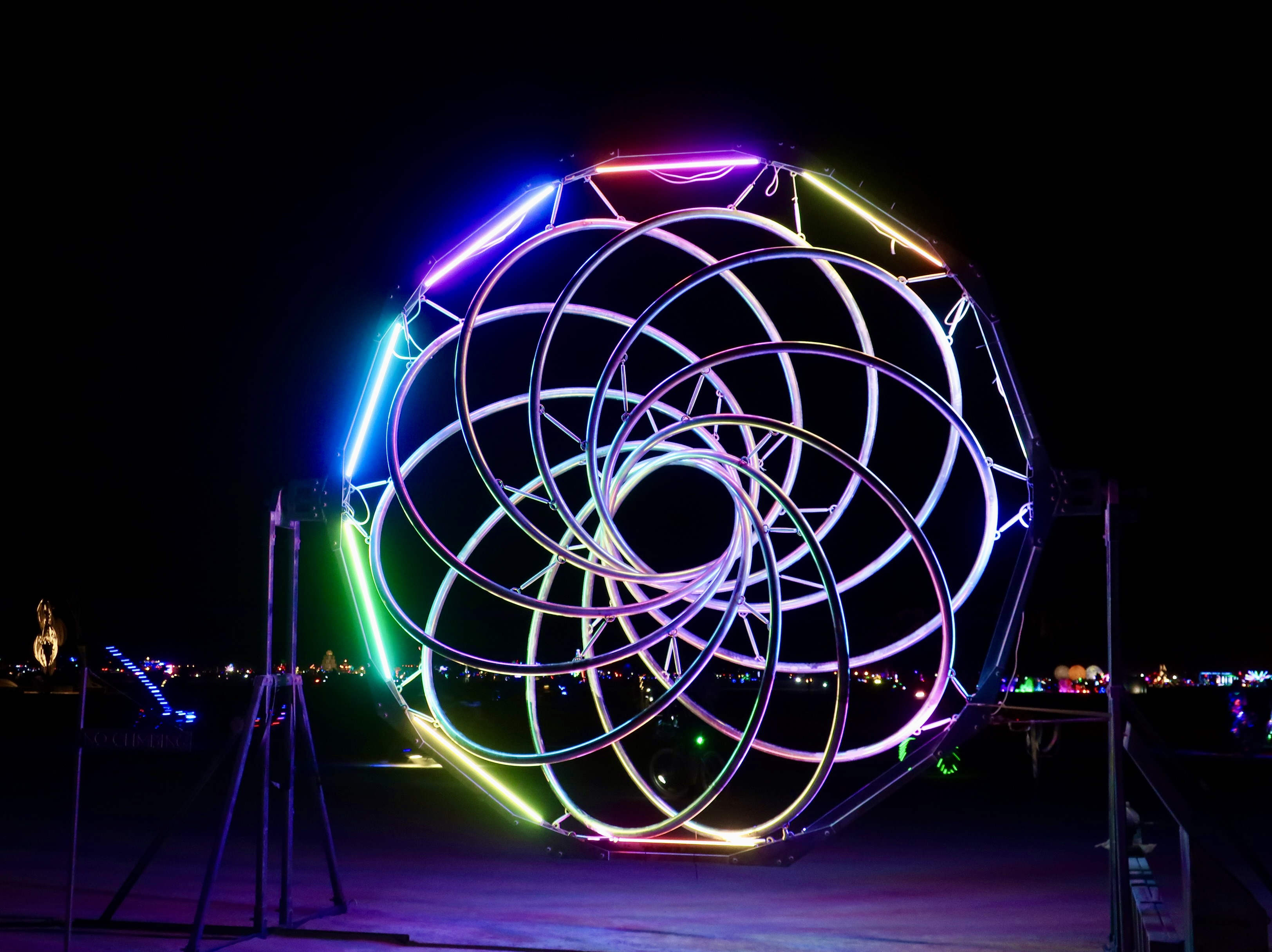
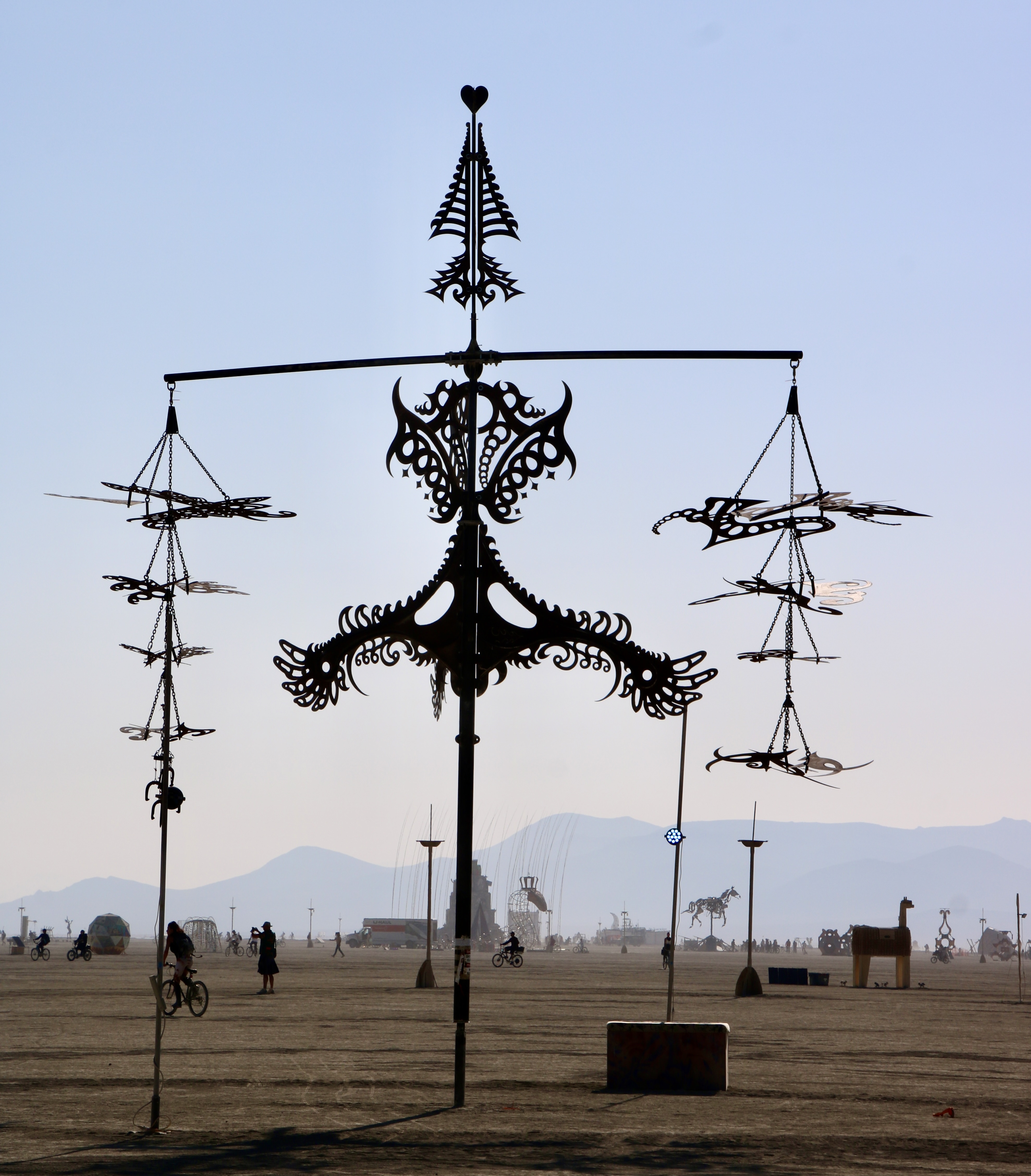
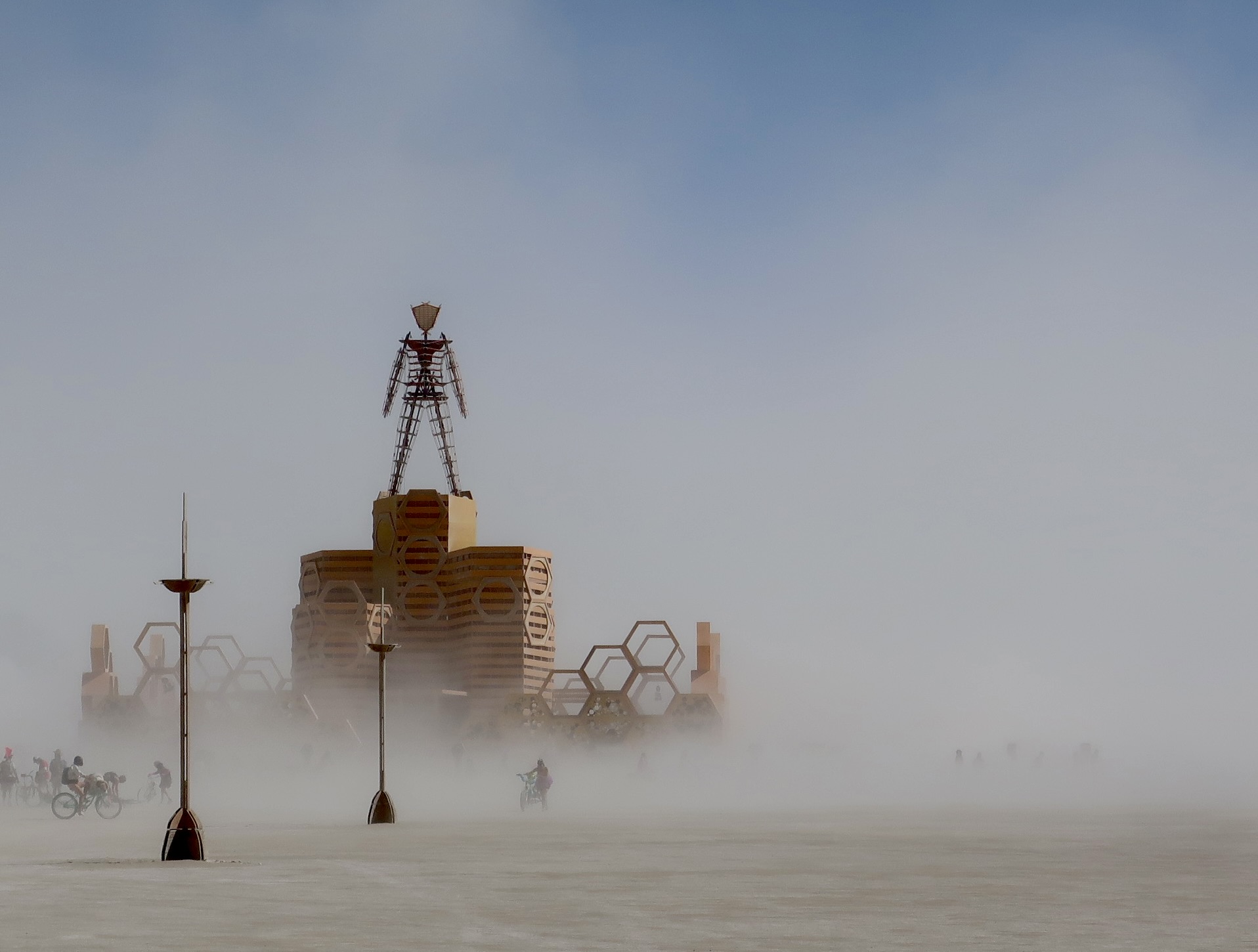
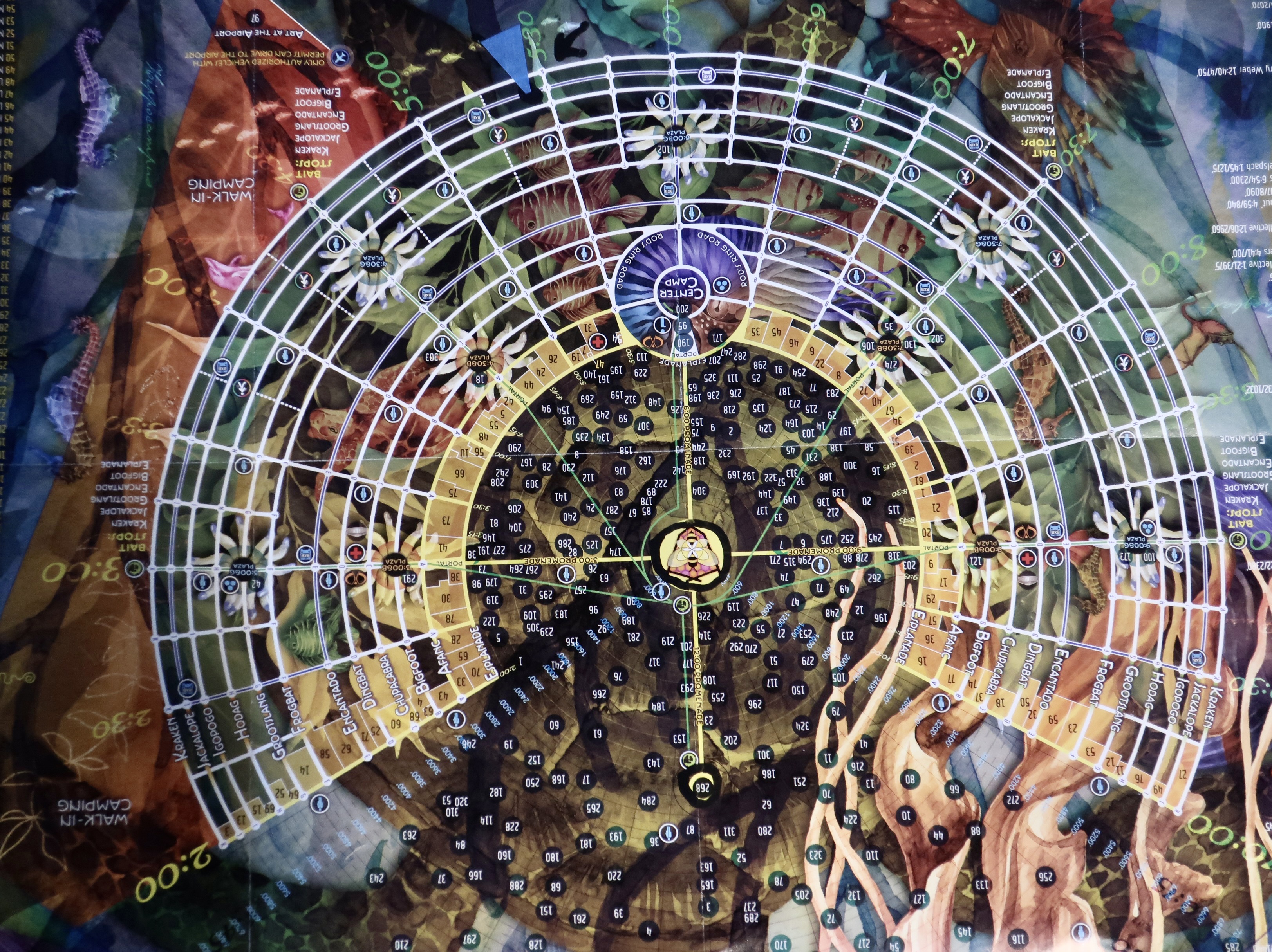
Burning Man always opens at 12 AM on Sunday morning in late August to begin its weeklong celebration of art, music, and lots of other things and ends on Labor Day Weekend. Peggy and I have never joined the midnight madness but we usually do make it in at a more reasonable hour on Sunday. This year we were busy in Sacramento catching up with family and friends so we went in on Monday. The result was that we ended up out in the boondocks of Black Rock City at 5:30 and J street, or Jackalope as J was named this year. Only one street was beyond us, Kraken.
Each year, the powers that be at Burning Man pick a theme for the year that serves as the base for the street names and much of the art. This year it was Animalia, representing the “animal world and our place in it.” The photo below shows the street names.

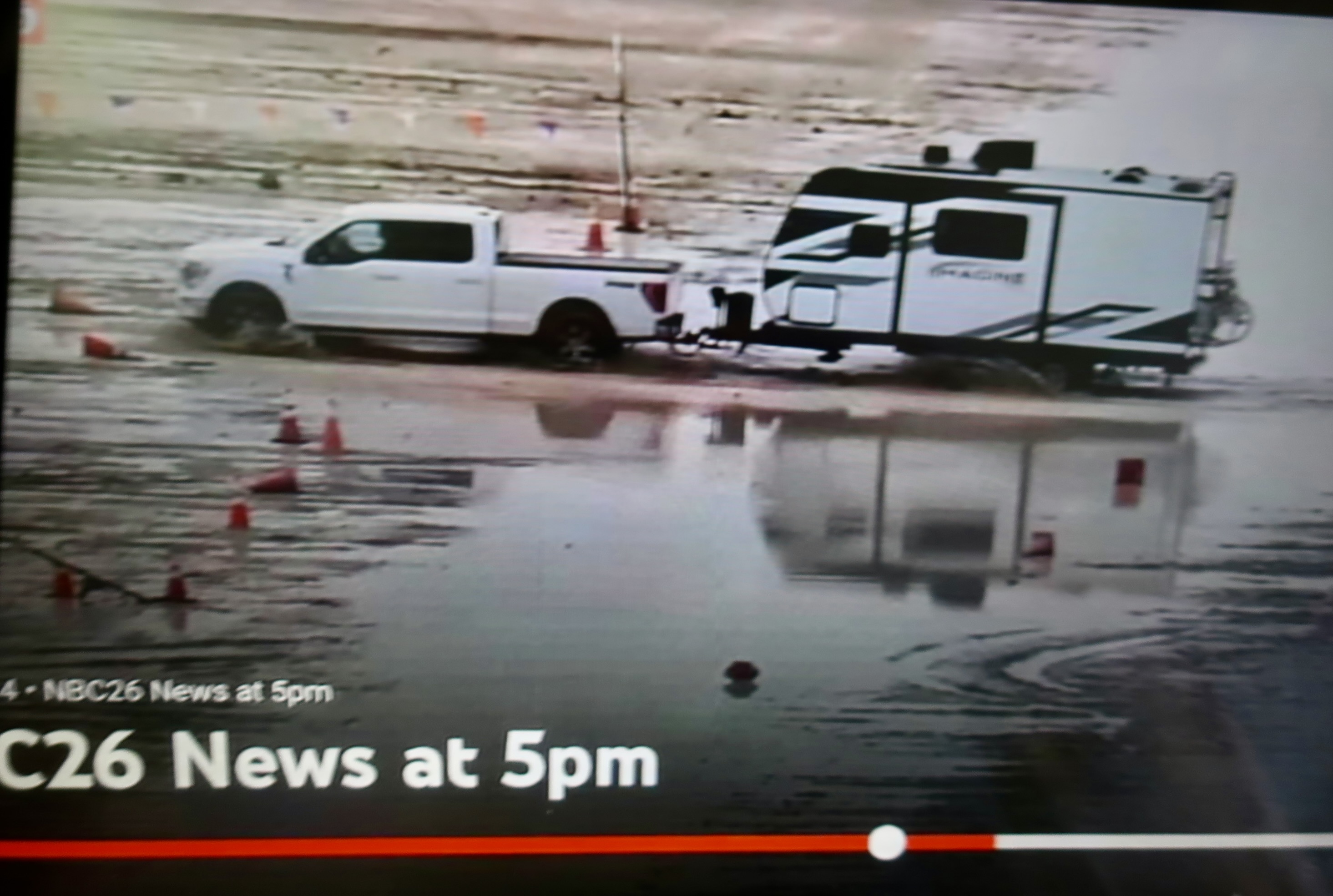
Our focus today is on the Man and the Temple, which are two locations that almost all Burners visit. But first I want to post one more photo of our ‘escape’ from Black Rock City on Sunday which we found after our last post. Unknown to us, a photo/video was taken of us exiting Burning Man that ended up being shown on NBC 26 news out of Green Bay, Wisconsin (and I suspect other media outlets.) This was the last stream we crossed just before reaching the paved road. It gives a new meaning to ‘streaming media.’ I’m glad I couldn’t see us doing this in real time— and even more glad that Peggy couldn’t. LOL.
One of the first things we do when we arrive at Burning Man is head out to see the Man and Temple. Usually it’s by bike. But the crank on my rented bike was being cranky, so we walked. The following photos represent our journey. They were all taken by either Peggy or me.
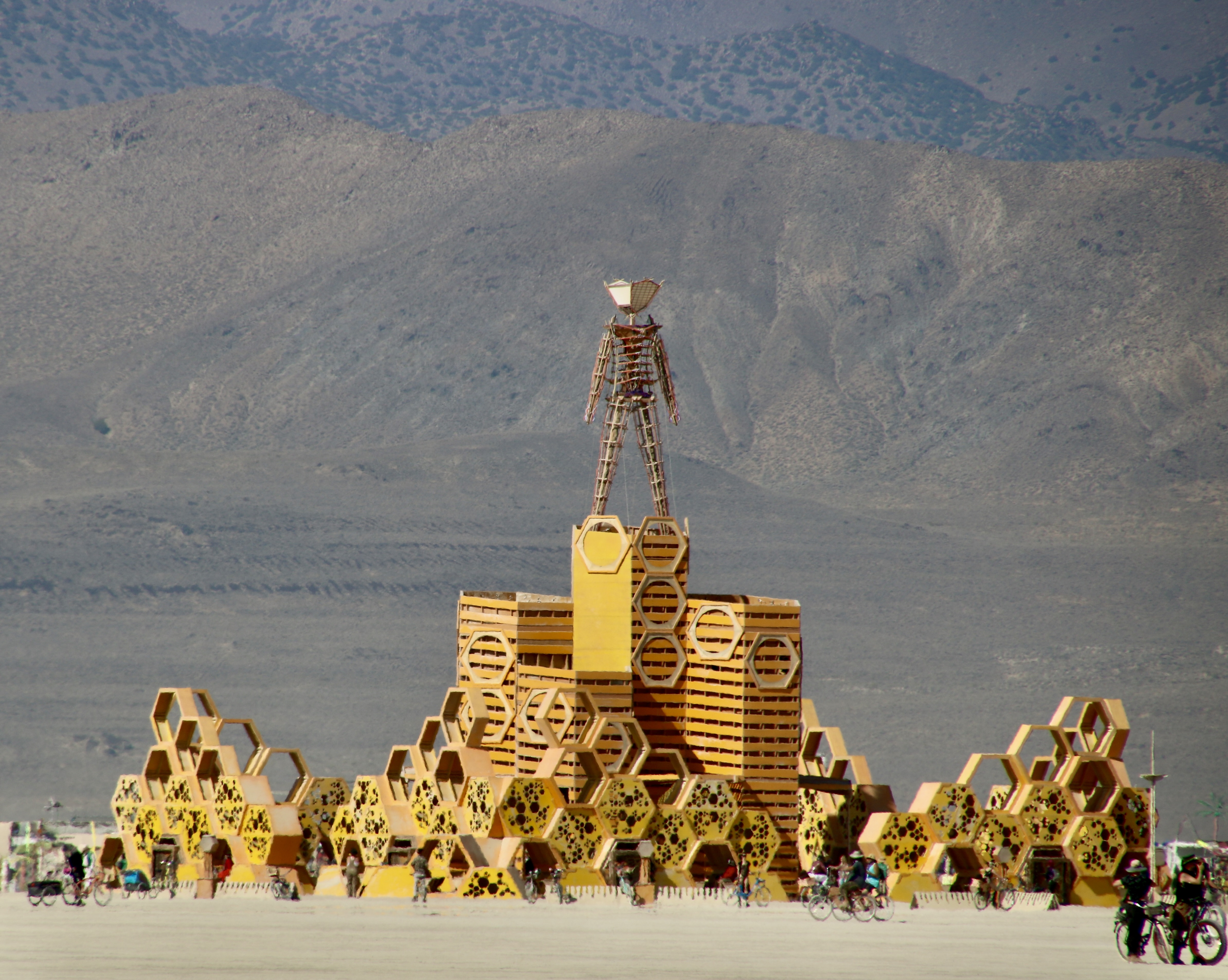
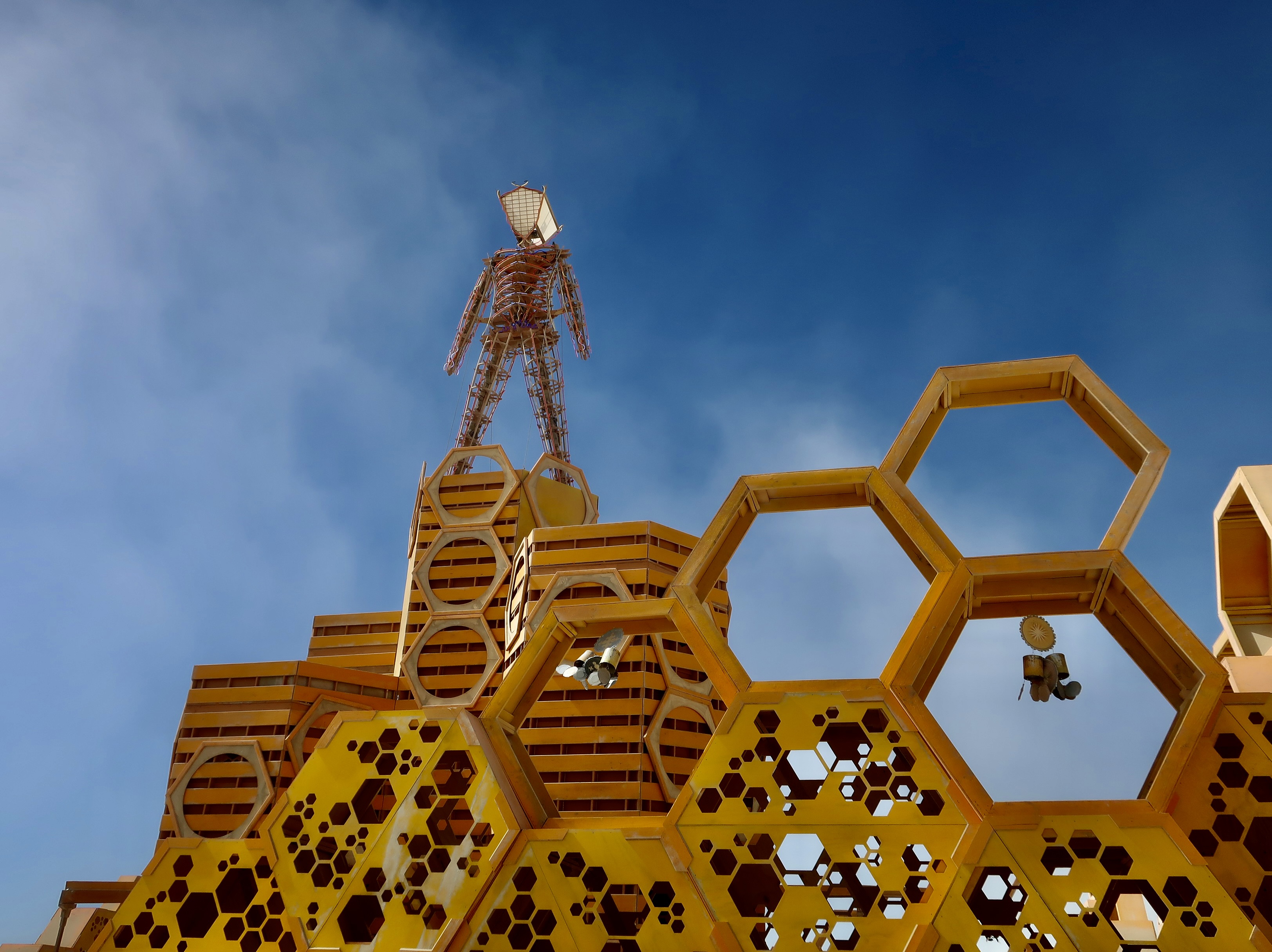
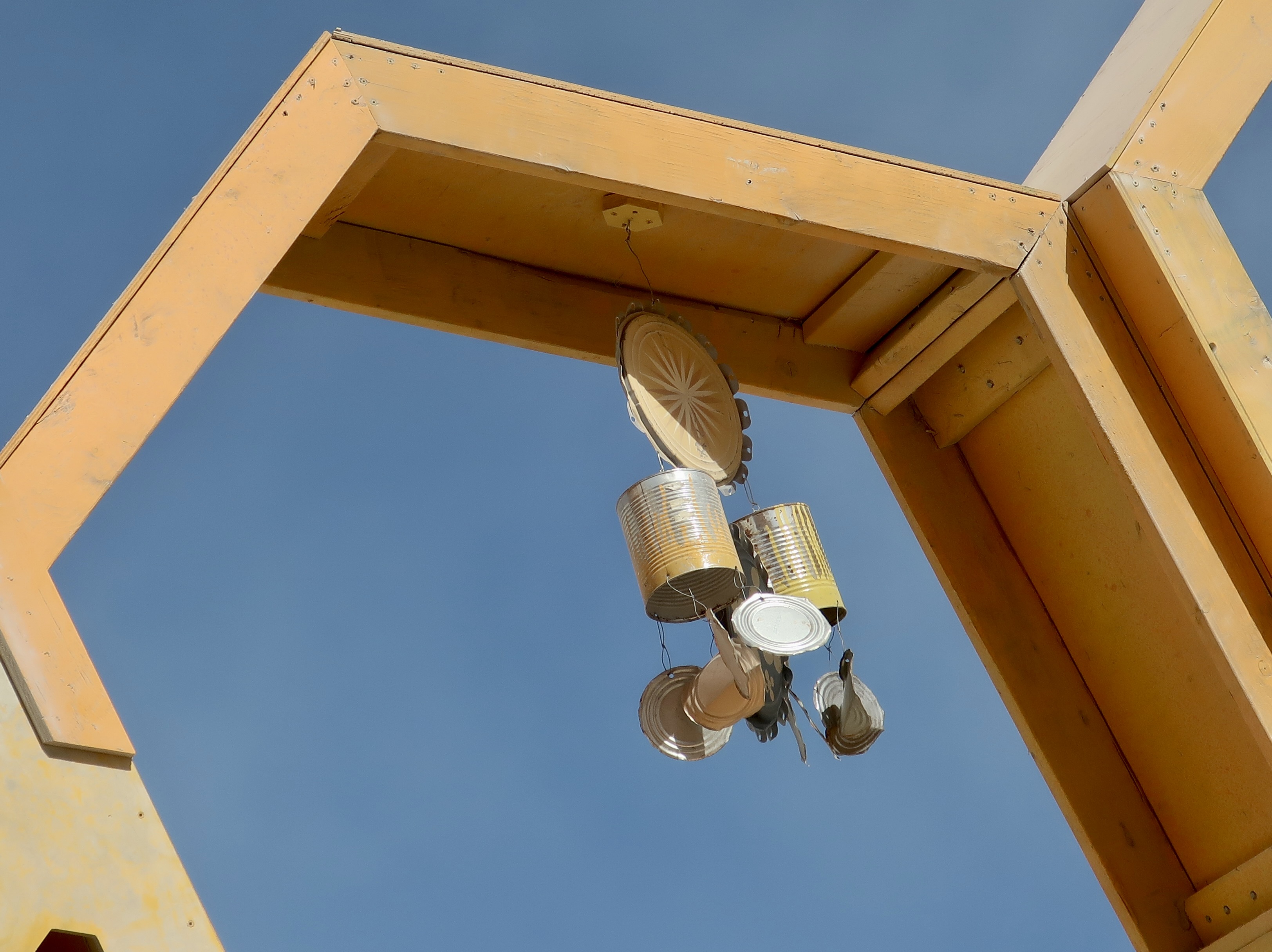
Leaving the Man we hiked out another half mile to the Temple. We’d revisit the Man at night. Our hike out to the temple was delayed:
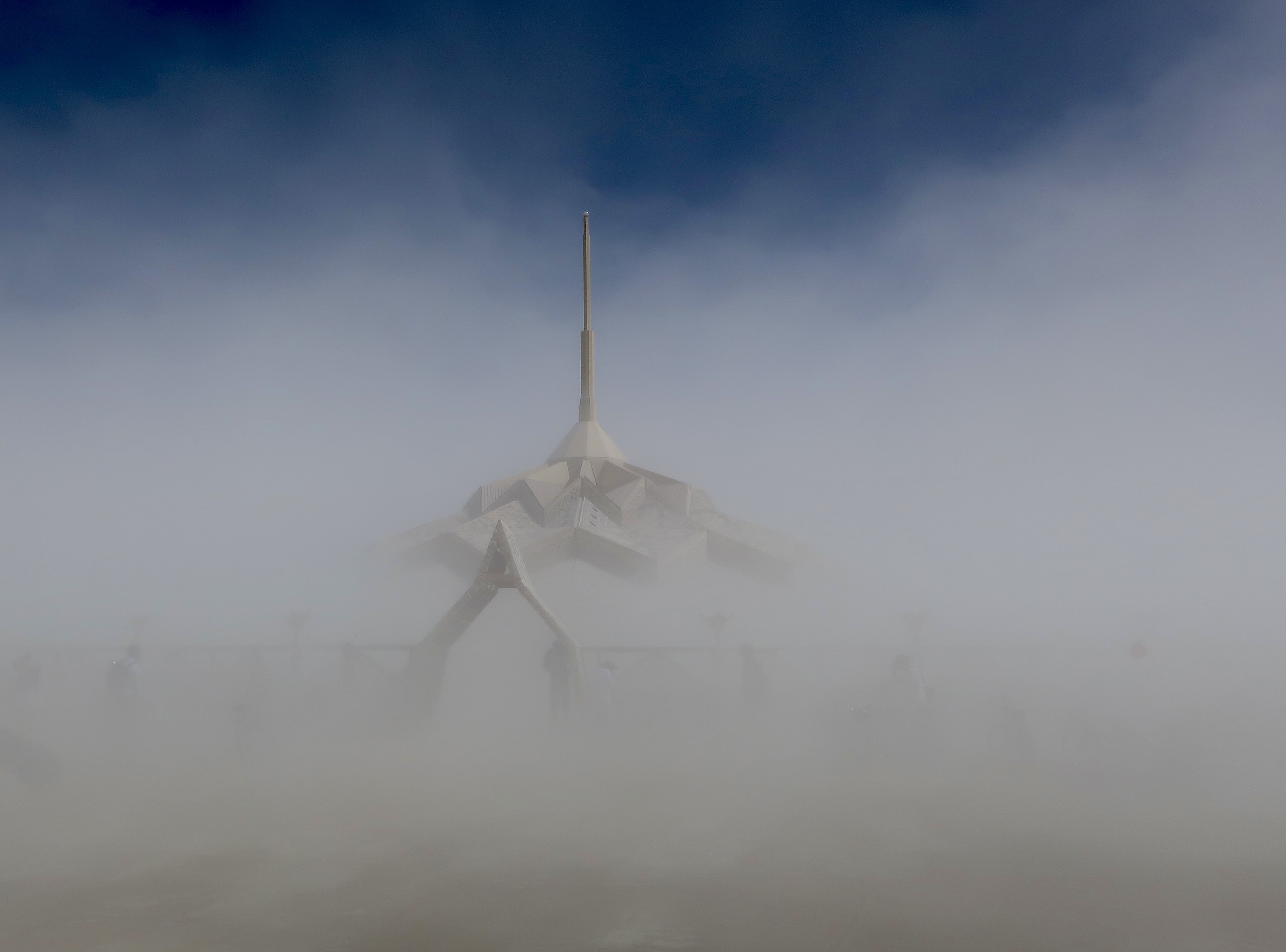
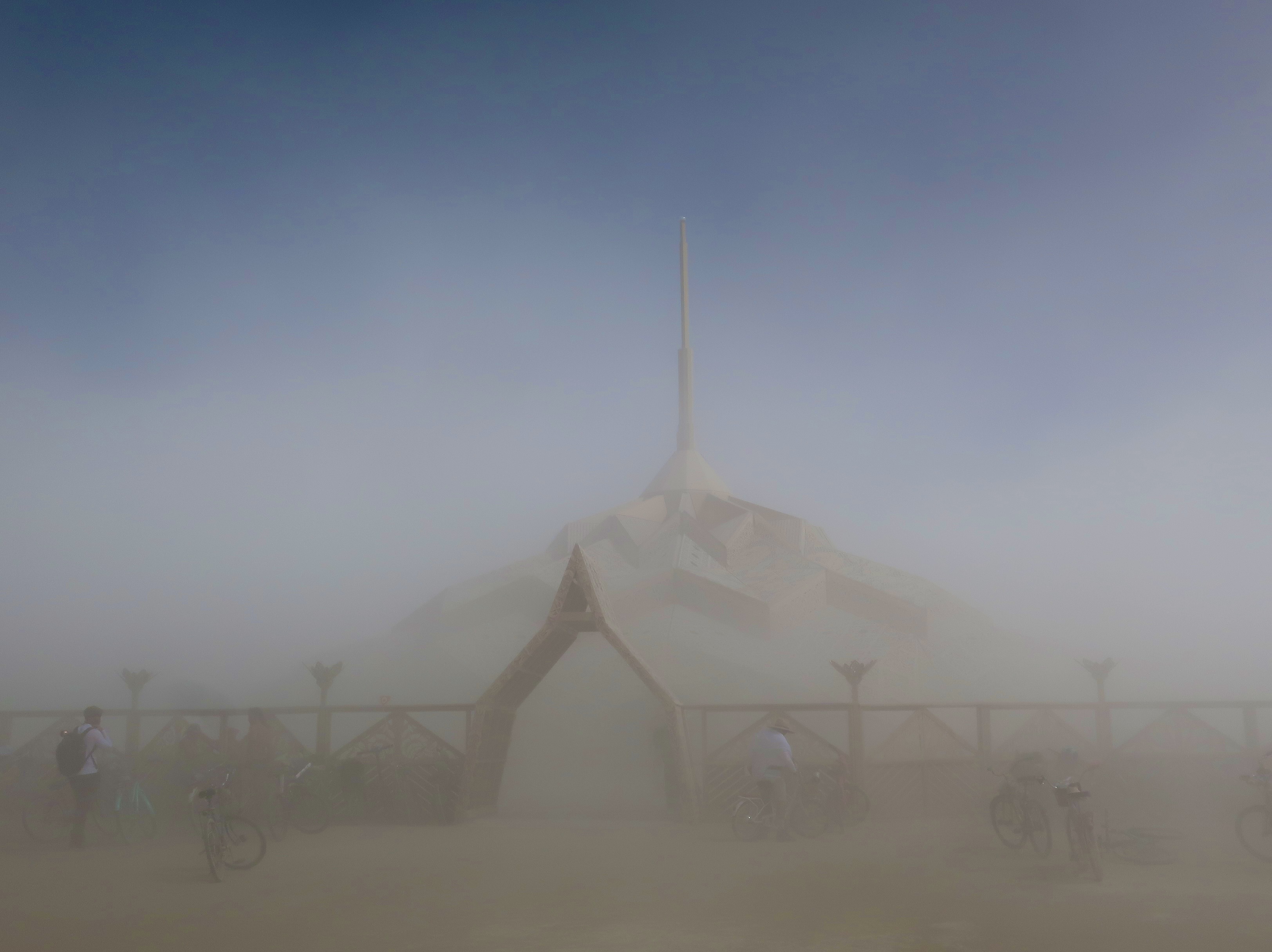
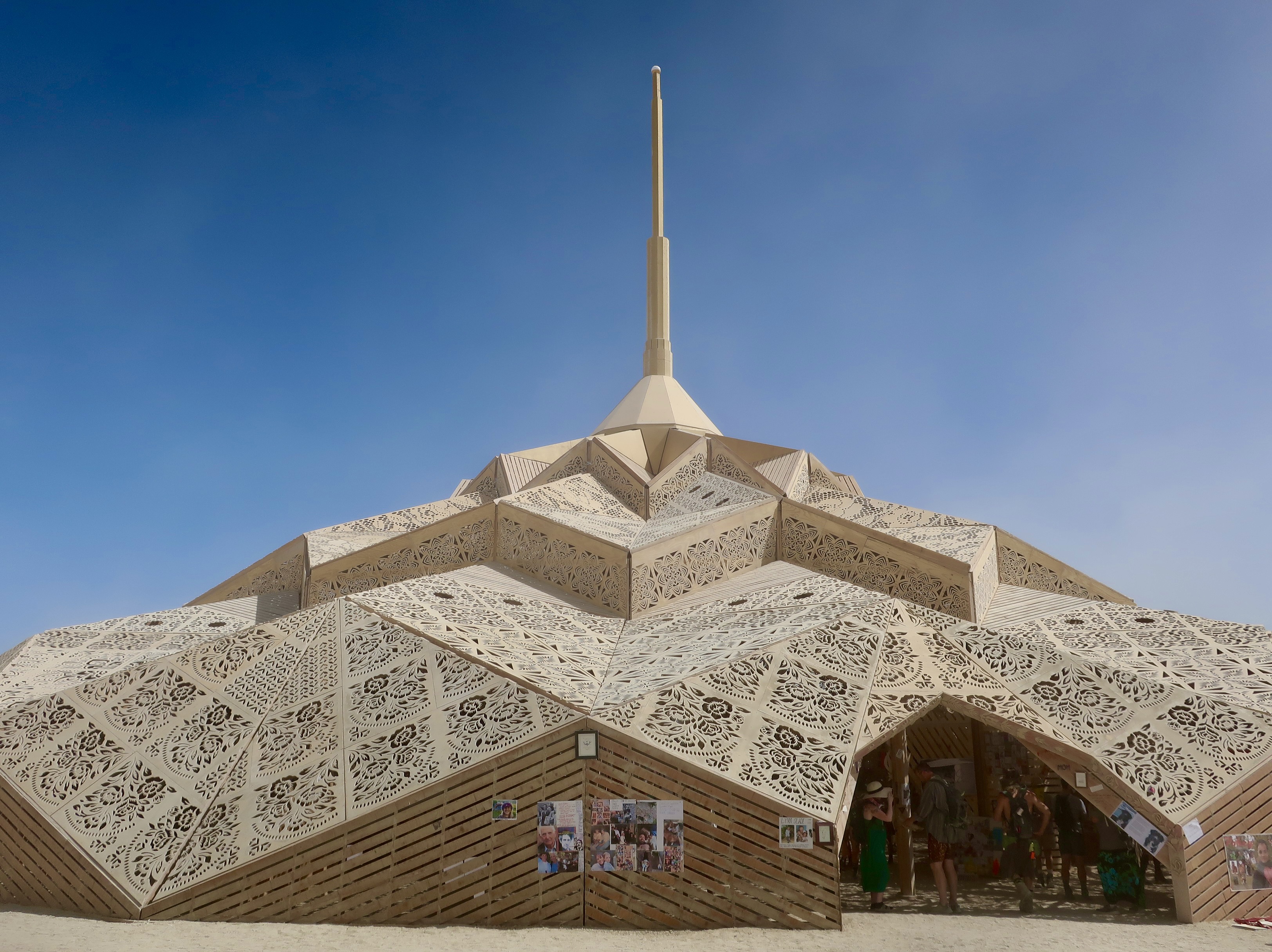
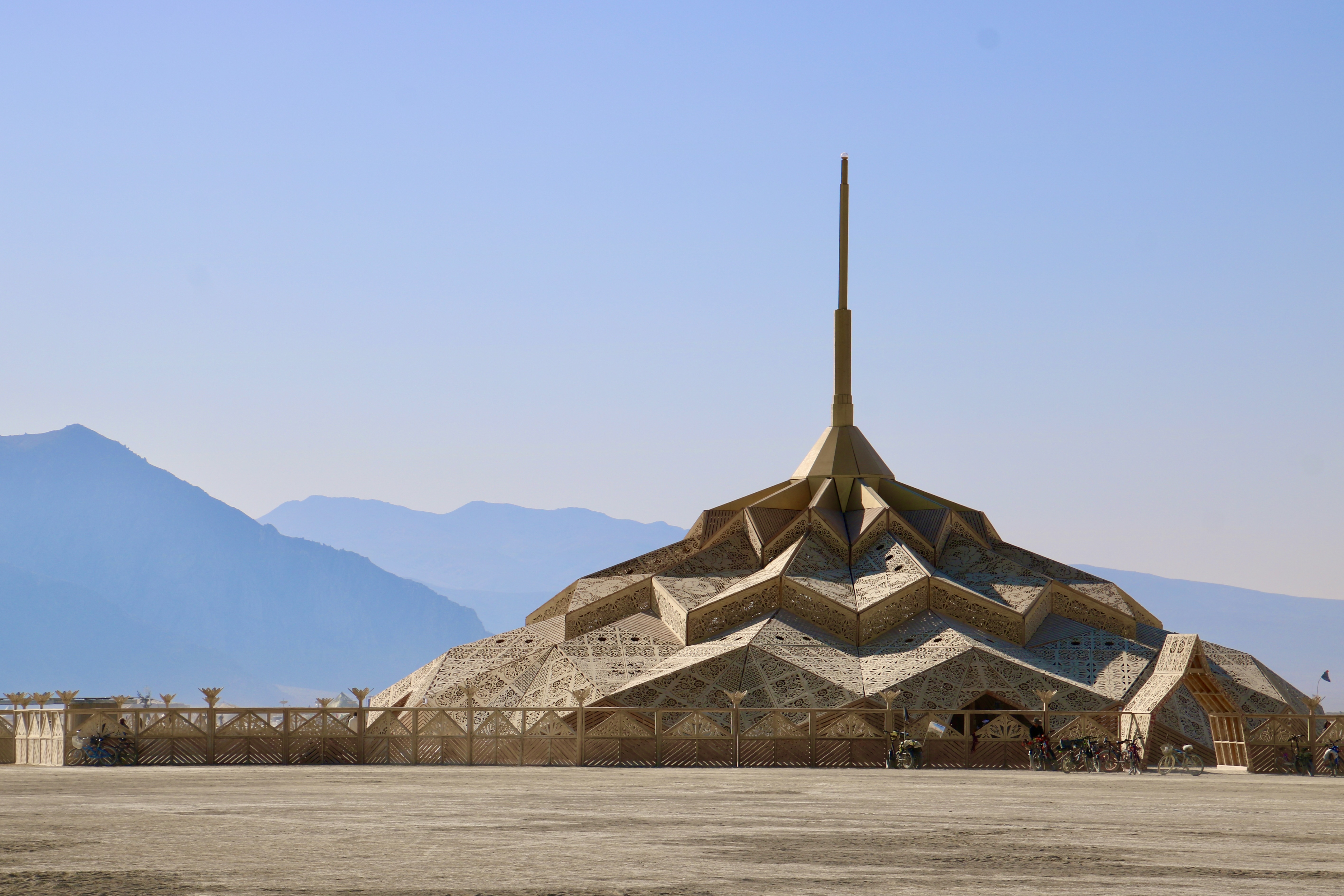
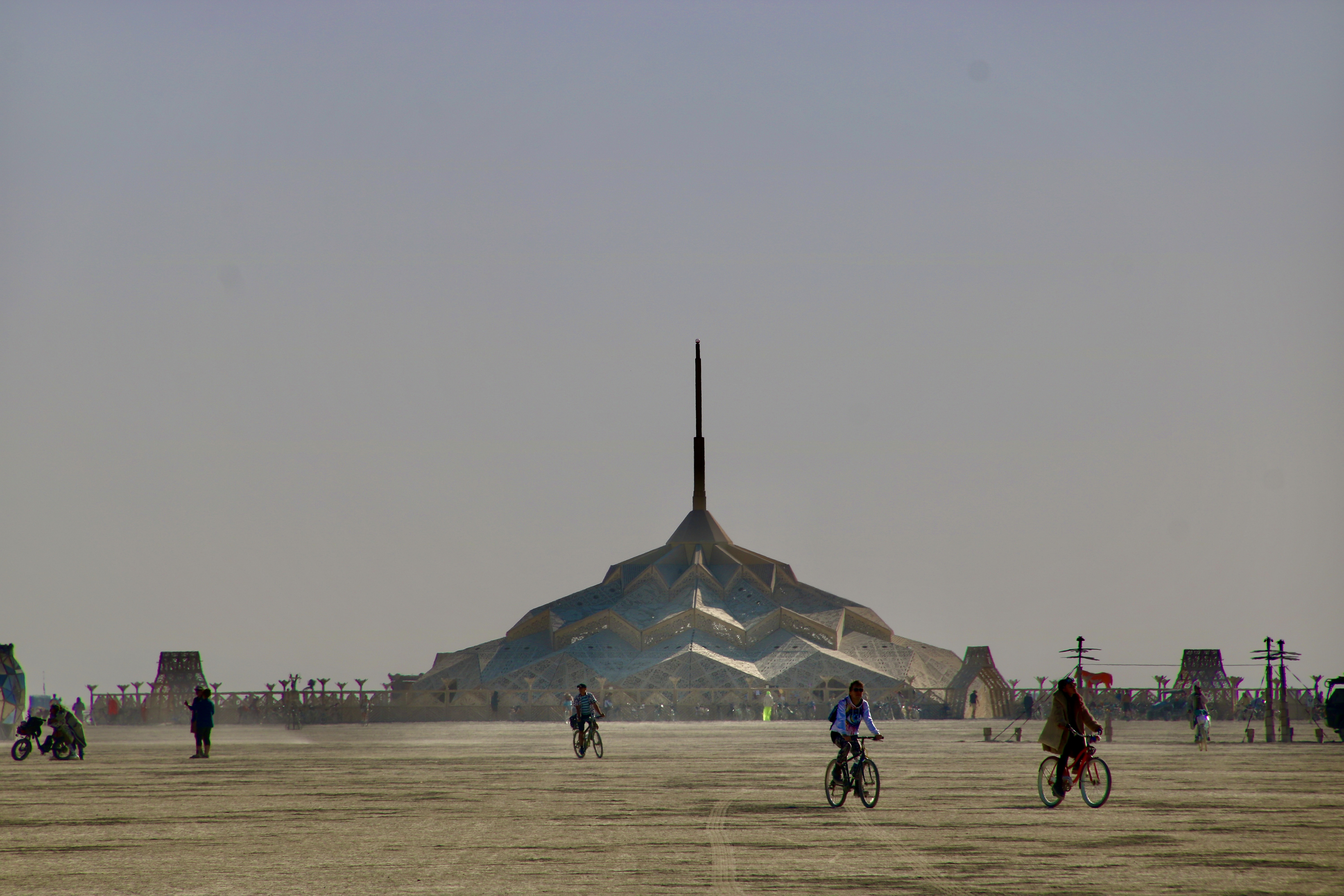
As I mentioned above, Peggy and I revisited the Man at night. In addition to being a symbol of the event, the Man serves as a beacon for Burners. As shown on the map above, three major routes that are lined with lamp posts lead out to the Man from Black Rock City . During dust storms Peggy and I tend to stay on the routes since the posts provide valuable landmarks.
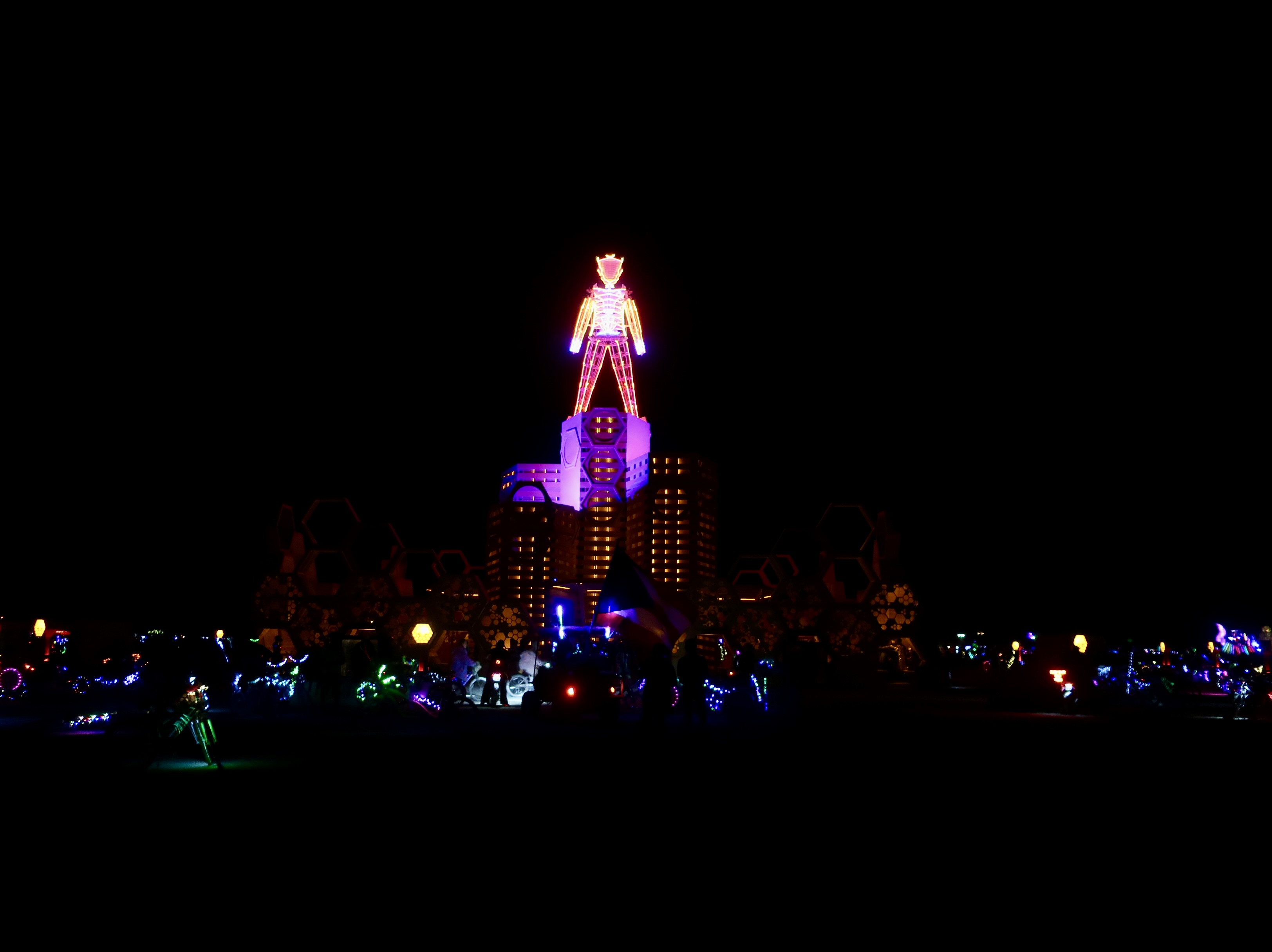
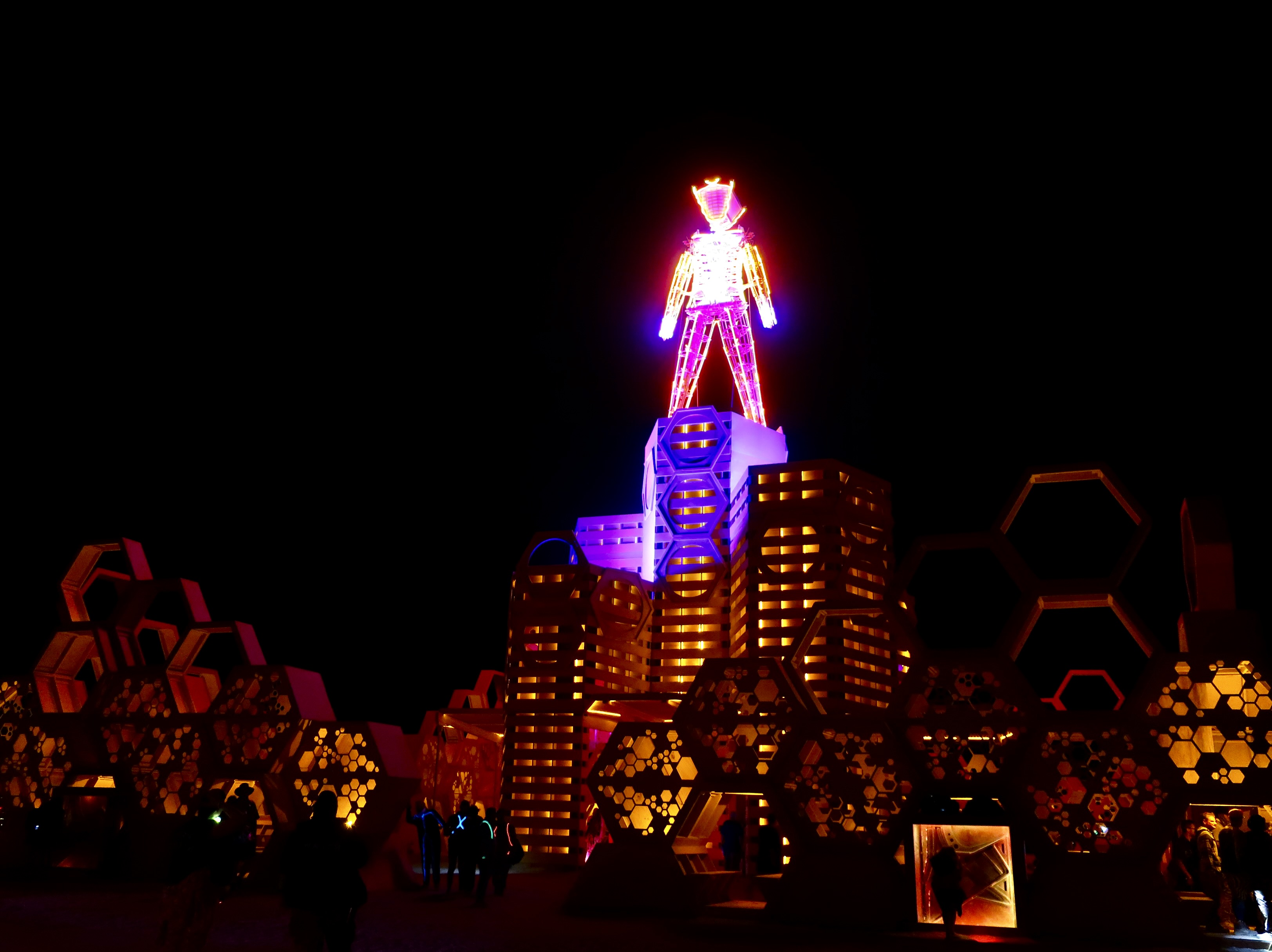
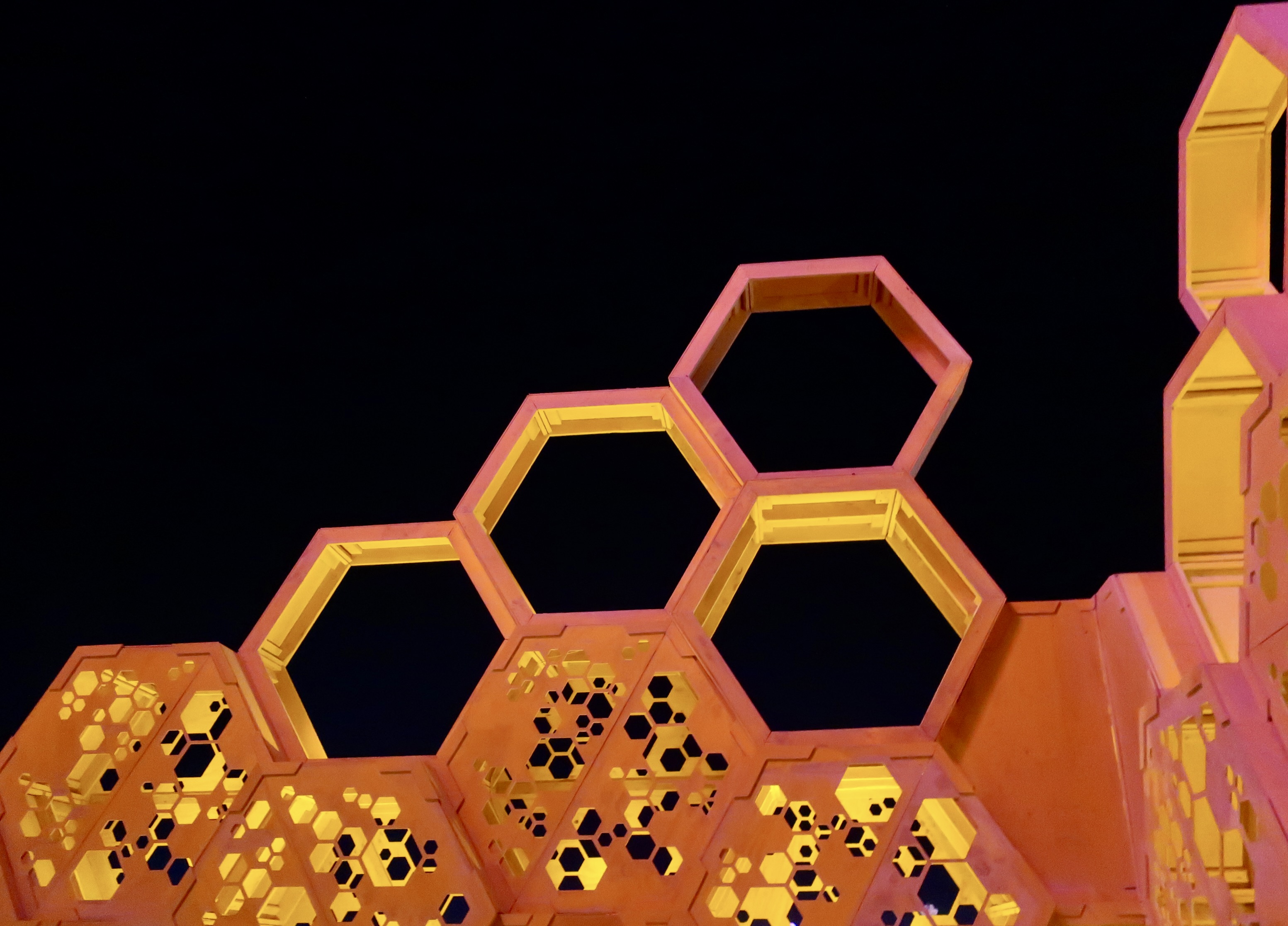
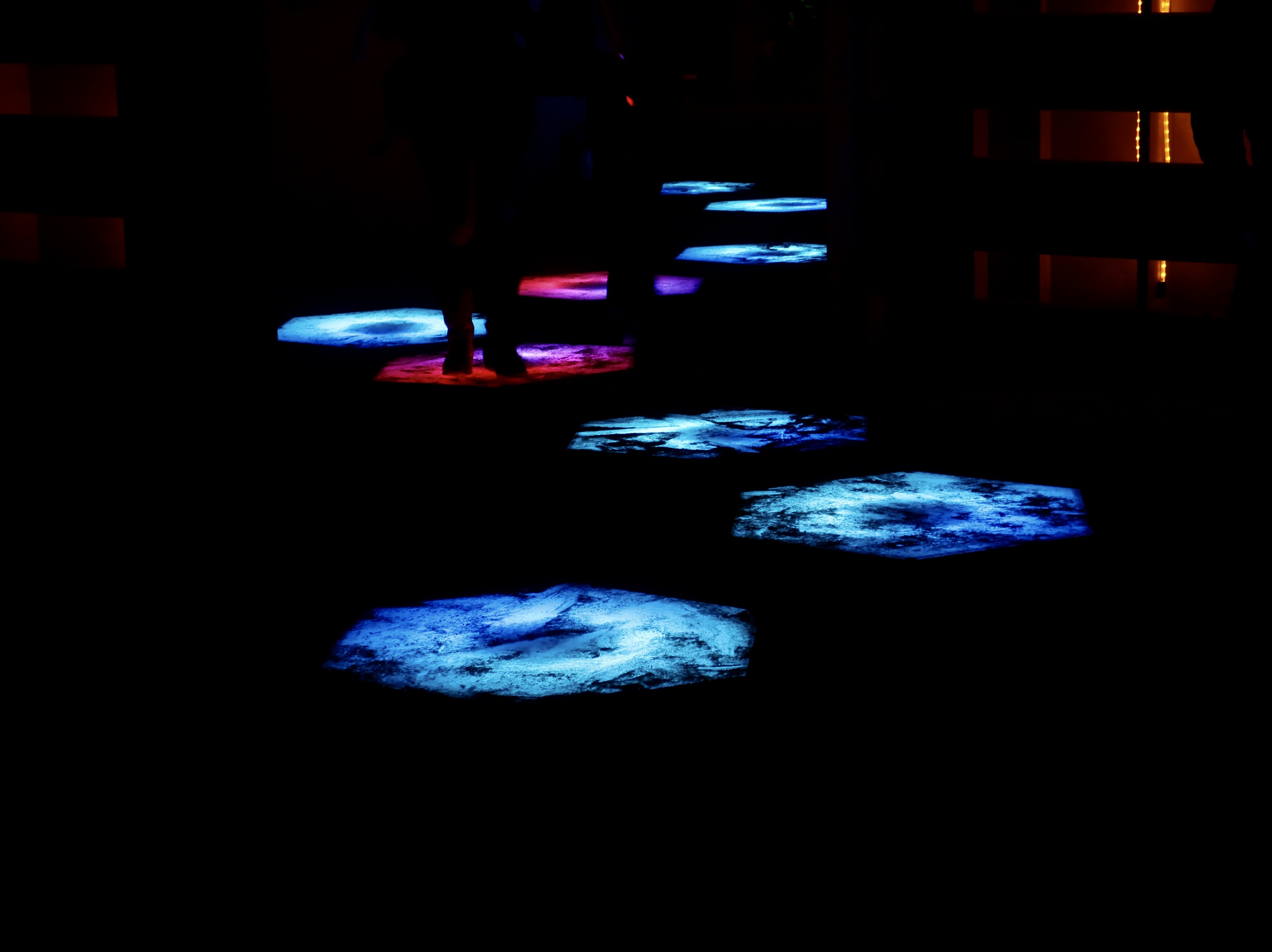
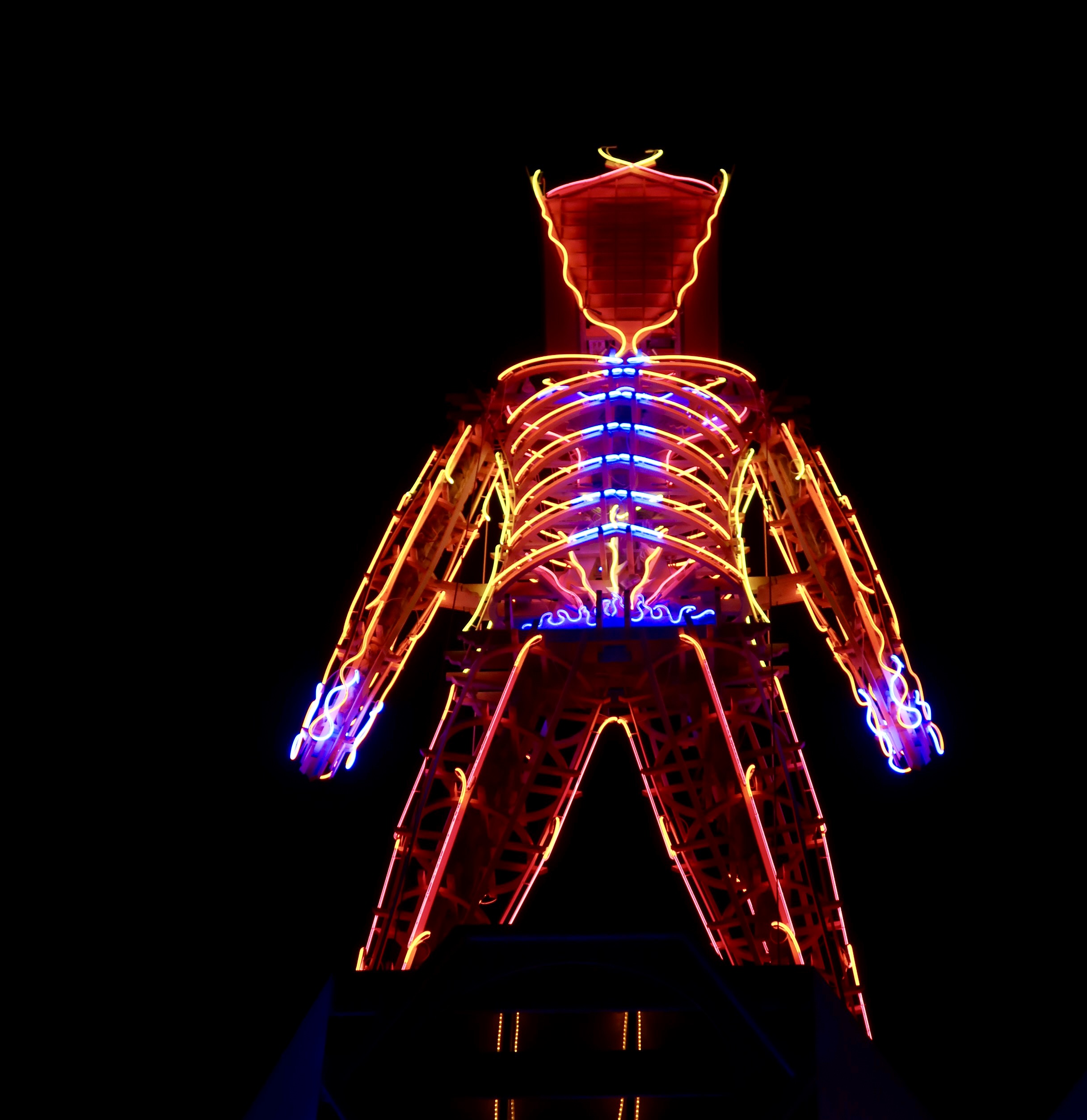
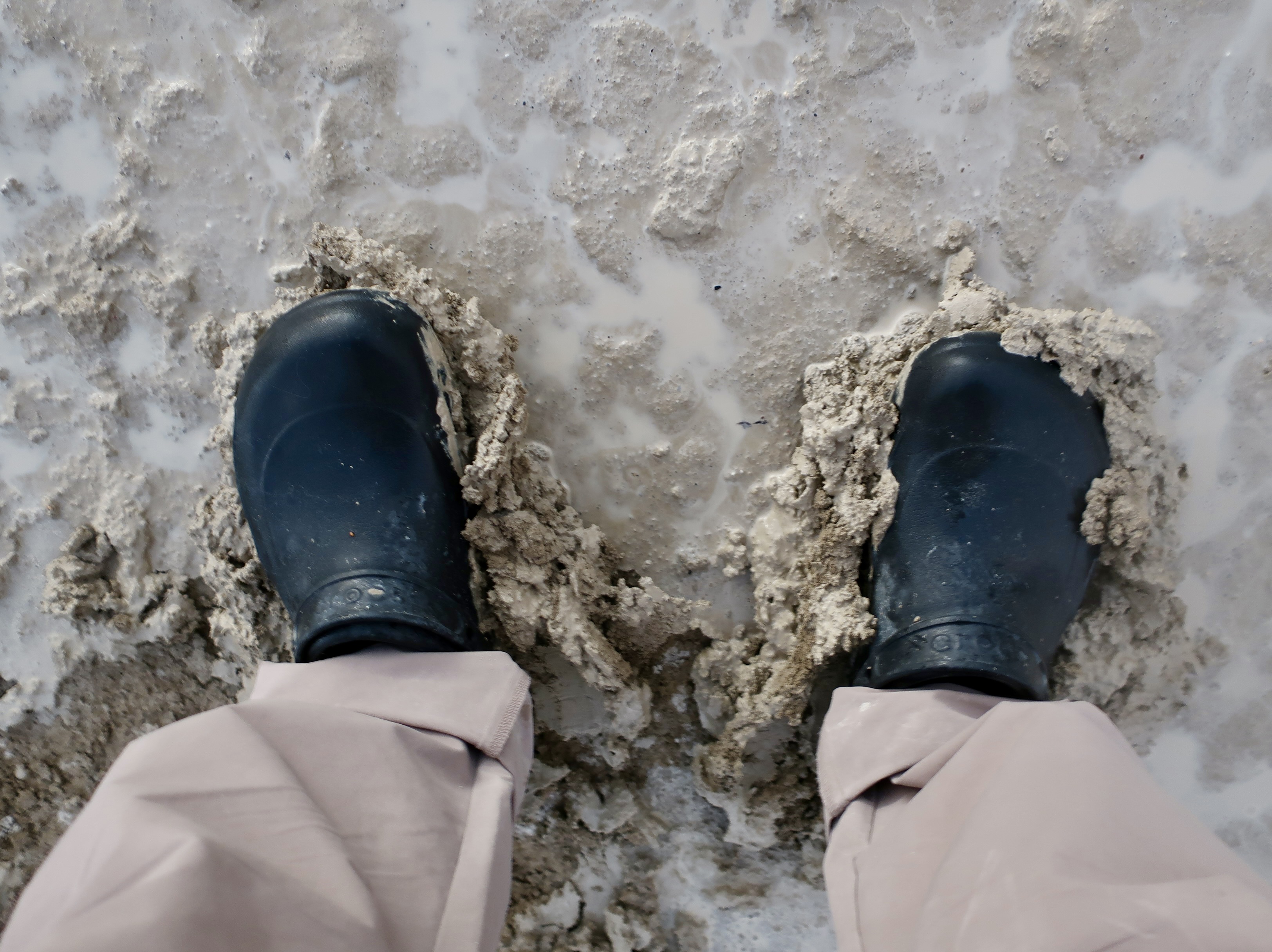
Peggy and I have been going to Burning Man off and on since 2004. We definitely aren’t virgins, which is what Burners call newbies. In fact it’s hard to be much more veteran than we are although there are old timers around who have been going since its San Francisco beginning in the mid-80s. Over the past 19 years, we’ve seen everything the Black Rock Desert has to throw at people who come to this unique event north of Reno, Nevada. The worst is usually high heat, strong winds, and blinding dust storms where dust rules your universe. The only thing you can do is put on your goggles, wrap your bandana around your face like a bandit, and proceed. If it’s a white out, you hunker down until you can see where you are going. Not doing so is a recipe for disaster.
Rain has been relatively rare compared to dust storm and requires a different response. The Burning Man Organization (BM Org) shuts everything down until the rain stops and the Playa dries out. It’s quite dramatic. There is no driving except for emergency vehicles. Driving tears up the desert floor and getting stuck is almost guaranteed. Since Burners are required to park their vehicles when in camp (except for mutant vehicles), it isn’t much of an issue unless you are driving in or out. That happened to us once when we were coming in and we had to wait for three hours— along with the thousand or so other vehicles entering at the time. It turned into a party. Typical Burning Man.
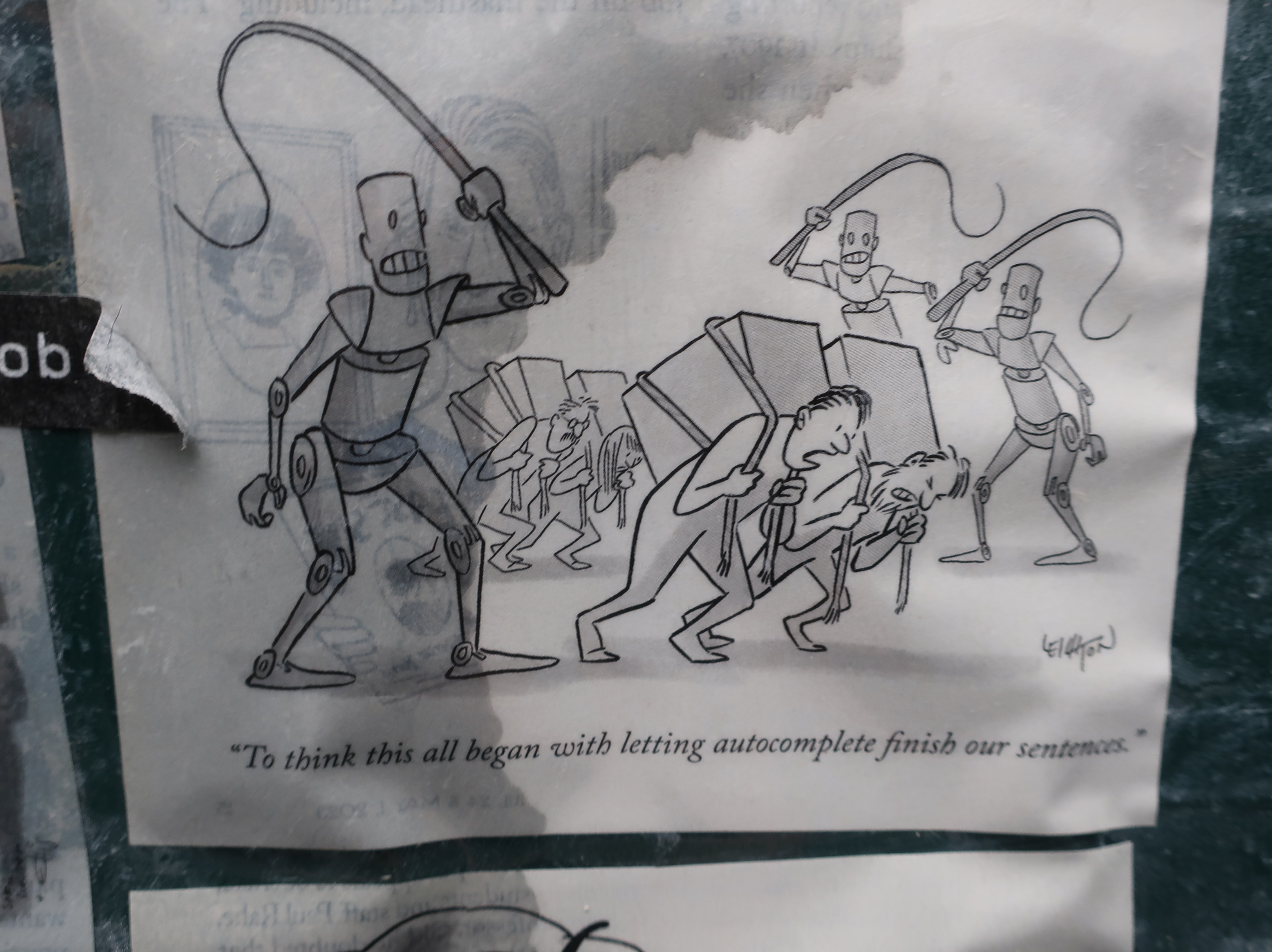
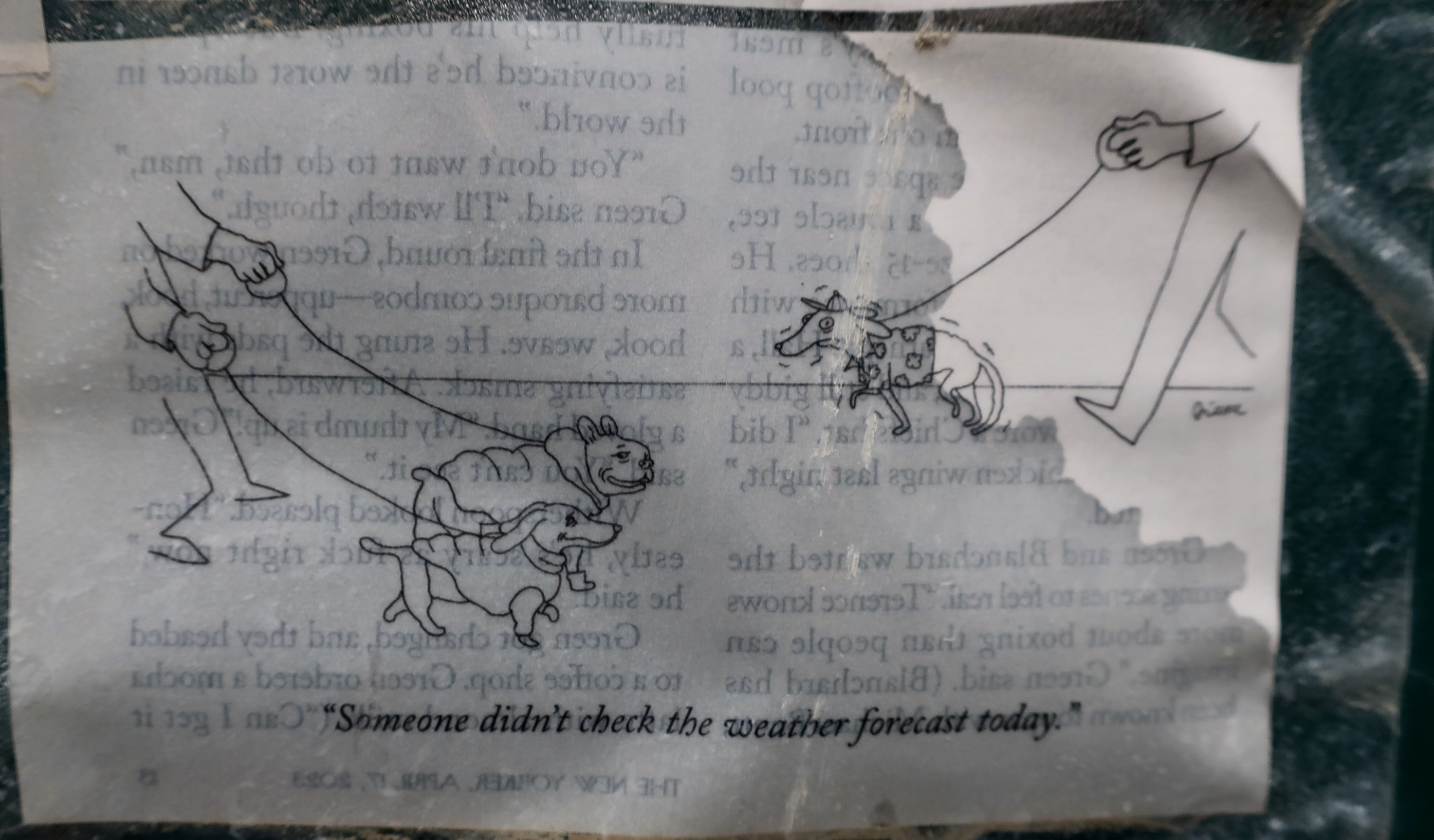
This time it was different, as you have undoubtedly seen or heard about on the news or through social media. It just kept on raining. What was normally a 2-3 hour wait went on for three days. Burning Man was featured in headlines around the nation and around the world. 70,000 people were literally stuck in the mud. Even the President was briefed on the situation. We managed to escape yesterday. Our story is best told in photos. All of these are taken by either Peggy or me.
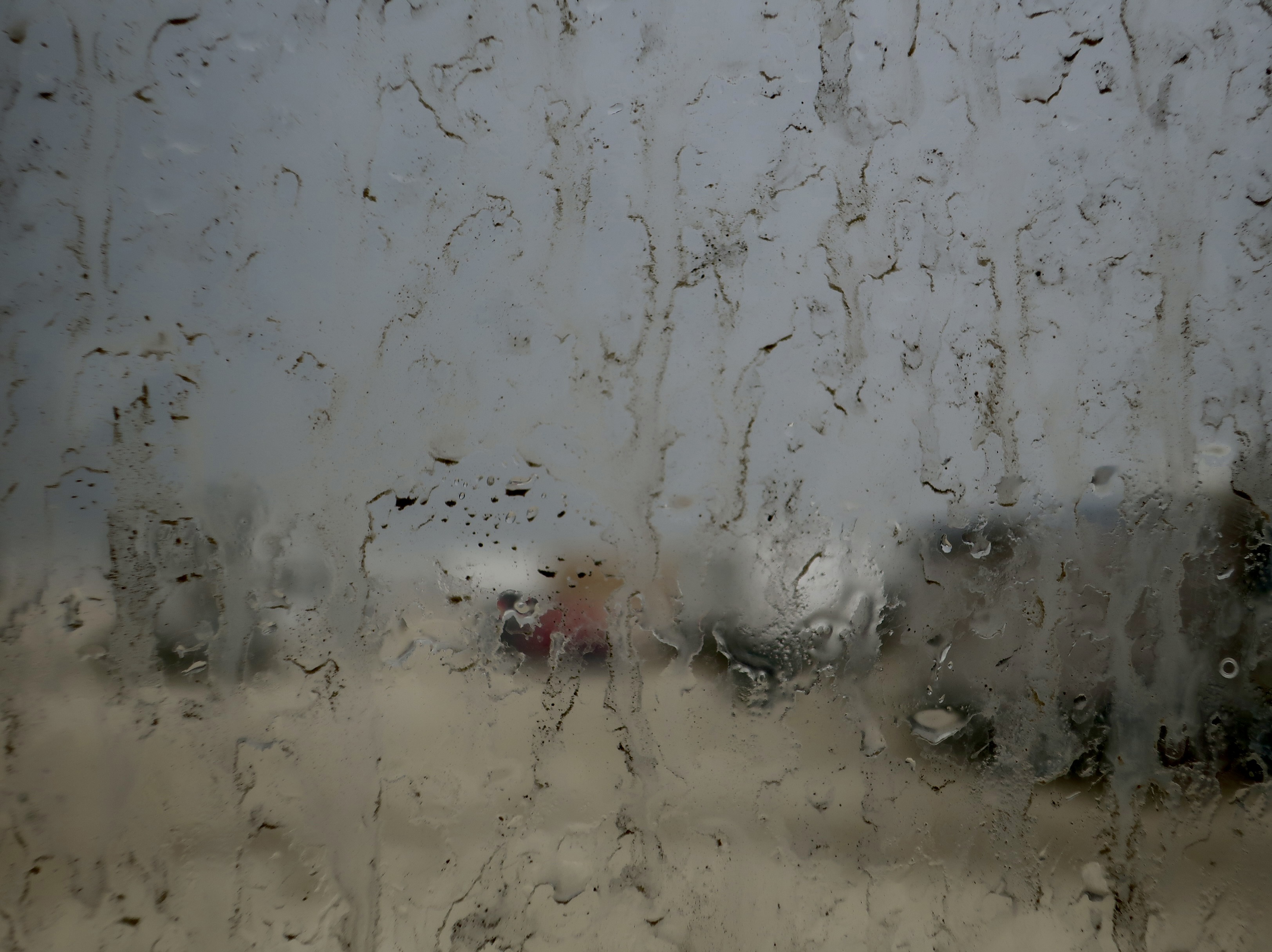
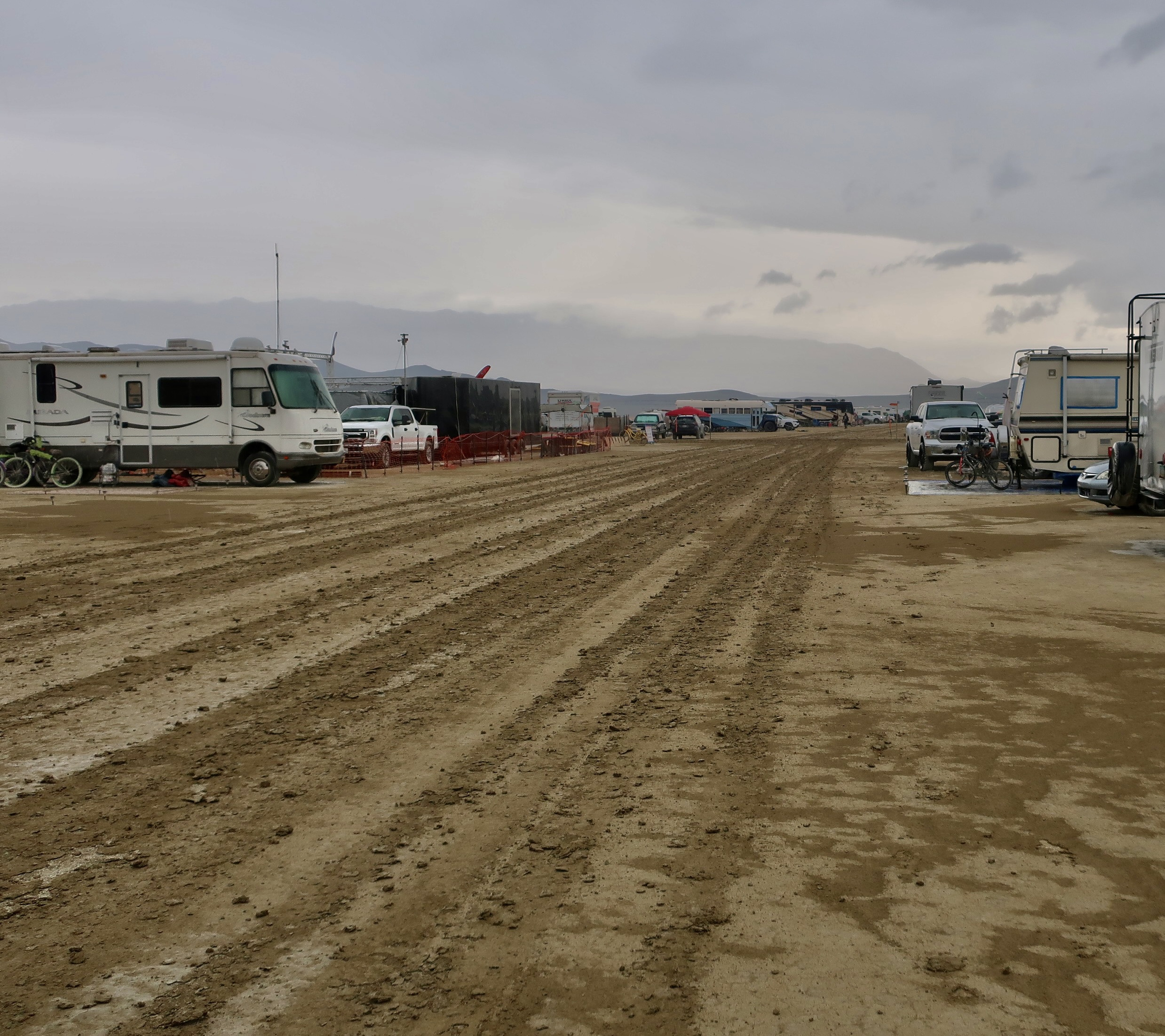
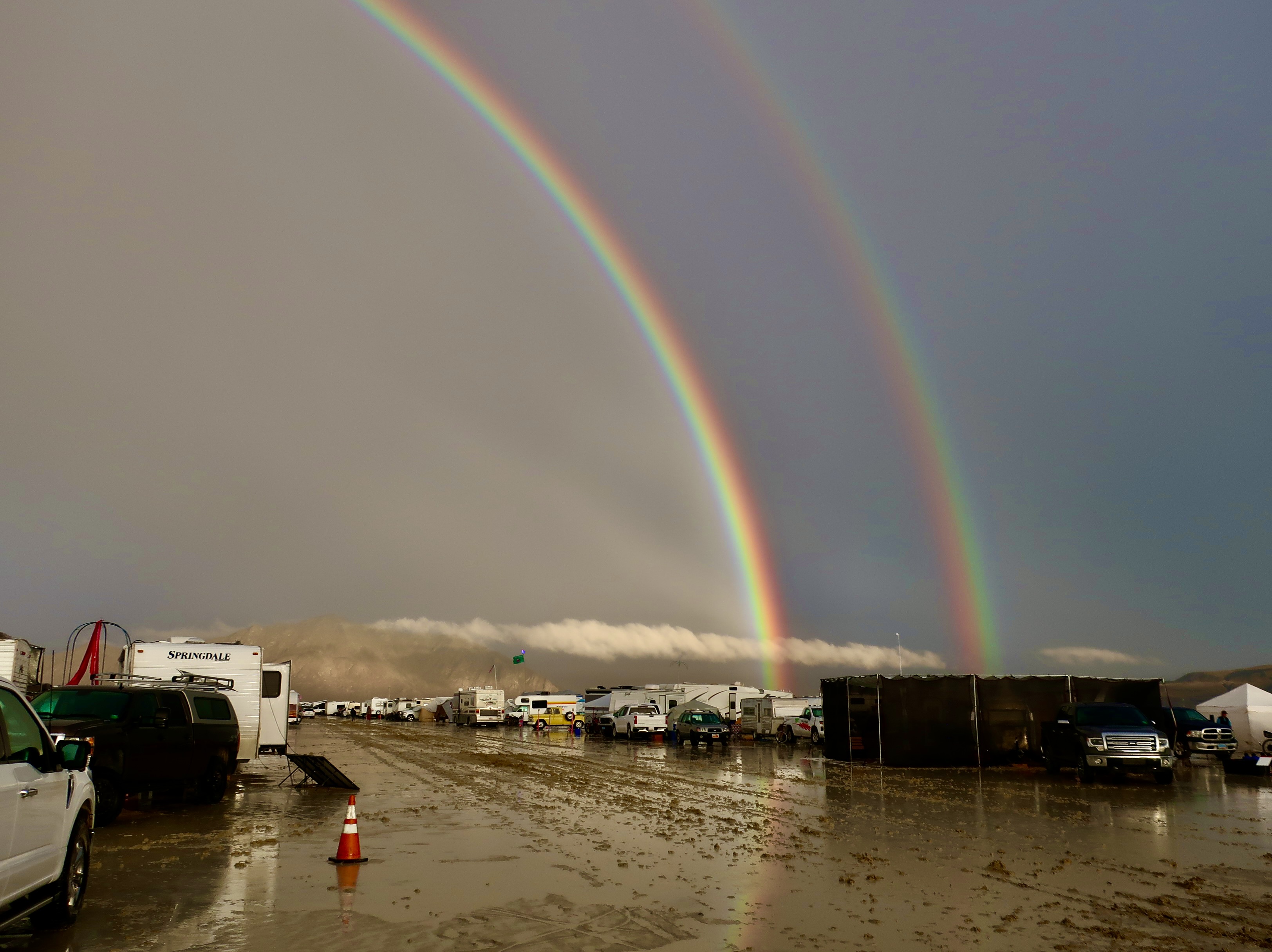
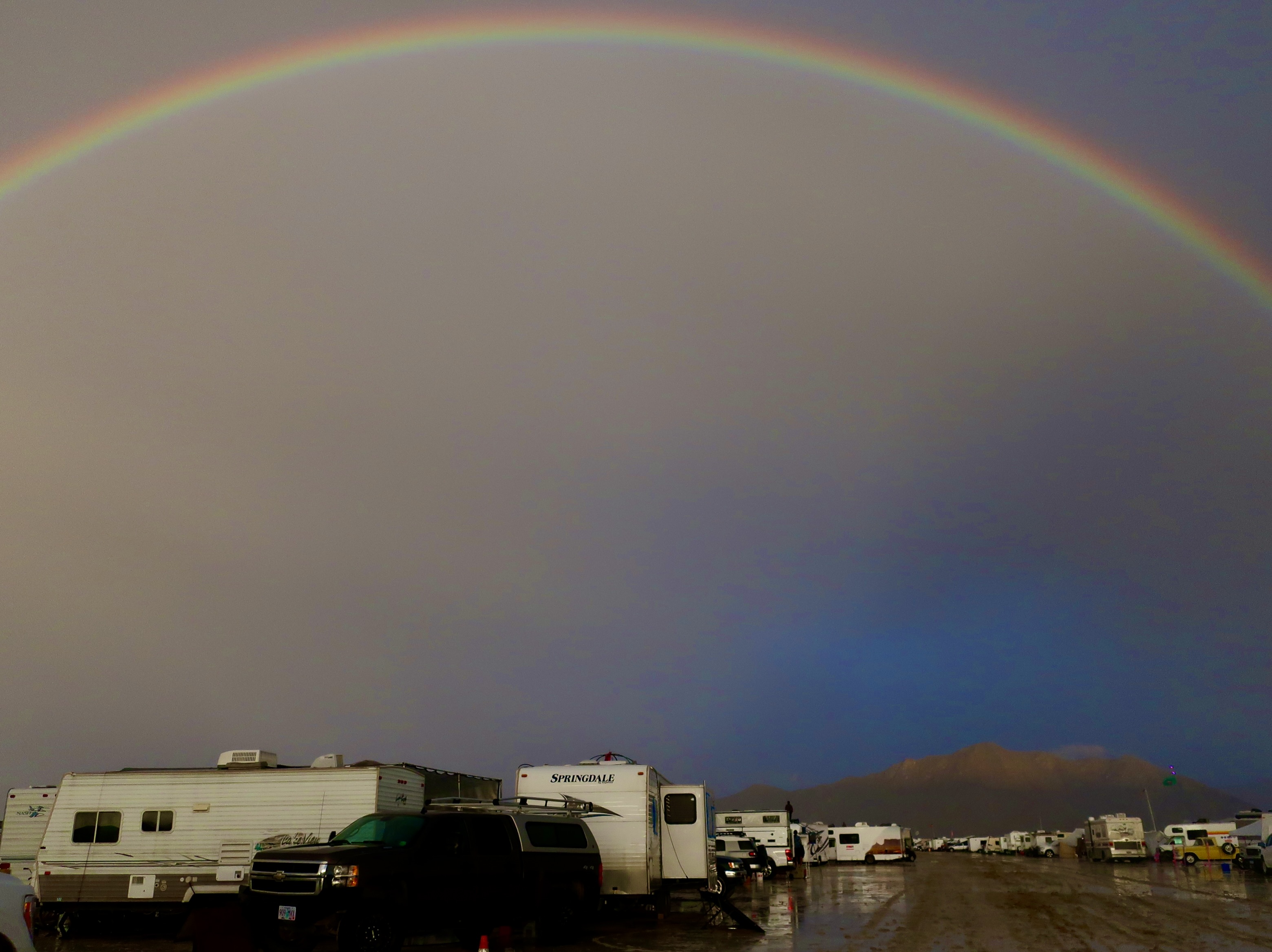
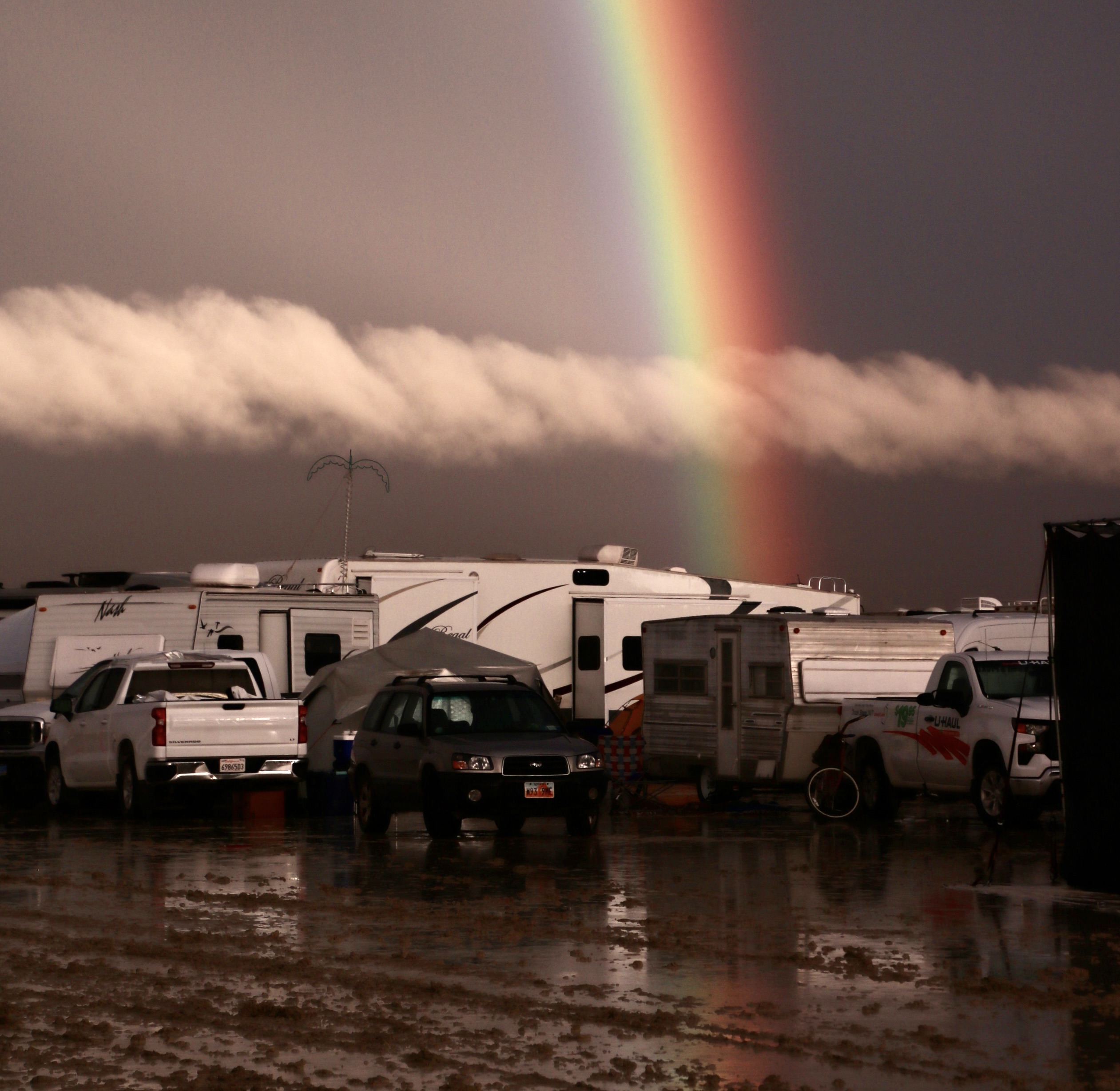
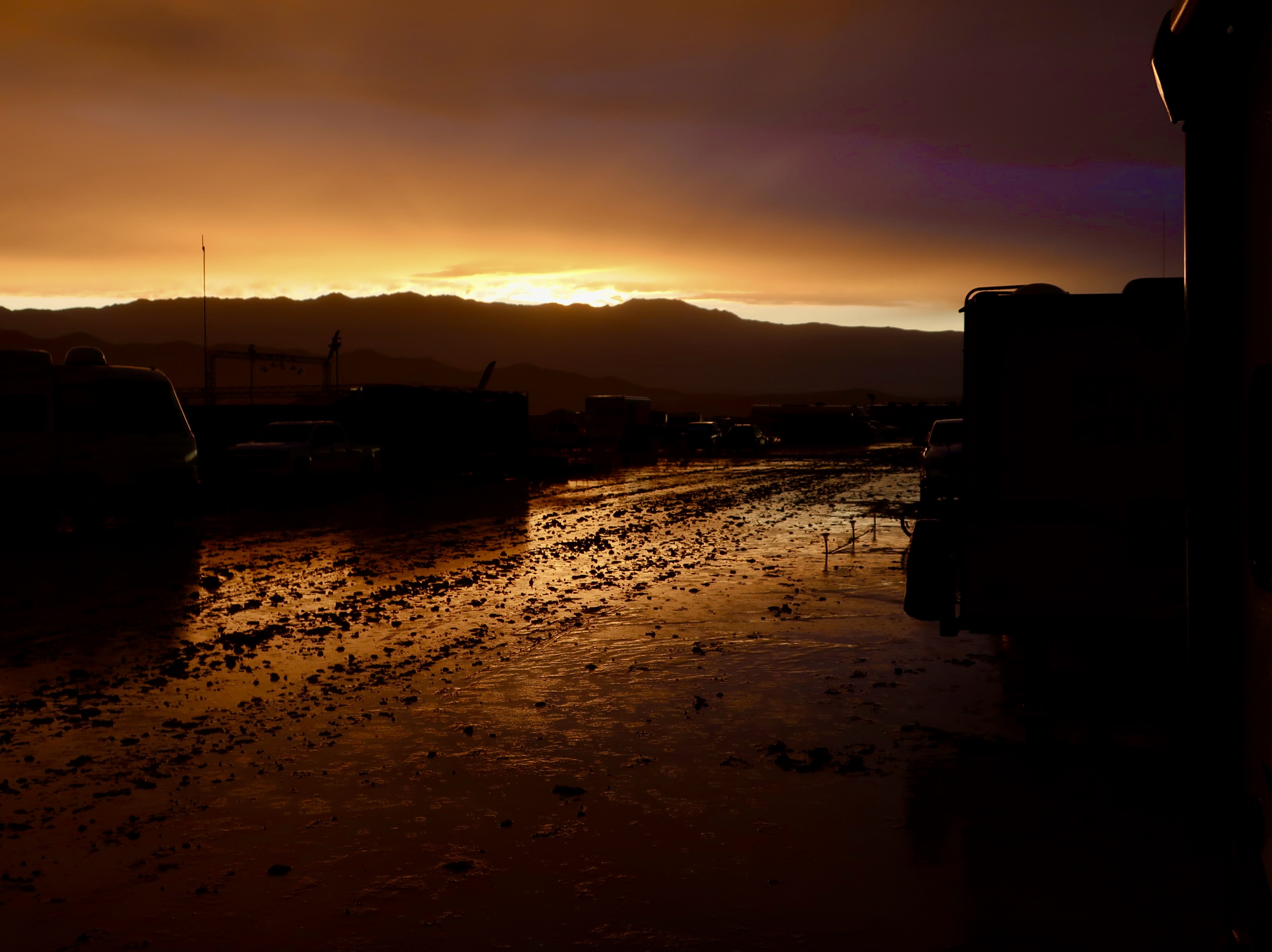
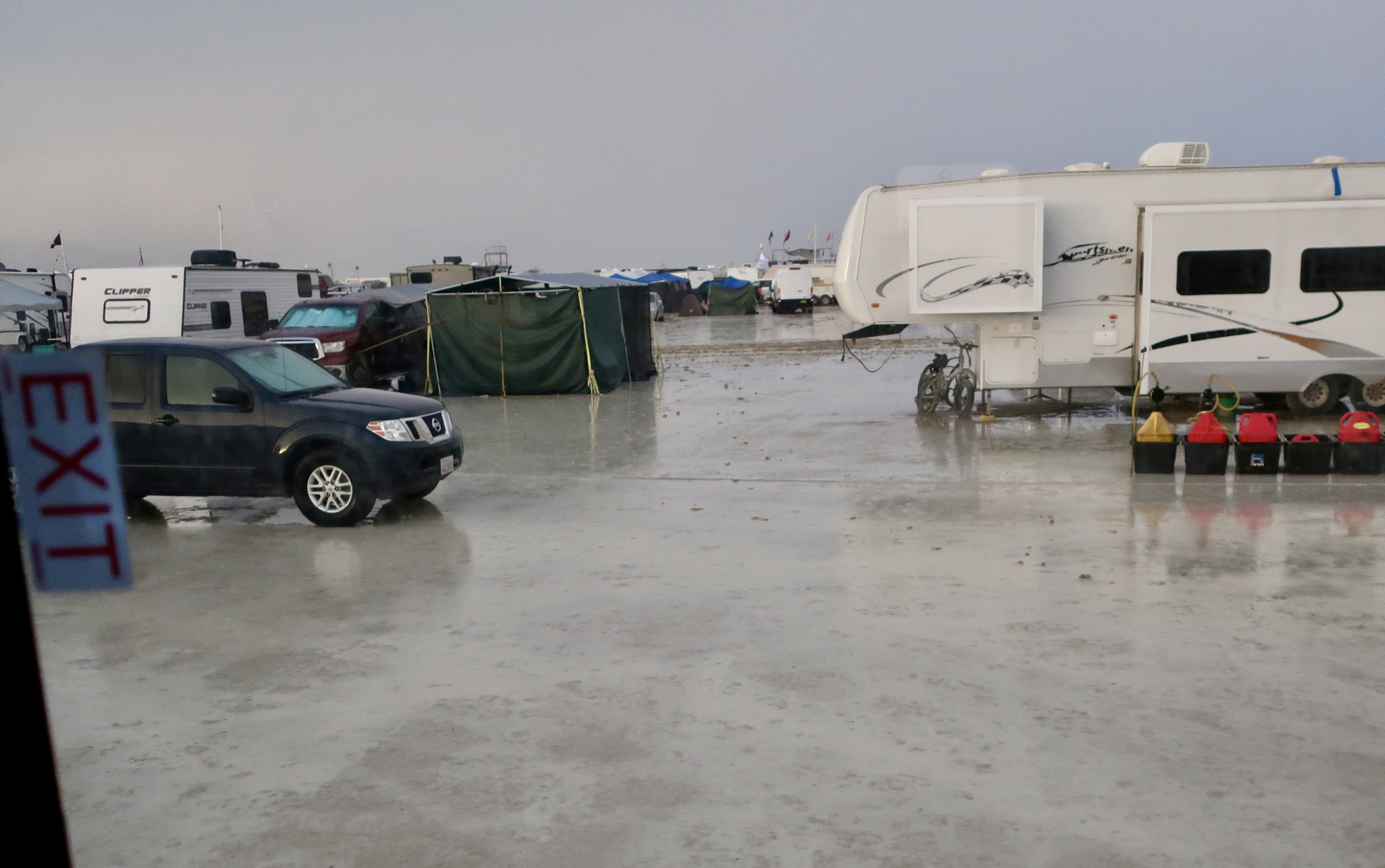
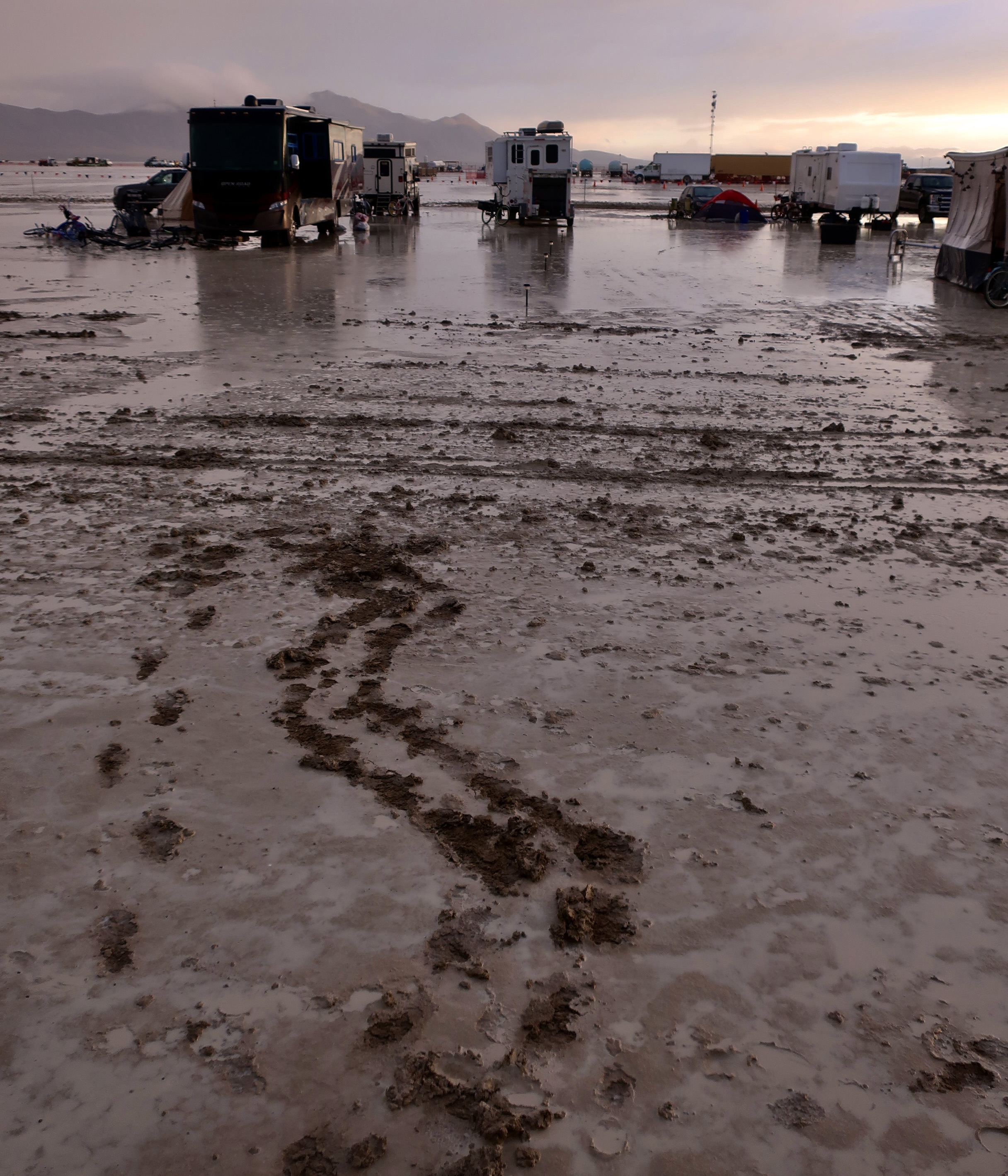
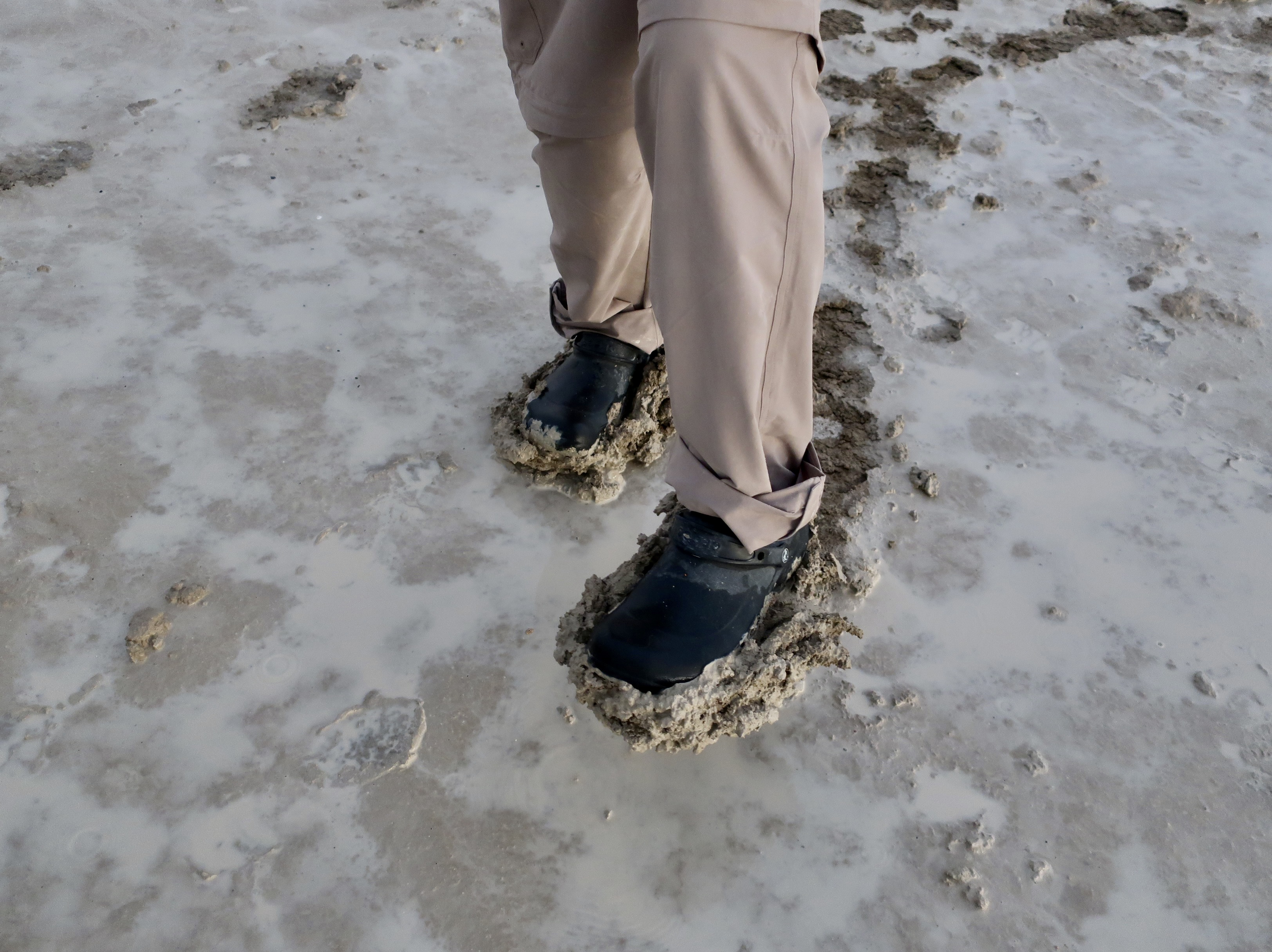
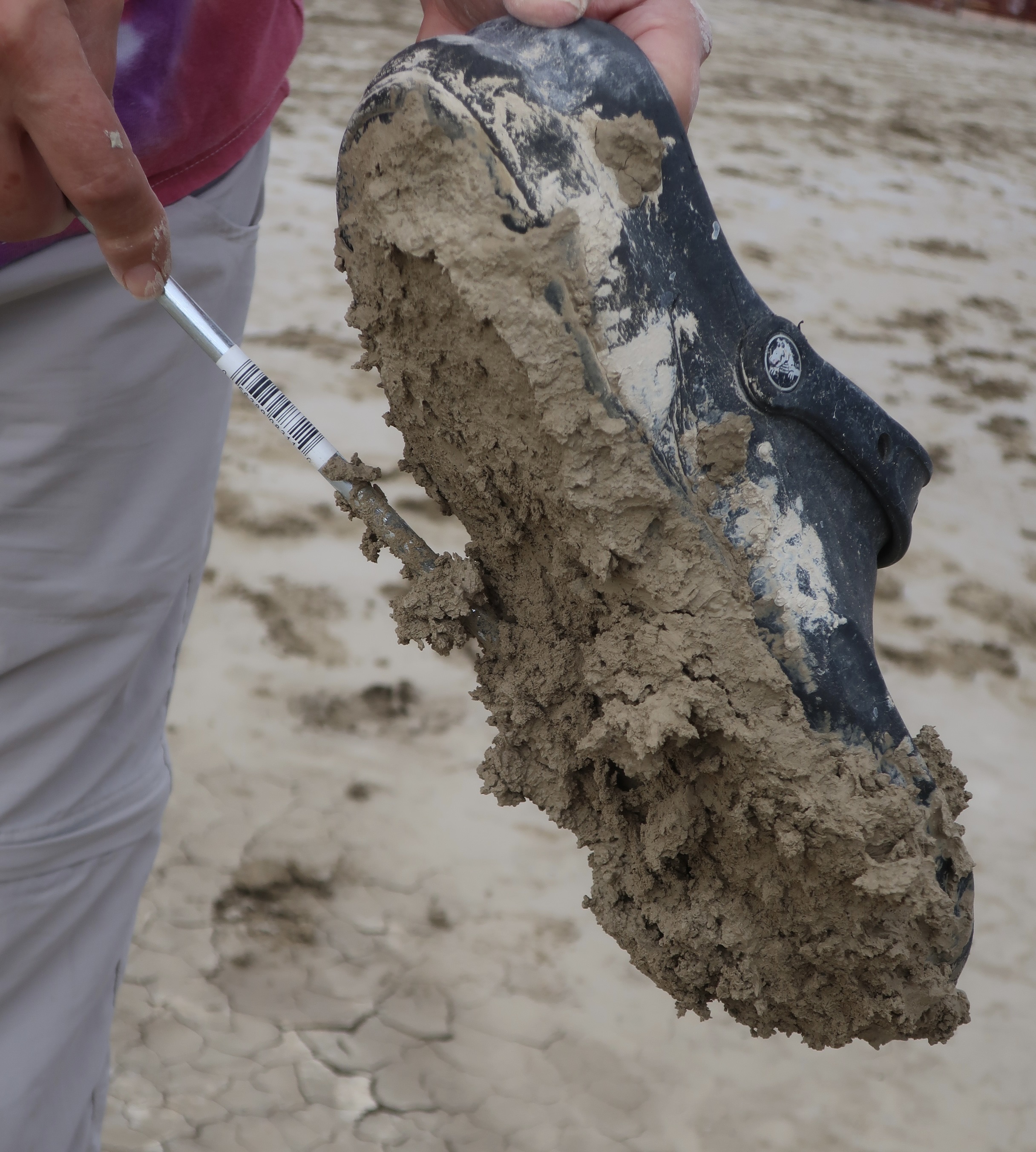
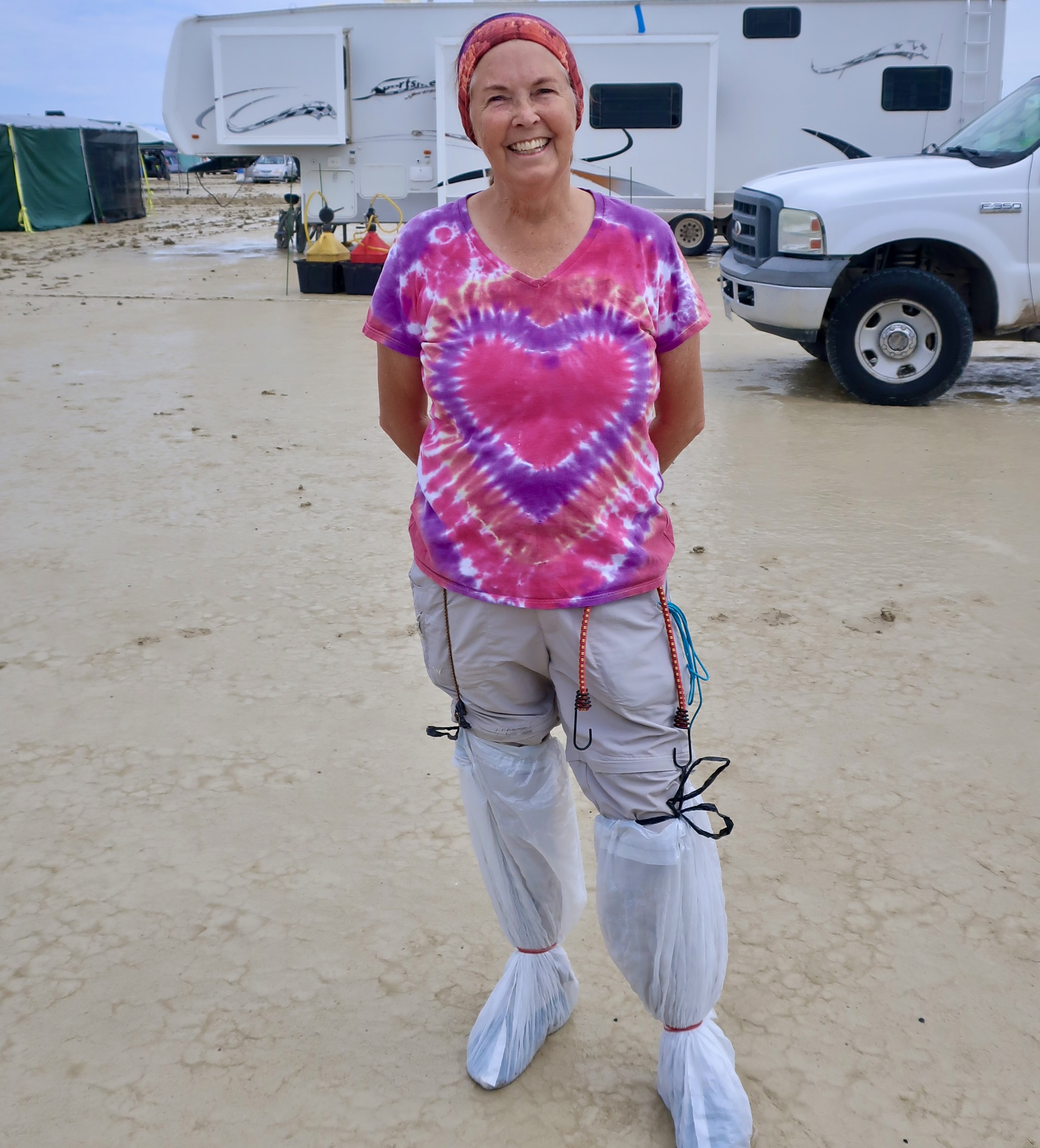
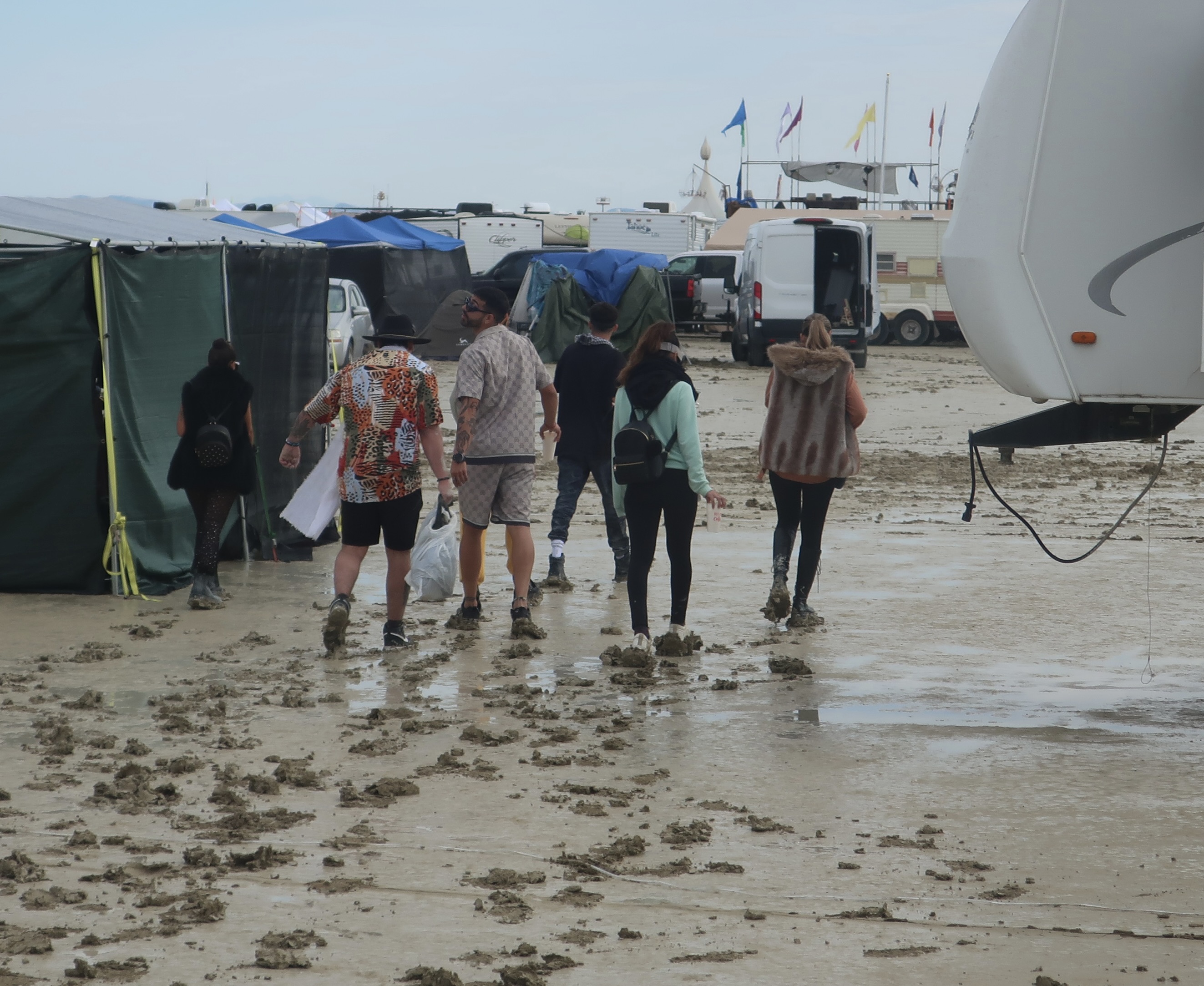
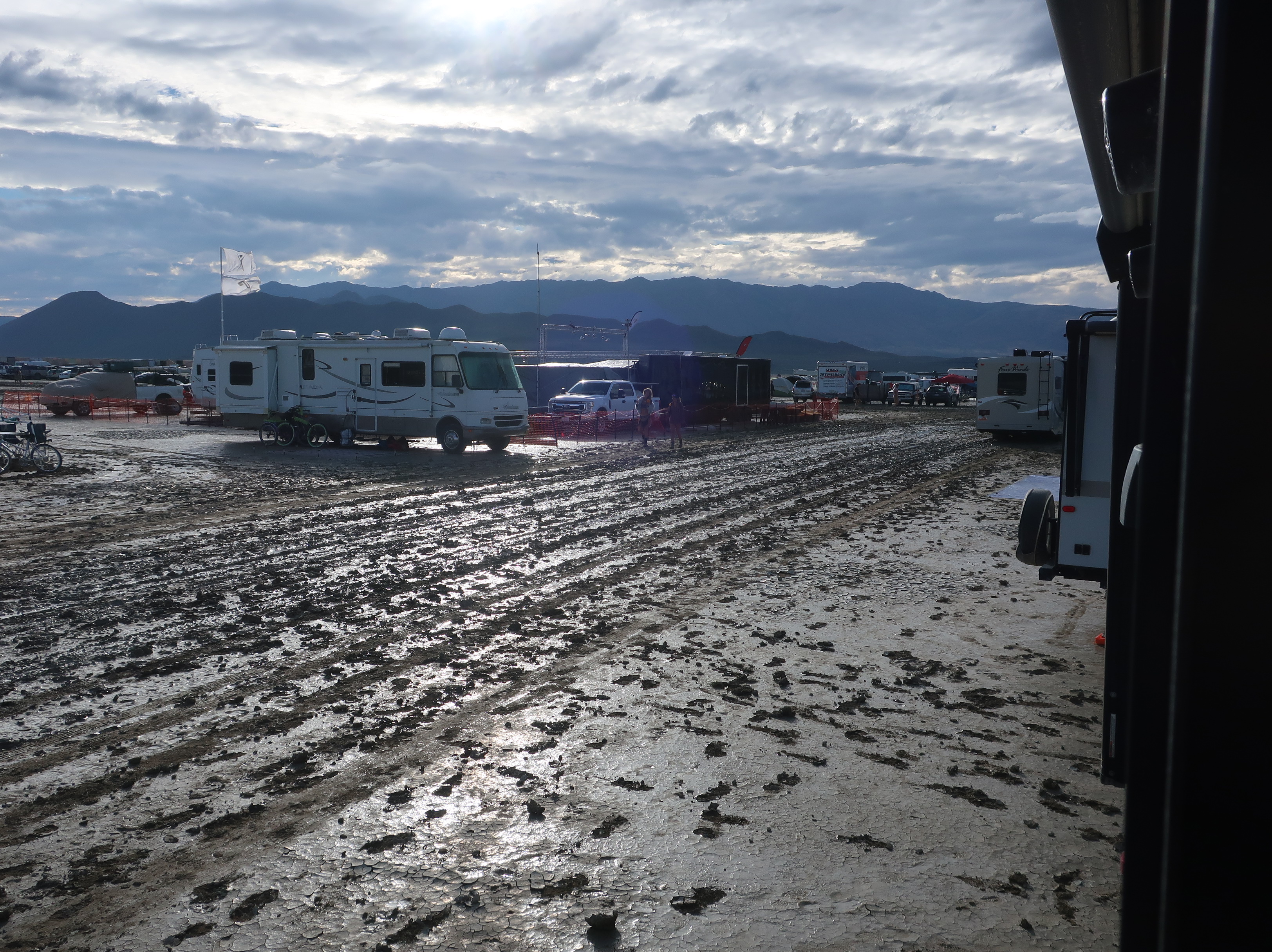
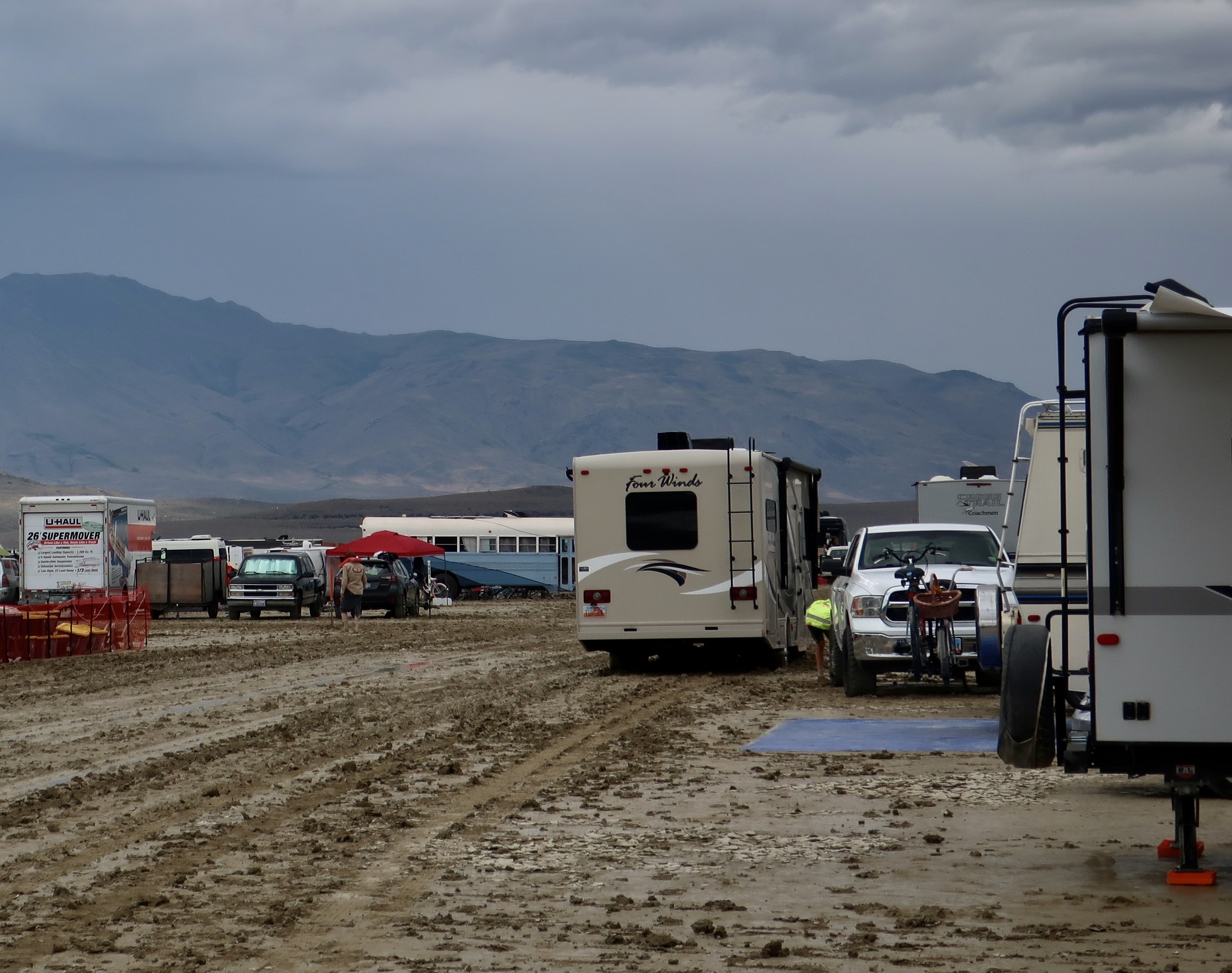
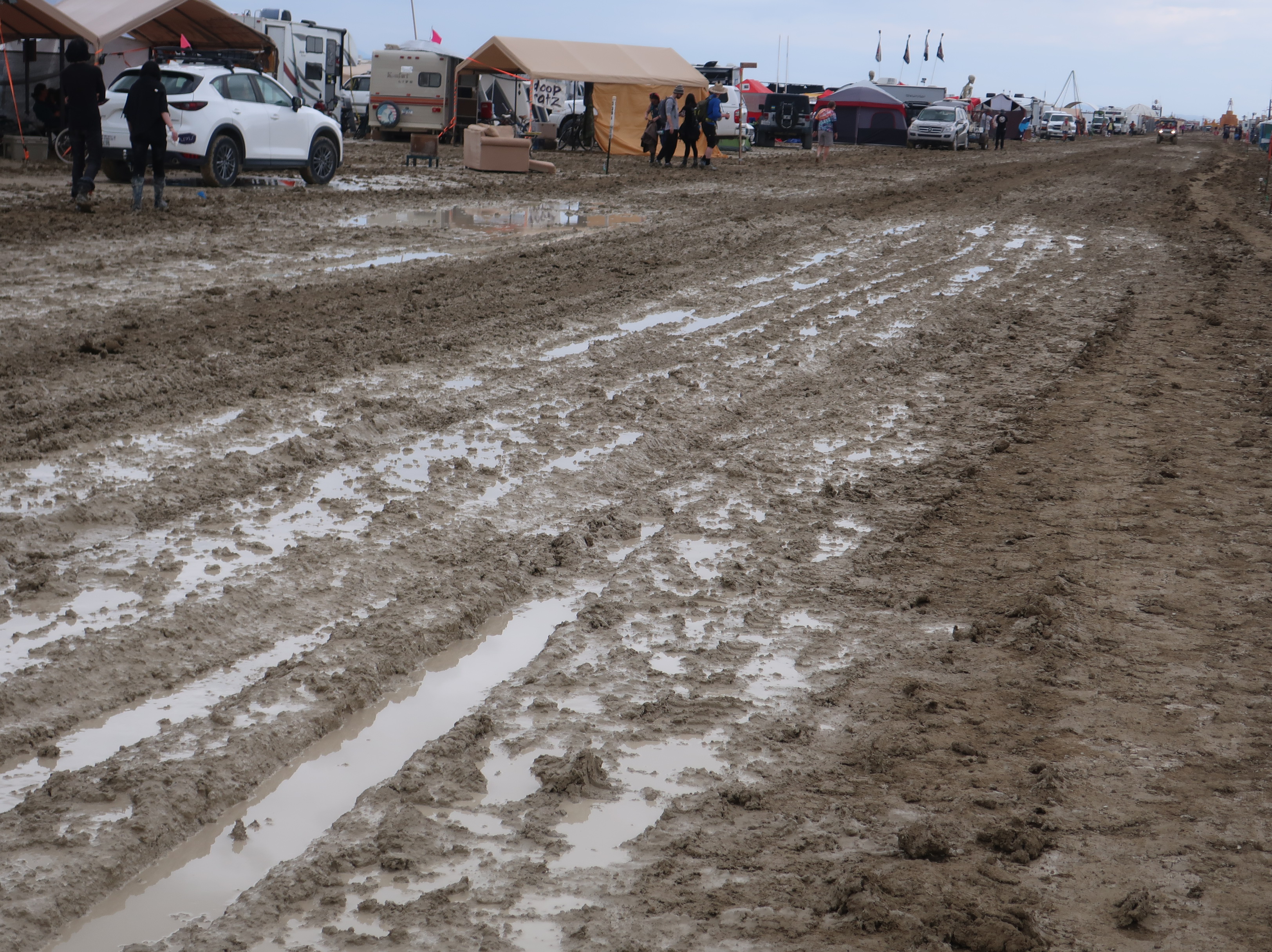
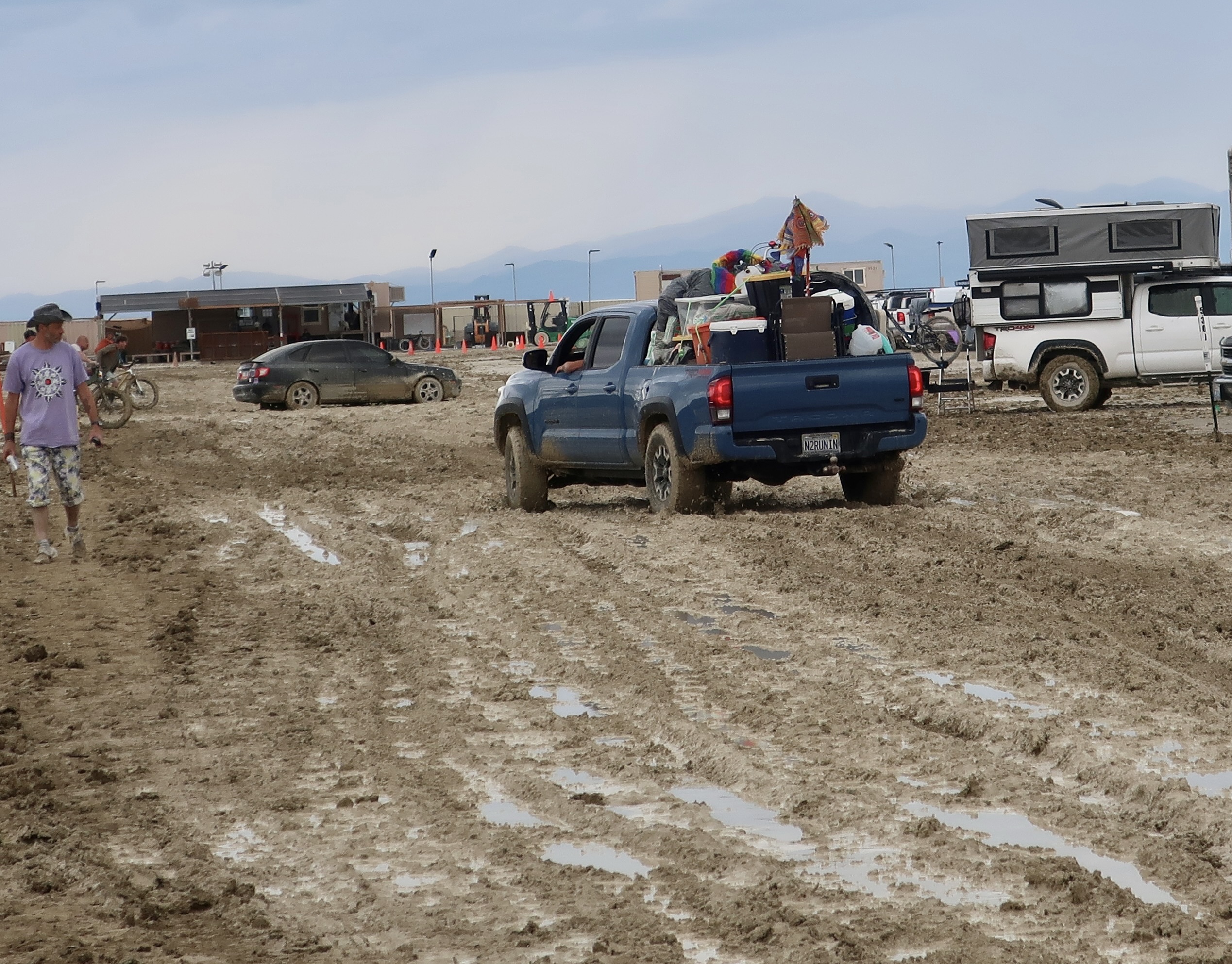
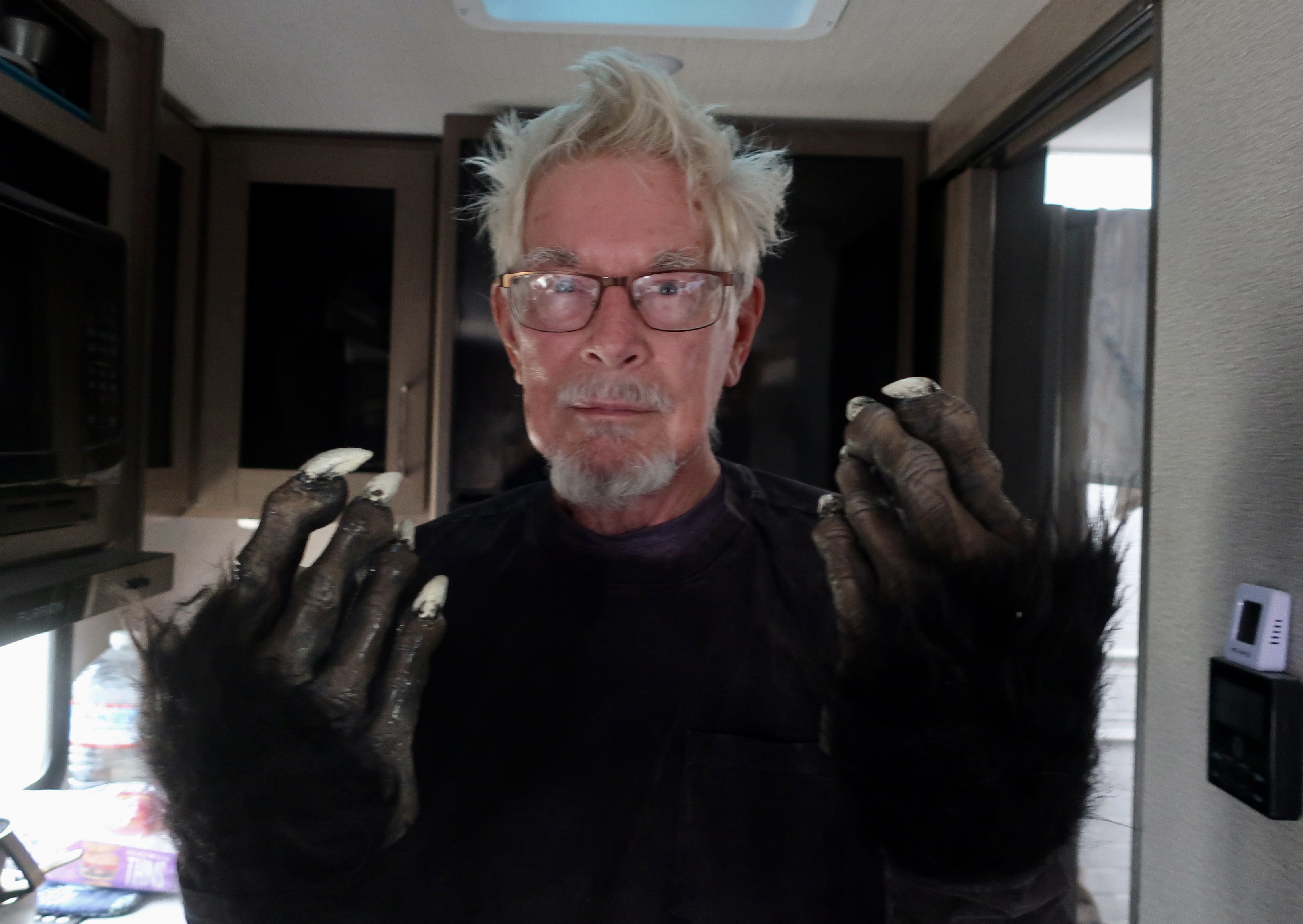
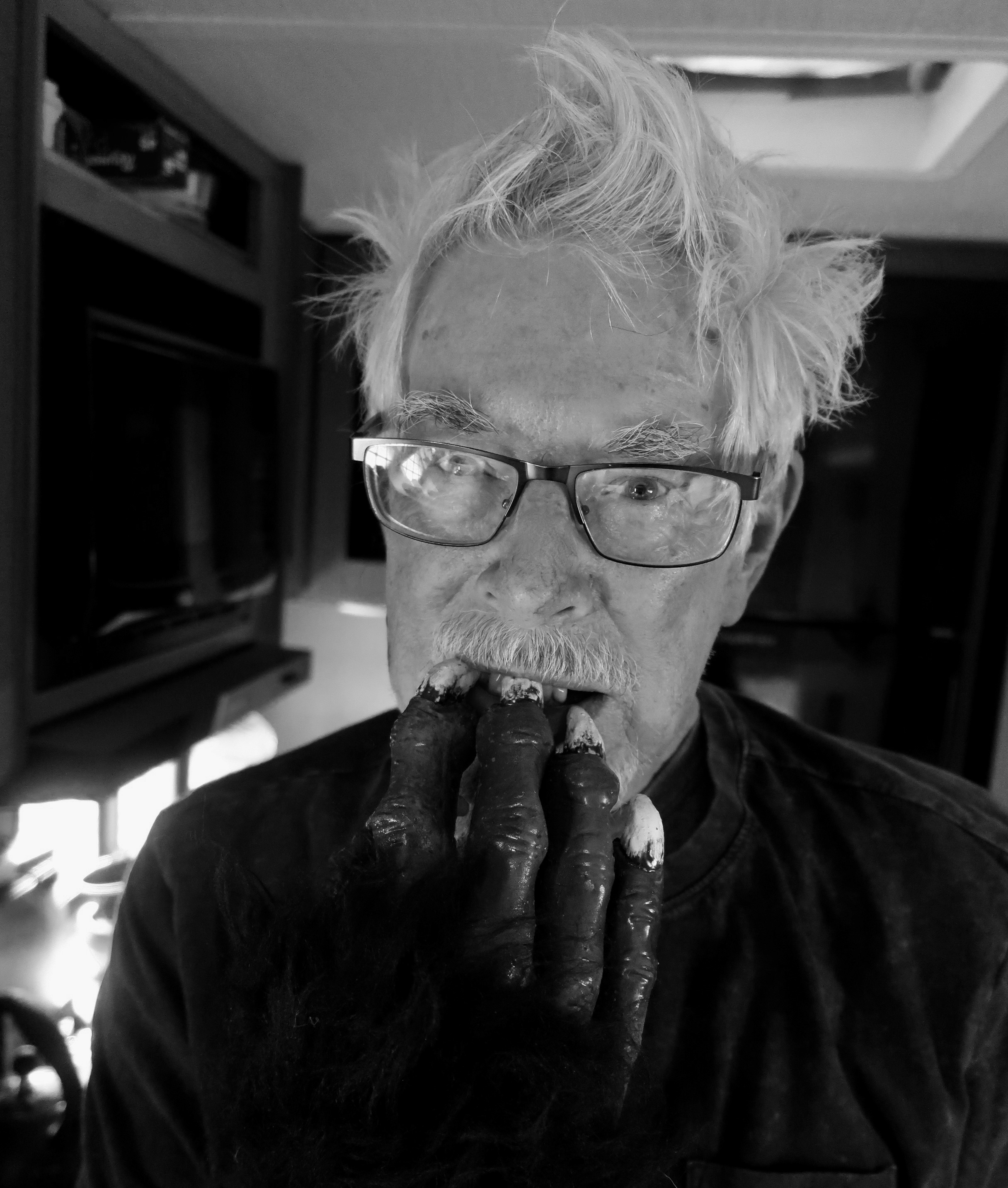
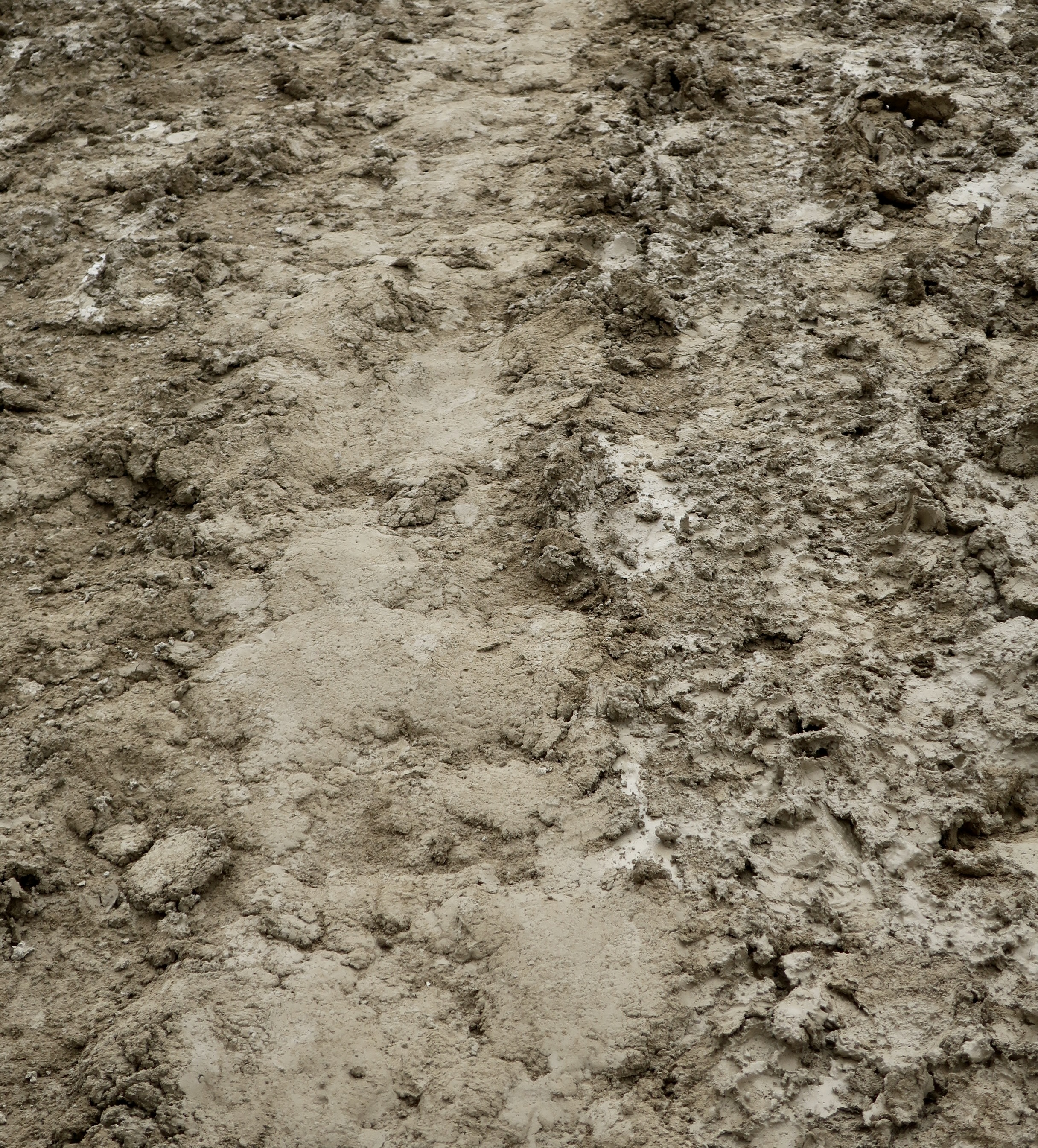
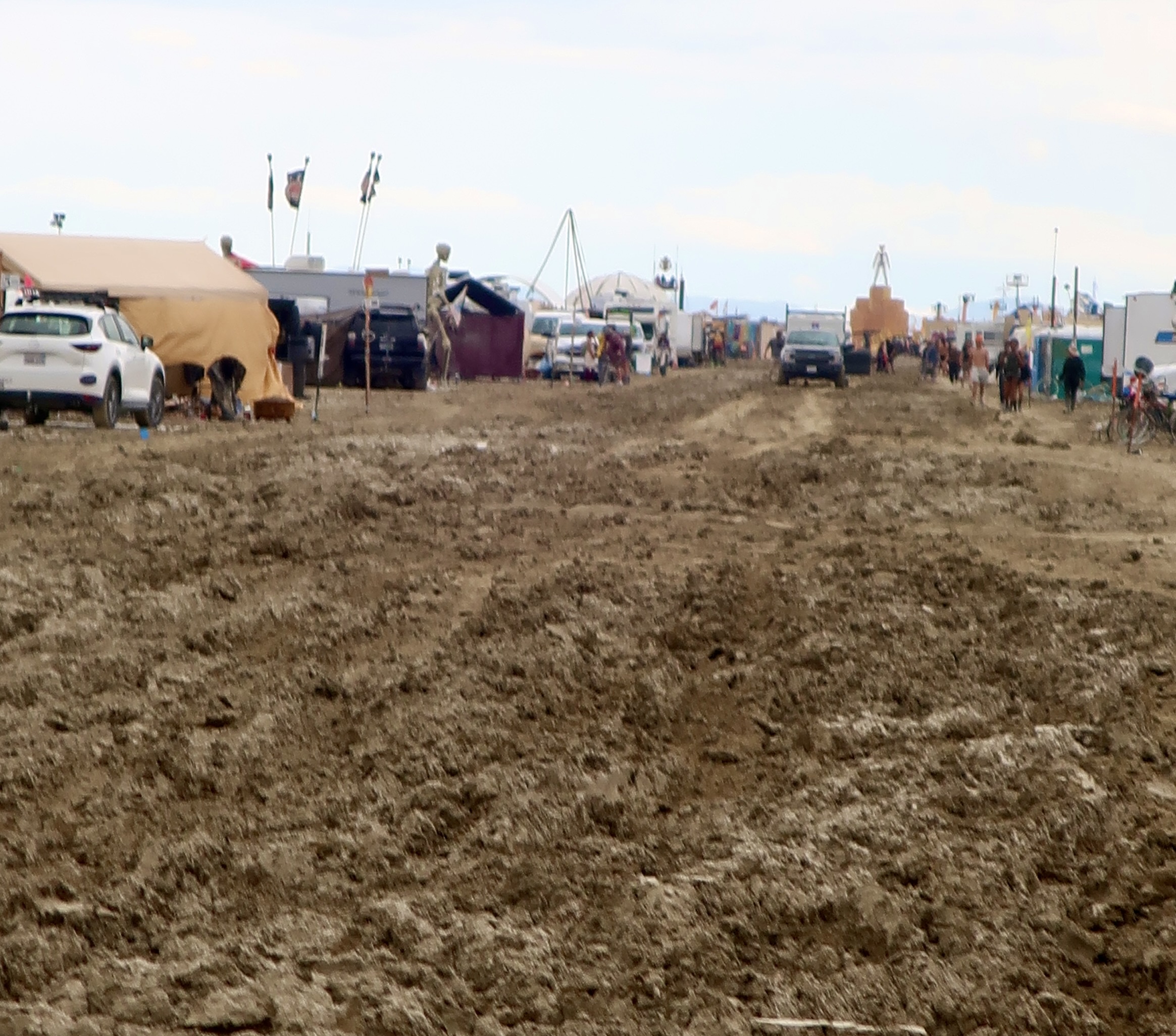
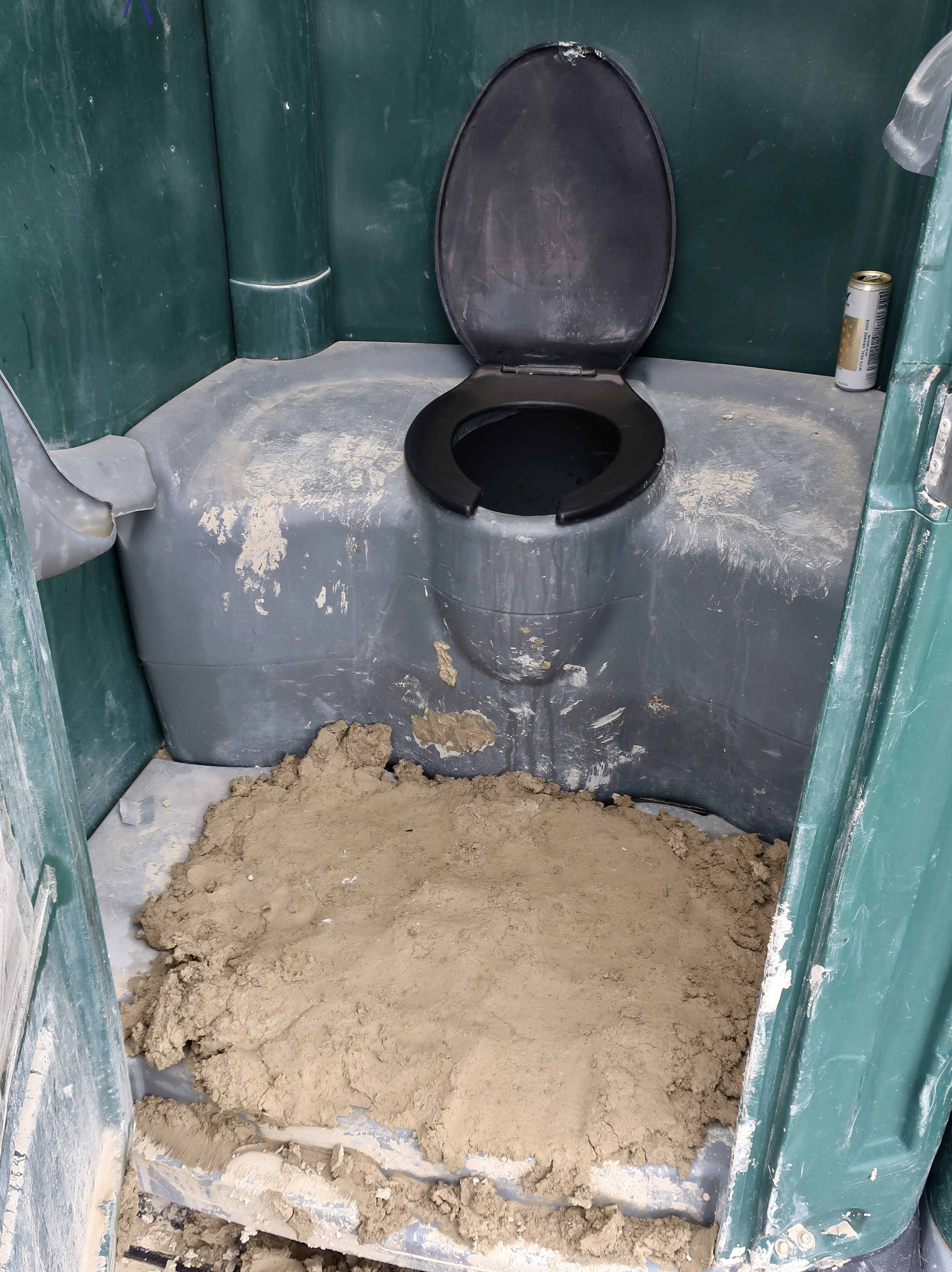
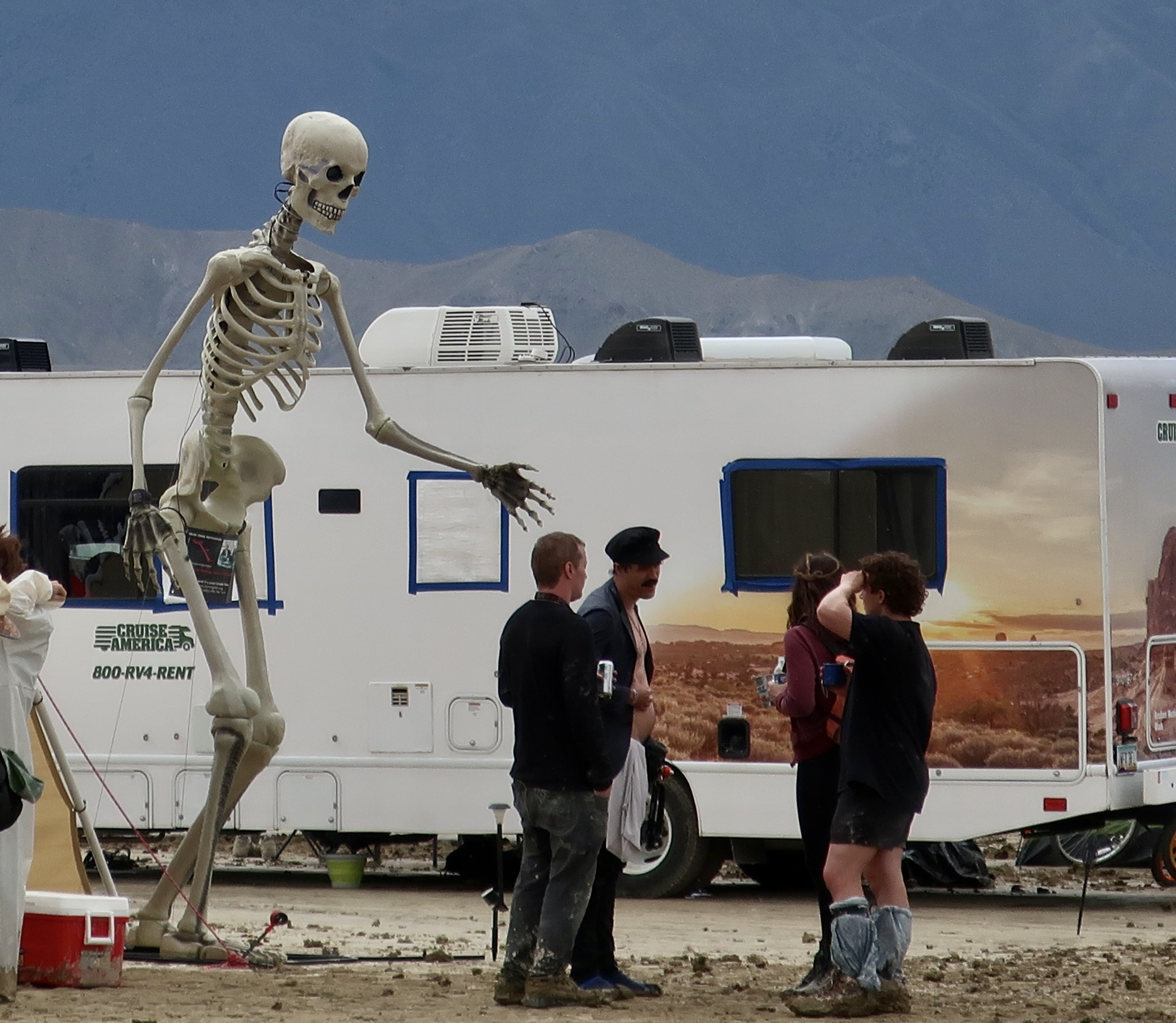
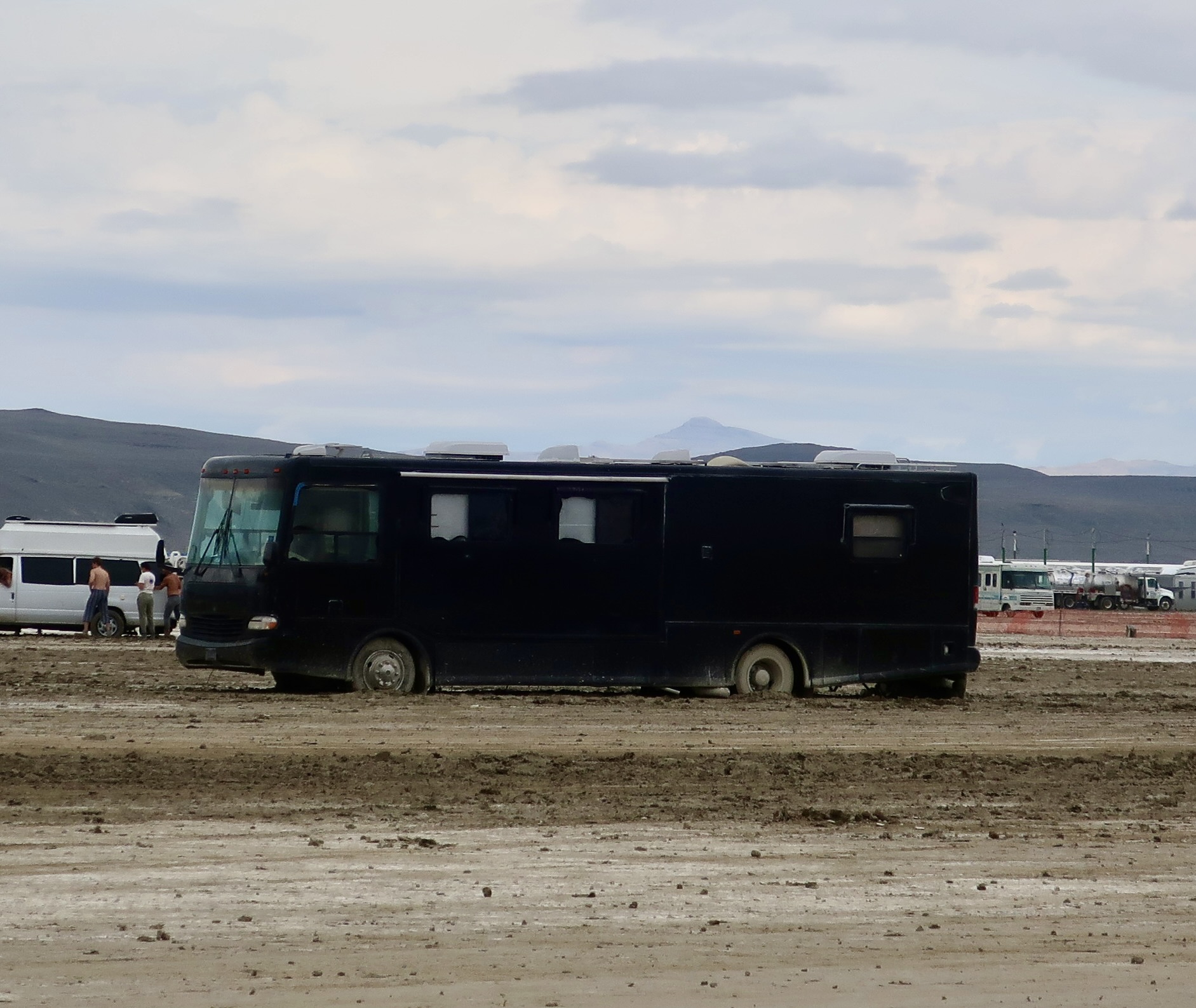
As of today, some 64,000 people were still at Black Rock City and I am pleased to report that the weather is behaving itself. At 1:00 PM, Burning Man told everyone that the road was open. I suspect that it is a slow journey out. Many have even chosen to stay. BM has said the Man will burn tonight and I expect the sewer trucks are out in full force.
We truly enjoyed our trip to Burning Man, even the weather. It was an adventure! And the art was great, which will be the subject of our next several posts.
St. Cloud, Minnesota: Right now, Peggy and I are on one of our wandering adventures, rambling across North America, rarely knowing where we will be the next day. Long experience with a nomadic lifestyle has taught me that one gathers a lot of blog material when out on the open road. It has also taught me that there isn’t a lot of time to blog. (There are reasons why nomadic societies rarely create great civilizations.) So rather than try to pound the proverbial round peg into a square hole (which is what I usually do), I’ve decided to take a break from blogging for a couple of months. Peggy and I will be back in September with tales of our trip to Burning Man 2023. The tickets are in the mail!
“Hello Curtis Mekemson!
We are excited to let you know that your Burning Man 2023 Animalia tickets were shipped…”
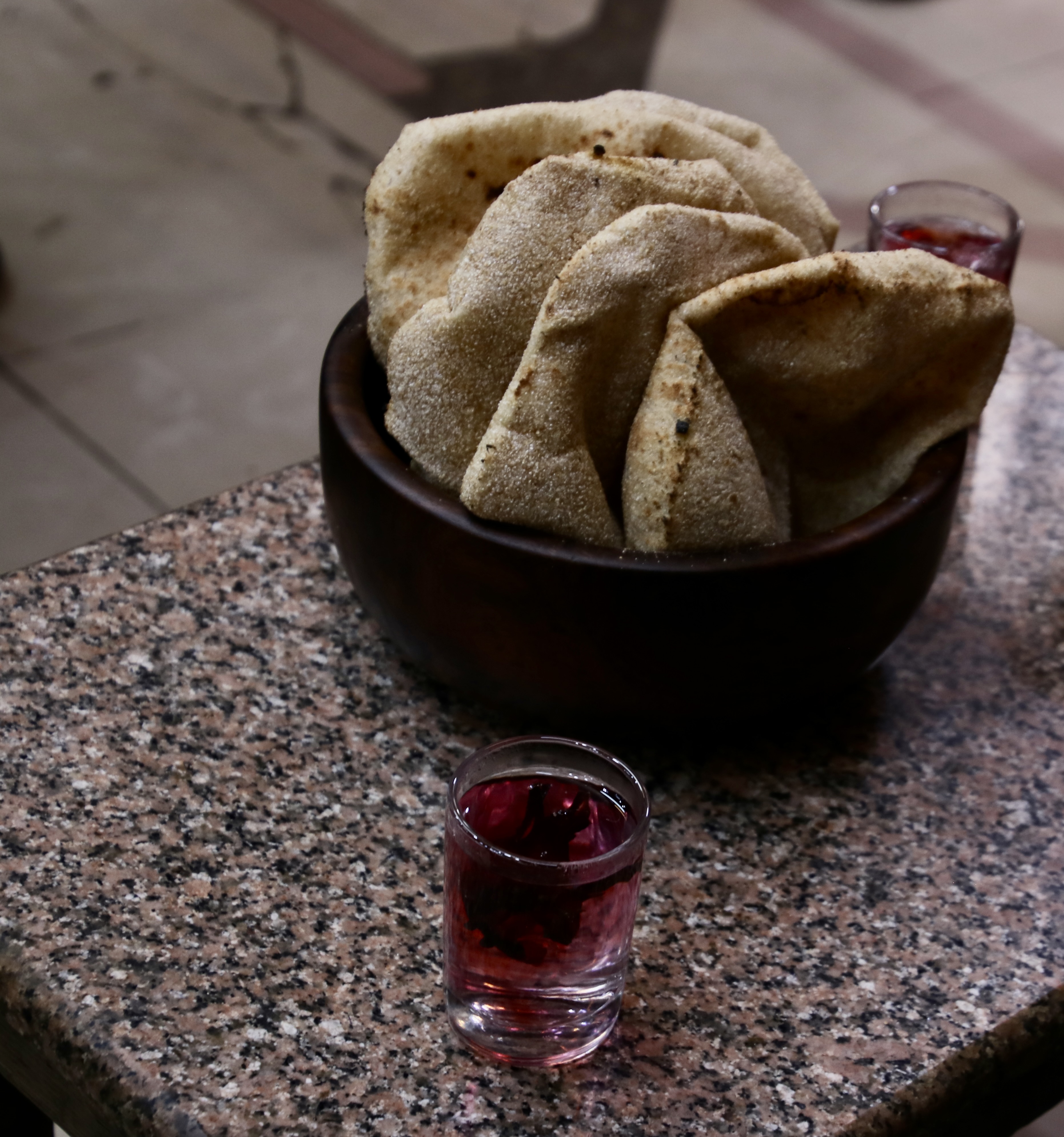
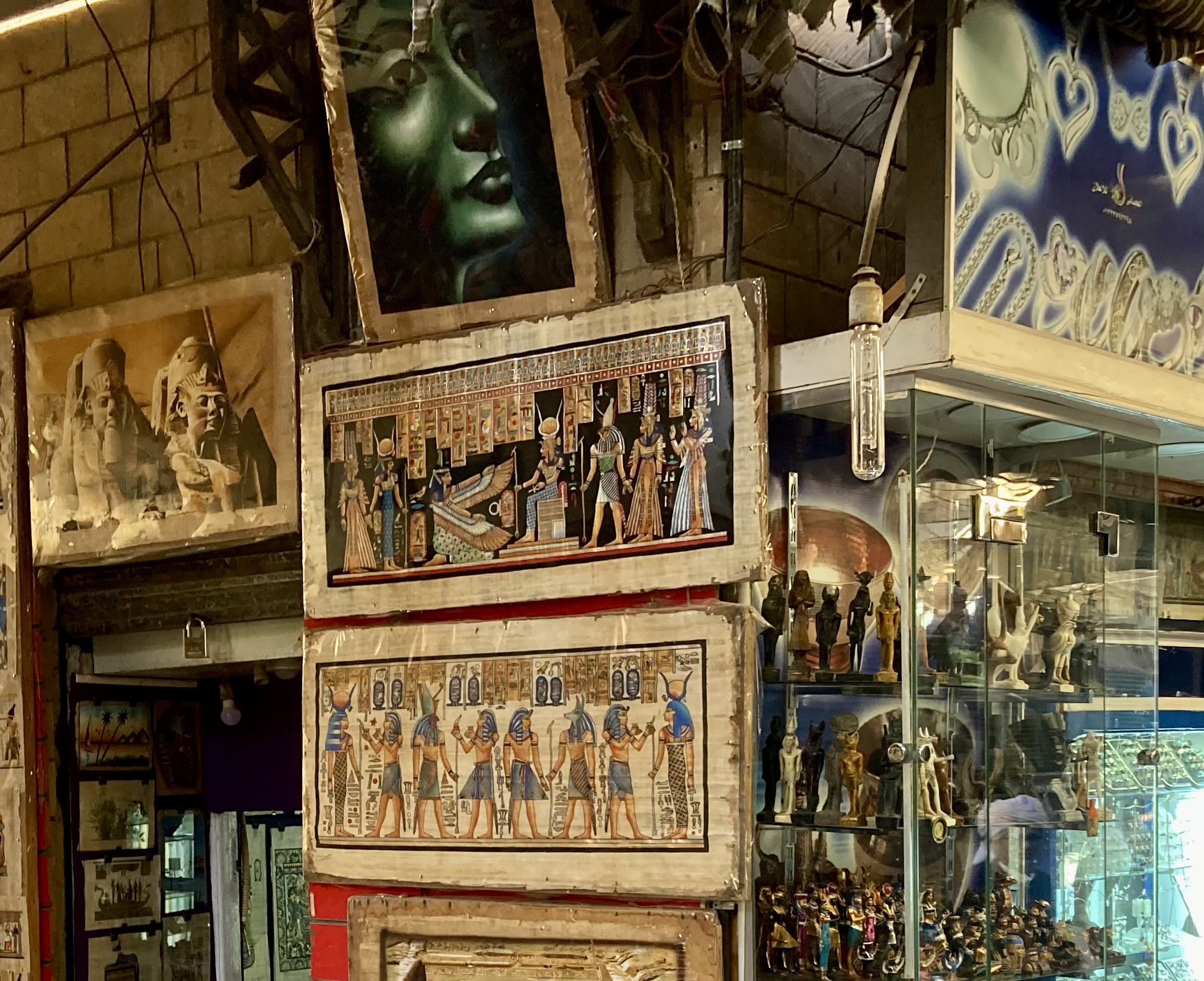
Oh boy, we get to go be animals— we are excited as well! It’s been a while since we have been to the mind bending experience that takes place in a remote Nevada Desert the last week in August. Expect some fun posts. In the meantime, we will sign off WP today with a walk through the Aswan, Egypt market.





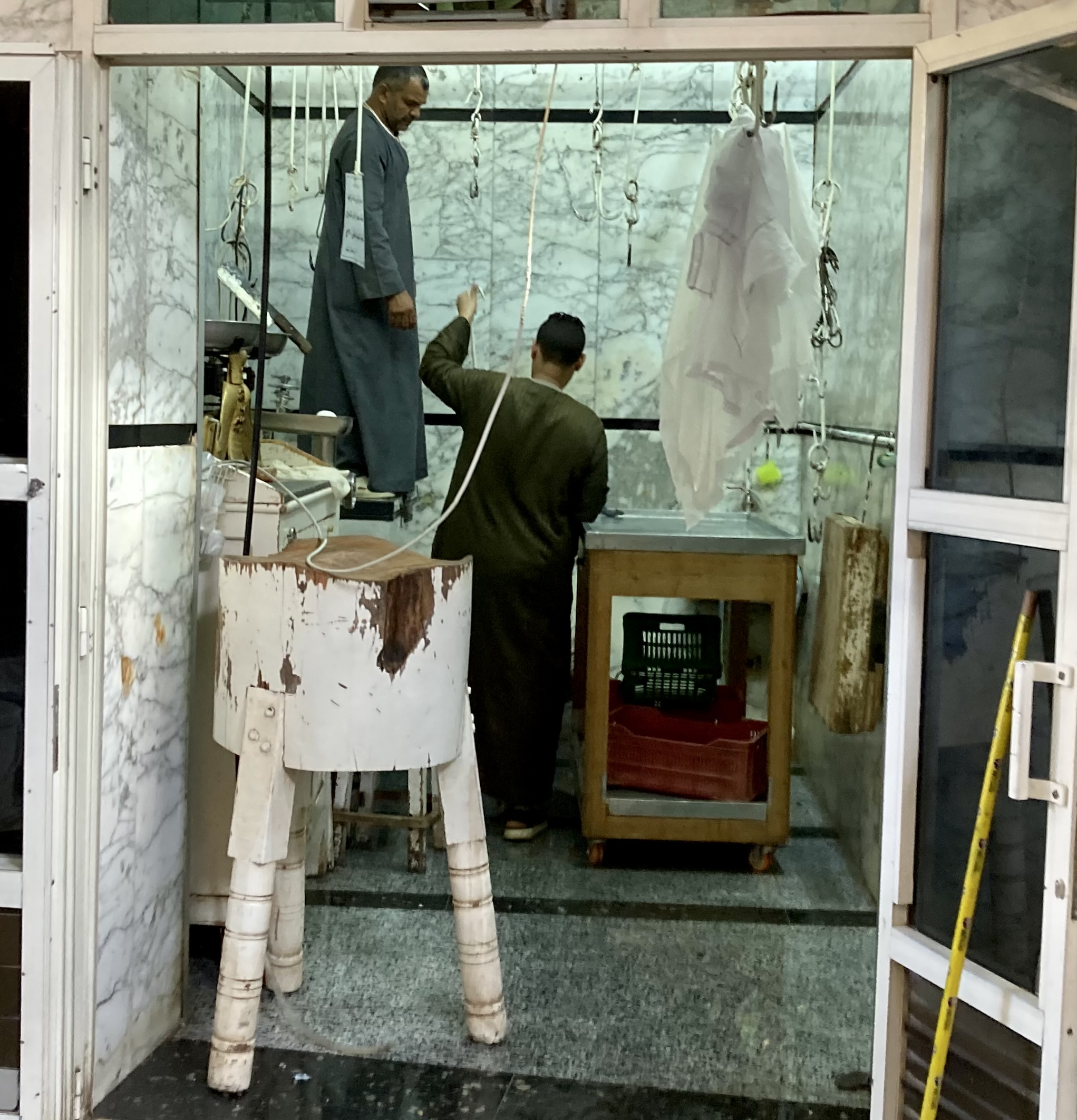
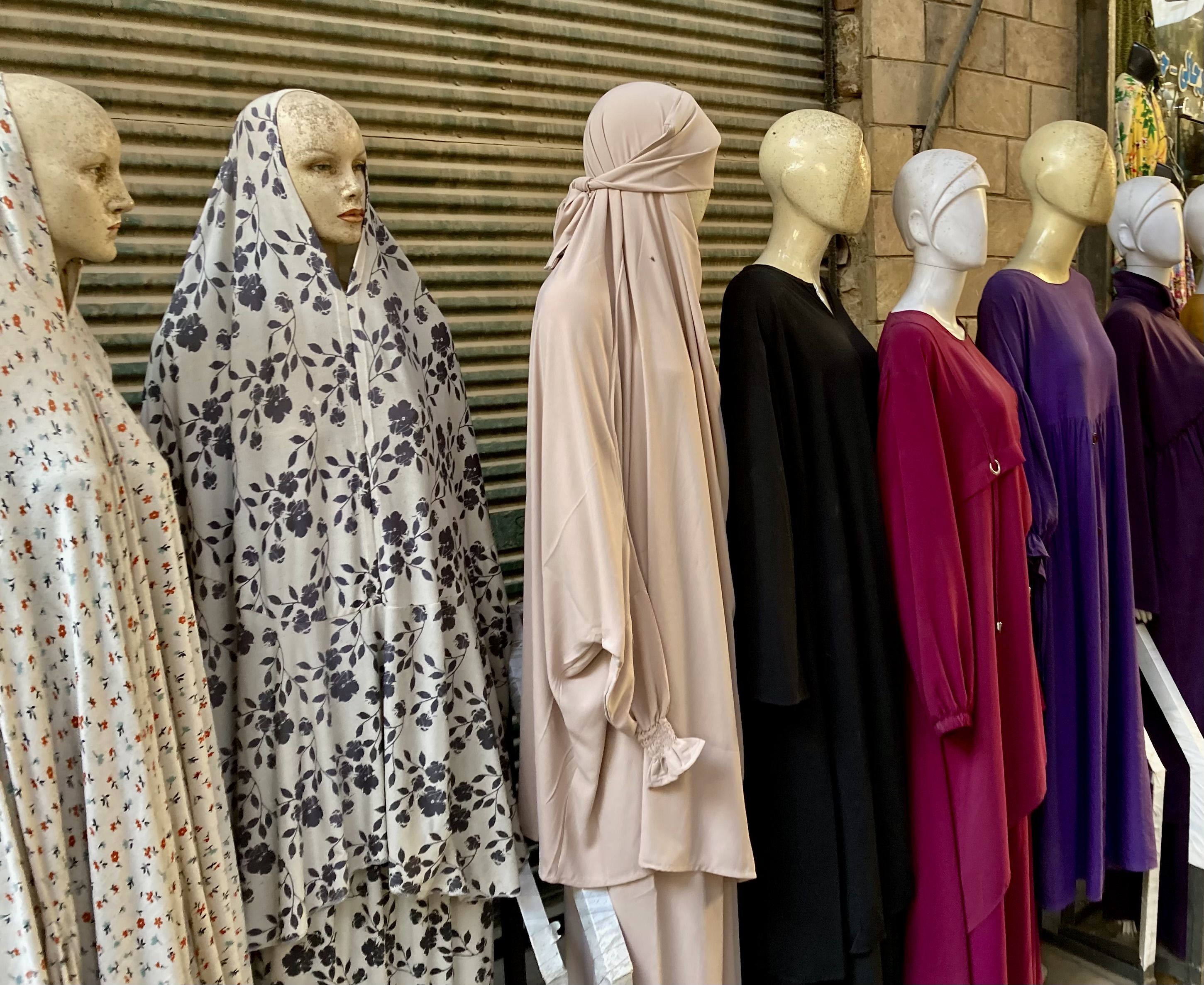

That does it for today. As always, Peggy and I appreciate your following Wandering through Time and Place and truly enjoy the friendships we have made along the way and the great blogs you share. We will see you in September!

Curt and Peggy
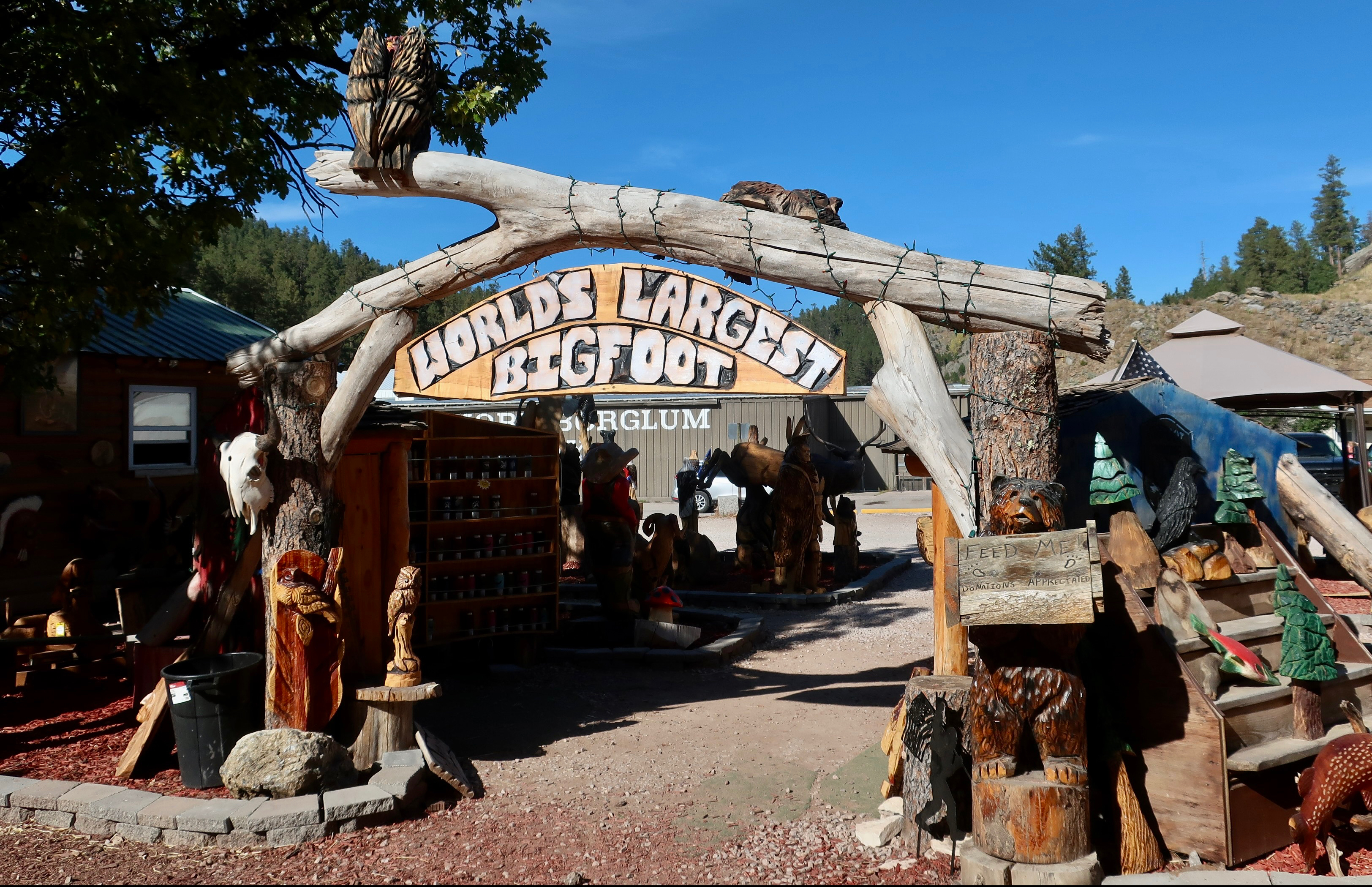
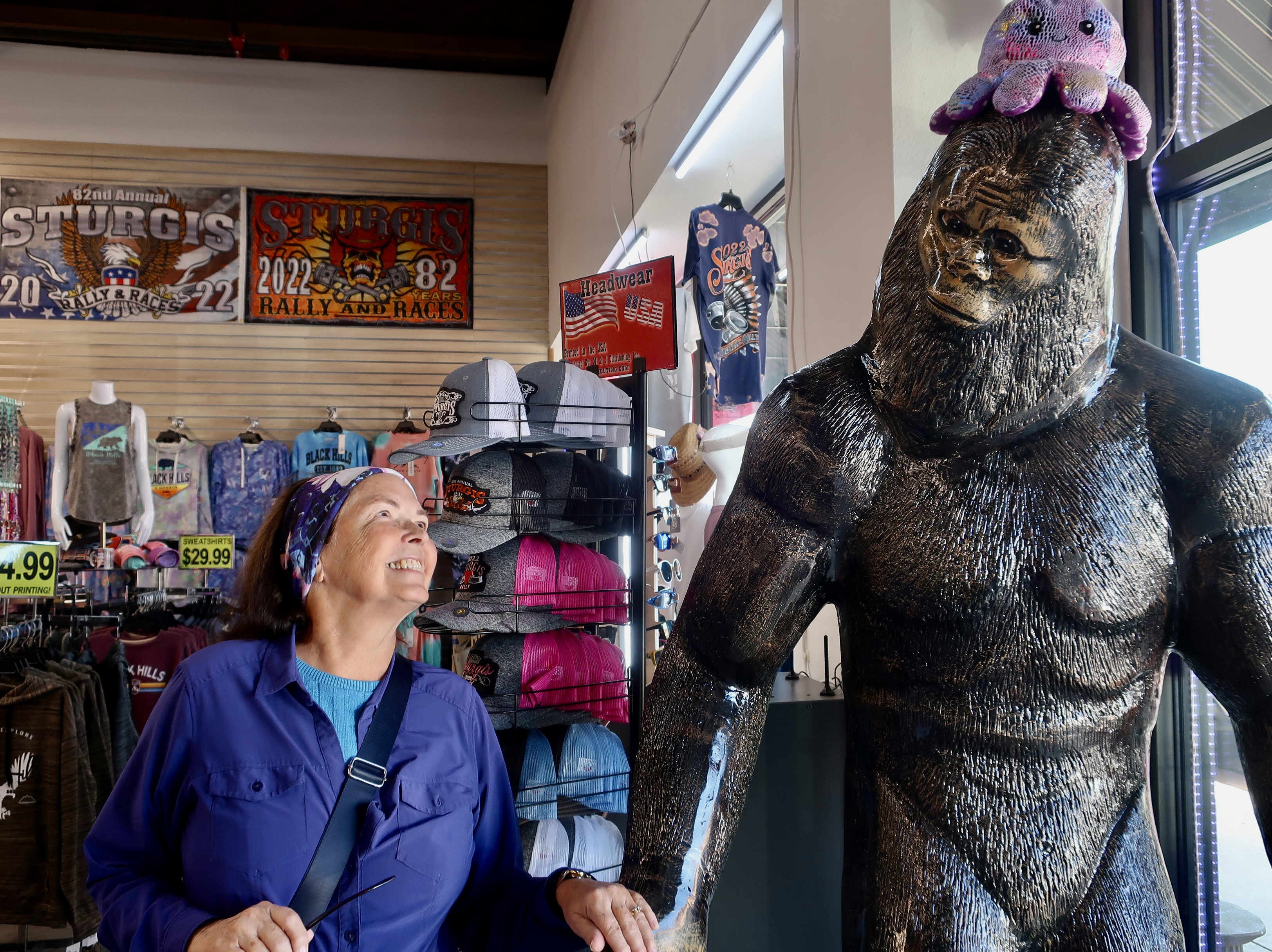
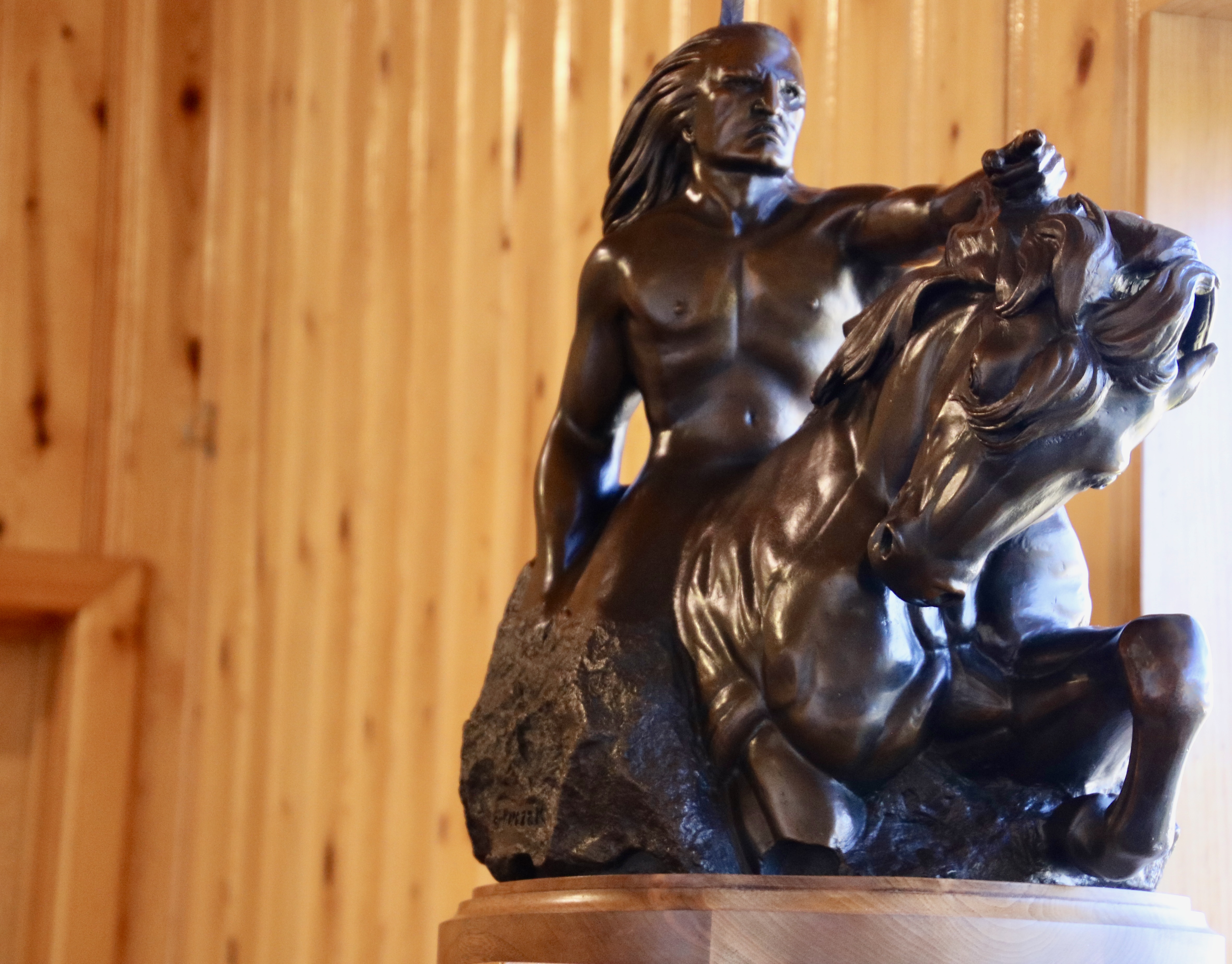
There is lots to see and do in western South Dakota. I have written about it in ten posts over the past few months. We visited there last fall starting with Badlands National Park. I’m doing a wrap-up today with a few of the things we saw that didn’t fit in my other posts. Let’s start with Big Foot. All photos in this post were taken by either Peggy or me.

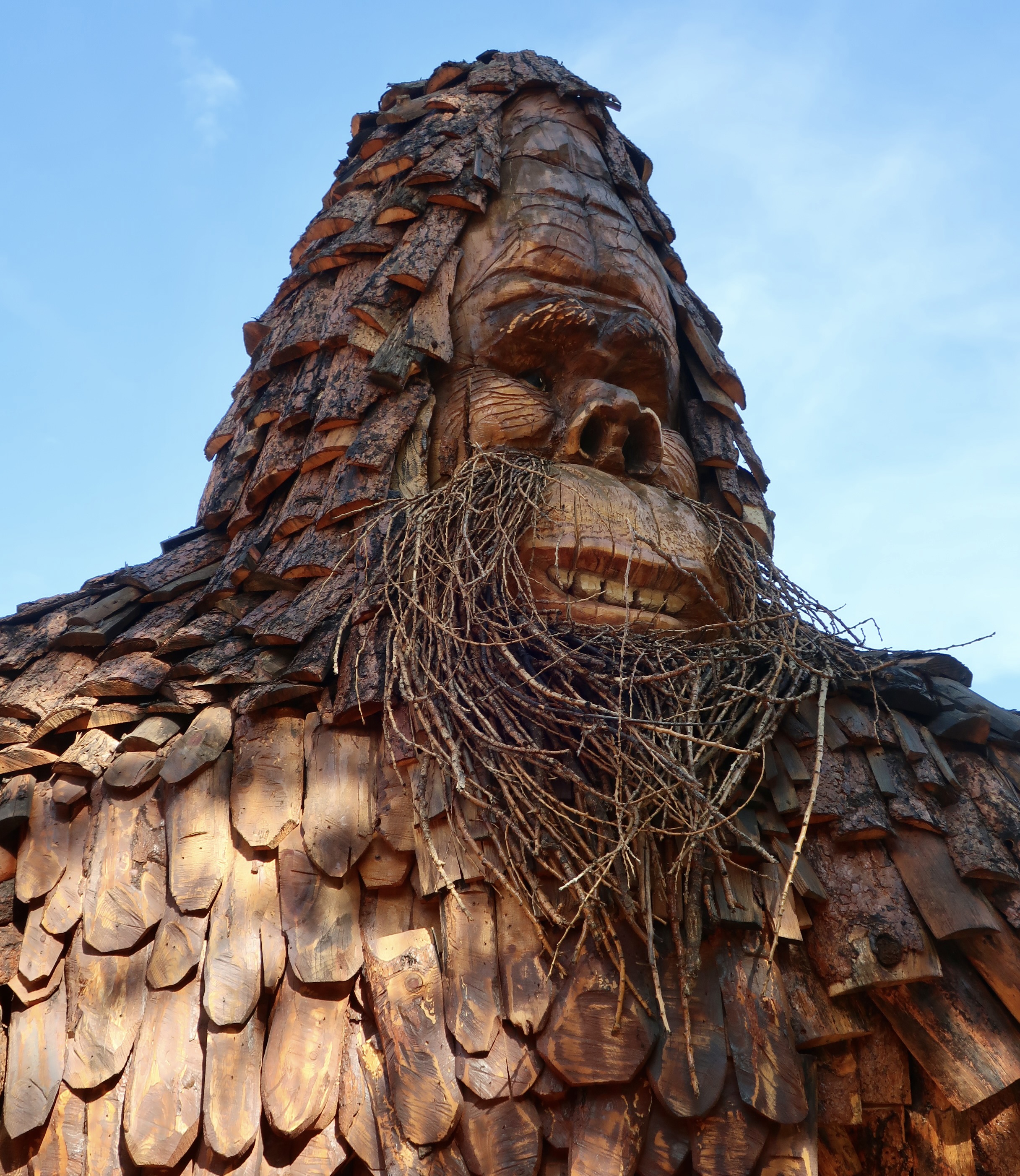
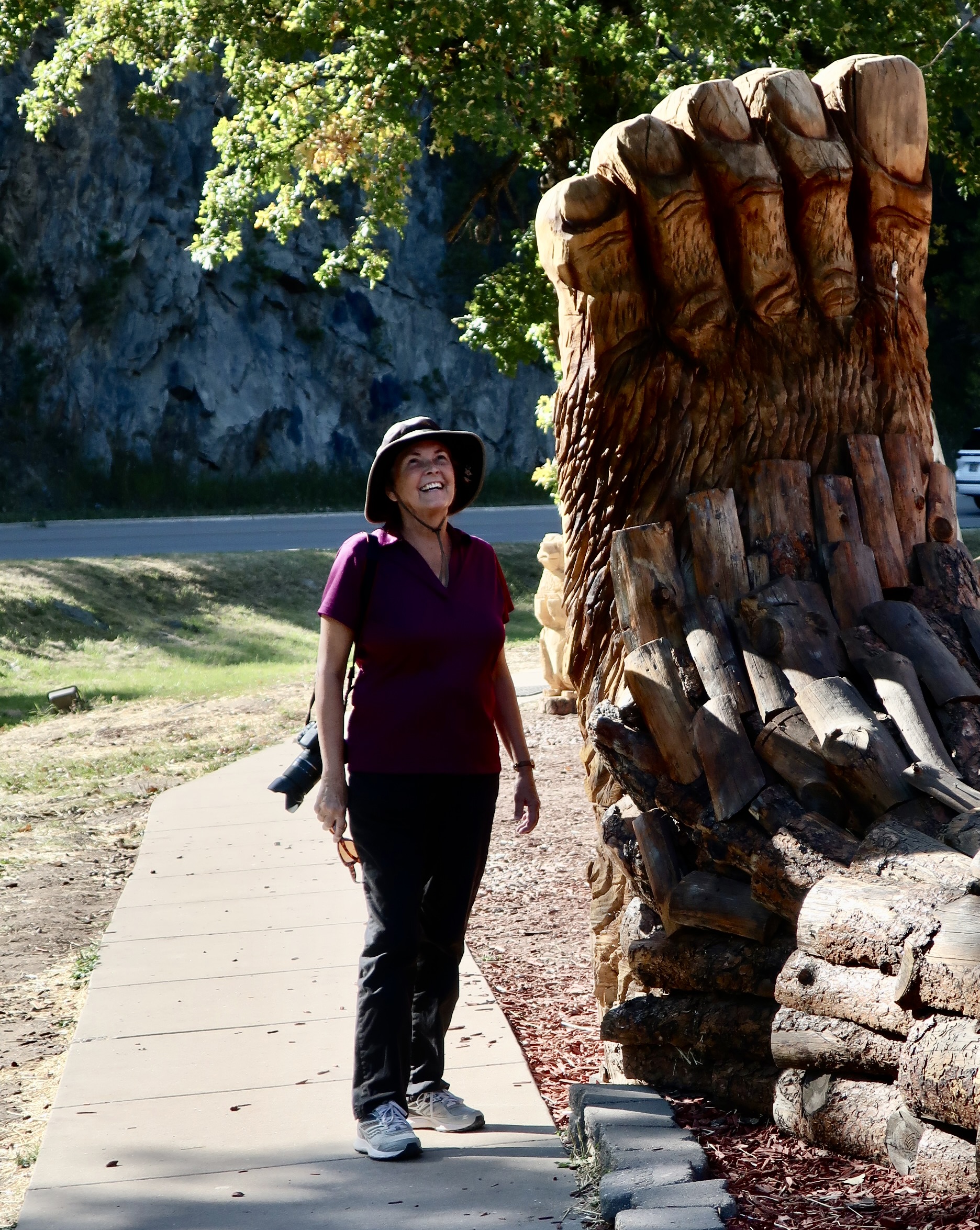


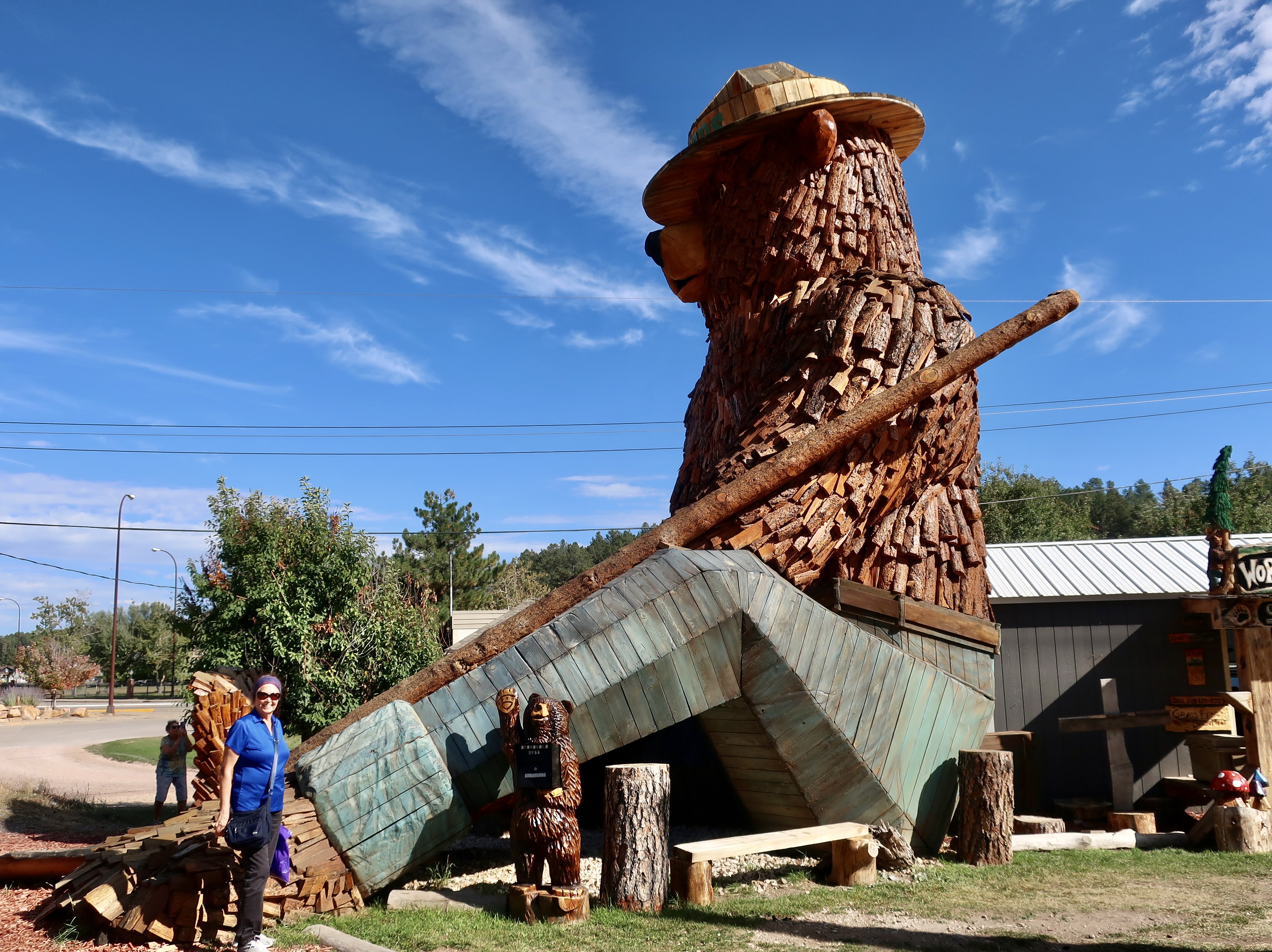
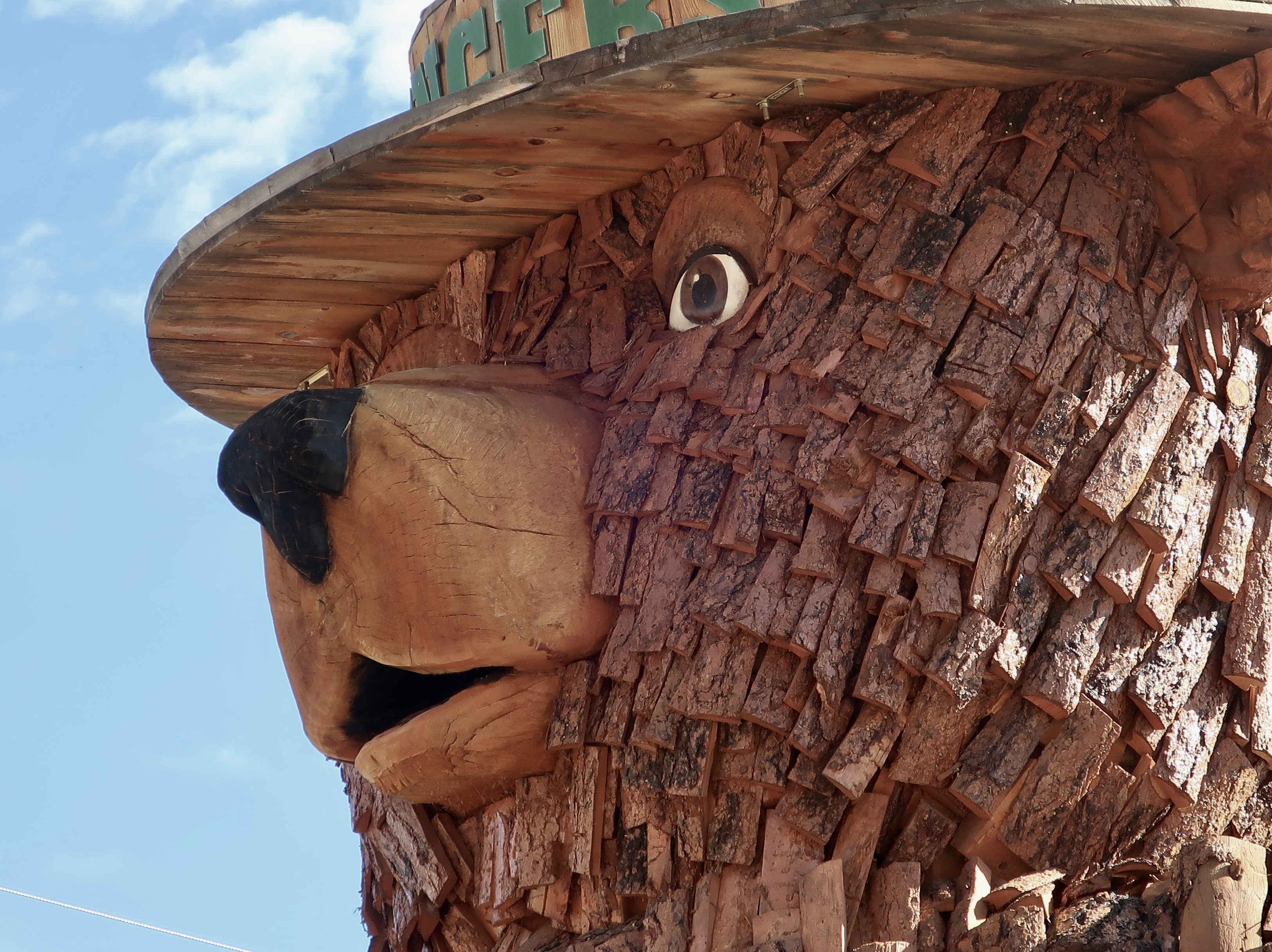

And finally, to conclude:

Next Monday’s post will take us back to Egypt and our journey up the Nile where we find ourselves in Luxor at the Temple of Karnak.

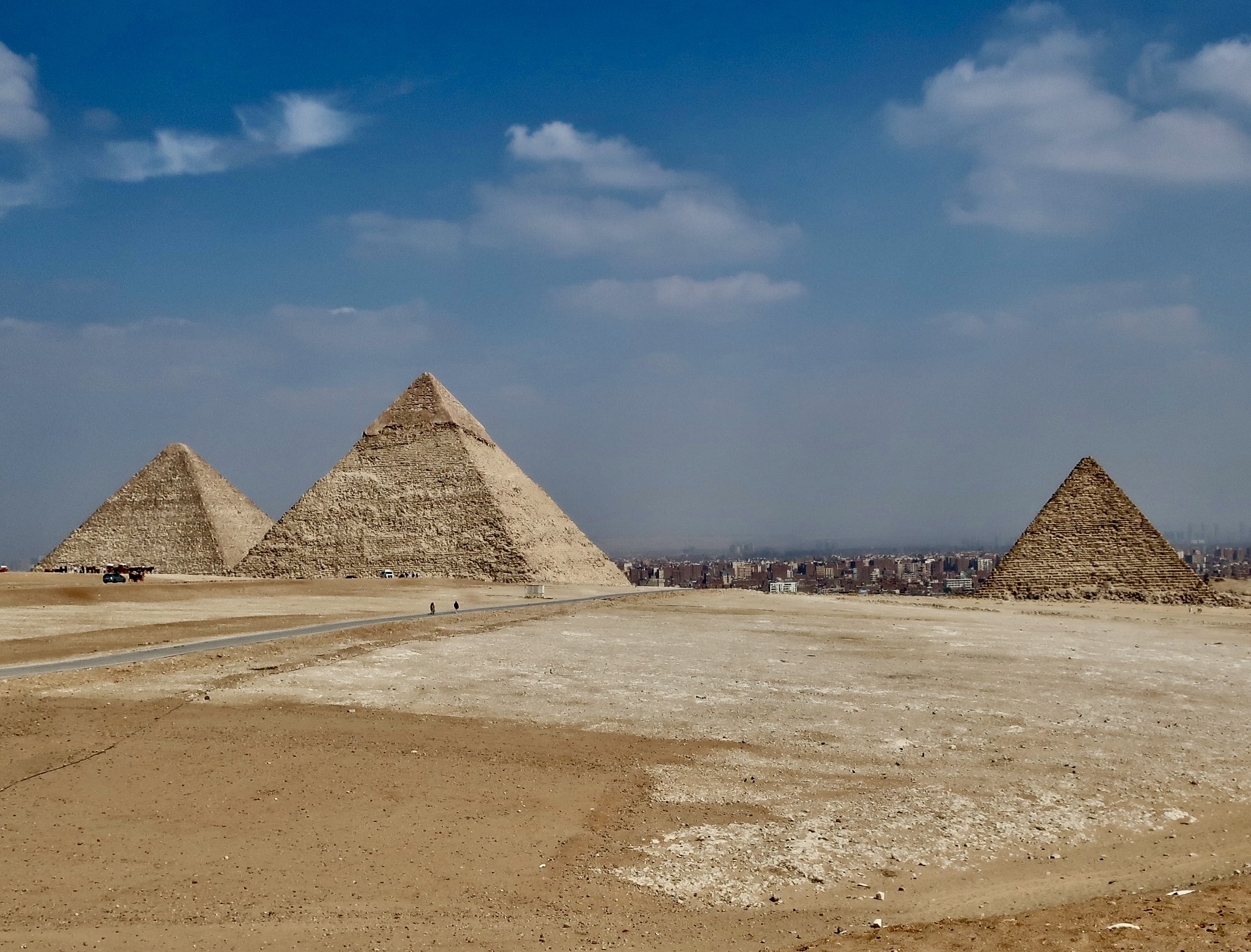
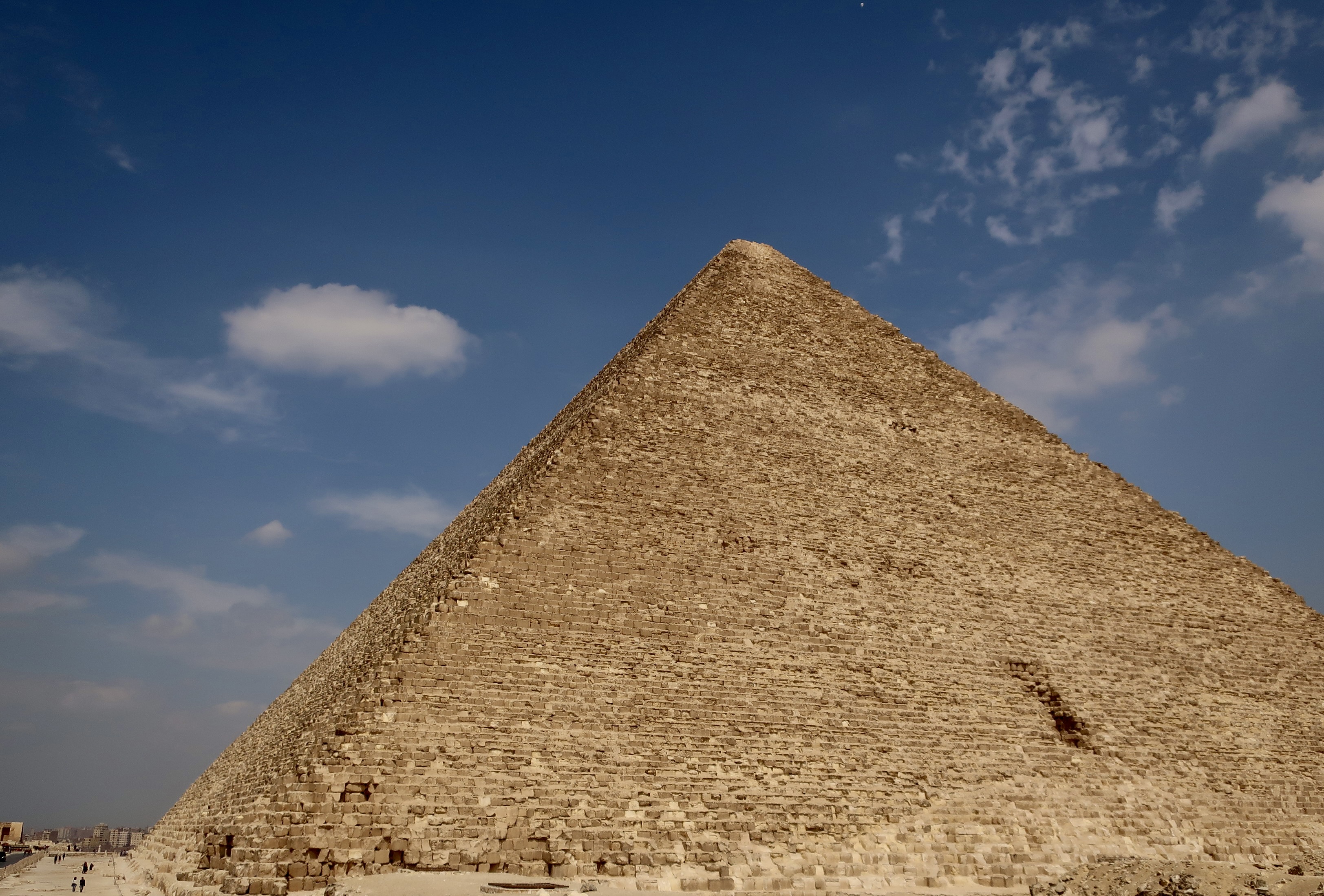
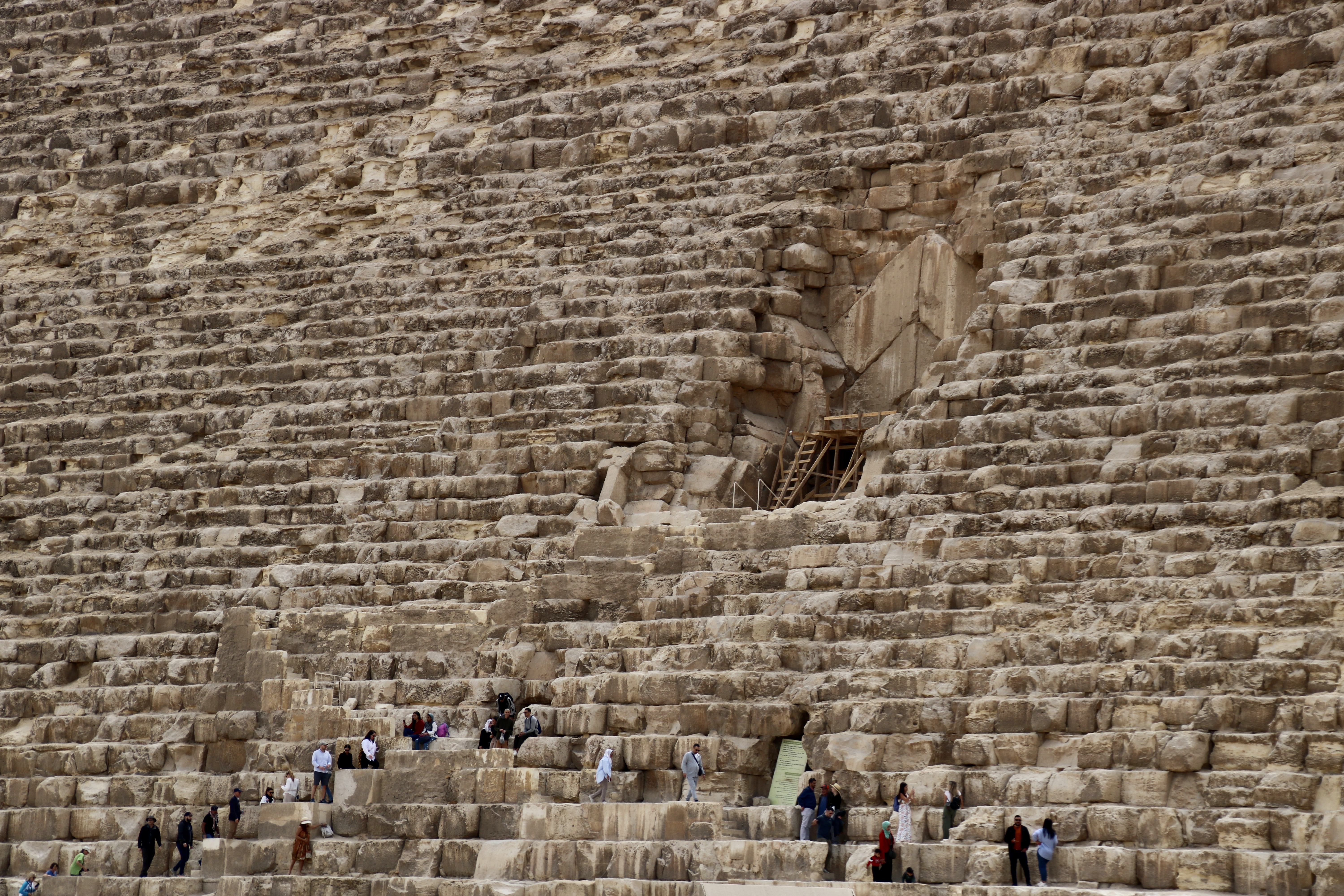
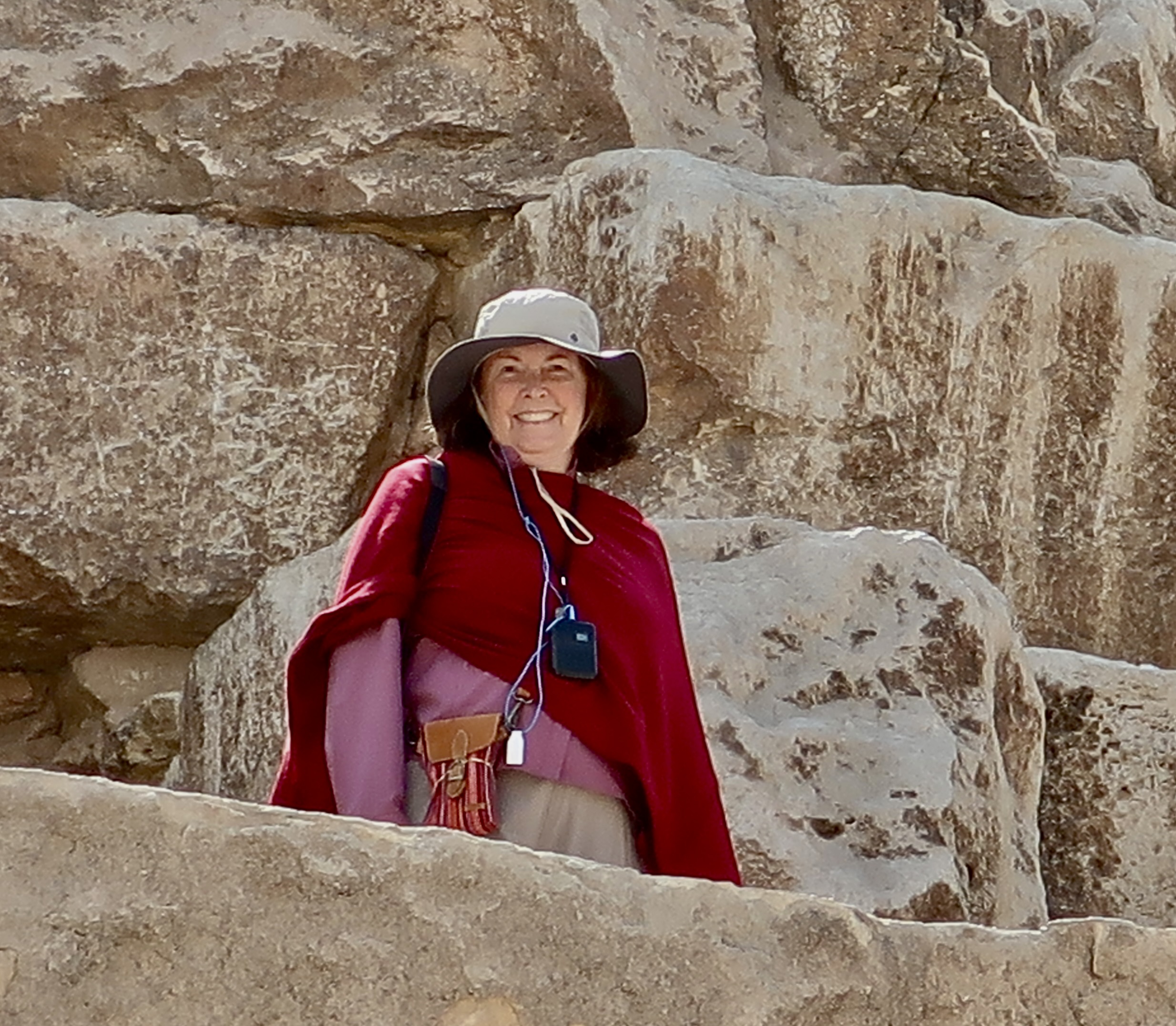
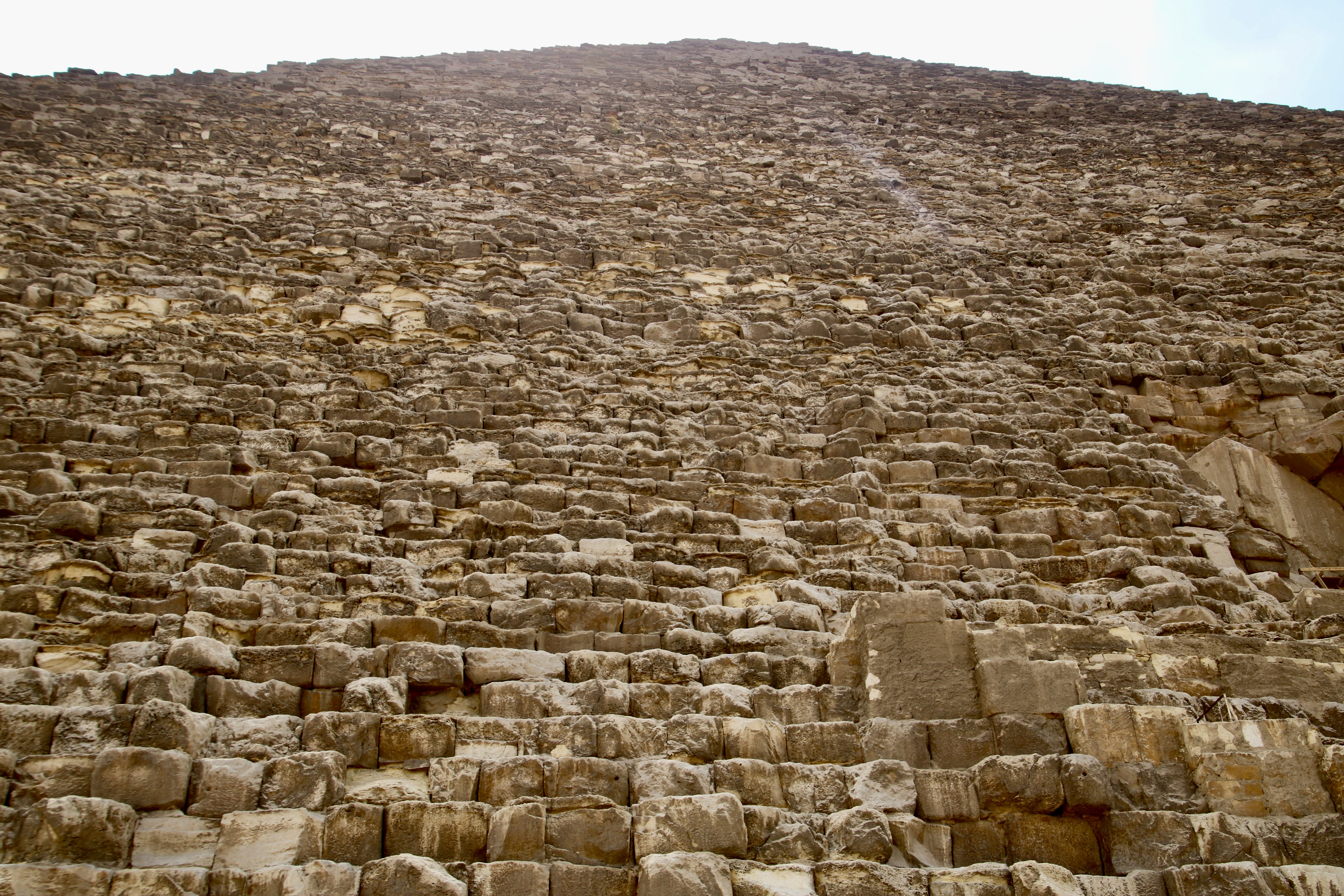
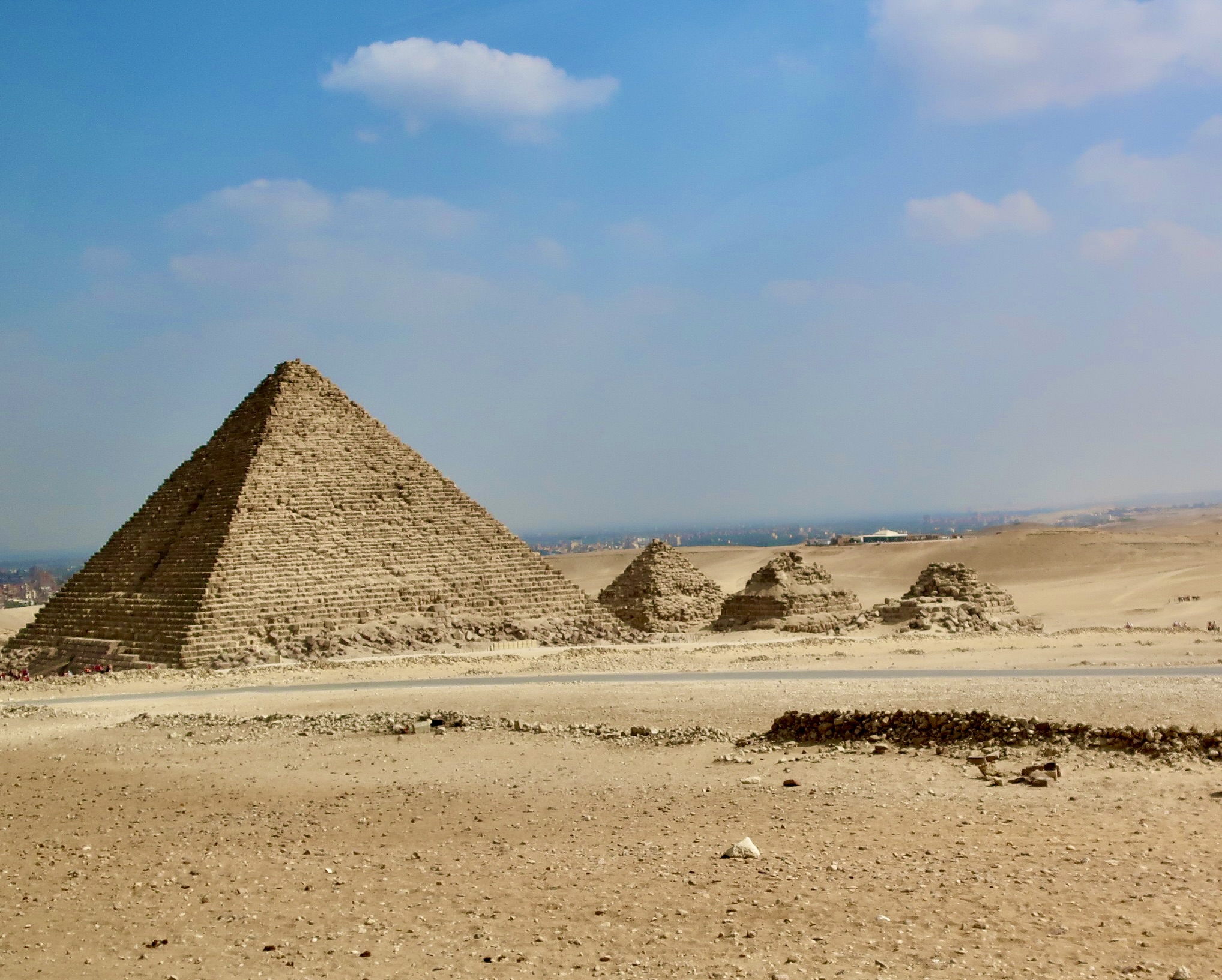
If you have ever been to Cairo, the odds are you have visited the pyramids and Great Sphinx at Giza. Over fourteen million people do every year. Located just outside the city, it’s an easy trip (depending on traffic) of just over 12 miles. Your journey back in time is a bit longer, some 4500 years. Of the three large pyramids, the Great Pyramid is the most famous. Considered one of the Seven Wonders of the Ancient World, it was built some 2000 years before any of the other six. And, it has outlasted all of its younger siblings. Its longevity alone should earn its claim to fame, but consider this: Standing at 481 ft, (146.5 m.), it was the tallest human-built structure in the world for 4,000 years! That’s mind boggling. Or was that aliens who built it? Grin.





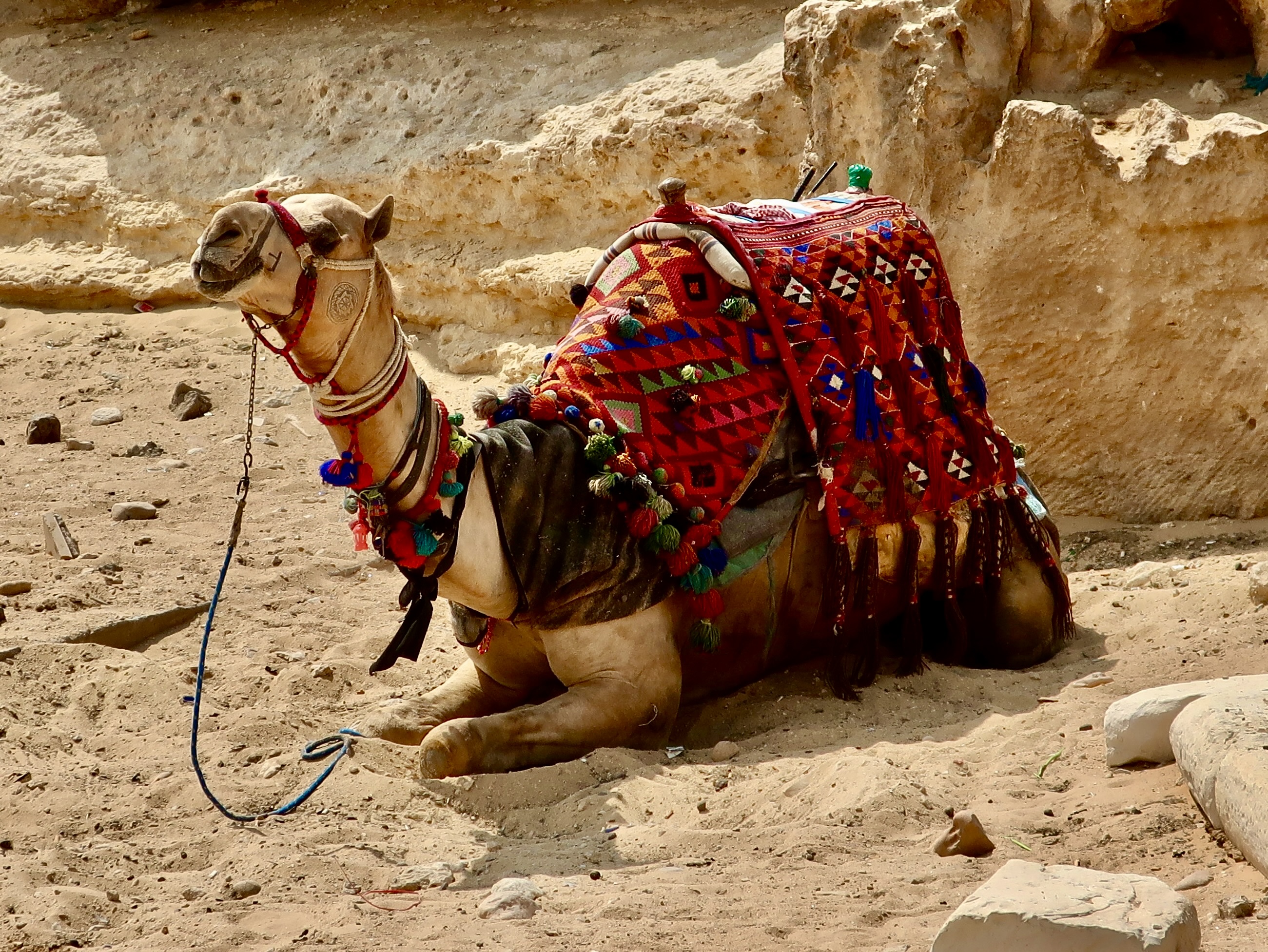
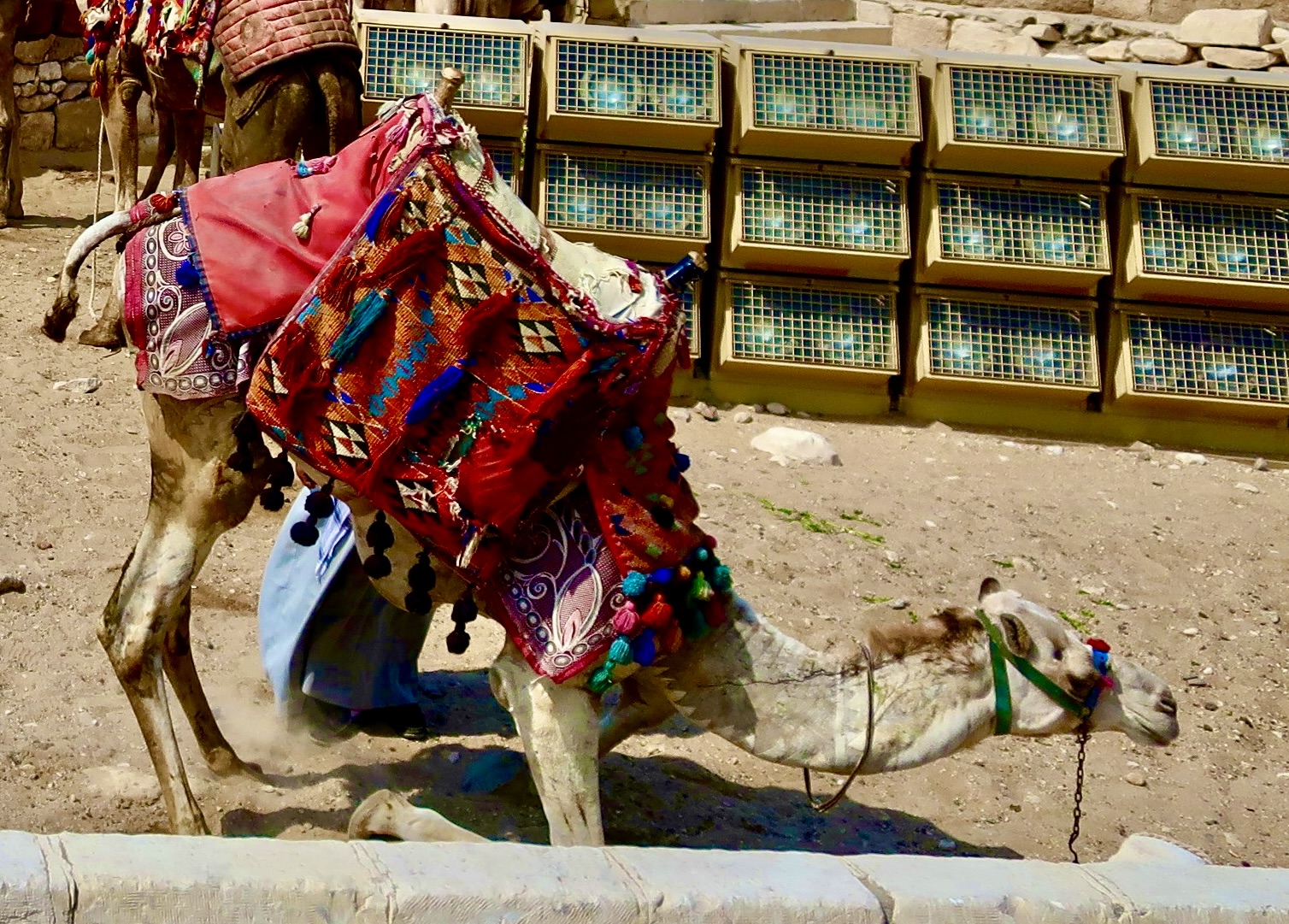
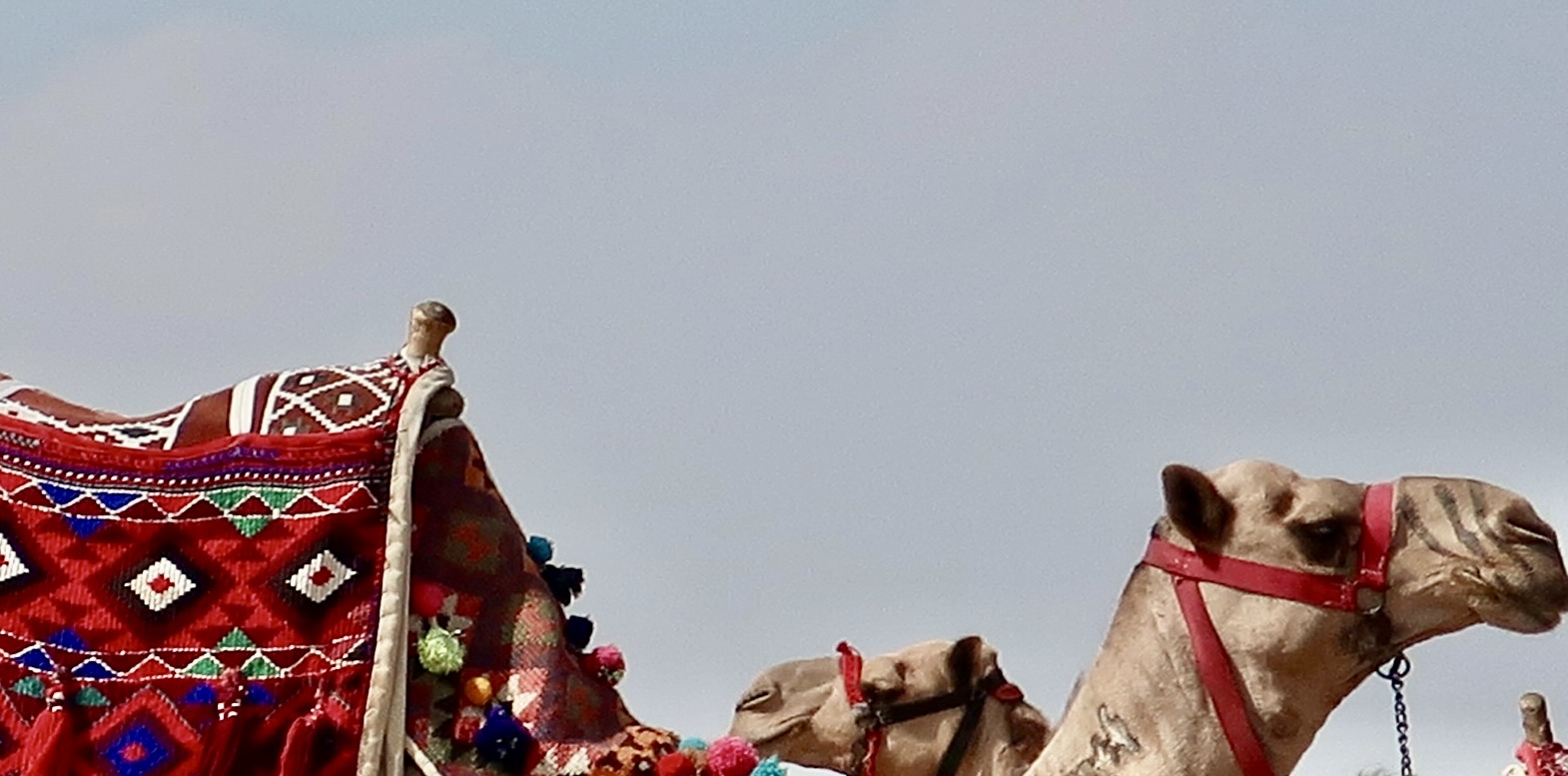
And now on to what 62.5 % of you have been waiting for: Camels.





Next post: Big Foot’s Big Foot and my wrap up on South Dakota.As you read this post, Peggy and I are off on another adventure, starting today (Monday, June 25). Once again, we are on a three month trip exploring North America with Serafina the trailer, Iorek the truck, Bone and Eeyore. We’ll keep you posted.
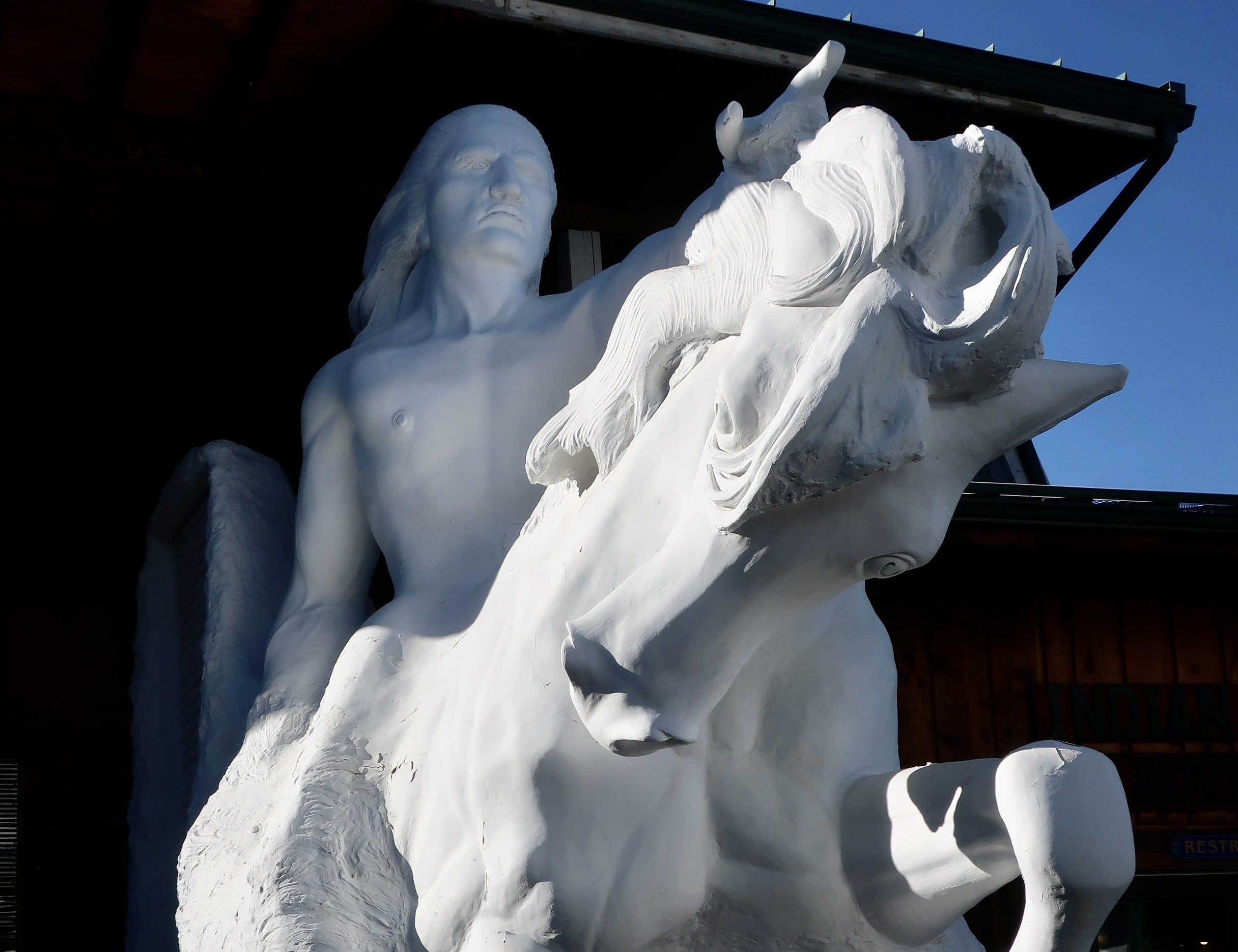
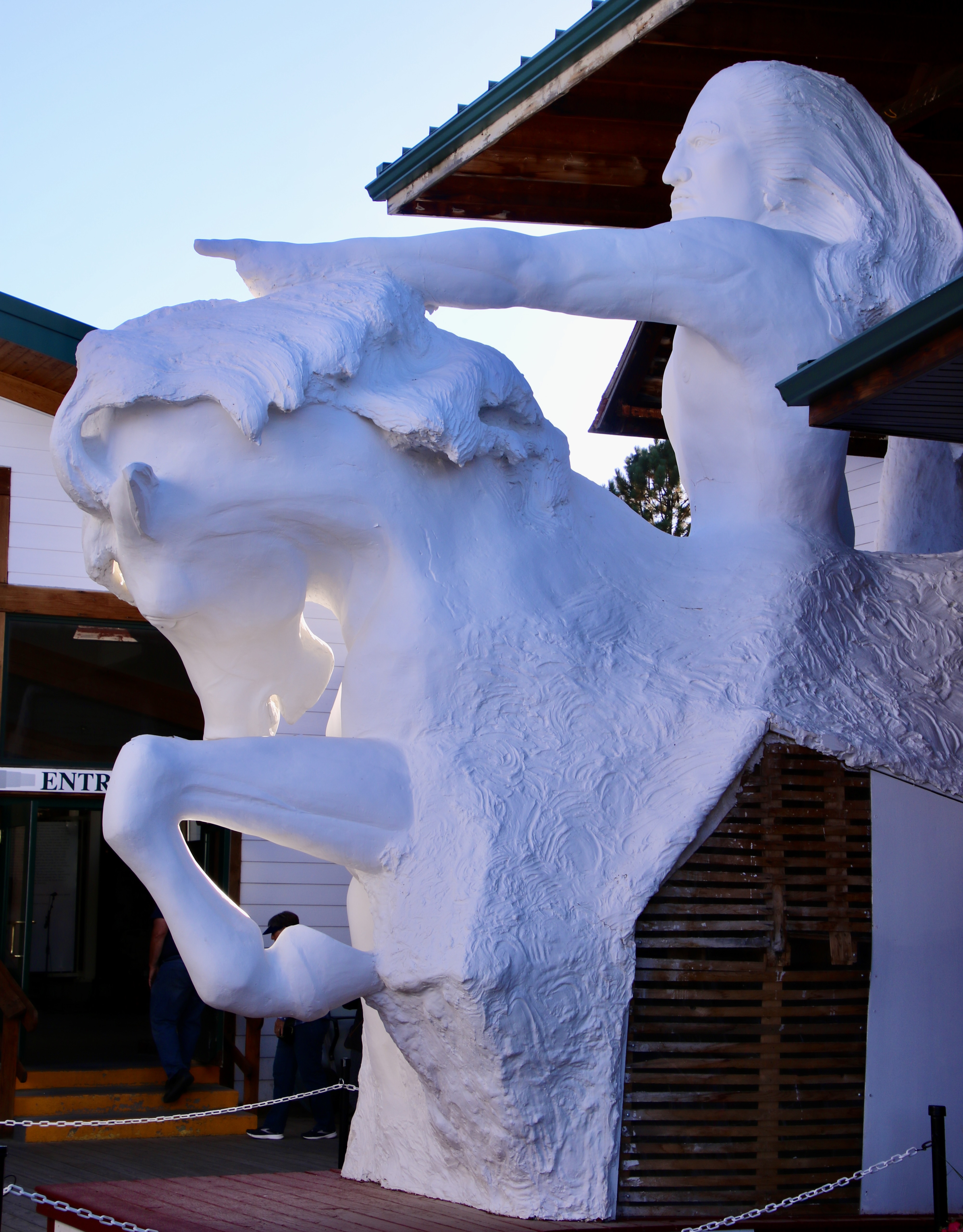
The Crazy Horse Memorial in South Dakota is a huge sculpture carved out of granite that is about 1/3 finished after 75 years of work. We visited it last fall on our three month trip around the US. All photos in this post are taken by either Peggy or me unless otherwise noted.

If you are visiting Mt. Rushmore, a trip over to the Crazy Horse Memorial is also worth doing. It’s not far— a distance of 17 miles that shouldn’t take more than 30 minutes to drive. In ways, the memorial was built as an answer to the presidential monuments. As the Lakota Chief Henry Standing Bear noted when he contacted the sculpture, Korczak Ziolkowski, “My fellow chiefs and I would like the white man to know that the red man has great heroes, too.”
Standing Bear also believed that the Black Hills were an appropriate place to build the memorial because they are a sacred area to American Indians. I first became aware of this perspective several years ago when I read the book, Black Elk Speaks. Written by the poet and writer John G. Neihardt, as told to him by the Ogalala Lakota medicine man Nicholas Black, the book captures Black Elk’s vision of the unity of humankind and the earth. The book takes the reader back in time to the vanishing culture of American Indians, but also contains a powerful message for people today. It has sold over one million copies. As Black Elk completed his story to Neihardt, he pointed to Harney Peak and identified it as where his vision took place. Harney Peak, located between Mt. Rushmore and the Crazy Horse Memorial, has now been renamed Black Elk Peak.
As for Crazy Horse, he definitely fits the definition of being one of the great heroes of American Indians and is recognized alongside other well-known leaders such as Geronimo, Red Cloud, Tecumseh, Sitting Bull and Cochise. Born in 1842 near present day Rapid City, his father was also an Oglala Lakota medicine man. His mother was a Brule Lakota and the sister of Spotted Tail, a noted war chief who later became a statesman traveling to Washington several times on behalf of the Lakota.
Crazy Horse was raised at a time when white treasure hunters had discovered gold in the Black Hills and were invading the area, breaking treaties that had ceded the land to the Lakota/Sioux. It was also a time when the once abundant buffalo herds were being methodically wiped out and the various tribes being forced on to reservations, threatening both their freedom and way of life. Not surprisingly, the Indians fought back, and Crazy Horse played a key role in this resistance, eventually leading up to and including the Battle of Little Bighorn.
As a young man, he went on a vision quest where he had a dream of a rider in a storm with long flowing hair who instructed him that he was not to wear a war bonnet or take scalps in battle. As the storm faded, a red backed hawk flew over the head of the rider. His father interpreted the dream to mean that Crazy Horse would be a great leader in battle, which turned out to be true. He died in a scuffle when he was being led to a stockade and a soldier bayoneted him on September 5th, 1877.


When Chief Standing Bear contacted the sculptor Korczak Ziolkowski in the early 1940s on behalf of the Lakota chiefs, Ziolkowski agreed to take on the project. He moved to the Black Hills in 1947 to locate an appropriate place for the monument and kicked off the carving in 1948. It is still on-going today, 75 years later. Ziolkowski continued the work until he died in 1982 when the project was taken over by his wife, Ruth. When she passed on, her children and grandchildren continued building the monument. Today the effort is overseen by the Crazy Horse Memorial Foundation. As of now, only the face has been completed and stands at 87 feet tall. His outstretched arm, which is presently being worked on, is 263 feet long. His finger will be 29 feet long. The horse will stand 219 feet high, the mane 62 feet high, and the ears 54 feet long.
Feelings among the Lakota are mixed. Many see it as the memorial it was meant to be, celebrating Crazy Horse and American Indians. Some, however, believe it does not recognize Crazy Horse’s humility and is as much, or more, a memorial to Ziolkowski and his family. Whatever the conclusion, it has kept the Ziolkowski family gainfully employed down through the decades and generations.




Next Monday it’s back to Egypt and the pyramids, sphinx and camels of Giza.

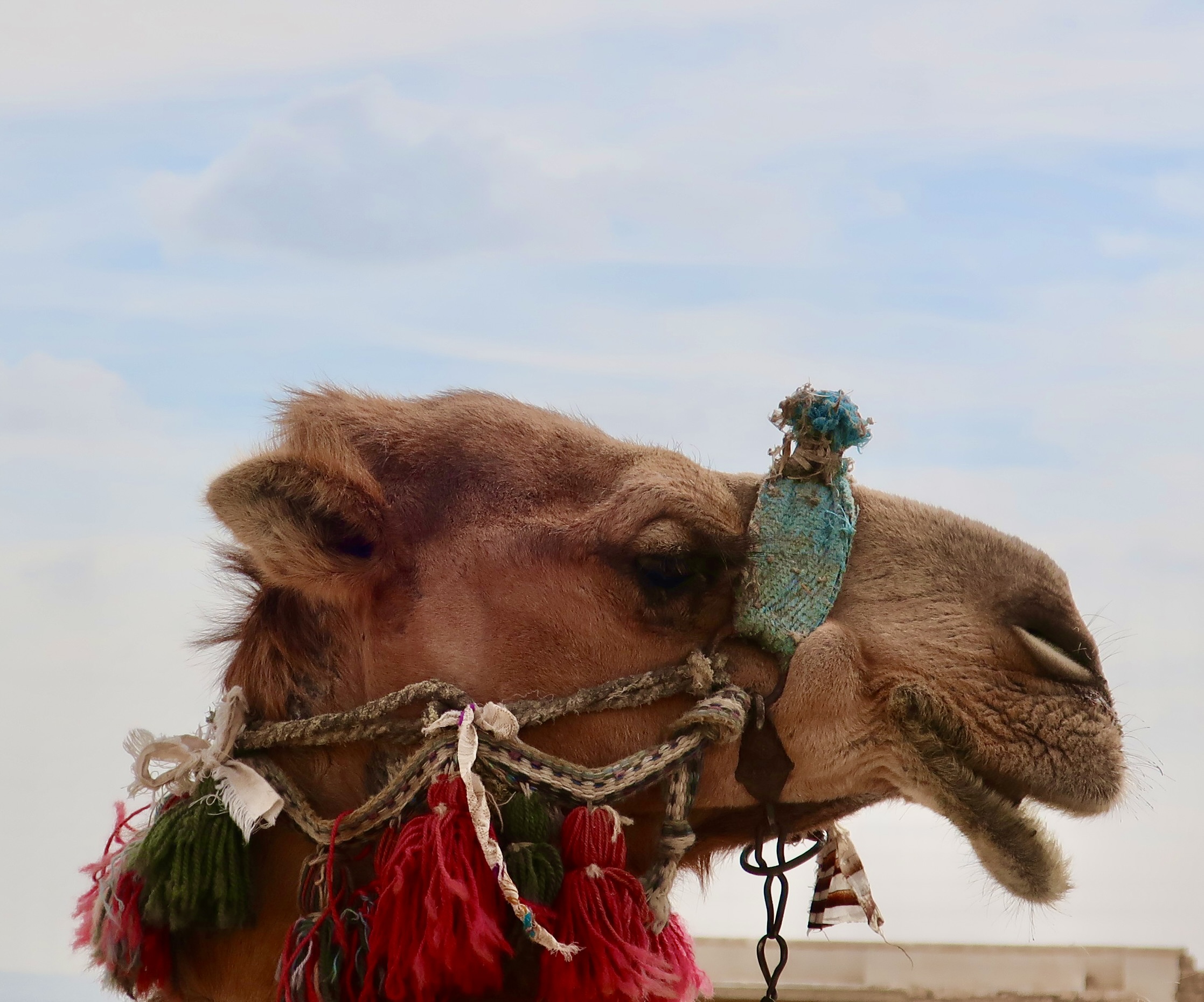
Whenever people think of ancient Egypt, one of the first thoughts that pops into to their minds is the three pyramids of Giza: The Great Pyramid, the Pyramid of Khafre, and the Pyramid of Menkaure, along with the Great Sphinx. They were in built Egypt’s early history during the Fourth Dynasty of the Old Kingdom between 2600 and 2500 BC and are the main focus of my next Egypt post— along with camels.
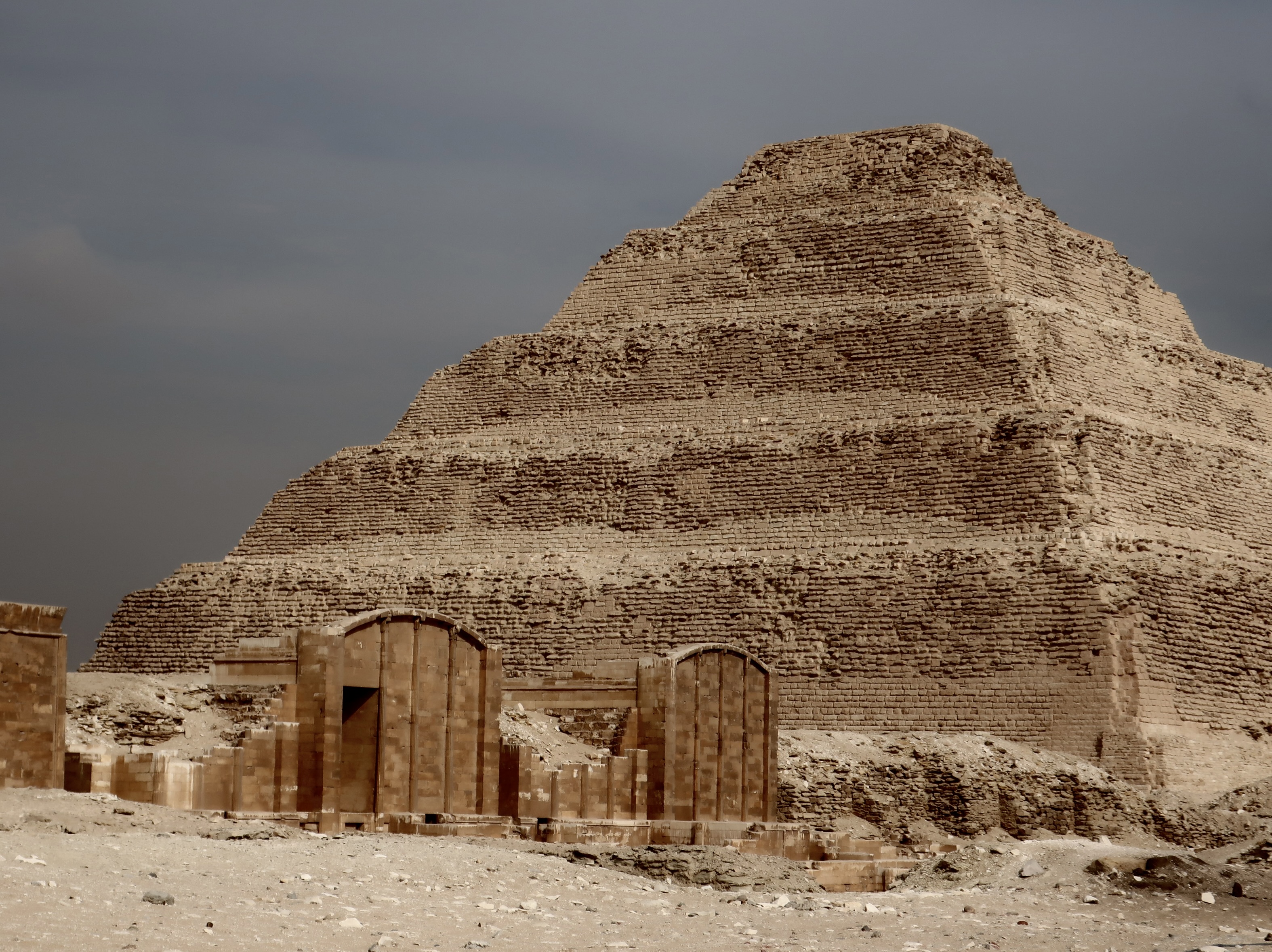
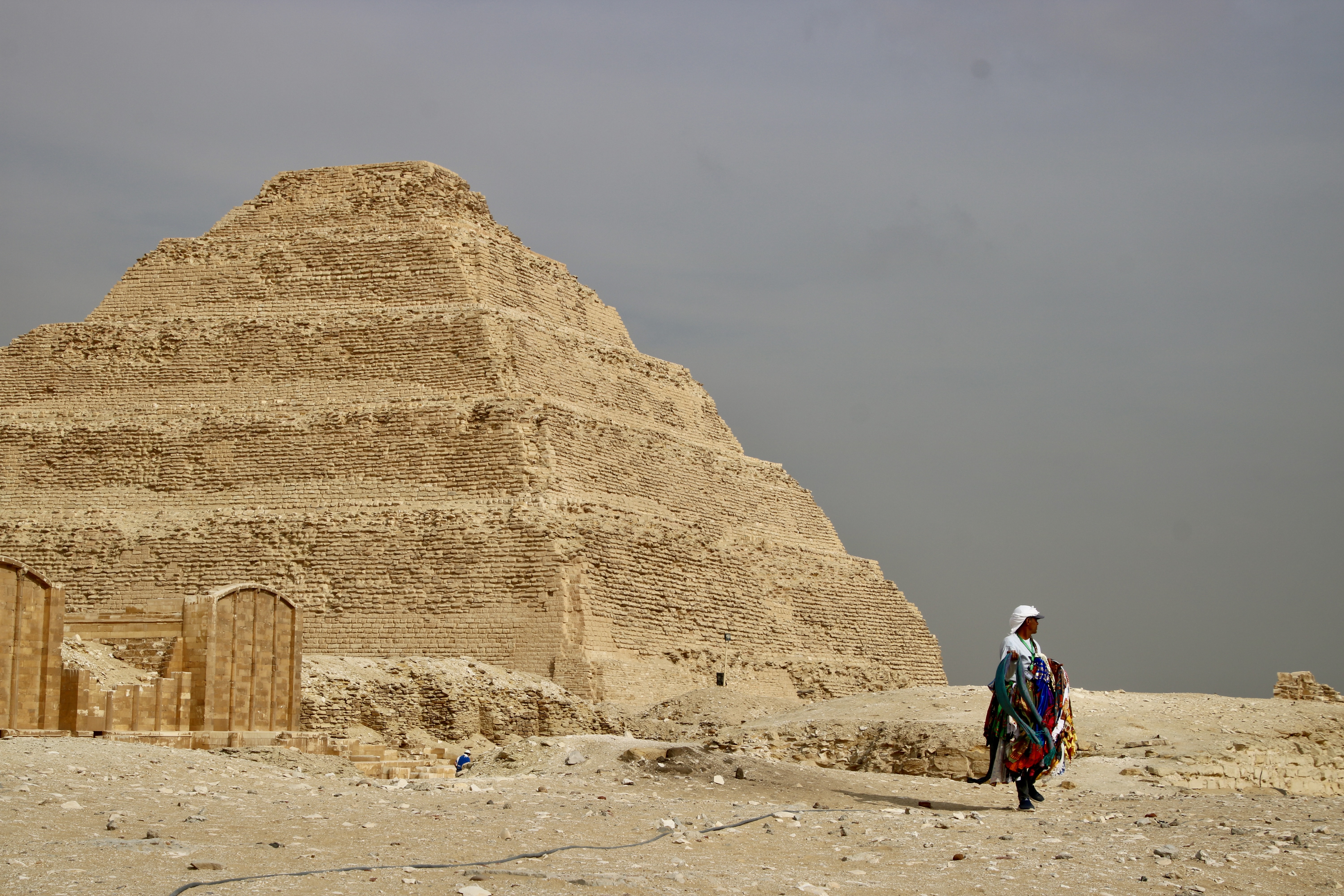
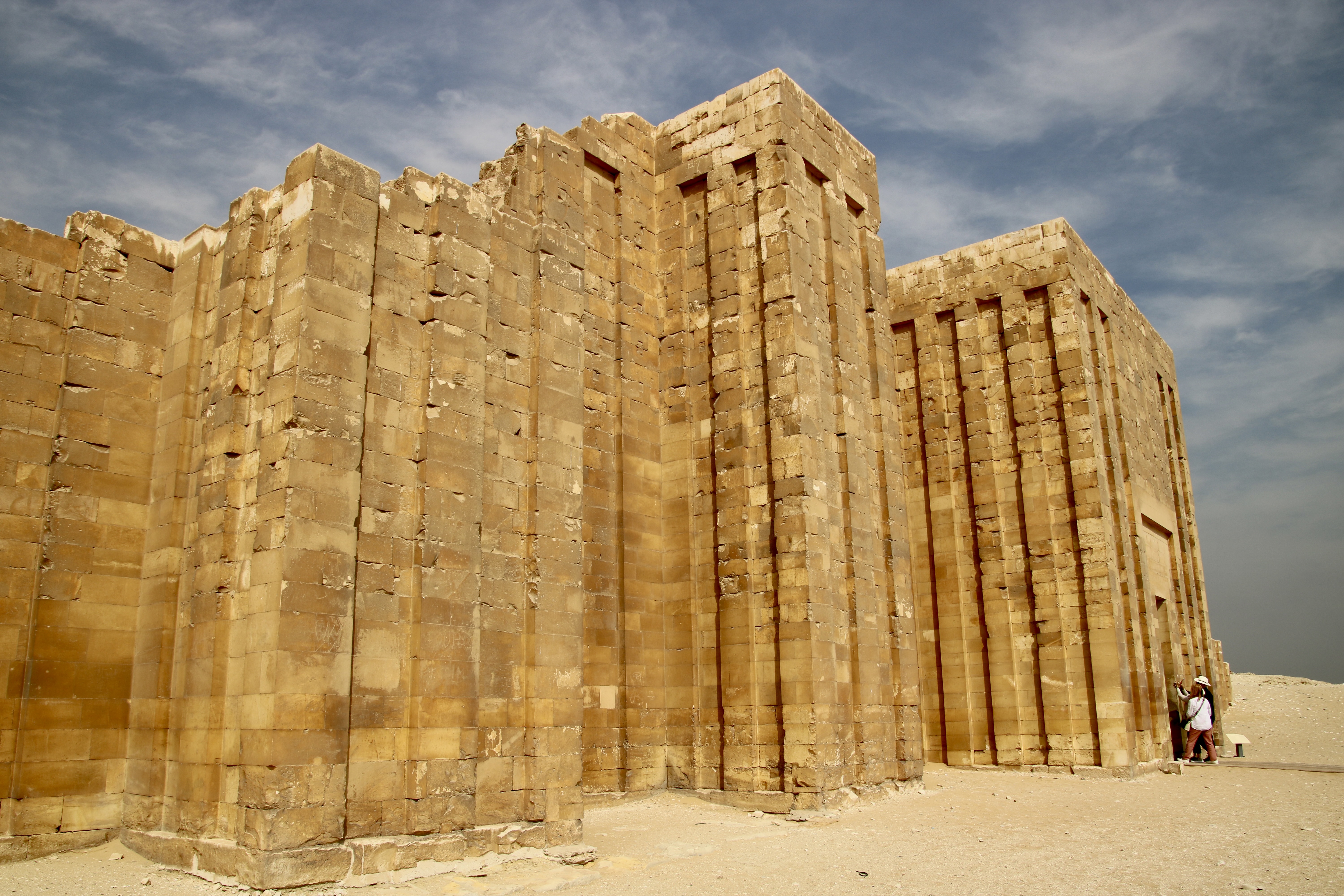
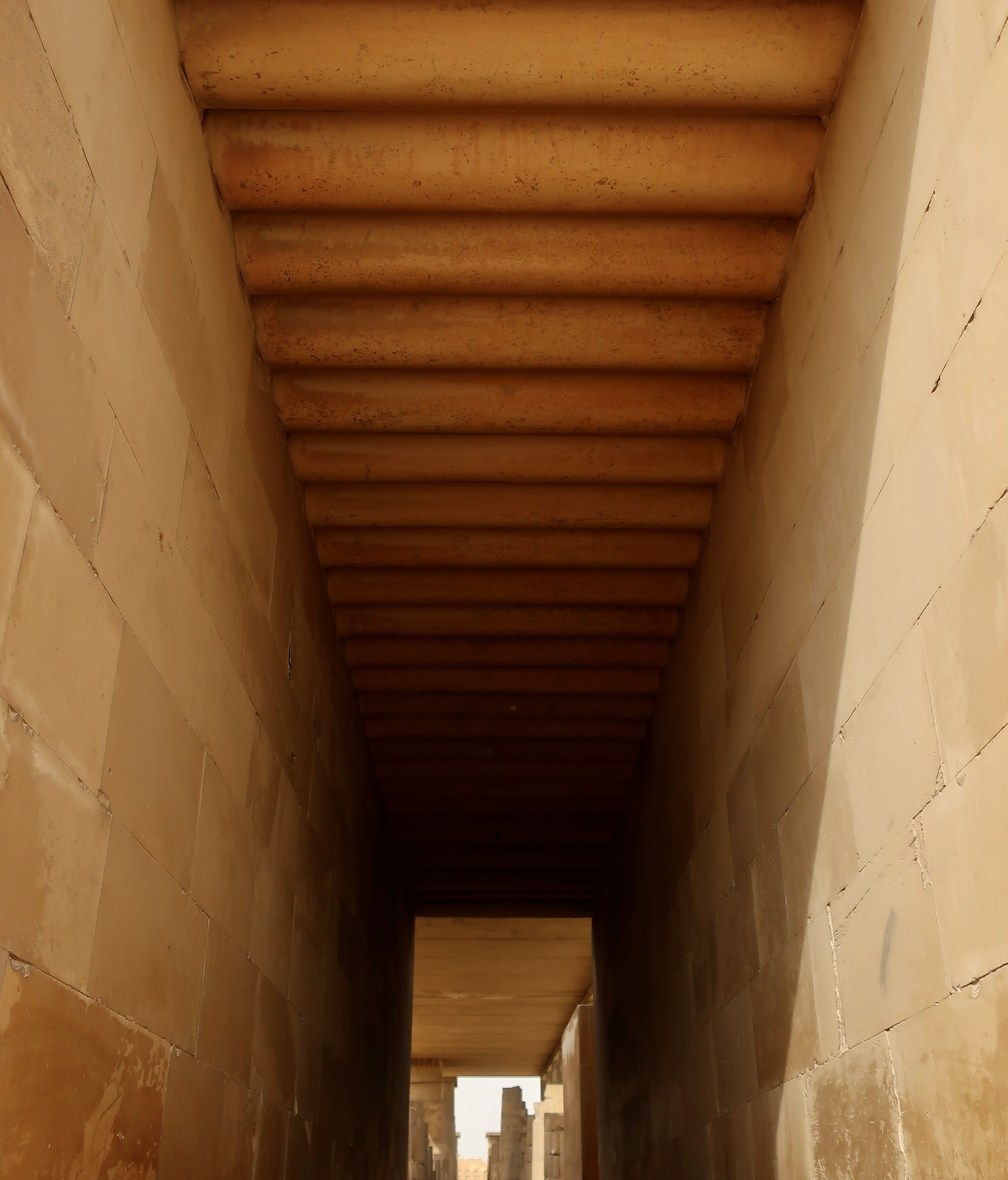
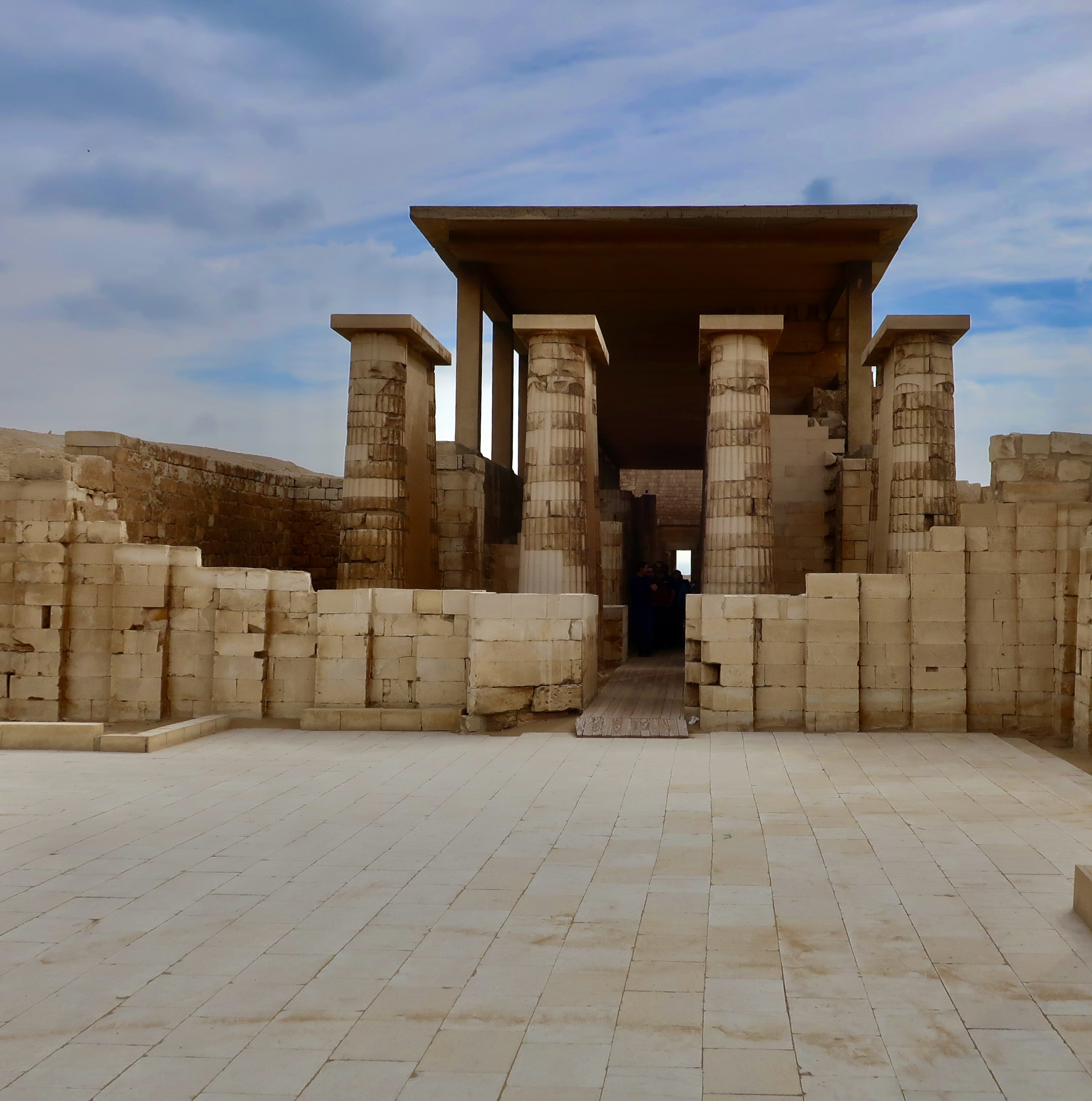
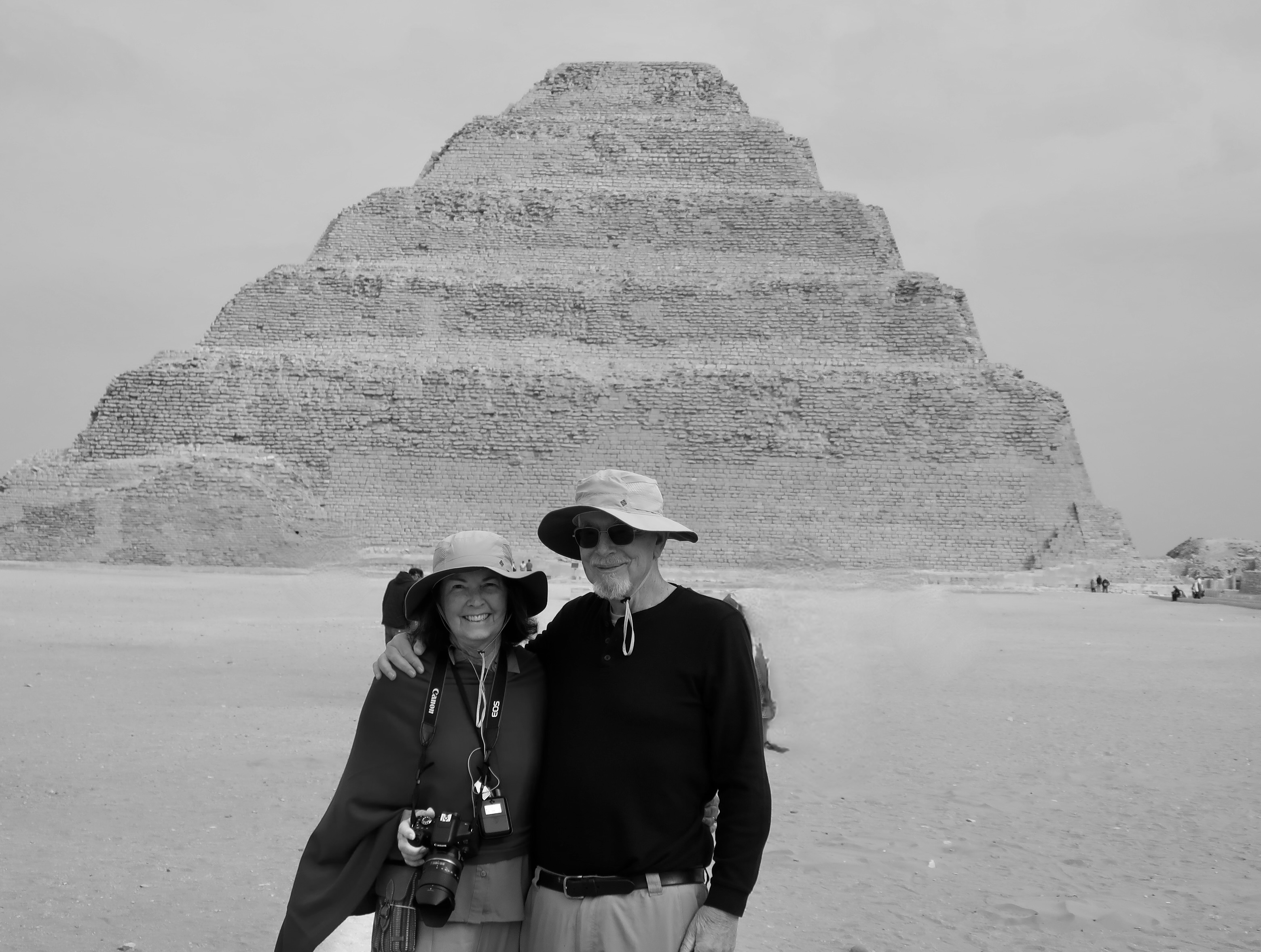
But today, I want to go back to their precursor, the Step Pyramid of the Pharoah Djoser, located in the Saqqara necropolis outside of Memphis. Built in the 27th Century BCE (2700-2600) during Egypt’s Third Dynasty, it is the oldest, complete stone building complex known in history. Its architect was Djoser’s brilliant vizier, Imhotep. If you ever watched the Mummy movie series, he was cast as the bad guy, intent on world domination and allergic to cats. But to ancient Egyptians he was a good guy, so good that he was eventually (with eventually being 2000 years Egypt time) given the status of a god complete with a portfolio that included major medical responsibilities.
Imhotep’s first layer of the pyramid was based on a mastaba, or eternal house, an ancient Egyptian tomb that was built as a one story, rectangular mud brick building with inward sloping sides where royalty from Egypt’s Early Dynastic and Old Kingdom period were buried. He then proceeded to build a series of five mastaba-like structures on top of the first one with each being smaller, thus creating the pyramid concept. The structure stands at 203 feet tall with a base of 410 by 357 feet. A maze like series of tunnels run under the pyramid that were used for the burial of Djoser, royal family members, and grave goods from royal ancestors. The latter included over 40,000 vessels.


Next Post: We will travel back to South Dakota and the incredibly ambitious stone carving of Chief Crazy Horse. After 75 years, it may be a quarter finished.
And no, I’m not talking about the two legged type so prominent in today’s world. They’re too scary for this blog. I’m talking about the behemoths that wandered the world between 65 and 245 million years ago. The small display area of Black Hills Institute in Hill City, South Dakota is packed full of them. If you have children, be sure to take them there. They will love it. Heck, if you don’t have kids, take yourself! Peggy and I visited as part of our three month road trip last fall.
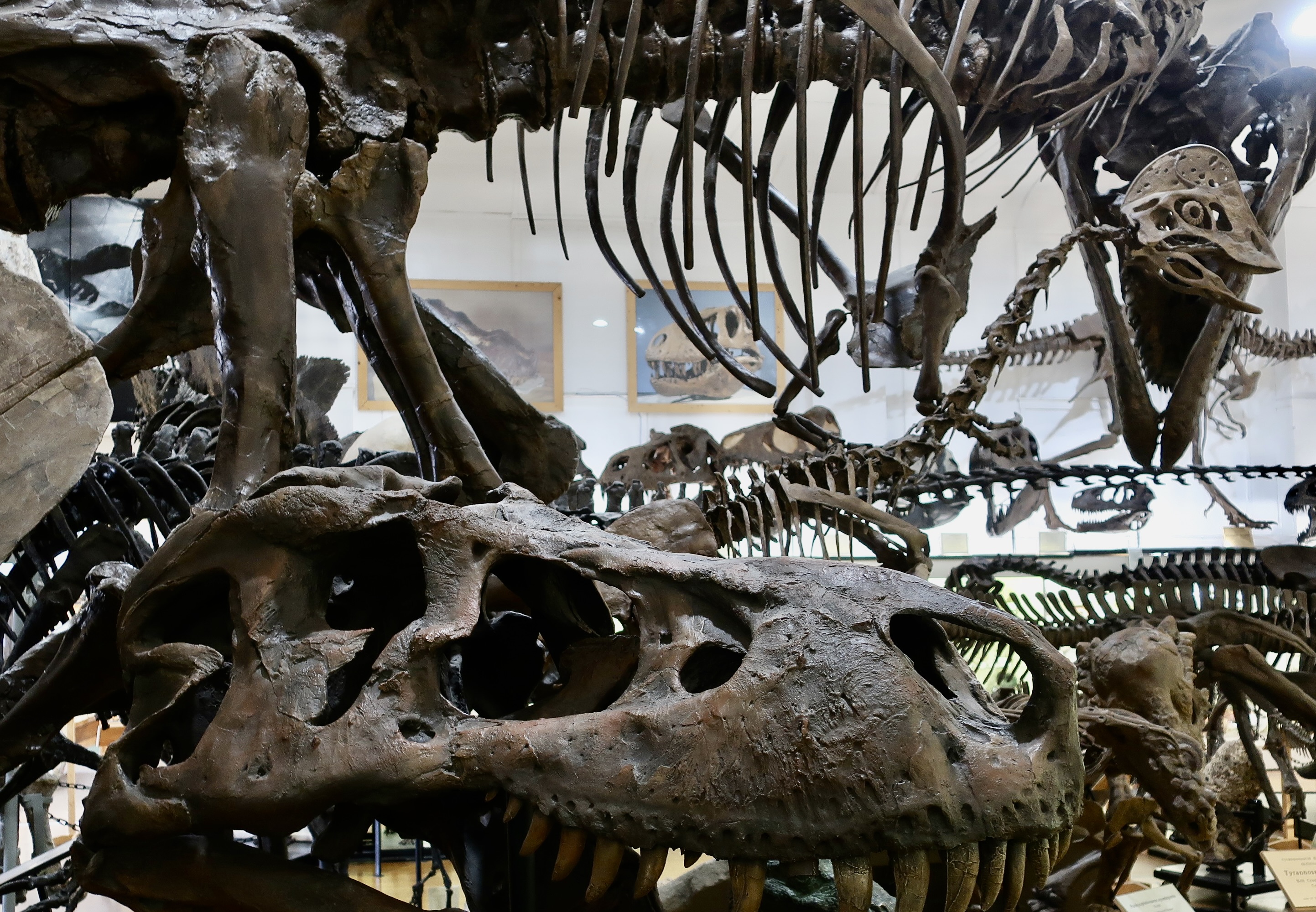
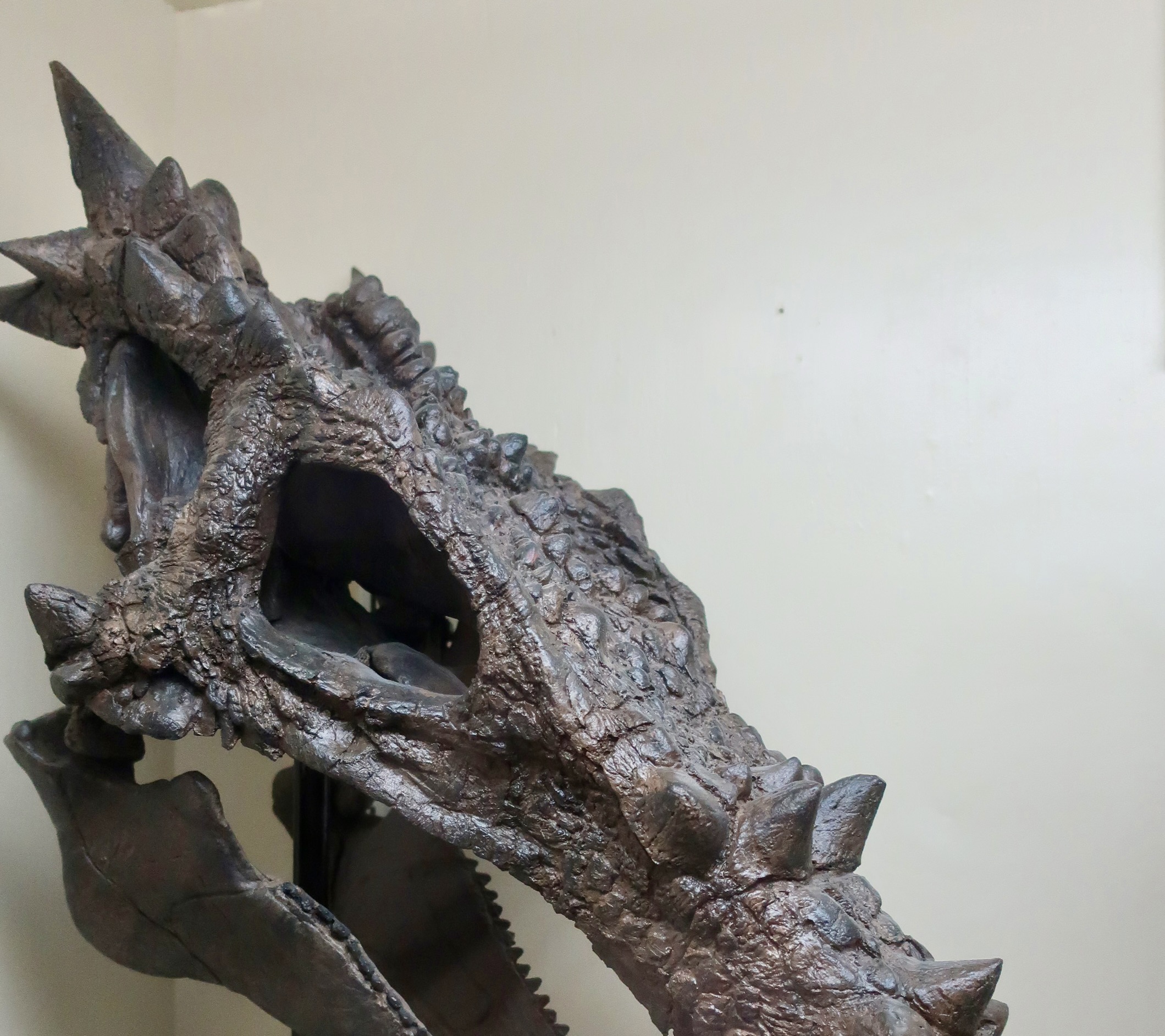
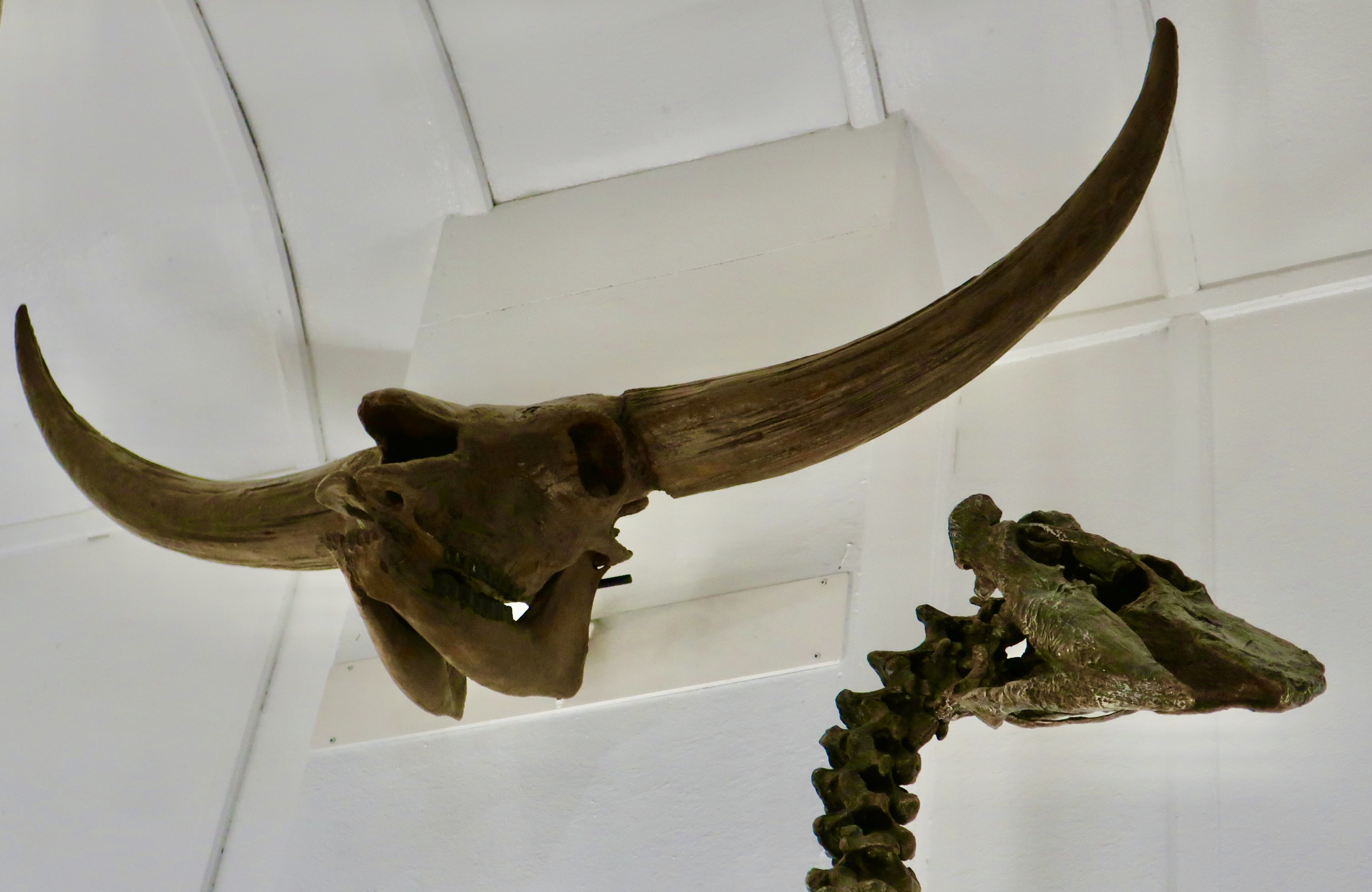
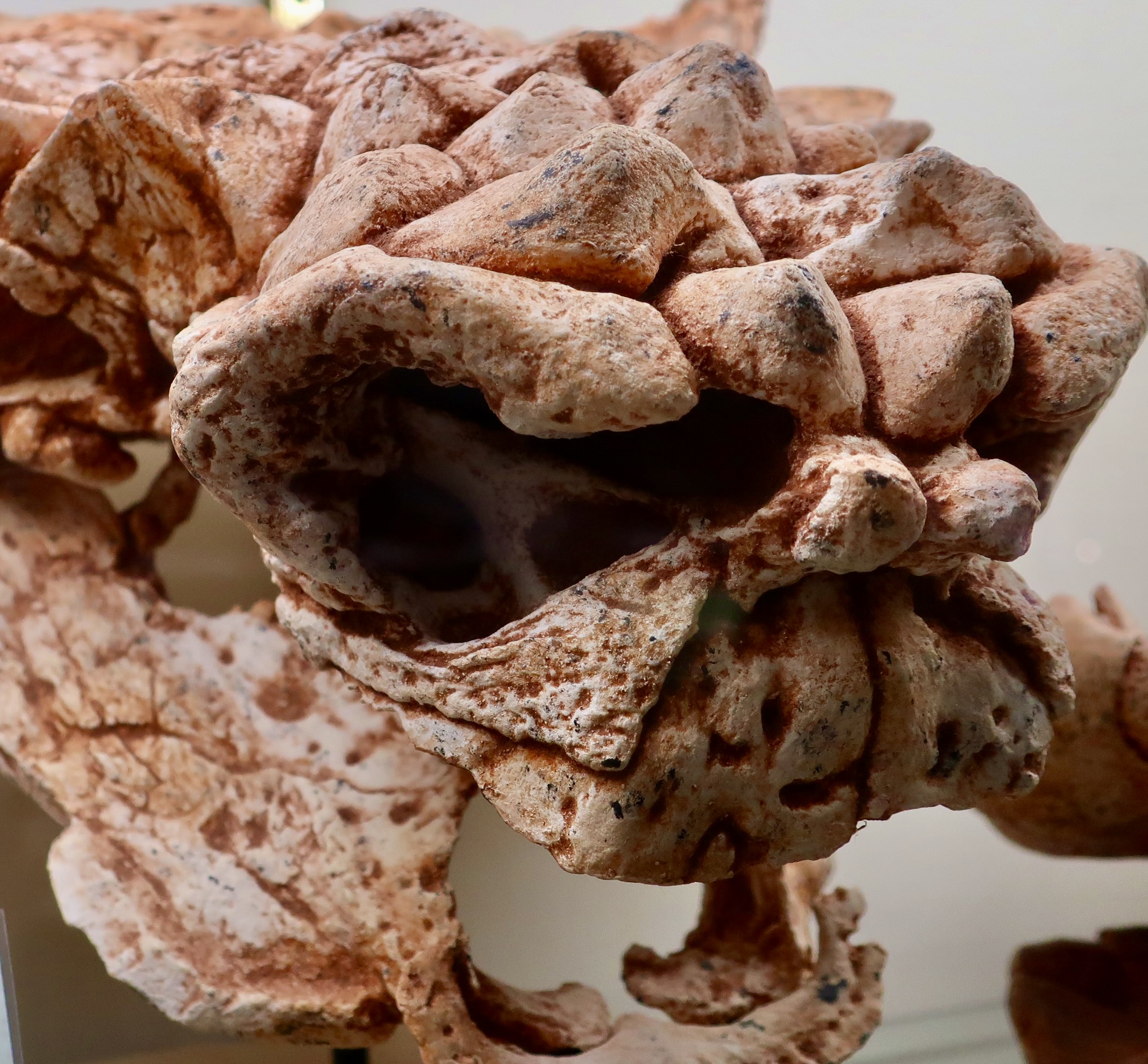
Peggy and I didn’t know what to expect when we visited the small dinosaur museum in Hill City, South Dakota. It’s located maybe 30 minutes away from Mt. Rushmore and not much more from Custer State Park. We had some time to kill, so why not. What we found was an absolute delight. Normally I take museums seriously, carefully noting what I am seeing and photographing. Not this time. While the museum is worthy of such attention, it was so crammed full I wouldn’t have known where to start. So Peggy and I just wandered around admiring big teeth and taking photos. Following are the results. Enjoy.


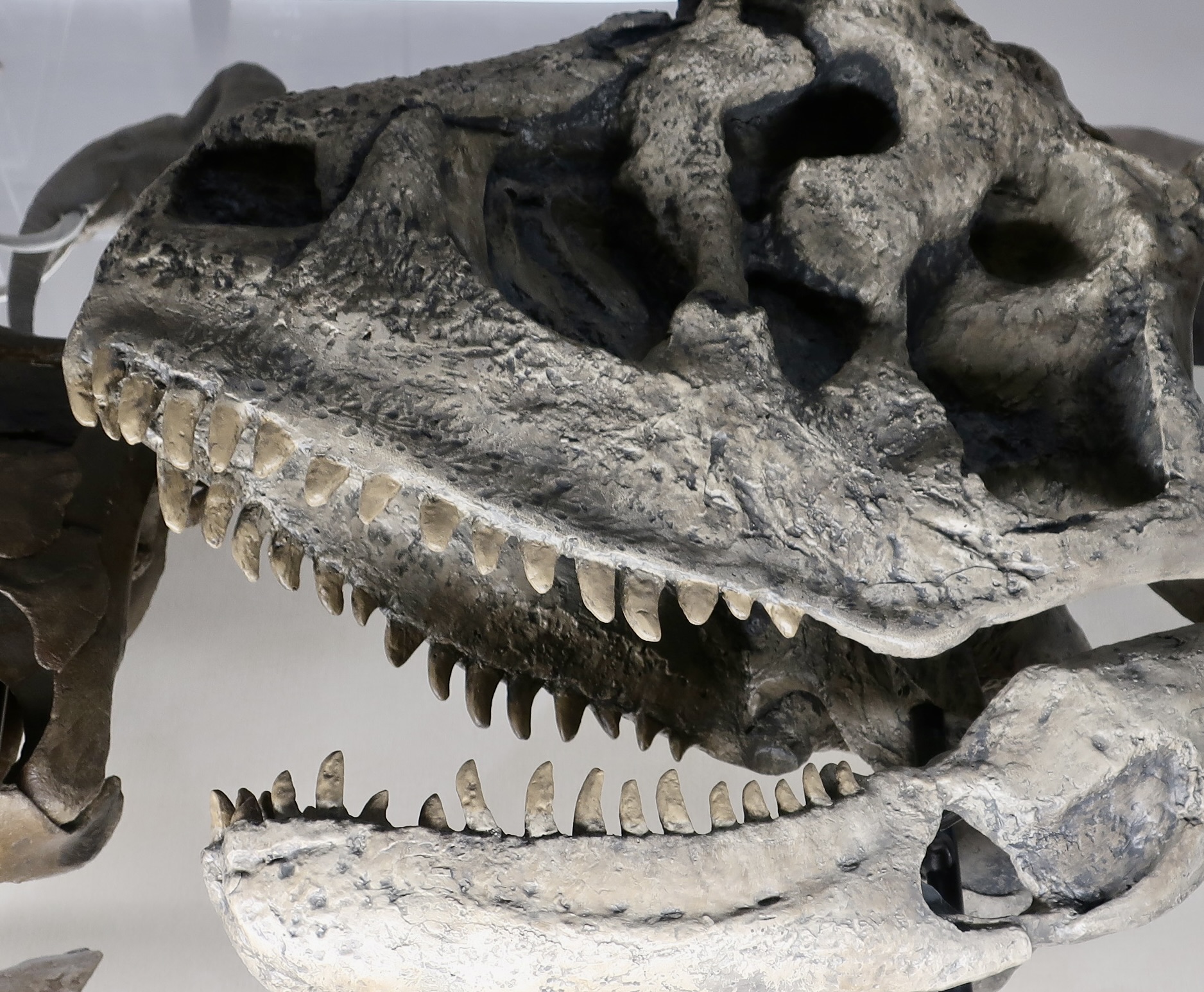
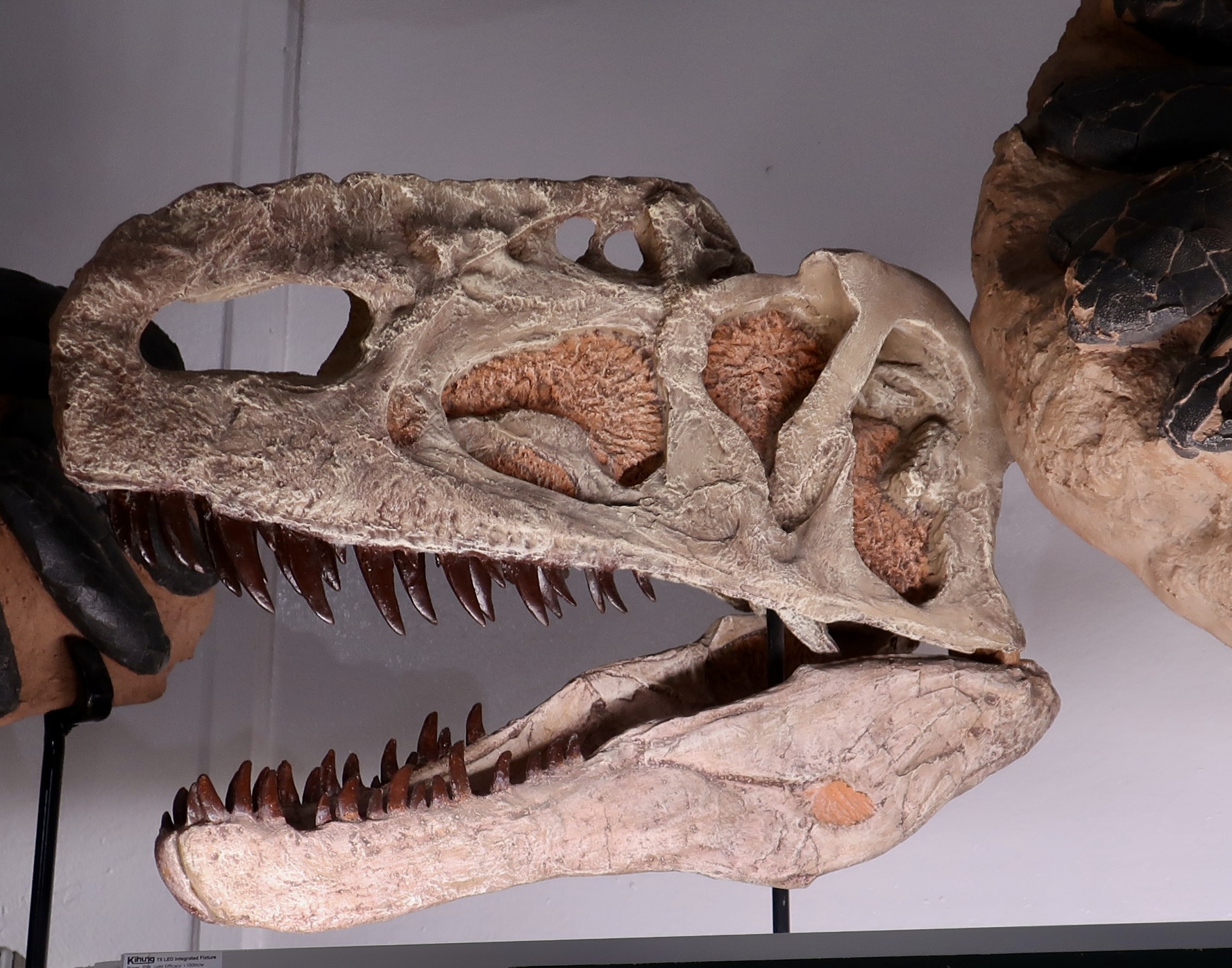
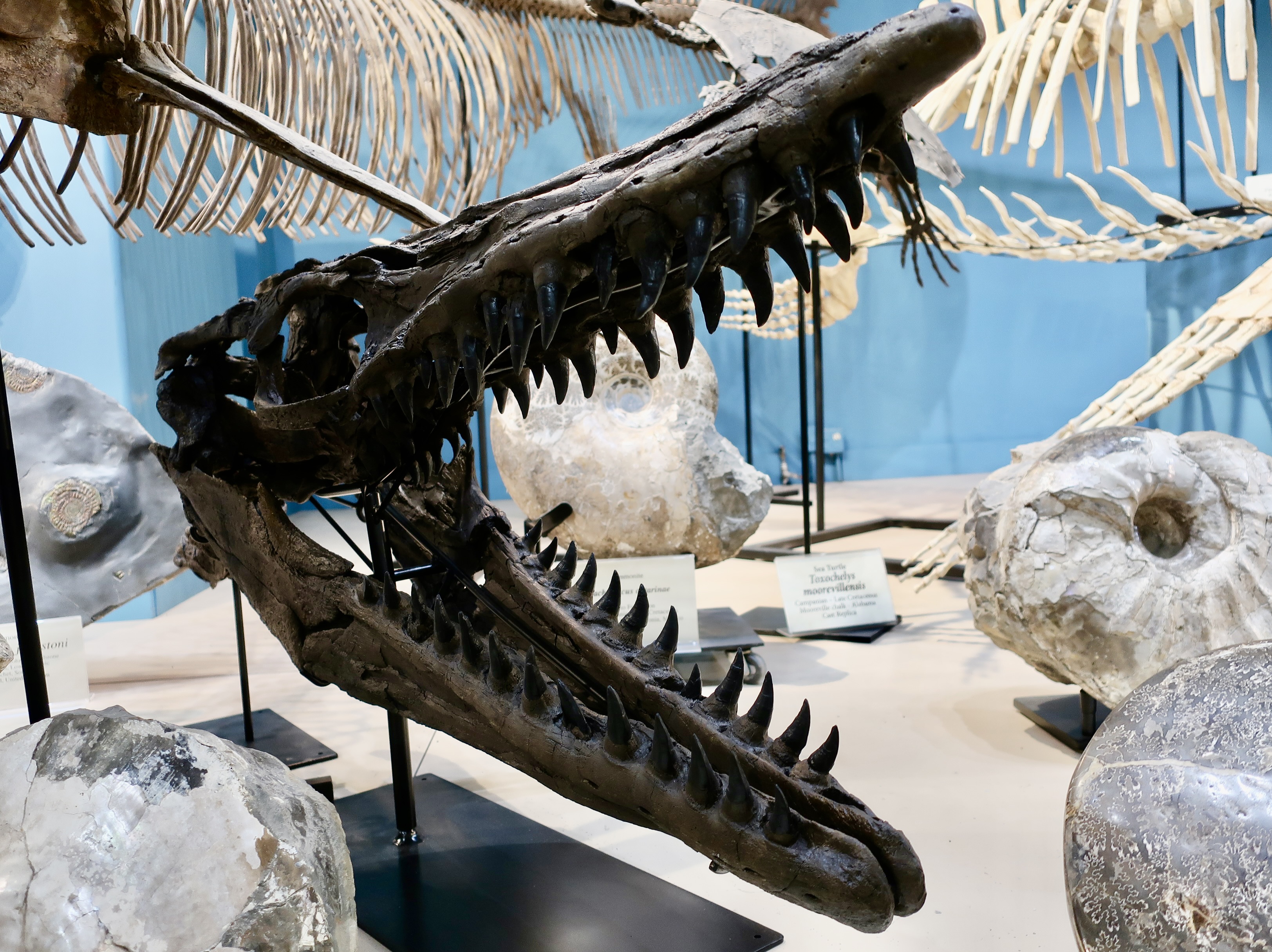


That does it for today. Next Monday we will be back in Egypt visiting one of Egypt’s first pyramids.
 Wandering through Time and Place