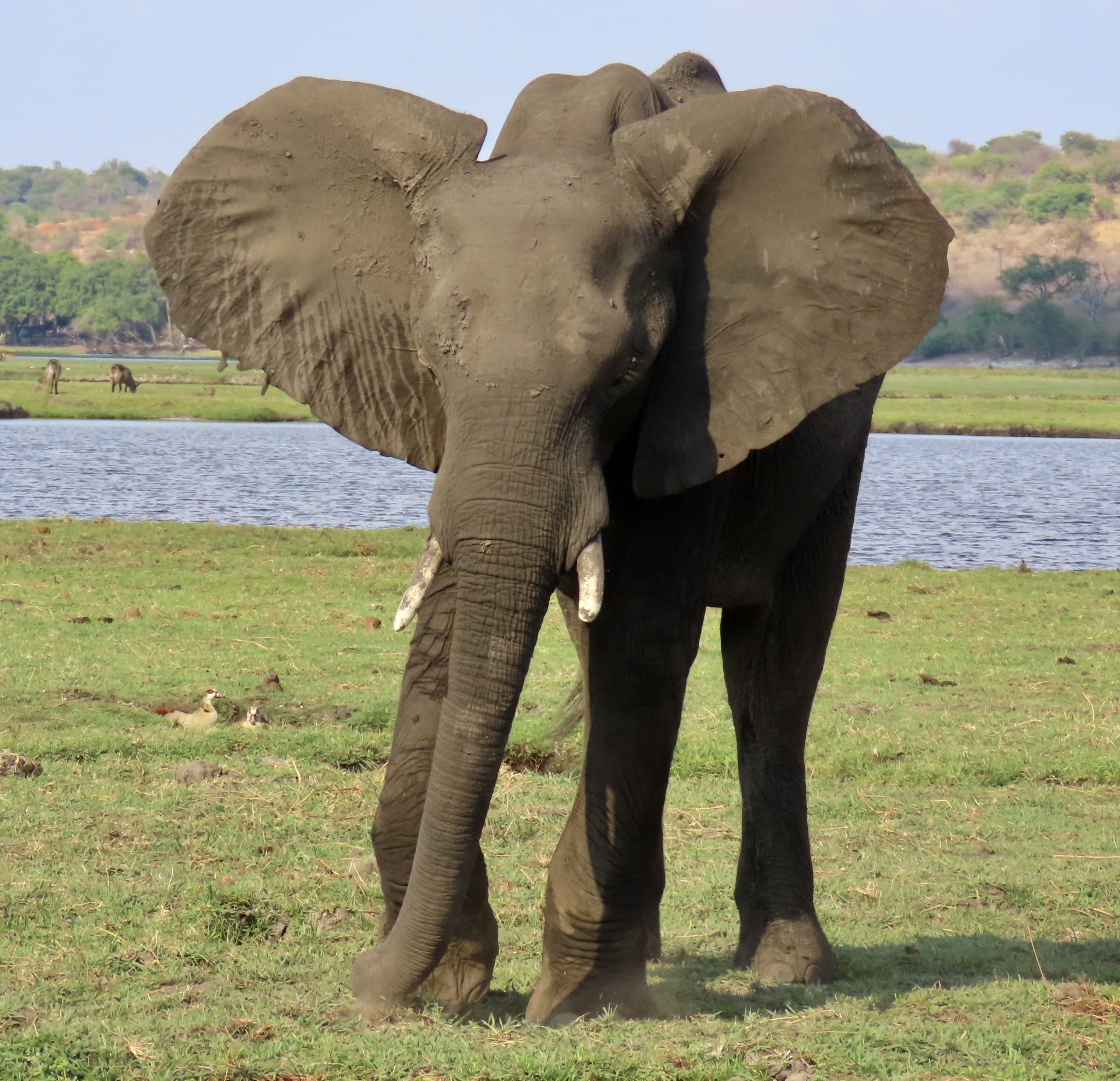
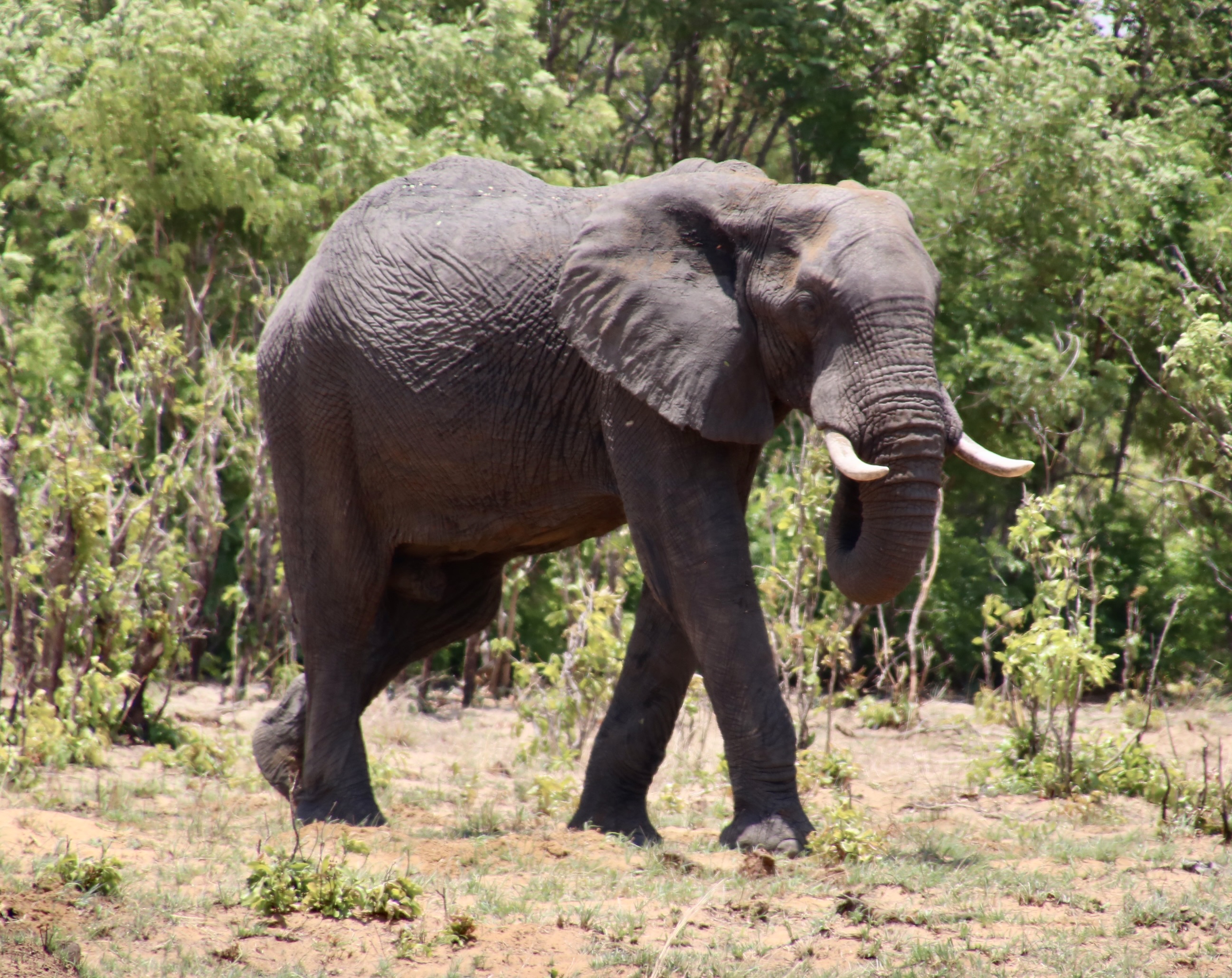
The first elephant we saw was when we were traveling by bus from Victoria Falls to Chobe National Park. It was a magnificent animal with the largest ears we would see on our whole trip. I thought it might charge. The odds are it was simply cooling down its body, or curious. I learned it might have been warning us, however. When an elephant looks at you, raises its ears, and makes a short charge in your direction, the message is clear: Back off! The raised ears are to make the elephant look bigger than it is! An even worse scenario (other than the heart attack you could suffer in the first one), is when the elephant lays back its ears tight against its body, raises its trunk, and starts to charge. Good luck. Running isn’t much of an option unless can run faster than 25 miles per hour. The fastest human in the world might just stand a chance. Standing behind a very large tree could be more helpful. Peggy did that once when a giant bull elk charged her in Yellowstone where she was working as a college student. And she’s still here.
I have big ears. They are 3 1/2 inches long. African elephants have provided a new perspective. Theirs can be six feet long and five feet wide. “The better to hear with,” you might note. And elephants do have good hearing with a range from 14 to 16,000 hz. (Humans range from 20 to 20,000 hz in comparison.) The lower range is known as subsonic. Elephants can actually make subsonic sounds with their trunks that humans can’t hear but elephants can— up to miles away! The large flaps also serve to direct sound toward the inner ear. Think of cupping your hands behind your ears. It helps to say “eh.”
Of equal importance, an elephants ears play a big role in helping it to keep cool. The fancy name for this is thermoregulation, the process that allows your body to maintain its core temperature. For example, a message from your skin goes to your brain saying it’s hot. Your brain sends a message back to your skin: Sweat. Unlike us, elephants don’t have sweat glands except around their feet. They cope with Africa’s hot tropical sun using other methods. We’ve already discussed mud baths. Wrinkly skin is another.
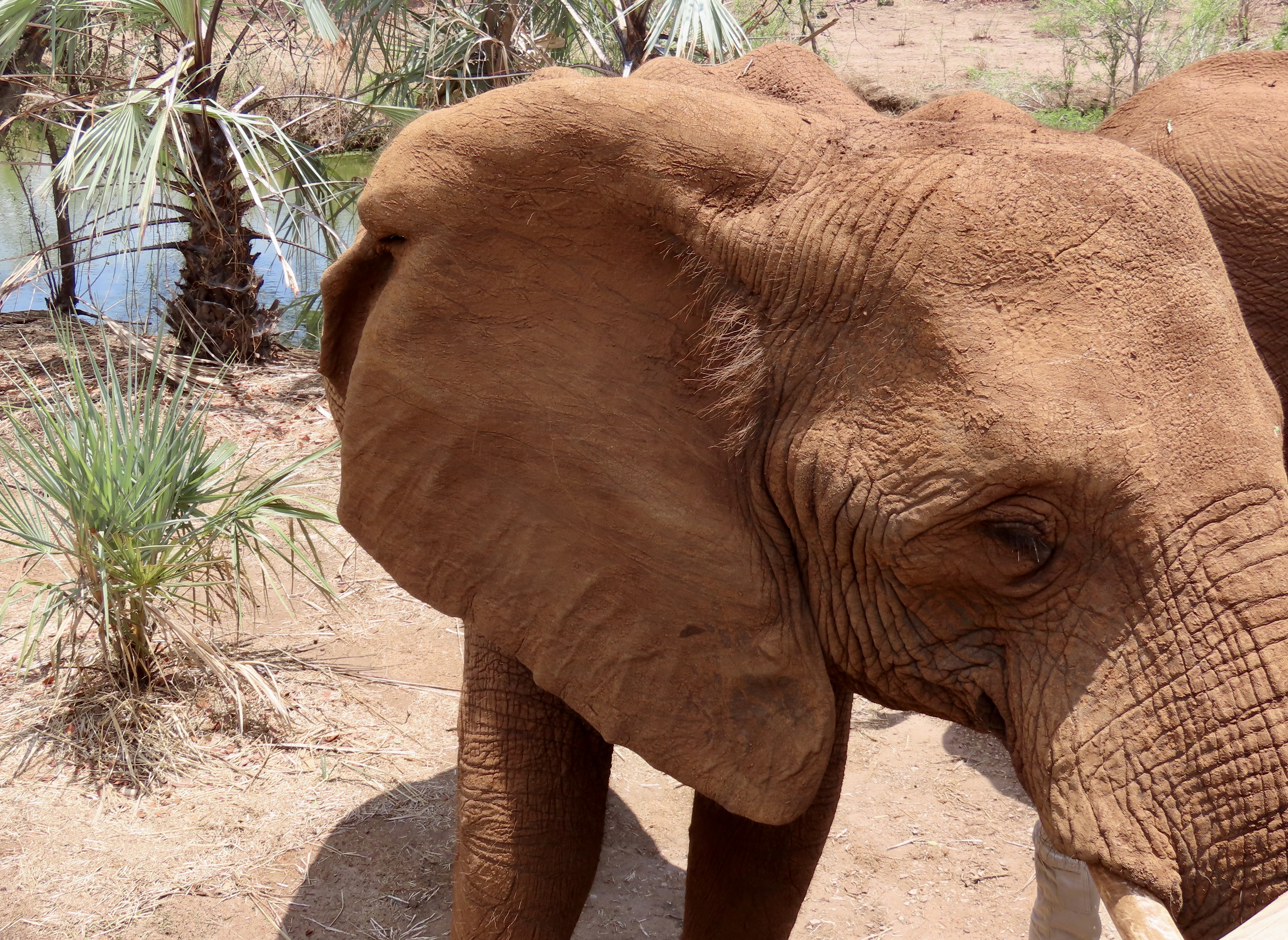
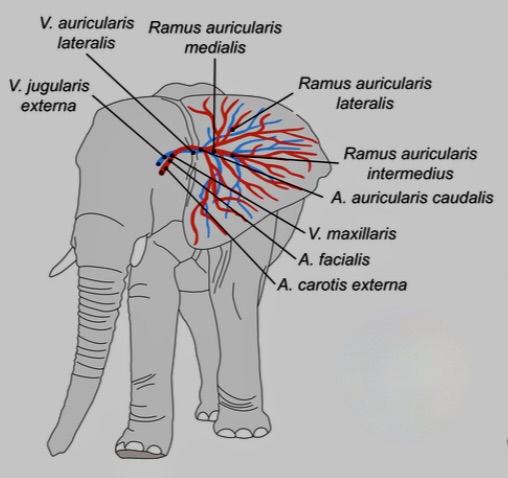
One look at this elephant and you might think it’s older than Methuselah given its wrinkles. Actually, even the youngsters have wrinkles. The cracked skin enables elephants to hold up to 5-10 times more moisture on their skin when they take water or mud baths than they would with smooth skin. As this moisture evaporates, it helps to cool the elephant. A close up of an elephant’s wrinkled skin. Note the hairs. There aren’t many, but scientists believe the thick, bristly hairs serve to transfer heat from the body into the atmosphere, especially if there is a breeze. The impact is apparently much greater than one might imagine.Ears are different. There are no lack of hairs there. (This youngster might also win a wrinkle contest.) While hair growing out of an older man’s ears serves little purpose other than ugly, elephants find them quite beneficial. In addition to keeping bugs and mud out, they also transfer heat and add to the cooling process that takes place in an elephant’s ears. Check out the blood vessels and veins in the elephant’s ear above. It’s packed with them. They are close to the surface and covered by a thin layer of skin. The system allows excess heat to escape from the blood vessels into the air and help to reduce the elephant’s core temperature. It is estimated that an elephant passes the blood in its body through its ears every 20 minutes. This illustration from ScienceGate provides another perspective.
Elephants enhance this process in various ways. Providing air to move the heat away and cool the ear is the most important. Elephants are known to stand in the wind with their ears out. The most common approach, however, is to flap their ears. In addition to providing a breeze for the ears, the flapping also fans the body and blows insects away. (I wish I could flap mine.) Watching a group of elephants crossing the savanna while flapping their ears is so common it’s iconic. Other methods include getting out of the sun and taking mud/water baths.
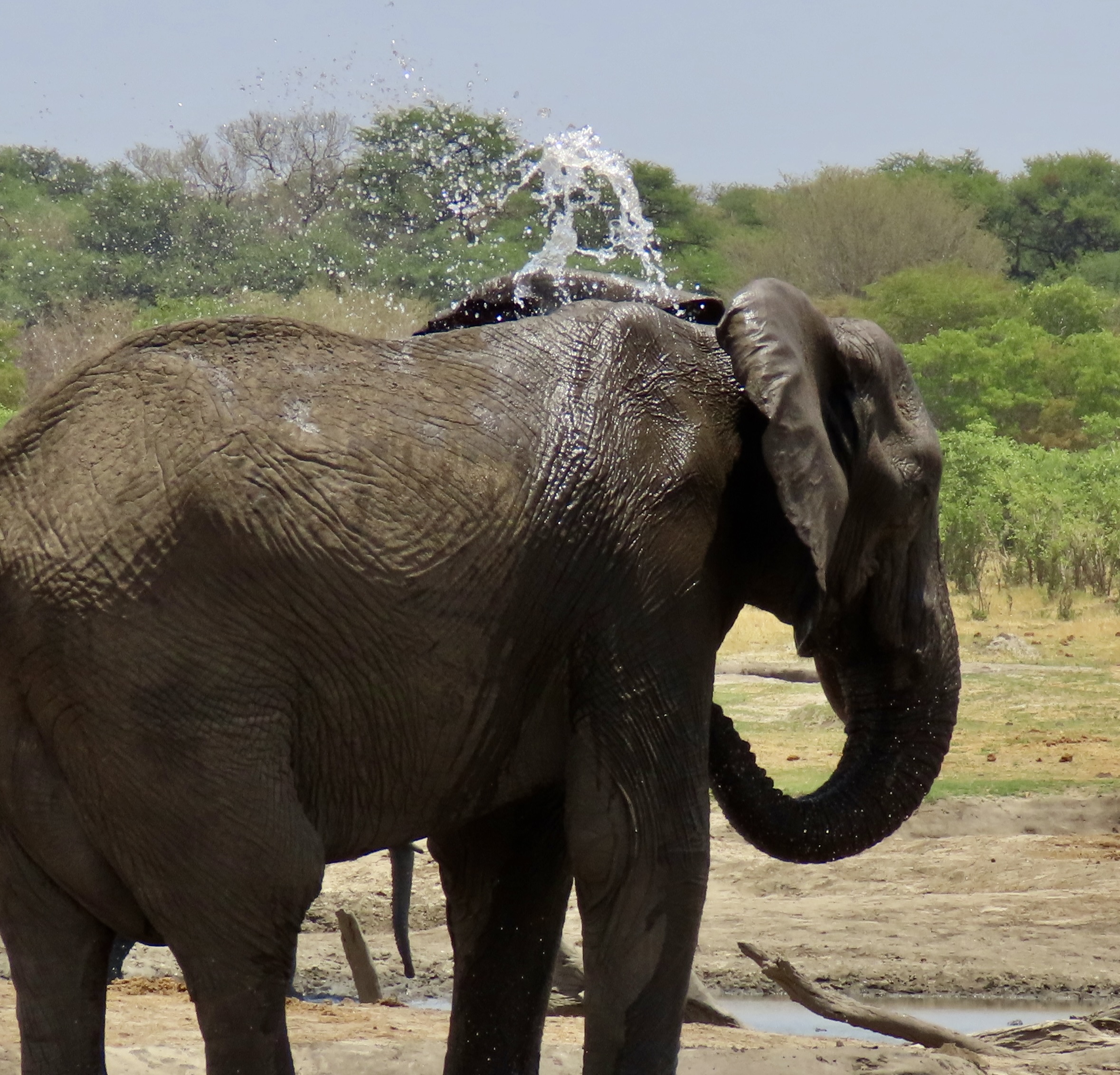
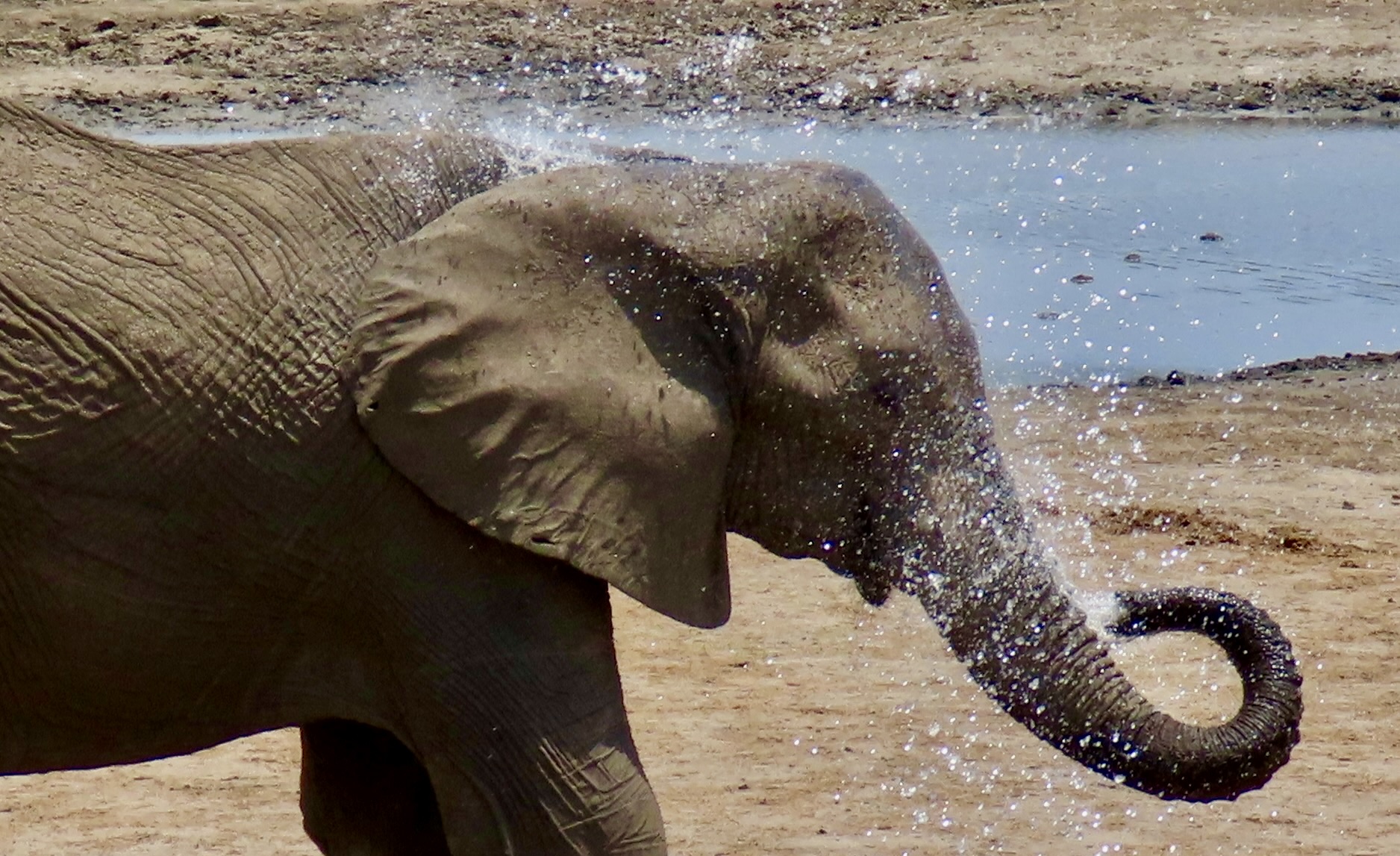
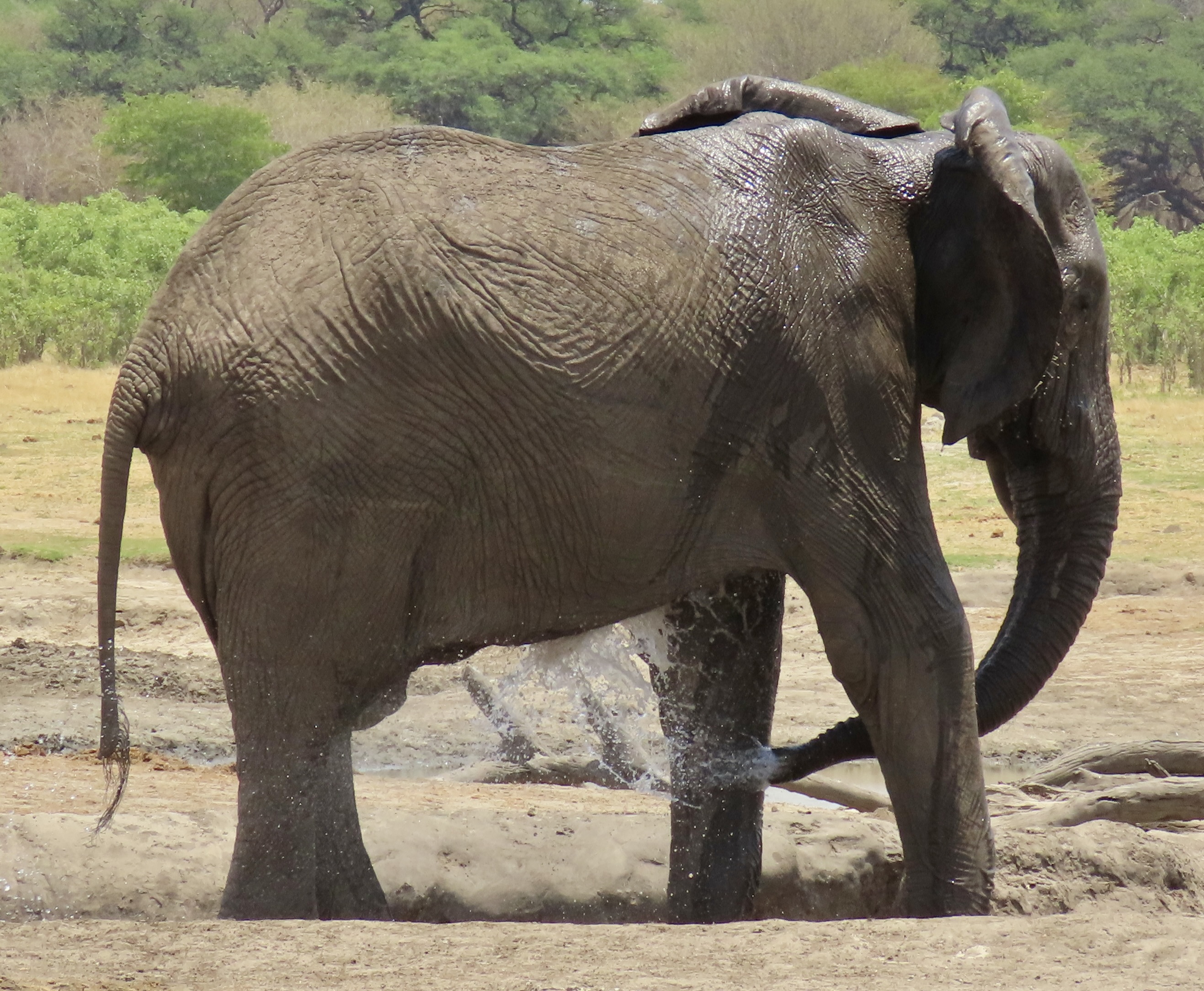
Returning to our elephant that was bathing and cooling down at a water hole in Hwange National Park in my last post, he paid special attention to spraying down his ears. Given the exposed blood vessels in his ears, it’s easy to understand why this might be an important part of his cooling down effort.
This caused me to think about another aspect of elephant behavior related to their ears. When the elephants came out of the mud bath I featured in my December 4 blog, they gave a vigorous shake to their ears. I thought at the time it was like, “Woohoo!” Thinking back, I wonder if they weren’t shaking the mud off of their ears. Given that the mud in general helps to keep them cool, protect them from sunburn, and frustrate biting bugs, why? My conclusion (for which I couldn’t find back up data) was that the mud coats their ears and reduces the ability of their blood vessels to transfer the heat to the air.
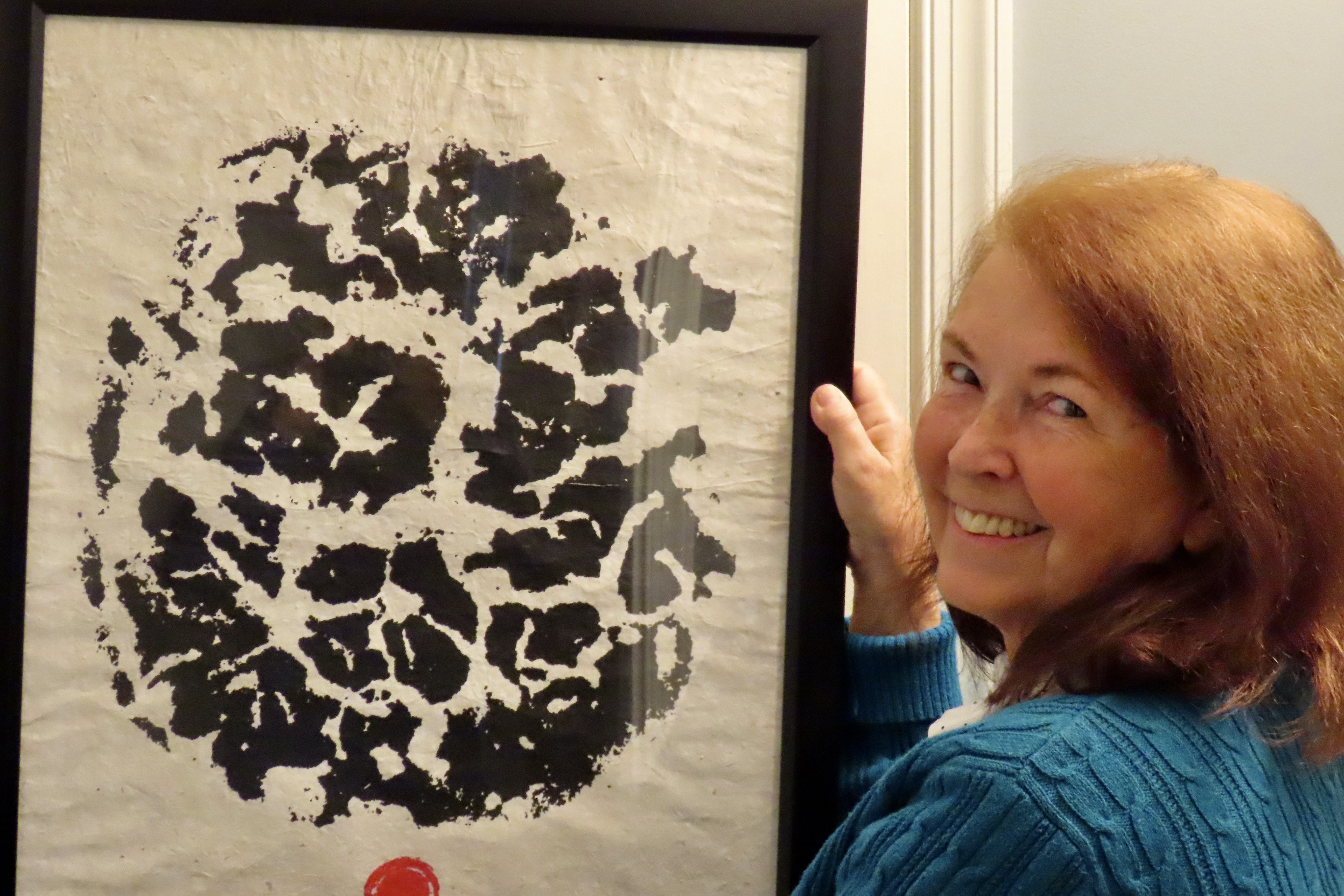
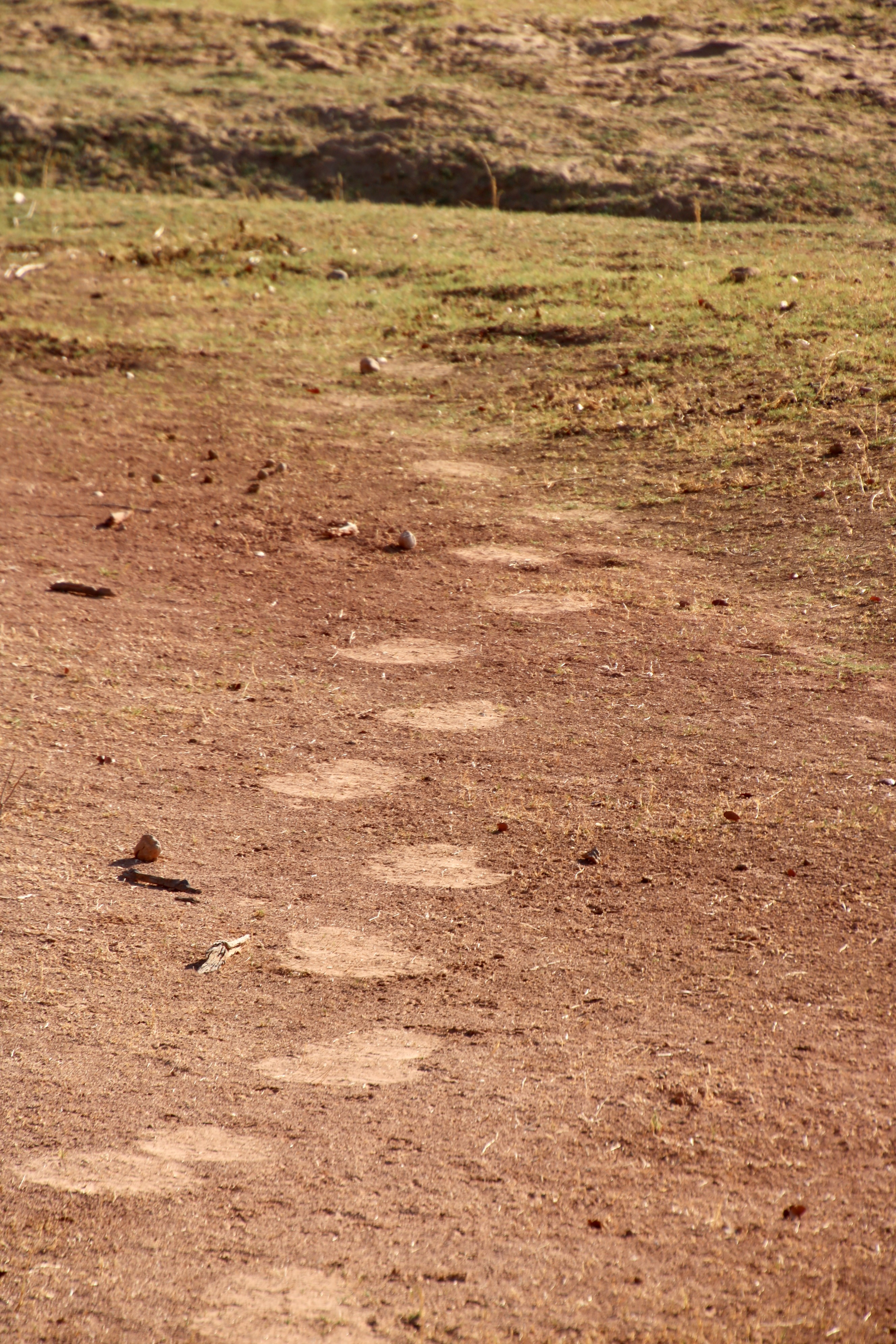
These elephants gave their ears a vigorous shake when they came out of the mud bath. Were they having a Woohoo moment, shaking the mud off, or doing something else?And now it’s time to turn to elephant’s feet. They’re big too, which shouldn’t come as any surprise considering they belong to animals weighing between 2 and 7 tons, the world’s largest land animals. This is an actual footprint of one that Peggy is holding up. It was made by Jumbo, the biggest elephant at the Wild Horizons Elephant Sanctuary, by pressing his inked foot down on paper. We bought the print and carried it home with us. The paper is rather unique in itself. It’s made out of recycled paper and elephant poop. To provide another perspective, this is my size 15 shoe next to a fresh elephant print. We came across it when we were on a safari walk with Terry Anders, who, along with his wife, Sheona, is the owner of the Iganyana Tent Camp located on the edge of Hwange National Park. Terry explained to us that its size indicated it was a large bull elephant. He also told us that each elephants footprint is unique like a fingerprint. Eventually the ridges wear down through extensive walking over varied terrain, providing an indication of the elephant’s age. Here’s what an elephant’s foot looks like close up. Like us, an elephant has five toes on each foot, but not all of the toes have toenails. It actually walks on its toes. A thick pad of gristle extends backward, working something like a shock absorber. The bottom line: This foot was made for walking, and walking it will do— up to 30 miles a day. And, if you irritate the elephant, it may walk all over you. (My apologies to Nancy Sinatra.)This is an elephant’s toe bone that Terry showed us when we were out on our safari walk.Tracking an elephant after a rainstorm would not be a problem!Elephants tend to follow the same routes to reach food and water, creating well worn paths.
Given the years I have spent wandering in the wilderness, I’ve always been interested in animal tracks. And that certainly applies to elephants. But what interests me the most about elephant feet is how they ‘hear’ with them via seismic communication. Caitlin O’Connell-Rodwel, a Stanford researcher, has been returning to the same elephant watering hole in Namibia for over 25 years figuring out how they do it. Her work has demonstrated that African elephants exchange information by emitting low-frequency sounds through their trunks that travel dozens of miles through the ground. She believes this communication is the key in understanding the dynamics of elephant groups. “Announcements” can include warnings, mating calls and navigation instructions, e.g. “Don’t be alarmed sweetie, but I would really like to make it with you under the acacia tree next to the pond.” In a more passive sense, elephants can also keep track of each other through the sound of each other’s foot steps.
They “listen” with their feet in two ways. One is through touch. Just like us, elephants have receptors in their skin known as Pacinian corpuscles that are hardwired to the brain. On an elephant these are located around the edge of their feet. When an elephant is picking up sounds/vibrations, it presses its feet onto the ground, expanding their surface by as much as 20%. Signals are then sent to the brain for processing. While this isn’t hearing exactly, the message gets through. A second method called bone conduction is closer to real hearing. The elephant jabs its big toes into the ground and the vibrations are carried up through its body via bones to the inner ear where they are heard like sound vibrations coming through the air.
And finally, we reach the tail end of this post. Grin. Tails on elephants serve just like tails on cattle: They swish them around a lot and keep the bugs away. But there is more. Almost everyone has seen photos of a baby elephant holding on to its mom’s tail. It serves the same purpose as moms and dads holding their younger children’s hands. It guides them and helps keep them out of trouble. Unfortunately, we didn’t see it on our trip. The mom also uses her tail to keep track of her baby when it isn’t holding her tail by feeling it with her tail. It’s a lot easier than turning around to check on junior. Finally, holding its tail up can signal that the elephant is fearful, highly playful or intensely excited. “Over here, Big Boy.”
At first, I had planned to do one blog on elephants, then it was two. Now it is three. They are just too fascinating, at least for me. Next time I’ll get more into family life, eyes, teeth, bones, and even poop— a single elephant can produce up to one ton in a week!
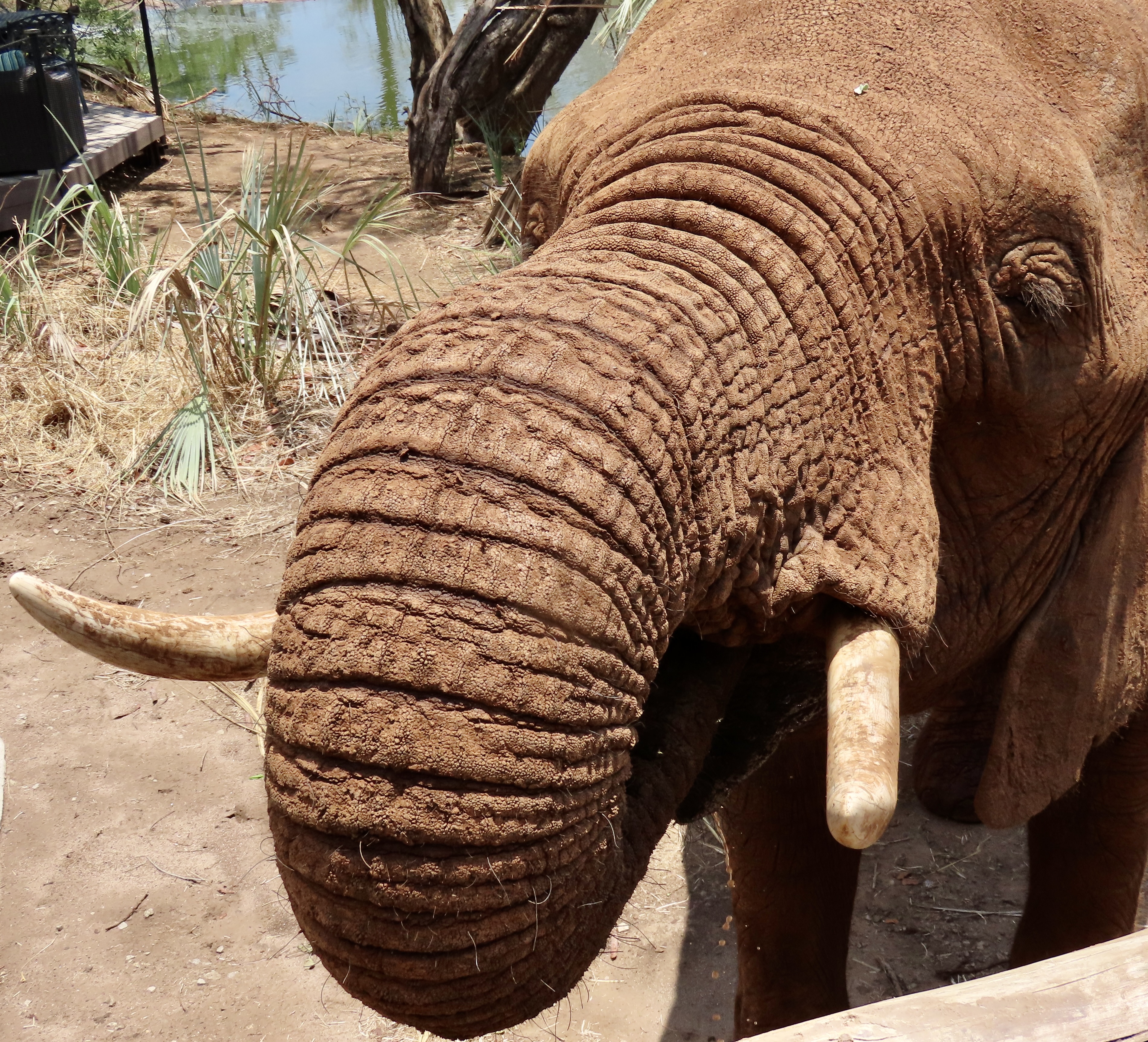
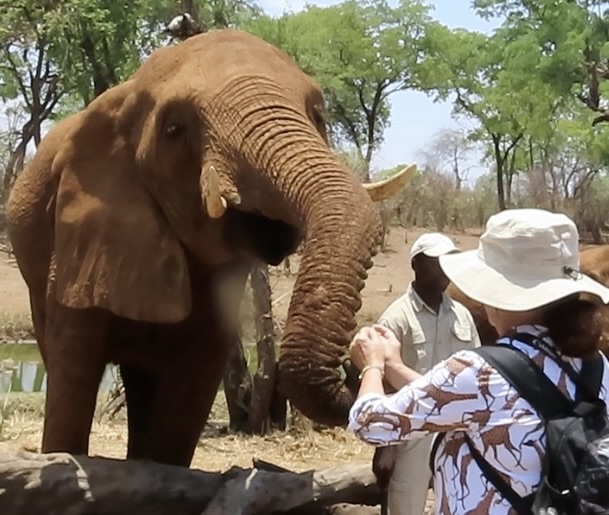
Elephants are fascinating creatures, no doubt about it, and one of the most fascinating things about an elephant is its trunk— which is the subject of today’s post. This one was waiting for Peggy to toss food into its mouth at the Wild Horizons Elephant Sanctuary and Orphanage just outside of Victoria Falls, Zambia. The elephants weren’t wild exactly, but definitely fun, interesting, and educational.
Peggy and I, along with our traveling companions, her brother John and his wife Frances, spent a lot of time watching and photographing elephants on our recent safari to Botswana, Zambia, and South Africa. Most of the time, they were doing something with their trunks. These marvelous appendages are used in breathing, smelling, eating, drinking, bathing and communication. Today’s post will focus on the trunk. My next post will consider other interesting facts about elephants, including their tails.
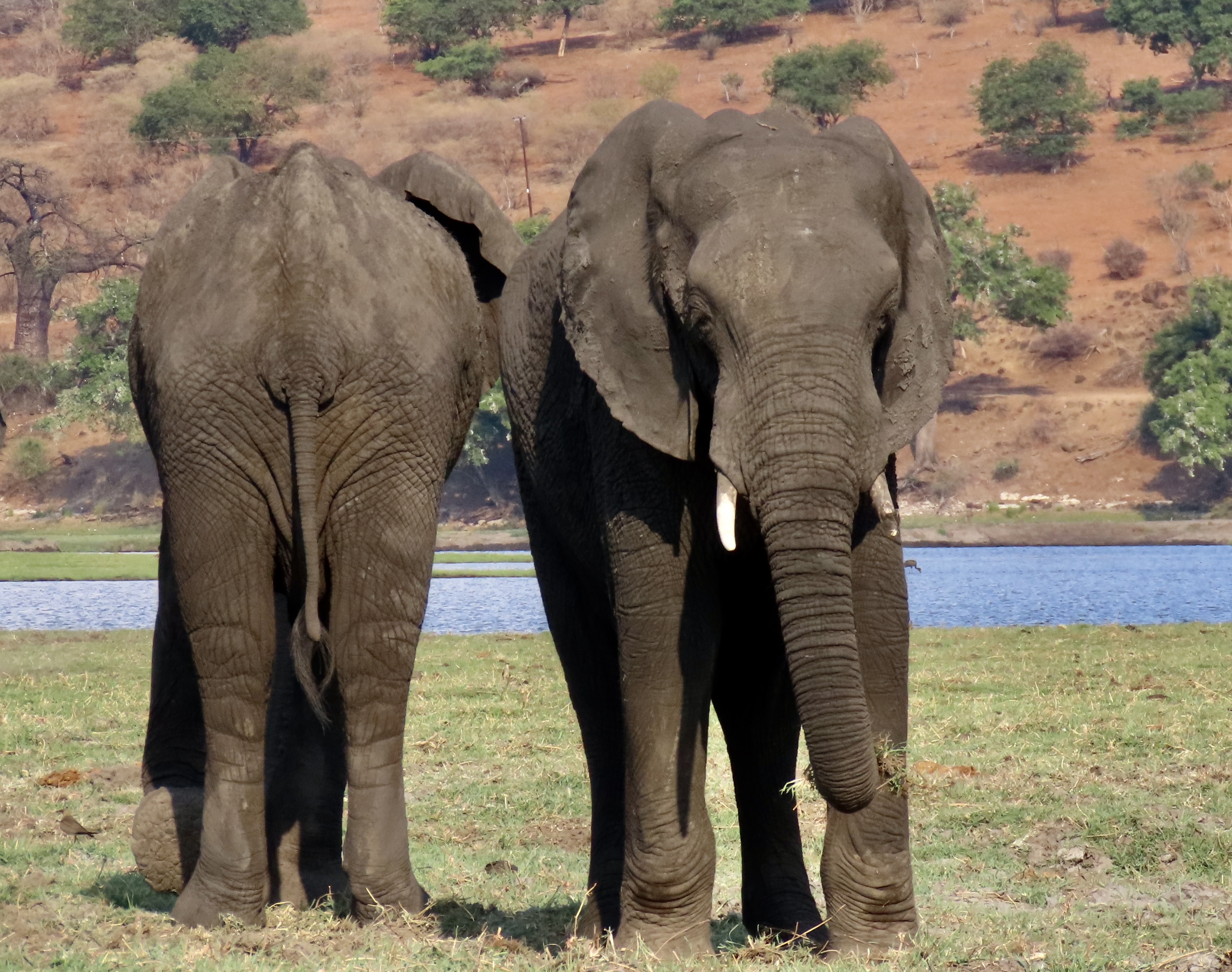
You know how hard it is to get a wild elephant to pose? Grin. We were more than satisfied to watch and photograph them wandering around doing elephant things. These two were focused on eating next to the Chobe River. But they also provided an excellent illustration for my next two posts that are going to be focused on looking at elephants from trunk to tail. It would have helped had they switched positions, but they didn’t listen to my suggestion. The elephant on the left is using her foot to kick the grass and free it from its roots. The one on the right is about to shake the dirt out of the grass she has gathered.
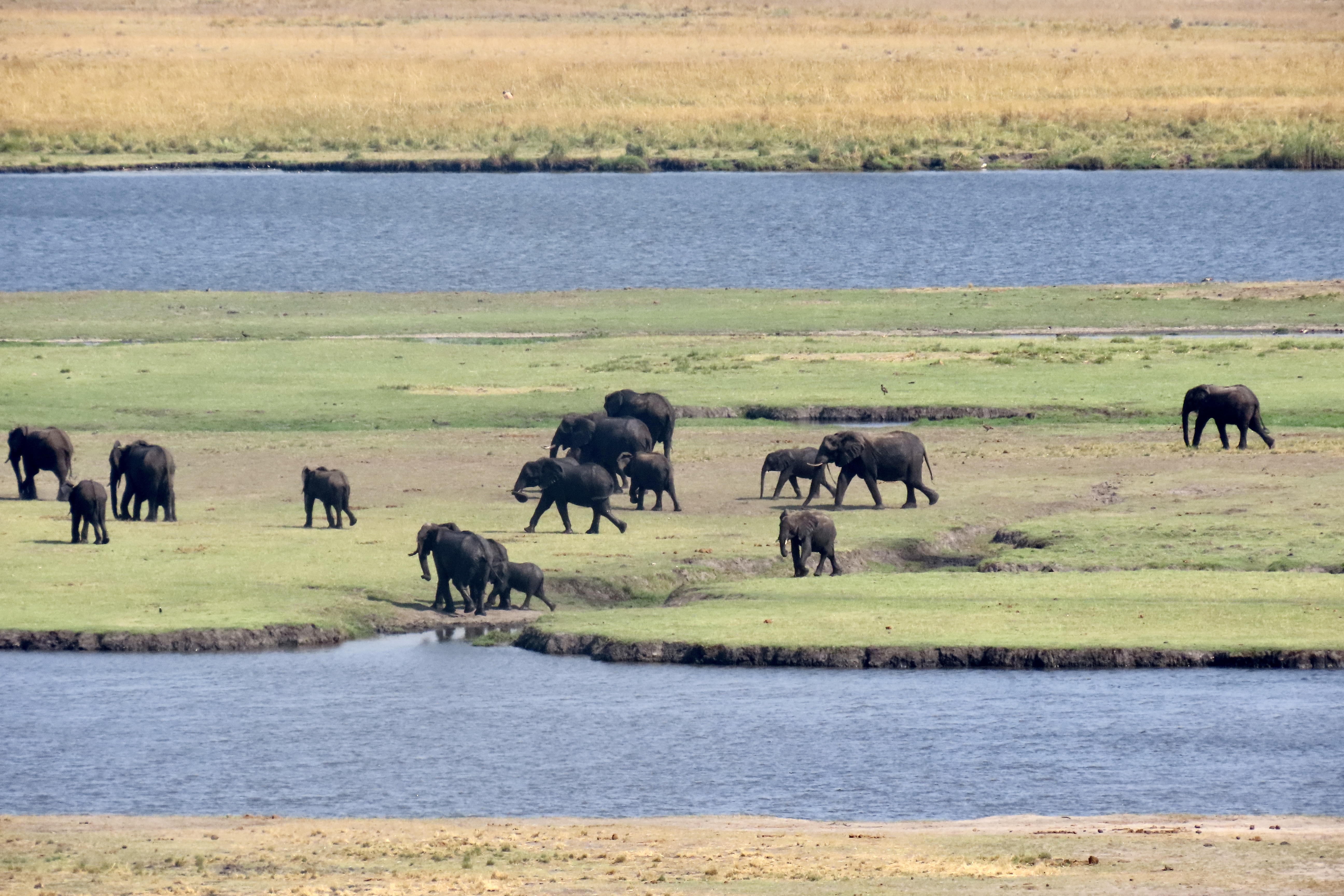
Our opportunity to watch and photograph elephants took place in four different locations. The first was Chobe National Park in Botswana. One of the Park’s claims to fame is that it supports the largest herd of free-ranging elephants in the Africa. Since we were at the end of the dry season, many of these elephants were located next to the Chobe River where they could get water and food. Viewing them was easy, particularly from boats. (Ours was docked at our safari lodge on the edge of the river.) Chobe is an excellent area to see wildlife. The only downside is that this means you will be sharing your experience with lots of other people.
There was no challenge finding elephants along the Chobe River in October at the end of dry season. With the coming rains, they will spread out across the park.
Hwange National Park and Matusadona National Park in Zimbabwe were the other two areas we watched wild elephants in their natural setting. Both parks had far fewer people on safari and were far less crowded. Slightly different, but excellent for meeting elephants up close, the Wild Horizons Sanctuary and Orphanage for Elephants just outside of Victoria Falls allowed us to interact with these giants of southern Africa’s velds. All of the elephant photos in this post and the next one were taken by Peggy and me in these four locations. I’ll start with the Sanctuary since we were able to get close ups of the trunks.
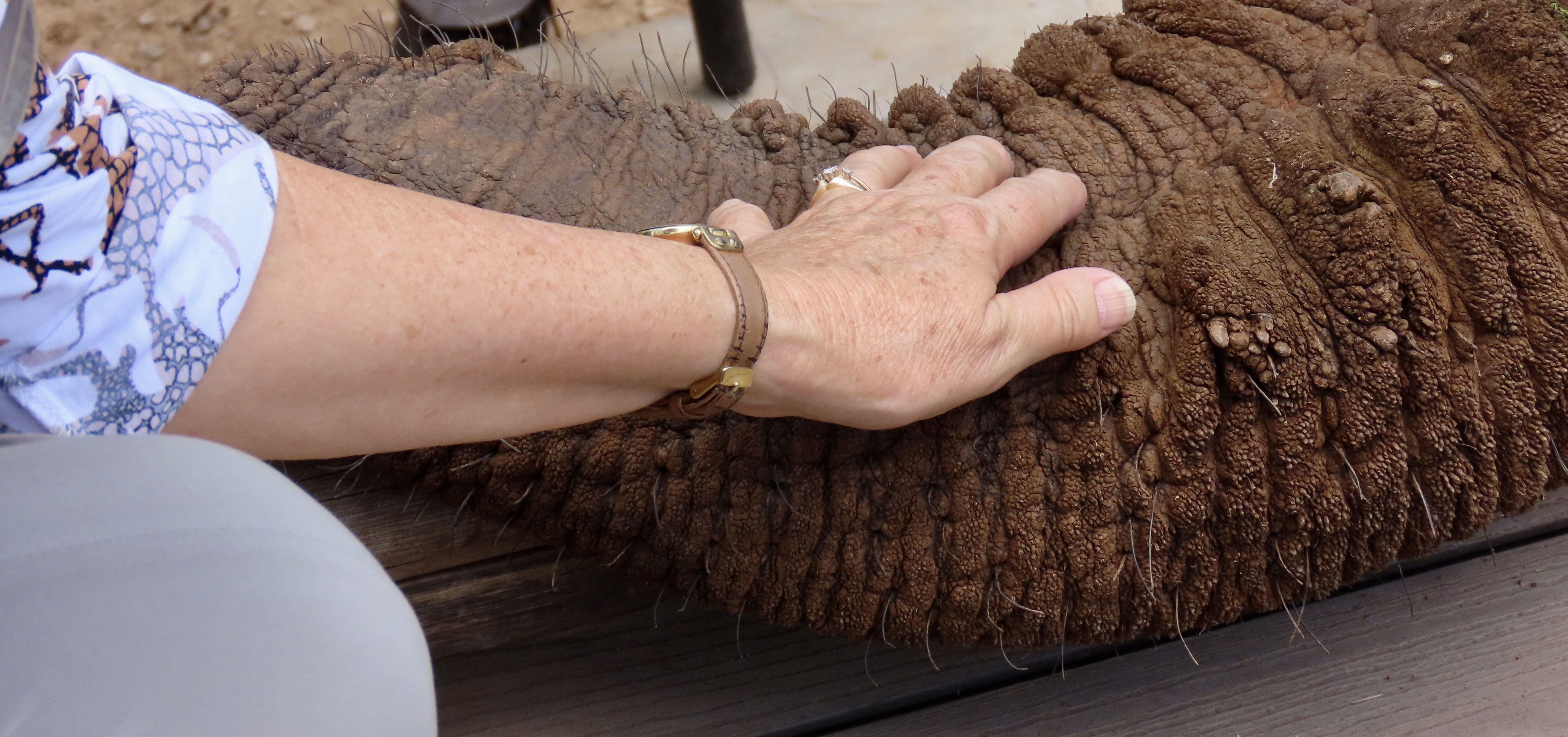
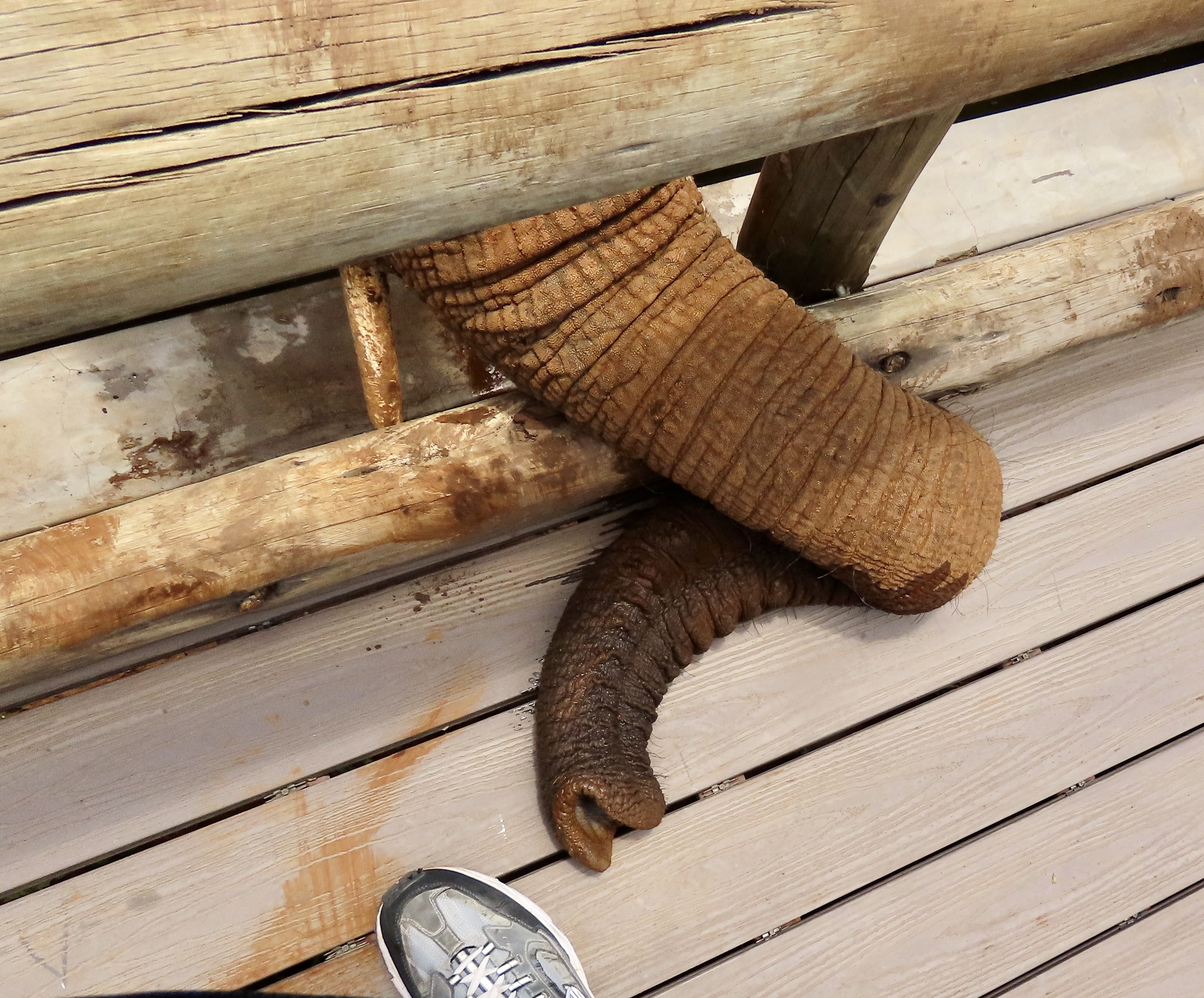
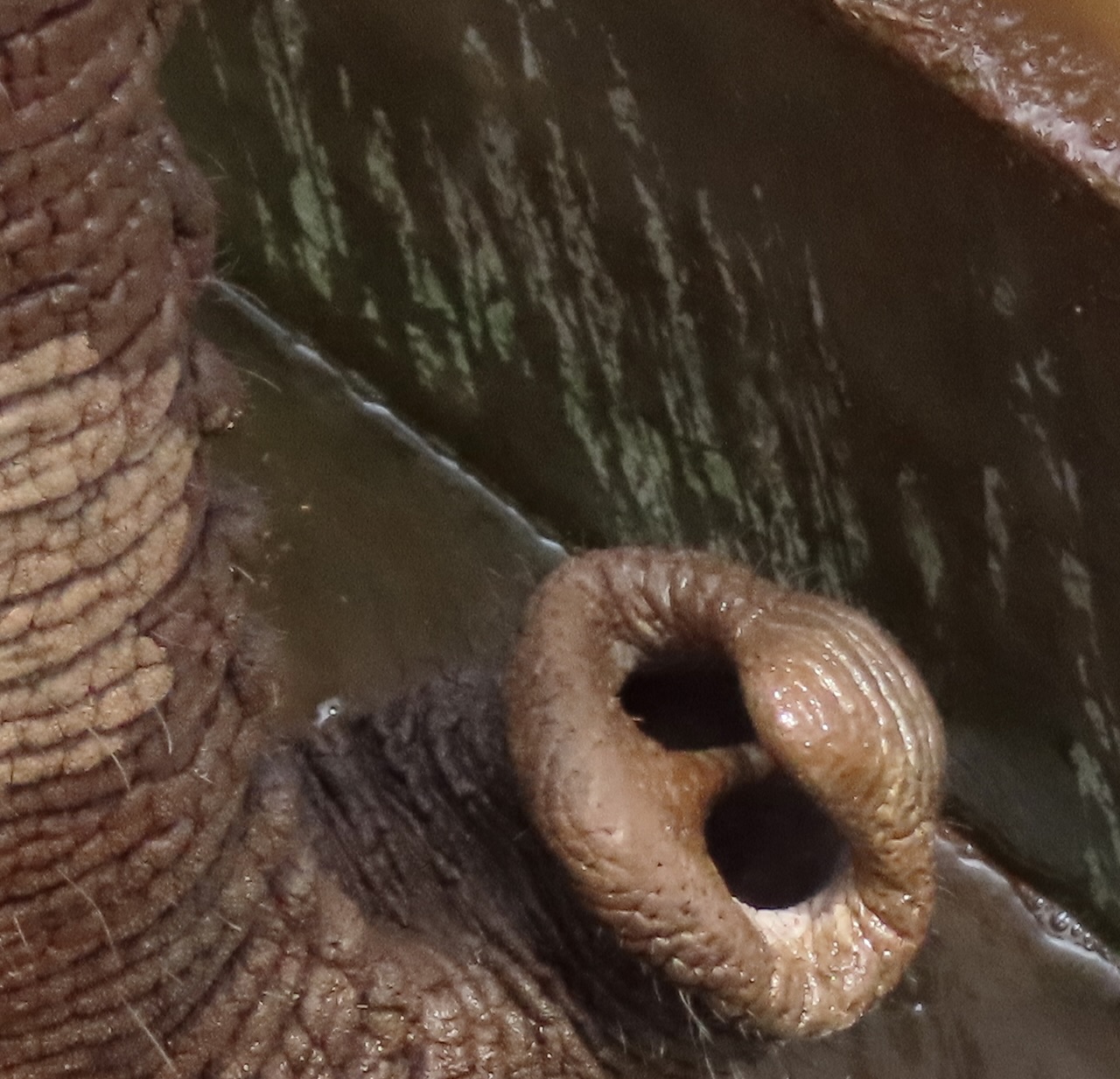
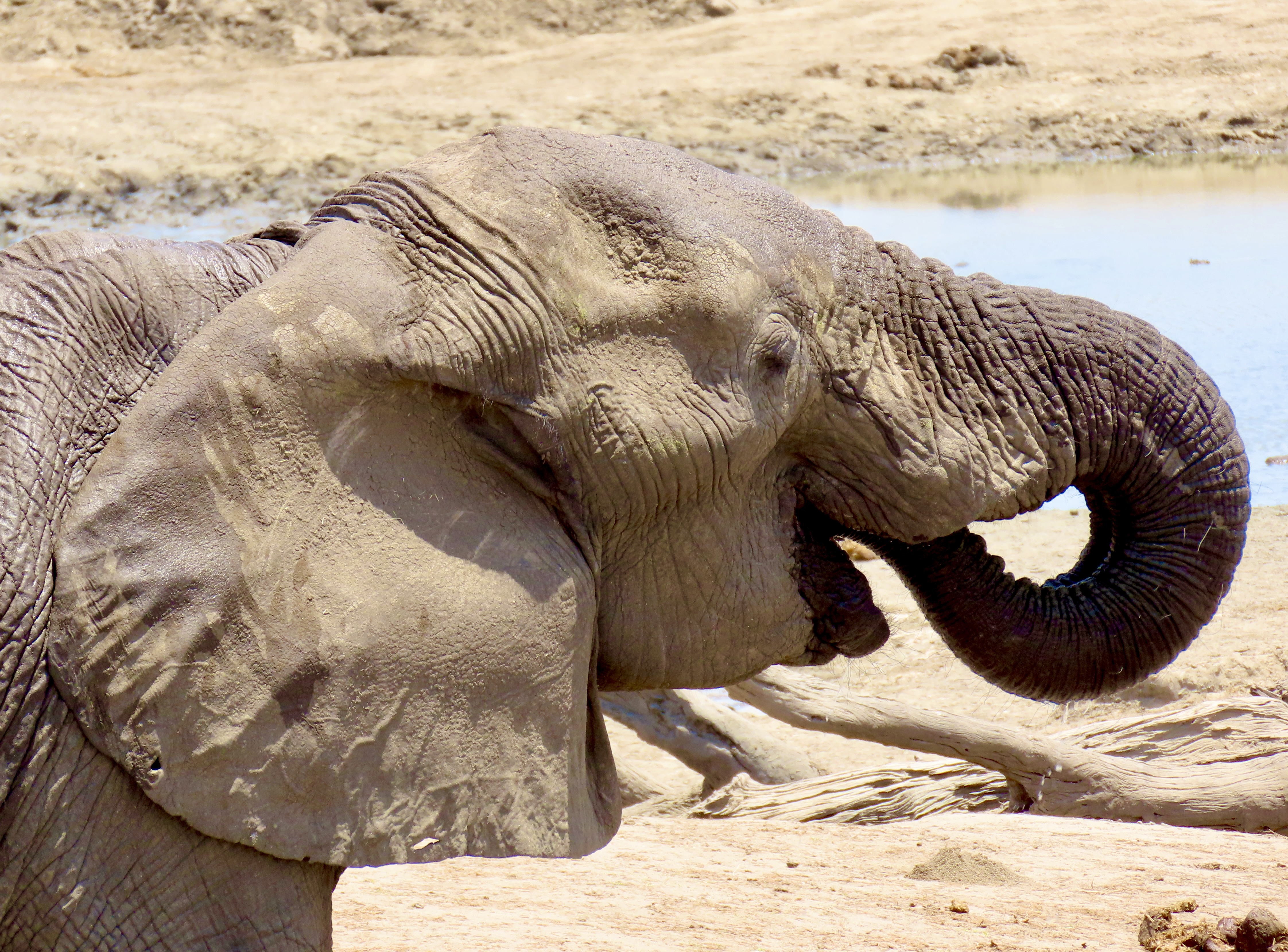
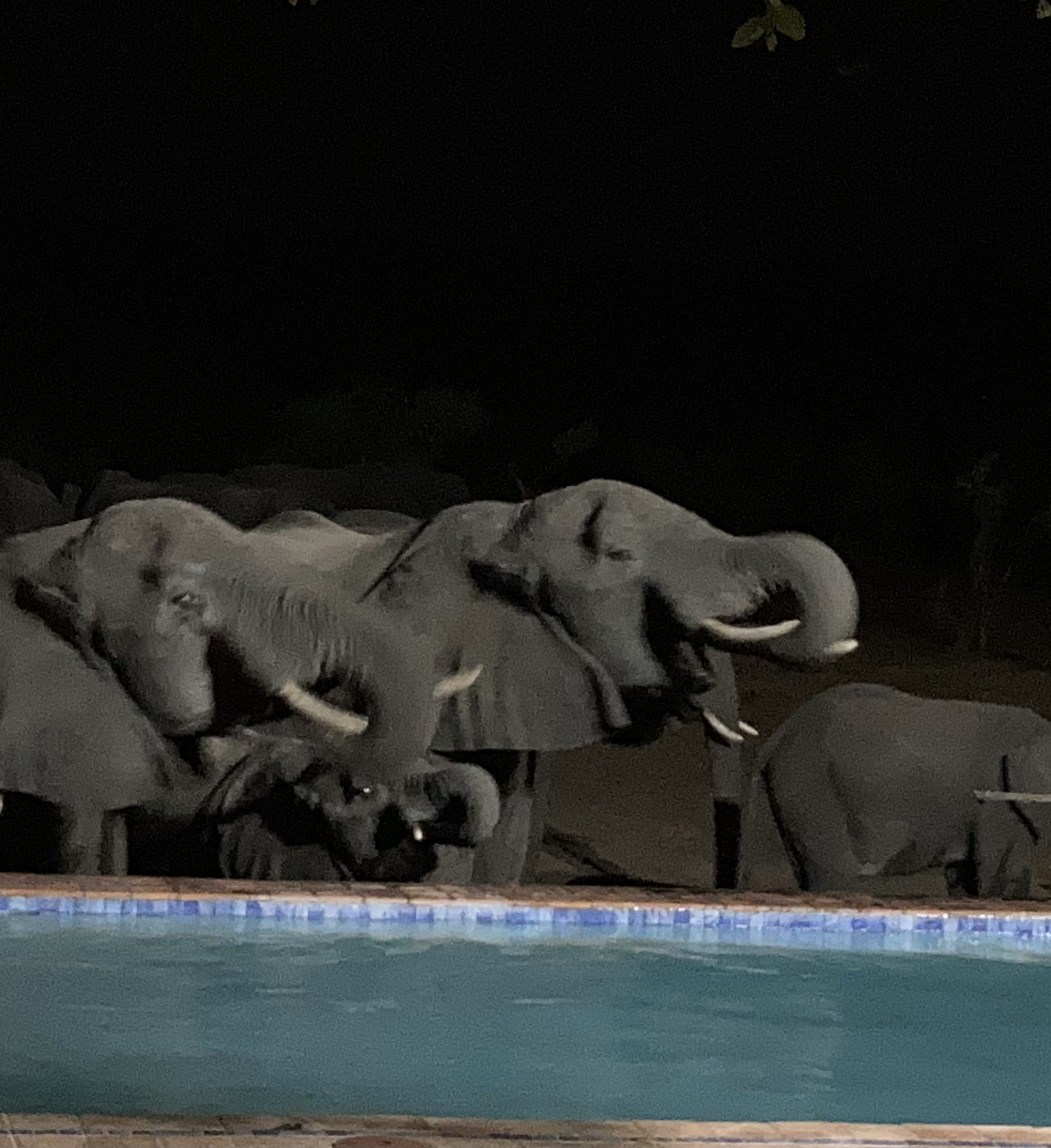
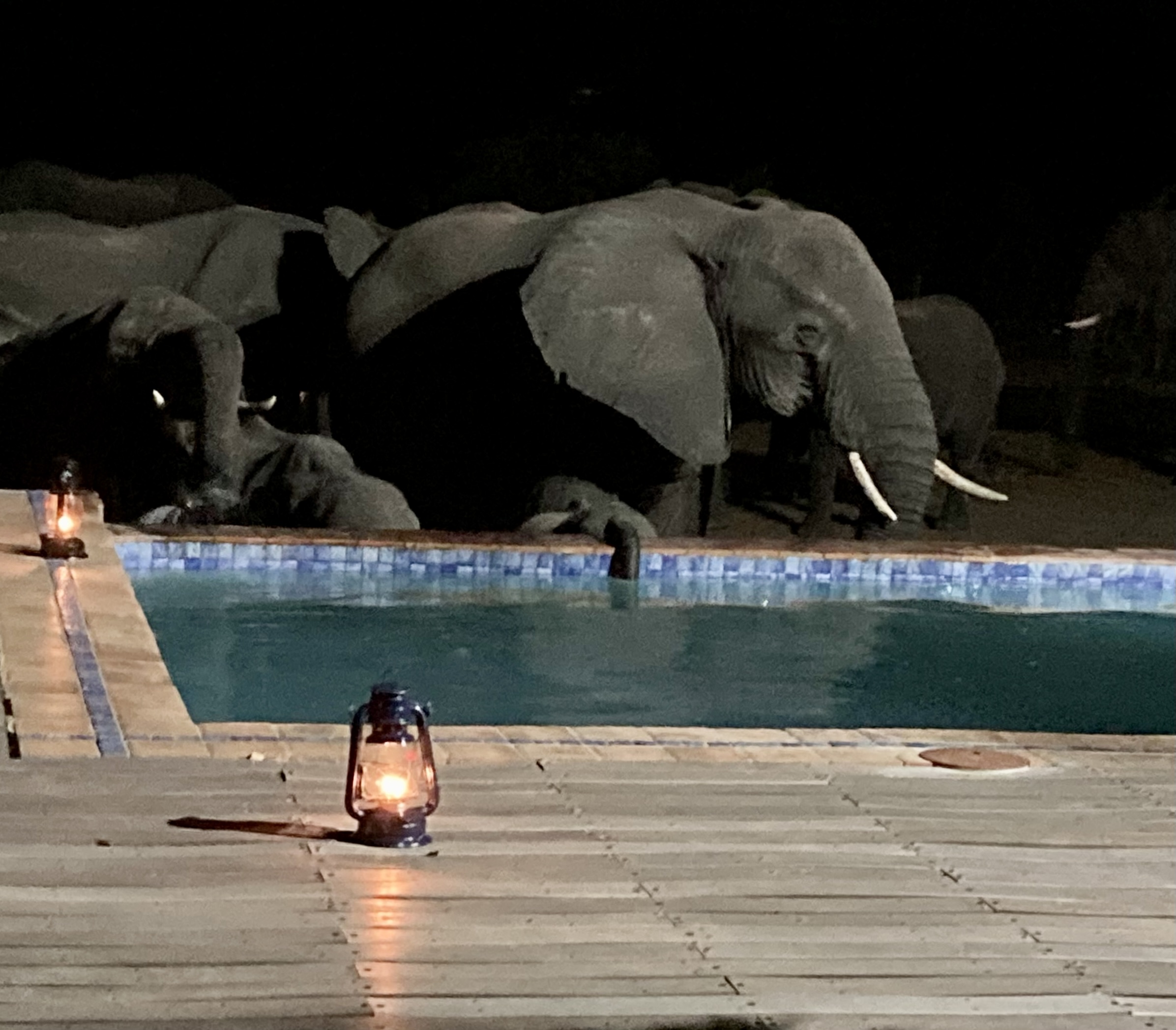
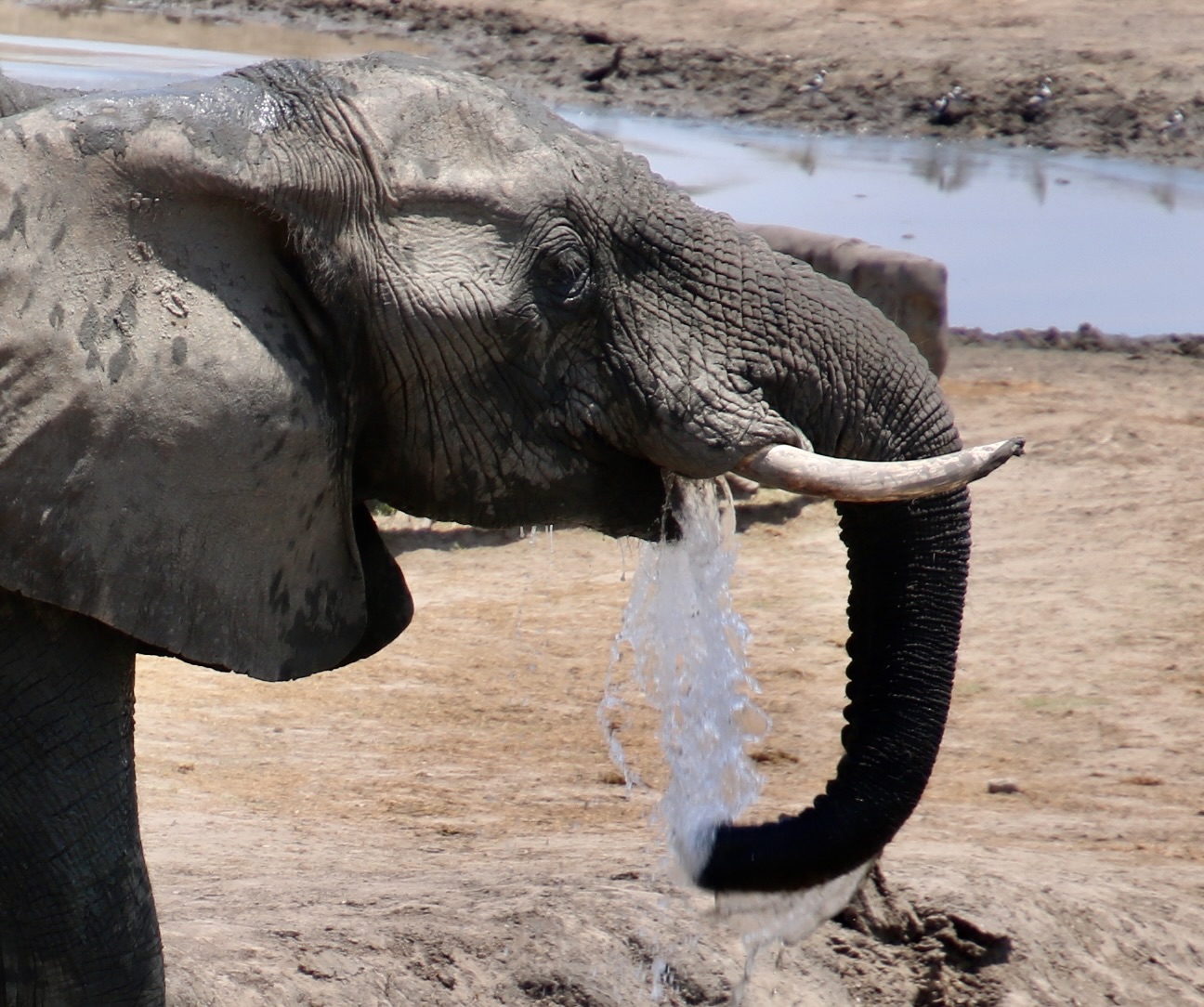
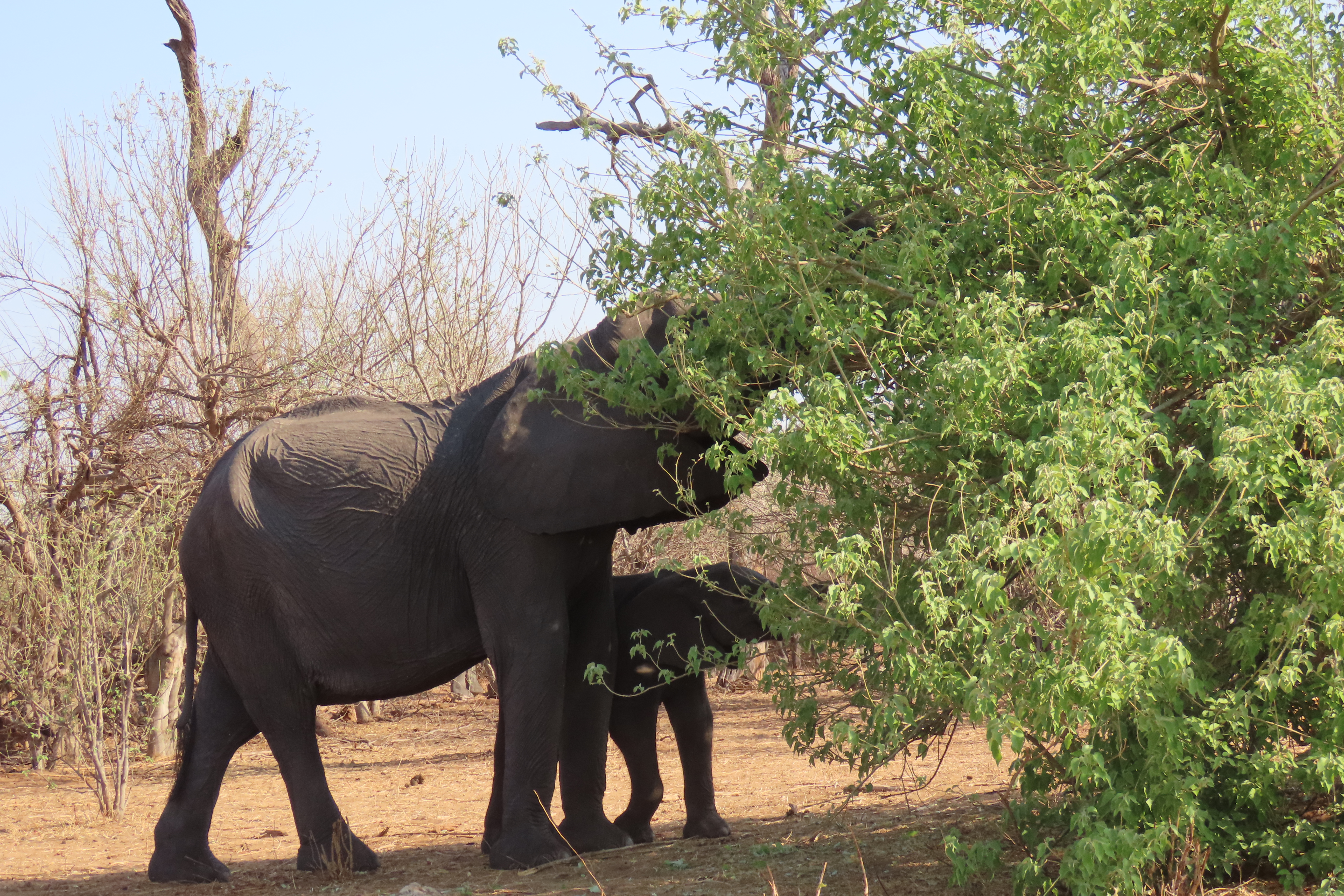
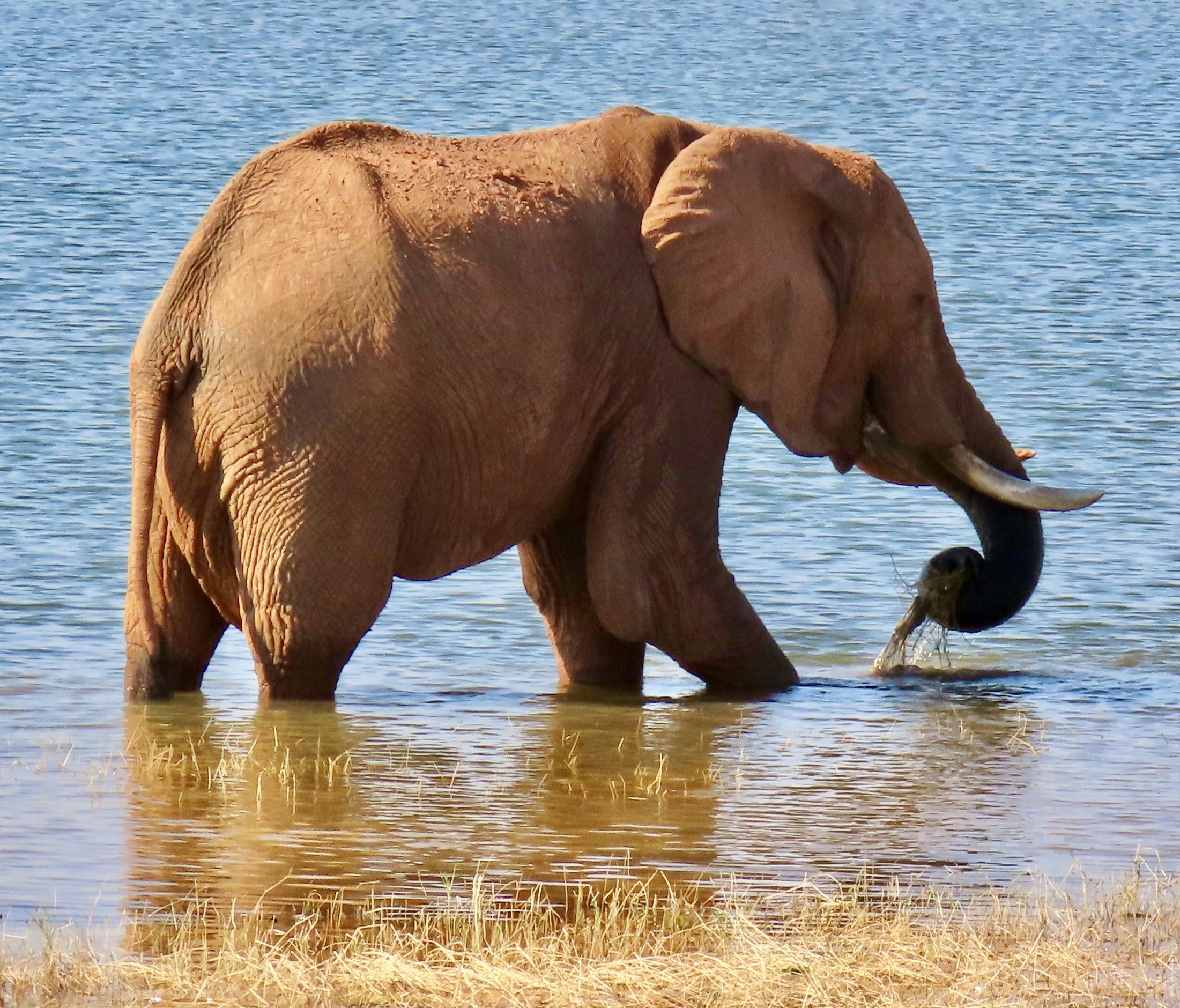
What’s impressive here is the large size of the trunk. The largest can reach up to seven feet. It’s easy to imagine why elephants need a large head and strong neck muscles to carry and use their trunks. While it may not be obvious, the trunk is an extension of the elephant’s upper lip and nose. While the elephant’s trunk is attached to head bones, there are no bones in the trunk. Instead there are lots of muscles. This arrangement is called a muscular hydrostat. Another example is our tongue. The muscles are impressive. There are 17 major muscle groups, 8 on each side and 1 up the middle. But in turn, these muscles are made up of sheathed groups of fibers known as fascicles. The latest estimate is there are around 90,000. When you see claims of an elephants trunk having 50-100,000 muscles, fascicles are what they are referring to. The major muscles and fascicles are what allow for the great flexibility and strength of an elephant’s trunk. The elephant can move it up, down, left and right, and even twist it in every direction, but it does have a dominant side. (Think left handed/right handed.)They can also lengthen, shorten and stiffen their trunks. Peggy is petting an elephant’s trunk near the tip at the Sanctuary. She described the skin as “hard and the hairs wire-like and sharp.” One would think that such an arrangement would lack in sensitivity. Quite the opposite. The trunk is packed with sensory cells and the wire-like hairs are particularly sensitive to touch and are known as sensory hairs.I looked down at the Sanctuary to see this elephant had slipped its trunk through the small fence that separated us and was checking out my shoe. I hope it got a good sniff— in addition to demonstrating the flexibility of its trunk.The tip of the trunk is particularly sensitive. The protrusions on the upper and lower lip work as fingers, enabling the elephant to pick things up. As one report noted, they can pick up a potato chip without crushing it. (Whether one should feed an elephant a potato chip is a different issue.) Now, it’s time to head back to the National Parks and watch the elephants at work using their trunks. Elephants don’t drink with their trunks. That would be like us drinking with our noses! But they do suck water into their trunk and squirt it into their mouth, like this thirsty fellow is doing. BTW: the trunk of a large elephant can hold up to two gallons of water.These guys were also drinking. This time out of a swimming pool at the Iganyana Tent Camp on the edge of Hwange National Park. They made their nocturnal visit while we were eating dinner next to the pool. (These ‘action’ photos were taken with our cell phone in the semi-dark, which accounts for the fuzzy look. I think it only enhances the drama of having 50 or so wild elephants provide dinner entertainment, however.)I thought the swimming pool watering hole deserved another photo because of the baby elephant in the middle trying to get its trunk into the water. It looked like mom ended up spraying some water into the little guy’s mouth.Speaking of shooting water into a mouth, this strange photo seems to show an elephant doing just that for itself. Or was it spitting the water out and sucking it in with its trunk? This is the same elephant I featured two photos above drinking in the normal way. Having finished its drink, the elephant gave itself a shower.Cooling down may have been the objective instead of bathing…So, are we talking hygiene or air conditioning?This is not an angry elephant about to charge. It’s rooting up grass with its foot to eat in Chobe National Park while flapping its ears to keep cool. Once the grass is loose, it will use its trunk to shake out the dirt and transfer the food to its mouth. Elephants eat a lot. Full grown elephants require up to 300 pounds of food a day.Stripping leaves from trees is another way elephants use their trunks to gather their food as mom and baby are doing here from this shrub.This elephant has learned it can pull up grass with its trunk on the edge of Lake Kariba In Matusadona National Park, Zimbabwe.One thing that we noticed in Hwange National Park was that the elephants were also using their trunks to grab grass and eat while they were walking.
In addition to eating, drinking, bathing and smelling, elephants also use their trunks to communicate in a variety of ways. One is a gentle touch to provide comfort to a fellow elephant or baby. They will even put the tip of their trunk in another elephant’s mouth. They also force air through their trunks to produce a variety of sounds. One is as a loud trumpet to express displeasure. They did that a couple of times when they were crowded together drinking out of the swimming pool. It certainly caught our attention.
I’ll conclude this post with Peggy placing food in an an elephant’s trunk at Wild Horizons Elephant Sanctuary. Next up, a look at an elephant’s family life, head, ears, tusks, feet, skin and tail. Plus a visit to an elephant graveyard.
This baby elephant had just wrapped up a mud bath in Chobe National Park, Botswana. It was about to become part of a dramatic rescue effort.
Today, I am starting my series of posts on Peggy and my recent safari to Botswana, Zimbabwe, and South Africa. It was an incredible adventure, one of our best ever. We owe a large vote of thanks to Peggy’s brother John and his wife Frances for asking us if we would like to join them on the Collette Travel Agency organized trip. Along the way, we visited four national parks, Victoria Falls and Cape Town— staying in accommodations that ranged from a safari lodge, to a tent camp, to a house boat, and comfortable hotels.
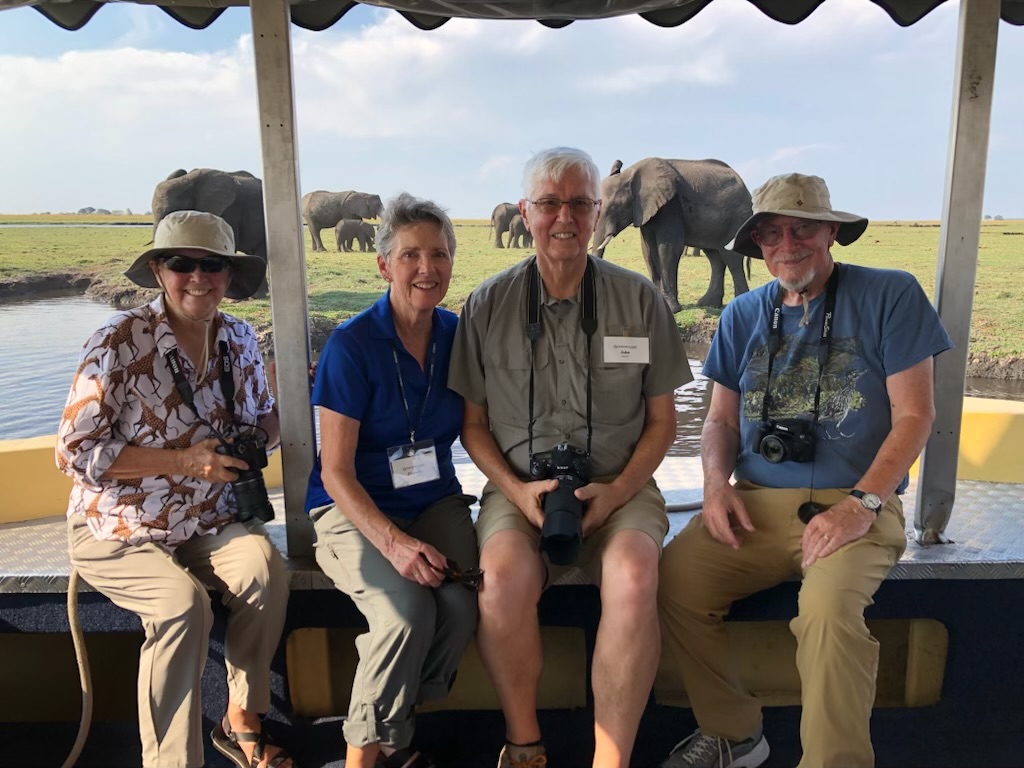
Peggy, Frances, John and I with an elephant backdrop on safari in Chobe National Park, Botswana. We were in an open-sided river boat on the Chobe River that provided great views of the wildlife. Since elephants are my subject for the next three posts, I decided repost this photo I used in my last blog.
As for the wildlife we saw? It was incredible! That’s the only way I can think to describe it. In addition to seeing a great variety, we watched them going about their daily business of eating, sleeping, fighting, breeding and even pooping. (Elephants do a lot and hippos whirl their tails like a fan when going. It’s best not get caught in the splatter zone.) What we hadn’t expected to see was the colorful birdlife. It was a plus. Our guides also went out of their way to introduce us to local African culture, which I appreciated a lot, given my service as a Peace Corps Volunteer in Africa.
While we weren’t on a photographic safari, per se, we took a few. Make that 5,000. Grin. We will share some of the best. Exploring in open safari vehicles and boats, plus a “walking safari” provided excellent opportunities for both observation and photography. Our approach will be to feature one animal per blog for the major animals and then move to combined posts for the the birds and animals we saw fewer of.
I’m starting today with elephants. I was going to do two posts on these large, intelligent, family oriented animals but decided on three after I noted a rescue effort by family members when I was reviewing our photos of elephants enjoying a mud bath in Chobe National Park. It reflects an important aspect of how elephants care for one another.
But first, let me begin by noting that elephants take lots of baths, both by cavorting in mud and spraying water (and muddy water!) on themselves. Getting clean isn’t the objective, obviously. With minimal hair and few sweat glands, keeping cool in the hot African sun isn’t easy. The mud baths provide an opportunity to cool down, but they also serve as sunblock, and, to a degree, insect repellent. Elephants can get sunburned. And what blood sucking bug wants a mouthful of mud?
Many of the elephants we saw had mud caked on their wrinkly skin like this one in Matusadona National Park, Zimbabwe.This family of elephants had been grazing on an island in the Chobe River and then crossed over to the shore through the river. Along the way, they had washed off much of their mud. It was time for another mud bath. The bath was located conveniently on their way back into the trees where they would feed on leaves, even if they had to knock over trees to get them. Mom, and the baby shown at the beginning of the post, seem to be having a grand time. Not all was well, with the family, however. One was down and obviously having problems, possibly with a rock embedded in her foot. A concerted rescue effort was about to take place. Members of the family were able to persuade her to stand up and worked out a plan. What happened next was dramatic, to say the least. At first I thought that all of the elephants had crowded together to share the mud hole. Now I am convinced that they joined together to help push the young female out of the hole. Even the calf was lending a shoulder. The young male on the right may have been offering a trunk for support. The adults, having achieved their objective of starting the injured elephant on her way, moved on. The two younger elephants continued to provide support.But then, she fell again, despite their boost…And ended up back in the hole. The youngsters switched locations to encourage her to get up again.And put their whole bodies into the effort.They succeeded and she began crawling out on her own. It wasn’t easy.Note how she is using her trunk for leverage and balance, pulling it toward her and making the dust fly. I’ll write more about this marvelous appendage in my next two posts.Between pulling with her front legs and pushing with her hind legs while using her trunk for balance, she inched toward success. The other elephants moving on likely provided incentive.Finally, she made it! Ears flapping she rushed off to catch up with her family.
Searching on the net, I found where moms help their babies out when they are stuck in mud holes. I also read that when an adult went down, possibly because of old age, the other elephants gather around and help it stand, leaning in to provide support. Such behavior suggests the caring, empathetic nature of elephants. My post today provides a unique example, particularly the role played by the younger elephants.
I’ll conclude today by providing an example of another mud bath, this time traveling into Hwange National Park in Zimbabwe. Several artificial water holes have been established in the park to provide wildlife with water in dry season. It also serves to spread the animals out to reduce overgrazing. Peggy and I took these photos from an observation tower that had been set up beside one of the water holes.
One elephant left its bath while another remained, seeming to play submarine and blow bubbles. Actually, it was using its trunk and possibly its tusks and feet to stir up mud for its mud bath. Having stirred up enough, the elephant surfaced. We were amused by the secretary bird who seemed shocked to see this ‘dark creature rising from the black lagoon.’It seemed to offer a salute. Maybe it was scratching its head… And who knows what it was up to with this pose. The photo-bombing secretary bird didn’t seem impressed.It finished off its bath by spraying itself with muddy water it had sucked into its trunk. I’ll leave you with the vision. In our next post, we’ll continue to explore the fascinating world of elephants, plus visit an elephant graveyard.
Come on in, the water’s fine. How fast can you swim? I can manage 5 miles per mile galloping along the bottom and 19 miles per hour on land.
It took me a while to get back to Africa after my Peace Corps assignment there from 1965-67. When my feet first touched African soil at Roberts Field in Liberia, Peace Corps was a baby of four and I barely qualified as a young adult at 22. That was 58 years ago. I always wanted to go back, but there was a lifetime of other things that needed to be seen and done…
A very young me as a Peace Corps Volunteer in Gbarnga, Liberia in 1967 with the senior class. I taught African History, World History and World Geography at Gboveh High School. My students took top national honors in Social Studies that year.
Peggy and I made up for our lack of African travel this year. In February we flew off to Egypt and boated up the Nile to celebrate my 80th birthday. It was an incredible experience, packed with ancient history and magnificent structures stretching back over 5000 years.
Peggy and I doing the tourist thing after we had just re-entered the world of the living from our trip deep under the pyramid of Khafre at Giza.
Now, we have just returned from a journey to the southern part of the African continent that included national parks in Botswana and Zimbabwe, Lake Kariba, Victoria Falls and Cape Town. It was equal to, if not more impressive than our Egypt adventure. Imagine a herd of several dozen wild elephants joining us for dinner by drinking out of a swimming pool located next to our dining table.
Elephants kept arriving to drink out of the swimming pool which was located about 20 feet away from our dining table at Iganyana Tented Camp in Hwange National Park, Zimbabwe. One group would finish and another would arrive to take its place. This went on for at least an hour. I was kept busy with our iPhone taking photos. Best dinner show we have ever had!
Our recent trip started with a call from Peggy’s brother, John Dallen. Eleven years ago we took a delightful repositioning cruise with him, his wife Frances and friends Lee and Kathy Saaga, exploring the Mediterranean before sailing across the Atlantic back home. Since then, John has called several times with offers to join Frances and him in exploring the world. There were some great trips. But, as John likes to note, our travel styles differ substantially. If he is going to be out for six months, each day is carefully planned and reservations made, normally at four and five star hotels. If Peggy and I travel for six months, we have a vague idea of where we are going and make reservations a day in advance, if then. We once travelled for a year without making one. Our normal mode of travel is with a van or small travel trailer— or, putting our backpacks on and disappearing into the wilderness.
Frances, John, Peggy, Kathy and Lee in Santorini, one of the many places we visited in the Mediterranean.
This time, John made us an offer we couldn’t refuse. “Would you like to go on an African safari with us?” It took us five seconds to say yes. There would be hippos and lions and elephants to see, not to mention leopards, wart hogs, baboons and numerous other animals and birds. I will be featuring the places we visited and the wildlife we saw in our next several posts.
Today’s photos will give you a taste of what to expect. Peggy was traveling with her usual camera, a Canon EOS Rebel with a 20 to 300 mm Tamron lens. For Africa, I upgraded from my pocket Canon Power Shot to a different version, a Canon Power Shot SX 70 HS. Due to the miracle of modern technology it comes with a 21 to 1365 35mm equivalent lens and weighs just over a pound. It made it possible for us to capture photos like the hippo above.
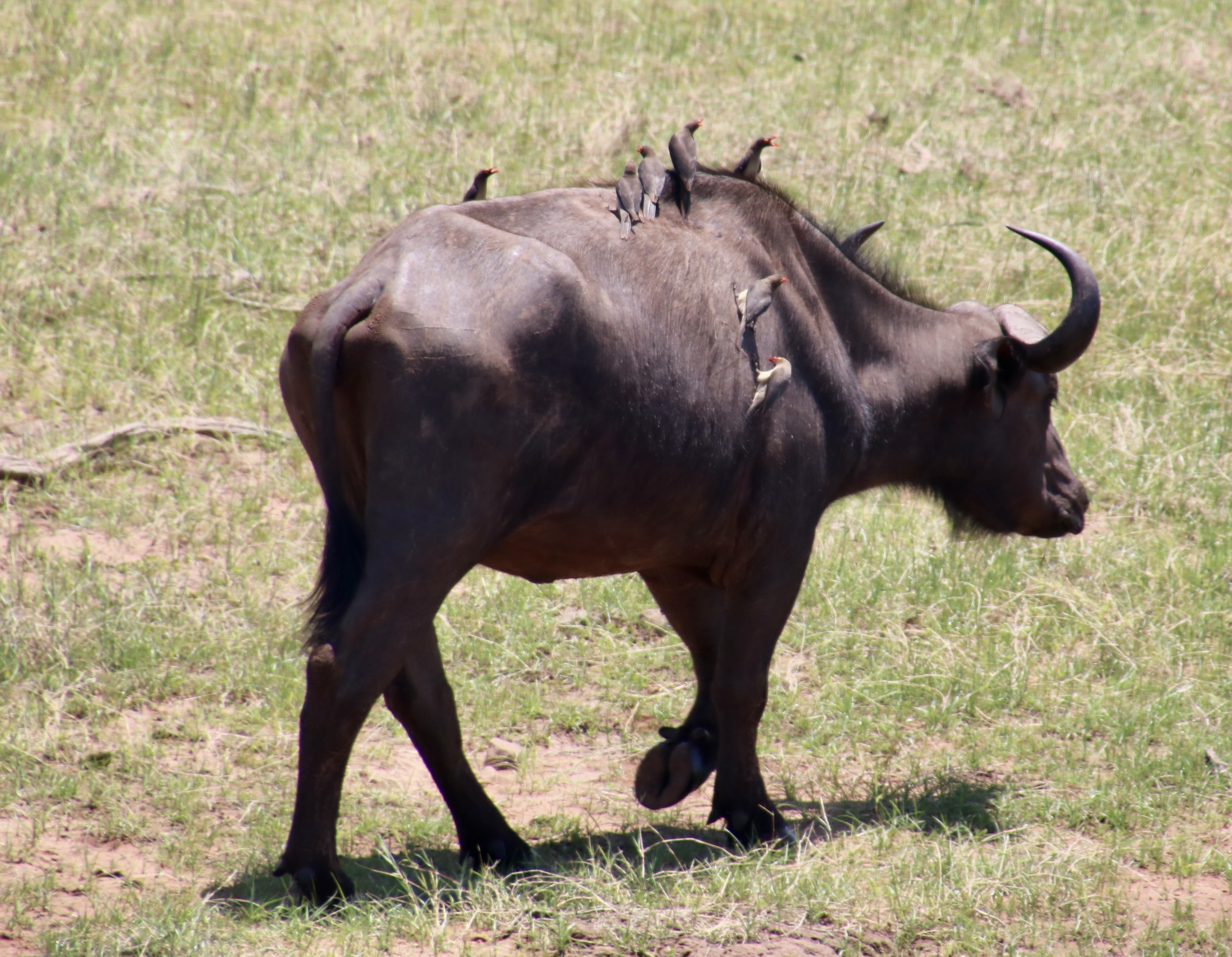
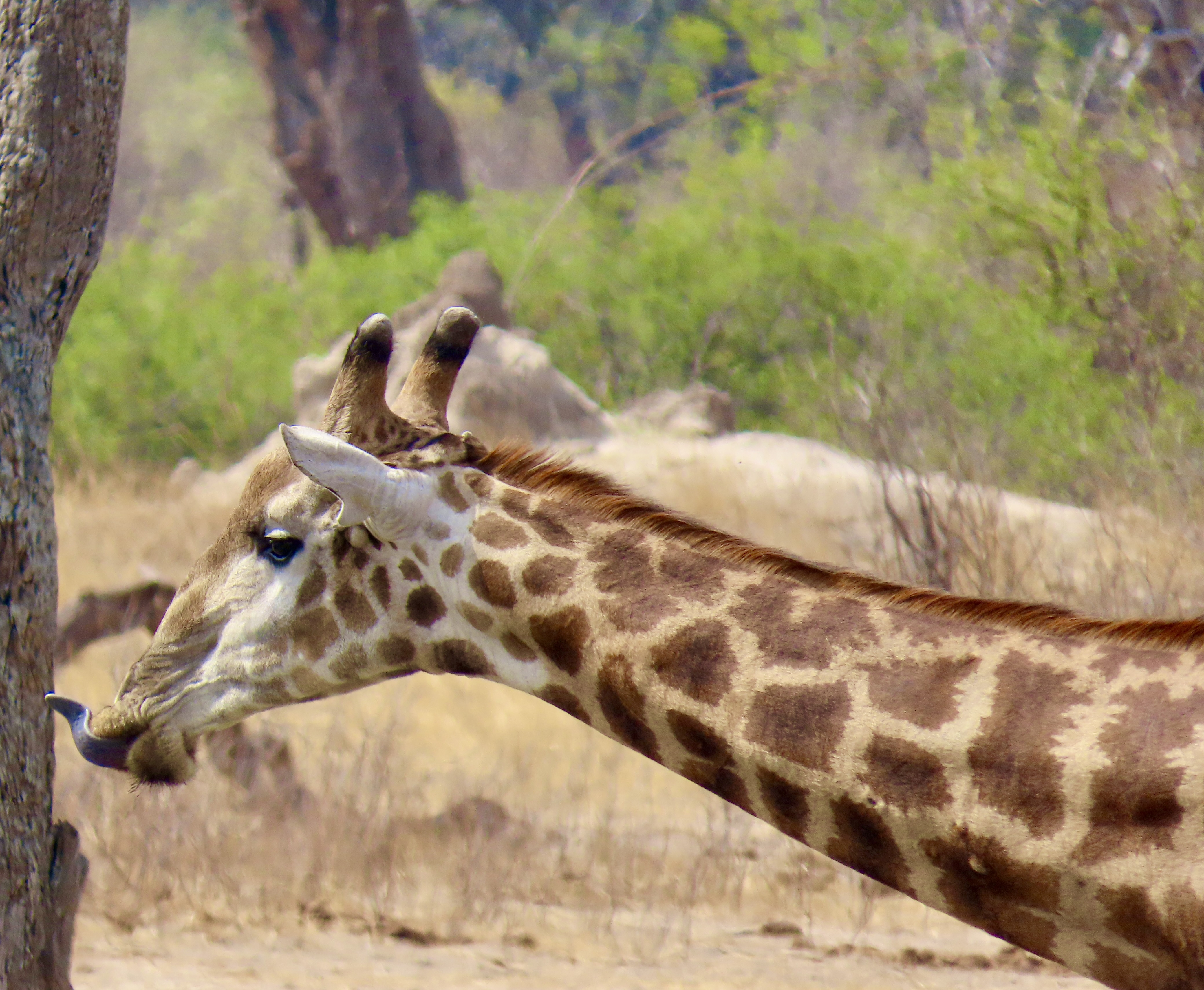
The King of Beasts, proves his cat like nature by washing his face with a paw bath…While the Queen of Beasts just looks regal.It’s a croc! Is that a smile? Maybe he is dreaming of an impala dinner. “Wait for me Mom. I’m hurrying as fast as I can!” This baby elephant in Chobe National Park, Botswana was playing catchup. Gulp. Ostriches graze with their heads down and then raise it up to swallow. Obviously this guy had quite a gullet full. We came on him a couple of miles from the Cape of Good Hope, South Africa. The local bus? Given this photo, it may be hard to believe that the Cape Buffalo is the most dangerous animal in Africa. The birds aren’t getting a free ride, however. They are picking bugs off, which is much appreciated by both the birds and the buffalo.Would you believe my grey blue tongue is about 19 inches long?Have you seen any road or lion kill? I’m not particular about where it is or how long it has been there. We found this cute little fellow on Table Mountain above Cape Town, South Africa. I’m betting you probably don’t know its closest relatives. We sure didn’t. They are the elephant and the manatee. I’ll conclude today with this photo of Peggy, Frances, John and me on the Chobe River with an elephant backdrop. My next post will feature these elephants and many more we met along the way! John, BTW, has a travel blog you might want to check out at: dallen.posthaven.com. He calls his blog “Are We There Yet?”
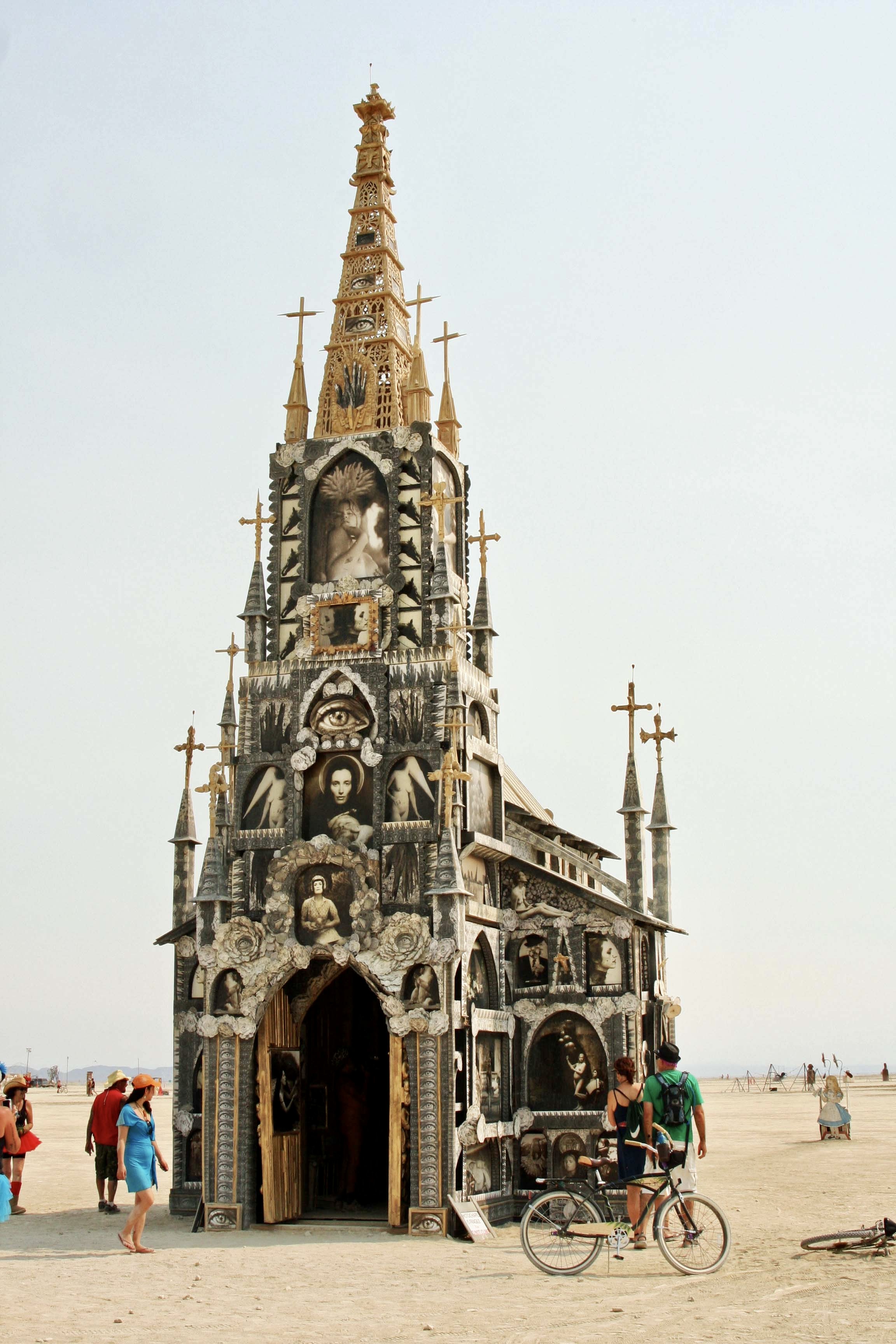
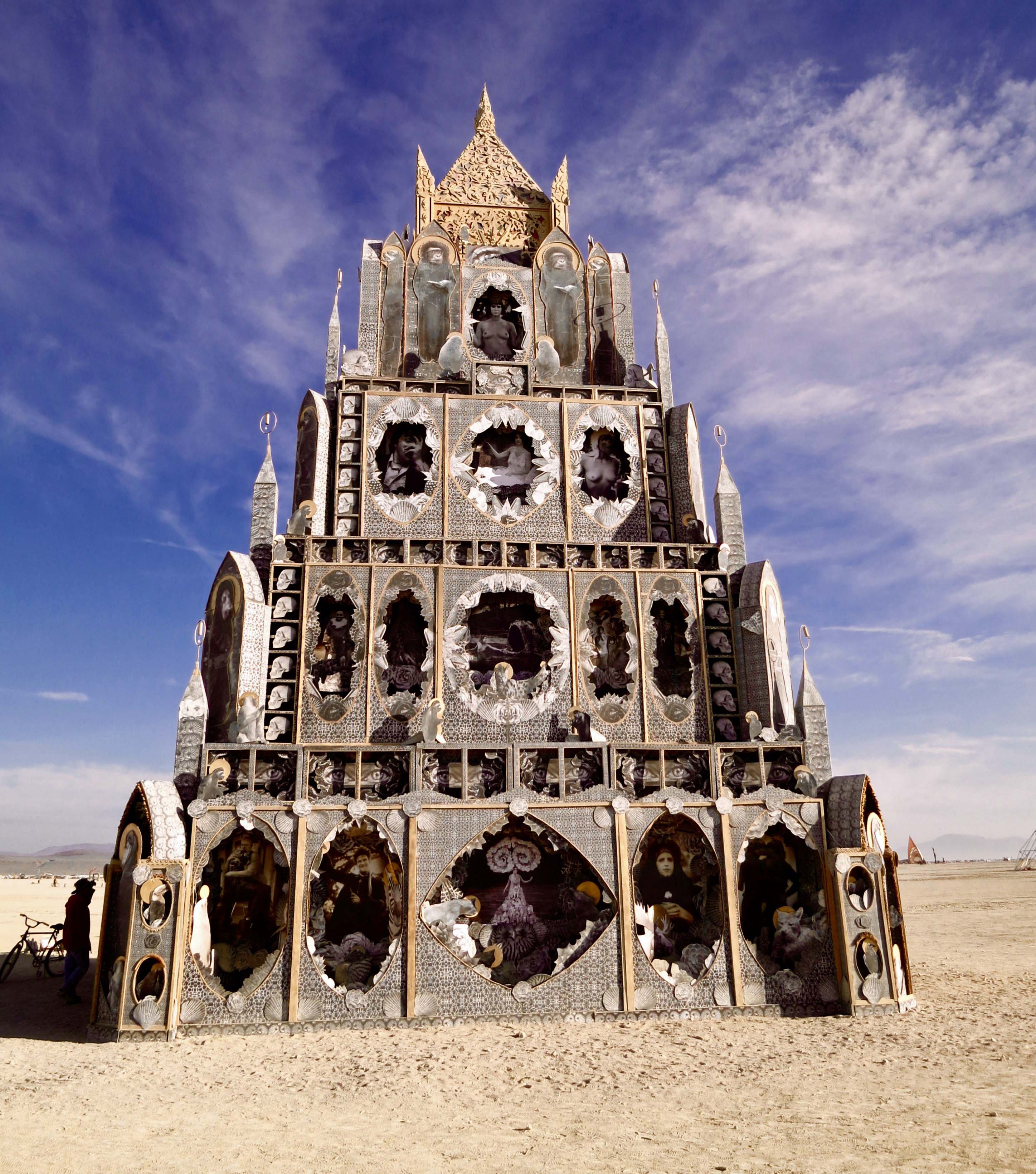
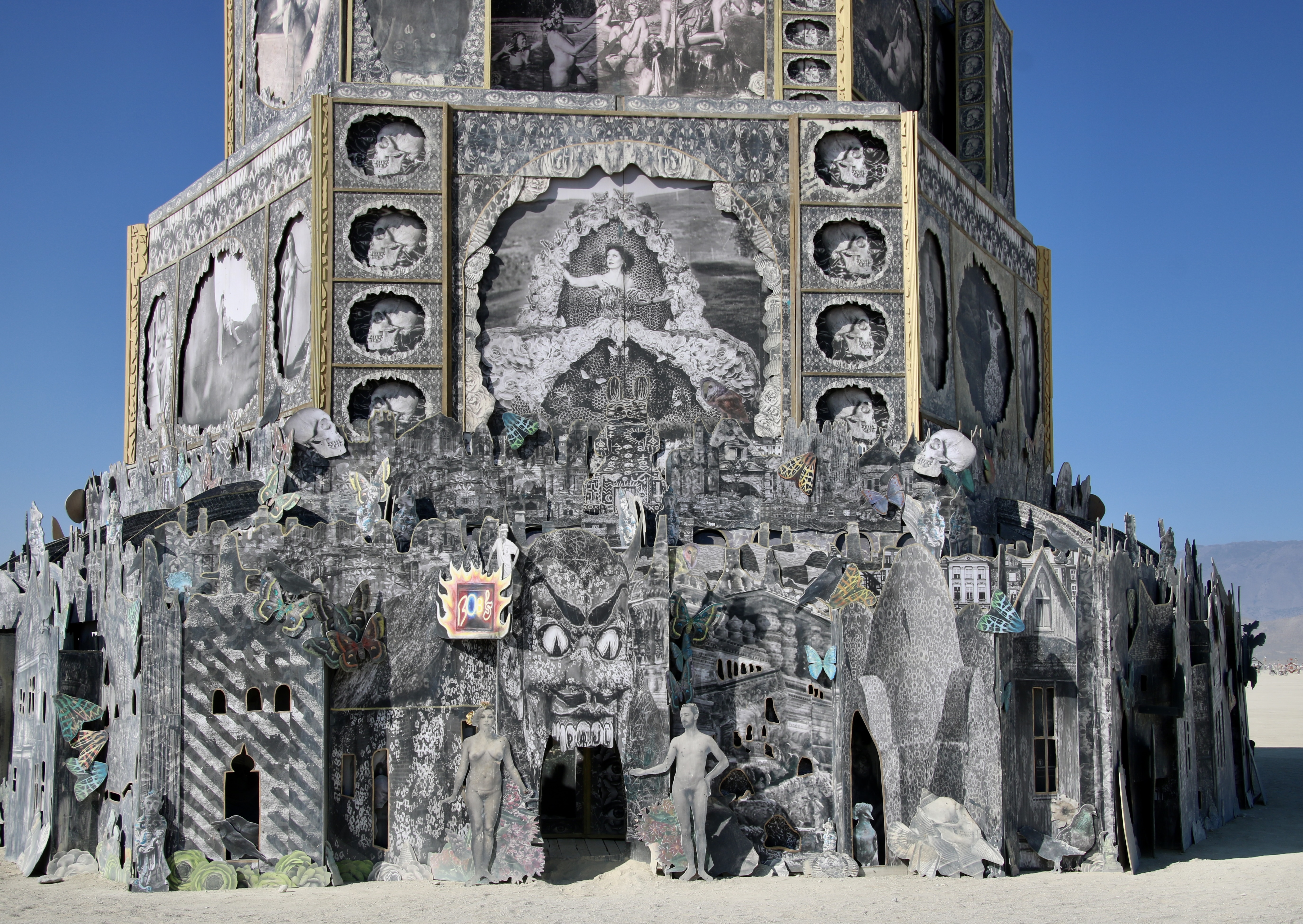
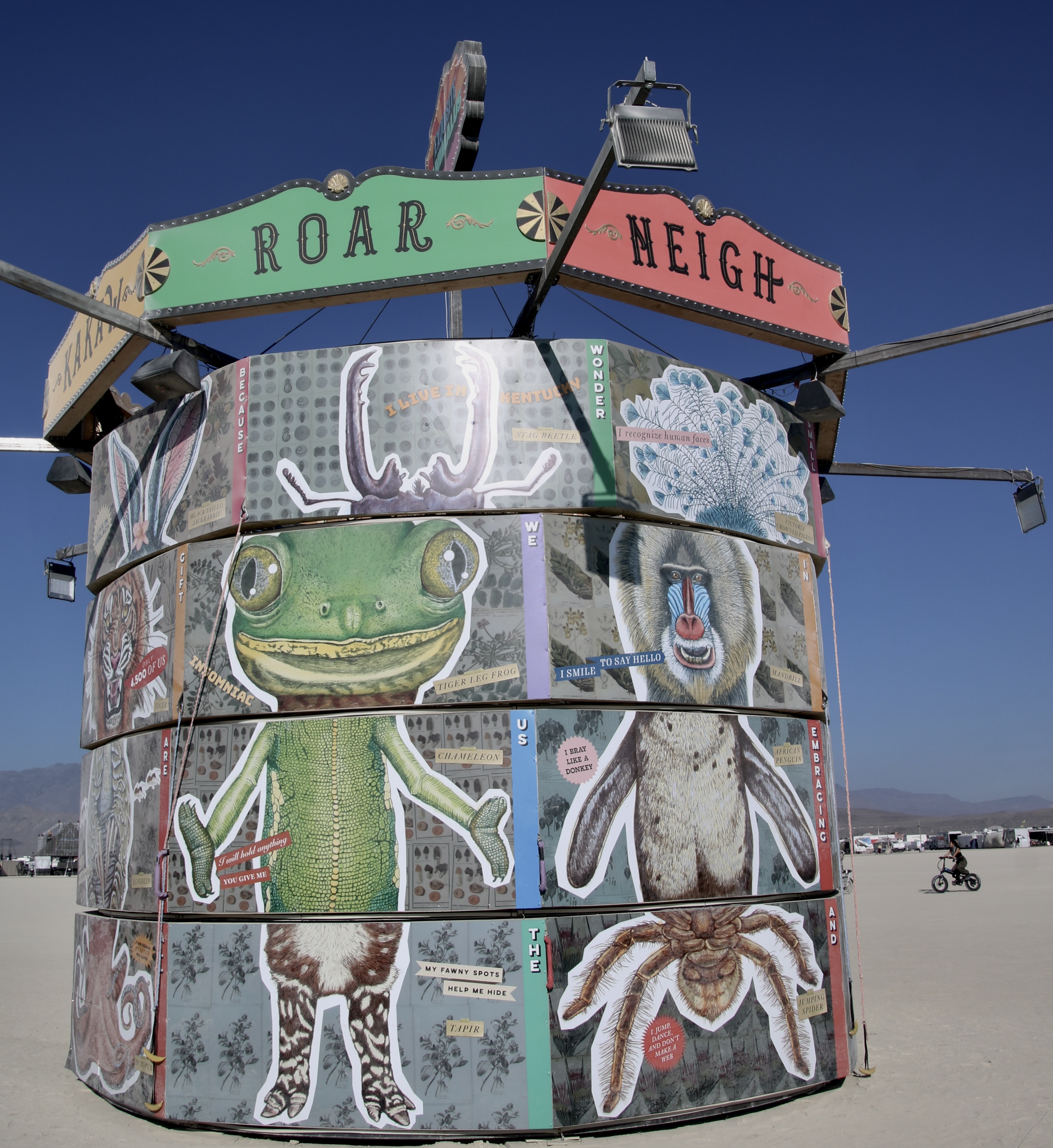
Michael Garlington and Nancy Bertotti from Petaluma California brought another one of their creative, photo-covered structures to Burning Man 2023, the Chapel of Babel.
Today, I am going to feature the creative and humorous Temple of Babel brought to Burning Man 2023 by the artists Michael Garlington and Natalia Bertotti, but first I want to speculate on how Burning Man has been so successful at developing, attracting and supporting top artists, and second, why six of the best come from Petaluma, a small city north of San Francisco.
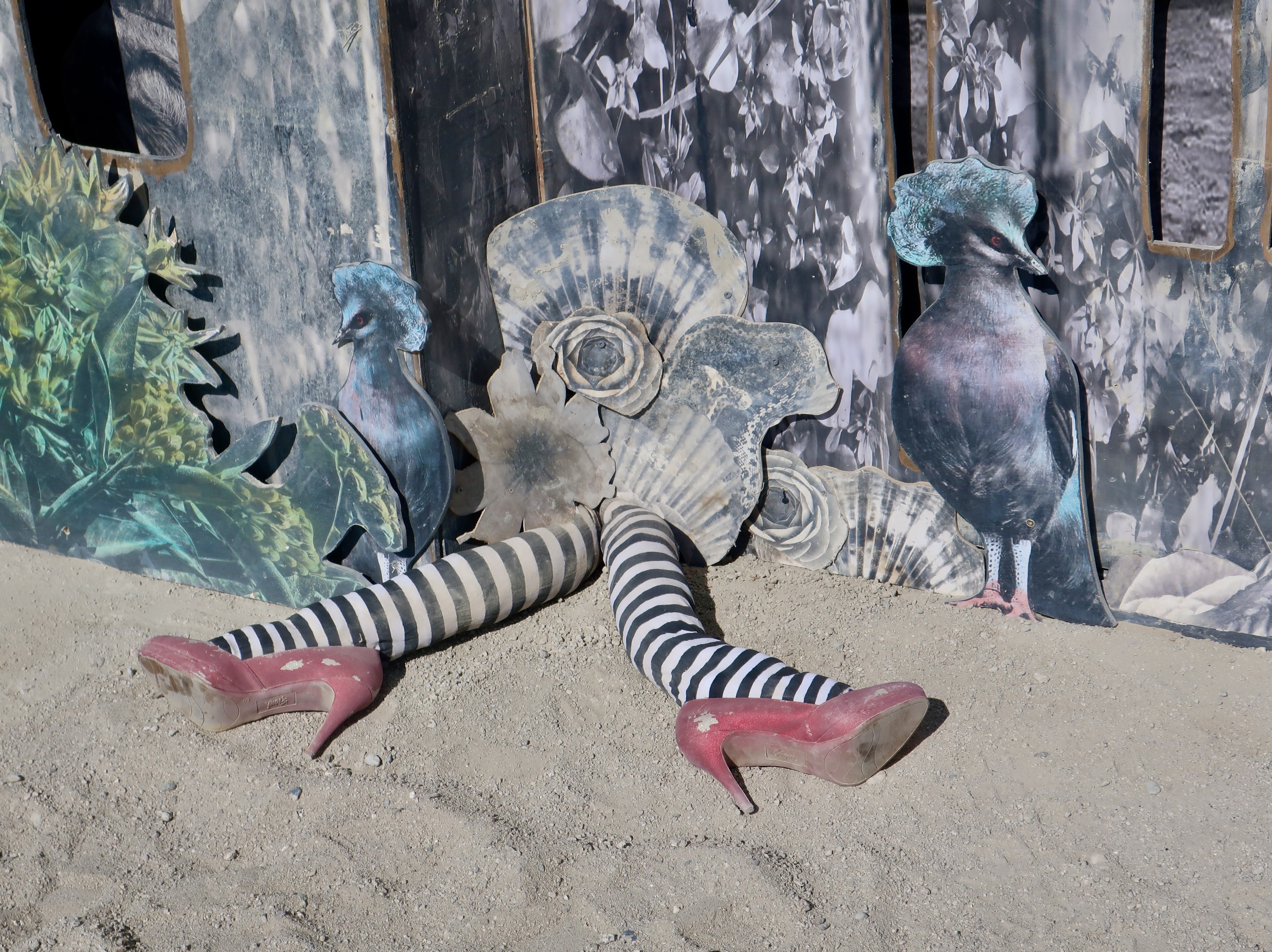
Peggy and I were walking around the Chapel of Babel when we came across this scene and started laughing. Do you remember the Wicked Witch of the East who was crushed by Dorothy’s house in the Wizard of Oz?
The international status of Burning Man art is not surprising. It is often mind blowing, thought provoking, monumental and beautiful. In 2018, the Renwick Gallery of the Smithsonian Art Museum recognized its status by featuring an exhibit of some of the events most creative artists. Titled, No Spectators: The Art of Burning Man, it took up the whole building! From there, the exhibit traveled on to the Cincinnati Art Museum and the Oakland Museum of California.
Here is what the Renwick had to say about the exhibit:
Each year in Nevada’s Black Rock Desert, a city of more than 70,000 rises out of the dust for a single week. During that time, enormous experimental art installations are erected and many are ritually burned to the ground. The thriving temporary metropolis known as Burning Man is a hotbed of artistic ingenuity, driving innovation through its principles of radical self-expression, decommodification, communal participation, and reverence for the handmade. Both a cultural movement and an annual event, Burning Man remains one of the most influential phenomenons in contemporary American art and culture.
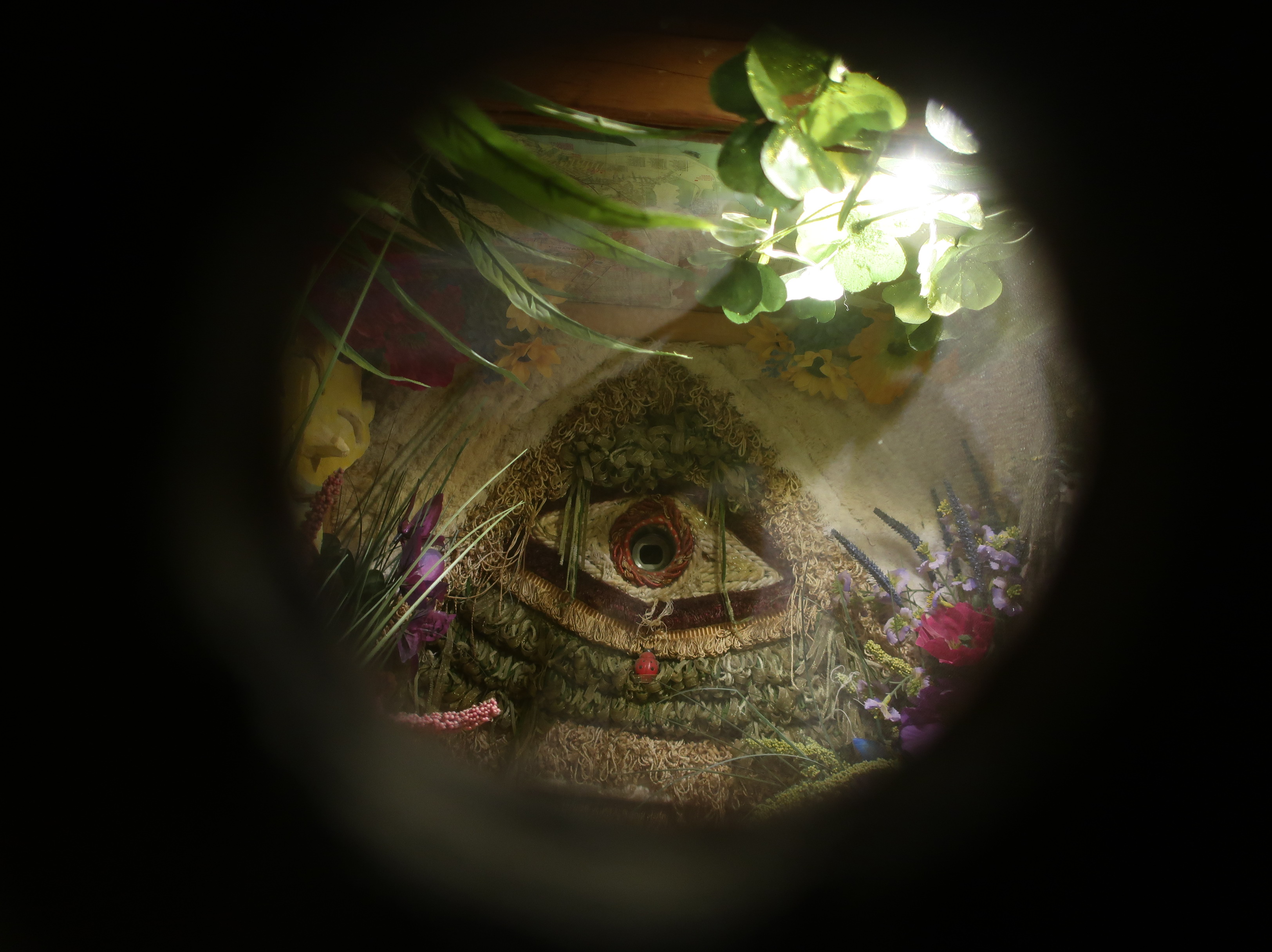
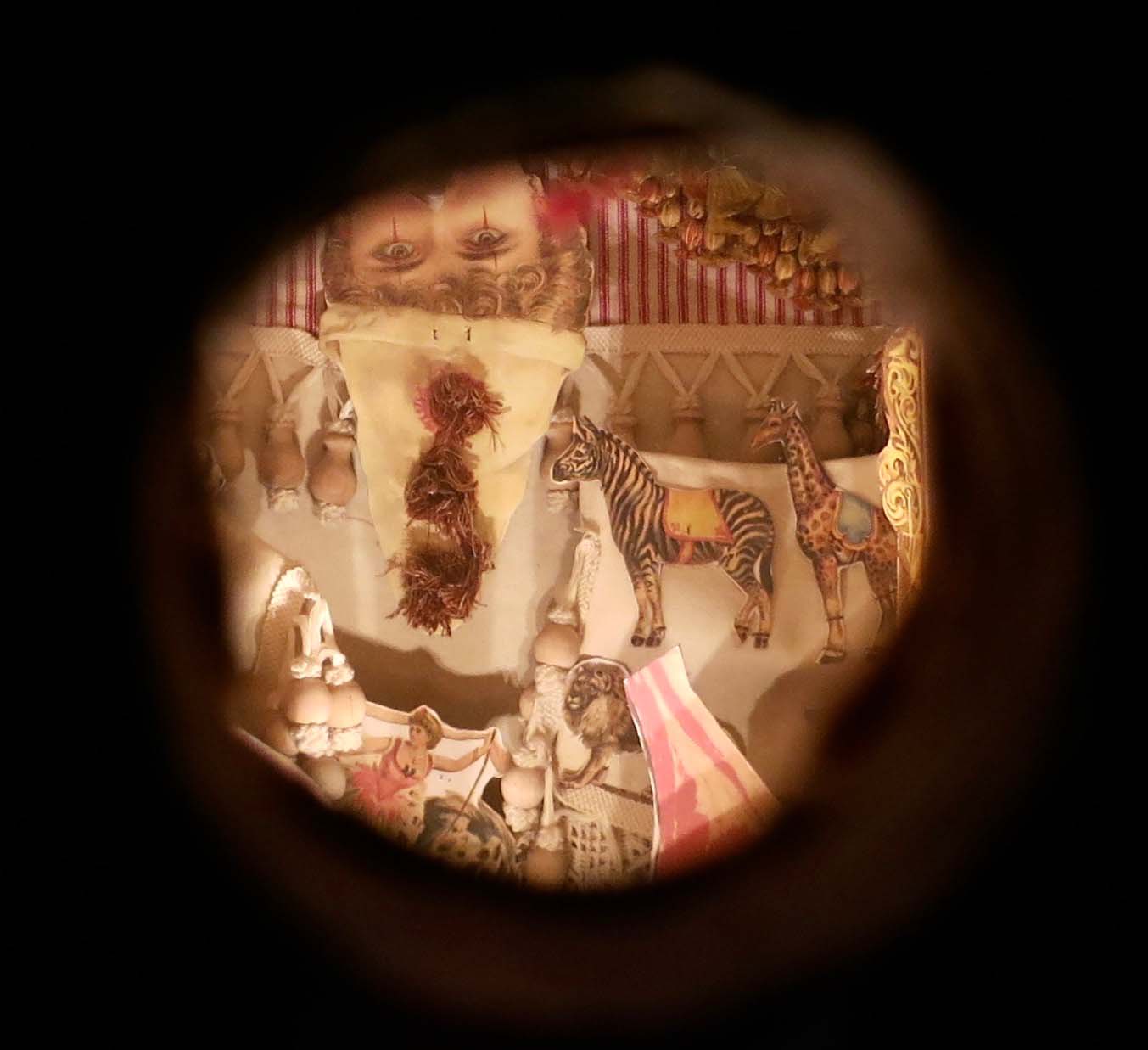
The creativity/ingenuity at Burning Man is unending. Previous Garlington/Bertotti works at Burning Man have taught me to look in peepholes to discover miniature worlds. This one in the Chapel of Babel was just big enough to accommodate the lens on my small Canon Power-Shot. An eye was staring back at me. A lady bug and an aphid were having a stand-off on the eyelid!
The words that stood out for me in the Smithsonian description were , “a hotbed of artistic ingenuity.” The Burning Man organization credits four of its ten principles as being the driving force and I agree they are important, particularly its emphasis on creativity, community support, and appreciation. I would add that the venue provides artists with:
The largest art gallery or ‘canvas’ in the world. A place that is a natural for monumental art to be put on display in a remote and highly scenic area.
A ready made audience of 70,000 people, most of whom appreciate, support, and admire the art.
Instant national and international recognition from both the participants and media. Burning Man enhances this by selecting a large number of artists each year for nominal financial support and recognition through its publications and at the event.
I’m going to add another factor that has been important to some of the best art: The evolution of local centers for the development of art and artists that 1) combine a variety of artists working in different mediums, 2) volunteers who offer to help the artists with their projects, especially the monumental art, and 3) a broader community that supports and takes pride in the artists and their work. The best way that I can describe these communities is to use the Smithsonian’s words, they have become hotbeds of artistic ingenuity.
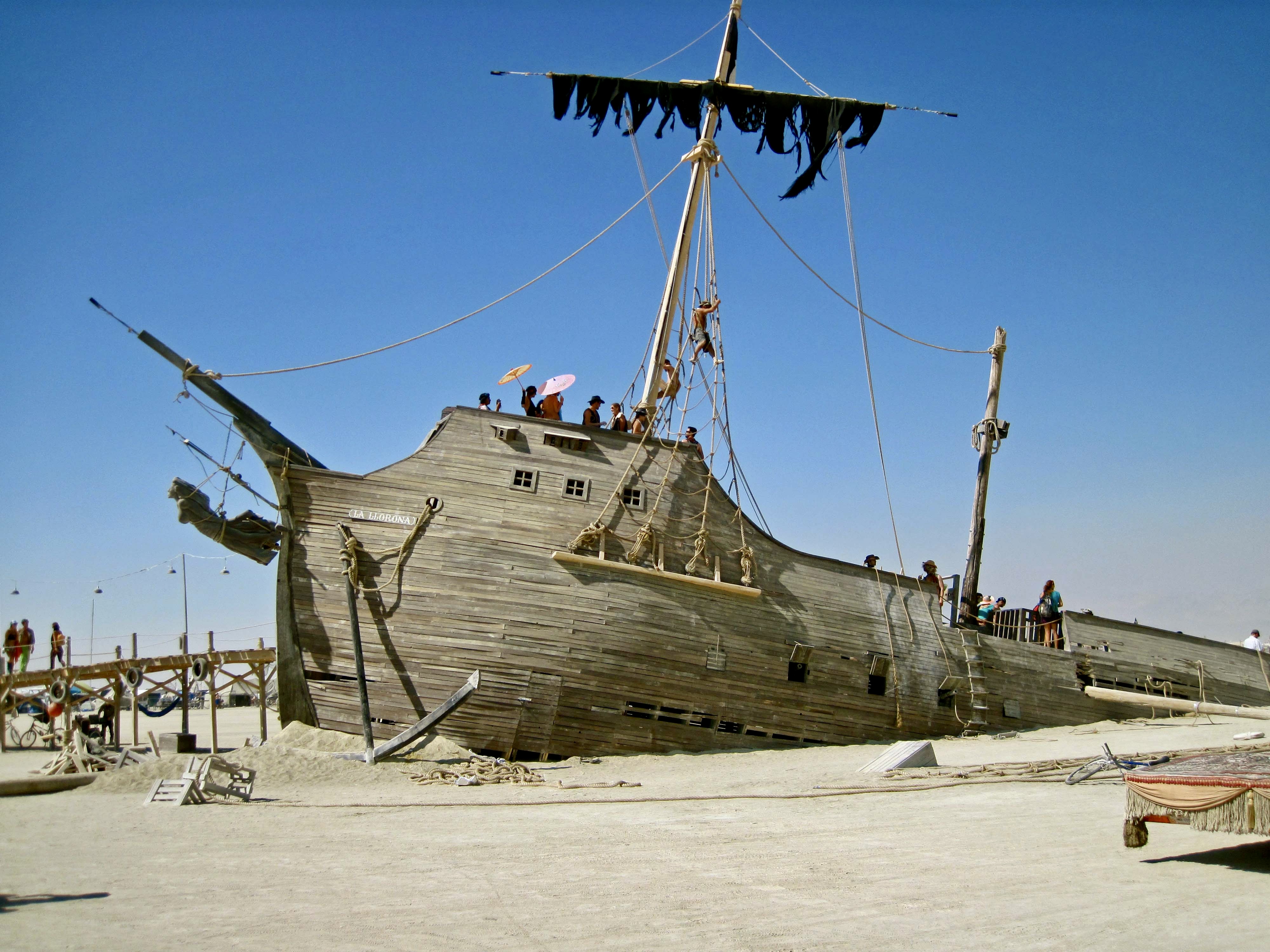
One such center is The Reno Generator. It’s a huge warehouse space in Reno, Nevada packed with artists and art. While Burning Man was the original inspiration that led to the development of the Generator, it is open to all artists who want to become members— billing itself today as a Maker Space. Peggy and I visited the Generator in 2015 and found it fascinating. I blogged about the visit. The post is worth checking out. Here are two of my favorite works at Burning Man art that came out of the Generator around that time.
The sunken ship La Llorona.Embrace the Dawn.
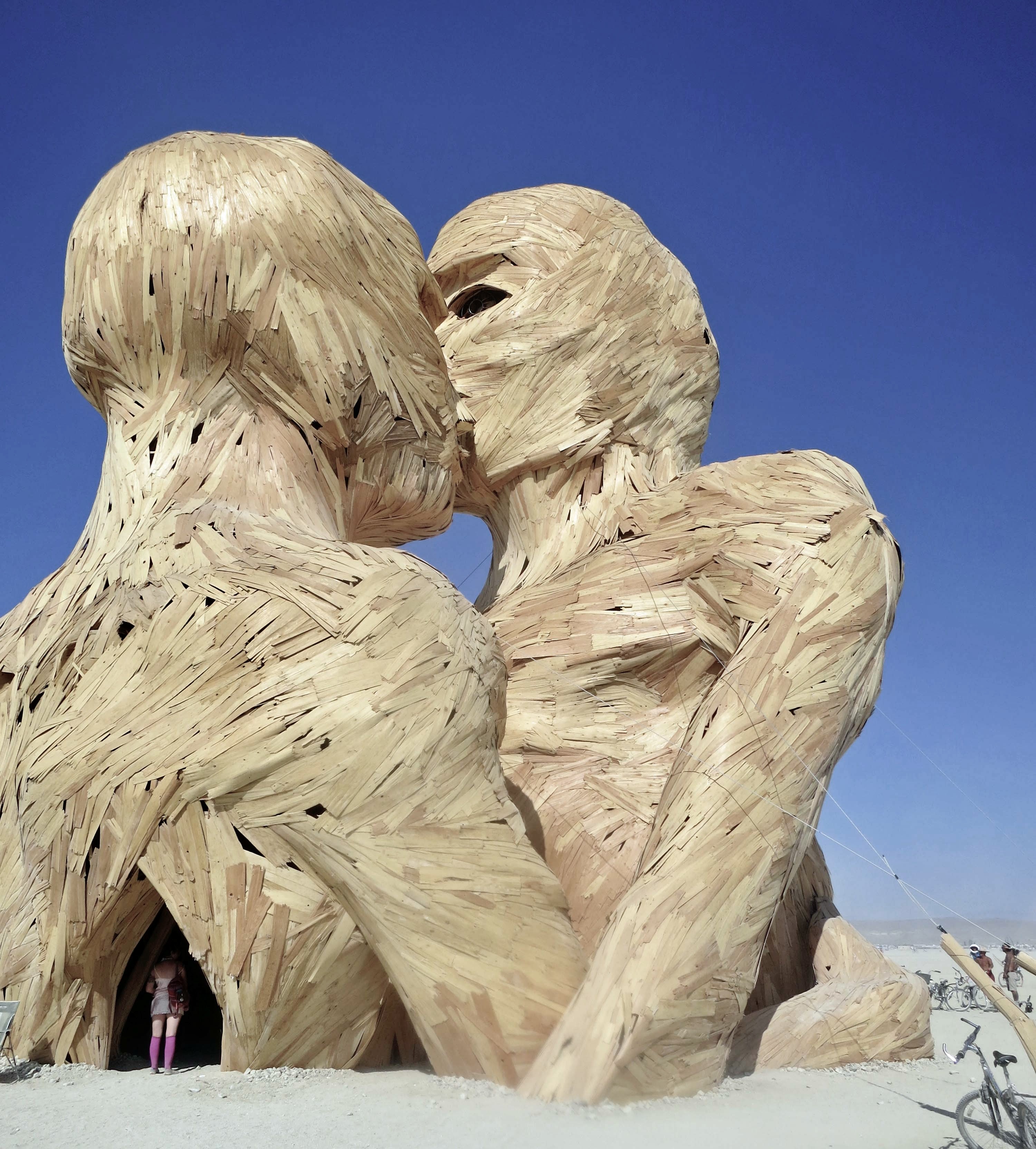
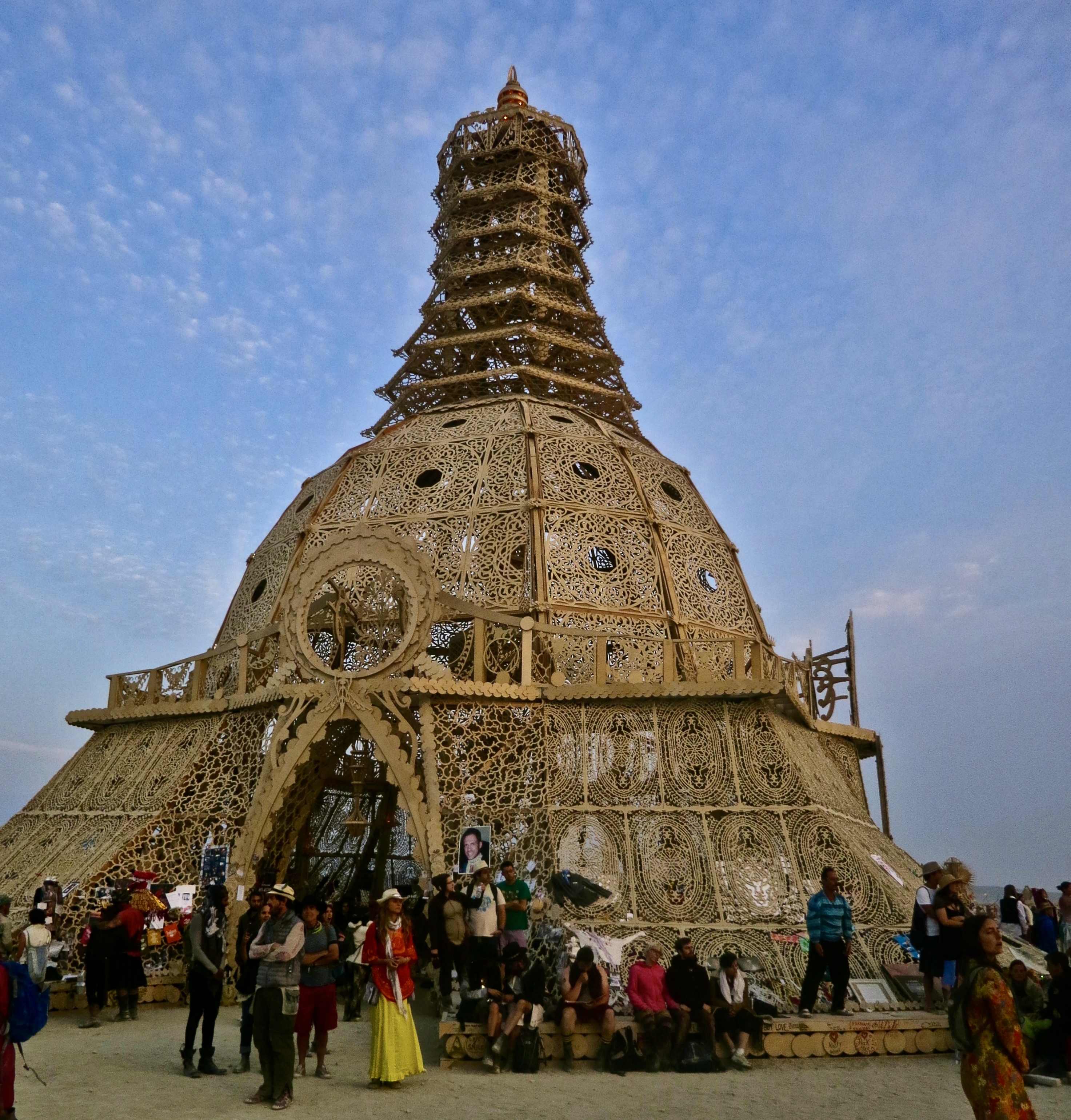
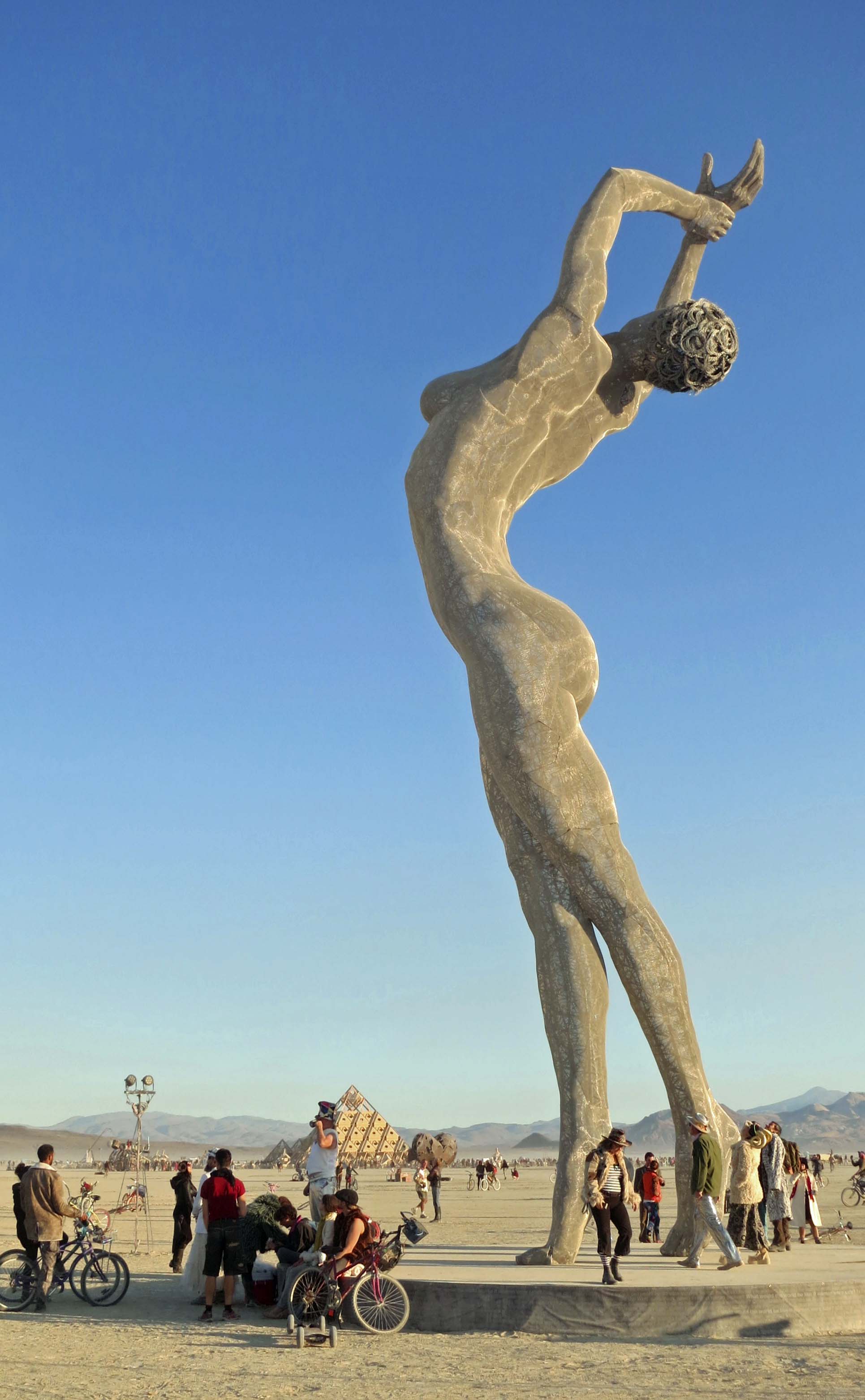
Petaluma, a city of 50,000 people less than an hour north out of San Francisco on Highway 101, is another major source of Burning Man Artists and art. Four of the main artists/teams featured in the Smithsonian exhibit come from here: The team of Michael Garlington and Natalia Bertotti who work as photographers/sculptures, David Best who is an architect/sculpture best known for his Burning Man Temples, and the team of Marco Cochrane, Julia Whitelaw who are known for their towering female sculptures.
Unlike Reno, the artists from Petaluma I am featuring all have their own studios. The dynamics of community support, artist interaction, and volunteers are all similar, however. As noted above, I am featuring Garlington and Bertotti today. Here is art from the others that I have blogged about in the past.
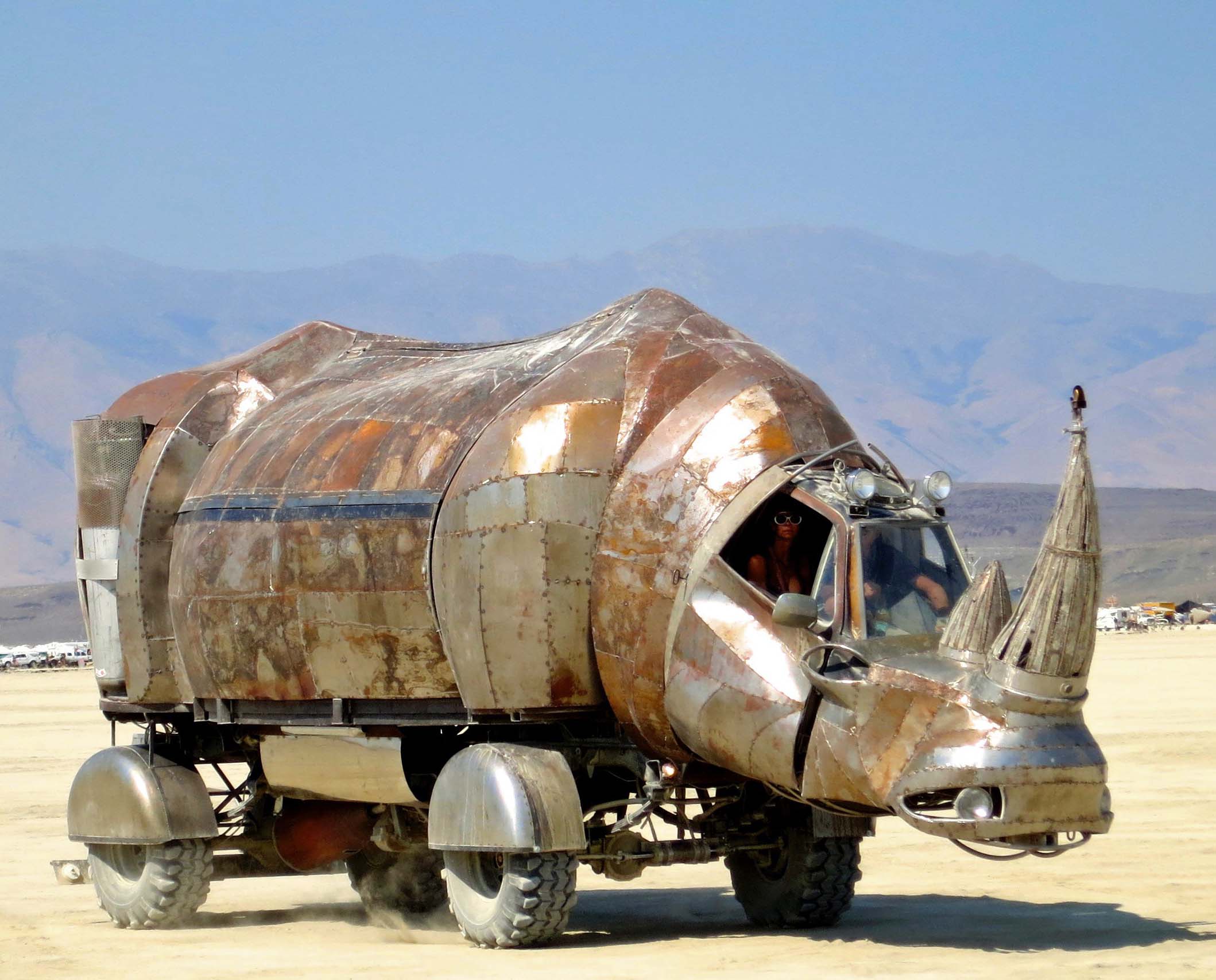
A David Best Temple and Burning Man.Truth Is Beauty by Marco Cochrane and Julia Whitelaw on the Playa at Burning Man. A smaller version was included in the Smithsonian exhibit.I’d be at fault here if I didn’t also recognize this magnificent beast, The Rhino Redemption, a mutant vehicle by Kevin Clark and TM Potter who also hail from Petaluma. Mutant vehicles make up some of Burning Man’s most creative art projects. The Rhino is also appropriate for our pending trip to Africa that starts this week.
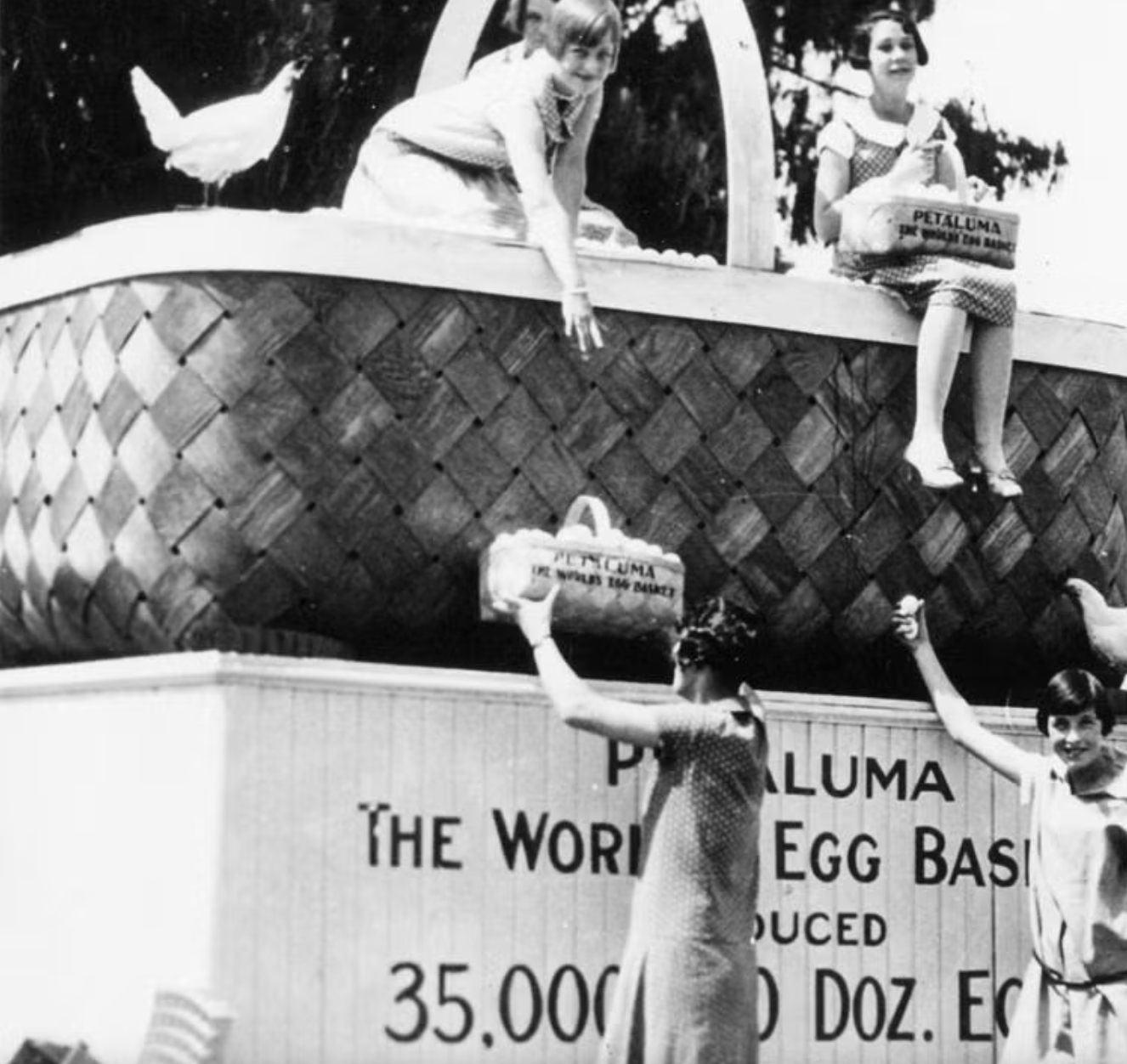
I first visited Petaluma in 1959, well before it was noted for its art. Instead, its claim to fame was being the World’s Egg Basket. Thousands of egg-laying chickens lived in long, low barns and called it home. I went there for a conference of Episcopal Church youth leaders. It was my first trip without family and the first time I ever stayed in a motel. A quick sniff confirmed we had arrived. I’ve been through Petaluma numerous times since, starting in the late 60s and early 70s. The chickens are long gone. Wealthy escapees from the Bay Area have replaced chicken farmers.
This 1920s era photo showed Petaluma’s pride in its egg laying mamas.
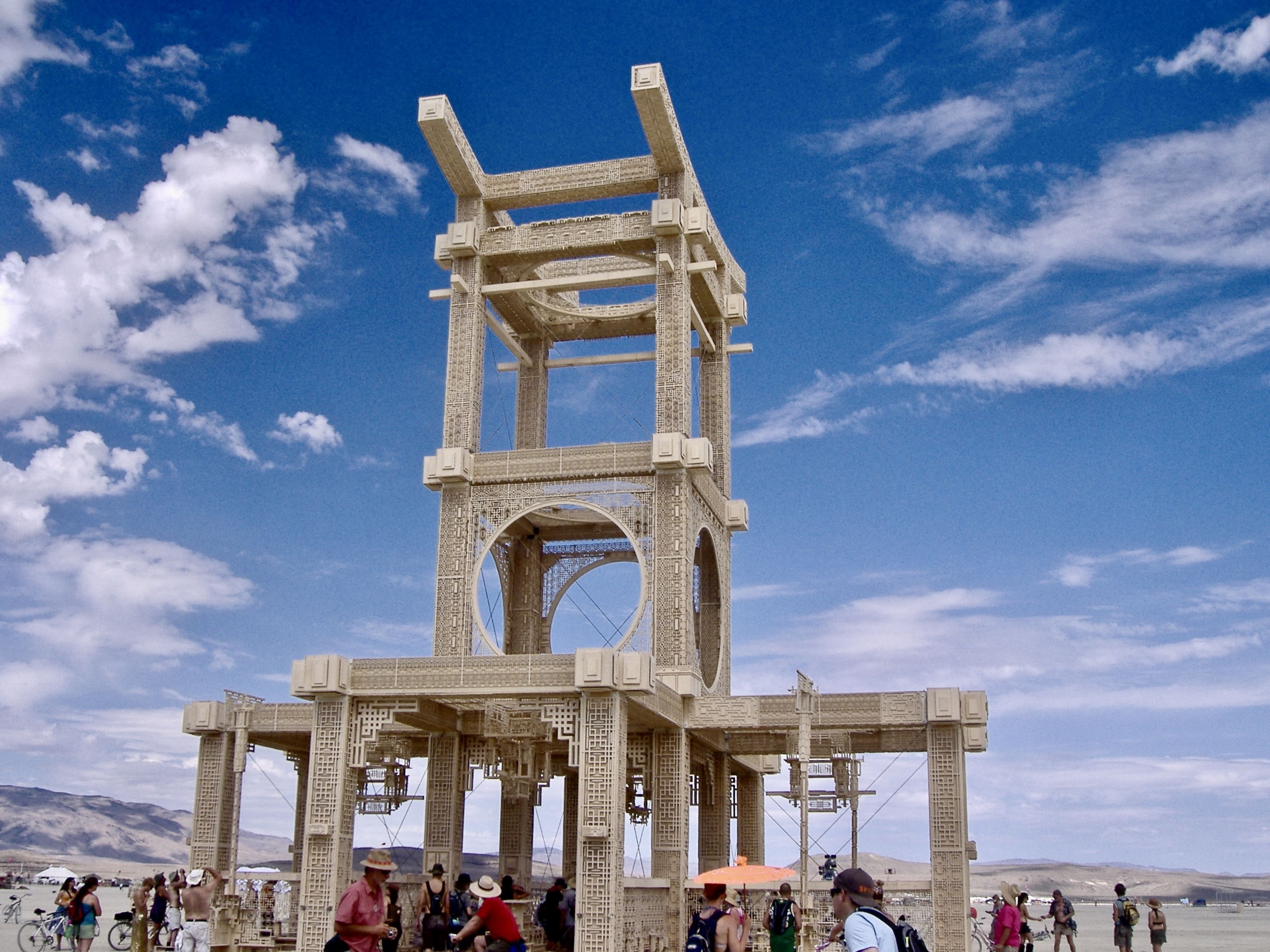
Michael Garlington made his first trip to Burning man in 2007 as a volunteer in helping to build one of David Best’s temples. When not busy learning how to use the tools, he was busy photographing fellow Department of Public Works volunteers. By profession and passion, he is a photographer.
A photo of David Best’s 2007 Burning Man Temple taken by my friend Ken Lake.
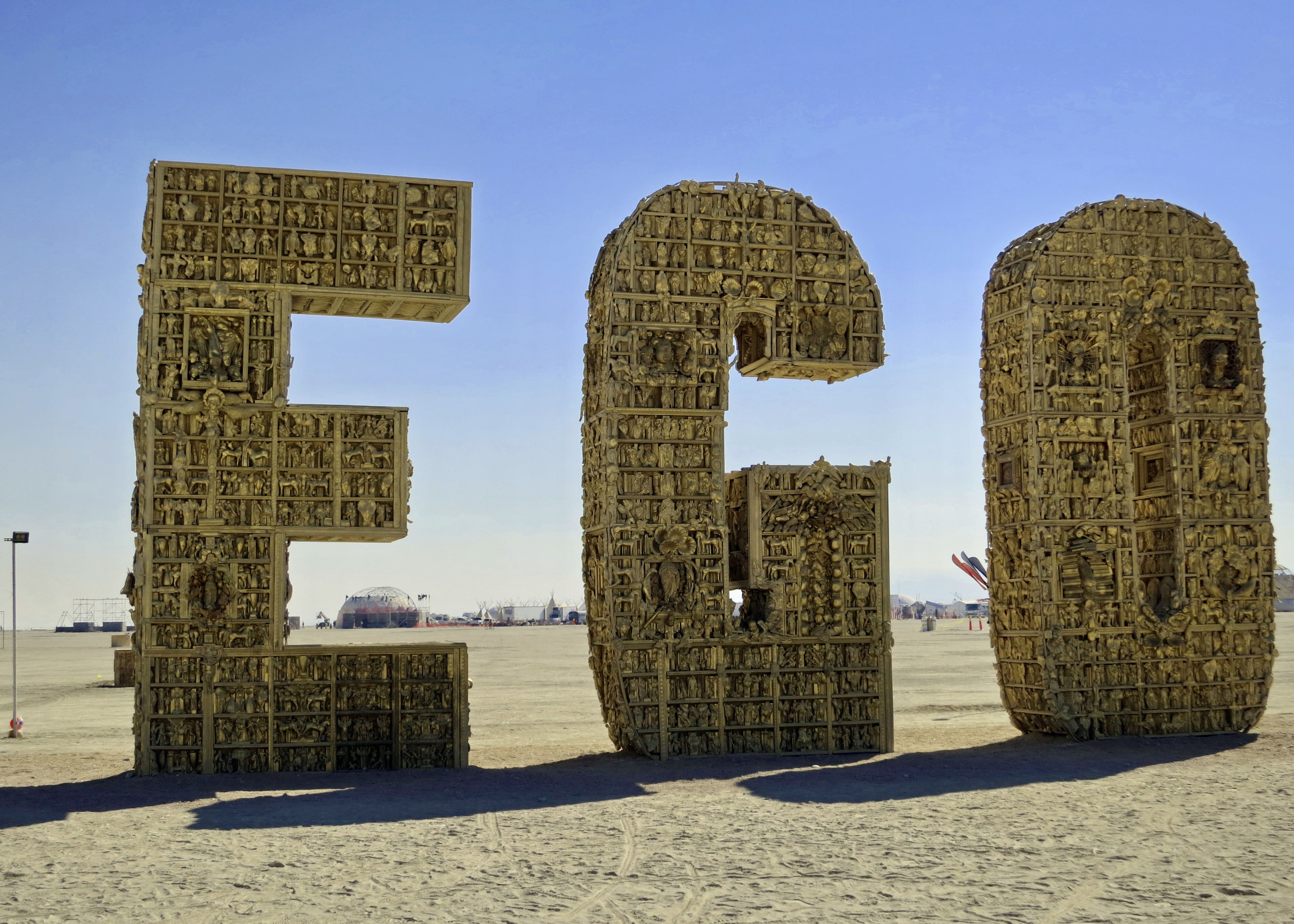
By 2013, Garlington had decided try his hand at Burning Man art by joining Laura Kempton in her creation of the sculpture EGO. The following year he struck out on his own and created the aptly named Photo Chapel that featured many of his whimsical, bizarre and humorous photos, which, as he notes, travel a path between reality and imagination. In 2015 he had joined with Nancy Bertotti and they entered the category of Burning Man legends with their Totem of Confessions. It featured a photo of LSD guru Timothy Leary. But there was more. Leary’s already burned ashes were about to be burned again. It was a true Burning Man type of event.
Here’s what I blogged in 2015 about the night they burned the Totem:
“Susan Sarandon (who had inherited a portion of Leary’s ashes) put on a low-cut, white, wedding dress. Her camp members walked beside her, stirring up the Playa dust. Timothy Leary came along behind, his ashes riding in a casket. A New Orleans style jazz band led the joyful procession of live and dead people making their way out to the Man and then on to the towering Totem of Confession. A 26 foot tall Octopus (El Pulpo Mechanico) rolled along behind. Leary would have loved it. Maybe he did.” Rumor has it that they toasted Leary before the procession with champagne mixed with a tad of LSD and Leary’s ashes.
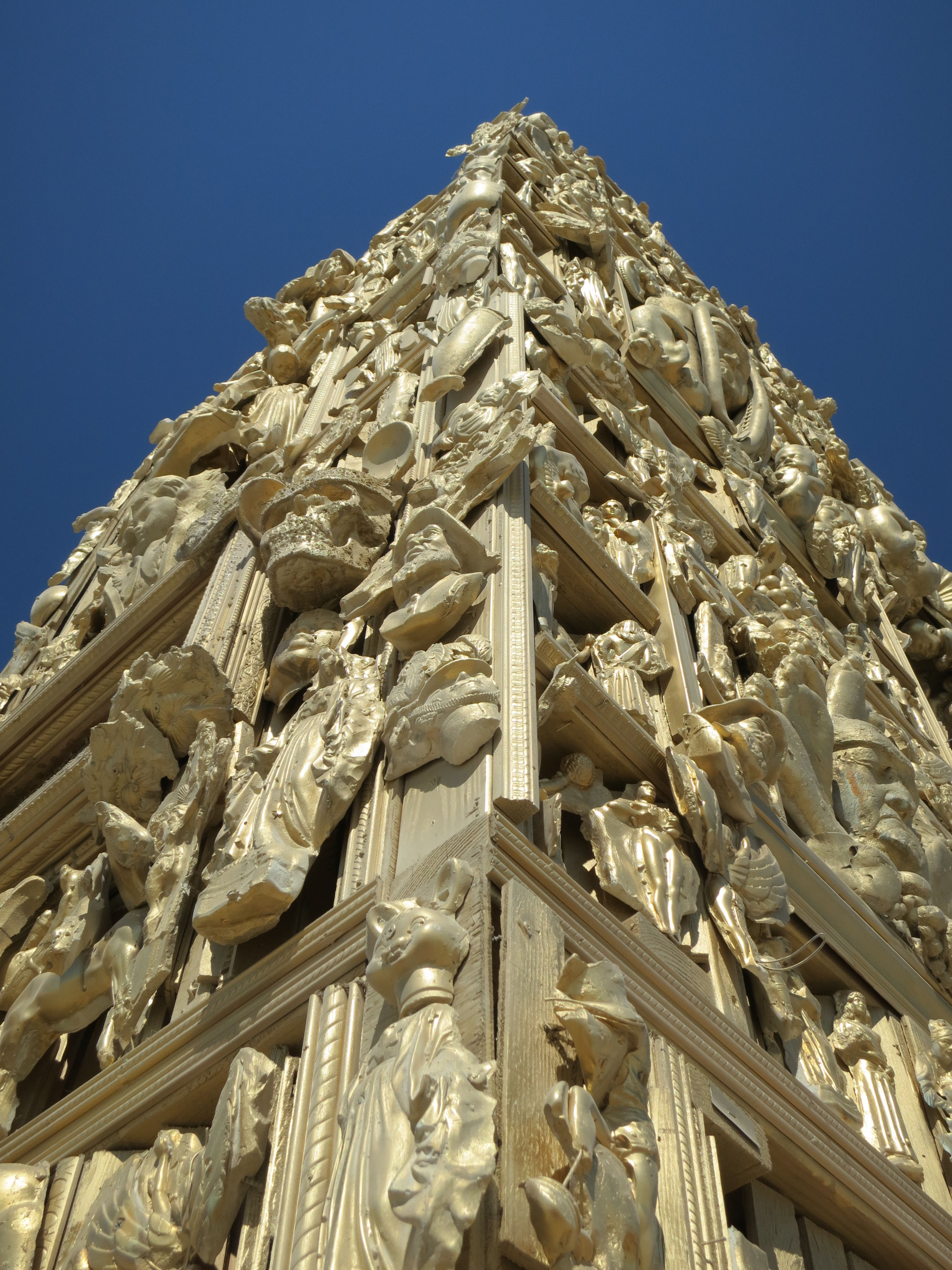
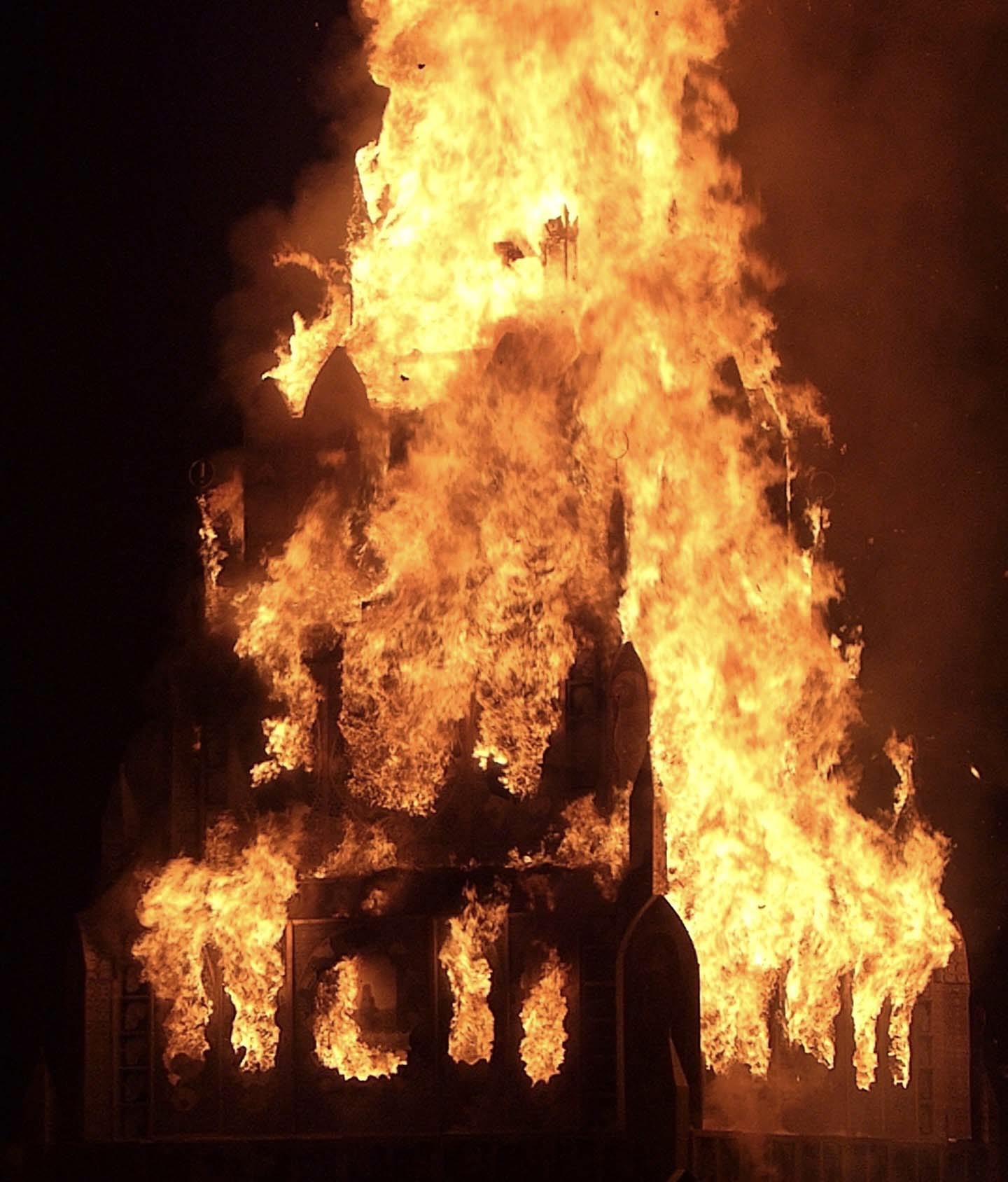
The 2012 Ego SculptureA close up of the Ego Sculpture. Check out the characters.The Photo Chapel at Burning Man 2014.The Totem of Confession in 2015. The photo of Leary, a confessional, and a tower of skulls were inside. A peephole in the Totem of Confession.Leary’s ashes burn again for a second time as the Temple of Confession burns. They also shoot up into the sky for a second time. In 1997, a portion of Leary’s ashes were shot into space on a rocket along with those of Gene Roddenberry, the creator of Star Trek, and 22 other people. It might be said, that Leary was higher than he ever had been from LSD.
And now, for some final photos that Peggy and I took of Garlington and Bertotti’s 2023 Chapel of Babel.
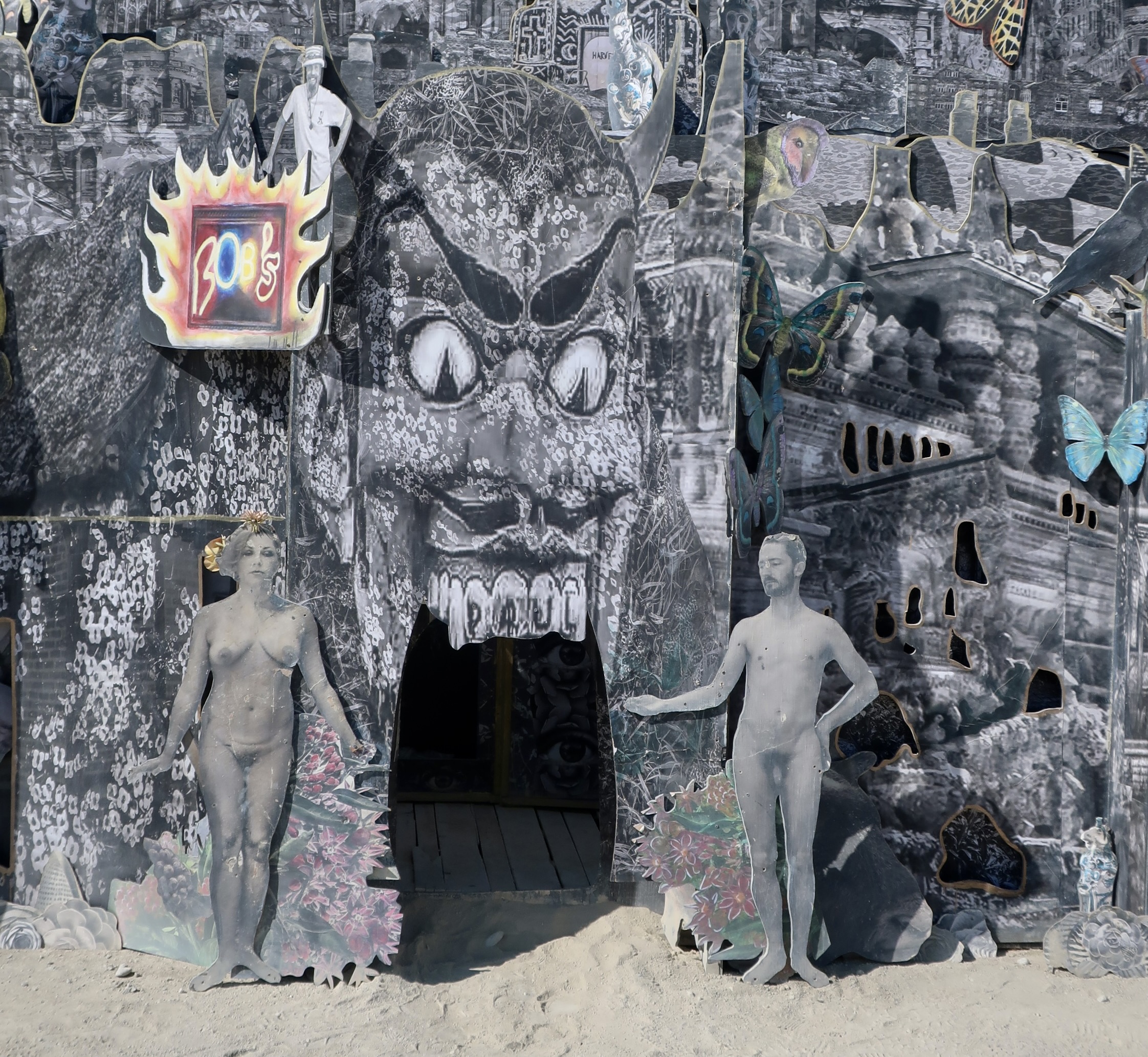
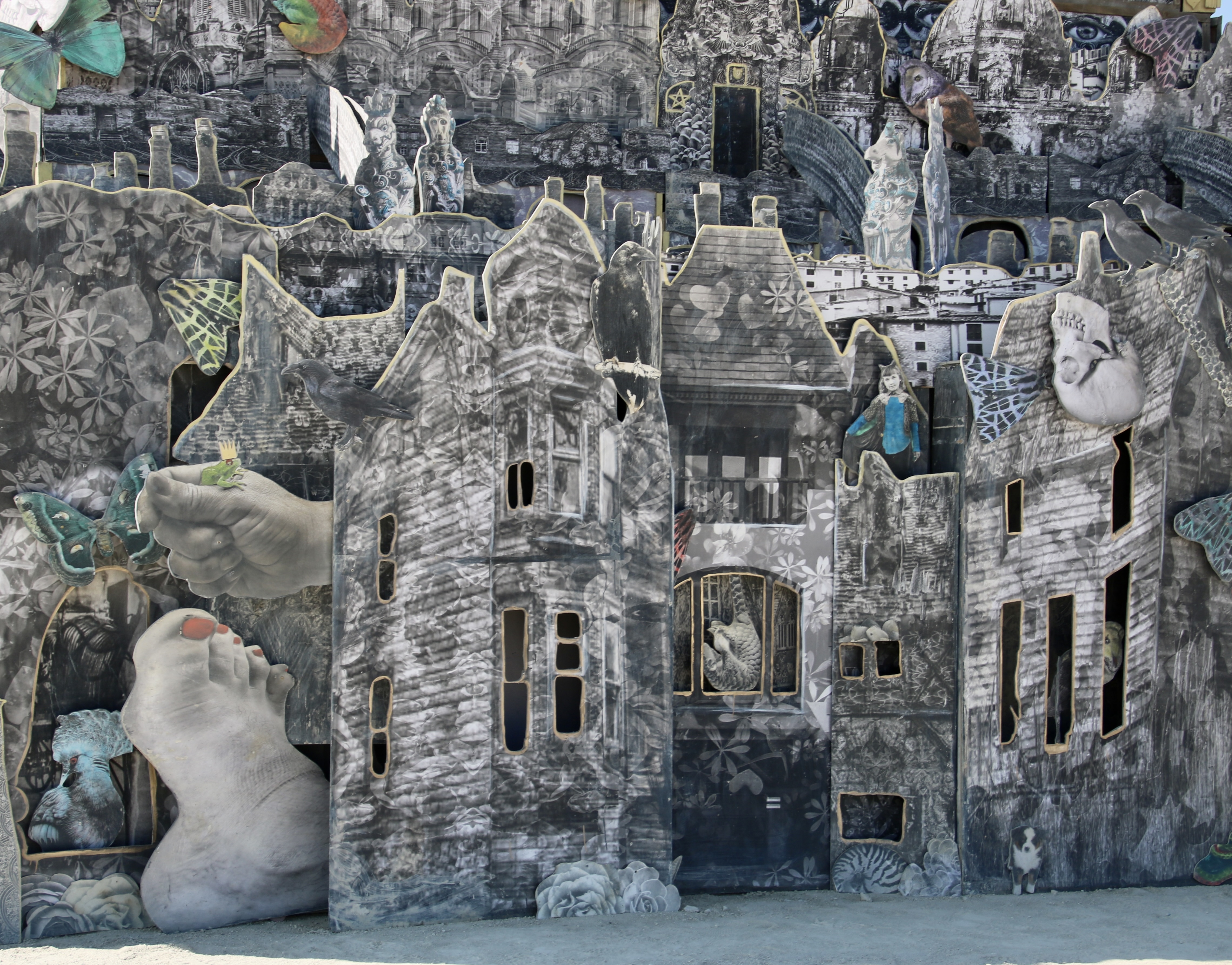
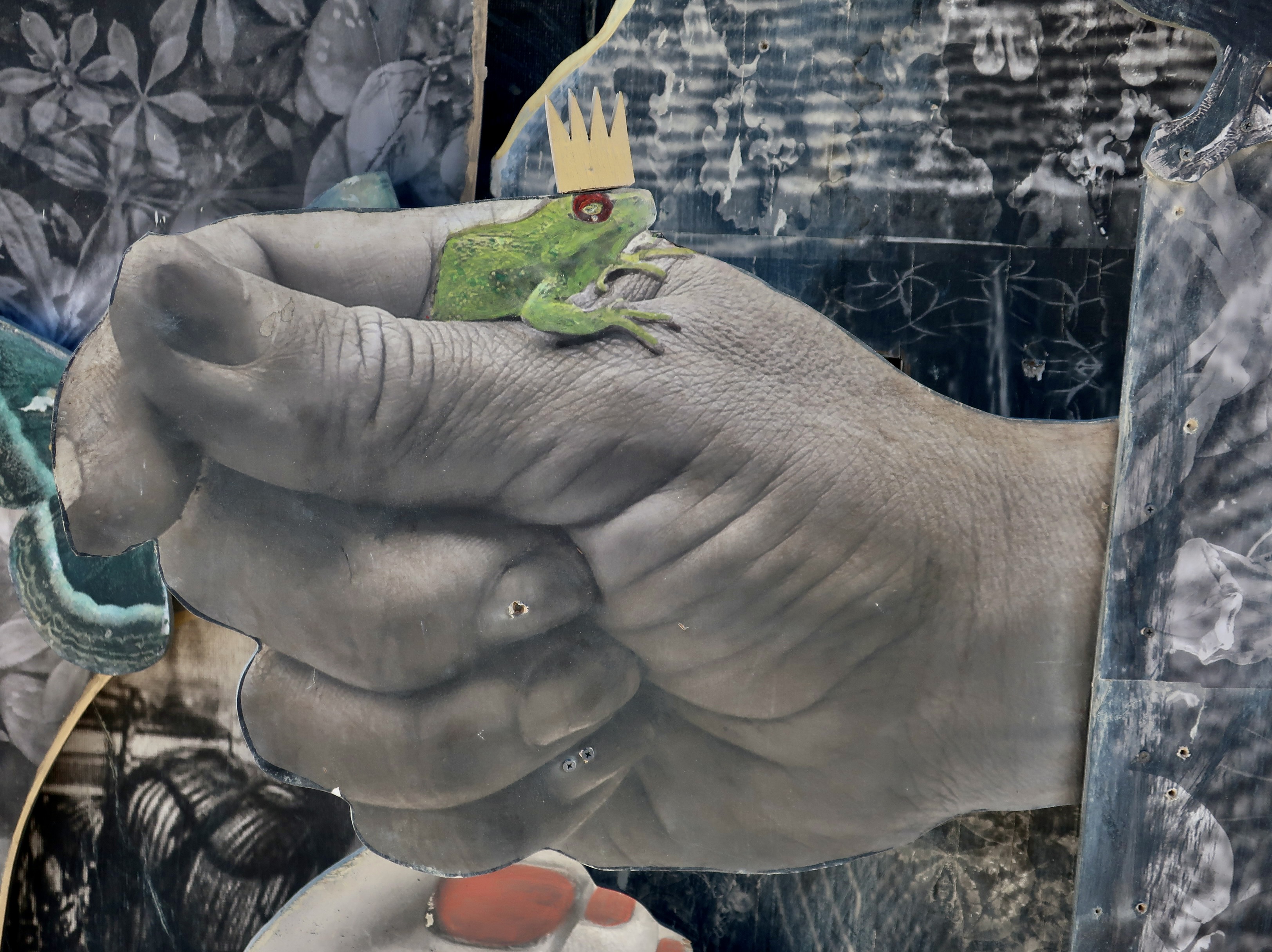
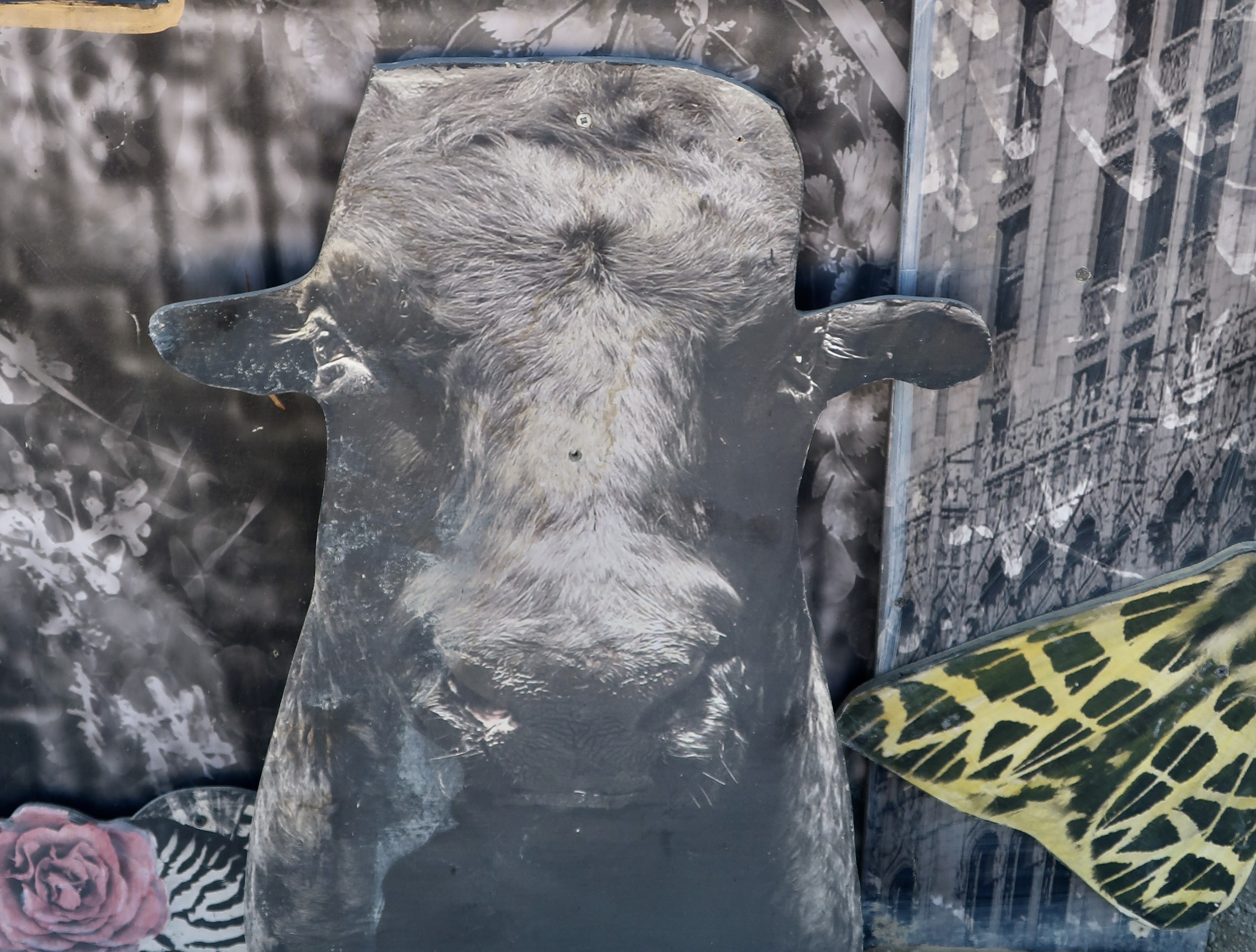
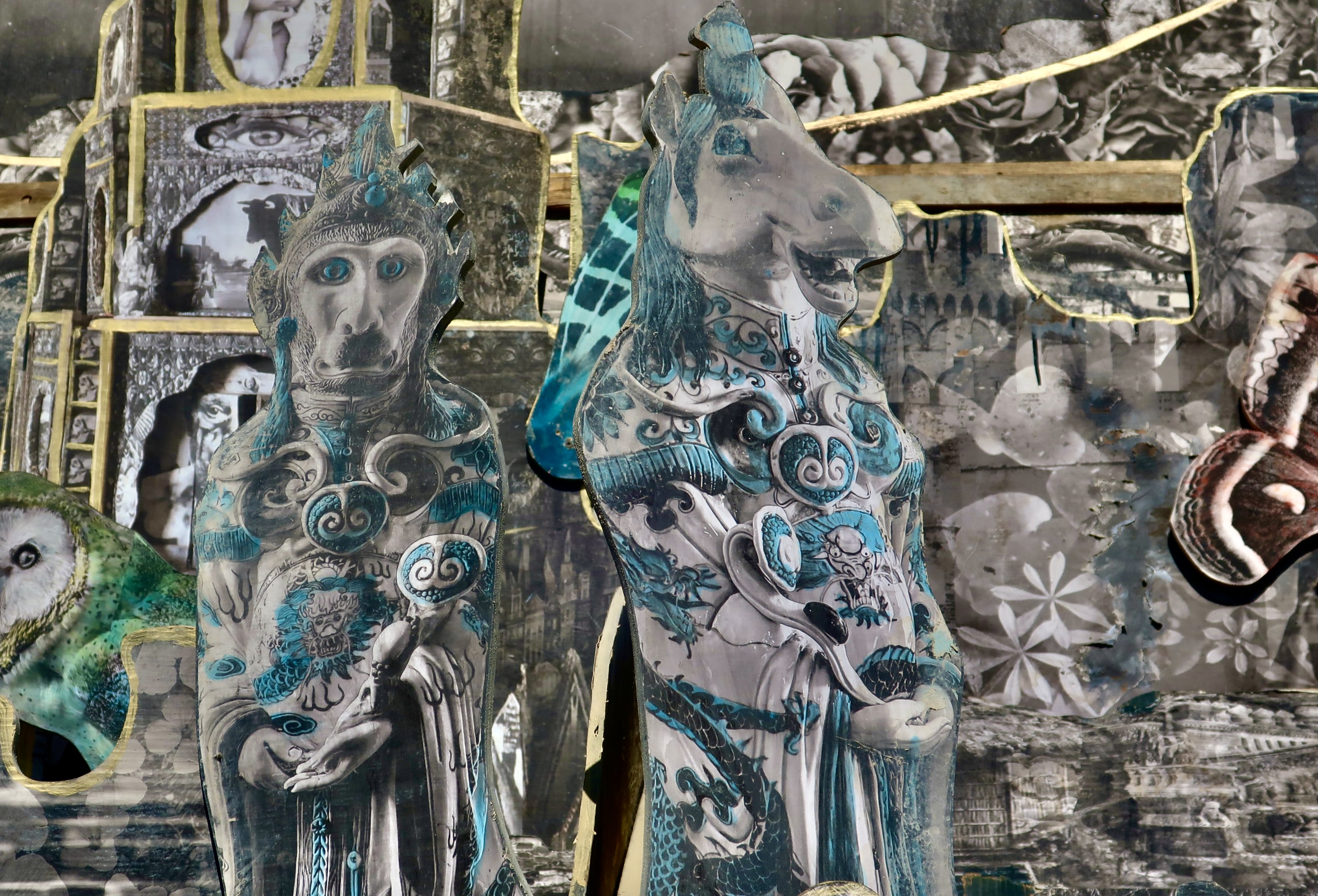
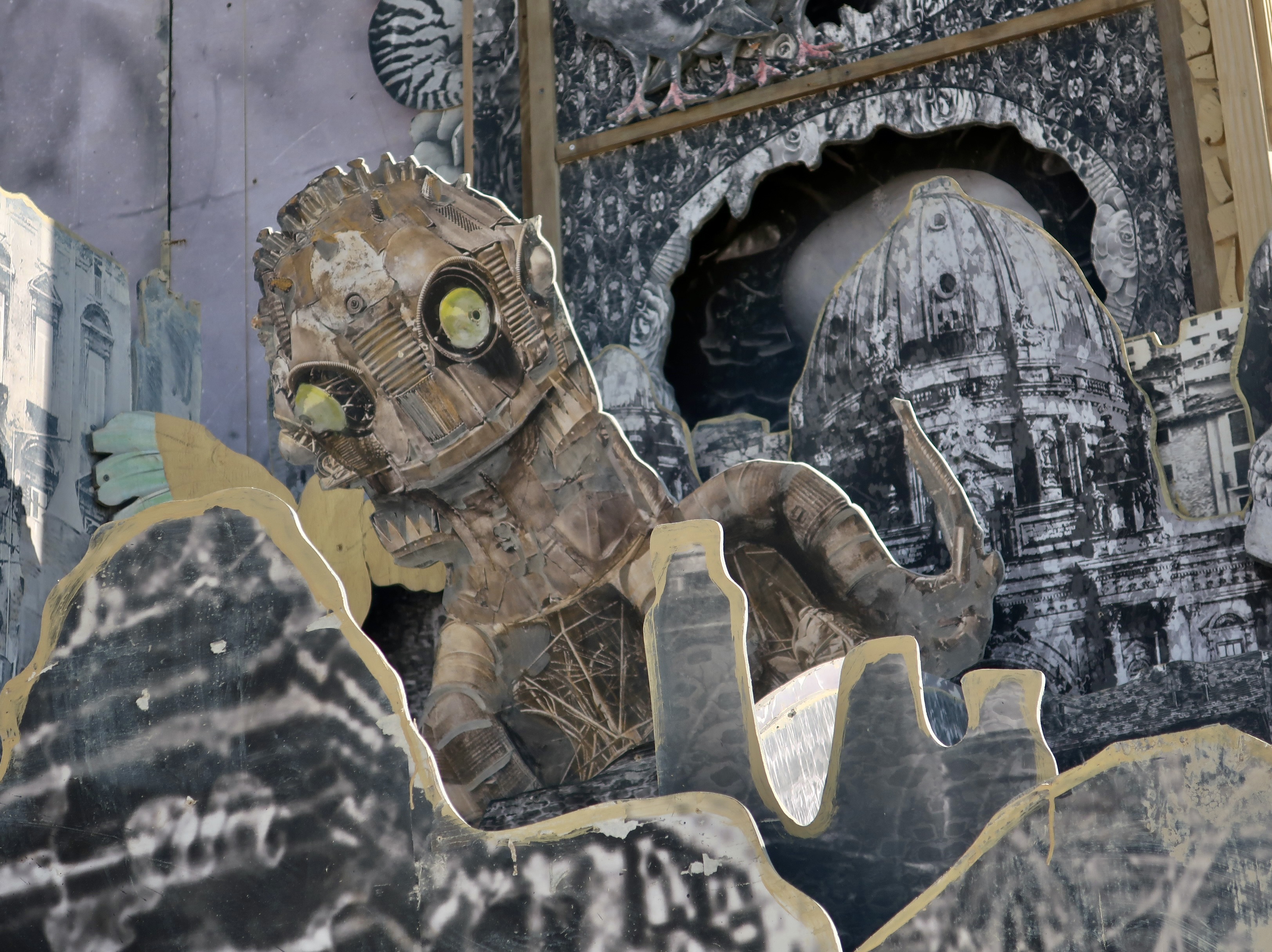
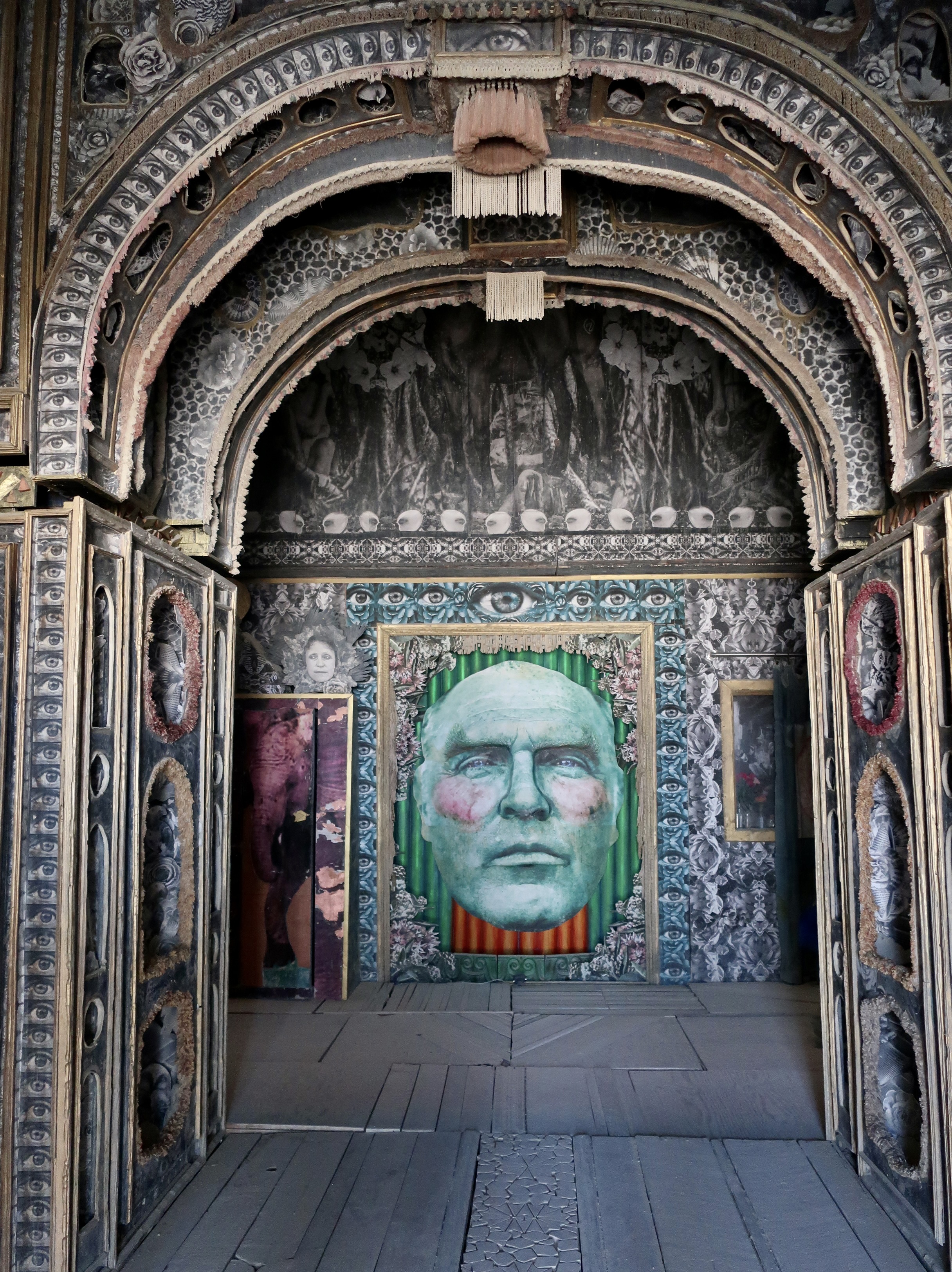
One could easily spend an hour checking out all of the photographs and images that were located on the Temple of Babel. And contemplate what they meant. It seemed to me that the two nudes and the cat were inviting you to crawl into the cave. Would you? Grin.Or was the cat the devil? And who is Paul? I’m guessing one of the volunteers who helped with the massive job of putting the structure together. All sorts of things here but the foot and the hand stand out.A small tree frog with a crown was emerging from the hand. Kiss it and you’d get a prince. Maybe.A cow. While the chickens may be long gone, there are still cattle ranches in the Petaluma area.A chimp and a horse monkeying around.Even El Pulpo Mechanico made it to the party.Inside, Garlington featured a photo of his father that he called the Wizard of Pa. (Mom is up on the left.)There was ever so much more to the Temple of Babel, but I think this is a good photo to wrap up this post. Garlington and Bertotti have stated that this is their last temple. Having escaped Burning Man because of the rains, Peggy and I weren’t around to see it burn but I read that Garlington urged Burners to help themselves to the art before it burned in a grand give-away gesture, worthy of him and Burning Man. We wish we could have been there.
But briefly, back to the Temple of Confession— and mine. Peggy and I are running away from Word Press for a few more weeks as we head to Africa, which isn’t news to my fellow bloggers since we have been running away a lot. 😳But we will be back in mid-November with lions and giraffes and hippos, oh my. Not to mention more Burning Man, and Nile, and national parks, and… The good news is we will never run out of things to blog about; the bad news is that we will never catch up.
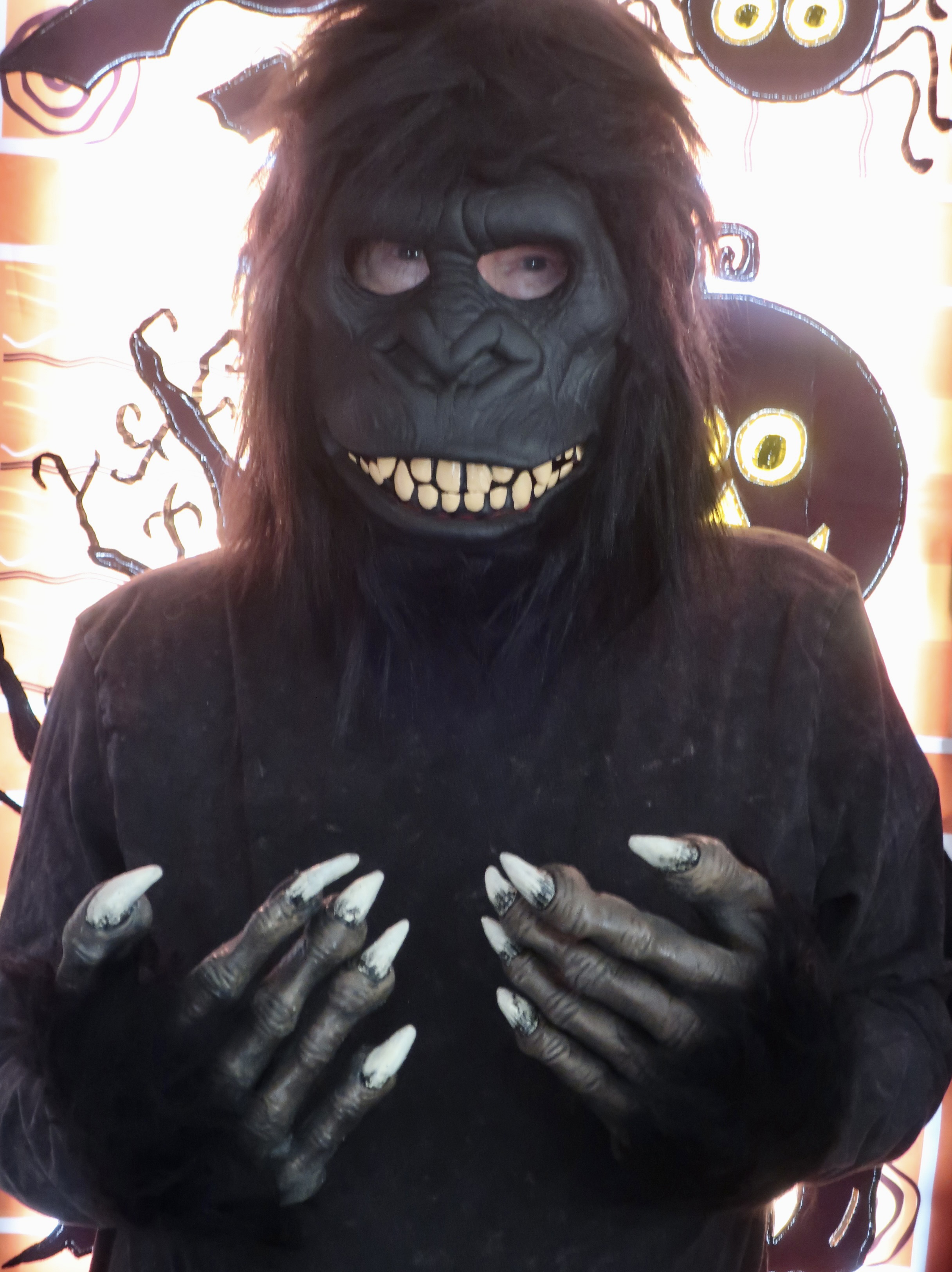
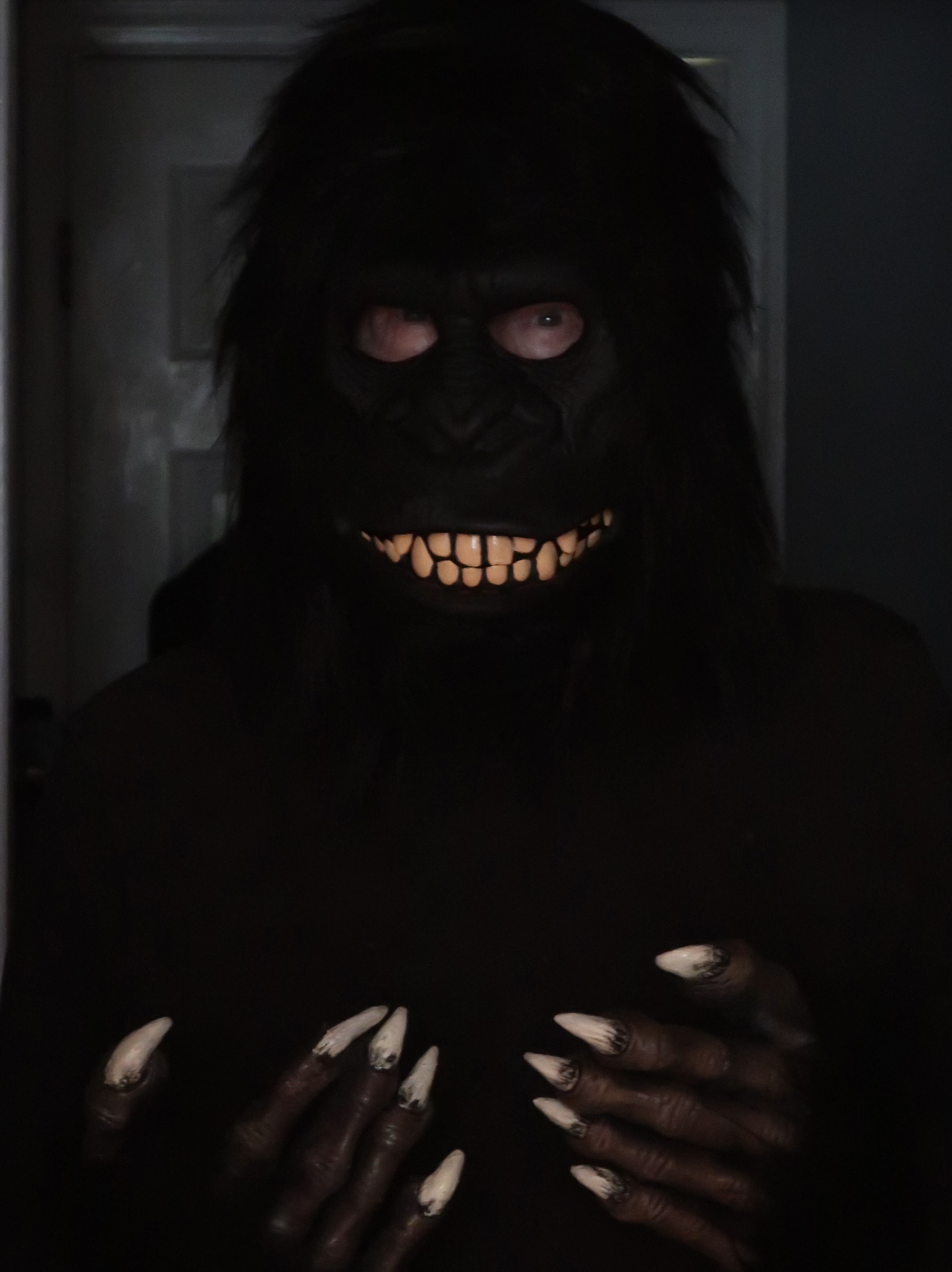
And finally, on behalf of Bigfoot (or is it a great ape) and in honor of our trips to Burning Man and Africa, Peggy and I wish you a Happy Halloween. If this isn’t scary enough…
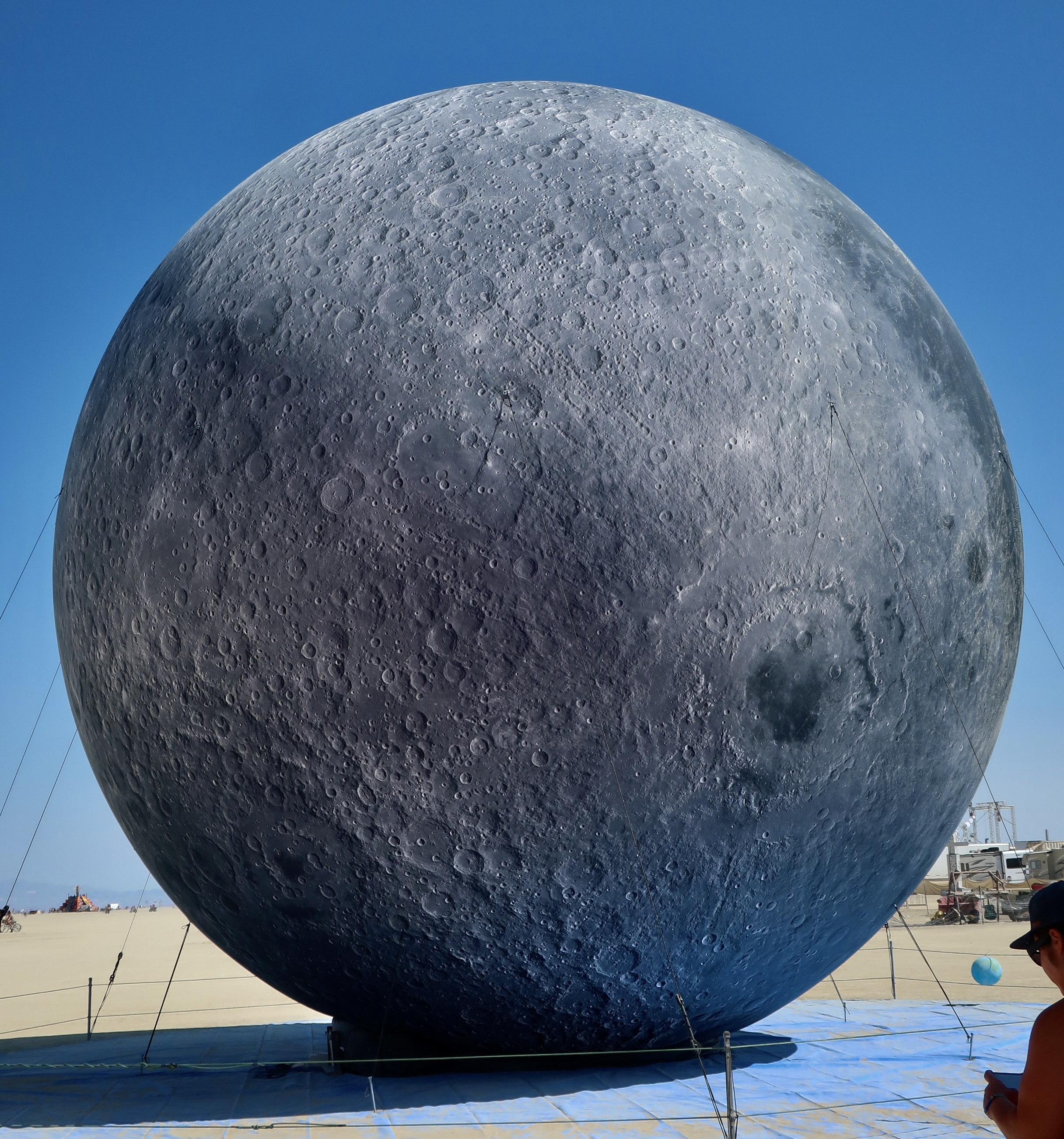
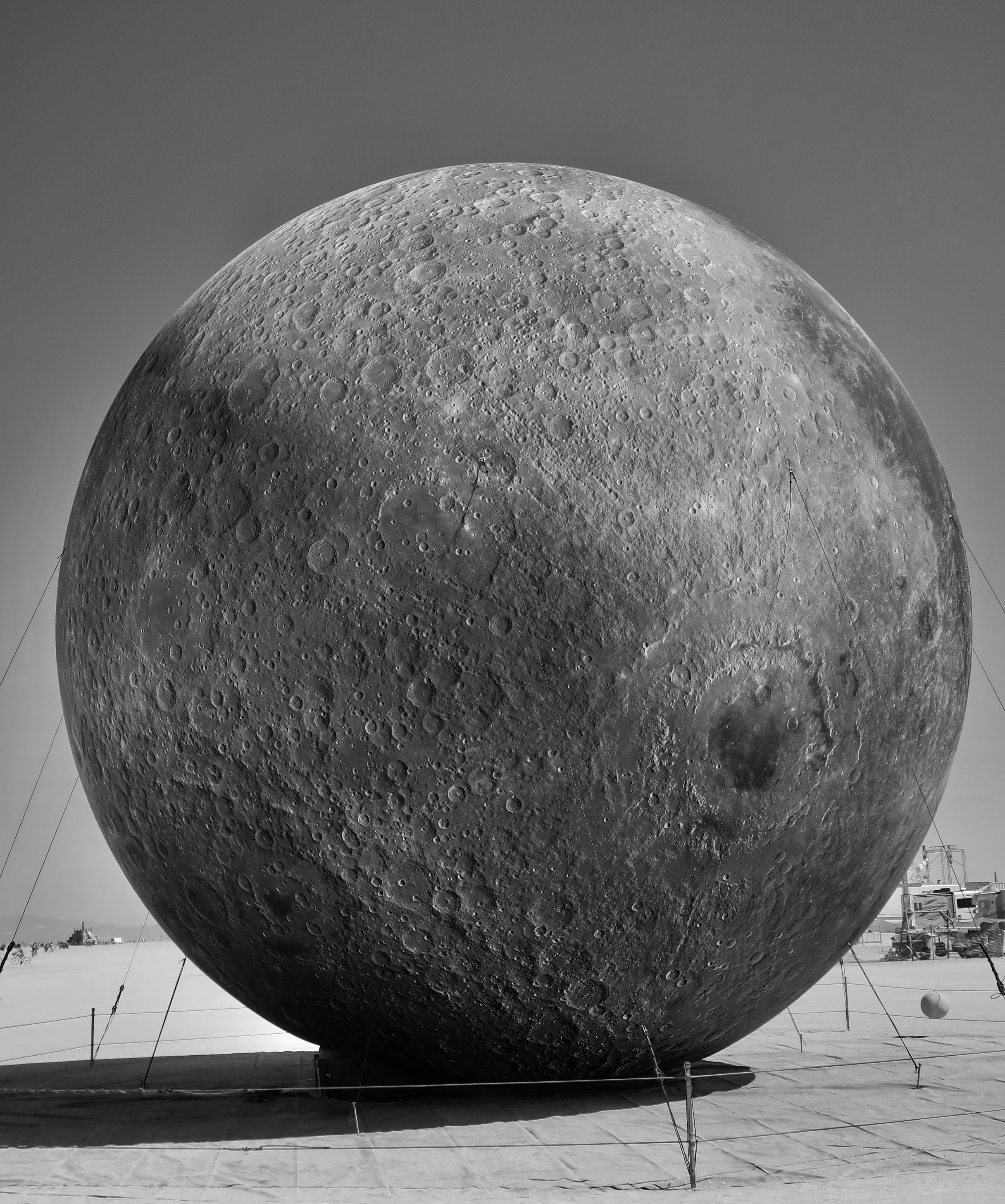
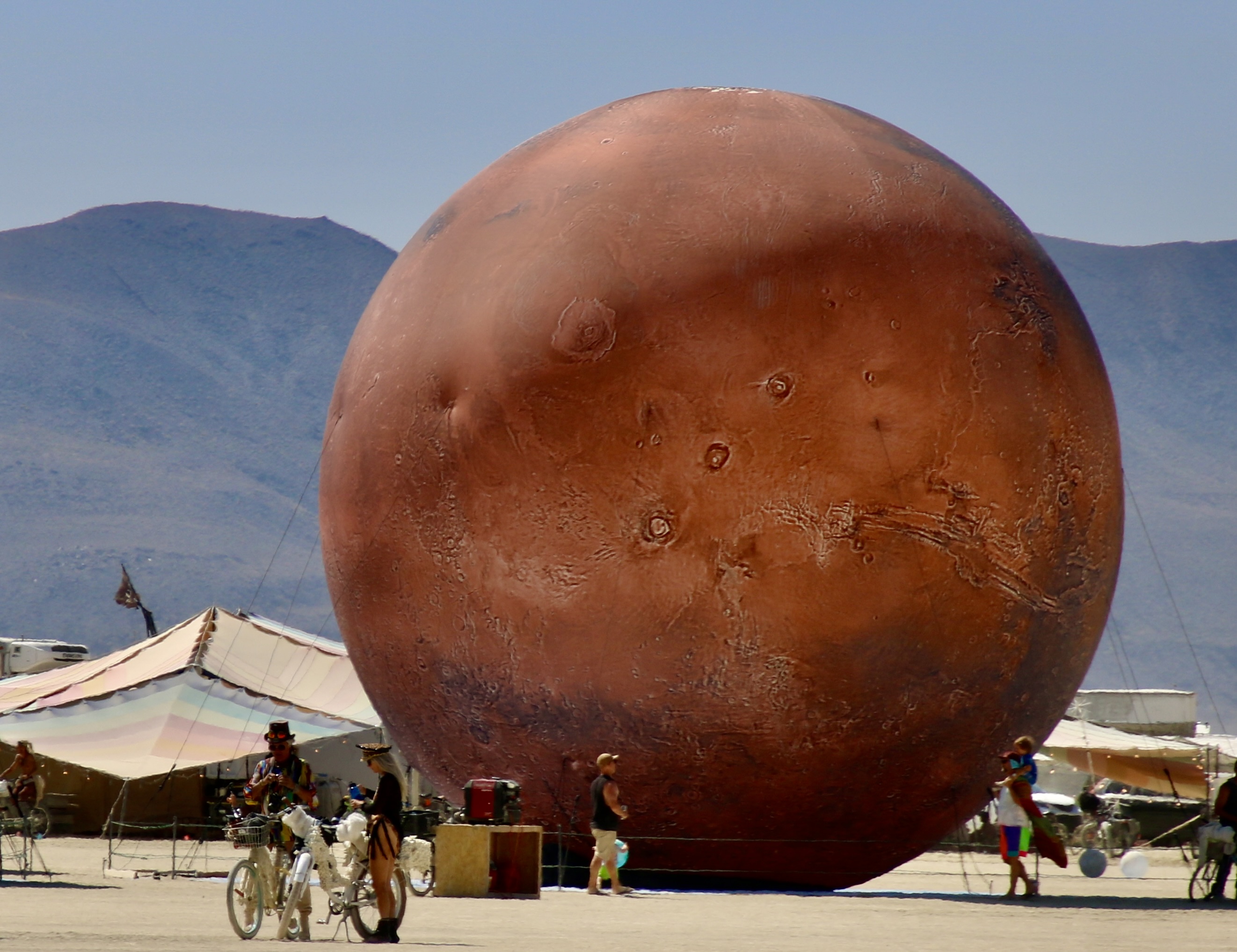
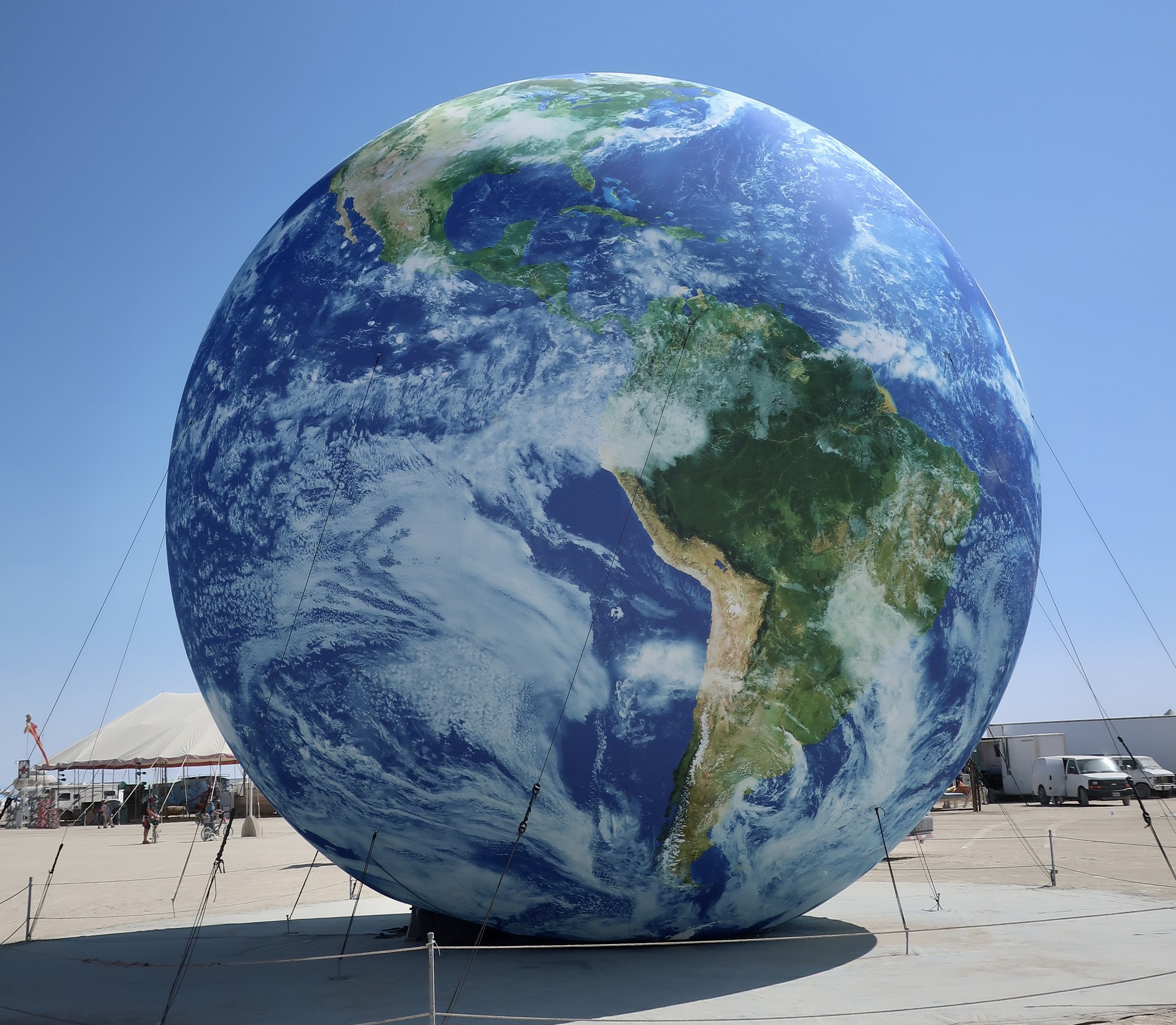
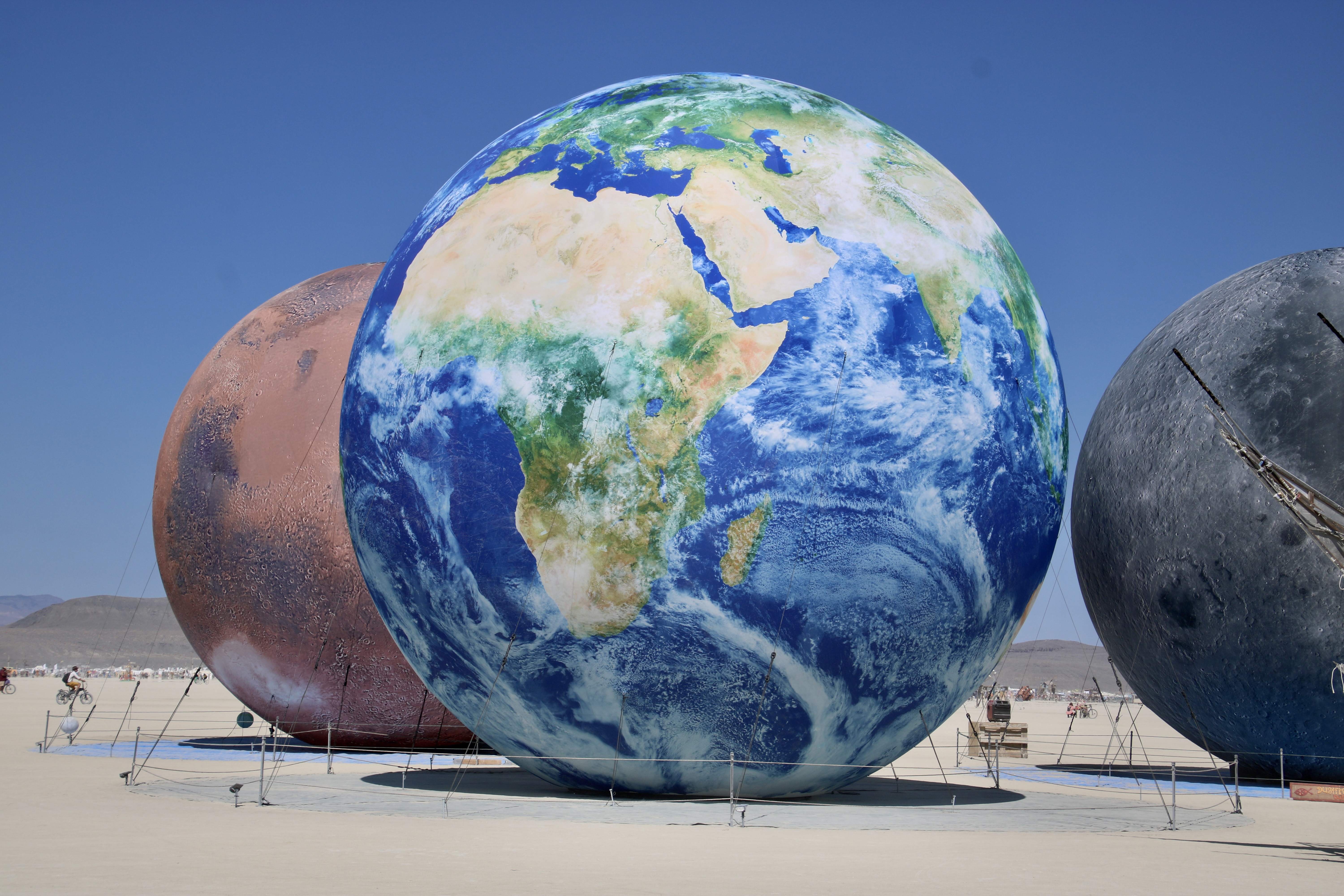
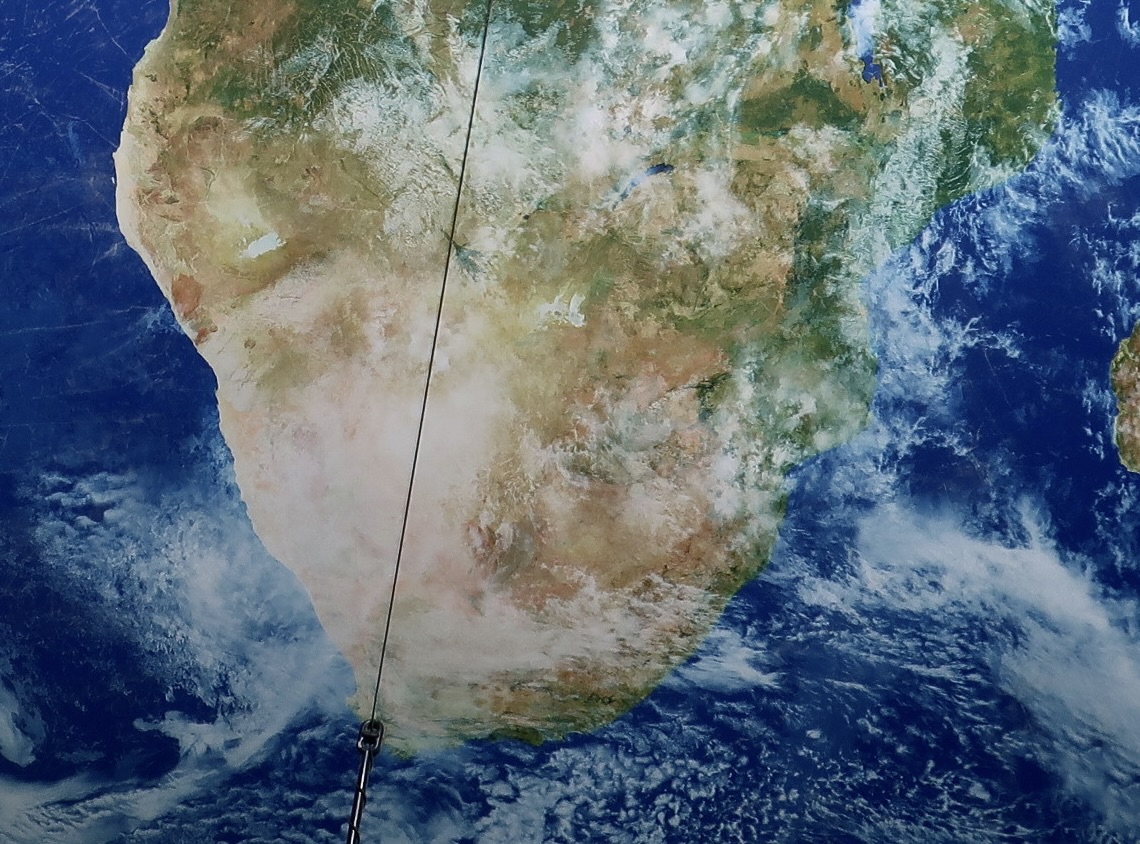
The moon, earth, and mars visited Burning Man 2023. They were located along the Esplanade, Burning Man’s main street, which separates Black Rock City from the Playa.Here’s a close up of the moon. I couldn’t find out who brought the large, inflatable planets to Burning Man, but they were impressive. I thought it would be fun to render the moon in black and white. BTW, while we were at Burning Man, we had a blue moon, which happens once in 33 months, thus the term, ‘once in a blue moon.’ It was also a supermoon, which occurs when the moon is closest to us in its journey around the earth. Unfortunately, the same clouds that brought the rains hid the moon.Mars, Red Planet.The earth as astronauts see it featuring South America, Central America and a portion of the United States.The earth featuring Africa.I’m including this close up of the southern part of Africa because it covers where Peggy and I will be in a couple of weeks. Our journey will take us to South Africa, Botswana and Zimbabwe. Highlights will include Victoria Falls, Chobe National Park, Hwange National Park, and Cape Town. In addition to vehicle trips into the national parks, we will explore the Chobe River and Lake Kariba by boat. This will be our second trip to Africa this year, with the first being our journey to Egypt and up the Nile River. Most of you are aware that I was a Peace Corps Volunteer in Liberia West Africa from 1965-67 and while I was there I flew to East Africa and did a 1500 mile tour of National Parks in Kenya, Tanzania and Uganda in a VW bug. I’m looking forward to ‘going on safari’ again!
It’s been four years since I have been to Burning Man and longer for Peggy. We certainly saw differences this year that I will discuss later, but one thing I wanted to mention today is that Burning Man seemed more international to us than ever before. It was apparent in the different languages we heard as we explored the Playa and Black Rock City, but even more so in the art. You may have noticed in my past three posts on Burning Man art how many of the pieces were created by artists from other countries. Today, I feature works from Armenia, Ukraine, China and the United Kingdom as well as the US.
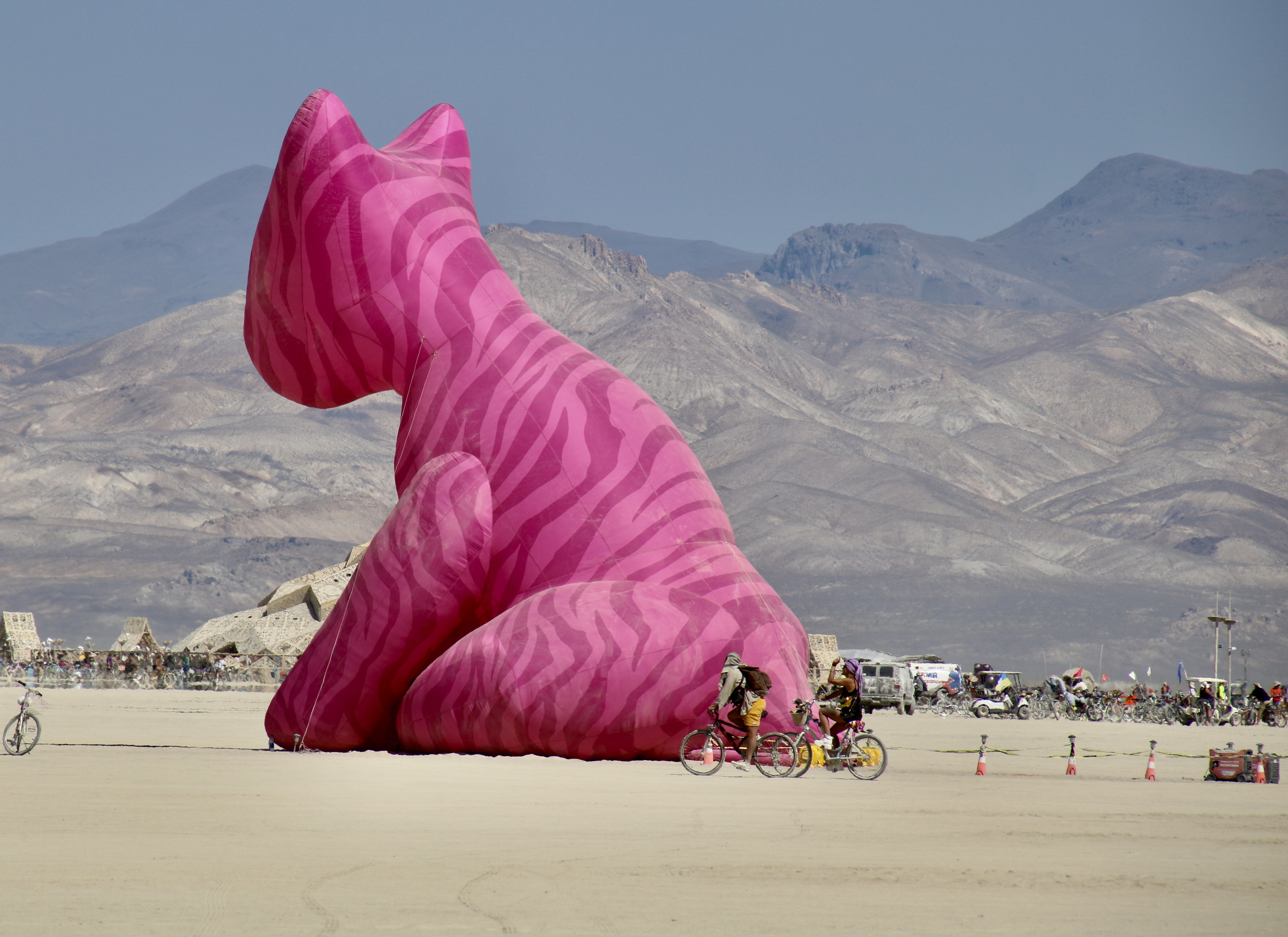
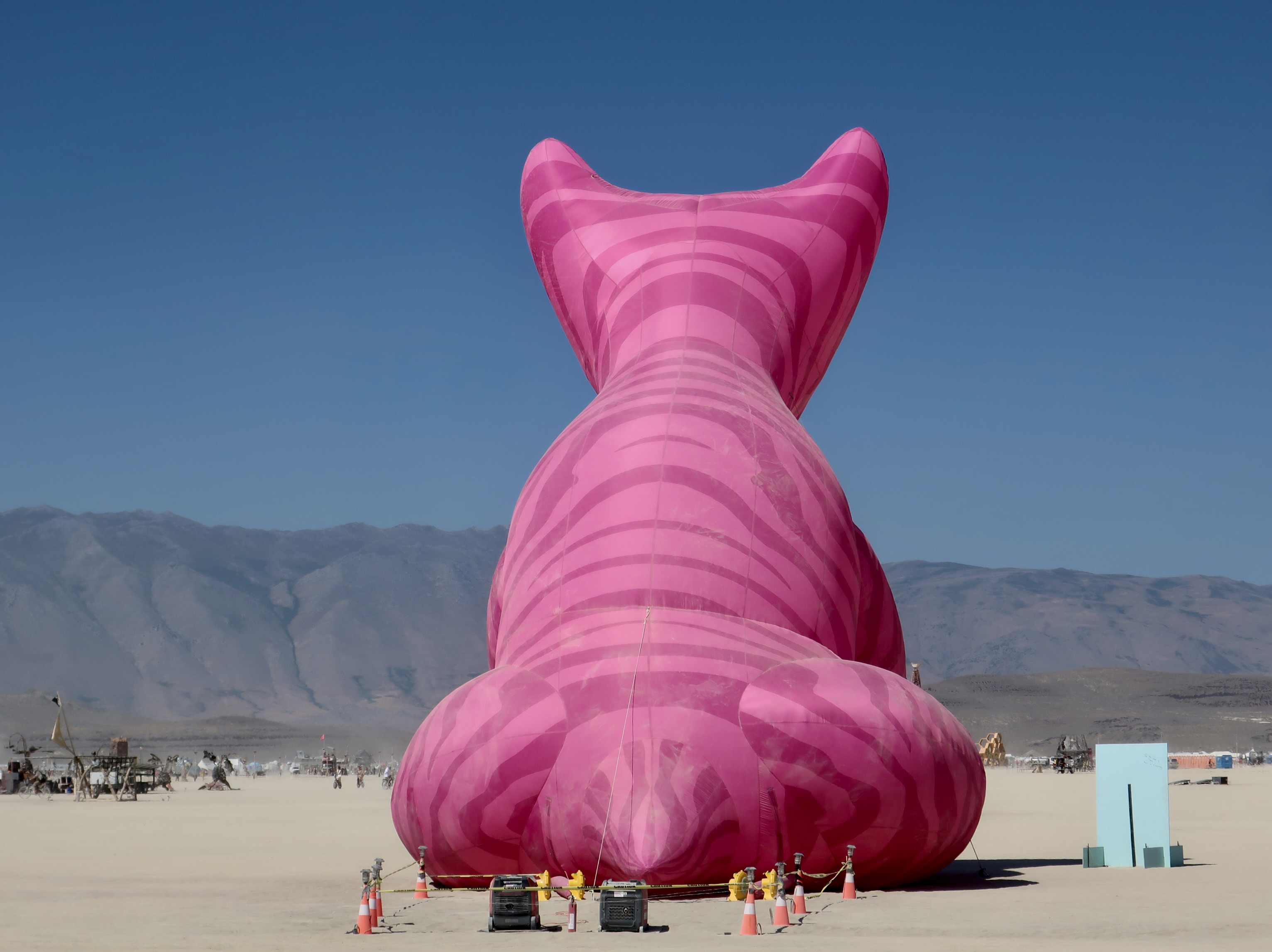
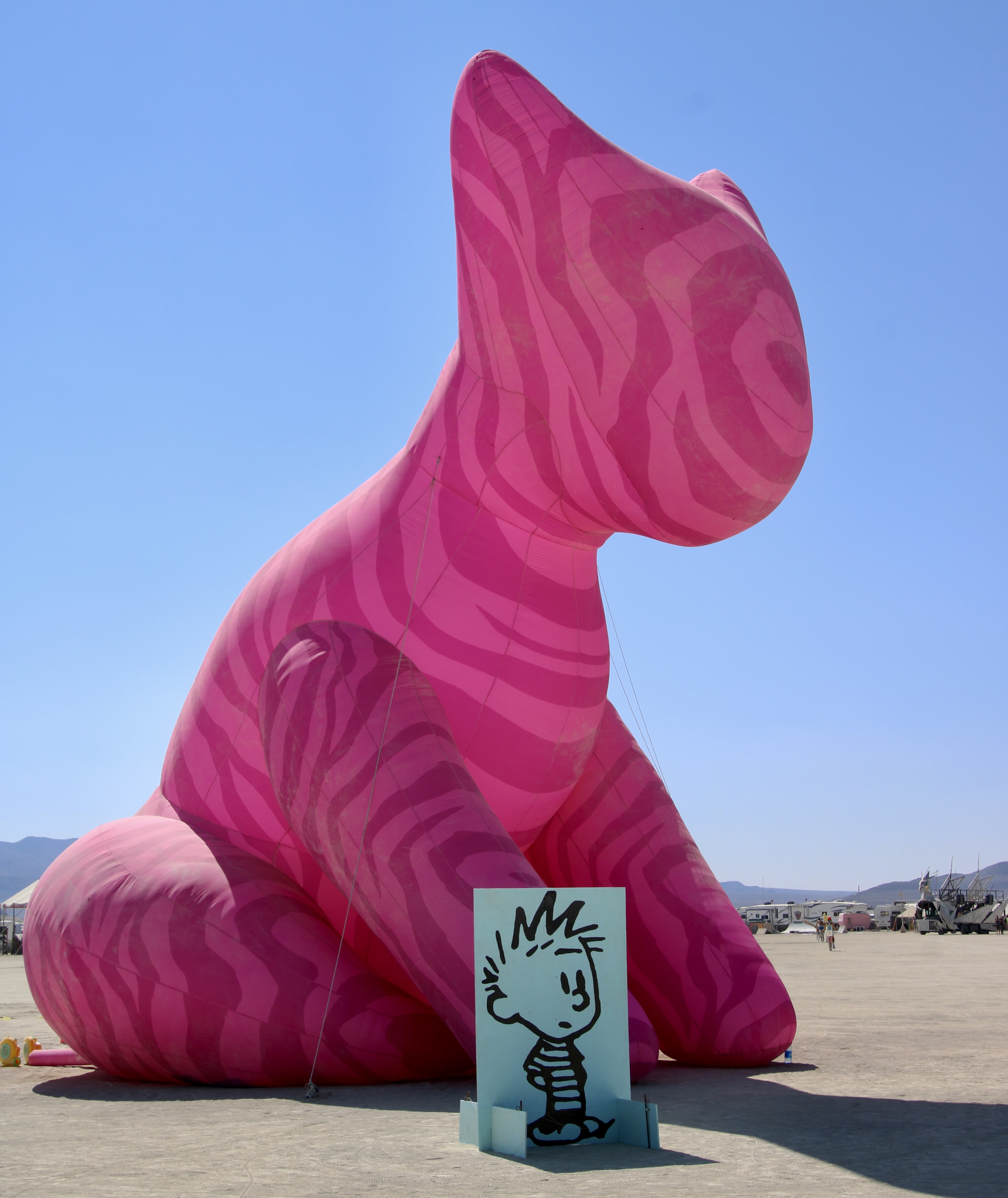
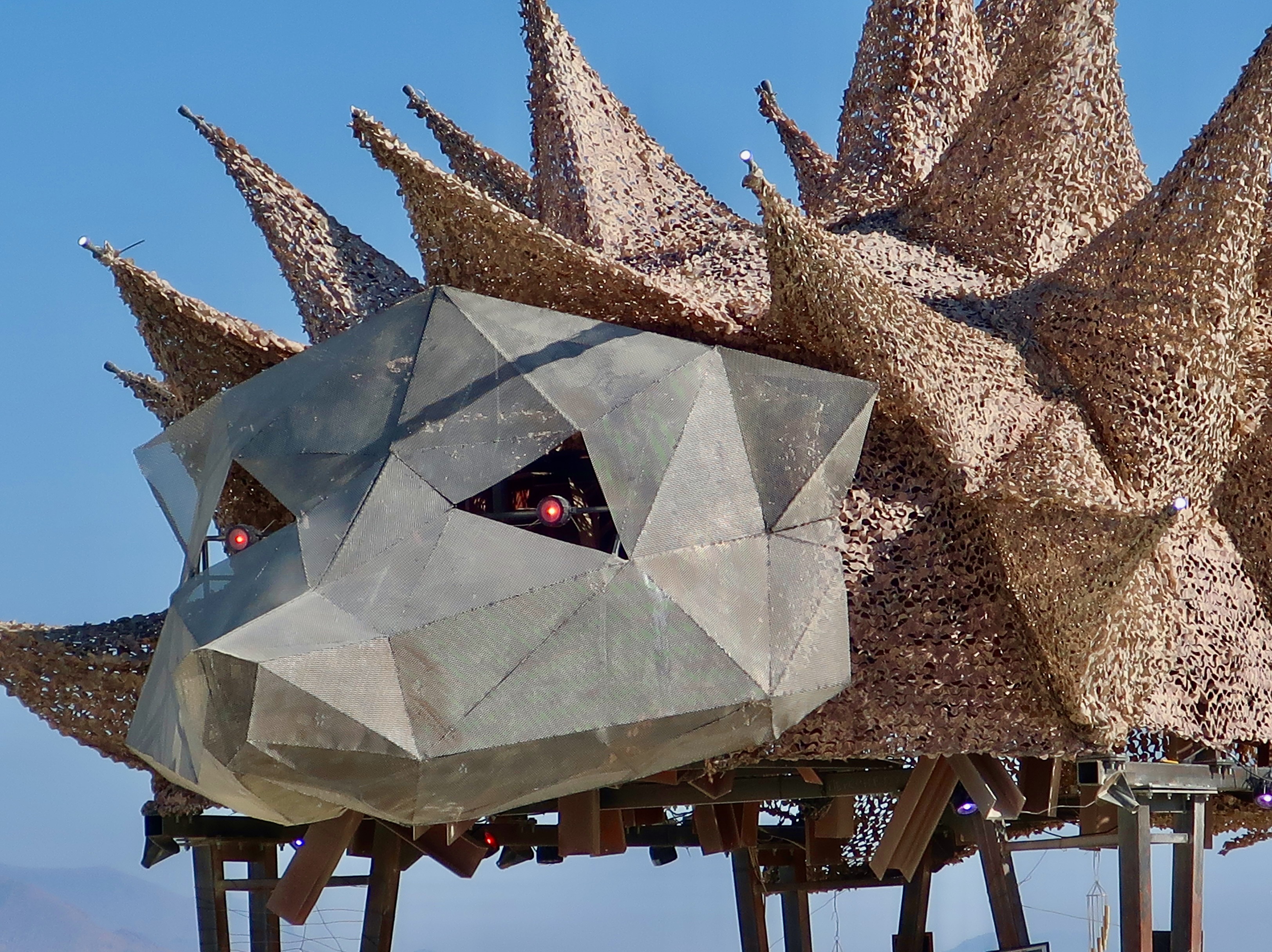
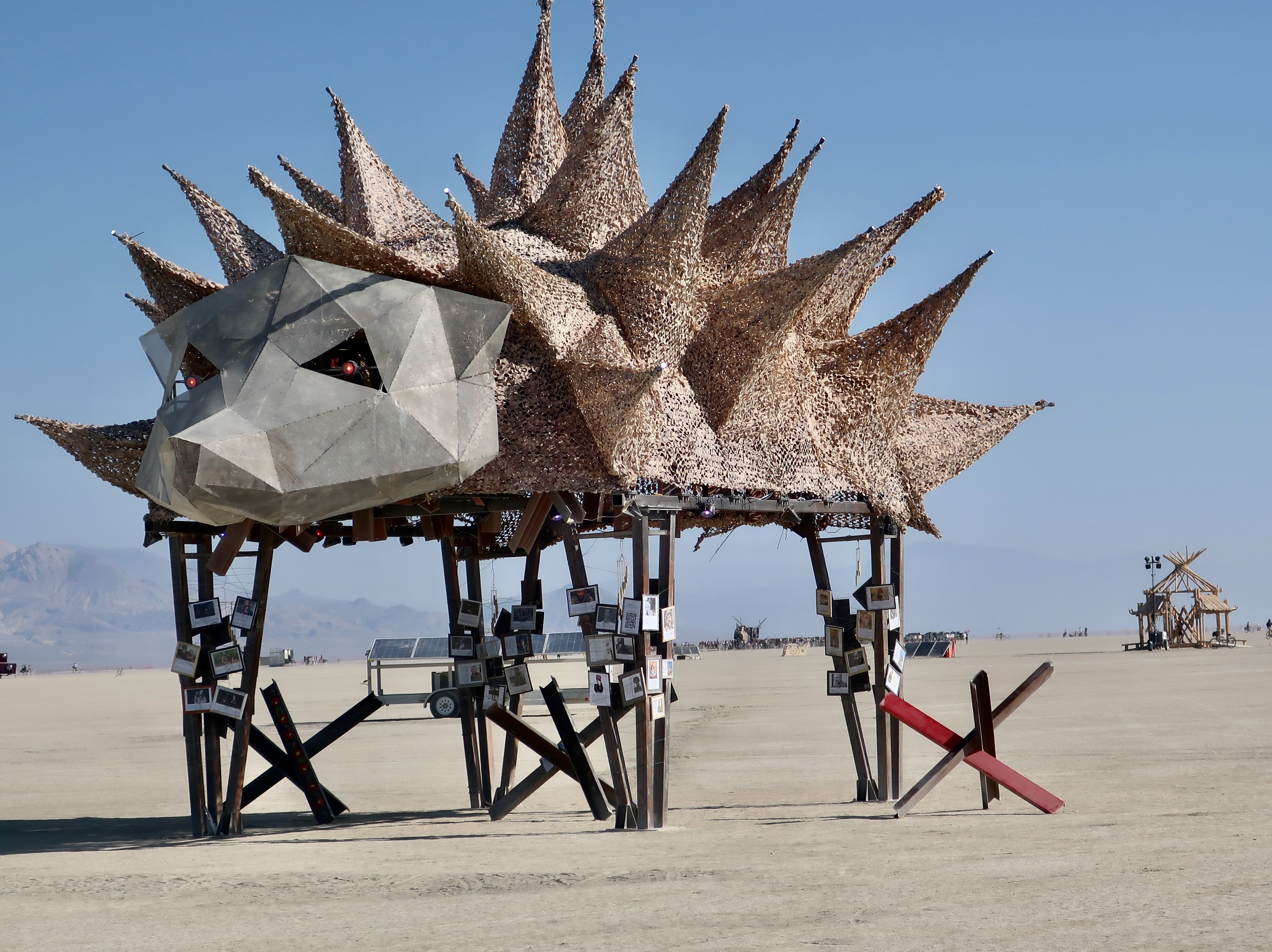
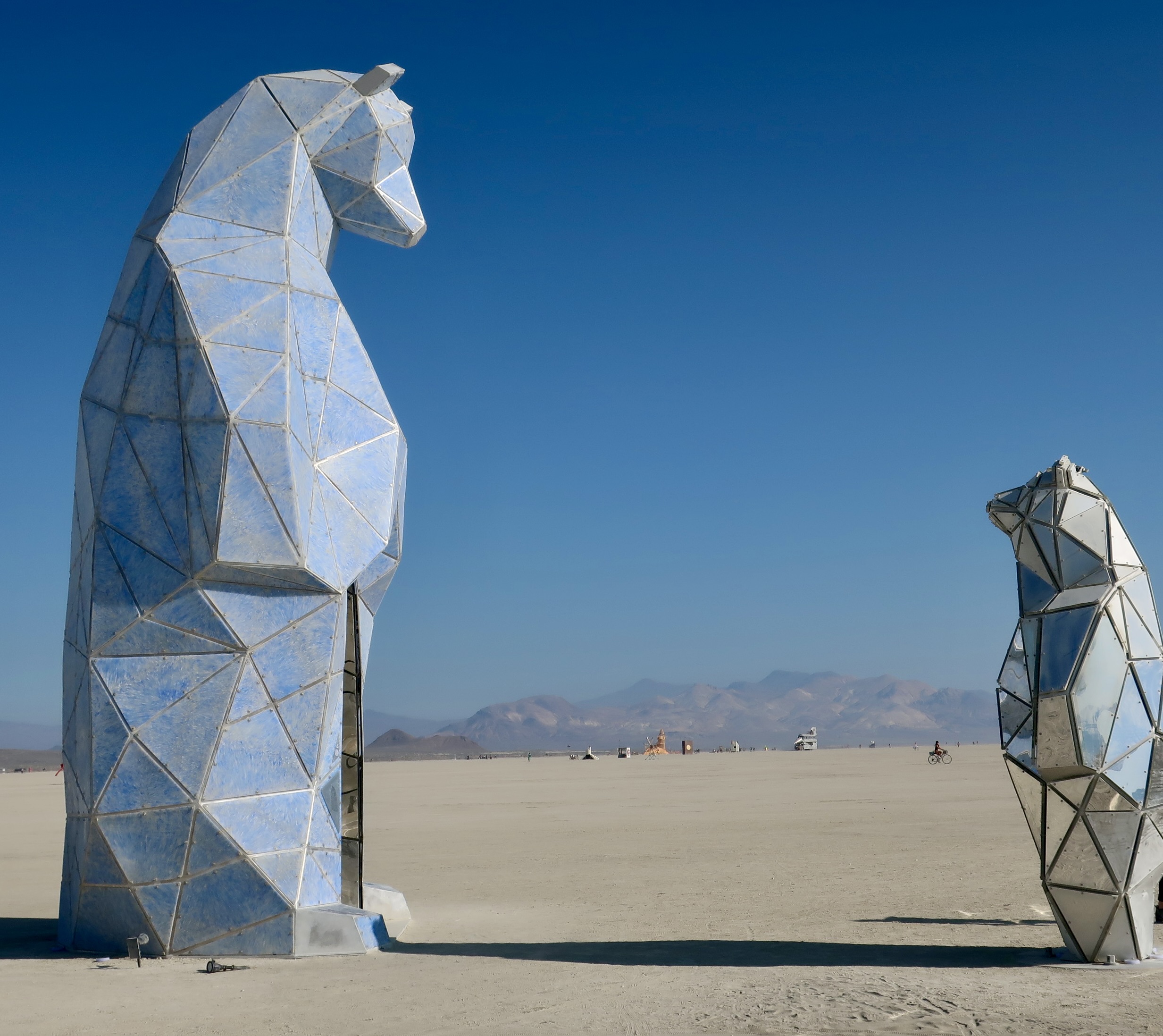
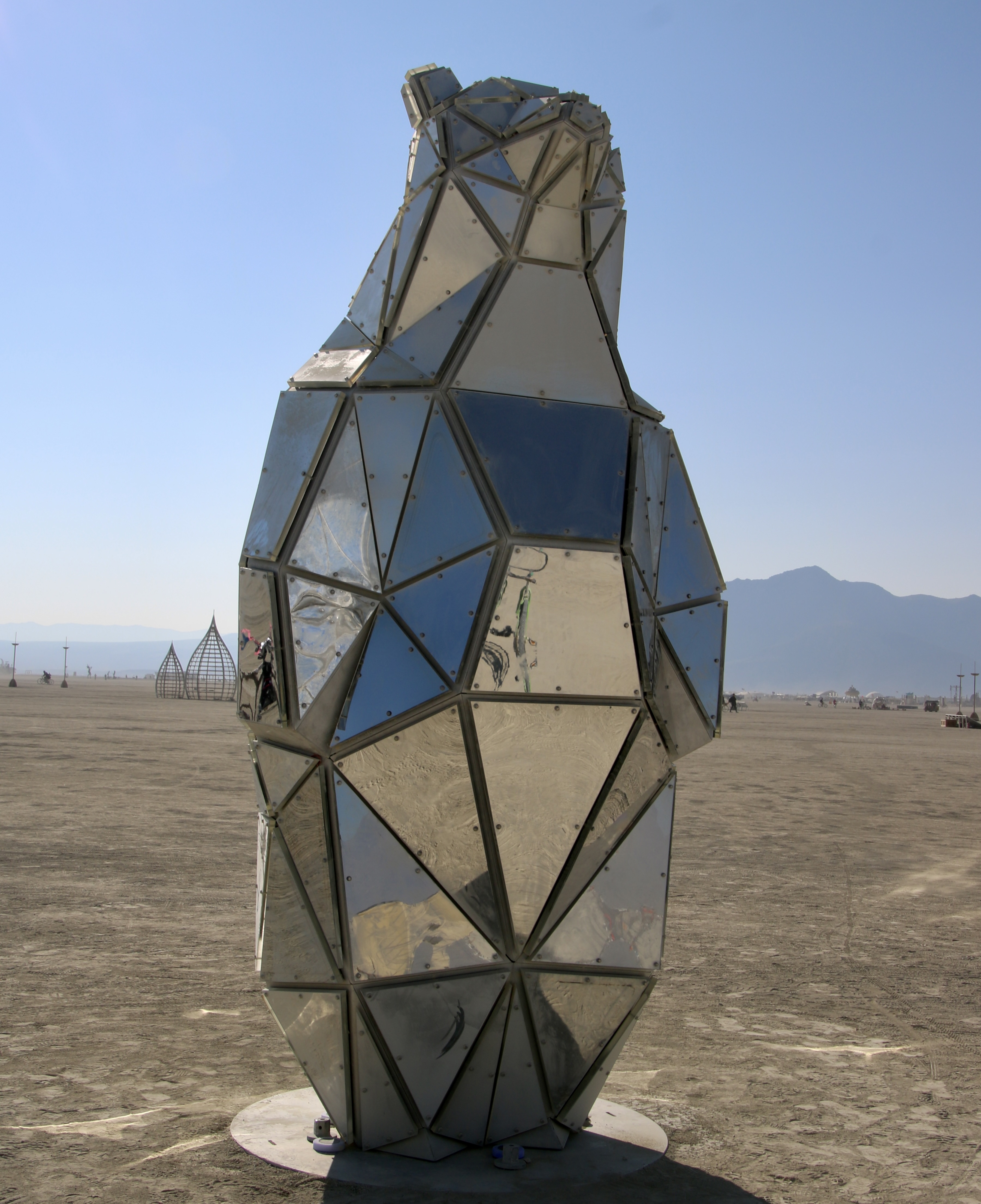
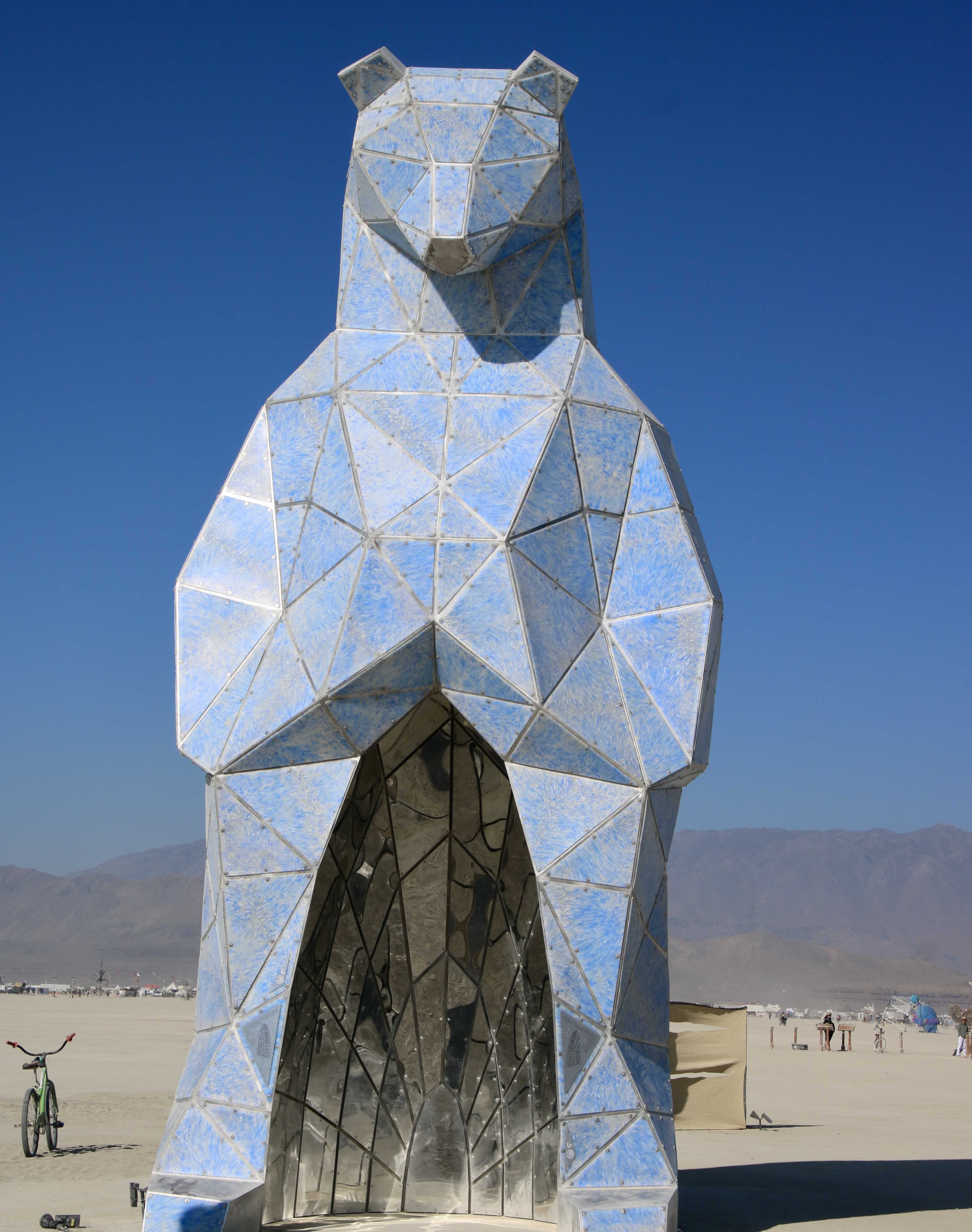
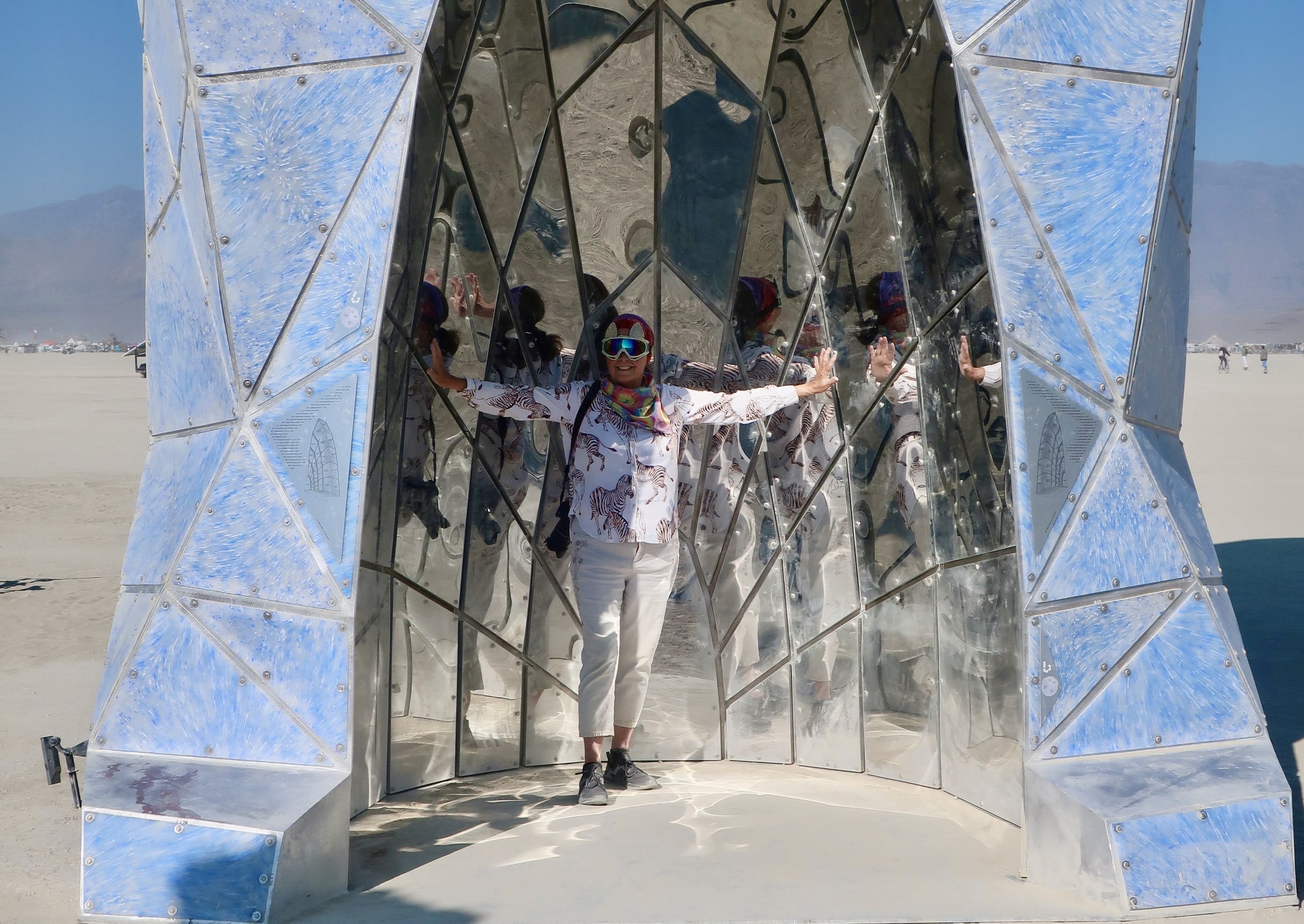
A huge, inflatable tiger was one of the prominent works of art on the Playa at Burning Man 2023 . Its size and pink color guaranteed it stood out. Bicyclists provide perspective on its size. A tails-eye take on the towering tiger! The artist, Misha Libertee from Armenia, named her sculpture Vagr, which is Armenian for tiger. She stated that the “Bright pink color of the installation serves as a reminder of the struggles that these animals face due to habitat loss, poaching, and climate change.” We wondered if the sign on the right would provide more information.I’m pretty sure that another Burning Man artist decided to add Calvin to the equation. While it may not have been what Libertee had in mind, it certainly resonated with me. Calvin and Hobbes was one of my all-time favorite cartoons. Created by Bill Watterson in 1985, it was discontinued ten years later. The cartoon has been missed by millions ever since, including me! Maybe there is a message here about endangered tigers… Another interesting animal that caught our attention immediately was a large hedgehog. It came with a story…Created by Ukrainian artists Yaroslav Korets and Kurenivka from Kyiv, the sculpture memorializes artists who died defending Ukraine against the Russian invasion. At the base of the sculpture are tank traps that Ukrainians created to slow the progress of Russian tanks through their cities. The tank traps are known as hedgehogs. Hundreds were made by the Ukrainian Railway utilizing new rails. Two Polar Bears stood out as stars on the Playa, literally. They were named Ursa Major and Ursa Minor after the constellations. The little fellow had been to Burning Man before. Little is relative. She stands 13 feet tall. Her big sister, Ursa Major, is over three stories. The artist, Jen Lewin from Brooklyn, said that Ursa Minor’s infinity mirrors were a reminder to “Look up.”The 30 foot tall Ursa Major had an opening that also featured mirrors. Lewin noted that “Ursa Major’s hollow body is filled
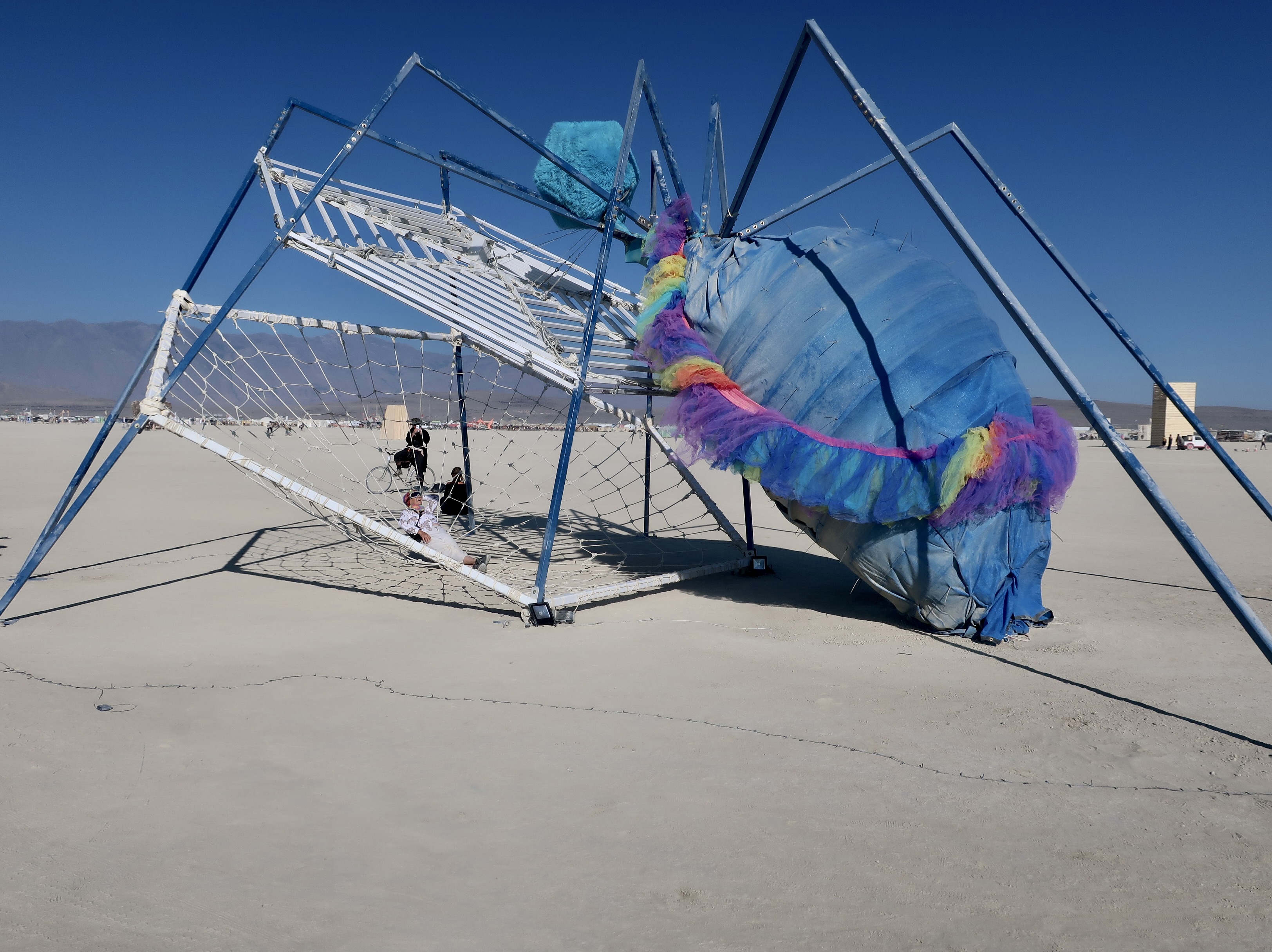
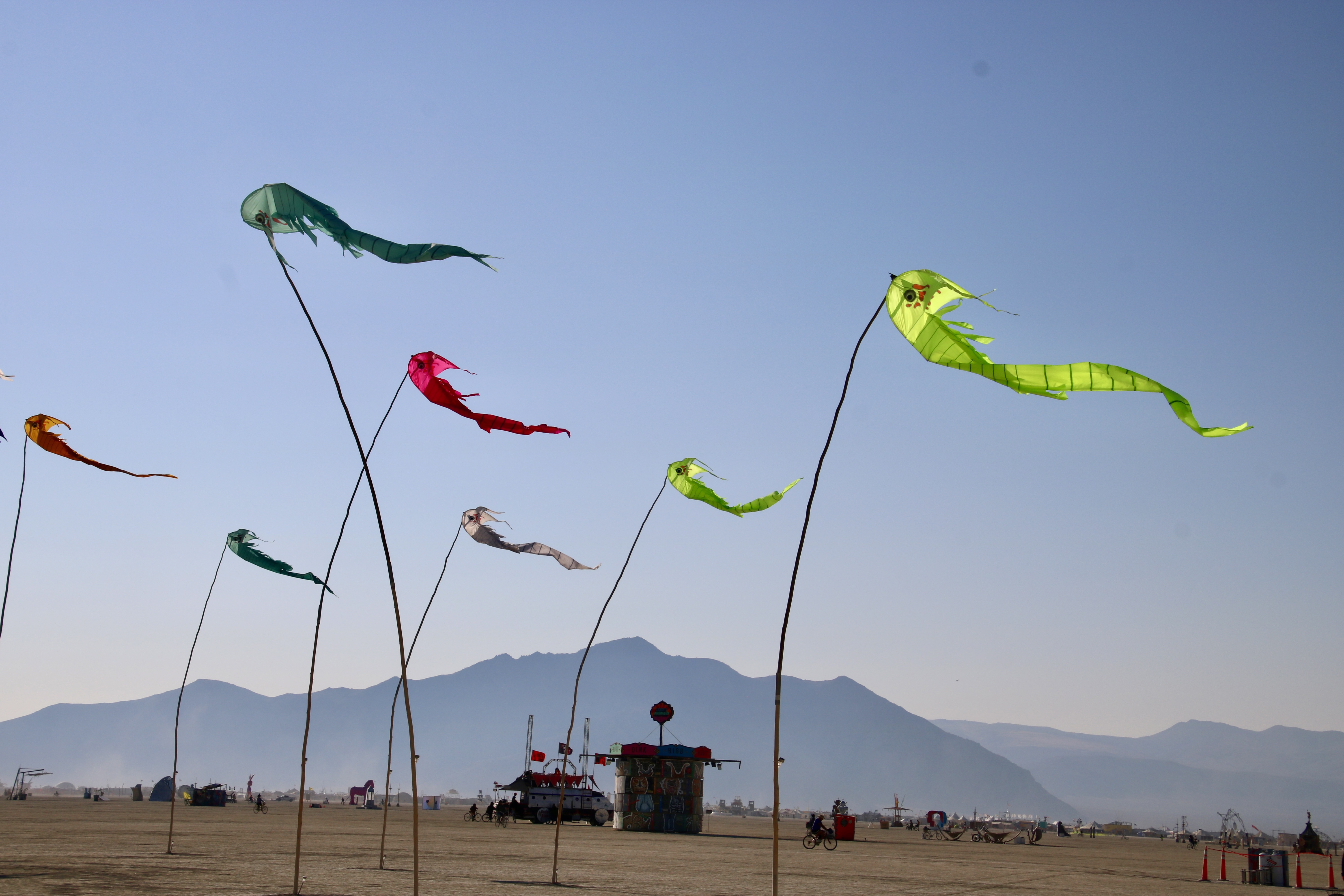
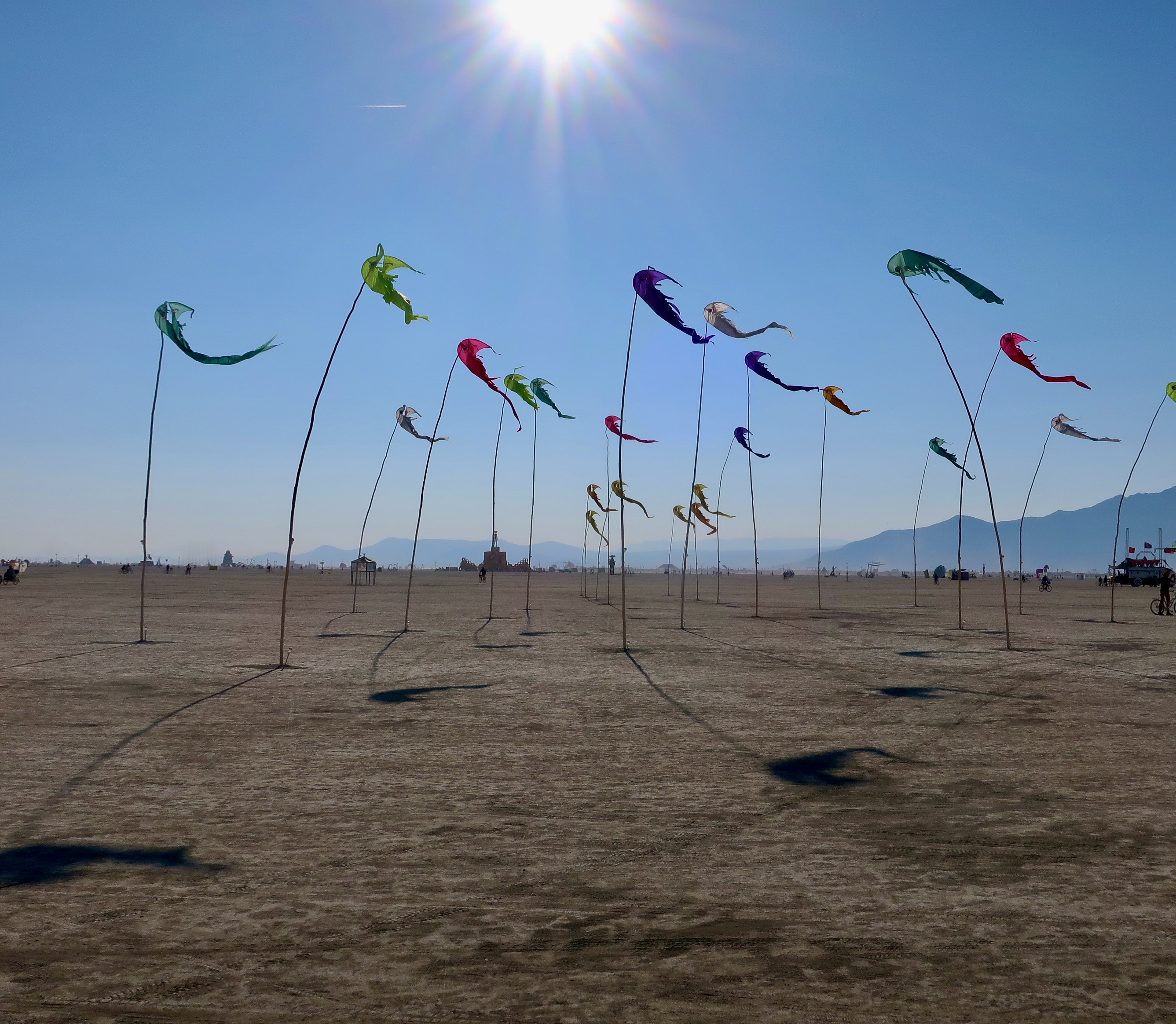
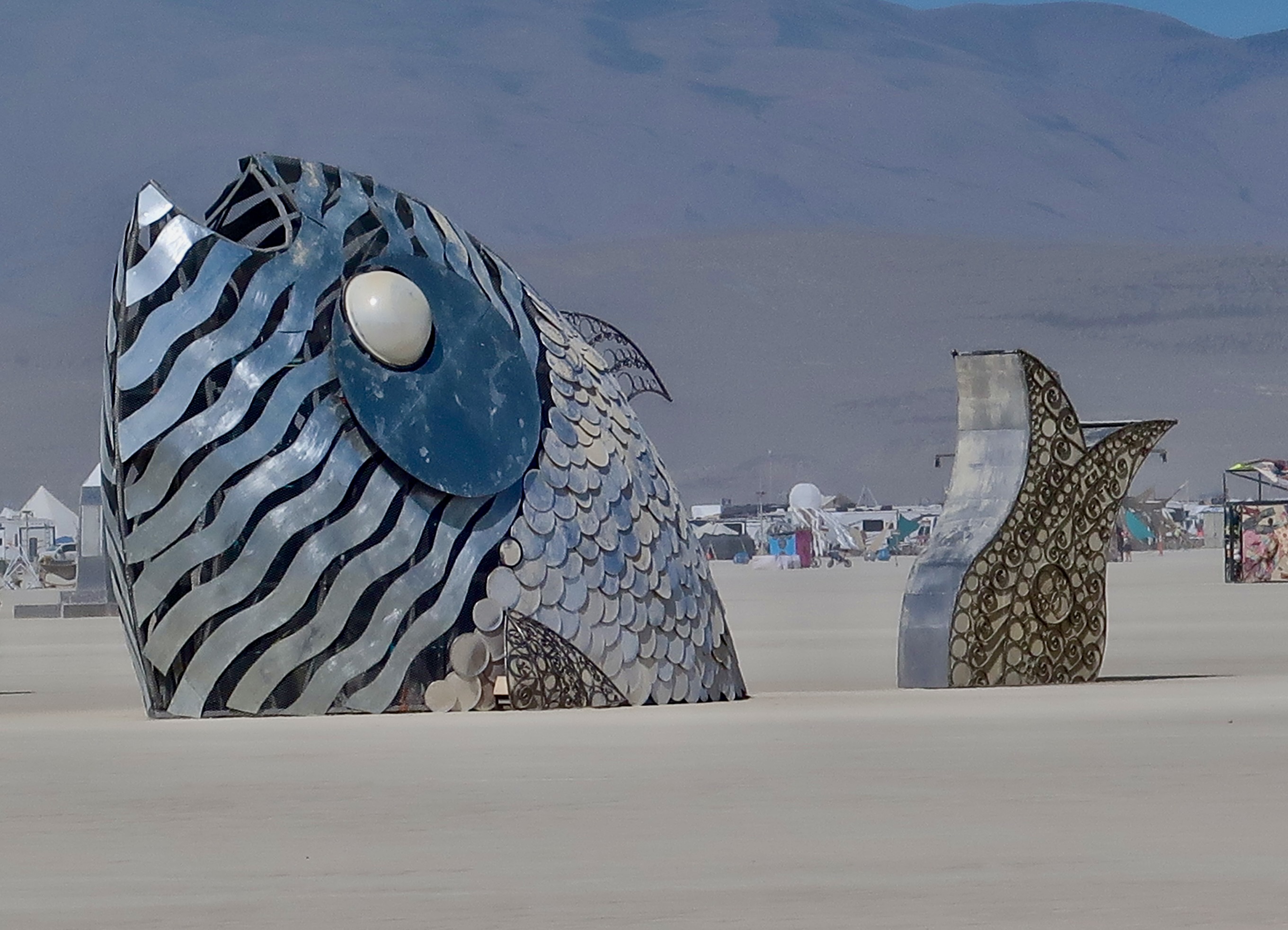
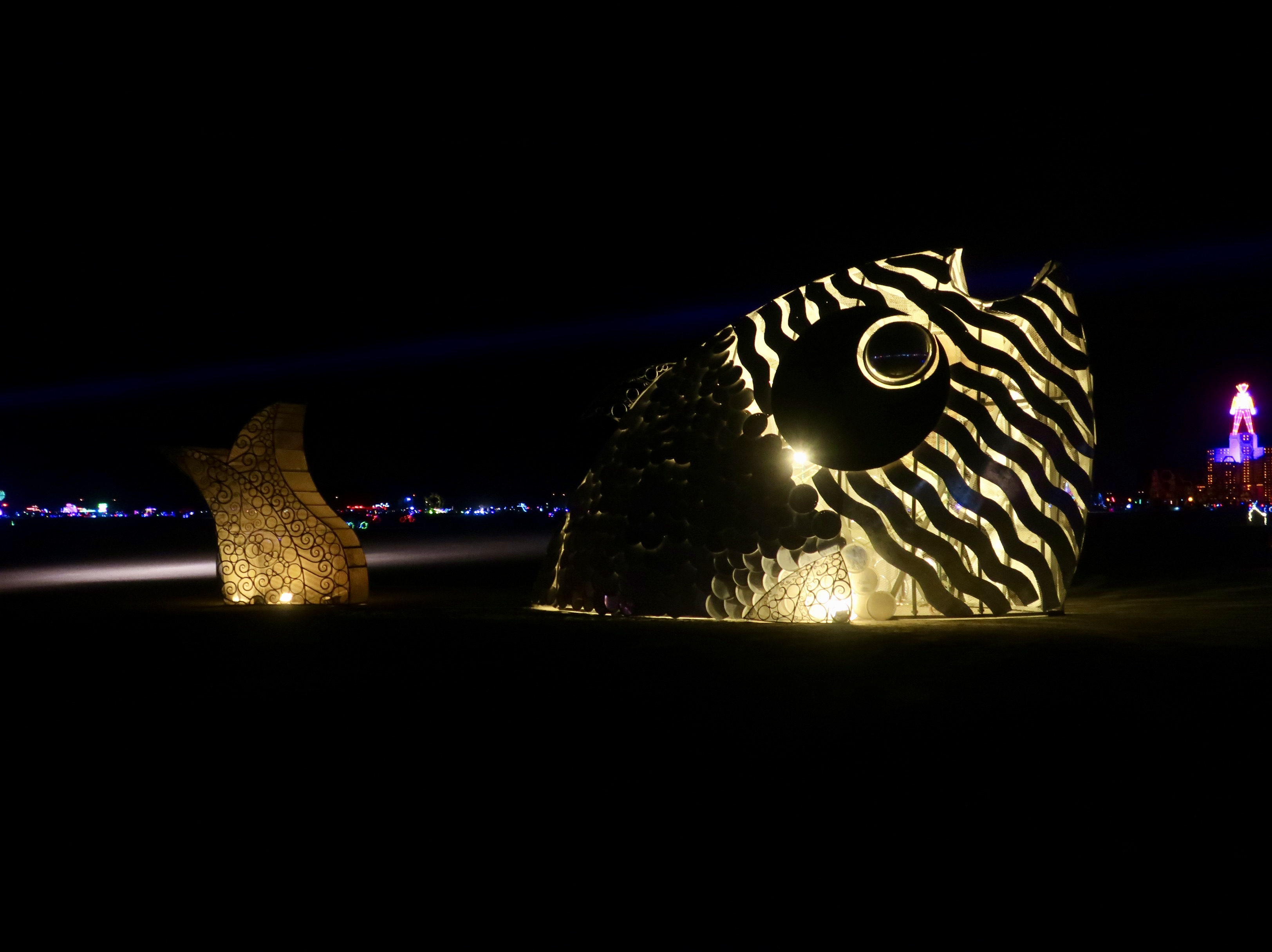
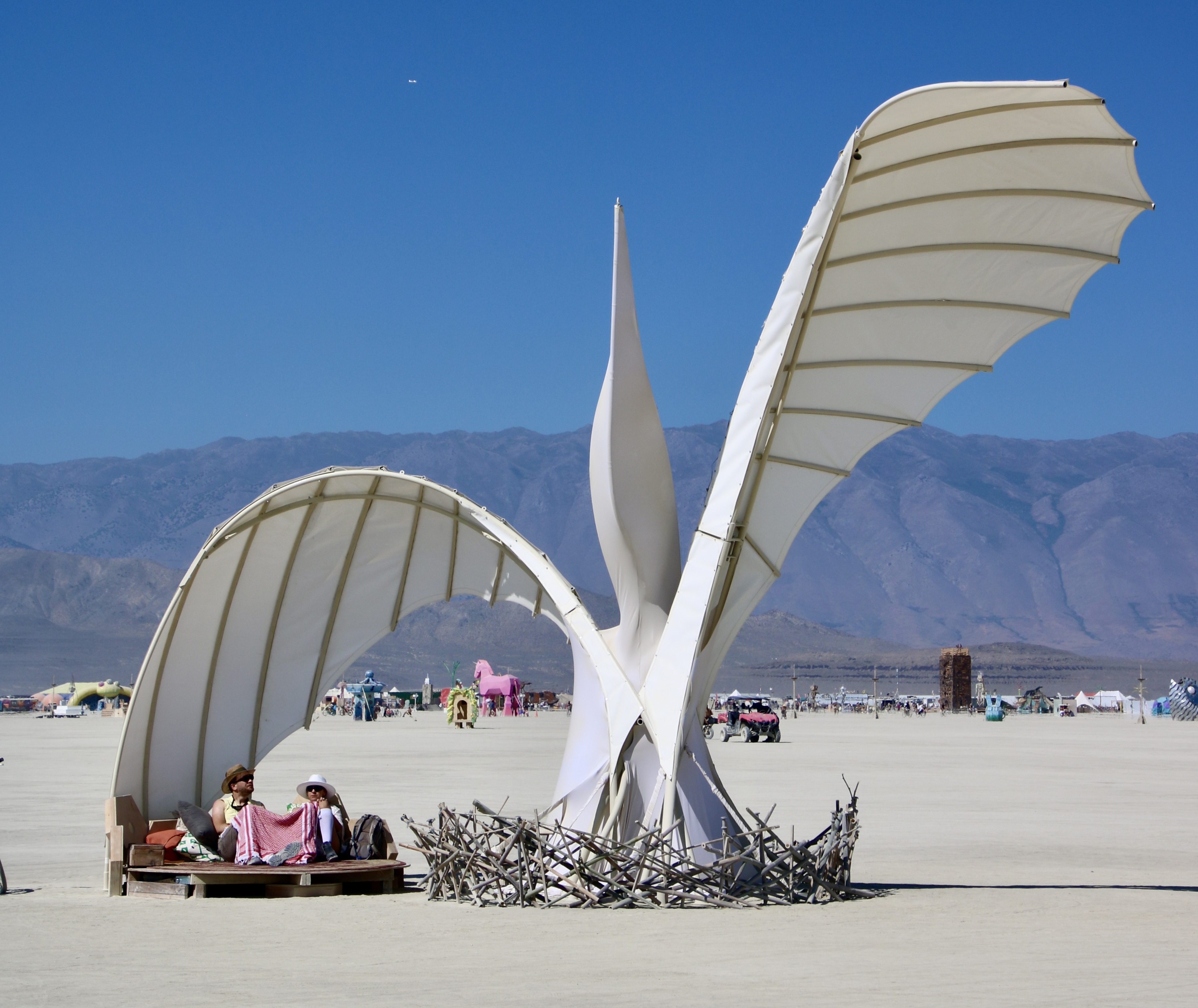
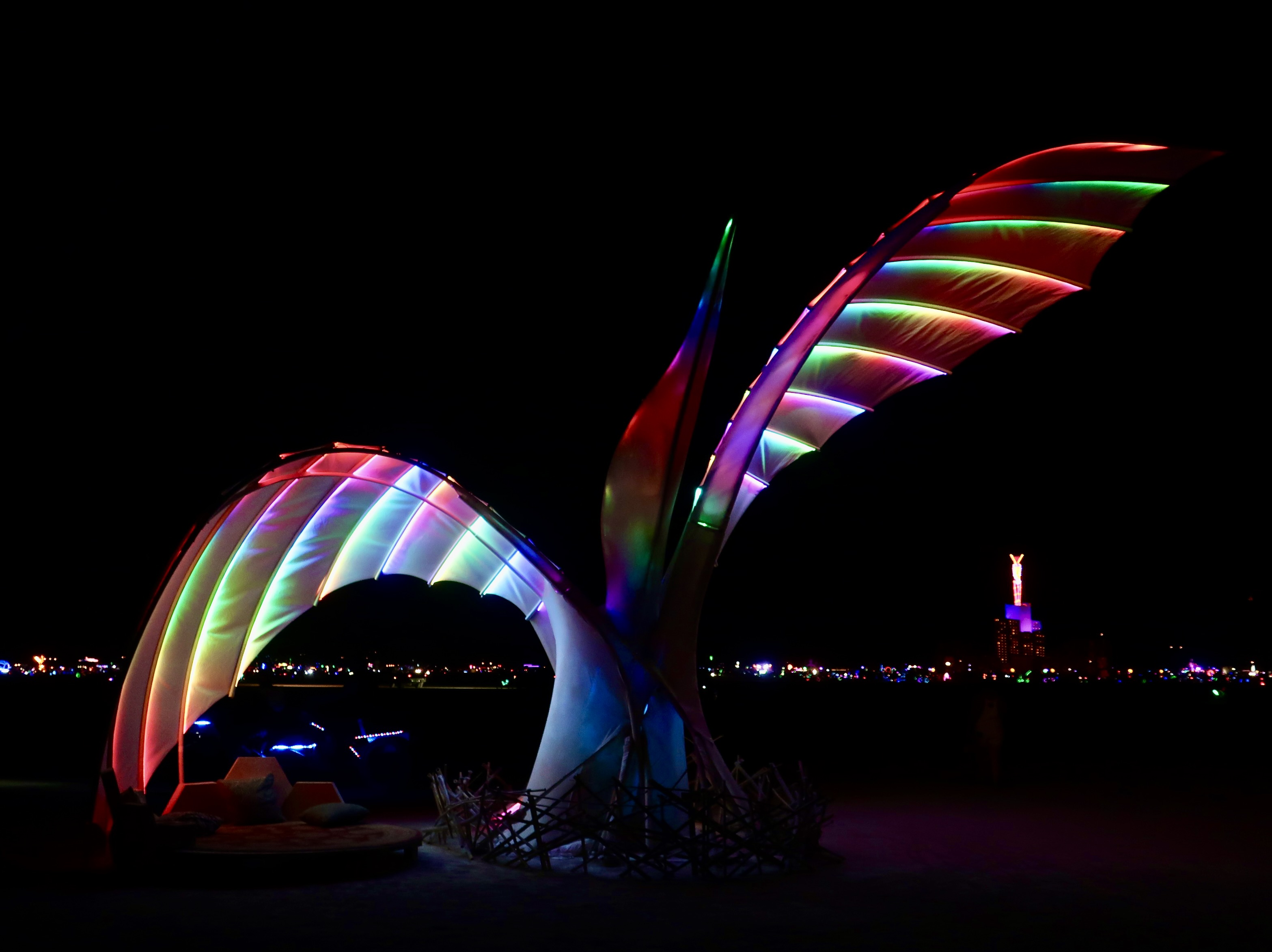
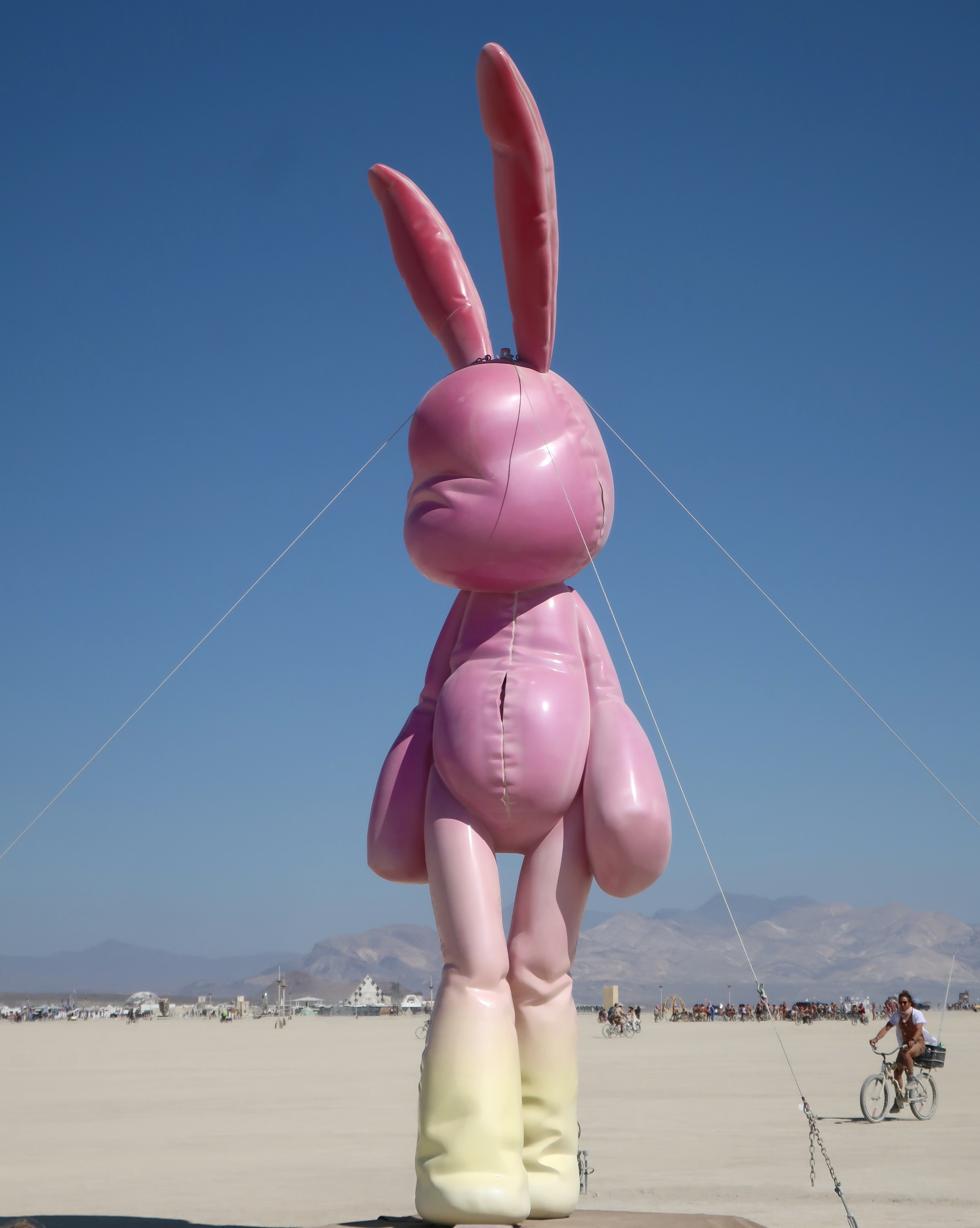
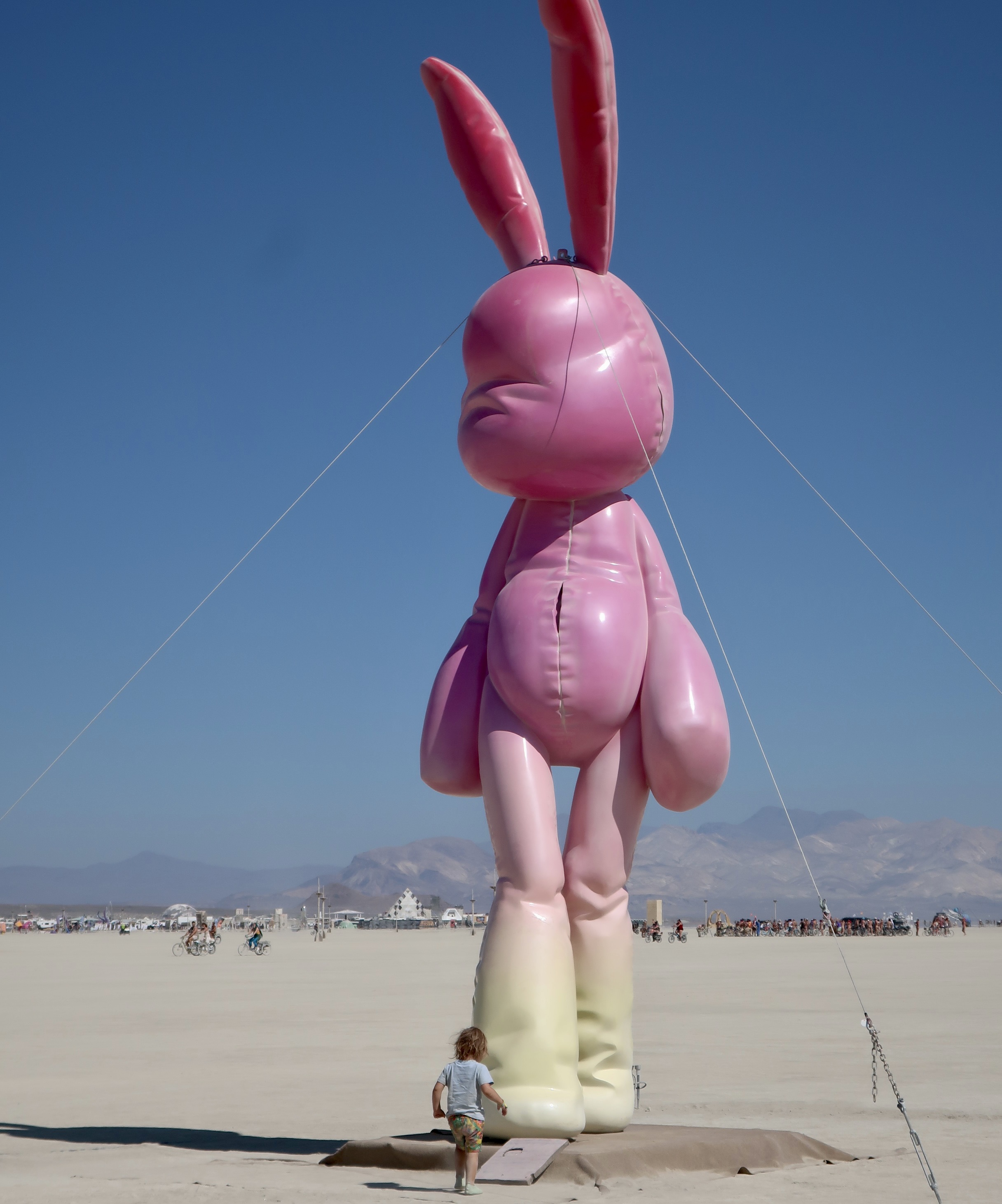
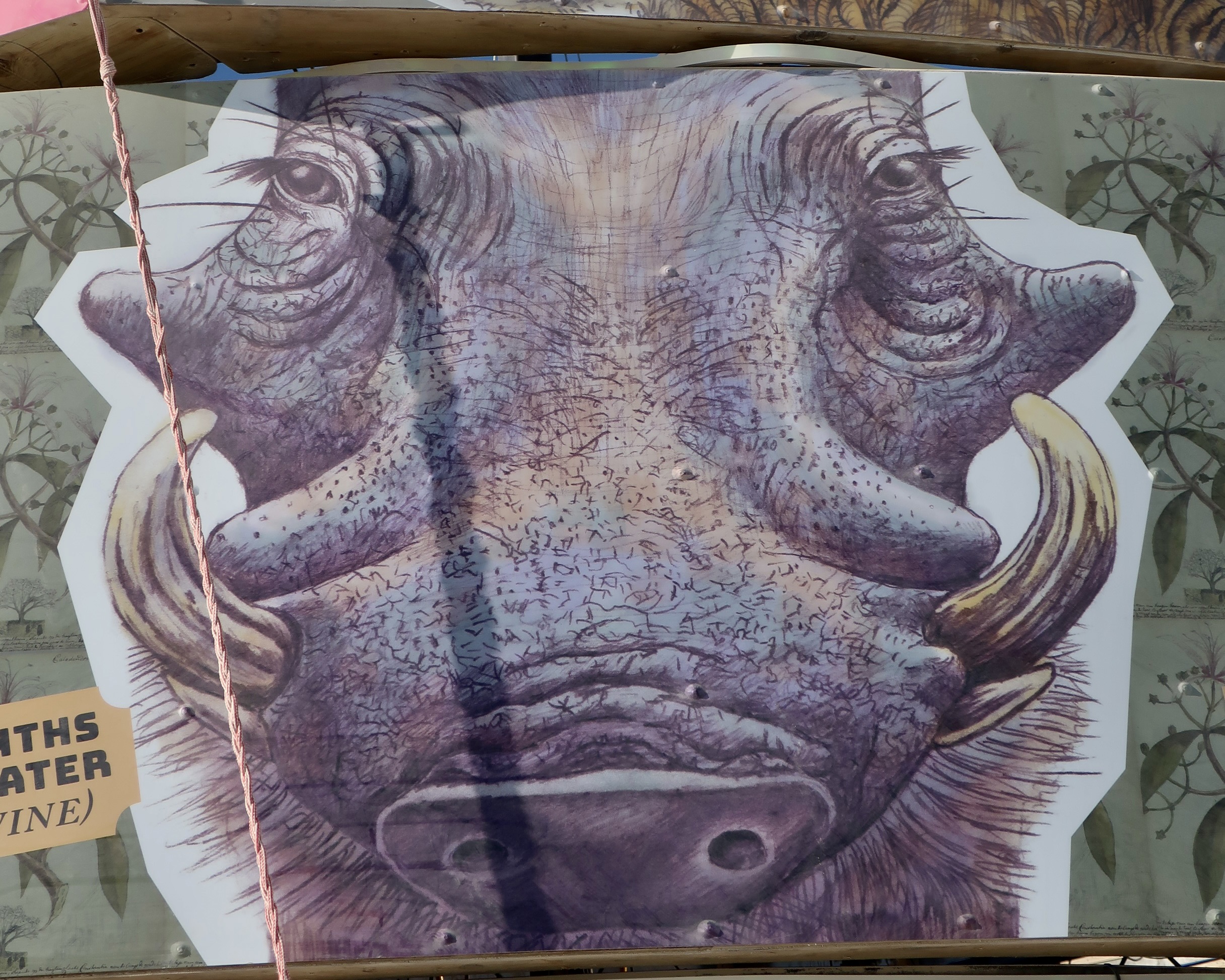
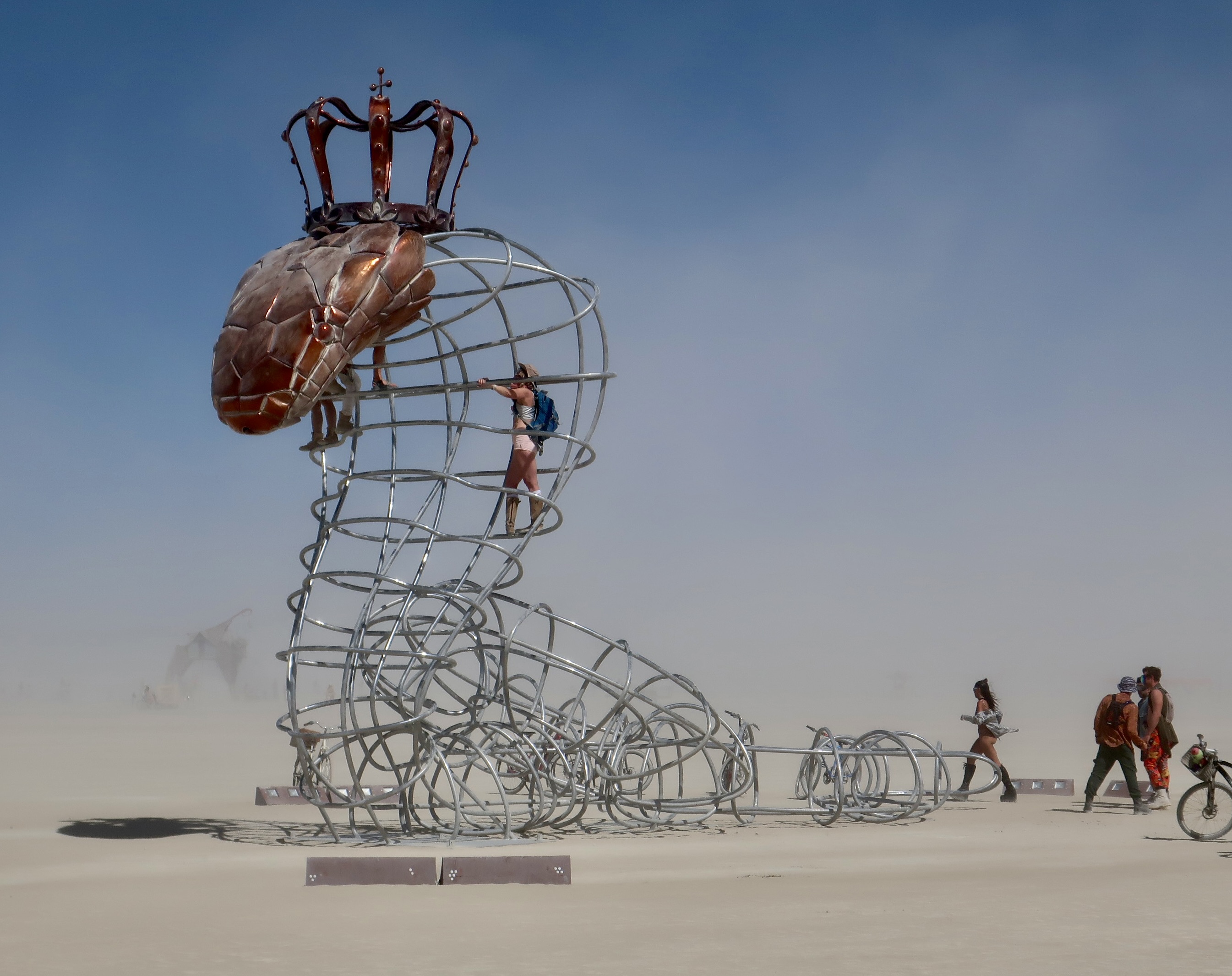
with glowing infinity mirrors, each reflecting mosaic drawings of extinct animals from the past 12 months.” From the outside, I couldn’t see the animals. Possibly, they would be clearer at night when lit up.Peggy, on the other hand, who isn’t endangered, was reflected numerous times. The guy wearing the hat above her on the right is me. I think. At 80, I’m a little more endangered than Peggy. But not here. Peggy got caught by a giant spider that undoubtedly thought of her as a tasty morsel. Always the optimist, she is laying back and enjoying the view. Spider Trap was created by Josh Zubkoff & Looking Up Arts from San Francisco, CA. Josh noted that “Spider Trap was not menacing.” Hmmm.These etherial, almost whimsical creatures floated above the Playa. They represent fairy shrimp. In real life they are found under the surface of the Playa. Rain brings them to life for a brief period of time when they mate and reproduce. Burning Man 2023 with its heavy rains was a banner year for them.Created by P. Michael Quinn from Gossburg, TN, this is at least the second time the shrimp have made an appearance on the Playa. I featured them in post several years ago. I like the effect of the sun.While we are featuring aquatic life, this fish hails from the Caribbean. Her creator, NiNo from Trujillo Alto, Puerto Rico, named his work ATABEY’s Treasure. Atabey, according to NiNo is “The goddess of fresh water to the indigenous Taíno people in the Caribbean.”ATABEY’s Treasure lit up at night with the Man in the background.Titled “Migrations,” this graceful white bird seems to be rising from its nest on the Playa on its way to wherever. Created by Olivia Guethling & Mar Ricketts – Superwhelm from Portland, OR, the migrating bird was even more beautiful at night than it was during the day.“These boots were made for walking,” Nancy Sinatra’s song popped into my mind when I saw this 8 meter/26 foot tall inflatable bunny named “Mona” sporting tall yellow boots.According to the artist, Miao He from Shehong, China, Mona “serves as a symbol of love, warmth, and childhood memories.” I confess that my reaction as a child would have been to scream and run as fast as my little legs would have carried me in the opposite direction if an 8 meter bunny came striding toward me. This child, however, ran up to the bunny and threw its arm around the forward boot, seemingly proving Miao’s point. “Exquisite Animalus,” an art piece by Stefan Spins & KJ Bohéme, included six animals that could be moved by ropes and handles to become the animals they were meant to be. Obvious a little work was required. I took on the challenge, pulling first on the ropes and then on the handles. The animals hardly budged. Maybe they liked being who they had become. Or maybe the playa dust had gotten in their gears… I particularly liked this critter, a common warthog. I once met a family of them when I was driving a VW bug through the Serengeti National Park in East Africa.Queen Cobra, by Andrea Greenlees, Andy Tibbetts, and Josh Haywood from London, United Kingdom & Reno, NV. Like many works of art at Burning Man, The Queen was designed so people could climb on it. She reminds me of Wadjet, an important goddess of lower Egypt. (And yes, I will get back to my posts on the Nile. Eventually.) This wraps up my blog today. Next up, I will be featuring three huge planets that made their way onto the Playa.
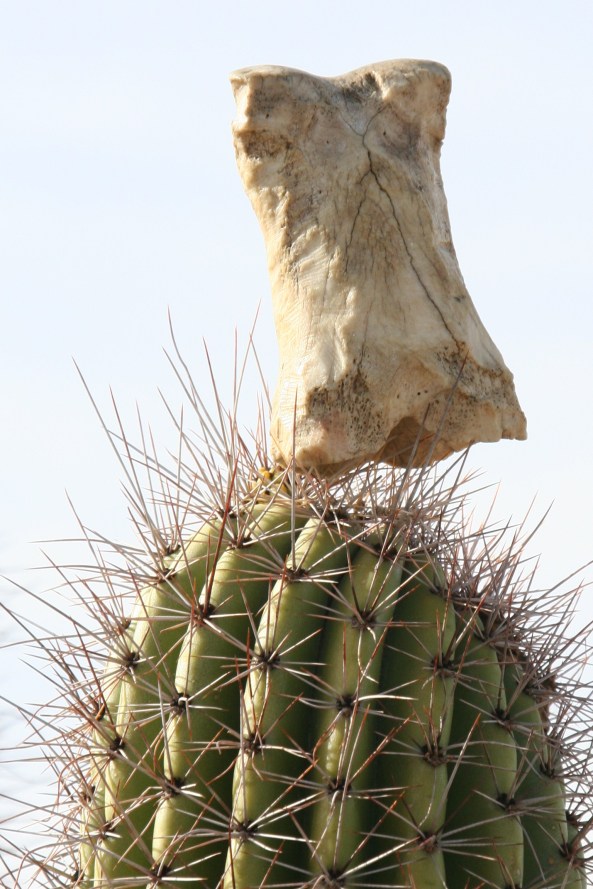
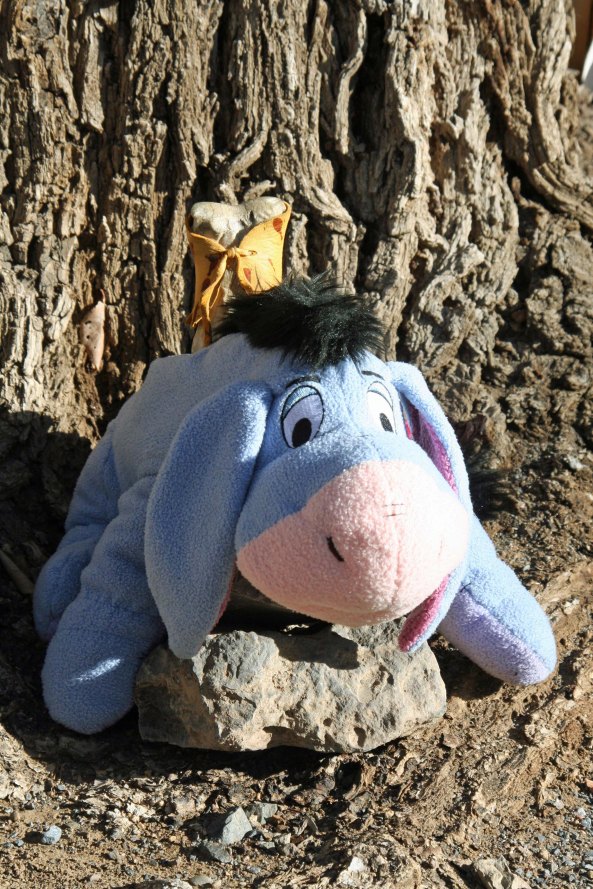
Bone has been in many tough situations in his life; he can handle tough questions. Here he rests on top of a saguaro cactus in Arizona looking for border control agents. His lack of official papers, or even a birth certificate, can cause problems at times.
Q:Do you really talk? We’re speaking ethics here, Bone. Blogging is about transparency. That means honesty.
A. Are you crazy? Have you ever heard a bone talk? Of course I don’t talk. I just think out loud.
Q:Curt sometimes refers to you as he. Does this mean you are a male bone?
A. No. He makes assumptions, lots of them. He was showing me to a biologist at a writers’ conference in San Francisco and she suggested I have my DNA tested. “Just cut a small chip off of it,” she said nonchalantly. “You can determine its sex and breed.”
“Just cut a small chip off of it!” Outrageous! I am not some it to have chips cut out of. Besides, I lead a rich fantasy life and have no desire to know whether I am male or female. Call me she, he, or Bone, but never it.
Um, I think Bone is definitely a male in this photo. –Curt
Q: You have traveled all over the world and met thousands of people. How do they usually react to you?
A. With befuddlement. You should have seen the look on the face of the customs agent in New Zealand who tried to seize me as ‘animal matter.’ But emotions run the gamut. There was a Japanese man who got off a tour bus at Yellowstone National Park and wanted to hold me for good luck. Soon there were 40 other Japanese handing me around, oohing, and taking photos. I was thrilled. On the opposite side, I know a woman who refuses to touch me, like I have cooties. “I don’t know where Bone has been,” she states primly. Not surprisingly, there is also jealousy. “I want to be you and travel the world,” a good friend in Sacramento told me.
Some people act like I have cooties. This woman almost dropped me and then washed her hands! –Bone
Peggy and Curt’s niece, Christina, on the other hand, shows the proper way to treat me. —Bone
Q: What is your favorite thing to do?
A. Visit graveyards; there are lots of old bones there. My favorite grave is Smokey Bear’s in Capitan, New Mexico. I once stood on his tombstone for ten minutes trying to communicate but all I could get was something about ‘growling and a prowling and a sniffing the air.’ A close second is the grave of Calamity Jane in Deadwood, South Dakota. What a woman! These are difficult choices, though, when you toss in the likes of Hemingway, Daniel Boone and Billy the Kid. On the light side I once visited Ben and Jerry’s graveyard of discarded ice cream flavors in Vermont. My spookiest experience was a visit to the Capela dos Ossos, the Chapel of Bones, in Evora, Portugal, where an estimated 5,000 corpses were dug up to decorate the walls of the chapel. Those folks definitely have a skeleton in their closet, lots of them. The skulls kept whispering, “Join us, Bone.”I ran.
Bone has a special fondness for unusual graves. Here he hangs out with Billy the Kid in New Mexico. Has he been in a gunfight? Are those bloodstains on his vest?The camera broke when Curt tried to take a photo in the Chapel of Bones but here is my all time favorite sculpture at Burning Man, the Bone Tree.
Q: So, what’s your second most favorite?
A. Too hard; I am a dilettante dabbler, but here are a few.
Wandering, of course, anywhere and everywhere and by all modes: bikes, kayaks, rafts, skis, backpacks, sailboats, planes, helicopters, trains, cars, RVs, etc. I’ve been to all 50 states in the US and to over 50 countries worldwide.
Visiting wild, remote and beautiful natural areas. I started life wandering the Sierra Nevada Mountains, John Muir’s Range of Light.
Seeking out the strange such as ghosts and aliens (I’ve been to Roswell four times and Area 51 once).
Attending unique events like Burning Man.
Meeting weird people.
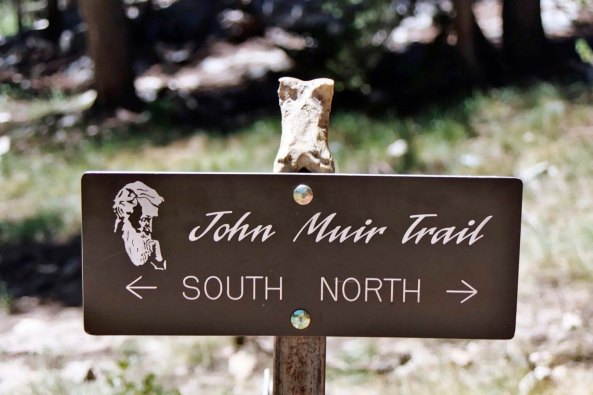
Bone backpacking on the John Muir Trail.
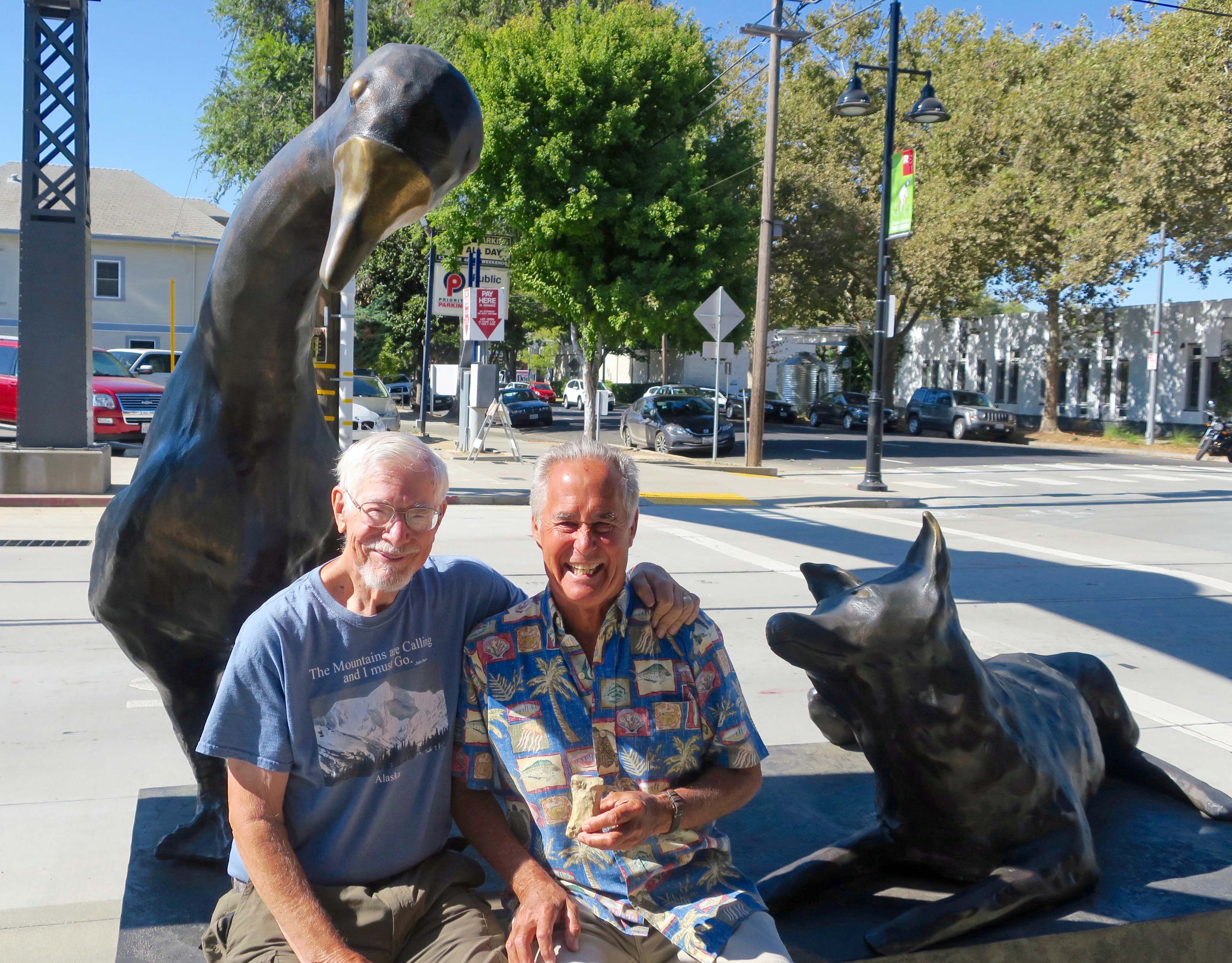
Bone and Curt and Tom Lovering at 10th and R Street Fox and Goose Restaurant in Sacramento. Tom owned the Alpine West backpacking and wilderness specialty store at this location when he and Curt discovered Bone in 1977.
Q:Tom Lovering and Curt ‘discovered’ you in 1977 when backpacking south of Lake Tahoe. You have wandered extensively with both. Which do you like best?
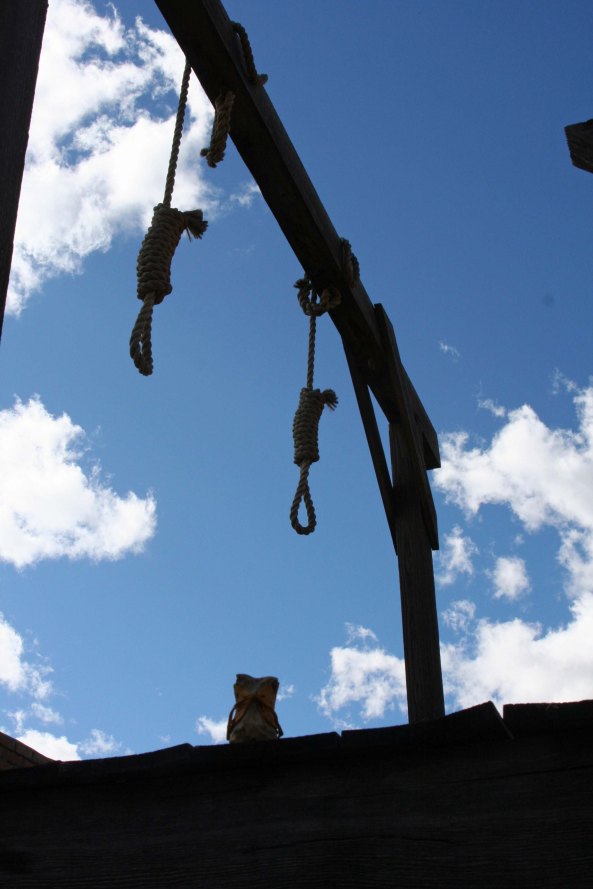
A. Eeyore, the jackass who can’t keep track of his tail. We’re traveling companions and he saved me from being strung up and buried on Boothill in Tombstone, Arizona. I’d robbed a bank, cheated at cards and hung out with women of questionable character. (This is what I mean by having a rich fantasy life. It’s also known as evasion.)
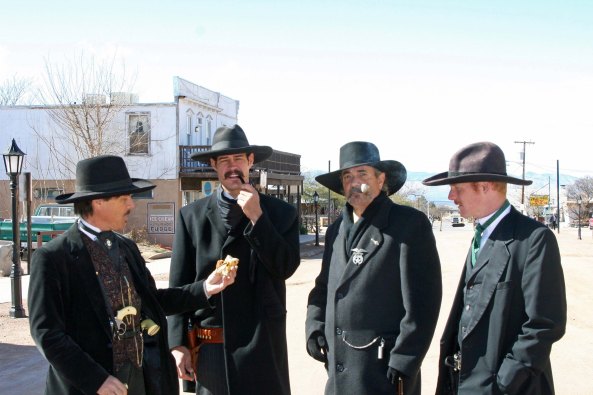
“I was in deep trouble in Tombstone. Wyatt Earp had arrested me for robbing a bank and Doc Holiday was checking me for weapons.”
My life as Bone was in serious jeopardy.
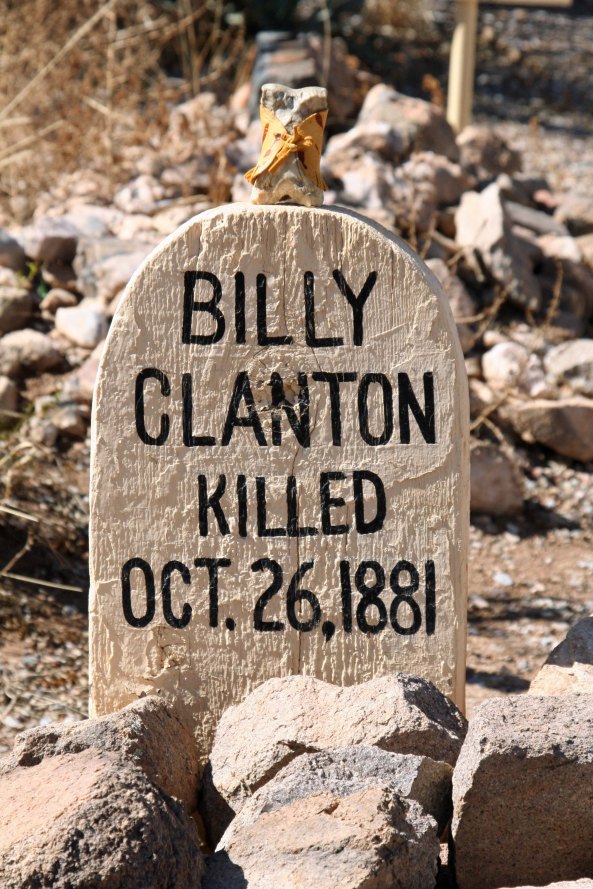
Odds were I was going to end up on Boothill, along with Billy Clanton.
But then the ever brave Eeyore came to my rescue! I hopped on his back and we went riding off into the sunset while leaping over large rocks.
Q:Which of your journeys has been most memorable?
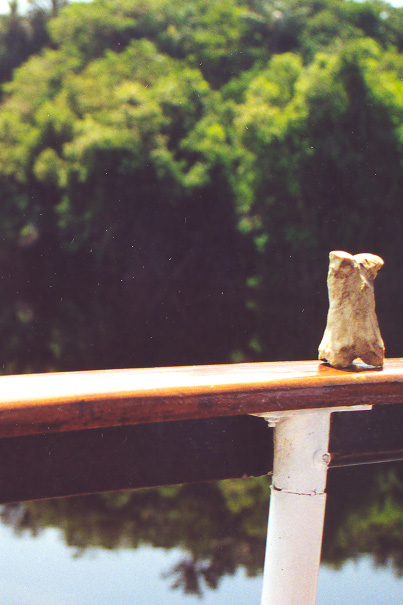
A. I would have to say traveling the length of Africa in the back of a truck from the Sahara Desert in the north to Cape Town in the south with Tom. Almost falling off the back of a riverboat into a piranha infested section of the Amazon River would have to be a close second. I was perched on the back railing doing a photo shoot with Peggy. And then, of course, there was the 10,000-mile bike trip with Curt in 1989 and hiking 750 miles down the Pacific Crest Trail with him to celebrate his 75th Birthday in 2018.
Bone on photo shoot barely escapes falling off the edge into the piranha infested waters of the Amazon. “I was falling off when Curt leapt across the boat and grabbed me.”
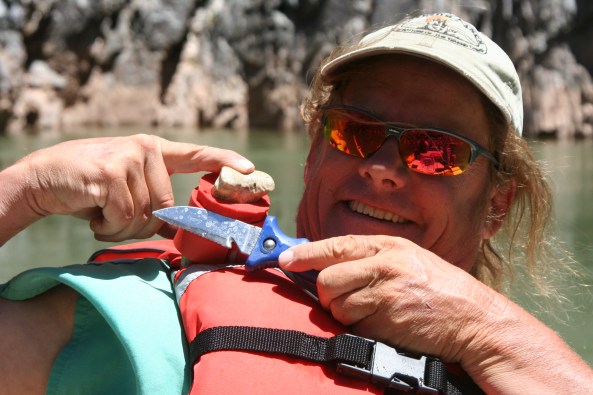
“I was much smarter when I rafted down the Colorado. I wore a life jacket!”
“That didn’t protect me from pirates. The dreaded pirate Steve held a knife to my throat and demanded to know where I buried my treasure.”
Or Tom, Mr. River Safety himself, who took my vest off and wrapped me up in his hair.
Q:You are often seen scrambling over rocks in remote sections of the Southwestern United States. What’s that all about?
A. I’ve developed a fondness for Native American rock art. It resonates with my bone-like nature. It’s also another excuse to go wandering around in the outdoors. Plus, some those places might be haunted and it is a great place to look for UFOs. Some of the petroglyphs look amazingly like aliens. Finally, wandering in the desert is known to be good for the soul. Ask the Prophets of yore.
How can this guy and his strange dog not be aliens?
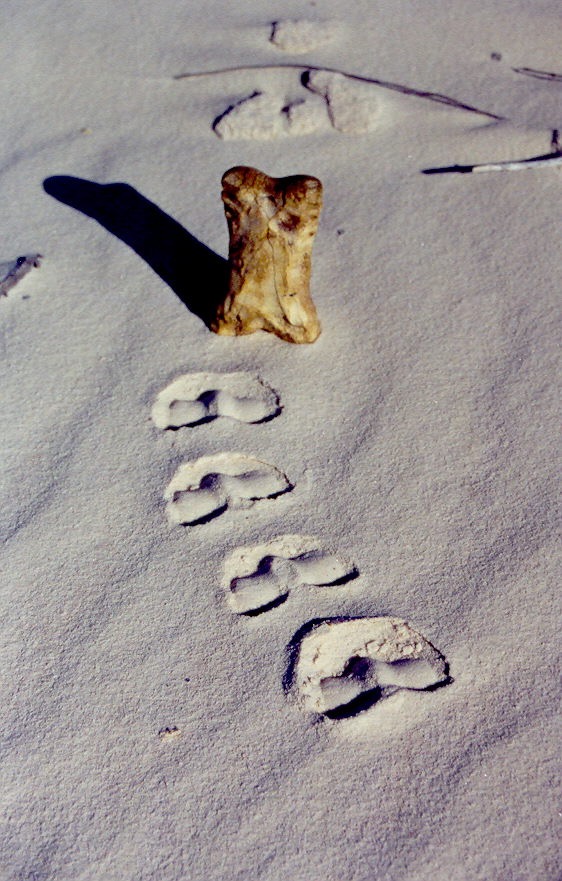
Here I am making tracks across White Sands National Park in New Mexico. It’s a great place to watch out for UFOs. BTW, I have visited visited 53 National Parks. –Bone
Q:Ah, being a born-again bone, do you have any insights into the great unknown?
A. Ommmmmmmmmmmmmmmmmmmmmmmmmmmmmmmmmmmm.
Q:Finally, and this may be a little sensitive, but do you always run around naked?
A. What kind of a question is that? Do you think I am uncivilized? For shame. I am the epitome of haute couture! A bow and arrow toting, card-carrying NRA member in Montana has designed and made me two leather vests. What’s more, a 90 plus year old woman in Kansas going on 20 with a crush on Johnny Depp and a room devoted to the Egyptian gods, has made me a kilt and several other outfits. Face it; I am hot stuff, clothed or naked. I may take up a modeling career.
My Bahamian/Canadian friend makes me a new vest in the wilds of Montana. –Bone
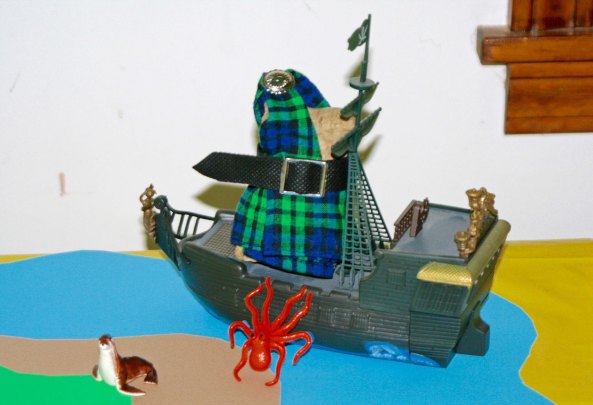
Bone, wearing his newly made kilt, fights off a ferocious sea monster in a scene straight out of ‘Pirates of the Caribbean.’
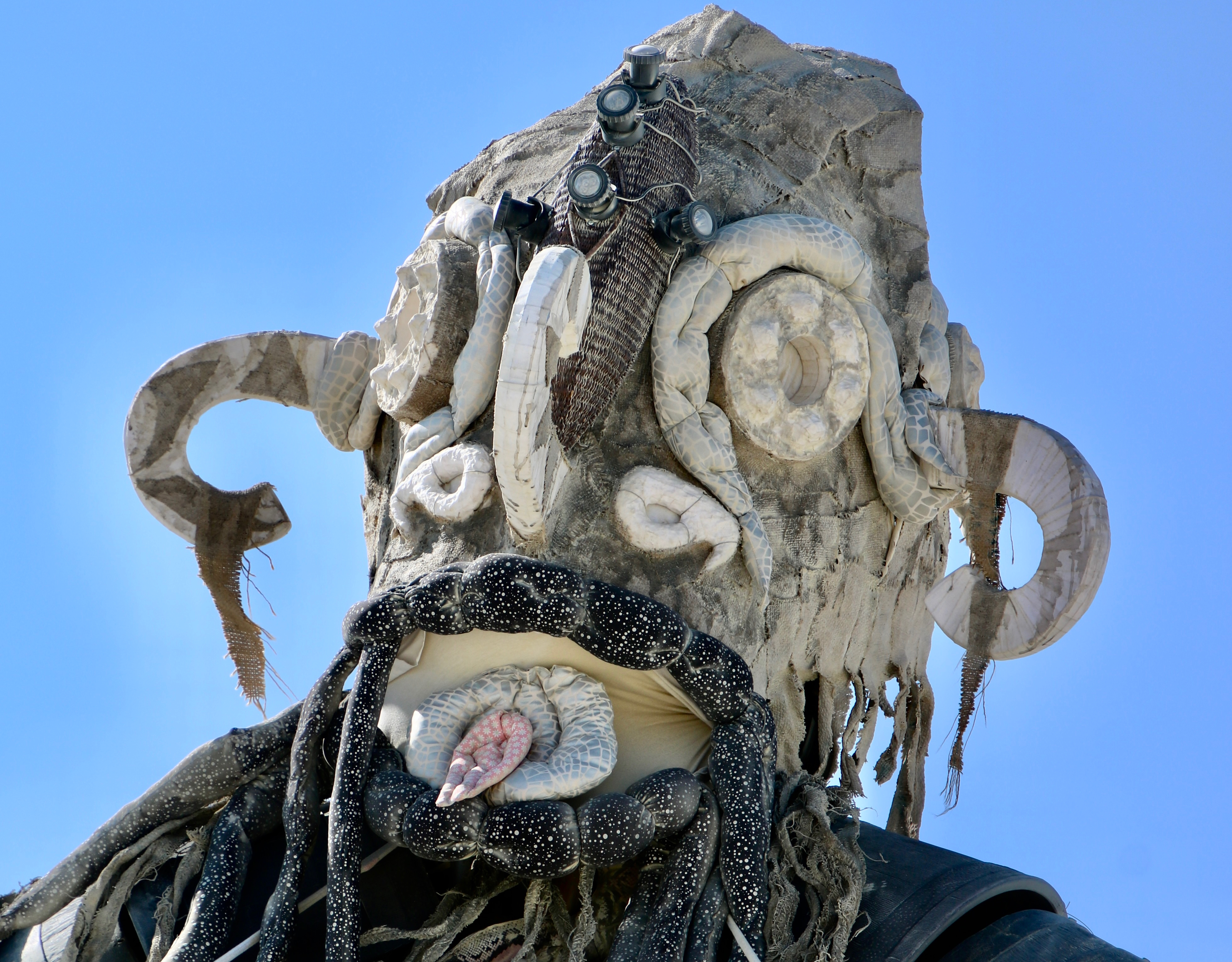
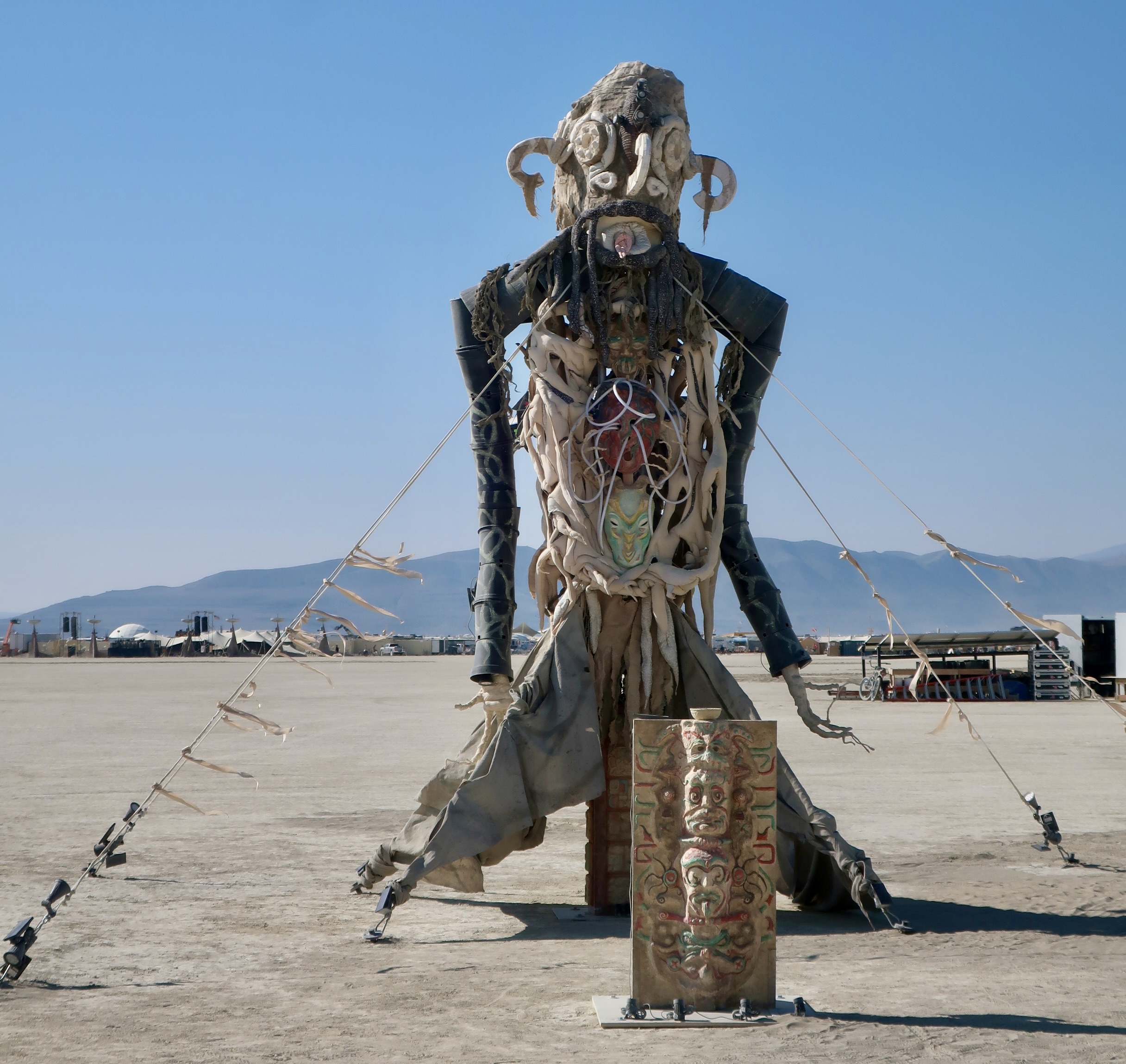
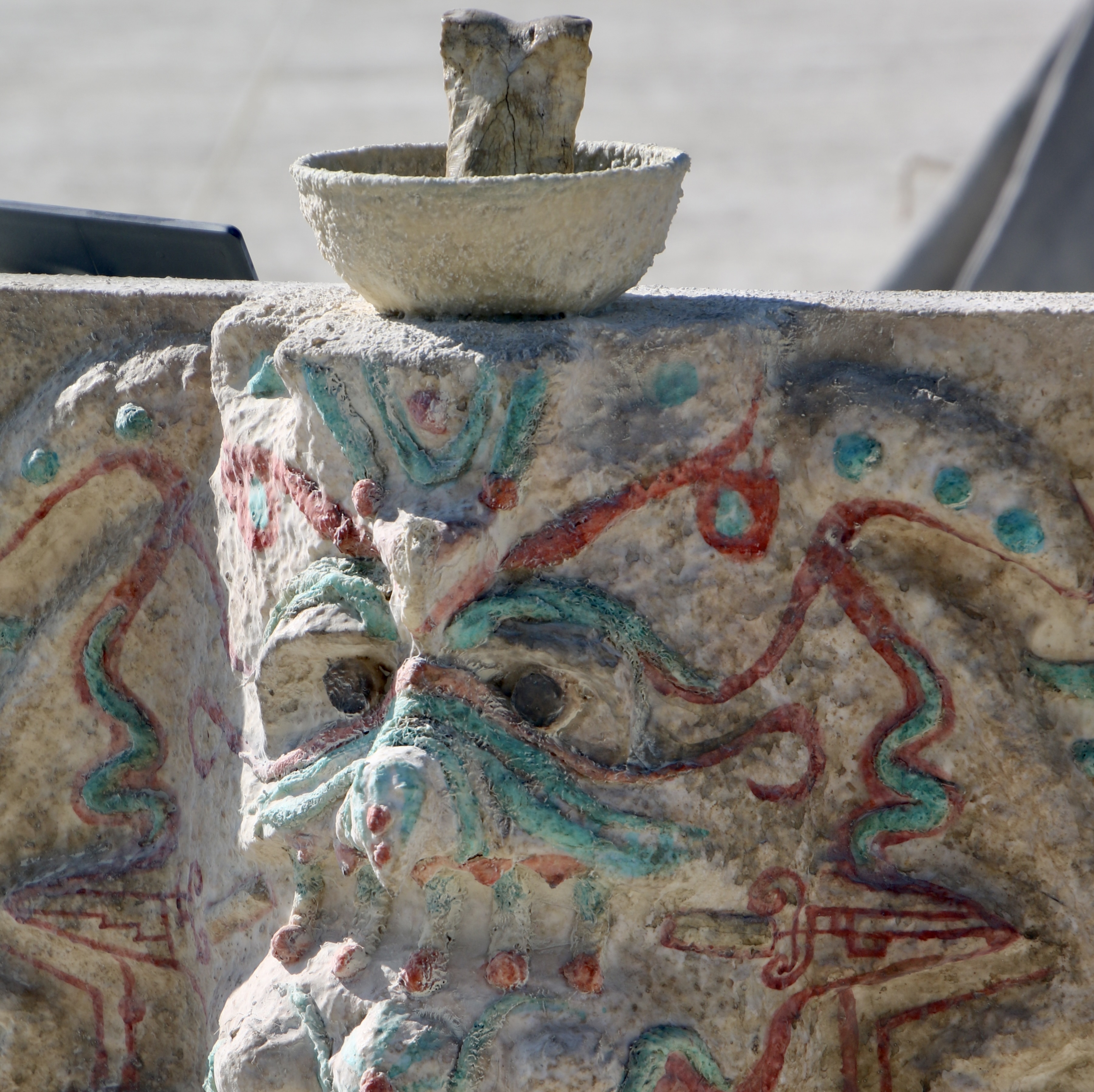
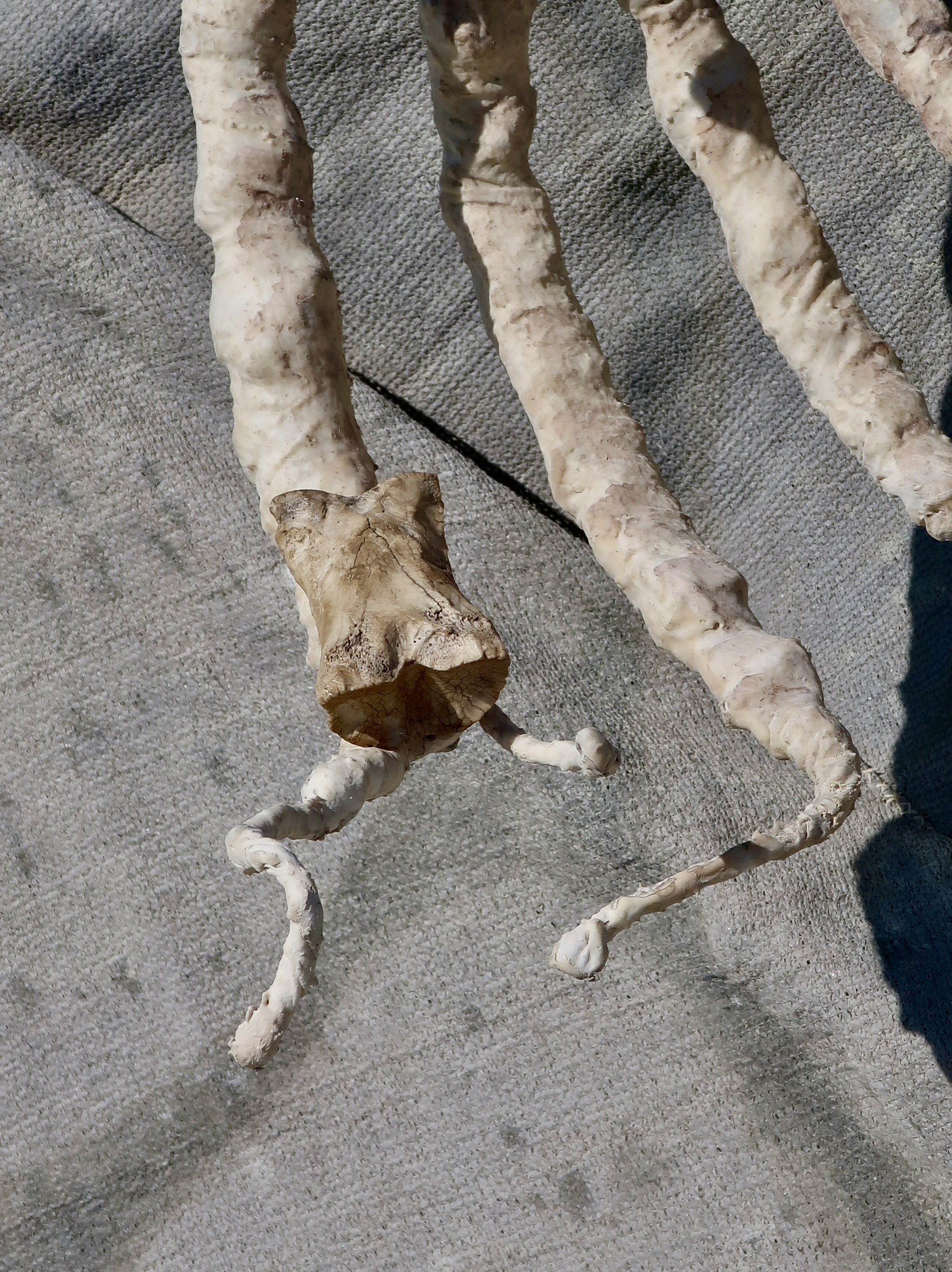
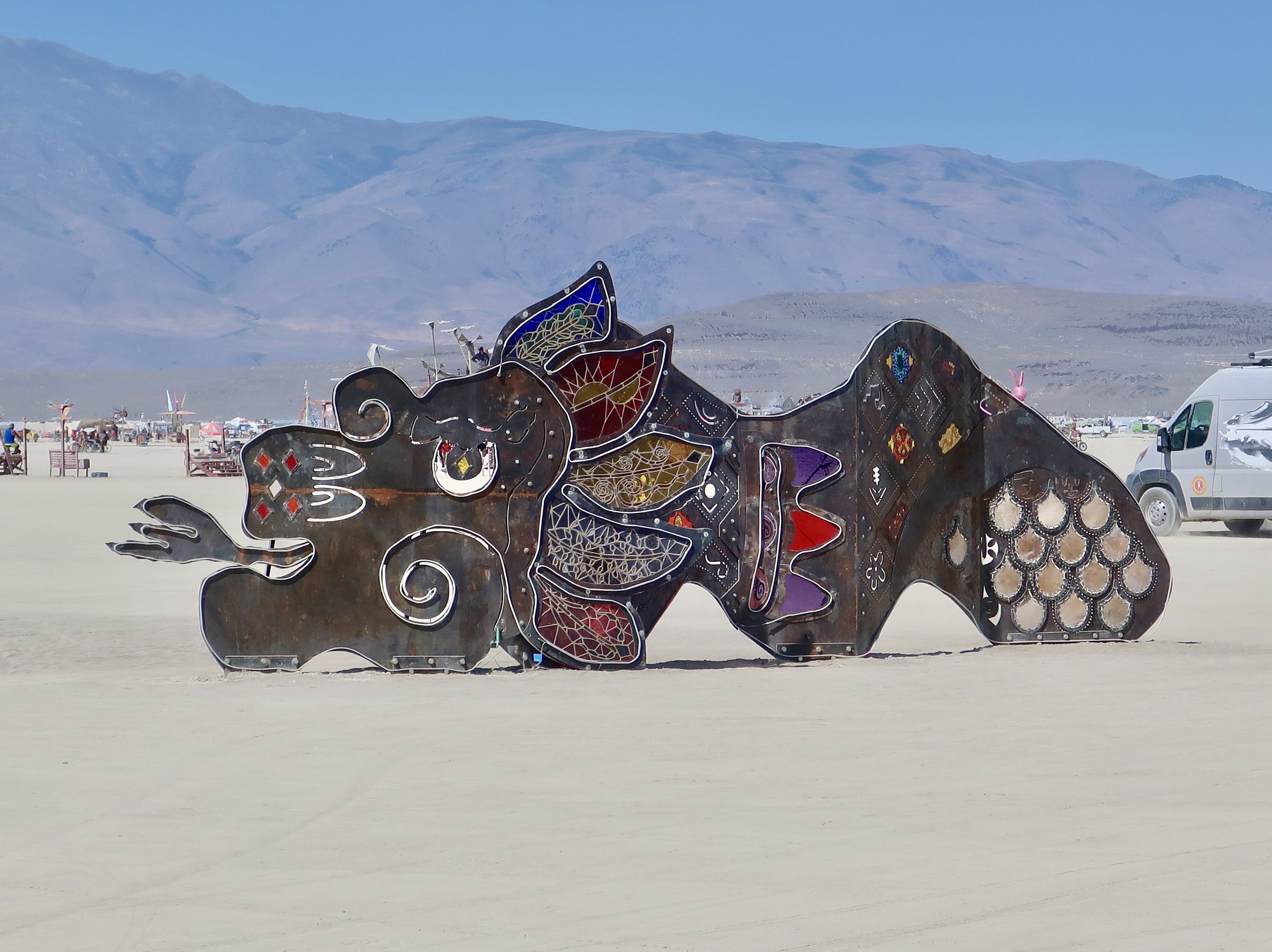
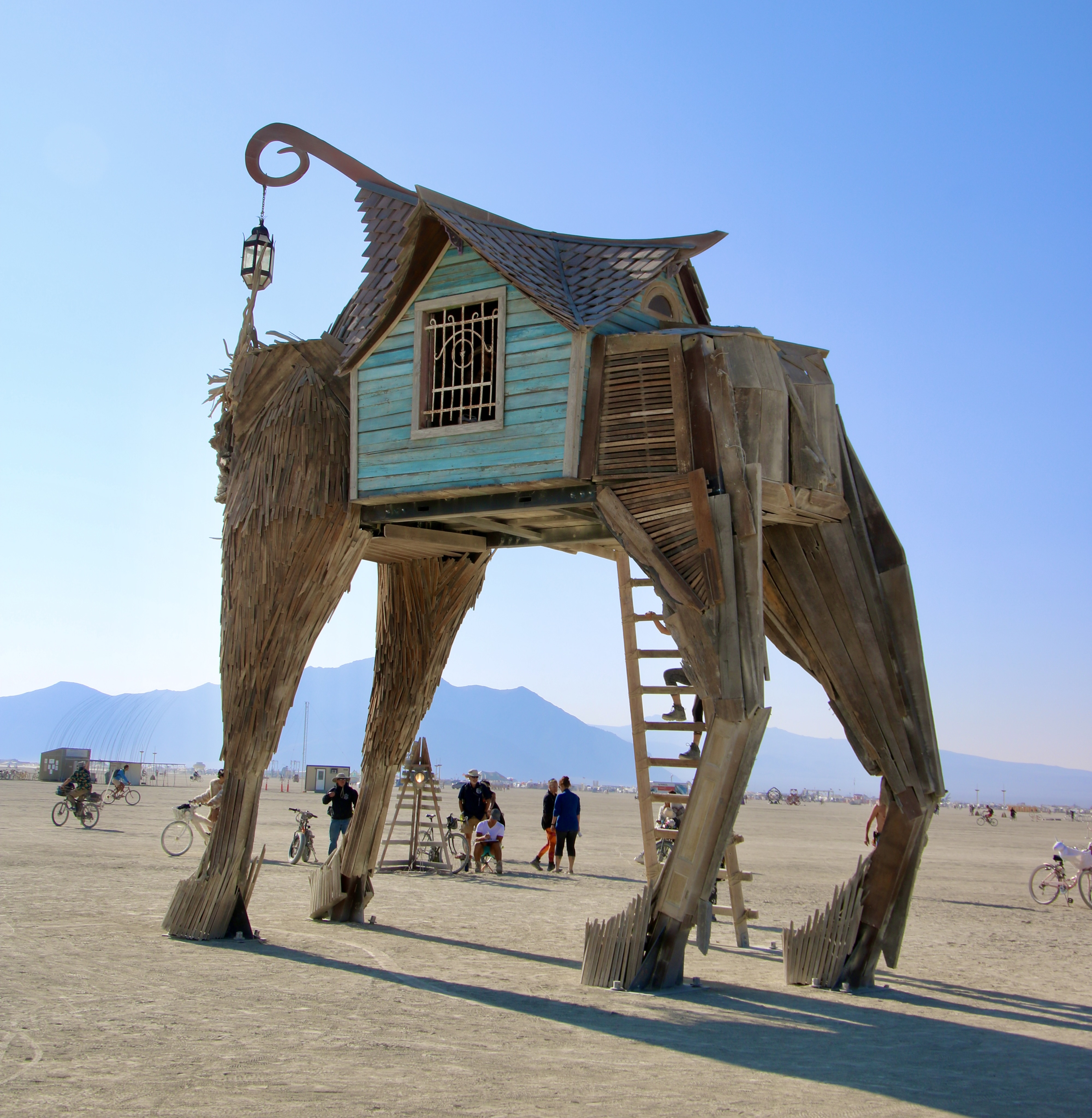
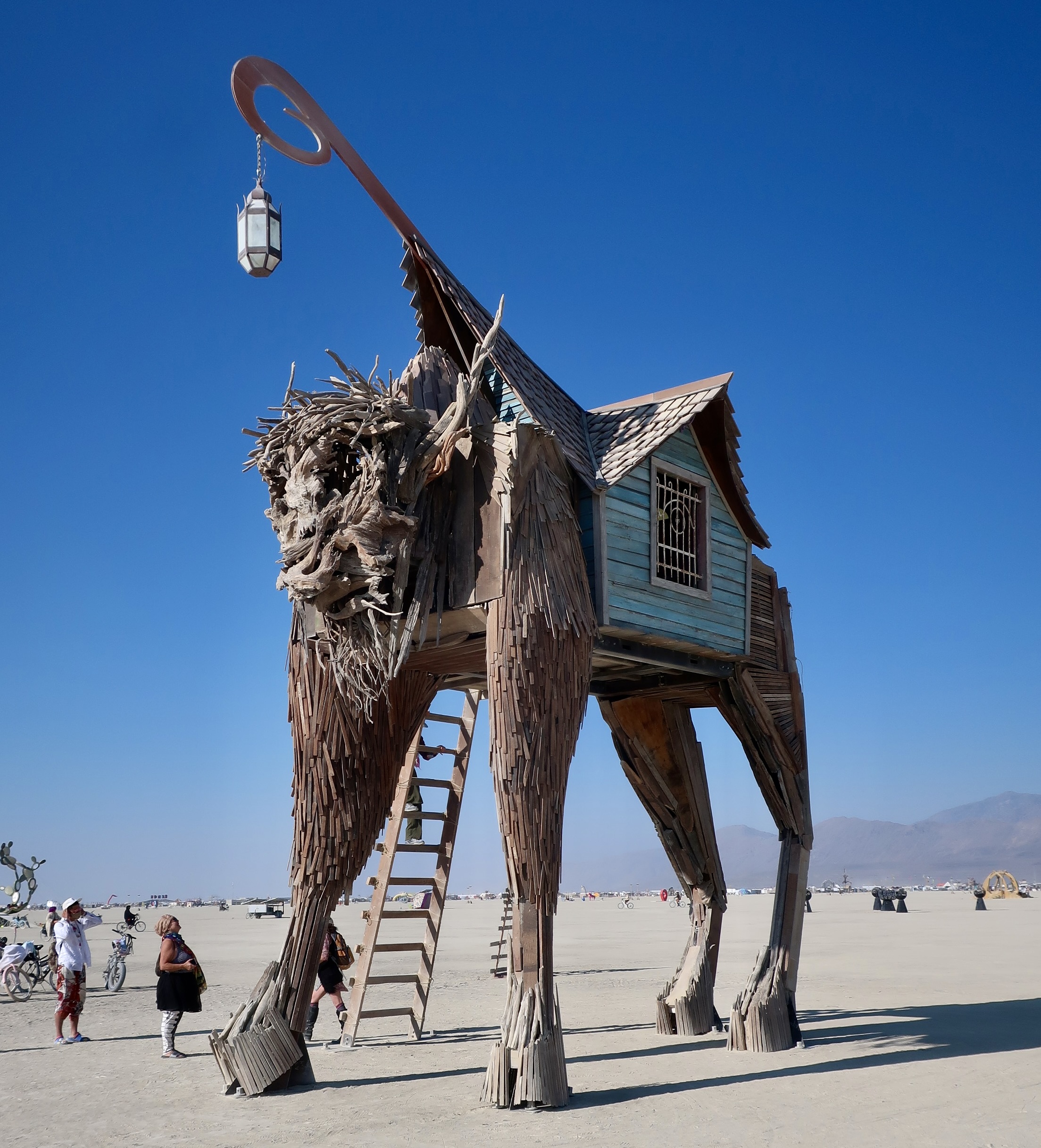
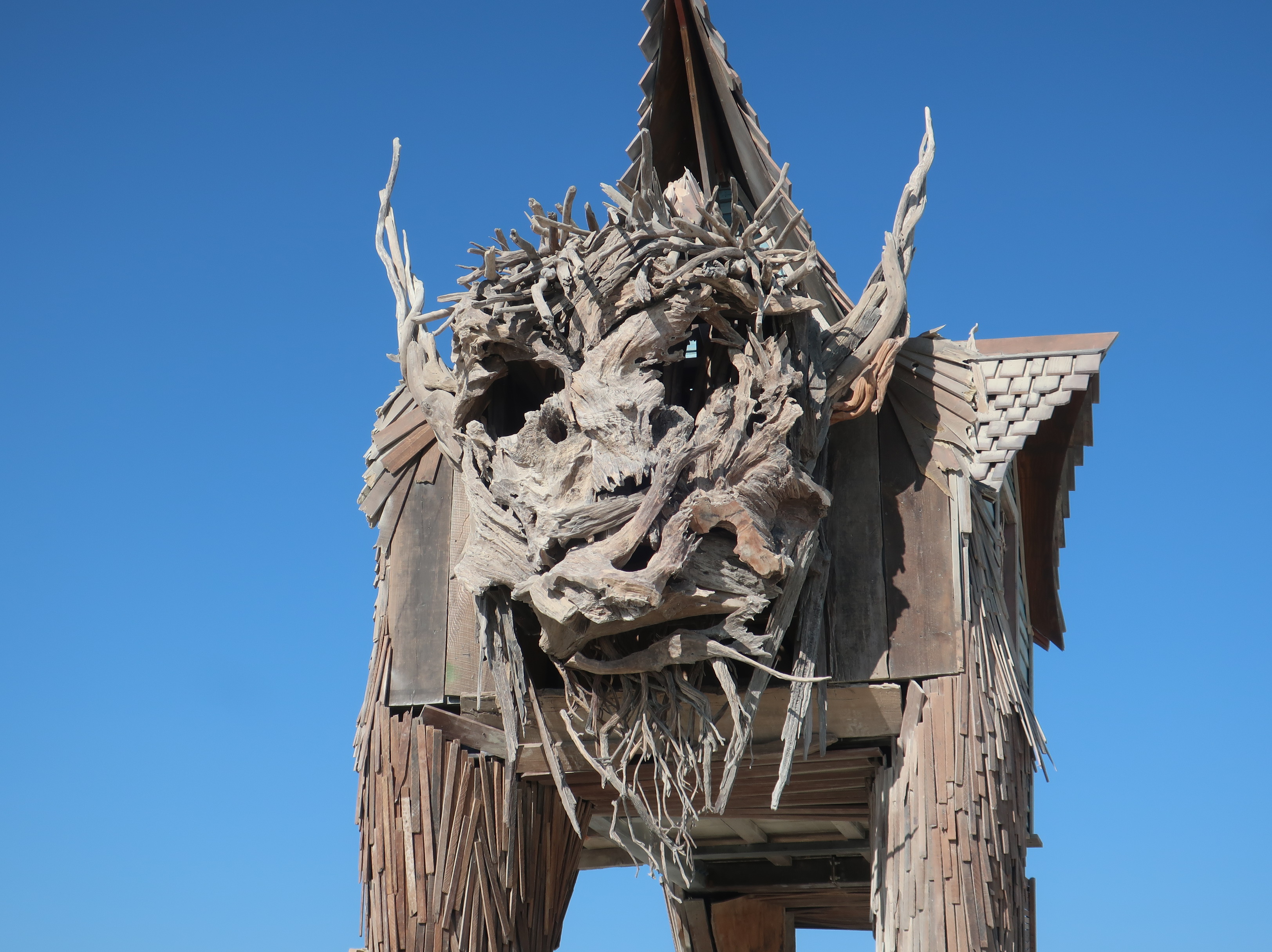
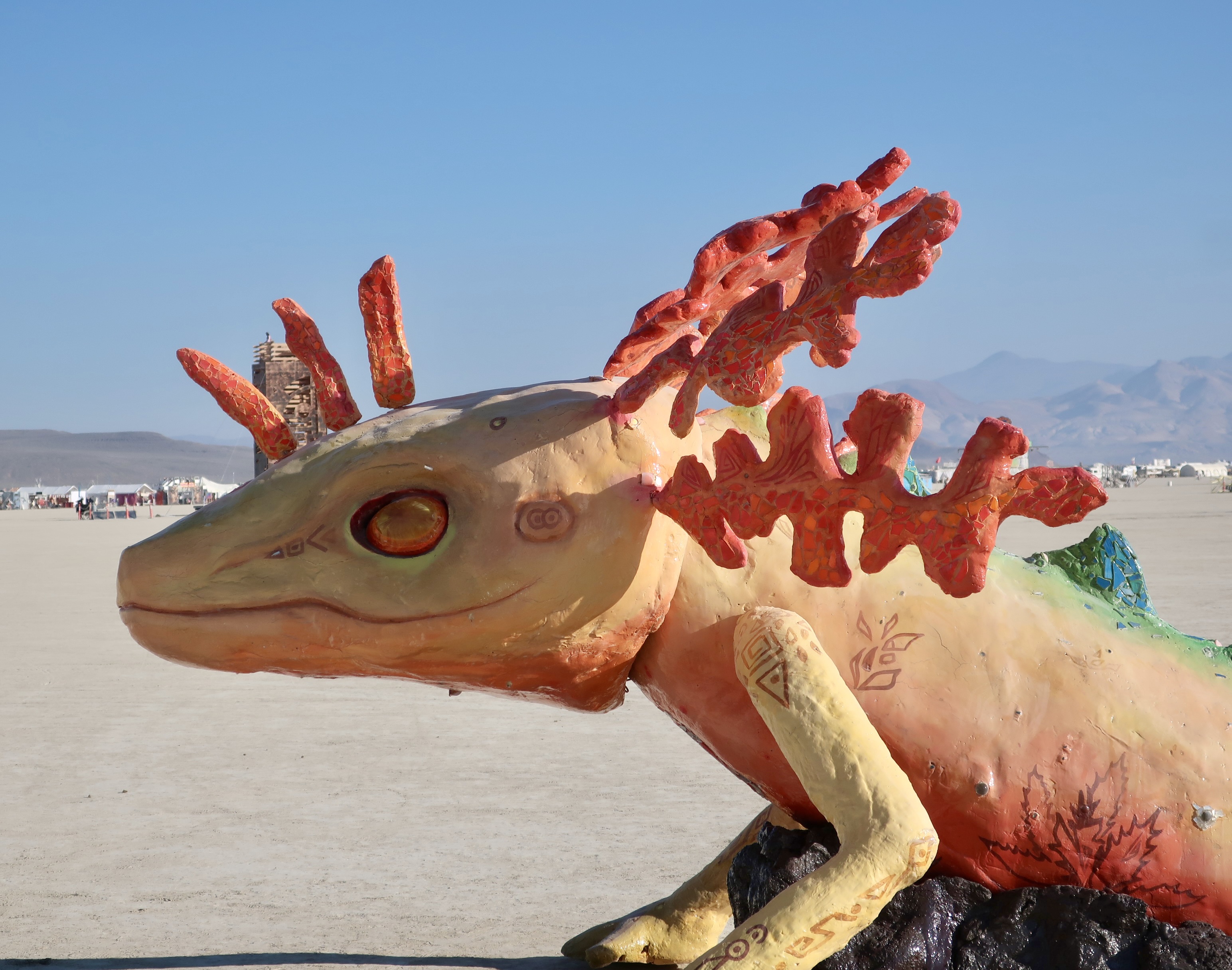
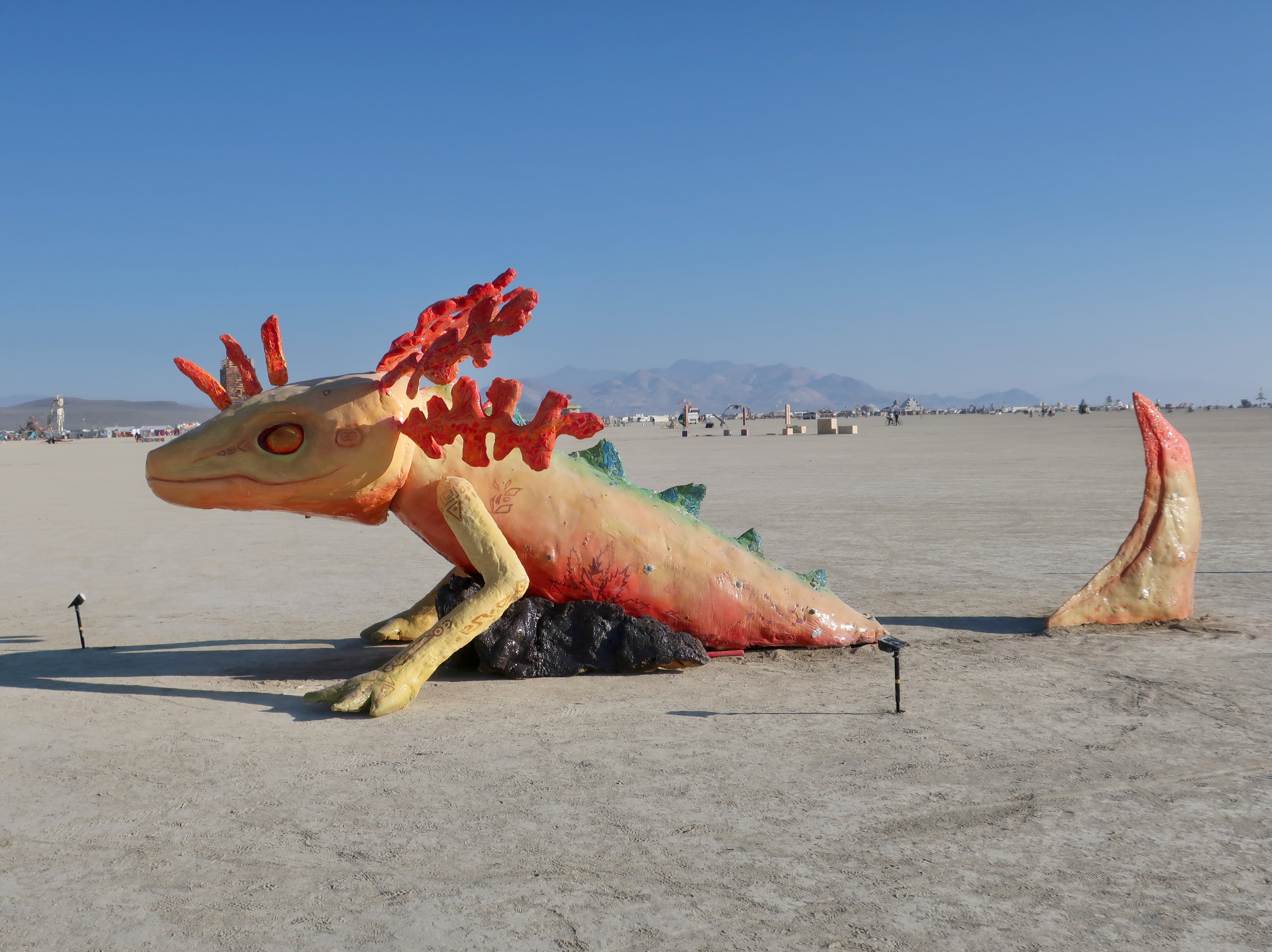
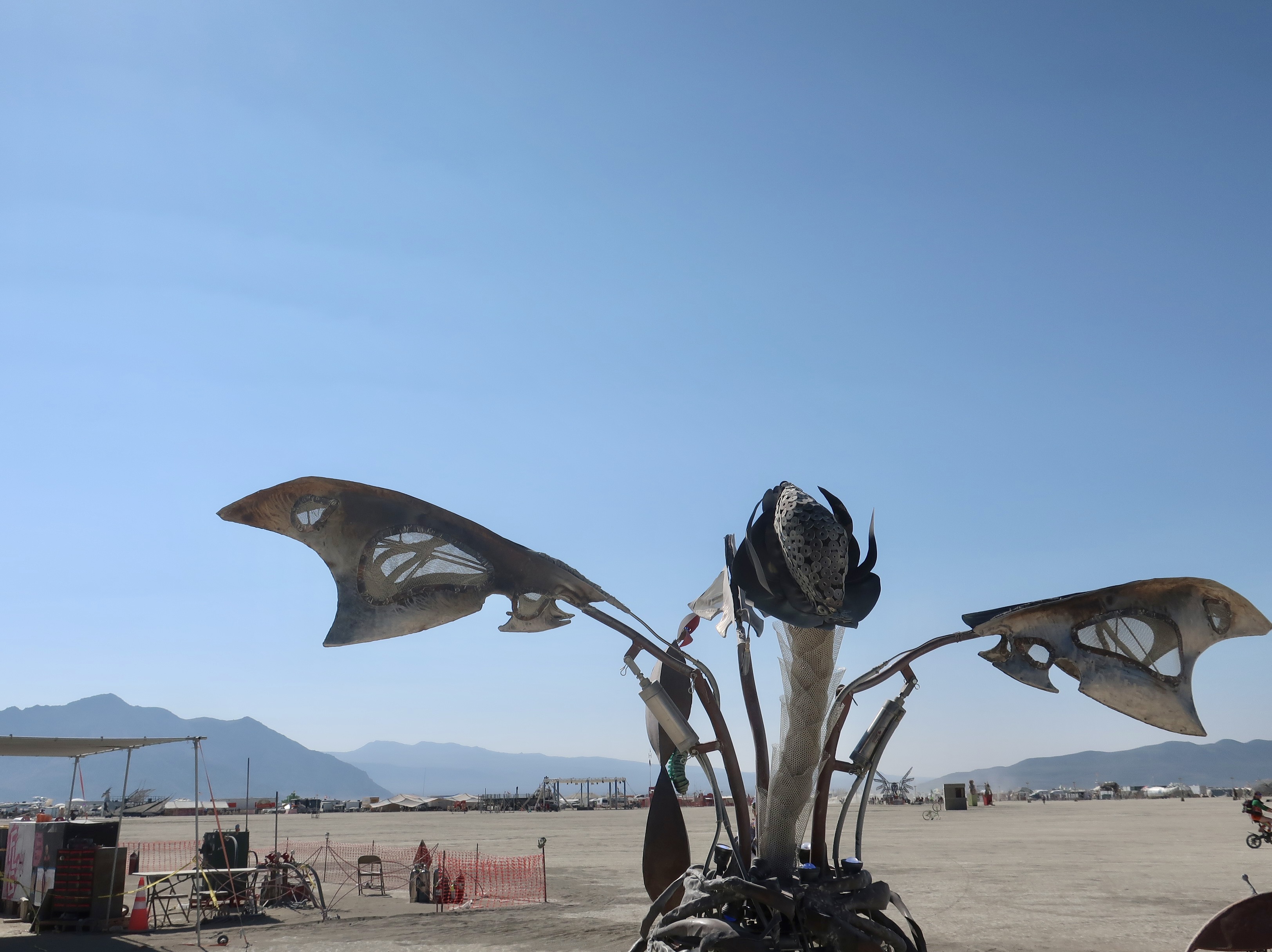
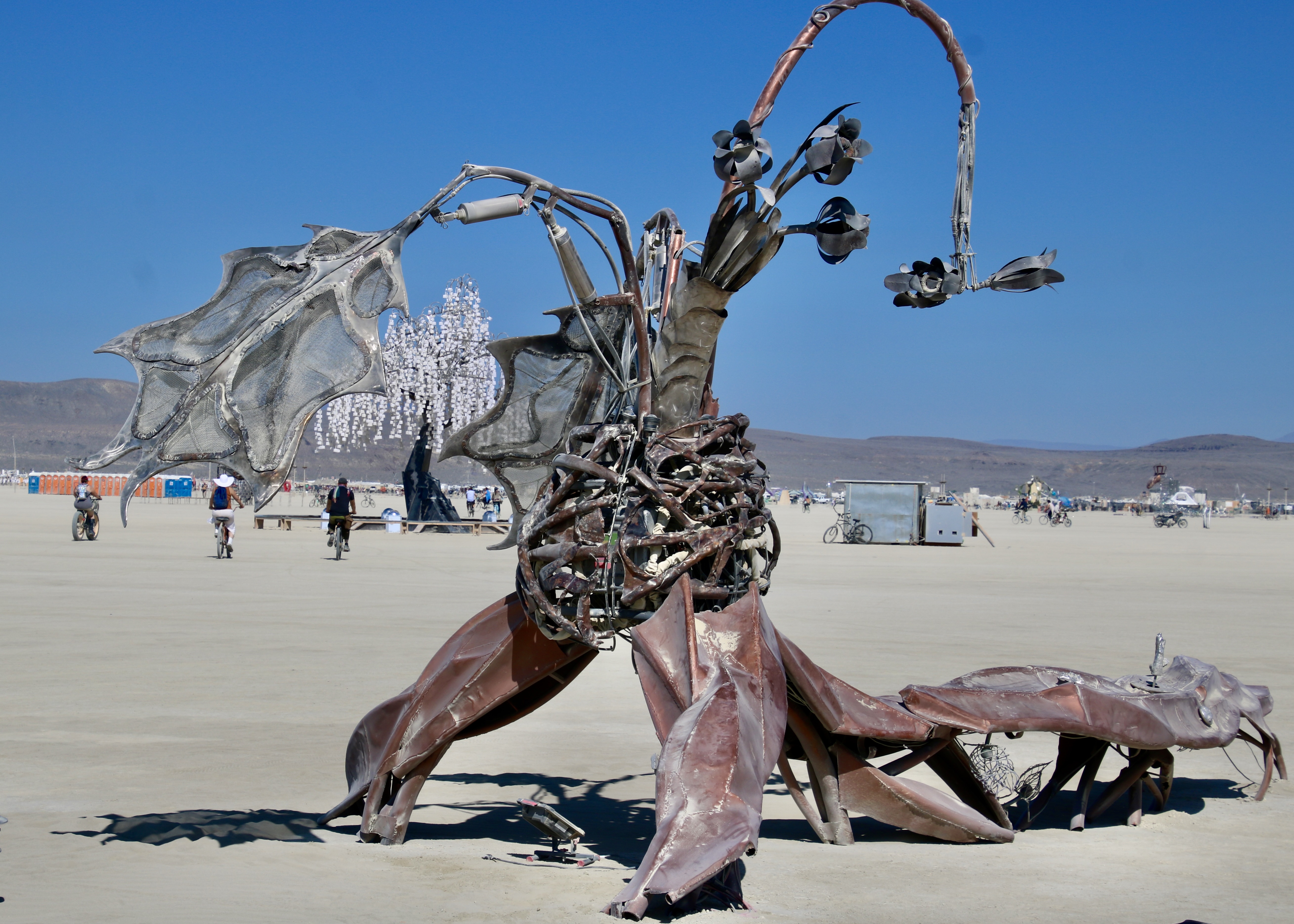
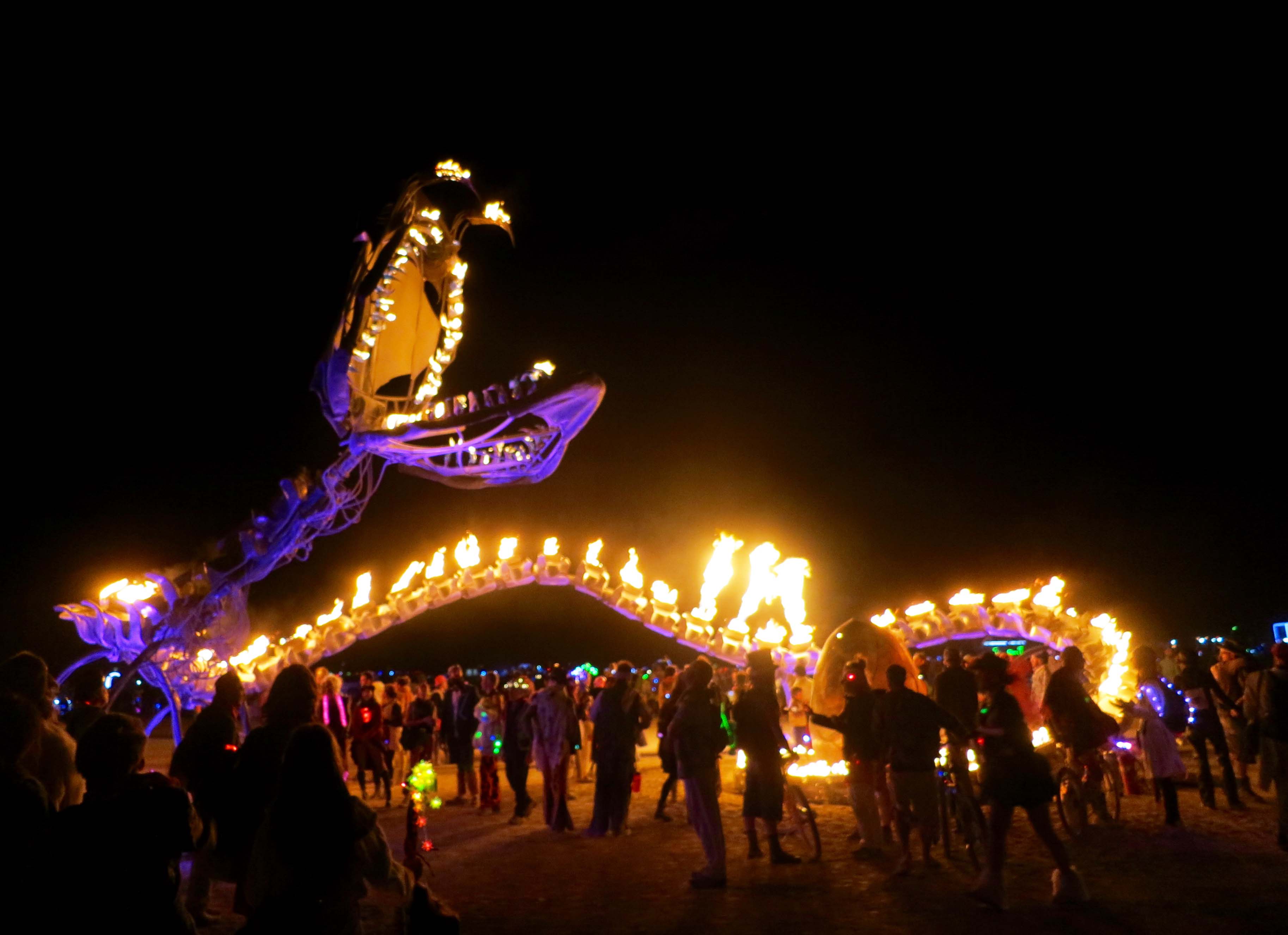
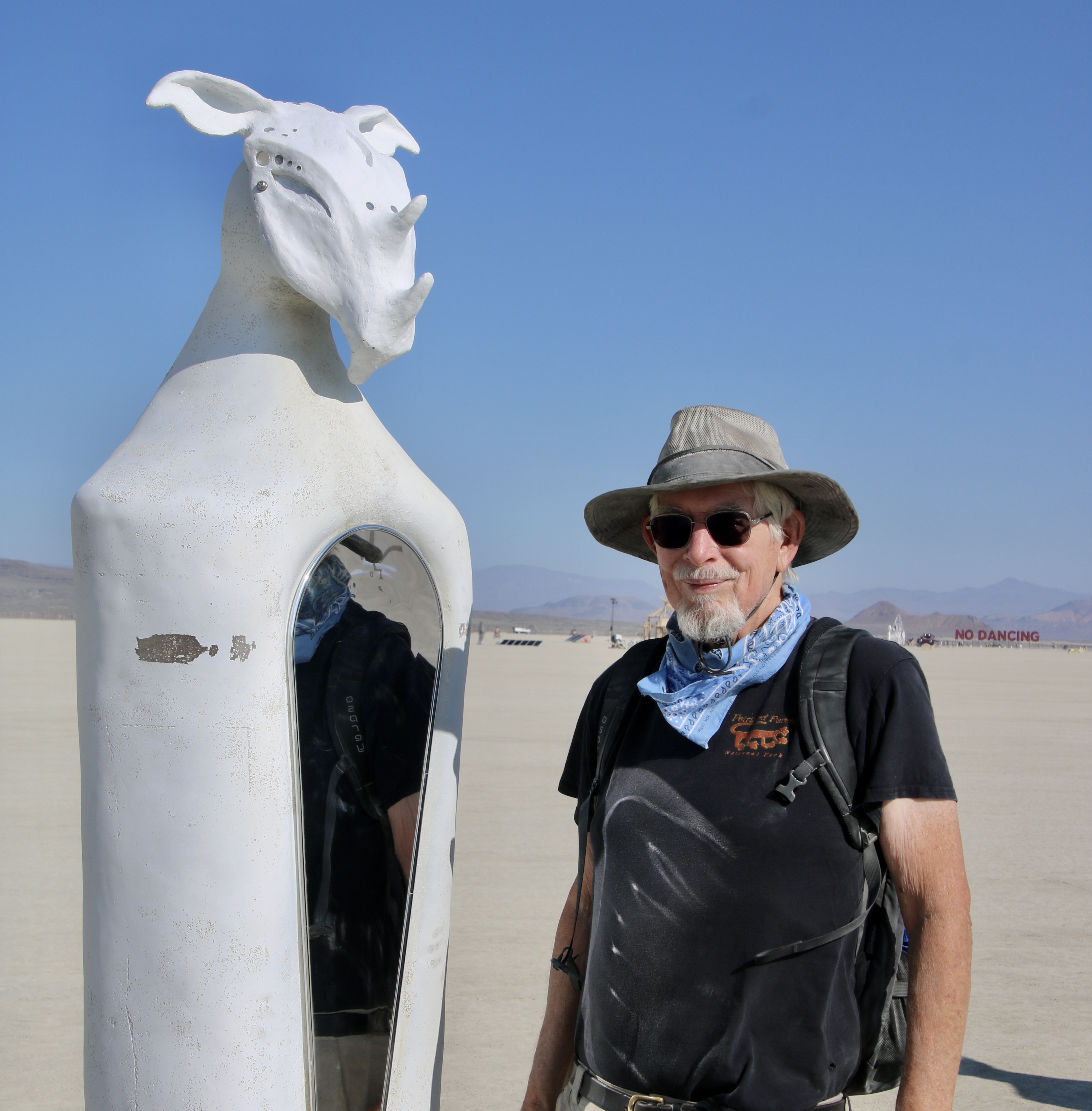
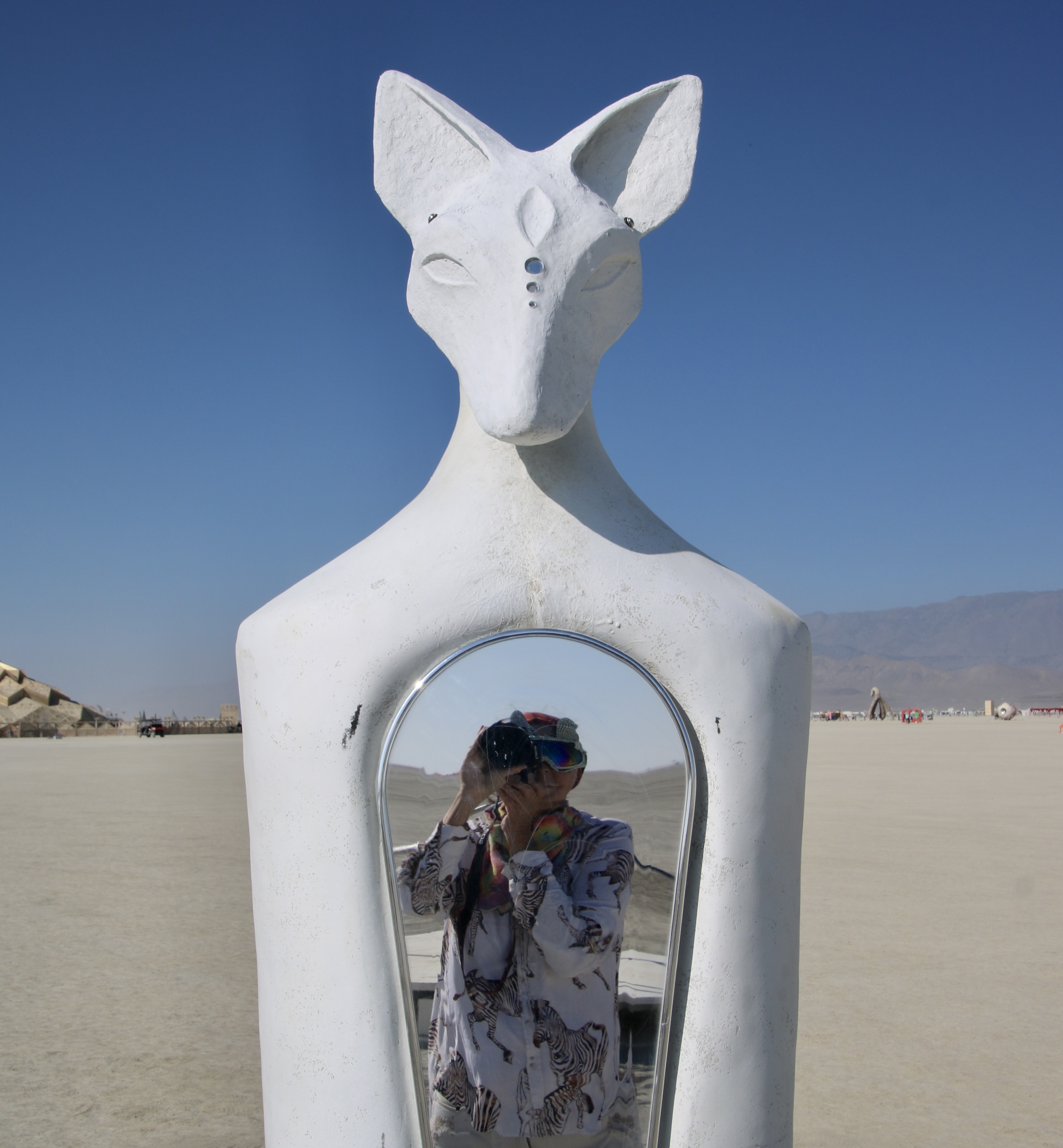
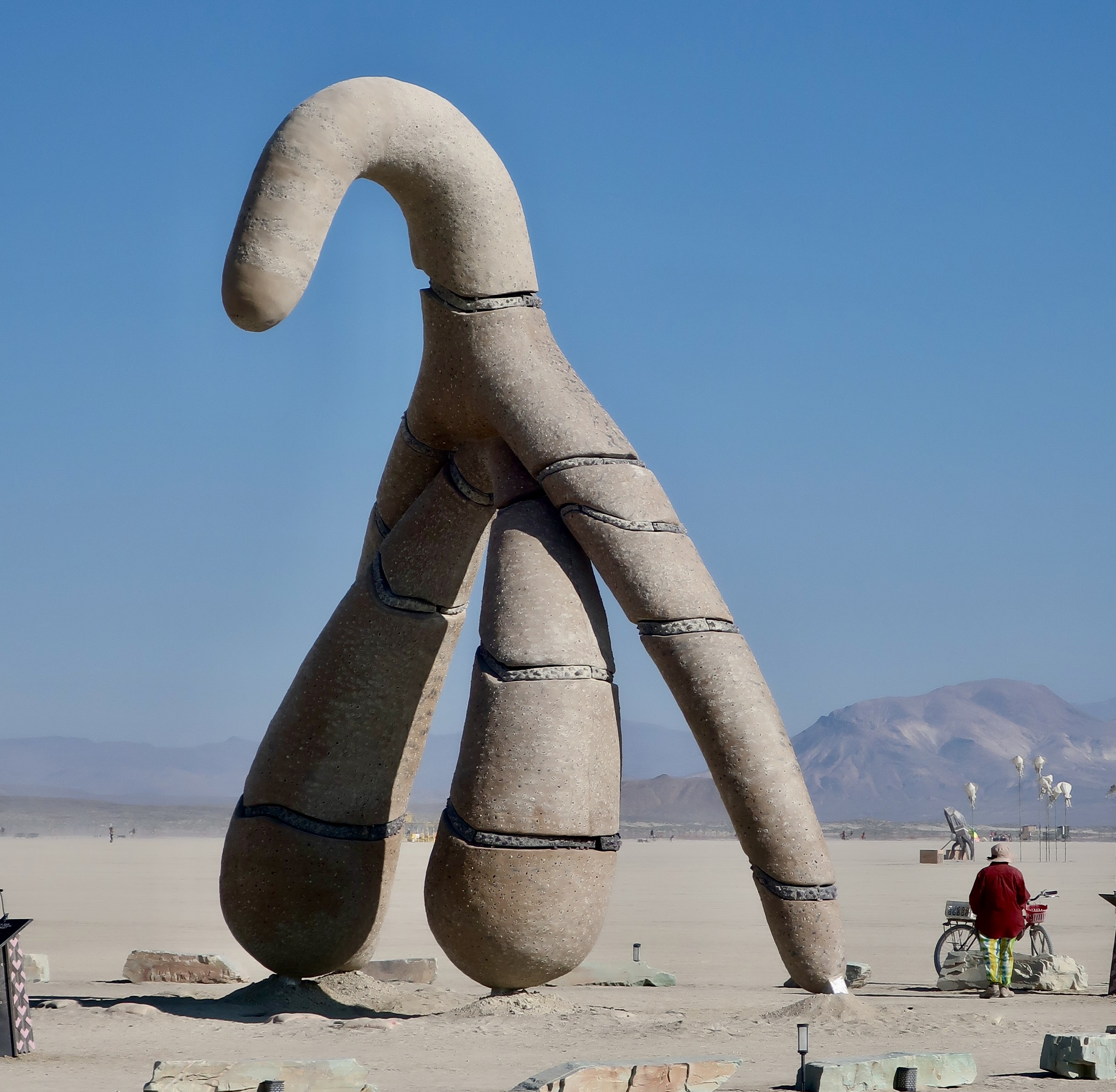
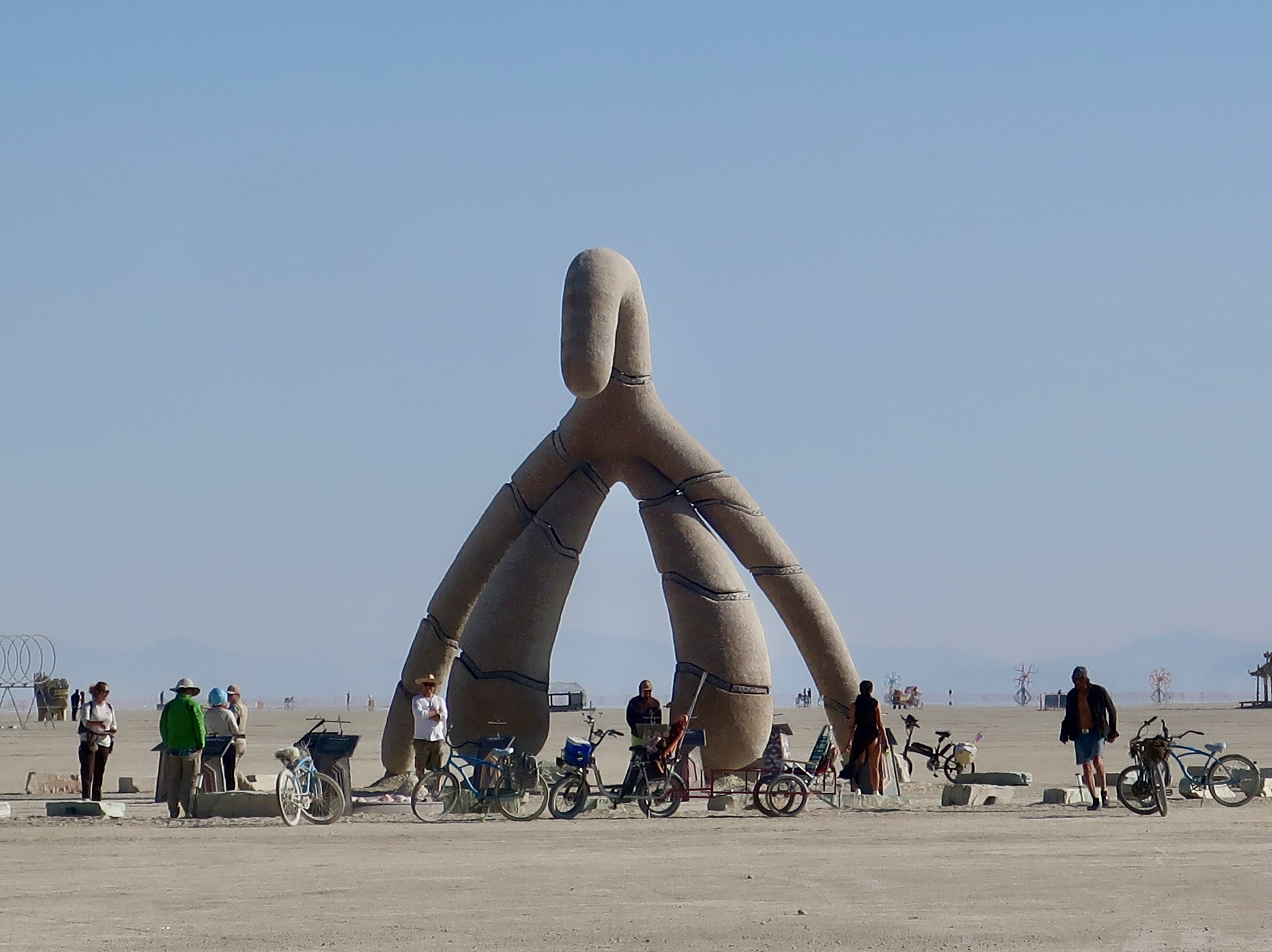
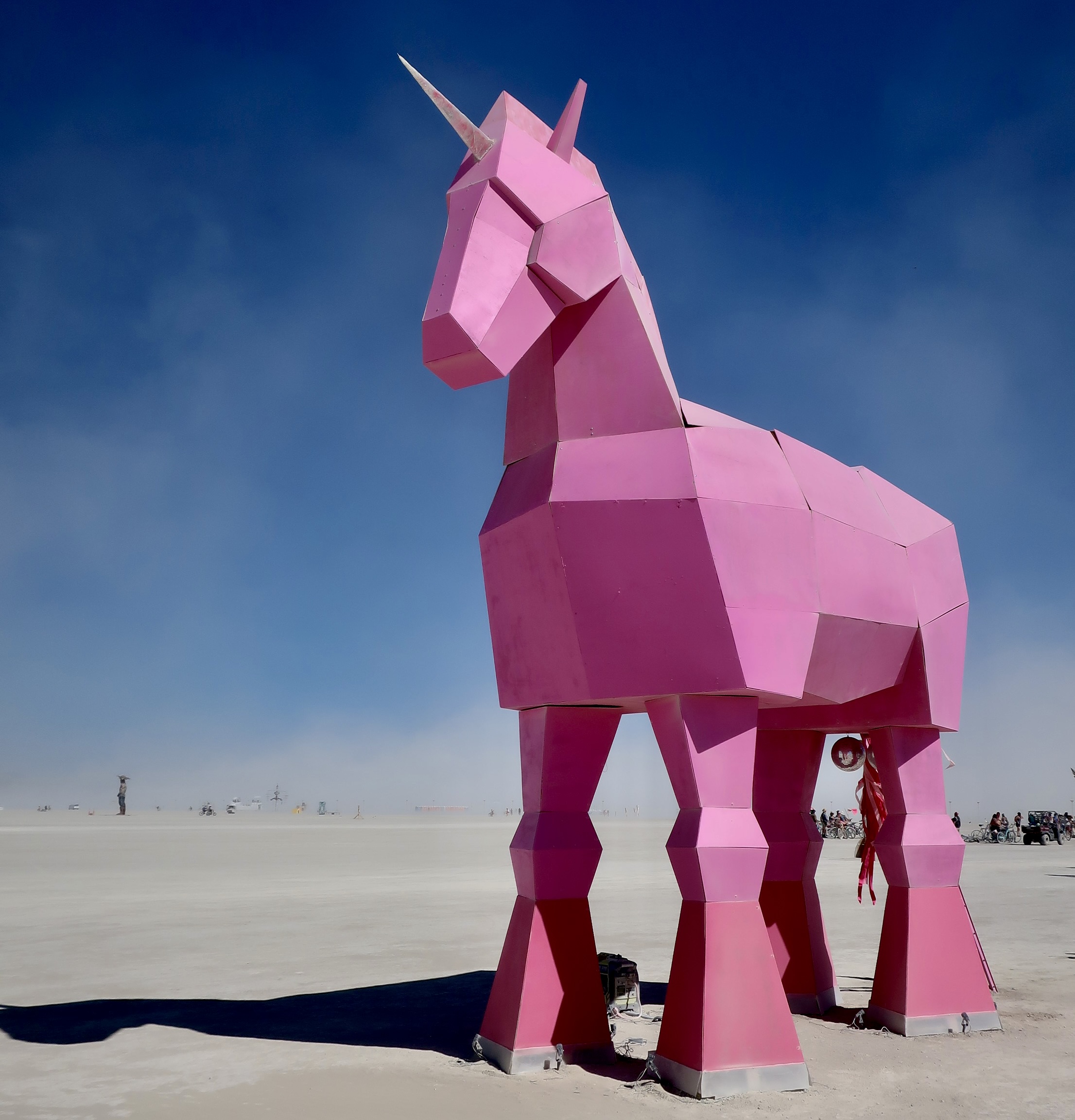
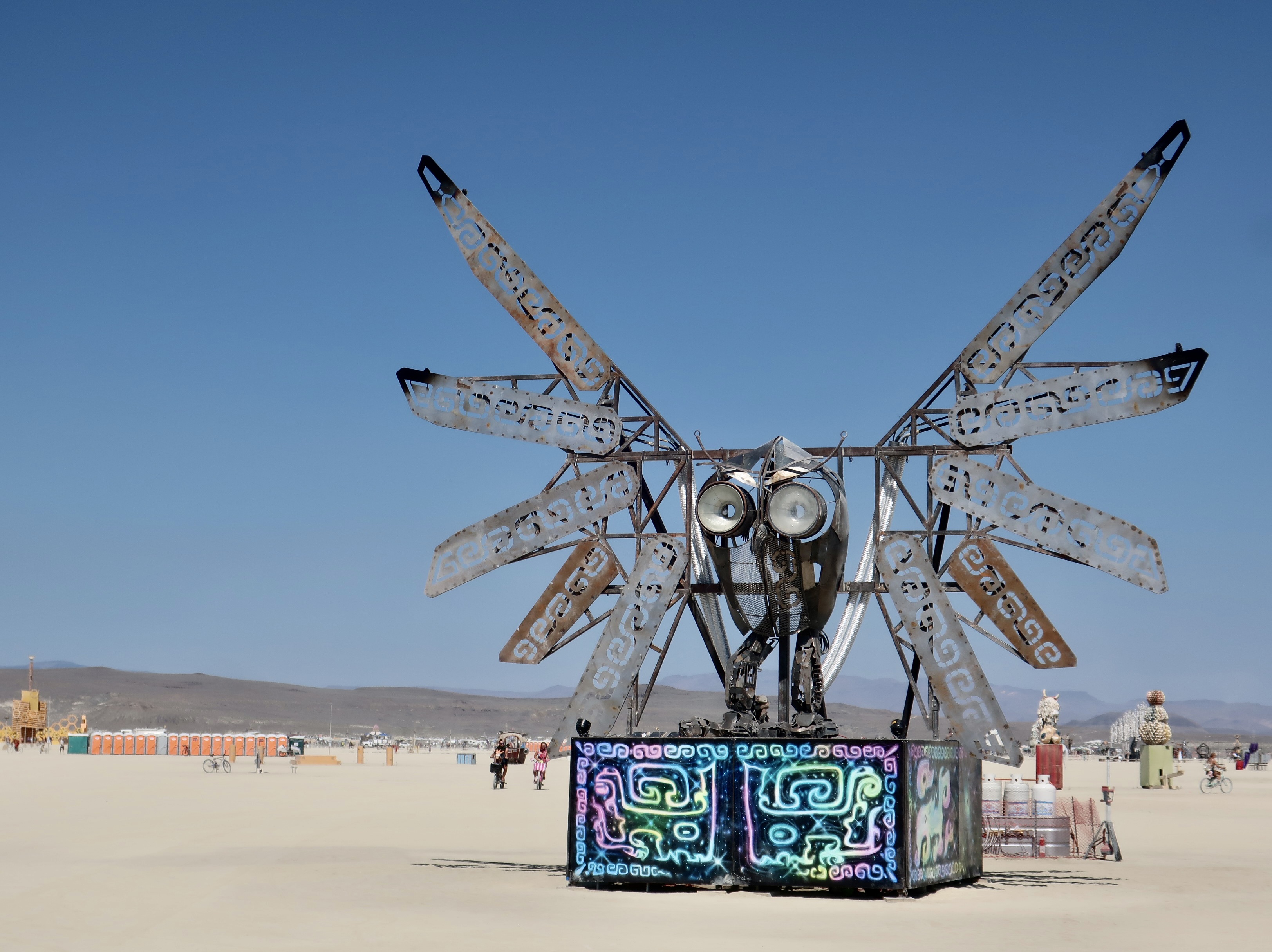
This handsome fellow is Chacc, the Mayan Rain God. Nice tongue. Peggy and I met him before when we were on our honeymoon in Mexico back in the early 90s. We spent the night in a motel next to the ancient Mayan ruins of Chichén Itzá and went out to visit him and other gods after all the tourists had left. They were carved in stone. According to legend, Chacc lived in a cenote next to the ruins. (Cenotes are natural wells created by the collapse of overlying limestone.) In times of drought, human sacrifices would be tossed into the well to appease whatever was irritating him and bring rain. Here’s Chacc standing tall at Burning Man 2023. Miguel Guzman from Mexico City and lyvone Khoo from Singapore created the sculpture. Since there weren’t any cenotes around in the Black Rock Desert to throw human sacrifices into, we figured that the bowl on the stand in front was a substitute.The ever curious (and mischievous) Bone decided to see if Chacc would accept him as a sacrifice. Apparently, the answer was yes. Chacc grabbed Bone up quickly in his long, bony fingers. You know the rest of the story. It rained in the desert for three days and stuck 70,000 Burners in the mud— becoming world-wide news. The moral of this story is watch what you ask for. Bone has been very quiet about his role. Somewhere, maybe down in his cenote, Chacc is laughing. (Note: For those of you who aren’t familiar with Bone, I’m posting an updated interview done with him in the past in conjunction with today’s post.)While we are on focusing on the gods of Ancient Mexico, I should also include this version of the Aztec god, Quetzalcóatl, the Feathered Serpent, by the Crescent Art Collective/Lisa Regan & Ley Brashka from Coahuila, Mexico & Tulsa, OK. Among his several roles, he was patron god of the Aztec Priesthood.Here’s another great beast. An RV with legs perhaps? I’m thinking it would make a great off-road vehicle. Getting in and out might be a little challenging.The artist, Walker Babington from New Orleans, had more than a house on legs with his creation, however. From the front, his sculpture became a buffalo with the house serving as his torso. Both the house and the buffalo were made of materials repurposed from structures and trees that had been destroyed by hurricanes in New Orleans. Babington titled his work “Burden of the Beast” and says his work “symbolizes the task of relocating one’s intrinsic understanding of ‘home.'” The forces of nature magnified by global warming will require more and more of us to pick up the pieces of our homes and lives and move on to higher and safer ground. Migration may become a way of life.Meet Axototl Frequency, a 2023 Burning Man artwork created by Gio Mantis & Elana Novali from Mexico City.Axolotl is modeled after an endangered salamander that can be only be found in one place, Lake Xochimilco near Mexico City. We think it’s cute. According to Mantis and Novali, “These art pieces aim to express the importance of protecting this endangered animal…” One thing that helps assure their continued existence is they are quite popular as pets. I want one.One of my all time favorite group of artists at Burning Man is the Flaming Lotus Girls out of San Francisco who are known for their imaginative creatures that light up the night skies of Burning Man in strange and wonderful ways. This was one of several sculptures we found together on the Playa. We wondered if they were plants, animals or machines. The Flaming Lotus Girls claimed that they were a bit of all three, evolving. Unfortunately, due to the rain, we never got to see them flaming at night.Leaves or wings? A flower head or an animal head?Not a creature I would like to meet at night shooting out flames. (Actually, I would have.)A photo I took of a dragon created by the Flaming Lotus Girls at Burning Man 2015.Zea Narvaez from Portland, Oregon urged viewers to face and love their beasts in a series of sculptures arranged in a circle with each one different and with a mirror. Peggy caught this photo of me next to my favorite. “Damn,” I told Peggy when we were reviewing our photos after Burning Man, “the beast marked me.” I swear, it was the first and only time I noticed the claw marks on my chest! Reflected Playa dust on the mirror? Maybe.Mainly we took selfies, as Peggy is here. If that isn’t a form of “Loving Thy Beast,” what is? Speaking of possible beasts, do you see that sculpture in the distance on the right in the far distance? We hopped on our bikes to check it out.“Well, I have an idea what it might be,” I told Peggy.“You are looking at it wrong,” Peggy told me. Oh. “Tip of the Iceberg” is what Melissa “Syn” Barron from Oakland & Big Sur, CA calls her sculpture. The comment was “Monumentalizing this misunderstood & mysterious piece of anatomy, we hope our sculpture will educate, empower, & honor its rightful place in biology.” Right. You are looking at an ‘invisible Trojan Unicorn’ according to artists, Invisible Pink Unicorns from Los Angeles. It’s certainly pink and a unicorn. Here’s what the artists had to say, “Given the challenge of getting the tickets, we invited the easiest and cheapest way to get to Burning Man – inside the Trojan unicorn. Please come and check if it is open and if we successfully get out to the Playa and are not trapped inside (and help us get out if we are still in)!” My money would have been on Burning Man Org blocking free entry into the event. They are a lot tougher than the Trojans were! Grin. They even checked the bathroom in our trailer to make sure we weren’t trying to slip someone in! Little did they know about the trap door on our black water tank. Heh, heh. Just kidding. I’ll conclude with this fun winged beast I couldn’t find any information on. Next up, I’ll feature a Hedge Hog from Ukraine made from tank traps and other fun animals including a giant bear and a bunny.
Reaching toward the sky, this beautiful winged creature rises above the Playa of Burning Man 2023. The Man, with his red pants, can be seen in the background.
“Burning Man is unique in the world. Hard to describe how incredible it is for those who have never been. Best art on Earth.” –Elon Musk
Elon Musk came to Burning Man this year along with a number of other luminaries. I don’t agree with him on a number of things, but I do admire his creativity and willingness to think big. We were more than happy to use Starlink on our remote property in Oregon. And I think that his description of Burning Man is relatively accurate. I’ve been arguing for years that it features some of the world’s best art being produced now. My first venture out to the event in Nevada’s Black Desert was in 2004. I’ve been back 12 times since and Peggy has been with me 9 of those times. Art is the primary reason we return.
Our time to explore the Playa and Black Rock City was limited this year. We came in on Monday afternoon, a day after Burning Man opened, and saw everything shut down on Friday because of the rain. We were left with just over 3 days to hike and bike our way through the art. Peggy and I photographed over 50 pieces that I will share with you over our next 5-6 posts. Sadly, that left a lot of art we didn’t see. My apology to the artists.
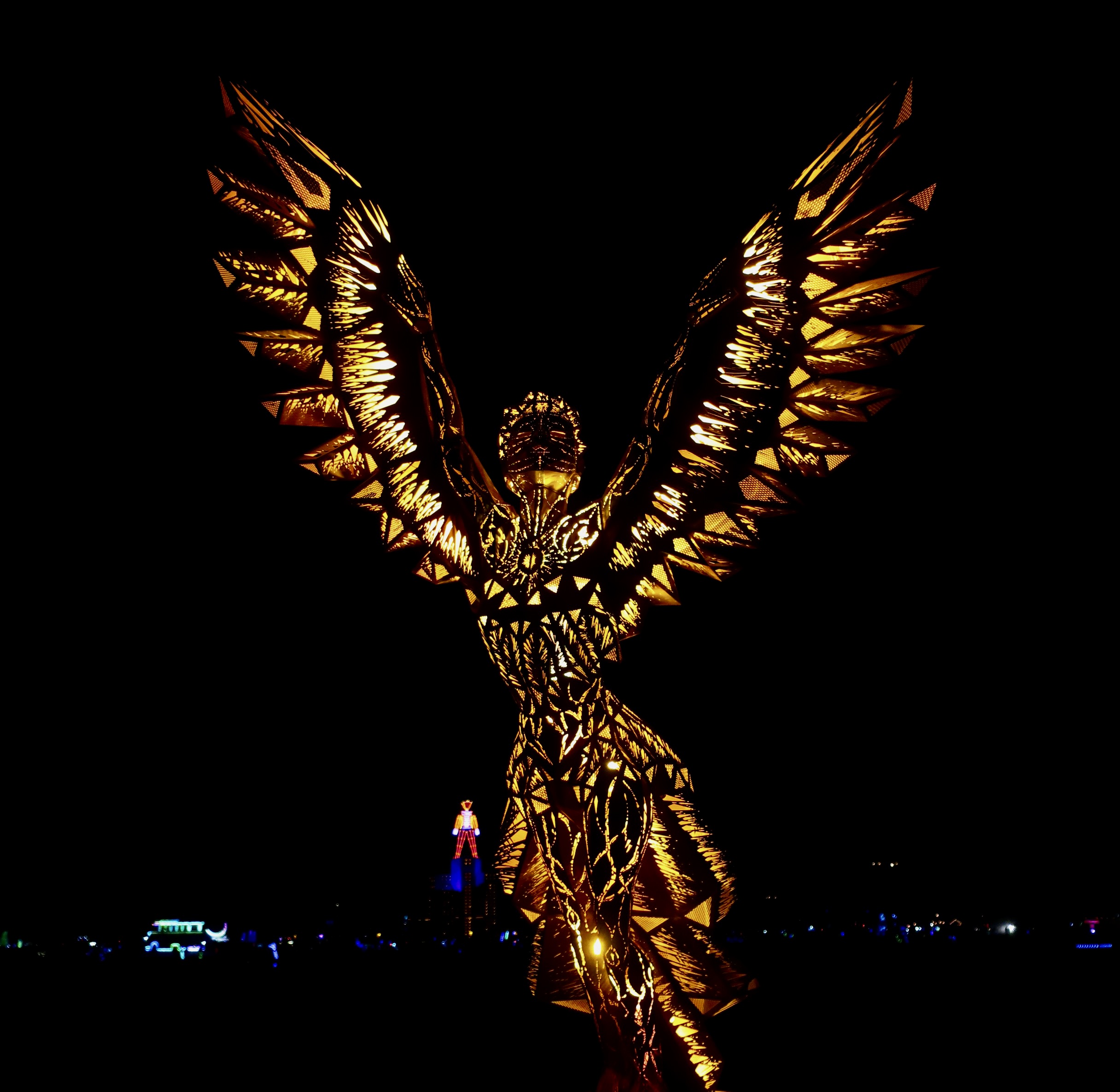
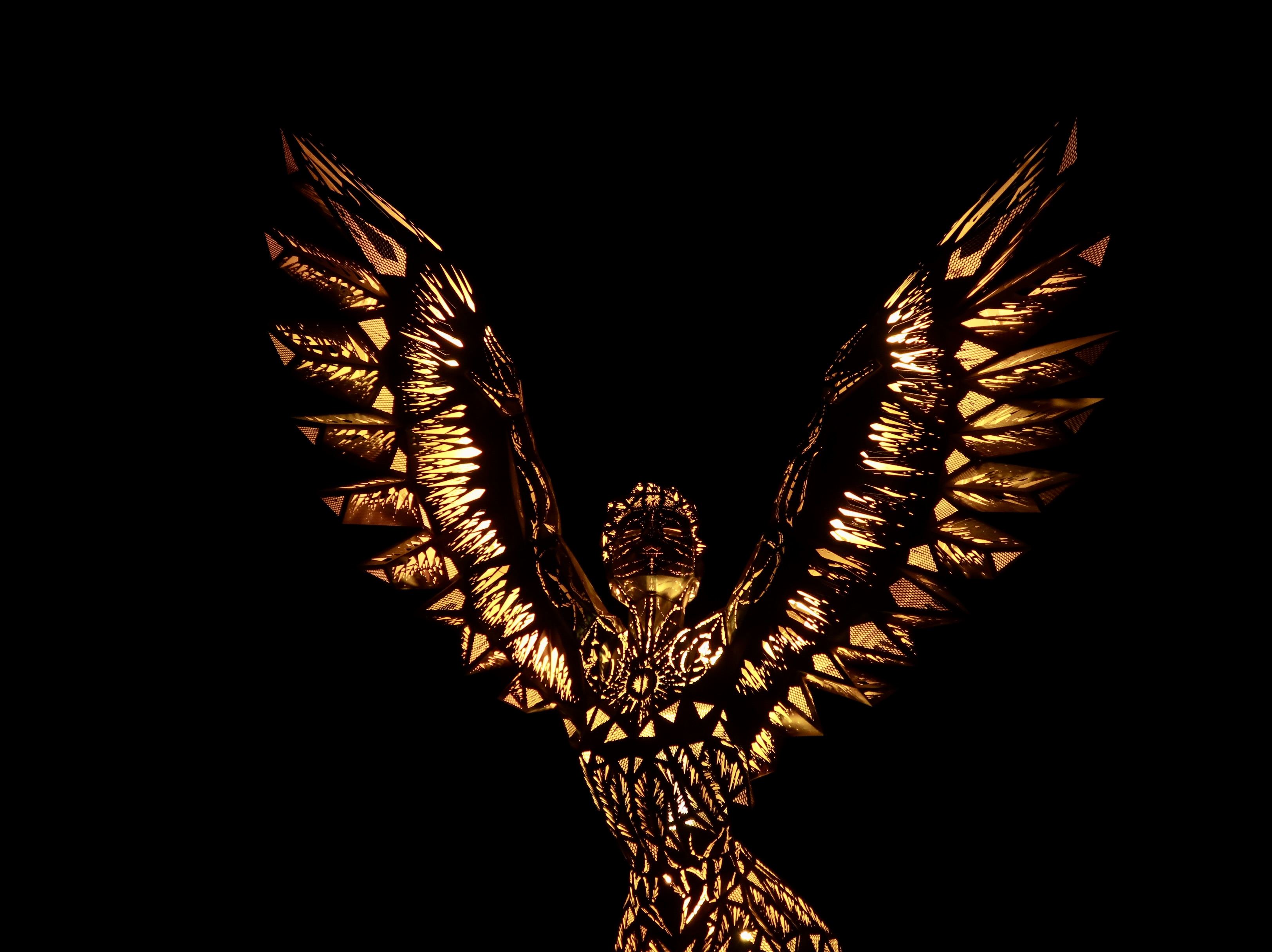
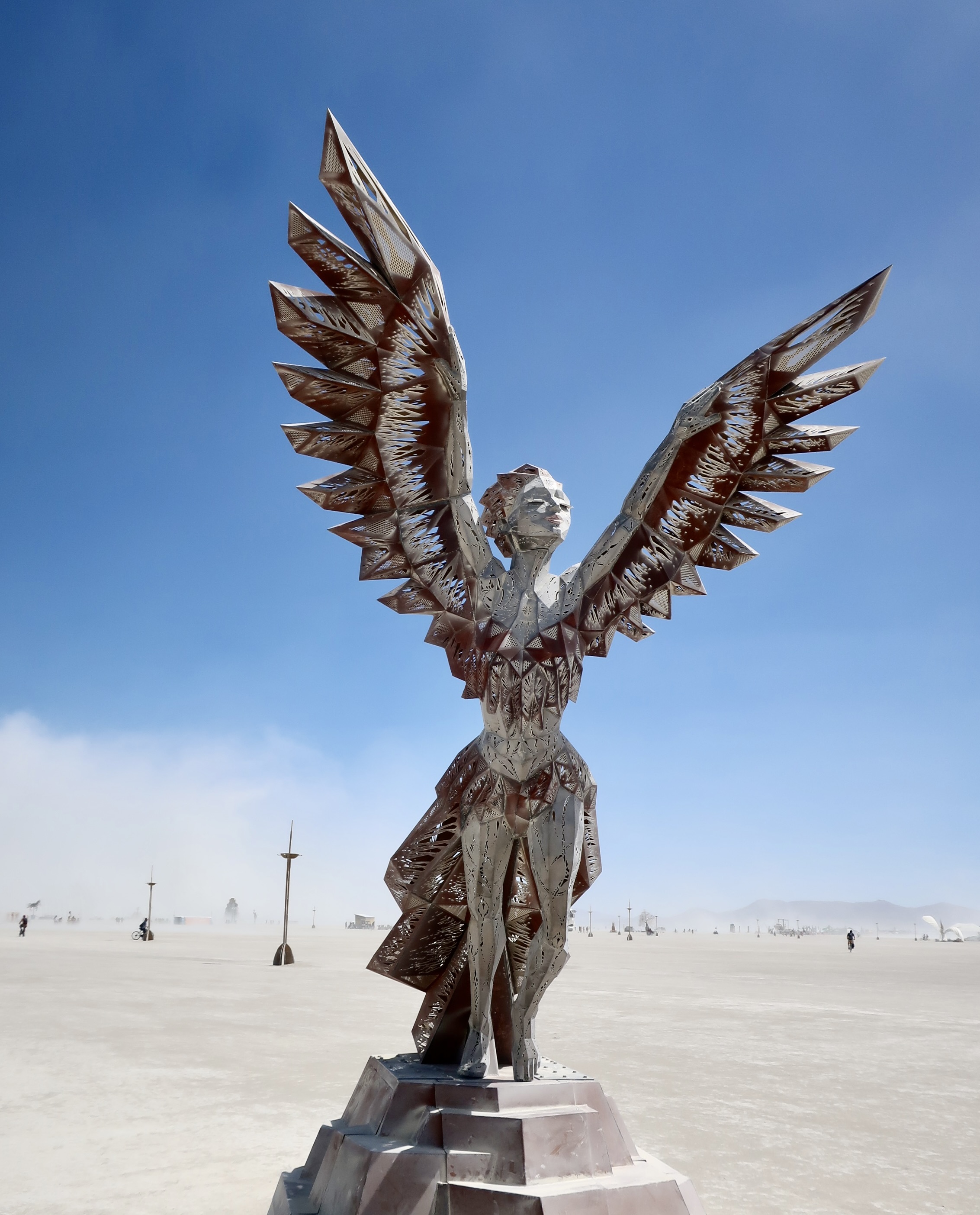
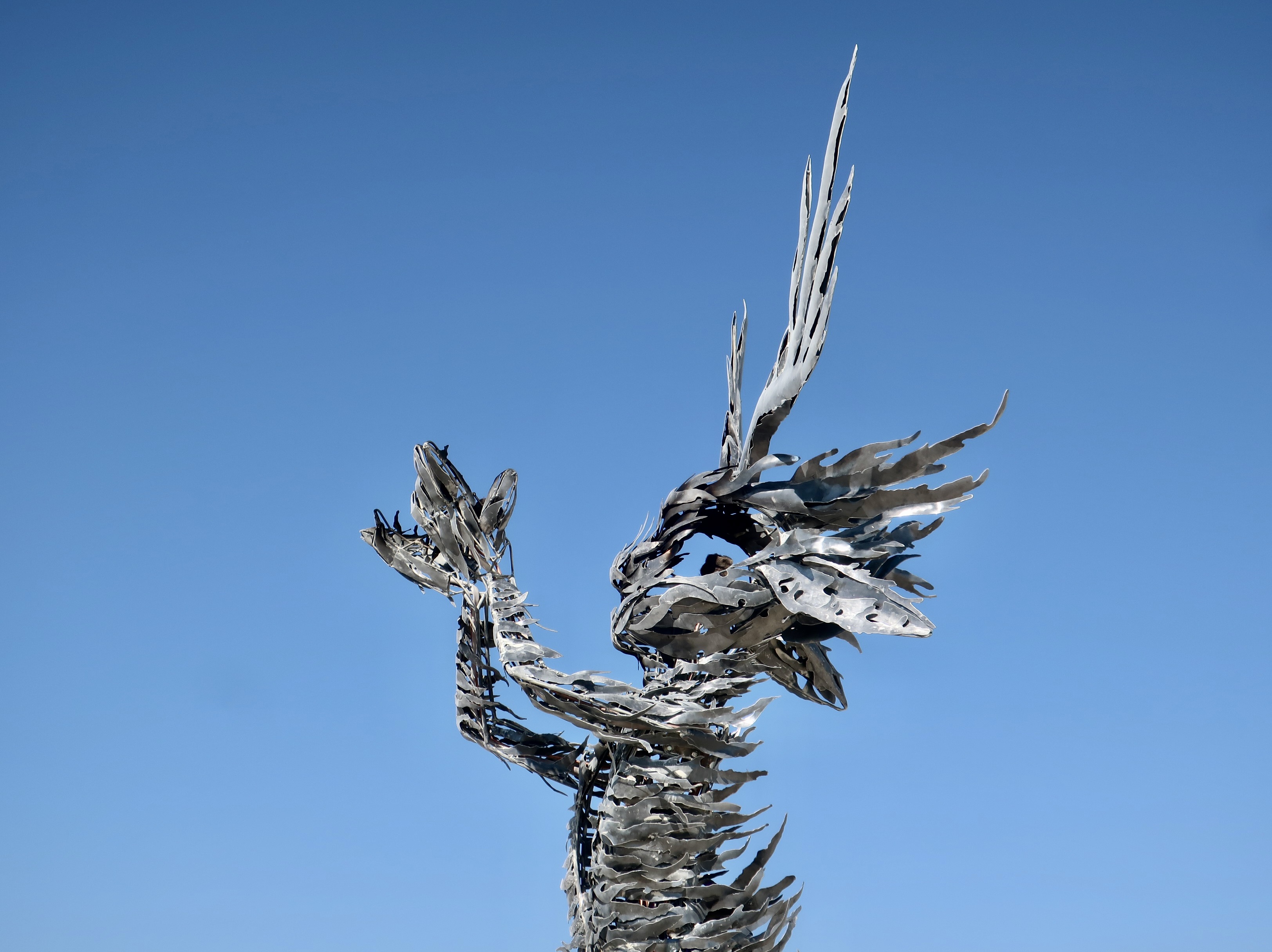
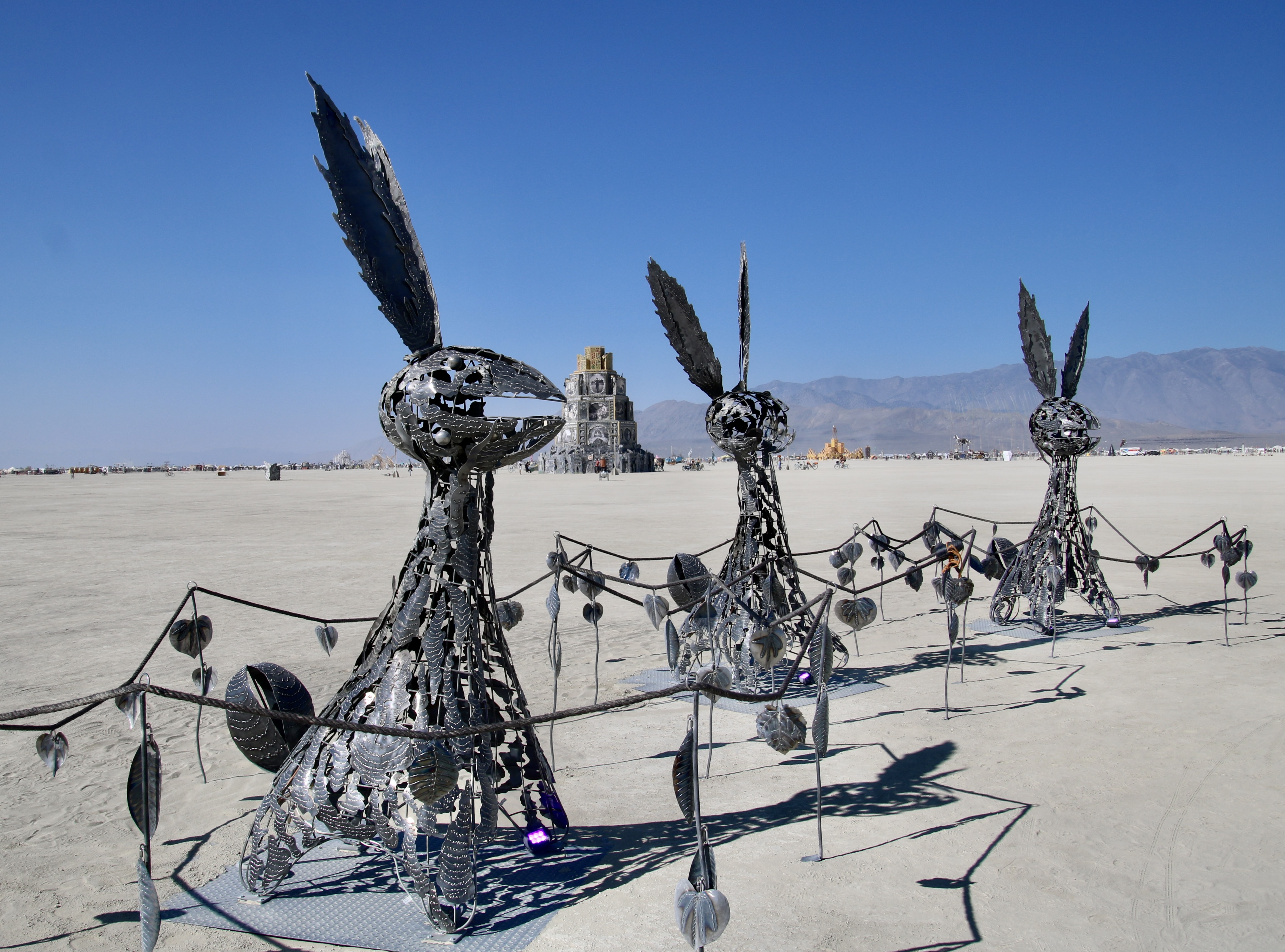
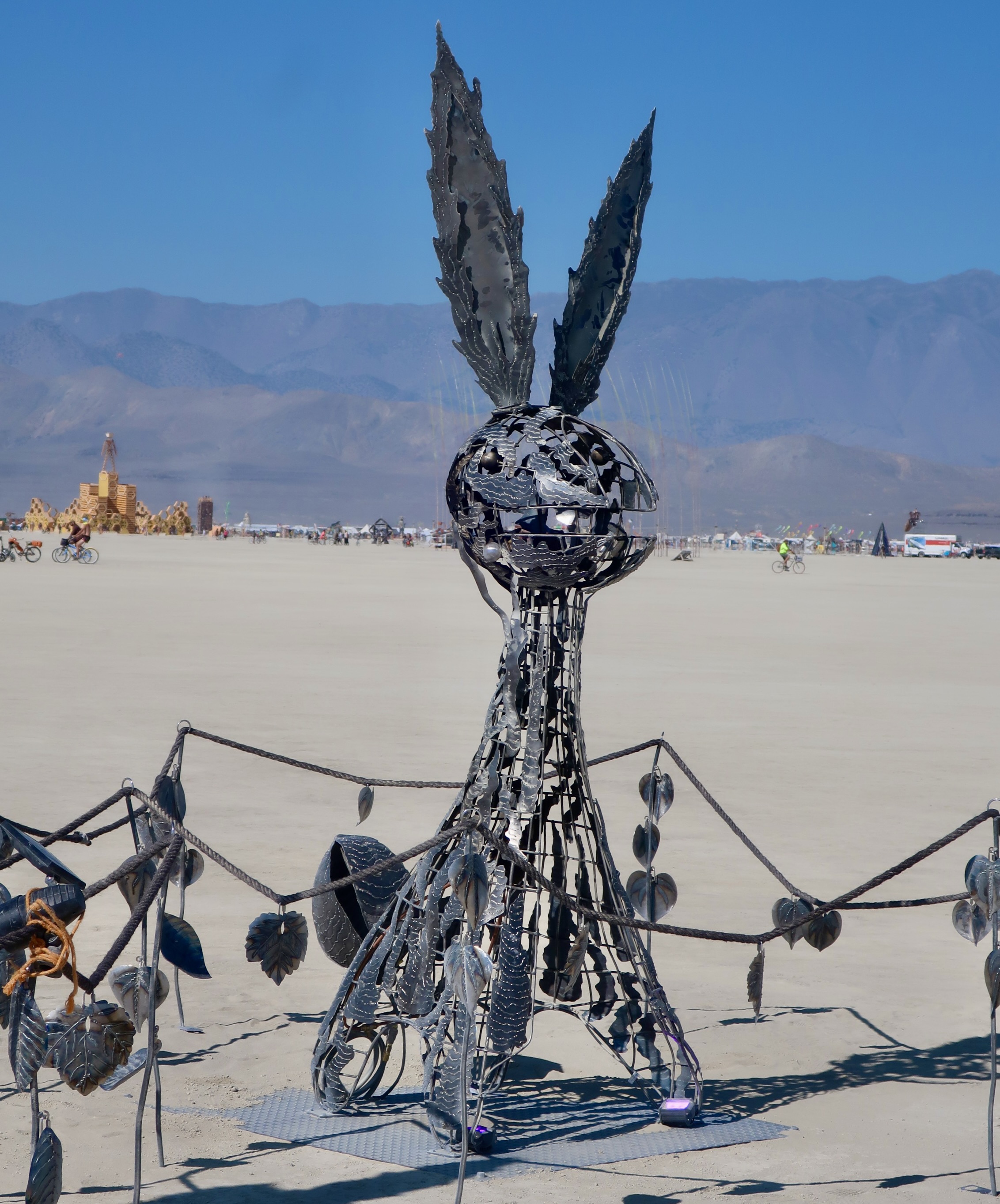
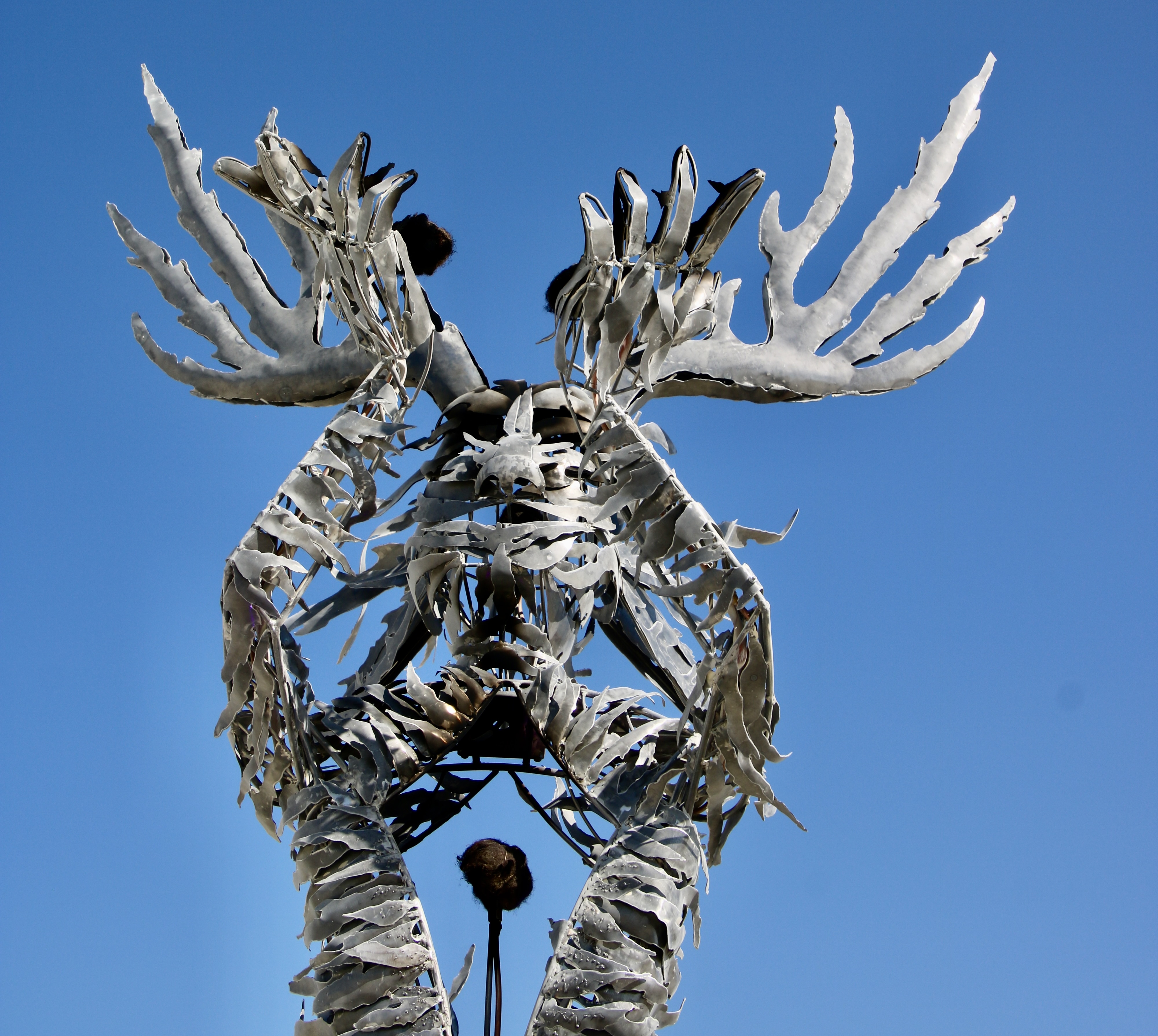
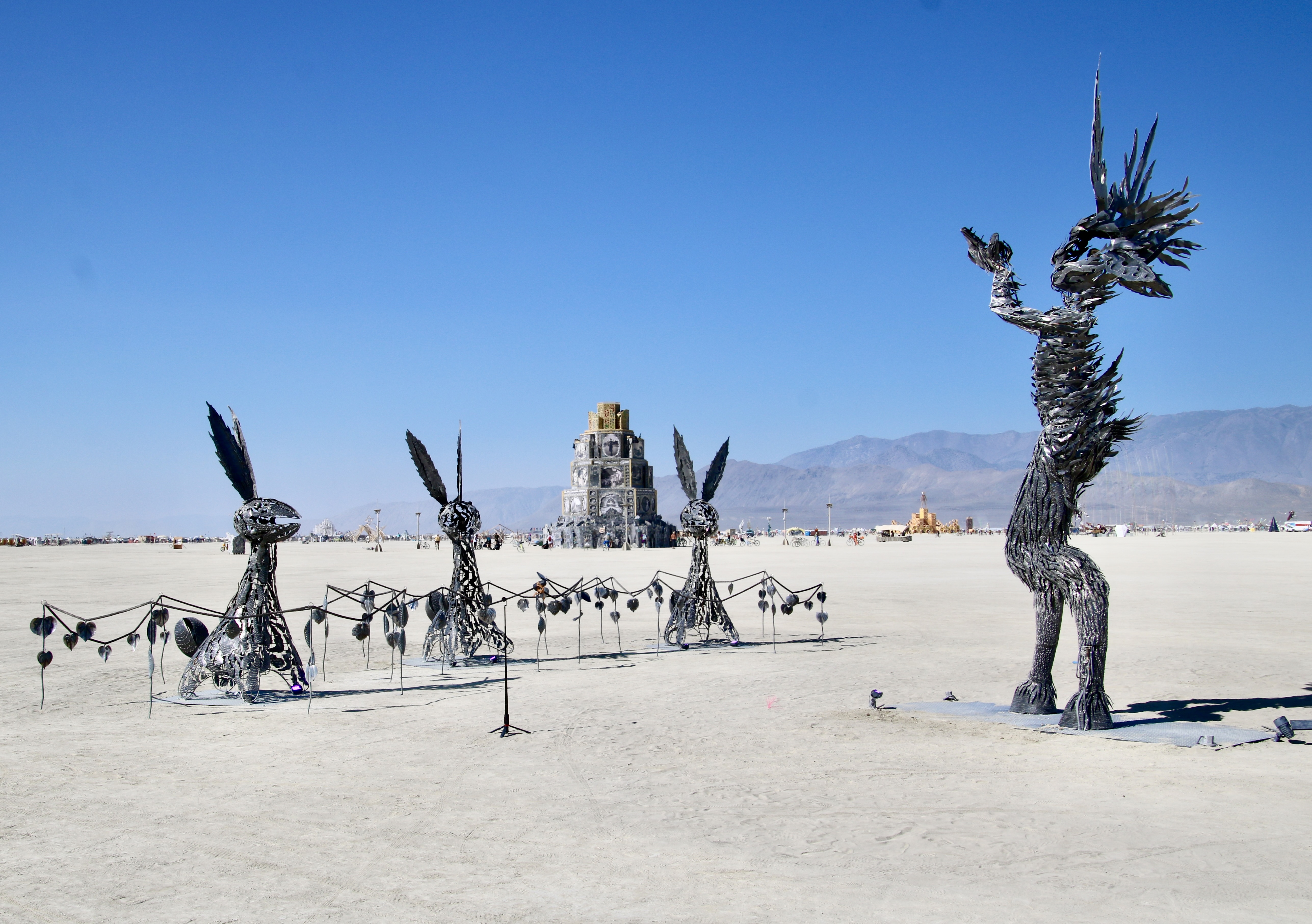
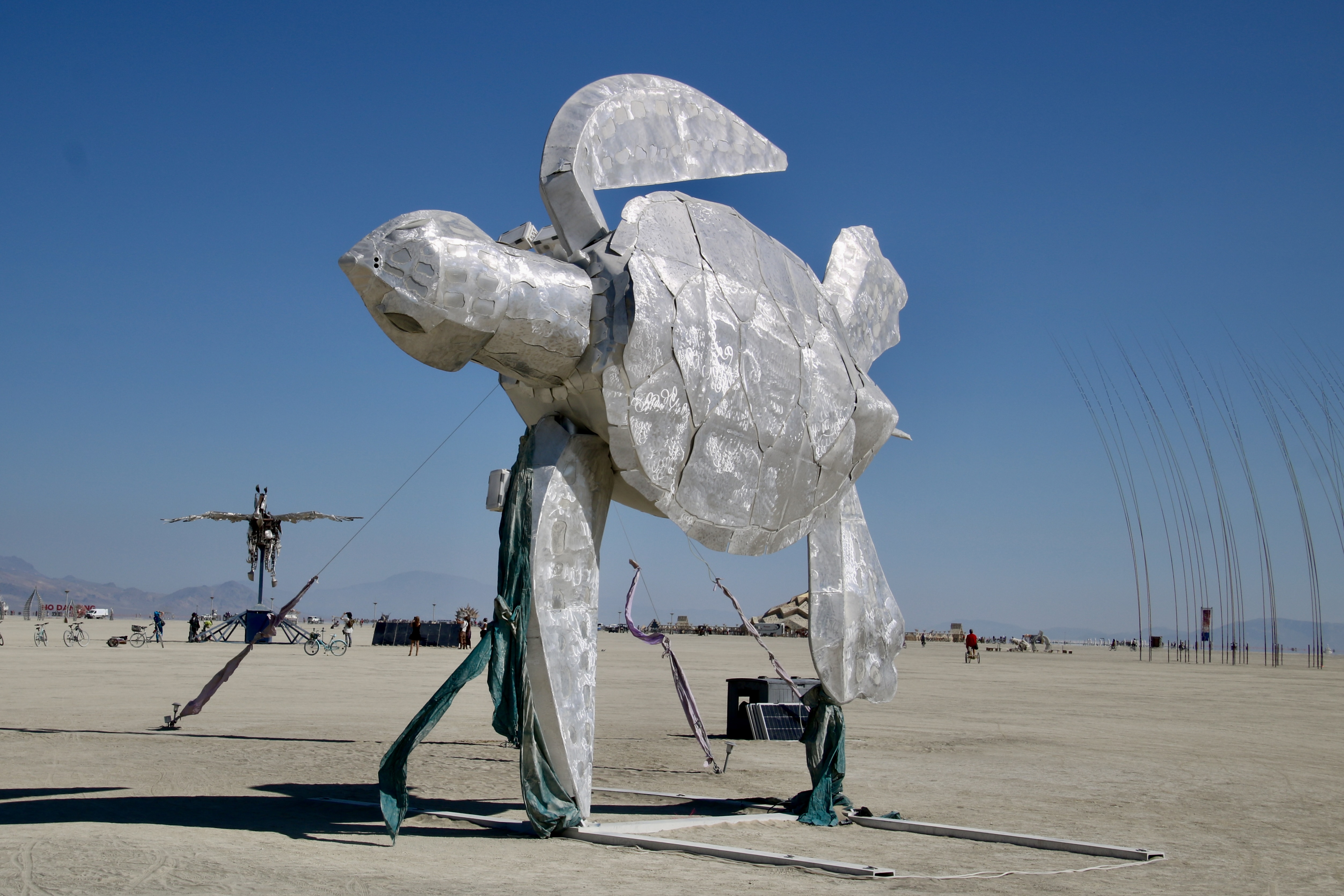
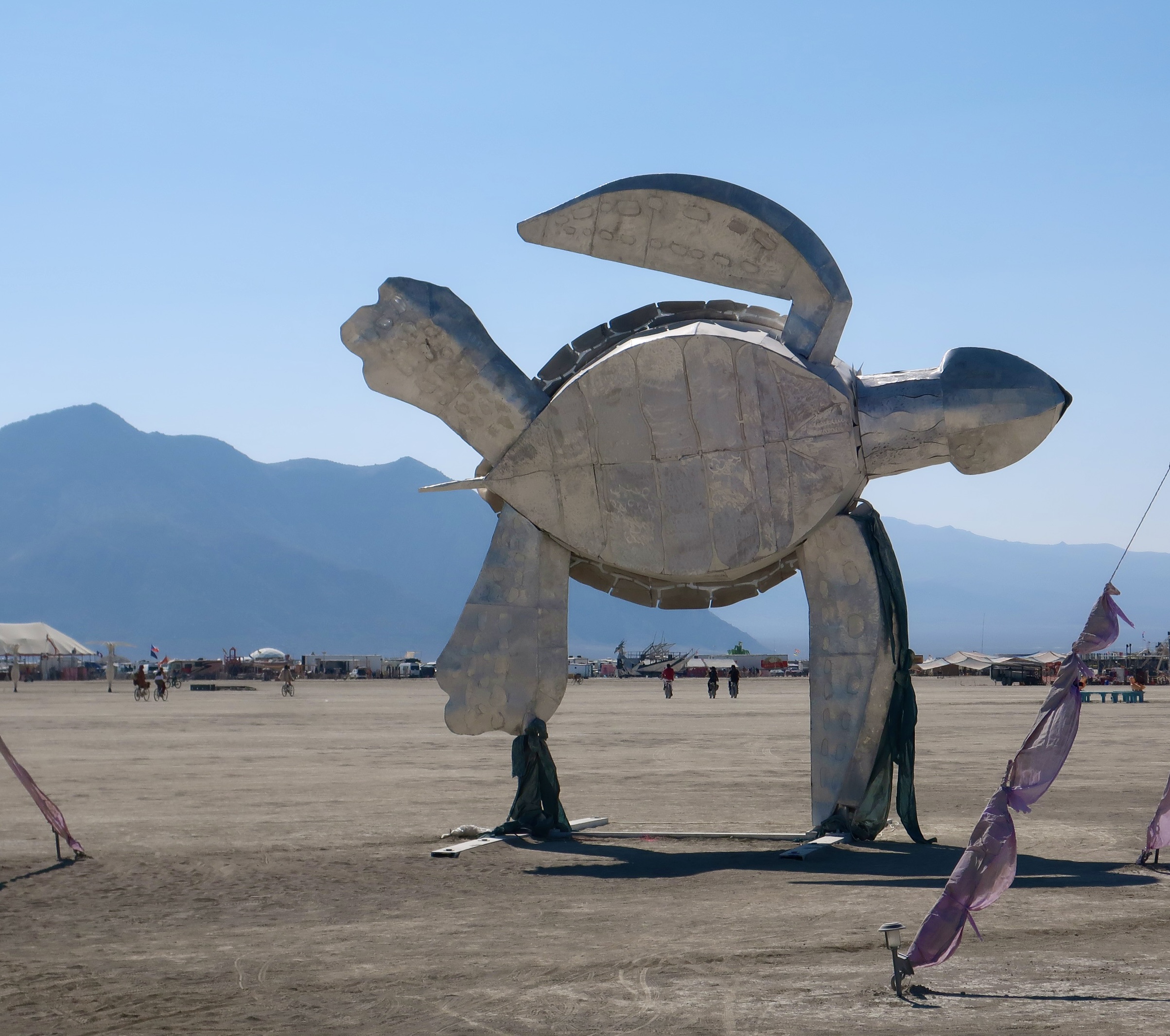
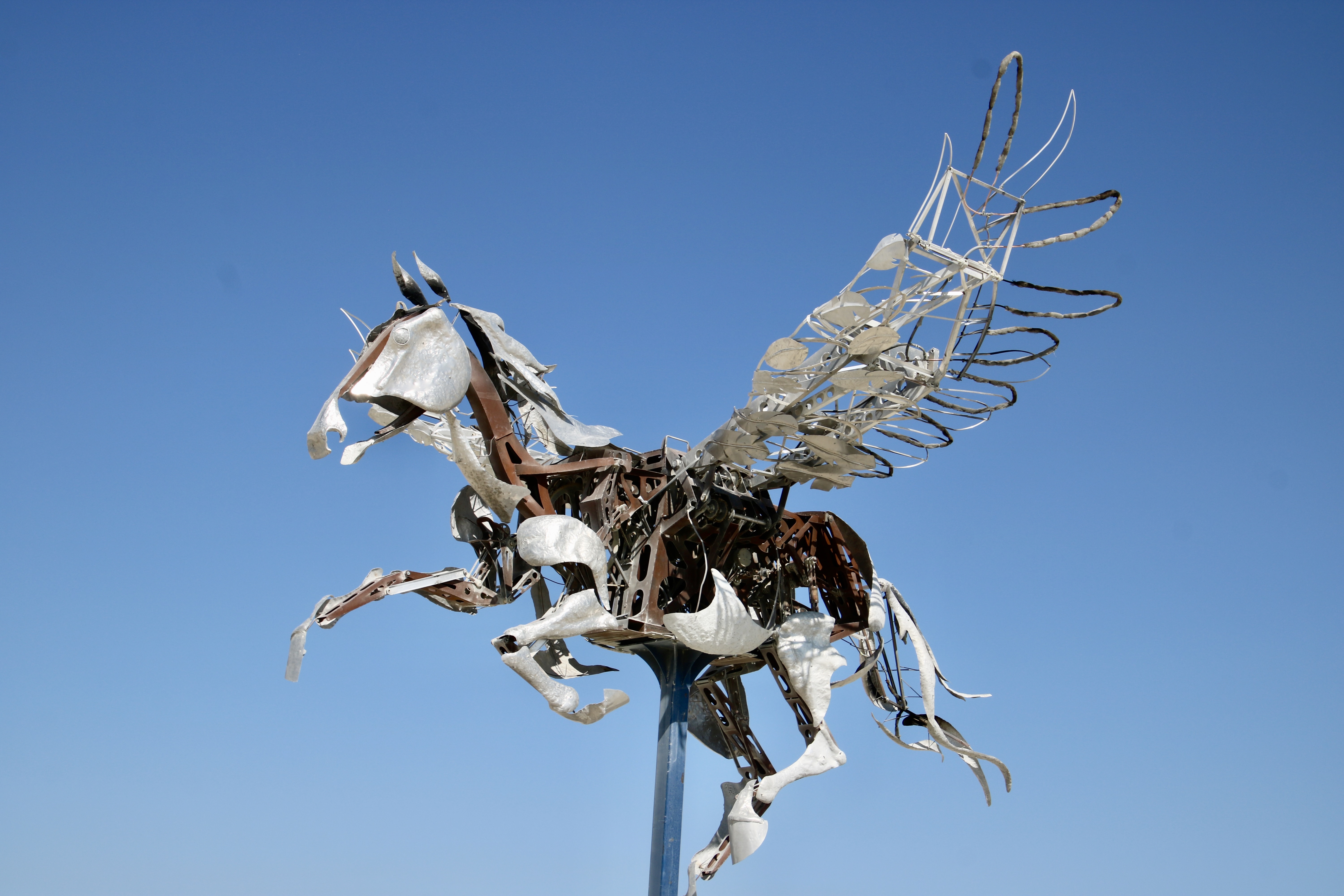
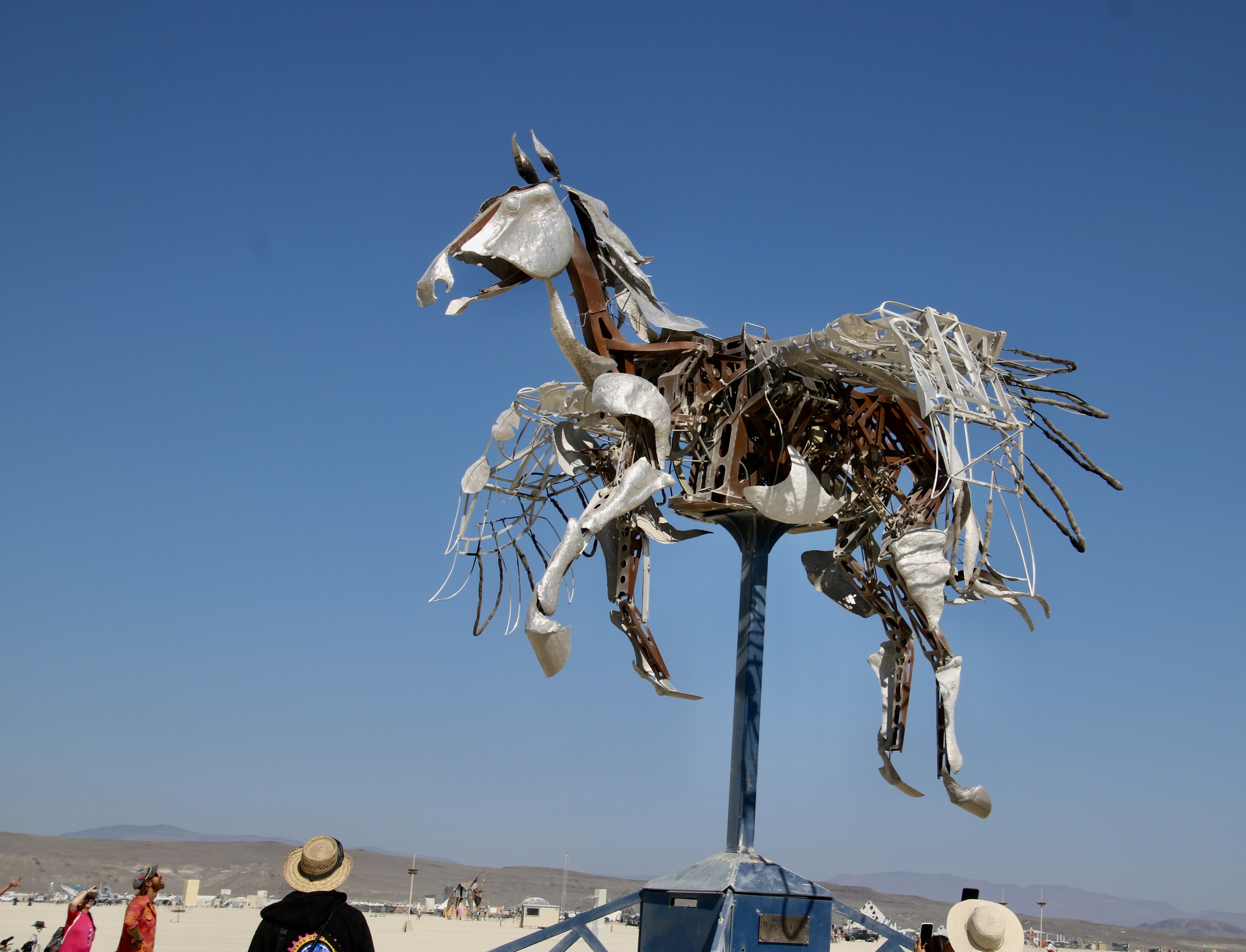
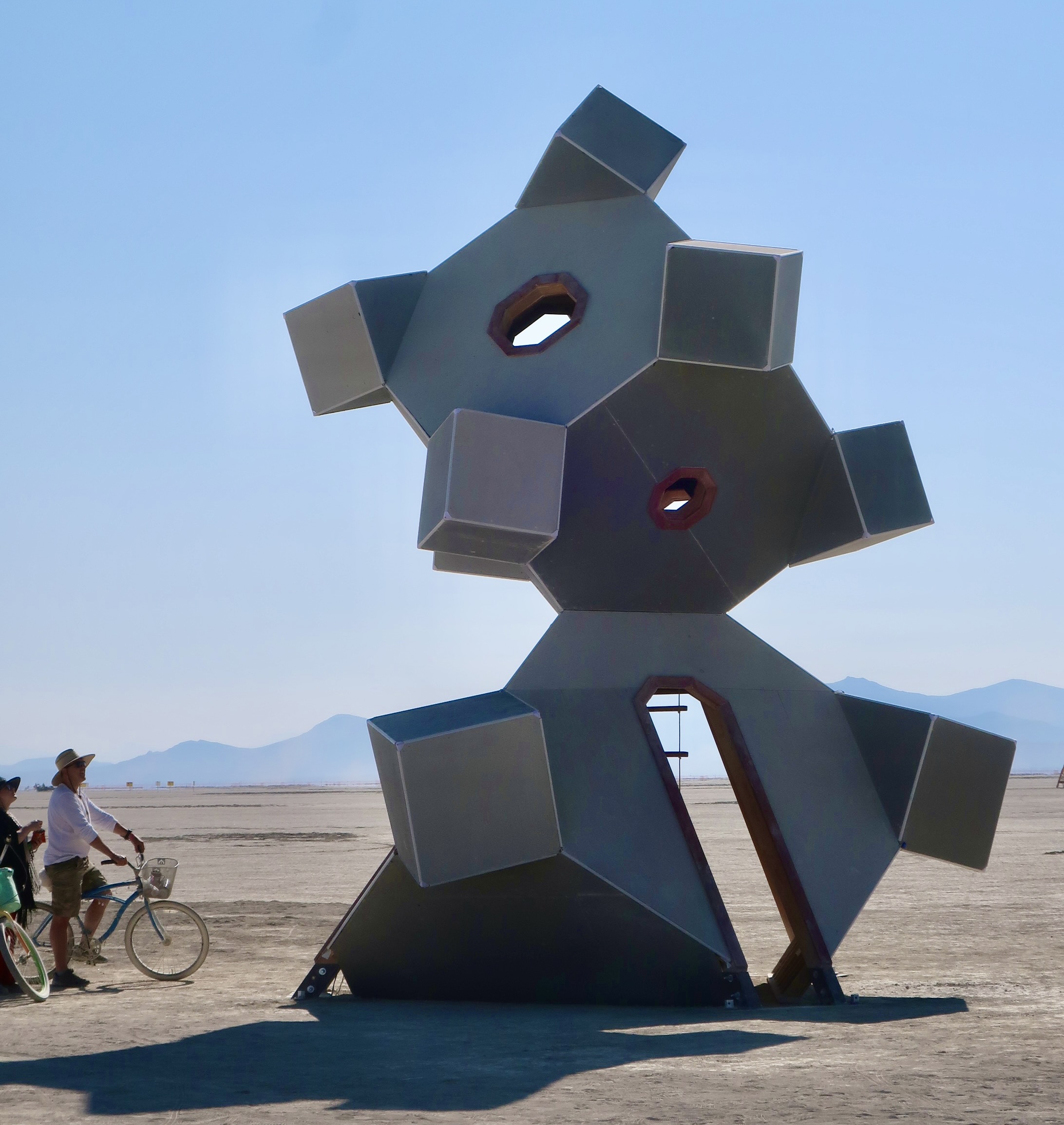
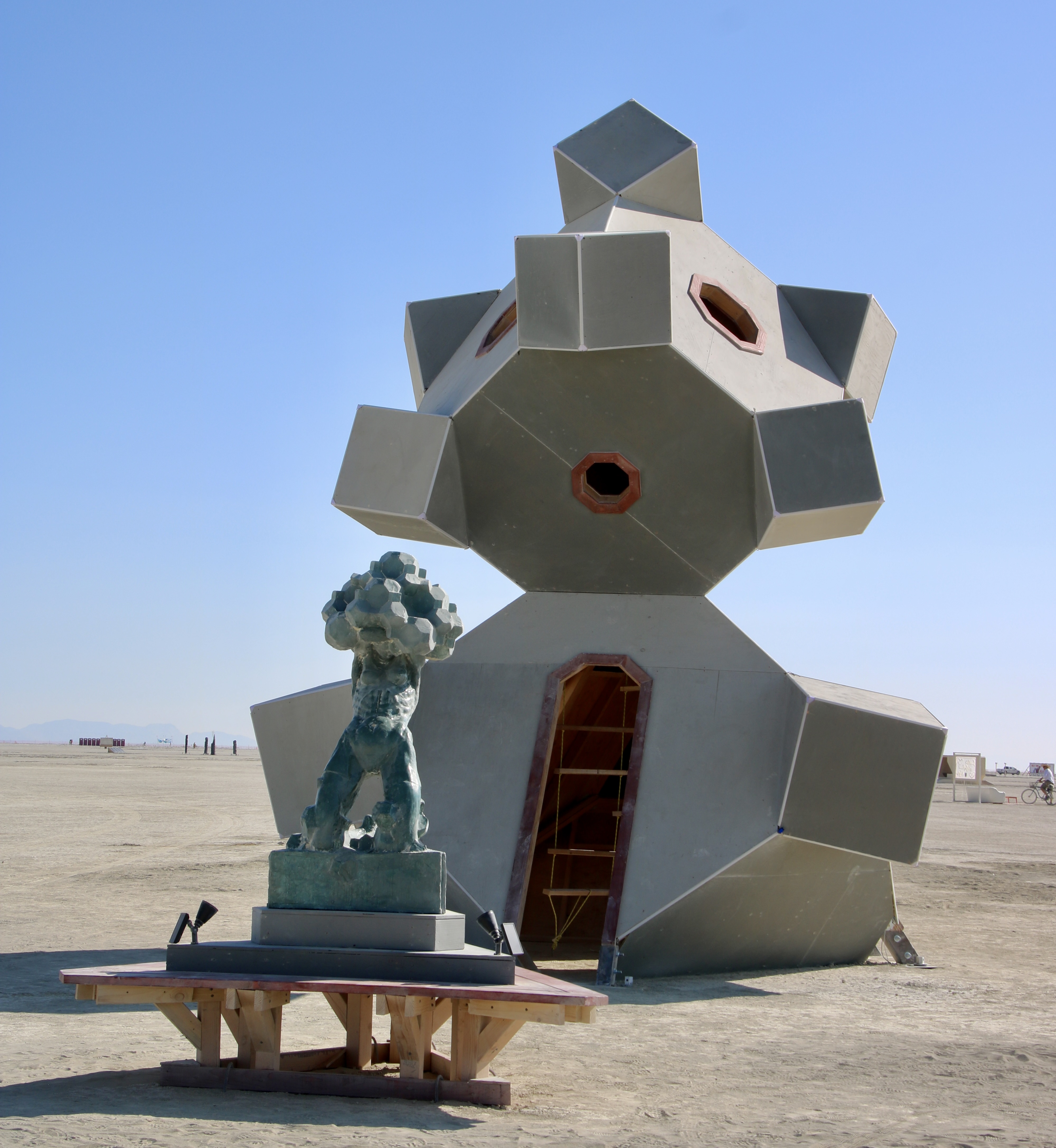
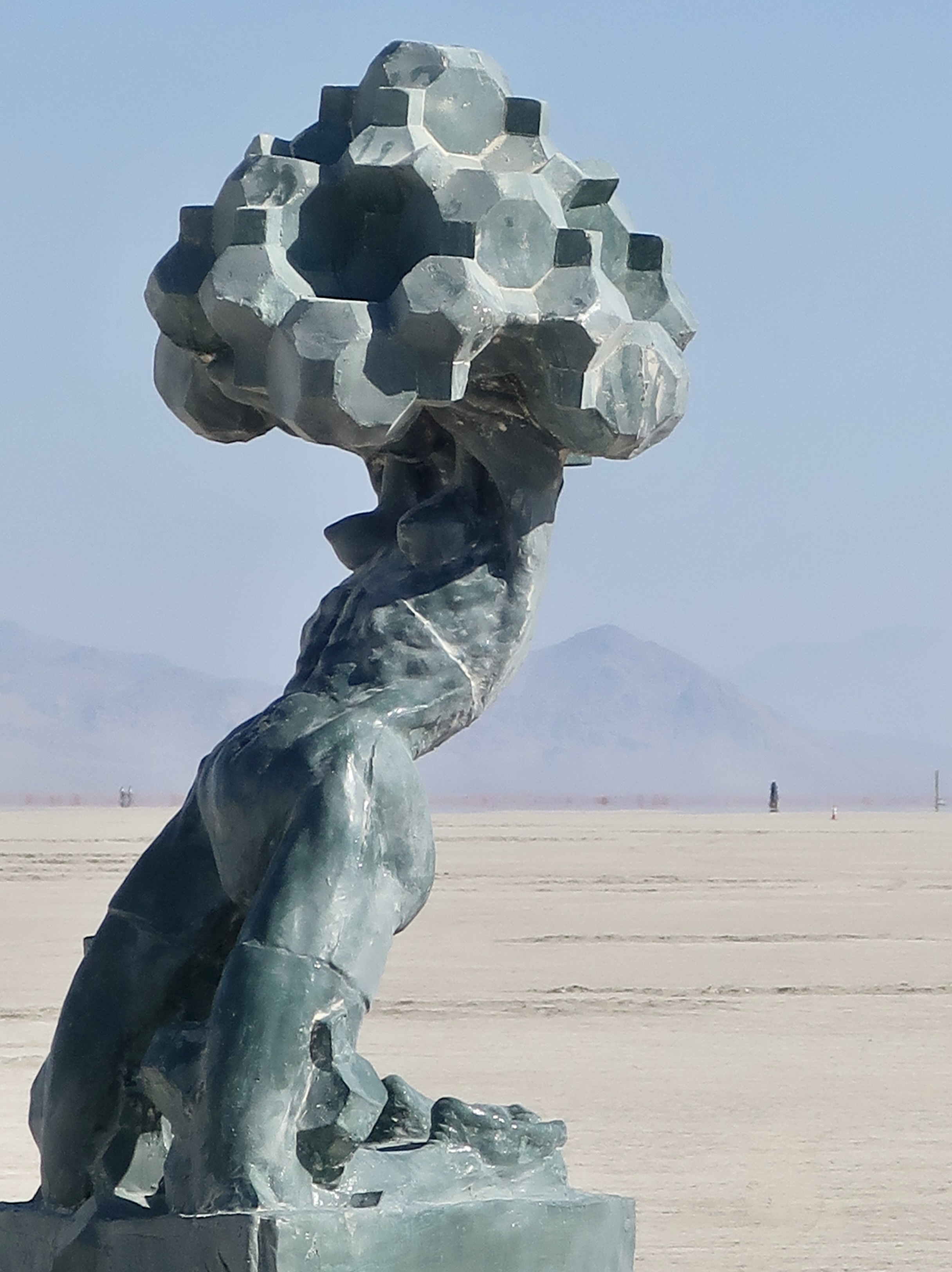
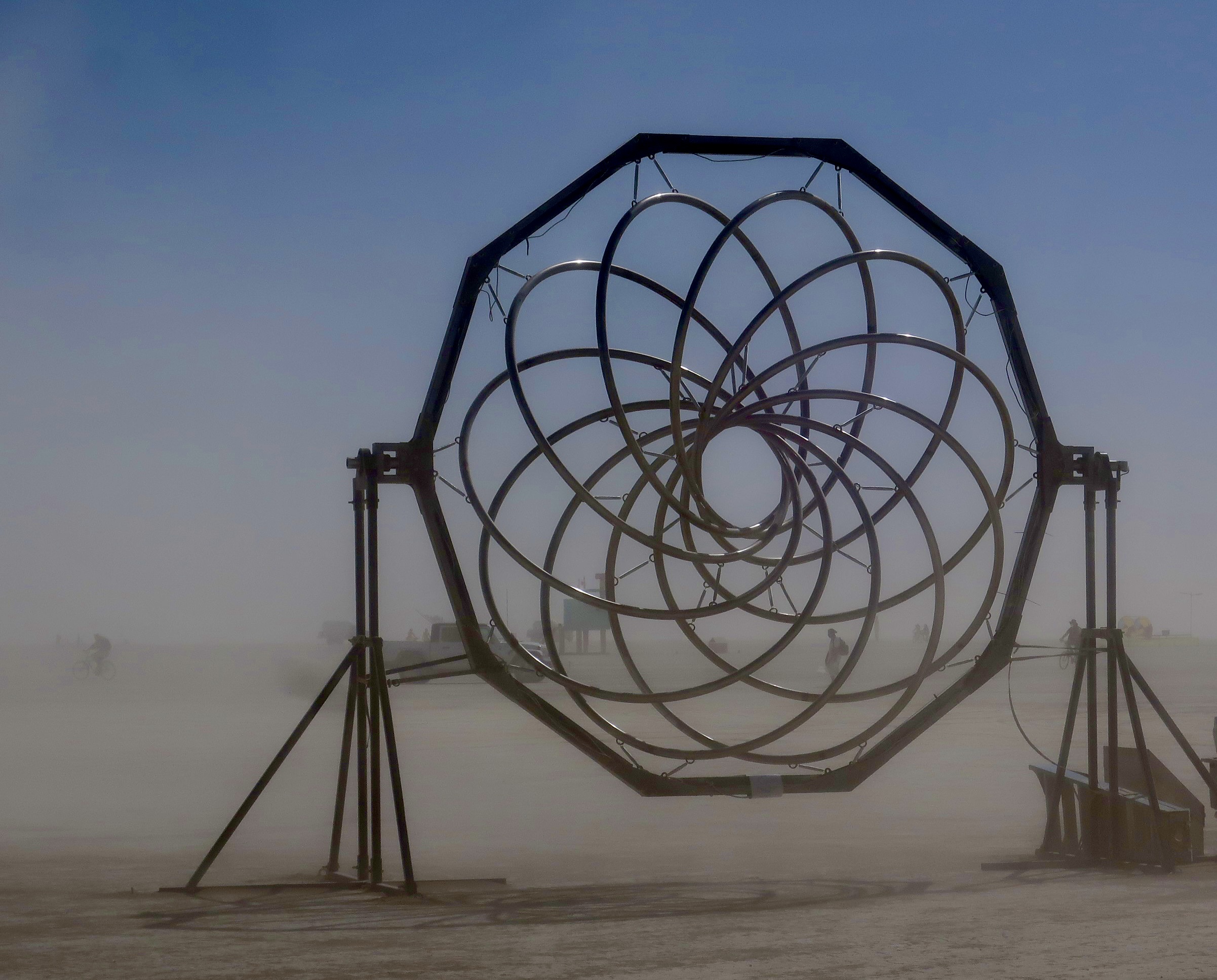
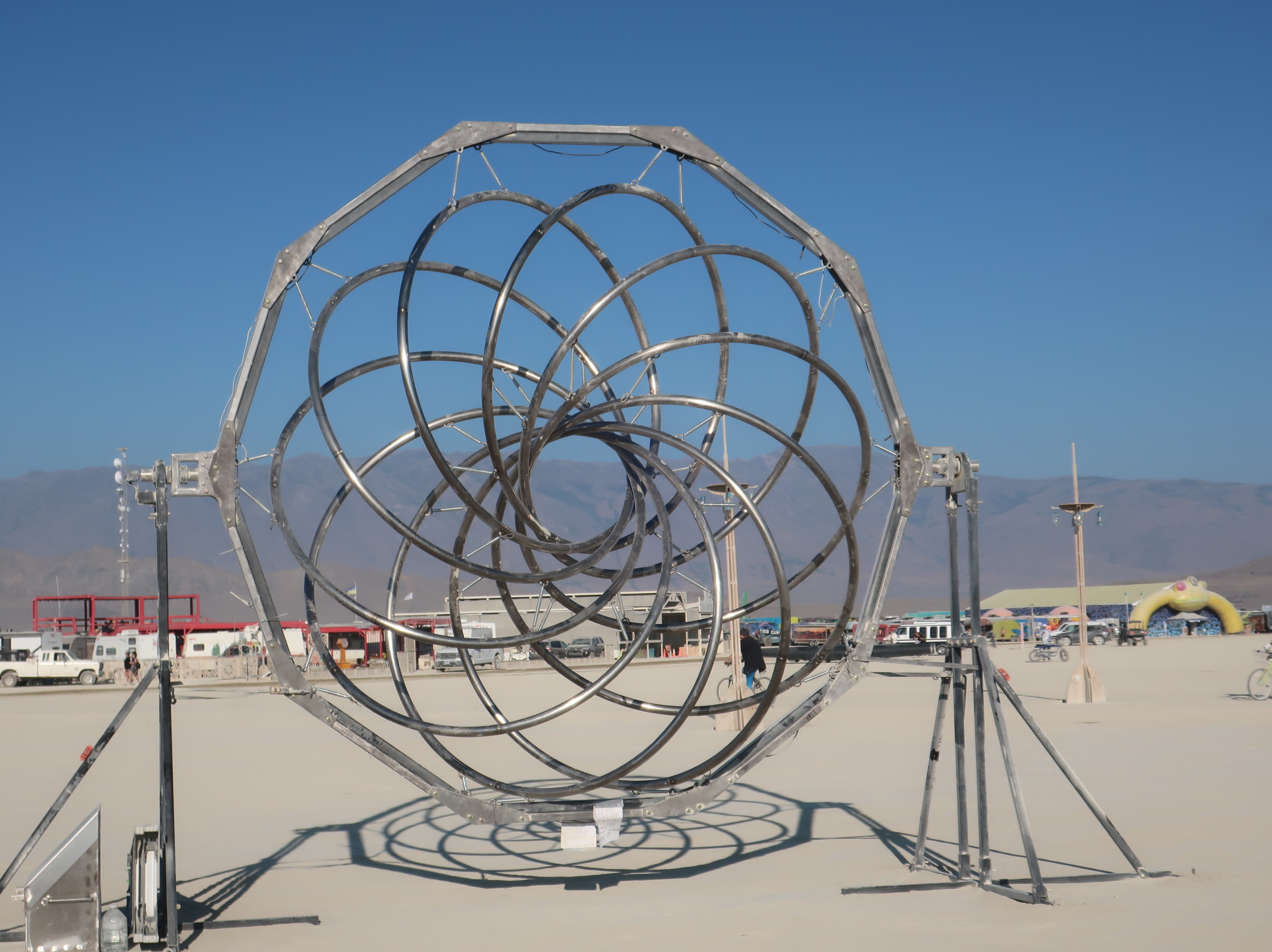
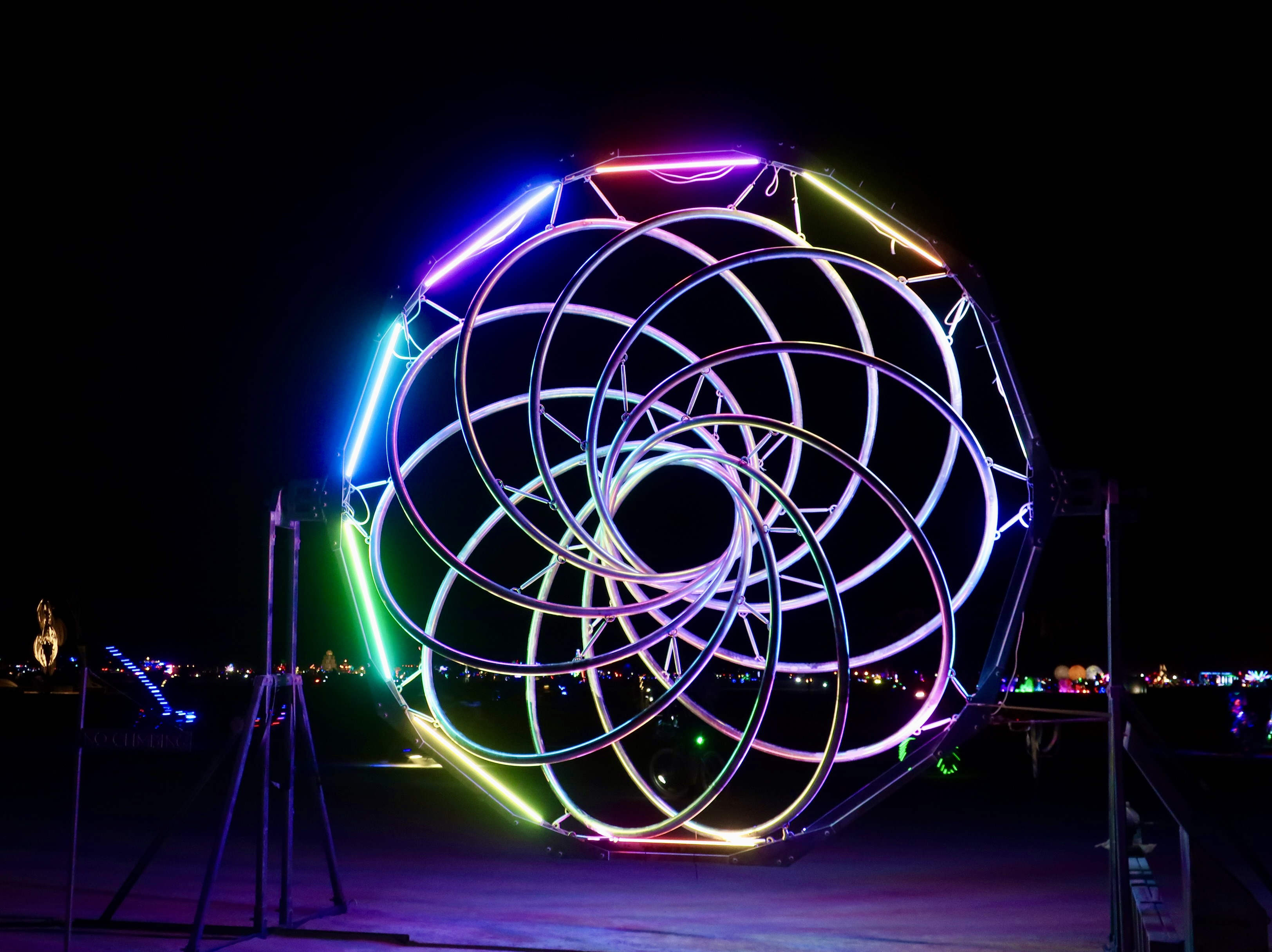
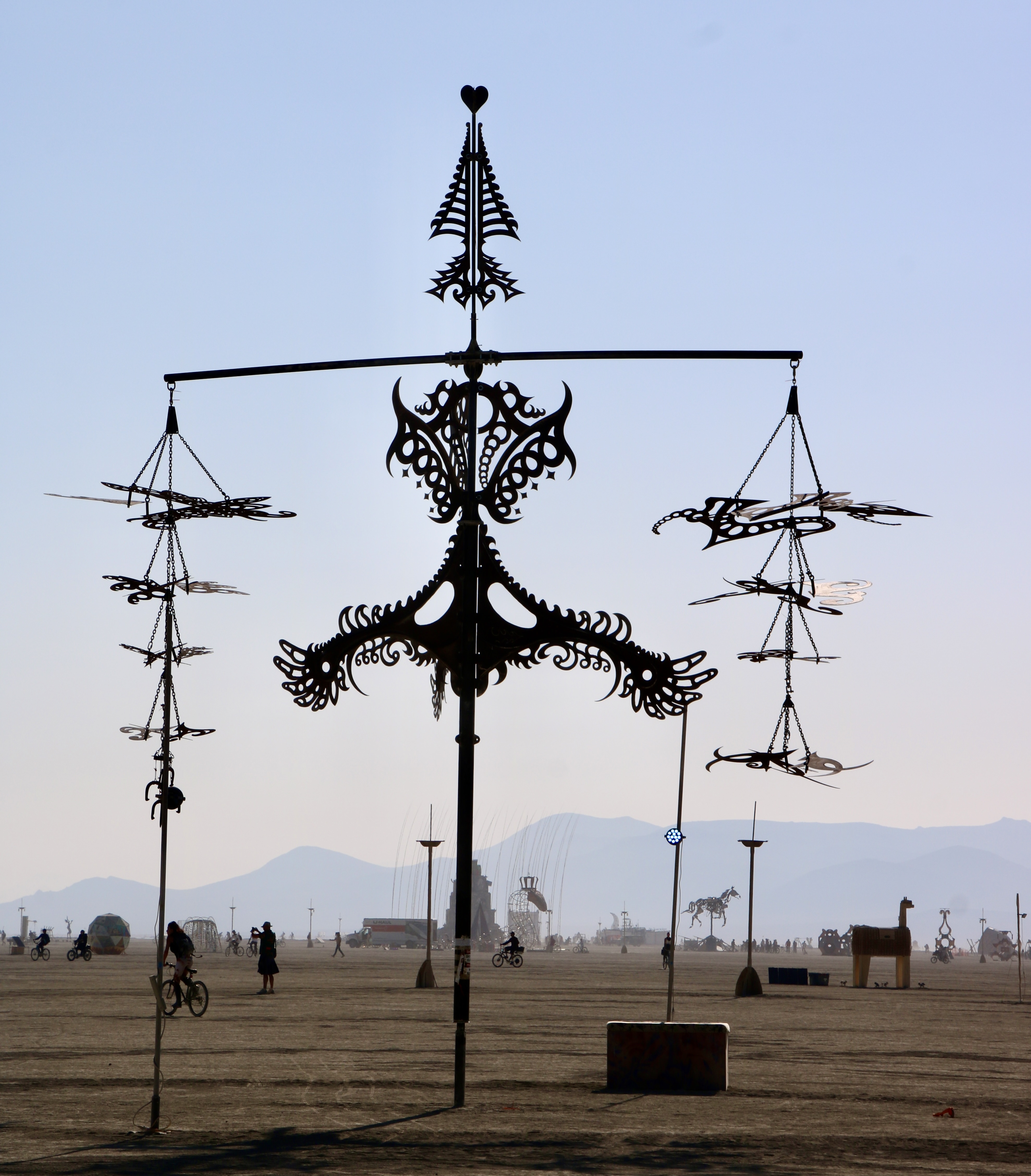
“Touch the Sky” was created by Martin Taylor and Chromaforms out of Oakland, CA. He describes it as “a sculpture of a mythical winged creature with the head of a human preparing to take flight.” He also notes, it “serves as a visual metaphor for taking leaps of faith to achieve our dreams and fly.” This photo provides a comparison between “Touch the Sky” in the day with the sculpture at night.A close up of “Touch the Sky.” Taylor noted that the sculpture “is outlined by geometric tattoo-like perforations that accentuate the shape of the body and emit light at night.”I’m featuring metallic art from Burning Man 2023 in this post. Meet Anya of “Anya and the Void Bunnies.” The artist is Steffin Griswold from Minneapolis, MN. Griswold’s description is “Visiting dignitaries from beyond space and time receive a gift from the heart of fire.” Anya is a fire goddess. While we didn’t get a photo of her at night, flames emerge from her hands.Here are the void bunnies from outer space, waiting patiently for their gift of fire. Sorry guys, you will have to wait until dark.A close up of a void bunny with his bunny ears and bunny tail.A frontal shot of Anya. The dark spots on her hands and heart are what emit the flames. You can see the tubes leading from her heart that connect to a propane tank.And finally, Anya and the void bunnies together. She’s got a pretty good tail and ears of her own! The Temple of Babel, which I will feature later, can be seen in the background.This handsome turtle sculpture by Mark Dill from Fleming Island, FL is titled “Journey of the Aquatic.”Here’s the underside. Mark says the sculpture is “5 times life size of a loggerhead turtle. It is meant to express the joy and wonder of seeing turtles in the ocean. As well as the fragility of the turtles’ lives and the dangers to their existence. I was snorkeling once on the island of Hawaii and came on a sea turtle that I started to follow. My ‘joy and wonder’ were so strong that I ran head on into a fishing boat!”You may have noticed the flying horse, or Pegasus, behind the first turtle picture. Titled “Wings of Glory,” this is his second trip to Burning Man. He is a magnificent creature that runs and flies slowly on his pedestal above the Playa. The artist, Adrian Landon, hails from Reno, Nevada, so Pegasus had a short flight to get back to the Black Rock Desert. Peggy and I watched him strut his stuff, a truly magical creature, a myth come to life.Wings down, Pegasus continues to fly.My first thought was of strange but attractive looking nuts piled on top of each other when I first saw this sculpture by the L’Attitude Collective from Petaluma, CA. Imagine my surprise when I learned it was a Complexahedron. A ‘what’ you say. Here’s how the artists described it: A shrine to commemorate the moment when unicellular eukaryotes began to aggregate and become one. Now you know, right. Grin. Petaluma, BTW, is home to a number of Burning Man’s top artists creating impressive works year after year.Bicycling around it, I discovered it had a face. And the sculpture in front holding what I assume is a smaller Complexahedron. I took a closeup.A muscular woman is holding the Complexahedron up in the air, like Atlas, or possibly giving birth to it out of her head/brain, creating early life.Wizard, and I’ll assume that is his Burning Man name (I’m Outlaw), hails from Oakland, California. He describes it as looking like “a 12 foot silver donut.” This was our day for dust storms on the Playa.Stainless steel, curved tubes wrap around each other and form the body of the donut.Here is OHM at night. While I couldn’t find the name of the artist who created this piece, I’ve always liked mobile art ever since I was introduced to the work of Alexander Calder. I’ll wrap up this post here. Next art post: The Fantastic Beasts of Burning Man 2023.

























 Wandering through Time and Place