The Woman Wore No Underpants; A Tale of African Justice

(This is the second in a series of blogs where I recognize the 50th Anniversary of the Peace Corps by writing about my own experiences as a Volunteer in Gbarnga, Liberia, West Africa, 1965-1967. Here I tell about a trial by ordeal that could have happened in a medieval court.)

The Sassywood Man, a tribal judge in rural Liberia, obtained his name through use of a poisonous drink infused from the bark the Sassywood tree. The accused person was invited to take a sip. If he died, he was guilty. No DAs, lawyers, judges or juries were required.

Since modern society frowned upon trial by survival, the Sassywood Man had come up with new ways of determining guilt.  As it turned out, the father of one of my students was the local tribal judge and my ex-wife and I were privileged to witness an actual trial.

It started with Amani coming to our house at two in the afternoon on a blistering hot Saturday in the middle of the dry season. His father was about to start a trial. Would we like to see it? Absolutely, there was no way we would miss the chance. As we trudged east across town through the dust and stifling heat, Amani provided background information.

The plaintiff’s wife had come home in the evening after a hard day of selling oranges at the market and told her husband that three men had accused her of not wearing underpants. This was serious slander. The husband had filed charges against the men through Liberia’s western-type court system.

But there was a potential glitch: what if the men knew something about his wife’s behavior he didn’t? Perhaps his wife was lying to him. If he lost the suit, he would have to pay all of the court costs plus he would be subject to countersuit.

He decided to hedge his bet by taking his wife to the Sassywood Man first. If he found she was lying, the husband would drop the charges.

We arrived at court (a round hut) and were rewarded with front row dirt seats. Jo and I asked Amani how to address his father and he told us to call him Old Man, a term of respect. So we did.

Old Man didn’t speak English and we didn’t speak Kpelle but there was much smiling and finger snapping. We were delighted to meet him and he was equally delighted to meet his son’s teachers.

After the greetings were complete, Old Man began preparing for the trial. The first thing he did was to ignite a roaring bonfire, just the thing for a hot afternoon. About this time the husband arrived sans wife.

“Where’s your wife,” Old Man asked as Amani translated.

“She is being brought by her family,” the husband replied.

‘Being brought,’ it turned out, was a conservative description of the process. She was being dragged and appeared ready to bolt at the first opportunity, which she did. The woman was half gazelle; my greyhound of childhood days couldn’t have caught her as she leapt off down the trail.

For everyone involved, it looked like a clear case of guilt. But the trial was still going to be held. I asked Amani if it was being carried on for our benefit but he explained it was legitimate for the husband to sit in for the wife.

Old Man disappeared into his hut and came out with a wicked looking machete, a can of ‘medicine’ or magical objects, a pot of mystery liquid and a pot of water. He promptly shoved the machete’s blade into the fire. Next, he dumped his can of magic objects on the ground. Included were two rolls of Sassywood leaves and several small stones of various colors and shapes.

“Uh-oh,” I whispered to Jo Ann. “Are we about to witness something here with the Sassywood leaves that we would just as soon miss?”

But Old Man had a use for them other than ingestion. He asked the husband to sit down on the ground opposite him and place one roll of the leaves under his right foot. He placed the other roll under his. Both men wore shorts and had bare feet. It appeared we were to witness a trial by osmosis.

Next Old Man arranged his magic objects and proceeded to mumble over them like a priest preparing for Communion. Once the appropriate spirits had been called, it was time for mystery liquid. A generous amount was rubbed on each Sassywood leg. We were ready for the truth.

“If the knife is cold, the woman is lying,” Old Man declared dramatically as he pulled the glowing machete from the fire.

He took the “knife” and rubbed it down his leg. It sounded like a T-bone steak cozying up to a hot grill. But Old Man grinned. The knife was cold.

The husband was next. His leg appeared much less optimistic. It was, in fact, preparing to follow his wife’s legs lickety-split down the hill. Only a firm glare from Old Man made it behave. The machete sizzled its way down the shinbone and a look of surprise filled the husband’s eyes. The knife was cold; the woman was lying.

We had to be absolutely sure, however, so Old Man shoved the machete back in the fire. This time he rubbed water up and down his and the husband’s legs instead of mystery fluid. He then rearranged his magic rocks and commenced mumbling over them again. After about fifteen minutes he was ready for the final phase of the trial. He yanked the machete from the fire a second time.

“If the knife is hot, the woman is lying,” he instructed as he reversed the directions.

“Ow!” he yelled and jumped back as the machete appeared to graze his leg! The knife was definitely, absolutely, beyond the shadow of a doubt, hot.

This time Old Man couldn’t even get near the husband’s leg since the husband had cleared about ten feet from a sitting position and was strategically located behind a tree. The jury had returned its verdict; his wife was lying and he would drop the charges. He didn’t need his leg torched to prove the point.

NOTE: Before writing this blog, I looked up Sassywood on the Internet. Only recently has Liberia ceased issuing licenses for Sassywood Men and apparently several people were killed in 2007 while undergoing trials by drinking Sassywood tea.

How Boy the Bad Dog Ended Up in African Soup

(Peace Corps is celebrating its 50th Anniversary this year. In honor of this significant achievement, I will devote several of my travel blogs over the next few months to my own experiences as a Peace Corps Volunteer in West Africa when Peace Corps was still in its infancy, 1965-1967.)

Boy was a very bad dog; he didn’t like black people.

In fact, he didn’t like anybody very much. Boy lived with a Peace Corps Volunteer named Holly in the upcountry town of Gbarnga, Liberia where my wife and I were also Volunteers.

Holly had another dog named Lolita. When Lolita had puppies, she decided that Boy wanted to eat her children and drove him off. He decided to take up residence at our house.

Normally I wouldn’t have cared. We already had three dogs that didn’t belong to us. One more wouldn’t hurt. It was Boy’s attitude that bothered me. Having a large dog with a nasty attitude attack African friends and students was socially inappropriate not to mention un-Peace Corps like.

And there was more. Boy had an issue with my cat, Rasputin; he regarded him as prey. I initiated several discussions with the dog about his bad habits but all he did was growl.

Consequently, I lacked sympathy when the soldiers came. They were standing outside my house waving their guns when I arrived home from teaching.

“What’s up?” I asked in my most official Peace Corps voice. Messing with Liberian soldiers was not smart. Even the government refused to issue them bullets.

“Your dog ate one of the Superintendent’s Guinea Fowls,” their sergeant mumbled ominously. The Superintendent of Bong County was the equivalent to a governor except he had more power. He lived about a quarter of a mile away and his Guinea Fowls roamed around the government compound. It appears he was quite attached to them.

“Which one?” I asked innocently.

“What does it matter which Guinea Fowl the dog ate?”  Sarge sneered.

“No, no,” I responded, “I meant which dog.”

He glared at me for a moment and then pointed at Boy. I relaxed. It didn’t seem like Do Your Part, Brownie Girl or Puppy Doodle would have done in one of the Supe’s Fowls. They preferred their food cooked.

“Why don’t you arrest him?” I offered helpfully.

“Not him,” he shouted. “You. You come with us!” Apparently the interview wasn’t going the way Sarge wanted. I decided it was time to end the conversation.

“Look,” I said, “that dog does not belong to me. I am not going anywhere with you.” With that I walked inside and closed the door. It was risky but not as risky as going off with the soldiers.

My wife and I didn’t rest easy until that evening. It was a six-beer night. Finally, around ten, we went to bed believing we had beaten the rap.

WHAM! WHAM! WHAM!

“What in the hell was that?” I yelled as I jumped out of bed. It was pitch black and five o’clock in the morning.

WHAM! WHAM! WHAM! It happened again.

“Someone is pounding on our back door,” Jo Ann said, sounding as frightened as I felt.

I grabbed our baseball bat, ran for the door and yanked it open. Soldiers were everywhere. The same friendly sergeant from the night before was standing there with the butt of his rifle poised to strike our door again.

“Your dog ate another one of the Superintendents Guinea Fowls,” he proclaimed to the world. I could tell he was ecstatic about the situation. He had probably tossed the bird over the fence.

“This time you are going with us!” he growled with emphasis on are.

In addition to being frightened, I was angry. “I am sorry you are having such a hard time guarding Guinea Fowls,” I said, trying to sound reasonable, “but I explained to you yesterday that the dog does not belong to me and I am not going anywhere with you. Ask Mr. Bonal and he will tell you the dog is not ours.” John lived next door and was the high school principal.

Sometimes the bold approach is the only way to go. Sometimes it isn’t.

I closed the door and held my breath. Sarge was not happy. We could hear him and his soldiers buzzing around outside. It sounded like a hornets’ nest. Still, yanking a Peace Corps Volunteer out of his house and dragging him off in to the middle of the night could have serious consequences. I imagined the headlines:


Soldiers Beats Peace Corps Volunteer Because of Dog’s Fowl Deed Liberian Ambassador Called to White House to Explain

I hoped the sergeant shared my perspective. At a minimum, I figured he would check with Bonal. John might not appreciate being awakened in the middle of the night but it served him right for laughing when I had told him the story the night before. I also suspected he was awake and watching the action.

We had a very nervous 30 minutes with soldiers rumbling around outside but they finally marched off. Round two for us! I could hardly wait for round three. This is the point in the US where you would be calling your attorney, mother and the local TV station. My only backups were the Upcountry Peace Corps Representative and Doctor; one to get me out of jail and the other to stitch me back together.

Happily, our part of the ordeal was over. It turns out that Peter, a young man who worked for Holly, owned Boy. The soldiers finally had someone they could bully. Peter was hauled in to court and fined for Boy’s heinous crimes. Boy, in turn, was sold to some villagers to cover the cost of the fine. As for Boy, he was guest of honor at a village feast. Being a Bad Dog in Liberia had serious consequences.

On Cruising the Caribbean with Your 90-Year Old Mother-in-Law

I never tire of postcard like sunsets. Cruising is a great way to enjoy them.

“You can’t take your knife,” Peggy reminds me. It is a two-inch long Swiss Army knife with a tiny blade, screwdriver, scissors, a toothpick, tweezers and a nail file: in other words a deadly weapon. We are going on a cruise. I feel warm all over knowing that the Transportation Security Agency is on guard.

Even more critical, we can’t take alcohol. TSA could care less but the cruise line is obsessed. Buckets of profit will be lost if we bring our own. Terrible things are threatened.

My son-in-law Clay has carefully researched the issue. Cruise lines are more paranoid about sniffing out booze than TSA is at sniffing out bombs. If you sin by as much as an ounce, Mr. Nice Guy Cruise Ship turns into a raging monster of the deep. You’ve heard of people being thrown overboard, right? Even Clay, who had contemplated filling a shampoo bottle with bourbon, is daunted.

Our ship, The Navigator of the Sea, sails out of Fort Lauderdale. We are scheduled for a five night, six-day cruise that takes in the Cayman Islands and Cozumel. Twenty-five family members are joining us including two Bahamian cousins. Peg’s mom, Helen, is generously picking up the tab in celebration of having survived 90 years.

We park the RV at the dock and then wait for our immediate family to arrive from the airport. Clay, our daughter Tasha, their two kids and Helen are flying in from Tennessee. Our son Tony, his wife Cammie and their son joined them in South Carolina.

Eventually, the bus arrives. Ethan, Cody and Connor tumble off and make a beeline for Peggy. Grandma is sugar and spice and all things nice. Grandpa, apparently, is chopped liver. Helen and the kids give me a big hug, however. Eventually, the Grandkids, willing to leave Grandma for five seconds, do as well.

Tasha and Clay look stressed. Their day started at 5 AM in Hendersonville. Travelling with a two-year old, a five-year old and a ninety-year old is challenging, to say the least, and there is tough competition for which of the three provides the greatest challenge.

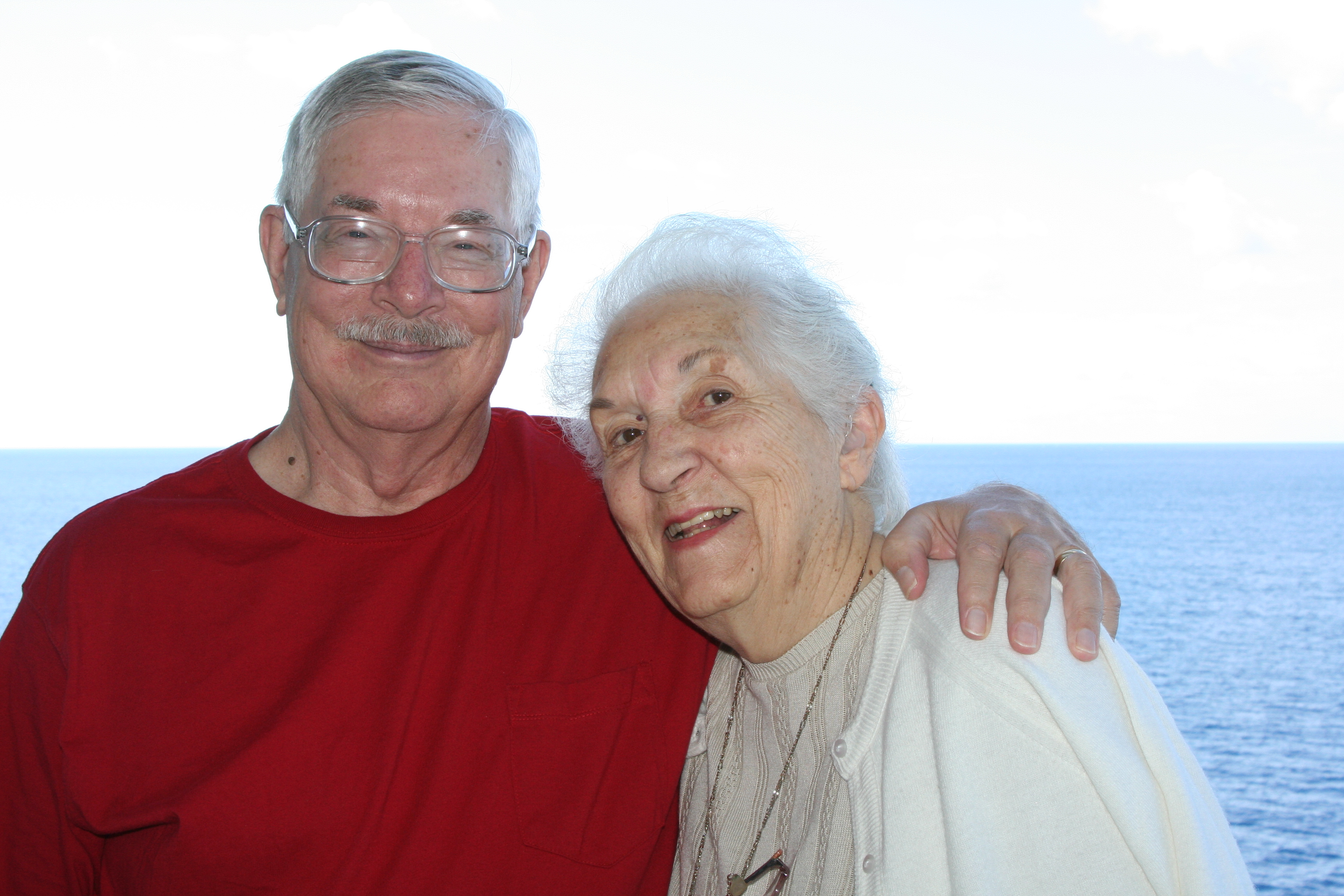
Helen, I and the beautiful blue sea in a mandatory cruise photo.

Helen has reached the wonderful age where she says whatever comes to mind. Damn the torpedoes and full speed ahead. For example, she announces in an awed voice, “Wow, that guy is fat!” And he is; he just doesn’t want to hear it. Unfortunately, her observations also apply to the TSA workers whose sense of humor is right up there with zombies’.

“Grandma,” Tasha whispers in desperation, “behave or they are going to strip search you.” The admonition has little effect. Fortunately, we make it through the gauntlet with clothes in tact.

On board, the rest of Peggy’s family joins us. It takes a brave man to go to sea with 18 in-laws, especially one who has been on family probation for 20 years. Focusing on damage control, Peggy has already announced that I won’t wear a tie on formal dinner night. (I have an image to maintain.) The first evening is smooth sailing, however; casual attire is recommended. I specialize in casual.

Nighttime presents a different challenge. Helen has her own room. There is a very good chance she will wake up not knowing where she is or why she is there, which might prove interesting on a moving ship surrounded by deep water. (Her younger sister and proposed roommate thought about the implications and stayed home.)

To counter the possibility of Great G’Ma going for a midnight dip, Peggy has located us in the next room with an adjoining door. The door will be left open a crack and we will leave a light on. The thought of my ninety-year old Mother-in-law suddenly appearing in our bedroom absolutely guarantees my best behavior. I threaten to go to bed fully clothed.

When I think of Helen, ‘Grand Dame’ comes to my mind. And she is, a Southern Lady with charm, intelligence and a great sense of humor. But Helen looming over our bed at 2 AM in her white nighty is something else, an apparition. “Where am I,” the ghost asks plaintively? I shake Peggy awake (none too gently) to supply the answer.

The big event of the cruise is a family talent show. Peggy and her siblings, Jane and John, have organized the production to say thank you to their mom. The cruise line assigns us to the “Dungeon” for the party. It’s a dimly lit bar in the bowels of the ship filled with fake skeletons playing dead instruments. The children dash off to explore its darkest corners.

I drink.

Connor steals a quick snooze in his Great Grandmother's room.

Other than Toddler Connor re-tuning Peggy’s guitar and the great grandkids and Helen eating the mint candy Bingo markers, everything comes off smoothly. It’s a success. There is poetry, rap, guitar playing, singing, games and a stiff bourbon for Great G’Ma.  The show is capped off by a stirring rendition of the Hokey Pokey played by Peggy, sang by the adults and danced by the grandkids. Even the two-year olds join in, sort of.

With the talent show over, we return to the major cruise ship activity, eating. At dinner, we are expected to consume as many calories in one meal as we normally would over two days of eating breakfast, lunch and dinner on shore. “Here, have another plate of prime rib,” our waiter urges.

But beware, it isn’t the fat-induced heart attack that will get you; dangerous bugs lurk in dining areas. Recent on-board epidemics have sent passengers dashing en masse to their toilets. It’s great for the disaster-oriented media but bad for the guests and bad for the tourist industry.

Cruise ships have retaliated by placing numerous anti-bacterial hand sanitizer dispensers backed up by smiling Kung Fu masters at each dining room entrance. I am suspicious of the omnipresent, noisy greeters and dutifully sterilize myself. (Who knows what a liquid gel guaranteed to kill millions of germs on contact will do to a human.)

Fortunately we avoid any major health crisis involving toilets. Even more happily, we avoid the fate of our sister cruise ship, Splendor, which is shut down off the Baja by an engine fire while we are cruising. Our son, Tony, who flies helicopters for the Coast Guard out of San Diego, is particularly grateful he is sailing in the Caribbean as opposed to rescuing passengers in the Pacific.

As for the rest of our cruise, we do the normal cruise ship activities that have been around since time immemorial: attend shows, play miniature golf, read, gamble and go on shore excursions. Each family is assigned to two days of being entertained by Helen. “Who get’s the short straw today,” she asks every morning. Truth is we enjoy our valued time with the feisty oldster and her humorous observations.

I do have a comment on shore excursions. Any traditional culture that can survive up to 12,000 cruise passengers per day is purely coincidental. On Cayman Island, Jimmy Buffet’s Margaritaville is as good as it gets.

Our nephew Jay comes over on the last afternoon to share photos of a quest he just had in Iceland. We’ve been close ever since he went on a 60-mile backpack trip with me that included climbing Mt. Whitney. He is developing into a talented photographer. As the closing picture fades away we gather up the rug rats and dutifully trot off to consume our final 5000 calories and say our goodbyes.

It has been a fun, family filled adventure. My thanks to Helen for making it possible and to Peggy for organizing the trip. Bone, who has become allergic to custom agents, stayed home. But it was truly a Bone-type event.

Read about Bone falling in love with Bonette in the next blog, 'An Itinerant Idler.'

The Mekemson Ghost of Fort Mifflin

I am on a ghost hunt. It’s the season. The eerie creatures are known to hang out at Fort Mifflin, which is located next to Philadelphia International Airport on the Delaware River. It’s one of the hottest ghost watching spots in America and has been featured on the popular TV series, “Ghost Hunters.”

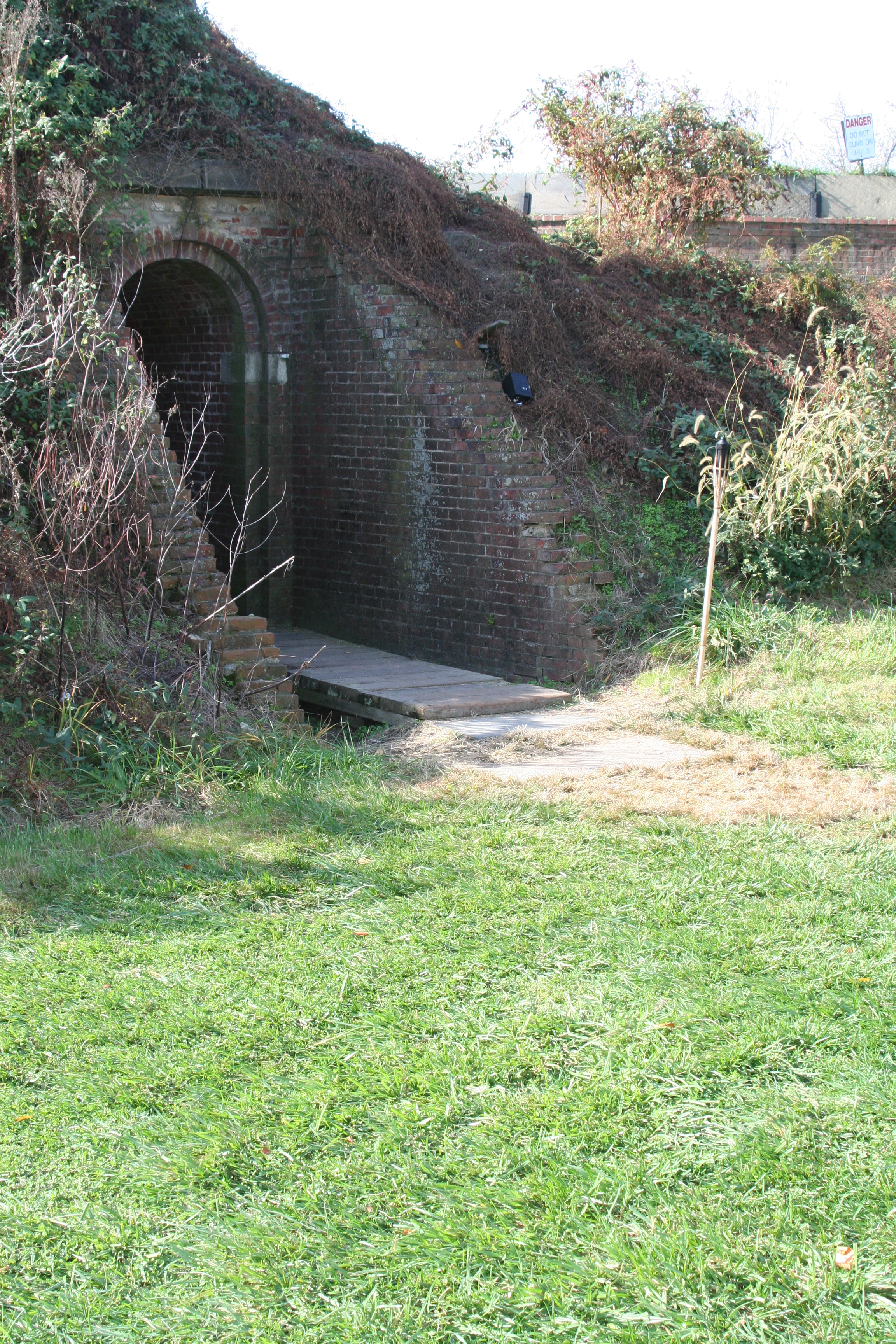
The entrance to the ghostly ammunition magazine taken during the day.

We are scheduled for a nighttime tour by lantern.

Peggy and I decide to do a reconnaissance during daylight hours but a police vehicle blocks the road. A dozen or so media crews are pointing their cameras into the airport at a large UPS cargo plane. It has just flown in from Yemen and is being searched for ink cartridge bombs. We are caught in the midst of a “credible terrorist threat” as President Obama describes it.

Ghosts can’t be nearly as scary… can they?

By 6:30 the police car has moved but the TV crews are still on watch. We wind our way through the circus. Dusk has arrived at the Fort.  The tour is scheduled to start as soon as it is fully dark. Make that pitch black; there is no moon.

Our guide gathers us and his lantern immediately blows out. “It’s only the wind,” he explains. “I don’t believe in ghosts. I don’t hunt them and they don’t hunt me.”

His disclaimer comes with a ‘but.’ He works at the Fort, and occasionally ‘things’ happen. There are unexplained footsteps on stairs. Doors close and latch on their own. Voices are heard in the next room. A woman screams like she is being murdered. The police are called but can’t find anyone, or thing. A man walking on the rampart disappears into thin air.

Our guide relates story after story as we make our way through the candle lit buildings of the fort. Other staff, volunteers and visitors have also experienced strange phenomena. More than one visitor has left on the run and even the guide has packed up and gone home on occasion.

We arrive at the Fort’s ammunition magazine, a bush covered hill that resembles an ancient burial mound. A bright torch outlines the dim opening. We enter and walk down a narrow, dimly lit corridor that opens out to a large, arched bunker. A single candle creates dancing shadows on the far wall.

“I’ve never felt anything in here,” the tour leader relates. “It’s dead space,” he quips and repeats himself in case we missed his humor. For others, the story has been different. Tourists speak of a wonderful guide who was waiting for them in the bunker. He was dressed as a Revolutionary soldier and vividly described the horrendous battle that took place on November 15, 1777. Which is great, except the Fort had no such guide…

I stare hard into the corner where he supposedly stood, trying to create something out of nothing. But there are only the dancing shadows. Peggy tries to take a photo but the camera freezes and refuses to work. As she struggles with it, the last of our tour group disappears down the narrow corridor, leaving us alone with the flickering candle.

We hurry after the group. There is no one outside the magazine, only the glowing torch and the dark night. “I think I saw them heading down a side corridor,” Peggy says. With more than a little reluctance, we dutifully troop back inside. Peggy’s corridor is a bricked in wall. I am starting to feel spooked.

“Maybe we should go back to the bunker,” she suggests.

“No,” I reply and head for the entrance. Just as we arrive, the shiny torch makes a poof sound and goes out, leaving us with nothing but dark. The hairs on the back of my head stand at attention. Peggy and I decide it’s time to vacate the premises.

Fortunately we find our group.

Halloween experiences don’t get much better. But this isn’t the end of the story. On my next blog I will report on why our theoretical ghost may have been a very real ancestor… Andrew or James Mekemson.

The Mummy of Carlisle, PA and other Scary Halloween Stories

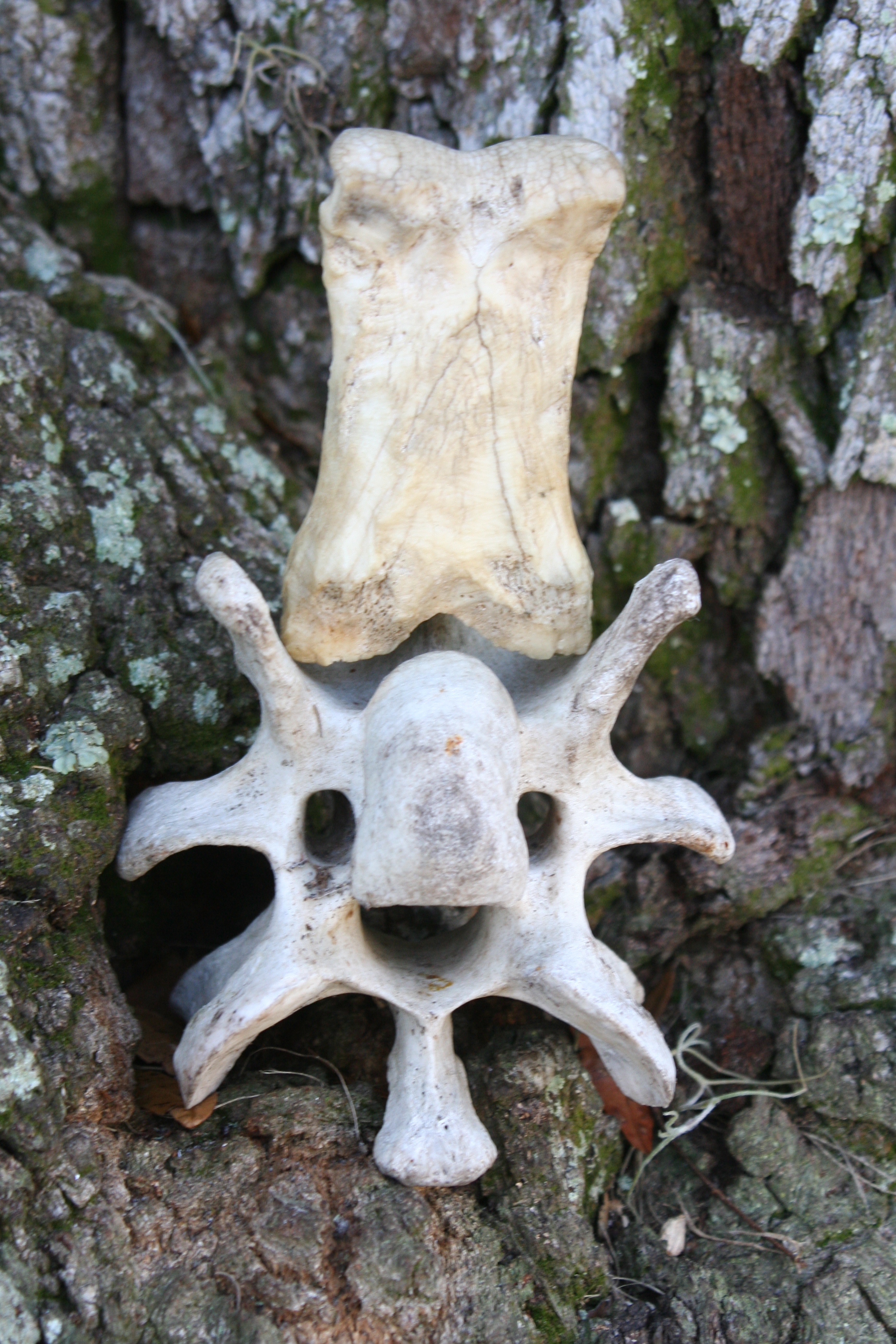
Carlisle Mummy Cradles Bone

A well-preserved Mummy is parading around outside the van. Bone is excited. He wants his photo taken with the fearsome creature. After all, what is a mummy but gauze, skin and bone.

It’s not quite Halloween but I wouldn’t tell that to the folks at the Western RV Village. The campground is packed with people here to celebrate. And it is filled with ghosts and goblins and ghouls, not to mention the mummy, witches and innumerable graveyards.

Halloween is serious business in central Pennsylvania. People decorate for the event like they do for Christmas in other places.

I whined to the campground manager that Peggy and I were missing our annual pumpkin carving contest in Sacramento with my sister Nancy and her husband, Jim. It’s been going on for 20 years. “Why don’t you join the children in their contest,” she suggested. I gracefully declined.

Old Graveyards are key to Halloween stories and Genealogical research. This grave is located in Newville/Big Springs PA. John Brown fought in the Revolutionary War and was the Uncle of my Great, Great, Great Grandmother Mary Brown Mekemson.

We are engaged in a Halloween like activity, however, searching through old graveyards looking for long dead people. My Great, Great, Great Grandmother Mary Brown Mekemson was born near here in the town of Big Springs (now Newville). Her Grandfather, James, arrived in the area in 1750, back when the US was still part of England.

The Browns trace their lineage back to John Brown, the Scottish Martyr. He was shot down in front of his wife and children in the late 1600s for insisting that Christ, not the King of England, was his Ruler.  His epitaph notes he was “butchered by Clavers and his bloody band, raging most ravenously o’re all the land.”

The early Scottish Presbyterians didn’t think much of Bloody Clavers but they liked their alliteration and poetry.

Legend tells that the Ghost of John Brown visited Clavers to predict his doom the night before he was killed in battle. Revenge and justice.

Ghosts have become big business in modern-day America, in case you haven’t noticed. They are no longer limited to their once a year appearance on Halloween. Having one or more on the premise can mean big bucks. Historic communities that depend on tourist revenue are required to have several.

Next week, in honor of the season, Peggy and I will visit one of the most famous ghost haunts in America, Fort Mifflin, located just outside of Philadelphia. It was the sight of an important battle of the Revolutionary War where 400 men held off the might of the British Navy while George Washington escaped to Valley Forge. Lots of patriots died. It is also the sight of all sorts of spooky business and has been featured on the popular SyFy channel TV show, Ghost Hunters.

More to the point, from my perspective, four Mekemson boys, brothers of my fourth Great Grandpa, Joseph, were involved in the battle. Two were killed saving the flag according to family stories and a flyer distributed by the Fort. One was cut in half by a cannon ball, which anyone would agree is a rather gory end that should justify ghost status. Maybe Uncle Andrew will make an appearance on our visit. I’ll let you know in next week’s blog, “The Mekemson Ghosts of Fort Mifflin.”

Bone whispers in skeleton's ear about upcoming visit to Fort Mifflin.

A Letter from Africa

The hospital ward at Phebe Hospital in Liberia, Africa. Netting provides protection against malaria bearing mosquitos. Air conditioning from the tropical heat is provided by fans during the six or so hours the hospital has electricity each day.

I received a letter last week from Dr. Kylkon Makwi of Suakolo, Liberia. It was an old fashion type of letter. It came in the mail and was handwritten.

When I first met Dr. Makwi, he was a 13 year old boy who went by the name of Sam Kollie. It was the summer of 1965. My former wife Jo Ann and I had just arrived in the upcountry town of Gbarnga, Liberia where we were to serve as Peace Corps teachers.

We were tired, hungry and nervous. It was the end of a long day that had started in Monrovia, Liberia’s Capitol. A week earlier we had been partying in Jo’s back yard in Auburn, California. Now we were in the heart of West Africa. The Peace Corps driver, Wellington Sirleaf, made a quick stop to introduce us to Bob Cohen, the Upcountry PC Director, and was taking us to our new house.

There was one more stop before we got there. This time it was to see Shirley Penchef, another Peace Corps Volunteer. She was waiting at her house with a young Liberian of the Kpelle tribe and a surprise.

“This is Sam,” she bubbled (Shirley always bubbled). “Sam is so excited you are here! He has been waiting weeks for you! He is going to be your houseboy!”

Jo and I were speechless. We had talked about the possibility; it was common practice among Volunteers. A young Liberian would help with chores, earn spending money and often eat with the Volunteer. Both the Liberian and the PCV gained from the experience.

We recognized the value of the arrangement but had decided that having a houseboy didn’t quite fit the Peace Corps image. Like how do you tell the folks back home you are roughing it out here in the jungle and doing good while someone cooks your dinner, washes your clothes and cuts your grass?

On the other hand, how do you tell a woman who talks in exclamation points and a 13 year old boy who is grinning from ear to ear that you don’t want what they are selling?

“Uh, gee, uh, well, why doesn’t Sam help us get settled in and then we’ll see,” we managed to stutter. It was one of the better decisions we were to make in Liberia.

You’ll find the complete story of our first day in Gbarnga under “Armies of the Night” on the sidebar. It includes drums in the night, ghosts, screaming and monster spiders… but no beer.

Sam was a bright young man. Eventually he would get a full paid scholarship to Brandeis University in Boston, pick up his MD in Monrovia and earn a Masters in Public Health at Loma Linda University in Southern California. Life would not be easy for him, however.

The story of modern Liberia is one of the great tragedies of our time. A revolution that begin with the elimination of the ruling elite quickly degraded into tribal warfare that featured modern weaponry in the hands of children and dark juju, the voodoo of West Africa. Brutality, death, disease and starvation were the results. A full generation of Liberians was either lost or forever scarred by the nightmare.

Today, Liberia is struggling to recover and Sam/Kylkon is part of the effort. He and a handful of other medical professionals are working at Phebe Hospital in Upcountry Liberia. The odds against success are staggering.

As Kylkon notes, “there is a gross shortage of health manpower and hospital supplies.” (2009 statistics from Liberia report there was one doctor per 100,000 people in Upcountry.) Even basics, such as bed linens are missing. “We are in need of patient gowns, surgeon gowns and gloves, instruments, anesthetics and therapeutic drugs.” He sometimes performs surgery wearing an apron.

Hospital facilities in Liberia were damaged during the war and are “badly in need of renovation and repair.” Electricity and water at Phebe are limited to six or so hours per day.

Phebe serves the surrounding communities such as Gbarnga, which now has a population exceeding 50,000, and border populations from neighboring countries. Few people have the money to pay for their care.

“People come by my house at all hours begging for drugs,” Kylkon reports. But there are few drugs to be had.

It is hard, almost impossible, to imagine the challenge of providing medical care under such circumstances. The tragedy of Liberia continues.

Hang in there Sam. Our thoughts and wishes are with you.

Dangerous Rapids of the Colorado River

Author’s note: This blog brings us back to our trip down the Colorado River, which we undertook in late spring. My computer crash interrupted the story. My goal over the next few weeks will be to intersperse Grand Canyon blogs along with current happenings.

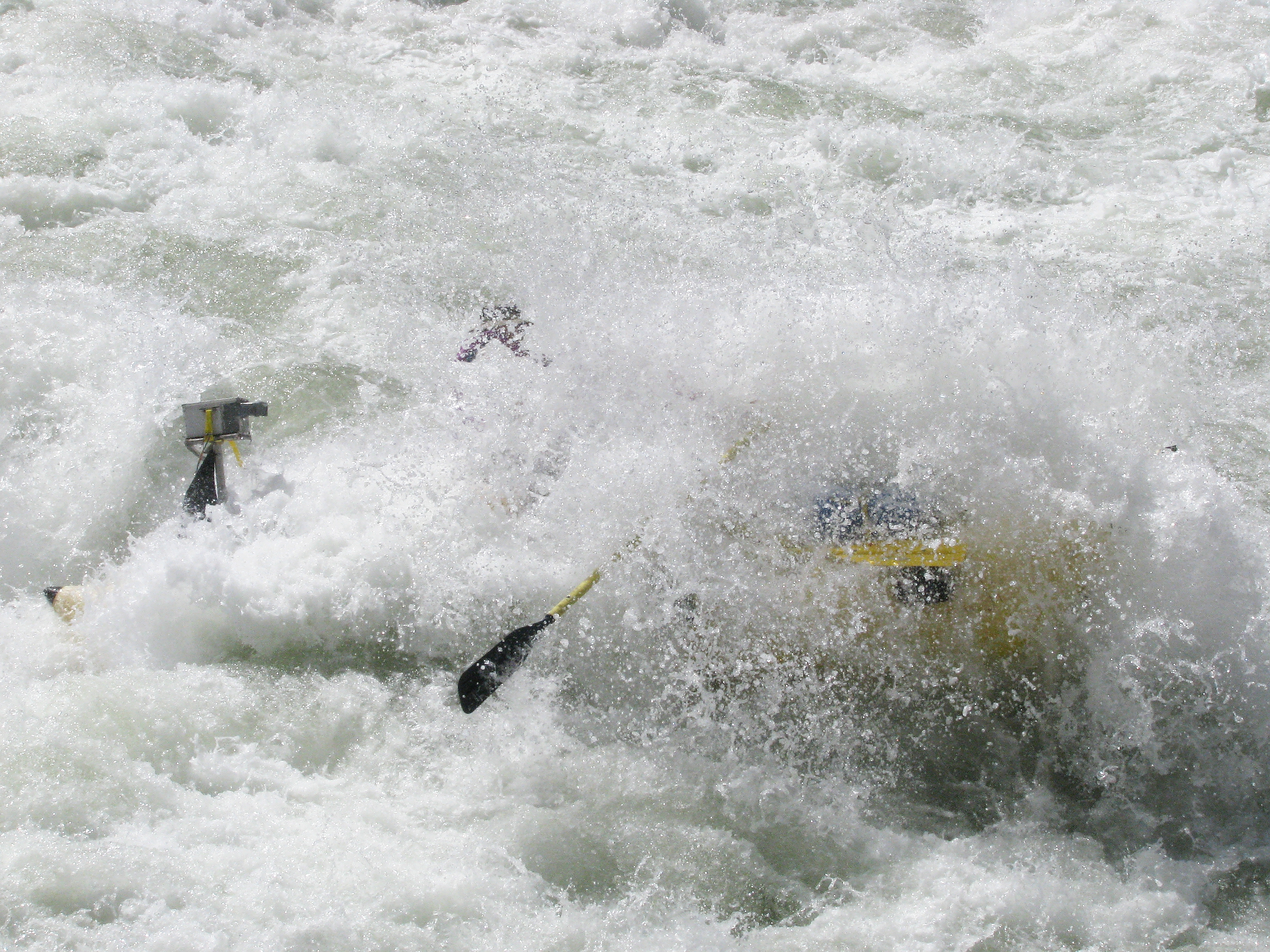
A massive wave in Lava Rapid buries Peggy, I and Steve Vandoor. My hat represents Peggy and I. The oar, Steve. Steve's video camera is recording as we go. Photo courtesy of Don Green.

A serious discussion is taking place among our boatmen. They are nervous about the amount of water flowing through House Rock Rapid. A huge, raft-eating hole gapes at us from river left.

A hole is created by water flowing over a rock or ledge. The resulting waterfall forms the hole and sucks in water from downstream, creating a reverse wave. Once a boat gets caught, it is difficult to get out… and easy to flip.

Boatmen, passengers and gear may go for a swim. The bigger the hole; the greater the danger. The force of the water can suck you down into the murky depths.  It’s possible to surface under the raft.  More likely you’ll be spit out down stream.

There are other worries as well. Sleepers, rocks hidden just beneath the surface, can rip out the bottom of your craft. Cross currents may send you crashing into a wall. Your boat can become wrapped around an obstacle such as a rock or log.

To avoid these hazards, boatmen on private trips normally stop to scout the more dangerous rapids. Less threatening cousins receive a ‘read and run.’ The boatman stands up in the boat, takes a look, and goes for it.  Normally a smooth, tongue like section of the river and standing rapids point the way. Success means a thrilling, bumpy, wet ride that is over in seconds with the messy side up. (The messy side is the one with boatman, passengers and gear. The option is the boat’s smooth bottom!)

The ability to ‘read a river’ is an essential boatman skill. While excellent books describe the rapids and suggest routes, changing water levels create varying situations. High water may demand running one side of the river and low water the other.

Water levels are determined by the amount of water being released from Glen Canyon Dam, which in turn is determined by electrical power needs in the Southwest. Greater power needs require more water being released to run the huge turbines that generate the electricity.

The problem with House Rock Rapid is a lack of water. While this may seem counterintuitive, less water means more rocks are exposed to create hazards. Steve, who is a prudent kind of guy for a pirate, urges Tom to wait until the release from Glen Canyon catches up with us and raises the water level.

We place a small stick in the water to measure the water and wait. Peggy and I find a shady location to update our journals. Several people head for a hike up the side canyon. Others nap. I catch several photos of people sleeping. Eventually Tom and Steve determine it is time to go.

We are on Tom’s boat. He is going first and is understandably nervous. I tighten my grip on the safety lines. The more nervous the boatmen are, the more nervous I become. The boat moves slowly at first, inching forward, the calm before the storm that seems to go on and on. Then the current grabs us. The boat leaps forward, bounces, and then hurtles down. Freezing waves crash over the bow and soak us. The roar is deafening. Peggy and I struggle desperately to hold on while Tom fights for control. He yells. The right oar has slipped out of the oarlock. The boat begins to spin. The huge hole looms beside us, threatening to drag us in. But our momentum carries us forward and Tom’s skill brings us into shore.

The few seconds it takes to come through the rapid are burned into my memory.

Even bigger rapids lie ahead. House Rock is labeled a 4-7 using the Grand Canyon rating system. Crystal and Lava, the Grandmother and Grandfather of Colorado River rapids, are labeled a 7-10 and 8-10 respectively. They are considered two of the most challenging rapids in North America.

Almost all of the rapids in the Canyon are created by flash floods coming down side canyons that deposit huge rocks in the river. Because of the floods, rapids can change over the years. For example, Crystal Rapid did not exist prior to a massive flood in 1966.

Colorado River boatmen speak with awe and a tinge of fear about Crystal and Lava. The sentiment is contagious. We approach both with trepidation. We ride through each with Steve on his catamaran raft. Crystal seems to come and go but Lava is something else, almost mythological in its ferocity.

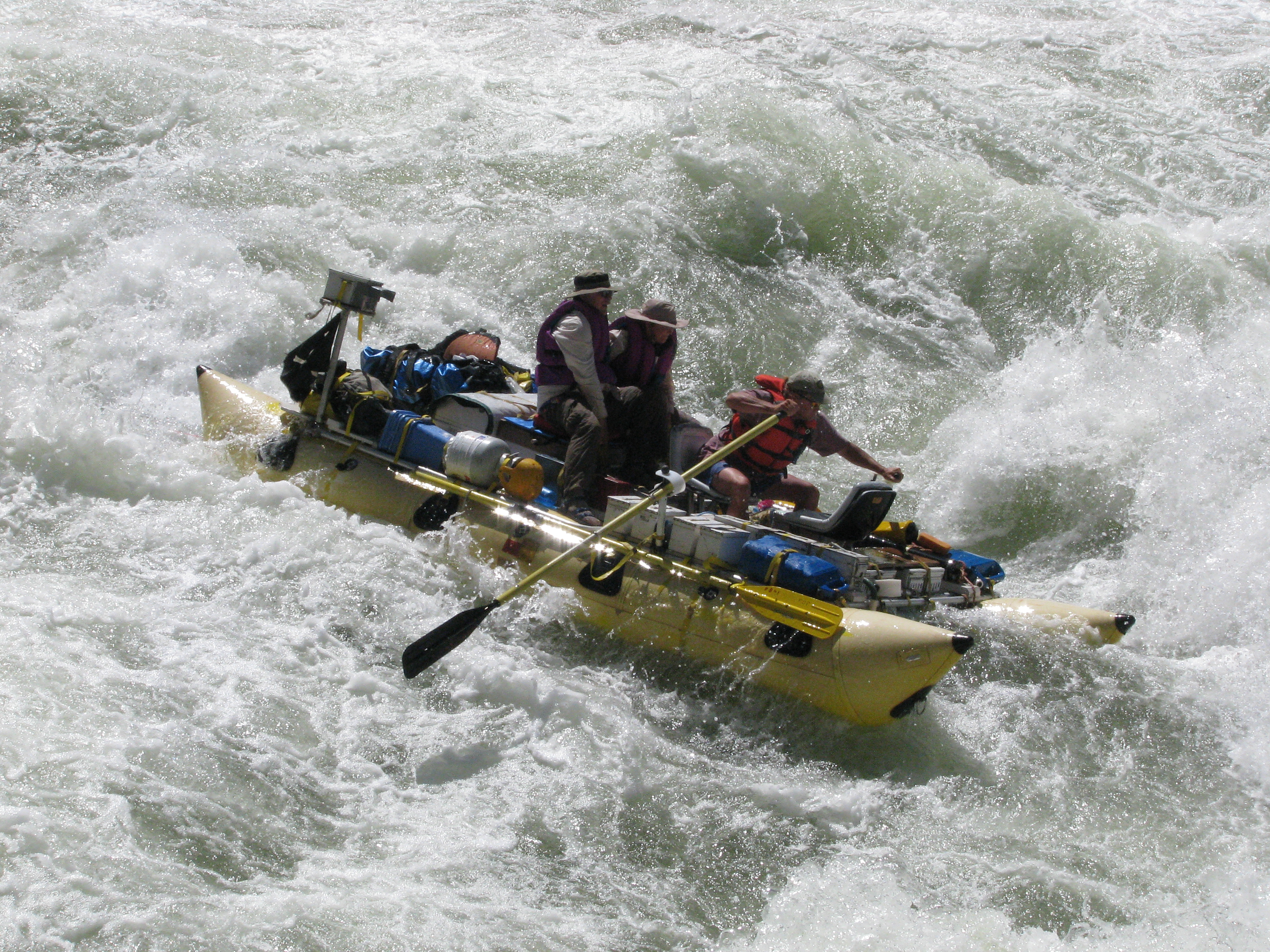
Steve, Peggy and I in Lava on the cat. Photo courtesy of Don Green.

Vulcan’s Anvil, a large chunk of lava in the middle of the river, is a signpost announcing the presence of Lava. (We have already heard its roar.) Superstitious boatmen kiss the rock to assure a safe journey. Steve, always cautious, obediently performs the ritual.  Scouting is carried out with great care; there is plenty of time to contemplate our fate.

The photos in this blog capture our experience much better than words. Lava is indeed a 10 out of 10. At one point, when I am staring into the massive hole on our left, Peggy is watching Steve almost be washed out of the boat on our right: scary stuff.

On the last night of our adventure, Peggy asks Steve what his most memorable experience was. “Turning around at the end of Lava and seeing that the two of you were still on my boat,” he replies. Ditto.

Looking for Long Dead Mekemsons, Makemsons and Marshalls

Several years ago I became hooked on genealogy. Growing up, my knowledge of ancestors stopped with my grandparents. It remained there until I turned 60. My older brother Marshall inspired me. Describing himself as “a homeless man with a pickup truck and a bank account,” he had wandered America searching out our Mother’s side of the family, the Marshalls.

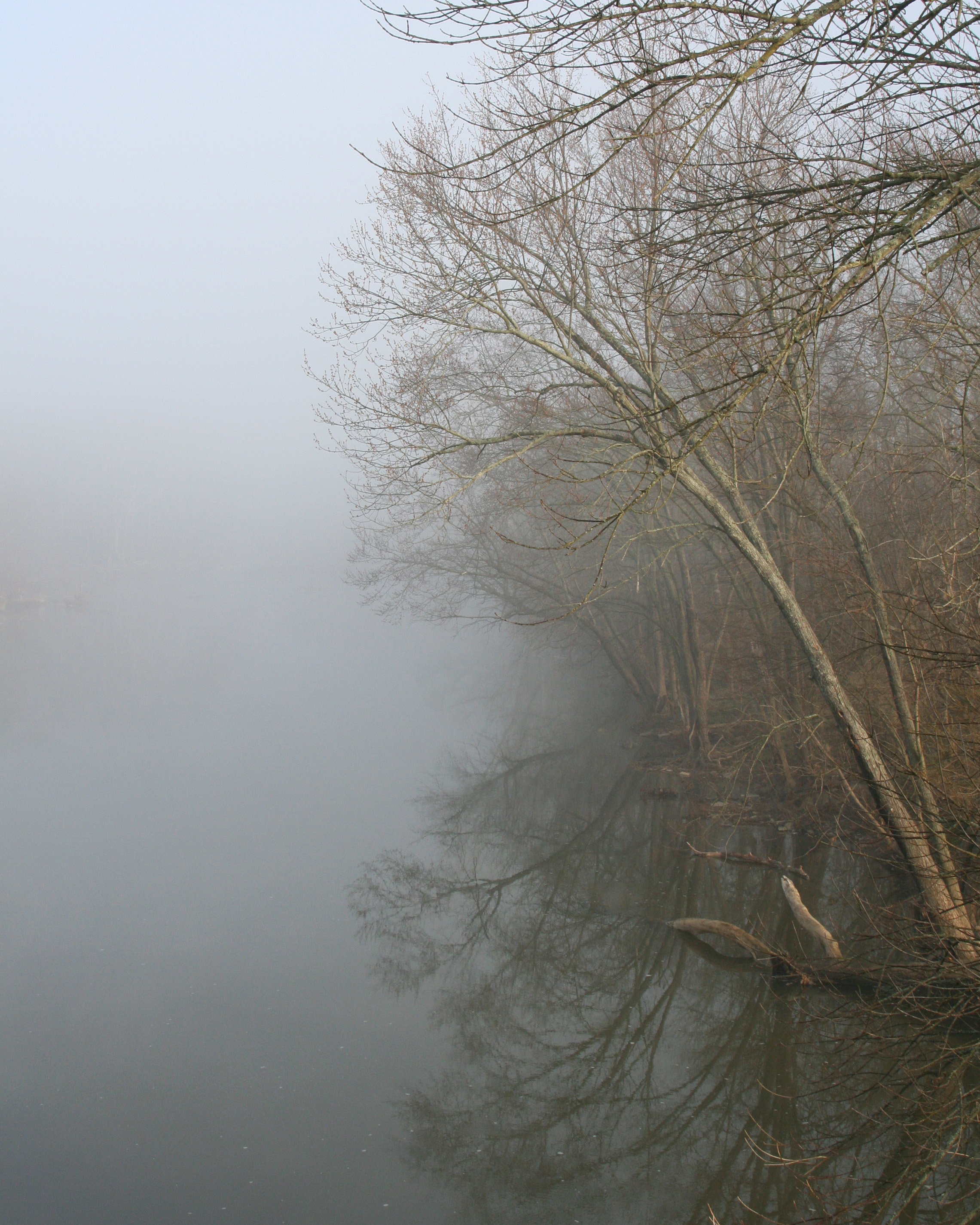
Ancestral Makemson/Mekemson lands hide behind the mist on the Licking River in Pendleton County, Kentucky. To me, the mist serves as a metaphor for the difficulty involved in uncovering family history.

He did it the old-fashioned way (as he likes to remind me): leafing through yellow, aging documents, tramping through almost forgotten graveyards, and spending countless hours in Mormon libraries.

I was skimming through a summary of his findings when I learned that our Great, Great Grandfather, George Loomis Marshall, had abandoned his pregnant wife, family, farm and friends in Will County, Illinois to the siren call of gold in California. He struck it rich but then his luck ran out.  He started home by sea and was killed for his gold.

Had my Great, Great Grandmother, Margaret Paddock, not been pregnant when he left Illinois, I wouldn’t be writing this paragraph. How could I not be intrigued? I became addicted to looking for long dead relatives.

I am not alone. Google lists 107 million sites related to genealogy and these numbers relate a fact; genealogy is no longer a hobby limited to aging elders (which I sort of resemble) rummaging around in musty courthouse basements.

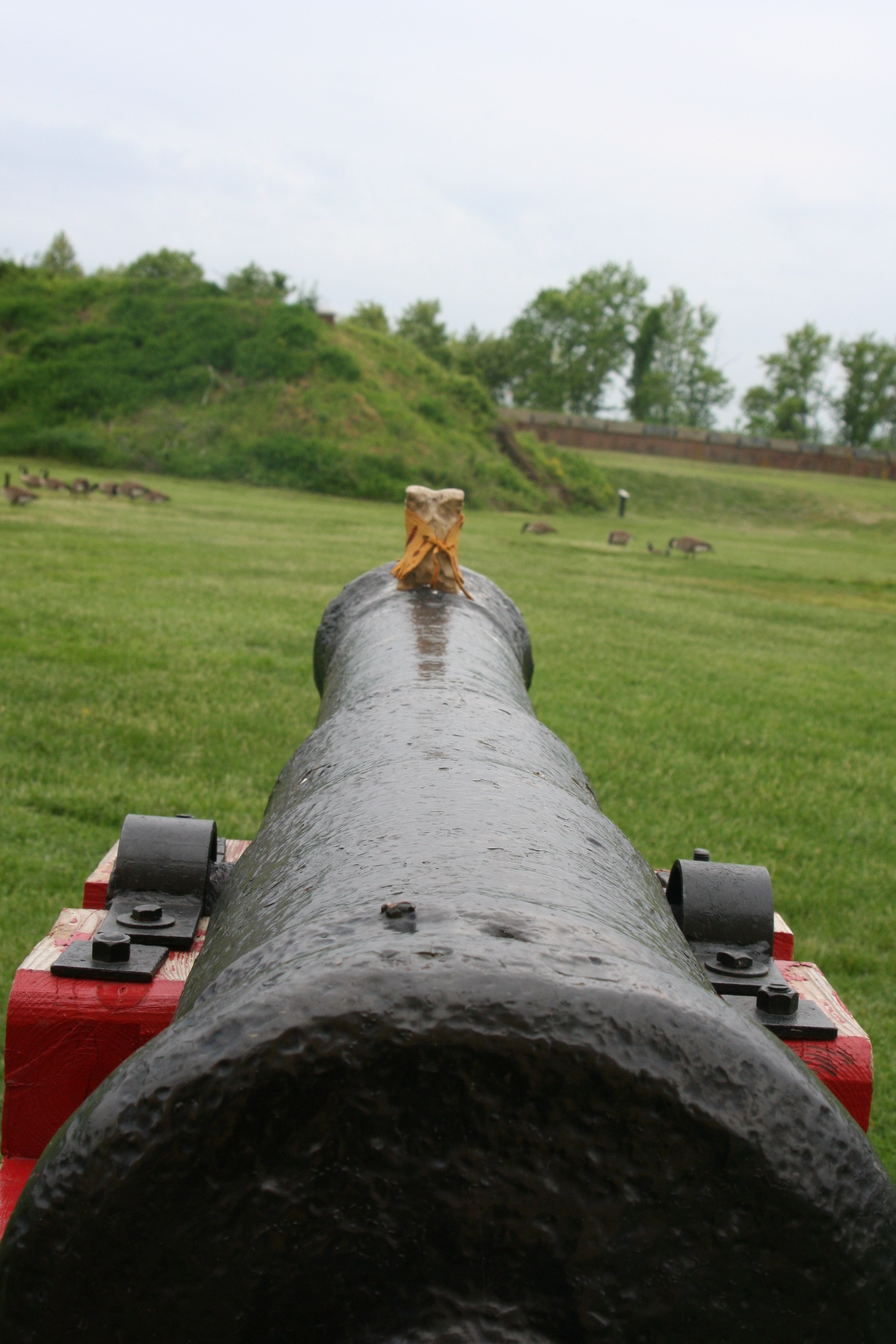
Bone serves as a sight on a cannon at Fort Mifflin just outside of Philadelphia. The Battle of Fort Mifflin was one of the bloodiest battles of the Revolutionary War and bought time for George Washington to escape to Valley Forge. Four Mekemson boys fought in the battle and two heroically gave their lives.

Millions of people today are using the Internet in search of their roots. Ancestral information that once required years of research is now available at the touch of a keystroke. Large Internet databases hold hundreds of millions of genealogy records and thousands more are added daily.

What captures our imagination about genealogy? Is there something about contemplating our future that sends us scurrying for our past? Is searching for our roots a way of seeking immortality in reverse? Or are we seeking fame? Was one of our ancestors a king? Or possibly she was a pirate… Maybe our inspiration is just plain-old-fashioned curiosity.

Whatever the bait that leads us to ask our first question about Great Grandma, it’s the thrill of the hunt that keeps us searching. A blank space on an ancestral chart is a mystery begging to be solved. Hours can be devoted to finding a single answer and that answer inevitably leads to another question, and another blank space.

Over the past 2½ years as Peggy and I have crisscrossed America traveling 65,000 miles in our van Quivera, we’ve added the search for roots to our itinerary of exploring the Country and doing grandparent duty.

Much to my surprise, I have discovered that the Marshalls arrived in America in the 1630s and the Mekemsons/Makemsons in the 1750s. The story of these two families is wrapped up in the story of America.

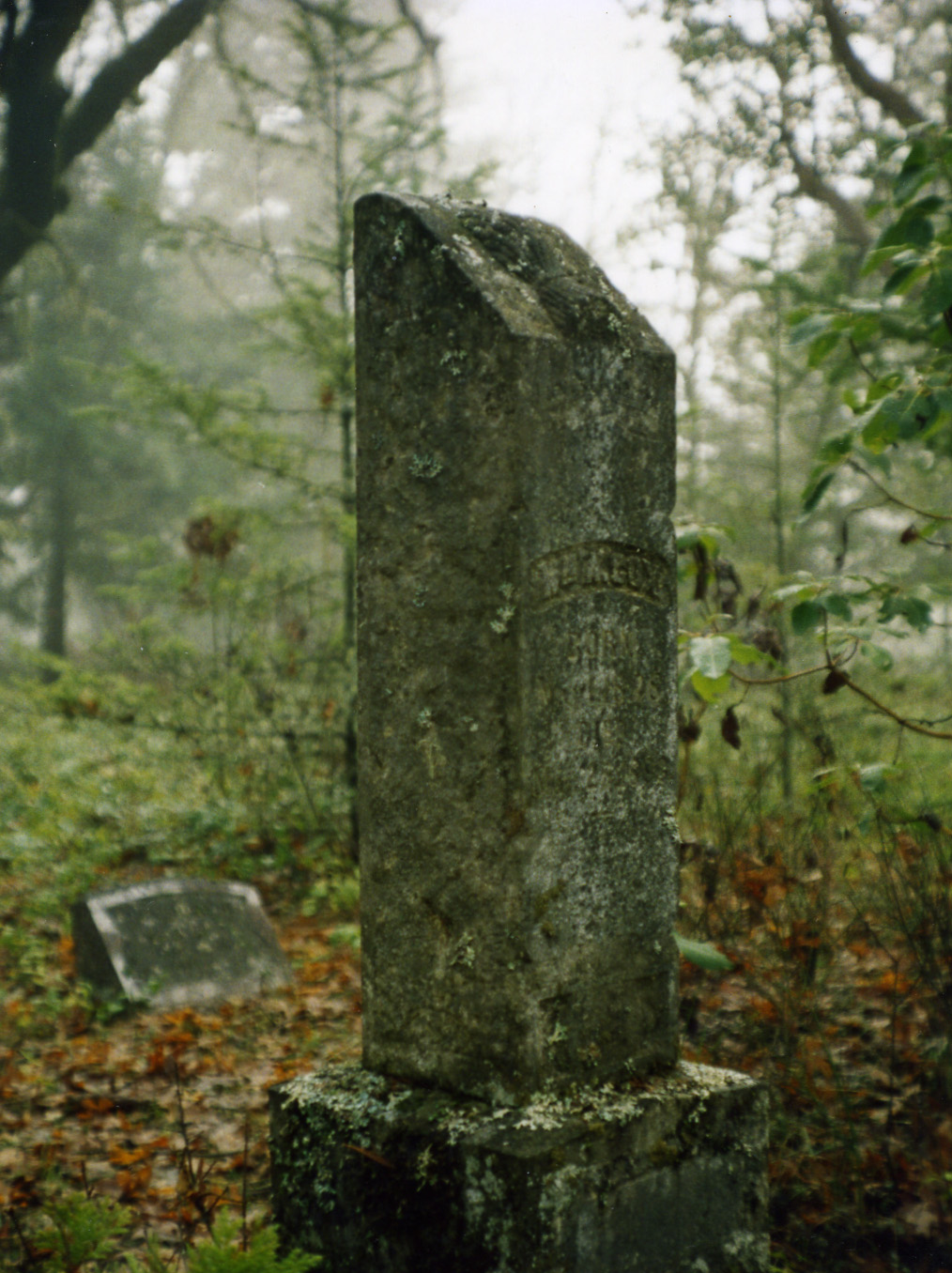
Family tombstones are often hidden in old, overgrown graveyards and difficult to find. This one marks the grave of William Cox, one of my Mother's Great Grandfathers who is buried near the town of Grants Pass, Oregon. William was born in the 1820s in Mississippi and came across America in a covered wagon.

The Marshalls began their American sojourn as stern Puritans in the 1600s. Three hundred years later they were in on the creation of Goofy. Four, and possibly all six sons of Andrew Mekemson (my first Mekemson ancestor to arrive in America) fought in the Revolutionary War.

Two of his sons died in heroic efforts at Fort Mifflin, a battle that allowed George Washington to escape to Valley Forge and possibly save the fledgling nation.

William Brown Mekemson had his head chopped off by tomahawks in the Black Hawk Indian War and rolled down a hill. His great-uncle may have wandered the forests with Daniel Boone. Abe Lincoln argued both for and against Makemsons in his early years as a lawyer. The stories go on and on leading up to modern times.

One of the most rewarding elements of my investigation has been collaborating with distant cousins on research. Early on I was lucky to come in contact with three of the leading Mekemson family genealogists, Ann Nell Baughman out of Kansas and Bill and Jan Makemson out of Florida. In addition to providing valuable information and support, these folks, along with other cousins, have become valued friends.

Ann even makes clothes for Bone.

Since genealogy is about wandering through both time and space, it is a fitting subject for the Peripatetic Bone’s blog. As I come across interesting stories, I will relate them on this site. Bone is particularly enamored with exploring old graveyards. He feels a kinship with the inhabitants.

Un-cool in Paducah Kentucky

I once spent time here in the late 60s when I was working out of Atlanta as a college Peace Corps Recruiter. It was a slow week. None of the young people, it seemed, wanted to leave the area.  And they certainly didn’t want to traipse off to West Africa where I had served as a Volunteer. We were on the edge of the Old South.

It felt like the edge of nowhere. I hung out at the motel and read Faulkner.

One of the Paducah murals on its Ohio River frontage. Flatboats like these are how my ancestors arrived in Kentucky during the 1790s.

Times change. The historic waterfront on the Ohio River has been filled with murals depicting the town’s colorful history and many of the old buildings have been reclaimed to their former glory.  A previous slum in Lower Town has morphed into a thriving arts community. There is an excellent museum on quilting.

As for the isolation, the good folks of Paducah are now only a mouse-click away from anywhere in the world.  Cell phones are ubiquitous and young people in town can whip out a text message faster than a male dog can mark his territory.

Peggy was complaining the other day about how technology dominates our lives. I think she meant my need to be on the Internet since I have never heard a squeak from her about our Verizon connection to mom, kids, grandkids and various other family members.

Actually, Peggy is as addicted to the Internet as I am. It’s just that her computer didn’t crash like mine did in Kona, Hawaii three weeks ago. I was not happy. My plan of blogging regularly disappeared like the Gecko climbing up our screen door.

I felt a tang of guilt about the blog but watching sunsets, drinking beer, swimming with sea turtles, avoiding fiery lava, and pursuing ancient Hawaiians took precedence over replacing the computer. As did being lost in dust storms at Burning Man in the remote Nevada desert the following week.

“You need to buy an Apple,” Tom Lovering admonished me at Burning Man. He took me over to Center Camp to demonstrate how wonderful his computer was while scantily clad women strolled by. “You need to buy an Apple,” my son Tony had admonished me weeks earlier in San Diego as the two-year-old Connor pounded on my leg with a truck that sang Old McDonald.

How could I resist?

I made the leap as Peggy and I dashed through Salt Lake City on our way east to celebrate Peggy’s Mom’s 90th birthday. I had been a PC man since I had purchased one 30 years earlier in Anchorage, Alaska.

“You are finally cool,” Tom Emailed me. If only I had known what it takes.

I decided to do a blog from Estes Park, Colorado because, well, a cool person would probably blog from there.

I fired up my shiny new Apple MacBook Pro. And got a zero with a line through it. Apparently I was not meant to be cool. The technician at the Apple Store in Boulder hooked up a diagnostic tool to my computer and then disappeared into his back room. He came out 30 minutes later with a new laptop.

“You’ve broken a record for our store,” he told me. “We have never seen an Apple crash its hard drive in three days.”

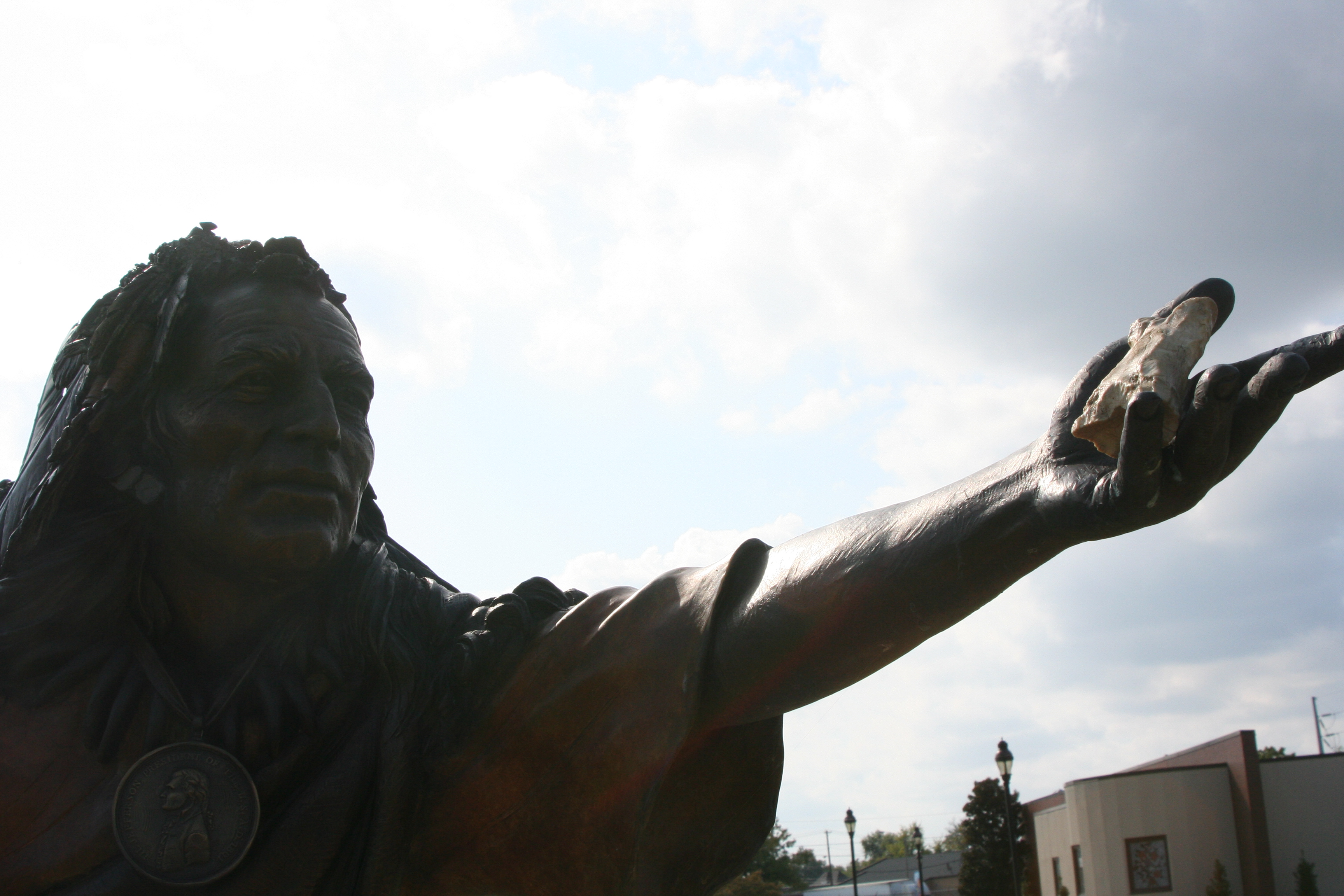
Native American sculpture on the lawn of the quilt museum... checking out Bone.

Thus you are hearing from the slightly un-cool Curt in Paducah, Kentucky. While I have temporarily left our trip down the Colorado River, I shall return to the subject. There are raft-eating rapids to face, oh my. But next I will blog about looking for dead people.

Boredom Is Not an Option!

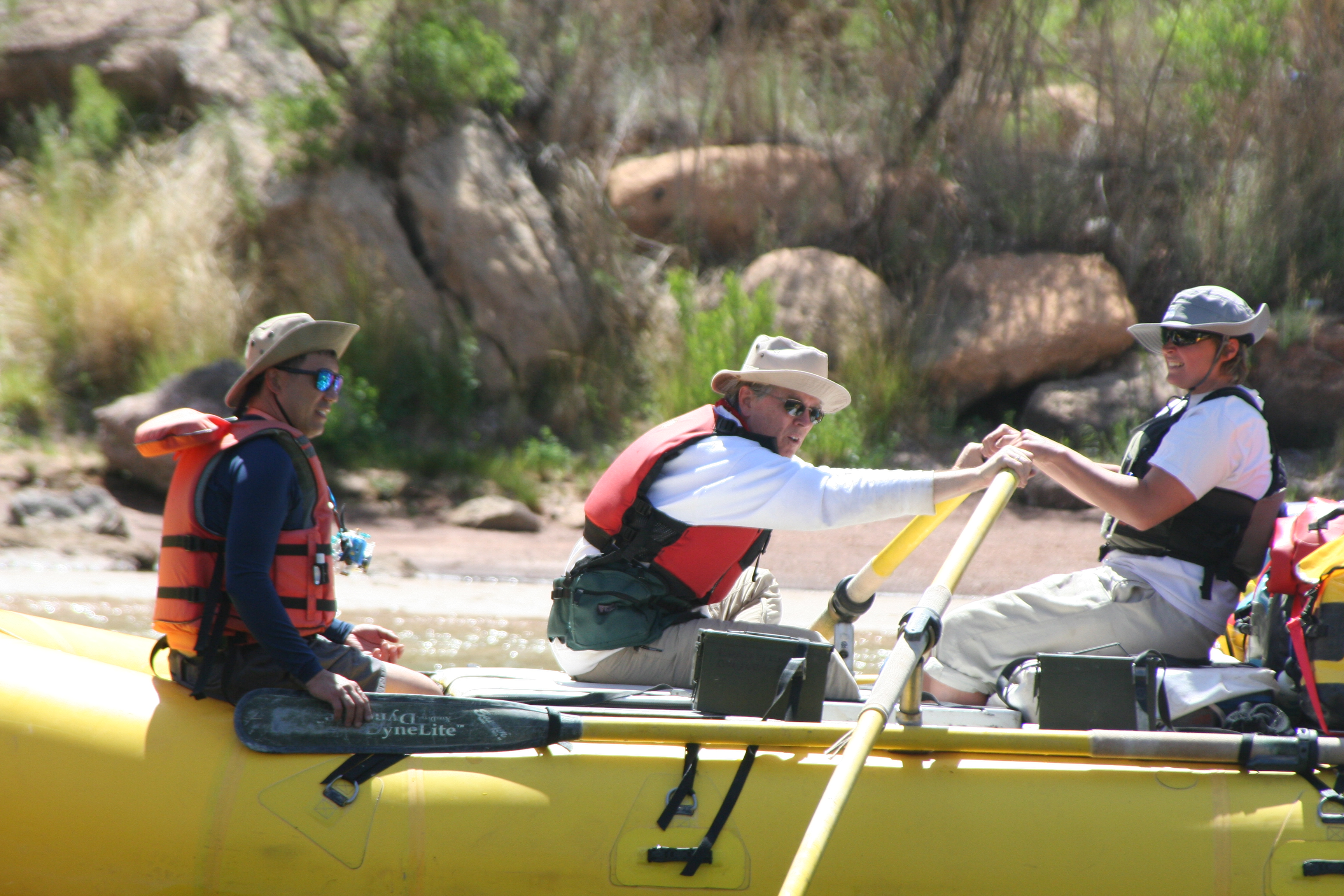
Megan Stalheim and Don Green rafted by us demonstrating the push-pull method of rowing. Brad Lee, a dentist out of Sacramento, looks on.

The wind continues to beat against us as we make our way down the Colorado River. Only Dave’s strenuous effort at the oars keeps us from floating up stream. “Go that way,” I suggest and point down the river.

The group pulls in at a tiny beach in hopes our mini-hurricane will die down. It doesn’t.

Dave develops blisters and I develop guilt. A manly-man would offer to take over at the oars.

An option floats by. Dave’s niece, Megan Stalheim, is also one of our boatmen. Don Green, a retired Probate Judge out of Martinez, California, is sitting opposite her and pushing on the oars while she pulls. It inspires me. I join the push-pull brigade.

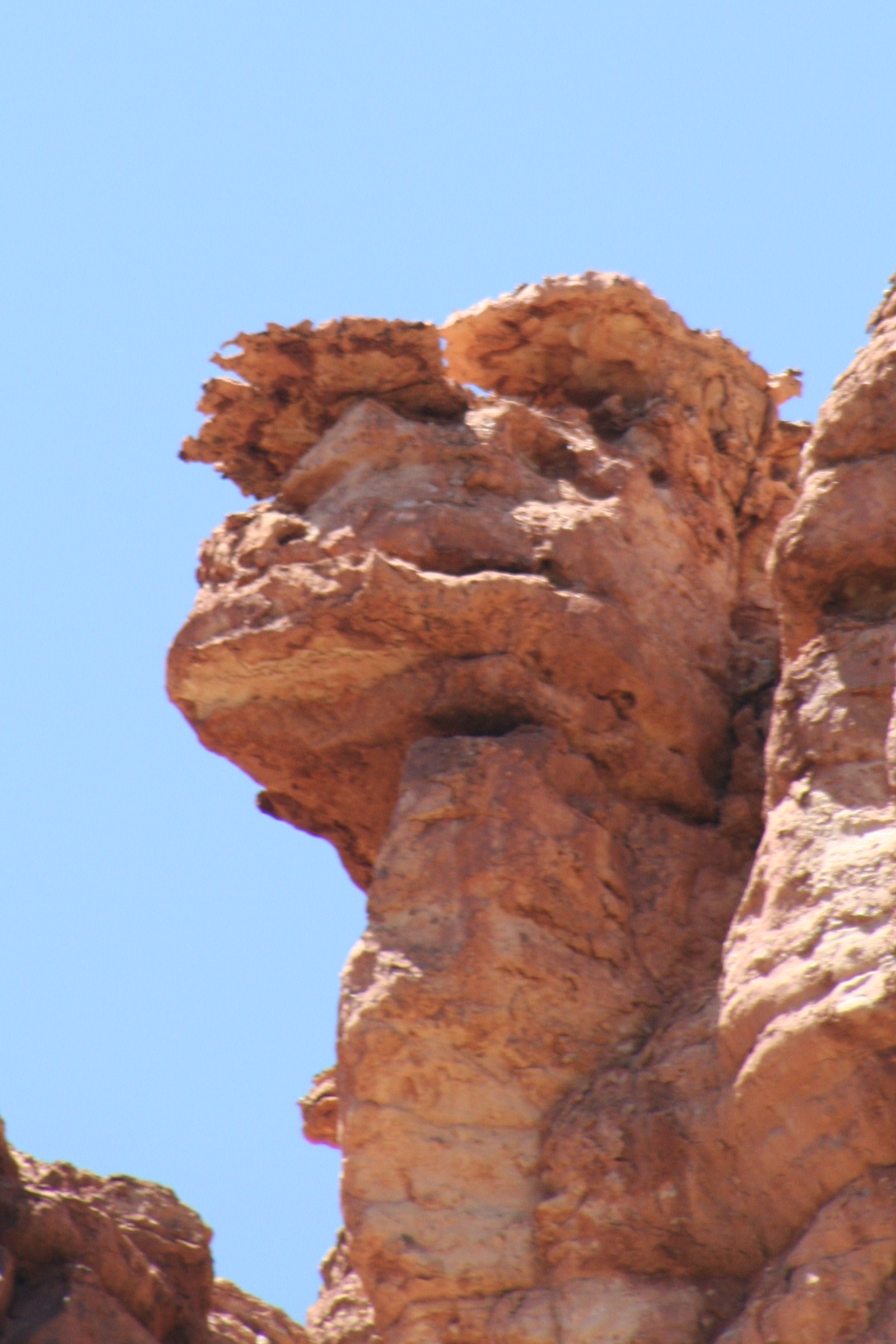
As tough as the day is, the beauty of the River and the Canyon make our efforts worthwhile. Peggy points out a strange, creature-like rock formation and we admire a family of ducks.

Little imagination is required to turn rock formations into strange faces.

Word passes back to us that Tom wants to scout Badger Rapids. In Boatman terminology this means figuring out the best way to get through without flipping. Badger isn’t a particularly big rapid for the Colorado, but it is our first. We are allowed to be nervous.

There is good news included in the message. We will stop for the night at Jackass Camp just below the rapids. We’ve only gone 8 miles, some 3 ½ miles from our original destination, but we are eager to escape the wind.

Dave is a cautious boatman. He takes his time to study Badger Rapids from shore and then stands up in his raft for a second opinion as the river sucks us in. Time runs out. Icy waves splash over the boat and soak us. Our hands grasp the safety lines with a death grip as we are tossed about like leaves in a storm drain. Mere seconds become an eternity. And then it is over.

“Quick, Curt, I need your help,” Dave shouts. We have come out of the rapids on the opposite side of the river from the camp. The powerful current is pushing us down river. If we don’t get across we will be camping by ourselves. Adrenaline pumping, I jump up and push the oars with all my strength while Dave pulls. Ever so slowly the boat makes its way to camp.

“Chirp, chirp, chirp-chirp-chirp.” It’s dark out and some damn bird is cheerfully discussing its wormy breakfast. I roll over and groan, desperately wanting to go back to sleep. We can’t, however. It’s five AM, time to rise and shine, time to pack up, time to scarf down breakfast, time to hit the river.

“It is not five AM,” Tom argues. It is five AM in California. Arizona refuses to go on Daylight Savings time. This irritates Tom. It is really six.

As we have learned, and I might add, learned well, we are not on a ‘float and bloat’ trip. Adventure awaits us. There are cliffs to climb, waterfalls to leap off, raging side streams to ford, rapids to survive, and miles of river to row. Boredom is not an option.

A family of ducks strolls up the river bank. Photo by Don Green