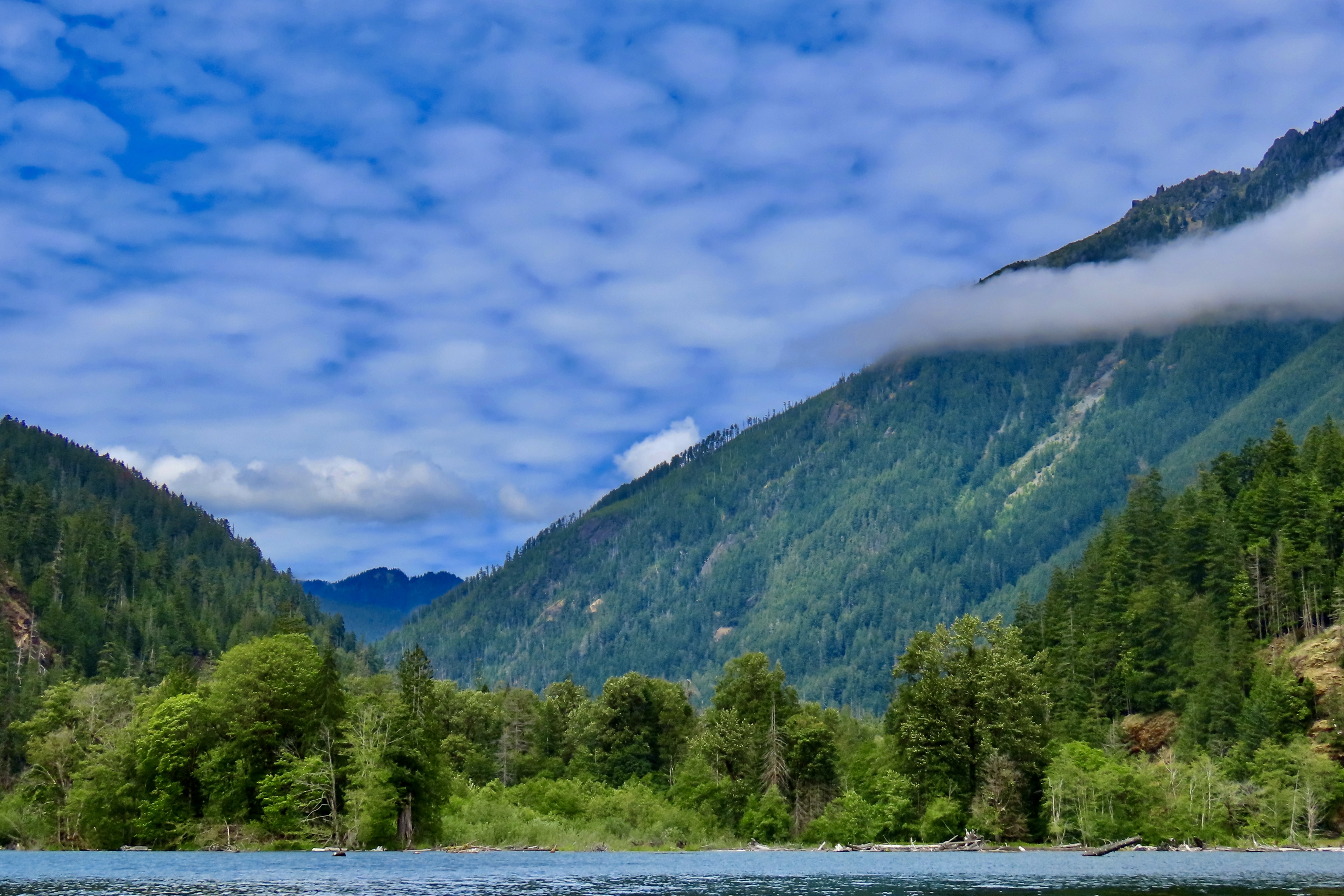
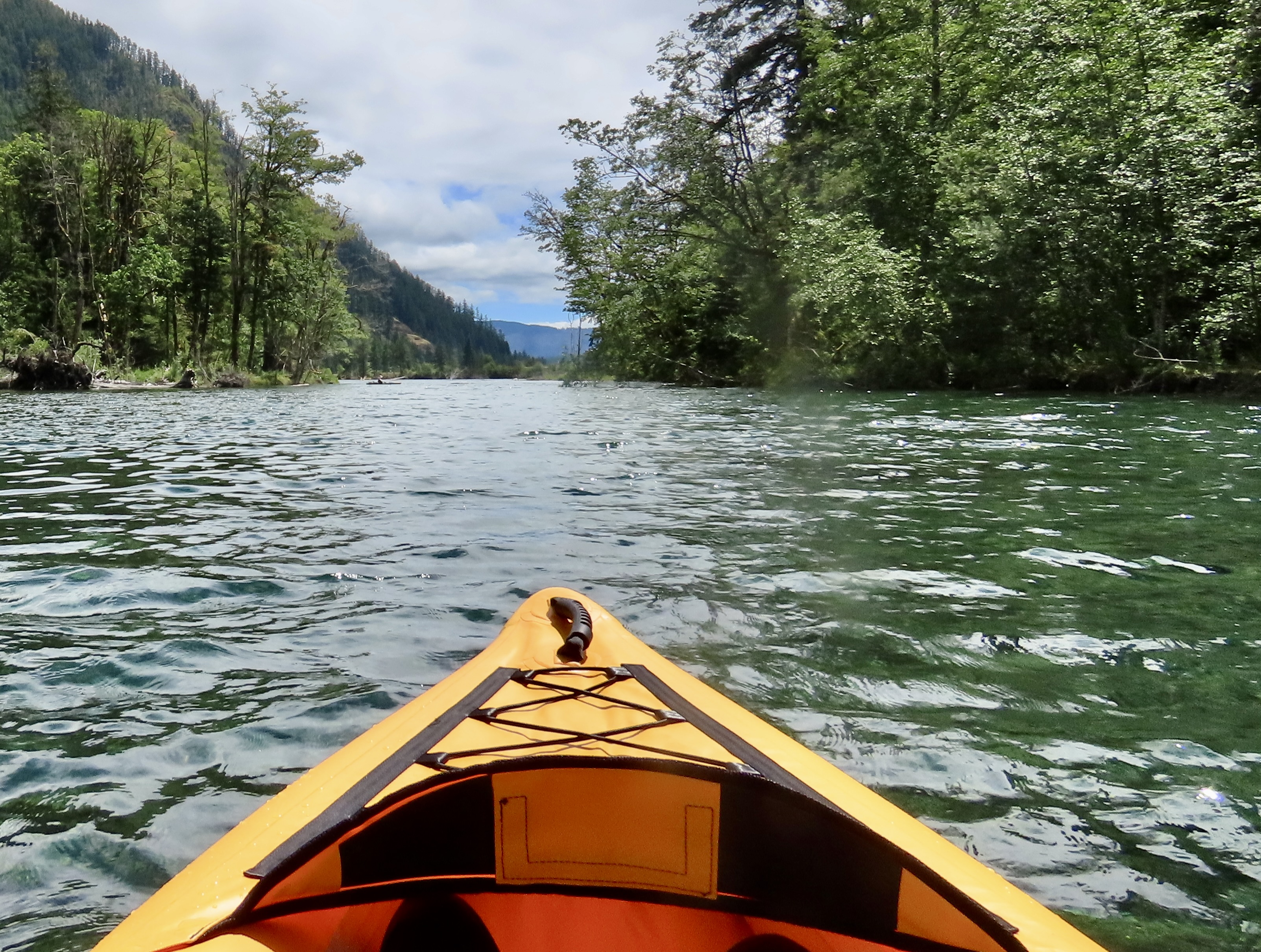
Olympic National Park has both beauty and diversity ranging from its well known rain forest to high mountains, coastline, lakes, rivers and wildlife. We’ve been there several times over the years and were looking forward to exploring even more of what it has to offer. This photo was take from our kayaks on Cushman Lake which is at the southern entrance to Olympic.
But the best laid plans of “Mice and Men”… You know how that goes. I developed a health issue and decided to go directly to Olympia rather than the gorgeous campsite on a bay near Port Angeles we had reserved for a week. It turns out the issue wasn’t urgent. My doctor in Virginia told us to continue on our trip and see her when we got back.
Fortunately, we were already planning to visit our niece, Christina, who works in Olympia. She is a good friend, as are her brother Jay and her sister Amy. Jay and I have backpacked together. Both Jay and Christina have been to Burning Man with us, and Peggy is Amy’s godmother. Before starting on our West Coast adventure, we had just completed our safari trip to South Africa with their dad John (Peggy’s brother) and his wife Frances!
Christina had taken time off from work as an attorney for the Washington State Attorney General’s office and had a ton of outdoor stuff planned for us. Fortunately, one of these activities included a hike up the Staircase Rapids Trail on the Skokomish River at the southern end of the park.
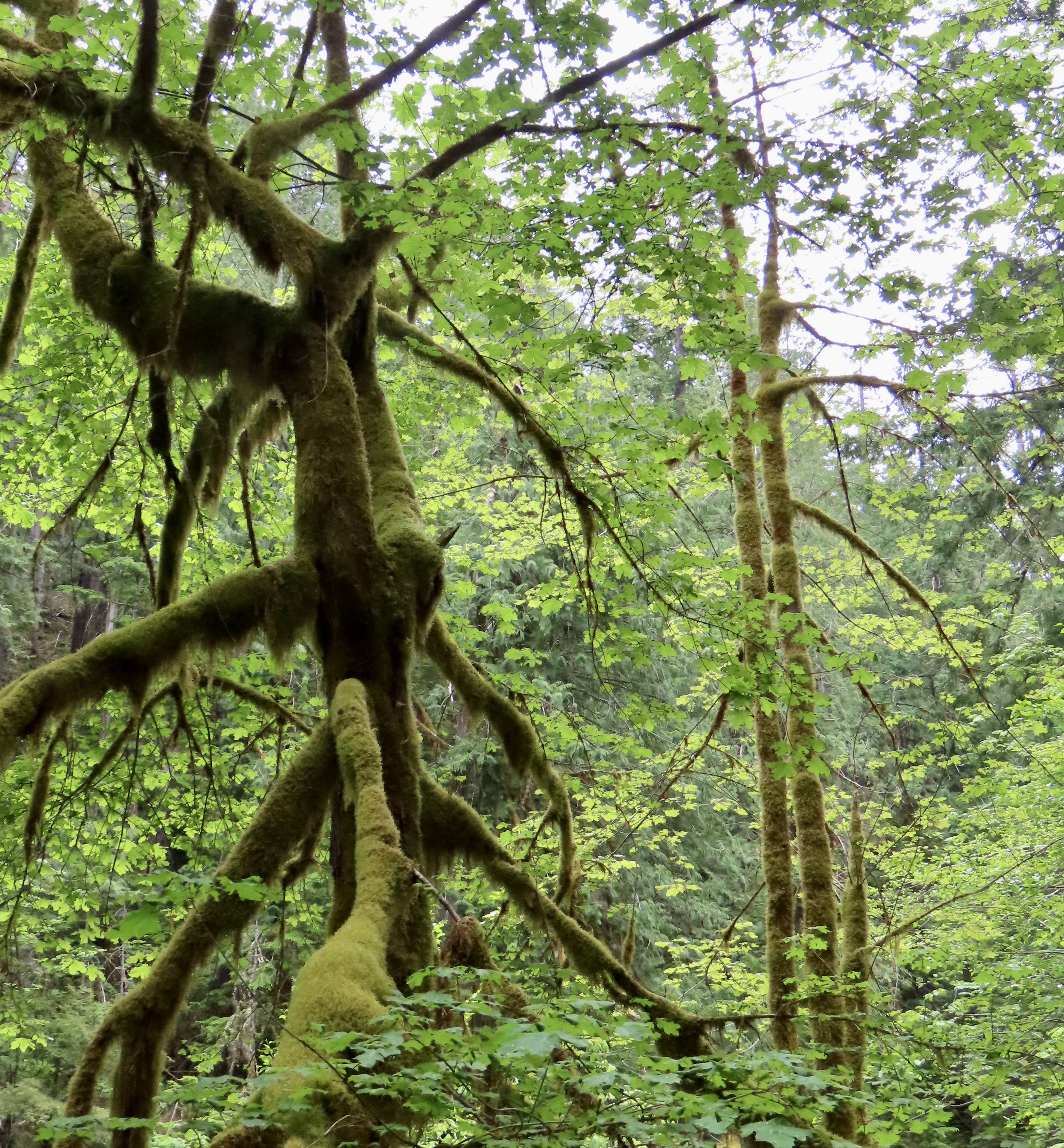
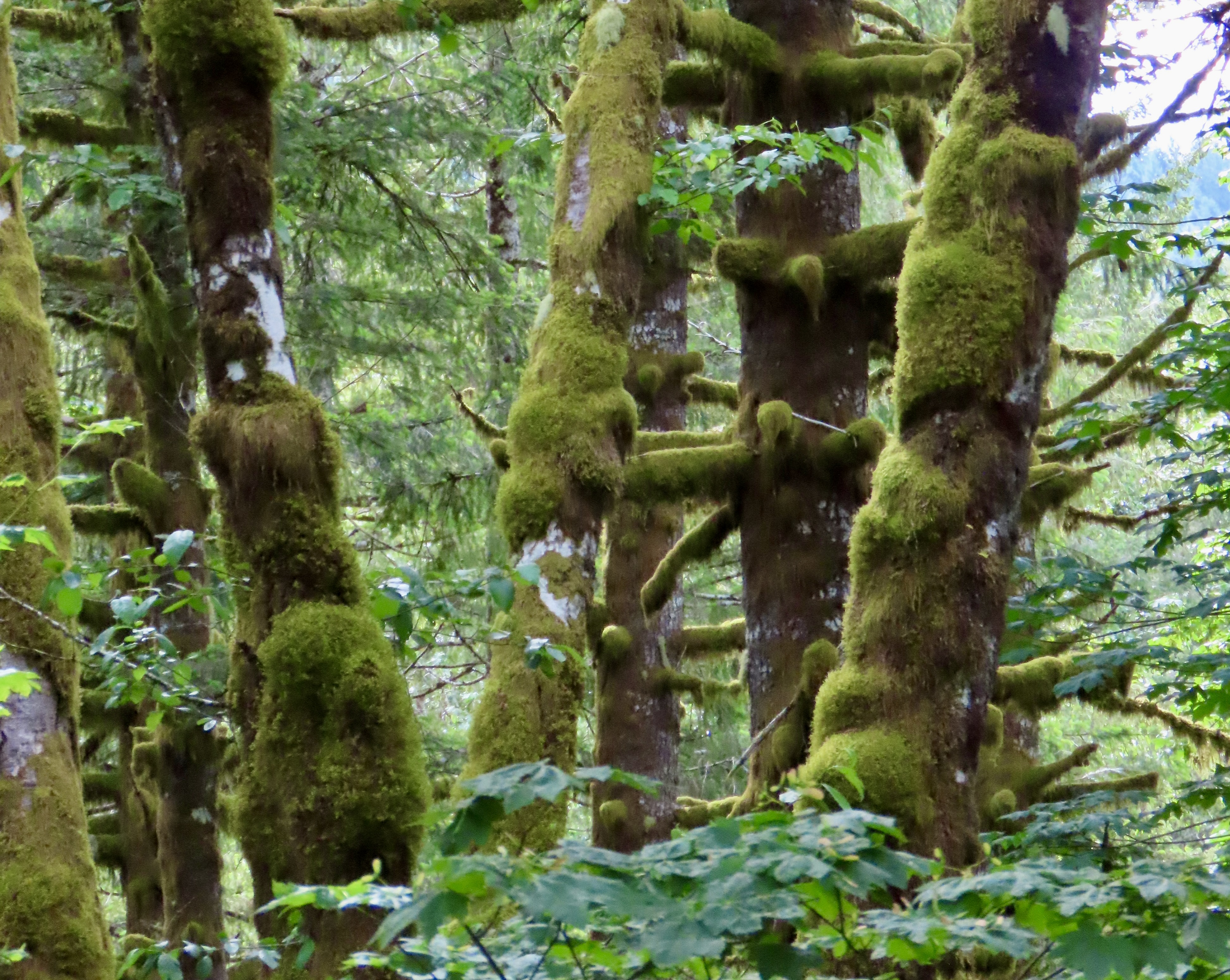
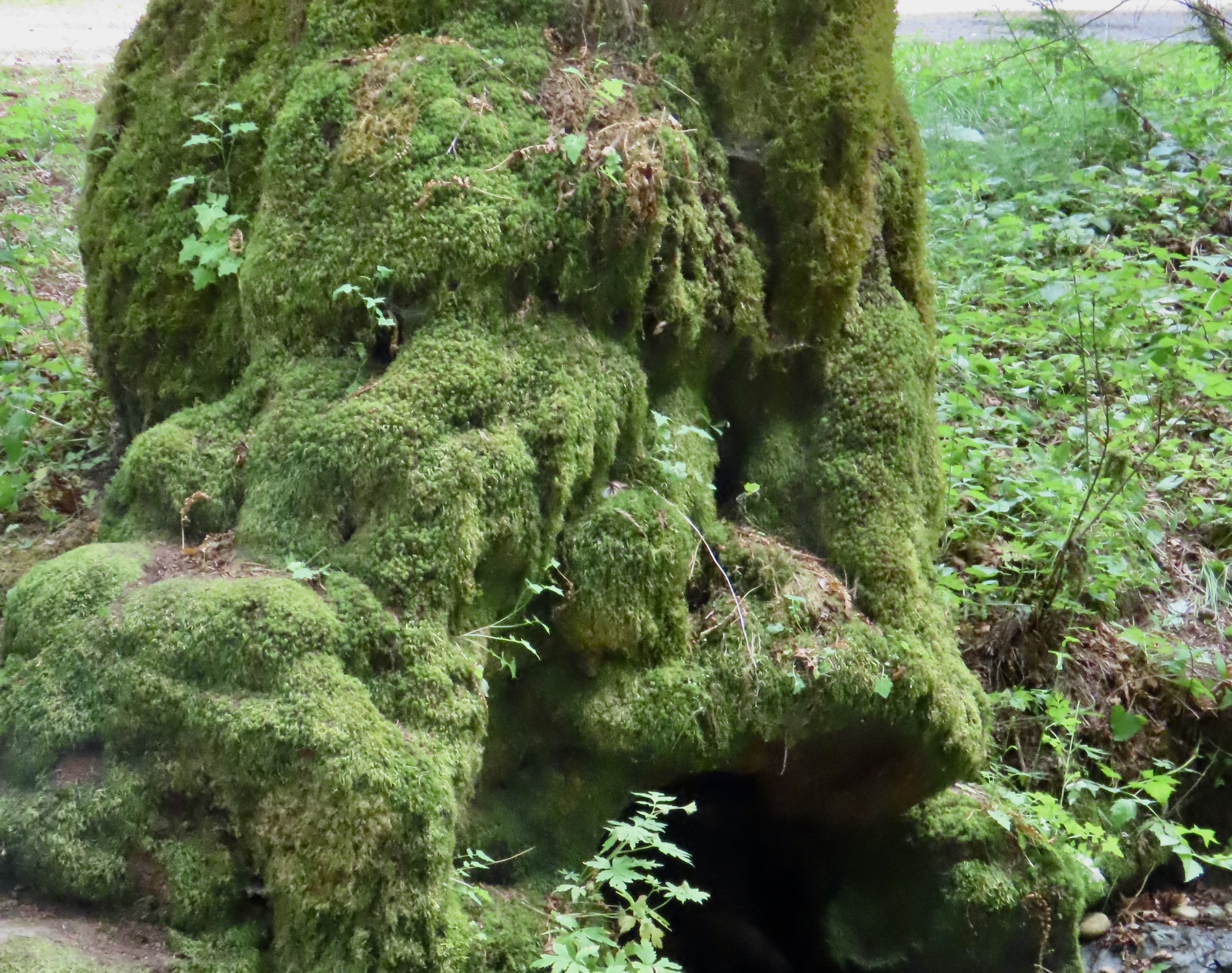
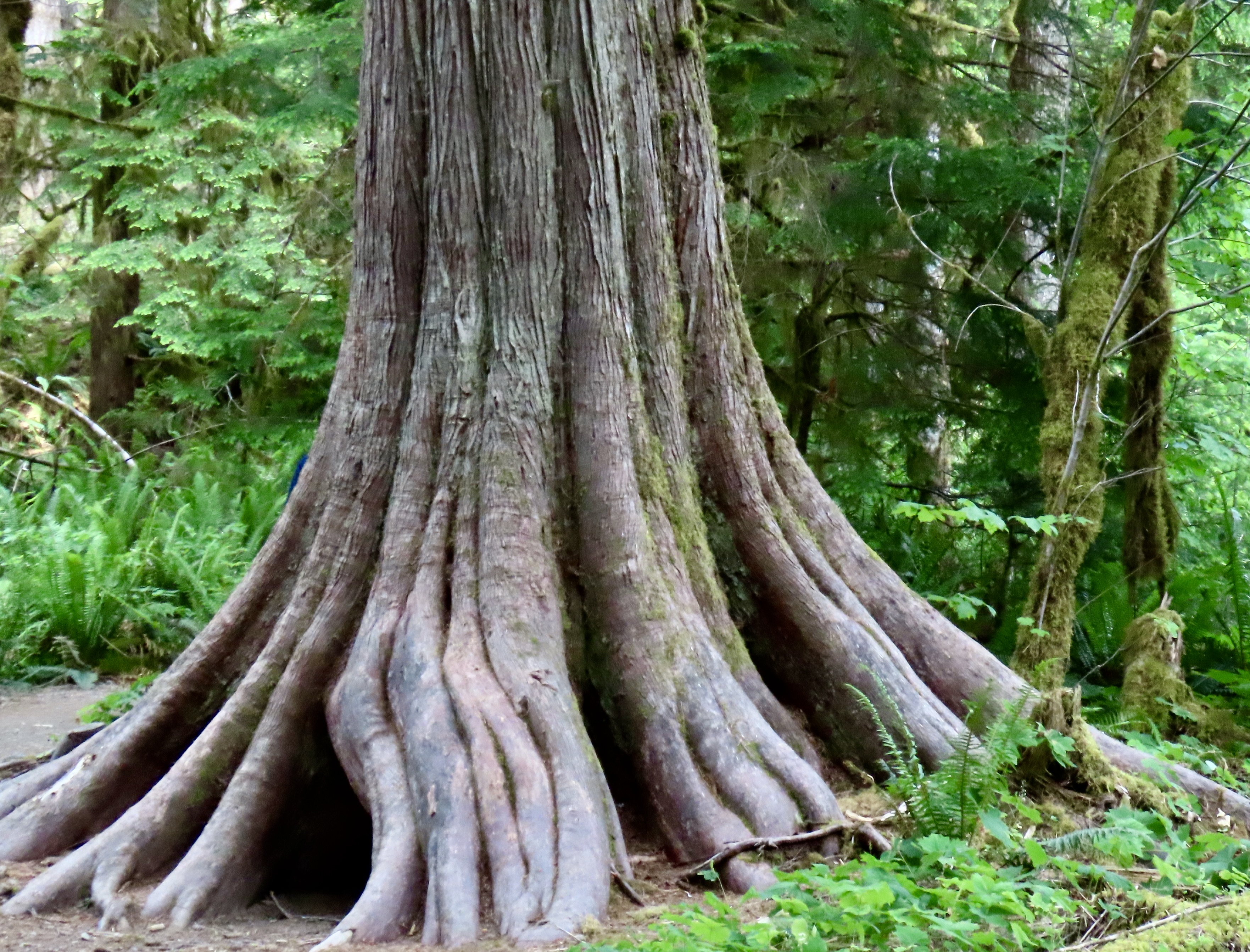
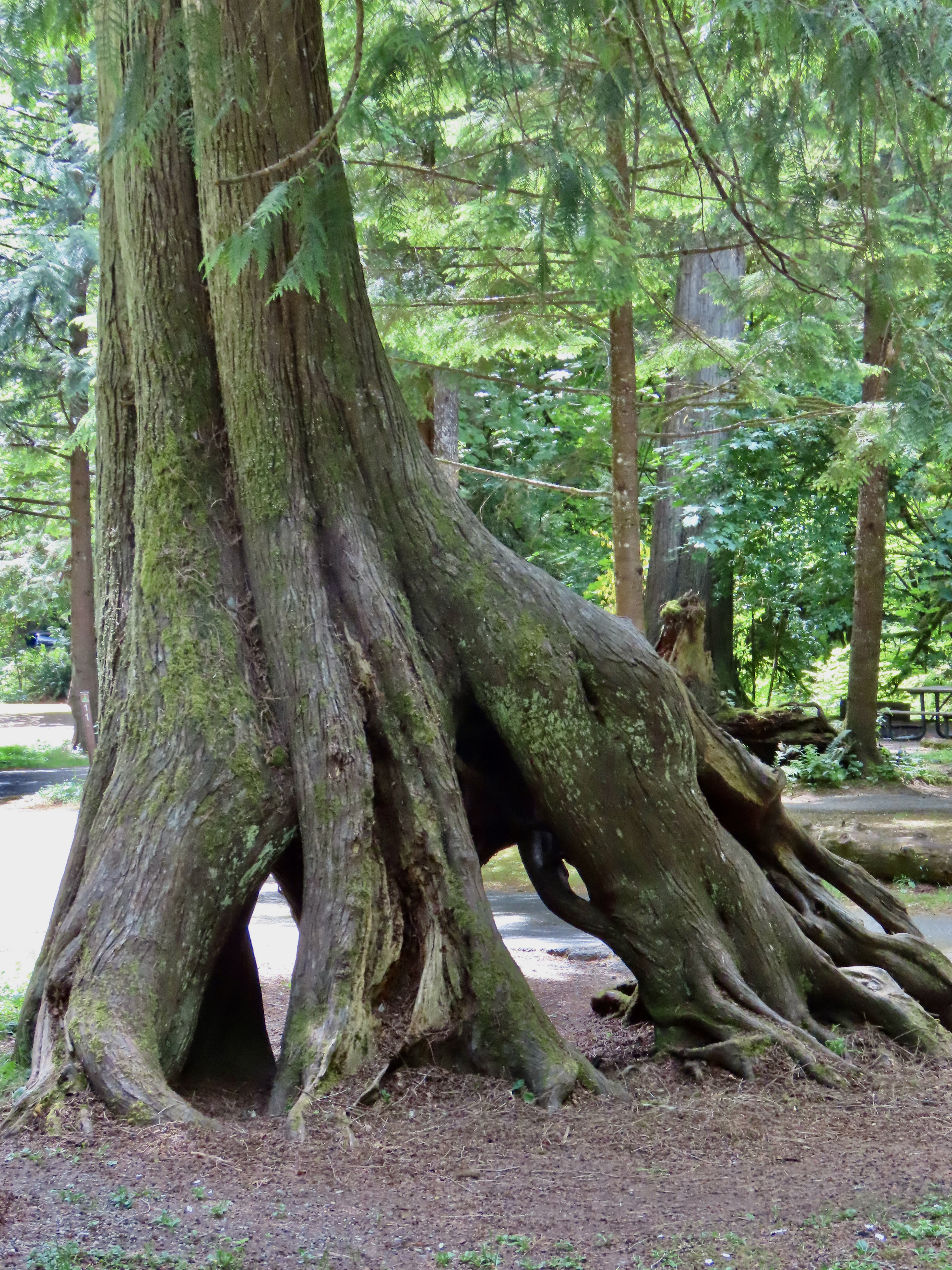
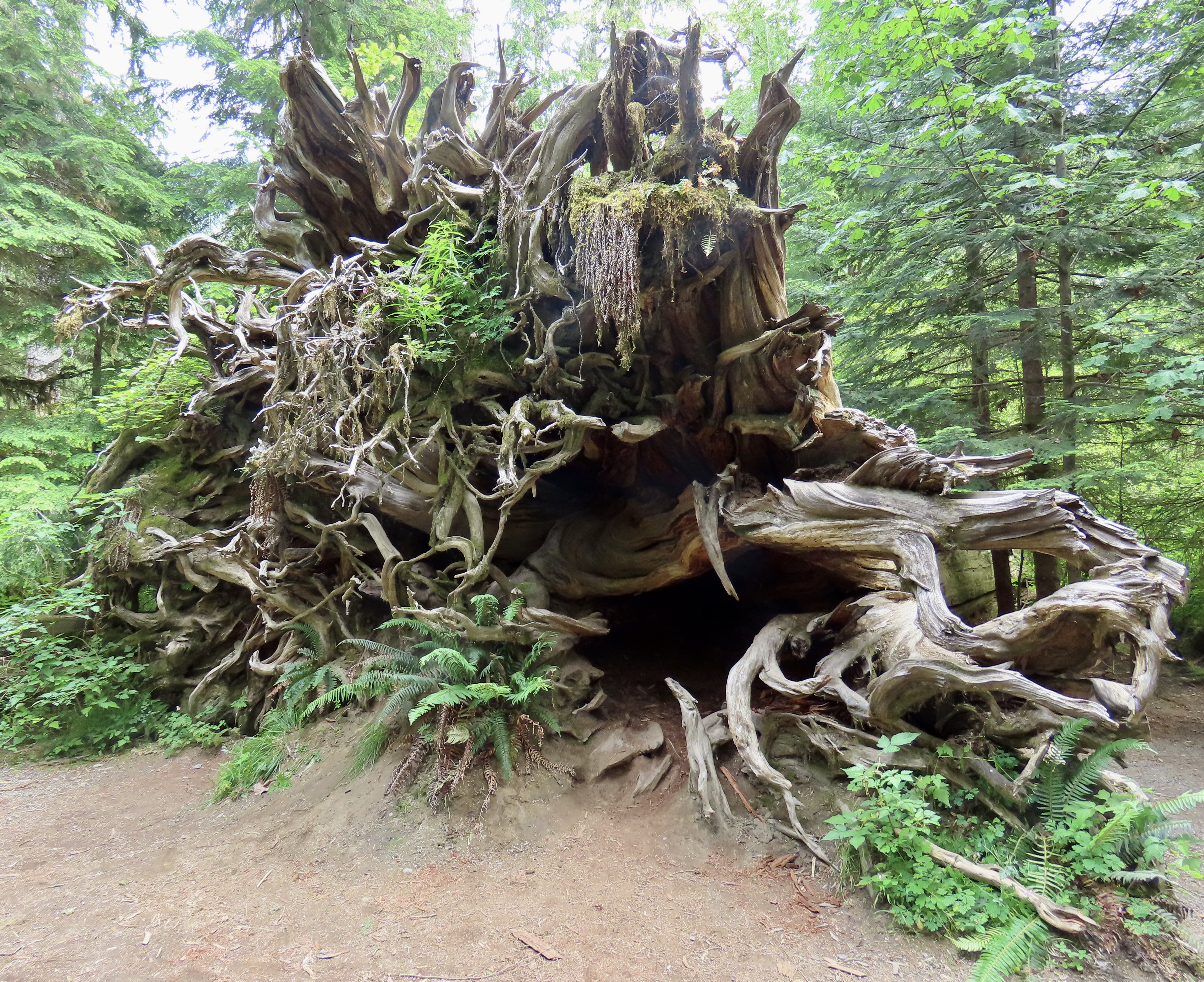
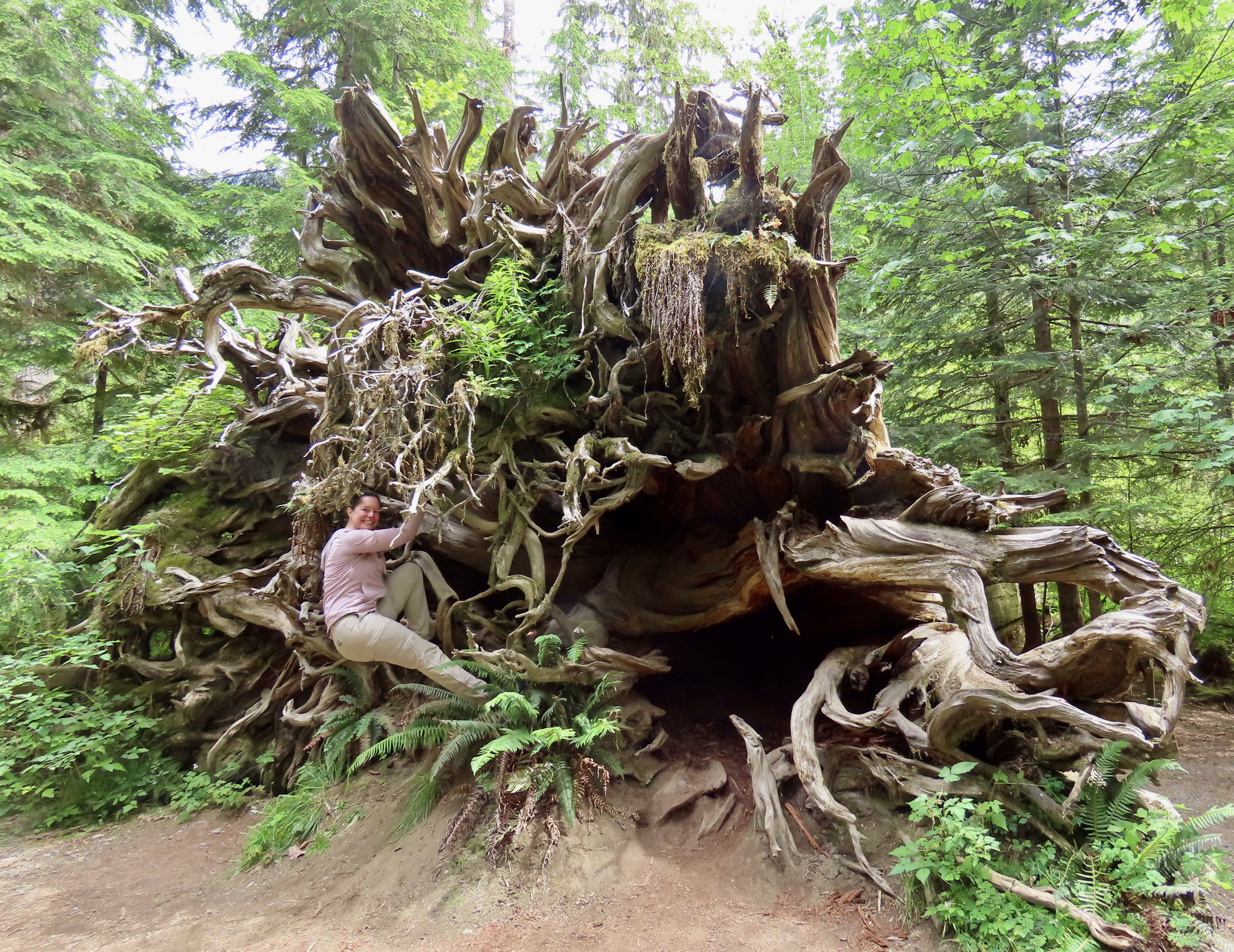
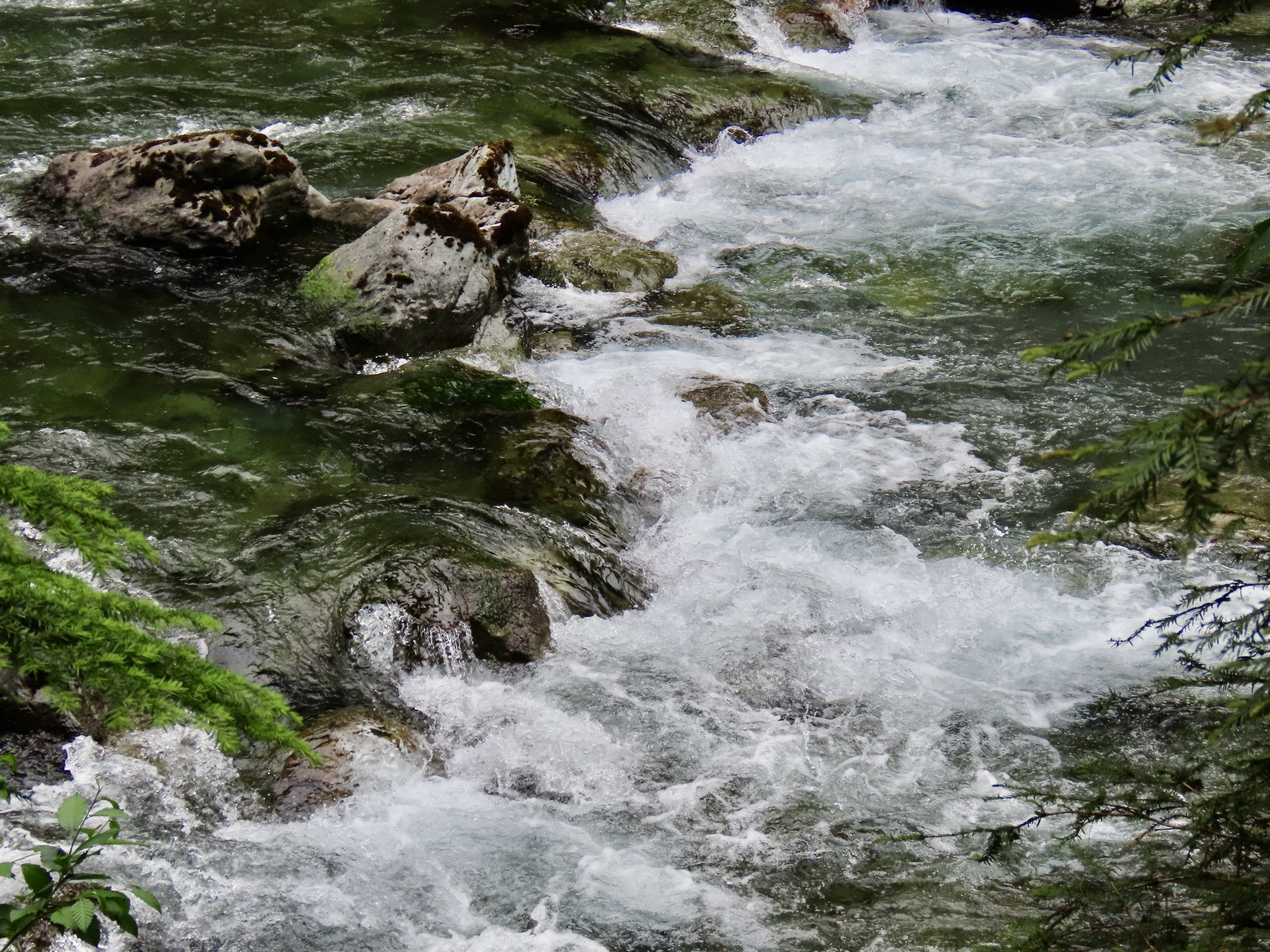
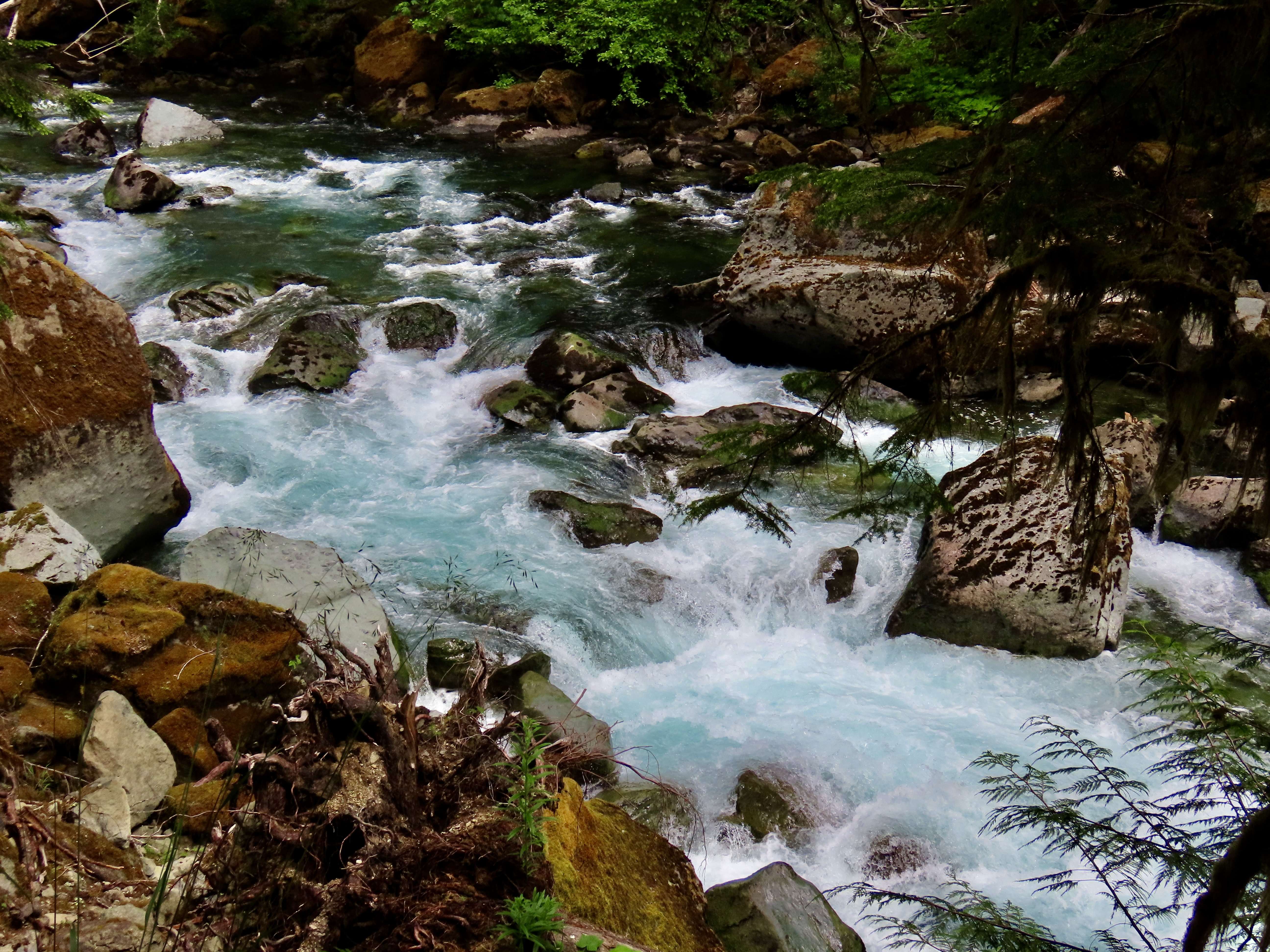
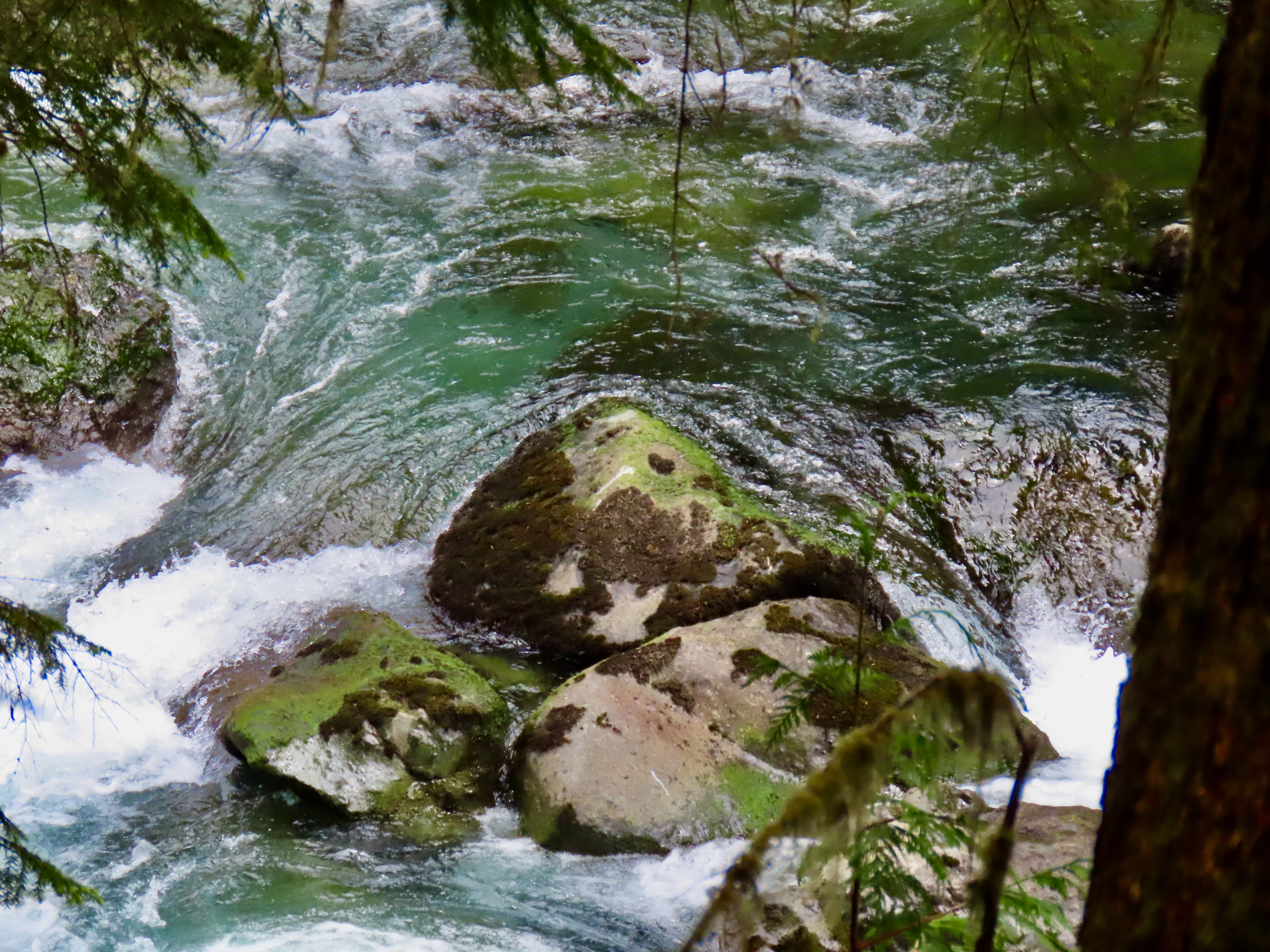
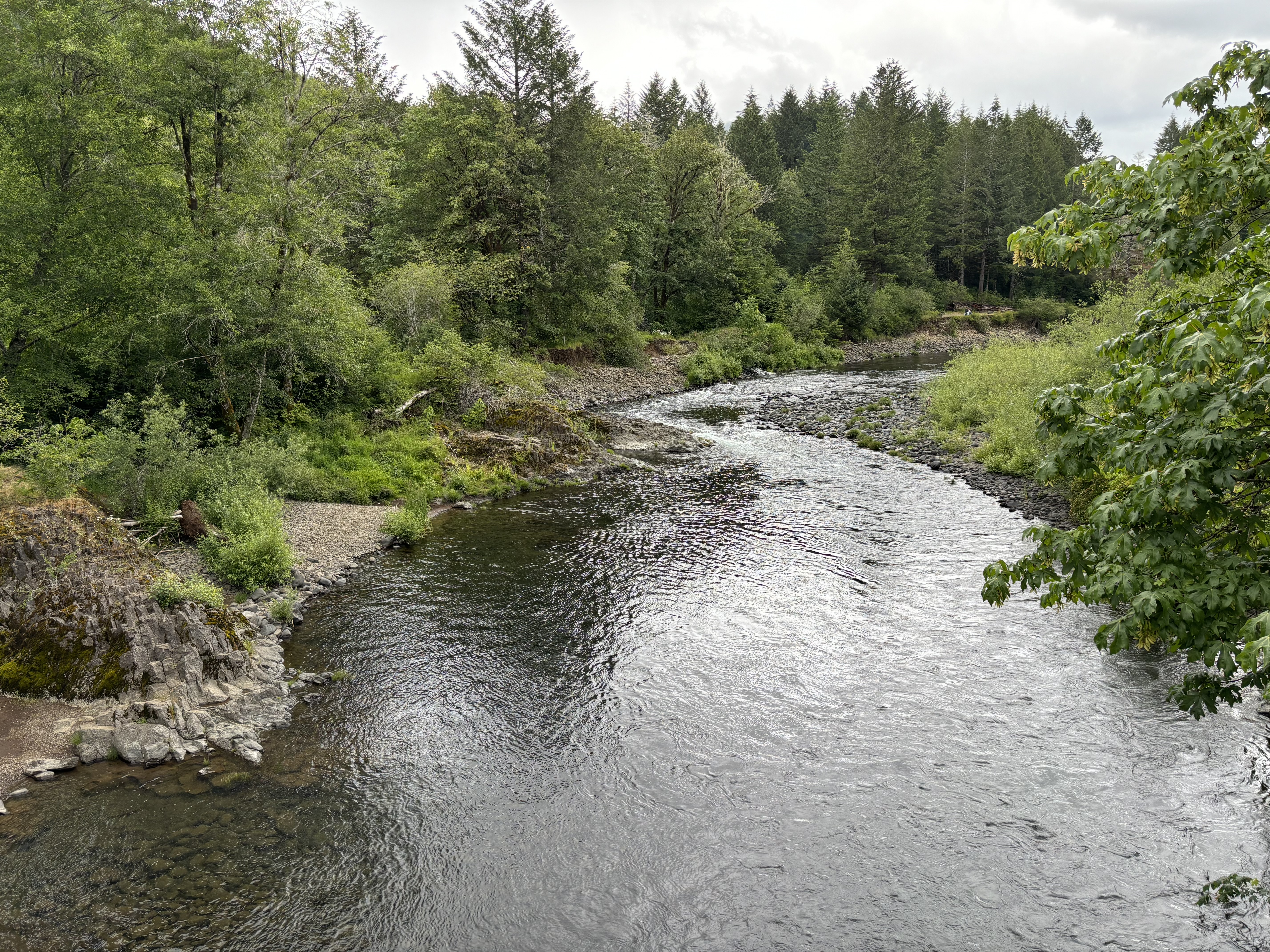
Moss covered trees are an iconic symbol of Olympic National Park. No surprise, it’s a rain forest! The park receives 100-140 inches a year— more on the coast, less as you journey inland. It is estimated that it takes 70-100 inches a year to create a rainforest. We were hiking on the park’s Staircase Rapids Trail when we took this photo. The trail and Lake Cushman receive around 100 inches a year. The moss creates a magical world where you half expect to find elves around the next corner. Or Bigfoot.This was a moss covered root.Speaking of roots, I wondered if this tree was about to rise up and go wandering. Had we arrived at Fanghorn Forest from Lord of the Rings?Hmm. Were we about to meet Treebeard?If so, he was lying down and taking a nap for a year or two.This was the granddaddy of roots along the trail, however. I half expected to find a dryad/wood nymph playing among the roots.And did! At no prompting from us, Christian immediately headed over to the tree and started climbing among the roots of the forest giant— like she belonged there.Given the name of the trail, Staircase Rapids, we expected to find rapids along the trail. And we did. But they were gentle. We had missed the massive runoff from snowmelt in the spring.Most of the snow had already melted off.Small rapids have a charm of their own, however.A bridge across the Skokomish River provided this view.One brave soul wanted a different perspective. At 81, I decided to pass… Grin.And depended on my telephoto to bring me up close and personal. That’s it for today. Monday’s post will find us kayaking on Cushman Lake and the Skokomish River just below the Staircase Rapids.Kayaking on the Skokomish River at the edge of Olympic National Park
Unless you live in Oregon or have traveled through the state on the Pacific Coast Highway, it’s likely that you think of cheese or ice cream when you hear the word Tillamook rather than the town or region. The products are distributed widely throughout the US. The Tillamook Creamery produces 170,000 pounds of cheese and 18,000 gallons of ice cream every day and has a cold storage facility capable of aging 50 million pounds of cheese at once. It has a secondary creamery in the town of Boardman on the Colombia River east of Portland that produces another 300,000 pounds of cheese a day.
Peggy and I normally include Tillamook on our route when we travel up the Oregon Coast. We are big fans of the ice cream. Both of the containers above are in the process of being eaten! They were given to us by our niece, Christina, last week when we visited her in Olympia. She knows our taste in ice cream. Our weekly Date Day treat for years has been a substantial bowl of Tillamook’s vanilla ice cream topped with hot fudge and whipped cream. Peggy likes to add a sprinkle of Heath Bar English Toffee Bits to hers. I sometimes substitute Irish cream liquor for the hot fudge. Whatever we add, the total package adds up to decadence.
We also like Tillamook’s cheese. I often have its pepper jack on hand. But there are so many excellent cheeses out there, most of what we eat comes from different creameries. Our trip up the Pacific Coast over the past three months qualified as a cheese lover’s dream— and we took full advantage of it.
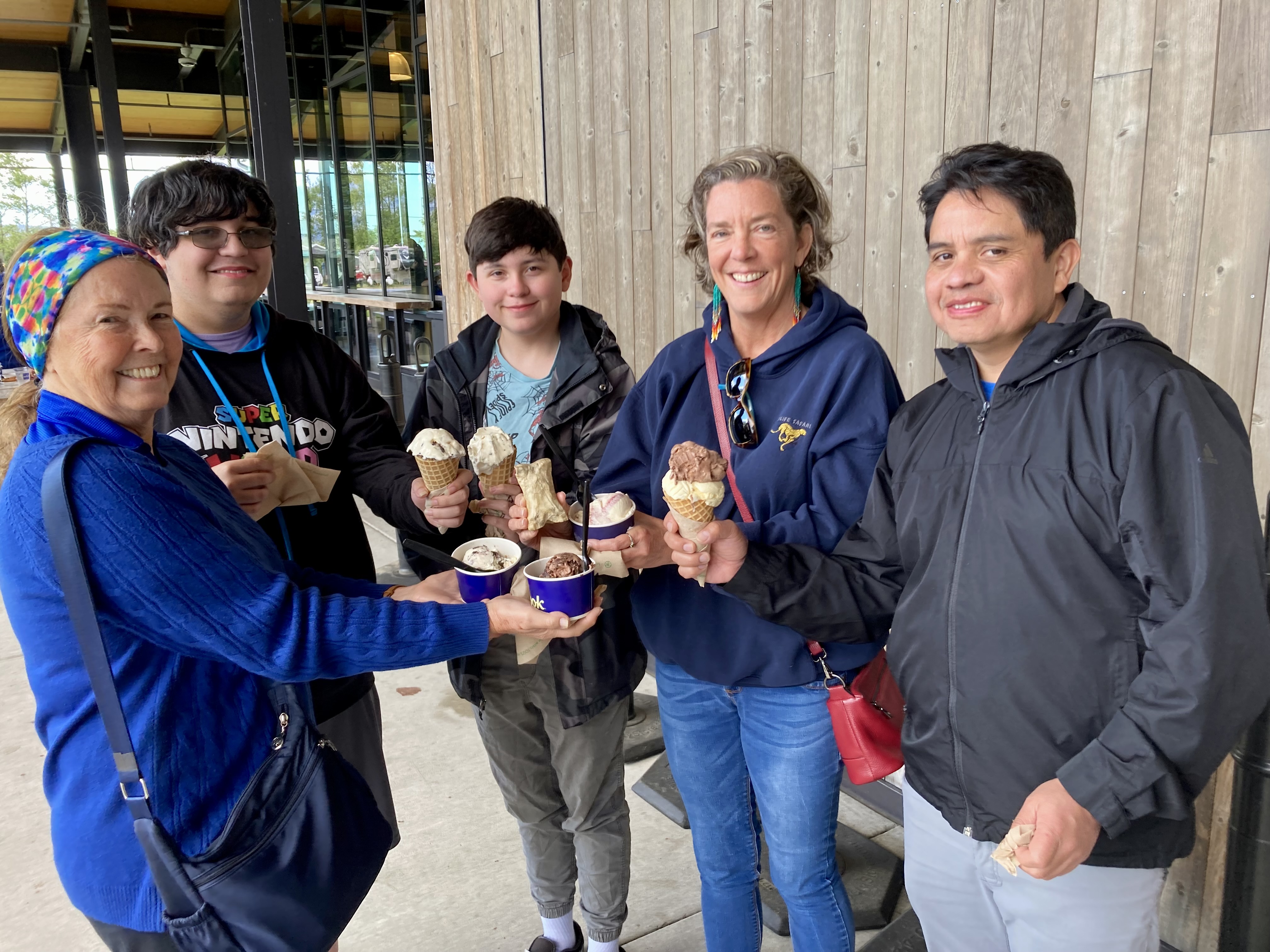
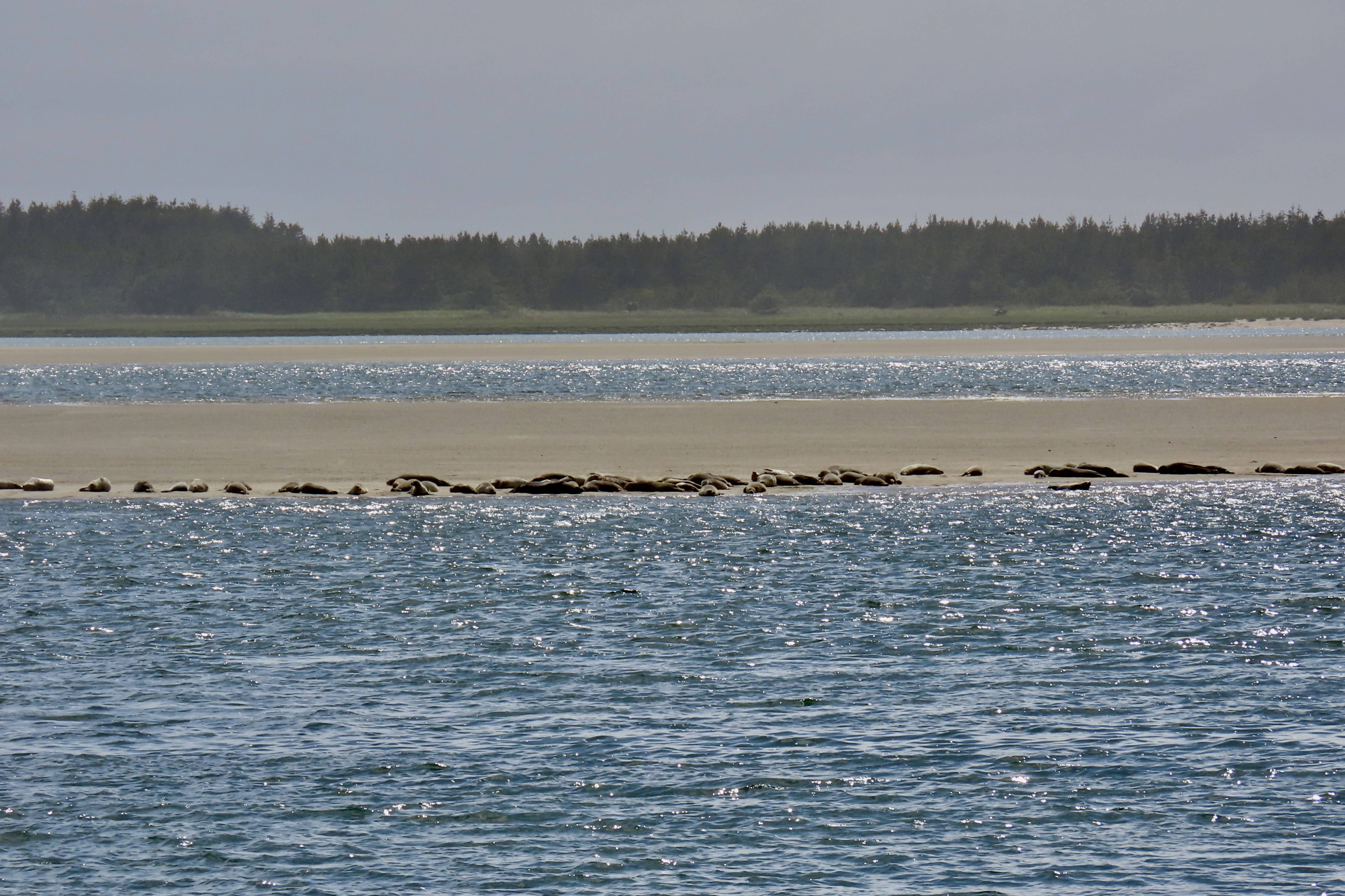
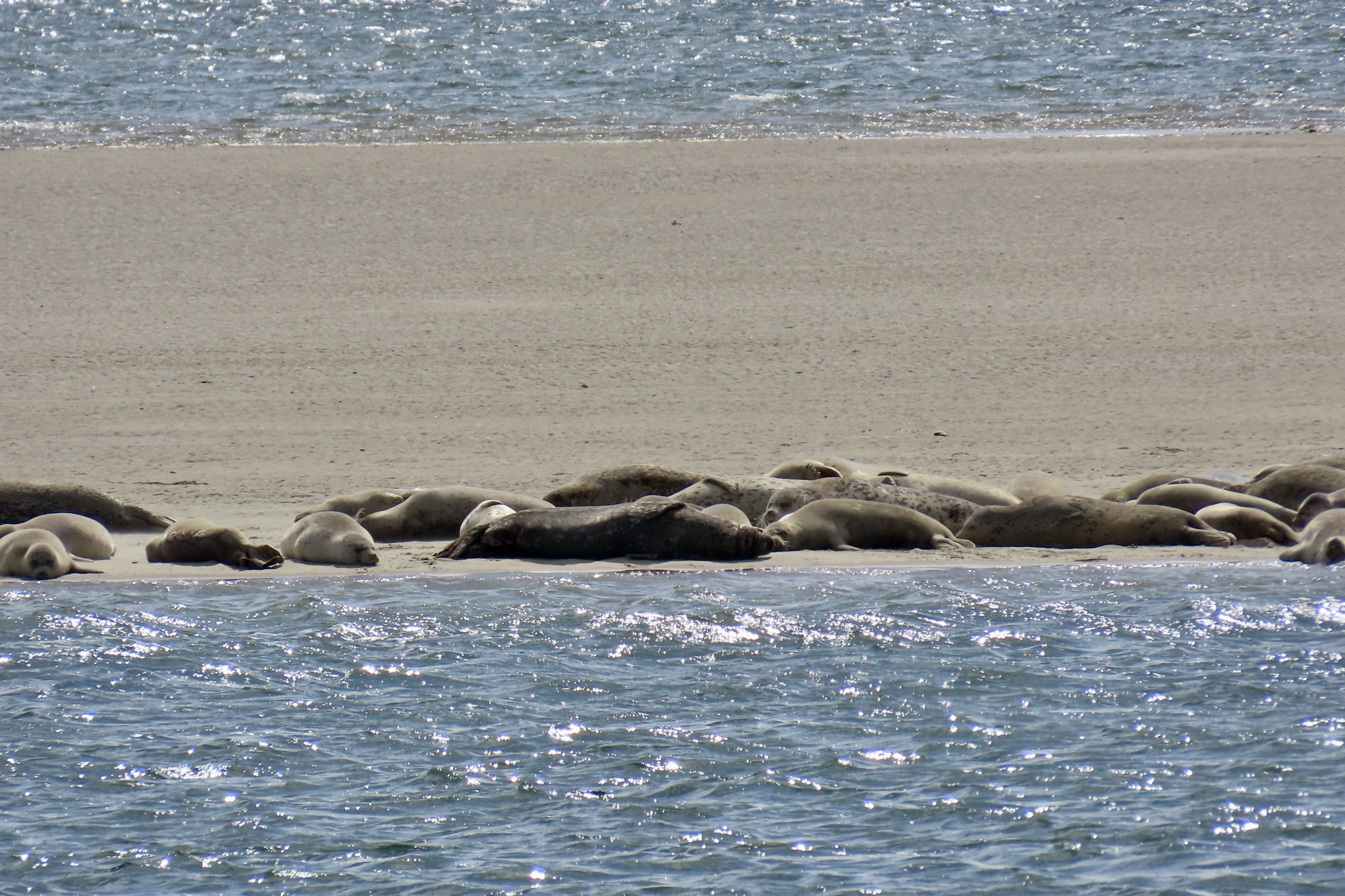
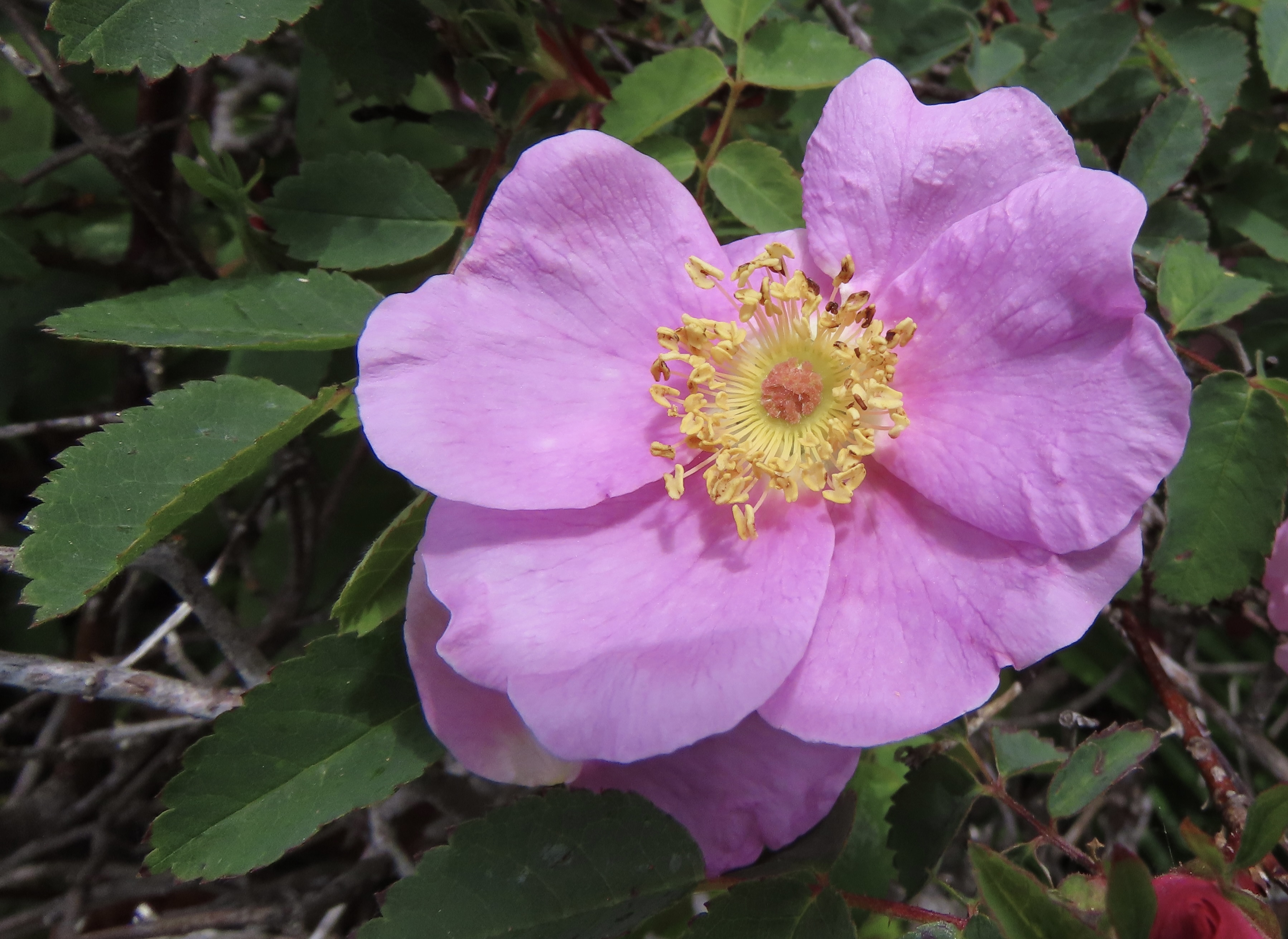
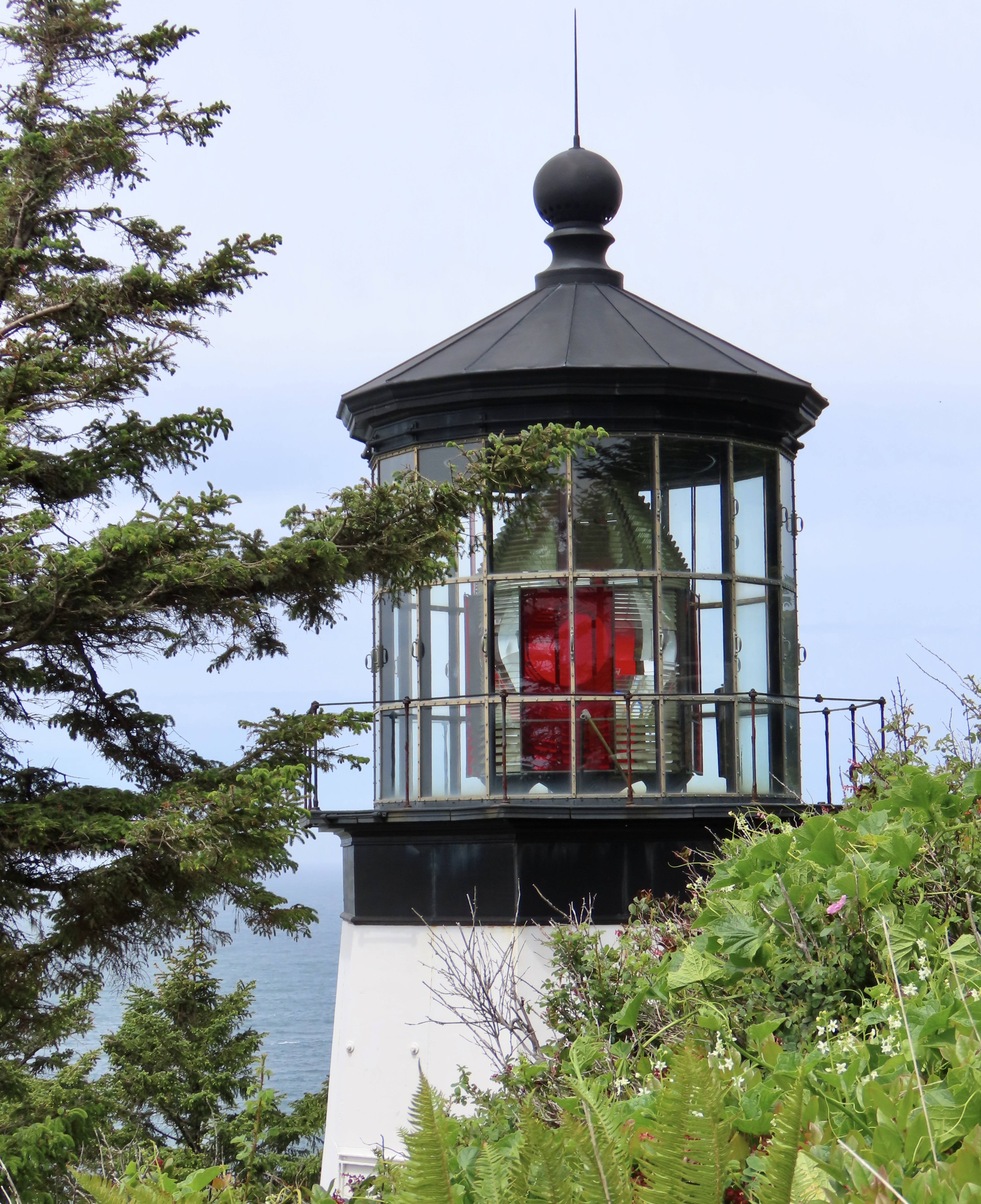
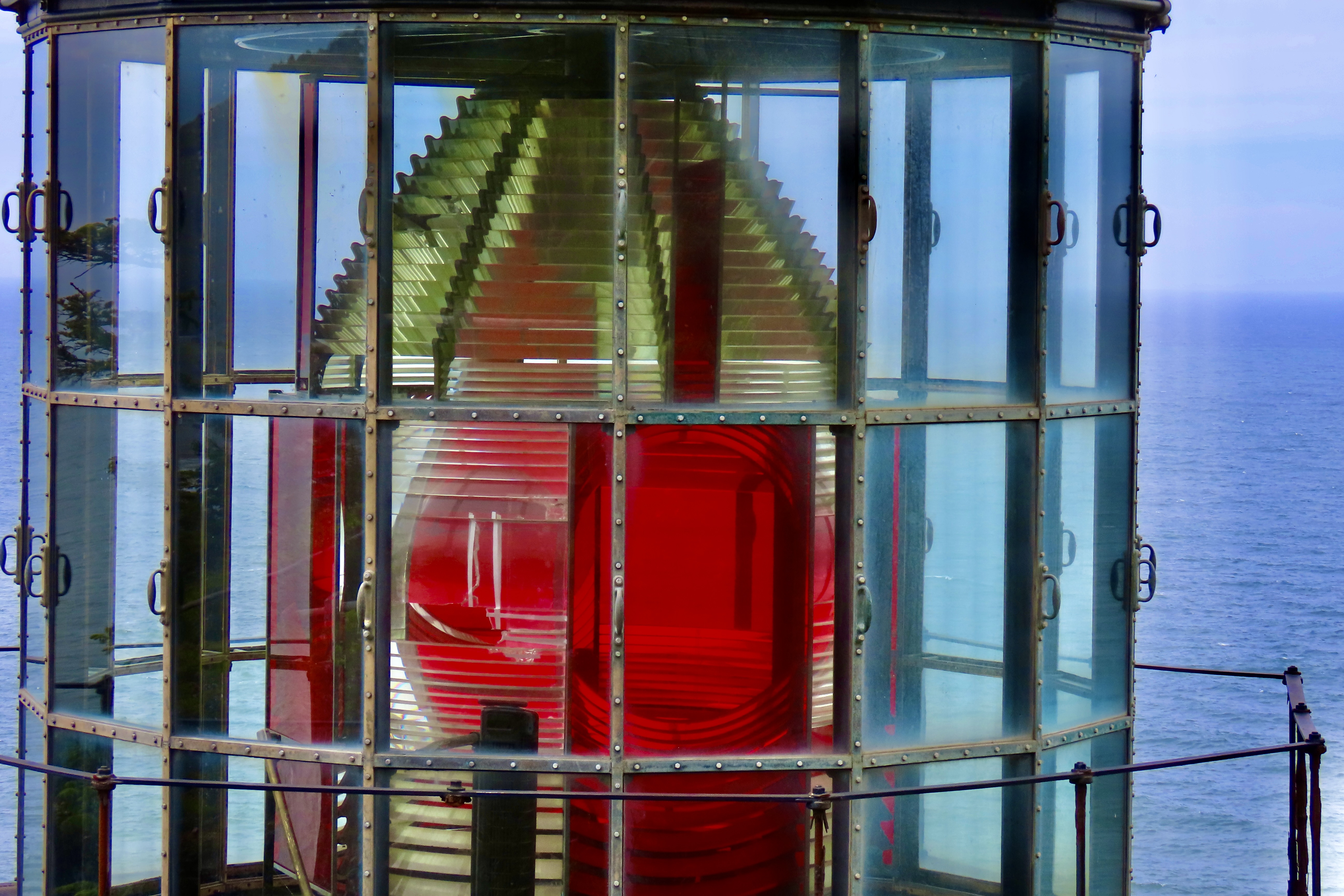
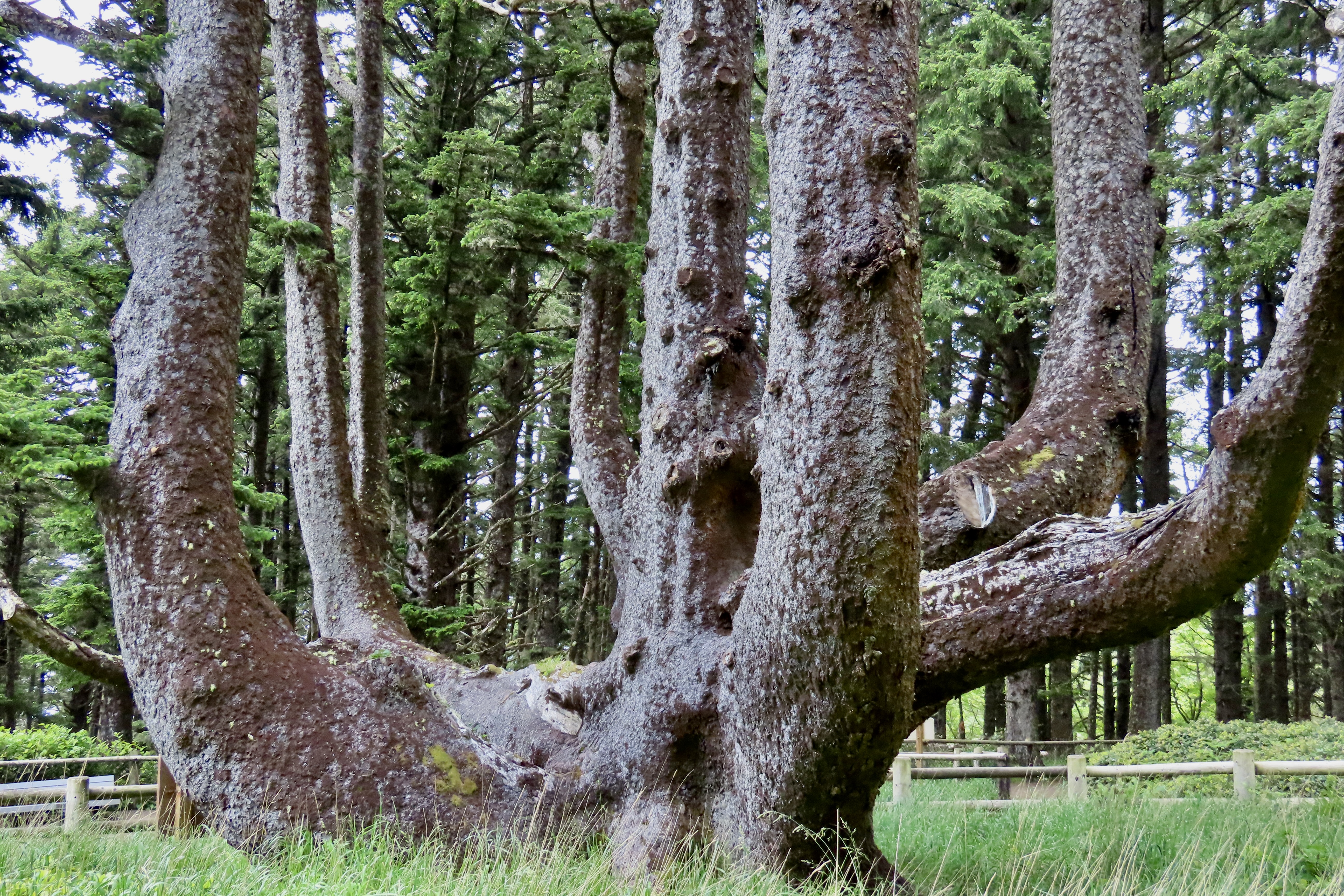
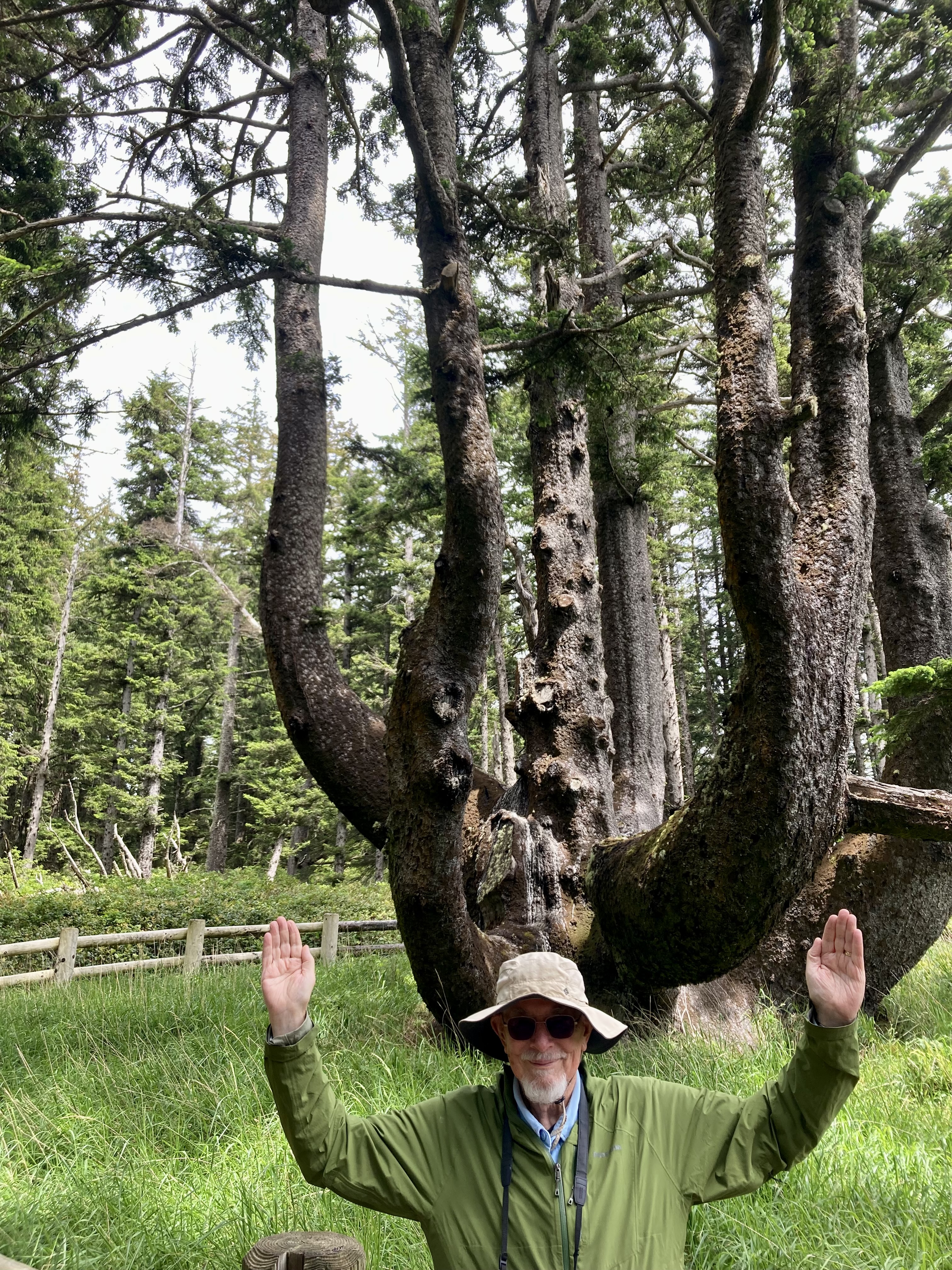
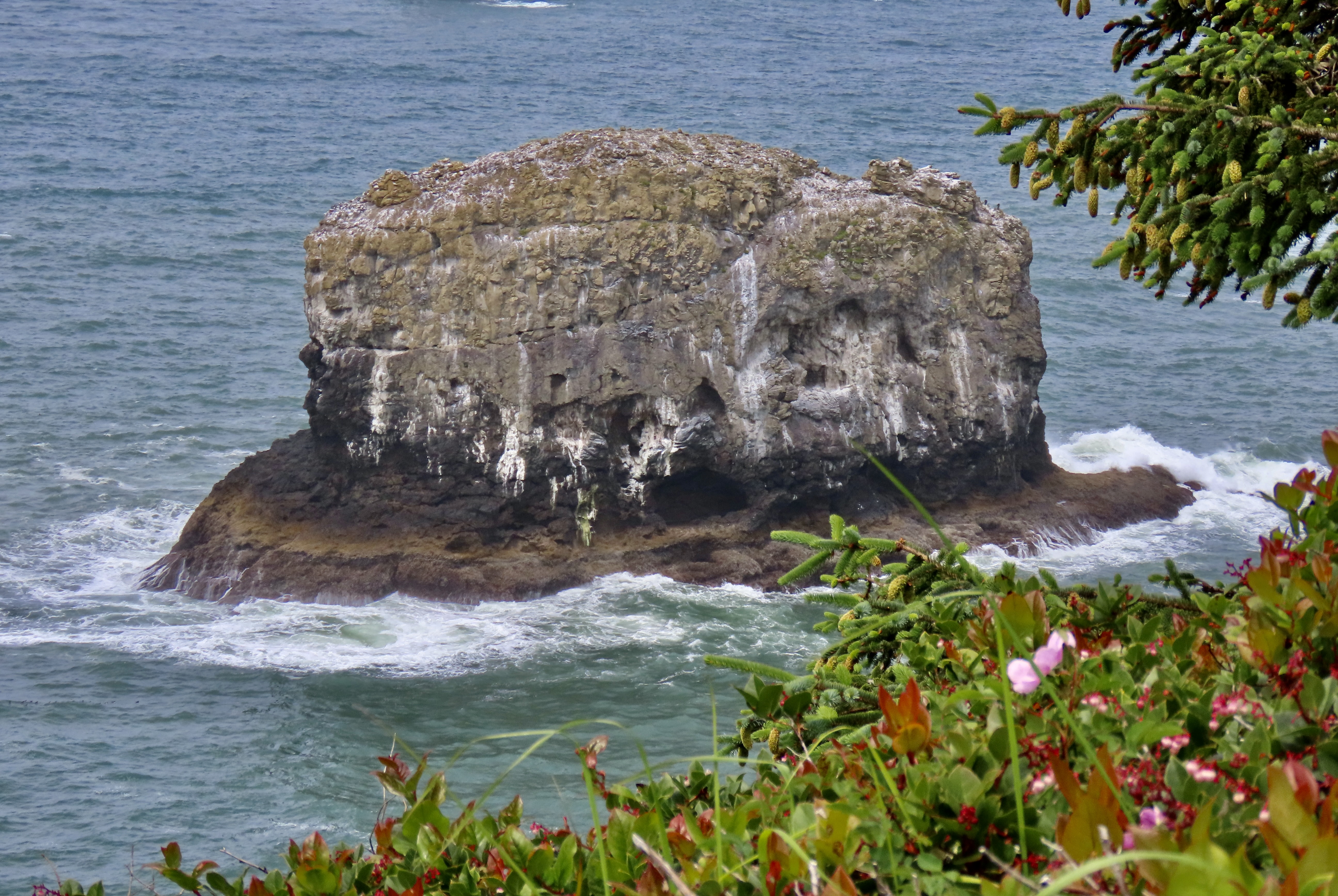
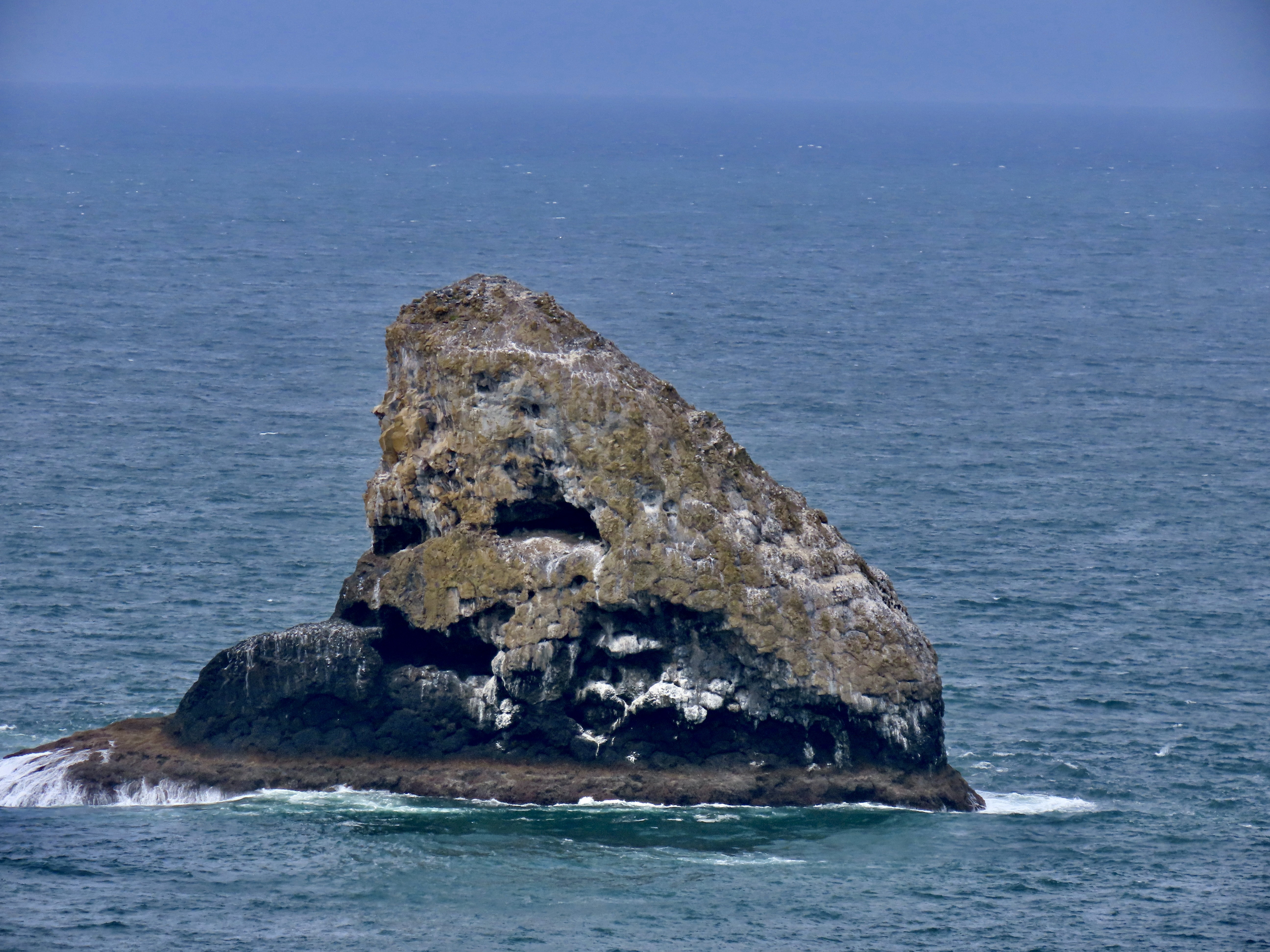
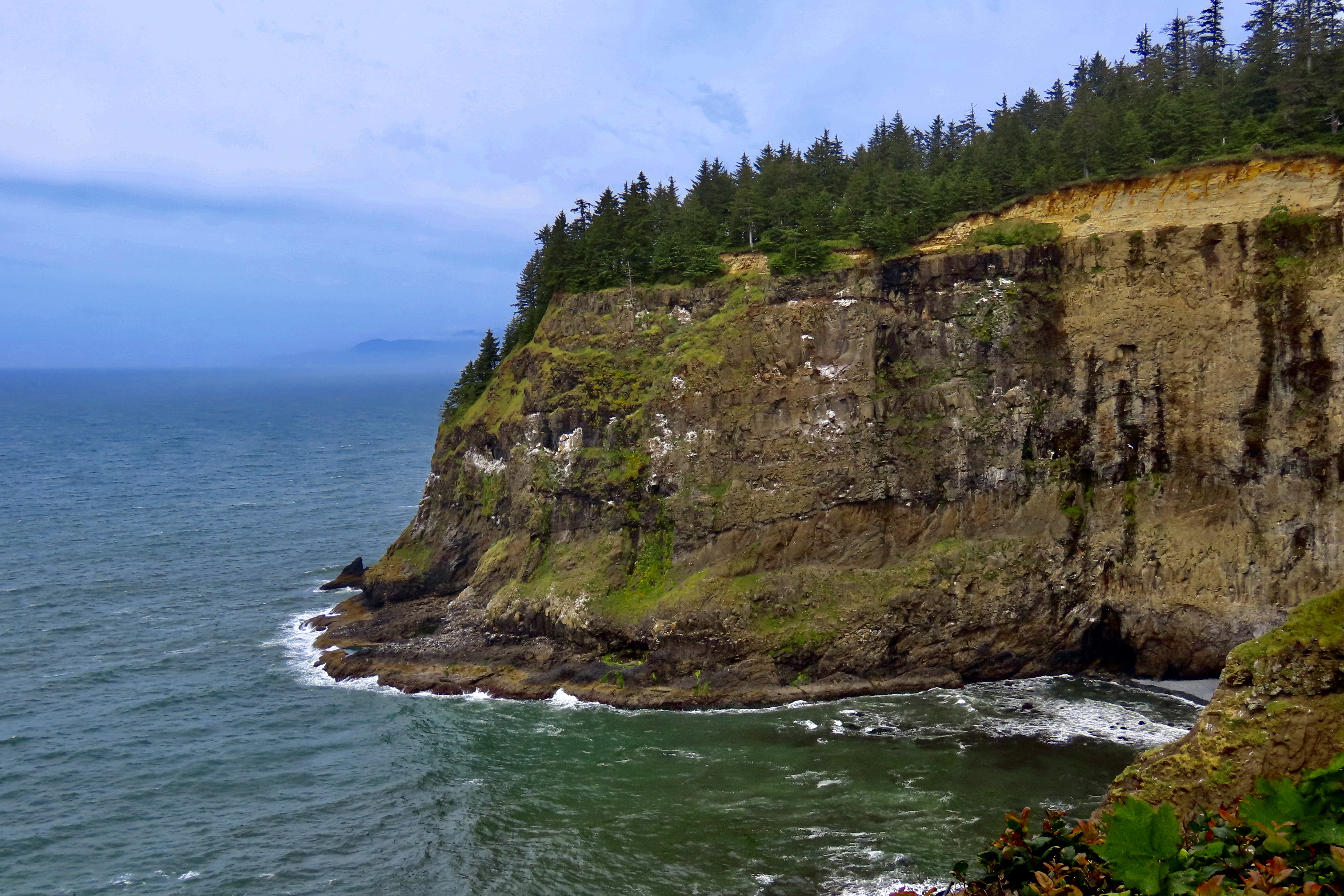
The entrance to the visitor center at the Tillamook Creamery. A large restaurant and ice cream parlor is on the left. Visitors are invited to watch the processing of cheese on the right. There is also a large gift shop where anything the creamery produces is for sale. With over 1.3 million visitors annually, the creamery is one of Oregon’s top tourist destinations. On a busy summer day, up to 17,000 visitors will tour the facility.It all starts with cows, and, when you walk into the entrance, Tilly the Cow is there to greet you. The creamery is actually a cooperative owned by local dairy farmer families that go back several generations. One example of the importance of cattle in the region was that the herds had a special evacuation route across the coastal mountains during World War II in case of a Japanese invasion.My fellow blogger and friend Crystal Trulove of the blog, Conscious Engagement, came over from Portland to visit us in Tillamook. Her best bud, Pedro, and his two sons Liam and Andre, joined us in chowing down on various flavors of ice cream at the creamery. Bone also made it into the photo. Crystal, who is a Cherokee, took Bone with her to visit the Cherokee Nation in Oklahoma. (BTW: For new followers of this blog, Tom Lovering, a friend of mine, and I found Bone when we were backpacking in 1977. Bone has been traveling with us and friends ever since. He has been to over 50 countries and had incredible adventures, including being blessed by the Pope, attending a Presidential Press Conference, climbing Mt. Kilimanjaro, and being married at Burning Man to the beautiful Bonetta.)We also visited the Tillamook Forest Center with Crystal, Pedro and the boys. Smokey the Bear greets visitors. An old donkey steam engine can be seen on the side. Crystal took this photo from a fire tower that is next to the Center.The fire tower.Peggy and Crystal snuggle up to Smokey. The bear looks like he has put on a few pounds. I’d say it’s middle age spread except Smokey has left middle age far behind. He turns 80 in August. Shouldn’t his fur be showing some grey hair?The inside of the Tillamook Forest Center is crammed full of information on the forest industry and tells the story of how the area recovered from three devastating fires in the 40s and 50sTha attractive Wilson River flows by the Forest Center. A walking bridge across the river provides great views. This is looking down the river. (Photo by Crystal Trulove.)Looking upstream from the bridge.As might be expected, given that Tillamook is a few miles away from the spectacular Pacific Northwest coast, there is also great scenery in the area. We were staying at the Netarts Garden RV Resort on Netarts Bay and this was the view from our campground. The dots are seals— bellied up to the sand bar, so to speak.A closer look…And closer.The Netarts Garden RV Resort lived up to its name by being covered with flowers such as these.A Calla Lily…And this rose.You know what they say, however: A rose by any other name is still a rose. We found this wild one out on Cape Meares, which is just up the road from Netarts Bay.The roses decorated a path leading up to the Cape Meares Lighthouse.The lighthouse, framed by trees and bushes.A signboard informed us that the French hand-ground Fresnel Lens is one of only two eight sided lights in the US. The other is in Hawaii.The Cape Meares Lighthouse has the distinction of being the shortest lighthouse on the Oregon Coast.The Octopus Tree is another well-know feature of Cape Meares. Whether created by nature or careful pruning by Native Americans, the sitka spruce has eight branches that travel outwards parallel to the ground and then shoot up into the air. (One of the original limbs has been cut off, in case you are counting.)Peggy used me as model…Sitka spruce cones.Like so many other locations along the Pacific coast, there were towering seas stacks…And plunging cliffs. Last time we were here, we watched baby murres flutter down to the ocean and their waiting fathers. That’s it for today. The next post will take us up to Olympia and Olympic National Park.
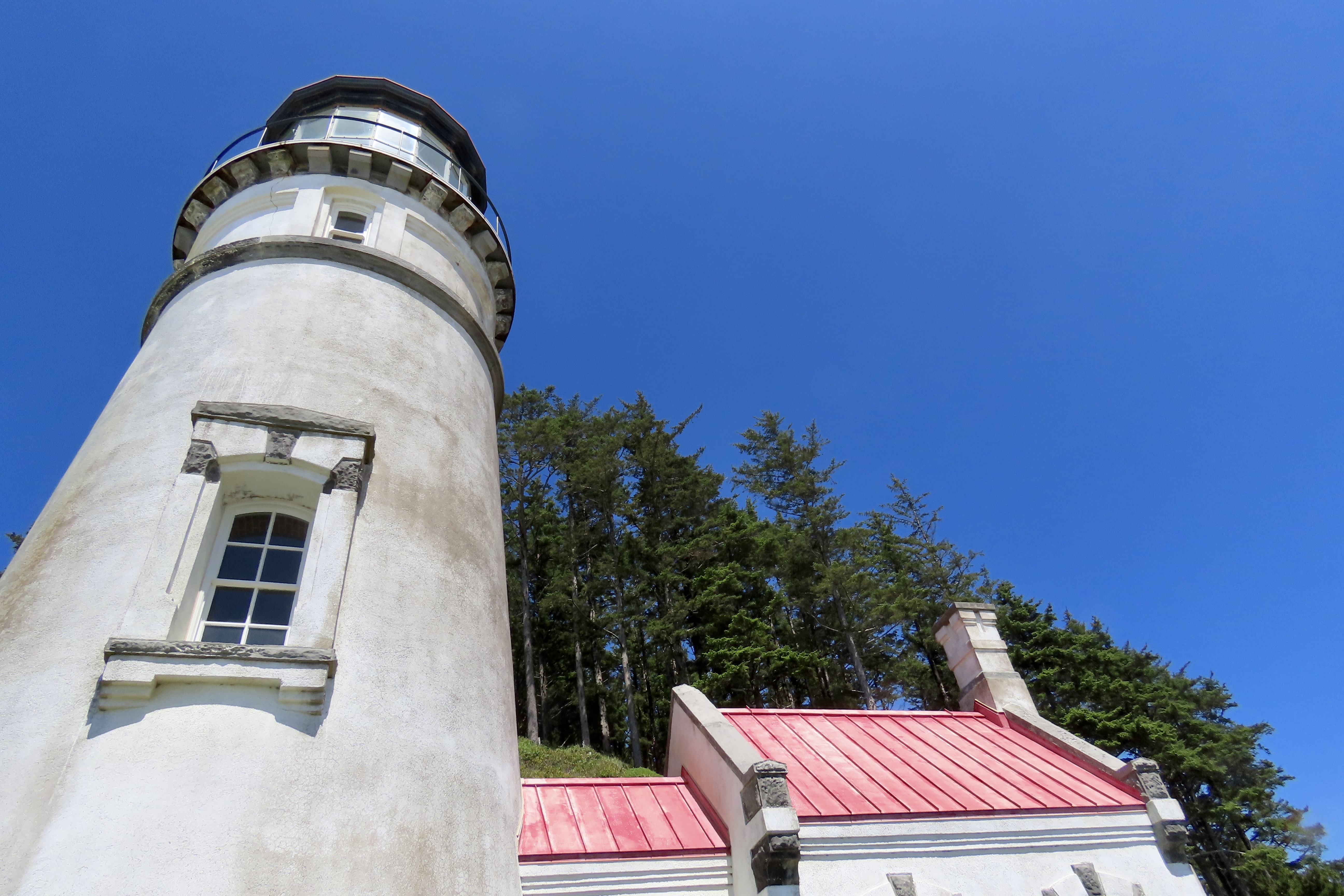
Like a moth to a porch light, I’ve always been attracted to lighthouses. There is something about their remote, often scenic, location that I find incredibly romantic. The Heceta Head Lighthouse is one of many located along the Oregon Coast, and is among the most beautiful. At one time or the other, I’ve been to all of them.It’s hard to beat the lighthouse’s front row seat on the Pacific Ocean. Imagine watching the giant waves crashing ashore from here during a major storm. Or being here when the sun was casting the nearby islands and lighthouse in a warm glow, as it did during our visit.Naturally, we had to photograph the lighthouse from a number of different perspectives. (Peggy was taking the photo featured on top.)Heceta Head Lighthouse was built in 1894 and placed on the National Register of Historic Places in 1978.The two islands located next to Heceta Head added to the scenery. The top of the islands hosted nesting cormorants, murres and California sea gulls. We were surprised (and pleased) with how the camera depicted the ocean behind the islands. A closer look.The scenery changed to crashing waves at the bottom of the islands. That left behind hundreds of cascading waterfalls.This was the head lighthouse keeper’s home. Not bad. It now serves as a B&B. Calla lilies cascaded down the hillside off to the right of the house. We have found them in every location we have camped at along the coast on our journey north.
Just above the picket fence there was a small gift shop. I’m not sure Peggy has ever found one she didn’t want to visit. Besides, she was on a mission: Looking for octopuses. She’s been searching for them ever since she read a book on their intelligence. She found one and named it Octo.Leaving Heceta Head we took two more photos. One a beach level photo of the two islands…And two, this iconic Oregon bridge built over Cape Creek, which flows into the small bay just beneath the lighthouse. The bridge opened in 1932. It was designed by Conde McCullough who was also responsible for designing a number of other classic bridges found along Highway 101 in Oregon.Back at camp, things got a little strange. Octo immediately climbed up on Bone as a convenient perch for keeping track of what was happening inside and outside of our tiny trailer/house. We thought Bone would go crazy and toss the presuming octopus into the nearest ocean…But Bone, being Bone, merely thought of Octo as a rather unique new hat he could wear on formal occasions.While Eeyore, the donkey, moderated a discussion between Bone and Octo about their new living arrangements, Peggy and I prepared to try out our new boats, a pair of Aquaglide, Deschutes 130 inflatable kayaks. I was bit nervous. It wasn’t about the kayaking. We had owned a pair of Innova inflatable kayaks for 25 years and kayaked in such diverse waters as Alaska and the Florida Everglades, the Boundary Waters of Minnesota and the Gulf of California off of Baja. My concern was how our new kayaks would handle. Plus it would be our first time setting them up.We chose to head out to Cleawox Lake at Honeyman State Park, which is just south of Florence. We had kayaked there before in our Innovas. Setting our new kayaks up turned out to be relatively easy and they handled beautifully. Here, Peggy is checking out some water lilies. Knowing how much I always enjoy them, she called me over with my camera.Having got my water lily fix, we kayaked toward one of the coastal sand dunes located at the upper end of the lake. The Oregon Dunes are world famous for their extent and for their appeal to the dune-buggy crowd. I don’t think that the dune buggies are allowed here, but the spots you see a third of the way up the dune are people sand boarding, which is also a popular sport.
I learned a fun fact about the dunes when I was getting my haircut in Florence. The barber, who was a sci-fi fan, noticed me reading a sci-fi book. “Did you know that Frank Herbert was inspired to write Dune by a visit he made to the Oregon Dunes in the late 50s researching a magazine article he was writing about how people were trying to control the flow of the sand over roads and trails in Florence.” Researching the story when I got back to camp, I found several articles that confirmed the fact.
That’s a wrap for today. For our next post we will be in Tillamook, Oregon which is the home of Tillamook ice cream and Tillamook cheese. We will take you to the factory where it is produced. Plus.This large cow photo, which must be at least 20 feet tall, stands above the entry to the Tillamook Creamery.
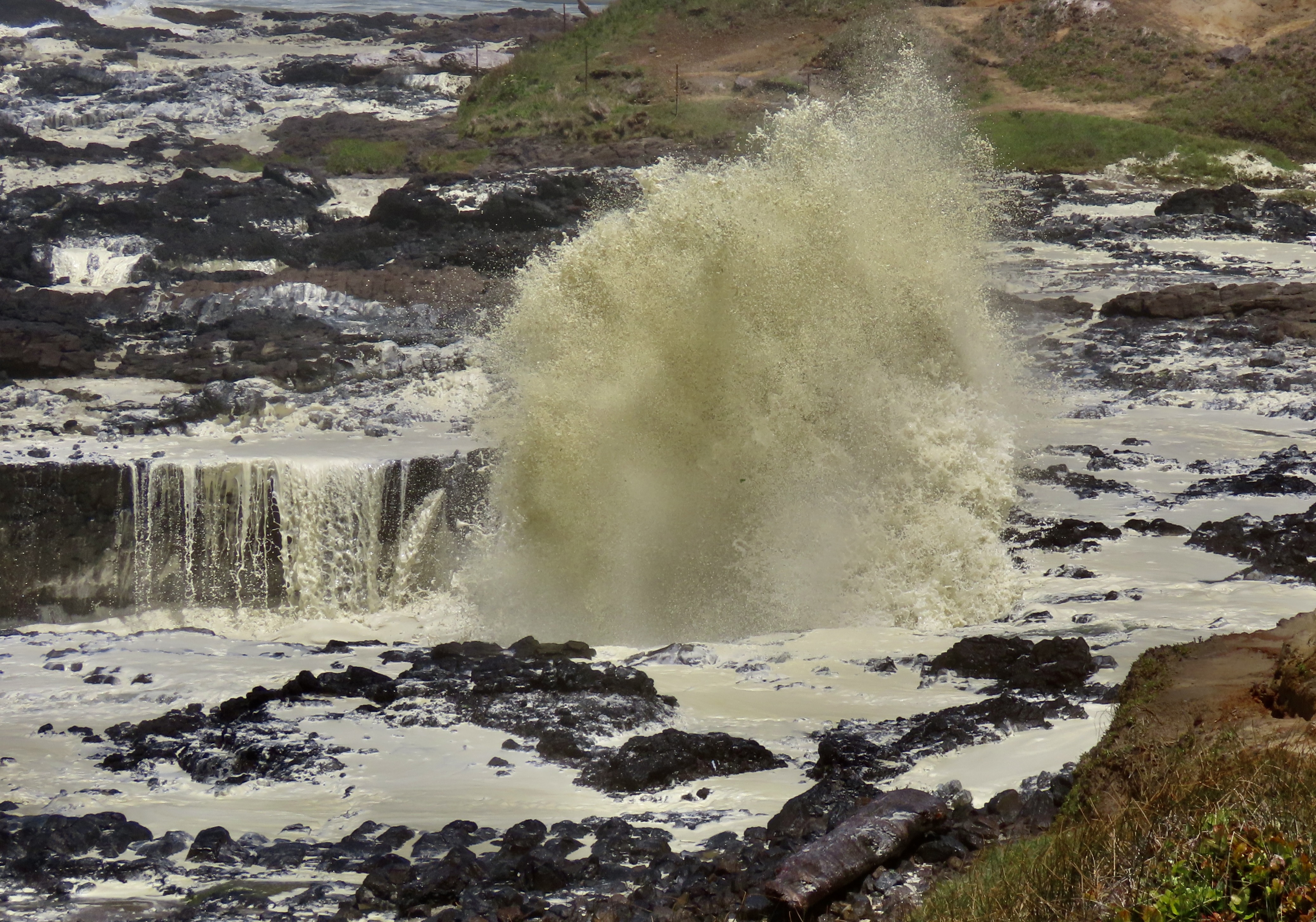
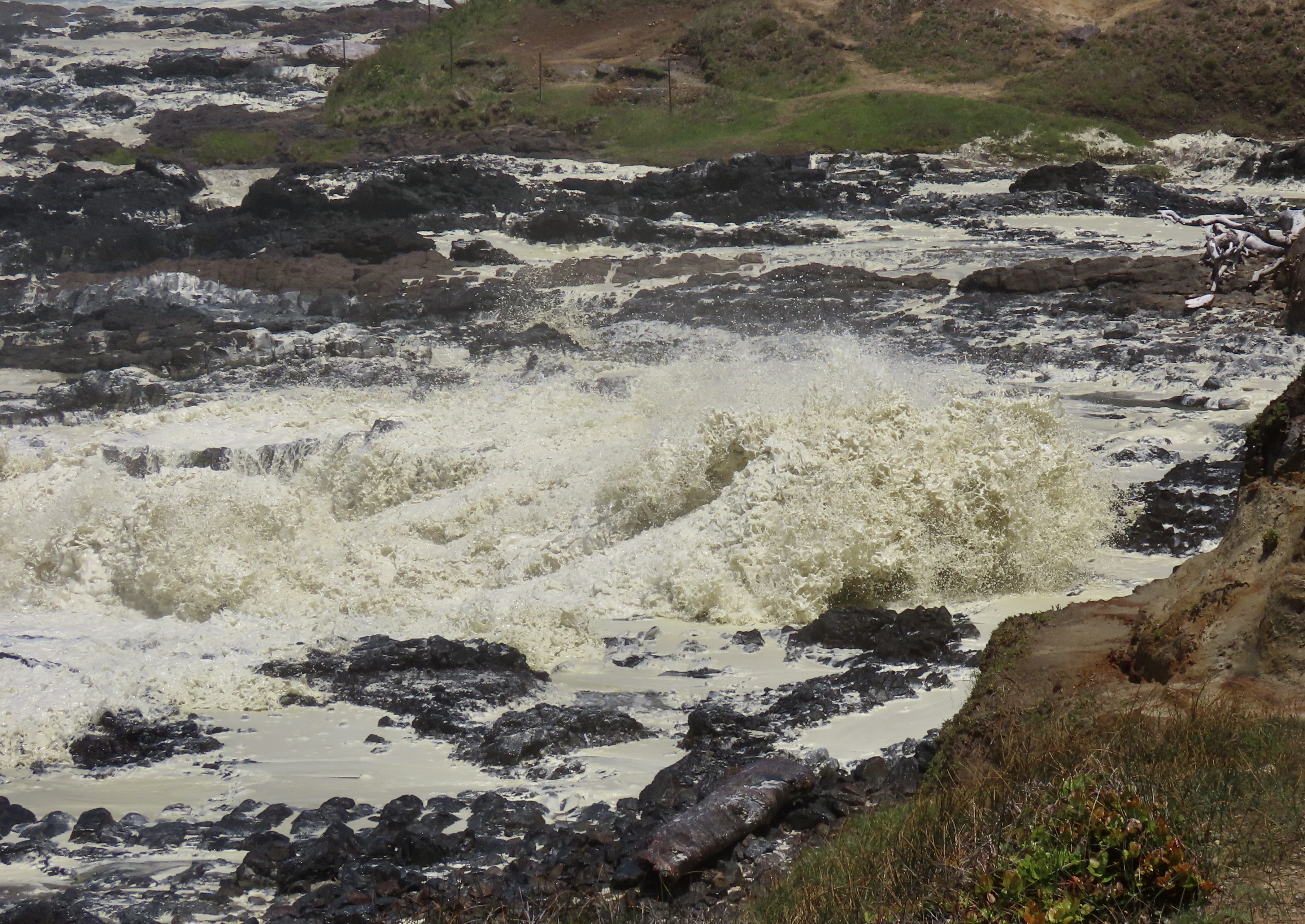
Roaring down a narrow passage between dark volcanic rocks, this wave will soon crash into a rock wall and shoot into the air, creating a breathtaking display of the ocean’s power and danger. Peggy and I were standing on rocks at the edge of this daunting channel, The Devils Churn.
My first visit to the Devils Churn was in the late 70s during a massive Pacific storm. My brother and a partner owned an old hotel on the edge of the ocean a few miles south of the Churn between the towns of Florence and Yachats. Since my dad was managing the hotel, I had driven up to visit him. “Curt,” he had said, “you have to go see the Devils Churn, but stay way back. In a major storm, it can throw huge logs into the air.”
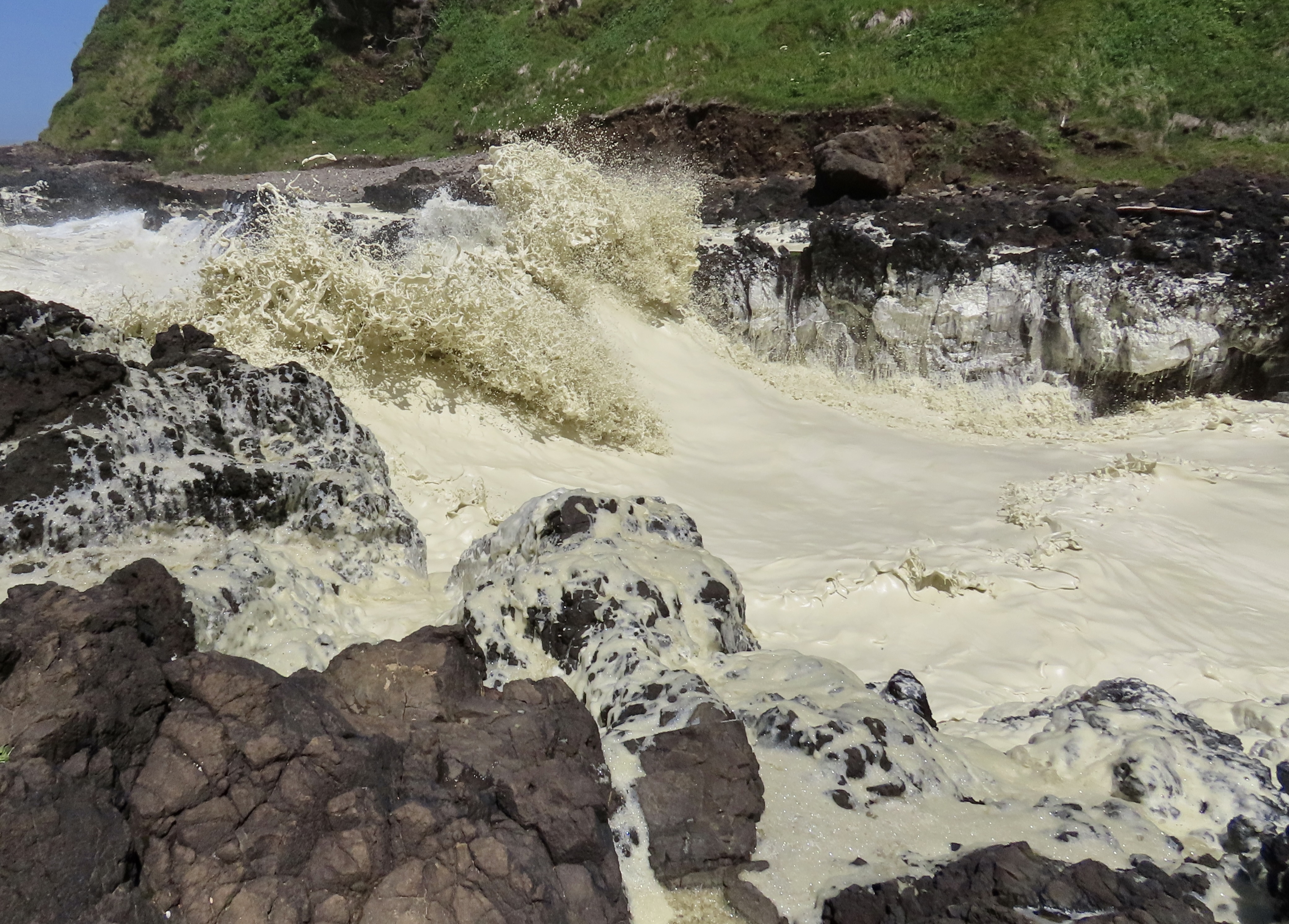
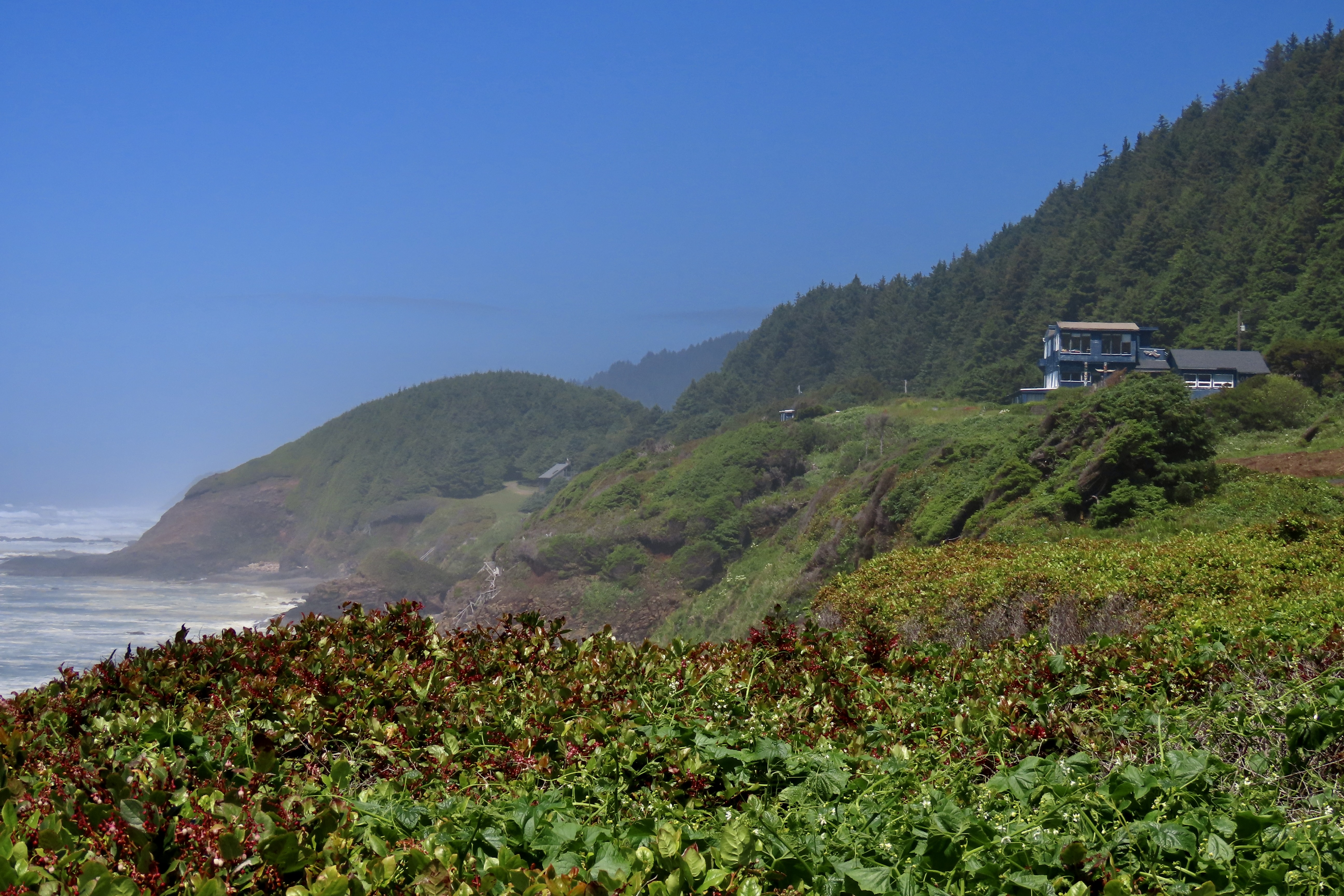
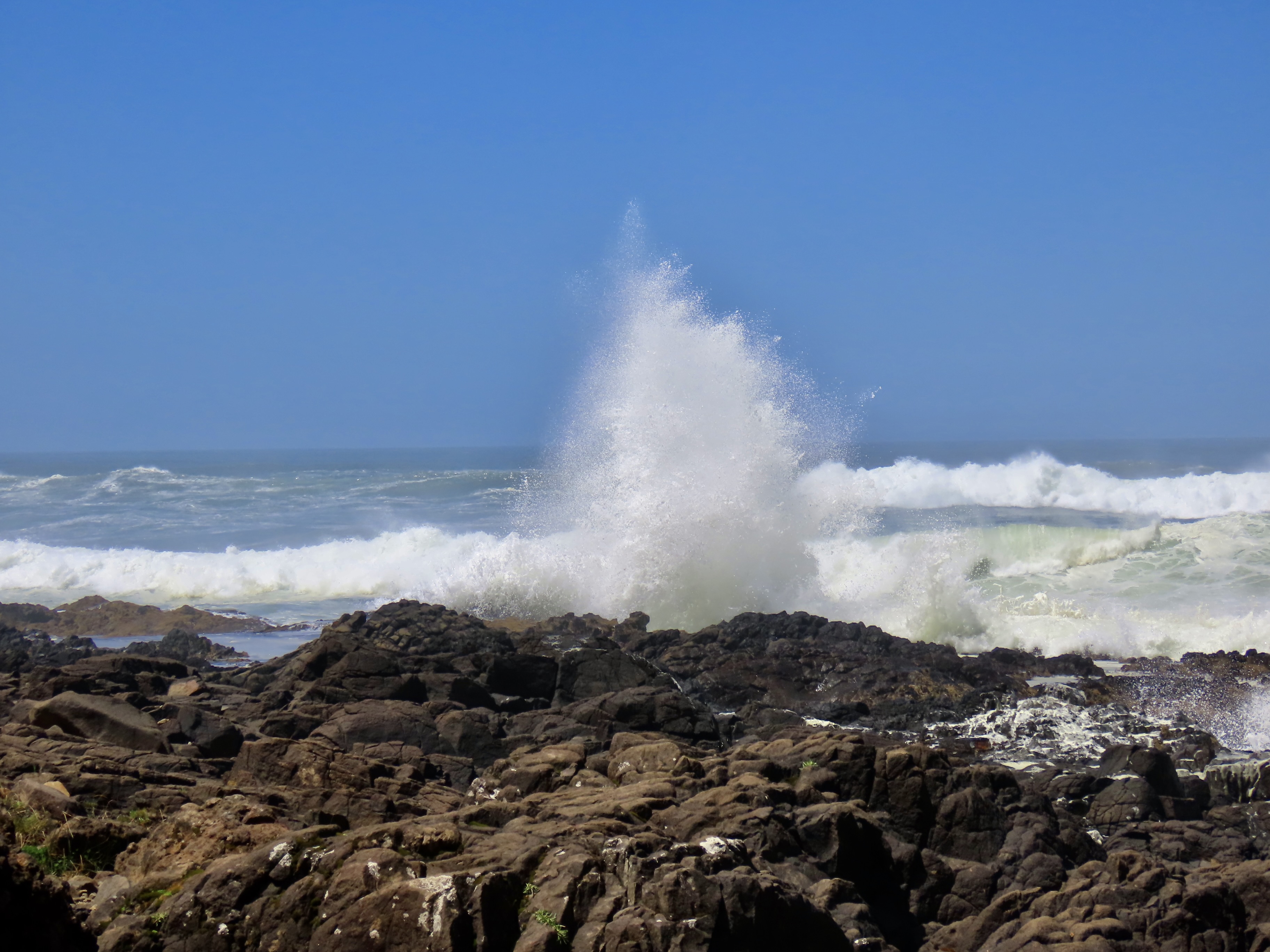
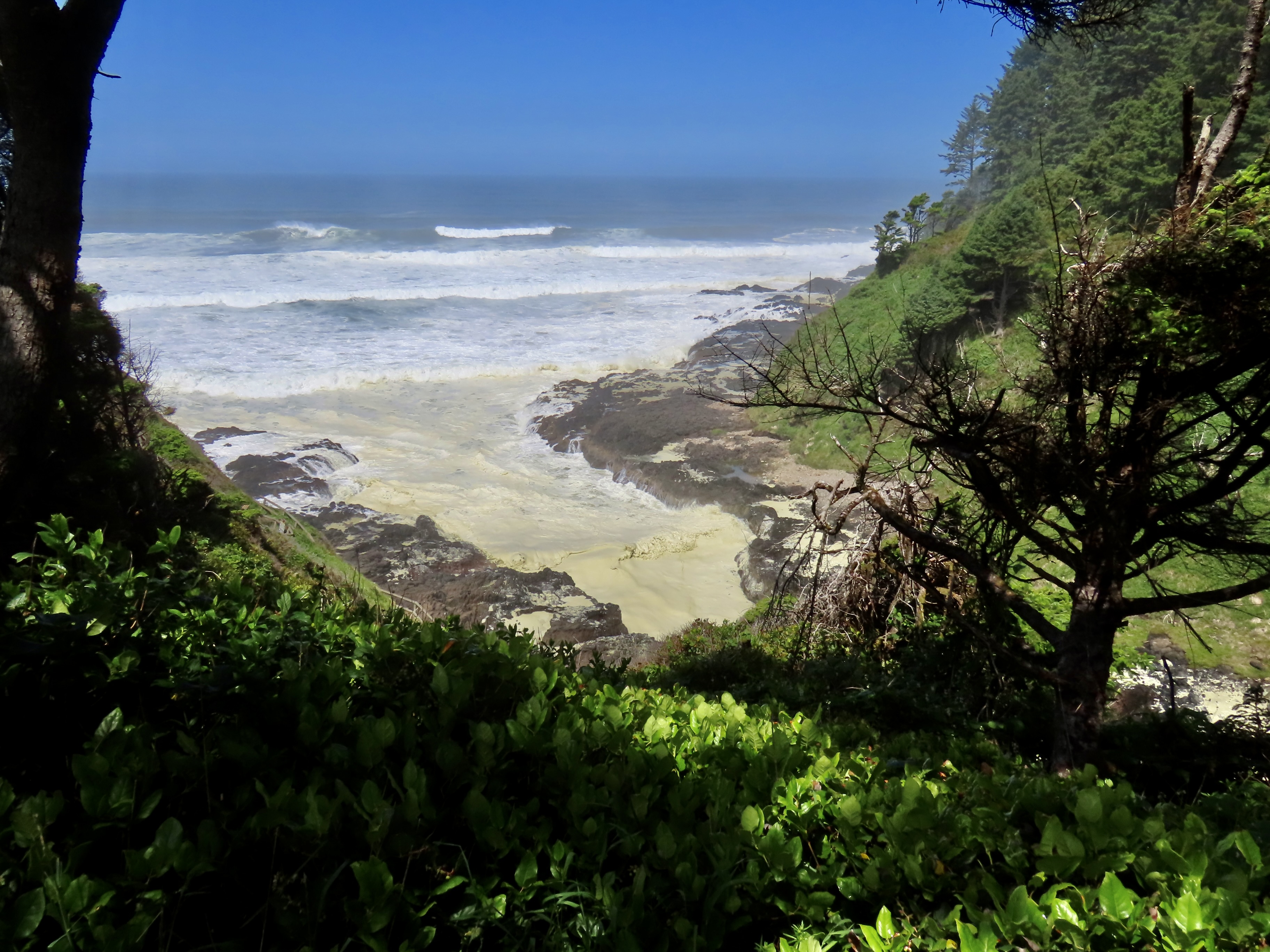
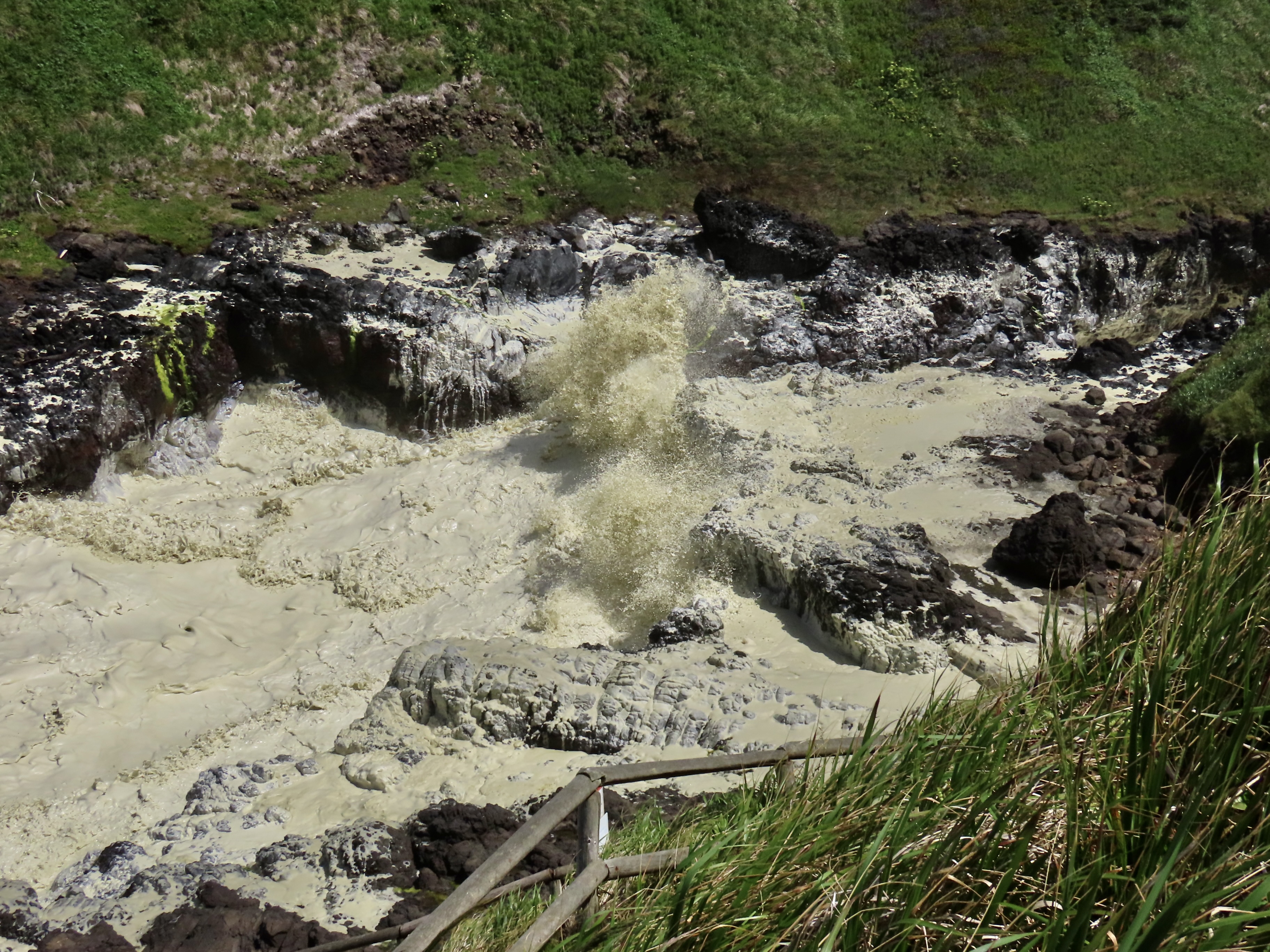
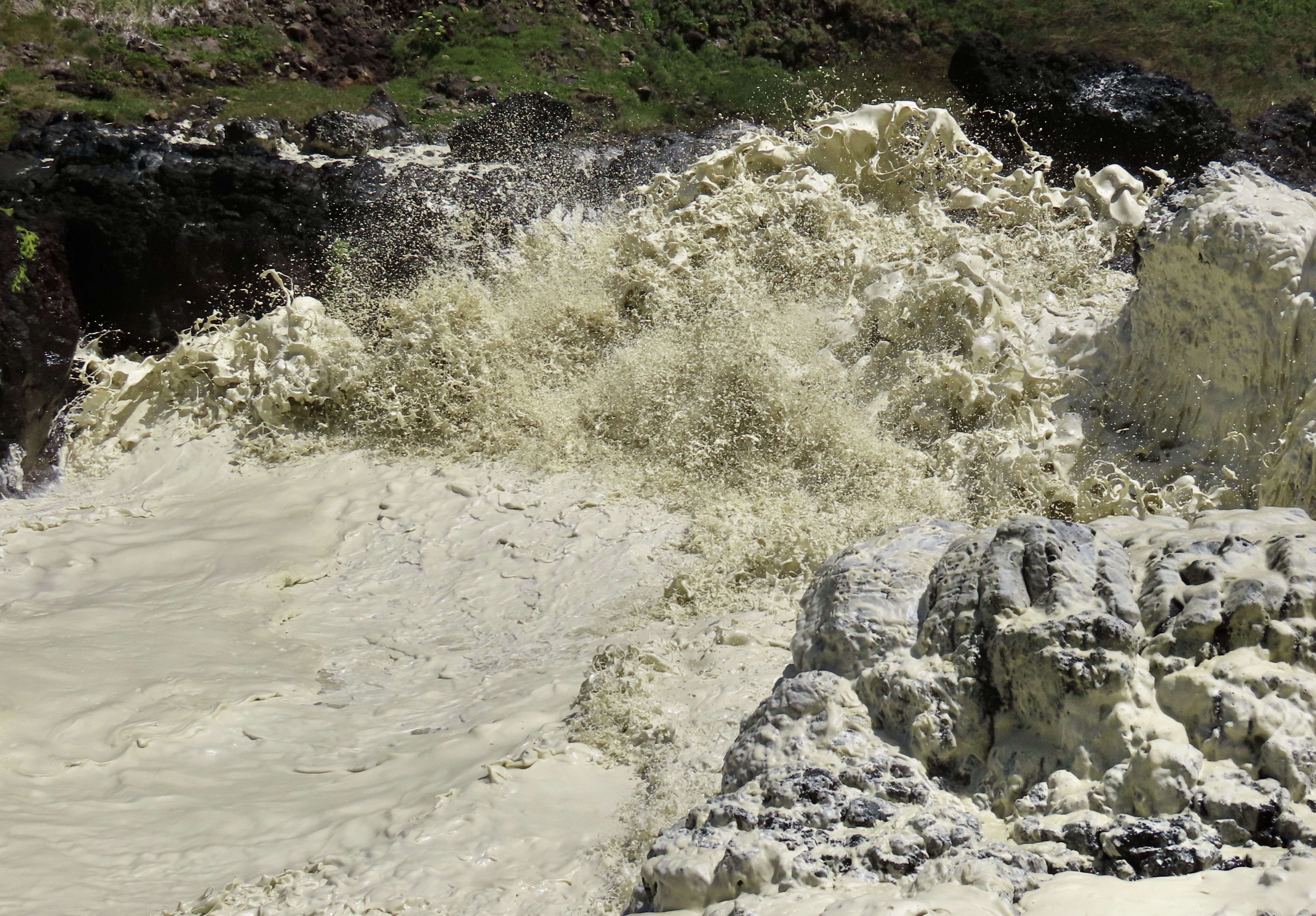
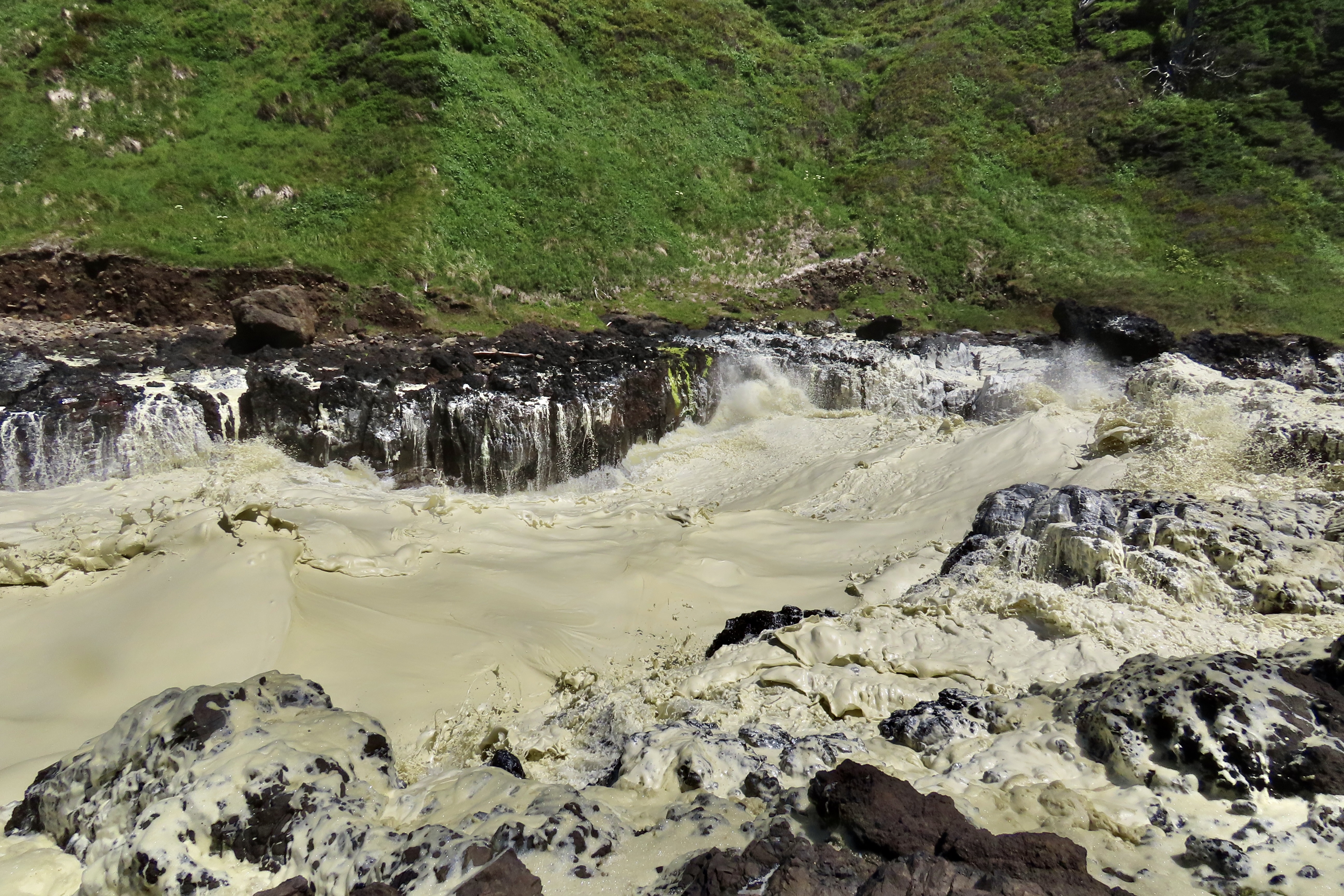
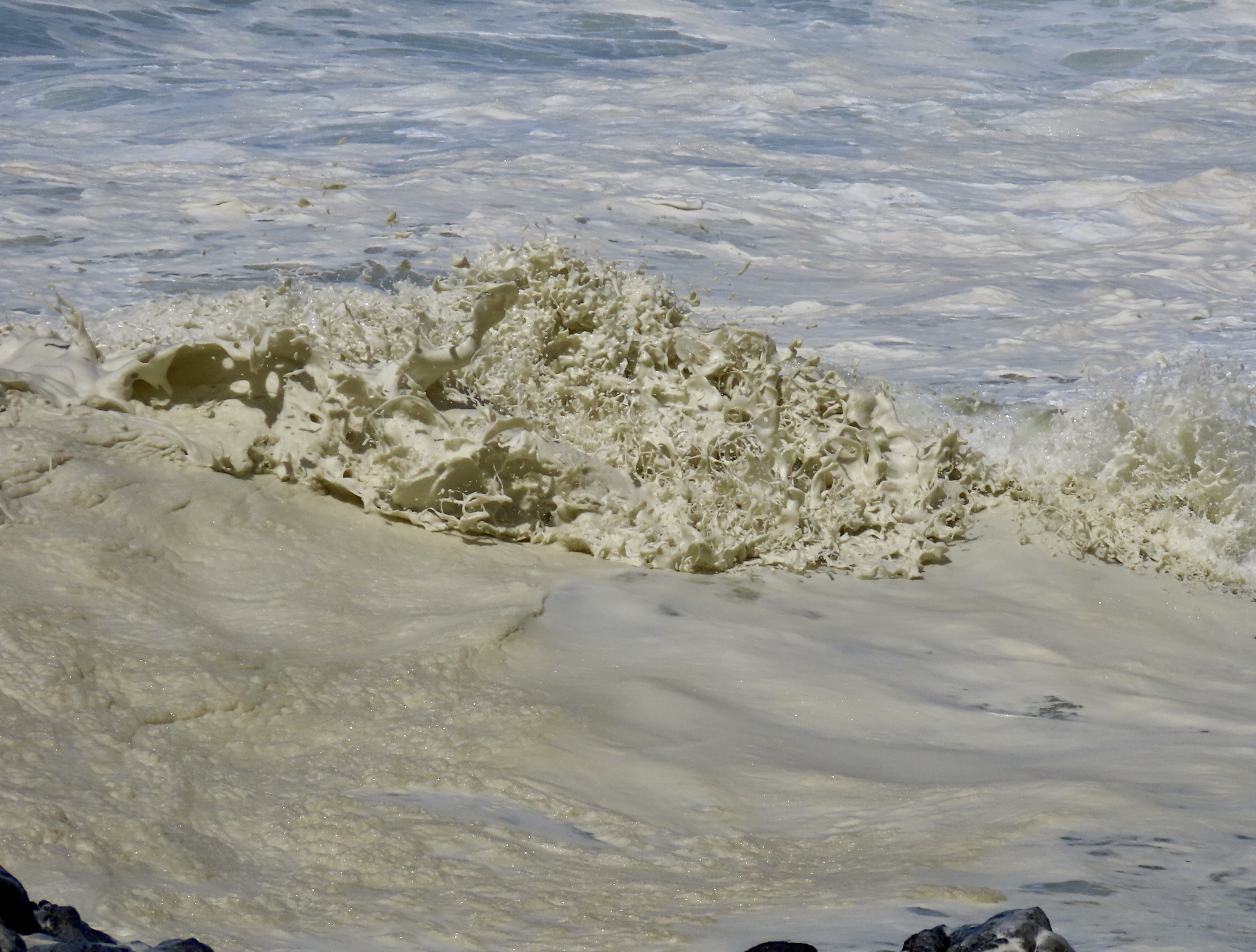
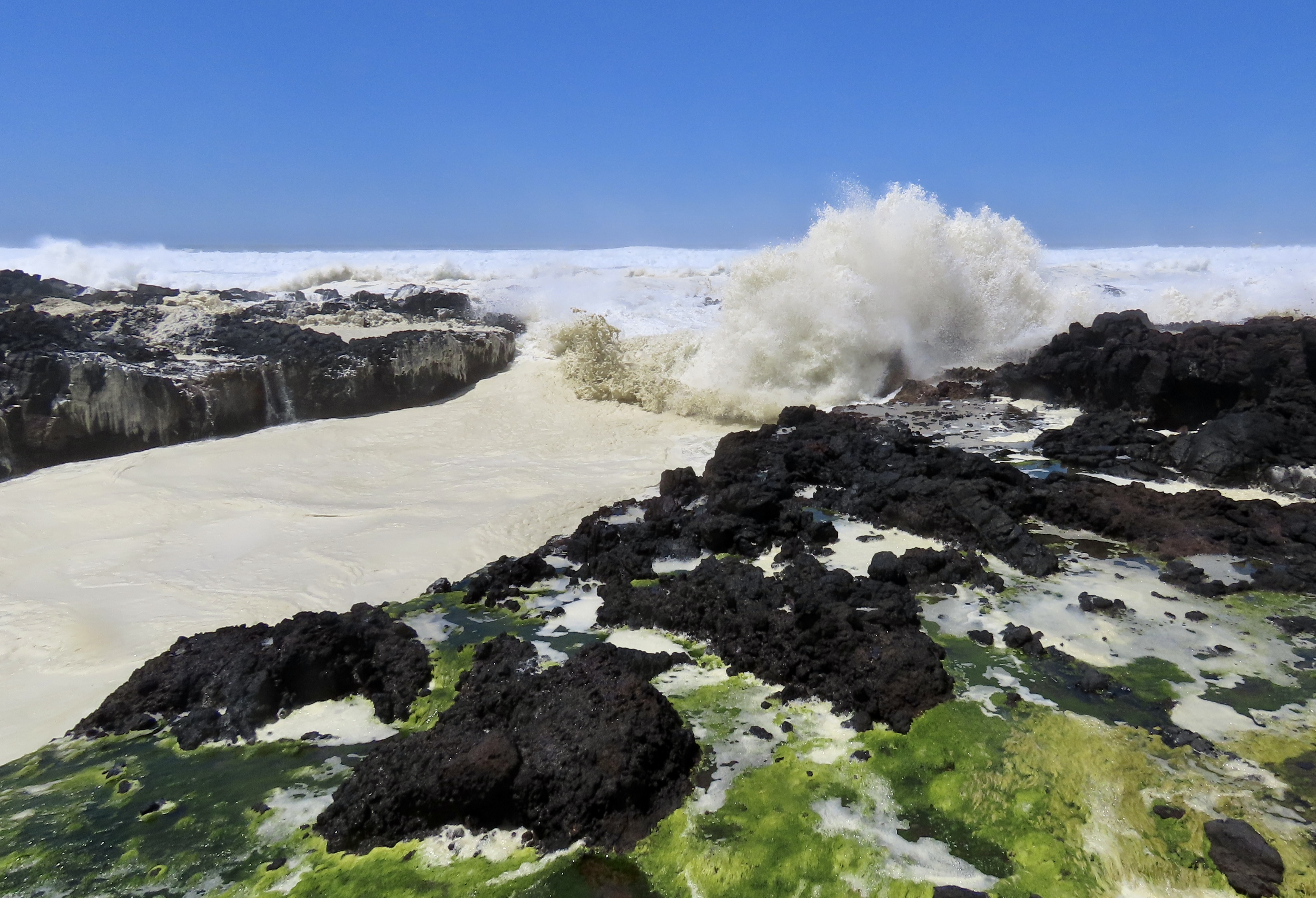
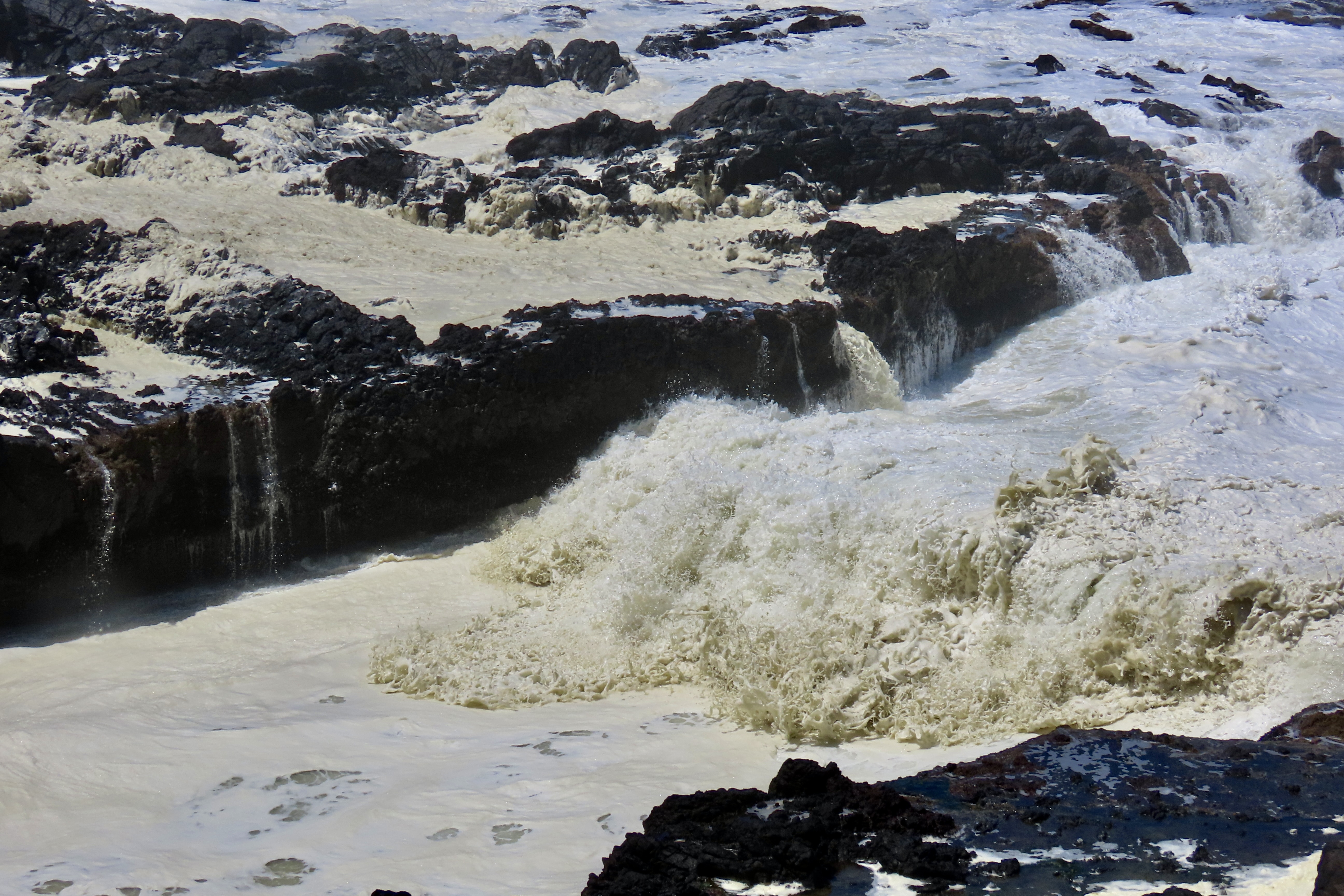
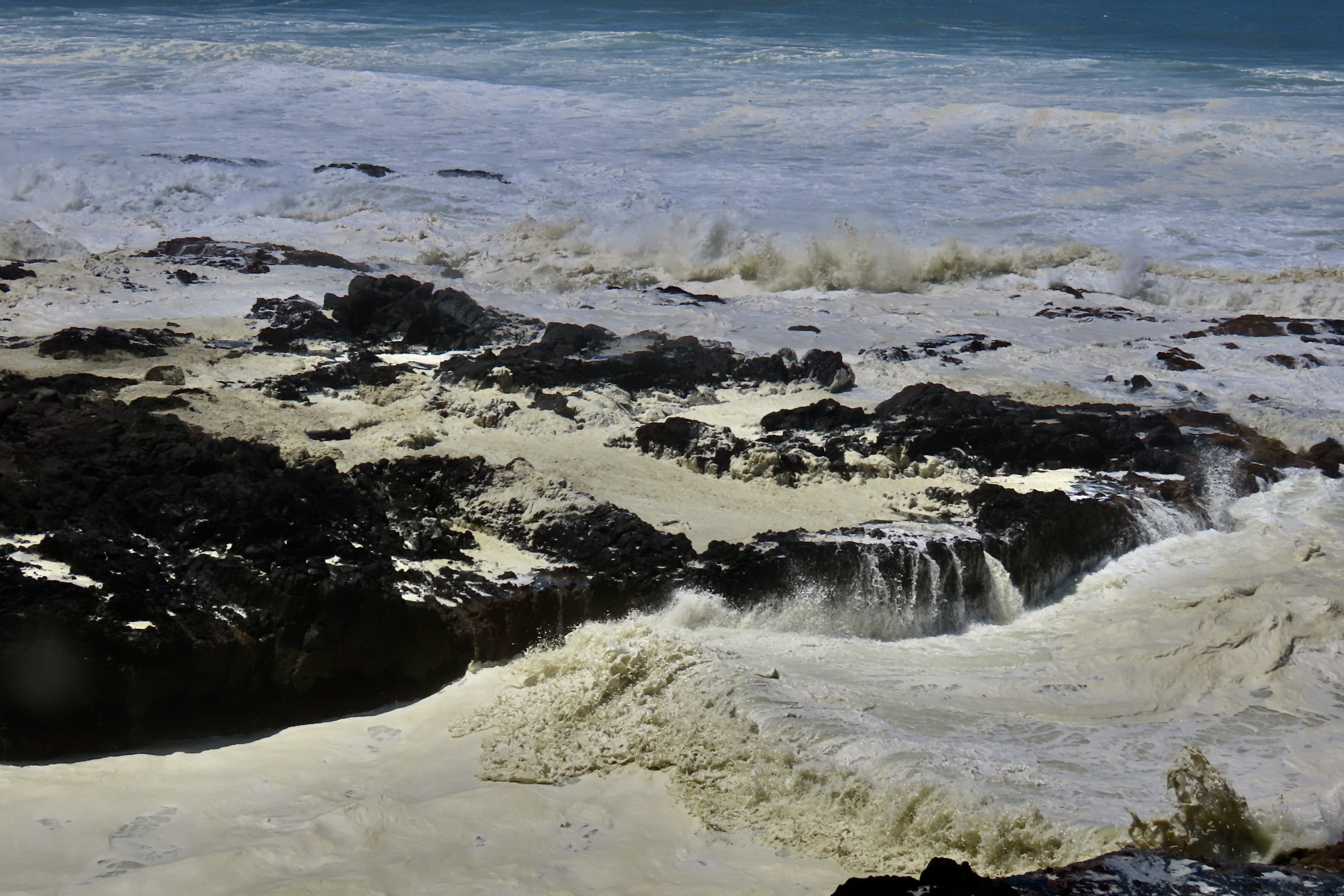
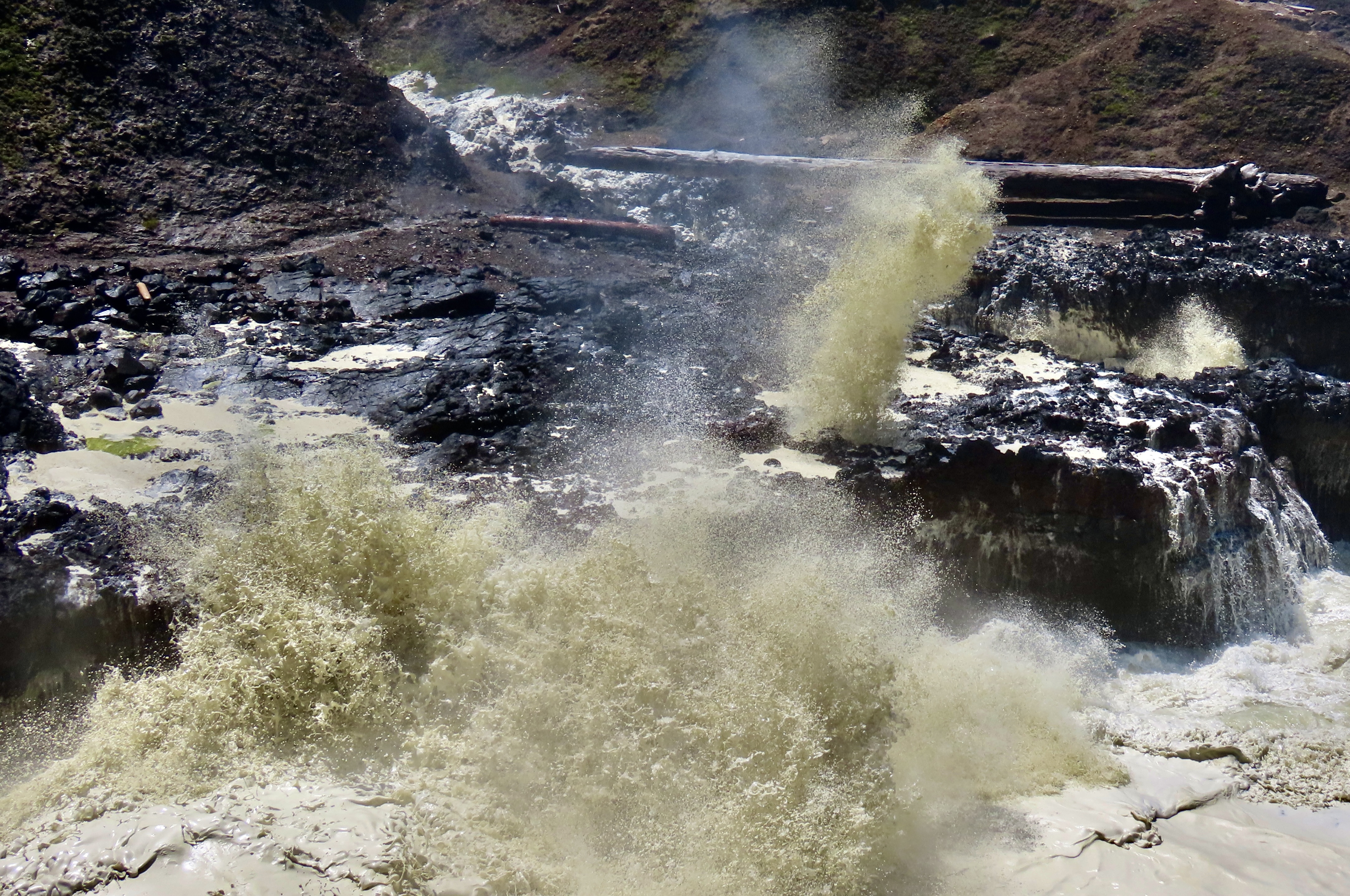
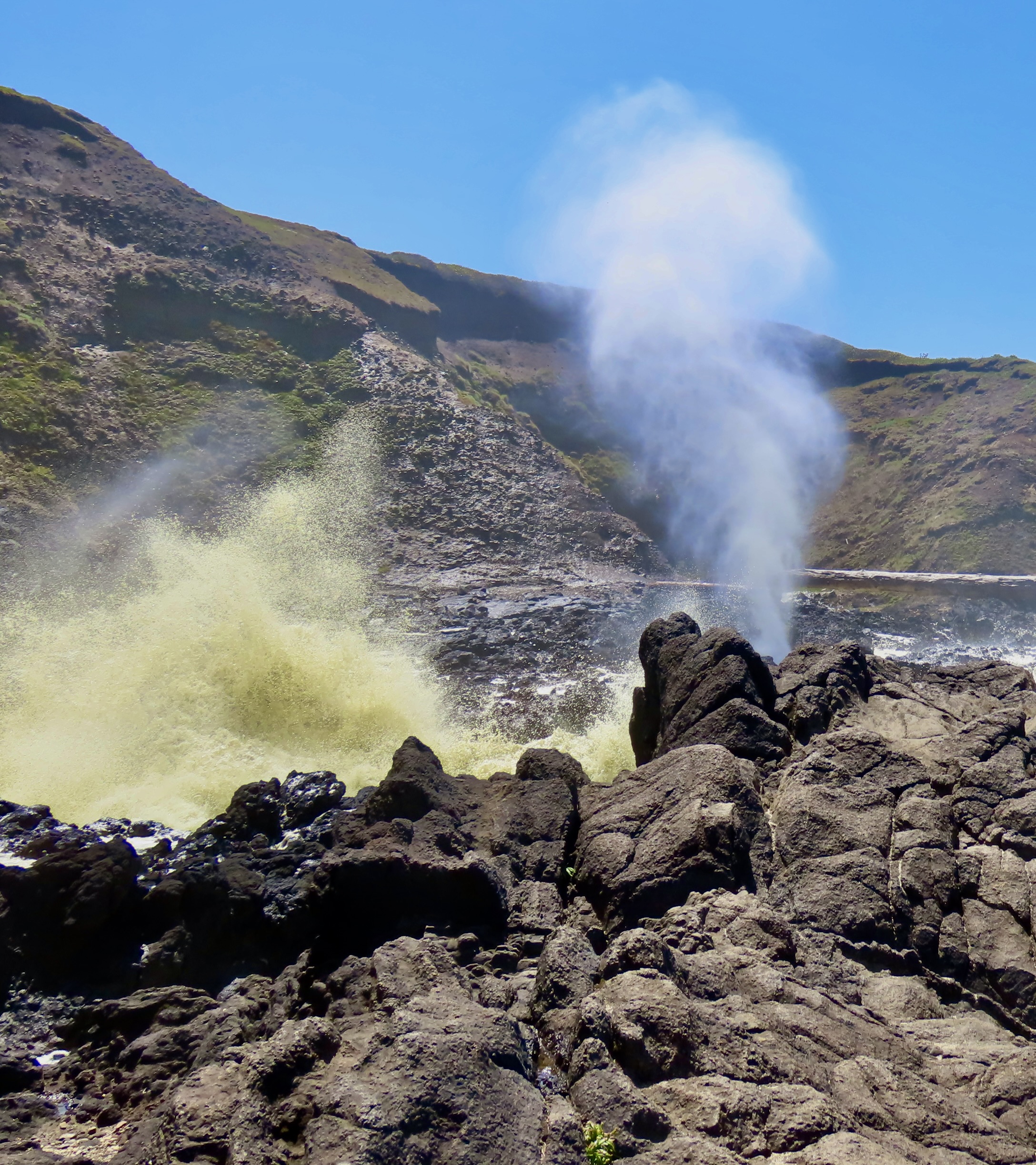
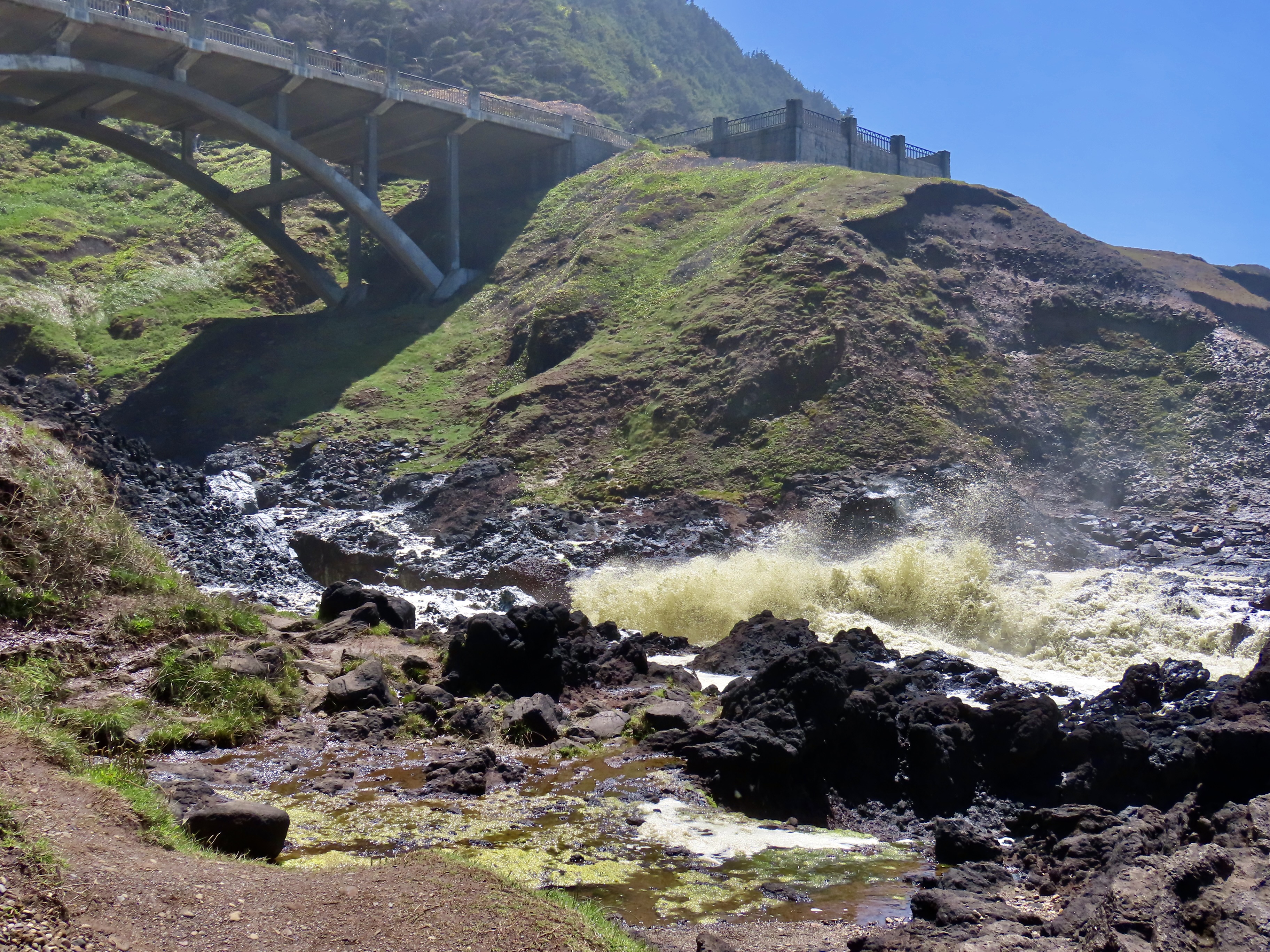
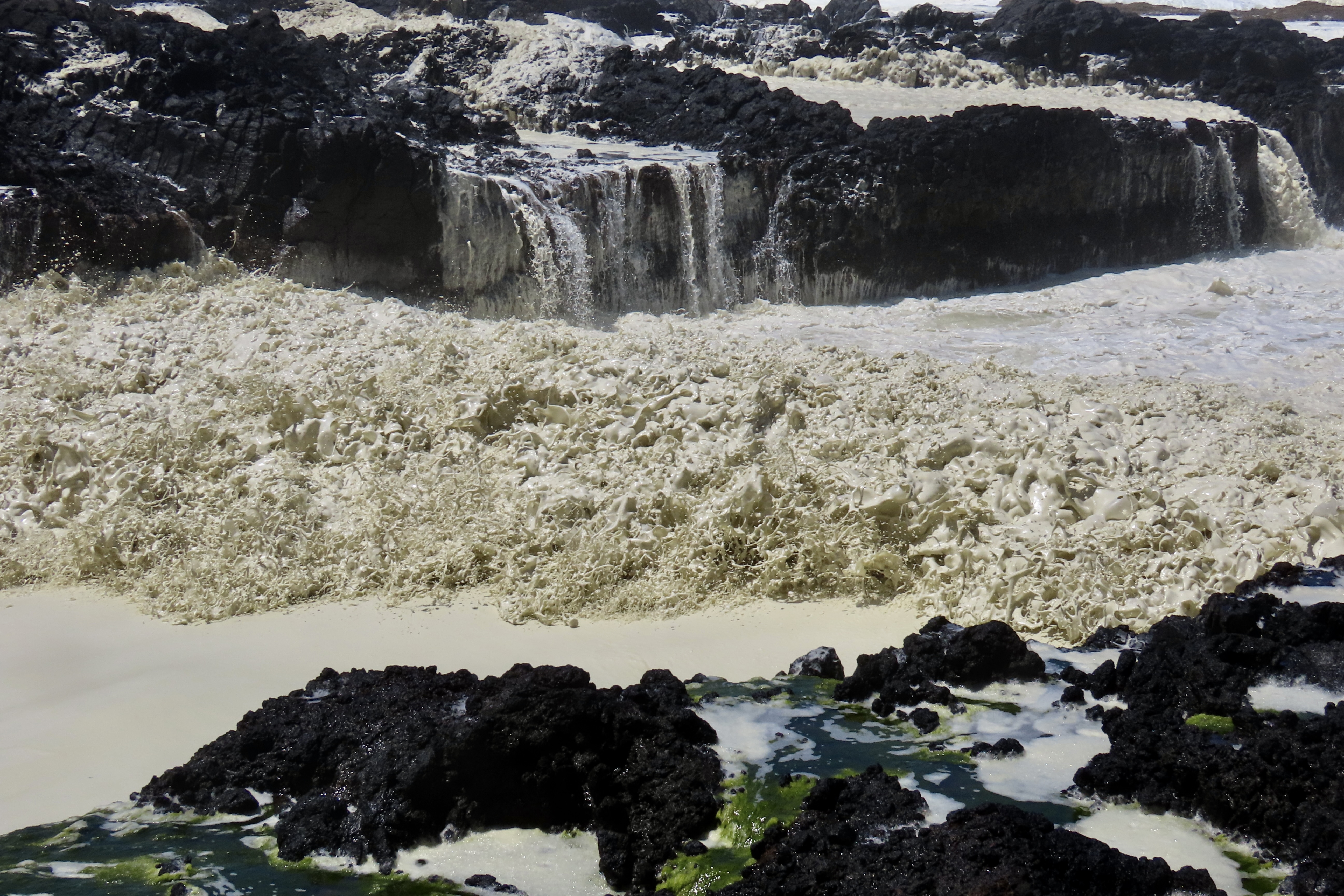
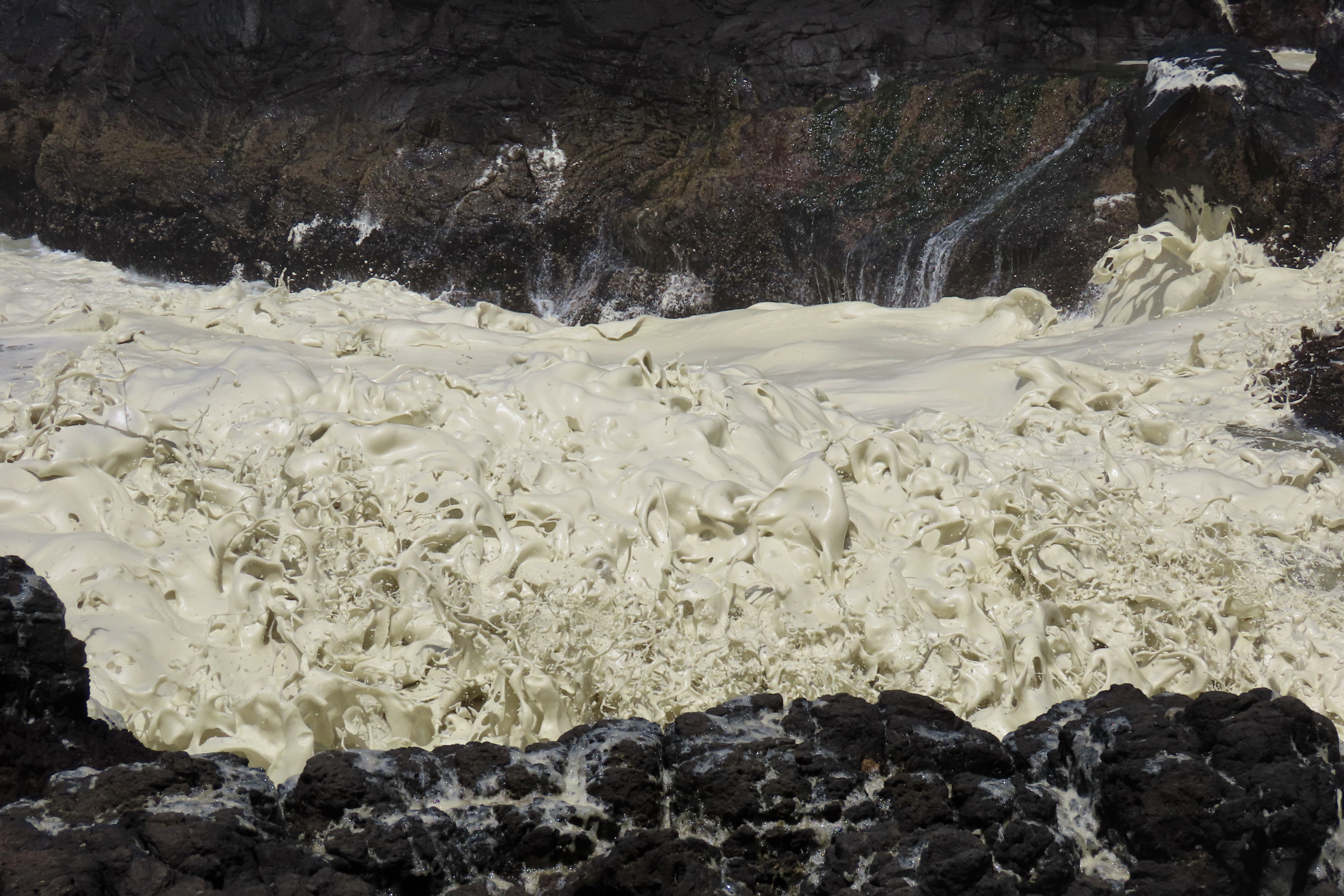
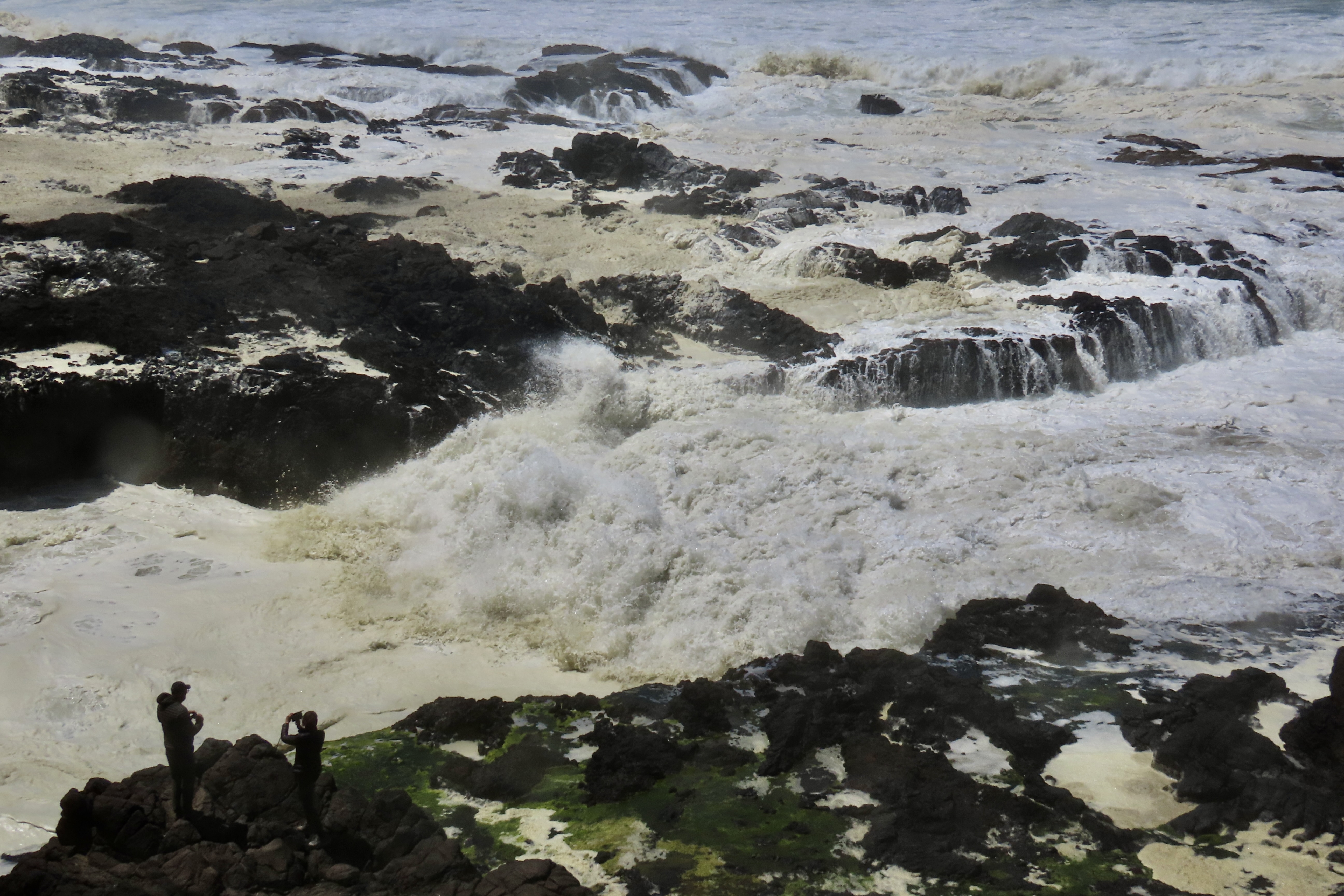
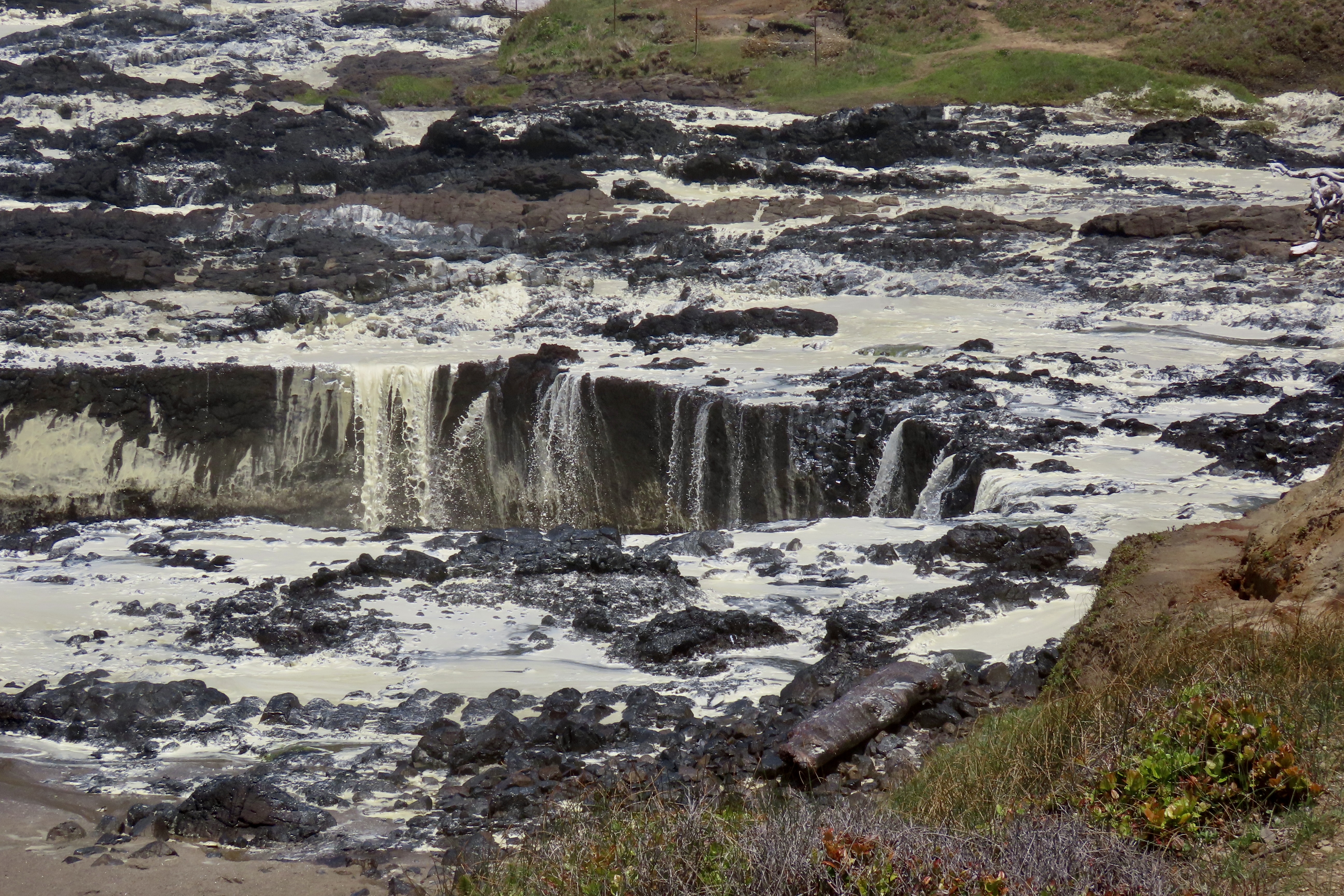
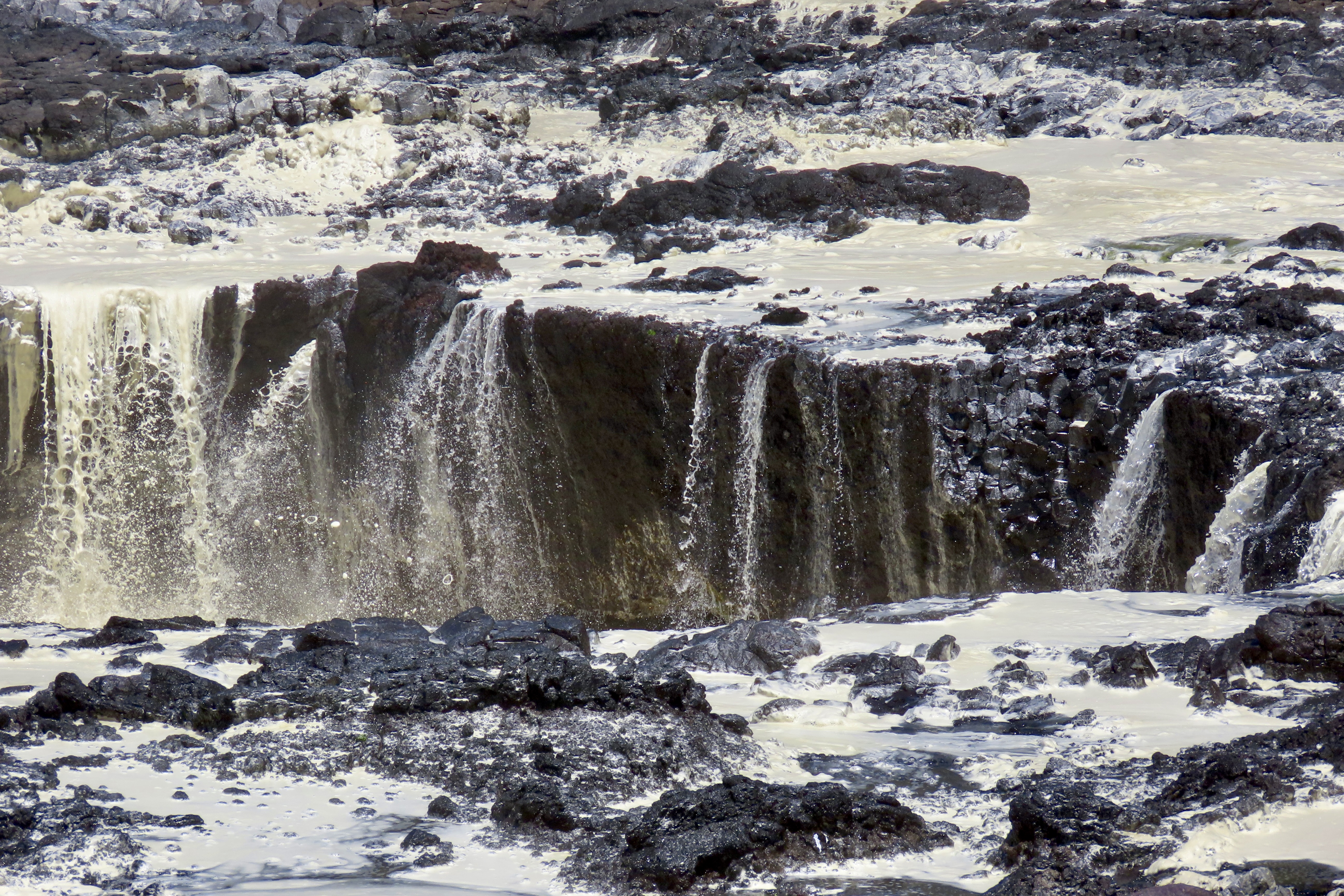
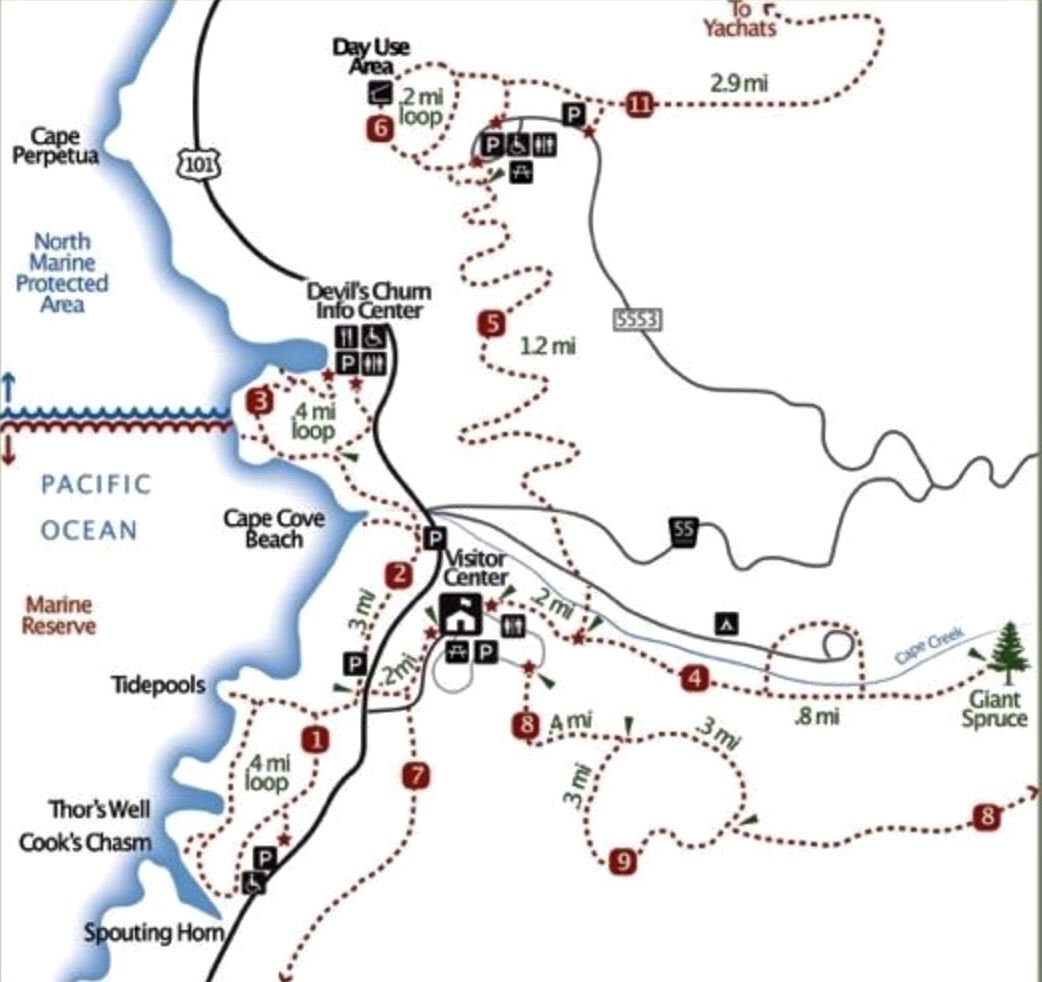
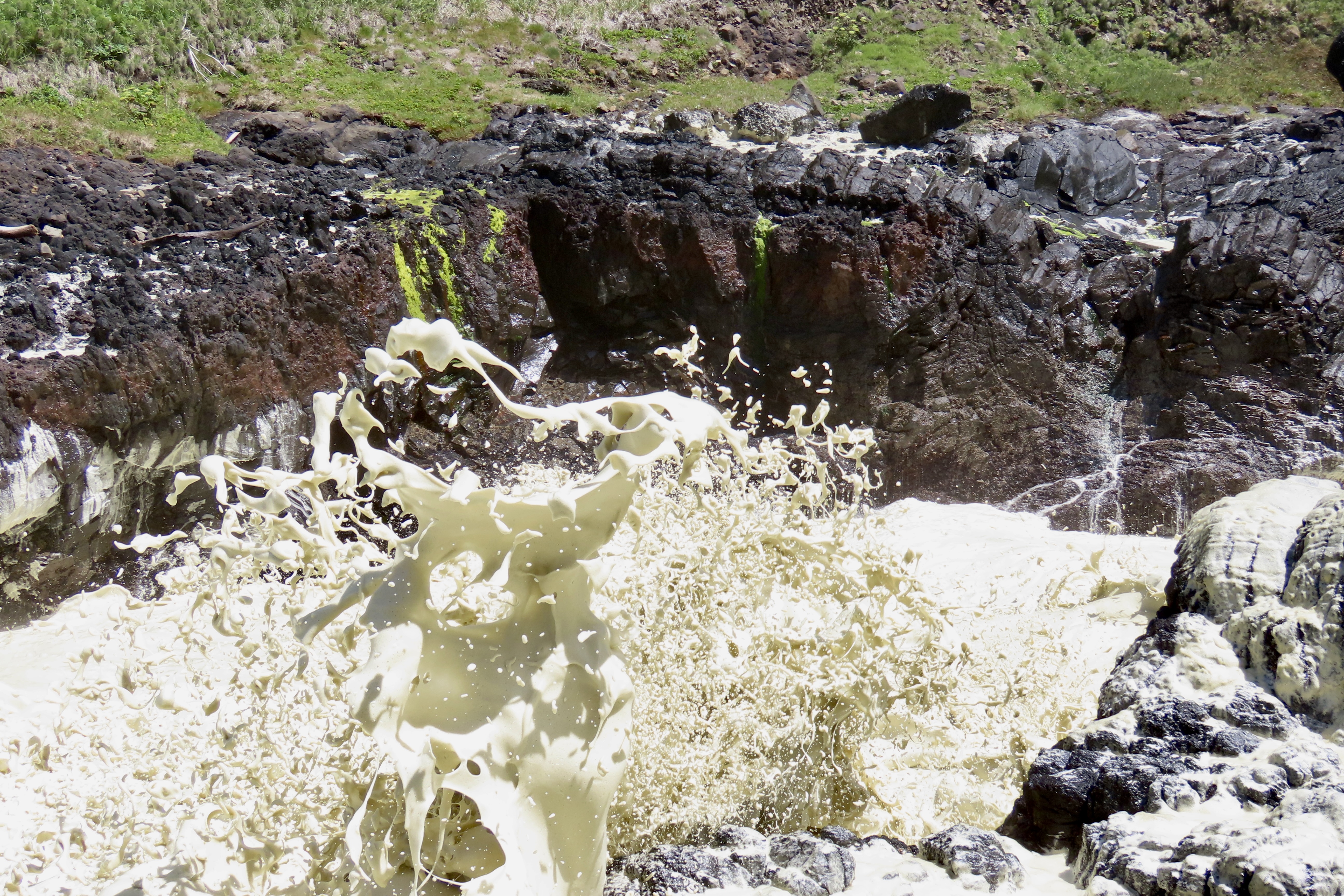
This is the hotel my brother co-owned and my dad managed on Oregon’s scenic coastline in the late 70s and early 80s. A path led down to the ocean. My brother and his partner sold it at an incredible bargain without telling me it was for sale. I never quite forgave him. I would have bought it, even if I had to rob a bank!While it was a beautiful, sunny day when Peggy and I visited the Devils Churn a few weeks ago, there had been a substantial storm the day before and the ocean was still riled up with large waves crashing ashore. This was just off the beginning of the Churn.Close to 80 feet wide at the beginning, the Churn narrows to a few feet at the end. The channel was created over thousands of years from either a collapsed sea cave formed by the waves or possibly a collapsed lava tube. Barely visible on the the left, you can see the trail that leads right down to the bottom.Railings follow the trail down to the Churn where visitors are allowed to walk out on the rocks— with dire warnings.Another view of the waves crashing into the cliff. The rocks on the right have just been coated with the foam created by the Churn, not a place to be standing.A moment of relative calm. The waves roll in continuously. One is about to crash in to the cliff while another follows. Water from the first wave then flows back toward the ocean, hitting the next wave, which adds to churning action. Thick brown foam that resembles whipped cream is the result of all the action.Chaos might be a good description. It’s not a good place to go for a swim— whether you mean to or not.Just south of Devils Churn are three more impressive results of the ocean carving out channels in the basaltic rock: Cooks Chasm, the Spouting Horn, and Thors Well. Here, a giant wave makes its way into Cooks Chasm. Captain Cook made his way past this area on March 7, 1778.The wave continues to roll into Cooks Chasm.Another view.When the wave crashes into the end, it forces water into a cave. The pressure created in the cave blows the water out of a hole in its roof, thus creating the Spouting Horn seen on the upper right.Another view across the twisted basaltic rocks where the Spouting Horn appears almost ghost-like.Cooks Chasm can be seen from Oregon’s Coast Highway 101.The result of the pounding action of the waves in Cooks Chasm is similar to that of Devils Churn.The people here provide a perspective on where Peggy and I were standing.Thors Well is just north of Cooks Chasm. Here a wave arrives…And fills up the Well!As the wave retreats, Thors Well re-emerges.A final view. Below is a map that shows the relationship between the three locations.Yachats is about 2 1/2 miles north of Devils Churn. My brother’s hotel was five miles to the south.In our next post we will take you to Heceta Head Lighthouse shone here, and invite you to join us as we break in our new kayaks!
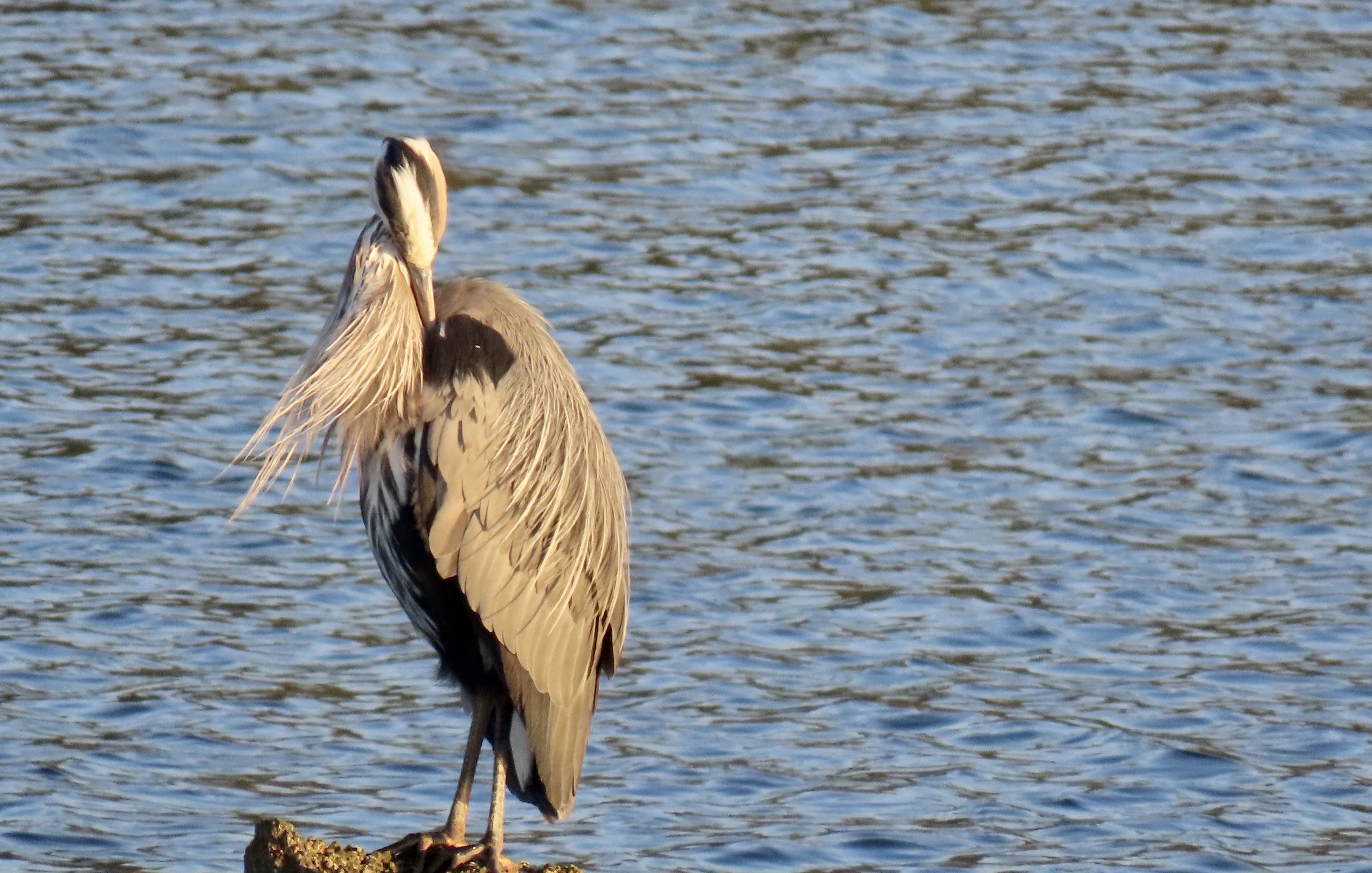
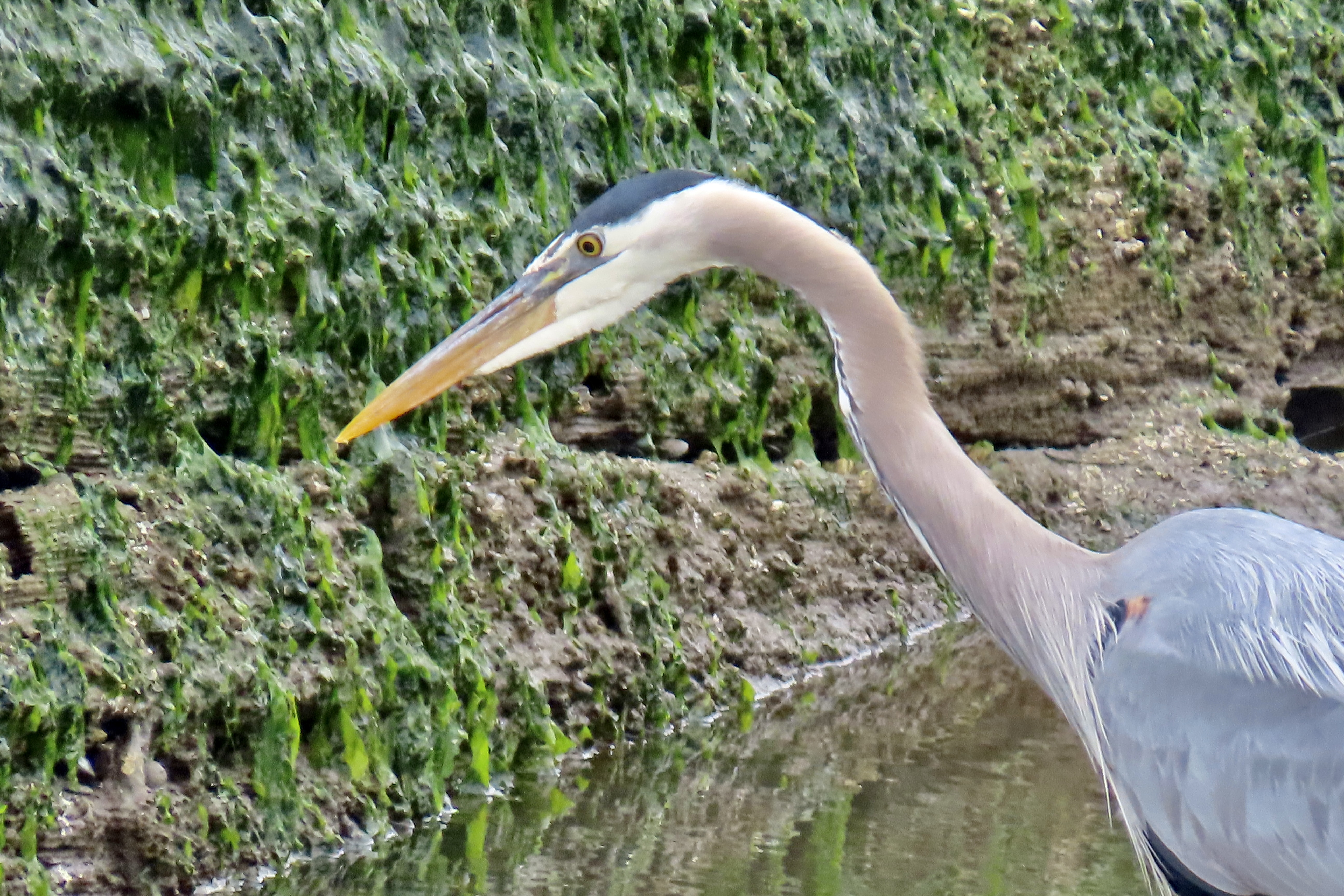
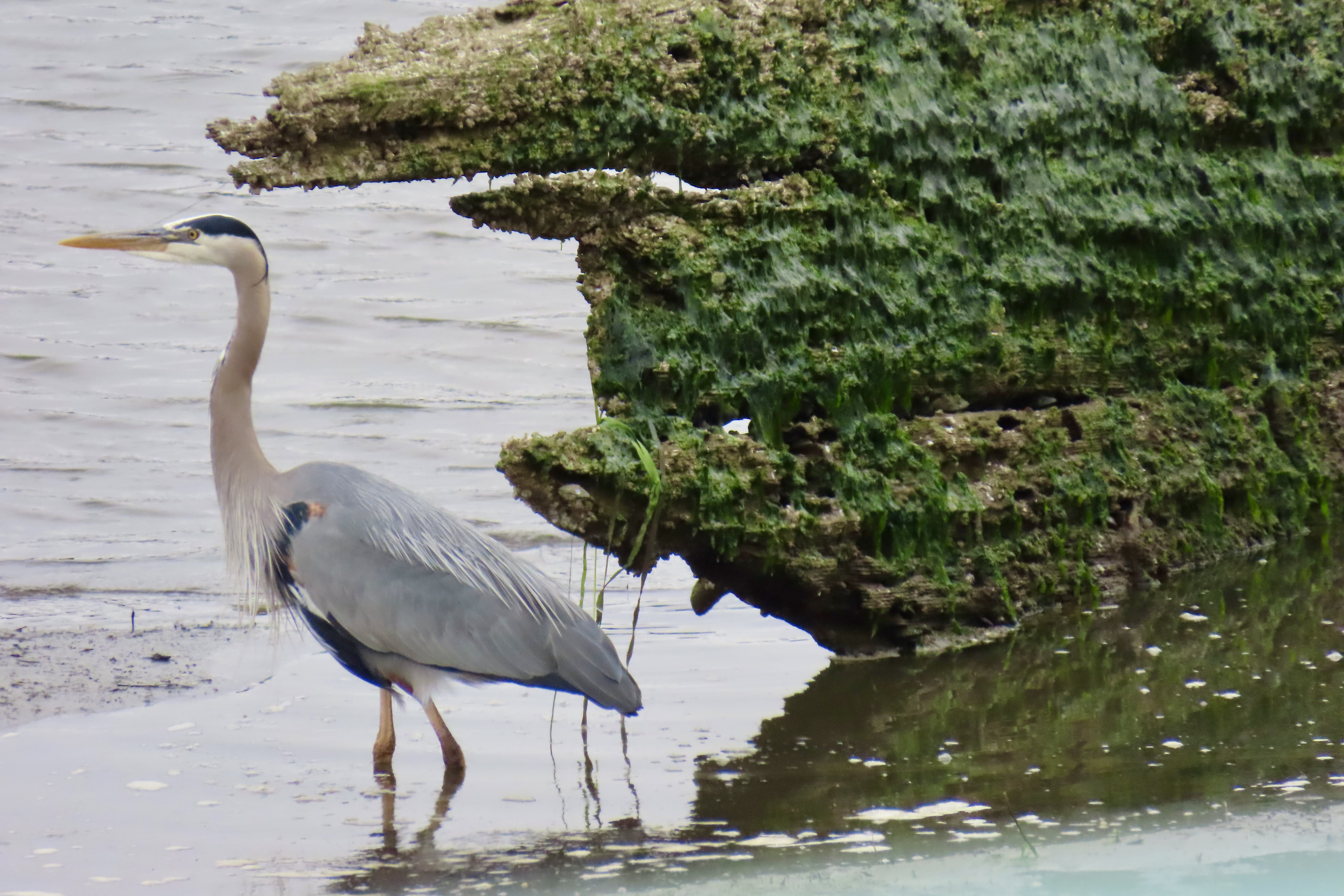
A great blue heron perched behind our camp in Florence, Oregon appeared to have lost its neck. Had it stuck it out too far?
Peggy and I have visited Florence, Oregon a number of times over the years. It was a short 2 1/2 hour drive from our home above the Upper Applegate River in Southern Oregon. We spent the majority of our visits camped at the Siuslaw Marina. The prices are reasonable, the people friendly, and Old Town, with its good restaurants and fun shops, is within easy walking distance. But there’s more…
The Oregon Dunes are just south of the town. The Devil’s Churn, Thor’s Well, the Sea Lion Caves, and the Heceta Head Lighthouse are just a few miles north. There are even some good kayaking opportunities nearby. In other words, there was alway plenty to keep us amused doing things we love to do.
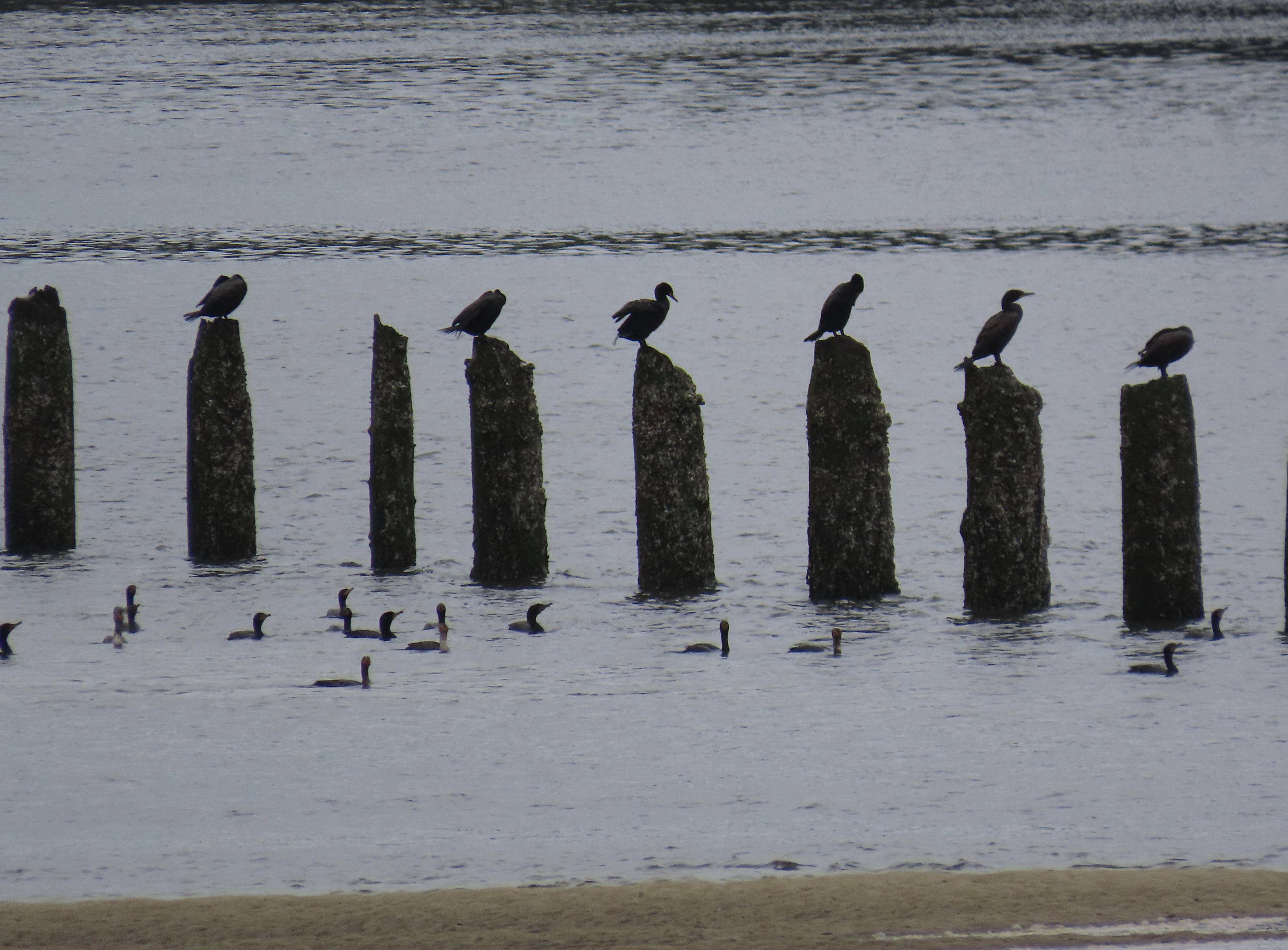
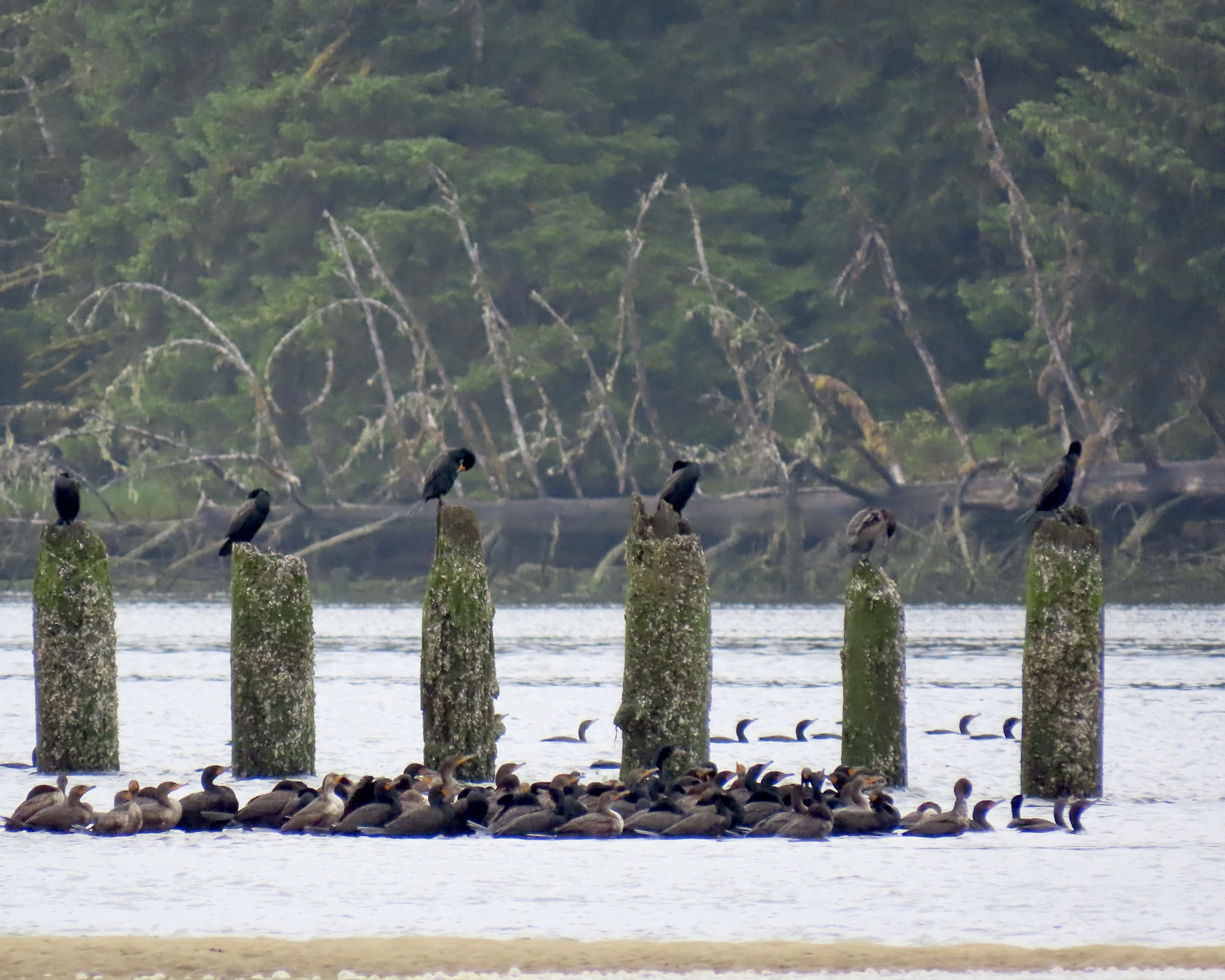
One thing about our stays at the Marina— we had never been able to obtain a site on the Siuslaw River. They fill up fast. People sign up for them months in advance. This time, because Peggy and I were staying for two weeks, I made our reservations early and we scored a spot on the river. Most of the photos today are taken from our ‘backyard.’ We will be featuring five birds: Great blue herons will provide lessons on preening, a great white egret will share its secrets on fishing, a not so impeccable seagull will teach how to get down and dirty, Canada geese will demonstrate the best way to keep track of kids, and, finally, cormorants will hold a large meeting doing who knows what.
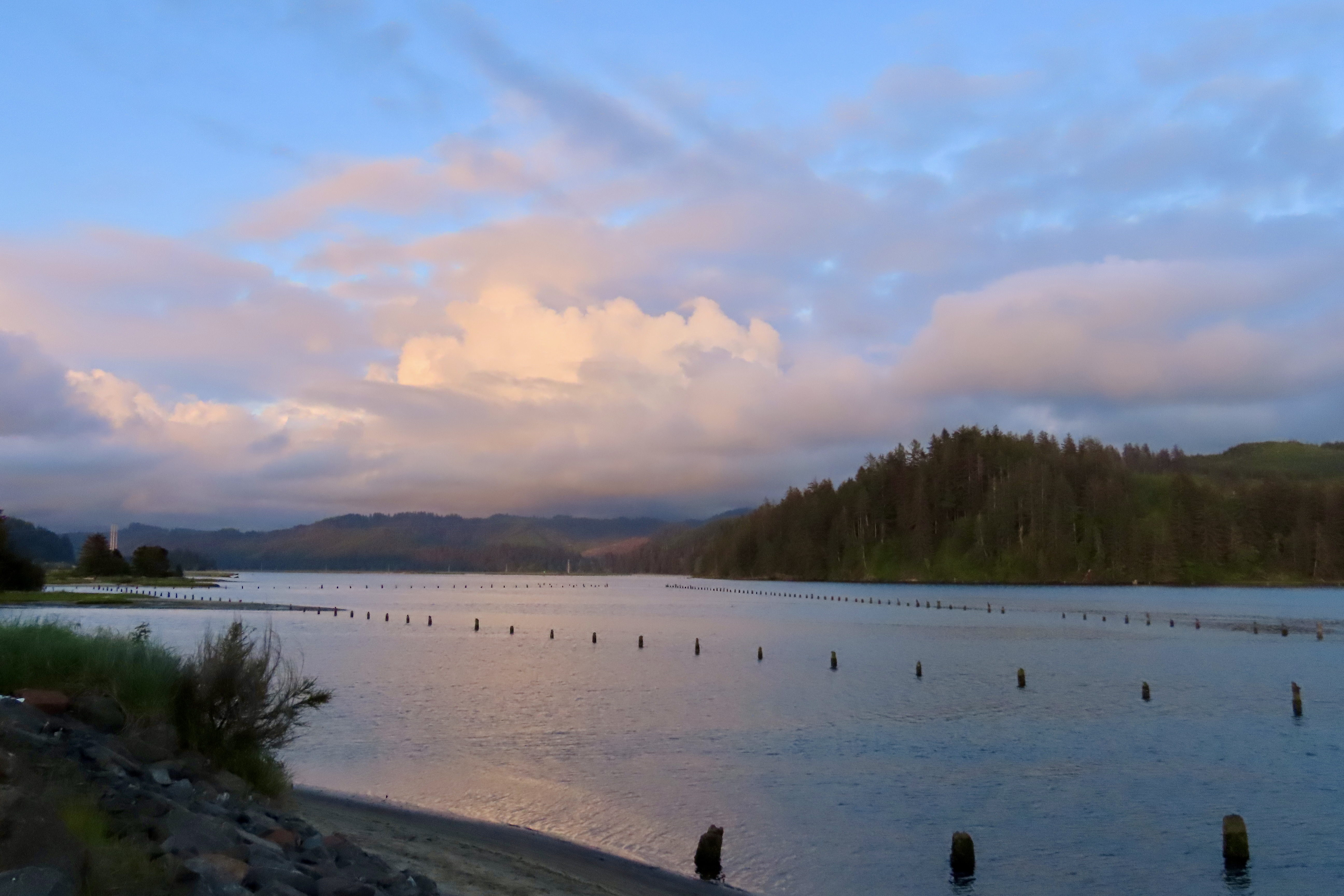
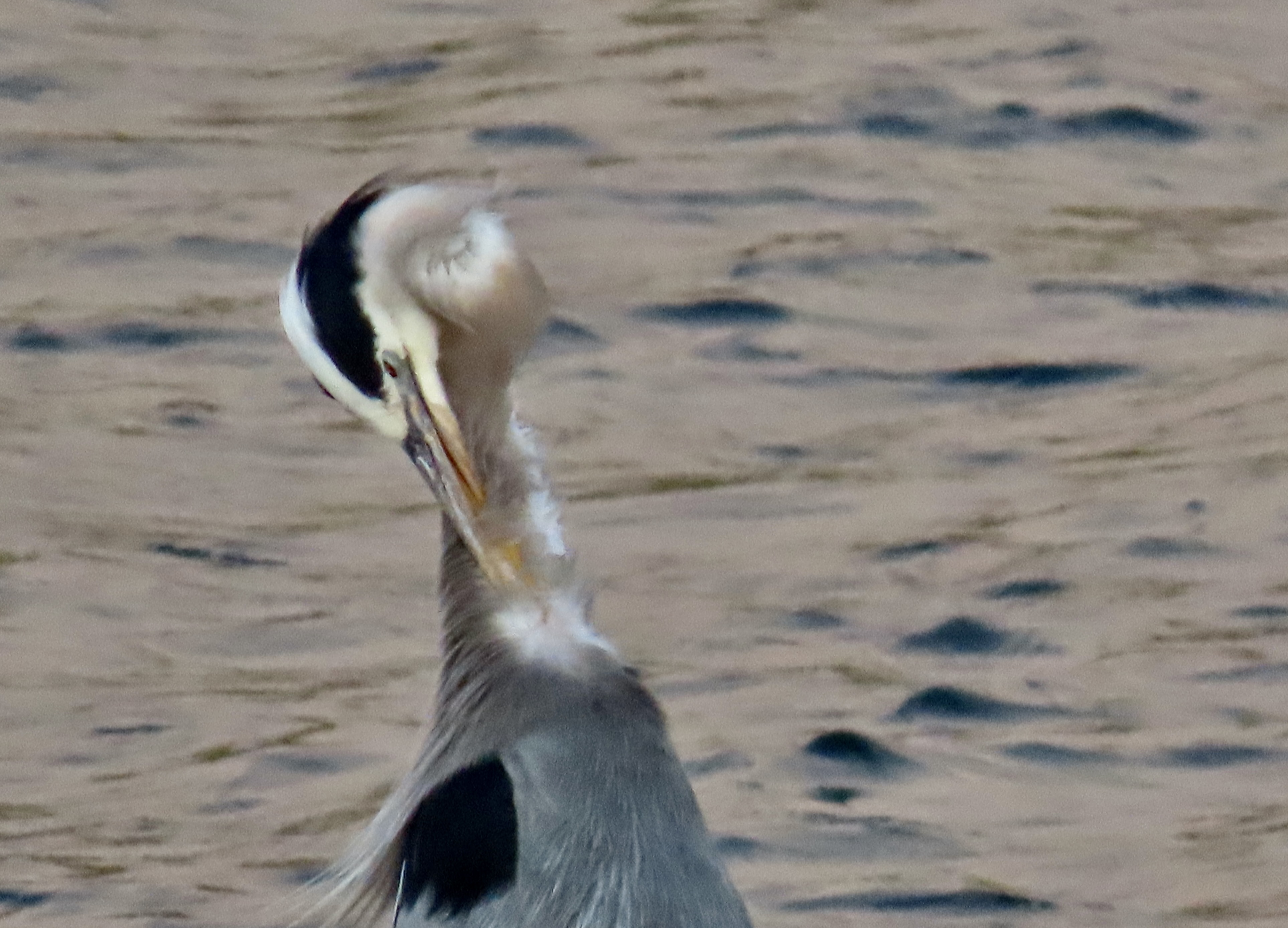
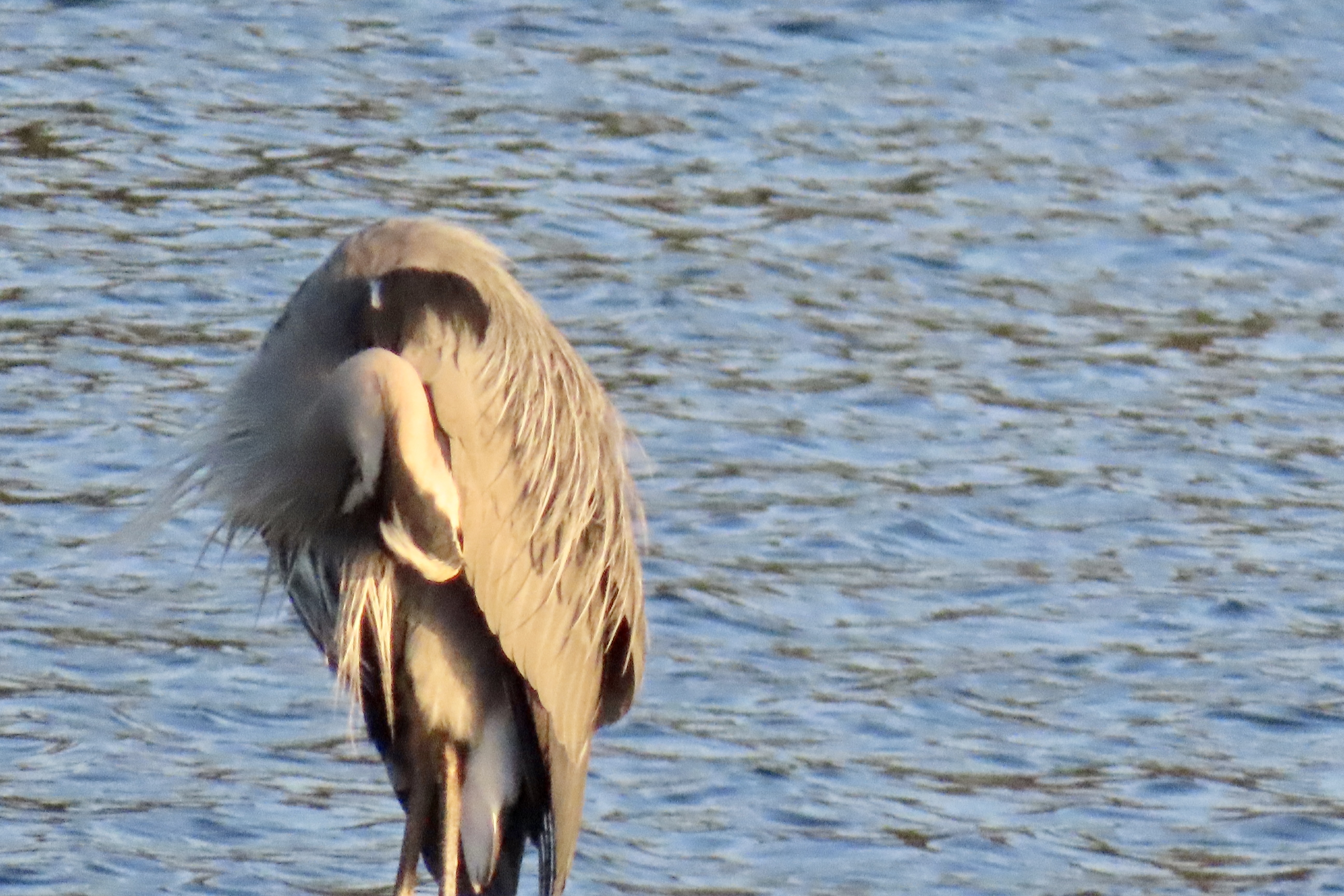
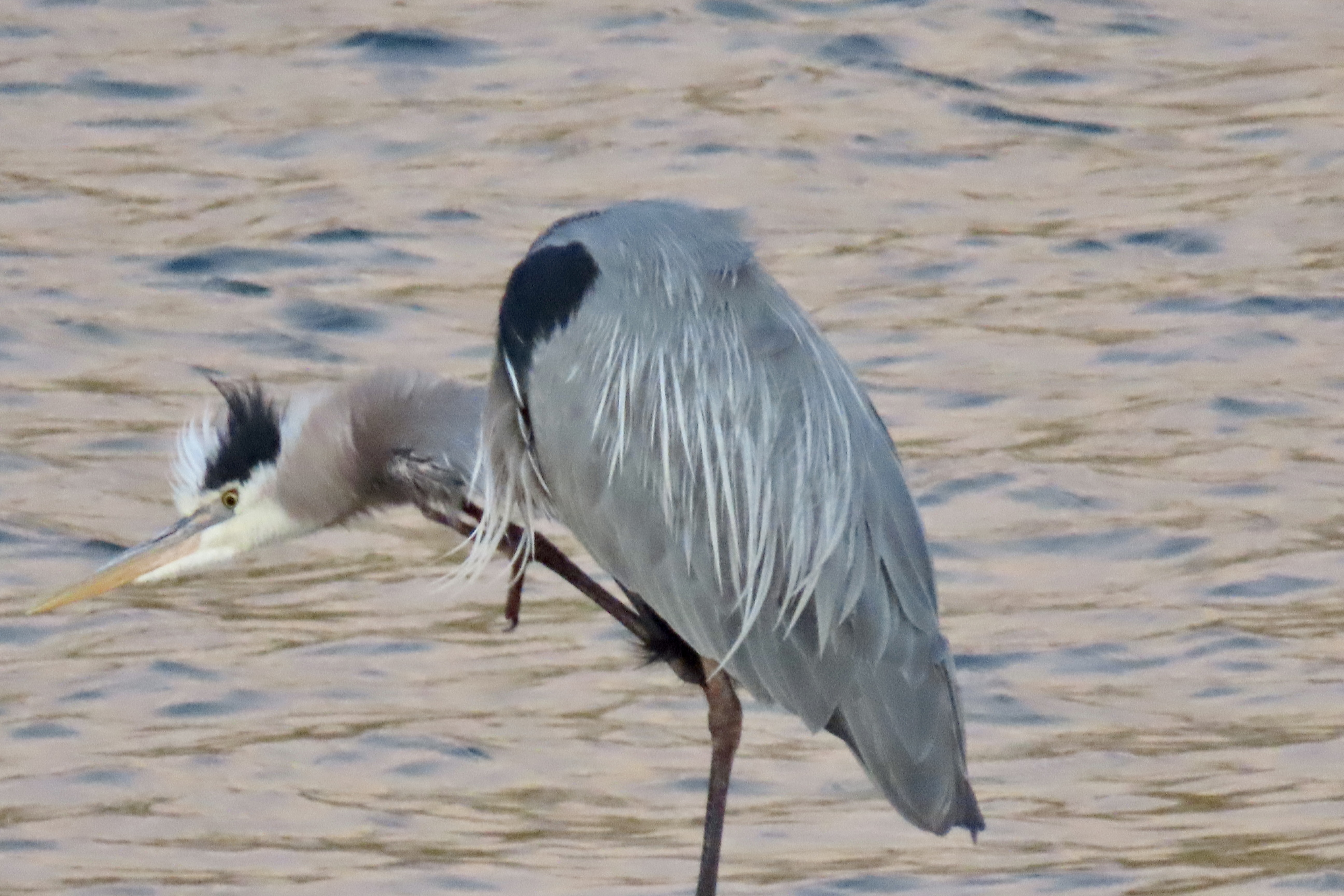
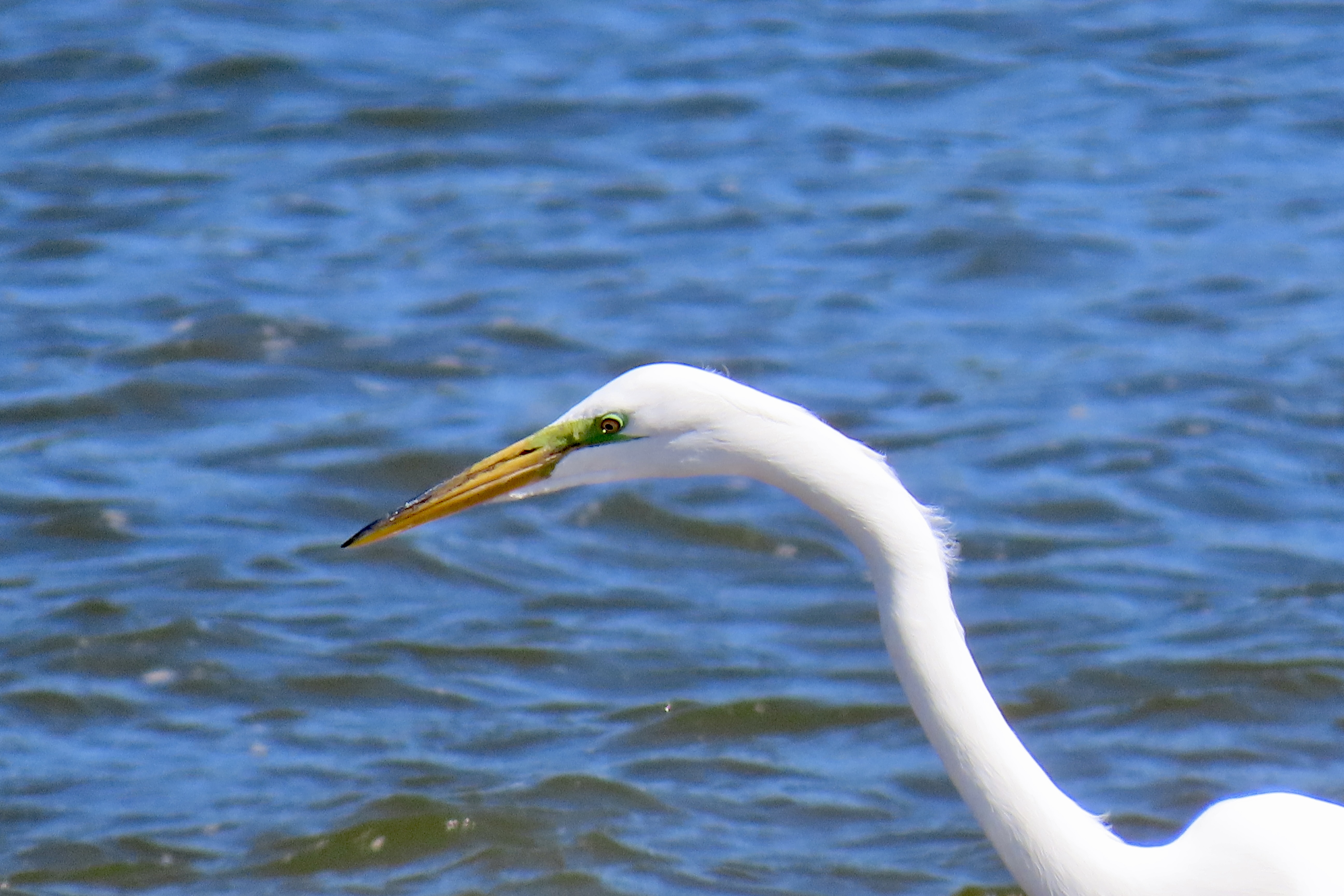
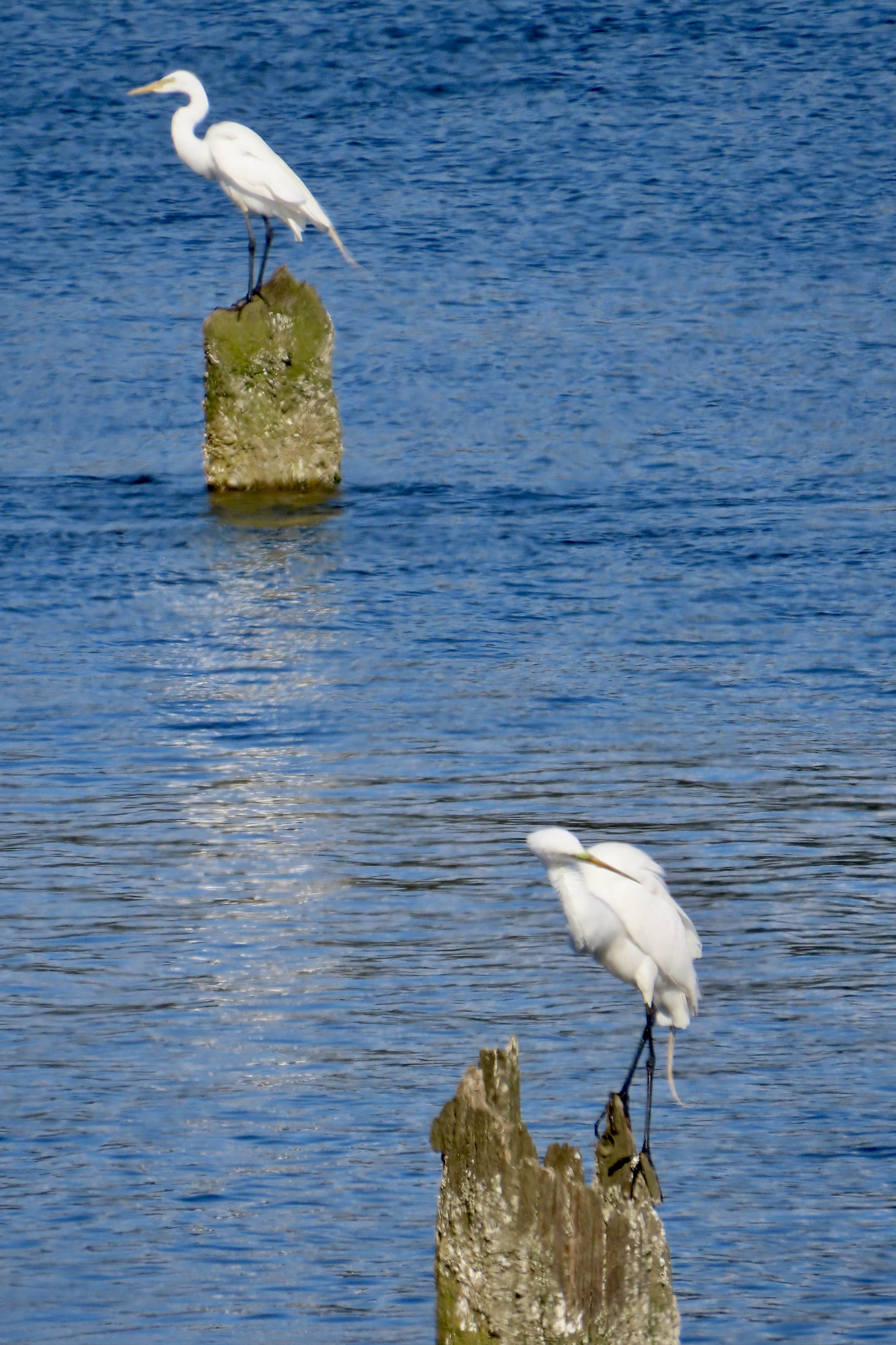
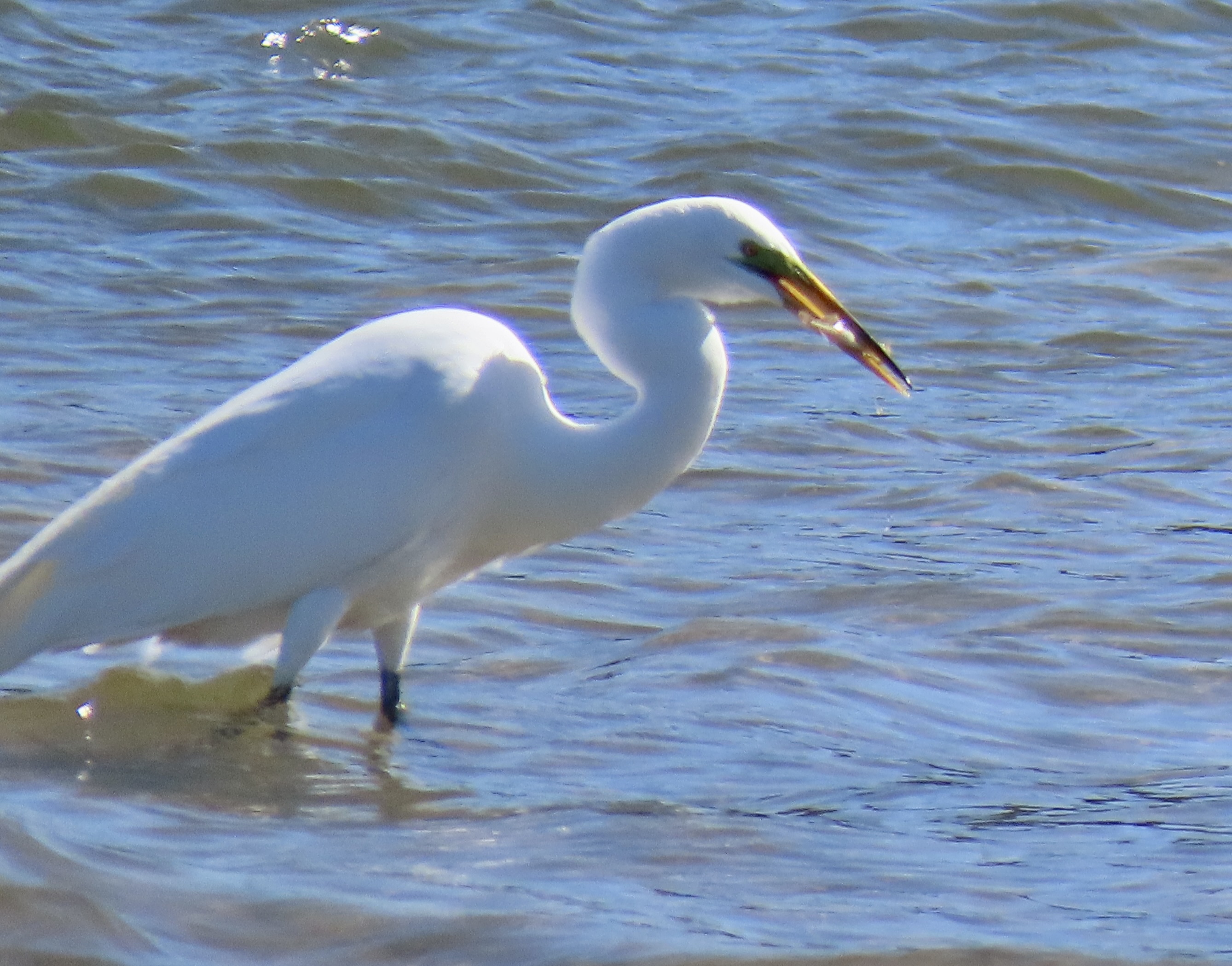
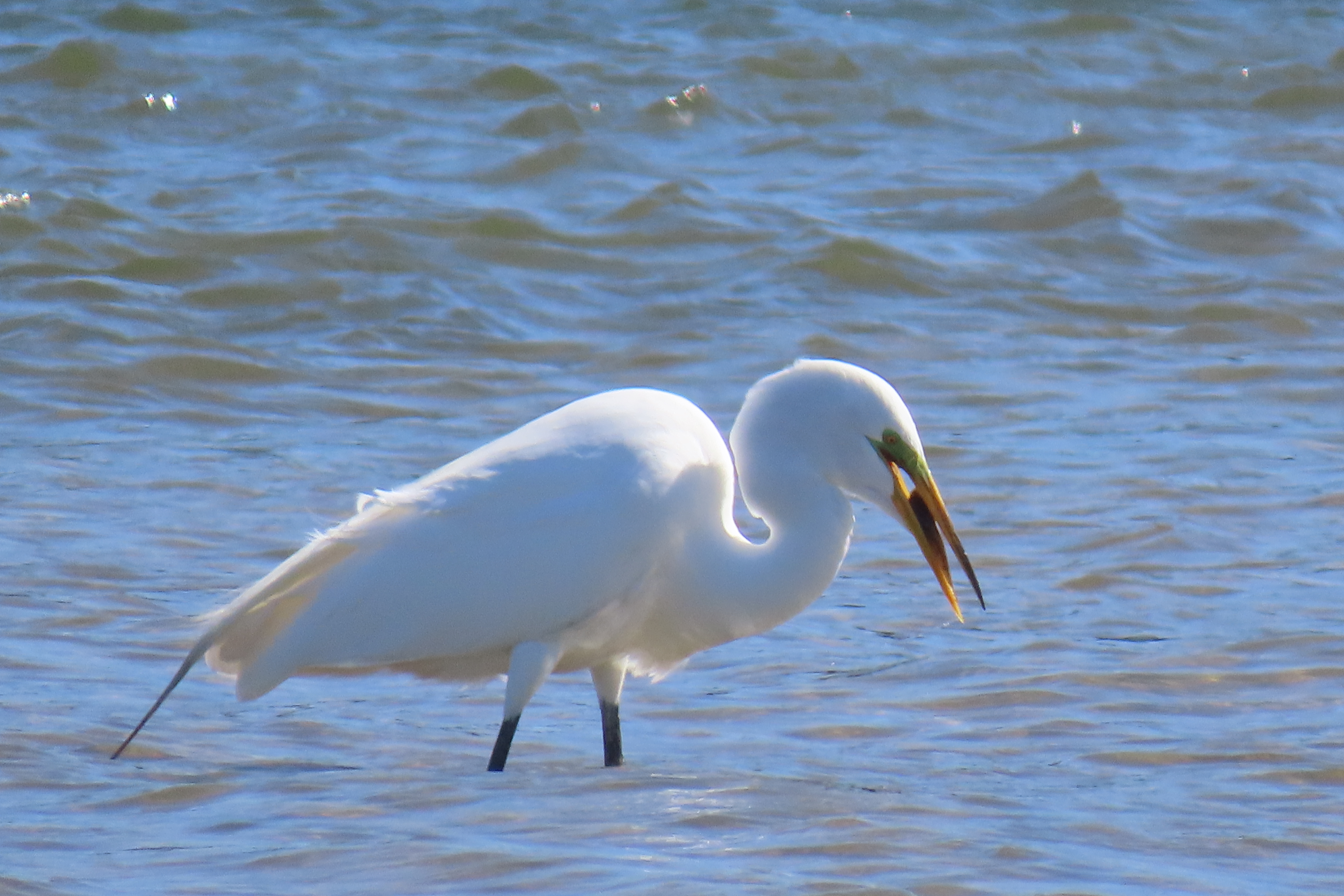
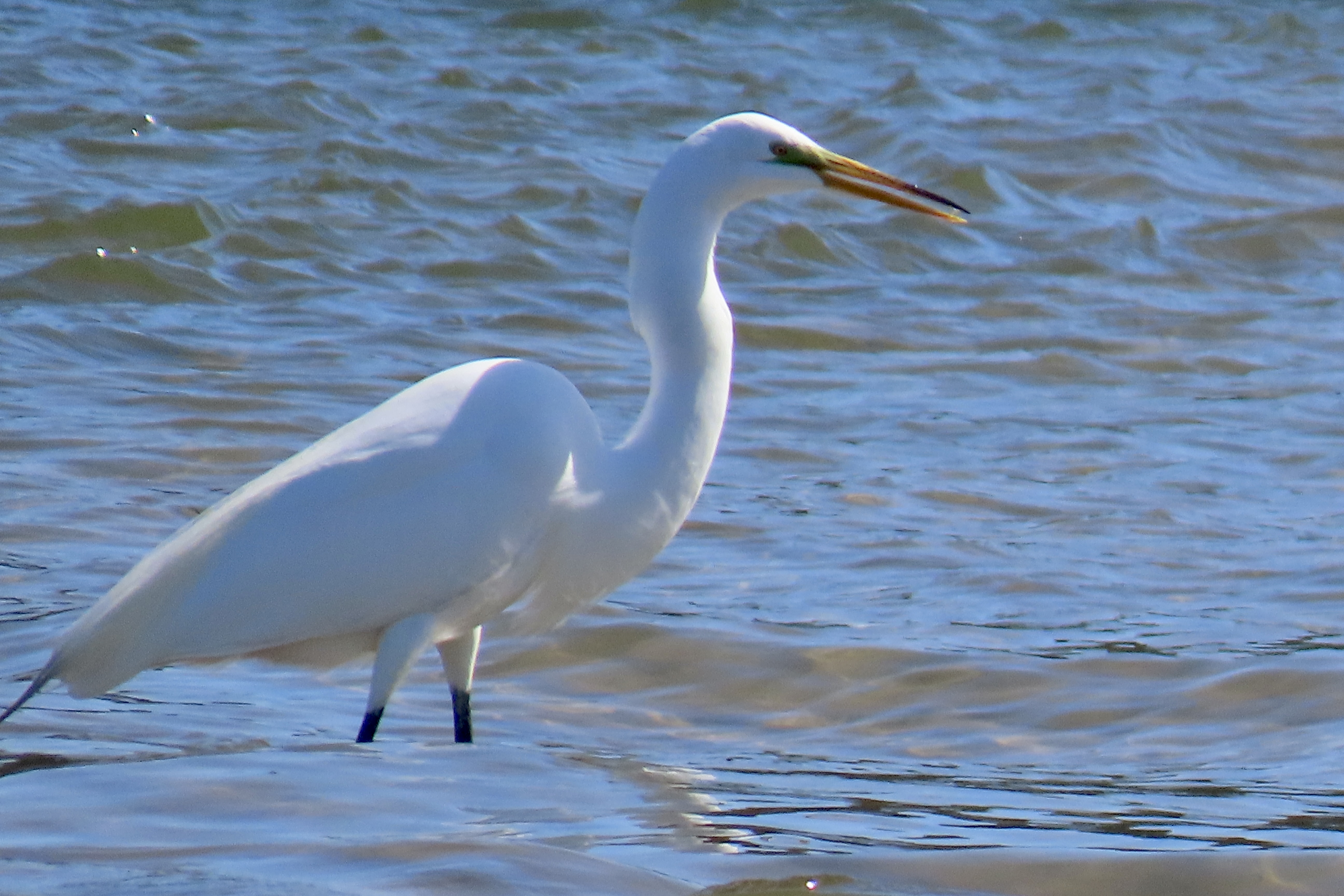
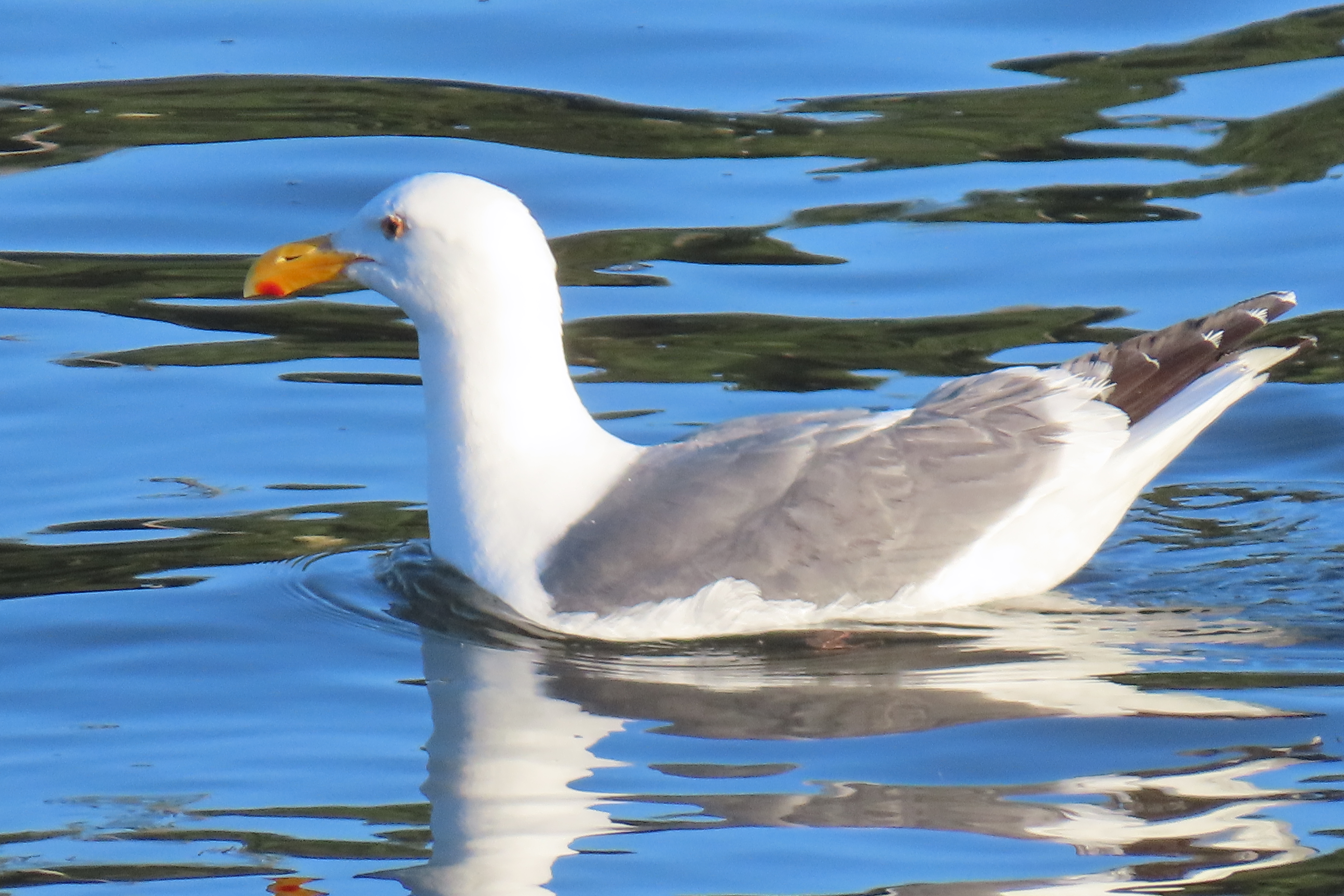
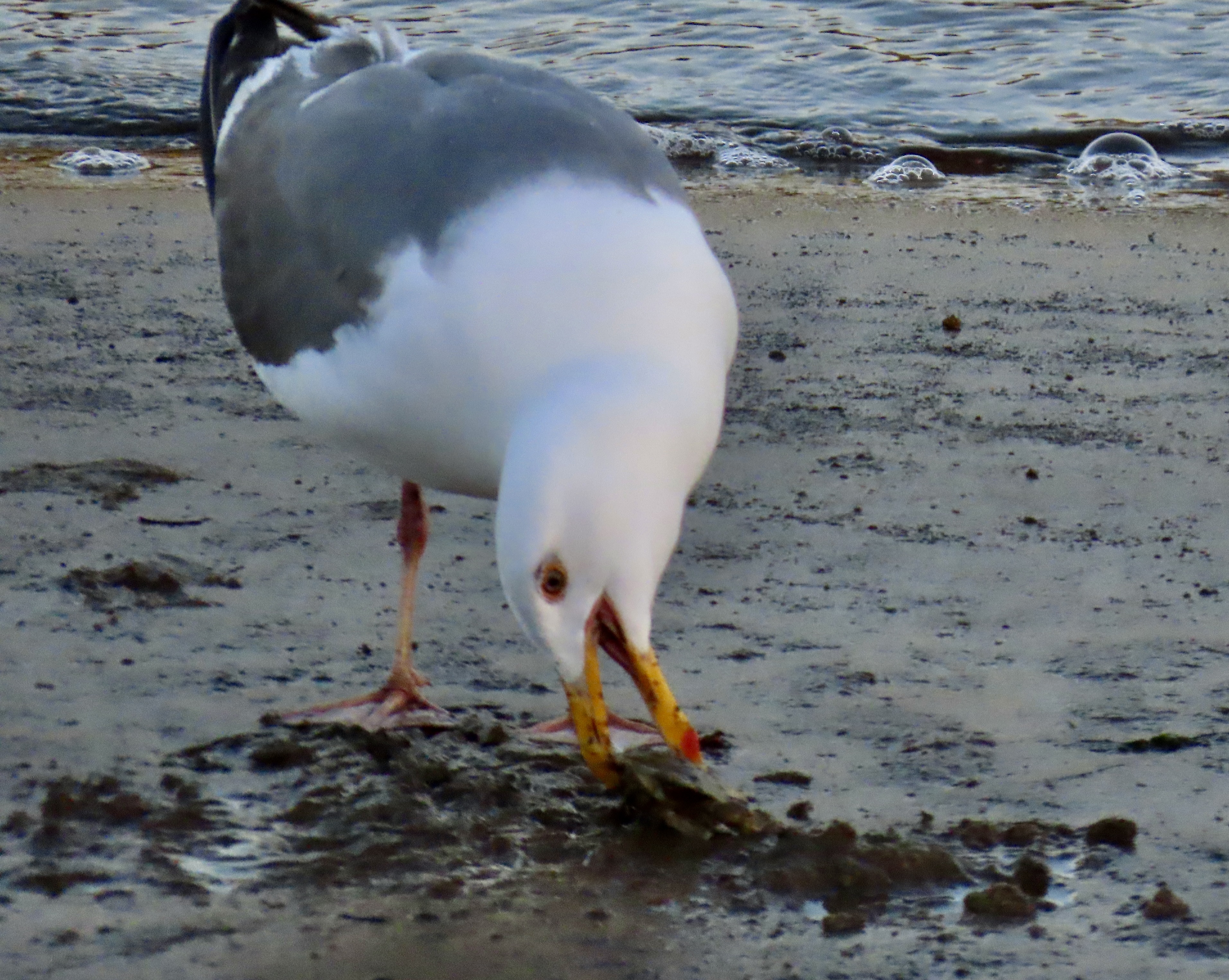
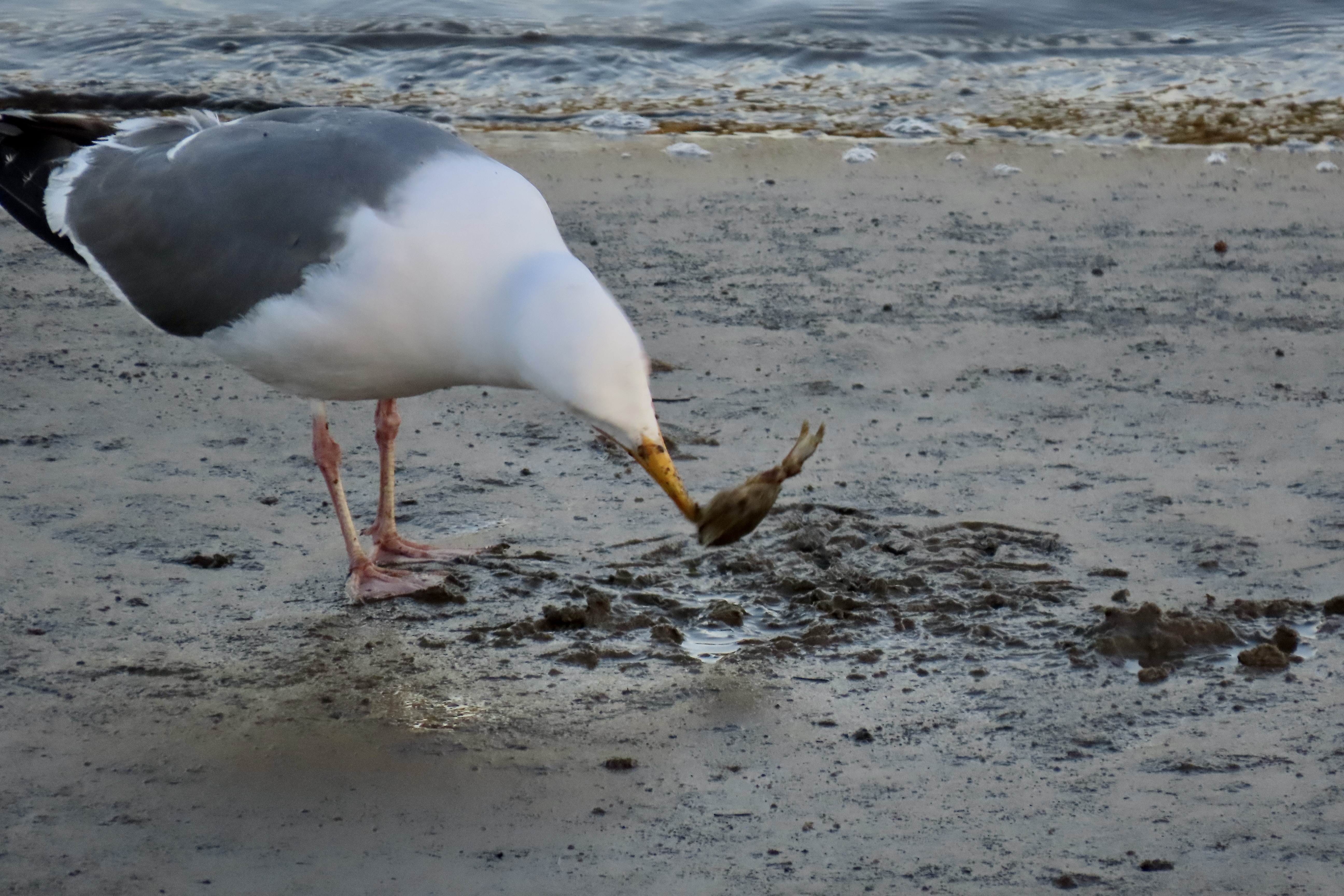
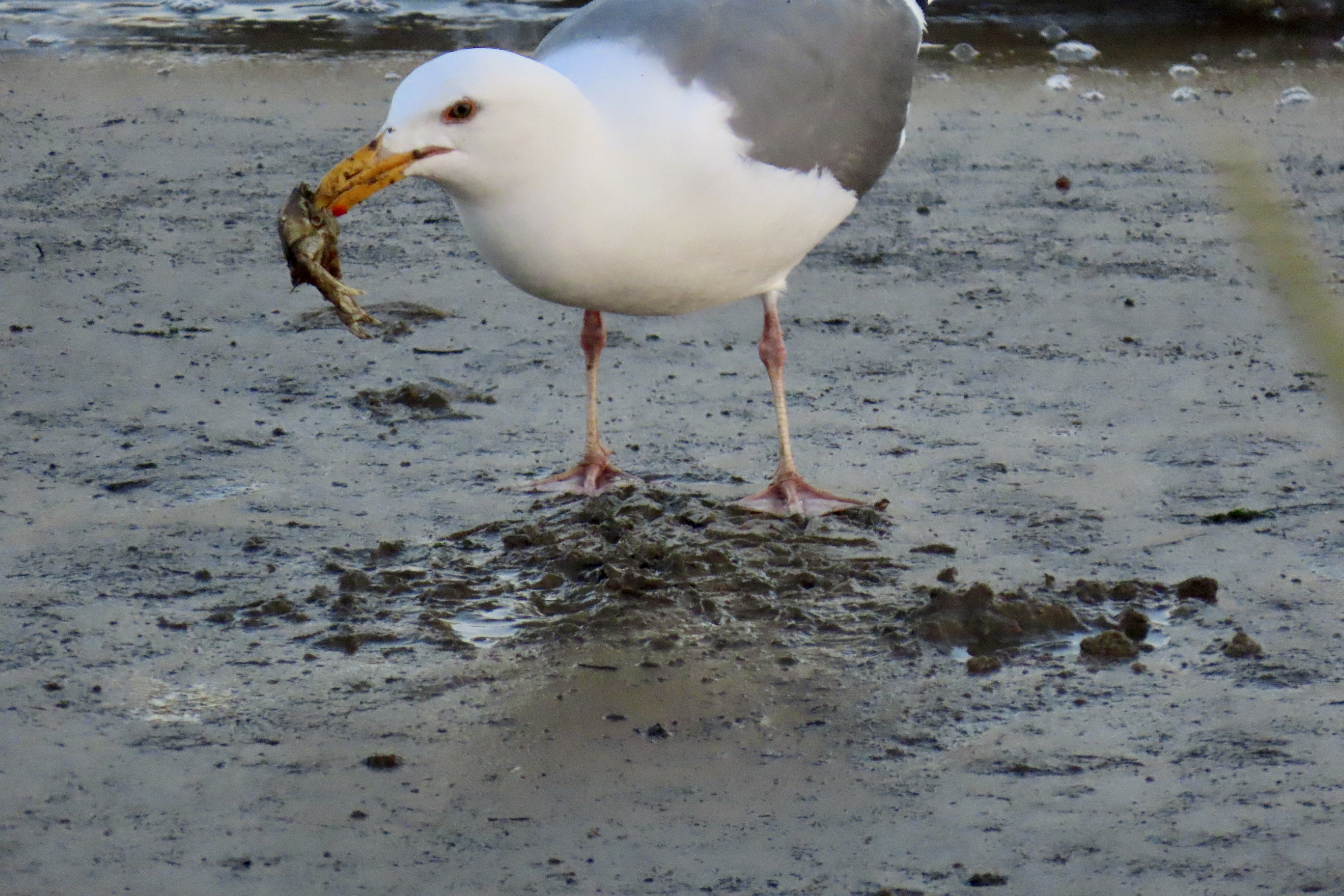
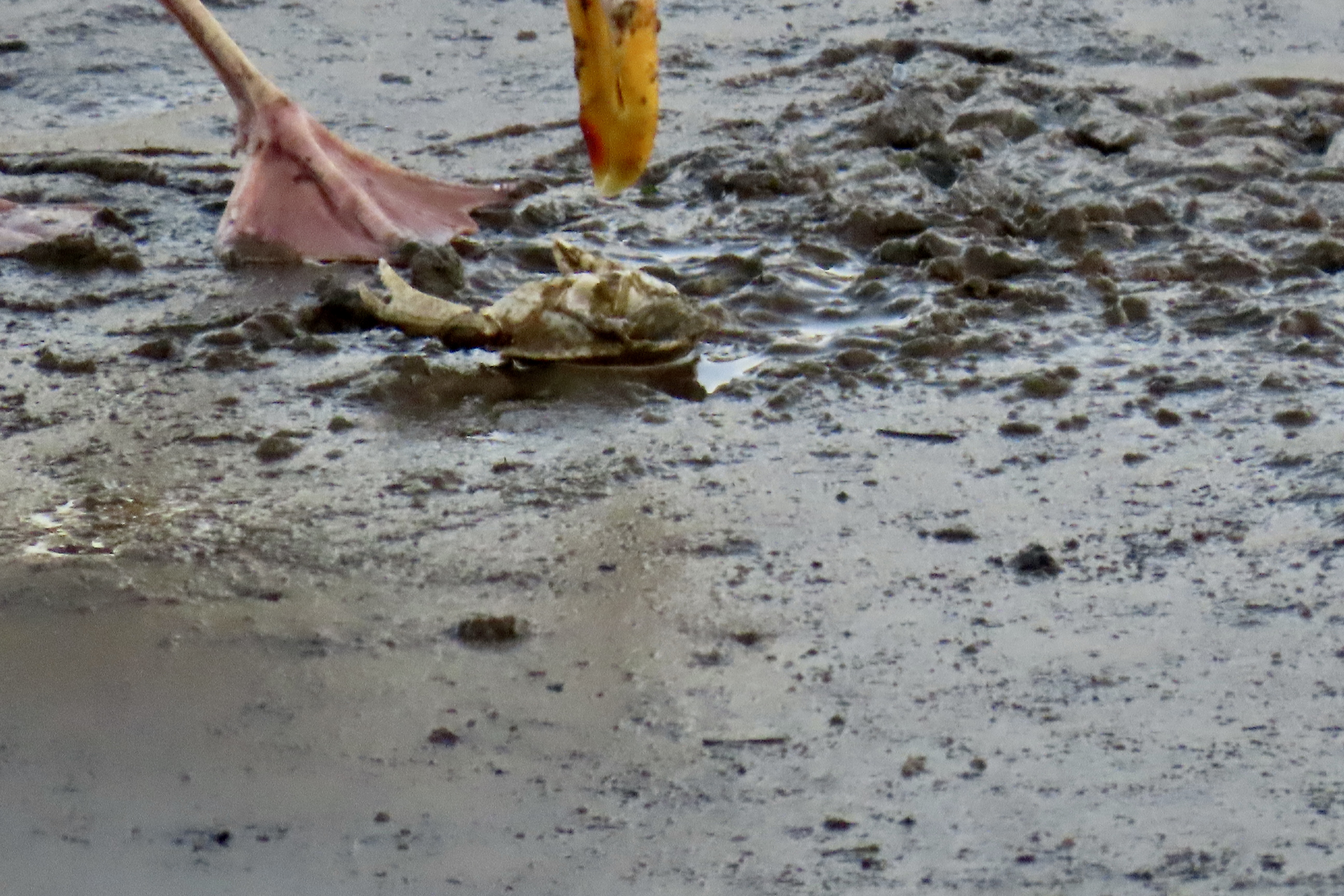
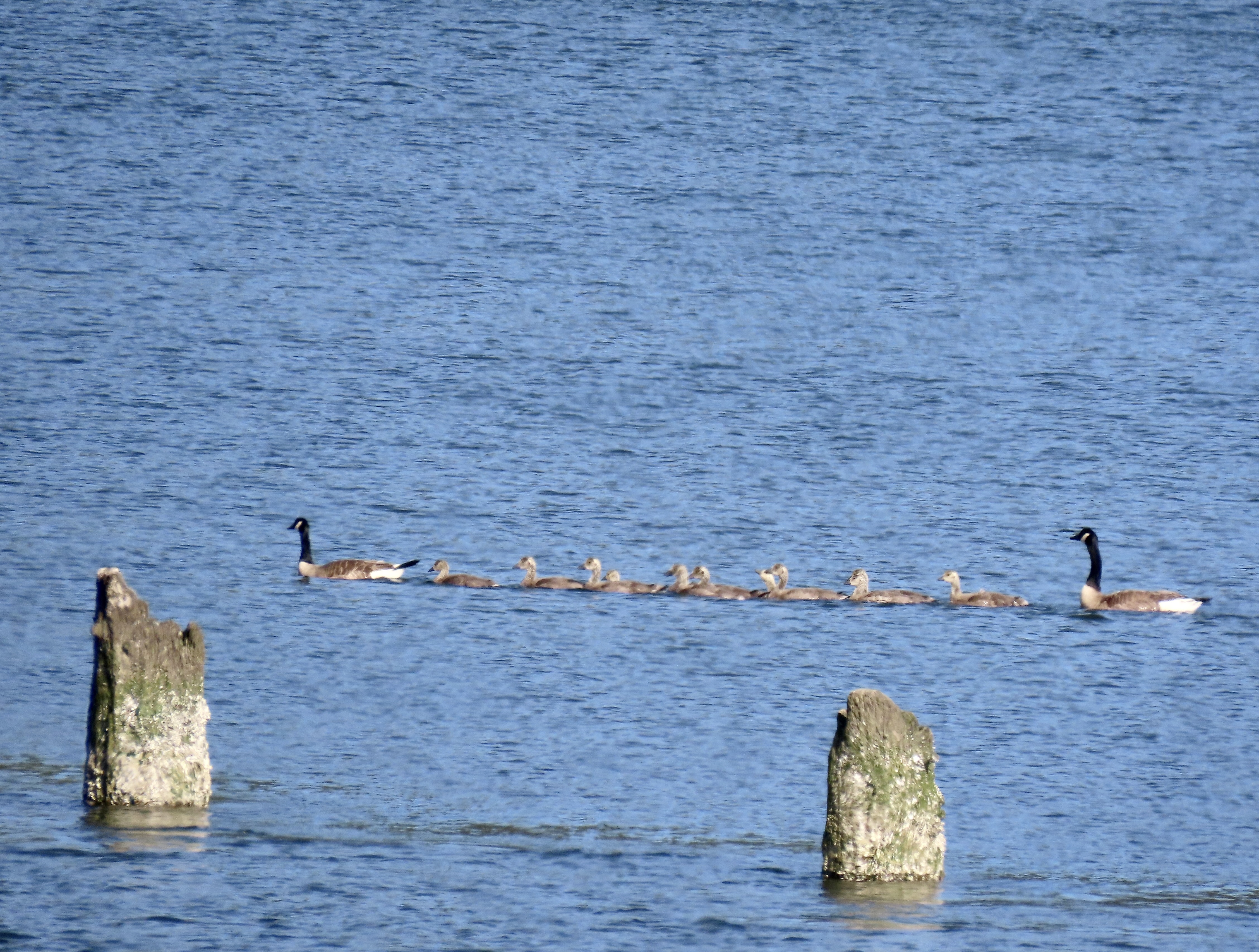
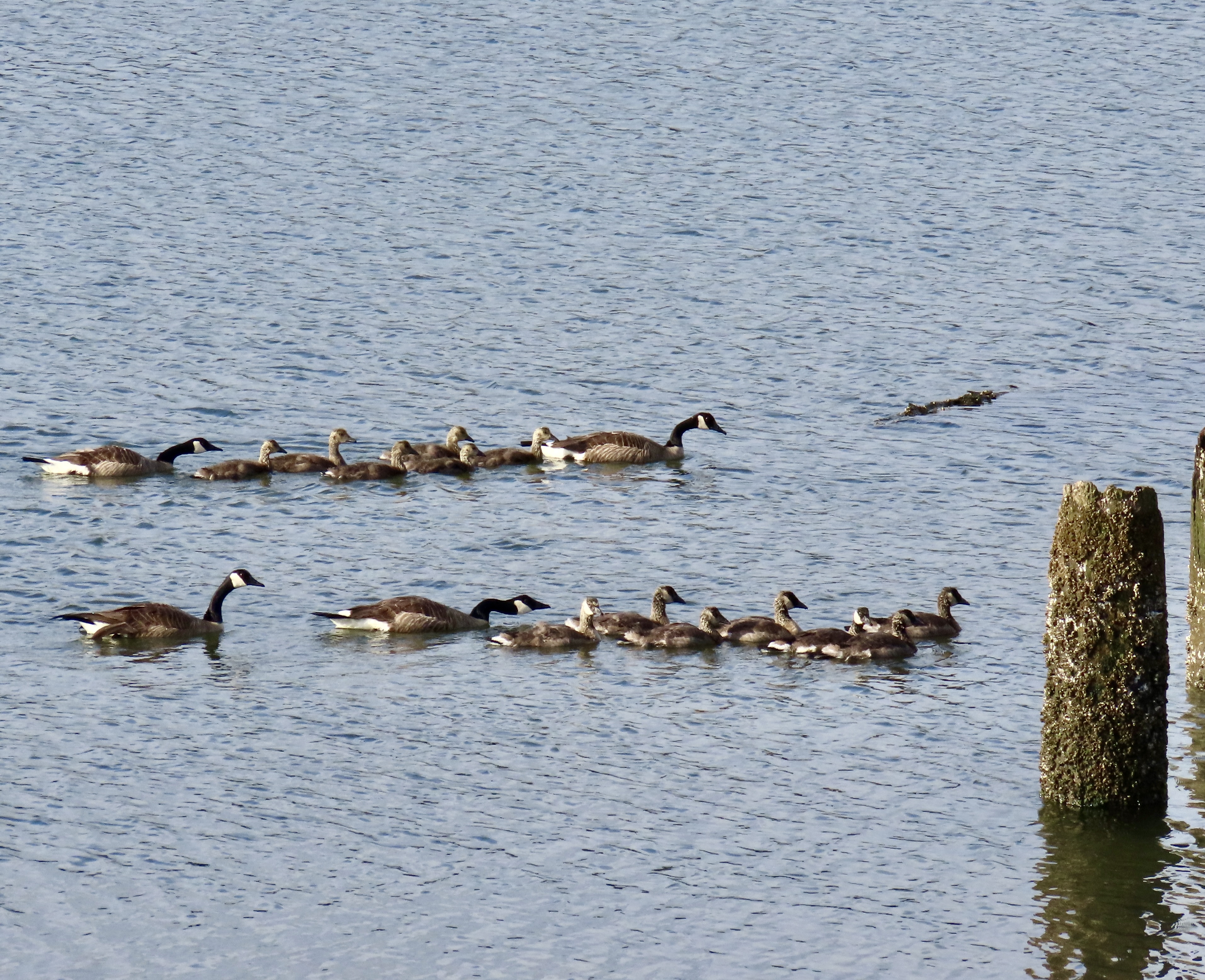
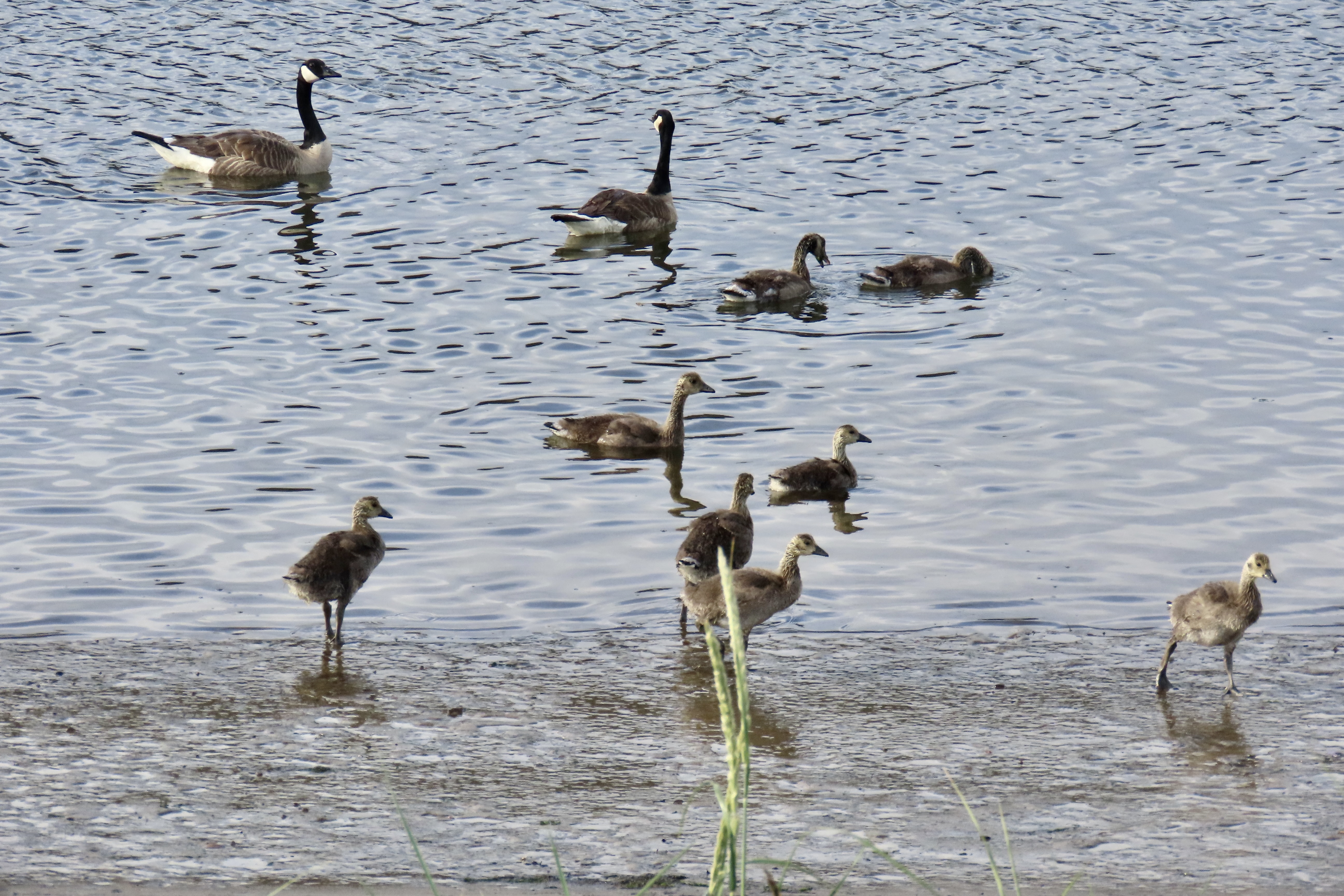
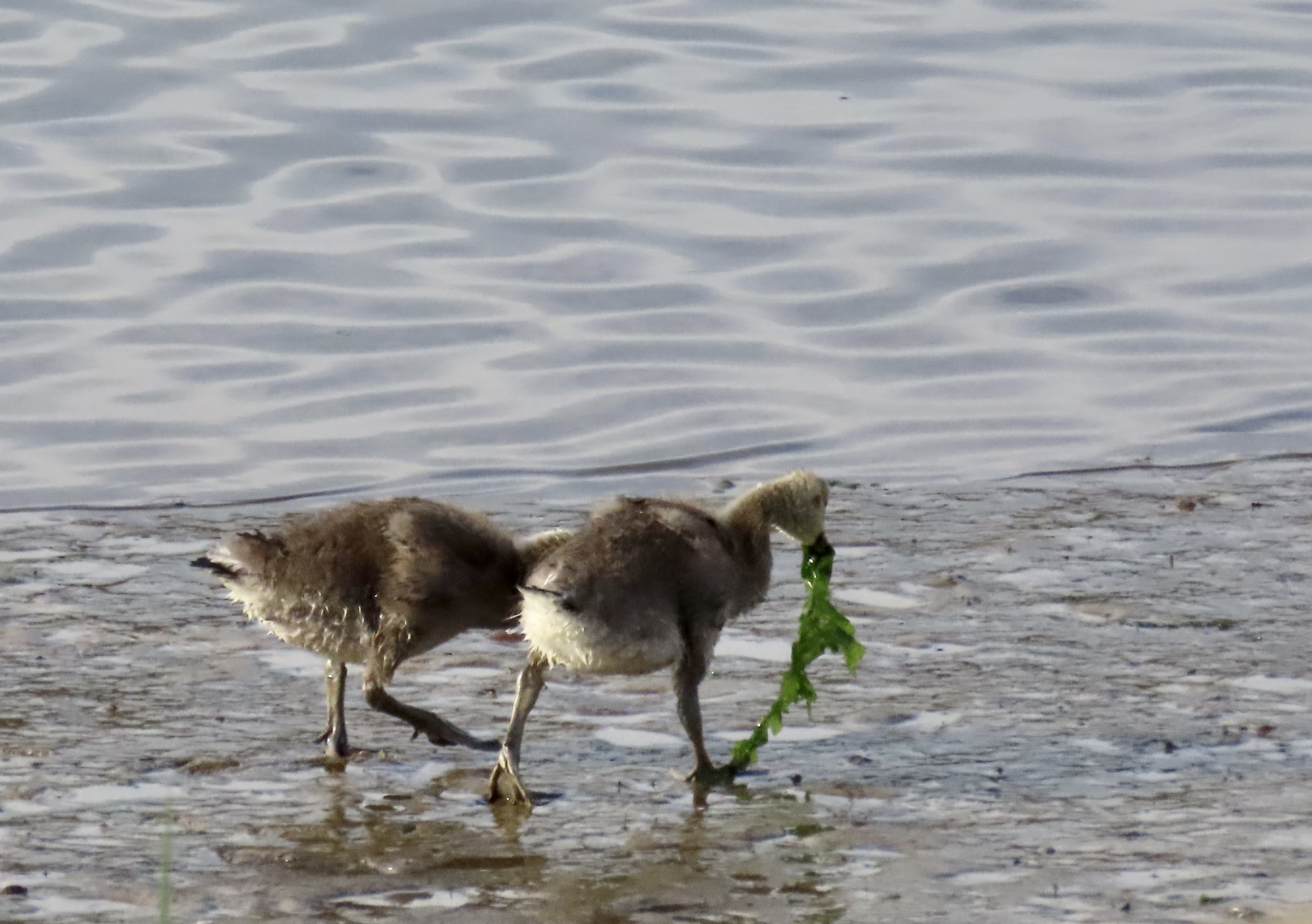
An evening view from our backyard on the Siuslaw River. The old pylons out in the river speak to how busy it was in the past. Once, they held up various structures; now have become a primary perching place for birds.Water birds put a lot of effort into preening. It’s their way of preparing for a busy day of work. This great blue Heron demonstrates just how much effort. Check out its neck. Linda Blair from the 1973 movie, The Exorcist, would not have been able to manage this trick.It’s important to dress appropriately for whatever activity you have planned for the day. The heron here plans on spending a lot of time in the water so he is waterproofing his feathers. He stores oil in his uropygial gland at the base of his tail feathers for the job. “His what?” you ask. At least I did. So I looked it up and learned it’s a bilobed sebaceous gland. Consider yourself informed.Having gathered oil, in his beak, the heron proceeds to oil his feathers. Preening involves more, however. Cleaning, positioning and interlocking feathers are all involved. Parasites are kept under control as well.In terms of parasites, sometimes a good scratch is in order. (It was getting dark when I took this photo and a couple of the others, so clarity was a little fuzzy.)Having finished preening, “Who’s the pretty bird?”Next up, a great egret demonstrates how to catch and eat a fish.First, you have to get off your perch.You will need to get wet. Step off into the water.You may have to stick your neck out, take a chance.Focus is critical.There will come a moment when it is time to strike. A second’s hesitancy may cost dinner. (I hesitated for a second and missed the photo.)Success. Next up, you eat what you catch. This isn’t catch and release. Good news, you don’t have to clean or cook the fish. This is sushi at its wiggly rawest.You do have to position the fish so you can swallow it. It is unlikely someone will be around to perform a Heimlich maneuver. Down the hatch. Gulp.One of the more serene photos of California gulls we have ever taken. Notice how clean it is, how pristine. That is about to change.Our serene friend caught a crab on the shore just behind our trailer. Pieces of the crab were broken off to eat.It was down and dirty work!There is no doubt that Canada Geese have perfected the art of taking their kids from place to place. Peggy caught the young geese traveling in a neat line between their mother and father.While the babies are easy to keep in line, the teenagers require a few more directions. Grin. Check out the extended necks of the adults. It isn’t hard to imagine a bit of scolding.Maybe mom and dad were urging them to do some independent foraging.One of the youngsters found some tasty seaweed that a sibling was eager to share. I’m pretty sure that the message was “Go get your own.”Peggy noticed a gathering of cormorants up the river from our backyard and we tried to figure out what they were up to. It seemed that the adults were up on the pylons while the younger and smaller cormorants were swimming beneath them.Soon a large flock of cormorants had gathered. Again, the majority of the flock in the water were immature birds based on their light color. I thought the dead tree in the background made a nice backdrop.
I learned an interesting fact about cormorant intelligence when I was trying to figure out why they were gathering. The can count to seven: “Chinese cormorants on the Li River are allowed to keep every eighth fish they catch. Otherwise they “stubbornly refuse to move again until their neck ring is loosened.”
And now for a few miscellaneous photos.
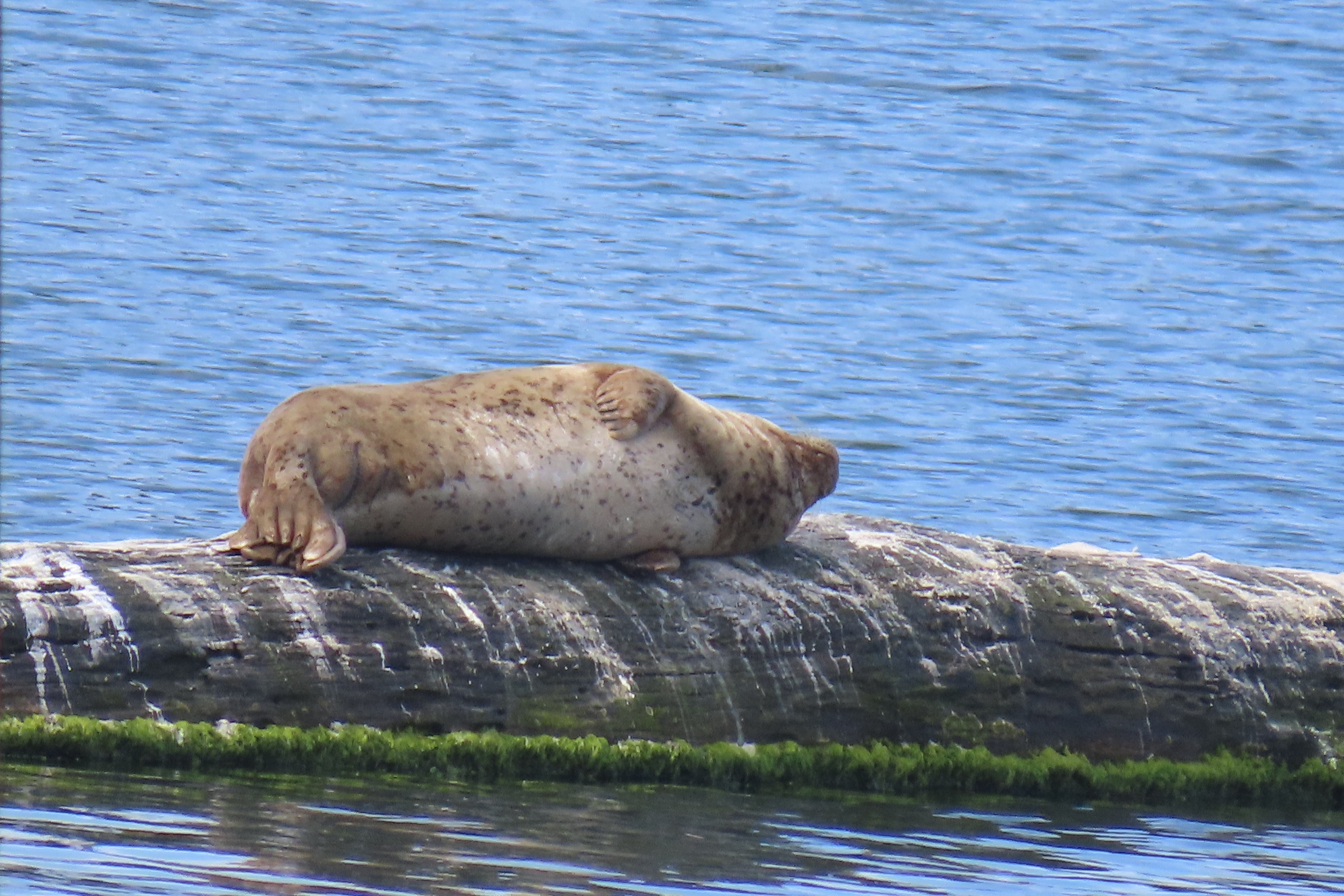
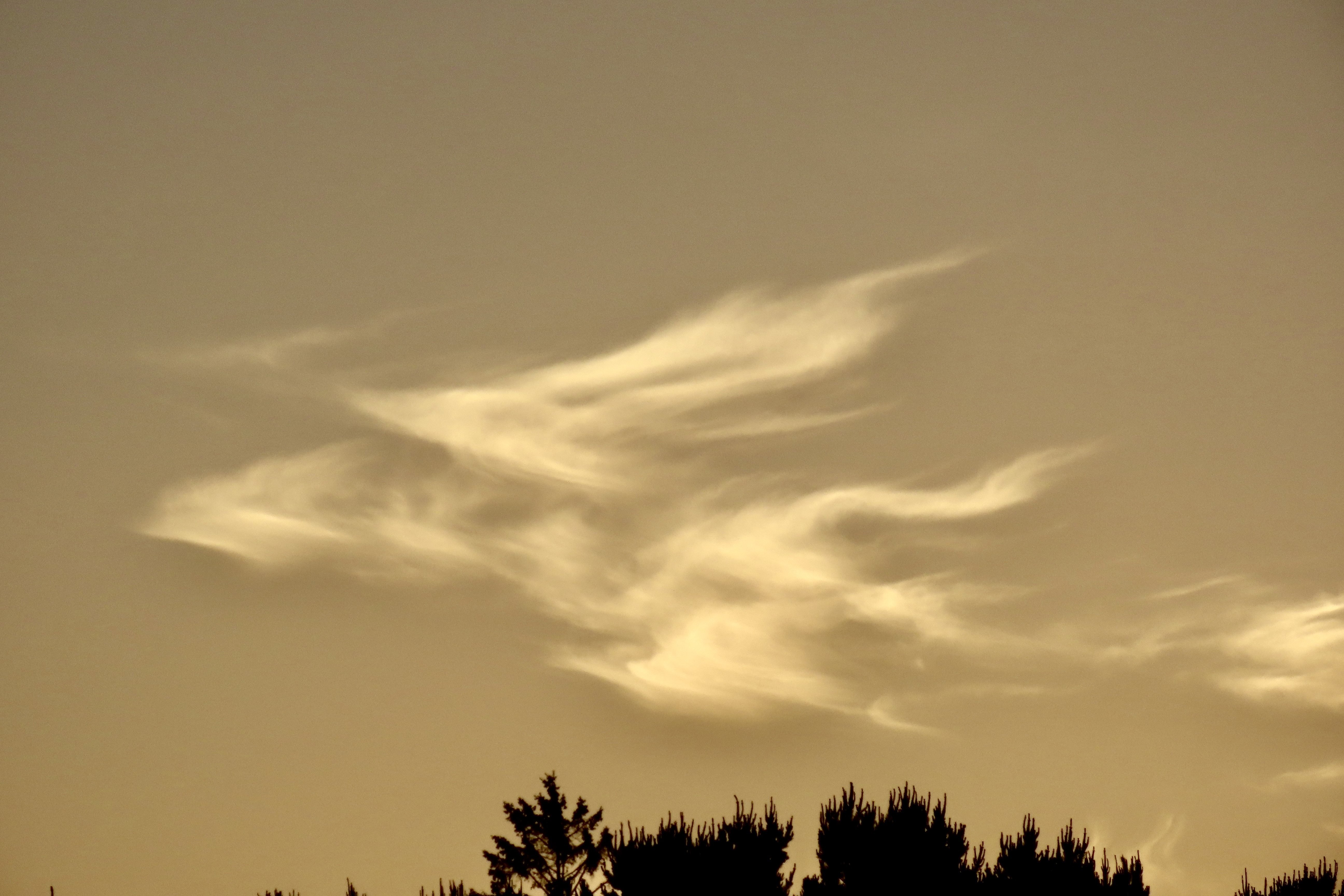
This great blue heron was fishing.We liked the way it was outlined by an old wooden structure.Most days a lone seal would rest on what may have been a cross beam to a pier at one time.Looking west from our campsite, we noticed this interesting cloud formation one evening. Peggy identified it as a flock of flying dragons.Another evening we watched a sunset out to the west, which will wrap up today’s post. Next we will take you out to the Devil’s Churn near Yachats, Oregon where the pounding ocean turns foam into a thick, brown froth with the texture of whipped cream.
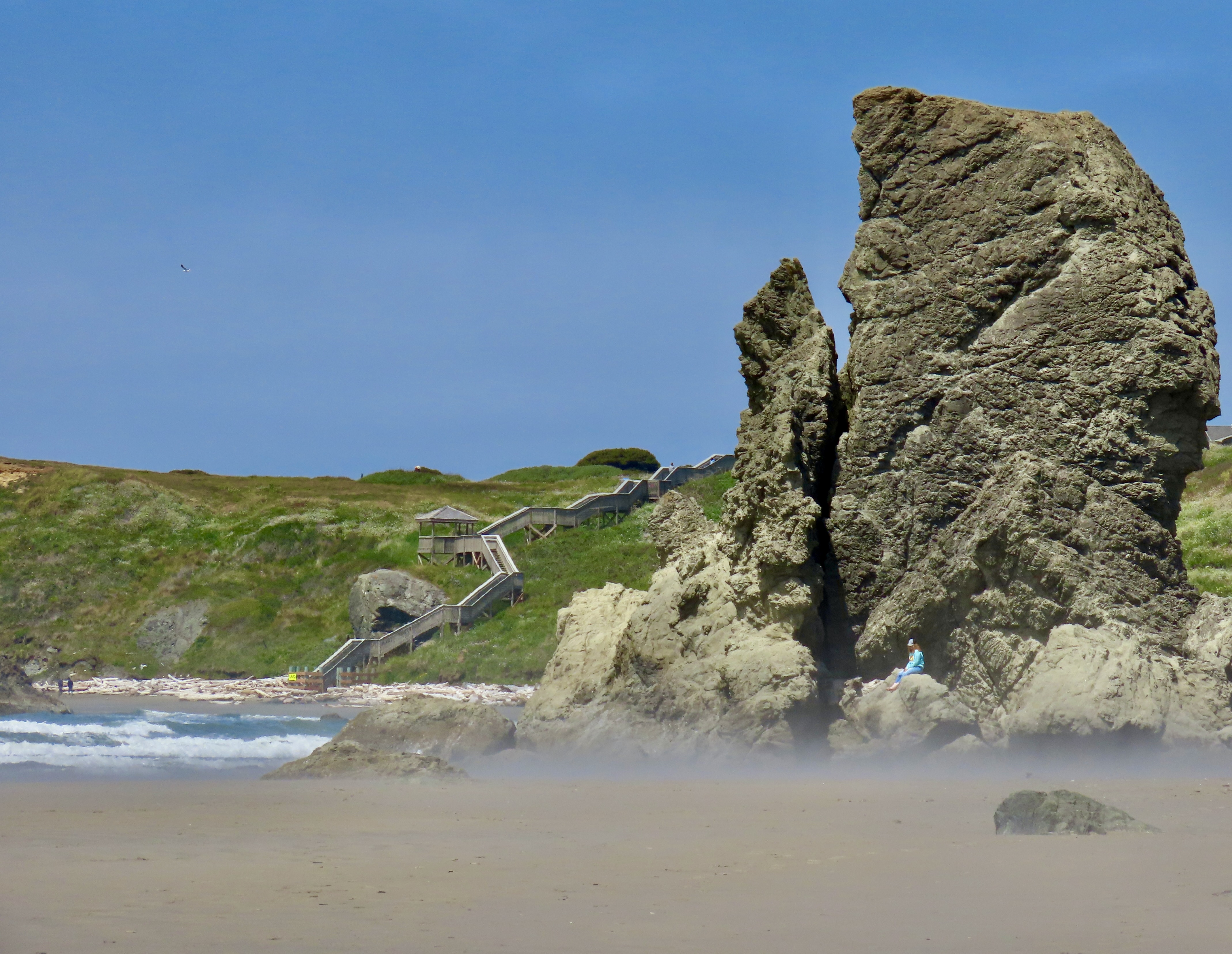
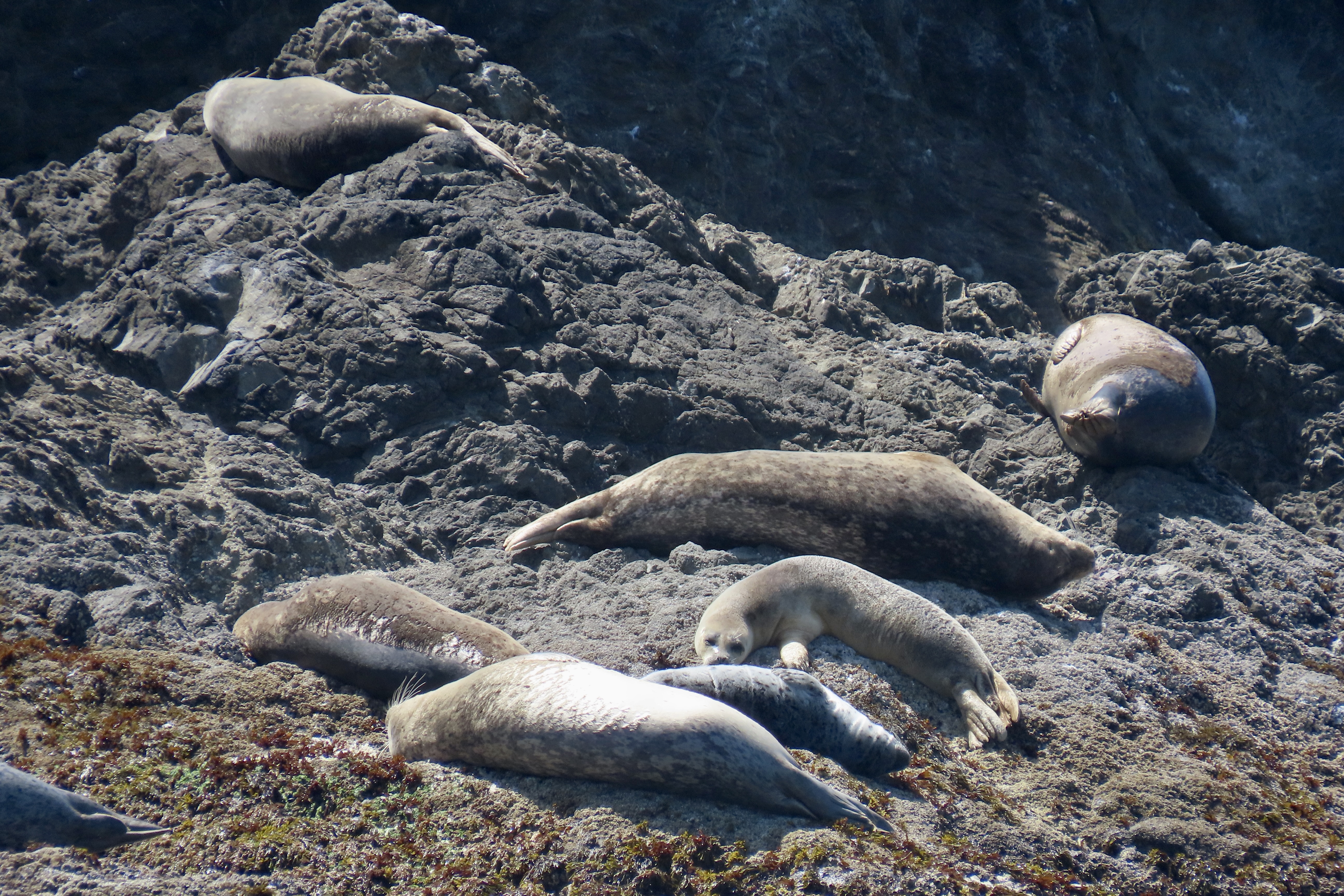
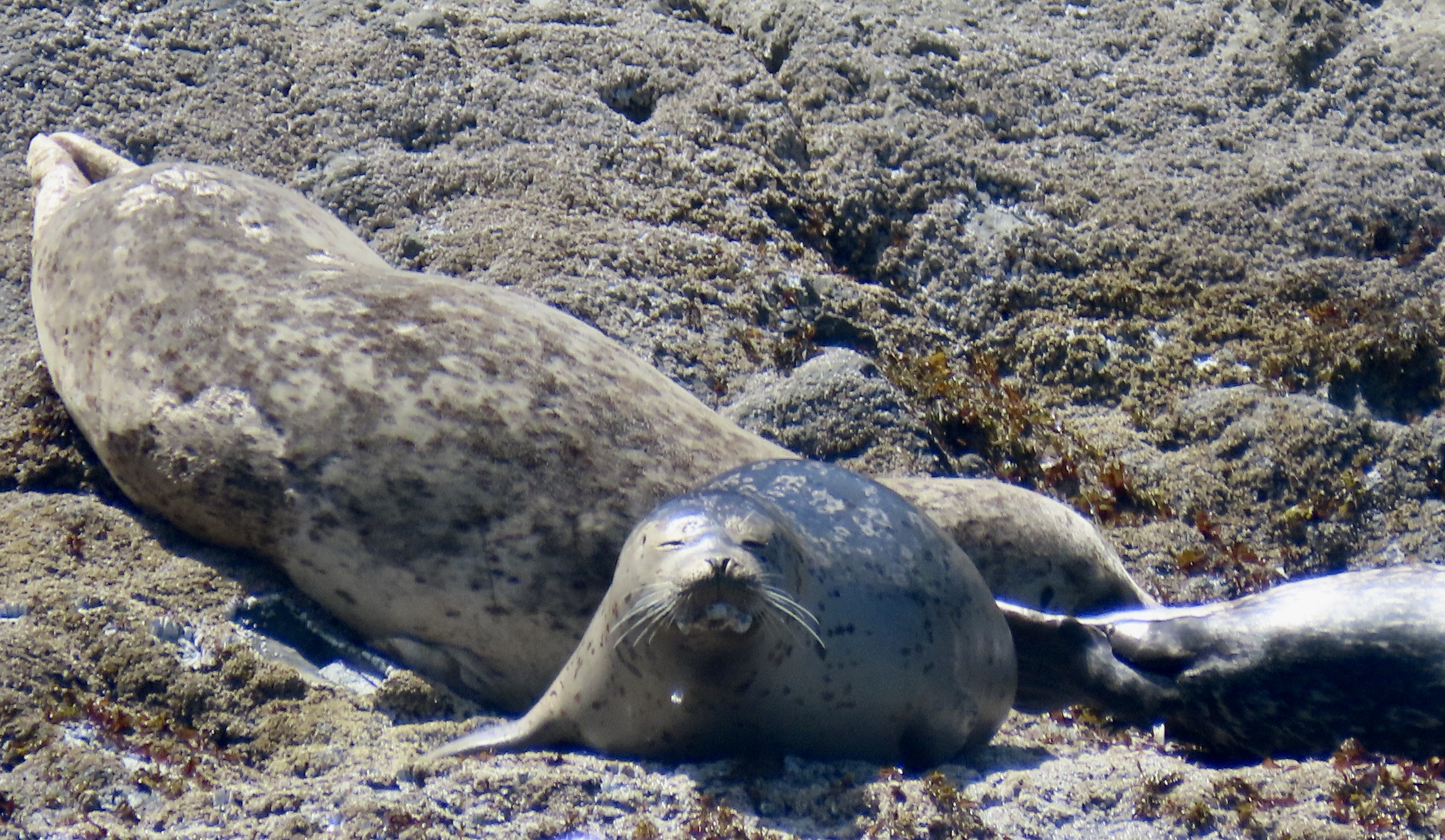
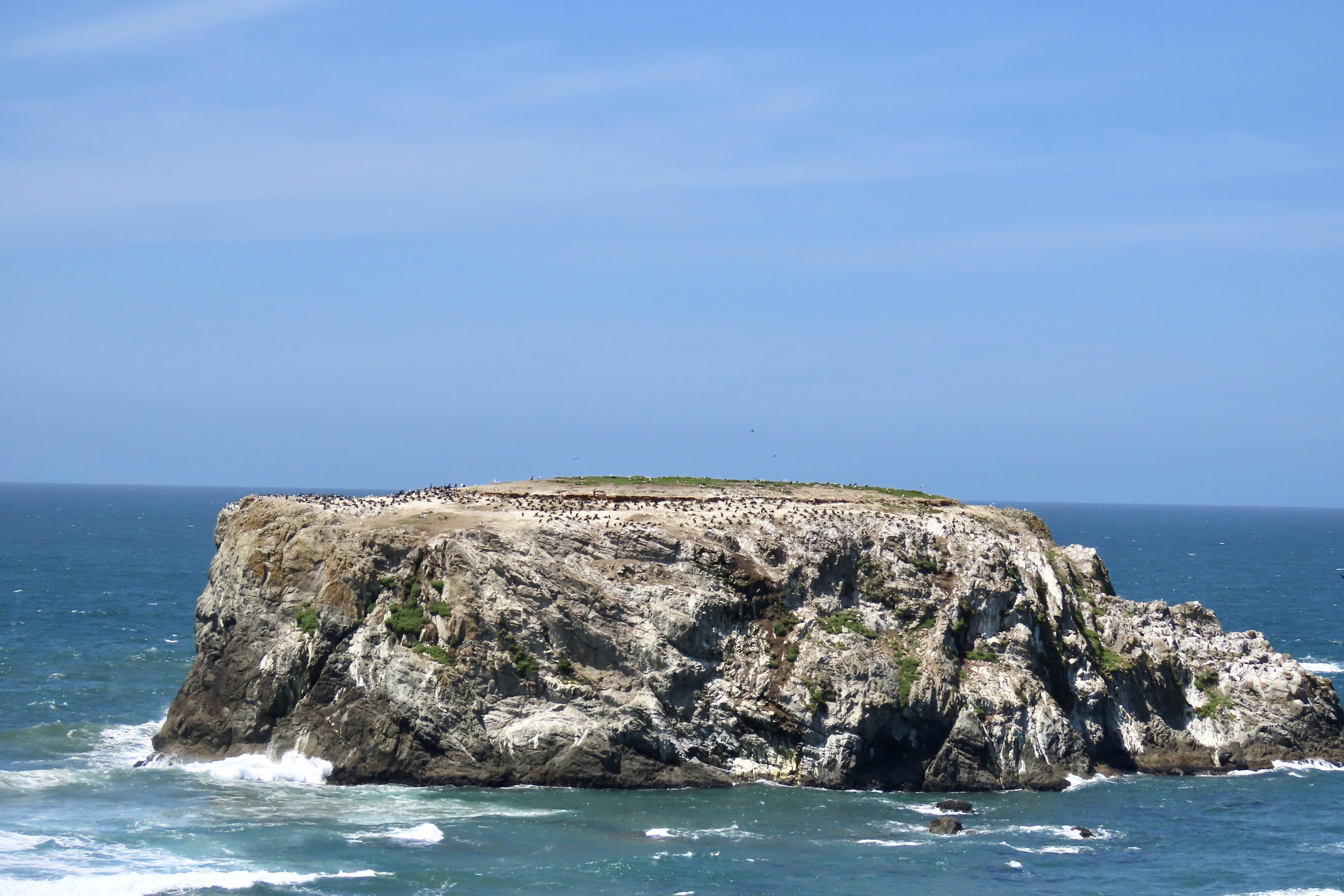
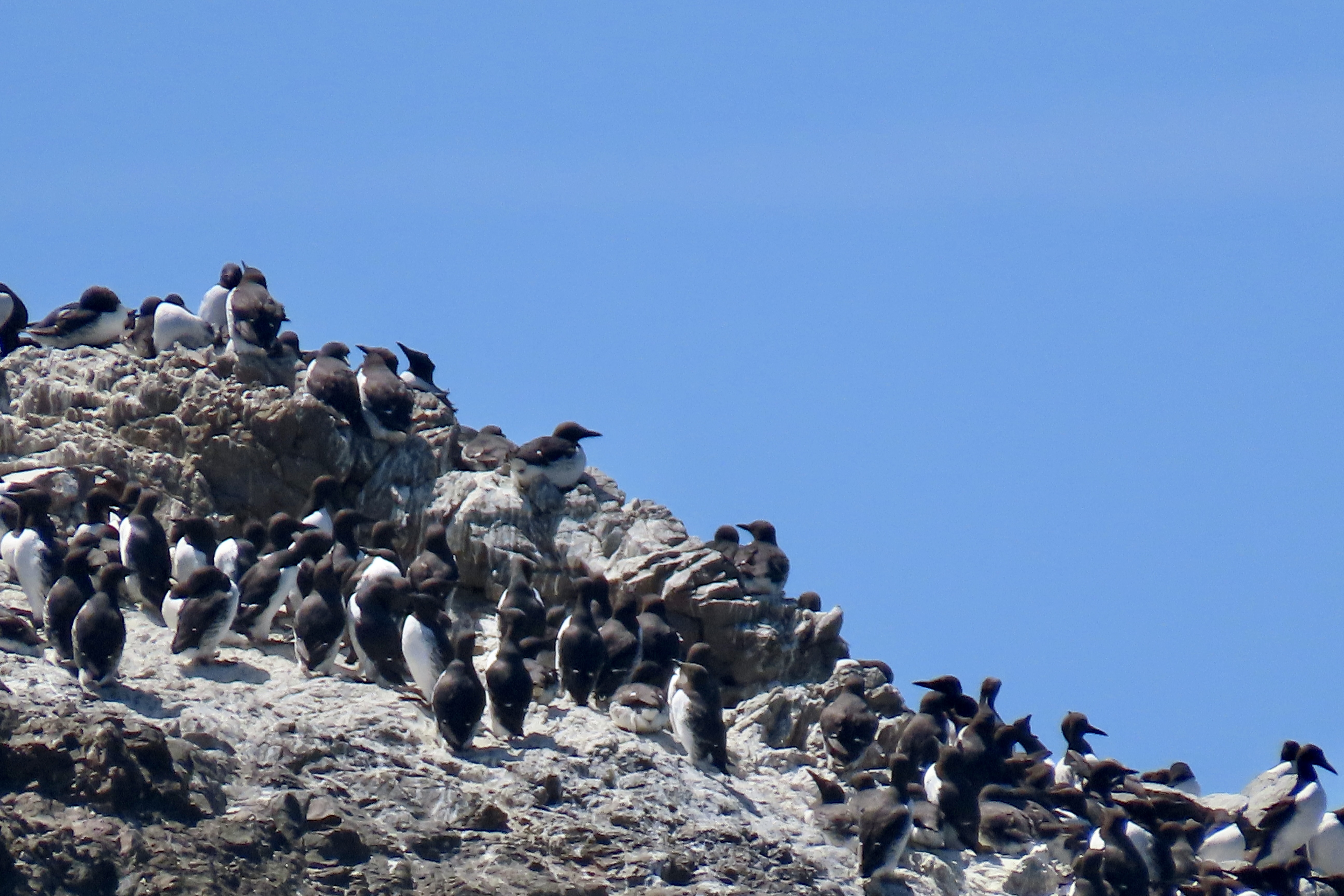
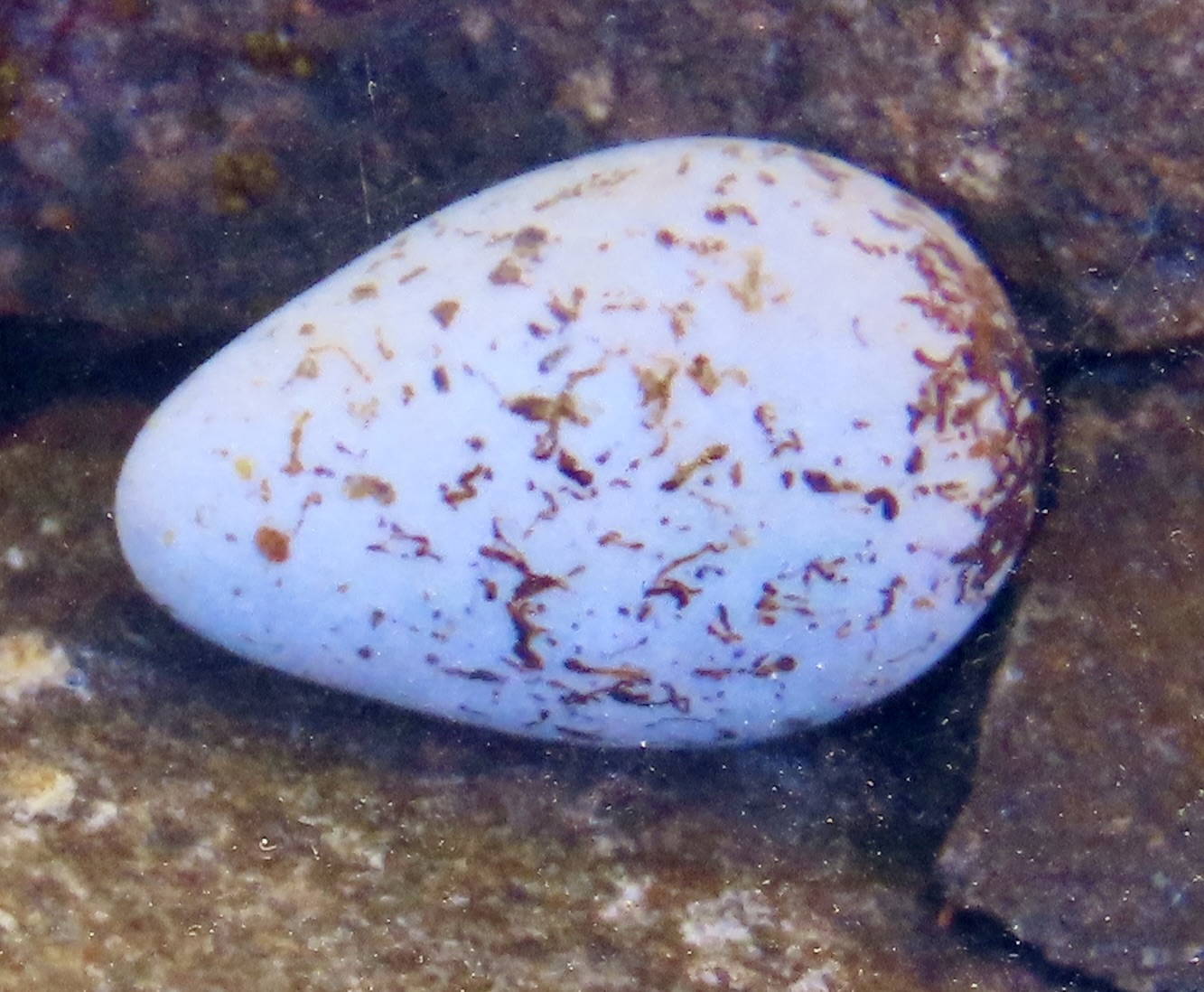
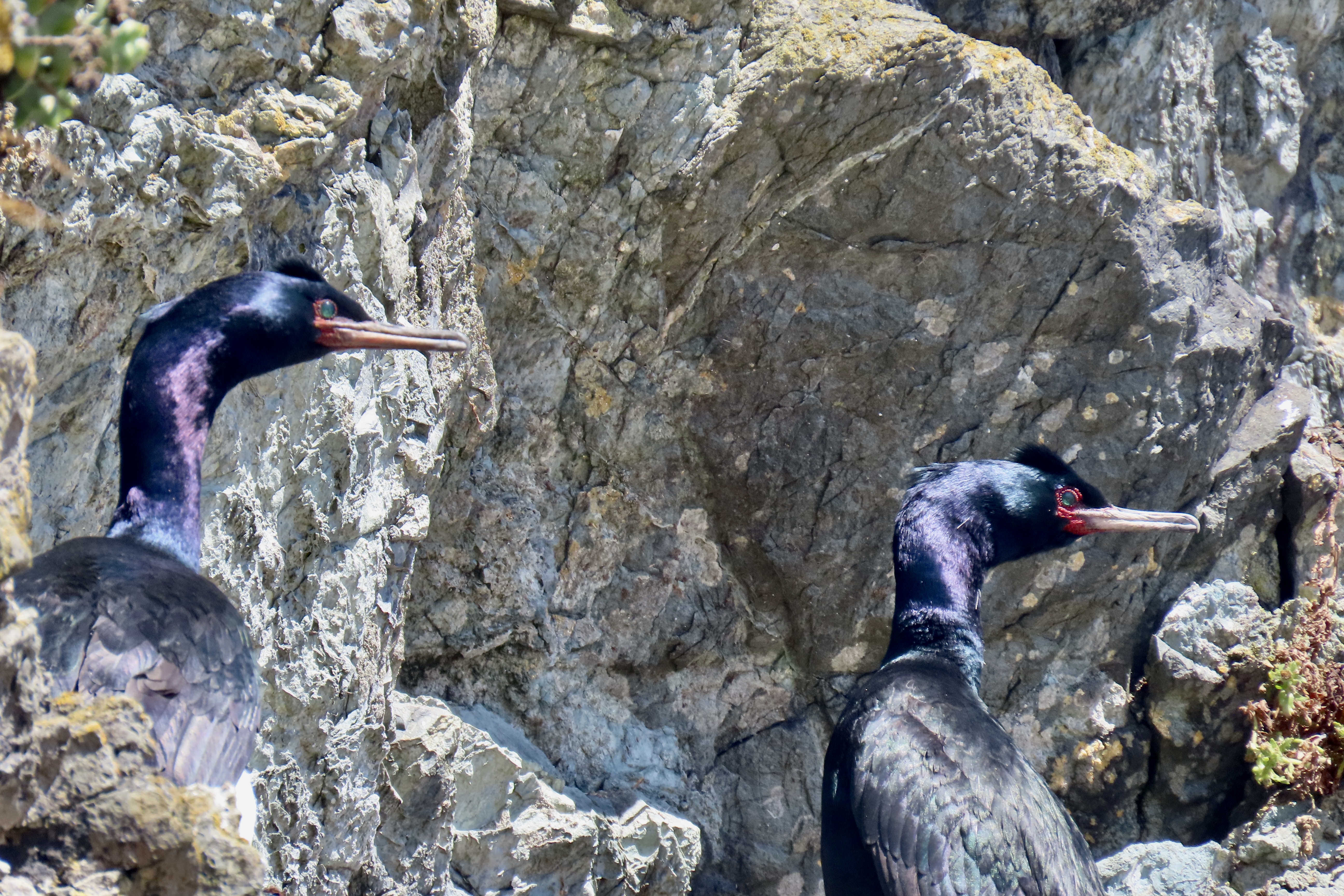
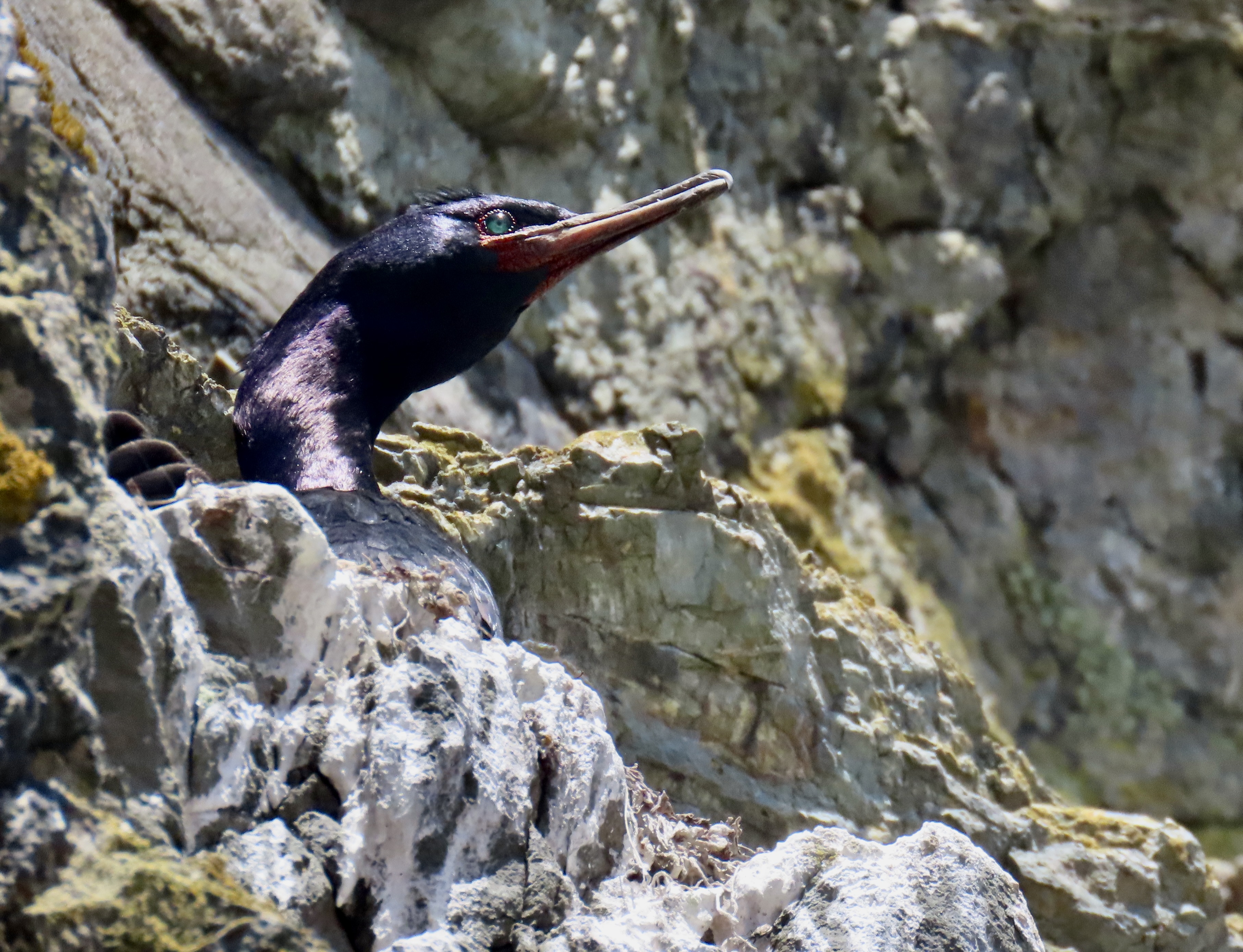
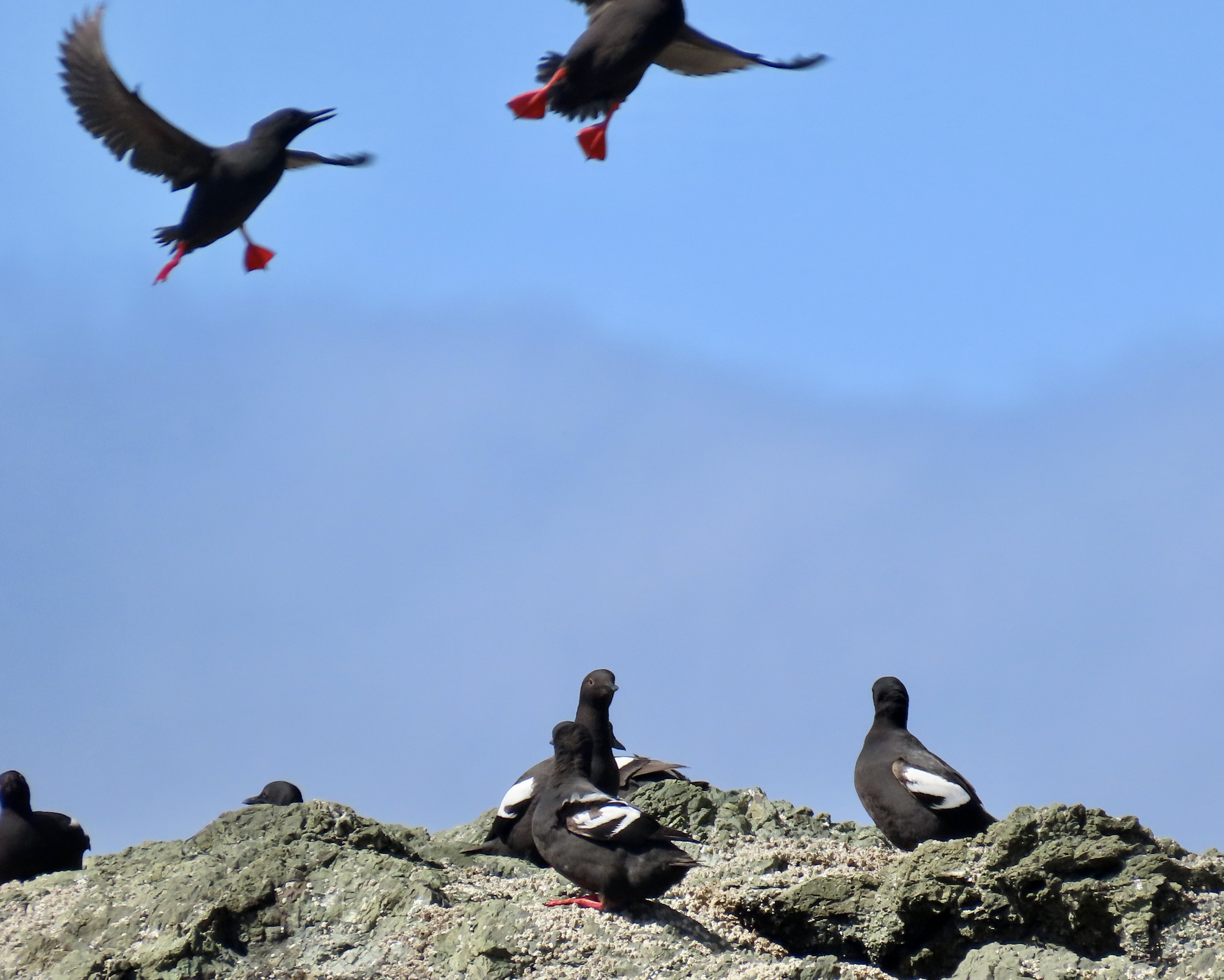
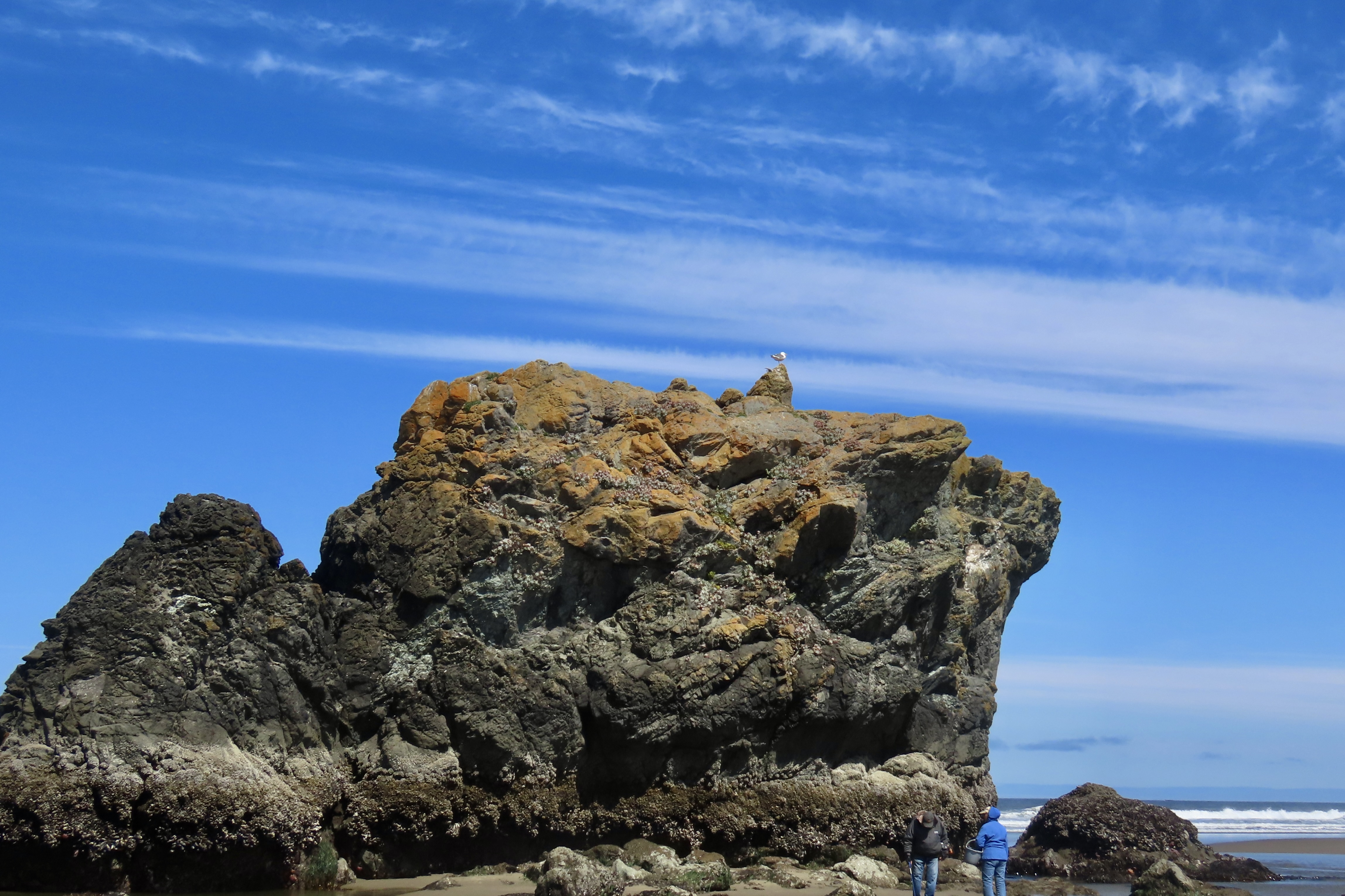
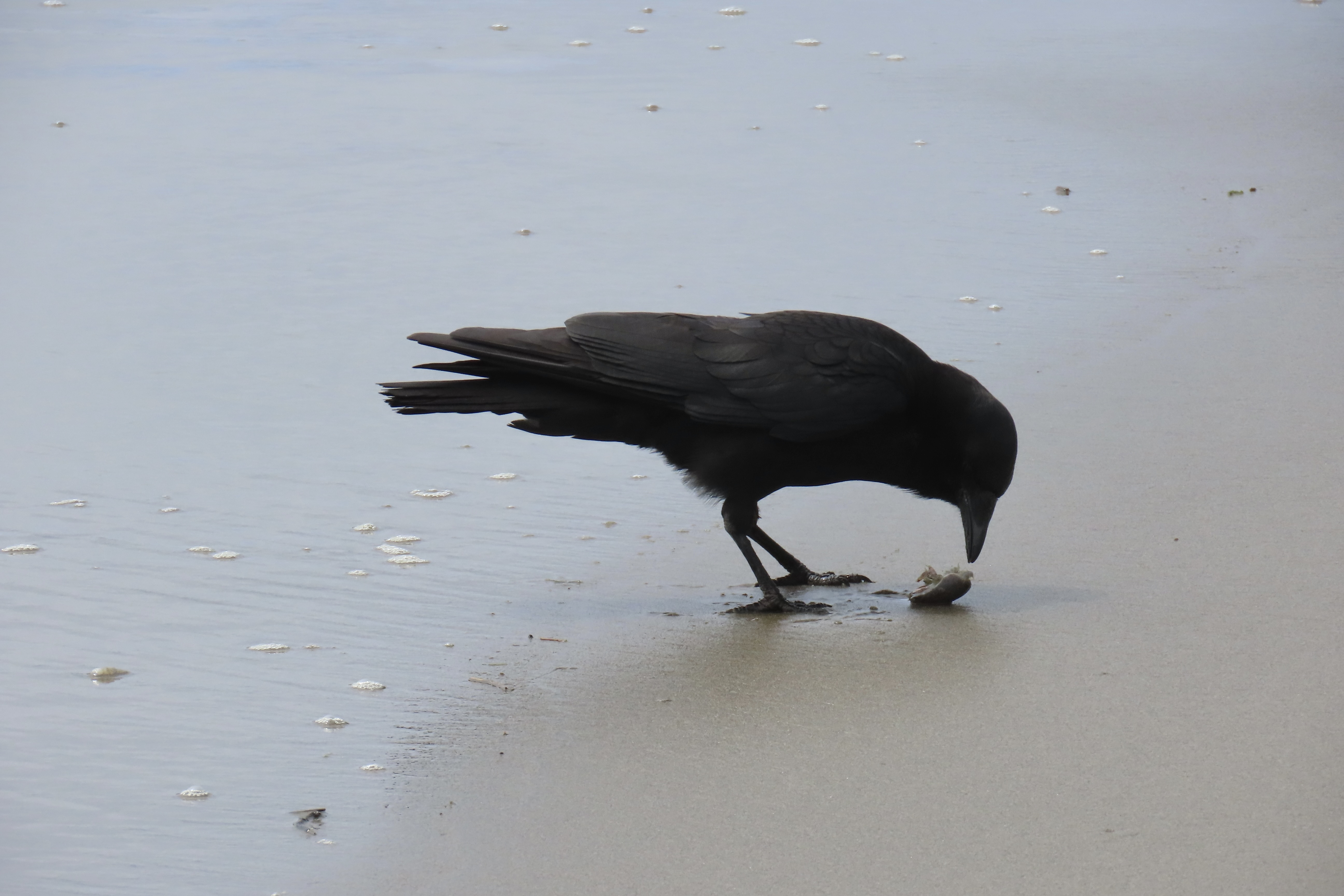
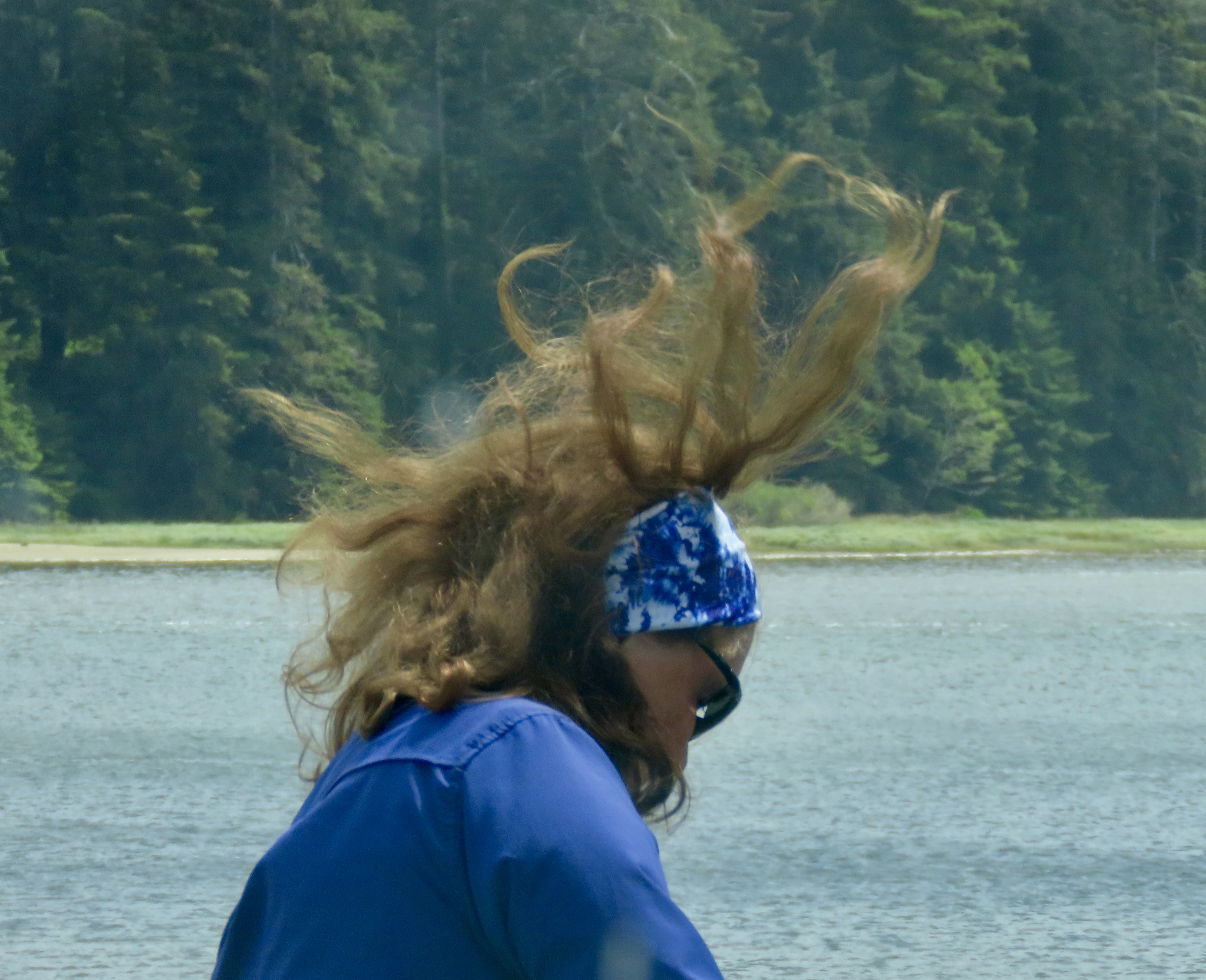
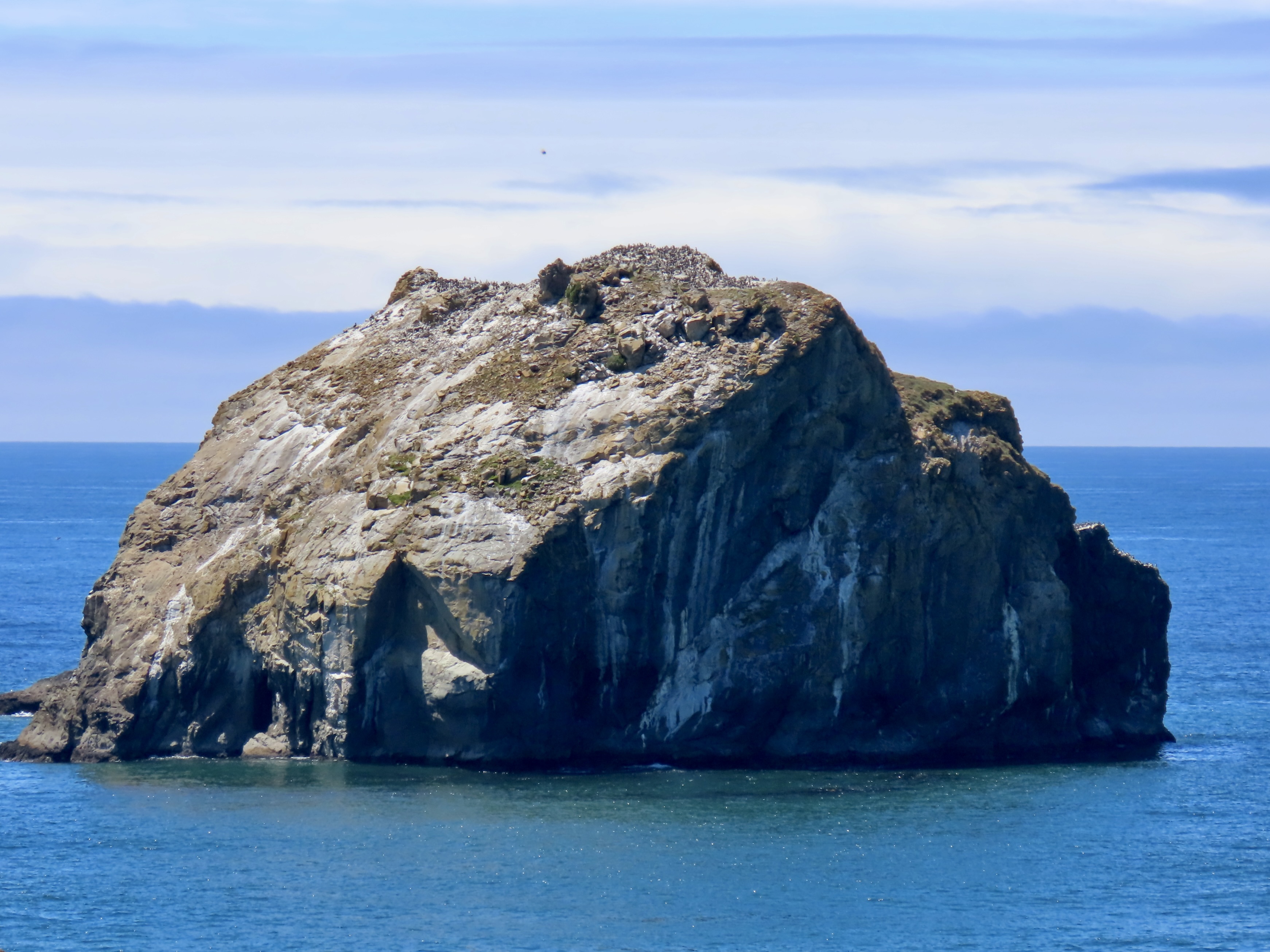
There is more to the unusual beauty of Bandon By The Sea than sea stacks. This photo is from one of the beach walks we took while we were visiting 3 weeks ago is an example.Graceful wooden walkways down to the beach add to the beauty. A fine mist was working its way inland.There were two sets of stairs down to the beach, this one that started near the Face Rock parking lot and the one above that was located to the north . The driftwood next to the stairs here had been tossed up by winter storms over time.Down on the beach the waves had carried in a large tree; its roots are shown here.We found this blog-worthy piece of driftwood on our walk into Devil’s Kitchen when we were heading out to explore the tide pools.This rattlesnake grass gets its name from the seed pods that resemble the rattles on a rattlesnake.I liked the contrast here of the dried grass and green shrubs caught in the evening sunset.Peggy enjoyed the flower gardens that grew on the sea stacks.And, of course, Bandon had its share of seals lollygagging on the rocks off its shore.As we have seen on our trip up the coast, offshore sea stacks/islands play host to myriads of nesting sea birds. This island, like most of them along the coast, is a marine sanctuary. Most of the dots are Brandt cormorants…But murres were also nesting on the rock in their usual numbers. When they are packed together, each murre occupies around six square inches to raise its chick. I read that the parents come back to their same six inches year after year.An information board along the walkway above the beach included a photo of one of the Murre’s oddly shaped, colorful eggs. Each egg has a different pattern that its parents can recognize. When the chick reaches 3-4 weeks of age (even before it can fly), it’s time to say goodbye to its tiny space. Dad flies down to the ocean and calls to the chick while mom hangs out above. (I wonder if she gives her baby the boot.) Anyway, baby takes the leap and flutters down to dad, who then takes it out to the ocean to feed it fish until it can fly and hunt for its own fish.When we were exploring tide pools at Devil’s Kitchen in Bandon, Peggy noticed a pair of pelagic cormorants nesting in the rocks above us. Unlike the Brandt cormorants shown above, they seem happy hanging out on their own.Whether they were curious about us or nervous, they watched us closely. Note their crests.We also spotted the first pigeon guillemots we had seen on our trip.Check out those red feet! When the male courts the female, it walks in circles around her showing them off. “Oh, what bright shiny red big feet you have,” is the hoped for response.I was trying to catch a photo of an oyster catcher when a wave hit the rock. This was the result.This was the sea stack where we checked out tide pools and saw the pelagic cormorants, pigeon guillemots and the oyster catcher. Note the California gull way up on top. Peg and I noticed that there would often be one perched on the highest point of the sea stacks.On the way back to our truck a crow feasted on a giant sand flea.Here’s what it looks like. When I was a kid we used to visit my grandparents down on the central coast of California. My grandfather loved surf fishing and would put my brother Marshall and me to work capturing these guys. Fish go crazy for them. When a wave retreats you look for small holes with bubbles coming out and dig! As I recall, our grandfather gave us a nickel for each one of the delicacies….. a fortune!I’ll wrap up our Bandon posts with a photo of a fishing boat that was docked at the marina. Next up, our “backyard”, on the Siuslaw River in Florence, Oregon. Question: Who wins the windblown look?
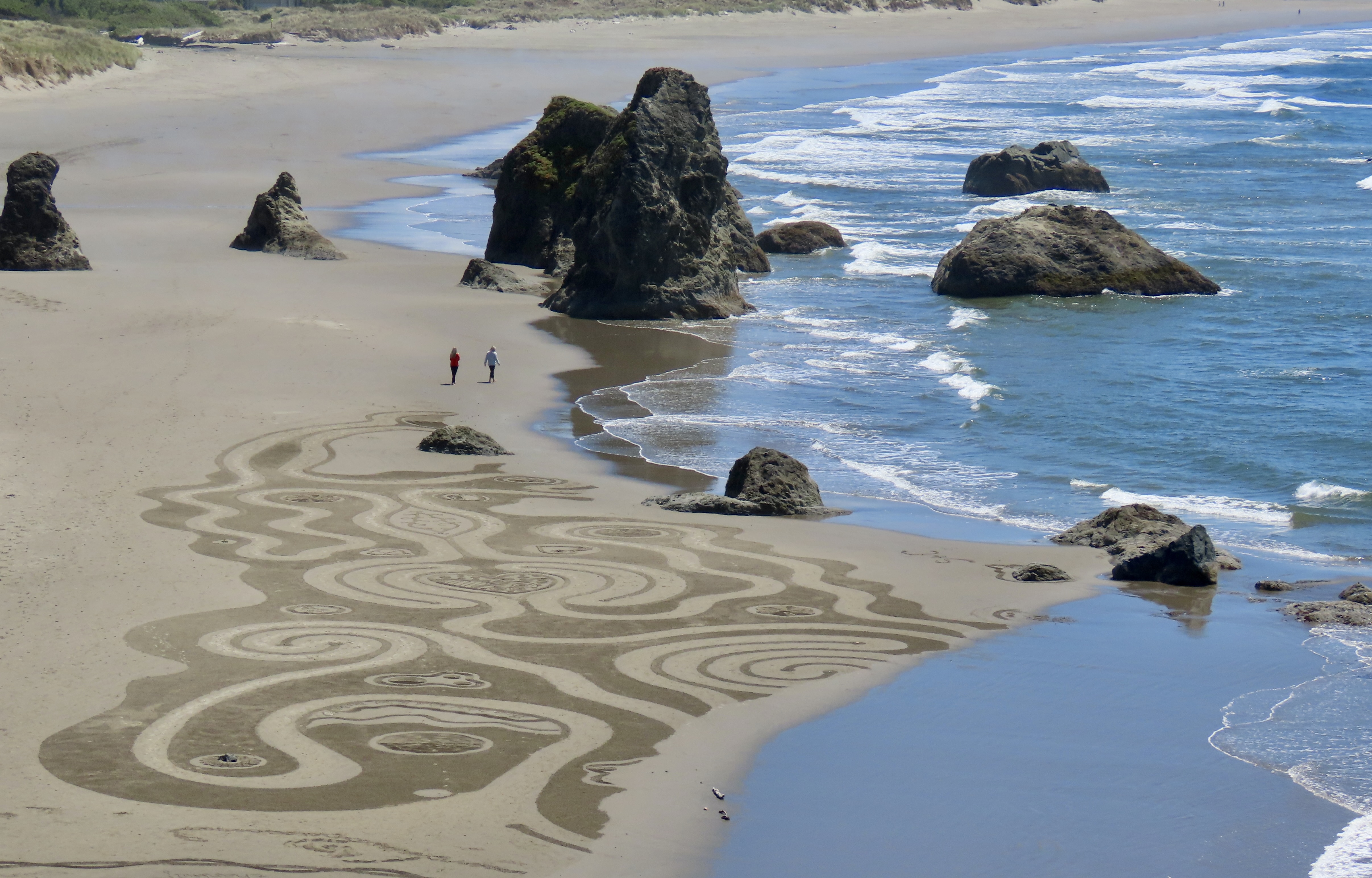
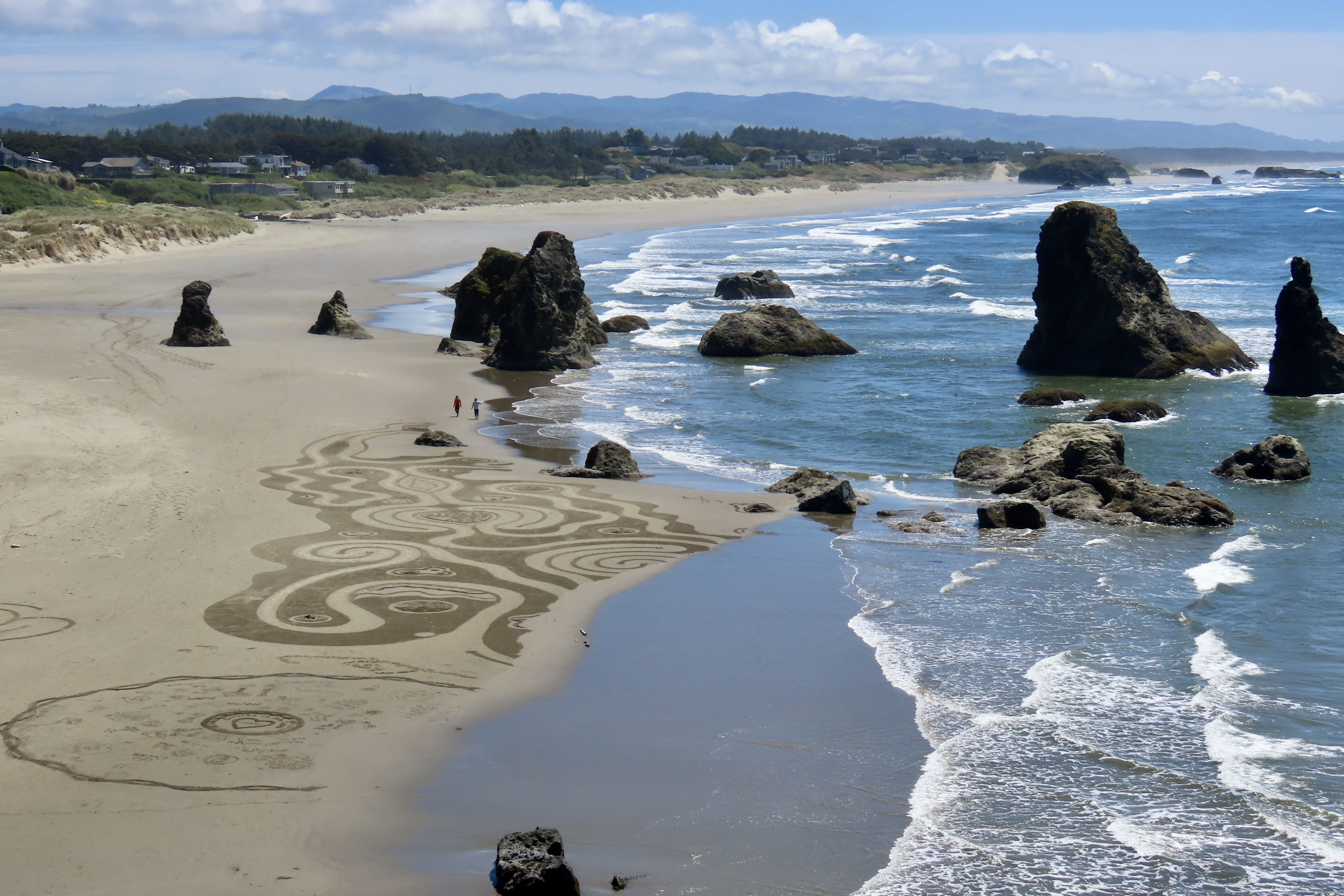
The tide was rolling in, erasing an elaborate labyrinth in the sand when we arrived at Face Rock Overlook in Bandon. Had we arrived earlier we could have walked from one end of the art work to the other.
It’s really hard to choose a favorite small town along the Pacific Coast from Central California to Olympic National Park in Washington. The competition is ferocious. Of the ones we have stayed at or visited on this trip, our favorites so far are Point Reyes Station, Mendocino, and Bandon. We could happily live in any of them. Each of these towns are easily walkable, have unique personalities, and feature incredible seashore scenery and wildlife. I might add that both Point Reyes Station and Mendocino have top of the line independent bookstores, a factor that Peggy and I always consider. While Bandon has a small bookstore with a good selection for its size, it is the town’s dedication to public art that stands out. We will be featuring four different aspects today.
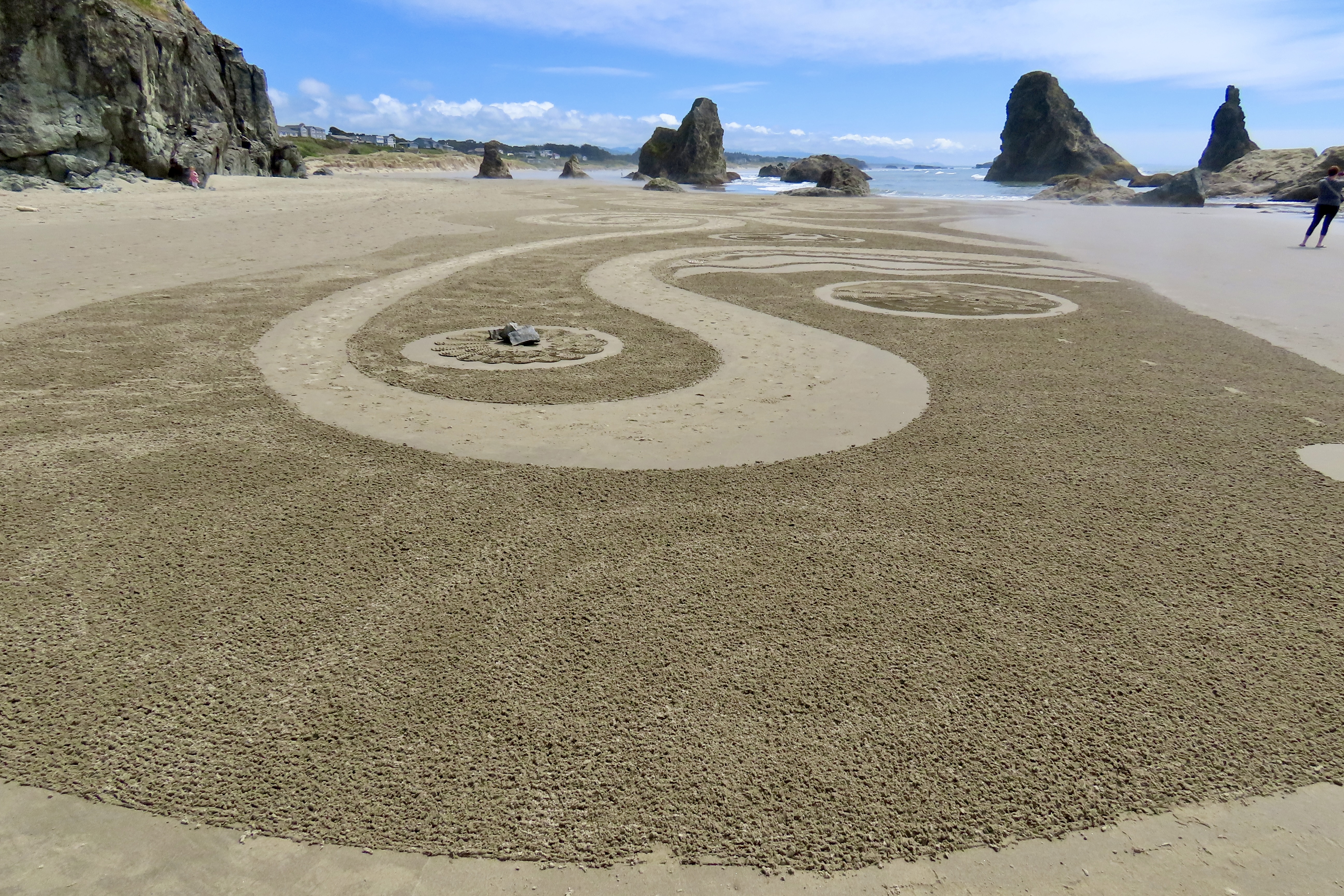
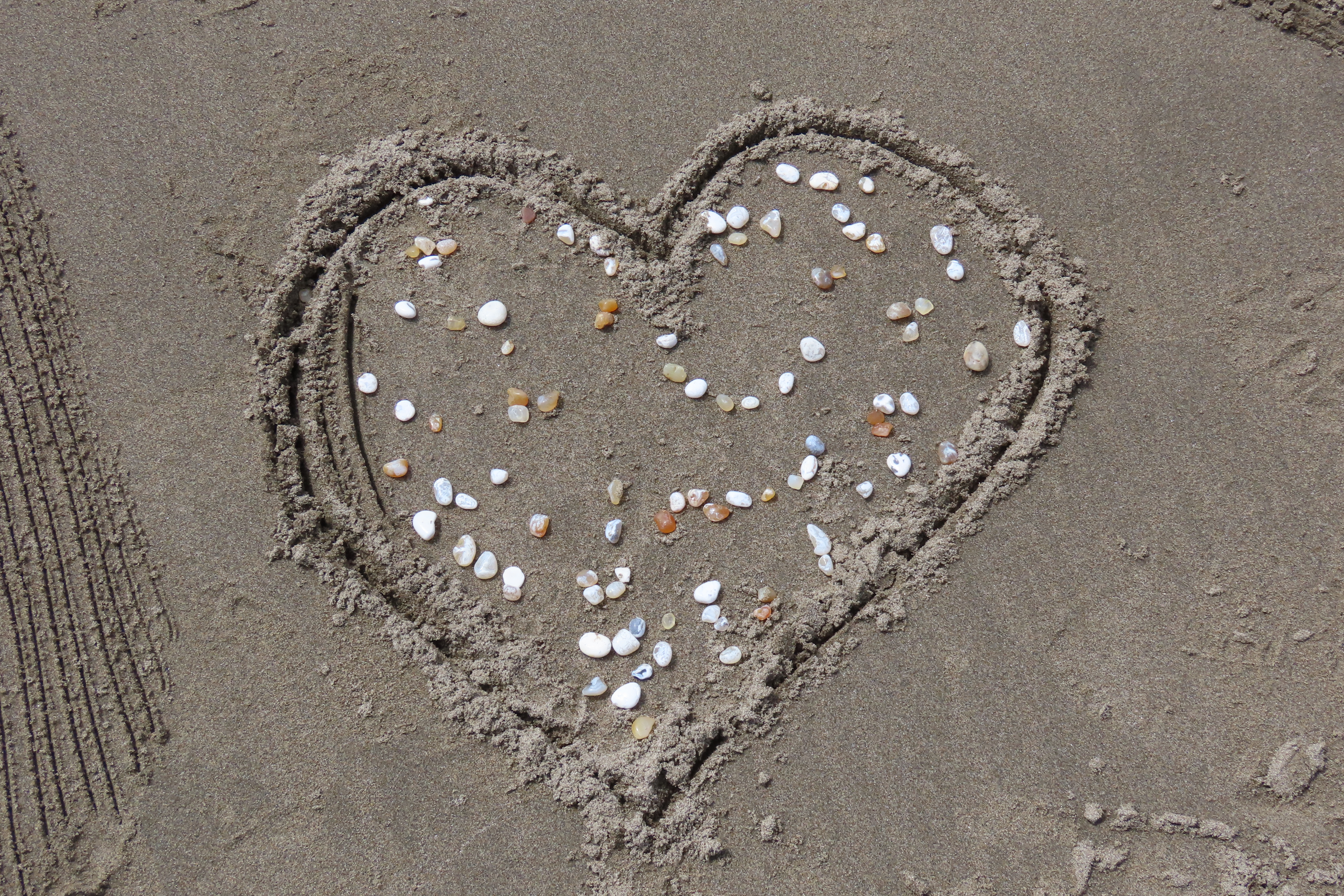
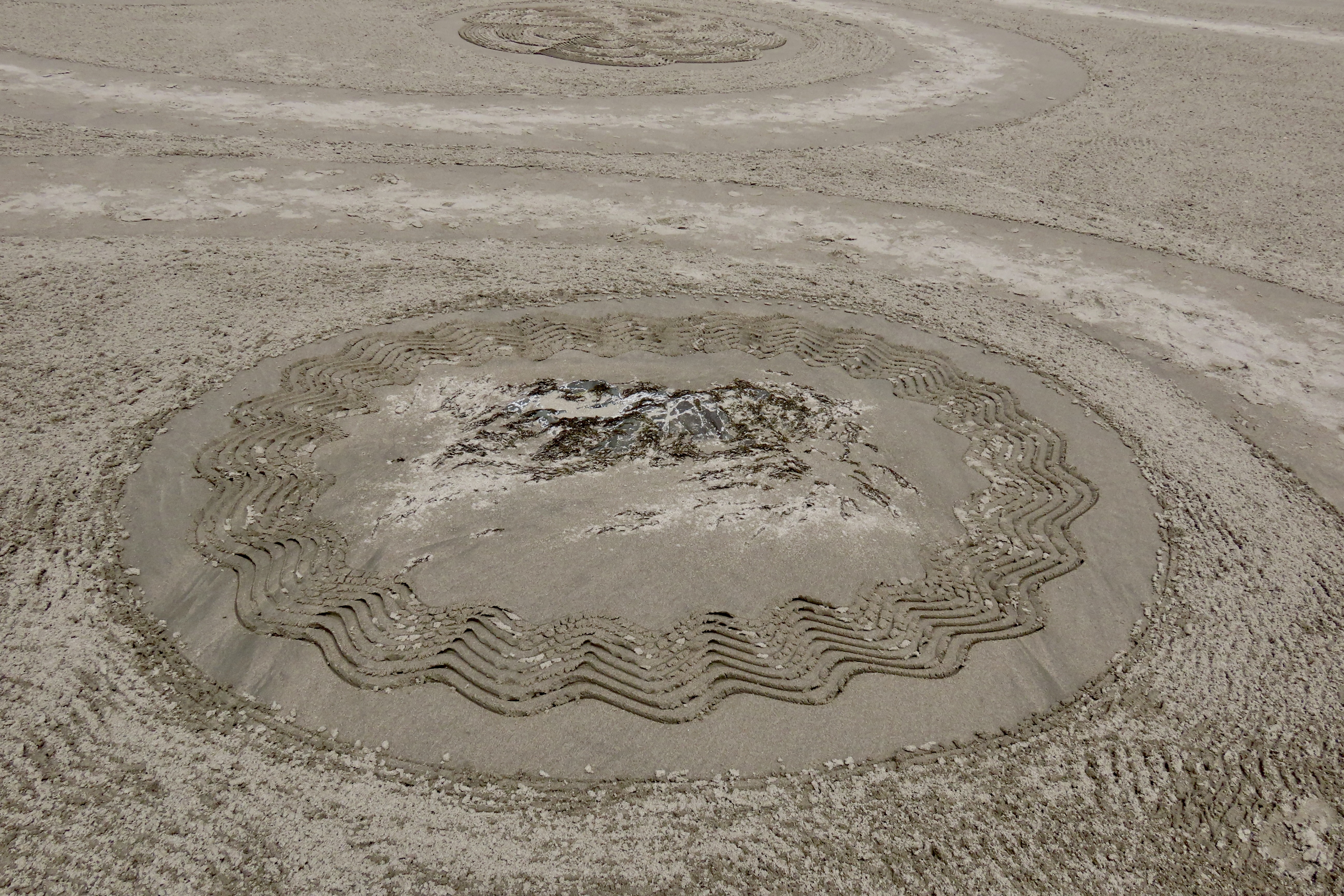
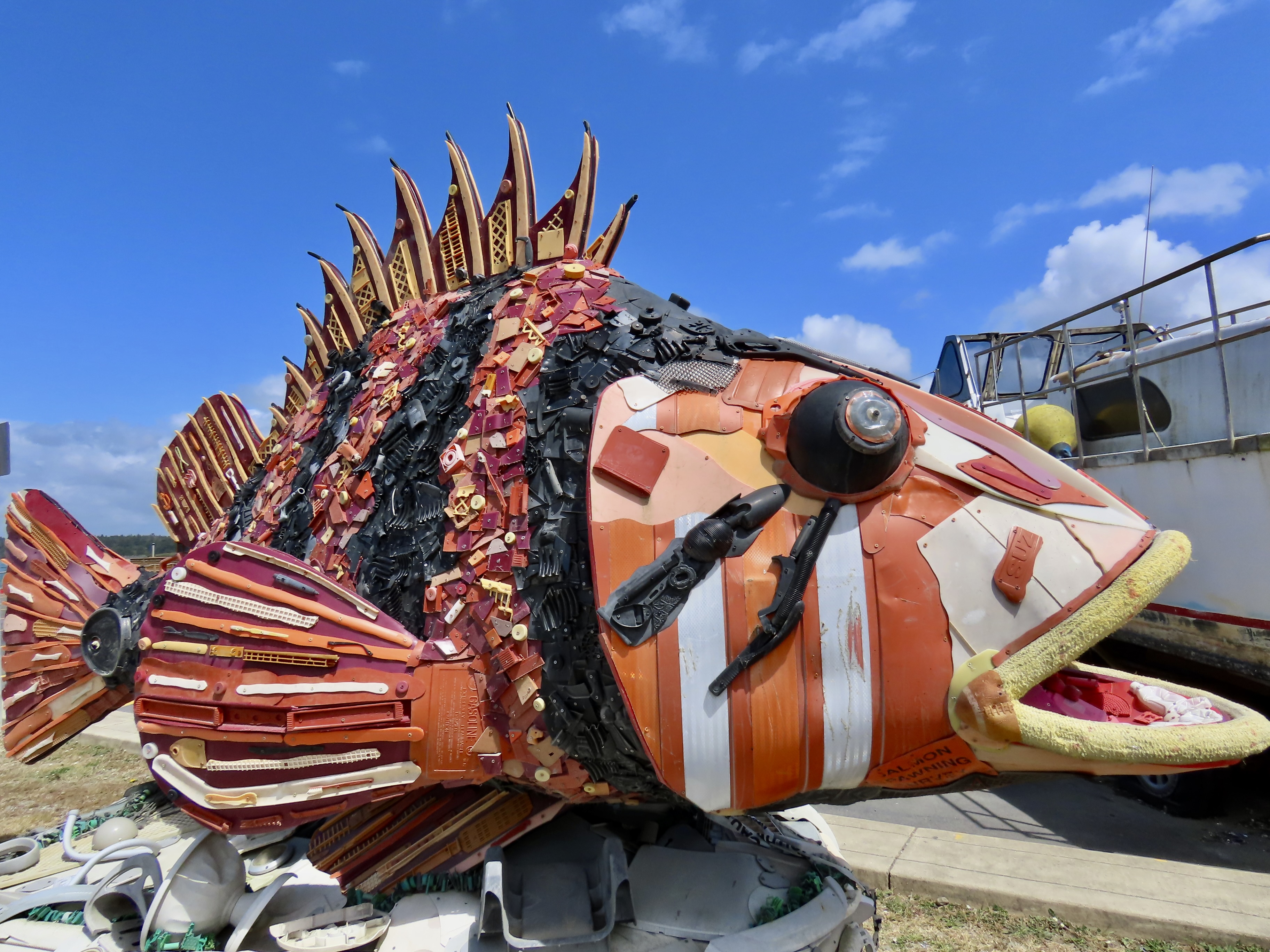
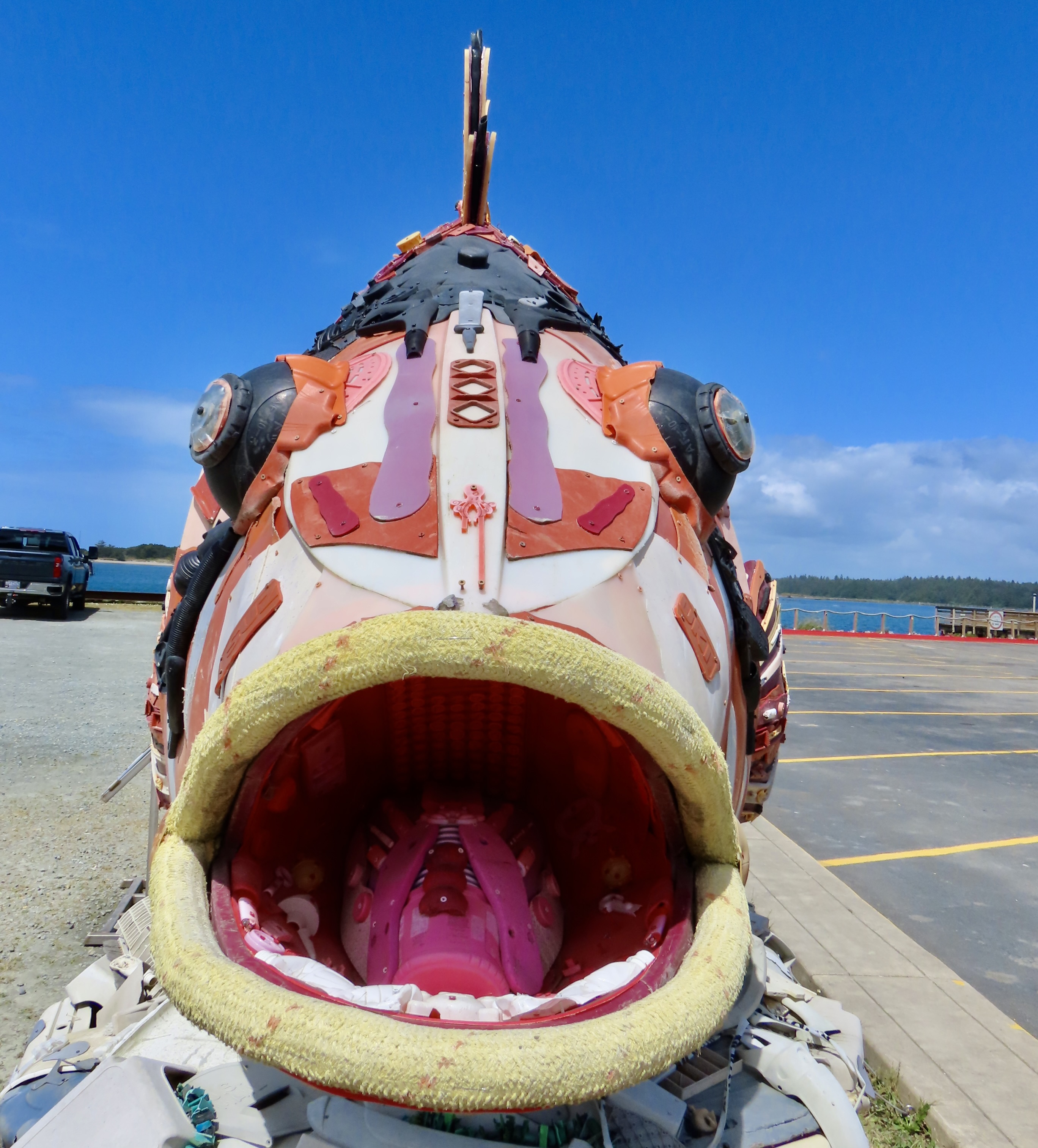
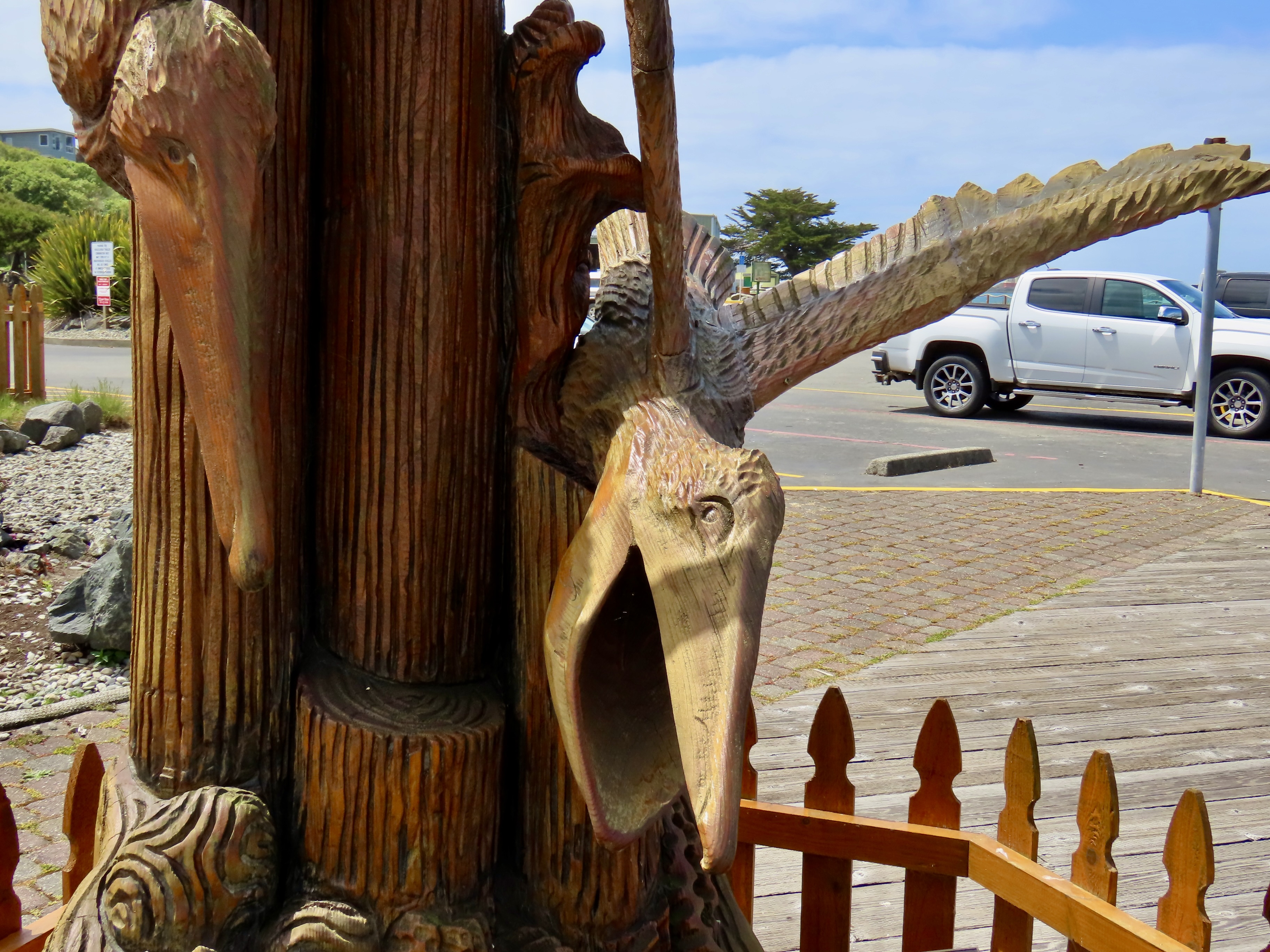
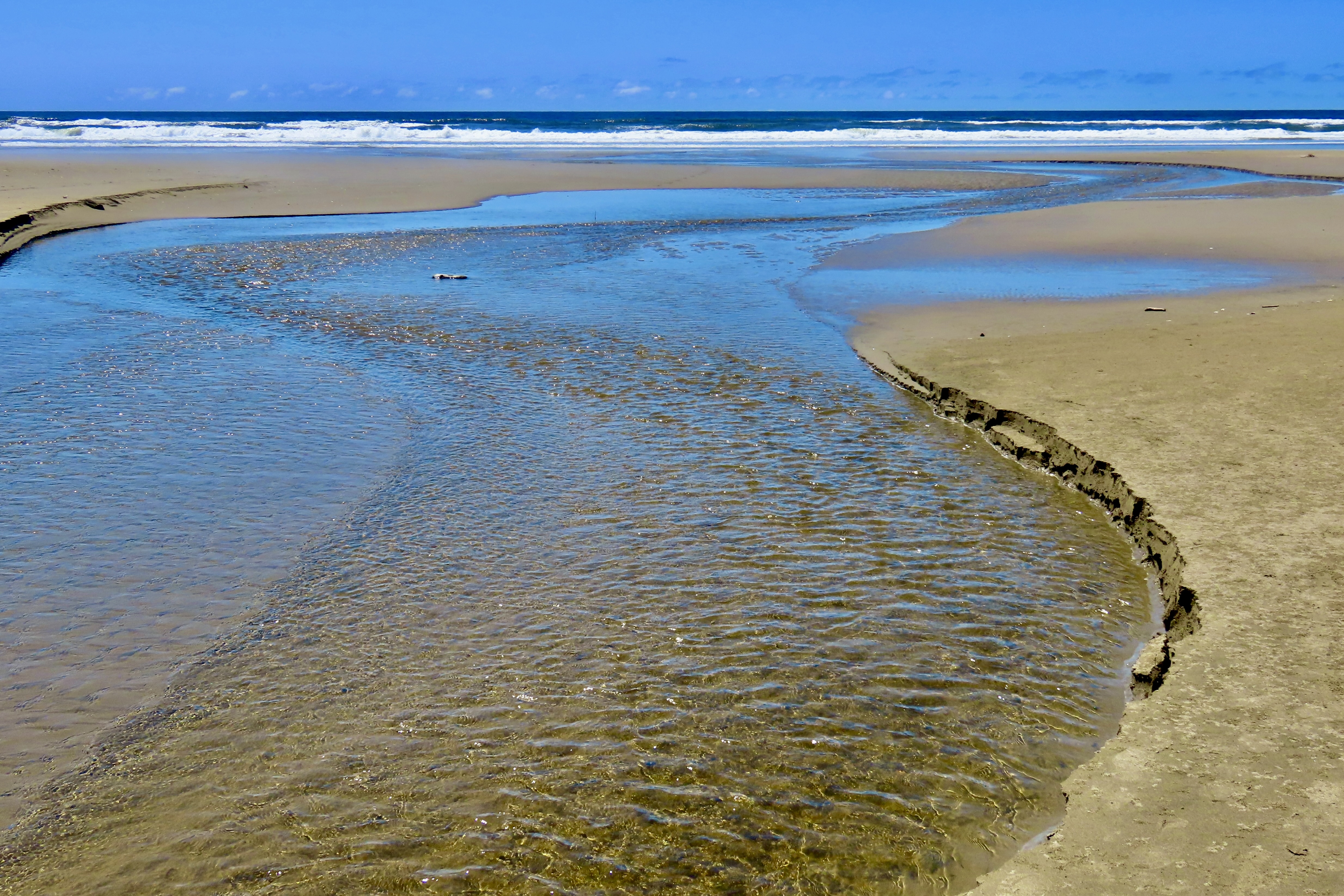
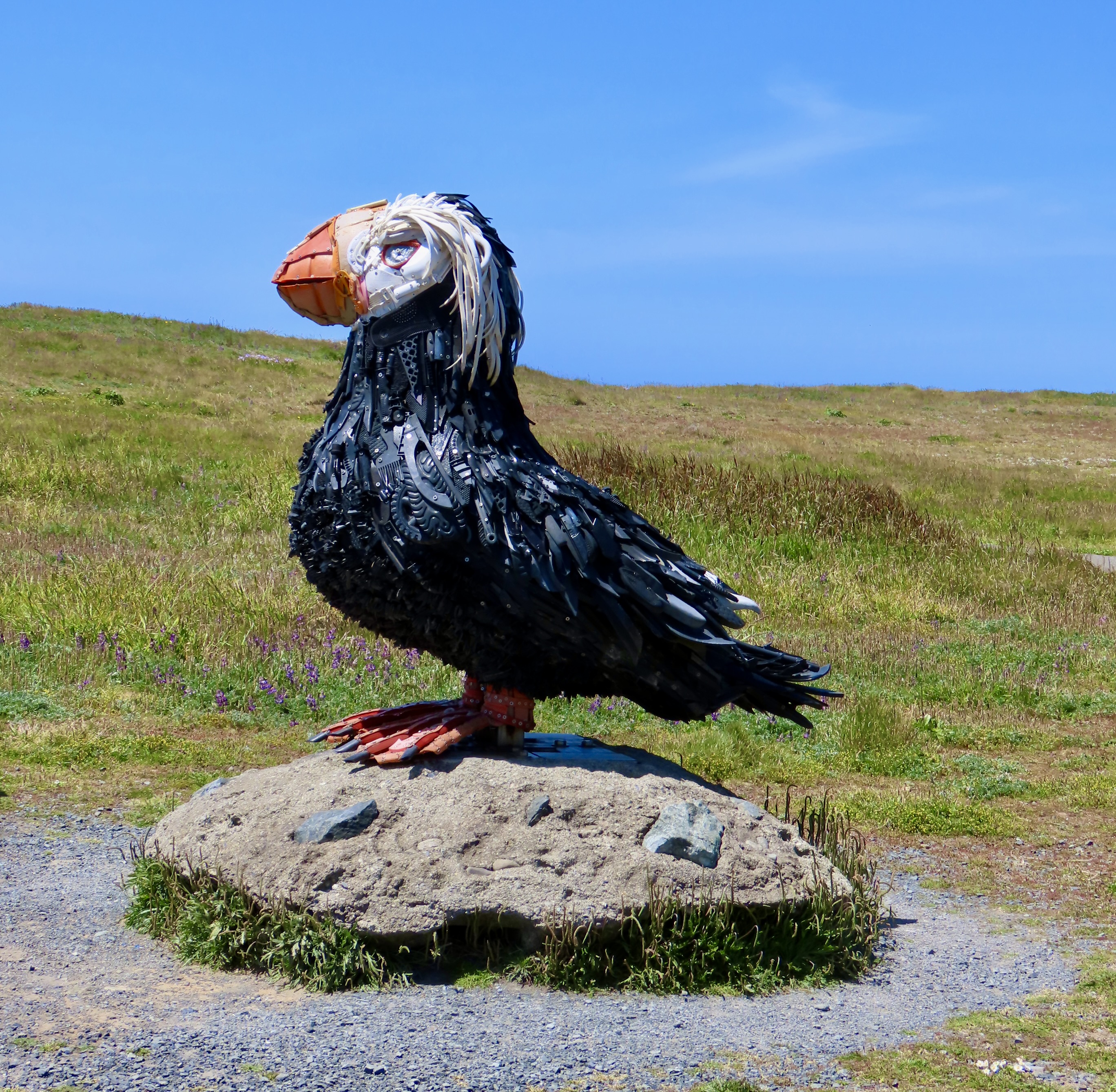
Denny Dyke began creating his sand sculptures on the sand near Face Rock over 10 years ago. Peggy and I remember seeing one during one of our first visits to Bandon after we moved to Oregon. Now his project has been adopted and supported by the whole community of Bandon.No two designs are ever the same. This year’s theme is love.We watched as a woman added a heart and filled it with colorful small pebbles.Natural rock forms are worked into the designs.Here the design, now being washed away by the tide, had been worked around what I called the Lion’s Head.Peggy, who can never resist a labyrinth, was walking what had been left of it by the tide. Walks are actually scheduled on days when the labyrinths are created between the time they are finished and before the tide washes them away. The website for Circles in the Sand lists the dates and times and suggests that the walk takes about 20 minutes.A final view looking south along the shore. In ways, creating art to be washed away by the tides reminds me of Burning Man where beautiful works of art are created and then burned.While not part of labyrinth, we thought that this whale that Peggy and I found on the beach made of driftwood and small rocks deserved to be included.I featured this tufted puffin in my last post. It was created from trash gathered along the beaches of Oregon by the organization Washed Ashore. The stated purpose of the organization is: “To build and exhibit aesthetically powerful art to educate a global audience about plastic pollution in the ocean and waterways and to spark positive changes in consumer habits.” It has done an amazing job.A close up of the puffin’s head. Washed Ashore sculptures created in Bandon can now be found in locations across the US and around the world, each with its powerful message about trash thrown into the ocean.While we found the puffin along the trail that follows the coast near Face Rock, this fish by Washed Ashore was located down at Bandon’s Marina right next to the town.A frontal view of the fish…And a look into its mouth.Bandon’s Marina also featured several impressive carved wood sculptures such as this octopus…A whale…Pelicans…Fish…A crab…And a seahorse…We also liked this rock snail.While we were visiting, volunteers were busily hanging art for Bandon’s 21st Annual Boardwalk Art Show. Anyone from kids to professional artists was invited to submit a painting. Liking weird (I won’t blame Peggy here) I selected four appropriately strange paintings for today’s post.If you have had much experience with seagulls, it isn’t hard to imagine them pulling a stunt like this. Our next post will wrap-up Bandon with a focus on scenery, seals and sea birds.A creek meanders out to the Pacific Ocean at Devil’s Kitchen, Bandon, Oregon.
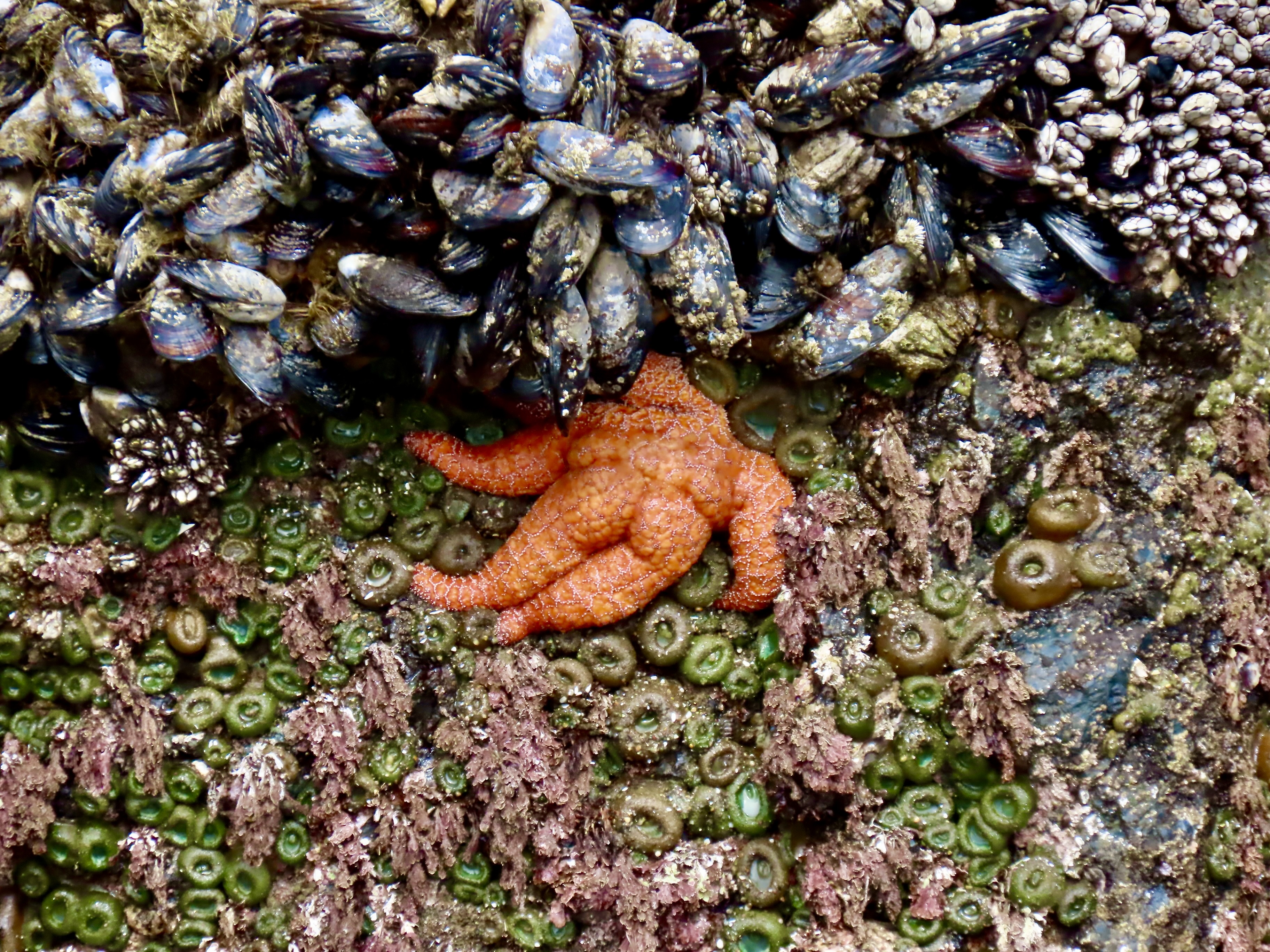
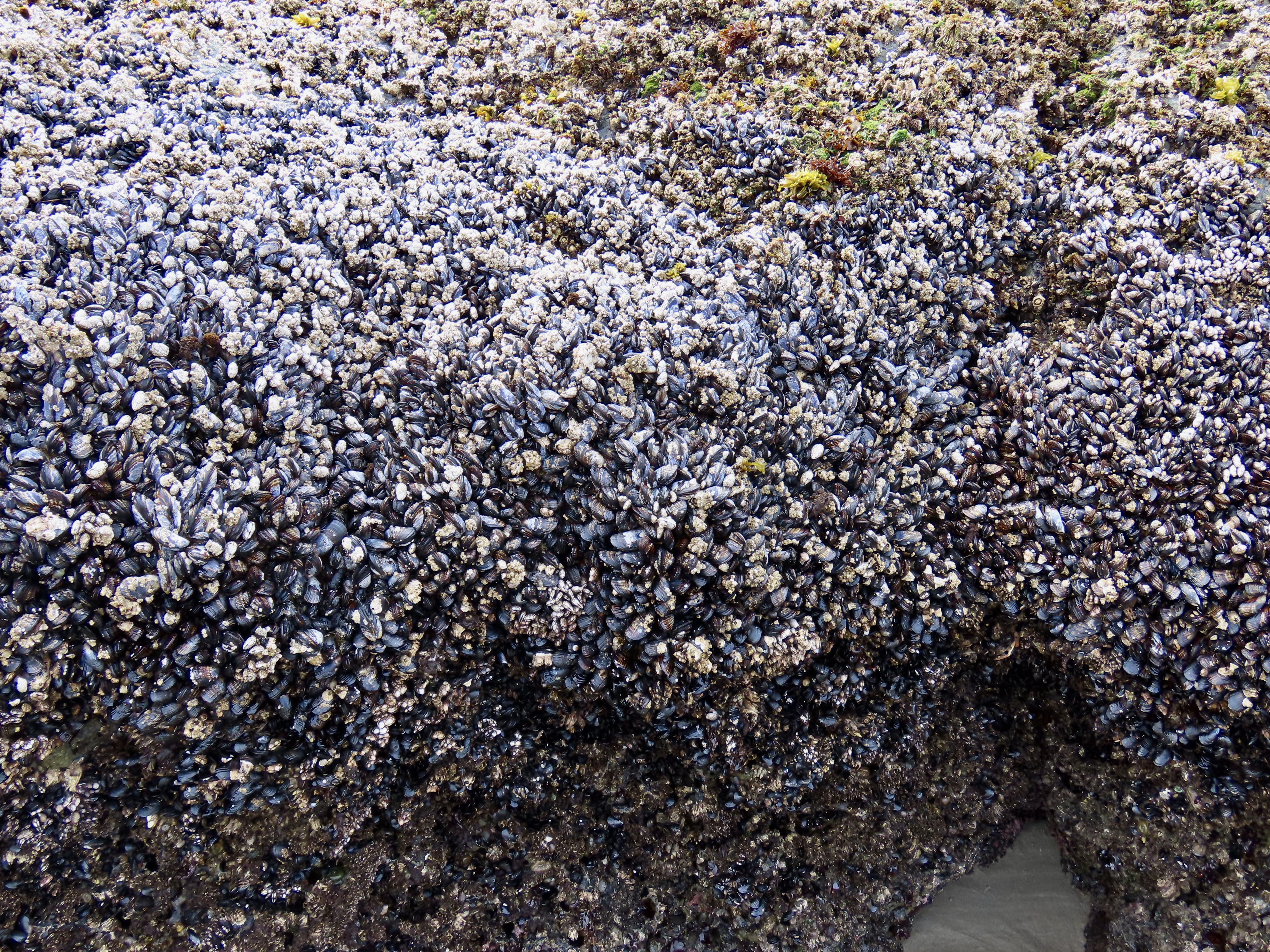
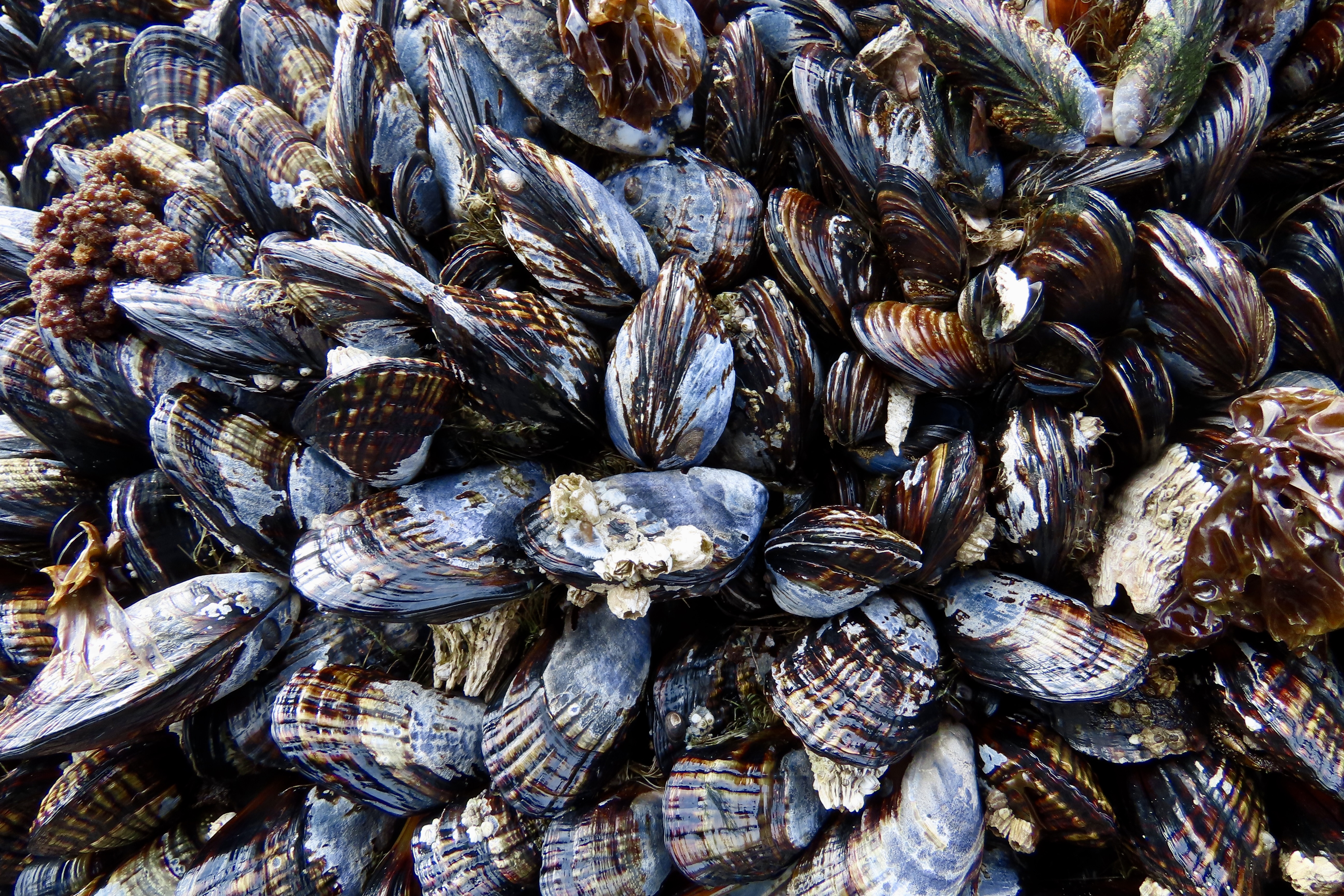
“Curt, you have to see this,” Peggy called, tearing me away from taking a photo of 3452 mussels. It was a human shaped sea star nestled in among anemones, mussels, and goose neck barnacles. There was no doubt about it. She had found the Star of Devil’s Kitchen!
Peggy and I love to futz around in tide pools. There are always amazing things to see and unending drama. It’s a who eats who world. So far on our trip up the coast we had missed the opportunity. We were feeling deprived. Low tides had either been too early or too late. Bandon’s was perfect. We headed out to Devil’s Kitchen, a spot we had visited before. I had forgotten how the area got its name and did a search. Lo and behold, Google sent me straight to an earlier blog of mine. So I am going to quote the ‘expert,’ me: “It has to do with the cold waters of the ocean bringing a rich brew of nutrients to the surface that are eaten by plankton, that are eaten by small fish, that are eaten by bigger fish, that are eaten by still bigger fish, that are eaten by seals, sea lions, otters, and a whole host of seabirds, not to mention people and anything else that can sink their teeth into them.” Welcome to the feast.
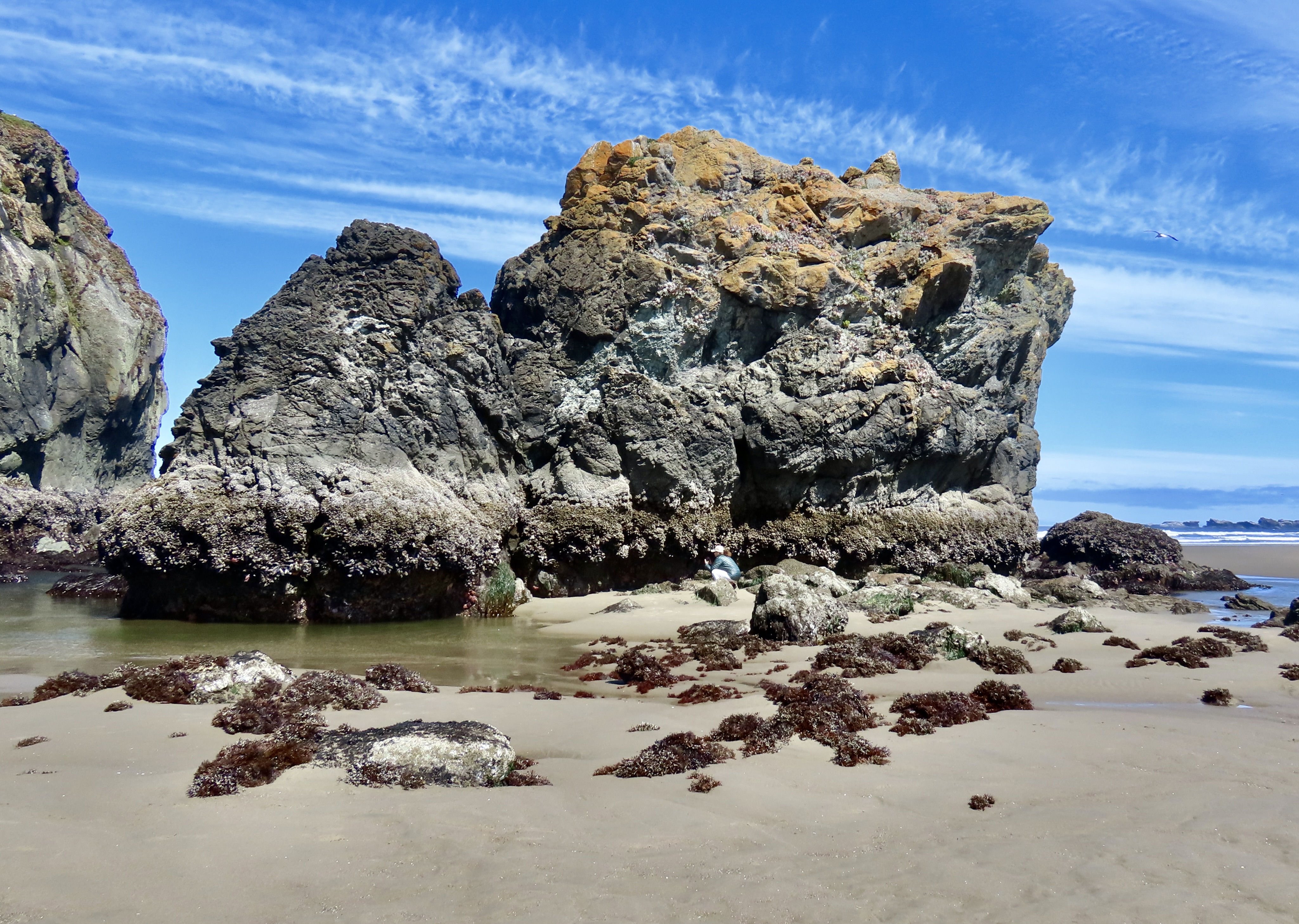
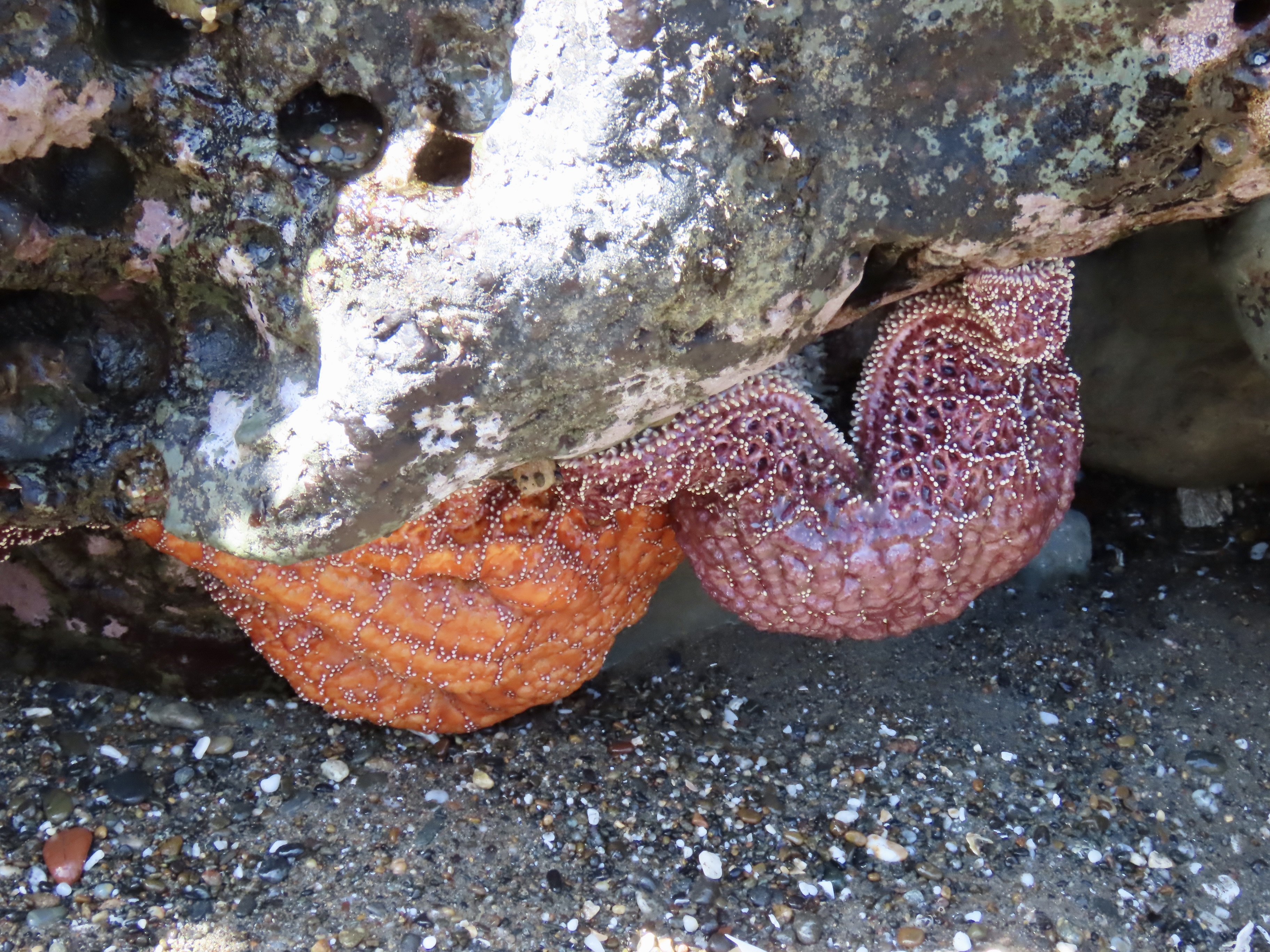
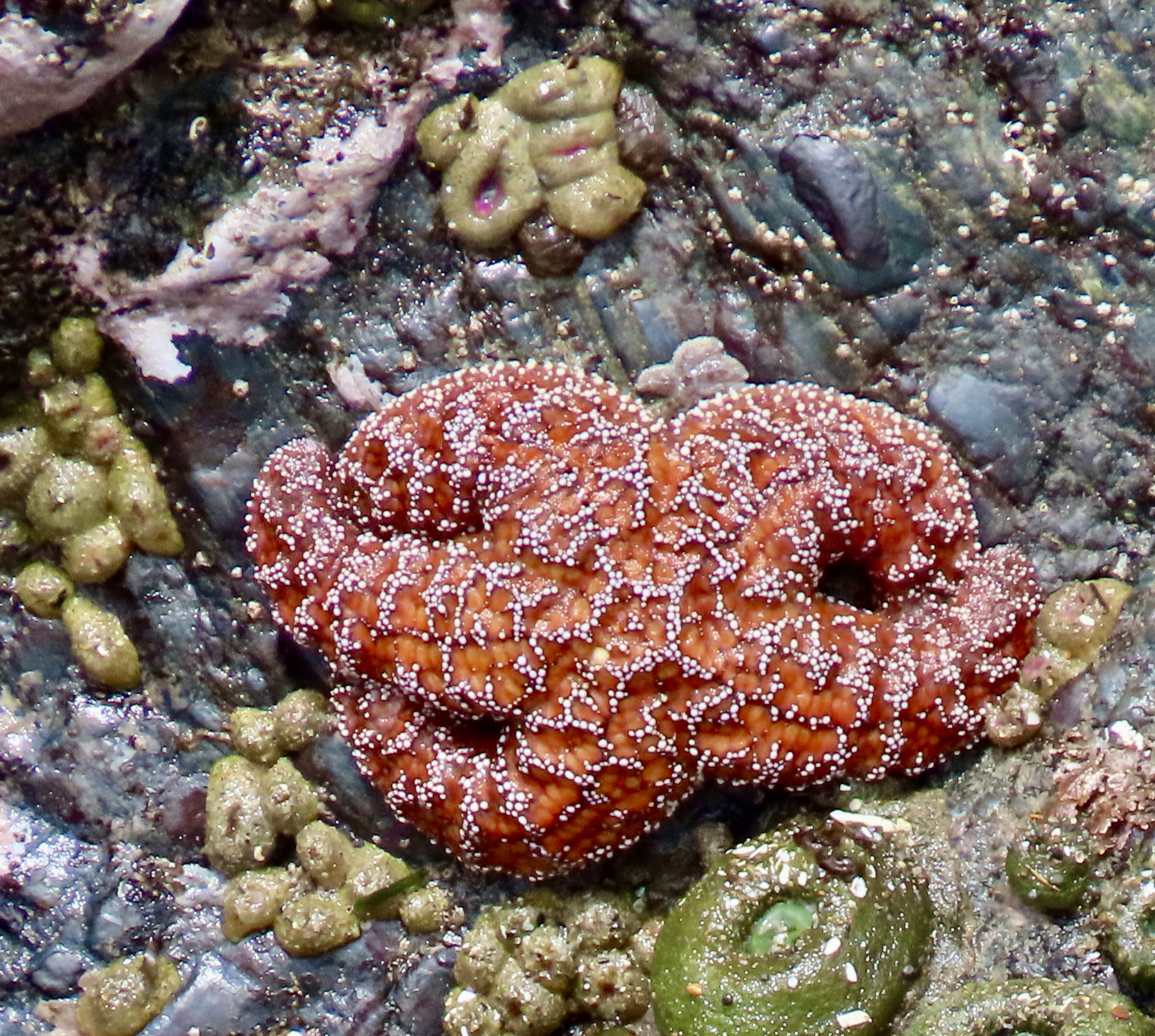
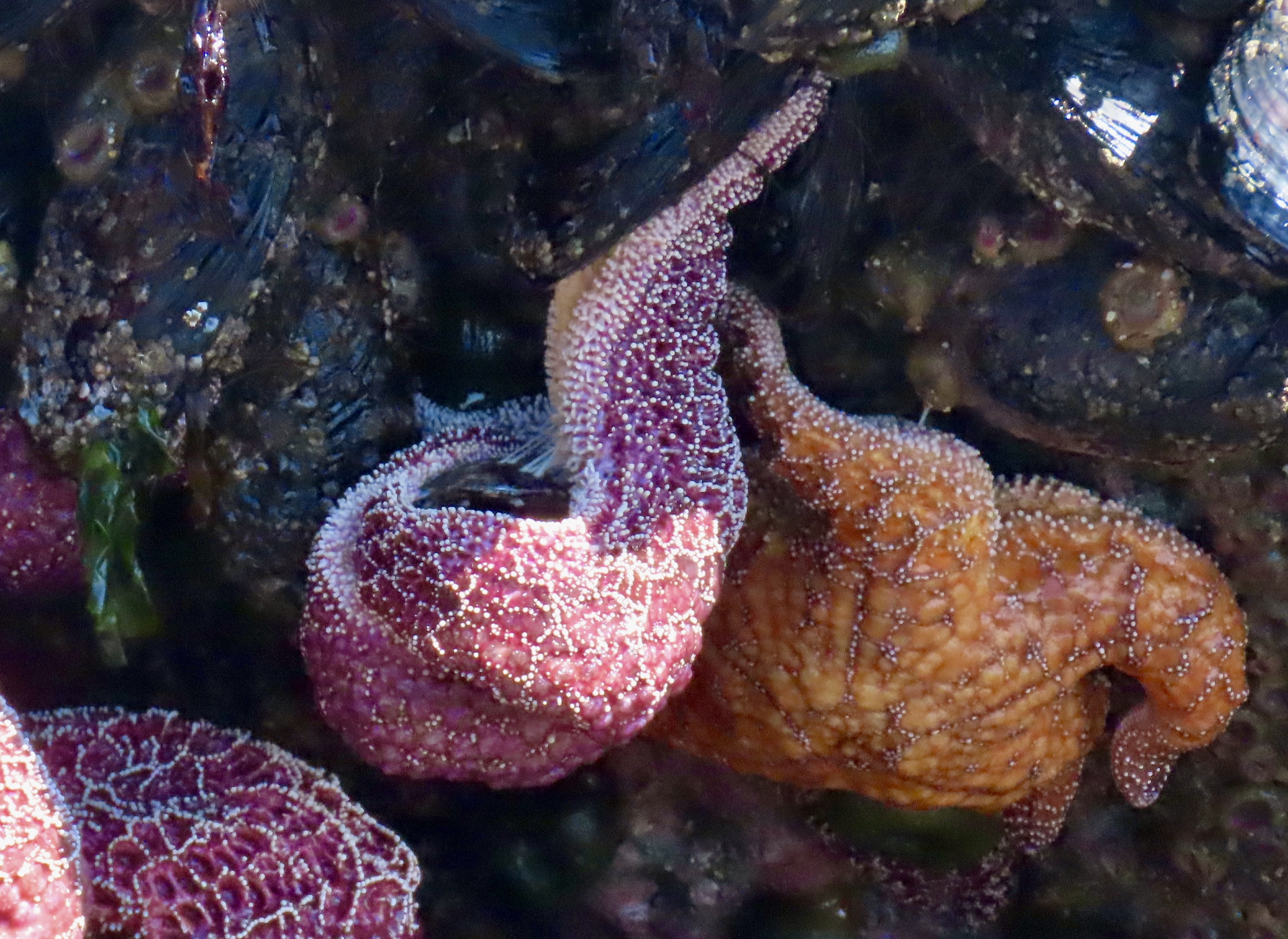
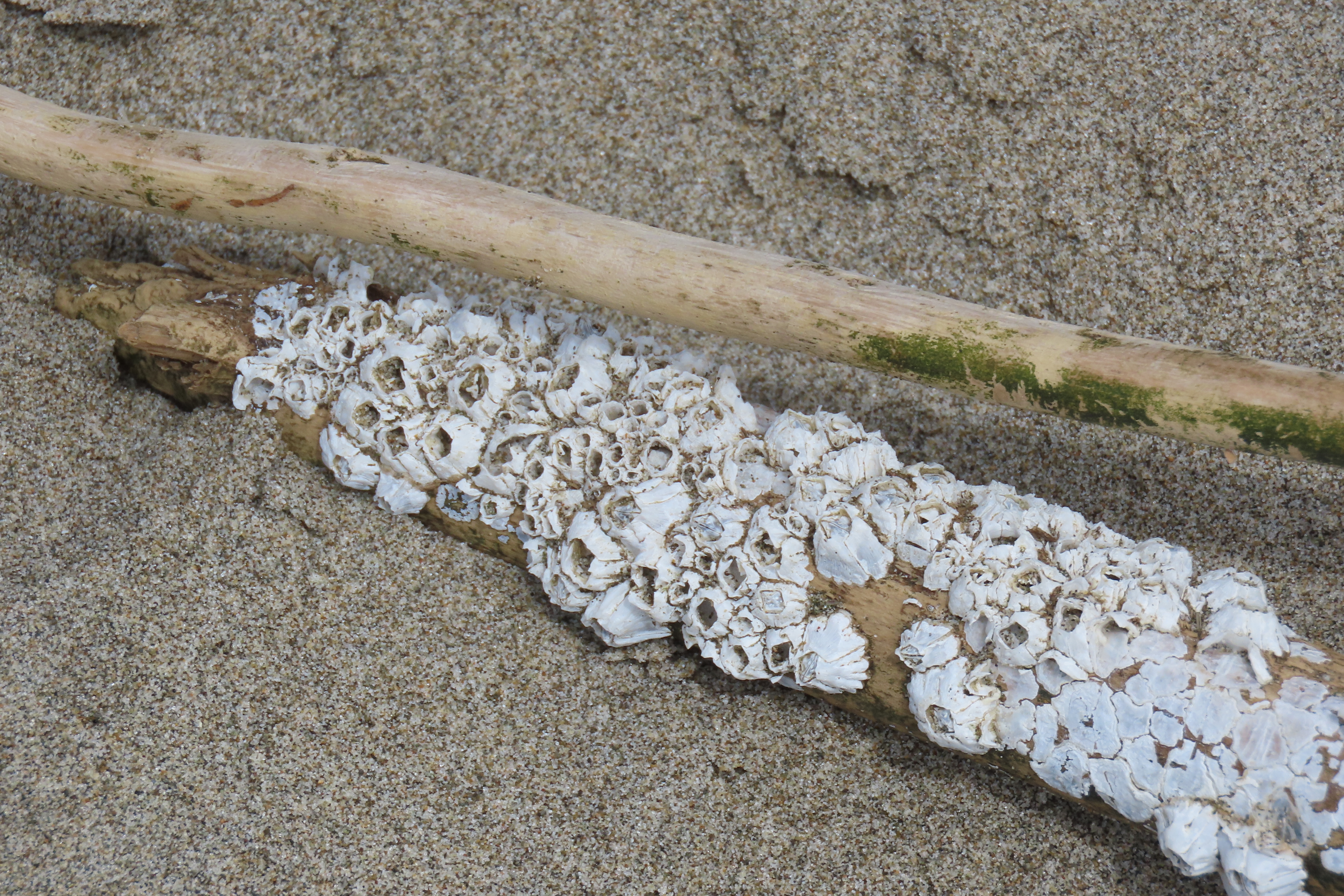
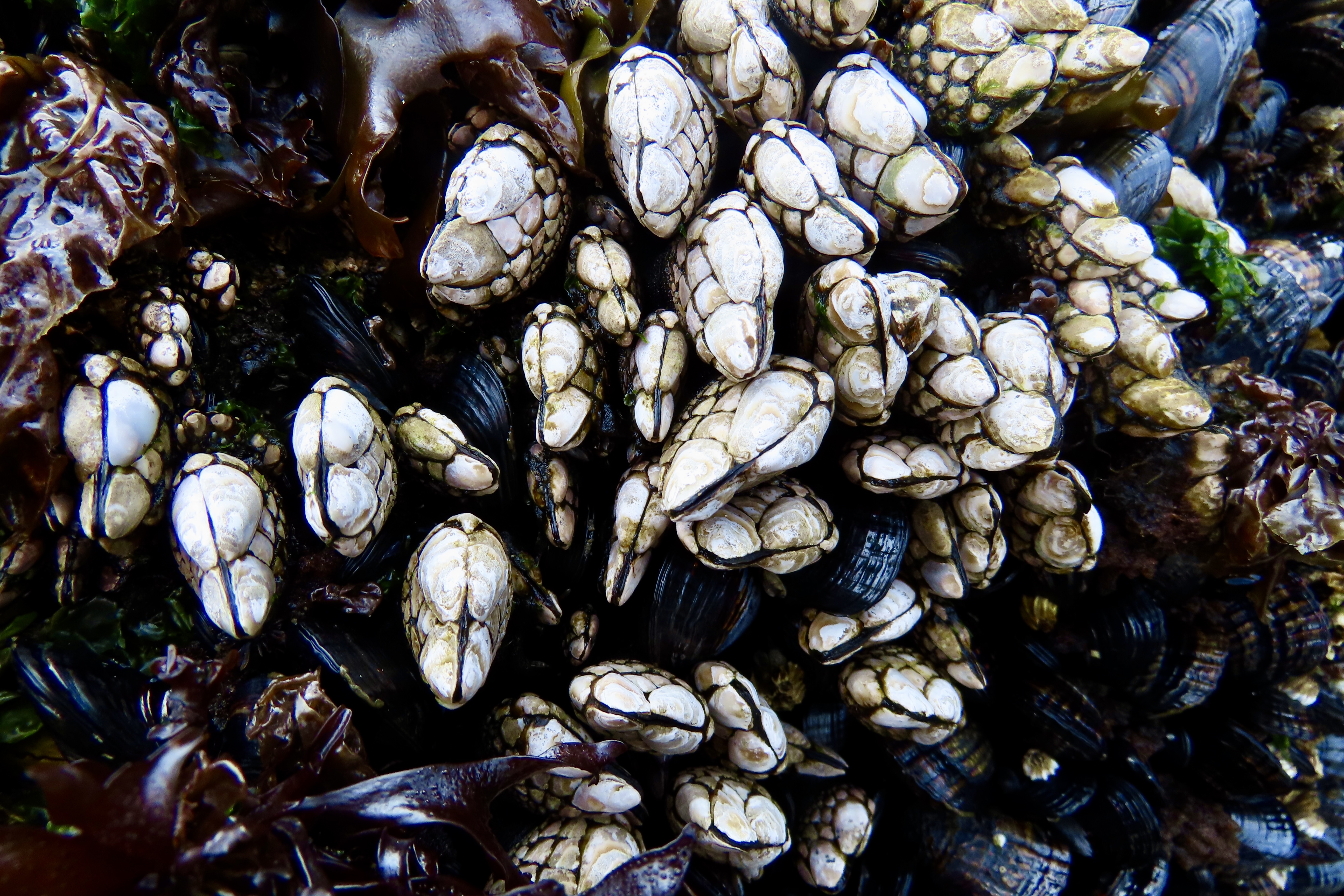
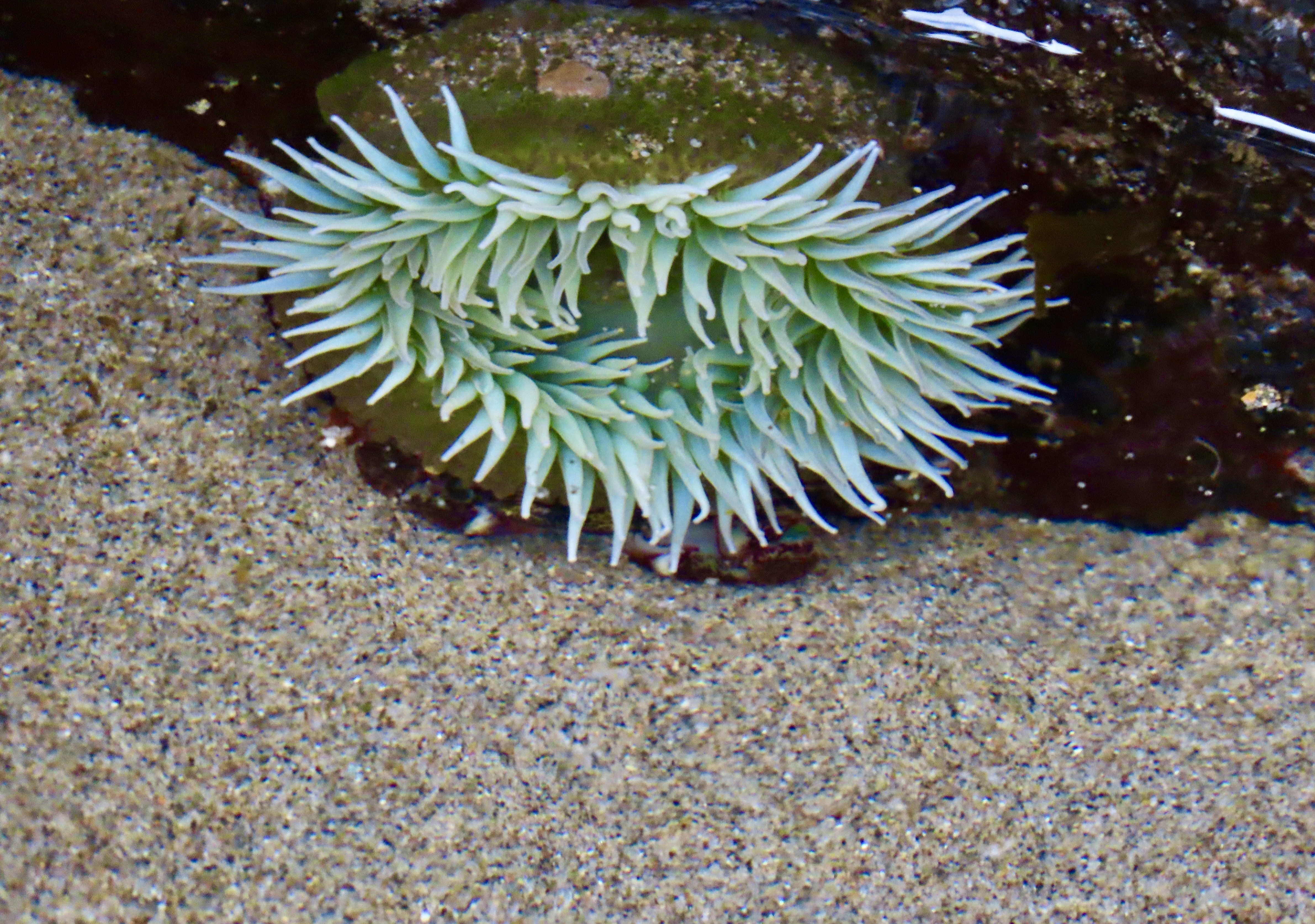
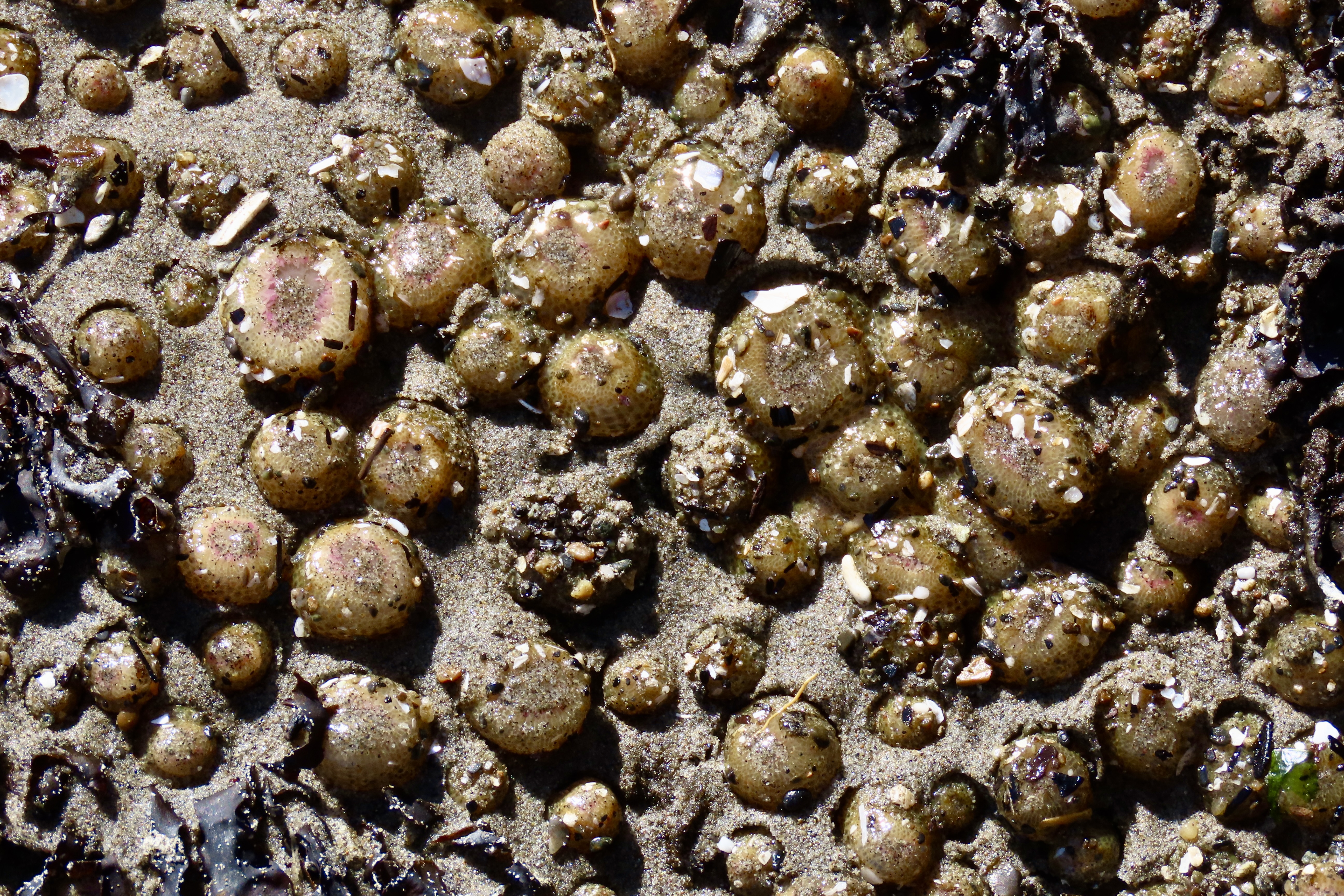
This large sea stack was our goal. Look close and you can see Peggy checking out sea stars. People usually call them star fish, but, as my guide to Pacific Coast Tide Pools notes: They are not fish. They are echinoderms. Others include sea urchins and sand dollars.She was was taking a photo to show the abundance of sea life that lives between low and high tides when she spotted the Star.There were no lack of sea stars to be found at the base of the sea stack!While there are several types of sea stars, the most common are ochre sea stars that come in colors ranging from purplish to orange. Living up to their ‘most common’ designation, they are what we found at Devil’s Kitchen.Sea stars come with five arms. Its eyes, which sense light and dark, are located on the tips of its arms. The light colored spot close to the very top is where the star pulls in water to operate its vascular system that pretty much runs everything.One of which is its hundreds to thousands of little tube ‘feet.’ Here it has attached them to a mussel, its favorite food, in hopes of prying the two half shells apart with its arms. It isn’t easy, given that mussels don’t like to be eaten and can close their shells really tight. It may take hours. When the sea star succeeds, it extends its stomach inside out through its mouth into the opening where it digests the mussel and then pulls its stomach back in through its mouth. Dinner.Another example. You can see the tube feet extended here, pulling on the shell. Once the feet are stuck to the surface of the shell, they remain stuck. A sea star will eat around 40 mussels a year.They are not an endangered species…Whatever the creature is down on the left hand corner, it seems to be sliming a mussel. The mussel in the middle is hosting several barnacles. Home sweet home.A large acorn barnacle dominates this photo. The tide is out and its door is closed to seal water in to protect it from drying out until the tide comes back in. Then it throws open its door and six pairs of feathery appendages pop out and start waving around to gather food. Barnacles attach to almost any convenient surface including rocks, mussels, wharves, and ships. And it seems, sticks. The strong cement they use will still be holding the barnacle in place long after it has died.These are goose neck barnacles so named because early Europeans thought they looked like geese. Modern day Europeans regard them as a delicacy, a plate full can cost upward to 100 Euros, over 100 hundred dollars in the US. They were generously found throughout the mussels. I couldn’t help but wonder how many thousands of dollars worth. It was illegal to gather them at the park, however.This is a giant green sea anemone. It is a cnidarian, meaning it has stinging tentacles, like jelly fish and corals. Small creatures beware! Paralyzed by the stingers, the prey is swept into the anemones mouth which is located in the middle of the tentacles. The mouth comes with a two-for-one. it also serves as the anus. Hmmm. Peggy noted another interesting thing about the anemone. A crab was hiding under it! Note the distinctive colorful legs that are tucked in. When Peggy first spotted the legs sticking out, she thought “big spider” and aimed the camera. Of course, they disappeared!Some sea anemones had covered themselves in small rocks…A close up. Note how tight it has shut down its opening to protect it from drying out.These little fellows are aggregating anemones. Basically, they are exact copies of each other. They stretch out until they split in half creating two anemones which then also split forming large colonies. The colony continues to grow until it runs out of food or space. Or until it runs into another colony. Then they go to war with specialized tentacles full of nematocysts (stingers). To avoid conflict, they sometimes declare a neutral zone! That’s it for today. Next post: We will focus in on some of Brandon’s unique art.This puffin was created from trash gathered off of the local beaches.
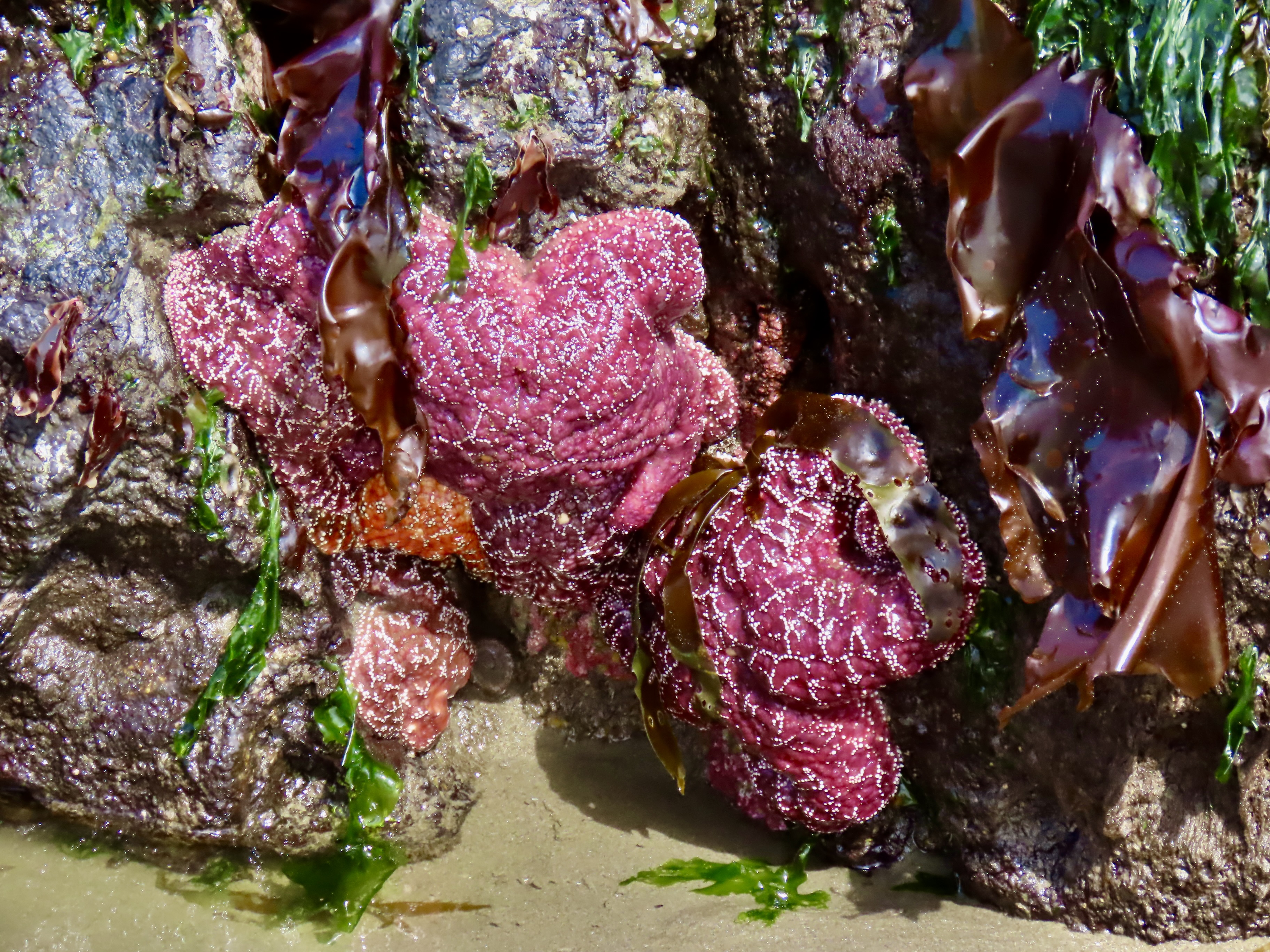
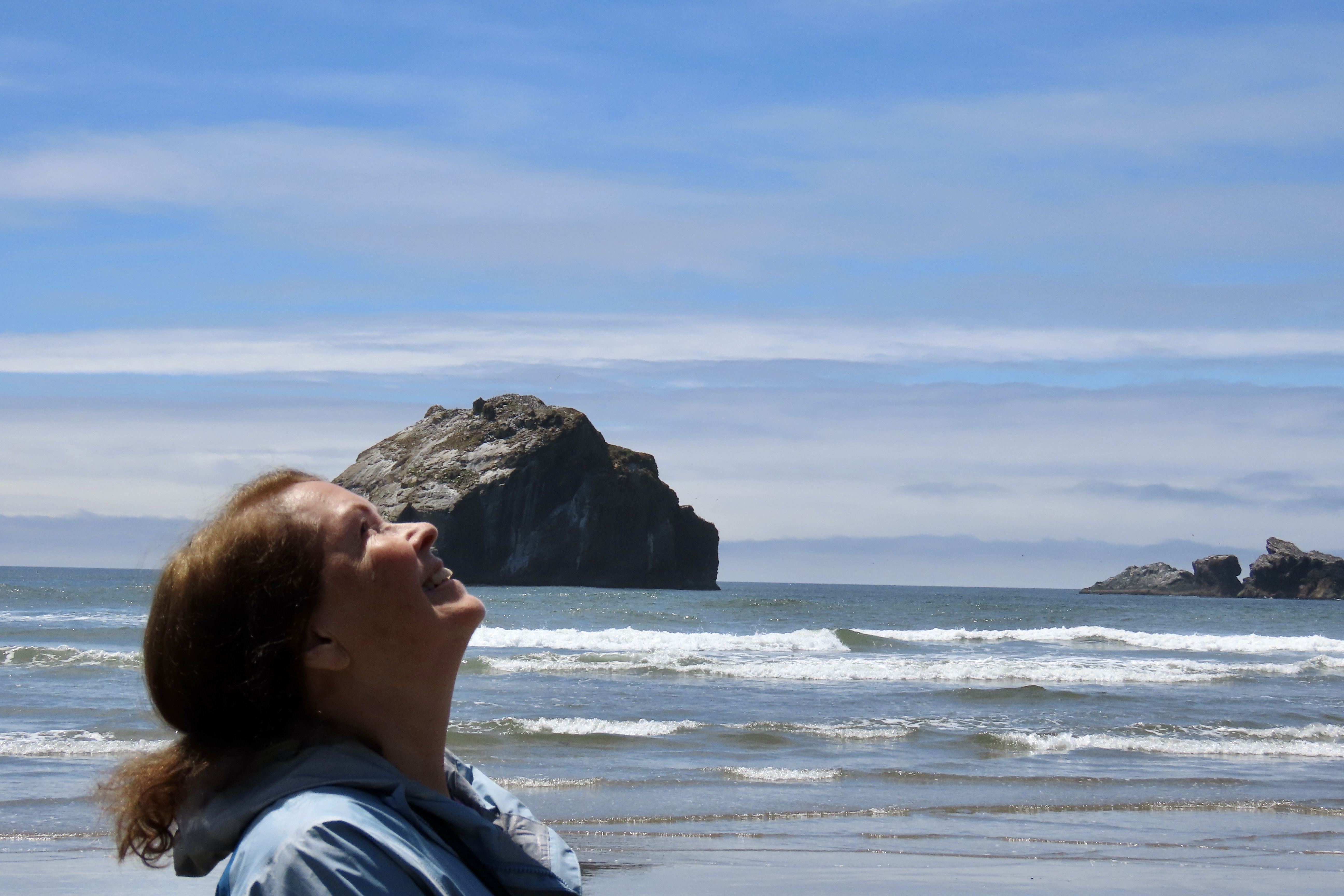
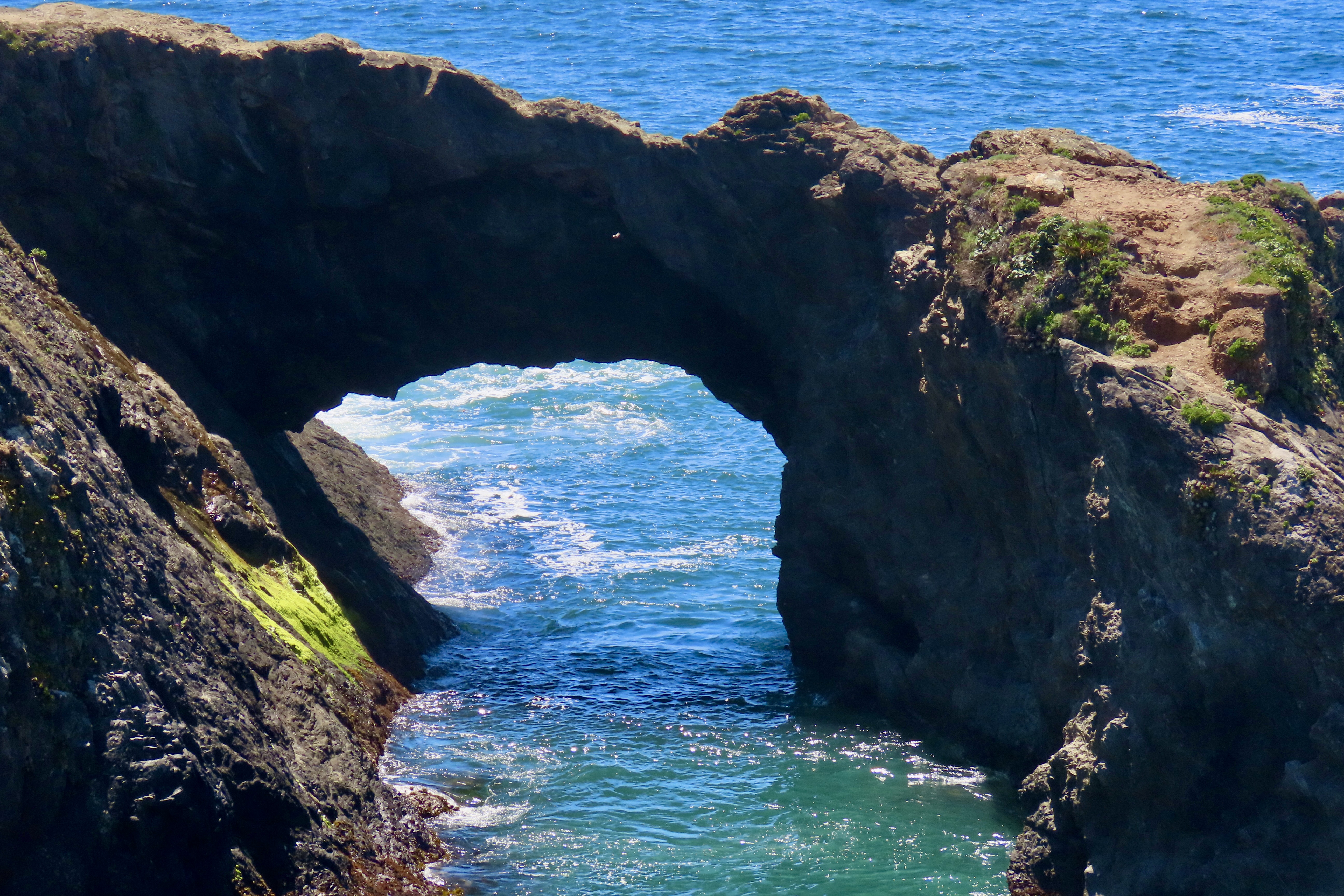
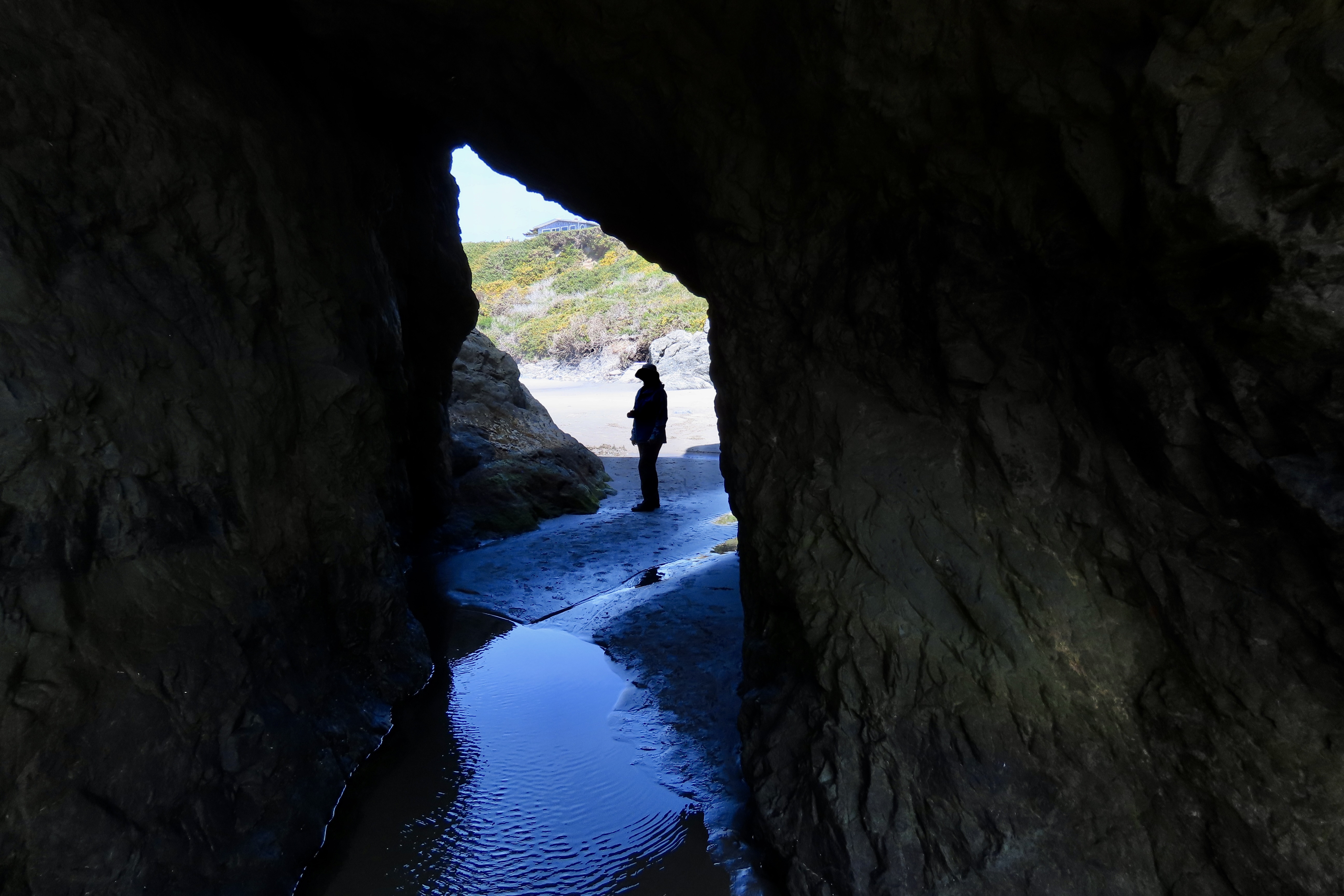
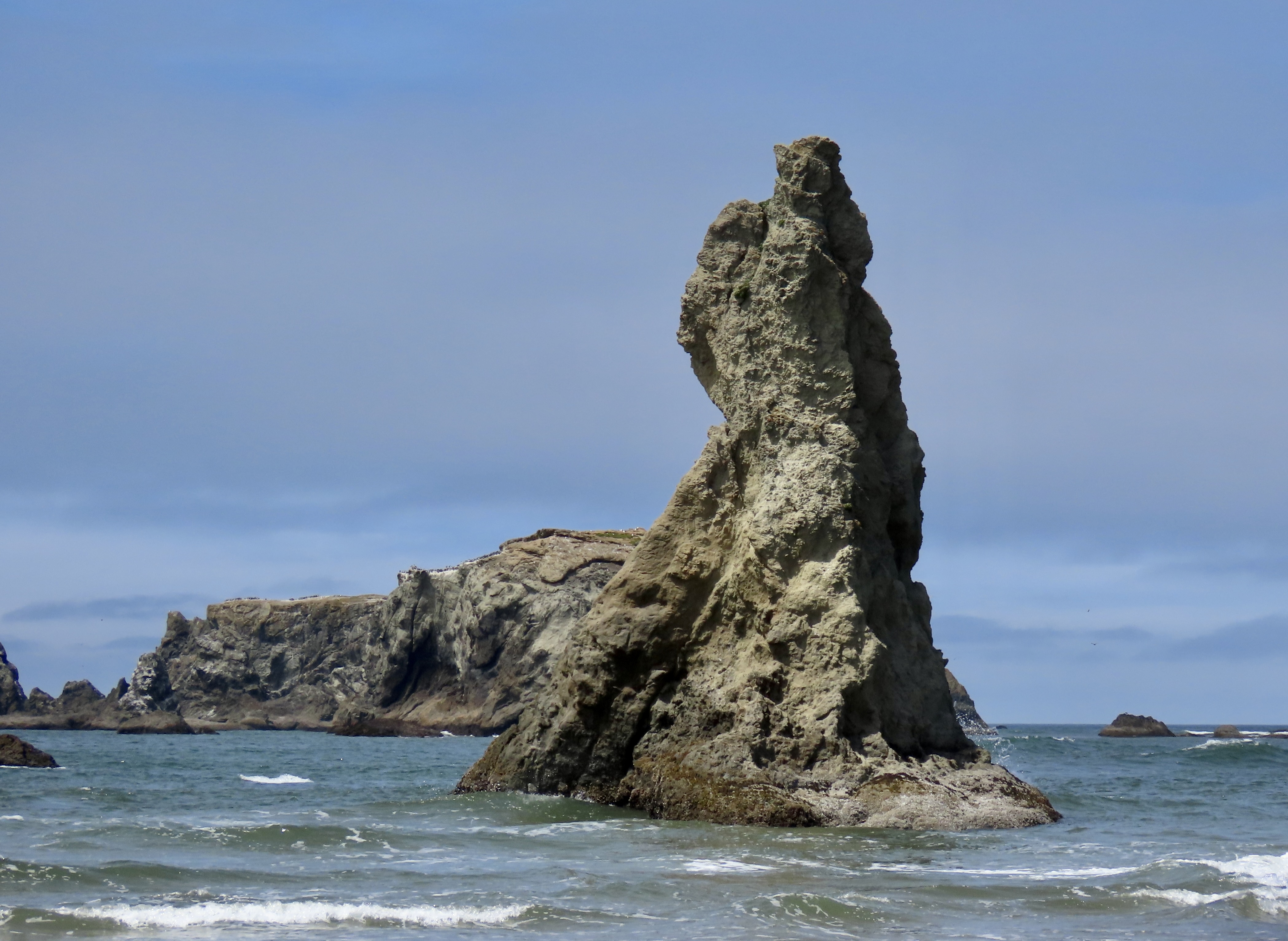
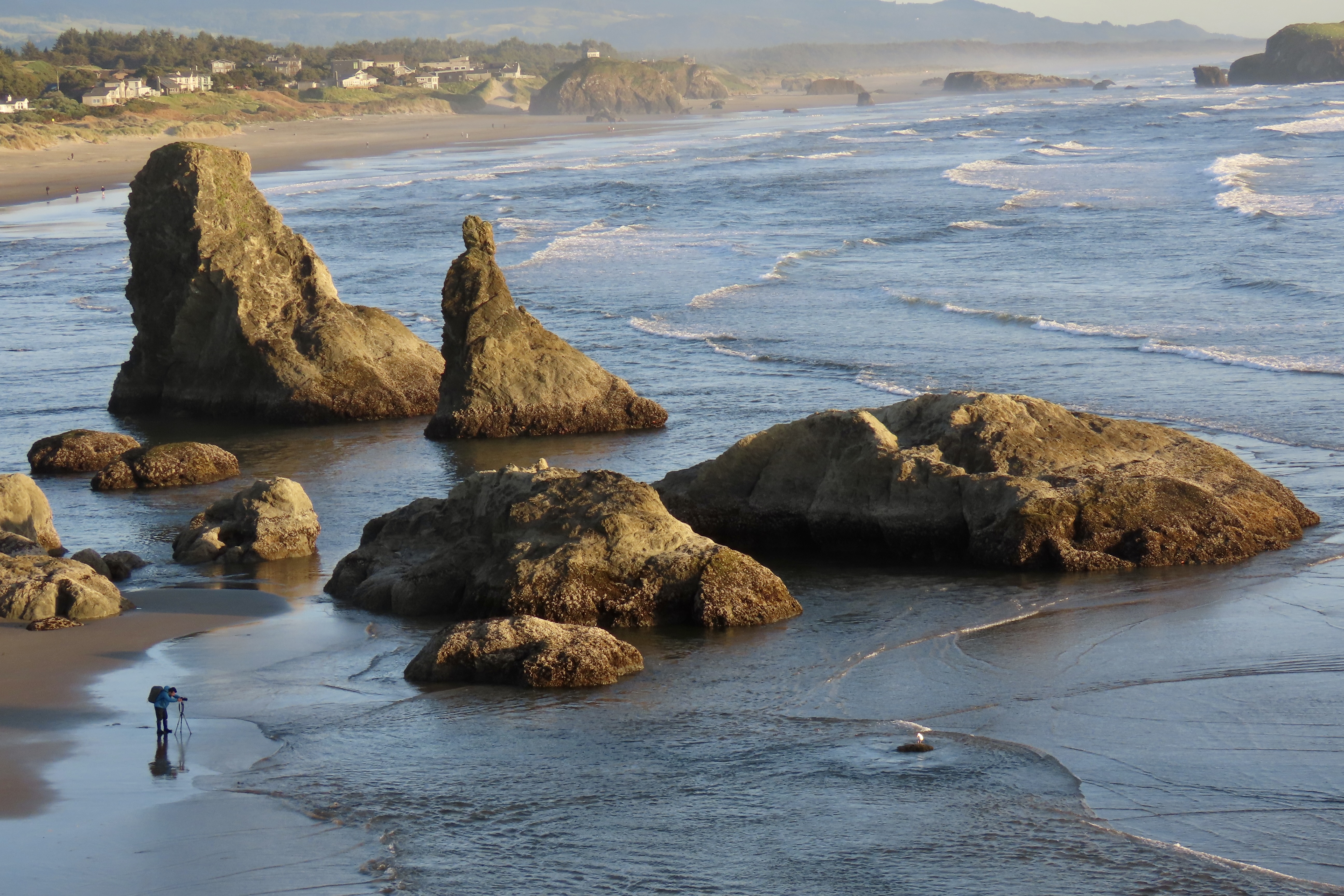
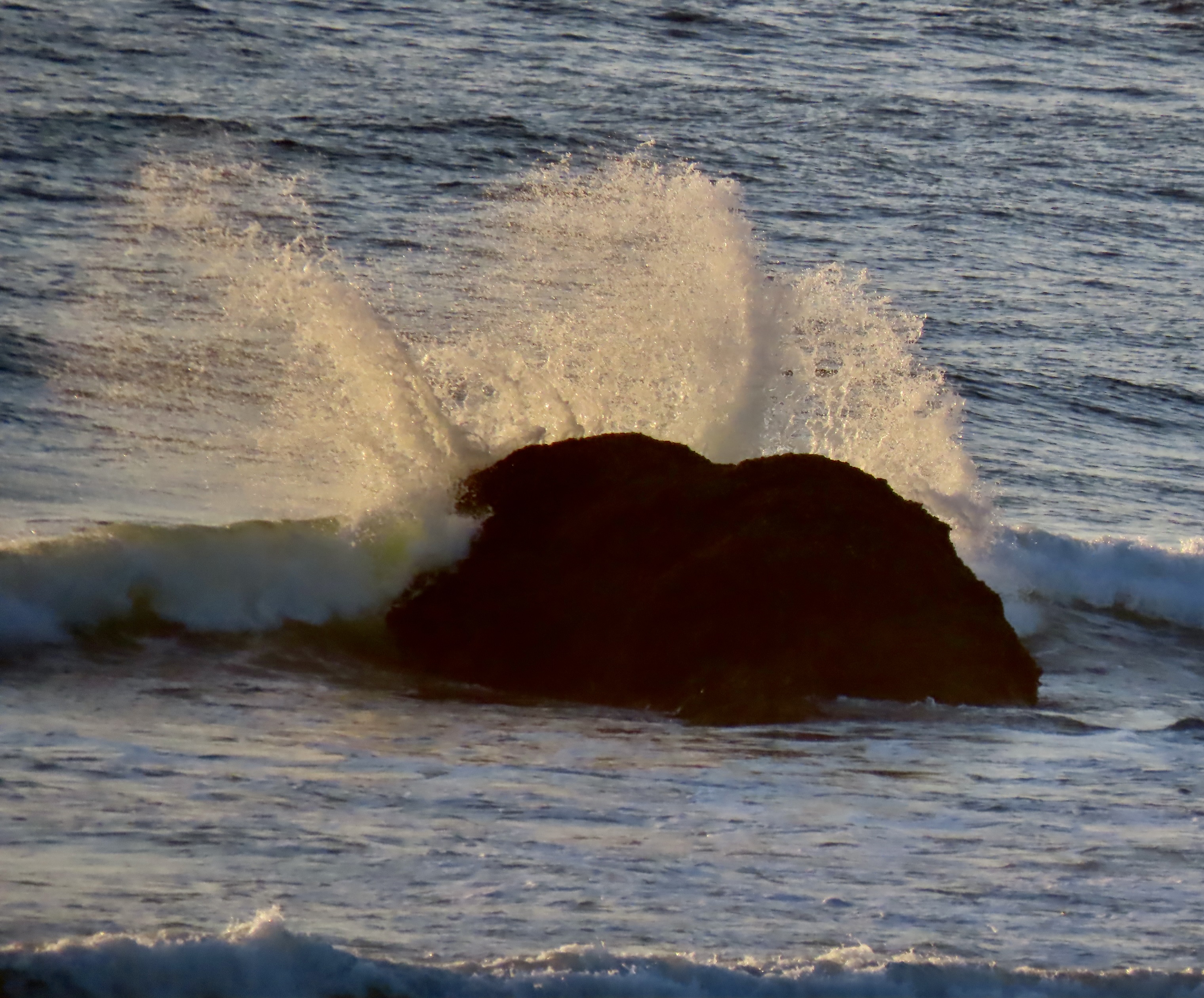
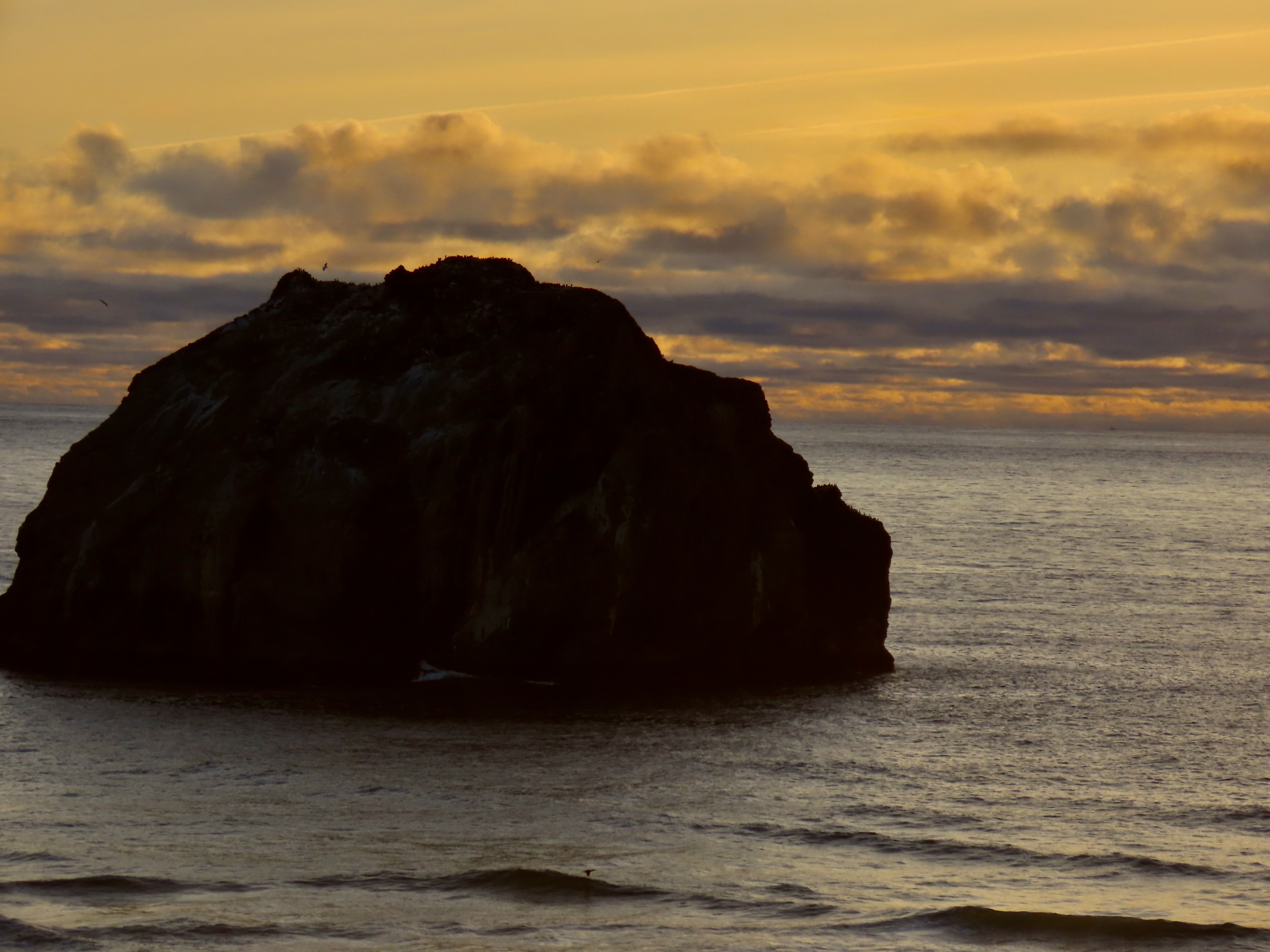
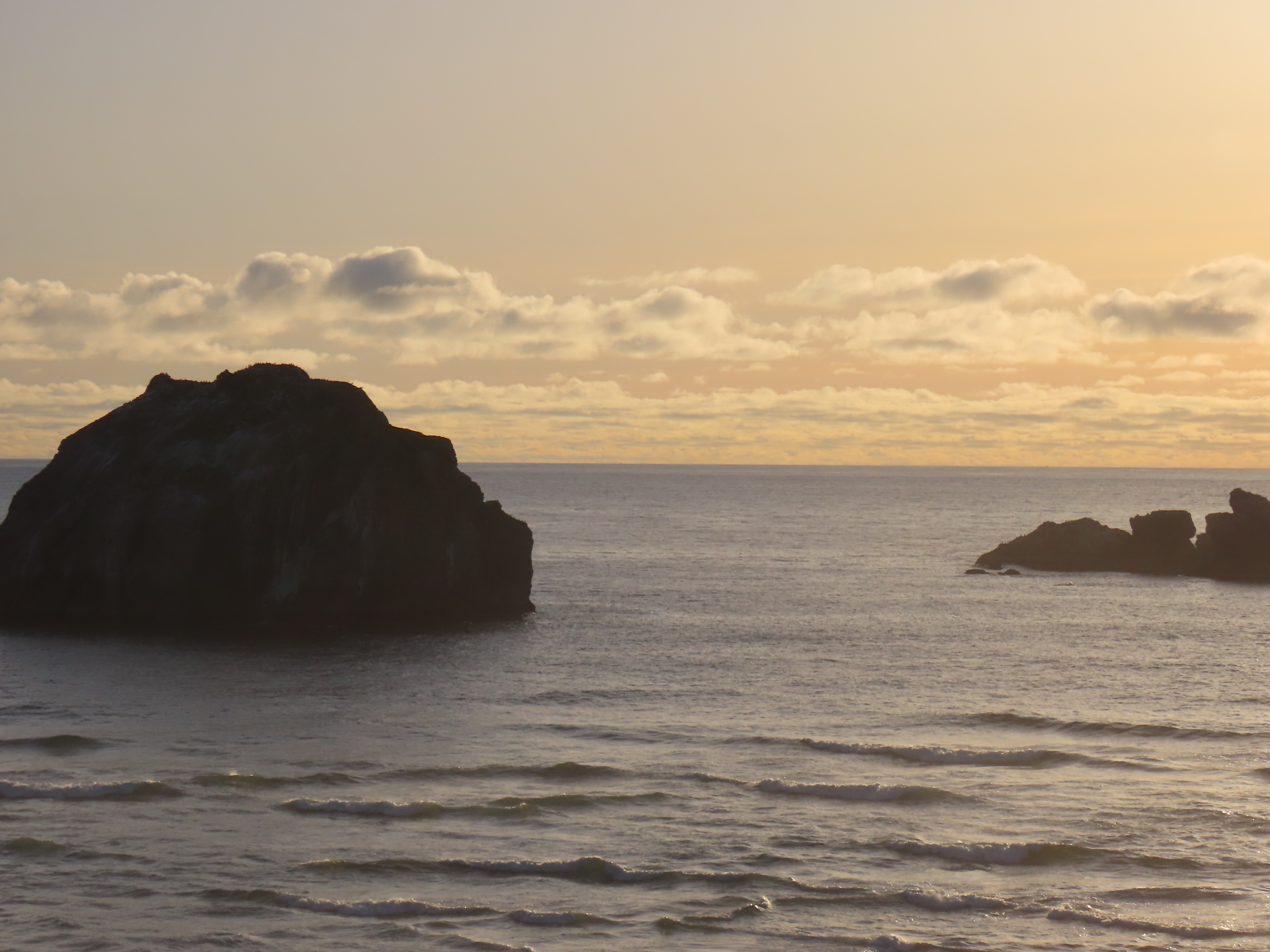
One thing common about most of our stops along the coast on our tour of the Pacific Coast from Big Sur to Olympic National Park has been sea stacks, rocks and islands that were once part of headlands but are now part of the ocean. The most famous is Face Rock in Bandon, Oregon.In case you don’t see the face, Peggy provides a clue. Face Rock comes with a Native American story about its origins. A native princess went swimming in the ocean carrying a basket with a cat and kittens. She was grabbed by a ferocious sea monster who tried to force her to look at him so she would be his slave forever. She resisted by looking up at the sky, where she remains today. Her cat and kittens can be seen off to the right.I like the creation story. Geologists have another. Sea stacks are created by the constant pounding of the waves against rock, at first creating a cave. Over time, usually millions of years, the cave enlarges until it becomes an arch.Such as this arch, which is still connected to the mainland in Mendocino. (I used this photo a few weeks ago on our Mendocino Headlands Post.) Eventually the arch will fall down and leave behind a new sea stack. We found it interesting that we could see a speck of light in the middle of the arch. Possibly a new sea stack will be created sooner rather than later.Peggy and I walked through a sea cave on the Bandon coast that will eventually create a new sea stack. This is a photo of Peggy.She took this photo from the other side of the cave looking out toward the ocean, which brings me to another point. Face Rock was not the only impressive sea stack off of the coast of Bandon. There were bunches.A closer view. The Fickle Finger of Fate, perhaps. (Those of you who are older may remember Rowan and Martin’s Fickle Finger of Fate Award that they gave out on their weekly TV show. For example, the US Congress got one.)Peggy and I promptly named this Sea Lion after the sea lions we saw posing along the Noyo River in Fort Bragg.You can see why.Another impressive sea stack. I’m thinking Man in the Moon at half phase.Group photo…We came back to the Face Rock Overlook to check out the sea stacks as the sun set. This is the Cat and the Kittens. In case you can’t see them, neither can I. Several photographers were down on the beach hoping to catch a good sunset.This was the view looking south from the Face Rock Overview.A close-up.The sunset was also good for catching waves splash over rocks.Face Rock, backlit by the setting sun. In line with our ability to see creatures of all sorts in natural settings, Peggy found a pair of eyes staring back at her when she took a final sunset photo. That’s it for today. Next up we will feature our day of exploring tide pools in Bandon.Sea Stars were everywhere when we checked out the tide pools at Devil’s Kitchen in Bandon, Oregon.
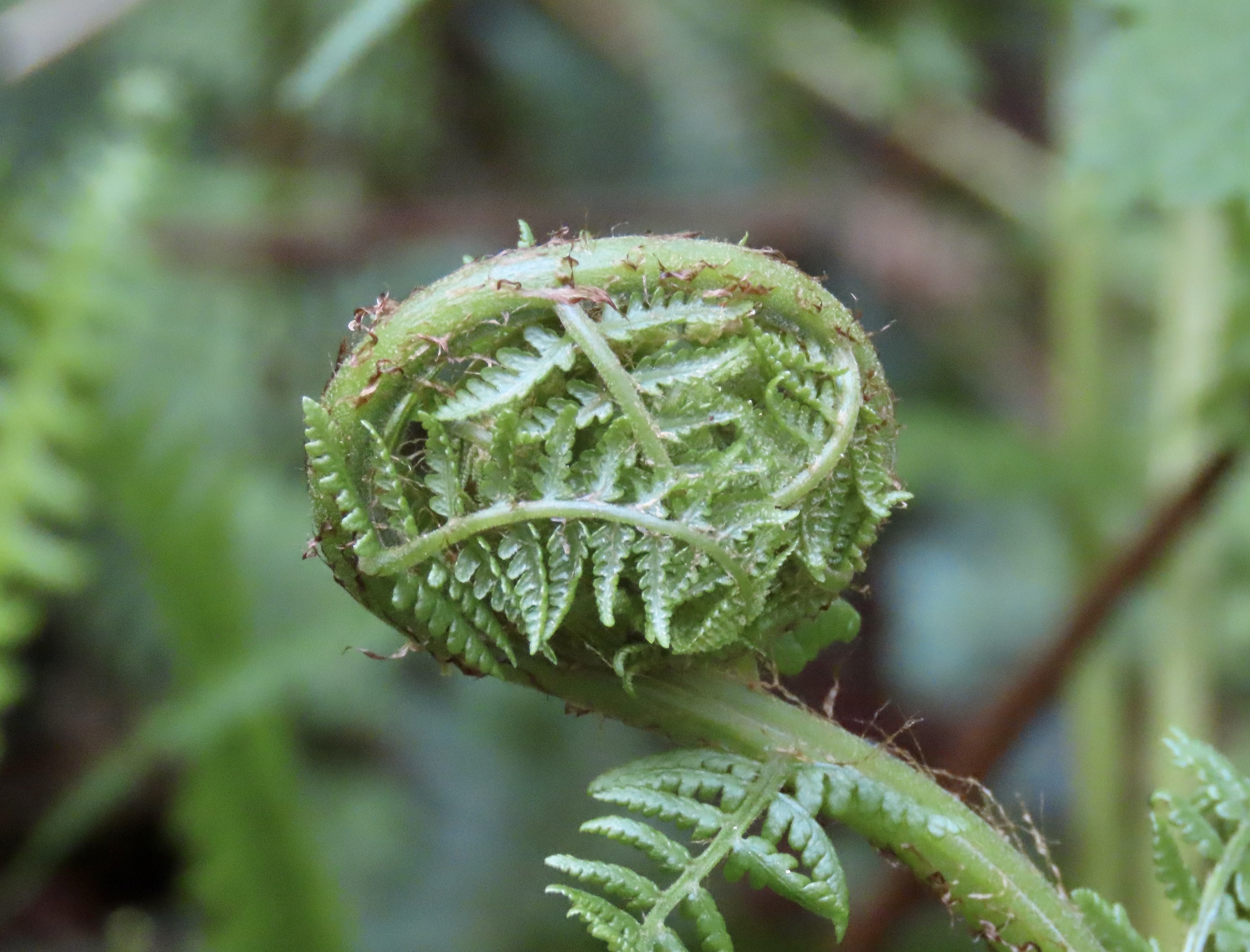
When I see something like this rolled up fern head, I have no problem imagining Jurassic Park, Star Wars, or even ET. Parts of all of these movies were filmed in the National and State Redwood Parks of the far northwest coast of California. ET phoned home, the Ewoks celebrated into the night on Endor, and T-Rex stomped through the rainforest of Fern Canyon in search of two-legged morsels. To top it off, even Bigfoot has been sighted in the Redwoods. Several times.A carving of Bigfoot Jr. sat outside the Redwood Carving Gift Shop in the small town of Orick.As the fern head featured above unrolls , it seems even more ancient. In reality, the fern is ancient. It was one of the first plants on earth, dating back to as far as 430 million years ago.The last phase of unrolling. It looks even more primitive.
The six mile road into Fern Canyon from Highway 101, where Jurassic Park, The Lost World, was filmed, was about a mile from where Peggy and I were camped. We had to go! The first four miles or so of the road had not recovered from winter storms. In addition to being one lane, it was full of Jurassic-size potholes. Had we fallen in one, it would have devoured our pickup faster than T-rex.
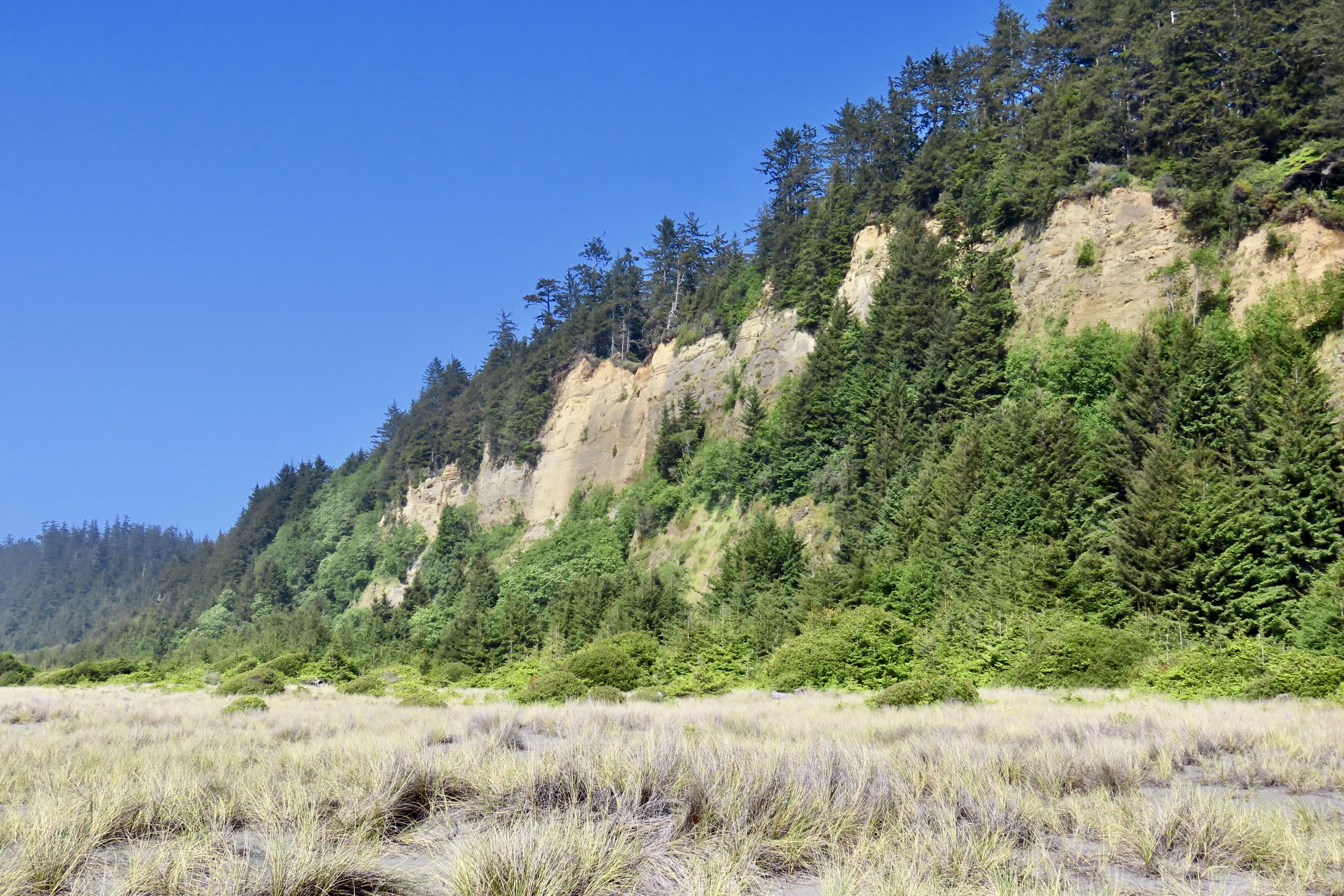
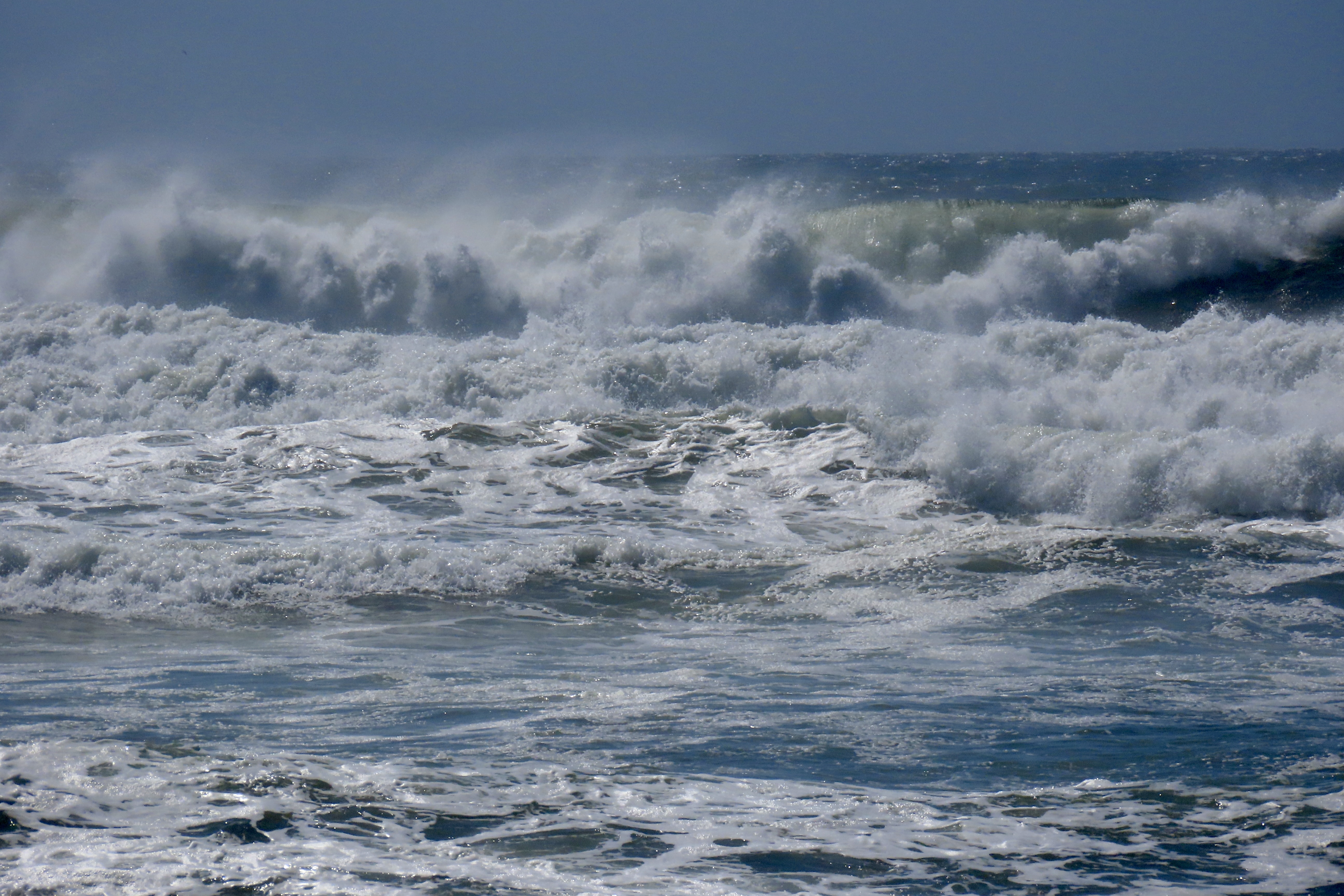
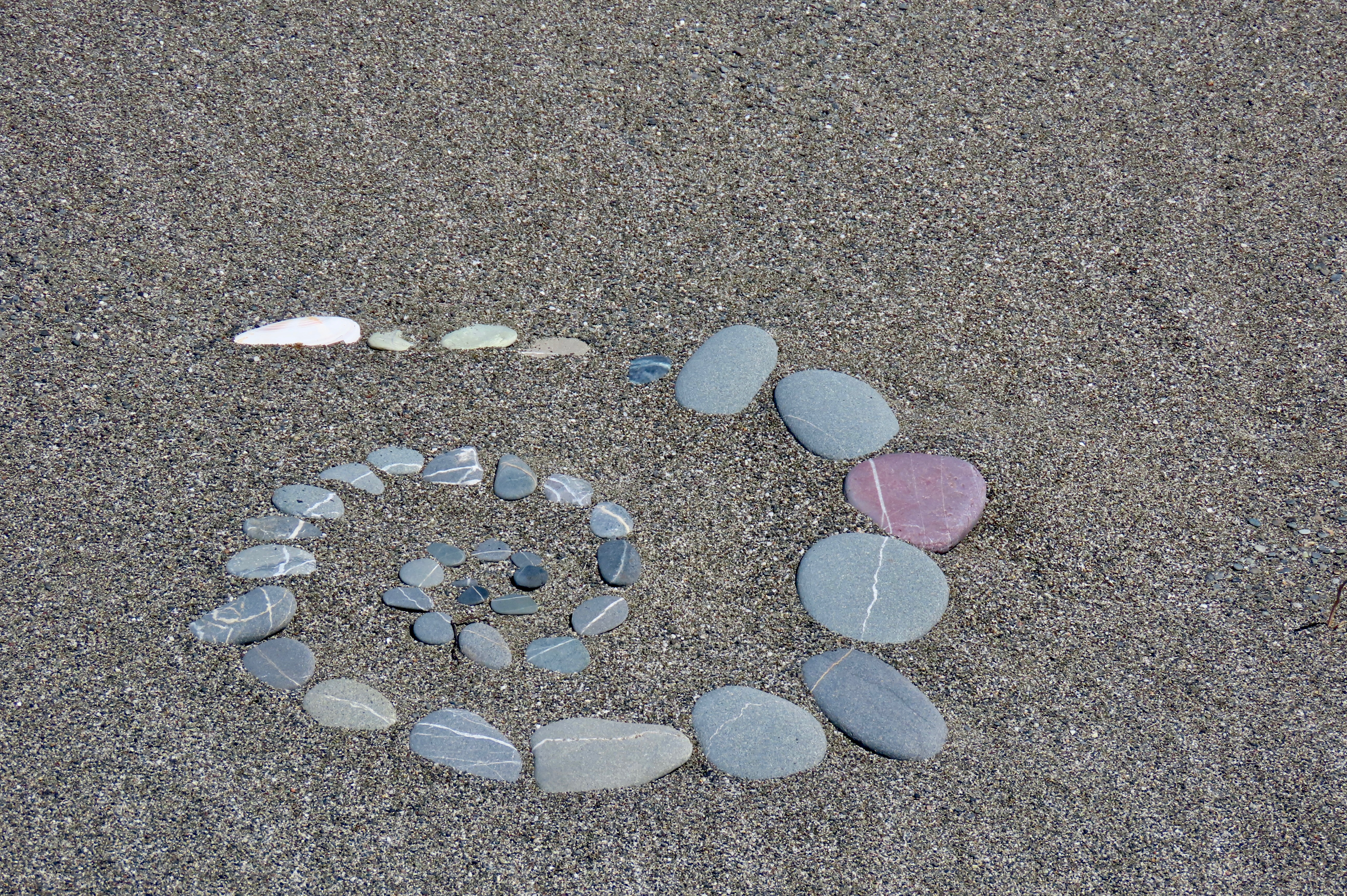
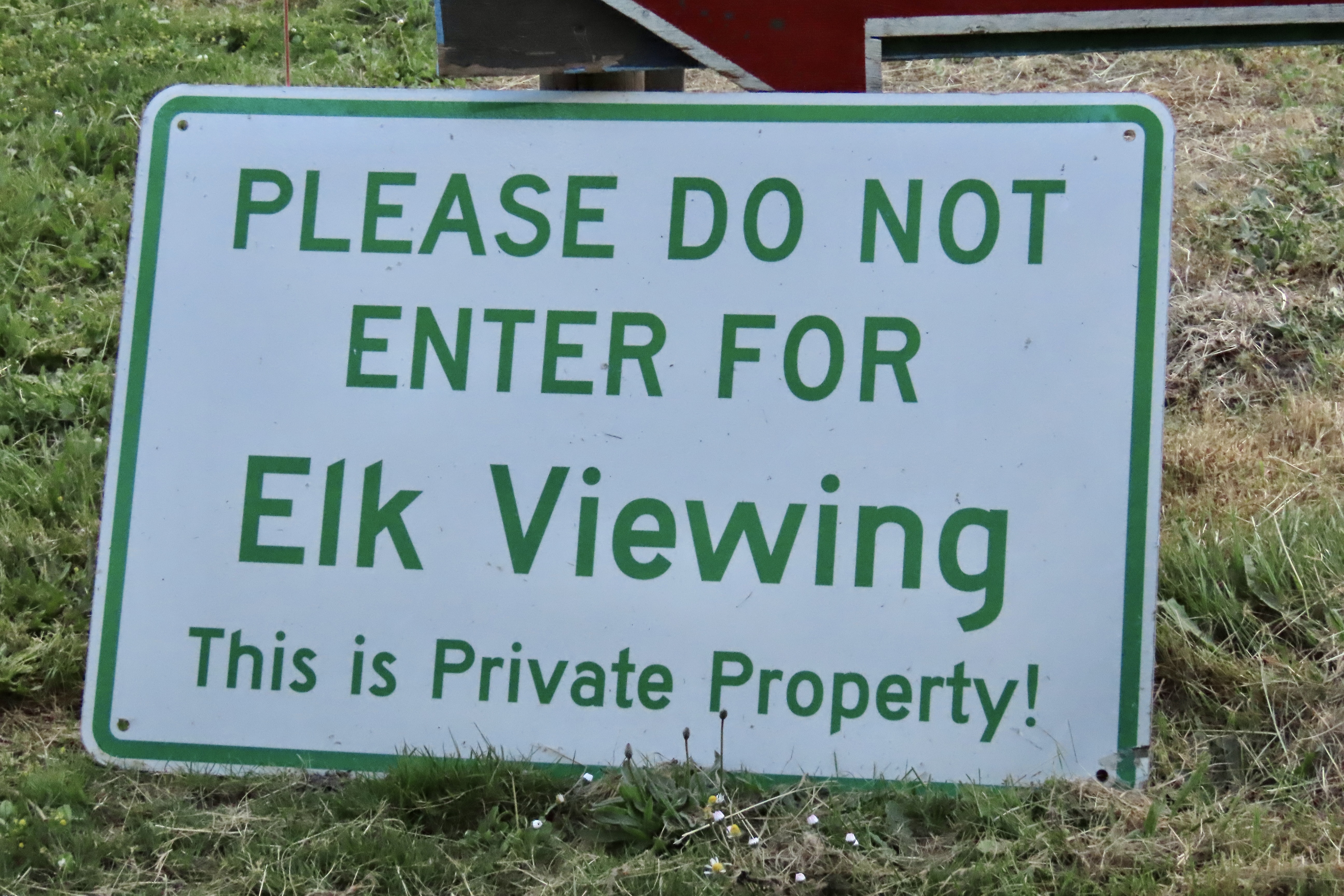
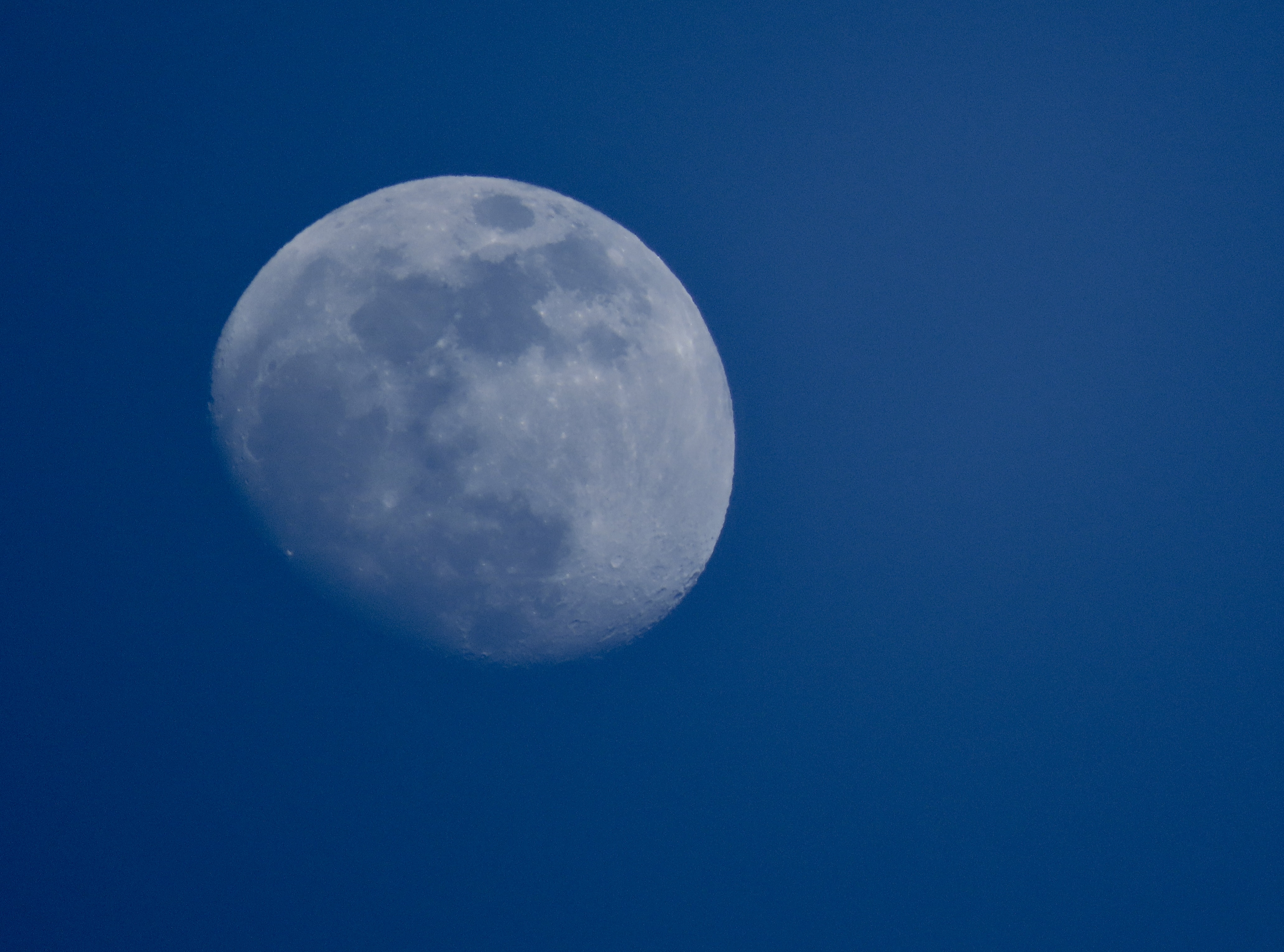
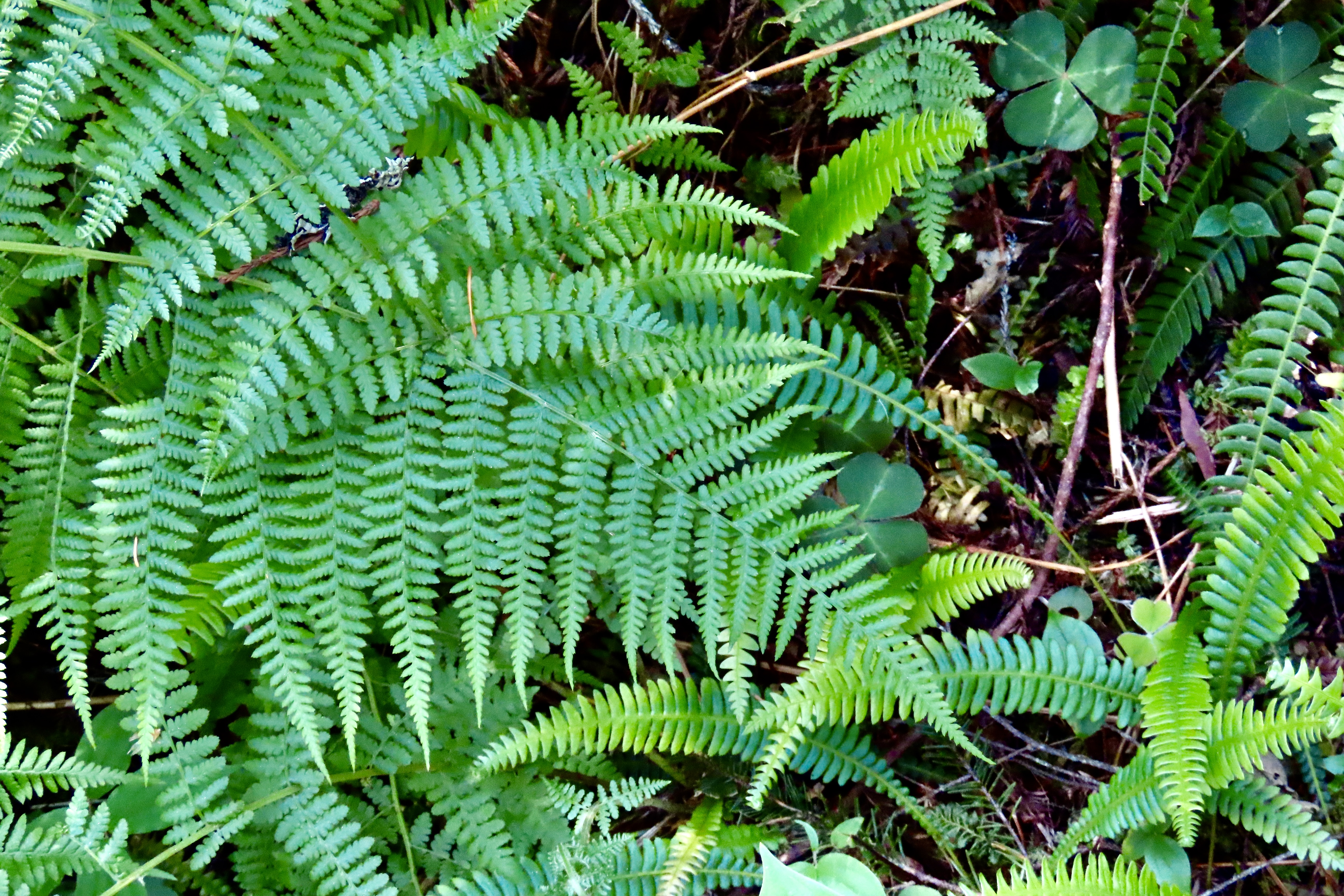
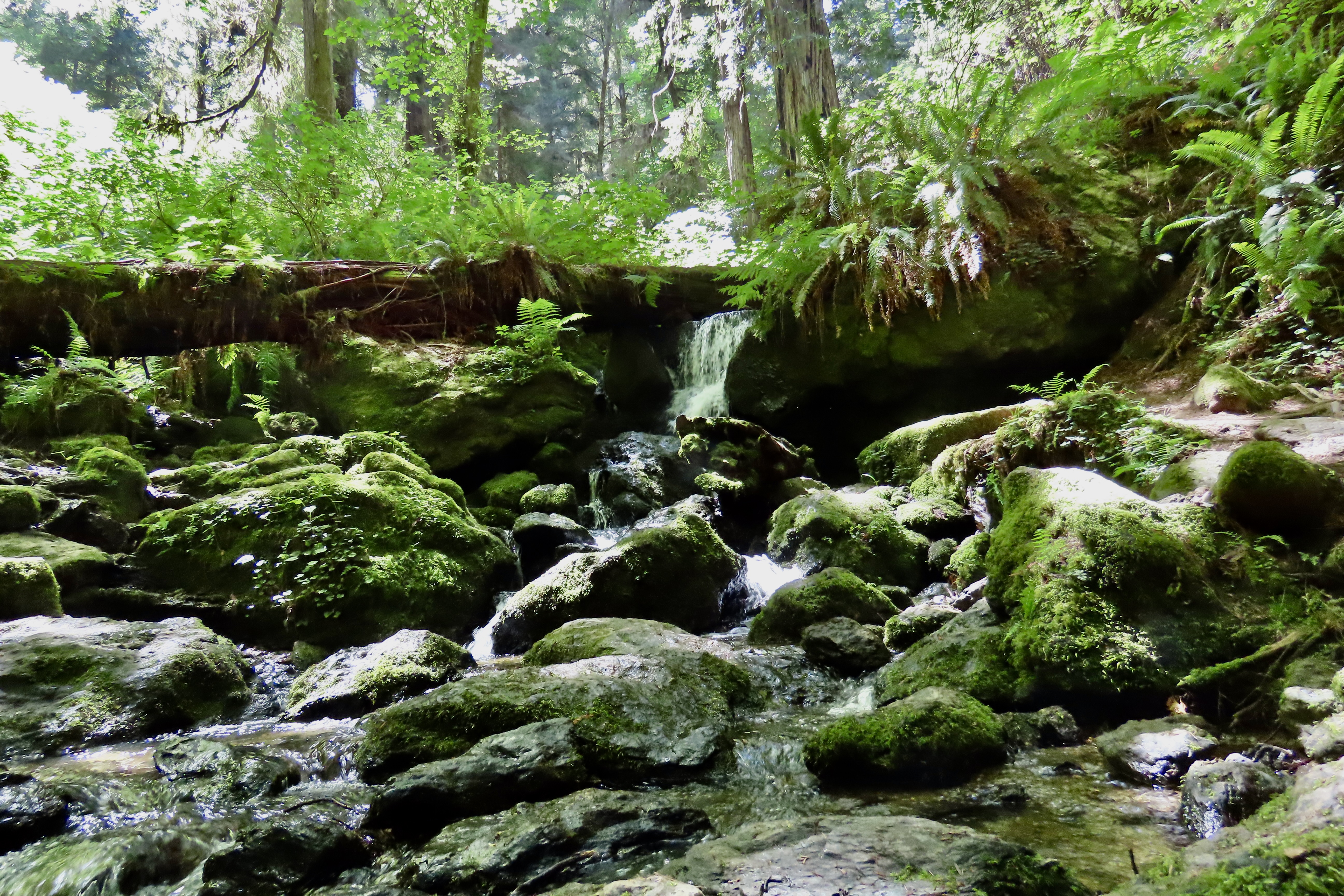
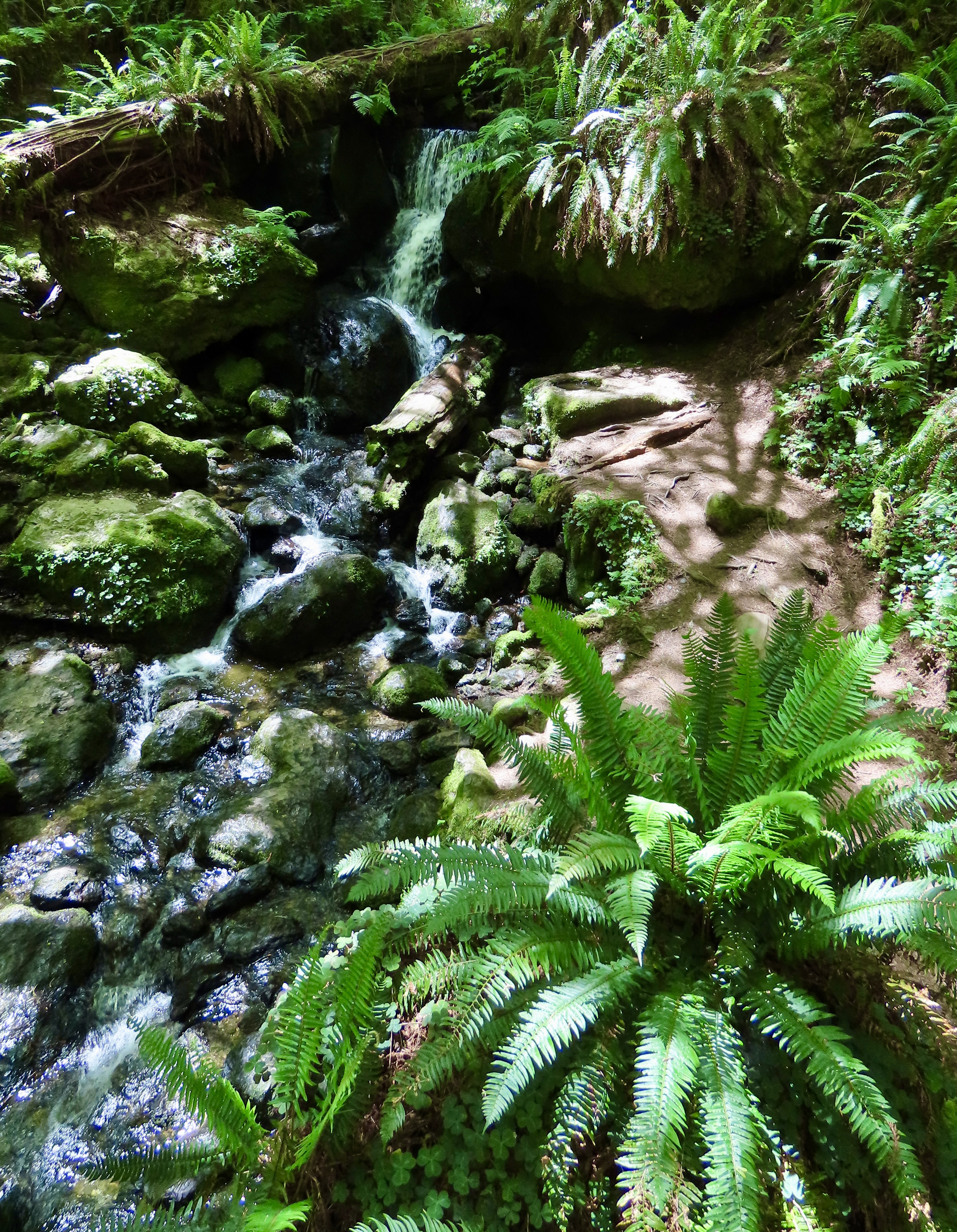
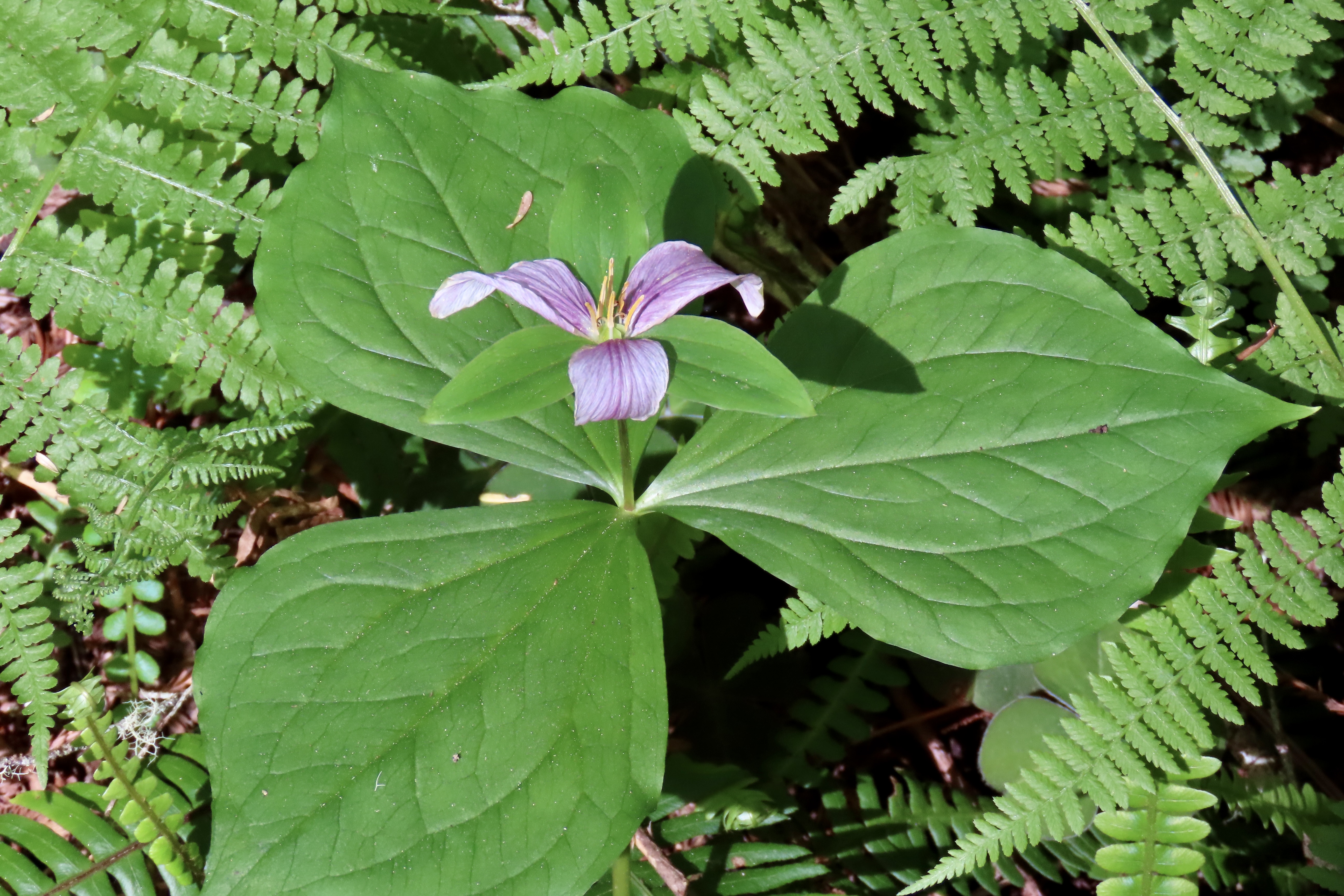
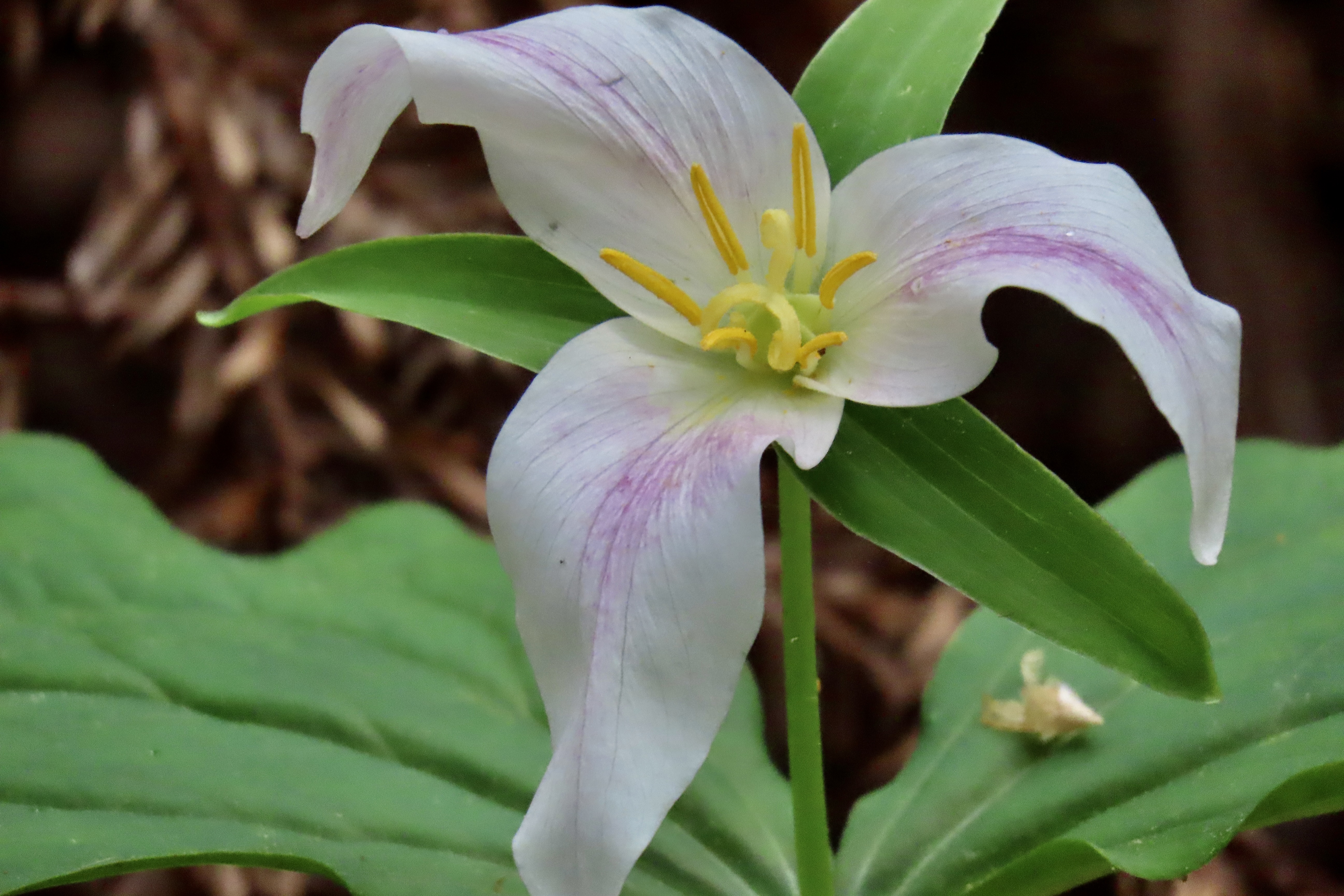
Fortunately, the road became wider and flattened out when we reached the ocean. Heavy equipment was eliminating pot holes. Gold Bluffs was on our right…And the ocean, on our left, was pounding ashore.Some one had left this neat artwork on the beach. I doubt it was Big Foot.The road came to an end and we started our hike into Fern Canyon. A small herd of elk was resting in the tall grass just off the trail. Had we realized how difficult it would be for us to see elk up close in the park, we would have spent more time with the herd.This sign greeted us as we drove into the small Heart of the Redwoods RV Campground where we stayed. Can you blame us for assuming we would be seeing elk— like out our door!This person’s front yard, about two miles away from our camp, was what we imagined.We reached the beginning of Fern Canyon and thought, “Is this it?” Actually it wasn’t. We would have had to wade a mile up the canyon and we weren’t wearing the right shoes.We lost ‘our once in a blue moon’ opportunity to see dinosaurs. (We took this from our campground. I played a bit with the processing.)We did see lots of ferns, however. And giant clover.On the way back to Highway 101, a trail sign invited us to see Trillium Falls. We like trilliums and we like waterfalls, so off we went. The falls were small, but still, technically, falls. We felt it was an appropriately Jurassic-like scene.Complete with ferns! But no trilliums.We found this one elsewhere in the Park. Trilliums earn their name by having three petals, three sepals, and three leaves.They are whiter when young and become more pink as they age.
AND A WRAP-UP
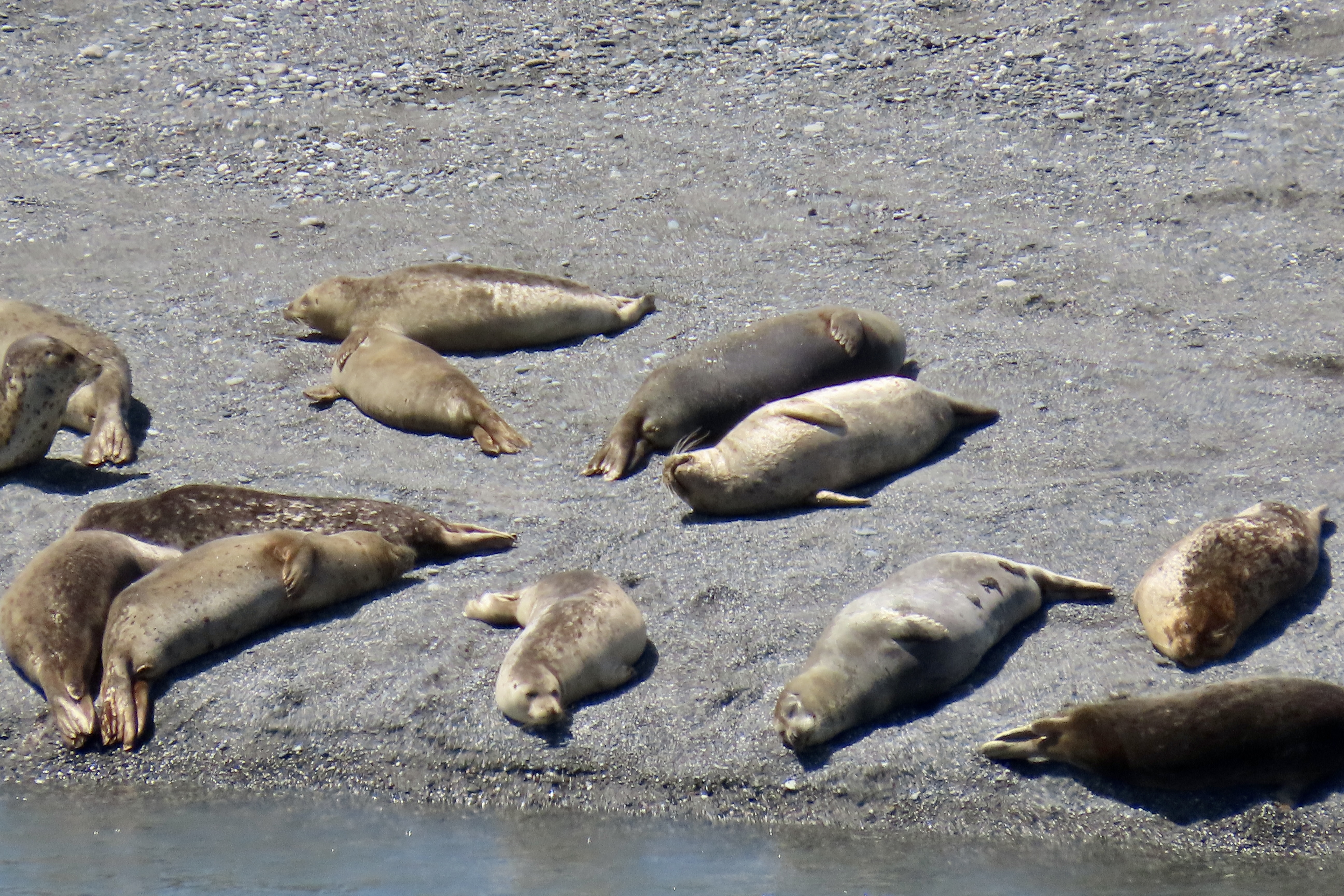
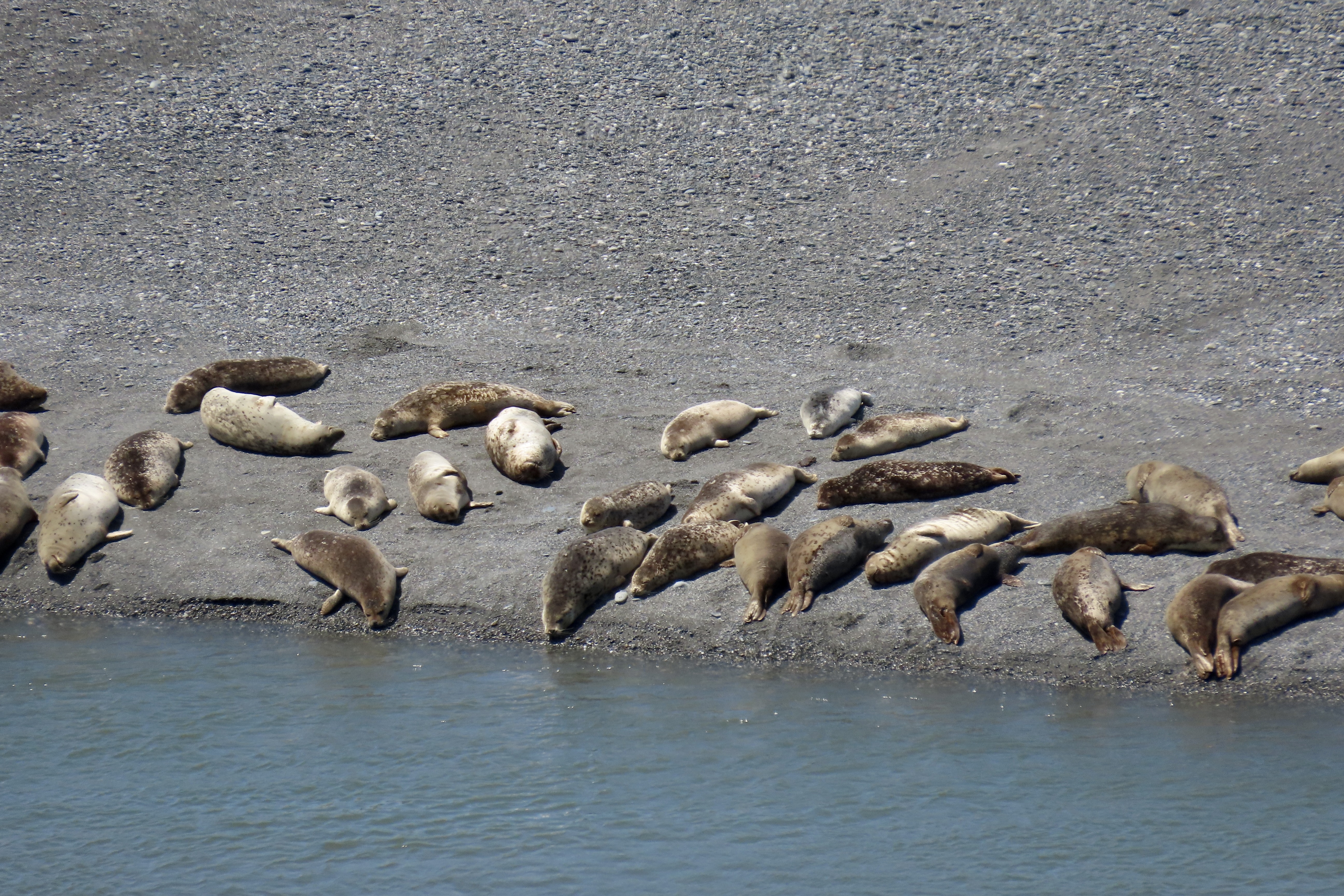
Peggy and I finished off our visit with a trip up to the Klamath Beach Road on the northern end of the Park. We had visited the beach on a previous trip to the Redwoods and found it covered with colorful small pieces of redwood that had been carved by the ocean. While the road was theoretical paved, it was equally rough to the road into Fern Canyon. Unfortunately, the access road was closed. The beach had been taken over by seals! We drove up to an overlook.
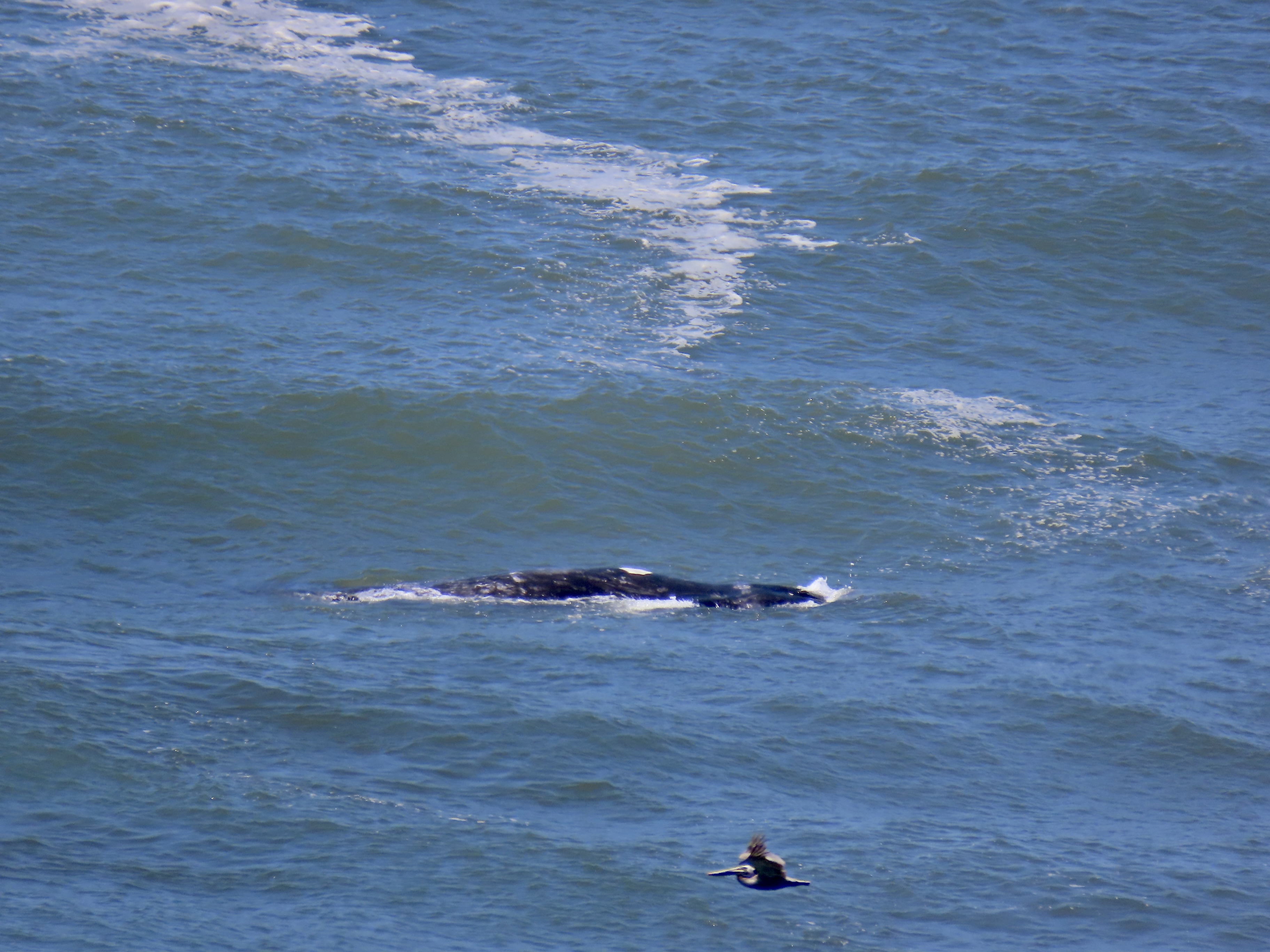
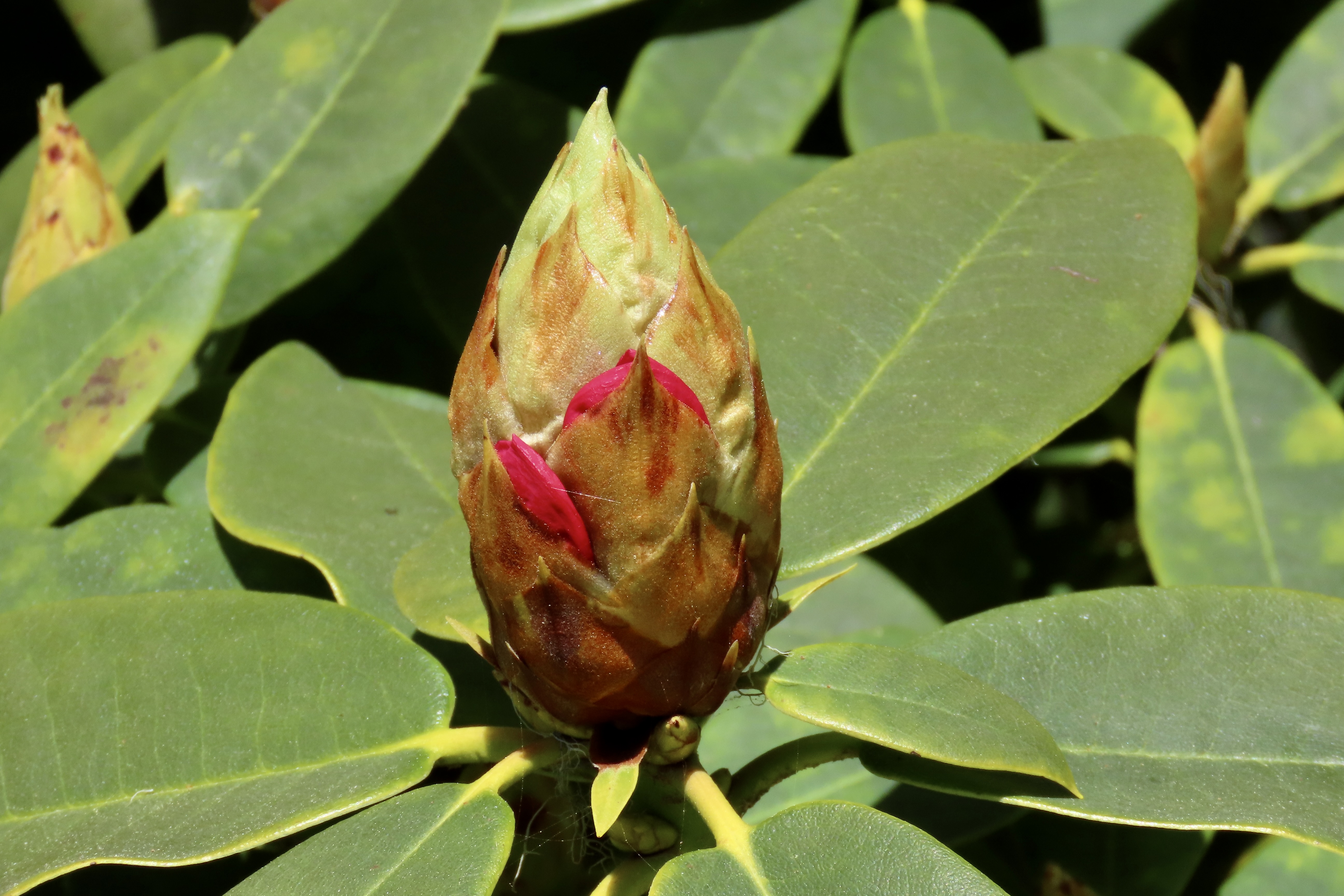
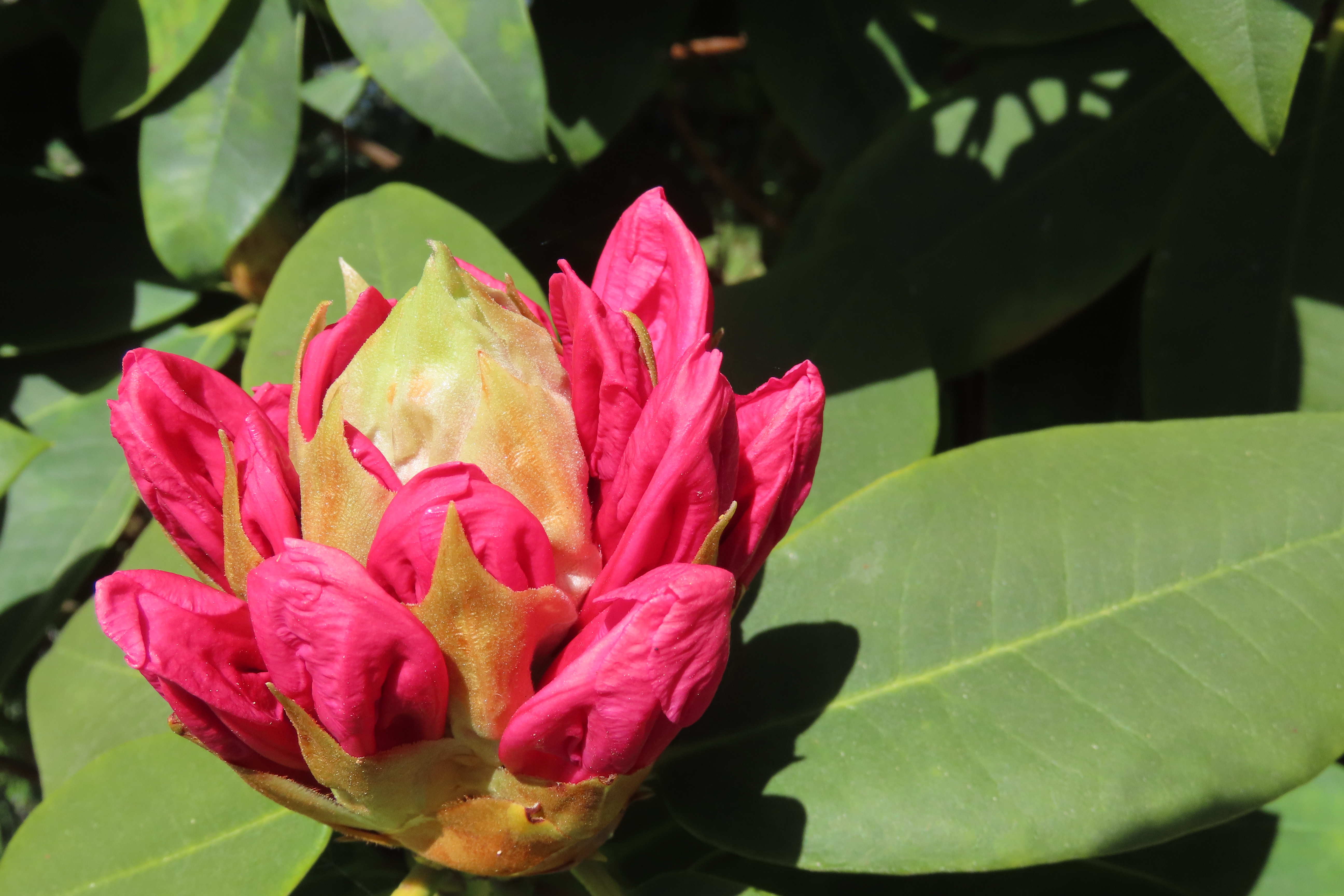
You’ve seen a number of seals so far from our journey up the coast. I’m sure you will see more. These, like the rest, seemed well fed and not particularly interested in physical exercise! That’s reserved for when they are in the water.What was different about these seals was their sheer numbers.California brown pelicans and seagulls backed up the seals.And Peggy spotted a whale out in the ocean, making its way north to Alaska.An old cemetery was next to where we were parked. Rhododendrons were budding in it.And had a unique beauty. With that, I’ll close our posts on the Redwoods. The fabulous sea stacks of Bandon, Oregon, are waiting.Brandon’s famous Face Rock outlined by the setting sun.


























































 Wandering through Time and Place