The Sierra Trek Ends with Its Biggest Surprise Yet!

In my last post on the Sierra Trek, our trip had come to a sudden halt because the Army Corps of Engineers was dynamiting in the American River Canyon in preparation for building a new dam. Not being able to move on, we had done the next best thing— had a party. We were lucky that the Corps was knocking off for the weekend. Our adventure continued…

Wanting to spend more time in the woods, I created the American Lung Association’s Trek Program. For several years, it would become one of the top special event fundraisers for the national organization and provide an opportunity for thousands of people to experience the outdoors while backpacking and bicycling. I was leading a Trek into Yosemite when the above photo was taken.

Early the next morning I had an important decision to make: whether to wade across the American River in water up to our belly buttons and then follow the river or climb up the steep canyon following alternative trails. I let the Trekkers vote and they voted to cross the river. No surprise; beyond getting wet, it was easier.

One woman was deathly afraid, however— and broke down in hysterics. It was the same person who had initially refused to ride the Squaw Valley tram. We offered to carry all of her gear. We even offered to carry her. All to no avail. Finally, I decided we would all hike the canyon route. I was not about to split our group again. (It was the only time in my years of leading Treks that I ever allowed participants to vote while on the trail. Treks, I decided, were not a democracy.)

Our last night was fifty-fifty on the plus and minus scale. On the plus side, I knew that we had succeeded. Our Trekkers, except for the two or three who were now riding in the jeep, had made it— survived if you will. We had managed to solve each of the crises we had faced along the trail. I could say goodbye to the Trekkers the next day knowing that I had put everything I had into getting them through the nine days. On the minus side, Steve had taken a few of the ‘cool’ Trekkers to camp away from the main group. I hated seeing this, it was a really bad decision, but it was already a done deal by the time I came into camp as rear guard. I could have hiked up the canyon and insisted the group rejoin us, but I just didn’t have the energy to do it.

Sunday, we hiked into Auburn Fairgrounds as a group. The Trekkers were in high spirits and sang the Ham Cheddarton song. In cadence. They had a bar-b-que chicken feast to look forward to and then they were going home— home to hot showers, clean clothes and loved ones. They had enough tales to fill the next week and possibly their lifetime. As we approached the fairgrounds, our Auburn volunteers, several Board members and Jo Ann were there to cheer our arrival.

I didn’t know how things would end. At best, I hoped our Trekkers would recognize that even though we had made enough mistakes to fill a book (or at least a long chapter), we had tried as hard as we humanly could to rectify them. And I had learned, boy had I learned. Mainly, I felt relief. I was going back to focus on our mail fundraising campaigns with a vengeance. What took me by surprise, however, were the responses as Trekkers started to leave.

“Thanks, Curt, for the most incredible experience in my life. Where are we going next year?”

“You and Steve were great, Curt. I would like to help with next year’s planning.”

And on and on. People were excited about their experience. It was one of the most difficult things that they had ever done, and they had succeeded. They left feeling better about themselves, and that feeling translated over to us and the Lung Association. Instead of the negative comments I expected, and in some ways deserved, we were getting rave reviews. While not everyone was eager for next year’s adventure, most were asking, even demanding that we repeat it.

I left that day not quite convinced but leaning toward doing another Trek. One thing was for sure. My experience had matched that of the Trekkers. The event had been one of the most difficult things I had done in my life from both a physical and mental perspective. I came out of the Trek with a new confidence in myself and a new understanding of what I was capable of accomplishing— and an increased love of the wilderness.

That night as I took my first shower in nine days. It was everything that I had dreamed it would be, but when I reached around behind me to wash my fanny, something was wrong. It wasn’t there. It had disappeared. I felt like I had lost a limb. Between the trail review work, my trauma with Jo, and the Trek, I had lost 20 pounds in two weeks! It was a fitting end to the experience.

EPILOGUE

We would go on to hold our Trek the next year and many, many years afterwards. In 1977, I added a 500-mile bike trek to complement the Sierra Trek, and later a three-day bike trek. By 1980, I had gone national with the program and Lung Associations were holding treks across the nation. Millions of dollars would be raised for our organizations and thousands of people would experience backpacking and bicycling adventures. Of equal importance, the Trek program recruited a whole new set of dedicated volunteers to the organization. And— from a purely personal perspective— it provided me with a 30-year excuse to play in the woods!

Now that I’ve told the story of the first Trek, it’s time to head back farther in time and relate how I first fell in love with wandering the woods. It all started when I was kicked out of the first grade for a year and started escaping to the jungle-like graveyard that was just across the alley from our house with only a grumpy dog for company. It was a long, long time ago in another world. Please join me next Monday as I kick off Section 2 of “It’s 4 AM and a Bear Is Standing on Top of Me.”

NEXT POSTS:

Wednesday’s Blog-a-Book post from “The Bush Devil Ate Sam”: Ever stop to think about what role your DNA would play in determining who you would grow up to be? I came from a long line of wanderers. Heading off to Africa seemed like a natural thing to do. I’ll introduce some of my ‘wilder’ ancestors including Great Great Grandfather George who struck it rich in the California gold rush and was then thrown off a ship into the Pacific Ocean and Uncle William who had his head chopped off by tomahawks.

Friday’s travel blog: Peggy and I are over on the Oregon Coast, this time in Brookings. So… there may be more ocean photos. Or… I may break out some more desert photos.

Born to Wander: Part 1… The Bush Devil Ate Sam

Here I am in our backyard with the family pets. The overgrown graveyard next door and the alley that led off to the woods spelled adventure for me. While the cats stayed home, I could always depend upon a dog or two along for company.

August 1965. Tears tracked across Jo Ann’s cheeks. We had just left her parents in San Francisco and boarded a United Airlines jet bound for New York City. We were leaving family, friends and life in the US behind. I was sympathetic with Jo but my mind was elsewhere. While she was grieving over what we had left behind, I was celebrating where we were going. Mysterious Africa, teaching, and adventure beckoned. 

Except for the time when I was 15 and surrendered five hard-earned, pear picking dollars for a helicopter ride at the El Dorado County Fair, it was my first flight ever. How could I not be excited? The jet taxied out on to the runway, climbed above the Bay, and banked toward the east. For seven hours, we would be winging across America and gazing down on cotton clouds, mountain ranges, deserts, rivers, cities, towns, farms and forests. 

We waved goodbye to California as the plane flew over the Sierra-Nevada Mountains. The towering granite of the Crystal Range and Pyramid Peak gave way to the deep blue of Lake Tahoe. My mind turned to how the two of us, both from small Northern California towns, had ended up as Peace Corps Volunteers on our way to the remote jungles of West Africa. Certainly, the two years we had just spent at UC Berkeley were a factor. Our time at Sierra College near Sacramento had also played an important role, but my reasons went back farther, back to my very beginning. 

Family legend is that I was conceived during a moment of weakness when my mother had the flu. For the record, I delivered my first squawk of protest on March 3, 1943 in Ashland, Oregon. At the time, according to Life Magazine, American and Australian forces were duking it out with the Japanese at the Battle of the Bismarck Sea, bow ties were the hot new fashion with American women, and Westinghouse engineers were firing dead chickens 200 miles per hour at airplane windows. They went splat. Success meant the windows didn’t crack.

I grew up in the small town of Diamond Springs, California about 35 miles east of Sacramento. Sleepy is too lively a word for describing the community during the 1940s and 50s. In Old West terminology, Diamond Springs was a one and one half horse town. There was one church, one barbershop, one hardware store, and one grammar school. On the two-horse side of the equation, there were two grocery stores, two gas stations, two restaurants, two bars, two graveyards and two major places of employment: The Diamond Lime Company and Caldor, the lumber company where my father worked as an electrician. 

The town hadn’t always been quiet. Located in the foothills of the Sierra Nevada Mountain Range, Diamond Springs was once a major gathering spot for the Maidu Indians, and later became a bustling Gold Rush town. To the Maidu it was Mo-lok’epakan, or, Morning Star’s Spring and a very holy place.  The Indians came from miles around bearing their dead on litters to cremate on pyres. The smoke and spirits were sent wafting through the air to wherever deceased Maidu went. They had lived in the area for a thousand years. 

In 1848, John Marshall found some shiny yellow baubles in the American River at Sutter’s Mill, 13 miles away. The world of the Maidu and Morning Star’s Spring was about to be shattered. “Gold!” went out the cry to Sacramento, across the nation and around the world. Instant wealth was to be had in California and the 49ers were on their way. They came by boat, wagon, horse and foot— whatever it took. And they came in the thousands from Maine to Georgia, Yankee and Southerner alike. They left behind their wives, children, mothers, fathers, and half-plowed fields. The chance of ‘striking it rich’ was a siren call not to be denied. 

Seemingly overnight the once quiet foothills were alive with the sound of the miners’ picks and shovels punctuated by the occasional gunshot. Boomtowns sprouted wherever gold was to be found. In 1850, a party of 200 Missourians stopped off at Morning Stars Spring and decided to stay. Timber was plentiful, the grazing good, and a 25-pound nugget of gold was found nearby. Soon there were numerous hotels, stables, a school, churches, doctors, a newspaper, lawyers, vineyards, a blacksmith, some 8000 miners and, undoubtedly, several unrecorded whore houses. Morning Stars Spring took on a new name, Diamond Springs. The Wells Fargo Stage Company opened an office and the Pony Express made it a stop on its two-year ride to glory.

By the time the Mekemsons arrived at the end of World War II, Diamond Spring’s glory years were over. The gold had long since been mined out, the town had burned down three times, and the population had dropped to somewhere around 700. And, as far as I know, there weren’t any whore houses. In this pre-TV, pre-digital era, our entertainment depended on our imaginations. For me, this meant disappearing into the woods as soon as I could escape the not too watchful eyes of my parents. While other boys lined up for Little League batting practice, I was out doing an inventory of the local skunk, coyote and deer population.

I was born to wander, I’m convinced of this…

Why? Check this space next Wednesday.

NEXT POST:

Travel Blog Friday: Lyman Lake State Park along Highway 191 in Arizona… The backroad series.

“The Bush Devil Ate Sam,” Revised… Introduction

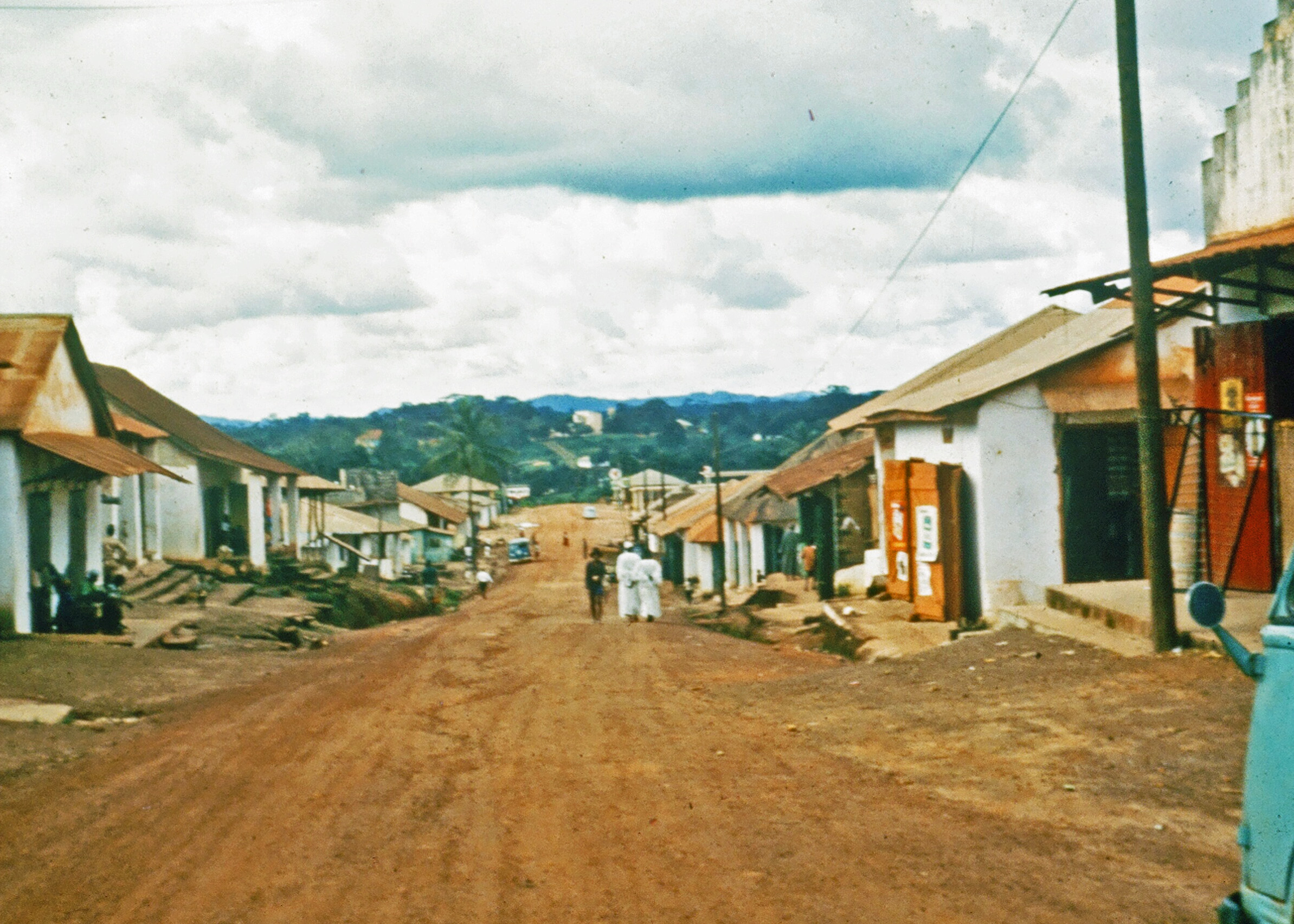
The main street of Gbarnga, Liberia (circa 1965) in West Africa where I served as a Peace Corps Volunteer from 1965-67. I lived near the large yellow building seen in the distance.

Scruffy soldiers with guns pointed helter-skelter were scattered around my yard when I returned from teaching. “What’s up?” I asked in a shaky voice that was supposed to come out calm. Liberian soldiers were scary. 

“Your dog ate one of the Superintendent’s guinea fowl,” the sergeant growled. It was hardly what one would consider a major crime, but the Superintendent was the governor of Bong County. A power in Liberia. His compound was nearby and he was apparently quite fond of his fowl birds. But Boy the Bad Dog, the perpetrator of the crime, didn’t belong to me. And he regarded my cat Rasputin as dinner, a fact which neither Rasputin nor I approved. 

“Why don’t you arrest him,” I suggested helpfully. 

“Not him. You!” the sergeant roared. “You are coming with us.” The interview wasn’t going as planned. 

“I am not going anywhere with you. He is not my dog,” I responded as I disappeared quickly into my house. Yanking a Peace Corps Volunteer out of his home for a dead, want-to-be chicken would have serious repercussions. Or at least I hoped that’s what the sergeant would think.  He eventually left. 

At 4:00 a.m., he was back, pounding on my door with the butt of his rifle. Jo and I woke up from a deep sleep with a start and sat up straight, frightened. I grabbed our baseball bat and headed for the back door. I yanked it open and there was the sergeant, his rifle poised for another strike.

“Your dog ate another one of the Superintendent’s guinea fowl,” Sarge announced with glee at the thought of dragging me off into the dark night.  I was beginning to seriously question my decision to join the Peace Corps.

Nonetheless, joining was one of the best decisions in my life. The way I was raised and educated, even my DNA, had pointed me in the direction of striking off into the unknown. But there was more. I was very much a ‘child of the sixties.’ Civil Rights, the Vietnam War, and the student revolution dramatically affected how I viewed the world. Being a student at UC Berkeley during the Free Speech Movement of 1964 provided me with a front-row, head-bashing opportunity for involvement in these issues. Looking back, I can see how the Berkeley experience, my wandering genes, and the influence of family, friends and teachers encouraged me to sign on the dotted line.

John Kennedy created the Peace Corps in 1961 as one of his first acts as President of the United States. His reasons were both idealistic and pragmatic. Yes, he wanted to help third-world countries combat the terrible poverty, disease, hunger, illiteracy and conflict they faced, but he was also interested in winning hearts and minds for the West. Kennedy, like most other leaders of his generation, believed that we were in the midst of a worldwide conflict between capitalism and communism, democracy and totalitarianism, Christianity and Atheism. The Cold War was raging, and much of this war was being fought in third-world countries.

Today, after 60 years of existence, the agency reports that over a quarter of a million Americans have served in 142 countries worldwide with the mission “of developing partnerships with communities abroad to develop sustainable solutions to the world’s most pressing problems.” I would add developing cross-cultural understanding and friendship. Of equal importance to whatever they accomplished overseas, the volunteers have brought home to America the skills and commitment that they developed through their Peace Corps experience. 

My assignment was to serve as a teacher in Liberia, West Africa.  The country has a unique history dating back to the early 19th Century when freed slaves from America were shipped back to Africa. Within 30 years, the freed slaves, or Americo-Liberians as they came to be known, had established themselves as the rulers of Africa’s first black republic. When I arrived in 1965, their descendants still controlled the political, military, justice, education and economic systems of Liberia— almost everything. William Shadrach Tubman, president of the country since 1944, had invited Peace Corps into Liberia to help the tribal Liberians prepare for a larger role in the nation’s future. Not all Americo-Liberians agreed with this goal, as I would learn. 

The Bush Devil Ate Sam includes a number of stories about the adventures that I, along my first wife, Jo Ann, had in Africa, but it also contains background information on my decision to join the Peace Corps, and some thoughts on the tragic history of Liberia since the 60s. I will conclude with a look at the Peace Corps experience in Liberia today.

So please join me as I leave the chaotic world of UC Berkeley and the student revolution of the mid 60s to become a Peace Corps Volunteer in the even stranger world of Liberia. You will meet fascinating characters like Crazy Flumo, learn valuable new skills such as how to fight off an invasion of army ants, meet a judge who determines guilt with a red-hot machete, and discover why the government determined a second-grade reader I wrote and a student government I formed were threats to the power of Liberia’s one-party state. And that’s only the beginning…

But now, it is time to jump into the book and determine what role DNA played in leading me to leave a small, rural town in Northern California for the far-off jungles of West Africa.

The 2019 San Francisco Writers Conference… And an Argument for Self-Publishing

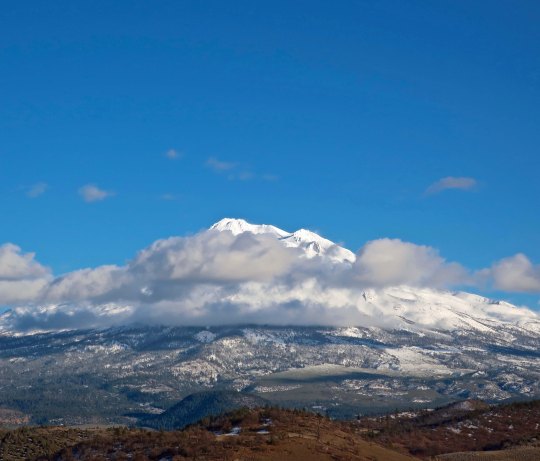
It used to be that obtaining an agent and a publisher was a lot like climbing this mountain: hard work but worth it when you reached the top. Maybe not so much anymore. (I took this photo of Mt. Shasta on my way home from the 2019 San Francisco Writers Conference.)

I’ve been AWOL from my blog, playing hooky at the San Francisco Writers Conference (SFWC). I’d been before, way back when obtaining an agent and a publisher were the primary options for being an author— the gold standard. This time, I packed my bags and headed off to the conference with that objective in mind, but I was also open to self-publishing, which is what I did with The Bush Devil Ate Sam. I bought a book by Andy Ross on how to write a book proposal and went to work. I like Andy, he fights hard for the people he represents. I also like him because he managed Cody Books in Berkeley for several years. 

Cody’s was one of the nation’s great bookstores. I can’t count the number of times I walked through its doors, the hours I spent wandering the aisles, and the great books I bought— even when I could barely afford them as a student at Cal in the mid-60s. The bookstore was always on my to-do list every time I returned to Berkeley, until one day I hiked down Telegraph Avenue eager for a bookstore fix and discovered it was no more. It was like learning that a good friend had died.

Andy’s book, The Literary Agent’s Guide to Writing a Non-Fiction Book Proposal, is packed full of good advice, but it comes with a surprise ending: He self-published it. In fact, I quickly learned that a major thrust of the conference was on self-publishing. It has come of age since I had attended the SFWC in 2010. Still, there was plenty at the SFWC for those following the traditional path.

A number of agents were present and they ran workshops on how to pitch books to them during the agent speed-dating part of the conference. Think query letter with a lot less time. “You should be able to sell your book with one sentence.” Good luck with that. It’s the old Hollywood elevator pitch idea. When you catch a producer in an elevator, you have one floor to sell your movie script. Something like, “My movie is about Godzilla and Lassie teaming up to save Timmy.” 

I sat down with Andy for 15 minutes to talk about my book, It’s 4 AM and a Bear Is Standing on Top of Me.I had a one page, carefully-thought-out summary that introduced the book, my writing style, and relevant background. Andy liked my writing and even more my sense of humor, but, he noted, travel memoirs are hard to sell and Bill Bryson and Cheryl Strayed had already written the books on the PCT and Appalachian Trail. (I don’t agree with that, obviously.) He did suggest that I seek out agents who focus on adventure travel, and made several other good recommendations.

I listened carefully to presentations by the other non-fiction agents who were attending the conference and none seemed particularly interested in adventure travel books. I wasn’t particularly disappointed. Finding an agent and a publisher are incredibly difficult, even more so when your book is a memoir. Rejection is the name of the game—unless you are incredibly famous, or have a ton of good luck. Being a decent writer with a good story is rarely enough. There are millions of us. Too bad my name isn’t Curt Kardashian. Wait, I’ll pass on that. I’d much prefer to self-publish. 

The battle between print books and eBooks is a lively one. Pundits were ready to pronounce the print book industry dead for a while. But it has come roaring back. People still like the feel of a book. The 3000 or so in our library and scattered throughout our house certainly endorse the hands-on approach. But we also use our Kindles extensively. Travel, poor light, tired eyes, easy access to millions of titles, and cost are all factors. Both industries are here to stay, at least for now.

Writers have a different perspective on the issue. Having a publishing house print your book still has a certain prestige to it. And the advantage of getting your book into book stores. An agent and publisher also help assure that your book is well-edited and has a good title and cover. But the odds of getting a publisher, especially one of the big five in New York, are extremely low. They are now owned by large corporations who have one criteria: profit. Their only concern is will your book make money, lots of it. And that’s the tail that wags the dog.  

There is more. 

Publishing house contracts are notoriously one sided. A small advance with minimal royalties and maximum control are what first time authors can expect from a publisher. Time is also a factor. The project can easily take two years, and that’s after you have landed an agent and a publisher, which might take another year or so, if at all. Shelf-life is another concern. Yes, your books may get into bookstores, but if they don’t sell quickly, off they come. Bookstore owners have an agreement with publishers to take back unsold books and space is limited. Three months seem to be the outer limits. Your book is then destined for the burn pile— ashes to ashes, dust to dust.

Marketing is part of the answer. Publishers used to take this on as part of their responsibility. No more. Unless your name is J.K. Rowling, or David Baldacci, or Catherine Coulter (she spoke at the conference), etc., you are expected to do your own outreach. In fact, most agents and publishers won’t even consider your book unless you have a ready-made platform. Jane Friedman, who is a guru on authors’ platforms (and was also at the conference), defines platform as “an ability to sell books because of who you are or who you can reach.” A blog, for example, is a platform. Having one was highly recommended by just about everyone. There was a slight catch in the fine print: It helps to have 100,000 followers. My 5,600 followers, 530,000 views and 20,000 comments count as something, but not much. Get to work, Curt!

It is easy to see the appeal of going the Indie route and self-publishing. Your digital book has a virtual shelf-life of forever. From start to finish, you can have it up and out in months instead of years. Your profit per book sold comes in at between 50 and 100% as opposed to 15 and 20%. Modern print on demand capabilities mean your readers can still get the book in print as well as digitally. And, finally, you are in total control. Whether your book is published or not doesn’t depend on a 15 second decision by an agent or editor, who may be having a bad day.

None of this might matter if the publisher handled all of the marketing and used their considerable expertise to push our books. The effort and rejection that goes into obtaining a publisher would be worth it. But they don’t. If our success is going to depend on the energy and skill we bring to marketing as well as writing, then self-publishing becomes a viable option, and may indeed, be the preferable option.

It was a great conference. I felt I learned a lot. Now it’s time to get back to blogging and writing the book. The decision to self-publish or not can wait until the book is finished.

NEXT POST: I came home to snow. Not much but it was pretty. It’s time for my annual snow post!

The Beaver’s Revenge… Backpacking the Wind River Mountains of Wyoming.

This is number 5 in my series of posts introducing new readers to the wide variety of topics they will find on my posts. Here, I relate a solo backpacking trip I took into the Wind River Mountains of Wyoming. It is one of the few posts I have done without photos, but it was a fun/funny trip that I think is worth featuring. There are a number of backpacking adventures scattered throughout my blog, including my trip down the PCT that has been providing material for the past several months.

Having educated myself on the misbehavior mountain men (last blog), I returned to Pinedale and prepared for my own expedition. A week of backpacking alone is good for the soul.

I intended to drive up into the Wind River Mountains, go past Fremont Lake and then backpack south through the Bridger Wilderness. A series of small mountain lakes were calling to me.

Where I ended up is open to debate.

To start with, I was traveling with a United States Forest Service map instead of my usual detailed topographic maps. Contour lines on topographic maps provide a preview of the route ahead and help identify prominent landmarks. You can then use the landmarks to make compass sightings and determine your location.

Forest service maps are more oriented toward road travel. Still, my map would have been adequate except for the snow.

Whatever trail I was following quickly disappeared. Normally, I would have searched around and found it. Tree blazes, rock cairns, and patches of clear ground all help.

This time I didn’t care.

I was a Make Believe Mountain Man exploring unchartered territory in search of beaver. My route would be the one of least resistance. I did use my compass to maintain a general direction. There is a significant difference between being sort of lost and hopelessly lost.

Several hours later I discovered a lovely small lake free of ice and snow. I set up camp and went for a quick dip to rinse off the day’s grime. I can guarantee it was quick because the lake’s water had been snow a few hours earlier.

Warm sun and my Thermarest air mattress enticed me into taking advantage of my splendid isolation for a tad of nude sunbathing. I had drifted into a nap when the young couple walked into camp.

The woman’s surprised “Oh!” woke me up.

“Hi, how are you doing,” I said to their disappearing backs as they quickly made their way around to the opposite shore to set up camp out of sight. So much for splendid isolation…

I decided to go exploring. My camp was nestled up against the south side of a peninsula and my first action was to hike across it. Much to my delight, a beaver hut was located on the small inlet. Even more intriguing, Mother Nature had provided a tempting bridge of rocks out to the well-built stick house.

Never having stood on top of a beaver’s home, I decided why not.

The inhabitant was not pleased. The beaver shot out of his underwater door and surfaced about ten feet out, whipping around to glare at the strange intruder roosting on top of his house. Appearing disgruntled, he paddled off around the peninsula toward my camp.

“Aha,” I fantasized, “he is going to go stand on top of my tent to show me what it is like to have someone perch on your house.” I quietly made my way over the peninsula to check out my theory.

The beaver was indeed near my tent but he was busily munching away on tender young willow shoots. A mid-afternoon snack, it seems, was more important than revenge. I strolled back to camp, retrieved a book and settled in so I could read and keep a watchful eye on my gnawing neighbor.

Thirty minutes later he had made his way 20 yards down the edge of the lake and embarked on a strange project.

I watched him dive under the water and resurface with his front paws full of mud he had scooped up from the bottom of the lake. He made his way on to shore and carefully sculpted the mud into a mound.

That’s when things got really weird. He peed on his pile.

As I watched him dive into the water for more mud, it suddenly dawned on me he was creating a scent pile, a personal want ad of the woods: “Strong young beaver with prominent buck teeth and great smelling pee seeks beaverette for long-term relationship.” (This is like the bear rubbing it’s back against a tree I described in my Mt. Lassen post a couple of weeks ago.)

Either that or his mound served as a no trespassing sign for the competition.

“This,” I thought, “I have to see up close.” Using the young willows for cover, I got down on my hands and knees and carefully worked my way toward the beaver over the cold, soggy ground. Kit Carson would have been proud of me. I was proud of me.

Naturally, right at this time, the young couple chose to reappear.

They couldn’t see the beaver. All they could see was the guy who had been nude an hour earlier down on his hands and knees crawling through the willows in the general direction of their camp. I waved and pointed at the beaver but they had already disappeared.

Fifteen minutes later they had packed up their gear and were hightailing it home. It was the fasted job of breaking camp I’ve ever witnessed.  It would have been interesting to hear the story they told their friends about the wild, and possibly deranged, man in the mountains.

I suspect they spent their next vacation on the crowded beaches of Hawaii. I admit to feeling a tinge of guilt. One of my goals in life is to encourage folks to enjoy the wilderness, not frighten them off.

None of this stopped the beaver and I from enjoying our solitude. I continued my wandering, lost ways for another week.

Next Blog: Out of the wilderness and back to Burning Man. A city of 45,000 is built and dismantled in the remote Black Rock Desert of Nevada… in one week.


HAPPY THANKSGIVING!

The Natchez Trace: A Bicyclist’s Paradise… The 10,000 Mile North American Bicycle Tour

The Natchez Trace between Natchez and Jackson Mississippi.

I don’t think there is a place along the Natchez Trace that isn’t beautiful. I traveled on it for 370 miles of its 450 mile length.

This is my fourth post introducing new followers to the type of tales they can find in my blog. Way back in 1989, I did a solo 10,000 mile bicycle tour of North America. While the journey predated blogging, Peggy and I retraced my route three years ago. Traveling out of California, we crossed the US following a southern route, went up the east coast into Canada, headed back west through Canada to Minnesota, and then finished our tour following a northern route back to California. This is a chance to visit much of North America and hear tales about my bike trek. Want more: Here’s a post from Canada. Scroll forward or backward for the rest of the story:  https://wandering-through-time-and-place.com/2016/09/28/

A large, yellow mutt came wagging his way into my camp. I’d unpacked my gear, set up my tent, and taken off my shoes and socks. My toes were celebrating their freedom.

“Well hello big fellow,” I said to the dog, glad for the company. He sat down beside me and worked his head under my hand, demanding that I scratch behind his ears. Then I was required to pet the rest of him. I had just worked my way down to his tail when he rolled over and insisted on equal treatment for his tummy.

I provided an initial scratch but my coffee water had started boiling. “Priorities,” I told him, “the petting zoo is closed.” Apparently this meant it was play time. He leapt up, grabbed one of my socks, and bounced off about 15 feet.  “Hey! Bring that back,” I urged. Fat chance. He put the sock down, backed off a couple of feet, and started barking.

I finished pouring the hot water into my coffee filter and got up, tiredly, to retrieve my sock. It had been an 80-mile day and I really didn’t want to play ‘chase the dog around the yard.’ I pretended that I didn’t care, that I wasn’t going for the sock, and that I was terribly interested in a large bullfrog that had taken up residence in the swimming pool. The pool hadn’t been cleaned since the previous summer. It made a great pond.

The dog didn’t buy it. He dashed in, grabbed the sock and ran off across the yard. “Okay, you win,” I declared while picking up a stick. “How about a game of chase the stick?” The dog cocked his head and increased his wags per second. I tossed the stick and off he dashed, leaving my sock behind. I quickly bare-footed it across the lawn and grabbed my sock.

“Ha, ha, Mr. Dog,” I called after him while waving the sock about enticingly. To compensate my new friend for his loss, I played tug-of-war with the stick. We growled at each other appropriately, all in good fun.

It was early to bed. I had completed my trip from Alexandria by biking through the city of Natchez and was now camped about a mile from the beginning of the Natchez Trace.  I was eager to get up the next morning and start my 370-mile journey up the fabled Parkway through Mississippi and Alabama into Tennessee. As I zipped up my tent, the big yellow mutt did three dog turns outside the door and plopped down, making me wonder where his home was. I was hardly in a position to adopt a pet. Besides, he was well fed and wearing a dog tag.

My last memory before going to sleep was of the bullfrog singing to his lady-love. “Chug-a-rum, chug-a-rum, chug-a-rum.”

Downtown Natchez, Mississippi.

Peggy and I drove through Natchez on a Sunday morning and pretty much had the historic section of the downtown to ourselves.

Historic building with balcony in Natchez, Mississippi.

This historic building in Natchez came with an attractive balcony.

Downtown Natchez, Mississippi on a quiet Sunday.

The colors captured my attention here.

Old lamp posts adorn the historic part of Natchez.

Old lamp posts adorn the historic part of Natchez.

The city is known for its antebellum mansions.

The city is known for its antebellum mansions.

St. Mary's Catholic Church in downtown Natchez, Mississippi.

St. Mary’s Catholic Church was busy with its Sunday service so I didn’t go inside.

St. Mary's Catholic Church is located in downtown Natchez, Mississippi.

It was quite impressive from the outside, however.

Natchez has an interesting history. Once the site of a major Native American village, its initial contact with Europeans goes all the way back to Hernando de Soto in the mid 1500s. He wandered through the area searching for gold to steal, the primary occupation of Spanish Conquistadores. By the 1700s the French had entered the area followed by the British, the Spanish again, and finally, in 1795, the Americans. Native groups in the region included the Natchez, Chickasaw, Yazoo, Cherokee, and Creek, as well as the Choctaw further to the north.

As for the Natchez Trace, its beginning goes back 10,000 years and was probably tied to buffalo travelling along ridges doing buffalo things. Since these broad, heavy animals make good trails (think of them as early day bulldozers), Native Americans were soon using the routes for trade and travel between large communities.

The next stage in the Trace’s evolution was brought about by river trade in the late 1700s and early 1800s. Kaintucks, boatmen from the Ohio and Mississippi River Valleys, loaded flatboats with merchandise and paddled downstream to Natchez or New Orleans where they made handsome profits for their goods. The challenge was that you don’t row a boat up the mighty Mississippi. The boatmen had to hike or ride horses home. They sold their boats as lumber and made their way back to Nashville via the Natchez Trace

It was an adventure. There is a reason why the Trace became known as The Devil’s Backbone. It was crawling with highway men eager to separate the Kaintucks from their newly earned wealth. And that assumes that they could even get their money out of Natchez where cheap whiskey cost a fortune, hot love was based on cold cash, and cut-throats came by the bushel.

The development of steamboats in the 1820s changed things dramatically. These boats with their large, steam-driven paddle wheels could travel upriver. Boatman no longer had to hike or ride horses back to Nashville while fighting off thieves.  Gradually, people stopped using the Trace and it faded from memory.  But not totally.

In 1903, the Mississippi chapter of the Daughters of the American Revolution took on a project of placing markers along the original route. In 1918 the precursor to the Natchez Trace Association was created with the rallying cry of “Pave the Trace!” Work on the Parkway was started in 1937 and in 1938 it became a unit of the National Park system.

When I rode my bike out of Natchez in the spring of 1989, the Trace was mainly complete and had become something of a bicyclists’ paradise. (Today it is considered one of the top ten bike rides in America.)   To start with, there was no commercial traffic. No 18 wheelers would be whizzing by me. Nor were there any commercial properties or billboards, just lots of beautiful woods and small farms. Campgrounds and restrooms were located conveniently along the way.  Frequent rest stops featured local history. I was free to ride along and enjoy the scenery.

But I did have two responsibilities. The first was to persuade the large, yellow mutt that he wasn’t going with me. It started with a discussion in camp that I thought he had understood. Where I was going was dangerous for doggies. It was dangerous enough for me. About a mile from camp I chanced to look back, there he was, about 50 yards back. I stopped and waited for him to catch up, all a waggle. “No!” I said forcefully. “You cannot go. Go Home!” The tail stopped wagging. Two sad brown eyes accused me of horrendous deeds. Ever so slowly, he turned around and started back, tail between his legs. I felt terrible.

The second chore was more pleasant— rescuing baby turtles. Bunches were migrating across the Trace outside of Natchez. Each time I came on a crowd, I would stop, climb off my bike, and give the little tykes a lift across the pavement. I knew that there would be more coming along behind but I must have transported at least a hundred,undoubtedly saving them from being run over.

Following are several photos of the Trace from Natchez to Jackson, Mississippi that I took during the route review Peggy and I did this past spring.  In my next blog we will make a slight detour to the town of Philadelphia, Mississippi where a good friend lives and then head up the Trace to Tupelo and visit with Elvis.

Views along the Trace were constantly changing from being forested to open.

Views along the Trace were constantly changing from being forested to open.

Pine trees became common around Jackson, Mississippi.

Pine trees became common around Jackson, Mississippi.

Rich farmlands border some of the Trace.

Rich farmlands border some of the Trace.

There are a number of barns.

There are a number of barns.

These trees had yet to leaf out.

These trees were just beginning to leaf out. I enjoyed the silhouettes they created.

Numerous exhibits featuring the history of the Trace provide interesting breaks along the way.

Numerous exhibits featuring the history of the Trace provide interesting breaks along the way.

A number of the stops, like this one, include original sections of the trail.

A number of the stops, like this one, include original sections of the trail.

The Park has also rebuilt traditional fences that the pioneers who lived along the Trace would have built.

The Park has also rebuilt traditional fences similar to ones that the pioneers who lived along the Trace would have built.

A final view of the Trace for today. Many more will be included in my next three blogs.

A final view of the Trace for today. Many more will be included in my next three blogs.


On Dates, Squished Skunks, and Flat Cats… The Misadventure Series

At this point, down where the speed limit sign is, I ran over a skunk in the summer of 1958, undoubtably impressing the young woman I was on a date with.

Do you remember your first dates in high school? Were they roaring successes or unmitigated disasters? I suspect probably somewhere in between. But I doubt you ran over a skunk. As you may recall, I had no dates my freshman year. In fact, girls scared the heck out of me. Things began to brighten up the summer between my freshman and sophomore year, however. Read on…


I actually had a couple of real dates the summer of my freshman-sophomore year thanks to Paula and mom. Her mother was obviously encouraging the process. Our first date was a joint activity that included Mom, Boyfriend, Paula and me going out to dinner in the small town of Sutter Creek, about twenty miles away from Diamond Springs over curvy Highway 49. After we filled up on Italian food, Mom and Boyfriend promptly climbed in the back and suggested I drive home.

Small foothill towns like Sutter Creek along California’s historic Highway 49 are fun to visit and often have great restaurants.

“Um,” I noted nervously, “I only have a learner’s permit.”

“That’s okay, it will be good practice,” Mom jumped in and stated before I could add that I had just obtained the permit the week before.

Paula, meanwhile, was waiting for me to open the door for her on the passenger side of the car. She gave me an encouraging smile and my options dropped to zero. Any further hesitation would appear wimpy. After doing the gentlemanly thing for Paula, I dutifully climbed into the driver’s seat and miraculously found the keyhole and lights. Minimal gear grinding got us out of town and I breathed an audible sigh of relief. We had made it just past Plymouth when I ran over the skunk. He reeked revenge by becoming a virtuoso of glandular activity.

“Oh, don’t worry about it,” Boyfriend said as the first powerful whiffs of eau de skunk came blasting through the air vents, “it happens all of the time.”

“Yeah, sure,” I mumbled to myself through tongue-biting teeth, “young men always run down skunks on first dates, especially first dates with Mom and Boyfriend along.”

Fortunately, I made it home without further incident. Before continuing my ‘Perils with Paula’ story, however, I am going to digress to a similar odoriferous event that took place in the same general area some 25 years later. While working for the American Lung Association of Sacramento, I had created what is known as the Trek Program, a series of multi-day outdoor adventures that people go on as fundraisers. At the time this particular event took place, I was living in Alaska and ALA Sacramento had hired George and Nancy Redpath out of Davis, California to run its Treks. They had a popular three-day bicycling event that incorporated a portion of the same route that I had traveled the night of the fateful skunk incident. To add another element of fun to their Trek, the Redpaths had incorporated a roadside scavenger hunt with a sail-cat as one of the items.

To the uninitiated, a sail-cat is a cat that has had a close encounter with a logging truck’s wheels, after which it resembles a furry pancake with legs. Given several days of curing in the Sierra foothill sun, the cat can actually be picked and sailed in much the same way you would a Frisbee, hence the name. Although tossing one has provided dogs with a new way to chase cats and play Frisbee at the same time, it is a sport without many adherents. Even dogs have serious reservations.

Not surprisingly, one Trekker managed to find a sail cat, load it on his bike, and dutifully turn it in at the end of the day. The person won the scavenger hunt, which he should have considering his extended association with an umpteen-day dead cat. But this is not the end of the story. Two other couples became involved in the dead cat saga. I’ll call them Bob and Carol and Ted and Alice to protect the innocent.

Bob and Carol finished the Trek, hopped in their car and naively drove home that evening unaware that they were carrying a fellow traveler. When they arrived back in Sacramento and opened their trunk, lo and behold, there was the dead cat. Bob and Carol had a good idea it was Ted and Alice who had stowed the unwanted passenger in their car. They vowed to get even. As it turned out, both couples had spouses who worked for the State of California. A devious plot was hatched. The next day Ted received one of those large, inner office forwarding envelopes in his in-basket. It was rather bulky so he opened it with interest. Out slid the sail cat, your tax dollars at work.

Unlike Aunt Tilley’s fruitcake, the cat apparently ended his strange after-life journey at that point.

Likewise, one might assume that running over the skunk would have ended my relationship with Paula. But there was one more date. It is a testimony to how much Paula’s mother was committed to the relationship that she loaned us her car, which I drove illegally on my learner’s permit. Paula and I went on an old-fashioned picnic to Buck’s Bar, a 49er-mining site on the Consumnes River. I actually had a young woman, out in the woods, alone. It was my fantasy date. As far as I can recall though, and I would recall otherwise, I behaved myself disgustingly well. So did Paula.

The Consumnes River. My kind of place to go on a date.

You won’t want to miss next Friday’s post where I wrap up my MisAdventure series for now. I actually survive high school and on graduation day am offered a choice (in front of the student body): Graduate or go to jail.

TUESDAY’S POST: It’s time. My thousand my trek starts on June 17th! Am I ready?

Bleeding Like a Speared Mammoth… The Chemistry of MisAdventures

Miss Wilkerson, my high school chemistry teacher, whipping up a batch of something stinky. Oops, sorry, I mean performing a scientific experiment. I liked Miss Wilkerson, in fact, I might have had a slight crush, but I just couldn’t get excited about lab work.


Looking back, (hindsight, mind you), I am not too surprised about the paths I chose to follow in my life. But given that science is one of my favorite subjects from a lay perspective (Scientific American, for example, is the only magazine I read cover to cover), I find it a bit perturbing that I was so ready to drop science as a high school and college student.


I’ve never required much help in eliminating options from my life. Chemistry was like that. I would have made a good Greek Philosopher, working out problems in my head. Lab work and I don’t get along as a general rule. I quickly learned in high school that I am not particularly fond of long dead frogs pickled in formaldehyde or chemicals that smell worse than an old dog’s fart. But there is more to it than that; I am convinced that good lab technicians are mechanically inclined. They like to tinker.

I have lots of friends like that. They love to take things apart and put them back together. They can fix anything and go out of their way to find things that need repairing. I knew kids in high school that enjoyed tinkering with automobiles.  Ask them anything about carburetors, water pumps, generators, horsepower or timing and they have a ready answer. I admired them for it, but my interest in carburetors was zilch and my primary interest in automobiles was that they get me from point A to point B without breaking down. Still is.

My friend, Tom Lovering, is a dedicated fix-it-man. I can’t imagine him going anywhere without his tool chest. He breaks it out at there slightest provocation and begs to fix things. Here he is with a pickled frog that doesn’t need dissecting. We were in Mexico sampling tequila.

I feel pretty much the same way about other fix-it items. I am just not excited about getting into the bowels of a toilet and replacing its thing-a-ma-bob. Nor am I interested in replacing light switches to see how much voltage I can send coursing through my body. Yeah, yeah, I know; you turn off the electricity first.

I am not sure where this lack of enthusiasm for things mechanical came from but it was probably a combination of aptitude and attitude. My father wasn’t particularly fond of working on automobiles and some of that may have rubbed off. But he was very handy. In addition to being a skilled electrician he loved puttering around outside making things. I classify all such activities as chores to be avoided if at all possible. In fact, over the years I have developed a number of strategies for not having to fix things. Here are a few. You may find them valuable if you are a mechanically disinclined male.


  • Don’t own any tools. You might be tempted to use them, or even worse, someone such as a wife might suggest that you use them.
  • Don’t buy a house. Every scientific study ever done confirms that the single most important reason for having to fix things is owning your own home. I was 53 years old before I made that mistake, and then it was a condo with minimal fix-it responsibilities.*
  • If something doesn’t work, go buy a new one.
  • Plead ignorance. “What do you mean there is more than one kind of screw driver?” As a corollary, hide your repair manuals. Peggy has the irritating habit of looking up things that need fixing and then saying sweetly, “Oh, this looks easy to do, Curt.”  My manliness has been challenged. It doesn’t matter that this ‘easy’ chore requires that I make four trips to the hardware store, purchase $500 worth of new tools, work ten hours straight and injure myself at least once.  I have to do it.
  • Curse a lot. Your partner may figure that leaving something broken is easier than listening to you.
  • Stall. “I’ll do it right after I cook your dinner, honey.” Stalling is easier if you are doing something the other person finds desirable.
  • If all else fails, compromise. I have an agreement with Peggy that I will do one manly chore per month. That’s my quota. Some activities such as fixing toilets even earn two months of credit.


* Unfortunately, these rules no longer apply. Eight years ago, Peggy and I decided to buy a home on five-acres of property. Everything I feared about home ownership has come to fruition. I now have a shed full of tools and have to use them. Sigh. The good news here is that Peggy loves to repair things. Just a wee bit of procrastination…

Even my hobbies as a kid reflected my non-mechanical tendencies. Building model ships, airplanes, cars, trains, etc. had no interest. My concept of a great hobby was rock collecting. I would hike along the Southern Pacific railroad tracks and pick up interesting rocks until all four pockets were bulging and my pants were about to fall off. I would then go home and smash them apart with a hammer to figure out what I had found. Geology became a life-long interest.

I do understand the arguments for being able to fix things: saving money, being self-sufficient, and obtaining satisfaction from a job well done. These same arguments, however, apply to going out in the pasture, shooting Elsie the Cow, gutting her, bringing home the meat, grinding it up and throwing it on the grill. Just think of the satisfaction involved and dollars saved! Or, you can go to the local fast food joint and help employ a kid who might otherwise turn to a life of crime.

Now, back to chemistry, one day we had to shove little glass tubes through rubber stoppers. Apparently, this is an important skill for budding chemists. It’s not a difficult task if you ignore the fact that the holes in the stoppers are approximately half the diameter of the glass tubes and, more importantly, you have a gallon of Vaseline. I was half way through my first masterpiece when the damn tube broke and ended up jabbed into my hand. Bleeding like a speared mammoth, I was carted off to the emergency room of the local hospital and sewn up.

There was plenty of time while sitting in ER to contemplate my future as a scientist. My conclusion: there wasn’t one. I decided that the best way to avoid long-dead animals, smelly chemicals and miscellaneous dangerous objects (not to mention higher level math skills) would be to choose a career that depended on verbal agility. In other words, my future would be based solely on my ability to bullshit. I determined then and there I would either become a politician or a writer.

TUESDAY’S POST: Part 2 of the Rogue River Trail series.

FRIDAY’S POST: MisAdventures: I rediscover girls and run over a skunk on my first ‘date.’

How in the Heck Did I Get Here? Part 1… The MisAdventure Series

I’ve always enjoyed writing. Here, some of my fellow journalism students are conducting a practice interview with me at El Dorado Union High School where I wrote a column for the newspaper. I have often wondered what my life would have been like had I pursued a career in writing. It’s never too late, right.

Many things determine who we become in life. Sometimes it seems like destiny, but I am more convinced that it is predilection and happenstance. I am a great believer in Joseph Campbell’s ‘follow your bliss.’ Do what makes you happy. Do what you are good at. Genetics can play a big role here, and circumstances even more. It’s much easier to become a billionaire if your parents are. But mentors, the times you are born in, situations you experience, luck, and hard work all have a role to play. I’ve already explored some of the factors that led me down the path I have followed. In today’s and next week’s MisAdventure posts, I continue the exploration.


In the fourth grade, I discovered that long division was nasty. I got beyond that but word problems gave me a real complex. Two trains are hurtling at each other on the same track with Train A going 90 miles an hour and Train B going 70. They are 252.5296 miles apart. How long will it be before the Train A conductor says, “Ooooh shit!”  Not nearly as soon as I did. My own expletive arrived on my lips .0000001 seconds after seeing the problem. There was no waving of hands and saying “me, me.” I concentrated intently on sending vibes at the teacher. “Curt is not here today. You do not see Curt. You will not call on Curt.”

Spelling was another personal bugaboo in early elementary school. I inherited my spelling genes from my father who fervently believed that words should be spelled exactly as they sounded. “The hors cant come in the hows becaws he is to big to fit in the dor.” It drove Mother, whose grandfather had been a newspaper publisher, crazy. I learned in the third grade that I could compensate for my handicap by writing the really tough words in the palm of my hand just before spelling tests. After I aced several quizzes, my success became a little too much for my main competition.

“Miss Jones, Miss Jones, Curtis is cheating!” my nemesis announced loudly to the teacher, class and world. Boy, I was beginning to dislike her. Miss Jones solemnly checked my hand before a fast tongue and pants wipe move could destroy the evidence. She was not happy with her Godchild. Apparently, Moses had come down off the mountain with an Eleventh Commandment: Thou shall not cheat on your spelling test.

“Curtis I am giving you an ‘F’ on this test and you are to stay in class during recess the rest of the week,” she announced to me while the competition smirked. It was more than embarrassing; it was devastating. And what valuable lesson did I learn: no amount of effort is too much for revenge.  I spent an exorbitant amount of time on my spelling assignments after that with the sole purpose of beating the obnoxious little fiend. Unfortunately, she was equally inspired. I don’t think either one of us missed a word the whole rest of the year.

There’s an old adage that we are supposed to work hard at those things we find difficult, that it gives us character. My belief is that I already have plenty of character. If I had any more, little men in white coats would be chasing me with nets. I prefer to spend my energies on things I enjoy, like reading a good book or hiking in the wilderness. I have little tolerance for doing things that I don’t do well or fail to interest me. In other words, the Protestant Ethic and I have serious compatibility problems. But I can be stubborn. Math is a good example. I continued plugging away up to my junior year in high school. I even managed to get As in Algebra 1 and Geometry. That’s when I ran head on into Miss Caste, or Nasty Casty as she was known. It was definitely a character building experience.

Miss Caste taught Algebra II and, according to those who were seriously into math, was very good at what she did. Students leaving her class were reputed to have a solid foundation in the basics and be well prepared to move on to the ethereal worlds of calculus and trigonometry. Basics, I quickly learned, meant that there was one way of coming up with answers and that way was chiseled in stone. One did not diverge from accepted formulas or leave out steps; right answers obtained the wrong way were wrong answers. Wrong, wrong, wrong! This created a problem. I had a talent for coming up with right answers the wrong way— and this brought me unwanted attention. I could have lived with the extra attention except for another problem, Miss Caste’s teaching technique. She oozed sarcasm. My response was to freeze up. I started dreading her classes and developed the proverbial ‘bad attitude.’ I received my first C in high school and vowed never to take another math course. Life is short and then you die.

Of course, it was my loss. It was one of those life-altering decisions that speak to the power of teachers to turn students on, or off, to various subjects. I wasn’t a total dunce at math; in fact, I scored in the 98th percentile on the Iowa Test in math the same year. But I certainly wasn’t a genius. I was not going to make a career out of mathematics or jobs that were primarily math based. Unfortunately, I eliminated a number of options, particularly in the fields of higher education, almost all of which required further math.

Next Tuesday’s Post: Hopefully, I will have glowing things to say about Peggy and my 40-mile-hike down the Rogue River: Things like ‘piece of cake,’ ‘no problemo,’ and ‘let me at the PCT!’

FRIDAY’S POST: Bleeding like a speared mammoth, I decide to skip chemistry in the future. The MisAdventure Series

A Terminal Case of Puberty Blues… The MisAdventure Series

As a freshman at El Dorado Union High School, I decided to take PE Dance Class so I could go to events like the 1957 Sock Hop and be more than a wall-flower. It wasn’t to be…


In my last MisAdventure’s post, I took you through my early ‘romantic’ adventures up to my competition with Eric over the exotic Judy in the fifth grade. I carry on today, where I became hormonally challenged. Read on!

A pair of twins took up my sixth and seventh grade passions. I started out with Gail but she dropped me. That was a shock. Fortunately, her twin, Lynn, was interested in me so my suffering was short-lived. Like about a day.

By the eighth grade, my previously semi-quiescent hormones begin to stir. They weren’t boiling yet, but they were bubbling. Girlfriends were becoming serious business and new emotions suggested slightly more adventuresome behavior on my part. Holding hands, an awkward kiss or two, and snuggling up on the dance floor were about as far as I got in the parlance of the day, however.

Ann was my serious eighth-grade flame. She had dark hair, dark eyes and a ready smile. She cried when she wasn’t assigned as my partner in our square-dancing club. I liked her a lot but I was going on to high school and high school boys don’t date elementary school girls. I dutifully, if reluctantly, ended the relationship. Payback time came at the eighth-grade graduation dance in Placerville, a big event attended by seventh and eighth graders from throughout the region. Ann showed up dressed in white and was radiant. A steady stream of boys lined up to dance with her. I hid out and sulked in a corner with a bad case of instant jealously. I did get the last dance, though; it was ‘Love Me Tender’ by the latest singing sensation, Elvis Presley. The year was 1957.

For some reason, I decided to go out for Cross Country my freshman year. I am second from the right in the top row.

Something happened between the eighth grade and high school. And it hit me right between the eyes with all of the subtlety of a sledgehammer. Here I was a happy, well-adjusted and relatively successful young man one day and a serious candidate for a strait jacket the next. Pimples popped out on my face overnight and my voice became dedicated to practicing random octave jumps. Teenage-hood, which had promised to be a mild adventure, arrived with a vengeance. I was being hormonally challenged; I had a terminal case of puberty blues. Things I had taken for granted became illusive, almost impossible to obtain. Take girlfriends, for instance.

I expected to lose a little ground in the field of romance when I became a freshman in high school. Sophomore, junior and even senior boys cruised the hallways in a mad scramble to check out the new crop of freshmen girls. And the older girls weren’t about to date a freshman boy, that lowest of low creatures. But I didn’t expect to bomb the way I did. I became intensely, almost painfully shy. I would walk down the hallways staring at my feet in fear that some young woman would look me in the eye. If a girl tried to talk to me, I would mutter inanities and make a run for it. The strangest statements came out of my mouth. As for asking a girl out, the odds were a little less than being struck by lightning and the latter seemed like a less painful alternative.

It wasn’t that I didn’t notice girls. My body was one huge hormone. I just couldn’t bring myself to do anything about it. I pined for a young woman who sat in front of me in Mr. Crump’s Geography class. She was gorgeous and came with a full complement of accoutrements: smile, brains, hips and breasts. I was in deep lust. My knee and her butt were mere inches apart and her butt was like a magnet. I had the most intense fantasies of moving my knee forward until it made contact. In my fantasy she would of course turn around, smile at me and suggest we get together after school. In reality, she would have turned around and bashed me with her geography book (rightfully so), or worse, told Mr. Crump. I would have died. I kept my knee where it belonged. It is a strong testament to my love for geography that I didn’t flunk the class under the circumstances.

Desperate times call for desperate measures and I was a desperate man. I signed up for dance classes in P.E. I would learn to dance and become a combination of Arthur Murray and Elvis Presley. Step, step, slide and swivel your hips. Girls would flock to me. It wasn’t until the day of the class that I learned the magnitude of my mistake. I would have to dance with girls to learn how to dance and there they were, lined up on the opposite side of the gymnasium floor, staring at me.

“God, why did I do this to myself,” I thought as I stared across the distance at twenty females who I knew were thinking, “anybody but Curtis.”

“Okay, boys,” the female P.E. teacher announced in a stern voice, “I want you to walk across the room now and politely ask a girl to dance with you.” Wow, that sounded like fun.

Reluctantly, I began that long walk across the gymnasium floor. I was a condemned man and the gallows were looming. I walked slower. Maybe an earthquake would strike. Maybe the Russians would shoot off an IBM missile. Maybe one of the surly seniors would throw a match in a wastebasket and the fire alarm would go off.

Maybe nothing.

I approached the line and looked for a sign. One of the girls would smile at me and crook her finger. But the girls looked exceedingly grim. A few looked desperate, like deer caught in the headlights of the proverbial 18-wheeler rushing toward them at 90 miles per hour. I picked out the one who looked most frightened on the theory that she would be the least likely to reject me.

“Uh, would you care to dance,” I managed to blurt out.

“Uh, okay,” she responded with about the same level of enthusiasm she would have if I had offered her a large plate of raw liver. It was P.E. Dance Ground Zero after all, and she wasn’t allowed to say no. We were destined to be a great couple.

“You will put your left hand in the middle of the back five inches above the waist line.” The teacher, who was now sounding more and more like a drill sergeant, carefully described what we would do with our hands. It was quite clear that there would be minimal contact and no contact with behinds. “With your right hand and arm, you will hold the girl away from you.” There would be no accidental brushing of breasts either. I assumed the correct position with marine-like precision. I was going to get this right. I studied the chart the teacher had put up to show me what I was supposed to do with my two left feet. I listened carefully to the lecture on rhythm and down beats. I watched with intensity as she demonstrated: step, step, slide, step-step.

And all too soon it was our turn. A scratchy record blasted out a long-since-dead composer’s waltz. I didn’t know who it was but it wasn’t Elvis or even Benny Goodman. With one sweaty palm in the middle of the girl’s back and the other sweaty hand holding her a proper distance away, I moved out on the floor. Step, step, slide, step-step. One, two, and three, four-five the coach barked out. My feet more or less followed the prescribed pattern as I avoided stepping on the girl’s toes. I tried a turn and managed to avoid running into another couple. Ever so slightly I relaxed. Maybe things would be okay. Maybe I would have fun. Maybe Hell would freeze over.

“Stop, class!” the teacher yelled as she blew her whistle and yanked the needle across the record, adding another scratch. We dutifully came to a halt. What now?

“I want everyone to watch Curtis and his partner,” she announced.

“Hey, this is more like it,” I thought to myself. Not only was I surviving my first day of dance class, I was being singled out to demonstrate. I smiled, waited for the music to start, and boldly moved out on the floor where many had trod before. Step, step, slide, step-step. We made it through all of three progressions when the teacher abruptly blew her whistle again.

“And that, Class,” she proclaimed triumphantly, “is not how you do it. Curtis is moving like he is late for an important date with the bathroom.”

The class roared— and I shrank. I don’t know how my partner felt, but I wanted a hole to climb in, preferably a deep hole with a steel door that I could slam shut. And I was more than embarrassed, I was mad. My normal sense of humor had galloped off into the sunset.

“You don’t teach someone to dance by embarrassing him,” I mumbled. An angry look crossed the teacher’s face and she started to reply. I turned my back and walked for the door.

“Where do you think you are going, Curtis? Get back here!” she demanded in a raised voice.

“I am leaving,” I replied without turning, calm now the decision made. The class was deadly quiet. This was much more interesting than P.E. Other kids might challenge teachers, might walk out of a class, and might not even care. But not Curt. This was a guy who always did his homework, participated in class discussions, was respectful toward teachers and aced tests.

I reached the door and put my hand on the handle.

“If you walk out that door, you may as well walk home,” the teacher barked. “I will personally see to it that you are suspended from school.”

I opened the door, walked out, and went straight to the office of the chairman of the P.E. Department, Steve O’Meara. Steve worked with my Dad in the summer as an assistant electrician, but I knew him primarily as my science teacher.  He was a big man, gruff, and strong as a bull elephant, a jock’s jock. He demonstrated his strength by participating in the annual wheelbarrow race at the El Dorado County Fair. The race commemorated the fact that John Studebaker of automobile fame had obtained his start in Placerville manufacturing wheelbarrows for 49ers.

Steve O’Meara.

The County’s strongest men would line up with their wheelbarrows at the starting line and then rush to fill a gunny sack with sand at the starter’s gun. They would then push their wheelbarrows and loads at breakneck speed around an obstacle course that included mud holes, a rock-strewn path, fence barriers and other such challenges. In addition to making it across the finish line first, the winner had to have fifty plus pounds of sand in his gunny sack. Underweight and he was disqualified. Steve was always our favorite to win and rarely disappointed us. He had a very loud voice.

“What’s up, Curt,” he roared when I entered his office. I knew Steve didn’t eat kids for lunch but you always wondered a little.

“I think you are supposed to expel me,” I replied. He started to laugh until he saw my expression. Mortification and anger on the face of a 14-year-old are never a pretty sight.

He became serious. “Sit down and tell me what’s happening,” he suggested in an almost gentle voice.

Ten minutes later I walked out of his office with a reprieve. I didn’t have to go back to the dance class and could finish out the quarter playing volleyball.  Steve would have a discussion with the dance instructor. I imagine she ended up about as unhappy as I was. At least I hoped so. I entertained a small thought that she would hesitate the next time before traumatizing some gawky kid whose only goal in attending her class was to become a little less gawky. It would be a long time before I would step onto a dance floor again.

TUESDAY’S POST: The world of Ultra-light Backpacking Gear— Preparation for the Thousand Mile Trek!