UC Reaches the Boiling Point… Berkeley in the 60s

Mario Savio, who had risked his life registering black voters in the South during the Freedom Summer of 1964, became a key leader of Berkeley’s Free Speech Movement that fall. (Photo from UC Berkeley Library.)

In my last Blog-a Book post on my experiences at UC Berkeley, I reported on how I returned to the campus in the fall of 1964 to discover that the Administration had moved decisively to end student participation in Civil Rights battles taking place in the Bay Area.

The Administration’s actions were a testament to the students’ success. It wasn’t that the activists wanted change; the problem was that they were achieving it. Non-violent civil disobedience is a powerful tool. Base your fight on moral issues; use the sit-in and the picket line to make your point. When the police come, don’t fight back; go limp. If they beat you over the head, you win. Sing songs of peace and justice; put a flower in the barrel of the weapon facing you. It is incredibly hard to fight against these tactics. 

As the demonstrations in the surrounding community became more successful, the businesses being targeted struck back. Calls were made to the Regents, the President of the University system, and the Chancellor at Berkeley. ‘Control your students or else’ was the ominous message. One of the people making the threats was William Knowland, owner of the Oakland Tribune and a former Republican Senator from California who had served as Senate Majority Leader. The Tribune was one of the targets of the anti-discrimination campaign.

The Regents, President and Chancellor bowed to the pressure. Some members of the Administration undoubtedly saw the student movement as a Communist inspired left-wing plot that California’s right-wing was promoting. Others may have believed that the students’ effectiveness would bring the powers that be down on the university. Academic freedom could be lost. Some likely felt that the activities were disruptive to the education process and out of place on a college campus. The latter two arguments had an element of merit. 

One thing was immediately clear; the Administration woefully underestimated the reaction of the leaders of the various organizations and large segments of the campus population to its dictum. Maybe the administrators actually believed the message they had received from their student leadership the previous fall at the meeting I had attended, or maybe they just felt that the outside pressure was so great it didn’t matter how students reacted. 

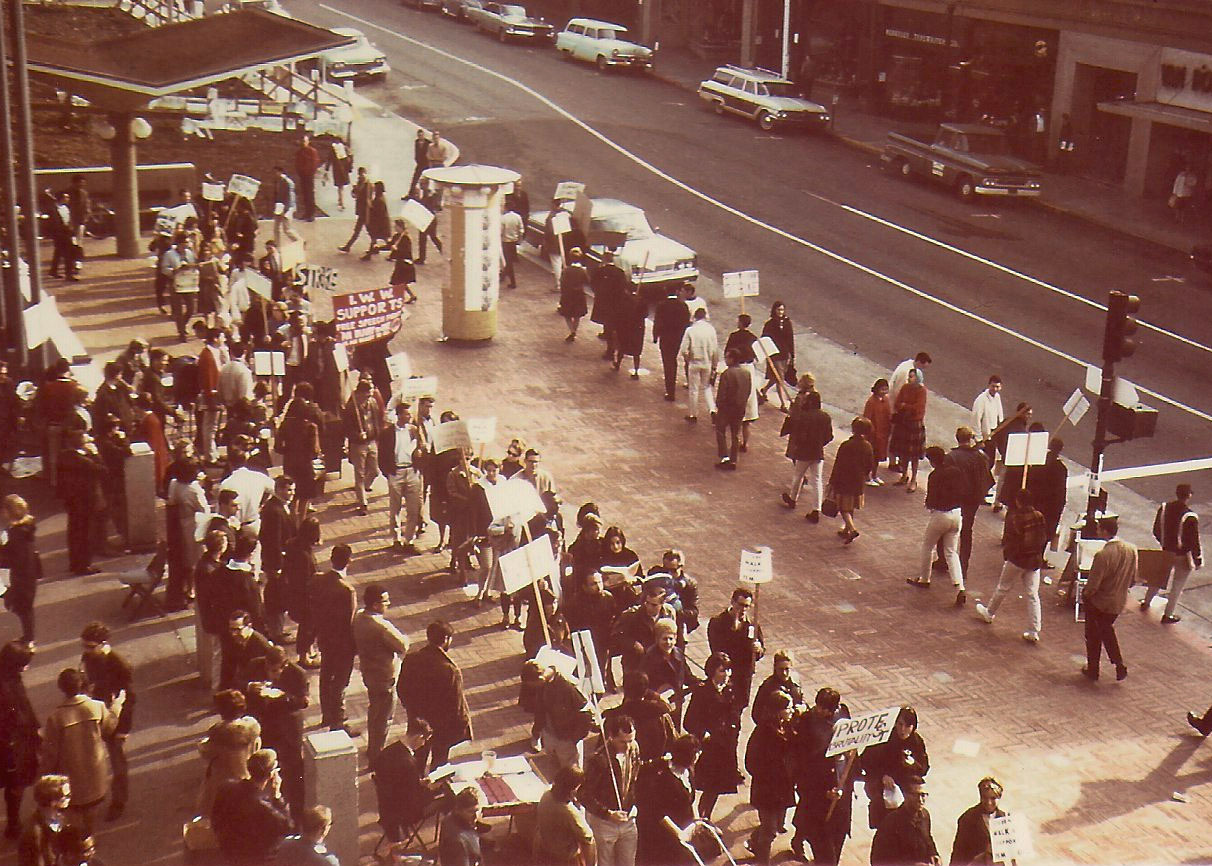
But react they did. These were not young adults whose biggest challenge had been to organize a pre-football game rally. Some, like Mario Savio, had walked the streets of the South and stared racism in the face, risking their lives to do so. That summer while I was driving a laundry truck over the Sierras, three of their colleagues had been shot dead and buried under an earthen dam near Philadelphia, Mississippi. I would later visit the spot. Many had cut their political eyeteeth four years earlier opposing the House Un-American Activities Committee meetings in San Francisco and had participated in the numerous protests against racial discrimination since. They understood the value of demonstrations, media coverage and confrontation, and had become masters at community organization. They were committed to their beliefs and were willing to face police and be arrested if necessary. 

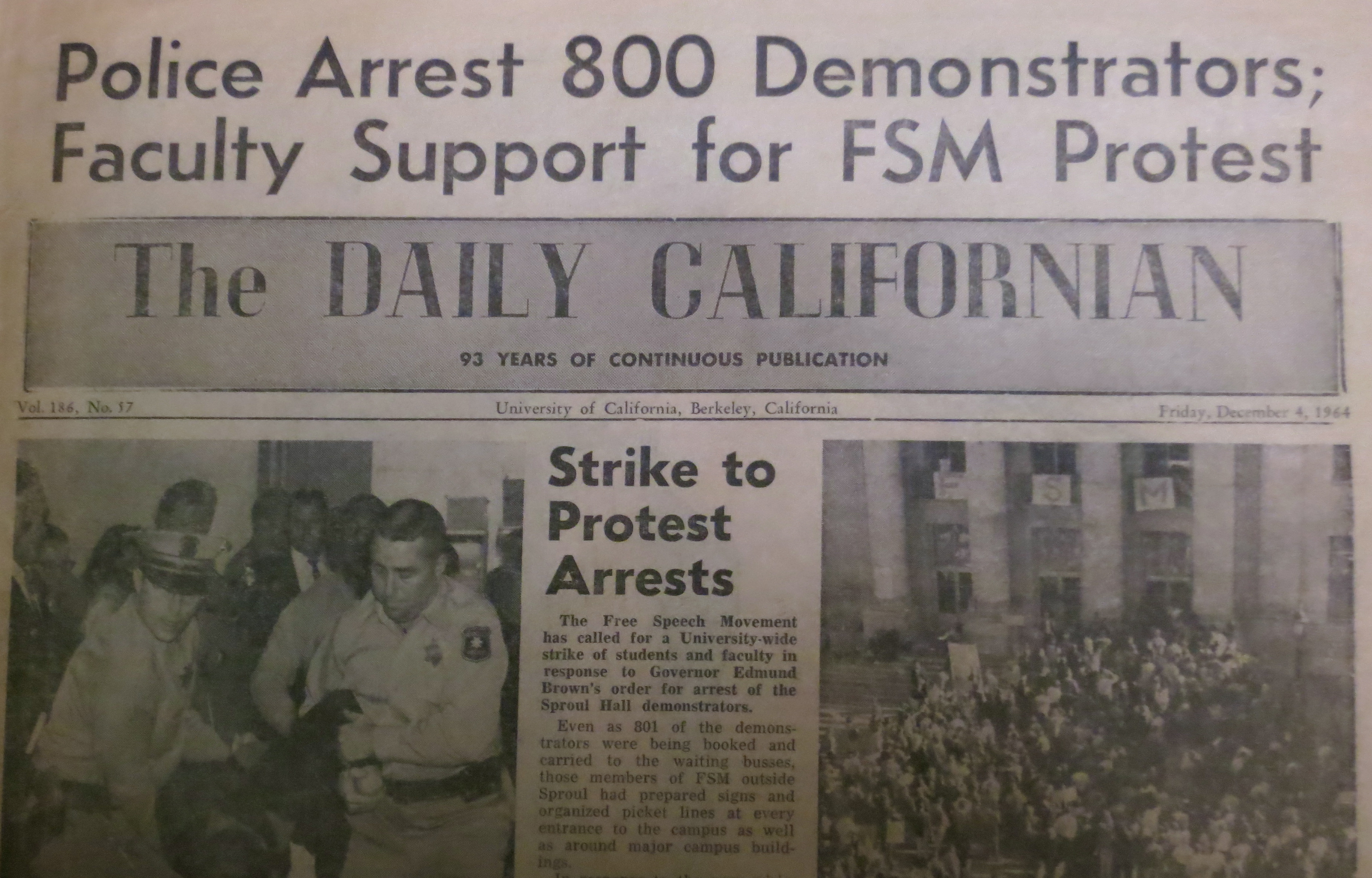
The Administration wasn’t nearly as focused. Mostly liberal in nature and genuinely caring for its students, it utilized a 50’s mentality to address a 60’s reality. Its bungling attempts to control off-campus political activity combined with its inability to recognize the legitimacy and depth of student feelings would unite factions as diverse as Young Republicans for Goldwater with the Young People’s Socialist League and eventually lead to the massive protests that would paint Berkeley as the nation’s center of student activism and the New Left. Over the next three months I would spend a great deal of time listening, observing and participating in what would become known world-wide as the Free Speech Movement. As a student of politics, I was to learn much more in the streets than I did in the classroom.

What evolved was a classic no win, up-against-the-wall confrontation. The Administration would move from “all of your freedoms are removed,” to “you can have some freedom,” to “let’s see how you like cops bashing in your heads.” The Free Speech leaders would be radicalized to the point where no compromise except total victory was acceptable. Student government and faculty solutions urging moderation and cooperation would be lost in the shuffle. Ultimately, Governor Pat Brown would send in the police and Berkeley would take on the atmosphere of a police state. 

The process of alienation that had started for me with the student leader conference continued to grow, but I never made the leap from issue to ideology. It was no more in my nature to be left wing than it had been to be right wing. However, I would journey across the dividing line into civil disobedience, which will be my next Wednesday’s tale.

NEXT POST:

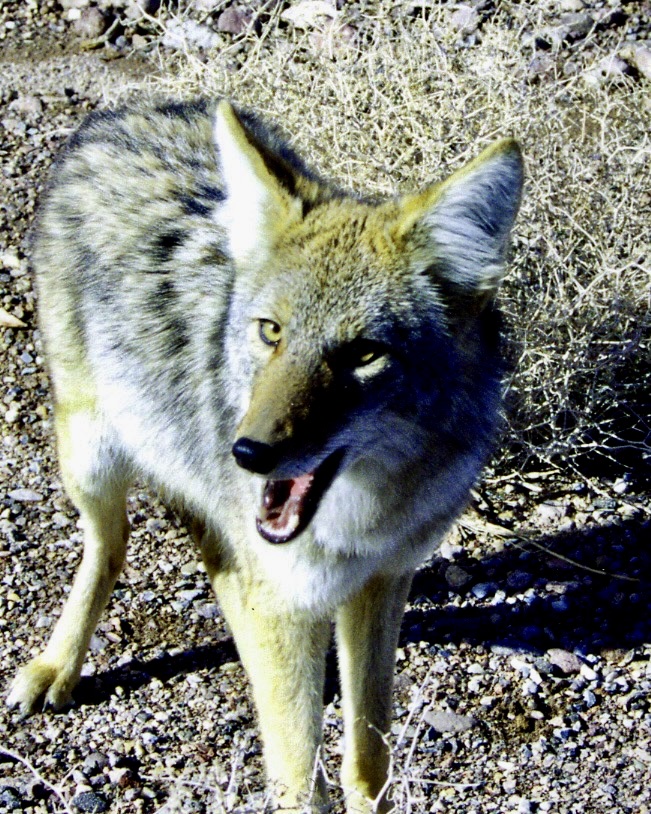
Friday’s Travel Blog: Peggy and I continue our exploration of Pt. Reyes National Seashore, driving out to the Pierce Point Ranch and hiking out toward Tomales Point where we encounter a herd of elk and sushi eating coyotes.

The Death-Defying Great Tree Race… Graveyard Tales

Incense Cedar tree in Diamond Springs California graveyard
Now looking old and spooky, this is a photo of the 75 foot tall incense cedar in the Graveyard that I first climbed in the early 1950s. Pop built us a tree house on the lower limbs. It has been long since removed.

Two incense cedars dominated the Graveyard that was out our backdoor in Diamond Springs. From an under five-foot perspective, they were gigantic, stretching some 75 feet skyward. The limbs of the largest tree started 20 feet up and provided scant hope for climbing. As usual, Marshall found a risky way around the problem. 

Several of the huge limbs came tantalizingly close to the ground at their tips and one could be reached by standing on a convenient tombstone. But only Marshall could reach it; I was frustratingly short by several inches. Marsh would make a leap, grab the limb, and shimmy up it hanging butt down until the limb became large enough for him to work his way around to the top. Then he would crawl up to the tree trunk, four to five Curtis lengths off the ground. After that, he would climb to wonderfully mysterious heights I could only dream about.

Eventually I grew tall enough to make my first triumphant journey up the limb. Then, very carefully, I climbed to the heart-stopping top, limb by limb. All of Diamond spread out before me. I could see our school, and the mill where my father worked, and the woods, and the hill with a Cross where I had shivered my way through an Easter Sunrise Service. I could see the whole world. Except for a slight wind that made the tree top sway and stirred my imagination about the far away ground, I figured I was as close to Heaven as I would ever get. 

I could see the whole world. All of Diamond spread out before me. A few years after my first ascent up the tree, I borrowed my father’s camera and climbed up the tree and took photographs of the surrounding country. I think this might have been the first photo I ever took.

By the time I finally made it to the top, Marshall had more grandiose plans for the tree. We would build a tree house on the upper branches. Off we went to Caldor, the lumber mill where my dad worked as an electrician, to liberate some two by fours. Then we raided Pop’s tool shed for a hammer, nails, and rope. My job was to be the ground man while Marshall climbed up close to the top. He would then lower the rope and I would tie on a board that he would hoist up and nail in. It was a good plan, or so we thought.

Along about the third board, Pop showed up. It wasn’t so much that we wanted to build a tree fort in the Graveyard that bothered him, or even that we had borrowed his tools and nails without asking. He even seemed to ignore the liberated lumber. His concern was that we were building our fort 60-feet up in the air on thin limbs that would easily break with nails that barely reached through the boards. After he graphically described the potential results, even Marshall had second thoughts. Pop had a solution though. He would build us a proper tree house on the massive limbs that were only 20 feet off the ground. He would also add a ladder so we could avoid our tombstone-shimmy-up-the-limb route.

And he did. It was a magnificent open tree house of Swiss Family Robinson proportions that easily accommodated our buddies and us with room to spare. It was more like a pirate hideout than a Robinson family home, however. Hidden in the tree and hidden in the middle of the Graveyard, it became our special retreat where we could escape everything except the call to dinner. It also became my center for daydreaming and Marshall’s center for planning mischief. He, along with our friends Allen and Lee, would scope out our forays into Diamond and the surrounding country-side. 

A view of the tree today taken from near the house where we lived. Now, imagine 8-10 year old boys racing up and down this tree as fast as they could go.

And finally, the treehouse became the starting point for the Great Tree Race. We would scramble to the top and back down in one-on-one competition as quickly as we could. Death-defying is an appropriate description. Slips were a common hazard. Unfortunately, the other boys always beat me; they were two to three years older and I was the one most susceptible to losing my grip. My steady diet of Tarzan comic books sustained me though, and I refused to give up.  Eventually, several years later, I would triumph.

Marshall was taking a teenage time-out with Mother’s parents who had moved to Watsonville, down on the Central Coast of California. Each day I went to the Graveyard and took several practice-runs up the tree. I became half monkey. Each limb was memorized and an optimum route chosen. Tree climbing muscles bulged; my grip became iron and my nerves steel. Finally, the big day arrived and Marshall came home. He was every bit the big brother who had been away at high school while little brother stayed at home and finished the eighth grade. He talked of cars and girls and wild parties and of his friend Dwight who could knock people out with one punch. I casually mentioned the possibility of a race to the top of the tree. What a set up. As a two pack-a-day, sixteen-year-old, cigarette smoker he wasn’t into tree climbing, but how could he resist a challenge from his little brother.

Off we went. Marsh didn’t stand a chance. It was payback time for years of big brother hassles. I flew up and down the tree. I hardly touched the limbs. Slip? So what, I would catch the next limb. Marsh was about half way up the tree when I passed him on my way down. I showed no mercy and greeted him with a grin when he arrived, huffing and puffing, at the tree house. His sense of humor was minimal. Back on the ground, his bruised ego demanded that he challenge me to a wrestling match and I quickly pinned him to the ground. It was the end of the Great Tree Race, the end of big brother dominance, and a fitting end to my years of associating with dead people.

Next Monday, I leave the Graveyard and head out to explore the Pond and the Woods. Both were magical places that deserved their capital letters and added to my love of nature.

NEXT POST:

Wednesday’s Blog-A-Book from my Peace Corp Memoir: In the fall of 1964, I return to UC Berkeley and find the campus on the edge of revolution.

Going on a Cow Walk… The Pt. Reyes Series

Cow conflict resolution

I’m returning to Pt. Reyes National Seashore and the surrounding area today. As you may recall, Peggy and I drove down to this beautiful park north of San Francisco in early March to celebrate my birthday. At the time, I did a post on the big nosed elephant seals that have adopted the park as a great place to breed and have babies as their population increases.
Like whales, they had been hunted close to extinction for the oil their body produces. Fortunately, enough people had become concerned in the early 20th Century to stop the slaughter and save the species. My elephant seal post would have been perfect for yesterday: Earth Day. The message about these unique animals is that If we care enough, we can make a difference. Working together, we can help save the earth and its bio-diversity. Nature has wonderfully recuperative powers— given a chance. The planet will work with us, if we stop working against it. But enough on the that for now. Today’s post is about cows and a short walk in the Golden Gate National Recreation Area.
There is no danger of cows going extinct. They have the advantage/disadvantage of being useful to us. As of 2021 there are over a billion on earth. The Pt. Reyes area has its share. It was recognized as ideal for raising dairy cattle in the 1850s as the burgeoning population of San Francisco provided a ready market for dairy products. When the National Seashore was created in the 1970s and 80s, the ranches were grandfathered into the land that was set aside and are an integral part of today’s Pt. Reyes’ experience.

I didn’t set out to do a post on cows when Peggy and I decided to incorporate a short walk along the Bolinas Ridge Trail. It’s actually a part of the Golden Gate National Recreation Area but is administered by Pt. Reyes NS. As you can see by the maps below, it is just east of the small town of Olema which includes the campground I have been staying at forever, or at least back to the 1970s. The trail is part of a system being developed that will eventually allow hikers to do a 500 mile hike around the complete Bay Area. We did four. Two out and two back.

The Bolinas Ridge Trail starts just east of the small town of Olema on the Sir Frances Drake Blvd. It’s the dotted line. Our campground sits in the grey area just above Olema. The National Seashore Visitors’ Center and Headquarters is the light area behind the campground. Our go-to town for eating out and shopping is Pt. Reyes Station to the north.
This map provides perspective on where Bolinas and Pt. Reyes Station are located in relation to San Francisco. The green area next to the coast makes up Pt. Reyes and the Golden Gate Recreation Area stretching from the end of Tomales Bay to the Golden Gate Bridge. Highway 1 is the yellow line running along the coast, more or less separating the two parks. It also follows the infamous San Andreas Earthquake Fault. Pt. Reyes was once located near LA as part of the Sierra Nevada Mountains. It has been on its journey north for some 30 million years.
Just for fun, this map shows the Bay Area Trail system with its completed and uncompleted sections.
Official cow. The cows became part of our walk. This is the official cow portrait taken by Peggy. Number 1913, otherwise known to us as Bossy, didn’t want to interrupt her eating for the photo. The cows chomping grass made a distinctive, loud noise. (Photo by Peggy Mekemson.)

Let it be known, there was much more to the walk than cattle. The beautiful green of the Coastal Range was offset by dark forests. Spring flowers were beginning to pop up. Individual rocks with definite personalities stood proudly along the way and demanded to be photographed.

The striking green grass of the Coast Range was offset by dark groves of trees. Individual rocks added to the scene.
Peggy hoofing it along the trail, which is actually a gravel road at this point. Turn her loose on a flat stretch and away she goes. I can hardly keep up. At 70 she can still whip out four miles an hour. Fortunately, she is easily distracted.
“Do you see the lizard, Curt,” she proclaimed and immediately stopped to photograph a rock that looked like a lizard head to her. You can see the squinty lizard looking eye toward the top center of the rock. (Photo by Peggy Mekemson.)
Cow itch. Cattle had a way of stealing the show.
But back to rocks. This one looked like it was long overdue for a haircut. You might say it had Covid hair.
Lichens added a touch of color to this rock. I decided if Peggy could have her lizard rock, I could have a frog rock. What do they have in common other that a vivid imagination to see them? They both eat flies. That’s a good thing.
No imagination required here. This was a bird’s rock, be it ever so temporary.
Cowlick. Peggy insisted on catching the cowlick seen on the head of Number 1903 (Ferdinand), seen earlier scratching an itch. She said it reminded her of me. Thanks. My hair can be rather untamable at times. A cowlick, BTW, is different than a cow kiss, which is the generous application of one’s tongue on someone’s face, usually followed by an “Eeww!”
I didn’t know the name of this striking early bloomer, but fortunately Peggy and I had just loaded iNaturalist on our iPhone. I took a photo from my screen and voila! it’s Footsteps of Spring (Sanicula arctopoides). I absolutely love the new app.
Another flower I had to lookup on our new app, Suncup Primrose (Taraxia ovata).
This beauty was another one that our new iNaturalist app identified. Unfortunately, it’s an invasive species, Rosy Sand Crocus (Romula rose).
And then we found an old friend, a solitary California poppy growing in the rocks along the trail. (Photo by Peggy Mekemson.)
Cow sentry. If we didn’t have the feeling we were constantly being watched, we should have.
I wanted to capture a photo of Peggy on a flat hilltop that was surrounded by rocks that struck me as a great place for a full moon Wiccan ceremony. I’m not sure how Peggy’s pose fit in, but then I hadn’t told her to look like a witch. The poppy shown above was growing in these rocks. An old fence was nearby…
Tha ancient barbed wire and lichens spoke to a bygone era of ranching in the Pt. Reyes area. We were glad that the cattle were still there.
Another shot of the fence.
The tail-end of a cow tale. “I’m out of here” Ferdinand grumpily stated after one too many photos. Look at his face! I get the same feeling at family photo sessions. On next Friday’s Pt. Reyes travel blog, Peggy and I are off to visit an elk herd that roars down to see us. And, we watch a pair coyotes eating sushi.

NEXT POST:

Monday’s Blog-A-Book Post from It’s 4 AM and a Bear is Standing on Top of Me: Have you ever raced to the top of a 70-foot tree? In the middle of a graveyard? It was an important part of our entertainment when we were growing up. Join me on Monday as I race to the top and my brother tries to build a treehouse 60 feet up…

JFK Dies, a Barrel of Tequila, and Political Suppression… Berkeley in the 60s

In my last post from my Peace Corps book, The Bush Devil Ate Sam that I am revising and blogging, I wrote about the growing unrest on the UC Berkeley Campus in 1963. Today I finish up my semester and move on into 1964.

John Kennedy signs legislation creating the Peace Corps. (Photo from the JFK Library.)

Without student government concerns, Berkeley became more doable and even fun. I disappeared into the library for long hours whipping out term papers, devouring books and becoming a serious student. The end of my first semester approached. Christmas vacation was coming. There would be a break in the endless studies, a time for long walks in the woods and more time for Jo Ann. 

One crisp fall day in November, I came blinking out of the library to a brilliant sun and a hushed silence. Students and faculty were emptying out of classes. A young woman with long dark hair was standing on the library steps with tears streaming down her face.

“What’s wrong? Are you okay?” I asked.

“They’ve shot the President in Dallas,” she replied as her voice broke.

John F. Kennedy was dead. It was November 23, 1963. The young president who was standing up against racism in the South, the man who had created the Peace Corps, the leader who had called for international justice and inflamed people’s hopes worldwide, had been shot down in the streets of Dallas. And with his death, some of the hope he had created died; it died on the Berkeley Campus that day, and it died in me. Each of us lost something of the dream that things could be better, that we as individuals could be better. School stopped and we headed for the nearest TVs, newspapers and radio stations. Time and again I watched the car speeding away with the wounded President, watched Walter Cronkite announce that the President was dead, and watched as Lyndon Johnson was sworn in. It was a day etched into the collective memory of our generation.

Thanksgiving arrived and Christmas followed. Somehow, I worked up the nerve to ask Jo Ann to marry me. It would be a long engagement with marriage taking place after graduation, a year and a half away. The engagement ring would have to wait for me to dig up the money. She cried and said yes. It was a bright moment in an otherwise bleak year.

The battle between the Administration and the student activists continued during the spring semester while I focused on studies. On March 3, 1964, I turned 21 and became, according to law, an adult. Soon I would have to decide what I was going to do with my life. But on that particular day, I went to La Val’s Pizza and consumed far too much beer. Summer brought the resumption of my laundry route between Placerville and Lake Tahoe.

A new living arrangement greeted me when I returned to Berkeley that fall. Before summer break, two of my dorm-mates, Cliff Marks and Jerry Silverfield, had agreed to share an apartment with me our senior year. Landlords had a captive student population to exploit so prices were high. We ended up with a small kitchen, bathroom, living room, and bedroom. Things were so tight in the bedroom that Cliff and I had a bunk bed. He got the top. I would later wonder why this was superior to dorm life. We had more responsibility and less privacy. 

We christened the apartment by consuming a small barrel of tequila Cliff had brought back from his summer of sharpening his Spanish skills in Mexico. Later that night, I stood in front of the bathroom mirror and watched myself drool in a hallucinogenic haze, totally fascinated by the process. Cliff’s reaction was to talk nonstop. I’m not sure it was important whether anybody was listening. I drifted off and when I woke back up he was still talking. It led me to kick his mattress from my lower vantage point. This broke the bed and brought Cliff and mattress tumbling down on me. We roared with laughter and Cliff ended up sleeping on the floor. We all suffered appropriately the next day. 

While Cliff, Jerry and I were recovering from our well-deserved headaches, the Administration moved decisively to eliminate on-campus political activities. There would be no more organizing of community-oriented demonstrations from campus, no more collecting of money from students to support causes, and no more controversial speakers on campus without administrative oversight and control. The Bancroft-Telegraph entrance free speech area was out of business, closed down. That incredible babble of voices advocating a multitude of causes would be heard no more.

The campus exploded.

Next Monday: The birth of the Free Speech Movement as student activists, advocacy groups, and the Administration clash in an ever-increasing spiral of conflict that involved more and more of the students and faculty.

NEXT BLOGS:

Friday’s Travel Blog: Peggy and I return to Pt. Reyes where we go for a cow walk in the Golden Gate National Recreation Area.

Nancy Jo and the Graveyard Ghost

From right to left: Marshall,Nancy, Tickle, and me

My sister was seven years older than I and lived on a different planet, the mysterious world of teenage girls. Her concern about ghosts makes this story a powerful testimony to teenage hormones. If Marshall and I had a healthy respect for the Graveyard at night, Nancy’s fear was monumental. 

This story begins with Nancy falling in ‘love’ with the ‘boy’ next door, Johnny. His parents were good folks from a kids’ perspective. Marshall and I raided their apple trees with impunity, and Mama, a big Italian lady, made great spaghetti that included wild manzanita mushrooms. I was fascinated with the way she yelled “Bullll Sheeeet” in a community-wide voice when she was whipping Papa into line. He was a skinny, Old Country type of guy who thought he should be in charge. Papa was the one who suggested the gunny sack method of castration for MC.

I use the terms love and boy somewhat loosely since Nancy at 16 was a little young for love and Johnny, a 22-year-old Korean War Veteran, was a little old for the boy designation, not to mention Nancy. Our parents were not happy, a fact that only seemed to encourage my sister.

Her teenage hormones aided by a healthy dose of rebellion overcame her good sense and she pursued the budding relationship. Johnny didn’t make it easy. His idea of a special date was to drive down the alley and honk. Otherwise, he avoided our place. If Nancy wanted to see him, she had to visit his home. It should have been easy; his house was right behind ours. 

But there was a major obstacle, the dreaded Graveyard. To avoid it, Nancy had to climb over the fence that separated our houses. Her other option was walk up the alley that almost touched the tombstones. Given her feelings about dead people, the solution seemed easy— climb the fence. Marsh and I had been over it many times in search of apples. Something about teenage girl dignity I didn’t understand eliminated fence climbing, however. Nancy was left up the alley without an escort.

While she wasn’t above sneaking out her window, Nancy asked permission to see Johnny the night of the Graveyard Ghost attack. She approached Mother around seven. It was one of those warm summer evenings where the sun is reluctant to go down and boys are granted special permission to stay up. Marshall and I listened intently.

“Mother, I think I’ll go visit Johnny,” Nancy stated and asked in the same sentence. Careful maneuvering was required. An outright statement would have triggered a parental prerogative no and an outright question may have solicited a parental concern no.

Silence. This communicated disapproval, a possible no, and a tad of punishment for raising the issue.

“Mother?” We were on the edge of an impending teenage tantrum. Nancy could throw a good one.

“Okay” with weary resignation followed by, “but you have to be home by ten.”

What we heard was TEN. Translate after dark. Nancy would be coming down the alley past the Graveyard in the dark and she would be scared. Knowing Johnny’s desire to avoid my parents, we figured she would also be alone. A fiendish plot was hatched.

At 9:45, Marsh and I slipped outside and made our way up the alley to a point half way between our house and Johnny’s. Next, we took a few steps into Graveyard where weed-like Heavenly Trees and deep Myrtle provided perfect cover. Hiding there at night was scary, but Marshall and I were operating under inspiration.

Marsh stripped the limbs off of one of the young trees, bent it over like a catapult, and draped his white T-shirt on the trunk. We then scrunched down and waited.

At exactly 10:00, Nancy opened the back door and stepped outside with Johnny. Our hearts skipped a beat. Would he walk her home? No. After a perfunctory goodnight, Johnny dutifully went back inside and one very alone sister began her hesitant but fateful walk down the alley.

She approached slowly, desperately looking the other direction to avoid seeing tombstones and keeping as far from the Graveyard as the alley and fence allowed. At exactly the right moment, we struck. Marshall let go of the T-shirt and the supple Heavenly Tree whipped it into the air. It arched up over the alley and floated down in front of our already frightened sister. We started woooooing wildly like the eight and ten-year-old ghosts we were supposed to be.

Did Nancy streak down the alley to the safety of the House? No. Did she figure out her two little brothers were playing a trick and commit murder? No. Absolute hysteria ensued. She stood still and screamed. She was feet stuck to the ground petrified except for her lungs and mouth. They worked fine.

As her voice hit opera pitch, we realized that our prank was not going as planned. Nancy was not having fun. We leapt out to remedy the problem.

Bad idea.

Two bodies hurtling at you out of a graveyard in the dark of night is not a recommended solution for frayed nerves and an intense fear of dead people. The three of us, Nancy bawling and Marshall and I worrying about consequences, proceeded to the house. After a thorough scolding, we were sent to bed. I suspect our parents laughed afterwards. Many years later, even Nancy could see humor in our prank.

NEXT POSTS:

Wednesday’s Blog-A-Book from The Bush Devil Ate Sam: I am still at Berkeley rapidly approaching my decision to join the Peace Corps. President Kennedy is assassinated, I become engaged, turn 21, and help consume a small barrel of tequila. The Berkeley Administration begins its suppression of student political activity, thus kicking off Free Speech Movement.

Friday’s Travel Blog: I return to my Pt. Reyes series and Peggy and I go on a cow walk in the Golden Gate National Recreation Area.

The UC Admin Marches Blindly into Confrontation; I Urge Otherwise

In my last blog-a-book post about my time at Berkeley in the 60s, I concluded with a meeting of student leaders in the fall of 1963 to discuss the growing unrest on campus over Administration efforts to shut down off-campus protests by UC students in support of Civil Rights. As the president of one of the dorms, I was invited to attend along with some 40 others. The groups organizing the protests were not invited. I expected a thoughtful discussion on the issues facing the University.

In 1963, the UC Berkeley Administration argued that a small group of radical students was organizing off-campus protests in support of Civil Rights and threatened to crack down, which it did. The ultimate result was the massive student uprising in the fall of 1964 known as the Free Speech Movement.

The Dean welcomed us, thanked us for agreeing to participate and then laid out the foundation for our discussion. A small group of radical students was disrupting the campus and organizing off-campus activities such as picketing and sit-ins for Civil Rights. While the issue being addressed was important, there were other, more appropriate means available for addressing it that did not involve Berkeley. The Administration had been extremely tolerant so far but was approaching a point where it would have to crack down for the overall good of the University. 

The Administration wanted our feedback as student leaders. What did we think was happening, how would our constituencies react to a crackdown, and how could we help defuse the situation? We were to go around the room with each student leader expressing his or her view. I expected a major reaction— a warning to move cautiously and involve all parties in seeking some type of amenable agreement.

The first student leader stood up. “The radical students are making me extremely angry,” he reported. “I resent that a small group of people can ruin everything for the rest of us. The vast majority of the students do not support off-campus political action. I believe the student body would support a crackdown by the Administration. You have my support in whatever you do.”

I wondered if the guy was a plant, preprogrammed by the Administration to represent the party line and set the tone for everyone else? If so, he was successful. The next person and the next person parroted what he had said. I began to doubt myself. Normally, I am quite good at reading political trends and sensing when a group leans toward supporting or opposing an issue. My read on what was happening was that the majority of the students were empathic with and supportive of the causes the so-called radical students were advocating. 

The Martin Luther Kings of the world were heroes, not bad guys, and their tactics of nonviolent civil disobedience were empowering the powerless. Sure, the majority of the students were primarily concerned with getting through college. To many, an all-night kegger and getting laid might seem infinitely more appealing than a sit-in. But this did not imply a lack of shared concern. Or so I believed. Apparently, very few of the other participants shared in my belief. Concerns were raised but no one stopped and said, “Damn it, we have a problem!” 

As my turn approached, I felt myself chickening out. I was the new kid on the block, wet behind the ears. What did I know? Acceptance in this crowd was to stand up and say, “Yes, everything you are talking about is true. Let’s clamp down on the rabble and get on with the important life of being students.” And I wanted to be accepted, to be a part of the student government. I stood up with shaking legs.

“Hi, my name is Curt Mekemson and I am the president of Priestly Hall,” I announced in a voice which was matching my legs, shake for shake. This was not the impression I wanted to make. As others had spoken, I had scribbled some notes on what I wanted to say and said:

“I believe we have a very serious problem here, that the issues are legitimate, and that most students are sympathetic. I don’t think we should be cracking down but should be working together to find solutions. Now is not the time to further alienate the activists and create more of a crisis on campus than we presently have. I believe it is a serious mistake to not have representatives from the groups involved in organizing off campus activities here today.”

I was met with deadly silence. A few heads nodded in agreement, but mainly there were glares. “Next,” the Dean said. No yea, no nay, no discussion. I was a bringer of bad tidings, a storm crow. But it wasn’t ‘kill the messenger.’ It was more like ‘ignore the messenger,’ like I had farted in public and people were embarrassed.

After that, my enthusiasm for student government waned. I should have fought back, fought for what I believed in, fought for what I knew deep down to be right. But I didn’t. I was still trying to figure out what to do with 15 books in Poly Sci 1. I had a relationship to maintain on campus, and a mother fighting cancer at home. The dark, heavy veil of depression rolled over my mind like the fog rolling in from the Bay.  Finally, I decided that something had to go and that the only thing expendable was my role as president of the dorm. So, I turned over the reins of power to my VP and headed back to Bancroft Library. Politics could wait.

Next Wednesday in my blog-a-book post from my Peace Corps memoir, I will discuss the impact of John Kennedy’s assassination on the Berkeley campus and the beginning of the massive student uprising known as the Free Speech Movement.

NEXT POSTS:

Friday’s Travel Blog: I will wrap up my series on Oregon’s Harris Beach State Park (appropriately) with photos of the sun setting over the Pacific Ocean.

When MC the Cat Refused to Have His Danglies Cut Off

MC the cat always refused to have his photo taken. I think that he was afraid of a paternity suit. So, I went to Creative Commons and found this picture that looks very much like MC as a kitten. The don’t-mess-with-me look fits perfectly.

Today’s blog-a-book tale is about our ‘other’ cat, MC. No story about the Graveyard is complete without him. He was the exact opposite of Demon. She was as dark as the Graveyard on a moonless night; he was as white as the ghosts that lived there. She was loving and tame while he was as wild as a domestic cat can be— a throwback to his ancient ancestors. His one passion in life was spreading his seeds as far and wide as he could travel and still make it home for dinner. He was a tomcat’s Tomcat, a legend in his own mind.  

His one challenge was his small size, which meant that he often came out on the losing end in his battles with larger toms. He would arrive home beat up and battered. One time a chunk of his ear was missing. Another time it was the tip of his tail. I encouraged my Cocker Spaniel, Tickle, to break up the fights to minimize the damage. He loved his job. He would dash to the door at the first yowling and fly off our porch in full bark when I turned his loose. Other than giving Tickle a purpose in life, his efforts had little impact, however.

Pop decided that drastic measures were called for. MC would have to have to lose his offending appendages. Unfortunately, there wasn’t a lot of money in our household for veterinary bills. But there was a solution. We were a do-it-yourself kind of family. For example, cocker puppies are supposed to have their tails cut off fairly soon after birth. My dad would take the litter, tie thread tightly around their tails, and then break out the tool he used for cutting tin. Snip, YIP! And it was over.  

Obviously, neutering a full-grown tom cat was a bit more difficult. Our Italian neighbor, Papa Passerini, offered an Old Country solution.  

“All you need is a pair of tin snips, a burlap bag, gloves, a pocket knife and a rope,” he suggested. Alarm bells should have gone off— massive alarm bells heard all the way to Italy. But they didn’t. We moved ahead with the medical procedure.

While MC had never been a paragon of feline domesticity, he’d at least let me pat him on the head if food was involved— as long as I was quick and limited myself to one pat. He even managed a brief purr when I picked him up the morning of his ‘operation’ and carried him up to Passerini’s. Any previous pretensions of tolerating people ceased instantly, though, when his legs were tied up and he was dumped into the dark gunny sack.  

When Pop cut a slit in the burlap with his pocket knife and reached a gloved hand through, he was met by claws of fury. MC had shed his ropes faster than Houdini. No one, but no one, was going to grab him by the testicles and cut them off with a pair of tin snips. He clawed his way out of the bag and became a white blur as he disappeared into the Graveyard. And there he would stay. After that, I would only see him at dinner time and then only after I had put his food down and walked several feet away.

The good news, from MC’s perspective, was that he was able to continue his tomcatting ways with all parts of his anatomy intact right up until he reached old age and quietly wandered off to tomcat heaven, where, rumor has it, he was twice as big, had eternal youth, and a long line of lovely female cats stretched off to infinity eagerly awaiting him. It’s probably fake news.

Next Monday’s blog-a-book post from It’s 4 AM and a Bear Is Standing on Me features my sister Nancy Jo and the attack of the graveyard ghost. Did you hear her scream? It’s very scary and you won’t want to miss it.

NEXT POSTS:

Wednesday’s Blog-a-Book Post from The Bush Devil Ate Sam: I challenge the Berkeley establishment to no avail. John Kennedy’s death has a deep impact on my fellow students and me.

Friday’s Travel BogI It’s a wrap on my Harris Beach series with gorgeous sunsets and the ever-interesting Key Hole Rock.

The Banning of the Ghost Guard…The Shameless Shenanigans of Pat and Demon

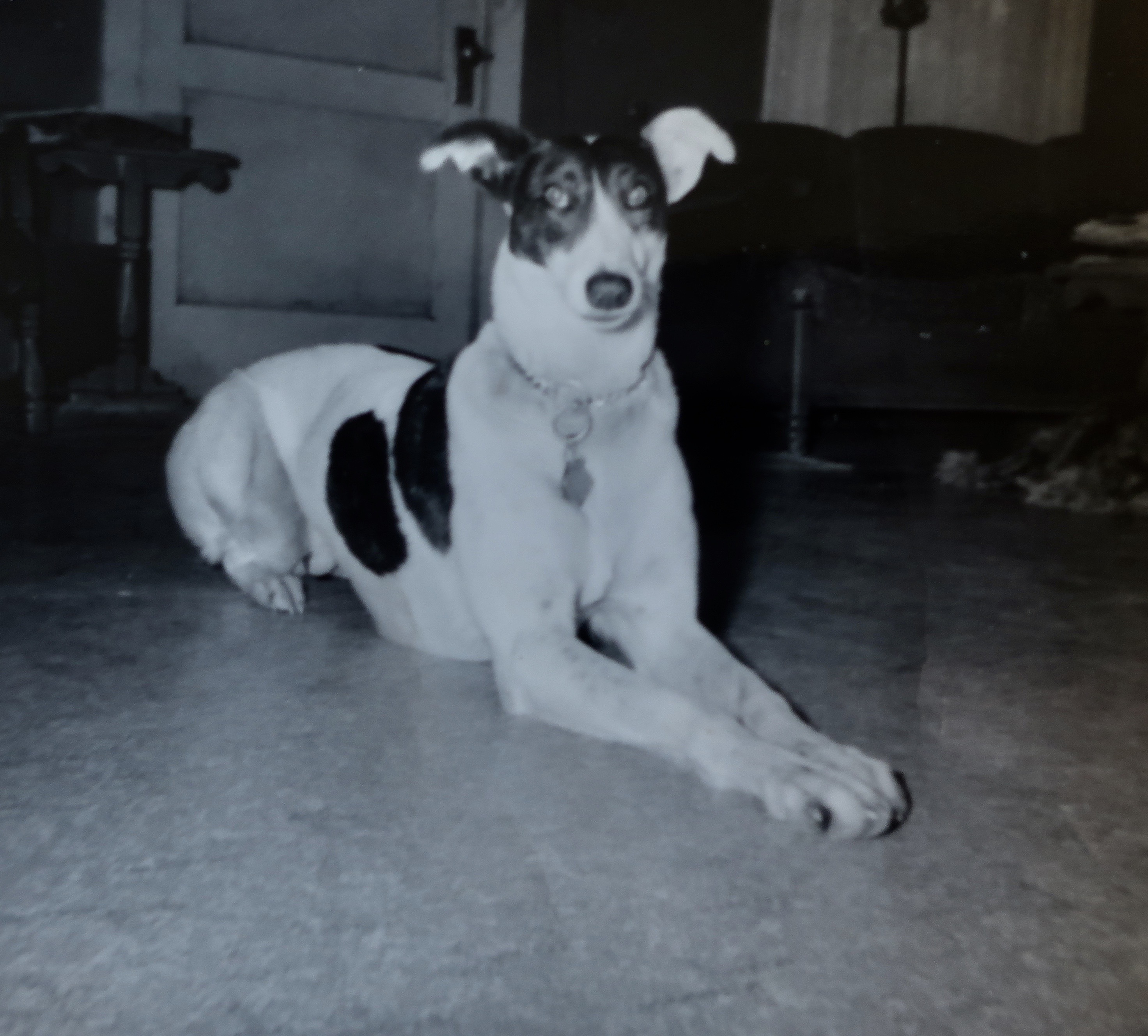
Poor Pat. Living with me did have its drawbacks, especially when I had a camera in hand. Being a rescue dog, however, she was eternally grateful and willing to pose for me. Reluctantly. Behind her is the wood stove we used for heat and, above Pat’s tail, our first TV. It was a while ago. Grin.

Pat the Greyhound set the stage for the banning of the Ghost Guard from my bed.

The night of the skunk was an exception to Pat’s normal stay-at-home routine. As usual, I had crawled into bed with an assortment of animals. That evening, it was minus Pat. Good, she took up a lot of room. Somewhere around midnight, I half way awoke as she hopped up on the bed, completed three dog turns, and snuggled down. Consciousness made a quantum leap as my nose was assailed by an unmistakable perfume.

“Seems we have a skunk visiting,” I told Pat and reached down to scratch her head. The fur was moist. As I pulled my hand back, the skunk suddenly got much closer. Now, I was totally awake. Ms. Greyhound had been bullying the wrong pussycat. It was a night to sleep inside. In fact, Marshall had a roommate for several days. I don’t know how many times I washed that hand but I do know that the bedding was tossed and Pat learned what a tomato juice bath was. When I finally made it back outside, the animals were put on notice: One more problem and off they went. 

Then Demon the Black Cat made her contribution.

She was well into middle age by this time and there had been no pause in kitten production. This was a time before spaying became common. Every few months, Demon shelled out another litter. She had long since finished overpopulating Diamond and was working on surrounding communities. We were teetering on becoming known as the Cat Family of Diamond Springs. My father reverted to drastic measures. Demon was not pleased. She started hiding her kittens and became a master at subterfuge. If someone tried to follow her, she would stop and nonchalantly give herself a bath, her whole body, one lick at a time. Then she would wander off in the opposite direction.

Mother paid me in cookies to track Demon down. When the Graveyard was her destination, I had a flat tombstone I would stand on as a lookout. There was an added advantage; Demon didn’t check for people perched on tombstones. Who would? Eventually, the missing litter would be discovered. I felt like Daniel Boone.

Demon’s special home delivery took place the same summer Pat had her close encounter with the skunk. As noted earlier, my attitude about bed companions had become testy. I wasn’t above rolling over quickly to see how many I could dislodge. A really good roll would net three or four. Sleeping with me was like living on the San Andreas Fault.

I did feel guilt over routing Demon. Once again, she was pregnant. I watched her balloon out. By this time, I was a veteran of the birthing process and found it interesting rather than troublesome. One night I had awakened to Pat howling, found that she was delivering puppies, and sat up with her through the process. Another time I had gone out with Tom Murphy, our grocer, and assisted in the delivery of a calf that wanted to come out the wrong way. It was messy, up to the elbow work. Remember the coke I stole from his store on my 5 AM walk home from Rudy and Robert’s? Tom was repaid many tines over.

I really didn’t expect to be around for the arrival of Demon’s kittens. That would take place in some hidden nook. One should never make assumptions. 

It started as a normal night. Roll over, kick the animals off, and go to sleep. Wake up and repeat the process. It was not a normal morning. I woke up with wet feet.  

“What the heck!” I exclaimed as I sat up quickly, dislodging Pat in the process. Demon looked innocently back at me from the foot of the bed. Okay, nothing suggested why my feet were wet. Then I noticed movement. Demon was not alone. Several little black clones were lined up for breakfast. Demon had delivered her litter on the bed and my feet were awash in afterbirth.

That did it.  My bed was not a home for wayward dogs who encountered the business end of skunks and it certainly wasn’t designed as a maternity ward for unwed cats. I bought a water pistol and initiated a campaign of terror. Any four-legged critter on the bed became fair game. The cats learned quickly; getting shot with a water pistol was not their idea of a proper bath. The dogs were more resistant. Usually it took several squirts and then I would get the look: big brown eyes accusing me of dark deeds. But I was tough and my canine companions eventually vacated the premises as well.

As soon as I fell asleep, however, the whole menagerie, fleas and all, would quietly slip back up on the bed.

NEXT POST:

Blog a Book Wednesday… From “The Bush Devil Ate Sam” : A student revolution with world-wide implications was about to begin at Berkeley. As a student on campus it would have a dramatic impact on my world view and be an important factor in my joining the Peace Corps. I discuss how I gradually became involved and provide background information.

Ode to a Grecian Urinal… Life at UC Berkeley in the 60s

In last Wednesday’s blog-a-book post from “The Bush Devil Ate Sam,” I arrived at UC Berkeley and provided a view of my life in the surrounding community. Today I will take you onto campus and provide a broader view of my life as a student.

I had a number of classes at Wheeler Hall shown here, including one with over a thousand students. The campus’s iconic Campanile is peaking out behind. (Photo by UC Berkeley.)

My ambitions at Berkeley far exceeded the time and energy I had. There were student politics to jump into, classes to master, a relationship to support, bookstores to explore, cappuccino to consume and a thousand causes to sort out. Moderation was not an option. I did understand that my primary reason for being there was to learn and I soon discovered that learning was defined differently than at Sierra. 

But first, I had to find my classes. Berkeley seemed like a maze to me. Single buildings had more classrooms than were found on Sierra’s campus, and each building held its own secrets. The Life Science building, for example, displayed enough jars of pickled fetuses to stop the heart of a pro-lifer and give me nightmares.  

Even the social science buildings had surprises. I was searching for a political science class in Wheeler Hall when I came upon a string of marble encased urinals in the basement. I decided there was enough marble to refurbish the Parthenon, which led my mind to contemplate penning a new poem, ‘Ode to a Grecian Urinal.’  My apology to Keats. Stream of conscious thinking can be dangerous. 

I finally found the class and discovered I had over 1000 classmates. It was located in a large auditorium I had passed by because my mind hadn’t been able to comprehend a classroom of that size. The professor, Peter Odegard, was a star in the field of political science and frequently received standing ovations for his stirring lectures. In another life, he had served as President of Reed College in Oregon. His lectures inspired me but there was scant chance I would ever meet the man. Personal contact was through graduate teaching assistants, folks struggling to complete their own education while being paid minimum wages to interact with us. 

I had one class that was so large we had to sit in another classroom and watch the professor on television. This was mass education on a grand scale and the University’s job, according to Clark Kerr, the University President, was the mass production of educated people to go out and fill slots in society. 

It was easy to be overwhelmed. I was assigned 15 books in one class and actually thought I was expected to buy and read each one in detail. I was a fast reader but not that fast, nor that wealthy. It would take a year to master the art of skimming, buying old books, using commercially prepared notes and pursuing all of the other tricks of the trade that getting a higher education at Berkeley entailed.

For all of that, there was an excitement to the classes that was lacking at Sierra. I might be sharing my professor with a thousand other students, but he or she might also be a confidante of Presidents. Did I learn more than I had at Sierra? I actually don’t think so, but I did have a sense of being part of what was happening in the world and this made what I was learning seem more real.

Life quickly evolved into a routine that primarily consisted of attending classes and studying. Mainly I lived in the Bancroft Library with occasional forays over to Café Med. Friday nights were reserved for Jo Ann. We had met at Sierra College and decided to attend Berkeley together. We struggled to spend time with each other, to find moments of privacy, and to bridge the gaps that our new life was creating. Even though we had gone off to the University together and now lived less than a mile apart, we saw less of each other than we had at Sierra when we lived 30 miles apart. Dates, given my super tight survival budget, normally consisted of going out for pizza at Laval’s or a hamburger at Larry Blake’s or at Si’s Charbroiler. Later, when we both turned 21, beer was added to the menu. On rare occasions, we would go to a movie. One that I remember was the Italian film “8 ½” directed by Federico Fellini and starring Marcello Mastroianni. Its surrealistic, artsy nature seemed to match our university experience.

Sunday mornings, in lieu of church, I would go for hikes up in the hills behind Berkeley. Grassy knolls provided views of San Francisco and the Bay. The beauty and quiet provided my mind with an opportunity to contemplate what was happening in my life, to gain perspective. There was solace to be found in the woods.

Participating in student politics at UC was an added burden I didn’t need. But I had been student body president at Sierra and gamely jumped into the fray. The dormitories were new; so, the residents were new. They hadn’t had time to get to know each other. The fact that I was a community college transfer made little difference. Within a week of my arrival, I was president of Priestly Hall. I quickly learned that my new role of mastering football chants and organizing parties was boring in comparison to what was happening in the real world. That was about to change as I struggled to make the position of dorm president more relevant— and get in trouble.  That will be the subject of my post next Wednesday.

NEXT POST

Friday’s Travel Blog: I will continue our exploration of Harris Beach State Park near Brookings by focusing in on sea stacks, including Goat Island, home to over 100,000 nesting seabirds.